



Bangs on long hair are a different animal. A fringe over a chin-length cut has nowhere to hide, but bangs on waist-length or chest-length hair have to do something trickier: they need to matter at close range without fighting the sweep and weight of the rest of the hair. That’s why the best bang styles for long hair look either beautifully intentional or slightly off, and there’s not much middle ground.
A blunt fringe over long waves feels like a statement. Curtain bangs soften the whole face and then vanish into the length. Side-swept pieces can make a heavy cut move again. Micro bangs, meanwhile, can make a thick curtain of hair feel sharp and architectural. Same head, same hair, wildly different read. That’s the fun of it.
What people often miss is that the hairline gets a vote. A stubborn cowlick, a flat front section, or a dense round of hair at the crown can change how a fringe sits more than any inspiration photo on earth. Fine hair needs a different cut than thick hair. Straight hair behaves differently from curls. And long hair brings enough visual weight that the front section has to be shaped with a little more judgment than most people expect.
The upside is simple: once you understand how the front pieces interact with length, there are 19 bang styles that can work without making your life miserable. Some are low-drama. Some are bold. A few are for people who enjoy a morning brush and a little attitude. The first batch is the softest place to start.
Why This Collection Feels Different
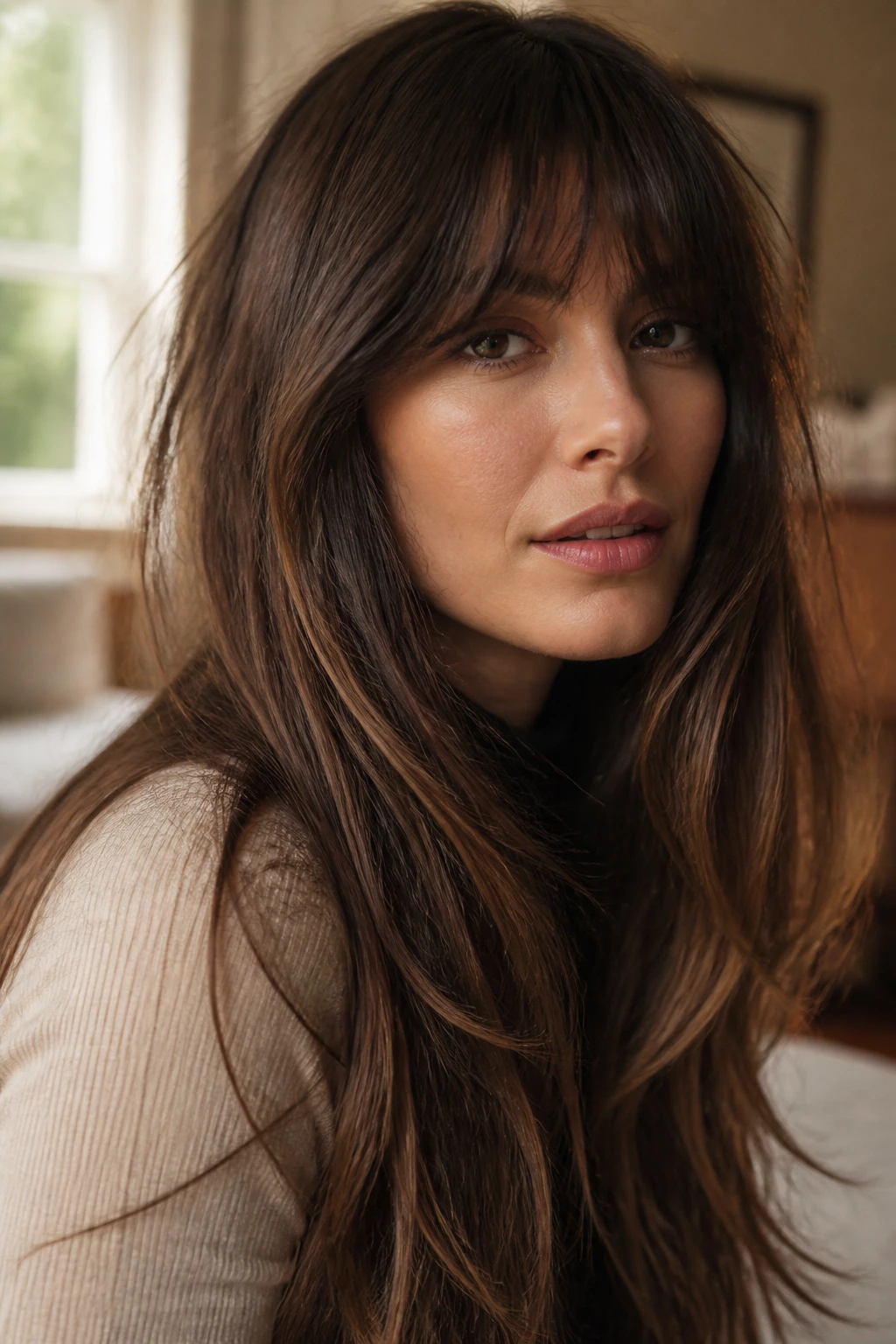
- Long Length Changes the Game: A fringe against long hair doesn’t sit alone; it becomes part of a larger shape, which means the cut has to be balanced from brow to collarbone.
- Grow-Out Matters More Here: Long hair gives you room to live with bangs that are a little too short, a little too soft, or a little too blunt while they grow.
- Texture Has a Bigger Say: Fine, thick, wavy, and curly hair all want different fringe shapes, and a good long-hair bang respects that instead of fighting it.
- Styling Time Varies a Lot: Some of these styles want a 60-second bend with a round brush. Others need a quick dry and a finger comb.
- Face Shape Is Only Half the Story: Brow height, cowlick direction, and how much hair you keep around the temples matter just as much as the usual face-shape advice.
- There’s a Version for Almost Everyone: If you want soft movement, sharp edges, or an easy grow-out, one of these styles will do the job without turning your mornings into a production.
1. Curtain Bangs That Melt Into Long Layers
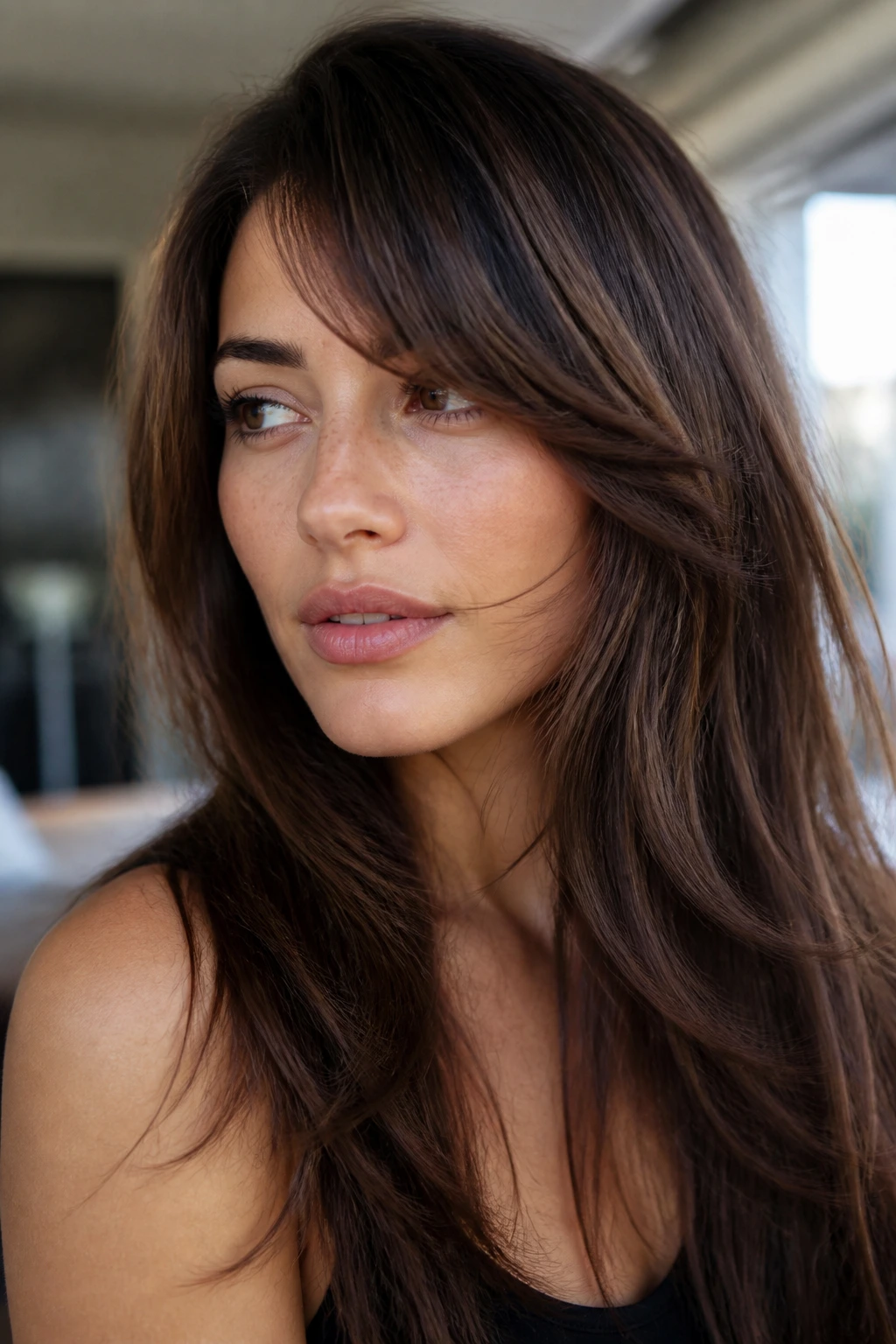
Curtain bangs are the reason so many people flirt with fringe in the first place. They open in the middle, sweep outward, and land somewhere around the cheekbones or jaw, which means they feel connected to long hair instead of stranded on the forehead.
Why They Work on Long Hair
The cut uses your length as part of the shape. The shorter center piece frames the eyes, then the sides travel into the rest of the hair so the whole front section feels soft instead of chopped off. On straight hair, they read clean and easy. On waves, they can look almost accidental in the best way.
- Shortest point usually sits around the bridge of the nose or a little below.
- The outer corners often hit the cheekbone or lip line.
- They still look decent on day two, which matters more than people admit.
Best move: blow-dry each side away from the face with a round brush, then let the shape cool before you touch it again. That pause is what keeps curtain bangs from flipping straight down like a sad comma.
2. Bottleneck Bangs With a Narrow Center and Wider Sides
Bottleneck bangs are the smarter cousin of curtain bangs. The center starts a little shorter and slimmer, then widens out around the temples, so the fringe frames the face without looking too full across the forehead.
The shape matters on long hair because it breaks up the front without stealing attention from the length. If curtain bangs feel too open and blunt bangs feel too heavy, bottleneck bangs live in that useful middle space. They’re especially nice when you want something that grows out gracefully and still looks deliberate if you skip a wash or two.
On finer hair, this cut gives the front enough presence without needing a giant blowout. On thicker hair, it keeps the fringe from turning into a triangular curtain. Ask for the center to be the shortest area, with the sides carved longer and slightly textured so they lay against the cheek instead of sticking out.
If your face tends to swallow softer fringe, this shape has a little more structure. It doesn’t shout. It just sits there looking composed, which is its own kind of luxury.
3. Side-Swept Bangs That Skim the Cheekbone
Why do side-swept bangs keep surviving fashion cycles? Because they are useful. Not glamorous in theory. Useful. They give long hair movement, steer attention across the face, and deal with awkward growth better than a lot of straighter fringe shapes.
The Sweet Spot
The longest part should graze the cheekbone or just sweep over one eye without falling into the lashes all day. That’s the key. Too short, and the bang flips weirdly. Too long, and it disappears into the layers.
Side-swept bangs work well if you part your hair off-center already or if one side of your hairline is more cooperative than the other. They’re also forgiving when your hair is growing out of another fringe style. A little bend from a blow-dryer, a little direction from a flat brush, and you’re done.
For long hair, I like them best when they’re not too thick. The front should feel like a moving piece, not a second curtain. If you’ve got round features and want the face to look a touch longer, this is one of the easiest ways to get that effect without cutting away much length.
4. Wispy Bangs That Barely Touch the Brow
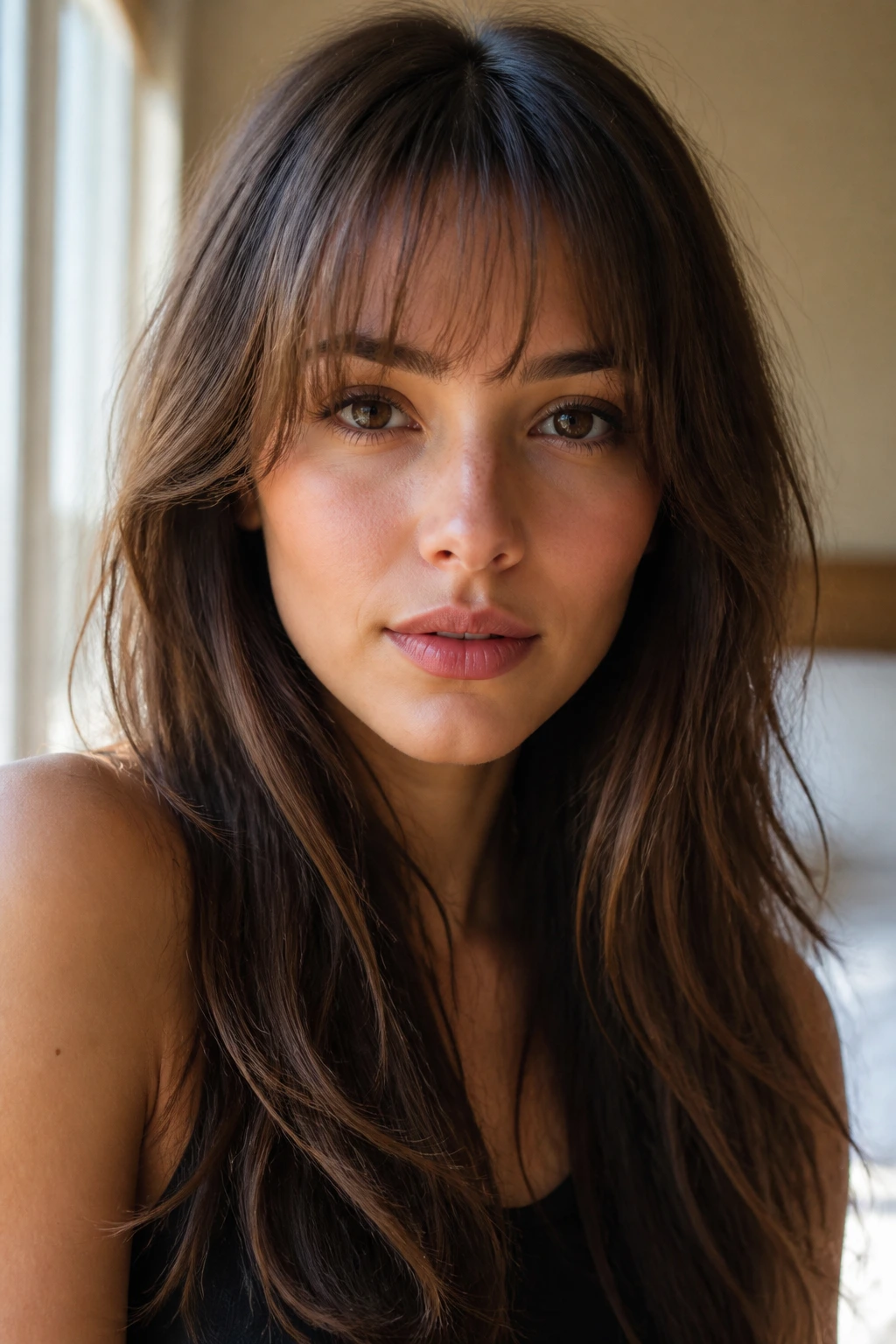
Picture a fringe that doesn’t demand attention but still changes the whole haircut. That’s wispy bangs. They’re light, separated, and airy enough that the forehead still peeks through.
These are the bangs for someone who likes the idea of fringe more than the maintenance of a heavy block across the face. On long hair, they keep the overall look soft, especially if the rest of the hair is layered or loosely waved. They’re also one of the better choices for fine hair, because the cut doesn’t ask the front section to carry too much density.
- Best if you want softness, not coverage.
- Easier to grow out than blunt or micro bangs.
- Works well with a light texturizing spray and almost no heat.
The catch? They need to stay light. If the front gets over-packed with product or cut too thick at the salon, wispy bangs lose the point. Keep them separated with a dab of cream on the ends only, not at the root, or they’ll collapse into stringy little ropes by lunch.
5. Blunt Bangs That Put the Forehead Line Front and Center
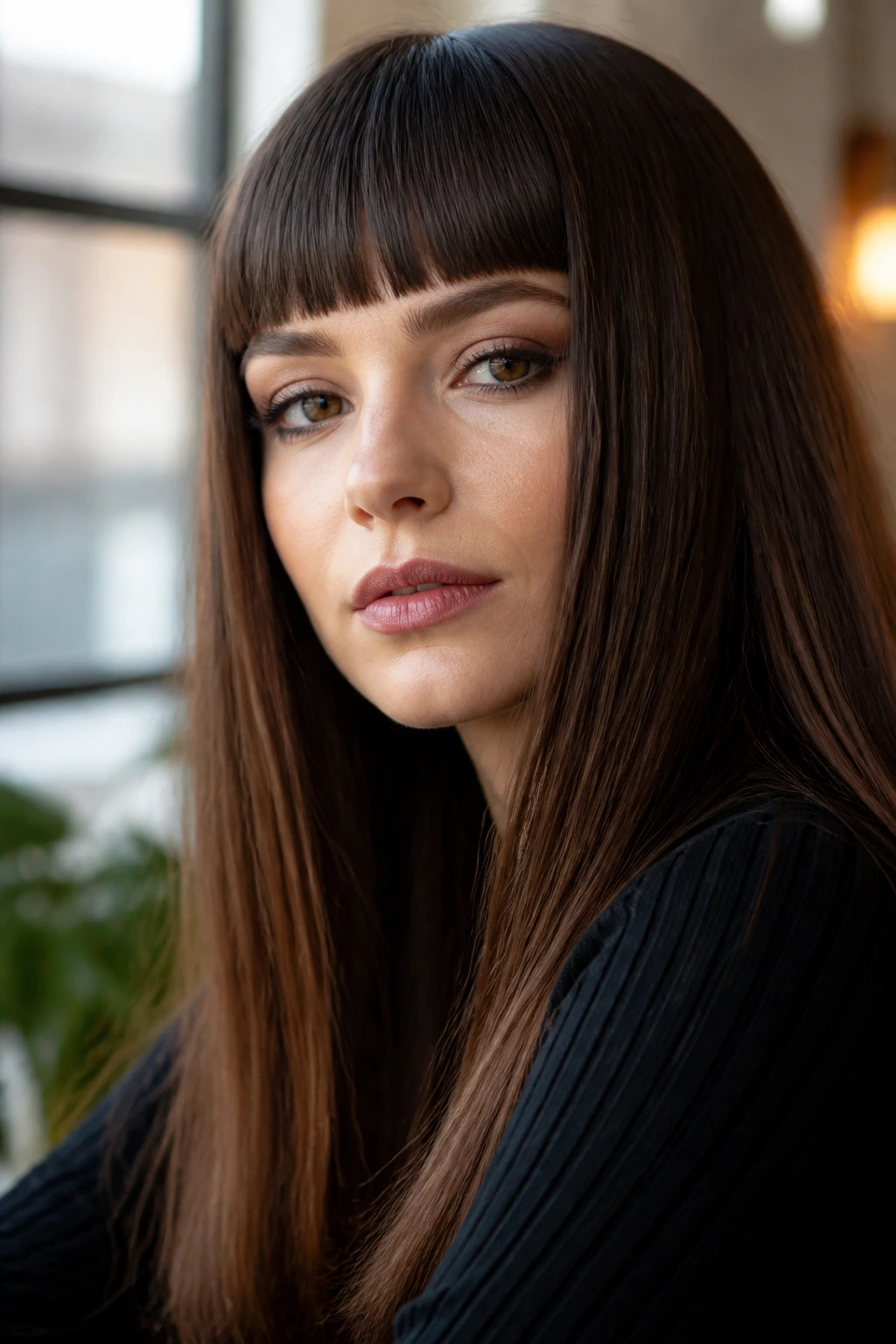
Blunt bangs are not shy. They draw a clean horizontal line across the face, and on long hair that line can look striking in a way shorter cuts sometimes cannot pull off. The length behind the fringe gives the whole style a sense of contrast, which is why the cut feels so specific and strong.
There’s a reason blunt bangs need real commitment. They show every little mistake. If the line is uneven, you’ll see it. If the density is off, you’ll feel it. But when they’re cut well, the result is crisp: heavy enough to feel graphic, soft enough at the edges to sit with long layers instead of fighting them.
This style is best if you like your hair to have a bit of structure. It’s also useful if you want your eyes to be the main event. Keep the rest of the long hair smooth or softly bent, and let the fringe stay the sharp part. A tiny bend under at the ends can keep the line from looking helmet-straight.
6. Micro Bangs for Long Hair With Attitude
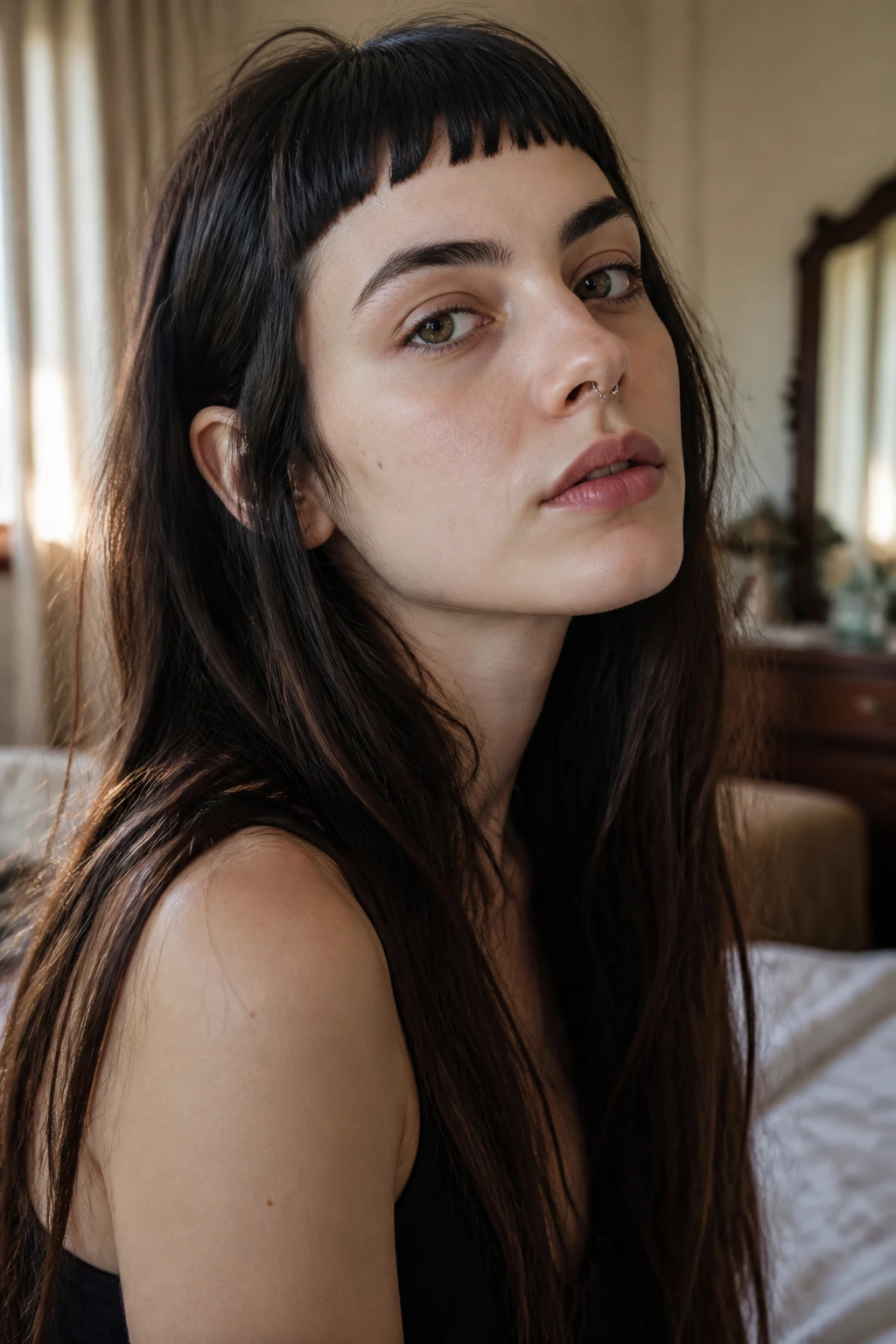
Micro bangs are the most opinionated option in the group. They sit high on the forehead, usually well above the brow line, and they change the mood of long hair fast. The length behind them softens the shock a little, which is one reason they can look better on long hair than people expect.
The contrast is the whole point. Long lengths can make micro bangs feel intentional instead of accidental, because the rest of the hair balances the short front. If your hair is straight and your features are sharp, this cut can look almost graphic. If your hair is wavy, it can feel a little undone and artsy.
Who They’re Best For
- People who don’t mind a visible trim line every few weeks.
- Hairlines without a dramatic cowlick, unless you enjoy daily styling.
- Anyone who wants the fringe to stand out more than blend in.
The downside is obvious: micro bangs are high maintenance. If they’re cut too short, there’s no hiding it. If you want the style, ask for tiny adjustments instead of a big chop, then live with them for a day before making them even shorter.
7. Feathered Bangs That Break Up a Heavy Length
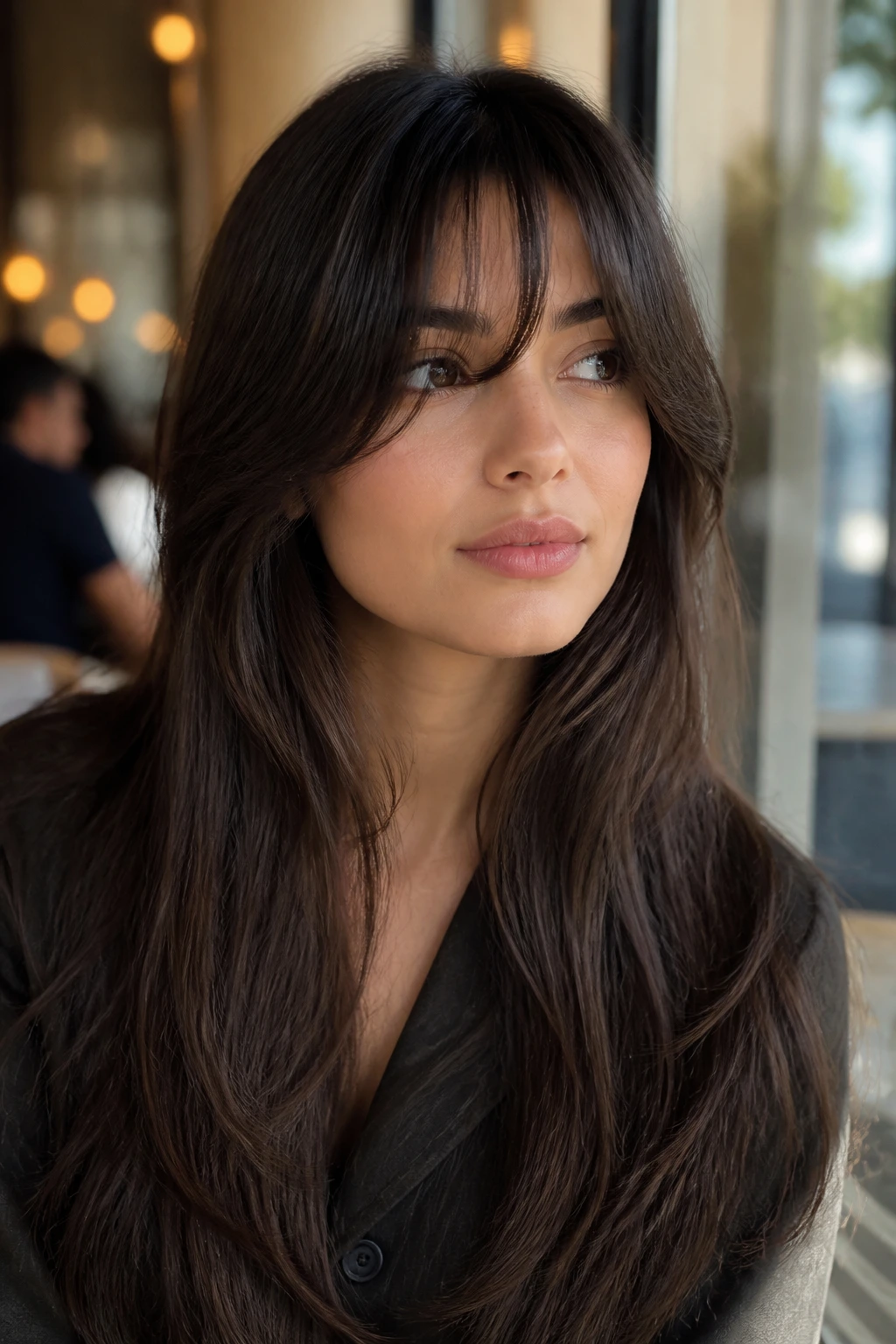
Feathered bangs feel like the fringe version of a good layered cut. They’re soft at the edges, with ends that taper instead of stopping in a hard line. On long hair, that matters because the rest of the length already carries visual weight.
This style is especially useful for thick hair. The feathering removes some of the bulk around the forehead, which keeps the fringe from looking like a thick shelf. It also helps long hair move. A feathered fringe doesn’t sit flat and stiff; it sways a little, especially if the layers behind it have been cut with similar softness.
Ask your stylist for controlled texture, not ragged thinning. There’s a difference. Feathering should lighten the front without making it see-through in weird patches. If the hair is naturally dense, the goal is to release the shape, not shred it.
A tiny round-brush bend and a bit of cool air can make this style behave for most of the day. Not forever. Just long enough.
8. Choppy Textured Bangs With a Bit of Edge
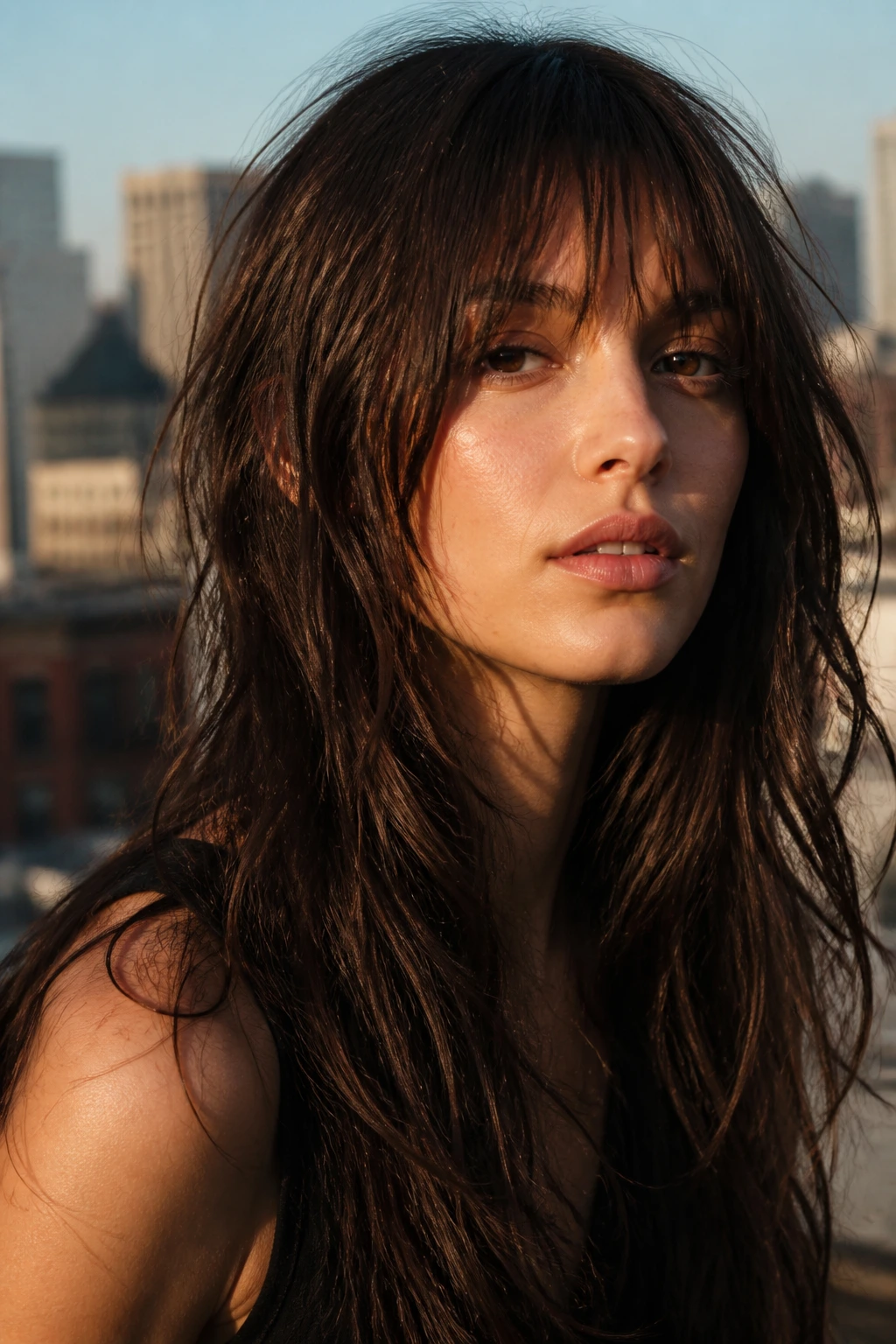
Choppy bangs are for people who want the front of the haircut to look piecey rather than polished. The ends are cut with a bit of irregularity, which gives the fringe a lived-in feel that sits well against long, layered hair.
The trick here is restraint. Too much chopping and the fringe starts to look like it was hacked at with kitchen scissors. Too little and it becomes a blunt line with no energy. Good choppy bangs have small variations in length, enough to break up the surface and let a little forehead peek through.
They’re a solid match for long shag cuts, undone waves, and air-dried texture. If your hair likes to separate naturally, this style works with that instead of demanding a smooth blowout. A small amount of texturizing paste on the very ends can help, but keep it light. Heavy product kills the movement fast.
This is one of those styles that looks best when it isn’t too perfect. Which is annoying advice, I know. Still true.
9. Birkin Bangs That Sit Softly and a Little Messy
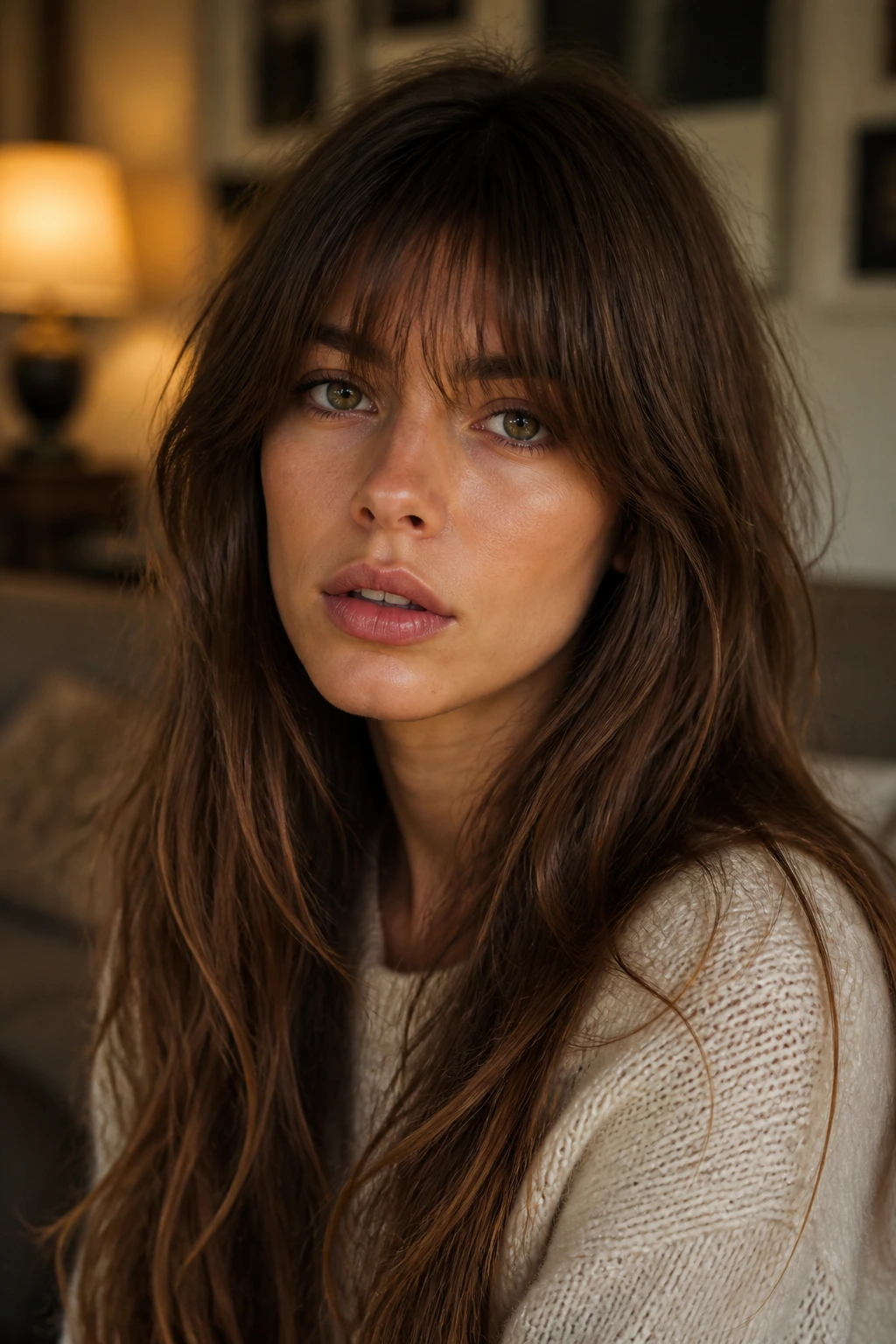
Birkin bangs have that French-girl reputation, but the real appeal is simpler: they look like real hair. The fringe is full enough to matter, soft enough to move, and long enough to brush the brows without pinning them down in place.
On long hair, Birkin bangs make the whole cut feel relaxed. They work especially well if the rest of the hair is lightly layered and a little undone around the ends. The fringe shouldn’t be razor-sharp. It should look touchable, with a small amount of split and texture so it doesn’t sit like a solid bar across the face.
If your hair is thick, ask for the weight to be removed carefully underneath the top layer. If it’s fine, ask for enough density to avoid a stringy finish. That’s the balancing act. Too thin and they disappear. Too full and they lose the softness that makes the style appealing.
The best Birkin bangs don’t look newly cut for long. They settle in quickly, which is half the charm.
10. Shag Bangs That Keep the Length but Lose the Stiffness
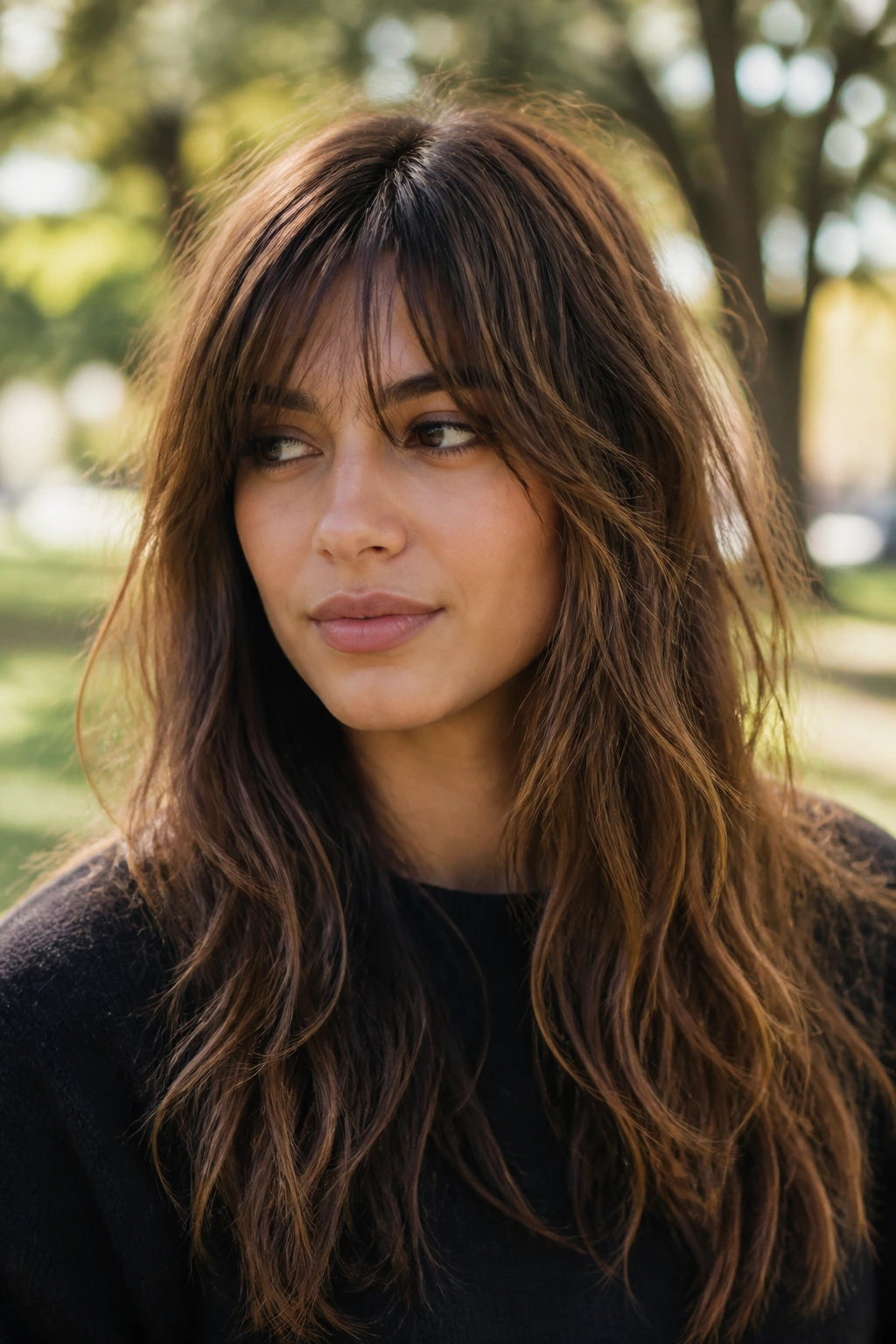
Shag bangs are what happen when fringe stops trying to be neat. They usually arrive with lots of texture, uneven lengths, and a little overlap into the face-framing layers. On long hair, they make the cut feel looser and more alive, especially if the length is already layered.
This style is a natural fit for wave, curl, and bend. Straight hair can wear it too, but it needs a bit of rough drying or a quick bend with a flat iron to keep the shape from looking limp. The beauty of shag bangs is that they don’t insist on one perfect placement. They’re allowed to move around.
The fringe often blends into the sides faster than curtain bangs do, which gives the whole haircut a more casual shape. If your long hair feels heavy at the front, this is one of the fastest ways to break it up without losing length.
The usual warning applies: if you want the shag effect, ask for texture with purpose. Random thinning is not texture. Those are different things.
11. Crescent Bangs With a Soft Curve Across the Face
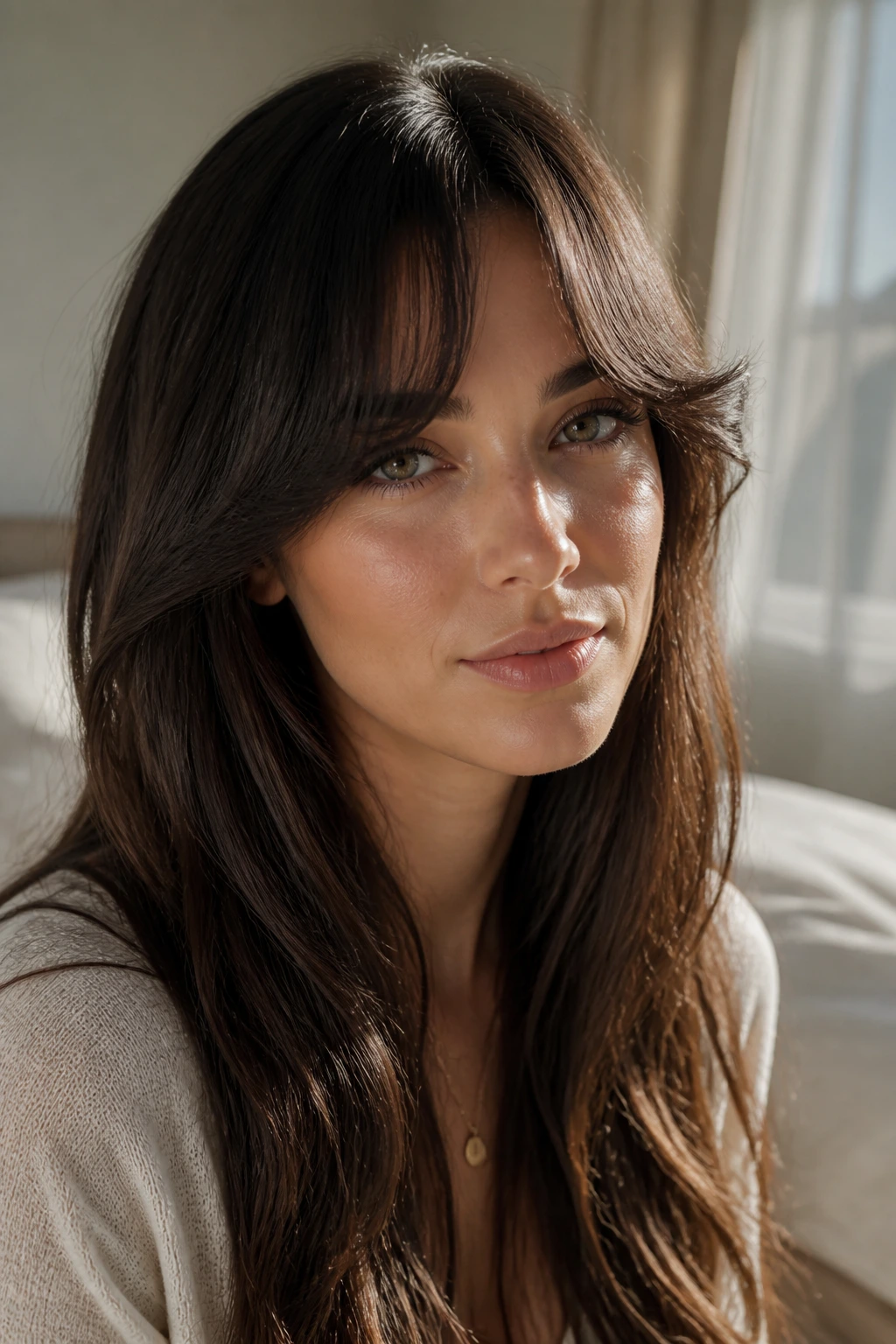
Crescent bangs sweep in a gentle curve, usually shorter in the center and longer at the edges, but with a more rounded line than a standard curtain fringe. On long hair, that curve can make the face look framed rather than divided.
The shape works because it echoes the natural roundness of the head and brows. It’s a quieter version of a strong fringe, which makes it useful for people who want definition without a hard edge. If curtain bangs feel too linear and blunt bangs feel too straight, crescent bangs sit somewhere in between.
They’re especially nice on long hair with layers that start around the cheek. The center opens the face, and the longer sides help the rest of the haircut fall forward in a controlled way. If you wear your hair half up often, this fringe still has a shape even when some of it gets pinned back.
A little round-brush curve under the ends is enough. Don’t overdo it or you’ll flatten the softness that makes the style work.
12. Arched Bangs That Follow the Brow Bone
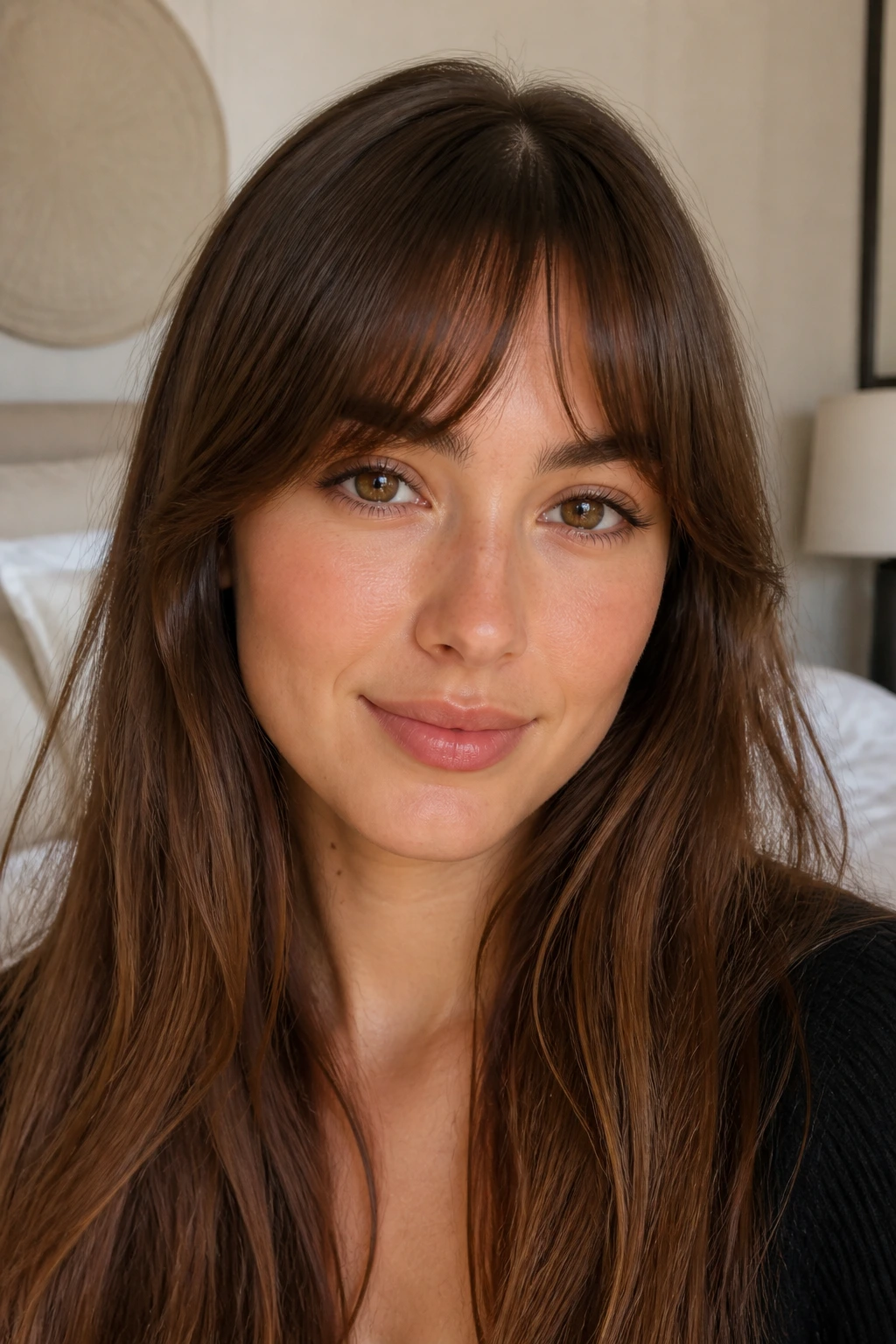
Arched bangs are shaped to mirror the brow line, which gives them a graceful, face-following feel. They’re not as straight as blunt bangs and not as open as curtain bangs. On long hair, that middle-ground shape can feel polished without becoming stiff.
The arch matters most when you want the eyes to stay visible. A cut that rises a bit in the center and softens at the sides can make the whole fringe feel lighter, even if there’s enough density to cover the forehead. It’s a nice choice for people who want shape but not drama.
Because the line is curved, it can sit well with long layers and soft waves. The hair around the face doesn’t have to be perfectly sleek for the style to work. It does need a tidy edge, though. If the arch gets crooked, you’ll notice it immediately.
This one rewards a careful stylist more than a brave one. There’s a difference.
13. Face-Framing Fringe That Starts at the Temples
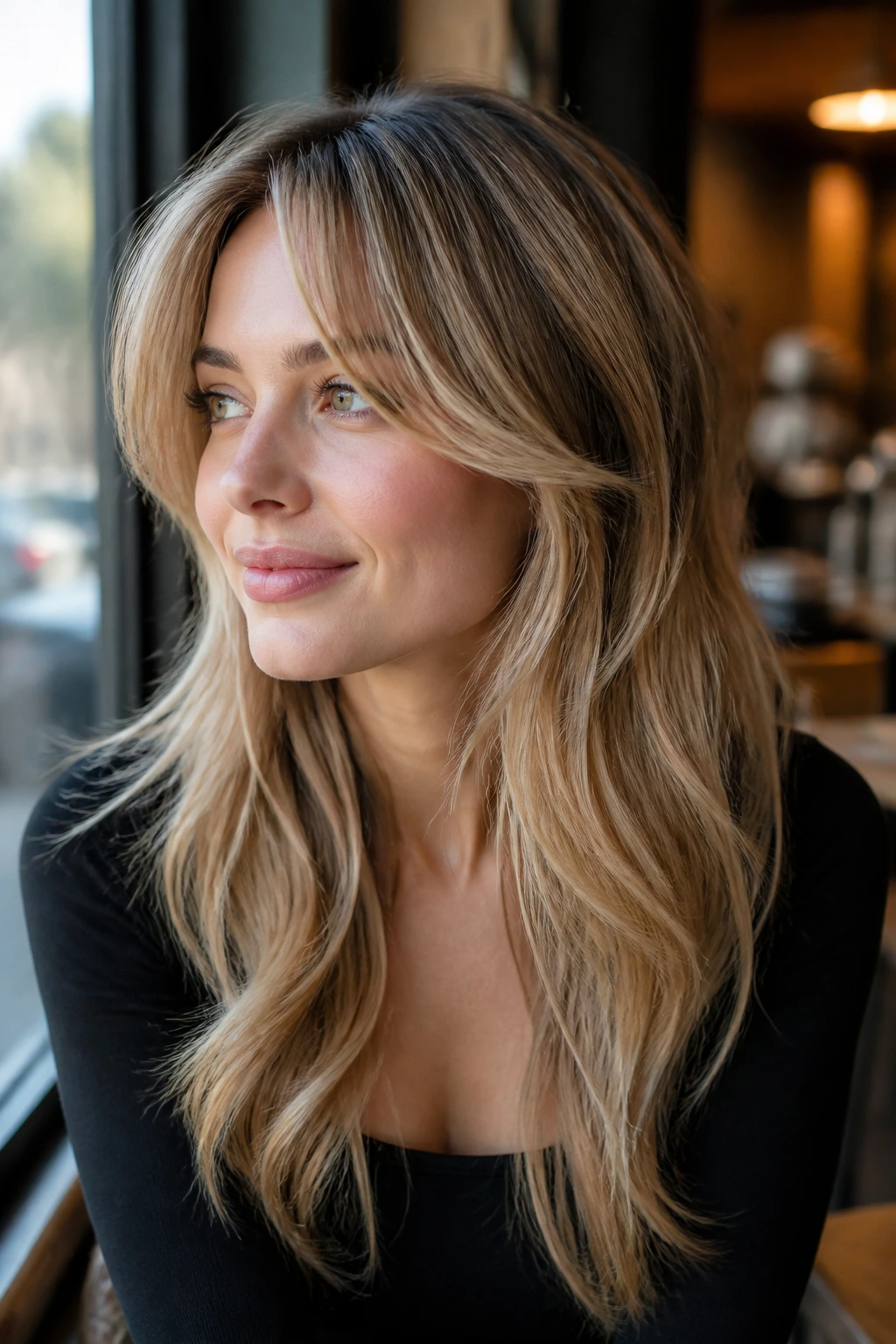
This is not a classic bang in the forehead sense. It’s more of a fringe that begins at the temples and drapes down into the rest of the long hair, which is useful if you like the idea of bangs but not the feeling of hair on your forehead all day.
Face-framing fringe works especially well with long, layered cuts because it picks up the motion already happening in the lengths. It can soften a jawline, slim the sides of the face a little, and give the haircut a more designed shape without changing the front too much.
The styling is forgiving. You can curl those temple pieces away from the face, tuck them behind one ear, or let them fall into the rest of the hair. If you’ve got a high forehead or you’re growing out a different fringe, this is a smart compromise. You still get shape. You just don’t have to babysit it.
I like this option for people who want a whisper of bangs rather than a headline.
14. Long Layered Side Fringe for Easy Grow-Out
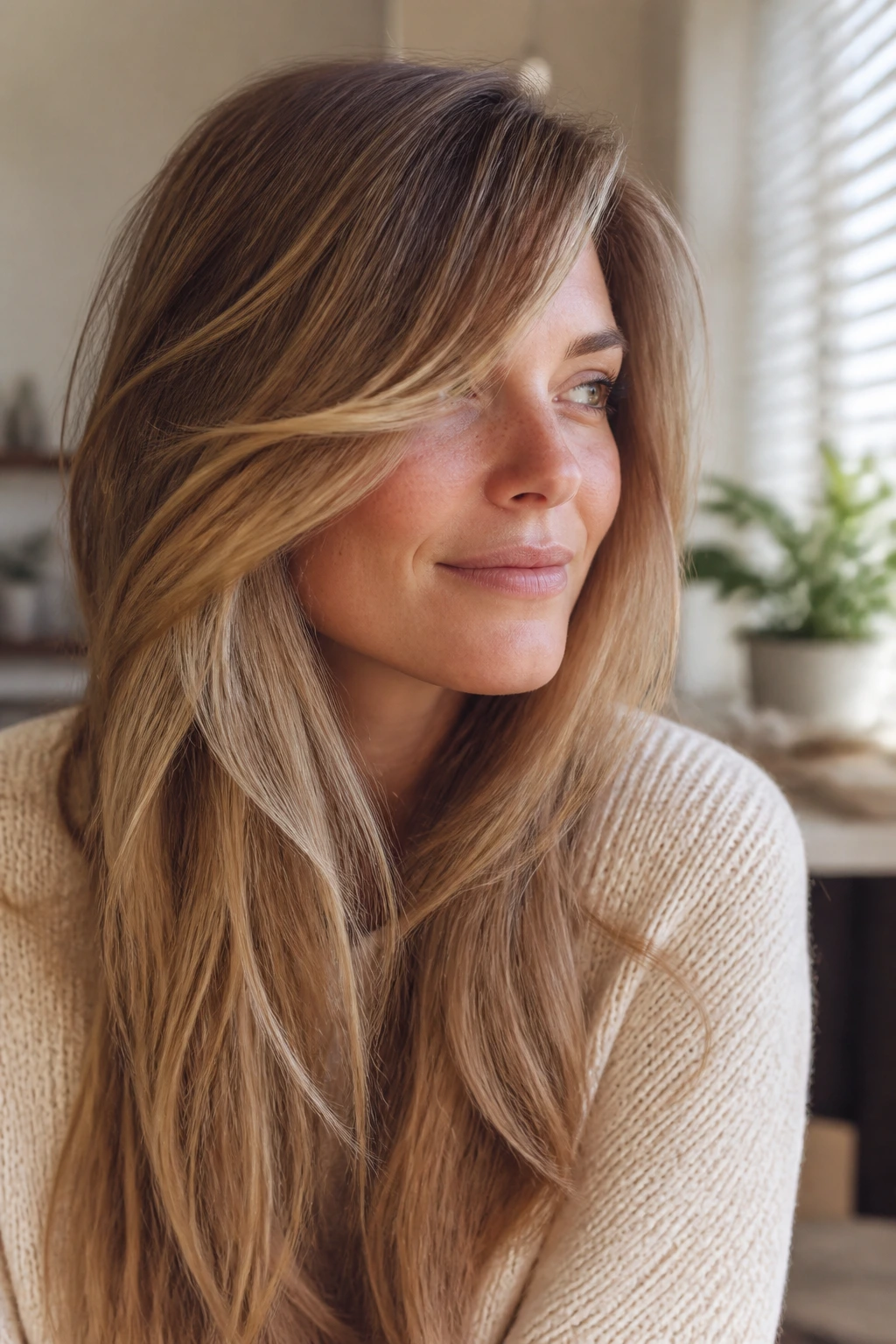
Long layered side fringe is the sensible choice, and I mean that as praise. It starts off looking like a side-swept bang, but the pieces are cut long enough that they can live inside the rest of the hair when you stop styling them every morning.
On long hair, that matters because the grow-out phase is usually where people get annoyed and reach for pins. This style makes the in-between stage less ugly. The front pieces can tuck into layers, bend across the cheek, or fall into a side part without creating a hard shelf.
It’s also one of the more workable options if your hairline has a stubborn cowlick or if your hair is thick enough to puff when cut too short. Ask for graduated length rather than a single blunt side sweep. That way, the fringe moves with the haircut instead of sitting on top of it.
If you want bangs but hate the feeling of “I have bangs now and I must maintain them,” start here.
15. Curly Bangs That Work With Shrinkage, Not Against It
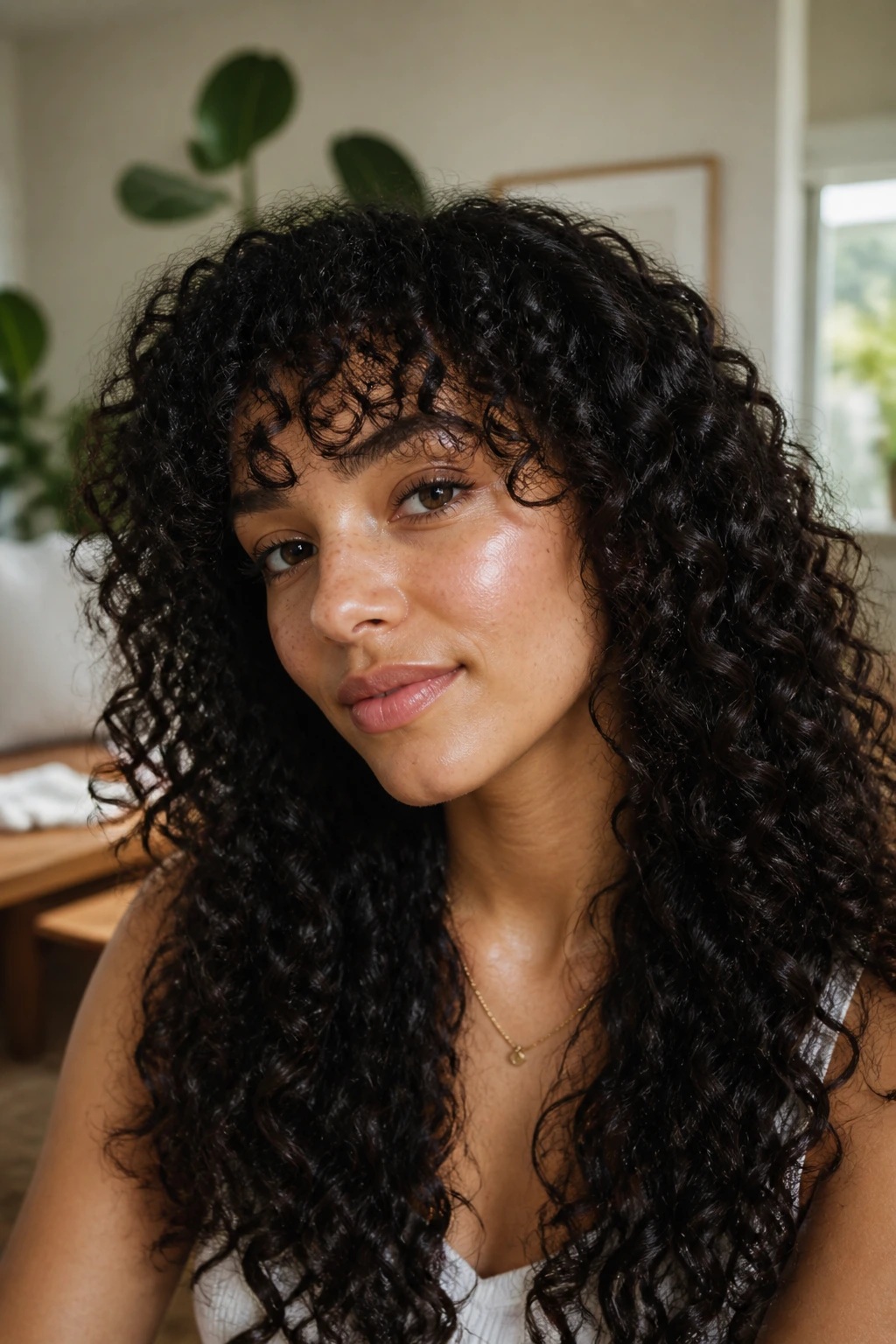
Curly bangs look best when the cut respects the curl pattern from the start. The front pieces should be cut dry or nearly dry, so the stylist can see how much the curls spring up once they leave the chair. That one detail makes a huge difference.
On long curly hair, bangs can be gorgeous because they give the face a frame that the length alone doesn’t always provide. The curl pattern softens the line, which means the fringe can feel playful, romantic, or a little wild depending on how dense it is. The main thing is placement. If they sit too short, they bounce up. If they sit too long, they vanish.
What to Ask For
- Cut for shrinkage, not against it.
- Keep the weight balanced so the curls don’t separate into three sad tendrils.
- Leave enough length that they can coil and still hit the brow or cheekbone.
Use a diffuser on low heat, then stop touching them. Seriously. Curly bangs hate being fussed with while they dry.
16. Rounded Fringe That Hugs the Eyes
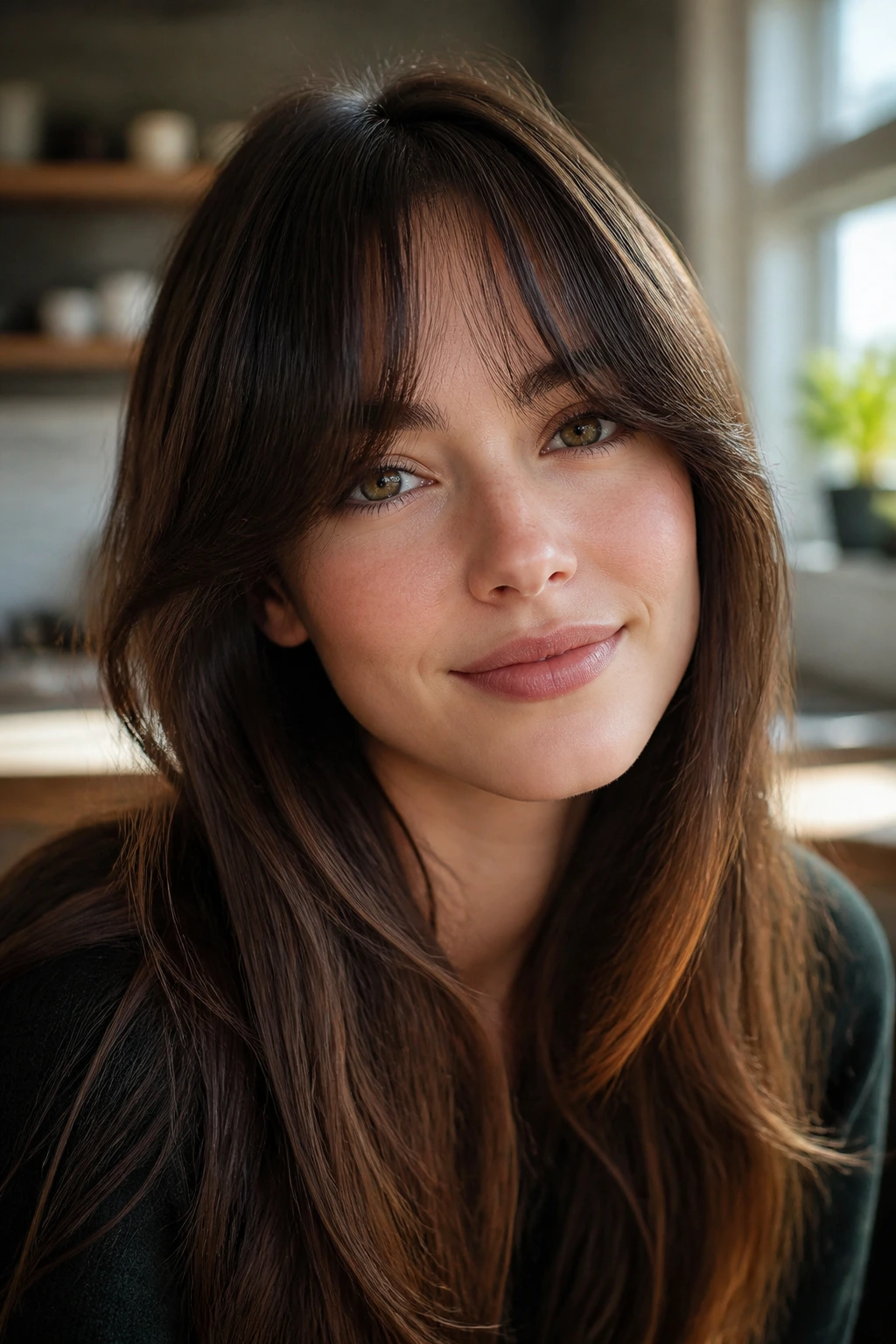
Rounded fringe has a soft U-shape that sits lower at the center and arcs upward toward the sides. It feels a little old-school in the best way, and long hair gives it room to look deliberate instead of costume-y.
This shape can be beautiful on thick straight hair because the density helps the curve hold. It also works with long layers when you want the front to feel fuller without becoming a blunt wall. The rounded line draws the eye inward, which gives the face a gentle frame.
If you have a strong cowlick, though, this one can turn into a daily negotiation. The curve needs some discipline at the root. A small flat brush or a tiny round brush is usually enough, but you do need to direct the hair while it cools. If you skip that part, the fringe may decide to split in the middle and do its own thing.
It’s a lovely choice if you want softness with shape. It just asks for a bit of respect in the morning.
17. Split Fringe With a Center Part Built In
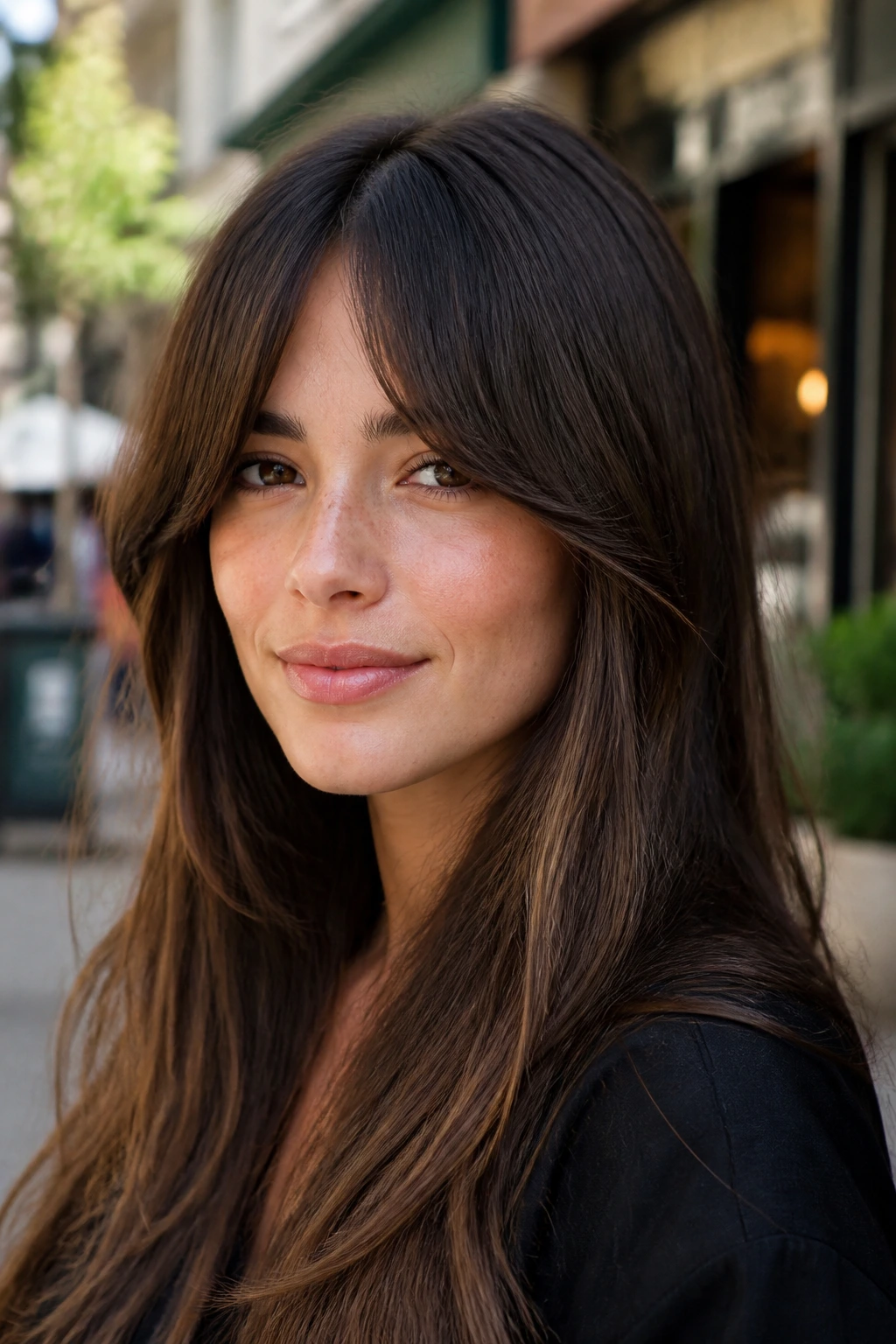
Split fringe is basically a fringe that already knows it wants to part down the middle. That makes it feel looser than a true bang and more structured than ordinary face-framing layers. On long hair, the shape blends especially well because the two sides can join the rest of the length without much fuss.
This style is smart if you like the look of curtain bangs but want more obvious separation at the center. It can also be a relief for anyone with a stubborn widow’s peak or a center cowlick, because the cut works with that natural split instead of arguing with it.
The styling is low-stress. Dry the center away from the face, then let each side fall into place. If the pieces are a little uneven, that’s part of the charm. What you want is movement, not symmetry so perfect it looks robotic.
A split fringe tends to age well through the day, which is more useful than it sounds. By noon, a lot of fringe styles have lost their shape. This one usually hasn’t.
18. See-Through Bangs for a Light, Airy Finish
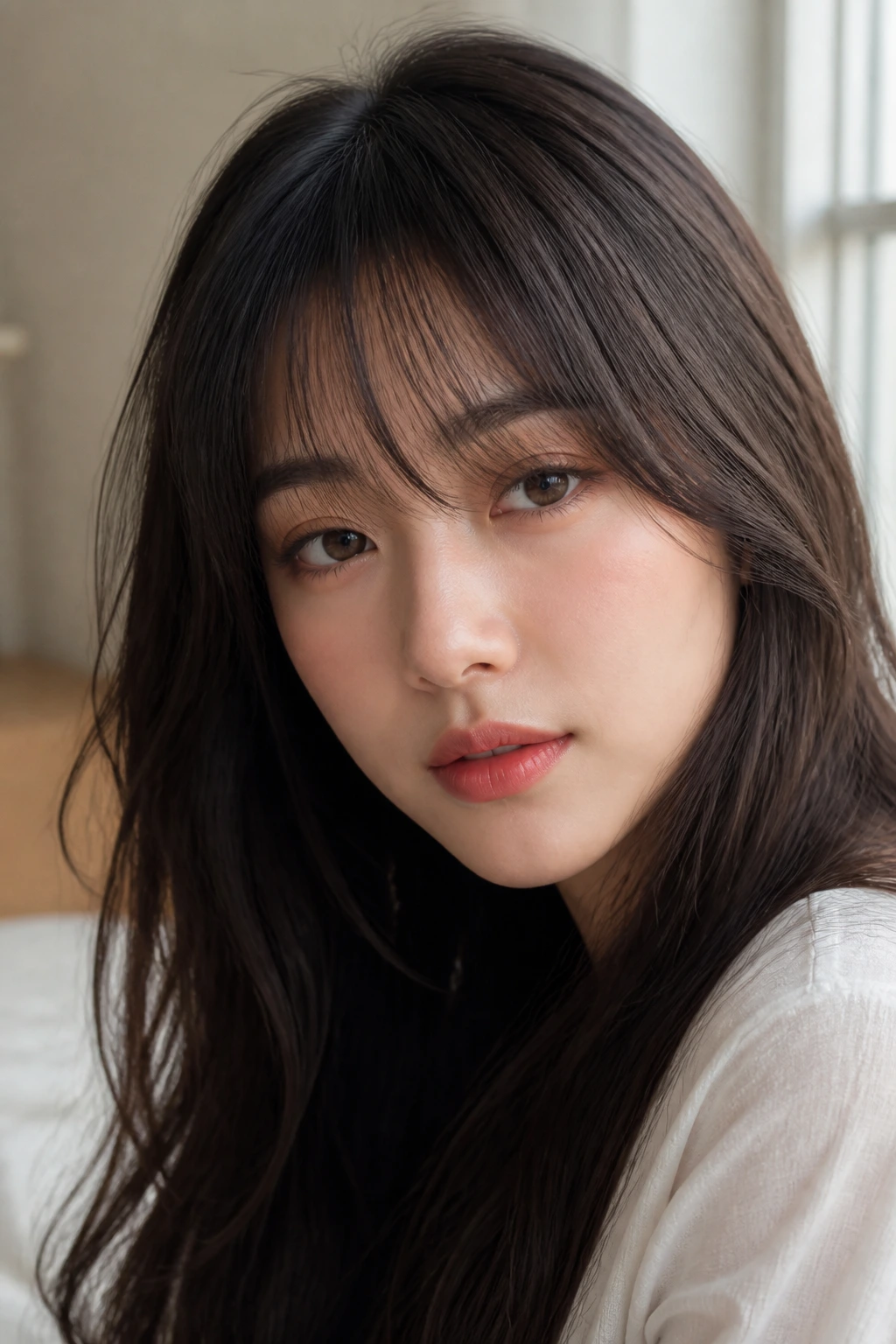
See-through bangs are thin on purpose. You can see some forehead through them, which keeps the fringe light and stops long hair from looking overloaded at the front. They’re common in softer, more delicate cuts because they add a touch of shape without density.
On long hair, they work best when the length is already doing most of the visual work. The fringe just takes a little pressure off the face. If your hair is thick, you’ll need the front section carefully thinned so it doesn’t turn bulky. If your hair is fine, the challenge is the opposite: the fringe has to stay sparse without looking limp.
- Keep the root dry and the ends airy.
- Use a tiny amount of mousse or light styling cream.
- Avoid heavy oils near the forehead; they flatten the piecey separation fast.
This style is not for anyone who wants full coverage. It is for people who like the suggestion of bangs more than the commitment.
19. Grown-Out Fringe That Still Looks Intentional
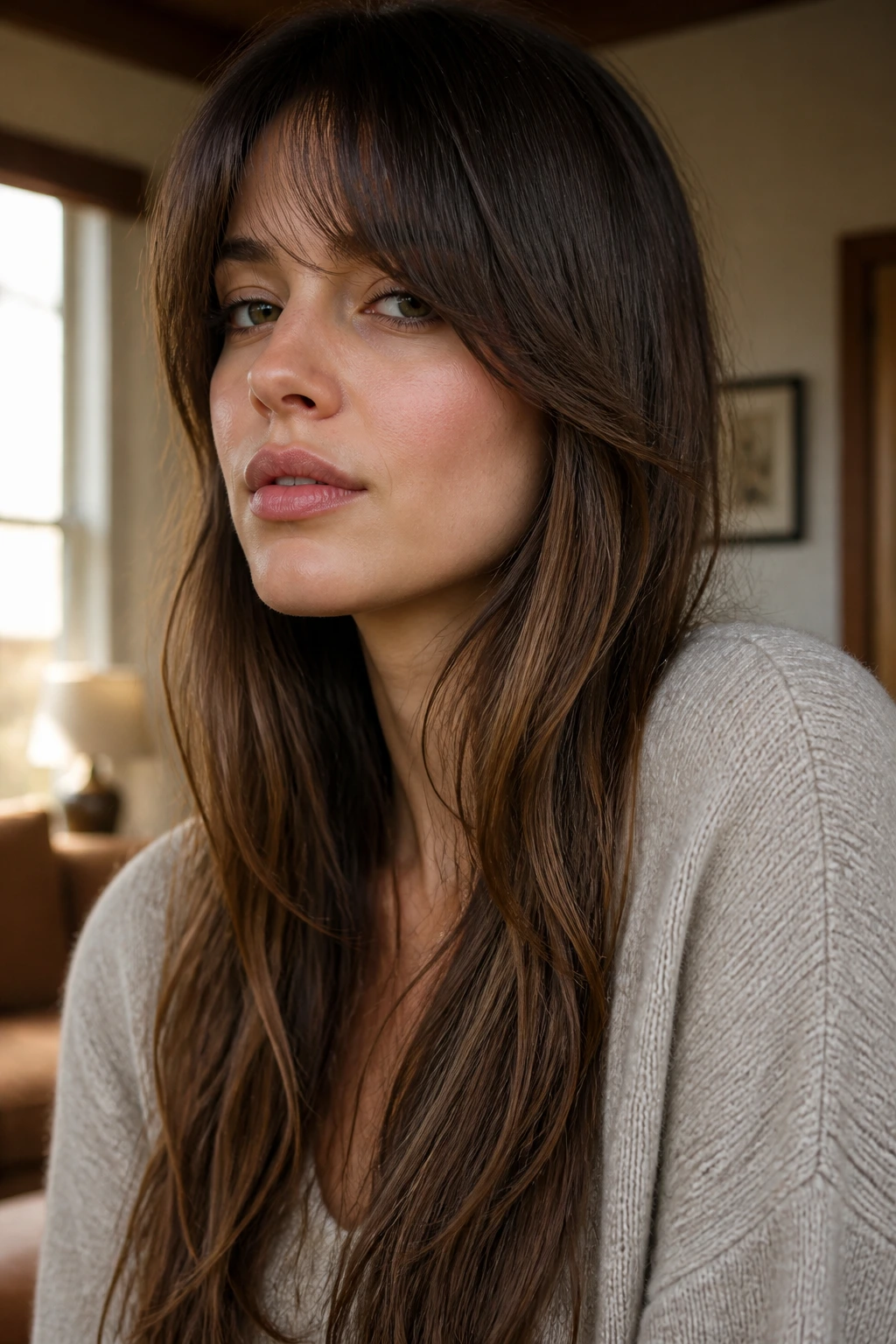
Grown-out fringe gets ignored, which is a shame. A lot of people think they’re in an awkward stage when they’re really in a style stage. Once bangs pass the brow and start grazing the cheekbone or lip line, they can be shaped into soft side pieces, middle-part curtains, or long temple layers that look planned.
That’s the beauty of long hair. It gives the front pieces somewhere to go. Instead of fighting the grow-out, you can let the fringe fold into the length and keep the whole haircut looking relaxed. Sometimes the grown-out version looks better than the original cut because it has more motion and less fuss.
If you’re tired of constant trims, this is where you live for a while. Ask your stylist to keep the sides long enough to tuck behind the ears or part through the center without leaving a hole. That gives you options. Options matter.
Not every good fringe is fresh from the chair. Some of the best ones are a little past their prime and wearing it well.
What Makes Bangs for Long Hair Feel Different
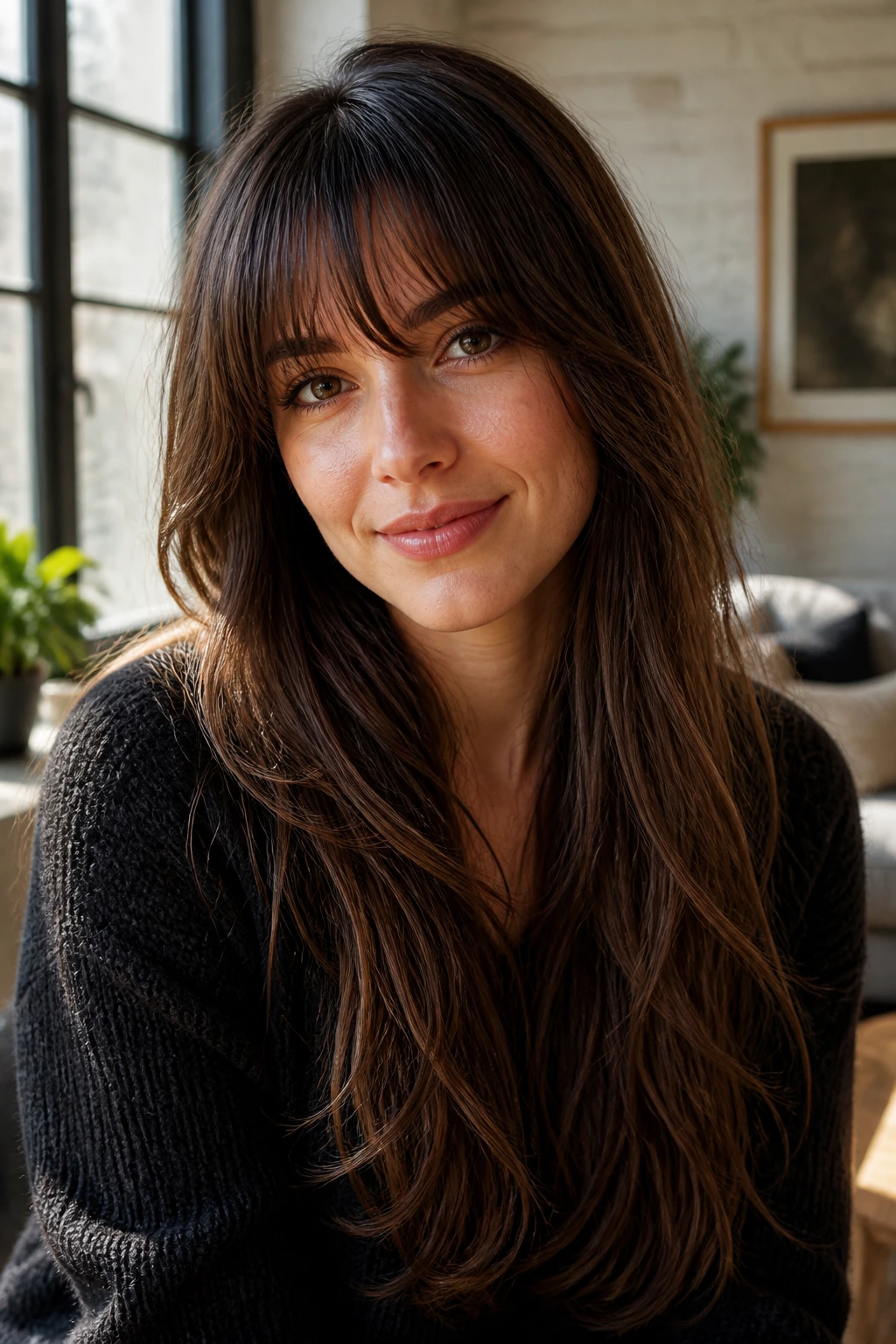
Long hair changes the visual math. A bang on a bob stops the eye. A bang on long hair has to cooperate with a much larger shape, which means the front section can be stronger, softer, or more textured depending on how much contrast you want to create. That’s why a blunt fringe can feel dramatic on long hair without looking severe, while a curtain fringe can make the entire cut feel lighter even if the length stays untouched.
The weight of the rest of the hair matters too. Long, dense hair can make the front feel small if the fringe is too narrow. Fine long hair can make a fringe look too heavy if the cut packs in too much density. That’s why the same reference photo can work beautifully on one person and behave badly on another. The front pieces need to match the mass behind them.
There’s also a practical side to this. Long hair gives you more ways to cheat. You can tuck, pin, clip, bend, part, or braid around the fringe if you need a break. That flexibility is one reason long hair with bangs survives so many phases. The cut can be glamorous one day and casually hidden the next. Useful. Not flashy. Useful.
Tools That Make Fringe Easier
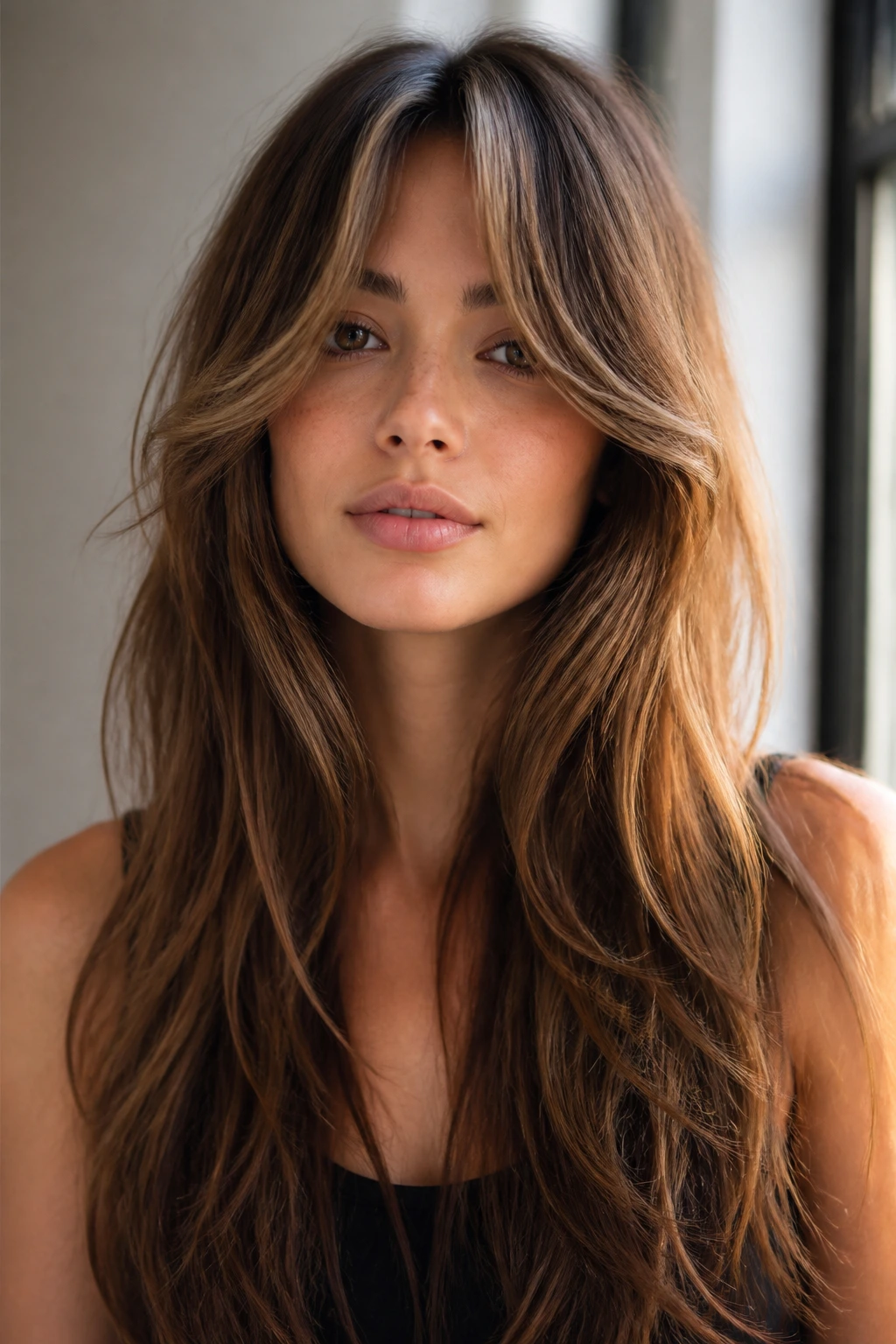
You do not need a drawer full of gadgets, but a few specific tools make bangs for long hair far easier to live with.
- A small round brush: A 1-inch to 1.5-inch brush bends curtain, bottleneck, and rounded bangs without creating a giant curl.
- A blow dryer with a concentrator nozzle: This lets you aim the airflow at the roots instead of blasting the fringe every direction at once.
- A fine-tooth comb: Useful for parting, separating, and checking whether the center is actually centered.
- Duckbill or section clips: These keep the long lengths out of the way while you dry just the front.
- A mini flat iron: Helpful for blunt, micro, or side-swept fringe when you only need a tiny bend.
- Light texture spray or dry shampoo: Adds grip to wispy, see-through, or grown-out fringe without dragging the front down.
- A small roller or velcro brush: Handy when you want the bang to cool in place after a blow-dry.
If your hair is curly, add a diffuser. If your hair is very fine, skip heavy creams and stick to light mist products. Heavy hands are the enemy here.
How to Ask for the Right Fringe at the Salon
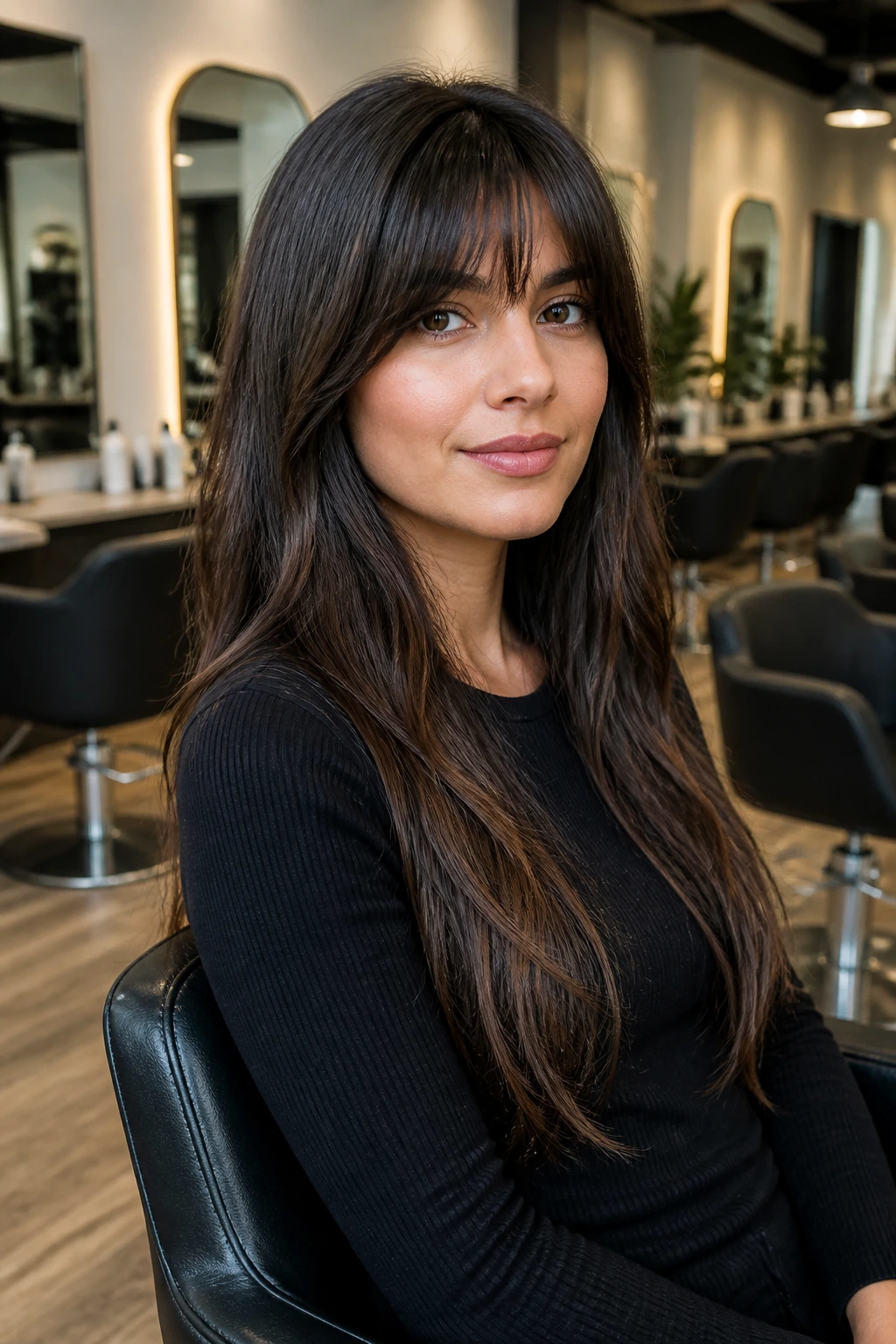
Bring photos, yes, but bring the right photos. A photo of thick bangs on someone with pin-straight hair says almost nothing if your hair is fine and wavy. Show examples of hair with a similar density, texture, and parting pattern. That saves a lot of awkward explaining after the first snip.
Tell the stylist where your cowlick lives. Seriously. If the front section flips up at the left temple, that changes where the shortest point should sit. Mention whether you wear your hair center-parted, off-center, pinned back, or always down. A fringe that works with your real routine is worth more than a prettier version you’ll avoid styling.
Ask how the cut is being made. Dry-cutting can help with curls and strong cowlicks. Point cutting softens edges. Heavy texturizing can remove too much weight if your hair is already fine. You do not need to speak salon jargon fluently, but saying, “I want the front to blend into my long layers without falling in my eyes all day,” gives the right signal.
And one more thing: ask for a little longer than you think you want. Bangs are easier to shorten than to grow back into shape.
A 5-Minute Routine That Keeps Bangs Lying Flat
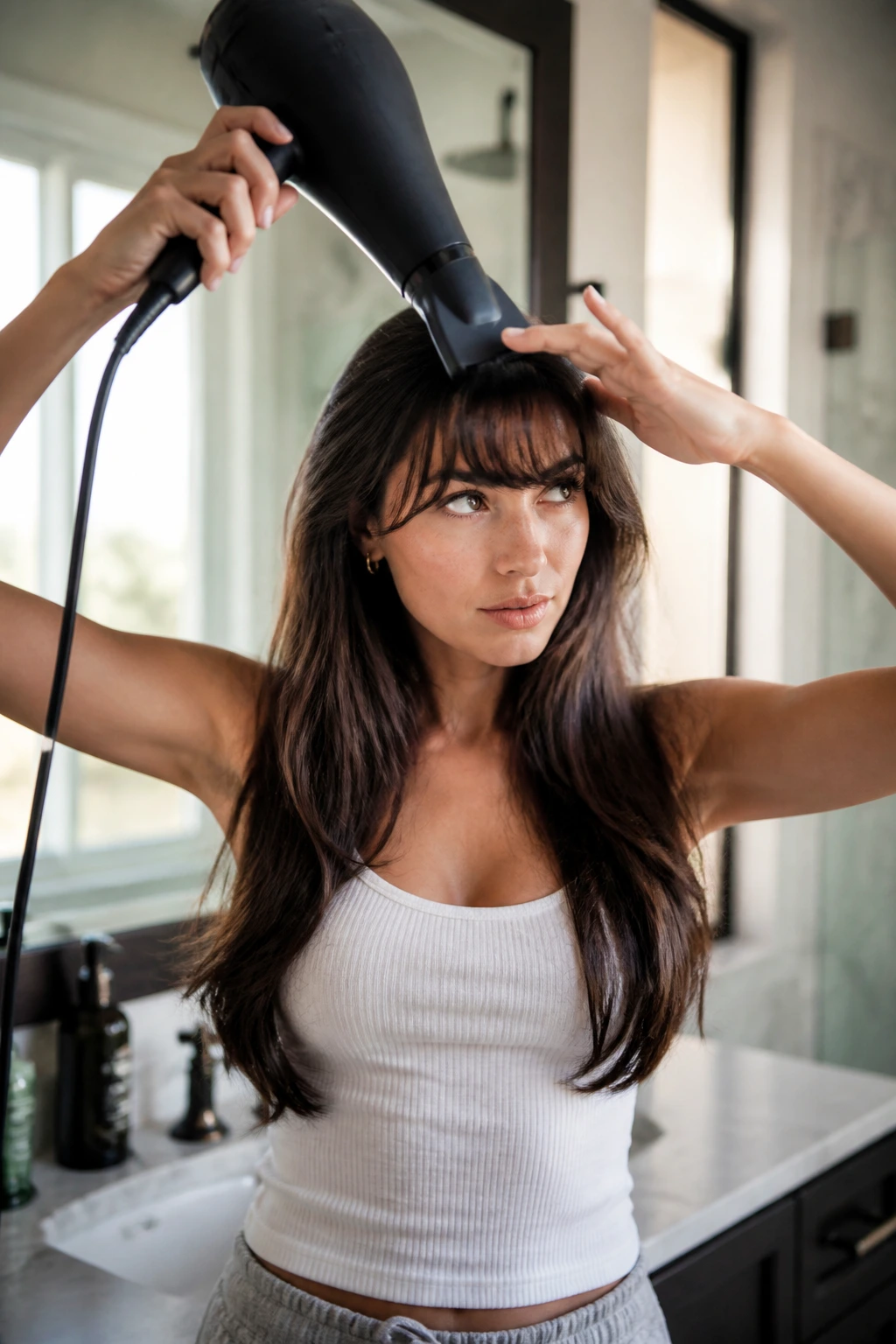
Start at the root: After showering or dampening the fringe, dry the root first with the nozzle pointed down and slightly side to side. The goal is to set direction before the hair dries in its own random shape.
Cool the bend: If you use a round brush, don’t yank the bang into a hard curl. Give it a soft bend and let it cool for a minute or two while clipped or held in place. Cooling matters more than most people think.
Use less product than you want to: A pea-sized amount of styling cream is usually enough for the ends of a fringe. Too much makes the front separate in oily ropes by lunchtime.
Reset before the day gets away from you: If the bangs fall flat, mist the root lightly with water or dry shampoo, then re-dry the front for 30 to 60 seconds. You do not need to redo the whole head. Just the front.
Sleep with a bit of lift: A loose clip at the crown or a soft pin at the fringe can stop bangs from being crushed overnight. If you wake up with a dent, a quick blast of warm air usually fixes it.
That’s the whole routine. Short. Repeated. Boring enough to work.
Mistakes That Make Bangs Fight Long Hair
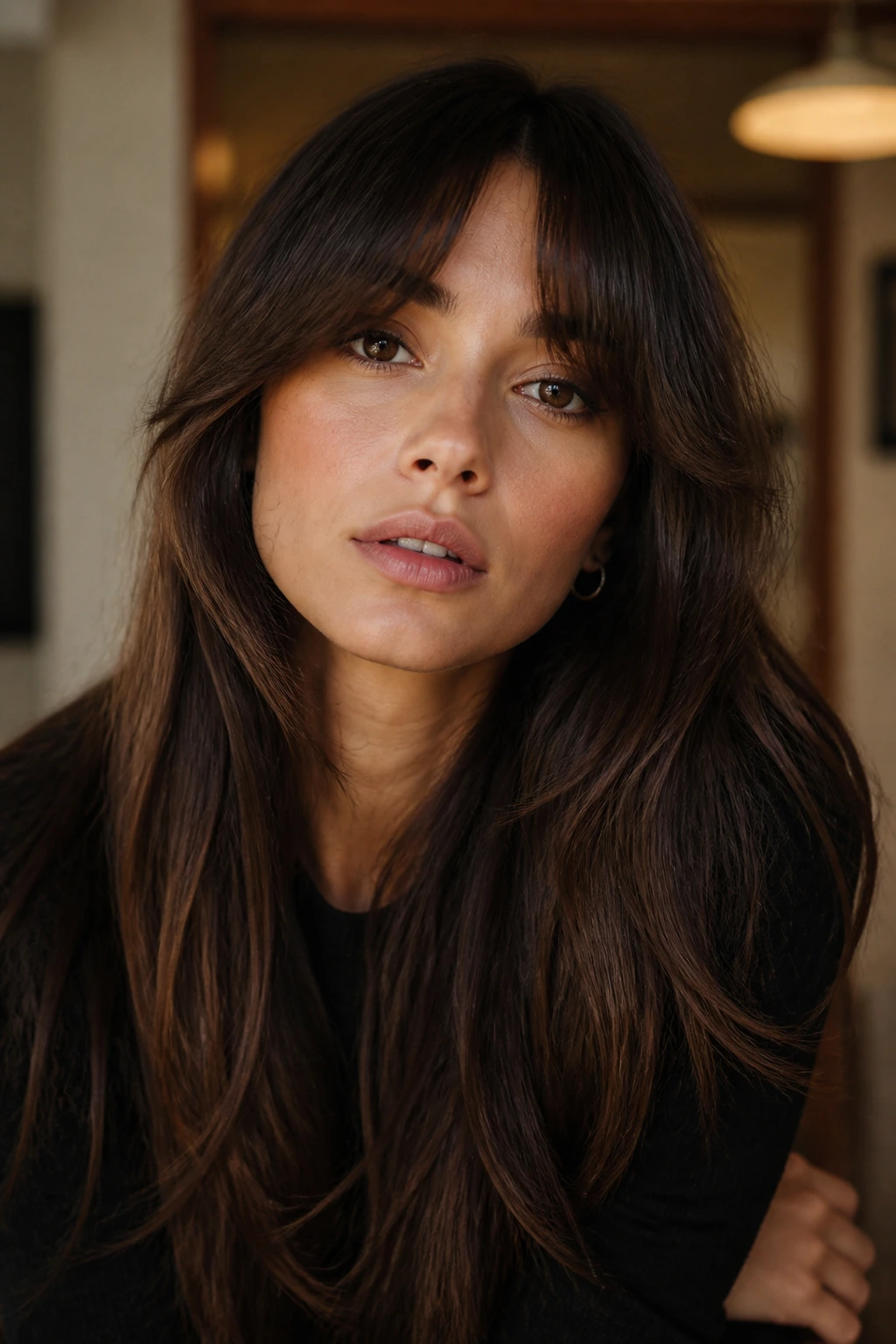
- Cutting the front too short on day one: Bangs often bounce up after drying, especially around a cowlick. The fix is to leave a little extra length and reassess after styling.
- Ignoring hair density: A fringe that’s too thick can swallow the face, while a fringe that’s too thin can look accidental. Ask for density that matches the rest of your hair, not the inspiration photo.
- Overloading the front with product: Oils, heavy creams, and too much serum make bangs separate and flatten fast. Use the smallest amount that gets the job done.
- Styling the fringe only after the rest of the hair is finished: By then, the front is usually dry in whatever shape it chose. Set the bangs first, then do the rest.
- Forgetting about the grow-out plan: A fringe that looks great for two weeks but turns miserable by week five is not a great plan. Pick a shape that can live longer than your patience.
Variations and Adjustments for Texture, Density, and Face Shape
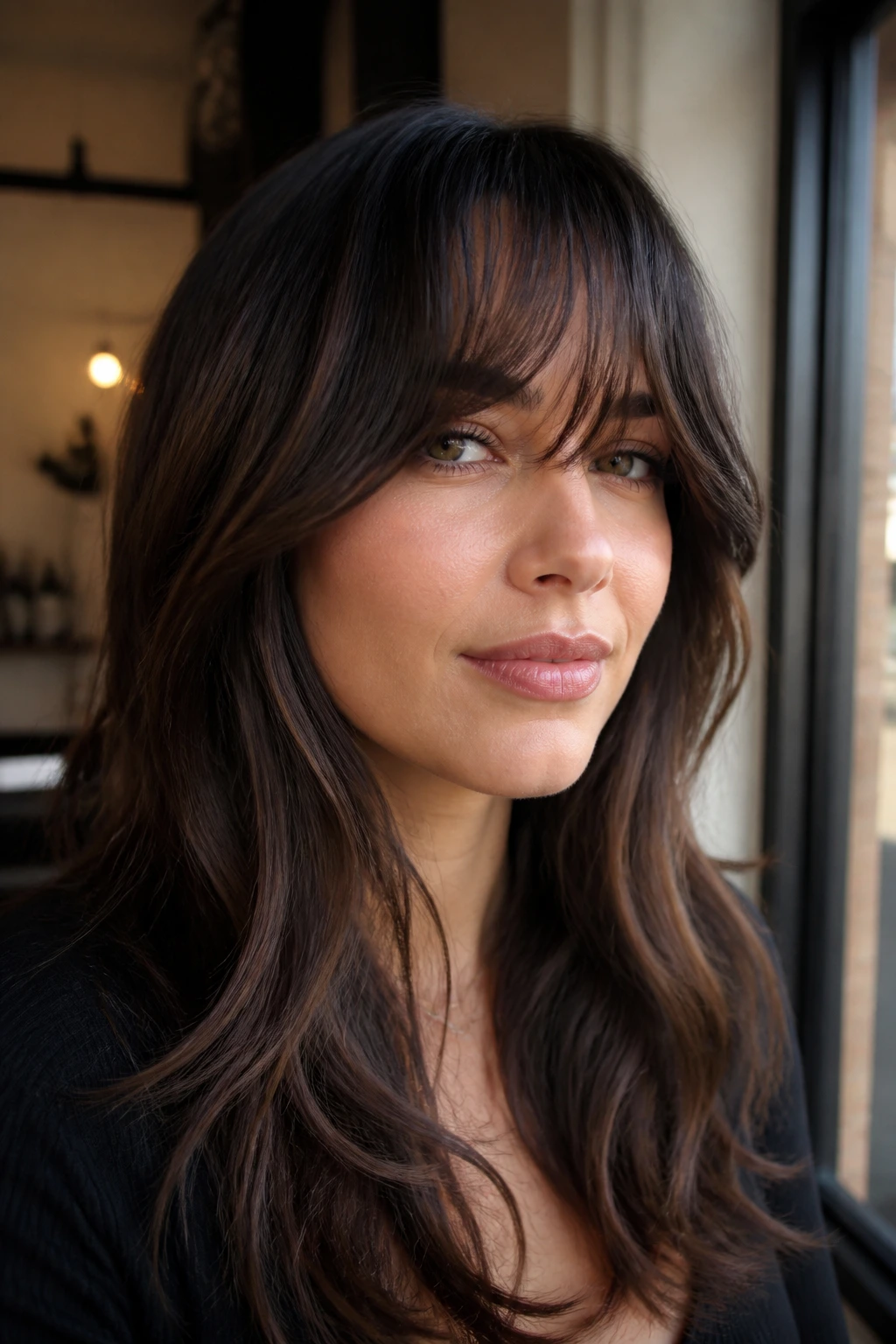
Soft-Landing Version: Ask for the fringe to start longer, with the shortest point around the nose or cheekbone instead of the brow. This is the easiest route if you’re nervous about the cut or if your hairline is strong enough to fight shorter pieces.
Dense-Hair Relief Cut: If your hair is thick, ask for internal weight removal and softer edges rather than a hard thinning pass. That keeps the fringe from puffing out like a triangle when it dries.
Fine-Hair Lifted Fringe: Keep the section narrow and the ends lightly textured. Fine hair loses presence fast, so a small, focused fringe often looks fuller than a wide one.
Curly-Hair Dry-Cut Plan: Let the stylist cut the bangs while your curls are in their natural state. That respects shrinkage and keeps the shortest piece from ending up two inches above where you wanted it.
Low-Commitment Grow-Out Version: Choose a shape that can fold into side layers or curtain pieces as it lengthens. This is the best option if you like the idea of bangs but hate regular trims.
Trim Timing, Grow-Out, and Day-to-Day Maintenance
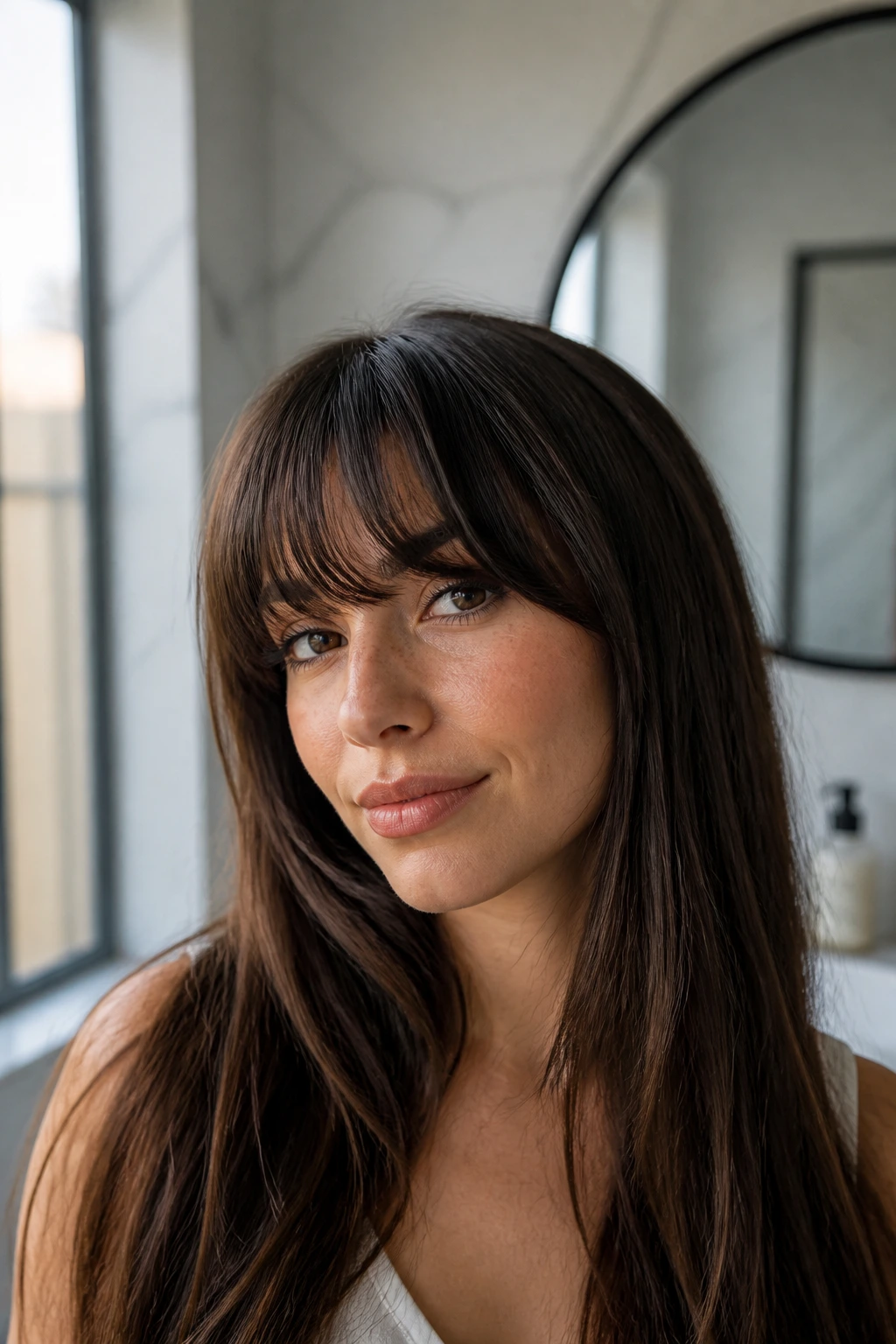
Blunt bangs and micro bangs need the shortest trim cycle, usually every 3 to 4 weeks if you want them to stay neat. Curtain bangs, bottleneck bangs, and side-swept styles can stretch longer, often 5 to 8 weeks before they start losing the shape that made them worth cutting in the first place. Curly fringe depends on the spring of the curl, but 6 to 8 weeks is a reasonable touch-up rhythm for many heads.
Greasy roots are the other maintenance issue. If your forehead gets oily, wash or refresh the front section separately every 1 to 2 days. A tiny sink wash just on the fringe often buys you another clean-looking day without dragging the rest of your hair through a full shampoo. Dry shampoo works best when you apply it before the bang looks greasy, not after it has already gone limp.
When you start growing bangs out, pin them at the temple, split them down the middle, or fold them into the front layers. Long hair gives you room to do that without looking unfinished. A strong grow-out plan keeps the awkward phase from turning into a hairstyle you resent.
Frequently Asked Questions About Long Hair with Bangs
Which bang style is easiest to live with on long hair?
Curtain bangs and side-swept bangs are usually the easiest because they blend into the rest of the length and don’t need perfect daily placement. They also grow out better than blunt or micro styles.
What bang style needs the least styling?
Wispy bangs, split fringe, and some grown-out fringe shapes need the least work. They don’t have to sit in one exact spot to look right, which means a quick finger-dry often does enough.
Can curly hair wear bangs with long hair?
Yes, but the cut has to respect shrinkage. A dry cut or nearly dry cut is usually the safer choice so the fringe lands where you expect once the curls spring back.
How short should bangs be when they’re first cut?
A little longer than you think. Bangs often rise after drying, and a cowlick can shove them higher than the comb suggested. It’s easier to trim more later than to wait out a too-short front piece.
Do bangs make long hair look shorter?
Sometimes, but not in a bad way. A fringe can break up the vertical line of long hair and make the cut feel more layered and shaped, which often looks better than one continuous curtain of length.
How do I stop my bangs from splitting down the middle?
Dry the roots in the direction you want them to sit, and avoid heavy products at the crown. If you already have a strong center split, ask for a fringe shape that works with it instead of against it.
Can I grow out bangs without looking messy?
Yes. Split them, pin them to the sides, or ask your stylist to shape the growth into face-framing layers. The messiest grow-outs happen when the front is left with nowhere to go.
Should I cut bangs at home?
Only if you’re trimming a tiny amount and you already know how your hair behaves. A full fringe cut is a lot easier to ruin than people think, especially with cowlicks or dense hair at the front.
Fringe That Still Feels Like You
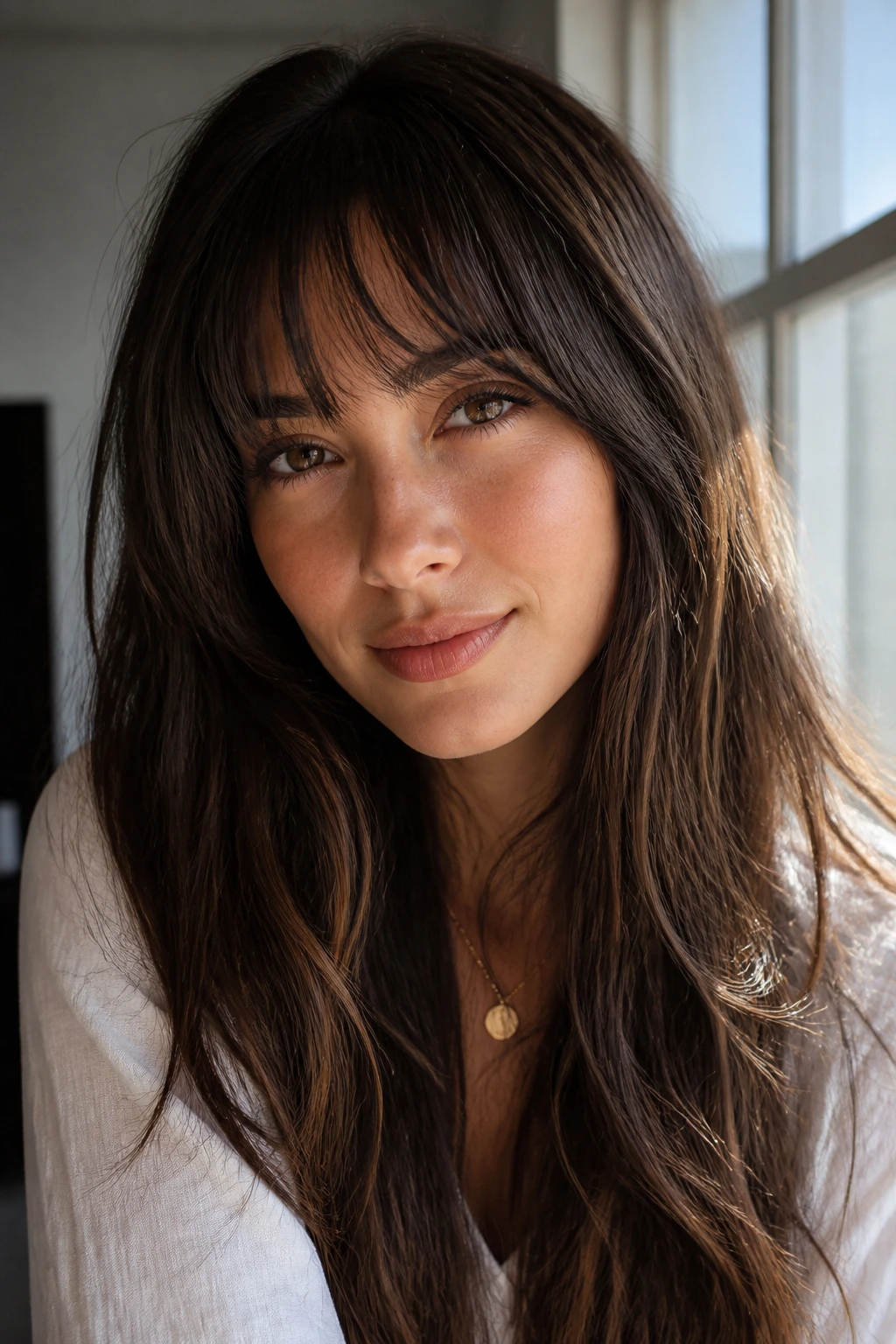
The best long-hair bangs are the ones that fit your actual hairline, not just the photo you saved on your phone. Some people need a blunt line. Others need a curve, a split, a soft bend, or a fringe that grows into layers before they even notice it’s changing.
Long hair gives you room to be practical about it. That’s the part people overlook. You can go softer, sharper, shorter, or more relaxed and still keep the length you love. Pick the shape that matches how your hair falls in the morning, not the one that only behaves under salon lights.
If you choose well, bangs stop feeling like a gamble and start feeling like part of the haircut. That’s the sweet spot, and it’s worth getting right.
