



Round faces can wear bangs, but the wrong fringe will make the face look broader before the styling cream has even had a chance to dry. A straight shelf cut too high on the forehead tends to pull the eye sideways. A smarter bang shape does the opposite: it gives the face a little lift, a little length, and a cleaner line through the cheeks.
That’s the part people miss. Bangs are not there to hide a round face. They’re there to change the geometry of it.
I’ve always liked fringe styles that do one of two jobs well: they either open at the center and fall away from the widest part of the face, or they create a diagonal line that keeps the eye moving. Heavy, blunt, one-note bangs can look charming on the wrong person and a little boxed-in on someone with soft curves. The good styles have movement. Even the sharper ones need a plan.
And yes, texture matters more than the inspo photo would like you to think. A cowlick at the hairline, a dense fringe, or curls that spring up an inch higher once they dry can change the whole result. So the smartest way to choose bangs for a round face is to start with the shape, then respect the hair that’s actually on your head.
Why These Bangs Are Worth a Hard Look
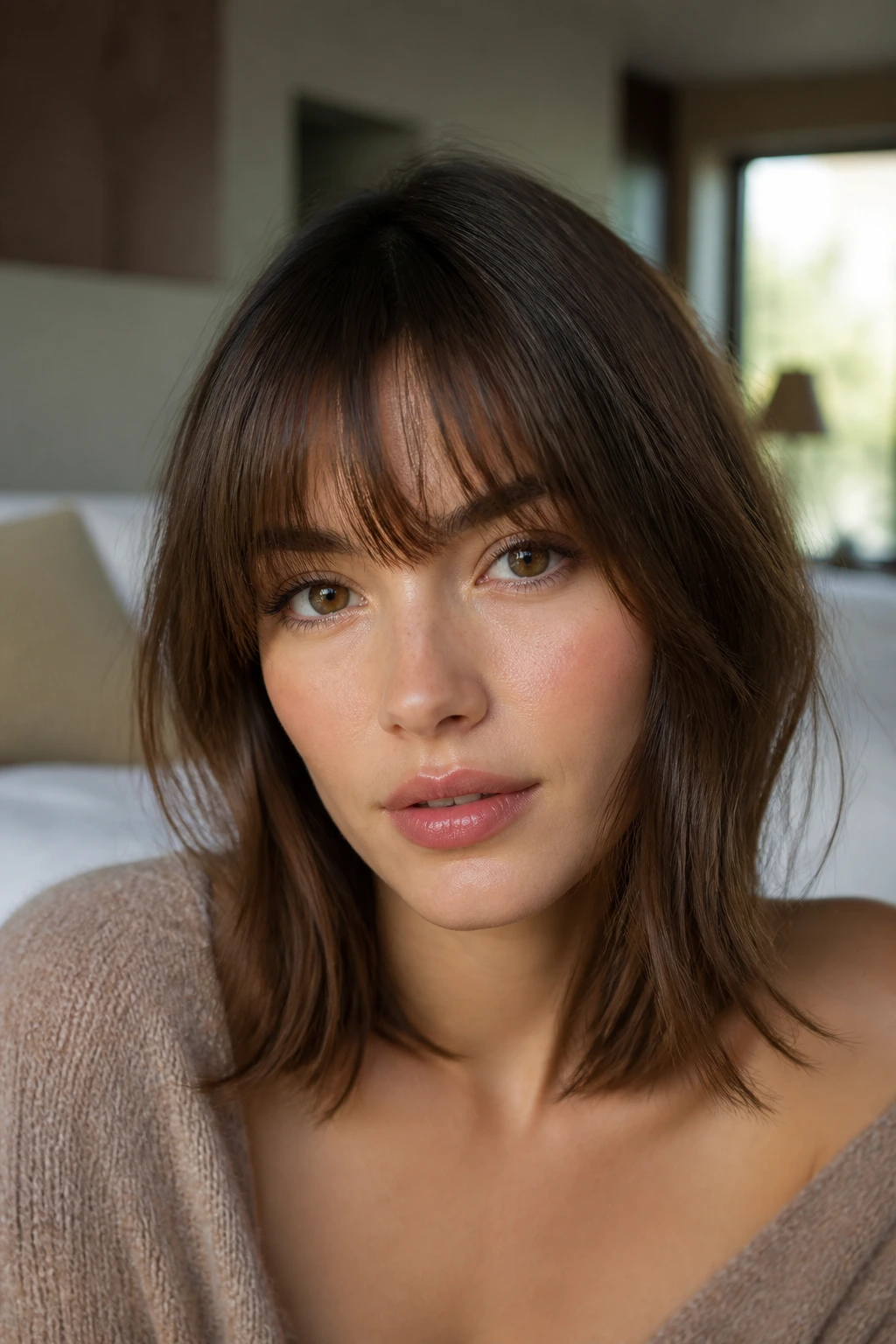
Cheekbone logic: Bangs that end near the cheekbone or drift past it help pull the eye down instead of letting it settle across the widest part of the face.
Angle beats width: Diagonal lines, split centers, and asymmetry all create a longer read than a straight bar across the forehead.
Texture changes the mood: A wispy fringe feels lighter than a dense one, and that matters when you want the face to look less boxy.
Grow-out friendly choices exist: Some bang styles look good on day one and still look decent six weeks later, which is more useful than a dramatic cut that needs babying.
Not every fringe needs heat styling: The right cut can work with air-drying, a round brush, or a quick blast from the dryer, depending on how much effort you want to put in.
1. Curtain Bangs That Hit at the Cheekbone

Curtain bangs are the easiest place to start if you want bangs without the feeling of having signed up for a full personality change. The center stays lighter, the sides travel down toward the cheekbone, and the whole shape breaks up the face instead of laying a heavy line across it. On a round face, that split is the whole point. It gives the face a little vertical movement and keeps the widest area from feeling boxed in.
Why the Split Helps
The center gap gives your forehead breathing room. The longer outer pieces matter even more, because they sit where the face begins to curve widest and then keep going. That’s what softens the roundness without turning the fringe into a curtain in the dramatic sense.
- Ask for the shortest point around the bridge of the nose.
- Let the corners fall to the top of the cheekbone or slightly below.
- Keep the ends soft, not squared off.
- Blow-dry the fringe side to side at the root so it doesn’t lock into a flat center part.
My take: If you’re nervous about bangs, start here. You can trim later. You cannot add length back on day two.
2. Deep Side-Swept Bangs With a Long Arc

Can one sweep of hair do that much work? Yes, if it starts high and travels long enough to make a clean diagonal. Deep side-swept bangs are useful on round faces because they break the symmetry right away. Instead of cutting straight across the forehead, the fringe slides from one side toward the opposite cheek, which keeps the face from reading as one big circle.
The trick is length. A side bang that ends right at the cheek can puff out and look a little stuck there. Let it fall lower, into the cheek-to-lip zone, and it starts acting like a line, not a blob. I like this style most with shoulder-length cuts and long layers, because the rest of the haircut helps carry the sweep.
If you wear glasses, this is one of the more forgiving choices. The fringe can tuck behind the frame or sit just over it without fighting for the same space. Give it a little bend with a round brush, or let it fall naturally if your hair already has a soft wave.
3. Wispy See-Through Fringe
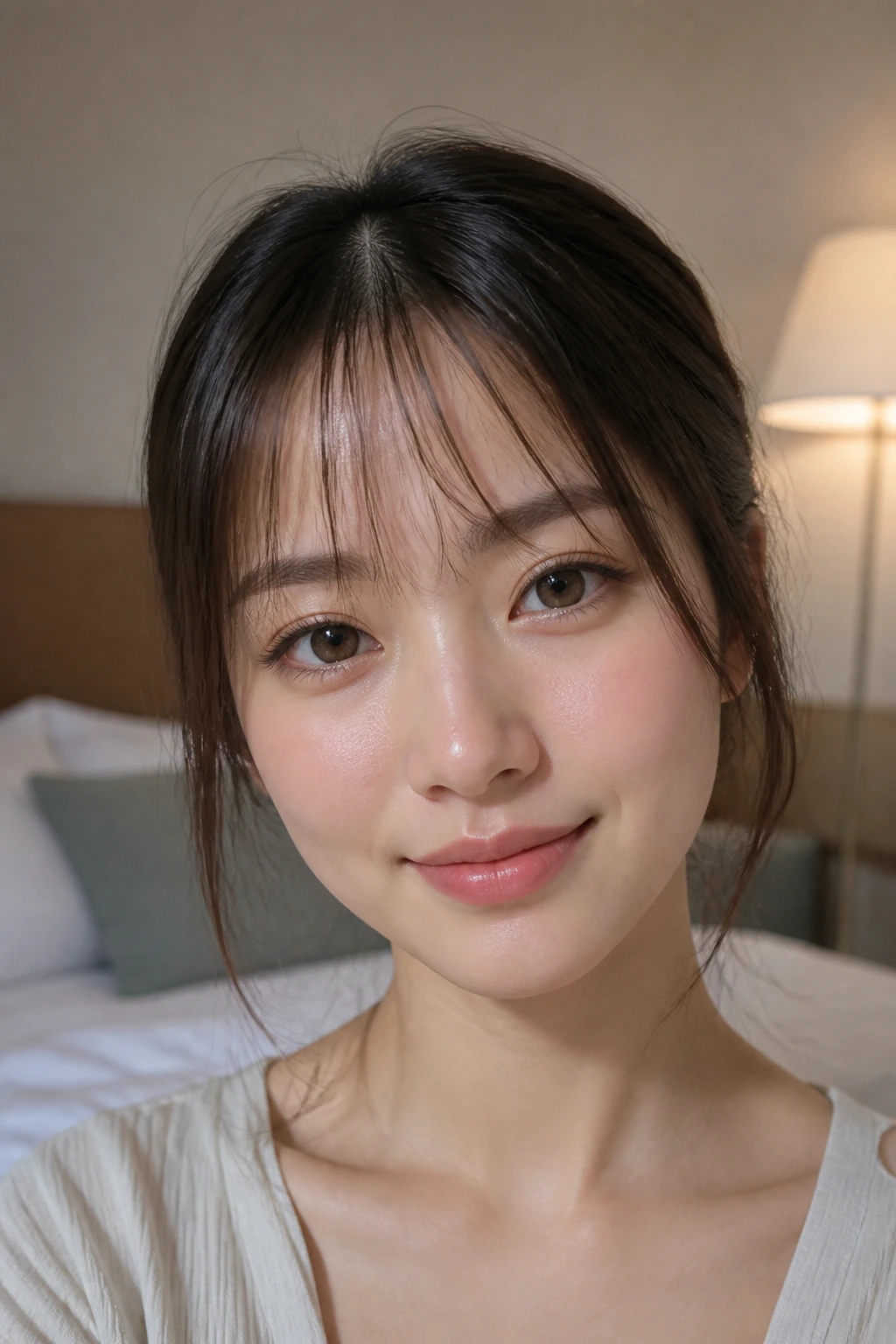
This is the fringe that looks like it barely showed up, and that’s exactly why it works. Wispy bangs keep the forehead visible, so the face does not get swallowed under a thick block of hair. On a round face, that transparency matters. The style softens the front without adding extra width.
What Makes It Different
The strands are intentionally light and separated. You can see skin through them. That small gap keeps the forehead from feeling closed off, especially if your cheeks are full and your jawline is soft. It also means the fringe moves with the head instead of hanging like a curtain.
- Best with fine to medium hair.
- Works well if you want bangs but hate heavy upkeep.
- Ask for point-cut ends so the fringe doesn’t turn blunt at the bottom.
- A tiny bit of texturizing spray is enough; too much product turns wispy into stringy.
Quick note: This style is much better when the pieces are uneven on purpose. Perfect symmetry makes wispy bangs look fake.
4. Bottleneck Bangs That Narrow Then Open
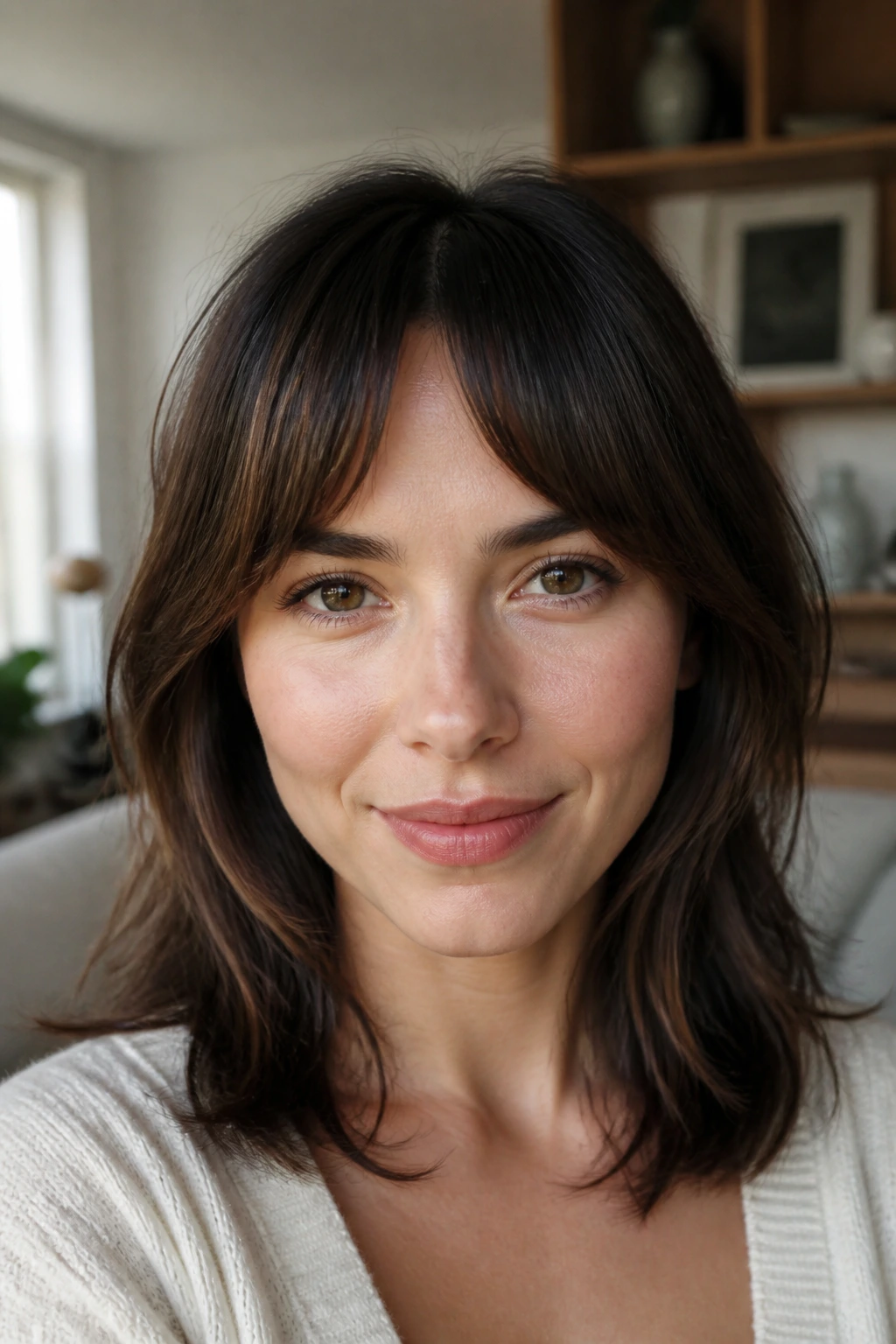
Bottleneck bangs have a nice bit of shape-shifting built in. They start a little narrower at the center, then widen as they travel toward the temples and cheekbones. That change in width is useful on a round face because it avoids the flat, horizontal line that makes the face feel broader. The cut itself creates a small visual squeeze and release.
They’re also more flattering than people expect on thicker hair. A lot of dense fringes end up looking like one solid slab unless someone cuts in some interior movement. Bottleneck bangs have a built-in taper, so the middle stays lighter and the corners do the framing.
Ask for This at the Salon
Tell your stylist you want the center shorter than the sides, with enough length left at the temples to skim the outer eye area. If the shortest piece lands around the bridge of the nose and the sides feather to the cheekbone, you’ve got the right idea. That shape gives your face a taller read without forcing a dramatic side part.
5. Soft Blunt Bangs That Skim the Brows
Blunt bangs are tricky on a round face, and I’m not going to pretend otherwise. Heavy, straight-across bangs can make the face look shorter and wider. But soft blunt bangs are a different animal. They still give you that clean line across the forehead, yet the edge is broken up enough to keep the style from feeling like a little wall.
The key is softness at the ends and a length that skims the brows rather than sitting way above them. If the fringe is too short, the eye goes straight to the horizontal line. If it rests right around eyebrow level, the face keeps its proportion. I like this style on people with straight or slightly wavy hair and enough density to support the shape without puffing.
Use a small round brush or a flat brush with the dryer angled down. You want the fringe smooth, not puffy at the root. A tiny bend at the very ends helps keep it from looking severe.
6. Feathered Shag Fringe
If your hair likes movement, a feathered shag fringe can look like it grew there naturally. The pieces are layered, broken up, and a little uneven in a good way. On a round face, that softness matters because the fringe never becomes a hard horizontal shelf. It blends into the rest of the cut and keeps the eye moving.
This is one of those styles that looks better with a little mess. Too much polish can make it feel stiff. A shag fringe wants a bit of air, a bit of bend, and some separation at the ends. It’s especially smart if the rest of your haircut already has layers around the face. The fringe and the haircut should talk to each other instead of competing.
I’d call this a strong choice for medium to thick hair, especially if you hate the feeling of having to “set” your bangs every morning. A little mousse, a rough blow-dry, and a touch of paste on the ends can be enough.
Best when you want:
- a fringe that blends into layers
- some volume without a heavy block
- a cut that grows out without looking weird by week three
7. Curly Bangs With a Loose Arc
Curly bangs can look fantastic on a round face when they’re cut with the curl pattern in mind instead of fought into obedience. The fringe needs room to spring. If a stylist cuts curly bangs too short, they bounce upward and can make the forehead look tight. Leave enough length for shrinkage, and the shape turns soft and open.
The best curly fringe usually follows a loose arc rather than a sharp line. That arc keeps the volume from sitting in one spot across the widest part of the face. If the curls are springy, let the center sit lower and the edges skim outward. You want shape, not a helmet.
Dry-cutting helps here. A curl that looks tame when wet may tighten once it dries, and that extra inch can change the whole proportion. If your curls are loose, a diffuser gives the fringe more lift at the root and less puff at the sides.
8. Piecey French-Girl Bangs
Piecey French-girl bangs have attitude, but the useful part is structural. They don’t sit as one thick unit. They separate into small sections, which keeps the forehead from feeling covered and the face from looking wider. On a round face, that little bit of air between the pieces does more than people think.
The fringe should feel casual, not chopped up in a rushed way. I like it best when the ends hit around the brows and the pieces vary slightly in length. That variation gives the face some movement and keeps the cut from echoing the round shape too closely. A little dry texture spray can help, but don’t overdo it. The goal is separation, not grit.
This is one of the easiest bangs to wear with a bob, a shag, or long layers. It looks best when the rest of the hair has some bend. Straight, glossy hair can still wear it, but you’ll want a soft bend at the ends so it doesn’t turn too severe.
9. Arched Full Bangs
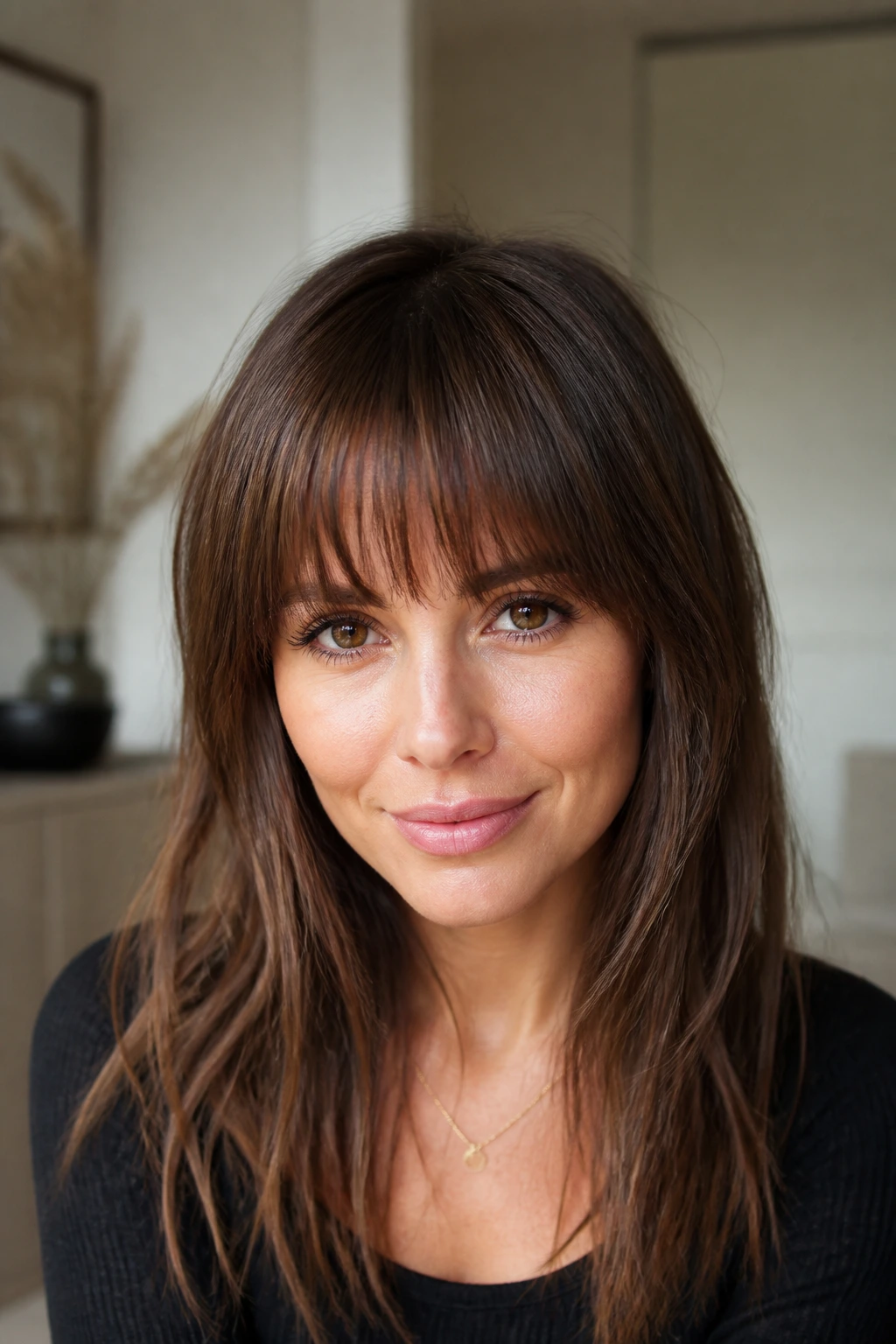
Why do arched bangs work when blunt bangs can go sideways so fast? Because the curve changes the line. Instead of a hard, level edge, the fringe follows a gentle arch that tends to echo the brows and eyes rather than flattening the face. On a round face, that small change makes the forehead feel shaped instead of cut off.
Arched bangs work best when they’re not too dense through the middle. If the center is heavy and the corners are short, the face can feel boxed in. Let the outer corners sit longer, and keep the center slightly lighter than you think you need. That way the arch adds polish without making the cheek width more noticeable.
Styling note
- Use a round brush that matches your bang length.
- Dry from side to side, then finish with the brush curving down.
- If your bangs puff at the root, clip them flat for 5 minutes while they cool.
This style is neat, but not rigid. That’s the difference.
10. Asymmetrical Bangs With One Longer Side
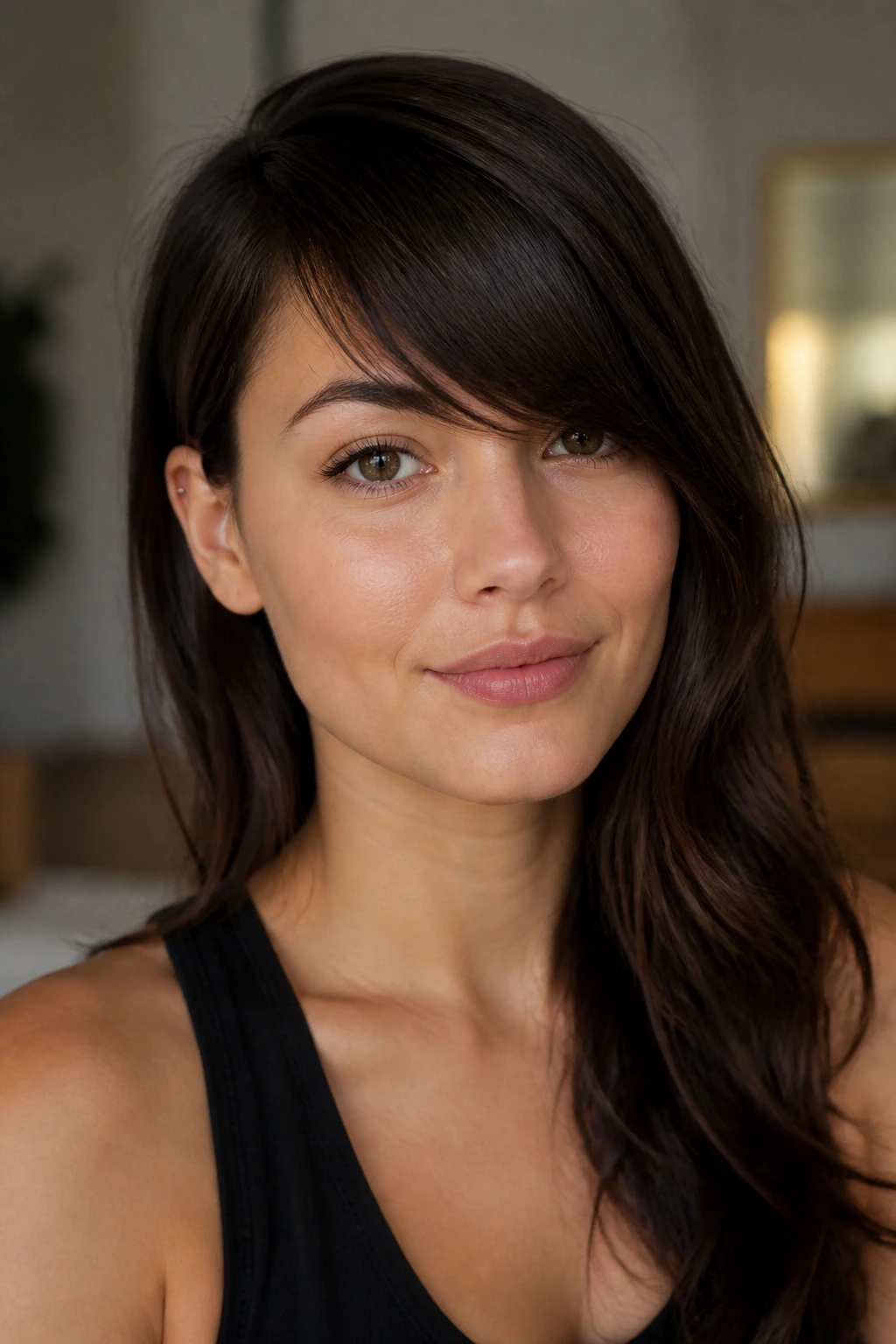
A little imbalance can be useful. Asymmetrical bangs create a diagonal read that straightaway pulls the eye away from the center of the face. On a round face, that’s valuable because the face already has soft symmetry; the fringe adds a direction it didn’t have before.
The longer side can skim the cheek, the temple, or even the jaw, depending on how bold you want to be. The shorter side should not be so short that it looks accidental. This style works best when there’s a clear decision in the cut. Messy is fine. Random isn’t.
I like this fringe on haircuts that already have some edge to them — sharp bobs, layered lobs, or a pixie with length on top. It gives the cut a little motion and keeps it from feeling too round. If you wear one side tucked behind the ear, the asymmetry gets even stronger.
11. Long Split Fringe With Layered Sides

This is the quieter cousin of curtain bangs. The split is still there, but the whole fringe stays longer and softer, with the side pieces blending into layered lengths around the face. On a round face, that blending matters. It keeps the cut from creating one obvious horizontal line and instead builds a soft frame that travels downward.
The layered sides are the real secret. They make the front of the haircut feel connected to the rest of the style. If your hair is medium to long, this fringe gives you shape without stealing the show. It’s a good pick if you want bangs that behave like a detail rather than a statement.
You’ll usually get the best result when the shortest piece lands near the nose and the outer pieces drift below the cheekbone. That range gives you flexibility. You can style it off the face for a sleeker look or let it fall forward for something softer.
12. Razored Airy Bangs

Razored bangs are all about taking weight out of the line. The razor softens the ends and leaves the fringe with a lighter edge, which helps a round face avoid that solid-block effect. The result is a fringe that moves instead of sitting there like a lid.
The catch is that razor work needs a good hand. Too much thinning can make the ends fray, especially if your hair is fine. But on medium to thick hair, the technique can be a relief. It removes bulk near the forehead and lets the fringe fall in a looser, less rigid way.
Who it suits best
- people with dense hair that tends to puff
- anyone who wants a lighter feel without going full wispy
- cuts that already have layers and movement
Keep the styling simple. A small amount of cream or a light spray is enough. If you pile on product, the airiness disappears fast.
13. Sweeping Bardot Bangs
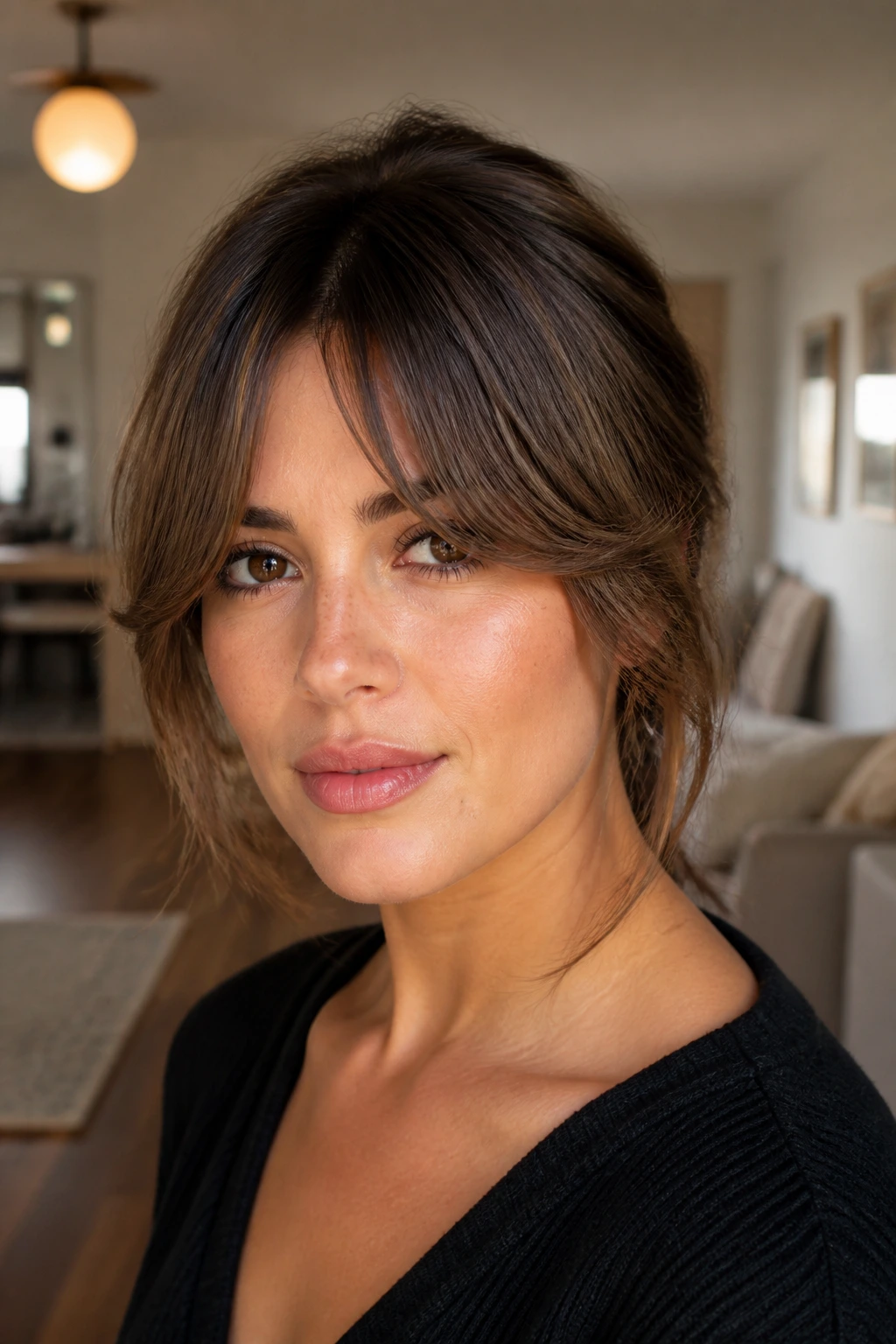
What makes Bardot bangs different from regular curtain bangs? They usually feel a little fuller through the center and a bit more glamorous in the way they fall. The fringe starts near the middle, then sweeps open with enough body to frame the eyes and cheekbones. On a round face, that opening is the useful part. It gives you shape without a hard break.
This style likes volume at the roots. A flat Bardot bang loses its charm and can slide right back into the face. A little lift from the blow-dryer or a large round brush keeps the center from clinging to the forehead. If you have medium-density hair, this can be a sweet spot between soft and structured.
I’d choose Bardot bangs when you want your fringe to be noticeable but not heavy. It reads more styled than curtain bangs, yet it’s still forgiving enough to grow out with grace.
14. Micro Fringe With Longer Sides
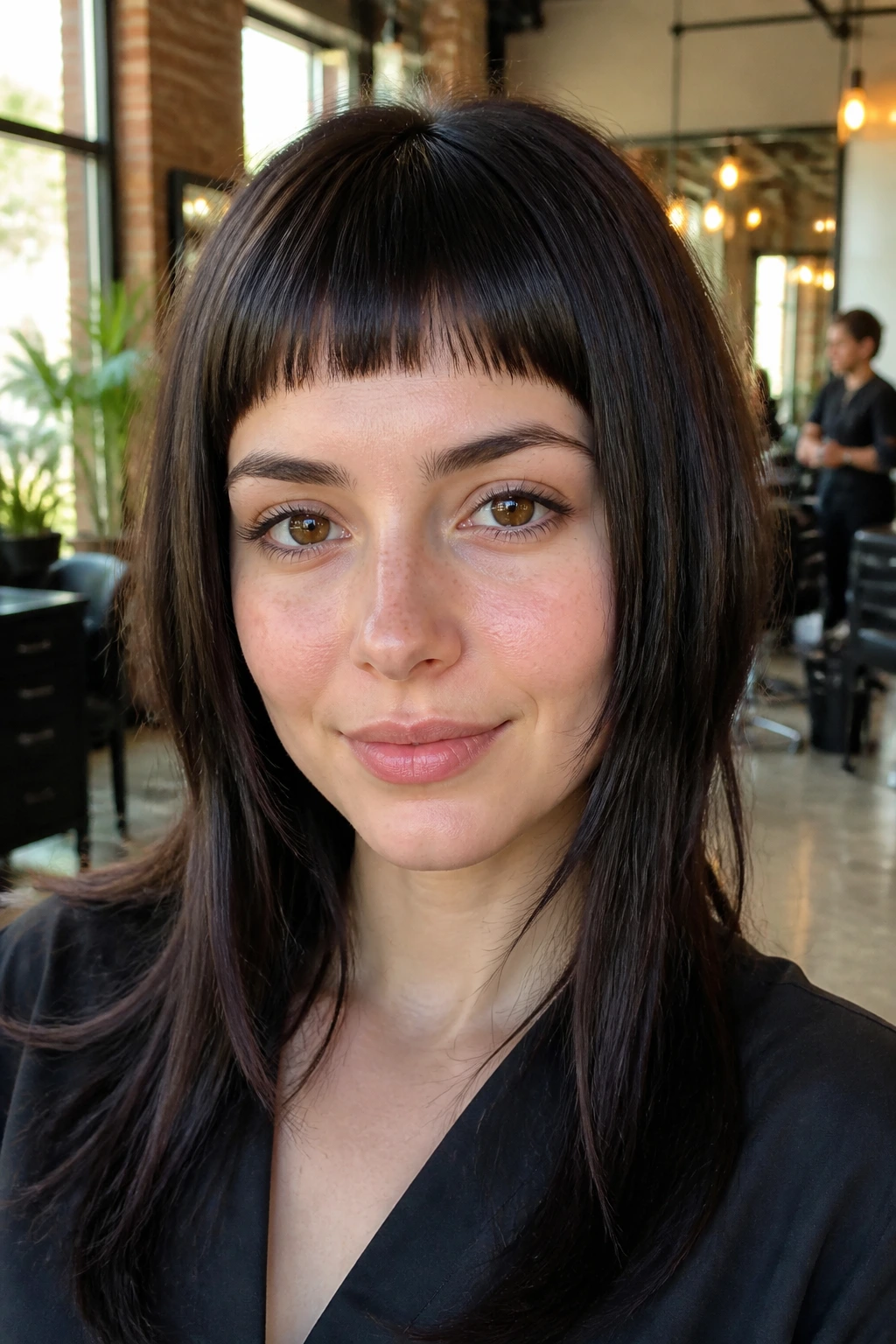
Micro bangs are not the obvious answer for a round face, and that’s exactly why they’re worth mentioning. The very short center creates a clean break above the brows, which can add a little edge and make the face feel less soft. But the balance has to come from the sides. If the temple pieces stay longer, the cut keeps the face from looking too wide or too exposed.
This is a bold style. It suits people who like sharp lines and don’t mind a little maintenance. If your forehead is very short or your hairline is especially dense, the proportions get trickier. I would not call this the easiest first fringe. Still, when it’s cut well, it has a kind of graphic energy that can be interesting on a round face.
The secret is not letting the crop sit alone. The longer side pieces give the style room to breathe, and they stop the center from feeling like a tiny cap. Without them, the look can go hard in the wrong direction.
15. Side-Part Fringe With a Temple Sweep
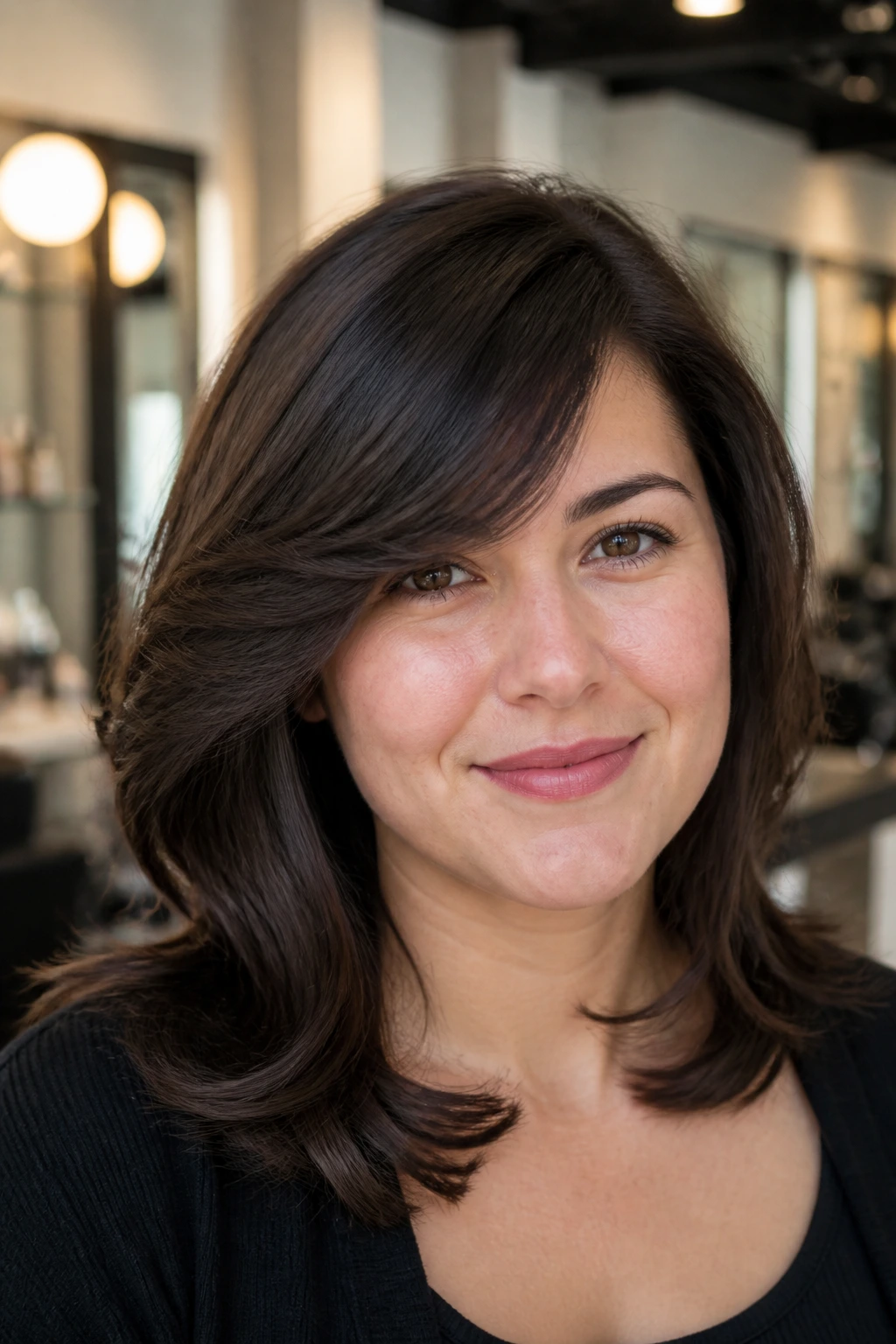
A deep side part does a lot of work before the bang even starts. It creates a diagonal root pattern, then lets the fringe sweep across one side of the forehead toward the temple. On a round face, that line is useful because it interrupts the evenness of the shape and keeps the eye moving.
This style is especially good for mornings when you want the fringe to look intentional with almost no styling. The sweep can fall forward, tuck behind one ear, or blend into the rest of the haircut. The temple area matters here. If the front pieces are long enough to graze the temple and cheek, the face gets a little more length in the read.
It pairs well with shoulder-length cuts and layered lobs. If you like a side part already, this is the fringe version that feels most natural. It’s also a good choice if you’re growing out shorter bangs and want a shape that doesn’t make the process look awkward.
16. Grown-Out Bangs Blended Into Layers
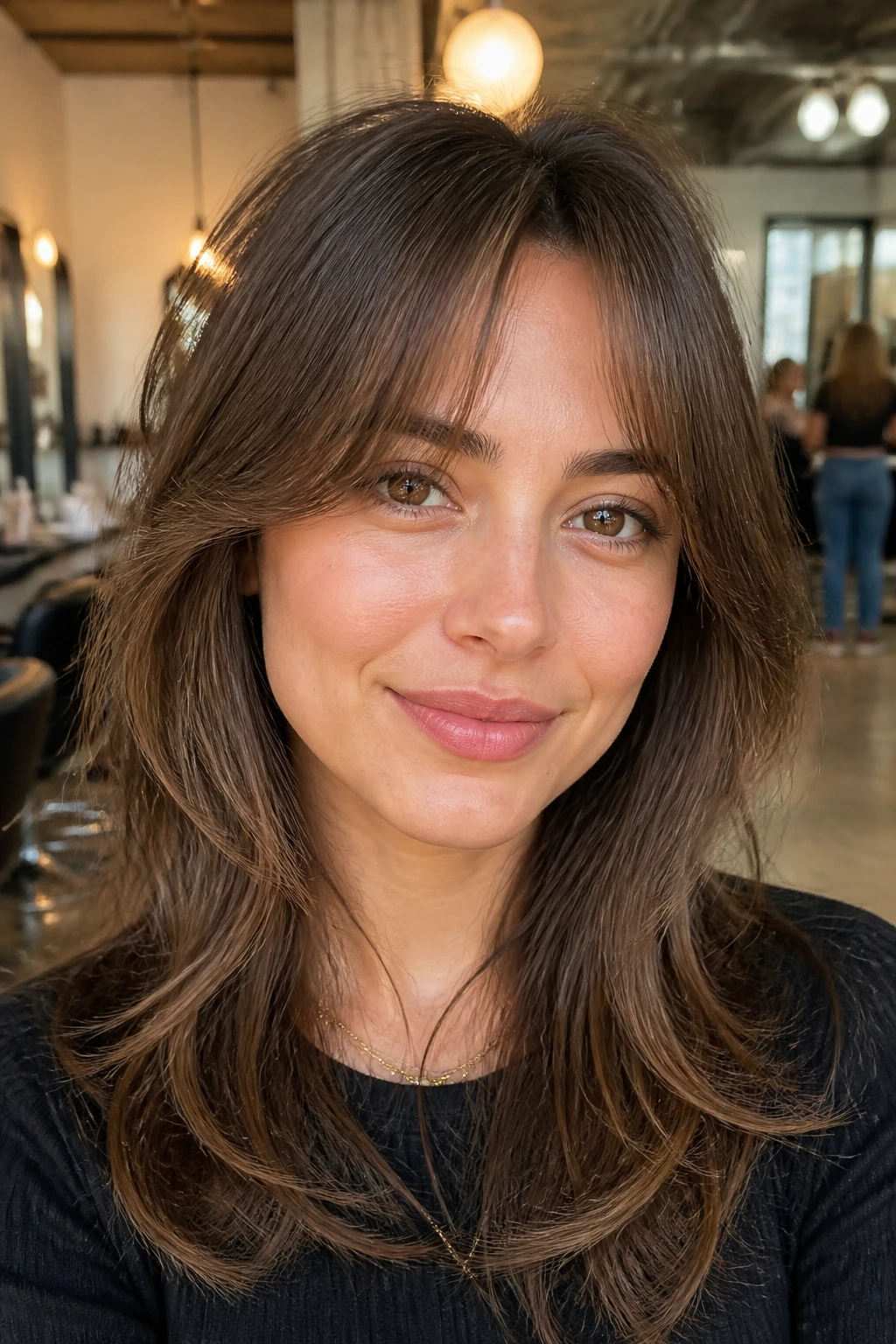
There’s a point in bang grow-out when the fringe stops being an in-between problem and becomes a style of its own. That’s this one. Grown-out bangs blend into the layers around the face, which is useful for round faces because the front never turns into one dense strip. Instead, the shorter pieces melt into longer face-framing sections.
This look is forgiving. Very forgiving. If you’re not in the mood for trims every few weeks, it gives you room to breathe while still keeping a bit of front shape. The trick is to let the layers do the framing rather than forcing the bangs to stay distinct. That means a little directional blow-drying and not too much product at the root.
I like this style for anyone who wants a soft front without commitment. It’s the kind of fringe that looks deliberate even when it’s halfway between cuts, which is not something every bang style can claim.
17. Textured Brow-Grazing Bangs
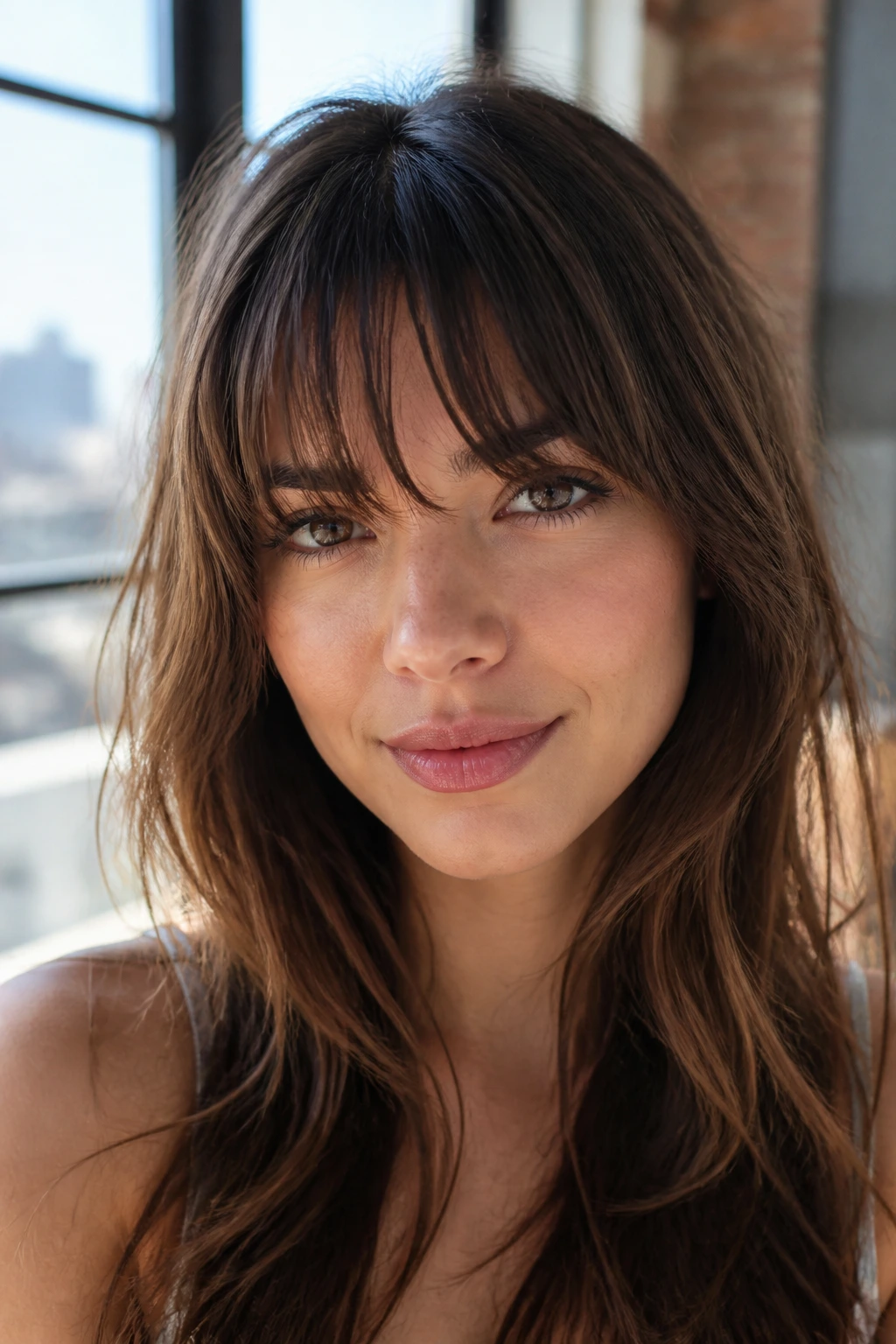
Textured brow-grazing bangs sit in that useful middle ground between blunt and wispy. They still make a clear fringe, but the ends are broken up enough to keep the line from feeling too heavy. On a round face, that texture keeps the cut from emphasizing width across the forehead.
The brow-grazing length matters. It keeps the fringe close enough to the eyes to feel like a real style choice, but not so short that it starts making the face feel compressed. If your hair is straight, you’ll probably need a quick pass with a round brush or flat iron. If it’s wavy, a little air-dry time and some hand shaping may be enough.
What makes it work
- The line is visible, but not solid.
- The texture keeps the fringe from sitting flat.
- The length gives the face a little vertical room.
This is one of the more practical bang styles if you like structure without severity.
18. Soft Baby Bangs With Crown Lift
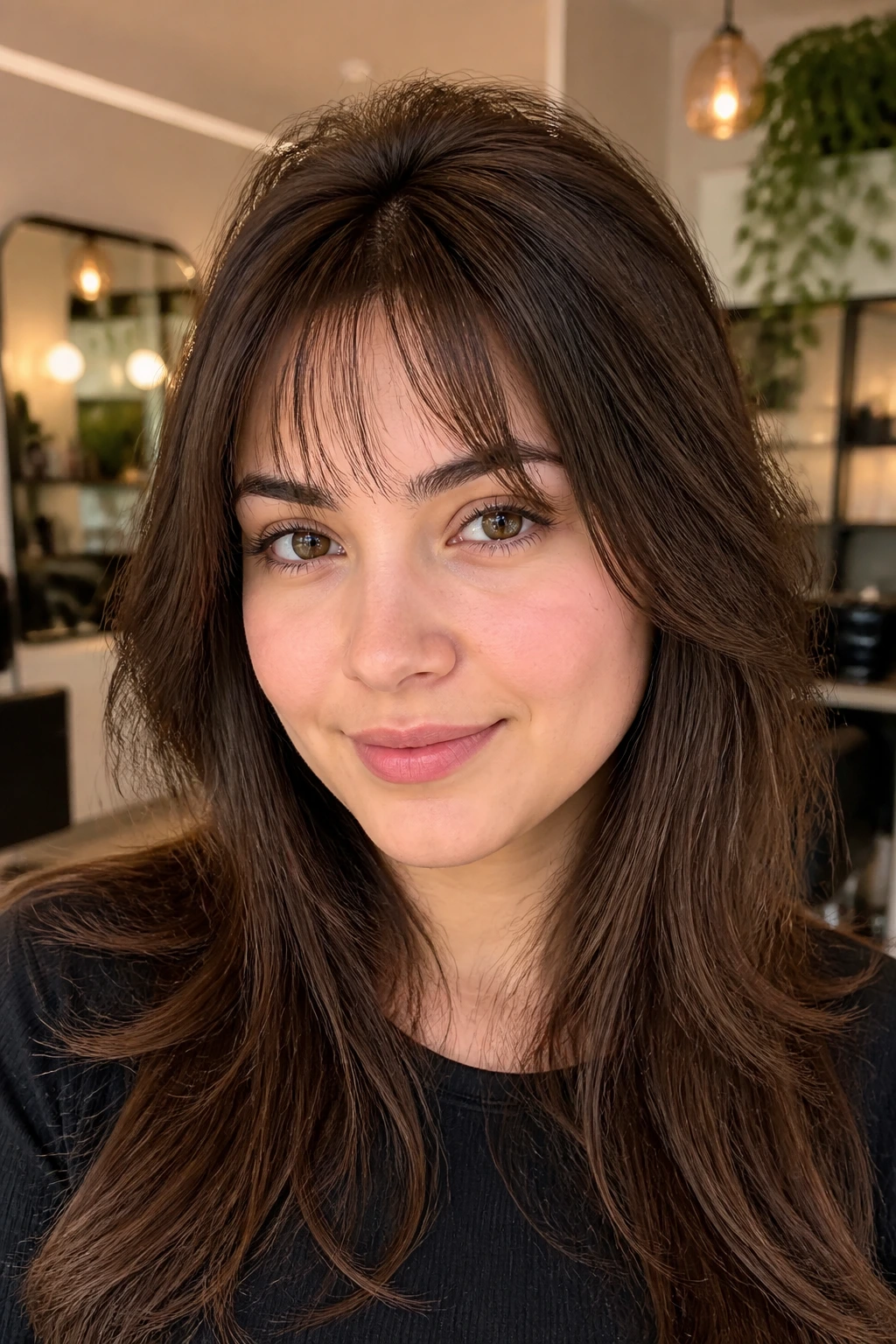
Baby bangs can be rough on a round face if they’re cut too blunt or too short. But a softer version, paired with a little lift at the crown, can work surprisingly well. The short length opens the forehead, and the volume above it lengthens the face from top to bottom. That crown lift is the whole point. Without it, the style can sit low and make the face feel wider.
I would keep the edge soft and the ends a little uneven. You want the bangs to look deliberate, not choppy in a bad way. This is not a low-effort fringe. It needs some shaping, and it likes a bit of attitude. If you have fine hair, the short length can be a blessing because it doesn’t pull the face down with weight.
This style is best when the haircut around it has some structure too — a bob, a cropped cut, or layers that create lift through the top. Otherwise the fringe can feel disconnected.
19. Choppy Layered Fringe

Choppy bangs can be a lifesaver if you want movement and a little edge without committing to a full blunt line. The cut breaks the fringe into pieces, which keeps the style from laying across the forehead like one heavy strip. On a round face, that interruption matters because it stops the width from reading all at once.
The best choppy fringe still has a plan. Random pieces are not the same thing as intentional layers. You want a few shorter fragments near the center and longer bits toward the sides so the cut frames, rather than crowds, the face. If the texture is too rough, the bangs can look disconnected. If it’s too smooth, they lose the point.
This is a good style for people who wear a little texture in their hair already. It looks especially good with a loose wave or a slightly undone blowout. Too polished, and it loses the charm.
20. Face-Framing Fringe for Wavy Hair
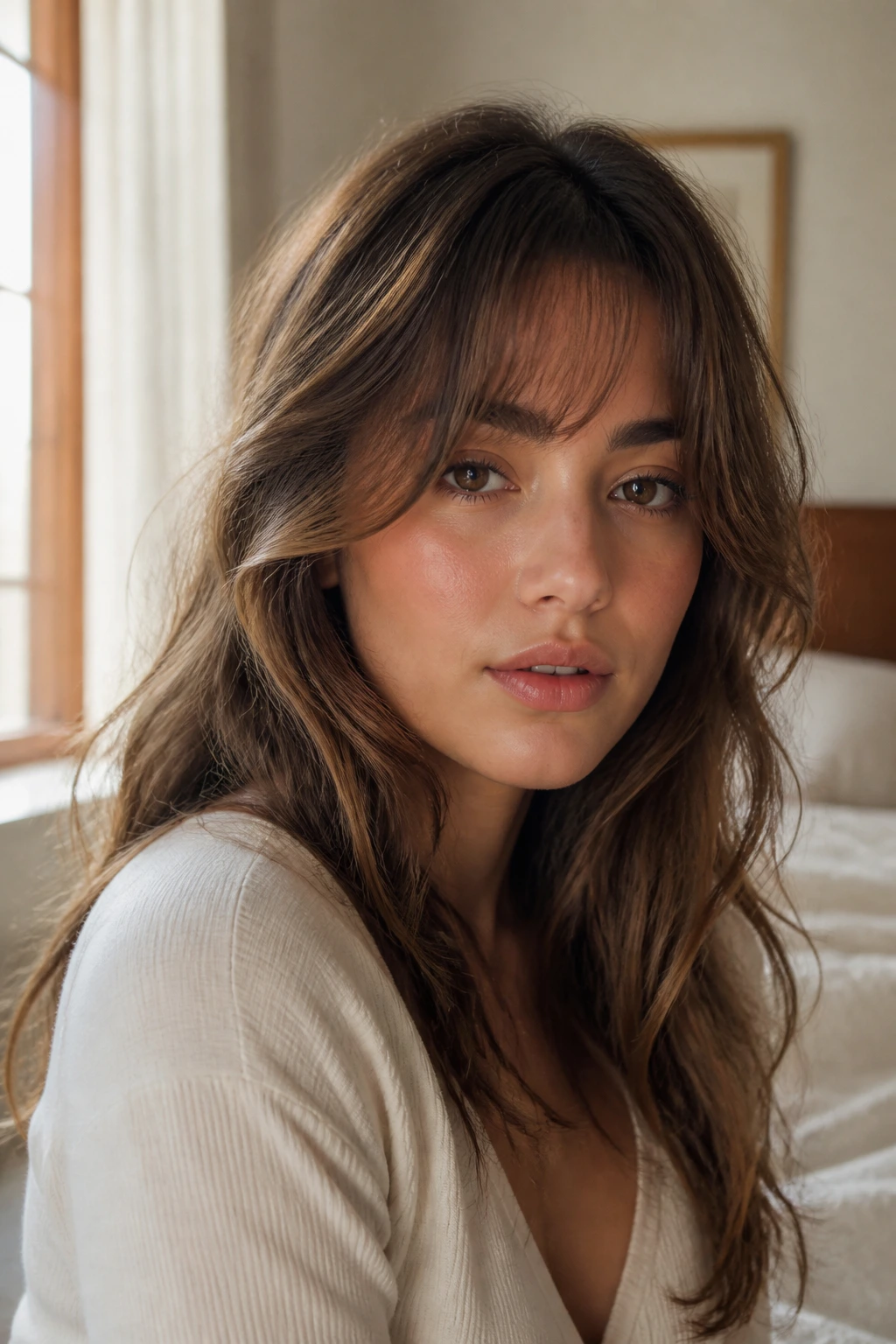
Wavy hair gives you something straight hair has to fake: natural bend. A face-framing fringe for wavy hair uses that bend to create a soft diagonal around the cheeks and jaw, which helps a round face feel longer. The fringe is not the whole story here; the front layers matter just as much.
If the shortest pieces begin around the brow and then drift into cheek-grazing layers, the face gets a nice taper. That taper is useful because it keeps the attention moving downward and outward, not straight across. I like this style when the waves are loose enough to sit on their own but not so strong that they bunch up into the sides of the face.
A little sea-salt spray or mousse can help the bend stay defined. You do not need a crunchy finish. You need the front pieces to remember where to go.
21. Wispy Curtain-Shag Bangs
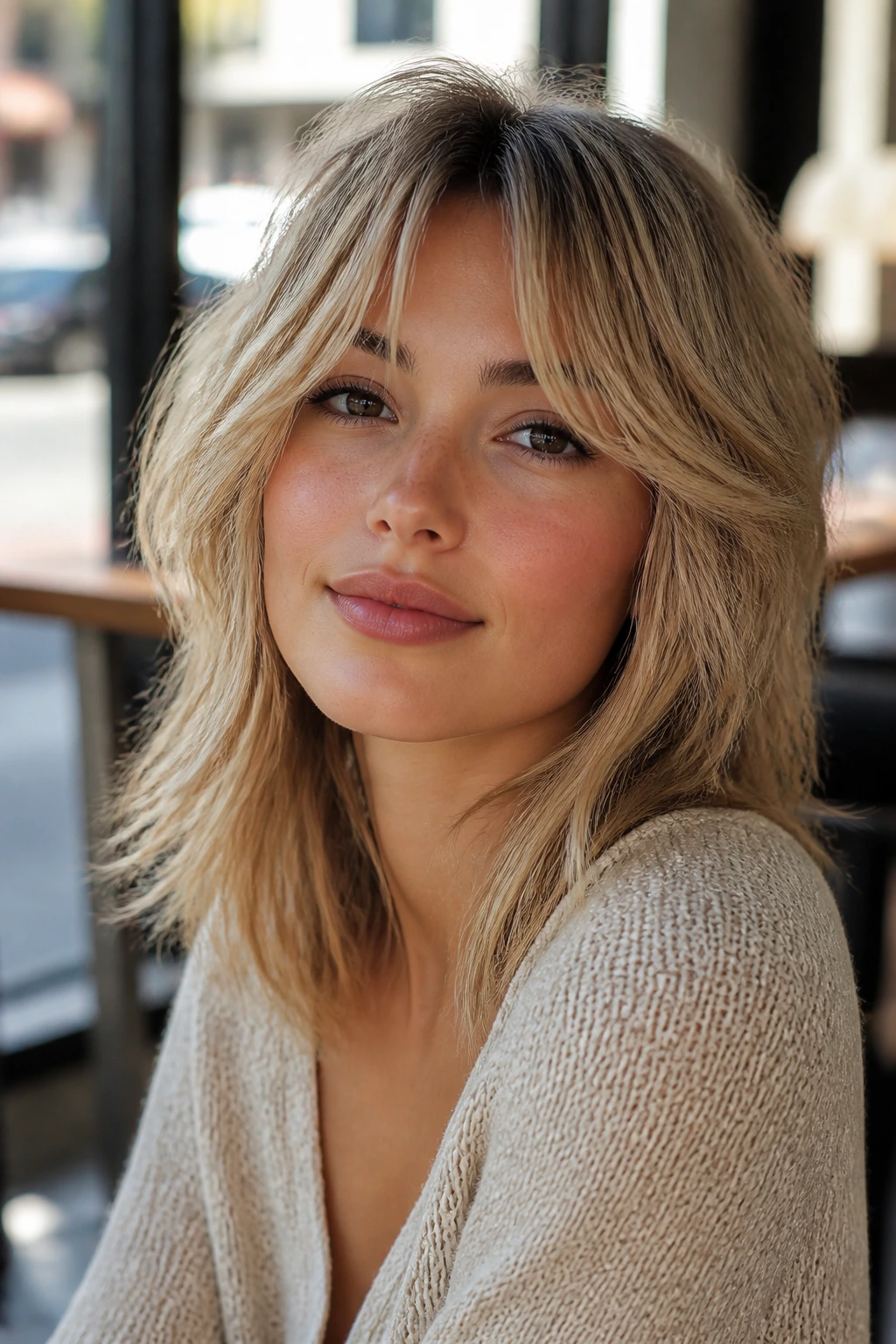
This is what happens when curtain bangs and shag texture meet in the middle and behave themselves. The center is open, the sides are layered, and the whole fringe has enough air in it to avoid that flat horizontal strip that can bother a round face. It gives the face shape without turning the bangs into a statement that runs the whole haircut.
The shag part keeps it casual. The wispy part keeps it light. Together, they make a fringe that can live with movement, a bit of frizz, and a morning that didn’t go exactly to plan. That’s a real advantage. Not every haircut needs to look perfect to work.
This style tends to suit medium to thick hair best, because the layers have enough material to show off. But if your hair is finer, a dry texture spray can keep the pieces from disappearing.
22. Heavy Side Fringe With a Lob
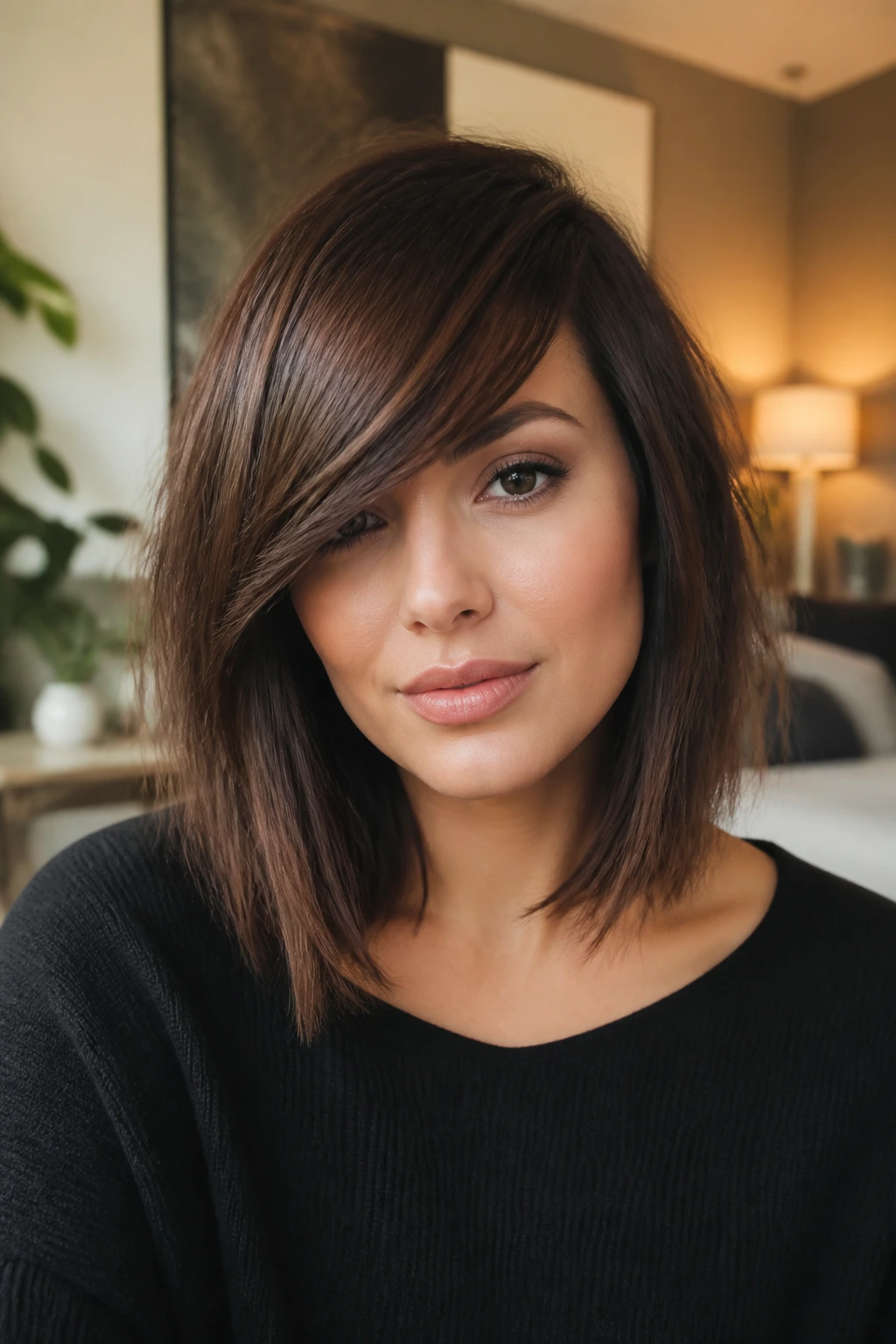
A heavy side fringe can work on a round face when it’s paired with a lob and cut with enough length to keep the line from feeling crowded. The fringe brings the drama, but the lob gives it room. That balance matters. Without the longer haircut underneath, the side fringe can feel like it’s doing all the work alone.
This style is useful if you like a more polished shape and don’t mind styling the front with a brush or iron. It creates one strong diagonal across the face, which helps break up roundness more decisively than wispy bangs do. The important detail is keeping the fringe long enough to sweep, not sit like a short flap over the forehead.
If your hair is thick, ask for some internal removal so the bang does not sit too heavily at the side. If it’s fine, keep the edge full enough that the style still has presence. Either way, the lob underneath gives the whole thing a cleaner read.
23. Crescent Bangs With Long Corners

Crescent bangs have a curved shape that can be very useful on a round face when they’re cut with long corners. The center sits a little shorter, then the sides fall away in a soft arc. That arc creates a lifted look through the center of the face and a longer line through the outer edges, which is exactly what you want when you’re trying to keep the shape from reading too wide.
This is one of those styles that can look delicate or bold depending on the density. Thicker crescent bangs feel more polished. Lighter ones feel airy and a little romantic. Either way, the long corners are the part that saves the cut from feeling blunt. They give the fringe somewhere to go.
I like crescent bangs for someone who wants a clear shape but not a hard edge. They sit somewhere between curtain bangs and a soft blunt fringe, and that middle ground can be easier to wear than people expect.
How Bangs Change a Round Face on Purpose
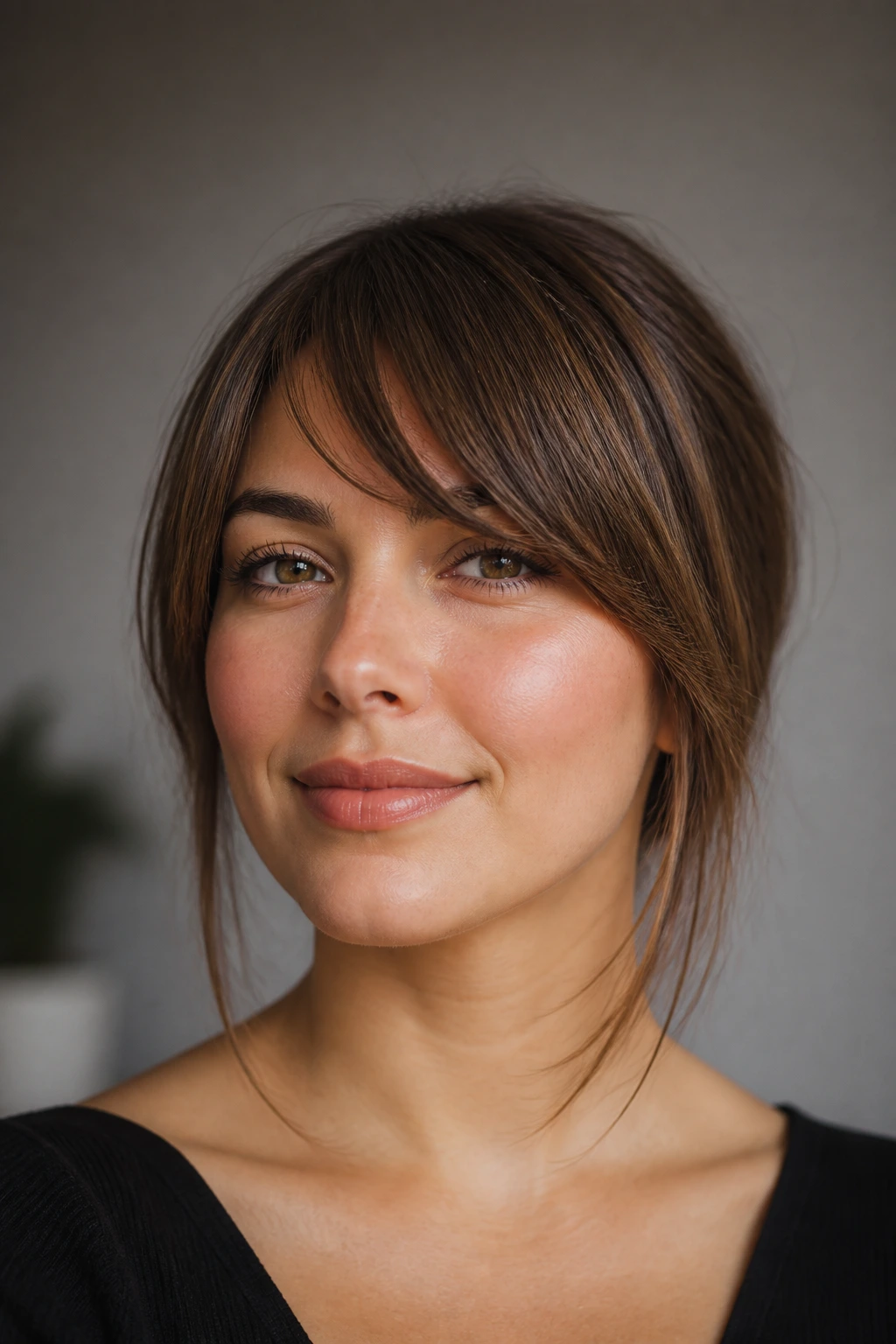
A round face usually has its widest point around the cheeks, and that means the front of the haircut has to do some directional work. A bang that cuts straight across the forehead can make the width more noticeable because it creates a second horizontal line. A bang that opens, sweeps, or tapers gives the face a path to follow. That path matters more than most people think.
The easiest way to think about it is this: vertical and diagonal lines help; flat horizontal lines usually do not. That does not mean every blunt bang is wrong. It means the blunt shapes need softness, length, or side movement to keep the face from feeling shorter than it is. If the fringe hugs the brow and stops there, the face can lose its lift. If the fringe leads the eye downward toward the cheekbone or jaw, the whole shape changes.
Three details that matter more than trends
Where the fringe starts: A bang that begins too far forward can sit on the widest part of the face. Starting a little farther back gives the haircut room.
How dense it is: Heavy density can be useful, but only if the cut has texture or layers. Otherwise it becomes one solid line.
What the ends do: Ends that taper, split, or sweep out soften the roundness. Ends that stop abruptly can box the face in.
I also think people underestimate the role of the crown. A bit of lift at the top makes a round face look longer. It’s not a magic trick. It’s just simple shape work.
What to Tell Your Stylist Before the First Snip
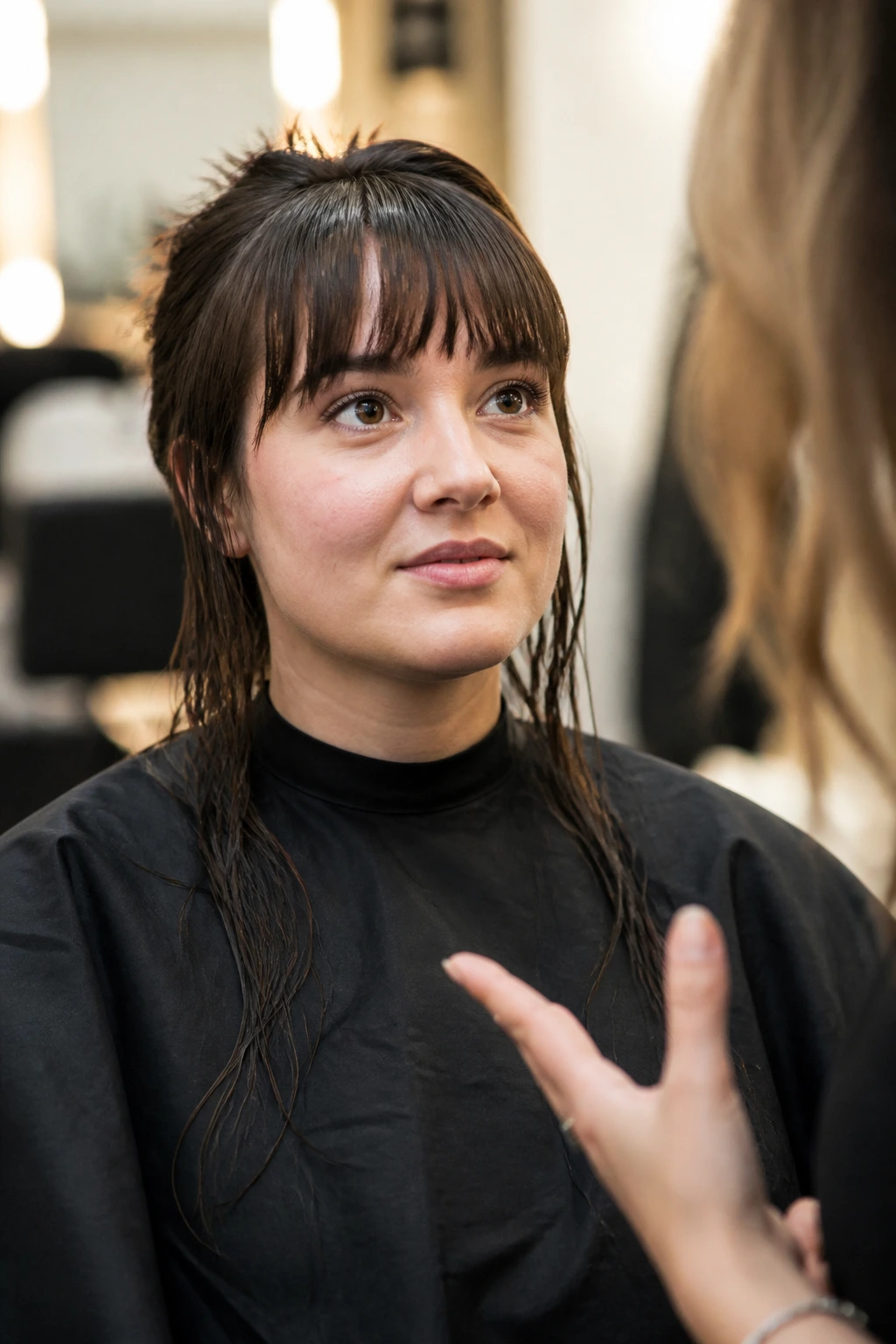
Bring photos, yes, but bring the right ones. A good reference photo shows the fringe from the front and, if possible, from the side too. One picture from a perfect angle is not enough. You need to see where the fringe sits against the cheekbone and how much forehead is still visible. That’s the part that changes the result on a round face.
Say something useful. Tell your stylist whether you want the bangs to blend into layers, whether you style with a round brush, and whether you’re willing to trim every few weeks. Also mention any cowlicks at the center or temples. A fringe that looks effortless on a straight-haired model can behave like a stubborn little flap on a strong hairline. That is not a failure. It’s just biology.
A few words help a lot:
- “Keep the corners longer.”
- “Point-cut the ends.”
- “Leave room for shrinkage.”
- “I want movement, not a hard shelf.”
If your hair is thick, ask where the weight will come out. If it’s fine, ask how the fringe will keep its shape without looking stringy. Those two questions change the cut more than any trendy name ever will.
Tools That Make Fringe Styling Less Annoying
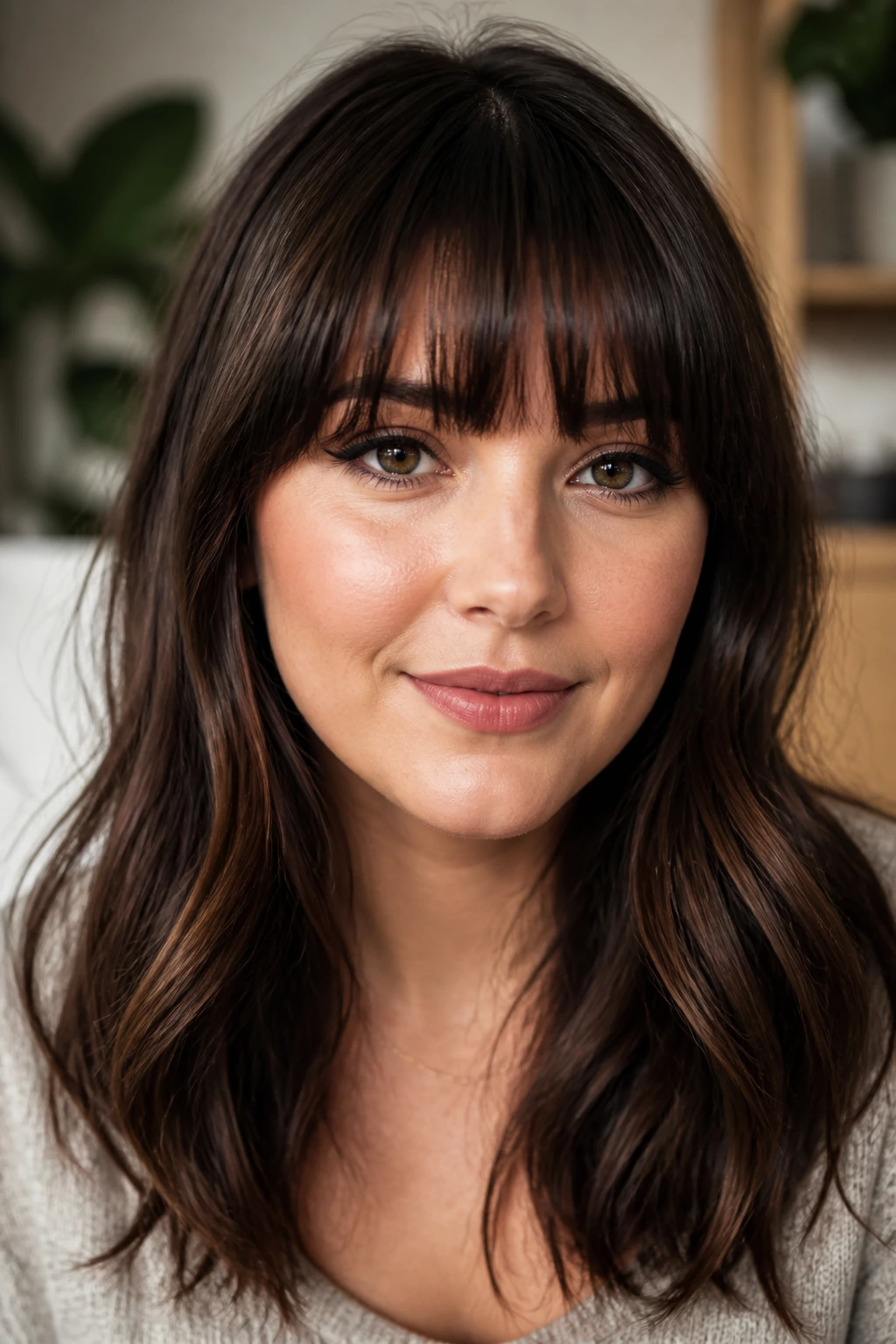
You do not need a drawer full of gadgets. You do need the right few tools, because bangs go weird fast if you wing it every morning.
- Blow dryer with a concentrator nozzle: Directs airflow so the roots dry where you want them, not where they feel like going.
- Small round brush, about 1 to 1.5 inches: Helps curve curtain bangs, side sweeps, and soft blunt fringes without adding too much puff.
- Fine-tooth comb: Useful for parting, separating pieces, and checking whether the center is too thick.
- Hair clips or duckbill clips: Great for pinning bangs flat while they cool so they keep their shape.
- Dry shampoo: Good for day-two oil, but use it on fully dry hair and keep it close to the roots.
- Light texturizing spray: Adds separation to wispy, choppy, or piecey fringes without making them sticky.
- Small flat iron: Handy for micro bangs, blunt shapes, or taming a stubborn bend at the corners.
- Diffuser: Worth keeping around if your bangs are curly or wavy and you want the front to keep its pattern.
A towel is not a styling tool, but I’d still keep one nearby. Towel-rubbing bangs is how you get frizz before breakfast.
Daily Styling Moves That Keep Bangs in Place

The biggest mistake people make is treating bangs like the rest of the hair. They are not the same. Fringe sits on the forehead, where it gets oil, sweat, and weird bends from sleeping. It needs its own routine, and the routine does not need to take long.
Root direction first: Start with damp bangs and dry the roots from side to side. That breaks a stubborn center split and helps the fringe settle with more shape.
Use less product than you think: A pea-size amount of cream or mousse is enough for most fringes. Too much product makes bangs stick together and sink toward the face.
Cool them down before you walk away: Once the shape looks right, clip the fringe in place for a minute or two while it cools. That tiny pause helps the bend hold.
Adjust the ends, not the whole forehead: If the corners flip out or tuck in, fix those pieces only. Re-drying the entire fringe usually makes the root collapse.
Refresh with water, not panic: A light mist from a spray bottle is enough to reset most bangs. You do not need to wash the whole head every time the front gets weird.
If you wear bangs daily, this becomes a five-minute habit. Longer than that and you’re probably fighting the cut instead of working with it.
Mistakes That Make the Face Look Wider
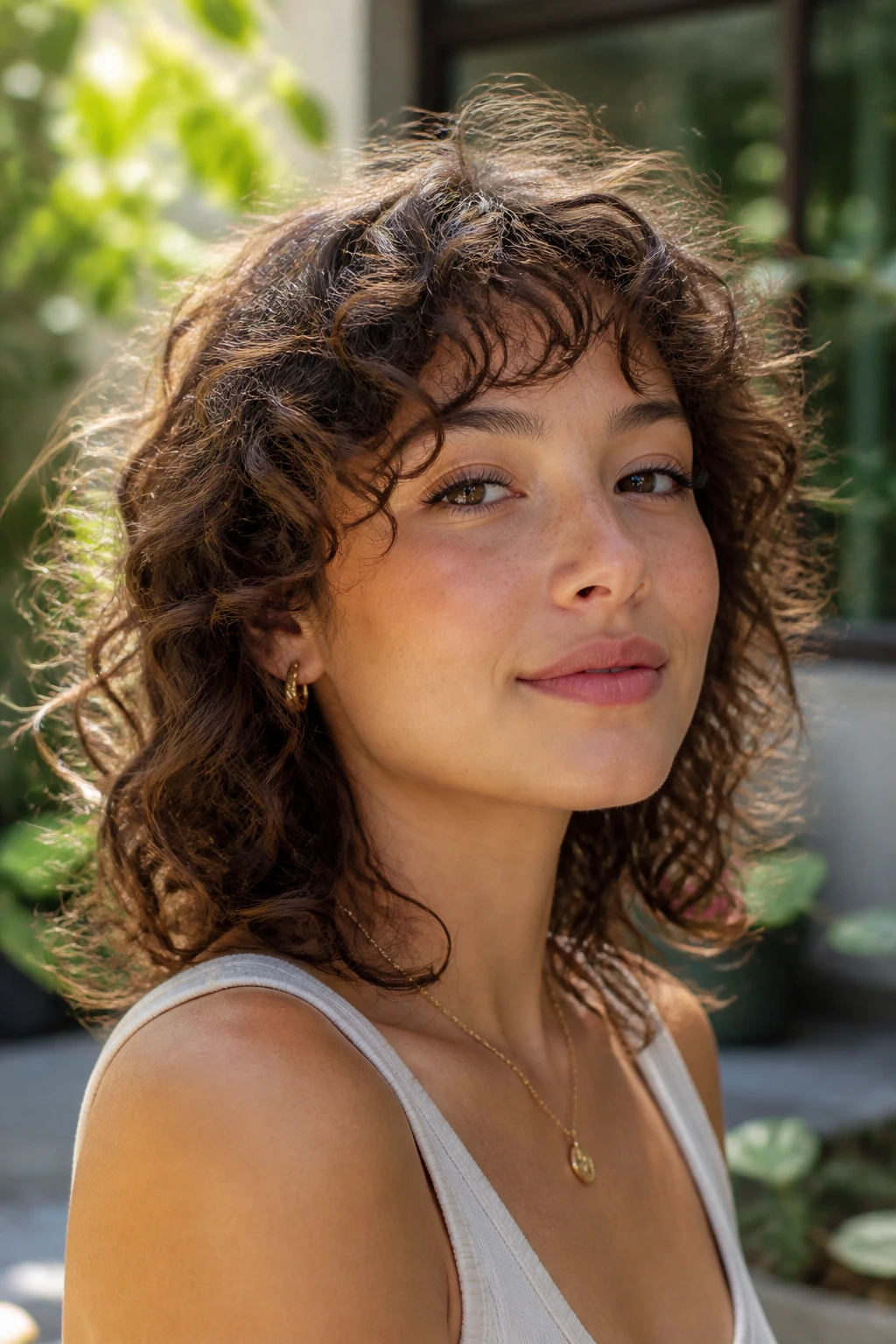
The first mistake is cutting the fringe too short at the center. That raises the eye line and can make a round face feel more compressed. The fix is simple: keep the shortest point a little lower, and let the corners carry the shape.
The second mistake is making the bangs too dense. A heavy strip across the forehead can look cute in a mirror and then feel stubborn every time you move. If the fringe is thick, ask for internal texture or point cutting so it doesn’t sit like one solid panel.
The third mistake is ignoring the hairline. A strong cowlick can split a fringe, kick one side up, or make the center fall apart. If that’s your situation, start longer and style the roots from the opposite direction while they’re still damp.
The fourth mistake is choosing a style that needs more maintenance than you’ll actually give it. Micro bangs, blunt edges, and very precise shapes can look great for a while. They can also become annoying fast if you hate trimming or heat styling.
And then there’s the grow-out trap. A bang that looks perfect for three weeks and miserable for three months is not always worth the trouble. If you want the shape to age well, ask for longer corners or blended sides from the start.
Texture Swaps for Straight, Wavy, and Curly Hair
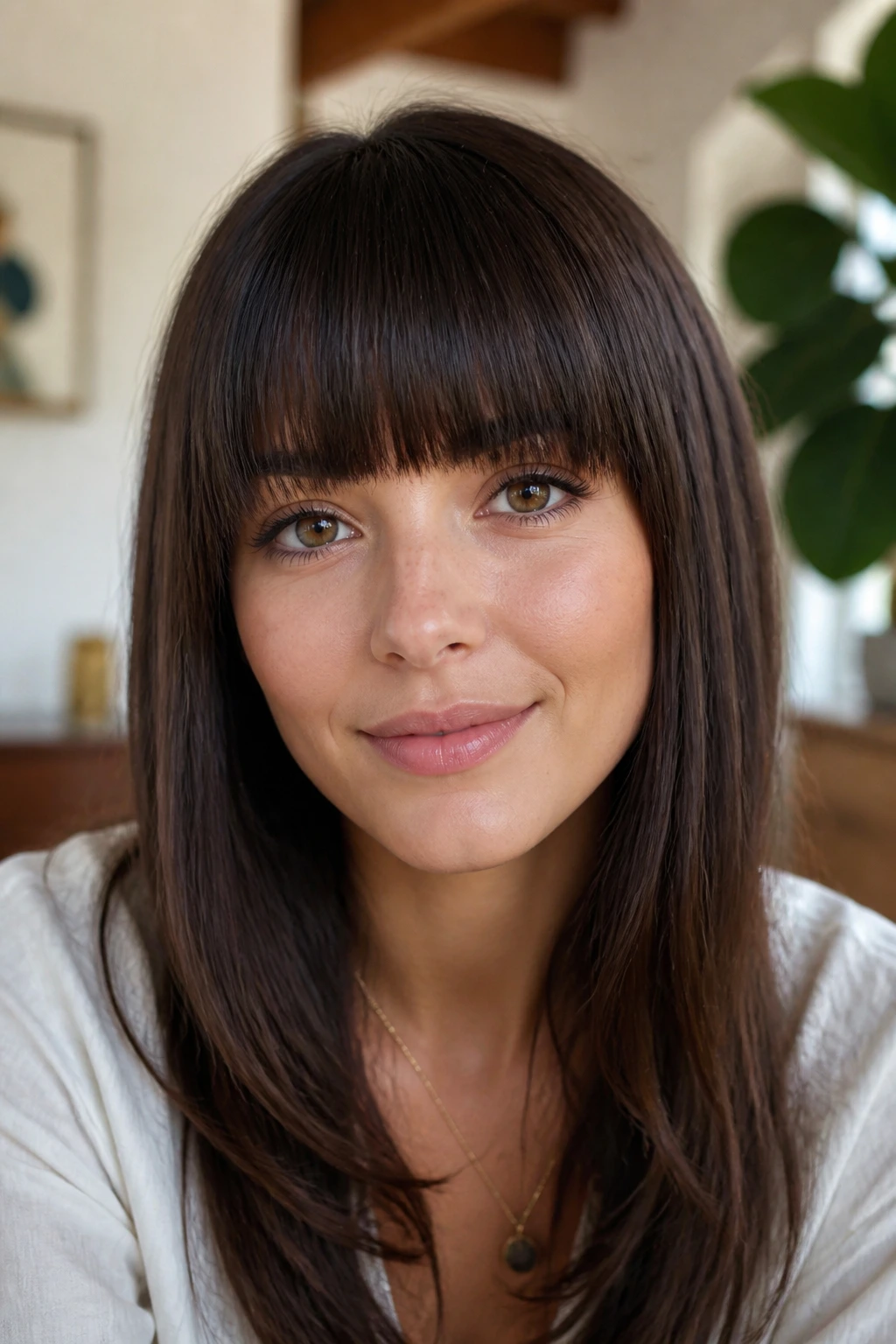
Straight-Hair Ease: If your hair lies flat, go for curtain bangs, side sweeps, or bottleneck shapes. They bend easily and hold a line without much fuss. A round brush and a quick blast of heat usually do the job.
Wavy Hair Softness: Wavy hair makes piecey fringes, shag bangs, and Bardot shapes look natural. The bend adds movement on its own, so you can keep the styling light and skip the overdone finish.
Curly-Hair Shrinkage Control: Curly bangs need extra length at the cut and a clear plan for dry shape. Diffuse them, don’t flatten them. The best fringe will follow the curl pattern instead of pretending it’s straight.
Thick-Hair Debulking: Dense hair often needs more removal through the interior so the bangs do not sit like a cap. Ask for texture and movement, but not so much thinning that the ends look ragged.
Fine-Hair Lift: Fine hair does better with a bit of body at the root and a fringe that isn’t too sparse. Too many see-through pieces can disappear. A soft blunt edge or a textured brow-grazer usually gives better presence.
Keeping Bangs Fresh Between Washes

Bangs usually get oily before the rest of the hair does. That’s normal. The skin on the forehead does what it does, and the fringe pays the price. The easiest fix is to refresh the front without rewashing everything.
Dry shampoo works best on completely dry hair and not in giant clouds. Spray a little at the roots, wait a minute, then shake it through with your fingers or a comb. If you use it while the fringe is damp, it can turn chalky and sticky in the same breath. Not a fun combo.
For overnight care, pin the fringe up loosely or wrap it in a velcro roller if the shape collapses while you sleep. If your bangs kink on the pillow, a tiny reset with a spray bottle and a brush in the morning is faster than fighting the bend dry.
A useful trim rhythm
- Every 3 to 5 weeks: Trim if you want the fringe to stay crisp.
- Every 6 to 8 weeks: Fine if you prefer a softer, slightly grown-out look.
- As needed: If the corners start hiding your eyes or sitting on the cheeks in a weird way.
If you exercise a lot or live in humidity, expect the front to need more touching up. That’s not a flaw. It’s fringe being fringe.
Questions People Ask Before They Commit

Are blunt bangs a bad idea on a round face?
Not always, but they need help. A heavy blunt bang can make the face look shorter, so softer ends, a longer length, or some side movement usually works better than a hard shelf.
Do curtain bangs make a round face look slimmer?
They can create the illusion of more length because they open at the center and taper toward the cheekbone. The cut matters more than the name; if the corners are too short, the effect weakens fast.
Can curly hair wear bangs on a round face?
Yes, if the cut is made for the curl pattern and not against it. Leave extra length for shrinkage, and keep the fringe loose enough to move with the curls instead of puffing across the face.
What if I have a strong cowlick at the front?
Start longer and ask for a shape that can be trained with heat or clips. Very short bangs usually fight the cowlick harder, while longer fringe has room to settle.
Which bang style is the easiest to grow out?
Curtain bangs, long split fringes, and blended layers are usually the easiest to live with during grow-out. They already have somewhere to go, so they don’t turn awkward as fast.
How often should bangs be trimmed?
Most fringe needs a trim every 3 to 5 weeks if you want the shape to stay clean. If you like a softer, grown-out look, you can stretch that farther.
Can I cut bangs myself?
You can, but round faces punish rushed cutting more than most shapes do because the angle matters so much. If you do it, start longer than you think and take tiny snips. Big cuts are where regret lives.
Do bangs always make a round face look wider?
No. The wrong bang shape can do that, but the right one can break up the curve, create a diagonal, or add length through the top of the face. That’s the whole game.
A Fringe That Gives the Face Room
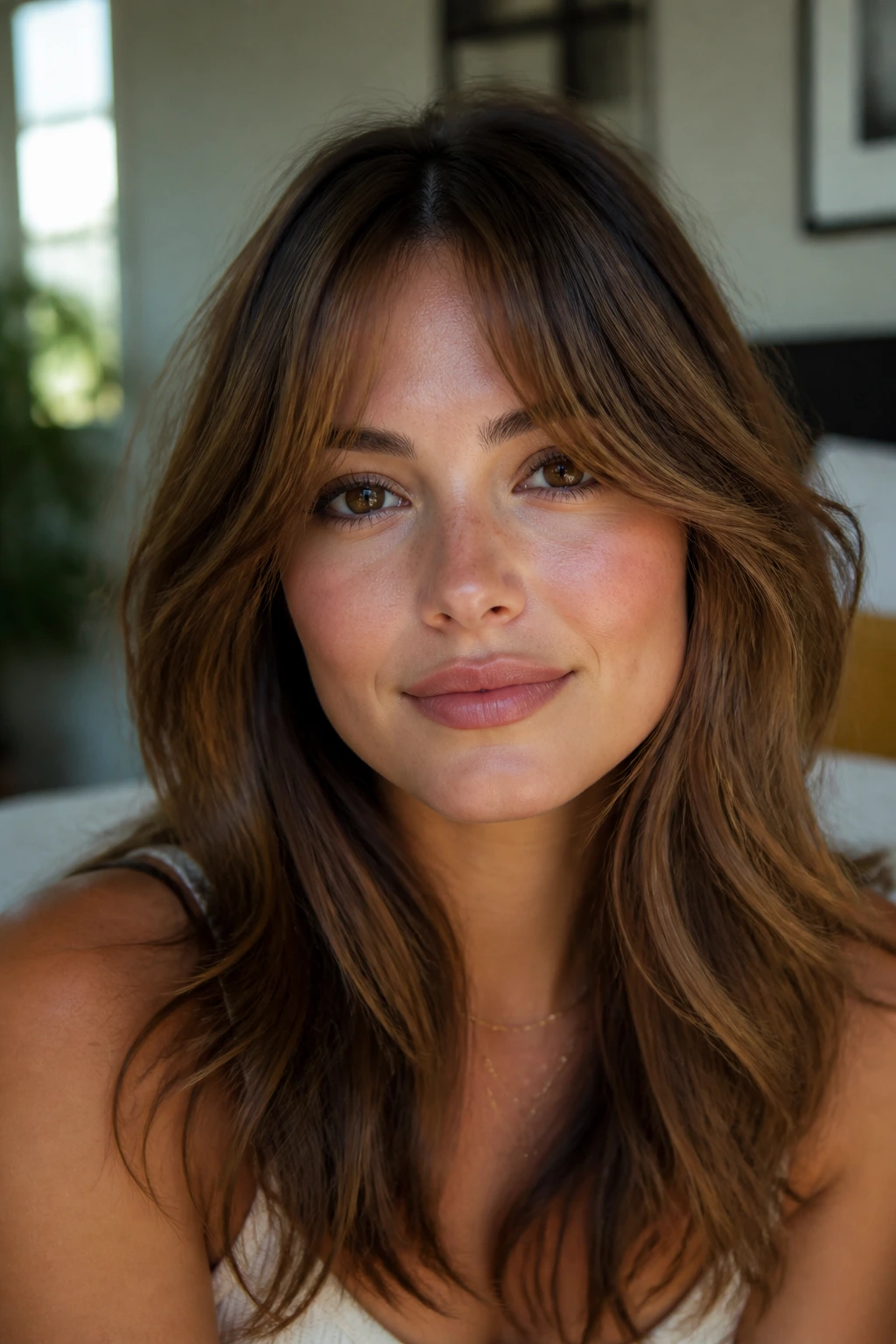
The best bangs for a round face are not trying to fight the shape. They’re giving it structure. A split center, a long sweep, a little lift at the crown, or a softer edge across the forehead can change how the whole face reads without making the haircut feel busy.
That’s why the smartest fringe choice is the one that matches your texture and your patience. If you want low-maintenance, pick a shape that grows out gracefully. If you want something sharper, choose the fringe that still leaves room at the temples and cheekbones. The details matter more than the label.
And once you find the right line, it stops feeling like a haircut trick and starts feeling like the face has been framed on purpose. That’s a good place to be.
