



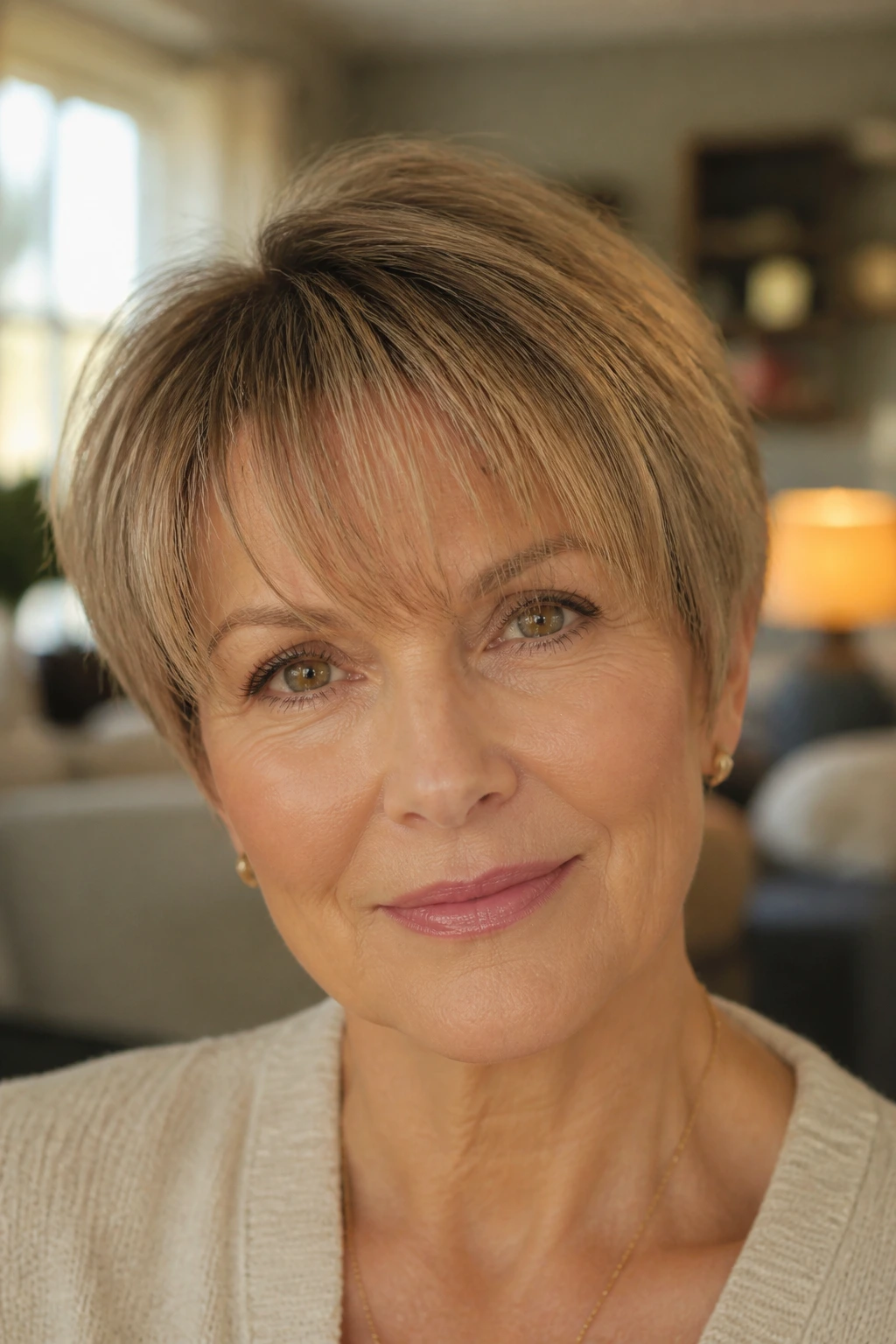
Fine hair after 50 does not need more hair shoved onto the forehead. It needs a cleaner front edge, a little lift at the roots, and a bang shape that does not collapse the second you blink at humidity. When the fringe is too heavy, it sits there like a damp curtain. When it is cut with air in it, the whole face looks more awake, and the haircut stops arguing with your hairline.
That is the part a lot of people miss. Thin hair can wear bangs, but not every bang can wear thin hair. A blunt, dense fringe can make the crown look flatter, the temples look lighter, and the scalp line show through in the wrong places. A softer cut — one that uses movement, direction, and a bit of cheekbone-length framing — usually does more with less.
The good news is that there are more than a few ways to do it. Some of the best-looking fringe shapes for finer hair are barely bangs at all; they’re more like a controlled drift across the forehead, with the shortest pieces placed exactly where the face needs a nudge. Others borrow from curtain bangs, shags, or pixies. The point is not to hide every inch of forehead. The point is to keep the front looking intentional without draining the rest of the haircut.
Why These Bangs Are Worth a Serious Look
-
They add shape without stealing volume: A lighter fringe keeps the crown from collapsing under too much hair at the front, which is the fastest way to make thin hair look flatter than it is.
-
They grow out with less drama: Soft edges, side sweeps, and face-framing pieces blend into the rest of the cut instead of turning into a hard strip that needs fixing every morning.
-
They work with glasses and temples better than blunt cuts: The right fringe can clear frames, soften a narrow hairline, and keep sparse temple areas from looking exposed.
-
They can be tailored to your hair’s actual behavior: Straight, wavy, silver, fine, or slightly cowlicked — each one needs a different front shape, and the styles below cover that range.
-
They let you choose your level of commitment: You can go from a whisper-light fringe to a sharper mini bang without jumping straight into a heavy, thick line across the forehead.
-
They give the face some lift where it matters: A small bend at the root or a diagonal sweep can pull the eye upward in a way that feels cleaner than piling on more hair.
1. Wispy Side-Swept Bangs
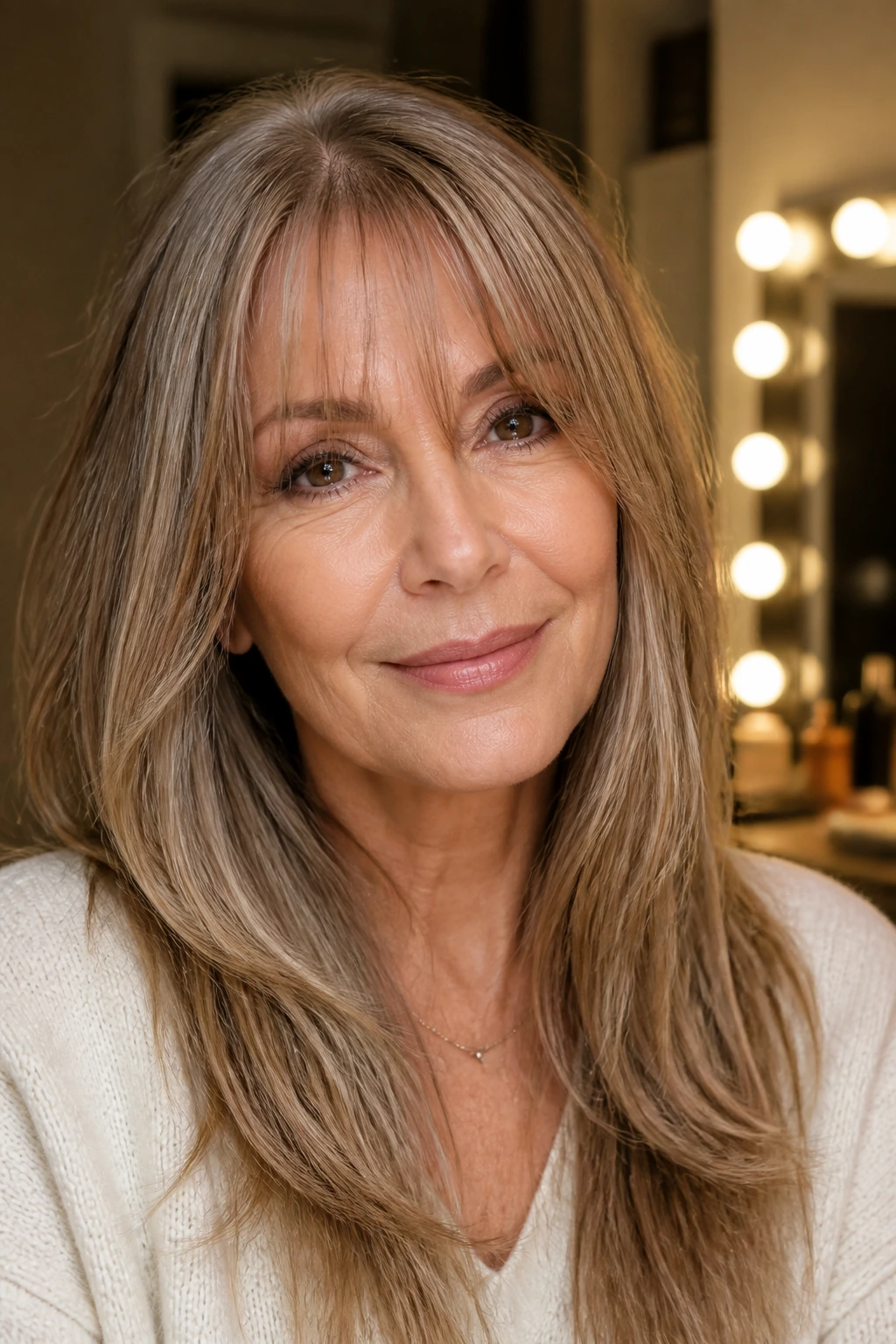
A wispy side-swept fringe is the safest place to start when hair is fine and the front has lost some density. The diagonal line keeps the eye moving, which makes the bang look fuller than it really is, and the ends can be feathered just enough to keep them from sticking to the forehead like paper.
What to ask for at the chair
Ask for a long side sweep that starts near the outer brow and tapers into the temple, with the tips point-cut instead of cut blunt. If your hair is very fine, the stylist should keep the bang narrow enough to move, but wide enough to cover the center of the forehead without leaving a sparse-looking gap at the sides.
A small round brush and a quick blast of air are enough. I like these most on women who wear glasses or who want something that looks finished even when the rest of the hair is just tucked behind the ears.
2. Curtain Bangs That Start at the Cheekbones
Curtain bangs earn their reputation because they split the front into two lighter panels. On thin hair, that split is the trick: you keep coverage, but you do not dump all the density into one blunt strip across the forehead.
The cut should start a little higher than many people expect. I like the shortest piece to fall somewhere around eyebrow level, with the longer sides grazing the cheekbone, because that shape opens the face and gives the crown room to breathe. Too much layering at the center and the curtain effect falls apart; you end up with two sad strings instead of actual fringe.
If your hair is straight, blow-dry each side away from the face over a medium round brush. If it bends on its own, use a Velcro roller while you do makeup and let the fringe cool completely before you touch it. They look best when the root has a little lift and the ends curve softly under, not when they lie flat and straight like a ruler.
3. Feathered Fringe With a Broken Edge
Why does a feathered fringe look fuller than a blunt one when the hair is actually lighter? Because the eye reads texture as movement, and movement hides scalp better than a hard line does.
The cut that matters
Point-cutting is the whole story here. The stylist trims into the ends so the fringe breaks into soft pieces, which keeps the bangs from forming one heavy sheet that can separate down the middle the second humidity hits.
This style is good when your hair has some bend or when your forehead is narrow and a heavy bang would crowd the face. It also plays nicely with salt-and-pepper hair, which can look wiry at the ends if the fringe is cut too square. Use a little mousse at the root and a mist of lightweight finishing spray through the middle lengths. Skip sticky wax unless you want the pieces to clump together in a way that looks deliberate only for about ten minutes.
4. Bottleneck Bangs
If your forehead is a little wider at the top and your temples have thinned, bottleneck bangs are worth a hard look. The shape narrows in the middle, then opens again toward the cheeks, so the whole front looks balanced instead of crowded.
The center should sit around the brow, maybe a touch above it if your hair is straight and stubborn. The side pieces need enough length to sweep into the rest of the cut; if they stop too high, the style loses the neck of the bottleneck and turns into a blunt fringe with a funny shape. Not ideal.
I like this version on shoulder-length bobs and lobs because it gives a little drama without eating too much density. It also helps if you wear your hair tucked behind one ear most days. The longer side pieces keep the fringe from disappearing when the rest of the hair moves.
5. Long See-Through Bangs
Long see-through bangs are the closest thing to a whisper across the forehead. You can see skin through them, which is the point; the hair softens the front of the face without asking the scalp to support a thick strip of fringe it may not have.
This is a good choice if you want to hide some forehead but hate the feeling of hair sitting heavily on the skin. It’s also one of the easiest shapes to grow out, because the lengths are already living in the rest of the haircut instead of forming a hard edge. On fine hair, that matters more than people admit. A bang that can be tucked into the side pieces buys you freedom when you get bored.
Keep the product light. A drop of mousse, blow-dried forward, then slightly bent under with a brush is enough. If you load it up with cream, the see-through effect turns limp, and limp fringe on thin hair is never a good look.
6. Brow-Grazing Bangs With Soft Volume
A brow-grazing fringe works when you want more presence than a wispy bang but less commitment than a blunt one. The length skims the eyebrows, and the slight lift at the root gives the front a bit of height so the bangs don’t sit like a curtain with no air underneath.
I prefer this cut when the hairline is even and the strands are straight to slightly wavy. The shape looks neat with a bob, but it also keeps a lob from feeling plain. The key is volume at the root, not puffiness through the whole bang. A lot of people try to fake volume by making the fringe thicker, which is the wrong answer. You want lift, not bulk.
Dry the roots first, using the nozzle of the dryer to push the fringe slightly up and forward. Then let it settle over a brush or a roller. If the ends are too blunt, the bang can feel boxy, so ask for a tiny bevel at the tips. That little change matters more than a lot of salon talk.
7. Deep Side-Part Bangs
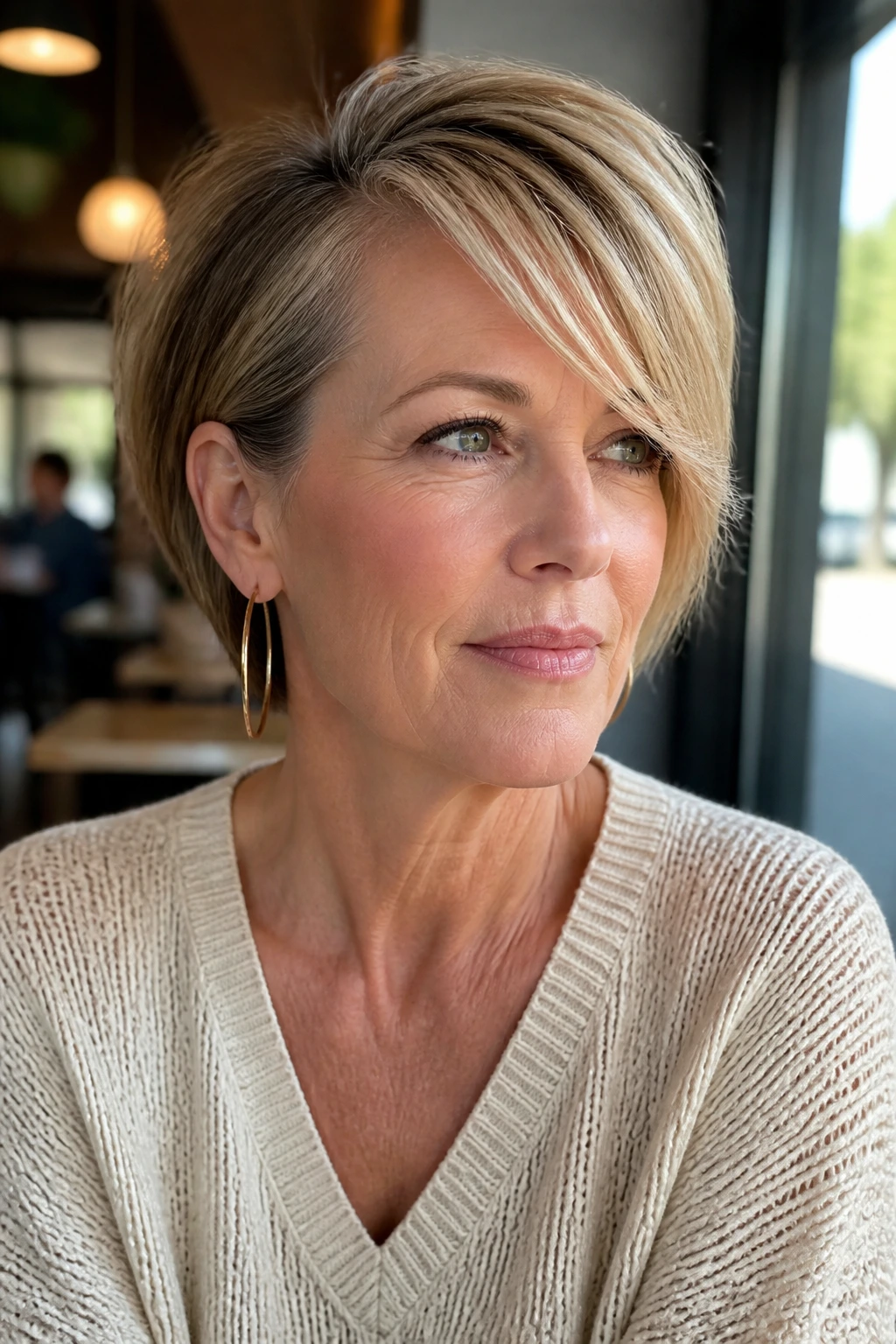
A deep side part is one of the easiest ways to make thin hair look more intentional at the front. Instead of asking a sparse hairline to carry a full bang, you let one side do the work and tuck the other side back into the cut.
Why the part matters
Set the part a little farther over than your old habit, usually somewhere near the outer edge of the eyebrow or just beyond it. That creates a heavier sweep across the forehead while leaving the temple that needs help tucked under the longer side.
This shape is especially kind to women whose hair is thinner at one temple than the other. It softens the imbalance instead of fighting it. The bang should travel across the forehead in one smooth diagonal, not split into two levels of fluff. A light root spray and a quick blow-dry with the front directed across the face will keep the line from collapsing before lunch.
8. Choppy Piecey Bangs
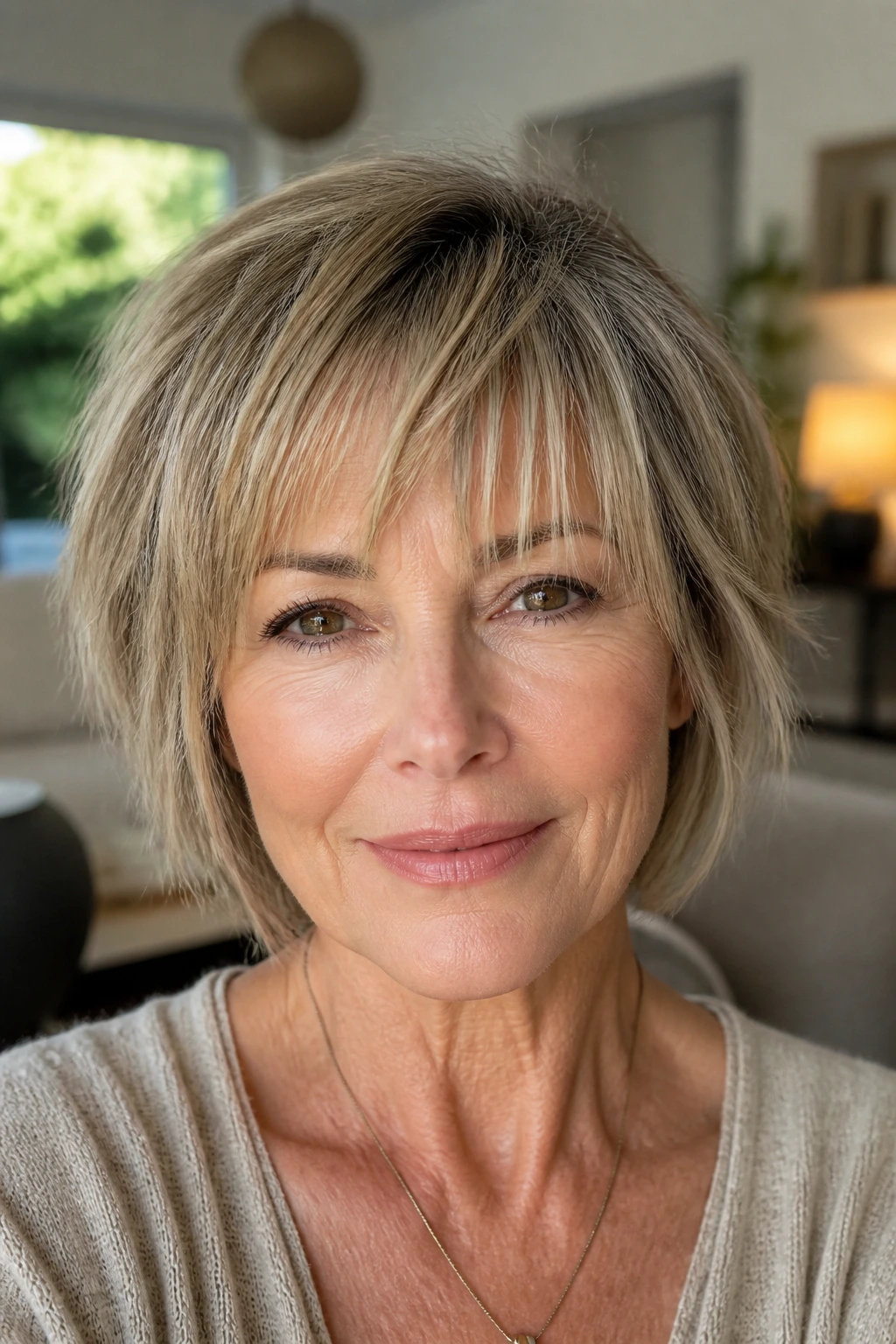
Choppy piecey bangs are for anyone who wants the front to look modern without pretending the hair is denser than it really is. The separation becomes part of the design, which means a few visible gaps no longer read as failure; they read as texture.
-
Keep the length at or just below the brows if you want the pieces to move instead of poke outward.
-
Ask for point-cut ends and a little internal texture, not a full thinning shear job that can make fine hair look shredded.
-
Finish with a pea-size amount of paste rubbed between your fingertips and tapped only through the ends.
This style is strongest on wavy hair, gray hair, or hair that has a little natural bend. It does not need perfection. In fact, perfection is the enemy here. If every strand lies in the same direction, the bang can look flat and see-through in a bad way. The point is to create a front that feels airy but not accidental.
9. Rounded Fringe for Shorter Cuts
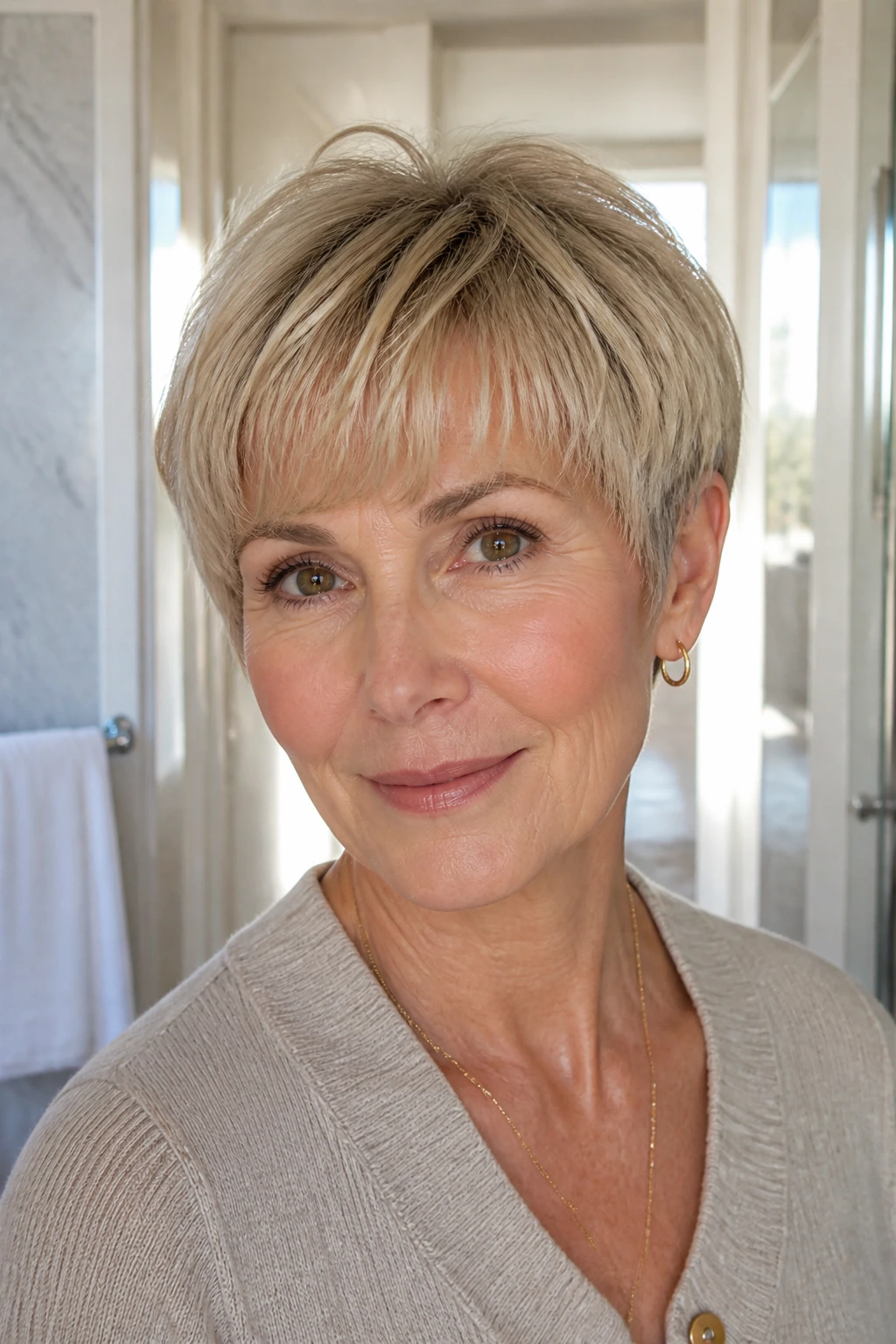
A rounded fringe gives a short haircut a softer front edge. On a pixie or a tight bob, that curve keeps the haircut from feeling boxy, and it can make thin hair look more deliberate because the line follows the face instead of chopping across it.
The curve should be gentle, not cartoonish. Think of a soft arc that sits a little longer at the corners and shorter in the middle. That shape helps the eye read fullness where there may not be much density. It also lets the fringe sit with the brow rather than fighting it.
I like this most when the crown has a bit of lift. If the top is flat and the fringe is rounded and heavy, the haircut can close in. Use a round brush or a small roller to give the front a bend, then rake it apart with your fingers once it cools. That last step matters. A rounded fringe looks best when it moves, not when it sits in one perfect curve.
10. Soft Blunt Bangs With Thinned Ends
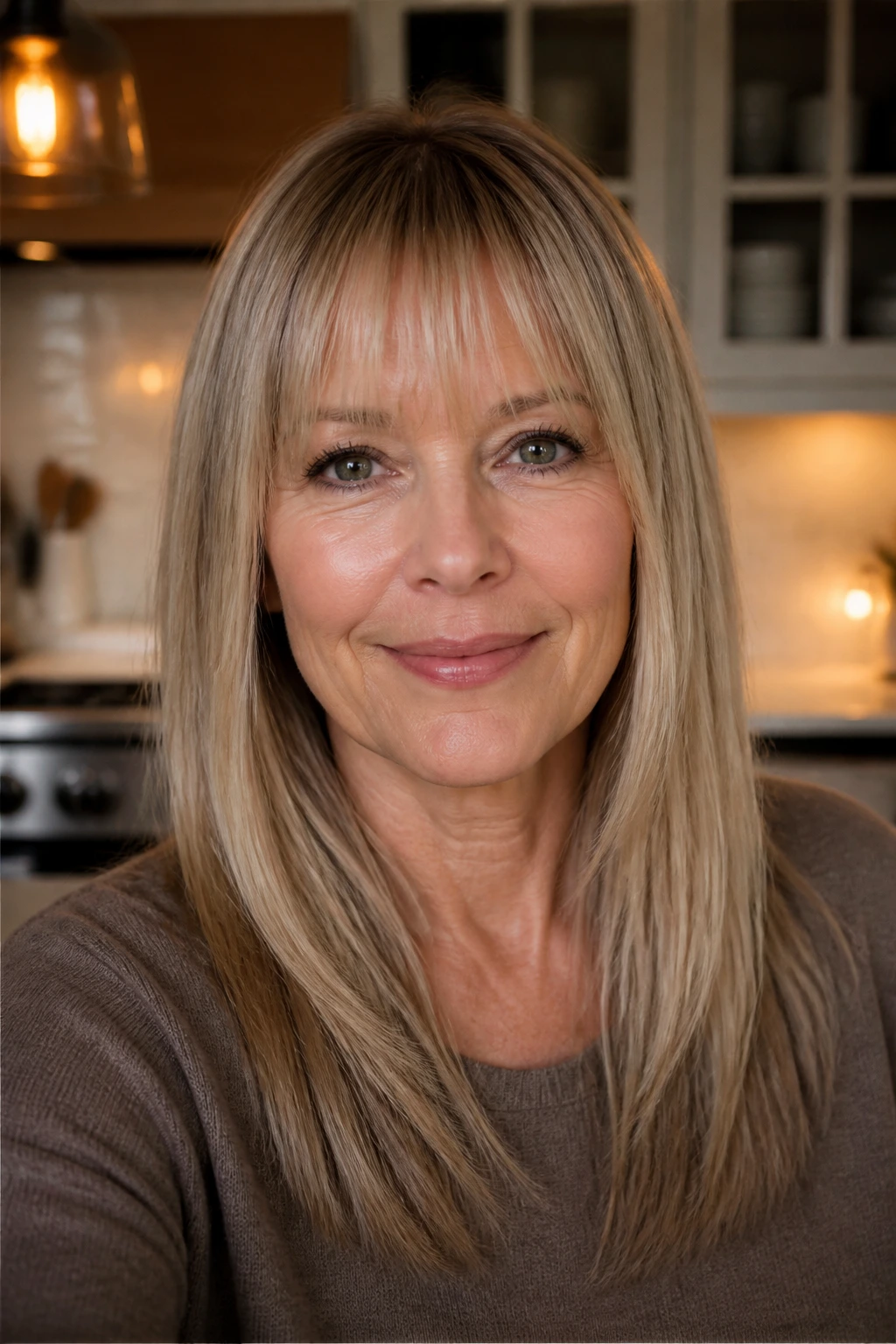
Blunt bangs get a bad name on thin hair because people picture a dense, heavy block across the forehead. That is not the only version. A soft blunt bang with thinned ends gives you a defined line without the weight of a full curtain.
The trick is to keep the edge crisp enough to read as a shape, then soften the last bit of the ends so they don’t shout. That may mean a point-cut finish or a very light texturizing shear at the tips. The bang should still feel straight when it falls, but not so solid that every scalp shift shows through.
This works best with smooth bobs, sleek lobs, and straight hair that behaves on command more often than not. If your hair is wavy, the fringe can kick out at the corners and lose the clean line. In that case, a tiny flat iron pass on the last inch is enough. Do not press the roots flat; keep the lift there and tame only the ends.
11. Shaggy Bangs That Blend Into Layers
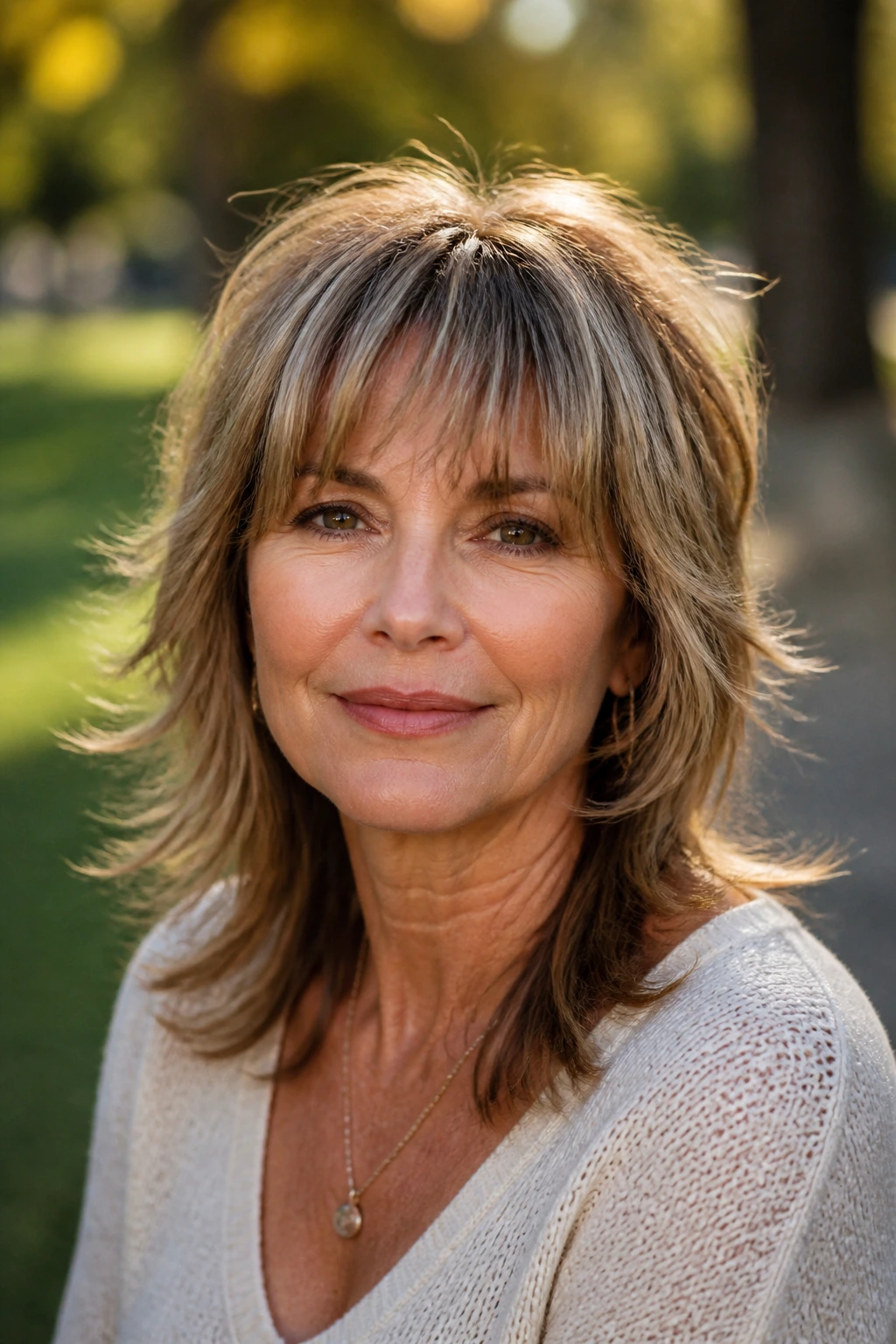
Shaggy bangs are a good answer when you want the front to disappear into the haircut instead of sitting on top of it. The fringe is part bang, part layer, which means thin hair doesn’t have to carry a separate dense section at the forehead.
This style likes movement. A little bend, a little roughness, a little irregularity — those are features, not flaws. On a shoulder-length shag, the bangs can start near the brow and slide into the side layers so the whole haircut feels connected. That’s useful after 50 because hair often thins in more than one place; letting the fringe blend into the sides reduces the feeling that the front has to work alone.
I would not use a heavy cream here. A foam, a light mousse, or even a bit of leave-in mist at the roots is enough. Scrunch the front with your fingers, blow-dry with a diffuser or low airflow, and stop before you smooth every bit of texture out of it. The mess is part of the shape.
12. Glasses-Friendly Sweeping Bangs

What works better with glasses than a bang that stays out of the frame and still does something interesting? A sweeping fringe, done right, gives you coverage at the forehead without fighting the top rim or pressing into the lenses.
How to make room for frames
Keep the front long enough to clear the glasses in the center and soft enough at the sides to tuck or sweep away from the temples. If the bang lands exactly on the frame line, it will split and stick in the wrong place all day. That’s the part most people miss.
This is one of my favorite cuts for thin hair because the glasses themselves help define the face, so the bang does not need to carry all the visual weight. The shape can stay light, and that lightness protects volume. I’d ask for a side sweep that starts a touch higher on the forehead and ends near the cheekbone, with enough length to brush past the frame, not sit on it.
A little root lift spray and a round-brush bend are usually enough. If your frames are thick, keep the fringe slightly longer. Thin hair gets cranky when it has to dodge a bulky pair of glasses, and a few extra millimeters solve most of that.
13. Curved Bangs That Follow the Brow
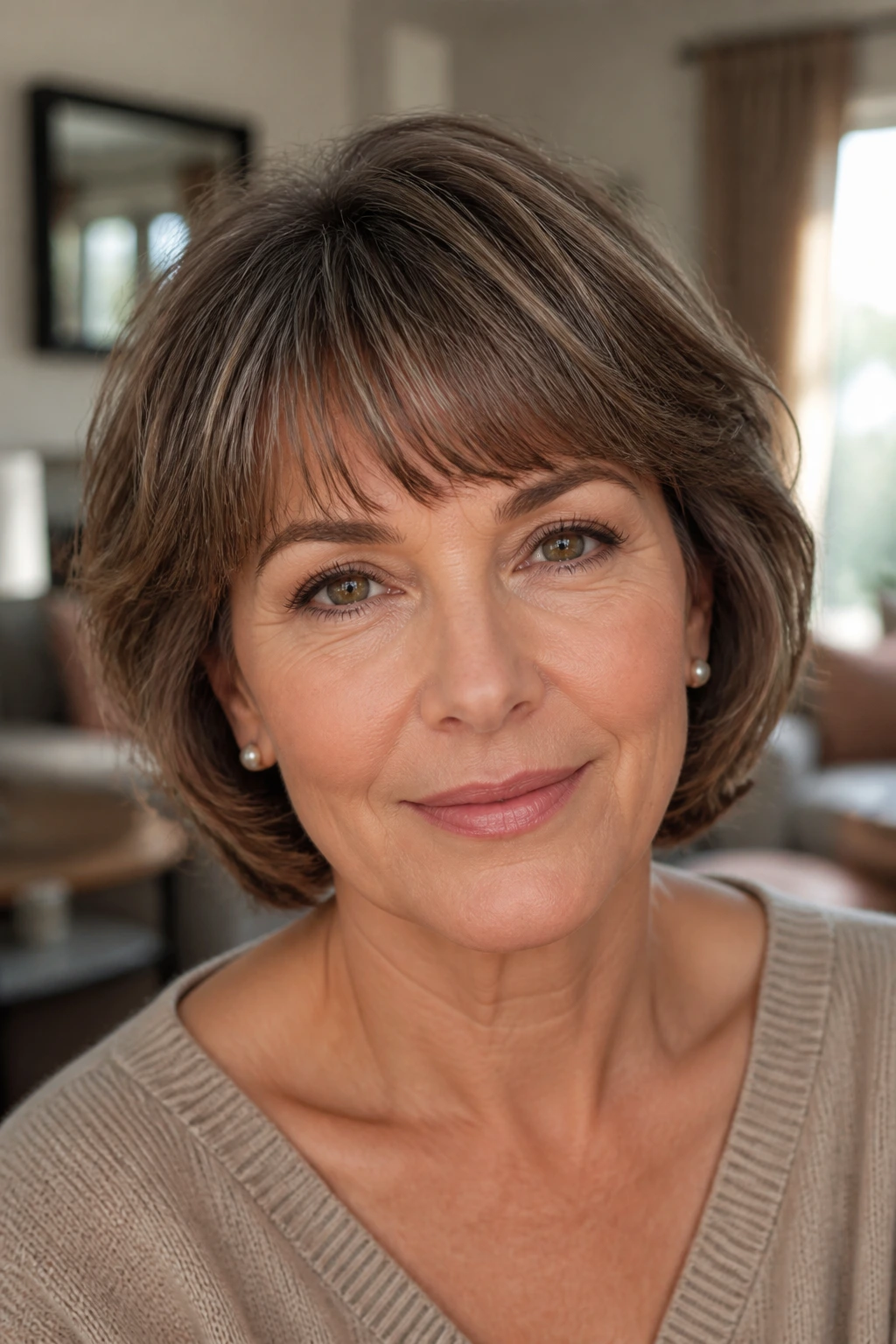
Curved bangs are underrated because they give shape without the bluntness that can expose thinness. The center sits a little shorter, the corners sit a little longer, and the whole line mirrors the brow in a softer way.
That curve matters on mature hairlines because it avoids the straight, painted-on look that can feel too severe. The bang frames the eyes instead of boxing them in. If your forehead is broad or your face is more angular, the soft arch makes the front feel less square. It also plays well with silver hair, where a hard edge can sometimes look harsher than expected.
The style works best when the stylist cuts with the head held naturally, not yanked straight back. You want the fringe to fall into its curve on its own. A small round brush, a few seconds of heat, and a cool-down clip are enough to hold the bend. If you have a strong cowlick, this may need a longer first cut so the curl can be persuaded instead of bullied.
14. French Bangs With a Relaxed Finish
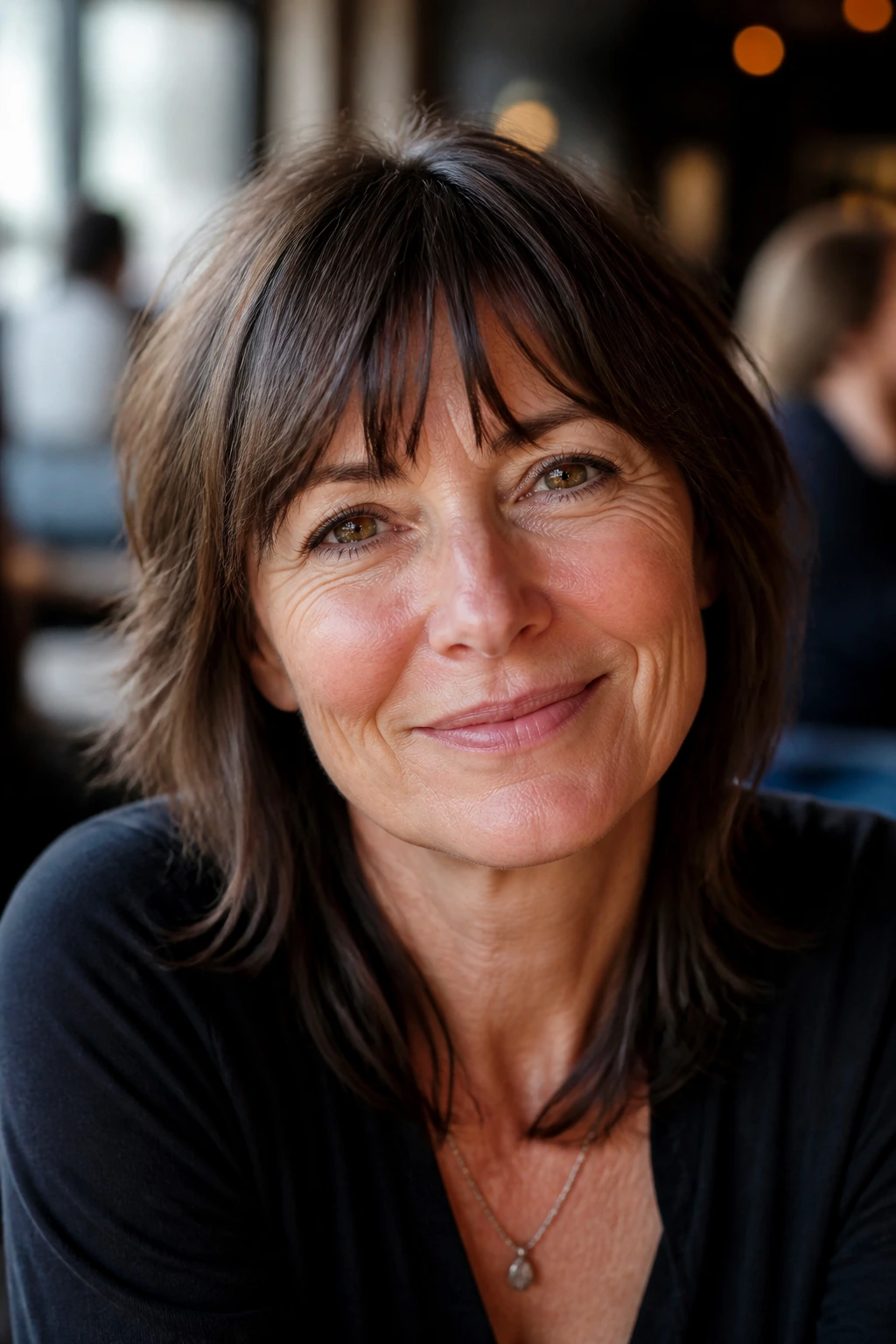
French bangs are the cool cousin in this group, but they only work on thin hair if they stay light. Think shorter, pieceier, a little imperfect, and not so dense that the forehead feels boxed in.
The charm is in the looseness. The fringe can be split slightly in the center or brushed forward in one soft sweep, and the ends can land just above the brows so the whole thing feels casual rather than strict. On fine hair, that looseness is what keeps the cut from screaming “I need more hair.” It looks like a choice, not a rescue.
I like this shape with chin-length bobs, collarbone cuts, and straight hair that gets a little bend when it’s dry. It works less well if your hair clings flat to the scalp and refuses to lift, because the relaxed finish can collapse into nothing. A dusting of dry shampoo at the roots gives grip, and a quick finger-tousle keeps the fringe from looking too neat. Neat is not the goal here. Controlled mess is.
15. Pixie Fringe With a Side Sweep
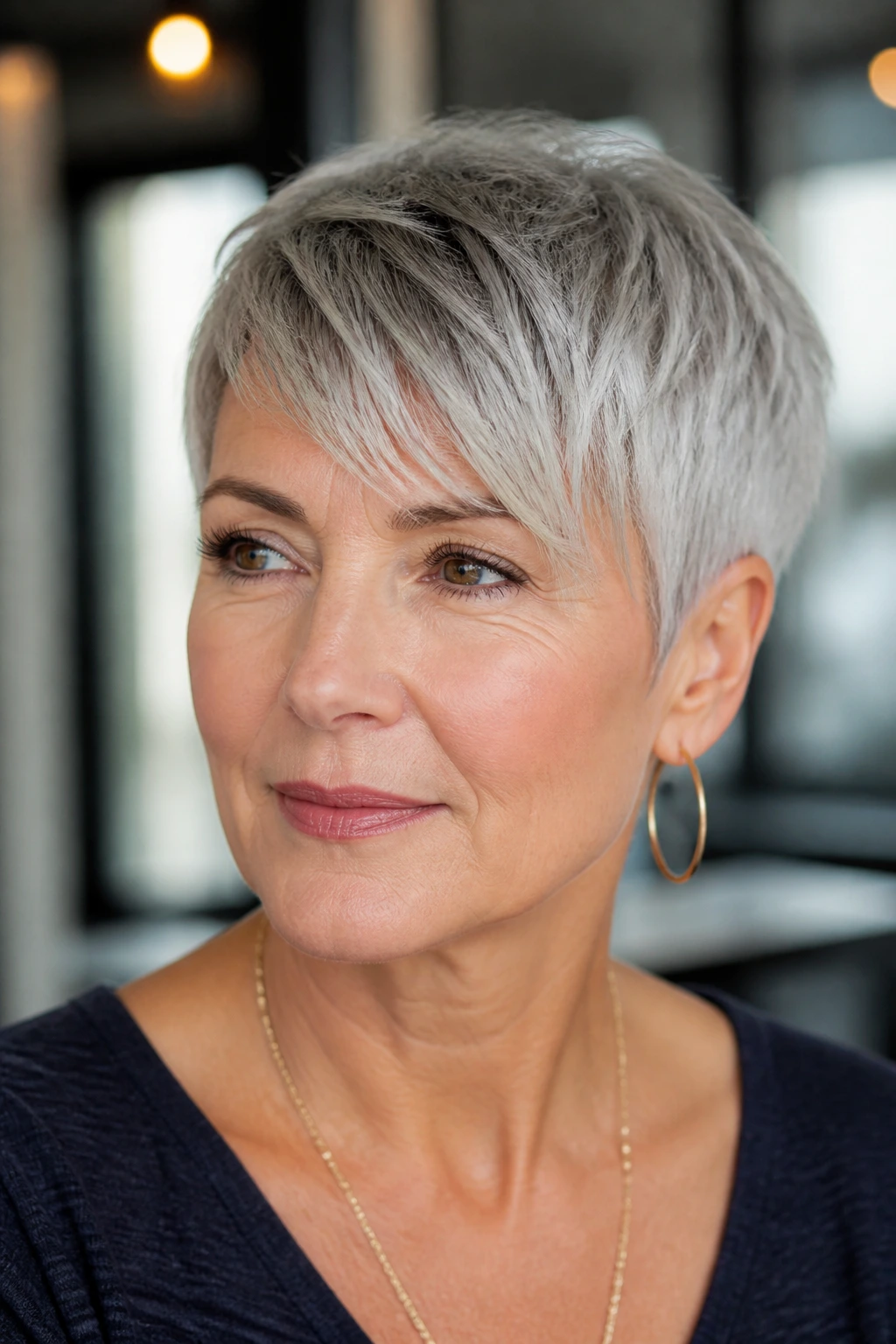
A pixie fringe can be a smart move when the hair is thin because there is less length to weigh down the front. The side sweep gives the cut direction, so the fringe adds shape instead of showing every scalp line.
Best on very short hair
Keep the top long enough to direct forward and across, then let the fringe angle just enough to skim one brow. If the front is cut too short, there is nothing to work with and the hair pops up in the wrong place. Too long, and the pixie loses the crispness that makes it feel fresh.
This look is especially good when the crown is flat and the sides are close to the head. The sweep draws the eye diagonally, which is more forgiving than a straight, upright fringe. It also grows out with less drama than a blunt short bang. Use a tiny bit of paste only at the ends; if you put product at the roots, the short pieces clump and you lose the airy line.
16. Face-Framing Bangs That Melt Into Layers
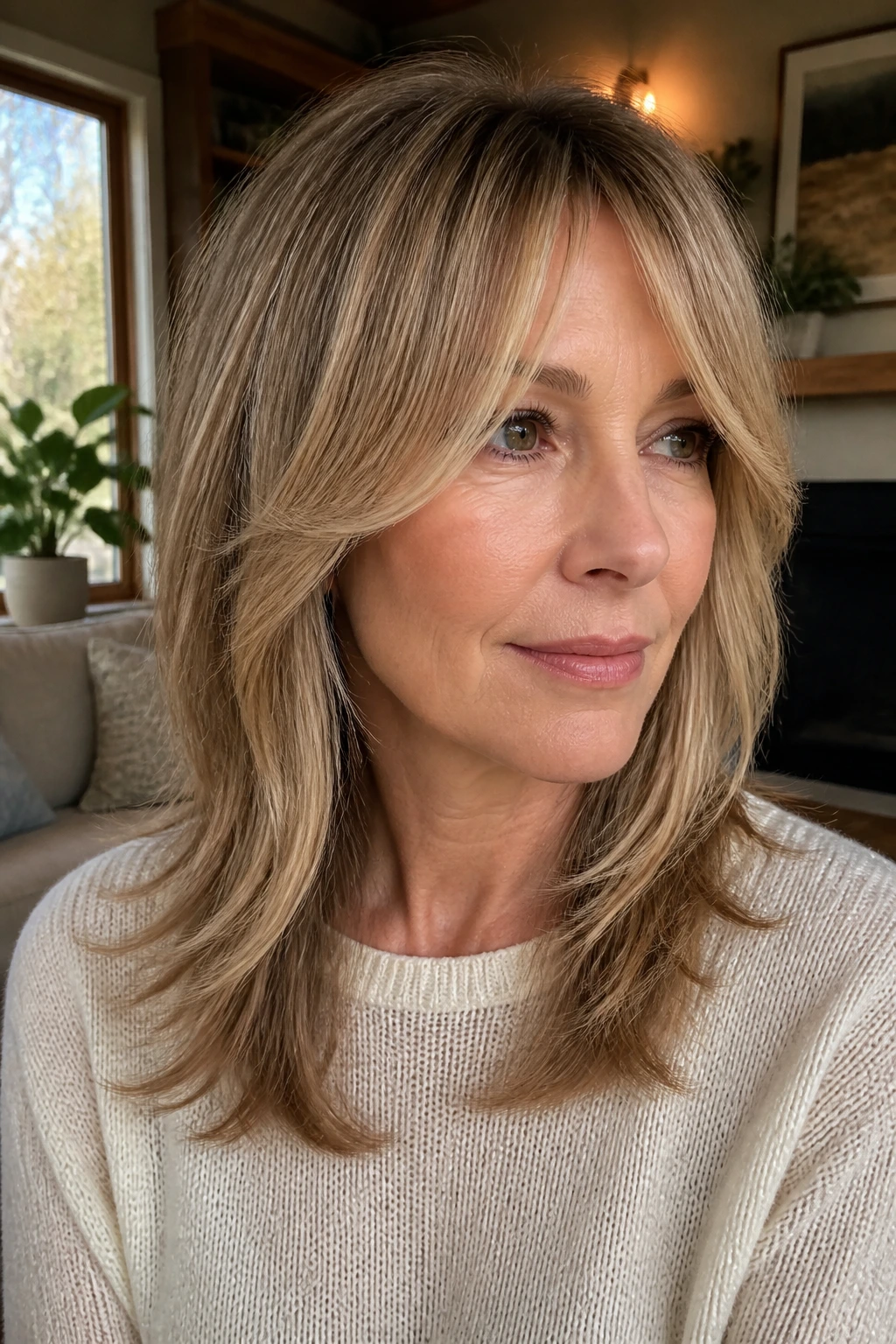
If you are nervous about committing to real bangs, face-framing pieces are the sensible middle ground. They act like bangs at the front but keep enough length to tuck, bend, or grow out into the rest of the haircut.
That matters on thin hair because the density is spread out. Instead of asking one small section to do all the work, the front layers and the fringe blend together across the cheeks and jaw. The result is softer, and in a lot of cases it actually looks fuller because the eye sees movement from forehead to chin. I prefer this on people who wear their hair up a lot, because the face frame still does something when the rest of the hair is pulled back.
The cut should start higher than the cheekbone if you want a real bang effect, or lower if you want the face to stay open. Either way, the sides need to slide into the rest of the hair with no hard step. A center part or a soft off-center part can both work. What matters is that the front pieces are long enough to live with your hair when it changes shape between wash days, because it will.
17. Airy Center-Part Fringe
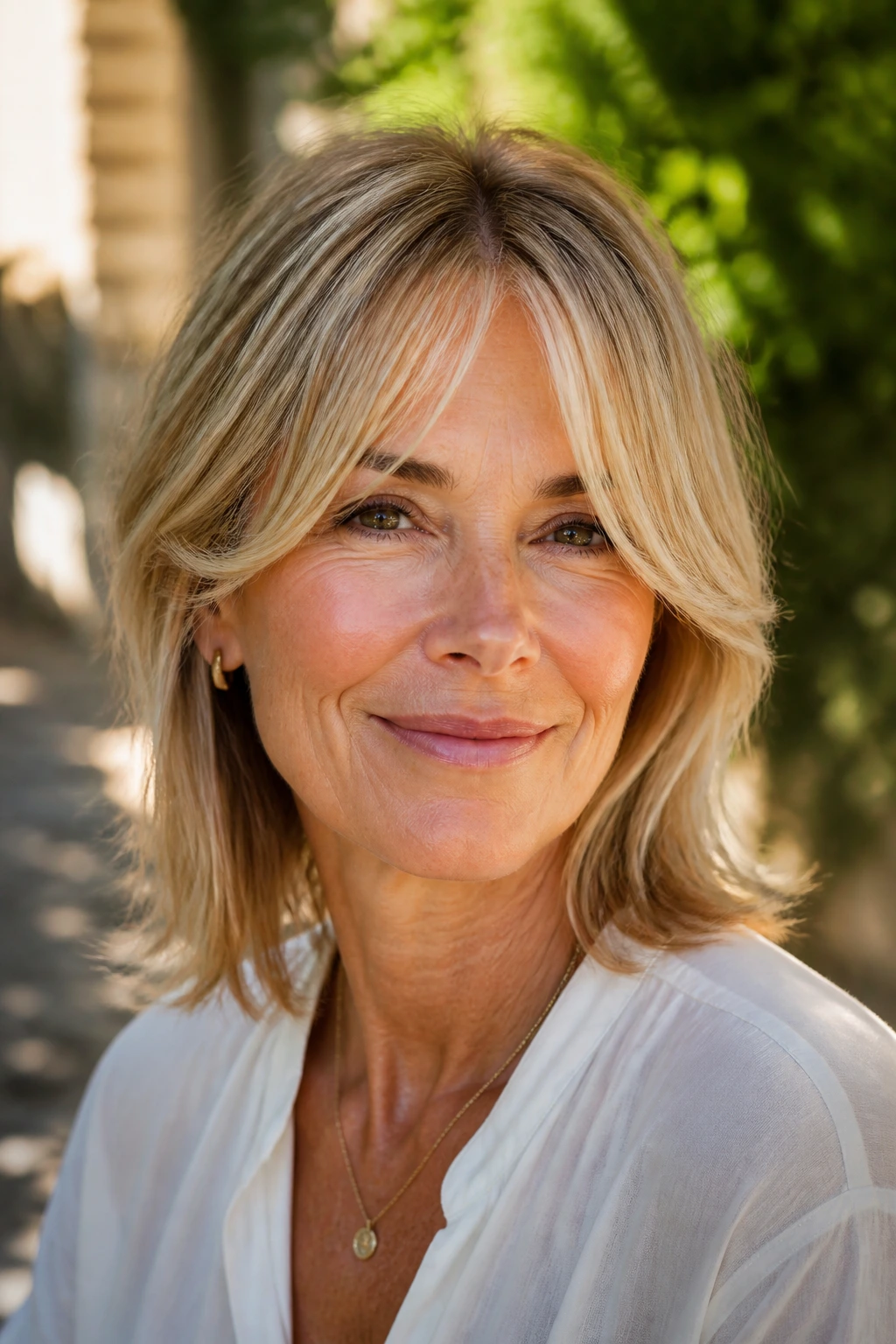
Can a center-part fringe work on thin hair? Yes, if the center pieces are light enough to move and the sides are long enough to frame the cheekbone. The problem is not the part itself; the problem is overloading the middle.
An airy center-part fringe works a lot like curtain bangs, but with less bulk. The center can fall just to the brows or a touch above, and the pieces should break apart a little as they move toward the temples. That broken line keeps the fringe from looking like a dense square hanging over the face. It also helps if your hair is straight or softly wavy, because the bend makes the split look intentional.
This is a good option if you live in a middle part and do not want to fight your natural habit. The fringe sits where the hair already wants to fall, so styling is easier. A Velcro roller for three to five minutes while you do your makeup can be enough to give the front a lift. I like that a lot more than overworking the bang with hot tools every morning.
18. Tapered Mini Bangs
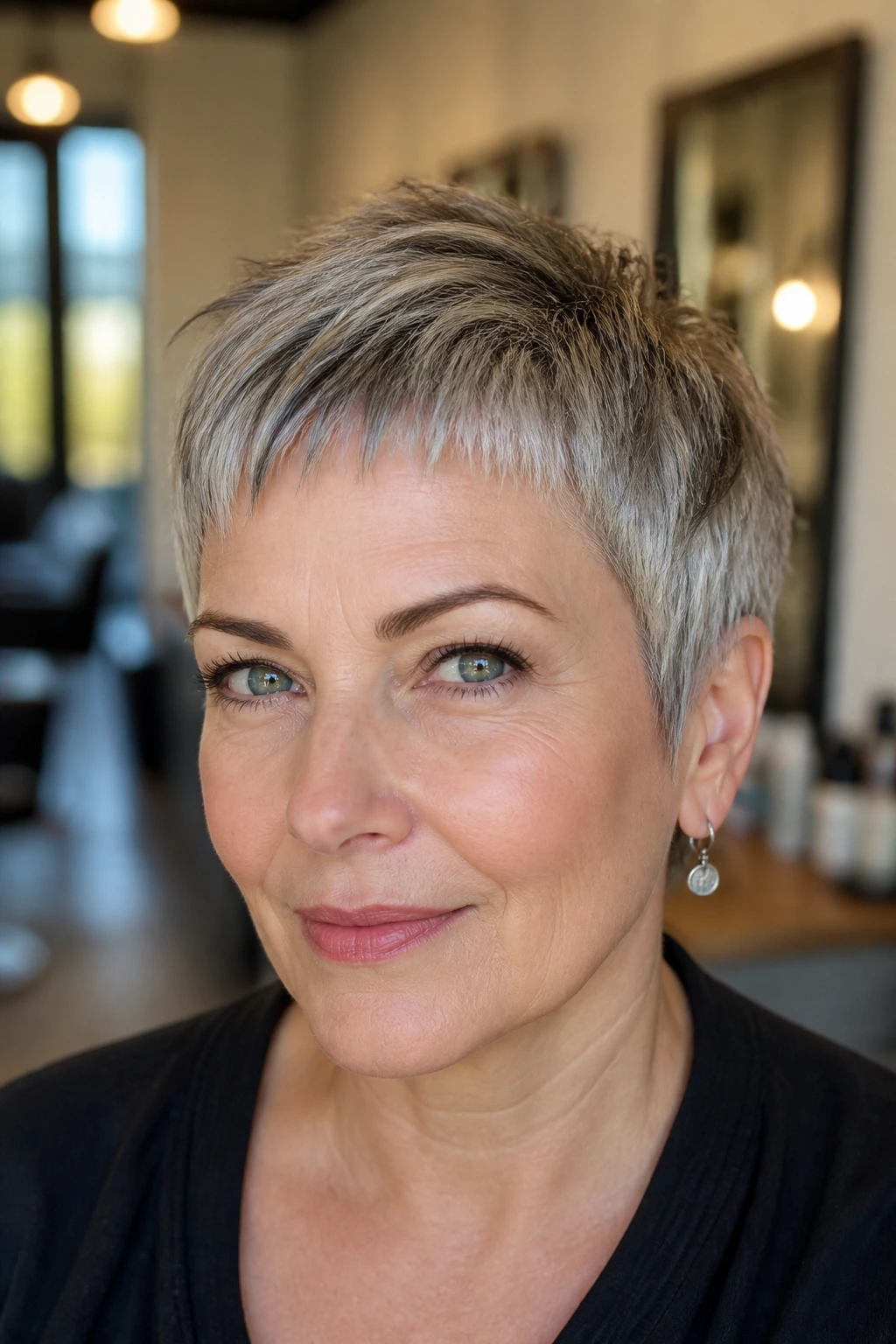
Tapered mini bangs are not for everybody, and I’m glad they aren’t. They are short, directional, and sharp enough to make a point, which means they work best when the rest of the haircut has enough softness to balance them out.
When to choose them
Pick this style if you want the eyes to carry the face and you have enough density at the front hairline to support a shorter shape. On very sparse hair, a mini bang can expose more than it hides. On the right head, though, the taper is clean and modern, and the short length keeps the fringe from dragging down a fine haircut.
I like mini bangs paired with a textured pixie, a cropped bob, or a short shag. The taper at the sides keeps them from looking like a hard shelf across the forehead. If you wear makeup, they can make brows and eyes do more of the work, which is the whole point of the style. A touch of styling cream is enough; anything heavier makes the short ends cling together and turn stringy fast.
19. Soft Arched Fringe With Crown Lift
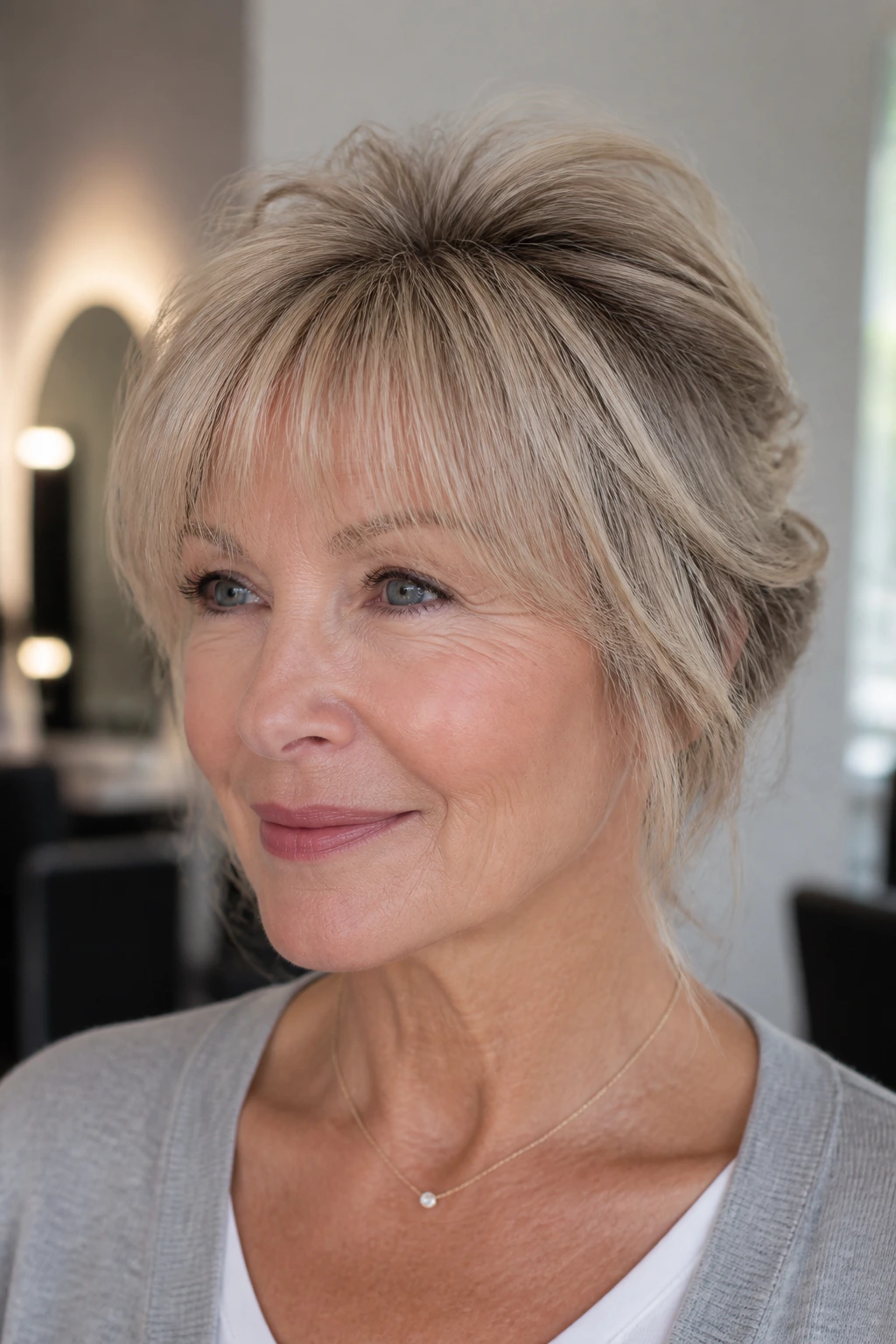
What ties the best thin-hair bangs together is not the bangs alone. It’s the lift behind them. A soft arched fringe with crown lift gives the front shape while the top of the head stays airy, which keeps the whole haircut from dropping flat.
The arch should be subtle. Too much curve and the bang starts looking dated; too little and it turns into another straight line. What I like here is a gentle rise through the middle, then softer edges at the temples so the eye sees height and movement at the same time. This shape can work on straight, wavy, or lightly textured hair, and it plays well with both long and short cuts because the arch sits above the rest of the style instead of fighting it.
If you want one style that can be polished, casual, or slightly undone depending on the day, this is it. It does ask for a bit of styling, but not much. Blow-dry the roots first, clip the fringe up for a minute while it cools, and let the crown keep its little bit of lift. That small amount of effort changes the whole line of the haircut.
Why Light Fringes Beat Heavy Ones on Thin Hair

Thin hair and thick bangs are not natural allies. A dense front section can make the crown drop, reveal scalp at the corners, and give the whole haircut a helmet shape that looks more severe than chic. Light fringes avoid that by keeping the front line soft enough to move.
The front line carries the whole haircut
The bang is the first thing most people see. If it is too heavy, too square, or too wide, that is where the eye lands — and not in a good way. A light fringe lets the rest of the hair support the face instead of having the bangs do all the visual work.
Texture beats thickness
A piecey edge, a feathered finish, or a soft diagonal often looks fuller than a hard line because the eye fills in the spaces between strands. That is why point-cut ends and subtle layering matter so much on fine hair. They create motion, and motion is what keeps the front from reading as flat.
Lift matters more than bulk
On thin hair, a little root lift can do more than extra density ever will. If the roots lie flat, the bangs sink into the forehead and the top of the head follows them down. If the roots stand up a bit, even a soft fringe looks more awake.
The useful rule is simple: keep the fringe light enough to breathe, but not so light that it disappears. That middle ground is where the good cuts live.
Essential Tools for Styling Thin Bangs
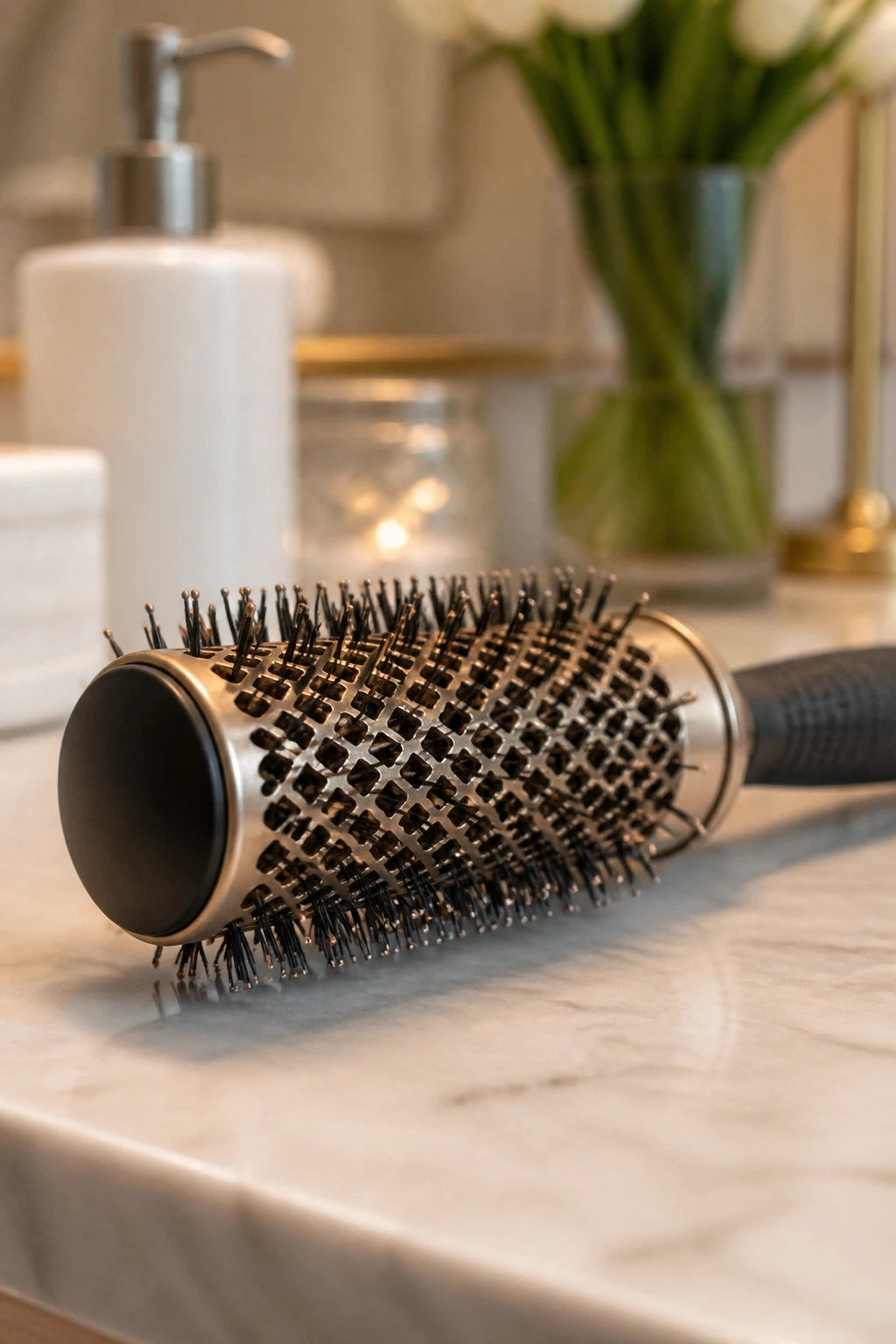
You do not need a shelf full of products to make fringe behave. You need a small set of tools that give the front shape without smothering it.
-
Small round brush, 1 to 1.25 inches: Good for bending the fringe under or giving it a soft curve without pushing the roots flat.
-
Blow dryer with a nozzle attachment: The nozzle helps direct airflow at the roots instead of blasting the whole front area into chaos.
-
Velcro roller or two duckbill clips: Useful for setting a bend while you finish the rest of your makeup or outfit.
-
Lightweight mousse or root lift spray: Adds a bit of structure to fine strands without making them sticky or hard.
-
Dry shampoo: Helps on day two or three when the roots start to separate, especially if the bangs live close to the forehead.
-
Tail comb: Handy for clean parting and for lifting the fringe before you dry it.
-
Light texturizing spray: Best used sparingly through the ends, not sprayed like perfume across the whole fringe.
-
Mini flat iron, optional: Useful for smoothing only the last inch or two of a bang that flips out at the edges.
What to Ask for at the Salon
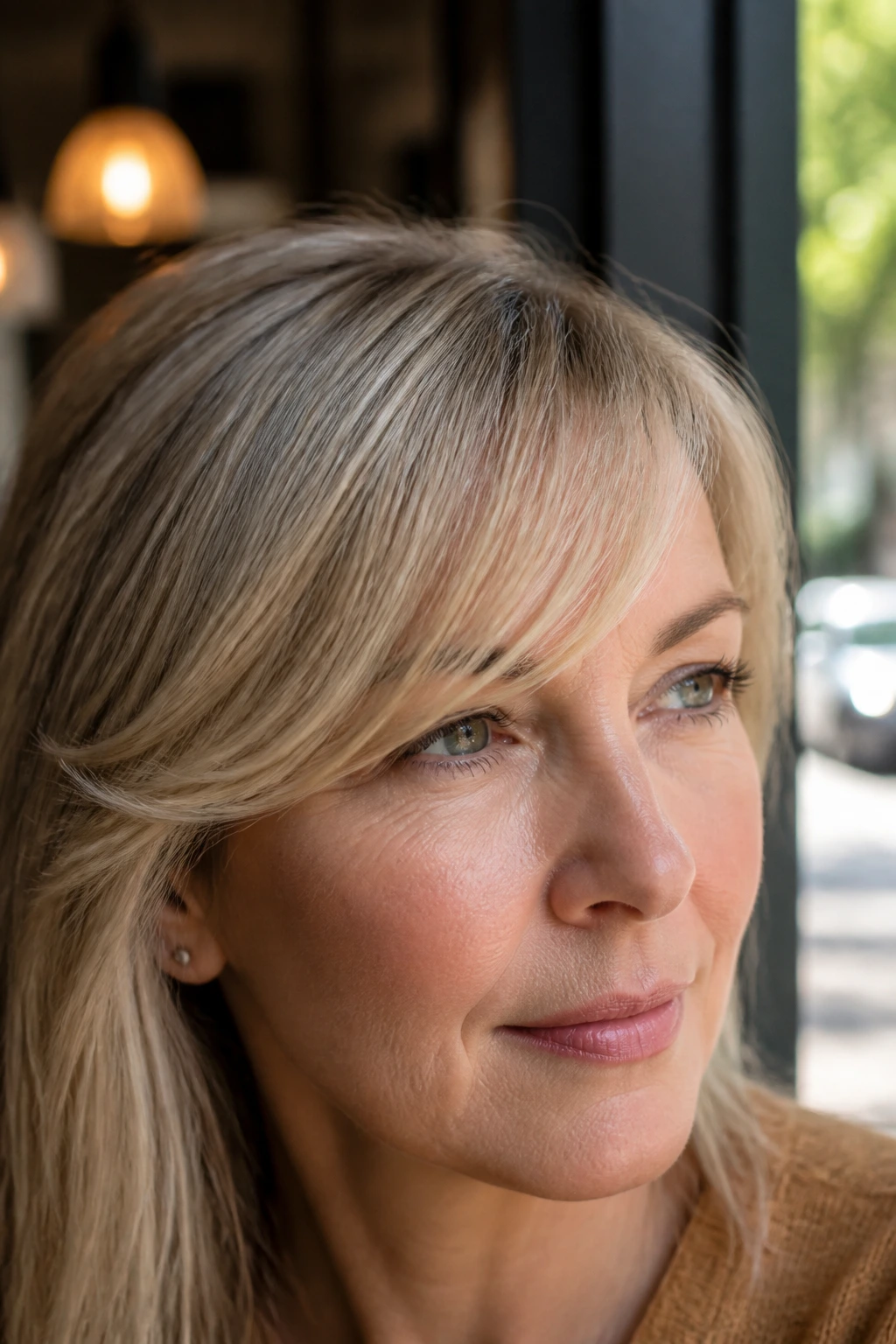
This is the part that saves people from salon regret. If you walk in and say “bangs for thin hair,” a good stylist will ask questions, but you can help the process by being specific about what the fringe needs to do.
Start with density and direction. Say whether you want coverage at the forehead, softness around the eyes, or something that clears glasses. Then mention the one thing that always happens with your hair: the cowlick at the part, the temple that goes flat, the spot that separates when it dries. A fringe can be cut beautifully and still fail if it ignores the way your hair actually grows.
I would also ask for a first cut that is a touch longer than the final goal. Thin hair often springs up when it dries, and silver or coarse-gray strands can move more than people expect. It is easier to trim another quarter inch than to wait for a too-short bang to grow back through an awkward phase.
A few useful phrases help:
- Keep the front light enough that I can see some skin between the strands.
- Blend the sides into the cut so the fringe doesn’t sit as a separate piece.
- Leave room for my glasses / part / cowlick.
- Check the shape dry, not just wet.
How to Wear Bangs With Glasses, Bobs, and Lobs

Bangs do not live alone. They sit in a haircut, they sit near frames, and they sit next to the rest of the face. That pairing is where the real decision gets made.
Frame Balance: If you wear glasses, choose a fringe that clears the frame line or slides above it. Side-swept bangs, curtain bangs, and soft bottleneck shapes are usually easier than a heavy straight line that wants to land right on the top rim.
Haircut Pairing: A bob can take more shape at the front, especially rounded or soft blunt bangs. Lobs do better with longer sweeps, curtain pieces, or face-framing fringe because the extra length keeps the whole style from feeling top-heavy.
Accessory Pairing: Earrings matter more than people think. A sharp mini bang can look strong with earrings that are simple and close to the ear, while a soft fringe usually looks cleaner when the jewelry is a little more visible. Headbands can work, but only if the fringe is light enough to move around them instead of bunching up.
Style Mood: Want polished? Go with brow-grazing or soft blunt. Want airy? Curtain, feathered, or wispy. Want a bit of edge? Mini or French bangs. The haircut does not need to be dramatic to feel personal.
Small Tweaks That Change the Whole Look
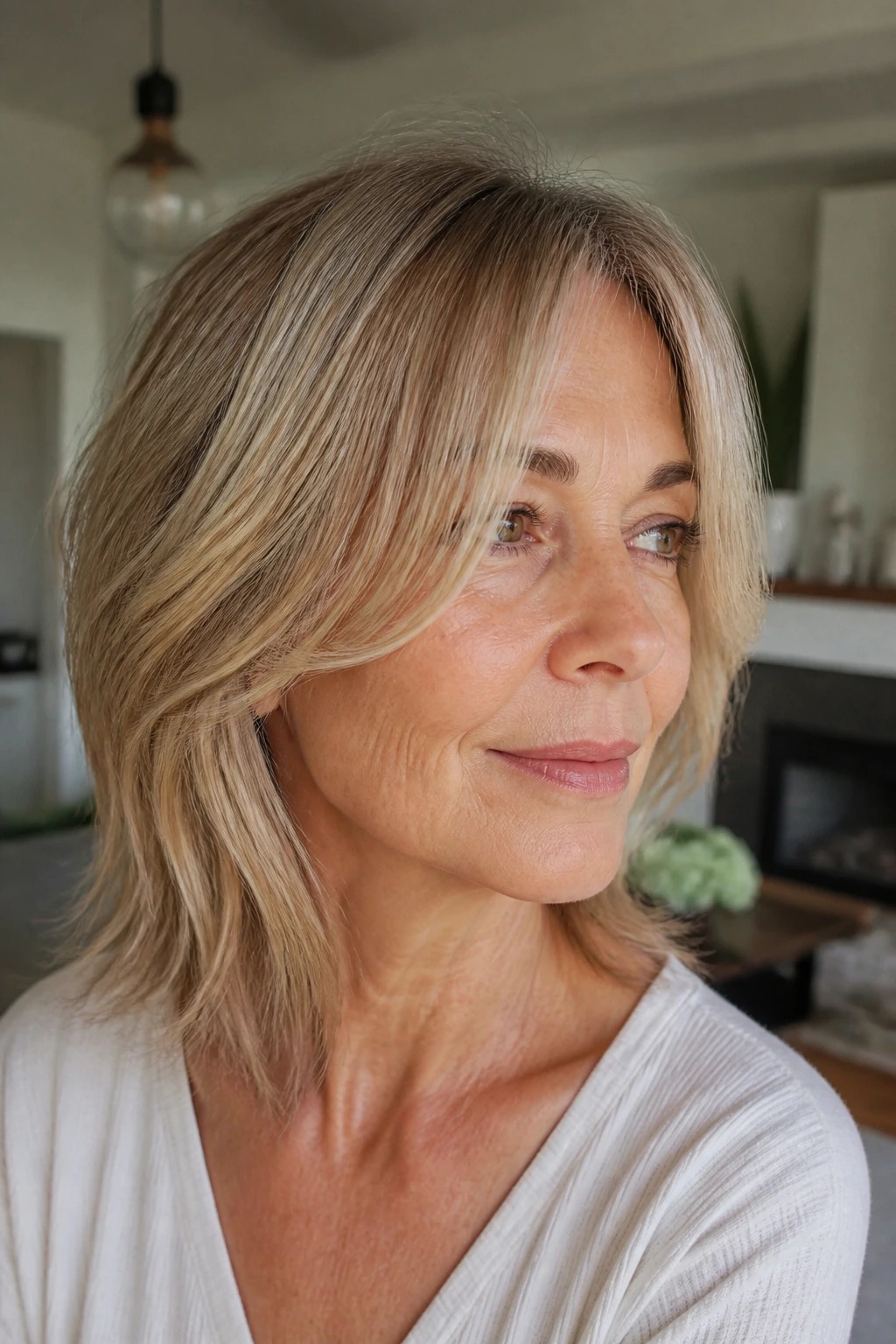
The same bang can look flat, full, or fussy depending on three small choices: where you dry it, what you put on it, and how much of the edge you keep.
Root Lift: Start with the roots. If you dry the fringe from wet in the direction it will wear, it usually sits cleaner and needs less fighting later. A little lift at the root is worth more than extra product on the ends.
Texture: Fine hair can turn limp fast if the product is too rich. A foam, a light spray, or a bit of dry shampoo at the base gives the strands something to hold onto. Heavy cream belongs farther down the hair, if at all.
Softness: If the fringe feels too severe, lengthen the center by a fraction of an inch and let the corners taper into the sides. That tiny shift can make the whole face look less boxed in.
Make-It-Yours: For straight hair, a brush and blow dryer may be enough. For wavy hair, let the bend stay visible and only smooth the spots that kick out. For grayer hair, a touch more heat and a little more cool-down time often helps the fringe settle instead of frizzing.
Keeping the Fringe Fresh Between Cuts
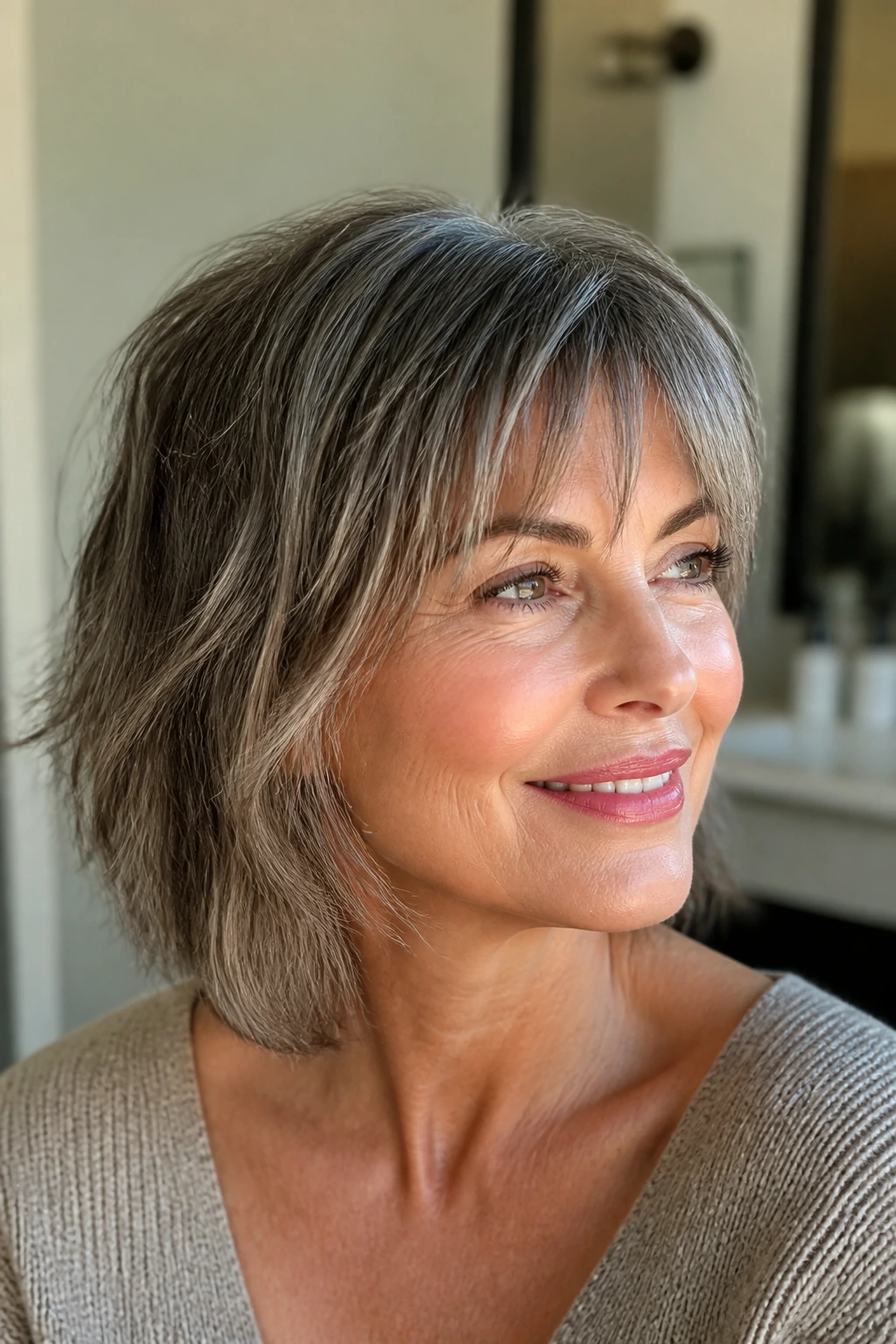
Bangs are not the kind of haircut you can ignore for six weeks and hope for the best. They need a little maintenance, but not the kind that eats your morning.
Most thin fringes do best with a trim every 4 to 6 weeks. If the style is very short or tapered, 3 to 4 weeks may feel better. Longer curtain or face-framing bangs can usually go a bit longer before they start falling into your eyes in a way that feels sloppy.
Between washes, a quick reset helps. A spritz of water at the roots, followed by 20 to 30 seconds of blow-drying with a brush or your fingers, can bring the front back into shape. On oily hairlines, dry shampoo applied from 8 to 10 inches away keeps the fringe from clumping at the skin.
Nighttime care matters too. If you want the front to behave in the morning, do not sleep on it wet. That is how you get a bend in the wrong place and a flat patch where the fringe sat against the pillow. Clip it loosely back, use a soft roller for a short time, or pin it away from the face if the cut is short. When you wake up, a minute or two of re-drying usually beats ten minutes of wrestling.
If you are growing bangs out, keep the side pieces trimmed first. That way the fringe blends rather than turning into a blunt shelf halfway through the process.
Variations and Adaptations to Try
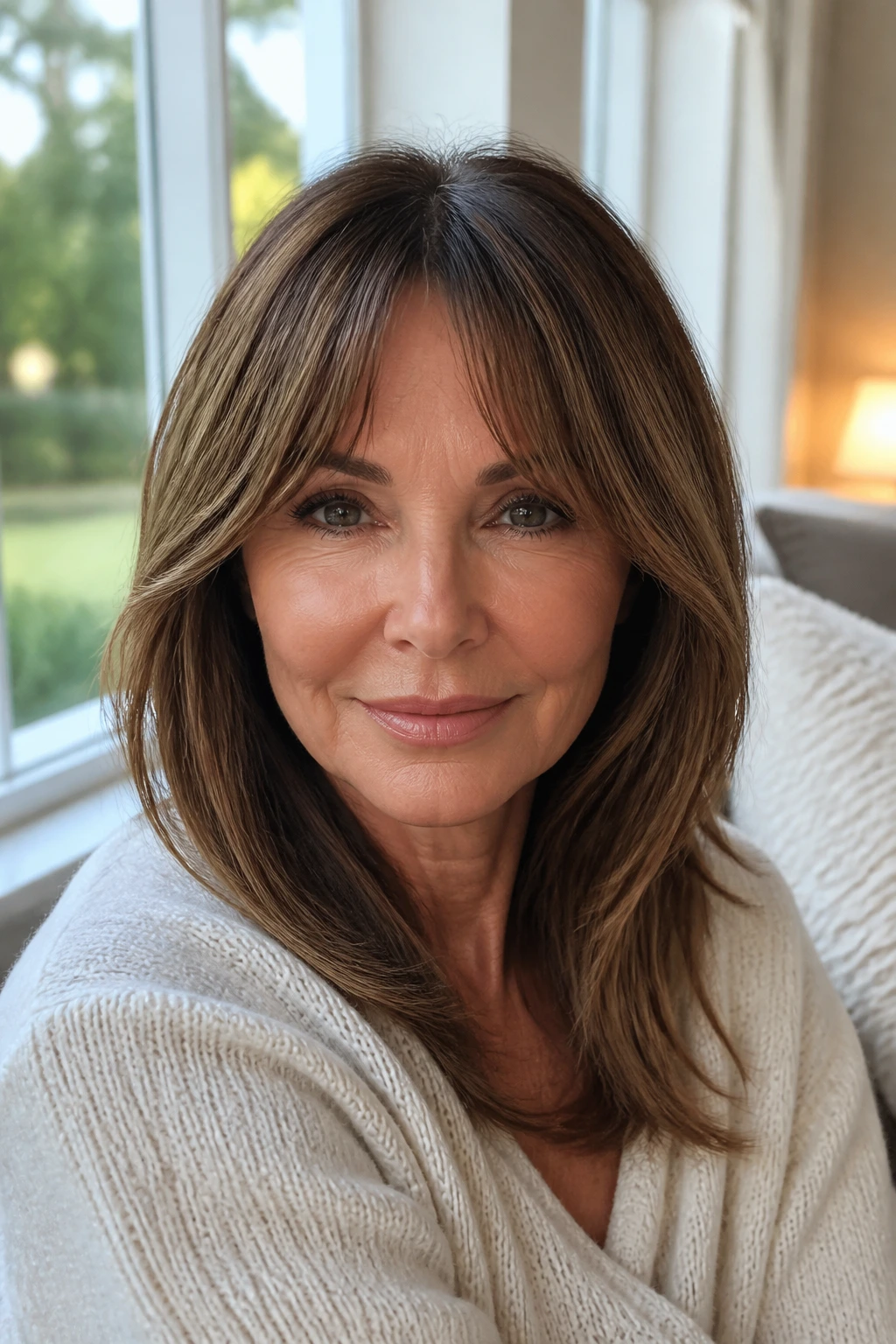
The Glasses-Line Sweep: This version keeps the fringe long enough to skip over the frame top and soft enough to move to the side. It is a good choice if you wear glasses all day and hate hair sitting on the lenses.
The Silver-Soft Finish: On gray or white hair, a feathered or airy fringe usually looks better than a hard blunt line. Silver strands can feel wirier, so a softer cut keeps the bangs from looking stiff.
The Wavy-Air Lift: If your hair bends on its own, let it. Cut the fringe a little longer and allow the wave to show through, then use a lightweight mousse rather than forcing it into a straight shape.
The Low-Commitment Grow-Out: Face-framing bangs that blend into layers give you the feeling of fringe without the constant upkeep of a strict bang line. This works well if you like to tuck your hair back or change your part often.
The Short-Cut Edge: For pixies and cropped bobs, a tapered mini fringe gives the haircut energy. It is a bolder choice, but when the front is kept narrow and the sides are softened, it can look clean rather than harsh.
Common Mistakes to Avoid
-
Making the fringe too dense at the start: A heavy front section can flatten the crown and expose the temples. Ask for air in the cut, not just hair in the cut.
-
Cutting it too short on the first try: Fine hair often springs up when dry, which means a bang that looks fine wet can end up an inch shorter than planned. Leave room to refine it later.
-
Ignoring the cowlick or growth pattern: If the front hair wants to split, a straight-across cut will fight you all morning. Shift the part, widen the fringe, or choose a side-swept shape that works with the growth pattern.
-
Using rich cream at the root: Heavy products make thin bangs separate and go stringy fast. Keep oily products off the front hairline and stick to lighter sprays or foam.
-
Leaving the sides too narrow: A bang that is too small can look like a strip pasted onto the forehead. Let the sides blend into the haircut so the fringe feels connected.
-
Skipping the dry finish: Bangs often look one way when wet and another way when fully dry. Check the shape dry before you decide the cut is too short, too wide, or too flat.
Frequently Asked Questions
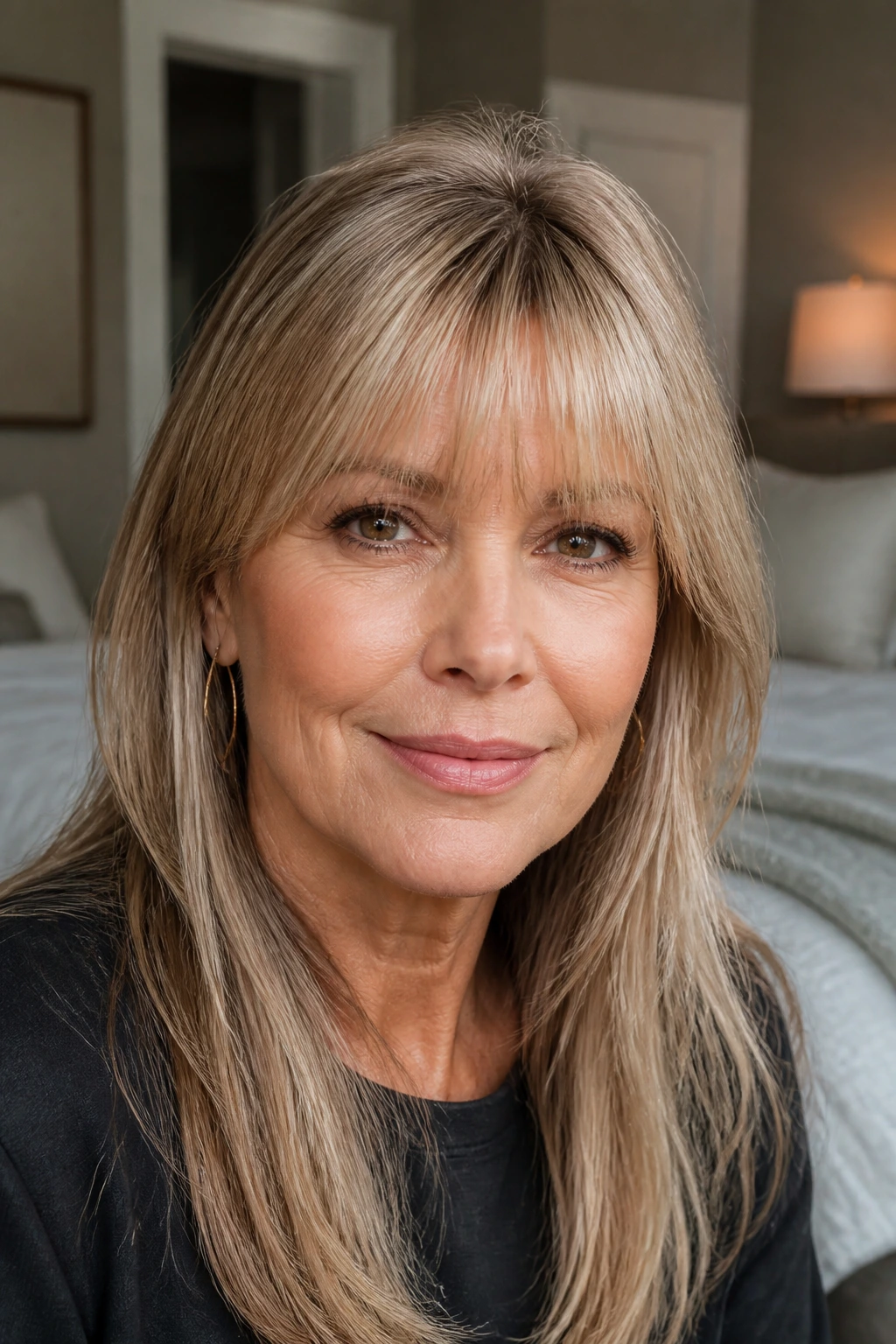
Will bangs make thin hair look thinner?
They can, if the fringe is heavy, blunt, or cut too wide for the amount of hair you have. A lighter bang shape — side-swept, curtain, feathered, or face-framing — usually does the opposite because it brings movement to the front and keeps the crown from dropping flat.
Are curtain bangs good for fine hair after 50?
Yes, as long as they stay airy. The center should not be overloaded with hair, and the sides should be long enough to blend into the rest of the cut. If the fringe is cut too thick, the curtain effect disappears and the front can look bulky.
Should thin bangs be cut dry or wet?
Dry or nearly dry is usually safer, especially if your hair springs up or has a cowlick. Wet hair can hide how much the fringe will shrink once it dries, which is how people end up with bangs that feel too short by noon.
What if my bangs separate in the middle?
That usually means the fringe is too heavy in one area, too narrow, or fighting a growth pattern at the front. A side sweep, a deeper part, or a softer curtain shape often fixes the split better than more product does.
Do bangs work with glasses?
They can, but the length and angle matter. Sweeping bangs, bottleneck bangs, and soft curtain shapes usually clear the frame better than blunt, heavy bangs that sit right on the top rim.
How often should I trim thin bangs?
Every 4 to 6 weeks is a good range for most styles, and shorter fringe may need attention sooner. If you wait too long, the shape loses its line and starts falling into the eyes in a way that looks unplanned.
Can I have bangs if my hair is wavy or bends at the front?
Yes, but the cut should respect the wave instead of fighting it. Feathered, shaggy, curtain, and side-swept styles are usually easier than a strict straight bang, because they give the wave room to live.
What if I’m nervous about commitment?
Start with a longer face-framing fringe or a light side sweep. Those shapes can be tucked, pinned, or grown into layers if you change your mind, which is a lot kinder than trying to undo a short blunt bang.
A Fringe That Still Moves
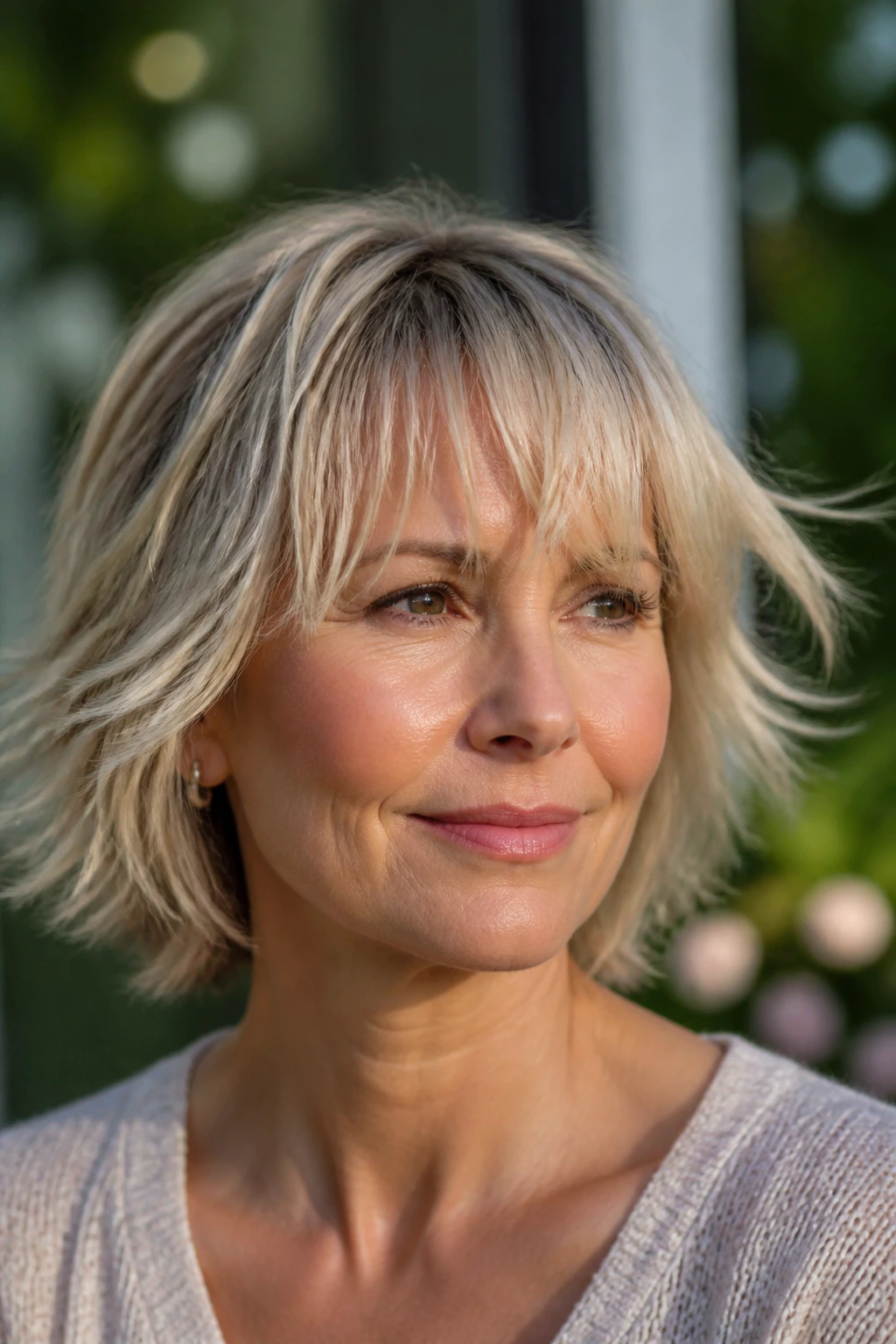
The best bangs for thin hair over 50 are the ones that leave the front light enough to breathe. They soften the face, keep the crown from going limp, and grow out with a little grace instead of turning into a daily chore. That is why wispy sweeps, curtain shapes, feathered edges, and blended face-framing pieces keep showing up again and again in real life.
If you are unsure where to begin, start with the softest version of the shape you like. A longer, lighter fringe can always be tightened up later, and hair that behaves well at the forehead tends to make the whole haircut feel more polished. The right bang does not hide age. It just makes the front of the haircut look like it was thought through.
