



Micro bangs are not forgiving, and that’s exactly why they can look so good when they’re cut with a little restraint. A blunt fringe that sits half an inch too high can make a face feel boxy in a hurry. But when the corners are softened, the temples are beveled, and the rest of the haircut gives the fringe somewhere to land, the whole thing shifts. The forehead stays open. The eyes get more shape. The cut feels deliberate instead of blunt-for-the-sake-of-blunt.
That softening matters more than people think. Micro bangs can be edgy, sure, but the sharpest versions are usually the least wearable day to day. The ones that age best are the ones with a little air in them — a slight curve, a broken edge, a piecey finish, or a temple piece that keeps the line from stopping dead at the sides. I like that balance. It reads as confident without turning the face into a hard rectangle.
And there’s no single way to wear them. Fine hair, dense hair, curls, waves, glasses, a bob, a pixie, a round face, a square face — all of them change the cut in different ways. The trick is not to copy a photo blindly. It’s to understand which version softens your features instead of fighting them. That’s where the good stuff lives.
Why This Collection Feels Softer Than a Straight-Across Micro Fringe
-
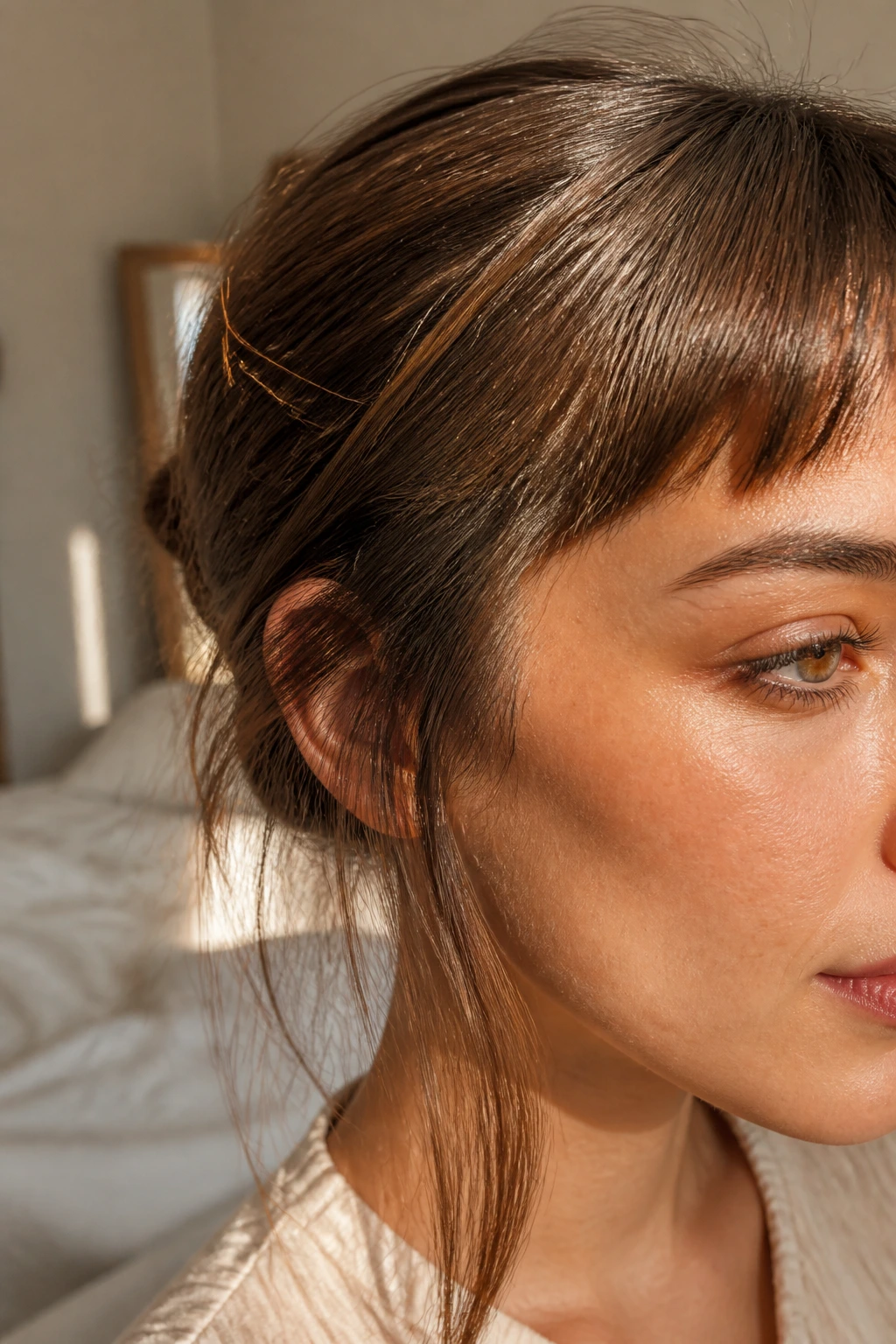
Temple softness matters: A micro fringe that stops abruptly at the temples can make the whole haircut feel harsher than the length on the forehead suggests. Tapering the corners gives the eye a place to travel.
-
Short does not have to mean severe: Even a fringe cut above the brows can look gentle if the edge is point-cut or slightly beveled. The line gets lighter without losing the clean shape.
-
Texture changes the mood fast: A straight, glossy finish reads crisp; a broken, piecey finish reads easier and less architectural. Same length, different personality.
-
Face framing does half the work: Longer side pieces at the cheekbone or jaw keep micro bangs from sitting alone in the center of the face. That extra hair is the safety net.
-
The best version moves a little: A fringe that lies flat all day can look stiff. Slight movement at the ends makes the haircut feel lived-in instead of helmet-like.
1. Feather-Light Baby Fringe
This is the version I reach for when someone wants micro bangs but doesn’t want the forehead to feel chopped in half. The edge is short, but the density stays soft, so you see skin between the pieces instead of a solid wall of hair. It has a little air to it. That’s the whole point.
Ask for point-cut ends and a narrow center section that sits just above the brows, not a full heavy block across the front. A soft face frame comes from the corners, too — the sides should melt into the temples instead of dropping off like a ruler line. On straight and slightly wavy hair, this fringe sits with almost no drama. On fine hair, it can look expensive in a very quiet way.
2. Clean Blunt Micro Bangs
A blunt micro fringe is the boldest version here, and I don’t mean that as a warning. I mean it as a preference. When the line is clean and the density is even, the haircut has a strong front edge, but the rest of the face can still feel softer if the temples are beveled and the haircut around them is not packed too tightly.
This one suits people who like a crisp outline and can live with regular maintenance. The cut should sit high enough to show the brow bone, but not so high that it turns into a bar across the forehead. If your stylist leaves the corners a touch longer — even 1/4 inch can matter — the entire shape relaxes. Without that, it tends to look harsh in photos and harsher in bright light.
3. Wispy See-Through Micro Fringe

A see-through fringe is the easiest entry point if you’re nervous about going short. The hair is cut in a lighter density, so the forehead shows through in a soft, broken way. You still get the micro-bang effect, but it doesn’t sit there like a solid block.
This style is a friend to fine hair and soft features because it lets the face breathe. The trick is not to over-style it. One small pass with a round brush or a fingertip twist is enough; if you keep forcing it into a perfect line, you lose the whole airy point of the cut. I like this version best when the rest of the haircut has a little movement too — a bob with texture, a layered lob, something that keeps the fringe from feeling lonely.
4. Curved Micro Bangs with Rounded Corners

If blunt micro bangs feel too hard, a curved line is the quiet fix. The center sits short, then the corners drop just enough to follow the natural sweep of the brow. It’s a small change, but it softens the whole face frame in a way people notice without always knowing why.
This cut works especially well when the forehead is a little wider or when the cheekbones deserve the attention instead of the hairline. Ask your stylist to keep the edge rounded rather than flat across. The corners should not tuck under too sharply; they should bend. That bend keeps the fringe from reading like a hard graphic shape and gives the haircut a more natural finish.
5. Choppy Piecey Micro Fringe
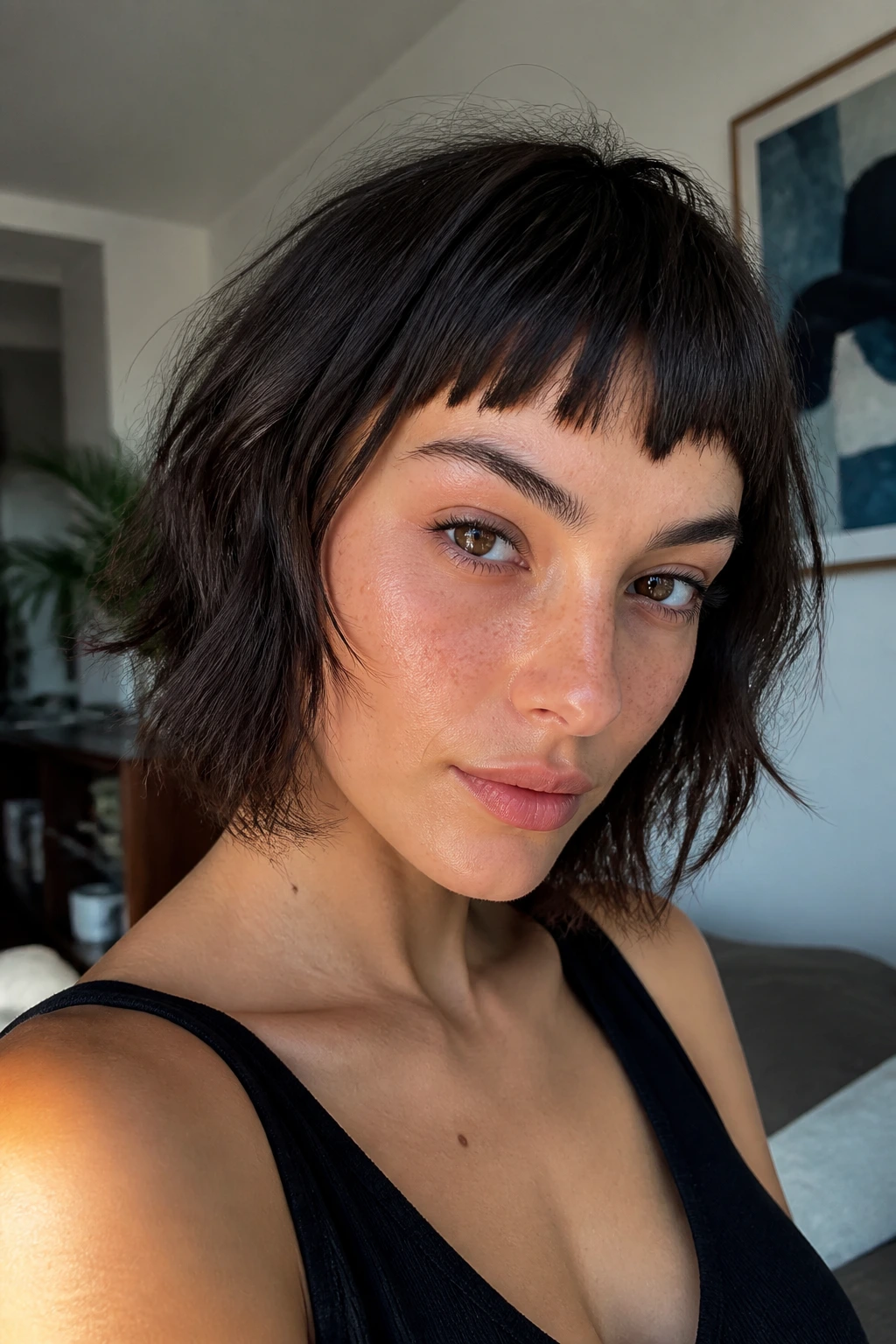
Choppy micro bangs are for people who want texture first and polish second. The ends are broken up, so the fringe falls in little sections instead of one uninterrupted line. It’s less neat, more interesting, and much easier to live with if your hair has some natural bend.
A tiny bit of matte paste or texturizing spray is enough. Too much product and the pieces clump in ugly little ropes. The best version has separation you can still touch through, not crunchy spikes. This style can soften a stronger jaw or a very symmetrical face because the irregular edge keeps your features from looking over-framed.
6. Curly Micro Bangs That Sit Above the Brow
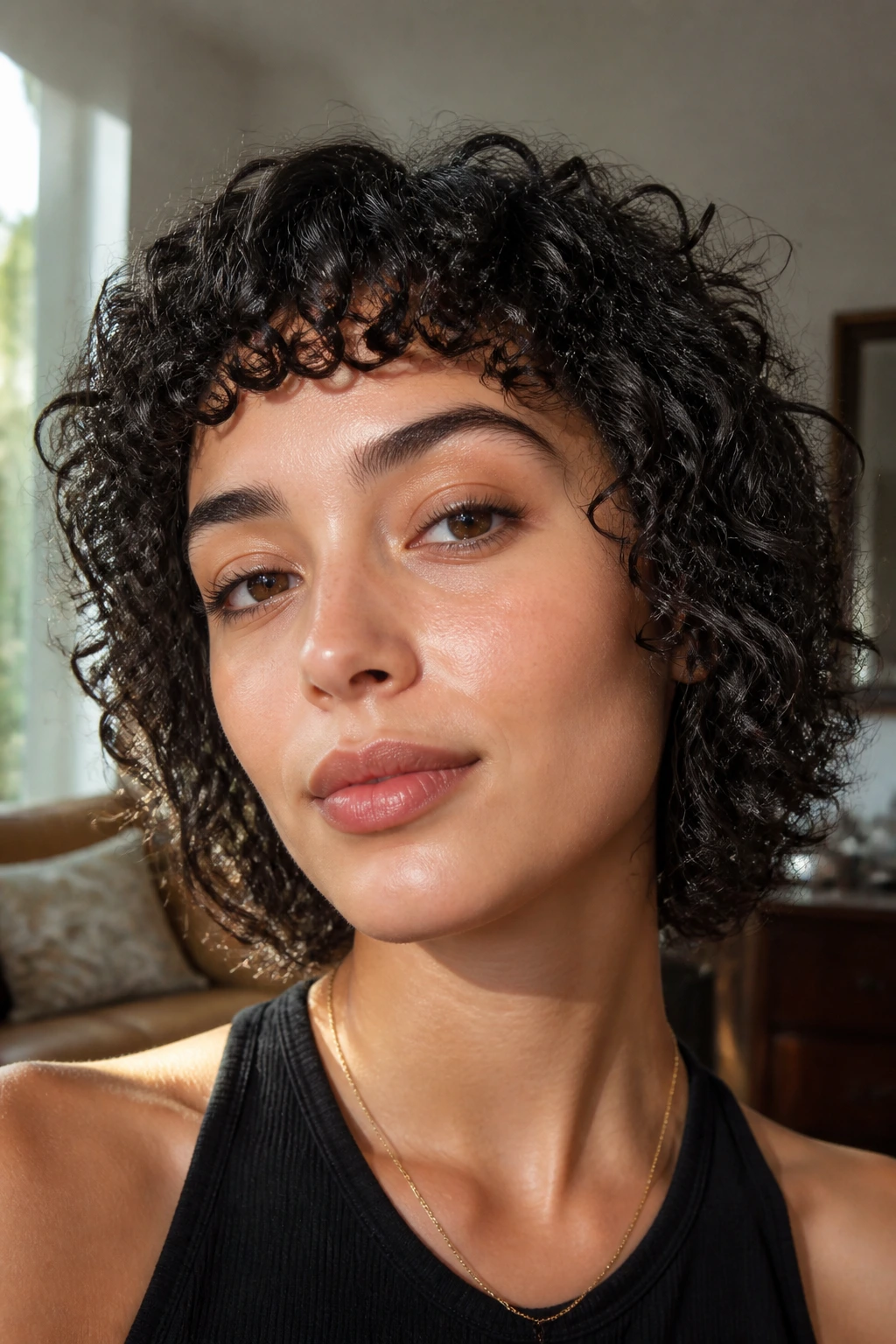
Curly micro bangs only work if they’re cut with the curl pattern in mind. Pulling curls straight and then cutting them short is how people end up with a fringe that jumps two inches higher than expected. Dry cutting is safer here, because shrinkage changes everything.
The payoff is real, though. A tight little curl fringe can sit above the brow and still frame the face softly because the shape never looks rigid. Keep the sides longer and let the front spring where it wants to. The result is playful, not precious. And if the curls are a little uneven, good — that unevenness is part of the charm.
7. Wavy French Micro Fringe

This version sits somewhere between a baby fringe and a lived-in, air-dried shape. The hair bends naturally, so the line isn’t perfectly straight, and that’s what gives it the soft, French-girl feel people keep trying to describe with too many adjectives. It’s easier than it sounds.
The best cut for this style keeps the middle just above the brows and lets the corners graze lower. When you scrunch it or let it dry on its own, the fringe breaks into gentle curves that flatter the face without taking over. If your wave pattern gets fluffy at the front, a small round brush or a quick pass with a flat iron at the root can calm it down. Not the ends. Just the root.
8. Bottleneck Micro Bangs

Bottleneck bangs are usually talked about in longer fringe shapes, but the idea works beautifully at micro length too. The center sits shorter, then the hair widens and tapers around the temples, almost like the line is opening out from the middle of the forehead. That shape does real work on a soft face frame.
It gives you the openness of micro bangs without making the forehead feel exposed in a hard way. The taper helps around rounder cheeks and fuller faces because it pulls the eye outward, not just downward. Ask for a short center and slightly longer corner pieces that blend into the rest of the haircut. If the sides are left too blunt, you lose the whole bottle-neck shape and end up with a box.
9. Micro Bangs with Long Temple Pieces

This is one of the smartest versions on the list, and honestly one of the most wearable. The fringe itself stays short, but the temple pieces are left long enough to skim the cheekbone or just pass it. That extra length softens the jump from forehead to face.
It works because the hair no longer stops in the exact center of the face. The line travels outward. That movement is what makes the frame feel softer and less severe. If you wear your hair up a lot, this is the version I’d push first. The fringe gives the look shape, and the temple pieces keep it from feeling stark when the rest of the hair is pulled back.
10. Side-Tilted Micro Fringe

A side-tilted micro fringe is a good answer for a cowlick that refuses to behave. Instead of fighting the natural push of the hairline, the fringe is cut to lean slightly to one side. It keeps the forehead open, but the asymmetry softens the whole effect.
I like this version on people who don’t want symmetry to do all the heavy lifting. It has motion baked into it. If your hair naturally falls left or right at the front, use that. Don’t flatten it into submission with product and then wonder why it looks stiff by noon. A little root lift and a small side sweep usually do more than a gallon of spray.
11. Shaggy Micro Bangs

Shaggy micro bangs are a mess in the good sense. The ends are broken, the density is looser, and the fringe blends into layers that keep the haircut from feeling too precious. If you like a shag, a wolf cut, or anything with a little attitude, this version belongs in the conversation.
The face frame stays soft because the fringe is not competing with the rest of the cut. It belongs to it. That’s the trick. You want the bangs to look like they grew out of the haircut, not like they were dropped onto the front at the last minute. A little dry texture spray and a rough blow-dry do more here than a polished round-brush finish ever will.
12. Arched Micro Bangs

Arched micro bangs follow the brow shape instead of drawing a hard straight line above it. The center can sit slightly shorter or the same length as the sides, depending on the effect you want, but the overall feel should be curved rather than flat. That curve is what softens the face.
This is a strong choice if you want micro bangs but do not want the sharpest possible look. The arch keeps the eye moving and makes the fringe feel more like a frame than a line. A good stylist will cut this dry, then check it from the front and the side, because the shape changes a lot depending on how the hair falls once it’s off the comb.
13. Micro Bangs for Fine Hair
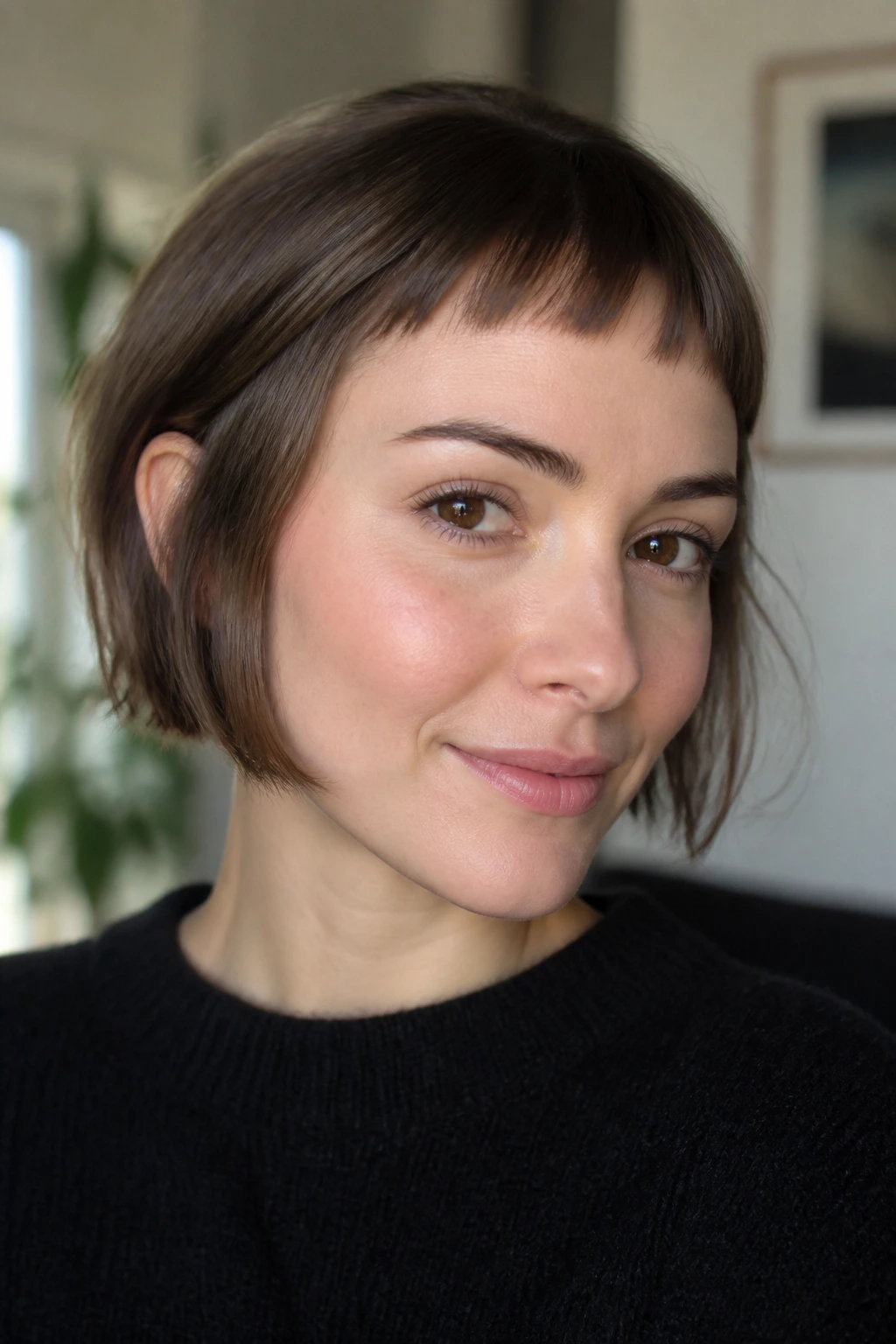
Fine hair can wear micro bangs better than people think, as long as the fringe isn’t over-thickened. A lighter density keeps the front from sitting flat like a board, and a little point-cutting creates the illusion of more movement than there is. Heavy micro bangs on fine hair tend to collapse by lunch. That’s the version to avoid.
The sweet spot is a short fringe with just enough substance to stay visible. A dry shampoo mist at the root and a quick blast with a blow dryer can give the front enough lift to keep its shape. Don’t drown it in serum. Fine hair goes limp fast, and a shiny, weighed-down fringe loses the soft frame you were trying to get in the first place.
14. Dense Micro Bangs for Thick Hair
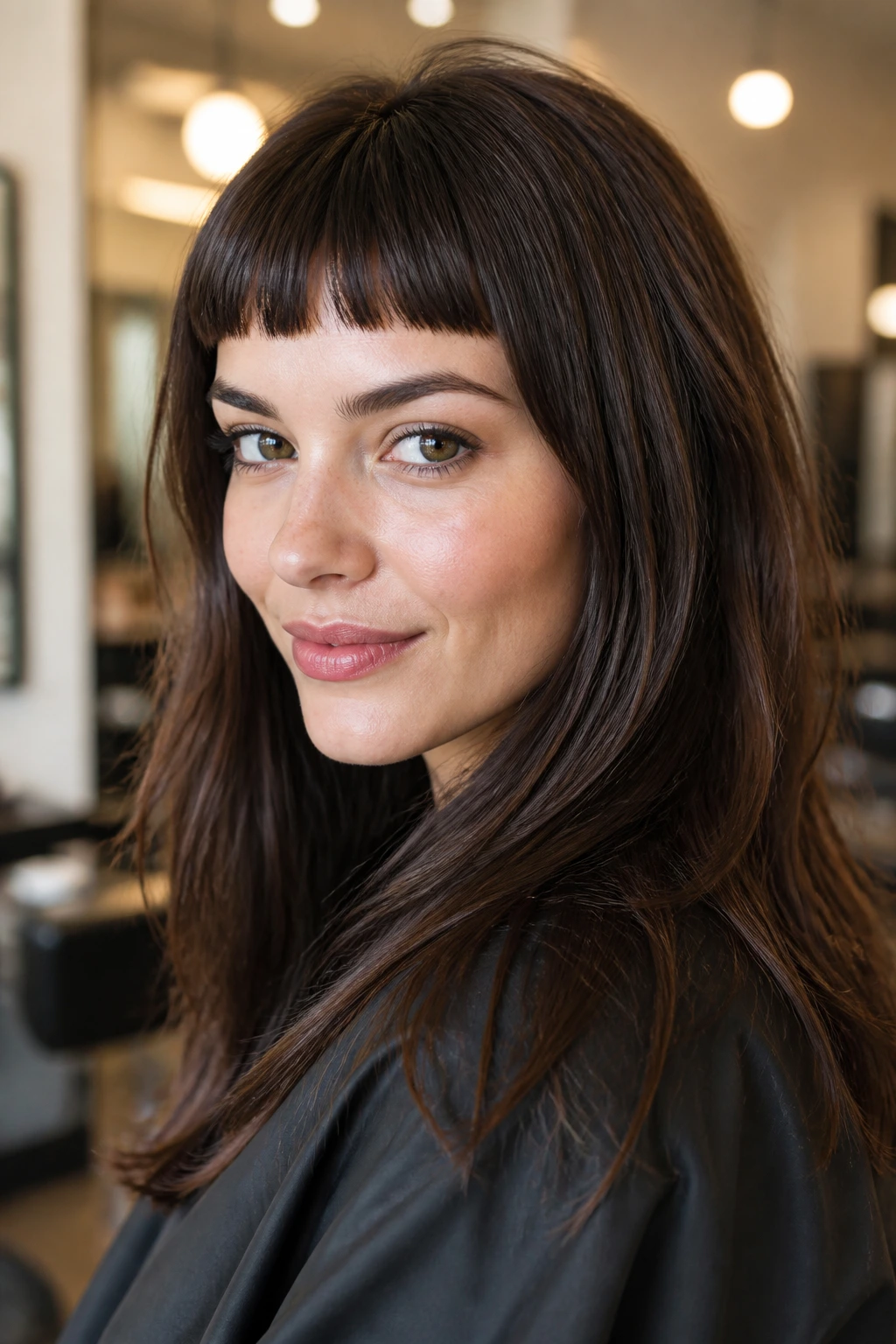
Thick hair needs a different approach. If the fringe is left too full, it can sit like a curtain cut off in the wrong place, which is exactly the opposite of a soft frame. Internal removal — the kind that takes weight out without carving holes all over the front — matters here.
This version looks best when the corners are softened and the bulk is balanced by movement in the rest of the haircut. A texturizing shear can help, but only if it’s used sparingly. You want the front to lie, not puff. If your hair is dense and straight, ask your stylist to check the fringe both wet and dry. Wet hair can hide how much mass is sitting there.
15. Micro Bangs with a Bob
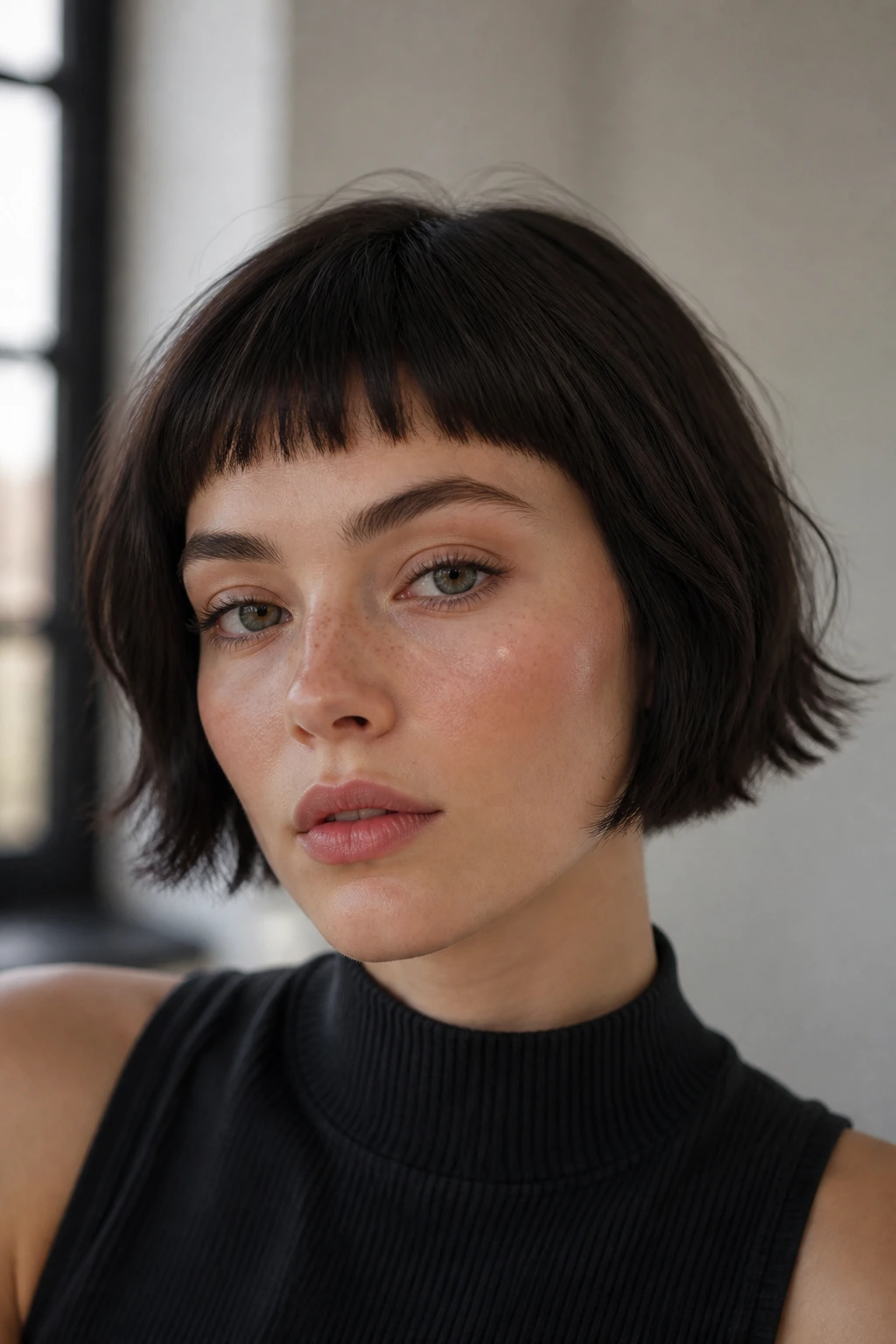
A bob and micro bangs can look razor-sharp or beautifully soft, depending on how the edges are handled. A jaw-length or cheekbone-length bob with a short fringe creates a strong shape, so the secret is to soften the perimeter just enough that the face doesn’t feel boxed in.
I prefer this combo when the bob has slightly beveled ends or a tiny bit of texture, not a hard helmet line. The fringe can be blunt, but the rest of the haircut should breathe. That contrast is what makes the look work. If everything is equally crisp, the cut gets heavy fast. If the bob moves and the bangs stay short, the face reads cleaner and more open.
16. Micro Bangs with a Pixie
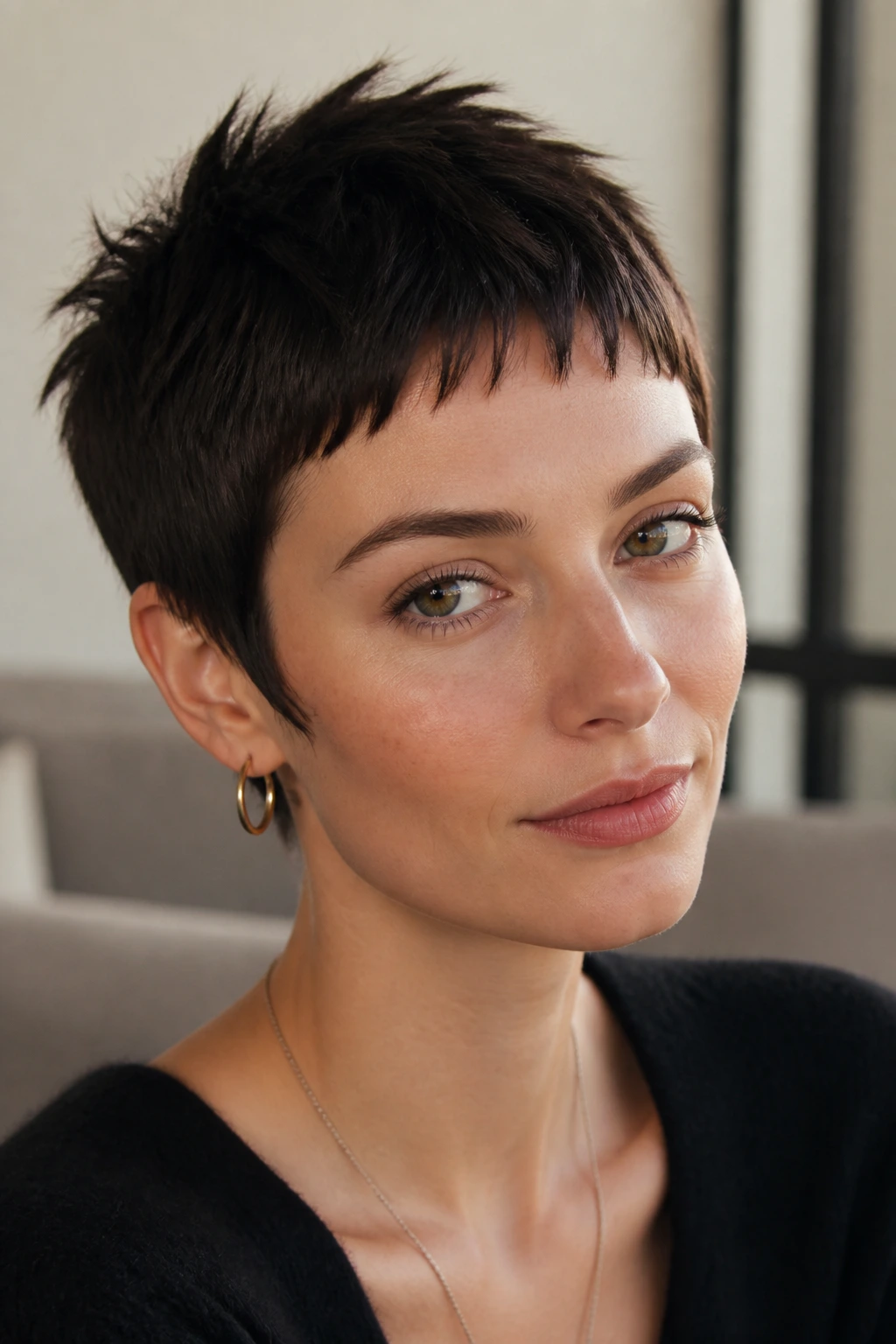
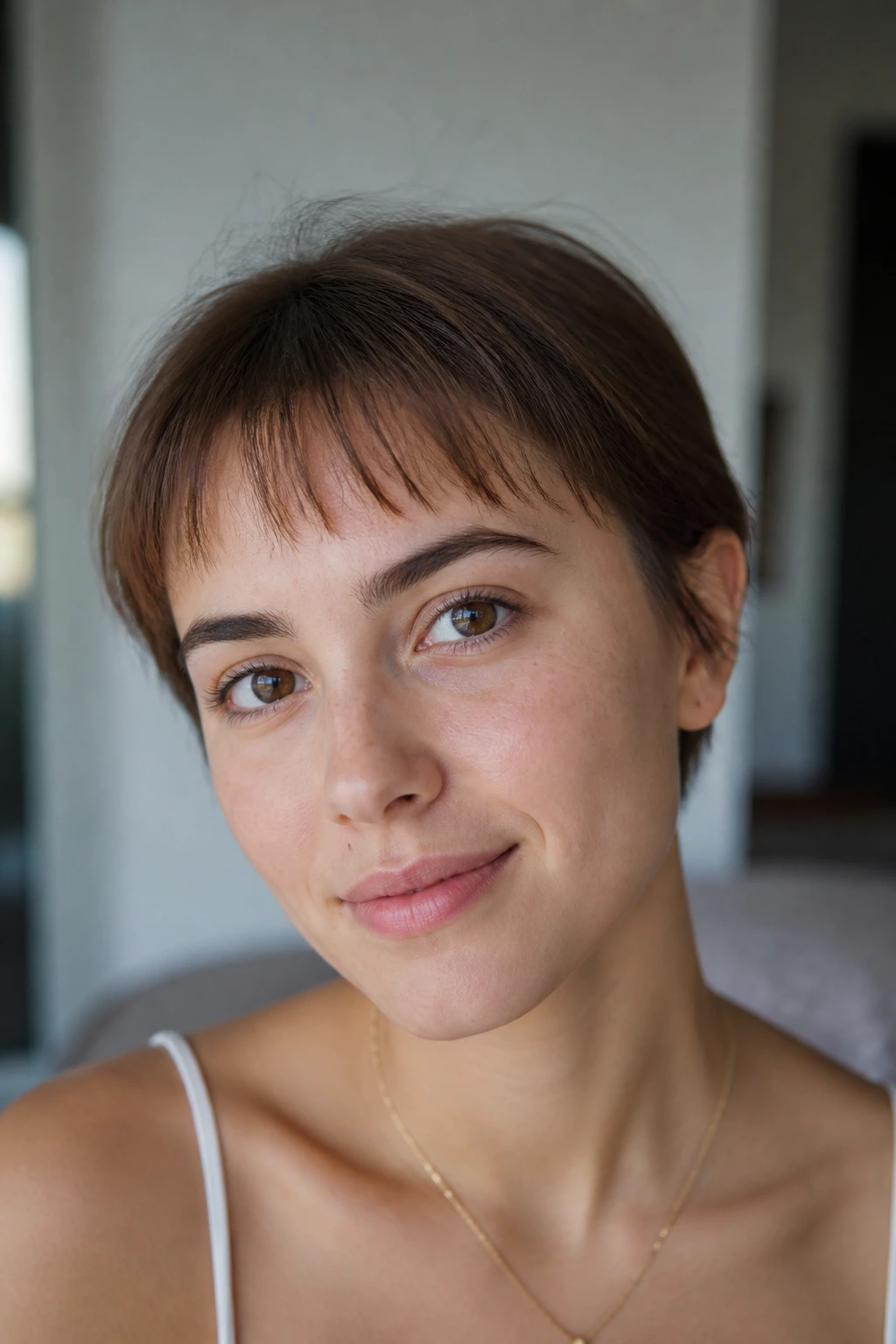
Pixies and micro bangs make sense together because both cuts rely on shape more than length. A short fringe with a close crop at the sides can put the eyes front and center, but you still need softness around the temples or the look gets severe in a hurry.
The nicest version keeps a little lift at the crown and some irregularity in the fringe. That keeps the cut from flattening the head shape. A pixie can go high-fashion very fast; micro bangs pull it back toward something a little more wearable if the front is softened rather than carved. If you’re growing out a pixie, this is often the point where the haircut starts to feel intentional again.
17. Soft Micro Bangs for Round Faces

Round faces usually need a micro fringe that opens up the sides instead of closing them off. Short center pieces work fine, but the corners should sweep out and down just enough to create angle. That tiny shift changes the whole balance.
The point is not to hide the face. It’s to lengthen it visually. A short, blunt line across the forehead can emphasize roundness in a way you may not want. Add temple pieces, a little bevel, or a side tilt, and the face frame gets more shape. I’d skip a dense boxy fringe here unless the rest of the cut has strong vertical movement.
18. Angular Micro Bangs for Square Faces
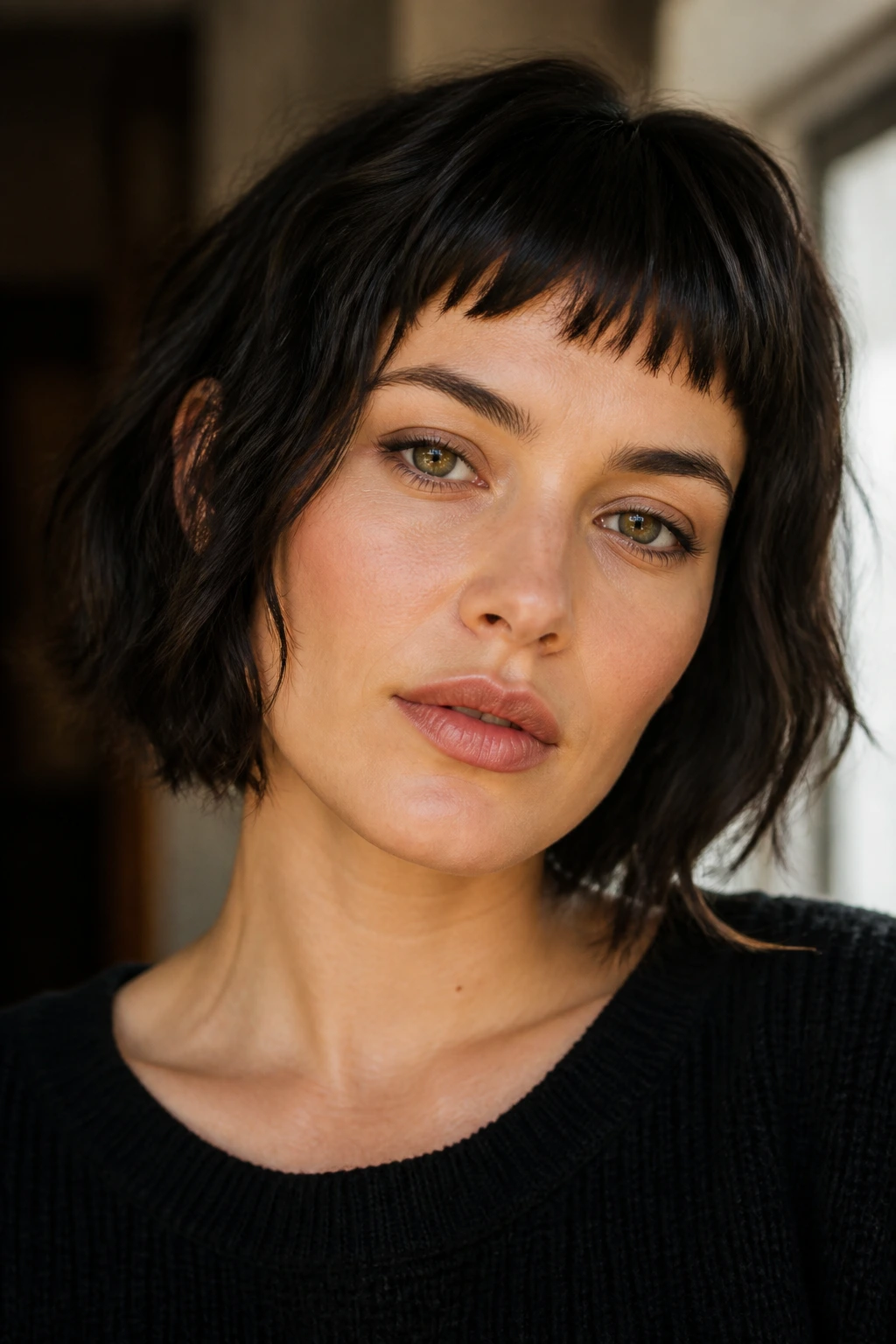
Square faces can wear micro bangs well, but the fringe should soften the jaw, not echo it. If the hairline is cut in a hard line and the corners are left heavy, the face can end up looking even more geometric. Nobody asked for that.
Go for a broken edge, a slight arch, or longer temple pieces that skim the cheeks. You want movement where the face is strongest. That softens the outline without making the haircut timid. A square face often looks excellent with a fringe that has a little bend in it, because the bend counters the straight lines in the jaw and forehead.
19. Micro Bangs for Oval Faces
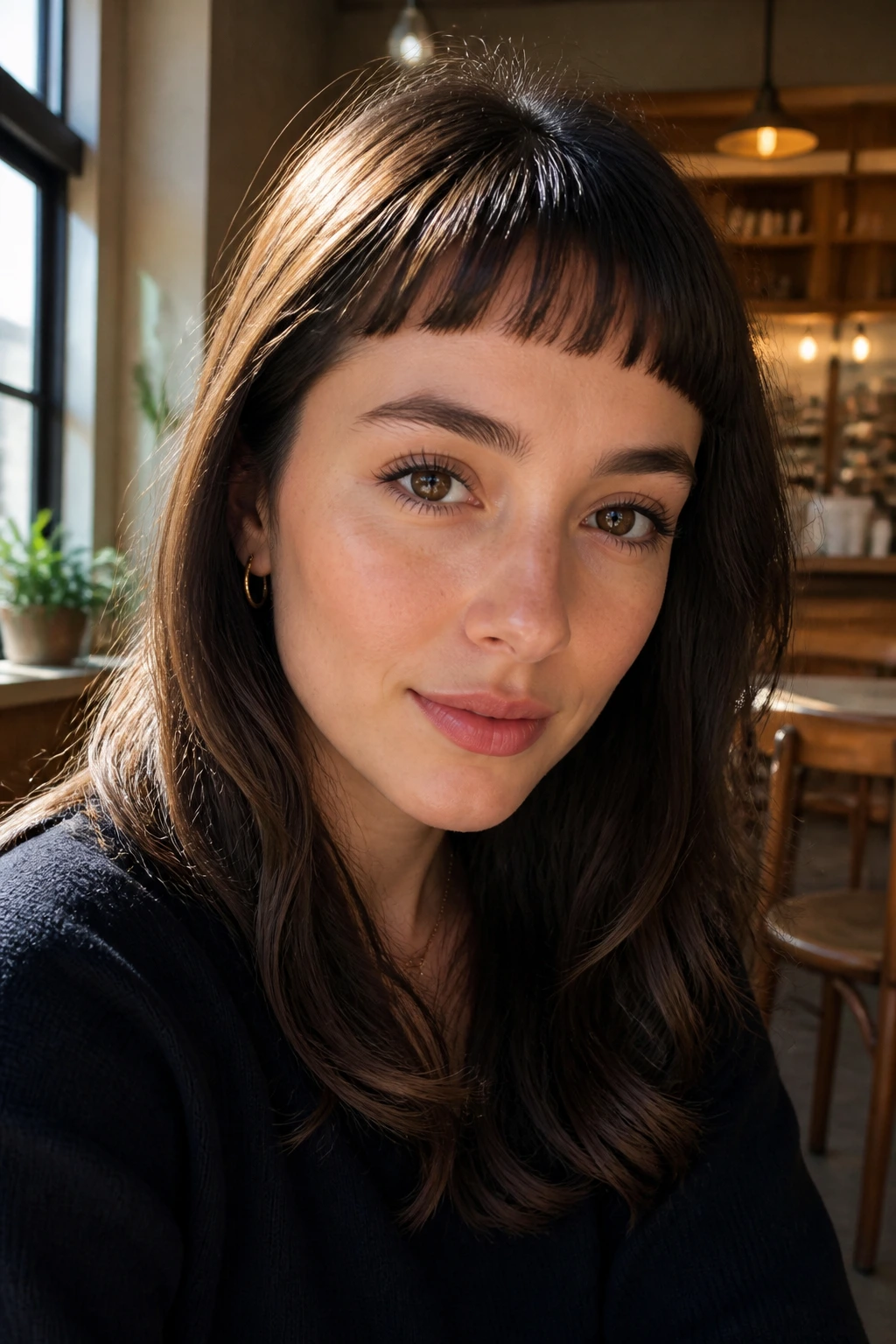
Oval faces have the most room to play here, which is both a blessing and a trap. Almost every micro-bang shape works on an oval face, but not every shape is equally flattering. A very short, very blunt fringe can sometimes make an oval face look longer than it is, especially if the hair on the sides is pulled tight.
That’s why I still like some softness at the corners. Keep a little width through the temples, or let the fringe arc gently instead of cutting flat across. The face frame stays balanced, and the cut reads as intentional rather than merely short. Oval faces can carry the most extreme versions, but the softer ones tend to age better between salon visits.
20. Micro Bangs with Glasses

Glasses change everything, and the right micro fringe can make frames look more deliberate instead of crowded. The cut should sit high enough that the bangs do not crash into the top of the lenses. If the fringe hits the frame line, you spend the whole day pushing hair away from your glasses.
A tiny gap above the brow usually works best. Then the side pieces can soften around the temples and make room for the frames. This is one of those situations where a millimeter matters more than a big haircut concept. Round frames usually pair well with a blunt little fringe; angular frames often look better with a fringe that has more curve.
21. Micro Bangs with Invisible Layers

Invisible layers are the subtle cheat code. The surface still looks like a micro fringe, but there’s internal shaping underneath that helps the hair move instead of sitting in a stiff block. You don’t see the layers right away. You feel them when the fringe falls and resets.
This is one of the best choices for people who want short bangs but hate the rigid look that can come with them. The front stays light, and the face frame softens because the hair has room to bend around the forehead and temples. It’s especially useful on thicker hair or on hair that tends to swell in humidity. Less bulk at the base means less puff at the edges.
22. Grown-Out Micro Bangs

Grown-out micro bangs are not a compromise. They’re a different look, and sometimes the best one in the bunch. The fringe sits a little lower, the corners stretch longer, and the line starts to mix with face-framing pieces instead of standing apart from them. The haircut gets softer by default.
If you’re tired of the high-maintenance phase, this is the point where the style starts to feel easy again. A slight middle split, a side sweep, or a bend at the ends keeps the grow-out from looking accidental. I’d argue this stage often flatters the face more than the original sharp cut, because the fringe is no longer acting alone. It’s part of the whole shape.
Why the Temple Area Changes Everything for Micro Bangs
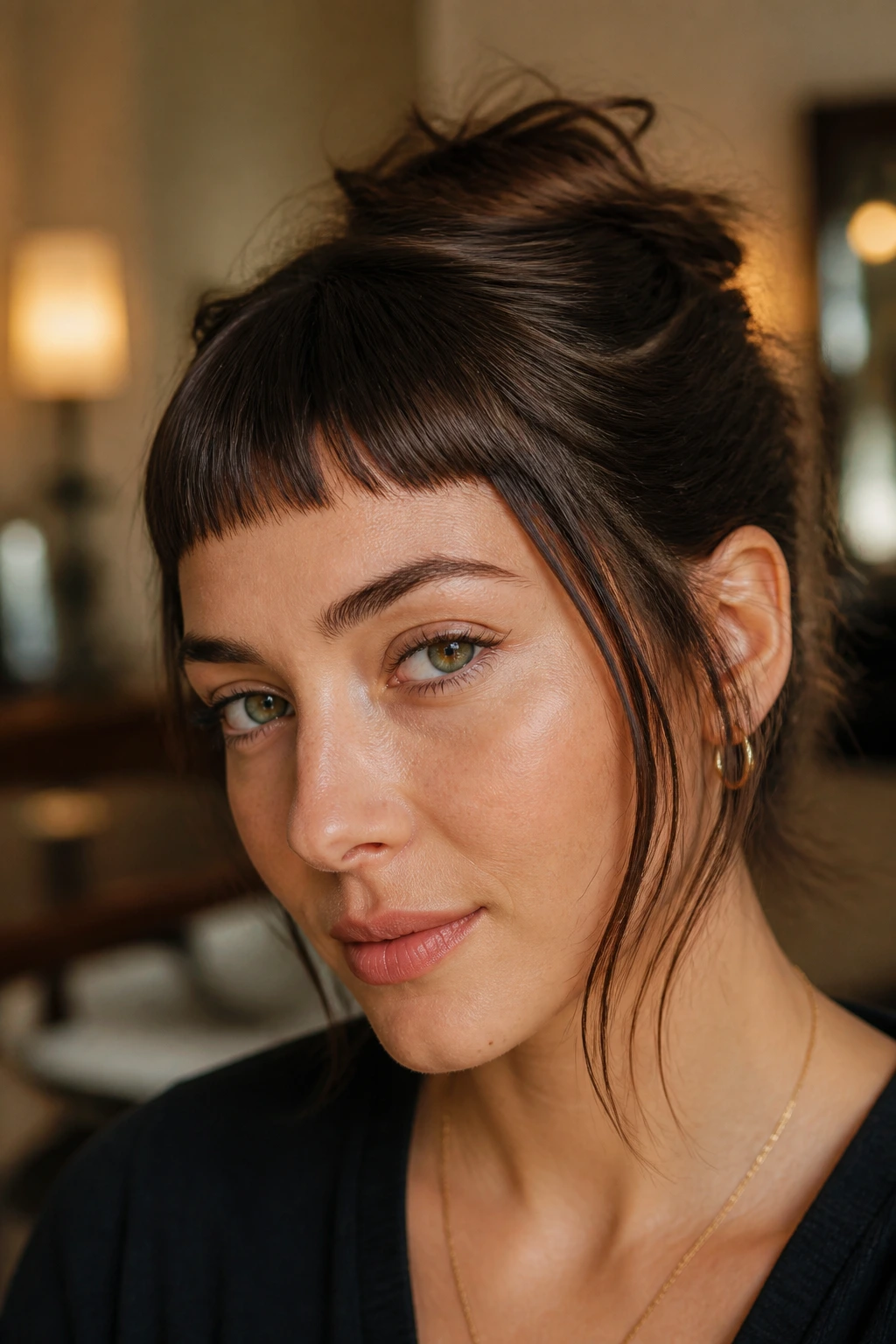
The front edge of a fringe gets all the attention, but the temple area is where the cut lives or dies. A short line across the forehead can look fine on its own, then suddenly feel blunt when it stops at the sides without any taper. That hard stop is what makes micro bangs feel boxy.
Softening the temples changes the geometry. The eye moves outward instead of crashing into a wall of hair. That can happen through longer corner pieces, invisible layers, or just a tiny bevel where the fringe joins the rest of the haircut. I’m picky about this part because it’s the difference between a fringe that frames the face and one that sits on top of it like a clip-on.
How to Choose the Right Micro Bangs for Your Hair Texture

Hair texture decides more than face shape does in some cases. Straight hair shows every line, so blunt cuts can look very crisp, very fast. Wavy hair gives you a bit more forgiveness, but it can also puff up if the cut is too short at the corners. Curly and coily hair need dry cutting and a little extra length built in so shrinkage doesn’t turn the front into a surprise.
If your hair is fine, choose a lighter density and avoid a heavy, solid wall. If it’s thick, ask for internal weight removal so the fringe doesn’t sit like a shelf. Cowlicks matter too. A strong front cowlick often means the fringe needs a slight side tilt or a shorter center with longer corners. That one detail saves a lot of morning frustration.
How to Ask for the Cut So It Doesn’t Turn Boxy
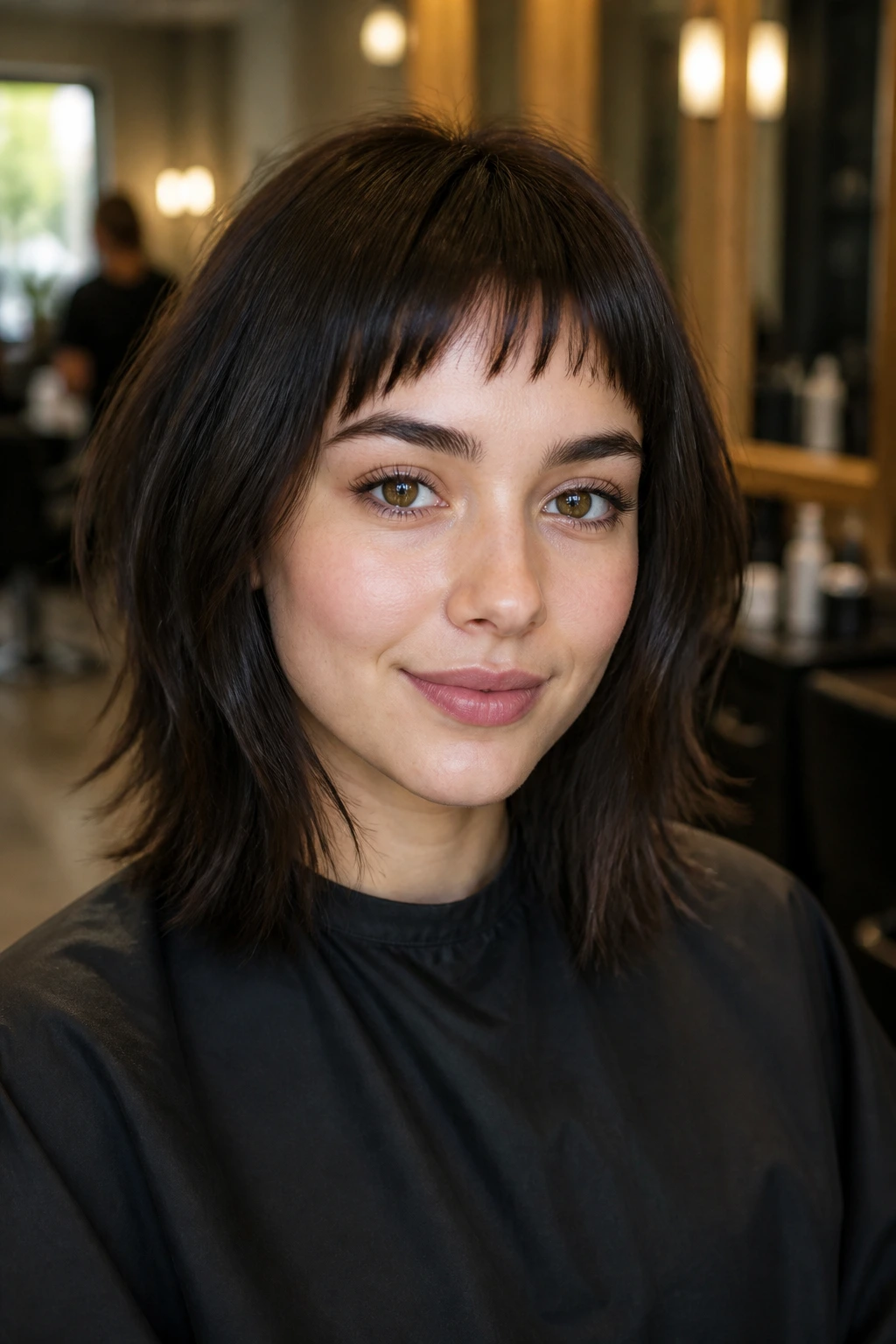
Use plain words with your stylist. Say you want micro bangs with soft temple pieces, not a hard box across the forehead. Say how short you want the center — usually somewhere from 1/2 inch to 1 inch above the brows, depending on your comfort level — and ask for the corners to stay slightly longer.
The phrase I’d use is: “Short in the center, softened at the sides, with point-cut ends instead of a blunt wall.” That tells the person cutting your hair what to keep and what to avoid. Bring two photos if you can: one for the bang length and one for the overall face frame. That keeps you from ending up with the length you wanted and the shape you didn’t.
Tools and Products That Keep the Fringe Soft
-
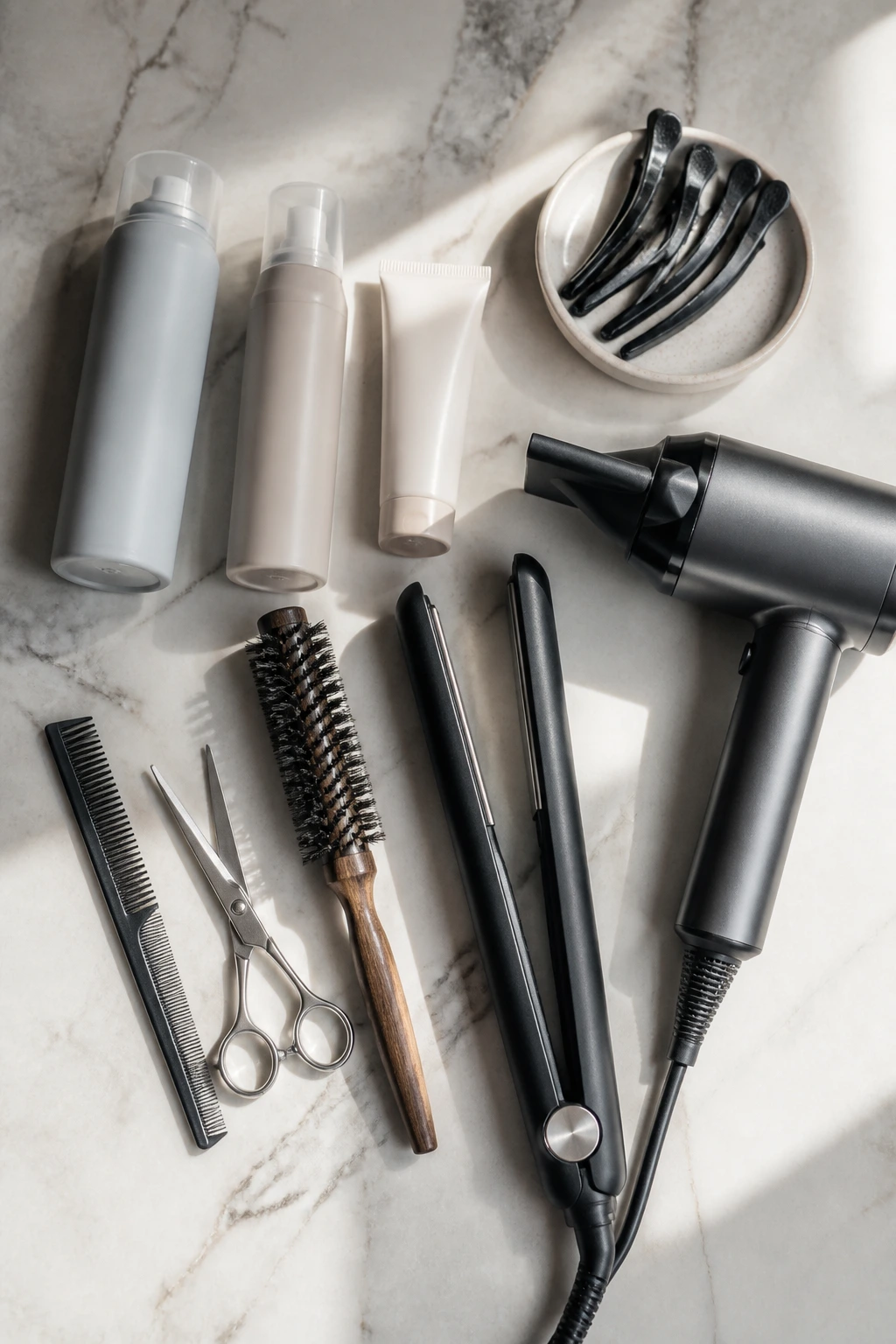
Sharp hair-cutting shears: Dull scissors chew at the ends and make micro bangs look frayed instead of soft.
-
Fine-tooth tail comb: Useful for clean sectioning and for checking whether the fringe sits evenly after a dry trim.
-
Small round brush, 1 to 1.5 inches: Good for adding a slight bend at the root without puffing out the ends.
-
Mini flat iron: A narrow plate helps tame a stubborn cowlick or smooth just the corner pieces.
-
Blow dryer with a nozzle: Direct airflow matters more on short fringe than on long hair; it keeps the front from flying every which way.
-
Dry shampoo: A little at the roots stops forehead oil from collapsing the fringe by midday.
-
Light styling cream or mousse: Use a pea-sized amount, and only if your hair needs help holding shape.
-
Sectioning clips: They keep the rest of the hair out of the way while you dry or trim the fringe.
How to Wear Micro Bangs with the Rest of Your Hair

Balance: Micro bangs look softer when the rest of the cut has a little movement around the face. Chin-length layers, a textured bob, or a soft shag all keep the fringe from feeling isolated.
Pairing: If the fringe is very short, the side pieces should usually hit the cheekbone, jaw, or just below. That length gives the face somewhere to continue instead of stopping at the forehead.
Line: Tight ponytails and slick buns can make micro bangs look sharper, while loose waves or a bit of root lift calm them down. Neither is wrong. They just say different things.
Mood: A blunt fringe with a clean bob reads polished and graphic. The same fringe with air-dried waves feels looser and more casual. Pick the finish that matches how you dress, because the haircut will follow your clothes more than people expect.
Practical Styling Tips for Real Mornings

Wake-Up Reset: If the fringe bends weird overnight, mist the roots lightly, then blow-dry left and right for 10 to 15 seconds each before setting the final direction. That tiny back-and-forth usually resets the cowlick better than blasting it straight away.
Flatness Fix: If the hair lies too close to the forehead, lift the root with a round brush or the corner of a mini flat iron. Don’t overdo the ends. You want a little shape, not a flip.
Oil Control: Foreheads get oily fast, and short bangs show it fast. A tap of dry shampoo at the root is enough; if you can see white residue, you used too much.
Texture Control: For piecey fringe, warm a rice-grain amount of paste between your fingers and touch only the ends. Once product reaches the roots, the softness disappears and the fringe starts acting sticky.
Common Mistakes to Avoid
-
Cutting the fringe too short while it’s wet: Hair shrinks and springs up, especially if it has wave or curl. Dry-cutting or checking the dried shape before finishing avoids the surprise.
-
Leaving the corners as blunt as the center: That’s the fastest route to a boxy face frame. Soften the temple pieces or the front will feel like a shelf.
-
Using too much product: Micro bangs need restraint. Heavy cream, thick oil, or a hard spray will make them clump, shine oddly, and sit flat against the forehead.
-
Ignoring the cowlick: If the hair at the front pushes hard to one side, the cut has to work with that. Fighting it every morning gets old fast.
-
Trimming with kitchen scissors: They bend the hair and rough up the edge. Proper shears make a cleaner line and a softer finish.
Variations and Alternatives to Try
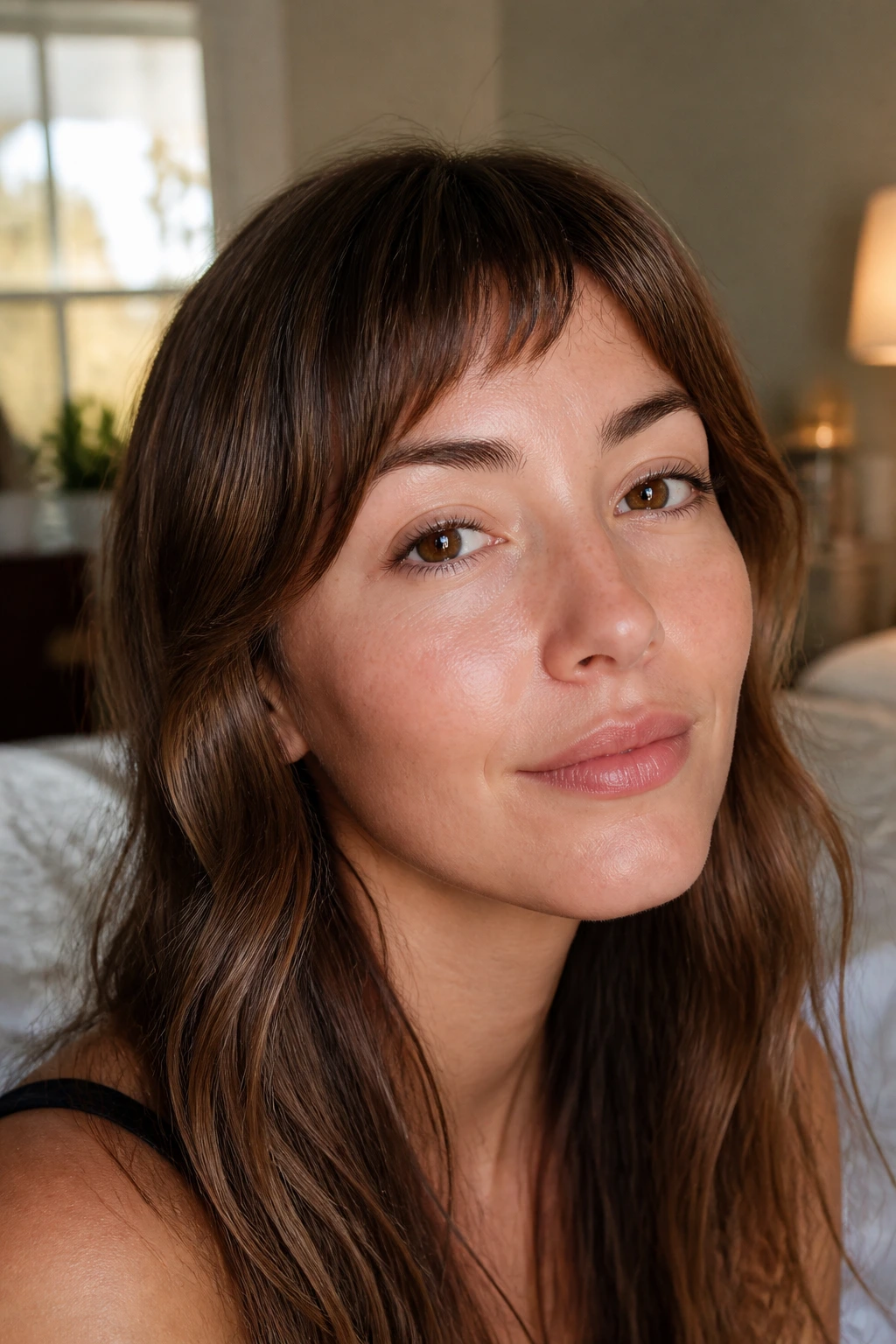
The Curtain-Micro Hybrid: Keep the middle short, then let the sides sweep a little wider so the fringe feels softer than a straight baby bang. This is a good middle ground if you like the micro look but don’t want much forehead exposure.
The Shag Front: Pair micro bangs with heavier layers through the crown and sides. The short fringe gives attitude; the shag keeps it from getting stiff. This one suits hair that already likes a little mess.
The Glossy Editorial Line: A tight, shiny micro fringe with a rounded bob or blunt pixie gives a more fashion-forward finish. It needs more maintenance, but the shape is strong when you want the haircut to carry the whole look.
The Curly Halo Fringe: Leave enough length for curls to spring upward, then let the front form a soft arc over the forehead. It softens the face in a way that looks intentional instead of forced.
The Grow-Out Sweep: If you’re between lengths, push the fringe slightly to one side and let the corners lengthen into face-framing pieces. That keeps the haircut usable while it grows.
How to Keep Micro Bangs Fresh Between Trims
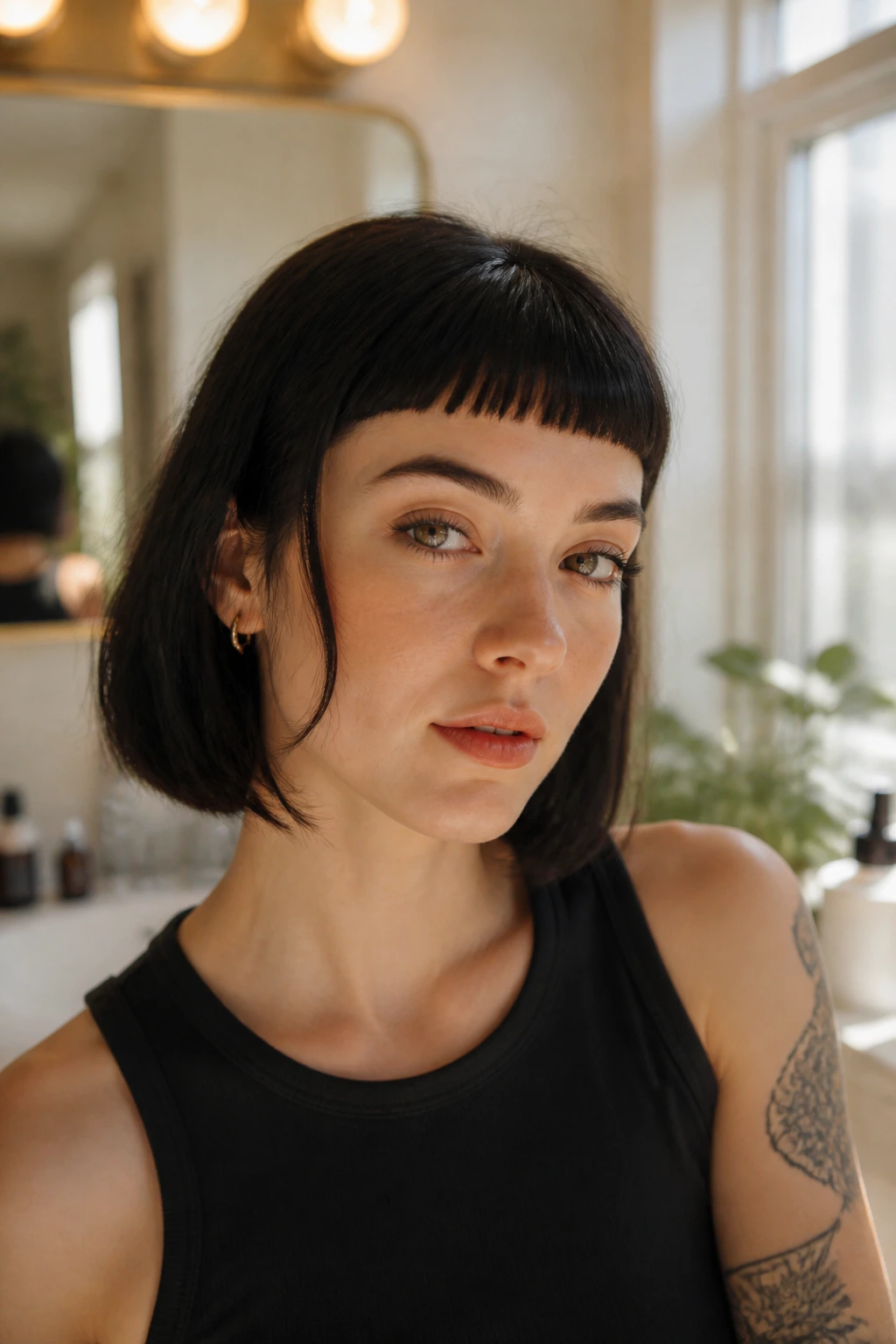
Micro bangs need a rhythm. A light rinse of the front section, a quick blow-dry at the root, and a trim every 2 to 4 weeks keeps the shape from wandering. If you let them go too long, the soft frame turns into a heavy strip and the whole point disappears.
I also like a small nightly habit: clip the fringe away from damp skin if you wash your face before bed, and don’t sleep on it wet. Wet bangs pressed into the forehead flatten fast and pick up every odd bend from the pillow. If you’re growing them out, keep the corners longer first, then let the center catch up. That grow-out order looks better than trying to force everything to the same length at once.
Frequently Asked Questions
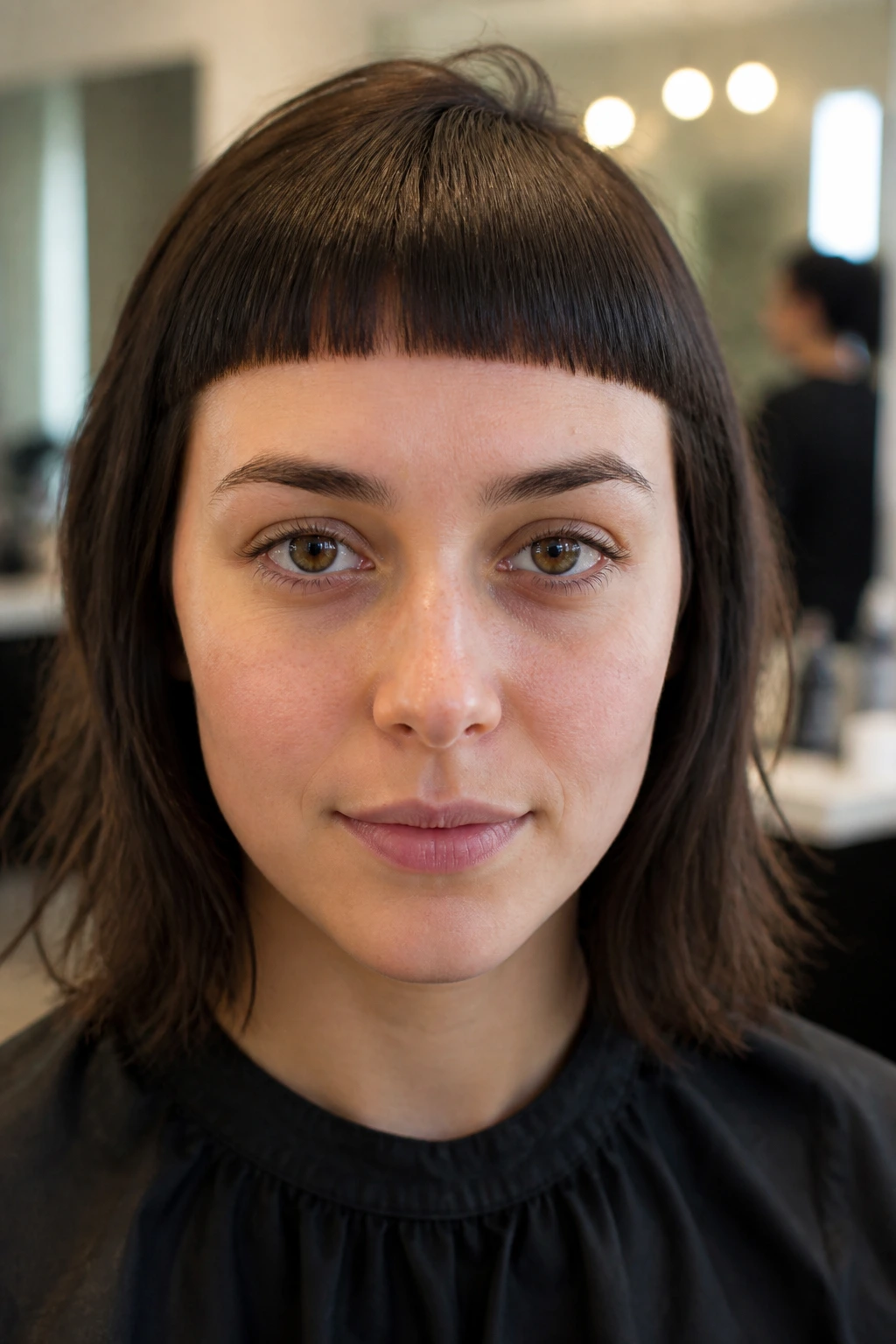
Will micro bangs make my face look shorter?
They can, if the fringe is too dense and too blunt. The softer versions in this collection keep some forehead visible and leave space at the temples, which helps the face keep its length.
Do micro bangs work on curly hair?
Yes, but they need to be cut dry or nearly dry so shrinkage does not hijack the shape. Curly micro bangs look best when the corners are left soft and the curl pattern is respected instead of flattened.
How often do micro bangs need trimming?
Most people need a clean-up every 2 to 4 weeks, depending on how fast their hair grows and how precise they want the line. If you wear the fringe blunt, you’ll notice regrowth faster.
Can I cut micro bangs myself?
You can trim a little between salon visits, but a full first cut is risky. The front hairline, cowlicks, and density all change how short the bangs sit once they dry. A half-inch mistake turns into a month of irritation.
What if my bangs split in the middle?
That usually means the root wants a different direction. Blow-dry the fringe from side to side at the root before setting it, or ask for a slightly side-tilted version that works with the split instead of fighting it.
Do micro bangs work with glasses?
Yes, and they often look sharp with frames, but the length matters. Leave enough space above the lenses so the fringe doesn’t tap the top of the frames every time you move.
Are micro bangs hard to grow out?
They’re not hard if you plan the grow-out. Keep the corners longer first and let the center catch up, then blend the front into temple pieces. That makes the in-between stage look styled instead of stalled.
What’s the biggest sign the cut is too harsh?
When the front looks separate from the rest of the haircut. If the fringe sits like a hard bar with no taper at the sides, the face frame needs more softness.
A Small Fringe With a Little Bite

Micro bangs work best when they don’t pretend to be one thing. They can be blunt, wispy, curved, shaggy, curly, or nearly invisible, but the versions that flatter a soft face frame all share the same habit: they give the forehead shape without boxing it in.
That’s the line I keep coming back to. Short does not have to mean severe. A softer temple, a little bevel at the corner, and the right amount of density can turn a sharp fringe into something far easier to live with.
And if you’re on the fence, start with the lighter versions first. They grow into the stronger ones with a trim or two, and that is a much better place to land than cutting too hard and spending six weeks wishing the mirror would apologize.
