



A good fringe can change the whole face of a haircut without changing the length at all. One inch shorter, one inch longer, or a softer corner at the temple — that’s often the difference between a cut that sits there and a cut that wakes the whole face up.
Bang styles for women are never just about hiding a forehead or copying a photo from the chair. They change where the eye lands first, how sharp the jaw reads, and whether a haircut feels polished or a little undone. A blunt line can make dark brows pop. A wispy fringe can soften strong features. Hair texture matters here more than trend, and so does the way your hair grows at the front. Cowlicks have opinions.
What makes bangs worth the trouble is range. If you want almost no commitment, there are soft grown-out shapes that tuck away by noon. If you want drama, there are dense fringes that sit like a clean line across the forehead and need a round brush, dry shampoo, and a little patience. The trick is choosing a style that works with your face, not against it — and that starts with knowing the difference between curtain bangs, bottleneck bangs, blunt fringe, and all the softer variations in between.
Why These Fringe Styles Earn Their Keep
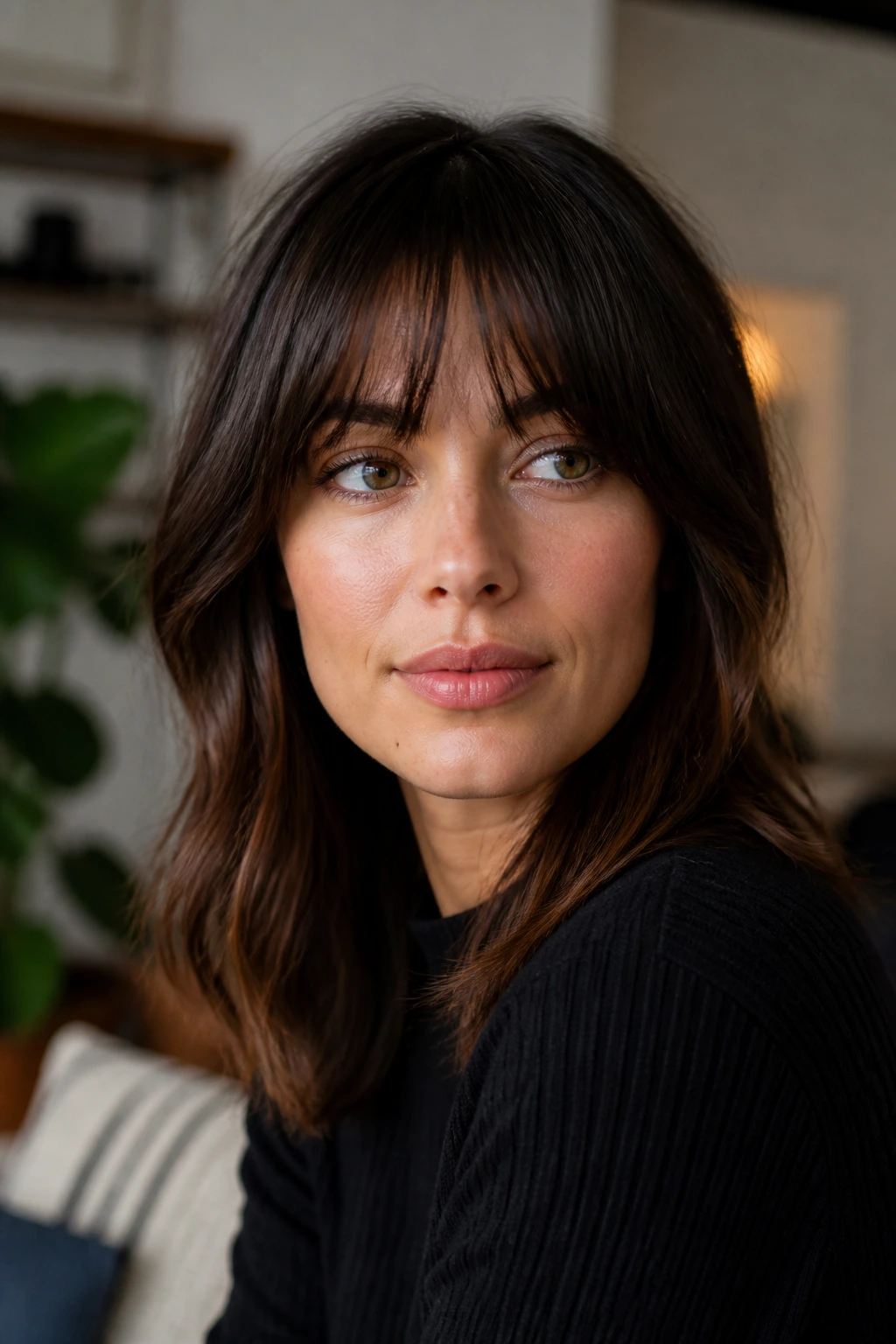
- Face balance: The right fringe can shorten a long forehead, soften a strong jaw, or pull attention back to the eyes with a simple shift in length.
- Texture matching: Some styles work with straight hair that drops like a sheet; others are better when the hair has a bend, a wave, or a bit of spring.
- Low-stakes options: Long layers, side-swept shapes, and grown-out fringe let you test the waters without locking yourself into a hard line.
- Styling range: A good bang cut can go smooth, piecey, brushed out, or tucked away with a clip and still look intentional.
- Maintenance choices: There’s a big difference between a fringe that needs a trim every three weeks and one that can grow for two months without looking messy.
- Real-life flexibility: The best styles keep working when you’re rushing, sweating, air-drying, or pinning hair back for the third time that day.
1. Curtain Bangs That Open the Face
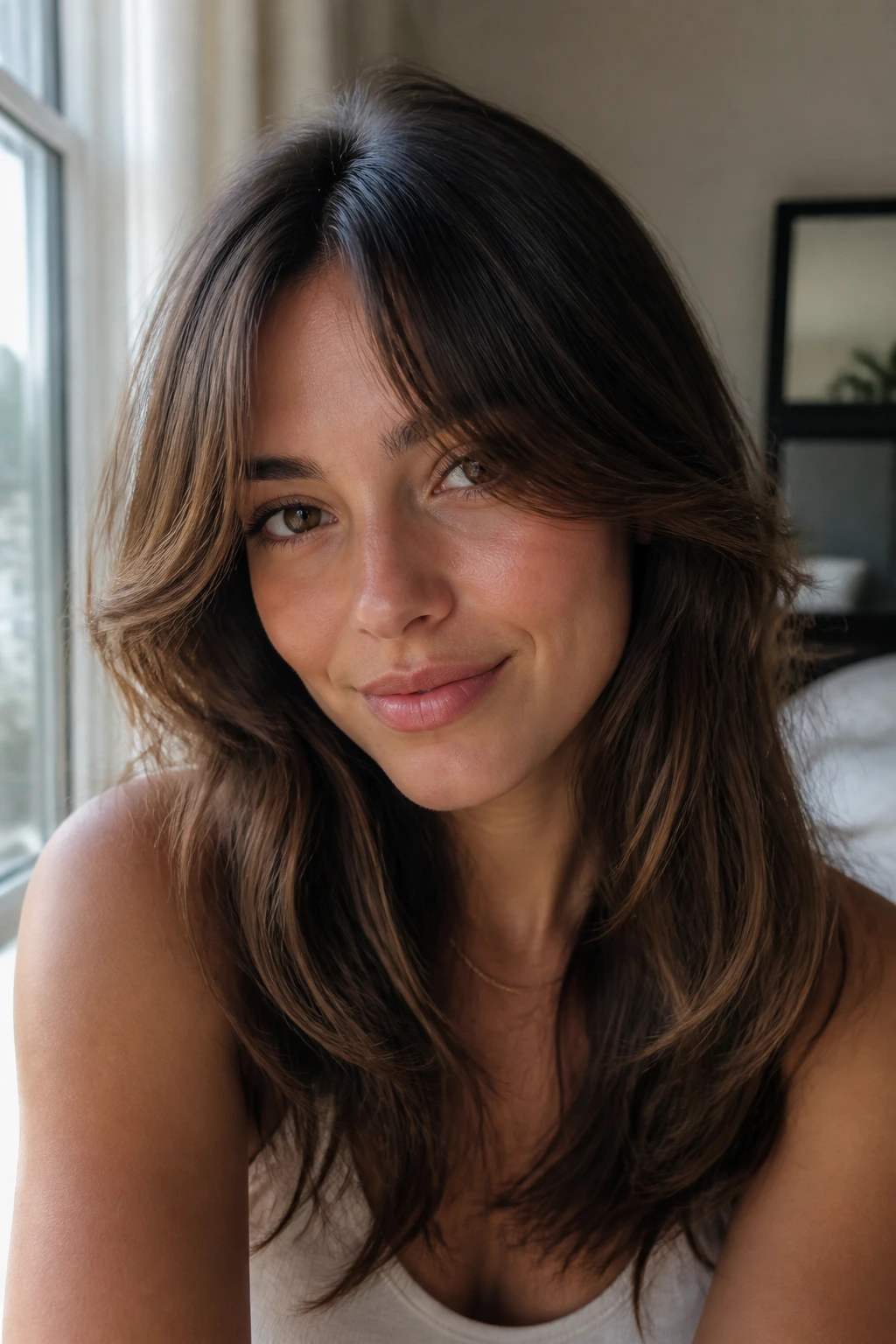
Curtain bangs stay at the top of the list for a reason: they split the face gently instead of cutting it in half. The shortest point sits near the center, then the sides drift longer toward the cheekbones. That shape is kind to round faces, long faces, and anyone who wants softness without a hard line across the brow.
Why they flatter
Curtain fringe works because it creates movement around the eyes and temples. The middle part keeps things light, and the longer sides blend into layers instead of sitting like a separate piece. Ask for the center to hit around the bridge of the nose, then angle the sides down to cheekbone length so the cut grows out cleanly.
- Best for medium to thick hair with some bend.
- Easier to pin back than a blunt fringe.
- Looks especially good with blowout volume at the roots.
Pro tip: If your hair lies flat at the front, blow-dry the bangs forward first, then wrap each side away from the face with a round brush for a softer sweep.
2. Bottleneck Bangs With a Narrow Center and Wider Sides
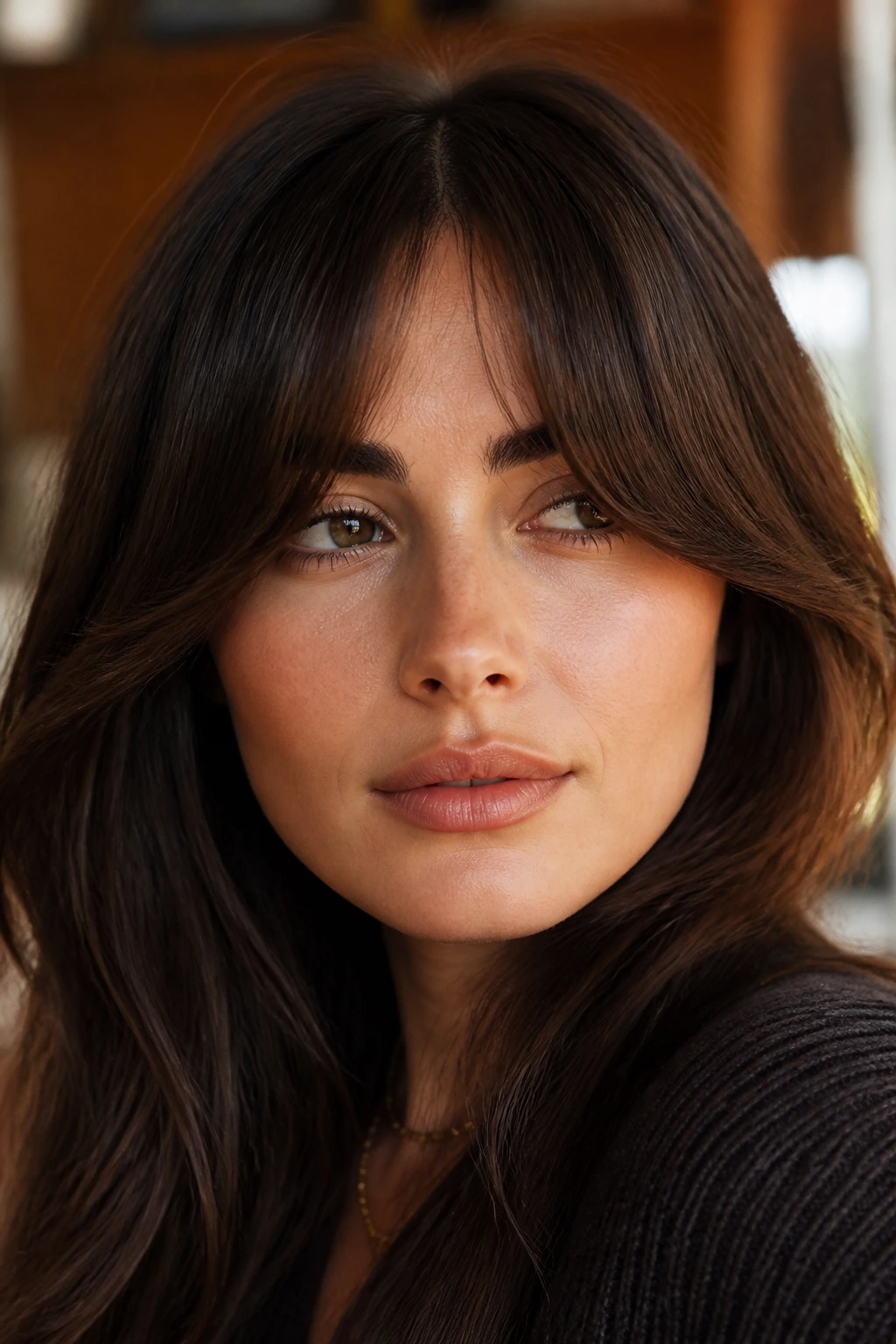
If curtain bangs feel too open, bottleneck bangs are the smarter middle ground. The center stays narrow and short, then the fringe opens wider at the temples, like the neck of a bottle widening into the shoulders. That shape makes sense on heart faces and broad foreheads because it gives coverage without crowding the eyes.
The best bottleneck fringe has a slight bend, not a stiff curve. Ask for the center to stop around the brows, then let the outer pieces reach cheekbone level. It looks polished when styled, but it still behaves if you let it dry a little messy.
Best for: women who want something softer than blunt bangs but more defined than curtain fringe.
Watch for: if the center is cut too short, the whole shape can pop up and feel fussy.
3. Blunt Bangs That Hit Right at the Brows
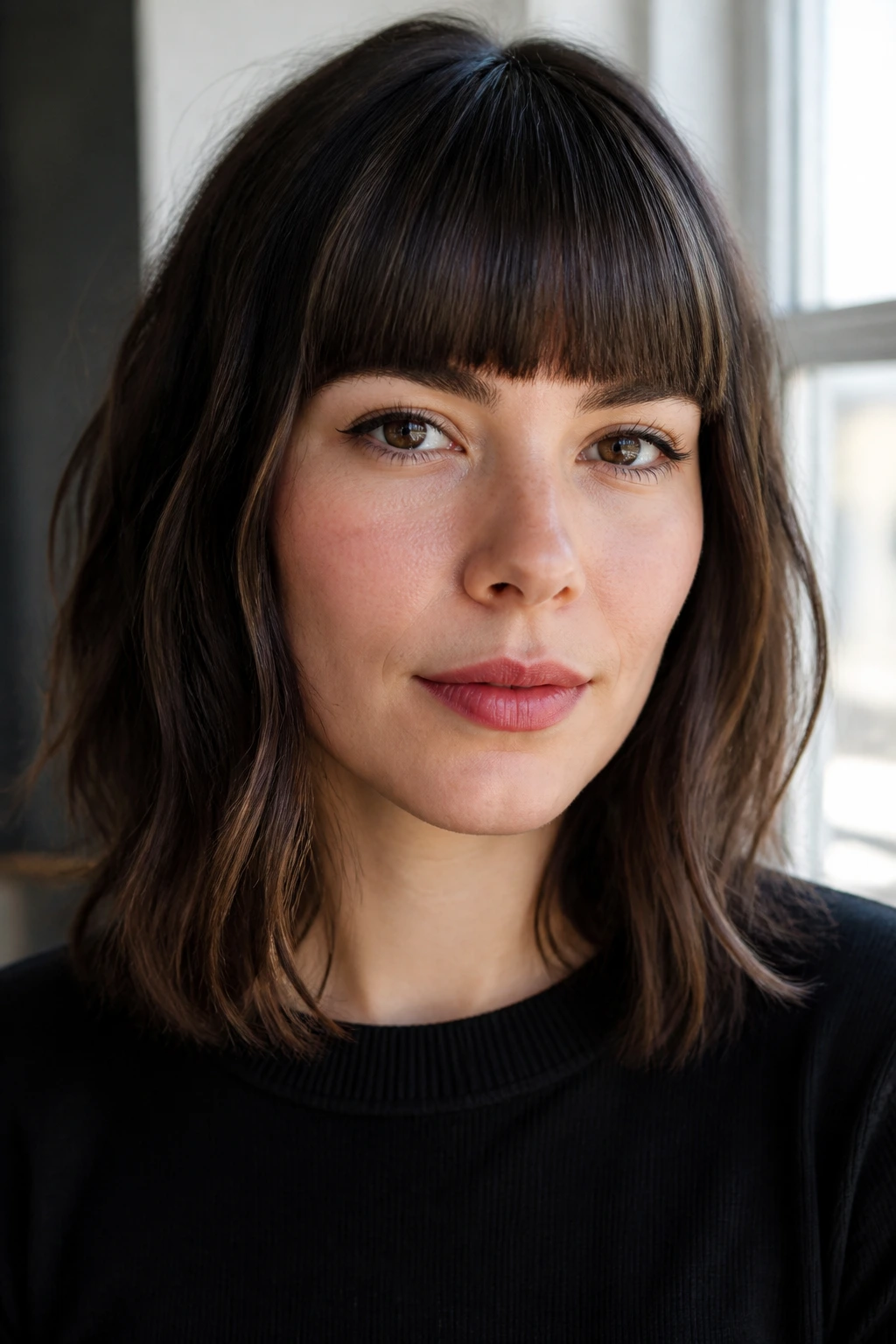
Want the fastest way to make a haircut look deliberate? Cut a clean line across the forehead. Blunt bangs are crisp, graphic, and a little serious in the best way. They make brows and eyes feel stronger, which is why they look so good on straight hair with decent density.
This style needs precision. A blunt fringe that’s too thin turns stringy. Too short, and it becomes all bang and no balance. Ask for the line to land just at or slightly below the brows, then have the ends softened with the tiniest point-cut so the edge doesn’t look like cardboard.
They’re not low-maintenance. Not even close.
But when the fit is right, blunt bangs give a haircut that clear, finished look that softer styles can’t quite match.
4. Wispy Bangs That Barely Whisper
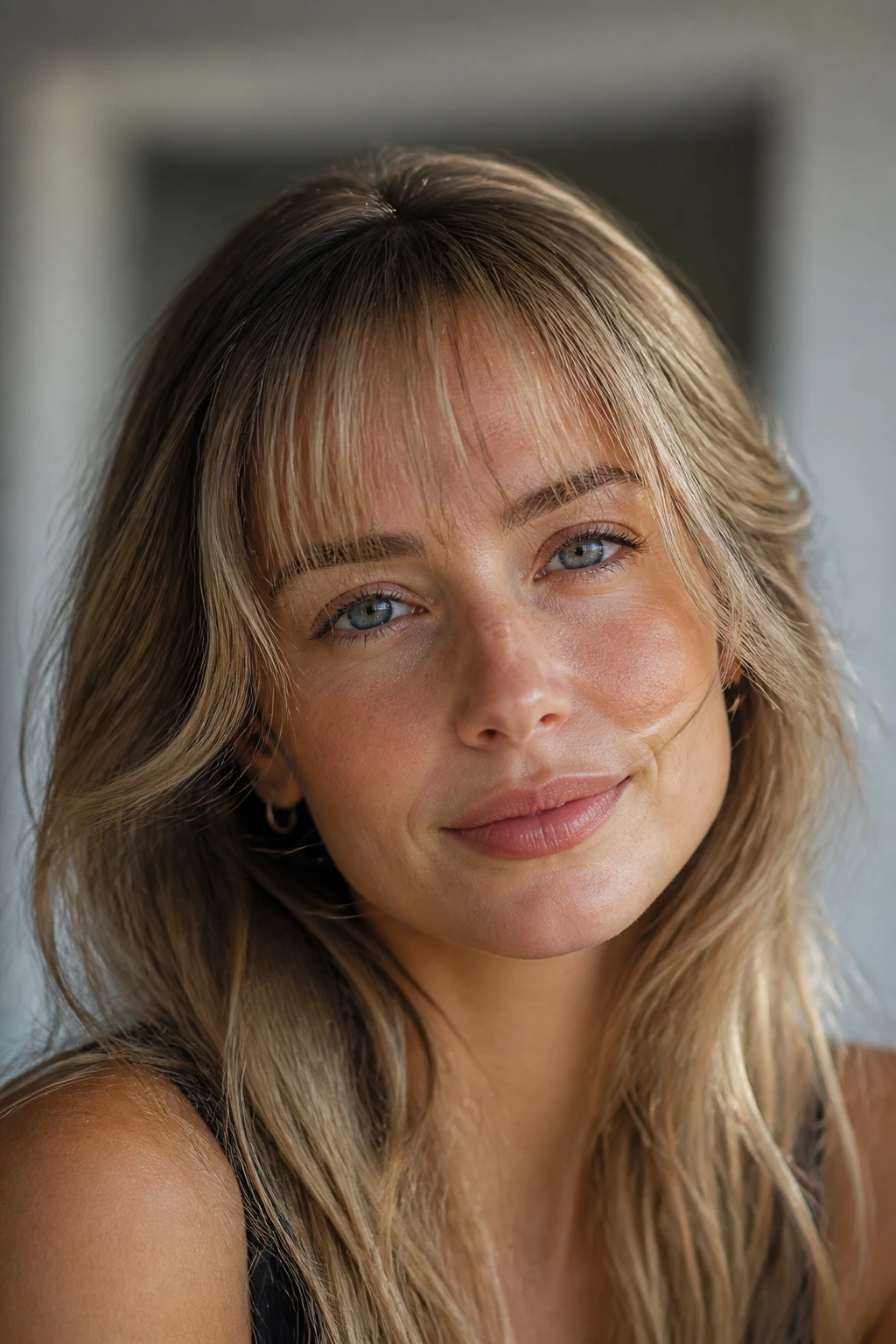
If you want bangs but your first thought is, “I do not want to regret this,” wispy bangs are the exit ramp. They use less density, lighter ends, and a little air between the strands. The forehead still shows through, which keeps the look soft and forgiving.
This style is especially useful on fine hair, mature hairlines, and anyone who likes a fringe that doesn’t take over the whole face. The cut usually lands somewhere between the brow and the lashes, with the outer corners feathered so the bangs blend into the sides instead of sitting in one block.
A quick dry shampoo at the roots helps wispy fringe stay lifted. Otherwise, the strands can separate too much and start looking underfed.
5. Side-Swept Bangs That Slide Into a Side Part
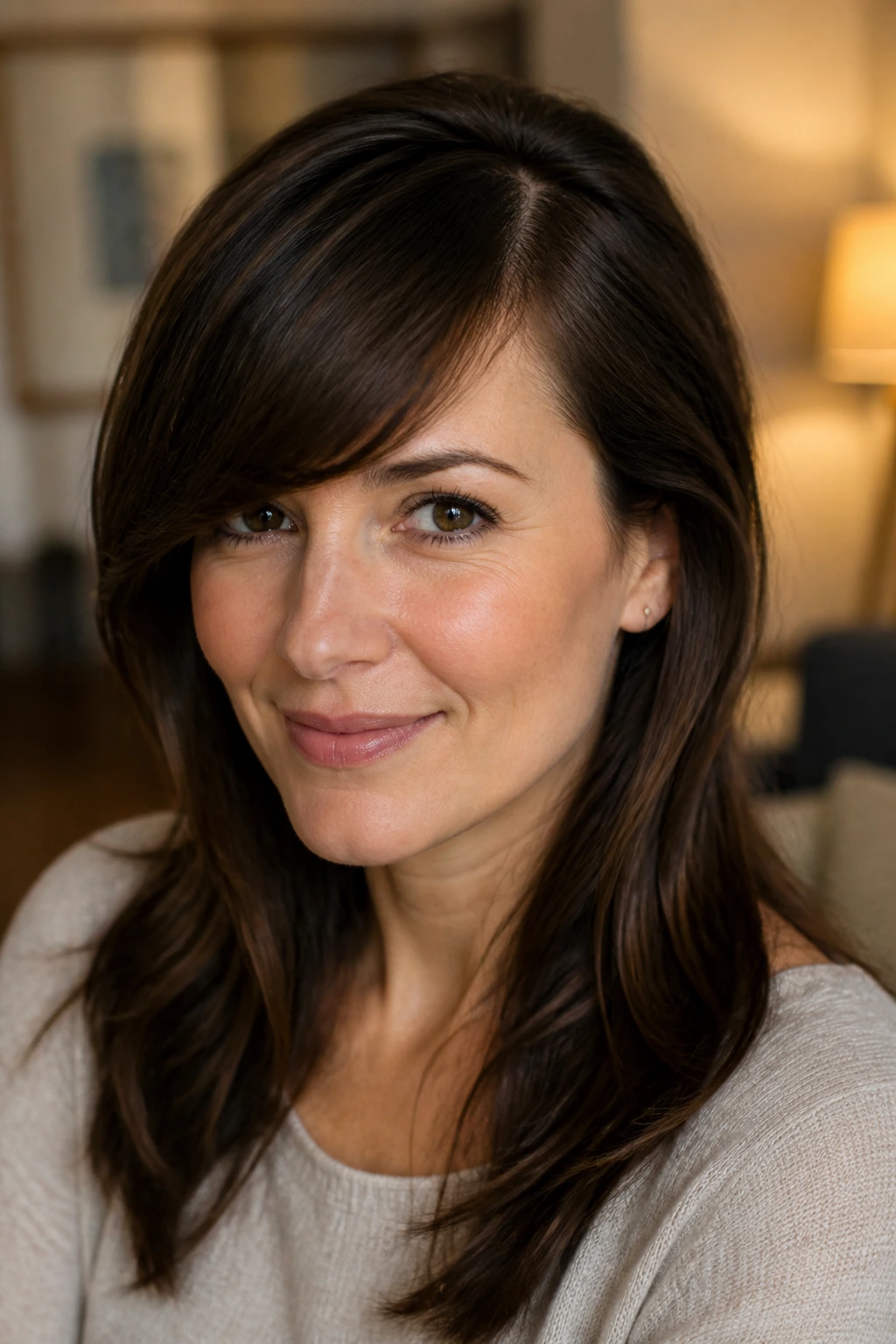
Side-swept bangs are the old reliable of the fringe world, and I mean that as a compliment. They move diagonally across the forehead, so they soften a square jaw, slim a broad face, and work with almost any part line you already wear. If you are nervous about a full fringe, this is where I’d start.
The shape matters more than people think. A good side-swept bang isn’t just a long front piece dragged over to one side. It should be cut with enough weight to stay in place, then feathered so it curves naturally over the brow and into the cheekbone area.
They also grow out gracefully. That’s half the appeal.
6. Micro Bangs for Strong Brow Lines

Micro bangs put the emphasis high on the face. They sit well above the brows, so the eyes, brows, and cheekbones become the main event. That makes them sharp, bold, and a little bit mischievous — a good fit if you like hair that makes a statement before you say a word.
This style works best on straight to slightly wavy hair with enough control to hold a short line. Ask your stylist to cut them dry or nearly dry so the final length doesn’t spring up too far. A clean micro fringe should look neat, not accidental.
The tradeoff is upkeep. These need frequent trims, and they show every millimeter of growth. Still, if you like a crisp shape and you wear your brows with pride, the effect is worth it.
7. Feathered Bangs That Move Like Layers

Feathered bangs are the answer when you want softness without losing structure. The ends are thinned and shaped so they break up the line, which keeps thick hair from looking heavy across the forehead. On a layered cut, they make the whole style feel lighter and more mobile.
What makes them work
Feathering is all about the edge. Instead of a blunt, solid finish, the stylist point-cuts or lightly slices the ends so the fringe has room to move. That’s a nice fit for women with dense hair or a broader forehead who still want some coverage.
- Ask for the weight to be removed at the very ends, not hacked out from the middle.
- Style with a round brush and a small bend away from the face.
- Use a mist of light-hold hairspray, not a heavy cream.
Good to know: If your hair gets puffy in humidity, feathered bangs will still need a quick pass with a brush in the morning.
8. Shaggy Bangs With Built-In Texture
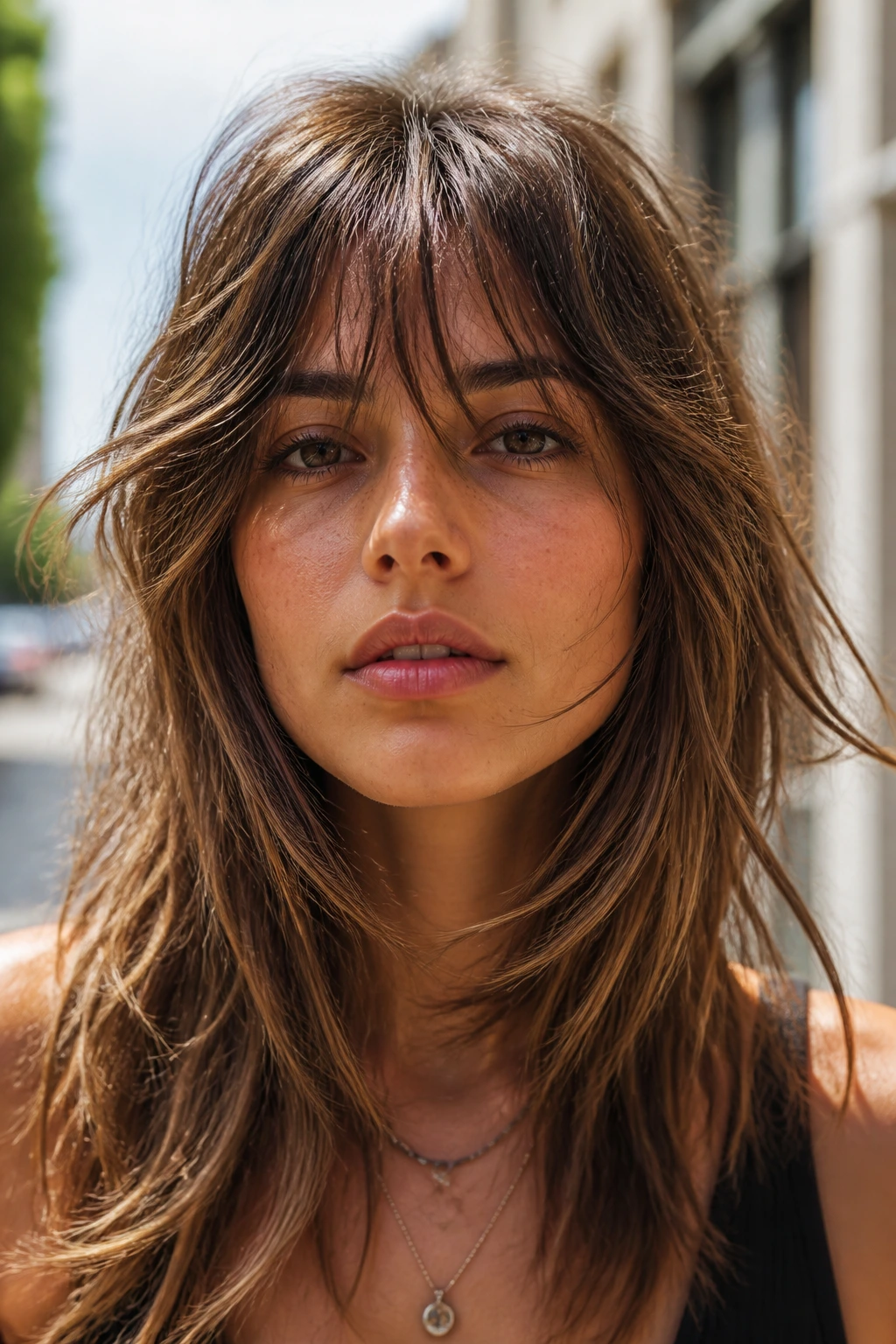
Shaggy bangs are for people who don’t want their fringe to behave too much. They’re choppy, broken up, and a little wild around the edges, which makes them a natural partner for shags, wolf cuts, and wavy textures. Instead of one perfect line, you get movement that feels lived-in from day one.
The flattering part is the looseness. Shaggy fringe doesn’t box in the forehead or sharpen the face too hard. It sits somewhere between curtain and piecey bangs, with enough irregularity to look modern without looking overworked.
A pea-sized bit of styling cream scrunched through the ends keeps the texture from going frizzy. Too much product ruins the effect fast.
9. Birkin Bangs With a Soft, Full Finish
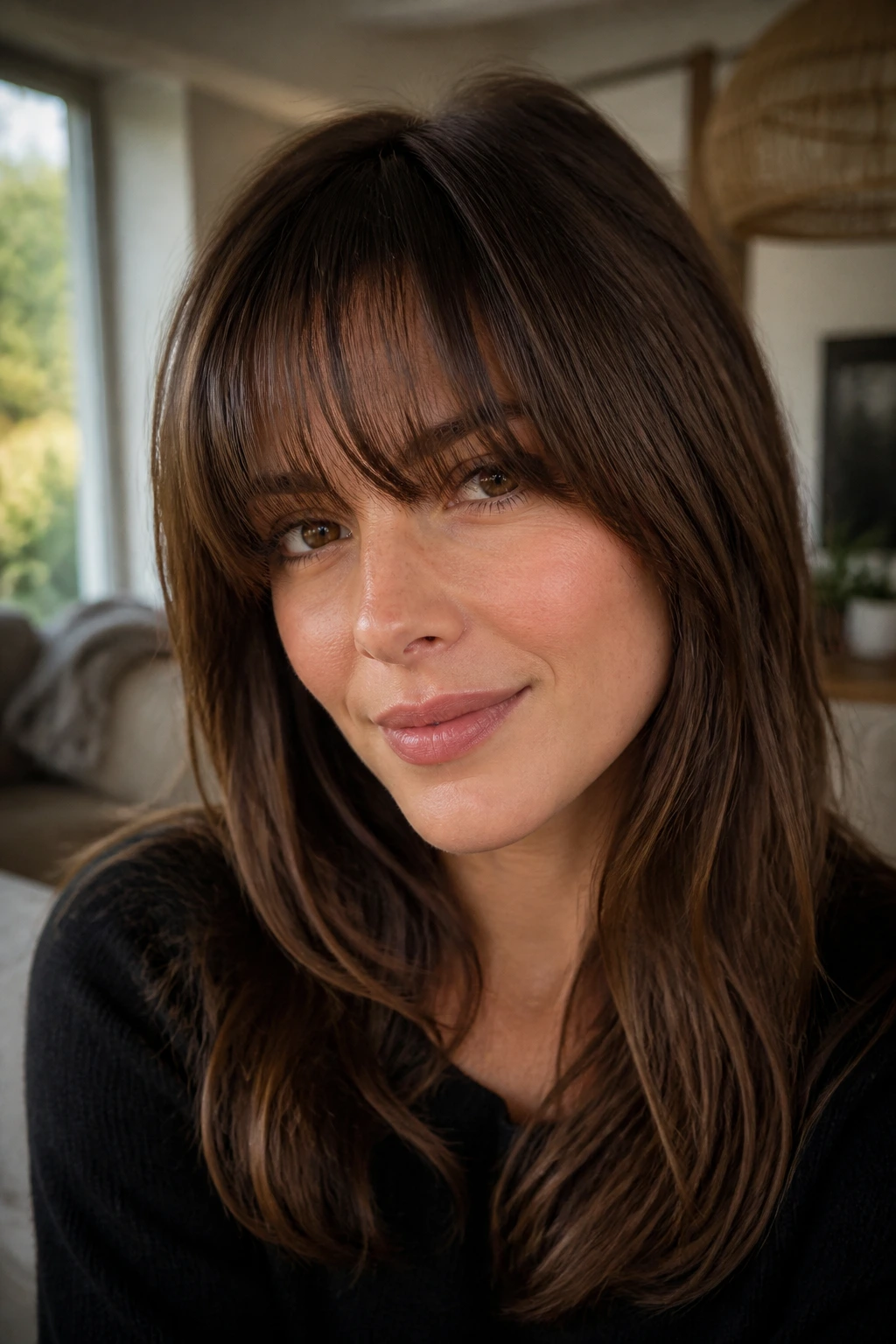
Birkin bangs sit in that sweet spot between polished and a little undone. They’re fuller than wispy bangs, longer than baby bangs, and usually graze the lashes or hover just above them. The result is a fringe that feels elegant without looking too tight or severe.
These are especially good on straight or softly wavy hair with medium density. They need a little swing, not a shellacked finish. Tell the stylist to keep the ends soft and slightly separated so the fringe doesn’t collapse into one heavy sheet.
If you like the idea of bangs but hate the thought of a blunt wall of hair, Birkin fringe is a strong place to land. It gives shape without shutting the face down.
10. Rounded Bangs That Trace a Gentle Curve

Rounded bangs soften a face the way a curved hem softens a sharp jacket. The line arches gently across the forehead instead of sitting flat, which makes this style useful for square jaws, strong brows, and faces that need a little easing around the center.
The curve matters most at the edges. They should turn subtly toward the temples so the fringe melts into the sides of the haircut. That blend keeps the shape from looking too formal or helmet-like.
Rounded bangs are one of those styles that look better when they’re not over-styled. A round brush, a little root lift, and a quick cool shot are usually enough. Leave them too stiff, and the whole thing loses its softness.
11. Curved Bangs That Arc Across the Forehead

Curved bangs are a cousin to rounded fringe, but the arc is a touch deeper and more obvious. Think of a C-shape that follows the forehead and eases toward the temples. It’s a nice choice when you want symmetry without a hard straight line.
This shape can flatter oval and heart faces especially well because it adds width where the face needs it and keeps the center from feeling heavy. It also works with face-framing layers, since the corners already want to melt outward.
The biggest mistake here is cutting the arc too high. Keep the center long enough to touch the brows, or the curve starts to look like a child’s bowl cut.
12. Choppy Bangs With a Broken Edge

Unlike blunt bangs, choppy fringe looks intentionally uneven. The ends are cut in short, irregular pieces, which gives the style movement and a little edge. It’s a good match for coarse hair or any texture that already wants to separate on its own.
Choppy bangs flatter because they don’t crowd the forehead with one heavy line. Instead, the broken edge lets skin show through in small places, which keeps the cut from feeling too dense. That makes them useful on fuller faces or strong features that need some lightness up top.
If your hair is fine, don’t over-thin the whole fringe. You want texture, not gaps. The line still needs enough body to read as a style.
13. Piecey Bangs That Separate on Purpose
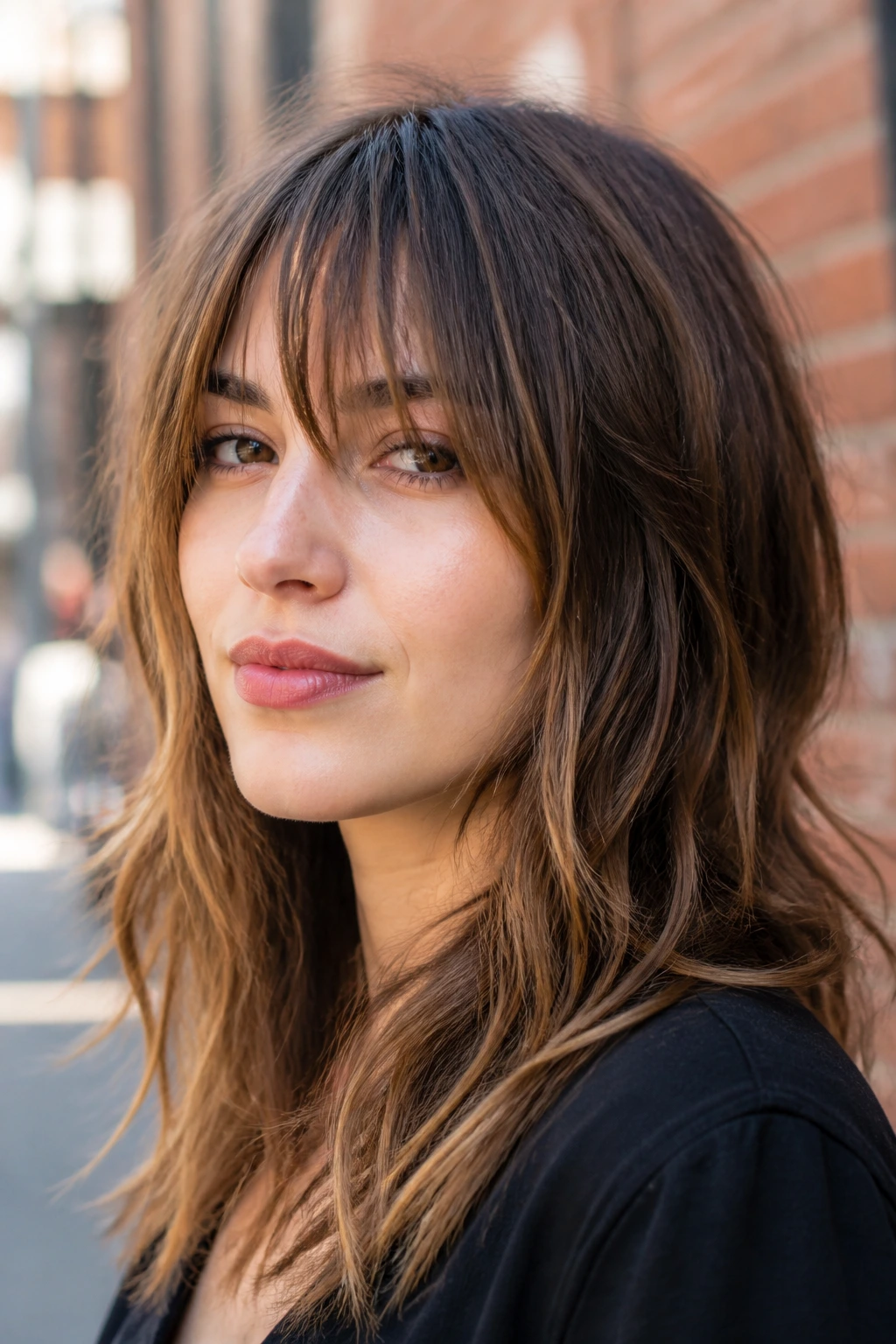
Piecey bangs are all about spacing. The strands are cut and styled so they sit in small, visible sections instead of one united strip. That gives you fringe with movement and a little air, which is a smart move if you want shape without a solid wall of hair.
How to style them
Work with your fingers, not a brush, once the bangs are dry. A tiny bit of pomade or wax between the fingertips helps define the pieces without clumping them together. The goal is separation, not crunch.
- Best on medium textures that need a little structure.
- Great for layering with short bobs or shags.
- Easy to refresh after a hat or a humid day.
Tip: If the pieces start sticking together, back off the product and add a quick blast of dry shampoo at the roots.
14. See-Through Bangs With Air Between the Strands
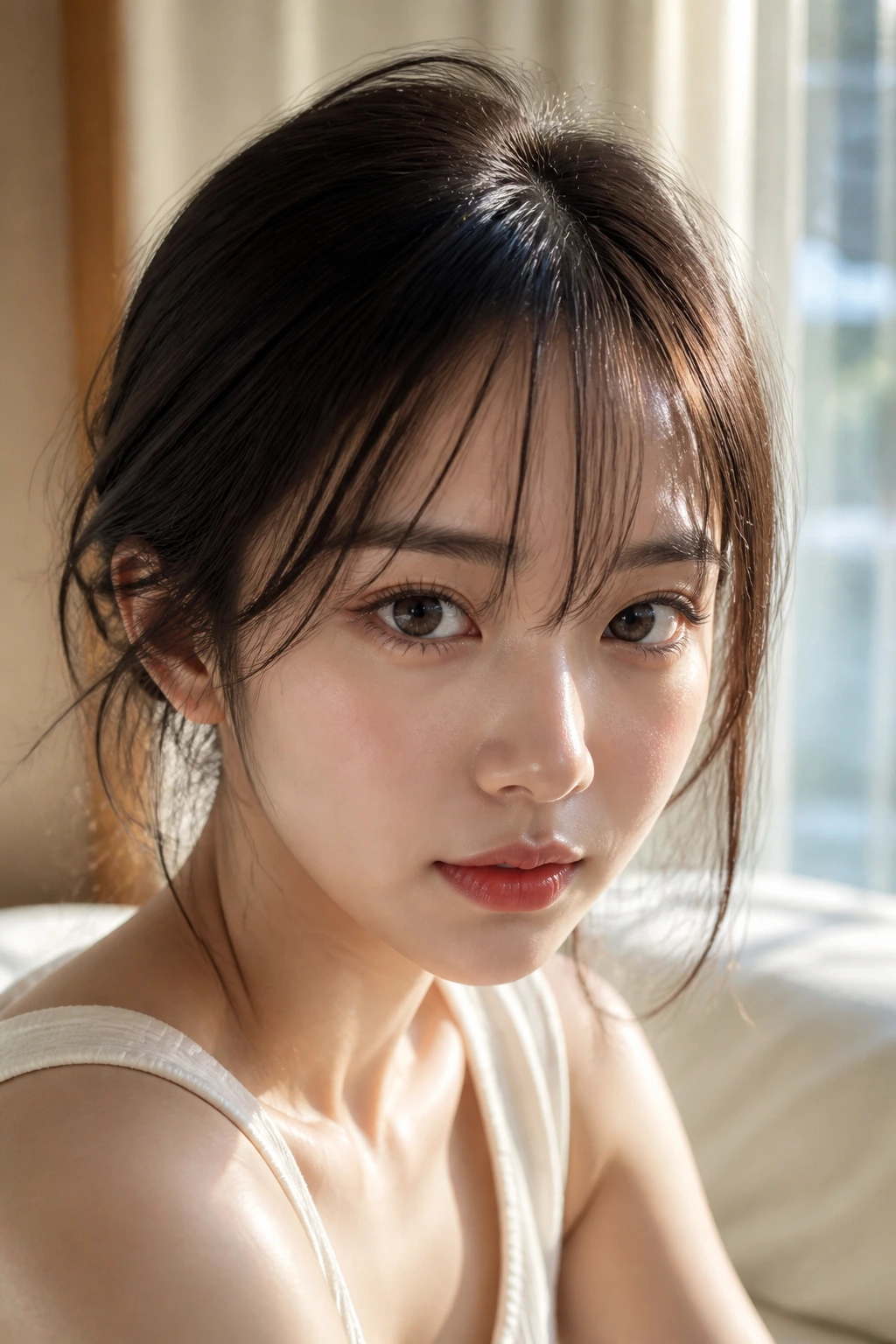
See-through bangs give you fringe without the weight. The hair is left sparse enough that the forehead still shows through, which keeps the style light and soft. It’s a strong option for fine hair, small foreheads, or anyone who wants bangs that don’t dominate the face.
This style also works well when you’re not ready for a full commitment. The sparse density means the cut grows out more gently, and the line doesn’t feel as severe if you miss a styling day. In practice, that’s a real advantage.
The catch is control. Too much layering and you lose the shape entirely. The fringe should feel airy, not hollow.
15. Long Bangs You Can Tuck Back
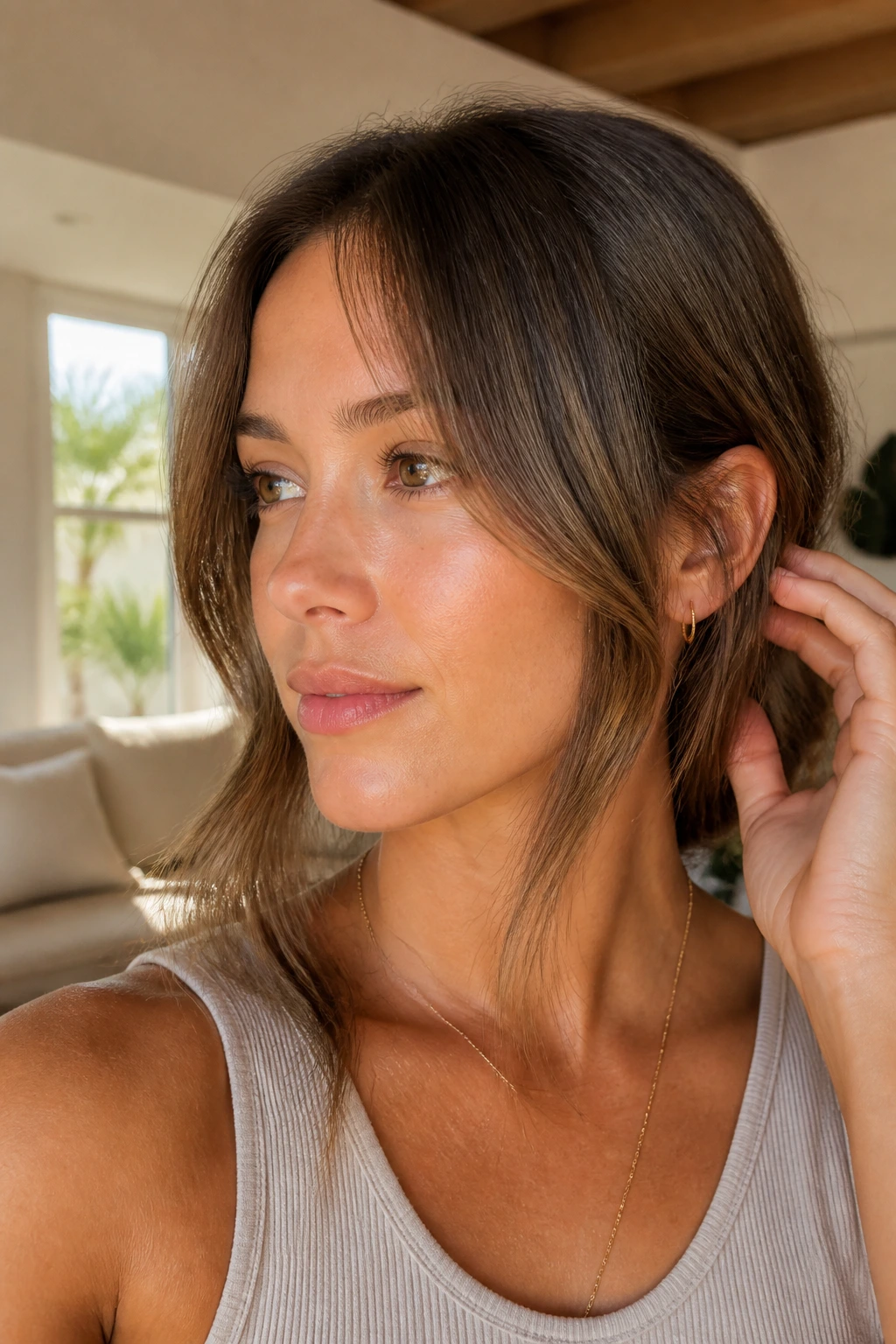
Long bangs are the safest experiment in the bunch. They fall around the cheekbones, sometimes longer, so they can act like fringe when you wear them forward and like face-framing layers when you don’t. That flexibility is the whole point.
They’re especially good for first-timers because they don’t trap you. Tuck them behind one ear, split them down the middle, or curl them away from the face and they still make sense. A long bang also plays well with ponytails, which matters more than some salons admit.
Ask for the shortest point to sit around the brow or upper lash line, then keep the corners longer so the shape can breathe.
16. Swoopy Bangs With a Deep Side Sweep
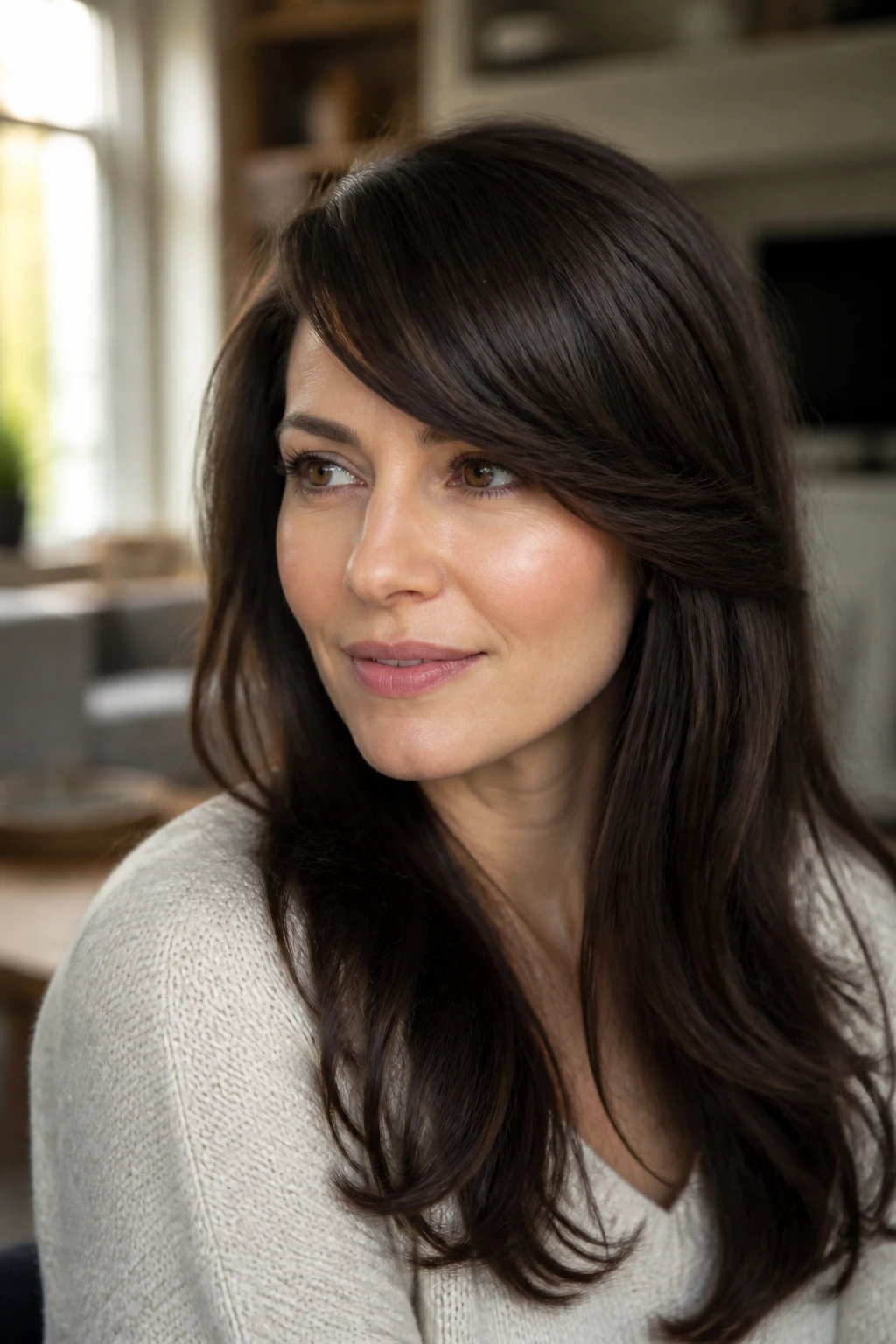
Swoopy bangs bring movement from the part line all the way across the forehead. They’re fuller than a casual side-sweep and more dramatic than a curtain fringe, which is why they can do so much for round faces or softer jawlines.
The shape works because it creates a long diagonal. That diagonal lengthens the face visually and gives the hair a bit of lift at the roots, especially if you blow-dry it with tension and a medium round brush. It should look smooth, not pasted down.
This is one of those styles that responds well to a little volume spray at the base. Flat swoopy bangs are just long side bangs. The lift is the whole point.
17. Asymmetrical Bangs That Lean to One Side
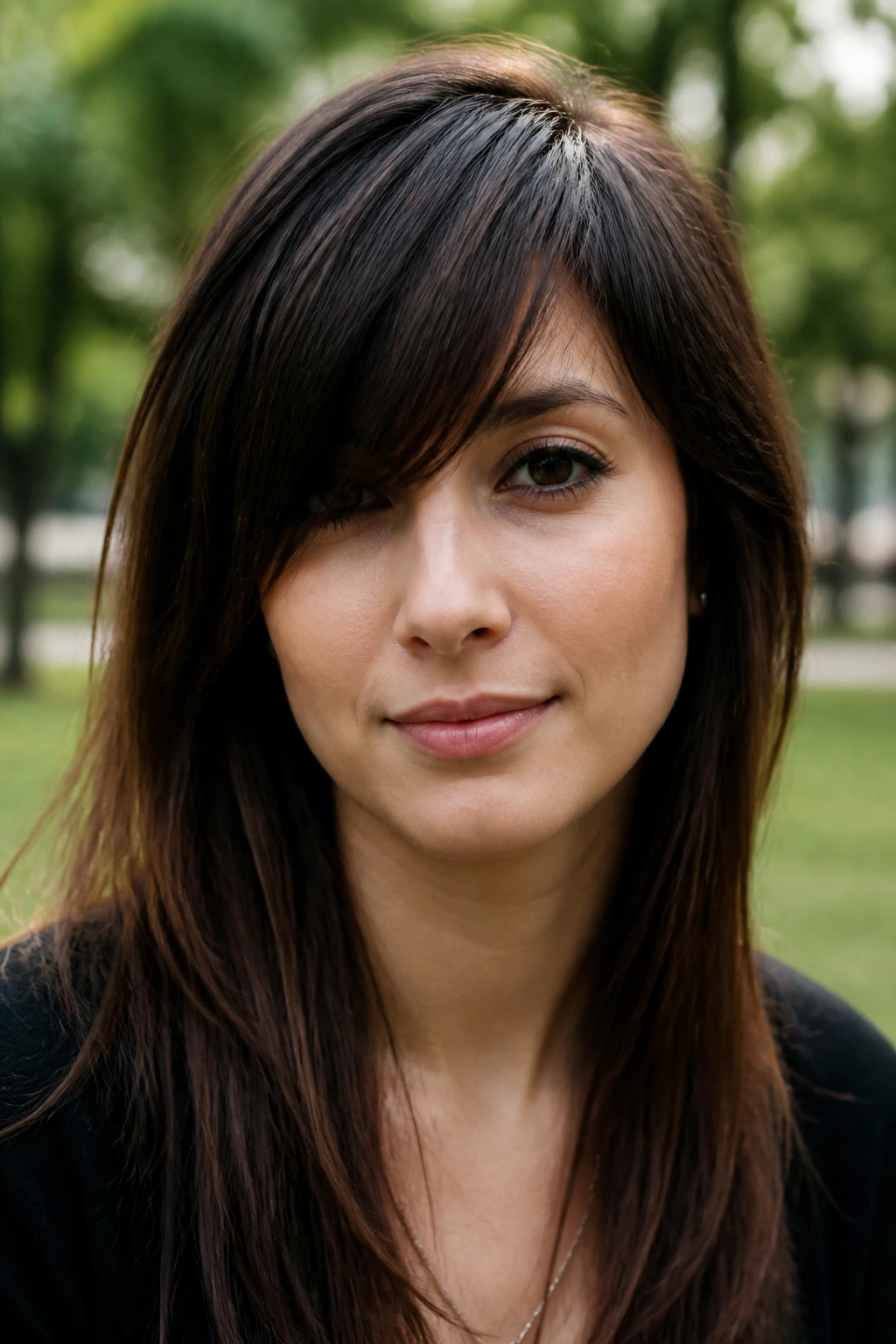
Asymmetrical bangs don’t try to balance the face evenly, and that’s exactly why they’re interesting. One side sits longer or heavier than the other, which creates a diagonal line that can sharpen soft features and break up symmetry in a good way.
A subtle asymmetry works better than a dramatic one on most women. The longer side can skim the brow or temple while the shorter side opens the eye area. That slight imbalance keeps the look modern without turning it into a costume.
If your face is very symmetrical already, this fringe adds energy. If one eyebrow sits a little higher than the other, the angle can be oddly flattering. Hair is allowed to solve problems quietly.
18. Split Fringe That Opens in the Middle

Split fringe gives you the center opening of curtain bangs with a little more polish at the sides. The middle stays parted, which is useful if you have a cowlick or if your hair naturally wants to fall away from the forehead. The two halves frame the face without filling it up.
This style often suits women who like a center part but still want a visible fringe. It can look soft and grown-in rather than sharply cut, which helps if you don’t want your bangs to shout. The longer edges also make it easy to tuck one side behind an ear.
It’s a good compromise, but not a boring one. The shape still has attitude.
19. Baby Bangs That Sit Above the Brows

Baby bangs are short on purpose. They sit well above the brows and show off the forehead, which makes them a bold choice for people who want their cut to look graphic and clean. On a bob or pixie, they can turn a simple shape into something sharp and memorable.
Why they work
The short line lifts the whole face visually and makes the eyes look more open. That’s why baby bangs can be surprisingly flattering on women with strong brows or a defined eye shape.
- Ask for them to be cut dry so the length doesn’t spring up too much.
- Keep them narrow and precise if your forehead is small.
- Style with a flat brush and a tiny bit of cream.
Warning: if you’re unsure, start longer. Baby bangs show every decision.
20. Curly Bangs That Respect Shrinkage
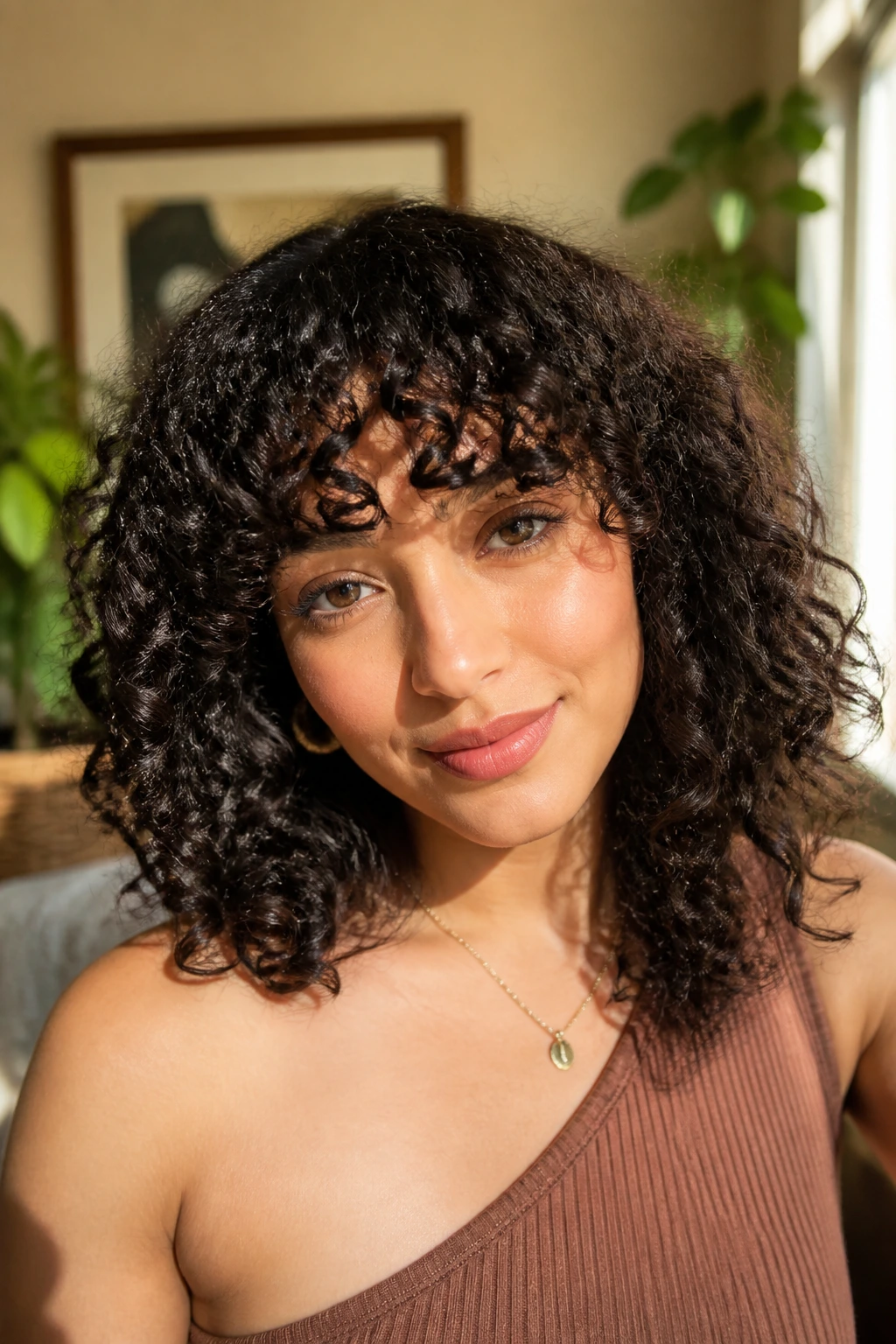
Curly bangs are not a compromise. They are a shape. The key is understanding shrinkage and cutting the fringe to land longer than you think it should when dry. Curly hair lifts, bends, and springs, and the bang cut has to respect that or it will end up too short in an hour.
The best curly fringe lets the curl pattern do the work. It frames the forehead with softness and brings attention to the eyes without forcing the curls into a straight line they won’t keep. That gives the cut a natural, flattering curve.
Ask for the bangs to be cut in their natural curl pattern, preferably dry or mostly dry. If they’re cut wet and stretched, they can jump up a full inch or more.
21. Wavy Bangs That Follow Natural Bend
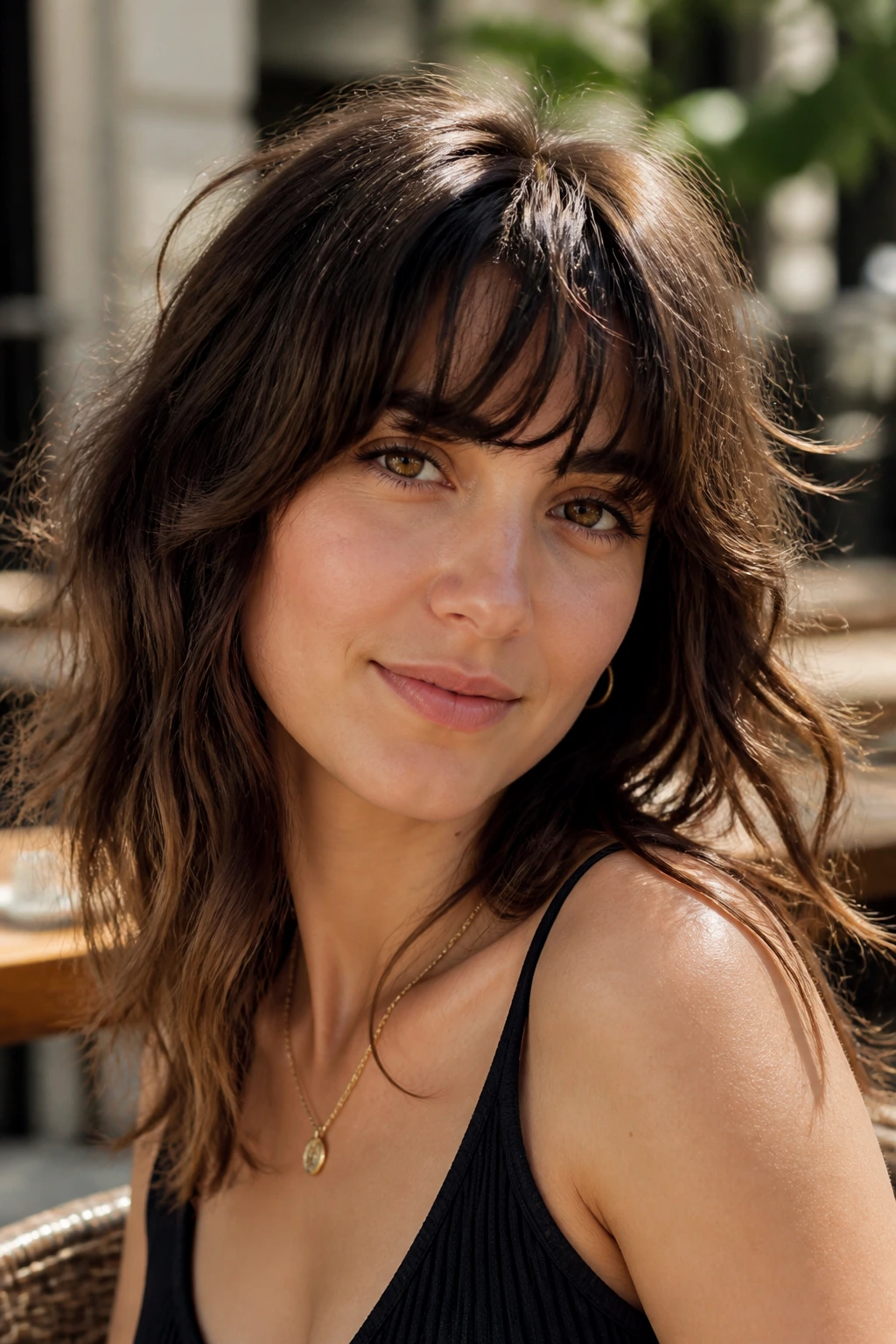
Wavy bangs hit a sweet spot. They’re softer than straight fringe, less voluminous than curly bangs, and easier to live with than a style that needs perfect blow-drying every morning. The natural bend gives the bangs movement that looks relaxed instead of rigid.
This is a good option if your hair bends at the front even when the rest is straighter. The fringe can be cut to work with that wave rather than fight it. A slight curve away from the center keeps the shape from puffing out at the sides.
A diffuser helps, but so does air-drying with a clip at the root. The point is to let the wave set where it wants to sit.
22. Coily Bangs That Shape Around the Forehead
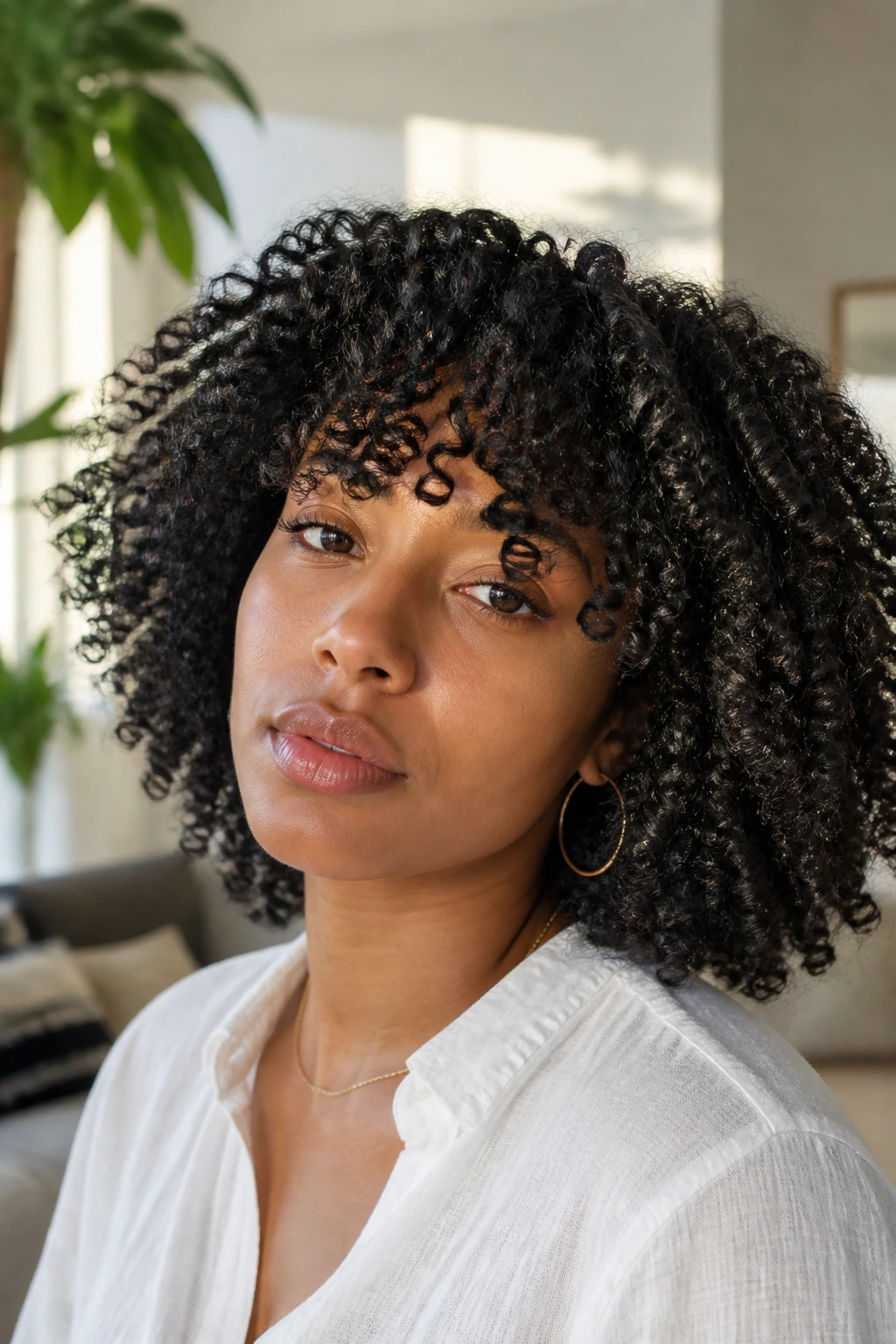
Coily bangs need a shape plan, not a guess. The shrinkage is real, and the curl pattern can tighten up a lot once the hair dries. That means the fringe should usually be cut longer, then refined in its natural coiled state so the final line lands where you want it.
The flattering part of coily bangs is the frame they make around the eyes and forehead. When they’re cut well, they look sculpted and intentional, not improvised. Moisture, cream, and a little finger-coiling can keep the shape defined without turning it crunchy.
If your curls are tighter in the center than at the temples, ask the stylist to cut each section according to its own spring. One length rarely works for every coil.
23. Dense Full Fringe for Thick Hair
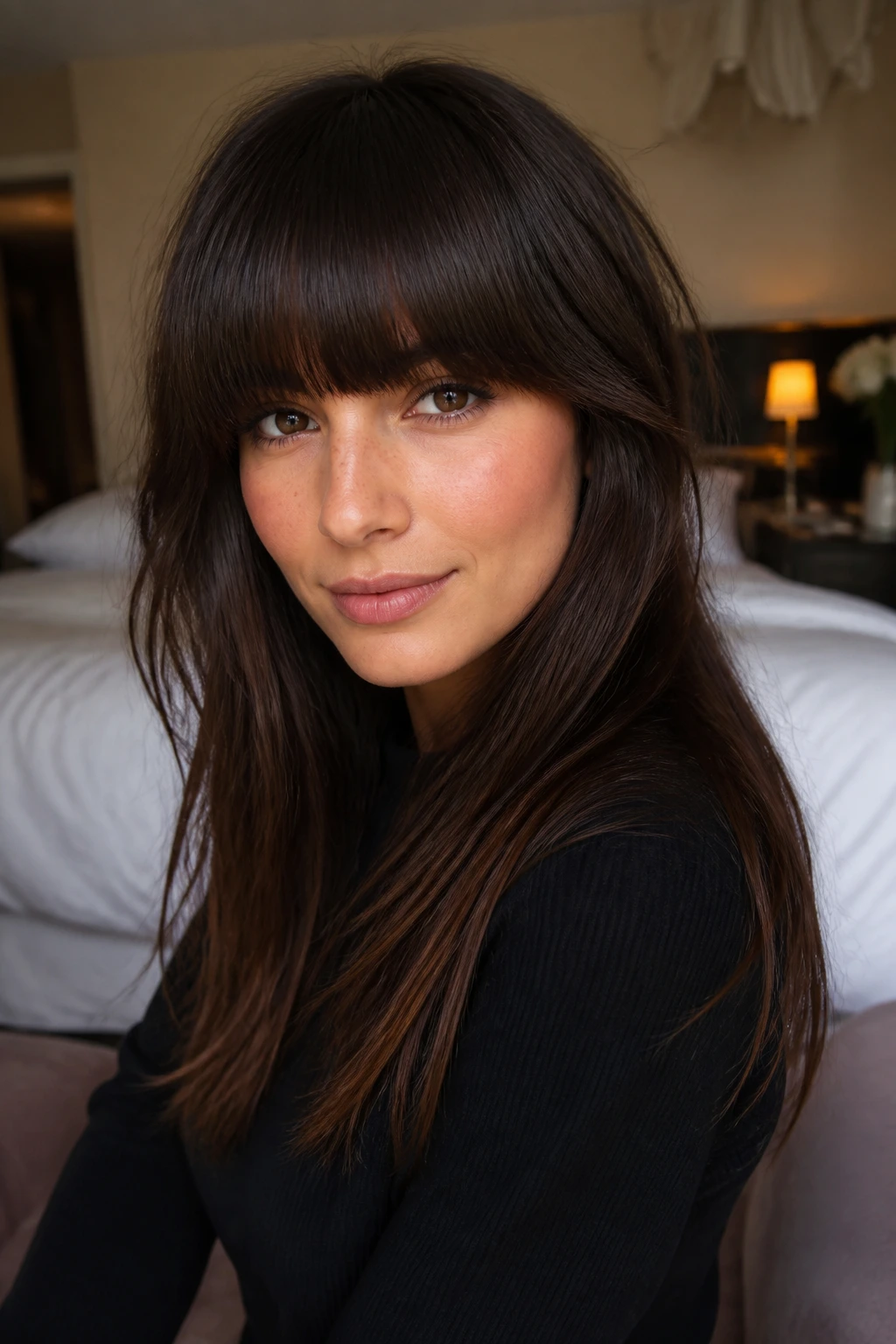
Dense full fringe is for women with plenty of hair who want a strong, lush line across the forehead. It can look rich and polished, but only when it’s cut with enough internal movement to keep it from feeling like a helmet. Thick hair needs room to breathe.
A full fringe is especially flattering on larger foreheads and strong cheekbones because it creates balance up top. It also photographs cleanly, which is part of why this style has never really left. The shape reads instantly, even from a distance.
The trick is not to let the ends become too blunt and blocky. A little point-cutting inside the fringe keeps it from sitting like a curtain board.
24. French-Girl Bangs That Look Slightly Undone
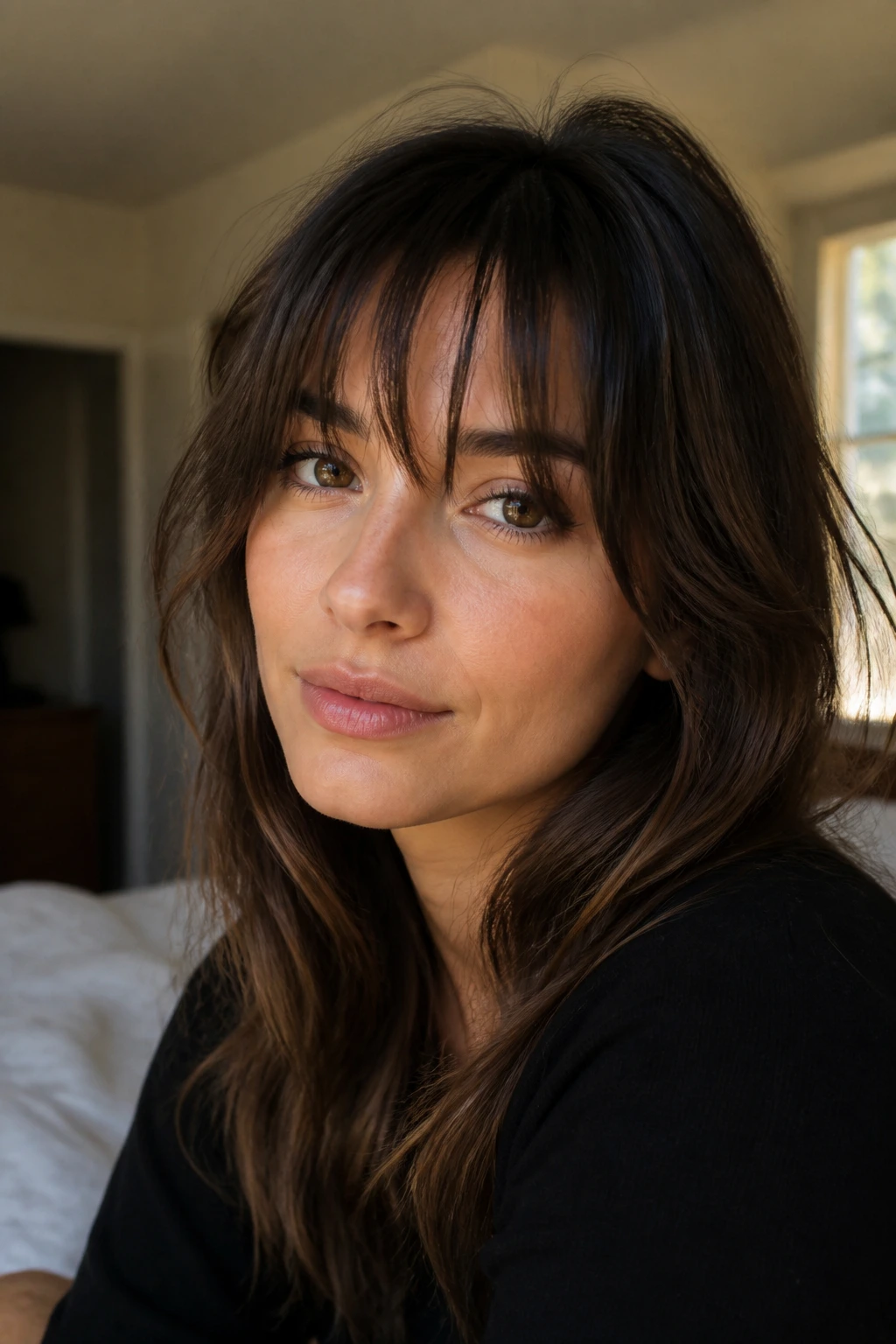
French-girl bangs sit between elegant and casual in a way that feels easy rather than studied. They’re usually a little longer, a little softer, and a little more separated than a classic blunt fringe. You get shape, but the shape isn’t trying too hard.
This style works best when the hair has some movement. Slight wave is ideal, though straight hair can fake it with a light bend from a round brush. The fringe should graze the brows and fall in a way that looks brushed, not forced.
Compared with Birkin bangs, this version reads looser and a touch more lived-in. If you prefer hair that looks like it has a little opinion of its own, this is a good one.
25. Razor-Cut Bangs With Soft Ends
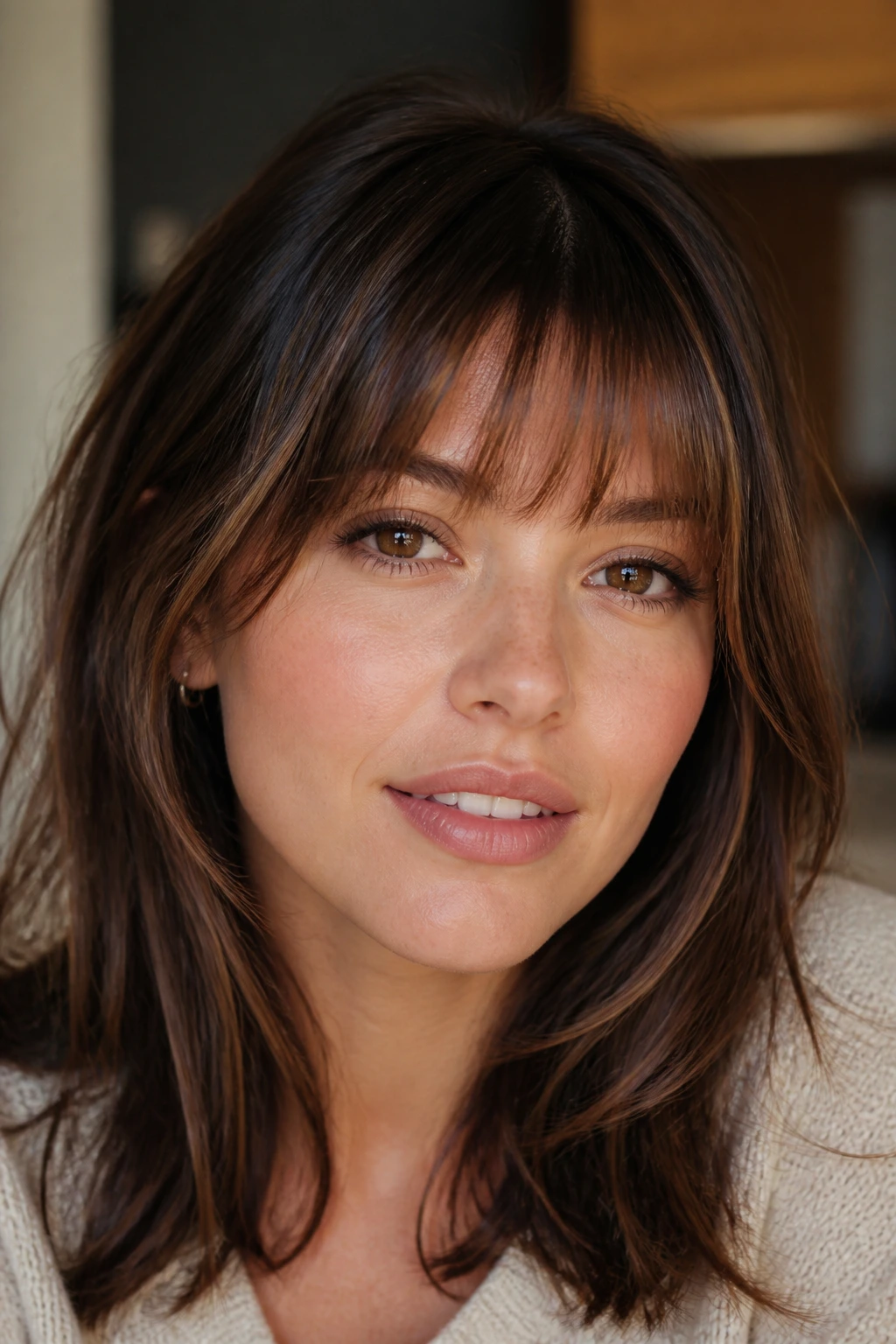
Razor-cut bangs are all about softness at the edge. A razor slices the ends so they taper and move, which is useful on straight hair that might otherwise look too solid. The result is a fringe that feels lighter than a blunt cut without losing shape.
Where they shine
This cut works beautifully when you want fringe that shifts as you move your head. It can soften a heavy brow line and make dense hair behave in a smaller space.
- Best on healthy hair that can handle a blade.
- Ask for a careful hand if the ends are already fragile.
- Style with a quick bend, not a stiff blowout.
My take: if your hair is prone to split ends, a razor should be used carefully or skipped altogether.
26. Layered Fringe That Blends Into Long Hair
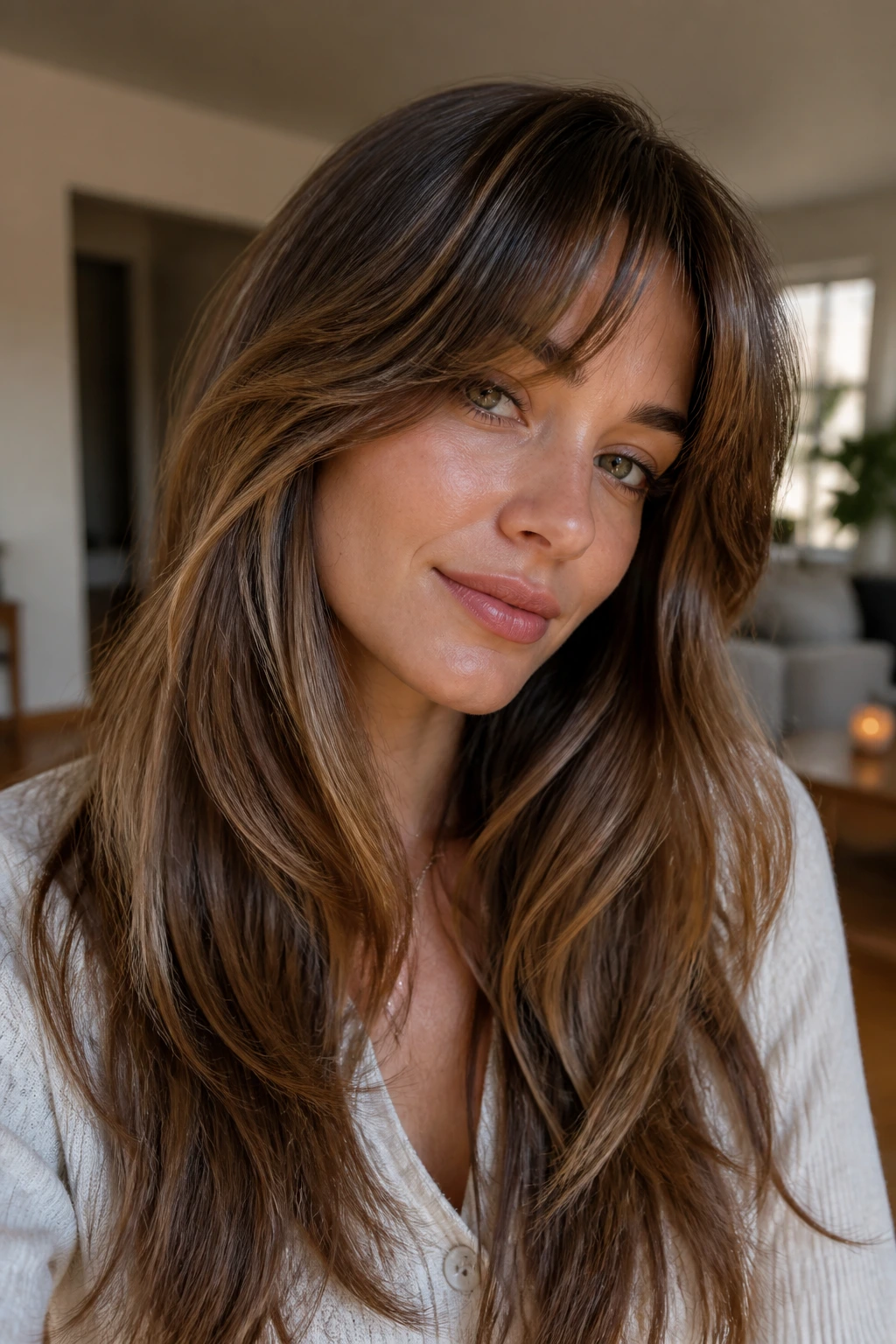
Layered fringe is the bridge between bangs and the rest of the haircut. Instead of stopping abruptly at the forehead, the bangs taper into longer face-framing pieces that merge with the length. That makes this style a favorite for long hair that needs shape without losing softness.
The flattering part is the continuity. Your eye moves from fringe to cheekbone layers to the rest of the cut without hitting a hard stop. That keeps the face open and the haircut balanced, especially if you wear your hair down a lot.
This is one of the best choices for people who like bangs but also like ponytails, half-up styles, and easy grow-out. It just keeps cooperating.
27. Face-Framing Fringe That Lightens the Jawline
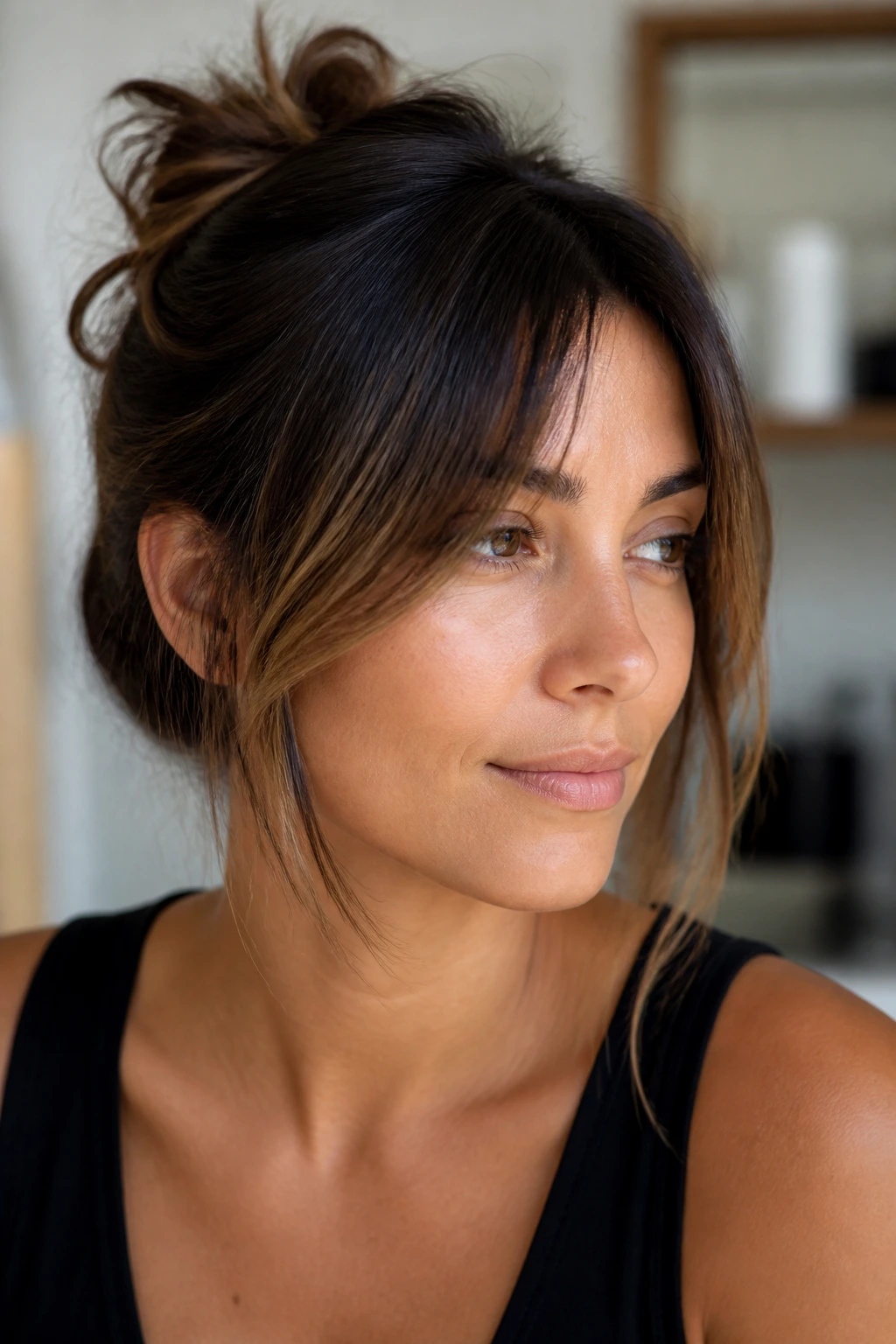
Face-framing fringe reaches beyond the brow area and drops into the cheekbone and jawline zone. It’s more of a front contour than a full bang, which is why it flatters round faces and heavy jawlines so well. The hair pulls the eye downward in soft lines instead of stopping in one spot.
This style is useful if you wear your hair back often. The front pieces stay visible whether the rest is down, tied, or clipped. They can also be curled under, curled away, or left straight, depending on the mood.
If you want the effect of bangs without the daily forehead commitment, this is a smart compromise. It’s not subtle, but it isn’t fussy either.
28. Grown-Out Fringe That Looks Intentional
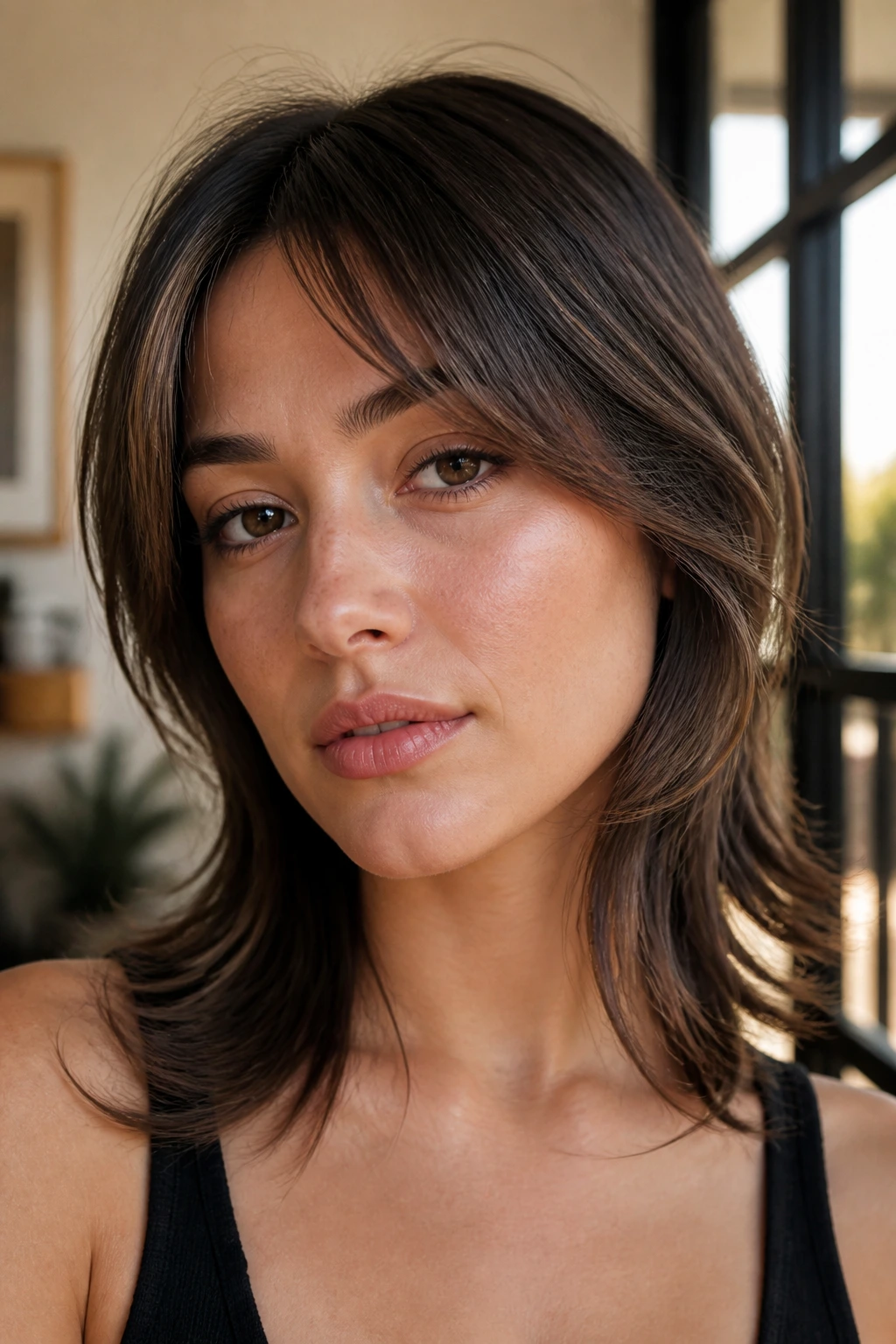
Grown-out bangs are where a lot of women end up, and that’s not a failure. If the cut is shaped well, the in-between stage can look relaxed and on purpose. The fringe gets pushed to the sides, parted slightly off-center, and bent just enough to keep the line soft.
This is the style I’d point to for anyone who wants bangs but hates constant upkeep. It works with clips, headbands, and a quick blow-dry in five minutes or less. The key is keeping the corners long enough to tuck into the rest of the haircut.
If a fringe is going to live on your head for months, it should look good when it’s not fresh from the salon. Grown-out fringe does that.
29. Peekaboo Bangs That Skim the Eyes
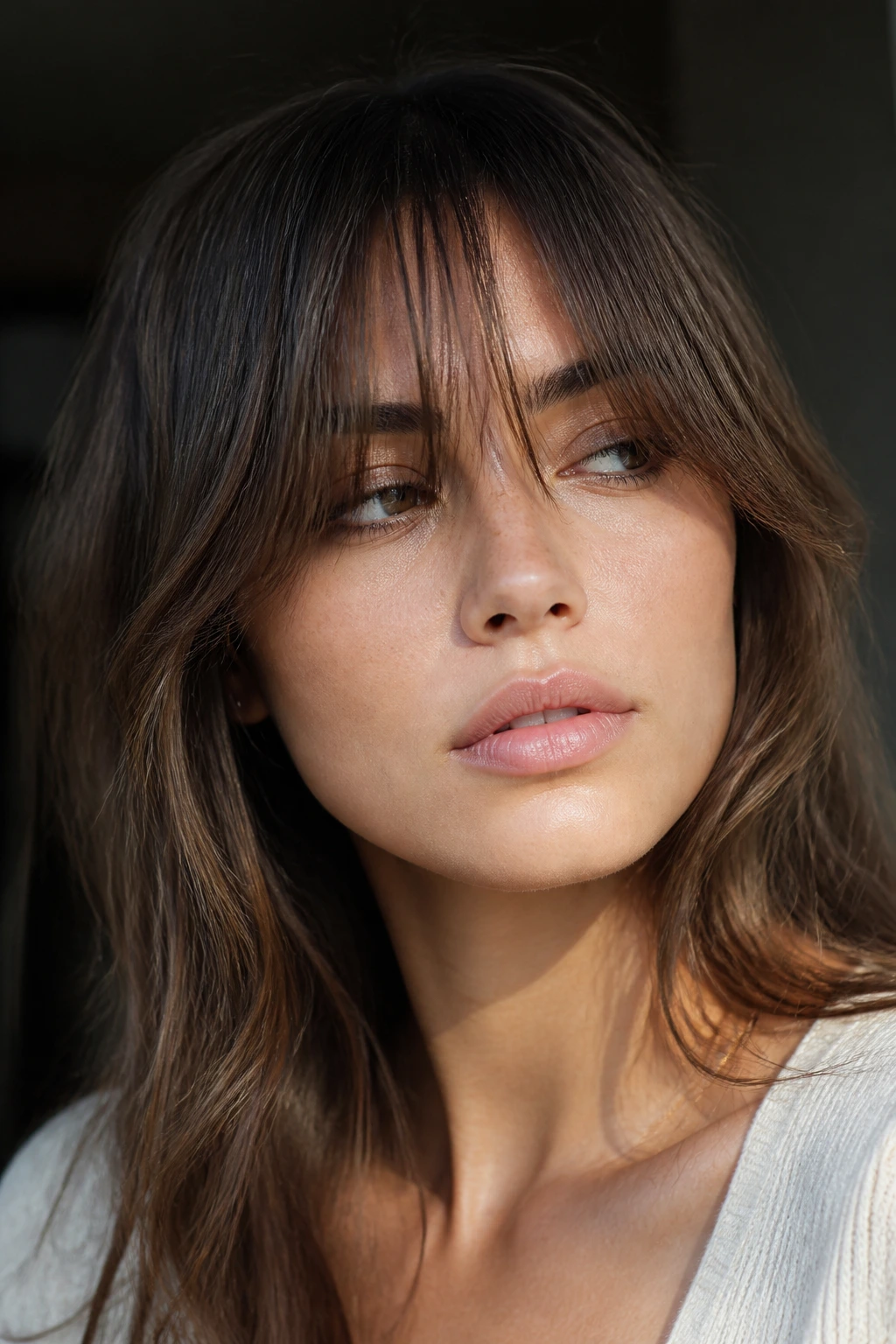
Peekaboo bangs sit low enough to brush the lashes, then lift away just enough to show the brows through the line. That little bit of conceal-and-reveal gives the cut a softer, more mysterious feel than a blunt fringe. It’s flattering on stronger brows because the eyes still get the spotlight.
They work best when the fringe is light and easy to move. Too much density, and the peekaboo effect disappears. The goal is a fringe that hovers and shifts, not one that sits in one flat slab.
A small round brush or even a Velcro roller at the roots can help the shape stay lifted. It’s a simple fix, but it matters.
30. Brow-Grazing Bangs for a Clean, Classic Line
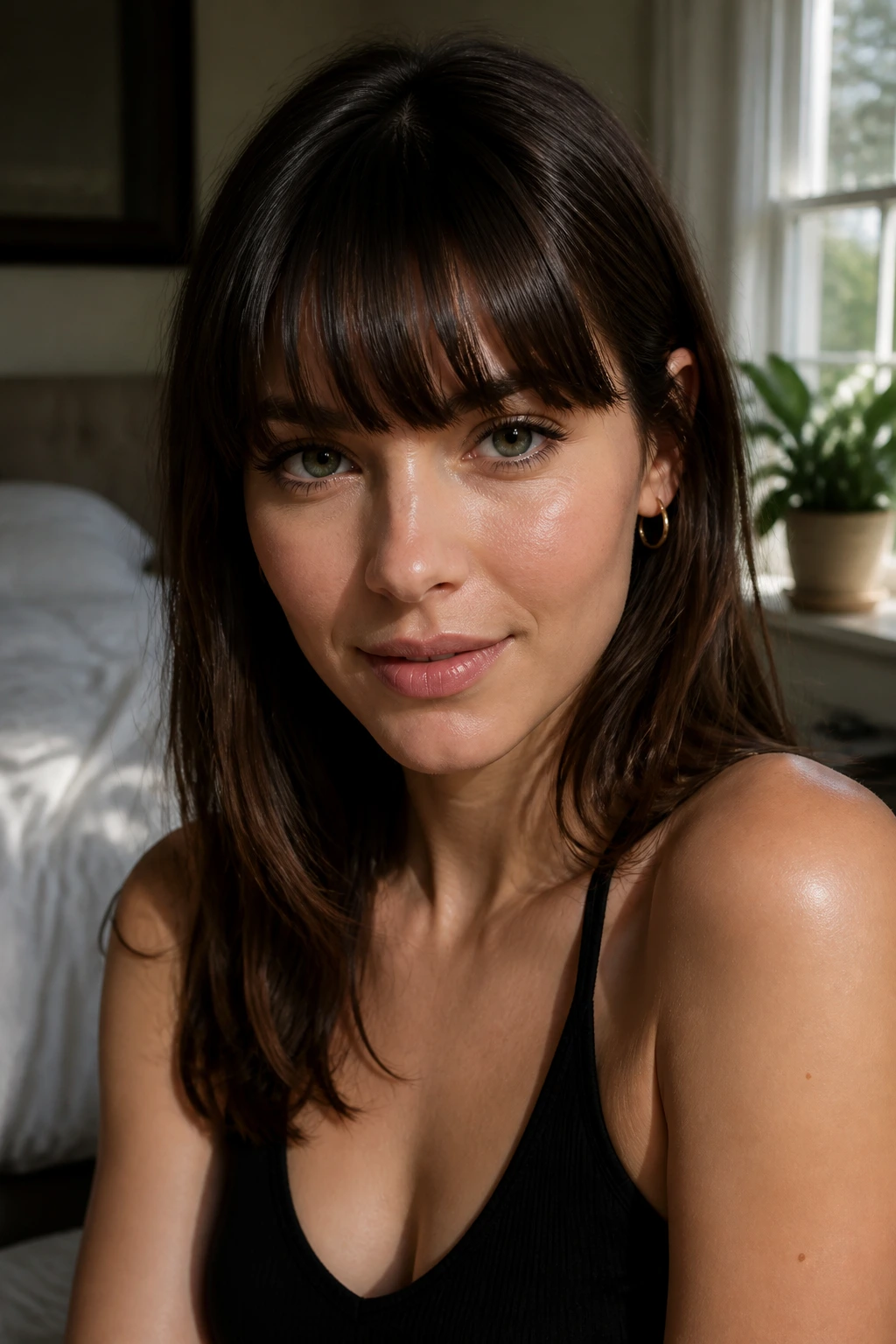
Brow-grazing bangs sit right where the name says they should — close enough to touch the brows, long enough to avoid feeling severe. They’re classic for a reason. The line is neat, direct, and flattering on straight to slightly wavy hair that can hold a clean edge.
This style frames the eyes without crowding them. It also gives the forehead enough coverage to change the shape of the face while still showing your expression. That balance is the whole trick.
If the bangs get too long, they start hiding the eyes. Too short, and the line loses its ease. The sweet spot is a thin strip that sits right at the brow line and moves with a bit of bend.
31. Arched Bangs That Follow the Brows

Arched bangs echo the brow line instead of fighting it. The curve is subtle, with the center slightly shorter and the sides a touch longer so the shape mirrors the natural frame of the eyes. That makes the fringe feel almost custom, especially on faces with a soft brow arch already in place.
This is a nice choice if you want structure but not bluntness. The arch keeps the front light around the temples and gives a gentle lift through the middle of the face. It’s one of those cuts that looks balanced without looking rigid.
Ask for the arch to be gentle, not dramatic. A hard arch can feel dated fast.
32. Textured Fringe for Busy Mornings
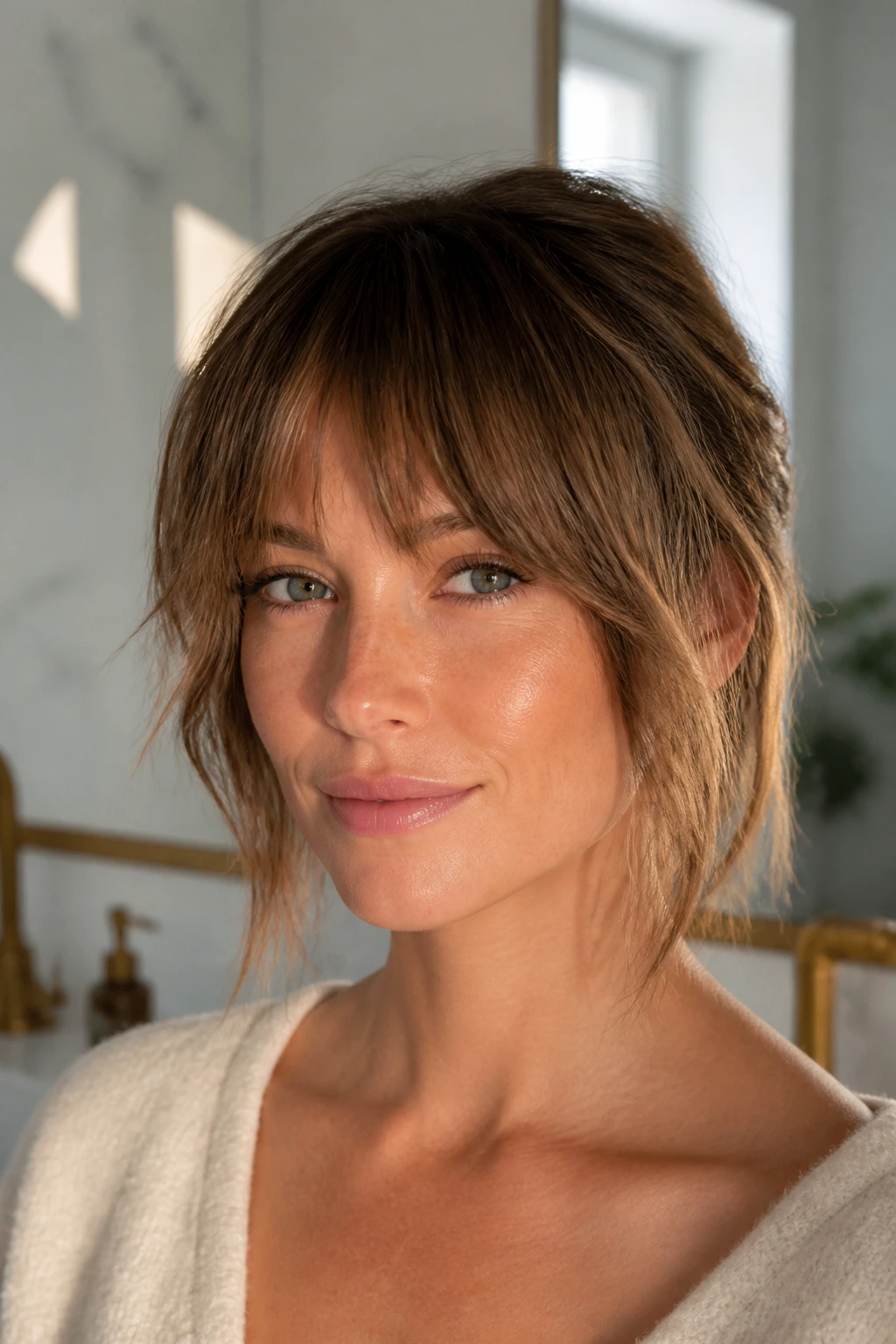
Textured fringe is the practical cousin of the perfect fringe. It’s point-cut and broken up so it won’t demand a flawless round-brush blowout every time. That makes it a smart fit for women who want bangs but also want to leave the house without a 15-minute styling session.
The shape is flattering because it moves. The texture keeps the fringe from looking too heavy, which helps soften strong features and gives finer hair a little more visual density. It also hides small growth changes better than a sharper cut.
A little matte cream or dry shampoo is usually enough. If the fringe gets too polished, the texture disappears and the cut loses its point.
33. Diagonal Fringe That Slices Across the Forehead
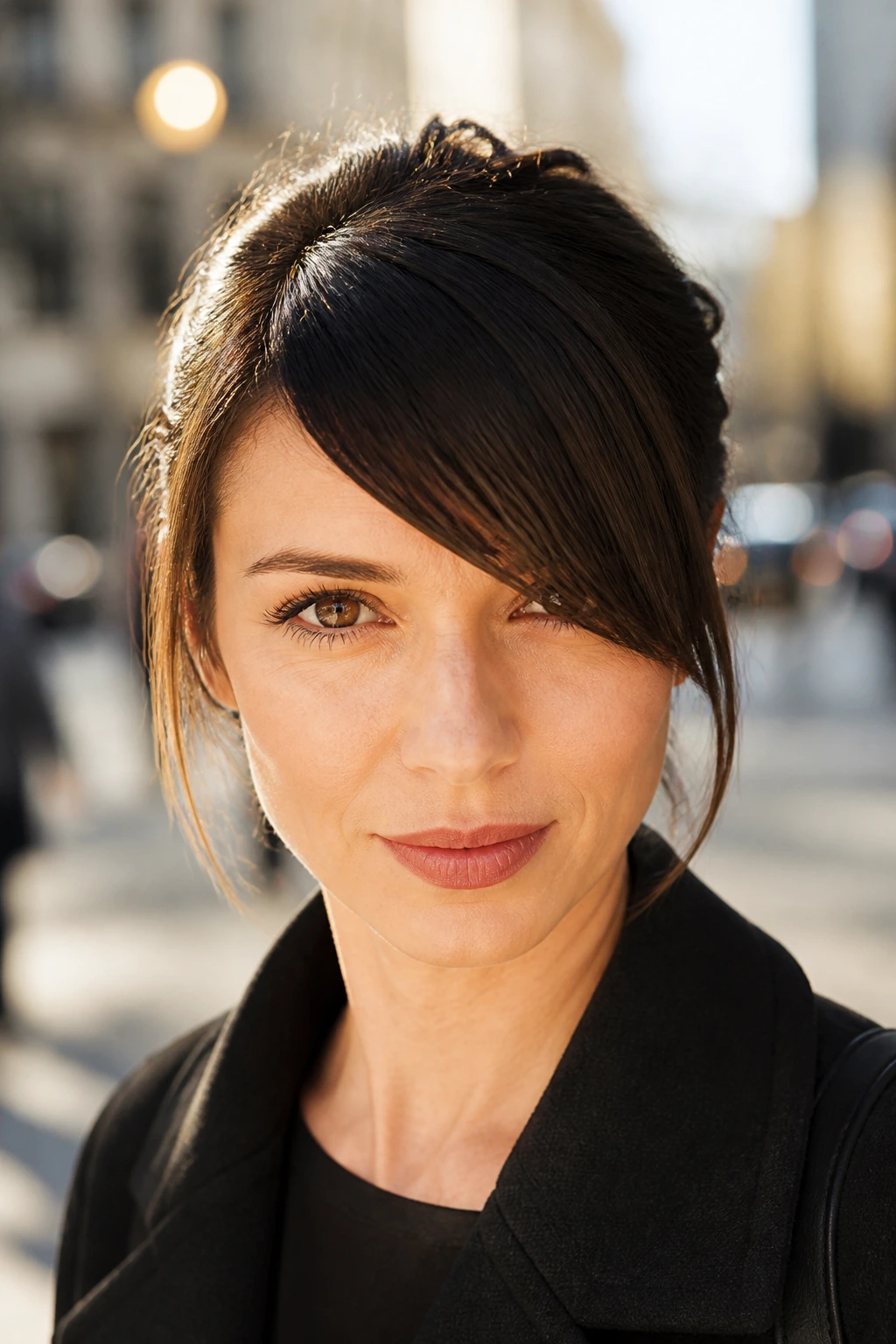
Diagonal fringe is a sharper version of side-swept bangs. The line cuts across the forehead on a noticeable angle, which can slim the face visually and add drama without needing a full blunt edge. It’s especially useful on broad cheekbones or a square jaw.
The angle works because it directs the eye down and outward. That gives the face a longer shape and keeps the center from feeling too heavy. It also plays nicely with a deep side part and layered hair.
This style likes a bit of control at the roots. A flat fringe kills the effect. You want movement, but you want the angle to stay visible.
34. Oval-Framing Fringe for Balanced Features

Oval-framing fringe shapes the front of the hair into a soft oval around the face, with shorter pieces near the center and longer ones around the temples and cheekbones. It’s a balanced style that doesn’t overcorrect anything, which is why it can work on so many face shapes.
This fringe is a good match for women who want the haircut to look polished from every angle. It blends well into lob cuts, shags, and shoulder-length layers. The soft oval keeps the face open while still making the haircut feel finished.
If you like symmetry but don’t want a hard geometric line, this is an easy place to land. It’s tidy without feeling stiff.
35. Heavy Sweeping Fringe for a Dramatic Finish
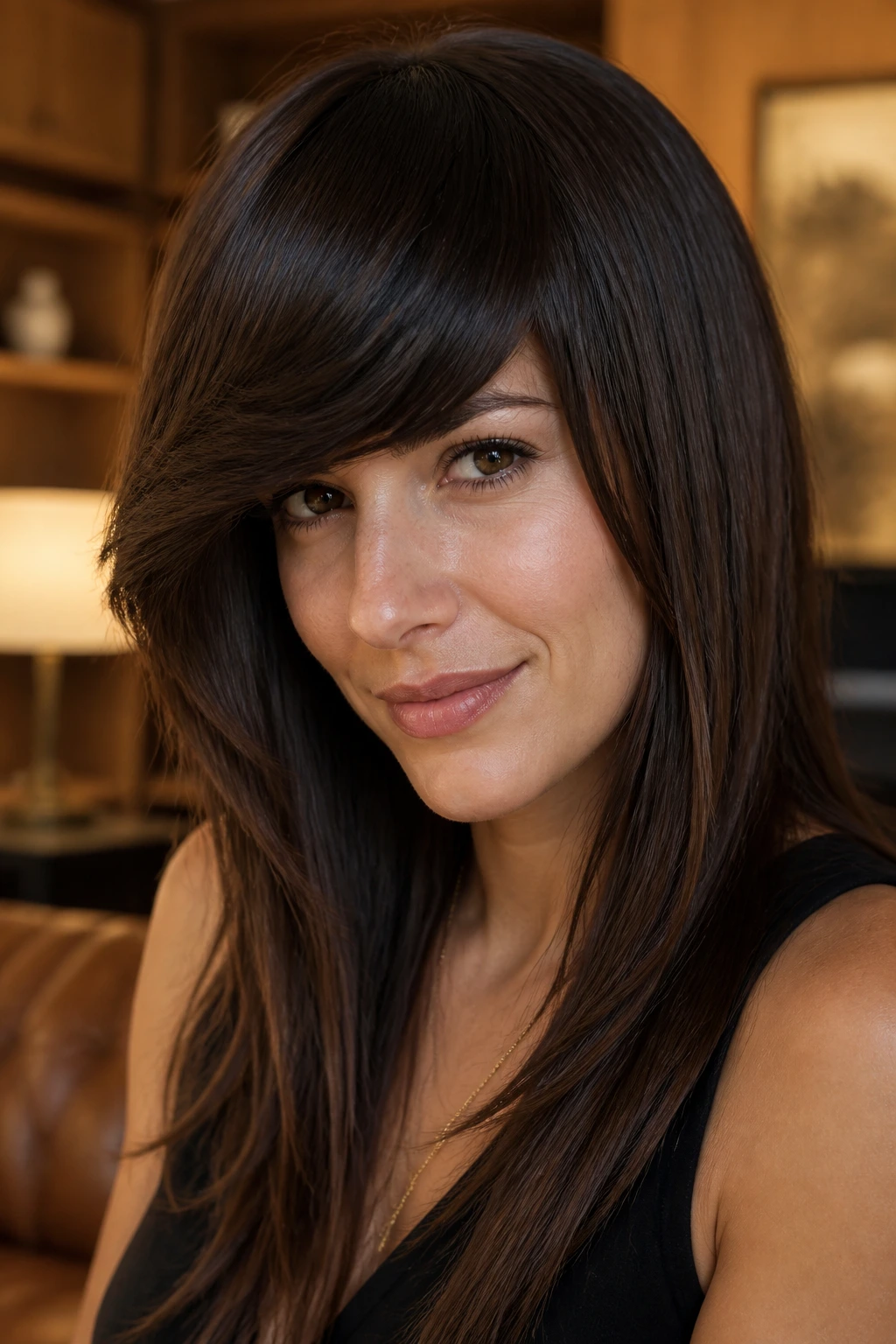
Heavy sweeping fringe is the one that leans all the way into volume. It starts with enough density to feel substantial, then sweeps across the forehead in a single strong curve. The effect is glam, a little old-Hollywood, and very good on thick hair that can hold shape.
This style works because it commits. The sweep gives the face length and focus, while the thickness keeps the line from looking flimsy. It can balance a longer face or add presence to softer features that need a little more structure up top.
A round brush, root lift, and a firm but flexible hairspray are usually enough to keep it in place. If the line collapses, the style loses its reason for being.
What Makes a Fringe Flattering Instead of Fussy
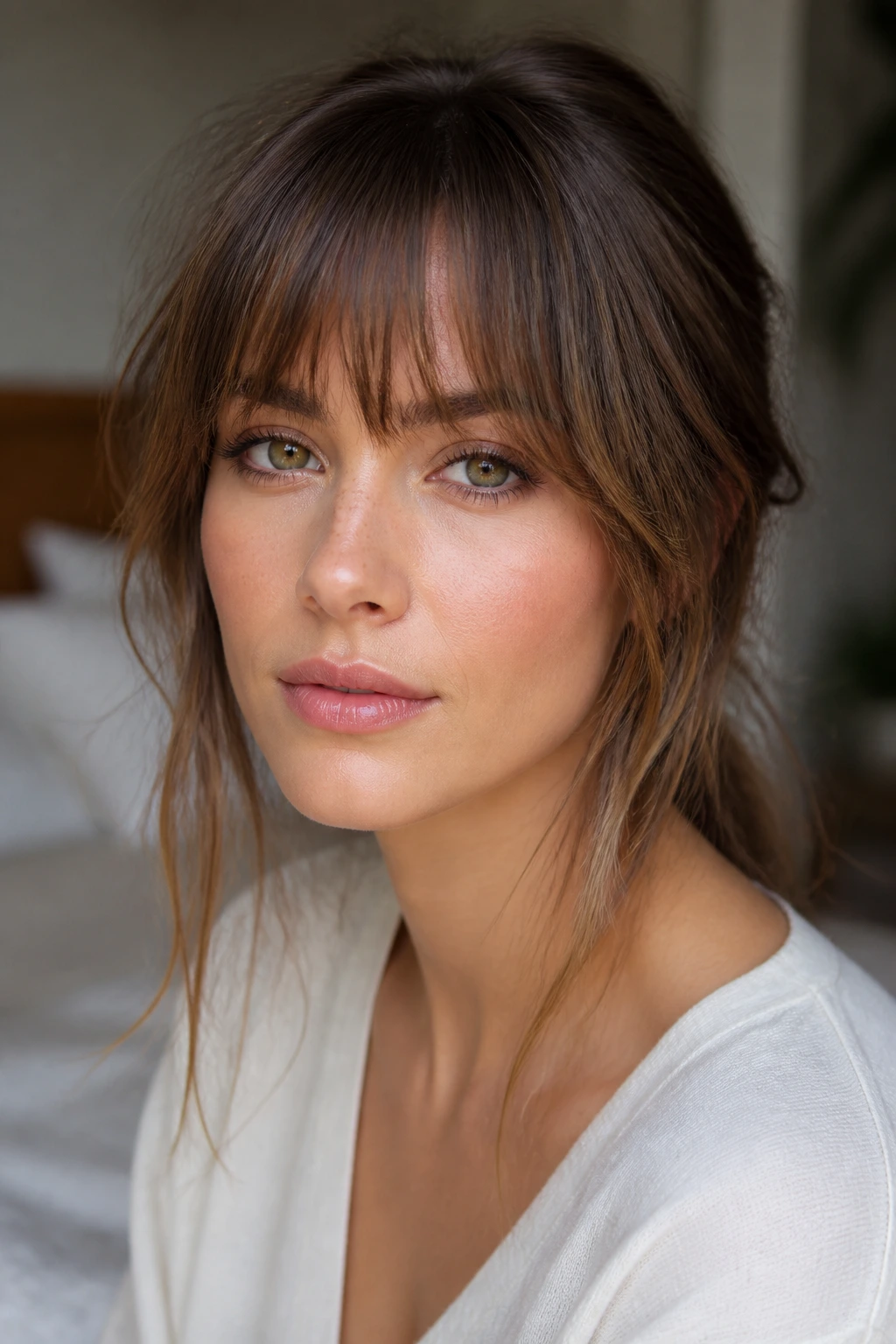
A flattering fringe usually does one simple thing well: it changes the shape of the face without fighting the hair’s natural behavior. That sounds obvious until you see a cut that ignores a cowlick, a swirl, or a very fine hairline. Then the bangs spend every morning proving a point.
The first thing I look at is density. Thick hair can hold a blunt fringe or a heavy sweep. Fine hair often looks better with see-through, wispy, or textured bangs because too much weight makes the front fall flat. Texture matters too. Straight hair reads differently from a bendy wave, and curls need their own shrinkage plan. A style that looks elegant on one texture can look stiff on another if it’s copied exactly.
Face shape matters, but not in the cartoonish way people sometimes talk about it. It’s less about “never do this” and more about balance. Curtain bangs soften long faces. Swoopy and diagonal fringe can ease a square jaw. Rounded or arched shapes can keep strong brows from taking over the whole front of the face. And if your hairline fights in the morning, the wrong cut will feel annoying no matter how pretty the photo looked in the salon.
Essential Tools for Styling Bangs at Home
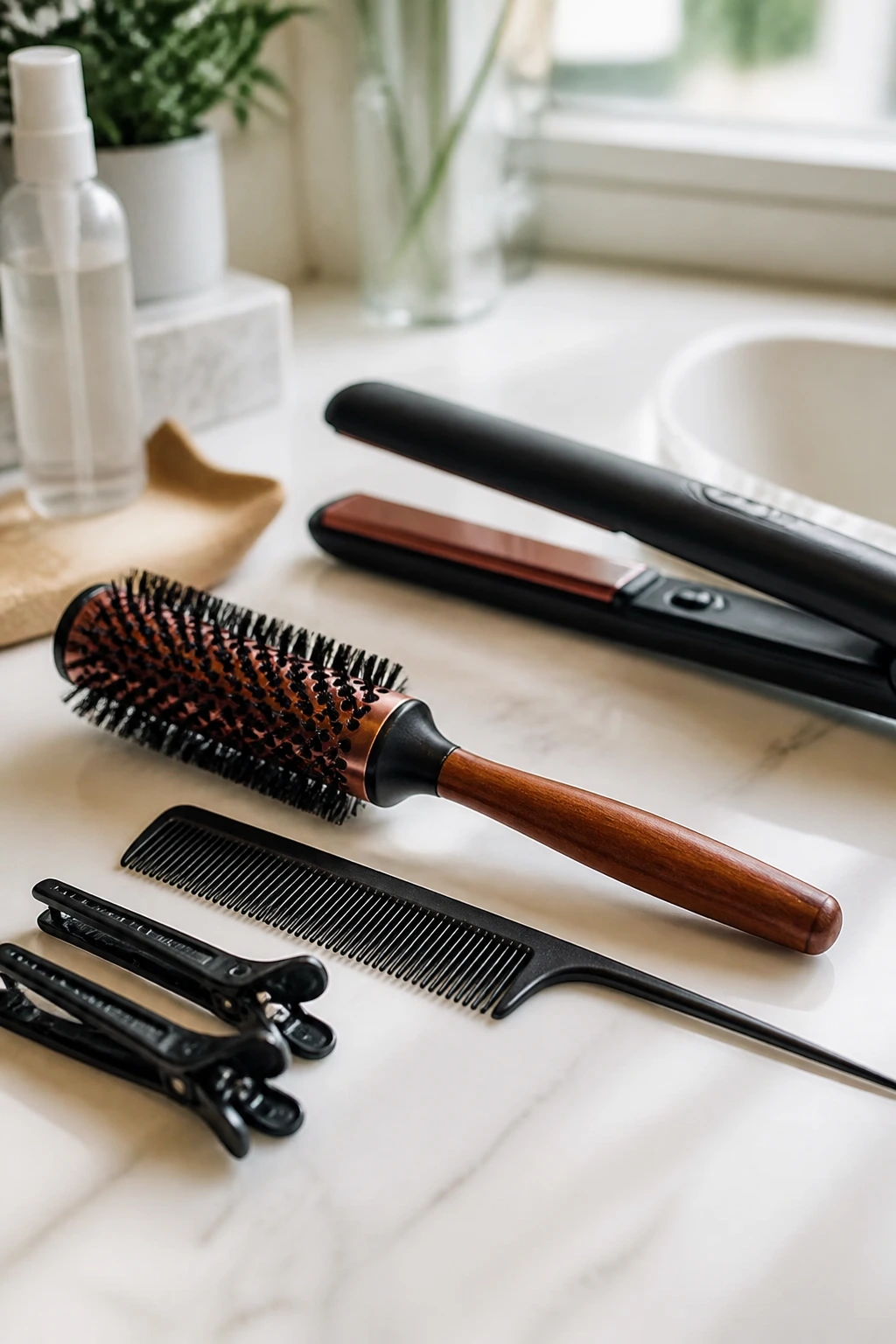
- Small round brush, 1 to 1.5 inches: Best for pushing the fringe under, over, or away from the face without adding bulk.
- Blow dryer with a concentrator nozzle: The nozzle matters more than people think; it keeps the airflow controlled so the bangs don’t get blasted sideways.
- Fine-tooth comb: Good for sectioning and for re-setting a fringe that’s separated after sleep or humidity.
- Duckbill or sectioning clips: These keep the rest of the hair out of the way while you dry just the front piece.
- Flat iron with rounded edges: Useful for brow-grazing, micro, or piecey bangs that need a quick bend.
- Dry shampoo: Helpful on day two and day three when the roots get soft and the fringe starts to clump.
- Light hairspray: A flexible mist controls flyaways without turning the bangs stiff.
- Styling cream or paste: A tiny amount goes a long way on textured, choppy, or shaggy fringe.
- Velcro roller: Handy for adding root lift to curtain, swoopy, or heavy sweeping bangs.
- Salon shears for trims only: Never use kitchen scissors. They chew the ends and leave the fringe looking frayed.
What to Tell Your Stylist Before the First Snip
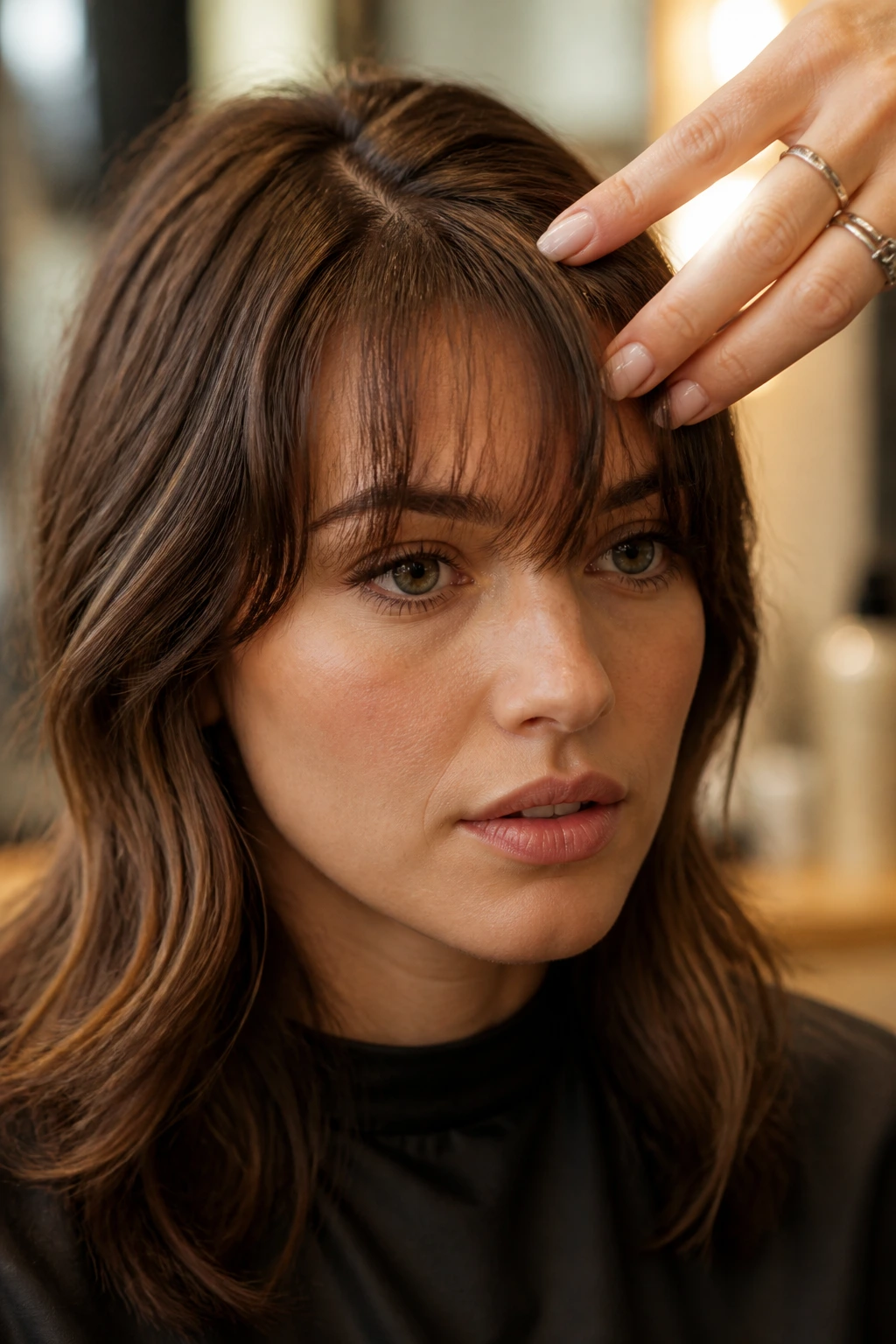
The photo you bring matters less than the details you say out loud. A picture shows the vibe; your hairline, density, and growth pattern decide whether that vibe survives the first wash. If your bangs split at the center, say so. If your hair shrinks when it dries, say that too. Those little facts change the cut.
Ask the stylist to look at your fringe dry, or at least to check it dry before the final trim. Wet hair can hide a cowlick, and cowlicks are the reason so many bangs seem perfect for two days and maddening after that. If you have curly or coily hair, ask how much longer the fringe should be left for shrinkage. That one conversation saves a lot of regret.
Also say how much maintenance you’ll tolerate. A blunt fringe that needs a trim every three weeks is a fine choice if you love the shape. If you don’t, it will get old fast. That part is not shallow. It is practical.
How to Wear Bangs With the Rest of Your Cut

Presentation: Keep the fringe shape in line with the haircut underneath it. A blunt bob likes a clean brow-grazing or full fringe; a shag likes something piecey, feathery, or curtain-like. The front should look like it belongs to the rest of the haircut, not like it was added from a separate drawer.
Best paired with: Curtain and bottleneck bangs play nicely with layers, lobs, and long hair. Micro bangs want shorter cuts with some edge. Side-swept, swoopy, and layered fringe make easy partners for ponytails and clipped-back styles because they still read as intentional when the rest of the hair is off the face.
Balance: If your forehead is smaller, keep the density light and the corners longer. If your forehead is broad, a fuller fringe or a longer curtain shape can add coverage without feeling boxed in. Don’t force the same amount of bang on every face.
Finish: Use the lightest product that gets the job done. Bangs sit on the face all day, so a heavy cream or oil can make them stringy in an hour. Start small. Add more only if the hair still needs control.
Extra Styling Tricks That Keep Fringe in Shape
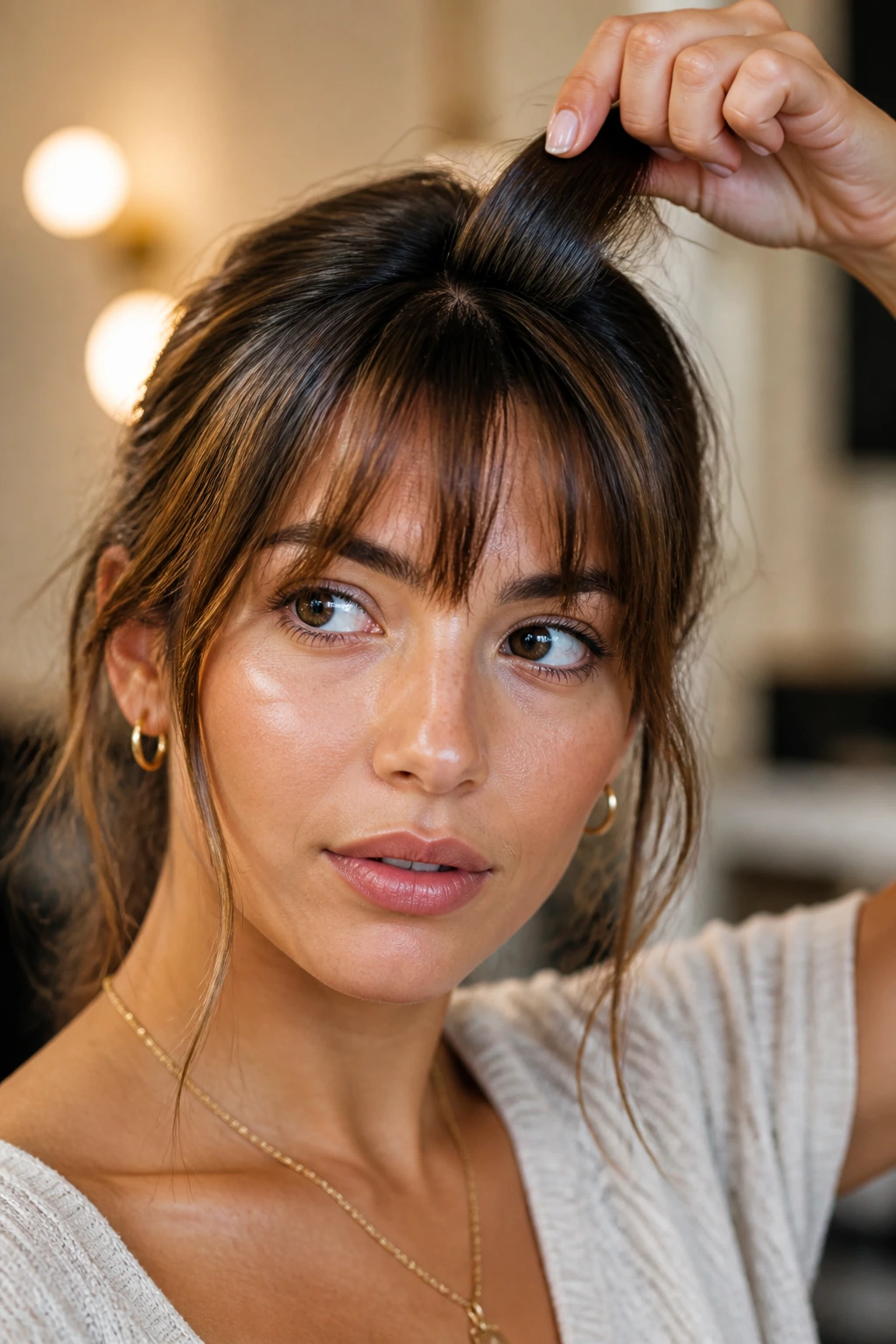
Root Lift: Dry the fringe forward first, then lift the roots with the brush and the dryer from underneath. That little bit of direction keeps bangs from sticking flat to the forehead, which is where they start looking tired.
Separation: If the fringe is meant to be piecey, rub a pea-sized amount of wax or paste between your fingertips and tap it into the ends only. Don’t drag it through the roots unless you want the hair to clump.
Humidity Plan: A light anti-frizz spray at the fringe line can help, but skip the heavy serums. Bangs sit in the warmest, oiliest part of the face; too much product turns them limp fast.
Make-It-Yours: Pin one side back with a clip, tuck the corners behind the ears, or let the fringe fall with a deep side part. A good bang cut should still make sense when you change the styling mood.
Keeping Bangs Fresh Between Trims
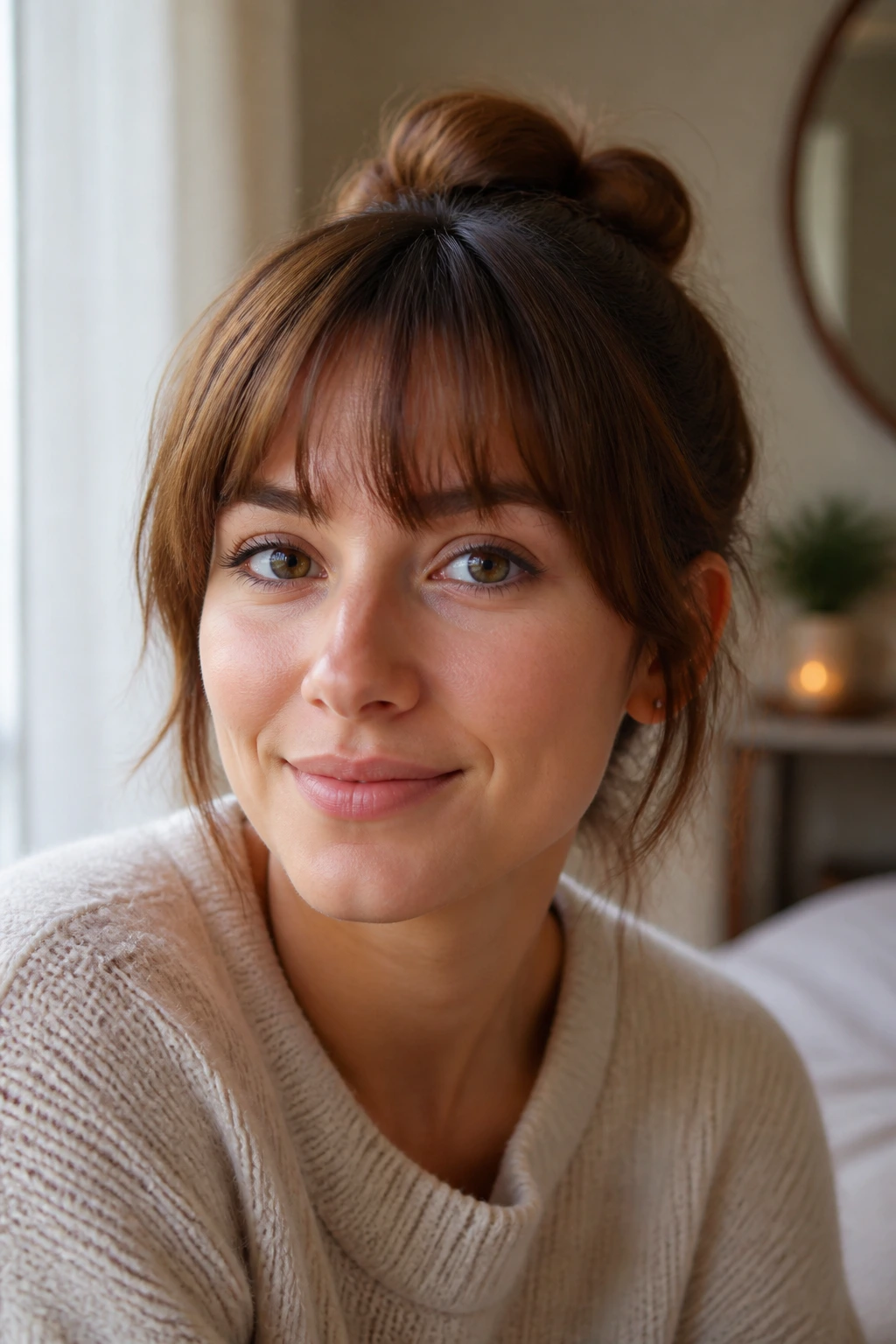
Bangs grow fast enough to change shape before the rest of the haircut does. Hair usually grows about a quarter to half an inch a month, which is enough to take a crisp brow-grazing fringe and turn it into something that blocks your eyes. That’s why maintenance matters more here than on most other parts of the cut.
For blunt, micro, and brow-grazing fringe, plan on trims every 3 to 5 weeks. Curtain, bottleneck, and layered fringe can usually stretch longer because the shape is built to grow out. If you trim at home, take off tiny bits at a time. I mean tiny. A few millimeters can be the difference between a flattering line and a too-short bang that needs a hat.
Between trims, dry shampoo is useful, but so is a simple reset. Wet just the fringe in the sink, blow-dry it forward, and re-shape with a brush. That’s faster than washing the whole head and often gives the bangs a cleaner finish than day-old product ever could.
Fringe Variations for Different Textures and Routines
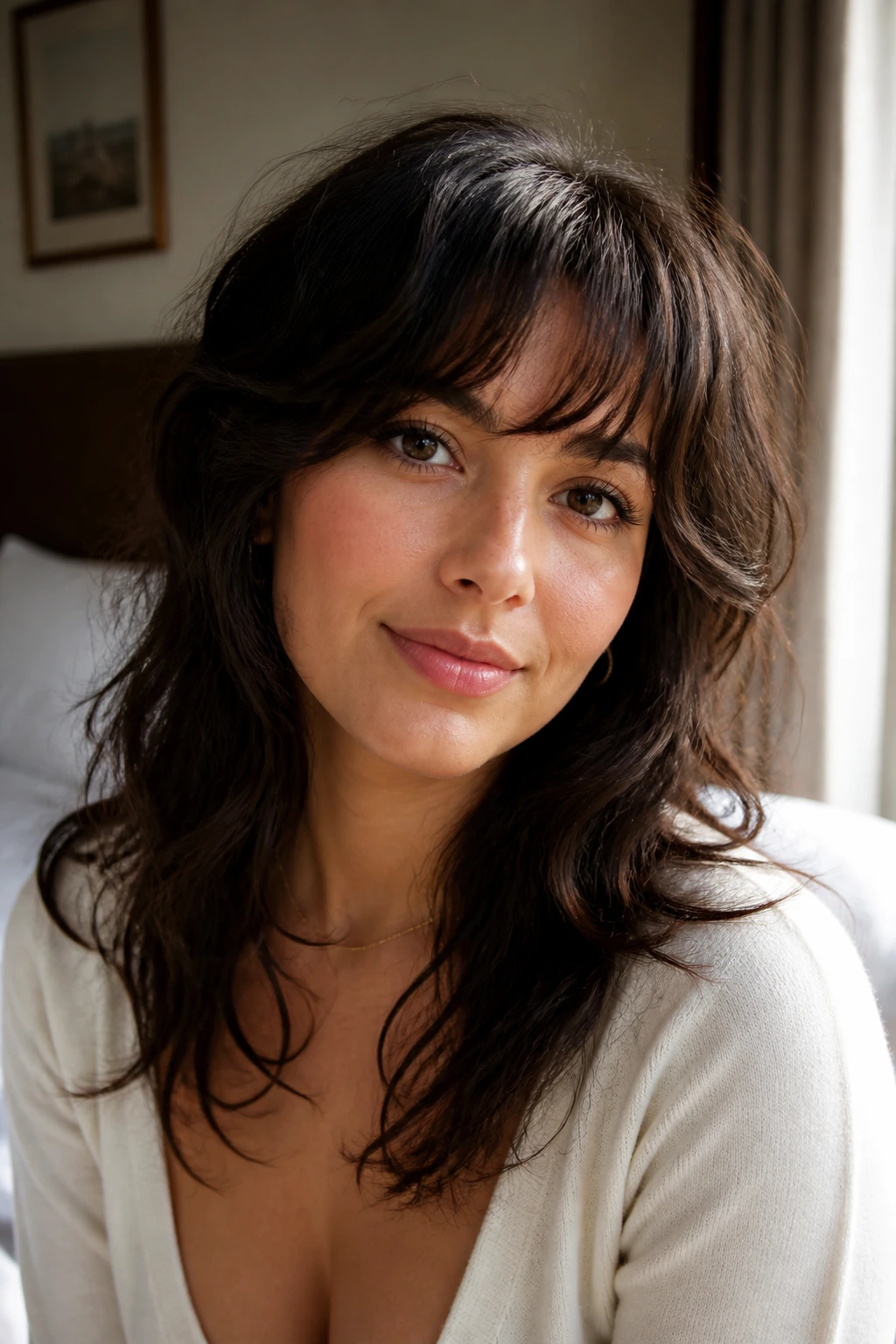
Curly-First Fringe: Cut the bangs dry, in the curl pattern, and leave them longer than the final target. This version works when you want shape without fighting shrinkage, and it’s the safest path for ringlets or coils.
Fine-Hair Lift: Choose see-through, wispy, or textured fringe with soft layering at the roots. The goal is to keep the front light enough to move, not so sparse that the hair disappears.
Thick-Hair Control: Go for blunt, heavy sweeping, or feathered bangs with internal weight removal. Thick hair holds shape well, but it needs planning so the front doesn’t feel bulky or overheated.
Five-Minute Morning Fringe: Long bangs, curtain bangs, and layered fringe are the easiest to reset with a quick blow-dry and a clip. These styles forgive sleep creases better than a perfect straight line.
Heatless Version: For women who don’t want to style every morning, choose a shape that bends naturally — curtain, swoopy, or split fringe — and let it air-dry with a root clip or roller for 10 minutes.
Common Bang Mistakes That Throw Off the Balance
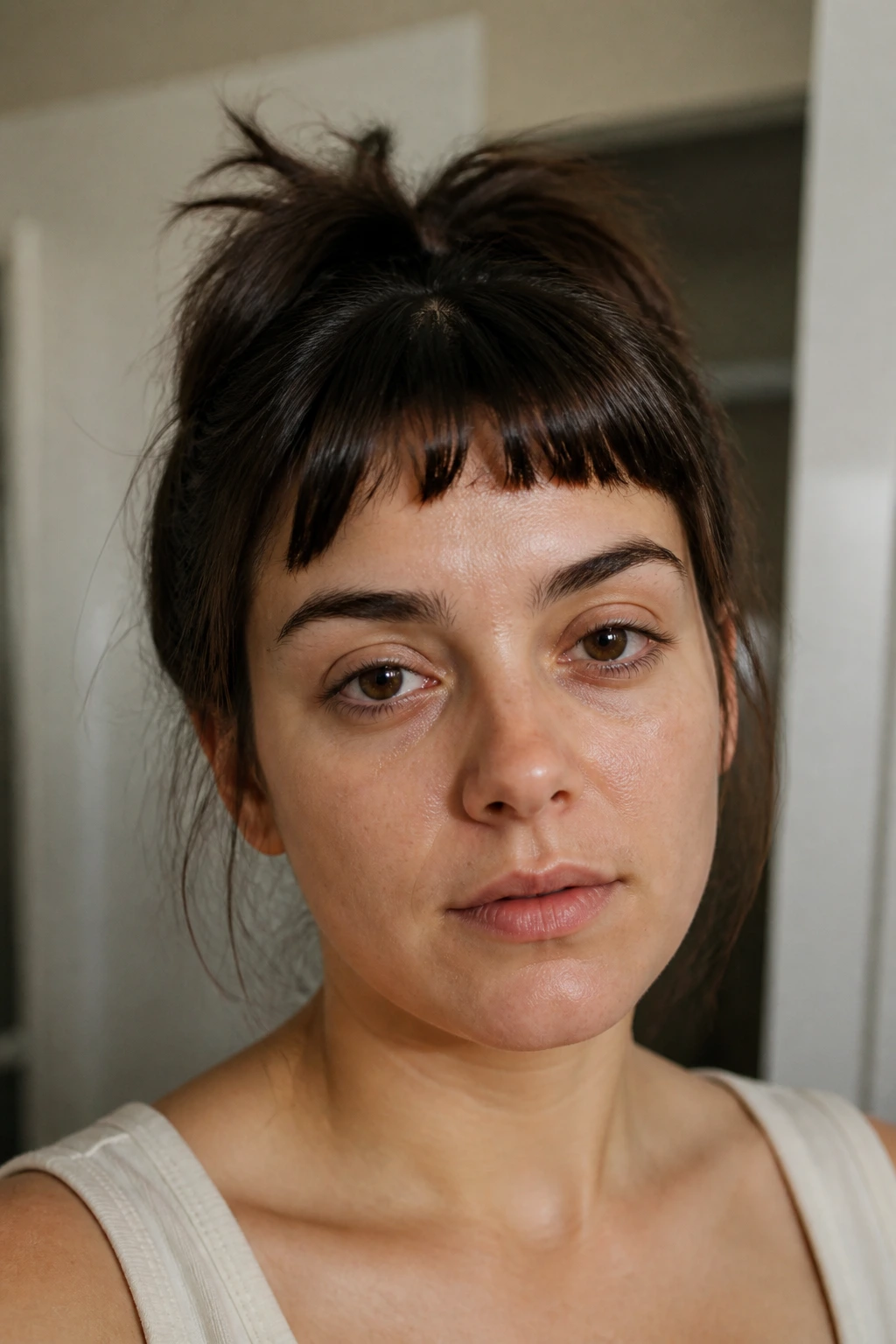
The first mistake is cutting bangs too short when the hair is wet. Wet hair lies, especially curly or wavy hair. Once it dries, the fringe can spring up an inch higher than expected. The fix is simple: cut longer, dry-check, then trim again if needed.
Another problem is ignoring the cowlick at the front hairline. If the hair wants to split in the middle, a heavy blunt line can fight you every morning. Curtain, split, or side-swept shapes usually cooperate better. If a stylist knows the cowlick is there, they can build the cut around it instead of pretending it doesn’t exist.
Over-thinning is a sneaky one. It can make fine hair look stringy and leave thick hair with random see-through patches. You want shape control, not a fringe that looks like it lost a battle. And heavy product is its own trap. A little cream is fine; too much turns bangs greasy by noon.
Bang FAQs Worth Asking Before You Commit
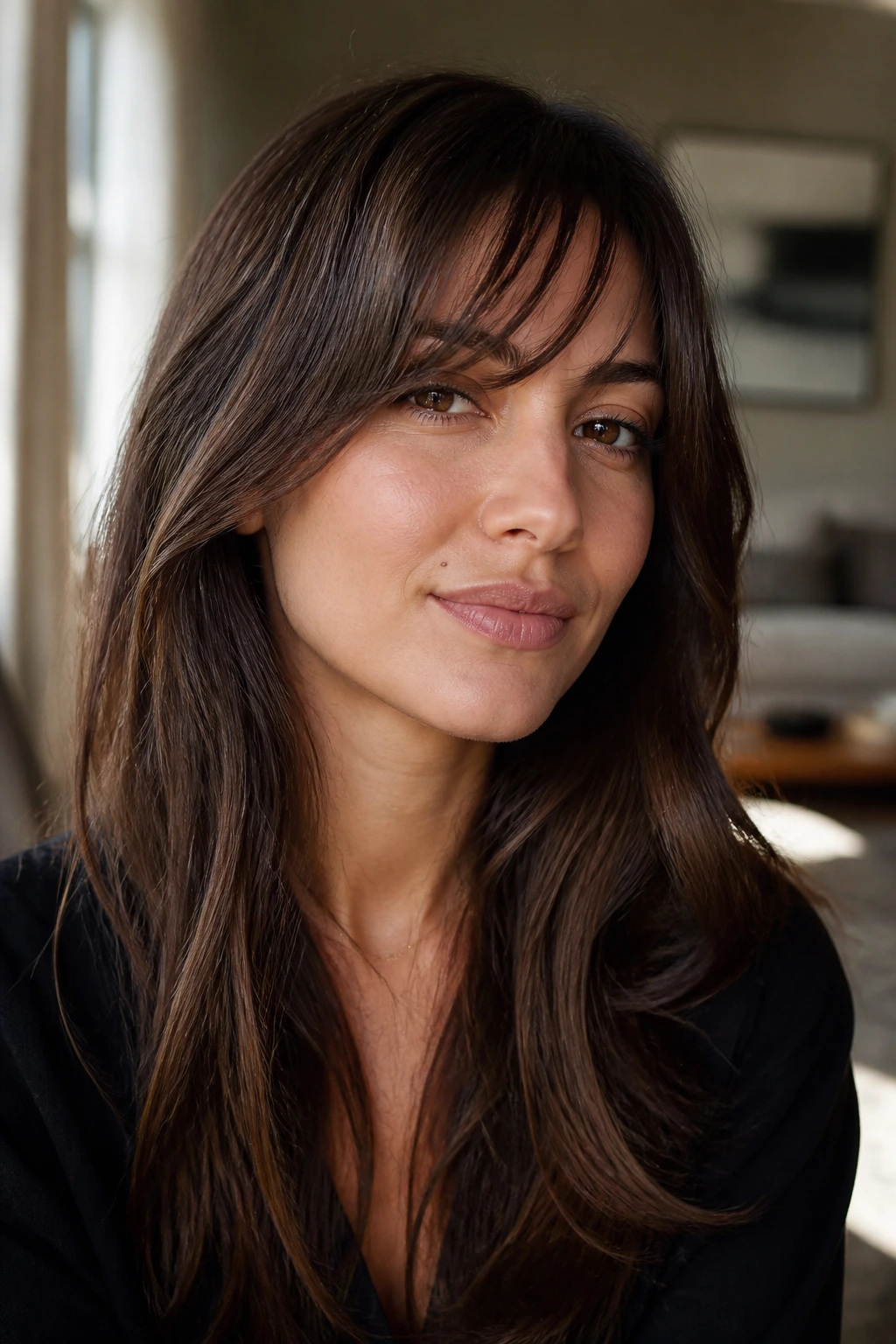
Which bang style is best if I’ve never had bangs before?
Long curtain bangs or side-swept fringe are the easiest first step. They can be pinned back, tucked away, or blended into layers if you decide the look isn’t for you.
What bangs work best on curly or coily hair?
Curly and coily textures usually do best with longer fringe that’s cut in the natural pattern and left room for shrinkage. Dry cutting helps the stylist see where the hair will settle once it springs up.
How often do bangs need trimming?
Blunt, micro, and brow-grazing fringe usually need attention every 3 to 5 weeks. Curtain, layered, and grown-out shapes can stretch farther because they’re built to blur into the rest of the haircut.
Can bangs make a round face look slimmer?
Yes, if the cut creates diagonal or vertical movement. Swoopy bangs, curtain fringe, and side-swept styles pull the eye downward and outward, which helps the face read a little longer.
What if my bangs split in the middle?
You may have a strong cowlick, and that’s not a deal-breaker. Split fringe, curtain bangs, or a soft side part will usually behave better than a hard straight-across line.
Do bangs work on fine hair?
They can, but the density has to stay light enough to move. Wispy, see-through, and textured fringe tend to be kinder to fine hair than a heavy blunt cut.
Should bangs be cut wet or dry?
Dry or nearly dry is safer, especially if the hair has wave, curl, or a strong front cowlick. Wet cuts can hide shrinkage and make the fringe land shorter than planned.
How do I grow bangs out without looking stuck in an awkward stage?
Push the fringe into a curtain shape, split it off-center, or blend it into long face-framing layers. A few pins and a round brush can keep the front looking intentional while it grows.
The Fringe That Fits

The best fringe is the one that looks like it belongs to your face the second it dries, not the one that behaves only in the salon mirror. That usually means paying attention to the small, boring details: where the hair splits, how dense it is, how much it springs, and how much time you’re willing to spend with a brush each morning. Those things matter more than a viral photo ever will.
Pick the style that fits your life as much as your features. A blunt brow line has its place. So does a soft curtain, a choppy shag, or a grown-out fringe that you can tuck behind one ear on a bad-hair day. When the cut and the routine line up, bangs stop feeling high-maintenance and start feeling like a very good piece of design.
