



A good side bang changes the whole front of the haircut without asking for a full personality overhaul. That’s why side bang styles have stayed around for so long: they can soften a sharp jaw, pull attention away from a broad forehead, or make a blunt cut feel less boxy with a single diagonal line. You get movement. You get shape. And you usually get a little more room to breathe than you would with a heavy straight-across fringe.
The part people miss is that side bangs are not one idea. A wispy sweep on fine hair behaves nothing like a thick, curved bang on dense hair, and a deep side-part fringe can look polished one day and half-romantic the next depending on how you dry it. The cut has to work with the hair’s natural fall. If it fights the cowlick, it loses.
When side bangs are good, they look almost accidental in the best way. A few strands land on the cheekbone, a few tuck into the rest of the hair, and the forehead still shows enough shape that the face doesn’t feel boxed in. That balance is the whole trick, and the styles below are the ones that do it with the least drama.
Why These Side Bangs Earn Their Keep
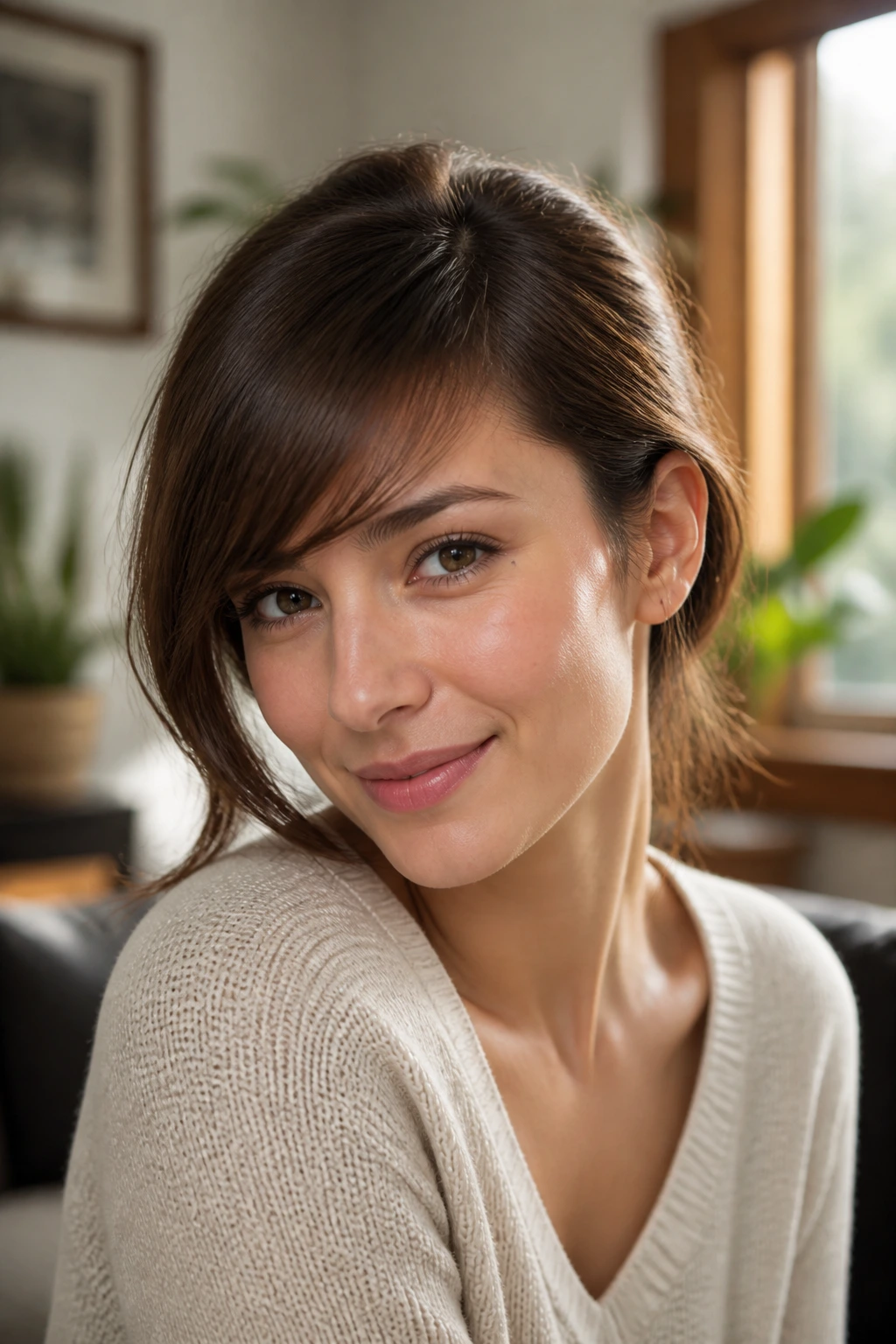
- They soften the front edge fast: A diagonal fringe breaks up a strong brow line or wide forehead without swallowing half your face in hair.
- They grow out more gracefully: Once the shortest pieces hit the cheekbone, they can be tucked, pinned, curled, or blended into layers with less awkward in-between time.
- They work with the part you already wear: If your hair naturally wants a side part, the bang follows that direction instead of fighting it every morning.
- They play well with texture: Side bangs can be smooth, piecey, blown out, curled, air-dried, or half-raked with fingers and still make sense.
- They change the mood of a haircut: A blunt bob feels softer, a shag feels more deliberate, and long hair stops looking like “just long hair” once the front has a shape.
1. The Brow-Skimming Feather
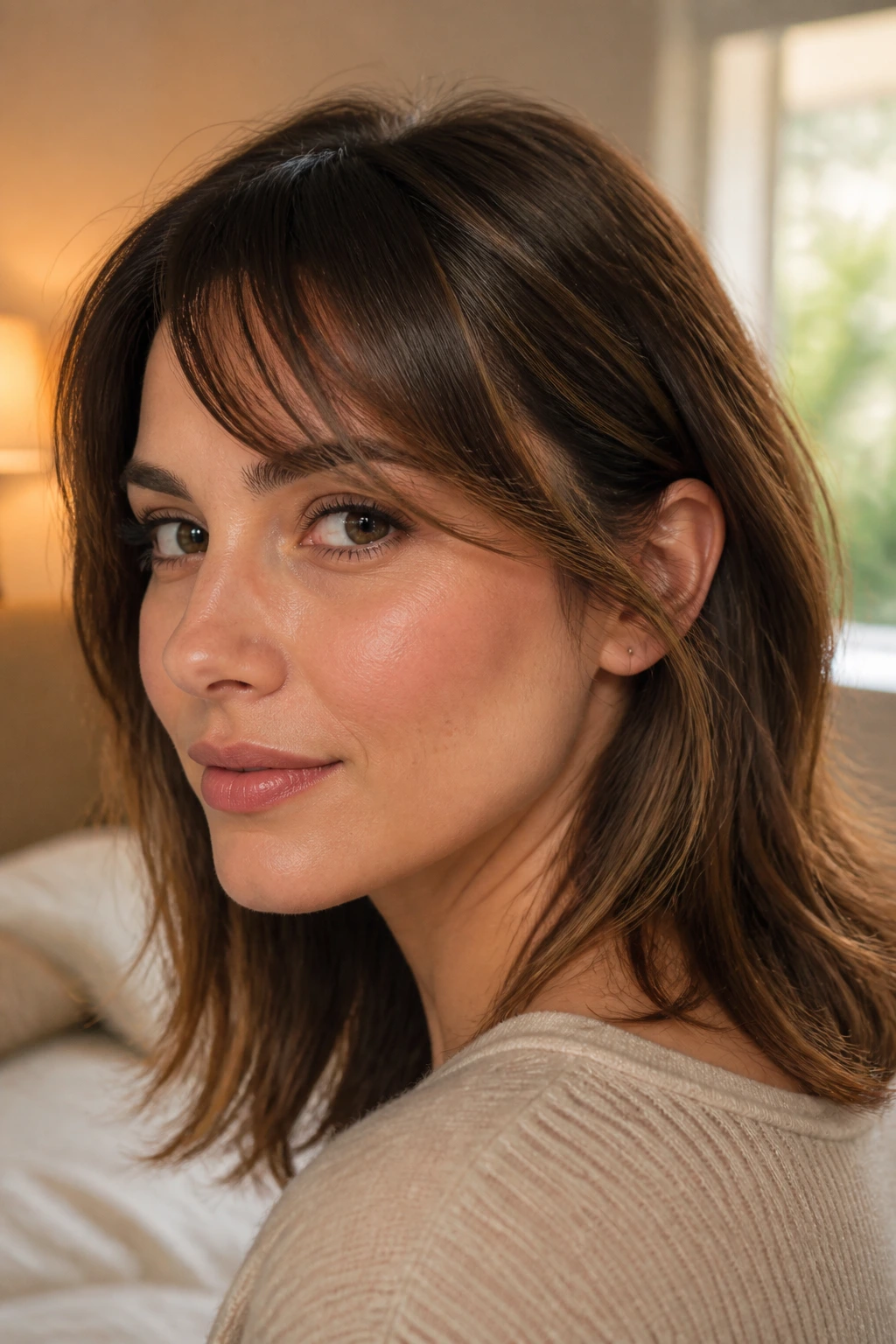
This is the side bang for people who want a clear change without a hard commitment. The shortest piece sits around the outer brow, then the length drifts down toward the cheekbone in a soft, feathered line. It doesn’t shout. It just makes the front of the haircut feel lighter.
Why it flatters
The feathered edge breaks up the forehead in a way that still leaves skin showing, which matters more than people think. Too much coverage can make the front feel heavy; too little can feel like you ignored the bang entirely. This shape lives in the middle, which is why it works so often.
Ask for the ends to be point-cut instead of chopped bluntly. That tiny change keeps the bang from looking like a strip of paper sitting on the face. I like this style on straight and slightly wavy hair, where a round brush can give it a bend in under two minutes.
If you want it to hold shape, blow-dry the bang first, before the rest of the hair gets fully dry. That one habit saves you from the flat, sweaty-front look that happens when bangs dry against the forehead.
2. The Draped Cheekbone Sweep
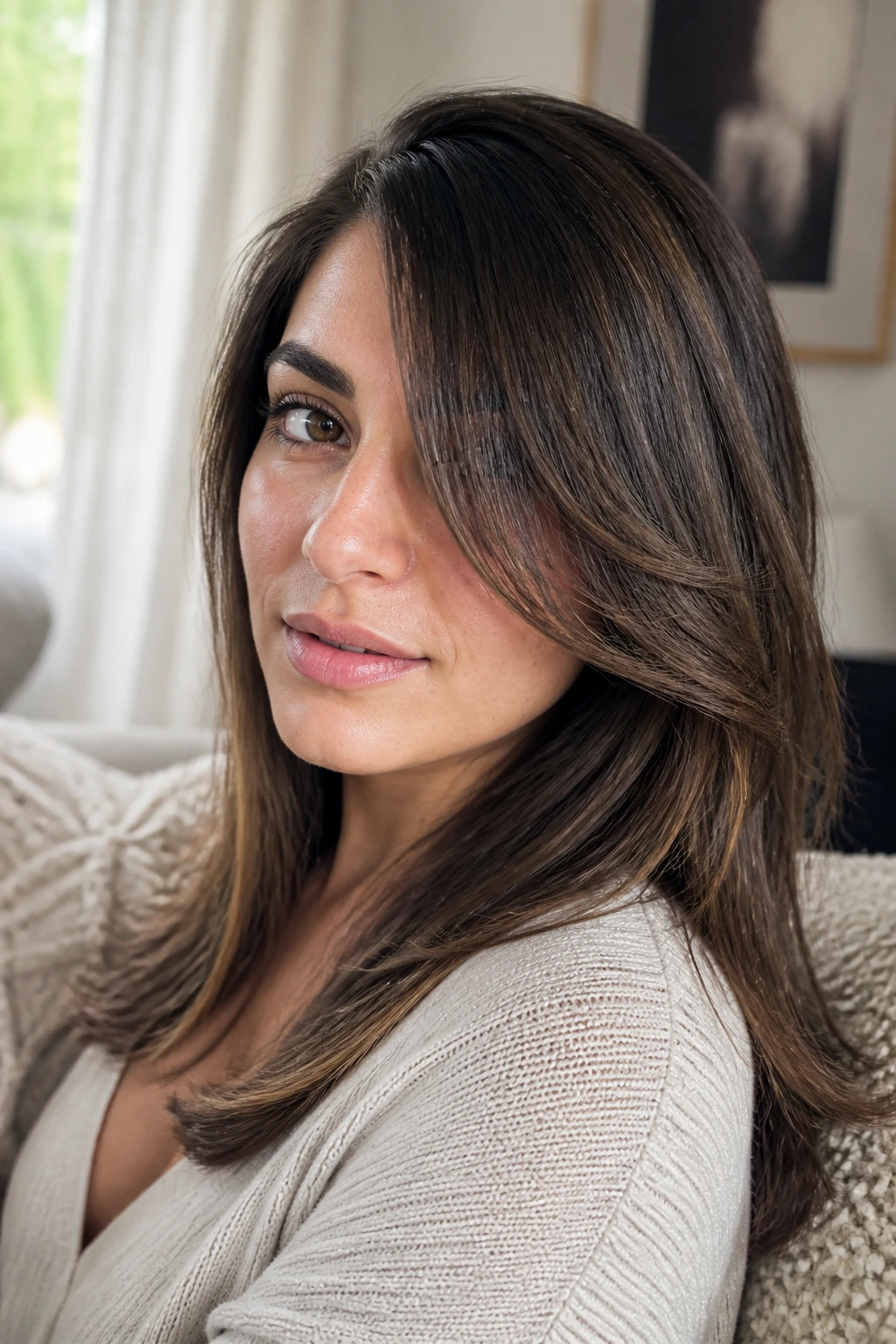
A long, draped side bang lands with a little more grace than a shorter one. It falls from the deep side part, curves across the front, and usually ends somewhere between the cheekbone and the top of the lip. There’s a soft, almost curtain-like feel to it, but the direction stays clearly side-swept.
The best part is how easy it is to live with. You can wear it loose, tuck it behind one ear, or fold it back into a ponytail and leave just enough out to frame the face. It’s one of the few fringe shapes that still looks good at day two, especially if you mist the roots with dry shampoo and re-bend the ends with a flat iron.
This style is especially kind to medium-length cuts and long layers. It gives you movement around the face without demanding daily precision. Good bangs should not ask you to become a full-time stylist before breakfast.
3. The Whisper-Thin Side Fringe
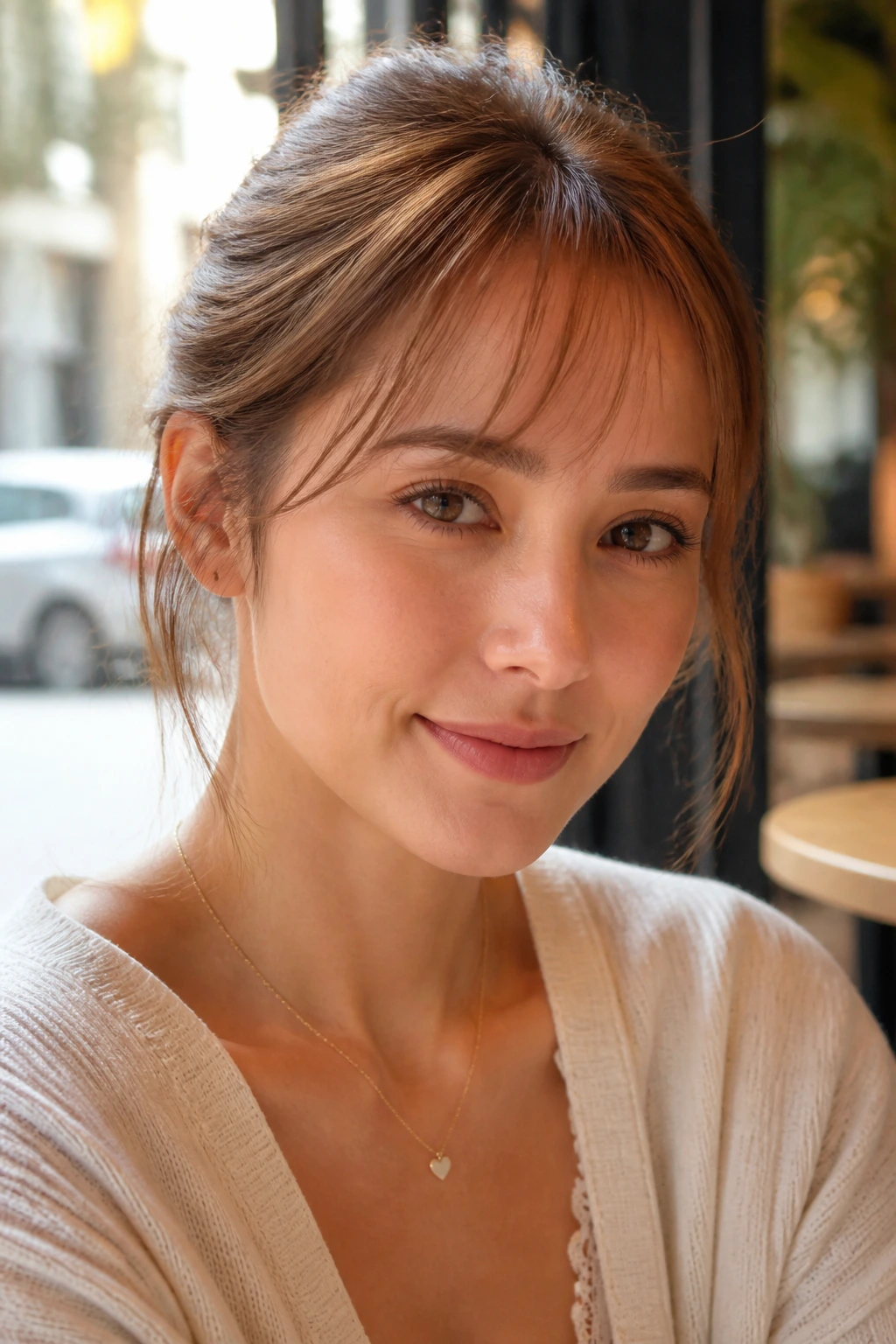
Some bangs arrive with a lot of opinions. This one arrives quietly.
The whisper-thin side fringe uses only a small section of hair at the front, which makes it useful if you want a touch of softness but not a full curtain over your forehead. It’s light, airy, and best when the pieces look slightly separated rather than perfectly blended. On fine hair, that can be a gift; on thick hair, it can keep the front from feeling too heavy.
Best for
- Fine or medium hair that goes flat with too much fringe
- People who want a low-risk change
- Shorter cuts that need a little motion around the face
- Anyone who wears glasses and hates extra bulk near the frames
The trick is not to overload it with product. A pea-sized amount of styling cream is enough. Any more, and the fringe starts clinging together in strings, which is not the same thing as “piecey,” no matter what a bottle says.
4. The Piecey, Textured Arc
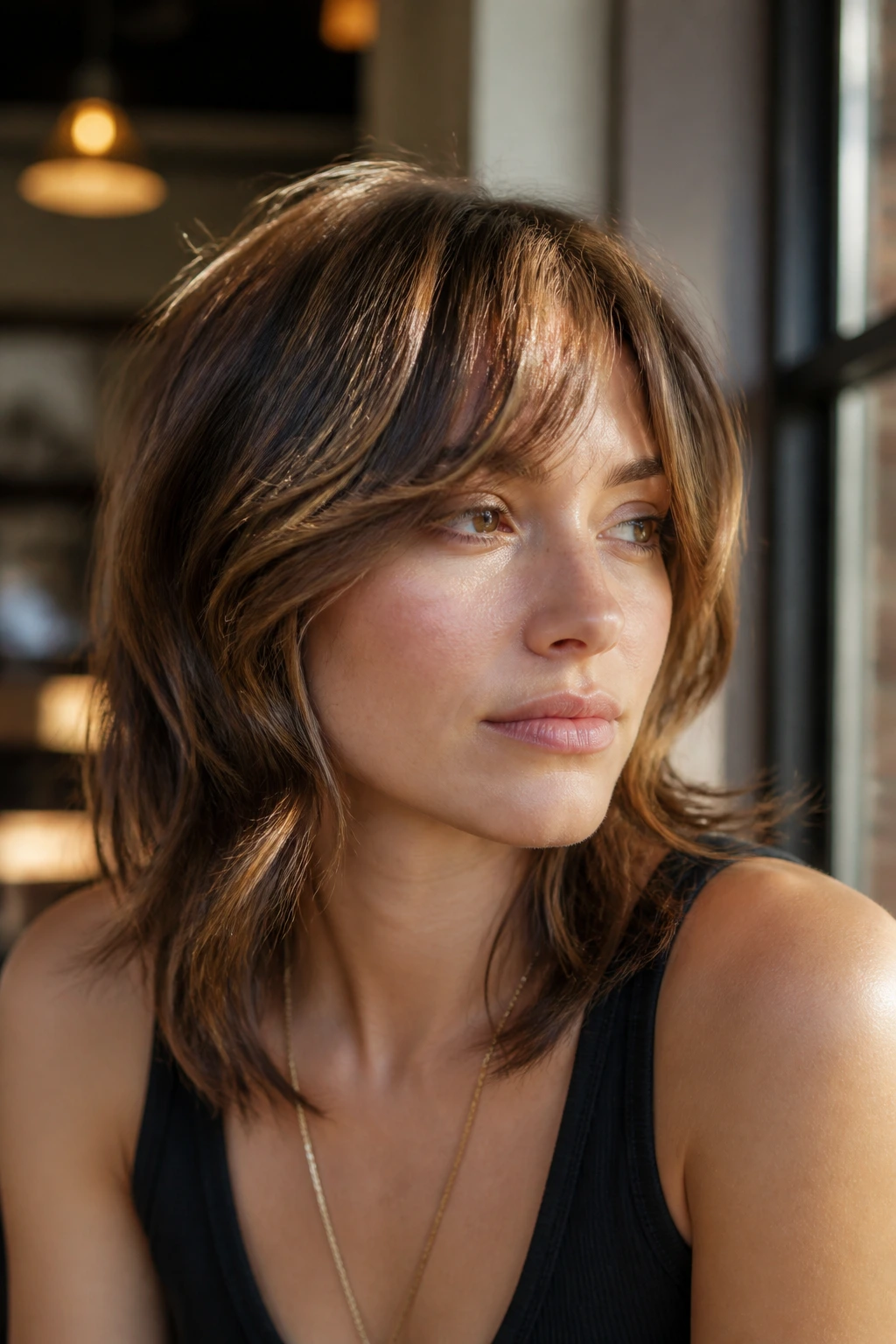
This side bang has a little separation in it, and that’s the point. Instead of one smooth sheet, the fringe breaks into soft chunks that move independently when you turn your head. It works well with shags, wolf cuts, and any haircut that already has some roughness in the layers.
The easiest way to think about it: this is the side bang that likes a lived-in finish. It does not want to be brushed into submission. A small round brush at the roots and a touch of texturizing spray through the ends are usually enough. If you have thick hair, ask for internal weight removal, not aggressive thinning at the surface. Those are not the same thing, and the difference shows up by lunch.
I’ve always liked this style on hair that refuses to stay perfectly neat. It looks better with a bit of movement, a little bend, and a few ends that catch the light differently from the rest.
5. The Curved Blowout Bang
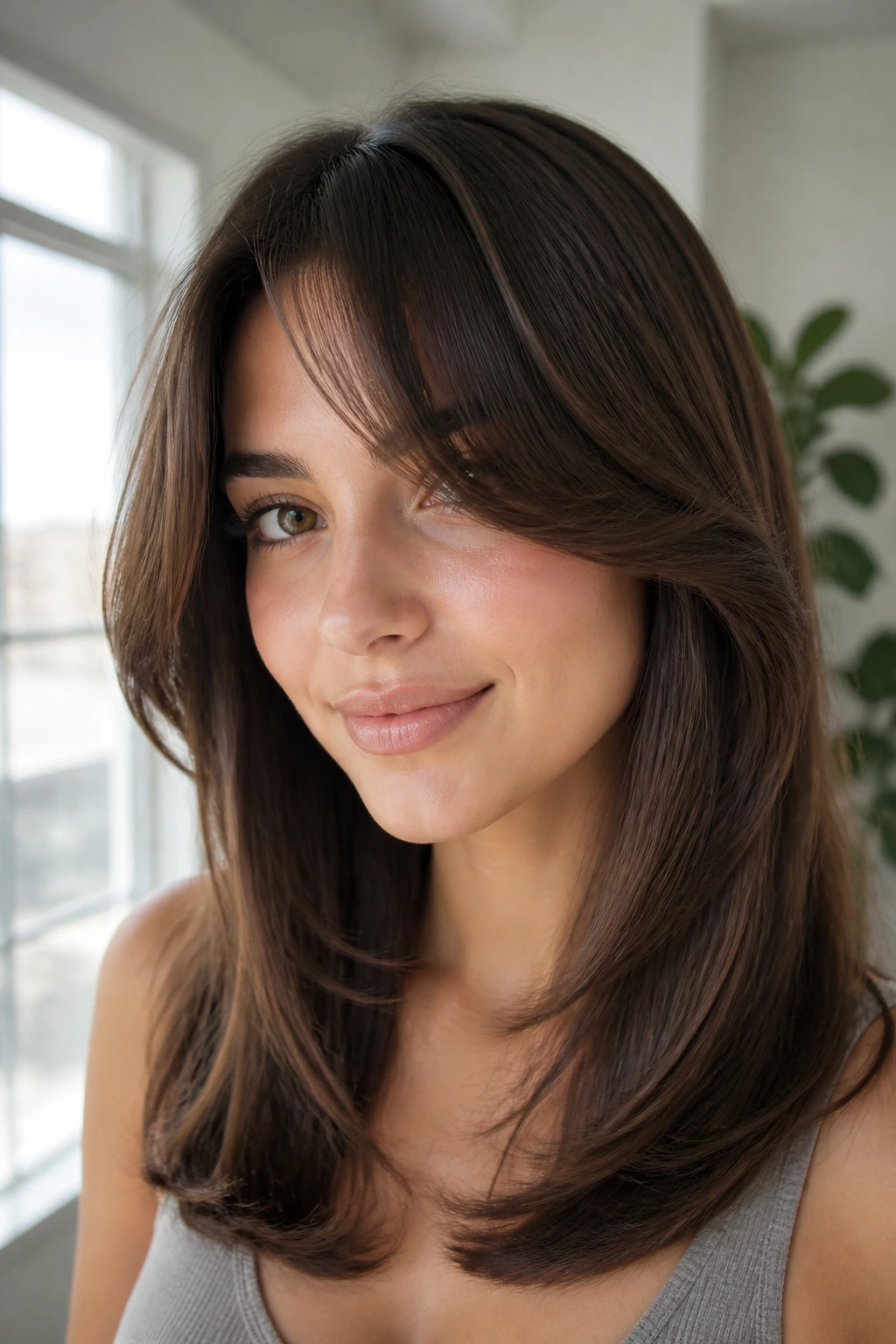
If you like the look of a polished salon blowout, this is the side bang that gives you that feeling without turning the rest of your hair into a project. The front section curves under and across the forehead, then opens toward the cheekbone in a smooth arc. It has body at the root and softness at the tips.
Use a 1-inch or 1¼-inch round brush and aim the dryer nozzle down the hair shaft, not straight at the roots. That helps the bang stay smooth instead of puffing up like a mushroom cap. A cool shot at the end matters too. Skip it, and the curve drops faster than you want.
This style loves medium to thick straight hair, especially if the rest of the cut has layers. On very fine hair, it can work, but you’ll want a little root-lift spray at the front first. Without that support, the arc falls flat and loses the whole point.
6. The Deep-Part Curtain Hybrid
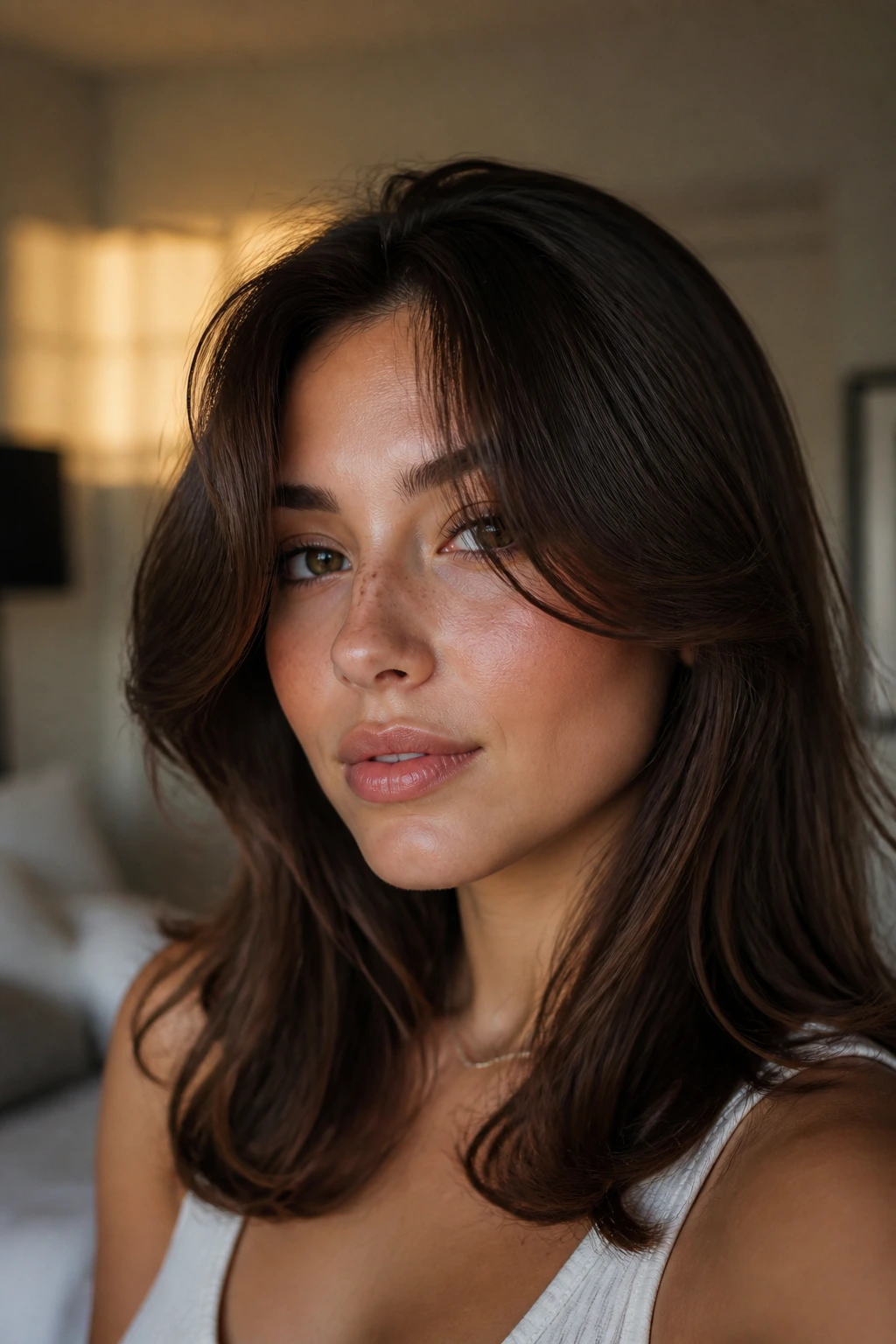
This one lives halfway between side bangs and curtain bangs, which is why it’s so useful. The part is deep, the front pieces are longer, and the fringe opens away from the face instead of sweeping straight across it. Think side bang with a softer center of gravity.
It’s a smart choice if you like the idea of bangs but don’t want a strong, committed line. The hybrid shape gives you flexibility on styling days. You can blow it away from the face for lift, or tuck the shorter side closer to the temple for a more subtle front. Either way, it feels less severe than a blunt fringe and less hidden than a tiny whisper bang.
The cut works best when the stylist keeps the front pieces long enough to reach the cheekbone at rest. Too short, and the whole hybrid thing gets lost. Too long, and it just becomes face-framing layers with a side part.
7. The Curly Side Sweep
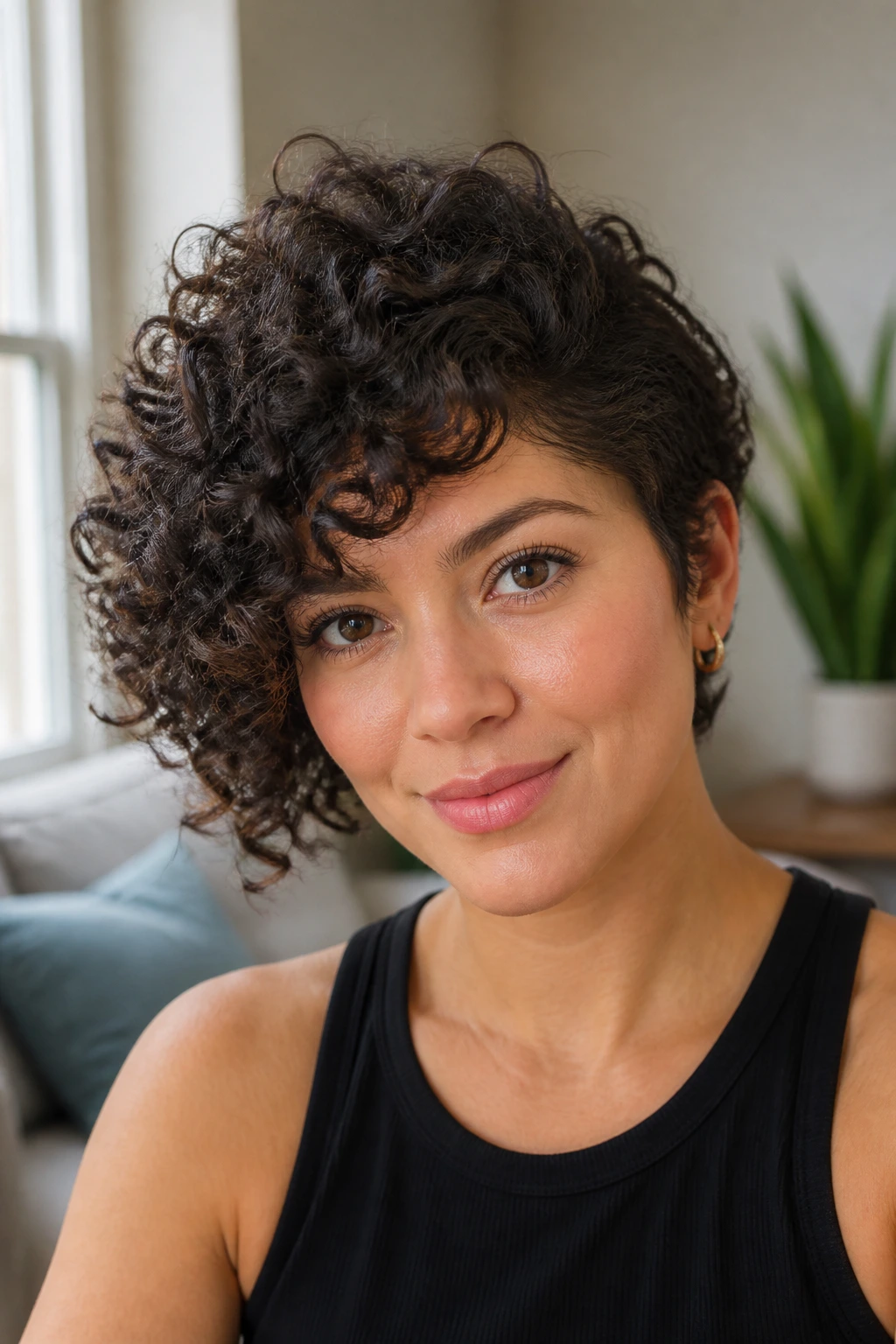
Curly hair can wear side bangs better than people expect, but only if the cut respects shrinkage. A curly side sweep should be cut dry or nearly dry, with the shortest point longer than you think you need. Curly hair springs up. It always does.
The appeal is the way the curl pattern falls diagonally across the forehead instead of collapsing into a random front puff. A good curly side bang frames the eye and cheek without fighting the curl. Use a curl cream that defines without turning the front section into a wet helmet, then diffuse gently or air-dry with the bang clipped in the direction you want it to travel.
Styling note
- Clip the bang into place while it’s damp.
- Let it dry in the side direction, not straight down.
- Break the cast only after it’s fully dry.
- Re-define any odd pieces with one fingertip and a dab of cream.
8. The Wavy Air-Dry Fringe
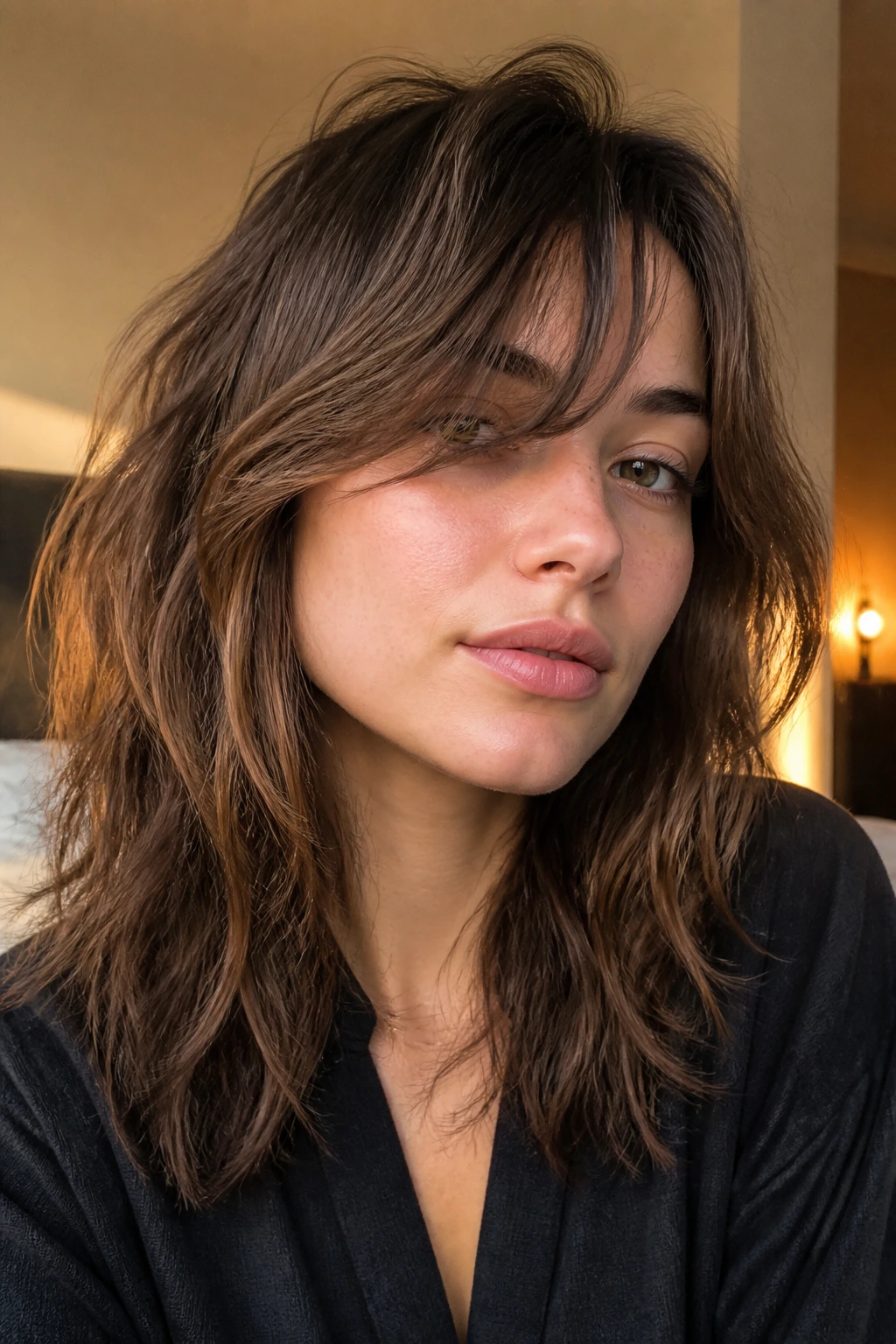
This is the “I didn’t try too hard” version of side bangs, except it still needs a little help to look good. The wavy air-dry fringe works when the hair has a natural bend and the front can fall into a side shape on its own. You set the direction while it’s damp, then let the texture do the rest.
A small amount of mousse at the roots keeps the bang from separating into two flat strands. After that, leave it alone. Seriously. Touching it five times before it dries usually creates the kind of frizz line that sits right in the middle of the forehead and ruins the whole mood.
This style is best on medium-length cuts and shaggy layers. It doesn’t need clean lines. It needs believable movement. If the front looks too neat, you’ve gone too far.
9. The Sleek, Straight Arc
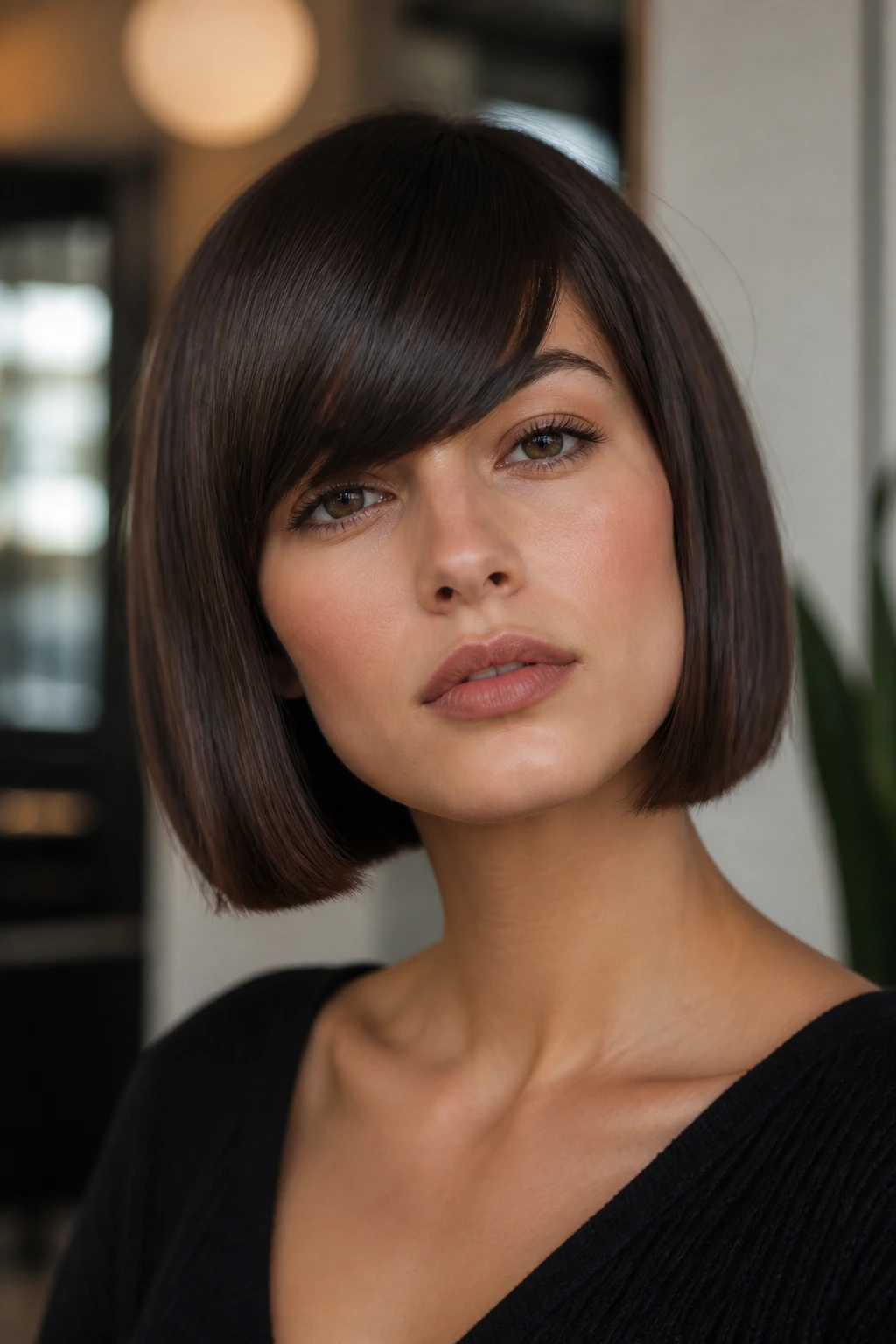
This is the side bang for sharp lines, glossy hair, and a little attitude. The shape sweeps across the forehead in one clean motion, with the ends sitting smooth instead of feathered or broken up. It pairs well with a blunt bob, a straight lob, or long hair worn very smooth.
You’ll want heat protectant, a paddle brush or small round brush, and a flat iron only if the bang refuses to lie flat. Don’t overwork it. One pass is often enough if the section is cut well. The more you iron and re-iron, the more the front starts looking stiff at the ends and limp at the roots.
I like this one when the rest of the hair is equally clean and controlled. If everything else is tousled and the bang is razor-straight, the contrast can look accidental. Aim for consistency.
10. The Fine-Hair Lifted Sweep

Fine hair needs a side bang that can fake some density at the root. The lifted sweep does that by staying light at the ends and slightly fuller at the top, where the hair is supported by blow-drying and product. It gives the front of the haircut a little presence without asking fine strands to carry too much weight.
A root spray or light mousse at the base helps. So does a quick set with a small velcro roller while you finish the rest of your makeup or outfit. Five minutes is enough to matter. Ten is even better. Then brush the fringe gently into place so it still looks like hair, not a molded shape.
The mistake here is thinning the bang too aggressively. Fine hair already looks sparse when it’s over-cut. Keep the section a touch longer and let the styling do the work.
11. The Thick-Hair Lightened Fringe
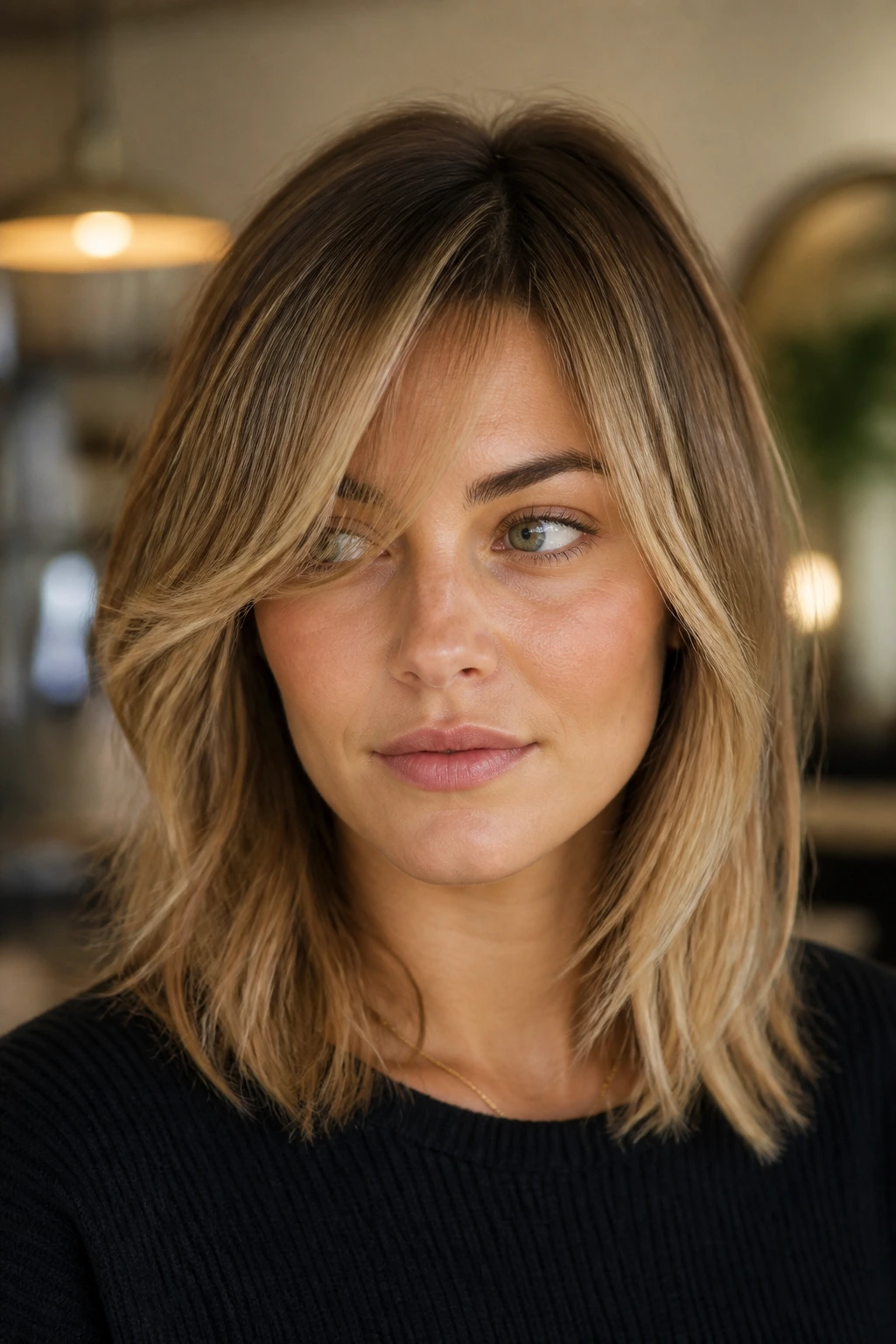
Thick hair can hold a side bang beautifully, but only if the weight is handled properly. If the front is left dense from root to tip, the bang collapses into a heavy curtain and the face disappears behind it. That’s not flattering. It’s just a lot of hair in the wrong place.
The fix is internal shaping. Ask for soft weight removal under the top layer, plus point-cut ends so the fringe doesn’t sit as one block. A side bang on thick hair should move. If it stays rigid, it needs more texturizing, not more product.
I’m partial to this style with shoulder-length cuts and layered long hair. It creates a diagonal line that feels full without looking bulky, which is a tricky balance and worth getting right.
12. The Round-Face Lengthener
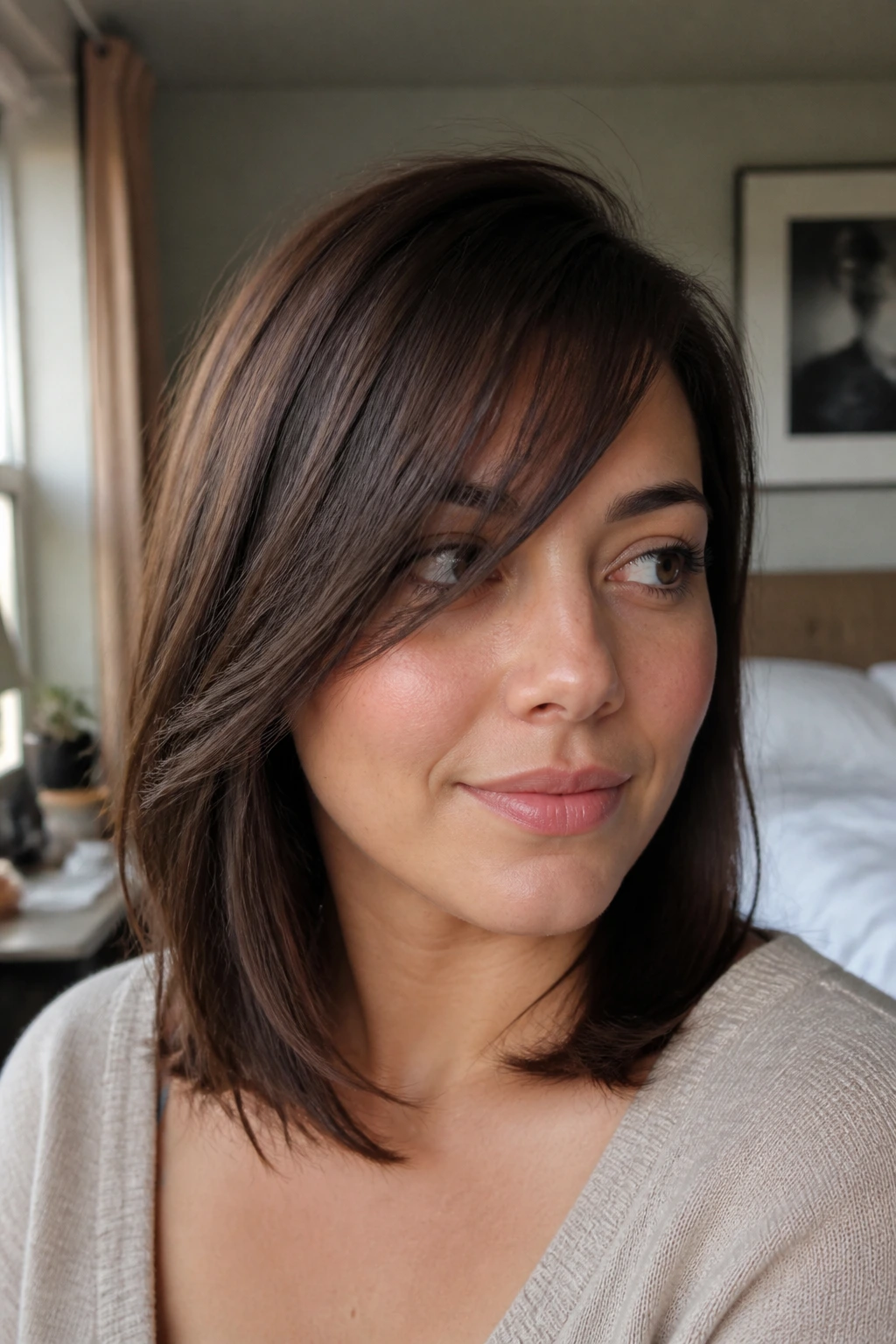
Here the whole job of the side bang is to stretch the front line and avoid making the face look wider. The bang starts a little higher at the part, then travels down toward the cheekbone or just below it. That diagonal pull gives the eye a clear path to follow.
Keep the shortest piece above the brow and the longest piece below the cheek. That difference matters. If the whole bang lands at one short level, the line turns boxy and does the opposite of what you want. A soft bend at the ends helps too, especially on round faces where anything too flat can feel abrupt.
A deep side part reinforces the lengthening effect. This is one of those rare cases where the part and the bang should really work together. If they argue, the face will show it.
13. The Square-Face Softener
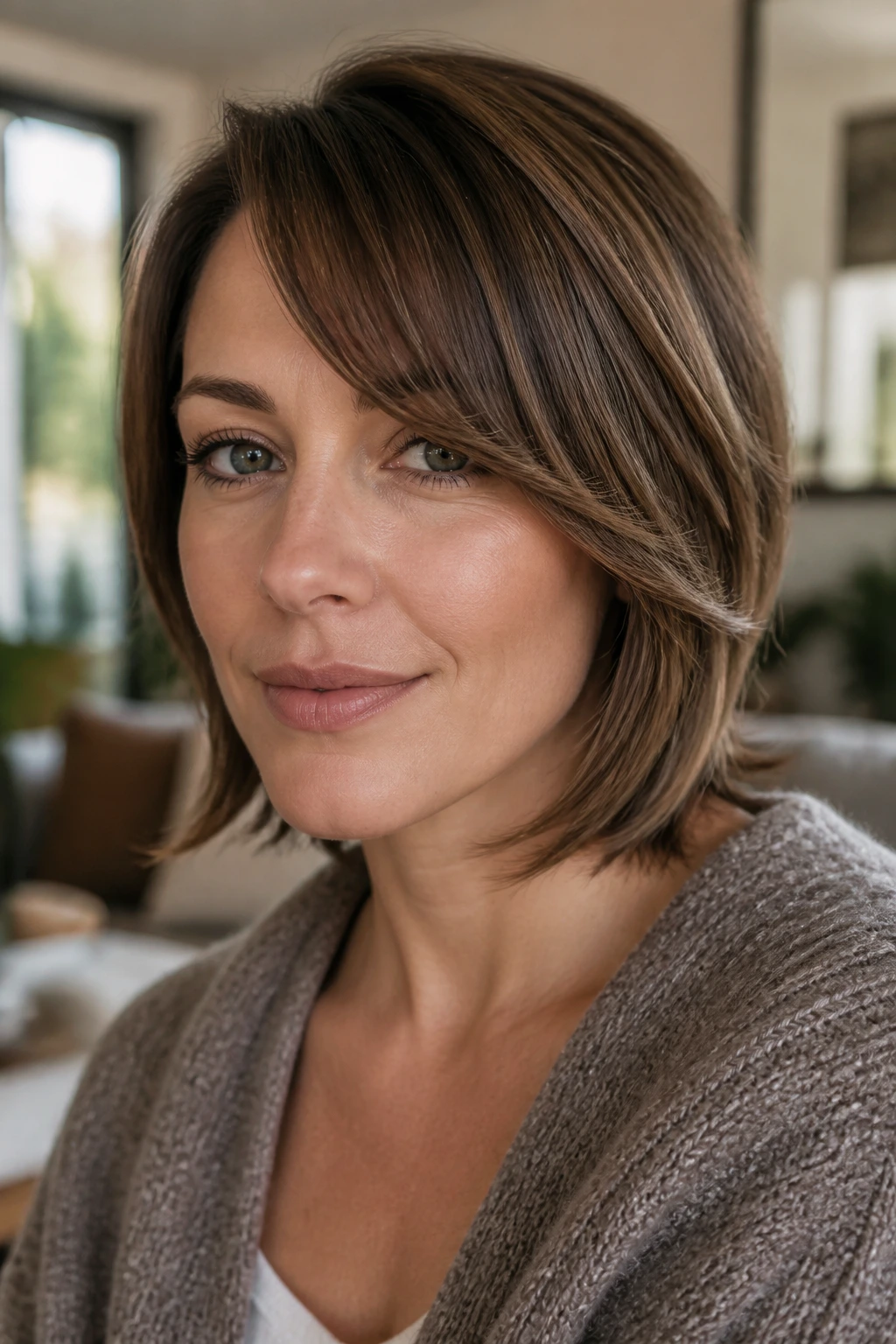
Square faces usually do well with a side bang that curves rather than cuts straight across the forehead. A softer arc blunts the strong angles at the jaw and temples without hiding the structure that makes the face interesting in the first place. That’s the sweet spot.
I like this style a little longer and a little feathery at the ends. Blunt edges can fight the natural geometry of a square face and make the front feel too hard. You want movement around the brow and cheekbone, not a sharp line parked on top of the face.
A blow-dry with the brush rolled away from the face keeps the bang from falling too straight. That outward bend is doing a lot of work here. Small detail. Big payoff.
14. The Heart-Face Balancer
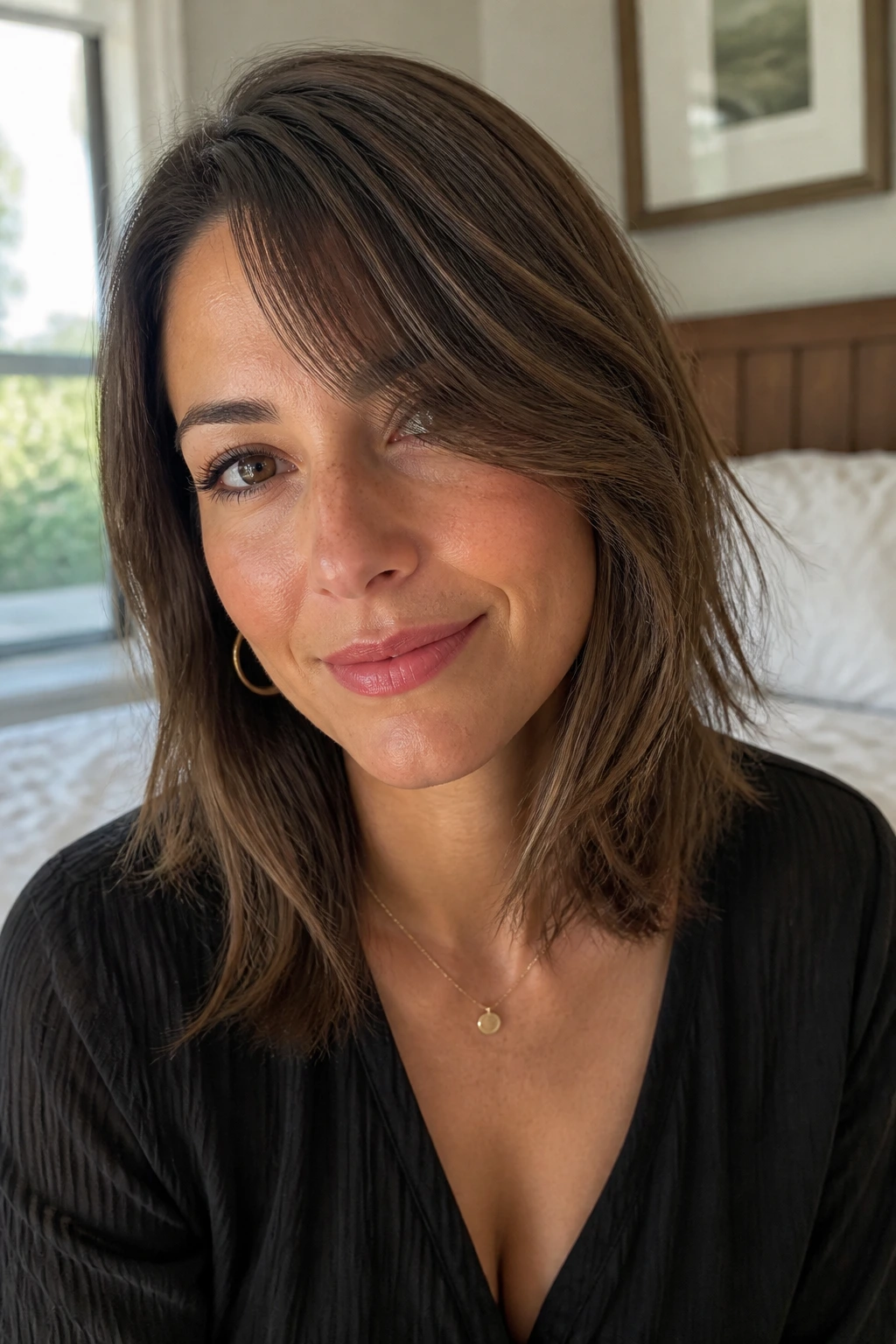
Heart-shaped faces usually need a side bang that takes attention off a wider forehead and lets the lower half of the face stay in the conversation. A longer sweep that crosses from temple to cheekbone does that well. It adds softness at the front without cutting the face in half.
If the bang ends too high, the forehead still dominates. If it ends too low and too heavy, the chin can look narrower by comparison. So the length matters. Aim for a piece that lands around the cheekbone when dry, not when wet. Hair stretches when it’s wet. That detail changes everything.
This style also pairs nicely with chin-length bobs and longer layers, because both give the lower half of the face a little more visual weight.
15. The Oval-Face Minimal Sweep

Oval faces can wear almost anything, which is both lucky and mildly annoying because the options get wide fast. A minimal side sweep is a good choice if you want just enough front shape to break up the face without hiding it. The bang stays narrow, the part stays visible, and the haircut still looks open.
I prefer this version when the rest of the cut already has strong lines. If the haircut is layered and the face is naturally balanced, you do not need a big front statement. A tiny, clean sweep at the temple is often enough.
Use light styling product and avoid spreading the bang too wide across the forehead. Wide bangs can swallow an oval face and make it feel longer than it is.
16. The Bob and Side Bang Pairing
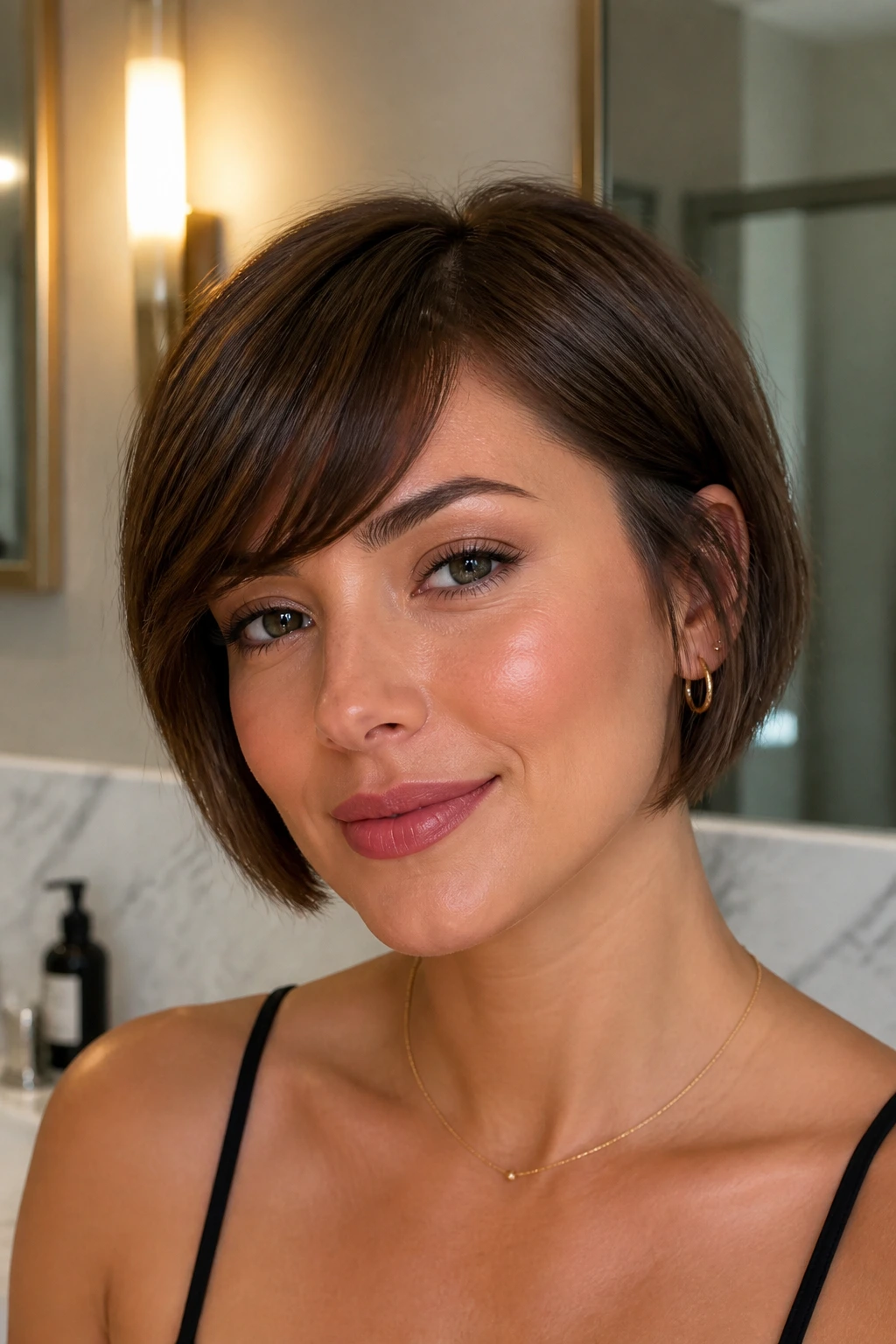
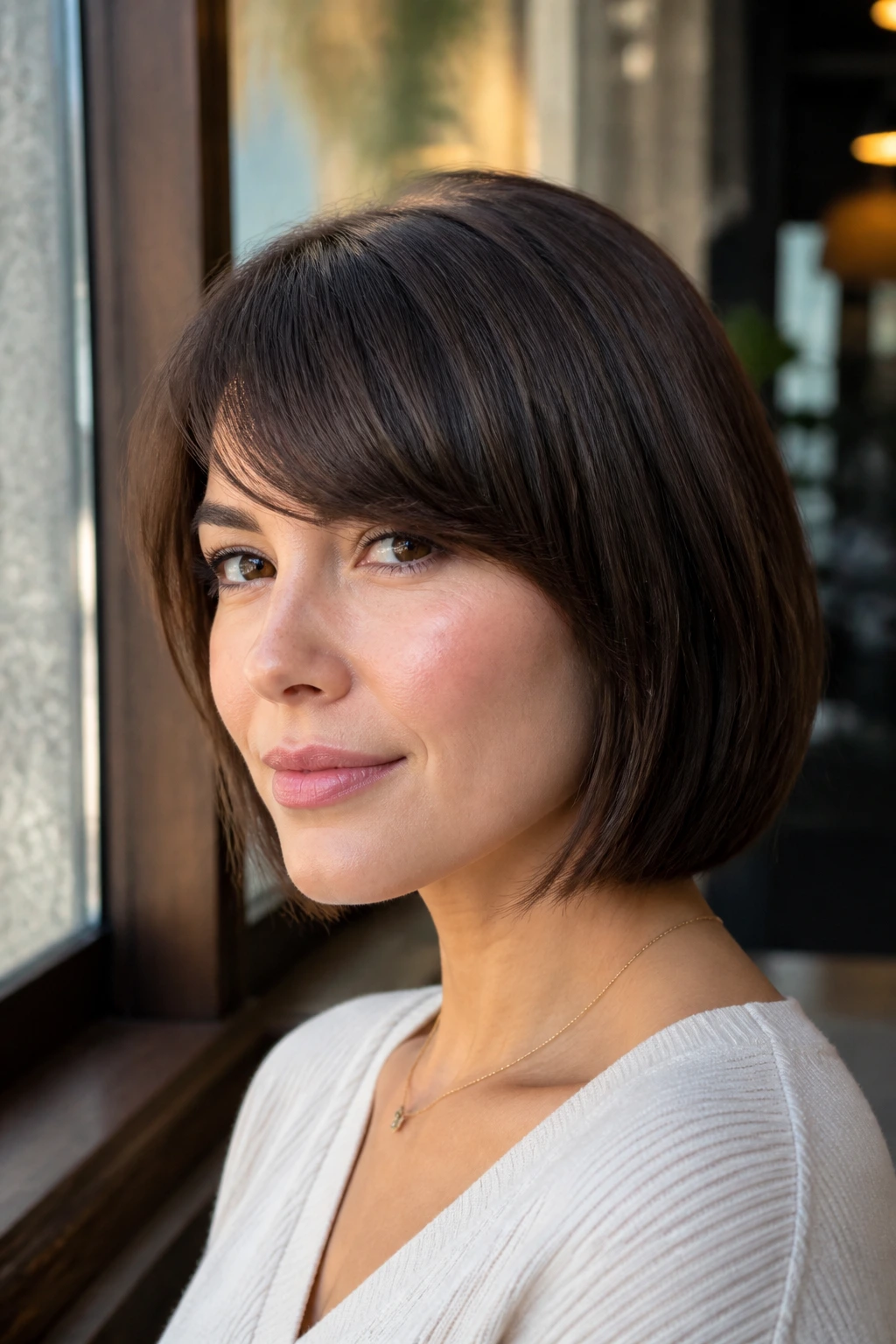
A bob with side bangs is one of those combinations that looks more expensive than it is, mostly because the front gets a shape instead of stopping bluntly at the eyes. The side bang breaks the bob’s edge and keeps it from feeling helmet-like.
The best version usually lands just above the brow at the shortest point and blends into the bob’s front corner. If the bob is very crisp, the bang should be soft enough to keep the overall shape from becoming severe. If the bob is already textured, the bang can be a little more piecey and playful.
Styling note
A small round brush at the roots and a flat brush through the ends usually does the job. You want movement, not a giant curl. If the bob flips out too much, the bang starts competing with it instead of finishing it.
17. The Lob and Side Bang Pairing
The lob is the easiest haircut to wear with a side bang because the lengths around the face already give you room to move. A longer side fringe can blend into the front of the lob without looking chopped off. It’s a forgiving pairing. Good for busy mornings. Good for air-drying. Good for second-day hair that needs a little direction.
I like this style when the bang starts slightly deeper at the side part and falls softly across the forehead before disappearing into the shoulder-length cut. It feels polished, but not precious. That matters.
If you wear your lob straight, keep the bang smooth and slightly curved. If you wear the lob wavy, let the bang bend in the same direction so the front doesn’t look detached from the rest of the cut.
18. The Long-Layer Side Sweep
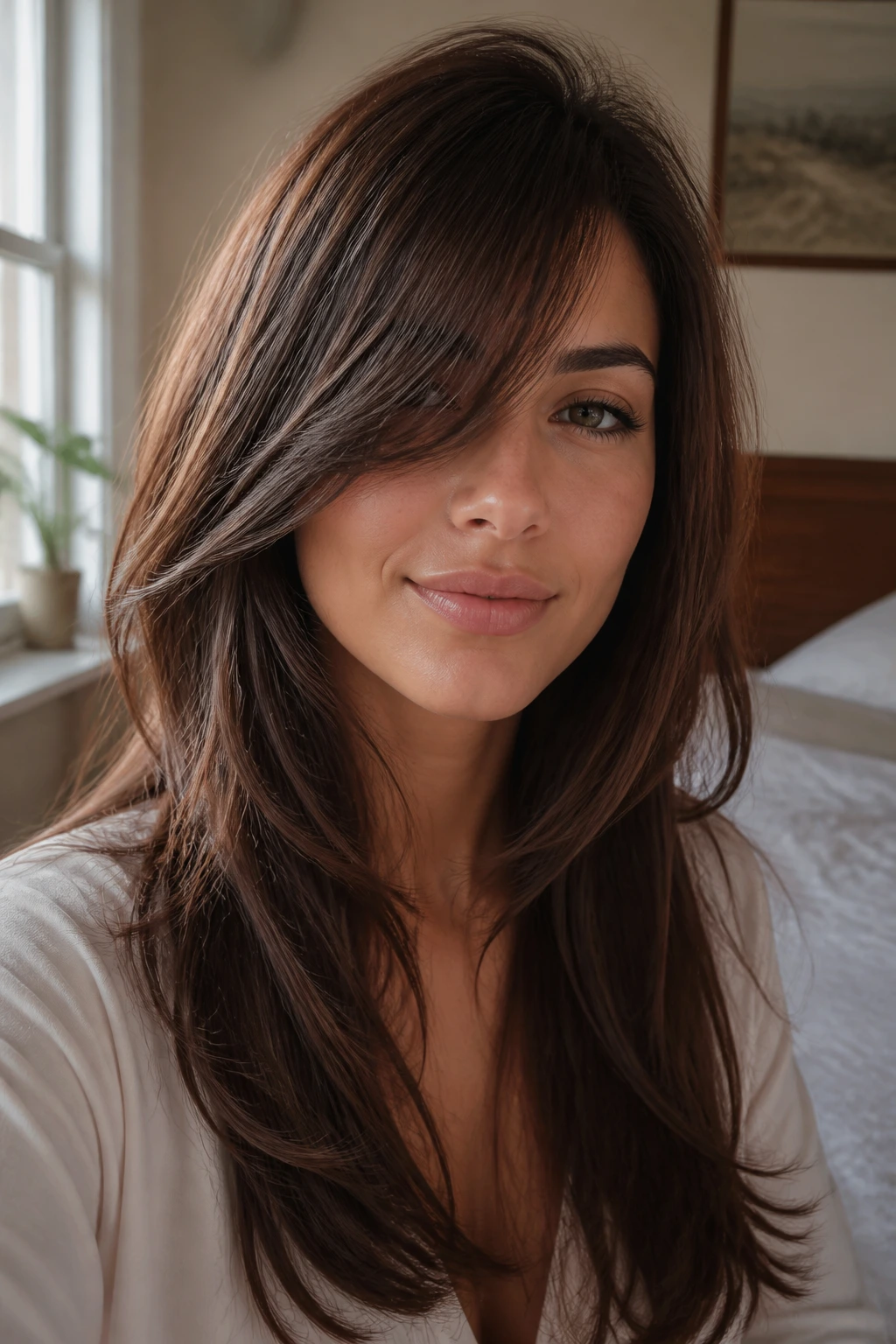
Long layers can look a little anonymous unless the front gets some shape. A side sweep solves that by giving the eye a place to land first. The bang adds a diagonal cut line, then the rest of the layers take over and keep the length from feeling heavy.
This style works well when the front pieces are long enough to tuck behind the cheekbone. You want movement near the face, not a front curtain that stops the rest of the cut from showing up. A touch of texture through the ends helps, especially if your hair is dense or tends to hang flat.
It’s a strong choice for people who wear their hair down most of the time. The bang does the work the rest of the haircut doesn’t have to.
19. The Shagged-Out Fringe
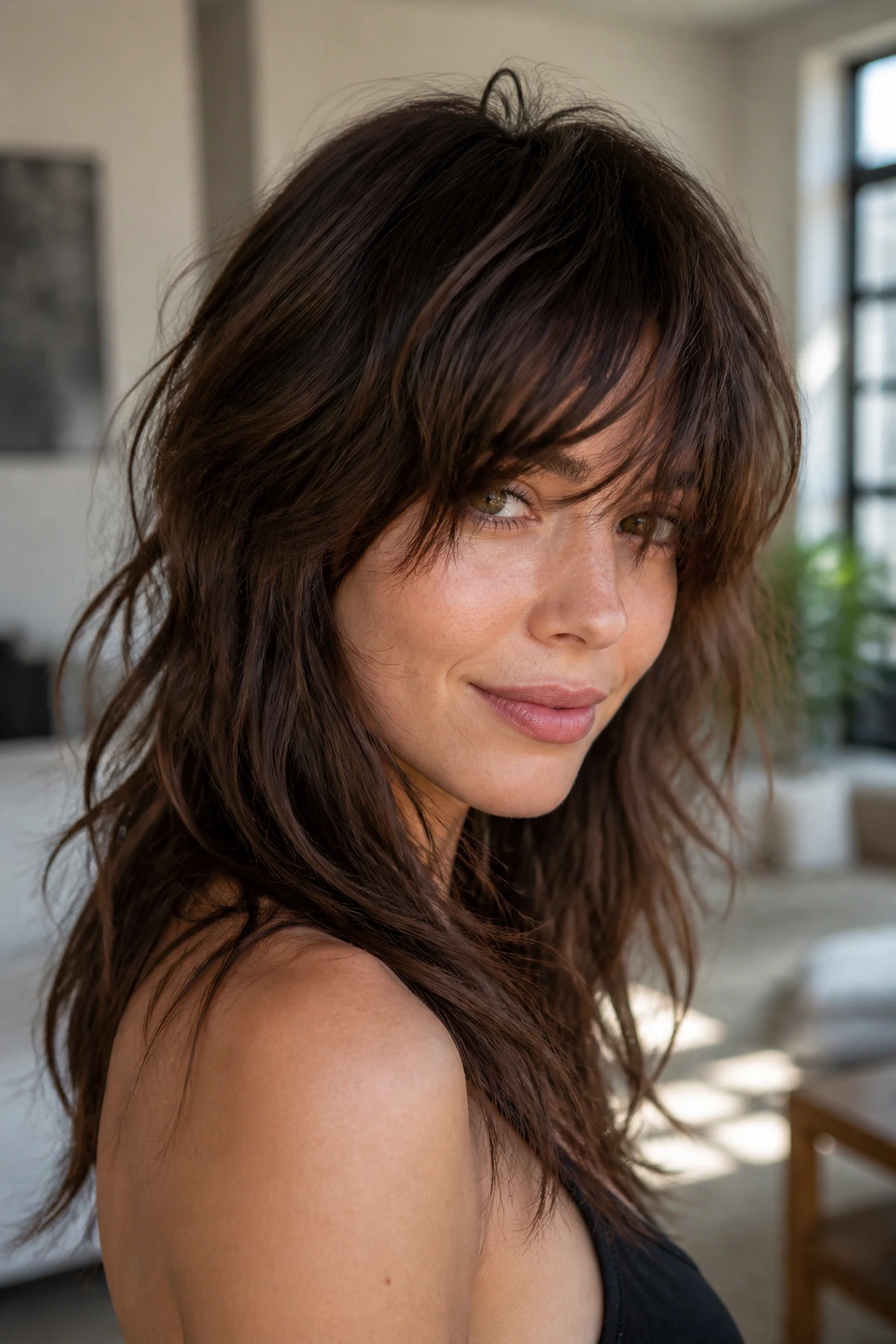
A shag and side bangs go together because both like softness at the edges and a little irregularity. The side bang in a shag should feel like it belongs to the rest of the layers, not like it was added later. Think broken-up, airy, and a little tousled.
The front pieces usually sit longer than a classic fringe, with texture that lets them separate naturally. A bit of styling cream on damp hair is usually enough. If you use too much, the shag turns heavy, and the bang loses its easy movement.
This is one of the few side bang styles that looks better when it’s not perfectly brushed. Fingers do a better job than a comb here. Keep that in mind.
20. The Wolf-Cut Sweep
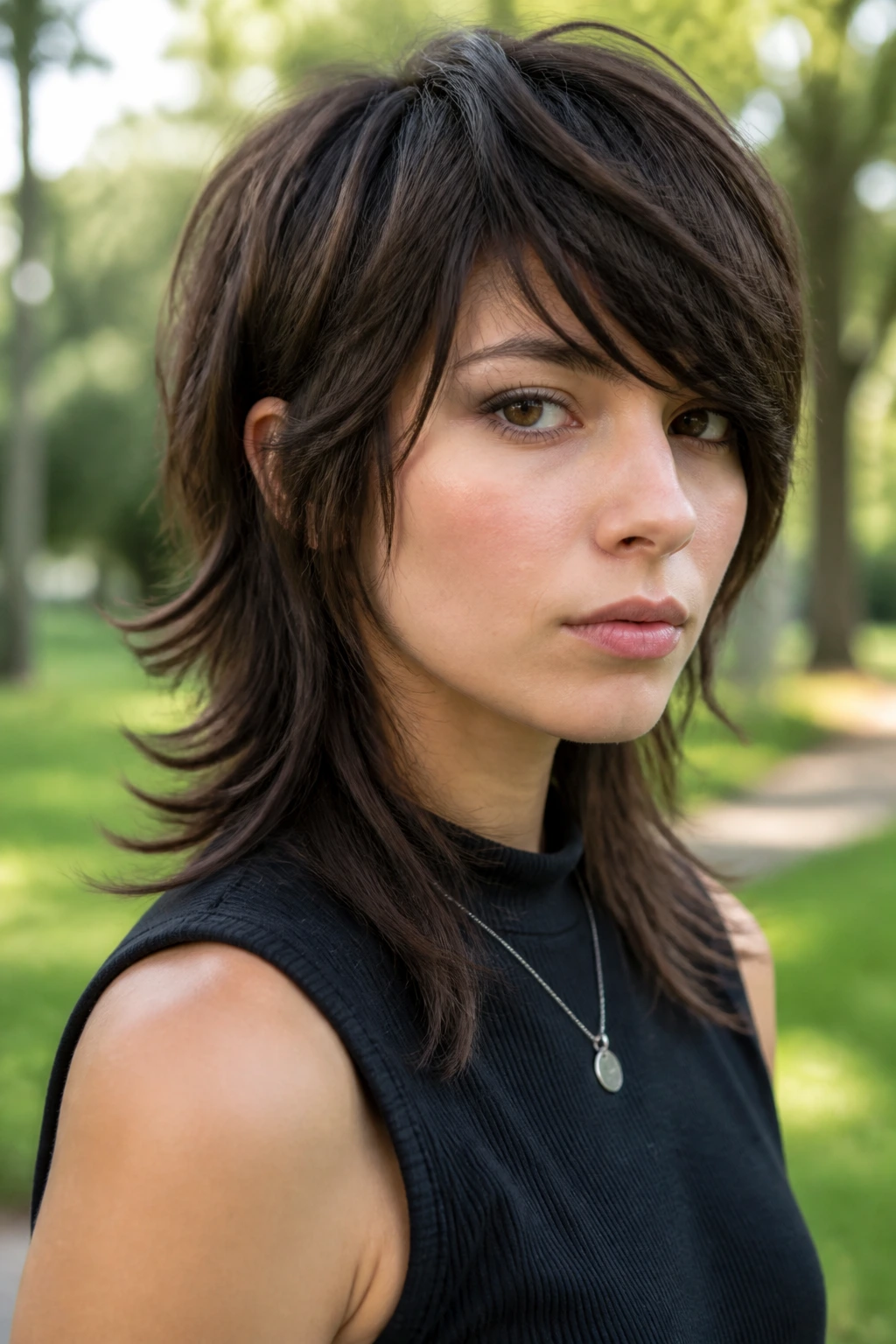
The wolf cut needs a side bang that can handle rough texture and bigger contrast between layers. A choppy sweep does the job. It looks intentional, slightly wild, and not polished in a boring way. That is exactly the point of the cut.
The bang should be piecey with a few shorter bits around the temple and longer pieces that blend into the front layers. Too smooth, and it looks disconnected from the rest of the wolf cut. Too heavy, and it starts flattening the wildness the haircut is supposed to have.
A texturizing spray at the roots and a quick scrunch at the ends go a long way. Don’t brush this one too much once it’s dry. You’ll sand off the shape.
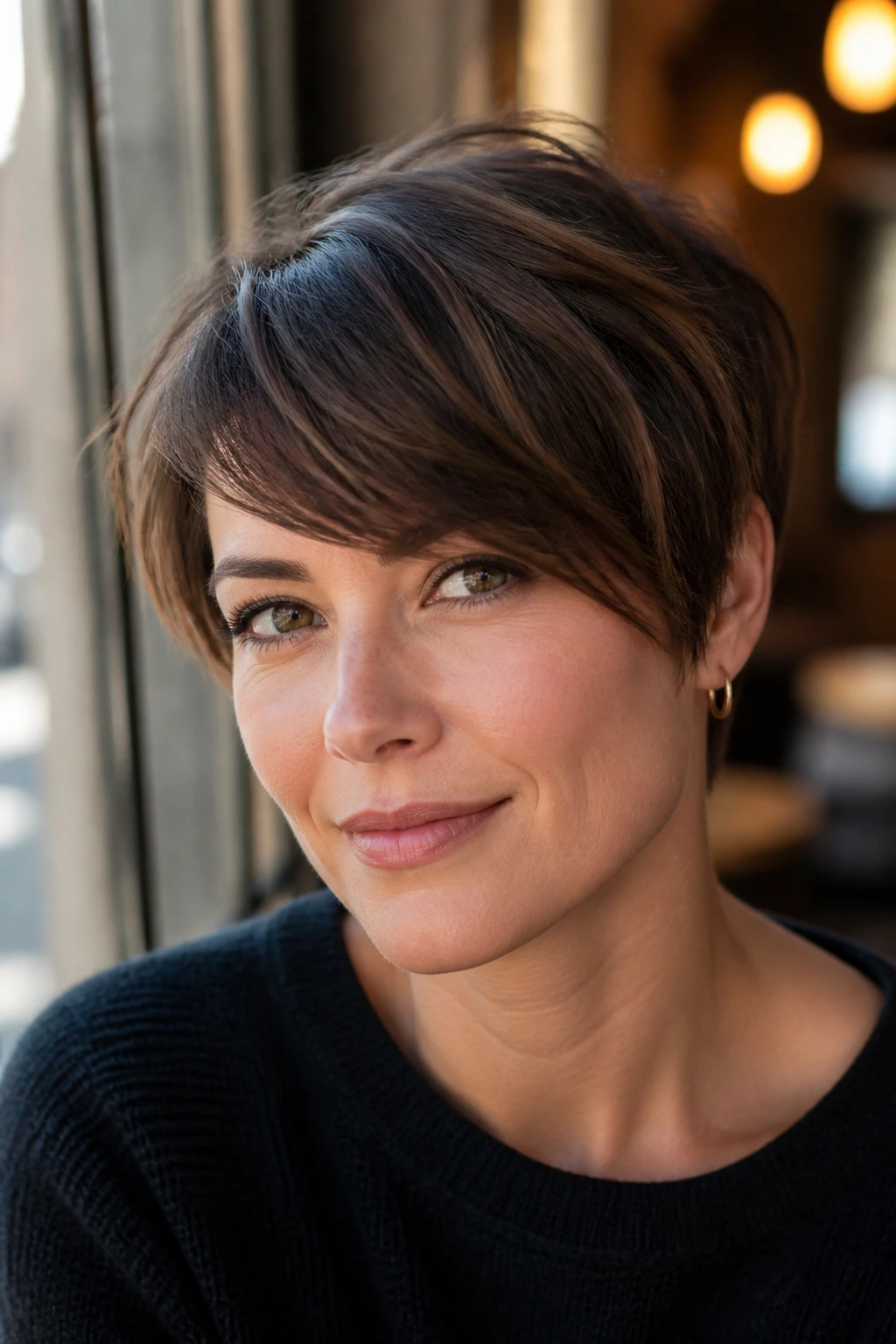
21. The Pixie Side Fringe
A pixie with a side fringe is one of the sharpest ways to use bangs, because the short cut around the ears and nape leaves the front free to do the visual work. The side bang becomes the focal point. It can be soft, sleek, or slightly spiky depending on the mood of the cut.
Keep the fringe long enough to sweep across the brow or temple, but not so long that it collapses into the eye. That balance is harder than it looks. The cut should still read as a pixie, not a grown-out bob that lost a fight.
I like a tiny bit of matte paste on the ends for this shape. Just a dab. Enough to show separation, not enough to make the fringe sticky.
22. The Ponytail Framing Bang
This is the side bang you keep when you want your hair tied back most of the time but still want something soft around the face. The front pieces stay long enough to skim the cheekbone and fall out of a ponytail cleanly. It’s practical, but not dull.
The shape is especially nice with high ponytails and low sleek buns because it stops the face from looking too bare. A quick curl through the front pieces or a soft bend with a flat iron makes the whole thing feel finished. Straight, flat face pieces tend to look like leftovers from the styling process. Bent pieces look chosen.
If your hairline is strong or your forehead is broad, this kind of fringe can make pulled-back hair feel gentler without giving up the clean look of an updo.
23. The Updo Sweep
A side bang with an updo should behave almost like a piece of jewelry. It frames, it directs the eye, and it shouldn’t fight the bun or chignon sitting behind it. Long enough to travel across the forehead, soft enough to curve at the temple. That’s the sweet spot.
The trick is to leave the front section out before you gather the rest of the hair. If you try to add a bang after the bun is already secured, it often sits awkwardly. Pre-planning matters here. Even a loose twist pinned back with two bobby pins can shape the front better than a last-minute tug.
This style is one of my favorites for events because it keeps the face open while still giving the hairstyle a front edge. No dead front line. No bare forehead. Just a clean sweep that holds the room together.
24. The High-Forehead Soft Cover
If the goal is to soften a high forehead, the side bang needs a little more coverage and a little more width at the front. But do not go straight across with it. That usually makes the forehead look even more obvious because the cut creates a hard edge where you wanted softness.
Instead, keep the bang angled and let the longest pieces drift down toward the cheek. The diagonal line still opens the face, but the front coverage sits a touch lower and feels less stark. A round brush or medium roller can help the top section stay lifted instead of clinging flat to the skin.
This style benefits from a side part that starts off-center rather than extreme. Too deep and the front can look lopsided. Too shallow and the coverage disappears.
25. The Glasses-Friendly Sweep
Glasses change the whole equation. Suddenly the bang has to live near the frame without landing on it every five seconds. The glasses-friendly sweep solves that by staying a little shorter at the outer brow and softer at the ends, so the fringe sits above or just beside the frames instead of fighting them.
A curved shape works better than a heavy one here. Heavy bangs can make the top of the face feel crowded, especially with thick frames. Light separation around the eyes keeps the whole front from getting busy.
If you wear glasses daily, ask your stylist to check the bang length while your frames are on. That little step saves a lot of irritation later. Literally.
26. The Grow-Out Friendly Side Bang
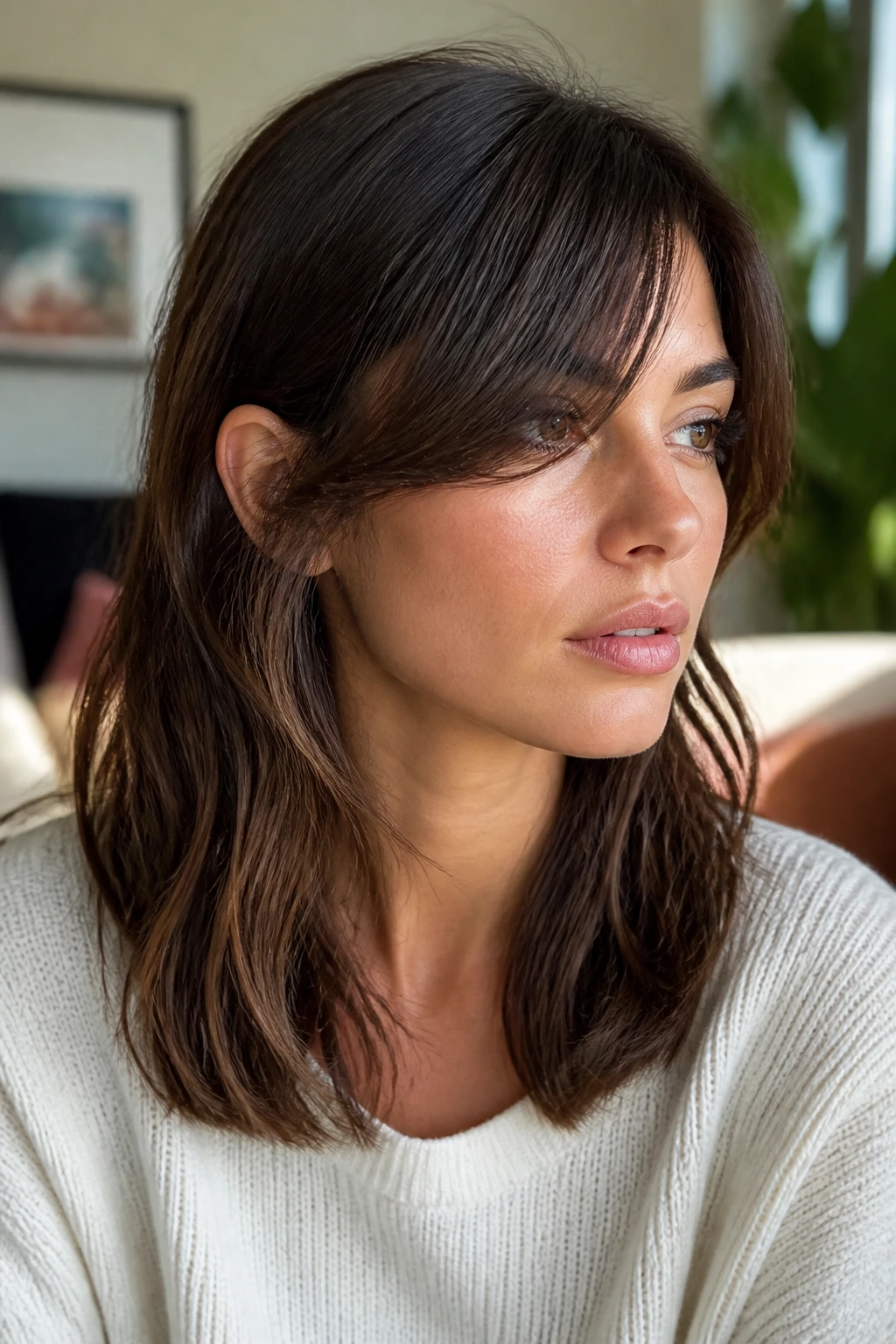
This is the smartest side bang for anyone who wants options. The shortest piece is long enough to tuck behind the ear, while the longest piece blends into the front layers. You can keep wearing it side-swept, or let it drift into the rest of the haircut as it grows.
The style works because it doesn’t create a hard stopping point. That matters when you’re between trims or testing whether bangs are even your thing. A grow-out friendly side bang can be pinned back one day and worn loose the next without looking like you are in the middle of a disaster.
If you ask for one thing from a stylist, ask for length at the cheekbone and softness at the corners. That’s the difference between a fringe that grows out cleanly and one that turns into a stubborn ledge.
27. The Soft Glam Swoop
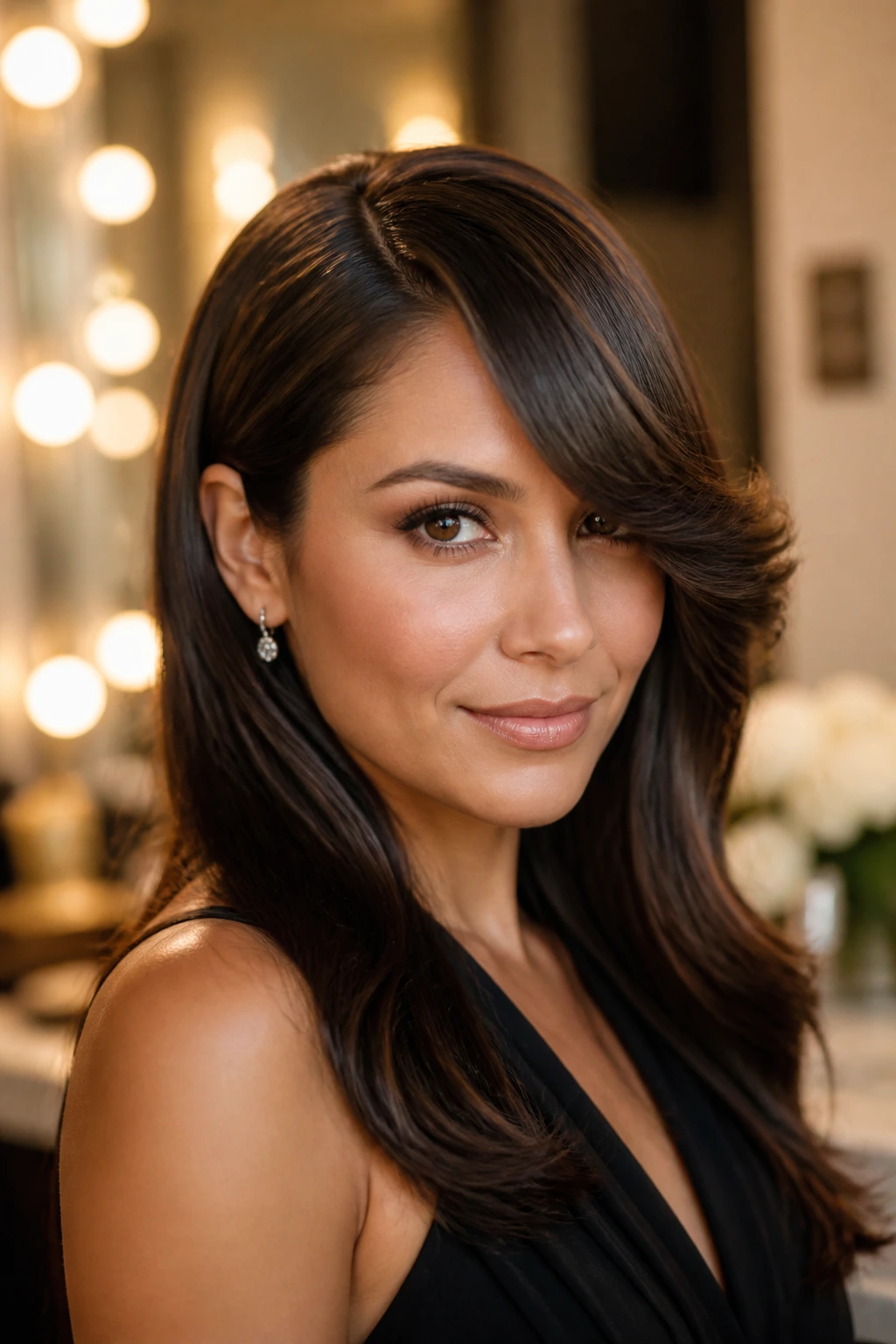
Soft glam side bangs are all about brushed-out movement and a little shine. They sit in a long swoop that feels polished, almost old-Hollywood, but they stop short of being stiff. The best version has volume at the root and a soft, flowing end.
This style loves a blowout set with a round brush or a large roller. If you want the front to feel especially smooth, roll the bang away from the face while it cools, then brush it lightly into place. A drop of serum on the ends can help, but keep it off the roots or the lift disappears fast.
I like this style for weddings, dinners, and any situation where you want the hair to look finished without looking lacquered. There’s a difference. This one knows it.
28. The Choppy, Edgy Side Bang
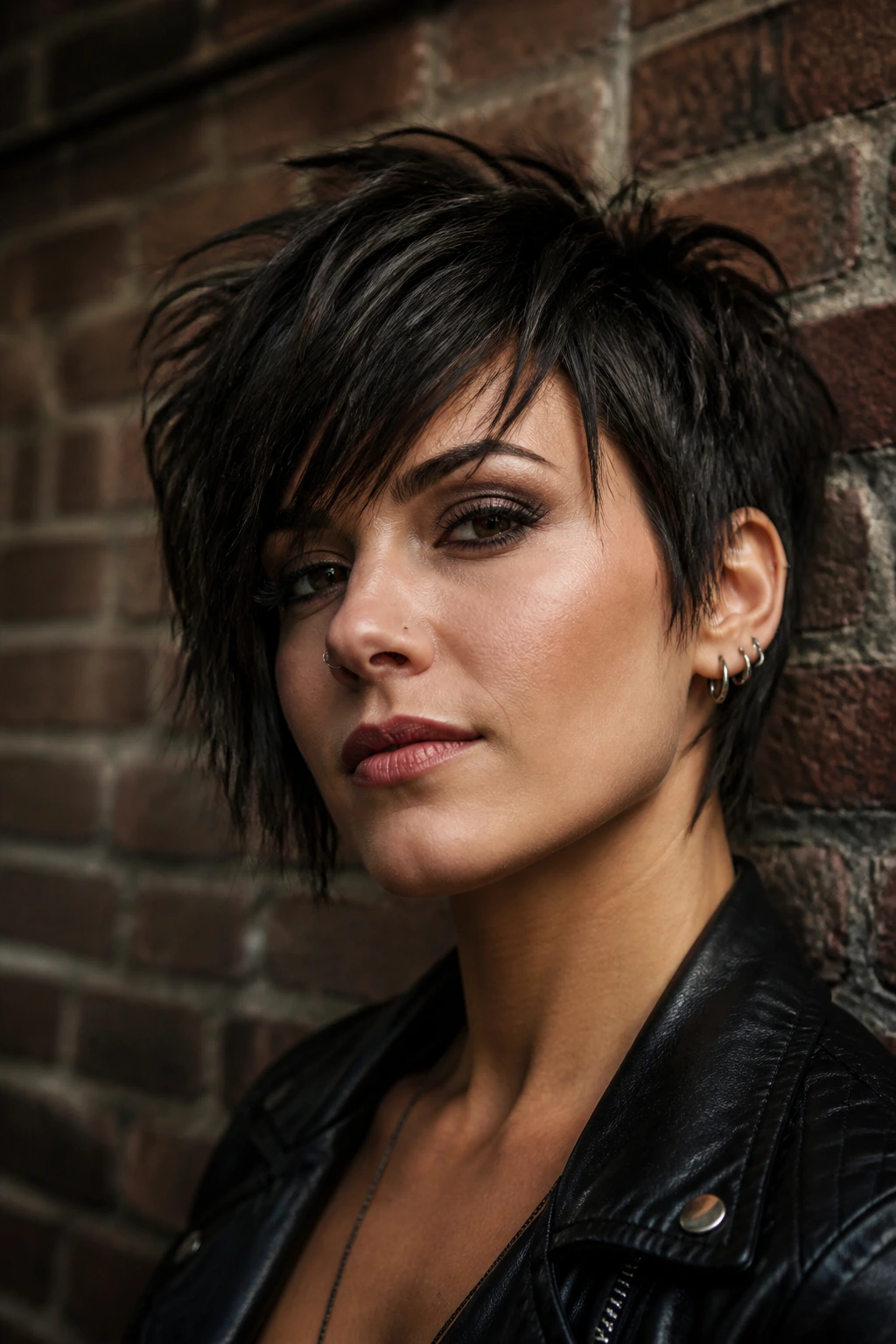
A choppy side bang is the one with attitude. The ends are uneven on purpose, the line is a little less polished, and the front has enough texture to keep it from reading as sweet or safe. It fits with shorter cuts, razored shags, and any style that already leans a little rebellious.
The key is restraint. If the chop gets too aggressive, the bang starts looking broken instead of styled. You want intentional texture, not a rescue mission. A small amount of paste rubbed between the fingertips and tapped through the ends is enough to separate the pieces and show off the shape.
This style works best when the rest of the hair has some edge too. Pair it with a strong liner, a leather jacket, or a blunt neckline in the cut and it all makes sense. Alone, it can still work. With a little attitude, it works better.
Why Side Bangs Still Work When a Full Fringe Feels Too Heavy
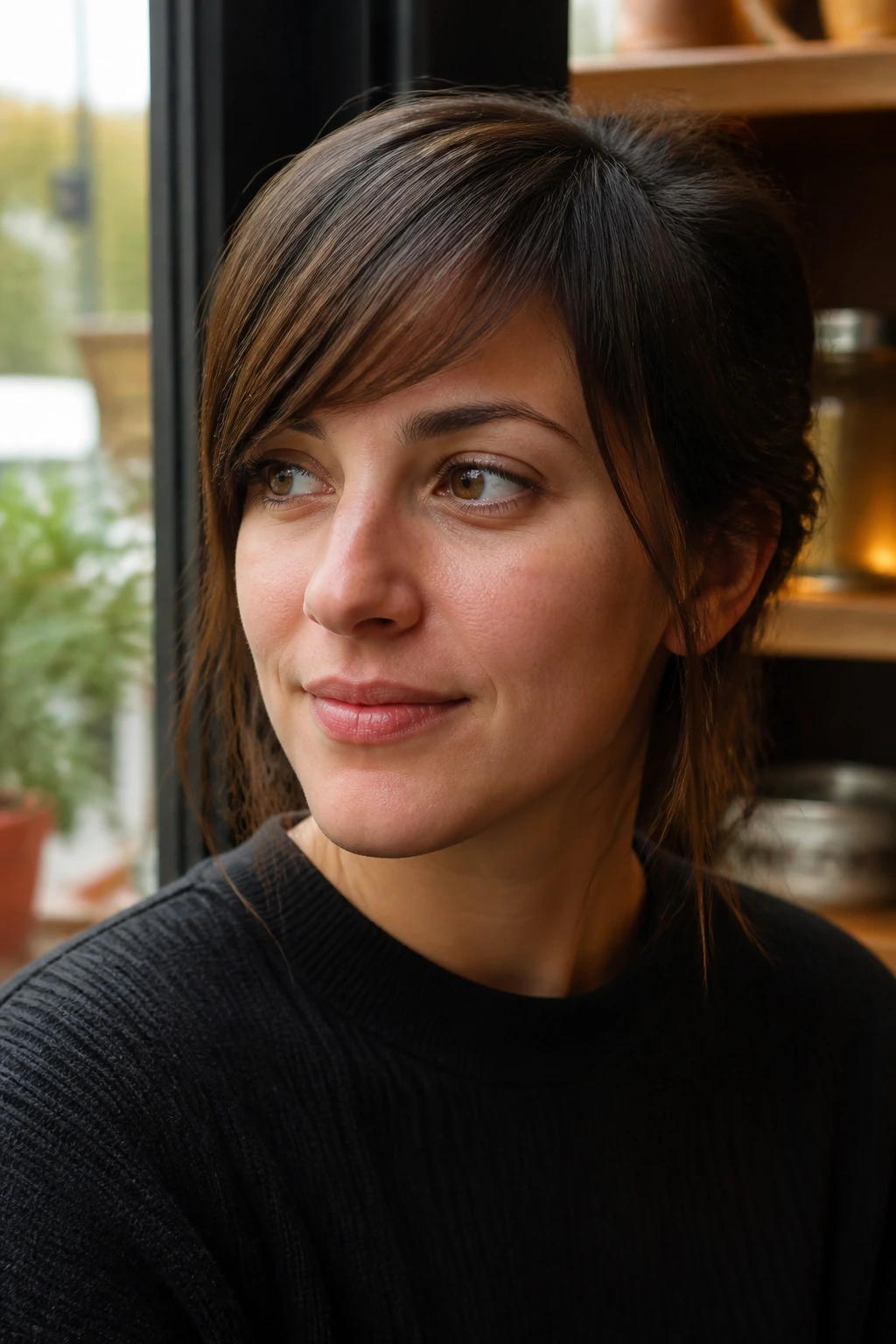
A full fringe can be gorgeous, but it changes the front of the haircut all at once. Side bangs are gentler. They let you change the face-framing without closing off the forehead, and that single difference makes them easier to live with for a lot of people.
The diagonal line also does a sneaky bit of visual work. It can shorten a long face, soften angular features, and pull attention toward the eyes or cheekbones without building a wall of hair straight across the brow. That matters if you wear glasses, have a strong cowlick, or just don’t want to spend your mornings fighting a stubborn front section.
Side bangs are also easier to reset after a rough day. A quick mist of water, a finger-comb, and one pass with a brush can usually put them back in shape. Full bangs can be moodier. Side bangs forgive more.
How to Ask for the Right Cut at the Salon
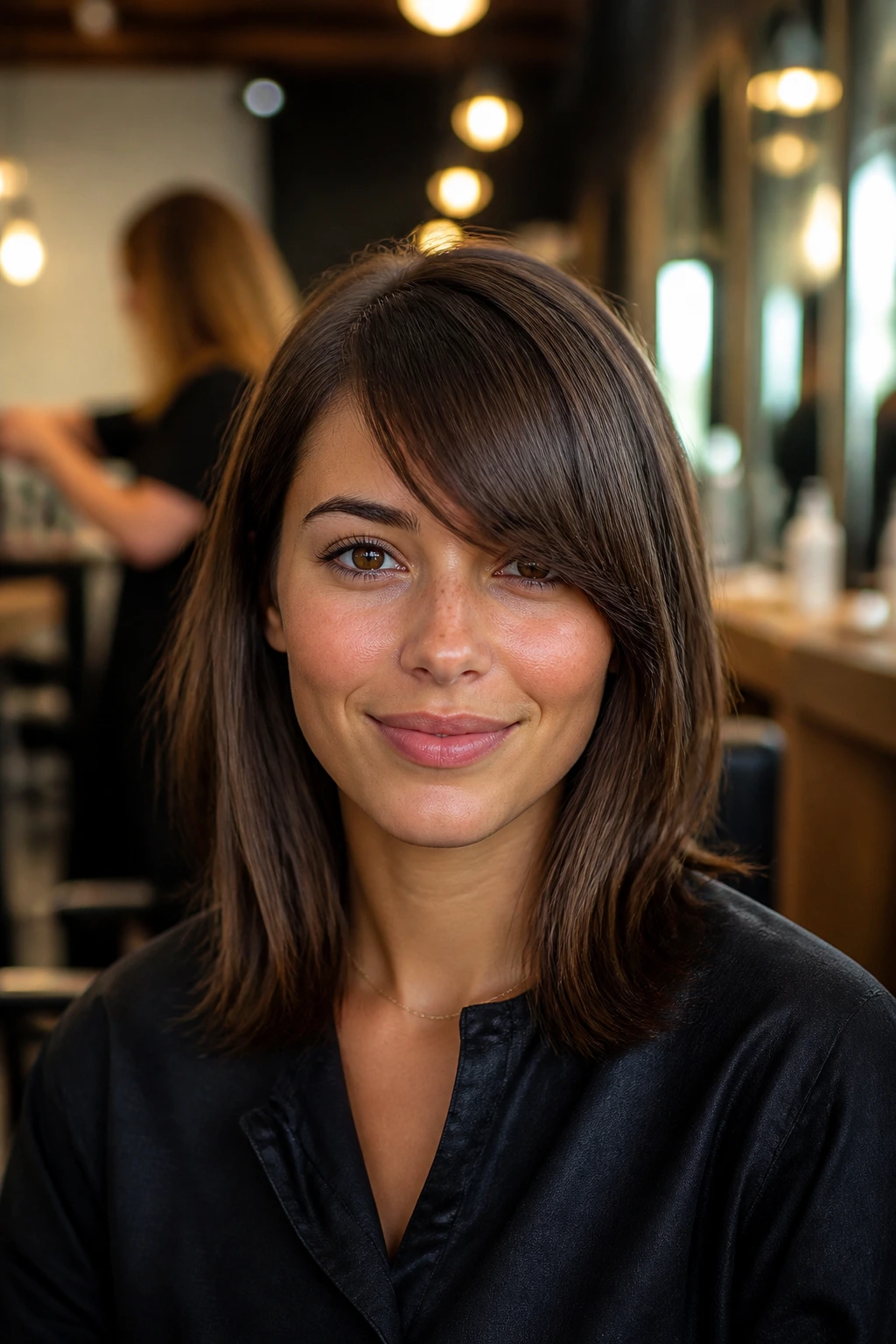
Bring a picture, yes, but bring a picture that shows the bang at rest and in motion if you can. A side bang can look one way when freshly blown out and another way when it’s been tucked behind the ear for an hour. Those are not the same cut.
Tell the stylist three things before the scissors come out: where your part usually lives, how much forehead you want to show, and whether your hair has a cowlick at the front. That last one is the one people forget. A cowlick can push a side bang straight up or split it oddly if the cut doesn’t account for it.
Ask for the shortest and longest lengths to be named clearly. “Cheekbone” and “outer brow” are better than “somewhere here.” If you want a softer finish, ask for point cutting. If you want a cleaner arc, ask for a more controlled diagonal line and less texturizing. Haircuts go wrong when nobody says where the front should land.
Essential Tools for Styling and Refreshing Side Bangs
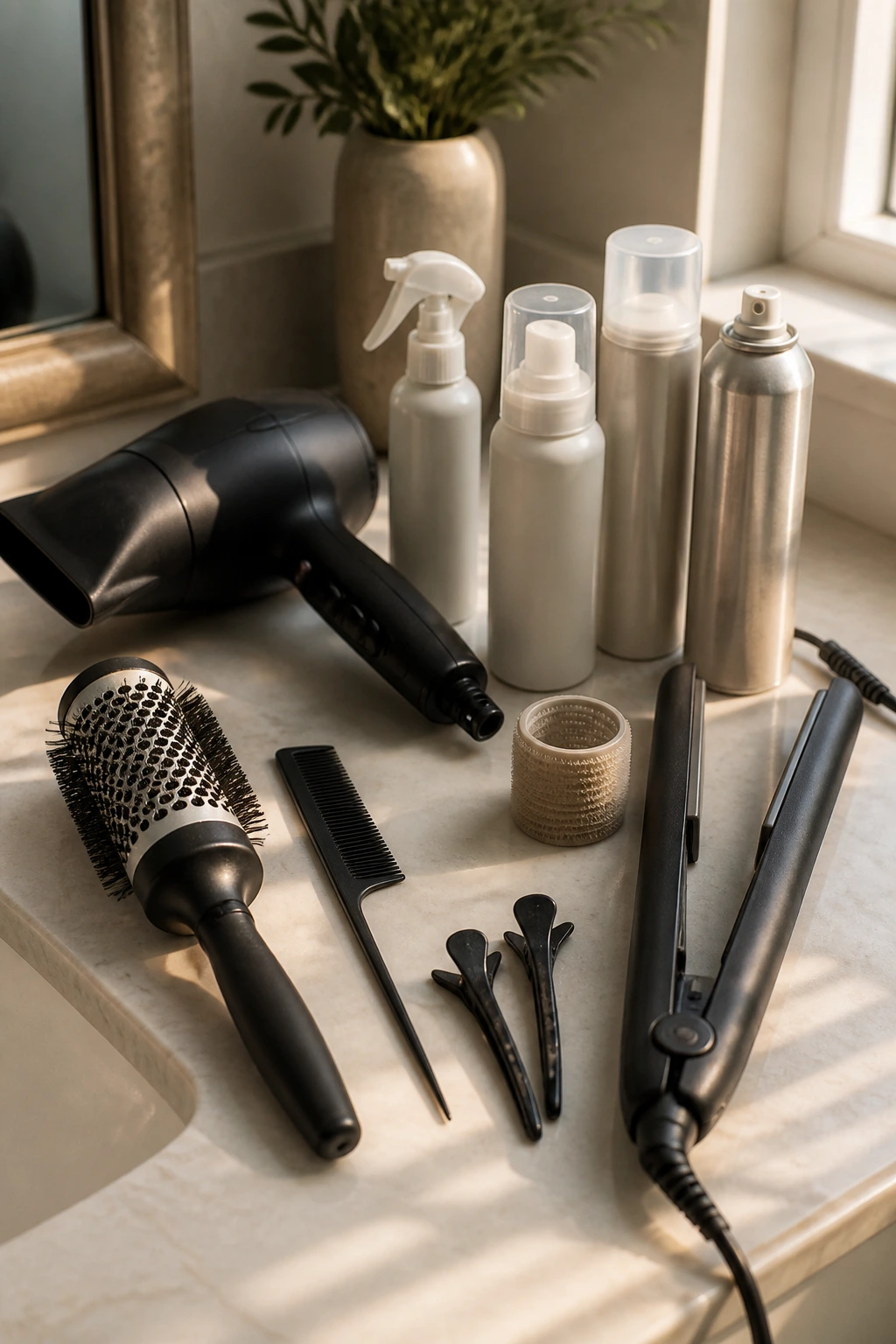
- 1-inch round brush: Best for bending the front section under and across the forehead without creating a giant curl.
- Blow dryer with a concentrator nozzle: Keeps the airflow directed so the bang dries in the shape you want, not in whatever direction it feels like.
- Tail comb: Useful for sectioning the front cleanly and redefining a part that drifts during the day.
- Duckbill clips: Hold the bang in place while it cools or while you work on the rest of the hair.
- Velcro roller or small hot roller: Gives quick root lift for fine hair or flat front sections.
- Heat protectant spray: Worth it if you use a flat iron or round brush on a regular basis.
- Light mousse or root-lift spray: Adds hold without making the fringe crunchy.
- Dry shampoo: Helps on day two when the roots start to look a little shiny.
- Flexible-hold hairspray: Keeps movement in the bang instead of freezing it into a shell.
- Small flat iron: Good for quick bends, especially on sleek or stubborn side bangs.
How to Wear Side Bangs With the Rest of Your Hair
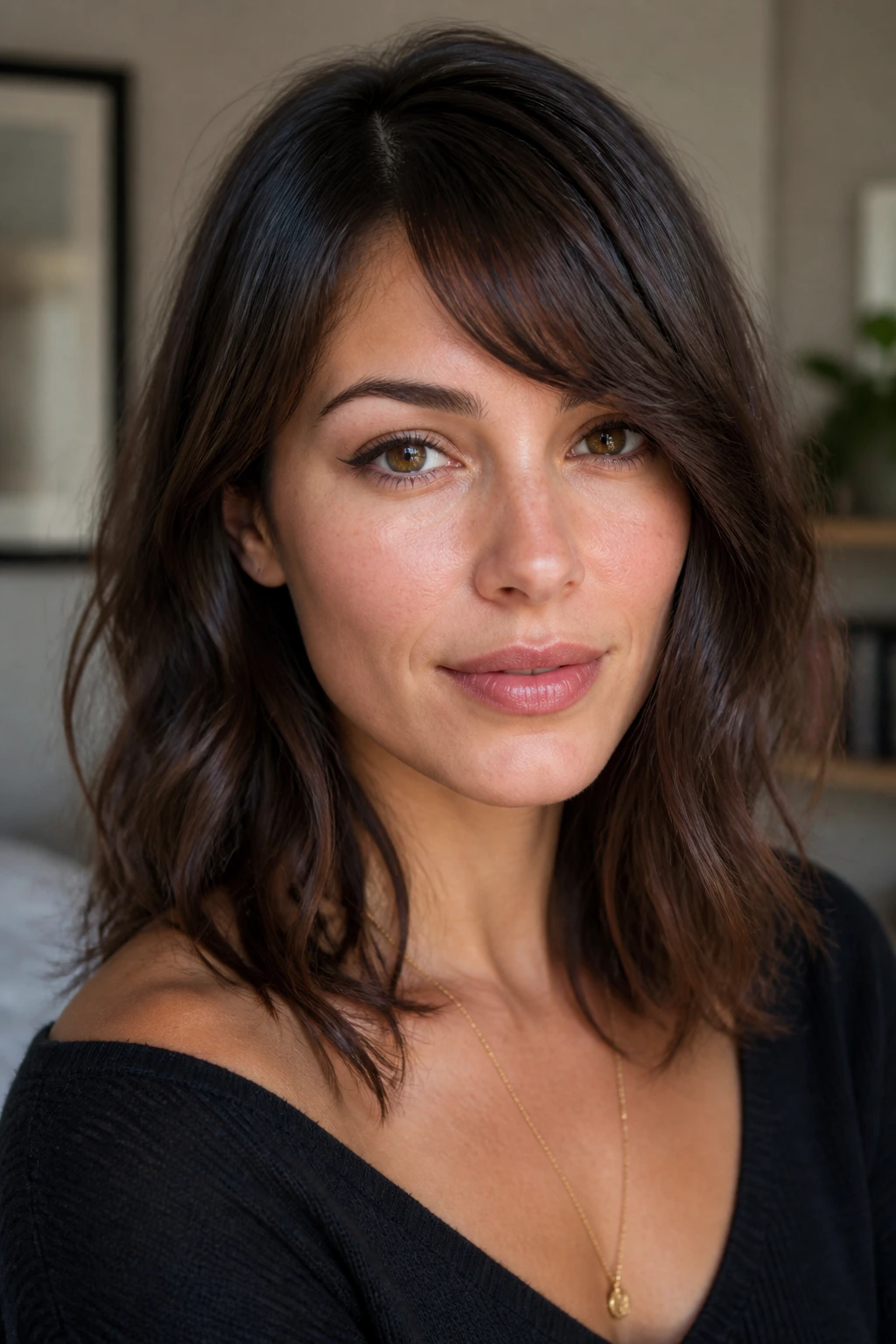
Presentation: Let the shortest point of the bang land where the eye naturally wants to go — usually around the brow, temple, or cheekbone — and let the rest of the hair echo that softness. A side bang looks better when the rest of the cut doesn’t fight it for attention.
Accompaniments: Bobs, lobs, long layers, shags, and low buns all pair well, but each one asks for a slightly different finish. A bob likes a smoother sweep. A shag likes pieces. A bun likes a longer front piece that can float free.
Scale: Keep the bang proportionate to the rest of the haircut. A tiny fringe on huge, heavy hair can disappear, while an oversized sweep on a short pixie can swallow the face. The front should feel like part of the haircut, not a separate accessory.
Finish: Choose the level of polish to match the rest of the style. Sleek hair wants a smoother bang. Air-dried waves want a softer bend. If the finish is mismatched, the whole front feels off.
Practical Ways to Style Them Without the Stiffness
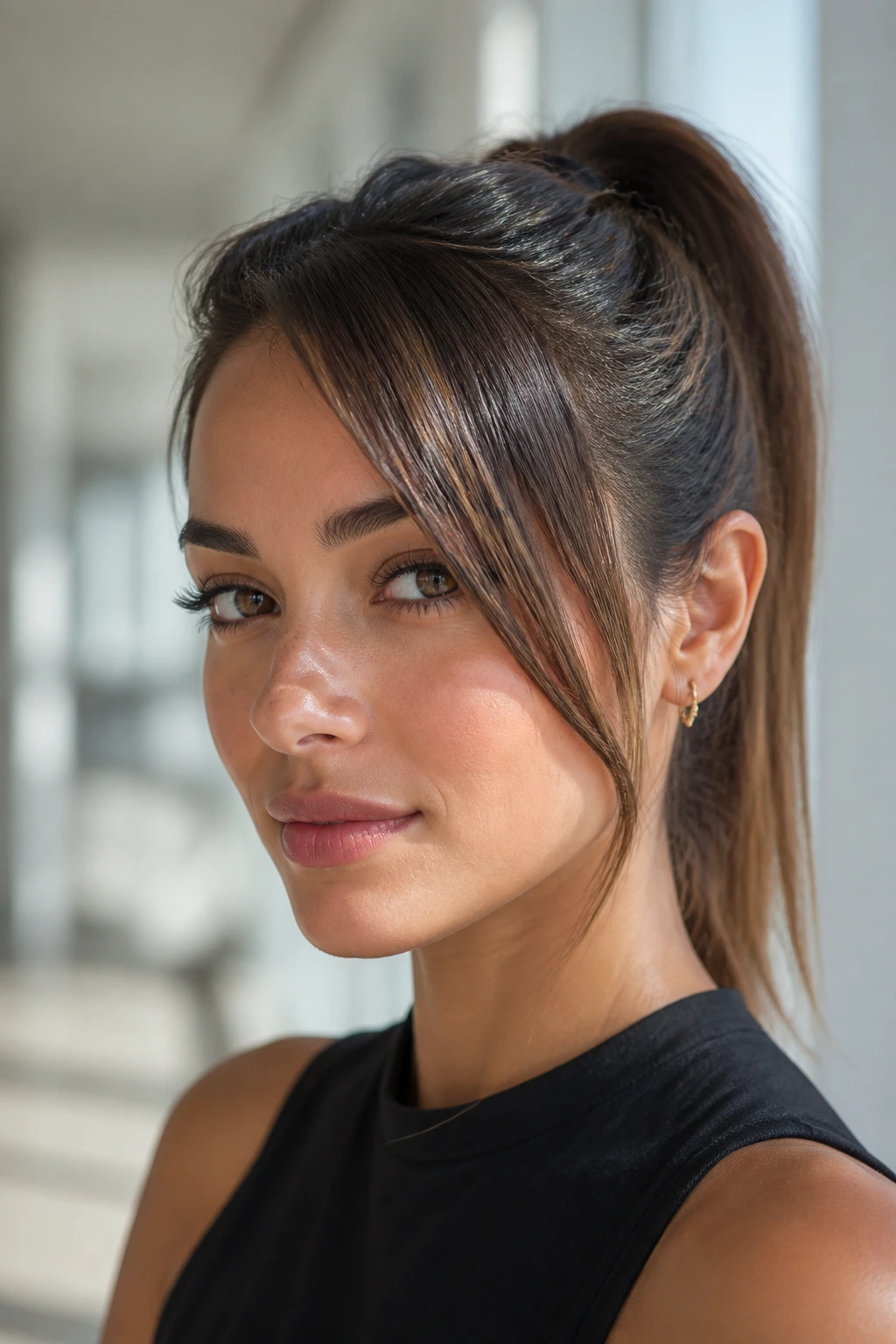
A side bang looks best when it moves. That sounds obvious, but a lot of people accidentally style the front into a rigid shape and then wonder why it feels old-fashioned by noon.
Start with the bang slightly damp, not soaking. Use a brush or your fingers to direct it opposite the way it naturally wants to fall, then sweep it back across the forehead as you dry. That gives the root a little lift and stops the bang from settling into one flat line. A cool shot at the end helps lock the curve without making it hard.
If the ends need help, use a flat iron only on the last inch or two. The full section does not need to be ironed into a board. It needs a bend. There’s a difference, and your hair will tell you which one you gave it.
Small Tweaks That Make the Shape Look Intentional
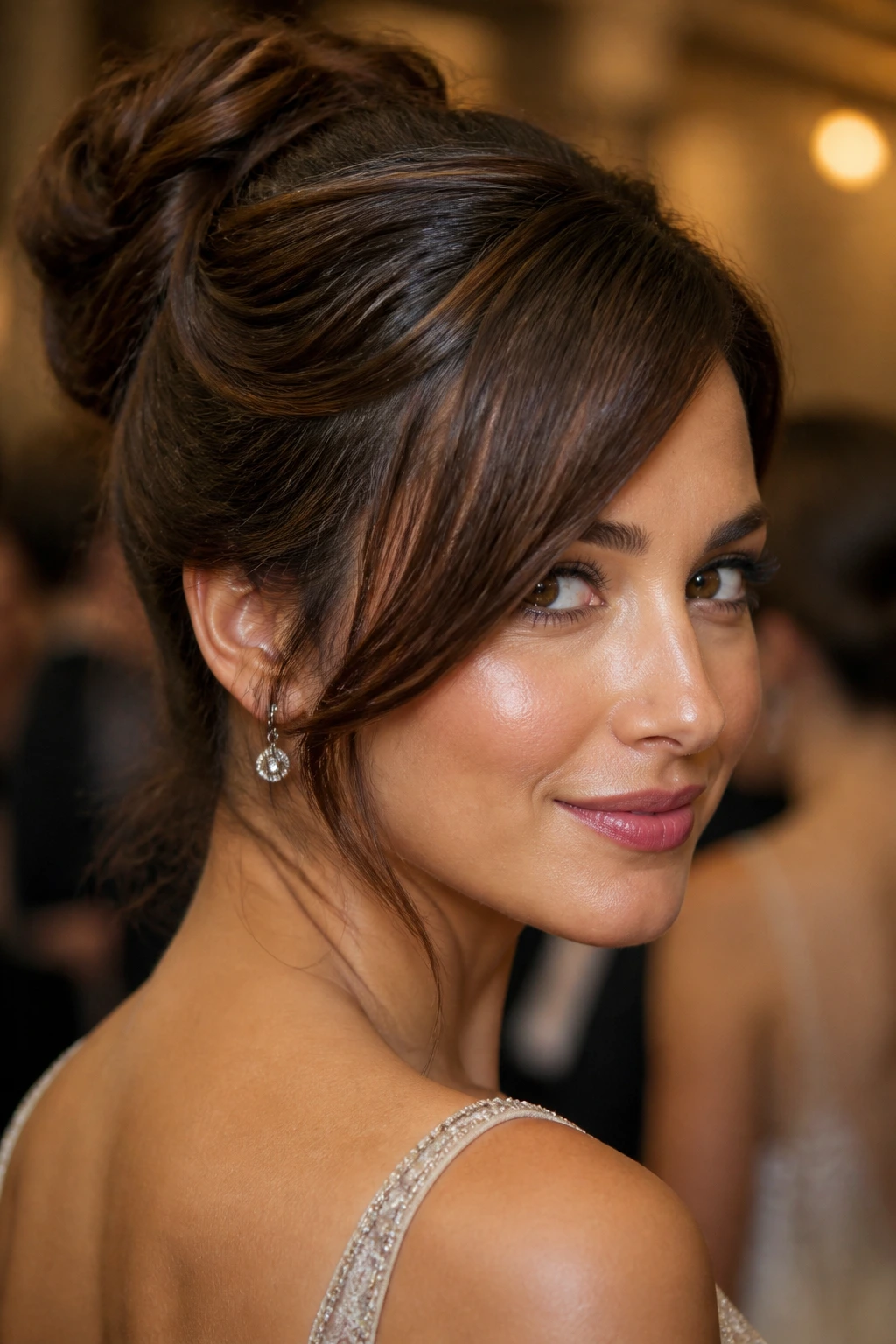
Root Lift: A little spray at the base goes a long way. Spray from about six inches out, lift the section with your fingers, and dry it before it can collapse.
Direction: Don’t let the bang dry straight down unless that is the look you want. Side bangs need direction from the start, not after the fact.
Texture: If the ends look too neat, run a tiny bit of paste or cream through just the tips. Not the roots. The tips.
Finishing Touch: A light mist of flexible hairspray sprayed onto the brush, not directly onto the bang, keeps the movement soft and avoids that stiff, sprayed-on finish.
Common Mistakes That Flatten the Whole Front
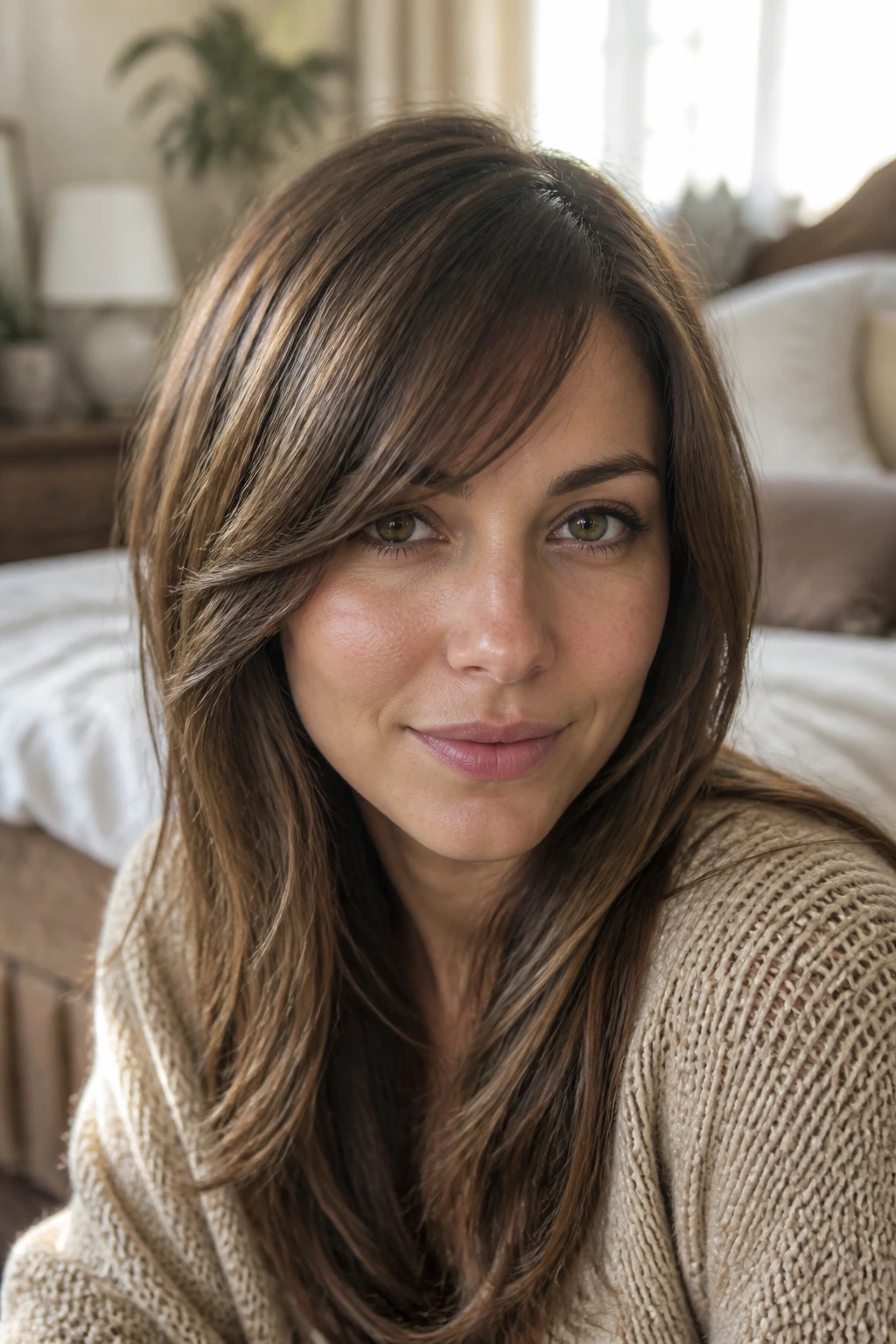
- Cutting it too short on day one: Side bangs shrink, spring, and shift once they dry. If the shortest point is already flirting with the middle of the forehead, it may end up far shorter than planned. Fix: leave the first cut a little longer and recheck it dry.
- Using too much heavy serum: The bang gets stringy, sits flat at the roots, and starts separating in ugly clumps. Fix: keep product off the root zone and use the smallest possible amount.
- Ignoring the cowlick: The front fights back, splits oddly, or sticks up at the part. Fix: tell the stylist about it and style the bang in the direction the cowlick will tolerate.
- Over-thinning thick hair: The fringe turns weak, wispy in the wrong way, and loses shape by midday. Fix: remove weight from underneath, not from every surface layer.
- Blowing it dry the wrong way: If the front dries straight down every time, the bang loses the side shape before you even leave the bathroom. Fix: set the direction from the roots while the hair is still damp.
Variations and Adaptations to Try
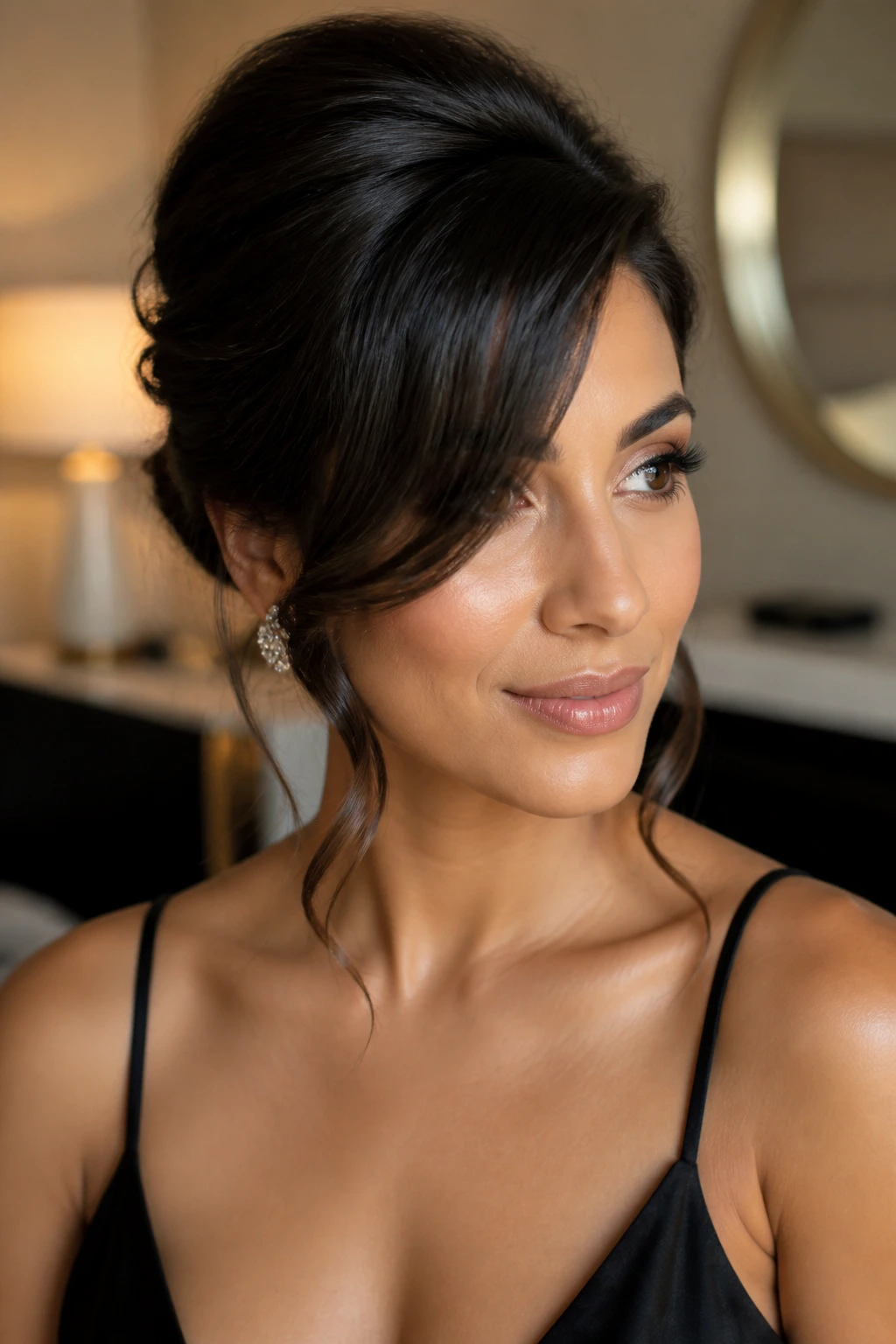
The Curled-Back Glam Sweep: Use a large roller or a 1¼-inch brush to create a gentle bend away from the face. This works when you want the side bang to feel dressed up without looking hard.
The Air-Dry Soft Sweep: Set the front section with mousse and a clip, then let it dry in the side direction. It suits wavy hair and anyone who hates heat styling before coffee.
The Piecey Razor Finish: Add a touch of paste through the ends and separate the fringe into light, visible strands. Good for shags, wolf cuts, and haircuts that already have texture around the face.
The Minimal Office Sweep: Keep the bang longer, softer, and just narrow enough to move out of the eyes. This one behaves well with glasses, sleek bobs, and days when you want the haircut to stay out of the way.
The Soft Romantic Bend: Wrap the front around a brush or curling iron in a loose C-shape, then brush it out once it cools. The result is a gentler, fuller front that pairs well with waves and long layers.
How to Keep Side Bangs Fresh Between Washes
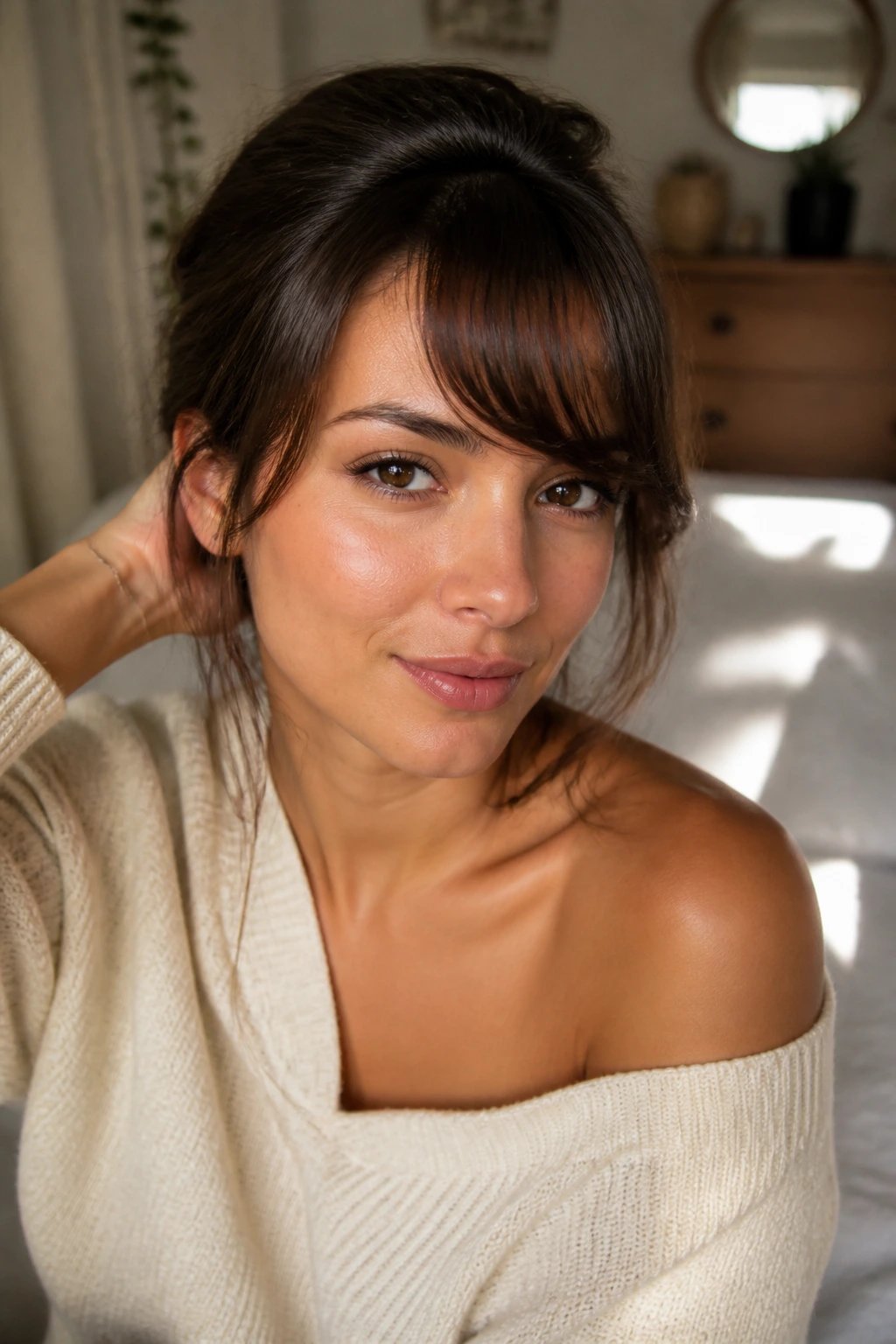
Side bangs show grease faster than the rest of the hair because they live close to the forehead. That’s not a flaw. It’s physics. Sweat, skincare, and a little skin oil all land there first.
If the roots start looking shiny on day two, apply dry shampoo at the base from about 8 to 10 inches away, let it sit for 30 seconds, then brush or finger-rake it through. Don’t dump half the can on the front. It makes the bang cloudy and dry-looking. A light pass is usually enough.
For maintenance, trim every 4 to 6 weeks if you want the bang to keep its shape. If you’re growing it out, a tiny clean-up every 6 to 8 weeks keeps the edges soft without taking away too much length. At night, pin the fringe to the side with a flat clip or tuck it into a loose roller if it tends to kink while you sleep.
Frequently Asked Questions

Are side bangs easier to grow out than blunt bangs?
Usually, yes. Once the shortest pieces move past the brow, they can be tucked into layers or pinned back, which makes the awkward stage less obvious. Blunt bangs tend to hit a wall during grow-out; side bangs bend around that problem.
What length is best for a side bang?
For most people, the shortest point should sit around the outer brow or just above it, and the longest point should reach the cheekbone when dry. That keeps the bang visible without making it too heavy across the forehead.
Can side bangs work on curly hair?
They can, but the cut has to respect shrinkage. Curly side bangs should usually be cut longer and styled while damp so the curl pattern can settle into the sweep instead of popping up in a weird spot.
How do I stop my side bangs from splitting in the middle?
That usually means the front is drying in two directions or the cowlick is pushing the hair apart. Clip the bang in the direction you want while it dries, and use a little root spray or mousse at the base for support.
Do side bangs need daily styling?
Not always, but they do like a quick reset. Most side bangs need at least a little water, heat, or finger shaping to fall the right way. The good news is that the reset is usually short: a few minutes, not a full blowout.
Will side bangs work with glasses?
Yes, if the length is planned around the frames. Keep the fringe a little shorter at the outer brow or softly curved so it doesn’t sit right on the arms of your glasses all day.
Can I cut side bangs myself?
You can trim the tiniest amount if you’re careful, but it’s easy to overcut because hair shrinks when it dries. A salon visit is worth it if your hair has a cowlick, thick density, or a complicated part.
What if my side bang keeps falling flat by noon?
That usually means the root needs more lift and less product weight. Blow-dry the bang first, use a light mousse or root spray, and avoid serum near the scalp. A small roller for 5 to 10 minutes can help a lot.
The Sweep That Still Feels Right
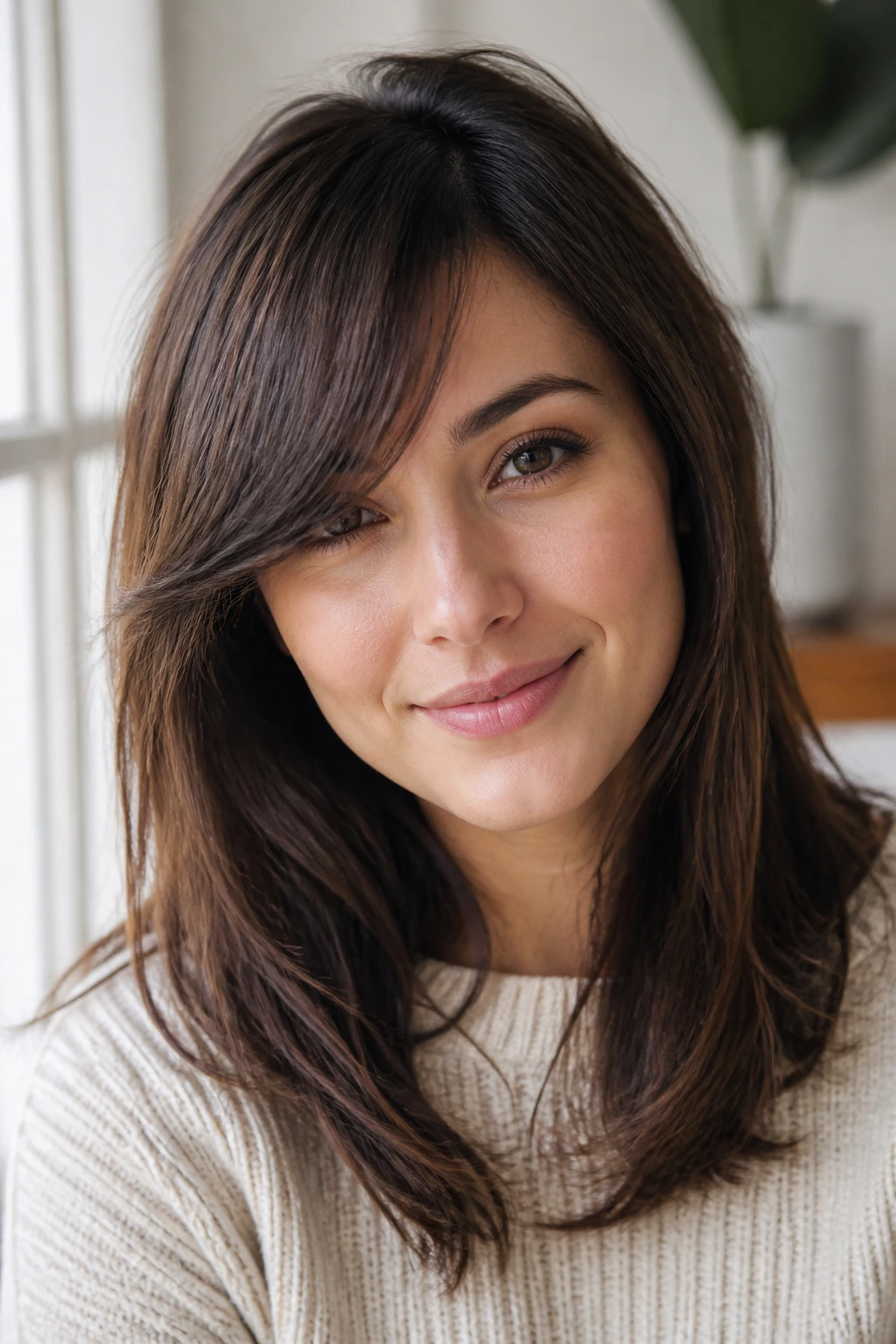
Side bangs have lasted because they solve a real problem without turning the whole haircut upside down. They soften, they frame, they move, and they can be tuned to suit fine hair, thick hair, curls, bobs, pixies, and long layers that need a little front-edge life.
The best version is always the one that looks like it belongs to your hair, not to a photo saved on your phone. Get the length right. Give the front a little direction. Let the ends move. That’s where the style stops feeling like a trend and starts feeling like part of the cut you actually live in.
