



Wavy hair has a funny habit of exposing bad color work and rewarding good color work. A chunky stripe can look cheap fast. A soft hand-painted veil, though, moves with every bend and dip in the hair, so the color seems to flicker instead of sit there and stare at you. That’s why balayage looks for wavy hair can be so good when the placement is thoughtful and so annoying when the lightener is slapped on with no plan.
The trick is not “make it blonder.” The trick is where the blonde, brunette, copper, or beige lands on the curve of the wave. Put brightness on the ridge and the bend catches it. Leave the root shadow a touch deeper and the whole shape looks fuller. Miss those details and you get either a flat sheet of color or a busy mess that fights the wave pattern.
I’ve always liked balayage on waves better than on pin-straight hair for one simple reason: waves do some of the styling for you. They break up the highlight line, soften regrowth, and make low-contrast tones look richer. But the look still needs a point of view. A salon chair is not the place for “just make it pretty.” That’s how you end up with random brightness around the face and not much else. The good stuff has structure.
Why This Collection Is Different
-
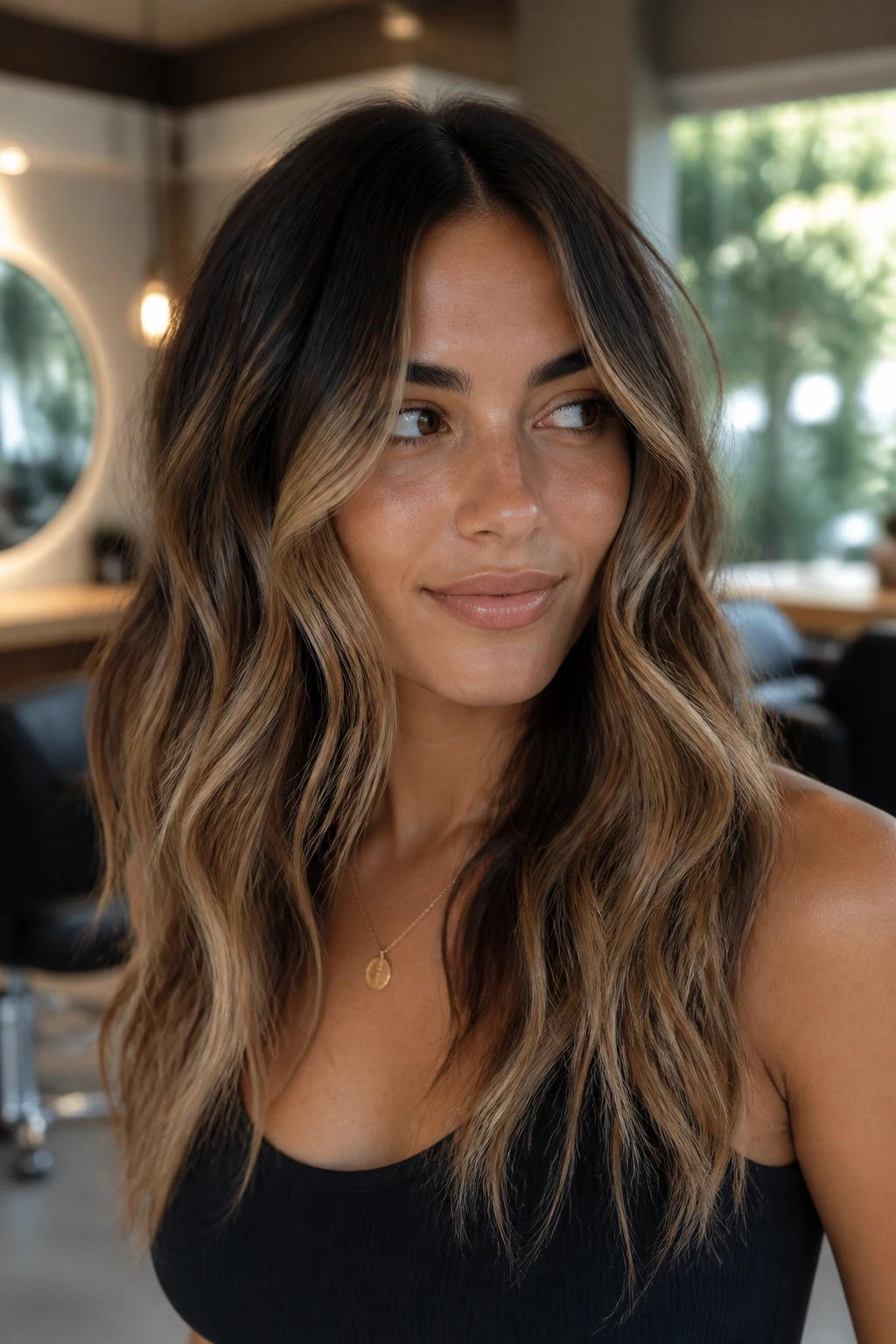
Wave-aware placement: Each look is chosen for how color lands on bends, not just how it looks in a flat photo.
-
Grow-out friendly: Most of these ideas keep the root softer, which means fewer hard lines when the color grows.
-
Tone variety: You’ll see warm, cool, smoky, beige, copper, and brunette-forward options, so there’s something here for nearly every base shade.
-
Salon and low-maintenance options: Some looks lean polished and glossy; others work even if you air-dry and call it a day.
-
Face-framing choices matter: Several ideas use a money piece or brighter front curve because wavy hair tends to open up around the face.
-
Real styling payoff: These aren’t just color names. They’re looks that change how the wave pattern reads from root to end.
1. Soft Beige Ribbon Balayage
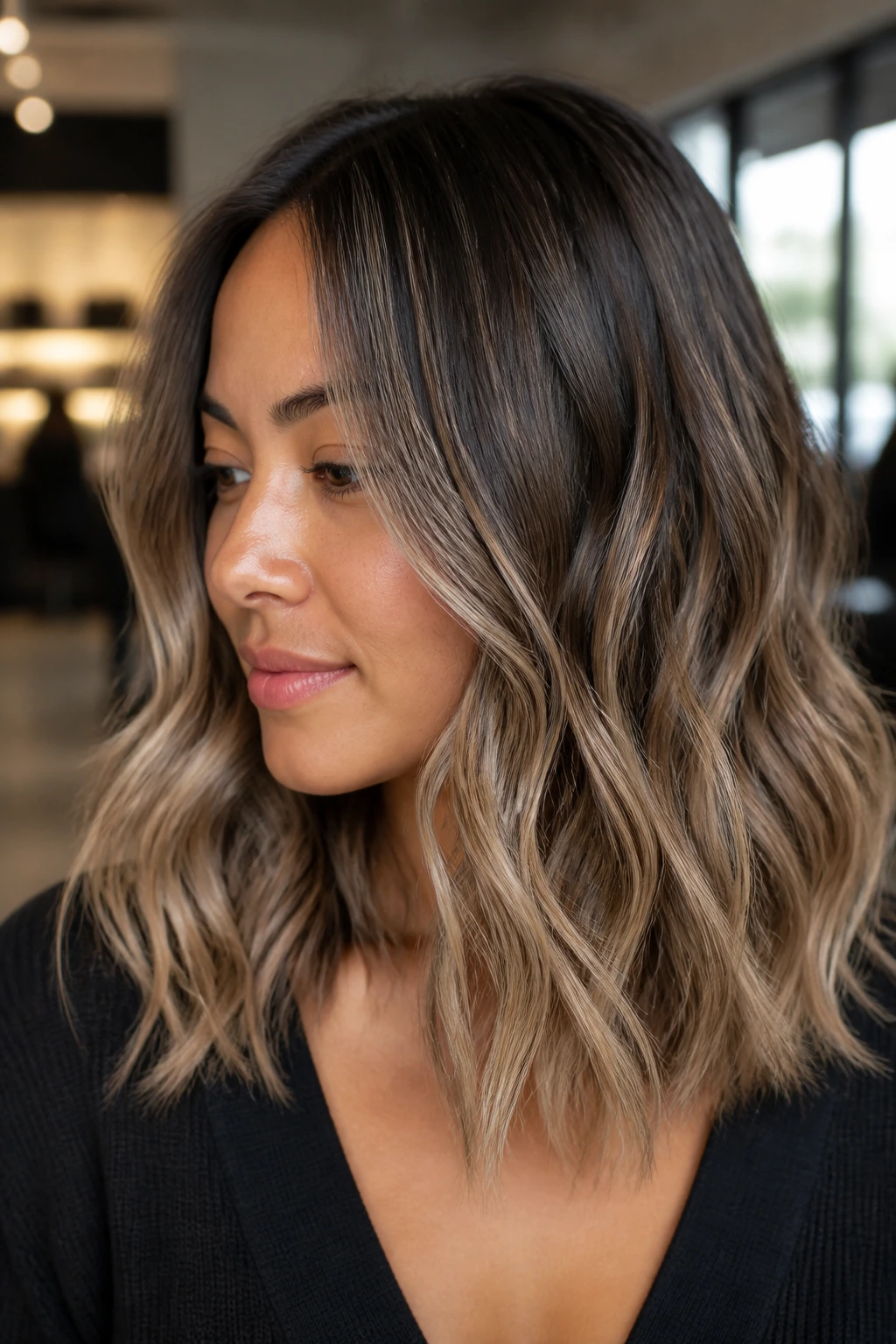
Soft beige ribbon balayage is the kind of color that makes wavy hair look expensive without looking loud. The shade sits between blonde and brown, which means the contrast stays gentle and the wave ridges catch the light in a very natural way. It’s especially good on medium brown bases that can take a lift without needing a big tonal shift.
Why It Works
The beige tone keeps the color from turning brassy, but it doesn’t go so ash that it drains the hair. On waves, that matters. Too much cool tone can make the bends look dusty. A soft beige ribbon woven from mid-lengths to the ends gives movement, not stripes.
This is one of my favorite choices for people who want brightness they can live with for months. Ask for lighter ribbons that start a few inches below the root and get denser toward the face and the ends. The grow-out stays soft, and the shape keeps reading clearly even on a loose bend or a second-day wave.
2. Caramel Melt Balayage
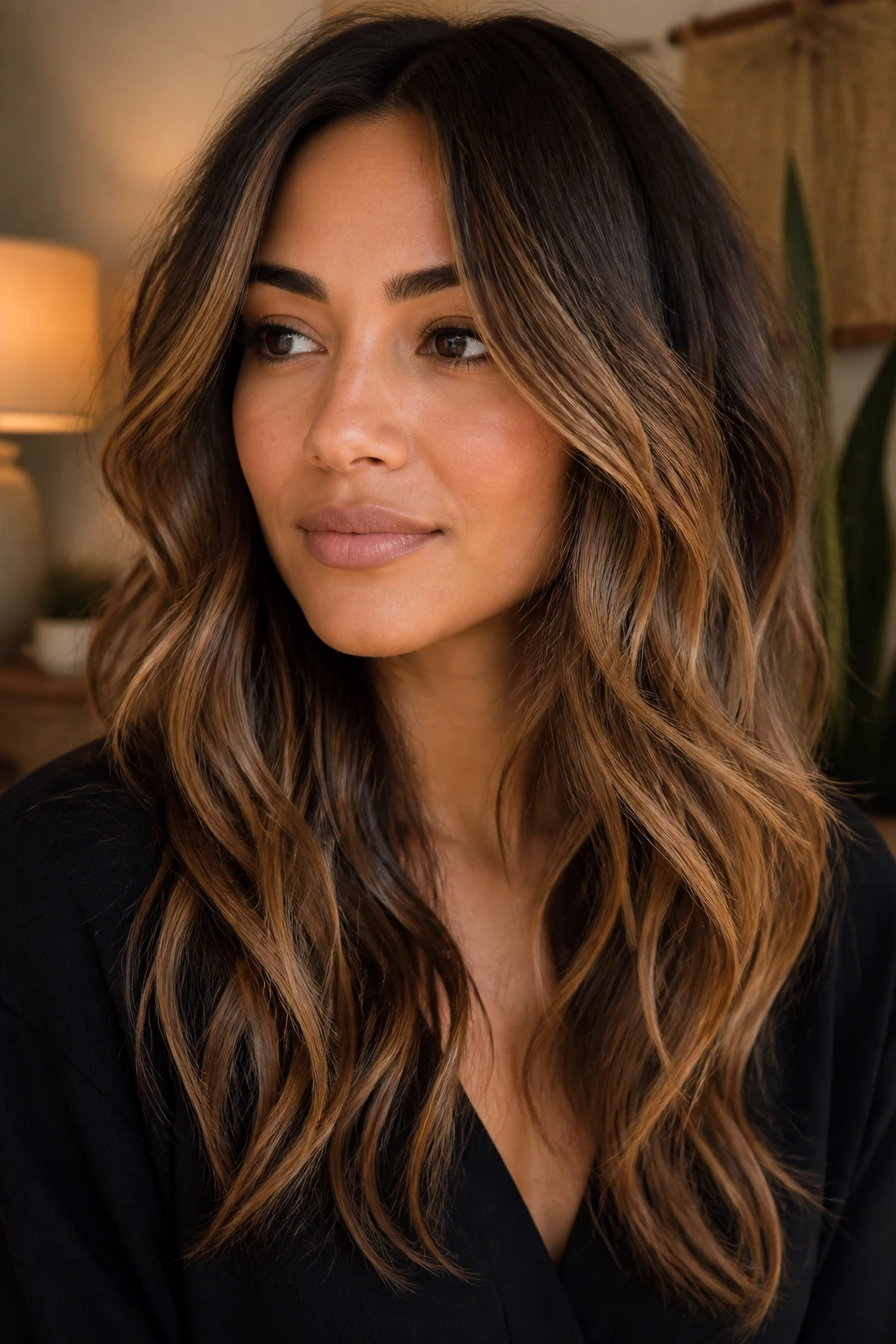
Caramel melt balayage has warmth, depth, and a little shine that looks especially good when the hair is finished in loose S-waves. It works beautifully on chocolate brown and medium brunette bases because the caramel isn’t jarring; it slides from one tone to the next.
The reason I like this on wavy hair is simple: caramel needs texture. Straight hair can make it look too uniform. Waves break the color into tiny panels of gold and tan, so the melt feels layered instead of painted on. Keep the root area deeper and let the caramel show up more on the mids and ends. That gives the wave pattern a soft shadow at the top and a richer glow once the hair starts moving.
3. Mushroom Brown Balayage
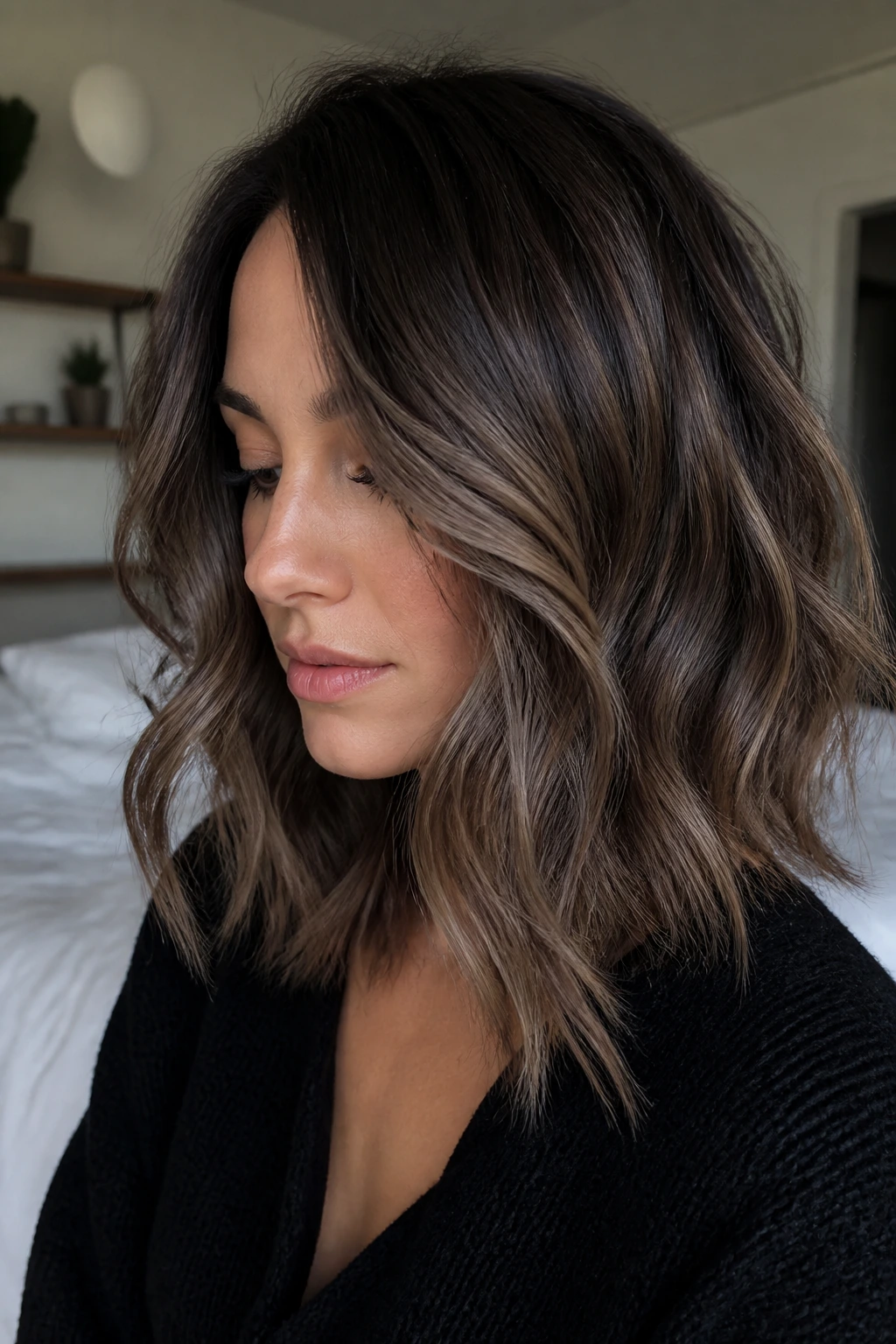
Mushroom brown is for people who want dimension without warmth shouting from the rooftops. It lives in that smoky brown zone with taupe, beige, and soft ash all in the mix. On wavy hair, the result can look almost velvet-like.
What Makes It Different
This one is not about brightness. It’s about tone control. If your natural base is already cool or neutral, mushroom brown balayage can make the wave pattern look more sculpted because the light and dark pieces stay close in value. The eye sees movement instead of contrast.
I’d choose this look for shoulder-length waves and longer lob cuts. The length gives the color room to breathe. Shorter hair can still wear it, but the effect gets choppier. A gloss every 6 to 8 weeks keeps the tone from drifting too warm, which is the whole point here.
4. Honey Veil Balayage
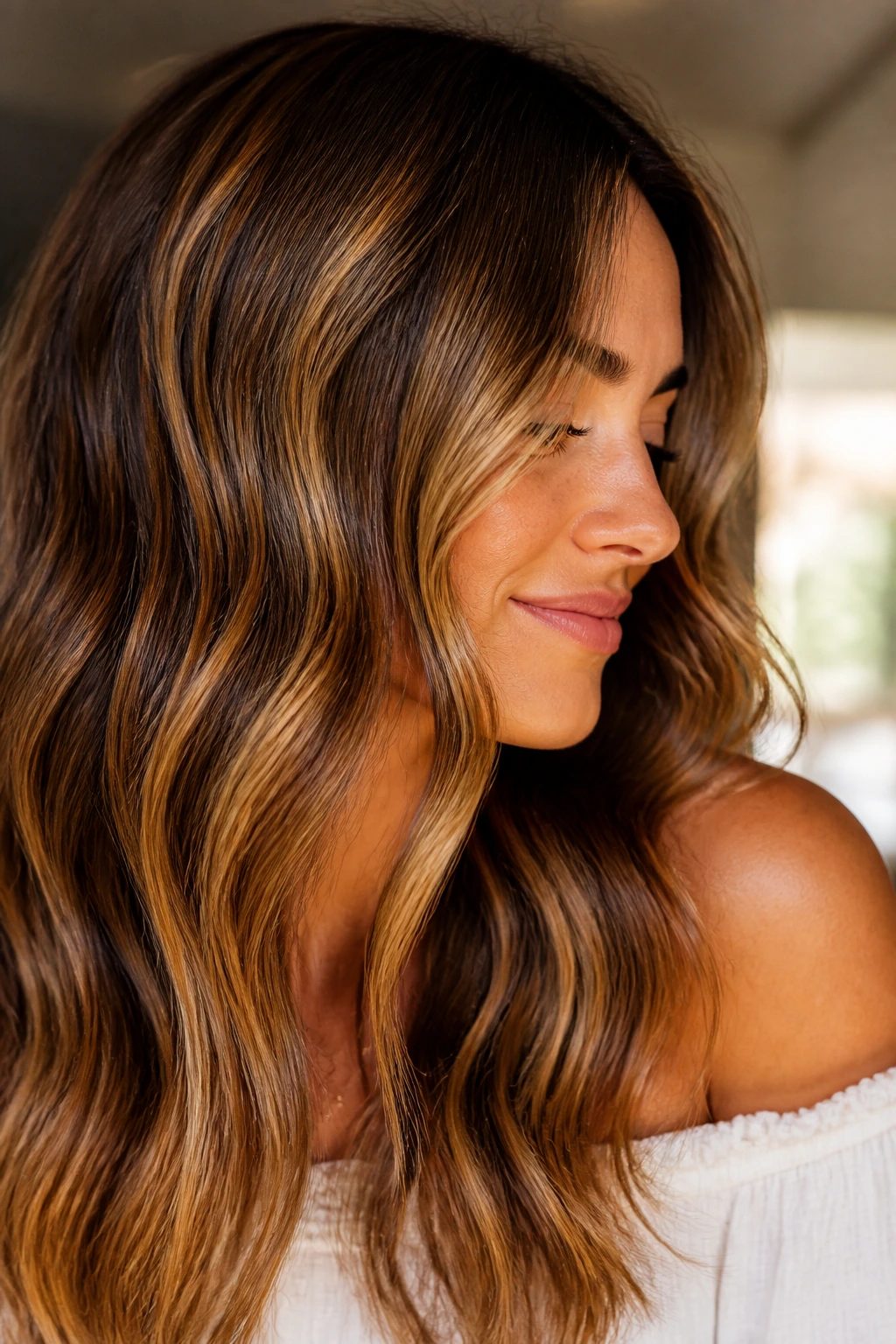
Honey veil balayage brings a warm, golden softness that flatters wavy hair in a very forgiving way. It’s brighter than caramel and less sticky-looking than heavy gold, which makes it a nice middle path for brunettes who want shine without going pale.
The wave pattern does most of the work. When honey sits on the top layer of each curve, the hair looks thicker and more alive. It’s the sort of color that shows up best in natural light, where the gold bits catch the bend and the brown underneath gives them something to sit on. If your hair tends to look dull by day three, honey is one of the easiest ways to wake it up.
5. Espresso with Toffee Ribbons
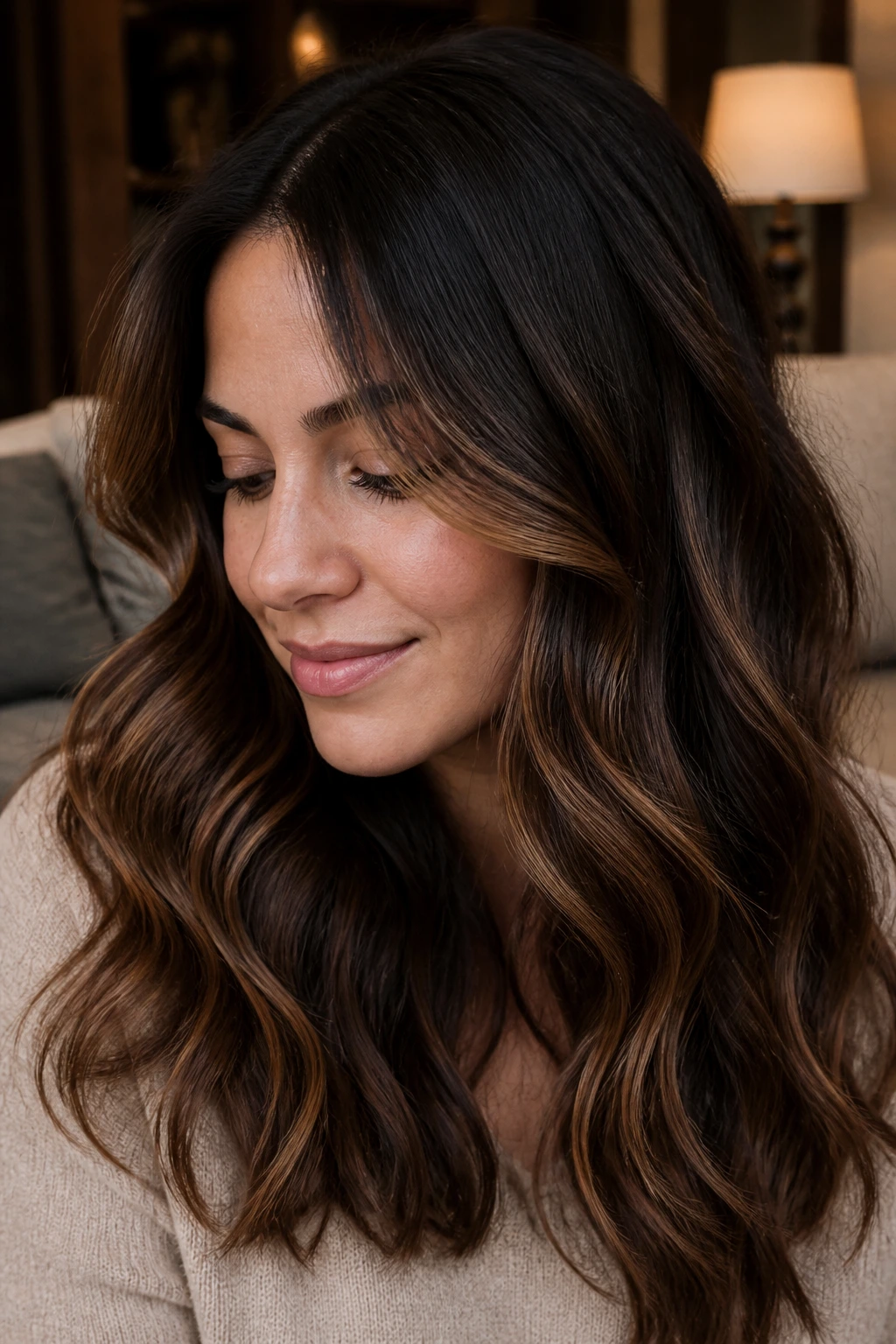
Espresso with toffee ribbons is contrast done the civilized way. The espresso base stays rich and dark, while the toffee pieces are woven in narrow, deliberate ribbons rather than broad blocks of color. That keeps the look dimensional on waves instead of streaky.
This is a smart pick if you don’t want to lose depth at the root. Deep brunettes often get over-lightened and end up looking striped. Here, the toffee stays strategic, especially through the mid-lengths and the face frame. On wavy hair, those lighter bits bend and catch the eye as the head turns. It’s a very good choice for people who like low-maintenance color but don’t want flat brown.
6. Bronde Beach Blend
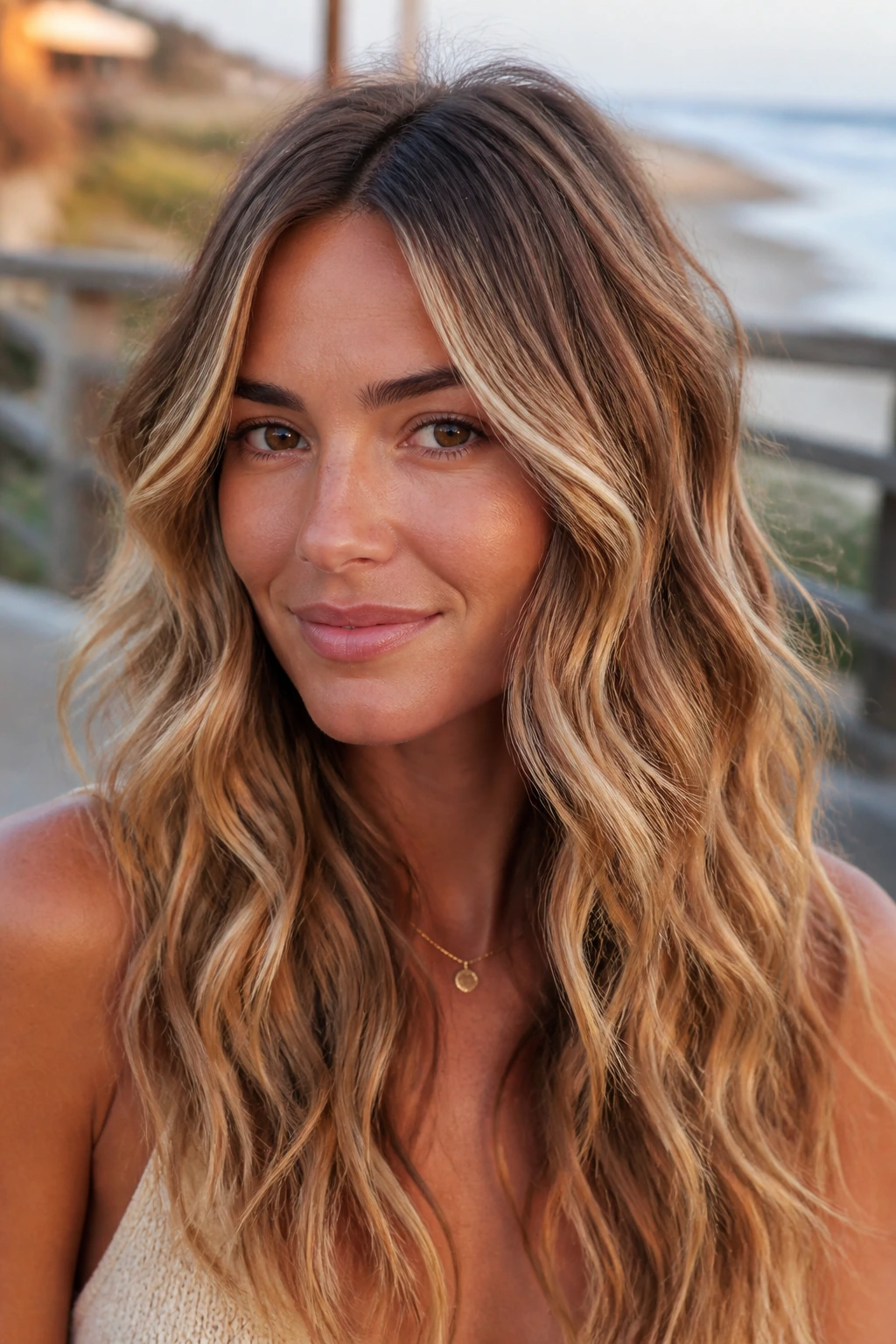
Bronde beach blend sits right where blonde and brunette shake hands and keep going. The color is soft, sunlit, and a little sandy, which makes it one of the easiest balayage looks for wavy hair to wear casually.
How to Use It
This look works best when the highlights are not too clean or too bright. Ask for a root shadow and a few face-framing pieces that are lighter than the rest, then let the mids and ends carry the sandy mix. The benefit on waves is that the color looks deeper in the troughs and lighter on the crests, so the whole head reads as moving even when the styling is simple.
If you air-dry, this is one of the easiest choices. The loose shape breaks up the color for you. If you curl it, use a 1-inch iron and alternate directions so the beachy finish stays soft, not pageant-perfect.
7. Ash Contour Balayage
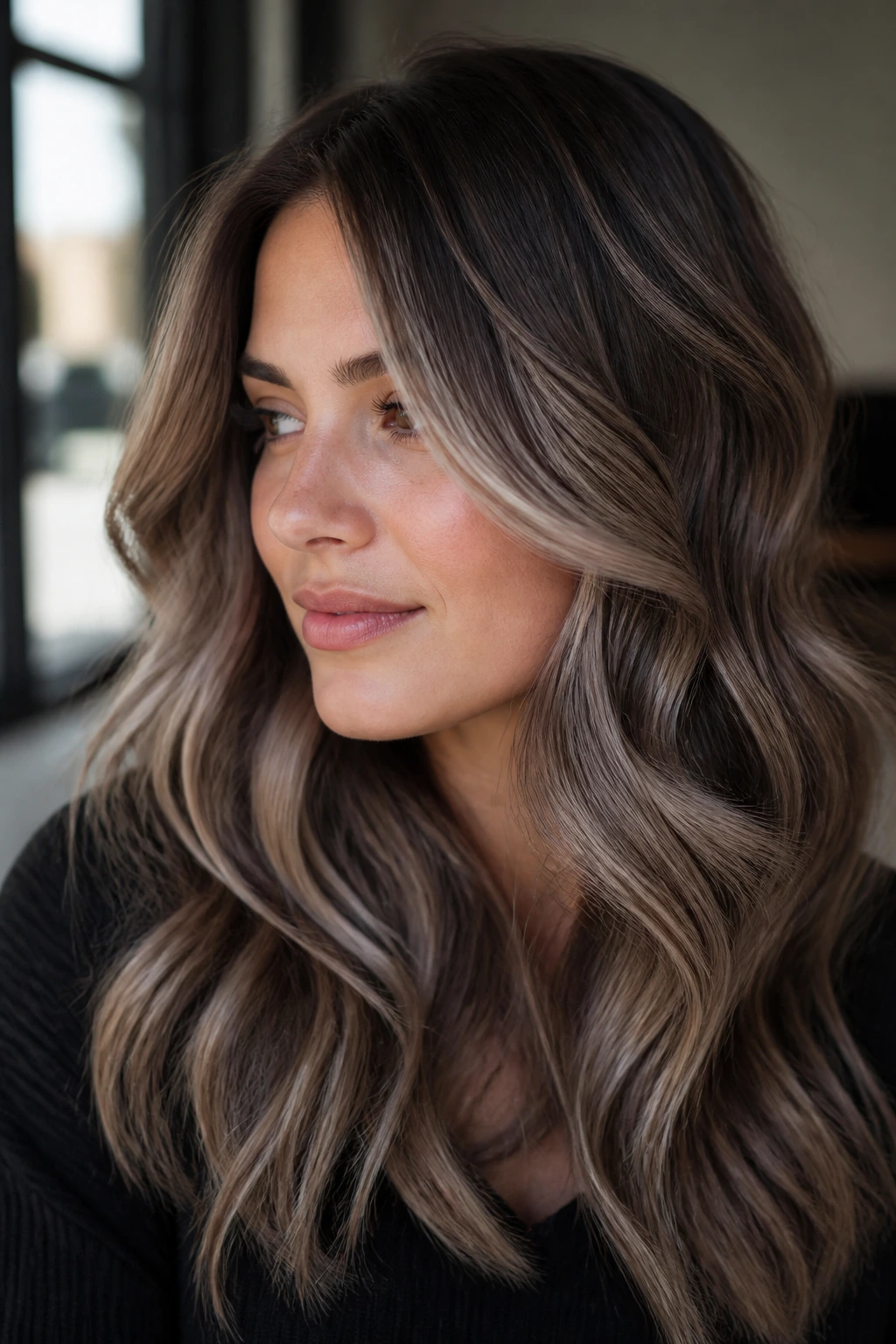
Ash contour balayage is for people who want the color to sculpt the haircut a little. The cool pieces are placed where the hair naturally bends around the face and through the outer layers, so the waves look more defined and slightly sharper.
This look can go wrong fast if the ash is too heavy. Then the hair looks gray in a bad way, not smoky in a good way. The fix is balance: keep the base rich and only use the cooler pieces where you want the eye to travel. On wavy hair, that usually means around the cheekbones, through the collarbone, and at the ends where the wave opens up.
8. Cinnamon Ends
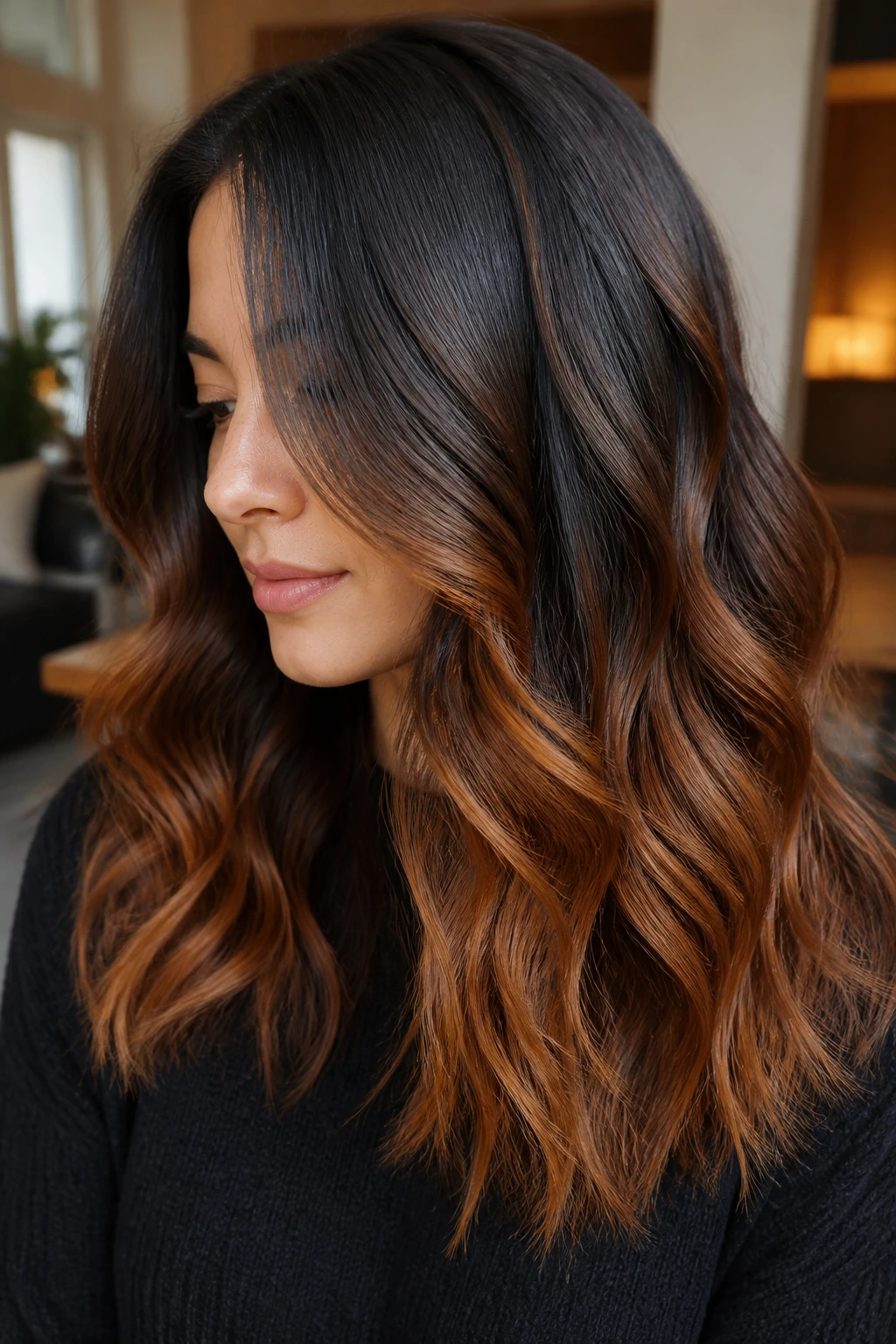
Cinnamon ends bring warmth to the lower half of wavy hair, and that warmth tends to look richer than a full-head copper because it doesn’t flood the entire head. The top stays deep, the middle eases into amber-brown, and the ends glow with cinnamon spice.
I like this on thick waves that can hold contrast. Fine hair can wear it too, but the lighter ends need enough texture to keep from looking thin. A soft wave pattern makes the cinnamon pieces look woven in, not painted on top. If you want a fall-colored result without going full red, this is one of the prettiest ways to do it.
9. Copper Apricot Sweep
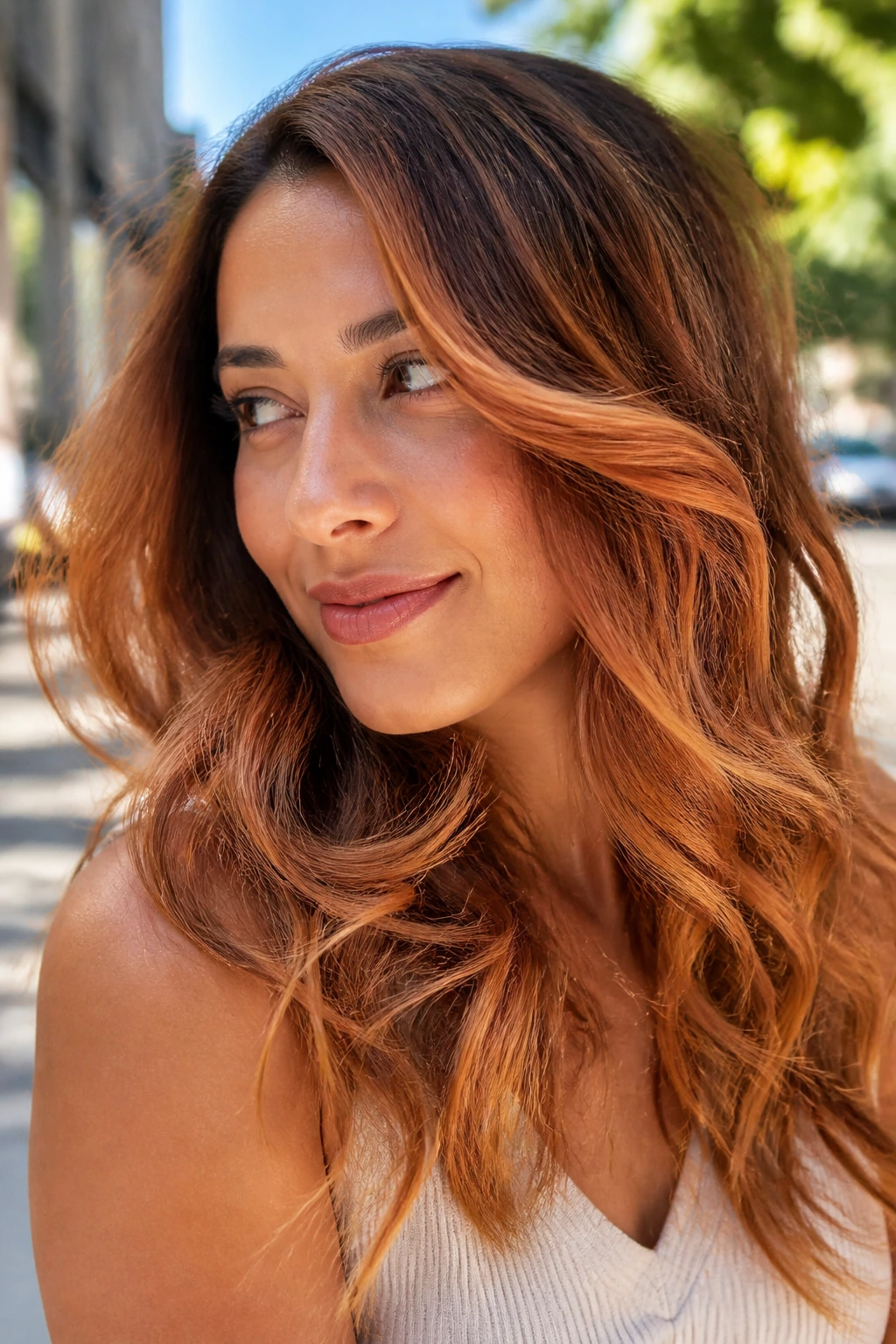
Copper apricot sweep is brighter, fresher, and a little cheeky. It brings orange-gold warmth through the front and outer layers, then softens as it moves back toward the crown. On wavy hair, that apricot tone has a way of glowing when the light hits the bend.
A lot of people think copper has to be dramatic. It doesn’t. Here, the apricot is used in thin, airy strokes so the result feels lively rather than dense. If your natural base is medium brown or dark blonde, the shift can be surprisingly wearable. The hair moves, the copper flickers, and the whole thing looks more alive than a solid red tone ever could.
10. Champagne Brunette Balayage
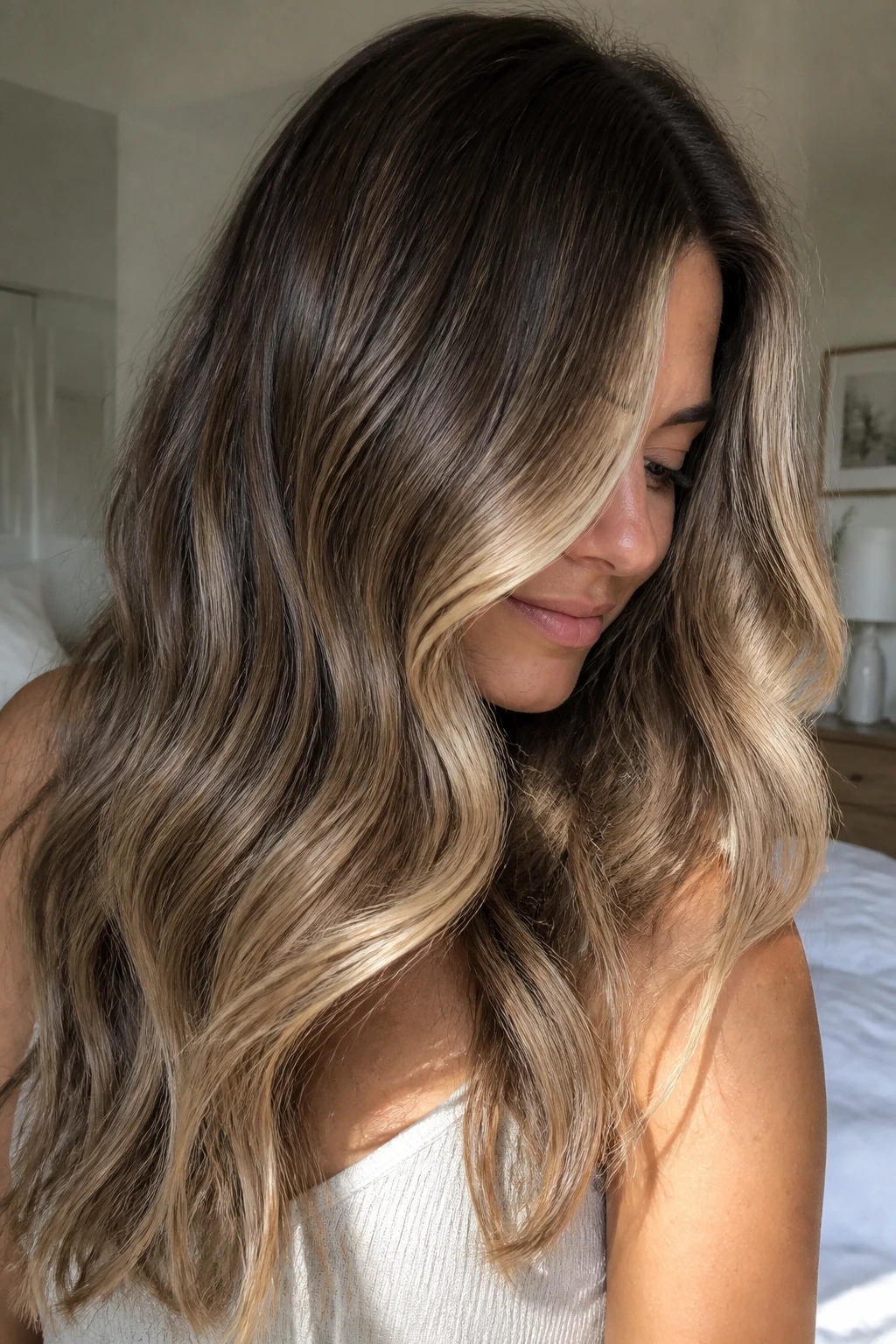
Champagne brunette balayage is what happens when brunette hair wants to look lighter but not pale. The champagne pieces sit in that soft beige-gold territory that flatters both cool and warm skin tones without screaming for attention.
Why It Suits Waves
Waves love this kind of tone because champagne is reflective. It flashes in the raised parts of the curl pattern and then dims in the dips, which creates an almost ribboned shine. That gives the illusion of thickness.
Keep the crown a little darker and ask for the lightest bits around the face and the lower lengths. If the blonde creeps too high, the whole head can lose shape. A beige gloss every few weeks keeps the champagne from turning too yellow, which is the one thing that can wreck the look.
11. Mocha Lowlights and Highlights
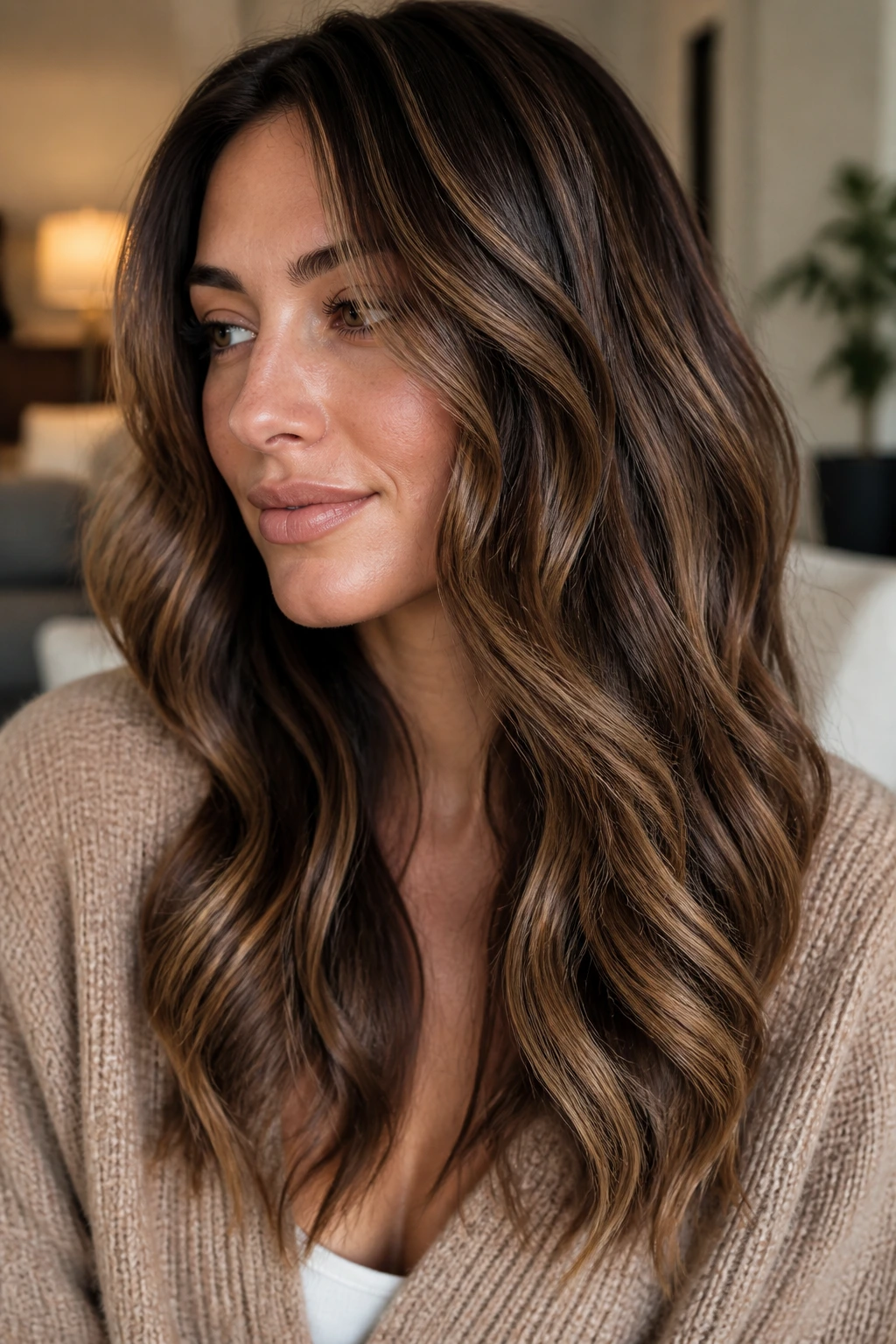
Mocha lowlights and highlights are for wavy hair that needs dimension more than brightness. Instead of pushing the color lighter all over, this look alternates deep mocha with softer milkier brown pieces so the hair reads layered from root to end.
That contrast matters on waves. The darker strands make the bends look deeper, and the lighter ones pop on the surface. The effect is subtle in photos and richer in motion, which is usually where good balayage lives anyway. If your hair has been over-lightened before, this can be a very smart reset. It adds structure back into the pattern.
12. Sandstone Balayage
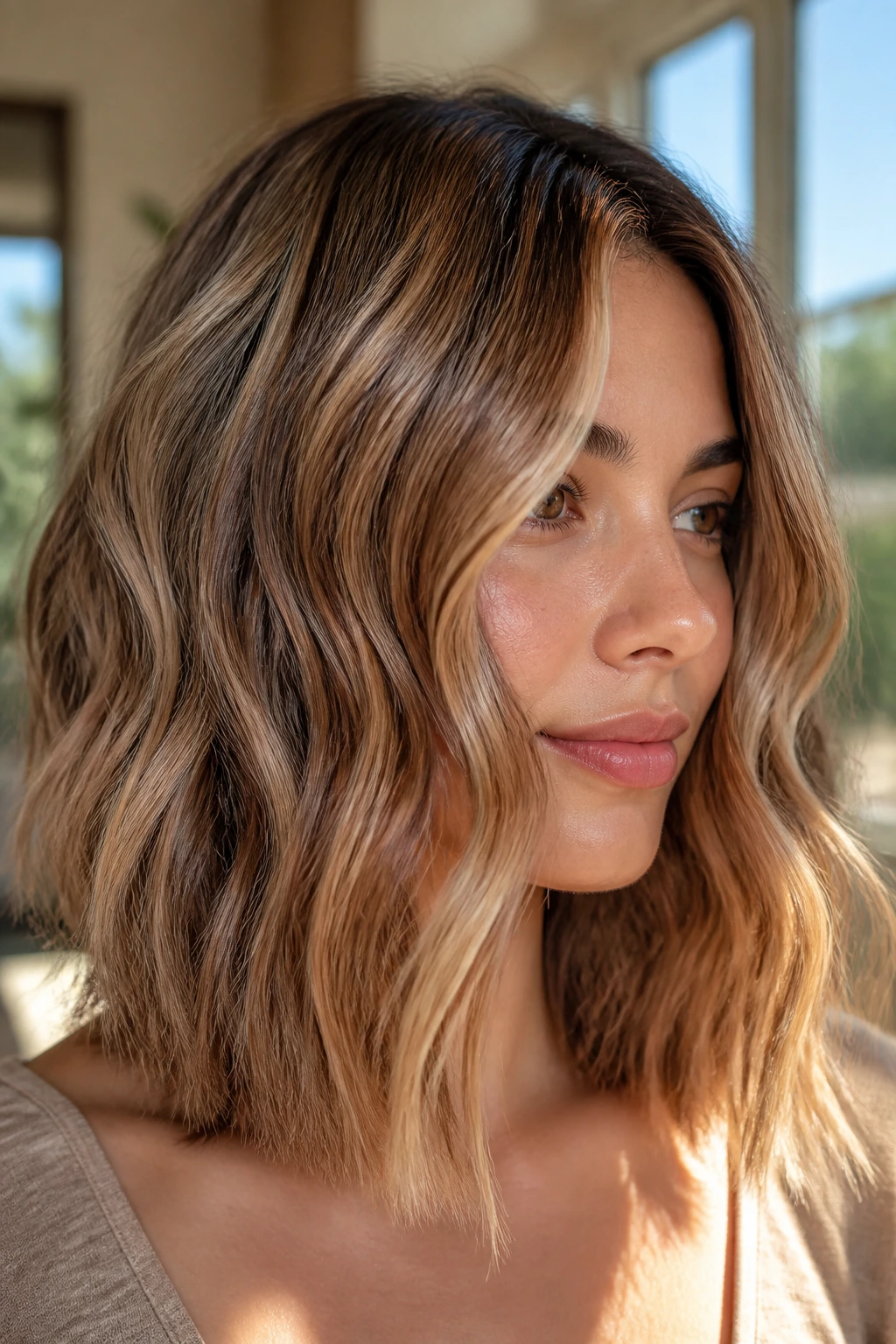
Sandstone balayage has a dry, mineral feel to it—neutral, soft, and slightly sun-faded. It mixes beige, brown, and a whisper of gold so the finish looks grounded rather than icy or sugary.
This one is especially nice on medium-length waves because the color changes subtly as the hair bends. You don’t need big contrast for it to work. In fact, too much contrast would ruin the whole mood. Ask for the lightest pieces around the face and a gentler scatter through the back layers. The result is clean, wearable, and much less high-maintenance than a full blonde transformation.
13. Maple Money Piece
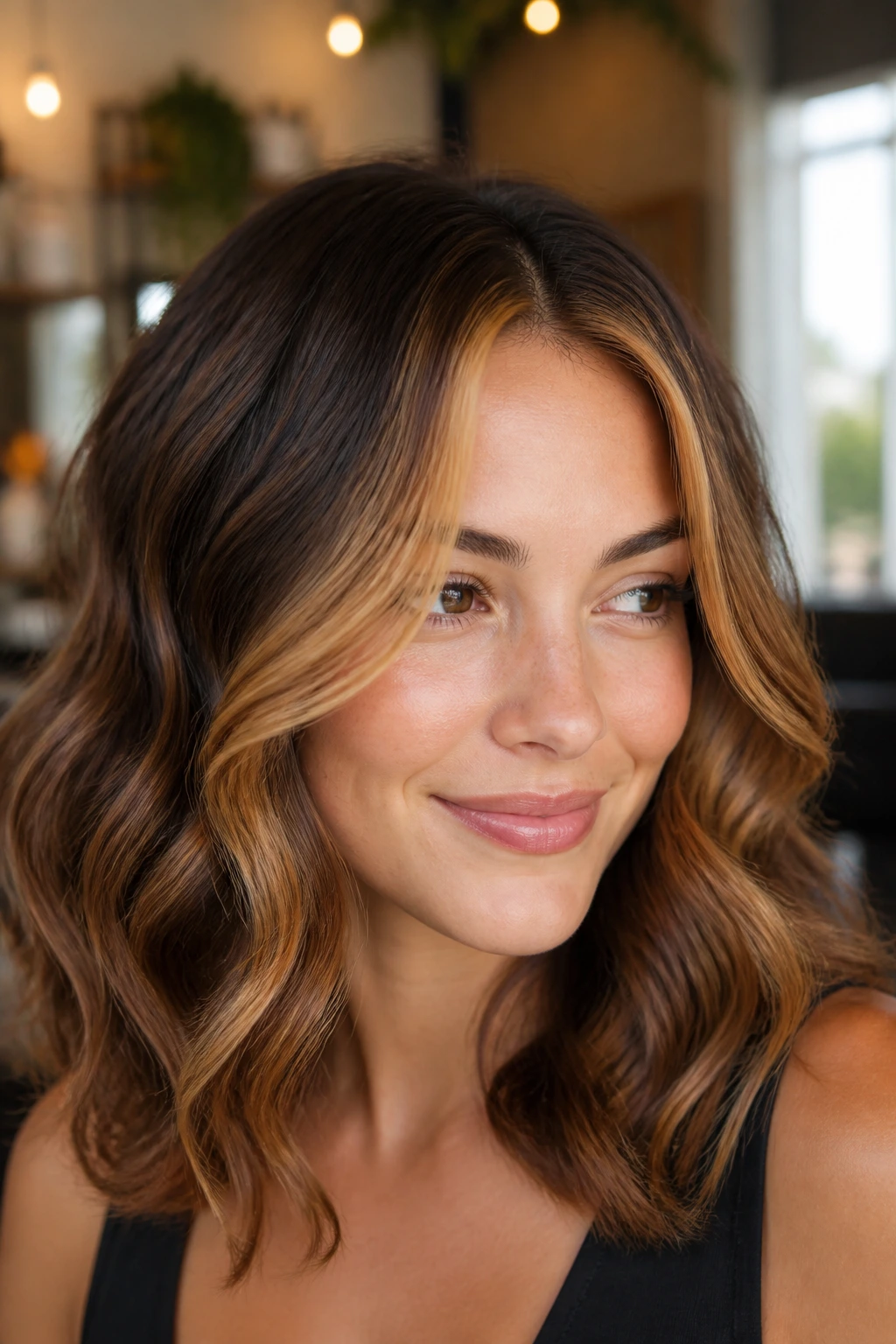
A maple money piece gives the front of wavy hair a warm, lit-from-the-inside look. The front sections are painted with a maple-brown-to-golden transition, which means the face frame reads brighter without turning the rest of the hair into a full highlight job.
This is a good move if you want a visible change but not a massive appointment. The money piece can warm up the complexion and bring shape back to a haircut that’s grown out a little. On waves, it works because the front sections curve around the face and catch the color at different angles. That tiny bit of movement makes the whole style feel intentional.
14. Rose Gold Brown Waves
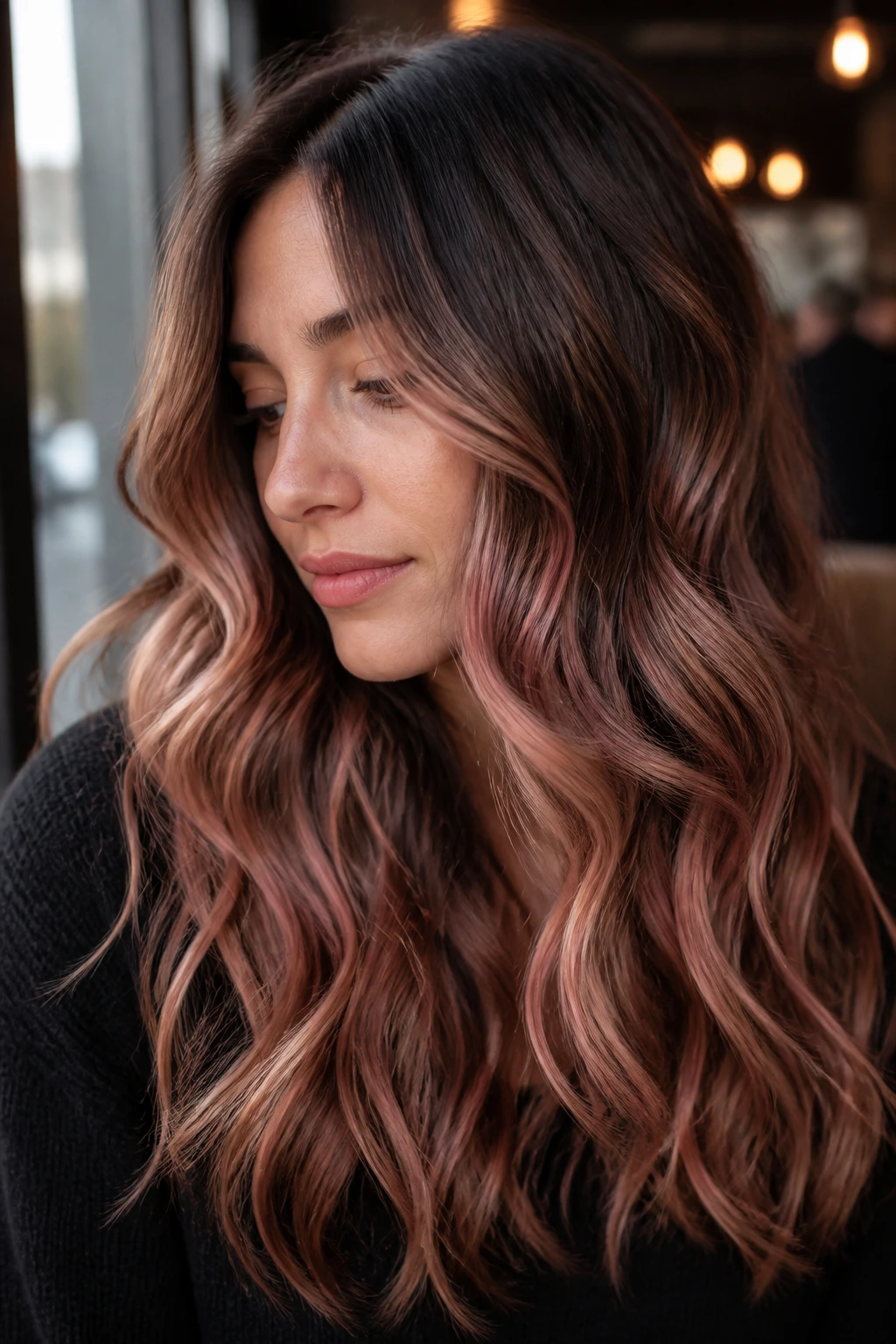
Rose gold brown waves are softer than pink hair and more playful than neutral beige. The rose tone sits on top of a brunette base like a warm blush, especially when the lightener is kept narrow and the tone is glossy.
I wouldn’t call this subtle. I would call it refined enough to live in the real world. Waves keep the rose from looking flat by breaking it into little flashes of warmth. If your base is medium brown, the color will read richer. On lighter brunettes, the rose can turn more visible and slightly brighter. Either way, a cool shampoo can flatten it, so use it sparingly.
15. Walnut Dimension
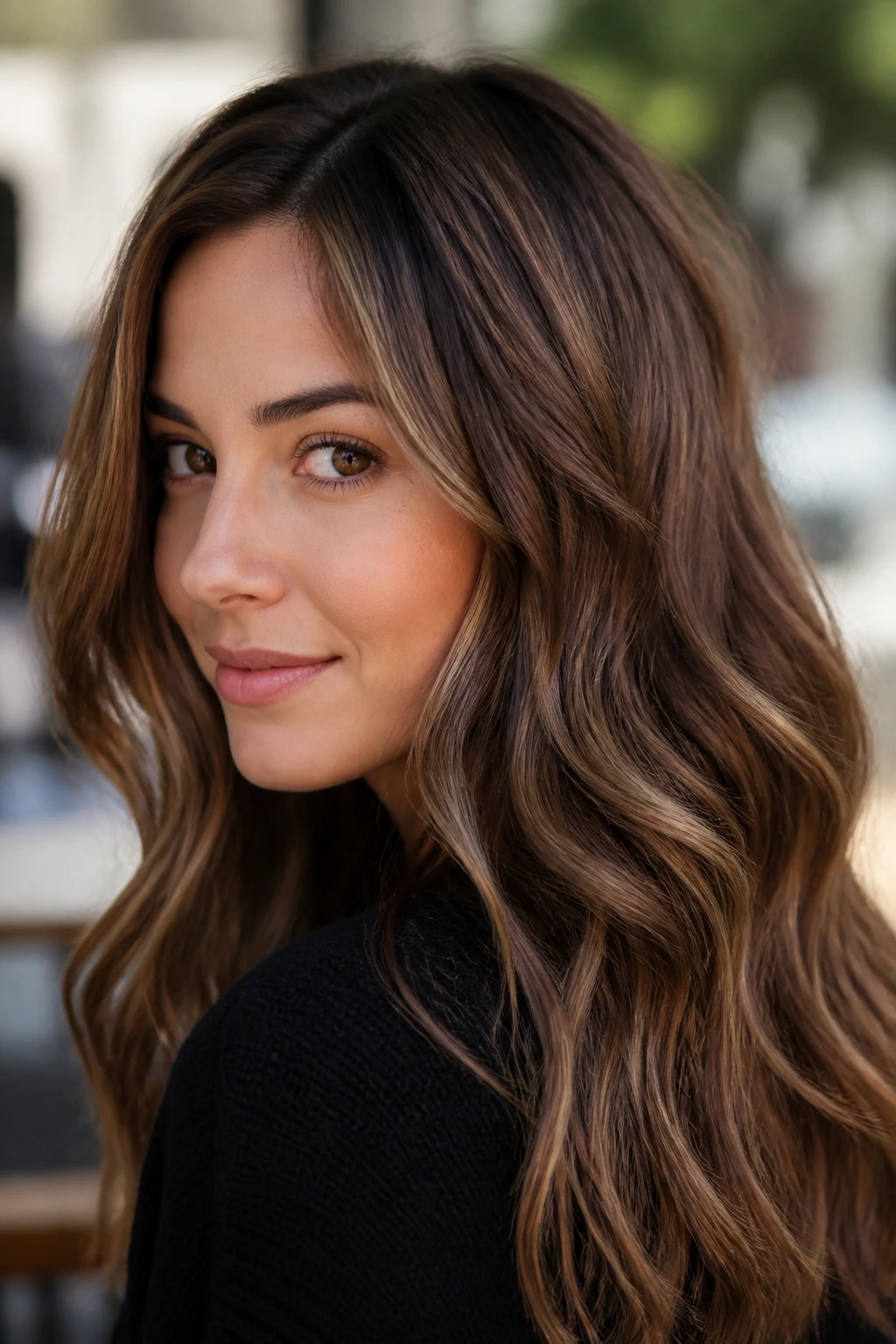
Walnut dimension is the quiet one in the group. It uses several walnut-brown shades, not a big blonde shift, so the hair looks thicker and more textured rather than lighter.
That’s why it’s such a strong choice for loose waves. The color difference is subtle enough that the shape does the talking. If you’ve got lots of hair but it tends to fall in a single block of color, walnut dimension breaks that block up without forcing a dramatic change. It’s the sort of color that people notice when you move, not when you stand still. I like that.
16. Golden Butter Balayage
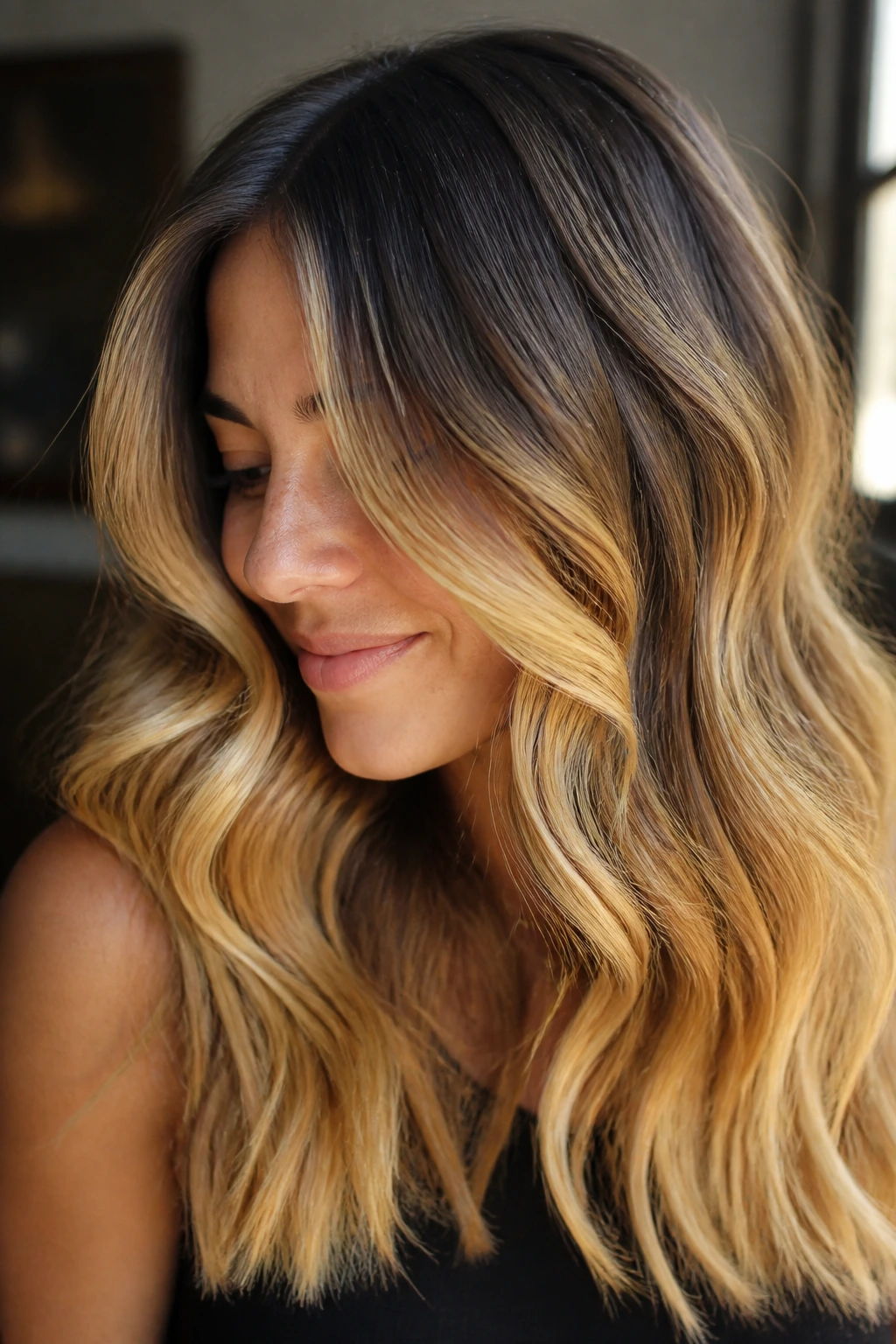
Golden butter balayage leans luminous and soft, with a warm yellow-gold cast that flatters wavy hair when the lift is clean and the root is kept deeper. It’s brighter than honey and less beige than champagne.
The key here is restraint. Too much gold can slide into brass quickly. Done well, though, it gives the waves a buttery shine that looks richest at the ends and around the face. This is one of the better choices for lighter brunettes who want to go blonde without losing warmth. A gloss in the same tonal family keeps it creamy instead of streaky.
17. Smoky Beige Brunette
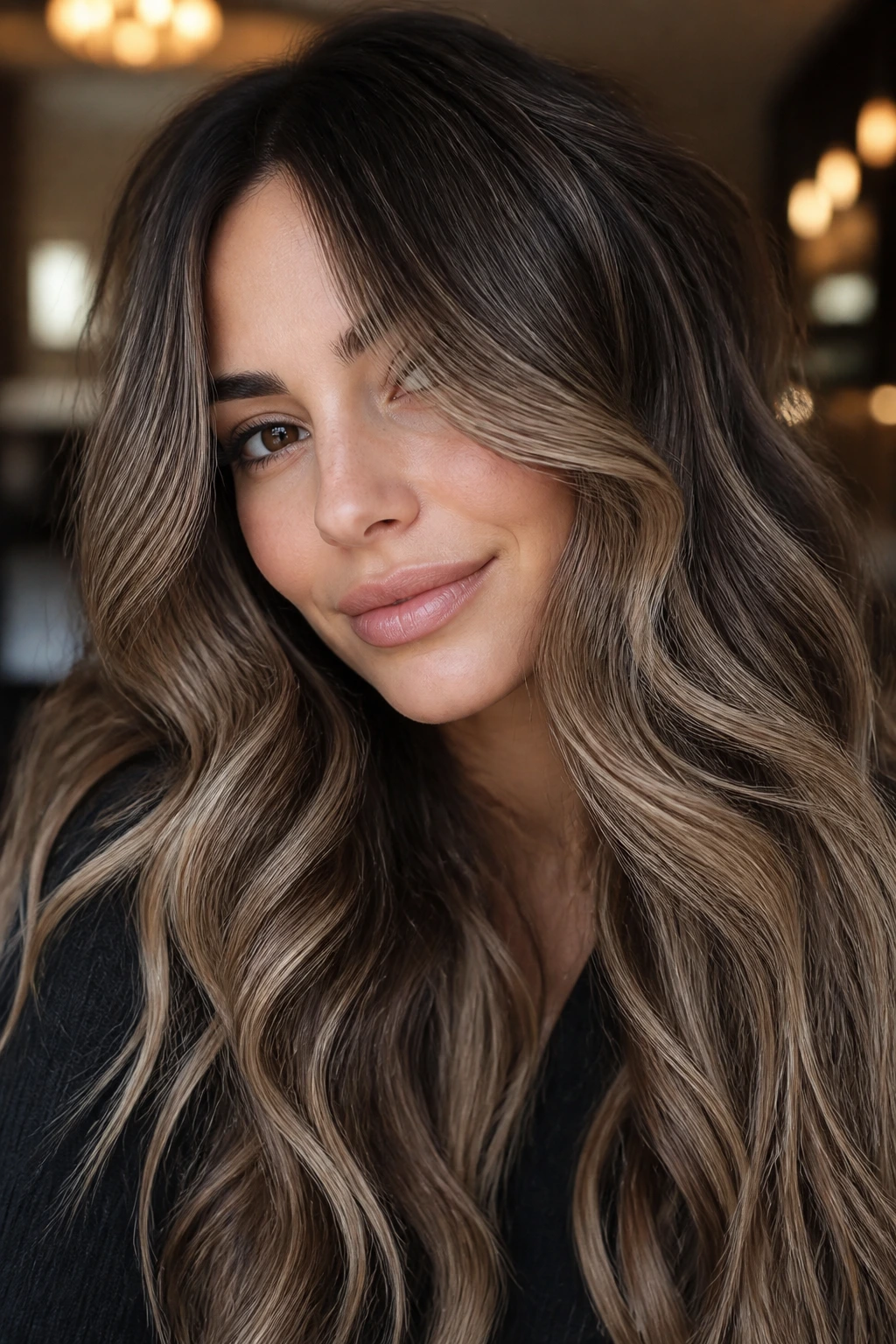
Smoky beige brunette is what I’d call a smart color. It keeps the base brunette, adds beige ribbons, and mutes the warmth just enough to feel polished. On wavy hair, that cooler-neutral mix gives a very airy finish.
It’s also easy to wear with less styling. Air-dried waves show off the depth because the beige pieces sit softly on top of the darker strands. If you heat-style it, use large sections and avoid over-curling. The goal is movement, not tight ringlets. This is a good salon choice if you want visible dimension and hate high-contrast blonde stripes.
18. Bronze Glow Balayage
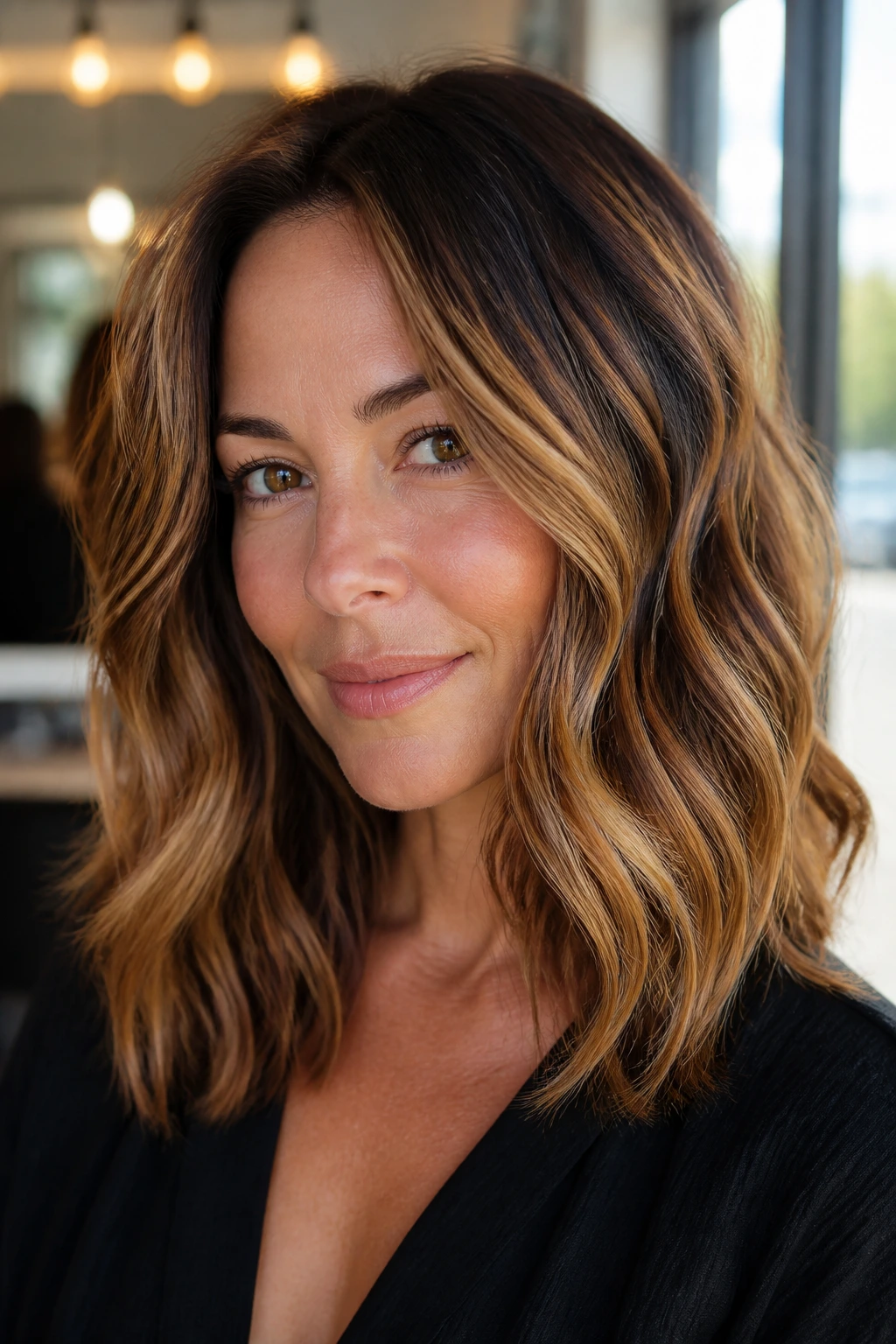
Bronze glow balayage has a richer, more metallic warmth than caramel. Think brown with a copper-gold sheen. On waves, bronze gives a reflective finish that moves from root to tip without looking flat.
The Science Behind the Look
Bronze works because it sits in the middle of the warmth range. It reflects light better than chestnut and stays deeper than a full copper. That middle ground is useful on waves, where the lighter pieces need enough depth around them to feel dimensional.
If your hair already pulls warm, bronze can be gorgeous. If it runs red easily, the stylist needs to stay controlled with the toner. The real payoff is in the finish: loose waves, a shine spray, and a soft bronze glaze can make the whole head look like it has a second layer of light.
19. Chestnut Fade
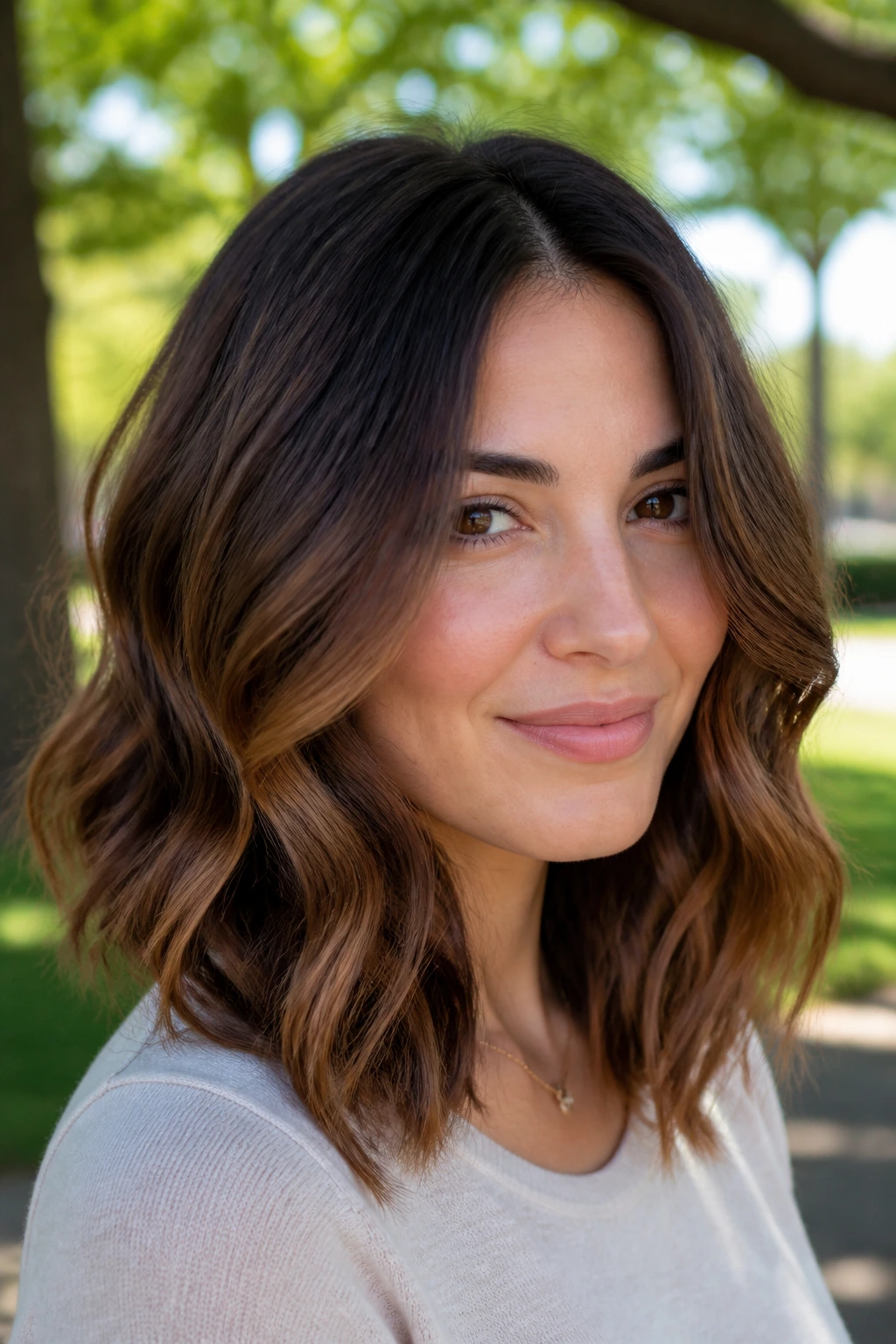
Chestnut fade is a slow shift from deep brown at the roots into softened chestnut at the ends. There’s no harsh break, no chunky highlight line, and no noisy contrast. Just a graceful fade that follows the wave pattern.
That makes it a good fit for people who want a natural look but don’t want their color to disappear into the haircut. The chestnut pieces catch on the outer curves of the wave, so the hair looks more expensive in motion than it does in a flat photo. If your style is shoulder-length or longer, the fade has room to show. Shorter cuts can wear it too, but the effect is tighter.
20. Icy Beige Bronde
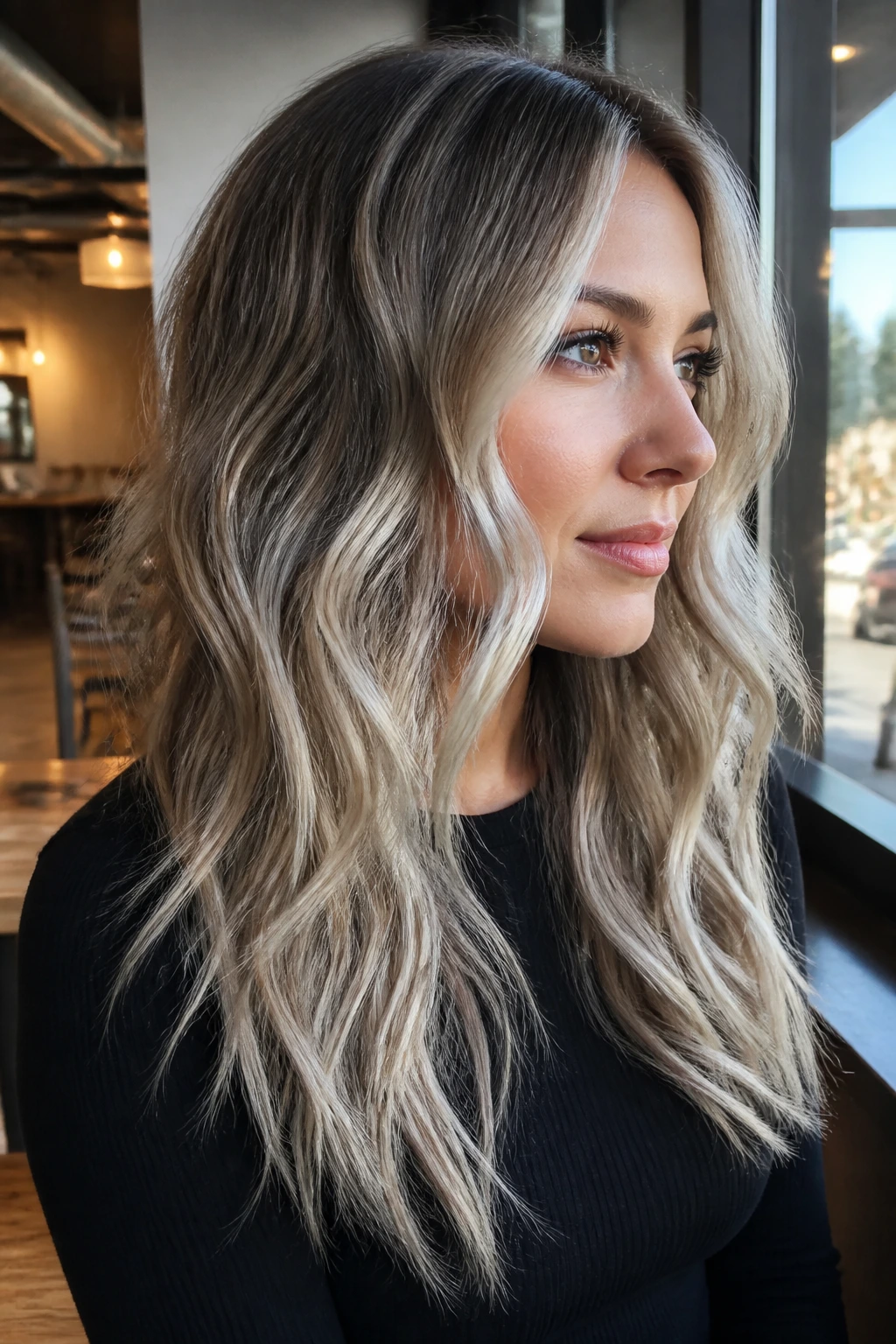
Icy beige bronde is cooler, cleaner, and more edited than the warmer bronde looks. The beige keeps it wearable; the icy edge keeps it from reading muddy on brunette hair.
This one needs a careful hand. Wavy hair can eat cool tones if they’re painted too softly or toned too dark. The trick is to keep the beige bright enough to stay visible, especially on the top layers. Around the face, a few brighter pieces keep the style awake. If you like clean shirts, silver jewelry, and a cooler finish overall, this is a sharp choice.
21. Terracotta Wave Lights
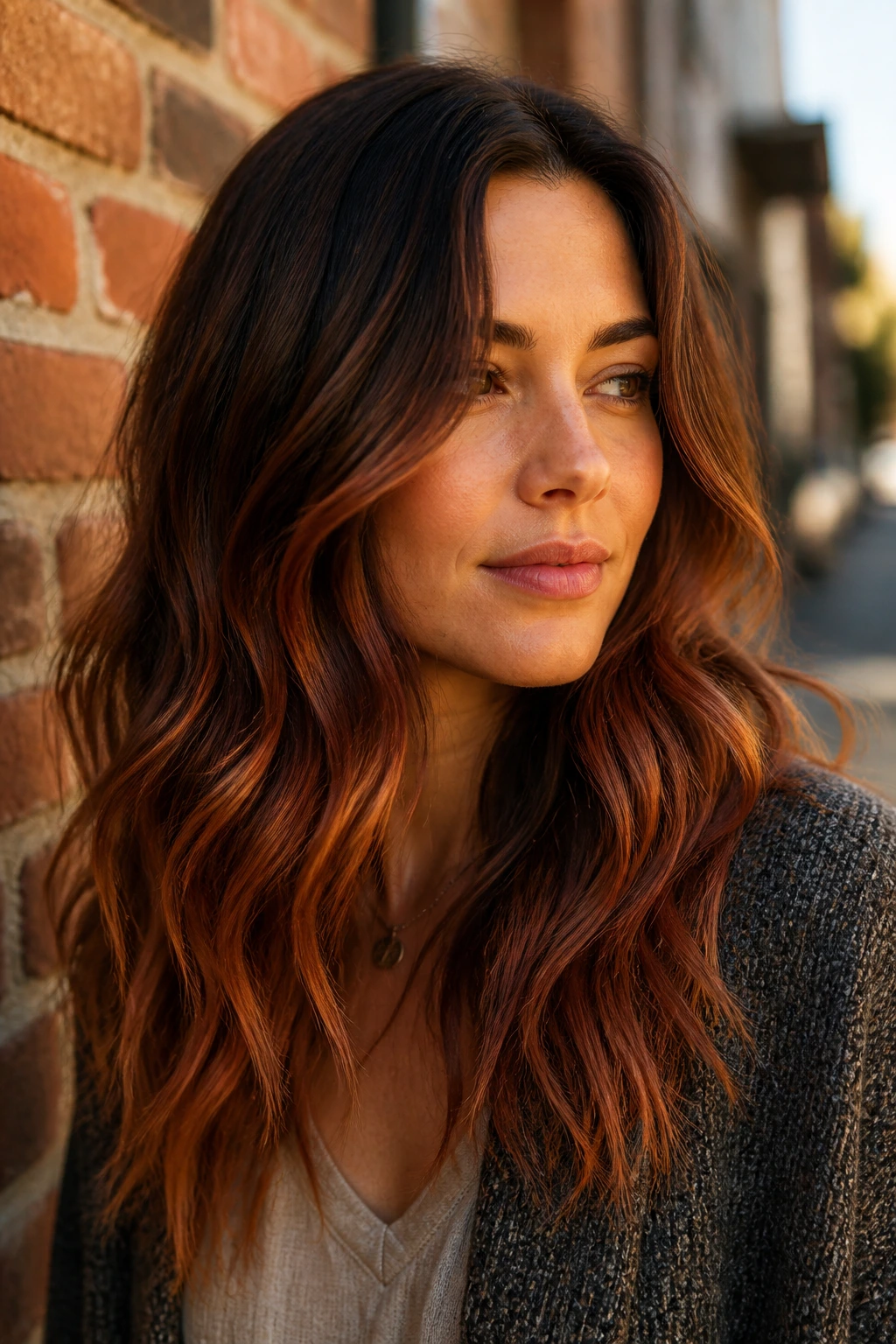
Terracotta wave lights are rich, earthy, and far more interesting than plain copper. The color reads like clay and brick mixed with warm brown, which gives wavy hair a grounded, sun-baked feel.
I like terracotta because it’s not trying to be blonde. It’s its own thing. The wave pattern lets the warmer pieces peek through in a flickering way, almost like light through fabric. Ask for hand-painted panels around the mid-lengths and ends, with the root staying deep enough to anchor the color. That contrast keeps the terracotta from looking flat.
22. Cocoa and Honey Drizzle
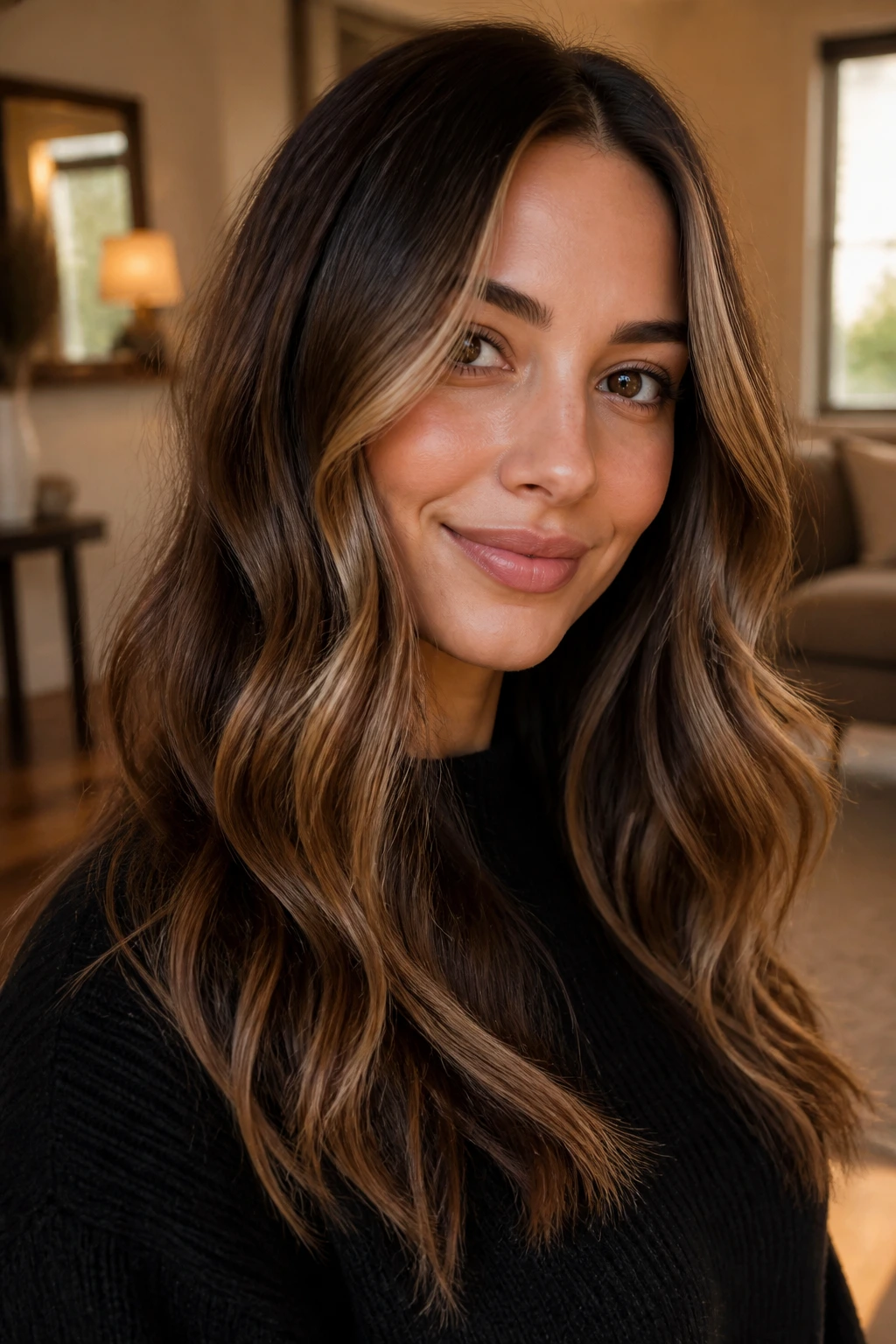
Cocoa and honey drizzle is a classic brunette-balayage pairing, but the name matters because the placement matters. Cocoa gives the base richness; honey comes in as narrow threads that sit lightly on the outside of the wave.
The result is one of the easiest looks to wear if you don’t want a dramatic salon moment. Wavy hair gives the honey enough movement to stand out. Straight hair often makes this sort of color look too neat, almost stripy. With waves, it becomes softer and more blended. A good stylist will keep the honey more concentrated around the face and on the ends where the bend is strongest.
23. Auburn Ribbon Balayage
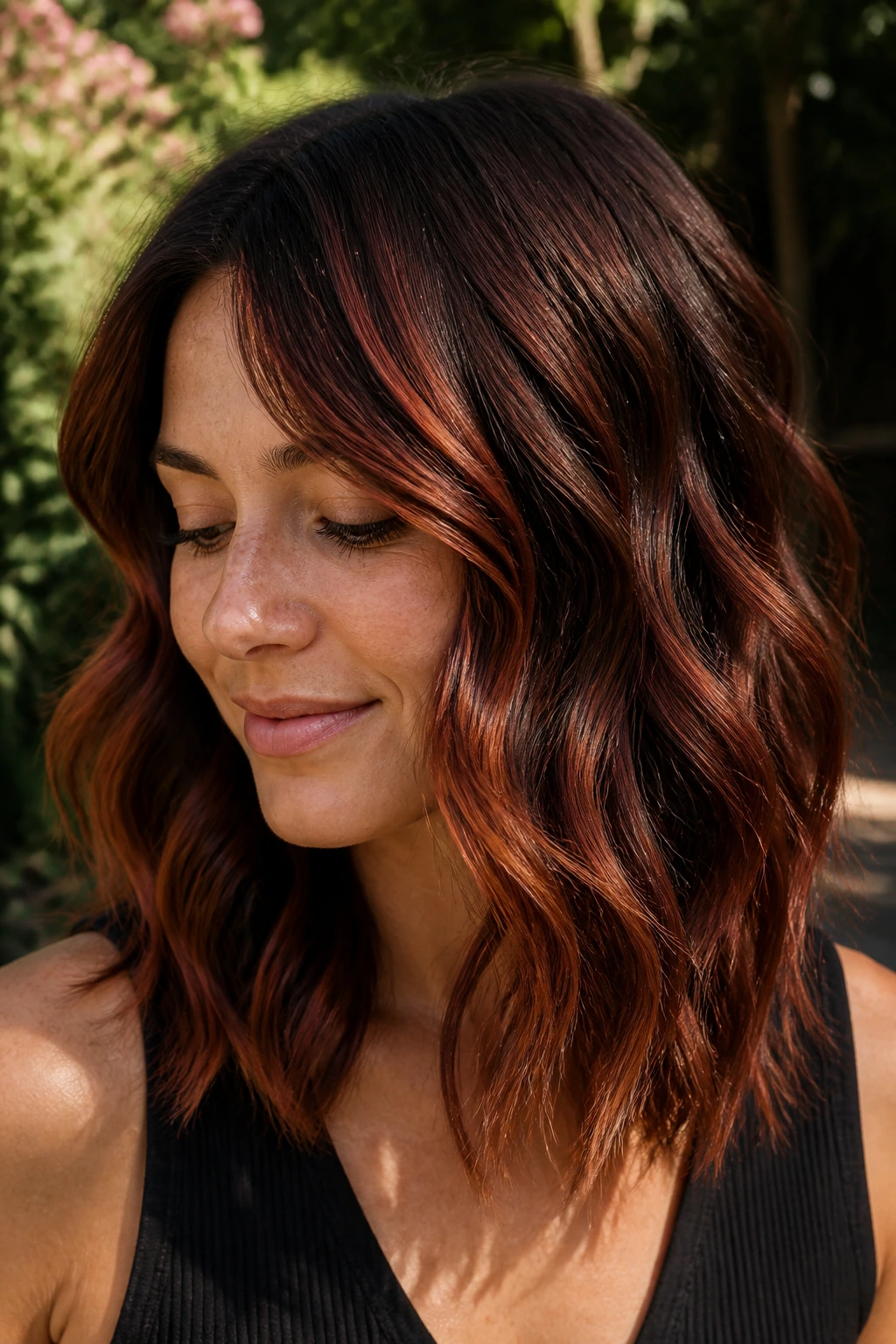
Auburn ribbon balayage is for people who want red without committing to full red. The auburn is pulled through in narrow ribbons so the hair keeps depth and the wave pattern gets a warm, copper-brown glow.
This shade looks particularly good on natural brunettes because the red lives inside the brown instead of sitting on top of it. On wavy hair, that means the auburn shows up in flashes when the light hits the curves. It’s warmer than cinnamon and less orange than copper apricot. If you want warmth that feels rich instead of flashy, this one has a strong case.
24. Vanilla Cream Ends
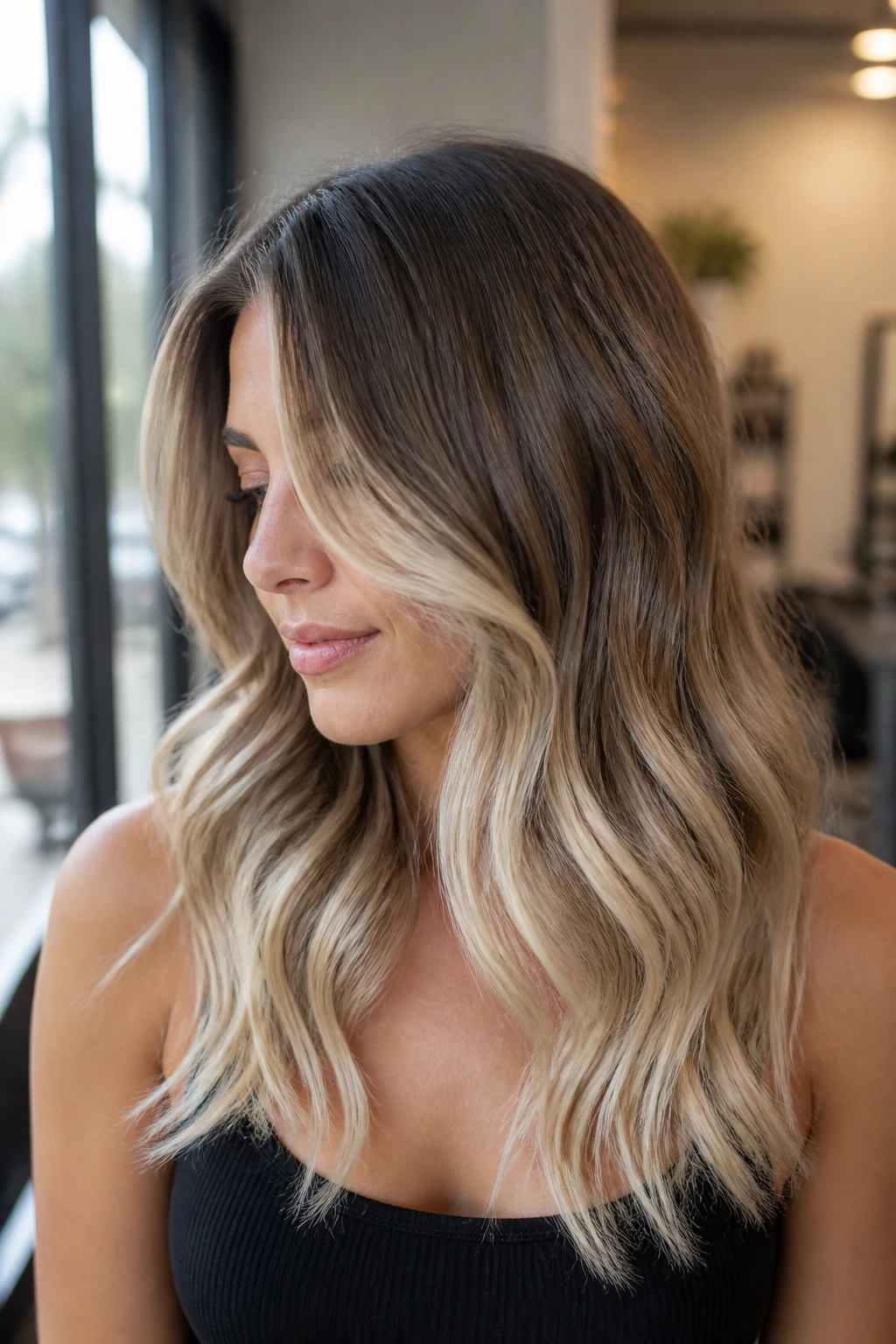
Vanilla cream ends are bright, soft, and slightly cooler than butter blonde. They’re best when the roots stay grounded and the ends are lifted cleanly enough to hold a pale cream tone without going yellow.
A wavy finish helps here because the lighter ends don’t sit in one blunt line. They feather out at the bends, which keeps the overall look airy. I’d be careful with this on very dry hair, since pale ends can look wiry if the cuticle is rough. But on healthy waves, it’s clean and elegant in a low-key way. The color gives movement a little extra sparkle.
25. Smoky Caramel Melt
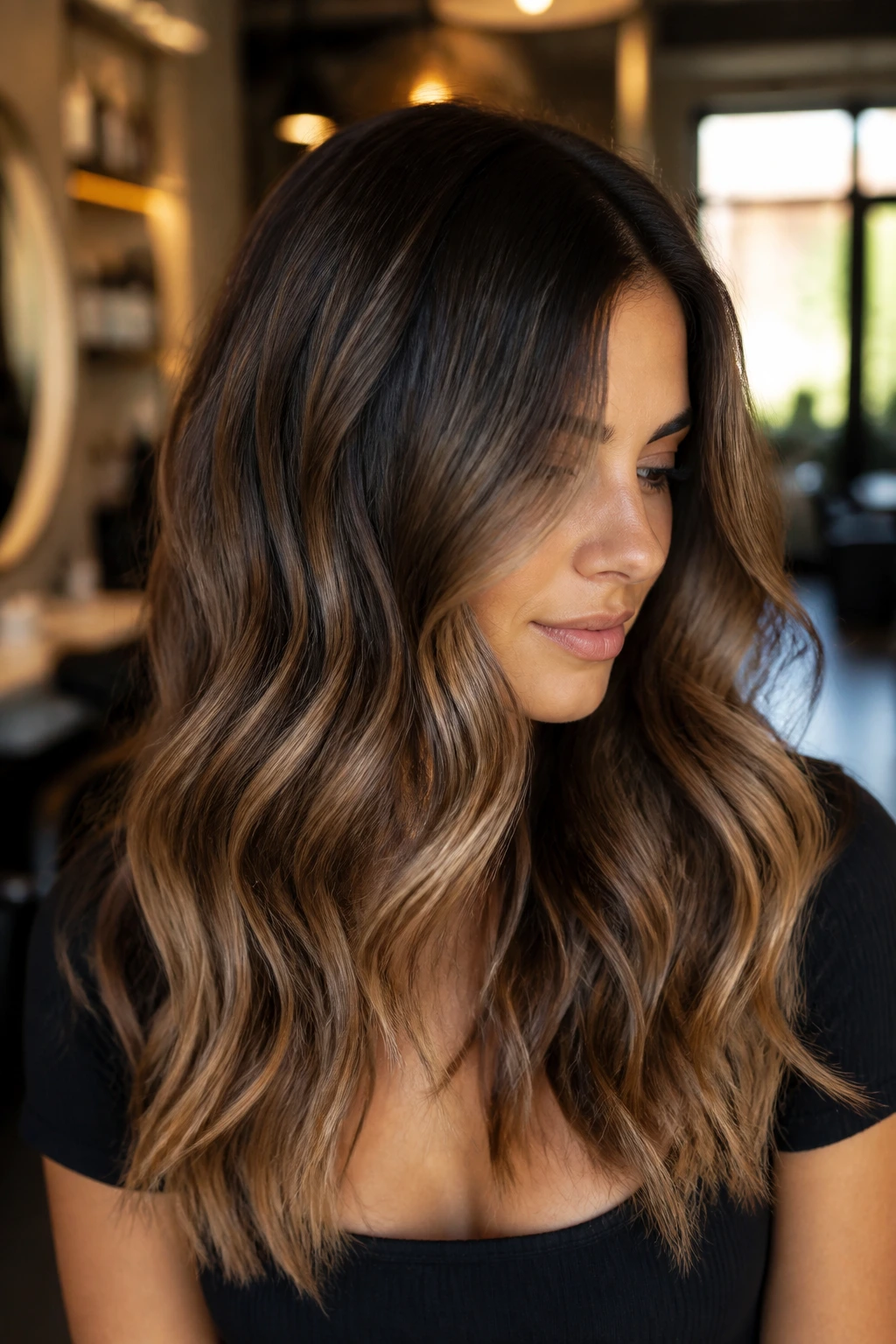
Smoky caramel melt softens the usual caramel warmth with a touch of ash so the color doesn’t turn sticky or orange. That makes it one of the easiest caramel looks to wear on brunettes who want warmth but not brass.
The melt effect matters. The color should not start and stop in obvious bands. It should glide. On wavy hair, that glide is what makes the finish look expensive: darker root, smoky mid-tones, caramel ends. If your hair tends to pull red, this is a safer version than a pure golden caramel. A toning gloss helps keep the smoke in place.
26. Amber Halo Balayage
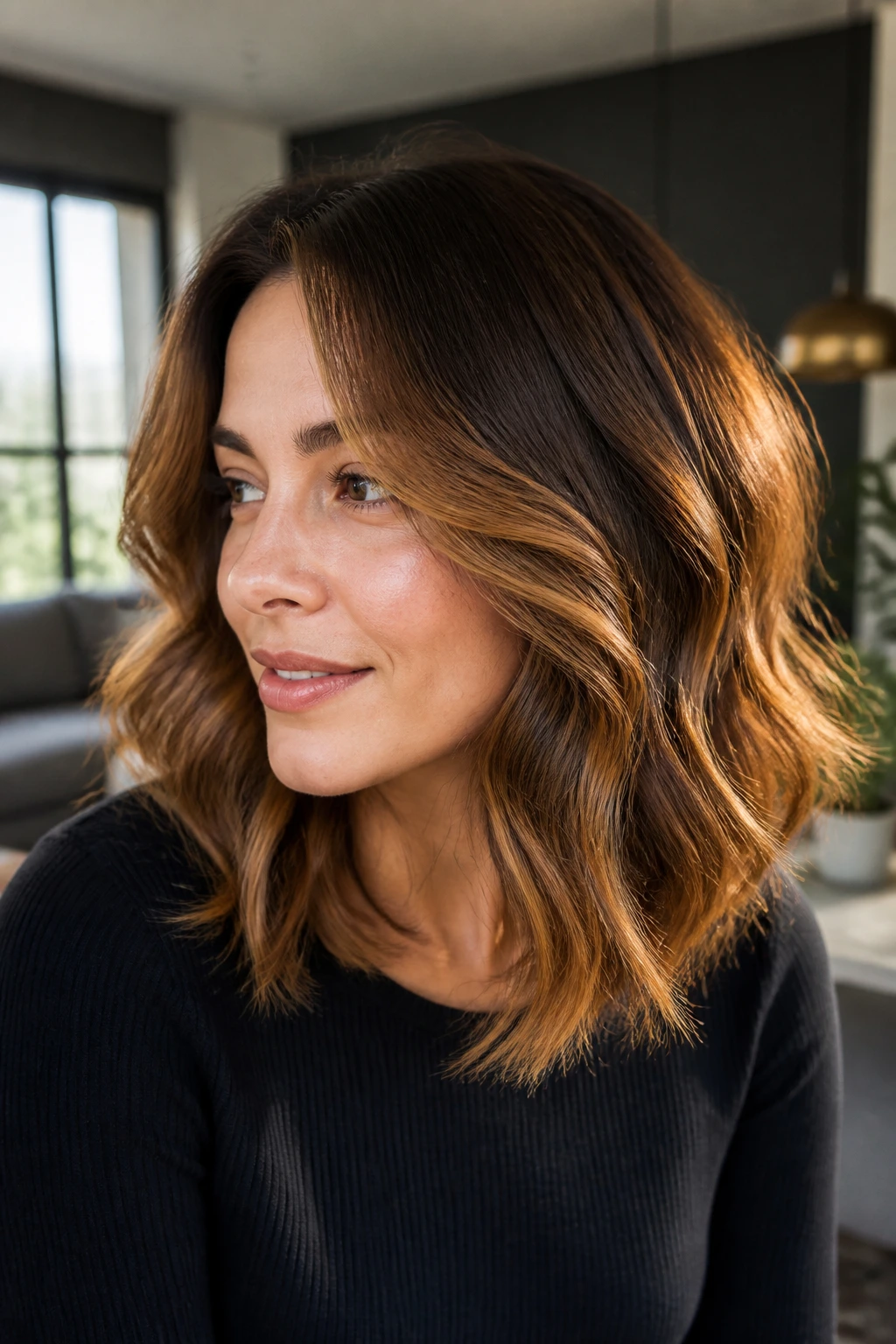
Amber halo balayage brightens the outer curve of the haircut, almost like a ring of light around the head. The amber sits just warm enough to glow, but not so light that it steals attention from the shape of the wave.
This is one of those looks that rewards a good cut. Layers around the crown and face make the halo feel deliberate instead of random. The placement can be subtle or stronger depending on how much brightness you want. Either way, the halo effect is most visible when the hair moves. That’s the whole point. Wavy hair and halo placement are a very polite pair.
27. Mushroom Blonde Blend
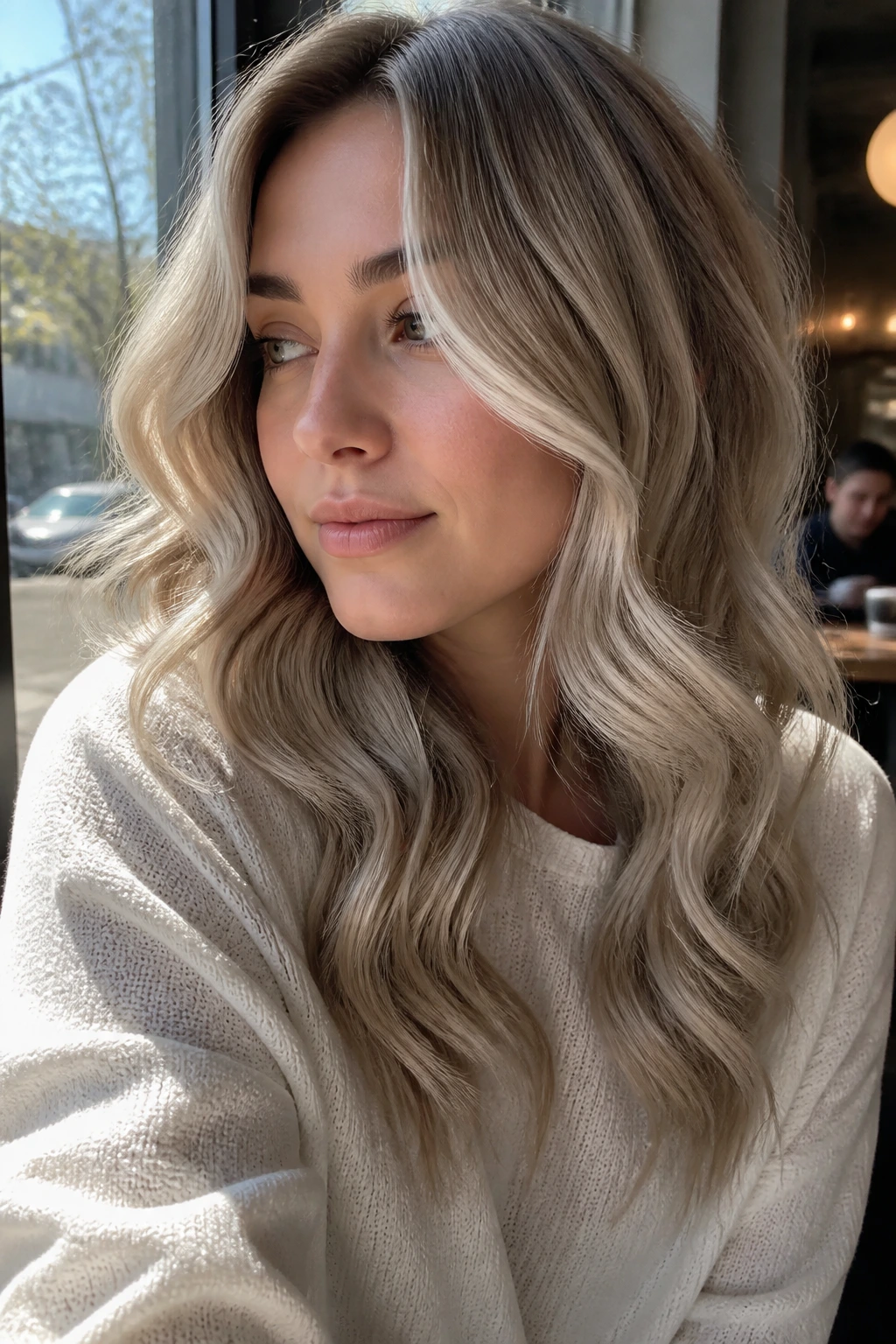
Mushroom blonde blend sits in a cool-neutral zone that can be tricky to get right and very pretty when it is. It mixes beige, ash, taupe, and soft blonde so the hair looks muted, not dull.
That muted quality is what makes it work on waves. Each bend picks up a slightly different tone, and the overall result is soft dimension instead of obvious streaks. I’d recommend this for medium blondes or brunettes who like a toned-down finish. It does need care, though. Too much purple shampoo can push it flat. A cool-beige gloss every so often is a better move.
28. Deep Brunette with Invisible Highlights
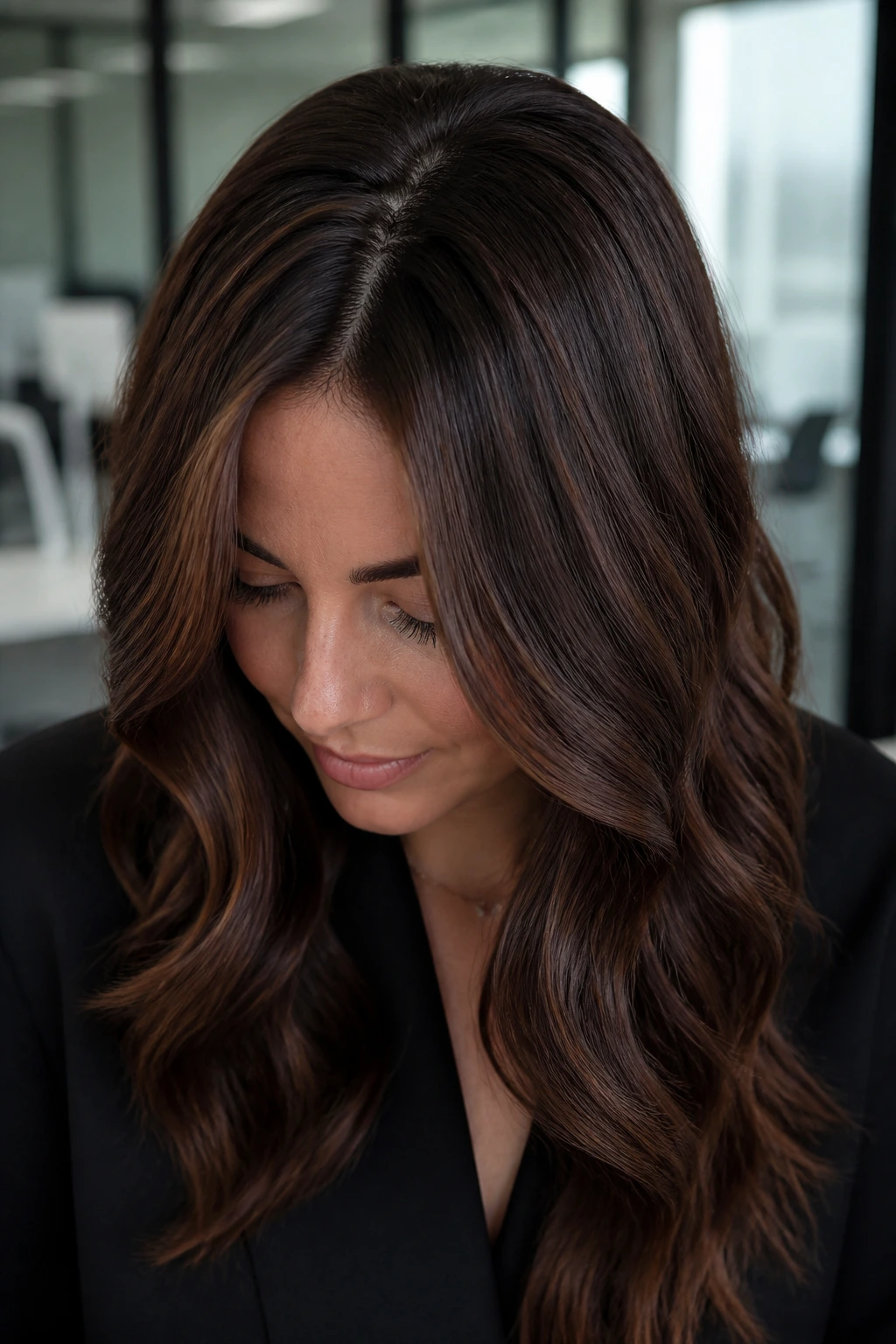
Deep brunette with invisible highlights is almost unfairly good when you want movement but refuse to give up depth. The highlights are so fine and so close to the base color that you only notice them when the light changes.
On wavy hair, that stealth dimension is enough. The waves separate the layers, and the hair starts to look thicker and more expensive without looking colored in the usual sense. This is a strong choice if you work in a more conservative setting or if you just like your hair to whisper instead of announce itself. It also grows out better than most loud blonding jobs because the root line barely exists.
29. Sunlit Mocha Lob Balayage
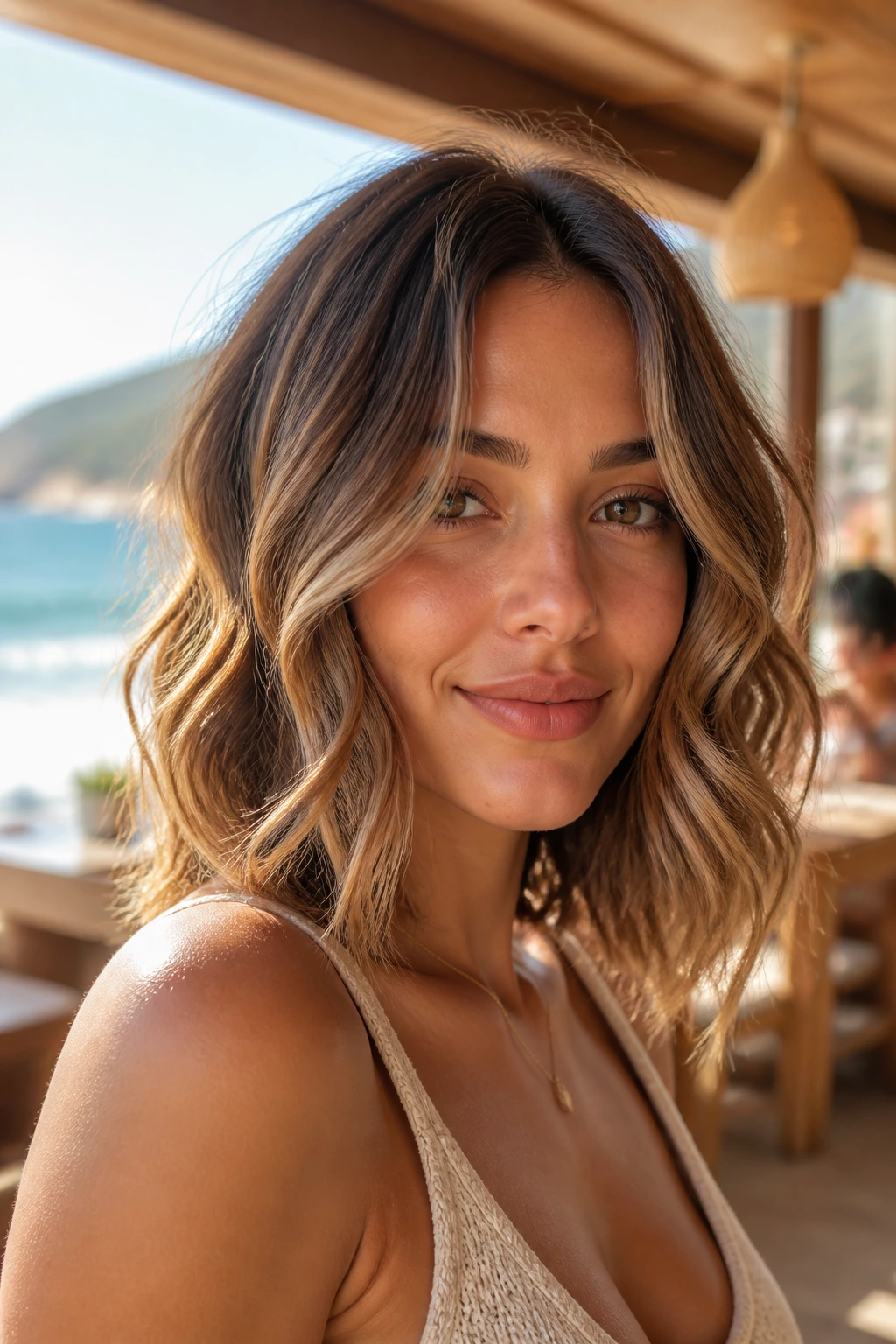
Sunlit mocha lob balayage is built for collarbone-length waves. The mocha base keeps it rich, while the sunlit pieces land just enough brightness through the outer layers to keep the lob from sinking into one dark shape.
I like this look because it respects the haircut. A lob needs movement or it can look boxy. The balayage helps open the shape up, especially if the front is slightly brighter than the back. If your waves are loose and big, this color can look almost effortless. If your waves are tighter, the highlights become more textural and a little bolder. Both versions work.
30. Copper Penny Halo
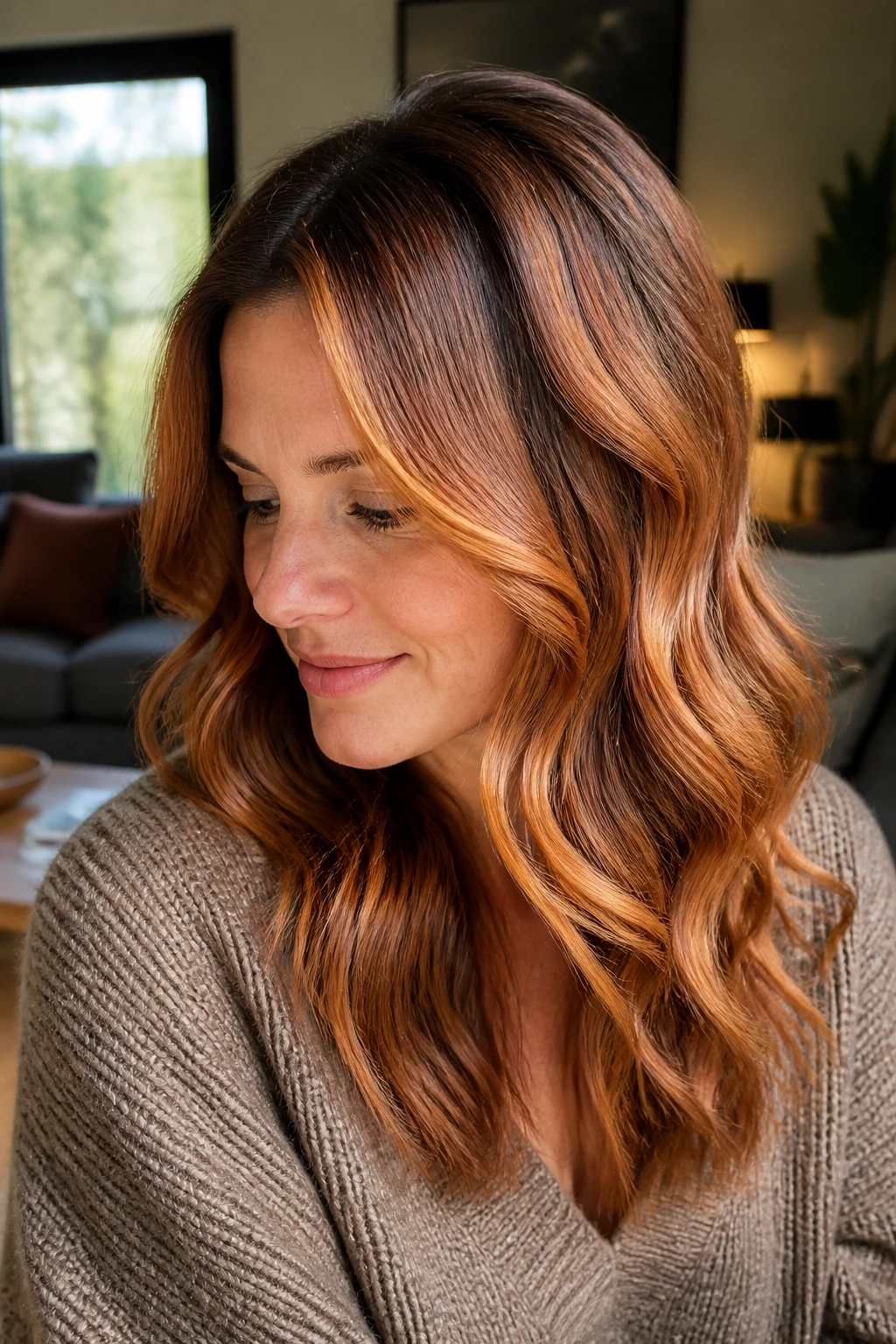
Copper penny halo is brighter than auburn and more metallic than a soft ginger. The penny tone wraps around the top layer and face frame, so the color flashes warm when the hair shifts.
This look is not shy. It suits wavy hair because the bend breaks the copper into little highlights instead of one solid red plane. Keep the root shadow deeper so the halo has somewhere to sit. If you love warm lipstick, brass jewelry, and a little drama, this is a smart way to bring color into the hair without committing to a full copper overlay.
31. Honeyed Shadow Roots
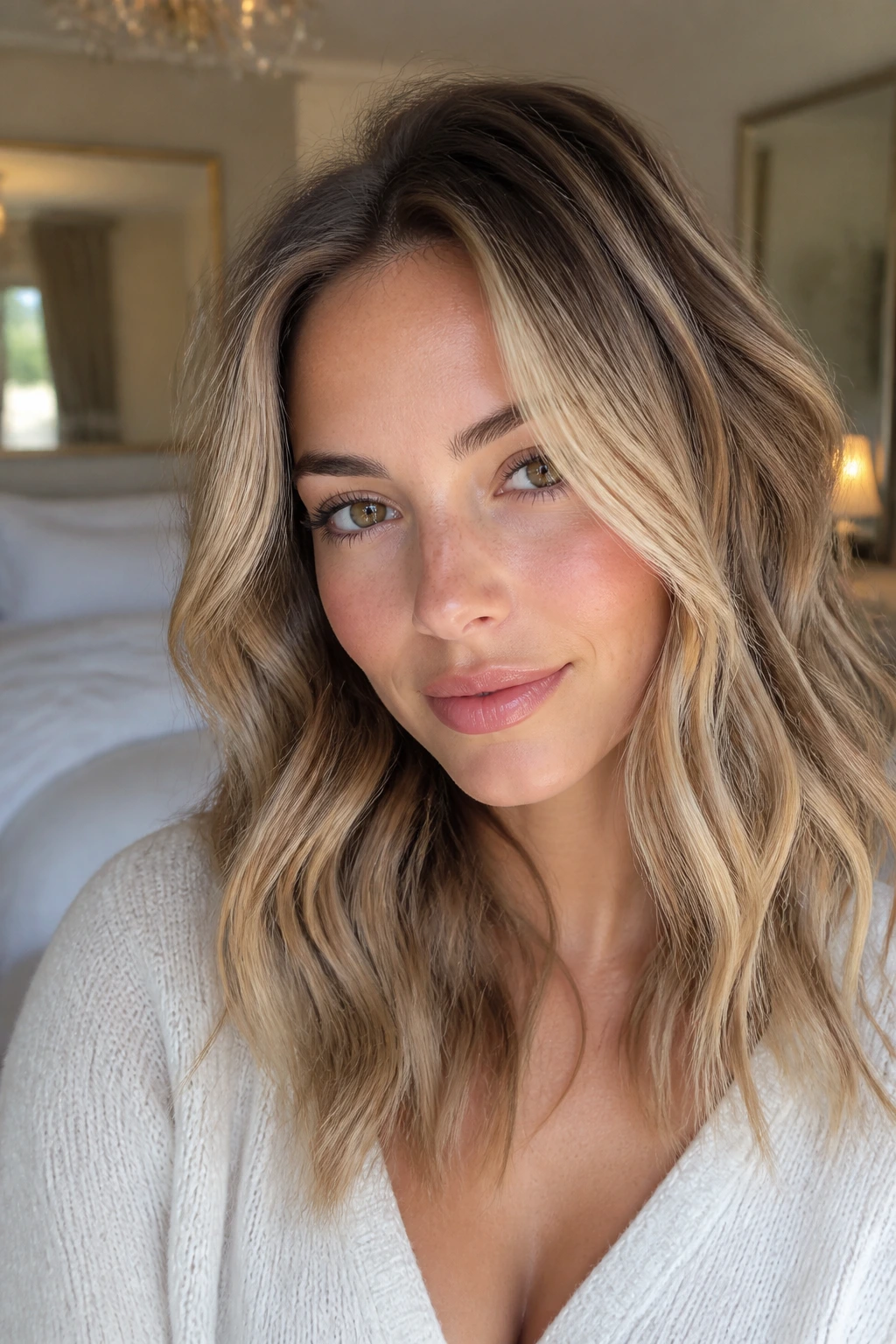
Honeyed shadow roots keep the root soft and the mids creamy, which gives wavy hair a lot of depth at the crown. The honey starts a few inches down, not at the scalp, so the hair looks fuller as it grows out.
This is one of the most practical balayage looks in the set. The darker root creates a tidy frame, the honey brightens the movement, and the transition stays gentle. It’s a good fix for people who hate obvious regrowth lines. Wavy hair helps because the bends blur the shift even more. If you prefer polished but not precious, this is a very safe bet.
32. Tawny Face-Framing Balayage
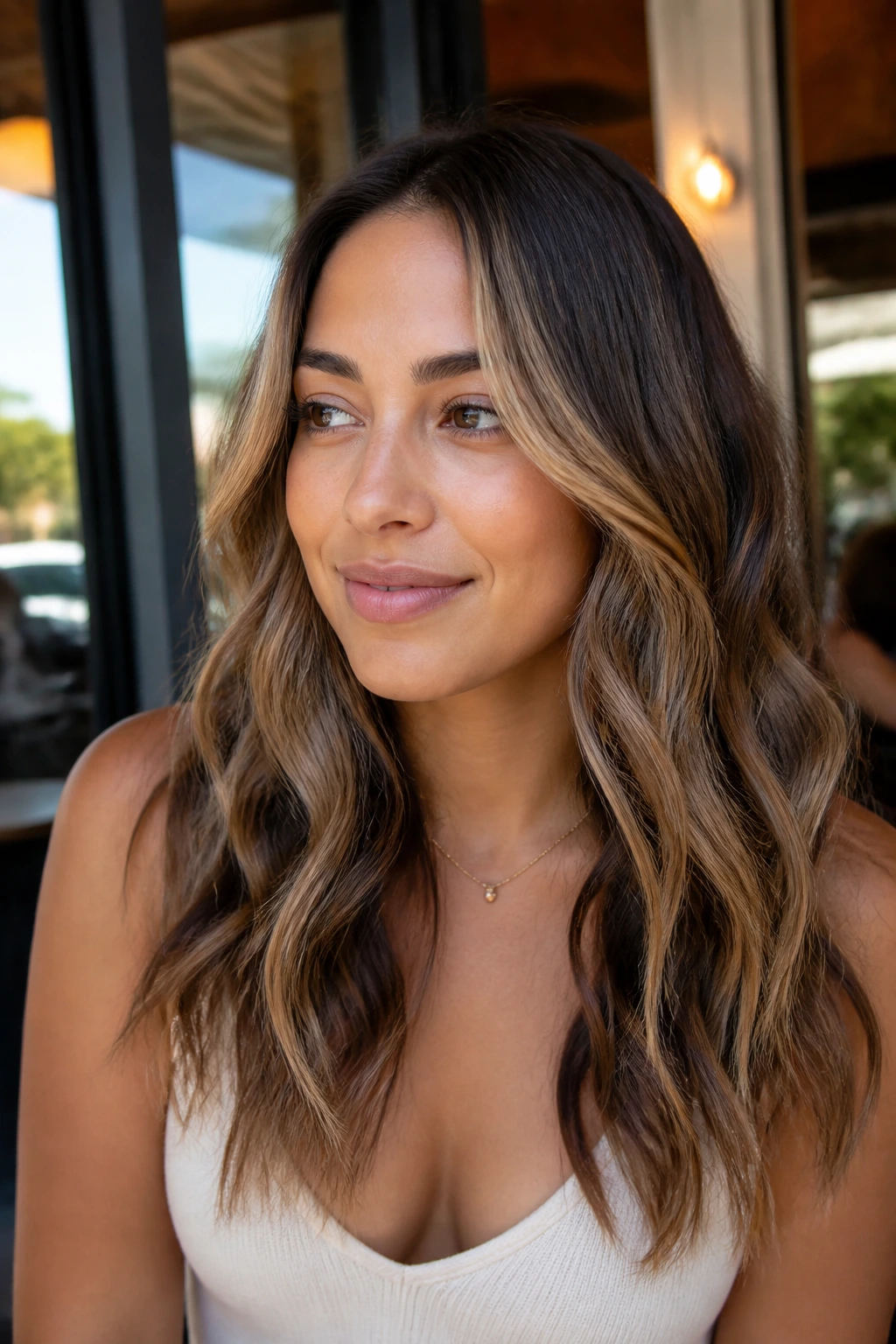
Tawny face-framing balayage is the kind of placement that can change a haircut more than a full color shift. The tawny tones are warmer than beige, softer than copper, and painted mainly through the front pieces and top layers.
The benefit is shape. On wavy hair, those front curls or bends wrap around the face and reflect light first, so the style feels bright even if the back stays quieter. It’s a nice choice when you want a visible update but not a long salon session. The rest of the hair can stay deep brunette, which keeps the maintenance sane.
33. Beige Blonde Sunkissed Ends
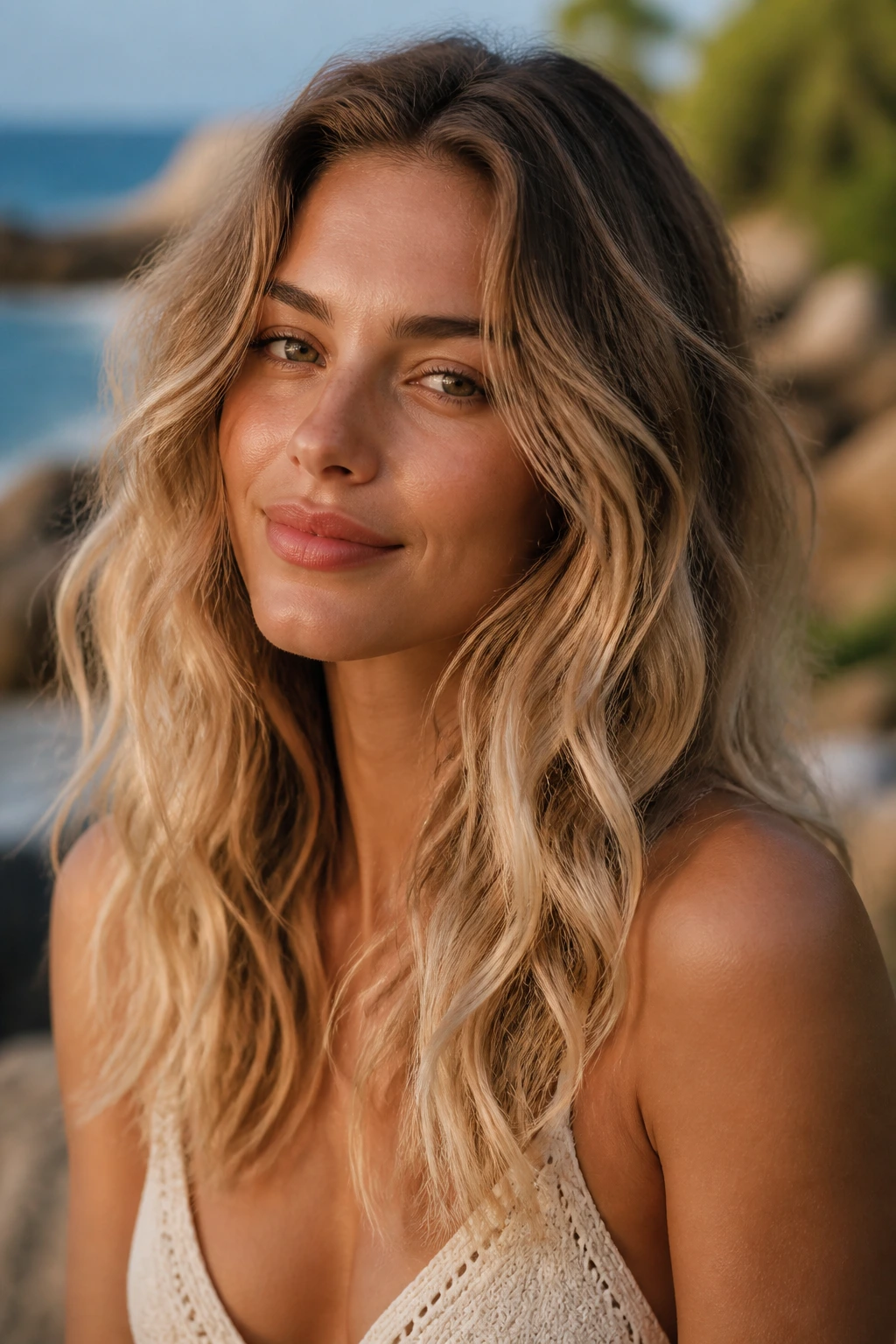
Beige blonde sunkissed ends make the lower half of wavy hair look lighter, airier, and a touch softer than a full blonde transformation. Beige is the key word here. Not yellow. Not white. Beige.
If the ends are already a little porous from color or heat, this look needs careful toning, because beige can skew muddy if it’s overworked. But on healthy hair, the effect is clean and light. Waves keep the ends from looking blunt, which is what makes the whole thing feel relaxed instead of overprocessed. It’s a nice fit for people who like beachy hair that still looks thought out.
34. Espresso Ends with Amber Threads
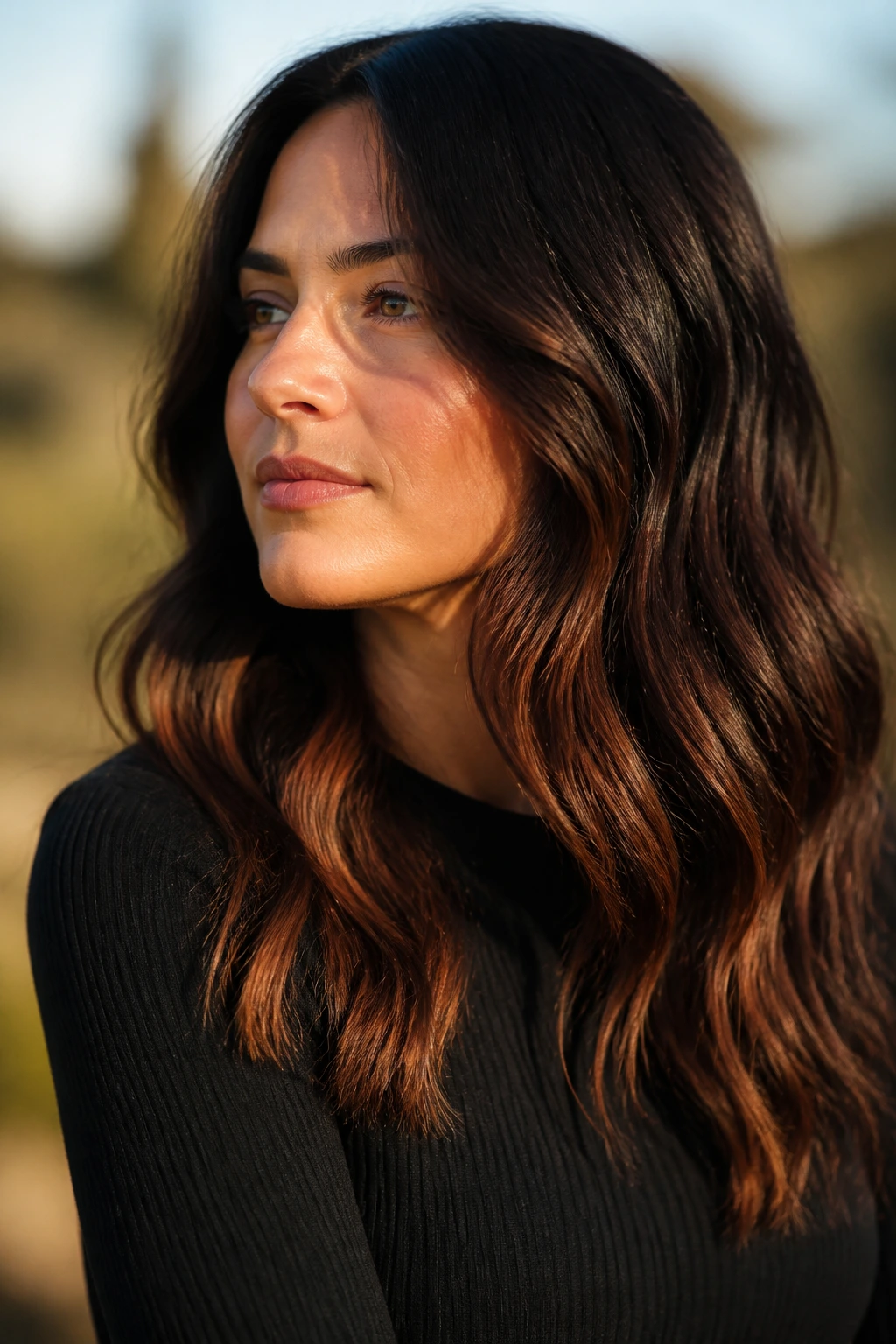
Espresso ends with amber threads flip the usual balayage script. Instead of bright ends on a dark root, the ends stay deep and the amber comes in as thin threads woven through the lower length and outer bends.
That works especially well on thick wavy hair, where too much lightening at the ends can make the cut look frayed. Here, the amber adds movement without breaking the silhouette. I’d choose this if you like rich hair with a little surprise in it. When the light hits from the side, the amber appears and vanishes as the waves move. Subtle? Yes. Boring? Not even close.
35. Cool Chestnut Ripple Balayage
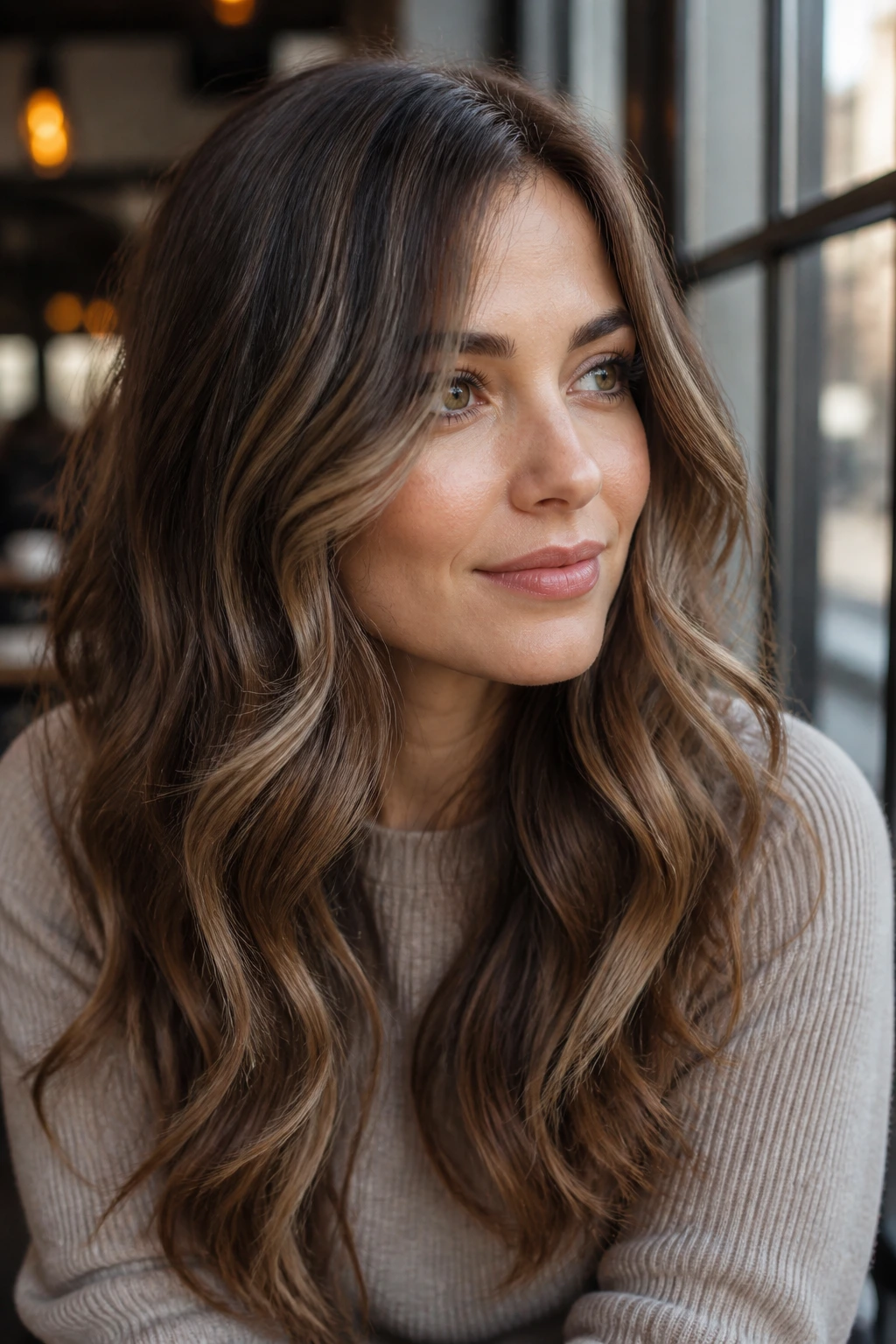
Cool chestnut ripple balayage gives the wave pattern a crisp, polished finish. The chestnut stays deep and neutral, while the ripple effect comes from tiny lighter pieces placed in the bends rather than across broad sections.
That placement is the whole story. On wavy hair, a ripple pattern can make the haircut look more layered without obvious blonding. It’s a good final option for people who want dimension that feels expensive and restrained. If you’ve ever looked at a flat brown head of hair and wished it had some movement but not a full color overhaul, this is the look I’d put at the top of the pile.
Why Balayage and Waves Work So Well Together
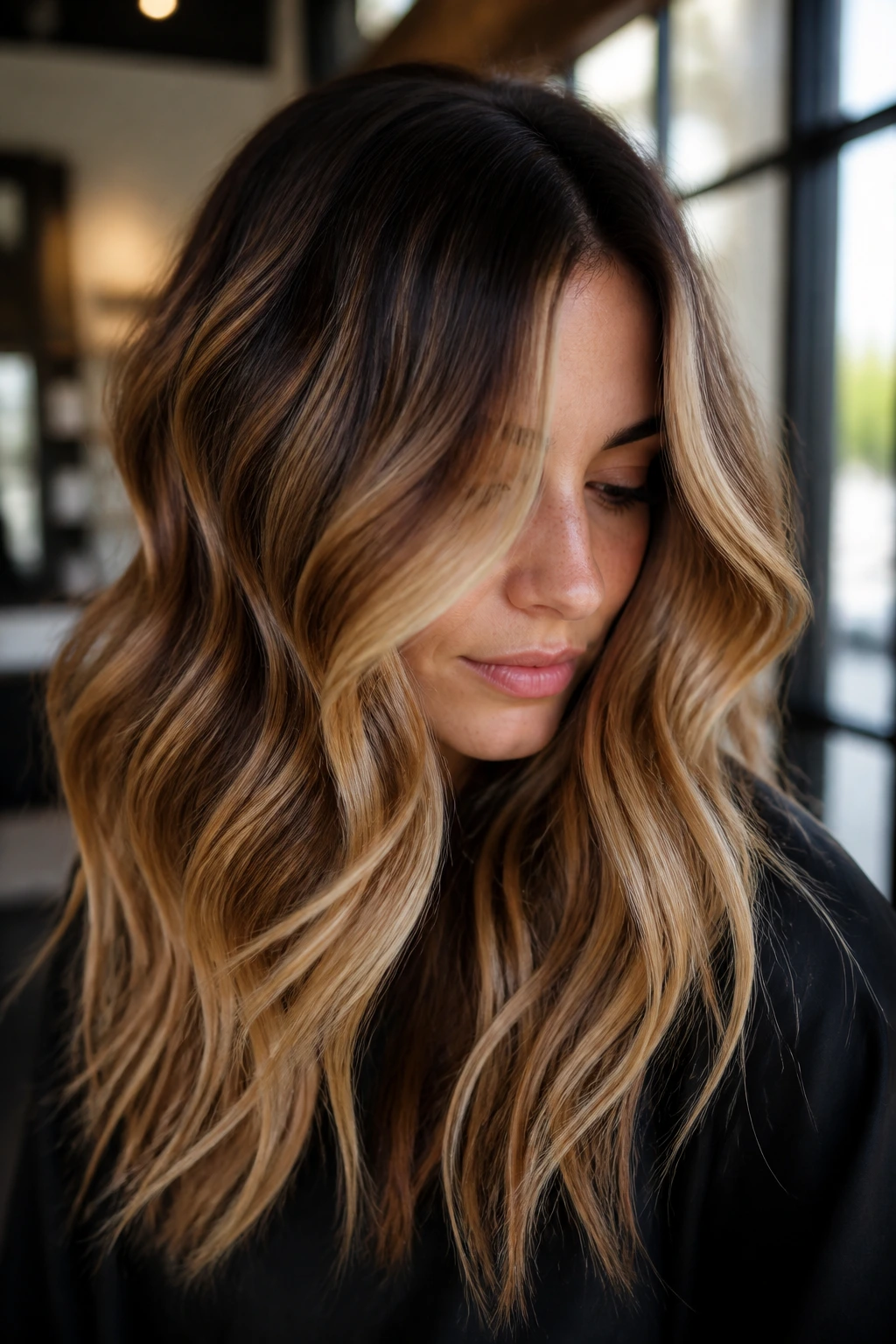
Wavy hair is built for soft contrast. The bends catch light at the top and fall into shade in the troughs, which gives balayage a natural place to live. A hand-painted highlight can look busy on straight hair if the placement is too obvious. On waves, the same placement can look blended and almost accidental in the best way.
That does not mean the hair does all the work. Bad placement still looks bad. If the brightest pieces sit in the wrong place, the eye goes straight to the mistake. The prettiest wave in the world cannot save a blunt line running across the head. The color has to follow the hair’s own movement.
A good stylist usually thinks in terms of contour. Where does the hair bend around the cheek? Where does it tuck under near the collarbone? Where do the ends flip or loosen? Those spots tell you where brightness should land. Miss that, and you get color. Hit it, and you get shape.
How to Pick the Right Tone for Your Base Color
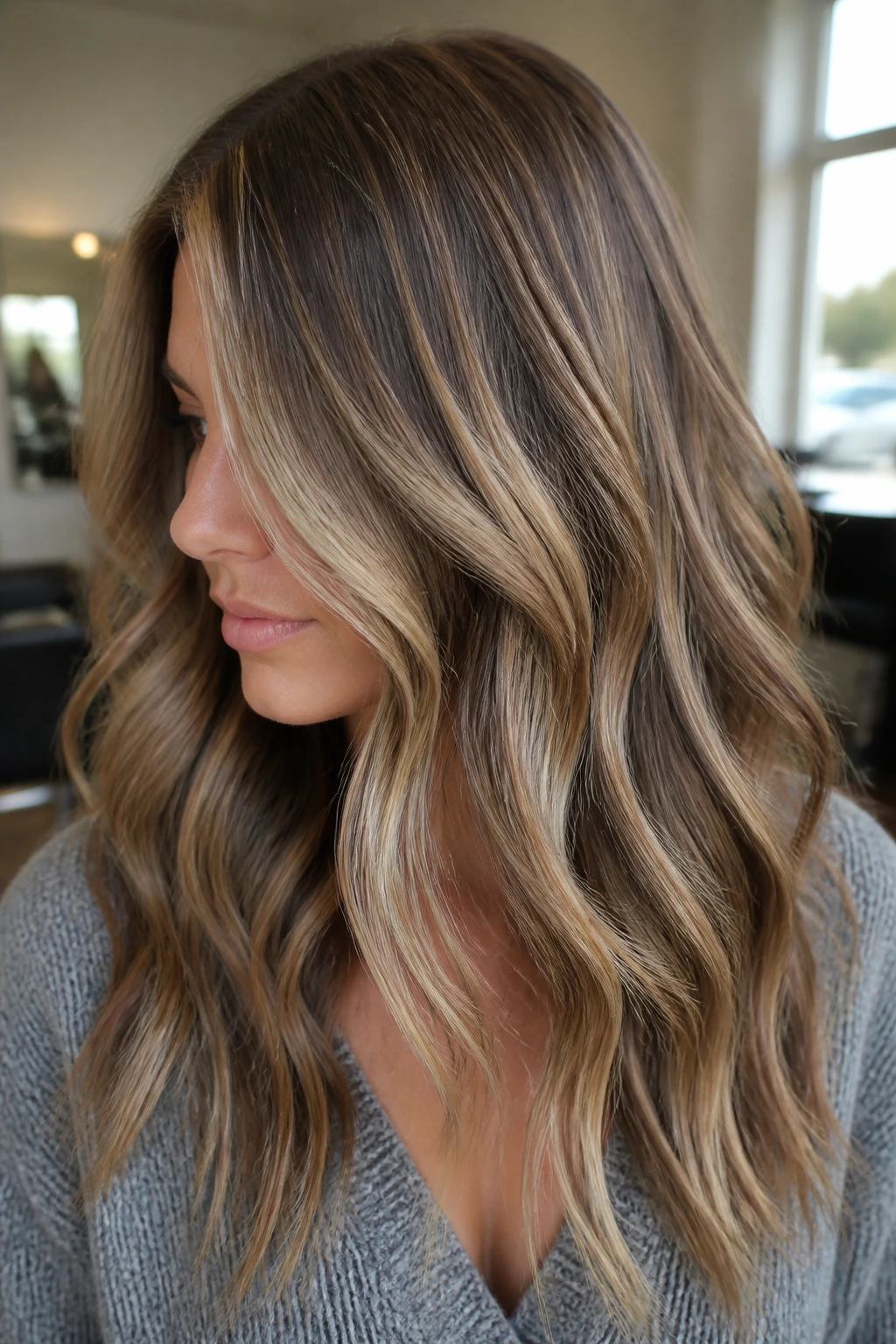
The easiest balayage choice is not always the smartest one. If your base is deep brunette, a pale blonde may look loud unless the transition is handled carefully. If your base is light brown or dark blonde, a bronze or beige tone may give you all the movement you want without a bigger lift.
Warm bases usually take caramel, honey, copper, and amber with less effort. Cool or neutral bases often wear mushroom, ash beige, smoky brown, and taupe more cleanly. That does not mean you’re trapped by undertone. It just means the toner has to work with what’s already there instead of fighting it.
Bring photos, sure. But bring a few. One for tone, one for placement, one for how much contrast you can live with after the appointment. That tiny bit of prep saves a lot of “it looked different in the chair” regret.
Placement Maps That Matter on Wavy Hair
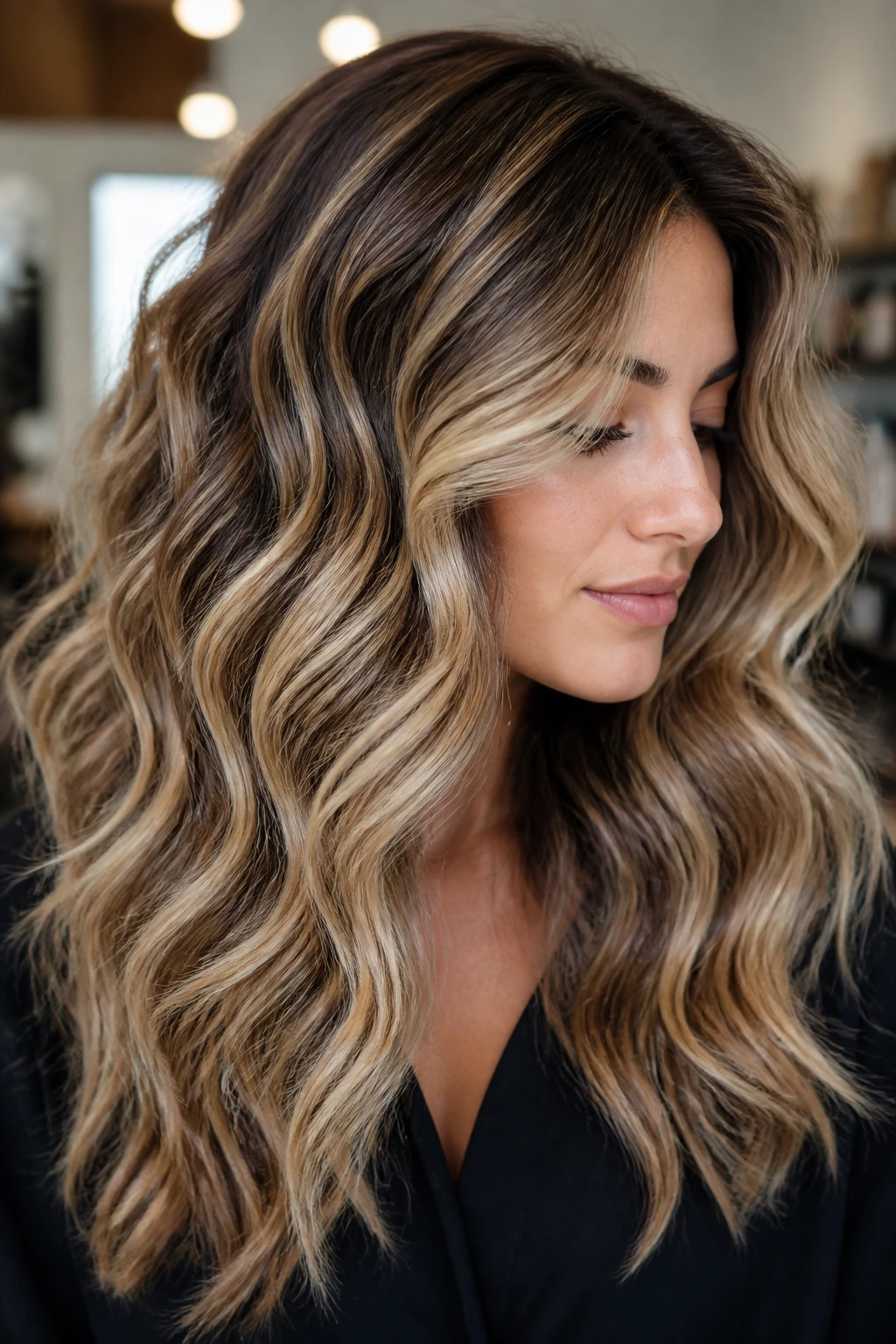
If the placement is wrong, the best shade in the room still looks off. Wavy hair gives you three useful zones: the outer ridge of the wave, the face-framing curve, and the ends where the bend opens out. Those are the spots that catch light first.
A full balayage sweep gives you a lot of brightness, but it can also create a puffier outline if the upper layers are too light. A partial placement around the face and mids can keep the hair softer and more dimensional. I usually prefer a mix: brighter around the face, lighter through the mid-lengths, quieter in the back. That balance keeps the cut from losing shape.
Tools, Brushes, and Products That Help
-
Tail comb: Gives cleaner sectioning, especially if you want the hand-painted pieces to stay soft instead of chunky.
-
Balayage brush: A wide color brush helps feather lightener onto the surface of the wave without smearing it into the root.
-
Foils or film: Useful when you want extra lift on darker bases or a brighter face frame.
-
Gloss or toner: Keeps beige, ash, copper, or champagne tones where they belong after lifting.
-
Heat protectant: Wavy balayage looks better when the cuticle stays smooth. Skip this and you’ll fight frizz.
-
Lightweight curl cream or mousse: Helps the wave pattern show the color instead of swallowing it.
-
Wide-tooth comb or detangling brush: Better than ripping through wet color-treated hair with a fine brush.
Practical Ways to Get the Most Out of the Color
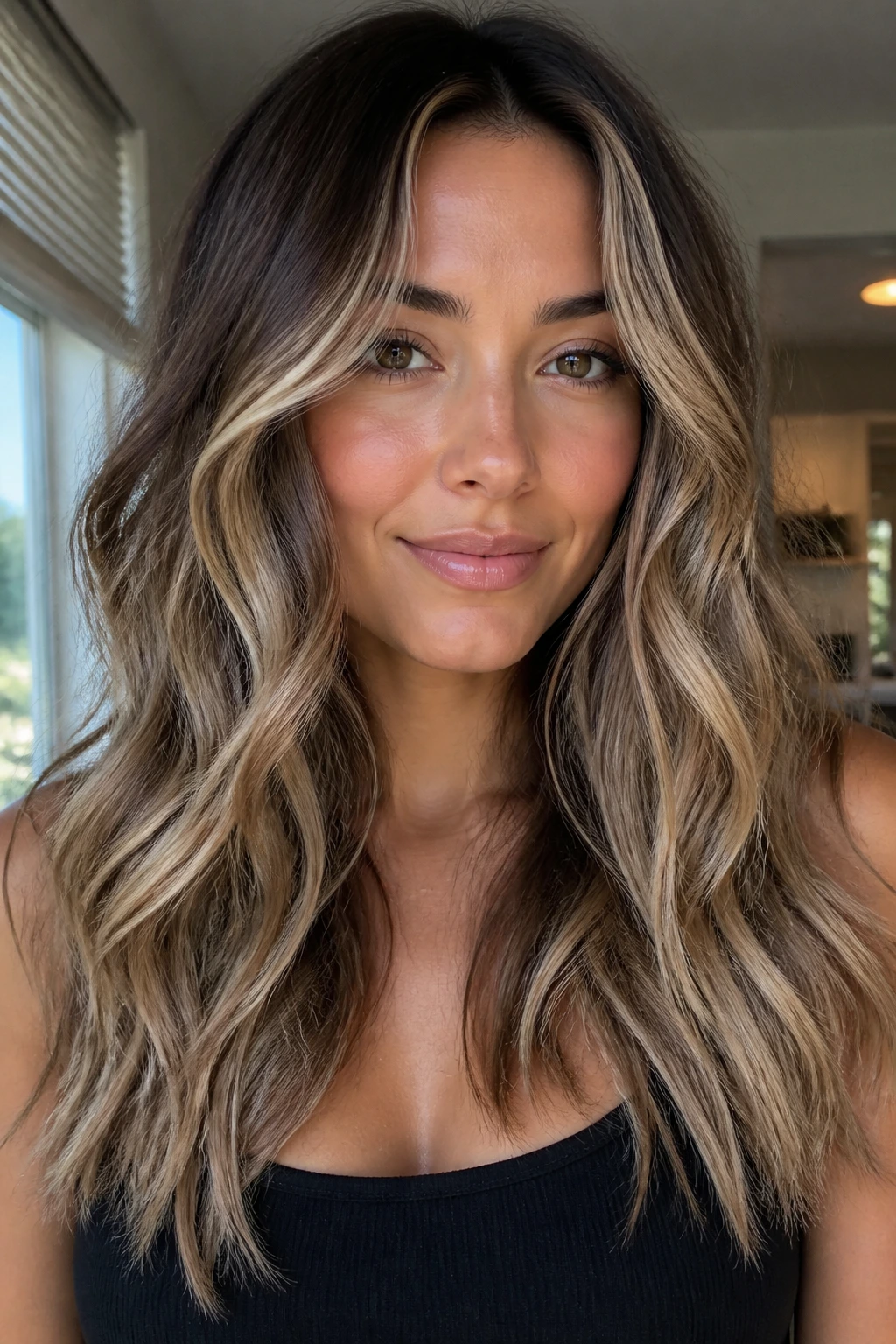
Placement: Ask for brightness where the wave bends, not just through random sections. That usually means the face frame, mid-lengths, and the top of the ends. If your hair is layered, the top surface needs less saturation than the underlayers.
Tone: Beige, caramel, and mushroom shades are easier to wear between appointments than very icy blonde. If you love cool tones, fine. Just expect a stricter toning schedule.
Styling: A 1-inch curling iron, used in alternating directions, gives balayage room to show. Don’t curl every piece the same way. You’ll hide the hand-painted effect and make the hair look helmet-like.
Cost-saver: Partial balayage or a face-framing refresh can buy you months without committing to a full rework. That’s often smarter than chasing brightness all over the head.
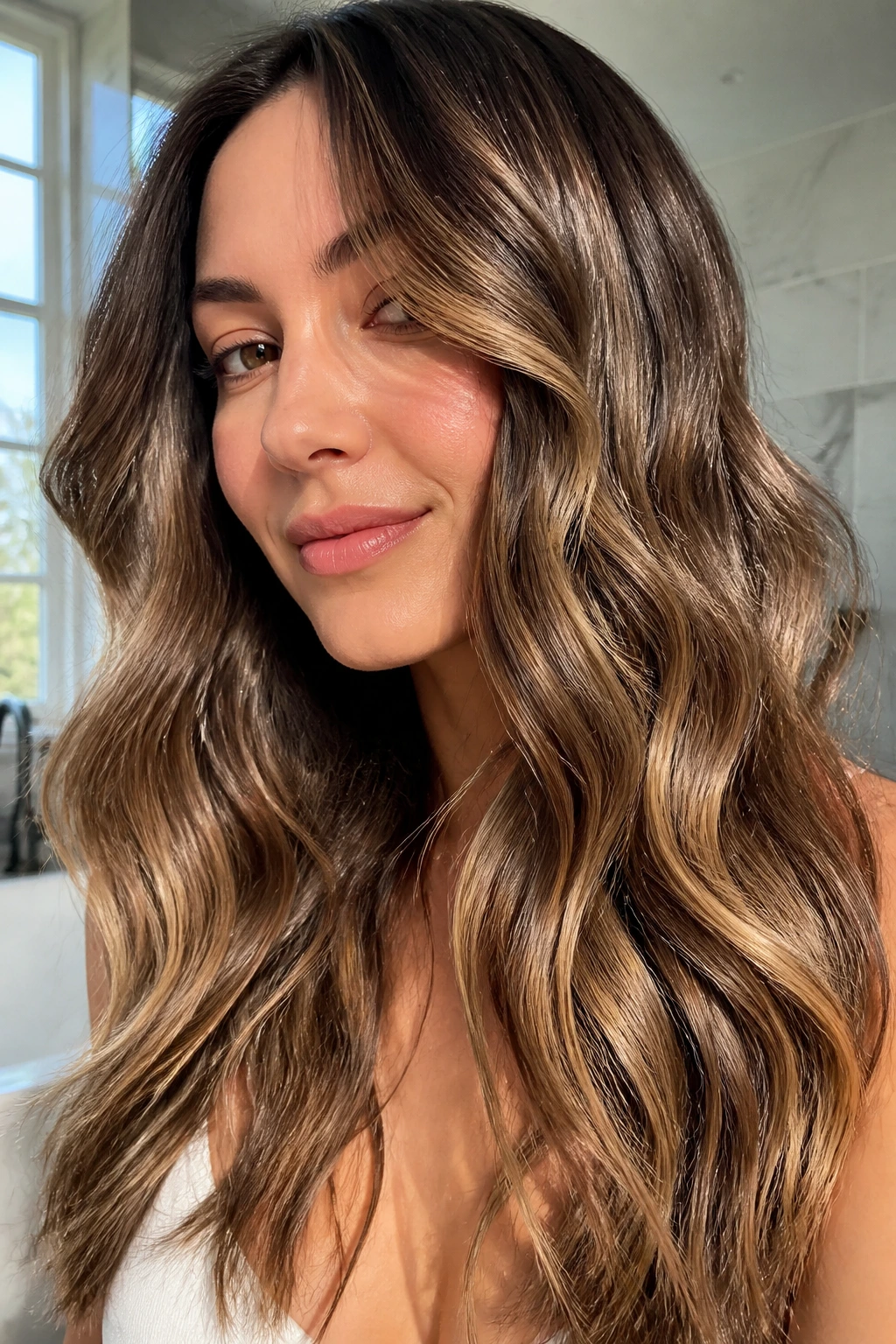
Finish: A gloss spray or a pea-sized drop of lightweight serum on the ends makes the color look smoother. Heavy oil near the roots will collapse the wave pattern and mute the dimension.
How to Keep the Color Looking Fresh Between Appointments
Balayage on wavy hair stays nicest when you respect the wave pattern and the tone at the same time. Use a sulfate-free shampoo if your color is warm, beige, or copper. Strong clarifying shampoos can strip gloss faster than people expect, and on hand-painted color that can make the ends look raw.
A purple shampoo can help blonde and beige pieces, but only once every 7 to 10 days unless your hair tends to yellow fast. Overuse turns pale pieces flat and chalky. A blue shampoo is better for brunettes fighting orange warmth, but that too needs a light hand. One wash too many and the color starts looking dull instead of clean.
Glosses and toners are the real maintenance move. Depending on the tone, a salon gloss every 6 to 8 weeks keeps the color honest. Trims every 8 to 12 weeks help the ends stay crisp, which matters because balayage exposes split ends faster than one solid color does. Frayed ends make even expensive color look tired.
Common Mistakes That Flatten the Dimension
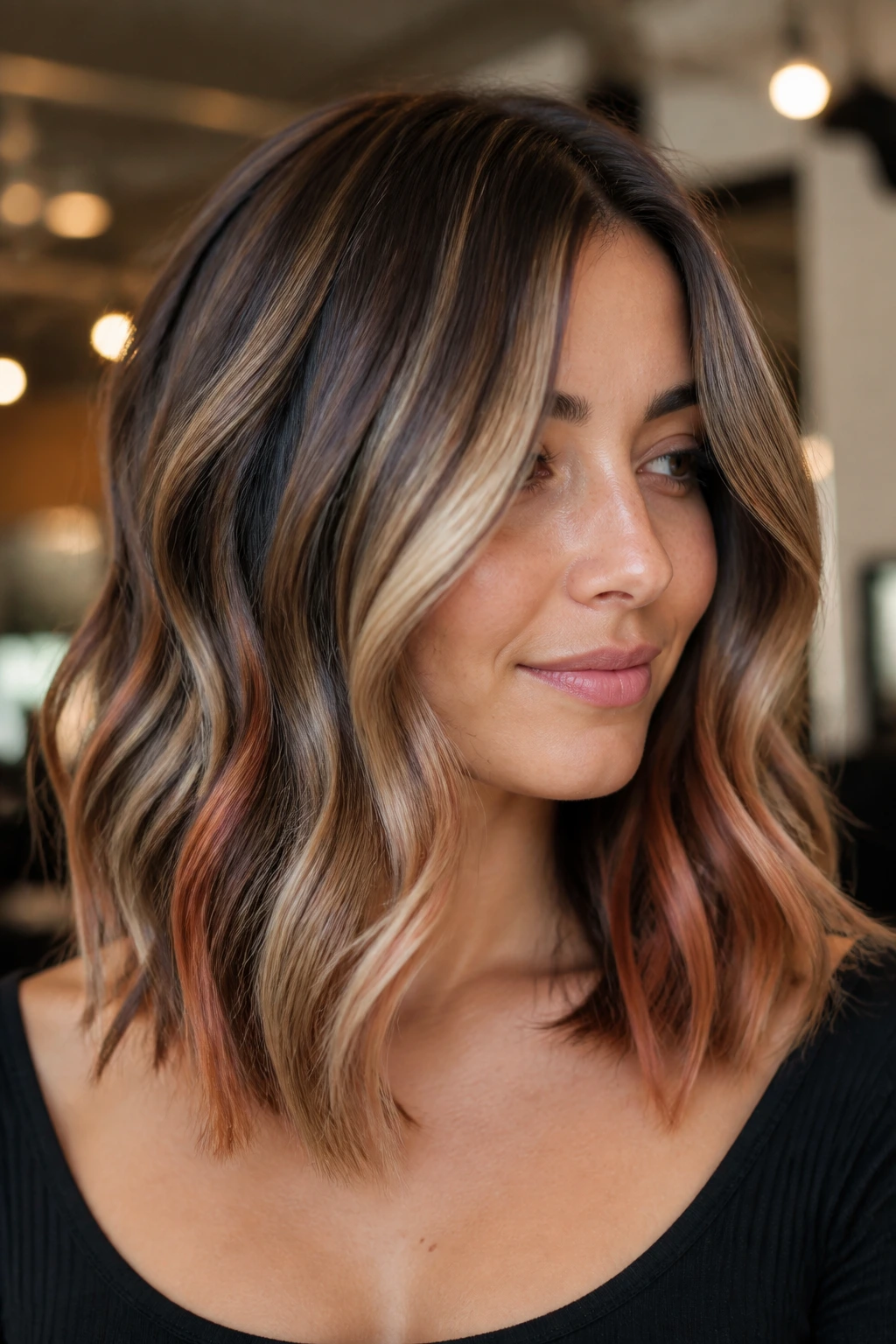
The most common mistake is painting too high and too wide. The result is a bright cap on top and not much shape underneath. On wavy hair, that can make the head look bigger instead of more dimensional. Keep the strongest lift away from the root unless the whole look is meant to be very high-contrast.
Another mistake is choosing toner that fights the base. Ash on an already cool brunette can go flat. Gold on a red-leaning base can go brassy fast. The fix is not more toner. The fix is the right toner. Small difference, huge result.
Heavy styling products are another culprit. Thick creams, oils, and butter-rich masks can coat the wave and mute the whole paint job. That doesn’t mean your hair needs to be dry. It means you need lighter products, used with a bit of restraint.
And then there’s the curl issue. If every wave is curled in the same direction, the color repeats in the same pattern and starts to look artificial. Alternate directions, leave the ends a little loose, and let the highlights do some of the visual work.
Balayage Variations Worth Trying
Brighter Face Frame: Keep the back soft and add a stronger money piece around the cheeks. This is the fastest way to make a haircut feel new without redoing the whole head.
Low-Contrast Brunette Blend: Use 1 to 2 shades of lift only, then rely on gloss and placement. Great if you want movement without obvious blonde.
Copper-Tinted Version: Swap beige or caramel for a muted copper glaze. It warms the skin and looks rich on waves, especially in loose shoulder-length cuts.
Cool Smoke Version: Push the toner toward mushroom, ash beige, or smoky taupe. This suits neutral and cool bases that turn orange fast.
Grow-Out Friendly Root Shadow: Keep the first 2 to 3 inches deeper and let the brightness start lower. That gives you a softer maintenance cycle and a more relaxed finish.
Frequently Asked Questions
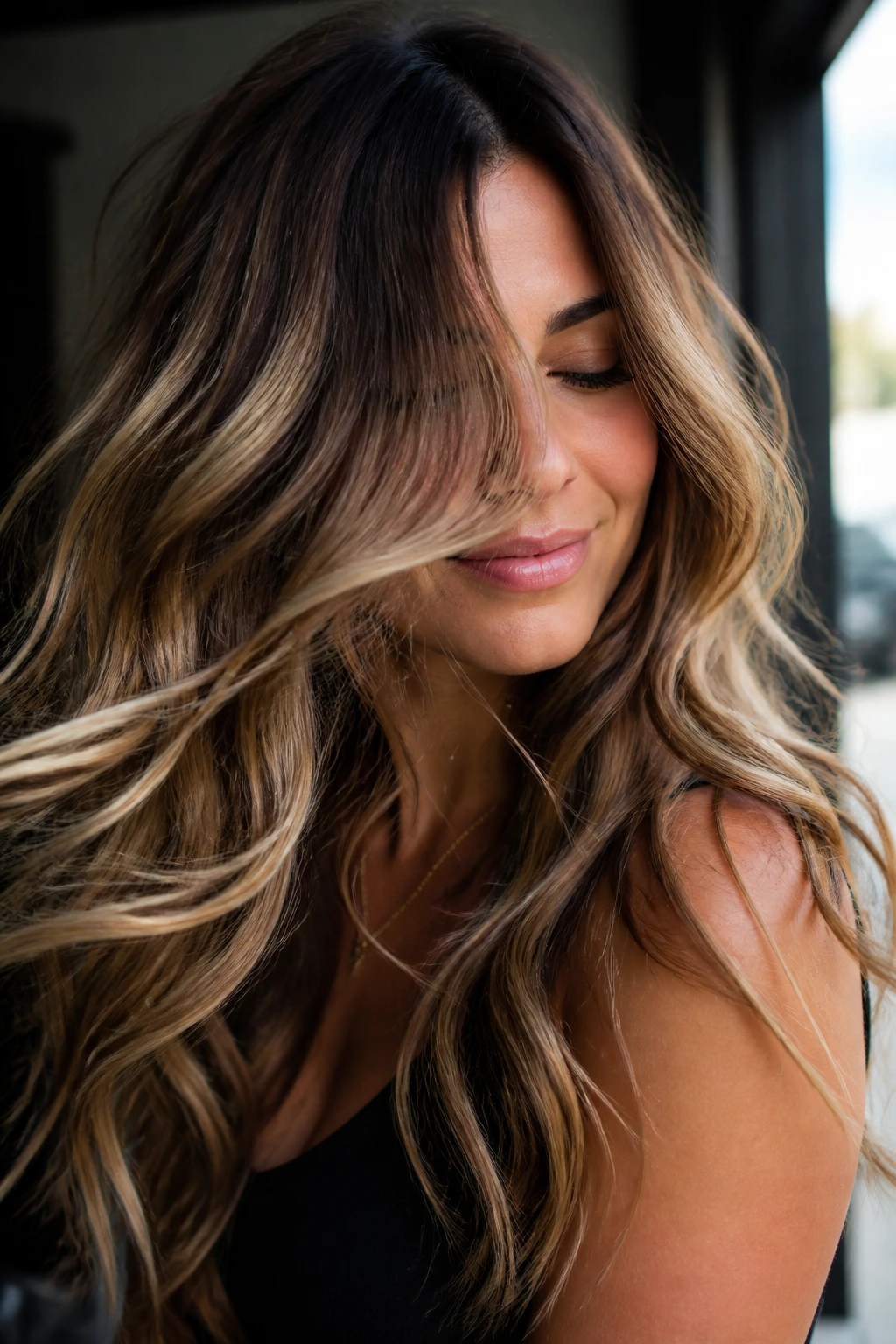
How often does balayage need touch-ups on wavy hair?
Most people can go 10 to 14 weeks between full refreshes if the root shadow is soft and the tone is maintained well. A gloss or toner refresh can come sooner, usually around 6 to 8 weeks, if the color starts to yellow or warm up.
Can balayage work on short wavy hair?
Yes, but the placement has to be tighter. On a bob or lob, the lightest pieces should sit where the wave turns outward, not all over the top. Short wavy hair can look stripy fast if the highlights are too broad.
Will balayage damage my waves?
Any lightening can change texture a bit, especially if the hair was already dry. The damage risk rises when the lift is too strong or the hair is over-toned. A good bond-building treatment, a careful lift, and regular trims keep the wave pattern in much better shape.
Should I ask for warm or cool balayage?
Pick the tone that suits your base and your wardrobe. Warm shades like caramel, honey, and copper are easier to keep glossy. Cool shades like mushroom, ash beige, and smoky brown can look very refined but need more toner upkeep.
What if my hair is dark and I want it light?
You can still get there, but it usually takes more than one appointment if you want to keep the hair healthy. A staged lift with a strong root shadow often looks better than trying to force a pale blonde in one go. Patience matters here.
How do I style balayage so the color shows?
Loose bends, alternating curl directions, and a light hand with products. If the hair is too flat, the color reads as a single shade. A diffuser or a large-barrel iron helps separate the tones.
Can balayage cover gray hair?
It can blend gray very well, especially around the front hairline and part. What it won’t do is hide every gray strand the way a solid color can. That blend is often the better choice, though, because it grows out softer and looks less obvious.
What if the toner turns my hair too ashy?
A warm gloss can bring some life back without re-lightening the hair. Sometimes the fix is as small as one shampoo with a more moisturizing formula and a styling product that adds shine. Over-ash is fixable, but it’s better to stop it early.
A Better Kind of Movement
Balayage on wavy hair works because the hair already knows how to move. The right placement just makes that movement easier to see. That’s the whole game: not more color, not louder color, but color that follows the bend and gives the shape a little extra life.
If you take anything from these looks, let it be this: tone matters, but placement matters more. A thoughtful hand-painted highlight around the face, through the mids, or at the ends can make a wave pattern look fuller, softer, and more expensive without turning the hair into a maintenance project you hate.
Choose the shade that fits your base, keep the root soft, and let the wave pattern do some of the showing off. That’s where balayage stops looking like a trend and starts looking like hair that was paid attention to.
