



Thick hair changes everything about blonde. A cream-blonde ribbon that looks soft on fine hair can go flat on dense hair if the root is too pale or the interior is too one-note. That’s why the smartest blonde hair looks for thick hair are rarely the loudest ones in the room. They rely on depth, shadow, and a little contrast so the color has somewhere to go.
The difference shows up fast. On thick strands, one flat bleach job can read bulky at the ends and puffy around the crown, while a rooted blonde with well-placed brightness seems lighter and cleaner. The hair still feels full — you don’t lose that — but it stops looking like one heavy block. That is the sweet spot.
If your hair is dense, you can wear blonde in more ways than people usually think. Beige lobs, buttery layers, icy ribbons, honeyed curls, smoked-out roots, even a blunt platinum bob can work when the cut and tone are doing the right job together. Start with the looks that match your length, texture, and upkeep tolerance, and the rest gets a lot easier.
Why You’ll Love This Collection
-
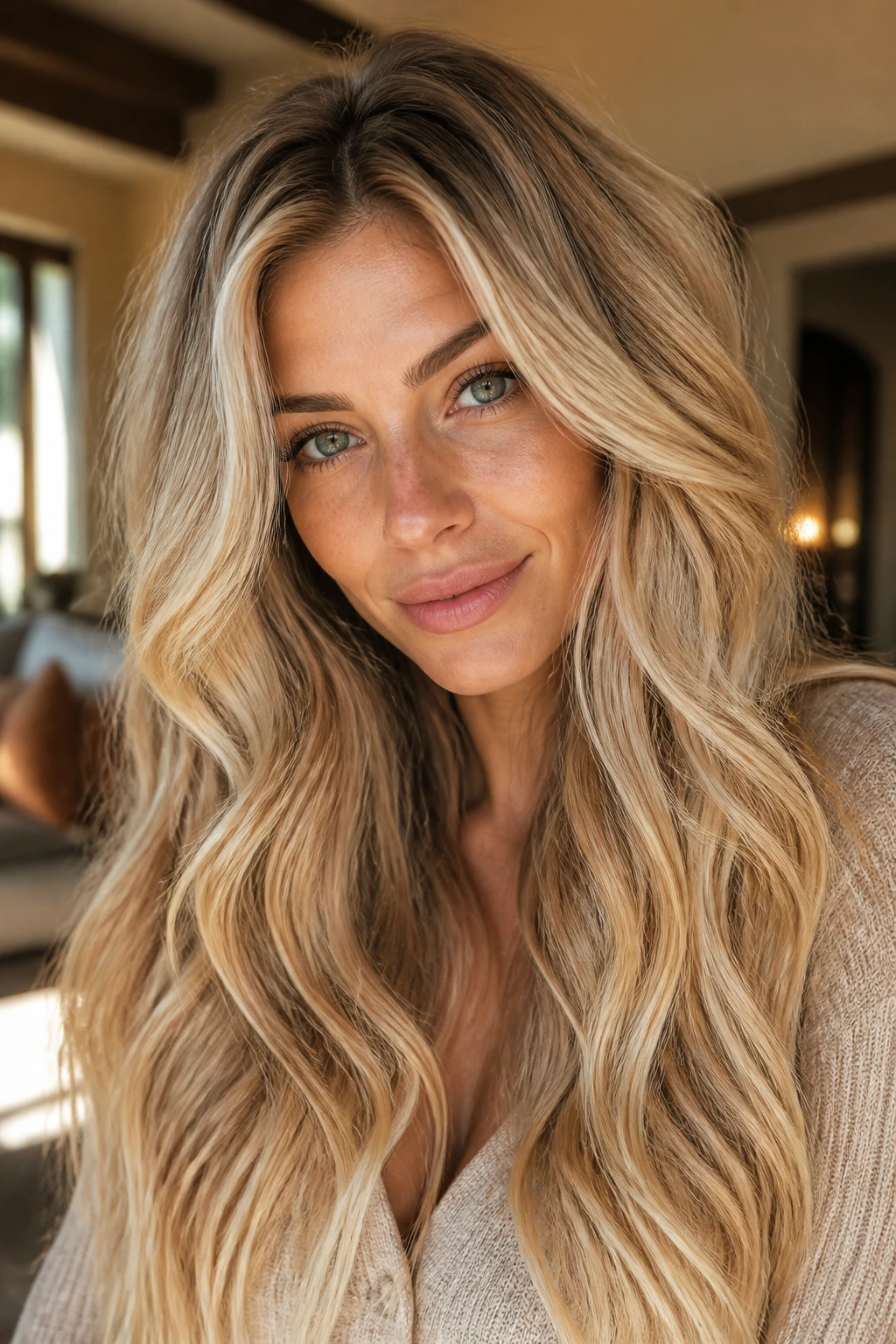
Dimension shows up better on thick hair: Dense strands can hold dark and light together without looking patchy, so the best blonde looks here use root depth and bright pieces on purpose.
-
There’s an upkeep level for everyone: Some of these styles need a gloss every few weeks; others can grow out for months and still look intentional.
-
Short, long, curly, straight — all of it is covered: Thick hair behaves differently at each length, so this mix includes bobs, lobs, layers, shags, curls, and polished updos.
-
Warm and cool blondes both make sense here: Honey, champagne, beige, ash, pearl, and platinum all have a place, depending on your base color and skin undertone.
-
The cuts work with the color: These looks are built around shape, not just shade, which matters because thick hair can look heavy fast if the cut and color are fighting each other.
-
You can keep the drama without the helmet effect: The whole point is to keep blonde bright where it counts and slightly deeper where it helps the hair move.
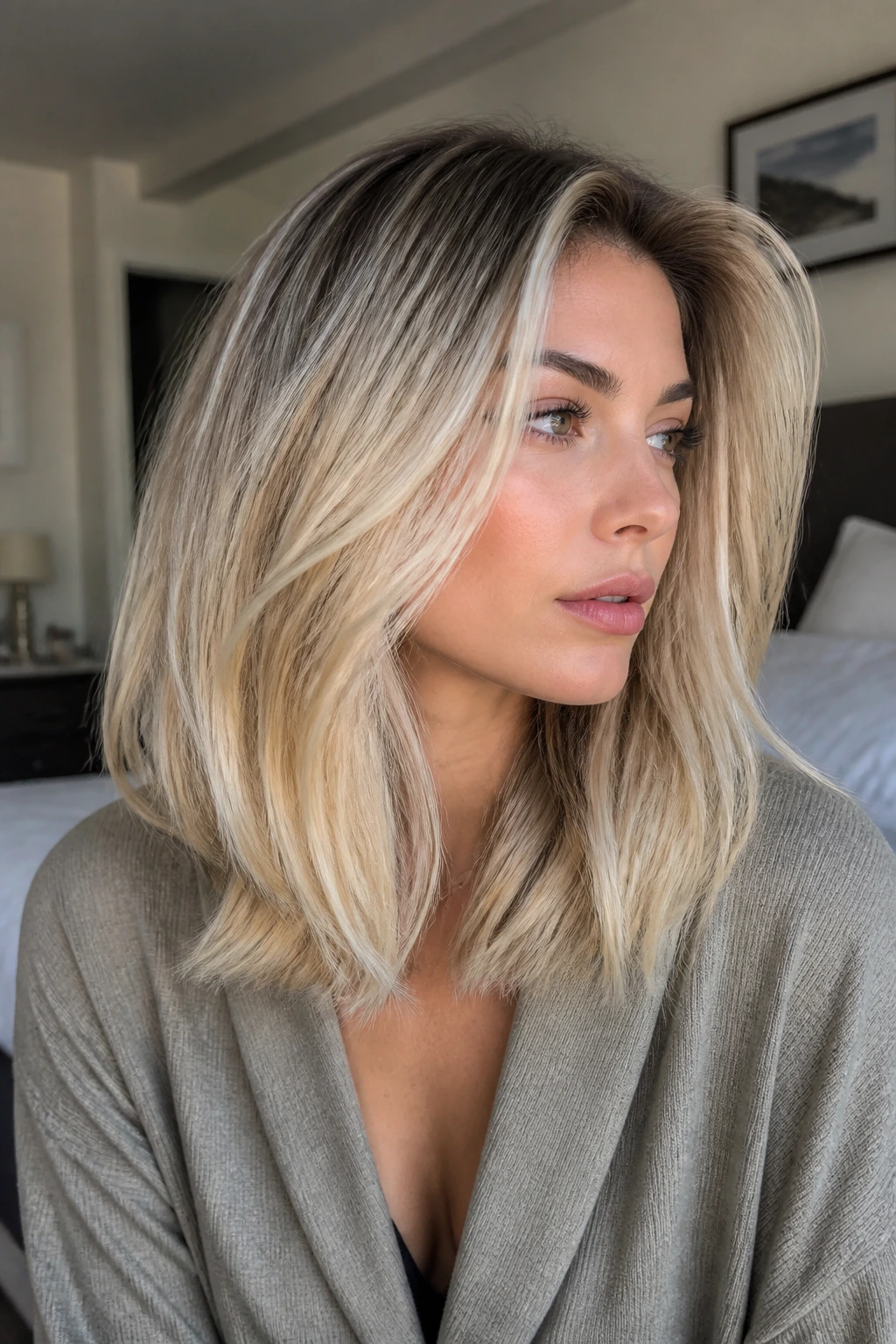
1. Rooted Cream Blonde Lob
A rooted cream blonde lob is the kind of blonde that makes thick hair look expensive without trying too hard. The darker root keeps the color grounded, while the creamy mids and ends catch light in those heavy, glossy swishes that a collarbone-length cut gives you for free.
What makes it work is the balance. Thick hair needs a little shadow near the scalp so the style doesn’t turn into one big pale sheet. Ask for a root that sits about 1 to 2 shades deeper than the lightest ends, then melt into a beige-cream tone through the lengths. It grows out cleanly, too, which matters when you have a lot of hair and do not want constant retouching.
2. Honey Balayage with Soft Layers
Honey balayage is one of those shades that knows how to flatter thick hair without flattening the shape. The warmth reads rich, not orange, and the soft layers keep the color from disappearing inside a heavy curtain of hair.
The trick is placement. On dense hair, hand-painted honey ribbons should sit through the mid-lengths and outer surface, with some deeper pieces left underneath. That keeps the blonde visible when the hair moves and stops the finish from looking stripey. I like this look on wavy hair because the bends separate the ribbons naturally, almost like the hair is doing the styling for you.
3. Bright Money Piece with Shadow Root
A bright money piece is the fastest way to wake up thick hair that feels too solid around the face. The front panels go light — think champagne or cream blonde — while the root stays deeper everywhere else, so the brightness has a frame to live in.
This look is especially strong on long, dense hair because the face-framing pieces break up all that bulk near the cheekbones and jaw. Keep the money piece a little brighter than the rest, not blindingly white. If the contrast is too harsh, thick hair can start to look skunky instead of dimensional. A soft shadow root keeps it polished.
4. Butter Blonde Butterfly Cut
Butter blonde and the butterfly cut are a very good pair. The color is warm, pale, and soft-edged; the cut removes bulk from the interior while keeping the ends airy and movable.
The shape matters here more than people realize. Thick hair often behaves like it wants to sit in a pyramid unless the layers are placed with purpose. The butterfly cut creates that lifted front and softer lower length, so the blonde has room to show off. Ask for brighter pieces around the face and around the top layer of the cut, then keep the lower sections a touch deeper.
5. Champagne Blowout Layers
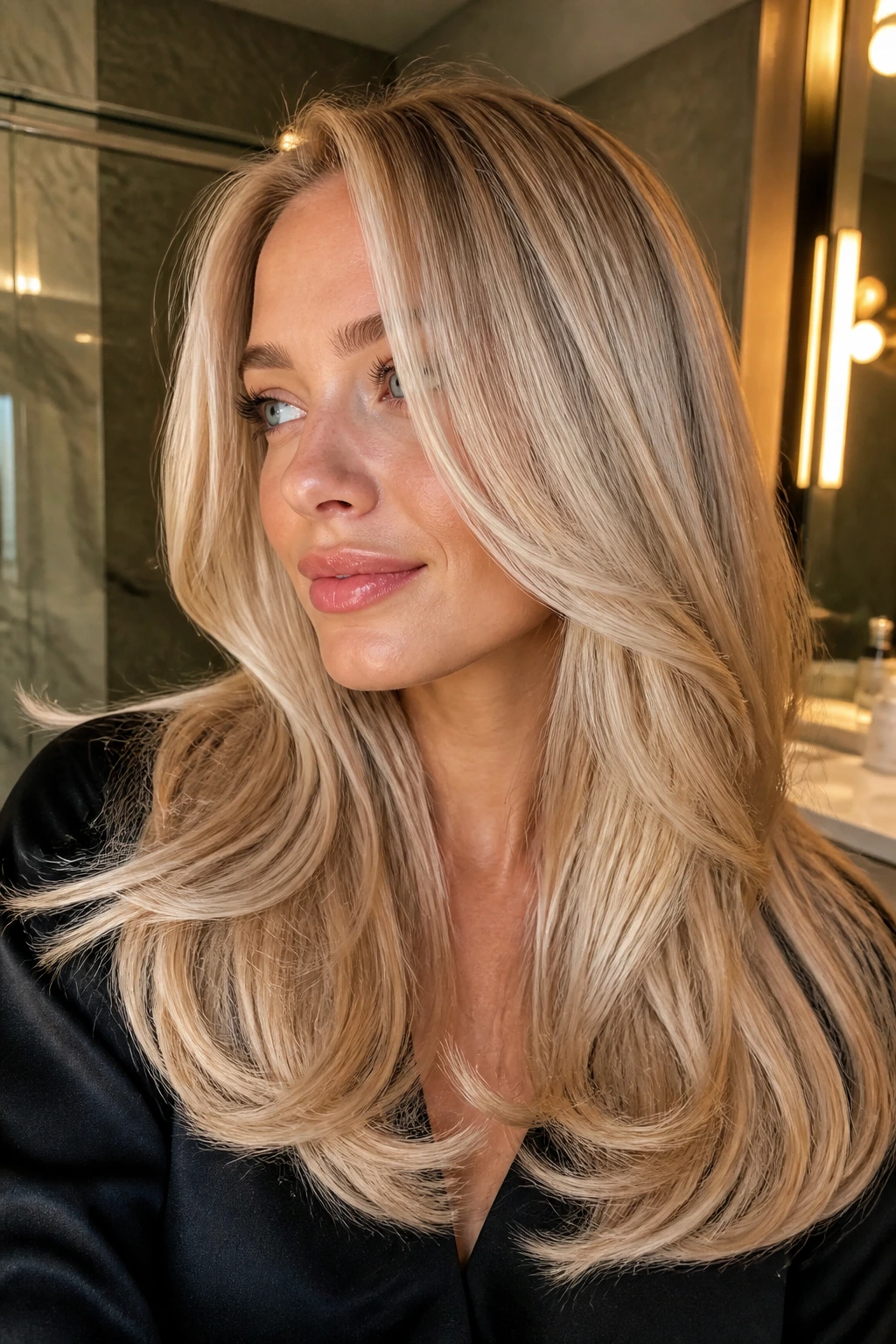
Champagne blonde has a slight beige-gold sparkle to it, and on thick hair it reads clean instead of brassy when the tone is right. This look is all about a polished blowout: smooth roots, rounded ends, and layers that move when you turn your head.
It works because the blowout gives the color a glossy surface. Thick hair can absorb light at the interior and leave the outside looking dull unless you create a smooth finish. A large round brush and a nozzle attachment matter here. So does a light gloss. The result is soft, bright, and just a little dressy.
6. Ash-Beige Balayage on Straight Thick Hair
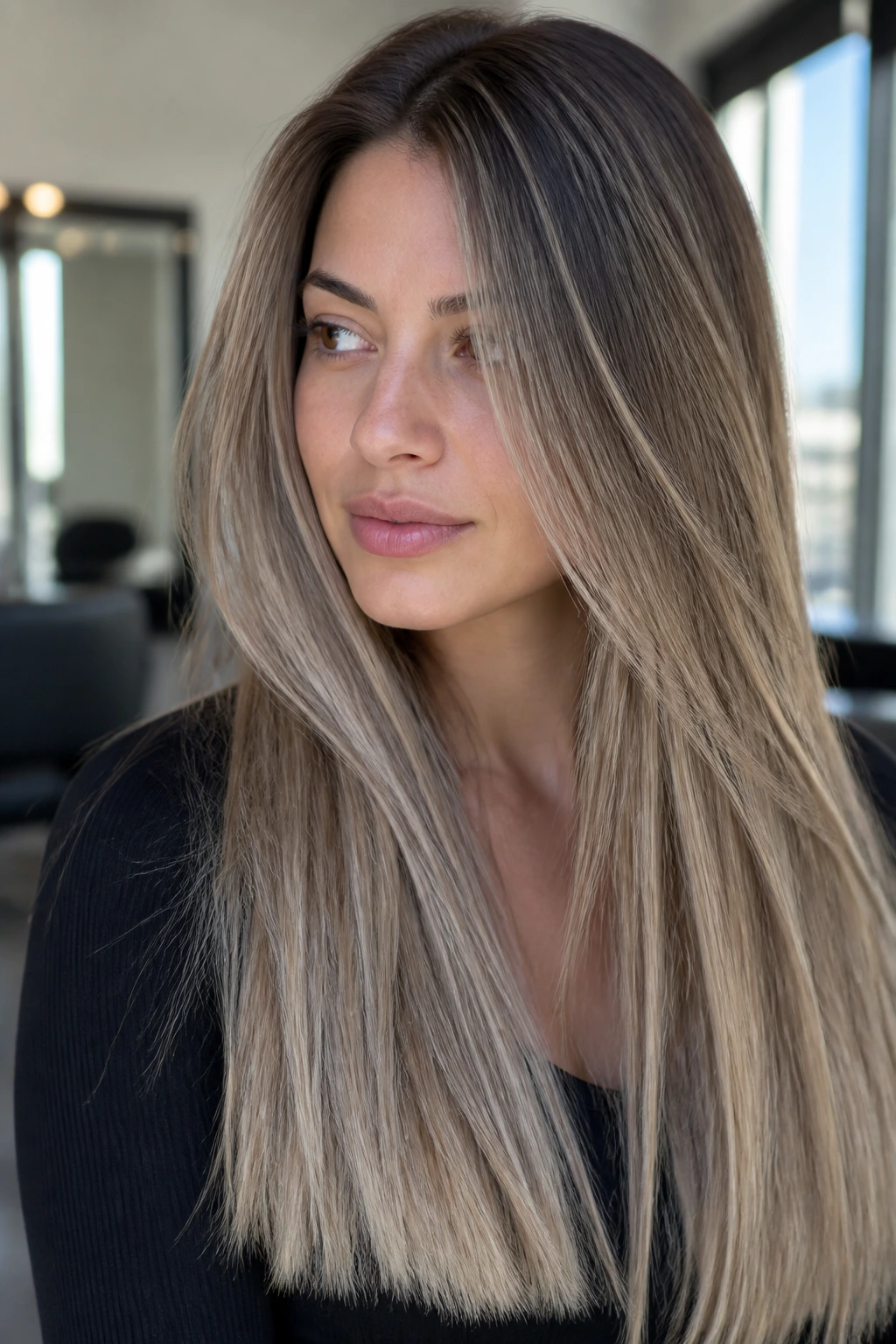
Straight thick hair can be tricky with blonde because every line shows. Ash-beige balayage softens that problem by putting cool, muted ribbons through a dense base instead of flooding the whole head with brightness.
Quick notes for this look
- Best for: Straight or slightly bent thick hair that tends to look blocky.
- Tone to ask for: Beige with a cool edge, not flat gray.
- Maintenance: Gloss the blonde every 6 to 8 weeks so it doesn’t drift yellow.
The reason I like this one is simple: it looks expensive when the haircut is blunt enough to have a strong shape. A small amount of ash through the mids and ends gives straight thick hair movement without making it look overprocessed. If your natural base is dark blonde or light brown, this is one of the easiest ways to stay cool without getting muddy.
7. Golden Bronde Waves
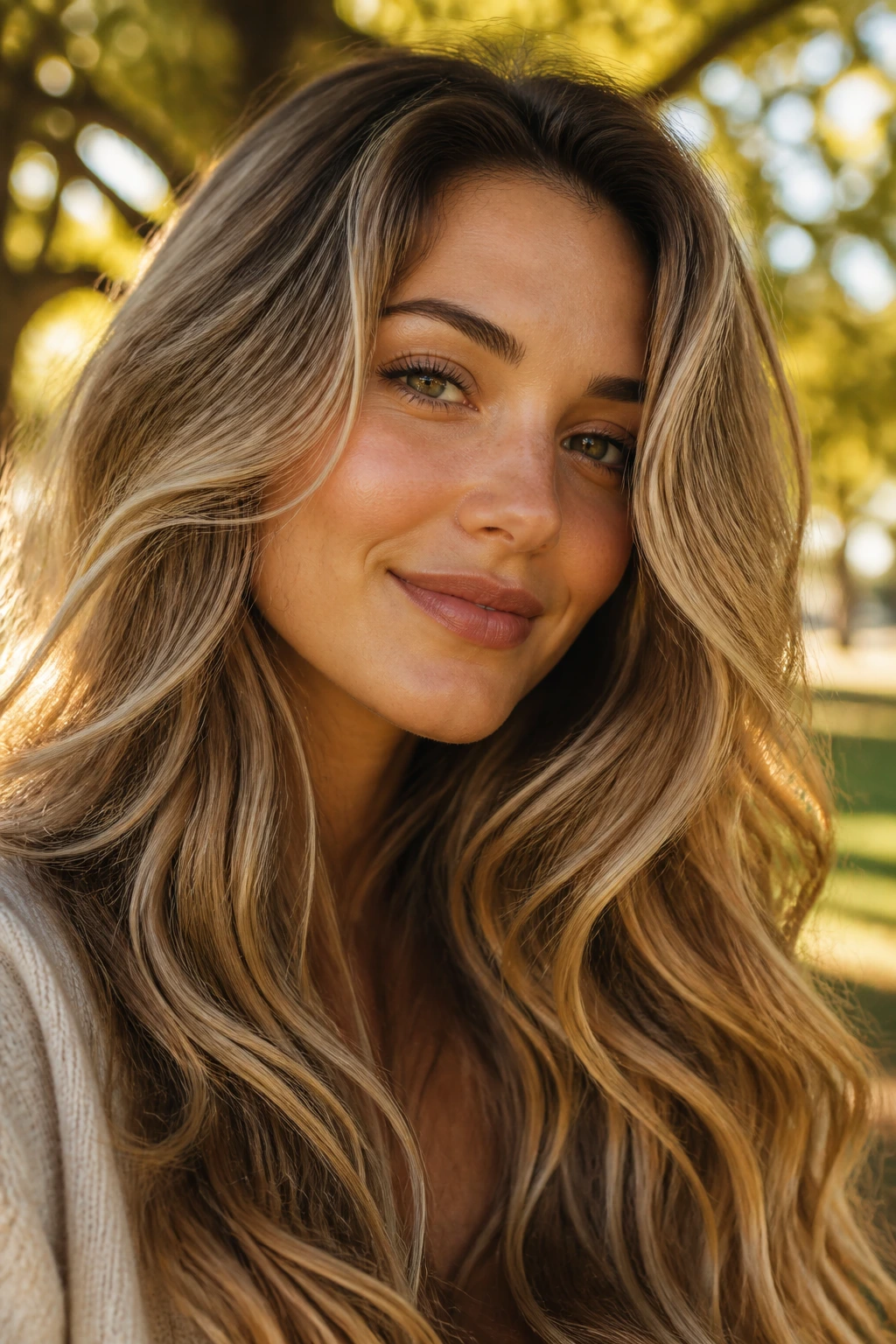
Golden bronde is the comfortable middle ground for thick hair that wants brightness but not a full commitment to light blonde. The brown stays present, the gold catches light, and the whole thing looks like hair that has a life outside the salon chair.
The waves matter as much as the color. On dense hair, loose bends separate the lighter ribbons and show the contrast between base and highlight. A bronde finish also grows out better than a super-light blonde, which is one reason I keep coming back to it for thick hair. It has enough depth to keep the ends from looking frayed.
8. Platinum Ribbon Highlights
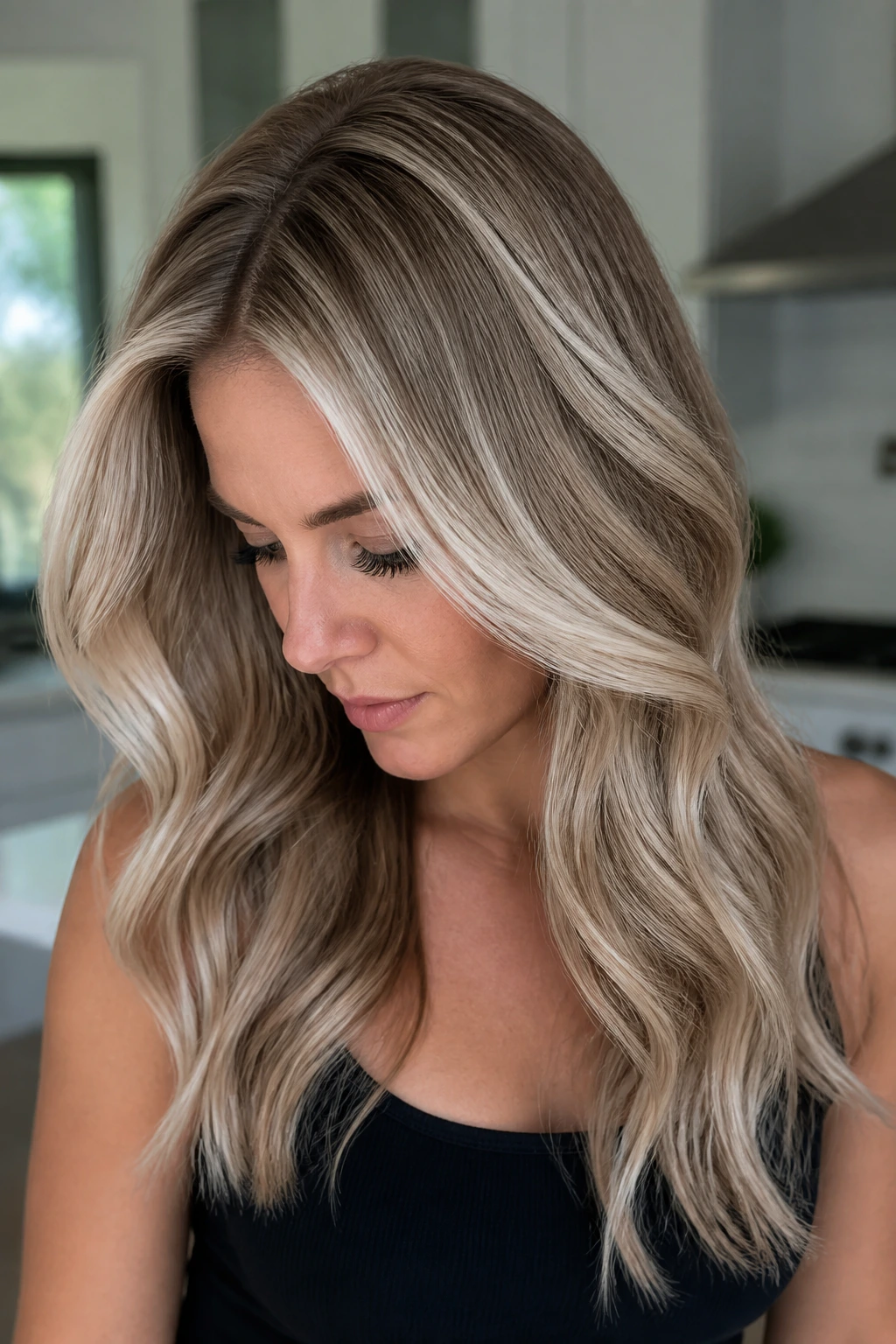
Platinum ribbon highlights are not for the timid, and that’s fine. Thick hair can take them in a way that fine hair often cannot, because the density gives those bright ribbons something to sit inside.
The key is restraint. You want ribbons, not an all-over snowstorm. Place the lightest pieces around the crown, hairline, and the top layer, then leave deeper sections underneath so the platinum has contrast. On thick curls or waves, this is especially good because the curls reveal hidden brightness as they move. It’s dramatic, but it’s not chaotic when the placement is smart.
9. Vanilla Cream Curtain Bangs
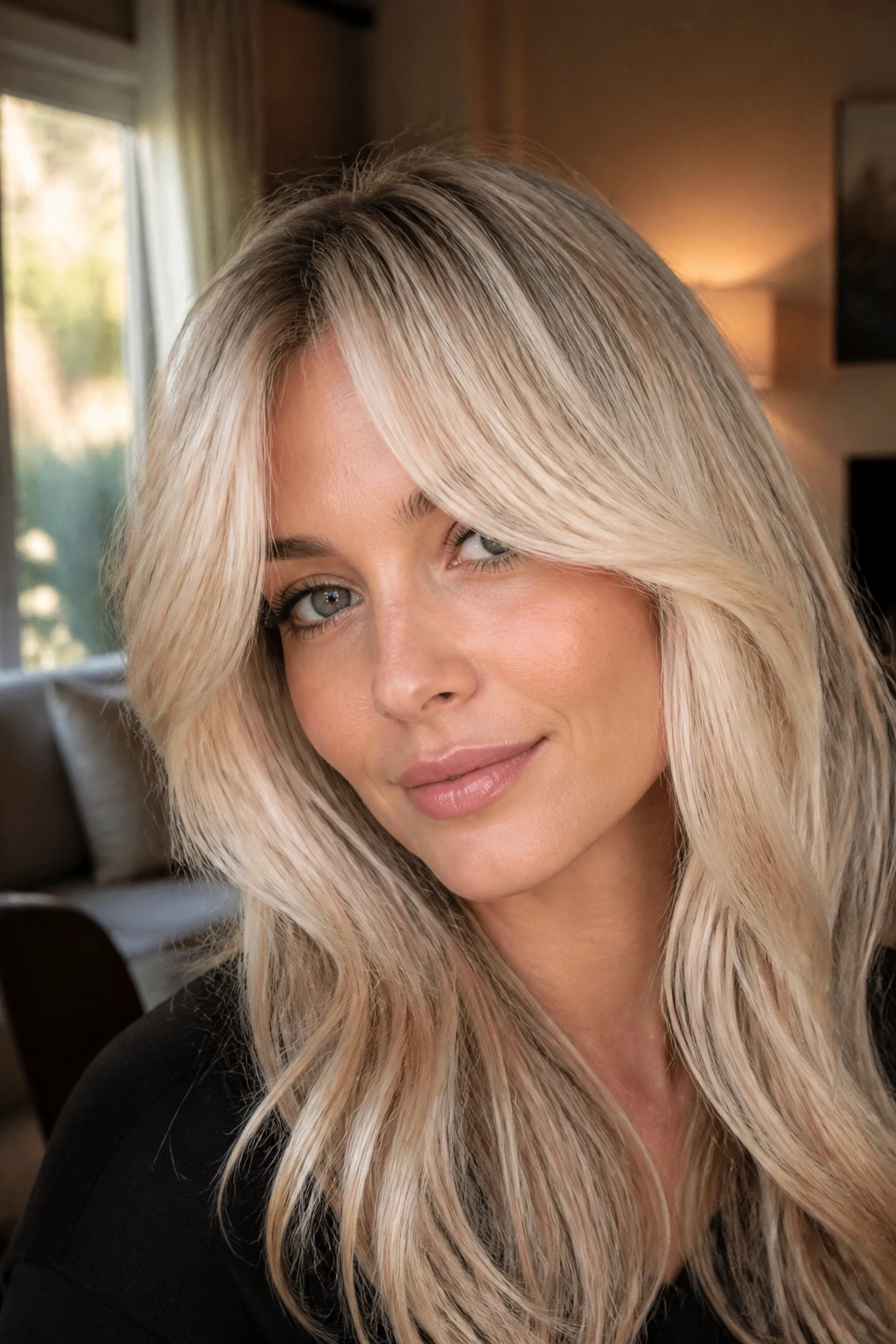
Curtain bangs can do more for thick hair than people expect. Add a vanilla cream blonde around the fringe and face frame, and the whole cut looks lighter, softer, and a little less bottom-heavy.
The color lifts the eye right where you want it. Thick hair tends to build visual weight around the sides of the face, especially if the length is long and the ends are full. A pale creamy tone in the front pieces opens that area up. Keep the rest of the head slightly deeper so the bangs and face frame don’t disappear into the lengths.
10. Old-Money Blonde Long Layers
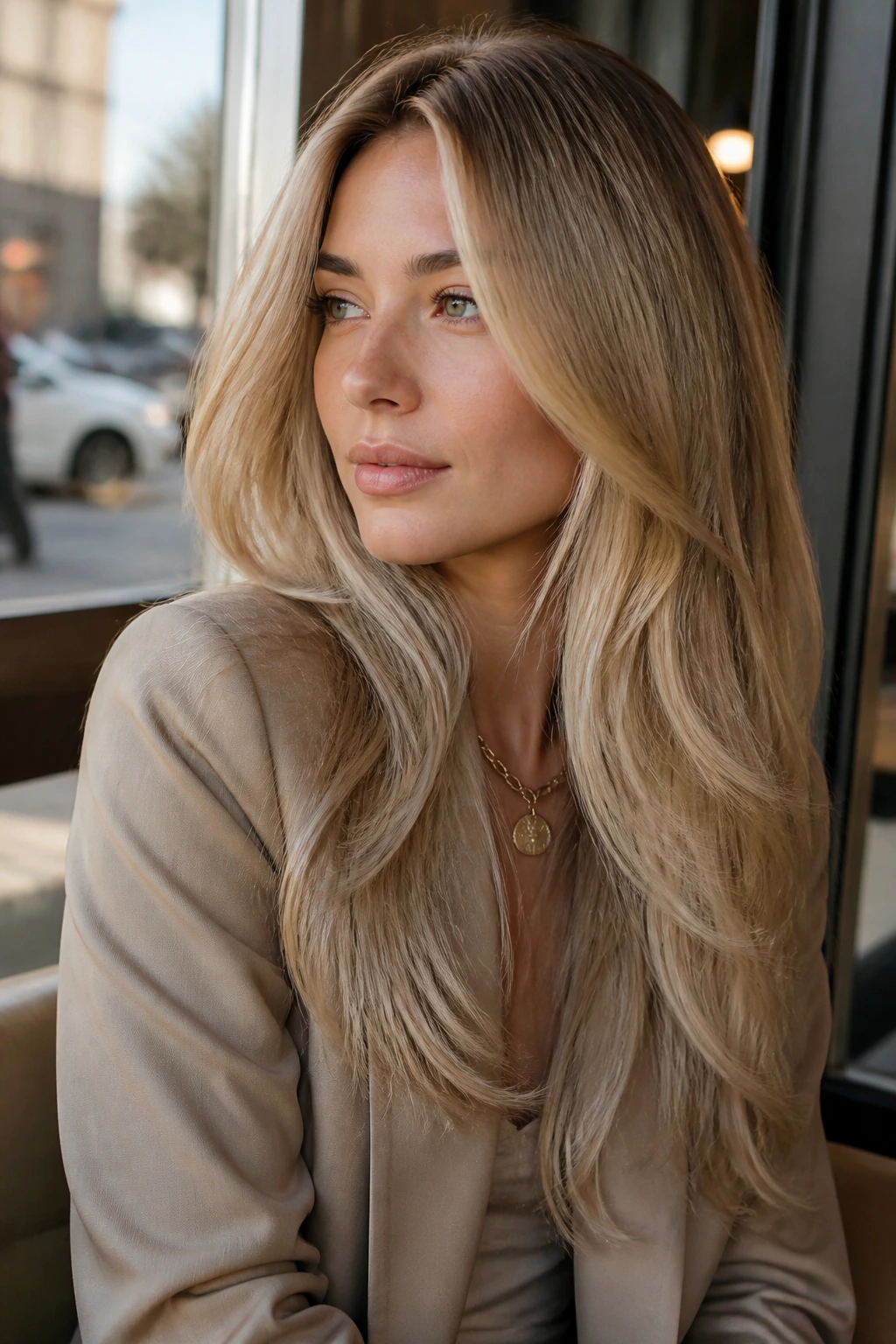
Old-money blonde is really just a polished beige blonde with excellent restraint. On thick hair, that restraint is a gift. You keep enough depth near the roots and inside the layers to avoid a flat, over-light look, while the surface pieces stay soft and luminous.
Long layers help this shade breathe. Without them, thick hair can swallow a delicate blonde and leave you with a heavy curtain. With them, the ends taper instead of stacking, and the color can show off the movement. This is one of my favorite options for someone who wants blonde that looks quietly deliberate rather than aggressively highlighted.
11. Icy Pearl Blunt Bob
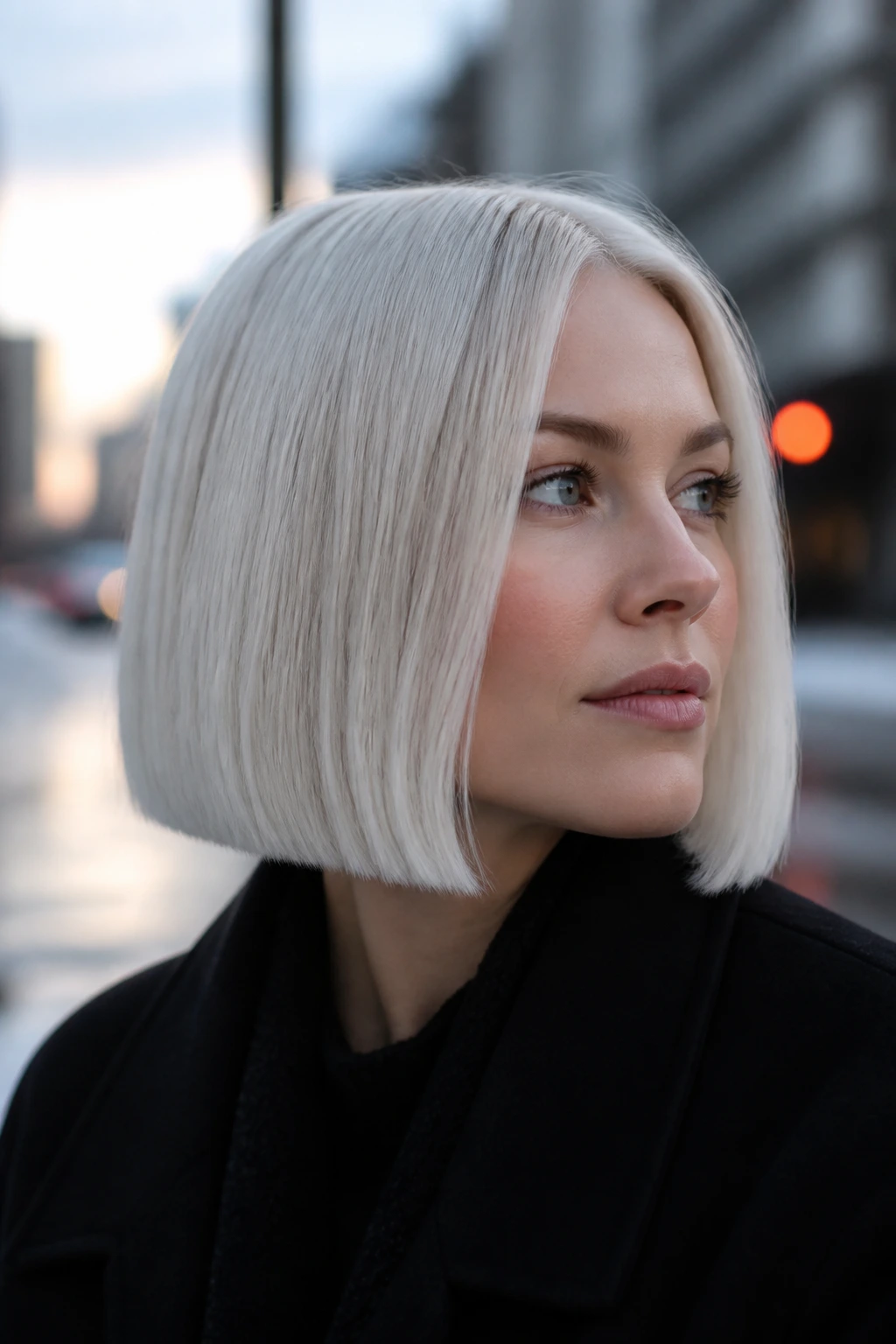
An icy pearl bob on thick hair has a sharpness that feels almost architectural. The blunt line gives the cut definition, and the pearl tone keeps the blonde from drifting too stark or metallic.
What makes it work
- The cut does the heavy lifting: A blunt bob removes the need for too many layers, which can make thick hair puff out.
- The tone stays soft: Pearl blonde has a silvery-beige cast that looks cleaner than pure white.
- The maintenance is real: Plan on regular toning, because icy shades show warmth fast.
I like this look best when the bob hits just below the jaw or right at the chin. That length holds shape on thick hair and keeps the profile neat. If your hair is super dense, ask for internal debulking rather than aggressive thinning. The line stays crisp that way, which is the whole point.
12. Sand Blonde Shag
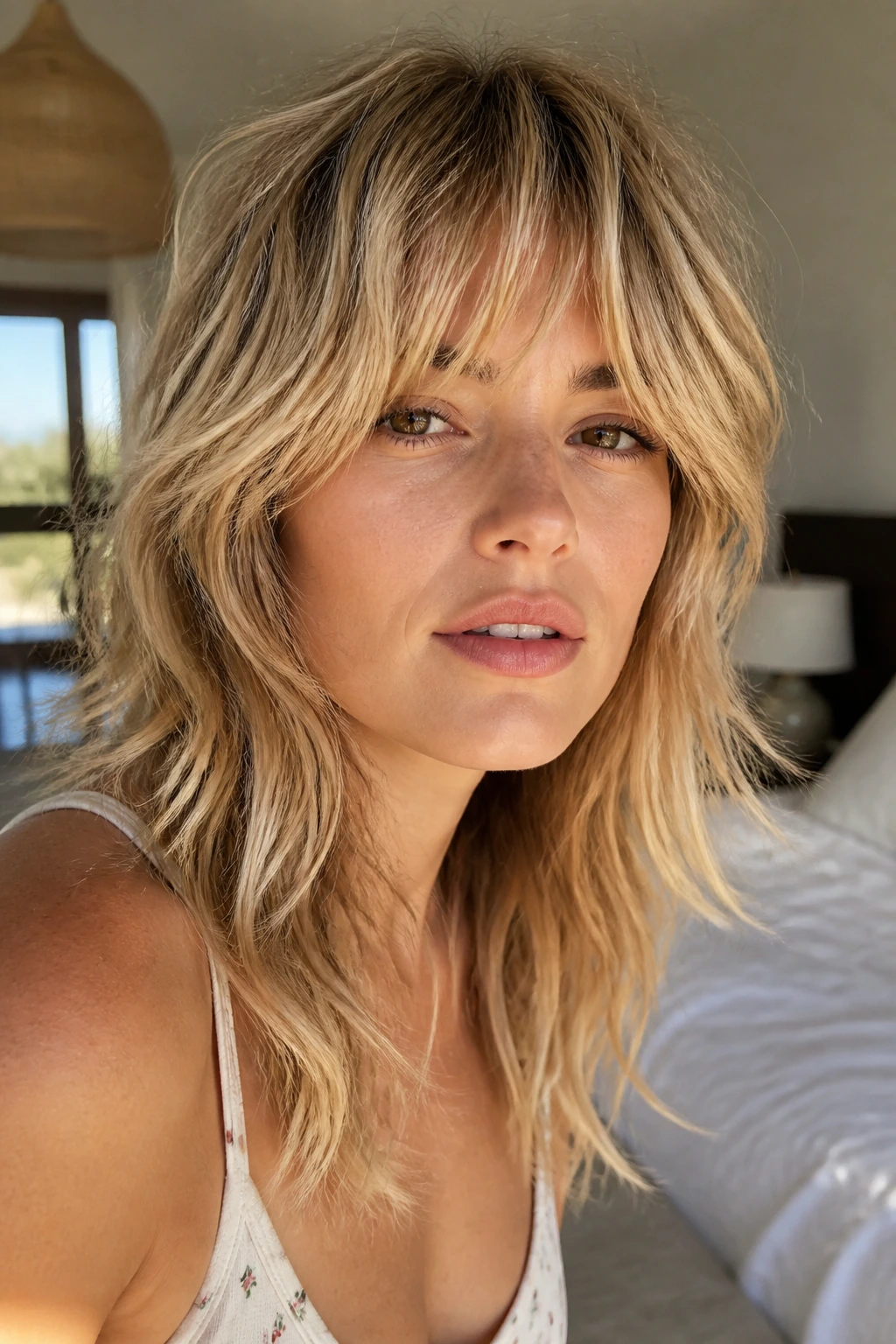
Sand blonde has that slightly weathered, neutral feel that works so well with a shag. On thick hair, the shag removes weight in the right places and lets the blonde pieces sit in layers instead of forming one giant mass.
This is a good option if you want movement without needing a perfect blowout every time. The uneven texture makes the highlight placement look relaxed, even when the color is carefully planned. Sand blonde also avoids the yellow cast that can creep into warmer blondes when thick hair holds toner for too long.
13. Caramel-to-Blonde Ombré
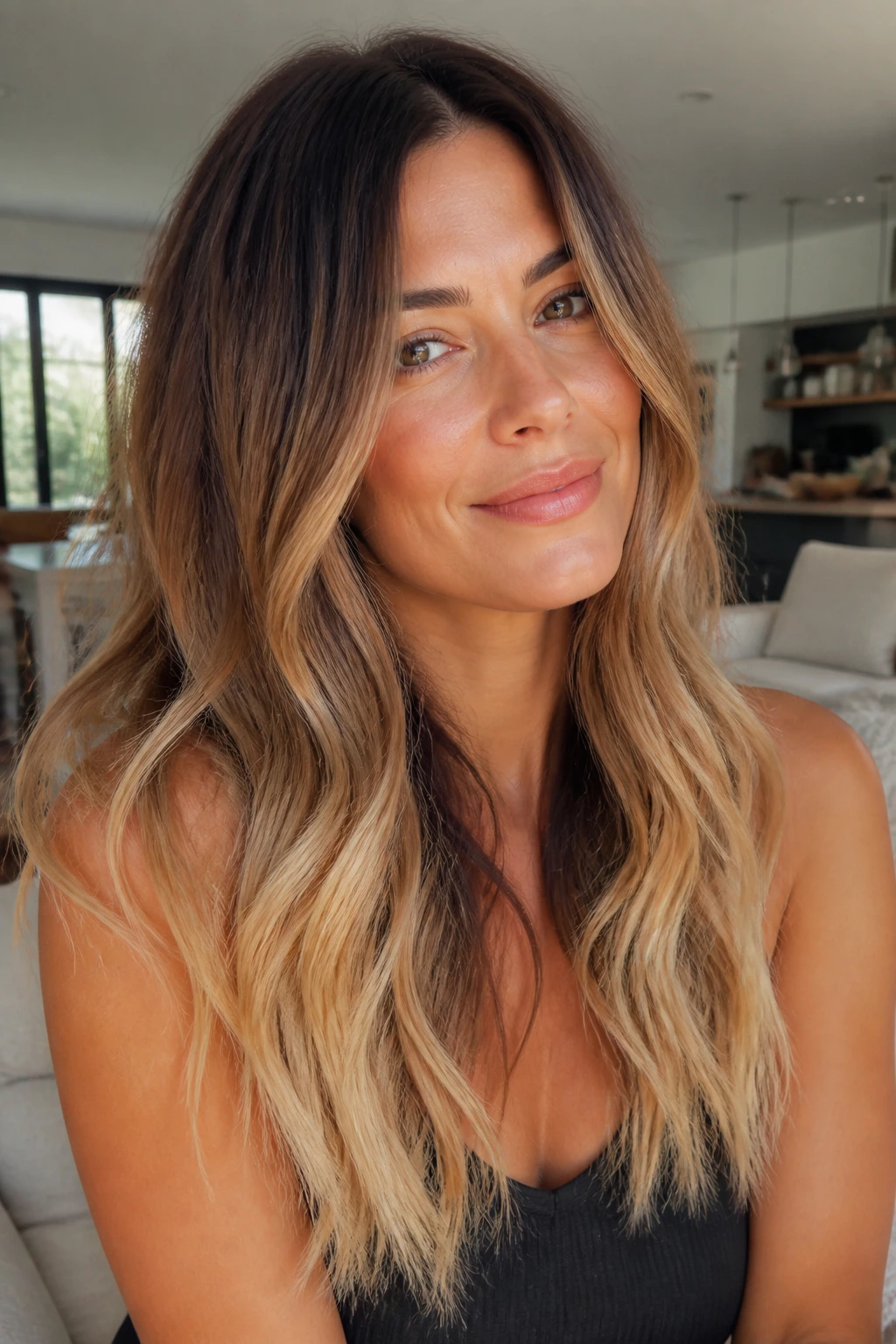
Caramel-to-blonde ombré is one of the most forgiving ways to go lighter on thick hair. The darker root and caramel mid-lengths keep the transition gradual, then the blonde ends give you that lifted finish.
The beauty of this look is how well it handles density. Thick hair can hide a color transition if the line is too abrupt; ombré solves that by stretching the shift over more space. It’s also easier to keep the ends bright while leaving the top a touch deeper, which keeps the overall shape from feeling bulky.
14. Vanilla Latte Bronde Melt
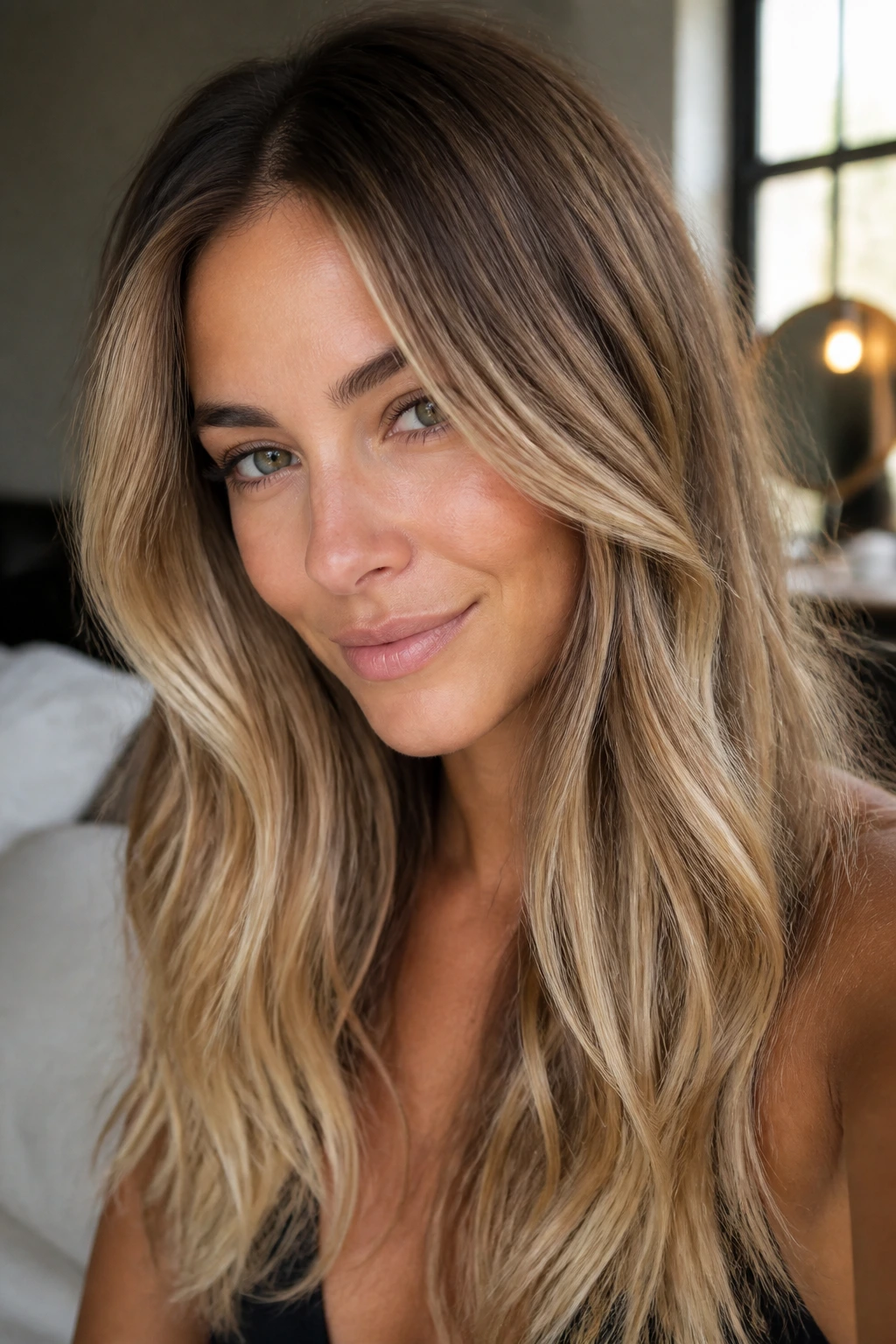
Vanilla latte bronde sits in a sweet spot between brunette and blonde that thick hair wears well. The root stays mocha or light brown, the mids soften into beige, and the ends finish in a creamy vanilla tone.
That melt matters. Thick hair often needs a gradual color story because a hard line can make the whole head feel heavy. A bronde melt gives you the brightness of blonde without forcing the entire head to compete for attention. It’s especially nice on longer hair, where the color has room to unfold in layers.
15. Cream Soda Midlength
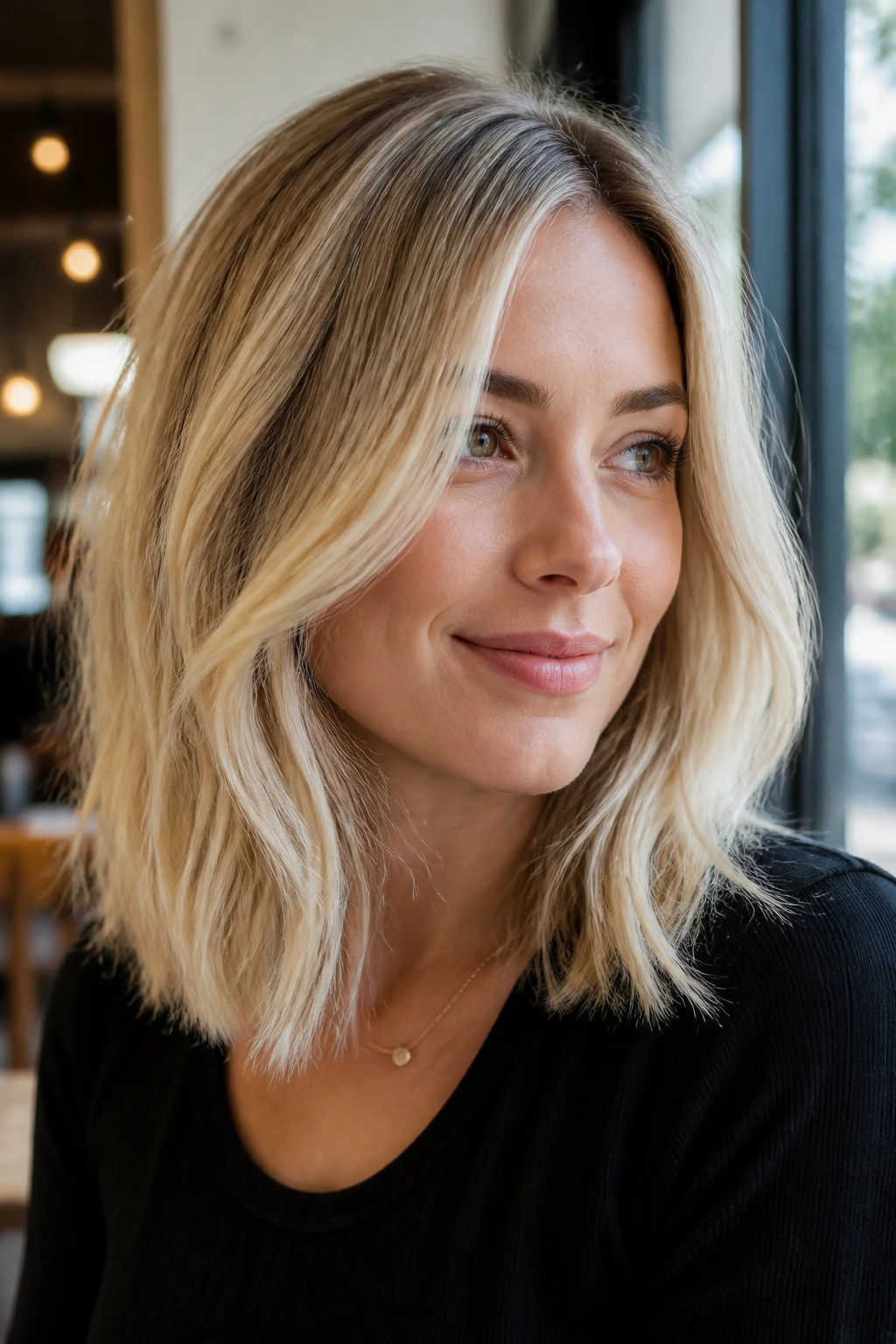
Cream soda blonde has a pale, soft brightness that looks best when the hair hits around the shoulders or just below. On thick hair, that midlength keeps the cut from becoming too heavy while the creamy tone keeps it from looking flat.
The finish should feel glossy, not frosted. A bit of neutral beige in the toner keeps the blonde from looking chalky, which is a common problem on dense hair because the strands can be a little resistant to light. This one is elegant in a very low-key way. It’s the kind of blonde that looks good even when it’s tucked behind one ear.
16. Chunky ’90s Blonde Highlights, Modernized
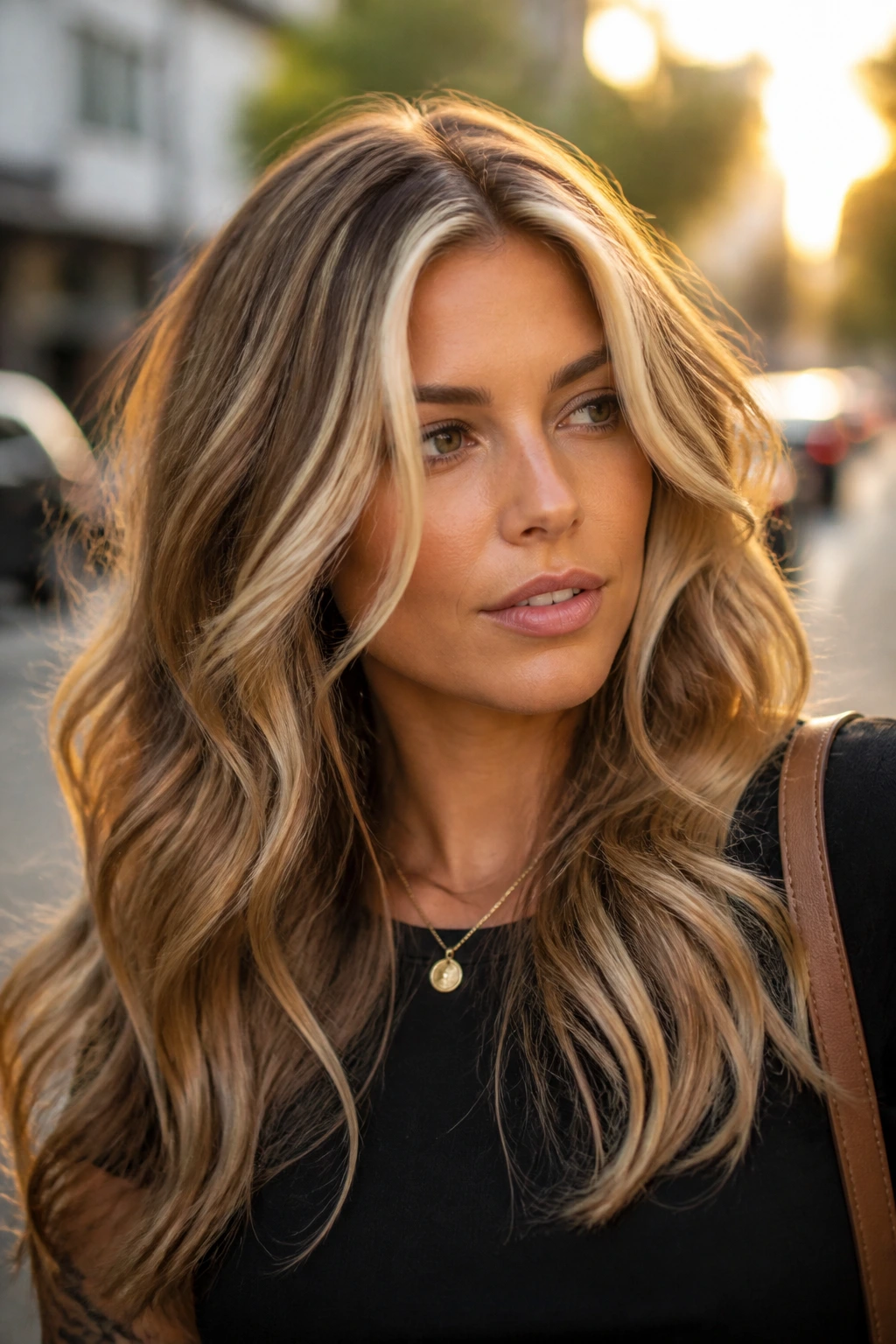
Chunky highlights on thick hair can look fantastic if they’re handled with a lighter hand than the old-school version. You want visible contrast, but you also want softness around the edges so the color doesn’t scream in stripes.
Best for if you want a little nostalgia
- Pair them with a deeper base: That keeps the blonde from washing out the cut.
- Keep the chunks controlled: A few well-placed foils are better than a full stripe map.
- Style with movement: Waves or a loose blowout stop the look from feeling dated.
Thick hair is one of the few places where chunkier highlights can still make sense, because the density gives the color room to breathe. The modern trick is blending the transitions so the highlights feel intentional, not pasted on. I’d choose this on layered shoulder-length hair, where the pieces can separate a little when you move.
17. Strawberry Blonde Dimension
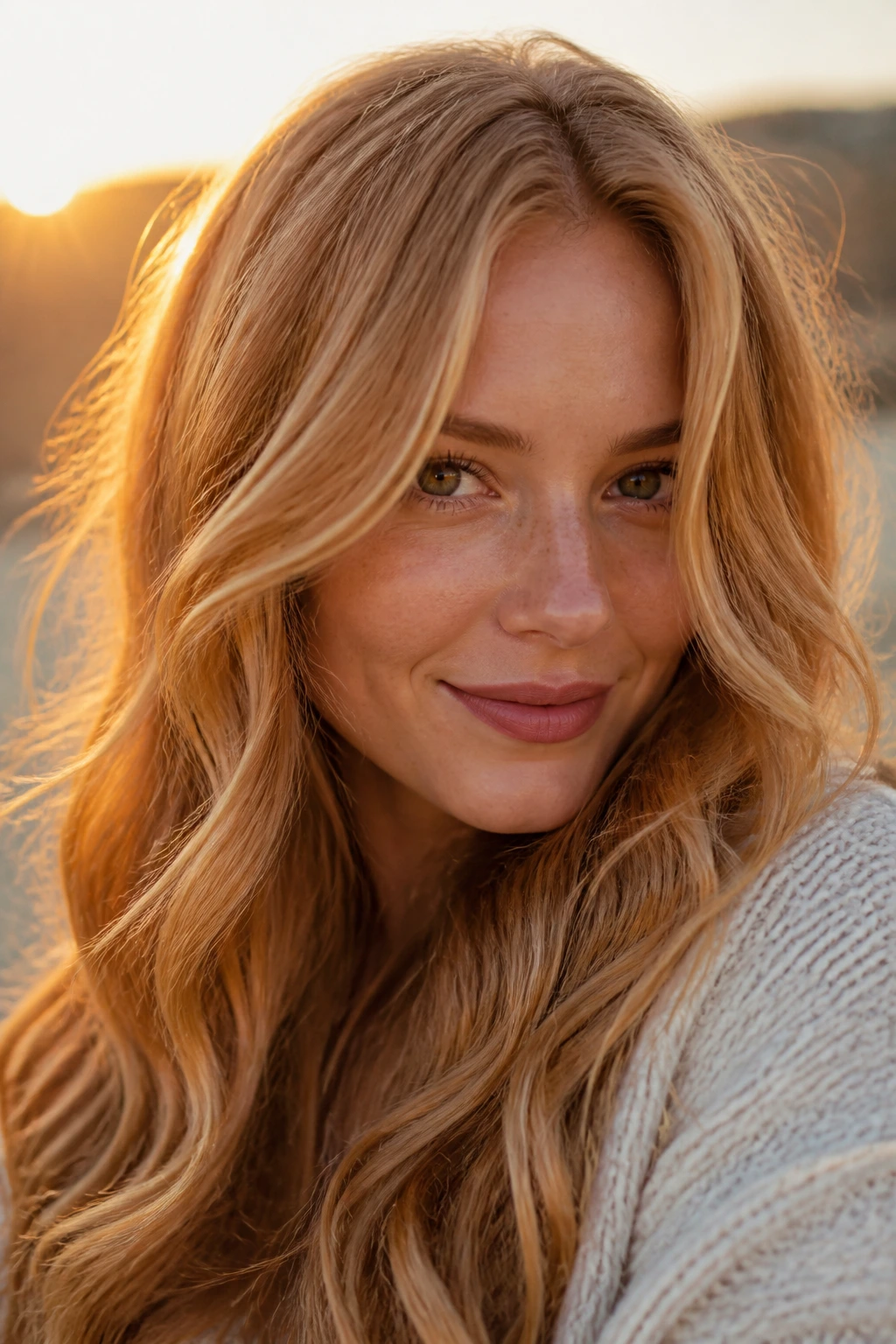
Strawberry blonde is warmer, peachier, and more interesting than people give it credit for. On thick hair, the warmth plays off the natural depth and keeps the whole look from getting muddy.
This shade is especially pretty when there are subtle gold and copper notes woven through a lighter blonde base. Thick hair can hold those tones without looking too translucent, which is why the color reads rich instead of pale. If your skin has a warm or neutral undertone, this one can be a sleeper hit. It glows without needing harsh contrast.
18. Mushroom Blonde Lob
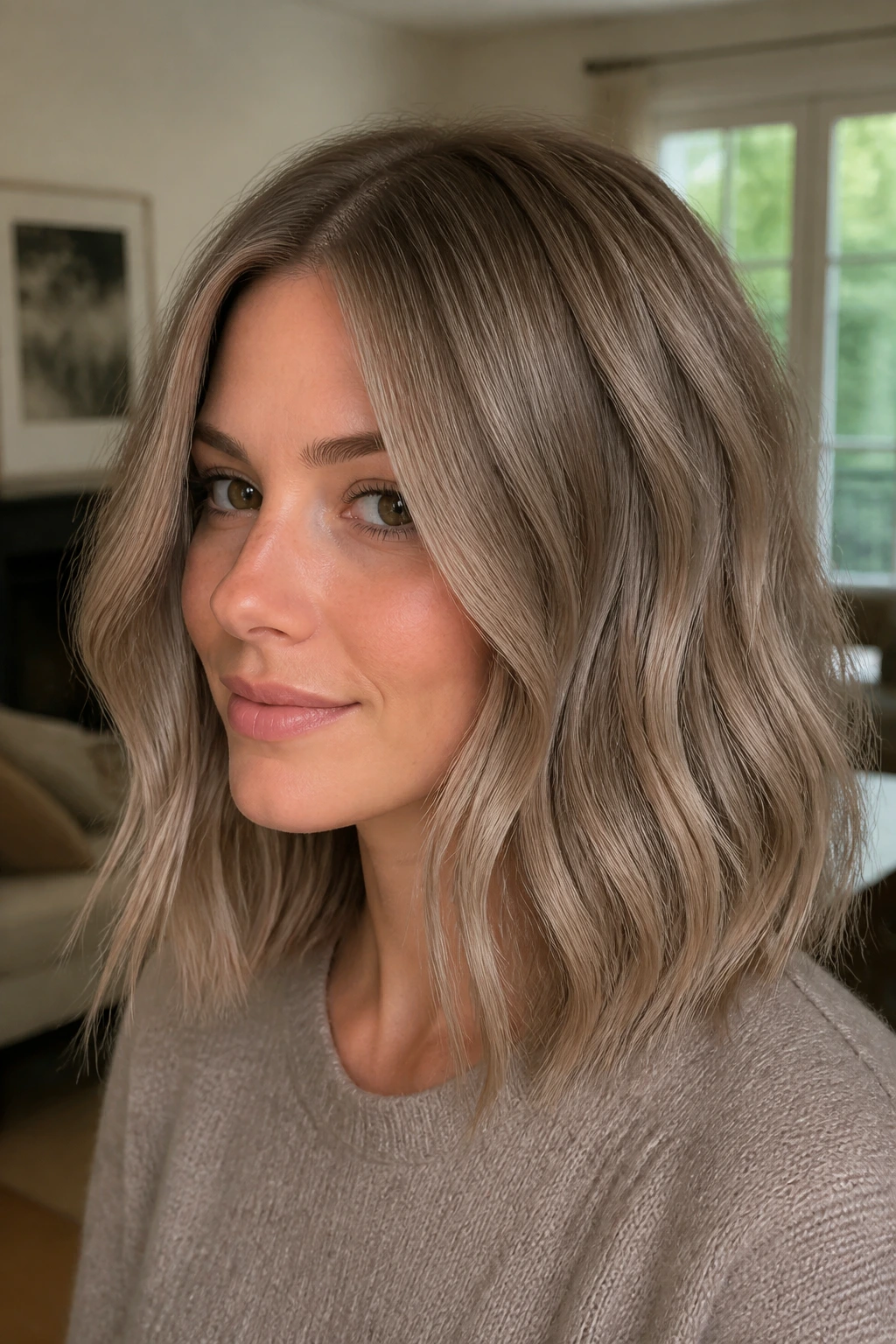
Mushroom blonde is cool, earthy, and a little smoky — a nice change if you’re tired of honey or butter tones. On a lob, it gives thick hair a clean edge and keeps the cut from looking overly full.
The neutral base is the secret. Instead of chasing a bright blonde everywhere, the color leans taupe-beige with soft ash in the ribbons. That means the hair still looks blonde, just more muted and expensive-looking. It’s one of the best choices if you want something modern that doesn’t fight your natural depth.
19. Sunflower Blonde Curls
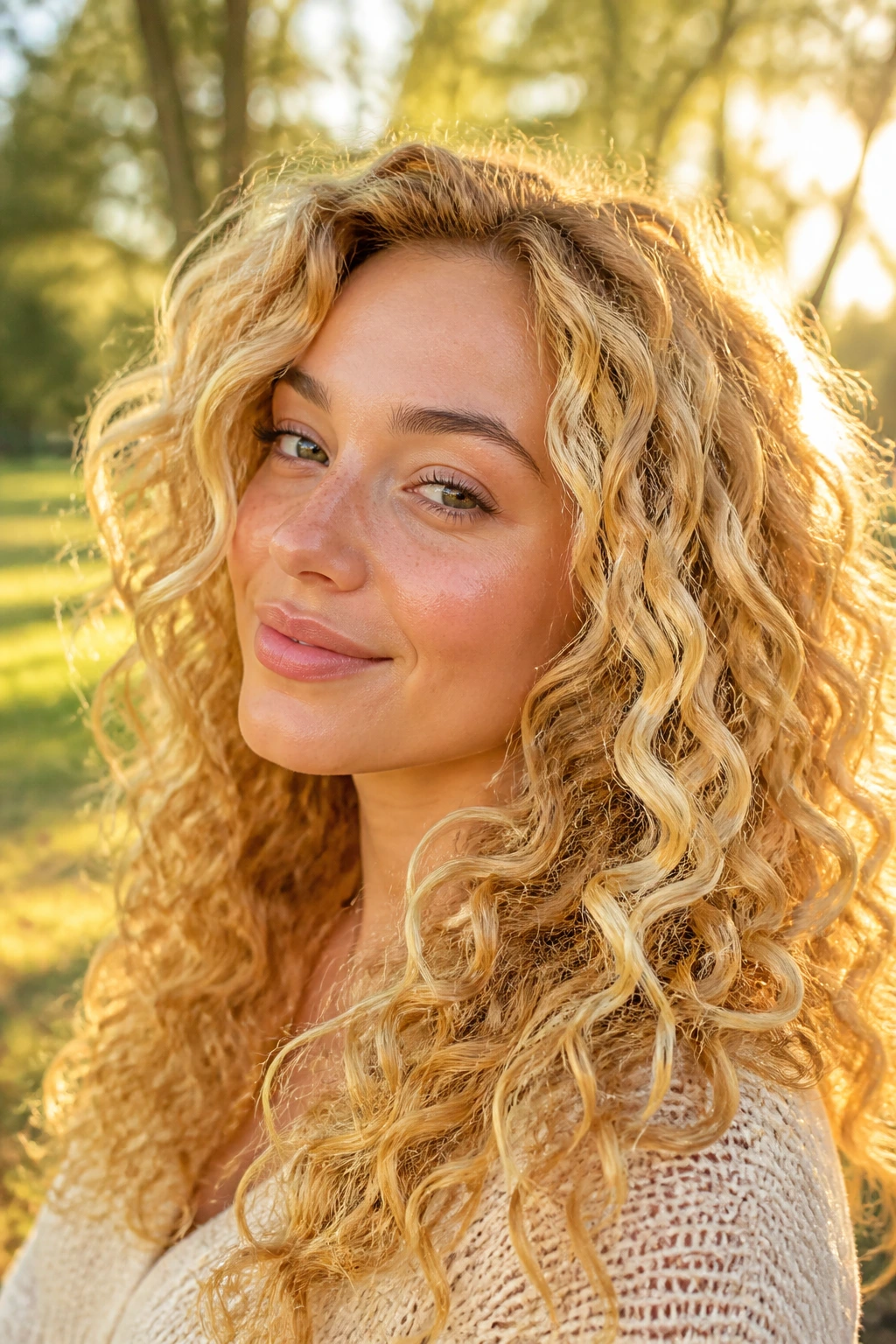
Sunflower blonde on curls is warm in the best way. The lighter gold pieces catch the curve of the curl pattern, so the whole head looks textured instead of bulky.
The cut should support the curl, not fight it. Thick curly hair already has plenty of body, so the color works best when it’s placed where the curls naturally separate: around the outer surface, at the front, and through the mid-lengths. Avoid making every curl the same brightness. A little variation keeps the shape alive.
20. White Blonde Pixie Crop
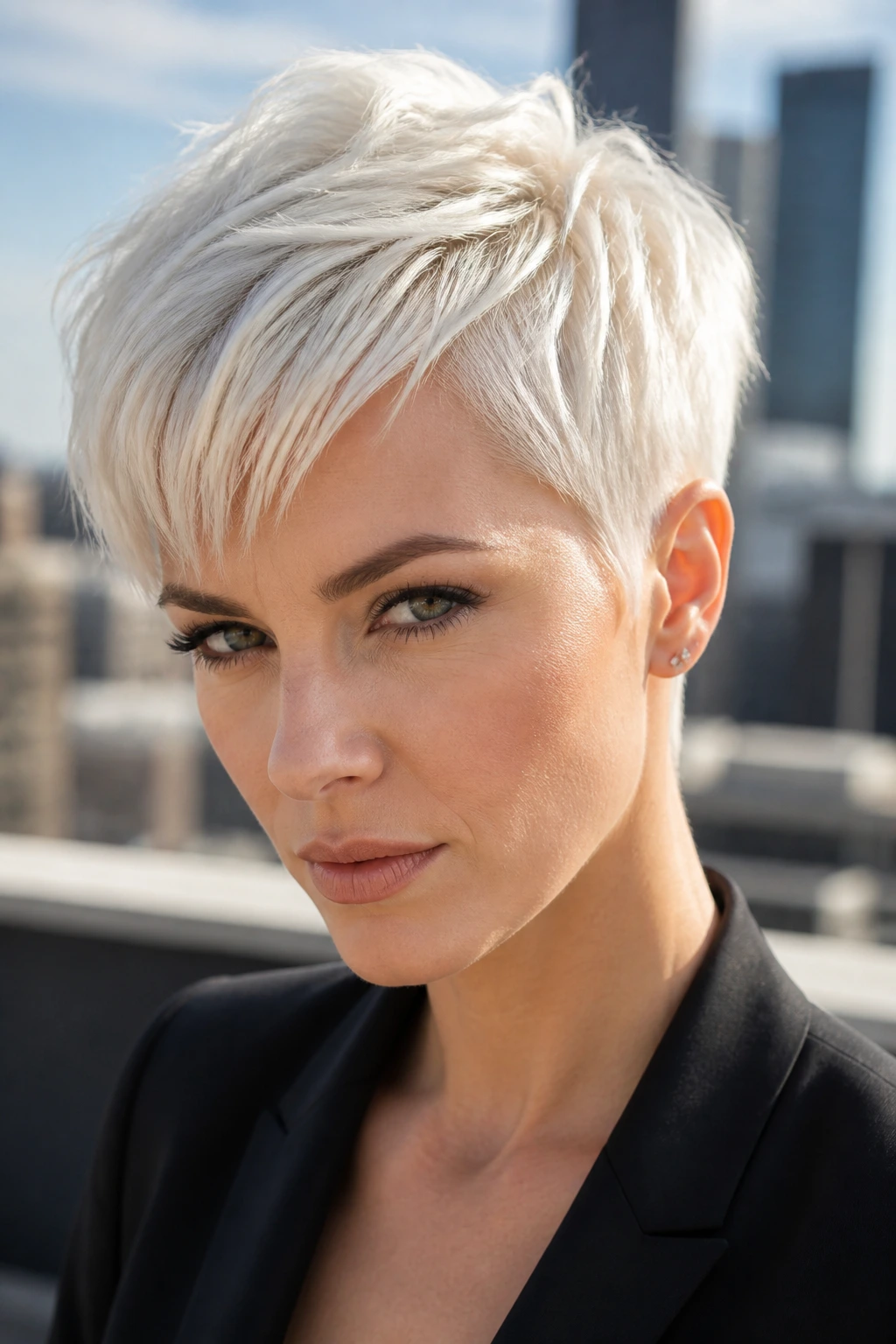
A white blonde pixie on thick hair is a bold move, but it makes sense because short length takes the weight out of dense strands fast. The pale tone gives the crop a sharp finish, and the short cut keeps the maintenance from feeling endless.
This look needs precision. If the crop is too bulky at the sides, the brightness can start to look helmet-like, which is not the goal. Keep the outline tight around the ears and nape, and let the top stay slightly longer for movement. The contrast between the short shape and the icy color is what gives it edge.
21. Beige Blonde U-Cut
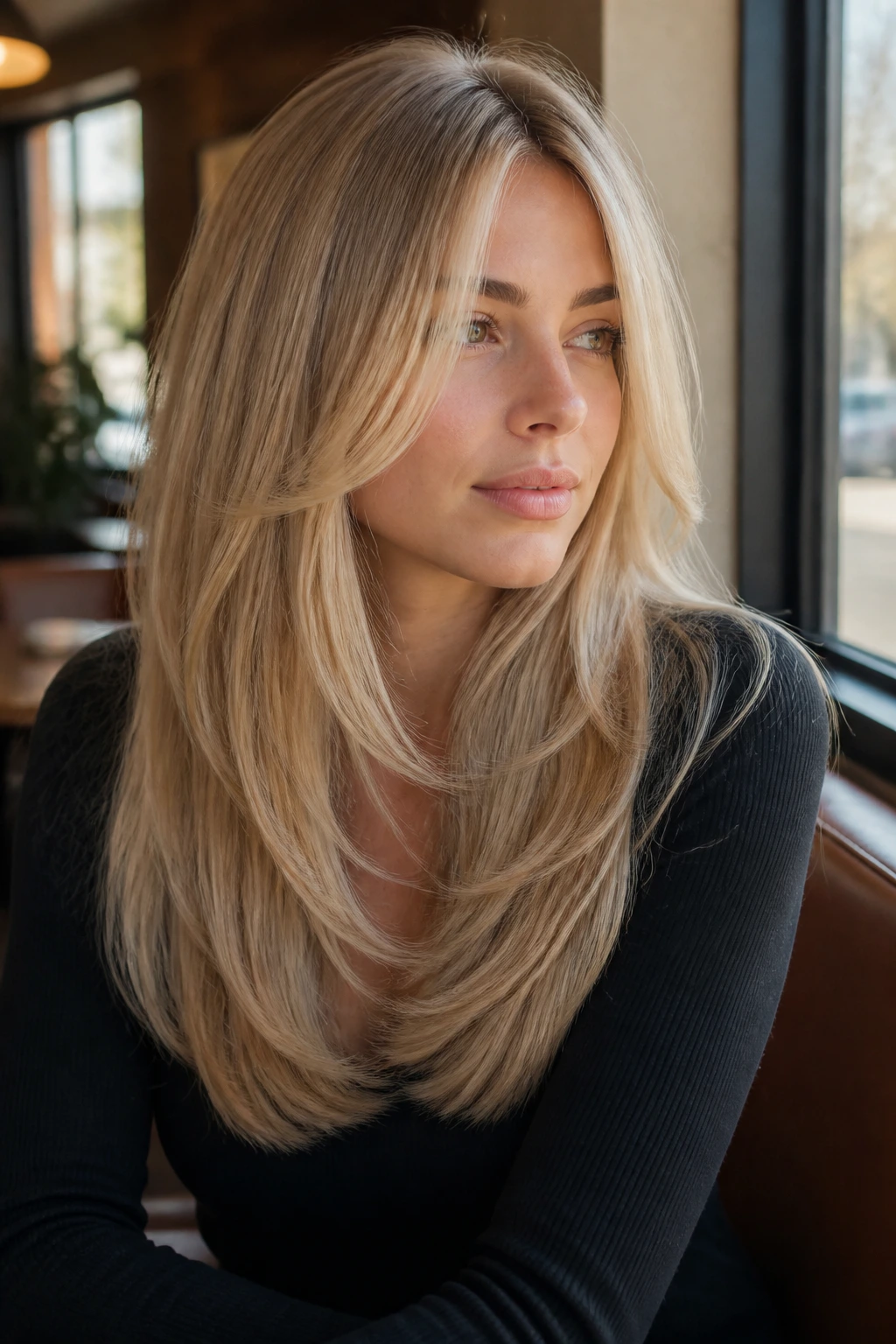
A U-cut is one of the quiet heroes for thick hair. It keeps the perimeter rounded enough to feel soft, while the beige blonde pieces brighten the surface without making the hair feel stripped.
Why it’s such a good fit
- The shape removes heaviness: A U-cut softens thick ends better than a blunt line.
- The tone stays wearable: Beige blonde sits between warm and cool, so it’s easy to live with.
- The grow-out is forgiving: Root shadow and soft lowlights blend nicely as the hair grows.
I like this look on long hair that needs movement but not a dramatic chop. The U shape lets the lengths curve inward, which helps thick hair fall instead of ballooning outward. Add a few face-framing lights and the whole cut suddenly feels lighter.
22. Toffee Blonde Peekaboo Panels
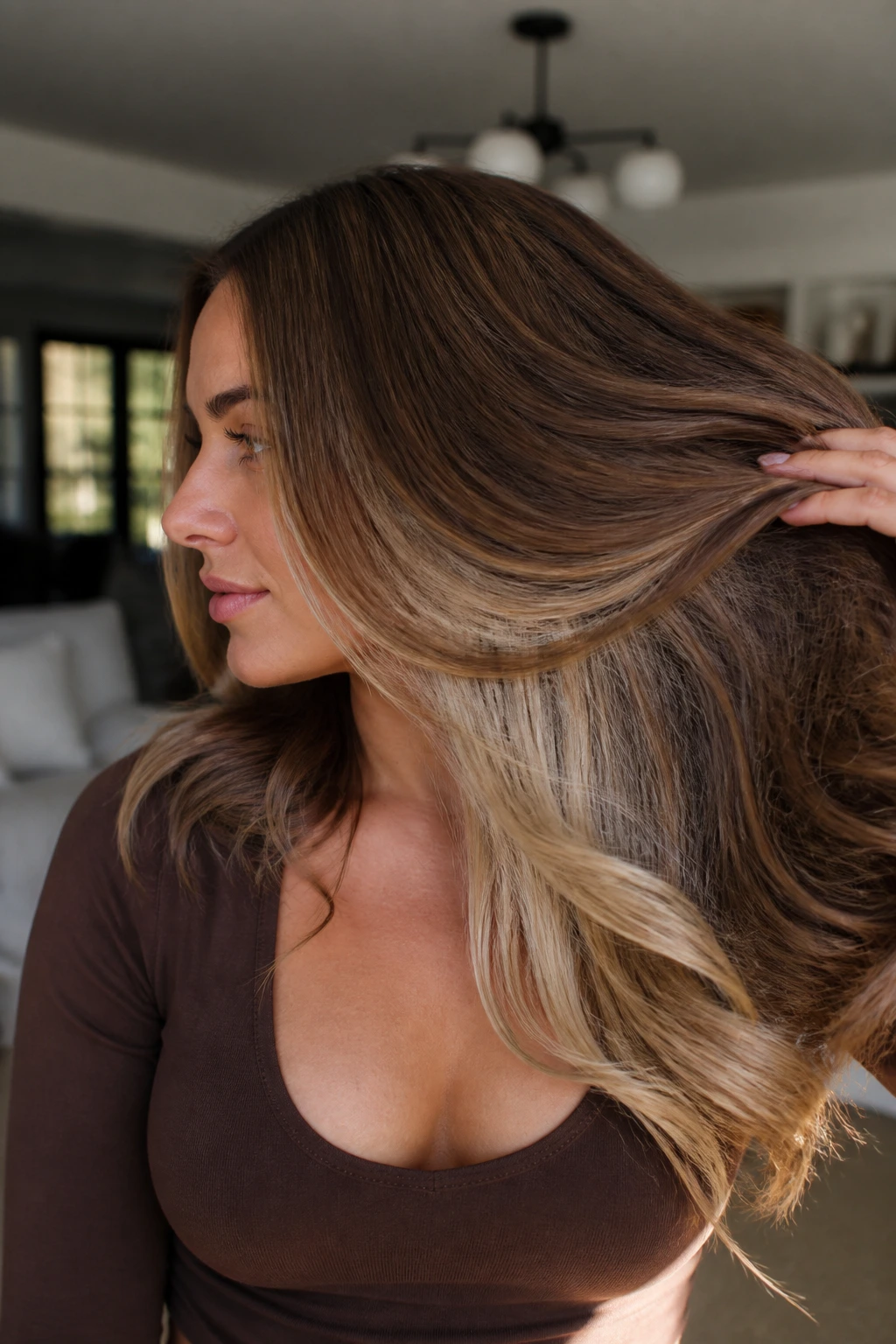
Peekaboo panels are one of the smartest ways to put blonde into thick hair without overwhelming it. The toffee base stays visible on top, while the lighter panels underneath flash through when the hair swings or gets tucked behind an ear.
That hidden brightness is the point. Dense hair can carry color in layers, and peekaboo placement uses that to your advantage. You get surprise, not saturation. It’s especially nice if you like wearing your hair half-up or in a claw clip, because the lighter pieces show up where the movement happens.
23. Scandinavian Blonde Sleek Layers
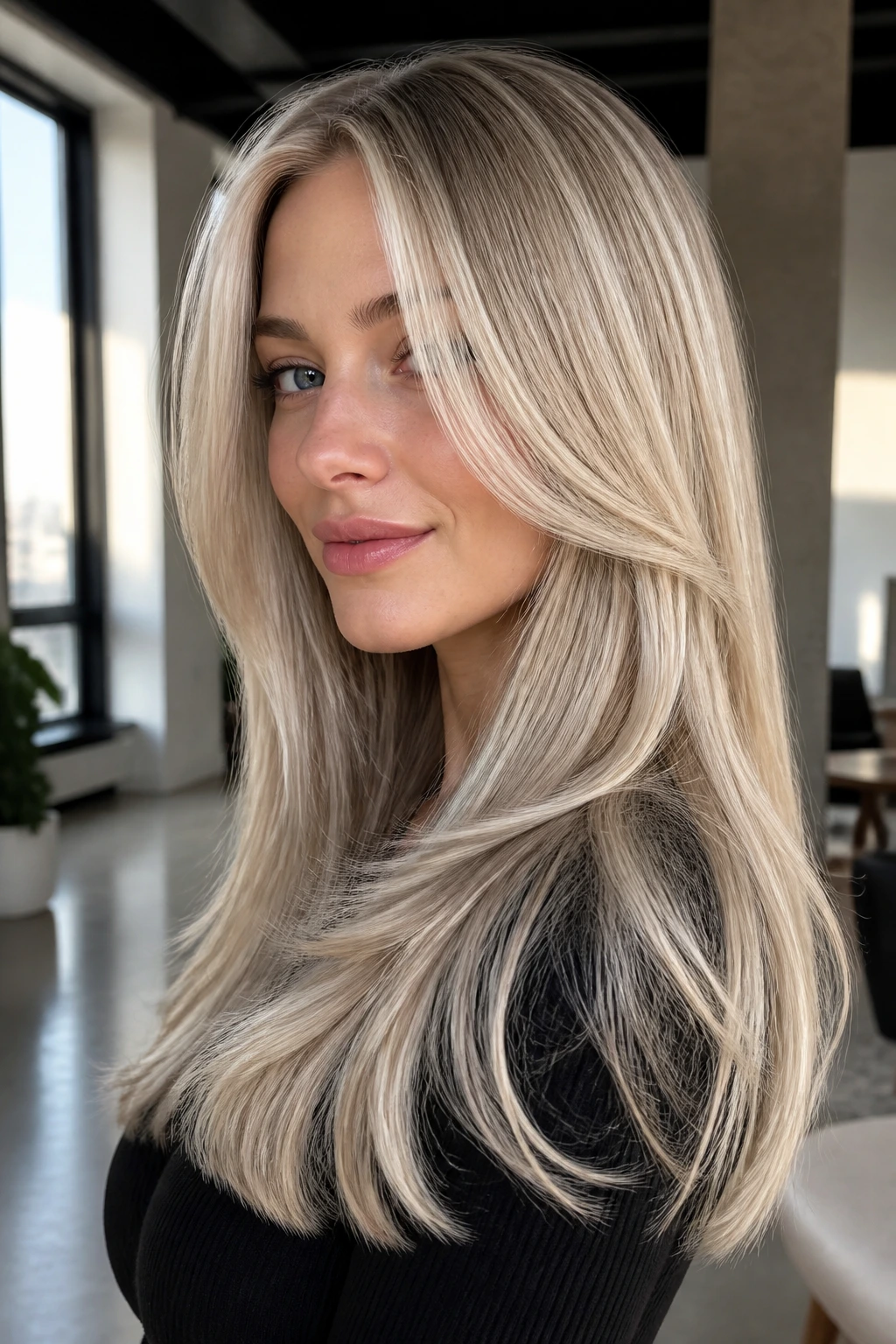
Scandinavian blonde is for people who want pale blonde with a disciplined finish. On thick hair, sleek layers matter because the color is very light and can look bulky if the haircut is too round.
The tone should stay cool-beige rather than icy-white all over. That gives the blonde a cleaner edge and keeps it from turning flat under indoor lighting. I’d choose this if your styling routine includes a blow-dry or flat iron more often than waves. The layers keep the shine moving, and the blonde looks crisp instead of fuzzy.
24. Honey Champagne Gloss
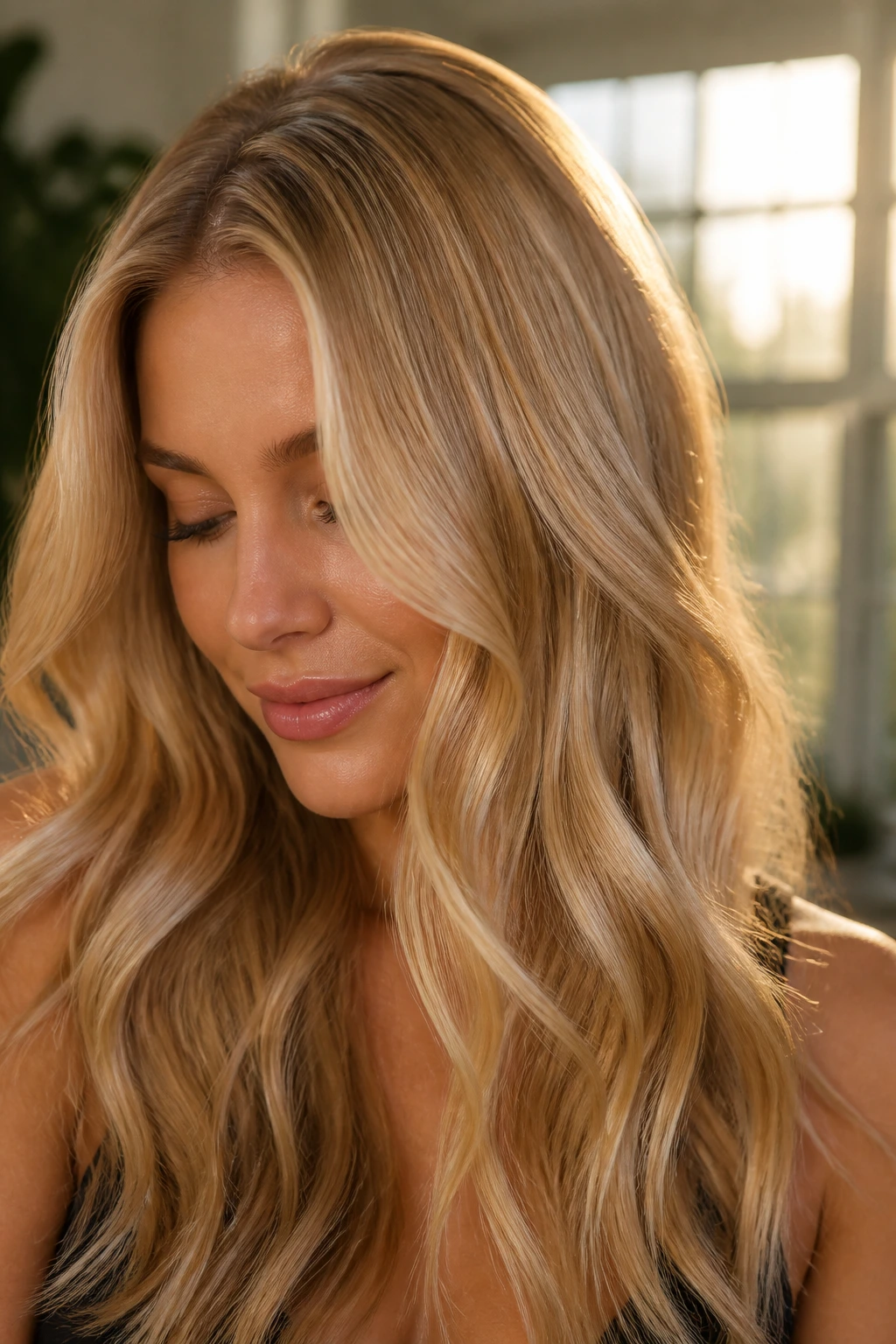
A honey champagne gloss is one of the fastest ways to make thick blonde hair look healthier and more expensive. It adds warmth at the surface, takes the edge off dullness, and leaves the hair with that soft reflective finish people notice before they know why.
This is less about a dramatic color change and more about polish. Thick hair often benefits from a gloss service because the strands can handle richness without looking greasy or heavy. If your blonde has gone a little dull, honey champagne can warm it back up without tipping into orange. It works especially well on long layers and loose bends.
25. Smoky Ash Waves
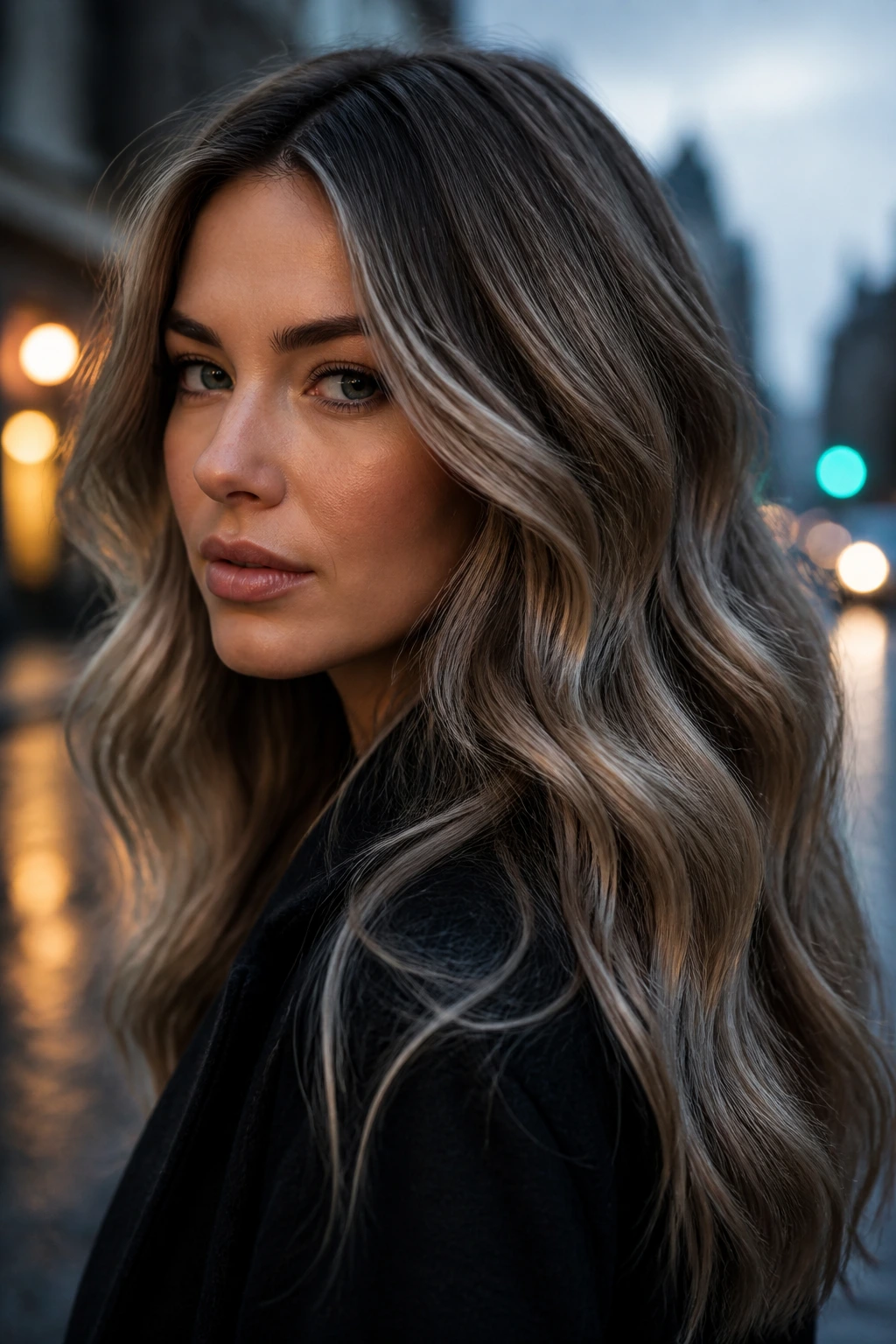
Smoky ash waves are perfect if you want blonde that feels cool, modern, and a little moody. Thick hair often looks strong with cool tones because the depth inside the hair keeps the ash from reading flat.
The waves matter because they stop the ash from looking too severe. A bent finish lets the lighter ribbons peek through while the smoky base stays visible. This is a good choice if your natural color is medium brown and you want blonde that leans understated rather than sunny. The result has edge, but it’s still wearable.
26. Golden Hour Beach Layers
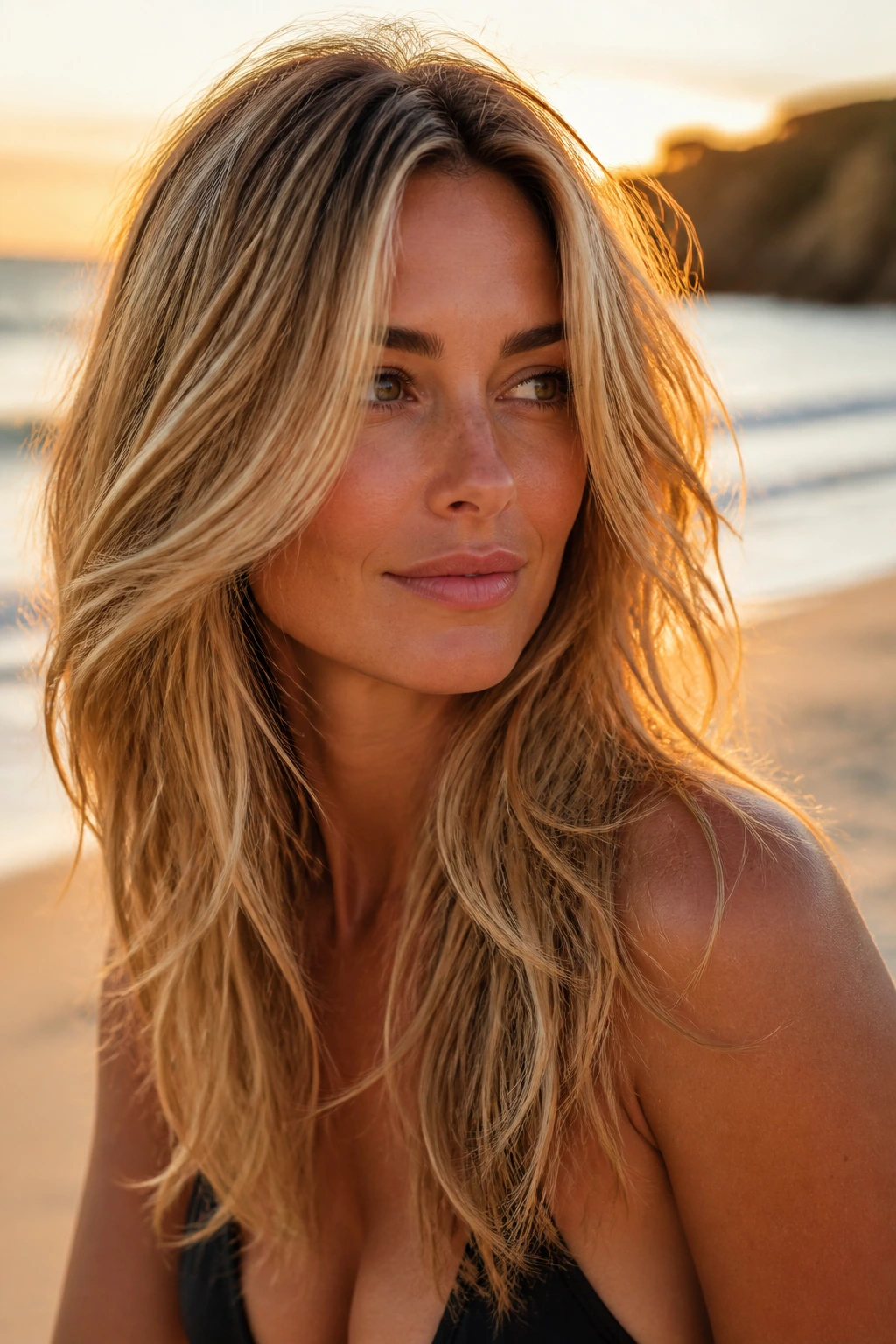
Golden hour blonde is basically what happens when soft beachy layers meet a warm, sunlit tone. Thick hair loves this look because the layers let the waves separate and the gold catches on the surface instead of getting swallowed up.
Good reasons to pick this one
- It hides grow-out well: The warm, lived-in tone doesn’t scream when roots appear.
- It works with natural wave: You don’t need perfect styling for it to read well.
- It looks fuller, not flatter: The layers keep the hair from sitting like a curtain.
This is the blonde I’d point someone toward if they want an easygoing, warm finish that still has shape. It’s not trying to be icy or precious. It just looks like thick hair that has been handled well and left with enough movement to show it.
27. Platinum Balayage on Thick Curls
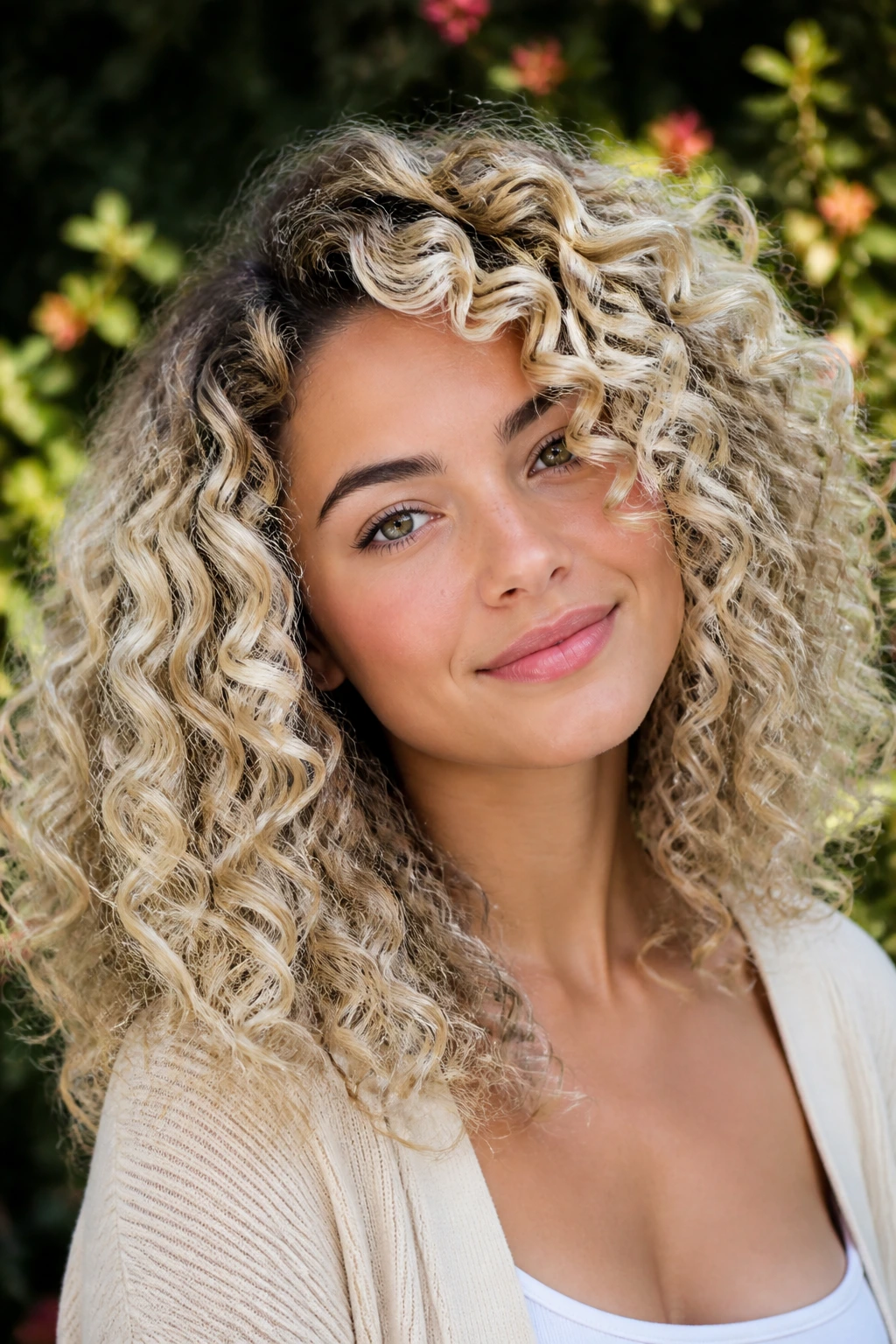
Platinum balayage on curls looks spectacular when the placement respects the curl pattern. The light pieces sit on the outer curve and the surface, while the interior stays deeper so the brightness doesn’t turn into a white blob.
That contrast is what makes curls pop. Thick curls already have volume; platinum adds definition when it’s placed in ribbons rather than covering every strand. Keep the ends soft and avoid too much lightening at the very bottom, where curls can fray faster. The result is bold but still shaped.
28. Buttercream Braided Crown
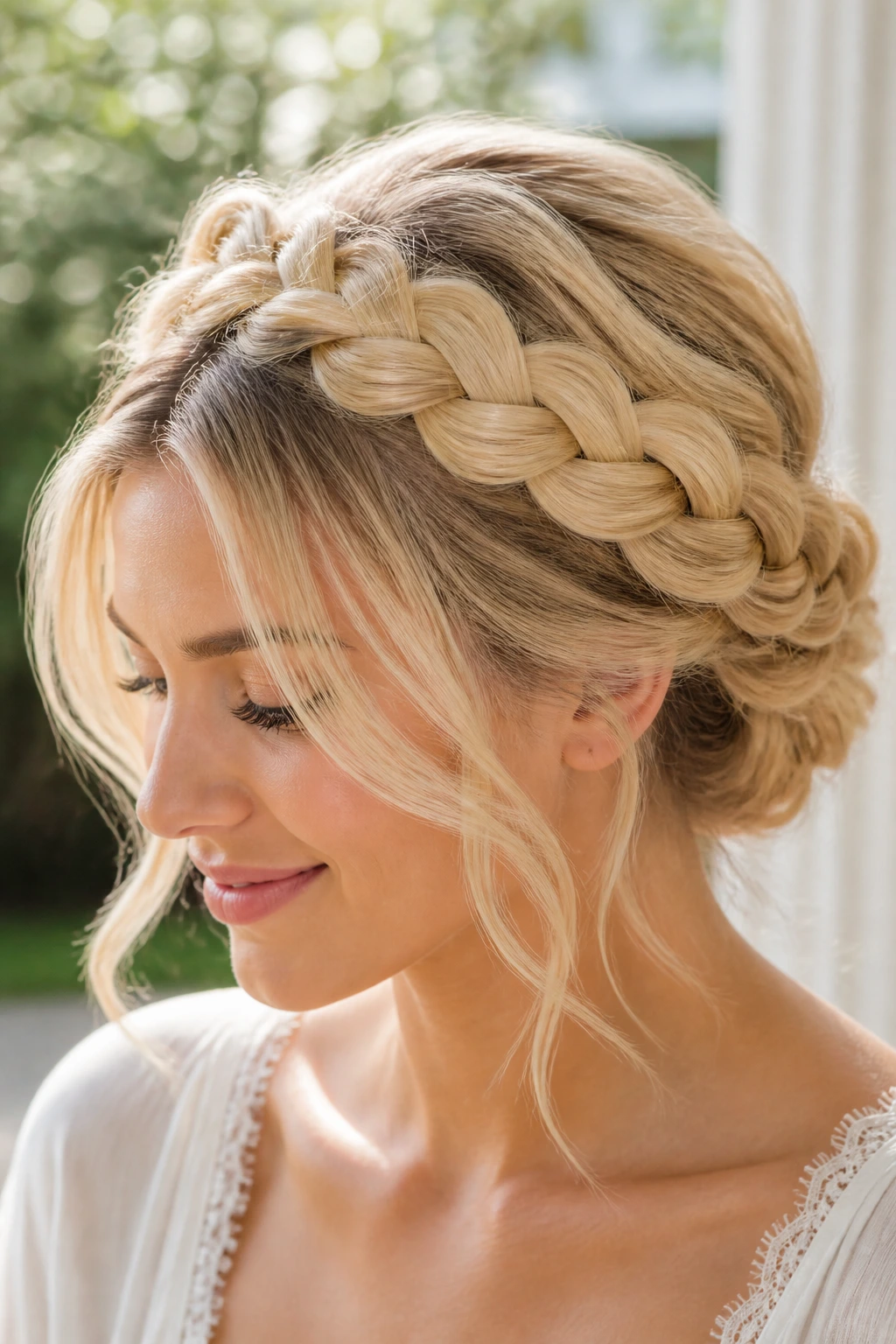
A braided crown with buttercream blonde pieces is more of a styling look than a cut, and that’s what makes it fun. Thick hair gives the braid enough substance to look full, while the pale buttercream color shows the braid’s pattern instead of hiding it.
This is especially good for second- or third-day hair when you want the style to hold. The braid keeps the length controlled, and the light color makes every twist visible. A few softer face-framing pieces stop the look from feeling too formal. It’s polished, but not stiff.
29. Root Shadow Bob
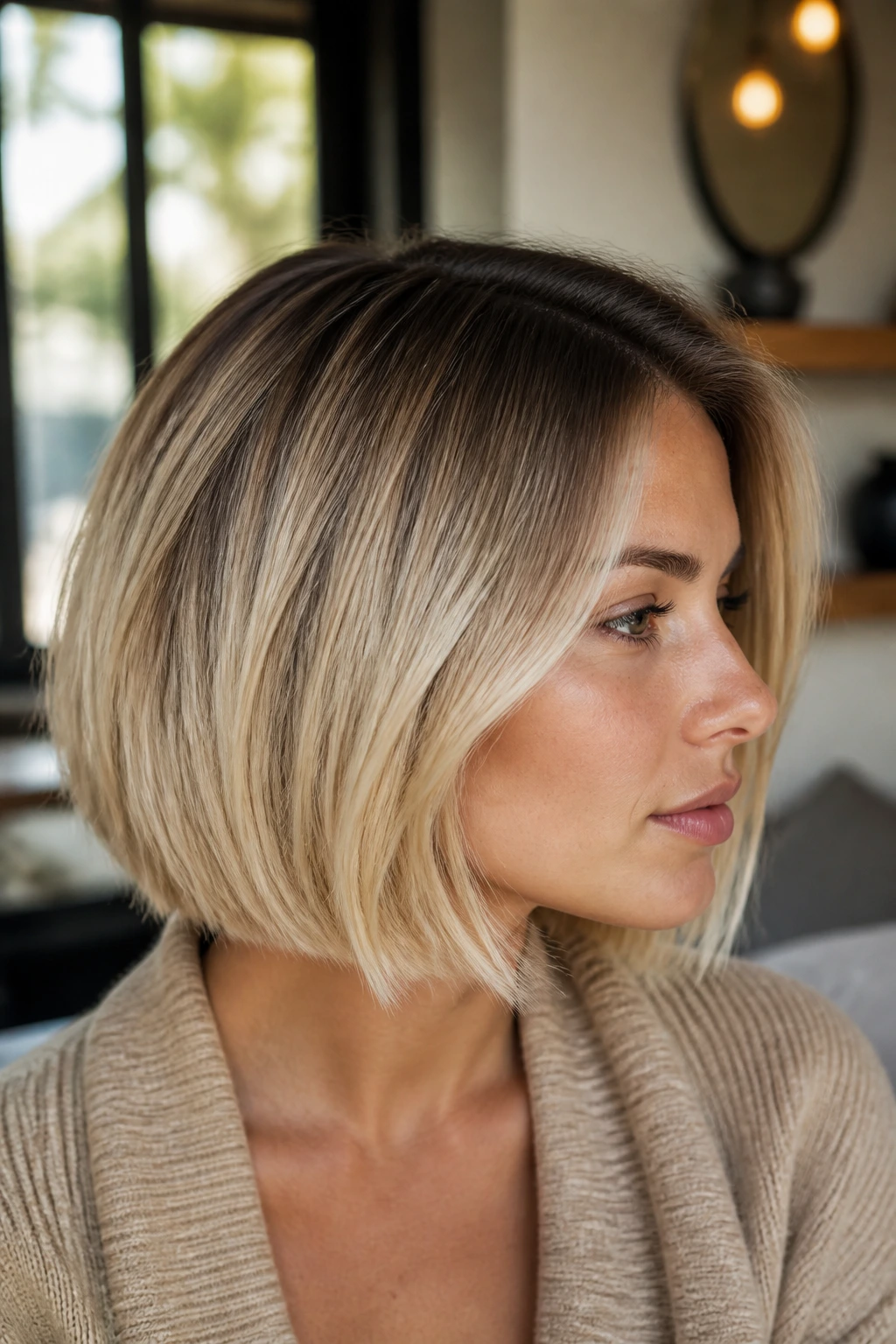
A root shadow bob is one of the easiest blonde looks to live with if you have dense hair. The darker root creates a soft base, while the blonde mids and ends keep the bob from feeling boxy or overbuilt.
The shadow root is doing more work here than it gets credit for. Thick hair can look blunt and heavy at bob length if the color is too uniform, but that deeper root gives the cut some shape and makes regrowth less obvious. Ask for a slightly brighter front section if you want more lift around the face.
30. Pearly Beige Tapered Layers
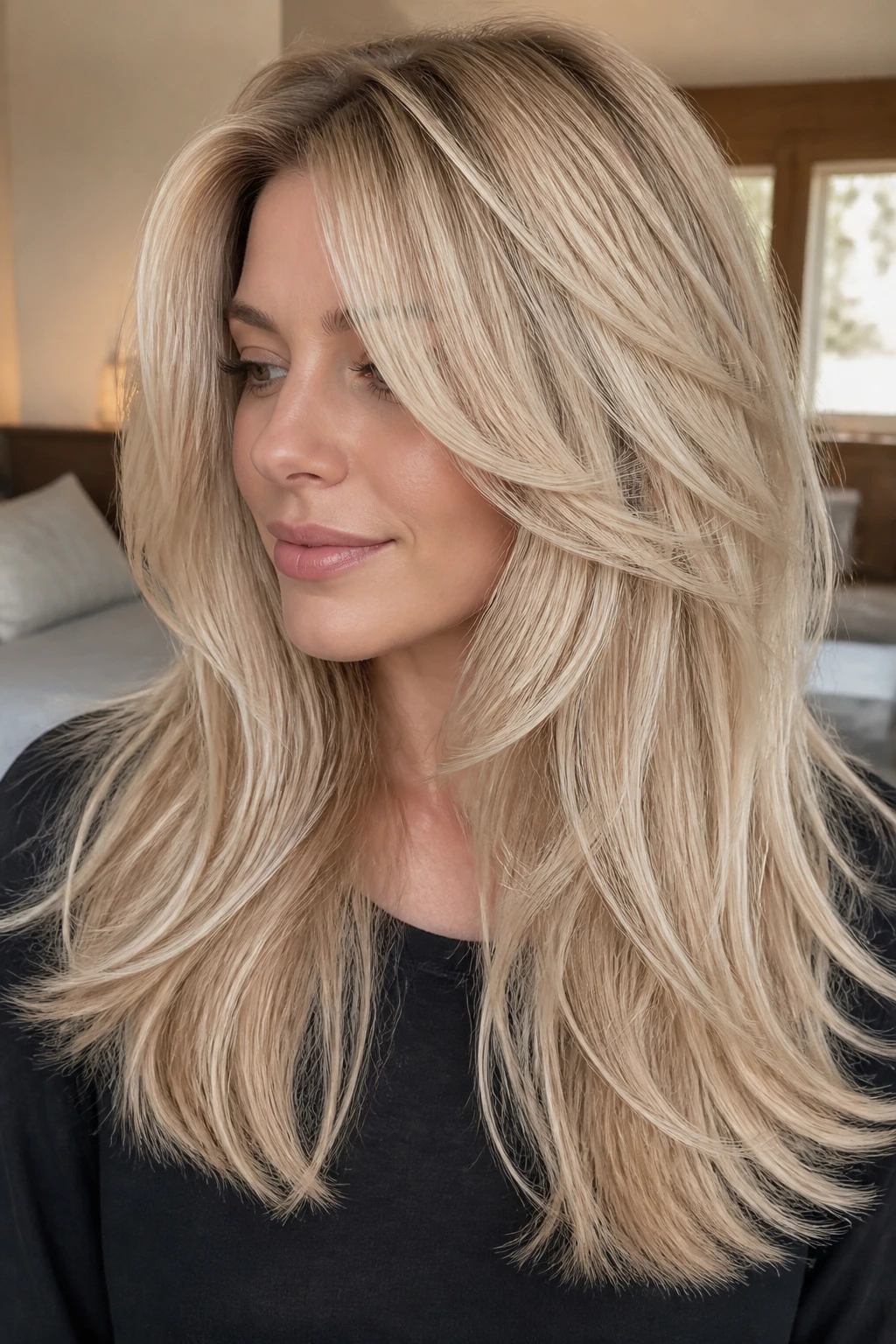
Pearly beige is a lovely in-between tone for thick hair because it keeps the blonde cool without going icy. When paired with tapered layers, the color follows the cut instead of sitting on top of it like frosting.
The taper matters. Dense hair needs a little movement at the ends or the whole style can seem bottom-heavy. Pearly beige reflects light softly, which helps the layered shape read clearly. If your skin tone is neutral, this can be one of the most flattering shades in the entire group.
31. Bronze-to-Blonde Face Frame
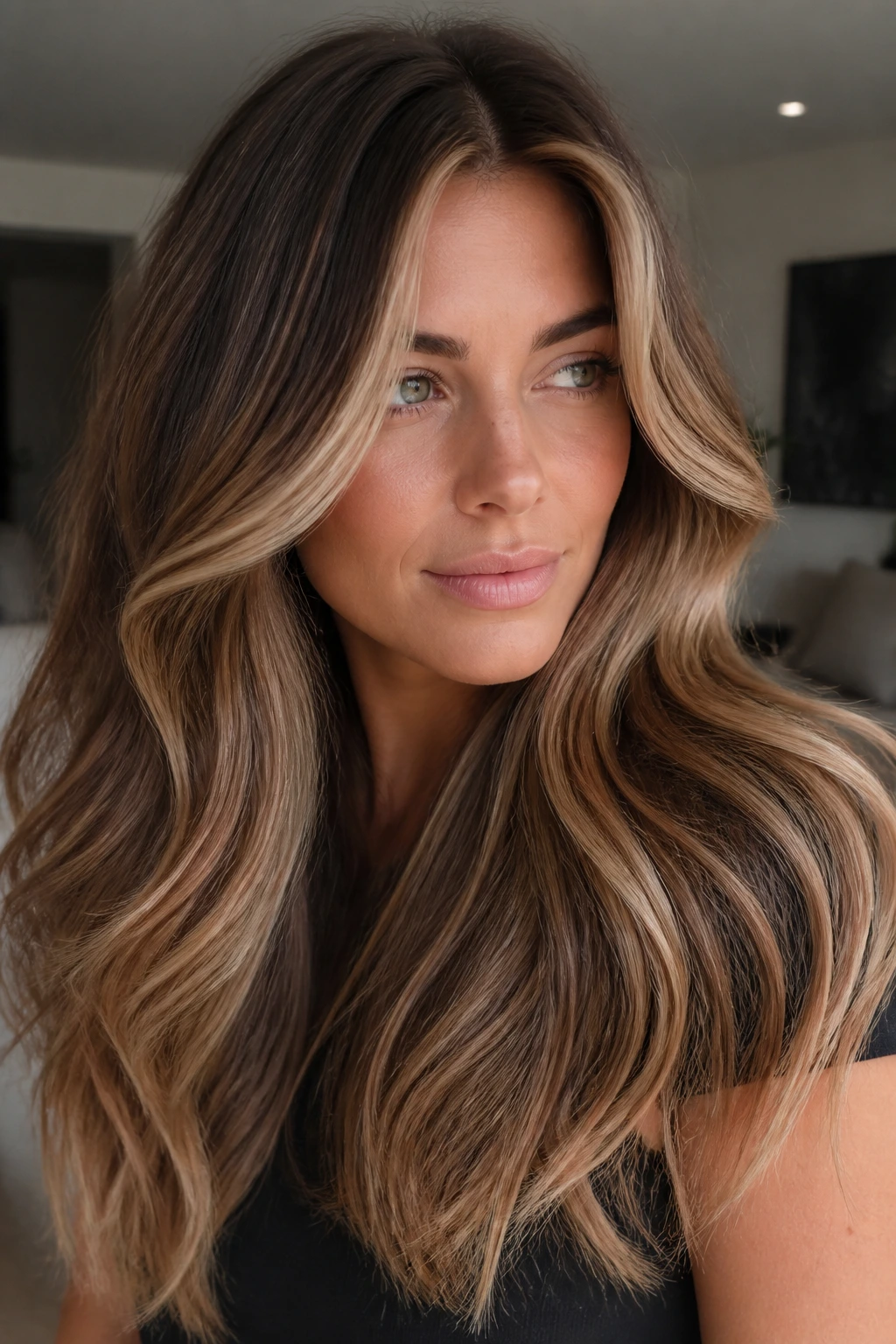
A bronze-to-blonde face frame can rescue long thick hair that feels too dark around the edges. The bronze base keeps the body of the hair rich, while the front pieces move into a lighter blonde that brightens the whole face.
Why it works so well
- The brightness sits where you need it: Around the eyes, cheekbones, and forehead.
- The base stays dimensional: Thick hair keeps its fullness and doesn’t turn hollow.
- The grow-out is soft: You don’t get a hard line every time the roots appear.
This is one of the more practical ways to wear blonde if you want a visible change without a full lightening job. It gives a lift to the front without making the rest of the hair compete with it. On thick hair, that selective brightness often looks better than trying to lighten every strand at once.
32. Melted Vanilla Ends
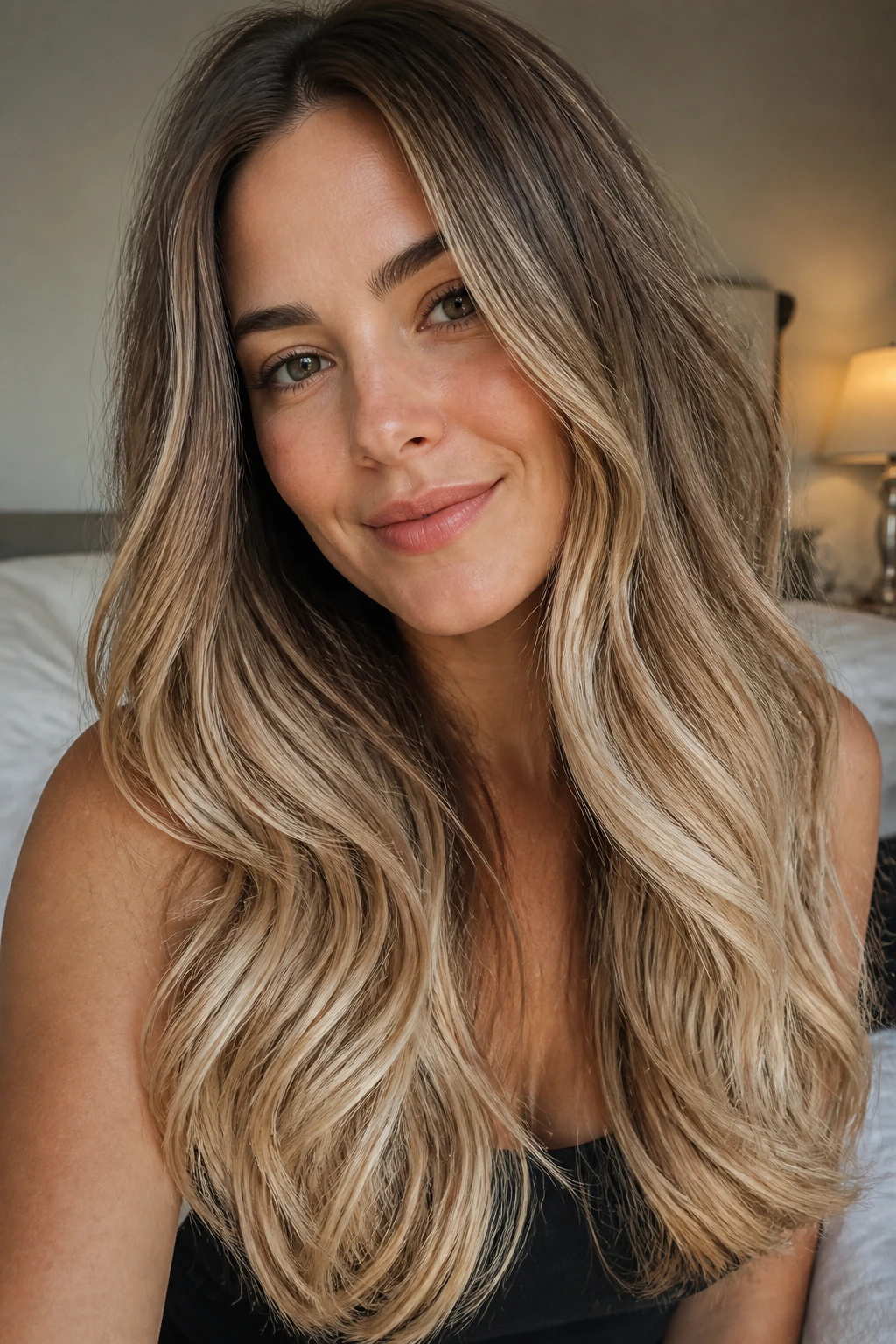
Melted vanilla ends are exactly what they sound like: a soft transition from deeper roots into creamy, pale ends. Thick hair can handle this kind of melt because the length gives the color room to shift gradually.
The cleanest version keeps the top a shade or two deeper than the bottom so the ends feel lighter by contrast. That contrast is useful on long, heavy hair because it helps the eye travel downward instead of stopping at one solid block. If your hair tends to feel weighed down, this look lightens the visual load without forcing the whole head blonde.
33. Honeyed Wolf Cut
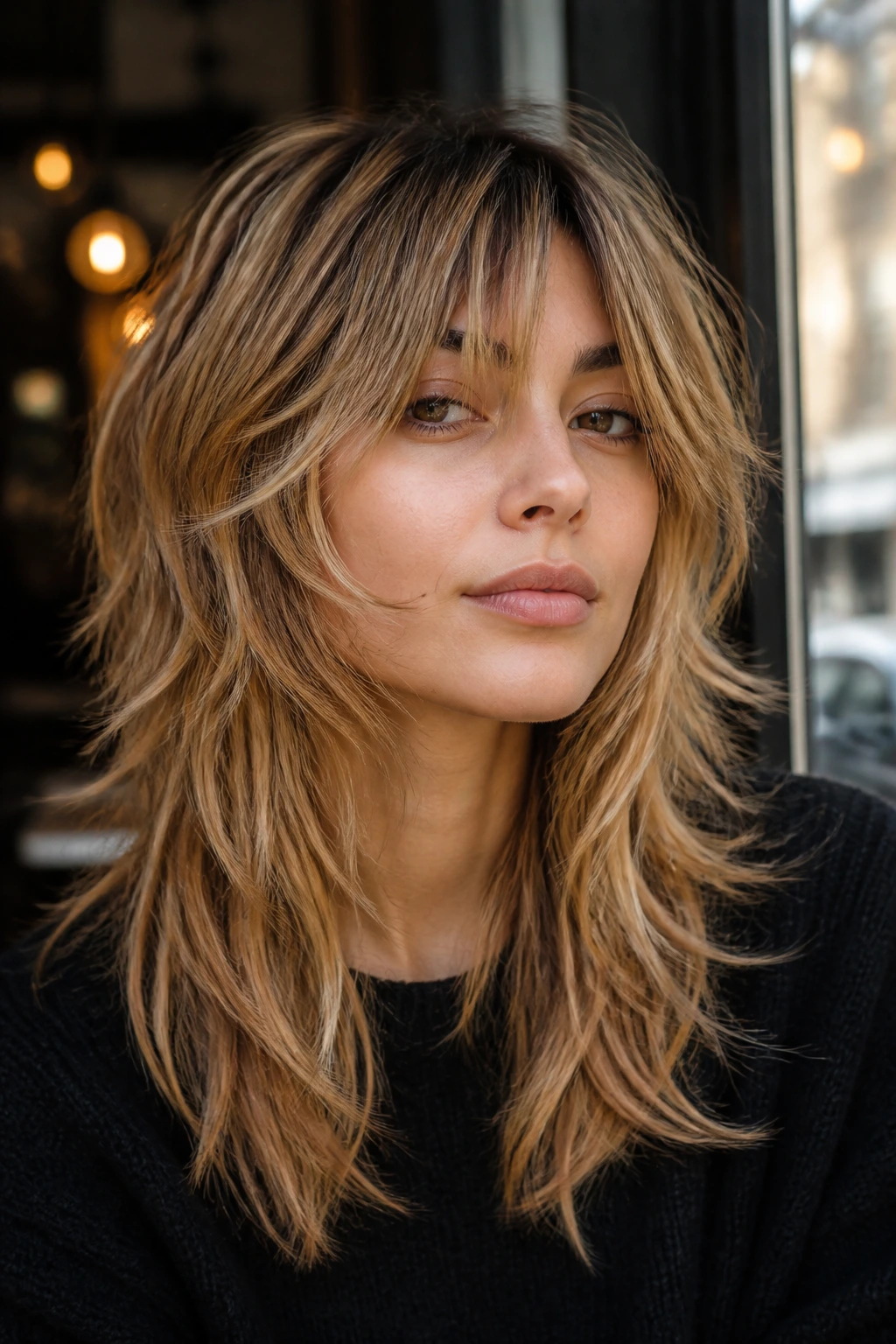
A honeyed wolf cut has attitude, but the honey tone softens the edges enough to keep it wearable. Thick hair benefits from the wolf cut’s choppy layers because the shape removes bulk while letting the blonde pieces sit in little bright flashes.
This is a strong choice if you want movement and texture more than polish. The layers create a lot of internal air, so the blonde doesn’t disappear inside the hair mass. A warmer honey tone also flatters the aggressive layers better than a chilly blonde would. It keeps the look from going too punk unless that’s what you want.
34. Soft Foilayage on Long Dense Hair
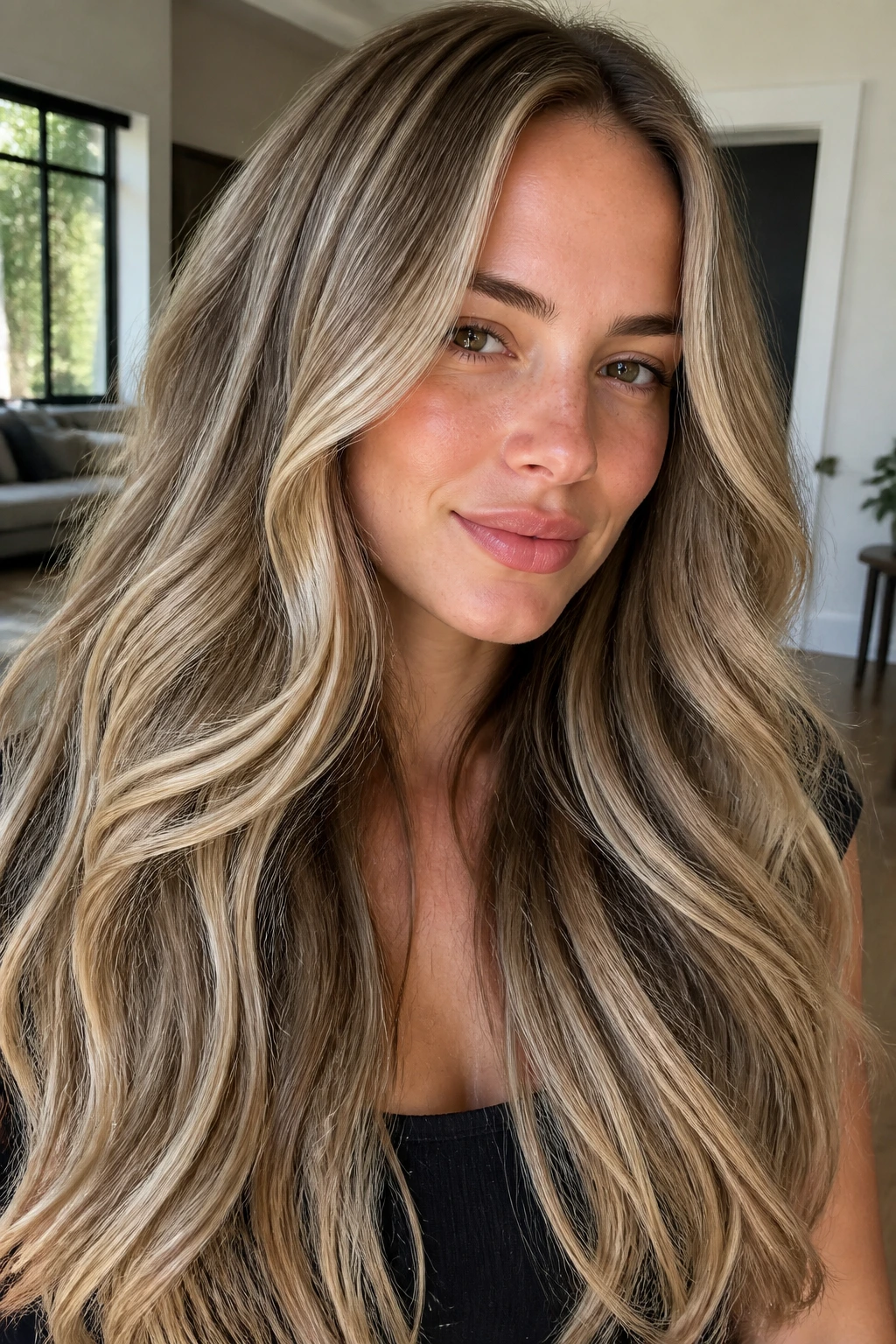
Foilayage is one of my favorite methods for thick hair because it combines the hand-painted softness of balayage with the lift of foils. Long dense hair needs that extra lift if you want the blonde to stay visible from root to end.
The best versions use larger sections in some places and finer highlights in others. That mix keeps the result from looking busy. On very thick hair, tiny babylights alone can disappear, while huge chunks can look stripy. Foilayage sits in the middle, which is where the good stuff usually lives.
35. Cool Blonde S-Curve Lob
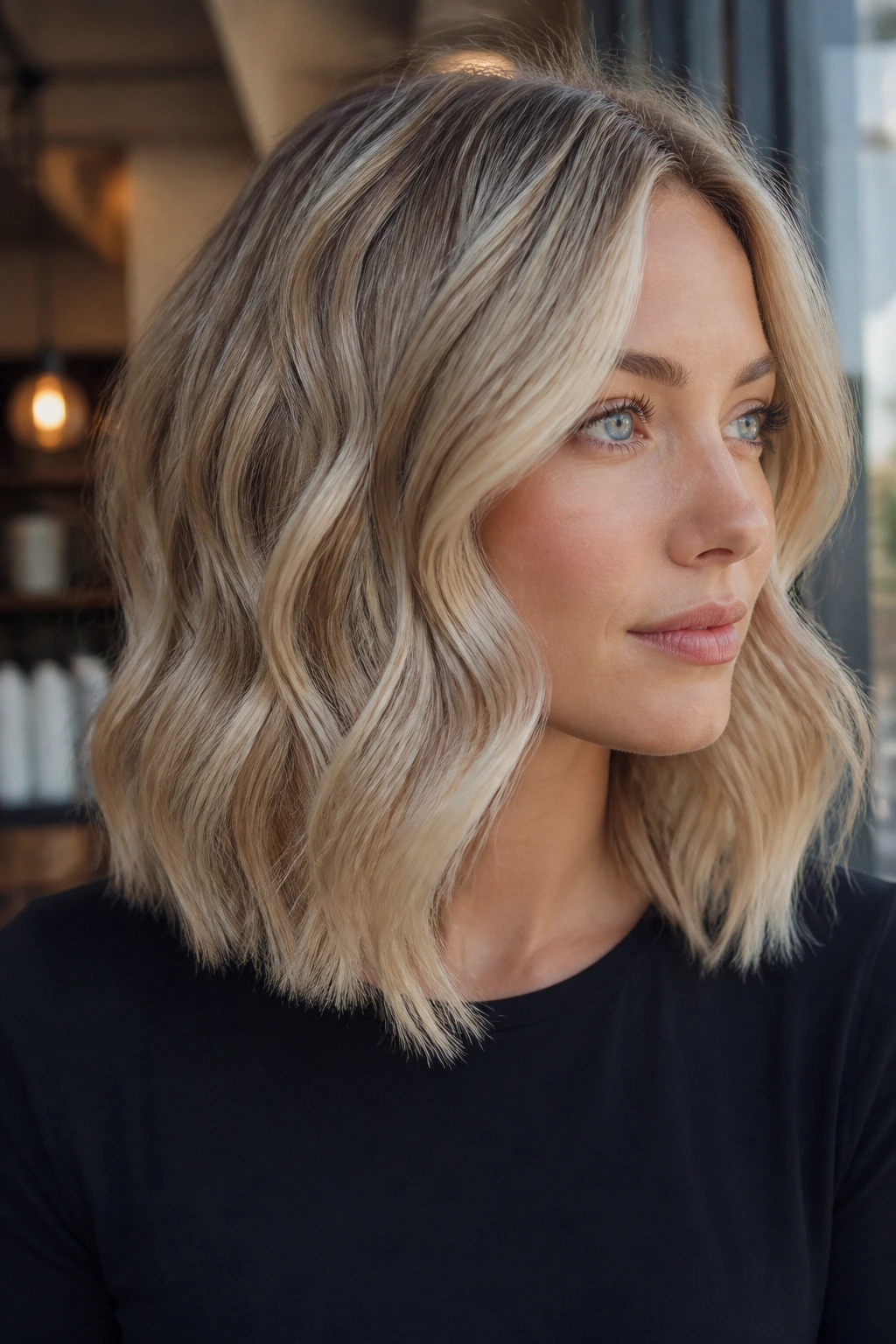
An S-curve lob is a quiet little trick for thick hair. The bend at the ends softens the outline, and the cool blonde tone keeps the cut from feeling too heavy or warm.
The styling is part of the look. Thick hair laid dead-straight at this length can feel dense in a bad way, but the S-curve gives it enough movement to show the color in layers. This works especially well if your blonde leans ash-beige or pearl. It’s not flashy. It just looks finished.
36. Dimensional Buttermilk Layers
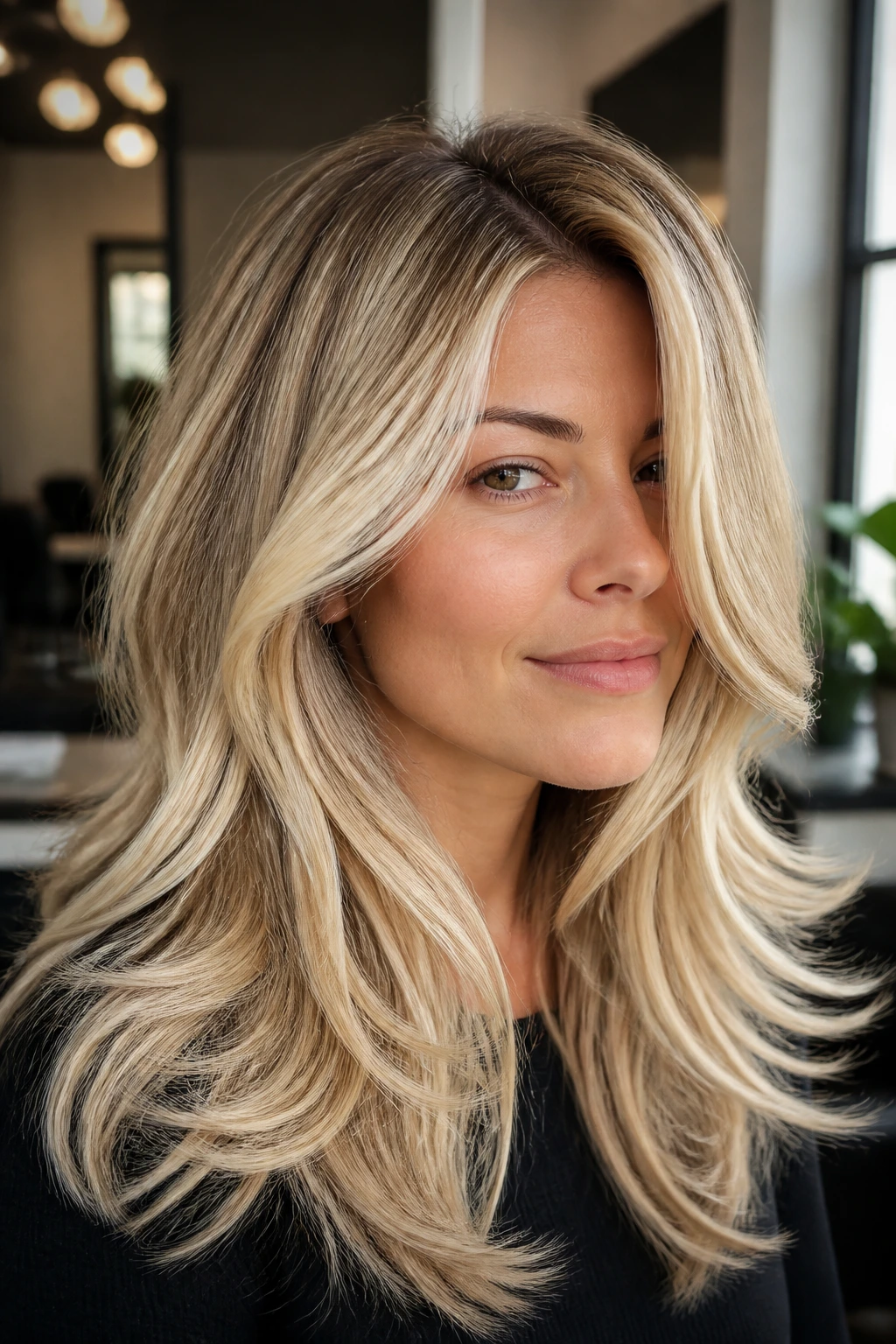
Buttermilk blonde is soft, creamy, and a little warmer than a pearl tone. On thick hair, dimensional layers keep that creaminess from turning into a flat sheet of pale color.
Best use cases for this look
- Long layered cuts: The layers show off the tonal shifts.
- Neutral to warm undertones: Buttermilk sits naturally here.
- Hair that needs softness: The tone makes thick ends look less severe.
This is a good option if you want blonde that feels plush rather than icy. It’s a friendly shade, and that matters when the hair is already carrying a lot of body. The layers break up the weight, while the buttermilk tone keeps the finish gentle and bright.
37. Apricot Blonde with Warm Undertones
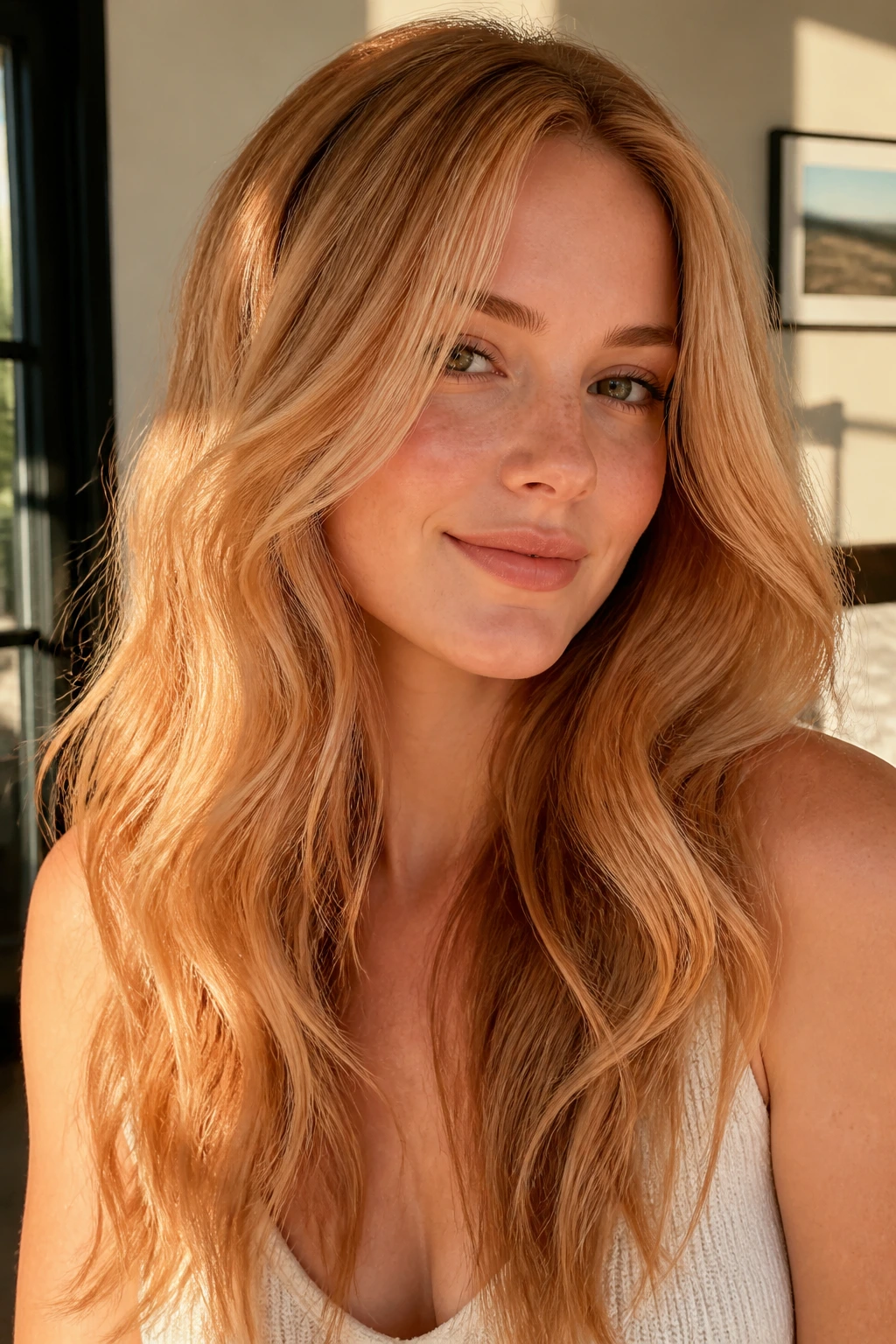
Apricot blonde doesn’t get enough credit. It’s warmer than beige, softer than copper, and on thick hair it looks rich instead of washed out.
The color works because dense hair can hold a little warmth without losing definition. If your base is naturally medium brown to dark blonde, apricot pieces around the face and through the lengths can make the whole head feel sunnier. I’d choose this if you want blonde that leans playful but not neon. It has a glow that suits thick waves especially well.
38. Frosted Milk Blonde High Ponytail
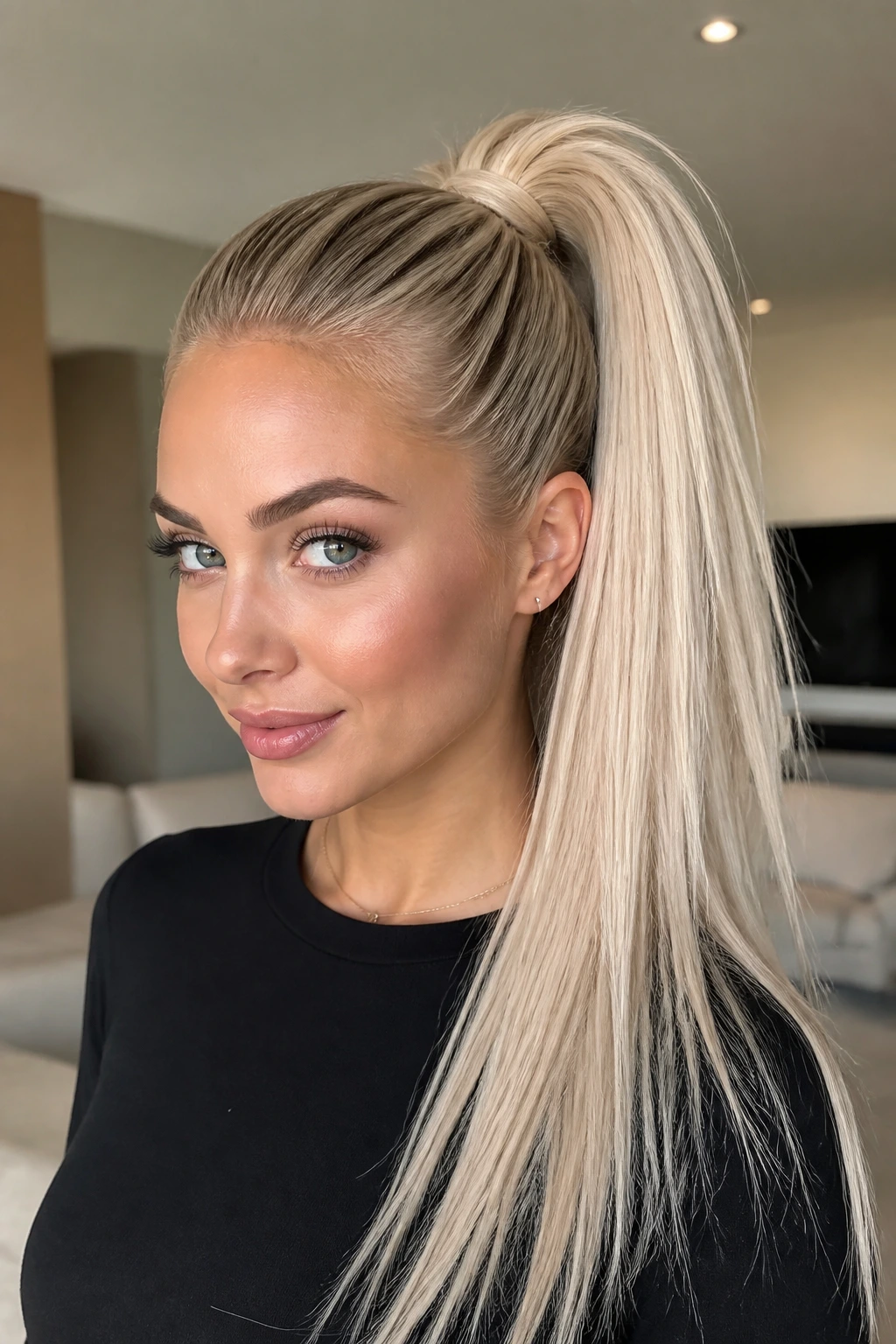
A frosted milk blonde high ponytail is polished, crisp, and a little dramatic in the right way. Thick hair gives the ponytail enough body to sit high without collapsing, and the pale tone makes the length look sleek and deliberate.
The key is keeping the hair smooth at the crown and letting the tail stay full. A soft frost tone keeps the pony from looking stark white, which can be harsh on dense hair if the color lacks depth. Wrapped with a small section of hair around the elastic, it looks finished fast. Sometimes the simplest style is the one that shows off the color best.
Why Thick Hair Changes the Blonde Conversation
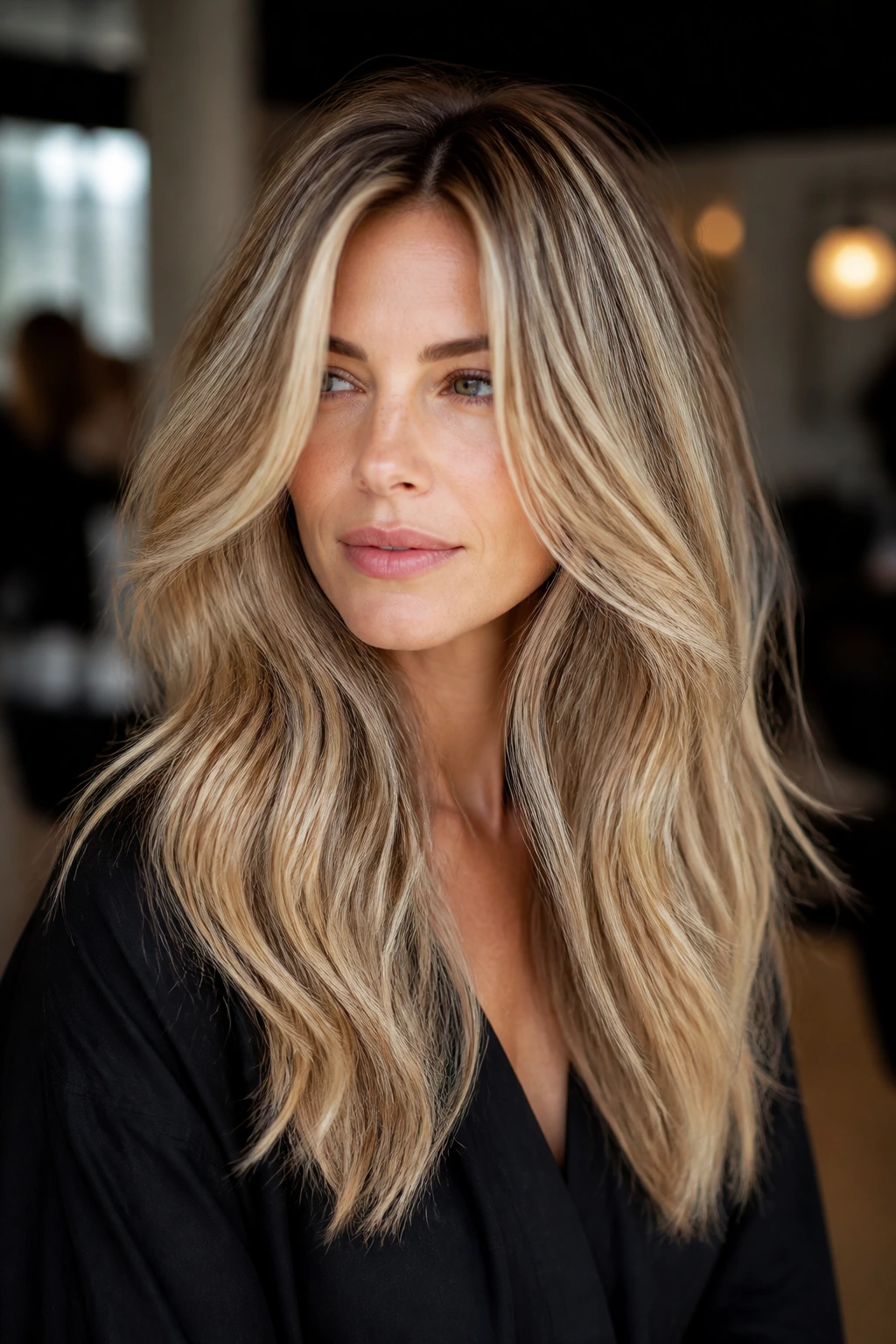
Thick hair doesn’t behave like a blank canvas. It’s more like a layered piece of fabric — the top catches light first, the middle holds tone, and the bottom can stay darker longer than you expect. That’s why the best blonde work on dense hair usually keeps at least some depth in the interior.
A single light shade from root to tip can make thick hair look wider instead of lighter. The eye loses the shape and sees one pale mass. A root shadow, a hidden lowlight, or a brighter face frame gives the color a map. That map matters.
There’s also the practical side. Dense hair takes longer to saturate, so color placement has to be deliberate. Bigger sections can leave dark pockets in the middle, while too many tiny foils can make the finish look busy. The sweet spot is a mix — enough brightness to read blonde, enough darkness to keep the cut moving.
Essential Tools and Products for Blonde Looks on Thick Hair
-
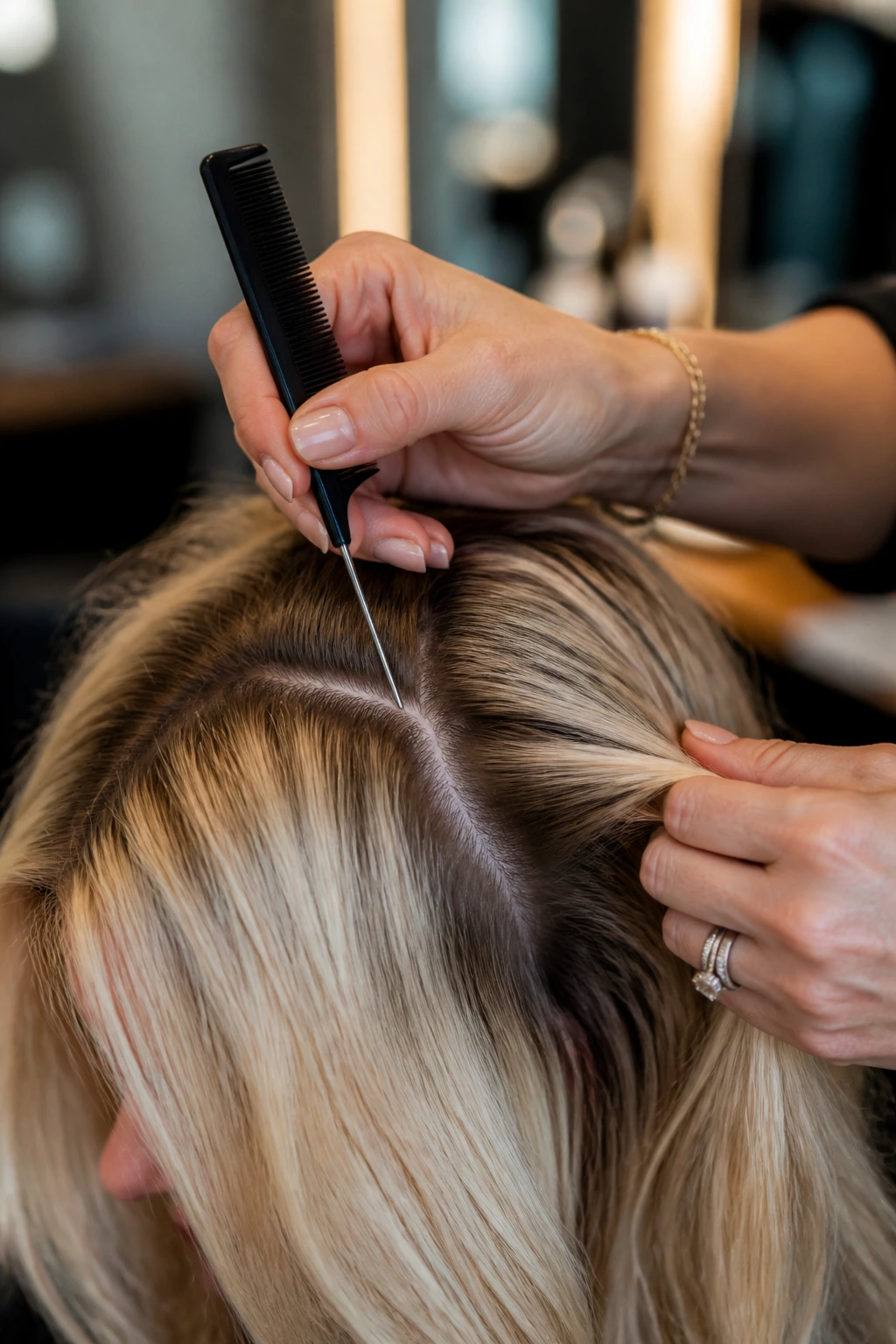
Tail comb: Clean sectioning matters on dense hair, and a fine tail comb keeps the part lines crisp.
-
Sectioning clips: Thick hair gets tangled in its own ambition. Clips let you work in controlled panels instead of wrestling the whole head.
-
Color brush and bowl: If you’re working with a stylist or touching up roots, precise application matters more than slathering product everywhere.
-
Foils or balayage boards: Foils give more lift, while boards help with clean painted placement on heavy sections.
-
Blow dryer with concentrator nozzle: Thick hair needs directed airflow or it puffs before the shape sets.
-
Round brush, 1.25 to 1.75 inches: A bigger barrel helps stretch thick strands without creating too-tight curls.
-
Purple shampoo and blue shampoo: Purple handles yellow warmth; blue helps when the brass leans orange or copper.
-
Bond-building treatment: Lightened thick hair still needs reinforcement, especially if you’re lifting more than a few levels.
-
Heat protectant spray: Non-negotiable. Thick blonde hair can take heat, but it does not forgive repeated abuse.
-
Gloss or toning mask: A beige, pearl, or champagne gloss keeps the tone clean between salon visits.
How to Choose the Right Blonde Shade for Your Base and Undertone
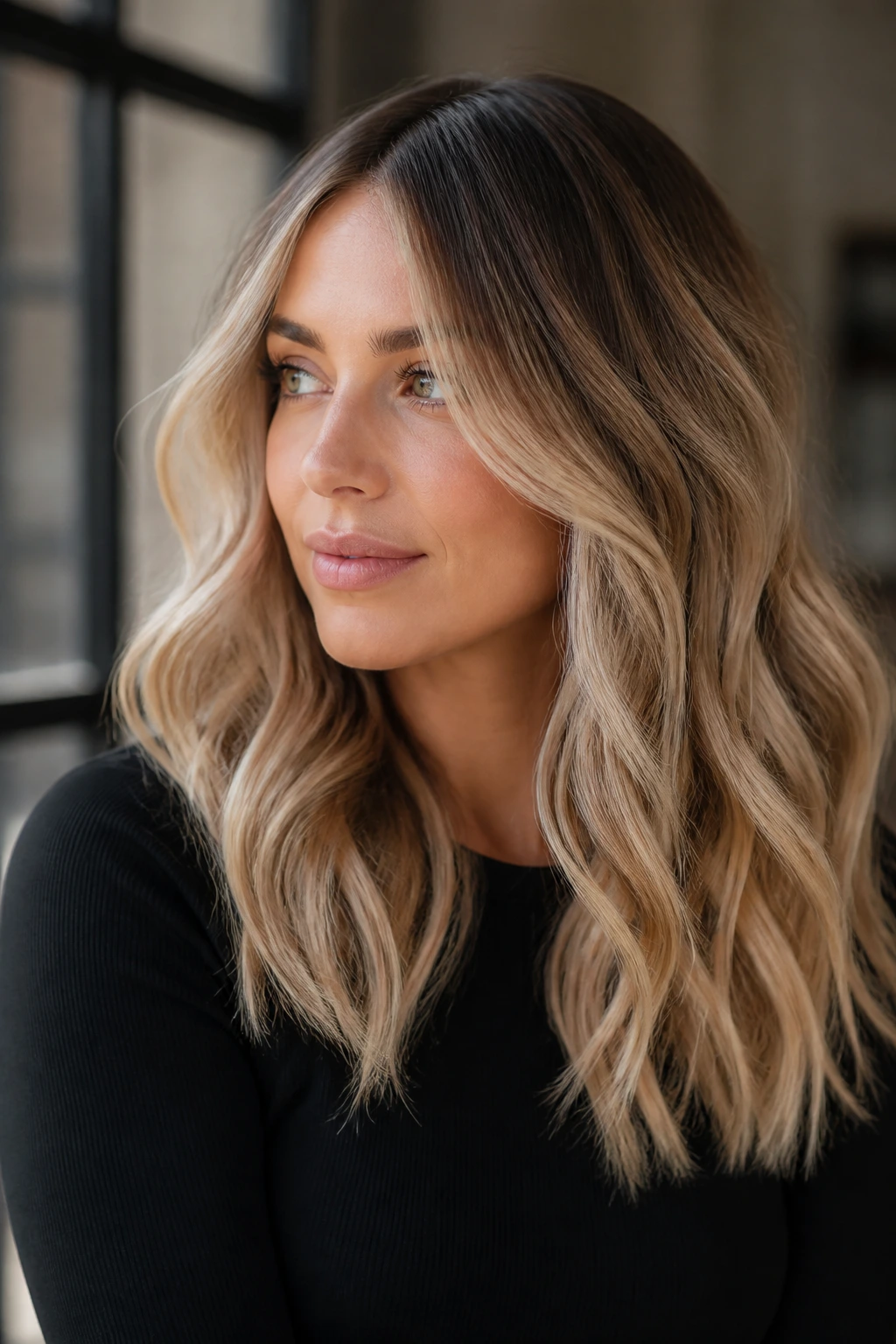
The first thing I’d look at is your natural base, not the inspiration photo. If your hair is naturally dark brown or black, a bronze-to-blonde face frame, bronde melt, or rooted cream blonde usually makes more sense than jumping straight to Scandinavian white. Thick hair can absolutely go light, but it often looks better in stages.
Warm, cool, or neutral?
Warm undertones tend to like honey, butter, champagne, apricot, and golden bronde. Those shades work with peachy or golden skin and don’t fight the natural warmth that thick hair sometimes holds onto after lightening.
Cool undertones usually look cleanest in ash beige, pearl, mushroom, smoky blonde, and icy ribbon highlights. If your skin gets flushed easily or leans pink, these tones can keep the blonde from turning brassy against your face.
Neutral undertones get the most freedom. Beige, cream soda, buttermilk, and vanilla latte all sit comfortably in the middle and can be adjusted warmer or cooler depending on how much contrast you want.
Maintenance is part of the shade choice
This part gets ignored too often. Platinum, white blonde, and Scandinavian blonde ask for more toner appointments and more careful heat styling. Rooted beige, honey balayage, and smoky bronde can live a calmer life. If you know you’re not going to babysit color every four weeks, pick the version that respects your schedule.
How to Style Blonde Hair So Thick Strands Move Instead of Puff
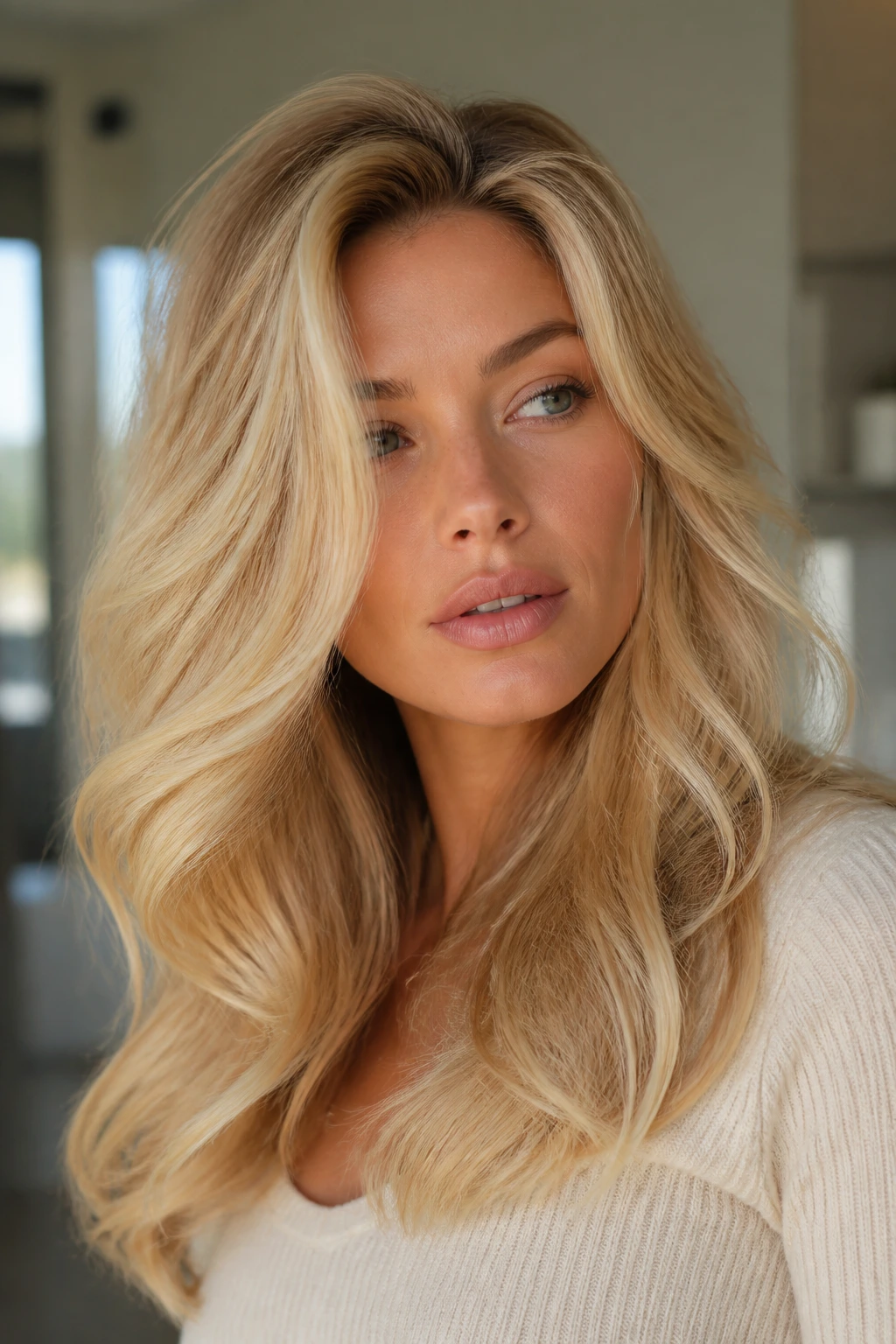
Thick blonde hair needs direction. Without it, the cut can swell at the sides and the lighter pieces lose their shape. A good blowout or wave pattern gives the hair somewhere to fall.
Blowouts that keep the root smooth
Start with a heat protectant and a lightweight smoothing cream through the mids and ends, not the scalp. Dry the roots first with the nozzle pointed downward, then round-brush the lengths in sections about 1.5 inches wide. The goal is polished movement, not a pin-straight sheet.
Waves that show the color
Loose waves are ideal for balayage, money pieces, and ribbon highlights because they separate the blonde from the base. Use a 1.25-inch iron and leave the last inch or so out if you want the ends to stay modern rather than curled under. Alternate the direction of the bends so the color doesn’t stack in one pattern.
Updos and braids that don’t swallow the blonde
Thick hair can make braids look enormous, which is either the point or the problem. For a braided crown, ponytail, or half-up style, pull a few face-framing pieces loose and keep the texture slightly undone. That lets the lighter pieces flash instead of disappearing into the shape.
Extra Tips for Shine, Dimension, and Softer Grow-Out
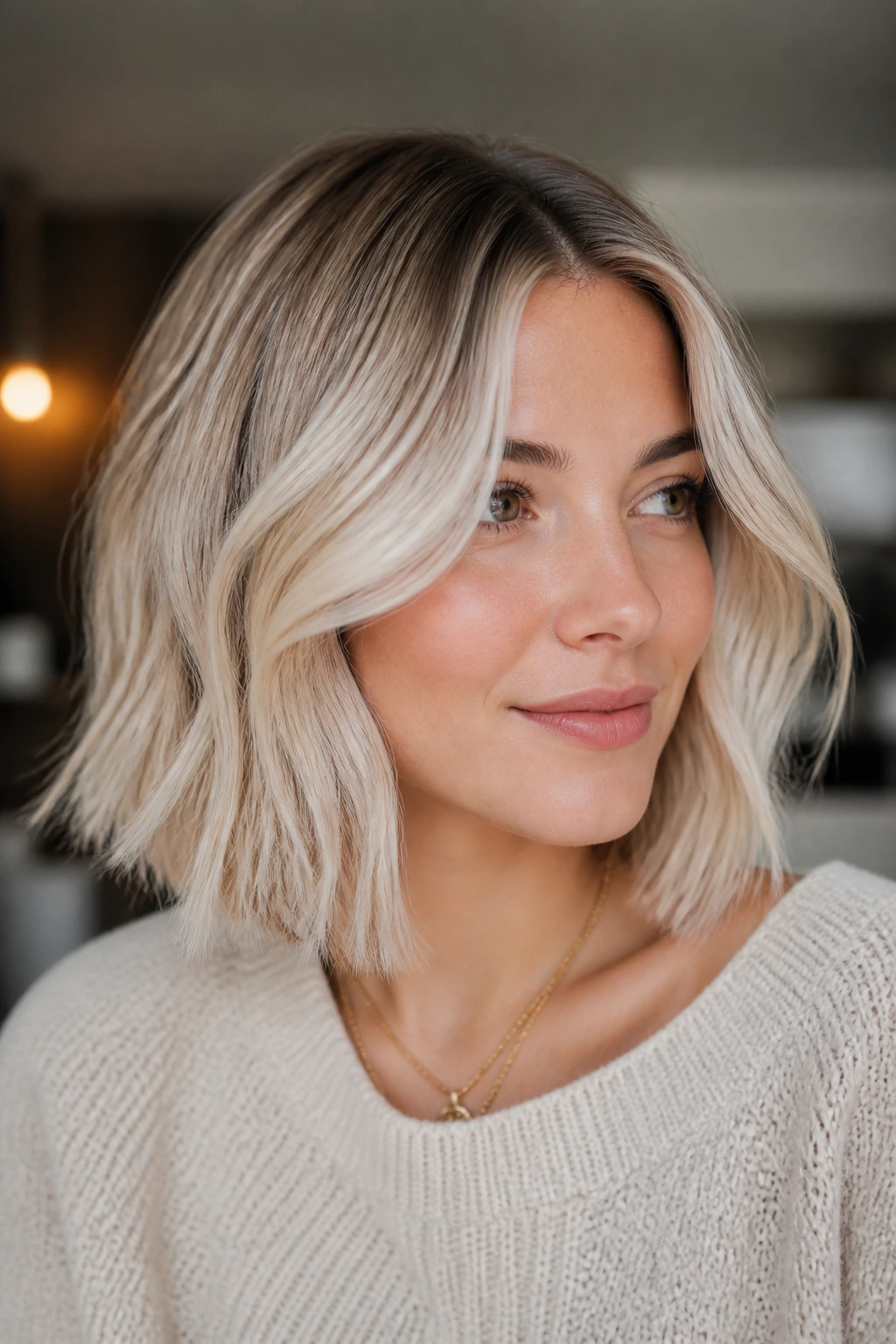
Gloss timing: A beige, champagne, or pearl gloss every 6 to 8 weeks keeps the blonde from drifting yellow or flat. If your hair is very porous, you may want it sooner.
Dimension trick: Ask for a few lowlights or a deeper root on the underside. Thick hair can take more contrast than people think, and those darker pieces keep the blonde from floating away from the cut.
Color-saving habit: Change your part every so often. It sounds small, but a side part can reveal different ribbons and make a familiar blonde look fresher without any new color.
Shine booster: Finish with a pea-sized amount of lightweight oil on the ends only. Thick blonde hair likes shine, but it does not need to be soaked.
Maintenance saver: If you love brightness around the face, ask for a stronger money piece and keep the rest softer. That way the grow-out stays graceful while the front still reads blonde.
Common Mistakes That Make Thick Blonde Hair Look Heavy or Brass
-
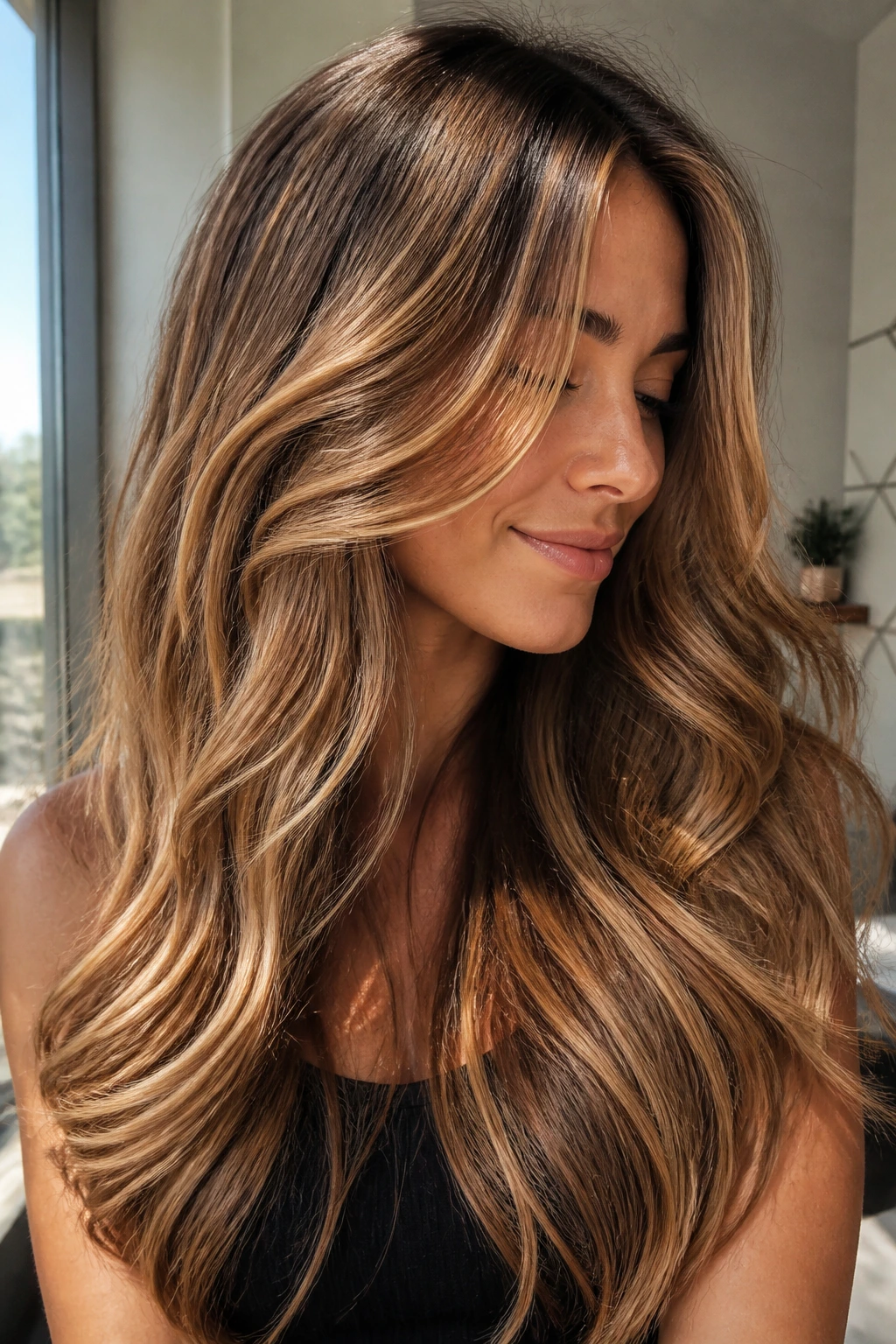
Going too light everywhere at once: Thick hair often looks better with depth left underneath. If every strand is lifted to the same pale level, the result can feel wide and flat. Fix it by keeping the root or interior 1 to 2 levels deeper.
-
Ignoring the haircut shape: Blonde cannot rescue a bulky triangle. If the cut is heavy at the ends, the color gets trapped inside it. Long layers, a U-cut, a shag, or a bob with internal debulking usually behaves better.
-
Using the wrong toner for the brass you actually have: Purple shampoo helps yellow warmth; it does not fix orange undertones by itself. If the blonde is turning coppery, you need a blue-toned product or a salon gloss with the right base.
-
Over-thinning thick hair: It sounds helpful, but too much thinning can leave the ends frayed and make blonde appear drier. Ask for shape, not shredding.
-
Skipping heat protection: Blonde hair that gets flat-ironed every week without a protector can start looking rough fast. The damage shows up as frizz, dullness, and tones that turn dull or uneven.
-
Choosing platinum with no maintenance plan: Bright blonde can be gorgeous on thick hair, but it needs toning and careful regrowth management. If you don’t want that rhythm, choose rooted cream or beige instead.
Blonde Variations and Adaptations to Try
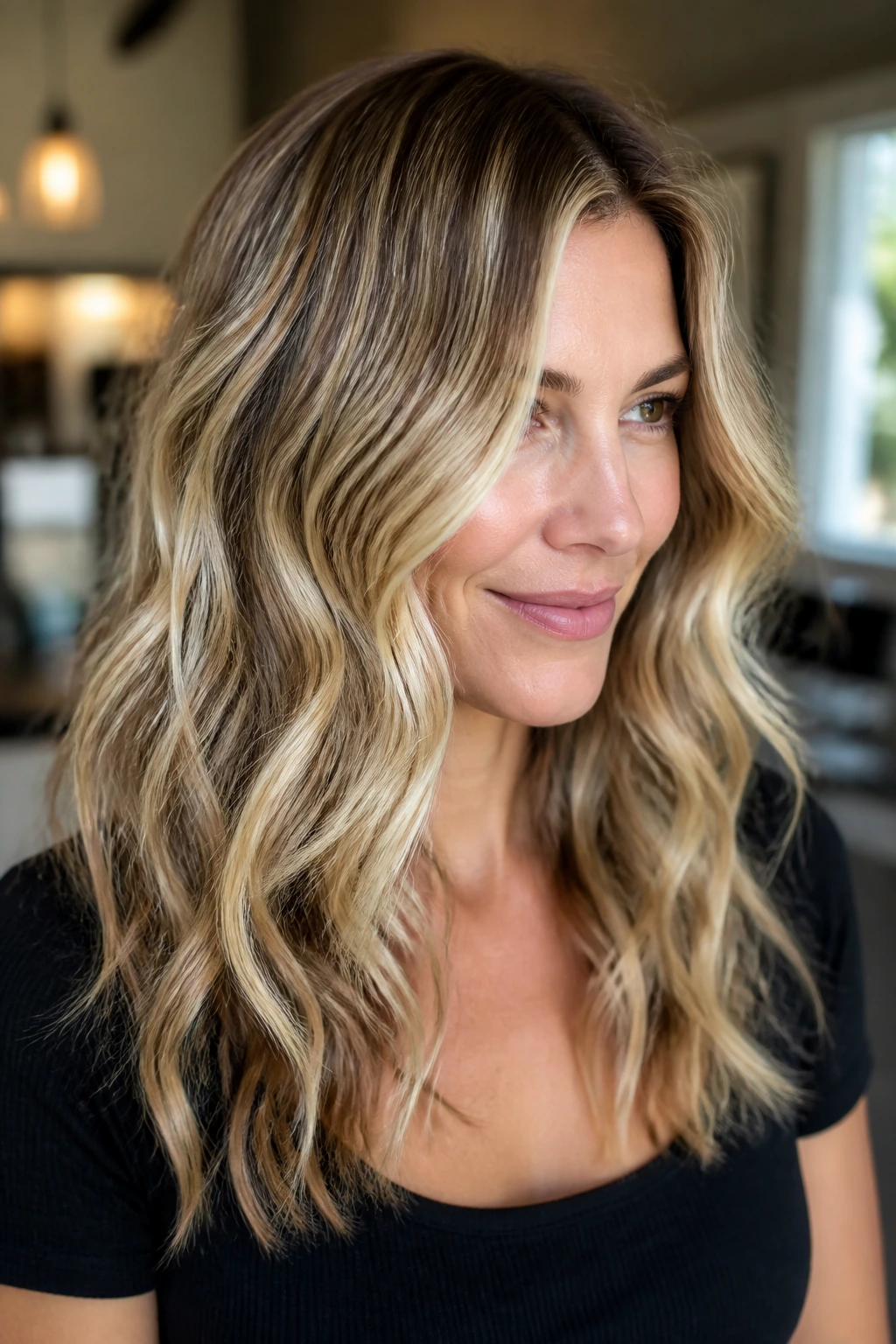
For Curly and Coily Hair: Go for ribbon highlights, face-framing brightness, and a deeper interior base. Thick textured hair shows blonde best when the curls keep the color separated, so avoid over-lightening every surface piece. A warm honey or beige tone often looks softer than icy blonde on curls.
For Low-Maintenance Routines: Choose a root shadow, bronde melt, or honey balayage. These grow out with less contrast, which means you can stretch appointments longer without the look falling apart. Thick hair is generous here; it hides some regrowth better than fine hair does.
For High-Contrast Lovers: Pick a money piece, platinum ribbon highlights, or a bright white-blonde crop. The rest of the head should stay deeper so the contrast feels deliberate. Without that darkness behind it, the brightness can look scattered.
For Gray Blending: Beige blonde with lowlights is a smart path. The lighter pieces soften gray, while the deeper ribbons keep the density from looking washed out. This is one of the cleanest ways to wear blonde if you want softness more than drama.
For Warm-Skinned Brunettes: Try apricot blonde, honeyed wolf cut, or golden hour layers. These shades don’t fight your natural warmth, and thick hair usually holds them beautifully. They also make the color look expensive even when the roots start to show.
Keeping Thick Blonde Hair Fresh Between Salon Visits
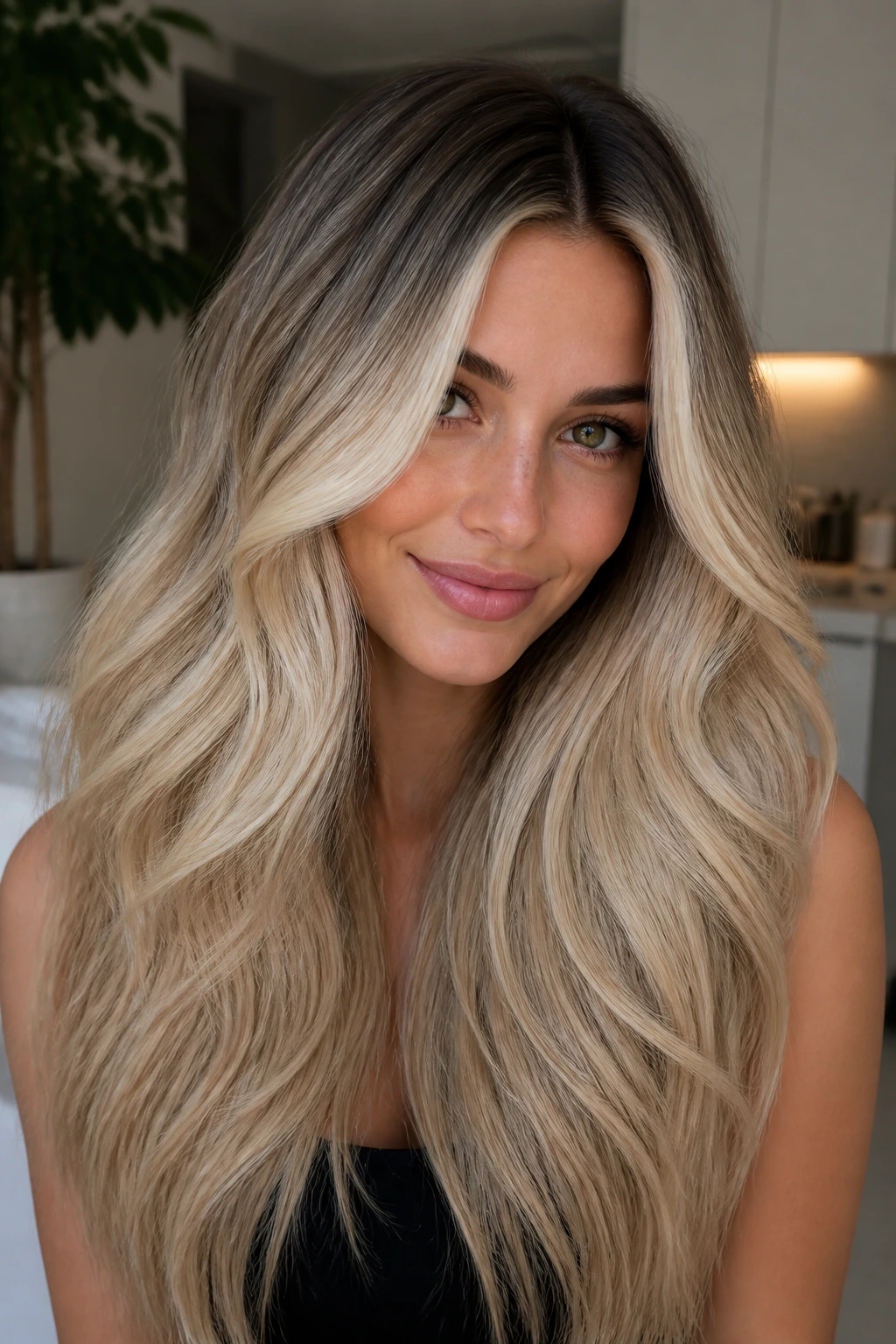
The easiest way to keep blonde looking good on thick hair is to treat maintenance as a rhythm, not a crisis. Rooted, lived-in looks like honey balayage, bronde melts, and shadow-root bobs can often stretch 10 to 12 weeks between big appointments. Platinum, white blonde, and high-contrast money pieces usually need more frequent toner or root attention, especially if you want the shade to stay crisp.
A gloss every 4 to 8 weeks makes a bigger difference than most people expect. It refreshes the tone, adds slip to the ends, and cuts down on that dusty look thick hair gets when the blonde has gone flat. If your hair feels dry or a little stretchy after lightening, use bond-building masks and a moisturizing treatment once a week, but do not pile on heavy product at the scalp.
Trim the ends every 8 to 10 weeks if you wear long layers, shags, or butterfly cuts. Thick hair can hold onto split ends longer than you think, and blonde shows damage fast. Clean ends make the color look newer, even when the roots are not freshly done.
Purple shampoo is useful, but it is not a lifestyle. Once a week is enough for most blondes. If the shade is warm — honey, butter, apricot, champagne — overusing purple shampoo can mute the tone you actually wanted.
Frequently Asked Questions About Blonde Hair Looks for Thick Hair
What blonde shade looks best on thick hair?
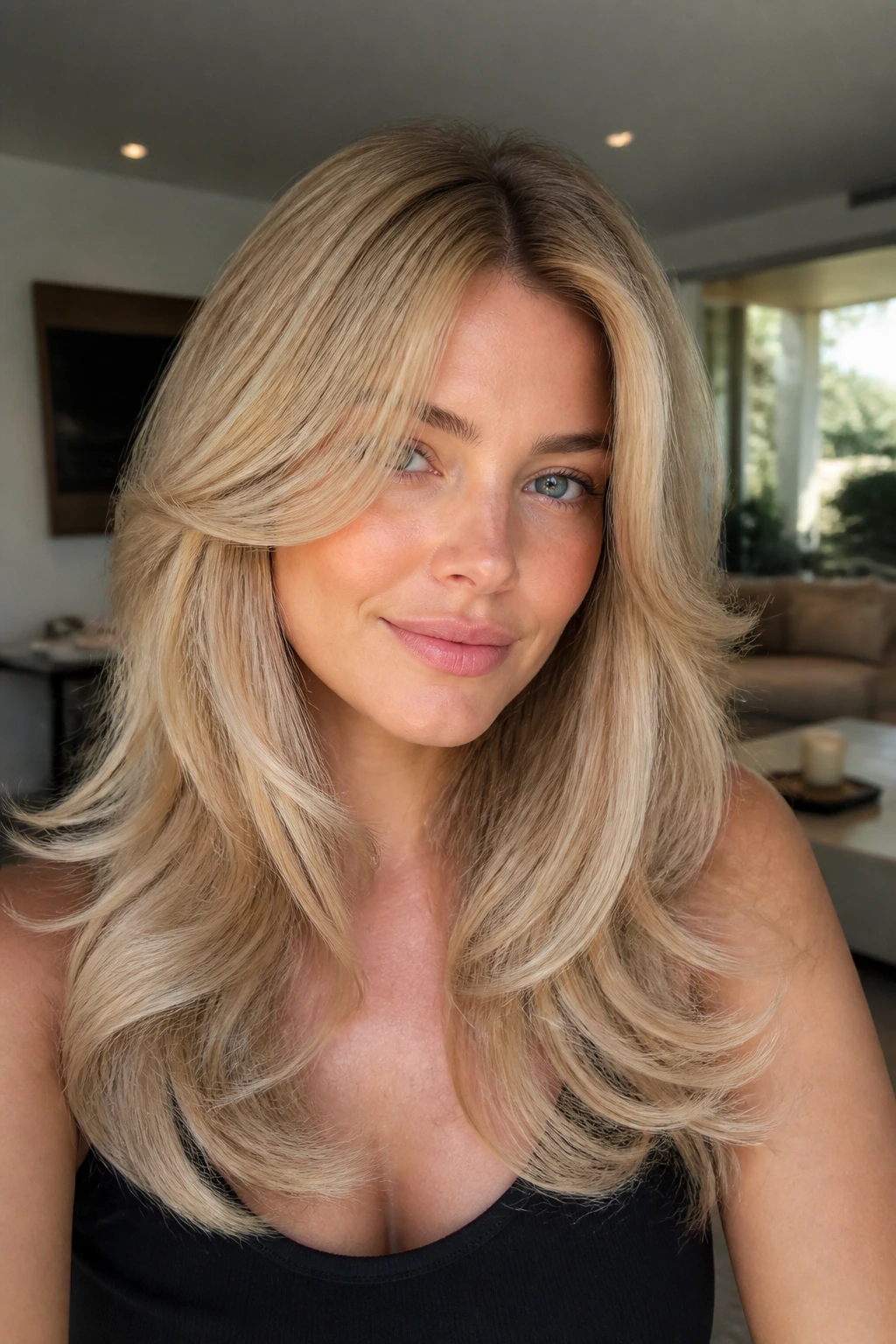
Beige, honey, cream, and rooted blonde shades are usually the easiest wins. They keep the hair looking dimensional instead of heavy, and they give thick strands enough shadow to move.
Is balayage or foils better for thick hair?
Both can work, and the best results often mix them. Balayage gives softness and a grown-in feel, while foils give stronger lift and brighter contrast. On dense hair, that combination usually looks more balanced than using only one method.
Can very dark thick hair go blonde without frying the ends?
Yes, but usually not in one dramatic leap if you want the hair to stay healthy. Multiple sessions, bond-building care, and realistic timing matter more than speed. Thick hair can handle the work, but it still needs room to recover.
Why does my blonde look flat even though my hair is thick?
Flat blonde usually means the color lacks contrast, not that the hair lacks body. Add a root shadow, a few lowlights, or brighter face-framing pieces so the eye can read the shape again.
How do I keep thick blonde hair from turning brassy?
Use the right toning shampoo for the kind of warmth you have, not just any purple bottle on the shelf. Purple helps yellow, blue helps orange, and a salon gloss can fix what shampoo cannot. Heat protection matters too, because repeated heat makes warmth show faster.
What haircut works best with blonde on thick hair?
Long layers, butterfly cuts, U-cuts, shags, and well-shaped bobs all work well. The main goal is to keep the silhouette from feeling too wide at the bottom. Color looks better when the cut has somewhere to fall.
Can curly thick hair wear very light blonde?
Absolutely, but placement matters a lot. Curly hair usually looks better with ribbons, face framing, and deeper interior sections than with all-over lightness. That keeps the curl pattern defined instead of washed out.
How often should I refresh a blonde gloss?
Most thick blondes benefit from a gloss every 4 to 8 weeks, depending on how pale or warm the shade is. Icy and platinum tones need it more often; bronde and rooted blondes can usually wait longer.
The Blonde That Lets Thick Hair Breathe
The best blonde for thick hair is rarely the palest one in the room. It’s the one with enough depth to hold shape, enough brightness to catch the eye, and enough movement to keep the whole head from feeling heavy. Once you see it that way, the options open up fast.
Pick the version that suits your life, not just your mood board. A rooted cream lob, a honey balayage, a smoky ash wave, or a bright face frame can all do the job if the cut supports them and the tone stays honest. Thick hair deserves color that works with its weight, not against it.
