



A bob haircut for little girls solves a very ordinary problem: hair that looks sweet at breakfast and turns into a sweaty, tangled knot by the end of the school run. The right version sits clean at the jaw or chin, brushes off the neck, and still behaves when a coat collar, backpack strap, or car seat rubs it the wrong way. That sounds simple. It isn’t. An inch too short, or a line cut in the wrong place, changes everything.
The best little-girl bob haircuts are not just “short hair.” They’re shapes. Blunt, angled, rounded, layered, curly-friendly, fringe-heavy, or tucked under — each one handles movement, texture, and growth in a different way. A good cut works with the child’s hair habits instead of fighting them, which is why one bob can look neat for six weeks while another needs constant smoothing and fresh clips just to stay out of the eyes.
And yes, little details matter more here than they do on an adult. A cowlick at the crown. A swirl behind one ear. Hair that shrinks half an inch as it dries. A child who hates anything touching her forehead. Those are the things that decide whether a bob feels easy or annoying, and they’re exactly the things parents forget to mention until after the cape comes off.
Why These Bob Haircuts Work So Well for Little Girls
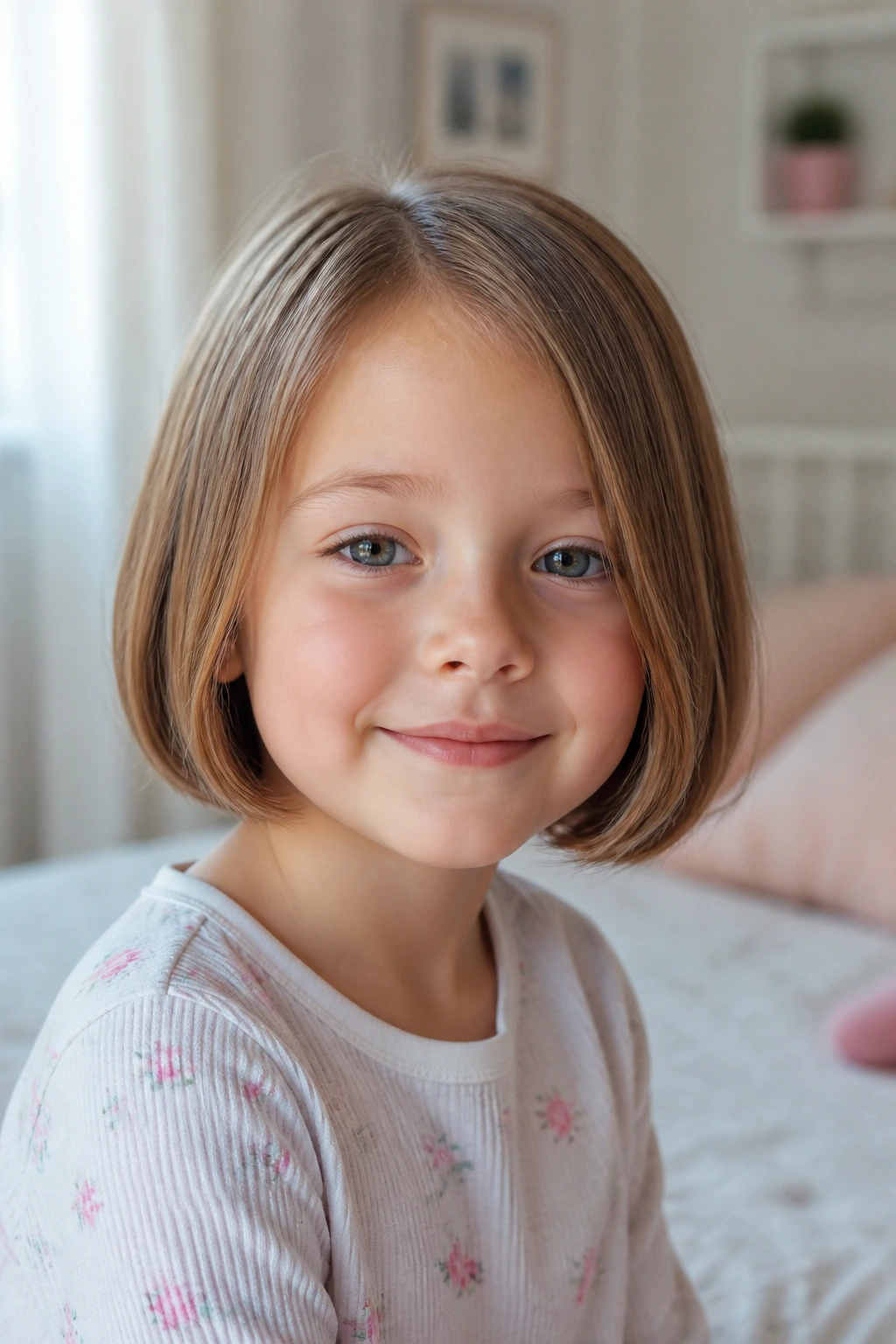
-
Less tangling where it hurts most: Shorter ends don’t get trapped in sweatshirt necklines, backpack straps, and car-seat harnesses as fast as longer hair does.
-
A cleaner line around the face: A bob keeps hair from spreading across the cheeks and into the mouth, which matters on windy playground days and during snack time.
-
Room to grow without looking sloppy: If the cut is shaped with a little thought, it still looks intentional when it grows out an inch or two.
-
Better control over texture: Straight, wavy, and curly hair each need a different kind of bob, but all three can look polished when the cut respects the natural pattern.
-
Faster morning resets: A mist bottle, a brush, and thirty seconds of finger-twisting can usually bring a bob back into shape after sleep.
-
Easy to dress up or down: A plain bob can sit flat for school, then look dressed-up with one bow clip, a side part, or a tucked-under finish.
1. The Classic Chin-Length Blunt Bob
The cleanest bob is still the one I reach for first. A chin-length blunt bob falls in a straight line, usually right at or just under the chin, and it gives little girls that tidy, graphic shape that looks neat even when the rest of the outfit is chaos. It’s especially useful if the child likes to tuck hair behind her ears or hates feeling ends brushing her neck.
What makes this version work is the perimeter. One solid line means the hair lies flatter, dries more evenly, and doesn’t break into little wispy pieces the way too many layers can. On straight hair, it reads crisp. On soft waves, it looks fuller than you’d expect. The important bit: ask for the cut to be checked dry before the final snip, because hair that looks chin-length while wet can bounce up more than half an inch when it dries.
Why it’s the simplest shape to live with
- The outline stays easy to see when the child is moving around.
- A center part or a slight side part both work.
- It grows out into a neat lob instead of a lopsided mess if you leave the front a touch longer.
Best tip: keep the chin-length line a hair longer than you think on the first appointment. Short bob regret is real, and it usually shows up the minute the hair dries.
2. The Soft French Bob with Light Fringe
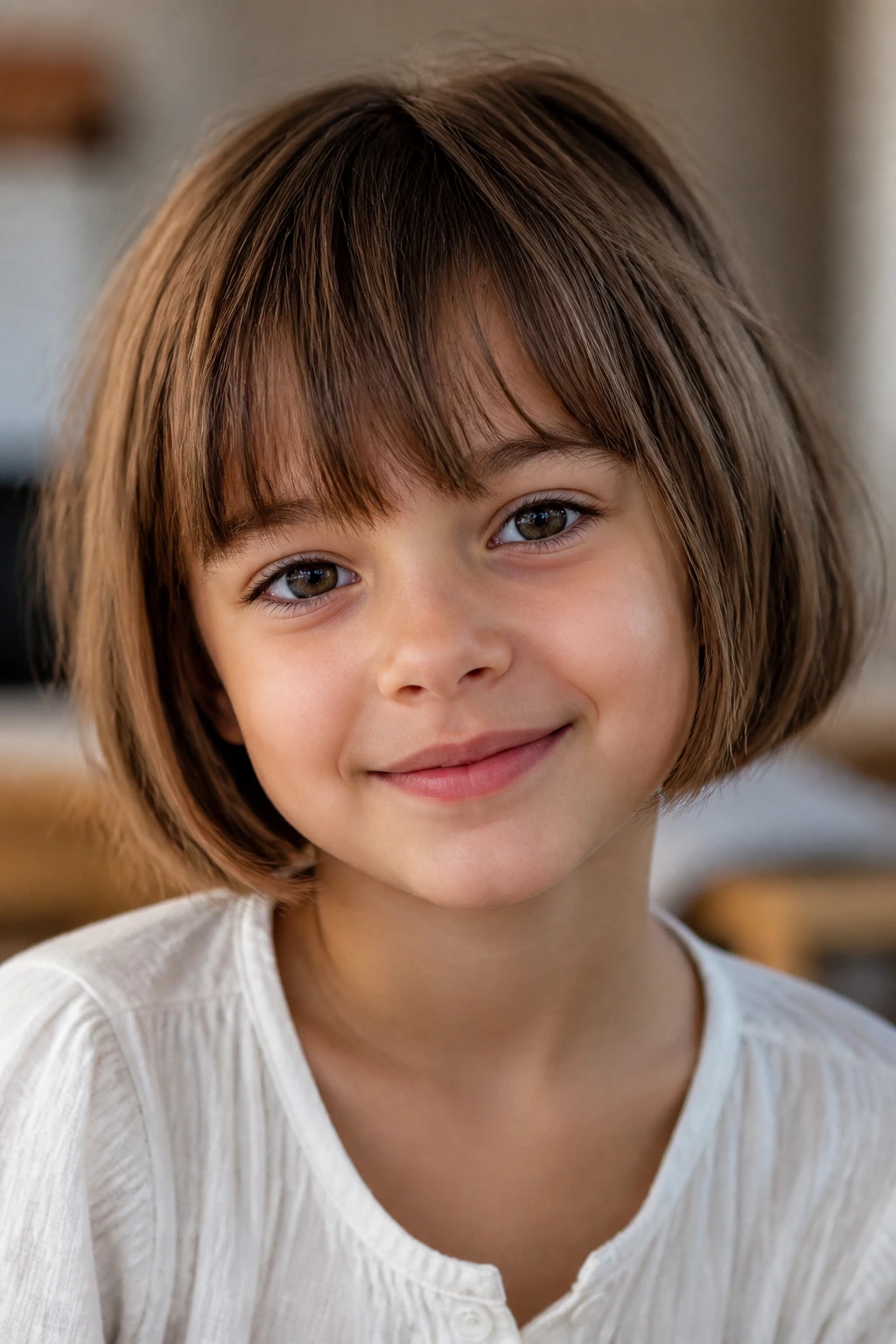
This is the bob for a child who wants her hair off her cheeks but still likes a bit of softness around the face. The French bob sits a little shorter than the classic version, and the fringe is usually light, not heavy — more eyebrow-skimming than blunt and dense. It has that slightly undone shape that still looks neat after a nap, which is a rare and useful trait.
I like this cut on kids with fine to medium hair because the shorter length keeps the shape from hanging limp. It also works beautifully when the child’s hair has a tiny bit of bend at the ends, because the style doesn’t need every strand to sit flat and obedient. The fringe needs a trim more often than the rest of the cut, though. That’s the trade-off. If the bangs grow past the eyes, the whole style starts to lose its tidy line.
3. The A-Line Bob That Tilts Forward
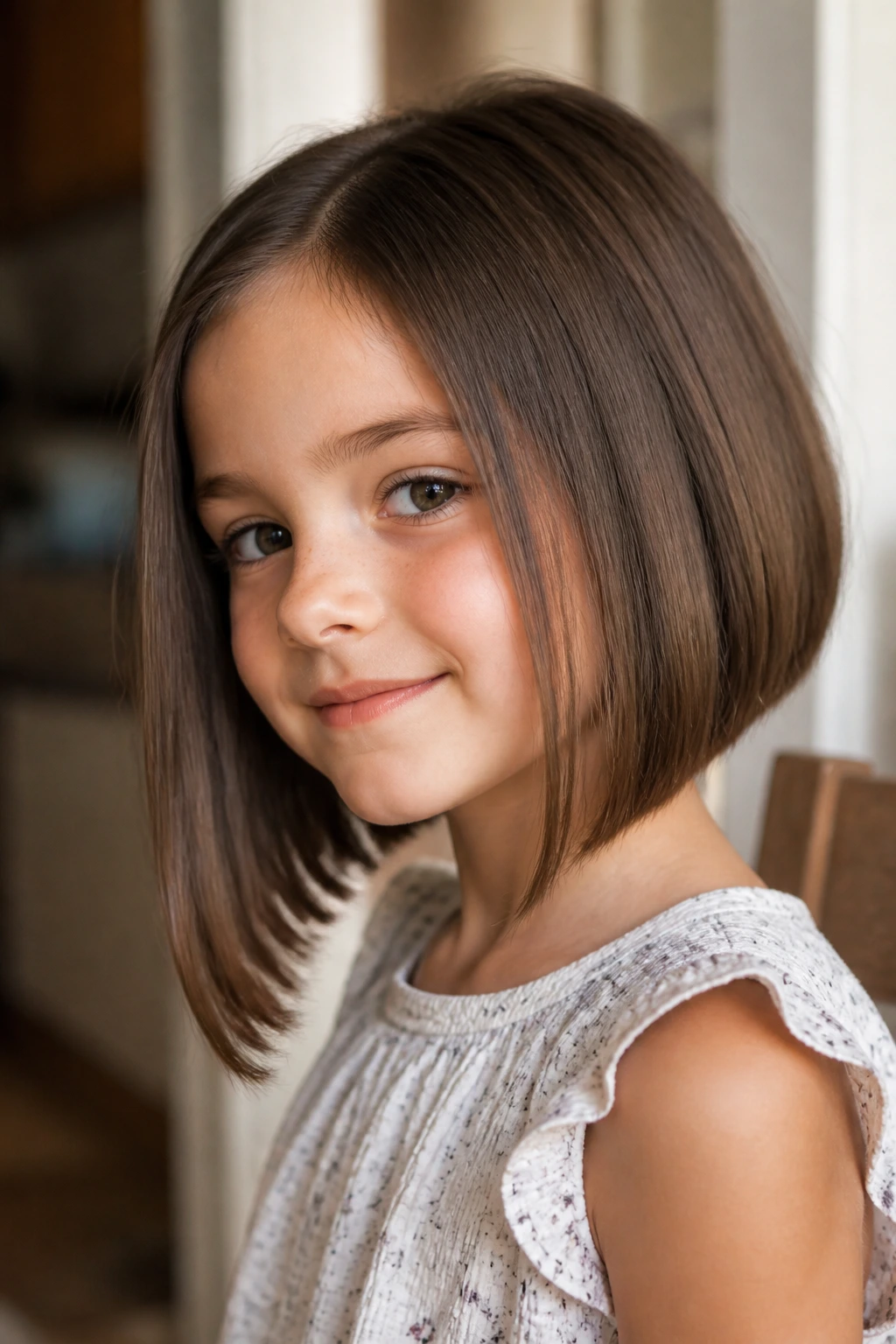
Want a bob that moves a little more than the classic version? Ask for a soft A-line. The back sits slightly shorter, and the front hangs a little longer toward the jaw. It’s subtle, not dramatic. On a little girl, subtle is usually the smarter move anyway.
The angle helps the hair stay away from the nape, which is handy if she gets warm easily or complains when hair touches the back of her neck. It also gives the cut a gentle swing when she turns her head. If her hair flips out at the ends, this shape can tame that better than a straight cut. The trick is keeping the angle modest — about half an inch to an inch longer in the front, not a sharp diagonal that looks like it belongs on a different head.
What makes the slope useful
- The front still tucks behind the ears.
- The back stays neat under coats and sweaters.
- Thick hair loses some bulk without turning thin at the ends.
4. The Layered Bob for Fine Hair
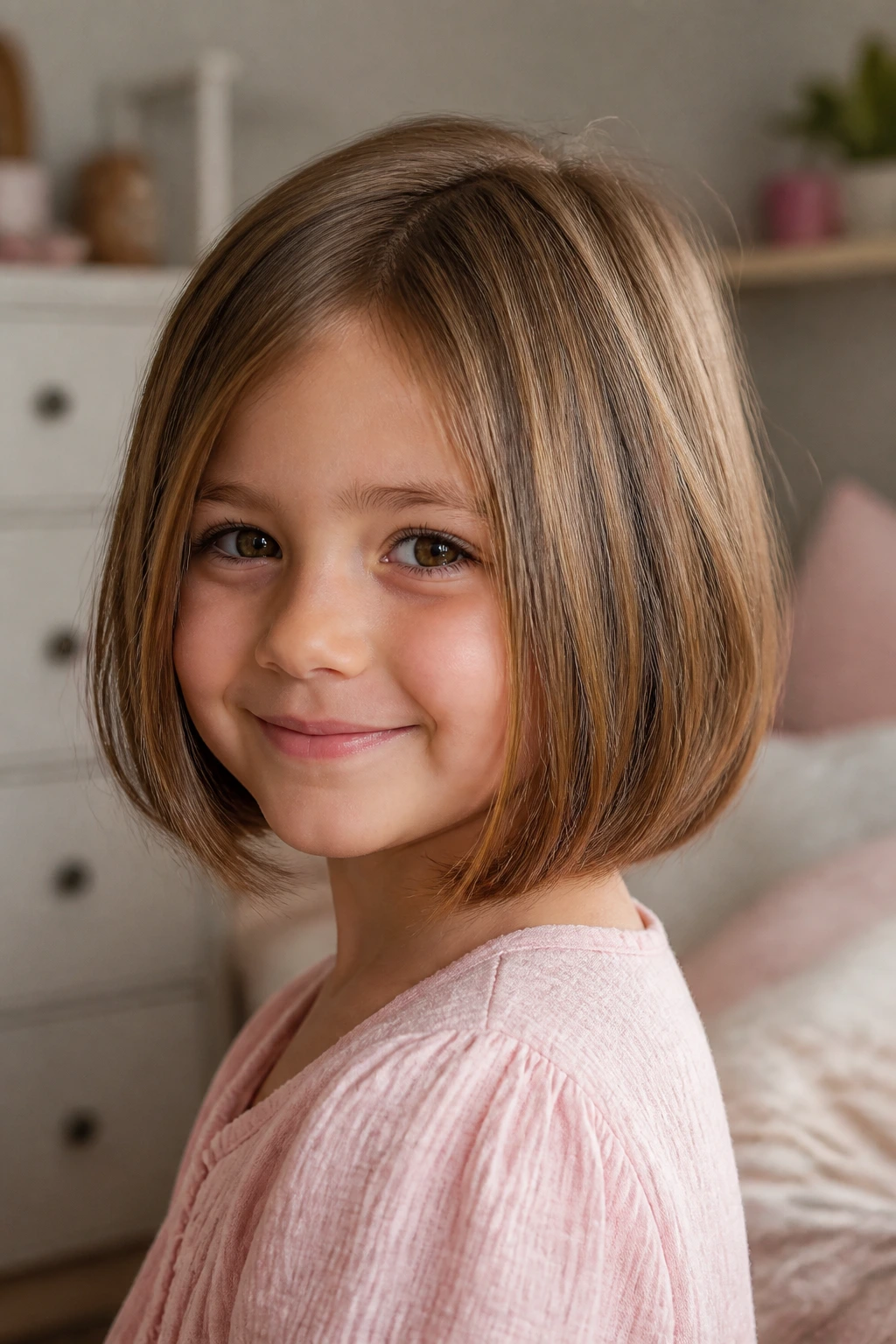
Fine hair can look flat by lunchtime if the cut is too blunt and too heavy. A layered bob gives it a little lift without wrecking the shape. The word “layered” worries some parents, and fair enough — too many short pieces can make fine hair look sparse. But the good version uses light internal layers, not choppy slices everywhere.
What I like here is the balance. Keep the perimeter blunt so the ends still look full, then lift just enough weight from the crown and mid-lengths so the hair doesn’t collapse against the head. A little root spray or mousse at the crown helps, but the cut does most of the work. On a child with very straight hair, this can be the difference between a bob that sits and one that just hangs.
5. The Curly Halo Bob

Curly hair needs a bob that respects the spring in the curl, not one that tries to bully it into a straight outline. A curly halo bob is rounded, soft around the sides, and usually cut dry or nearly dry so the stylist can see where the curls actually land. If you cut curls wet and assume they’ll fall the same way when dry, you can end up with a shape that sits a lot shorter than planned.
The best curly bob has room at the sides and a little lift at the crown, so it frames the face instead of ballooning into a triangle. For tighter curl patterns, the length often needs to stay a bit longer than chin length when dry so it doesn’t spring up to the ears. And if there’s a fringe, keep it soft. Hard, straight bangs on a lively curl pattern tend to spend the day picking a fight.
6. The Bob with Eyebrow-Grazing Bangs
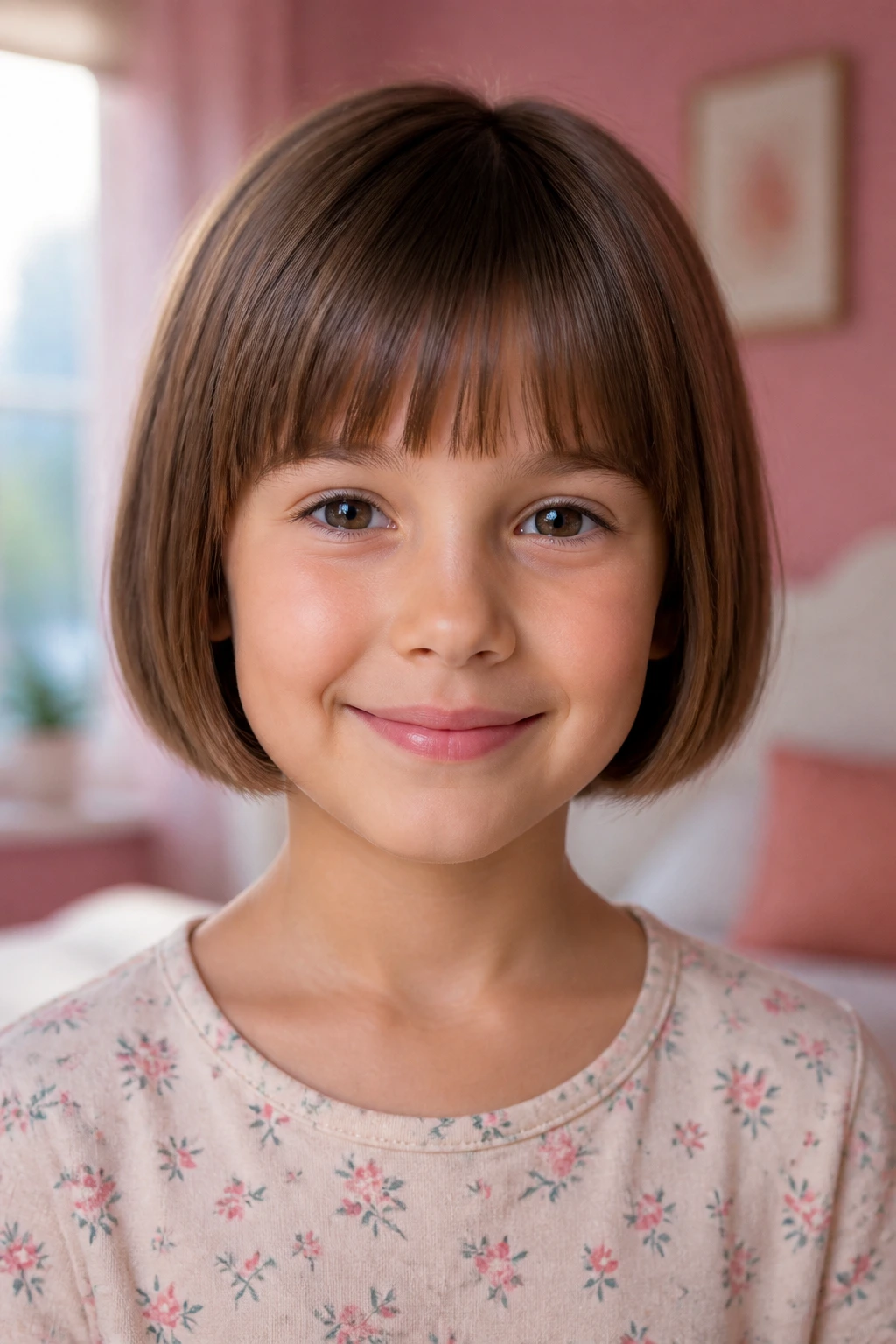
A blunt bob with bangs looks sharp on paper and can look very sweet on a child, but it needs honest maintenance. The fringe should sit around eyebrow level or just above it, never so short that it sticks up after sleep. That’s the problem with bangs on kids: they grow fast, they move a lot, and they make you aware of every cowlick on the forehead.
Still, if the forehead is broad or the child likes hair falling close to the face, this cut can be lovely. The bob keeps the bulk off the neck, and the bangs soften the front without needing extra clips. I’d keep the fringe slightly longer on the sides so it blends into the rest of the cut instead of forming a hard shelf. One thing more: bangs need trims. Not someday. Soon.
7. The Side-Swept Fringe Bob
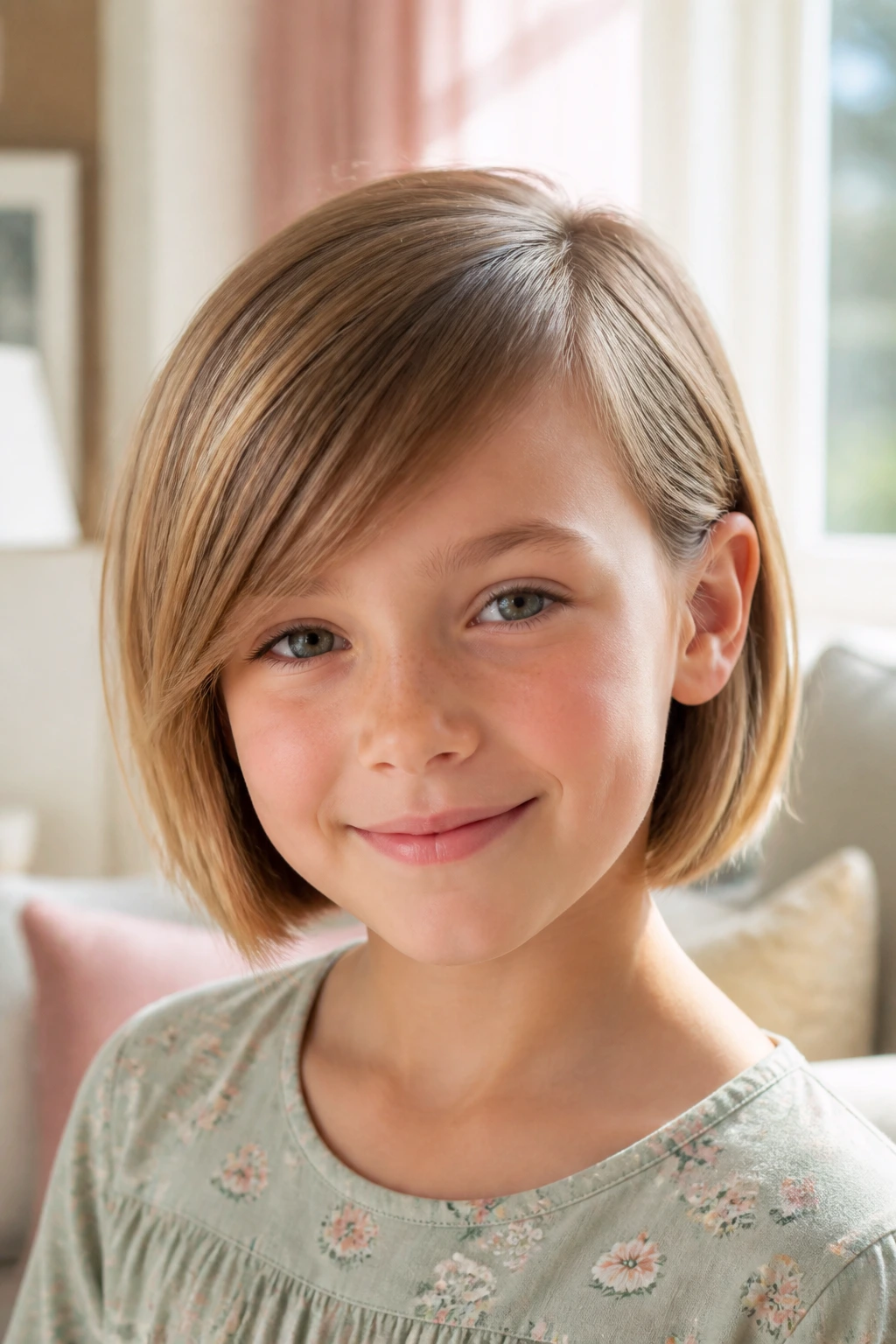
A side-swept fringe is the easygoing cousin of straight bangs. It gives the face a little shape, but it doesn’t demand the same level of upkeep or precision. If a child has a stubborn part line or a cowlick that splits straight bangs down the middle, this is usually the smarter call.
The sweep can be soft and long enough to tuck behind one ear, which makes the cut useful on busy mornings. It also grows out more cleanly, because the fringe can blend into the rest of the bob instead of hanging in the eyes all at once. My bias here is strong: if you’re not sure about bangs, start with a side sweep. It’s easier to live with, and if the child loves it, you can always go shorter next time.
8. The Asymmetrical Bob
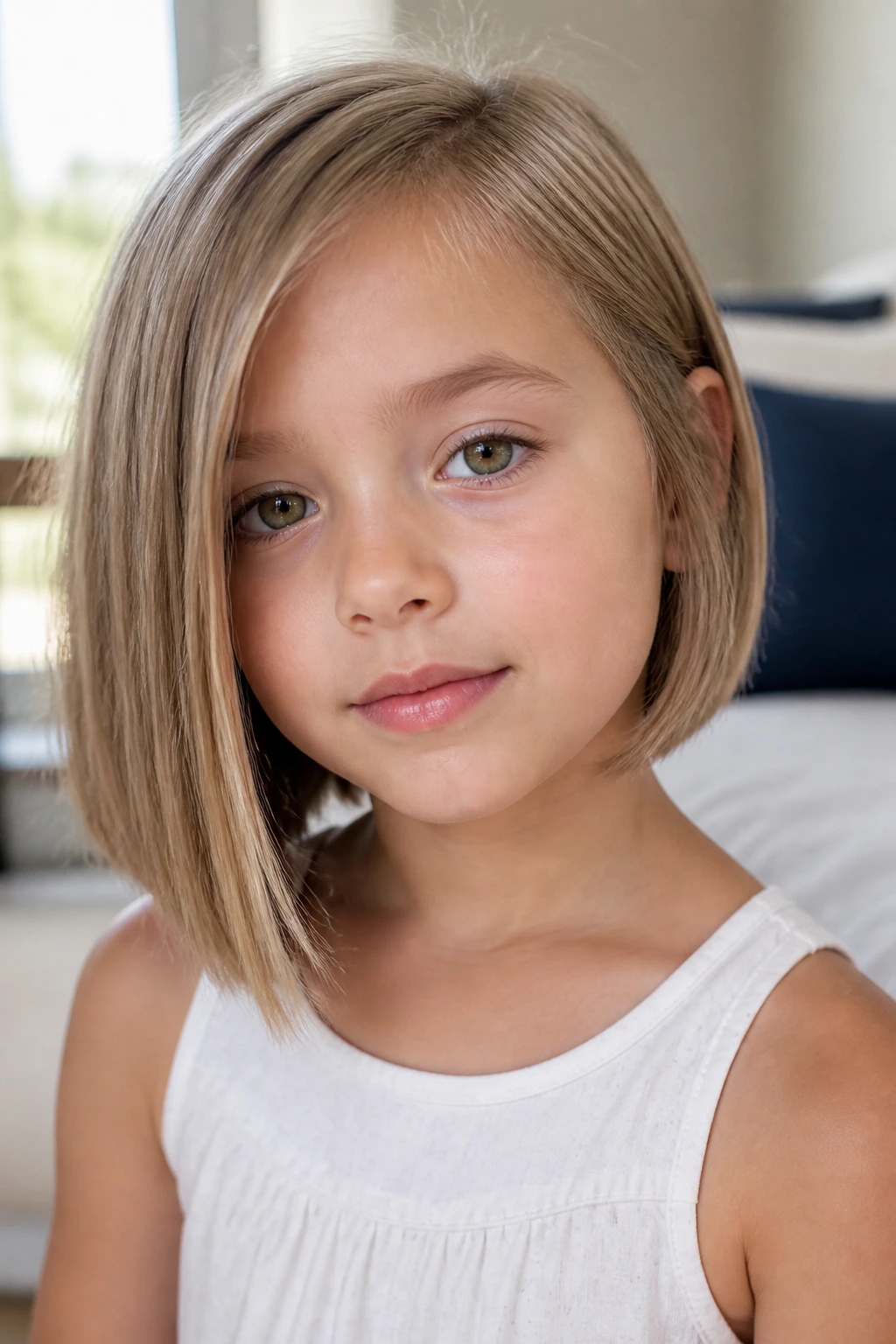
One side a little longer. That’s the whole trick, and it changes the mood of the cut immediately. An asymmetrical bob feels modern without being fussy, and on a little girl it can look playful rather than severe if the difference is kept modest. I’m talking about a gentle half-inch to one-inch shift, not a dramatic angle.
This cut works especially well if one side of the hair tends to sit flatter or fuller than the other. The longer side gives the eye a place to go, and the shorter side keeps the neckline neat. It also lets the child tuck one side behind the ear while the other side stays in the shape of the cut. That asymmetry sounds tiny. In practice, it makes the whole bob feel more alive.
9. The Stacked Bob with Lifted Back
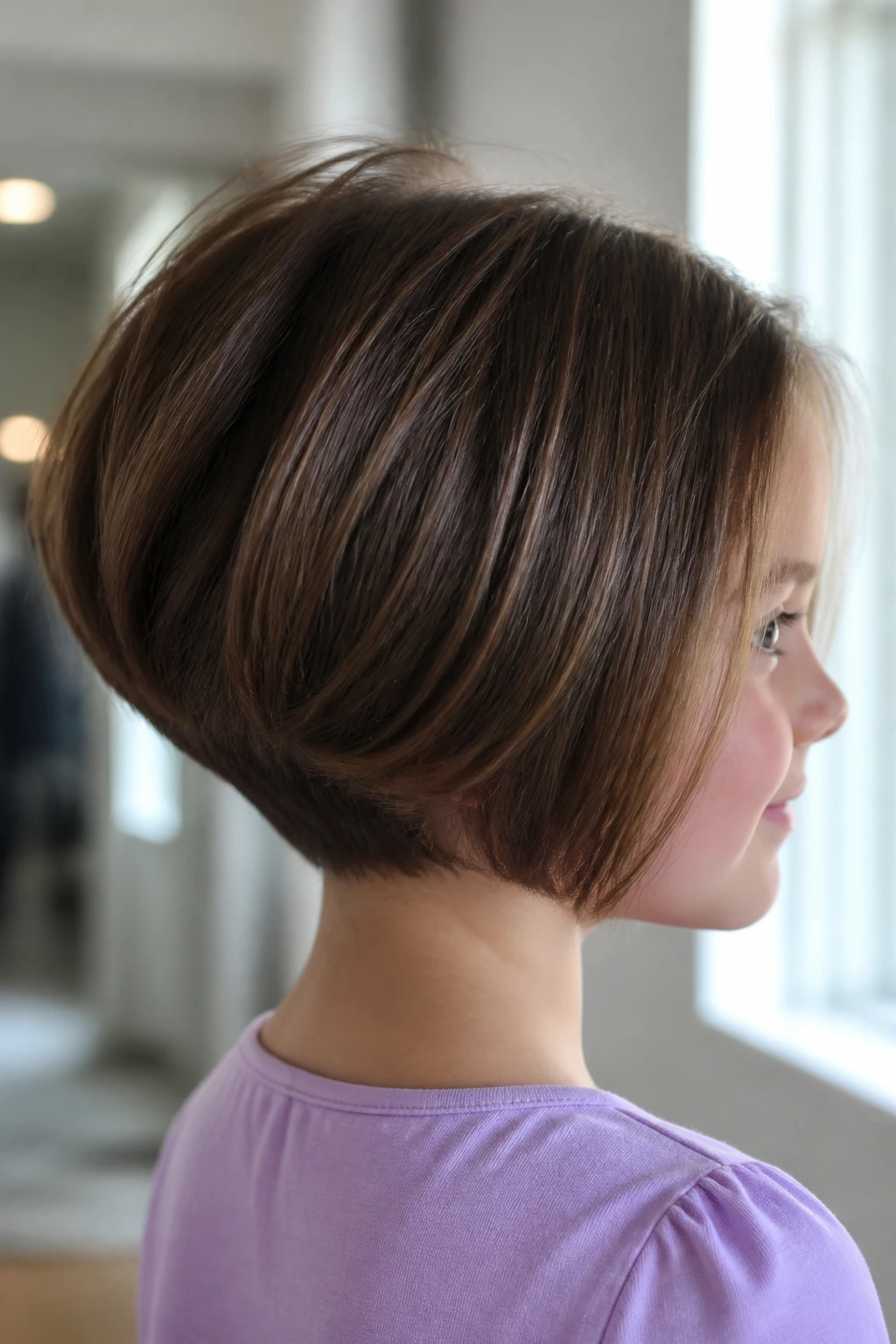
Thicker hair often needs somewhere to go in the back. A stacked bob solves that by building a little lift at the nape and shortening the layers underneath so the cut doesn’t puff out like a triangle. Used carefully, it gives a clean line and a rounder silhouette. Used badly, it looks like a helmet. So, yes, restraint matters.
This version is best when the hair is dense, straight, or slightly wavy and tends to sit heavy around the neck. The lifted back takes some weight off, which helps the front fall neatly toward the jaw. Keep the stacking subtle on children. A big, dramatic stack can age the haircut fast and can be annoying to grow out. A soft stack, though, gives shape without turning the back into a problem zone.
10. The Shaggy Textured Bob
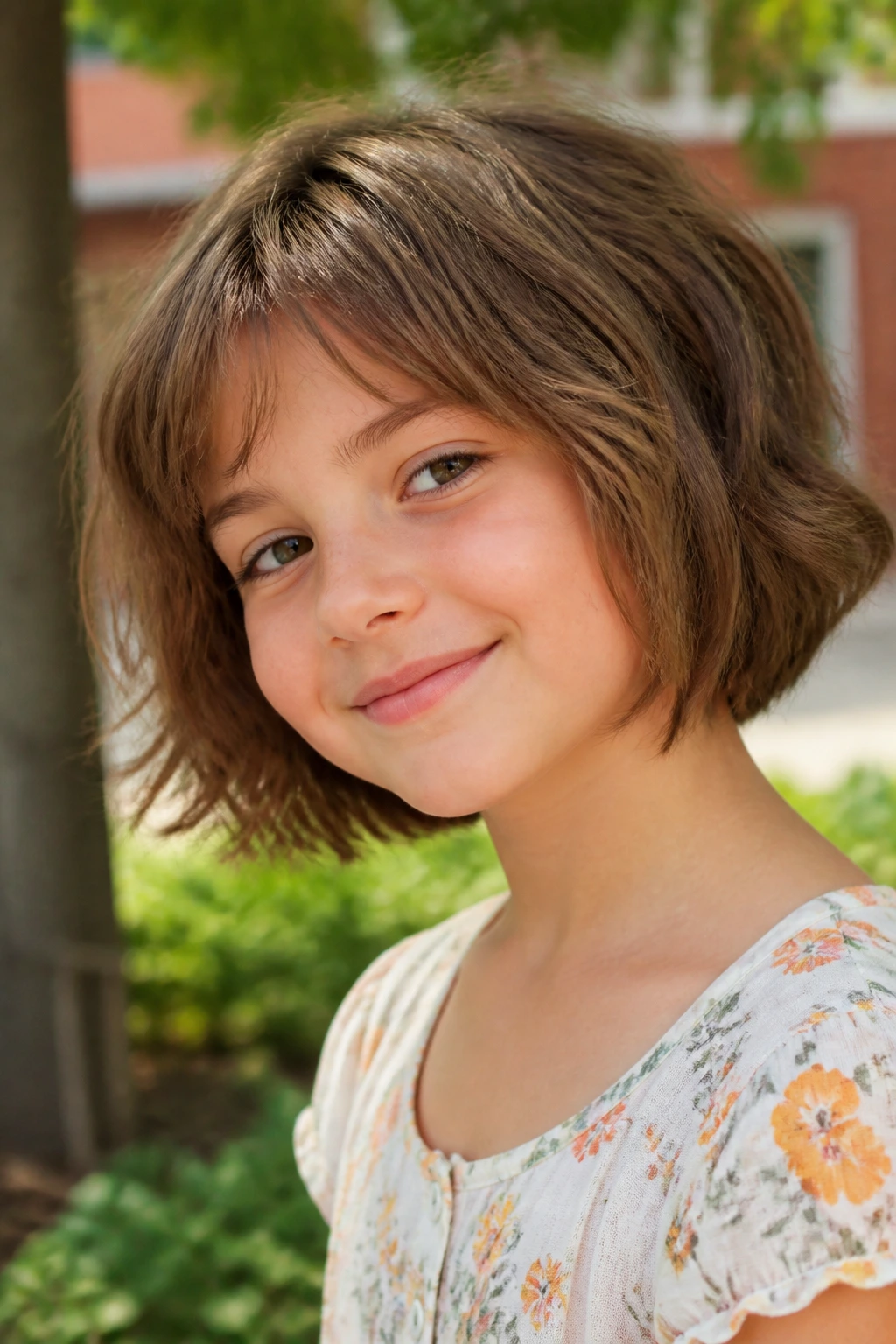
Some bobs want polish. This one wants movement. A shaggy textured bob uses soft, broken-up ends and light layers to keep the hair from sitting too stiffly around the face. It’s the cut I’d point to for a child who runs hard, sweats a lot, or simply won’t sit still long enough to keep a sleek style intact.
The magic is in the looseness. The ends shouldn’t be shredded; they should look airy, with enough separation that the bob still has shape even after a rough day. On wavy hair, this cut can look almost effortless in the good sense — not because it styles itself, but because it holds onto a bit of movement. If your child has thick hair that turns bulky fast, this is one of the better ways to take weight out without making the ends look thin.
11. The Rounded Pageboy Bob
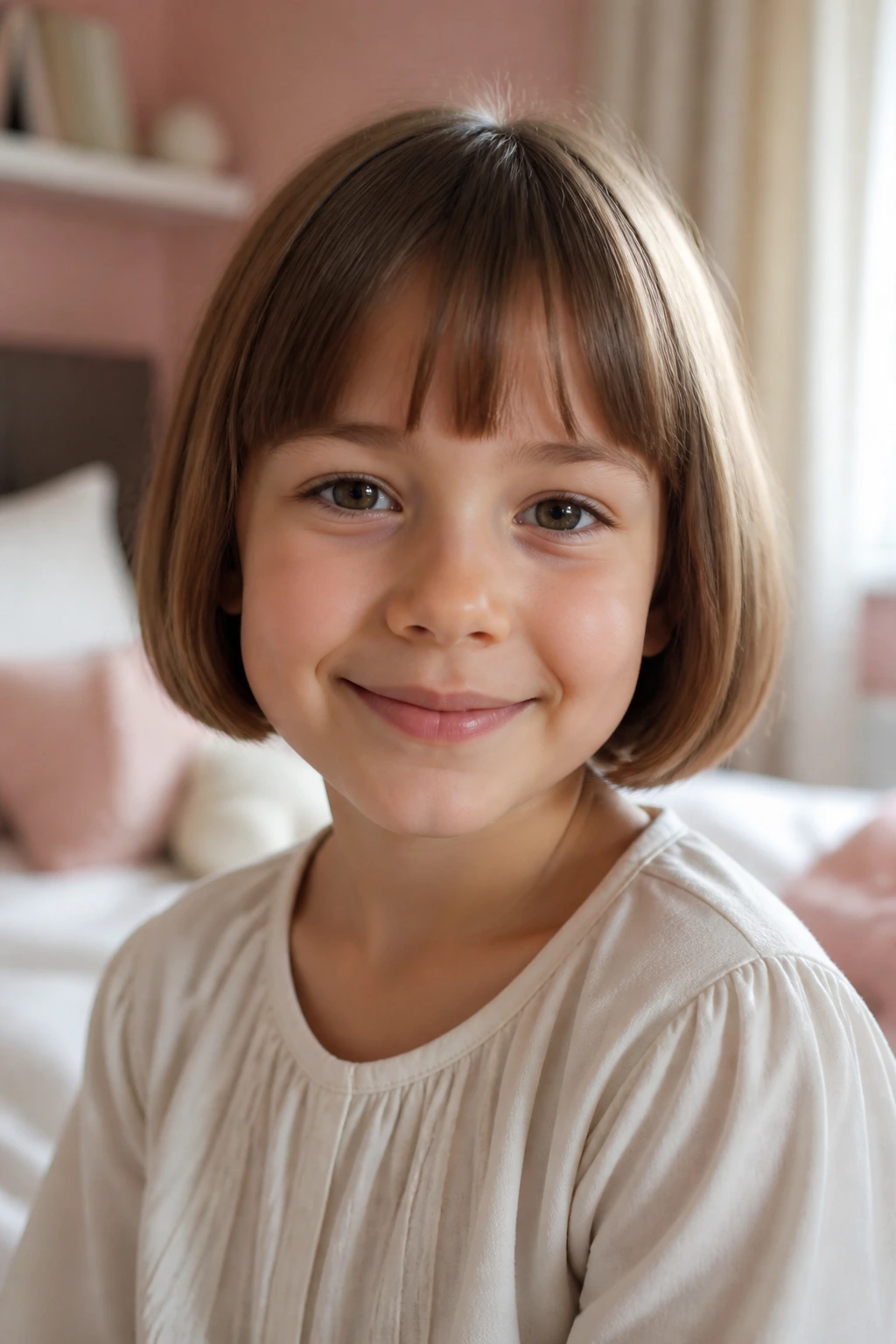
The pageboy bob is a little old-school, and I mean that as a compliment. It curves under gently around the jaw and often sits a touch fuller through the sides. On a child, that rounded line can be charming without feeling costume-like, especially when the ends are kept soft rather than sharply flipped under.
This shape behaves well on straight hair that likes to turn outward at the ends. The curved perimeter gives that movement somewhere to go. It also keeps the hair close to the face, which helps if the child dislikes strands brushing her cheeks. The only catch is density: if the hair is very thick, the pageboy can get bulky unless the inside is lightened a little.
12. The Wavy Middle-Part Bob
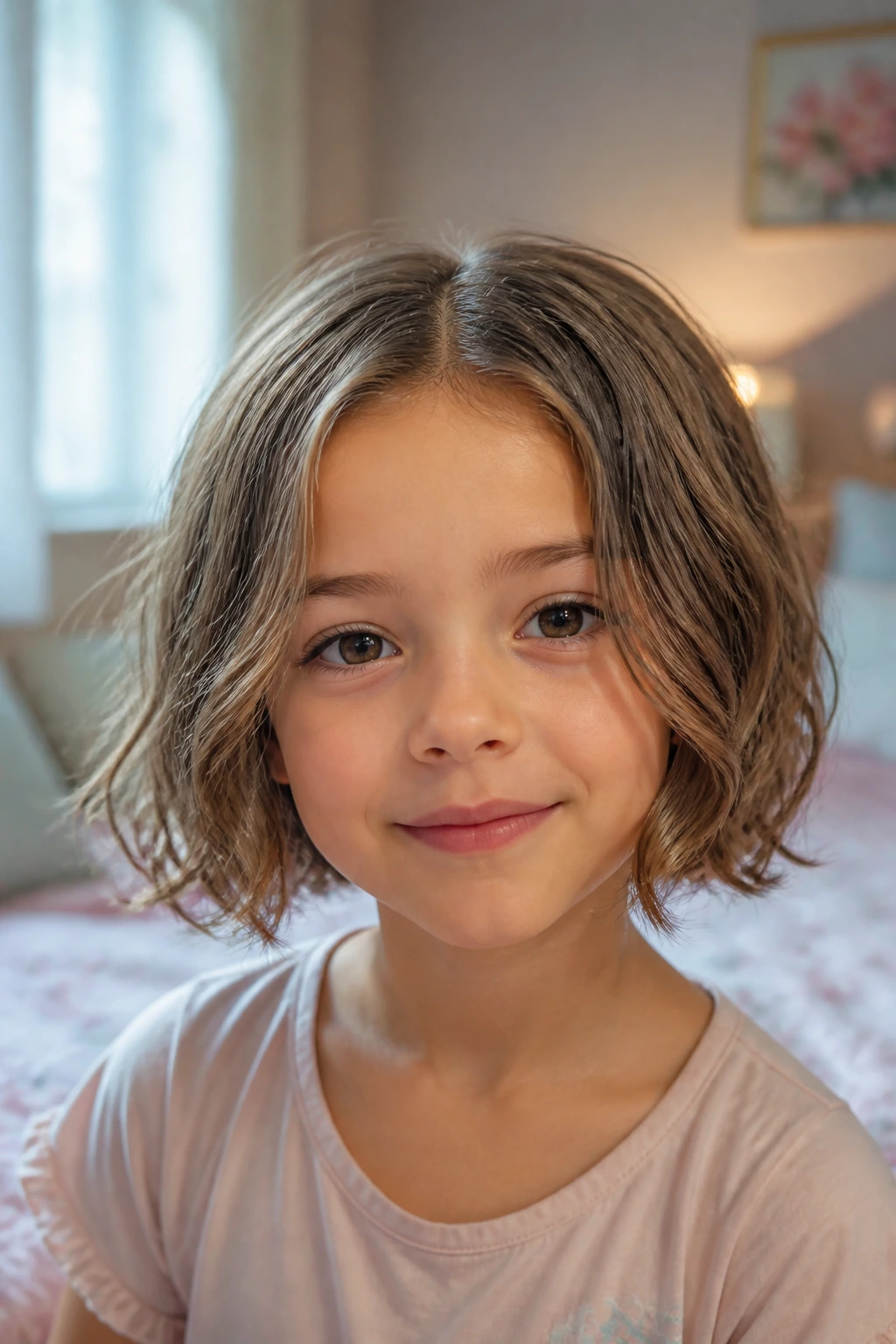
A center part can look very calm on a child with a soft wave pattern. The wavy middle-part bob lets the natural bend do most of the work, and that’s why it’s one of my favorites for hair that dries with a little ripple instead of lying pin-straight. If the ends flip a little, even better. That movement is part of the shape.
Keep the cut roughly jaw to chin length and let the front pieces fall around the cheeks. Don’t overbrush it into a puffball. A small amount of leave-in conditioner or smoothing cream on damp hair is usually enough, then let it air-dry or diffuse lightly if the curl pattern is looser. The middle part gives the style a steady frame, and the wave keeps it from feeling too formal.
13. The Boxy Straight Bob
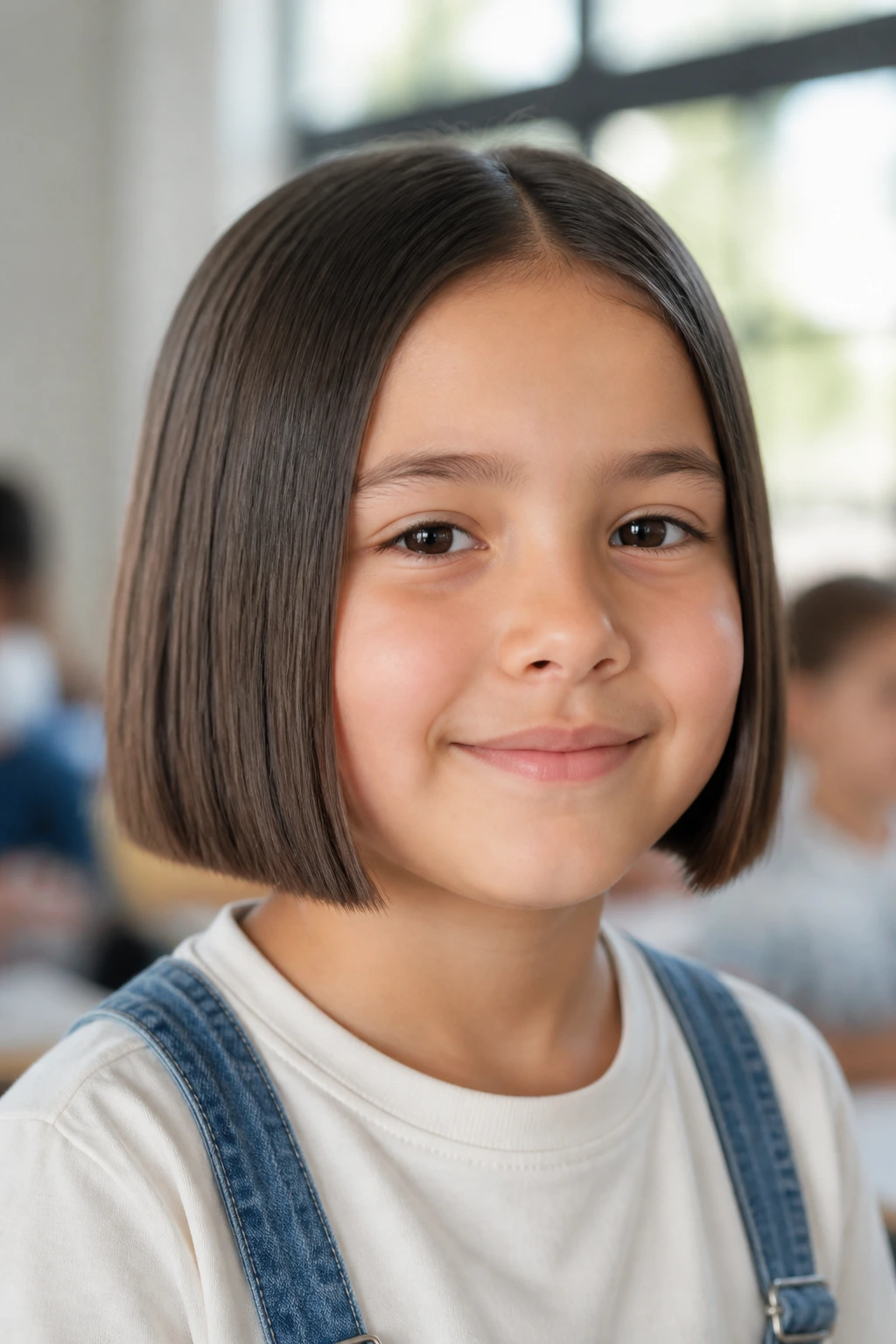
Not every little girl’s bob needs softness around the edges. On very straight, dense hair, a boxy bob can look crisp and even a little artsy. The shape is blunt, the line is clean, and the weight stays in the perimeter rather than the middle of the haircut.
This one is for a child whose hair naturally lies flat and doesn’t need much coaxing. The strong edge keeps the ends looking full, and the whole cut reads neatly from across a room. If the hair is fine, I’d soften the corners a little so the line doesn’t look see-through. But on thick, straight hair? A boxy bob can be quietly excellent, especially if the child hates spending time with a brush.
14. The Inverted Bob
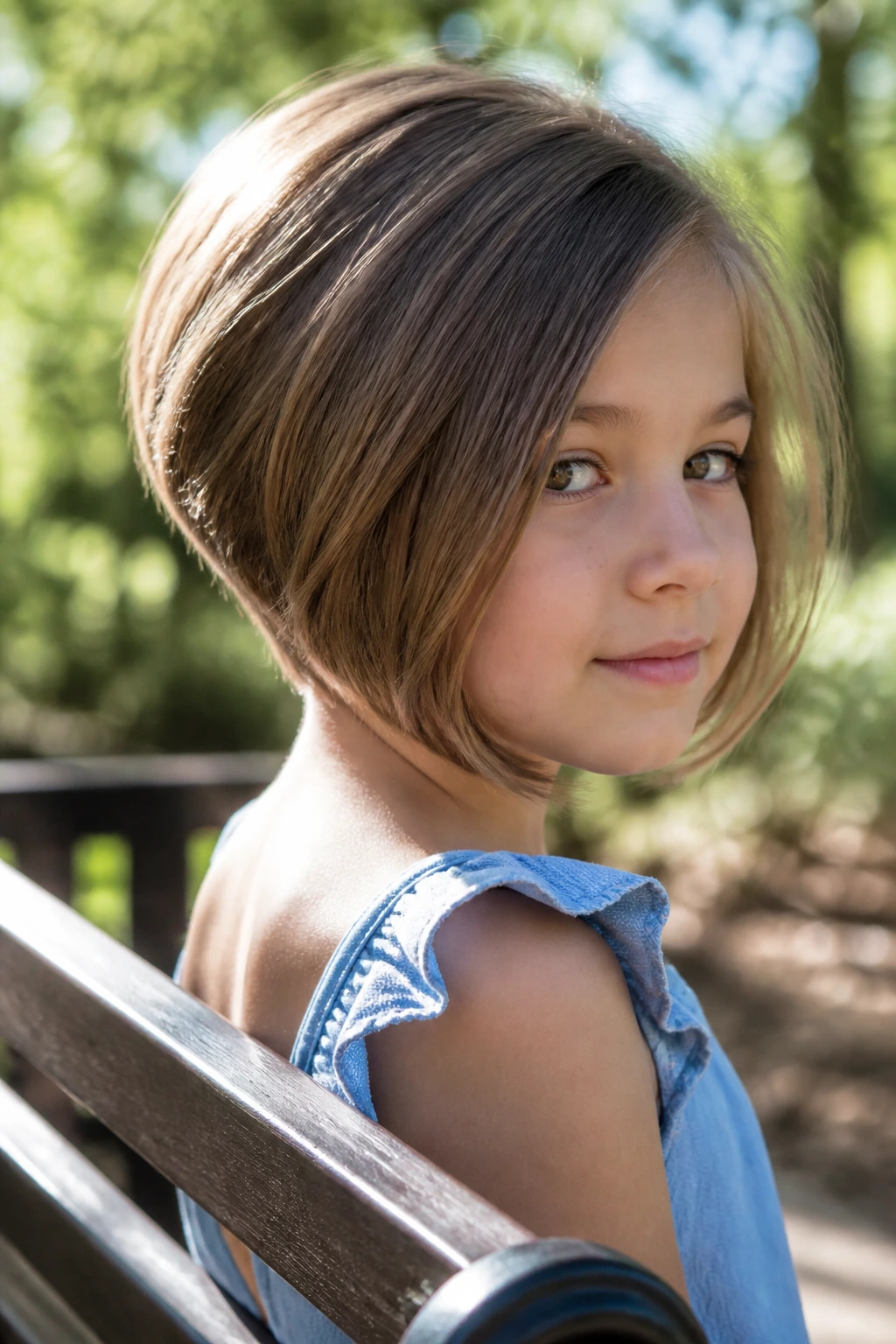
An inverted bob is the cousin of the A-line, just with a little more drama at the back. The nape is shorter, the front is longer, and the curve from back to front is more obvious. On a child, I’d keep it modest. You want shape, not severity.
This cut helps if hair tends to sit heavy at the back or if you want a bob that shows a bit more face frame without losing the short-neck feeling. It can make thick hair feel lighter and can stop the ends from flipping in odd directions. Ask for the angle to stay soft enough that the haircut still looks good when it grows out. That part matters. Kids don’t live in salon lighting.
15. The Curtain-Bang Bob
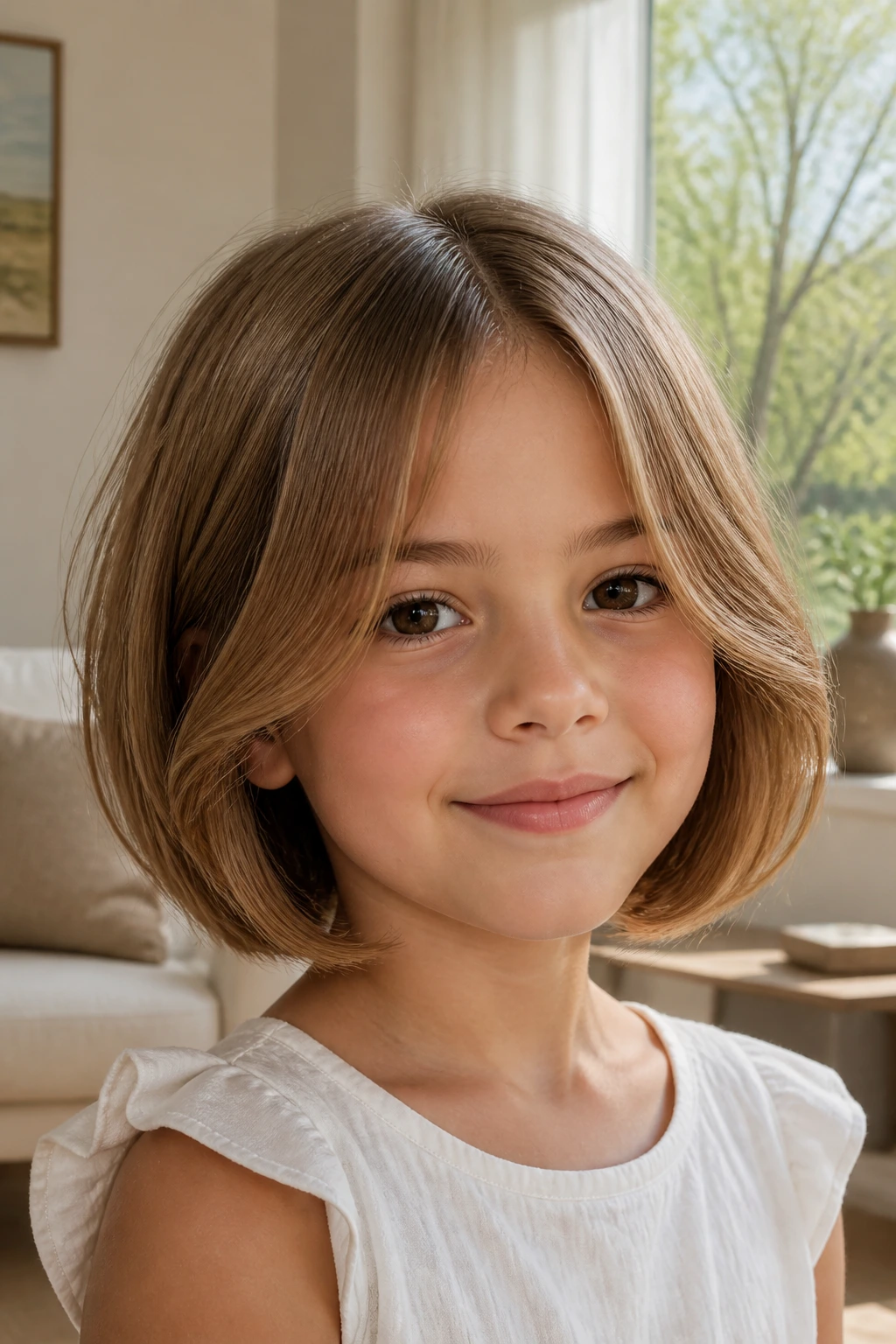
Curtain bangs on a bob are useful because they split the front softly and grow out more easily than straight fringe. The parting opens from the center or just off-center, and the longer face-framing pieces sweep to each side. For little girls who like clips, headbands, or tiny barrettes, this shape is especially useful because the front can be pinned back without fighting the cut.
I also like it for children whose forehead changes shape as they move — which is most children, honestly. The fringe doesn’t sit as rigidly as a blunt bang, so it’s less likely to look awkward after sleep or a sweaty afternoon. Keep the shortest point around nose to lip level and let the sides connect into the bob. It’s a forgiving shape, and forgiving is a very good trait in a kid’s haircut.
16. The Shoulder-Grazing Lob Bob
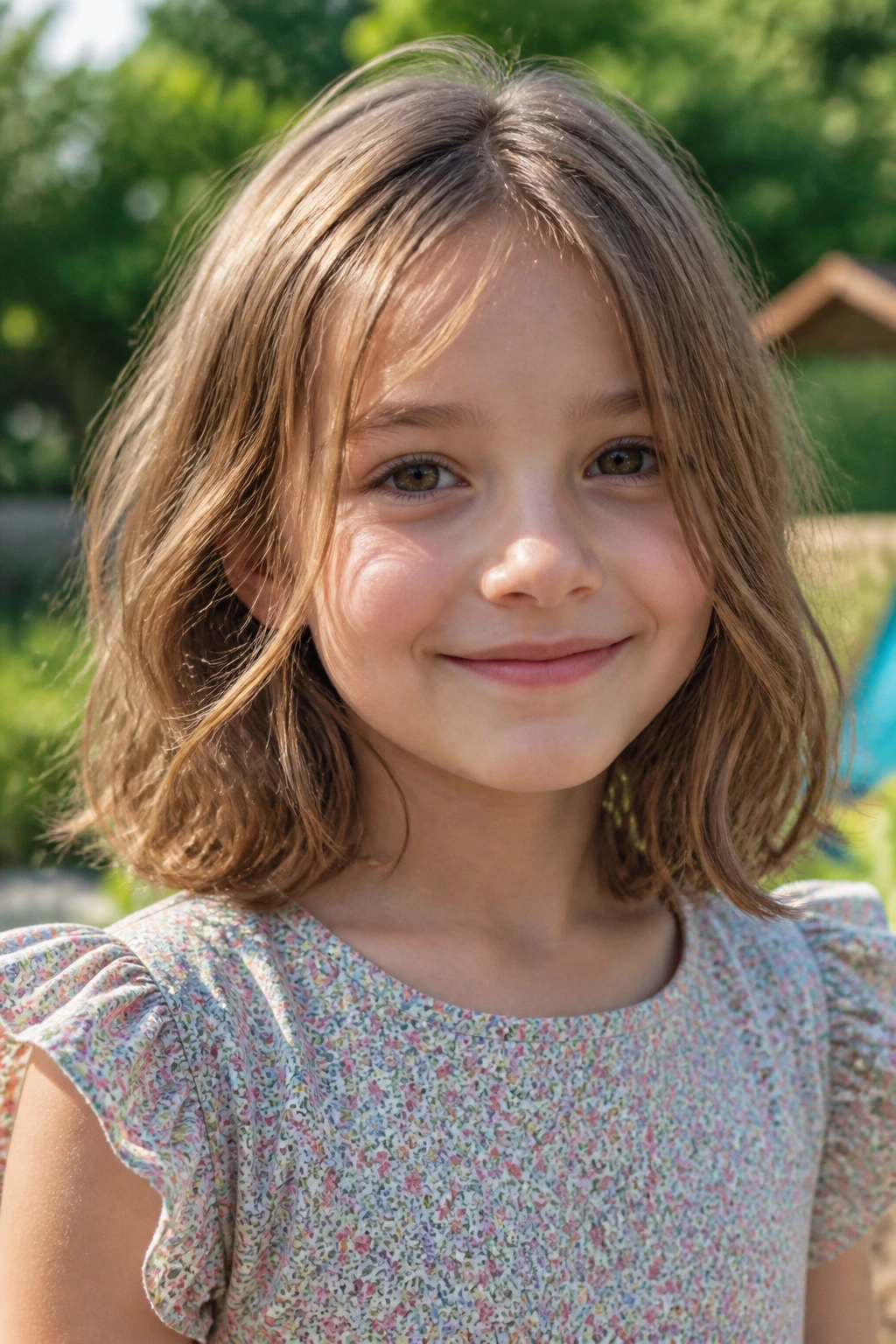
This is the longest cut on the list, and it still counts because it keeps the bob’s outline and ease while giving a child a little more to work with. A shoulder-grazing lob is useful if she likes her hair short but still wants to tie it back, braid a front piece, or keep enough length for a ribboned ponytail on dance day.
It’s also the safest place to start if you’re nervous about going too short. The length sits above or right on the shoulders, so it won’t turn into a full bob overnight if the child’s hair grows quickly. I like this version for kids with waviness or thicker hair that needs room to move. It gives shape without taking away every styling option.
17. The Choppy Play Bob
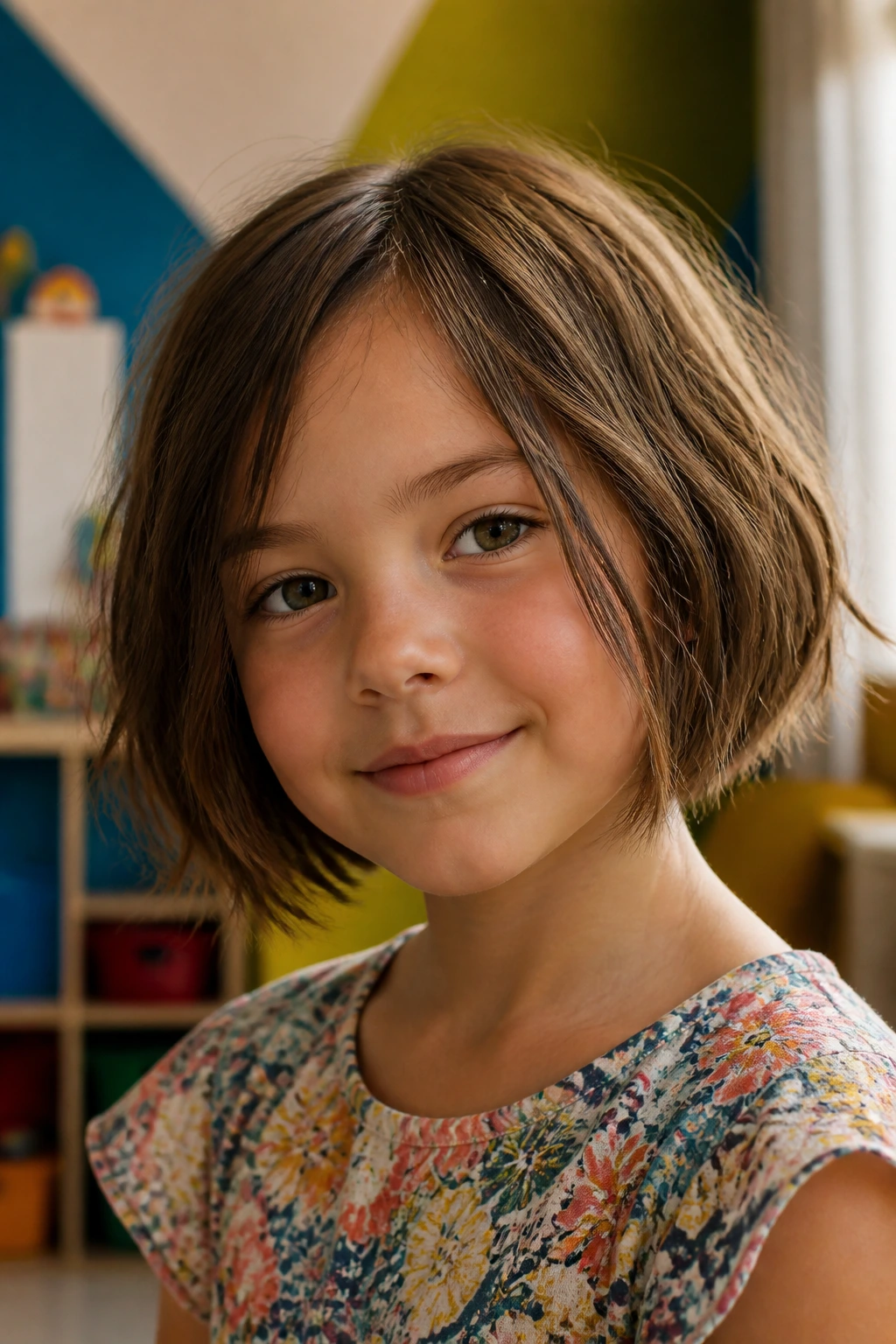
There’s a difference between choppy and shredded. A good choppy bob uses point-cut ends and small, broken lines to keep thick hair from sitting like a block. It’s the haircut version of loosening your shoulders. The hair moves more, feels lighter, and still has enough shape to look deliberate.
This is a strong choice when a child’s hair is dense, heavy, or prone to puffing out after drying. The choppiness breaks up the weight so the bob doesn’t look like one solid helmet. I’d keep the pieces controlled, though. Too much texture at once and the haircut starts looking fuzzy instead of lively. Less is more here, even if “more” seems tempting in the chair.
A useful detail
- Best on hair that feels bulky at the ends.
- Ask for soft point-cutting, not razor damage.
- Works nicely with a side part or a half-tuck behind the ear.
18. The Tucked-Under Bob
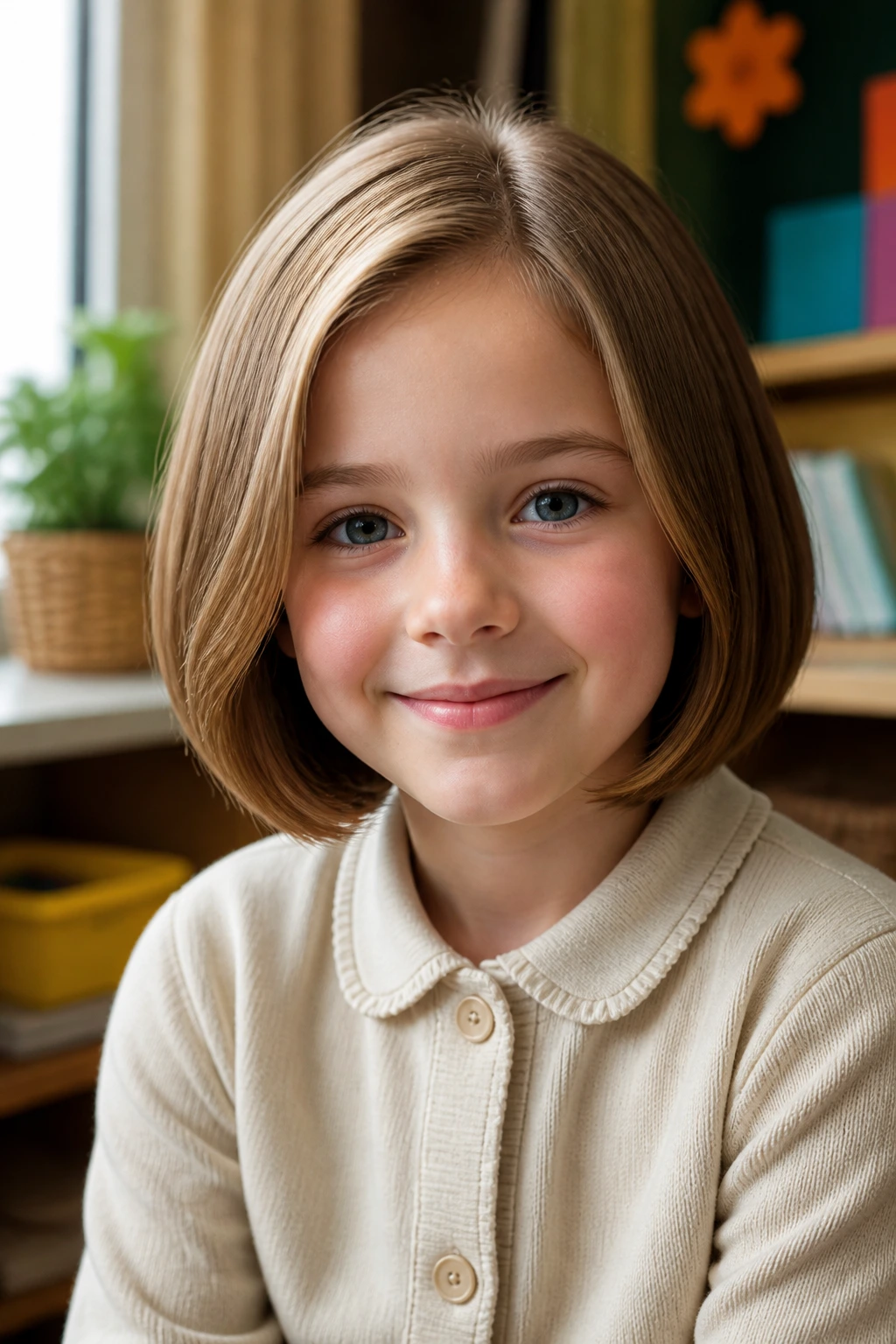
If you like a bob that looks neat with almost no fuss, this is the one. The tucked-under bob curves inward at the ends, so the silhouette feels smooth and finished. It’s the kind of shape that looks especially good when a child wears a cardigan, a uniform, or anything with a collar that might otherwise fight with the neckline.
The inward bend can be created by the cut itself or reinforced with a round brush and quick blow-dry. On straight hair, it gives a polished edge. On mildly wavy hair, it helps control the flip that pops up at the ends. It’s a tidy haircut. Not fussy. Just tidy.
19. The Ear-Length Mini Bob
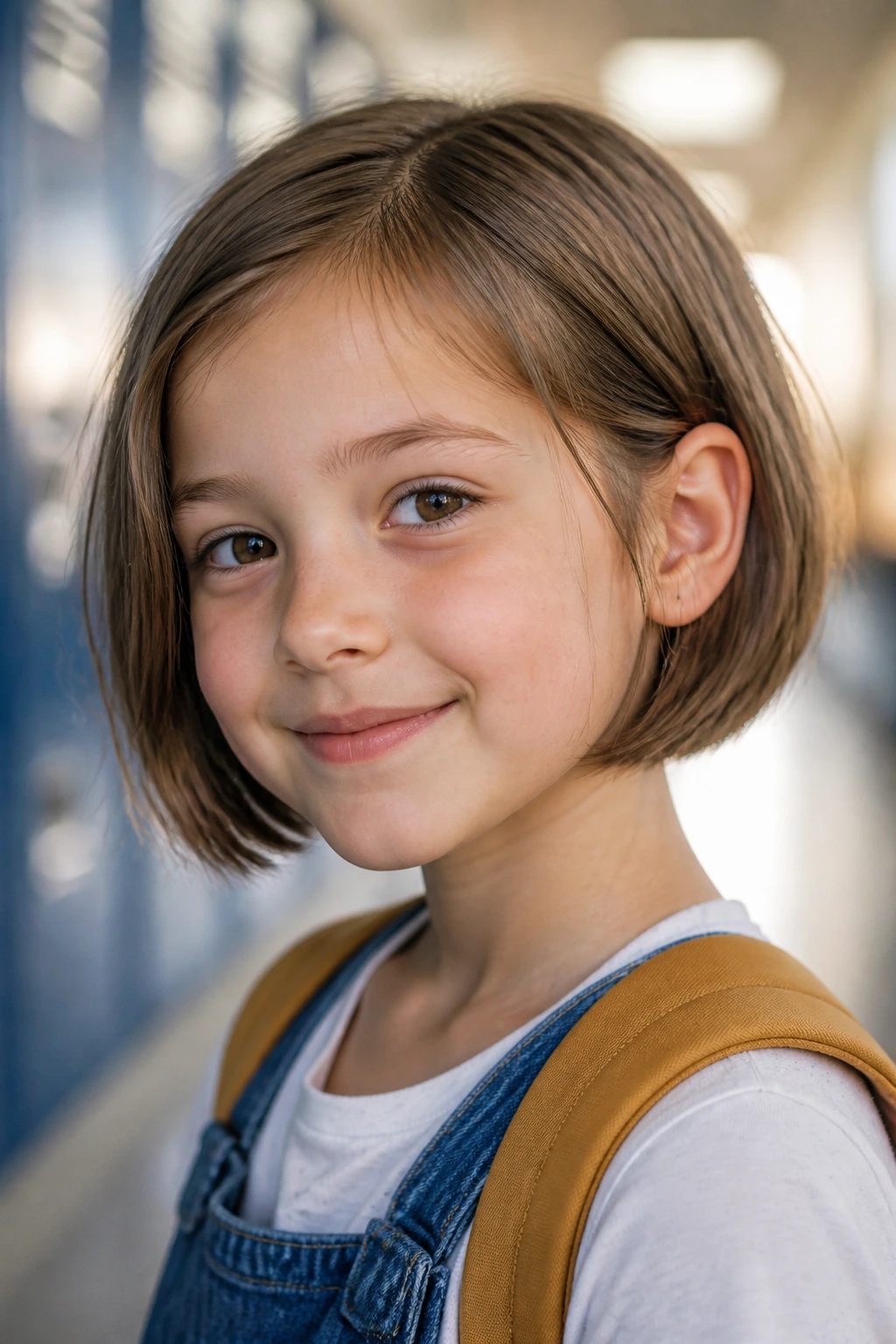
This is the boldest bob on the list, and it’s not shy. The ear-length mini bob sits very short, close enough to the jaw or even the earlobe that it clears the neck almost entirely. Some little girls love that freedom; others want more hair to swing. If your child likes a cool, breezy cut and doesn’t mind frequent trims, this can be a smart choice.
The shorter length means it shows off the face and keeps tangles down, but it also grows out fast. You’ll usually notice the shape softening within a few weeks. I’d choose this one for straight or softly wavy hair and for kids who prefer the feeling of almost-no-hair on the neck. It’s a strong line. Strong lines need confident kids.
How to Choose the Right Bob for Her Hair Texture and Face Shape
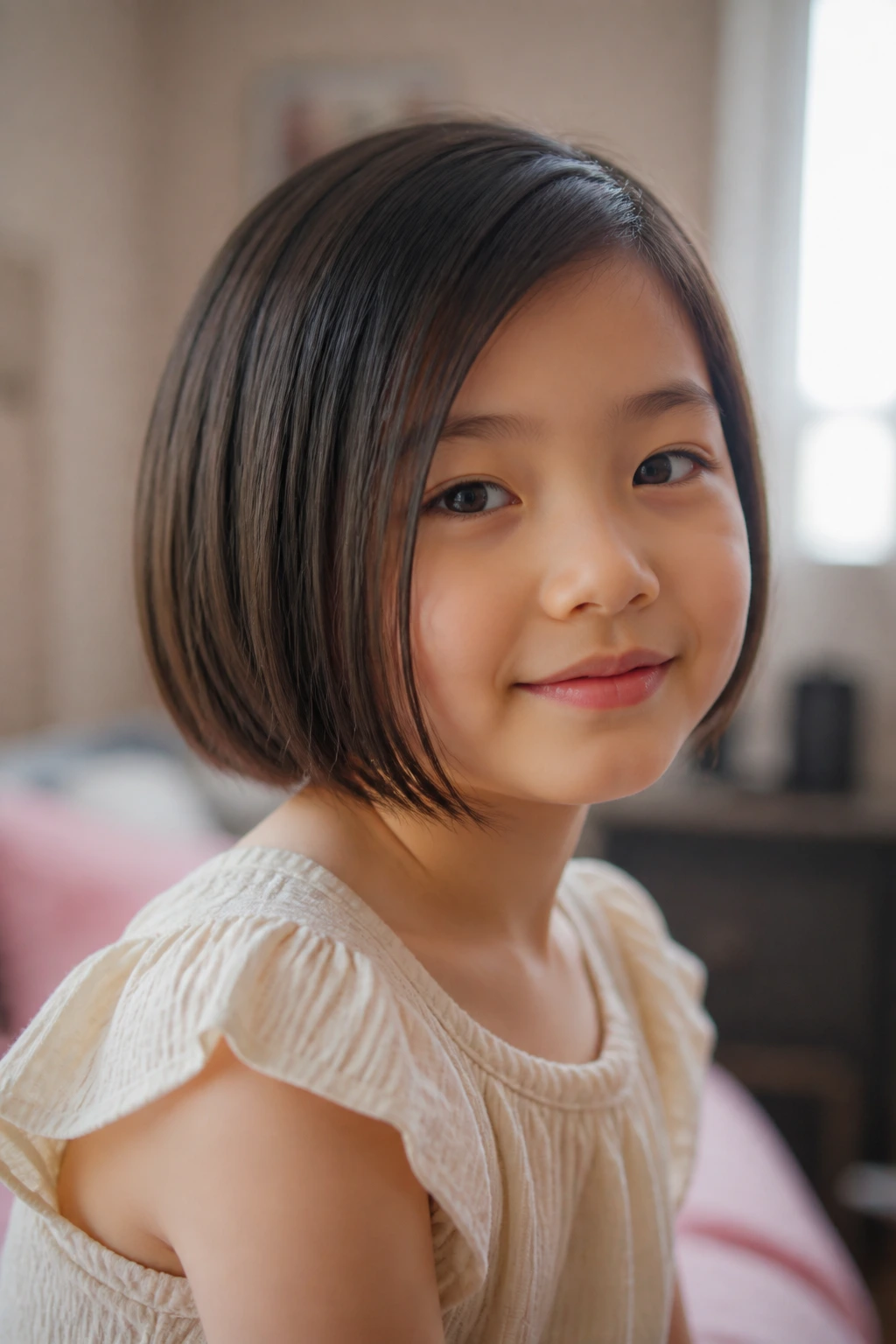
The best bob usually has less to do with a face-shape chart and more to do with texture, growth pattern, and how much brushing the child will tolerate. That’s the real test. A cut that looks lovely in a salon mirror can become annoying by Tuesday if it fights the way her hair naturally falls.
Straight hair
Straight hair shows every line, which is both a blessing and a trap. A blunt bob, a tucked-under bob, or a boxy shape will look clean and intentional, but only if the ends are cut even and the weight is balanced. If the hair is very fine, keep the perimeter blunt and add only a little internal movement. Too much layering makes the ends look thin.
Wavy hair
Waves bring lift on their own, so the bob needs a little room. The French bob, the A-line, and the shaggy textured version work well because they allow the wave to move without making the outline explode. Don’t overbrush. That’s where wavy bobs go sideways fast. A light cream or detangler is usually enough.
Curly hair
Curly hair should be cut with the curl pattern in mind, usually dry or nearly dry. Rounded shapes, halo shapes, and longer bobs let the curls spring where they want to spring. If the child’s curls are tight, avoid a cut that’s too short at the top, because shrinkage will lift it higher than you expect.
Thick hair
Thick hair needs weight removed carefully, not hacked out in big chunks. Stacked backs, inverted bobs, and choppy bobs can help, but the cut should still hold a perimeter. If you take too much bulk out, the shape turns fluffy instead of neat. That’s the line to watch.
Cowlicks and growth swirls
Cowlicks are the sneaky part nobody talks about enough. If there’s a swirl at the crown or a split near one temple, tell the stylist before they cut anything. A slightly longer front, a soft side part, or a fringe that’s left a bit longer usually works better than trying to force the hair into a part it hates.
Essential Tools for a Little Girl’s Bob
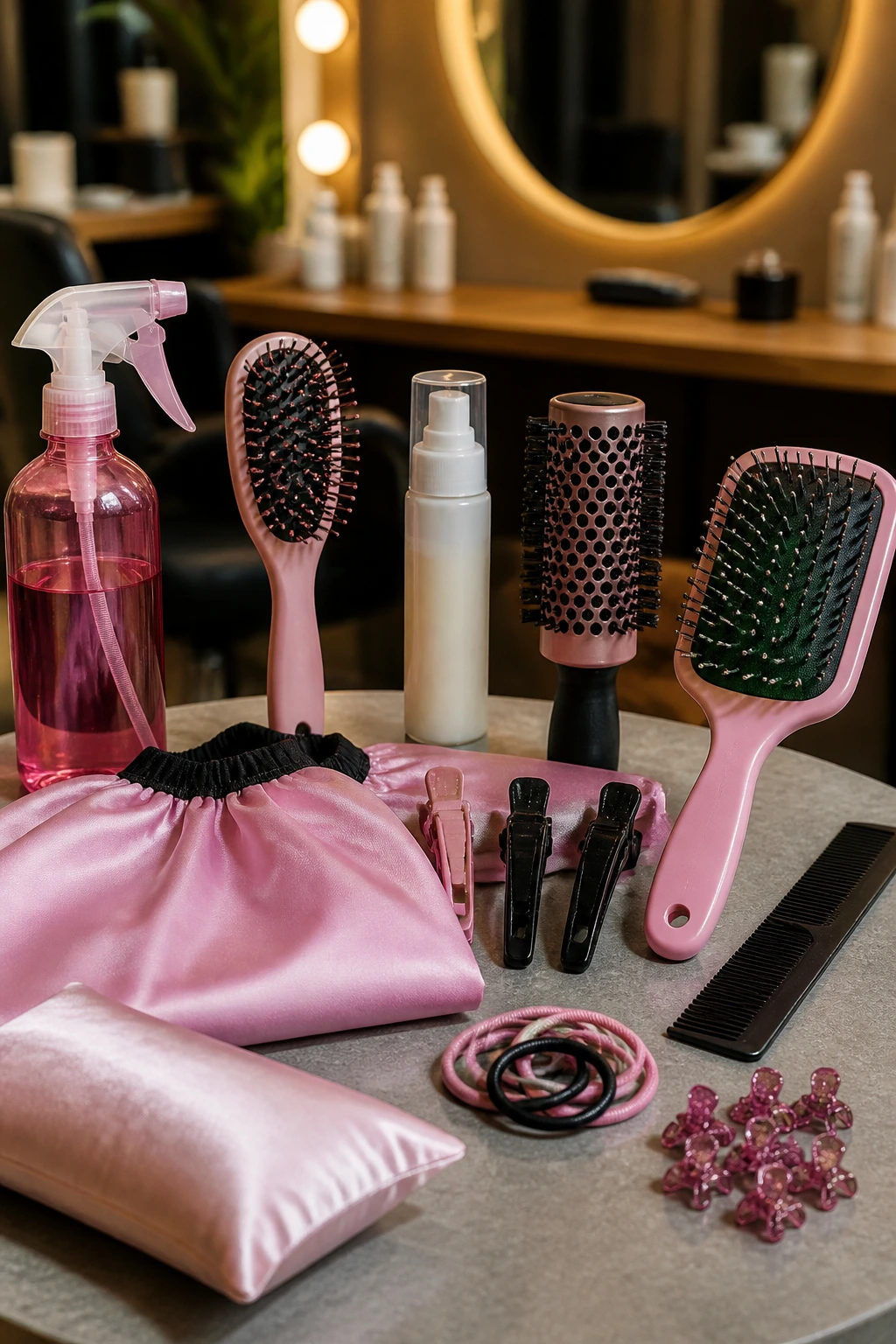
-
Spray bottle with water: A few spritzes are enough to reset the shape before brushing or blow-drying.
-
Detangling brush or wide-tooth comb: Use the brush that slips through the hair without dragging at the scalp.
-
Child-sized cape or towel: Keeps the neckline dry during trims and prevents loose hairs from sticking to the shirt.
-
Sectioning clips: Useful for bangs, side pieces, and quick morning part changes.
-
Light leave-in conditioner: A small amount helps smooth the ends without making the bob heavy.
-
Round brush: Handy if you want the ends tucked under or the fringe shaped with a little bend.
-
Paddle brush: Better for quick, broad smoothing on straight or wavy hair.
-
Fine-tooth comb: Good for neat parting and fringe checking, but don’t yank with it.
-
Small elastics and clips: A bob still benefits from a few tiny styles — half-ups, side pins, and temple clips.
-
Satin pillowcase or bonnet: Not required, but it cuts down on morning frizz and flattened ends.
What to Tell the Stylist Before the First Snip
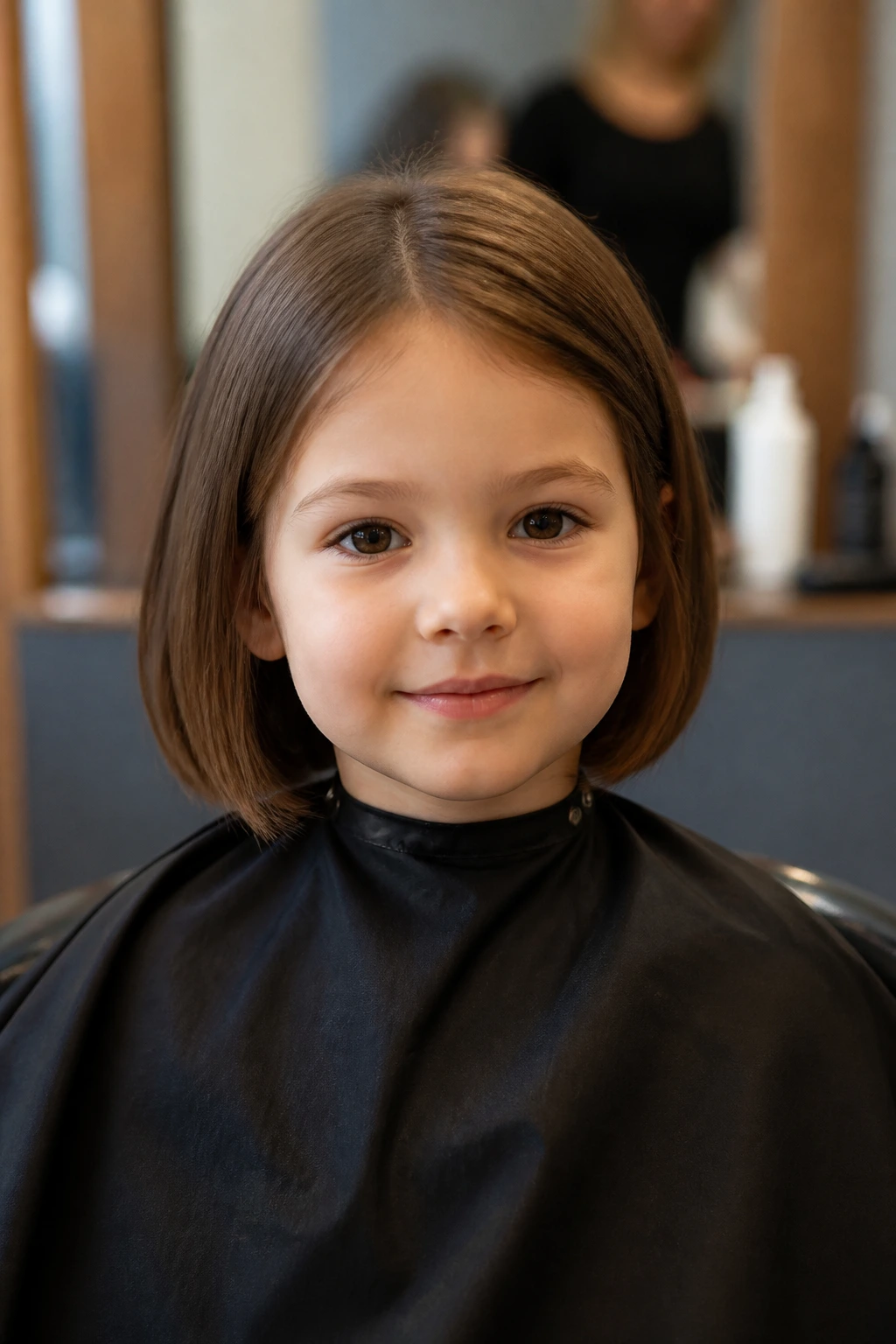
Bring pictures, yes, but bring a sentence too. Pictures help with the shape; the sentence explains the life the haircut has to live. Say whether she needs hair off her neck, whether she wears clips, whether she hates bangs, and whether the haircut must still fit into a ponytail or not. That last part changes everything.
If the child has a cowlick, point it out before the cape goes on. If her hair shrinks when it dries, say so. If she’s sensitive about hair touching her forehead or cheeks, say that too. A stylist can work around a lot, but only if they know what they’re dealing with. And please ask for a dry check before the final trim. Wet hair is useful, but it lies.
I also like to tell parents to bring one photo of the length they want and one photo of the length they absolutely do not want. That tiny bit of contrast saves a lot of guessing. One side of a bob can look cute in a picture and still be too short for a child who’s growing fast or hates constant maintenance.
How to Style Bob Haircuts for School, Play, and Pictures

School Morning:
A mist bottle, a quick brush, and a dab of leave-in conditioner at the ends usually do the job. If the bob sits flat at the crown, flip the part a quarter inch to one side and smooth it back down. That tiny change adds lift without needing heat.
Playground Proofing:
Use one clip above the temple or a small barrette to pin back the front pieces before recess. It keeps hair out of the eyes and stops the side sections from collecting sweat. On windy days, the tucked-under or blunt shapes behave better than layers.
Photo Day:
A bob looks sharper when the ends are even and the part is deliberate. Tuck one side behind the ear, smooth the top with damp hands, and let the perimeter show. A ribbon or bow should sit off to one side, not dead center, unless the outfit is very simple.
When it gets messy:
Don’t pile on product first. Mist the hair lightly, comb from ends to roots, and reset the shape with your fingers before reaching for cream or spray. Bobs usually recover faster than long hair if you don’t overdo the rescue attempt.
Extra Styling Details That Change the Whole Look
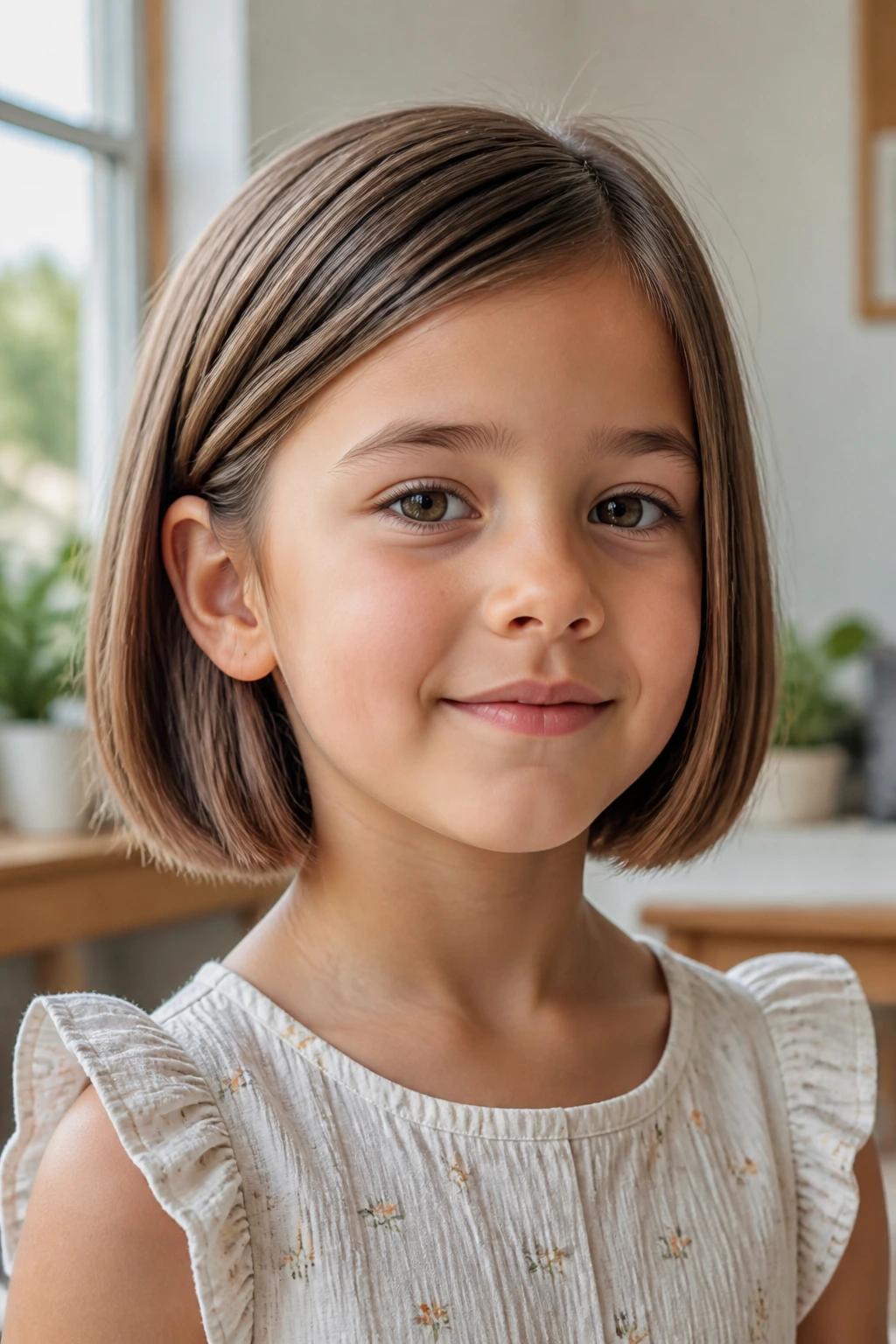
Texture Boost:
A pea-sized amount of mousse on damp roots can keep a fine-hair bob from folding flat. For wavy or curly hair, a light cream through the ends does more than a full palmful of product ever will.
Clip Placement:
A clip at the temple opens the face without pulling the whole bob back. A clip near the ear keeps fringe off the cheeks and still lets the haircut keep its shape.
Part Changes:
Move the part by an inch and the haircut feels different immediately. A center part calms a rounded bob; a side part adds lift and helps with cowlicks.
Smoothing Finish:
If the ends puff up, rub a tiny bit of smoothing cream between your palms and tap it only on the lower half of the hair. The top should stay light. Heavy product at the roots makes a bob slump.
Make-It-Hers:
Soft bows, narrow headbands, and tiny braided front sections all play nicely with bob lengths. If she likes a little flair, keep the accessory placement simple so the haircut still reads clearly.
Keeping the Shape Neat as Hair Grows

A bob shows its age faster than long hair, and that’s not a flaw. It just means the outline matters. A classic chin-length bob usually needs a trim every 5 to 6 weeks if you want the line to stay crisp. Layered or shaggy versions can stretch to 6 to 8 weeks. Curly bobs often last a little longer between cuts, because the shape is already less rigid and the growth blends in more softly.
Bedtime care makes more difference than people think. Hair that’s brushed out before sleep tangles less in the morning, especially if the child sleeps on cotton pillowcases. A satin pillowcase helps, and a loose low braid or a tiny ponytail can keep longer bobs from flipping into knots overnight. Nothing elaborate. Just enough to stop friction.
Between trims, dry ends are the first clue that the shape needs attention. If the bob starts flipping outward, hanging in the eyes, or losing its line at the jaw, it’s time. A small mist of water in the morning can buy you a day or two, but it won’t fix a shape that has simply grown out too far.
Common Mistakes That Make a Bob Harder Than It Should Be
-
Cutting too short on the first pass: Wet hair always looks longer. If the stylist chops to the exact desired length while the hair is wet, the dry result can land higher than expected. The fix is simple: leave a little extra, dry-check, then trim.
-
Ignoring the cowlick: A crown swirl can push a bob up on one side or make bangs split apart. Tell the stylist where the growth pattern lives and ask for a cut that works with it instead of against it.
-
Too many layers in fine hair: Fine hair with heavy layering turns see-through fast. Keep the perimeter blunt and use only soft internal movement if the hair needs lift.
-
Bangs that are too short: Short fringe looks cute for about five minutes and then starts poking the eyes after sleep, sweat, or one stubborn swirl. Leave a little more length than you think and trim in small steps.
-
Using too much product: A bob doesn’t need a whole handful of cream or spray. That makes it greasy, sticky, and flat at the roots. Start with less than you think and add only if needed.
-
Forgetting the grow-out plan: A cut that looks sharp for two weeks and awkward for six is not a bargain. Ask how the bob will sit once it grows another inch. That question saves a lot of regret.
Variations and Adaptations to Try
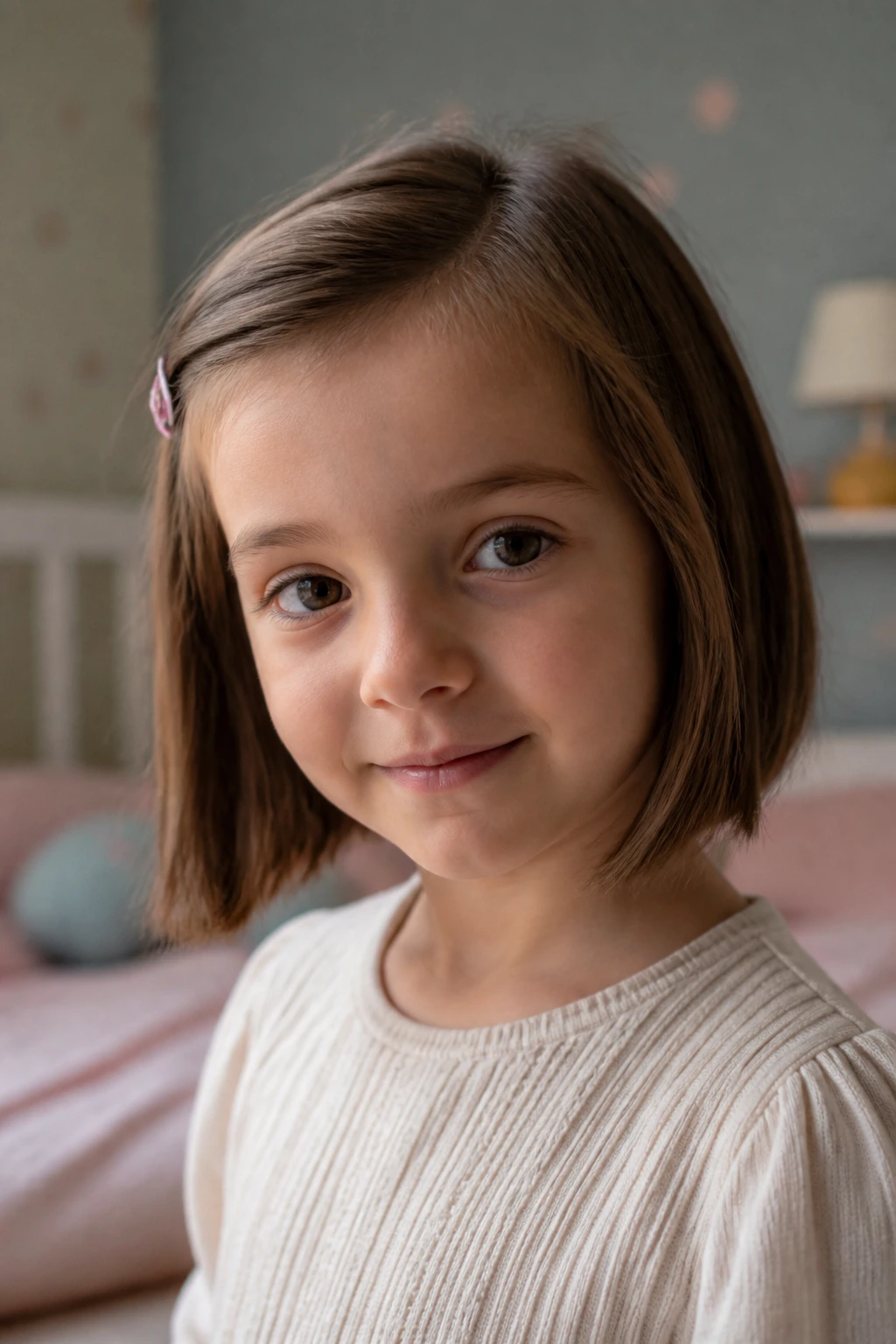
The Clip-Friendly Bob:
Keep the front pieces a little longer so they can be pinned back without fighting the cut. This works well for kids who wear hair clips every day and hate anything in the eyes.
The Ponytail-Ready Lob:
Let the length drift to the shoulders so small ties, braids, and half-ups stay possible. It still reads as a bob family cut, but it gives more styling room between trims.
The Curl-Respecting Shape:
Ask for a dry cut with a rounded outline and no harsh fringe. This version lets curls spring where they want to spring, which means fewer fights in the bathroom mirror.
The Fringe-Free Version:
Skip bangs entirely and keep the front pieces soft around the cheeks. It’s the least annoying option for kids with cowlicks, busy mornings, or a strong dislike of hair on the forehead.
The Picture-Day Bob:
Choose a blunt line with a soft tuck under the ends. It looks especially neat in photos and under dress collars, and it grows out in a tidy way if the line starts a little long.
Questions Parents Ask Before the Cape Goes On
How short should a little girl’s bob be?
Short enough that it clears the neck if she hates heat, but usually not so short that it rides above the jaw on the first dry. Chin-length is the safest starting point for most kids because it gives shape without feeling extreme.
Can a bob work on curly hair?
Yes, but the curl pattern should shape the cut, not the other way around. A rounded, dry-cut bob usually behaves better than a straight, wet-cut line that shrinks up later.
Do little girls need bangs with a bob?
No. Bangs can look sweet, but they also need more trims and more attention around cowlicks. A side-swept fringe or no fringe at all is often easier.
How often does a bob need trimming?
Plan on 5 to 8 weeks, depending on how sharp you want the shape to stay and how fast the child’s hair grows. Curly or longer bob styles can stretch a little farther.
Can she still wear ponytails or braids?
If that matters, don’t cut the bob too short. A lob or a slightly longer front lets you fake a tiny ponytail, a half-up style, or a clip-twist on busy days.
What if her hair flips out at the ends?
That usually means the cut needs a softer bevel, a tucked-under shape, or a slightly different angle. A round brush and quick blow-dry can help, but the cut has to support the finish.
What should I bring to the salon?
Two or three photos, a quick note about daily styling habits, and one detail about her hair that usually gets ignored — cowlick, shrinkage, sensitivity, or how often she wears clips. That last part matters more than a photo from a phone screen.
How do I grow a bob out without a weird stage?
Ask for the back and sides to stay balanced as they grow, and keep the front from getting too short. A soft lob transition is easier than letting one side grow wild while the other stays chopped.
A Cut That Moves With Her

A good bob haircut doesn’t just sit there and look neat for a day. It works through sleep, school, weather, and the rest of a child’s very active life without needing a battle every morning. That’s why the details matter so much: the exact length, the way the ends curve, whether the fringe can be clipped back, and how the hair behaves when it dries.
The version you choose should fit her routine first and her photos second. If she needs hair off her neck, say so. If she hates bangs, skip them. If her curls spring up more than you expect, leave room for that. The right little-girl bob is the one that still looks like a haircut after she’s been wearing it for a few weeks — not a shape that only survives the salon chair.
Pick the bob that matches her texture and habits, and the rest starts to get easier.
