



A medium bob can look crisp in the mirror and then do something annoying by lunchtime: the ends kick out, the crown deflates, or the whole shape starts to feel shorter than you meant. That is the strange little magic of bob haircuts for medium length hair — they’re forgiving in one direction and fussy in another, which is why the exact line, the exact angle, and even the exact part matter more than people admit.
At collarbone length, a bob still moves. It can tuck behind an ear, brush a sweater neckline, or flip in a way that looks intentional instead of accidental. The cut also sits in a useful spot for people who want to keep some ponytail length while getting rid of heavy ends, and that balance is the whole game here.
Texture changes everything. Straight hair shows every millimeter of bluntness; wavy hair softens a hard line; curls can turn a simple bob into a rounded halo if the shape is wrong. So the styles below are not just a mood board. They’re the cuts I’d trust when the goal is to make medium-length hair sit better, not merely look shorter.
- Collarbone Length Works Hard: A bob that lands around the collarbone keeps enough swing to tuck behind the ear without the awkward flip-up that chin-length cuts can give.
- Texture Changes the Result: The same haircut looks sharp on straight hair, softer on waves, and fuller on curls, so each style here is chosen with a texture in mind.
- Styling Time Stays Honest: Most of these can be finished with a blow-dryer, a diffuser, or one pass of a flat iron, not a 45-minute mirror session.
- Grow-Out Is Part of the Plan: A good medium bob should still look deliberate after 6 to 8 weeks, not panic-cut at week three.
- Face Shape Gets a Role: Parts, angles, and fringe placement can sharpen a jaw, soften a wider cheek, or add length where the eye needs it.
1. Blunt Collarbone Bob
A blunt collarbone bob is the cleanest version of the cut. The ends sit in one line, usually grazing the collarbone or landing just above it, and that solid edge makes the hair look thicker than it is. On medium-length hair, that line has enough movement to tuck behind the ear without turning the whole style into a grow-out.
The haircut works because the eye reads the bottom edge first. If your hair is fine, the blunt line gives weight. If your hair is thick, it removes the wispy, uneven ends that can make the whole shape feel frayed. Ask for the perimeter to stay blunt and the interior to stay mostly untouched unless you need a little bulk removed at the ends.
- Best with straight or softly waved texture.
- Especially good if you wear a middle or off-center part.
- Needs a tidy trim every 6 to 8 weeks.
The blunt line is not forgiving if you hate maintenance. Split ends show fast here. But if you want a cut that looks deliberate on day one and still reads as neat after a few air-dry days, this is hard to beat.
2. Soft A-Line Bob

Want the shape of a bob without the hard edge of a blunt line? The soft A-line bob is the gentler answer. The back sits a little shorter, and the front drops a bit longer — usually by 1 to 2 inches — so the haircut skims the face instead of boxing it in.
That small angle does a lot of work. It adds movement when you turn your head, and it can make the neck look a touch longer without going into dramatic territory. I like this cut on people who want structure but not severity. It keeps the silhouette neat while still letting the hair fall in a softer way around the jaw.
A little bend at the ends helps here. A round brush and a blow-dryer nozzle can push the front pieces under just enough to keep them from flicking outward. If your hair is naturally straight, ask for the angle to be subtle. Too steep, and it stops reading as a medium bob and starts looking like a sharp office cut from another decade.
3. Textured Lob with Choppy Ends
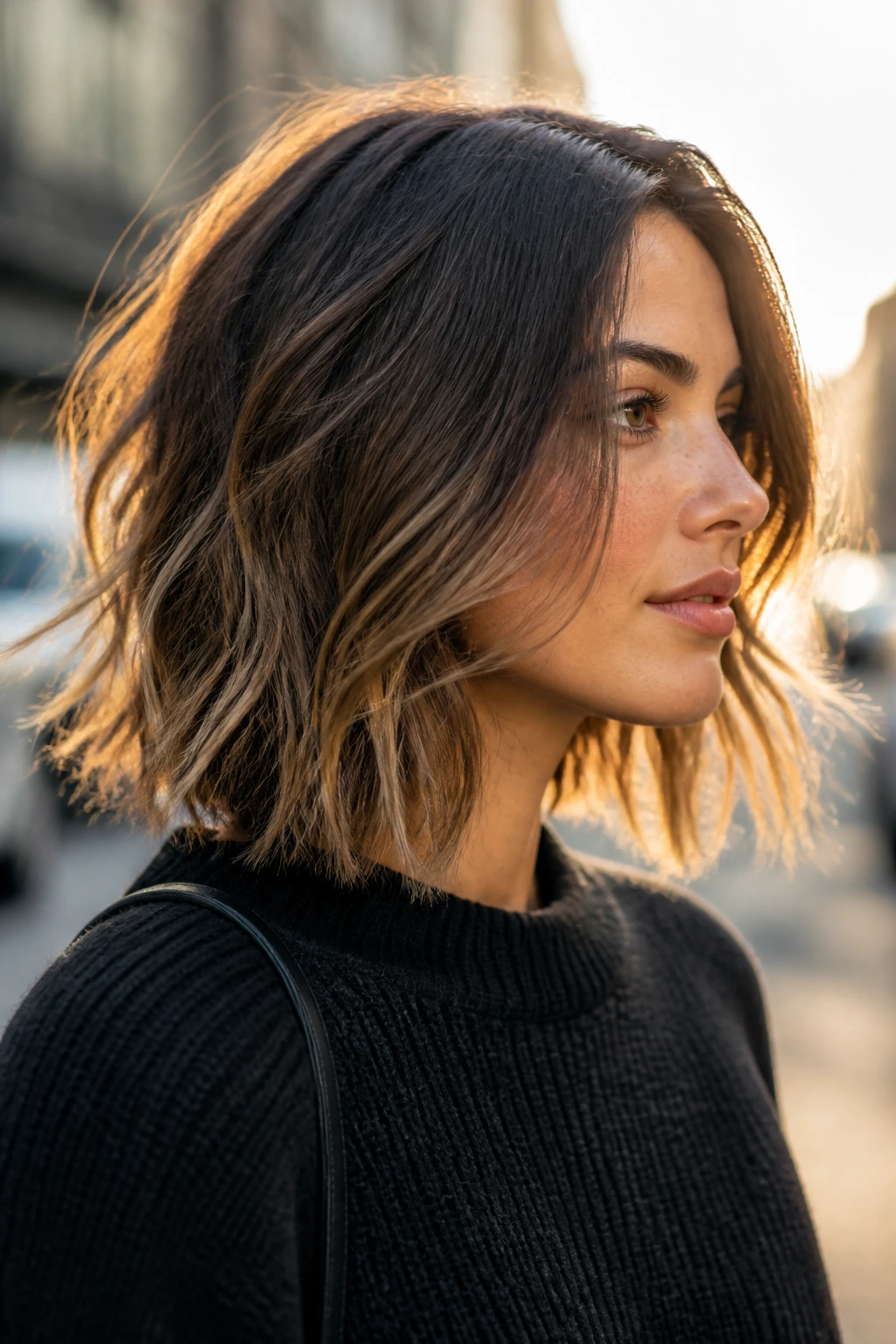
A textured lob is what happens when a medium bob decides it wants a bit more air in the room. The outline is still shoulder-grazing, but the ends are cut with movement in mind, not strict symmetry. The result is a softer edge, a little broken up, a little less formal.
Where the Choppiness Should Start
The best choppy ends usually live in the lower half of the haircut, not right at the crown. If the texture starts too high, the cut can get puffy and lose its shape fast. If it starts lower, the ends separate in a way that feels lived-in instead of ragged.
This cut is a good fit for people whose hair bends on its own. A wave pattern gives the texture somewhere to go, and even straight hair can take it if you add a few loose bends with a 1.25-inch iron. I’d keep the layers soft and avoid over-thinning the ends; choppy does not mean shredded.
- Best for medium-density hair that needs movement.
- Air-dries well with a light cream or mousse.
- Looks best when the ends are touched with a flat iron, not curled into rings.
The easy mistake is asking for “texture” and getting too much of it. What you want is separation, not a frayed edge that starts looking dry by day two.
4. Italian Bob with Heavy Ends
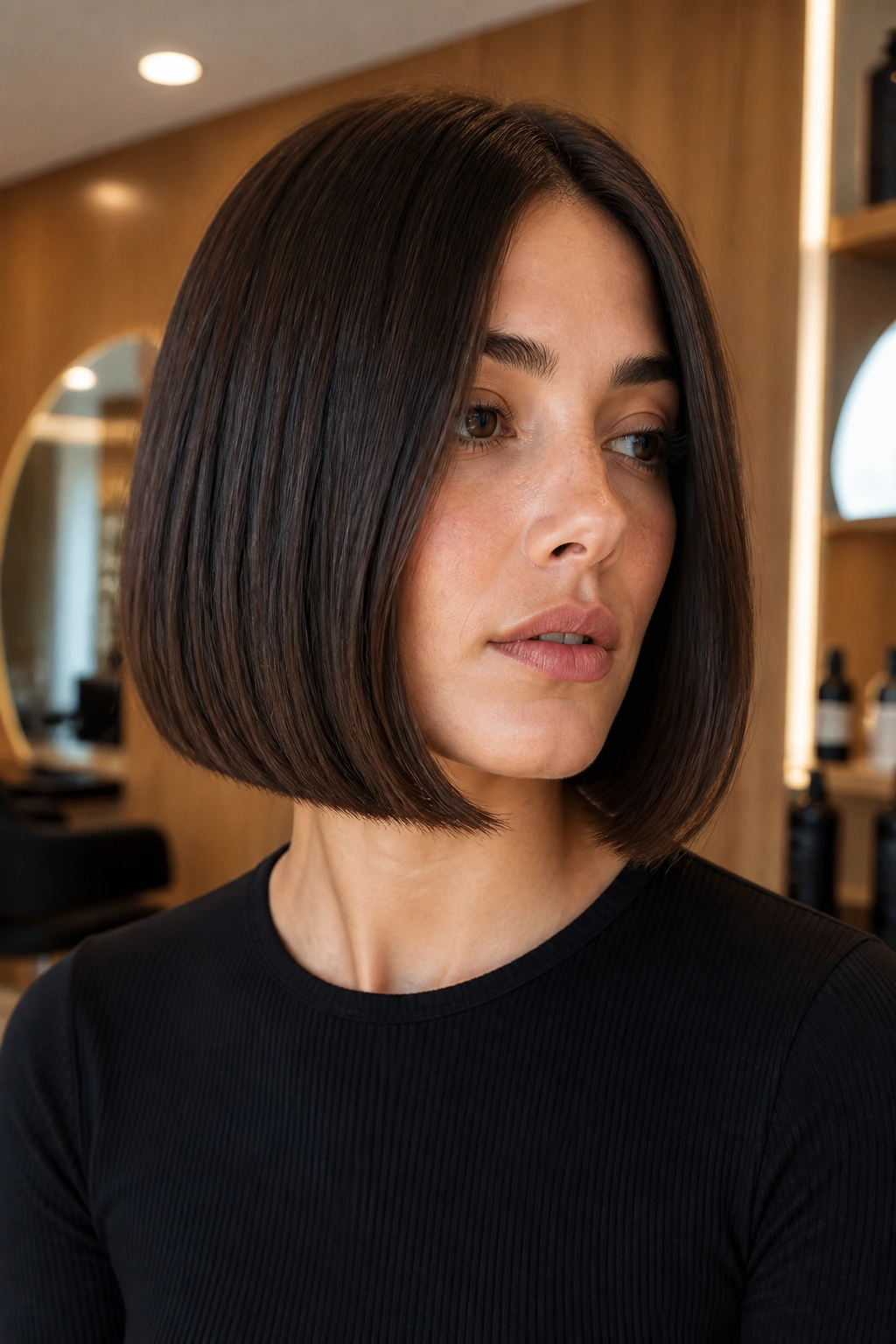
This is the cut that makes thick hair look expensive without trying too hard. The Italian bob keeps the outline full and the ends heavy, often sitting between the chin and the collarbone with a lot of visual weight at the bottom. No wispy layers. No skinny little tail at the back. Just a confident line.
The reason it works on medium-length hair is simple: the weight keeps the shape from exploding outward. Thick hair wants to spread. Heavy ends keep it grounded. If your hair has a natural wave, this cut keeps the wave from turning fluffy. If your hair is straight, it gives that polished, glossy look people usually chase with far more effort than they need.
Ask your stylist to avoid slicing away too much bulk near the perimeter. A tiny bit of internal removal may help if your hair is dense, but the bottom line should stay full. This cut looks best when it swings as one unit.
5. Angled Bob with Longer Front Pieces
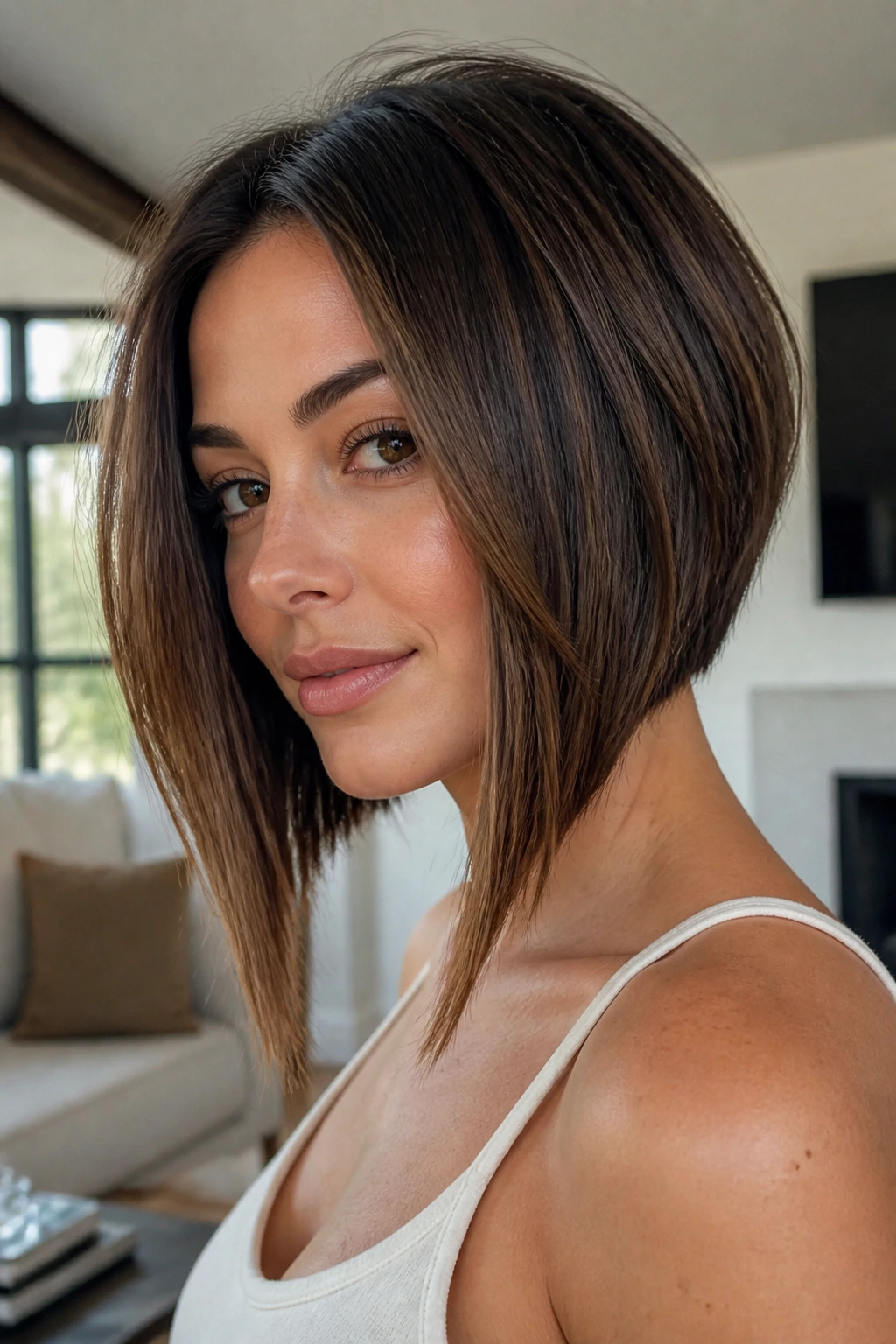
The angled bob is the cut for someone who wants the front to do the talking. The back sits a touch shorter, and the front edges lengthen toward the collarbone, sometimes by an inch or two, which creates a clean diagonal line across the face.
Why the Angle Matters
That slope changes the whole mood of the haircut. It pulls attention downward and forward, which can sharpen the jawline and keep the style from feeling boxy. The shape also works well if you like to tuck one side behind the ear and let the other side fall forward. It gives you a little asymmetry without going full statement cut.
I like this on medium hair that feels too round when it’s all one length. The angle opens the silhouette and keeps it from sitting like a helmet. But here’s the catch: if the angle is too steep, it starts to look dated fast. Keep it subtle unless you want the haircut to read as dramatic on purpose.
This cut loves a side part and a smooth blowout. It also holds up well if you wear the ends slightly bent under instead of perfectly poker-straight.
6. Rounded Curly Bob

Curly hair and medium bobs can get along beautifully, but only if the shape is designed around the curl pattern instead of fighting it. A rounded curly bob keeps the perimeter soft and balanced, with enough length left to let the curls spring without piling up into a triangle.
The biggest mistake is cutting curly hair as if it were straight, then hoping the curl will behave later. It won’t. Curl shrinks, and it shrinks unevenly. A good rounded bob should be cut with the final shape in mind, often a little longer than you think you want. On some curl patterns, that means leaving 1 inch more length than the target just to account for the dry finish.
A diffuser helps, but the shape has to do the heavy lifting. If the haircut is right, the curls should sit in a soft dome around the head, not a pyramid. That dome shape gives the cut life. It also keeps the sides from puffing out wider than the chin.
7. Shaggy Bob with Invisible Layers

A shaggy bob is not the same thing as a messy bob. The layers are there, but they’re tucked into the shape so the haircut moves without shouting about it. On medium-length hair, that means the outline still looks like a bob, just one with a looser, more casual bend.
Who This Cut Likes Best
- Hair that bends or waves on its own.
- Faces that need a little softening around the cheek.
- Anyone who hates the “too perfect to touch” look.
Invisible layers are the trick. They remove weight without creating obvious steps in the hair, so the cut falls with a bit of swing instead of sitting in one stiff block. If your hair is fine, keep the layers conservative. Too much internal cutting and the ends go see-through.
This is one of those cuts that looks better when you stop fussing with it. Rough-dry it a little, add a touch of texture spray, and let the ends separate. If you want a bob that can handle a rushed morning and still look intentional, this one earns its keep.
8. Inverted Bob with a Tapered Nape
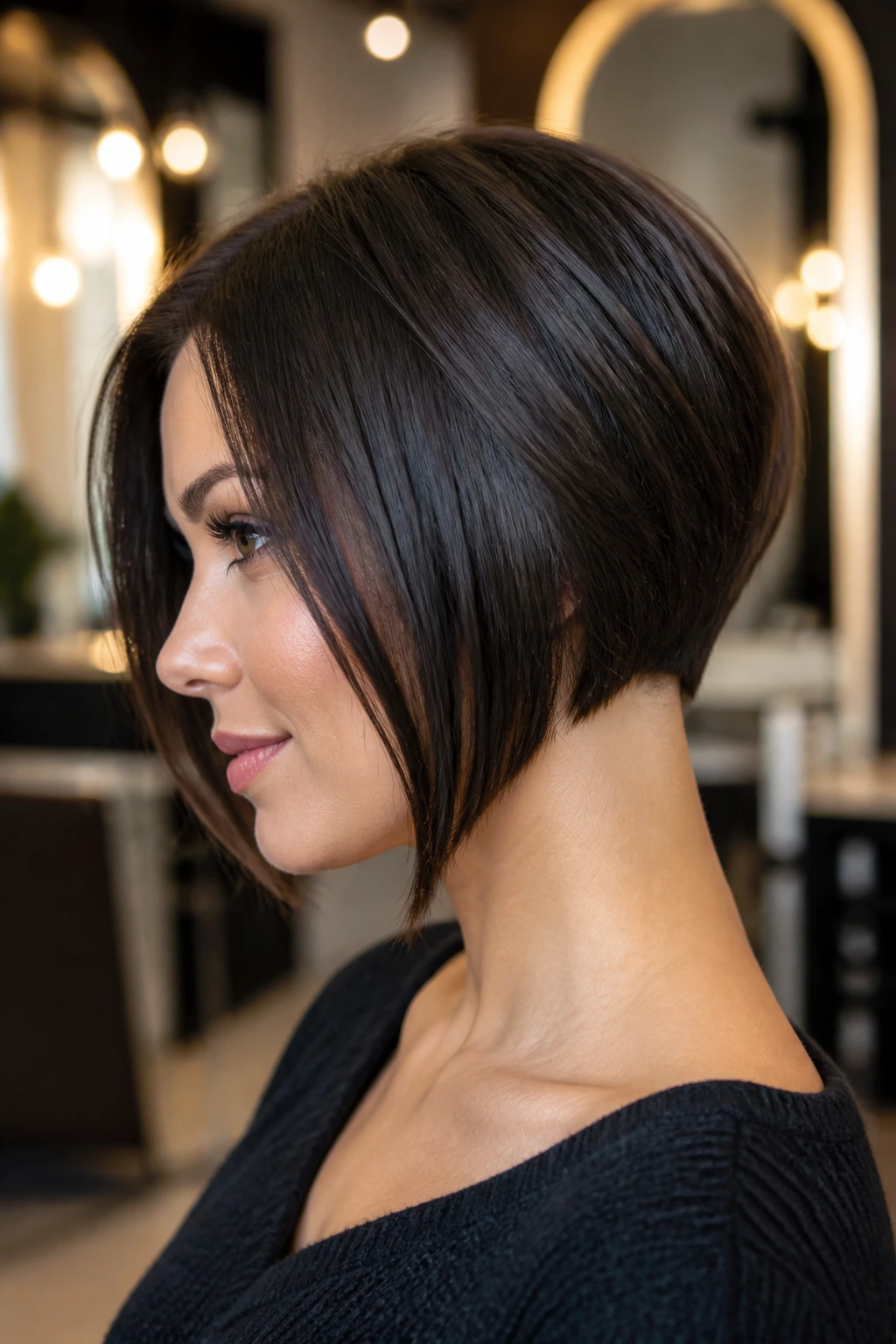
The inverted bob is the sleek cousin in the room. The nape sits shorter and more tucked in, while the front pieces keep more length, which creates a strong shape from the side and back. On medium hair, it can be clean without feeling severe.
This cut is especially good when the back of the head needs lift. Thick hair benefits because the shorter nape removes weight where it tends to mushroom. Fine hair can use the graduation to create the illusion of density near the crown. The cut has structure built into it, so it does a lot before you even pick up a brush.
Keep the graduation controlled. If the layers in back are stacked too hard, the shape can go too 2008 salon-chair on you. A modern inverted bob feels smoother, with a visible slope but no dramatic shelf. It’s best when the neckline is neat and the front still brushes the collarbone.
9. Asymmetrical Bob with One Long Side

A little asymmetry changes everything. One side lands longer than the other, often by just an inch or two, and the cut instantly feels sharper and more deliberate. On medium-length hair, that slight imbalance is enough to make the whole style feel custom.
The reason this works is partly visual and partly practical. The longer side can tuck behind the ear, drape over a shoulder, or frame the collarbone. The shorter side keeps the shape lifted and prevents the haircut from looking heavy around the jaw. It’s a strong choice if you want a bob that does not blend into the crowd.
This cut needs confidence and maintenance. The shape loses its point if you let it grow too long without a trim. But if you like hair that reads as a little edited, a little architectural, this one has real personality. Wear it straight for a sharp line, or add a soft wave for a less severe finish.
10. Bob with Curtain Bangs

What if your medium bob needs softening without losing structure? Curtain bangs are the easy answer. They split through the center and fall to either side of the face, usually grazing the cheekbones or lips, which lets the haircut keep its shape while losing some of its hardness.
How the Fringe Changes the Cut
Curtain bangs shift the eye upward. They can make a collarbone bob feel lighter at the front and help a blunt line look less boxy. They also give you styling flexibility, which matters when you do not want the same face-framing every day. Push them apart for a softer look. Blow them under for more sweep.
This pairing works well on medium hair because the length below the bangs keeps the style grounded. You don’t have to sacrifice the bob’s body to get a little movement around the face. Just be careful with the shortest point in the fringe. If it’s cut too high, you lose the easy grow-out that makes curtain bangs worth the trouble.
A round brush, a blast of heat, and a little bend away from the face is usually enough. No need to make them perfect. They look better when they fall with a bit of air.
11. Side-Parted Sleek Bob
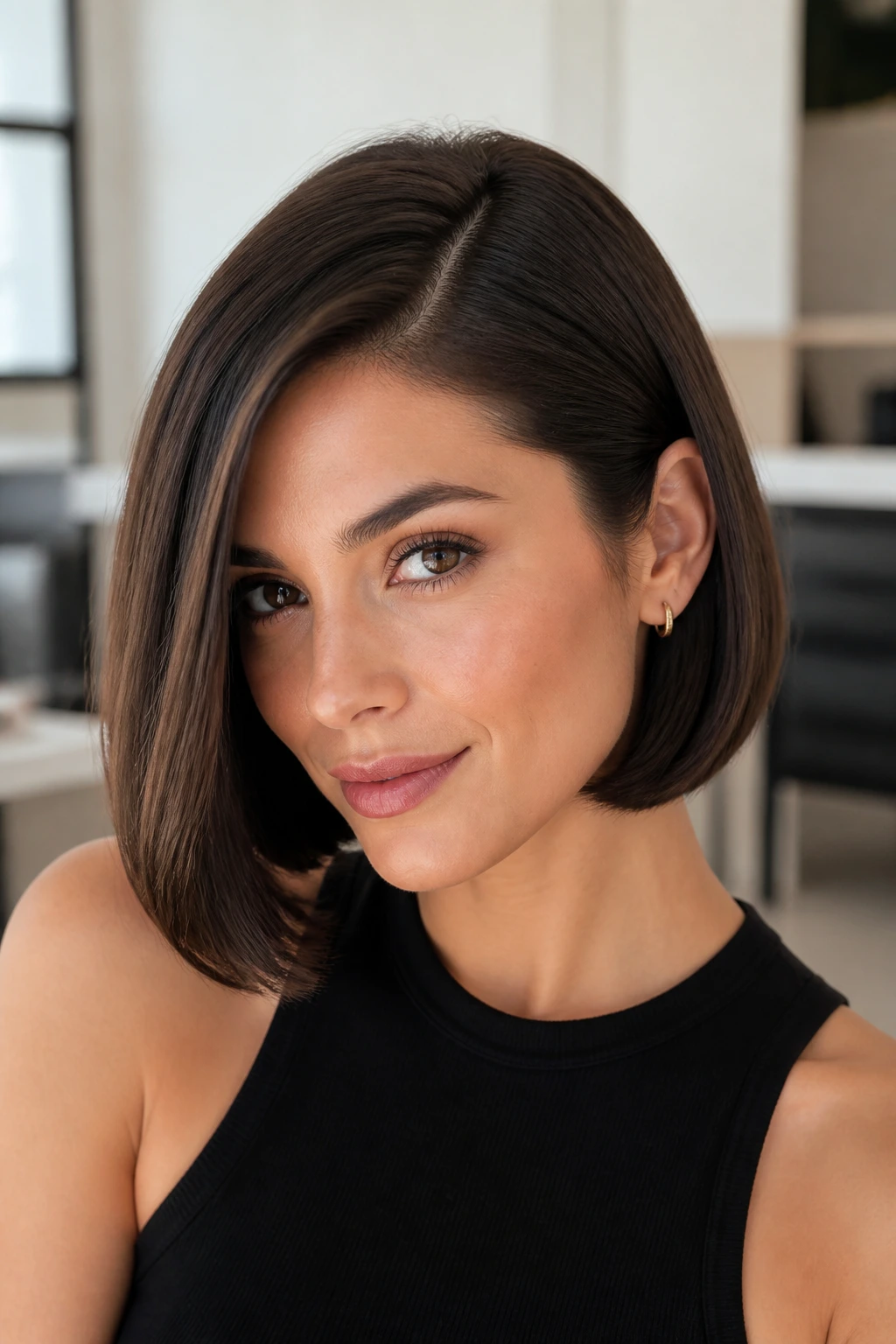
A deep side part can rescue a medium bob faster than almost anything else. It gives instant lift at the crown and shifts the weight of the haircut so it feels more sculpted. On straight or lightly wavy hair, the result is crisp, polished, and a little old-school in the best way.
The reason I keep coming back to this look is that it makes fine hair seem fuller without adding a lot of product. The part creates a natural rise where the hair wants to fall, and that little lift changes the whole silhouette. Pair it with a smooth blow-dry and the ends tucked under, and the bob suddenly has presence.
- Best with fine to medium hair.
- Works well if one side naturally holds more volume.
- Looks strongest when the roots are lifted and the ends are smooth.
A flat iron can clean up the front pieces, but keep the heat moderate — around 300 to 330°F is enough for most hair that isn’t especially coarse. Too much heat flattens the life out of the shape. You want sleek, not lifeless.
12. Boxy Rounded Bob
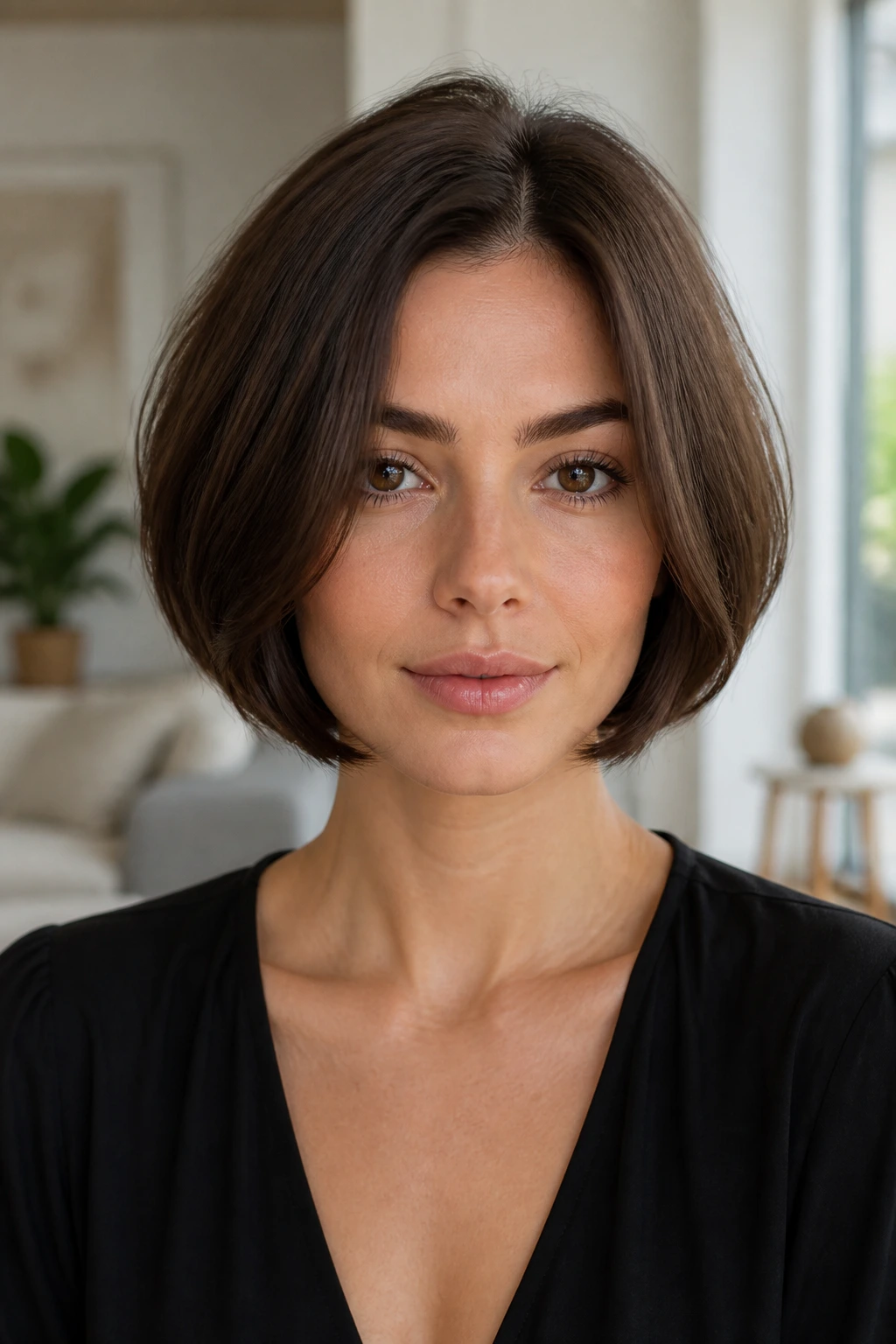
There is a point where too much layering makes thick hair behave like a triangle. A boxy rounded bob is the fix. The outline stays full, the sides keep a little width, and the corners are softened just enough to avoid a hard square shape.
This cut is useful when hair grows out with too much bulk at the bottom. Instead of stripping that weight away, the haircut keeps it and controls it. The end result is a bob that feels balanced, with enough width to look healthy but not so much that it balloons around the face.
It works best on straight or slightly wavy hair that already has body. Ask for a rounded perimeter and light internal shaping only if the density really needs it. Too much removal, and the shape loses the point. This is one of those cuts where restraint matters more than cleverness.
If you like hair that looks plush and full, this is a strong choice. It’s not airy. That’s the point.
13. Razor-Cut Bob with Feathered Ends
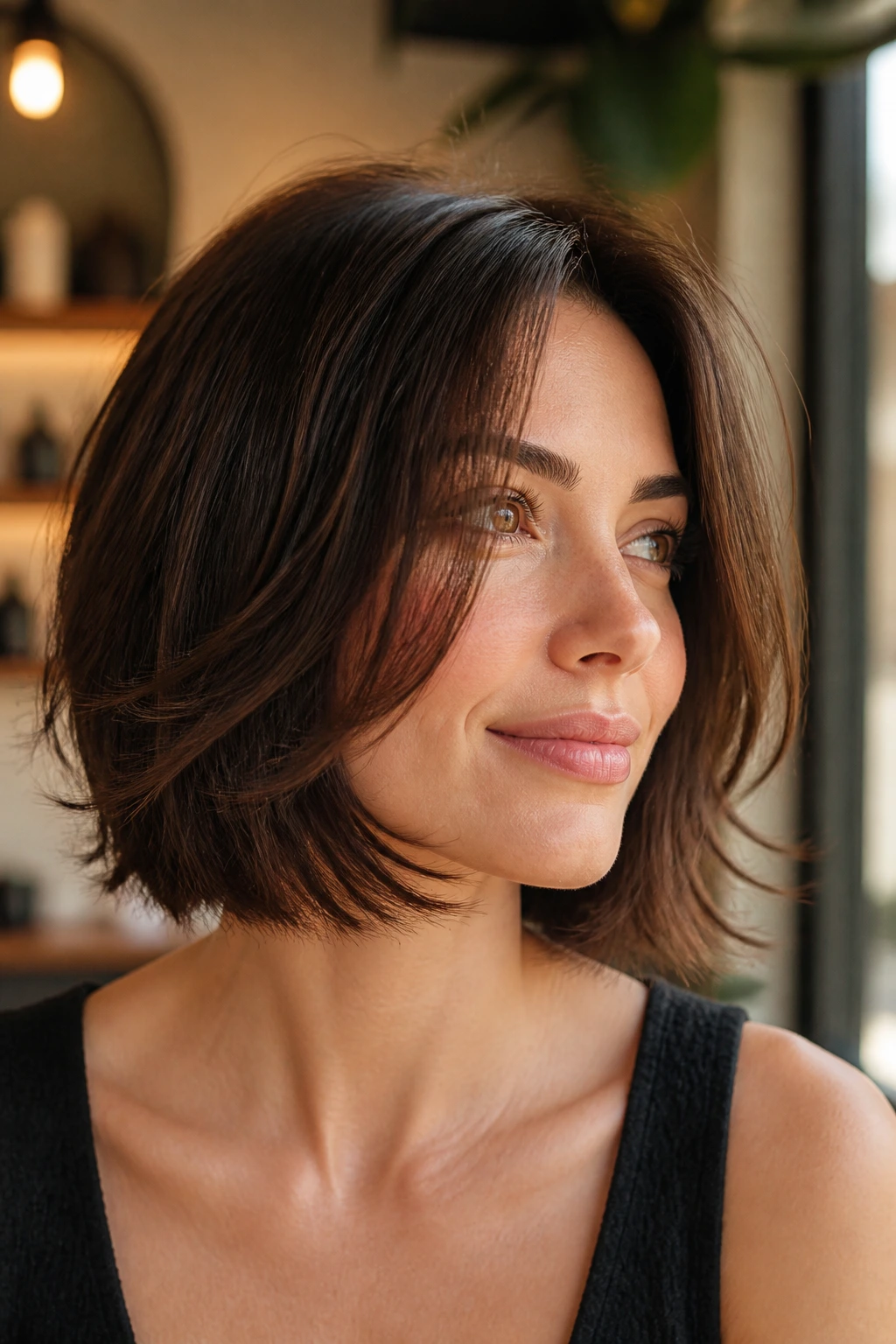
A razor-cut bob gives the ends a softer, feathered finish. The line is still there, but it doesn’t feel chopped with a ruler. On medium-length hair, that lighter edge can keep the haircut from looking too heavy, especially if your hair has a coarse or stubborn texture.
The trick is using a razor with care. On hair that frizzes easily, too much razor work can make the perimeter look fuzzy by the second day. On smoother hair, though, it can create a floaty finish that moves when you walk. That movement is the whole appeal.
I’d choose this version if a blunt bob feels too strict but layers feel like too much. The feathering takes the edge off without turning the cut into a shag. It also plays nicely with a little bend from a curling iron, since the softer ends don’t fight the wave pattern.
Best tip: ask for the razor only where the hair needs release. The whole head does not need to be thinned just because the stylist owns a razor.
14. Face-Framing Bob with Cheekbone Layers

A face-framing bob is the haircut version of good lighting. The shape stays medium and wearable, but the front pieces are cut to hit around the cheekbone or lip line, which brings focus to the face without flooding the whole cut with layers.
Where to Start the Layers
The sweet spot is usually below the eye and above the jaw. Start them too high and the haircut can get wispy. Start them too low and they stop doing much at all. The front should move away from the face in a soft, easy line, not hang like an afterthought.
This style is a smart pick if a blunt bob feels too straight-edged but you don’t want bangs. It can soften a strong jaw, open up the cheek area, and make the rest of the hair look lighter. Medium hair handles this especially well because there’s enough length for the framing pieces to fall naturally.
A little wave helps, but the cut should work even when air-dried. That’s the real test. If the front pieces only look good with a curling iron, the layers are too fussy.
15. Middle-Part Lob with Soft Waves

A middle-part lob is calm in a way that a side part never quite is. The hair splits cleanly down the center, the length skims the collarbone, and soft waves keep the shape from going flat. It’s one of the easiest ways to make medium-length hair look deliberate without making it look overworked.
Compared with a sleek side-part bob, this version feels looser and more balanced. The middle part draws a straight line through the face, which can lengthen shorter features and let the jawline stand out. The waves keep the look from becoming severe. I like using a 1.25-inch curling iron and leaving the last inch of each section out so the ends stay modern, not curled into little corkscrews.
This cut does not need perfect symmetry. It needs enough bend to keep the bottom edge alive. If your hair naturally falls a little differently on each side, that’s fine. That slight irregularity makes the style look worn in rather than staged.
16. French Bob on Medium Hair

A French bob on medium hair is for someone who likes a cut with a little attitude. The classic version sits shorter, around the jaw, but on medium-length hair you can soften the idea and keep a bit more length through the front so it doesn’t tip into a full chop.
The charm is in the shape. There’s usually a fringe or a face-framing front, and the outline sits close enough to the neck that earrings, collars, and makeup all get a little more presence. It’s a haircut that shows the face instead of hiding it. If your hair is naturally wavy, the texture does half the work for you.
This is not the cut for people who want to disappear into their hair. It has an opinion. If you like that, lean in. A rough blow-dry, a bit of root lift, and a light bend at the ends are usually enough. The hair should look touched, not fussed over.
17. Undercut Bob for Thick Hair
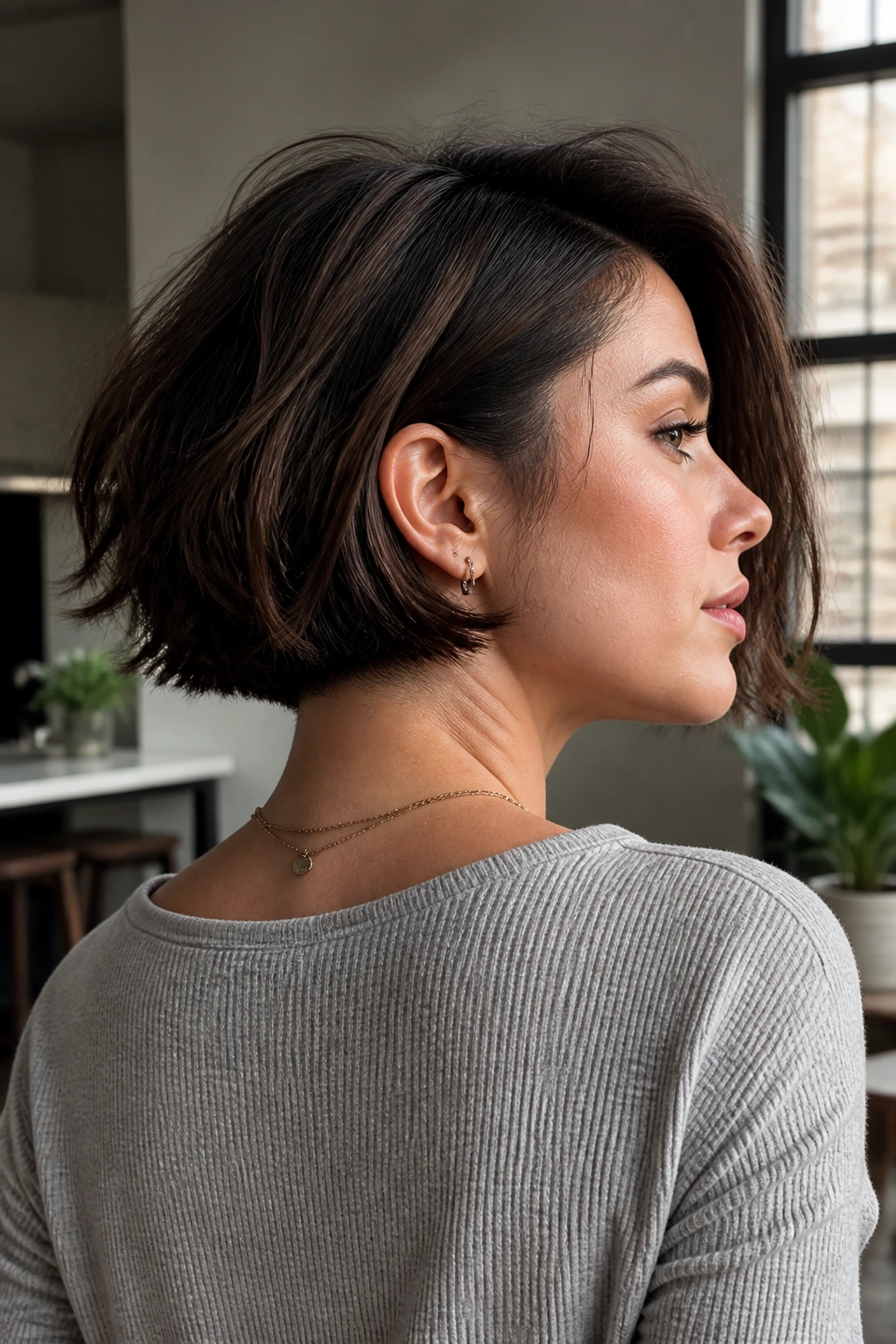
Thick hair can make a medium bob look majestic or bloated. Sometimes both. An undercut bob solves the problem by removing hidden bulk underneath, usually at the nape or lower sides, while keeping the visible top layer long enough to swing.
Does that sound extreme? It really isn’t. Most undercuts in bob haircuts for medium length hair stay tucked out of sight. The point is relief, not drama. You keep the shape on top, but the haircut stops behaving like a helmet on humid days.
I’d choose this if your hair takes forever to dry or builds too much width at the back of the head. The undercut lets the top layer lie cleaner and cuts down on the triangle effect that dense hair can create. Just make sure the top layer still has enough length to cover the shorter section when your hair moves.
A small note: this cut grows out best when the undercut is maintained before it starts peeking through. Leave it too long and the back loses its clean line.
18. Fine-Hair Bob with Blended Layers
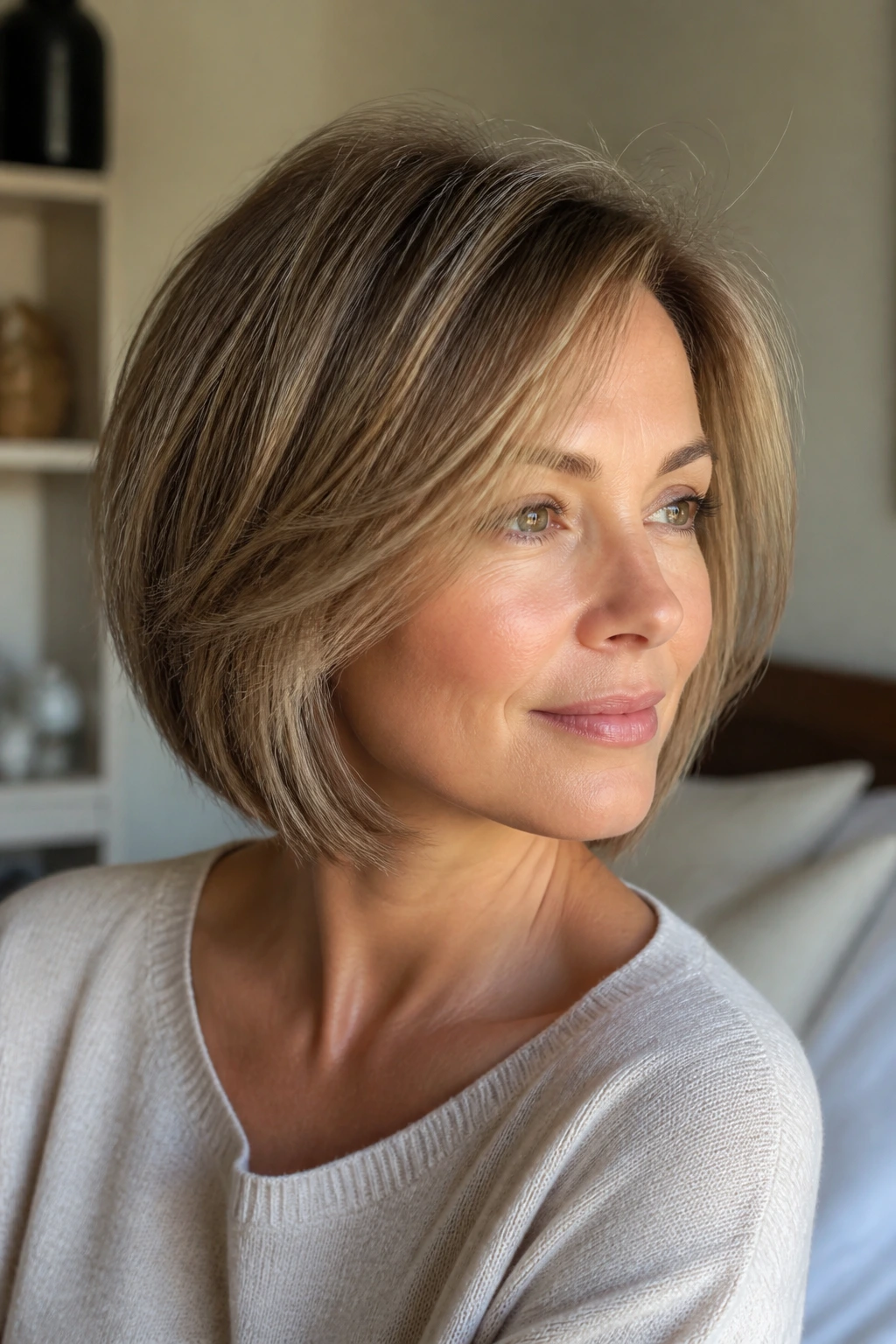
Fine hair asks for restraint. Too many layers and the ends start to look see-through; too little and the haircut goes limp. A fine-hair bob with blended layers keeps the perimeter full while adding just enough lift around the crown and sides to keep the shape from collapsing.
What Makes It Work
- The bottom line stays solid.
- The layers stay soft and hidden.
- The crown gets a little internal lift, not a choppy crown shelf.
- The front pieces are light enough to move, but not so short that they vanish.
That balance matters because fine hair shows every cut mark. Blended layers keep the bob from looking flat without turning it stringy. If you want more volume, ask for root support at the blow-dry stage rather than more layers in the haircut itself. A mousse at the roots and a round brush near the crown usually do more than aggressive cutting.
This is one of the best medium bobs for people who want body without obvious layering. The haircut should still read as a bob first. The fullness is the bonus.
19. Grow-Out Bob with a Lived-In Edge
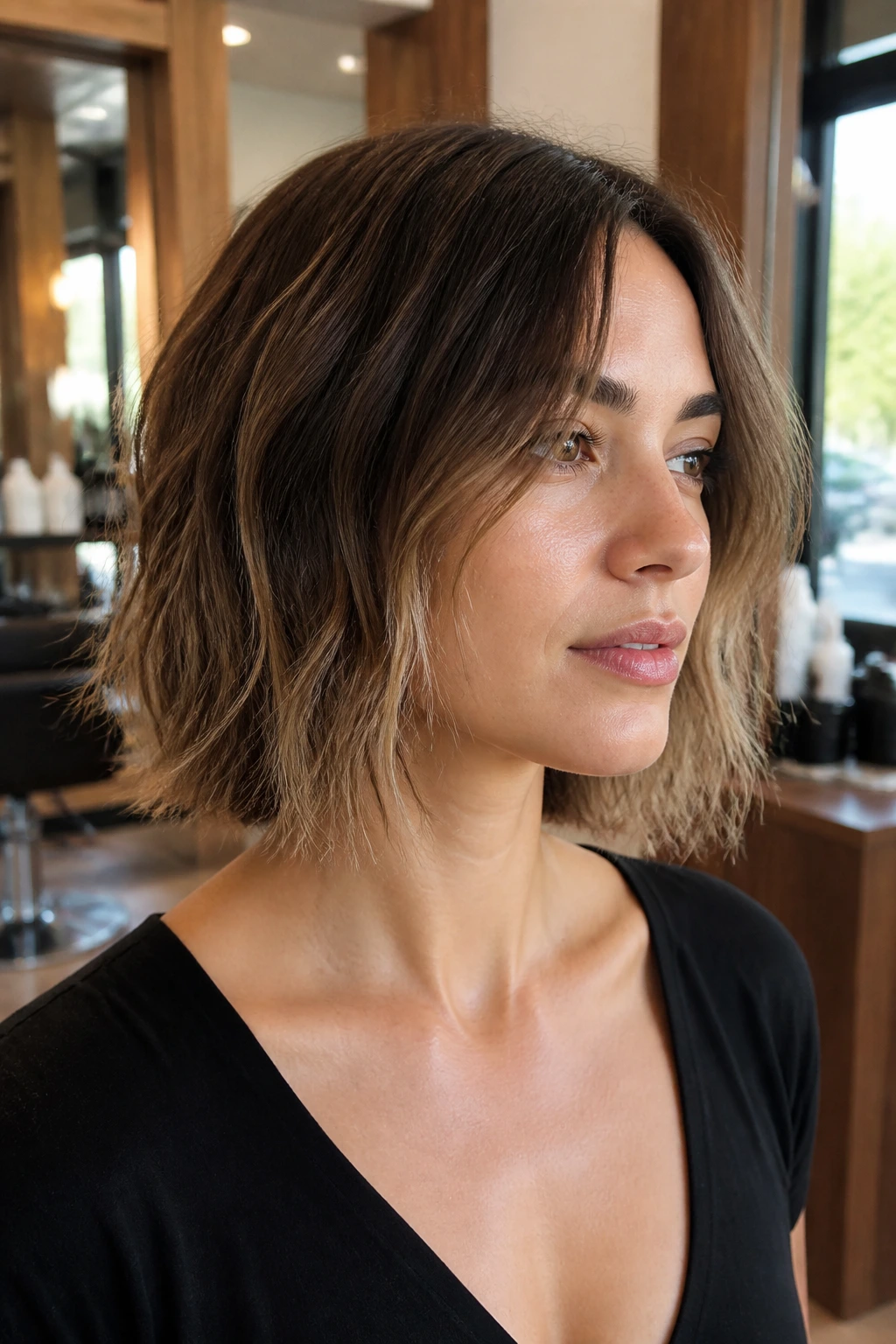
A grow-out bob is the one I keep recommending to people who want a haircut that won’t betray them between salon visits. The length usually sits somewhere between the collarbone and the top of the shoulders, with soft edges that still make sense after a month or two of growth.
The lived-in part is the point. The ends can be a little uneven in a nice way, the part can shift, and the hair can bend a little more on some days than others. Instead of fighting that, the cut uses it. That makes it a practical choice if you do not want a haircut that turns sloppy the second it starts to grow.
It also works as a bridge haircut. If you’re moving from short to medium, or medium to longer, this shape gives you a place to land without feeling stuck. Add soft face framing or keep the edges blunt — both work. What matters is that the line still feels deliberate when you leave the chair and forgiving when you come back six weeks later.
Why Medium-Length Bobs Keep Their Shape

The sweet spot with medium-length bobs is the space between too short and too long. Once hair drops below the chin, it gains enough weight to settle, but it still has enough movement to swing. That’s why a collarbone bob can feel so much easier to wear than a chin-length version that flips out at the ends or a long cut that just hangs there.
Shoulder-skimming hair also reacts fast to the little things. A quarter inch of layering changes the volume. A side part changes the whole balance. A blunt edge can make fine hair look fuller, while a graduated back can stop dense hair from puffing out like a triangle. The length itself is only half the story.
Medium bobs are also forgiving in real life. They can go smooth for work, a little messy for weekends, and tucked under a coat collar without collapsing. That flexibility is a big part of the appeal. The cut earns its keep because it keeps showing up in different moods.
Tools That Make the Cut Easier to Wear
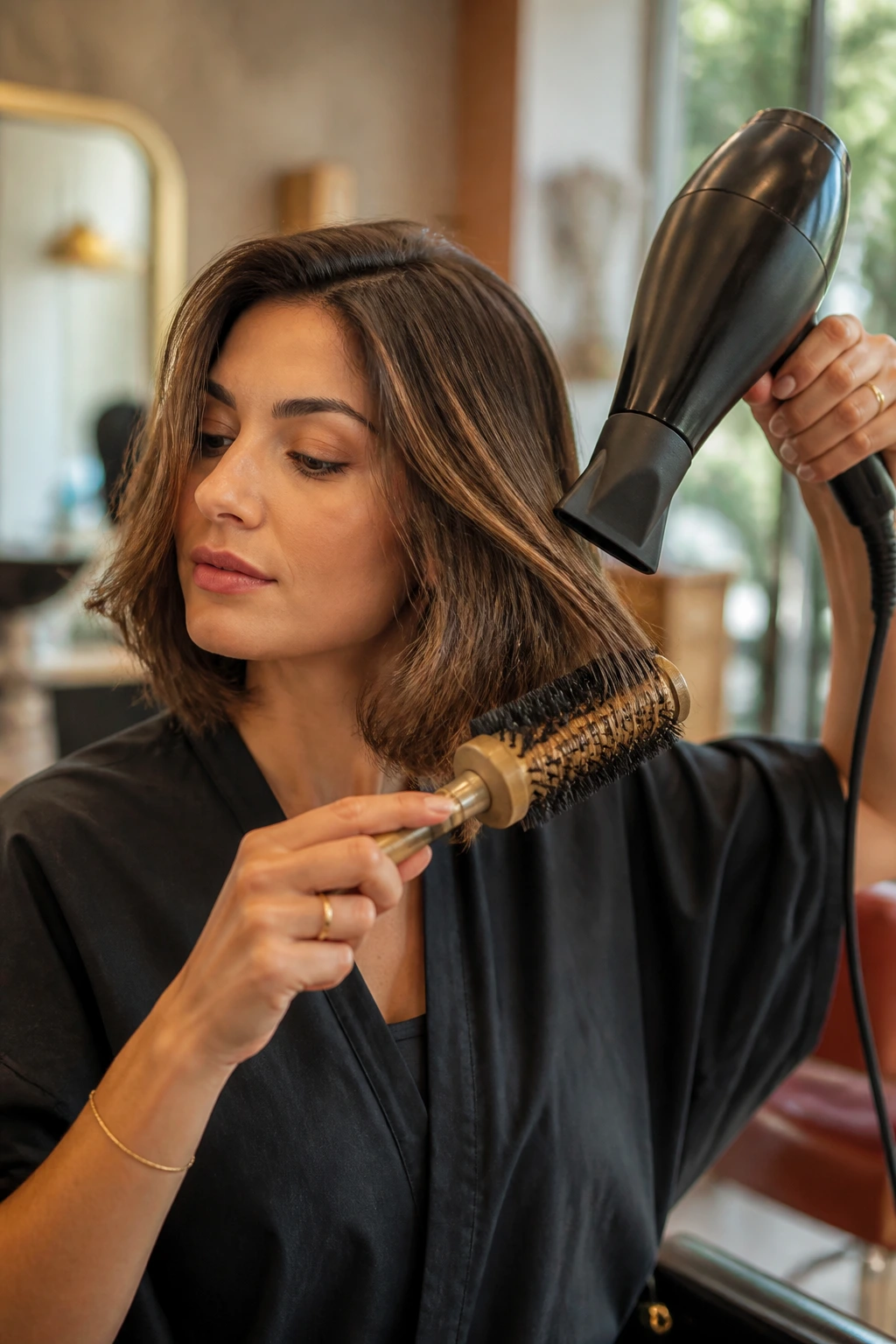
A good bob does not need a suitcase of products, but a few tools make the shape behave.
- Blow dryer with a nozzle: Directs airflow so the ends don’t kick outward while drying.
- 1.25-inch round brush: Gives a soft bend at the ends without creating a tight curl.
- Flat iron: Handy for blunt, angled, or sleek bobs; keep the heat moderate and move fast.
- Diffuser: The safest way to dry waves and curls without roughing up the pattern.
- Heat protectant spray: Goes on damp hair before any hot tool, no exceptions.
- Texturizing spray: Useful for shaggy, layered, and lived-in versions that need separation.
- Light mousse: Helps fine hair hold lift at the roots without feeling sticky.
- Sectioning clips and a tail comb: Make parts cleaner and help you work in smaller, neater sections.
If you only buy two things, buy a decent blow-dryer nozzle and a heat protectant. The shape of the cut depends on how you dry it more than people want to admit.
How to Choose the Right Medium Bob for Your Texture and Face
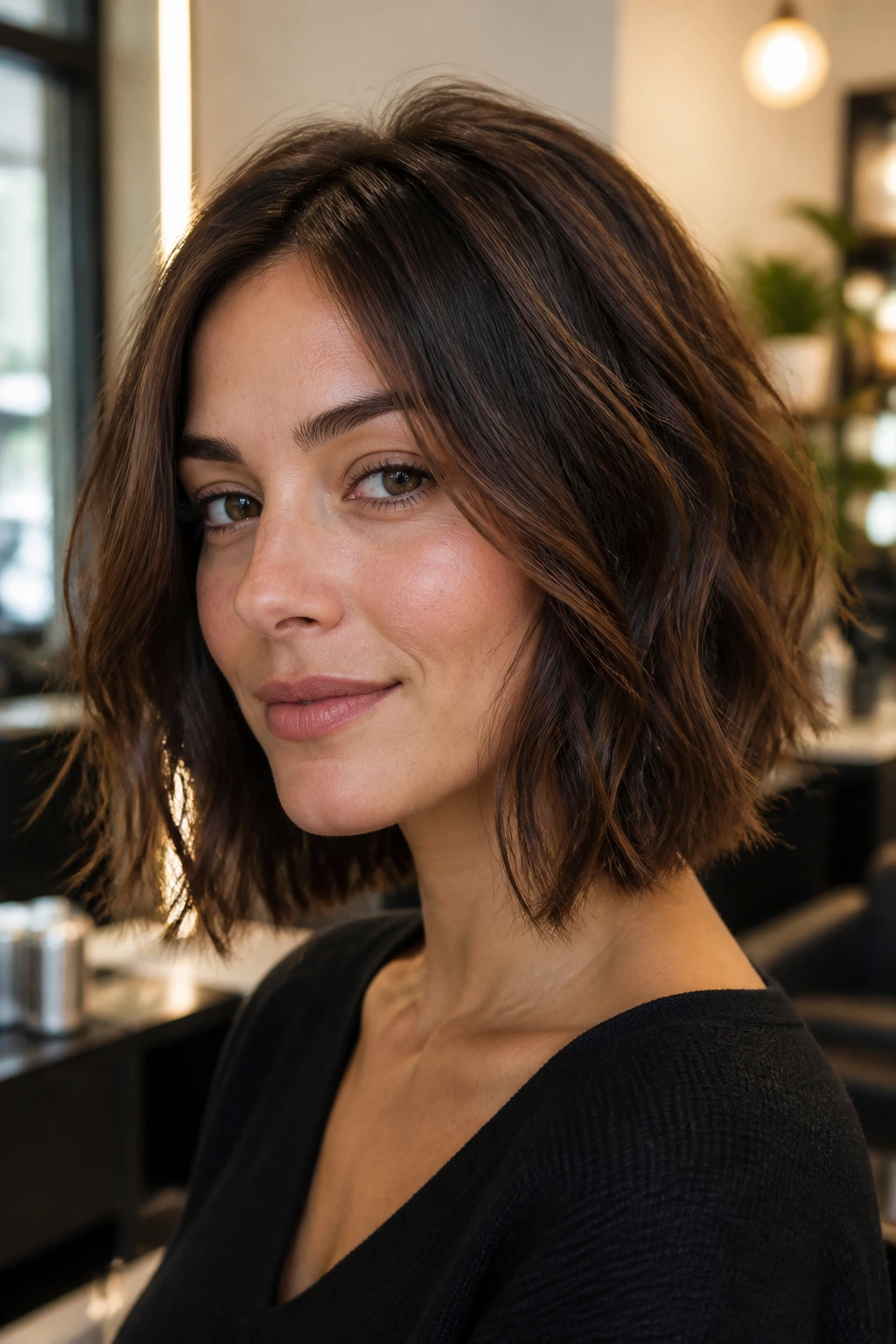
A bob is not one haircut. It’s a family of cuts, and the differences matter more as the hair gets closer to the shoulders. If your hair is fine, a blunt collarbone bob or a side-parted sleek bob usually gives the most body because the perimeter stays strong. If your hair is thick, look at the Italian bob, the boxy rounded bob, or the undercut version, because those keep the weight from spreading out too wide.
Fine, Medium, and Thick Hair
Fine hair wants perimeter and lift, not a thousand layers. Medium-density hair can take more texture without losing its line. Thick hair usually needs either controlled graduation or hidden bulk removal, or it ends up wearing the haircut instead of the other way around.
Straight, Wavy, and Curly Hair
Straight hair shows every detail of the line, which makes blunt, angled, and asymmetrical cuts feel especially sharp. Wavy hair likes soft layers, curtain bangs, and lived-in texture. Curly hair usually does better when the shape is rounded and the cut is made with shrinkage in mind.
Face Shape Notes
Round faces often look best with a bit of length in front, which is why angled bobs and collarbone bobs stay useful. Square jaws soften nicely with curtain bangs or face-framing layers. Heart-shaped faces usually benefit from width near the jaw, which a rounded bob can give. Long faces often do well with a side part or fringe that breaks up the vertical line.
How to Style a Medium-Length Bob Without Fuss

A medium bob looks best when the styling matches the cut instead of fighting it.
Straight and sleek: Use a heat protectant, rough-dry until the hair is about 80 percent dry, then finish with a round brush or flat iron. Keep the ends tucked in slightly so the perimeter looks clean. A tiny bit of serum on the last inch keeps frizz from sneaking in.
Soft wave: Wrap 1-inch sections around a 1.25-inch iron, leave the ends out on purpose, and let the curls cool before you touch them. Break the wave up with your fingers or a wide-tooth comb. If the wave pattern starts too high, the cut can look rounder than intended, so keep the bend mid-length.
Air-dried and lived-in: Use mousse at the roots, a light cream through the mid-lengths, and scrunch only enough to encourage shape. Don’t keep touching it while it dries. That’s how you get frizz instead of movement.
Day-two reset: Mist the front lightly with water, brush the ends into place, and add a quick pass of a blow-dryer or flat iron on the pieces that frame your face. You do not need to restyle the whole head. Usually, the front three sections do the heavy lifting.
Small Tweaks That Change the Whole Bob
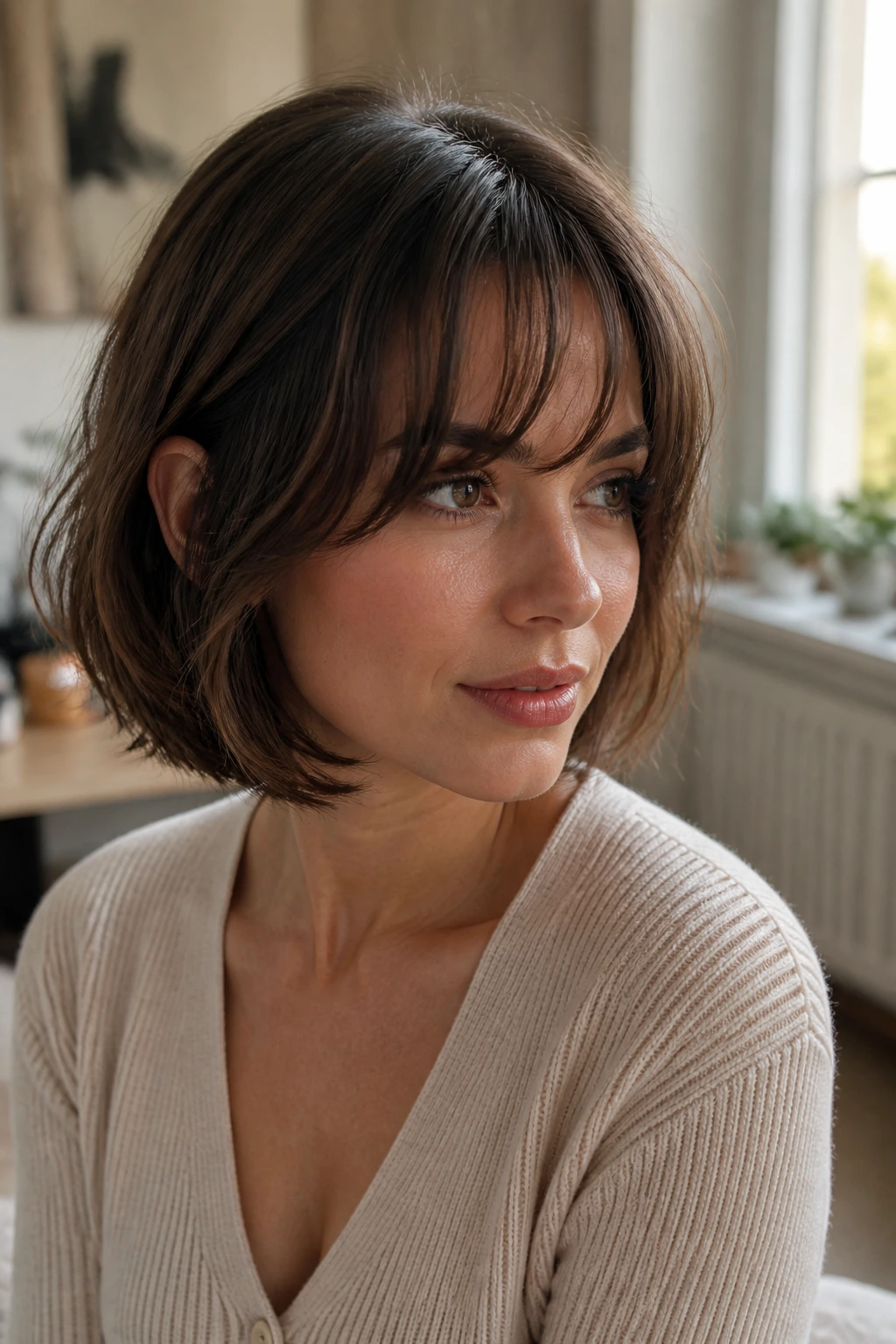
Texture Boost: A pea-sized amount of mousse at the roots and a little texturizing spray through the mids can wake up a bob that’s gone limp by noon. Use less than you think; too much product makes medium hair sticky fast.
Face Framing: If your jaw feels sharp, keep the front pieces a touch longer and ask for them to graze the cheekbone. If you want more lift, let the shortest front layer hit closer to the lip line.
Lift at the Crown: A deep side part and a round brush near the roots do more than a heavy layer job. Hair at the crown usually needs direction, not more cutting.
Softness: If the cut feels too hard-edged, have the stylist soften only the last half-inch of the perimeter. That tiny change can take a bob from severe to easy.
Make-It-Yours: Fine hair, thick hair, curly hair, straight hair — each one wants a different balance of weight and movement. The trick is not copying a photo blindly. It’s matching the cut to the way your hair already behaves.
Keeping the Shape Between Trims
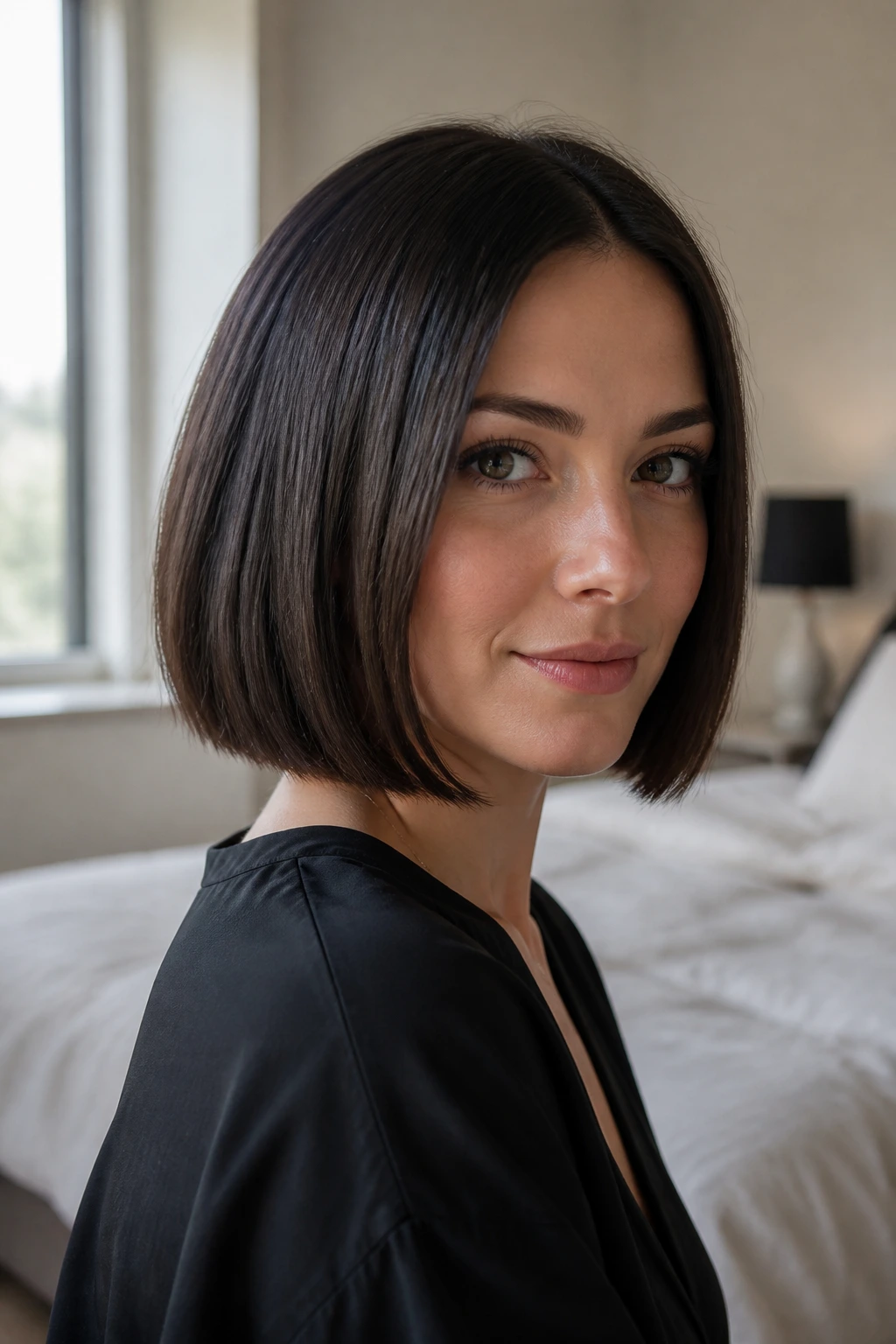
Medium bobs tend to live or die by the trim schedule. A blunt collarbone bob or angled bob usually wants a trim every 6 to 8 weeks to keep the line clean. More textured cuts can stretch to 8 or even 10 weeks, but once the front starts losing its angle, the whole haircut looks less deliberate.
Sleep matters too. A silk or satin pillowcase cuts down on frizz at the ends, especially if you wear the hair loose. If the front pieces kick up overnight, clip them in a soft bend before bed or wrap them loosely behind the ears while they cool from the day’s styling. It sounds fussy. It isn’t. It saves time the next morning.
Dry shampoo helps, but use it for lift, not as a rescue rope. Two light sprays at the roots can stretch a blowout a day or two. If the ends get dry, focus conditioner only on the bottom third of the hair and avoid piling on more oil. Medium-length bobs show buildup quickly because there isn’t much extra length to hide it.
If you want the shape to survive a humid day, refresh the perimeter, not the whole head. A small round brush, a quick blow-dry, and 2 minutes around the face often do more than a full restyle.
Variations and Adaptations to Try

The Fine-Hair Upgrade: Keep the bottom line blunt and the layers minimal. Add root mousse and a side part if you want the crown to sit higher without sacrificing fullness.
The Thick-Hair Fix: Add hidden undercutting at the nape or keep the perimeter heavier. This stops the cut from ballooning and helps it dry faster.
The Curly Version: Cut the hair longer than the final target and shape it in its natural curl pattern. A rounded outline keeps the curls from building too wide at the sides.
The Bangs Switch: Curtain bangs soften blunt and angled bobs, while a side fringe can break up a square jaw. If you hate commitment, keep the fringe long enough to tuck away.
The Heat-Free Route: Ask for a cut that still looks good when air-dried. Shaggy bobs, face-framing bobs, and soft lob shapes work better here than ultra-sleek blunt lines.
The Grow-Out Plan: If you want one haircut that can stretch, choose a collarbone bob with soft layers or a lived-in lob. It holds its shape longer and doesn’t panic when the ends creep past the shoulders.
Common Mistakes That Throw the Cut Off
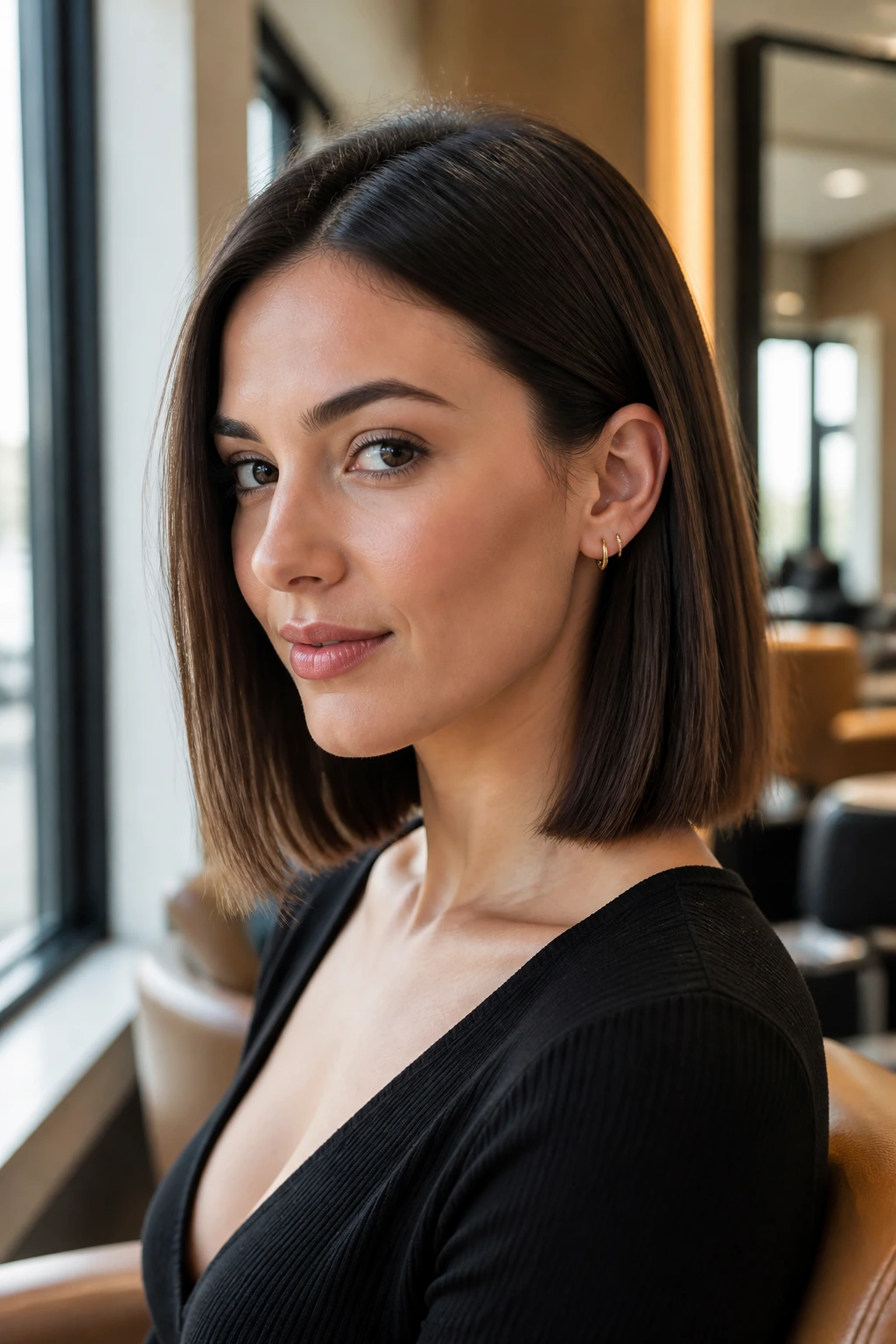
Cutting too much off the front on curly or wavy hair: The front shrinks more than people expect, so a “just above the shoulders” request can land at the jaw. Ask for a dry visual check or leave a little extra length.
Over-layering fine hair: The symptom is see-through ends and a top that collapses by noon. Fix it by keeping the perimeter solid and asking for only light internal shaping.
Ignoring your part: A bob can look lopsided if the part fights your natural growth pattern. Test the part before the cut, not after.
Going too blunt on very dense hair: The haircut can puff out at the bottom and look boxy. Soft graduation or hidden weight removal keeps the line cleaner.
Waiting too long between trims: The ends stop sitting as a shape and start sitting as hair that needs help. If the outline is gone, the bob is gone.
Styling every version the same way: A curled Italian bob, a blunt side-part bob, and a curly rounded bob do not want the same finish. That’s how you end up forcing the cut into the wrong mood.
Questions People Ask Before They Say Yes to the Chop

Will a medium bob work if my hair is thick?
Yes, but the cut needs weight control. Thick hair usually does better with an Italian bob, an undercut version, or a rounded boxy shape that keeps the bulk in check.
Can fine hair wear a bob without looking flat?
It can, as long as the perimeter stays strong and the layering stays light. A blunt collarbone bob or a side-parted sleek bob gives fine hair the best chance at looking full.
Do I need bangs with a medium bob?
No. Bangs change the mood, but they aren’t required. Curtain bangs soften the face, while no fringe keeps the cut cleaner and easier to tuck back.
How often should I trim it?
Most medium bobs need trimming every 6 to 8 weeks. Heavily textured or grow-out-friendly versions can stretch longer, but the shape should still be checked before the ends start looking stringy.
What if my hair flips out at the ends?
That usually means the cut is sitting right on a collarbone or shoulder point that catches the hair. A slight change in length, or a bit more rounding at the bottom, usually fixes it faster than more styling product.
Is a blunt bob or layered bob better?
Blunt works better for fine hair and sharp shapes. Layered or textured versions work better when your hair is wavy, dense, or hard to move.
Can I wear a medium bob curly and straight?
Yes, if the cut is long enough and the shape is balanced for both. A shoulder-skimming bob or a soft lob usually gives the most wiggle room.
What should I bring to the salon?
Bring two or three photos that show the same length from different angles, plus one image of a texture close to yours. A good stylist can read a reference fast, but only if the photo matches what your hair actually does.
The Cut That Keeps Its Shape
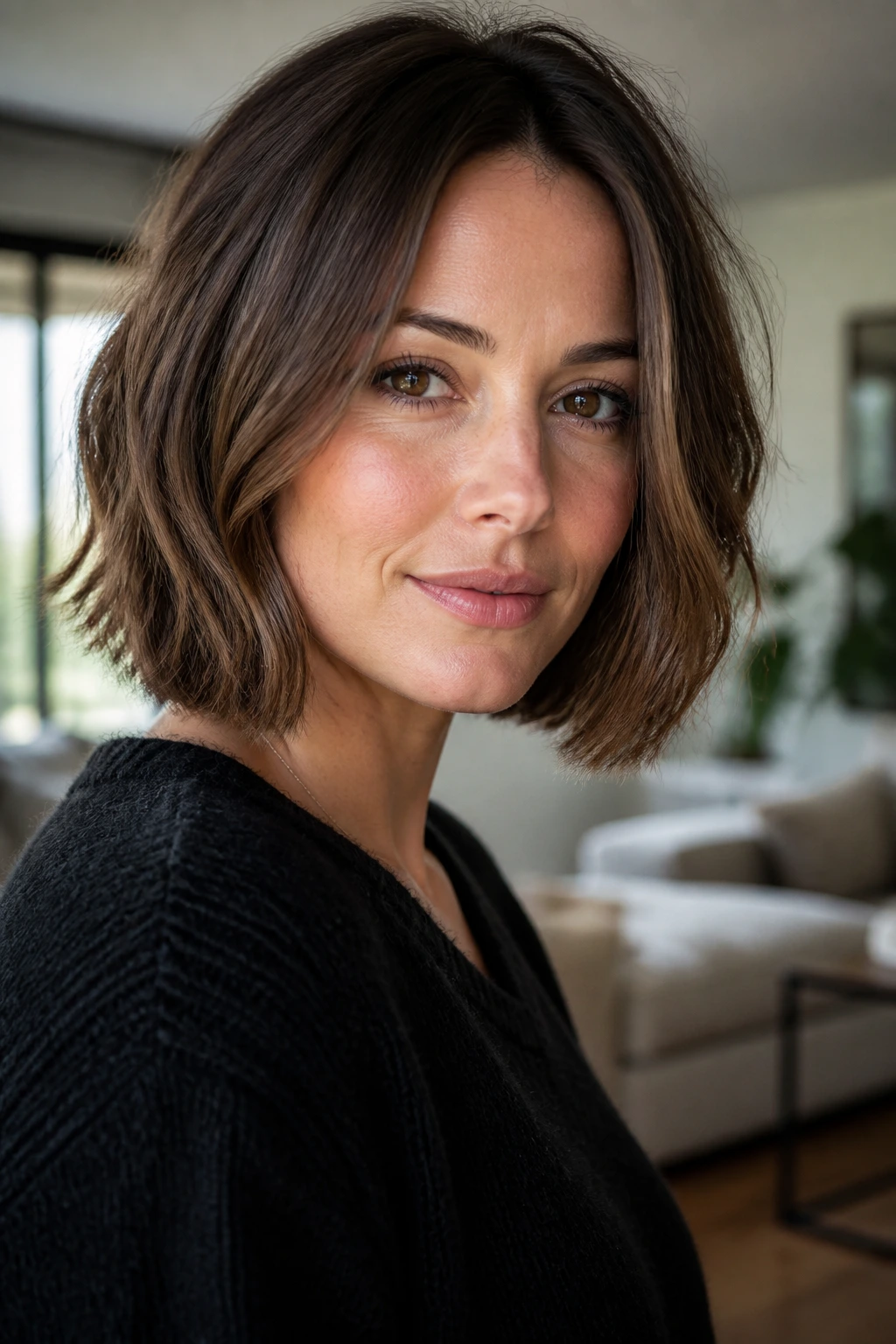
Medium bobs work because they live in that narrow strip between too short and too long. The haircut still has movement, but it also has enough weight to behave. That is the sweet spot, and once you understand how much the perimeter, part, and texture matter, the options stop feeling overwhelming.
The best version is the one that fits the way you wear hair on an ordinary Tuesday, not the way it looks under a salon light. If that means blunt and neat, go there. If it means shaggy, curved, curly, or softly angled, that works too. A good medium bob should feel like it knows where it belongs.
