



Bob haircuts for women have a way of looking simple until you realize how much shape is packed into that small amount of hair. Move the line half an inch, add a bend at the cheekbone, or leave the nape a little longer, and the whole cut changes. That’s the part people miss when they think of a bob as one haircut.
What makes a bob work isn’t just length. It’s where the weight sits, how the ends are cut, and whether the hair needs to skim a jawline or float away from it. A blunt bob and a shaggy bob can live in the same family and still behave like different personalities in the mirror.
The strongest versions match the hair you actually have: fine hair that needs a fuller edge, thick hair that needs bulk removed, curls that need room to spring, straight hair that likes a clean line. The right bob can make mornings shorter and profiles sharper. The wrong one can puff at the sides or collapse into a shape that feels dated before lunch.
Why This Collection Works
- Face-shape control: Shorter bobs expose the jaw; longer fronts soften square or round faces without hiding the bone structure.
- Texture-friendly choices: Fine, thick, curly, wavy, and straight hair each have a bob shape that behaves instead of fighting back.
- Less daily wrestling: A good bob usually takes less time to dry and style because there is less length to coax into place.
- Clear salon language: These cuts give you concrete words for the line, the weight, the nape, and the fringe instead of vague hand-waving.
- Grow-out options: If you’re nervous about going short, several of these cuts live happily in the shoulder-skimming zone.
- A better silhouette: The bob changes the outline of your hair more than the length alone ever could.
1. Chin-Length Classic Bob
The chin-length classic bob lands right where the jaw stops, and that’s why it reads clean instead of fussy. On straight hair, the line feels crisp; on a slight wave, it softens into a bend that frames the mouth and cheekbones. I like this cut when someone wants a bob that still looks deliberate after a long day.
Ask for the perimeter to sit at the chin, not at the widest part of the cheek. That small difference matters more than people think. If your neck is short or you hate hair brushing your collar, this one keeps everything compact without feeling severe.
2. French Bob with Soft Fringe
A French bob is shorter, a little cheekier, and usually a touch more undone than the classic version. The soft fringe does half the work here; it breaks up the forehead and keeps the cut from looking boxy.
Why It Flatters So Easily
This shape loves fine to medium hair because the shorter length gives the ends some life without needing a ton of volume at the roots. Ask for a fringe that skims the brows and pieces that can separate a little when dry. If the bangs are too dense, the whole cut turns heavy fast.
A dab of lightweight mousse at the roots and a quick finger dry are often enough. That’s the appeal. It looks styled even when it hasn’t been fussed over.
3. Sleek Blunt Bob
If you want a bob with a hard edge, this is the one. The blunt bob keeps every strand at nearly the same length, so the ends make a straight line that looks sharp under daylight and even sharper under a clean blowout.
It works best on straight or mostly straight hair, especially if it’s thick enough to hold a defined perimeter. Use a flat iron only after the hair is fully dry, and finish with a pea-sized drop of smoothing cream along the ends. Too much product makes the line go limp, which defeats the whole point.
4. Textured Bob with Airy Ends
The textured bob is for people who like movement more than precision. The ends are point-cut or lightly razored so they don’t sit in one solid block, which helps fine hair avoid that flat, helmet-like look.
The Cut Detail That Changes Everything
The trick is keeping texture at the ends, not shredding the whole shape. You want the perimeter to remain visible while the tips move when you shake your head. A salt spray or dry texture spray on damp hair gives this cut that slightly broken-up finish without making it crunchy.
This is one of those styles that looks better the second day. A little bend, a little mess. Good stuff.
5. Layered Bob for Thick Hair
Thick hair needs internal layers, not a bunch of choppy pieces that spring out at odd angles. A layered bob removes bulk from the inside so the hair sits closer to the head and stops ballooning at the sides.
Ask your stylist to keep the outer line clean while reducing the weight underneath. That way the cut still feels like a bob, not a mini shag with a mind of its own. If your hair has a heavy wave, this shape keeps the body under control without flattening everything.
6. Stacked Bob at the Nape
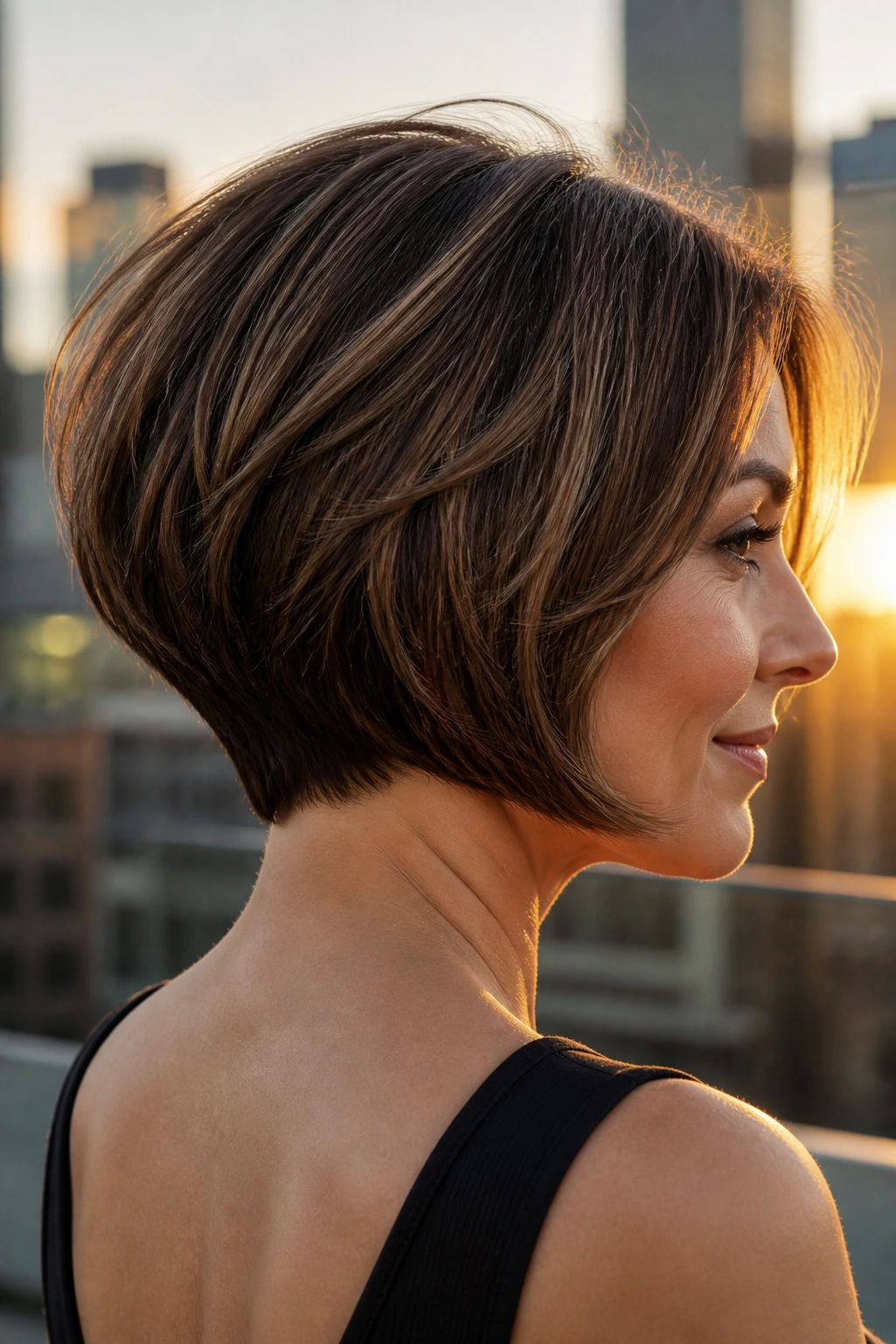
The stacked bob gives the back a little lift by building shorter layers at the nape. It makes the crown look fuller and creates a curved shape that feels polished from the side.
This cut is strong on fine to medium hair that needs backbone. It also needs regular trims, because the line at the nape grows out fast and loses that crisp curve. If you like neat hair that keeps its shape, this one delivers.
7. A-Line Bob with Longer Front Pieces
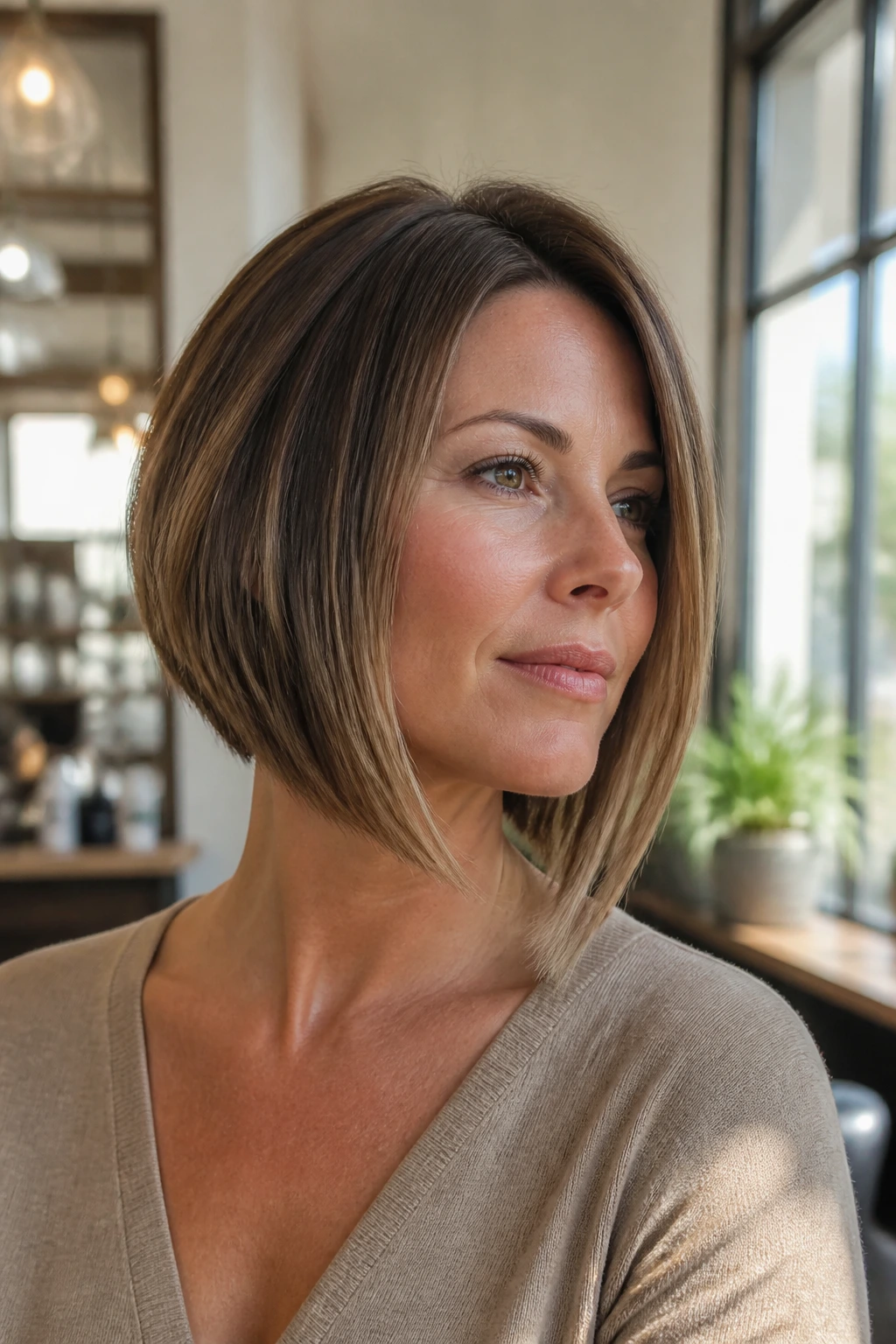
An A-line bob is shorter in the back and gradually longer toward the front, which creates a diagonal line across the face. That angle does a lovely job of making the neck look longer and giving the cheekbones a little stage.
It’s a smart pick if you want movement without full layers. The front pieces can tuck behind the ears, swing forward, or bend under with a round brush. Keep the front long enough that it doesn’t stop right at the widest part of your face. That’s the trap.
8. Curly Bob with Defined Ends
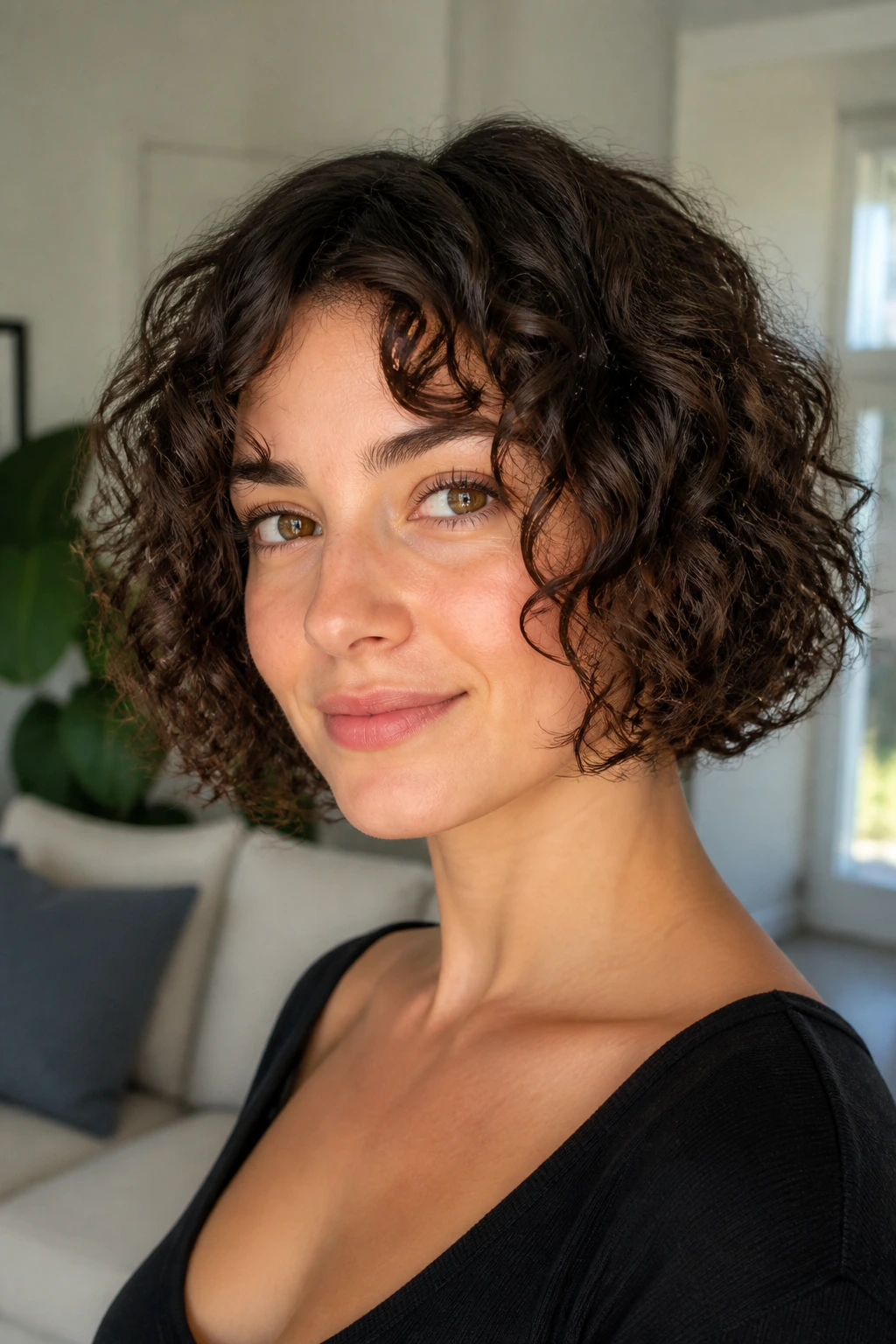
Curly hair needs a bob that respects the curl pattern instead of forcing it into a straight shape. The best curly bob is usually cut with the curls in place, often dry or nearly dry, so the stylist can see where each curl lands.
Keep the Curl Pattern in Charge
A blunt end can work on curls, but too much thinning can make the outline frizz out. Use curl cream on soaking-wet hair, then scrunch in a gel for hold. A diffuser on low heat helps the curl keep its spring without stretching the shape flat.
If your curls shrink a lot, ask for the length to sit a little longer than your first instinct suggests. Curly bobs always bounce up more than people expect.
9. Shoulder-Skimming Lob
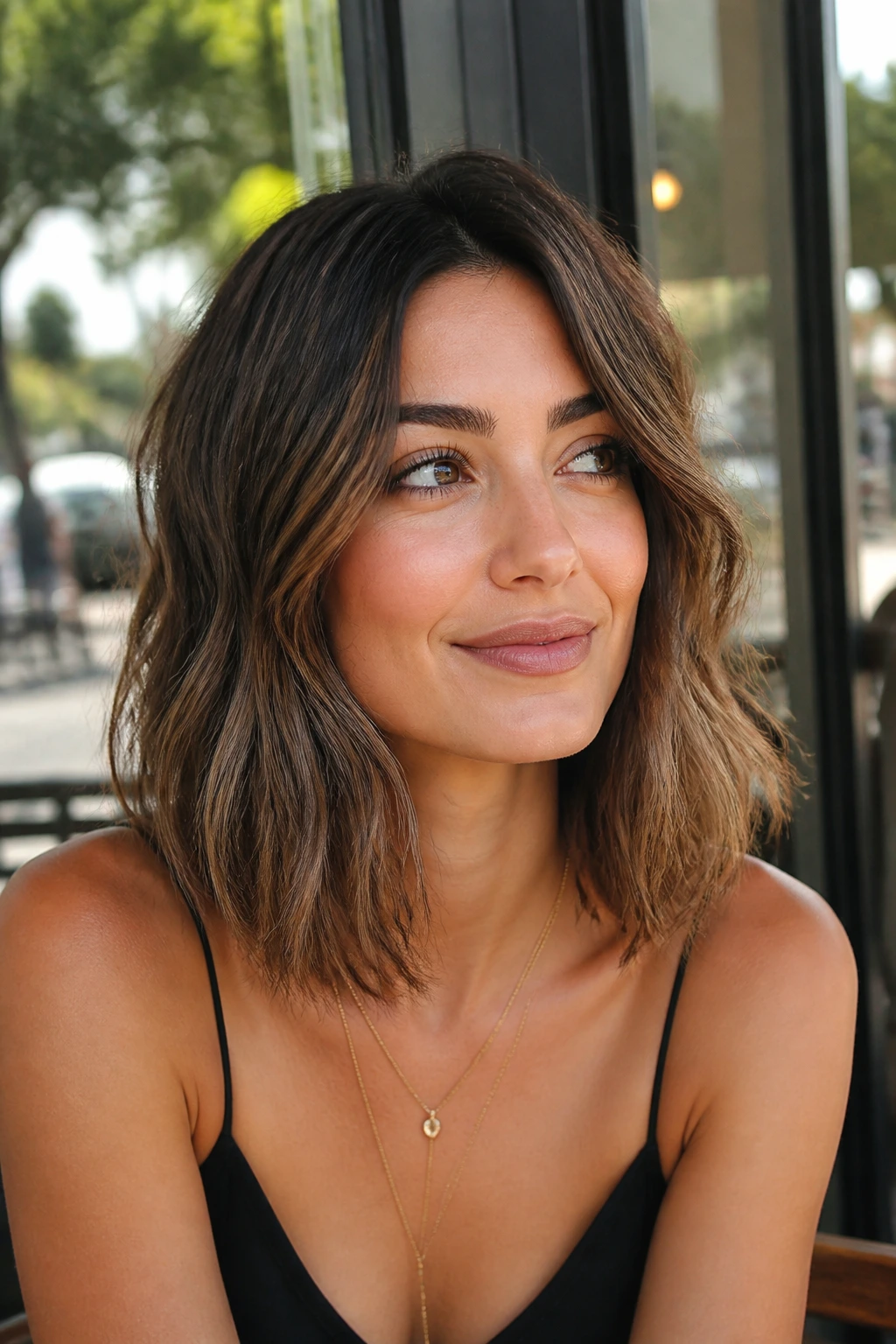
The lob sits in that useful middle ground where the hair still feels long enough to tuck or clip, but short enough to look intentional. It’s not a compromise in the bad sense. It’s a practical cut that still gives you a real shape.
I like it for people who want a bob but aren’t ready to lose every inch. It also works when you’re growing out a shorter style, because the lob looks tidy even as it gains length. Add soft bends with a 1.25-inch iron if you want it to move instead of hanging straight.
10. Side-Part Bob with Volume at the Crown
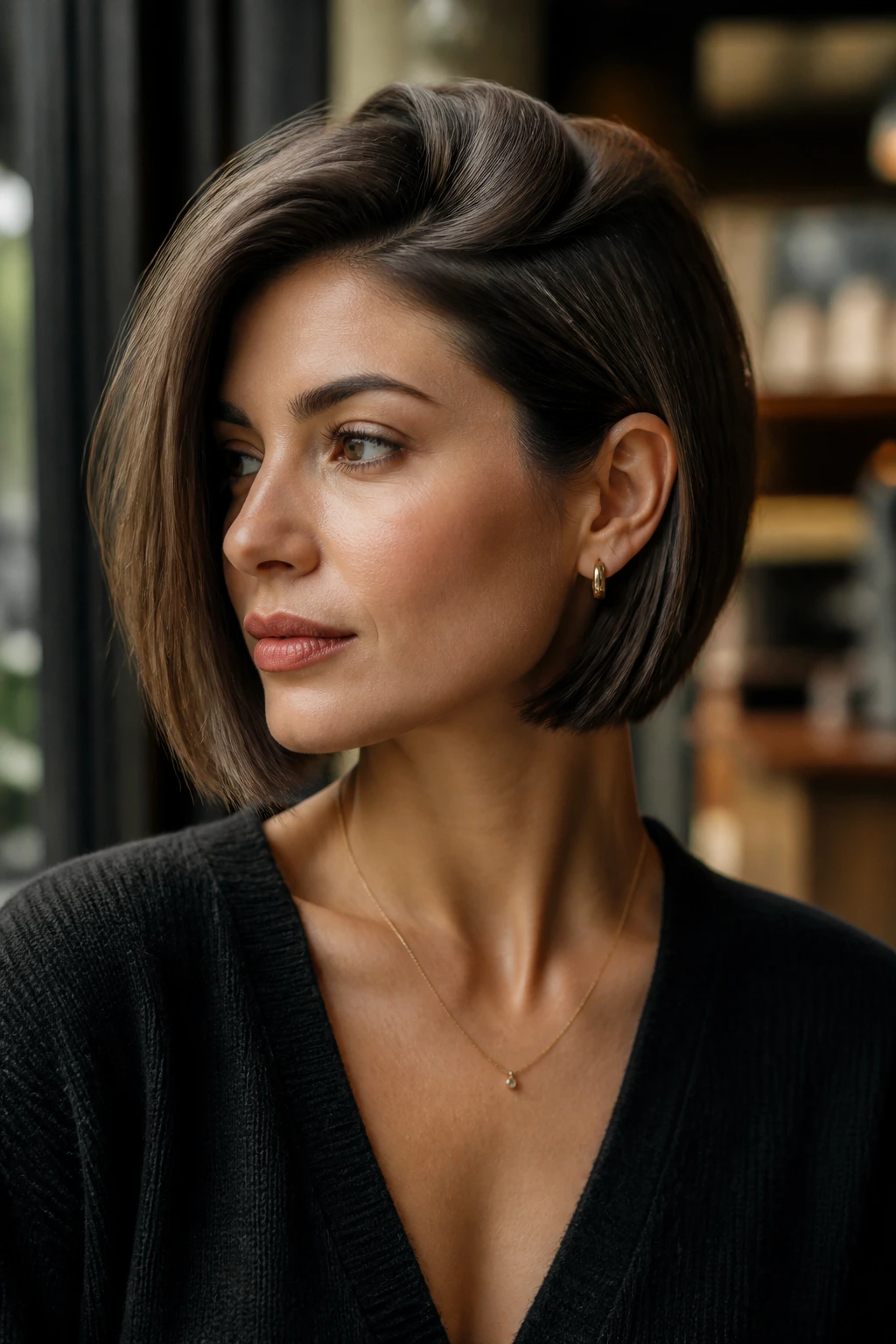
A side part can change the whole mood of a bob. It gives the cut a little lift at the crown and softens symmetrical features that might feel too sharp with a center part.
This is especially useful for flat roots or a cowlick that pushes hair in one direction anyway. Let the heavier side fall across the forehead a bit, then keep the other side tucked or tucked loosely behind the ear. It’s one of the easiest ways to make a bob look less severe.
11. Jaw-Grazing Bob for Round Faces
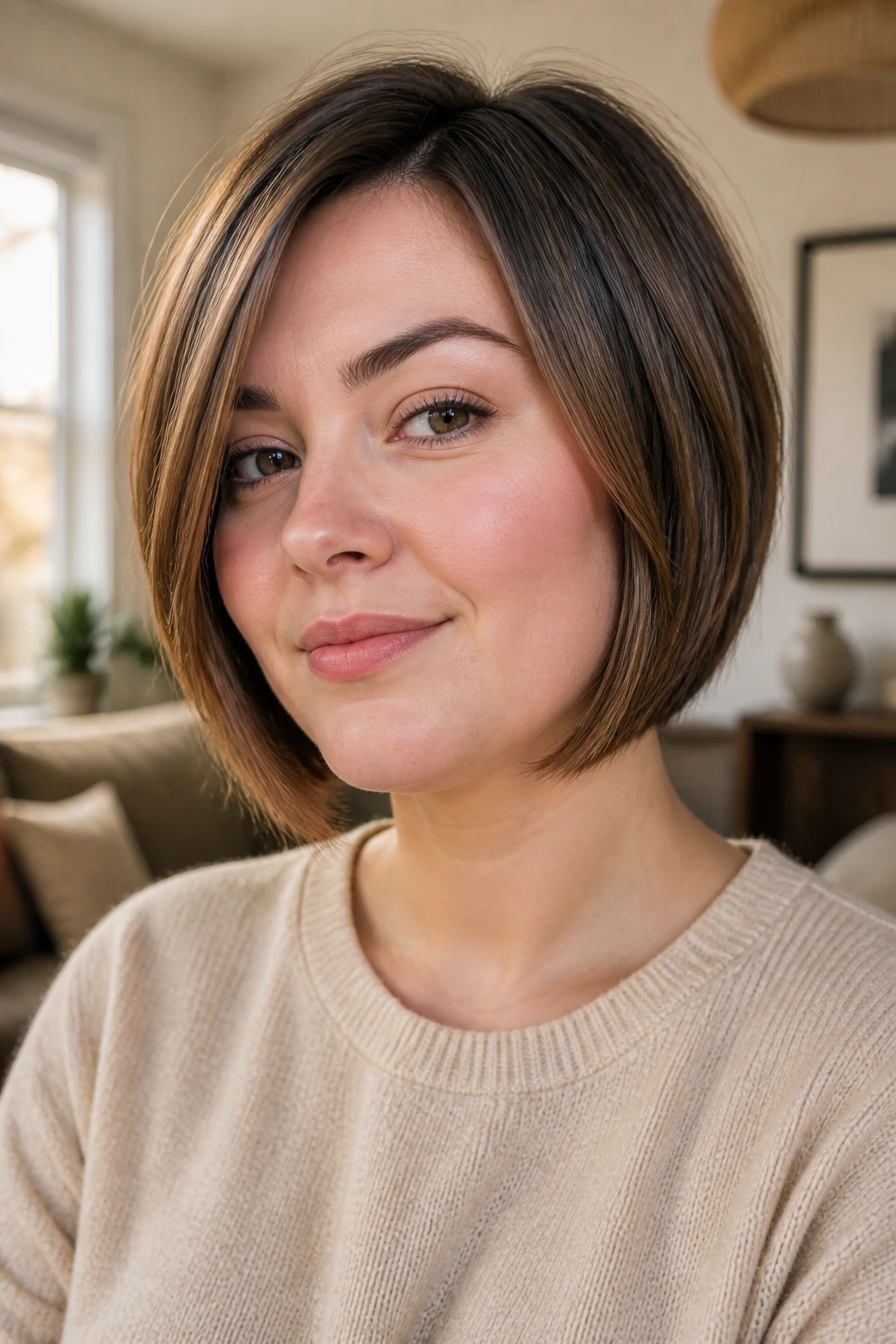
A bob that ends exactly at the fullest part of a round face can make the width stand out more than you want. The smarter move is to let the front graze just below the jaw, with a little angle toward the collarbone.
That length creates vertical lines and keeps the eye moving downward. A small bend near the ends helps even more. If you wear this with a side part or a soft fringe, the face gets definition without the haircut shouting about it.
12. Collarbone Bob with Minimal Layers
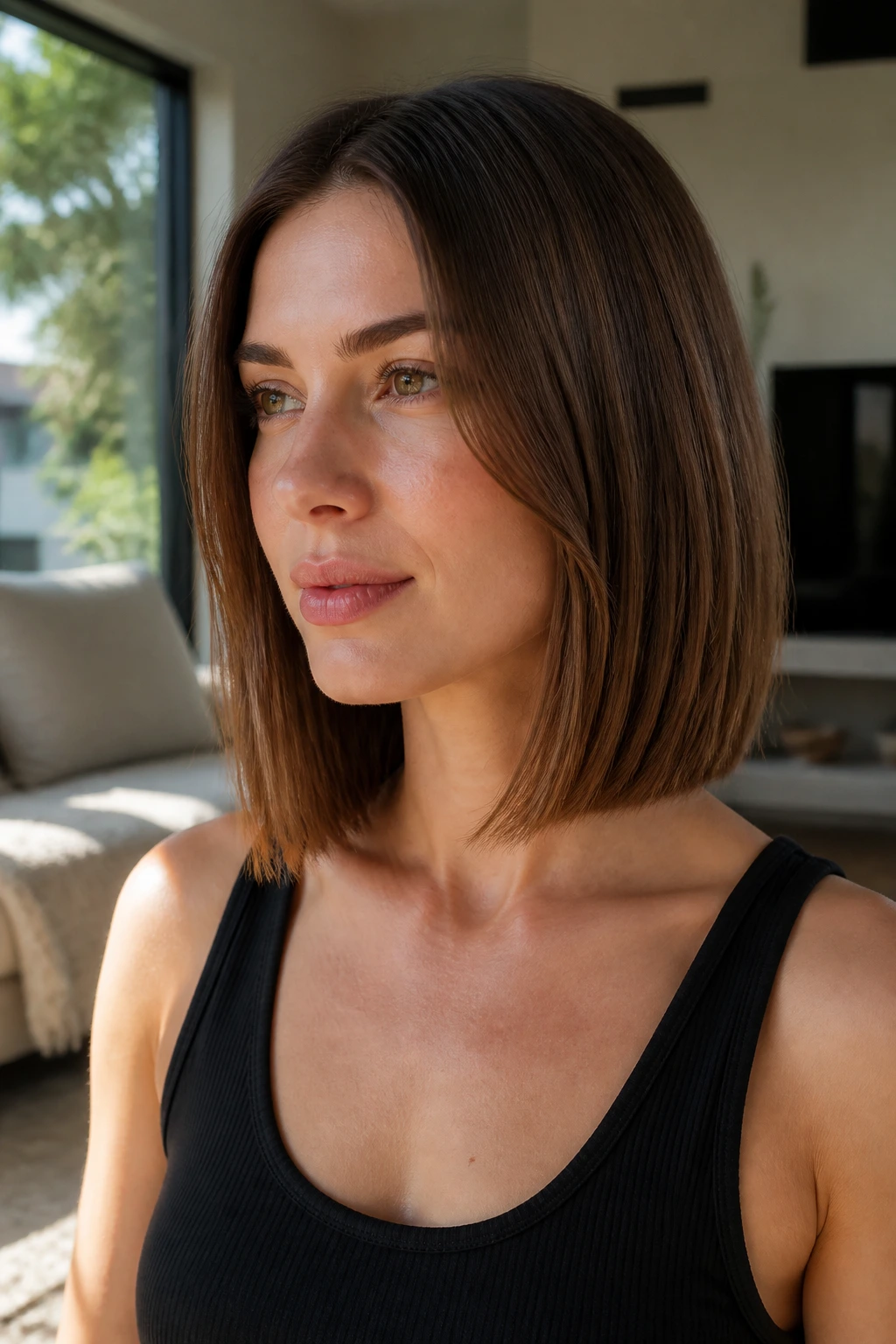
The collarbone bob is the calm, low-drama cousin in the family. It gives you enough length to pull into a tiny clip or tuck behind both ears, but it still keeps the perimeter visible.
Minimal layers are the key here. Too many layers and the hair starts to lose that sleek shoulder-skimming shape. This version works on straight, wavy, and slightly curly hair because it lets the natural texture do the talking. Air-drying is often enough.
13. Inverted Bob with Movement
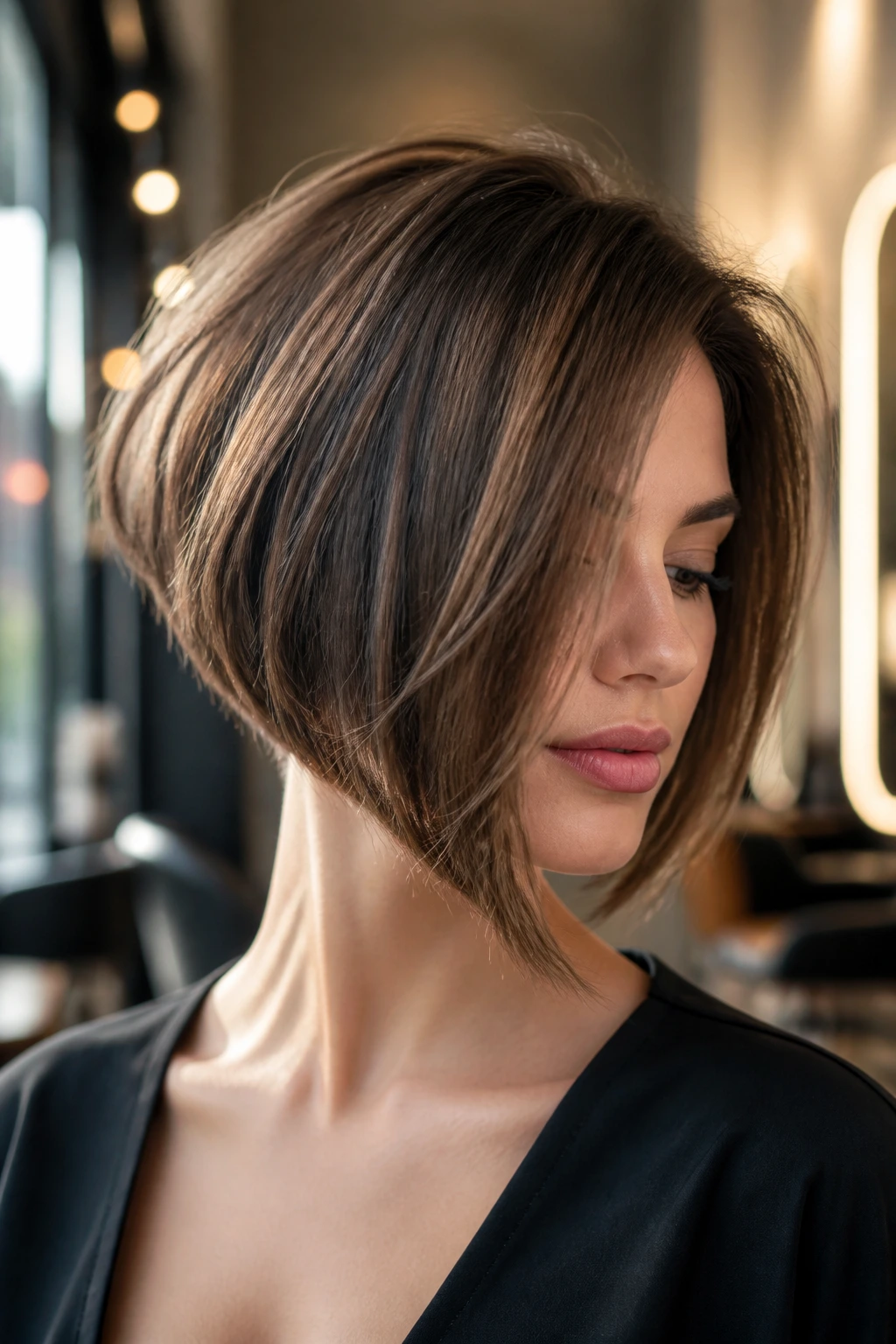
The inverted bob is related to the A-line, but it usually has a more dramatic angle and more obvious movement through the front. The back stays shorter, while the front swings forward with a little attitude.
This cut suits people who want a bob that feels a touch more modern than the classic line. A round brush at the crown and a slight turn of the ends inward make the shape pop. If your hair is thick, keep the graduation controlled or it can turn bulky fast.
14. Shaggy Bob with Choppy Ends
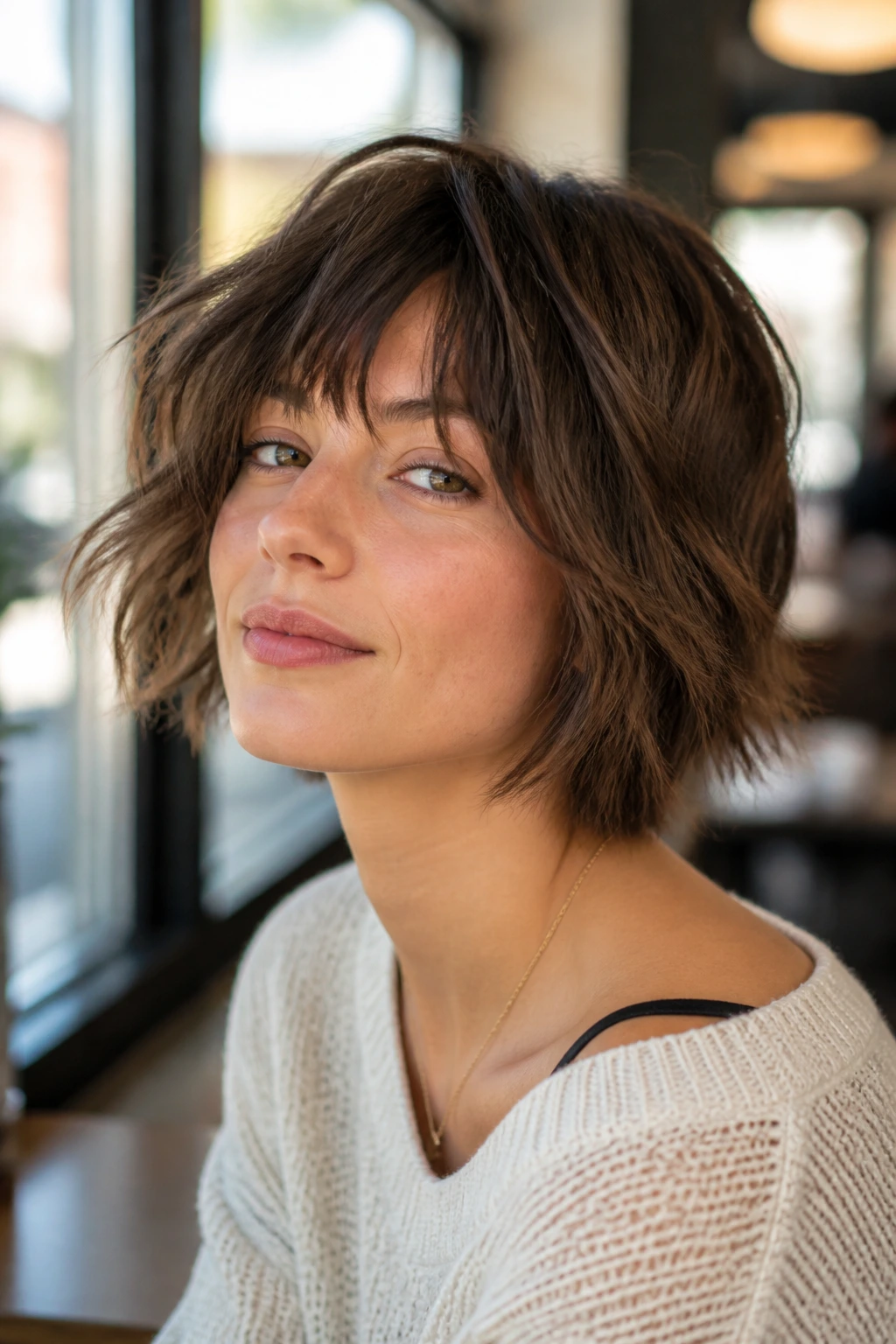
A shaggy bob brings in texture, movement, and a little rebellion. The ends are chopped rather than neatly blunt, and the internal layers keep it from looking overbuilt.
This one loves a bit of grit. Cream, paste, or dry texture spray can wake it up fast. If you want something polished and sleek every day, skip this shape. If you like hair that looks better after you’ve lived in it for a few hours, this is your cut.
15. Pixie-Bob Hybrid
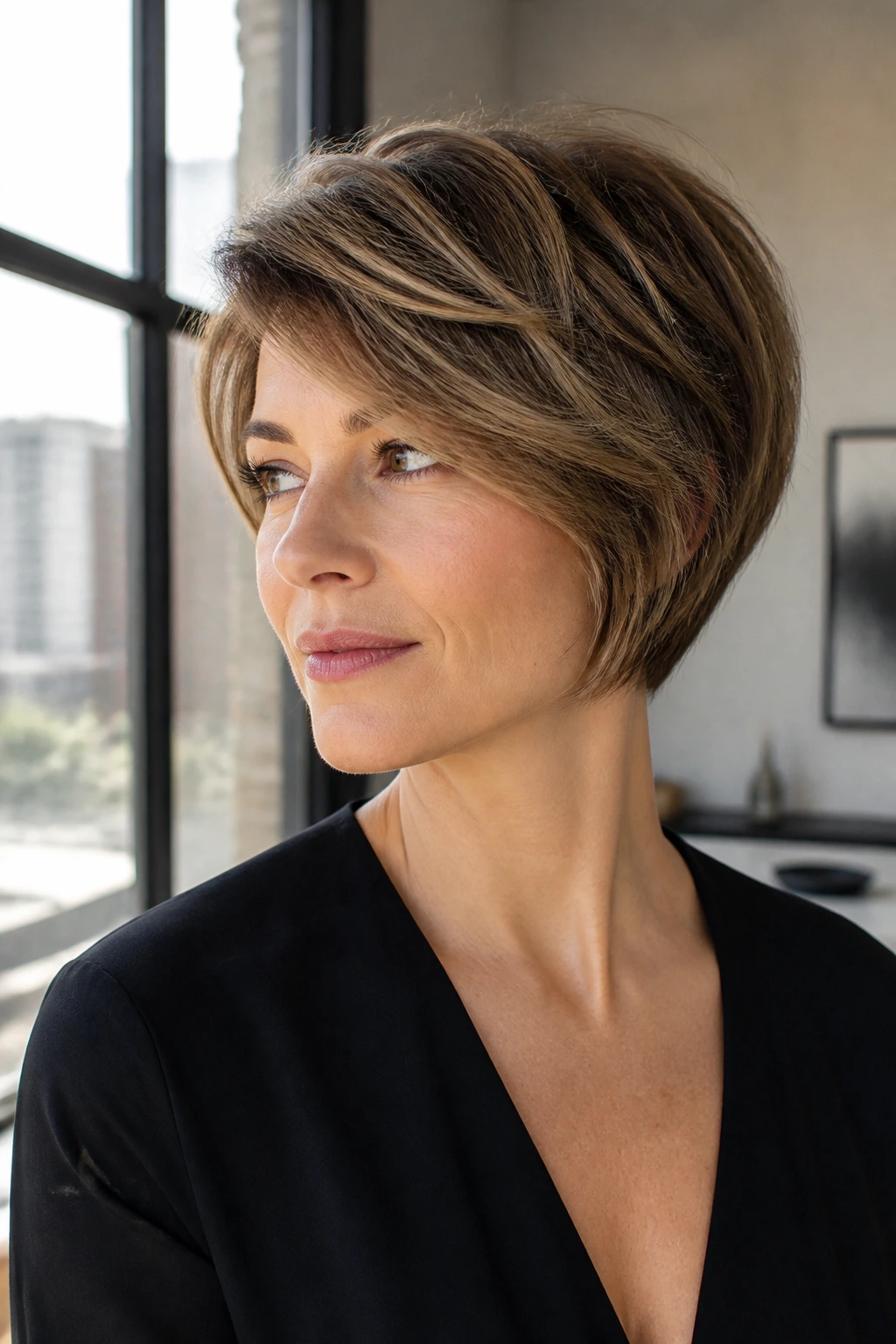
The pixie-bob sits right between cropped and chin-length, which makes it a smart transition cut for anyone leaving a pixie or testing shorter hair. The back and sides stay compact, while the top keeps enough length for a soft sweep.
It gives the face a lot of openness around the eyes and cheekbones. That can be gorgeous, but it also means the cut needs clean edges and regular maintenance. A little pomade at the ends is usually enough. Too much, and it turns greasy in a hurry.
16. Asymmetrical Bob

One side longer than the other. That’s the whole idea, and it works because the line gives the eye something to follow.
This cut looks strongest on straight hair or hair that can be smoothed easily, because the asymmetry needs clarity to read well. It suits angular features and people who want a bob that feels a little less predictable. Ask your stylist to keep the difference visible but not cartoonish. Half an inch can be enough.
17. Box Bob with a Heavy Outline
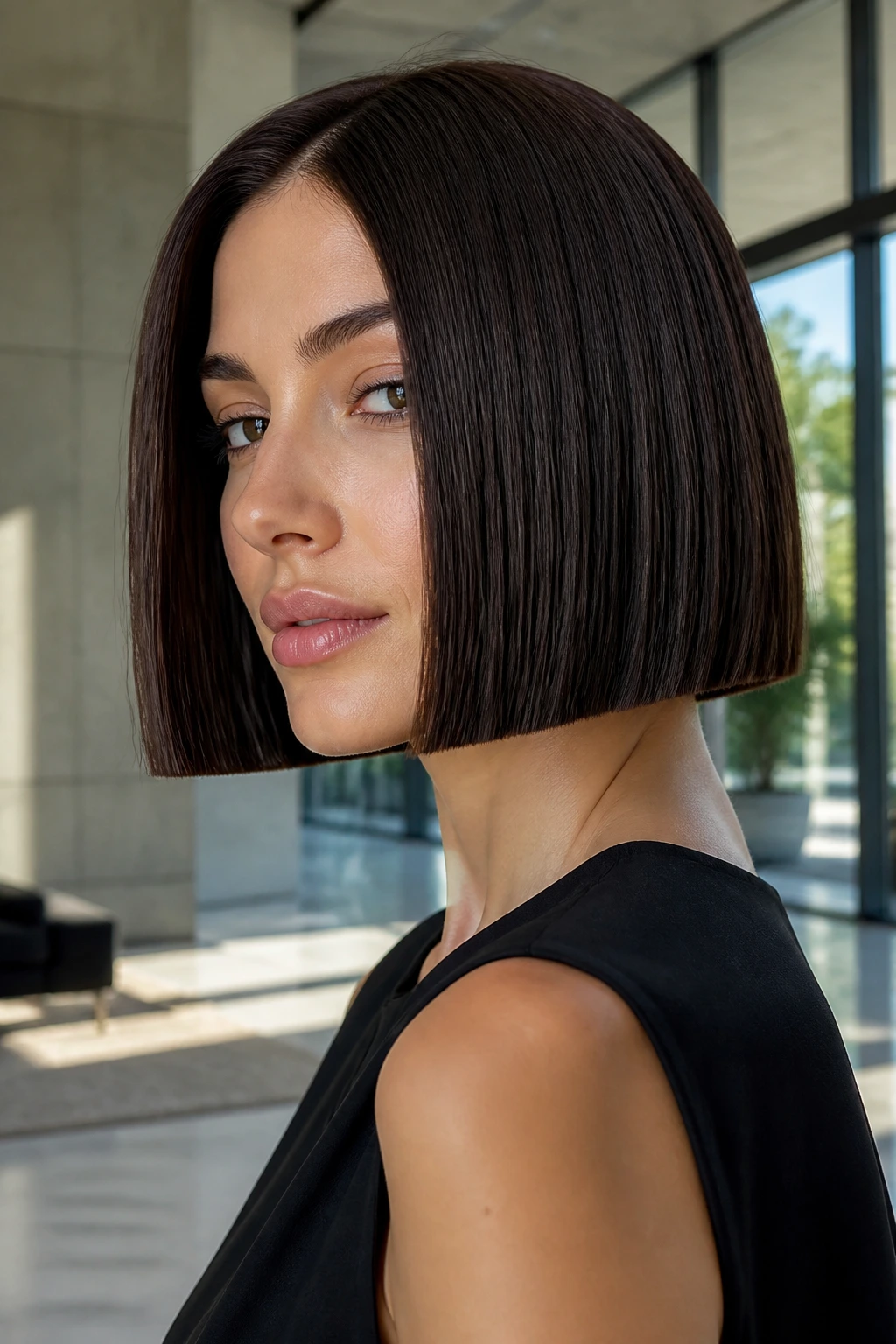
The box bob is blunt, square, and unapologetic. It creates a strong frame around the face, which can make thin hair look fuller and give fine hair a heavier edge.
The catch is that it can feel too rigid if the hair is already dense or if the length sits too high on the jaw. In that case, a tiny bit of internal softening helps. But if you like a neat line and don’t mind a bolder outline, this shape has real presence.
18. Razor-Cut Bob
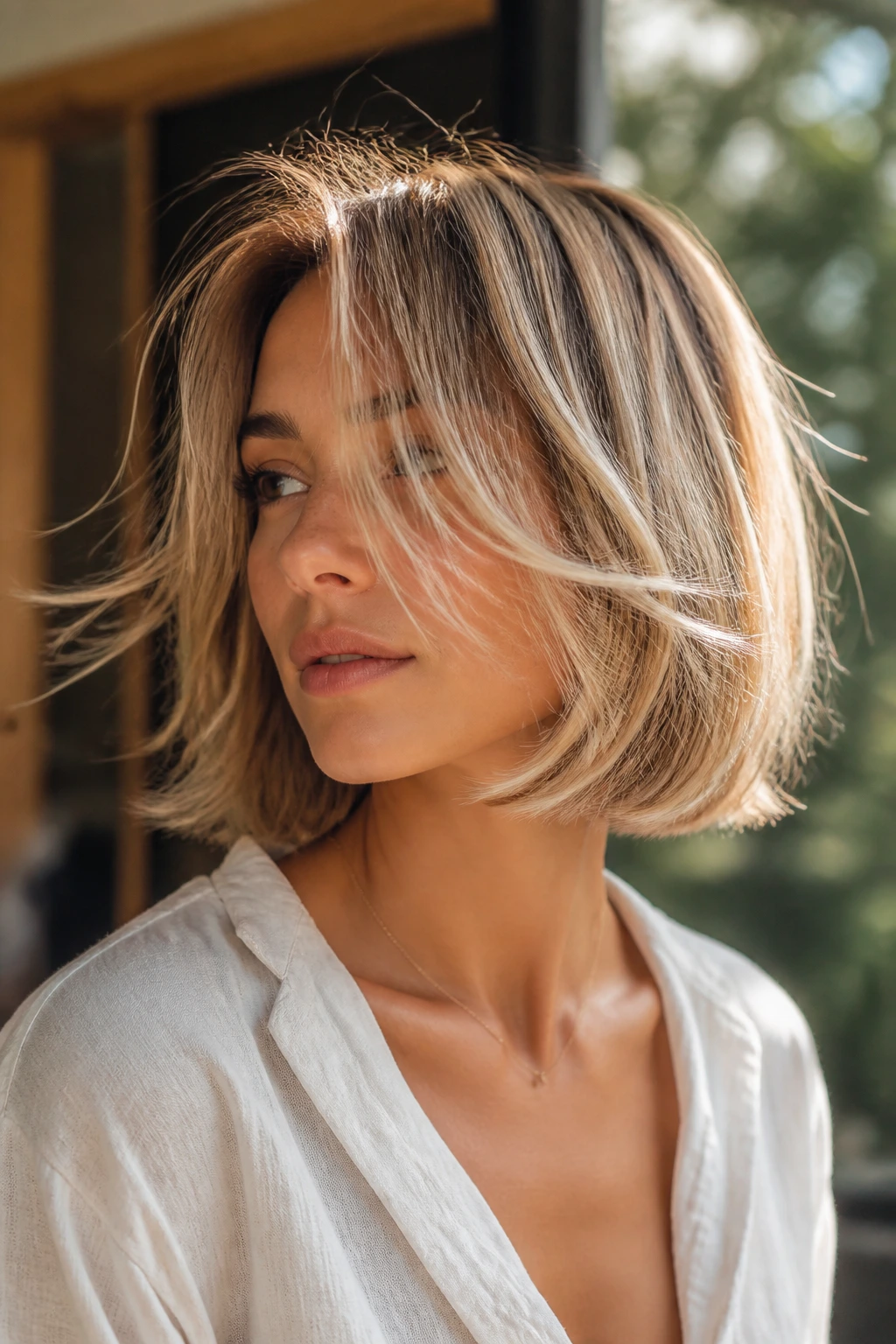
A razor-cut bob has softer ends than a scissor-cut blunt bob. The edge looks a little feathered, a little broken up, which can be lovely on medium hair with movement.
The razor makes the finish lighter, but it needs a careful hand. On fragile or very dry ends, too much razor work can make the hair look wispy in a bad way. Best on hair that already has some natural slip and can handle a softer edge.
19. Feathered Bob for Fine Hair
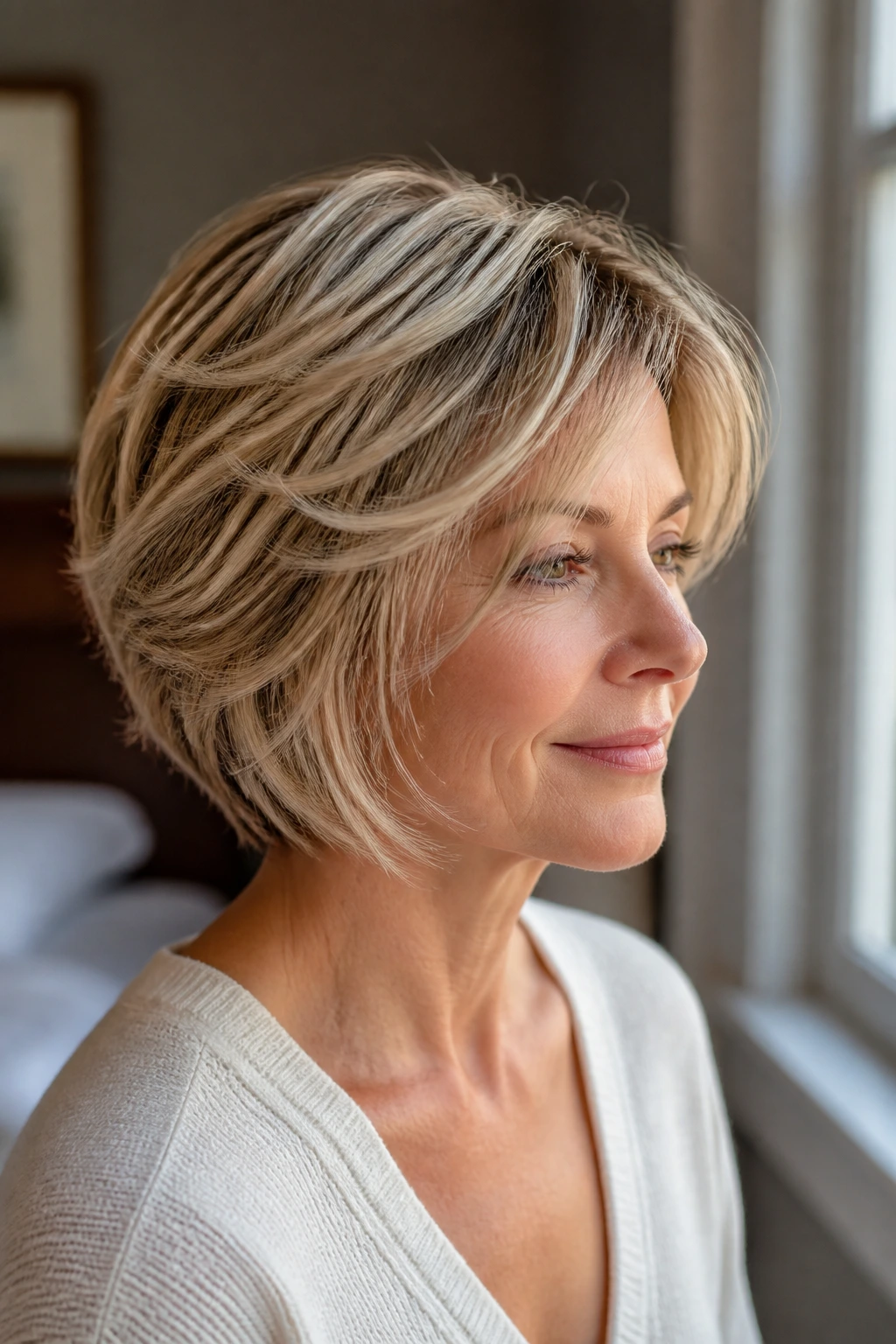
Fine hair usually benefits from movement that doesn’t steal too much weight. That’s where feathering helps. The layers are airy, the ends are soft, and the cut keeps enough structure that the hair doesn’t collapse by noon.
What to Ask For
Request internal feathering rather than a heavy chop through the top. A root-lifting mousse and a round brush can give the crown a little help, but the cut has to do the bigger job. If the hair is too thin at the ends, the bob will look stringy instead of full.
This is one of the best bob haircuts for women who want body without a lot of daily effort.
20. Micro Bob
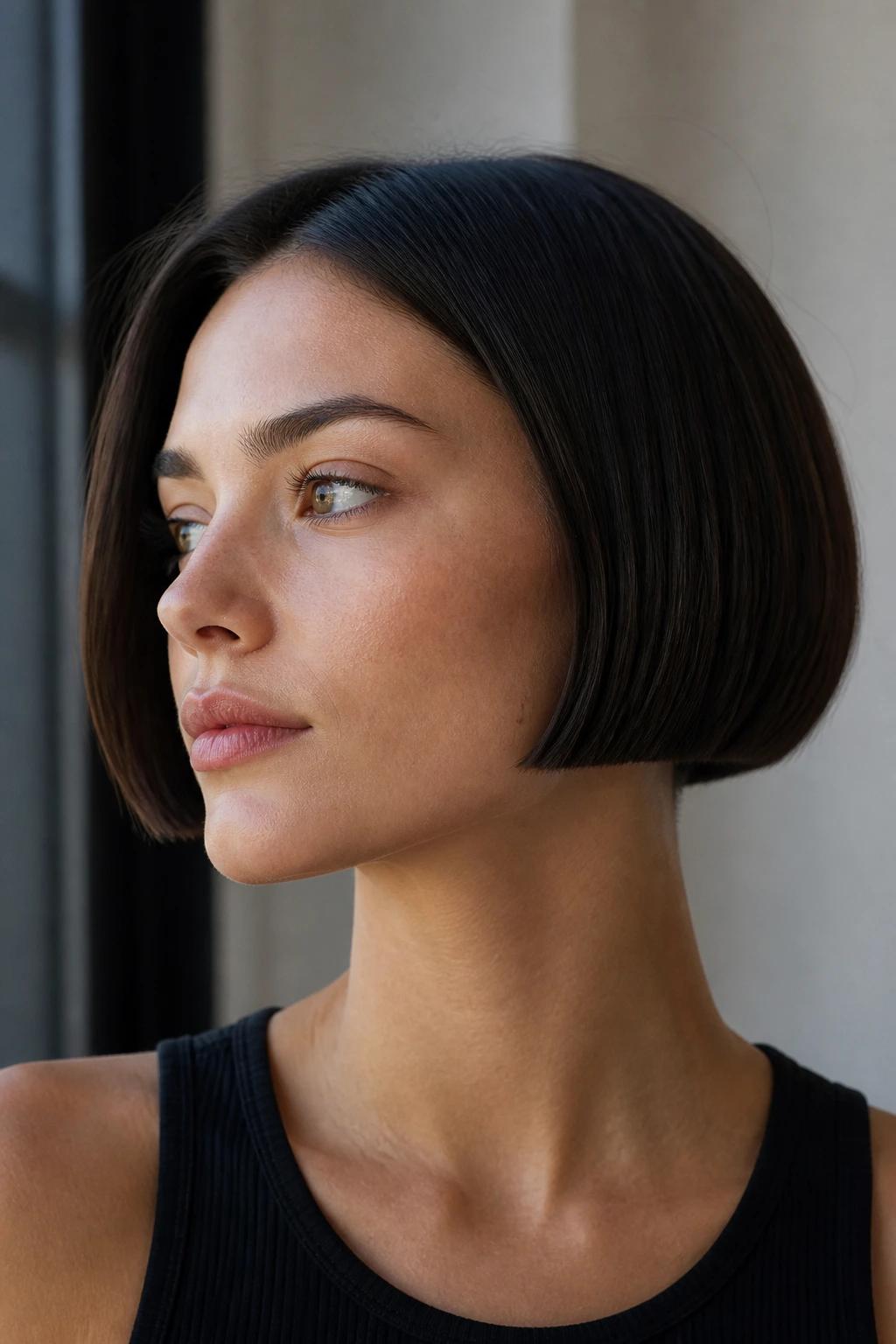
The micro bob is short enough to show the neck and jaw clearly, and that’s exactly why it feels so clean. It’s a bold cut, no sugarcoating it.
It works best on straight to softly wavy hair, especially when the hairline and neckline are neat. You do lose some styling flexibility, so this is not the cut for someone who wants to put hair up every other day. But if you like a sharp outline and minimal fuss, the micro bob has a crisp little confidence to it.
21. Graduated Bob
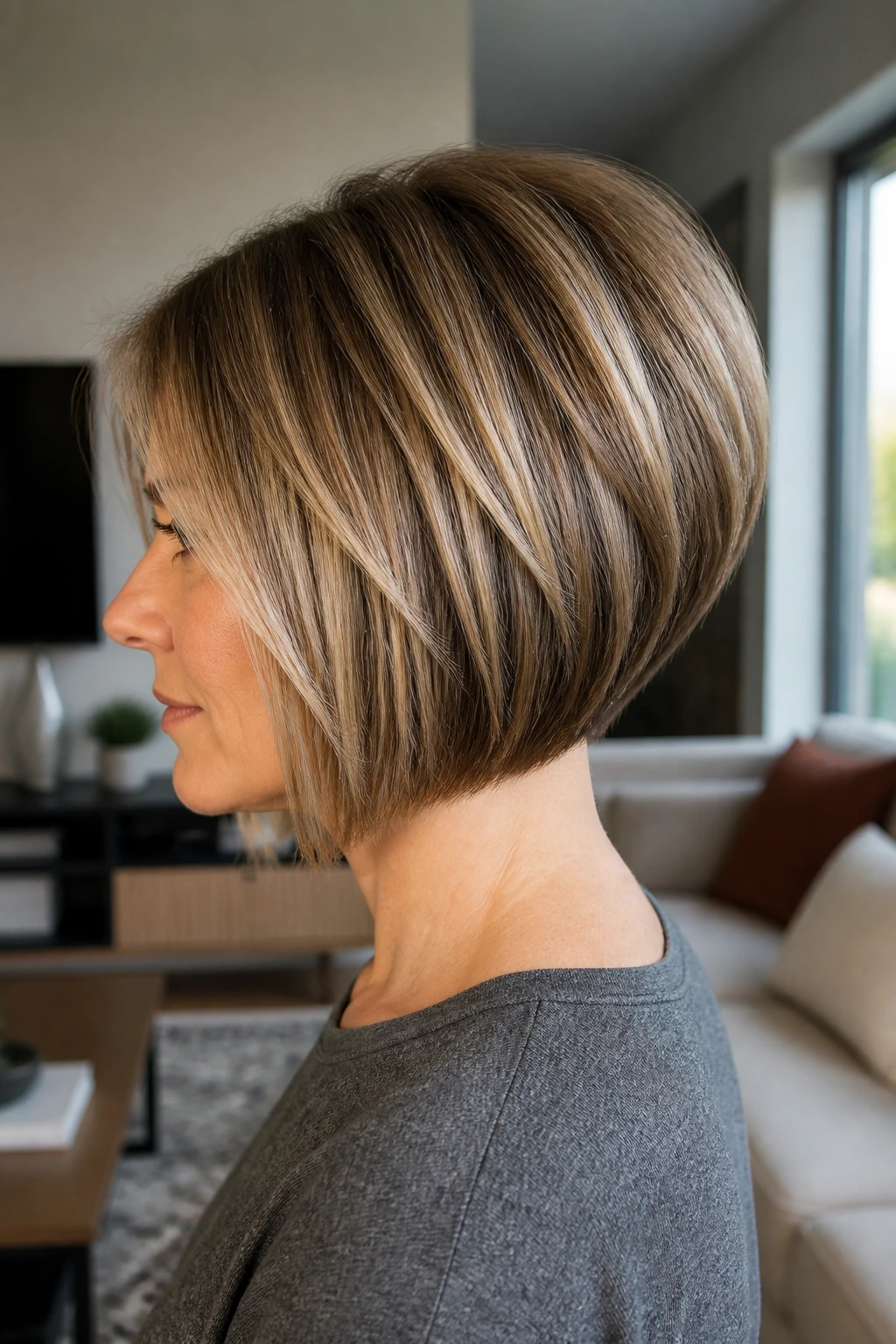
A graduated bob is like a stacked bob with a smoother, more blended transition from back to front. The graduation builds fullness at the crown, but it doesn’t scream about it.
That makes it a strong choice for anyone who wants lift without a dramatic angle. The shape is particularly good for hair that sits flat at the back of the head. A round brush at the roots and a quick bend under the ends finish the job.
22. Tousled Bob with Curtain Bangs
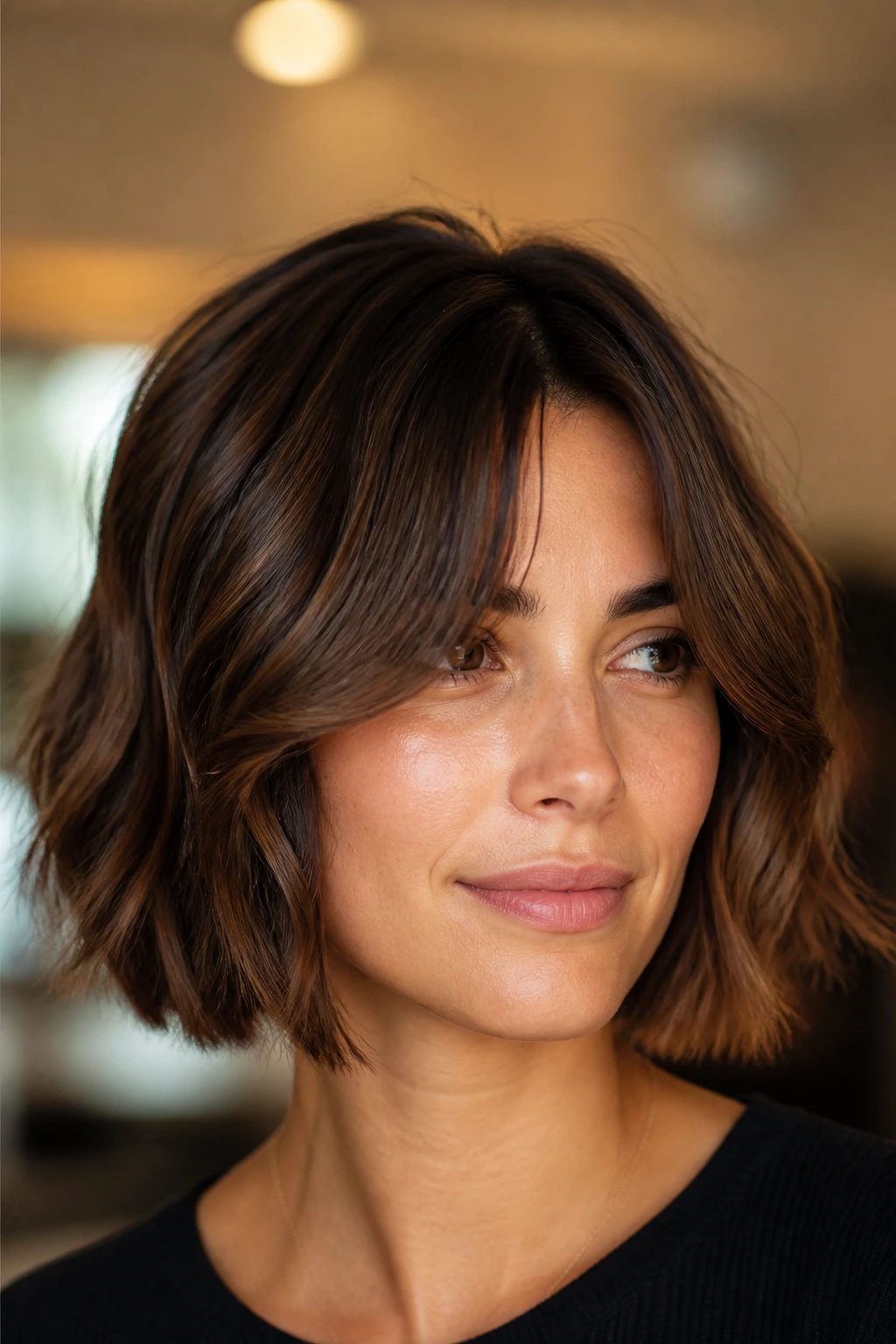
Curtain bangs soften the front of a bob in a way that feels easy rather than precious. They part in the middle or just off-center and blend into the sides, so the haircut moves around the face instead of stopping abruptly.
This is a nice match for wavy hair or hair that likes to hold a loose bend. Use a large round brush or a blow-dryer brush to sweep the bangs away from the center. If the bangs are too short, the effect gets fussy. Longer is safer here.
23. Sleek Center-Part Bob
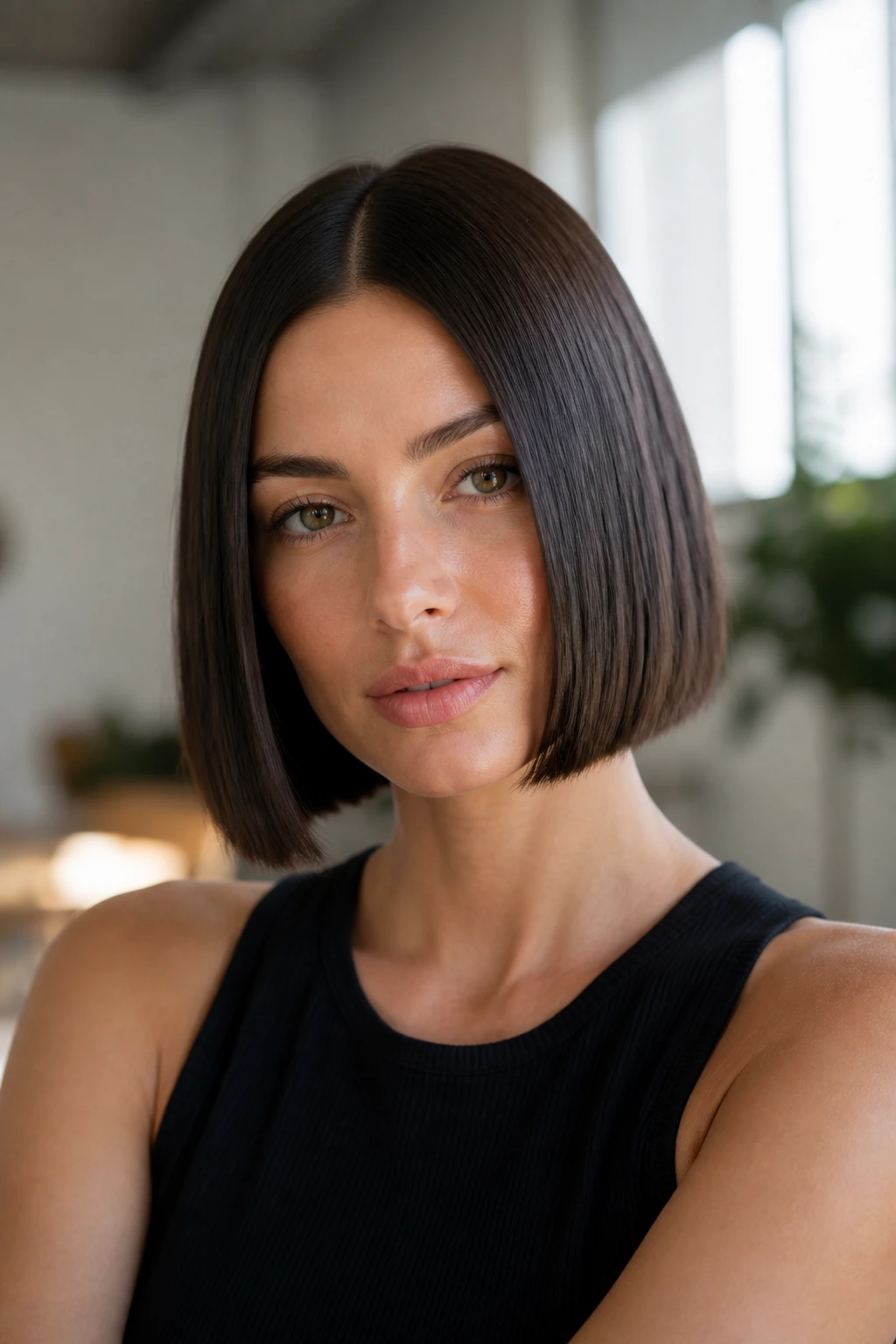
A center part makes a bob feel symmetrical, sleek, and a little severe in the best way. It works especially well when the ends are straight and the outline is clean.
Oval and heart-shaped faces usually wear this shape easily, but the real key is hair that can stay smooth through the crown. A heat protectant, a flat brush blow-dry, and a final pass with a flat iron are often enough. Don’t load the ends with oil. The shine should come from smoothness, not grease.
24. Bixie-Bob Cross
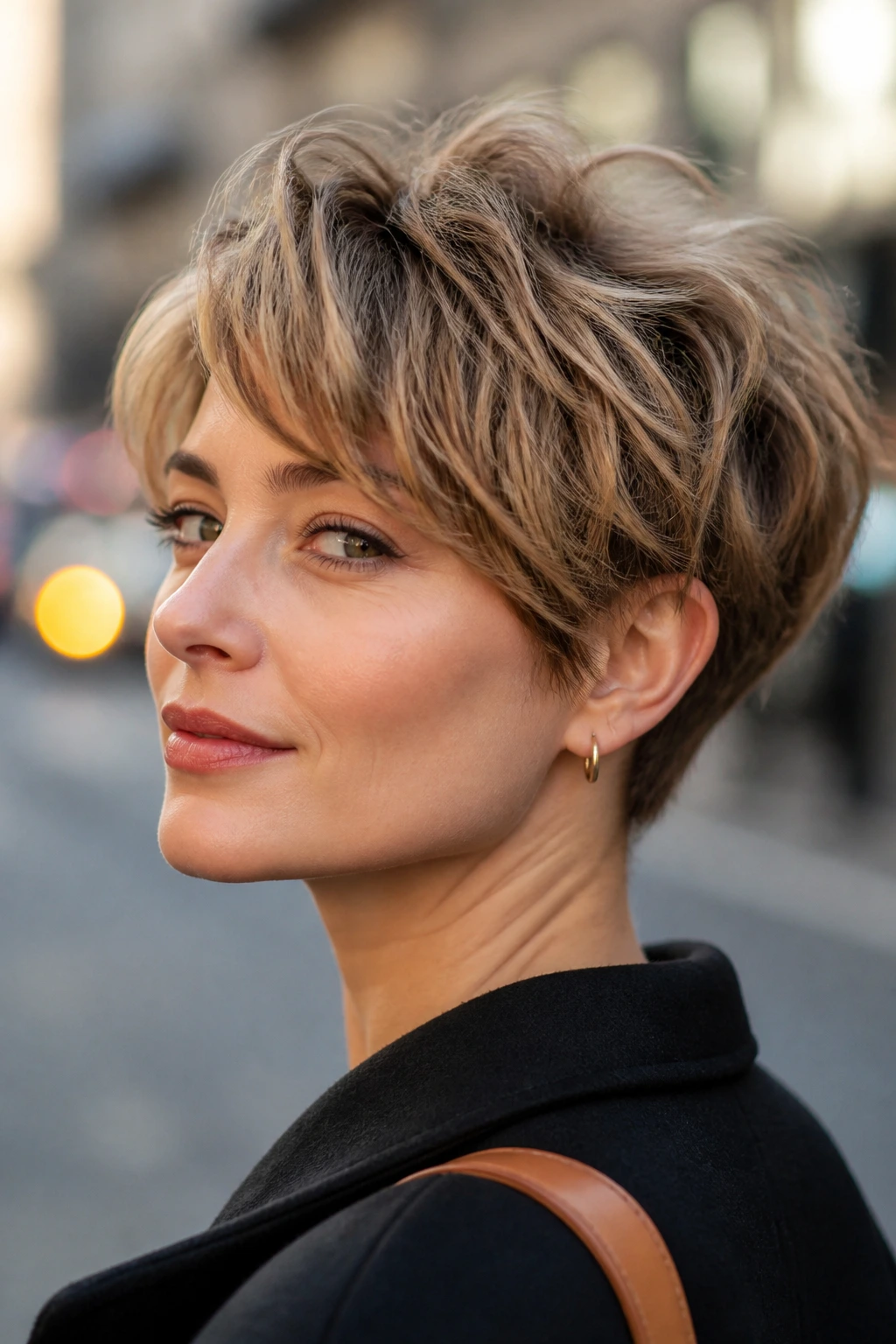
The bixie-bob mixes bob length with a pixie-like top, so it feels short and airy without going full crop. The crown usually keeps extra movement while the sides stay close to the head.
This one has a playful edge and works well on fine hair that needs shape more than length. It also helps if you want a shorter cut that doesn’t sit as flat as a classic bob. A small amount of texture paste at the crown can give it the piecey finish it likes.
25. Blended Bob for Gray Hair

Gray and silver hair often looks best in a bob when the cut keeps the line soft and the movement gentle. The hair can be coarser or drier, so too much bluntness can feel harsh.
A blended bob with subtle layers lets the texture breathe. Shine serum helps a lot here, because gray hair can take on a dull cast if it’s over-finished with heavy products. If you wear highlights or lowlights, the bob shape shows them off without needing a complicated style.
26. Soft Undercut Bob
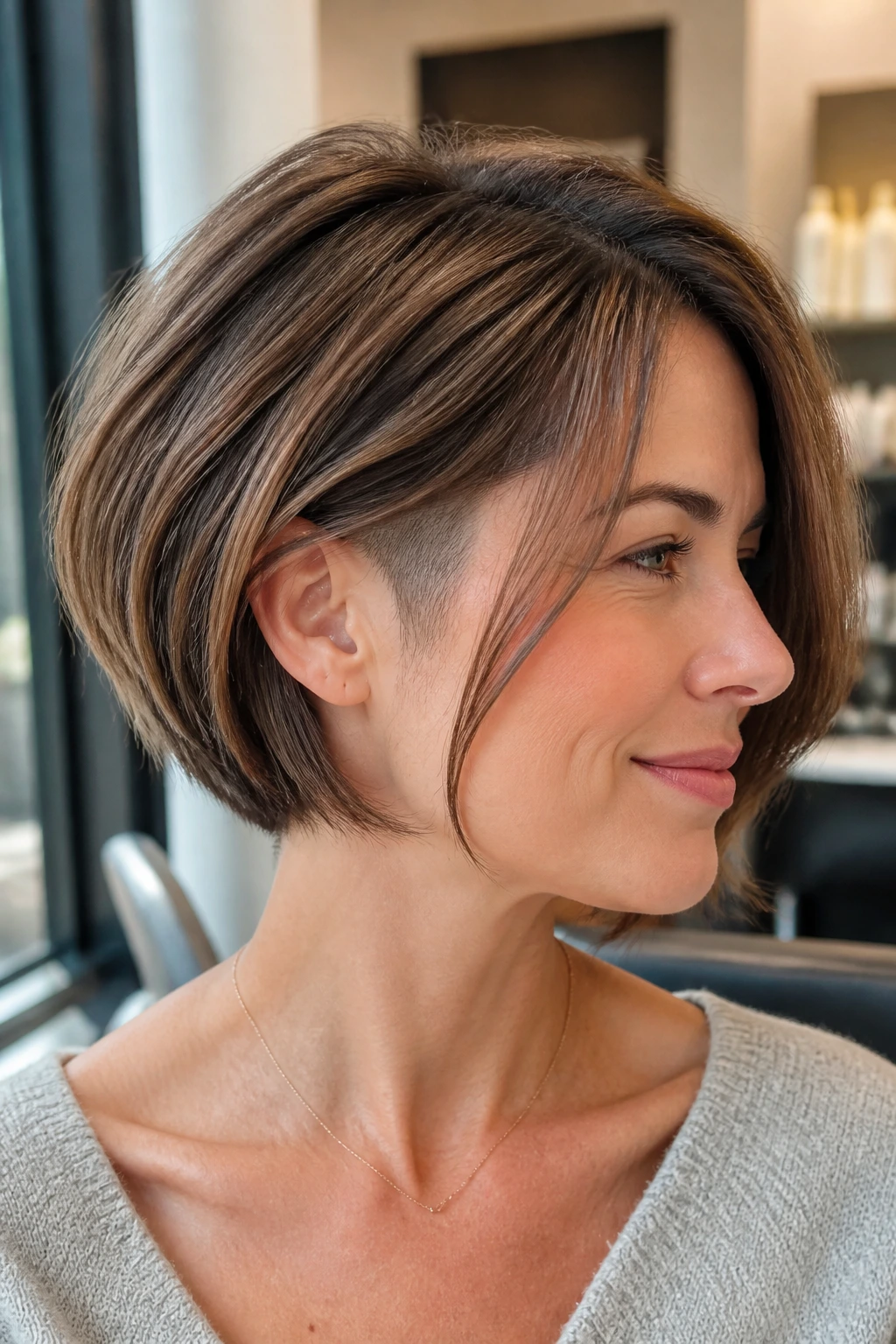
A soft undercut removes bulk from underneath while leaving the top layer looking like a normal bob. That’s the secret. You get less puff at the sides, but the haircut still reads polished from the outside.
It’s a practical answer for thick or dense hair that gets hot around the ears and neckline. You won’t always see the undercut, and that’s the point. If the hair starts ballooning when it grows out, a quick cleanup under the top layer puts it back in line.
27. Beachy Bob

The beachy bob leans into soft bends and piecey movement, not uniform curls. It’s a relaxed shape that works best when the hair has a little natural wave or can hold one with a wand.
A salt spray or wave mist on damp hair gives the ends some grit. Then wrap a few random pieces around a 1-inch wand and leave the rest alone. The danger is overdoing it. If every strand is curled the same way, it loses the easy feel that makes this cut work.
28. Elegant Bob with Tucked Ends
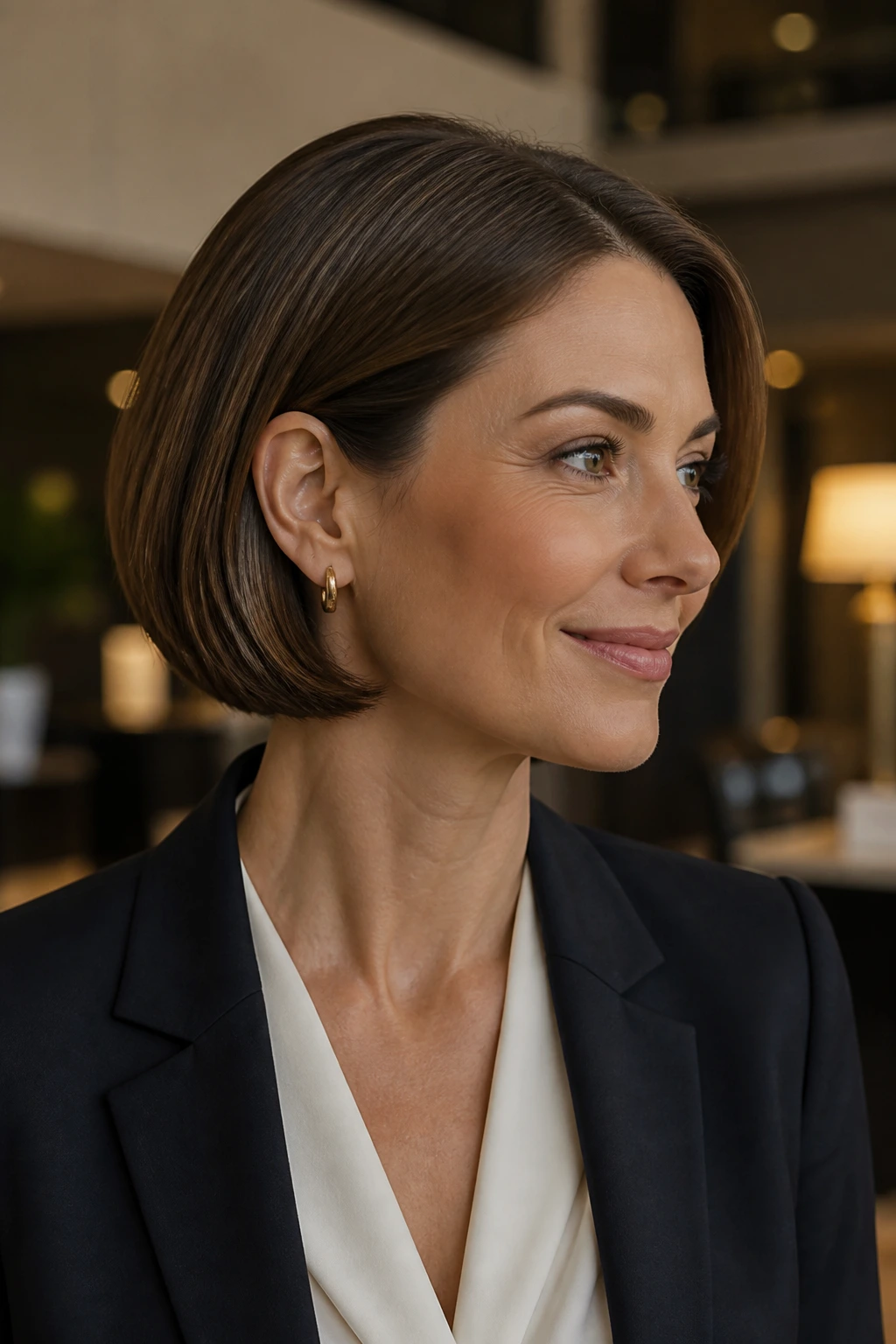
A tucked-end bob has a neat curve at the bottom and looks especially good when the hair is smoothed behind the ears or tucked under a coat collar. It’s tidy without being severe.
This version suits work, events, or any day when you want the haircut to behave. A light smoothing cream, a round brush, and a final pass of the dryer along the ends are usually enough. The shape should look softly turned in, not curled under hard like a page in a textbook.
29. Low-Maintenance Air-Dry Bob

Some bobs need a brush, a dryer, and a little patience. This one is cut to settle on its own.
The length usually lands somewhere between jaw and collarbone, with enough structure in the perimeter that the hair doesn’t explode as it dries. It’s a smart choice for wavy hair, especially if you’re not interested in a full styling routine every morning. A leave-in cream and a small amount of curl cream or mousse are usually enough to keep the shape from frizzing out.
30. Glossy Finish Bob
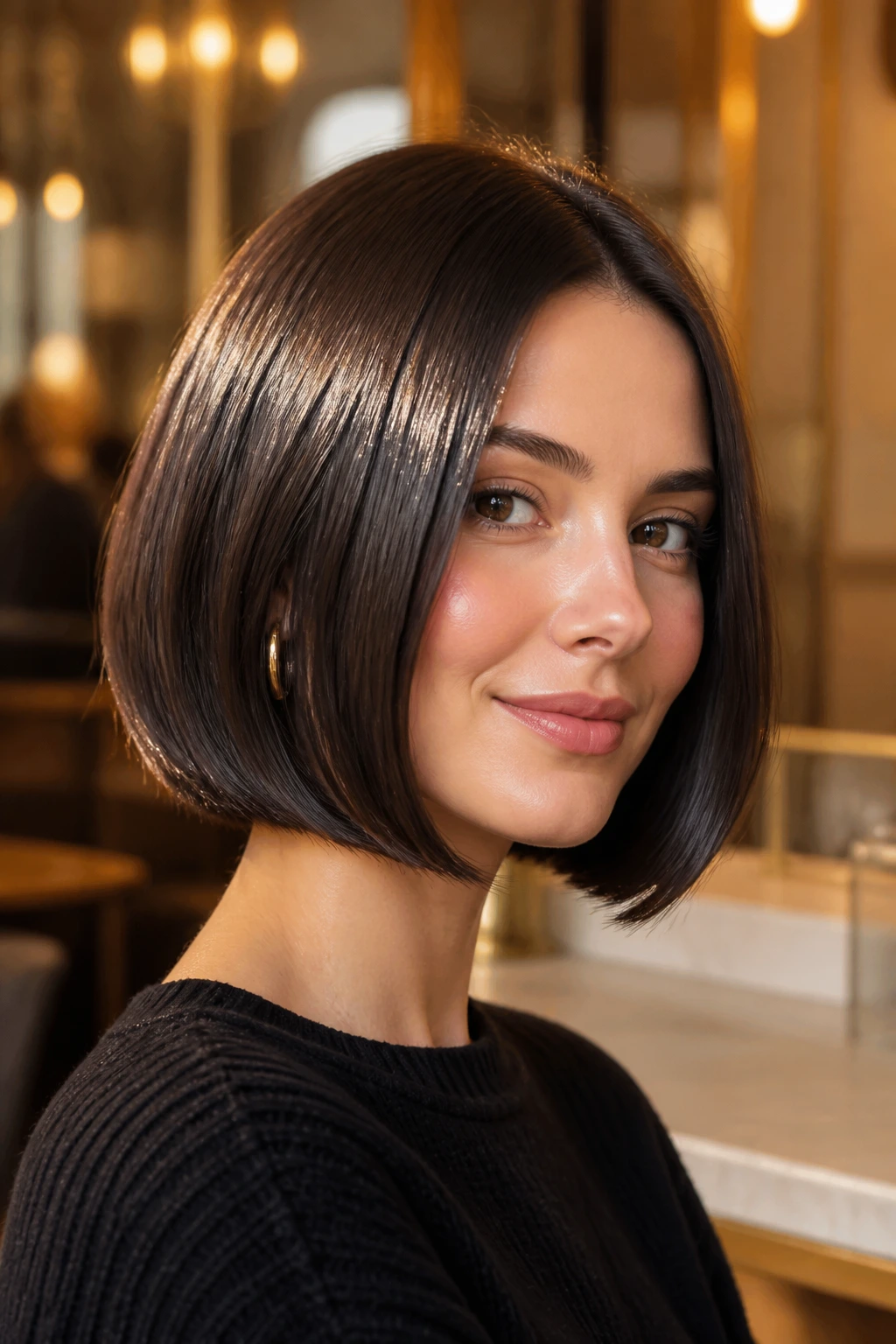
The glossy finish bob is less about a specific cut and more about the way the cut is worn. The ends are smooth, the surface is reflective, and the whole look depends on polish.
It works on blunt, A-line, and collarbone-length bobs especially well. A blow-dry with tension, a light serum, and a cool-shot finish can make the hair look like it’s been pressed into place. I like this version when a bob needs to feel a little dressed up without adding any extra length.
Why Bob Haircuts for Women Work So Well on Real Hair
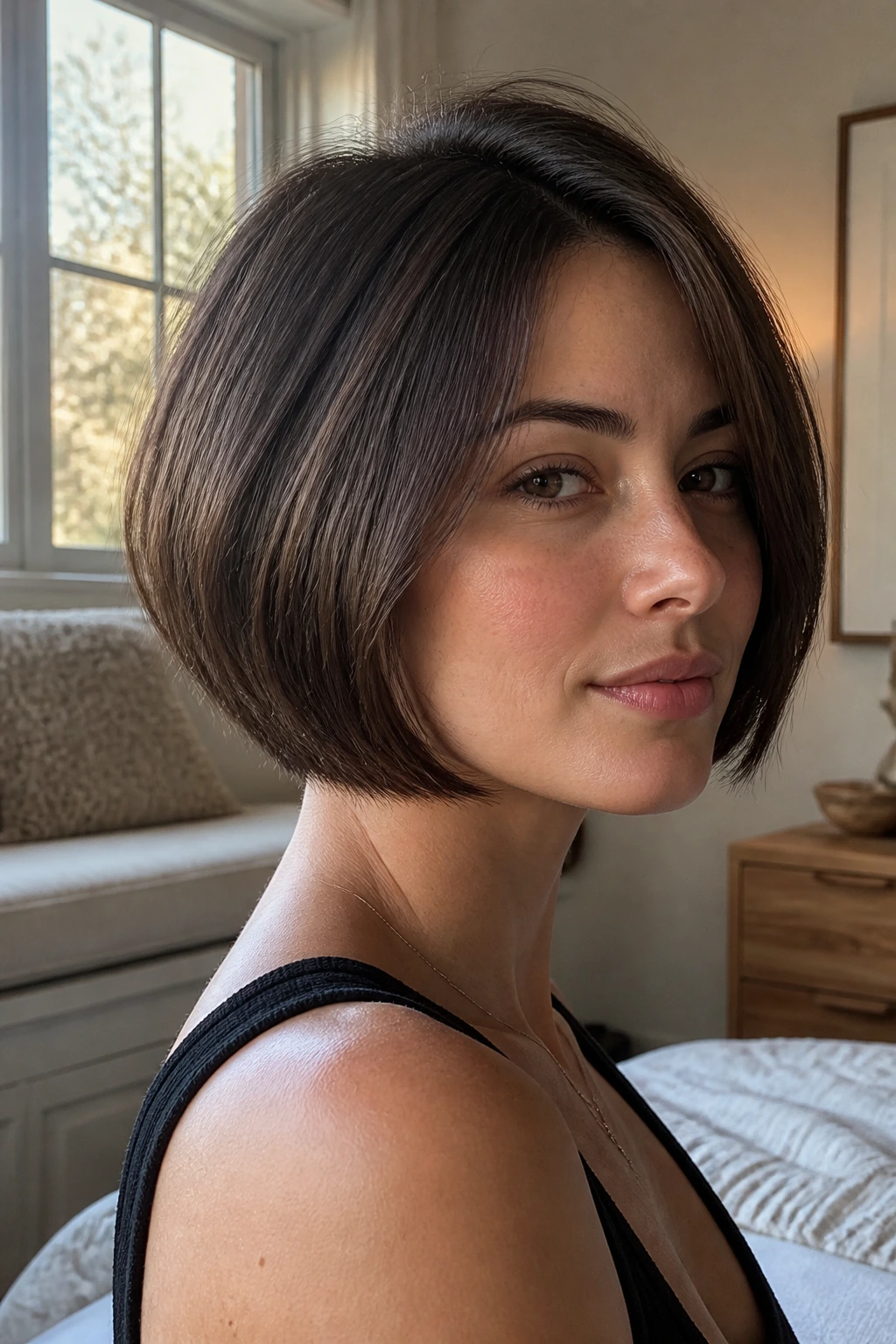
The bob earns its place because the outline matters more than the size. A haircut that stops at the jaw, the chin, or the collarbone changes the way the face sits in the frame, and that is hard to fake with long layers. The bob puts the edges where people can actually see them.
The perimeter does the heavy lifting
A clean perimeter can make hair look denser, tidier, and more intentional. That’s why blunt bobs are such a favorite for fine hair and why layered bobs need careful balancing on thick hair. Once the line is in the right place, the rest of the cut has more room to behave.
Weight, crown shape, and neck exposure all matter
A bob can sharpen a profile, lengthen a neck, or soften a strong jaw depending on where the weight sits. A little graduation at the back lifts the crown; a longer front narrows the face; a tucked-end shape keeps the neckline open. Small changes. Big payoff.
Texture decides the final mood
Straight hair makes a bob look graphic. Wavy hair makes it feel softer. Curly hair turns the same cut into something much more dimensional. That’s why a good bob isn’t one recipe. It’s a shape tuned to the hair’s own habits.
The Tools That Keep a Bob Looking Intentional
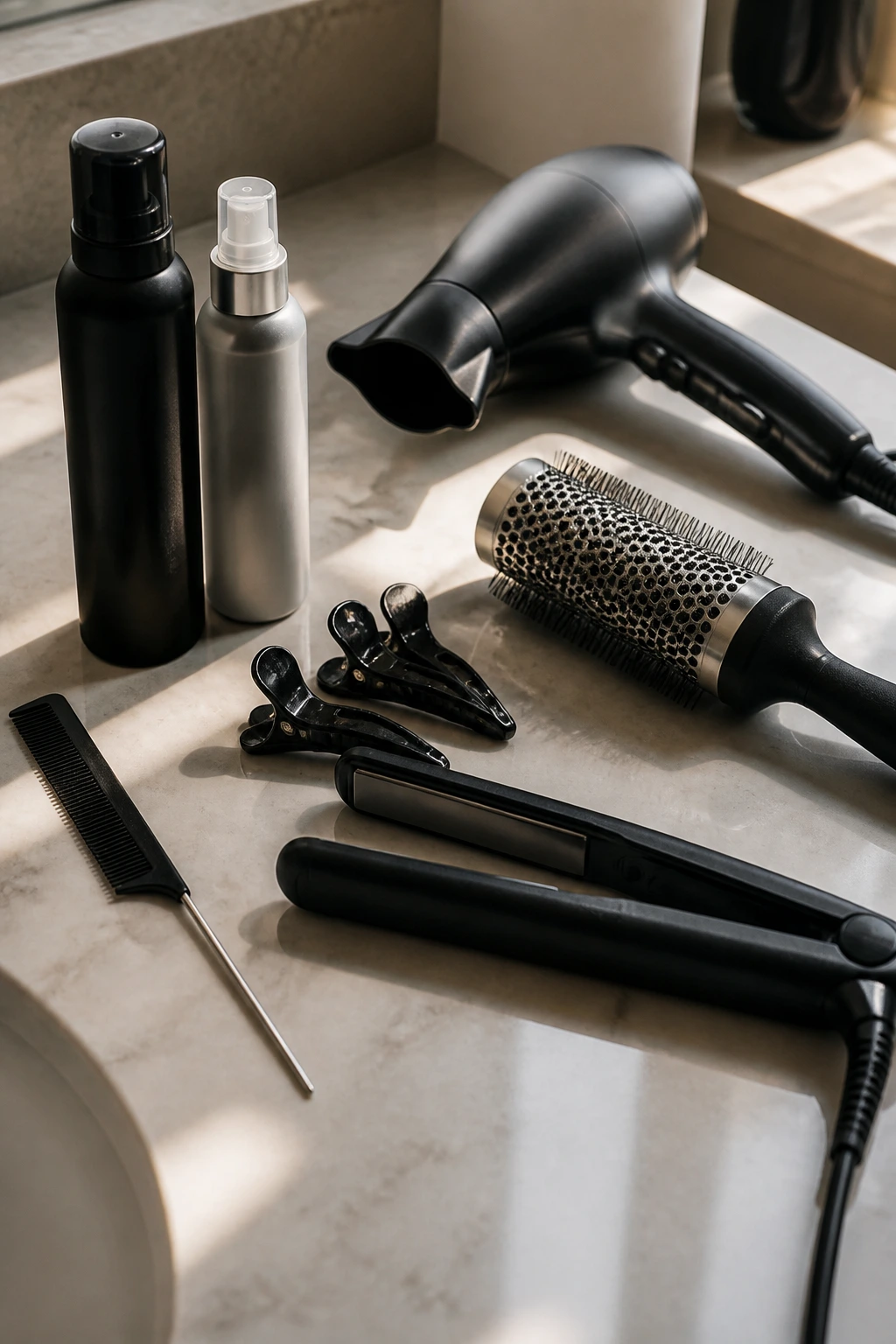
You do not need a drawer full of gadgets, but a few tools make bob life easier. The right gear keeps the ends smooth, the part clean, and the neckline neat.
- Tail comb: Useful for making a precise part and checking where the weight line falls.
- Sectioning clips: They keep the top layers out of the way while you dry the bottom cleanly.
- Blow-dryer with nozzle: The nozzle helps direct the hair so the ends don’t frizz in every direction.
- 1-inch to 1.25-inch round brush: Good for bending the ends under or adding a soft curve near the cheekbones.
- Flat iron with rounded edges: Helpful for sleek bobs and polished finishes without hard crease marks.
- Lightweight mousse: Gives lift at the roots without turning the bob stiff.
- Texturizing spray: Handy for shaggy, beachy, and piecey finishes.
- Smoothing cream or serum: Use a small amount on blunt and glossy styles; too much makes the cut fall flat.
- Hand mirror: Worth it for checking the back, especially on stacked and inverted bobs.
- Silk or satin pillowcase: Not glamorous, just useful. It cuts down on morning fuzz at the ends.
How to Ask for the Bob You Actually Want
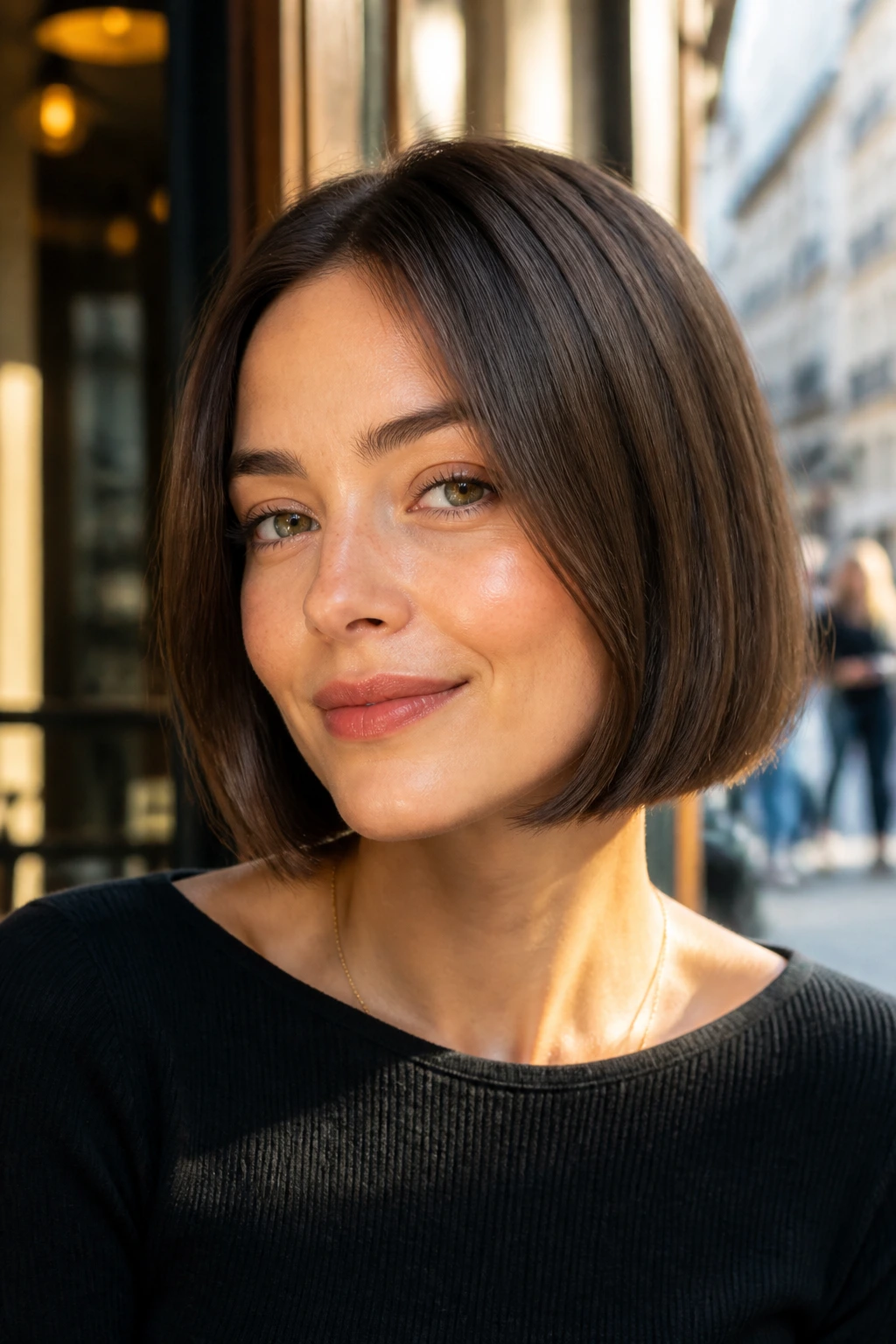
Bring photos, yes, but also bring words. A picture shows the mood; the details tell the stylist what the haircut has to do on your head.
Say where you want the shortest point to sit. Chin, jaw, collarbone, nape. Those are not interchangeable. If you tuck your hair behind one ear every day, say that too, because it changes how the front should be cut.
Mention your usual routine. If you air-dry, the stylist should not hand you a shape that only works with a 20-minute blowout. If your hair puff out at the sides, say it plainly. If you love volume at the crown but hate bulk at the cheeks, say that too. A good bob starts with those little realities, not with a vague wish for “something shorter.”
How to Style a Bob Without Fighting It
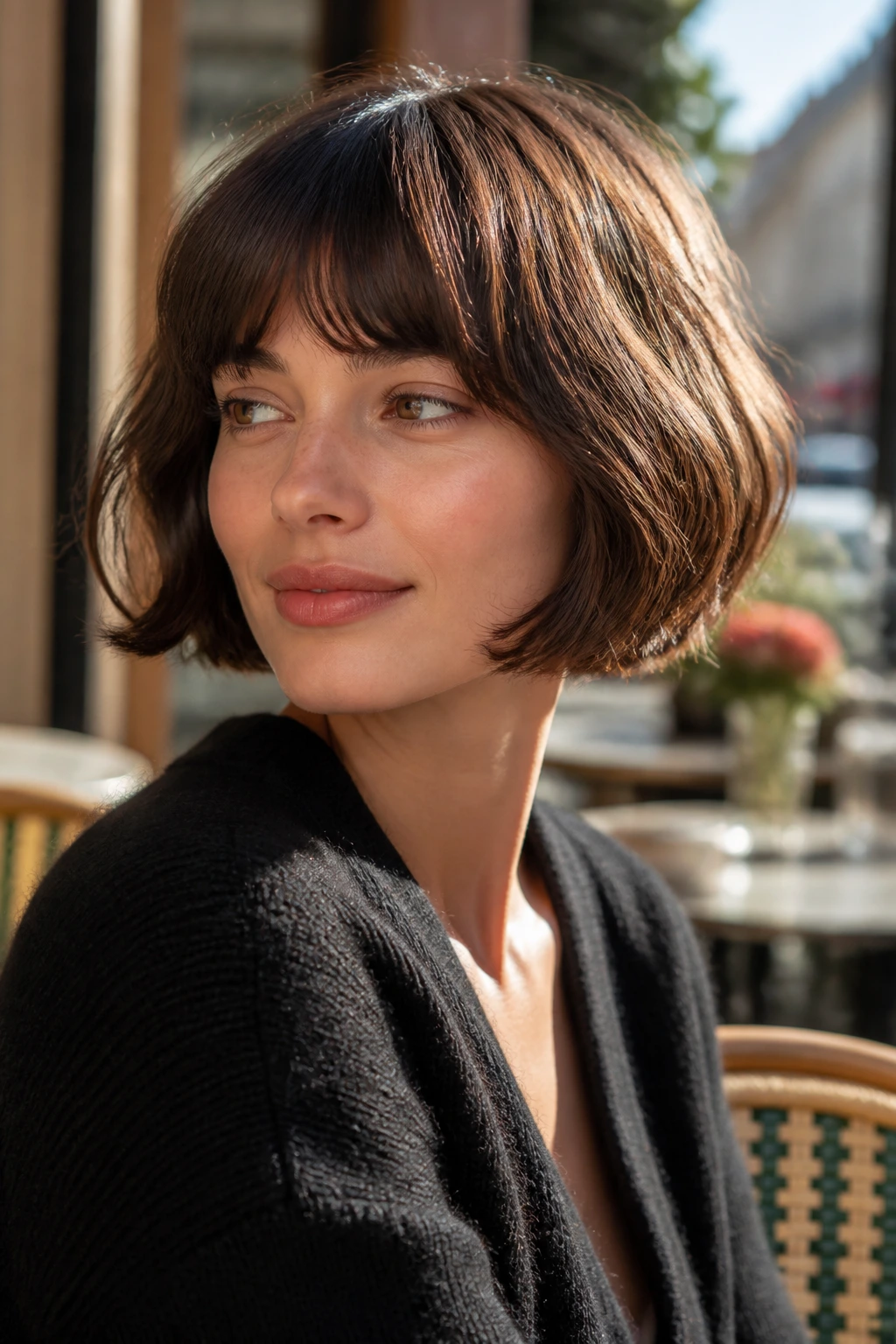
A bob looks best when the styling matches the cut. Don’t try to force every version into the same finish. That’s how hair ends up puffy at the wrong spot or too flat where it should move.
Sleek and bent under
Use a heat protectant, blow-dry with a nozzle, and turn the ends slightly under with a round brush or flat iron. This works beautifully on blunt, A-line, and elegant tucked-end bobs. Keep the product light. The line should still read.
Air-dried and piecey
Scrunch in a small amount of mousse or curl cream and let the hair dry with its natural bend. This suits shaggy, beachy, and textured cuts. If you touch it too much while it dries, the ends frizz.
Lifted at the crown
Flip the part while the roots are damp, then dry the hair in the opposite direction for a few minutes before settling it back. That tiny trick helps side-part and graduated bobs keep a little height. It’s simple. It works.
Common Mistakes That Make the Shape Fall Flat
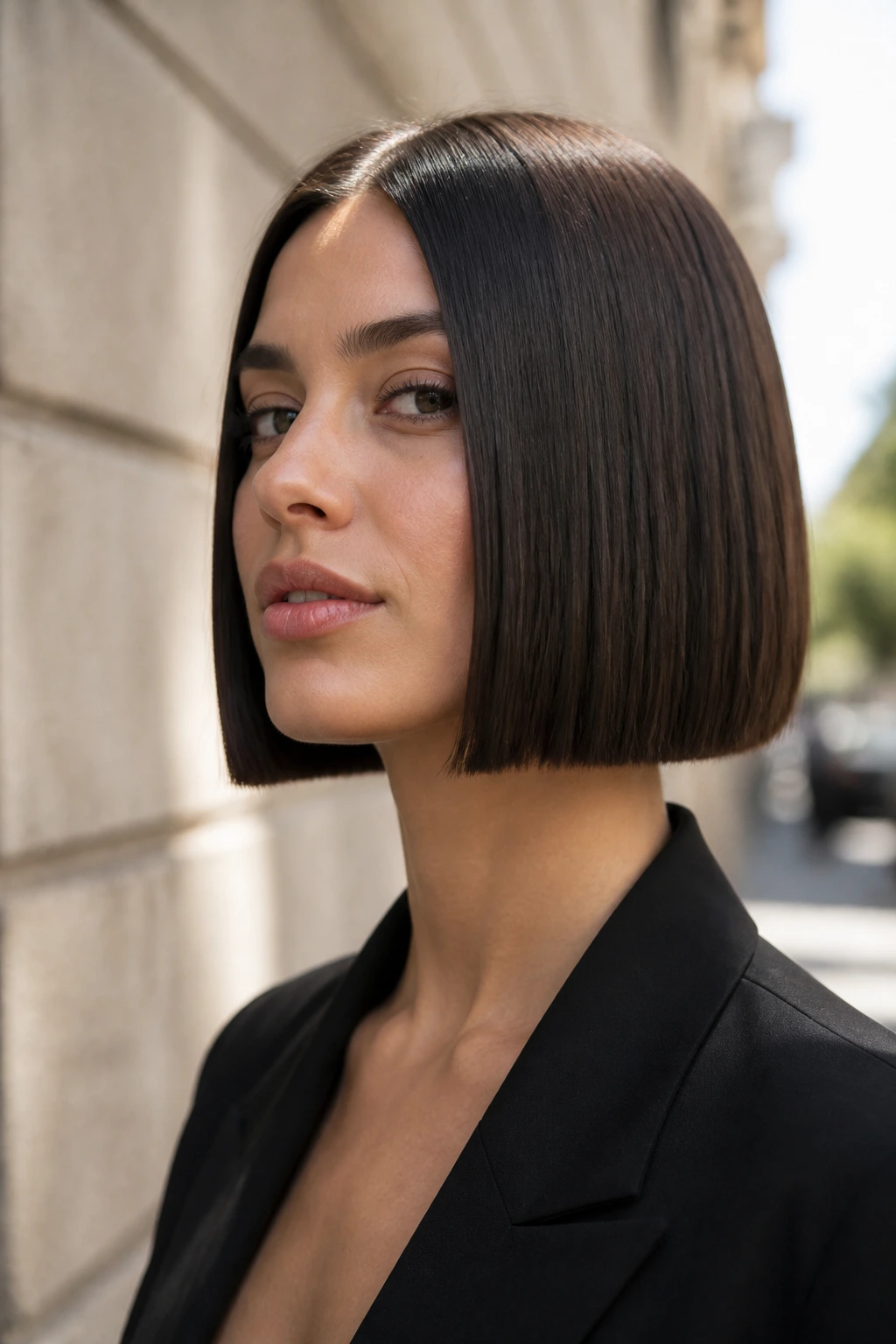
A bob can look expensive or awkward based on one or two decisions. The mistakes are usually small, which is why they’re easy to repeat.
- Ending the line at the widest part of the face: This can make cheeks or a strong jaw look broader. Shift the length a little lower or angle the front pieces forward.
- Too many layers on fine hair: The cut loses its edge and starts to look sparse. Keep the perimeter visible and let the layers stay subtle.
- Not removing enough bulk on thick hair: The bob puffs out at the sides and grows wide by afternoon. Interior debulking fixes that.
- Ignoring cowlicks and parts: Hair fights back in the same places every day. Cut with those habits in mind, not against them.
- Using too much product: Heavy creams and oils make the ends collapse. Start small. Add only if the hair asks for it.
- Skipping regular trims: A bob loses its shape faster than longer cuts. A half-inch of growth can change the whole silhouette.
Variations and Adaptations to Try
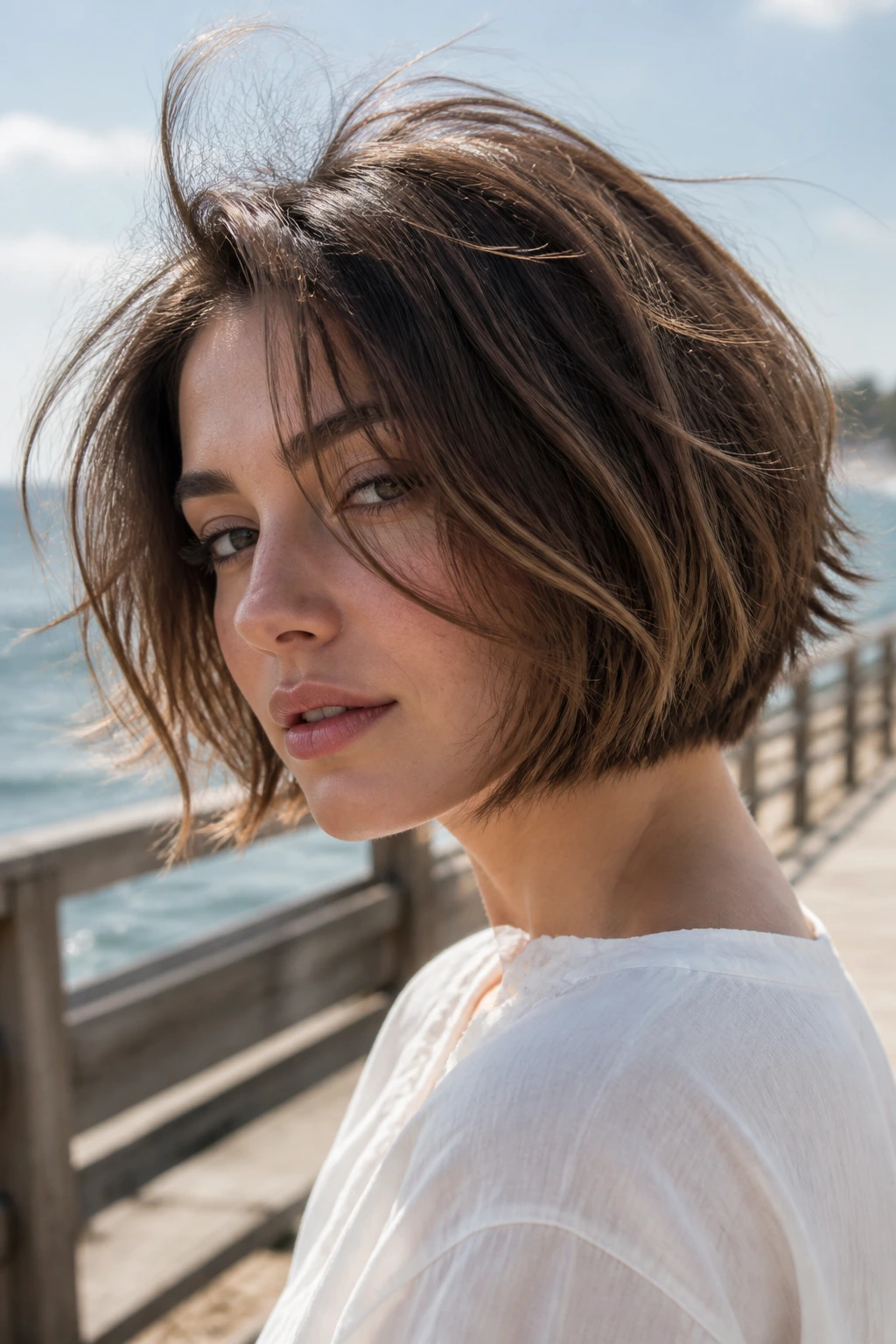
- Soft Fringe Swap: Add a wispy fringe to a blunt or collarbone bob if you want more face framing without a heavy bang. It softens the forehead and makes the cut feel less severe.
- Deep Side-Part Shift: If your current bob feels flat, move the part and keep it there for a few weeks. The asymmetry gives you lift without changing the haircut itself.
- Curl-Friendly Length: Let curly bobs sit a little longer than you think, then shape the outline around the curl pattern. A cut that looks too short wet often lands at the right place once it dries.
- Gloss Finish Upgrade: A shine serum or clear gloss can make a blunt or center-part bob look cleaner without changing the cut. Use a small amount; you want reflection, not slip.
- Grow-Out Lob: If you’re between short and medium, let the bob drift to collarbone length and keep the ends tidy. It buys time and still looks intentional.
- Piecey Texture Twist: On shaggy or beachy bobs, add a texturizing spray to the mids and ends, then separate a few pieces with your fingers. The shape gets movement without losing its outline.
Keeping the Shape Sharp Between Salon Visits
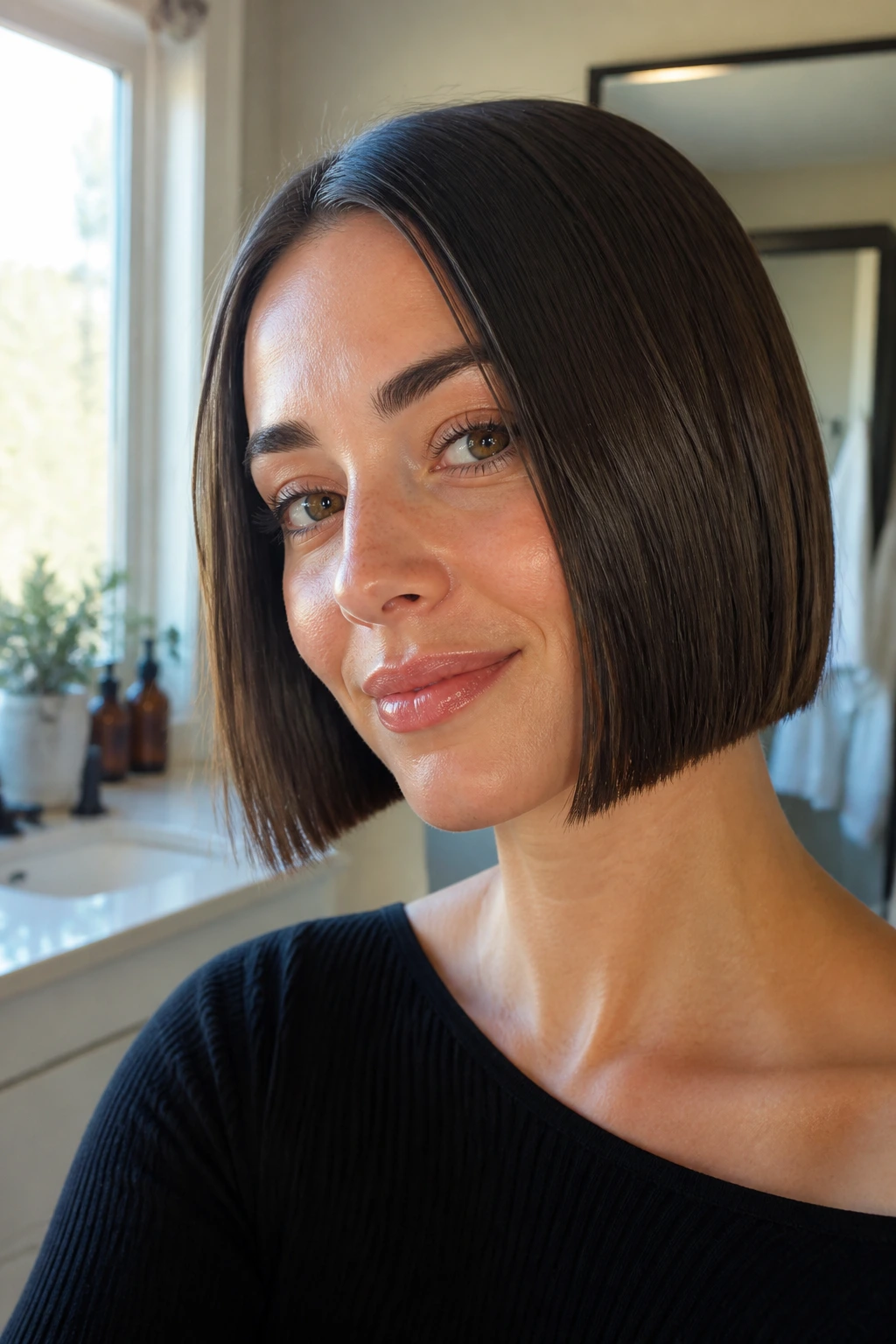
A bob asks for more upkeep than long hair, but not in a needy way. Think maintenance, not drama. A blunt bob usually wants a trim every 5 to 6 weeks if you want the line to stay crisp. Layered, shaggy, or lob-length bobs can often go 6 to 8 weeks before they start losing their shape.
Bangs need their own schedule. A fringe can need a small cleanup every 2 to 3 weeks, especially if it sits at brow level. That tiny trim changes how the whole haircut reads.
At home, dry shampoo can save a flat crown, and a light mist of water plus a round brush can reset the ends on day two. If the neckline starts flipping out, a quick pass with a flat iron on the lowest setting usually settles it down. Sleep on a silk pillowcase if the ends puff up overnight. It’s a small thing. It helps.
Frequently Asked Questions
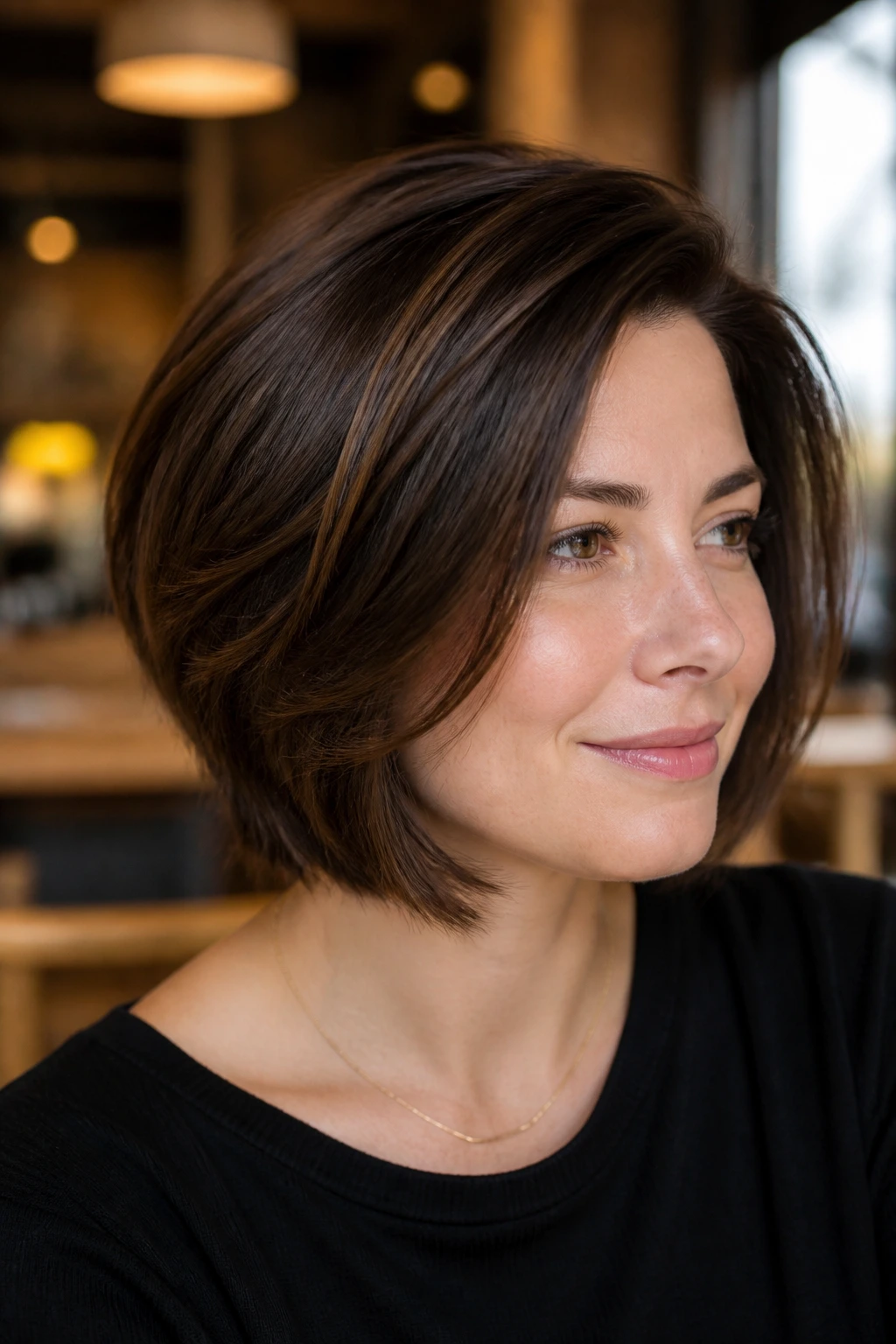
Which bob is most flattering for round faces?
Longer front pieces usually help most, because they create a vertical line and keep the haircut from sitting at the widest part of the cheeks. An A-line, collarbone bob, or jaw-grazing cut with a side part tends to work better than a blunt line that stops at the cheek.
Are bob haircuts good for fine hair?
Yes, if the cut keeps a strong perimeter and avoids too much internal thinning. Blunt bobs, feathered bobs, and soft stacked shapes can make fine hair look fuller because the ends have a clear edge.
What bob is easiest to air-dry?
A collarbone bob or low-maintenance air-dry bob usually behaves best with minimal effort. The cut should follow the hair’s natural bend, not fight it, and a small amount of leave-in cream can keep the ends from frizzing.
Will a bob work on thick curly hair?
It can, but the cut has to respect curl shrinkage and bulk. A dry-cut curly bob with controlled layering usually keeps the shape from puffing out too wide, and a diffuser helps the curls hold the outline.
How often should a bob be trimmed?
Most bobs need attention every 5 to 8 weeks, depending on how sharp you want the line to stay. Short blunt bobs drift out of shape faster than lobs or shaggy versions, so the shorter the cut, the more often it needs a cleanup.
Should I get bangs with a bob?
Only if you want the front of the haircut to do more work. Soft fringe and curtain bangs can make a bob feel lighter around the face, but dense bangs need regular trimming and a little styling time.
What if my bob flips out at the ends?
That usually means the ends are either too blunt for your texture or the brush/dryer angle is pushing them outward. A slight bend under with a round brush, plus a tiny amount of smoothing cream, usually fixes it.
Can I wear a bob if I always tuck my hair behind my ears?
Absolutely, but tell your stylist. The front pieces should be cut with that habit in mind so the shape still looks balanced when one or both sides are tucked back.
A Bob Worth Repeating
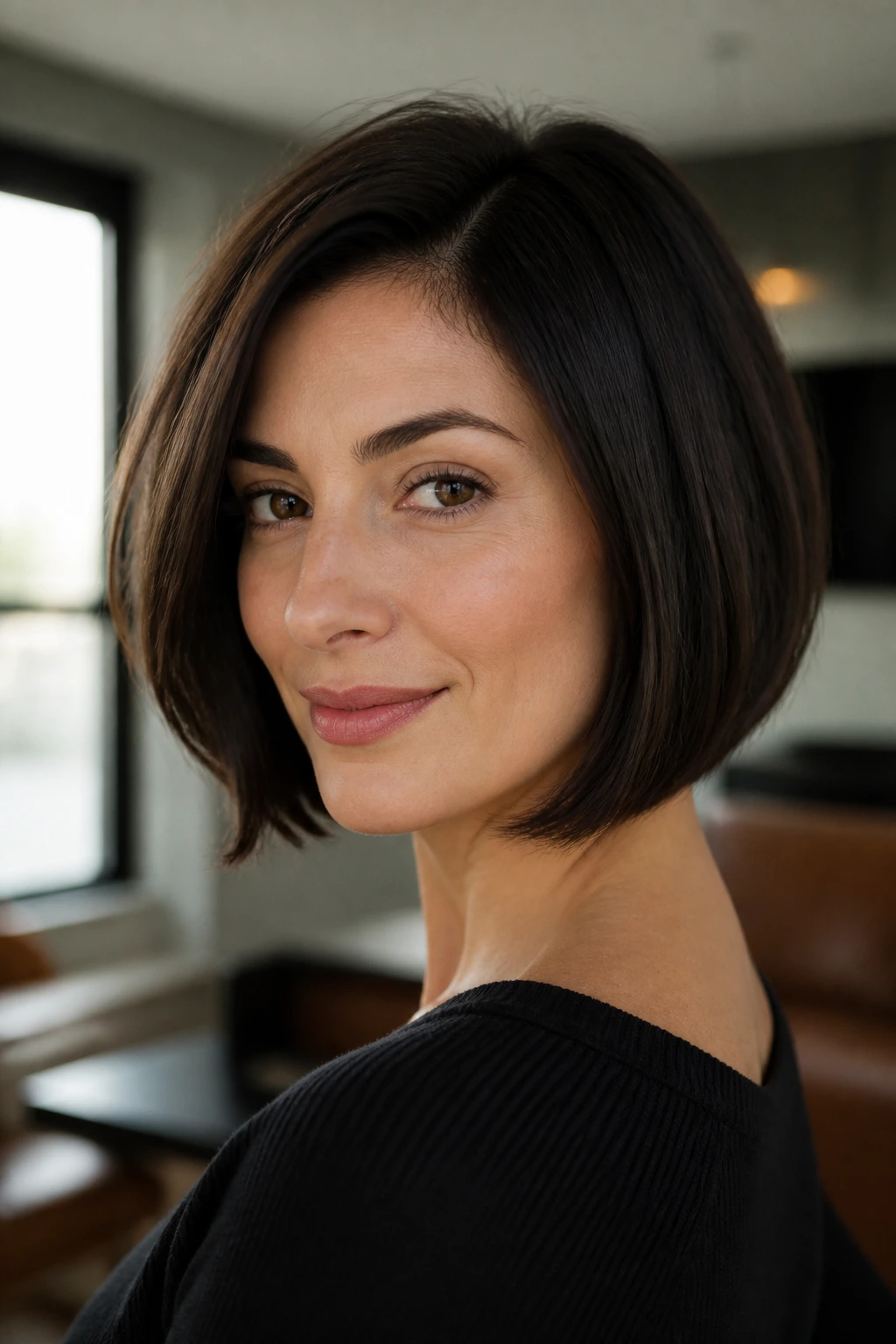
The best bob is the one that looks good from the front, the side, and the hurried mirror check before you leave the house. That’s the real test. Not whether it photographs like a salon ad, but whether it keeps its shape when you have lived in it for a few hours.
If you’re choosing among bob haircuts for women, start with the shape that fits your texture first, then adjust the length to your face and neck. A good bob does not need to be dramatic to work hard. It just needs the line in the right place, and a little honesty about what your hair likes to do.
