



A layered bob for medium length hair solves a problem blunt cuts create the minute hair loses some of its swing: the outline stays neat, but the ends stop behaving. On the right cut, the perimeter still brushes the jaw or collarbone, yet the interior has enough soft removal to keep the shape from sitting like a helmet by late afternoon.
Medium length is the sweet spot because it can do two jobs at once. It’s long enough to tuck, clip, wave, or pull into a quick knot when you’ve had enough, but short enough that a smart layer map can change the whole personality of the cut. The wrong layers make it puff out at the sides or collapse at the crown. The right ones give the hair lift where it’s flat, movement where it’s dense, and a cleaner fall around the face without leaving the ends thin and tired.
What makes this cut useful is that it doesn’t ask the same thing from every head of hair. Fine strands need a different layer pattern than thick ones. Curly hair wants room to spring; pin-straight hair wants a shape that survives a quick blow-dry. That’s why these 27 layered bobs aren’t just a stack of pretty ideas — they’re a set of real haircut strategies, each with its own logic, maintenance level, and little quirks worth knowing before you sit in the chair.
Why These Cuts Earn Their Keep
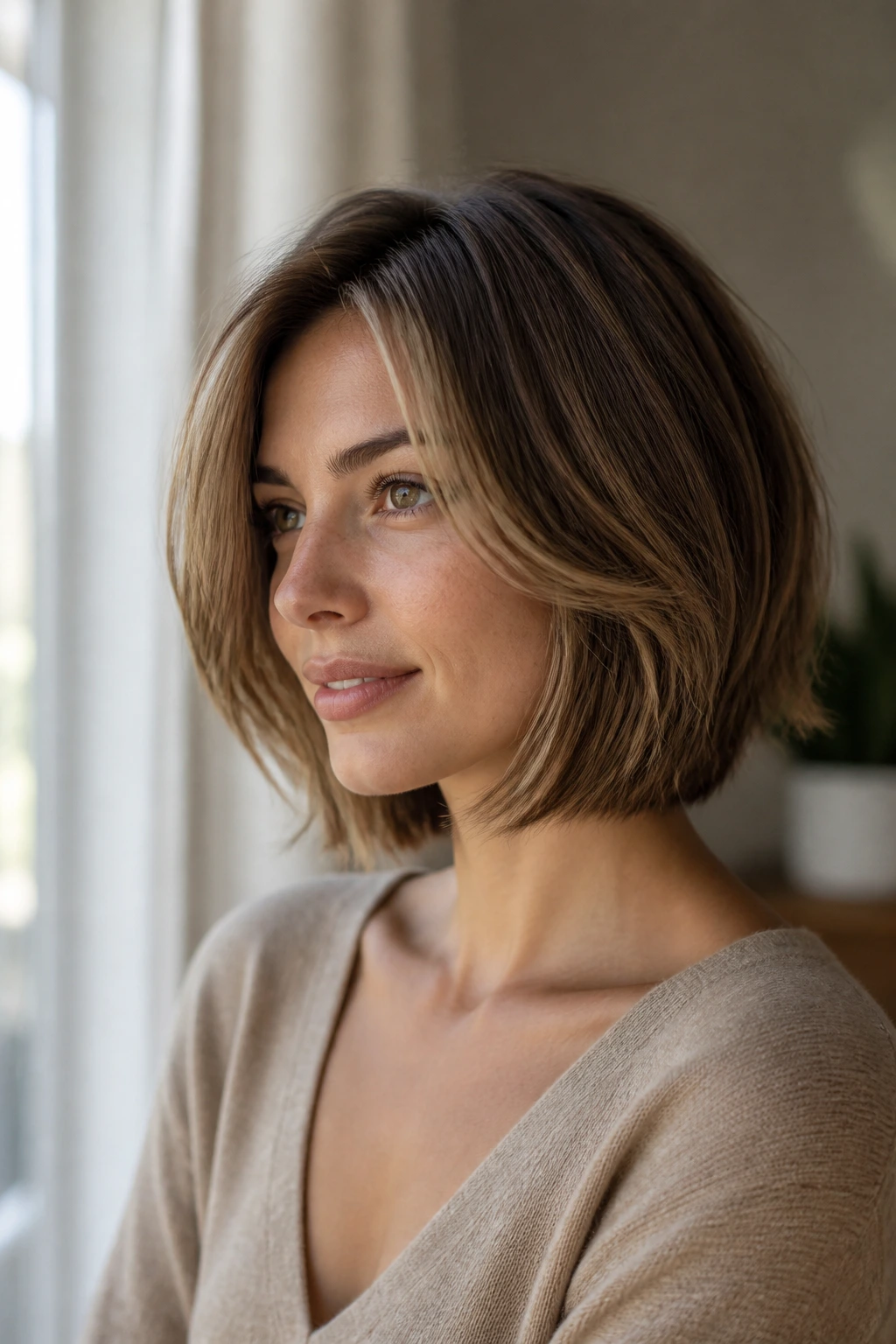
-
Fine hair gets lift without losing its outline: The best layered bobs for medium length hair keep the perimeter visible while removing weight inside the shape, so the cut doesn’t go flat by noon.
-
Thick hair stops ballooning at the sides: Strategic internal layers take pressure out of the bulk line. That means less triangle shape, less helmet effect, and fewer fights with your brush.
-
Medium length gives you room to style or ignore it: You can air-dry one day, wrap it around a round brush the next, and still have enough length to tuck behind the ear or clip back.
-
Face shape matters more than people admit: A jaw-length angle, a curved front, or a side part can shift the visual balance by a surprising amount. The haircut is doing geometry whether you notice it or not.
-
The grow-out is gentler than a blunt crop: When layers are placed well, they soften as they grow instead of turning into one awkward shelf line. That matters if you hate frequent trims.
-
You can make it polished or messy without changing the cut: A medium-length layered bob can look sleek with a brush and heat protectant, or rougher and piecey with a dab of texturizing spray. The base shape does the heavy lifting.
1. Soft Collarbone Layers
This is the bob I recommend to people who want movement but still need hair that can be tied back with a claw clip in a rush. The length skims the collarbone, which gives the cut a little swing every time you turn your head. The layers stay soft and mostly invisible unless the hair moves.
Why It Works
The collarbone is a smart stopping point because the hair isn’t fighting the jawline or sitting too high on the neck. A few long, blended layers keep the bottom from looking heavy without creating that choppy, piecemeal finish that can make medium hair feel shorter than it is. If you wear your hair straight, the shape looks calm and tidy. If you curl it, the ends bend instead of sticking out like a ruler.
Best For
- Straight or slightly wavy hair that needs motion.
- Anyone who wants a cut that still looks decent air-dried.
- Faces that benefit from a softer frame around the chin.
Small Detail That Matters
Ask for the layers to start low, around the mouth or chin, not near the cheekbones. That keeps the volume down and the ends clean. If your hair is thick, a little internal weight removal is enough; you do not need a lot of slicing at the surface.
2. French Bob With Hidden Movement
A French bob with hidden movement looks almost blunt at first glance, which is exactly why it works so well. The exterior line stays crisp, but the inside has just enough layering to keep the hair from sitting too still. It gives the sort of easy shape that looks intentional even when you only spent ten minutes on it.
What I like about this version is the restraint. Too many layered bobs lose their edge because the stylist carves into the perimeter from every angle. Here, the trick is to keep the outline strong and tuck the layer work underneath. You end up with a bob that swings at the bottom and still feels light around the crown.
What to Ask For
Tell your stylist you want a clean bottom line with internal layers only. That phrase helps stop the haircut from getting overtexturized. If you wear glasses, this shape sits nicely because it doesn’t fight the frames.
A little bend from a flat iron or a round brush makes the haircut come alive. No elaborate styling needed. One pass too many, though, and you lose the charm.
3. Rounded Layered Bob for Thick Hair
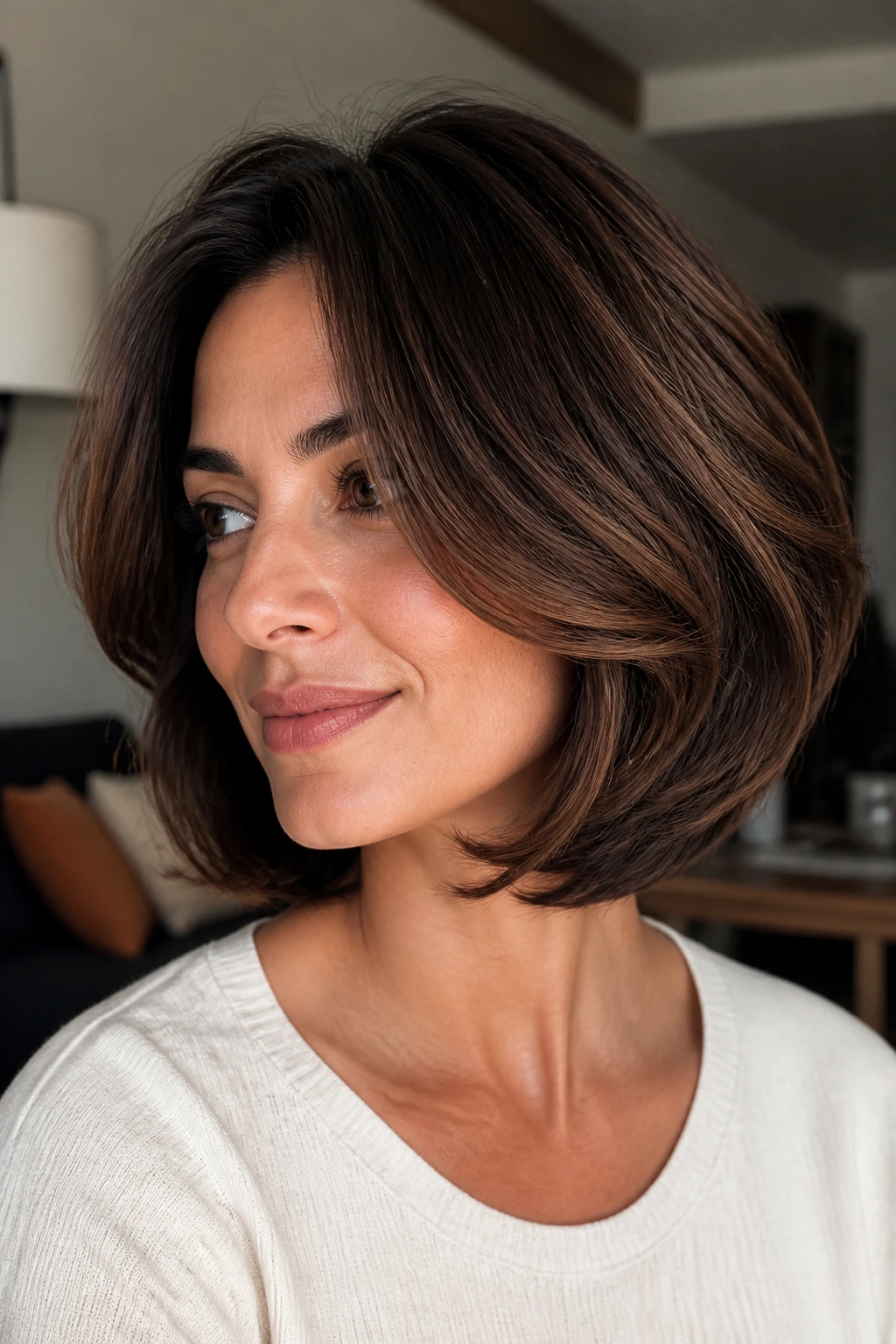
Thick hair behaves badly when it’s cut like a single block. It puffs, it spreads, it leans outward at the ends. A rounded layered bob fixes that by taking bulk out of the middle of the shape and letting the hair curve inward instead of out.
The rounded silhouette is especially useful if your hair naturally wants to widen around the ears. Instead of stacking all the weight at the bottom, the layers redistribute it. The cut still has body, but the body stays close to the head.
The Best Part
You don’t need to thin thick hair to death. That’s the mistake. A good rounded bob removes enough weight to let the hair move, then keeps enough density at the ends so the outline still looks full. If the ends get too wispy, the whole cut starts to feel puffy again.
Styling Note
A medium round brush and a quick inward bend at the ends are enough. If you use too much oil, the shape collapses and the whole thing goes limp. Thick hair usually needs a lighter finishing cream than people expect.
4. Feathered Side-Part Bob
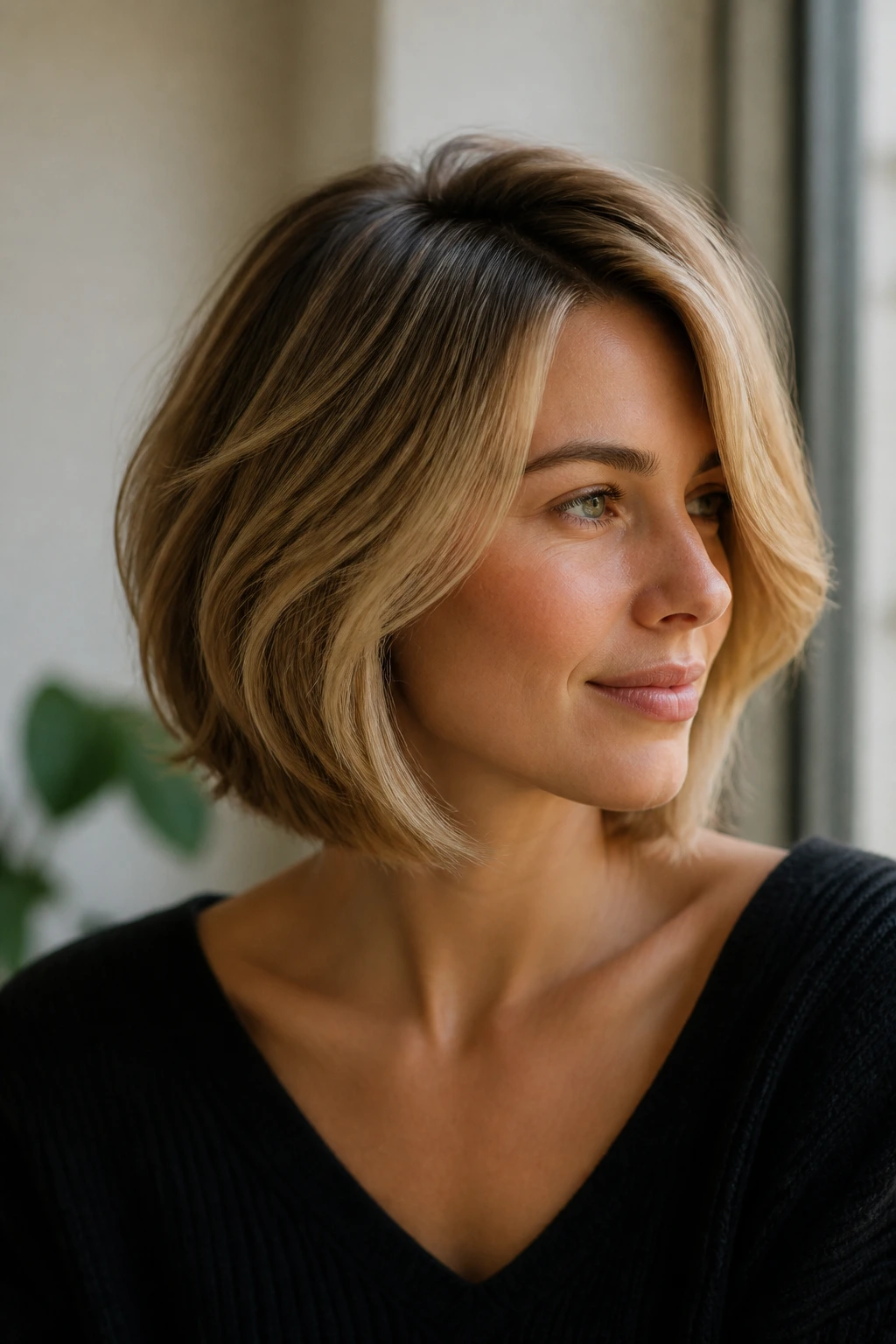
A deep side part can do more for a bob than another inch of length. It creates lift at the root, changes how the layers fall across the face, and takes some of the seriousness out of a medium-length cut. Feathered ends keep the finish from looking heavy or helmet-like.
This is a strong choice if your hair sits flat on top and refuses to cooperate around the crown. The side part gives the illusion of volume where the cut would otherwise lie close to the scalp. The feathering matters too. Without it, the side part can look severe.
Best For
- Fine to medium hair that needs root lift.
- Faces that benefit from diagonal lines across the forehead.
- People who want a little movement without wearing obvious waves every day.
Pro Tip
Keep the feathering around the cheekbone level, not all the way through the ends. If the layers go too far down, the haircut loses its shape and starts looking uneven. This one needs a light hand.
5. Stacked Nape Bob
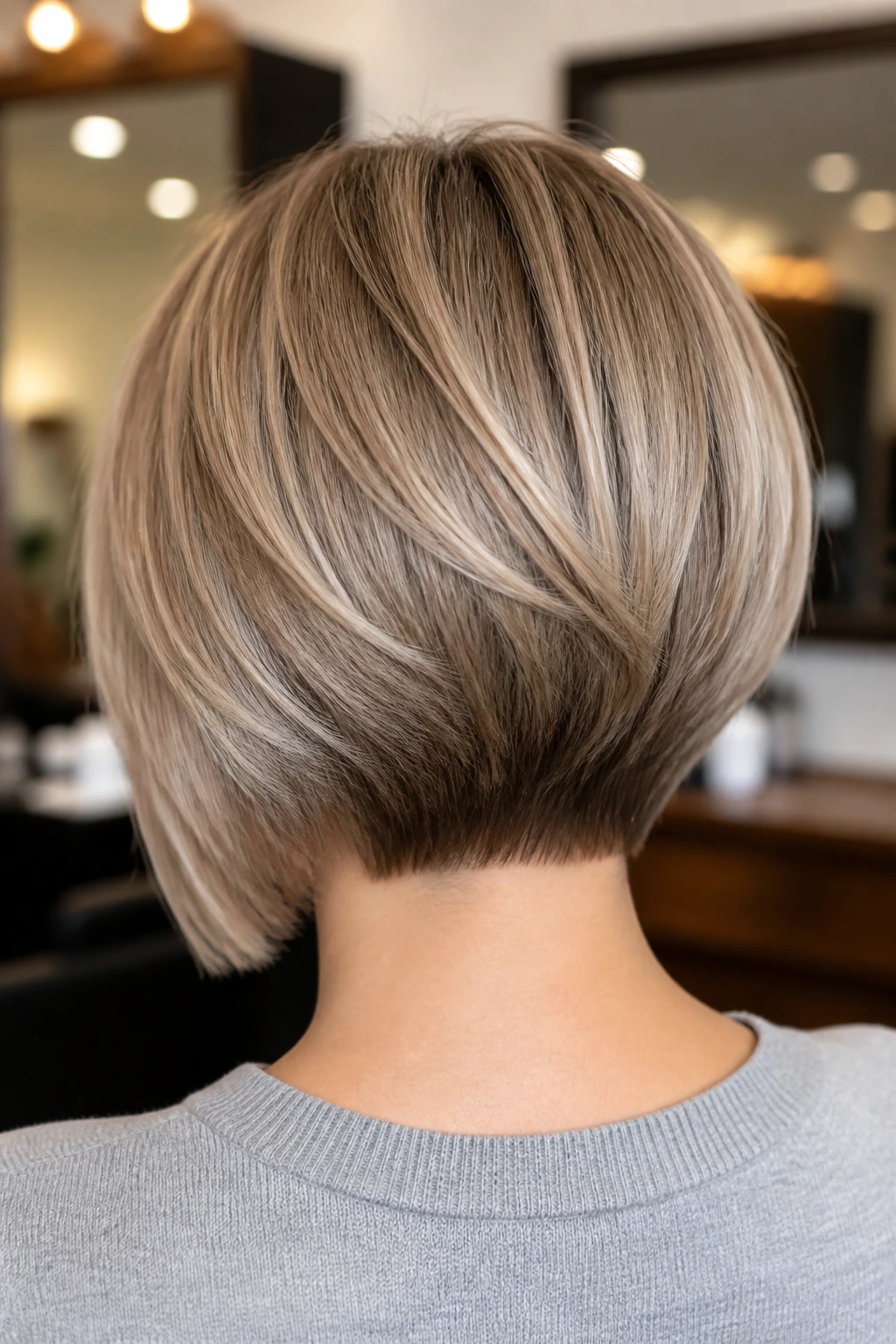
A stacked nape bob gives you the cleanest back view in the entire bunch. The hair is cut shorter at the nape and gradually longer toward the top and front, so the back lifts naturally and the silhouette stays tidy. It’s a real shape-maker.
This cut works because it creates a base of volume without relying on a lot of styling. If your hair has a tendency to lie flat against the neck, the stacked back gives it structure. The front can still stay medium length, which keeps the cut from feeling too severe.
If You Like a Polished Finish
This is the bob for people who enjoy a neckline that looks clean even on second-day hair. A round brush and a bit of root spray usually do the job. You don’t need giant curls. You need control.
Watch Out For
Very curly or very dense hair can make the stack bulky if the graduation is too steep. Ask for a softer stack if you want shape without that little triangle bump at the back.
6. Wavy Lob With Face-Framing Layers
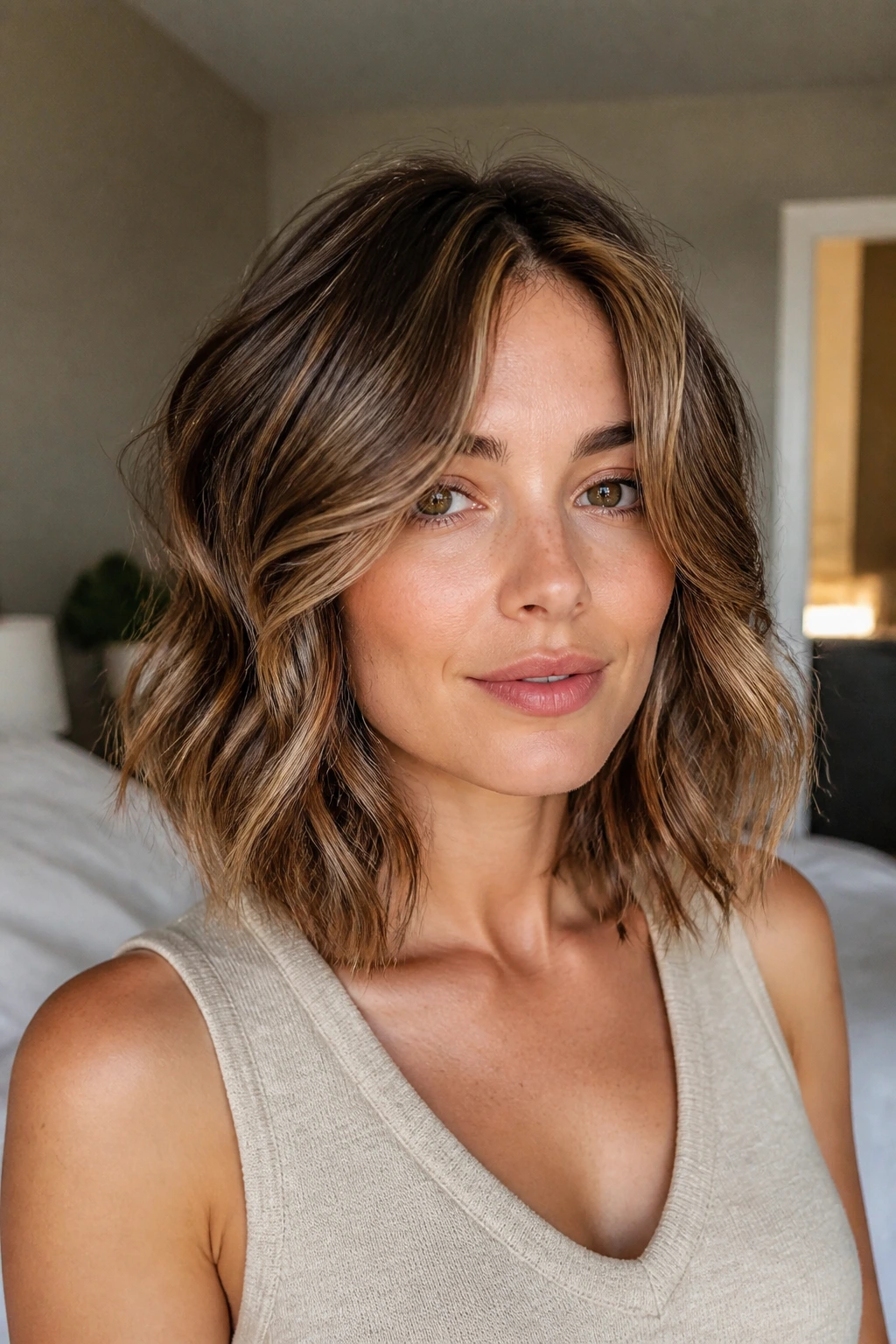
Waves and medium length hair get along well, but only when the front is cut to catch the wave instead of fight it. A wavy lob with face-framing layers keeps the bulk out of the sides and lets the hair settle in soft bends around the cheekbones and jaw.
The danger with this style is over-layering the back and forgetting the front. Don’t do that. The face-framing pieces are what make the whole thing feel intentional. They should be long enough to tuck, but short enough to move when you turn your head.
The Shape in Practice
Air-dried, the cut looks easy and slightly undone. With a one-inch curling iron, it turns into soft bends rather than tight curls. That’s the sweet spot here. You want visible texture, not a pageant curl.
If your waves are inconsistent, this is forgiving. The layers keep the bottom from puffing up when one section dries differently from the next.
7. Blunt Base With Internal Layers
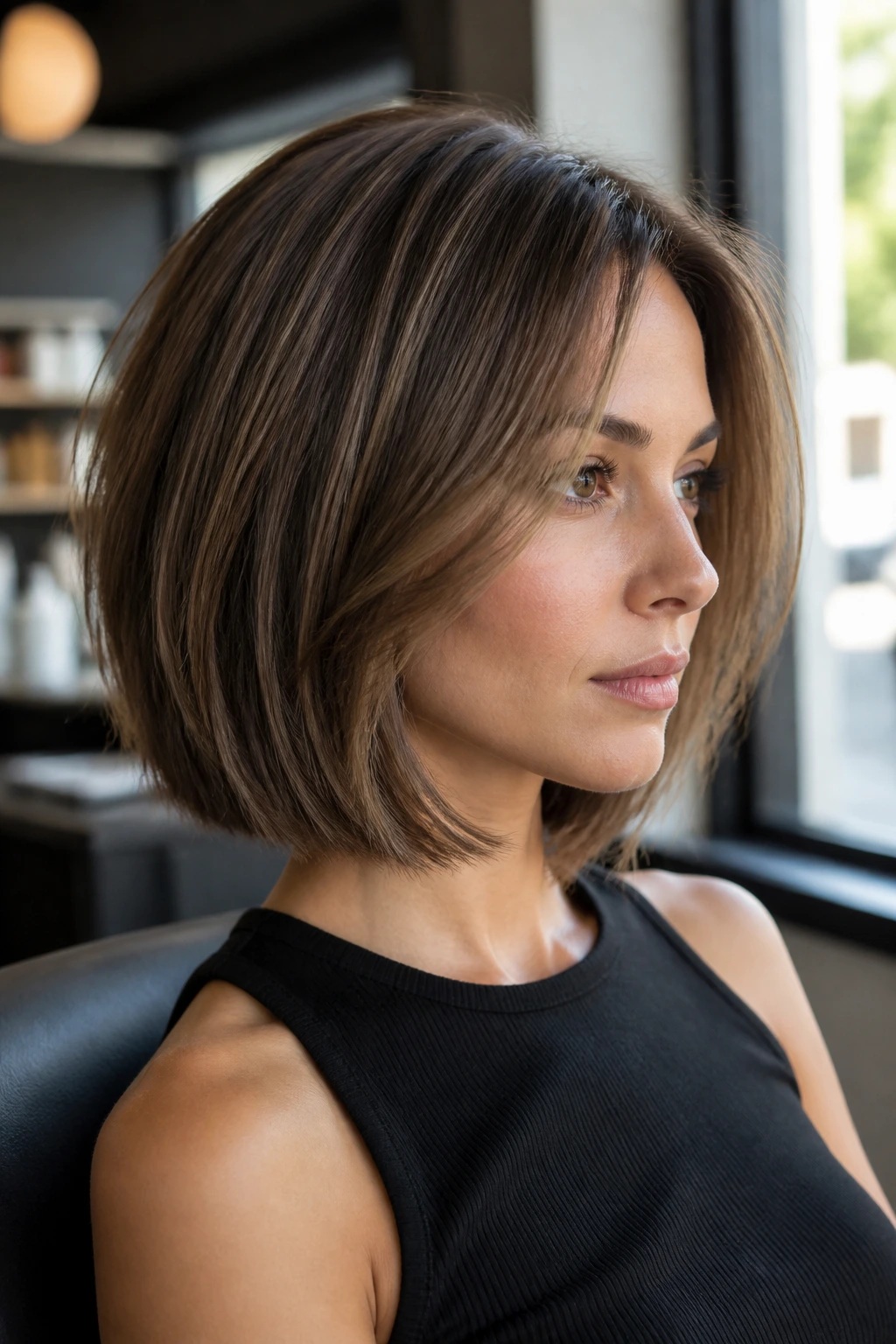
This cut is a good answer for anyone who likes a strong edge but hates heaviness. The bottom line stays blunt and clean, while the inside is cut to release weight and give the hair some swing. It looks quieter than a shag and less fussy than a fully feathered bob.
The contrast is the whole point. A blunt base keeps the haircut grounded, especially on medium-length hair that can otherwise feel stringy at the ends. Internal layers let the mid-lengths move without showing obvious choppy lines on the outside.
Where It Shines
Straight hair looks especially sharp here because the perimeter reads clearly. Thick hair benefits too, since the hidden layering helps it lie closer to the head. If you want a bob that still looks good when you haven’t styled it, this is one of the safer bets.
One Honest Caveat
If your hair is very fine, too much internal cutting can make the ends look sparse. You want hidden movement, not a see-through hemline. Keep the interior work subtle.
8. Razor-Cut Piecey Bob
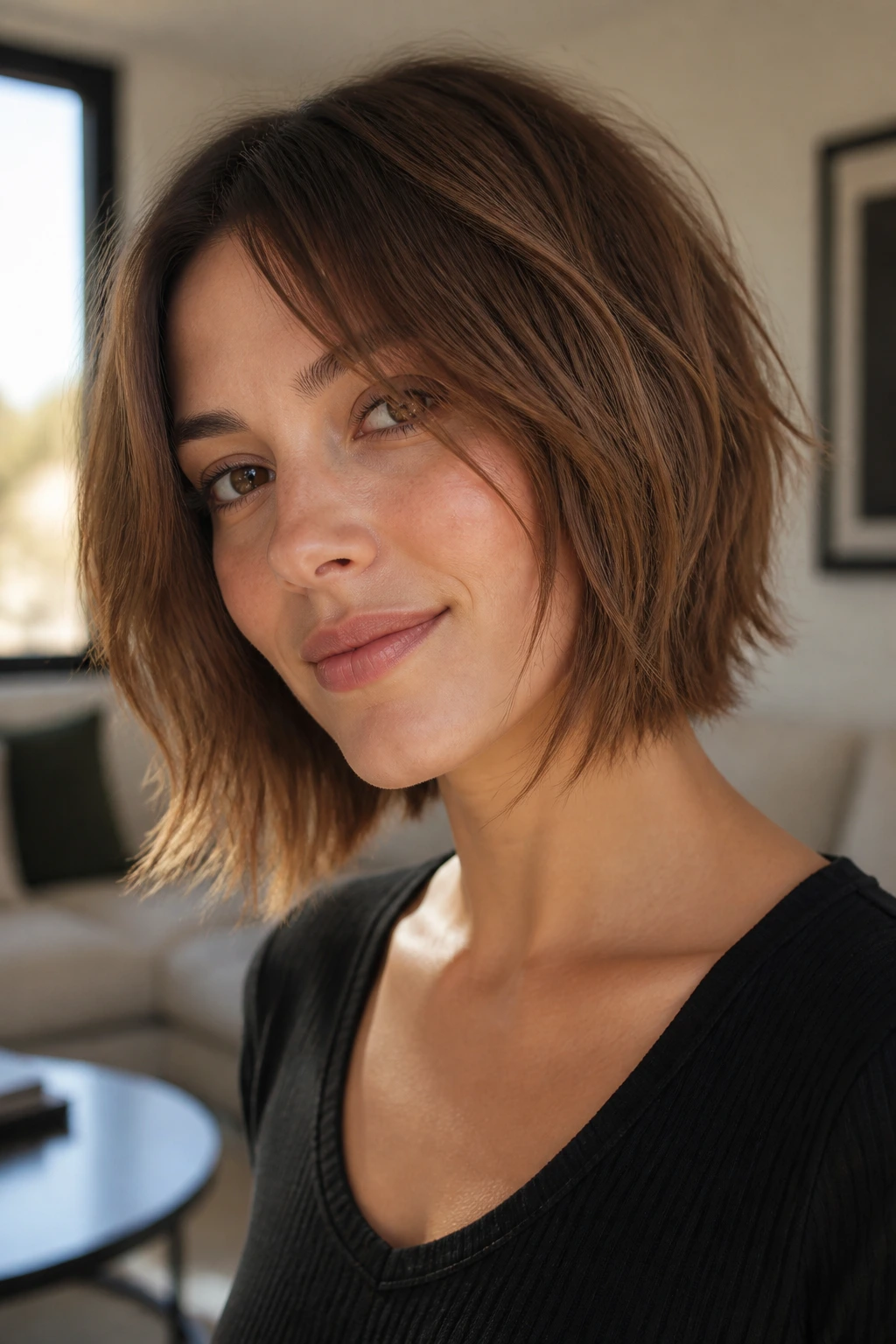
A razor-cut bob has a different mood from a scissor-cut one. The ends look softer, more broken up, and a little lived-in. On medium-length hair, that piecey texture can be the difference between “flat” and “interesting.”
The razored finish helps hair move in separate strands rather than one solid sheet. That’s useful if your hair is naturally straight and stubborn, because a razor-cut perimeter often takes on texture more easily. It also dries faster. A small thing, but a real one.
Who It Suits
This style likes hair that has some density but not so much bulk that it puffs out when the ends are thinned. It also works best when the stylist knows when to stop. A heavy hand with the razor can leave the ends ragged instead of soft.
Styling Idea
Use a light wave spray, then scrunch or twist a few sections with your fingers. A brush can smooth out the very texture you paid for. Let the cut look a little imperfect. That’s the point.
9. Curtain Bang Bob

Curtain bangs and layered bobs are old friends for a reason. The fringe opens the face, the layers keep the sides from feeling boxy, and the medium length gives the bangs enough room to blend instead of hanging like a separate project. It’s a strong option if you want face-framing without committing to short bangs.
The key is balance. Curtain bangs need enough length to part cleanly in the middle or slightly off-center. If the bob underneath is too short or too stacked, the whole cut can start to feel busy. Kept soft, it’s one of the most flattering bob shapes around the eyes and cheekbones.
Styling Note
A round brush or even a quick Velcro roller set at the front makes a difference. The bangs should curve away from the face, not sit flat against it. That small bend is what keeps the cut from looking heavy.
10. A-Line Layered Bob
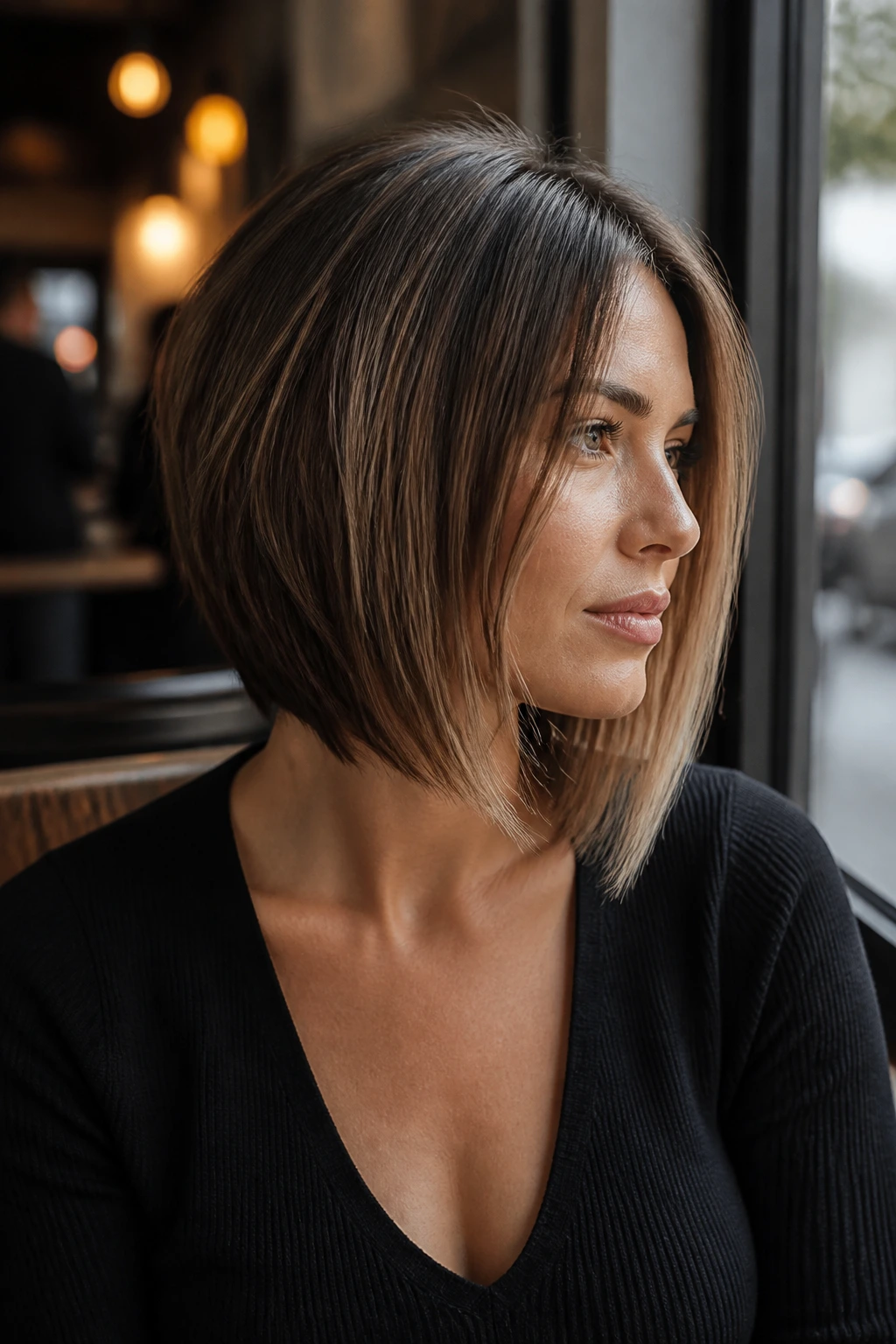
The A-line bob is the one that gives you movement in profile. It’s shorter in the back and longer in the front, so the lines naturally angle forward. Add layers, and the shape stops feeling rigid.
This cut flatters people who like a little drama without going asymmetrical. The front pieces lengthen the face in a soft way, while the back stays lifted. On medium hair, the angle reads clearly but doesn’t feel severe.
A Good Rule
The difference between back and front doesn’t need to be extreme. A gentle slope often looks more modern than a sharp one, especially if your hair is thick or wavy. Too much angle can start to feel dated fast.
If you wear one side behind the ear often, this cut gives you a neat front line while still looking styled from the other side. Handy. More useful than it sounds.
11. Fine-Hair Volumizing Bob
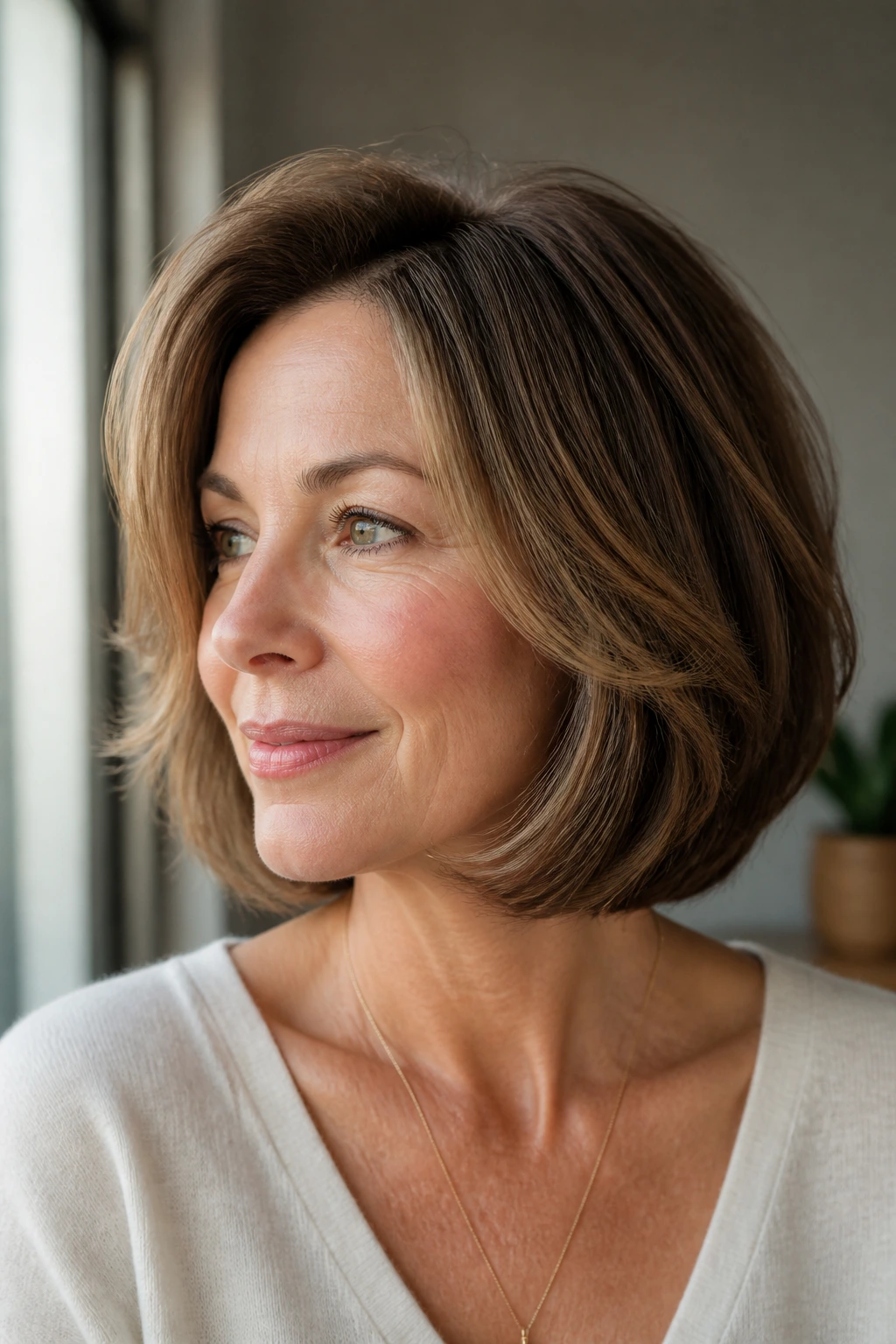
Fine hair needs a bob that knows when to stop. Too many short layers and the ends disappear. Too much thinning and the cut loses all weight. The right volumizing bob uses layers at the crown and around the sides to create lift while keeping enough density at the hem.
What makes this cut work is placement. You want the lightening up top, not through the last inch of the hair. That way the bob still looks full from the front and doesn’t come apart when the wind hits it.
Best Styling Moves
Root spray at the crown. A blow-dry with the nozzle pointed down the shaft. A tiny bend at the ends, not a curl. That’s usually enough. Fine hair often looks best when the movement is controlled, not messy.
Ask for This
Tell the stylist you want full-looking ends with discreet internal lift. If they start talking about “taking out weight” near the bottom, steer the conversation back up toward the crown and upper sides.
12. Curly Layered Bob
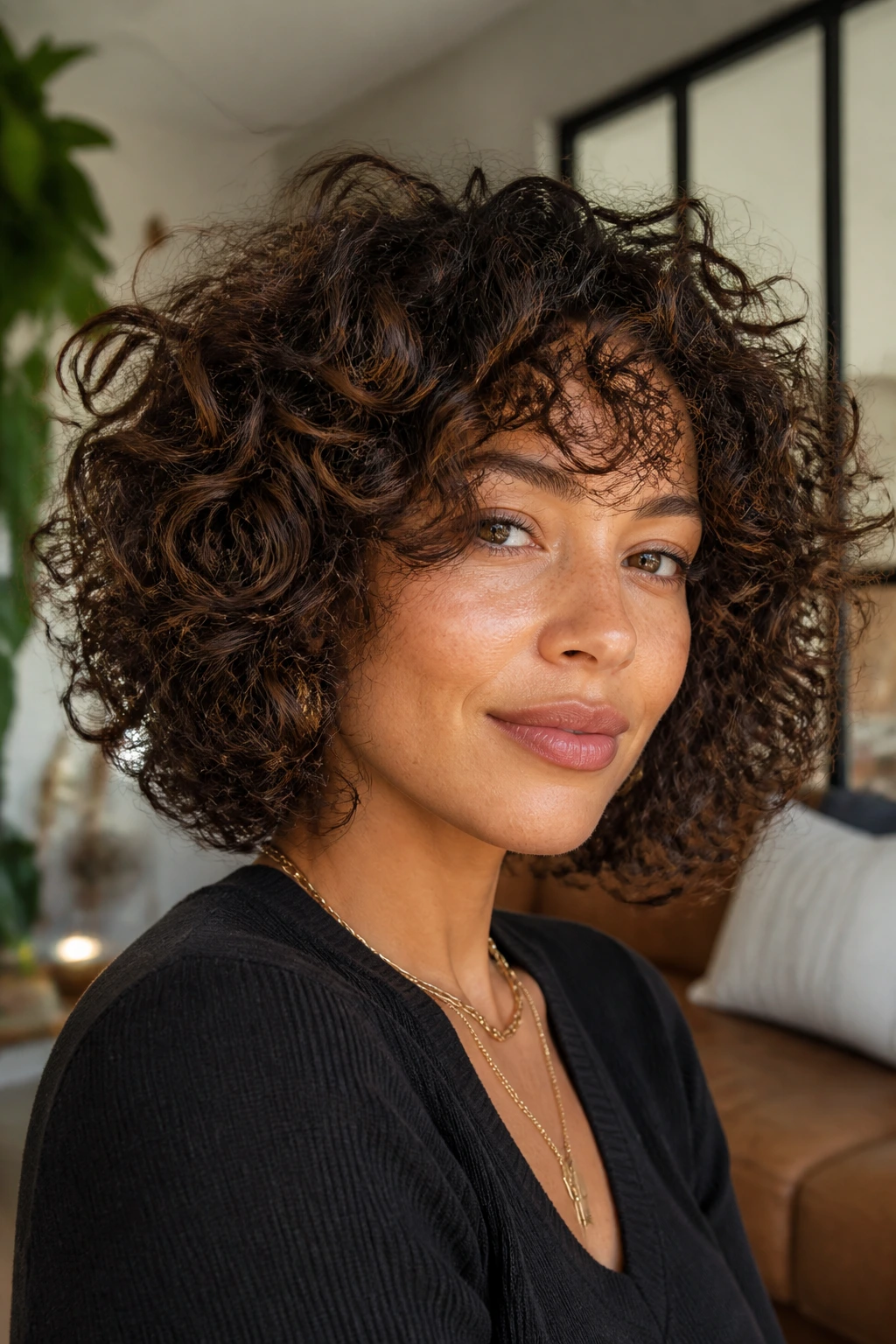
Curly hair and medium length can be a great match, but only if the layers respect shrinkage. A curly layered bob should let the curl pattern stack naturally without turning into a pyramid. That means the layer length has to be chosen with curl spring in mind.
The best curly bobs often look longer when wet than people expect. That’s normal. Curly hair shrinks, and a cut that looks perfect in the chair can bounce up two or three inches once it dries. If the stylist doesn’t account for that, the bob ends up too short in the front and too wide at the sides.
Practical Detail
Ask for the cut to be shaped in a way that lets the curls fall where they want to sit, not where the comb wants them to. Dry cutting or curl-by-curl shaping helps, especially for tighter patterns. The goal is definition, not a round puff.
A curl cream and a diffuser finish the job. Heavy brushing? Nope. That turns the shape into frizz and swallows the layers whole.
13. Sleek Straight Soft-End Bob
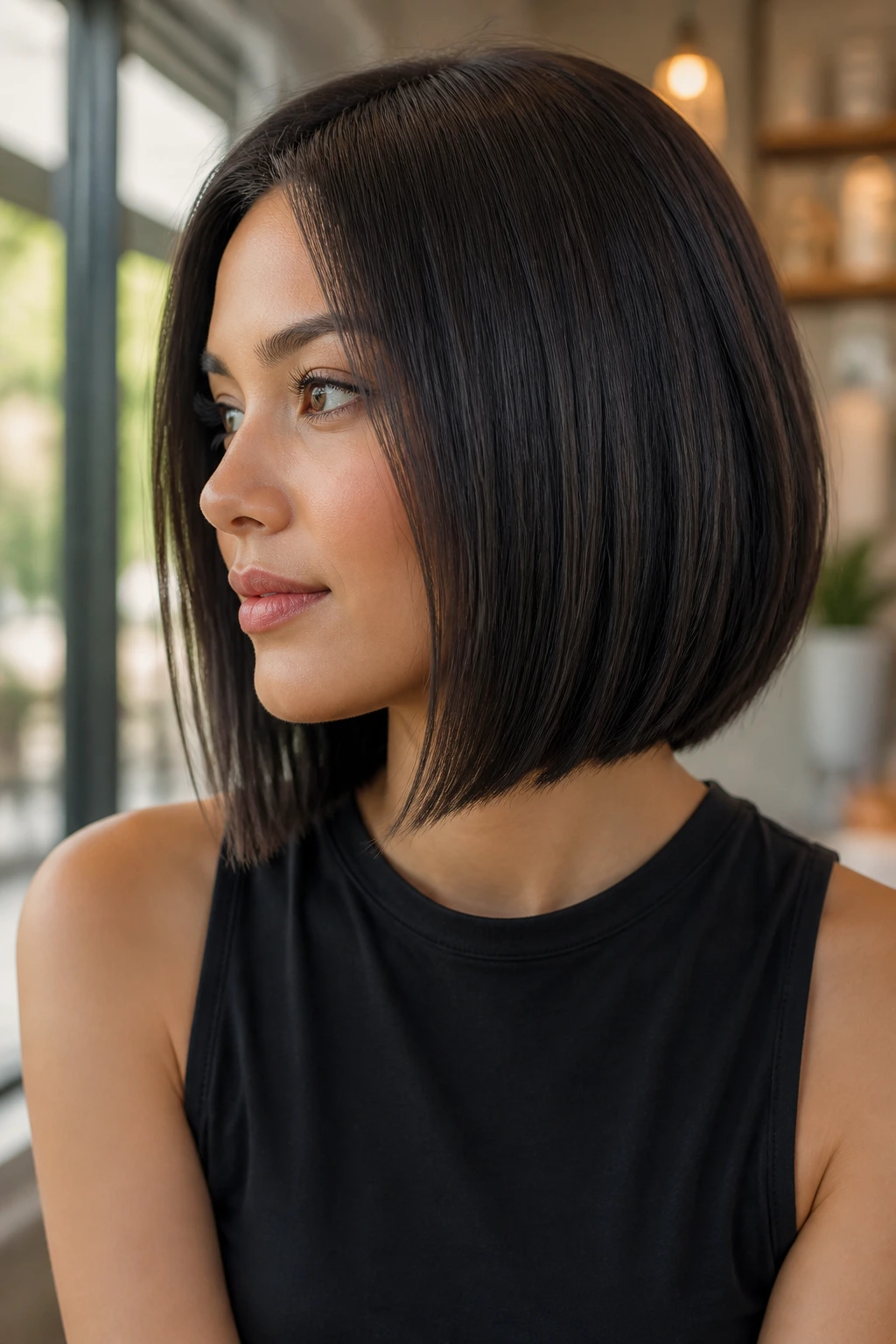
A sleek straight bob can go flat fast if the ends are too blunt and the interior has no movement. Soft ends fix that. They let the haircut stay sharp while keeping the bottom from feeling like a ruler.
This version is for people who like a smooth finish and don’t want to live in texture spray. The layers are so subtle they’re almost invisible, but they stop the cut from locking into one stiff line. On shoulder-skimming lengths, that matters more than people think.
Styling It Well
Use a paddle brush or a flat brush and blow-dry the hair down and slightly under. The finish should look smooth, not lacquered. A drop of serum on the mid-lengths is enough; too much and the shape collapses at the jaw.
Best For
Straight, medium-density hair that wants polish without too much fluff. Also good if you like tucking pieces behind the ear and want the line to stay clean when you do.
14. Shaggy Bob With Choppy Ends

This is the unrulier cousin in the family. The shaggy bob gives medium-length hair a rougher texture, more separation, and a little attitude. It’s built for people who don’t want the haircut to look too arranged.
The choppy ends are what keep it from becoming a standard bob with a few random waves. The layers should be obvious enough to show when the hair moves, but not so short that the whole cut loses its body. Think texture, not feathers everywhere.
When It Works Best
Naturally wavy or lightly curly hair takes to this cut fast. Straight hair can wear it too, but it usually needs a bit of wave spray or a quick wand pass to show the texture properly. Without that, the cut can look unfinished.
Little Warning
Don’t ask for too much texture if your hair is already dry or fragile. Choppy layers on ends that need moisture can make the haircut look frayed. There’s a fine line between piecey and tired.
15. Asymmetrical Layered Bob

An asymmetrical bob shifts the line on purpose. One side sits a little longer, which gives the cut movement even when the hair is completely still. Add layers, and the shape becomes more about flow than symmetry.
I like this one for people who want something noticeable without going short-short. It has personality built into it. You don’t need a lot of styling because the cut itself creates visual interest from different angles.
Keep It Balanced
The asymmetry should be clear enough to register, but not so dramatic that you feel like you’re wearing two different haircuts at once. If the layers are too aggressive, the shape loses grace fast. This cut needs confidence and restraint in equal measure.
If you wear your hair half tucked, this one can look especially good. The longer side gives a little sweep. The shorter side keeps the outline sharp.
16. Tapered Nape Bob
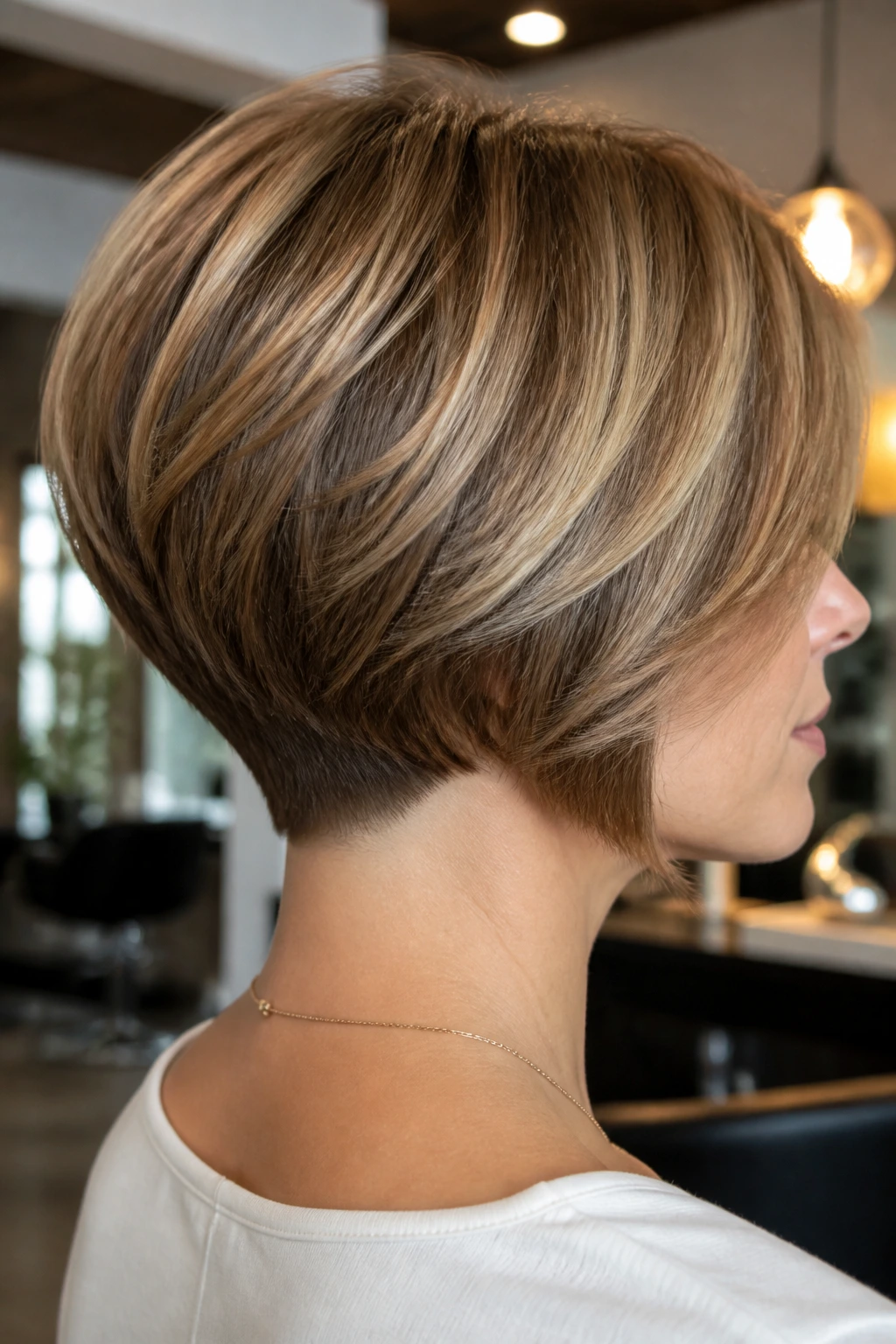
A tapered nape bob hugs the neck and gradually opens out as it moves toward the top. That gives the back a cleaner, slimmer finish than a blunt cut. It’s a neat shape, almost tailored.
This is one of the best options if you dislike bulk at the nape. The taper keeps the neckline from puffing out, which can happen when medium-length hair is cut too evenly. It also grows out fairly gracefully if the layers aren’t too short.
Styling Note
A blow-dryer concentrator and a small round brush help the nape lie close to the head. If the hair at the neck sticks out, a flat brush alone usually won’t control it. You need a little tension while drying.
This cut shines when the back is clean and the front is soft. That contrast keeps the style from feeling severe.
17. Money-Piece Layered Bob
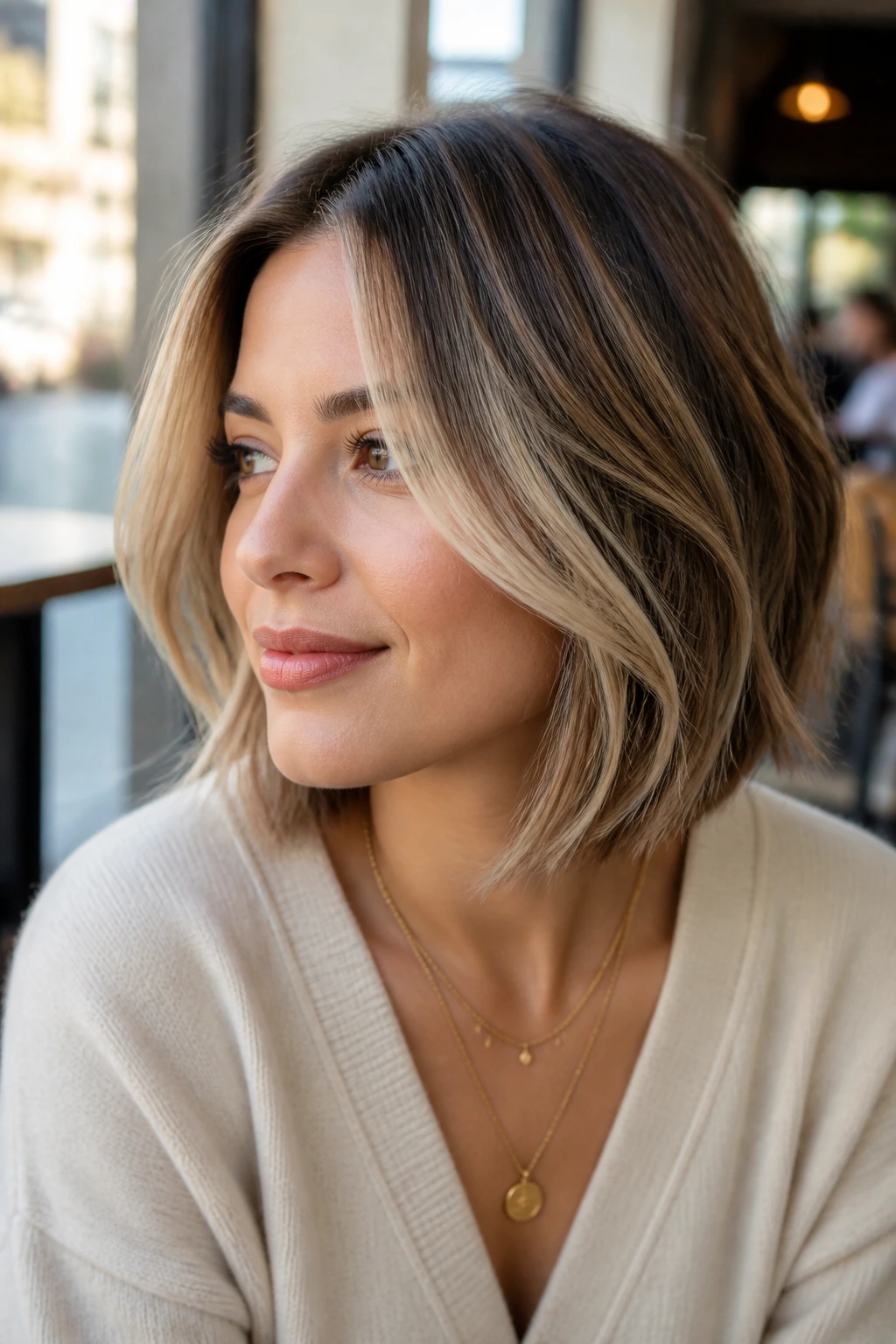
Bright front pieces change the whole read of a bob. Even on medium-length hair, those lighter face-framing sections pull attention forward and make the layers look more obvious. The haircut suddenly has a focal point.
The money-piece effect works because the eye catches contrast first. A bob with soft layers can feel subtle; add a lighter front panel, and the shape reads more clearly around the face. It’s especially useful when the cut itself is simple and you want a little extra punch without changing the silhouette.
Best Pairing
This looks sharp with a center part or a slight off-center part, since both let the bright pieces sit where they can be seen. If your hair is dark, the contrast is stronger. If it’s already light, the effect is gentler and more blended.
A word of caution: don’t let the color work overpower the cut. The layers still need to move. Otherwise, it becomes a color story with a haircut attached.
18. Deep Side-Part Bob
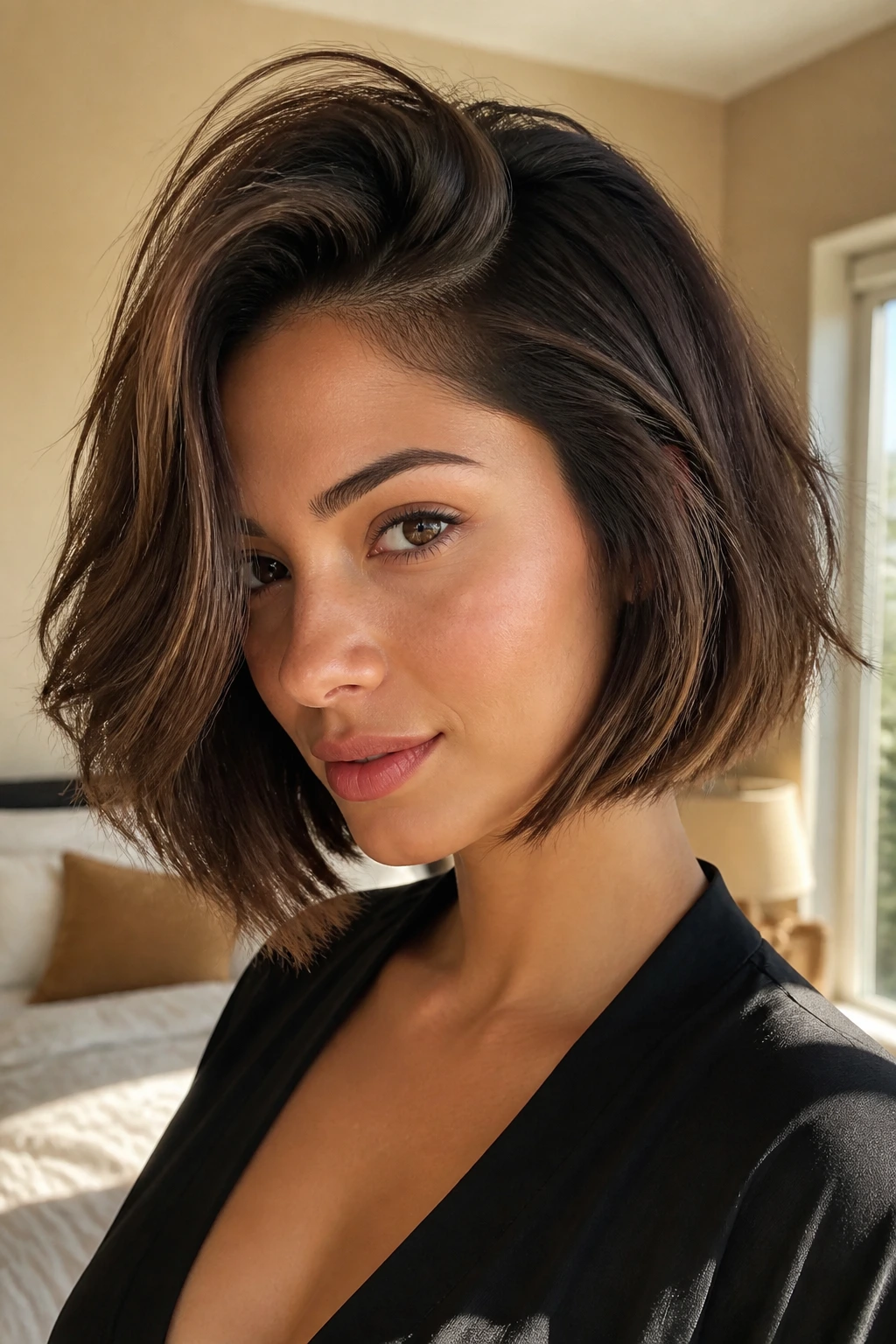
A deep side part can rescue a bob that feels too flat or too polite. It creates height at the root, shifts the weight of the cut, and lets the layers fall in a more dramatic sweep across the face. That little change often does more than adding extra length.
This style is especially good on medium-length hair that tends to fall straight down and stick close to the head. The side part interrupts that. It also gives you a built-in way to change the mood of the haircut without visiting the salon.
Where It Helps Most
If one side of your head always lies flatter than the other, a deep part can balance it out. It can also soften a strong jawline by pulling some of the front pieces diagonally instead of straight down. The difference is visible right away.
For styling, lift the roots at the heavier side with a blow-dryer and a small round brush. Don’t drown the top in product. Volume dies under weight.
19. Flipped-End Retro Bob
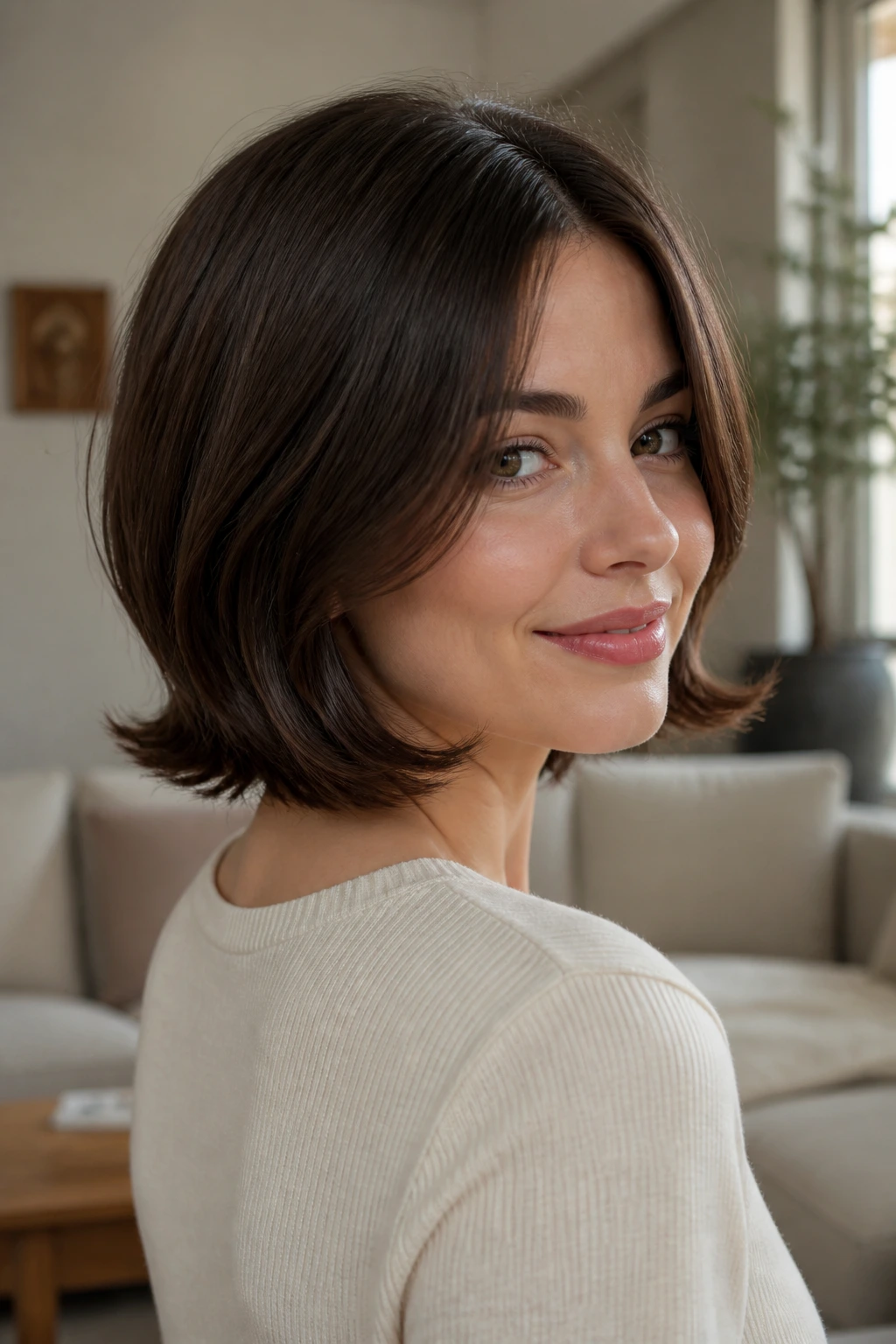
Flipped ends bring a little old-school motion back into medium-length hair. The layers support that curve, so the hair turns out slightly instead of hanging straight down. It’s playful without turning costume-y, which is a surprisingly narrow line.
The key is keeping the flip at the very bottom rather than all through the lengths. That way the haircut keeps its shape and doesn’t start looking like a child’s party style. A medium-length bob with flipped ends can look polished, especially when the top stays smooth.
Quick Styling Cue
Use a medium round brush or a flat iron with a gentle outward turn at the ends. If the flip is too tight, it looks forced. The best version has a soft flick, almost like the ends decided to move on their own.
This one flatters straight and slightly wavy hair most easily. Curly hair can wear it, but you’ll need to stretch the curl pattern a bit first.
20. Air-Dry Bob for Busy Mornings

An air-dry bob has one job: look acceptable with very little effort. That means the layers need to do the work, because you are not going to a round brush every day. Medium length helps here because there’s enough weight to settle the shape, but enough movement for the texture to show.
This cut is not about perfection. It’s about a shape that dries into something decent instead of something embarrassing. You want layers that encourage the hair to sit in soft bends and not explode into random corners.
How It Should Behave
After washing, scrunch in a light cream or spray, part it while damp, and leave it alone more than you think you should. Touching it too much while it dries often makes the texture worse. That’s the tradeoff.
If your hair has a natural wave, this may be the easiest style in the group. If it’s pin-straight, you’ll still get a smoother finish than you’d expect, but the cut needs to be precise. Sloppy layering shows up fast when there’s no heat styling to hide it.
21. Jawline Micro-Layer Bob
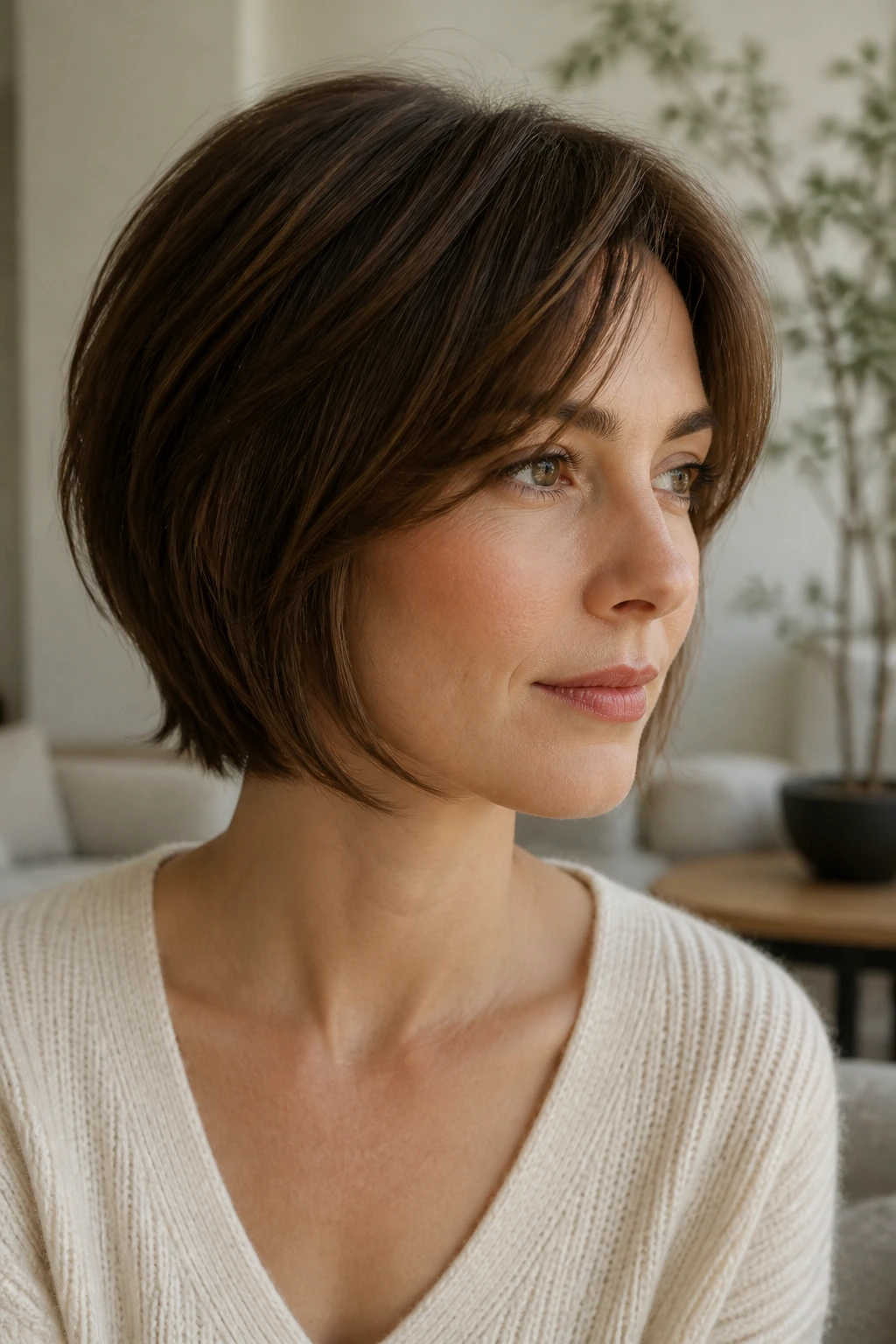
A jawline bob with micro-layers is subtle, but it’s not boring. The ends skim the jaw, and tiny internal layers stop the shape from locking into a hard block. It’s a good choice if you want definition around the face without obvious choppiness.
The micro-layering matters because it keeps the line sharp while helping the hair move around the jaw. That can be flattering if you want a cut that frames the lower face, especially when hair naturally bends inward or outward around the chin.
Small but Important
This cut needs precision more than drama. Too much texturizing and the jawline starts to fray. Too little and you’re back to a blunt shape that feels a bit stiff. The space between those two is where this bob lives.
A flat brush and a quick inward bend are usually enough to make it sit properly. It doesn’t need a lot of fuss, which is part of the appeal.
22. Mushroom-Inspired Rounded Bob
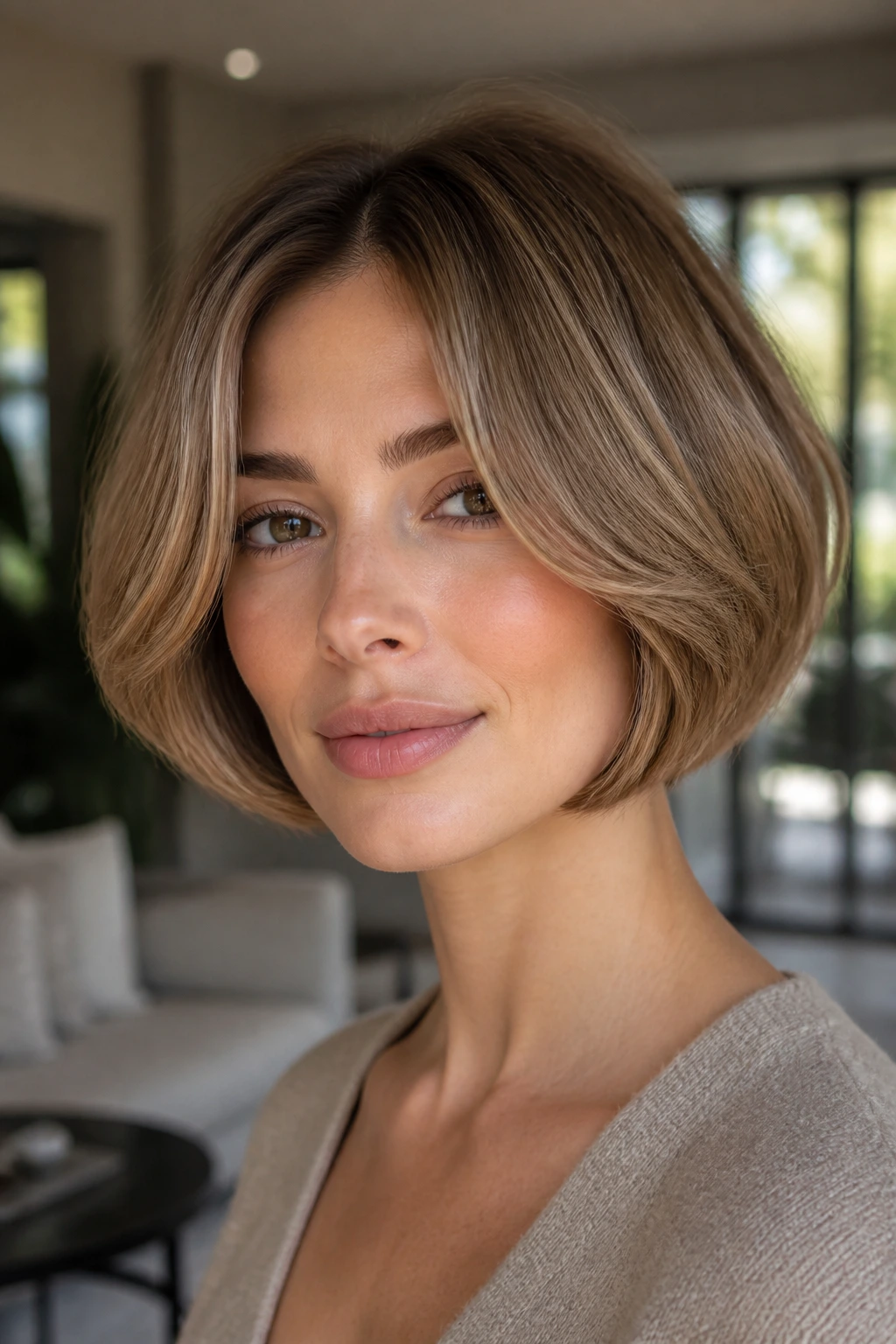
This rounded shape takes a cue from those dense, curved silhouettes that sit close to the head and widen gently at the sides. On medium-length hair, the trick is to keep the roundness soft, not bulbous. Layers let the curve breathe.
Why does it work? Because the shape is controlled from root to hem. The crown stays smooth, the sides build a rounded outline, and the bottom doesn’t split into weird wisps. It’s neat in a way that reads more modern when the layers are subtle and the finish is glossy.
Who Should Try It
Hair that naturally grows thick around the sides can benefit a lot. So can straight hair that needs more body through the mid-lengths. If you like clean shapes and hate random flips, this is a smart choice.
A center part usually strengthens the curve, but a slight side part softens it. That’s a useful little switch when you want the same haircut to feel less rigid.
23. Shoulder-Skimming Long-Layer Lob
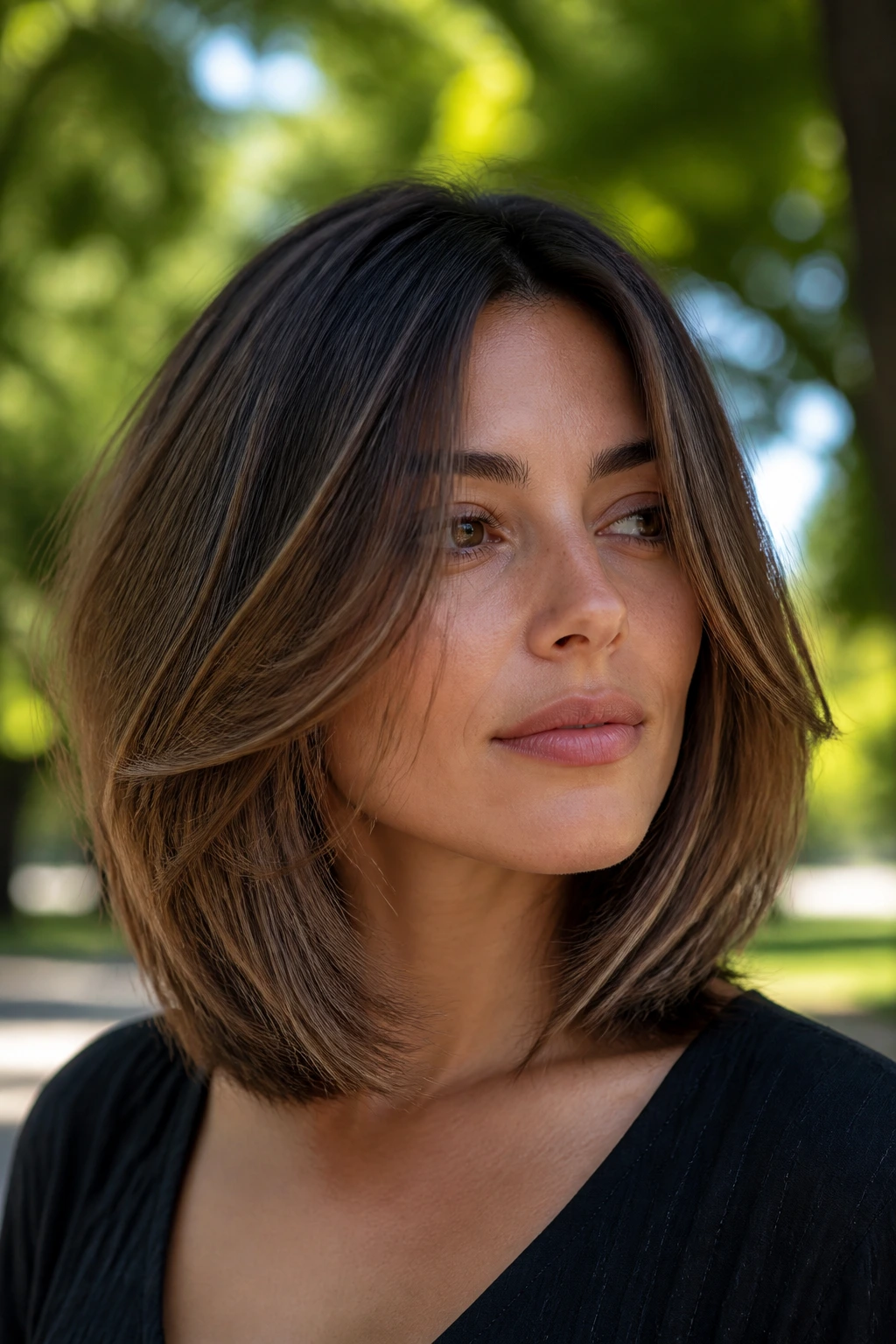
This is the easy bridge between a true bob and longer hair. The length just brushes the shoulders, and the long layers stop it from behaving like a single heavy sheet. It’s one of the safest medium-length options because it grows out without drama.
Long layers do a lot of quiet work here. They keep the front pieces light, help waves form naturally, and stop the ends from kicking out in a blunt shelf. If you like to tuck hair behind the ear or clip it half up, this cut gives you enough length to do both.
Best Feature
It’s forgiving. If you miss a trim, it still looks deliberate for longer than a super-short bob. That matters if you don’t live by the salon calendar.
This is also a nice choice if you’re transitioning from longer hair and want to keep some familiar weight at the front. It feels like a change without the shock.
24. Transitional Grow-Out Bob
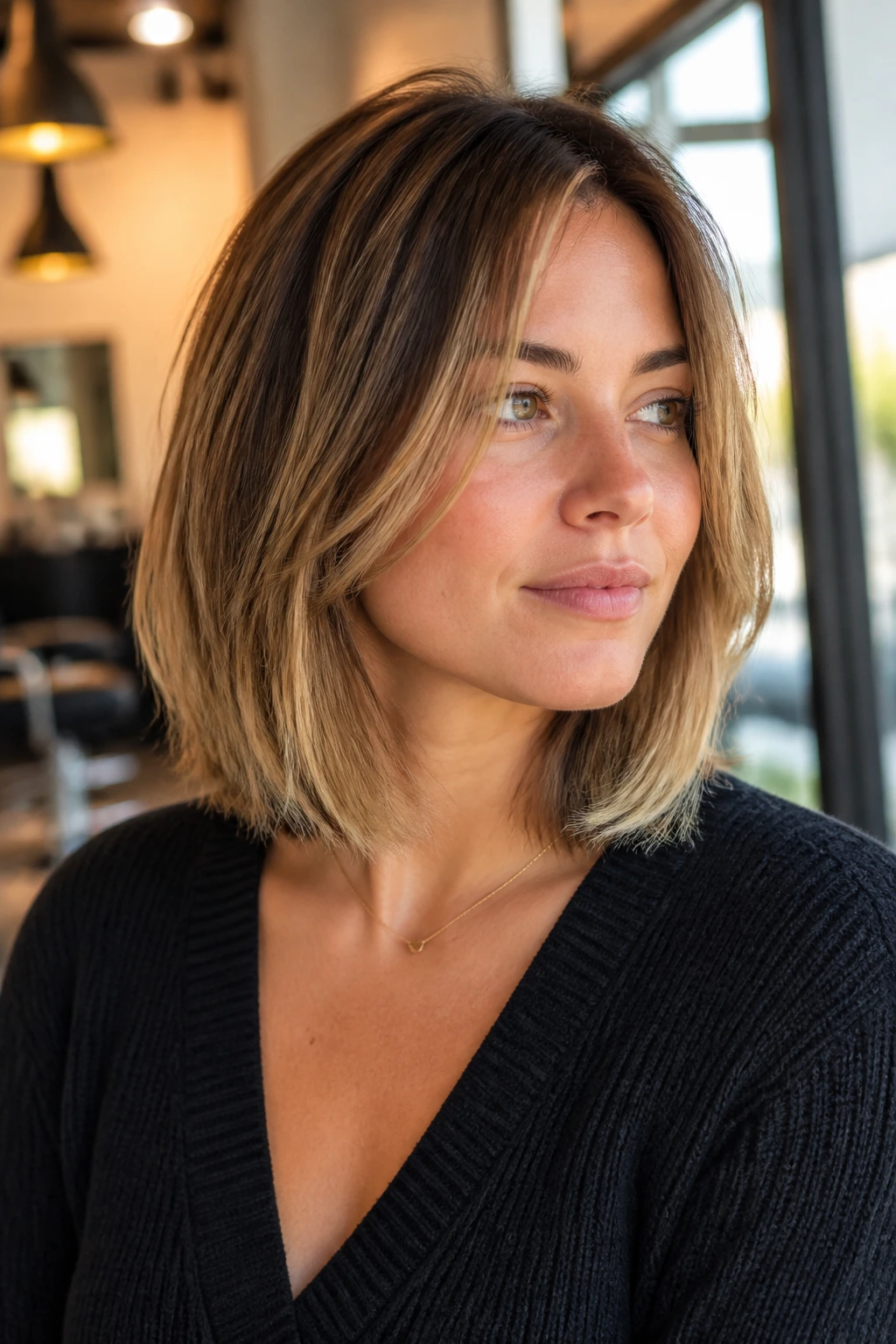
A grow-out bob is for the awkward stage everyone pretends not to have. The hair sits between lengths, and instead of pretending that in-between is a problem, this cut shapes it on purpose. Medium length is exactly where that gets useful.
The layers here are meant to soften transitions. They keep the old short layers from sticking out in odd places while helping the longer sections blend. If you’re growing out a pixie, a shag, or a shorter bob, this approach can make the process feel far less messy.
What Makes It Work
The perimeter stays flexible. That means you can shift the part, pin pieces back, or wear the hair bent under on a day you want more polish. A blunt line would expose every inch of uneven growth. Layering hides that.
It’s a practical cut, but not a dull one. There’s something satisfying about a haircut that understands it’s part of a process.
25. Polished Event-Ready Bob
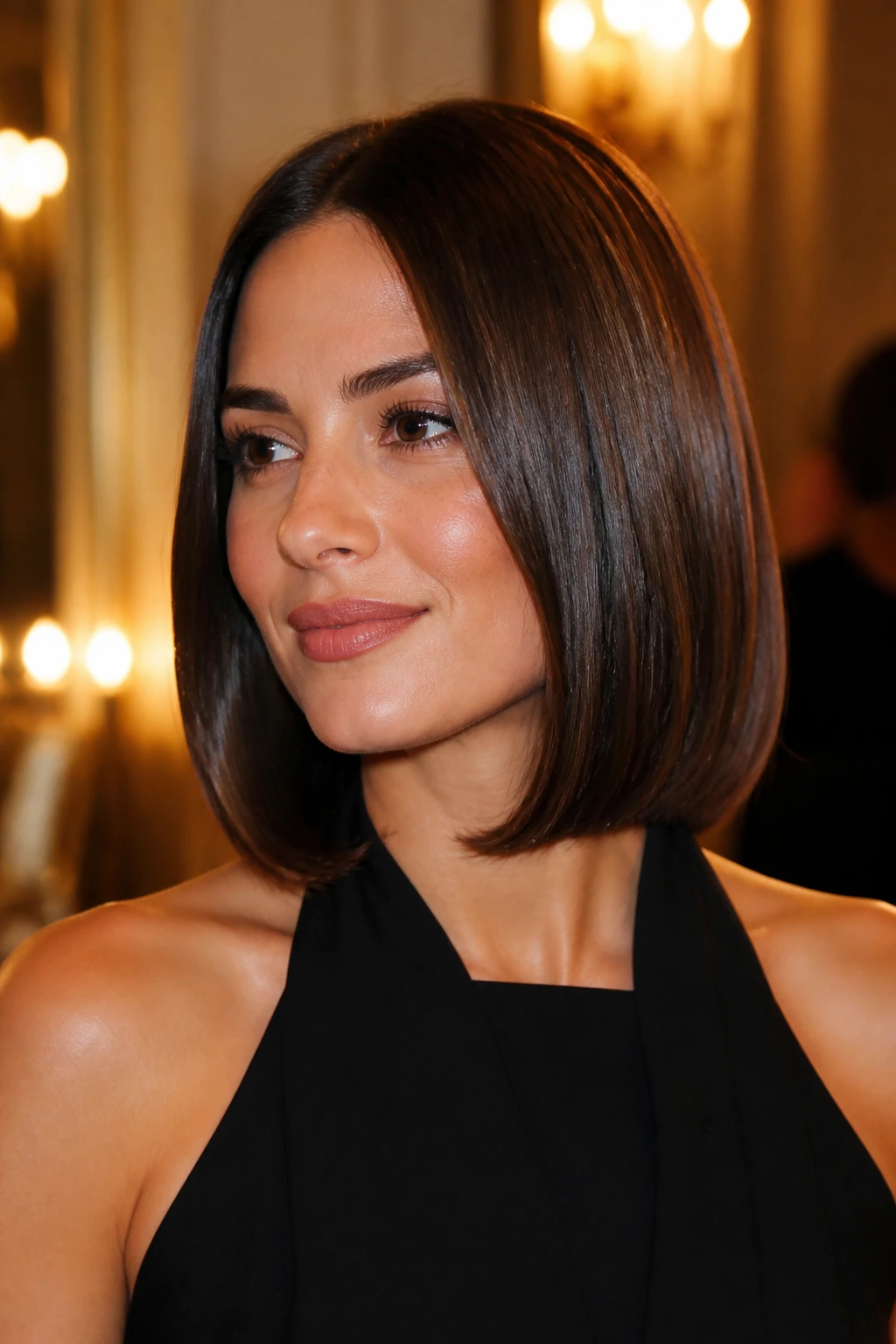
Some bobs are built for ease. This one is built for shine. A polished event-ready bob keeps the layers controlled, the outline neat, and the finish smooth enough to hold its shape under good light. It’s the haircut you reach for when you want clean lines and a tidy neck.
The layers should be present, but not flashy. Their job is to stop the haircut from lying flat while keeping the outside sleek. That’s why this style often looks best after a blowout with a large round brush or a careful flat-iron pass.
Styling Cue
The ends should bend softly under or sit straight with a slight bevel. Anything too fluffy ruins the effect. This is a bob that appreciates discipline.
It also photographs well under indoor light because the layers add movement without showing every tiny imperfection. Useful. Very useful.
26. Neck-Hugging Curved-Underline Bob
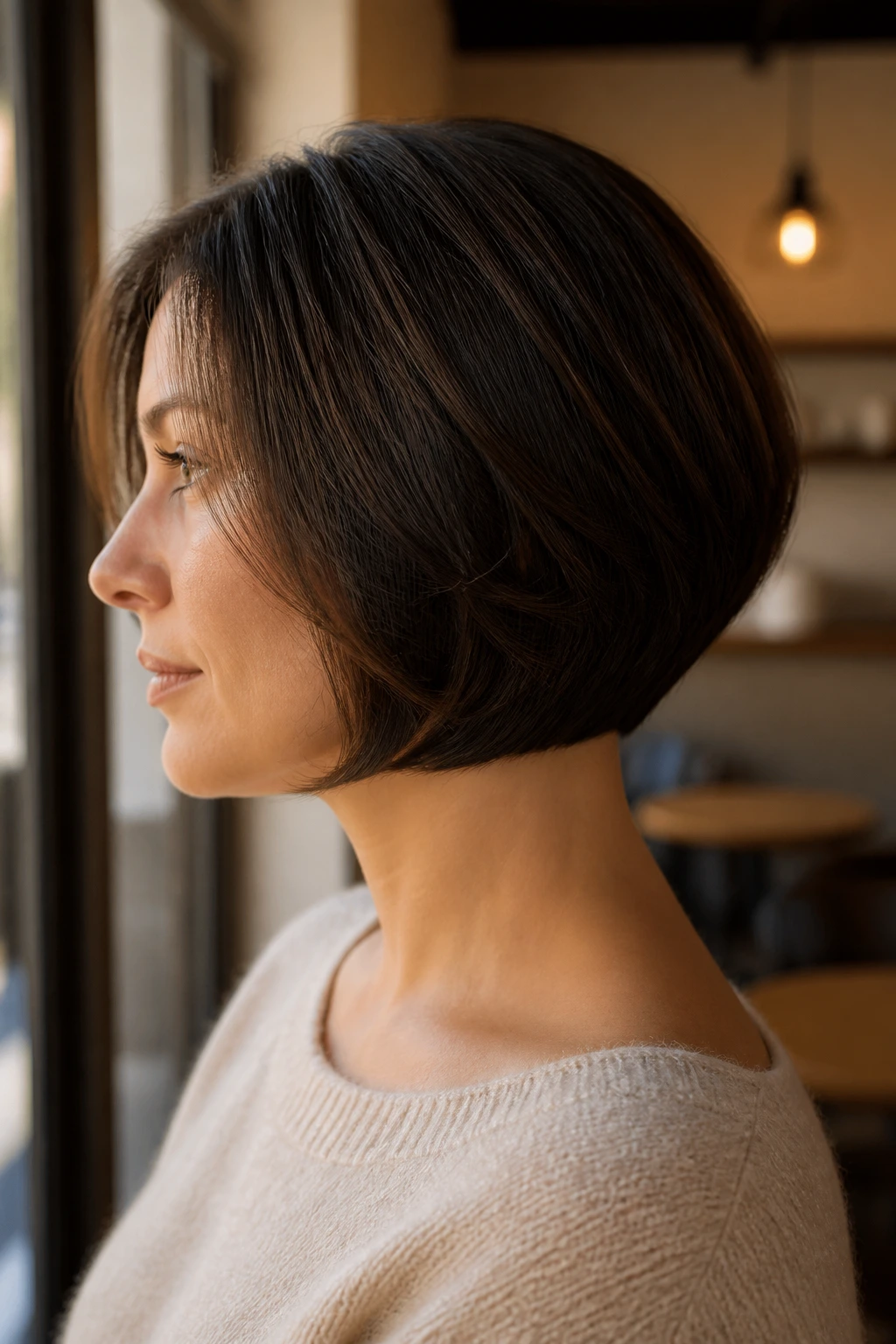
This one sits close to the neckline and curves inward at the bottom, so the shape reads smooth and intentional from the side. The layers are tucked low enough to let the hair hug the neck instead of flaring out. If you hate wide-looking bobs, pay attention here.
The curved underline gives the haircut a sculpted feel. It’s not flat, but it is contained. That balance makes the style work especially well on medium hair that has enough body to fill out the curve without blowing it apart.
Good to Know
A little heat shaping at the ends goes a long way. You want the line to bend, not curl. This cut also suits hair that grows out at a slight angle because the shape already supports that natural direction.
When done well, it looks expensive without trying to look expensive. That’s not a bad thing to say about a haircut.
27. Wrapped Blowout Bob
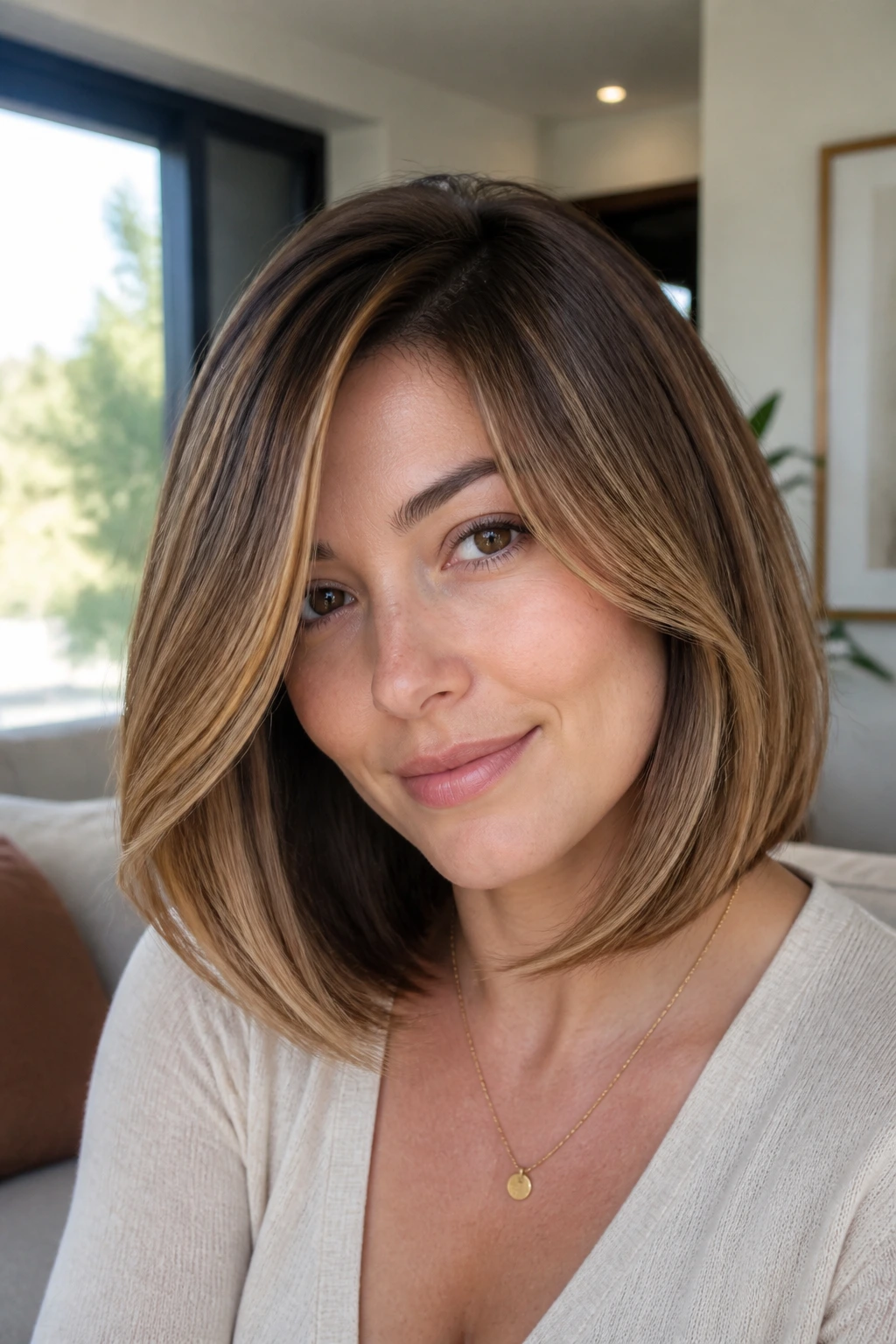
A wrapped blowout bob is less about the cut being wild and more about the cut supporting a full, round finish when you style it. The layers are placed so the hair can wrap around a brush, build a bend, and settle into a soft curve instead of splitting into random sections.
This is the one for people who like a little salon polish at home. It depends on a good blow-dry, yes, but not on complicated skills. The layers guide the brush. That’s the whole point.
How It Feels When It’s Done Right
The hair should move, but not frizz. The ends should curve under cleanly. The crown should have a little lift without looking puffy. If you can run your fingers through it and the shape still holds, the haircut is doing its job.
It’s a strong finish to the list because it shows what layered medium-length hair can do when the shape and styling actually cooperate. Some cuts look good in a photo. This one looks good when you leave the house and when you come back from dinner.
Why Layering Changes the Whole Bob
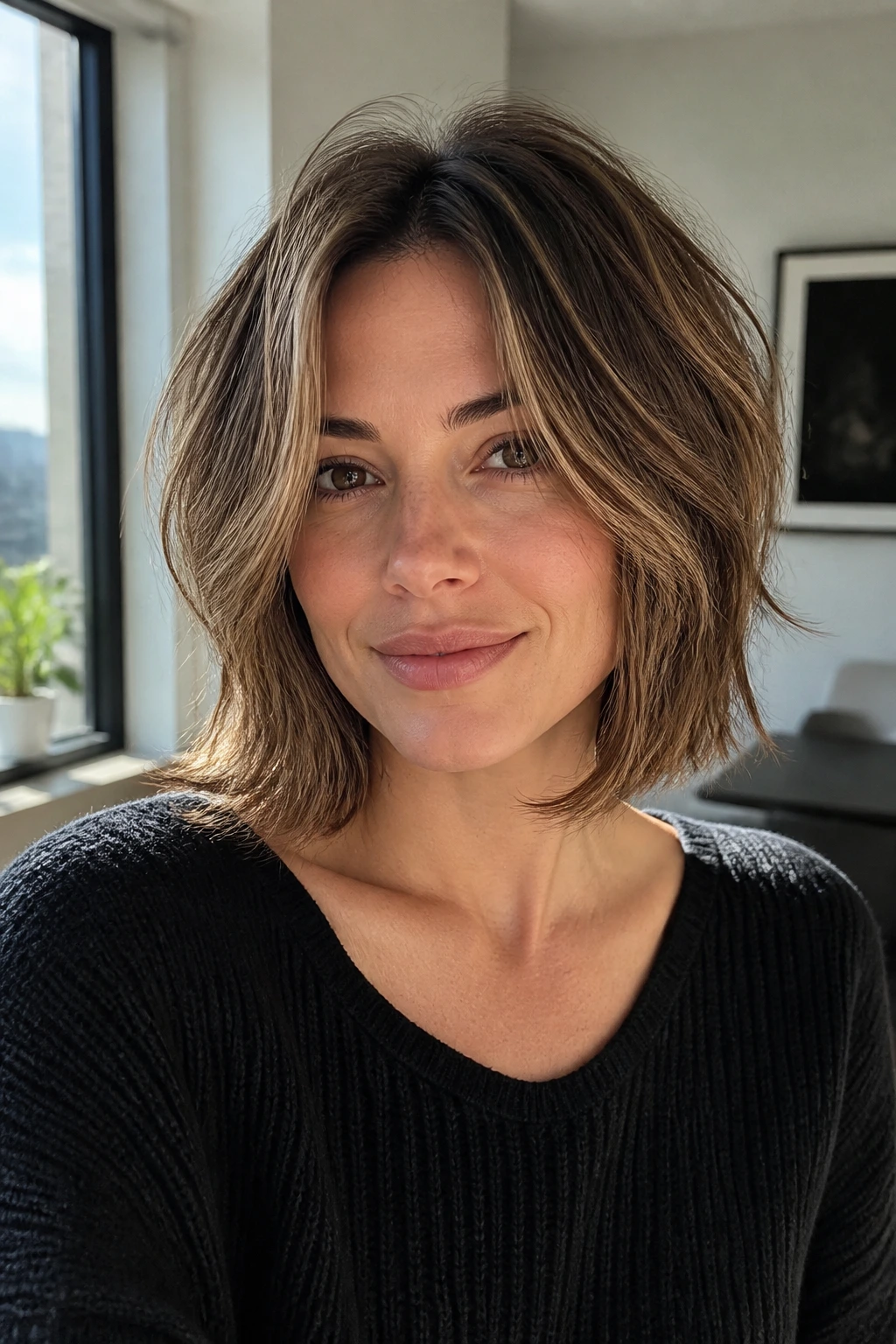
A bob without layers is a statement. A bob with layers is a conversation. The perimeter still gives you the shape, but the interior decides whether the haircut feels heavy, airy, sharp, or soft. That’s why a medium-length bob can look flat on one person and alive on another even when the length seems nearly identical.
The trick is weight control. Remove too much, and the cut frays. Remove too little, and the sides balloon or the bottom droops. Good layering keeps the hair close enough to the head to show the shape while letting the ends and mid-lengths move in a way that feels natural, not stiff.
A lot of the best medium-length bobs rely on invisible work. Internal layers, tiny graduation at the nape, face-framing pieces that start at the right point — these details don’t shout from across the room, but they change how the cut behaves every single day. That’s why a smart bob grows out better than people expect. The structure is doing quiet work even when the styling is lazy.
The Tools That Make These Cuts Easier to Wear
-
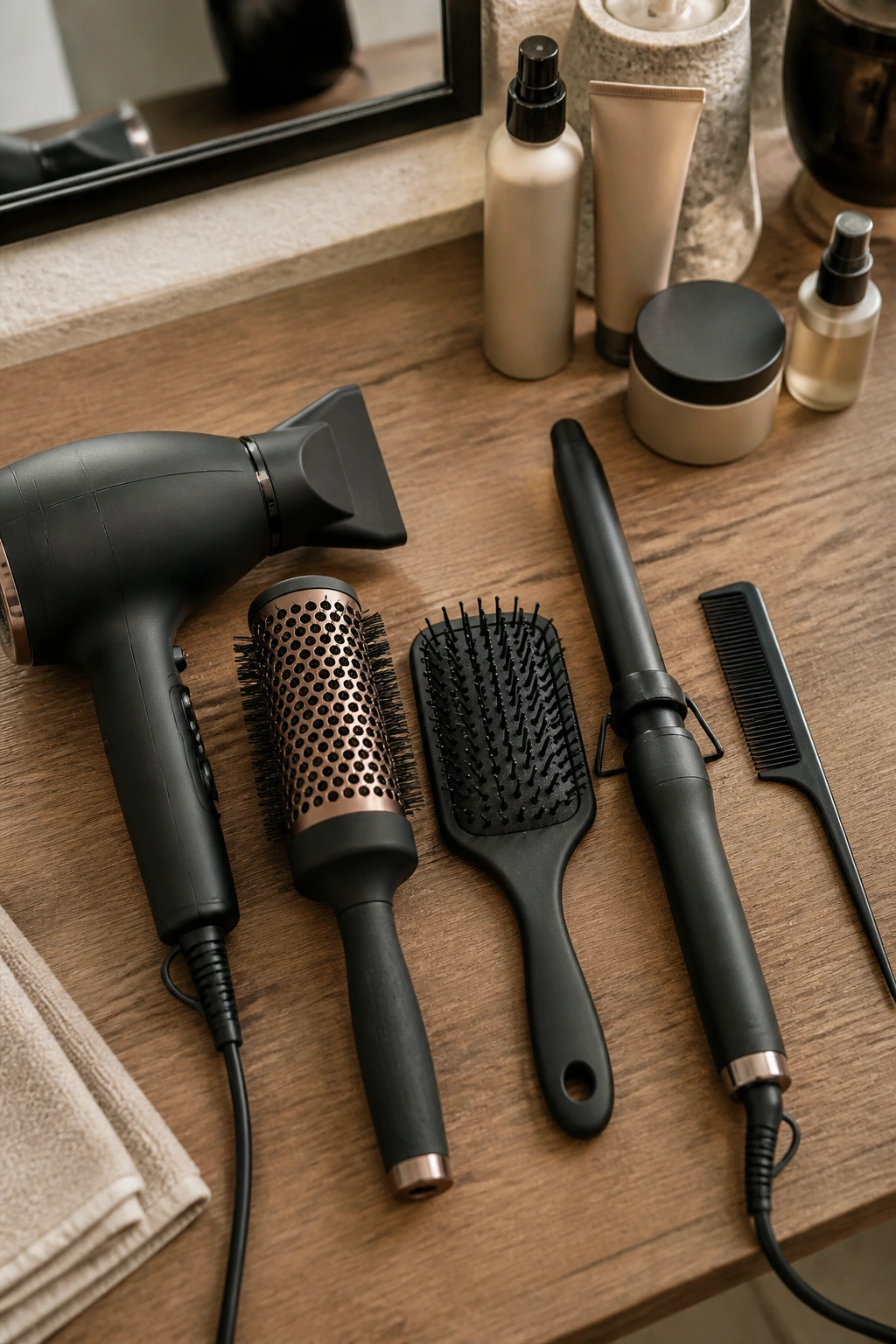
Blow dryer with a concentrator nozzle: The nozzle keeps airflow directed, which matters when you want the ends to sit smooth instead of frizzing out.
-
Medium round brush, about 1.5 to 2 inches: Best for turning the ends under, lifting the crown, and shaping a collarbone-length bob without too much curl.
-
Paddle brush: Good for sleek finishes and for people who want the hair to dry smooth with less bend.
-
1-inch curling wand or iron: Useful for loose bends, flipped ends, and that piecey texture layered bobs often need.
-
Tail comb: Helps with clean parts and sectioning. A sloppy part can make even a good haircut look off.
-
Heat protectant spray: Skip this and your ends will show it. Medium-length hair gets a lot of heat contact because people tend to restyle it often.
-
Light mousse or root spray: Handy for fine hair that needs lift without collapse.
-
Texturizing spray: Good for shaggy, piecey, or air-dried versions. A little goes far.
-
Smoothing cream or serum: Useful for sleek bobs, but use a pea-sized amount. Too much turns the shape greasy fast.
-
Section clips: Not glamorous. Extremely useful. They keep the back from getting tangled while you work on the front.
Choosing the Right Layered Bob for Your Hair
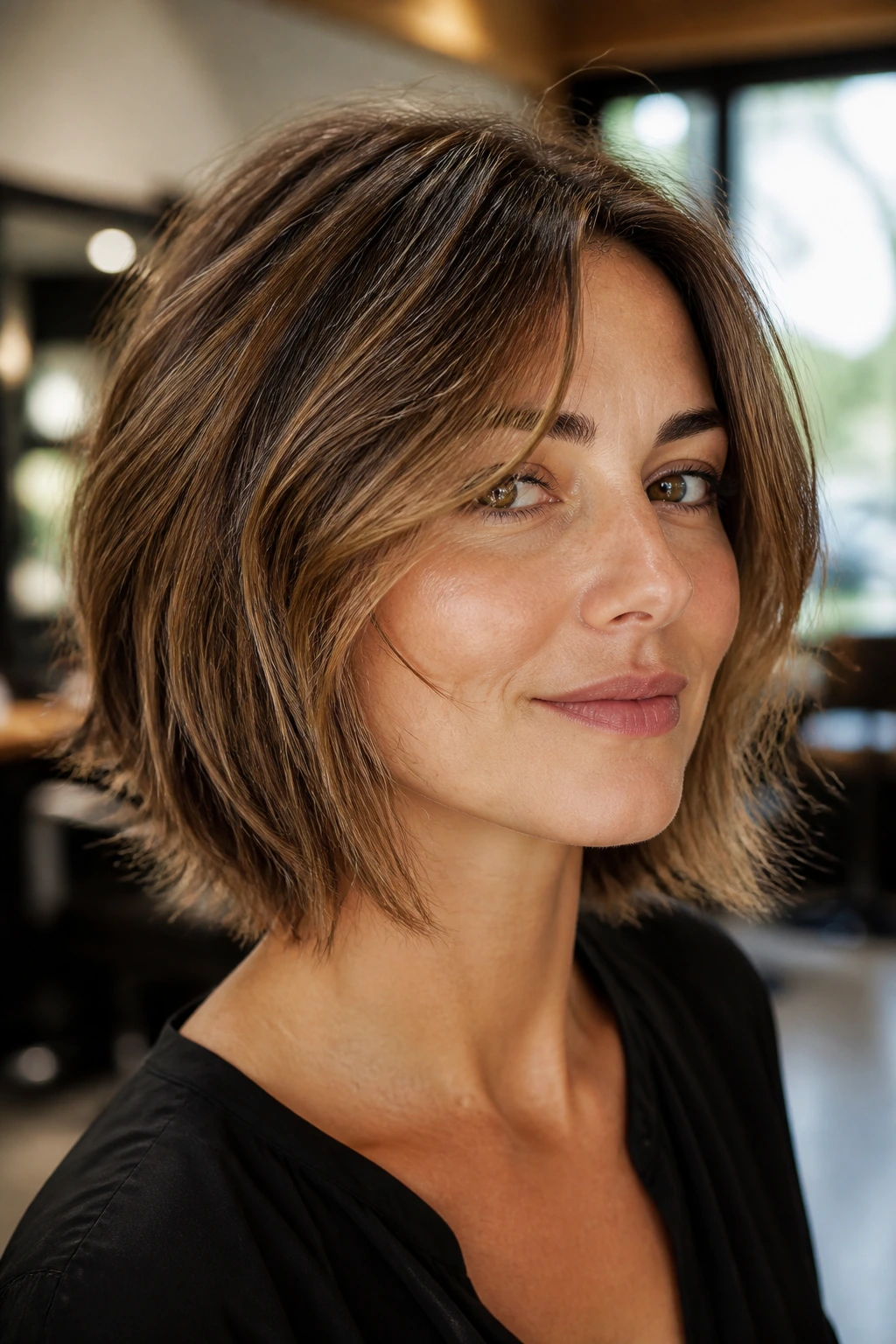
The best layered bob for medium length hair is the one that respects your natural texture, not the one that looks prettiest on a model with perfect density and a round brush in hand. Fine hair usually needs softer layers and a cleaner perimeter so the ends stay full. Thick hair can handle more weight removal, but it still needs shape at the bottom or it will fan outward.
Face shape matters, but not in the simplistic way people like to pretend. A jawline that feels strong can be softened with longer front pieces. A longer face can handle width at the sides or a fuller fringe. A broader forehead often likes a fringe or a sweep that breaks up the vertical line. The haircut should work with the face, yes, but it should also work with the way your hair grows around your ears, crown, and neckline.
Bring photos, but bring words too. Tell your stylist how long you want to go between trims, how often you heat-style, and whether you care more about polish or movement. That conversation is more useful than showing up with one screenshot and hoping for the best. Haircuts live in real life, not on a camera roll.
How to Wear These Bobs Day to Day

Air-Dry Finish:
Work a light cream or curl lotion through damp hair, part it where you actually wear it, and leave the ends alone. This suits the softer layered cuts, especially the wavy lob and the air-dry bob.
Quick Blowout:
Use a round brush at the crown and through the front pieces, then bend the ends slightly under. That gives the polished bob shapes their clean line and helps stacked or curved cuts sit close to the head.
Soft Texture:
Mist a small amount of texturizing spray through the mid-lengths and scrunch with your fingers. This is the easiest way to wake up piecey, shaggy, or razor-cut bobs without making them crunchy.
Sleek Finish:
Blow-dry the hair smooth, then pass a flat iron only through the outer layer if needed. Add a tiny bit of serum to the ends. Keep the product away from the roots or the shape goes limp fast.
Second-Day Reset:
A dry shampoo at the crown and a quick bend at the front pieces are usually enough. Don’t start over from scratch. Medium-length layered bobs usually only need a little reshaping, not a full redo.
Small Moves That Make the Shape Look Intentional
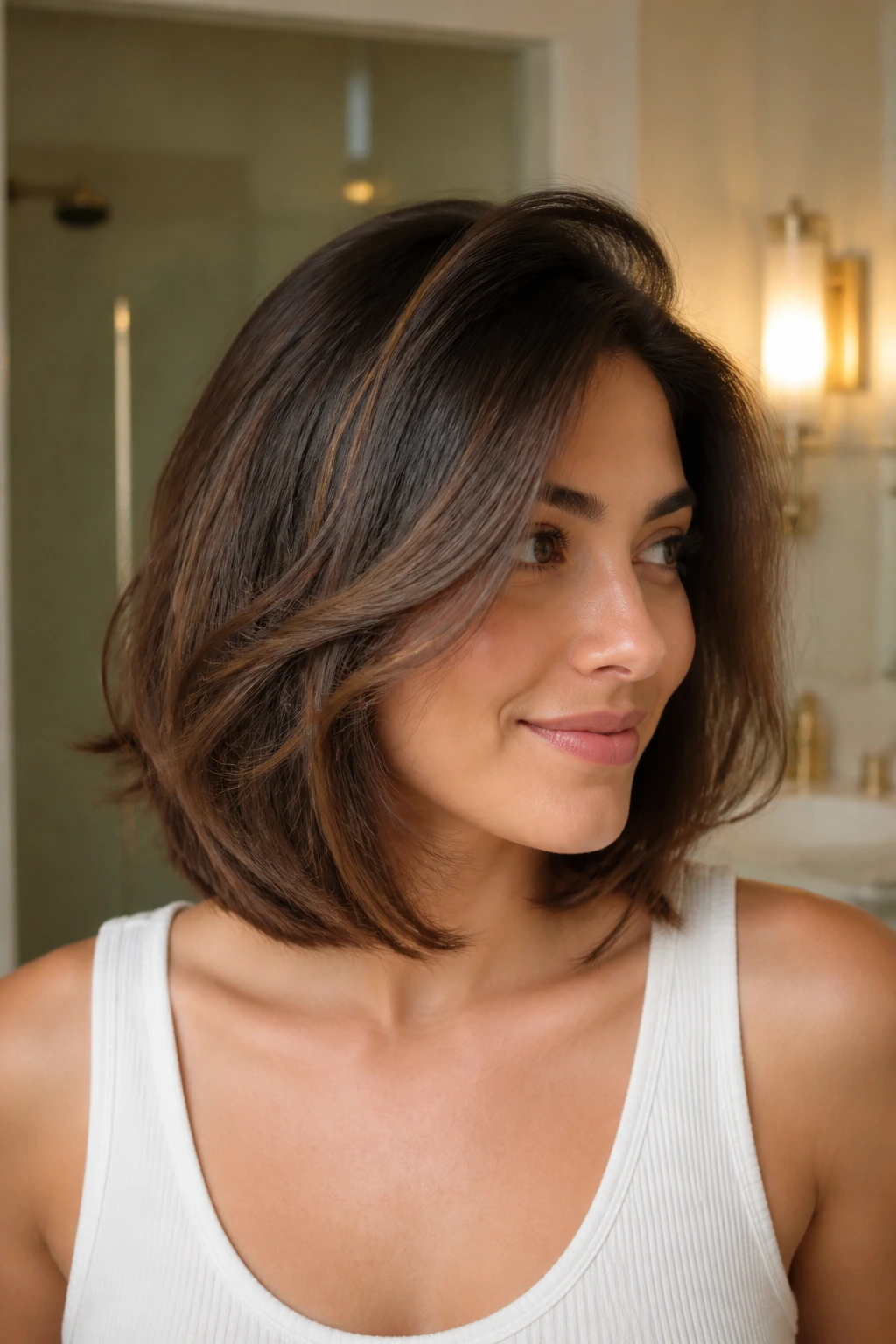
Root Lift: A little lift at the crown changes the whole haircut. Even a clean bob looks flatter if the top is pinned to the scalp. A light root spray or a rough blow-dry at the base can fix that in three minutes.
Part Switching: If your bob feels stuck, move the part a half inch in either direction. That tiny change redistributes the layers and can wake up the front without touching the cut.
End Direction: Decide whether you want the ends to sit under, flip out, or stay straight, then style toward that finish every time. Mixed directions make the haircut look accidental.
Moisture Control: Thick, dry hair often needs a cream, while fine hair does better with spray. Using the wrong product is a fast route to collapse or puffiness.
One Good Iron Size: The 1-inch iron is the workhorse for most layered bobs. Bigger tools can flatten the shape. Smaller ones can make the haircut look overdone.
Keeping the Shape Between Salon Visits
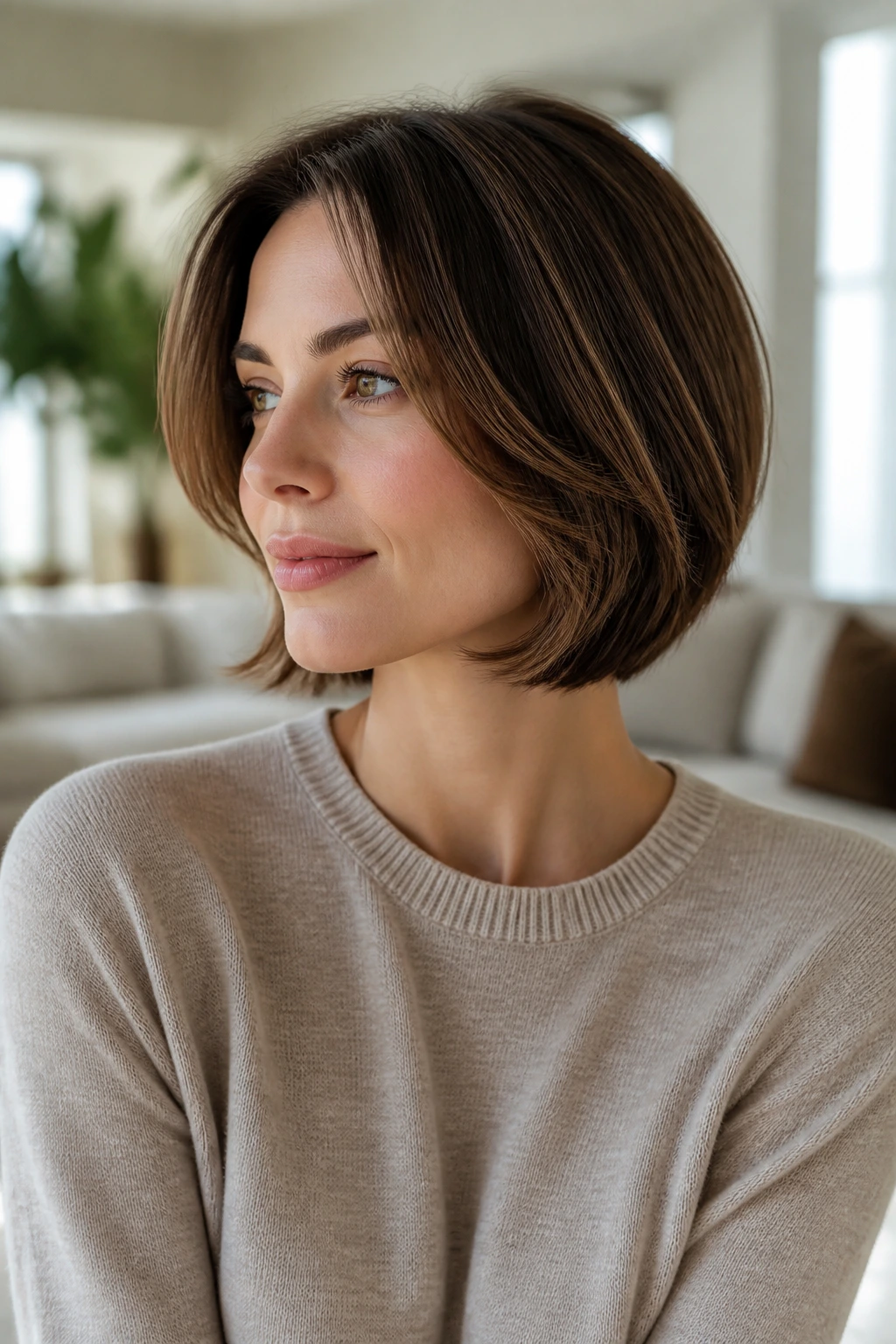
Layered bobs for medium length hair usually look best with trims every 6 to 8 weeks, especially if the ends are soft or razored. That schedule keeps the perimeter clean before the layers start to stick out in odd places. If your hair grows fast or you wear a sharper shape — the A-line, stacked nape, or curved underline versions — you may want a trim closer to the six-week mark.
Between appointments, the most useful habit is not piling on new product every day. Build-up makes medium-length hair feel greasy at the roots and tired at the ends. A clarifying wash every couple of weeks helps if you use spray, cream, or dry shampoo often. Don’t overdo it, though. Once a week is too much for many heads of hair and can make the ends feel rough.
Heat protection matters here too. Medium-length hair gets touched by a blow-dryer, flat iron, or wand more than longer hair because people restyle it often. That means the same few inches of hair take the brunt of the heat. Use protectant before every hot tool session, then skip the extra passes. One pass with a brush and dryer is usually enough if the cut is good.
Variations and Adaptations to Try

The Soft Fringe Switch: Add a wispy fringe or curtain bang to almost any layered bob if the front feels too open. This works especially well with the French bob, the rounded bob, and the collarbone layers because it changes the mood without changing the length.
The Thicker-Hair Relief Plan: Keep the perimeter strong but ask for deeper internal weight removal only through the mid-section. This adaptation helps dense hair move without turning the ends into string.
The Fine-Hair Lift Plan: Keep layers long and focused near the crown, then preserve a fuller hem. This keeps fine hair from going see-through at the bottom while still giving it body up top.
The Curly Respect Cut: Shape the bob around the curl pattern instead of fighting it into a straight line. Dry cutting or curl-specific shaping helps the layers fall where the hair wants to sit once it springs up.
The Sleek-Minimal Version: Reduce texture and keep the line sharp if you prefer polish over movement. This is a good fit for straight hair, work settings, or anyone who likes a bob that can go from day to evening without much change.
The Grow-Out Friendly Edit: Ask for longer face-framing pieces and softer internal layering so the cut stays decent as it grows. That’s the move if you dislike chasing the salon chair every month.
Common Mistakes That Flatten a Layered Bob
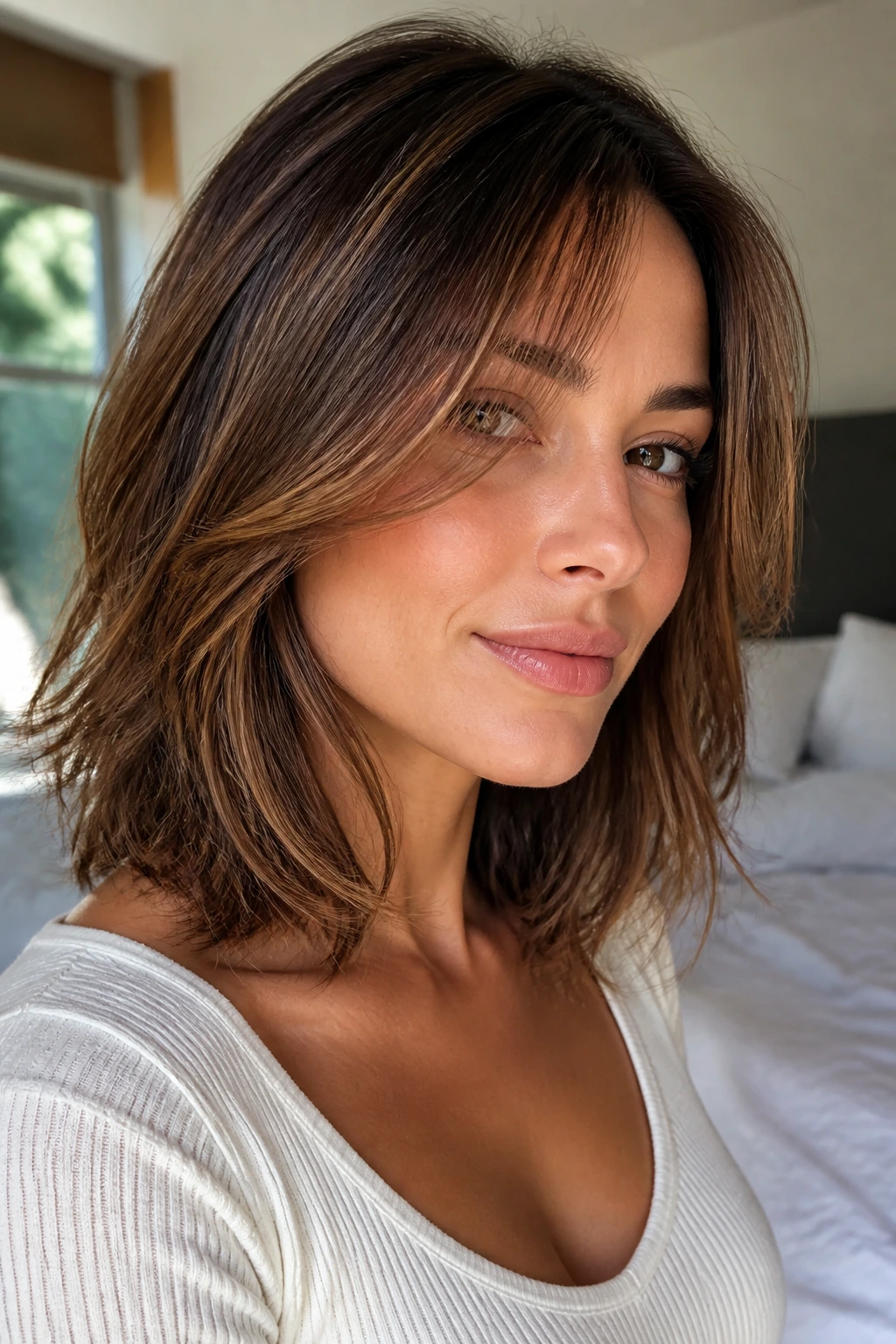
The biggest mistake is asking for too many short layers in medium-length hair. The result often looks airy in the chair and awkward a week later, especially around the back and sides. If you want movement, ask where the weight should come out, not for “lots of layers” in the abstract.
Another one: overtexturizing fine hair. It sounds like a fix, but too much slicing leaves the ends wispy and makes the bob look thinner than it is. Fine hair usually needs cleaner ends and lift placed higher up.
Curly hair gets cut too short all the time because it shrinks after washing. If the stylist cuts it as though it were straight, the bob can bounce up far higher than expected. That’s why curl-aware cutting matters.
Heavy product is a quiet killer. Creams and oils can make a layered bob fall flat at the crown and separate in greasy chunks at the ends. Use less than you think, then add only if the hair truly needs it.
And then there’s the styling mismatch. A cut built for air-drying will not behave the same way as a blowout bob, and a sharply stacked bob won’t sit the same as a shag. The haircut and the styling habit have to match. If they don’t, the shape gets blamed when the real problem is the routine.
Questions People Ask Before They Cut the Hair

Will a layered bob make medium length hair look thinner?
Not if the layers are placed well. The danger comes from cutting too much weight out of the ends, which makes the outline sparse. Keep the perimeter full and push the movement inward or upward.
Is a layered bob good for thick hair?
Yes, especially if the layers remove bulk without breaking the outer shape. Thick hair usually looks better in a bob when the interior is lightened and the bottom line stays clean.
What if my hair is fine and flat?
Choose long, restrained layers and avoid heavy thinning at the ends. A crown lift, a side part, and a blunt or softly beveled base usually help more than choppy texture.
Can curly hair wear a medium-length layered bob?
Absolutely, but the cut has to account for shrinkage and curl pattern. A curl-specific shape keeps the bob from ballooning out or turning too short once it dries.
How often do I need trims?
Most of these shapes stay neat with trims every 6 to 8 weeks. Sharper cuts and stacked shapes may need attention sooner if you want the line to stay crisp.
Should I get bangs with a layered bob?
Only if you want the front of the haircut to change the whole mood. Curtain bangs soften the face and work with many medium-length bobs, while blunt bangs make the cut more deliberate and high-maintenance.
What if my bob flips out at the ends?
That usually means the layers or the brushing pattern are encouraging the hair to kick outward. A slightly longer length, a smoother blow-dry, or a small inward bend with a round brush usually settles it down.
Can I wear these cuts without heat styling?
Some of them, yes. The air-dry bob, wavy lob, and softer collarbone layers can look good with very little heat. Sharper shapes like the A-line or polished bob usually need at least a quick pass with a brush or iron.
The Shape That Still Makes Sense on a Busy Morning
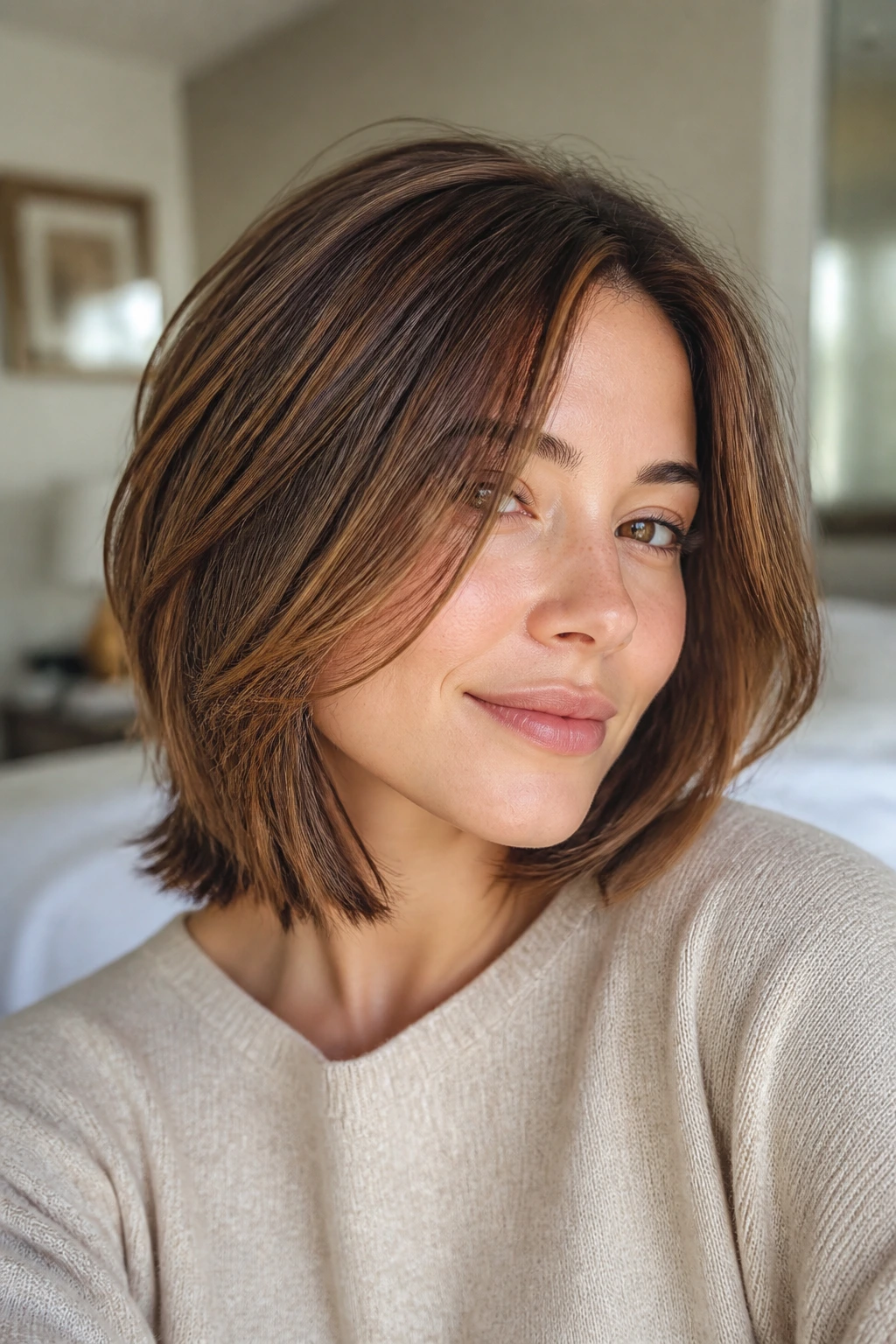
A good layered bob for medium length hair doesn’t rely on one perfect styling session. It gives you a shape that holds together when you’re rushed, a front that still frames the face after a windy walk, and enough structure to look deliberate even when the texture shifts from one day to the next.
That’s the real appeal here. Not drama. Not fuss. A haircut that does useful work and still looks like it had a point.
Choose the version that matches your texture, your patience, and the amount of heat styling you’re actually willing to do. The best bob is the one that keeps behaving after the appointment ends, and a well-cut layered one usually does exactly that.
