



The best beard styles for short hair do one thing better than a big, sprawling beard ever could: they make the haircut look deliberate. A three-millimeter shadow beside a tight fade can sharpen a face faster than a thick beard ever will, and when the edges are clean, the whole head reads as finished instead of half-grown-out. That’s the magic here. Short hair leaves almost nothing to hide behind.
And that also means the wrong beard shape shows up fast. A neckline set too high. A cheek line that climbs like a staircase. Sideburns that stop awkwardly above the fade. Short hair is unforgiving, but in a good way — it rewards discipline, and it punishes lazy trimming right away. If you’ve ever looked in the mirror and thought, “The haircut’s fine, but something’s off,” the beard is usually the thing that needs to be redrawn.
What follows isn’t a parade of random beard names tossed together for clicks. These are short-hair pairings that work in real life, with enough detail to help you talk to a barber, trim at home, and keep the shape from drifting into mush after a week. Some are barely there. Some carry more weight. All of them depend on proportion, line work, and a little honesty about how your face grows.
Why These Beard Styles Work With Short Hair

- Short hair makes the beard the frame: When the haircut is clipped close, the beard becomes the edge of the face, so even a light shadow needs shape.
- Clean fades and crisp lines do most of the heavy lifting: A 0.5 mm-to-6 mm transition around the sideburns can make a beard look more expensive than extra length ever will.
- You get control without losing texture: Short beards still show grain, curl, and density, which is why they look natural rather than painted on.
- Face shape matters more than beard volume: A round face usually wants more vertical length; a long face often wants width at the cheeks and less point at the chin.
- These styles are easier to maintain than fuller beards: Most of them need a trim every 3 to 7 days, not a full grooming ritual.
- Barbers know how to build these looks fast: Ask for guard numbers and line placement, not vague words like “clean it up.” That saves both of you time.
1. Heavy Stubble with a Skin Fade
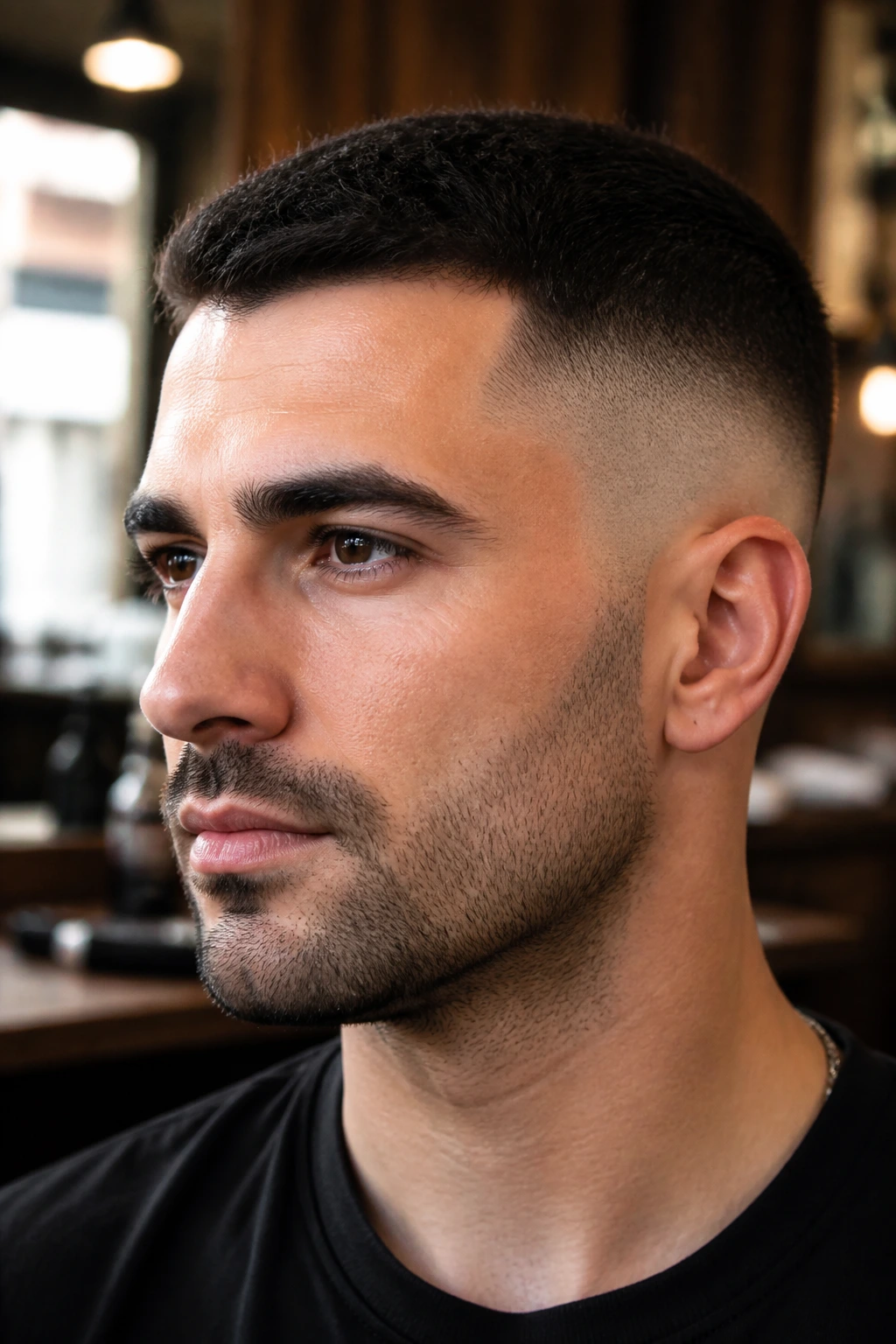
Heavy stubble is the style that gets away with being simple because it knows exactly what it is. Keep the beard around 3 to 4 mm, let the fade drop cleanly into skin at the temples, and you’ve got a look that feels sharp without pretending to be a full beard.
The key is contrast. A tight buzz or skin fade gives the stubble something to sit against, so the jawline reads cleaner and the mouth area looks more defined. Ask your barber to keep the cheeks low and the neckline honest — about one finger above the Adam’s apple is usually the sweet spot.
Best for: square, round, and oval faces.
Maintenance: trim every 2 to 4 days so it stays even instead of scruffy.
Watch for: if the stubble gets past 5 mm, it starts reading as a short beard, and the fade may look too severe.
2. Short Boxed Beard
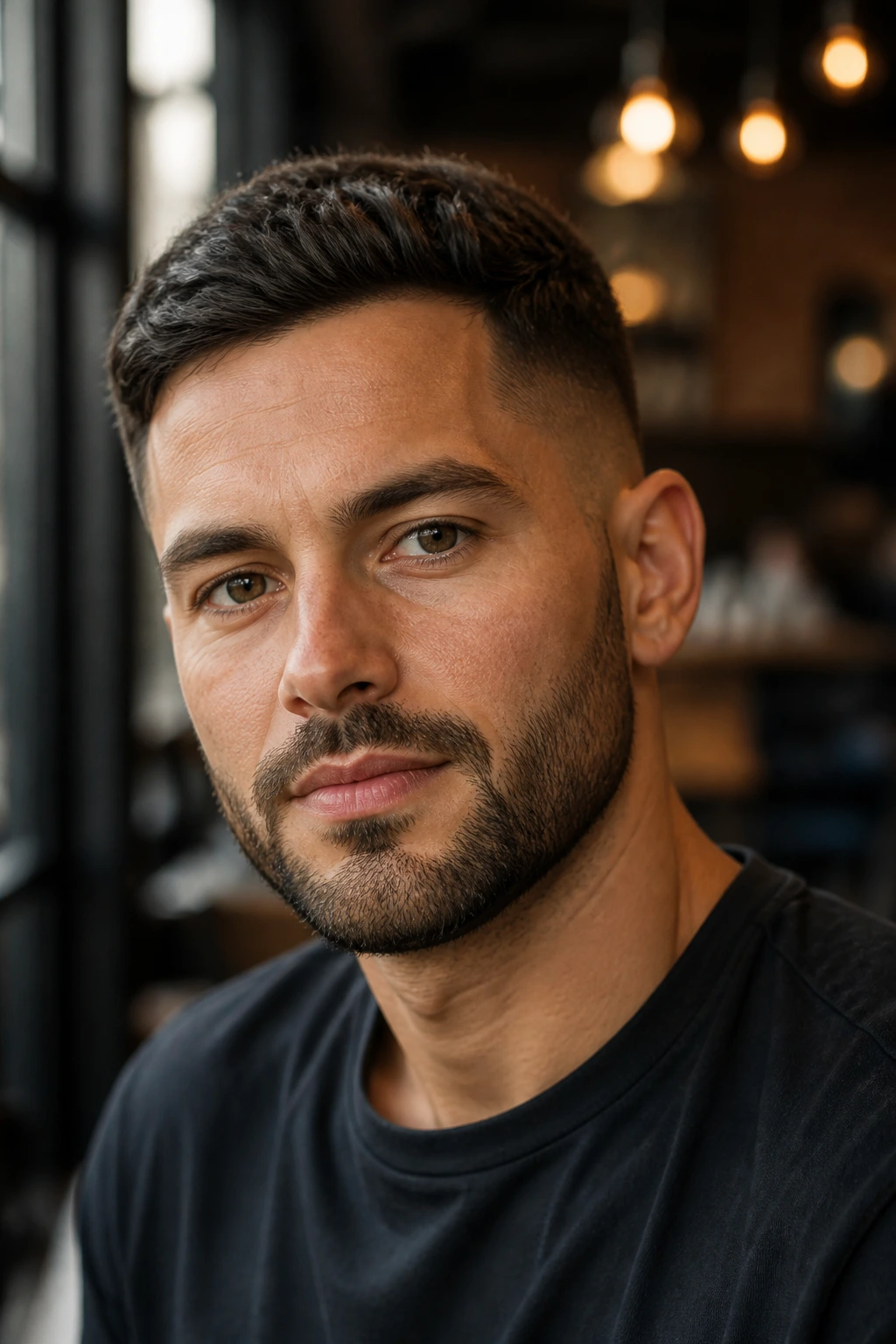
A short boxed beard is the reliable middle ground. It gives you enough shape to define the jaw, but it stays tight enough to work with a crew cut, crop, or anything with short sides. Think 5 to 8 mm on most of the beard, with the chin allowed a touch more length if you want a stronger outline.
What makes it work is the square silhouette. Not a block. Not a slab. Just a beard that respects the jaw without swallowing it. Keep the cheek line gently curved rather than flat, because a dead-straight line often looks drawn on.
If your hair is short on top, this style balances the whole head nicely. The haircut stays neat, the beard adds weight, and neither one fights the other.
3. Faded Beard Line-Up
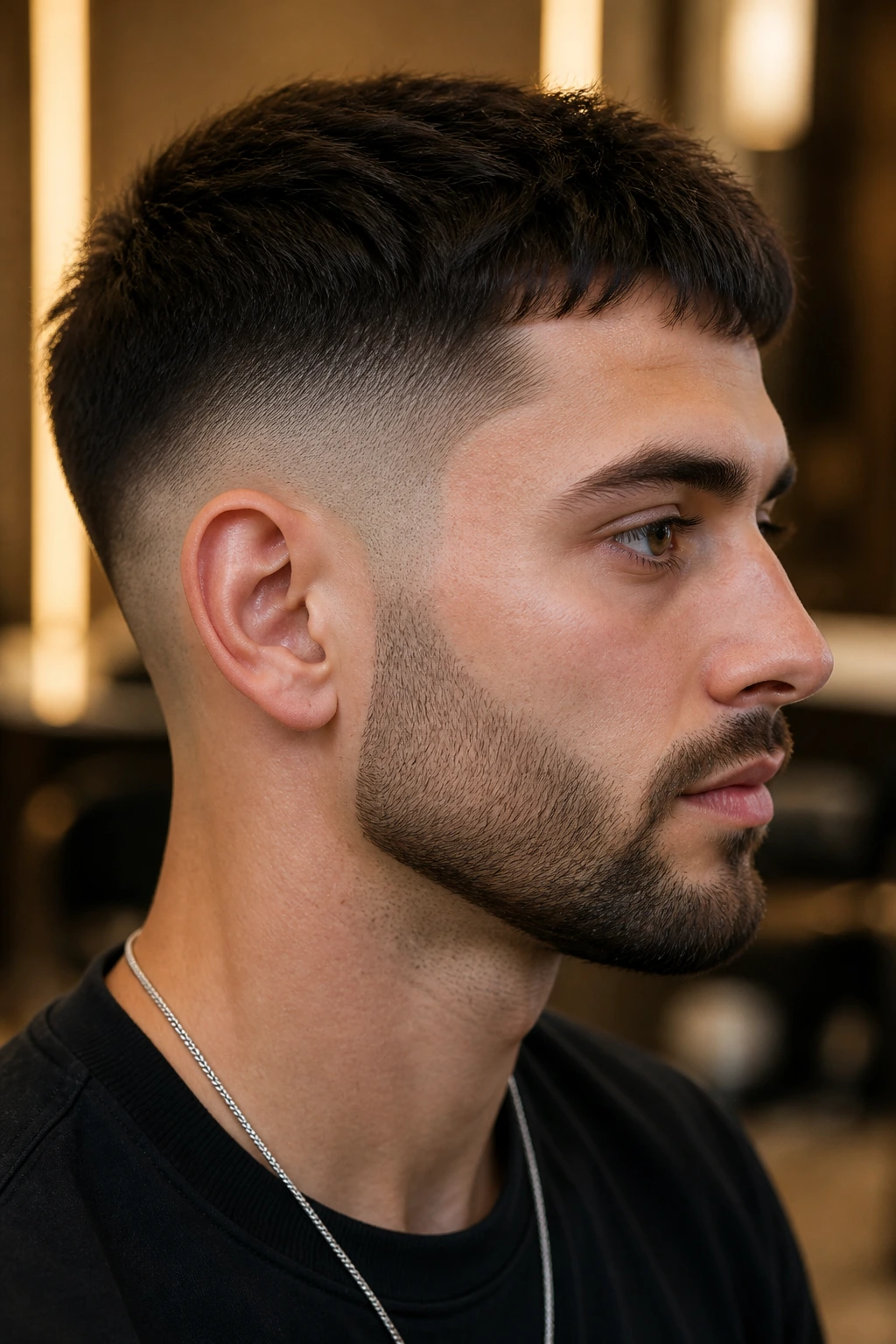
This is the style for men who like edges that look deliberate from ten feet away. The beard starts almost shadow-short near the sideburns and grows darker and fuller toward the jaw, usually with a 0.5 mm or 1 mm guard working up toward 3 or 4 mm.
It pairs especially well with a low fade, mid fade, or textured crop. The transition matters more than the length. If the blend is smooth, the whole style looks expensive; if the blend is choppy, the beard reads as unfinished. A detail trimmer helps here, but a patient hand matters more.
You do need upkeep. The fade fuzzes out fast once growth starts coming in unevenly, so this is one of those styles that benefits from a weekly edge-up rather than a monthly rescue.
4. Beardstache
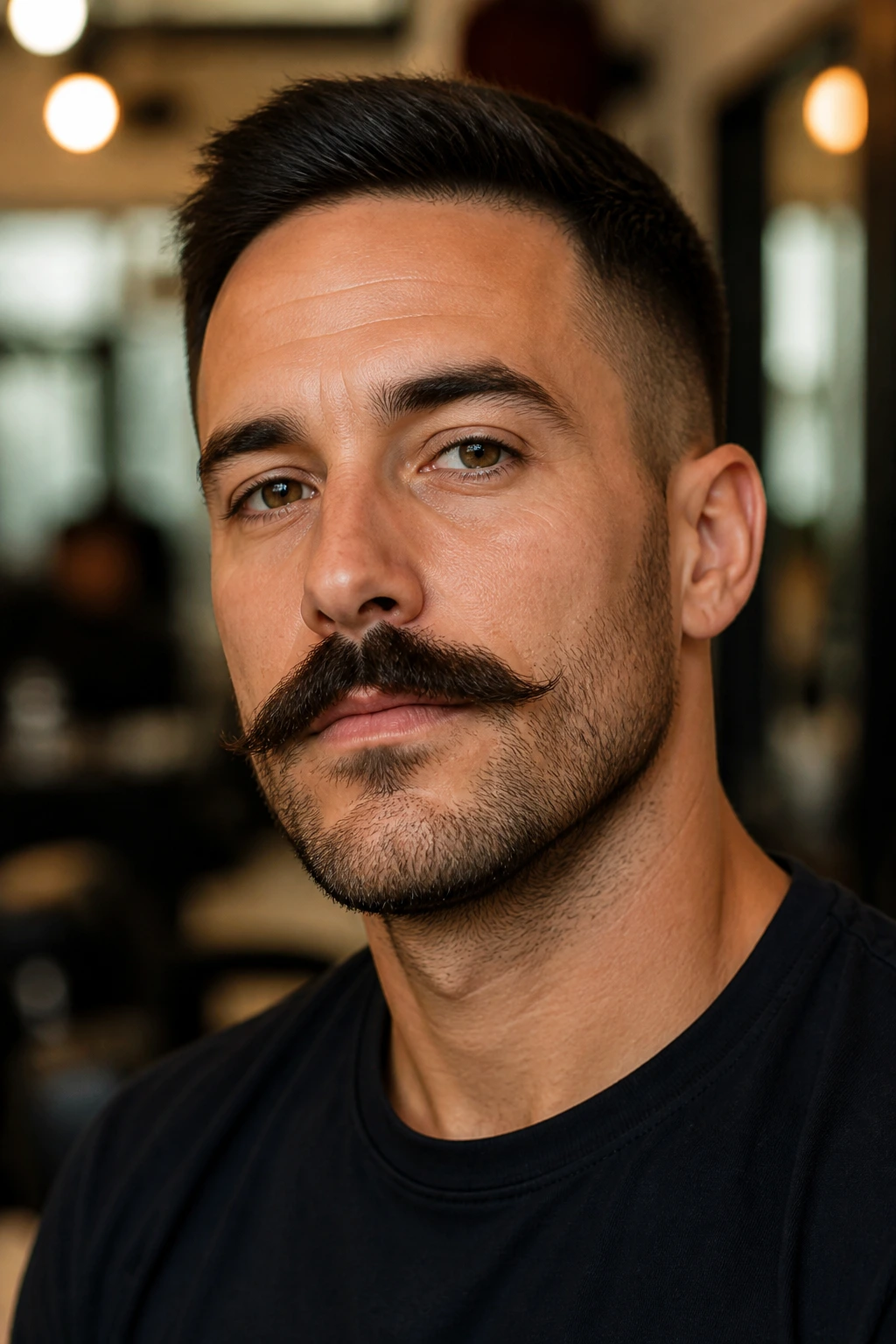
The beardstache is the style for people who think a mustache should be allowed to boss the room a little. Keep the mustache fuller — around 8 to 12 mm — and the rest of the beard shorter, usually 2 to 4 mm. The result is a face that feels sharper around the mouth and more relaxed through the jaw.
It works best with short hair because the haircut doesn’t compete. A buzz cut, crop, or even a short side part gives the mustache space to be the loudest thing on the face. If your mustache grows wavy, a touch of wax keeps the ends from curling into your lip.
This look can go wrong if the beard and mustache are the same length. Then it turns into a regular short beard and loses the whole point.
5. Circle Beard

Need something neat that still gives your chin some structure? The circle beard is the answer. It’s the mustache connected to the chin beard in a rounded loop, with the cheeks kept clean and the lines around the mouth kept narrow.
It suits narrow or angular faces especially well because it keeps the attention centered and avoids adding width where you don’t want it. The shape has to be symmetrical. If one side dips lower than the other, you see it immediately, so use a small trimmer and check both mirrors if you have to.
The circle beard looks tidy with short hair because the haircut keeps everything else under control. A buzz cut or cropped top lets the shape of the beard do the talking.
6. Balbo Beard
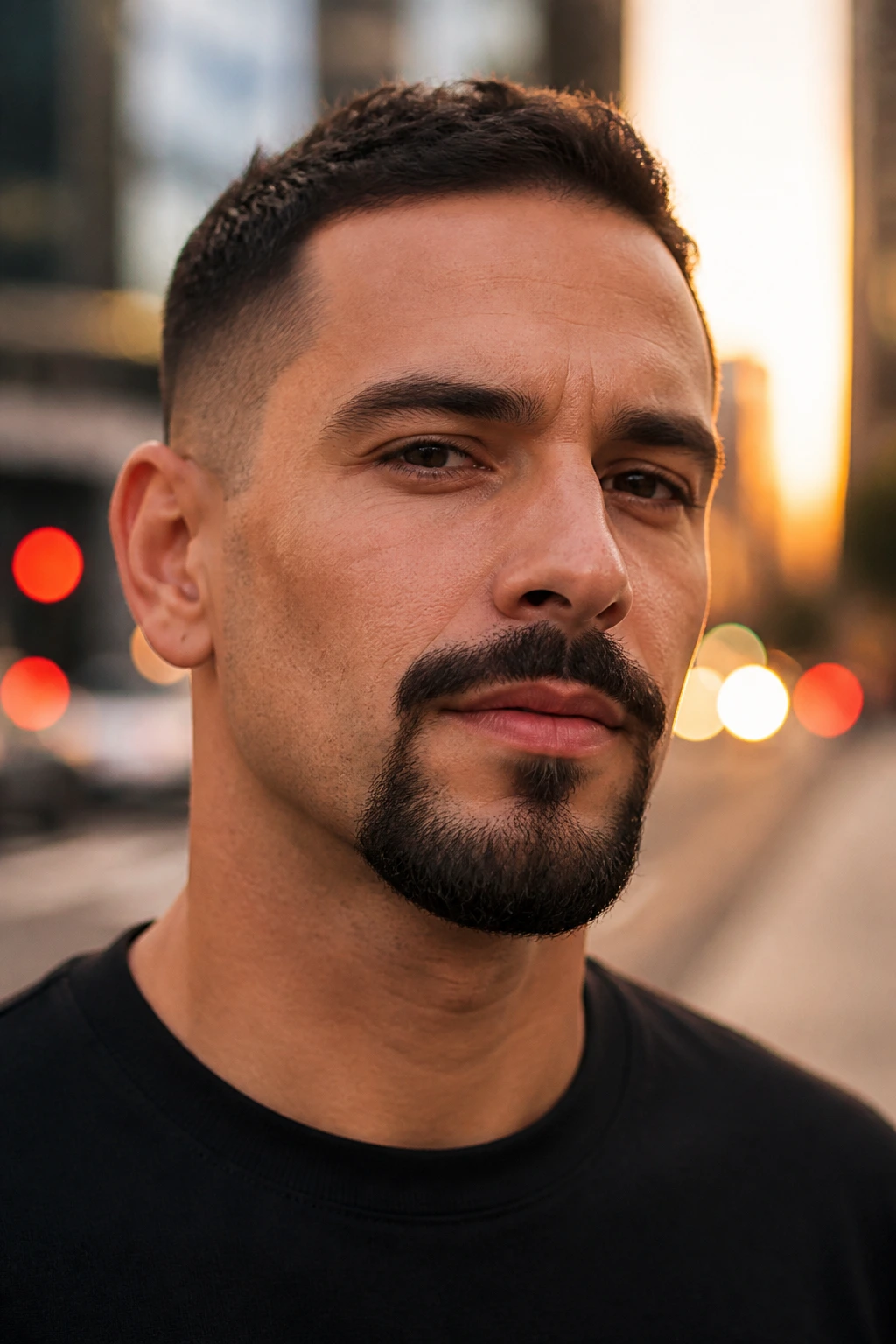
The Balbo is for a man who wants a beard with a little architecture in it. The mustache is separate from the chin beard, and the chin piece often floats a bit wider or lower than a simple goatee. Cheeks stay clean. That separation is the whole point.
With short hair, the Balbo gets even sharper because there’s less visual clutter around it. It works well if your cheek growth is patchy or if you don’t want to fight for density where nature didn’t bother to help much. Keep the chin section around 6 to 8 mm and the mustache a touch shorter, unless you want more contrast.
This style needs a steady hand. If the gaps between the mustache and chin piece drift unevenly, the shape turns messy fast.
7. Van Dyke Beard
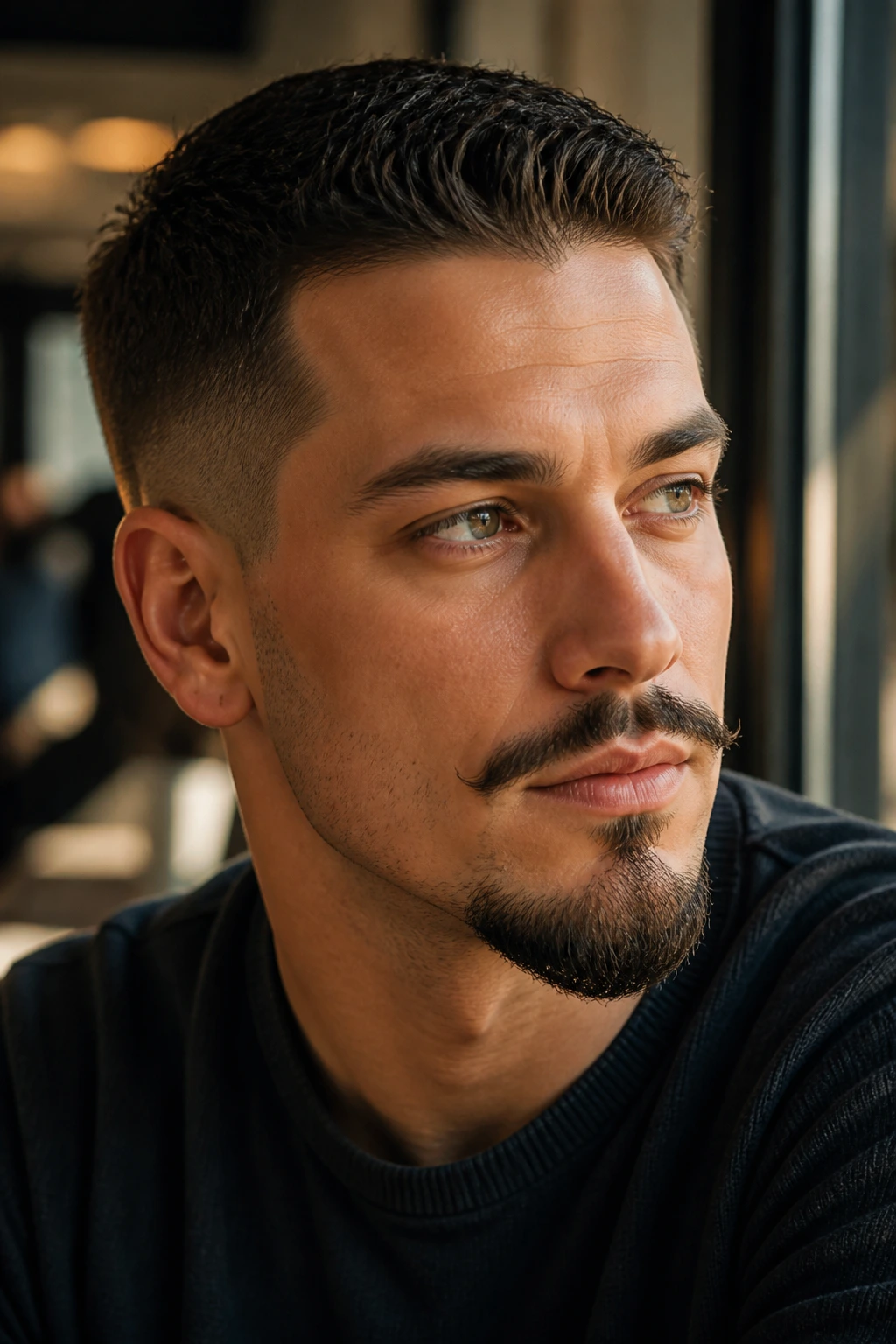
The Van Dyke is the theatrical cousin in this family, but that doesn’t mean it has to look costume-y. A pointed chin beard paired with a disconnected mustache gives the face a sharper center line, which short hair helps emphasize instead of dilute.
It works especially well if your haircut is simple — a clean crop, a side part, or a very short taper. The hair stays quiet, and the beard becomes the feature. Keep the mustache small enough that it doesn’t overpower the chin piece, and use a bit of wax if you want the ends to sit neatly.
The Van Dyke is not the beard for someone who wants to forget about grooming. It rewards symmetry and punishes sloppy edges.
8. Anchor Beard
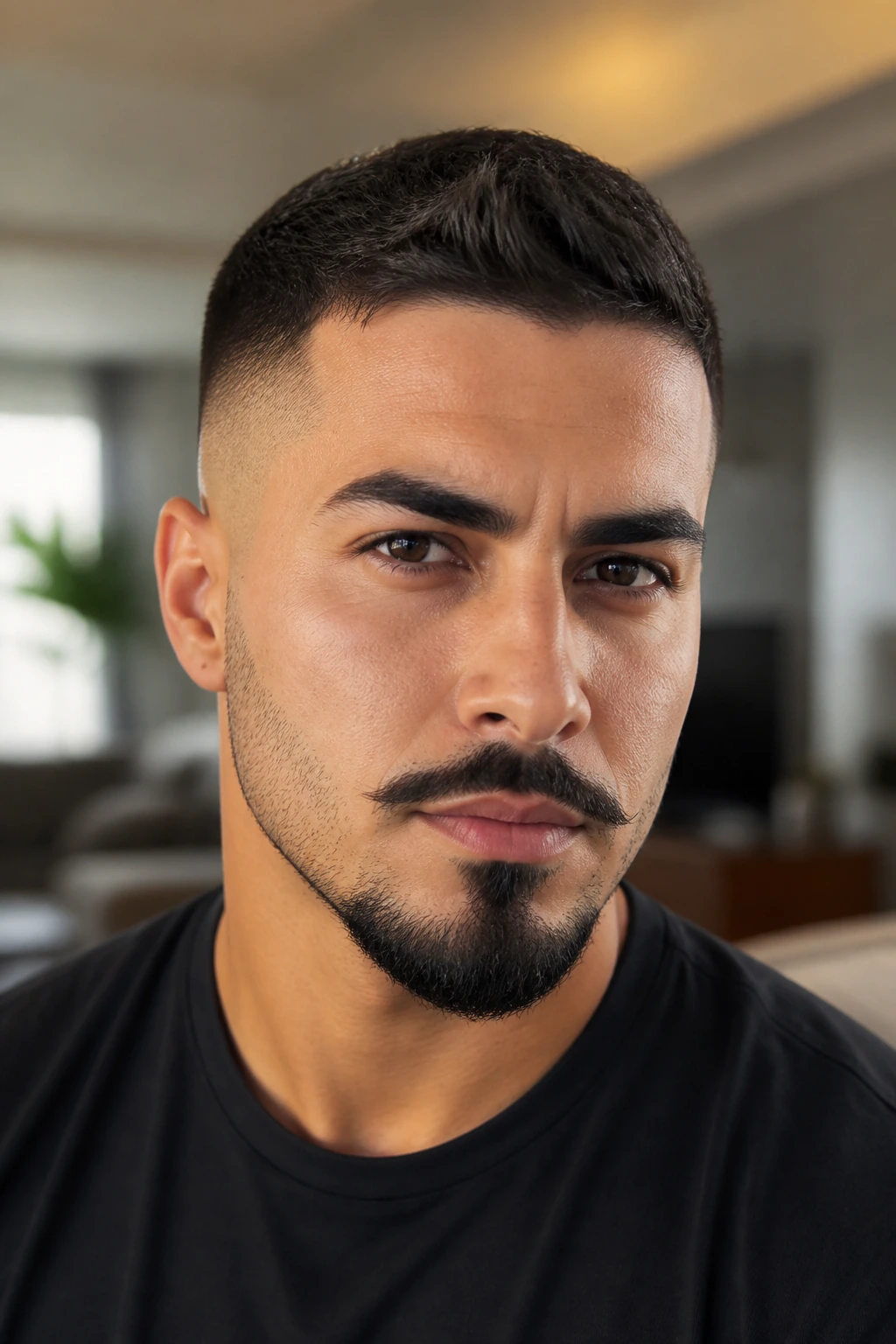
If the jaw could wear a badge, it would be the anchor beard. The shape tracks along the jaw and chin, with the mustache joining it in a pointed, narrow frame that looks especially strong on round and oval faces.
It pairs nicely with short, faded hair because the haircut keeps the top of the head from feeling too heavy. The beard needs careful cheek cleanup and a defined chin point, or else it starts drifting toward a generic goatee. That little anchor shape at the bottom should be visible, not implied.
This is one of those styles that looks more technical than it is. The trick is keeping the transitions smooth and the point centered. Easy enough in theory. Tricky if you rush.
9. Chin Strap Beard
A chin strap beard is a line, not a cloud. It traces the jaw with a thin band of hair and usually keeps the cheeks and chin area lean. With short hair, especially a buzz cut or skin fade, it can look brutally clean in the best way.
This is a style with a low margin for error. If the strap sits too high, it narrows the face too much. Too low, and it loses shape. The line should follow the natural jaw, not the fantasy version you wish you had. Keep it around 1 to 3 mm if you want it crisp rather than fuzzy.
It’s a bold look. It’s also not forgiving if your growth is patchy along the jawline. That’s the trade.
10. Extended Goatee
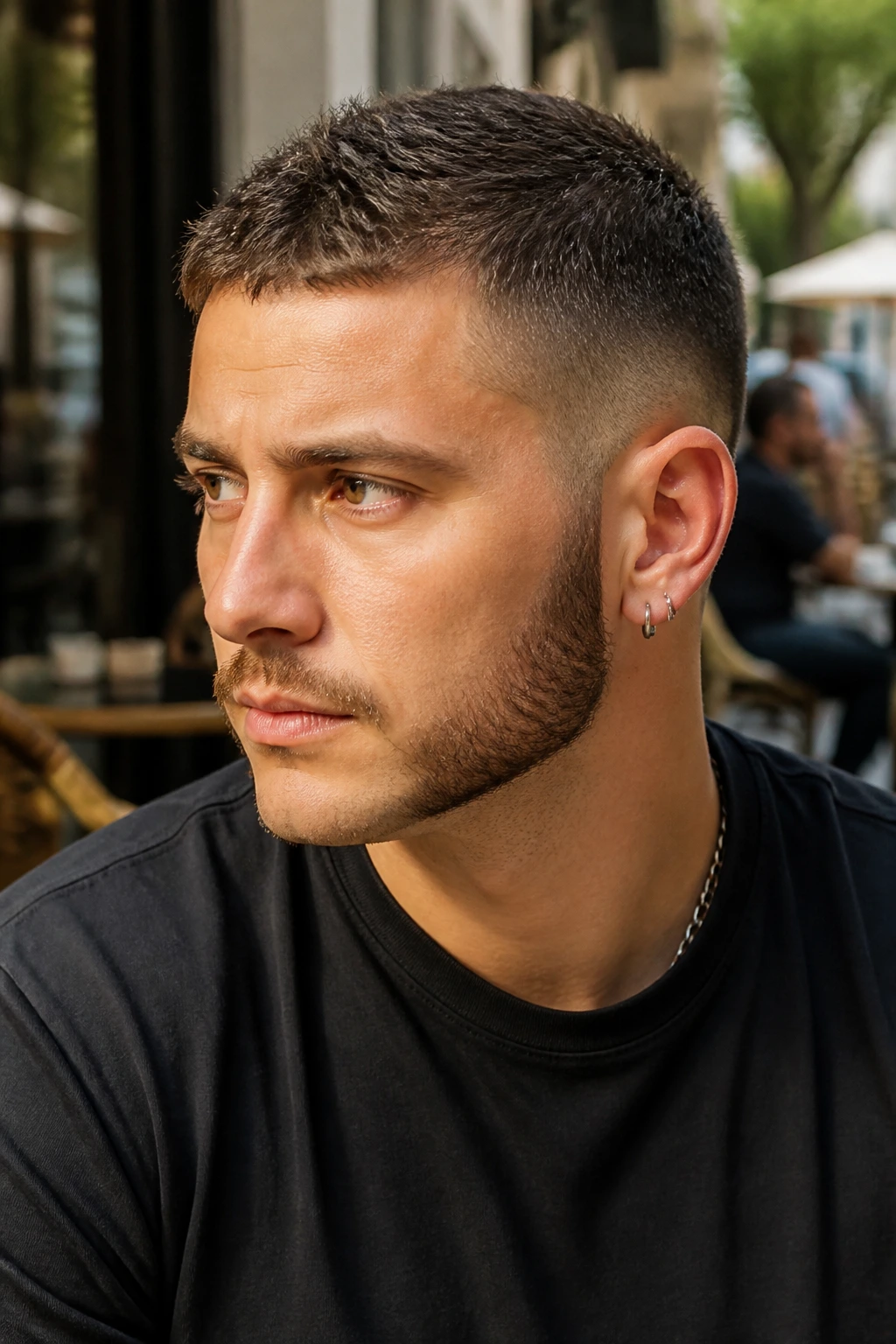
The extended goatee is the practical answer for anyone with patchy cheeks and a decent chin patch. It runs from the mustache through the chin and stretches along the jaw just enough to feel intentional, but not so much that it becomes a full beard.
Short hair makes this style easier to wear because the haircut doesn’t steal attention from the center of the face. Keep the sides clean, keep the goatee around 5 to 8 mm, and let the shape lengthen the face a bit. That’s why it works so well on rounder faces.
Don’t let the edges blur into the cheeks. The style lives and dies on contrast, and contrast disappears fast if you stop trimming for a week.
11. Corporate Beard
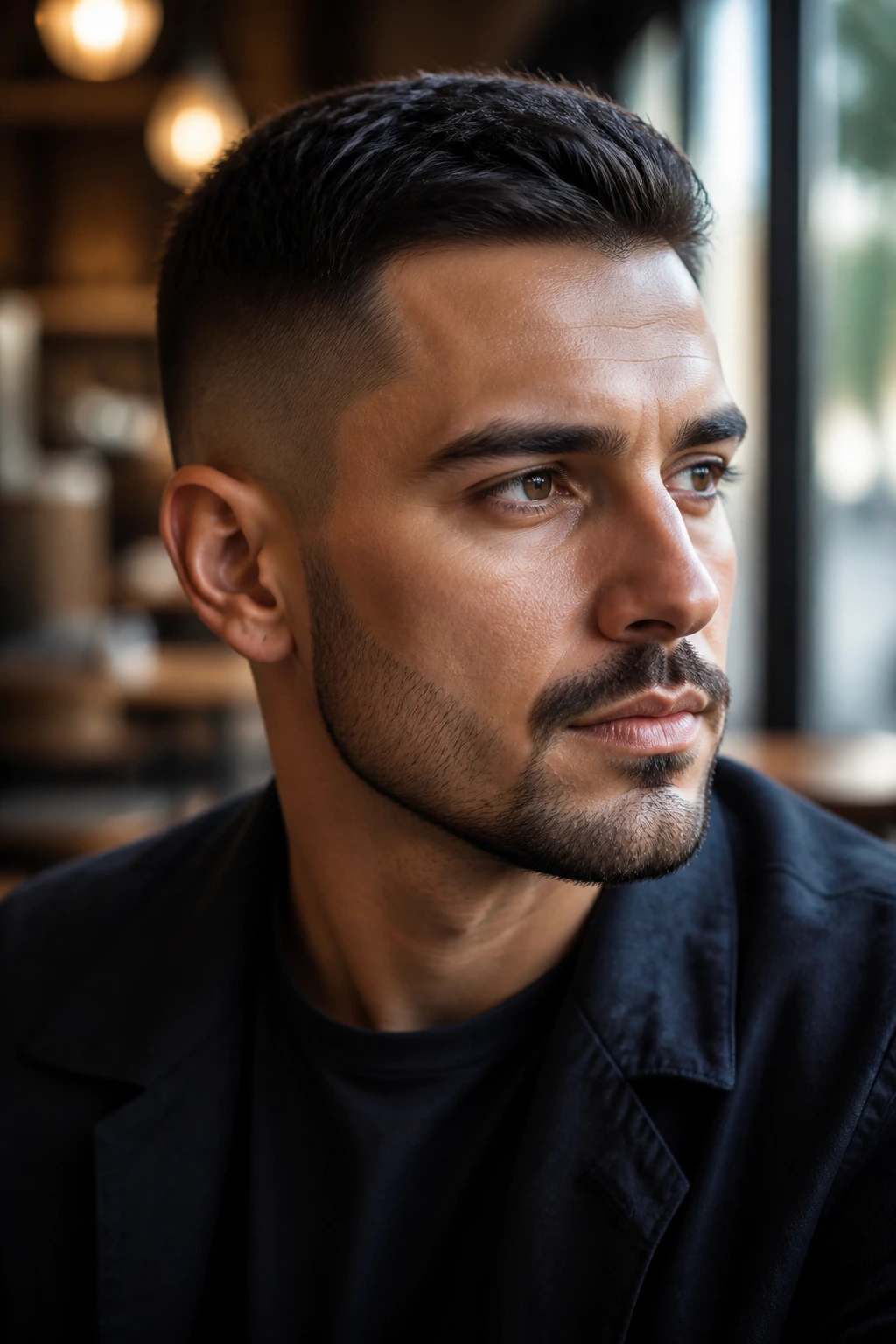
The corporate beard is what happens when a short beard gets a haircut and a schedule. Usually 6 to 10 mm, with a tidy cheek line and a neckline that looks measured rather than hacked. It’s the short beard most likely to survive inside an office without a second glance.
What makes it work is restraint. You’re not chasing a rugged look or a dramatic jaw. You’re keeping the beard even, the edges clean, and the density controlled. Short hair helps because it keeps the whole face from looking overgrown.
This style is boring in the way a good white shirt is boring. That’s a compliment.
12. Ducktail Lite
A ducktail usually suggests a longer, pointed beard, but the short version keeps the shape subtle and wearable. The sides stay tighter, the chin gets a little more length, and the bottom narrows just enough to hint at a point without becoming dramatic.
It suits men whose beards grow a little stronger on the chin than the cheeks. Short hair helps because it keeps the style from reading as too heavy. Ask your barber to taper the sides gradually so the point doesn’t look pasted on.
If you want shape without a hard box or a round circle, this is a strong choice. It gives the beard a direction. That matters more than people think.
13. Natural Short Beard
Not every beard needs a blueprint. A natural short beard keeps the cheek line close to where the growth already wants to live, trims the neckline, and leaves the texture visible at 4 to 7 mm. No harsh sculpting. No overcorrection.
This is the style for someone who wants his short hair and beard to look easy, not engineered. It works because the trimming is light-handed and the density stays honest. With a crop or fade, it still looks finished, especially if you brush it down after a shower.
The danger is laziness disguised as minimalism. If the neckline disappears and the cheeks go wild, this stops being natural and starts being neglected. Those are different things.
14. Tapered Full Beard
A tapered full beard sits in the zone between short and substantial. The sideburns and cheeks stay shorter, while the chin keeps a little more length, usually around 8 to 12 mm at the widest point. It’s fuller than stubble, but it still plays nicely with short hair.
The taper gives the face shape. That’s the part people miss. Without it, the beard just grows out in a lump. With it, the jaw looks cleaner and the face gets a little longer, which helps if your features are round or wide.
Keep the bottom rounded if you want softness, or slightly squared if you want more edge. Either way, the transition from hair to beard should feel gradual, not sudden.
15. Low Fade Beard Blend
This is one of the cleanest short-hair beard pairings out there when it’s done well. The beard fade starts near skin at the sideburns and rises into a fuller beard along the jaw, often using guards like 0.5, 1, 2, and 3 mm in careful steps.
It looks especially good with a low fade, taper fade, or bald fade. The reason is simple: the haircut and beard are speaking the same language. Short hair on top. Tight blend at the sides. Controlled shape below.
This style needs a barber who understands transitions. If the fade line is visible, the whole thing looks patched together. If it’s smooth, the face gains a lot of structure without seeming overworked.
16. Salt-and-Pepper Short Beard
Gray doesn’t need rescuing. It needs a good trim. A salt-and-pepper short beard, kept around 5 to 9 mm, can look sharper than a darker beard because the mixed tone adds texture all by itself. Short hair makes the contrast on the face feel deliberate instead of accidental.
The trick is to keep the length even and the edges tidy, because rough gray hair tends to stick out in odd directions. A little beard oil helps the wirier strands sit flatter. Don’t drown it. A few drops are enough.
If you’ve been thinking about coloring it, pause first and trim it clean. A lot of gray beard styling problems are actually haircut problems.
17. Patchy Beard Styled Short
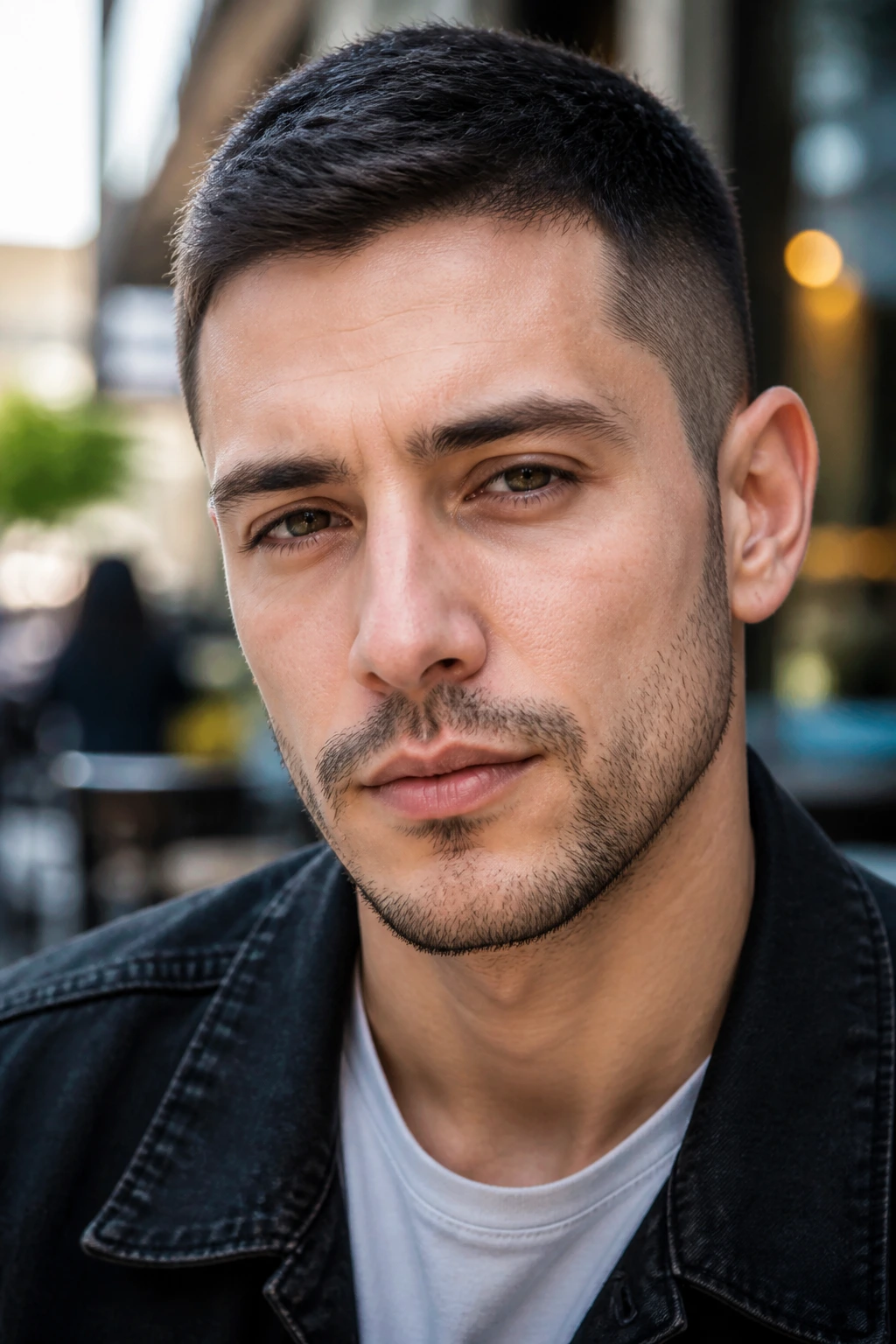
Patchy growth does not automatically mean you’re stuck with a bad beard. In fact, a very short style often works better than pretending you have density you don’t. Keep the cheeks at shadow length, let the mustache and chin do more of the work, and stop before the gaps start looking like mistakes.
Short hair helps because it keeps the overall look balanced. A clean buzz or crop makes the beard feel like a texture choice instead of a growth report. Trim every few days so the longest patches don’t start announcing themselves.
This is one of those styles where less length usually looks better. More hair can reveal the patchiness. Less can hide it.
18. Hard Part + Beard Combo
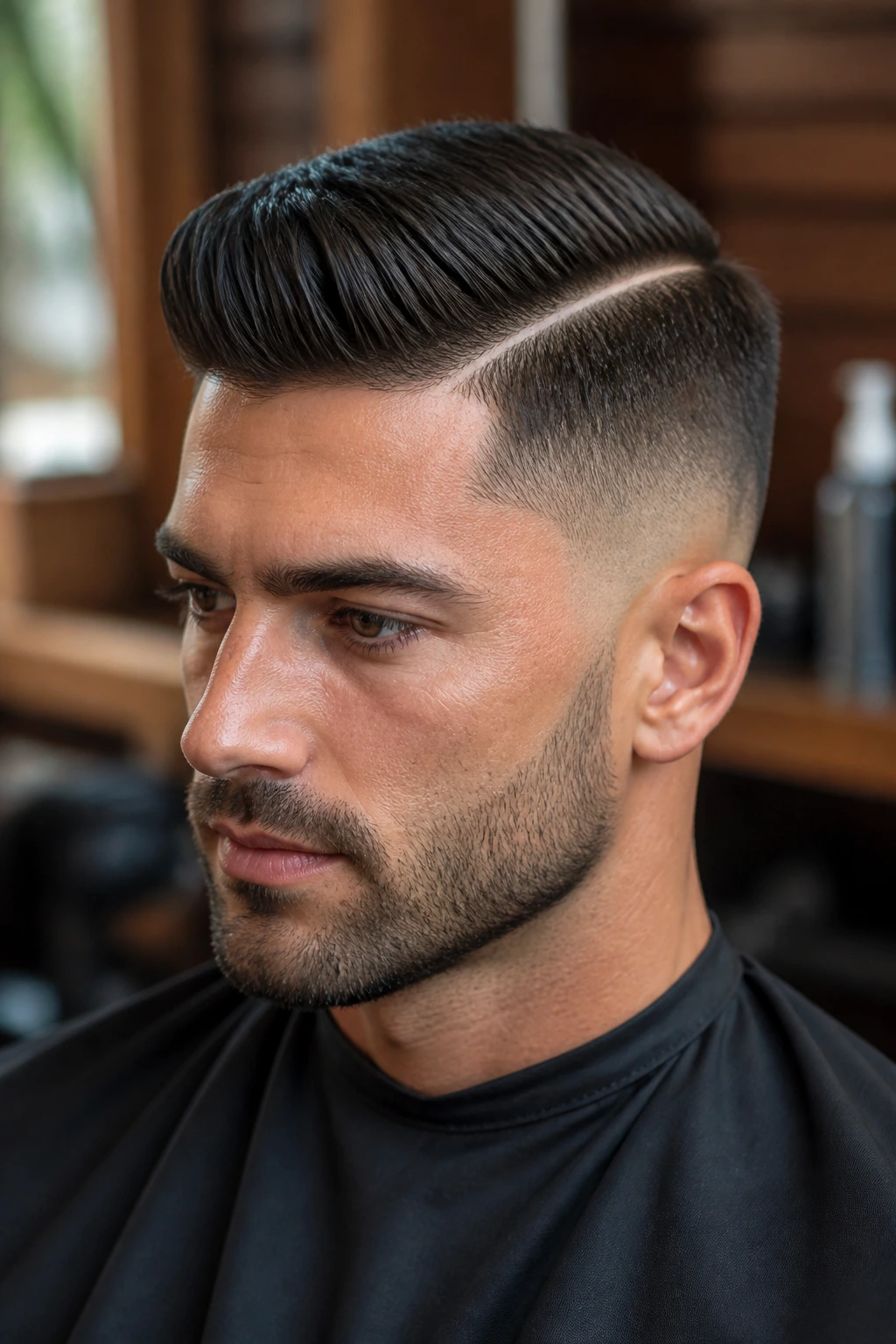
A hard part haircut and a short beard like to share the same trait: both are about line discipline. The hard part gives the hair a clear direction, and the beard should answer with a clean cheek line and a controlled jaw shape, usually in the 5 to 8 mm range.
The pairing works because neither side of the face feels chaotic. The hair says “structured,” and the beard says “I can keep this up.” If the beard gets fuzzy while the part stays razor-sharp, the contrast gets weird fast.
A matte styling clay on top and a tidy beard balm below keep the whole look in the same family. Glossy hair with a dusty beard is a mismatch I never love.
19. Rounded Beard for Angular Faces
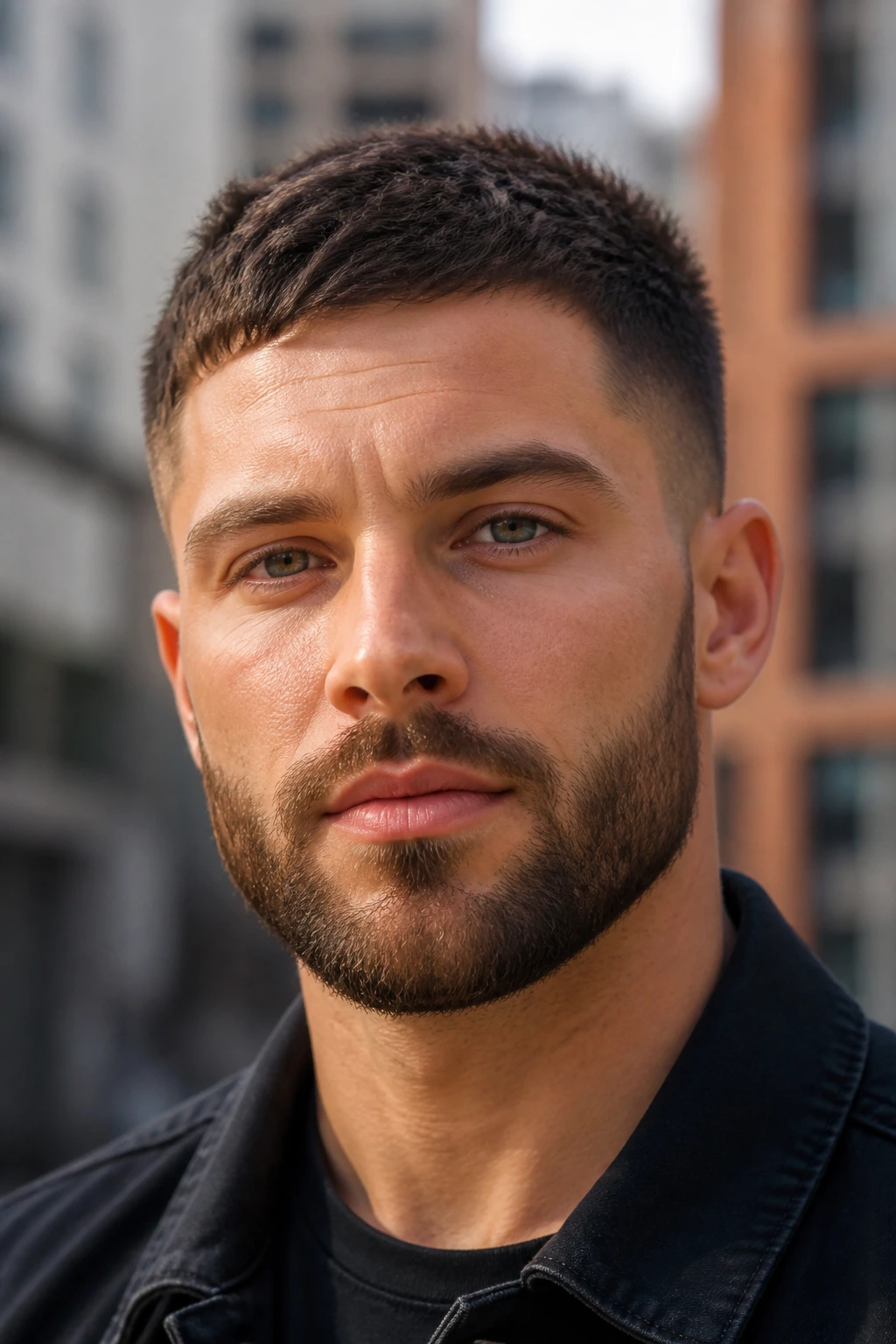
Sharp cheekbones and a strong jaw can handle a beard that softens the edges a little. A rounded beard does that by keeping the bottom curve gentle instead of pointed and by avoiding square corners at the jaw.
With short hair, this shape matters even more because there isn’t extra volume on top to balance the face. A crop or buzz cut keeps the focus low and lets the beard do the rounding. Ask for a subtle curve under the chin and a cheek line that doesn’t climb too high.
This style is especially useful if your face already looks long or angular. The beard shouldn’t fight the bone structure. It should ease it down a notch.
20. High Cheek Line Beard
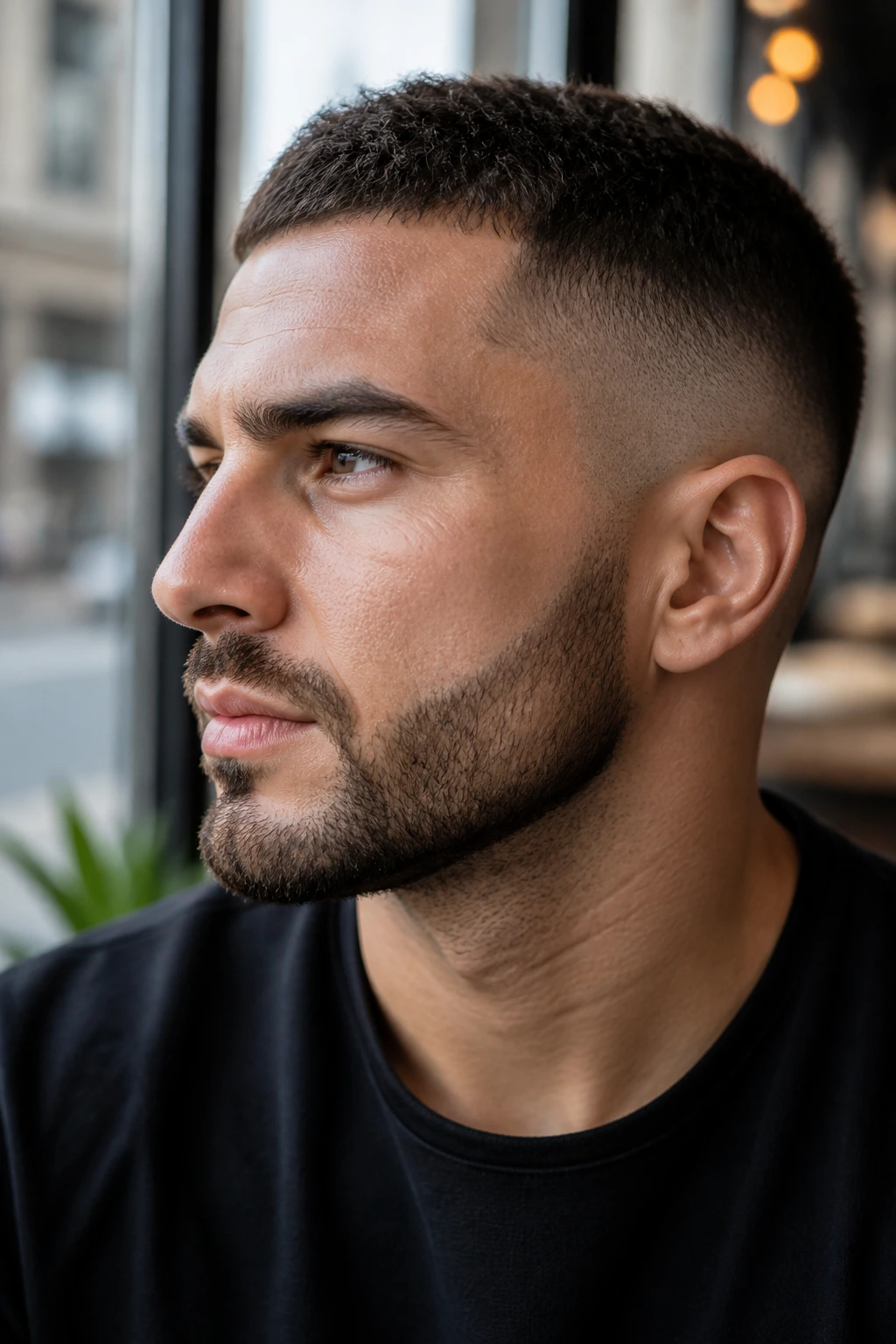
A high cheek line can look either clean or ridiculous, and the difference is in the restraint. Keep the line following the natural growth, not a dramatic upward slash, and you get a beard that feels sharp without looking penciled in.
Short hair is the reason this works. When the haircut is tight, a clean cheek line gives the face a clear top edge. That can be a gift if your beard grows higher on the cheeks and you want to control the shape instead of letting it wander.
The mistake is overcarving. If you cut the line too far down and too sharply, the beard can look smaller than it is. Keep it light, check it in daylight, and don’t chase perfection with the trimmer.
21. Short Verdi
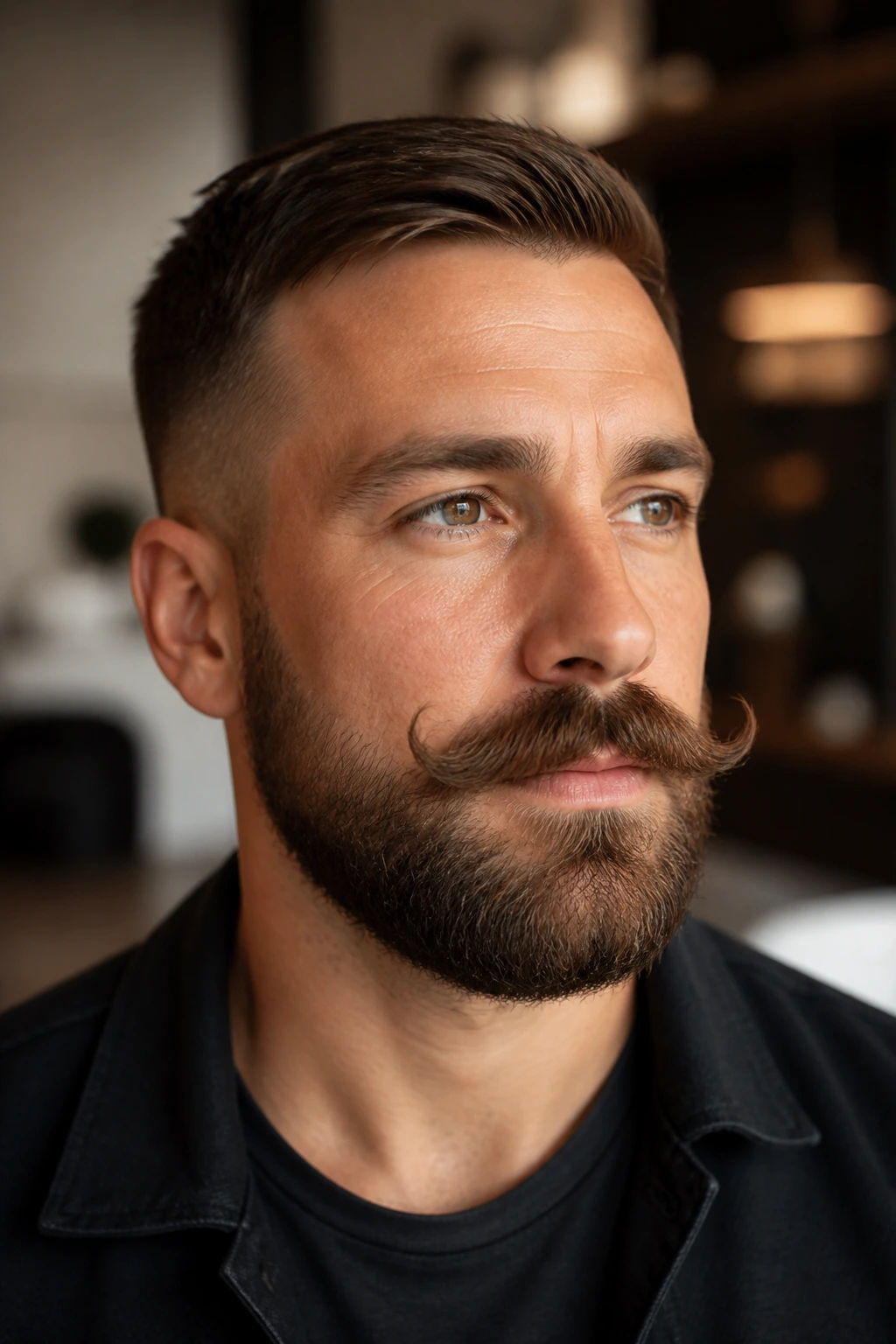
The short Verdi has a little old-world charm, but trimmed correctly it stays modern. The mustache is fuller and can even curl slightly at the ends, while the beard underneath stays neat and rounded rather than long and wild.
It works nicely with short hair because the haircut keeps the look from sliding into costume territory. A close fade, short side part, or clean crop gives the Verdi a strong base. Use a small amount of wax on the mustache if you want the ends to sit away from the lip.
This style asks for commitment to grooming. The mustache and beard need to look related, not like they were designed by two different people.
22. Goatee with Stubble
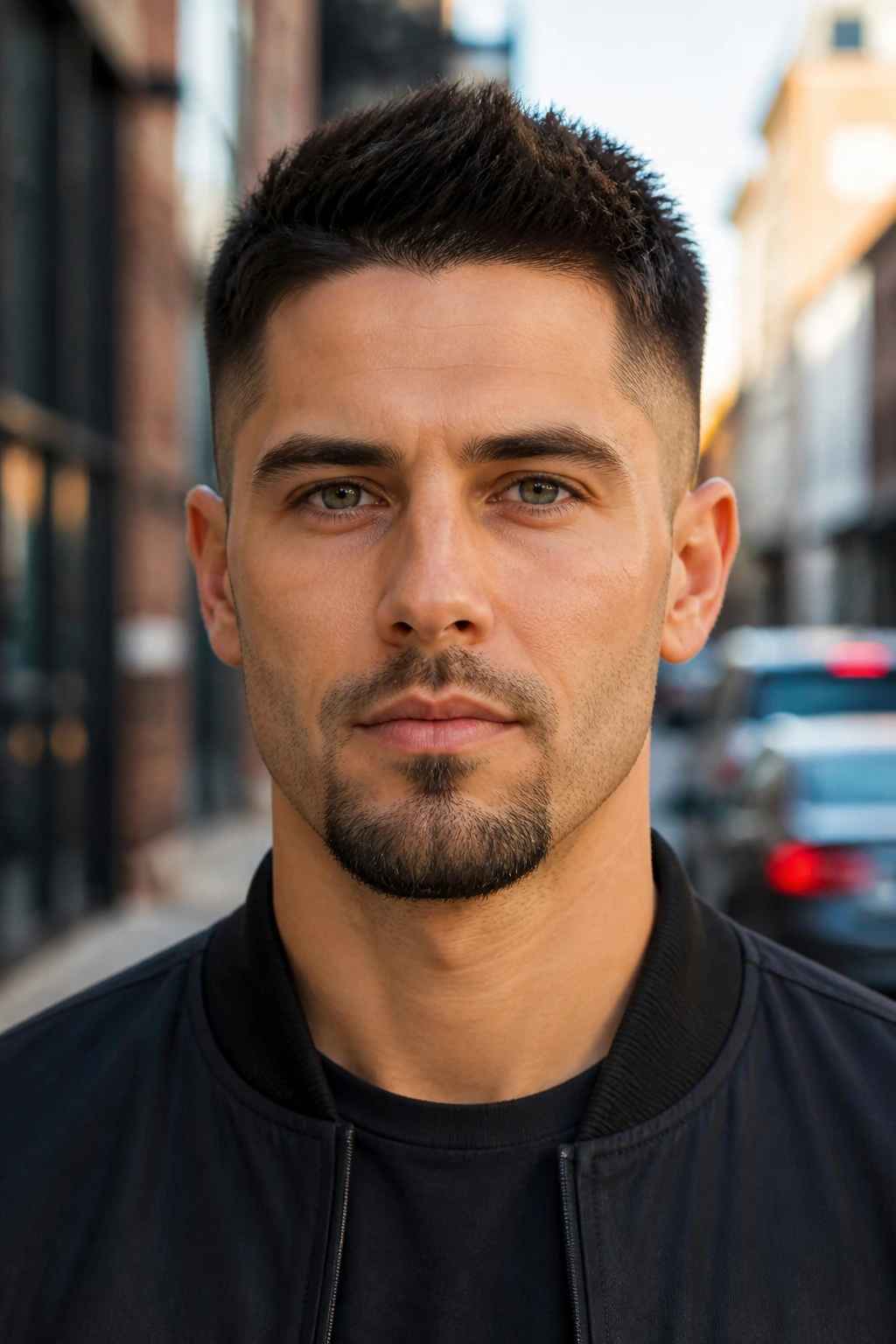
This is the easy entry point for men who want shape without signing up for full beard maintenance. Keep the cheeks at 1 to 2 mm, let the goatee sit a little fuller — maybe 5 to 8 mm — and blur the transition so it doesn’t look like the beard starts and stops in separate time zones.
Short hair makes the style feel cleaner because the top doesn’t add visual noise. It’s a good move if your cheeks grow slower or lighter than your chin. The goatee gives the face a center point, while the stubble keeps the rest from looking bare.
The main trick is not letting the goatee get too much longer than the stubble. Then it turns into two disconnected ideas.
23. Buzz Cut and Beard Combo
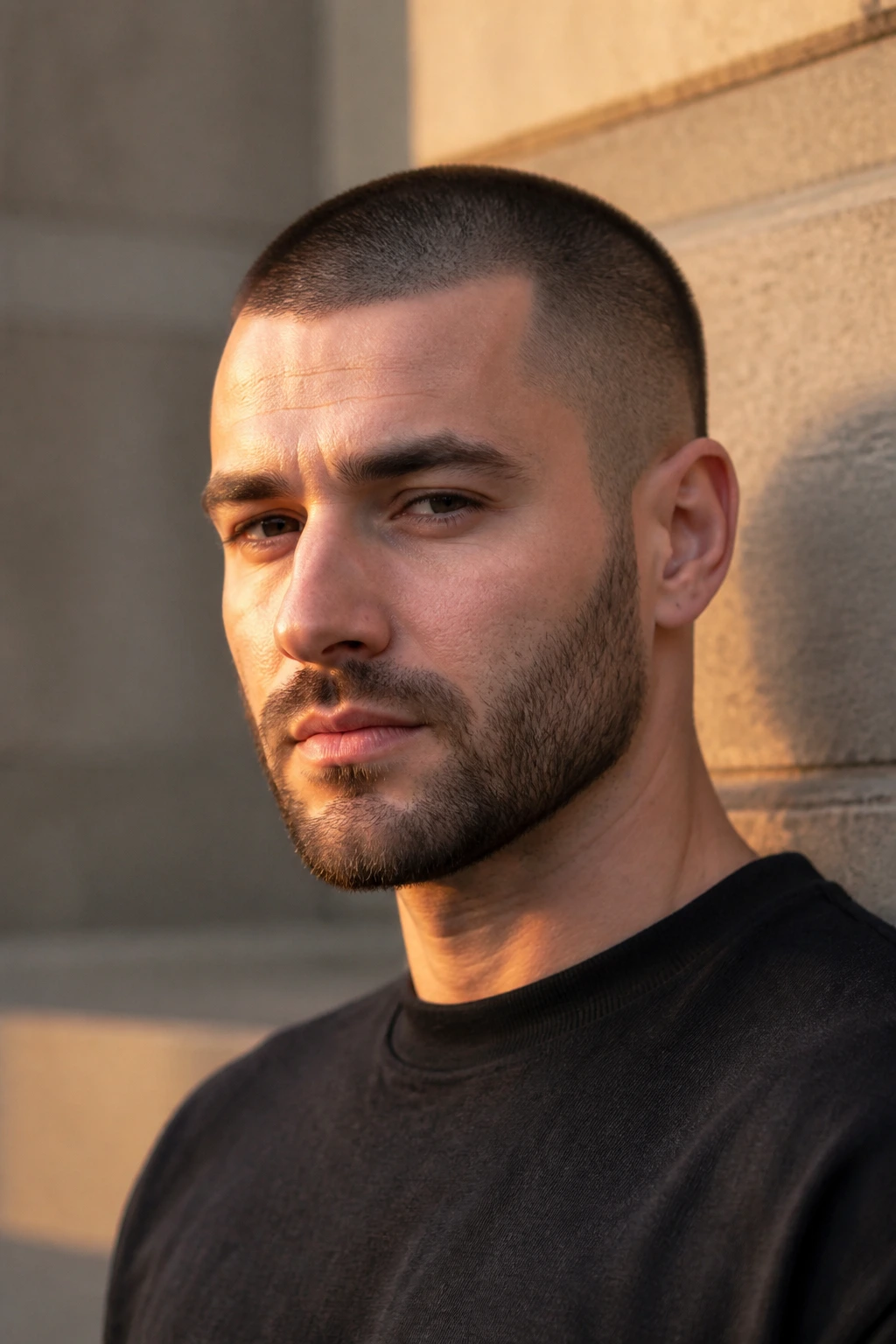
A buzz cut and beard combo is less a single style than a ratio. Very short hair on top, more presence below. The beard can be anything from 4 mm stubble to a tidy 10 mm short beard, but the contrast should be obvious.
That contrast is what gives the face shape. A buzz cut removes all softness from the hair, so the beard becomes the line that gives the head some depth. It works best when the neckline is clean and the cheeks are trimmed with intention, not left to chance.
If the buzz is too long and the beard is too short, the balance gets bland. If both are clipped to the same length, the whole head flattens out. Keep one side of the equation clearly in charge.
24. Curly Short Beard
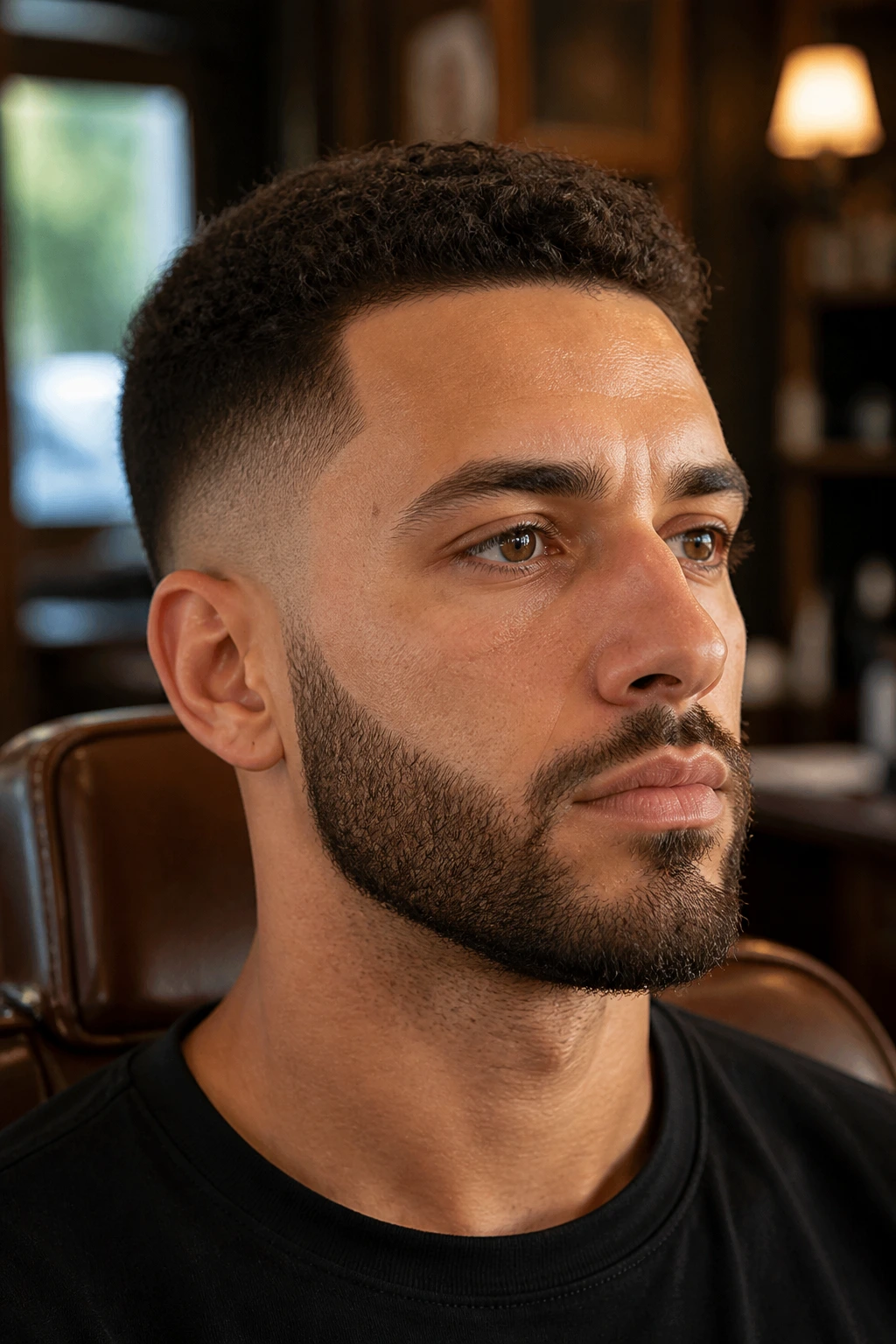
Curly beard hair behaves differently. It puffs out faster, bends in odd directions, and looks longer than it is if you let it dry wild. Keep it short — usually 4 to 8 mm — and use a beard brush or comb after a shower so the curl pattern sits where you want it.
Short hair helps here because it keeps the texture theme consistent. If the haircut is a fade or tight crop, the curly beard feels like part of the plan rather than a problem to solve. A light balm tends to work better than heavy oil because it gives the beard a little shape without making it greasy.
The biggest mistake with curly beards is overtrimming one side while chasing symmetry. Curly hair shrinks when it dries. Trim less than you think.
25. Mini Garibaldi
A mini Garibaldi keeps the rounded fullness of the classic shape but trims it back into short-beard territory. The bottom stays soft and broad, the cheeks stay controlled, and the length usually sits around 1 to 1.5 inches at most.
With short hair, this look gives the face some warmth and weight without making the head feel top-heavy. It’s a good choice if your beard is dense and grows evenly. The trick is keeping the outline rounded and the sides from ballooning out.
If you like beard presence but do not want a square or sculpted look, this is a good middle road. It feels lived-in, but not lazy. That’s a rare balance.
26. Mutton Chops Lite
Full mutton chops are a loud style. The lite version is easier to wear because the sideburns stay shorter and the chin is trimmed down or cleaned up, so the whole thing feels more modern and less like a costume rack.
Short hair is almost required here. A buzz, crop, or shaved sides keep the sideburn focus intentional instead of strange. The lines need to be exact, because any blur turns the style into an accident. Keep the sideburns dense, the cheeks clean, and the lower edge shaped with a light hand.
This is not the beard for someone who wants to disappear. It has opinions.
27. Short Chin Curtain
A short chin curtain frames the jaw from sideburn to chin without going long or floppy. It works best when kept narrow and tidy, with the mustache either connected lightly or left cleaner, depending on how much contrast you want.
With short hair, the style has a strong graphic shape. It can widen a narrow face or give definition to a softer jaw. The beard should stay short enough that the curtain reads as structure, not as a strip of leftover growth.
The trouble with a chin curtain is drift. Let it grow too wide and it starts looking old-fashioned in a bad way. Keep the edges tight, and it stays sharp.
Choosing the Right Beard Shape for Your Face
Round faces usually do better with styles that add some vertical pull: extended goatees, ducktail-lite shapes, or short boxed beards with a little chin length. The goal is not to hide the face. It’s to stop the beard from making it wider than it already is.
Square faces can handle softer edges. A rounded beard, natural short beard, or even a beardstache can ease the angles without losing definition. Long faces need a different trick: a little more width at the sides and less length at the bottom. That’s where mini Garibaldis, corporate beards, and short boxed shapes tend to shine.
The haircut matters too. A skin fade or buzz cut can make a beard look stronger and more deliberate. A textured crop softens the contrast. A side part gives a more polished feel. Match the beard to the haircut’s tone, not just its length, and the whole thing starts working faster.
Essential Tools for These Styles
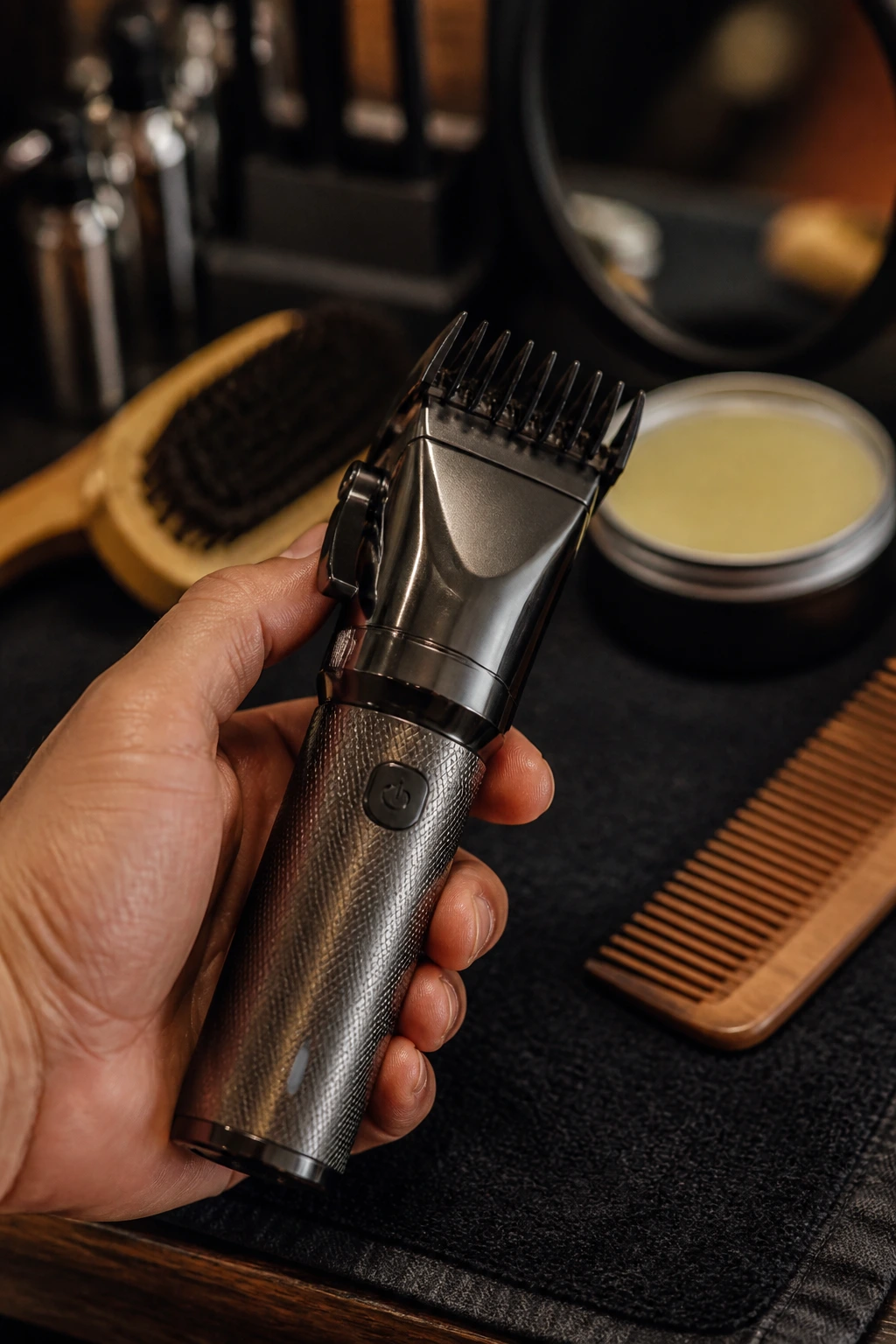
- Adjustable beard trimmer: You’ll use it for almost everything, and a trimmer with guards from 0.5 mm to 13 mm gives the most room to experiment.
- Detail trimmer or precision shaver: Best for cheek lines, mustache edges, and the corners around the mouth.
- Beard comb: A small comb helps you see uneven spots before you trim them off.
- Boar-bristle brush: Good for laying curly or wiry beard hair flat after washing.
- Transparent shaving gel: Makes cheek and neckline cleanups easier because you can see the line while shaving.
- Hand mirror: Necessary if you’re trimming your own neckline. Don’t guess from memory.
- Barber cape or old towel: Keeps hair off your shirt and makes cleanup faster.
- Beard scissors: Useful for stray hairs on the mustache and chin that the trimmer misses.
- Matte beard balm or light oil: Helps short beards sit in place without looking shiny.
- Neck duster or soft brush: Handy for getting clipped hair off the neck and collar after trimming.
Why Beard Styles for Short Hair Need Clean Lines
Short hair leaves no room for sloppy geometry. That’s the whole story. If the beard line is a mess, the haircut can’t cover for it, and if the haircut is overstyled while the beard is drifting, the face looks split in two.
The fix is to think in lines, not in blobs. Sideburns should connect cleanly into the beard or fade on purpose. The cheek line should either follow the growth naturally or be sharpened with restraint. The neckline should sit low enough to frame the jaw, not hide it. A beard that’s trimmed this way looks better with short hair because the eye reads the whole face as one shape.
I’d rather see a short beard with honest edges than a long beard with confused ones. Every time.
Smart Barber Talk and Product Choices
If you’re going to a barber, give measurements. Say “3 mm on the beard, blended to skin at the sideburns” instead of “clean it up.” That one sentence saves a lot of accidental creativity. If you want a boxed beard, say whether you want the bottom squared or rounded. If you want the cheek line high, say high but natural, not cut like a graphic.
At home, pick products that match the style, not the hype. Short beards usually do better with a light oil, a matte balm, or nothing at all if the hair is soft. Heavy wax is useful on a beardstache or Verdi mustache, but it can make a short beard look greasy fast. If your beard hair is wiry, a rinse with beard wash two or three times a week helps more than slathering on product to force it down.
The trimmer matters more than the bottle. An uneven guard will ruin a clean style faster than dry skin ever will.
How to Wear These Beard Styles With Short Hair
Haircut Pairing: Buzz cuts, crew cuts, crops, and low fades give the cleanest backdrop. If your hair is longer on top, a beardstache or short boxed beard usually balances better than a chin strap.
Face Balance: Shorter beards on the sides and a little more length at the chin help round faces. Wider shapes and softer bottoms help long faces. Square faces usually benefit from some curve instead of hard corners.
Wardrobe Balance: Clean collars, simple tees, denim jackets, and plain overshirts make short beard lines look deliberate. A busy neckline and a busy beard can fight each other.
Best Setting: Corporate beards, natural short beards, and faded line-ups slide easily into work settings. Chin straps, Van Dykes, and mutton chops lite make more of a statement. Wear them when you want the beard to be part of the conversation.
Additional Styling Tweaks That Make a Short Beard Pop
Linework: If the beard is short, the line work is the style. Sharpen the cheek line, but keep it believable. A line that follows the growth pattern usually looks better than one carved too low.
Texture: Brush the beard after a shower and let it dry in the direction you want it to sit. On curly or wiry beards, this does more than product. A lot more.
Length Control: If you’re growing from stubble into a short beard, don’t jump more than 2 to 3 mm at a time. The shape changes fast, and it’s easier to correct in small steps.
Low-Effort Upgrade: A tidy mustache changes the whole face. Even on a simple natural short beard, cleaning the upper lip and trimming the corners of the mouth makes the beard feel finished.
Common Mistakes That Make Short Beards Look Off
- The neckline is too high: If the beard seems to start under the chin, the face can look shorter and heavier. Move the line down closer to the Adam’s apple and follow the jaw instead of floating above it.
- The cheek line is overdrawn: A beard that’s carved too low or too sharply can look fake. Leave a little natural softness unless you’re going for a strict fade or line-up.
- The haircut and beard are fighting each other: A messy top with a surgical beard edge looks strange. So does a sharp haircut with a fuzzy beard. Keep the tone consistent.
- The mustache is ignored: A short beard with a scruffy upper lip feels unfinished. Trim the mustache so it sits just above the lip line.
- The same length is used everywhere: Uniform length can flatten the jaw and erase shape. Most short-beard styles need at least a small difference between cheeks, chin, and sideburns.
Variations and Adaptations to Try
Low-Maintenance Shadow Version: Keep the beard at 1 to 2 mm all over, clean the neckline every few days, and skip hard cheek lines. This suits men who want structure without much mirror time.
Office-Ready Trim: Aim for a corporate beard or short boxed beard at 6 to 8 mm, with a soft cheek line and a low neckline. It reads tidy without feeling severe.
Patchy-Beard Playbook: Use a beardstache, extended goatee, or goatee with stubble. These styles put the attention where growth is strongest and stop the cheeks from becoming the headline.
Curly-Beard Shape Control: Keep the curl short, use a brush after washing, and avoid trimming when the hair is puffed out dry. A little balm and a consistent guard length make the shape easier to hold.
Bold Linework Edition: Try a chin strap, high cheek line, or anchor beard if you want the beard to read as graphic. These are sharper, more visible choices that work best with very short haircuts.
Silver Beard Version: If your beard has gray, trim it evenly and keep the edges neat. The mixed tone already gives it texture, so you don’t need extra drama.
Keeping the Shape Between Barber Visits
Short beards need small corrections more often than people expect. Heavy stubble usually wants a cleanup every 2 to 4 days. Short boxed beards and corporate beards hold up for about a week if your growth is slow, but faster growers may need a touch-up twice in that span. Fade-based styles need the most attention because the transition starts to blur first.
Wash the beard two or three times a week with a mild beard wash, not harsh hair shampoo. Follow with a light oil if the hair feels dry or scratchy. If the beard curls or sticks out, brush it after the shower while it’s still slightly damp. That’s when it listens.
One more thing: don’t wait until the neckline is a mess. A 3-minute cleanup saves 20 minutes of fixing later. Short beard maintenance is a little boring. It also pays off fast.
Frequently Asked Questions
What beard style works best with a buzz cut?
A heavy stubble, short boxed beard, or buzz cut and beard combo usually looks strongest. The short hair on top creates a hard contrast, so the beard should be clean and shaped rather than long and fluffy.
Can patchy beards still look good with short hair?
Yes, if you keep the length short enough to minimize the gaps. Beardstaches, goatees, extended goatees, and heavy stubble often hide patchiness better than fuller styles that expose every thin spot.
How often should I trim a short beard?
Most short styles need attention every 3 to 7 days. Stubble needs the most frequent touch-ups, while a corporate beard or natural short beard can go a bit longer if your growth is slow.
Should my beard be darker or fuller than my haircut?
Not necessarily. What matters is balance. If the haircut is very tight, a fuller beard can look great. If the haircut has more texture or length, a lighter beard often sits better.
What if my beard grows faster on the chin than on the cheeks?
Choose a style that uses that to your advantage. Ducktail lite, extended goatee, Balbo, and short Verdi all let the chin lead without making the cheeks look underfed.
Do I need beard oil for stubble?
Not always, but a small amount helps if the hair is rough or the skin gets dry. Use one or two drops at most. Stubble can look greasy fast, and nobody wants that.
Is a sharp neckline always better?
No. A neckline that’s too high can make the jaw look shorter and the beard look disconnected from the face. A lower, cleaner line usually looks more natural, especially with short hair.
Can these styles work with curly hair or glasses?
Absolutely, but the shape has to stay controlled. Curly beards usually need shorter lengths and regular brushing, while glasses often look better with a cleaner cheek line so the face doesn’t feel crowded.
How do I ask a barber for the right version of the style?
Bring a photo, then talk in guard numbers and line placement. Say things like “keep the beard at 4 mm, blend the sideburns down, and leave the cheek line natural” instead of just asking for something tidy.
The Shape That Makes the Haircut Work
Short hair and a good beard style are not separate decisions. They’re one decision split in half. The haircut sets the stage, but the beard finishes the picture, and when the lengths are chosen with a little care, the whole face looks more balanced without trying too hard.
The best part is that you do not need a giant beard to get real shape. Sometimes the smartest move is a clean stubble fade. Sometimes it’s a short boxed beard with one careful edge. Sometimes it’s a beardstache that puts the mustache in charge and leaves the rest politely in the background.
Pick one style, keep the lines honest for a couple of weeks, and you’ll see fast whether it suits your face. That’s the nice thing about short-hair beard pairings: they tell the truth quickly.
