



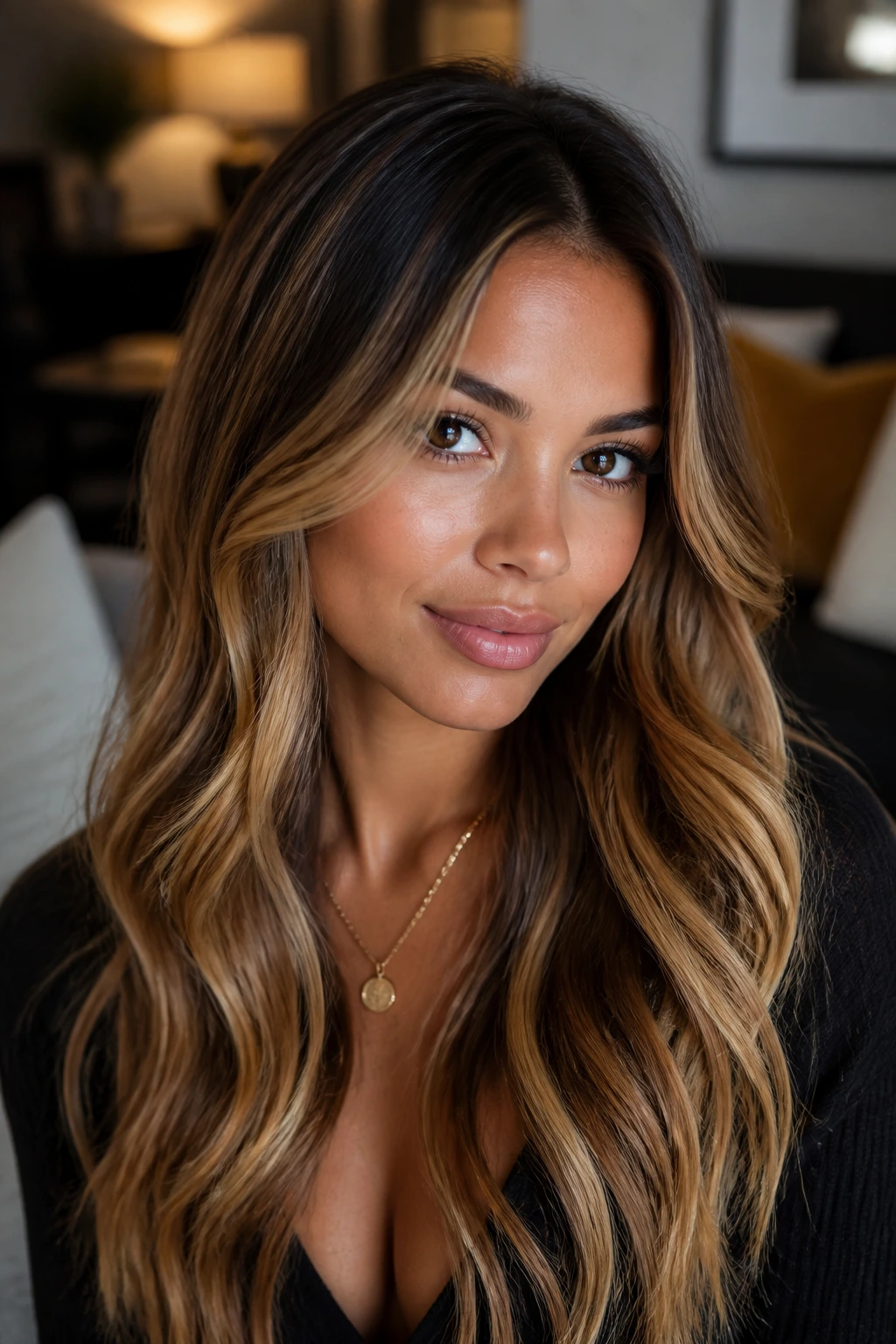
Honey blonde is the rare blonde family that can make warm skin look brighter instead of flatter. That sounds like a small distinction until you’ve seen the wrong blonde do the opposite: too icy, too pale, too flat, and suddenly the face looks tired where it should look lit from within. The sweet spot is a shade that keeps some gold in the mix—amber, caramel, beige-gold, or a soft toasted beige—so the color and the skin are speaking the same language.
The trick is that honey blonde hair color is not one thing. It can sit on a dark root with sunlit ribbons through the ends, live as a glossy bob with a warm glaze, or show up as a money piece that brightens the face without turning the whole head into maintenance homework. On warm skin, that flexibility matters. Golden undertones, peach undertones, and olive-leaning warmth all tend to handle rich, golden blonde better than a cool ash blonde that looks separate from the complexion.
And that’s where the fun starts. Some of these looks are soft and low-drama, some lean bright and polished, and a few are for people who want their hair to look expensive in the most practical way possible: shiny, dimensional, and grown-out gracefully. The best versions don’t scream “bleach job.” They whisper warmth, depth, and light in the right places.
Why These Honey Blonde Ideas Work on Warm Skin
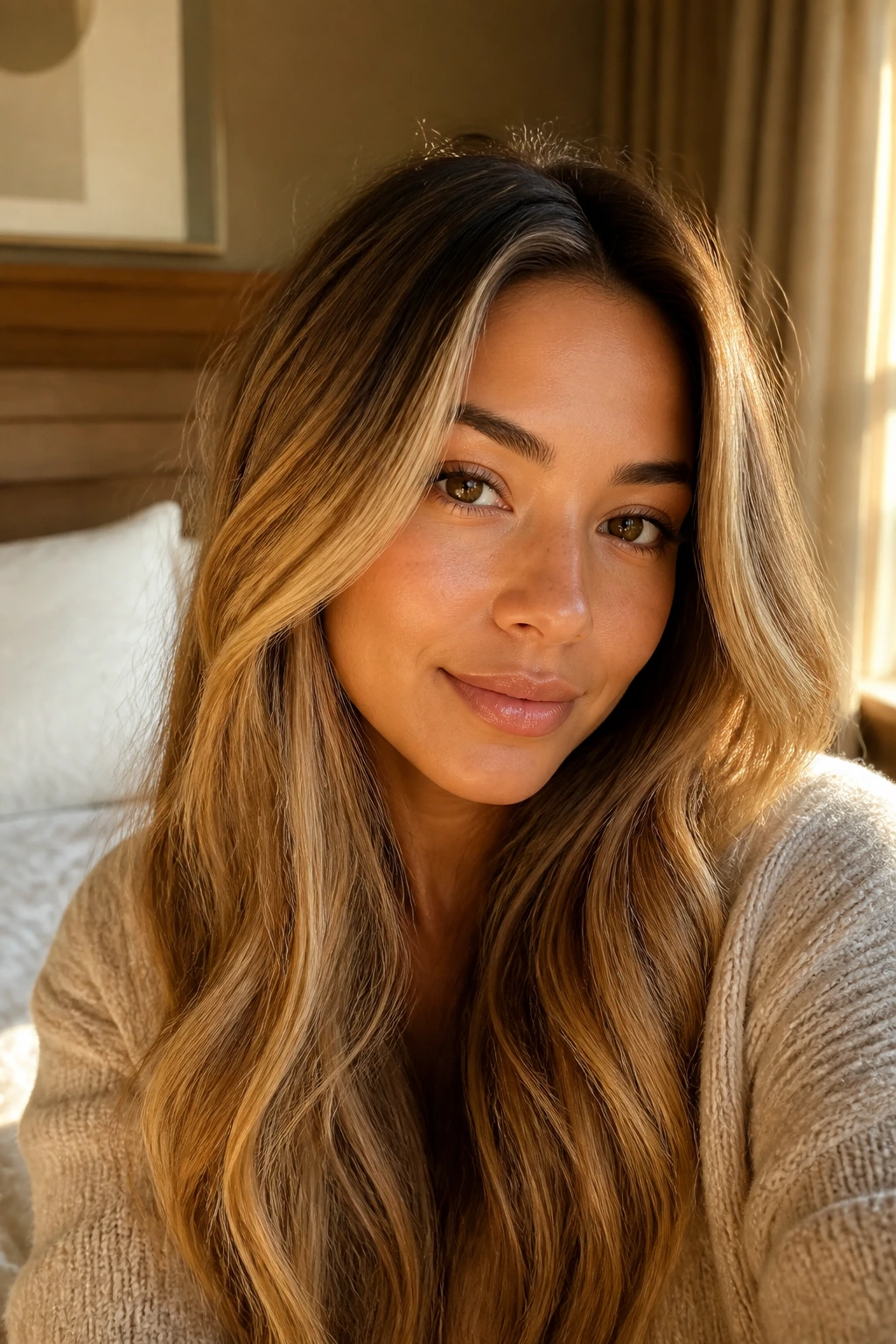
Warm Undertones Love Warm Reflection: Honey blonde works because it repeats the gold, peach, and amber already sitting in warm skin instead of fighting them.
Depth Keeps the Color From Going Flat: A good honey blonde almost always has a little darkness left at the root, in a lowlight, or in the underside of the hair, and that contrast keeps the blonde from reading yellow.
Placement Changes Everything: The same shade can look soft on a bob, sharper on a pixie, and much richer on curls because the light hits each texture differently.
Low-Maintenance Options Are Built In: Balayage, root melts, and babylights let you stretch salon visits without the color turning into a hard line.
You Can Go Bright Without Going Icy: The best bright versions still keep a beige-gold or caramel note, which is what keeps warm skin from looking washed out.
These Looks Play Well With Makeup and Wardrobe: Honey blonde tends to look best with bronze, peach, cream, ivory, and gold jewelry, so the whole look comes together without much effort.
1. Sunlit Honey Blonde Balayage
The classic move, and honestly still the one I reach for first. Sunlit honey blonde balayage is what happens when you want brightness but refuse to sit in a salon chair every six weeks for your whole life. The painted pieces usually start around the mid-lengths and get lighter toward the ends, so the color grows out with a soft edge instead of a sharp stripe.
Why It Flatters Warm Skin
The balayage technique lets the root stay a little deeper, which matters more than people think. That depth gives the blonde a frame, and the warm ribbons through the lengths echo golden or peachy undertones in the face.
How to Ask for It
Ask for soft hand-painted ribbons, not chunky stripes, and ask the colorist to keep the lightest honey blonde around the front and ends. If your natural base is medium brown, a level 7 to 8 gold-beige lift usually reads cleaner than a pale level 9.
A good balayage on warm skin should look like it’s been outside, not dipped in a toner bowl and overworked. That means the transition at the root needs to stay soft. If you can see where the blonde starts from across the room, the placement is too blunt.
Quick tip: keep the brightest pieces where your hair moves—around the cheekbones, temple, and ends—so the color shows even when you tuck one side behind your ear.
2. Caramel Halo Layers
Caramel halo layers are for people who want honey blonde to feel richer, not lighter. Think of it as a warm blonde frame that circles the head with dimension, especially on layered cuts where the shorter pieces at the crown can catch more light than the lengths below.
The halo effect works because the color sits in the visible top layers first. That makes the shade look softer on warm skin than a full all-over blonde, and it also keeps the style from turning one-note under indoor lighting. I like this version on shoulder-length cuts because the movement does half the work for you.
Ask for caramel-gold panels rather than bright strips, and keep some beige in the mix if your skin leans peach or golden. Pure gold can get loud. Caramel with a little beige feels more expensive and less streaky.
If you wear your hair with loose bends, the layered placement becomes obvious in the best way. Each bend catches a different slice of light, so the whole cut looks fuller without needing extra volume products. That’s one reason this shade plays so well with warm undertones: it brings motion to the face instead of sitting still.
3. Bright Money Piece Honey Blonde
A money piece can change the whole mood of a haircut in about ten minutes. Not exaggerating. When the front sections are lighter than the rest, honey blonde around the face can make warm skin look fresher, especially if the rest of the hair stays a shade or two deeper.
What Makes It Work
The brightness sits exactly where the eye goes first. That front placement acts like a spotlight, but a warm one—less “highlight strip,” more “the sun caught the front pieces just right.”
For warm skin, the best version is usually a beige-gold or soft caramel money piece, not a high-wattage icy blonde. Ask for a clean frame around the face with softer blending into the sides so the line doesn’t look pasted on. If you wear a middle part, the front pieces can be slightly thicker; if you wear a side part, one strong front sweep often looks better.
This is also one of the easiest ways to test whether you like blonding before committing to a full head. The commitment is local. The maintenance is local. And if you’re the kind of person who likes a strong brow, bronze eye makeup, or gold hoops, the whole thing comes together fast.
Best for: warm skin that needs lift near the face, not a full-blonde overhaul.
4. Dark Honey Root Melt
Dark honey root melt is where honey blonde stops being precious and starts being smart. The root stays darker—usually a deep blonde or light brown—then melts into warmer honey mids and ends. It’s one of the easiest ways to get a blonde look that doesn’t betray you every three weeks when the roots grow out.
That dark root is doing real work. It keeps the color grounded, gives fine hair more visual thickness, and helps warm skin avoid the “my hair is wearing me” problem that happens when the blonde is too light from scalp to ends. If your natural hair is medium brown or darker, this version is especially forgiving.
How to Keep It Pretty
Ask for a shadow root, not a hard ombré line. The goal is a soft fade, usually starting an inch or so from the scalp, with the honey becoming richer in the mid-lengths and lighter at the ends.
I like this on warm skin because the darker root creates contrast without dragging the complexion down. The blonde reads as intentional, not over-processed. And when the toner fades a little, the look usually still holds together. That’s useful. More useful than a flat, all-over beige blonde that looks fragile the second it softens.
5. Buttery Honey Blonde Lob
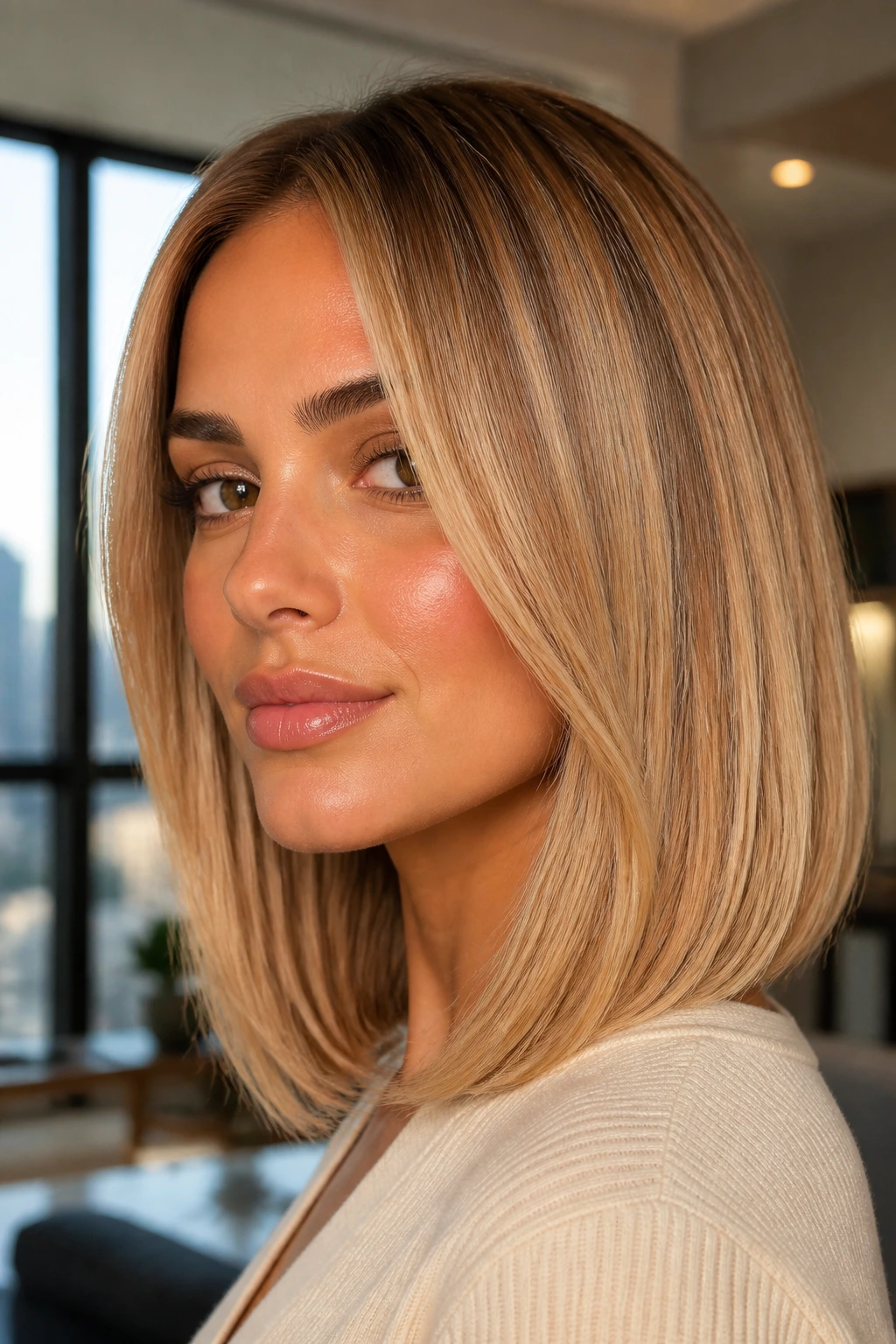
A lob gives honey blonde room to breathe. There’s enough length for the color to show its shifts, but not so much hair that the tone gets buried under weight. On warm skin, a buttery honey blonde lob tends to read polished without becoming stiff.
The bluntness of a lob also matters. A clean cut makes the warm blonde look richer because the color has a strong edge to sit on. I prefer this version with a slight bevel at the ends or soft internal layers, not a shaggy mess. Too much texture can make buttery tones look dusty instead of smooth.
If you’re asking a colorist for this look, use words like creamy honey, soft gold, and gentle beige. That keeps the result from swinging orange or copper. It also helps if your natural base is around level 6 or 7, because the blonde can stay dimensional without having to be pushed to an aggressive pale shade.
Wear it straight for a sleek feel or with loose waves if you want the color to show more movement. Either way, the lob has a nice habit of making honey blonde look expensive without looking try-hard. Which, frankly, is the whole point.
6. Beige Honey Blonde With Lowlights
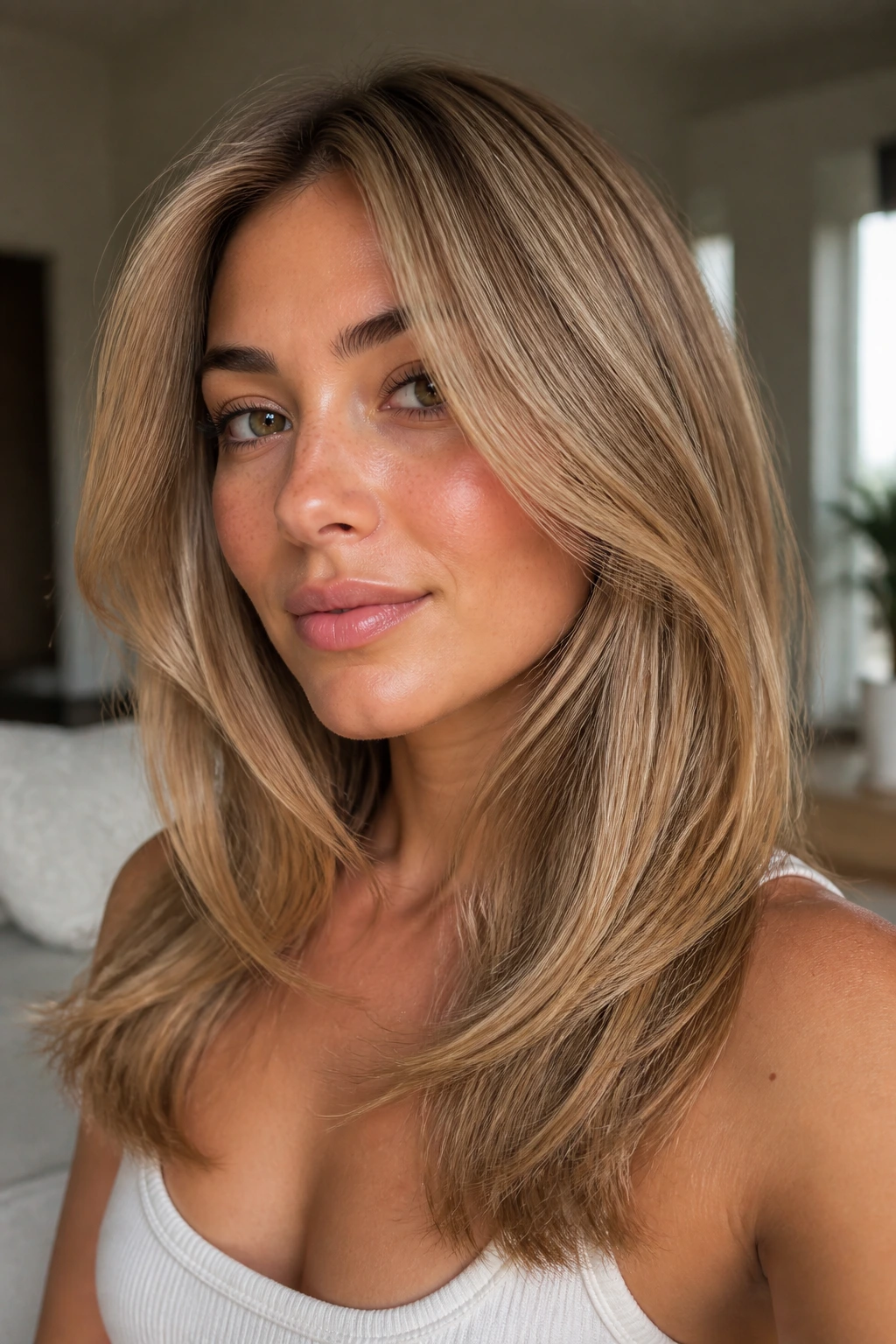
If pure gold makes you nervous, lowlights are the fix. Beige honey blonde with lowlights softens the brighter pieces with a few deeper ribbons, often around the underside or through the crown, so the blonde never turns flat or overly yellow.
Why It Matters on Warm Skin
Warm skin can take honey, yes, but it still needs contrast. Lowlights stop the color from floating too high and too light, which is where some blondes start looking fake. Beige lowlights are especially good if your complexion leans golden but you don’t want the hair to shout about it.
Ask for beige-brown lowlights one to two shades deeper than your base, woven through in thin sections. Not chunky. Thin. The goal is to make the blonde look layered, like sunlight moving through straw-colored silk, not stripy.
This is a smart choice for anyone with fine hair too. Lowlights create the illusion of density, which matters more than most people admit. Hair doesn’t need to be brighter everywhere to look dimensional; sometimes it just needs a few darker notes placed with some restraint.
One-sentence truth: a little shadow makes honey blonde look far more expensive than extra bleach ever will.
7. Ribboned Honey Blonde Curls
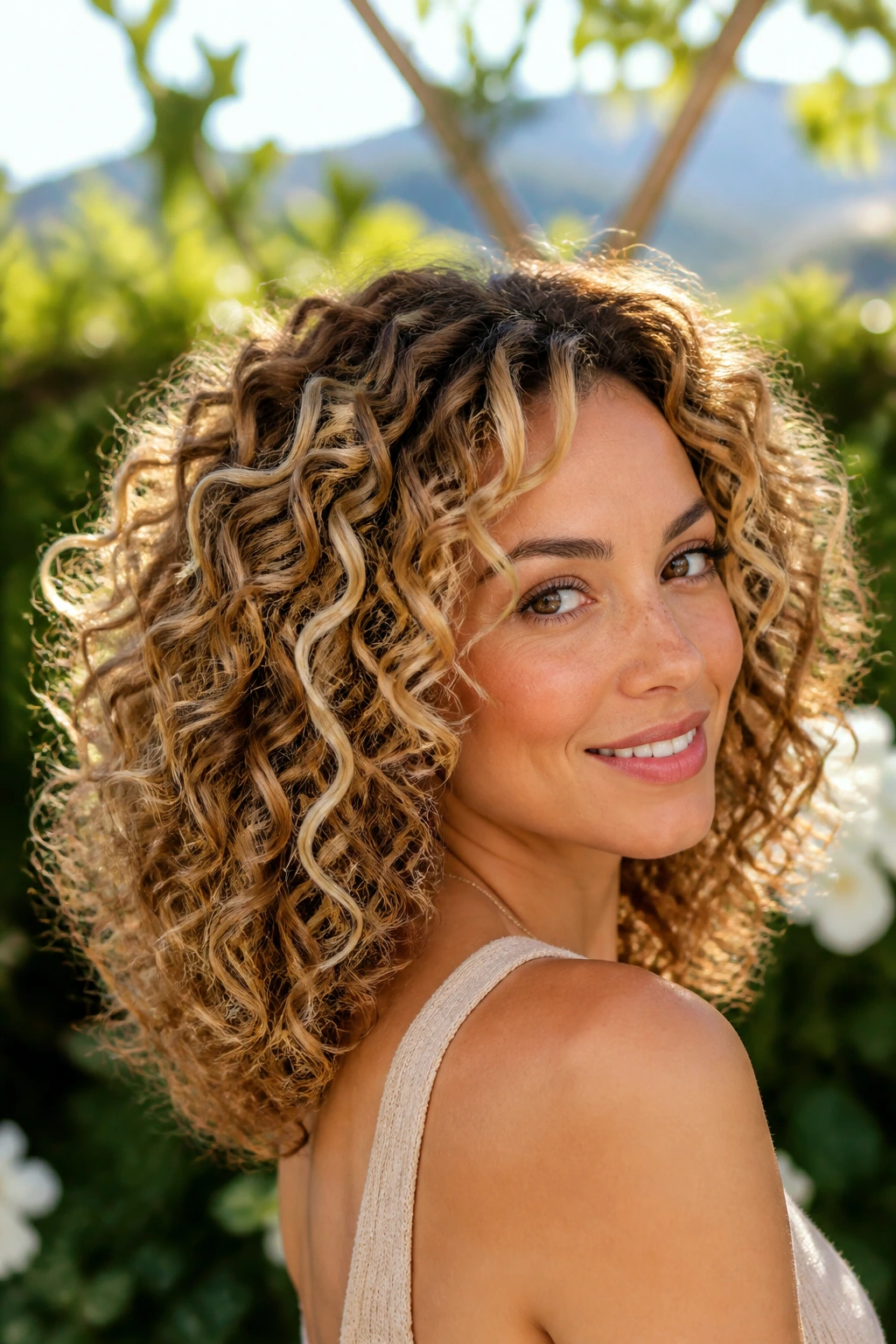
Curly hair takes honey blonde in a different direction, and that’s where the fun lives. Ribboned highlights follow the curl pattern instead of fighting it, so the blonde appears in arcs and loops rather than straight streaks. On warm skin, that gives the whole style a sunlit, moving quality.
The key is placement. You want the lighter pieces where the curls naturally bulge outward and catch light—around the crown, along the outer layers, and through the front. If the highlights are packed too tightly, curls can lose their shape and start looking frizzy, which is not the goal.
A warm honey toner works better here than a pale beige that tries too hard to cool the tone down. Curly hair already has visual texture, and the warm color keeps it from looking dry. Moisture matters, too. A curl cream, a leave-in, and a diffuser are not optional extras; they’re the reason the color reads shiny instead of parched.
How to Ask for It
Request curl-by-curl ribbon placement and a gloss that leaves a gold-beige finish. If the stylist knows curls, they’ll place the lightness in the bends, not just the top layer. That’s the difference between hair color that sits on top and color that lives inside the cut.
8. Honey Blonde Pixie With Tapered Sides
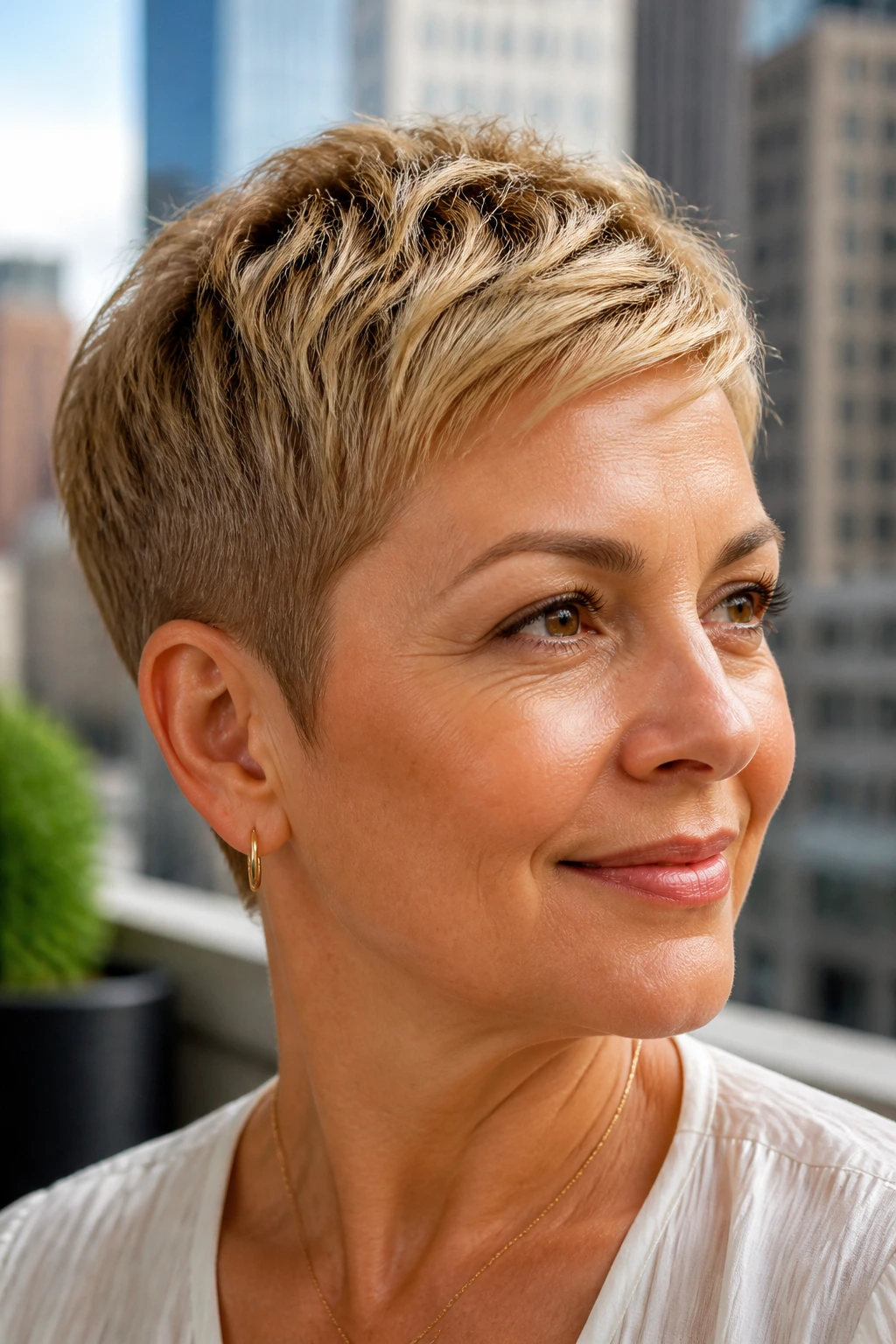
Short hair can handle more blonde than people expect. A honey blonde pixie with tapered sides feels clean and sharp, but the warm color keeps it from getting severe. On warm skin, that softness matters because a very pale pixie can pull the face in the wrong direction fast.
The best version usually keeps the sides a touch deeper and lets the honey brighten the top and fringe. That balance keeps the cut from turning helmet-like. It also gives the top layer enough contrast to show texture, which is the whole reason a pixie works in the first place.
If you wear makeup, this cut gives you room to play with strong brows, peach blush, and bronzy lids without the hair competing. If you don’t wear much makeup, the warmth in the blonde does some of that work on its own. I’m a fan of that. It’s a low-fuss look with real shape.
Pro tip: ask for a soft gold glaze after the cut is shaped, not before. On a pixie, the finish matters as much as the lightening because there isn’t much length to hide dullness.
9. Cinnamon-Kissed Honey Strands
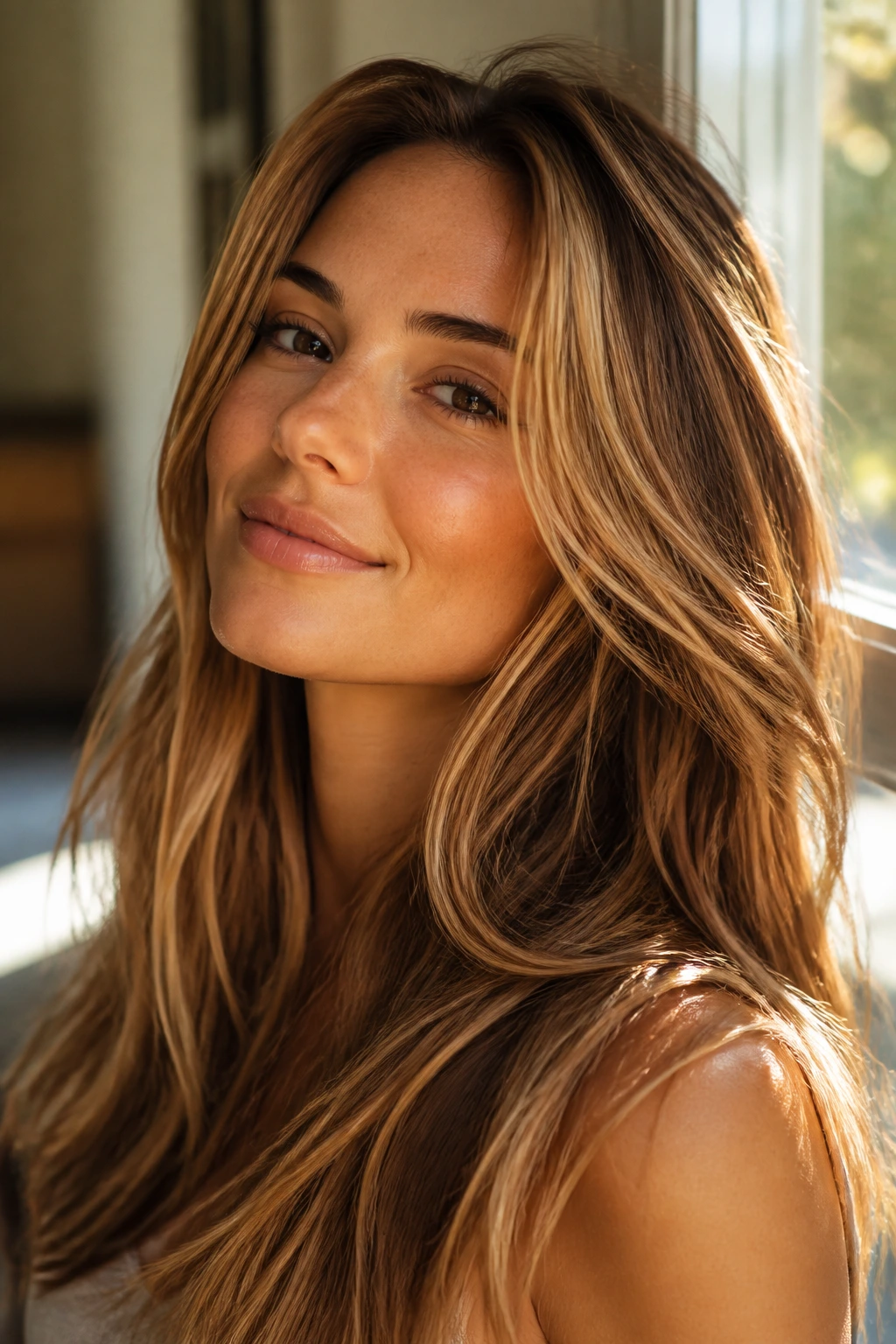
Cinnamon-kissed honey strands are for people who want their blonde to lean warm, but not candy-sweet. The cinnamon note adds depth and keeps the honey from reading one-dimensional, especially on warm skin that already carries a lot of golden pigment.
This version is especially good if your natural base is darker or if you’re moving out of a brunette color and don’t want a dramatic jump. The cinnamon pieces can sit as lowlights or as a glaze over the honey, depending on how rich you want the final look. Either way, the hair gets a slightly toasted finish that feels grounded.
I like this on long layers because the movement reveals the color. Straight, one-length hair can hide the richness a bit, but layered ends show the shifts between cinnamon, caramel, and honey in a way that looks intentional.
A lot of people ask for blonde and then panic when it looks too light. This is the antidote. It keeps the blonde warm, glossy, and closer to honeyed amber than pale yellow. That’s a better fit for warm skin most of the time.
10. Champagne Honey Blonde
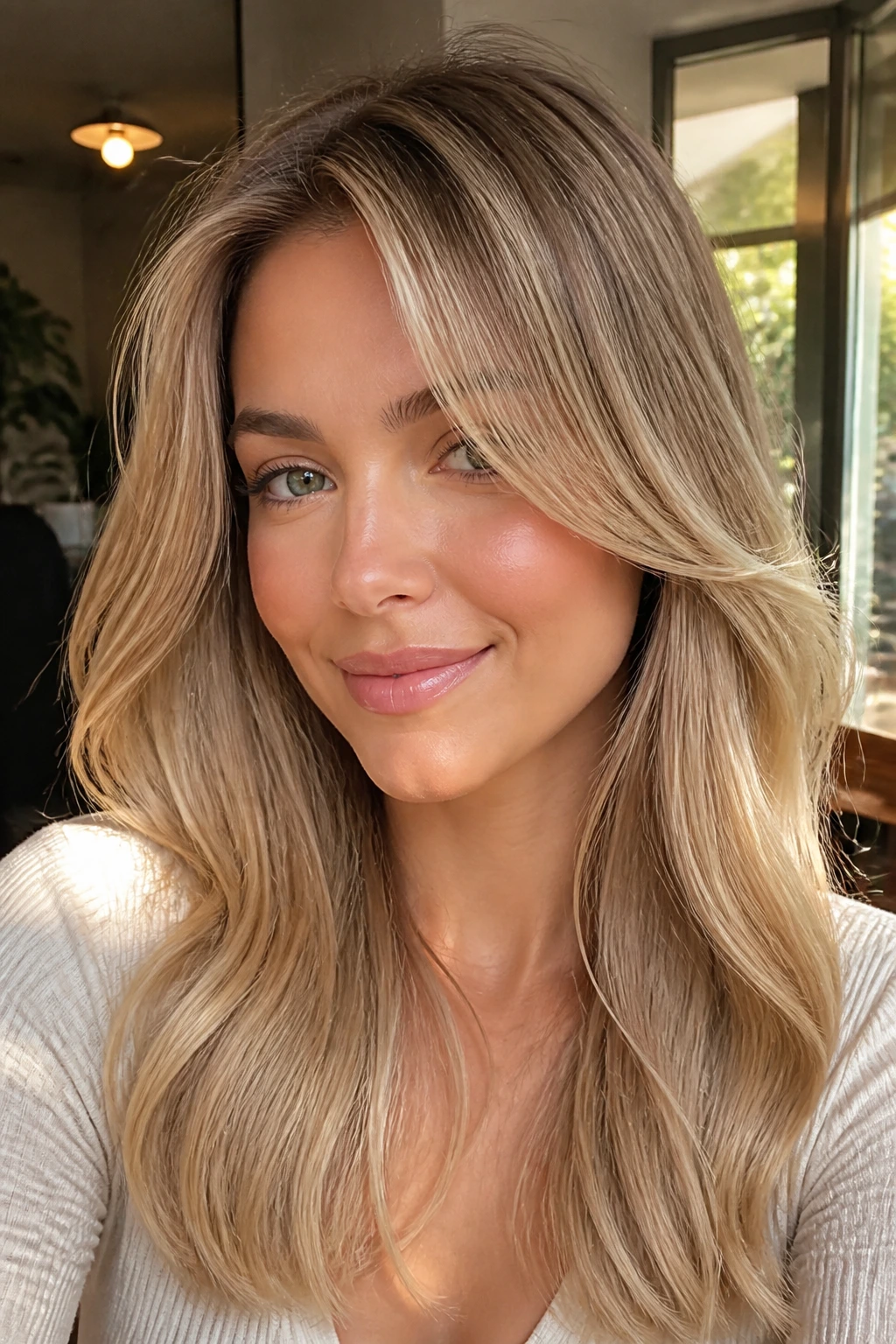
Champagne honey blonde sits right on the edge of light and soft. It’s brighter than caramel, gentler than icy blonde, and it works when you want a lighter result without losing the warmth that flatters the complexion. On warm skin, this shade can look fresh if it keeps a beige-gold base.
The important part is restraint. Champagne tones get ugly fast when they go too pale, because then they stop looking celebratory and start looking washed out. A good version still has enough depth to anchor the face, usually through a slightly darker root or a neutral-gold gloss.
I like this best on medium-length hair with a smooth blowout. The shine gives the color its lift, and the lift gives the shine something to do. It can look a little too airy on very dry hair, though, so if the ends are rough, trim them first. Champagne tones expose damage.
Ask for: a level 8 to 9 warm beige blonde with a subtle root shadow. That keeps the shade luminous without pushing it into chalky territory.
11. Honey Blonde Ombre on Long Hair
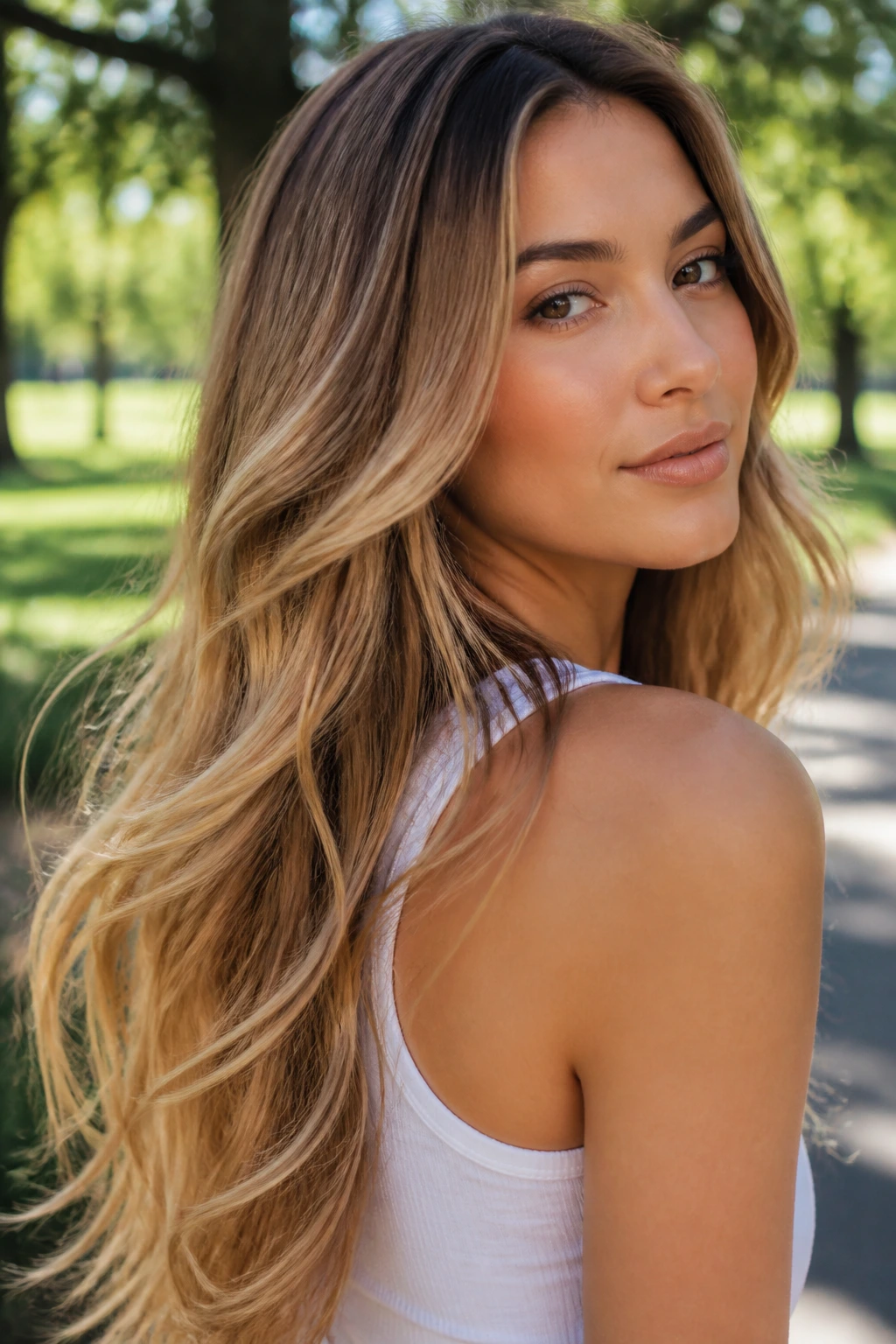
Long hair and ombre are old friends, but the honey version stays useful because it makes the grow-out look deliberate. The darker roots fade into warm blonde mids and ends, creating a slow transition that feels softer than a hard highlight line.
That slow fade is exactly why it works on warm skin. There’s enough depth near the scalp to keep the complexion from looking blank, and enough brightness through the lengths to pull light toward the face and shoulders. You get movement without having to overprocess the top.
What to Watch For
The gradient needs to be smooth. If the transition is too obvious, the look can feel dated fast. Ask for a blurred melt rather than a stark two-tone effect.
Long hair also lets the ends carry more warmth, which is useful if your skin is peachy or golden. The blonde doesn’t have to be the palest thing in the room. It just has to sit in the right place and reflect light when the hair moves.
A honey ombre is a strong choice if you heat-style often, because the darker root and warmer mid-lengths disguise a little dryness better than a platinum look would. That’s not glamorous advice, but it’s real.
12. Creamy Honey Blonde Bob
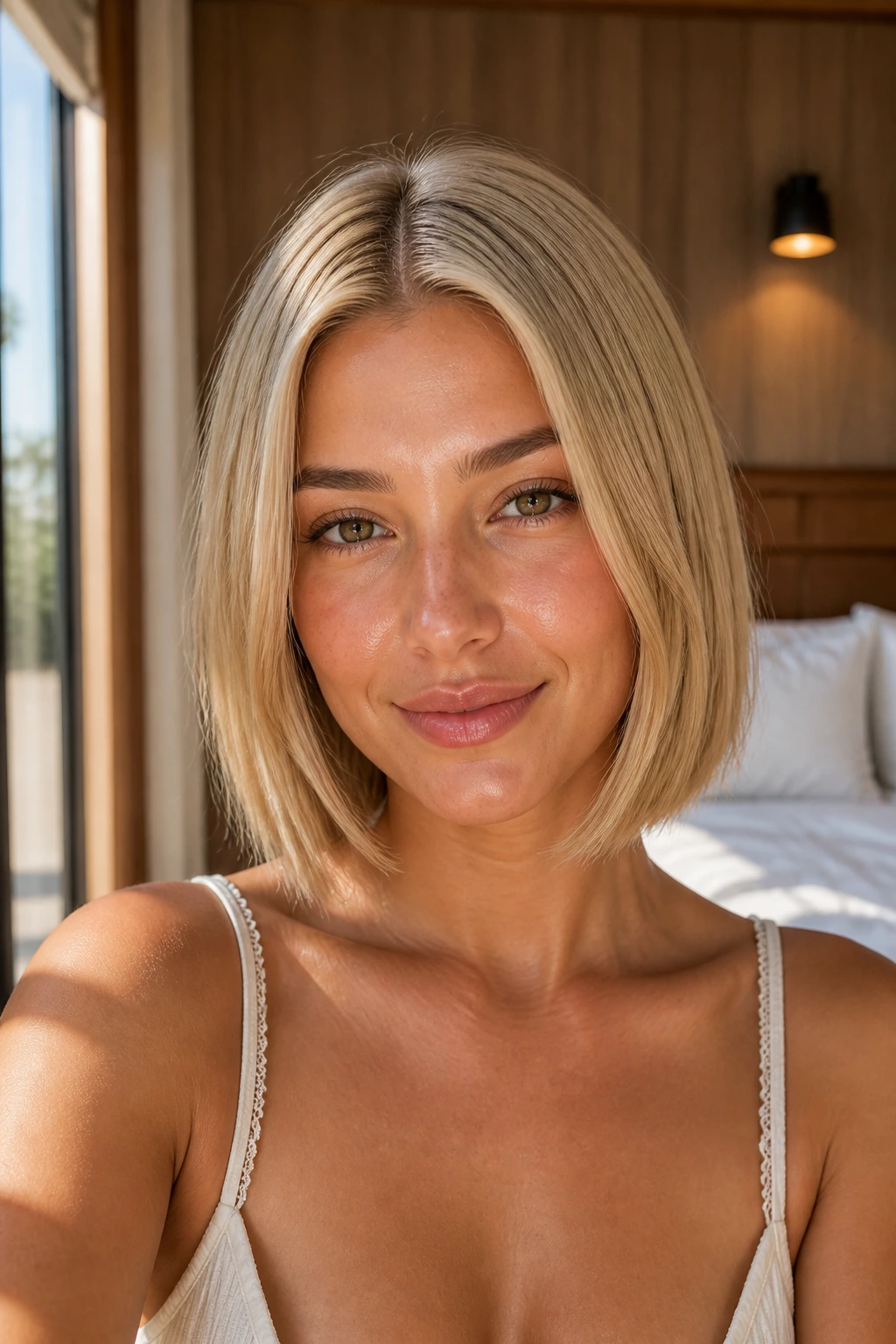
A bob can make honey blonde look crisp in the nicest way. The shorter length shows off the tone fast, and a creamy honey finish keeps the cut from turning too sharp against warm skin. It’s a smart shape for people who want polish without a lot of fuss.
Creamy is the word here, not pale. A good bob in this family usually sits at a level 7 or 8 with a soft gloss, so the color reads smooth and touchable. If the shade gets too yellow, the bob can start looking loud. If it gets too cool, it loses the warmth that makes it work in the first place.
I like this on a one-length bob or a softly graduated shape. The clean line makes the ends look thicker, and the creaminess of the blonde keeps the whole thing from feeling blocky. If your skin has peach or gold undertones, the combo can be very flattering with almost no styling.
A center part makes it modern. A side part makes it softer. Either way, the color does the heavy lifting, and that’s a good place for a hair color idea to be.
13. Peach-Glaze Honey Blonde
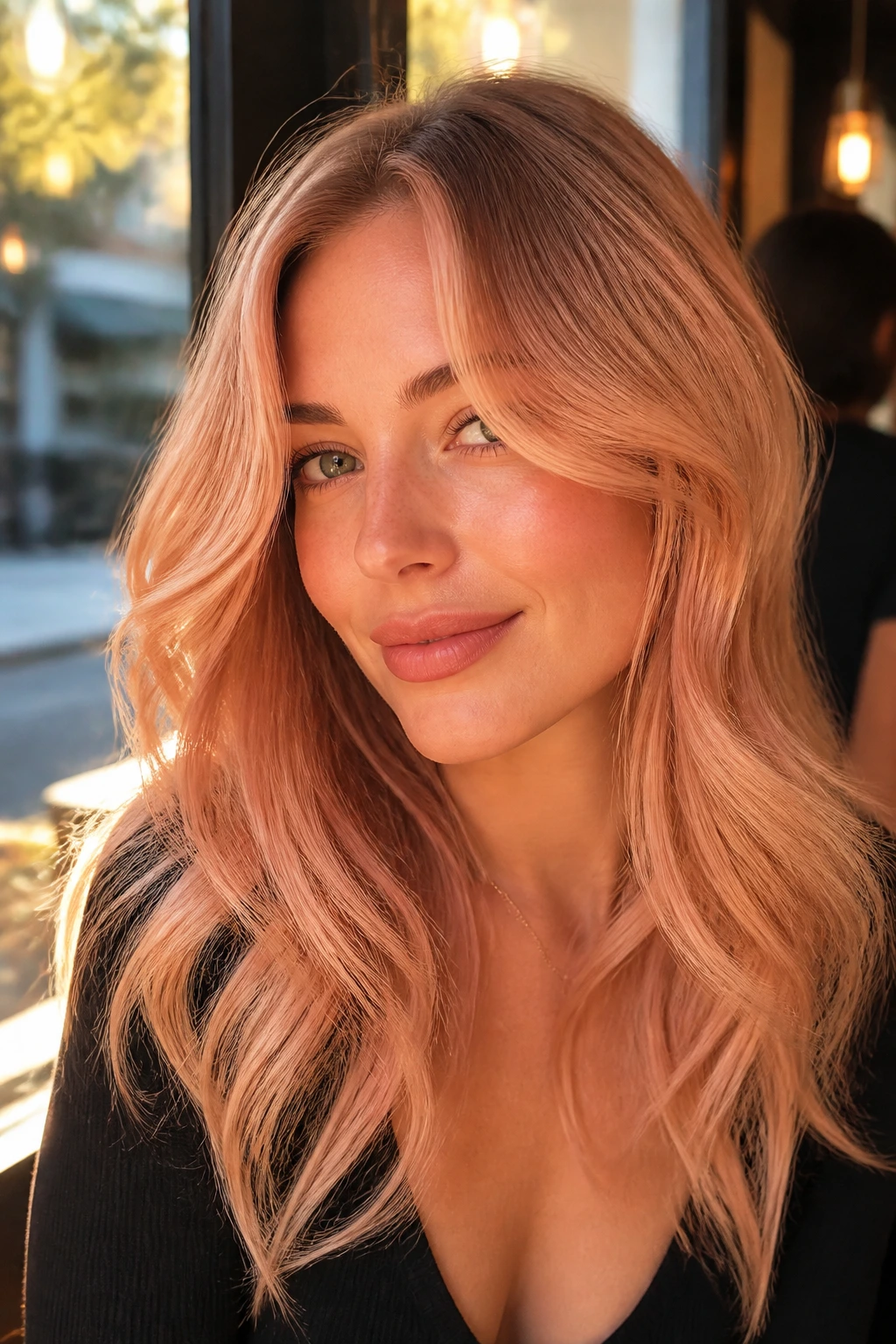
This one is subtle, and that’s why it’s so good. Peach-glaze honey blonde is not neon peach hair. It’s a warm blonde with a whisper of peach in the toner, enough to soften the gold and make warm skin look even more alive.
The glaze matters because it changes how the blonde catches light. Instead of reading strictly yellow or beige, the color shifts toward apricot in some lighting, which is gorgeous on skin with golden or peach undertones. I’d call this a “don’t overdo it” shade. The second it gets too coral, you lose the honey part.
How to Keep It Classy
Ask for a translucent peach-gold gloss, not a vivid color deposit. That’s the difference between soft warmth and costume-level color. The best result usually shows the peach most strongly in the sunlight and keeps the rest of the hair creamy.
This can be a lovely choice if you already wear warm blush, terracotta lipstick, or coppery eye makeup. The hair and makeup start echoing each other, and the whole look gets easier. It’s one of those shades that sounds specific because it is specific.
14. Toasted Bronde Blend
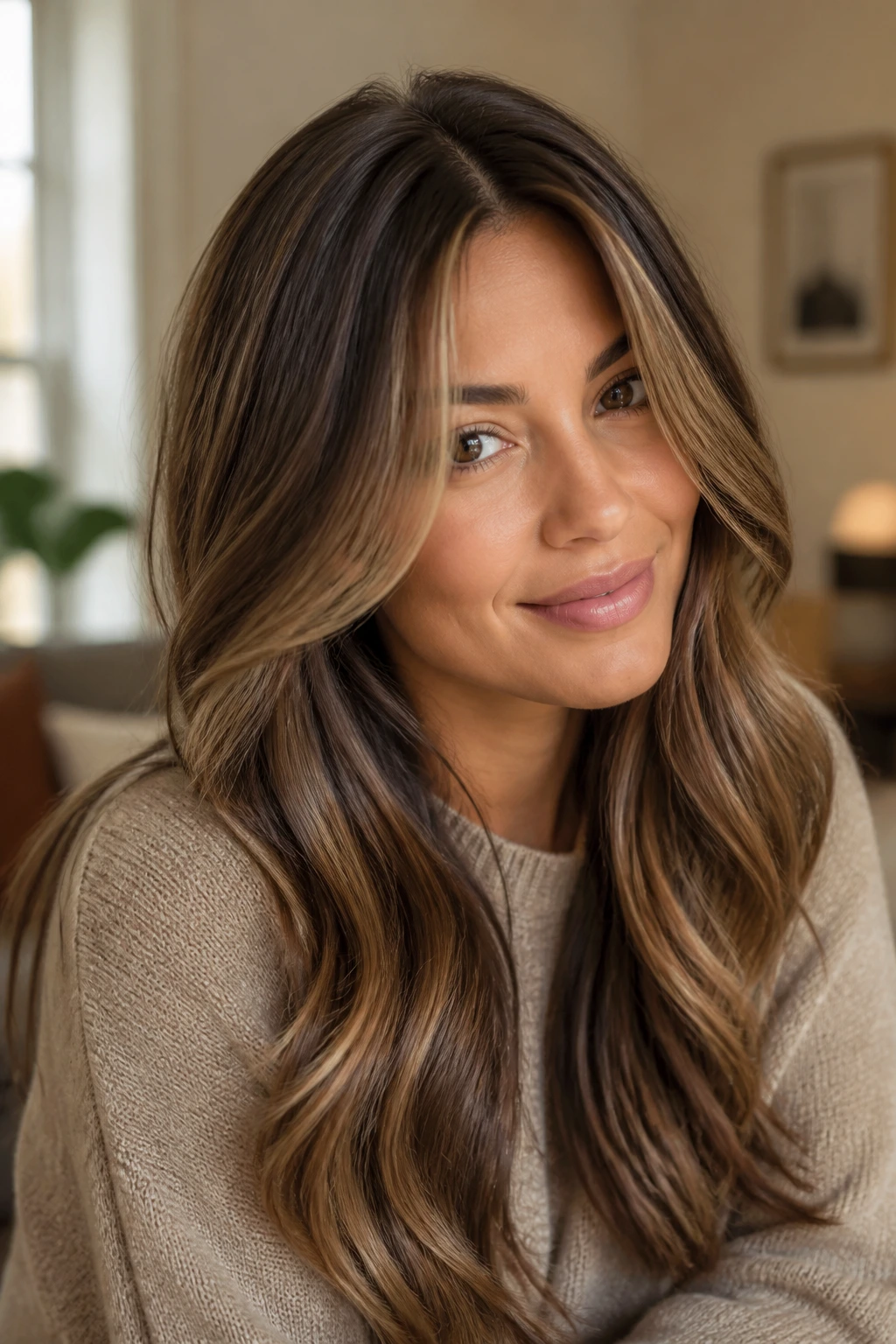
Bronde is what happens when brunette refuses to leave the room. Toasted bronde with honey ribbons keeps more depth than a traditional blonde, which makes it one of the easiest options for warm skin if you don’t want a huge color jump.
The toasted part is the point. It gives the honey somewhere to land, and it stops the blonde from floating too high or too light. The result is usually a rich brown base with thin honey-caramel pieces painted through the top layers and ends. Very wearable. Very forgiving.
This shade works especially well if your natural hair is medium brown and you want brightness without losing that darker frame around the face. I actually think this is one of the most flattering entries in the whole honey blonde family because it respects the hair you started with.
A bronde blend also grows out gracefully. The contrast is soft enough that roots don’t scream for attention. That means more time between appointments and less panic when the salon visit gets delayed by a week or two.
15. Curtain Bangs With Honey Ends
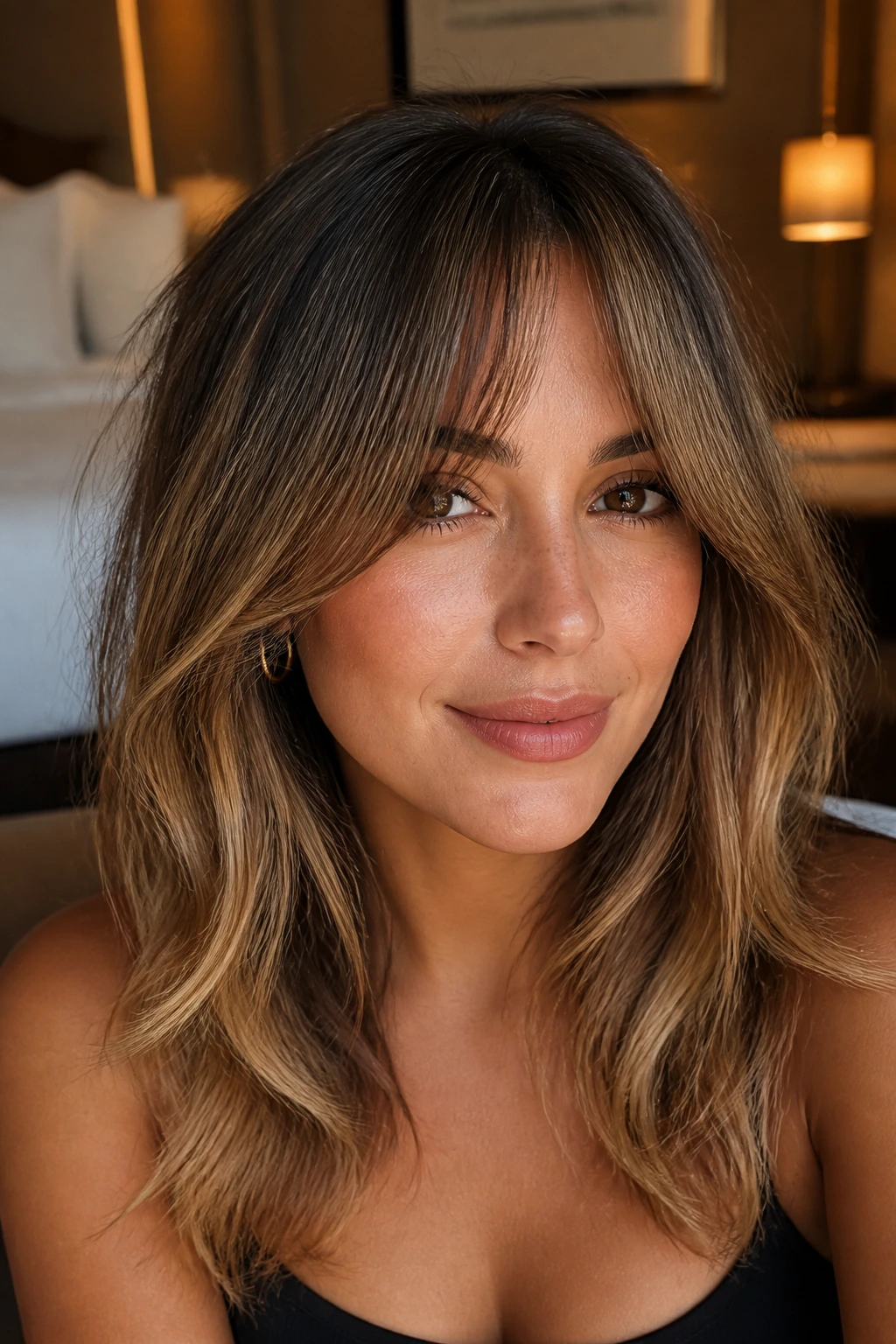
Curtain bangs and honey blonde ends are a small cheat code for softening the face. The bangs bring color and movement right around the eyes, and the warmer ends keep the hair from feeling heavy or dark through the bottom.
The reason this pairing works so well on warm skin is simple: the face-framing pieces brighten the complexion, while the ends carry the color story down the length. You get lift where the face needs it and depth where the cut needs it. No wasted space.
A subtle honey face-frame with slightly lighter bangs is often enough. If you want more drama, ask for a brighter fringe but keep the mids and ends a shade deeper so the look doesn’t turn into one flat blonde curtain. That’s a common mistake, by the way—people brighten the bangs and forget the rest of the haircut still needs contrast.
Curtain bangs do need styling, though. If you’re not going to round-brush them or bend them with a hot tool, choose a softer version. They look best when the warm color follows the curve of the hair instead of fighting a limp fringe.
16. Honey Blonde Shag With Texture
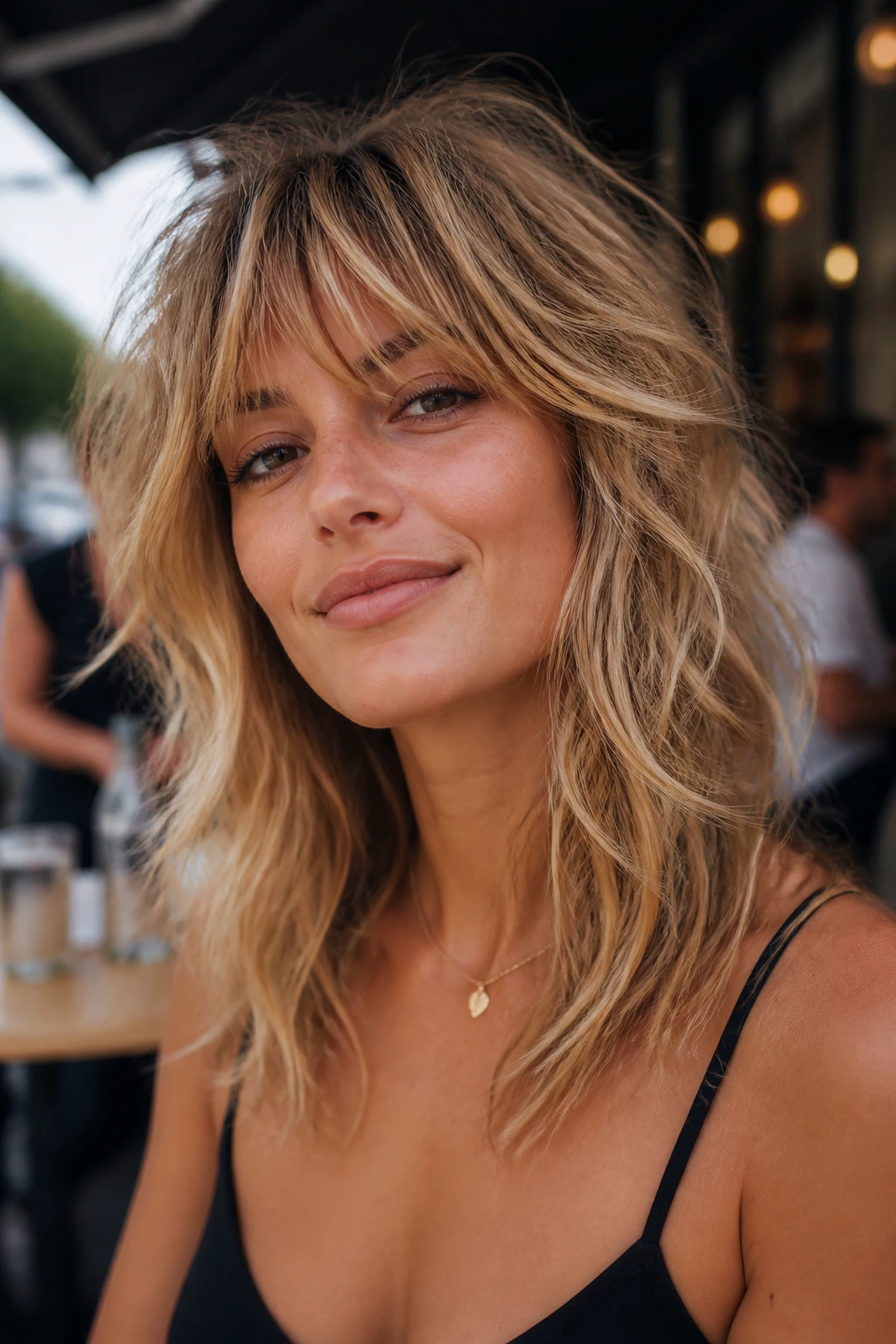
A shag loves dimension, and honey blonde gives it exactly that. Layers, bends, and broken-up ends create little pockets of light, which is why this cut can look fuller and more expensive than a one-tone style. On warm skin, the texture keeps the blonde from reading too sweet or too shiny in a bad way.
The best shag versions tend to mix a warm honey base with lighter pieces on the upper layers and around the face. That way the cut has motion even when it’s a little messy. And shags should be a little messy. That’s the point. If everything is too smooth, the haircut loses its edge.
I’d keep the tone a touch deeper than you might on a straight bob. The extra depth makes the layers look separated instead of fuzzy. You want definition, not dust.
This is one of those styles where air-drying can be your friend if your texture cooperates. A salt spray, a diffuser, or a bend-defining cream can make the honey pieces show up in the best way. The color and the cut do half the styling for you.
17. Sleek Honey Blonde Shine
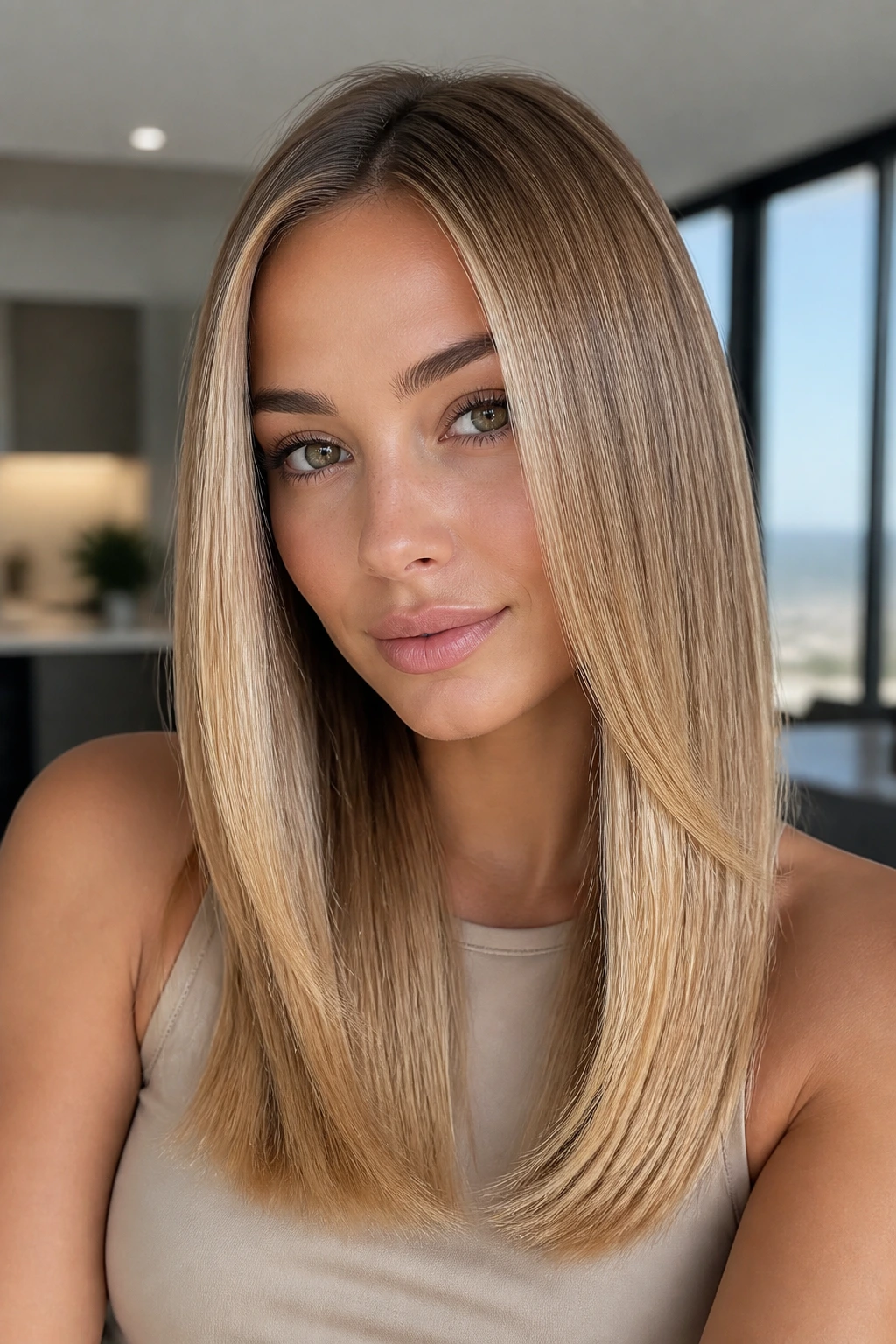
Some honey blondes are all about movement. This one is about gloss. Sleek honey blonde shine works best when the cut is clean, the ends are healthy, and the tone is rich enough to reflect light without looking over-lightened.
Warm skin tends to look good with smooth, golden finishes because the hair catches the same warm reflections that the skin already has. The result can look polished in a very quiet way. Not flashy. Not frozen. Just smooth.
The Best Way to Wear It
Blow-dry with a nozzle, use a round brush if you need bend, and finish with a light serum through the mids and ends only. If the hair is too coated, the shine turns greasy instead of reflective.
This shade looks especially strong on one-length cuts, long layers, or blunt bobs. The sleek surface lets the honey tones show up as bands of light rather than fuzzy color. That’s a nice effect if you want your hair to look healthy and intentional without a lot of styling drama.
18. Beach-Wave Honey Blonde
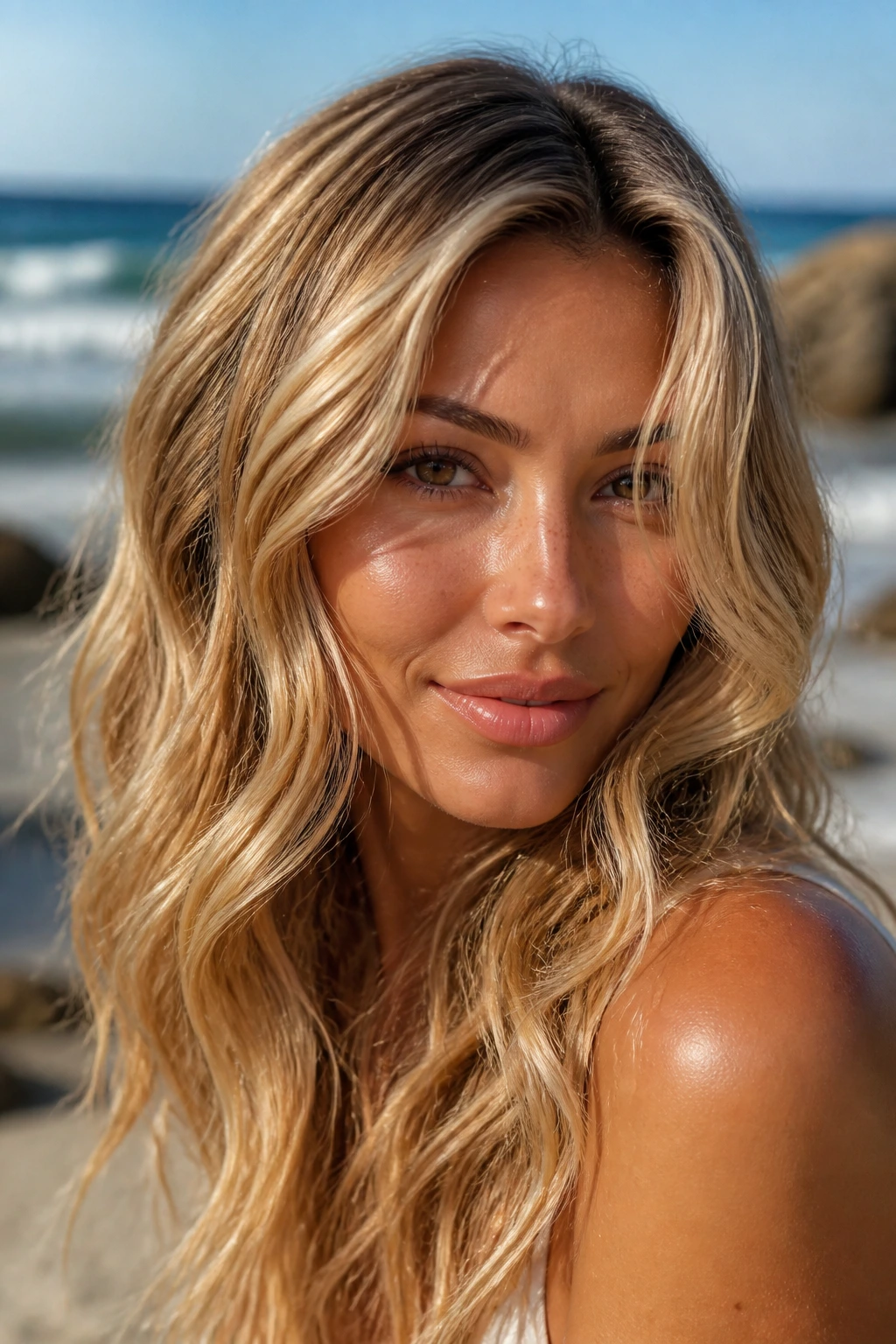
Beach waves and honey blonde are almost unfair together. The bend in the hair breaks up the color, so each curve catches a slightly different shade of gold or beige. On warm skin, that kind of movement can make the complexion look more alive without adding a ton of brightness.
The danger here is overdoing the wave until the hair looks crunchy. Don’t. The wave should look loose and soft, not like it was scraped into place with a curling iron set too hot. A 1-inch iron with alternating directions usually gives the right amount of texture.
I like this version best when the blonde has a bit of depth underneath. That keeps the waves from turning into a blur of pale color. A little shadow at the root or through the underside can make the surface pieces pop more.
If you wear this style often, keep a light wave spray and a heat protectant nearby. Honey tones show damage faster than brunette hair does, and dry ends can make the color look dull. Soft movement is the whole point, so treat the ends like they matter.
19. Sandy Beige Honey Ends
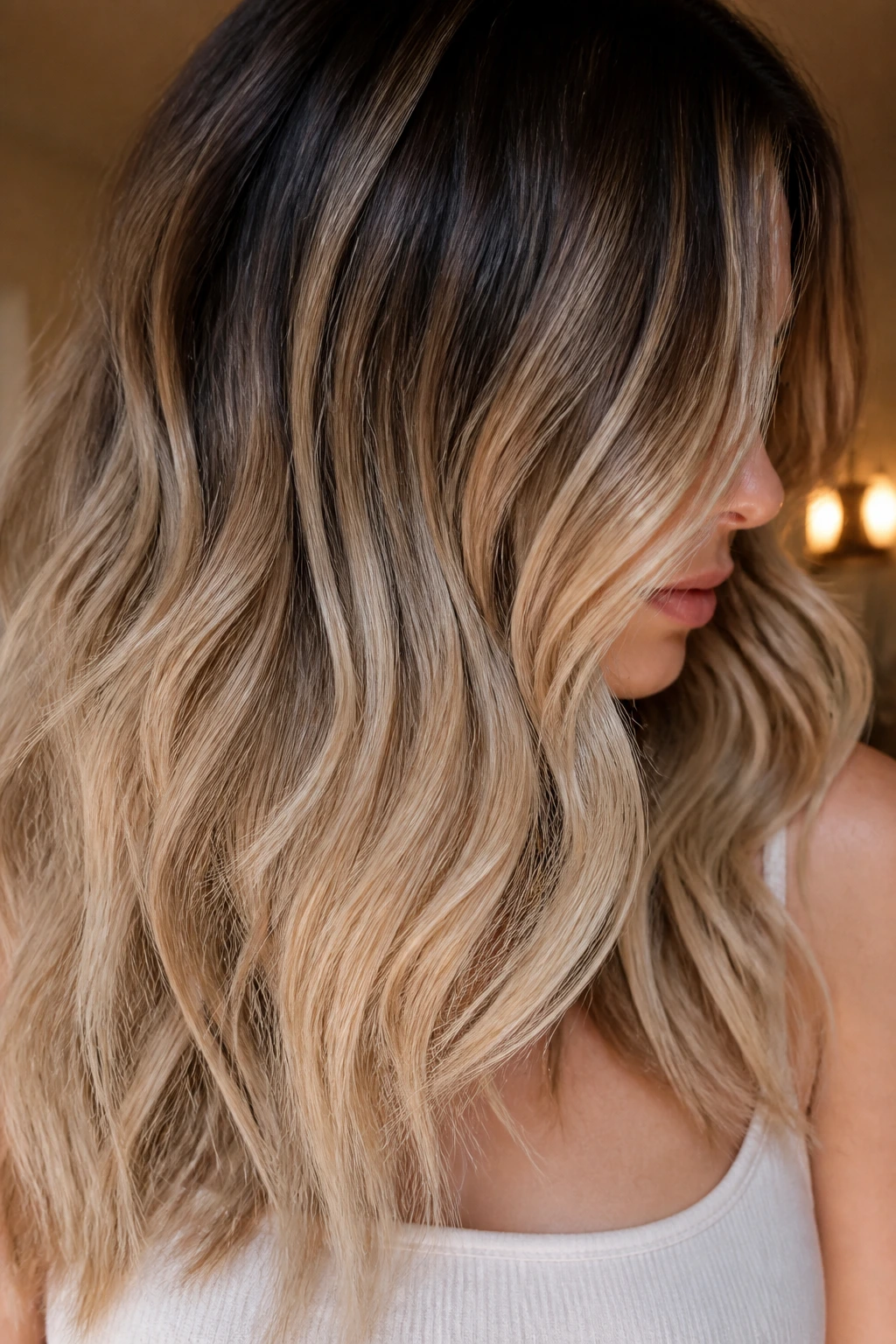
This is the quieter cousin of brighter honey blonde. Sandy beige ends keep the warmth, but they dial back the gold so the hair reads softer and more neutral. That can be a very good thing on warm skin that pulls a little olive or wants less orange.
The focus is the ends, not the whole head. Darker roots or mids stay intact, and the lower half gets the sandy beige finish. That creates a blended look that’s easy to live with and easy to grow out.
I like this option when the client says, “I want blonde, but I don’t want everyone to notice it first.” Fair enough. The shade still shows, but it doesn’t shout. It’s more of a hush than a headline.
Ask for a beige-gold toner with minimal brass if your hair tends to go orange when lifted. If the stylist uses too much gold, the sandy feel disappears. The best version sits between beachy and polished, which is a pretty nice place to be.
20. Honey Blonde on Coily Hair
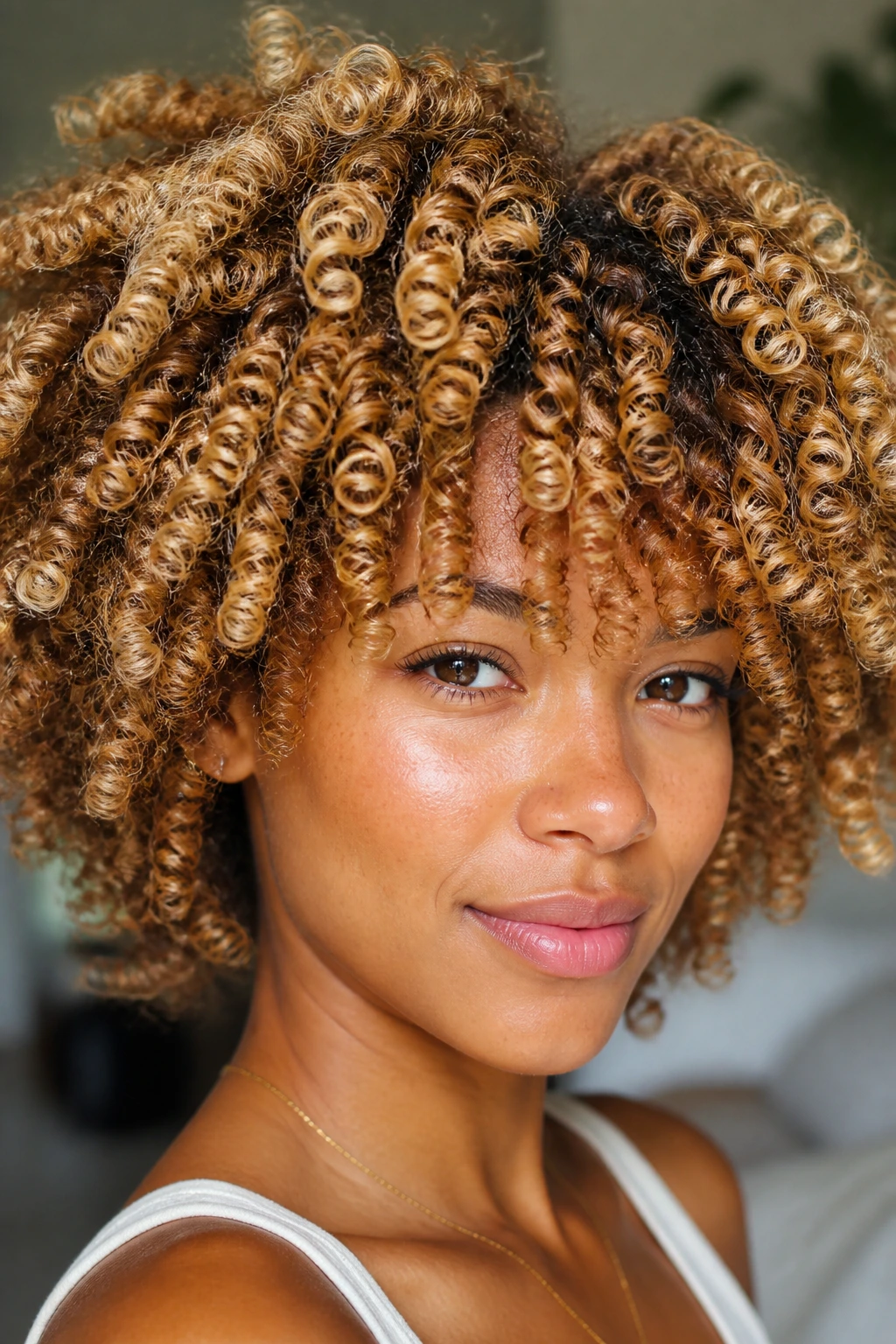
Coily hair can wear honey blonde in a way that looks rich rather than fragile, but placement and care matter a lot. Highlights should follow the structure of the coils so the color shows where the hair naturally expands and reflects light. On warm skin, that creates a beautiful frame without flattening the texture.
The big mistake is trying to lift coily hair too aggressively in one session. That’s a fast way to create dryness and lose definition. A better route is careful placement, smaller sections, and a tone that stays honey-gold rather than pushing to a pale blonde.
Moisture has to stay part of the plan. Deep conditioning, leave-in conditioner, and gentle detangling all become more important once the color is in place. That’s not a punishment; it’s just how the hair behaves when lightened.
A honey blonde coil pattern can look especially striking when the brightest pieces land around the crown and outer coils. The color seems to move as the hair moves. That motion is the point. If you’ve got coily texture, let the coils show the blonde instead of covering them up with a blanket of one-tone color.
21. Reverse Balayage Honey Blonde
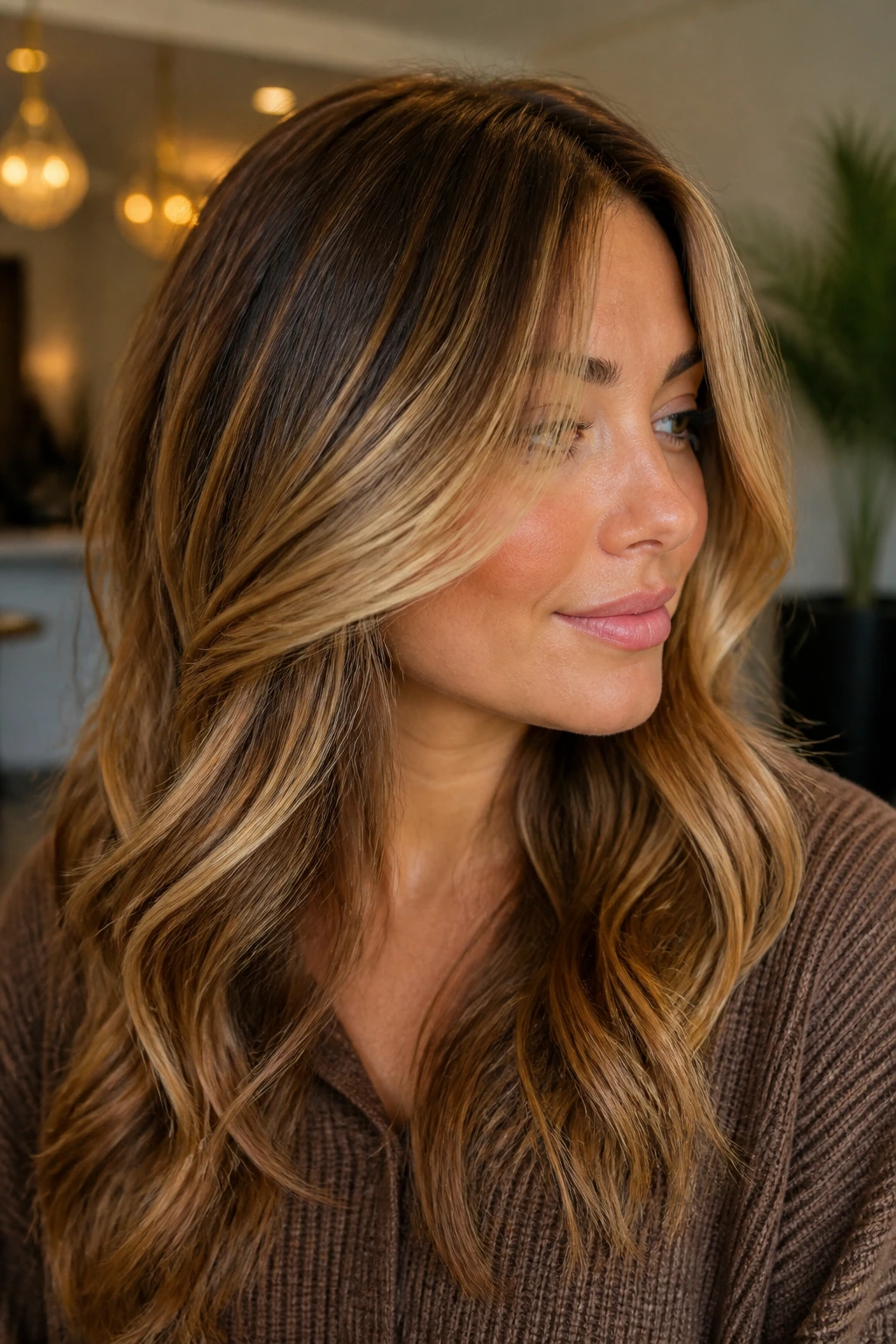
Reverse balayage is for the blonde that got too pale. Instead of adding more lightness, you add depth back in with lowlights or a shadowed glaze, then let the honey blonde sit on top where it still looks warm and fresh.
That sounds simple, but it solves a real problem. When blonde gets pushed too light, warm skin can start looking washed out or overly pink. Reverse balayage gives the face back some structure. The hair stops hovering and starts framing.
What to Ask For
Ask for soft lowlights one shade deeper than your natural base and a honey gloss over the lighter pieces. The result should look blended, not striped. If the lowlights are too dark, the whole thing turns muddy.
I like this for people who’ve been blonde for a while and are tired of the maintenance. It stretches the life of the color and gives the hair a more dimensional finish. Oddly enough, making the blonde less blonde can make it look better.
22. Ribbon Highlights on Medium Brown Hair
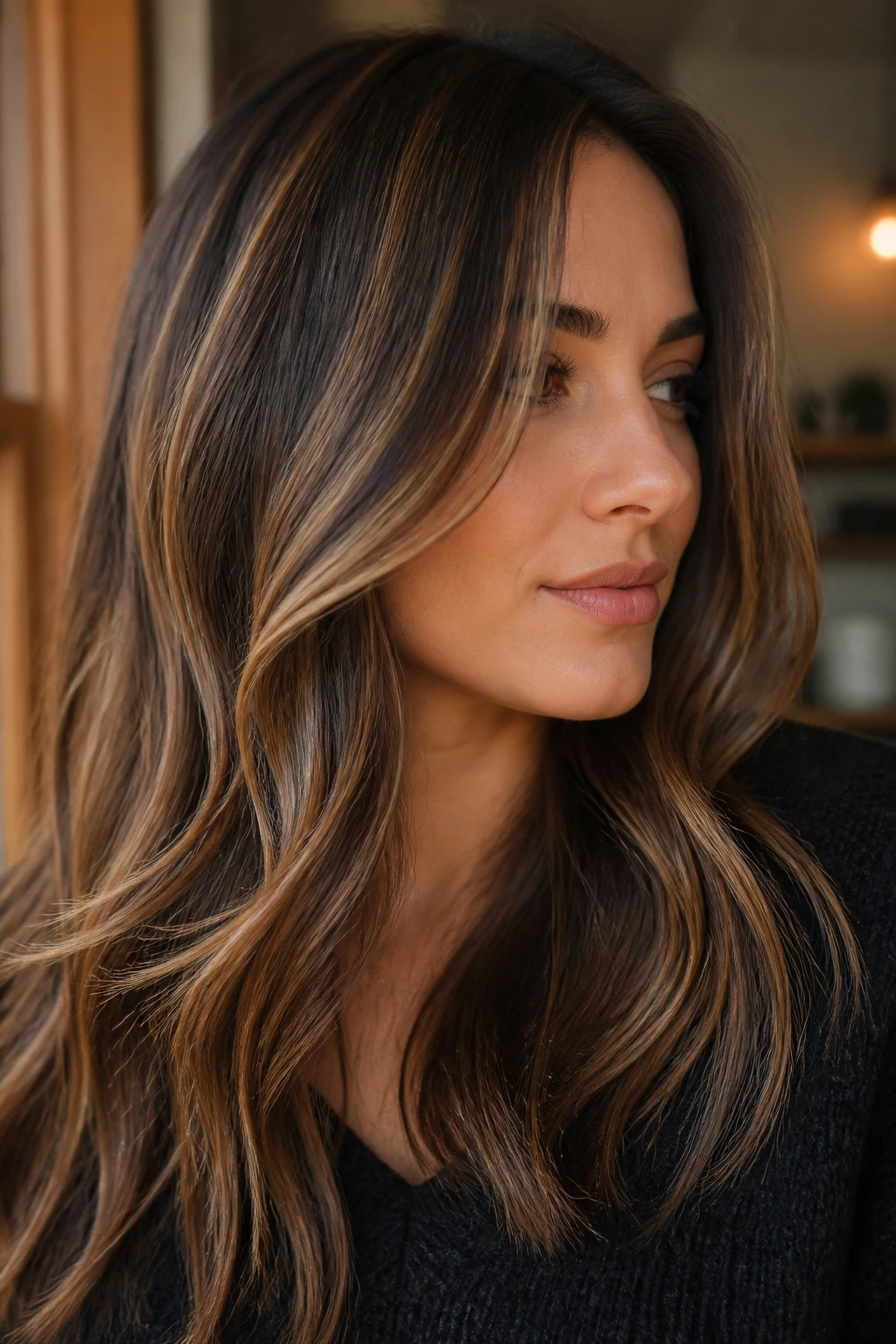
Ribbon highlights are thin, strategically placed pieces that run through medium brown hair like strands of warm thread. Honey ribboning is one of the most flattering ways to introduce blonde on warm skin because it keeps the base intact.
The result isn’t stripy if the sections are fine enough. It’s soft, moving, and layered. The brown still does most of the visual work, while the honey pieces catch just enough light to brighten the face and ends.
This is a strong choice for someone who wants to test blonde without losing their brunette identity. The ribbons can be placed heavier around the part and front, lighter through the back, and the effect changes depending on how you wear the hair. Nice trick, that. A side part can make the ribbons feel bold; a center part can make them read softer.
If your skin is warm, ask the colorist to keep the ribbons in a gold-beige range rather than a pale beige that cools everything down. That keeps the whole effect cohesive. Cohesive is underrated.
23. Half-Up Honey Dimension
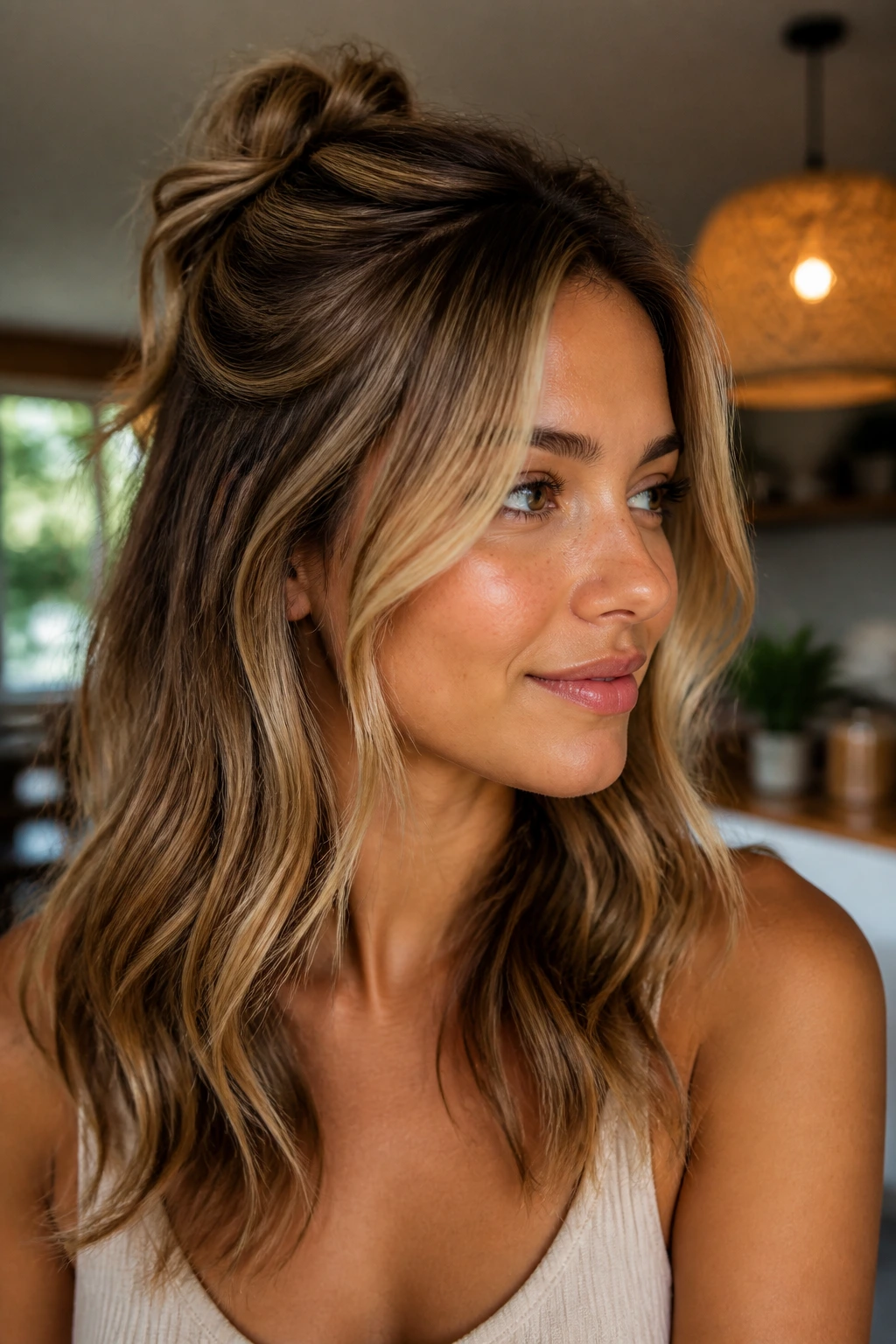
Hair color doesn’t live only when the hair is down. A half-up style shows off the top layers, the crown, and the pieces around the face, which is exactly where honey blonde can do its best work on warm skin.
This idea is less about a special dye formula and more about how the color shows up in real life. In a half-up knot, braid, or clip, the lighter face-framing pieces get their own spotlight while the longer lower sections keep the depth. That contrast is often what makes honey blonde look expensive.
I like this especially on long layers or medium-length cuts with highlights around the top. The pulled-back section can show dimension you’d never notice in a ponytail. If you like clips, scrunchies, or a clean half-up twist, the color gives those styles more payoff.
It’s also a reminder that placement matters as much as tone. Honey blonde around the part and temples will matter more on a Tuesday than a perfect tone buried under hair that never moves. Real-world hair has to work from every angle.
24. Chestnut Base With Honey Ribbons
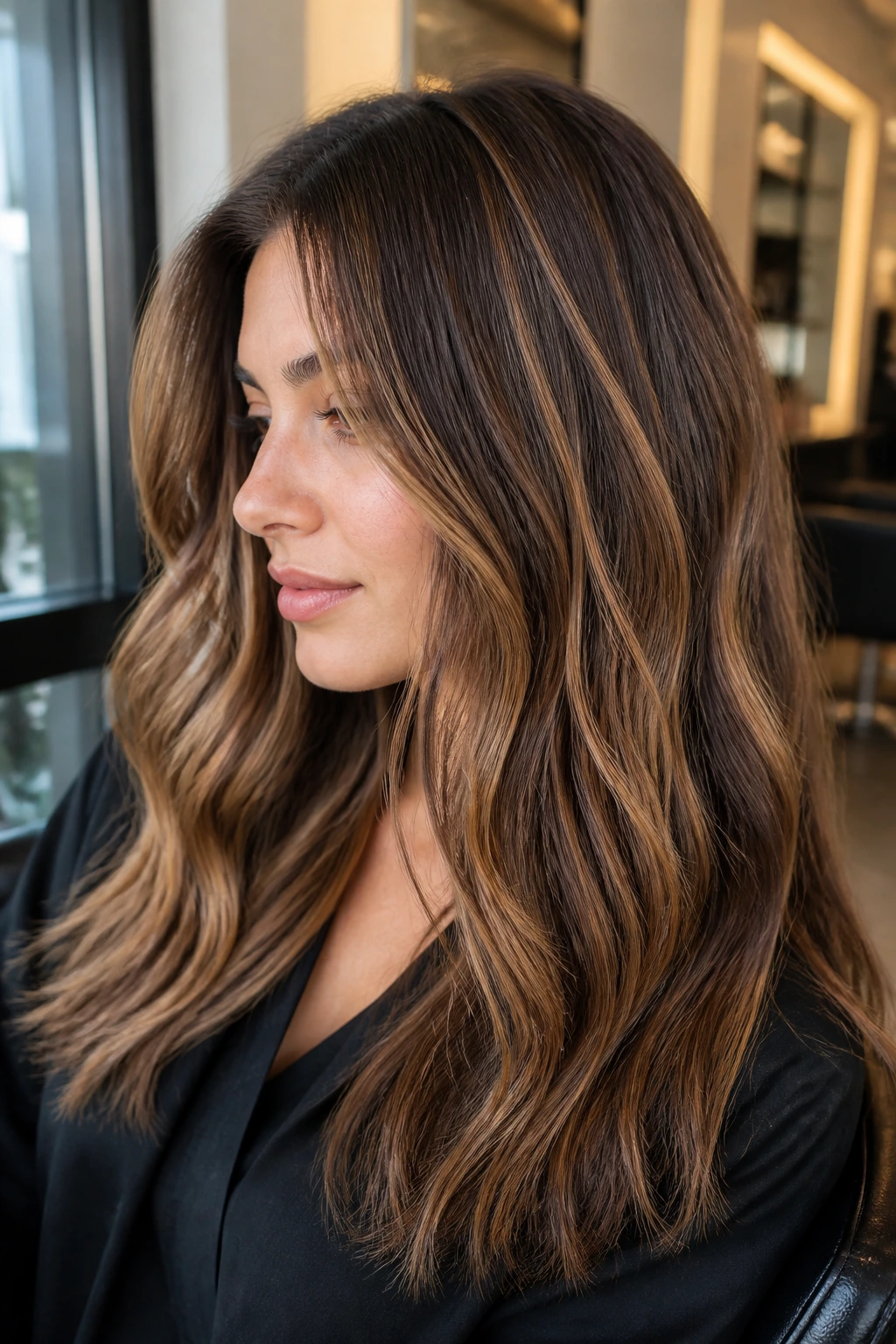
Chestnut base plus honey ribbons is one of my favorite “not too blonde” formulas. The darker chestnut keeps the hair grounded, while the honey pieces add warmth and motion without forcing the whole head into a lighter category.
That base color is especially kind to warm skin because it mirrors the depth already in the complexion. The ribbons brighten without overpowering. You get a believable shift, not a dramatic costume change.
This works beautifully on thick hair, where too much lightness can make the shape look broad. The chestnut base keeps the silhouette compact, and the honey pieces can be placed just where the haircut needs movement. It’s a strong option if your hair tends to go puffy when over-lightened.
Ask for thin, irregular ribbons rather than evenly spaced highlights. Irregular placement looks more natural and keeps the chestnut from disappearing. That little bit of unpredictability is what makes the color look hand-done instead of stamped on.
25. Glossed Honey Blonde Layers
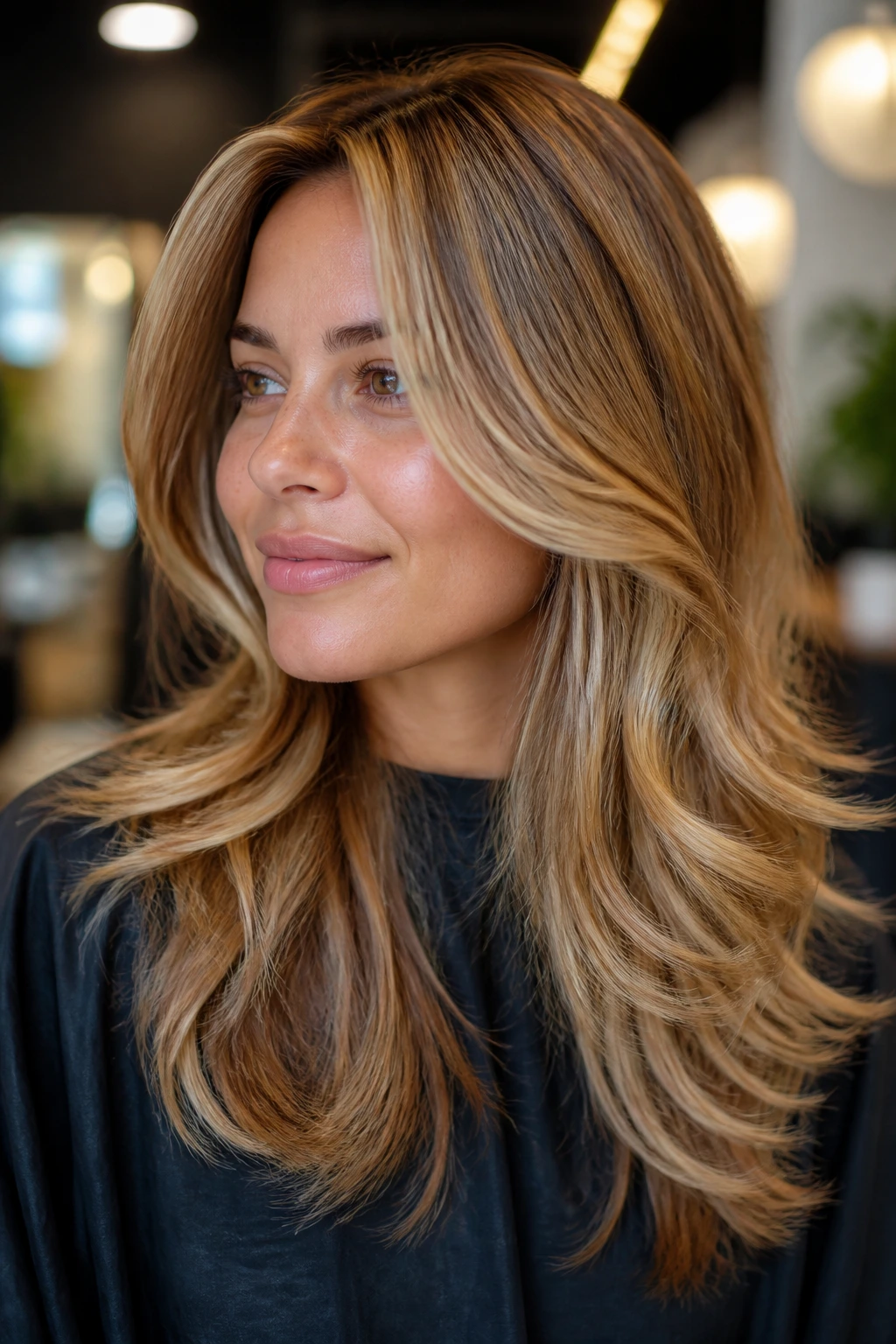
Gloss can be the difference between “nice blonde” and “why does that blonde look rich?” A glossed honey blonde layer cut reflects light off the surface and deep into the cut, which is especially nice on warm skin that likes a soft golden finish.
The gloss can be done after lightening or used over already-light hair to refresh the tone. Either way, the aim is the same: a beige-gold sheen that keeps the blonde from going brassy or dry-looking. I prefer glossed honey over over-toned honey almost every time. There’s more life in it.
Layers help because they give the gloss somewhere to land. The shorter pieces catch light at the cheekbones, while the longer layers show the shift at the ends. If you want hair that looks polished with minimal styling, this is a strong choice.
Tiny but useful: keep the gloss warm, not coppery. Too much copper can tilt the shade into orange indoors, and that’s rarely the effect anyone wants.
26. Babylight Honey Blonde
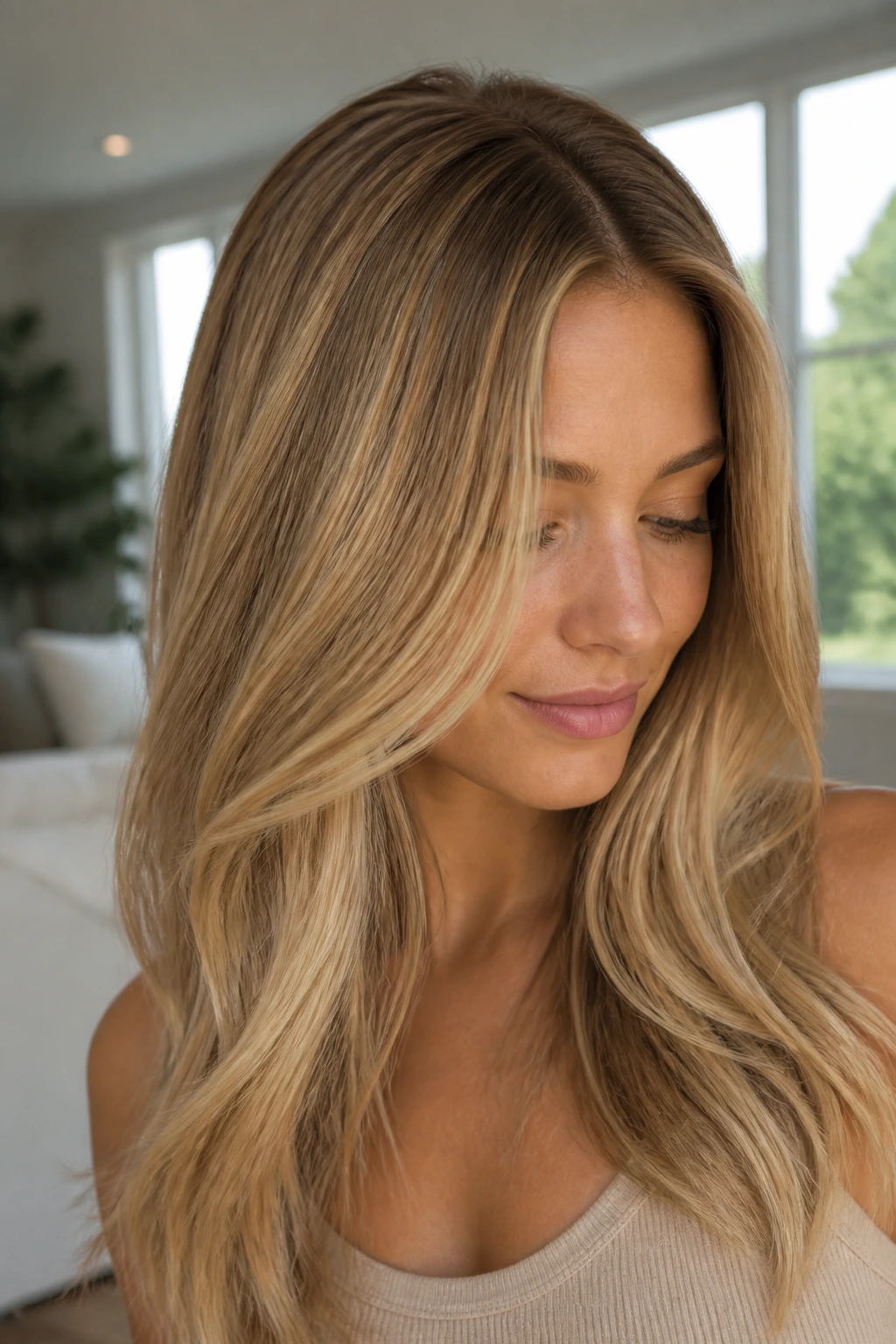
Babylights are the fine, threadlike highlights that create a soft overall lift instead of obvious streaks. In honey blonde, they’re especially useful because they let the warmth spread gently through the hair, which is easier on warm skin than a chunky highlight pattern.
This is the most “I was born with it” version of the blonde family here. Not because it’s fake-natural, but because the highlights are so fine that your eye reads the hair as one blended surface with depth. That’s useful if you like subtle color and hate obvious upkeep.
Babylights are good on straight hair, wavy hair, and finer textures where chunky sections would feel too heavy. They’re also a nice answer for people who want brightness around the face but don’t want a loud streak count. Yes, streak count is a real problem for some heads.
Ask your colorist for micro-fine placement through the crown and part line with a warm beige-gold toner. The toner matters because babylights are so delicate that the shade sitting on top changes the whole result.
27. Dimensional Honey Blonde Afro Curls
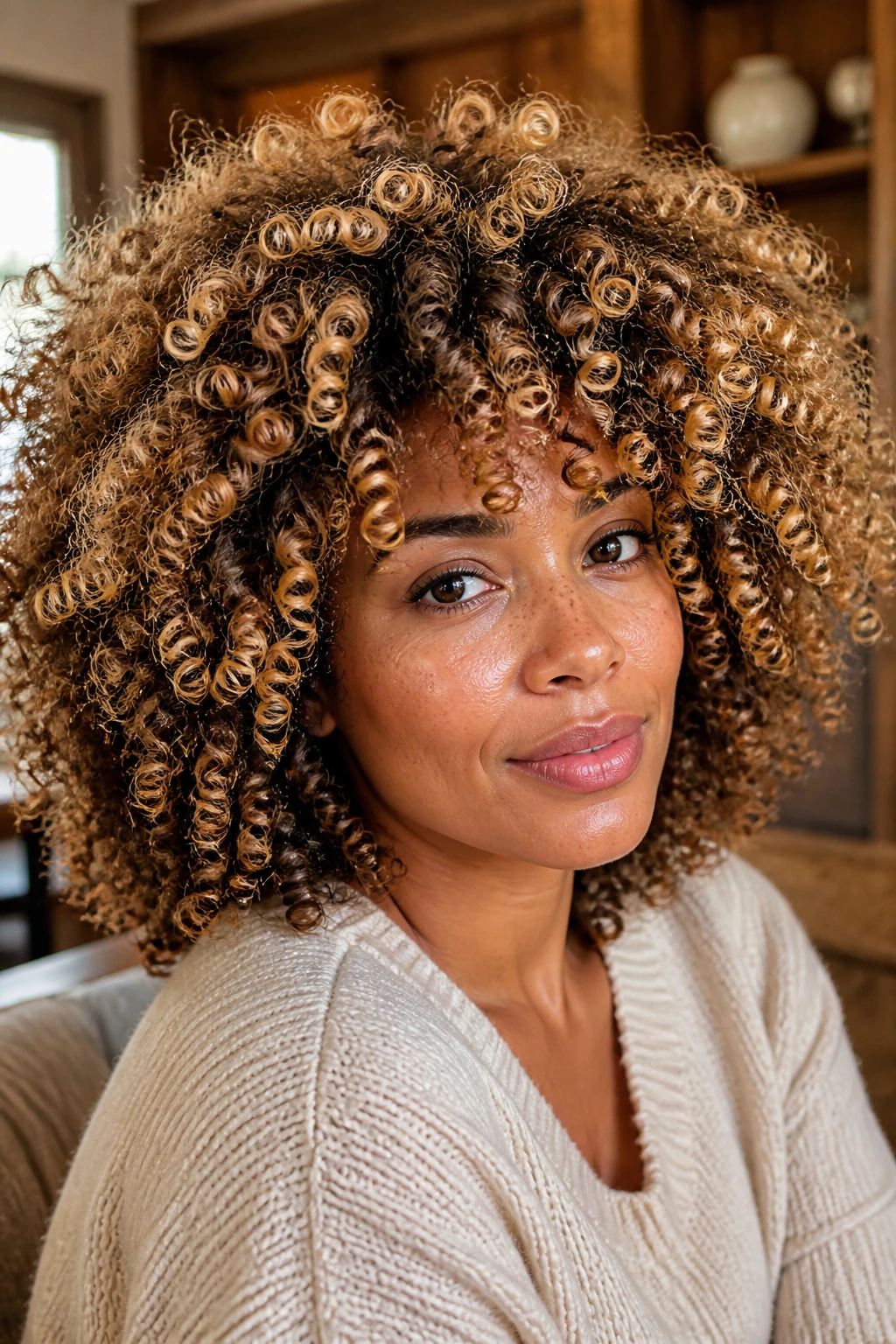
Afro curls carry honey blonde in a way that can look almost architectural. The shape itself already has volume and lift; adding warm blonde pieces around the crown, outer curve, and face makes that shape pop without flattening it.
The key is maintaining contrast. You do not want every coil lightened to the same degree. Dimensional placement gives the curl pattern a better outline and stops the color from turning into a single pale mass. Warm skin benefits from that depth, too, because the face still has a frame.
This look works especially well when the colorist pays attention to the haircut first. Rounded shapes, tapered shapes, and layered curls all need slightly different placement. If the bright pieces sit where the coils naturally expand, the finish looks intentional and alive.
Moisture and definition matter just as much here as color. Use a rich leave-in, don’t over-strip the curls with harsh shampoo, and let the blonde sit on healthy texture. Honey blonde on coily hair should feel lush, not fragile.
28. Feathered Honey Blonde Crop
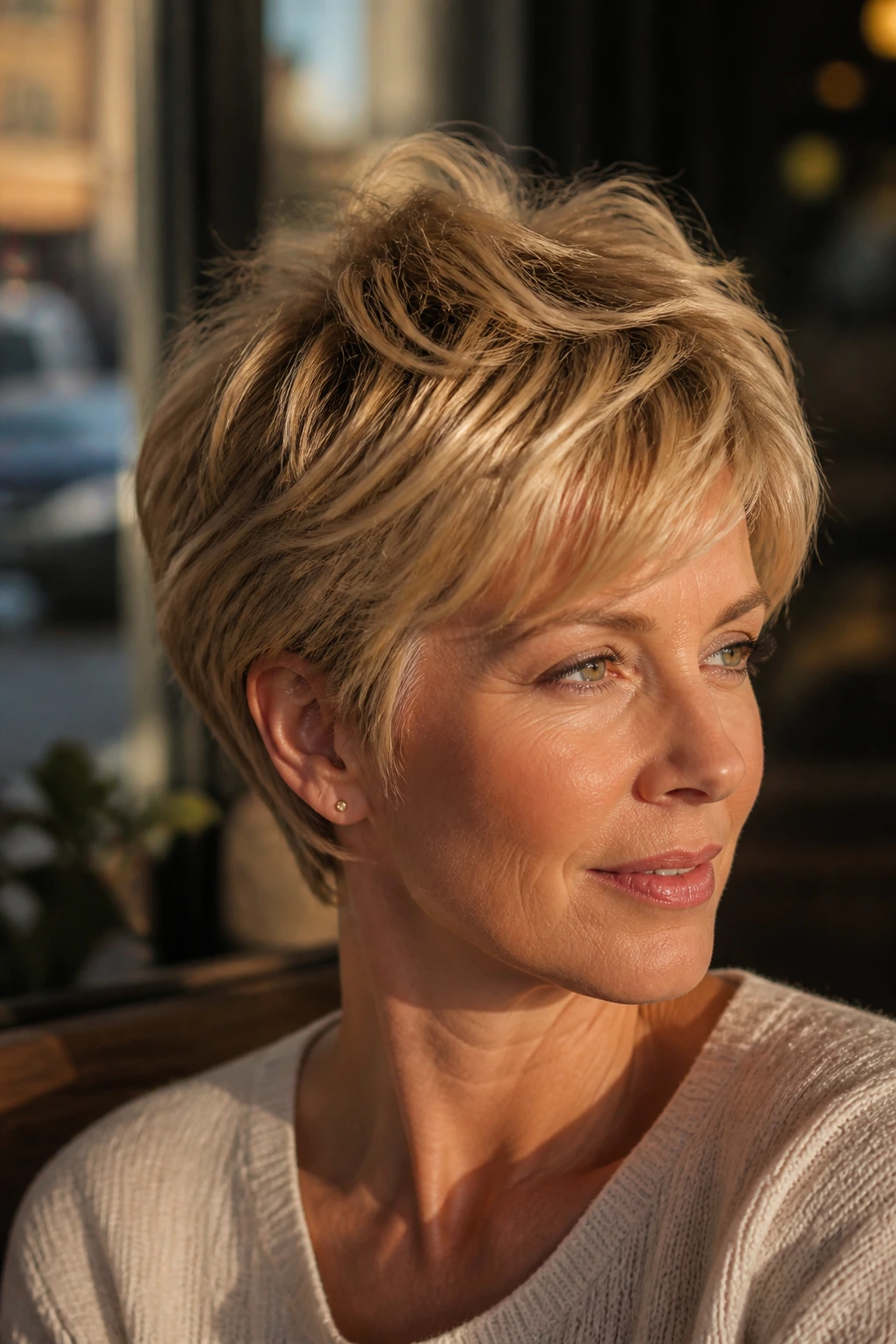
A feathered crop gives honey blonde a lighter, airier finish than a strict pixie. The top stays soft and movable, the sides can be tapered or lightly layered, and the honey tones brighten the crown without making the shape feel stiff.
This is a good choice if you want short hair but not a severe cut. The feathering softens the face, which pairs well with warm skin because the overall effect stays gentle rather than harsh. I’d lean toward a warm beige-gold finish here, maybe with a slightly deeper nape for contrast.
What Makes It Different
Unlike a sharper pixie, the feathered crop lets the blonde move. The layers create tiny shifts in tone as the hair lays different ways, and that movement keeps the cut from looking flat. It also grows out a bit easier, which is useful if you like short hair but don’t enjoy frequent shape-ups.
If you want this shade to feel modern, keep the finish glossy and the texture piecey rather than fluffy. A light styling cream or pomade on the ends is enough. No need to overwork it.
Why Honey Blonde Flatters Warm Skin
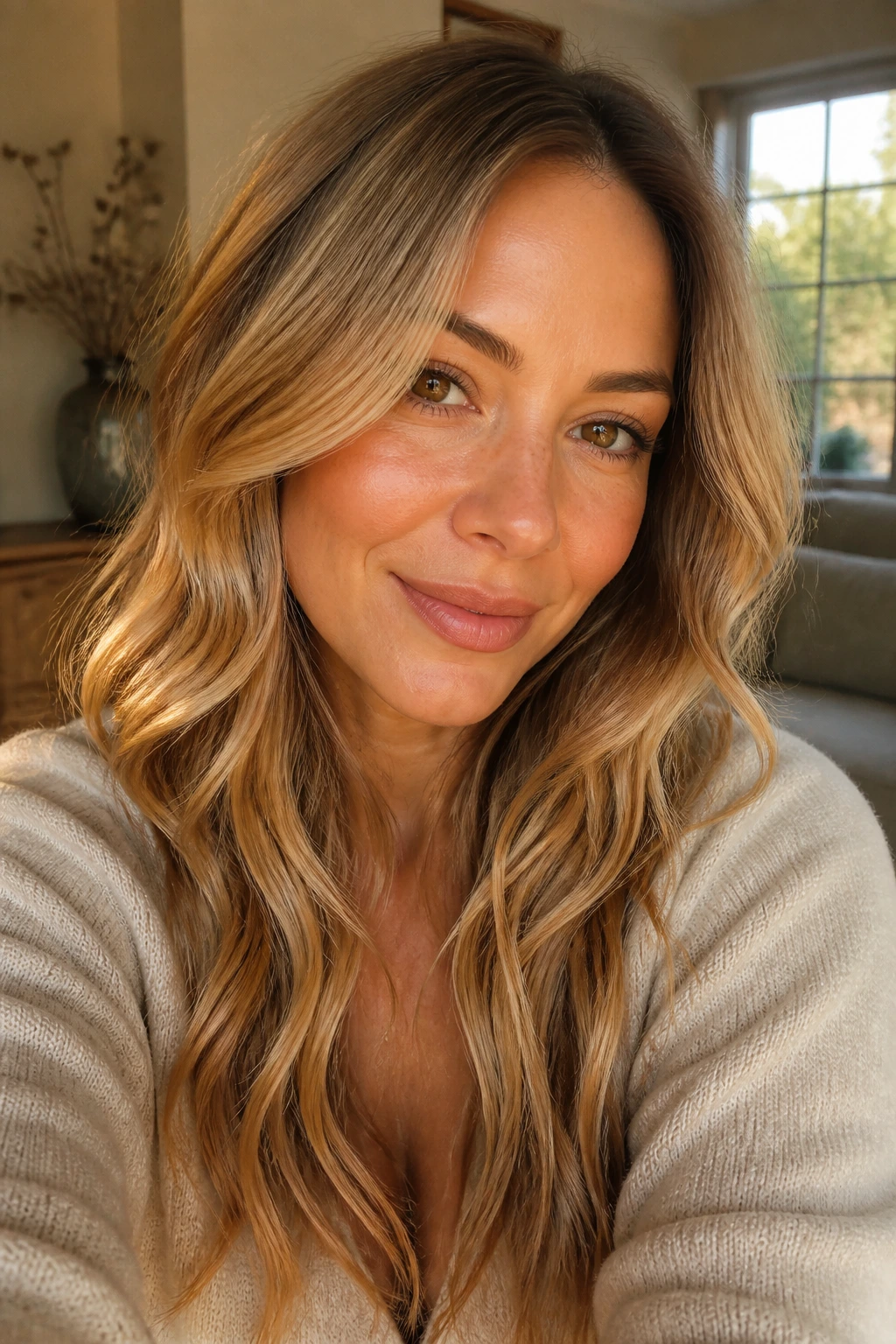
Honey blonde works on warm skin because it keeps the same basic temperature as the complexion. Gold, amber, beige, and caramel don’t sit in opposition to peach or olive undertones the way icy ash can. The result is usually softer around the face, with less of that jarring “hair first, face second” effect.
The shade family also gives you room to choose your level of brightness. A level 6 caramel honey on a brunette base feels very different from a level 8 beige-gold gloss on a bob, but both can flatter warm undertones if the colorist respects depth. That’s the part many people miss. The prettiest honey blondes are not always the lightest ones.
A good rule of thumb: the more warmth your skin already carries, the more helpful it is to leave some shadow at the root or some beige in the toner. Too much gold can go orange. Too much pale lightness can wash you out. The middle is where the good stuff lives.
And if you’re unsure, that’s fine. Start with placement rather than all-over lift. Face-framing pieces, balayage ribbons, lowlights, or a gloss can teach you a lot about how your skin reacts before you commit to a bigger change.
Essential Tools for Getting the Shade Right
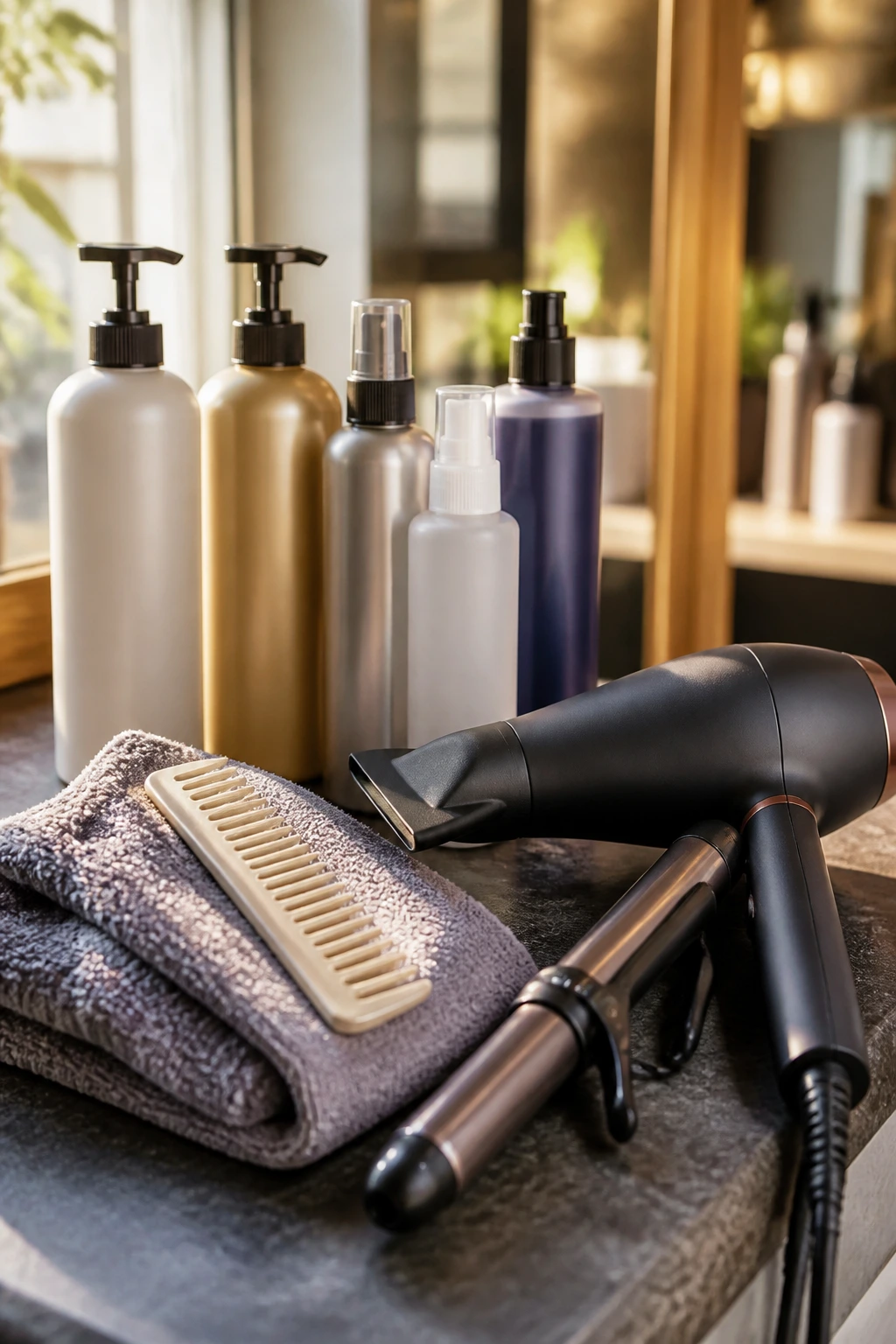
- Salon consultation photos: Bring 3 to 5 images with similar base color and haircut, not celebrity shots with a totally different texture.
- Color-safe shampoo: A sulfate-free shampoo helps the honey tone stay softer for longer and keeps the ends from drying out.
- Color conditioner or mask: Look for one that adds slip and shine; once a week is enough for most hair, twice if your hair is coarse or porous.
- Heat protectant spray: Honey tones show heat damage fast, especially around the face and ends.
- Bond-building treatment: Useful if you’re lightening darker hair or you’ve already colored the same sections more than once.
- Purple or blue shampoo: Optional, and only when brass turns yellow or orange; overuse can mute the warmth that makes honey blonde work.
- Microfiber towel or soft T-shirt: Helps cut down frizz and keeps the cuticle calmer after washing.
- Wide-tooth comb: Better than yanking a brush through fragile lightened sections.
- Blow dryer with nozzle: Helpful for smoothing the cuticle and making the color read shinier.
- Curling iron or flat iron: Only if you plan to bend the hair for ribboned or waved styles; use the lowest heat that gets the job done.
Smart Salon Notes and Product Picks
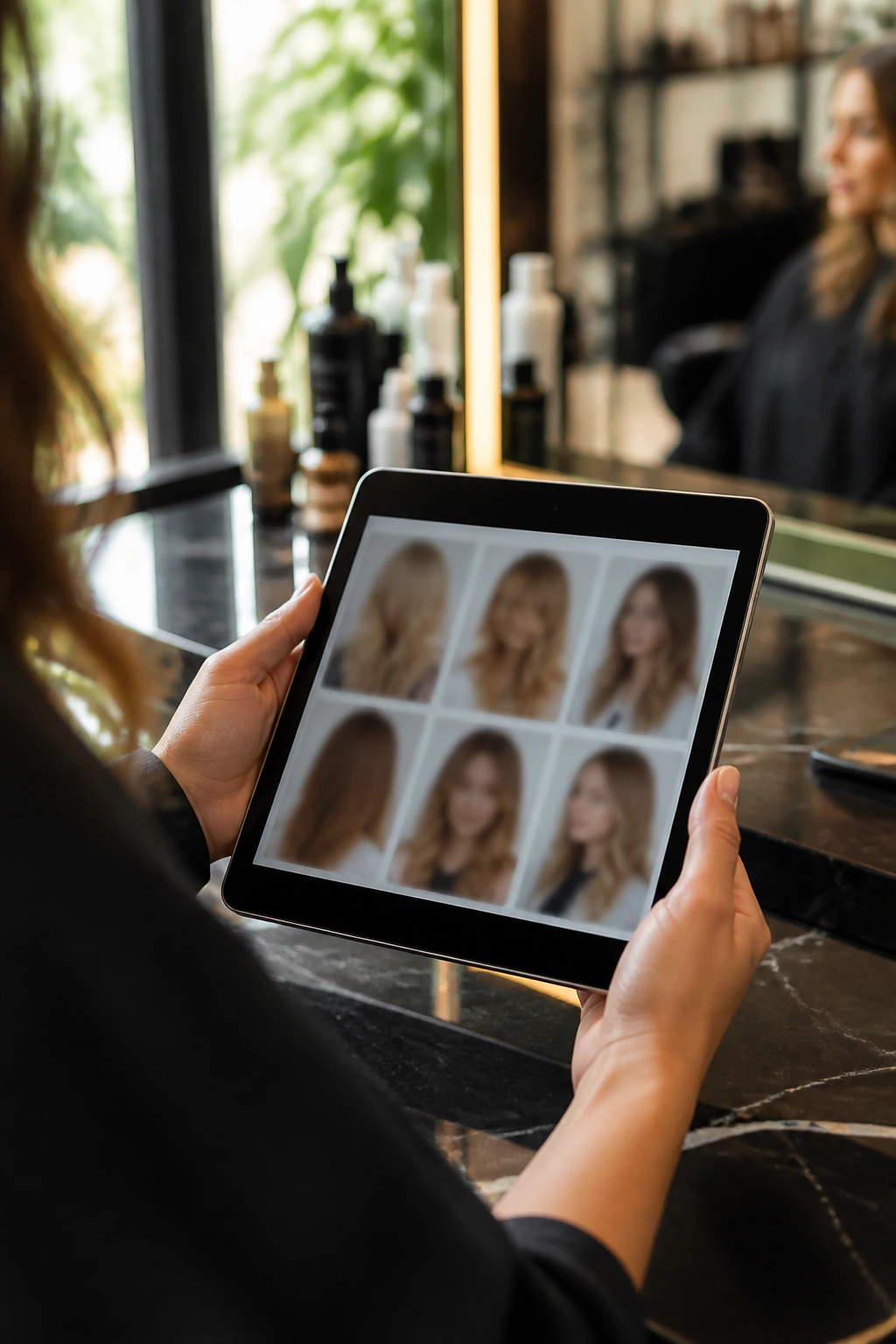
The best salon results start before the foils go on. Bring reference photos, but bring the right ones: same length, same curl pattern, same base shade if possible. A warm-skinned brunette who wants honey blonde needs a different plan from a naturally light blonde who wants a beige gloss. Colorists think in levels, undertones, and placement, not just in pretty pictures.
If you want low maintenance, say that plainly. Ask for balayage, a root shadow, or babylights rather than an all-over lift. If you want brighter face framing, say where you part your hair and how much time you want to spend styling it. That helps the colorist place the light where you’ll actually see it.
One thing I’d push hard on: discuss your hair history. Box dye, previous bleach, henna, keratin treatments, and hard-water buildup all change how honey blonde behaves. On dark or previously colored hair, a colorist may need to lift in stages or use a gloss first, and that is often the safer call. Pushing too hard in one appointment is how warm blonde turns stringy.
Product-wise, keep an eye out for gold-beige glosses, bond repair masks, and leave-ins with UV protection. If your hair pulls orange, a blue shampoo can help more than purple. If it goes yellow, purple shampoo is the better tool. Use either one sparingly. More is not better here. It’s usually worse.
How to Wear Honey Blonde Without Letting It Wash You Out
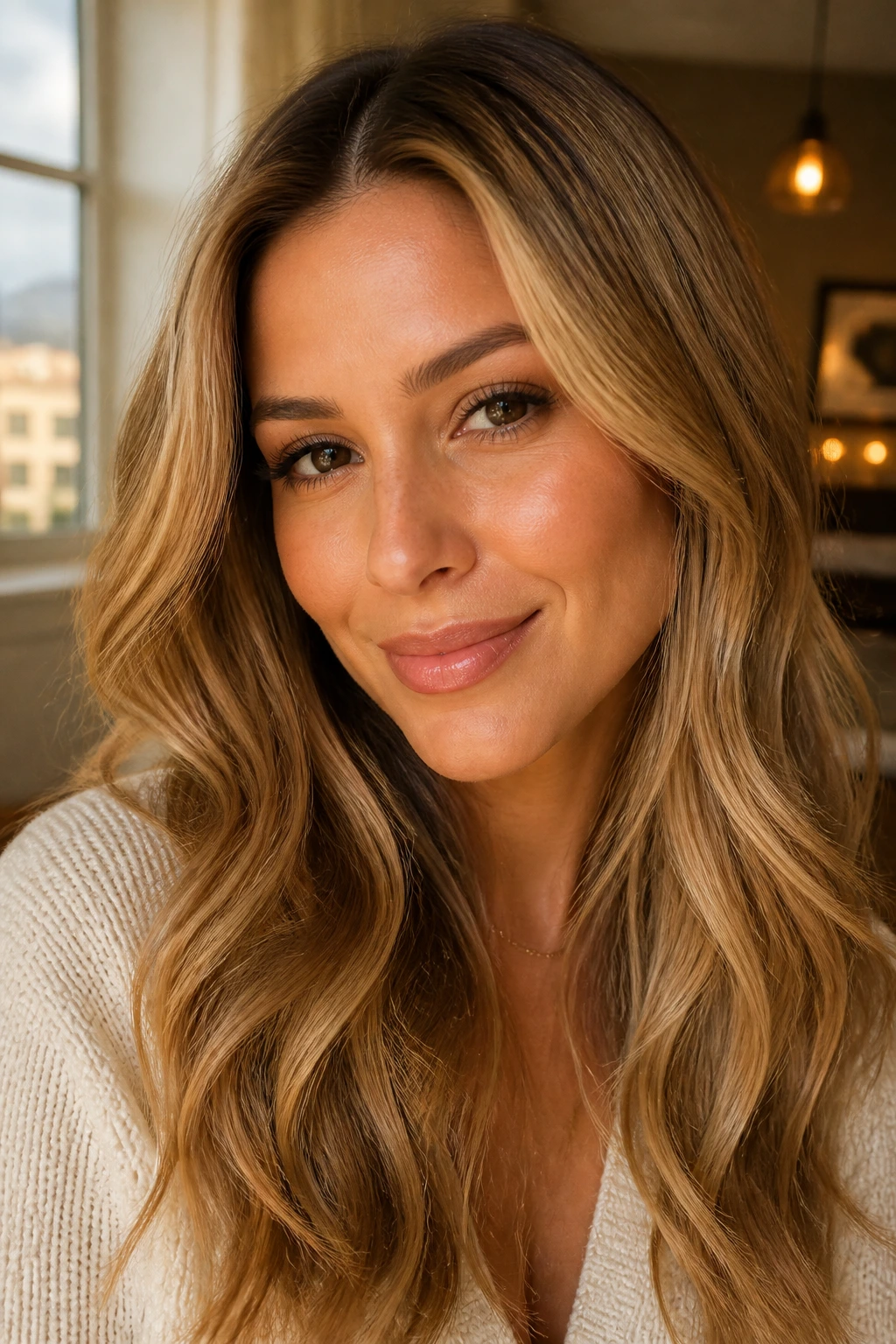
Presentation: Keep the brightest honey around the face, the crown, or the bend of the layers so the color shows in motion instead of sitting dead still. A soft wave, a blown-out bend, or even a tucked-behind-the-ear style can change how the blonde reads.
Styling Partners: Bronze eyeshadow, peach blush, terracotta lipstick, cream tops, and gold jewelry tend to sit well with warm blonde tones. You don’t need to match every shade in your closet, but a little warmth in the wardrobe keeps the hair from feeling isolated.
Brightness Level: If your skin is golden or peachy, a medium honey with dimension often looks better than a pale, icy blonde. If your undertones are warm but muted, beige honey or sandy beige can be the safer choice. The point is not to go as light as possible; the point is to let the shade sit comfortably next to your skin.
Maintenance Rhythm: Plan root touch-ups around 8 to 12 weeks for rooted balayage, sooner if you go brighter at the face. Glosses can refresh the tone every 4 to 8 weeks, depending on how often you wash and heat-style. That rhythm matters more than people admit.
Extra Glow and Finish Tricks
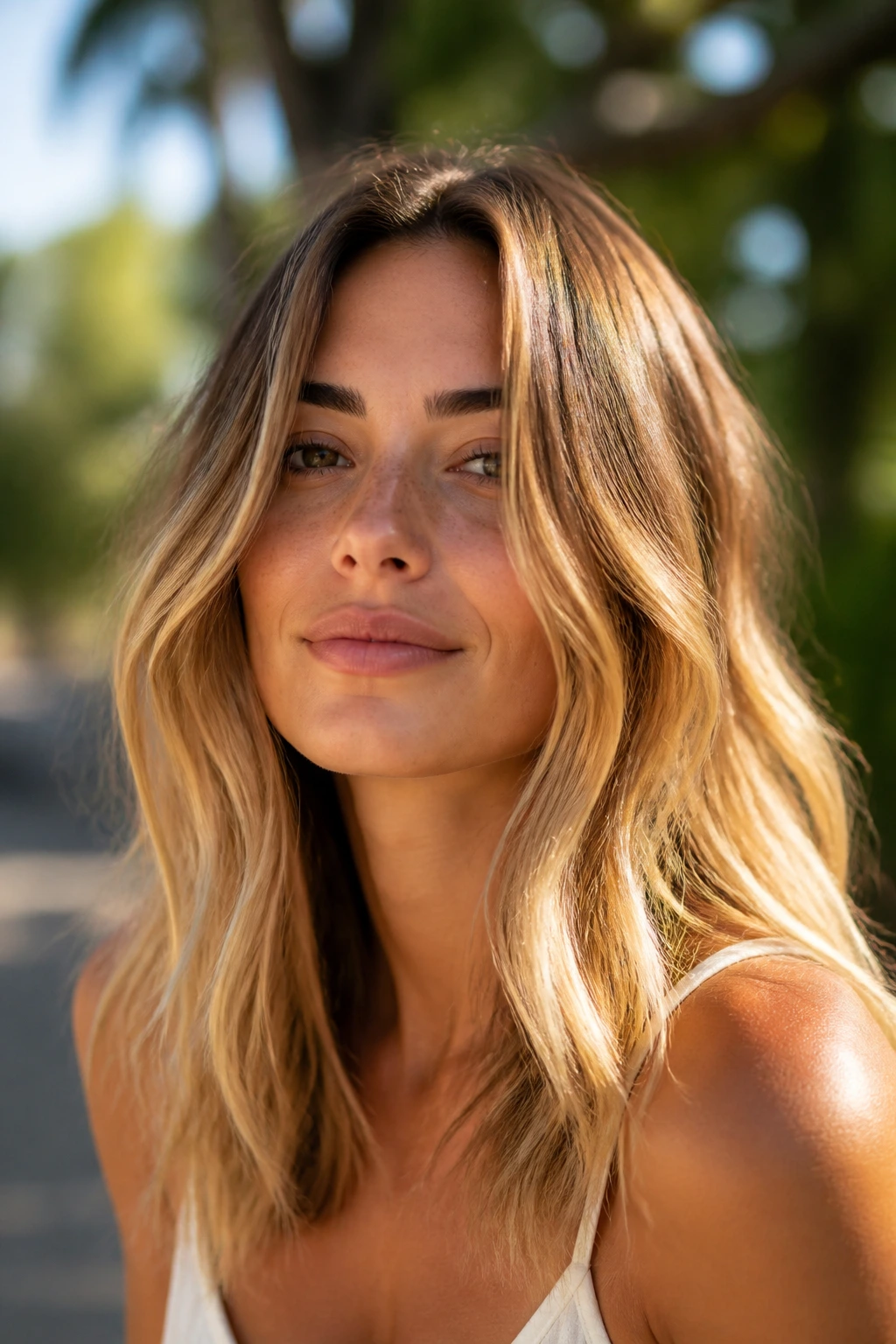
Gloss Boost: A beige-gold gloss after lightening can make the whole color look smoother and richer. I’d use this especially on medium brown bases, where the transition into blonde can otherwise feel a little dry or striped.
Tone Control: If the blonde starts drifting yellow, one purple shampoo wash can calm it down. If it starts looking too orange, a blue shampoo is the better tool. Use either once every week or two, not every wash, or you’ll mute the honey and lose the warmth you paid for.
Cut Pairing: Honey blonde loves cuts with movement—layers, waves, a lob, a shag, or a feathered crop. A blunt one-length cut can still work, but it usually wants more shine and a cleaner finish so the color doesn’t look heavy.
Make-It-Yours: If you like bolder warmth, ask for caramel and amber ribbons. If you want something softer, ask for beige honey with restrained gold. If you’re a low-maintenance person, lean on root shadows and babylights instead of full saturation. That is the quiet cheat code.
Keeping Honey Blonde Glossy Between Appointments
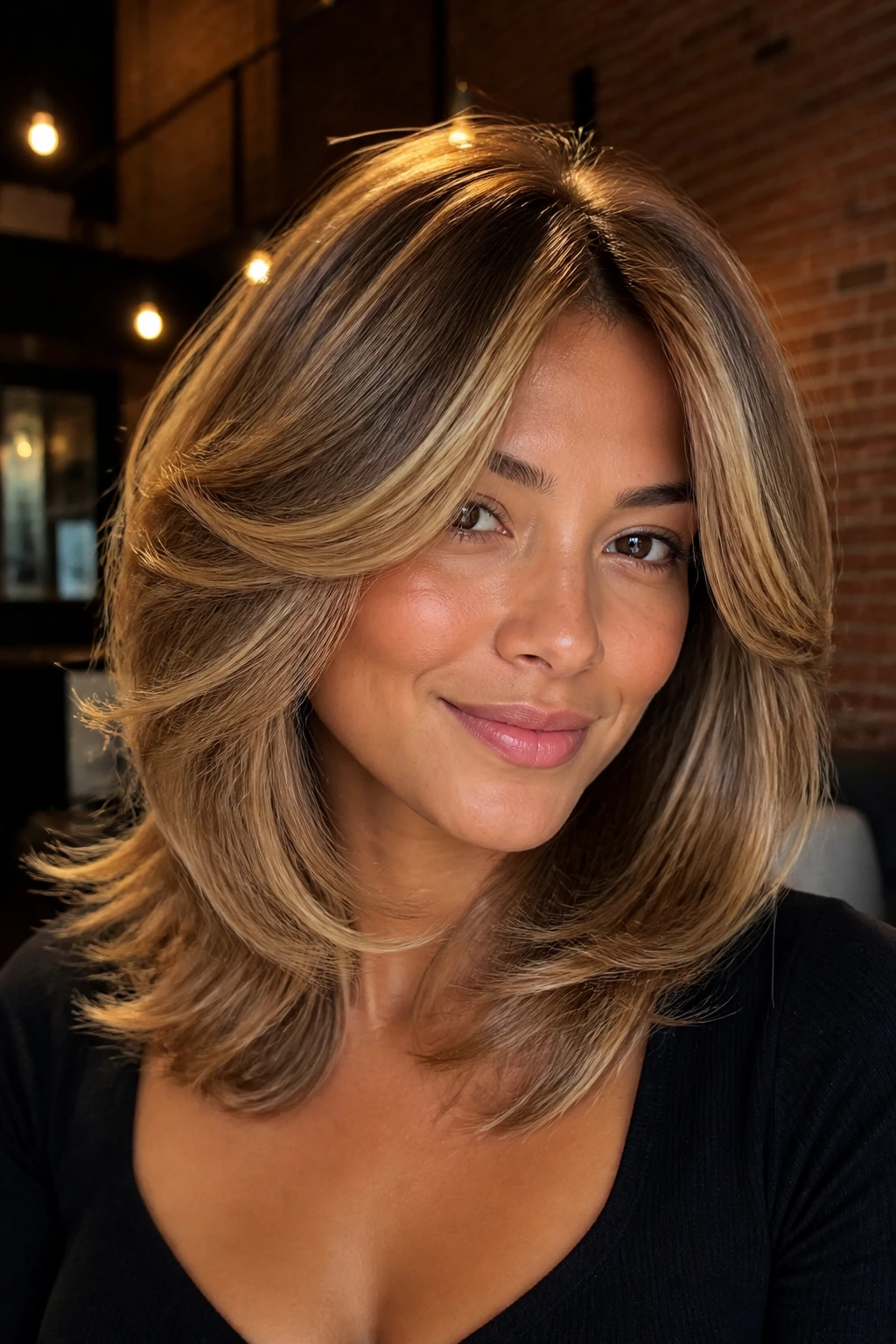
Fresh honey blonde looks best when it isn’t stripped, scorched, or over-toned. The first 48 hours after coloring matter more than people think, so keep shampoo off the hair if your colorist gives you that instruction, and avoid heavy heat while the cuticle settles. After that, a color-safe shampoo 2 or 3 times a week is usually enough for most hair types.
Gloss fades before the actual lift does. That’s normal. A quick salon gloss every 4 to 8 weeks can keep the honey from drifting dull or brassy, especially if you spend a lot of time in sun, heat, or hard water. If you wash daily, expect the tone to soften faster. If you use a shower filter and cooler rinse water, the shade usually holds longer.
Root maintenance depends on the technique. Balayage and root melts can often stretch to 8 to 12 weeks, sometimes longer if the blend is soft. Babylights and brighter face-framing pieces usually need a little more attention. Shorter cuts like pixies and bobs also show regrowth faster, which is just part of the deal.
Before your next appointment, save a photo of how the color has faded in real light. That tells the colorist more than the polished first-day shot ever will. Honey blonde is at its best when the fade still looks good.
Variations and Adaptations to Try
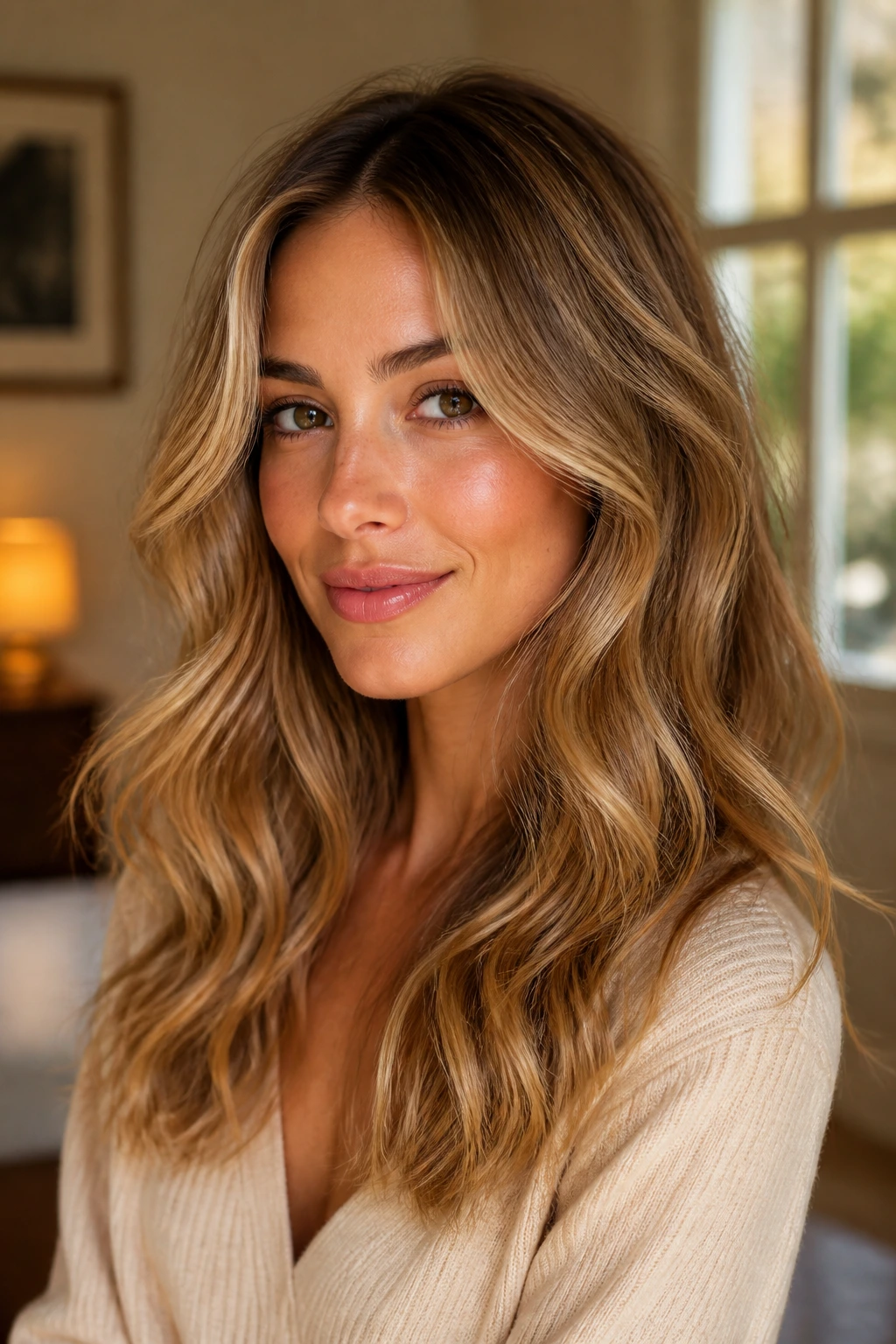
Low-Drama Honey Melt: Keep the root deeper, ask for soft mid-length lift, and let the honey live mostly through the ends. This is the version I’d pick if you want the most grow-out forgiveness and the least salon panic. It suits warm skin because the depth near the face keeps the complexion steady.
Brighter Face-Frame Honey: Put the money piece and front ribbons at the center of the story, then keep the rest softer. This works when you want more lift around the eyes and cheekbones without committing to a full-head blonde. It’s a good middle ground between subtle and bold.
Bronde With Amber Ribbons: Start with a brunette base and add amber-gold ribbons through the outer layers. The amber note gives the hair a richer, toasted feeling that warm skin usually handles well. It’s especially nice if your natural color is medium brown and you don’t want to lose depth.
Curl-First Honey Placement: Place the lightest pieces on the curls that frame the face and crown, then leave the underneath sections deeper. The result has more definition and less frizz than all-over lightening. This adaptation is ideal if texture matters more than uniform brightness.
Beige-Gold Softening: If traditional honey starts reading too orange on you, shift the toner toward beige and keep the ends slightly lighter than the mids. You still get warmth, but the finish feels calmer. This one is useful for olive-leaning warm skin that doesn’t want too much gold.
Common Mistakes to Avoid
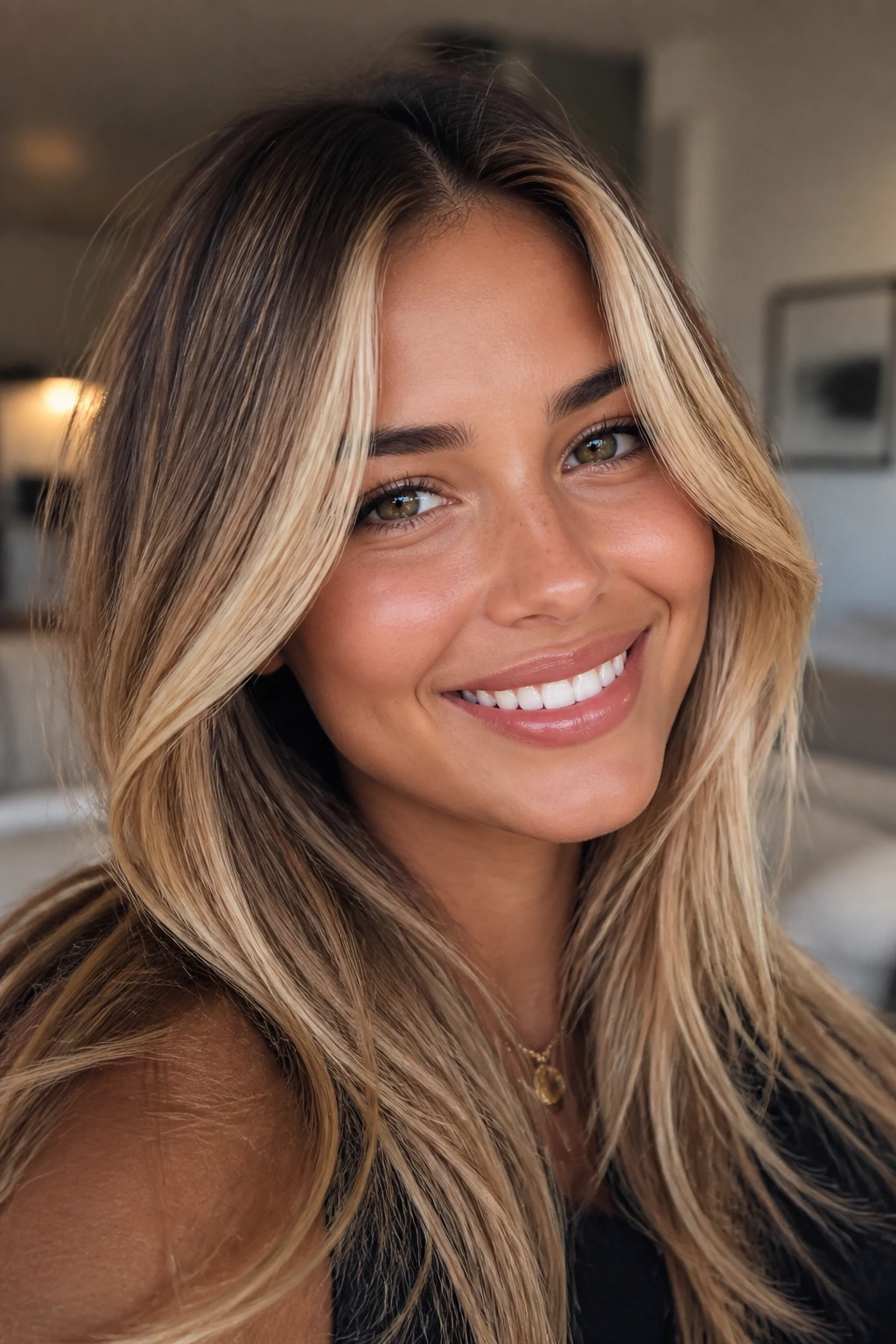
The biggest mistake is going too pale too fast. A pale blonde can look flashy on its own, but on warm skin it often drains the face and leaves the hair doing all the talking. The fix is simple: keep some root depth or ask for a beige-gold finish instead of a high-lift cool blonde.
Another common problem is ignoring undertone. Honey blonde is supposed to echo warmth, not fight it. If the toner drifts too ash or too yellow-orange, the whole look can turn muddy or brassy. A gloss refresh usually fixes this faster than another round of lightening.
People also overuse purple shampoo. Once a week is usually enough for most honey blondes, and some shades barely need it at all. If you wash with purple every time, you can mute the gold that makes the color flattering in the first place. Use the product as a correction tool, not a daily habit.
Skipping a haircut can hurt the color more than people expect. Dry ends make honey blonde look faded and rough, even when the toner is fine. A trim every 8 to 12 weeks keeps the finish cleaner and the light reflection stronger. Short version: healthy ends make warm blonde look richer.
Frequently Asked Questions
What honey blonde shade looks best on warm skin?
The safest bets are beige-gold, caramel honey, and soft amber blonde. They keep enough warmth to flatter golden or peach undertones without turning the hair loud or orange.
Is honey blonde better than ash blonde for warm undertones?
Usually, yes. Ash blonde can look flat or disconnected next to warm skin, while honey blonde tends to blend more naturally with golden or peachy tones. The exception is if your skin is warm but very muted and you want a quieter beige result.
Can dark hair be lifted to honey blonde without looking brassy?
Yes, but the process often works better in stages. Dark hair usually needs careful lifting plus a beige-gold gloss or toner at the end, especially if the goal is a soft honey finish instead of a pale blonde.
Do I need bleach to get honey blonde?
Not always. If your hair is already light brown or dark blonde, a high-lift color or gloss may be enough. Darker bases usually need some lightening, but not necessarily all the way to platinum levels.
How often should I touch up honey blonde?
Balayage and rooted looks can often go 8 to 12 weeks between appointments, while brighter money pieces or short cuts may need attention sooner. Glosses are a good way to refresh tone between bigger visits.
Will honey blonde turn brassy?
It can, especially if the hair is porous, heat-styled often, or exposed to hard water. That’s why a color-safe shampoo, occasional gloss, and the right purple or blue shampoo in small doses can help keep the tone in range.
What makeup works best with honey blonde and warm skin?
Bronze, peach, terracotta, warm brown, and gold usually work well. They echo the tone of the hair instead of competing with it, which keeps the whole face looking balanced.
Can curly or coily hair wear honey blonde without getting dry?
Yes, but moisture has to stay part of the plan. Smaller highlight sections, lower-volume lightening sessions, deep conditioning, and a leave-in routine help keep the texture springy instead of brittle.
The Shade That Stays Soft
The prettiest honey blonde on warm skin usually isn’t the brightest one in the room. It’s the one that keeps a little shadow, a little beige, and a little room for the color to breathe. That balance is what makes the blonde look like it belongs on the face instead of sitting on top of it.
If you’re choosing between shades, start with the version that sounds almost too subtle. Those are often the ones that age best in real life. You can always add brightness later. Pulling warmth back into a too-light blonde is harder, slower, and far less pleasant.
Pick the honey blonde that matches your maintenance habits, your haircut, and the way your skin already holds light. That combination tends to hold up long after the first salon-day mirror check, and it’s the one worth bringing to your next appointment.
