



Curly hair at medium length has a useful habit: it can look deliberate without looking stiff. Leave it too short and the curl pattern turns into a little puff with nowhere to go. Leave it too long and the weight starts dragging the shape down, which is how a lot of guys end up with a flat crown and a frizzy outline by lunchtime. The good news is that curly hairstyles for men with medium length hair sit right in the middle of those two problems.
That middle ground gives you room to play. You can go neat, loose, brushed back, forward, layered, faded, rounded, or messy in a way that still reads as a haircut rather than a hair accident. Curls also behave differently once they have a few inches to gather themselves. They stack. They bend. They show off texture instead of fighting for space.
And that’s why this length is so useful for real life. It can be office-clean on Monday, a little wild on Friday, and still look like you made a choice either way. The trick is not chasing one “best” curly style. It’s picking the version that works with your curl pattern, your density, your face shape, and how much time you want to spend in front of a mirror.
Why Medium-Length Curls Are Easier to Shape Than You Think
-
The curls have enough weight to settle. At medium length, loose spirals and tighter coils stop standing straight off the head as aggressively, which keeps the silhouette calmer.
-
The cut does more work than the product. A good layered shape and a clean taper can save you from piling on cream, gel, and spray just to get control.
-
You get room for different finishes. The same head of hair can lean matte and casual with mousse, or look sharper with a light gel and a side part.
-
Grow-out is less awkward. Medium-length curls can go 3 to 5 weeks past a trim and still look intentional if the shape is right.
-
You can steer the face shape. Length at the fringe pulls attention forward, volume at the top adds height, and width at the sides softens sharp angles.
Why Medium-Length Curls Hit the Sweet Spot
Medium length is where curly hair starts acting like architecture instead of static. Short curls often spring away from the head in a way that makes the outline look rounder than you want. Long curls can hang with too much drag, especially if the ends are thirsty or the layers are blunt. Put those together and you get the awkward middle that so many guys skip right past.
The better version is shaped. Layers matter here. So does how the barber handles the sides. If the top is left a little heavier and the perimeter is cleaned up with a taper, the hair stops ballooning out at the wrong spots. You get a top that moves and a base that doesn’t wobble.
There’s also a practical reason medium length works so well: it gives you a little error margin. A curl cream that’s a touch too rich won’t wreck the whole look. A blow-dry that’s not perfect still leaves enough texture to hide the wobble. That breathing room is one of the reasons I like this length on curls more than on straight hair. Straight hair can look unfinished quickly. Curls often look better when they’re slightly imperfect.
What the Cut Does Before the Product Even Starts
A barber can make or break this length with two decisions: where the layers begin and how tight the sides are kept. If the layers start too high, the top can lose substance and the curls turn spidery. If the sides are left too wide, the whole head reads boxy.
1. Loose Curtain Curls
Curtain curls are the easygoing cousin of the center part, and they work best when the front has enough length to split around the brow without flopping into your eyes. The look has a little movement, a little softness, and just enough structure to feel deliberate. On medium-length curls, the middle doesn’t have to be pin-straight. A slight off-center part actually looks better most of the time.
Why It Works
This style wins because it uses the curl pattern instead of flattening it. The front sections frame the face, which helps longer faces look less narrow and keeps round faces from getting boxed in. You want the front layers to land around the cheekbone or just below the eyebrow when dry.
Quick facts:
- Best on loose to medium curls
- Works well with a scissor cut on top
- Needs only a light cream or leave-in
- Looks best when the part is soft, not sharp
Tip: If your curls split too neatly, rake your fingers through the front while it’s damp and then stop touching it. Too much fiddling makes the middle part look forced.
2. Textured Side Part
A side part on curls can look almost painfully neat if the barber cuts it too rigidly. Keep it softer. The hair should lean to one side, not snap into place like a school photo. Medium curls do this well because they give the part a little bend and keep the top from lying dead-flat.
Bold claim: this is the most useful “grown man” curly style on the list if you need your hair to behave in meetings, dinners, and all the boring places that still matter. It’s tidy without looking lacquered, and it doesn’t need a heavy product load to stay in line.
Ask for a low taper on the sides, some length left through the top, and a part that follows your natural bend instead of forcing a straight line. Then work a small amount of cream through damp hair and guide it sideways with your fingers. A comb is optional. I’d actually skip the comb unless your curls are especially loose.
3. Bro Flow Curls
Bro flow gets a bad rap because people picture floppy surfer hair with no discipline. The better version is cleaner than that. On medium curls, it gives you movement through the crown and enough length around the ears and neckline to suggest flow without turning into a mop.
How to Make It Look Intentional
This style depends on layers more than styling product. If the top is blunt, the hair will sit like a curtain. If the top is layered and the sides are softened, the curls start to fall backward in a way that feels relaxed instead of lazy. That backward motion is the whole point.
- Leave more length on top and at the crown
- Keep the neckline tidy with a soft taper
- Use a diffuser on low heat
- Finish with a pea-sized amount of cream on the ends
The one thing to watch is weight. If your curls are dense, too much length can drag the front down over your eyes. That sounds cool until you’re constantly pushing hair out of the way. A good bro flow curl cut lets the front skim, not swallow, your face.
4. Curly Quiff
A curly quiff is what happens when your curls decide to stand up and take responsibility. The front gets lifted, the sides get trimmed down, and the result has a bit more shape than a casual brushed-up style. It’s one of the few curly looks that can lean dressy without looking like you borrowed someone else’s personality.
The lift is the point. You’re building height at the front and keeping the curl definition visible so it doesn’t collapse into a hard ridge. A mousse at the roots, a round brush for a quick blow-dry, and a light hold product at the front are enough for most medium curl types. Heavy wax is a mistake here. It kills the lift and leaves the quiff looking tired by the afternoon.
Best for
- Men with medium-density curls
- Faces that need a little extra height
- Hair that holds shape once dried
- Anyone who wants texture without a fringe in the eyes
5. Medium Taper Fade With Curls on Top
This is a sharp haircut that still leaves room for personality. The taper fade cleans up the sides and neckline, then the curls on top stay loose enough to show off pattern and texture. If your hair is thick, this cut can be a lifesaver. It takes the bulk out of the lower half of the head, which stops the whole style from turning into a triangle.
Here’s the catch: the top has to be long enough to contrast with the fade. If the curls are too short, the fade starts eating the style alive. Leave enough length for the curl to bend back on itself. That’s where the shape lives.
On styling day, a little leave-in conditioner and a diffuser are enough for most guys. If you want more separation, use a tiny bit of matte clay only at the tips. Don’t grind it into the roots. That just flattens the top and makes the curls sticky.
6. Layered Curl Shag
The shag works because it refuses to behave in a straight line, and curls are usually better for that attitude than straight hair is. With medium-length curls, the layered shag gives you a little mess, a little swing, and a lot of movement. It’s especially good if your curl pattern changes across your head — tighter at the back, looser in front, or vice versa.
What to Ask Your Barber For
- Soft, choppy layers through the top
- Tapered sides, not a hard fade
- Enough length around the fringe to break on the forehead
- Texture at the crown so the back doesn’t sag
The shag is not a haircut for people who want perfect symmetry. It’s for guys who want their curls to look alive. If a lock falls a little off-center, it usually helps the cut. A neat, overworked shag looks wrong. Let it breathe.
7. Curly Fringe
A curly fringe puts the texture right where people notice it first: across the forehead. That makes it useful for men with bigger foreheads, high hairlines, or a face that looks stronger when the top edge is softened. Medium length is the right place for it because the fringe needs enough weight to hang forward without springing straight back up.
Question: why does this style look good when a blunt fringe on straight hair can look so severe? Because curls break the line. Instead of one hard curtain, you get little pieces, bends, and edges that shift as you move. It feels less manufactured.
How to Use It Well
Keep the top layered and the fringe slightly longer than you think you need. If it sits at eyebrow level when dry, that’s usually the sweet spot. Dry it forward with your fingers, not a brush, or you’ll stretch the curl pattern too much. A touch of cream or lightweight gel is enough; anything stronger starts making the fringe look helmet-like.
8. Slick Back With Natural Bend
A slick back on curls is not the same animal as a slick back on straight hair. Straight hair lies flat. Curls resist, which is exactly why this version looks better when you stop fighting it. You want the hair pushed back and away from the face, but not ironed into a shiny sheet.
A medium-length curl slick back works best with loose to medium curls that still have some memory after drying. Comb it back with a wide-tooth comb or your fingers while it’s damp, then let it set. If you use too much gel, the bend disappears. If you use too little, it wanders. Somewhere in the middle is the useful zone.
This style suits men who want a cleaner forehead and more height at the crown without looking like they’re trying too hard. It also works well with a short beard, which keeps the overall shape balanced.
9. Defined Ringlets With Shape-Up
If your curls form ringlets naturally, stop apologizing for them and make the shape clean. A shape-up around the hairline and temples gives the top a frame, and medium length lets each curl find its own loop instead of merging into a cloud. This one is sharp when the haircut is fresh and still looks good a week later if you don’t drown it in product.
Why It Stands Out
The difference is definition, not stiffness. You’re letting the ringlets stay separate, which makes the texture read clearly from across the room. The best versions have a clean temple line, a soft but not bulky top, and enough moisture that the curls don’t fray at the ends.
Use a leave-in on damp hair, scrunch gently, and diffuse until the surface feels dry but not crunchy. If you see white flakes, you went too far on product or used something that doesn’t match your hair’s porosity. That’s fixable. Use less next time.
10. Messy Crop With Curls
The curly crop is the haircut version of a good white T-shirt: simple, useful, and harder to pull off well than it looks. Medium curls make this cut interesting because the top stays textured while the front can be pushed slightly forward for a rough, piecey finish. It’s shorter than some of the flowier styles here, but still squarely in medium-length territory.
The strong point is speed. You can dry it with your hands, add a little cream or mousse, and leave the house. No elaborate sculpting. No twenty-minute battle with a round brush. If your mornings are rushed, this is one of the better options on the list.
Best when:
- Your hair has medium density
- You want a low-fuss weekday cut
- You like a little fringe but not a full curtain
- You’d rather style with fingers than a comb
11. Two-Block Curly Cut
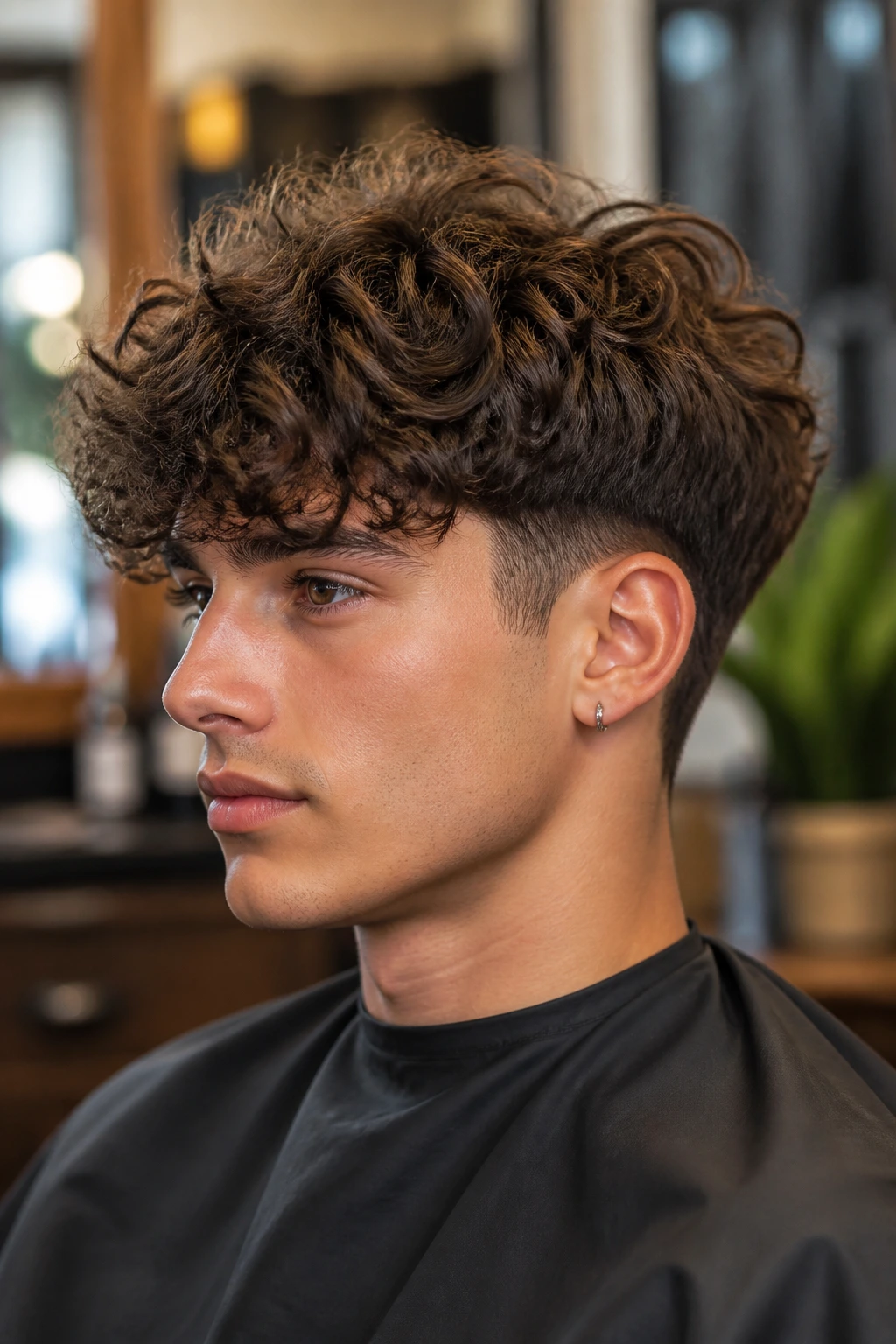
A two-block cut splits the hair into two jobs: compact sides and more visible length on top. On curly hair, that contrast can look very sharp, especially if the top is layered and the sides are kept neat but not shaved to the skin. It gives the curls a stage without making the whole head feel heavy.
This style can go wrong if the top is cut too thin. You need enough mass up there for the curls to separate and move. If the top is too sparse, it looks stringy and overcontrolled. Thick curls, in particular, like this cut because the sides lose bulk while the top keeps its shape.
The styling note is simple: keep the sides clean and the top moisturized. If you want extra lift, blow-dry the roots forward and then push the curls back with your fingers. That gives the top a little bend rather than a rigid shelf.
12. Curly Pompadour
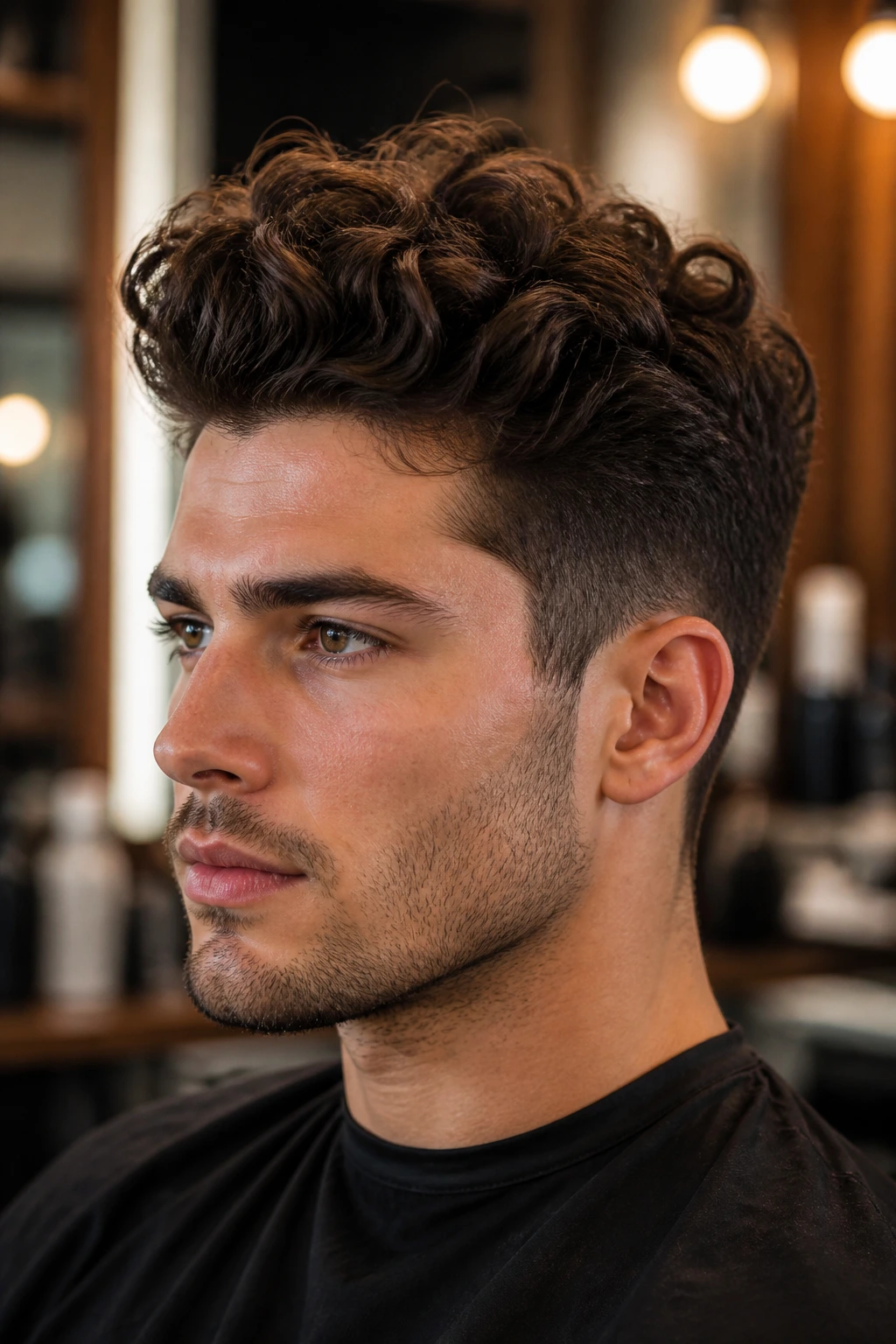
A curly pompadour is not subtle. That’s the point. It gives the front height, the crown lift, and the sides a tighter profile so the curls can read as a shape instead of a blur. If you have medium-length curls and you like a style that shows confidence without saying it out loud, this is a strong pick.
The trick is controlling the front without crushing it. Blow-dry the roots upward with a nozzle, use a round brush if your curls are loose enough to tolerate it, and then add a light hold product. The finish should have some movement. If it looks too glossy, it starts to feel dated fast.
It works best on dense curls that can hold height. Thin curls can do it too, but they need a lighter hand or the pomp starts collapsing at the sides. Keep the fade or taper tight enough that the volume on top feels like a decision.
13. Shoulder-Grazing Flow
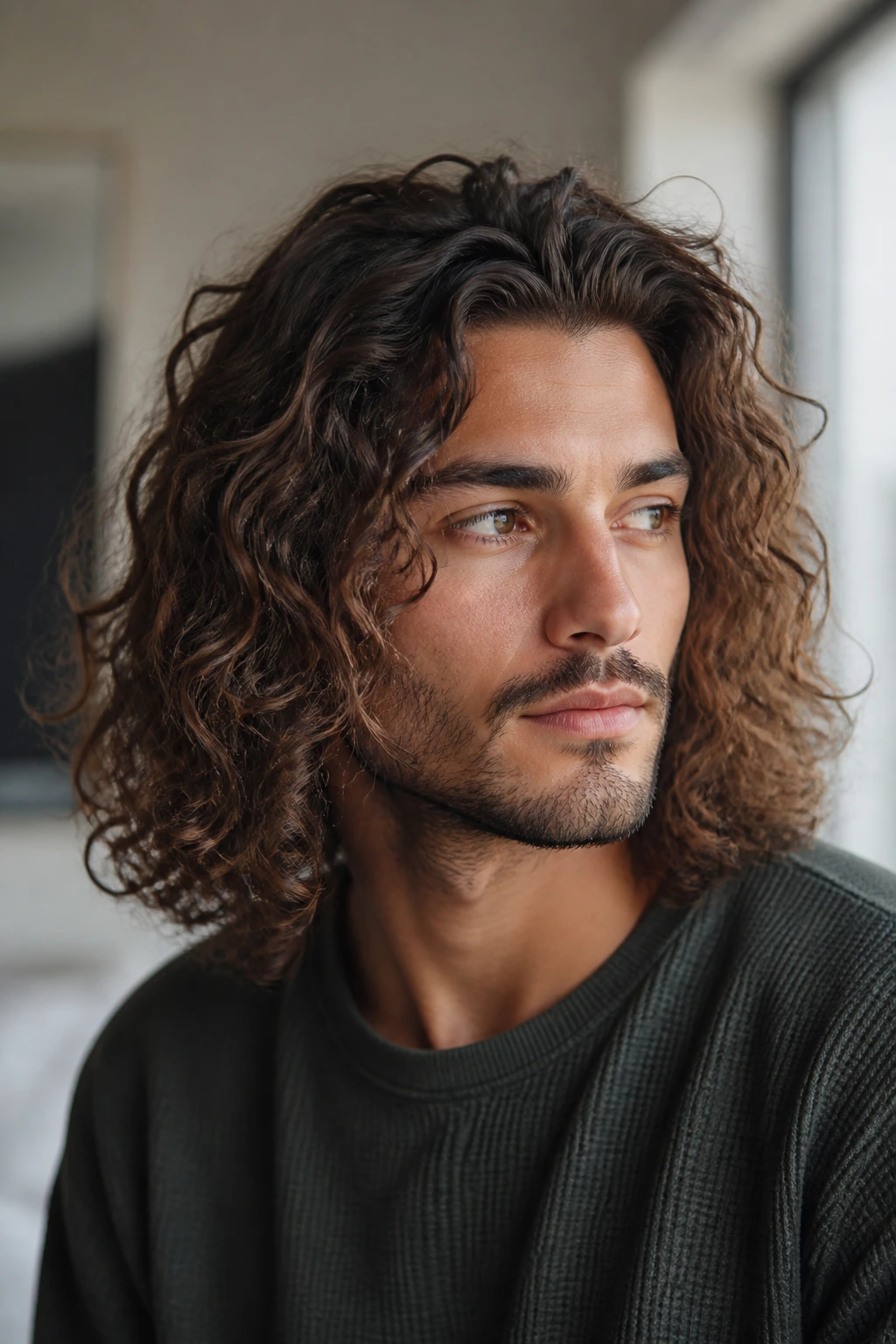
When medium hair leans longer, the curls start to behave like a soft frame around the face and neck. That’s what makes shoulder-grazing flow such a useful style for guys who want length without losing shape. The cut can still be medium if the curls shrink upward when dry. Curls always cheat the tape measure a little.
This style looks best when the ends are not cut blunt. Soft layering keeps the hair from sitting in one heavy curtain, which matters once the weight starts building around the shoulders. A little bend through the front and a little lift at the crown keep the silhouette from going flat.
A few things matter here:
- Regular dusting trims every 6 to 8 weeks
- Lightweight leave-in instead of heavy cream
- Diffuse only until about 80 percent dry
- Keep the neckline cleaned up so the length feels chosen
14. Angular Fringe With Curls
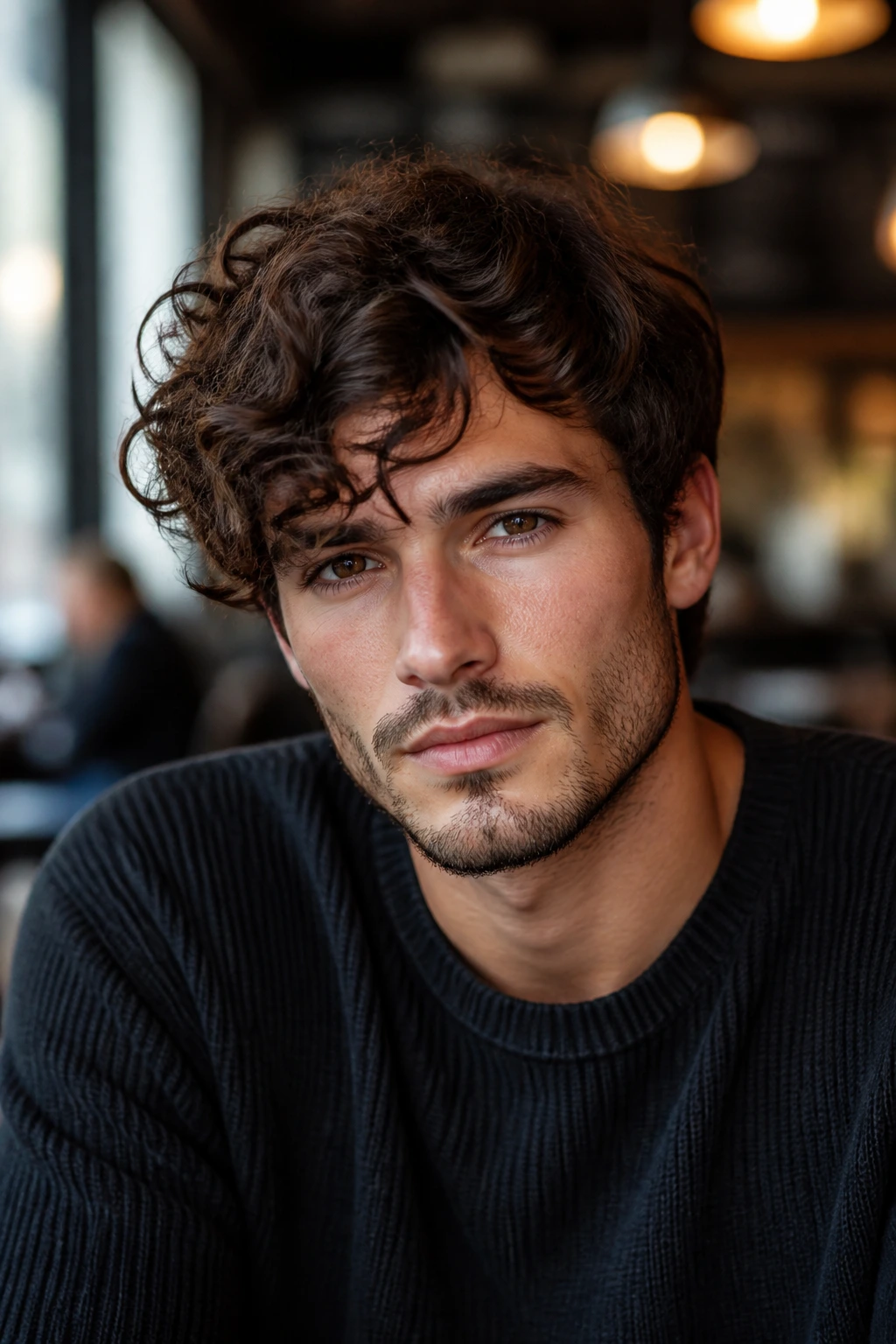
A diagonal fringe is useful because it breaks up a round face and gives the front of the haircut some motion. The curls fall across the forehead at an angle instead of straight down, which creates a sharper line without making the haircut stiff. Medium length matters here because you need enough hair to sweep, but not so much that the fringe collapses.
I like this cut on guys with fuller cheeks or softer jawlines. The angle pulls the eye across the face and keeps the top from feeling too symmetrical. That asymmetry is doing a lot of work.
How to style it
Start with damp hair, add a small amount of cream, and push the fringe in the direction you want it to land. Don’t over-comb it. A few controlled pieces are better than one solid curtain. If you need more hold, use a light spray at the front only.
15. Temple Fade And Curls
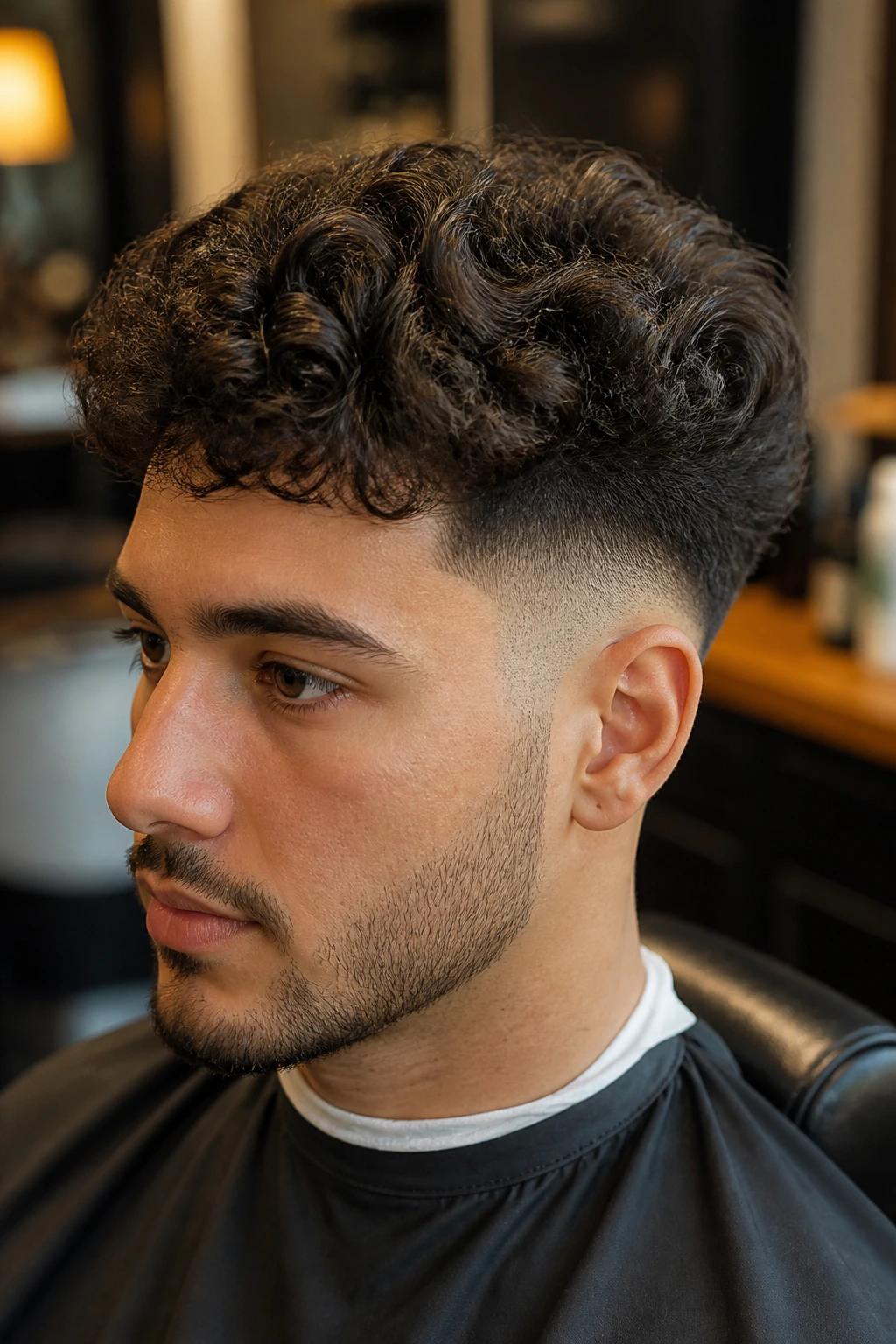
A temple fade is one of those small haircut details that changes the whole mood. It clears the area around the temples and sideburns, which makes the curls on top feel brighter and more defined. On medium-length hair, that contrast keeps the style from spreading too wide across the head.
This cut is a good choice if you want something cleaner than a shag but less formal than a side part. It works especially well with thick or coarse curls, because the fade removes some of the bulk where the head tends to look widest. The top can stay rounded and textured while the lower half stays sharp.
If you wear glasses, this style is especially useful. The temple area stays neat, so the frames don’t fight the hair. Small detail. Big difference.
16. Center-Parted Middle Flow
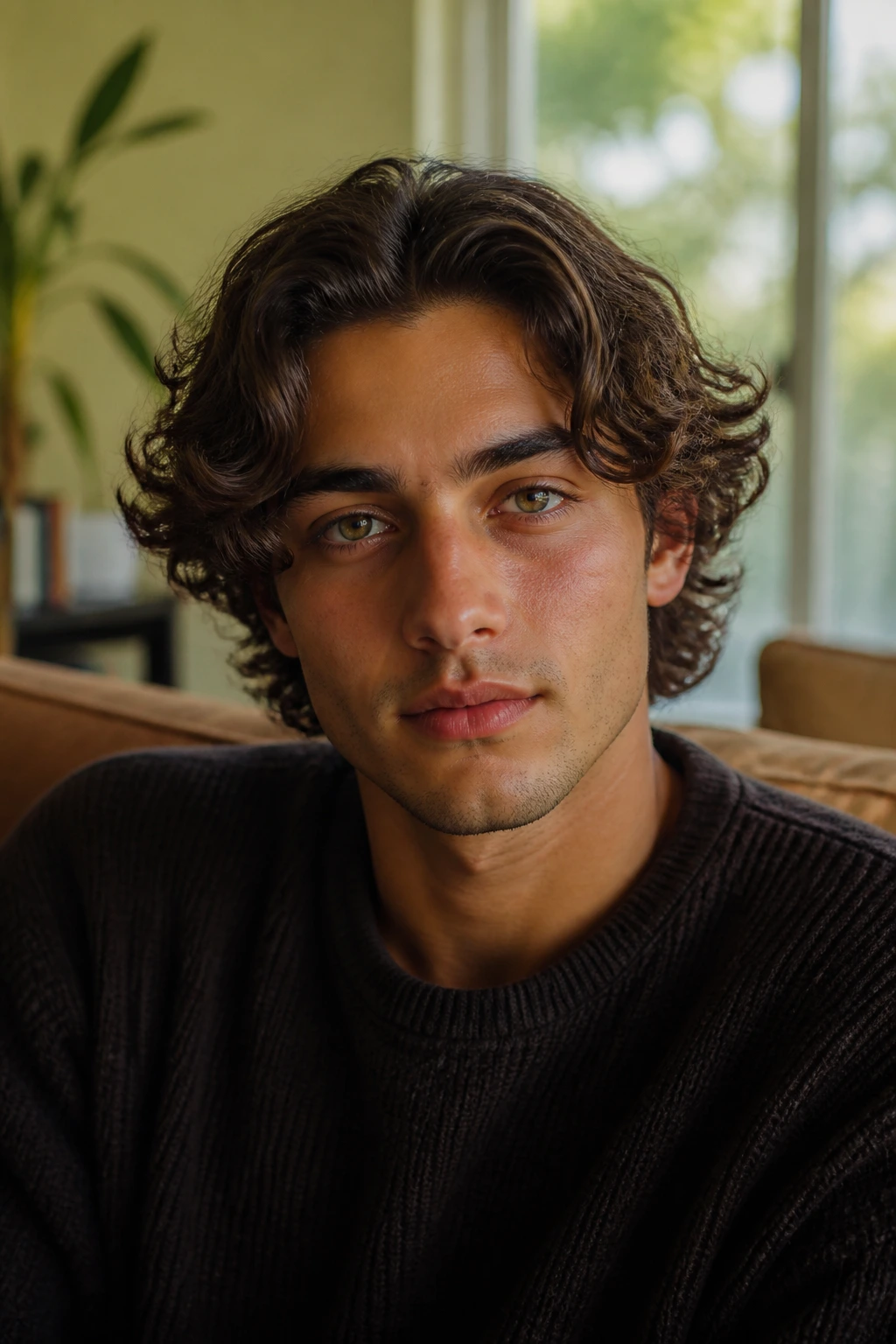
A center part on curls can look intimidating because it sounds like a statement. In practice, it’s often one of the easiest styles to wear. Medium-length curls naturally want to separate a little in the middle once they grow past a certain point, so the style often feels more accidental than formal.
The reason it works is balance. You get symmetry without forcing the hair into a hard line, and the curls soften the part so it doesn’t look severe. This is a strong option for men who want something a little fashion-forward but still easy to live with.
What makes it different
The middle part asks the curls to fall outward from the center, which gives the face a longer look. That can help if your face is round or square. Keep the roots loose, not flattened, or the whole style loses lift and starts looking limp.
17. Twist-Defined Medium Curls
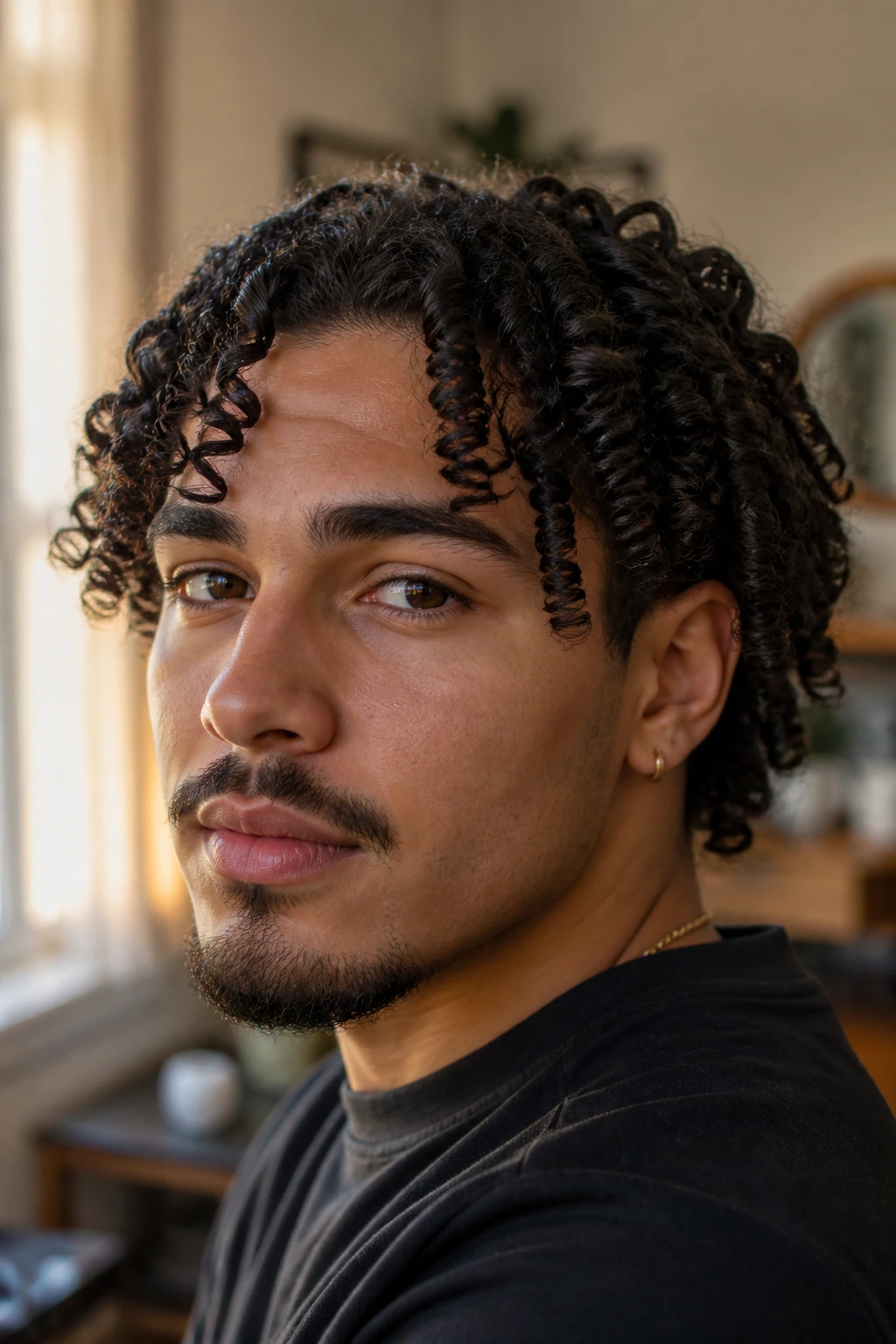
Twists aren’t for everybody, but on the right hair type they can turn loose medium curls into something neater and more controlled. A few twist-outs or two-strand twists through the top add separation and give the curl pattern a stronger shape. This is especially useful if your hair is coily or tight-curled and tends to puff before it defines.
The look has more texture than polish. That’s a plus. It reads as intentional without turning glossy or stiff. If you want the curls to look placed rather than chaotic, this route is worth trying.
Use a moisturizer that doesn’t leave a greasy film, and let the twists dry all the way before taking them down. Half-dry twists lead to frizz, and frizz at this length tends to spread fast. Patience helps. Annoying, but true.
18. Curly Mohawk Fade
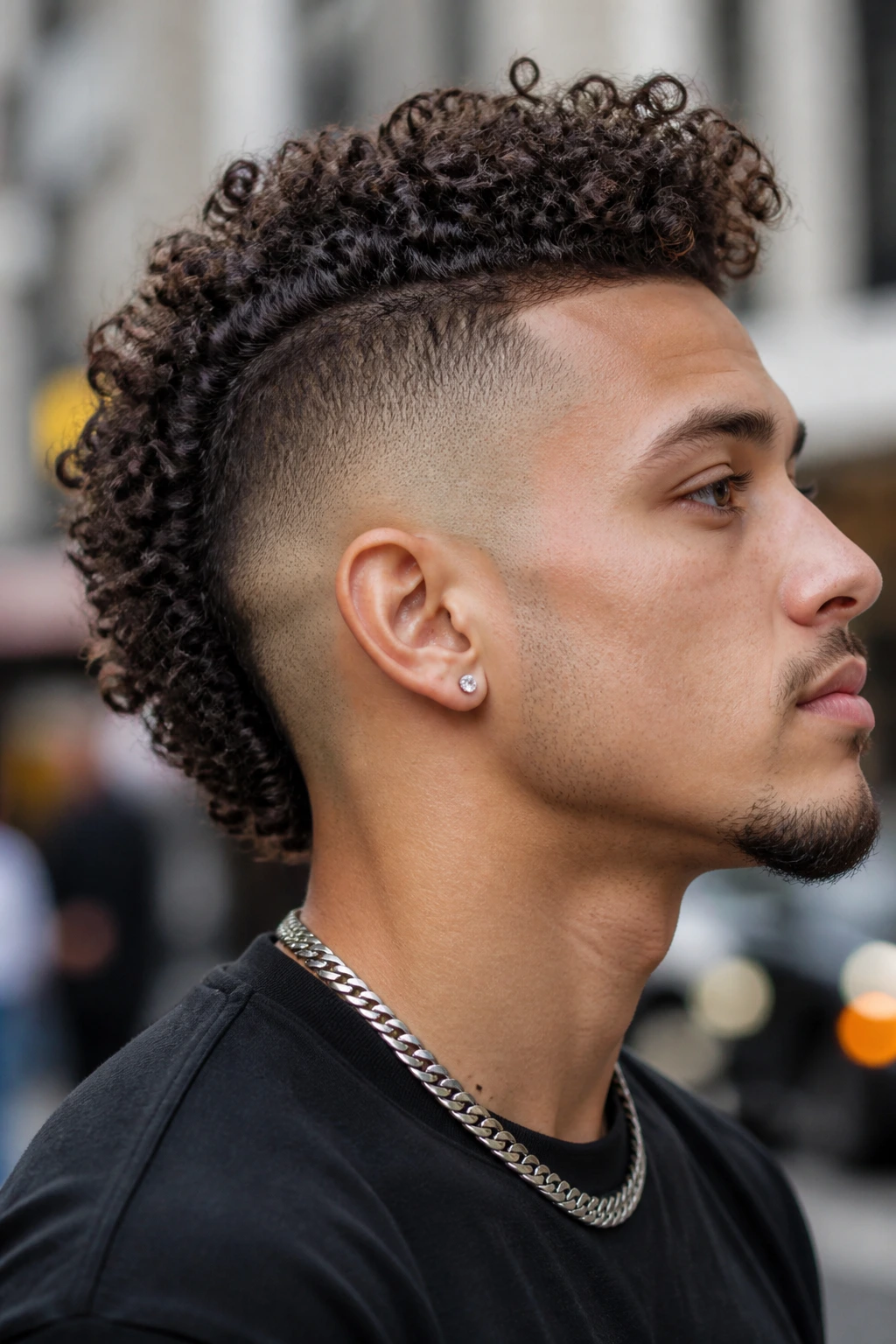
A curly mohawk fade is the rowdier cousin of the taper fade. The sides are tightened down hard, and the curls stay concentrated in a band from the front to the crown. Medium length gives the mohawk enough lift to feel like a shape instead of a strip.
This is one of the strongest options if your curls are dense and you want to keep the hair visually narrow. The style sharpens the outline of the head and puts the texture right up top where it can do the most work. It also grows out in a way that stays pretty readable, which matters more than people think.
Not a quiet haircut. No pretending otherwise. If you want clean edges and a little edge in the style itself, this gets the job done.
19. Soft Afro Shape
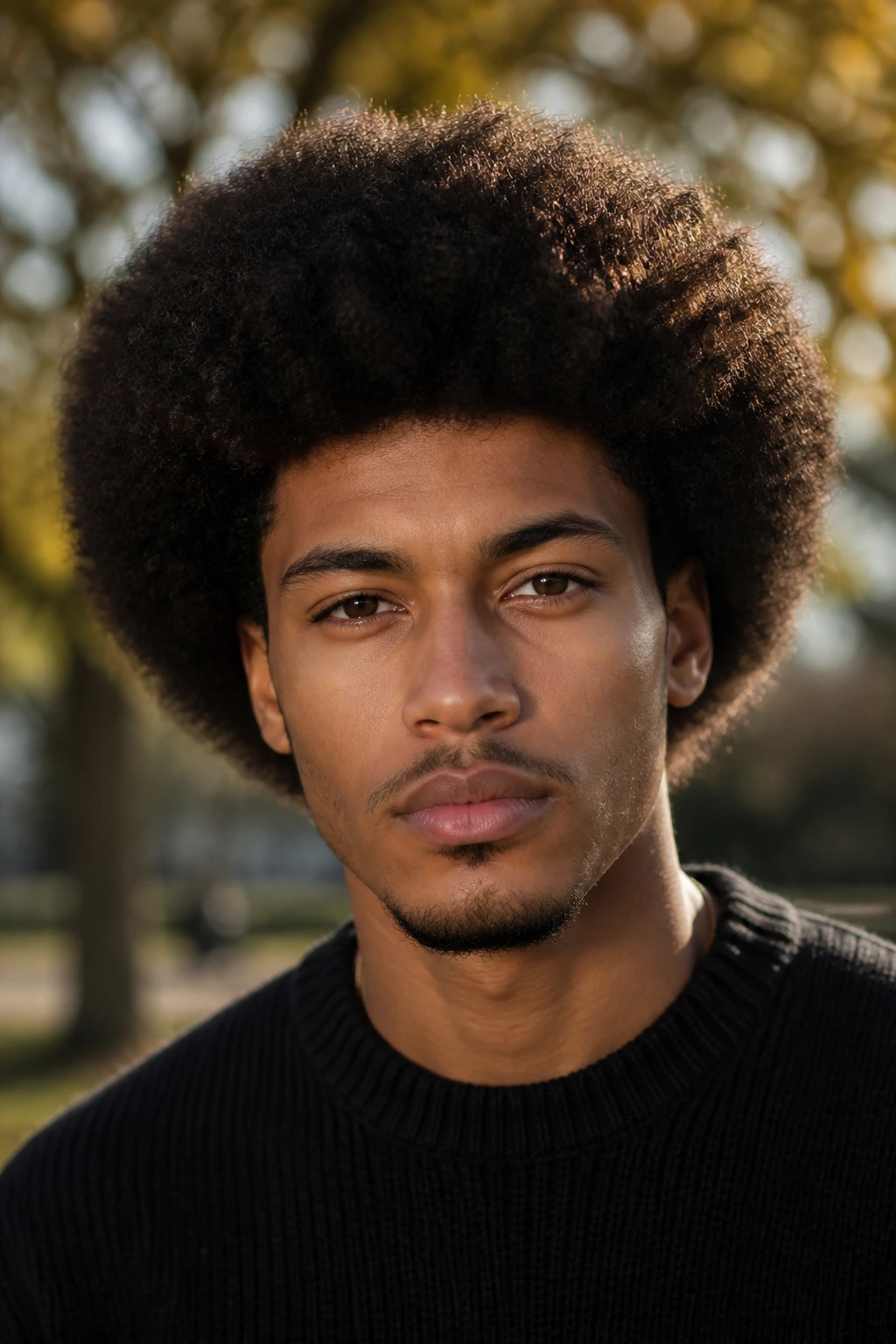
A soft afro shape is what happens when the natural curl pattern is allowed to keep its roundness, but the cut trims the outline with care. Medium length gives you enough volume to build a clean silhouette without letting the hair stretch into a triangle. The best versions have a smooth outer line and a little lift at the crown.
This style is less about product and more about shape maintenance. A pick can help at the roots, but only if you’re lifting from the base and not tearing at the ends. A leave-in conditioner keeps the curls from drying out and helps the outline stay plush instead of fuzzy.
Barber brief
Ask for even length through the top, a rounded outer shape, and a shape-up that follows your natural hairline. Keep the sides from ballooning. That’s the whole battle.
20. Piecey Layered Top
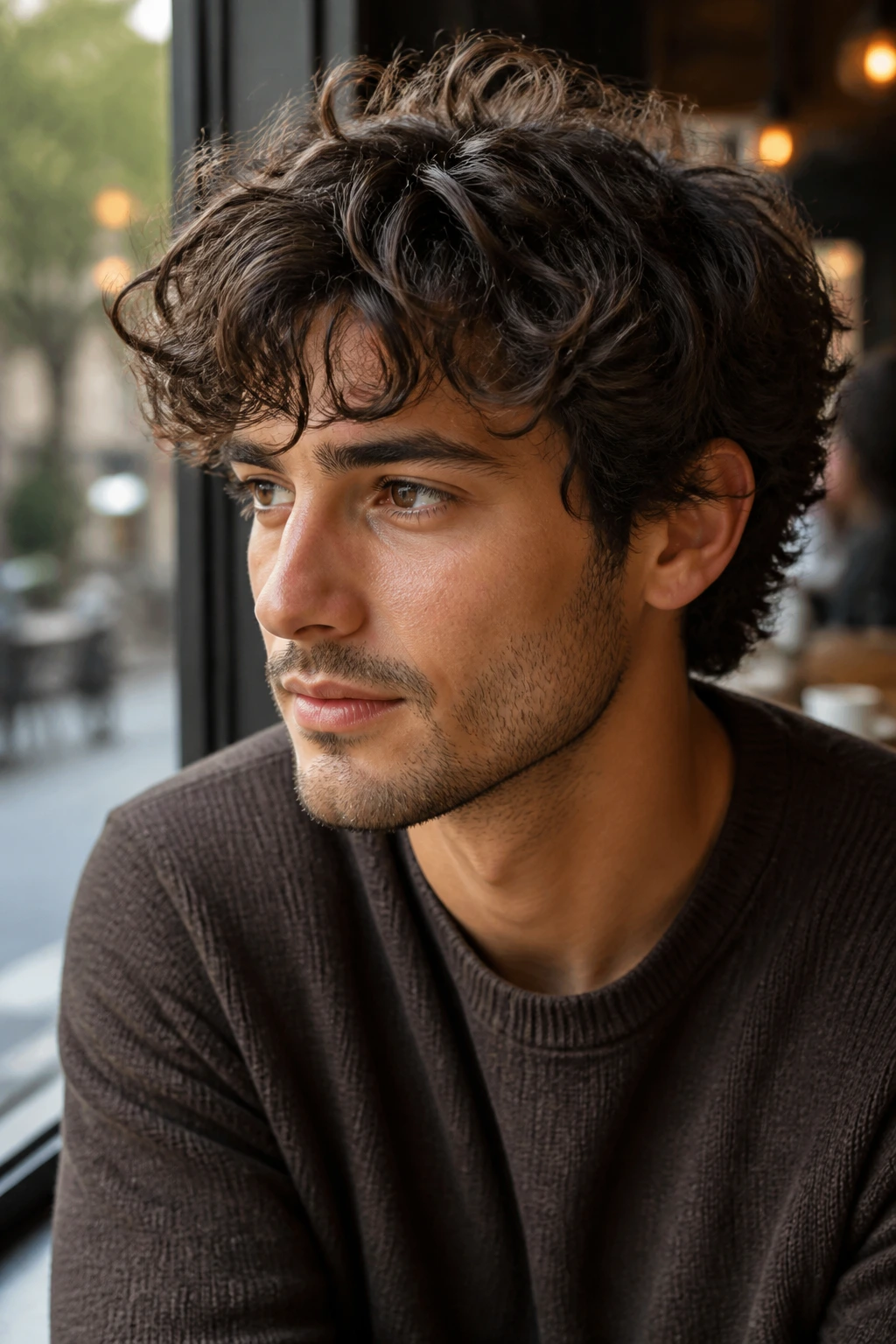
If your curls are a little finer or more loose, the piecey layered top can make them look richer. The hair is cut to encourage separation, not clumping. That means you get visible strands and bends across the top instead of one big mass. Medium length is useful here because it gives the hair enough weight to hang in pieces.
The finish should look lived-in, not engineered. A matte cream or light paste is better than anything shiny. Work the product into damp hair, then break up the clumps with your fingers while it dries. If every curl groups into the same blob, the cut loses its point.
This style suits men who want texture first and polish second. It’s casual, but not careless.
21. Windswept Professional Curls

This is the style for guys who need their hair to look like it belongs in a chair, not a locker room. The curls are brushed up and back with enough direction to suggest order, but the pattern still shows through. Medium length is the sweet spot because you need enough hair to lift, yet not so much that the top falls over itself.
A blow-dryer with a nozzle helps. So does a small round brush if your curls are loose. Start at the roots, direct the air backward, and finish with a finger-comb so the shape doesn’t look too neat. The result should have movement at the front and a smoother crown.
It’s one of the more office-friendly curly styles because it keeps the forehead open and the sides controlled. No crunchy shell. Good.
22. Wash-and-Go Curls
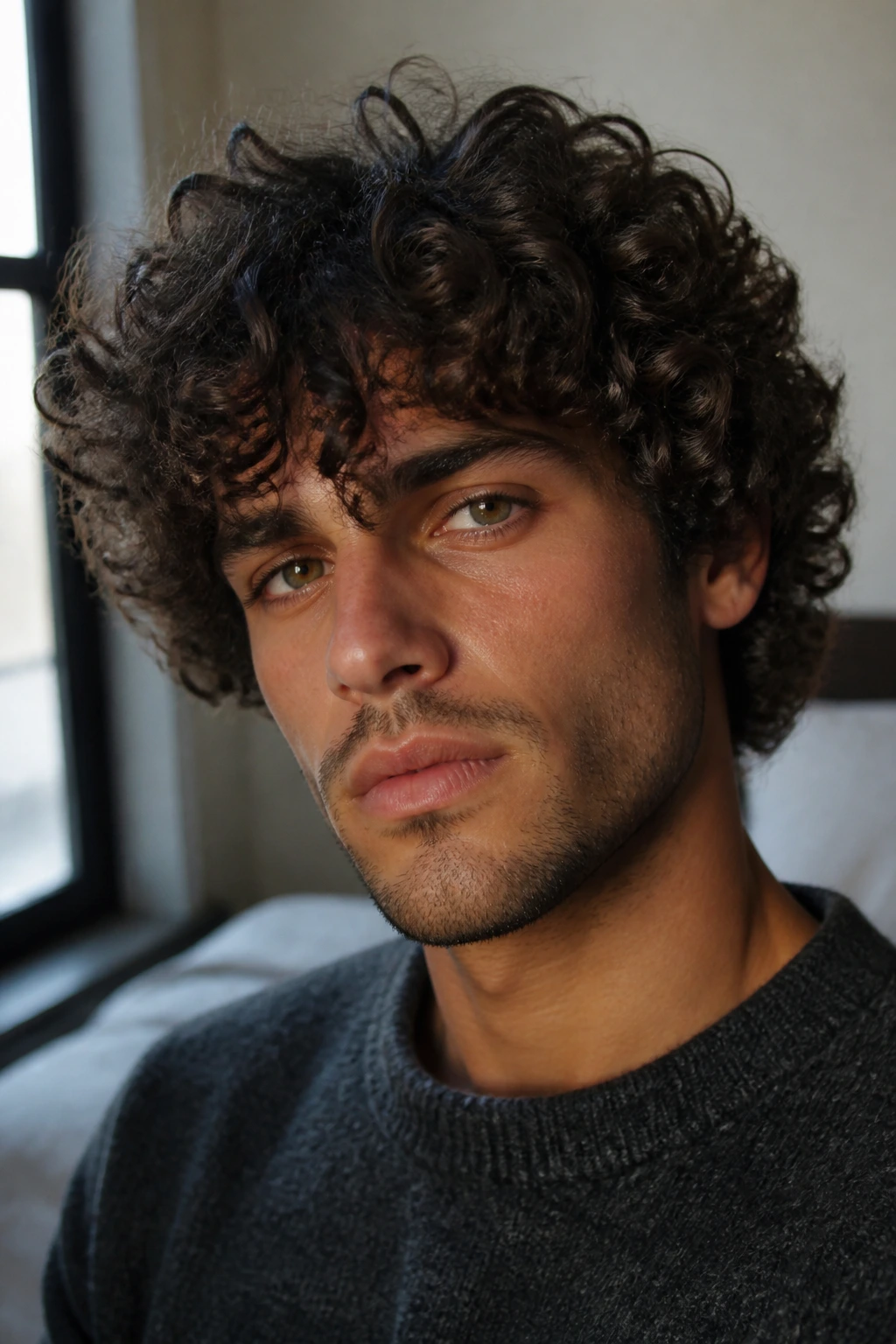
The final style on this list is the one a lot of men quietly want: the cut does most of the work, and the styling step stays short. Wash-and-go curls are medium-length curls shaped so they air-dry into something decent without a long routine. You still need the right haircut, though. “Wash-and-go” is not the same as “ignore it and hope.”
The key is a good layer pattern and the right amount of moisture. A leave-in conditioner, a light curl cream, and a microfiber towel are enough for most days. Scrunch gently, let the curls form, and touch them as little as possible once they start setting.
How to keep it honest
If the haircut is too blunt, this style turns into a triangle. If the product is too heavy, it goes limp. The balance is plain but strict: clean shape, light product, minimal handling. That’s it.
Why the Cut Matters More Than the Product
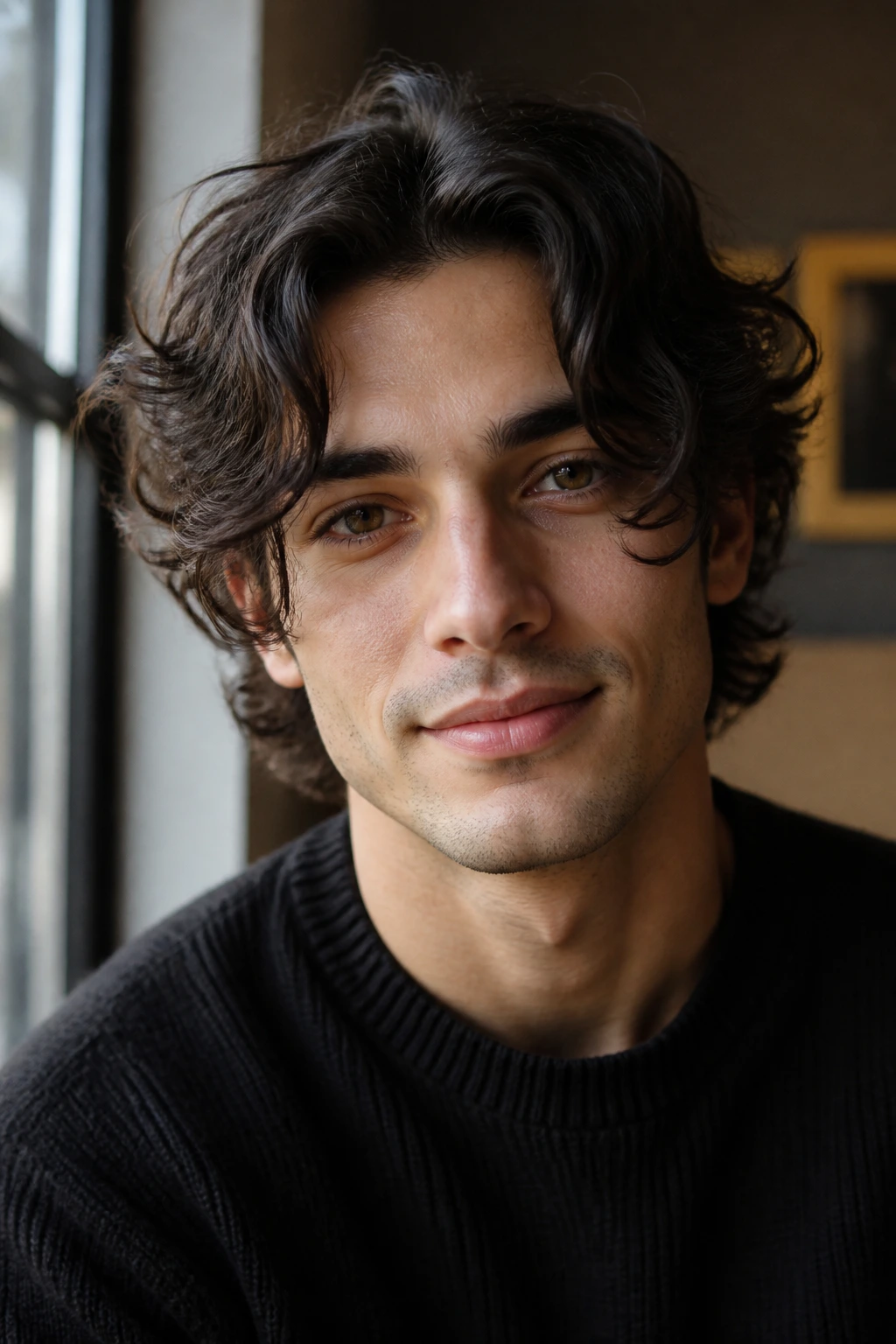
A lot of guys try to solve curly hair with a stronger gel or a fancier cream. That helps only up to a point. The haircut is doing the heavy lifting here. If the top is layered badly, if the sides are too wide, or if the neckline is left fuzzy, no product is going to save the shape for long.
The best medium curly cuts respect three things: shrinkage, density, and direction. Shrinkage means the finished length will be shorter than it looks when wet. Density means thick hair needs relief somewhere or it becomes a helmet. Direction means curls don’t all grow the same way, so the cut has to follow the pattern instead of pretending it’s straight.
That’s why I like this length. It gives a barber enough room to shape the head instead of merely trimming it. And when the cut is good, you can keep the styling simple. That’s the whole advantage.
Essential Tools for Curly Medium-Length Hair
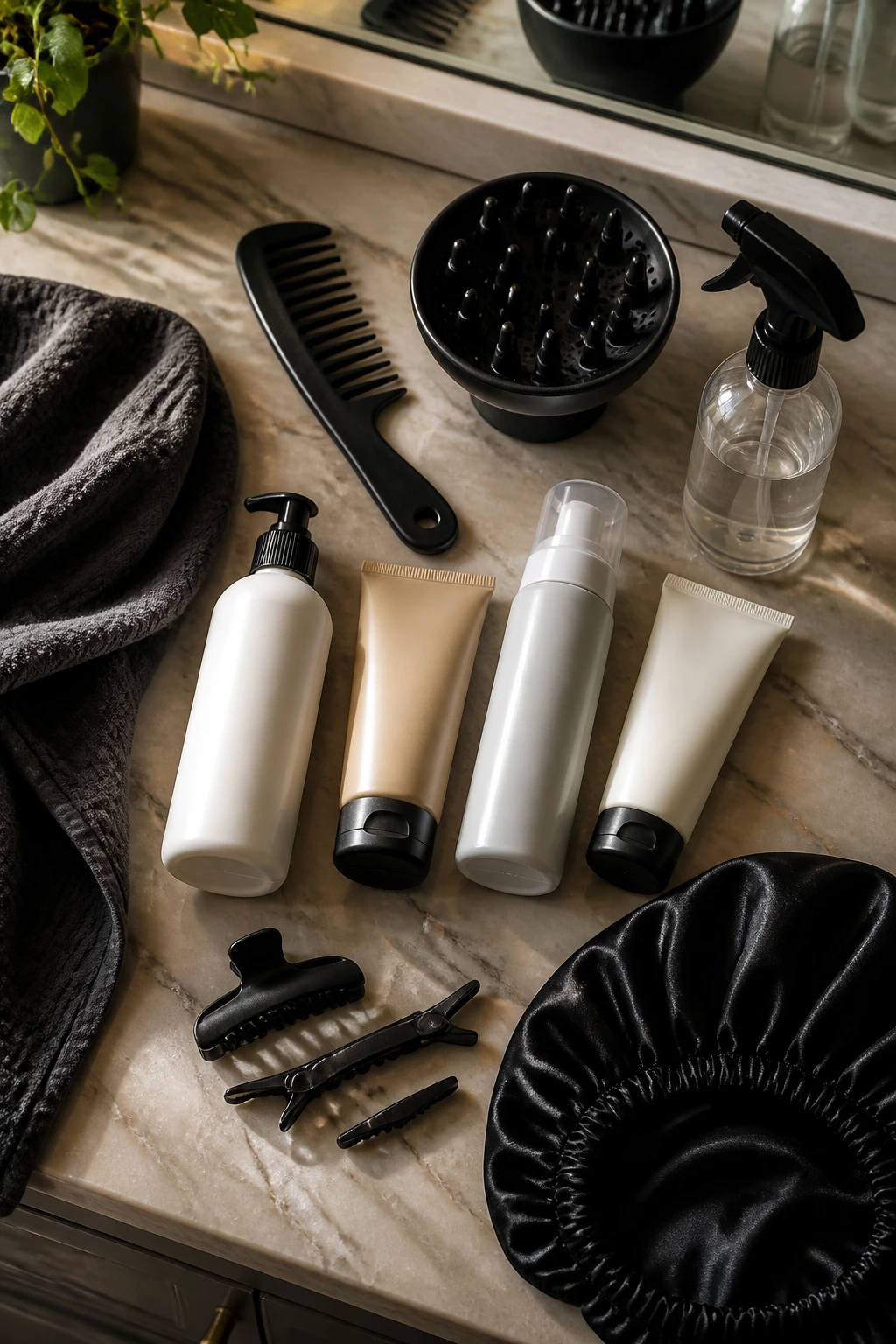
- Wide-tooth comb: Best for detangling damp curls without ripping them apart.
- Microfiber towel or cotton T-shirt: Cuts down on frizz when you squeeze water out.
- Diffuser attachment: Useful if you want lift and shape without blasting the curls flat.
- Leave-in conditioner: Gives slip and keeps the mid-lengths from drying into a rough halo.
- Curl cream or mousse: Cream softens, mousse adds lift; pick based on how much hold you want.
- Light gel or matte paste: Good for tighter definition or cleaner finishes.
- Hair clips: Handy for sectioning thicker curls while styling.
- Spray bottle: Makes next-day refreshes easier without soaking the whole head.
- Satin pillowcase or bonnet: Helps the shape survive the night with less friction.
Smart Product Picks for Curly Hairstyles for Men With Medium Length Hair
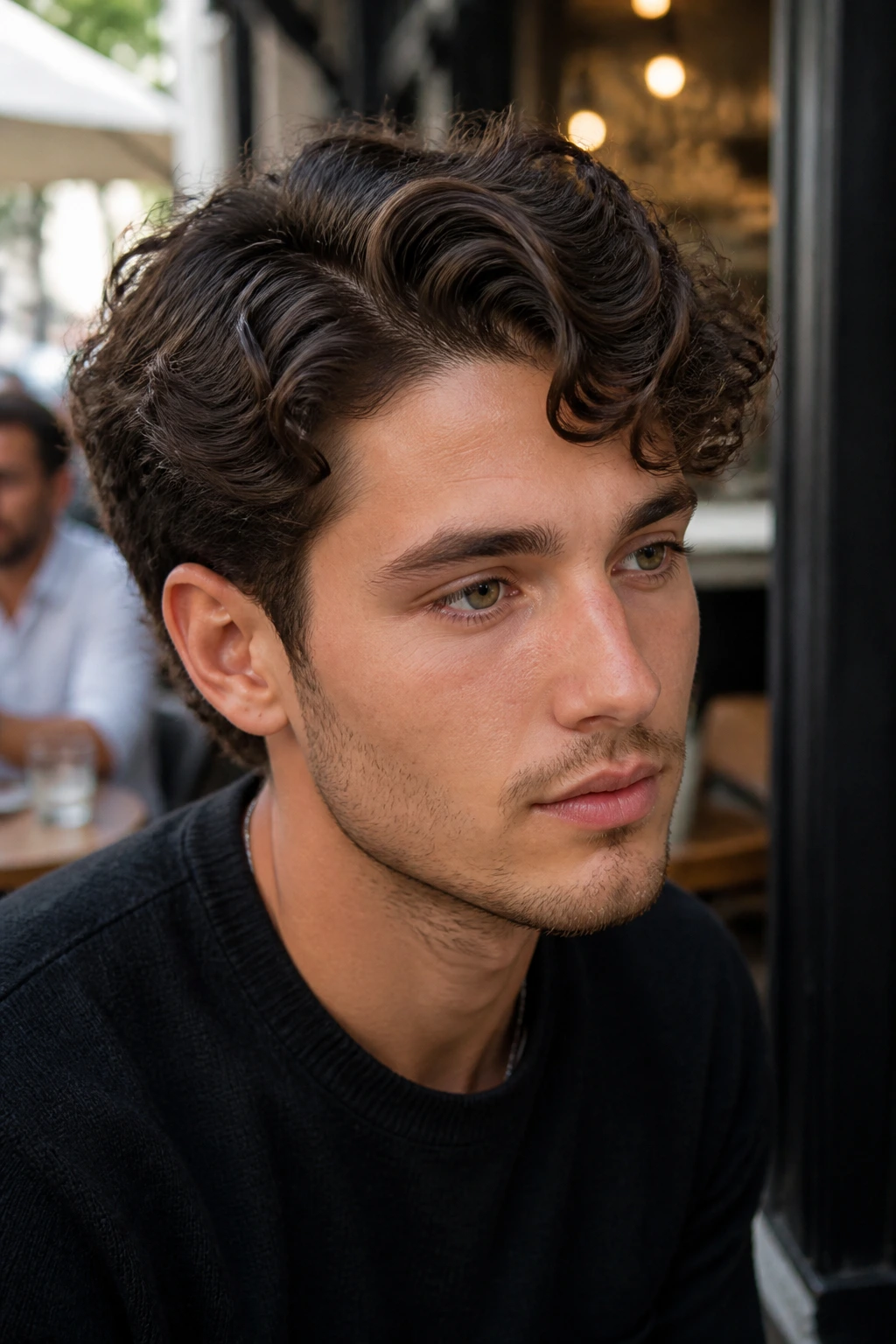
The biggest mistake guys make with curly products is choosing by label instead of by curl behavior. A dense curl needs something different from a loose wave. Fine hair gets drowned by heavy cream. Coarse coils often need more moisture than they think, because the outside can feel dry even when the inside has plenty of texture.
If your curls are loose and prone to puffing, start with a light leave-in and a mousse. That gives you control without weight. If your curls are tighter or drier, a richer cream or a cream-gel mix usually works better. The aim is not shine for its own sake. It’s movement without roughness.
Avoid the temptation to buy the strongest hold product on the shelf first. Strong hold is useful when the shape is already good and you want it to stay put. It is a lousy substitute for a bad cut. Also, don’t stockpile five products and use them all at once. Medium-length curls usually look better when you keep the formula short and the hands off.
How to Wear These Styles Without Fighting the Hair
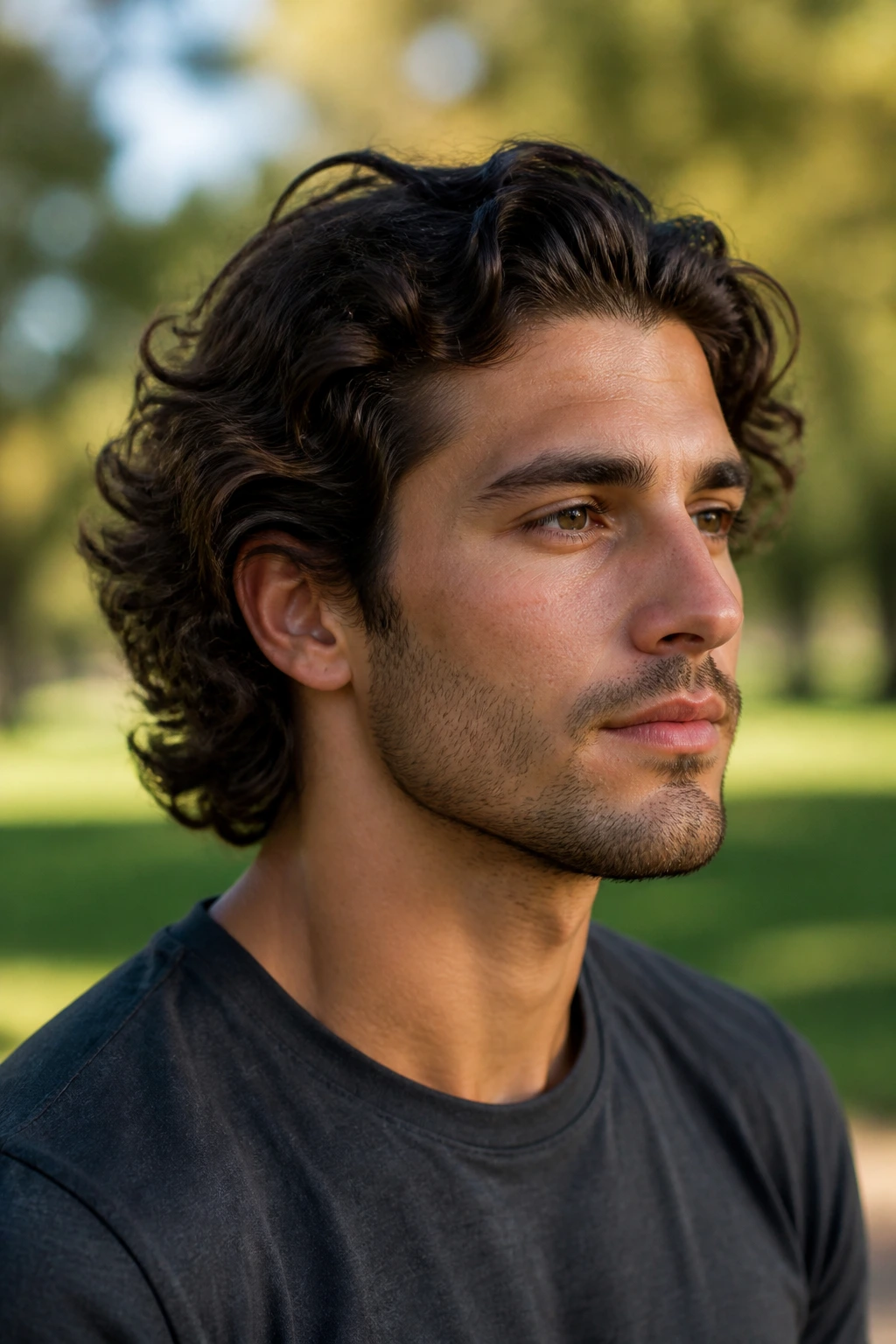
Presentation: The front should read first. Whether you’re wearing a curtain, quiff, fringe, or flow, make sure the first two inches around the hairline look like a choice and not a leftover. The sides should support the top, not compete with it.
Accompaniments: Beards matter more than people admit. A short beard can ground a fuller curly top, while clean-shaven cheeks make a lot of these styles look sharper and lighter. Glasses, collars, and hats all change the feel too. A structured jacket sharpens a side part. A hoodie softens a bro flow. Small stuff, but you can see it.
Portions: If your curls shrink hard, leave the top about 1 to 1.5 inches longer than the length you want to see dry. That buffer matters. For taper or fade styles, keep enough length at the crown so the curls still read as texture after the sides are cleaned up.
Finish: Use matte cream for soft, natural looks; mousse for lift; gel for ringlets or shape-up styles; and a tiny bit of paste only when you want piecey separation. If the hair feels crunchy, you used too much. If it disappears, you used too little.
Small Moves That Change the Whole Style
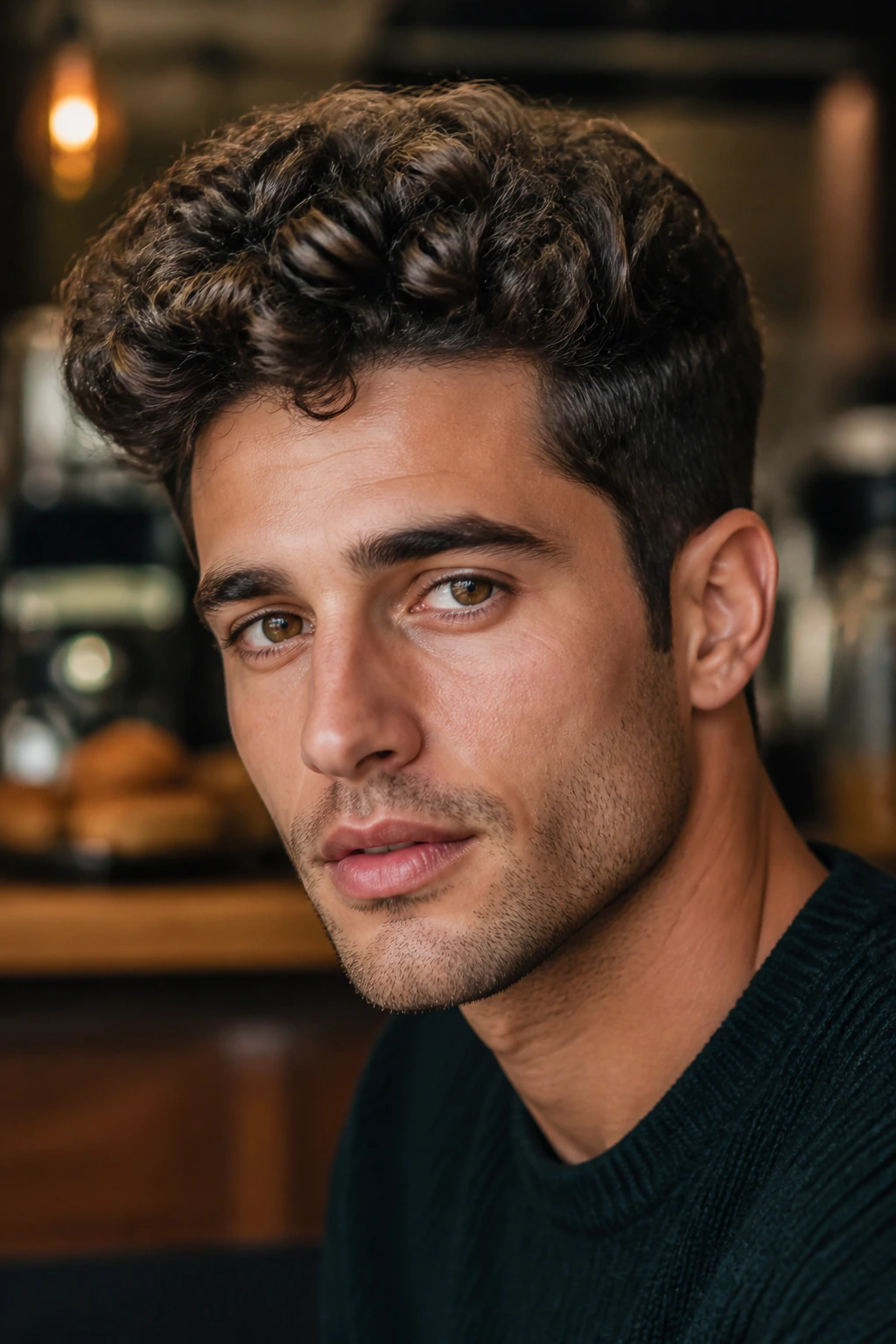
Flavor Enhancement: If hair had a finishing trick, this would be it: a drop of hair oil rubbed between your palms and pressed only onto the ends. It keeps the tips from fraying without flattening the roots.
Customization: For looser curls, mix a little mousse with leave-in and scrunch it in. For tighter coils, layer a cream underneath a soft-hold gel. The first helps shape; the second keeps the edges from fuzzing up.
Time-Saver: Dry the roots first, not the ends. If the roots are still damp, the style collapses later and you end up restyling anyway. A diffuser aimed at the base saves more time than people expect.
Barber Move: Ask for weight removal only where the bulk actually sits. Thinning shears used everywhere can wreck curl separation. A good barber should be cutting the shape, not attacking the texture.
Weather Trick: On humid days, use less product than you think. Overloading curls makes them puff harder once the air gets damp. A lighter layer holds shape better than a sticky one.
Where Medium Curls Go Wrong
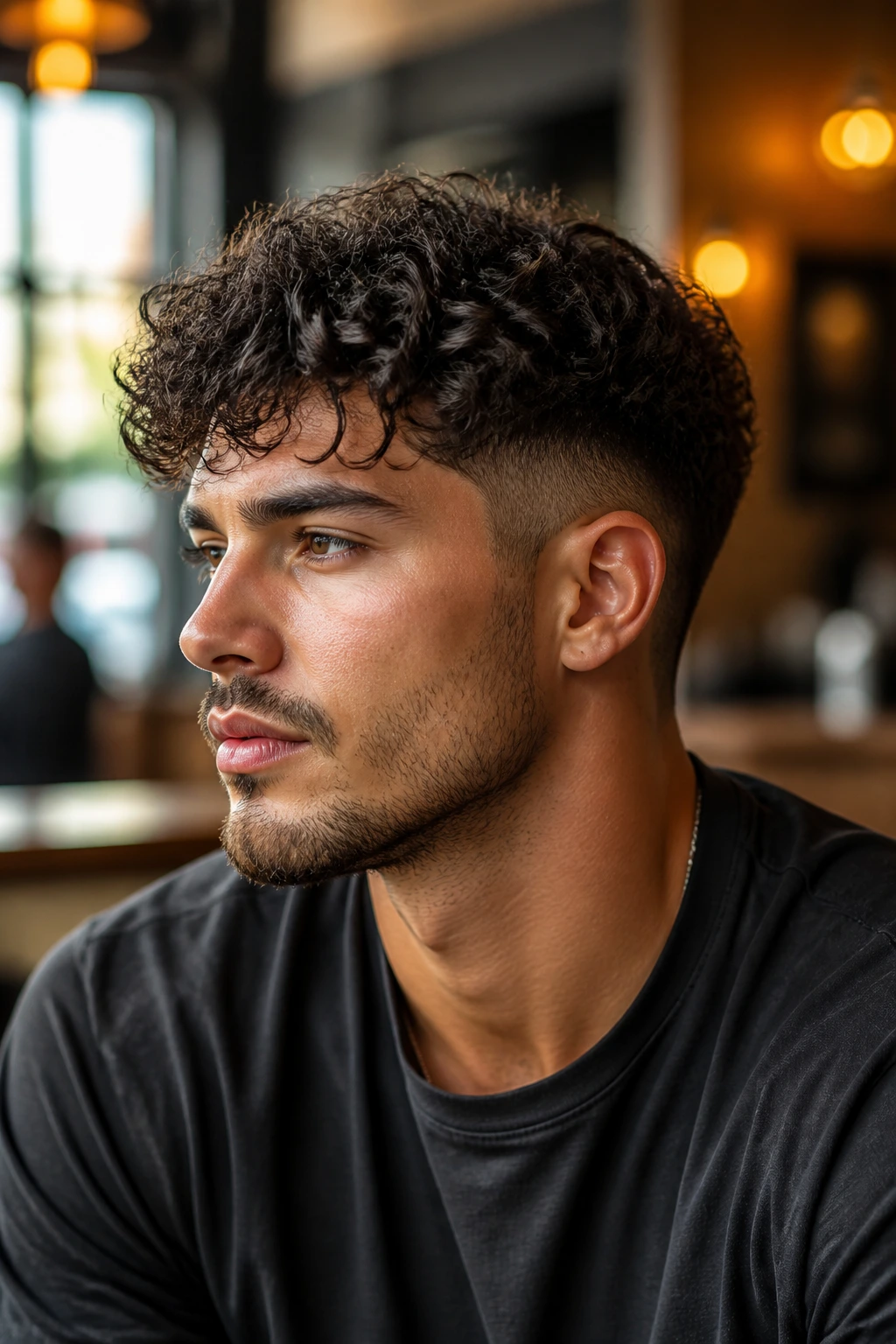
The first mistake is cutting the sides too wide. It sounds harmless until the top and sides start growing into each other and the whole head turns square. If that happens, the fix is usually a tighter taper and some cleanup around the ears.
The second mistake is using too much heavy product. You’ll know because the hair looks dark, stringy, and a little greasy by noon. Start with less than you think you need — a nickel-sized amount of cream is plenty for many medium cuts — and add only if the hair actually needs it.
Another common one: treating curls like straight hair during drying. If you brush them flat and then wonder why they lost shape, well, that’s the answer. Curls need encouragement, not coercion. Hands, diffuser, patience.
Finally, a lot of men wait too long between trims. Medium curls can hide a bad cut for a while, but they can’t hide it forever. Once the outline starts spreading past the ears or the nape gets fuzzy, the style stops reading clean.
Ways to Adapt These Cuts to Different Hair Types
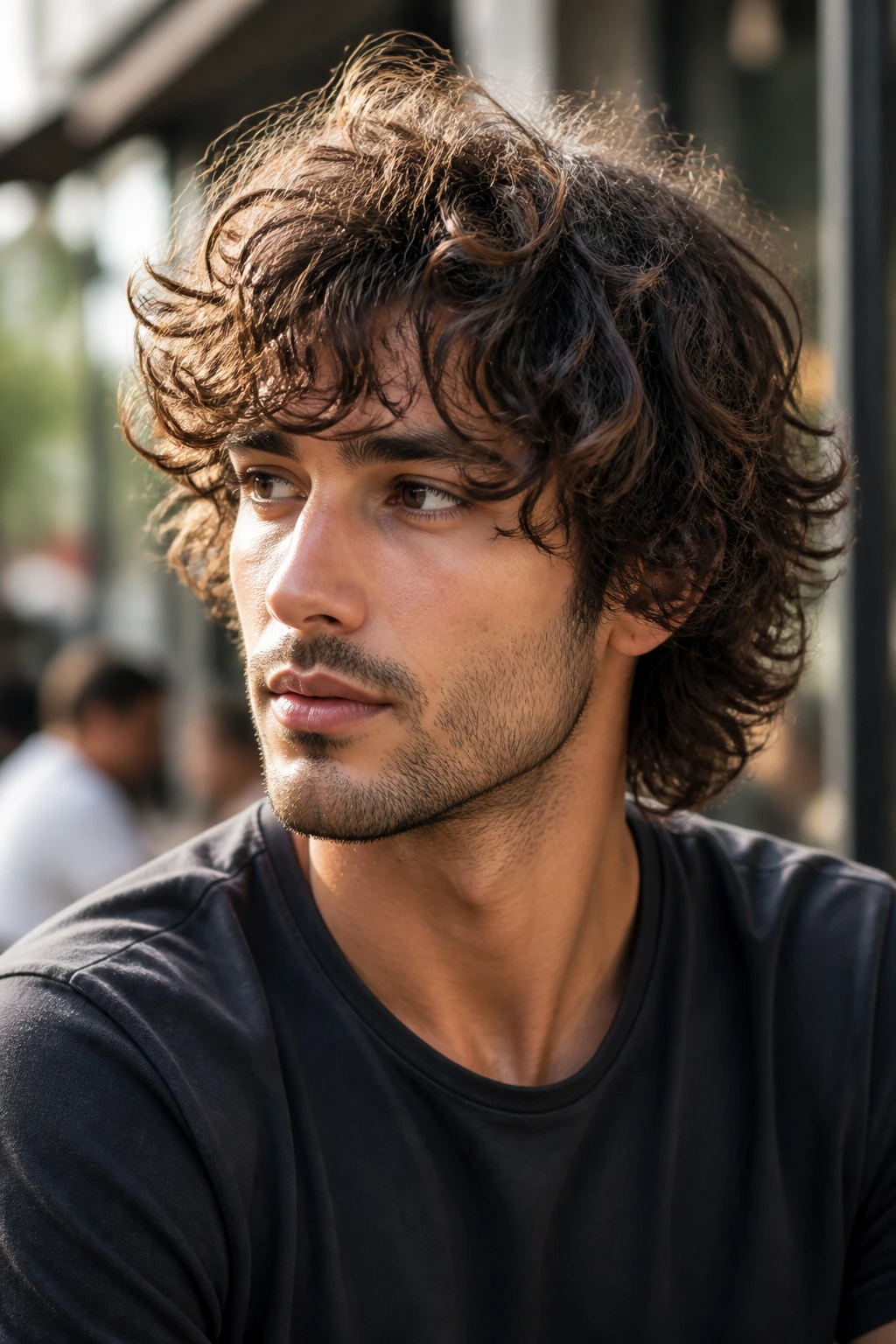
Loose-Wave Upgrade: If your hair is more wave than curl, lean into side parts, slick backs, and piecey layers. The looser texture gives you cleaner lines, but it also needs a bit more help to avoid collapse at the front.
Tighter-Coil Version: For tighter curls and coils, keep the top slightly longer and the sides more controlled. That gives the curl room to spring without crowding the head. Cream plus gel usually beats cream alone here.
Thin-Hair Lift: If your density is low, avoid heavy layers that remove too much bulk. Go for a quiff, windswept style, or middle flow with a light mousse. The goal is visible shape, not overworked texture.
Thick-Hair Relief: Dense hair needs internal weight removed with care. Shags, tapers, and temple fades help more than blunt cuts do. If the style feels bulky, the problem is usually too much mass at the sides, not too little product.
Low-Maintenance Version: Choose a wash-and-go crop or a soft curtain style, then keep the product list short. One leave-in and one styler are enough for most low-effort routines.
Tools and Equipment Worth Having
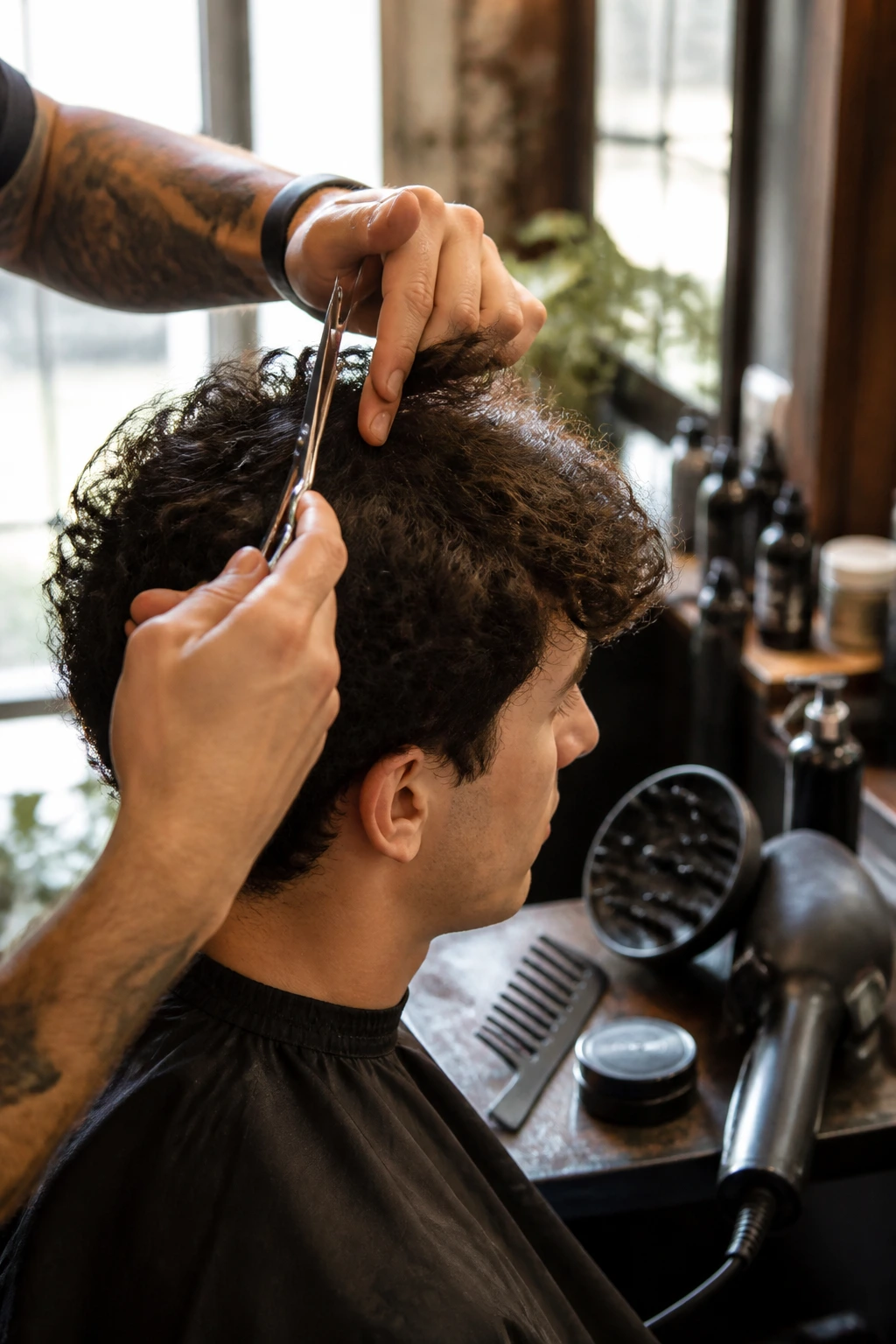
- Barber scissors on the salon side: You need a barber who can cut curls dry or in a way that respects shrinkage.
- Diffuser hair dryer: The attachment matters. Plain hot air is rough on curls.
- Wide-tooth comb: Safer than a fine comb for wet curls.
- Microfiber towel: Reduces roughness right after washing.
- Spray bottle: Great for refreshing the front and reshaping the crown.
- Leave-in conditioner and curl cream: The core pair for softness and control.
- Mousse or light gel: Useful when you need extra hold or lift.
- Satin pillowcase: Not glamorous. Works.
- Edge brush or small boar-bristle brush: Handy for shaping hairlines and temple areas.
- Hand mirror: Makes it easier to check the back and neckline before leaving the house.
Keeping the Shape Between Barber Visits
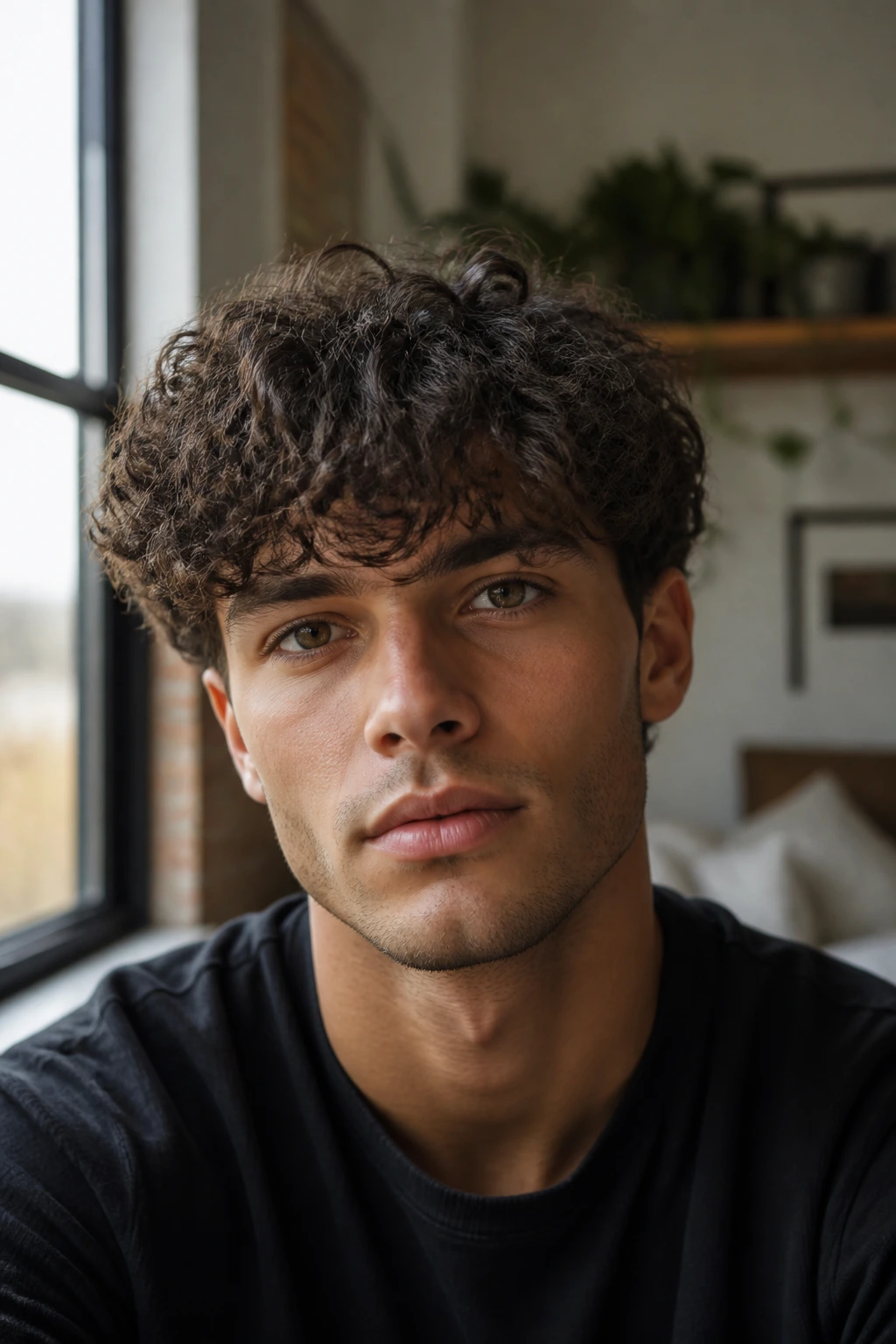
Medium curly hair needs regular cleanup, but not obsessive maintenance. A trim every 4 to 6 weeks keeps the outline from spreading too far. If you’re wearing a fade or temple cleanup, the sides may need attention sooner. If the cut is softer and layered, you can stretch it a little longer.
The night routine matters more than people admit. Sleep on a satin pillowcase, or at least keep friction low. If the curls flatten overnight, mist them lightly in the morning and scrunch the front back into shape. Don’t soak the whole head unless you want to start from zero again.
Wash frequency depends on your scalp, not a trend. Some guys need shampoo every 2 to 3 days. Others can go longer with co-wash or a rinse and still feel fine. What you should watch is buildup. When the hair starts feeling coated, flat, or strangely sticky, it’s time for a clarifying wash.
Questions Men Actually Ask Before They Try These Cuts
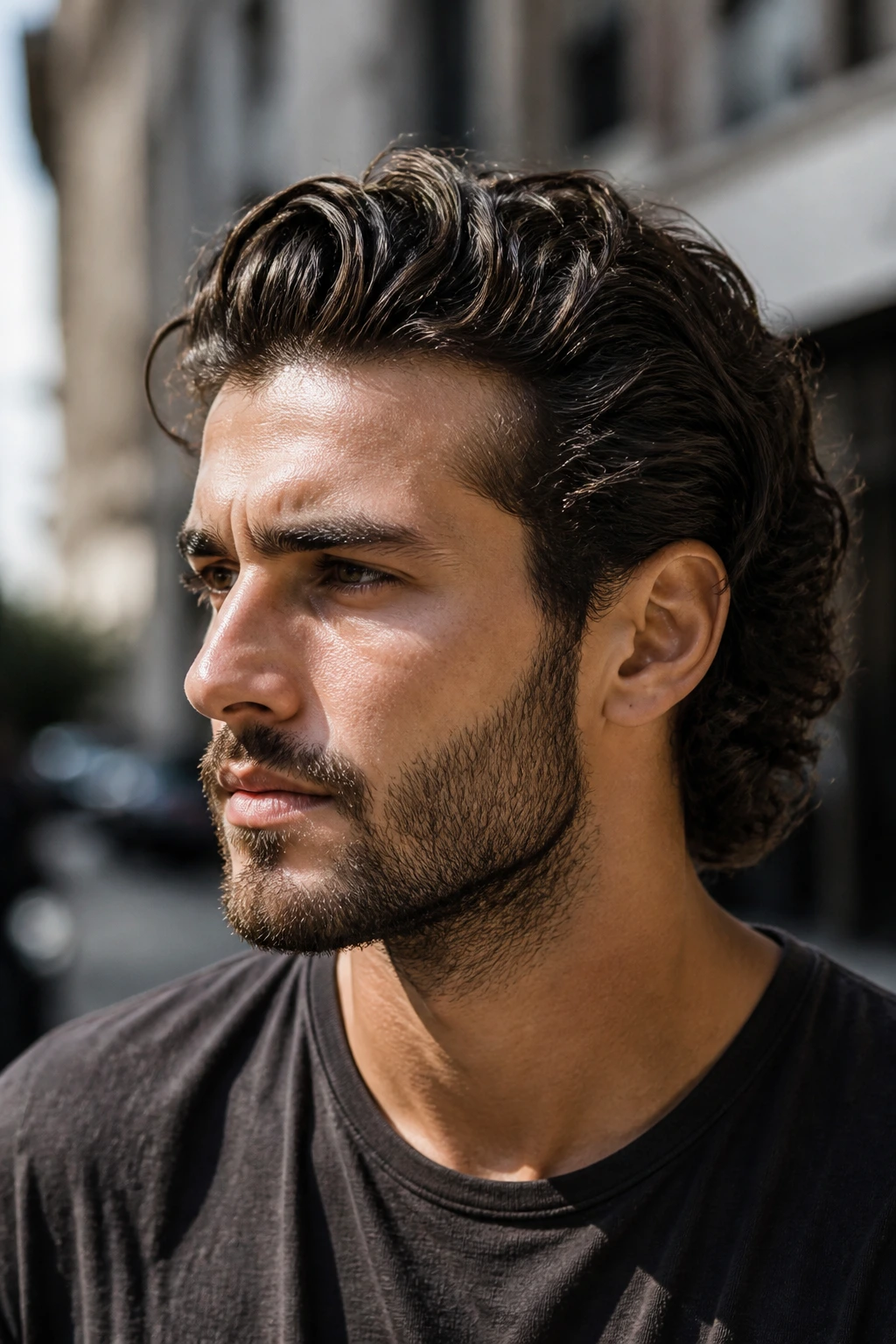
How long is medium-length hair for curly men?
Usually somewhere around 3 to 6 inches on top, though curls shrink, so the wet length can be misleading. What matters more is how the hair sits dry and whether it still has room to bend.
Should curly hair be cut wet or dry?
Dry cutting often gives the barber a better read on shape and shrinkage, especially with tight curls. Looser waves can be cut damp in some cases, but the person cutting it should understand how your hair springs back.
What product should I start with if I only buy one?
Start with a light leave-in conditioner if your hair feels dry, or a curl cream if you want softer control. If your hair is fine and collapses easily, mousse may be the better first buy.
How do I stop the puffiness at the sides?
Clean up the sides with a taper or fade, then keep the top layered enough that the curls sit on purpose. Product helps, but the cut is the real fix.
Can I wear a part with curly hair?
Yes, but keep it soft. A hard line often looks too severe on curls unless the rest of the cut is very polished. A natural bend or off-center split usually works better.
What if my curls are uneven?
That’s normal. Most curl patterns are not symmetrical, and trying to make them identical usually backfires. Use the cut to balance the shape rather than chasing perfect uniformity.
How often should I trim?
Most medium curly styles benefit from a trim every 4 to 8 weeks, depending on how sharp the sides are and how fast your hair grows. If the outline starts puffing outward, you waited too long.
Can I make these styles work without a blow-dryer?
Yes. You’ll just rely more on the cut, the product, and air-drying. A diffuser makes things easier, but it is not mandatory for every style on the list.
The Styles That Age Well on Real Heads
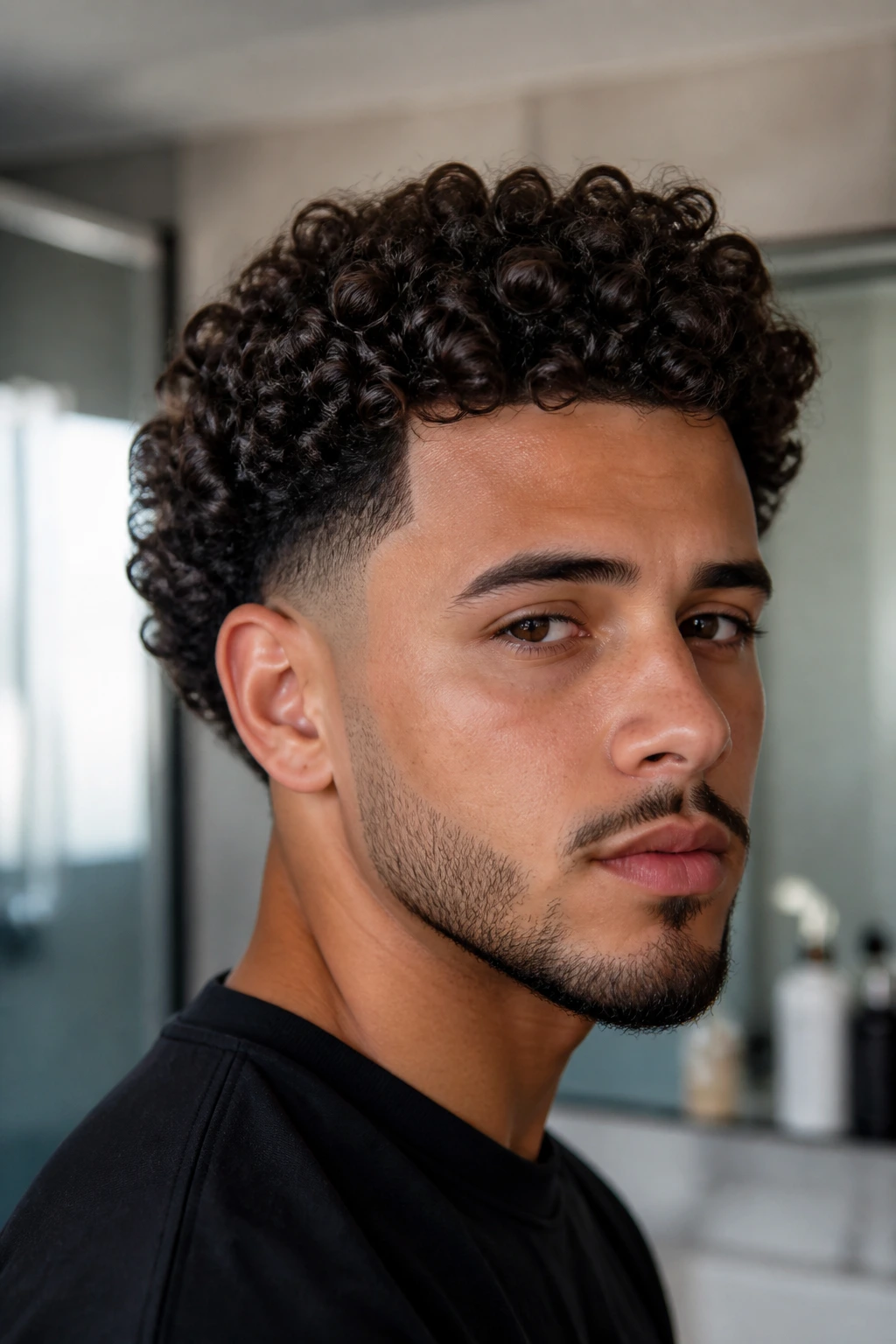
The best medium curly cuts don’t ask for a perfect morning. They ask for a decent cut, a sensible product, and enough restraint to leave the curls alone once they’re set. That’s the part people miss. Hair like this usually looks better when it’s guided, not forced.
What makes these styles useful is that they don’t all lean in the same direction. Some are neat. Some are loose. Some put the curls forward, some back, some up, some around the face. That variety matters because curl patterns and face shapes are not copy-paste problems. The haircut should answer the head in front of it, not the picture on a mood board.
If you want the shortest path to a better result, start with the cut, then pick the style that matches your hair’s natural behavior. That one choice saves more time than a drawer full of products ever will.
Final Thoughts
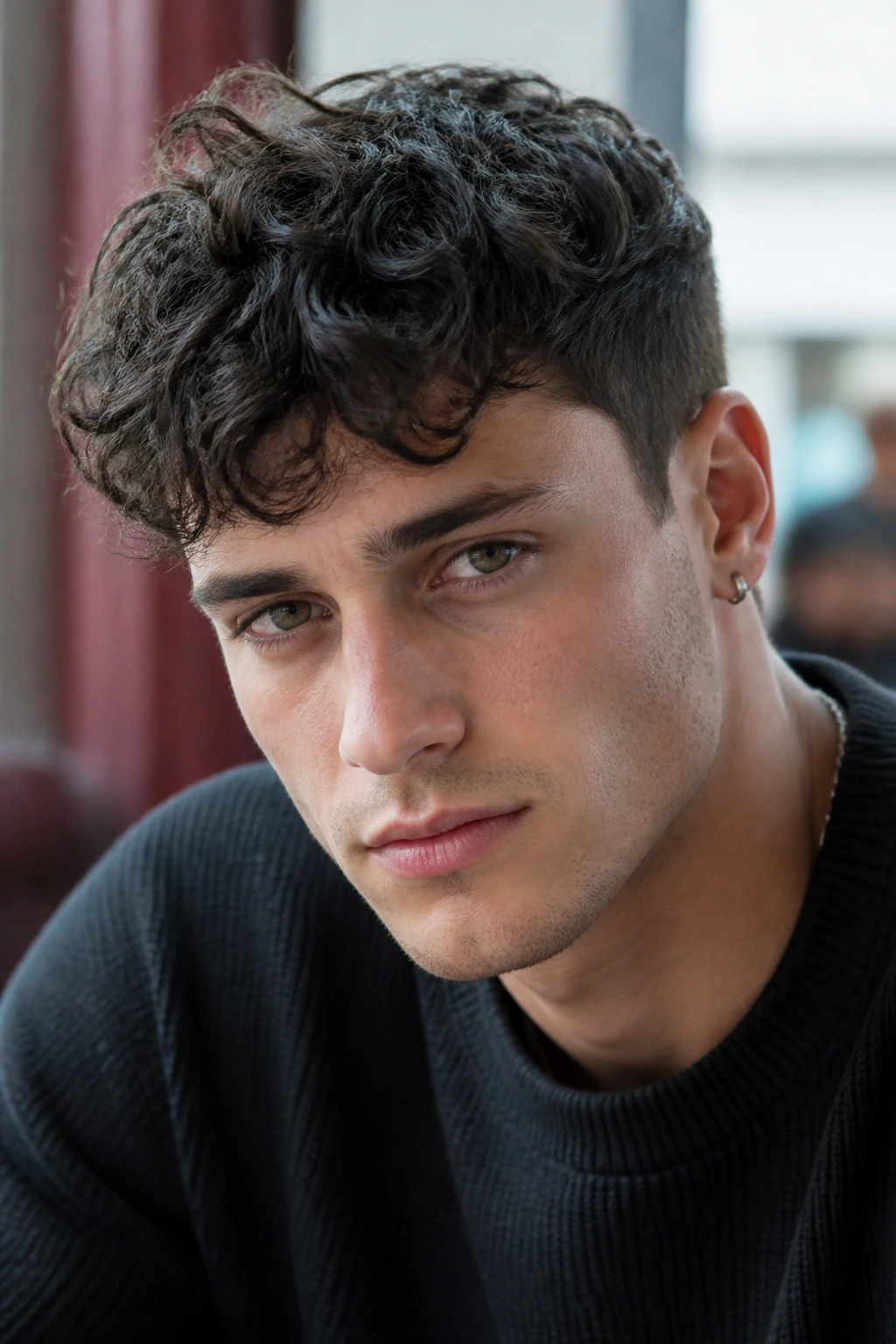
Medium-length curls are generous when you treat them with a little respect. They can look sharp, relaxed, loud, quiet, polished, or half-undone, and the length gives you enough room to steer the mood without fighting the texture every single morning. That flexibility is the whole appeal.
Pick the version that suits your routine, not the one that only looks good in a mirror for thirty seconds. A good curl cut should still make sense when you’ve been out in wind, sat under a hood, or skipped a perfect styling day. That’s the kind of haircut that earns its keep.
