



The right haircut solves a morning problem in about ten seconds. Good hairstyle ideas for men do one job well: they make your hair look deliberate before coffee, before the mirror debate, before you decide whether to hide under a cap. Bad ones do the opposite. They ask for more time than your life wants to give them, and they usually demand better hair than you actually have.
The sweet spot is a cut that works with your growth pattern instead of fighting it. A clean buzz with a tight fade can make dense hair look sharp in five minutes. A longer, layered style can take wavy hair and turn the bend and movement into the whole point. The trap is copying a photo without noticing the crown, the hairline, the cowlick at the front, or the fact that your barber and the model do not have the same head shape. Hair is annoyingly personal like that.
So the useful question is not, “What looks good on a model?” It’s, “What still looks like a haircut on day six, after a humid commute, after a gym session, after a bad night’s sleep?” That’s the standard here. Clean, realistic, and actually wearable.
Why These Cuts Work on Real Hair
Low-drama shape matters. A good men’s haircut keeps its outline as it grows, which is why a taper, a textured top, or a blunt fringe often beats something overly fussy. When the sides stay neat and the top has a shape you can finger-comb back into place, the style doesn’t collapse the second you skip a morning.
Different hair types need different geometry. Straight hair shows every line, so a side part, crop, or quiff needs crisp edges to avoid looking flat. Curly and coily hair need room to move, which is why taper fades, shaped afros, twists, and fringes usually behave better than cuts that try to squash texture down.
The best cuts are honest about maintenance. A high pompadour looks fantastic when it’s styled properly, but it wants a blow-dryer, a brush, and five to ten minutes of effort. A buzz cut with a skin fade wants the opposite. Neither is better in the abstract. One is a tool, the other is a ritual.
Beard and haircut should talk to each other. That part gets ignored all the time. A full beard can balance a short crop or a brushed-up receding hairline. A bare face usually looks cleaner with more shape on top or a stronger fringe. The haircut does not live alone.
- Built for real schedules: These looks range from zero-guard buzz cuts to shoulder-length waves, so there’s a cut here if you want five-minute styling or almost none at all.
- Barber-chair friendly: Most of the styles can be explained with guard numbers, inches on top, and a fade or taper reference, which makes the appointment easier.
- Hair-type aware: Straight, wavy, curly, coily, thick, and thinning hair all get a lane here.
- Day-three still matters: A style that only looks good on the first day is a vanity project, not a haircut.
- Beard-friendly options included: Several of these pair cleanly with stubble, a short beard, or a fuller beard without looking disconnected.
- Not all about high effort: Some of the best-looking cuts here need almost no product. That’s a feature, not a compromise.
1. Skin Fade Buzz Cut
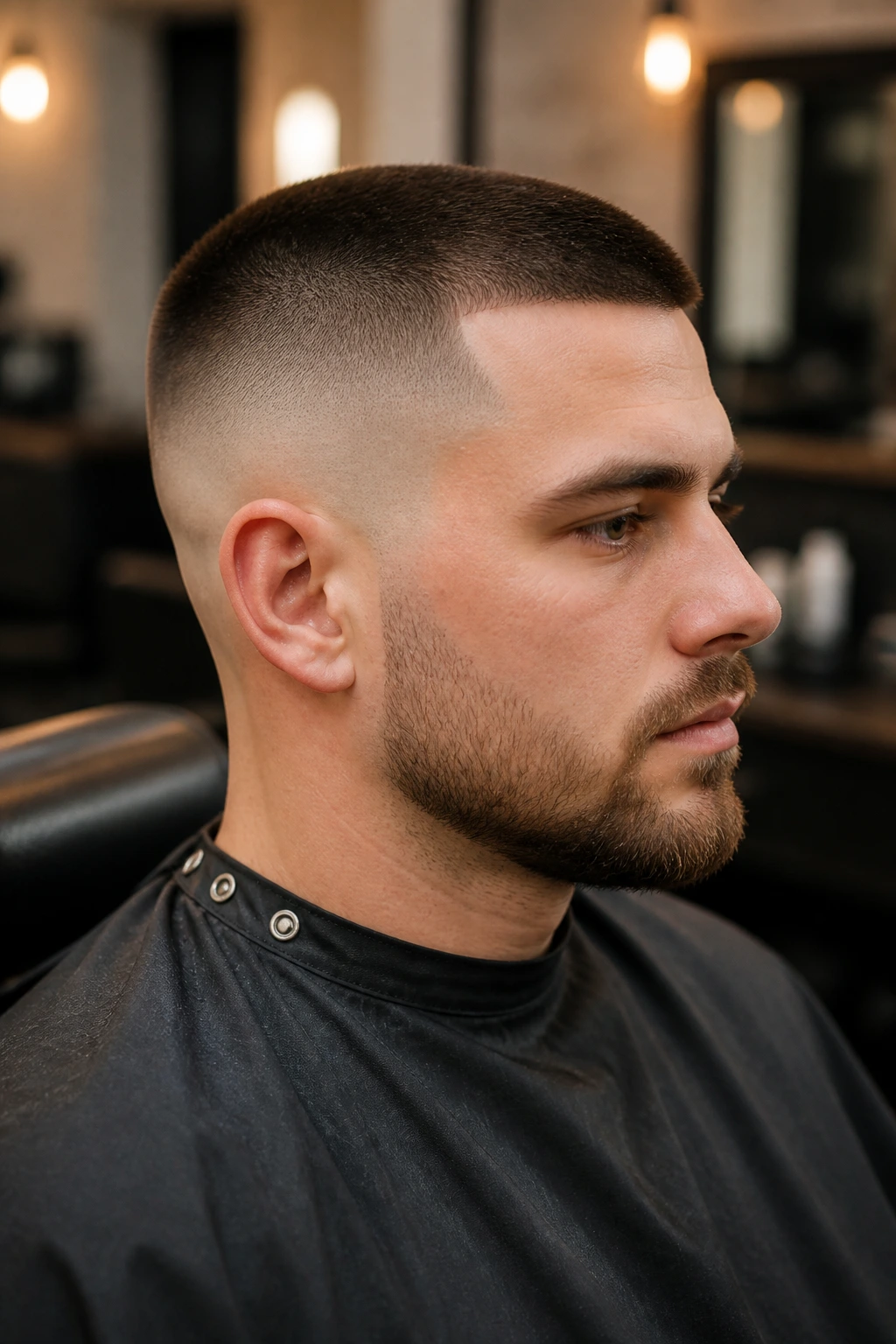
The skin fade buzz cut is brutally simple, and that’s why it works. The top stays short enough to lie flat, while the fade takes the sides down to skin or near-skin around the ears and neckline. It gives dense hair a hard-edged shape and makes a strong hairline look even cleaner.
Ask for a #1 or #2 guard on top if you want a little scalp coverage, or go shorter if you like that close-cropped, military finish. The fade should start low or mid if you want it to grow out gracefully. High skin fades can look sharp on day one and awkward by week two.
This is one of the easiest hairstyle ideas for men with coarse or thick hair because it strips away bulk before bulk becomes a problem. It also suits guys who don’t want to own a pile of styling products. A dab of matte lotion is plenty. Honestly, less is more here.
2. Textured Crew Cut
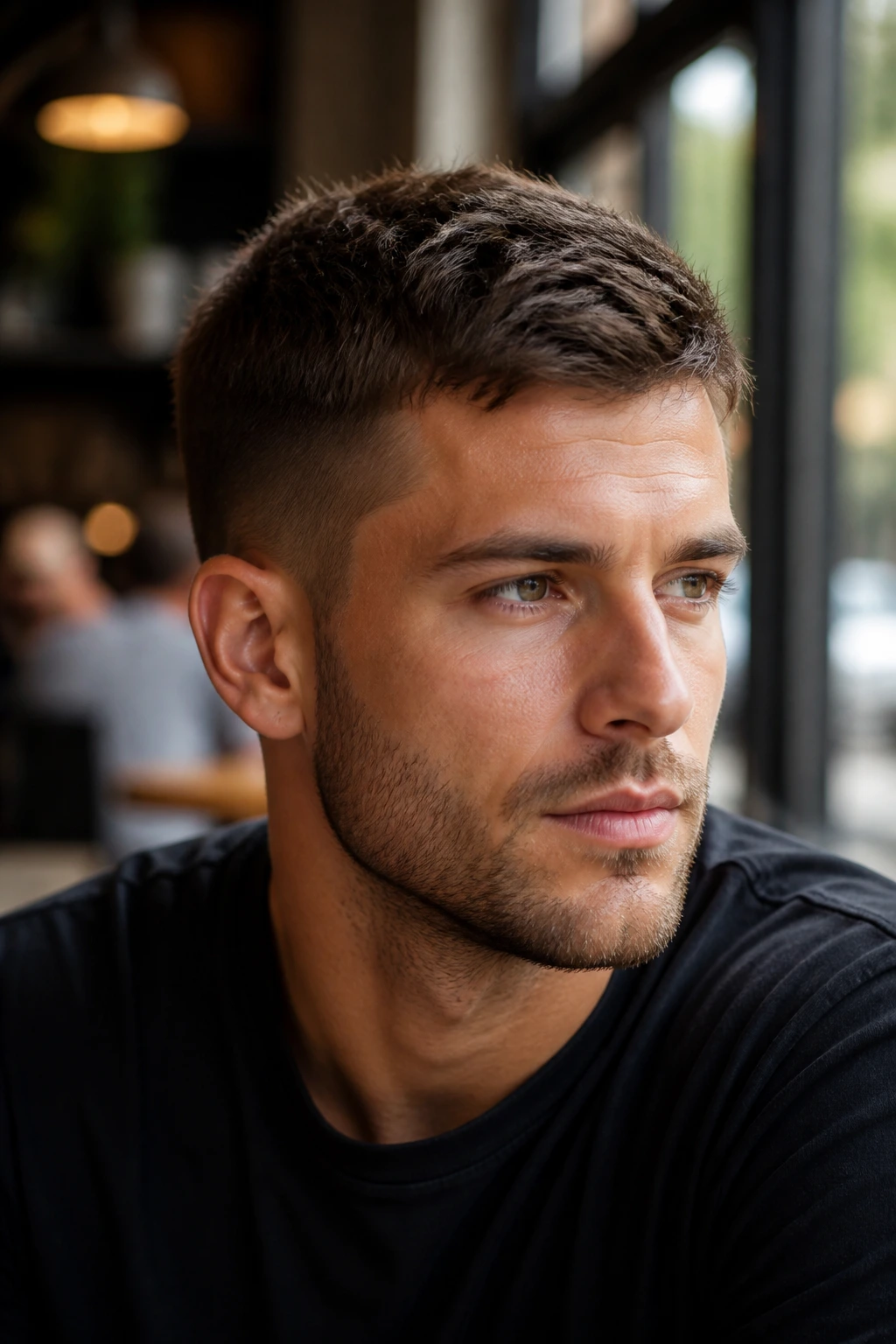
The crew cut sits in that narrow lane between polished and plain. The top is just long enough to get a hint of texture — usually around 1.5 to 2.5 inches — and the sides are clipped shorter so the top reads as a shape instead of a helmet.
What keeps this cut from feeling dated is the texture on top. Ask your barber to point-cut the surface instead of leaving it blunt. That tiny detail matters. It stops the top from looking like one flat block, which is the fastest way to make a crew cut feel old-school in a bad way.
A matte clay or hair cream works well here, especially if your hair is straight and likes to slide around. Push it forward, then lift the front slightly with your fingertips. You want movement, not stiffness. The best version looks like you did almost nothing, which is usually the point of a good crew cut anyway.
3. French Crop
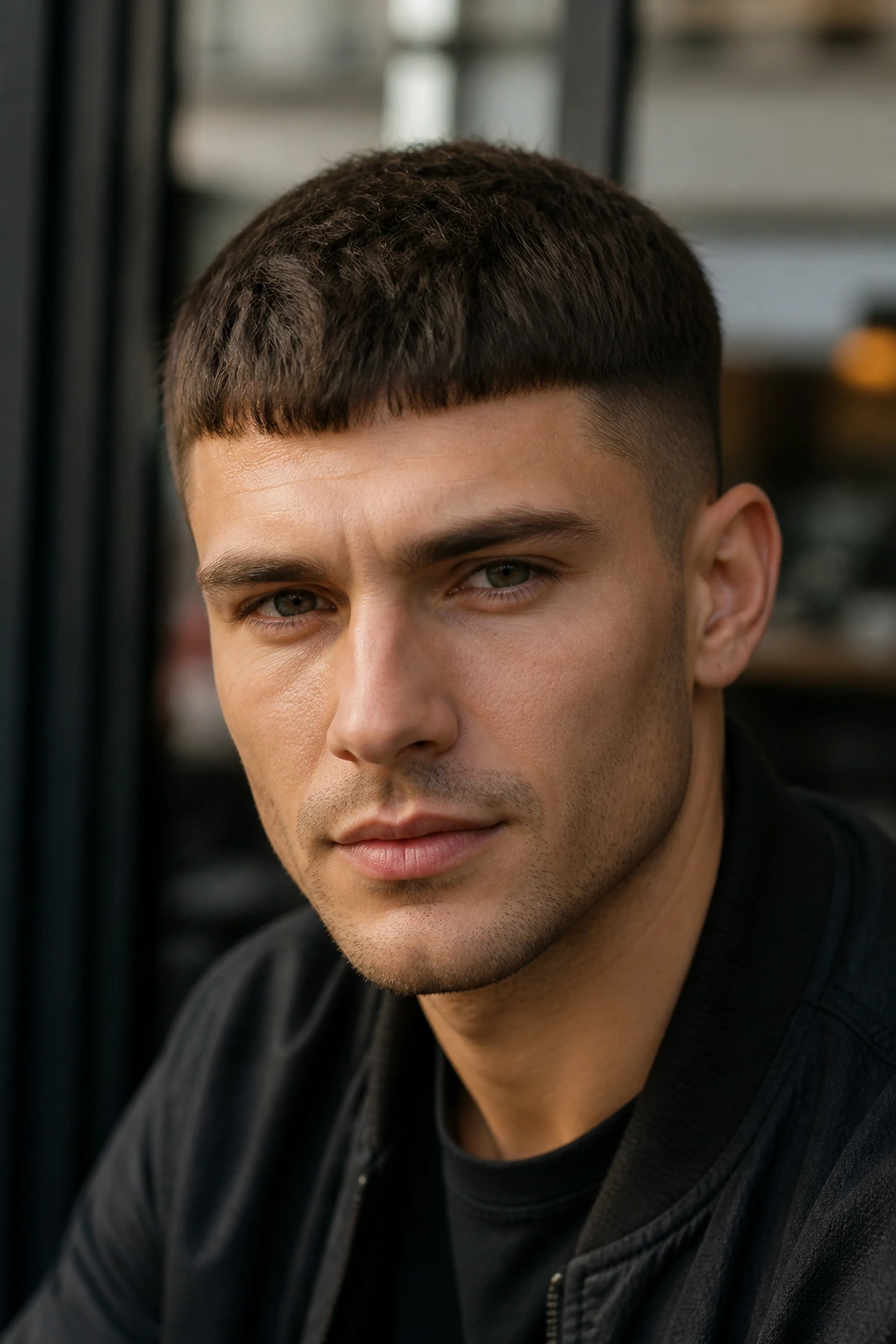
The French crop is a short top with a blunt fringe, and it has a practical streak that a lot of men overlook. The fringe lands forward, often just above the eyebrows, which makes it useful if your hairline is uneven or you want to keep the forehead visually shorter.
It’s a good cut for straight or slightly wavy hair because the front can sit cleanly without needing heavy product. The sides are usually tapered or faded tight, but not so tight that the whole thing turns into a military crop unless that’s what you want. I like a low fade here more than a high one. It feels more grounded.
This style also forgives a bad morning better than most. If the top gets a little messy, the crop still reads as intentional. A small amount of matte paste worked through dry hair is enough. No shine. No helmet.
4. Caesar Cut
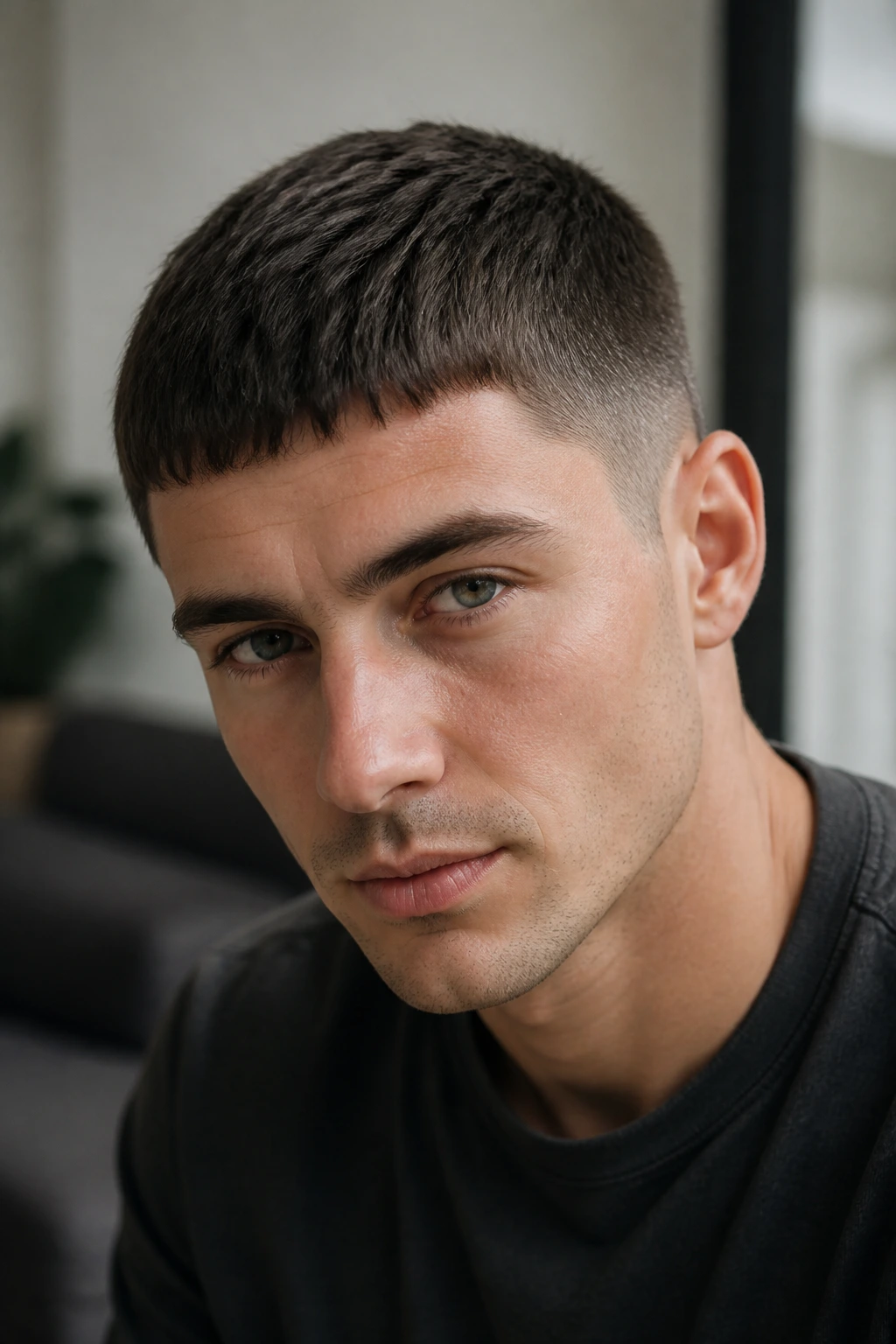
The Caesar cut is the blunt fringe’s older, tougher cousin. Hair is kept short all around, with the front brushed slightly forward so the line at the forehead stays readable. It’s a smart move for men dealing with a receding hairline because it doesn’t pretend the hairline is somewhere else.
The shape should be compact, not bulky. If the top gets too long, the Caesar loses its point and starts looking like a grown-out crop. The cleanest version has a short taper on the sides and a top that sits around one inch, maybe a little more if the hair is coarse.
Use very little product. A touch of cream or matte paste is enough to keep the front in place without turning it into a glued-down strip. This is a cut that looks better when it’s precise. Messy Caesar cuts usually just look unfinished.
5. Classic Side Part
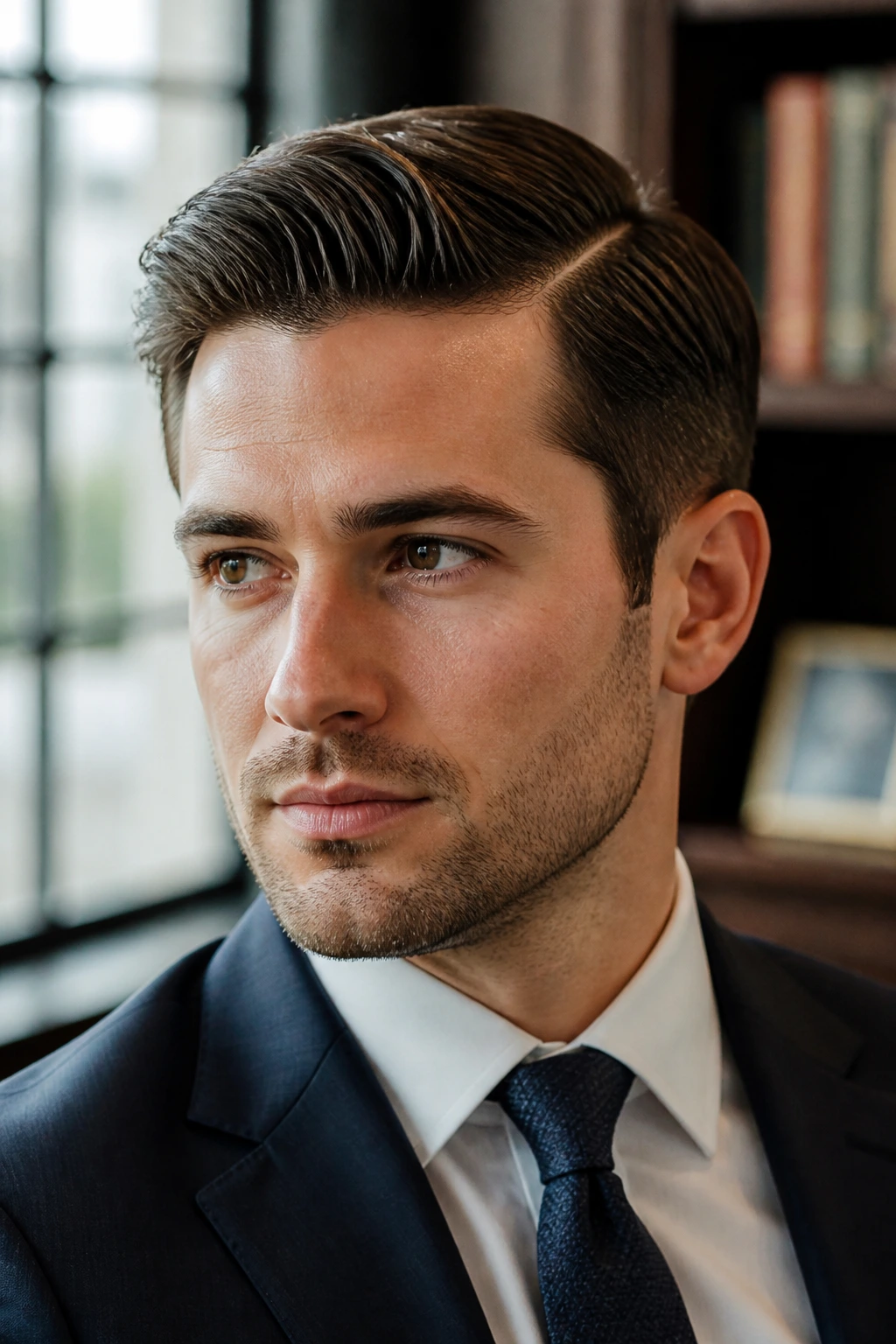
A real side part is not the same thing as a comb over trying to hide something. The classic side part is about line and balance. Hair on top stays long enough — usually 2 to 4 inches — to separate cleanly, and the sides get a taper or low fade that keeps the profile neat.
The part should sit where your hair naturally wants to split, or close to it. Fighting the grain is how you end up with a puffed-up side that never settles. A little medium-shine pomade helps if your hair is straight. For thicker hair, go lighter so the shape doesn’t turn glossy and stiff.
What I like about this cut is the range. It can look boardroom clean with a narrow part and a low taper. Or it can look a little softer, with more volume on top and a looser sweep. It’s one of those haircuts that changes its mood with the product, which makes it quietly useful.
6. Ivy League
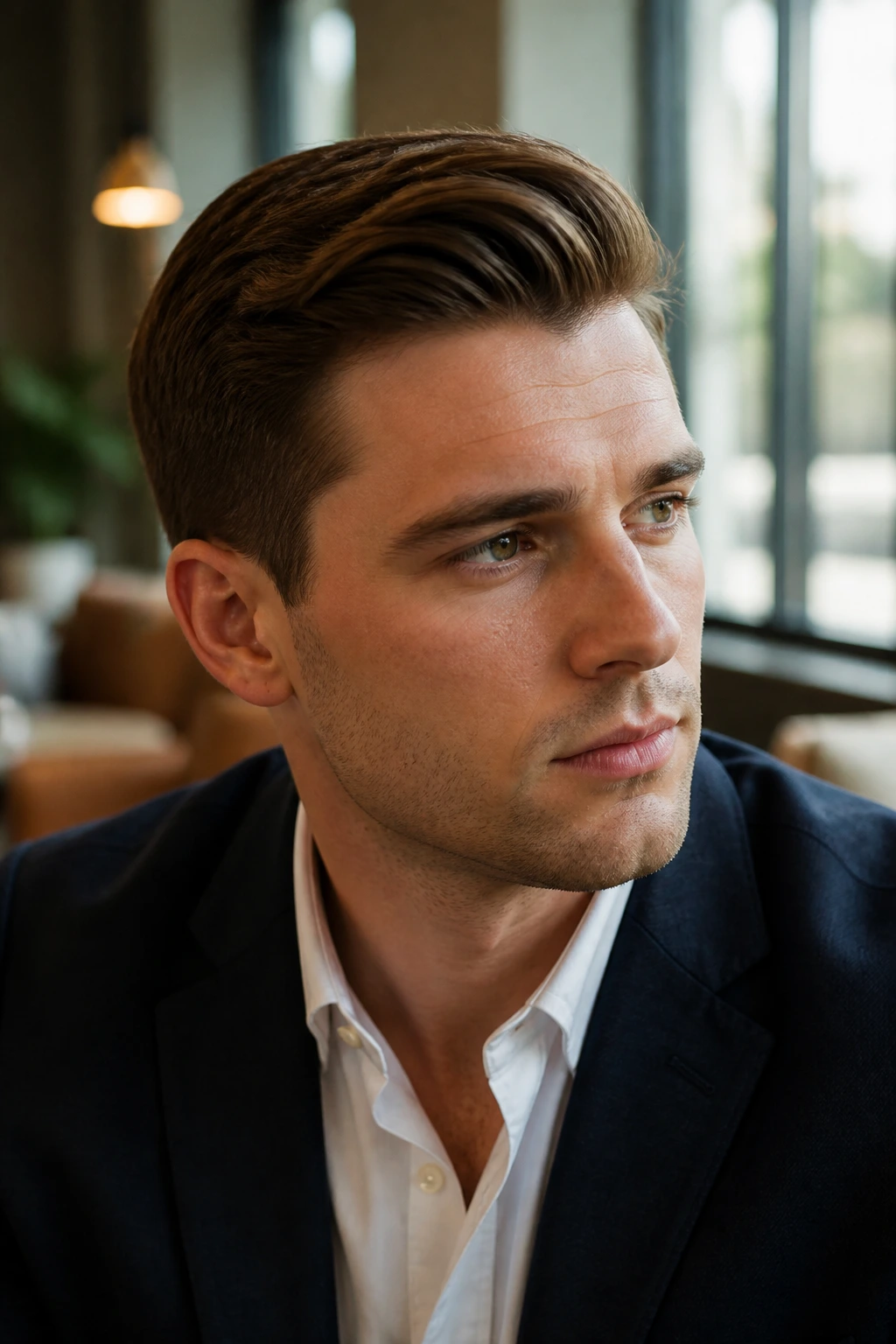
The Ivy League is the side part with a little extra lift in front. It keeps the front long enough to comb up and over, but not so long that it starts acting like a quiff. The sides stay tight, usually with a taper rather than a harsh skin fade, which keeps it neat and old-school in a good way.
This style works especially well if you want something that reads polished without feeling stiff. The front can have a slight wave or bend, and that bit of movement saves the cut from becoming too neat. If your hair is thick, ask for some internal texturing on top so it lays down without puffing out.
A lot of men who say they want “something professional” actually want an Ivy League. They just don’t know the name. It’s clean enough for a blazer, but it doesn’t look absurd with a T-shirt either. That versatility is the whole trick.
7. Short Quiff
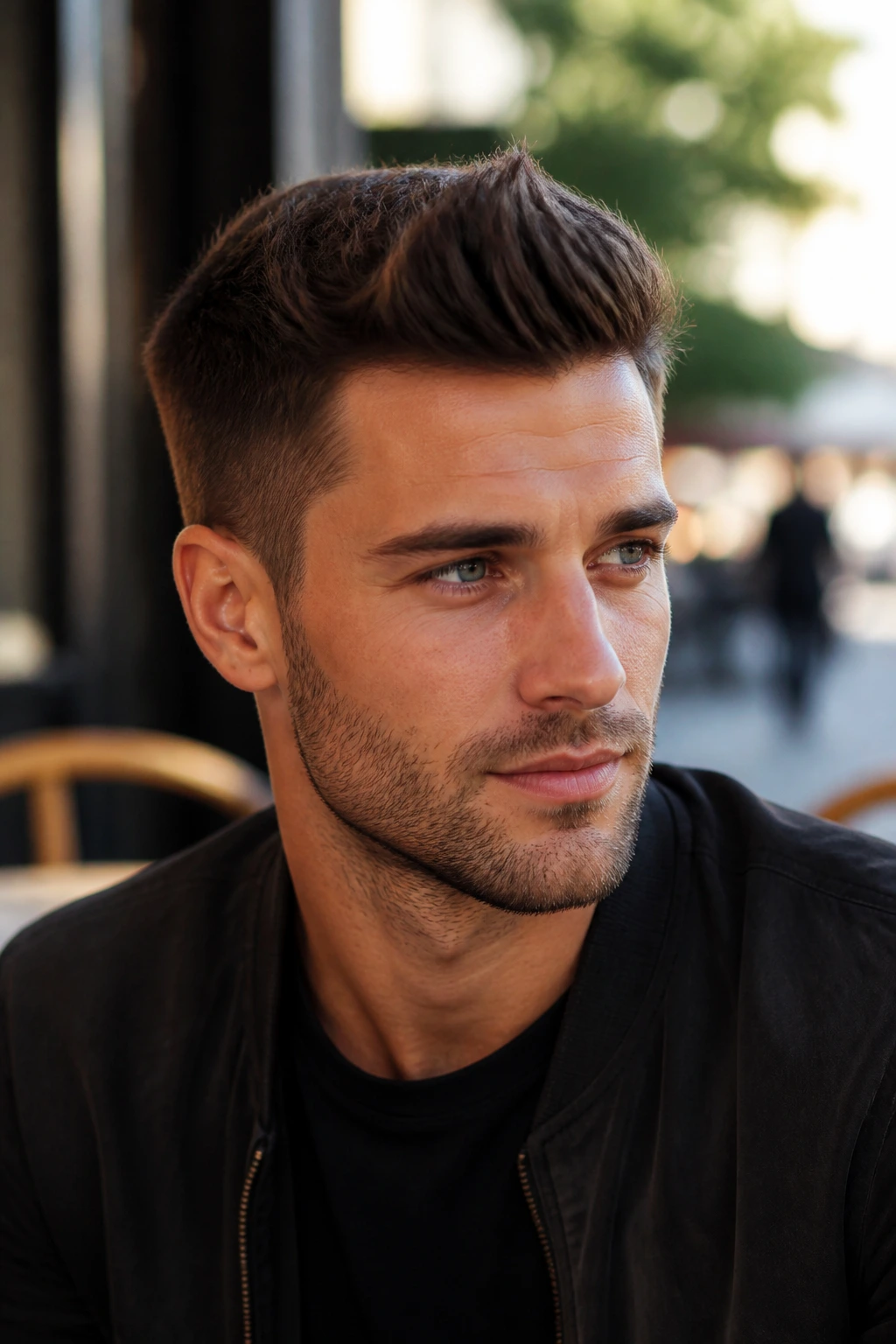
The short quiff is one of the best styles if you want lift without the full drama of a pompadour. The front is kept slightly longer than the rest of the top, then pushed up and back with a dryer or brush so it stands a little away from the forehead.
A good quiff needs direction. If the hair just poofs upward, you’re not there yet. Blow-dry the front while lifting from the roots, then finish with matte clay or fiber so the shape holds without shine. The sides should stay tapered or faded tight enough that the height on top actually shows.
It’s a useful cut for men with medium-density hair because it builds volume where you want it and keeps the rest compact. I prefer it when the front is textured rather than glossy. Gloss reads formal; texture reads lived-in. That difference matters more than most people think.
8. High Pompadour
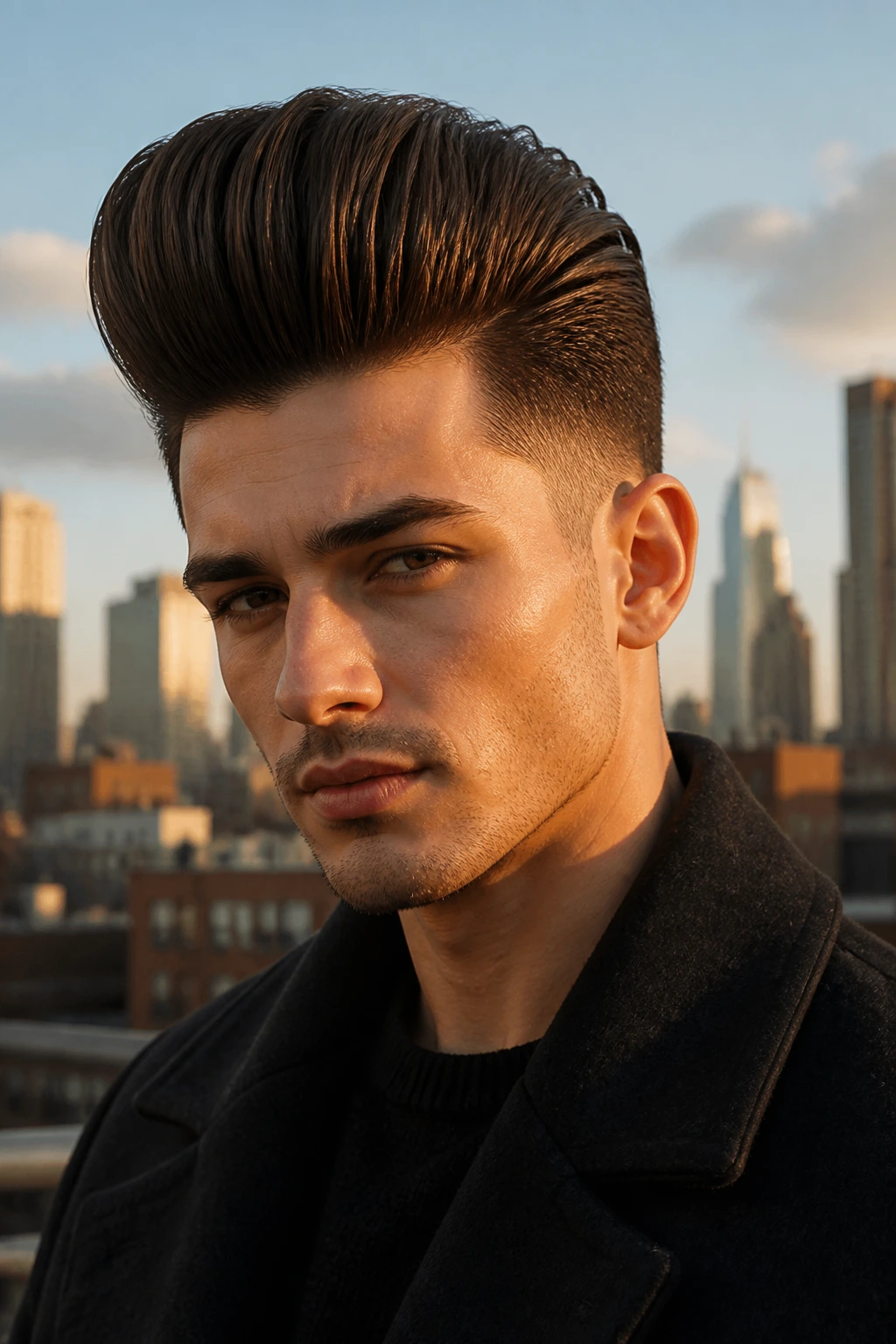
A high pompadour is loud in the best possible way. The front rises high, sweeps back, and keeps that rounded lift that makes the whole cut feel sculpted. You need enough length on top — usually 4 to 6 inches — or the shape never really gets off the ground.
This is not a low-maintenance style. It wants a blow-dryer, a round or vent brush, and product with enough hold to keep the front from collapsing. If your hair is thick and straight, you’re in good shape. If it’s fine, you’ll need a volumizing mousse or powder under the pomade to keep the lift from going flat by lunch.
The best pompadours don’t look sticky. They look controlled. That usually means a medium- to high-hold product with a matte or low-shine finish. Too much grease and the whole thing looks like it belongs under fluorescent office lights from another decade.
9. Slick Back Undercut
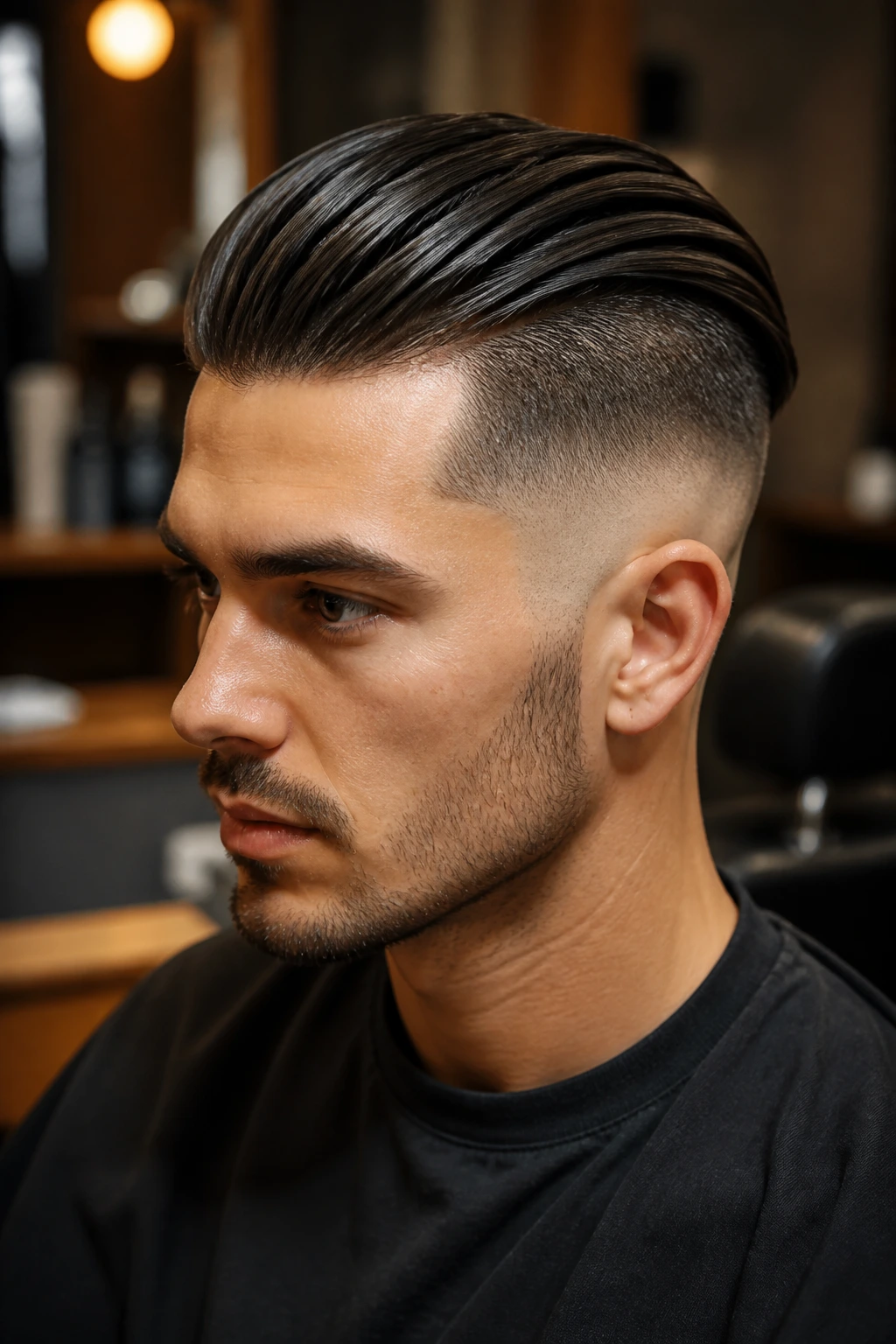
The slick back undercut is clean, severe, and a little dangerous-looking when done well. The sides are taken short and disconnected from the longer top, which gives the silhouette its edge. Then the top gets combed straight back, close to the head, so the style looks deliberate from every angle.
This cut works best with straight to slightly wavy hair that has enough density to stay together. Very fine hair can separate too much and expose the scalp. Very curly hair can fight the slick-back shape unless you’re willing to blow it out first. The undercut part matters because it creates contrast. Without that contrast, you just have long hair pushed back.
I prefer this style with a matte or natural-shine product instead of the wet, heavy finish people often default to. A glossy slick back can feel costume-y. A drier version looks sharper, cleaner, and a lot less like you borrowed your grandfather’s grease jar.
10. Comb Over Fade
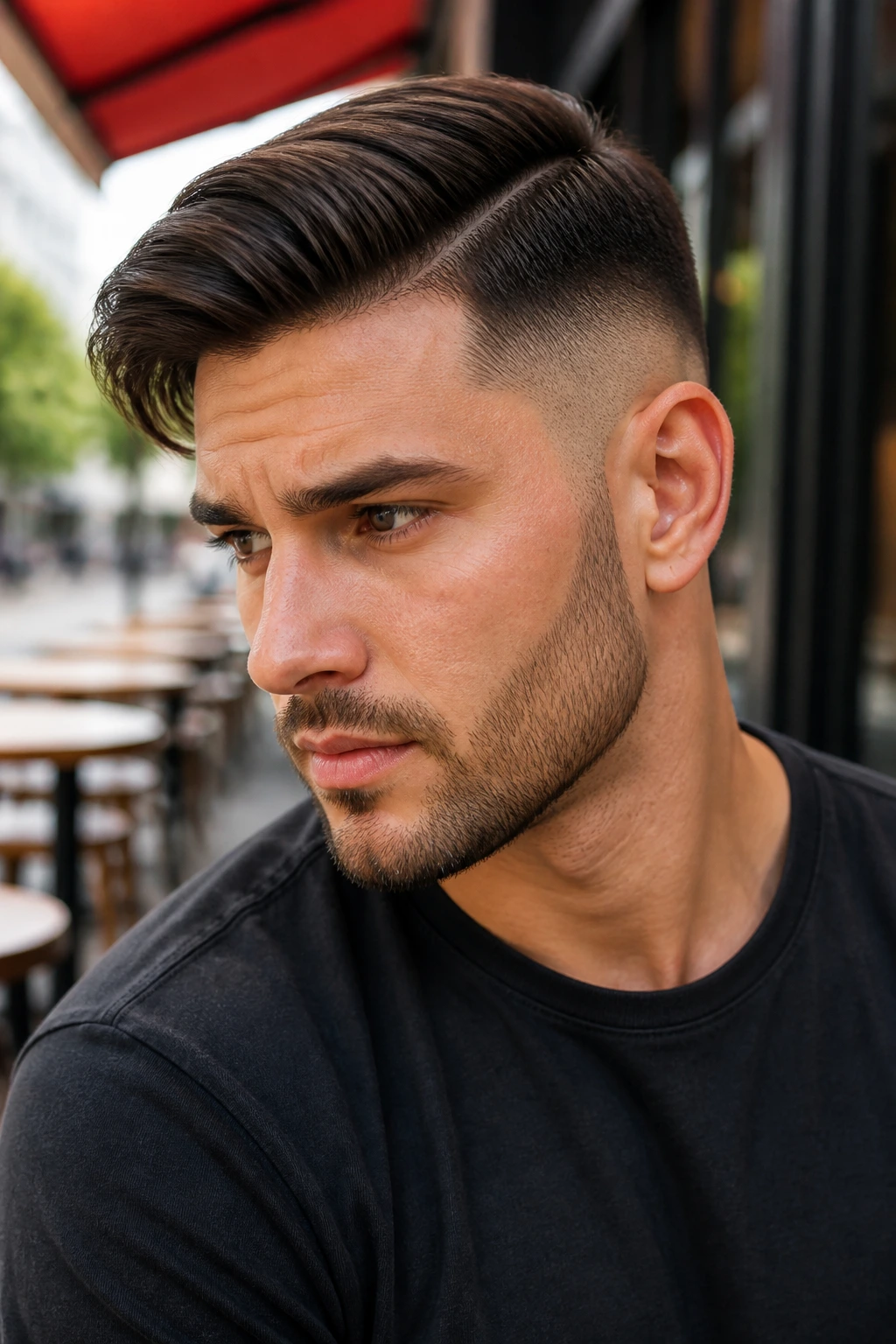
A modern comb over fade should not look like concealment. If the whole point is to sweep hair over a thinning zone and pretend nothing happened, the cut will feel old the second you leave the chair. The better version uses a side-swept top with texture and a fade that keeps the edges clean.
The top usually sits in the 2.5 to 4 inch range, depending on hair density. The sweep should be loose enough to move. If you comb it too tightly, it becomes a bad insurance policy. If you leave it too soft, the style loses shape. The trick is controlled movement.
This is a strong option for men with straight or slightly wavy hair who want a little height and a little direction. Pair it with a low or mid fade if you want the style to stay calm. Pair it with a hard part if you want more edge. Just don’t ask for a “comb over” unless you’re comfortable talking honestly with your barber about where the hair is and where it isn’t.
11. Curtains
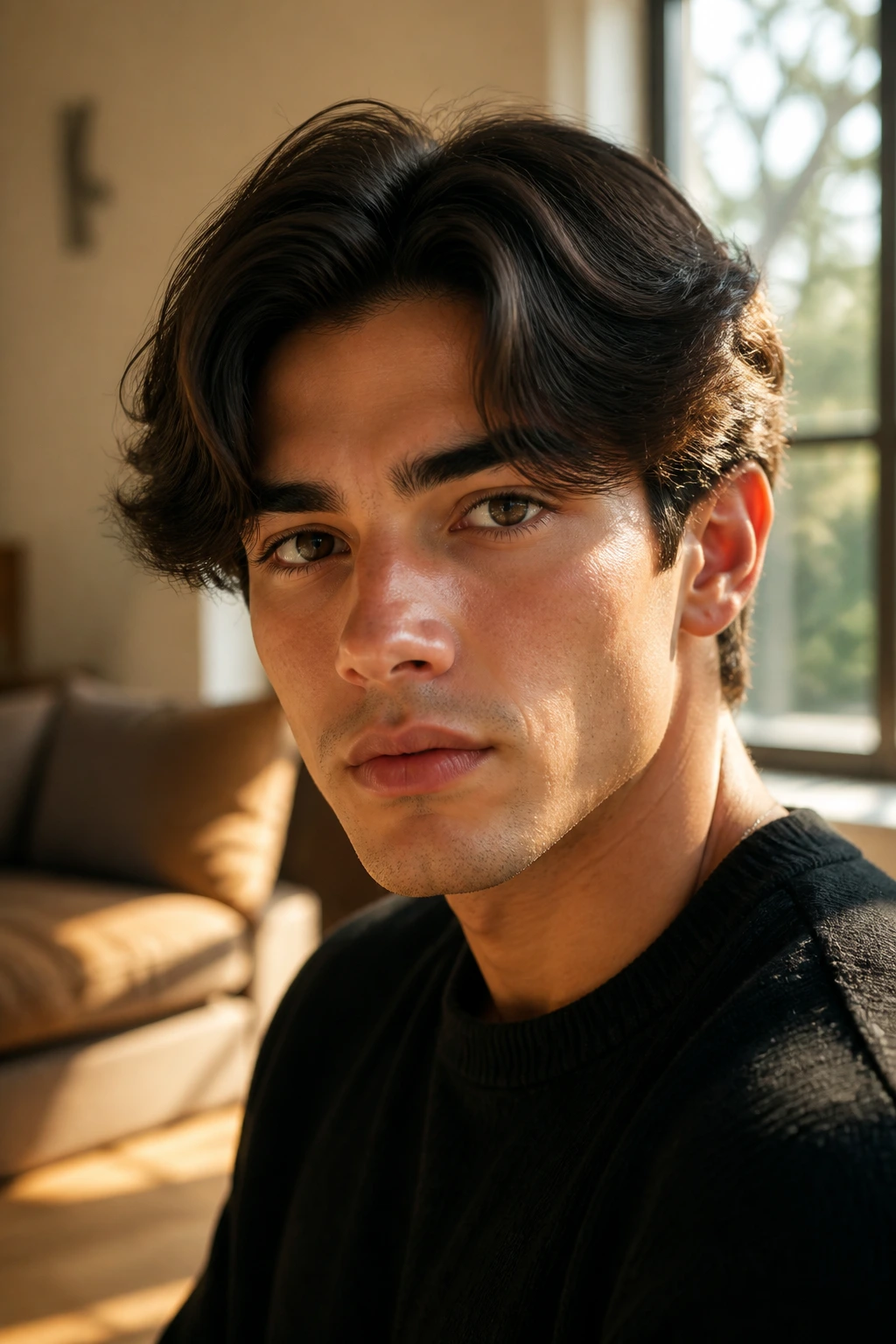
Curtains are exactly what they sound like: the hair falls away from the center and frames the face on both sides. The cut usually needs medium length on top — enough to split cleanly down the middle — and the sides need to be tidy enough that the whole thing doesn’t swell outward.
Straight and wavy hair handle this style best. Fine hair can make curtains look stringy unless there’s enough density at the front. Curly hair can do it too, but the middle part becomes more suggestion than line, which is fine if you like a looser look. Don’t force the part too hard. A natural split always looks better.
What makes curtains work is the shape around the eyes and cheekbones. They soften a strong forehead and add width where a long face needs it. A bit of sea salt spray and air-drying usually gets you 80 percent of the way there. The remaining 20 percent is a fingertip and some patience.
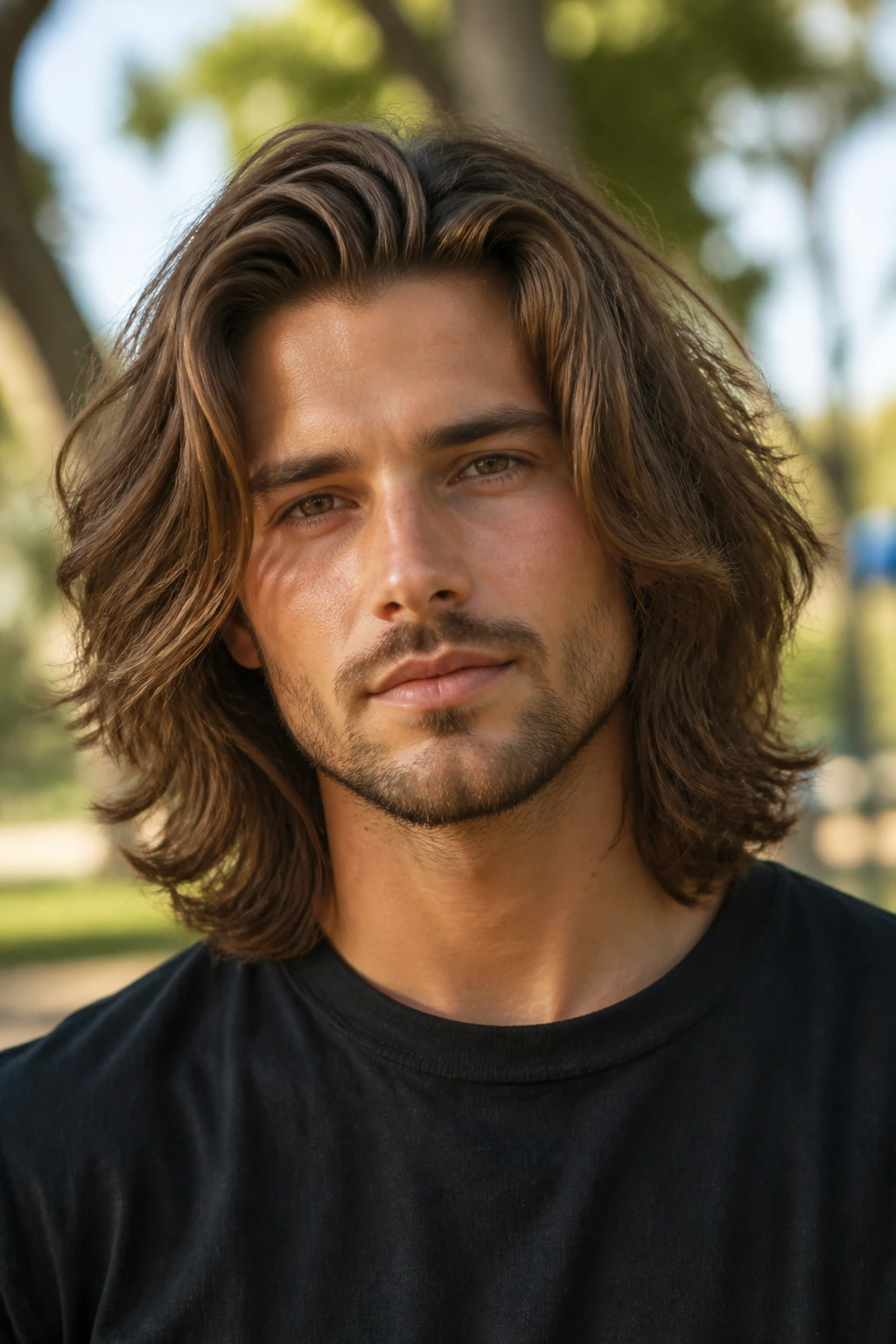
12. Bro Flow

Bro flow is the haircut that looks like you grew it on purpose, which is harder than it sounds. The length usually sits at the ears, jawline, or a little beyond, and the whole point is controlled movement. It should flow back and away from the face rather than hang there like you forgot to book a trim.
This style likes hair with natural wave or bend. Straight hair can wear it too, but it often needs more layering so it doesn’t fall into a flat curtain. The cut matters more than the product. If the layers are wrong, no amount of cream will make it flow. And yes, that sounds obvious. It still gets ignored all the time.
Bro flow pairs nicely with some facial hair because the longer length on top can look sparse without a bit of weight in the beard or stubble. If you like a relaxed profile, this is one of the few longer looks that still feels clean when the neckline is kept tidy.
13. Modern Mullet
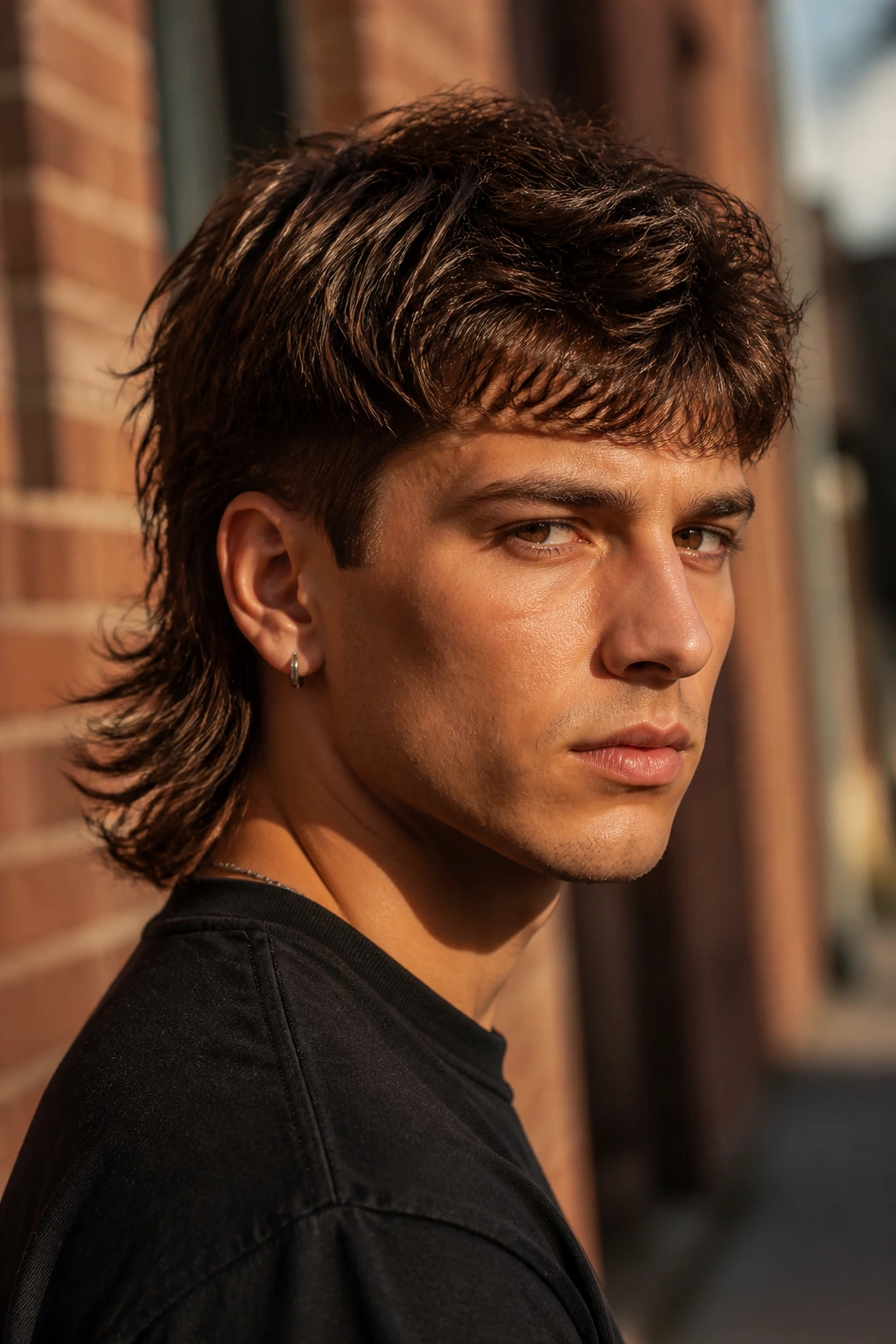
The modern mullet keeps the front and sides controlled while letting the back hang longer and looser. It’s not the wild, shaggy version people joke about. The newer shape is textured, narrow through the sides, and much more deliberate about the transition from crown to nape.
A good modern mullet needs the back to be long enough to matter, but not so long that it feels like a costume. Think short around the temples, textured on top, and then a back section that gives the whole cut some attitude. Curly and wavy hair can make this look better than straight hair because the movement in the back softens the split.
I like this one when someone wants personality without going full theater kid. It’s got edge, but it still looks like an actual haircut. If you’re nervous, ask for a soft mullet rather than a hard one. The difference is a few millimeters on the sides and a lot less regret.
14. Wavy Shag
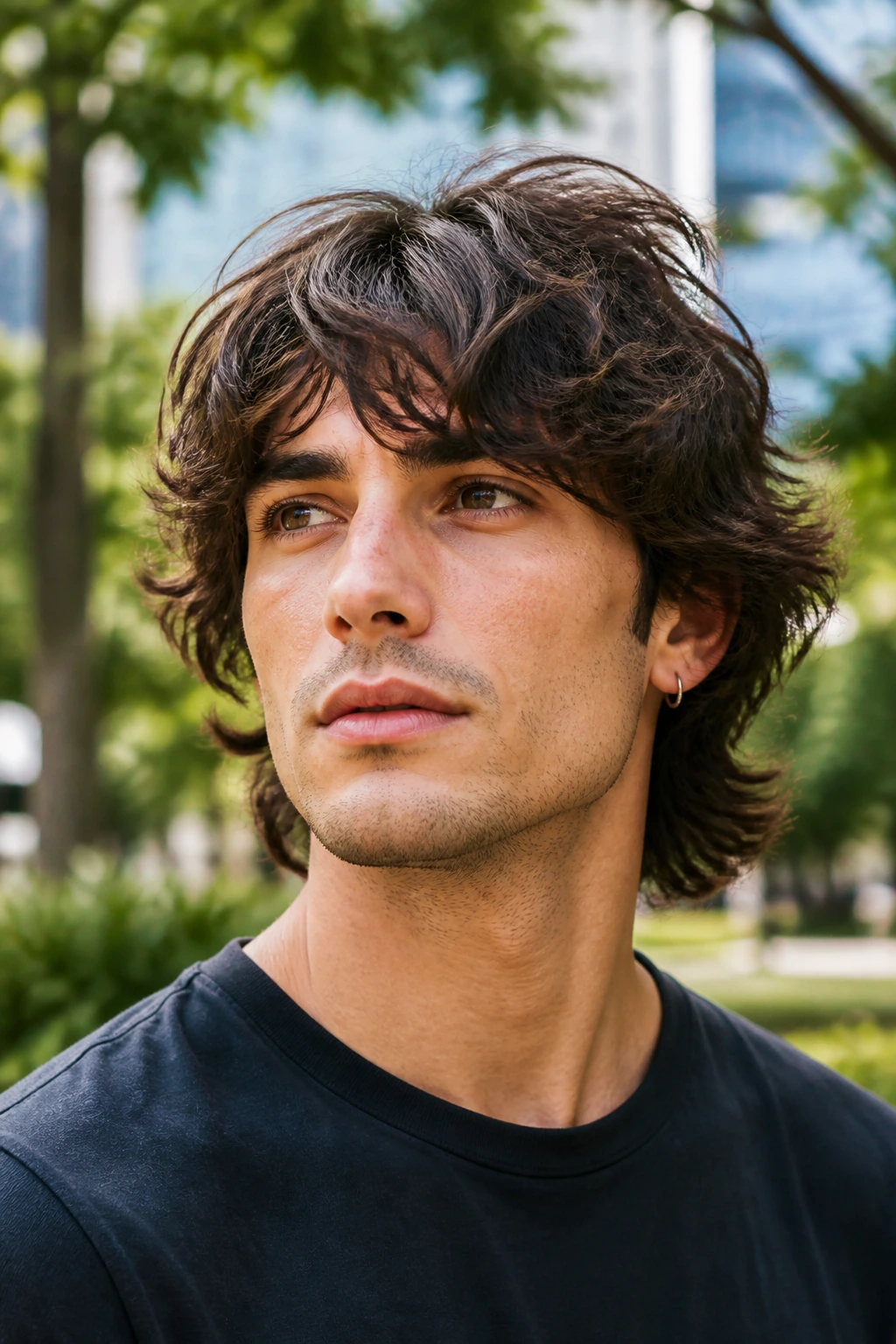
The shag is one of the rare longer cuts that gets better when it’s a little imperfect. Layers are cut through the top and sides so the waves break up instead of sitting in one heavy sheet. The result is movement everywhere, especially around the cheekbones and ears.
This cut is a gift for men with natural wave who hate spending time styling. A bit of leave-in conditioner or light cream on damp hair is enough. Let it air-dry, then mess with it a little. The goal is separation, not precision.
If your hair is thick, ask for more internal layering so the top doesn’t swell into a triangle. If it’s fine, keep the layers softer so you don’t lose too much body. A shag that’s too choppy can go limp fast. A shag that’s too heavy just becomes shoulder-length boredom.
15. Curly Taper Fade
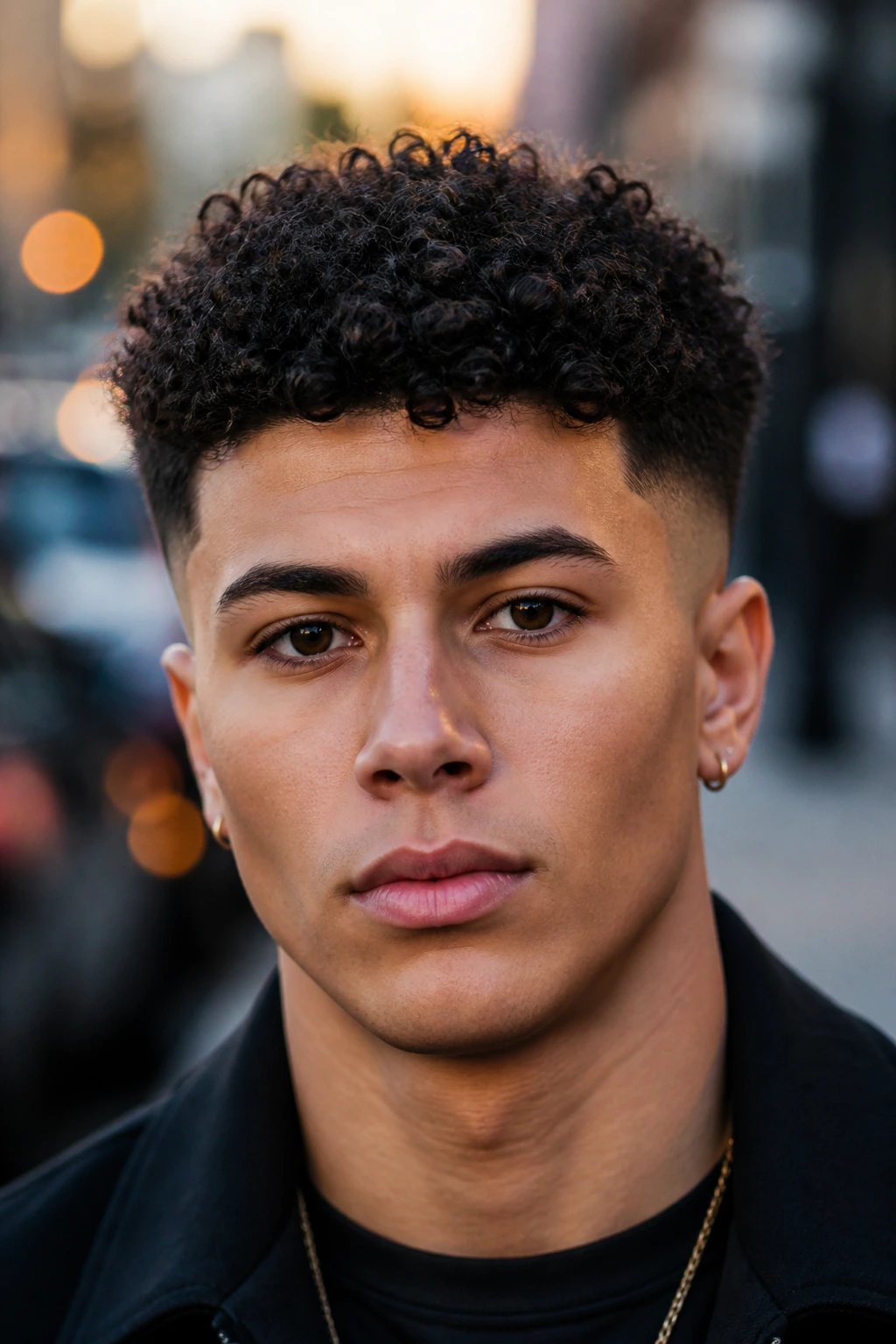
Curly hair likes a clean frame, and the taper fade gives it exactly that. The sides and nape are gradually shortened while the curls on top stay intact, so the texture gets to be the headline instead of the problem you’re trying to tame.
This is one of the easiest curly styles to keep neat because the fade gives structure even when the top changes day to day. A curl cream or light gel on damp hair is enough to define the shape. If your curls frizz, use a diffuser for a few minutes instead of rough drying with a towel. That towel rub is a menace.
Ask your barber to keep enough weight near the crown so the top doesn’t look too separated from the sides. A good curly taper fade still has shape from the front and profile. The cut should look finished even if the curls do their own thing by noon.
16. Curly Fringe
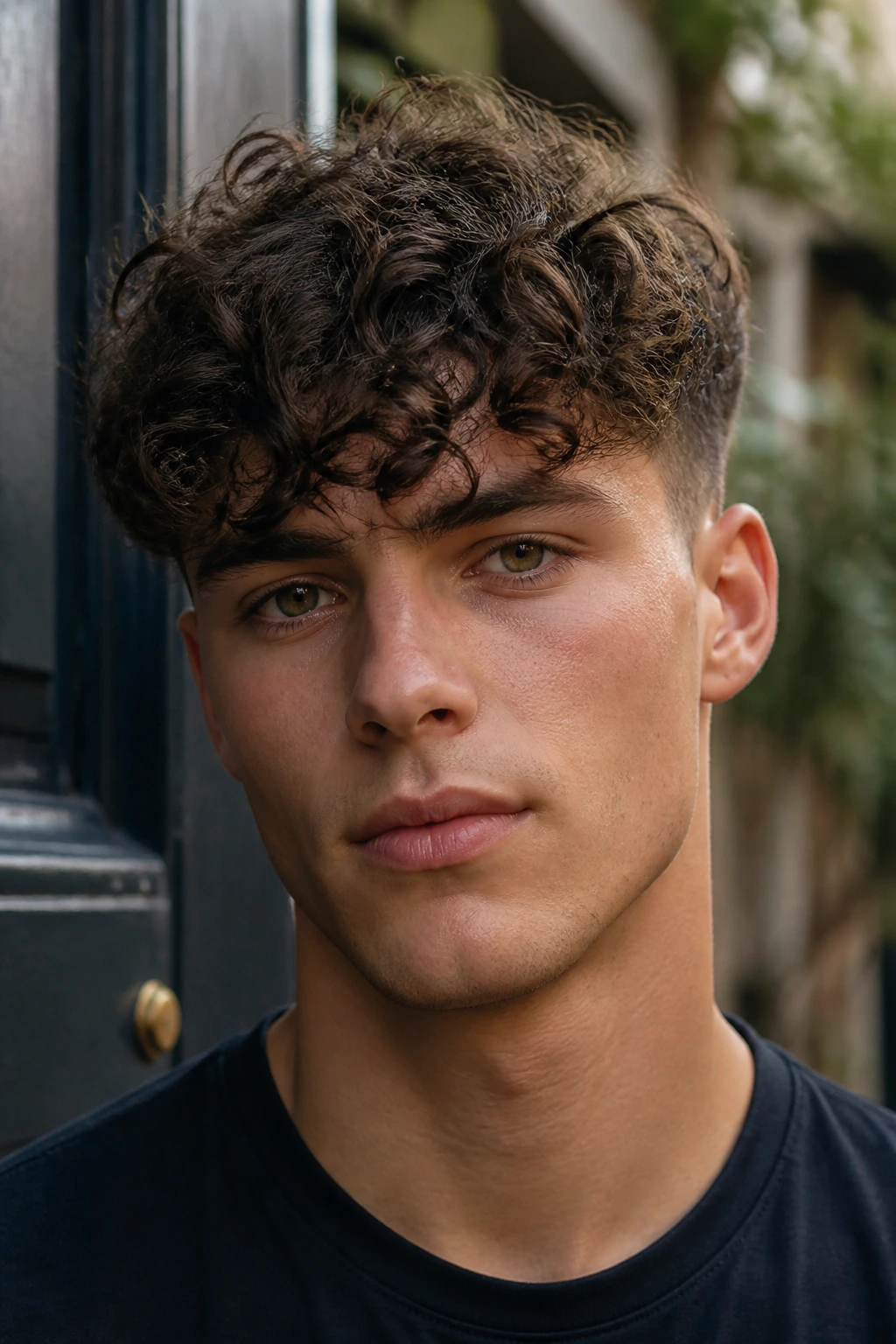
The curly fringe brings the curls forward, which sounds simple until you see how much better it can be than pushing them back. The front falls over the forehead in a controlled way, usually with shorter sides and a little length left at the top to let the curls stack.
This is smart for men whose curls shrink up when dry. Leave enough length so the fringe still lands where you want after it tightens. If the barber cuts it too short, the style disappears. Too long, and it blocks the eyes. Somewhere in the middle is the sweet spot, and it usually takes a trim or two to get there.
The fringe softens angular faces and makes a strong brow line feel less harsh. It also gives curly hair a front-facing shape that doesn’t require much daily wrestling. A little cream. Maybe a finger-coil on the front pieces. Done.
17. High Top Fade
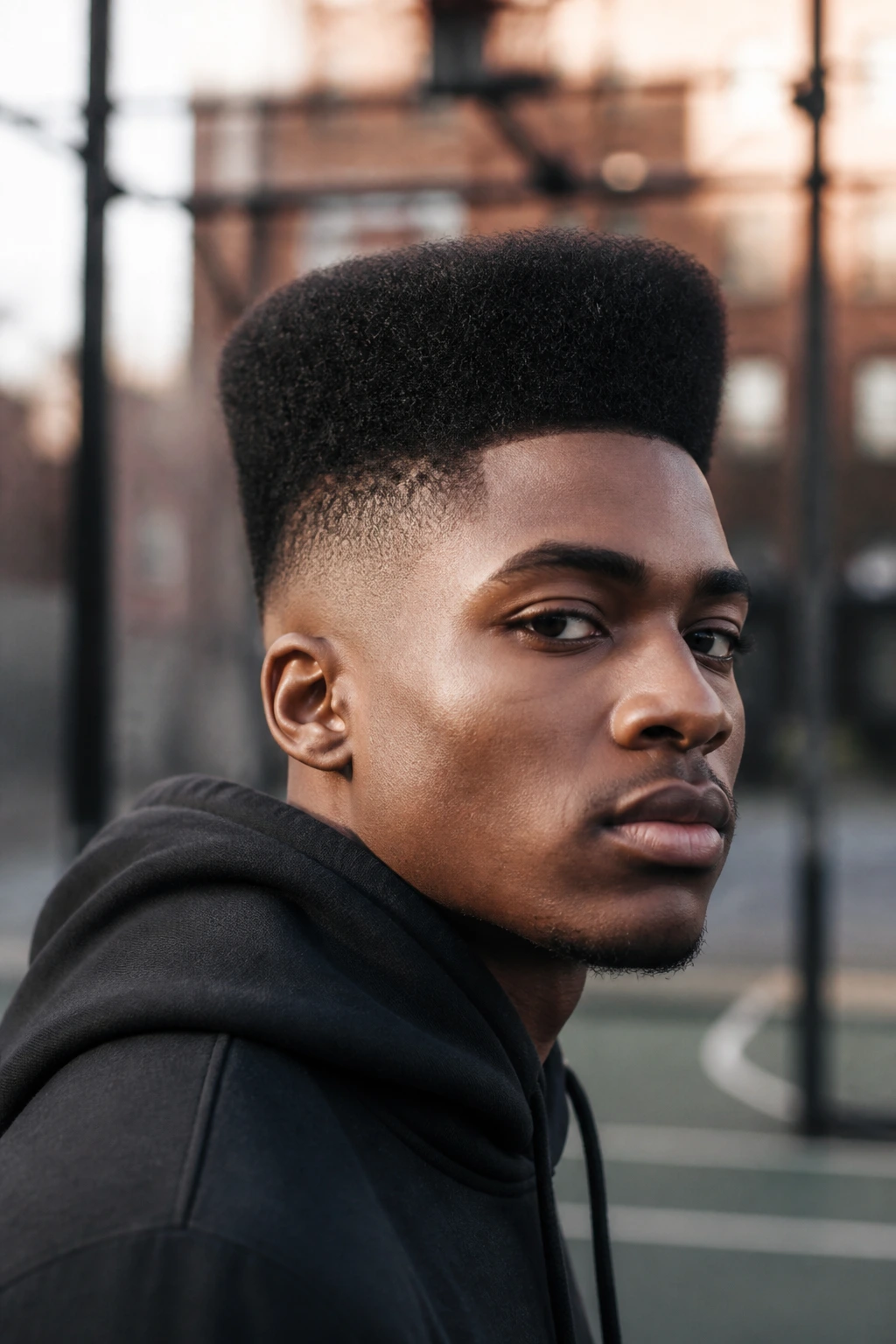
The high top fade is all about geometry. The top stands up and out in a clean, boxy shape while the sides fall sharply away. It works best with coily or tightly curled hair that can hold structure without collapsing into itself.
You need a barber who understands balance here, because the shape has to be even from front to back and side to side. A weak high top looks like a forgotten rectangle. A strong one looks precise. The outline is the whole point, so this is not the cut for someone who likes to leave the chair and ignore the mirror.
Keep the top regularly shaped and the fade fresh. That’s the deal. If you let the sides grow too far, the top loses its floating effect. A lineup at the forehead and temples keeps everything crisp, but the bulk on top should stay soft enough to keep the style alive.
18. Natural Afro Shape-Up
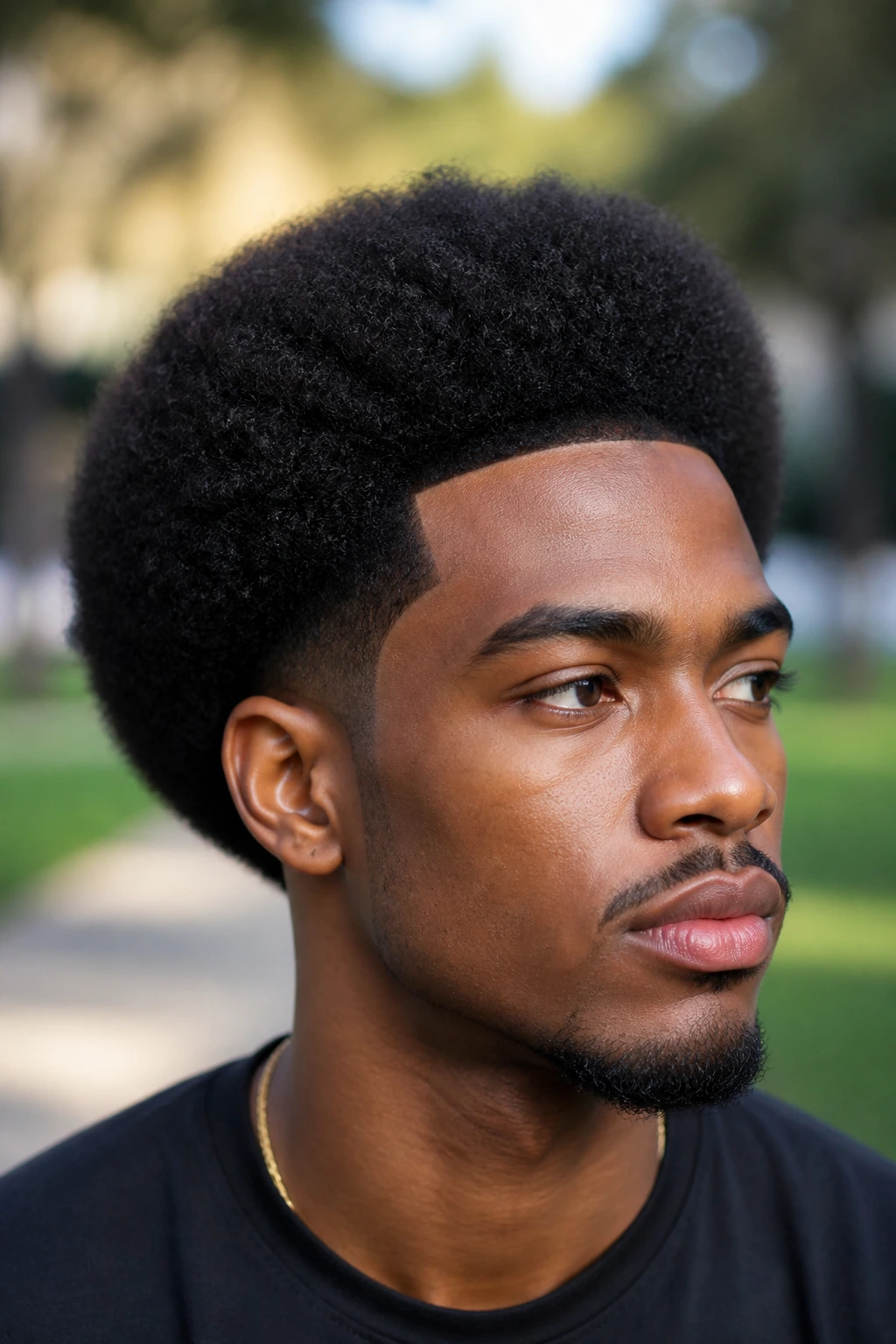
A natural afro shape-up lets the hair keep its fullness while cleaning the edges around the temples, forehead, and neckline. The shape can be round, slightly square, or a little high at the crown, depending on your growth pattern and face shape.
I like this cut because it respects texture instead of trying to flatten it. The silhouette matters more than product, which is refreshing. A light moisturizer or leave-in conditioner keeps the hair from drying out and gives the shape some weight, but the real work happens in the outline.
If you want a sharper look, the line-up can be more angular. If you want something softer, keep the edges rounded and natural. The difference is dramatic. One reads crisp and formal; the other feels relaxed and full. Both work if the barber leaves enough length to show the texture.
19. Mini Twists with Taper
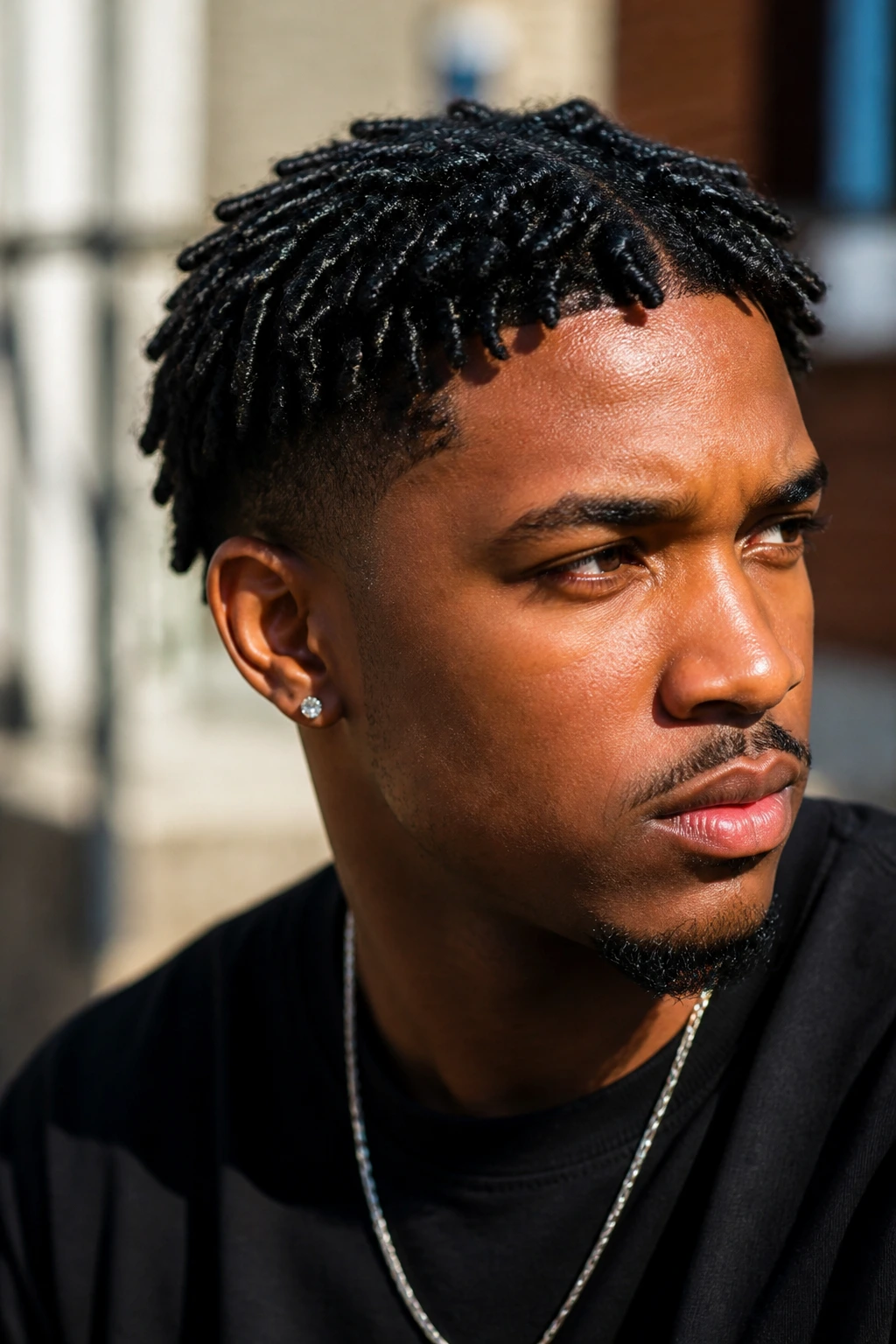
Mini twists are one of the cleaner protective styles for men who want texture and low daily maintenance. The hair is separated into small sections and twisted, while the sides and neckline get a taper so the whole look stays neat instead of heavy.
This style is especially useful if you want to reduce daily manipulation. Once the twists are in, you’re mostly managing moisture and keeping the scalp comfortable. That means a light oil or spray, not a greasy build-up that sits on the roots. Keep the parts clean. That detail does a lot of work.
The taper keeps the style from looking boxy around the edges. A low taper usually looks more natural than a high one, unless you want the contrast to show. If you like the idea of a protective style but hate the look of a full-length silhouette, this is a strong compromise.
20. Locs with Clean Taper
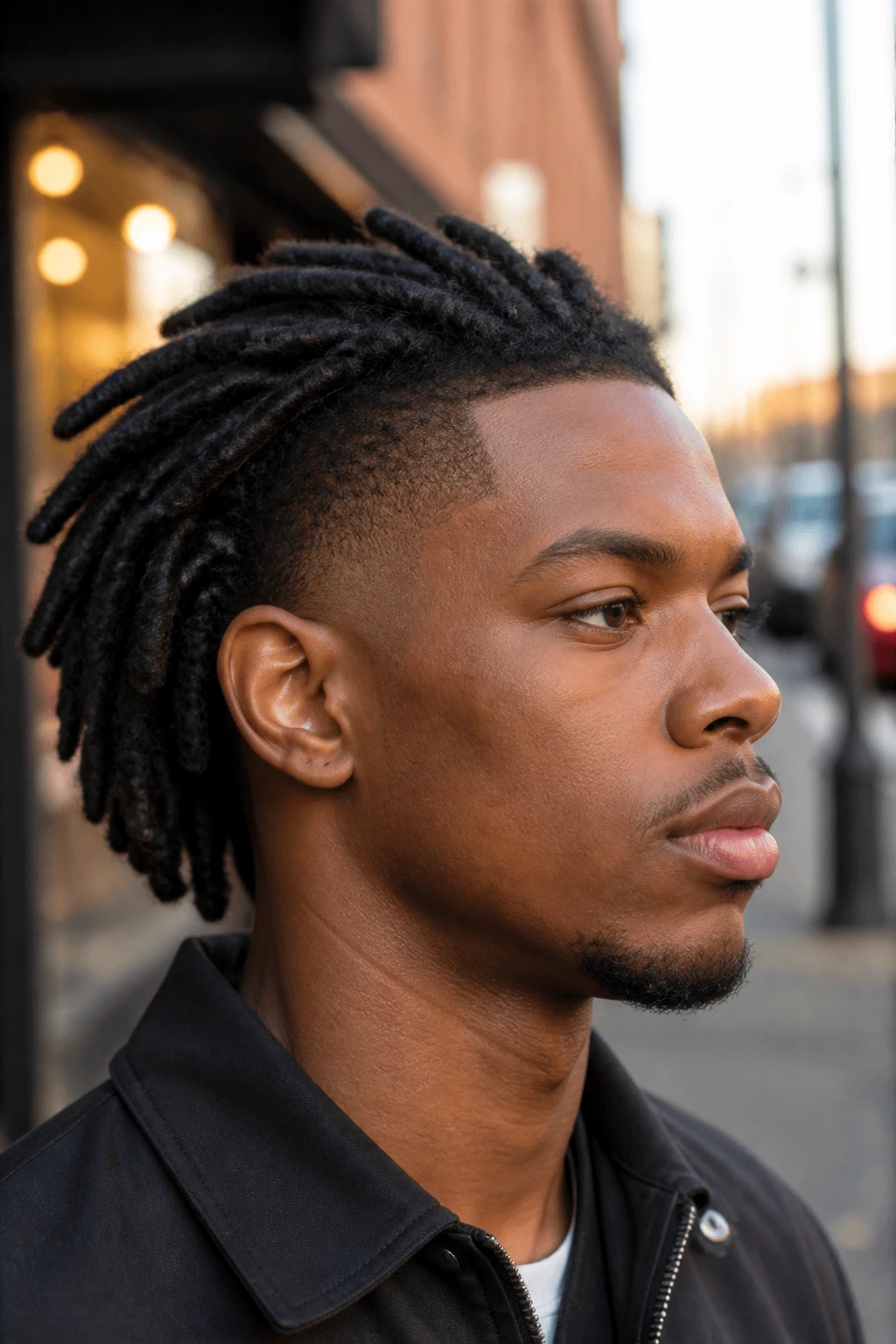
Locs can look rugged, polished, or both, depending on how the edges are handled. A clean taper at the temples and neckline gives the locs room to sit without turning the whole head into one heavy shape. That’s the part people often miss.
The loc length can vary wildly, so the key is balance. Short locs read more structured; longer locs can feel freer and more dramatic. Either way, a fresh taper keeps the outline from blurring. It also makes hats sit better, which matters more than people admit.
Maintenance is about the scalp and the edges. Keep the root area clean, retwist on a sensible schedule, and don’t drown the locs in product. Heavy residue builds up fast and makes the hair feel dull. Clean locs with a crisp taper always look more intentional than overdone ones.
21. Flat Top
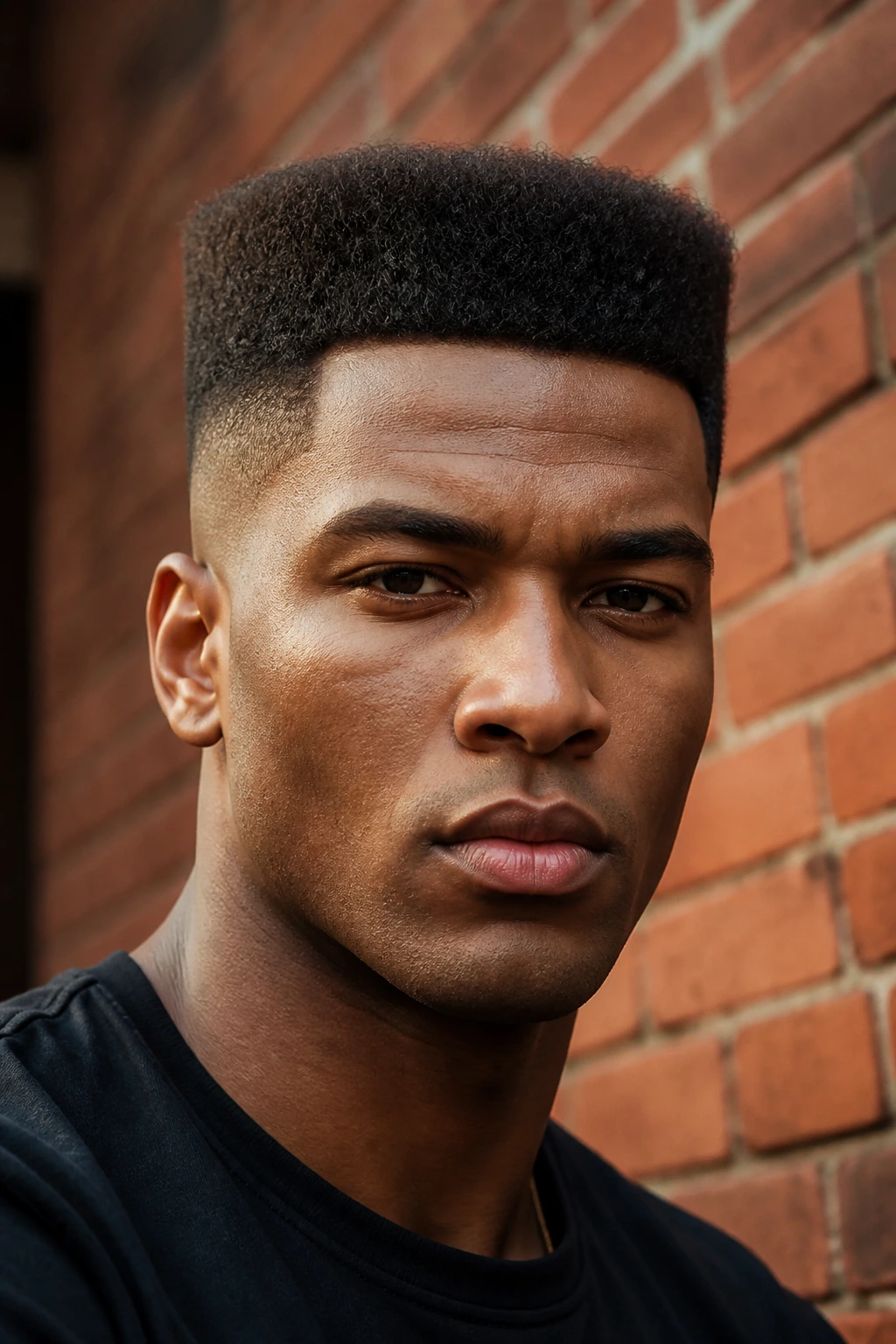
The flat top is architectural. The top is cut level, often with a boxy outline, and the sides drop away sharply. It takes confidence because the shape is unmistakable. There’s no pretending you just woke up like this.
Coarse, coily hair does this best because it holds the upright structure naturally. The barber has to keep the top even from front to back, and the corners need to stay square enough to read as a shape. If one side slumps, the whole look loses its edge.
This is not a casual haircut. It needs regular shaping to stay crisp. But when it’s fresh, it has a kind of clean force that few cuts can match. If you like structure, precision, and a little old-school swagger, the flat top is still a monster of a look.
22. Faux Hawk
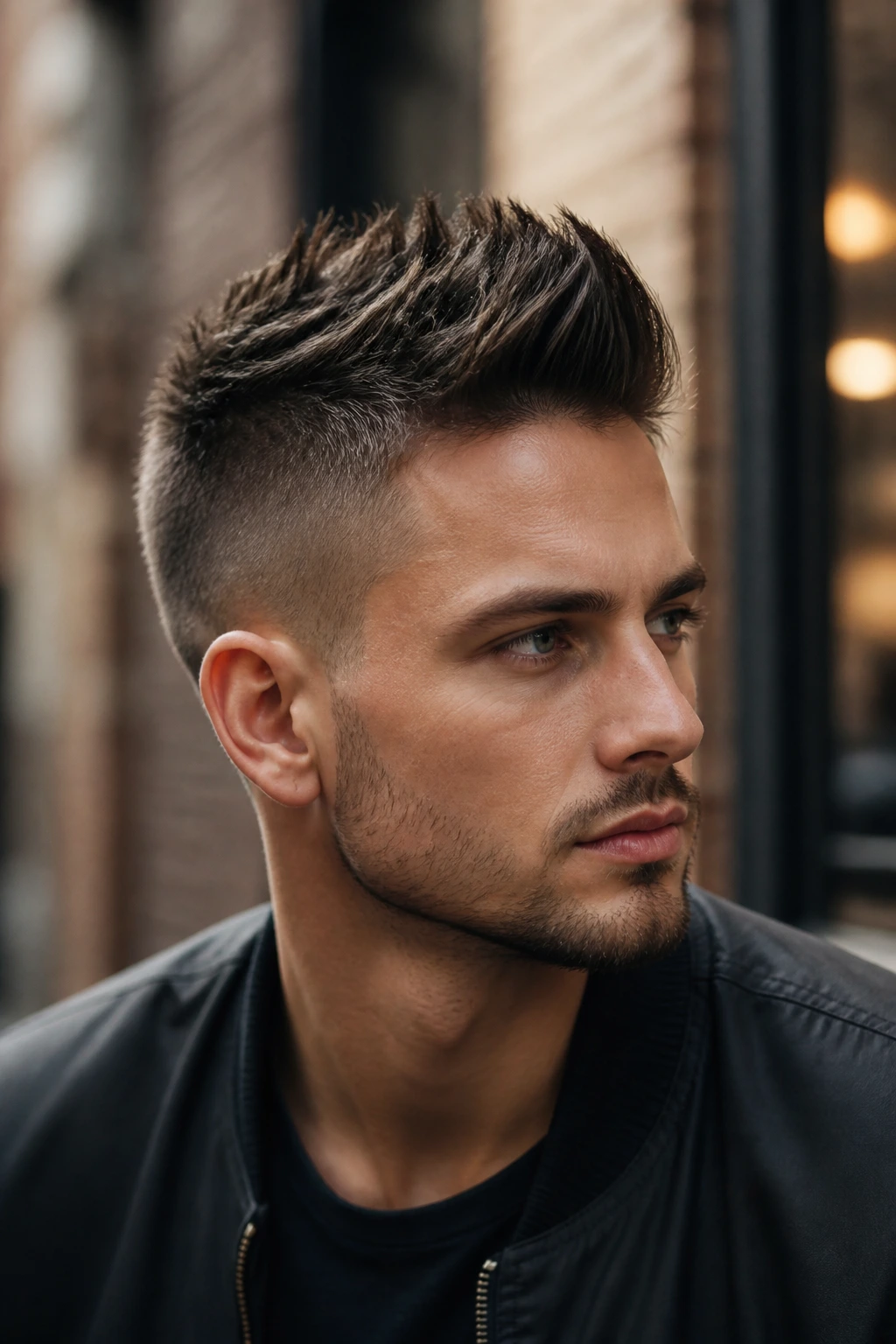
The faux hawk borrows the attitude of a mohawk and softens it into something easier to wear. The center strip stays longer, the sides are shorter, and the top gets styled inward toward the middle so the silhouette rises without going full punk.
This is a good choice if you want some energy without shaving the sides down to nothing. The taper or fade can be subtle or strong depending on how bold you want the result to feel. Straight hair needs more product to hold the ridge. Curly hair can build the shape naturally, which is honestly a cheat code.
It works best when the top is textured. If the hair is too neat, the faux hawk becomes stiff. If it’s too loose, it turns into generic spikiness. Somewhere between those two is the sweet spot, and that’s where the cut feels alive.
23. Burst Fade Mohawk
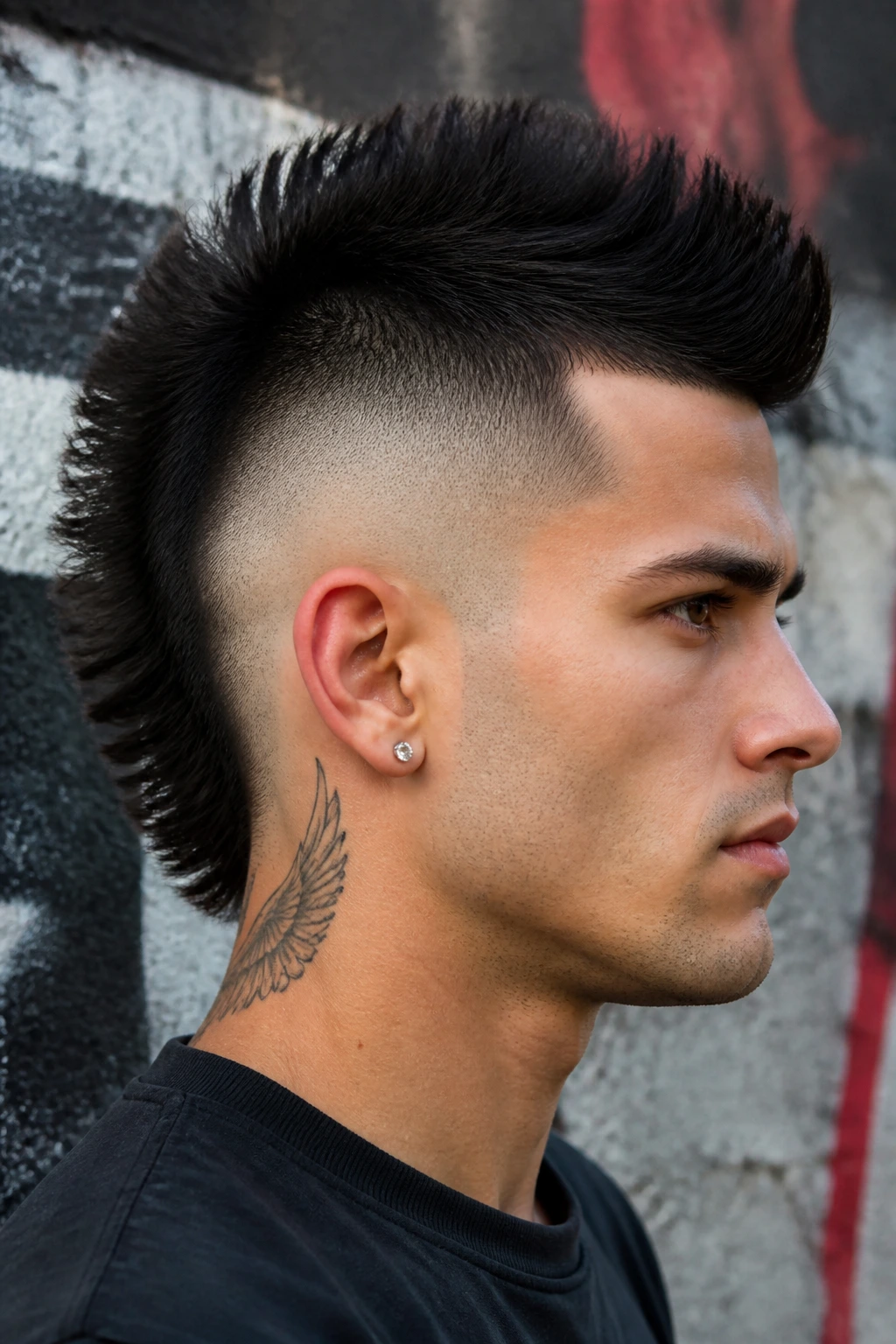
The burst fade mohawk curves the fade around the ear instead of running straight down the head, which gives the whole cut a tighter, more sculpted profile. The center section stays longer and more prominent, while the sides flare away in that rounded burst shape.
Curly and coily hair make this style sing because the mohawk strip has natural lift. Straight hair can pull it off too, but it needs more product and more shaping. The result is energetic either way. It just reads differently — curly hair looks fuller, straighter hair looks sharper.
I like this cut when someone wants a bit of edge without sacrificing cleanliness around the temple and neckline. It’s a strong choice with a beard because the fade can flow into facial hair nicely. If the barber balances the burst cleanly, it looks detailed rather than loud.
24. Receding-Hairline Brush-Up
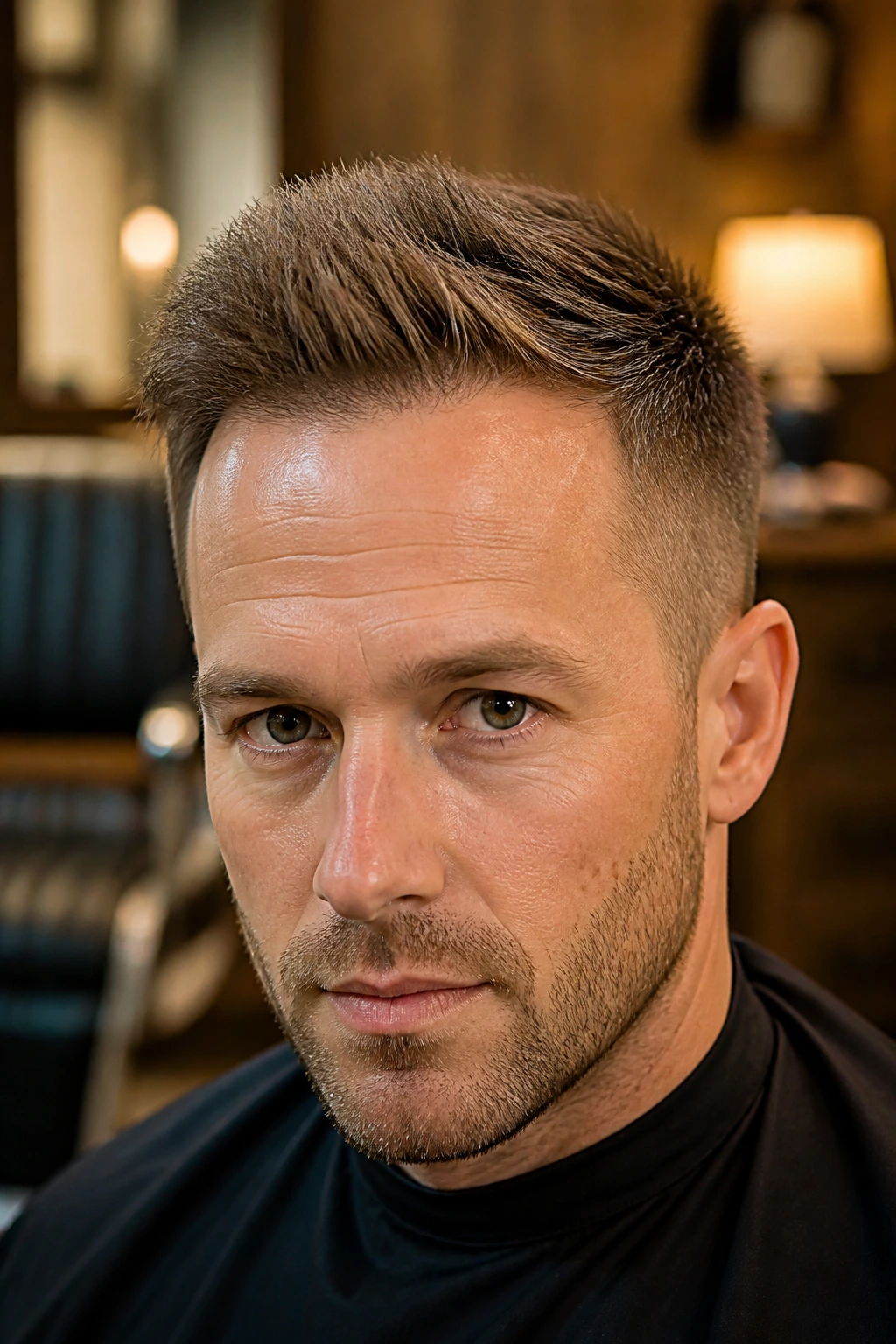
A receding hairline does not automatically mean your haircut options are shrinking. It means the cut has to work with less frontal density and stop drawing attention to weak spots. The brushed-up crop does that by keeping the top short, textured, and lifted rather than long and combed over.
The front should be styled up and slightly forward, not dragged backward. That tiny shift changes the whole read of the hairline. A matte paste or powder is better than shiny product, because shine makes thin areas more obvious. Short sides help too. The contrast keeps the eye on the shape, not the scalp.
If you’ve got a bit of temple recession, ask your barber to keep the fringe broken up rather than blunt. A harsh line at the front can highlight thinning in the wrong way. This cut works because it gives the front some energy without asking it to pretend it’s fuller than it is.
25. Hard Part Side Sweep
A hard part side sweep is the side part with a razor-cut line to make the separation unmistakable. It gives the haircut a more deliberate edge, which is useful if your hair is thick and tends to blur into itself after a few hours.
The sweep itself should stay smooth, not frozen. If you load on heavy pomade and comb every strand into place, the cut starts to look dated. Keep the top with some texture, then let the hard part carry the sharpness. That contrast between crisp line and softer top is what keeps it modern.
This style also works well if you wear glasses or a narrow collar line, because the clean split adds structure near the face. It does need upkeep. Hard parts grow out fast, and once they soften, the whole haircut loses some of its edge.
26. Undercut with Long Top
The undercut with a long top is the stylist’s playground. The sides are cut short and disconnected, while the top stays long enough to move in several directions — back, over, messy, swept, or tied partially back. It’s less a single hairstyle and more a platform.
That flexibility is the point. If you like changing your look without changing your haircut every time, this one gives you options. Straight hair can look sharp and clean. Wavy hair gets extra texture. Thick hair gets more dramatic contrast. The only catch is that the disconnect can look severe if the top is too thin or the sides too short for your face.
Use this cut if you like having some drama in the silhouette. A matte product keeps the top flexible. A firmer pomade can turn it into something more polished. Either way, the undercut creates the frame. The top gets to play inside it.
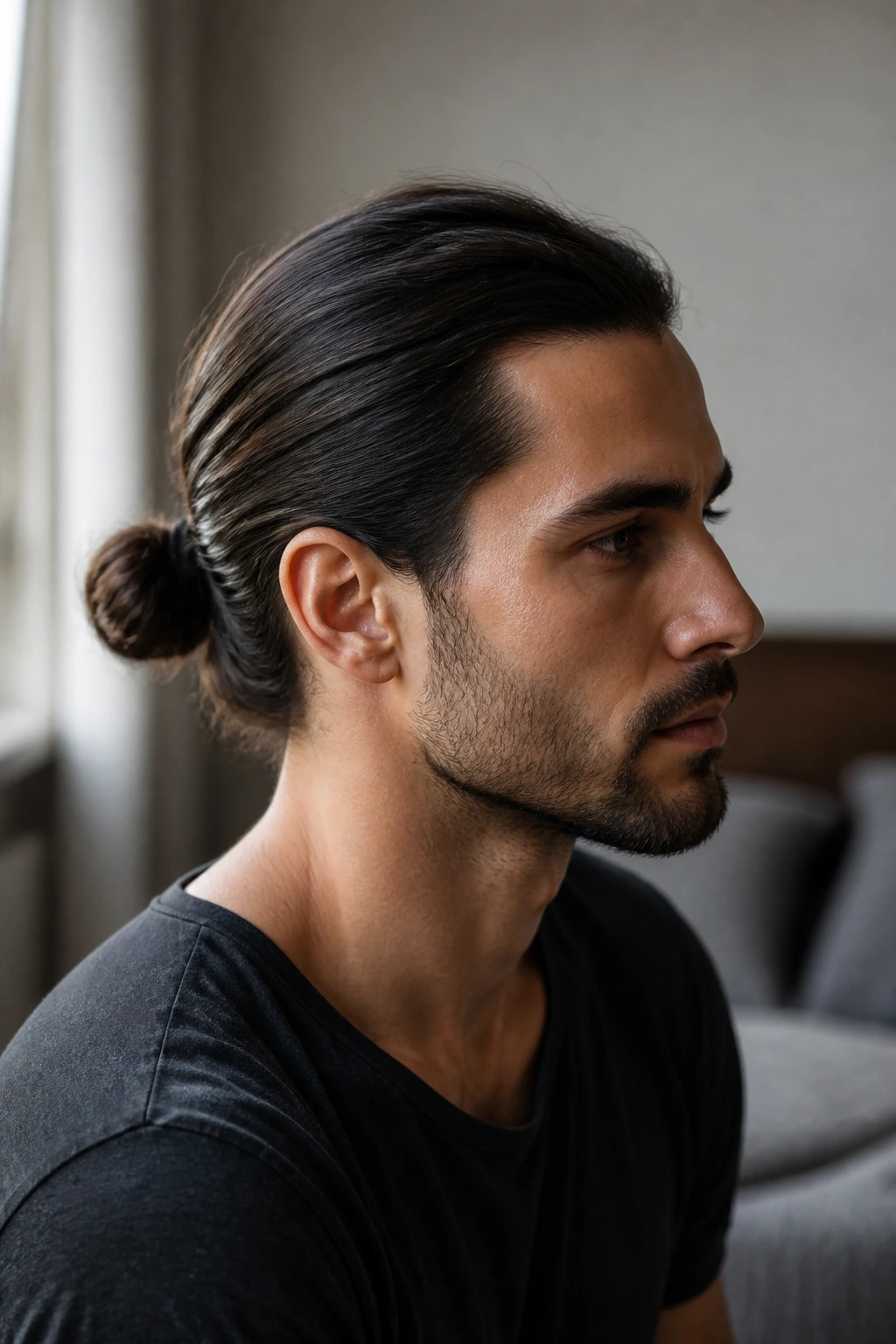
27. Man Bun
The man bun works when the length is healthy and the sides are kept tidy enough that the look doesn’t become a lump at the back of the head. You need enough hair to pull it back cleanly — usually past the jawline — and enough patience to keep the bun from sliding down by midday.
I like a low bun better than a high one for most men. It looks calmer and less like a gym shortcut. A center or off-center part can soften the shape if your face is broad, while an undercut can clean the sides for a stronger contrast. There’s a lot of room to adjust this one.
The danger is skipping maintenance. Split ends, dry edges, and a stretched hair tie make the style look tired fast. Trim the ends regularly, keep the scalp moisturized, and don’t yank the bun too tight. That tension can be ugly, and it can hurt.
28. Shoulder-Length Layered Waves
Shoulder-length layered waves are the style for men who want movement without forcing structure. The layers keep the length from hanging in one heavy curtain, and the waves do most of the visual work. It can look laid-back, sharp, or a little rugged depending on how the ends are cut.
If your hair is naturally wavy, this cut is a gift. If it’s straight, you’ll need more layering and probably a bit of sea salt spray or light texture cream to keep the shape from falling flat. The neckline matters here too. A clean trim around the nape and ears stops the style from drifting into “I meant to get a haircut” territory.
This is not a high-control style. That’s the beauty of it. It looks better with a little movement, a little air, a little lived-in mess. If you’re patient with the grow-out and keep the ends healthy, it can be one of the best-looking longer options on a man.
What Makes a Cut Hold Up Between Haircuts
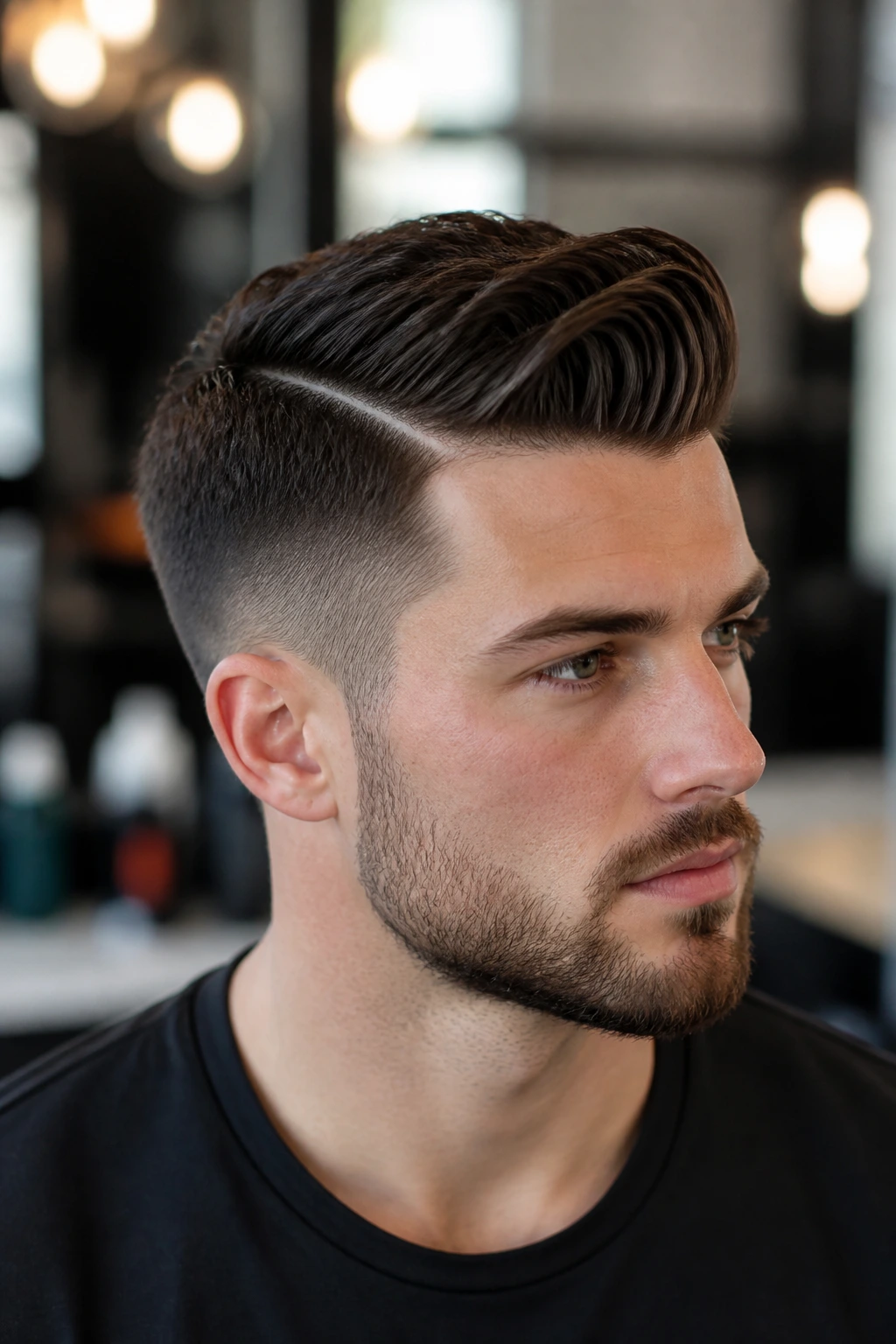
A haircut only earns its keep if it still looks intentional after the barber’s magic has worn off. That’s where the good styles separate from the flashy ones. The cuts in this collection hold shape because they build in slack: a fade that grows out cleanly, a fringe that can shift a little, a textured top that doesn’t depend on exact placement every morning.
The details matter more than the headline. A low taper hides grow-out better than a blunt, hard line. A textured crop outlasts a polished side part if you’re lazy with product. A longer style like bro flow or shoulder-length waves looks better when the ends are layered, because layers keep the shape from collapsing into one heavy block.
And then there’s the crown. That spot ruins more haircuts than people realize. If the barber ignores the swirl at the back, even a good style can stick up or split in odd ways. The best cuts account for that from the start, which is why a great barber will spend time watching how your hair moves when dry, not just clipping it while wet.
A final thought: the strongest men’s hairstyles usually leave you room to be a little imperfect. That’s what makes them wearable.
Essential Tools for These Looks
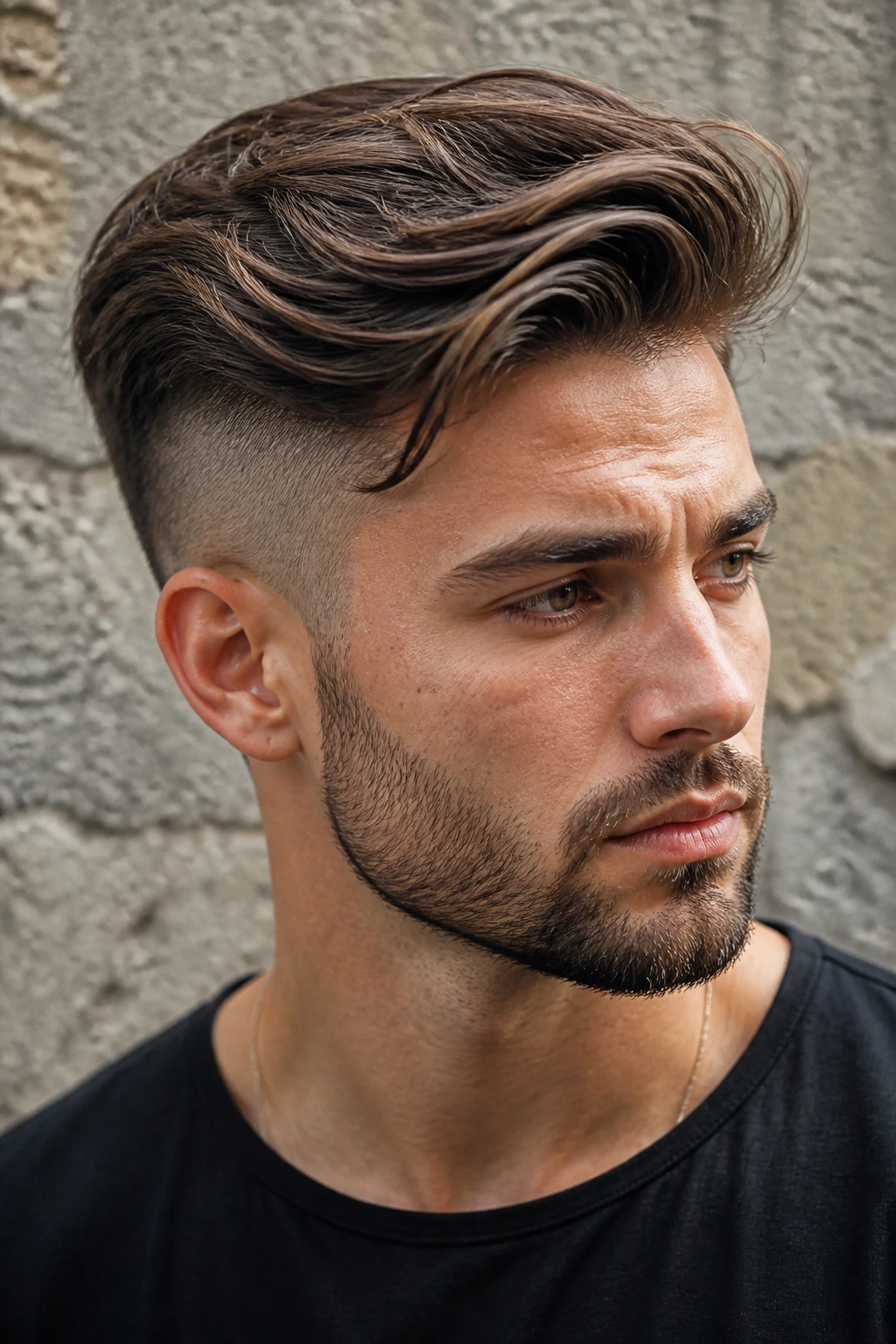
- Quality clippers with guards: Useful for home cleanup on buzz cuts, fades, and neckline maintenance; choose one with enough motor strength that it doesn’t snag.
- Detail trimmer: Good for edges around the ears, sideburns, and neckline when you want a tidy finish between barber visits.
- Scissors or hair shears: Better than kitchen scissors for trims on longer styles, fringes, and split ends.
- Blow-dryer with a nozzle: Helps build lift in quiffs, pompadours, curtains, and side parts without frying the hair.
- Vent brush or round brush: The vent brush is quicker for casual lift; the round brush gives more shape and bend.
- Wide-tooth comb and fine-tooth comb: One for curls and longer hair, one for cleaner parts and sleeker styles.
- Water spray bottle: A small mist lets you reset bedhead without washing everything again.
- Matte clay, paste, or fiber: Best for texture, short cuts, and styles that should look controlled rather than glossy.
- Pomade: Choose medium or high hold for slick backs, side parts, and comb overs; water-based formulas rinse easier.
- Curl cream or leave-in conditioner: Essential for curly, coily, and wavy styles that need softness without frizz.
- Hair powder or dry texture spray: Great for fine hair that needs lift at the root without heavy product.
- Satin pillowcase or bonnet: Not a styling tool in the classic sense, but it keeps longer and curl-heavy styles from getting crushed overnight.
Smart Product and Barber-Shop Tips
Choose the finish before the cut. Matte products make texture read more modern, especially on crops, quiffs, and fades. Shine works better on side parts and slick backs, where that glossy line is the whole point. If you buy the wrong finish, you can make a good haircut look off.
Don’t shop for “hold” without hair type in mind. Fine hair usually does better with powder, mousse, or a light clay. Thick straight hair often needs something firmer, like fiber or stronger pomade, because weak products slide out before lunch. Curly hair usually wants moisture first and hold second. If the hair is dry and brittle, product can’t rescue the texture.
Bring more than one photo to the barber. One photo for the front. One for the side. Haircuts fail when people show a single angle and assume the rest will be interpreted correctly. The side view tells the truth about fade height, side length, and how much top volume the style really has.
Say inches or guards, not vibes. “Short on the sides” means five different things to five different barbers. “Low taper with a #2 on the sides and 3 inches left on top” is useful. Precision saves both of you from disappointment.
Keep a backup product. If your usual clay is too heavy on humid days, a lighter cream or texture spray can rescue the style. Hair changes with weather, scalp oil, and length. That’s normal.
How to Choose the Right Cut for Your Hair Type
Fine Hair: Go for a textured crew cut, French crop, side part, or brush-up style. These cuts create the illusion of density without asking the hair to hold a giant shape it can’t support.
Thick Hair: Choose something that removes bulk on purpose — a crop, pompadour, quiff, undercut, or layered shag. Thick hair looks best when the weight has been cut out of the right places.
Curly Hair: A curly taper fade, curly fringe, or natural afro shape-up keeps the texture visible and the outline clean. Curls hate being bullied flat. They look better when the cut lets them breathe.
Coily Hair: High tops, afros, twists, locs, and flat tops give coily hair structure without pretending it’s straight. Shape matters more than product here. Edges and balance do a lot of the work.
Wavy Hair: Curtains, bro flow, shag, and longer layered styles are the easy wins. Wavy hair has movement built in, so don’t bury it under too much control.
Thinning or Receding Hairlines: Keep the top shorter, the texture matte, and the front honest. Caesar cuts, brushed-up crops, and short side sweeps usually work better than anything that tries too hard to cover the front.
Additional Tips and Style Boosters
Texture Boost: A small amount of sea salt spray on damp hair can make a crop, quiff, or curtain style feel less polished and more alive. Use too much and the hair gets dry and rough, so start light.
Lift Without Crunch: Blow-dry the roots first, then let the ends fall where they want. That’s the difference between a quiff that stands up and one that feels frozen. A little heat and a vent brush do more than a mountain of gel ever will.
Beard Balance: If you wear facial hair, let it connect visually with the haircut. A short crop and a heavy beard need a cleaner taper at the sideburns. A longer flow cut usually looks better with a softer beard line.
Budget-Saver: If you’re trying to reduce barber trips, choose styles with forgiving grow-out — crew cuts, tapers, textured crops, and bro flow are kinder than hard parts or ultra-tight skin fades.
Make-It-Yours: The same haircut can read completely different with a matte finish, a wet finish, or a looser finger-combed finish. Don’t assume the cut owns the style. Product choice changes the whole mood.
Maintenance, Wash Days, and Grow-Out
Short styles need more frequent cleanups than people expect. A buzz cut or skin fade starts losing its shape around the two- to three-week mark if you want it crisp. Crew cuts, crops, and side parts can usually go three to five weeks before they start looking fuzzy around the edges. Longer cuts can stretch farther, but the neckline and fringe still need attention.
Washing is another place where people overdo it. Daily shampoo can strip natural oils from curls, waves, and longer hair, which leaves the ends dry and the shape dull. Many men do better washing two to four times a week, then rinsing or water-refreshing the rest of the time. If your scalp gets oily fast, use a gentle shampoo. If your hair is dry, keep the wash routine lighter and use conditioner where the ends need it.
Overnight care matters more for longer styles. A satin pillowcase reduces friction, which helps curtains, waves, shags, and locs stay smoother. For man buns or tied-back styles, don’t sleep with the tie too tight or you’ll wake up with a dent and a headache. That’s a bad bargain.
If you’re growing a cut out, expect an awkward phase. Every longer style has one. The answer is not panic; it’s trimming the sides and neckline so the shape stays controlled while the length catches up.
Variations and Adaptations to Try
Office-Clean Version: Take any textured crop, side part, or Ivy League and keep the fade low, the top shorter, and the product matte. The shape stays neat, but the style stops shouting.
Weekend-Longer Version: If you like bro flow, curtains, or layered waves, ask for a little extra length at each trim and keep the layers soft. That gives you room to push hair back, part it, or let it fall looser on off days.
Curly-Hair Swap: Replace pomade with curl cream, replace a hard part with a natural split, and let the hairline stay softer. The shape should follow the curl pattern rather than forcing a straight-line finish.
Thinning-Hair Version: Shorten the top a touch, add texture, and choose a matte finish. This works especially well for a brushed-up crop or side-swept style because it keeps the scalp from becoming the main event.
Beard-Forward Version: If the beard is the anchor, keep the sides of the haircut cleaner and let the top stay a little looser. The contrast gives the whole face better balance.
High-Contrast Version: Turn a taper into a skin fade, a side part into a hard part, or a quiff into a higher lift. This suits men who want more visual structure and don’t mind touching up more often.
Common Mistakes to Avoid
Asking for “short on the sides” and nothing else. That phrase is a fast way to get something generic. Give your barber guard numbers, a fade height, and the top length you actually want.
Using too much product at once. Men do this constantly, especially with pomade and clay. Start with a pea-sized amount, emulsify it in your hands, then add more only if the hair needs it. Grease happens fast.
Ignoring the crown and cowlicks. A cut can look perfect in the mirror and still fight you at the back of the head. If your crown swirls hard, ask for layers or a length that sits over it cleanly.
Choosing a high-maintenance cut for a low-effort routine. A pompadour with no dryer is misery. A man bun without regular trims looks ragged. Match the cut to the amount of time you’ll actually spend on it.
Letting the neckline go too long. Even the best haircut starts looking tired when the nape gets fuzzy. A quick cleanup every few weeks keeps the whole thing from sliding into “grown out” territory.
Copying a photo without checking your hairline. Some styles look better on a dense, straight front. Some need curls, movement, or a stronger temple line. If the photo doesn’t match your growth pattern, adjust the cut instead of pretending it doesn’t matter.
Frequently Asked Questions
How do I tell my barber which style I want?
Bring a photo, then translate it into simple numbers: top length, side length, and whether you want a fade or taper. A reference picture plus guard numbers is much clearer than saying “make it modern.”
What hairstyle works best if my hair is thinning at the front?
Shorter styles usually win here: Caesar cuts, brushed-up crops, short side sweeps, and textured side parts. Keep the finish matte and avoid long, shiny front sections that expose the scalp.
Can curly hair wear a side part or comb over?
Yes, but it usually works best when the part is soft and the product is light. Curly hair looks better with direction than with strict control, so don’t force a flat, slick result.
How often should I get a trim?
Buzz cuts and sharp fades need attention every two to three weeks if you want them crisp. Longer cuts can often wait six to eight weeks, but the neckline and shape should still be cleaned up before they get fuzzy.
What if my hair sticks up in one spot no matter what I do?
That’s usually a cowlick or a strong crown swirl. Ask for a cut that leaves a little more length in that zone so the hair can lay down instead of standing at attention. A tiny bit of water and a dryer can also help reset it.
Is a taper better than a fade?
For most men who want easier grow-out, yes. A taper is softer and usually lasts longer before it looks messy. A fade is sharper and higher contrast, but it needs more regular upkeep.
Do I need a blow-dryer for a quiff or pompadour?
If you want real lift, yes. Product alone can’t hold the front up the same way heat and direction can. A dryer with a nozzle makes the top behave; that’s the honest answer.
Which of these cuts is the easiest to maintain?
Buzz cuts, crew cuts, and clean tapers take the least work. They also forgive a missed styling day better than a slick back or pompadour, which matters more than people admit.
The Cut That Fits
The best haircut is the one that stops asking you to negotiate with your hair every morning. Sometimes that means a buzz cut and a clean fade. Sometimes it means layers, curls, a fringe, or a little length that moves when you do.
What matters most is matching the shape to the head, the hair, and the life around it. A style that looks good on a photo but falls apart on day four is a bad deal. A style that looks calm with no product and still has some shape by Friday earns its keep.
Pick the one that fits how you actually live, then let a good barber sharpen the edges. After that, the job gets easy.
