



A beard can fix a face faster than a new haircut. The right sharp beard styles for men carve the jaw, clean up the cheeks, and make even a tired haircut look deliberate. The wrong ones just sit there—too low on the neck, too fuzzy on the cheeks, too wide at the sides—and suddenly the whole face reads as unfinished.
Sharp, though, does not mean tiny. That’s where a lot of men get tripped up. A beard can be heavy, long, dark, grey, curly, patchy, or bone-straight and still look crisp if the line-up is clean, the length is controlled, and the shape fits the face instead of fighting it. A good trimmer guard matters. So does knowing where your cheek line actually belongs, which is usually lower than you think and higher than the lazy line some guys shave into their sideburns.
The best beard styles are really architecture. One angle at the jaw can make the chin look stronger. One taper near the ear can keep a dense beard from turning into a block. And if you’ve ever looked in the mirror after a rushed trim and thought, something’s off, but I can’t tell what, the answer is usually simple: the edges, the proportions, or both. Start there, and everything else gets easier.
Why These Beard Styles Are Worth Your Time
- Face-shape control: A well-chosen beard shape can add width, length, or balance where your face needs it most, especially around the chin and jaw.
- Cleaner lines, less guesswork: These styles rely on cheek lines, necklines, and tapering, so the beard looks intentional even when the growth itself is thick or uneven.
- Works with short or full growth: You do not need a giant beard to pull this off; some of the sharpest options live at 2 mm to 10 mm.
- Barber-friendly language: Each style has a name you can actually use in the chair instead of pointing at your chin and hoping for the best.
- Good for real schedules: Many of these looks stay sharp with a 5- to 10-minute trim once a week, not a full grooming ritual every morning.
- Pairs with common haircuts: Fades, crops, side parts, curls, and buzz cuts all work here because the beard shape can echo the haircut instead of competing with it.
1. Designer Stubble
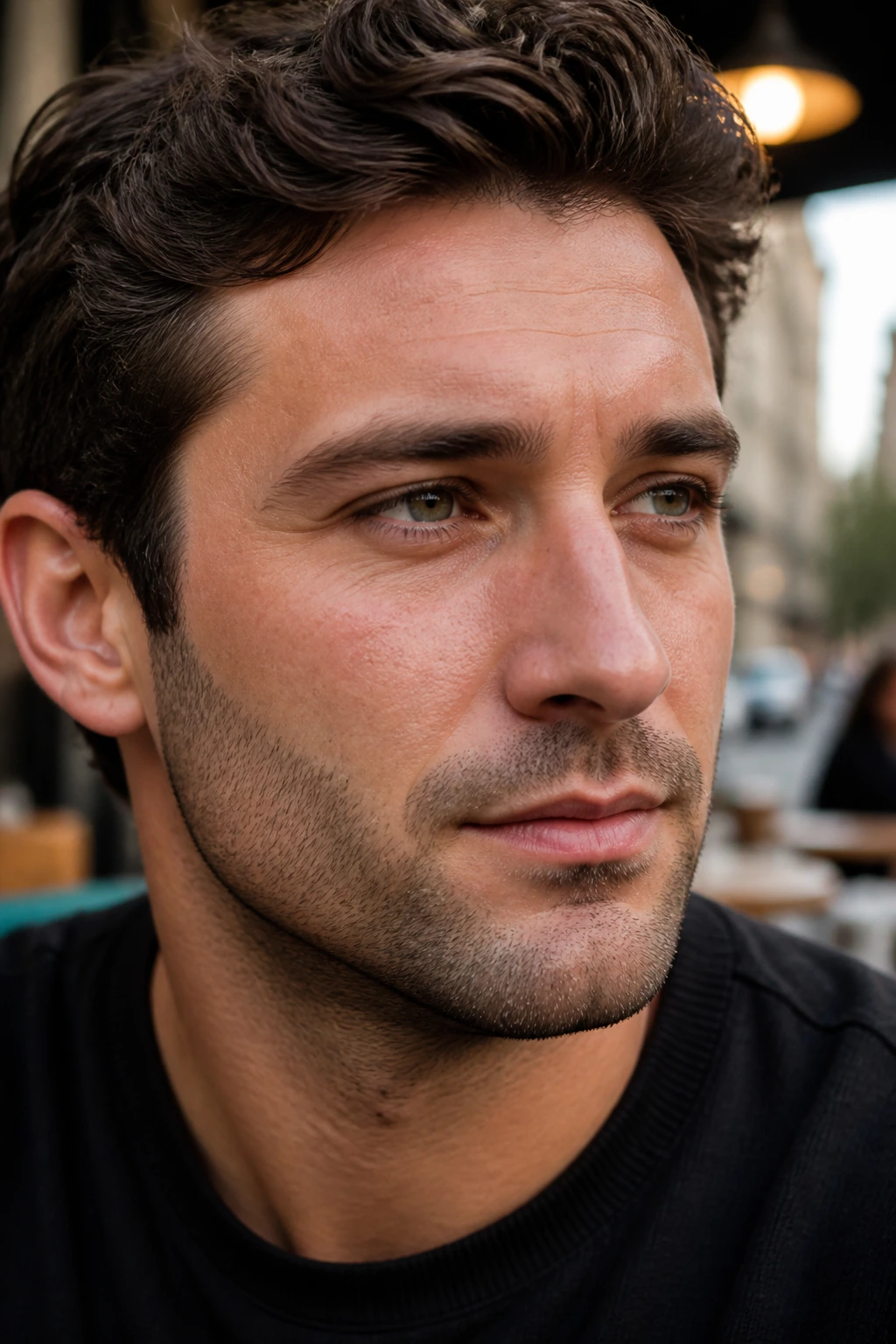
Designer stubble sits in that sweet spot between “I shaved yesterday” and “I know exactly what I’m doing.” Kept around 1 to 3 mm, it shadows the jaw without swallowing the face, and the whole trick is precision. Clean the cheek line, set the neckline low, and the result looks sharp instead of sleepy.
It works especially well on men with even growth and on anyone who wants definition without the bulk of a full beard. If your beard grows in patchier than you’d like, this style is merciful because a light shadow hides uneven density better than a longer cut does.
Use a guarded trimmer, not a freehand guess. That guard is doing more work than your mirror.
2. Heavy Stubble
Heavy stubble is the slightly tougher cousin of designer stubble, usually sitting around 4 to 5 mm. It has more weight on the face, which makes the jaw look wider and the chin look fuller, but it still feels neat if you keep the neckline clean and stop the cheek line from drifting upward.
This is a strong choice for men whose beards grow fast but not evenly enough to justify a full beard every week. The texture helps. The shorter length also means you can get away with a little imperfection, which is nice because perfect beards are a myth and nobody needs that stress.
Think of this one as controlled roughness. Not shabby. Controlled.
3. Short Boxed Beard
A short boxed beard is one of those styles that looks boring until you notice the detail. The sides are trimmed close, the bottom stays squared, and the cheek lines stay sharp enough that the beard seems carved instead of grown. Usually it lives somewhere between 6 and 10 mm, though the exact length depends on density.
It suits square, oval, and round faces because the box shape gives structure without going full helmet. The key move is to keep the lower edge tidy; if the chin starts drooping past the jawline, the style loses its snap and turns into a generic short beard.
This is barber shop standard for a reason. It reads as neat from across a room and even better up close.
4. Boxed Beard
The boxed beard is the fuller version of the short boxed beard, with more length on the jaw and chin but the same sharp geometry. The sides are trimmed in, the bottom is squared, and the overall shape frames the face like a good jacket frames the shoulders. It can be medium-length or a little longer, as long as the outline stays disciplined.
Men with strong cheek growth usually wear this well because the style rewards density. The trick is not letting the beard balloon at the sides. If it starts to widen under the ears, the whole shape gets heavy and the jaw loses definition.
A boxed beard is a clean choice when you want power without mess. It looks deliberate in a way many longer beards do not.
5. Corporate Beard
The corporate beard is the office-friendly version of a fuller beard: tidy, medium-short, and trimmed to look finished from every angle. It usually stays close on the cheeks and neck, with just enough length to show texture and bulk, not enough to start wandering. If your beard grows fast, this style gives you room to look masculine without looking like you forgot your clippers.
It works well for men who need something polished but not baby-smooth. The shape is slightly softer than a boxed beard, which helps if your growth pattern has a few lighter patches near the cheeks. Keep the mustache trimmed off the lip. That one detail does more for the style than a lot of people realize.
This is the beard version of a pressed shirt. Quiet. Clean. No drama.
6. Low Fade Beard
A low fade beard starts the taper close to the jaw, so the transition from hairline to beard feels smooth rather than abrupt. It’s one of the cleanest ways to connect a beard to a fade haircut, because the fade doesn’t shout for attention; it just makes the face look better shaped.
This style is especially good if your sideburns are dense and your cheeks are lighter. The lower fade gives the barber—or your own trimmer—a way to blend the difference instead of fighting it. Keep the chin slightly fuller than the sides, and you get a shape that still points the eye where you want it.
Low fade beards are tidy, but not timid. They have a little swagger. Just enough.
7. Mid Fade Beard
The mid fade beard moves the taper up a bit, which makes the cheek-to-jaw transition more visible. That extra height is useful on rounder faces, because it creates a stronger vertical line and stops the beard from looking like a dark band under the jaw.
It also pairs nicely with textured crops and short curls, where the haircut already has some movement. A mid fade beard can handle more contrast than a low fade, so it suits men who want the fade to be part of the look instead of a hidden detail. Keep the fade smooth and avoid a hard shelf where the beard suddenly gets wider.
This one looks sharp on camera and in daylight. Both matter.
8. High Fade Beard
A high fade beard makes a stronger statement because the taper starts closer to the temples and runs down into the beard with more contrast. The look is crisp, almost graphic, and it suits men who want the face to read narrower through the cheeks and broader through the jaw.
It works best when the top haircut also has structure—a skin fade, a crop, or a tight side part. If the hair on top is soft and loose while the beard is sharply faded, the contrast can feel accidental. Keep the beard length tight near the sides and leave a little more mass in the chin area.
This is a sharp beard style with attitude. Not loud, but it does not whisper either.
9. Temple Fade Beard
The temple fade beard is one of the most barbered-looking styles in the whole bunch. The fade drops from the temples into the sideburns, then melts into the beard so the top and bottom feel connected. On curly or coily hair, it looks especially clean because the fade handles the texture instead of trying to flatten it.
The best part is how it frames the face without crowding it. Men with wider cheeks or strong side growth usually get a nice lift from this shape. It also works well if you wear a fade haircut, because the beard and the haircut can share the same visual language.
If your hairline and beard line never seem to agree, this style helps them get along.
10. Tapered Beard
A tapered beard narrows gently from the jaw toward the chin, which keeps the beard from looking boxy or heavy. The taper can be subtle or obvious, but the idea is the same: shape the beard so it follows the face instead of sitting on top of it like a block.
This is a smart choice for men with thick growth who still want movement and softness. The taper gives the beard some air, and that matters more than people think. Without it, a dense beard can hide the mouth and pull the lower face down.
The beauty of a taper is that it looks intentional even when the growth itself is wild. That’s the whole game.
11. Clean Full Beard
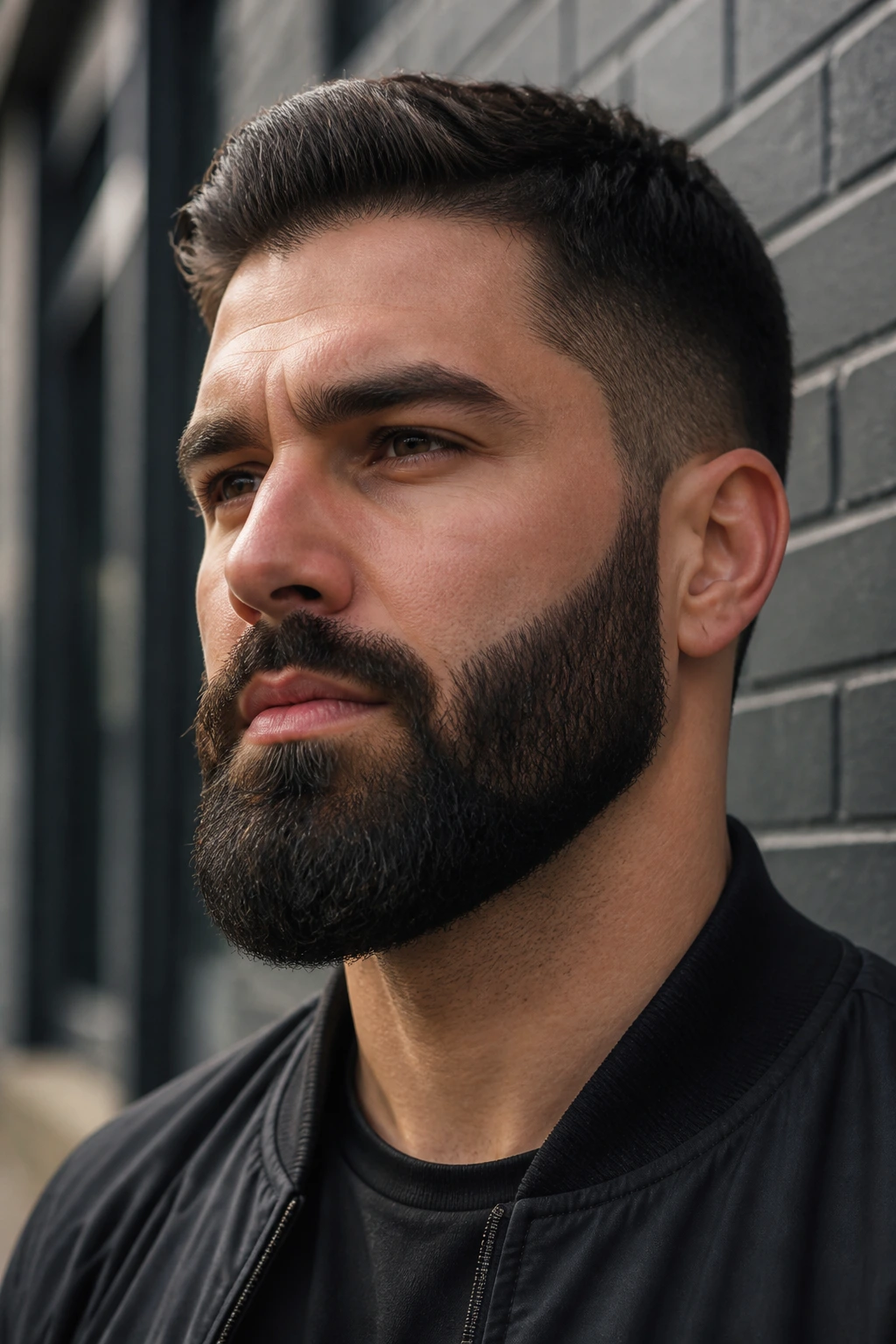
A clean full beard gives you the size of a full beard without the scruff. The cheeks are lined, the neckline is cut, and the body of the beard is kept even so the overall shape reads as solid rather than bushy. This is the style for men whose beard grows in thick but not necessarily long.
It works on square and oval faces because it adds weight without making the chin look too long. The important part is the finish: even if you like a natural texture, the outline has to be clear. If the edges blur, you lose the sharpness that makes the beard look deliberate.
A clean full beard is probably the easiest full-beard style to wear well. It forgives enough, but not too much.
12. Rounded Beard

A rounded beard softens the hard corners that can make a square beard feel severe. The bottom curves gently, the sides stay controlled, and the whole beard looks balanced rather than angular. It is a solid option if your face is long, narrow, or especially sharp in the jaw.
Rounded beards can go wrong when the curve is too wide and the face starts to look ballooned. The fix is simple: keep the cheeks snug and let the roundness happen mainly at the chin and lower jaw. That creates shape without losing definition.
I like this style on men with strong bone structure who want the beard to soften the edges a bit. It takes the edge off, but not in a weak way.
13. Square Beard
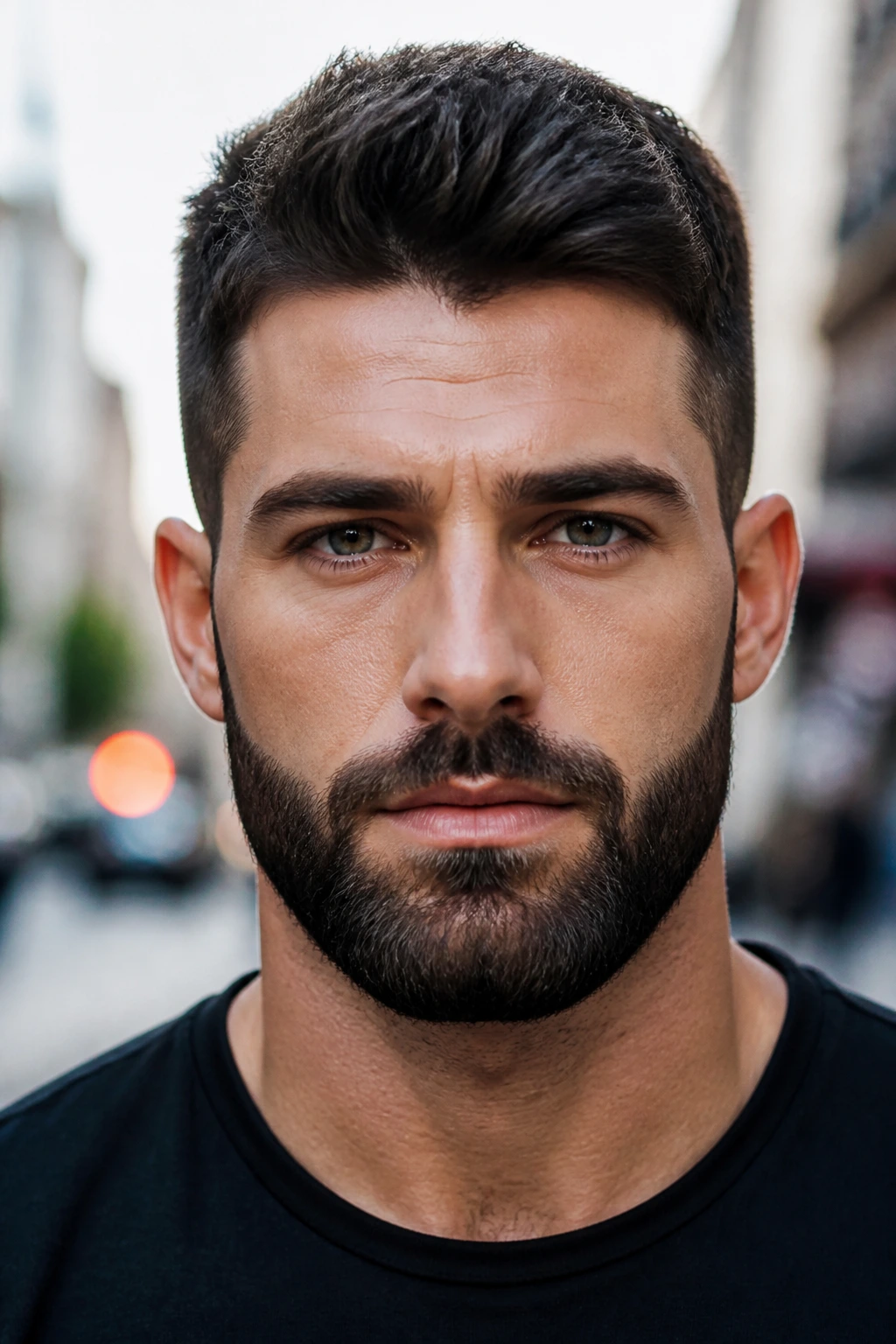
The square beard is the opposite of the rounded beard in all the useful ways. The bottom edge is flatter, the corners are cleaner, and the beard makes the jaw look broader and more solid. It’s a good move for men with narrow faces or softer chins, because it adds structure where the face needs it.
The trap is over-squaring it. If the corners are pushed too far out, the beard starts looking boxed in an awkward way. Better to keep the sides neat and let the square shape show up mostly in the lower edge.
This style has a strong, steady feel. No fuss. Just clean geometry.
14. Ducktail Beard
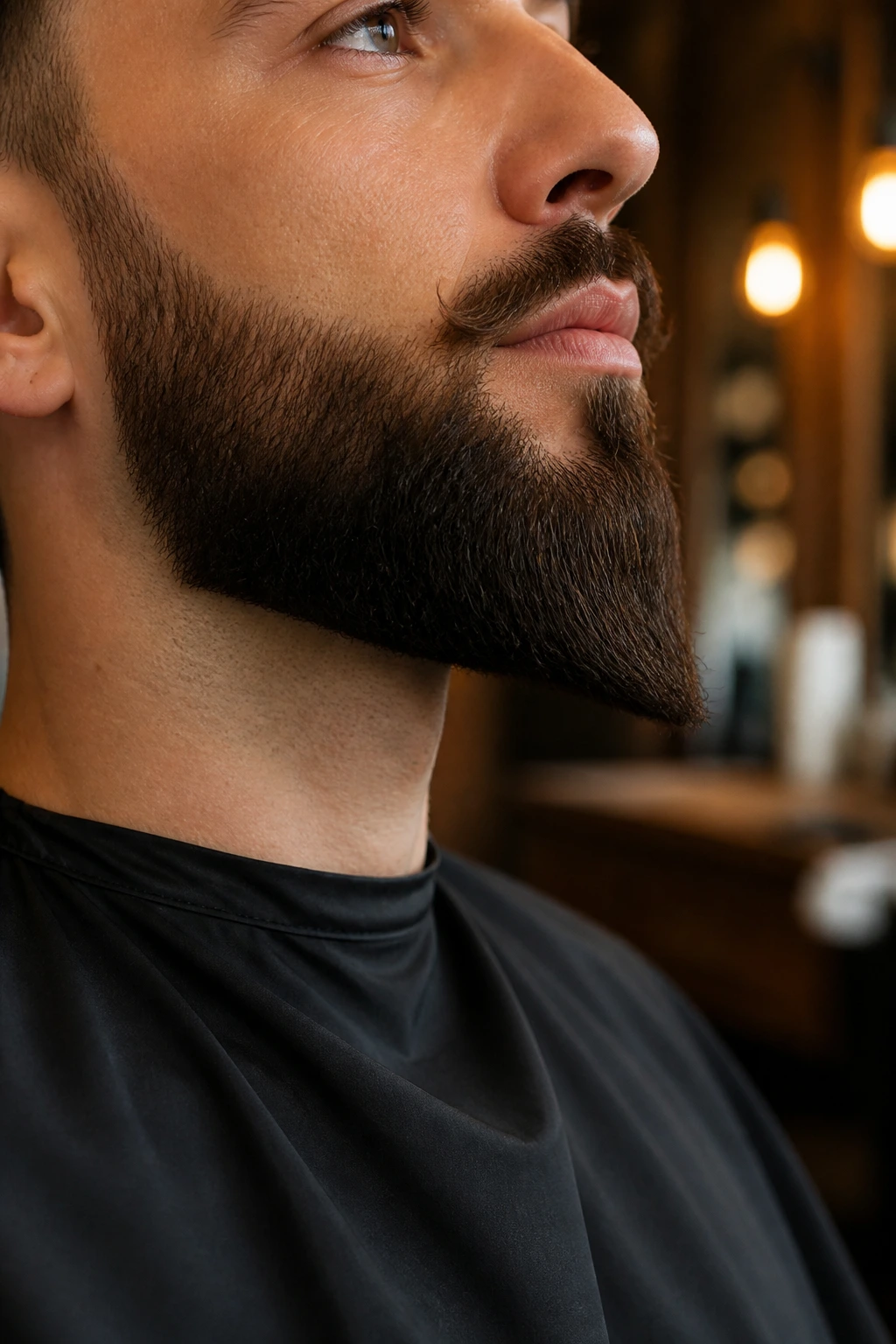
The ducktail beard narrows toward the chin, almost like a softened point, which can make the jaw look longer and more dramatic. It takes a little patience to shape because the sides must stay controlled while the chin grows enough to taper forward. Get that balance right and the result looks sharp without feeling stiff.
Ducktail beards work nicely on round and square faces, because the point draws the eye downward. That can help elongate the lower face. Keep the cheeks trimmed so the beard doesn’t turn into a wide triangle; the shape only works when the taper is clear.
This is one of those styles that looks a bit more thoughtful than average. That matters.
15. Garibaldi Beard
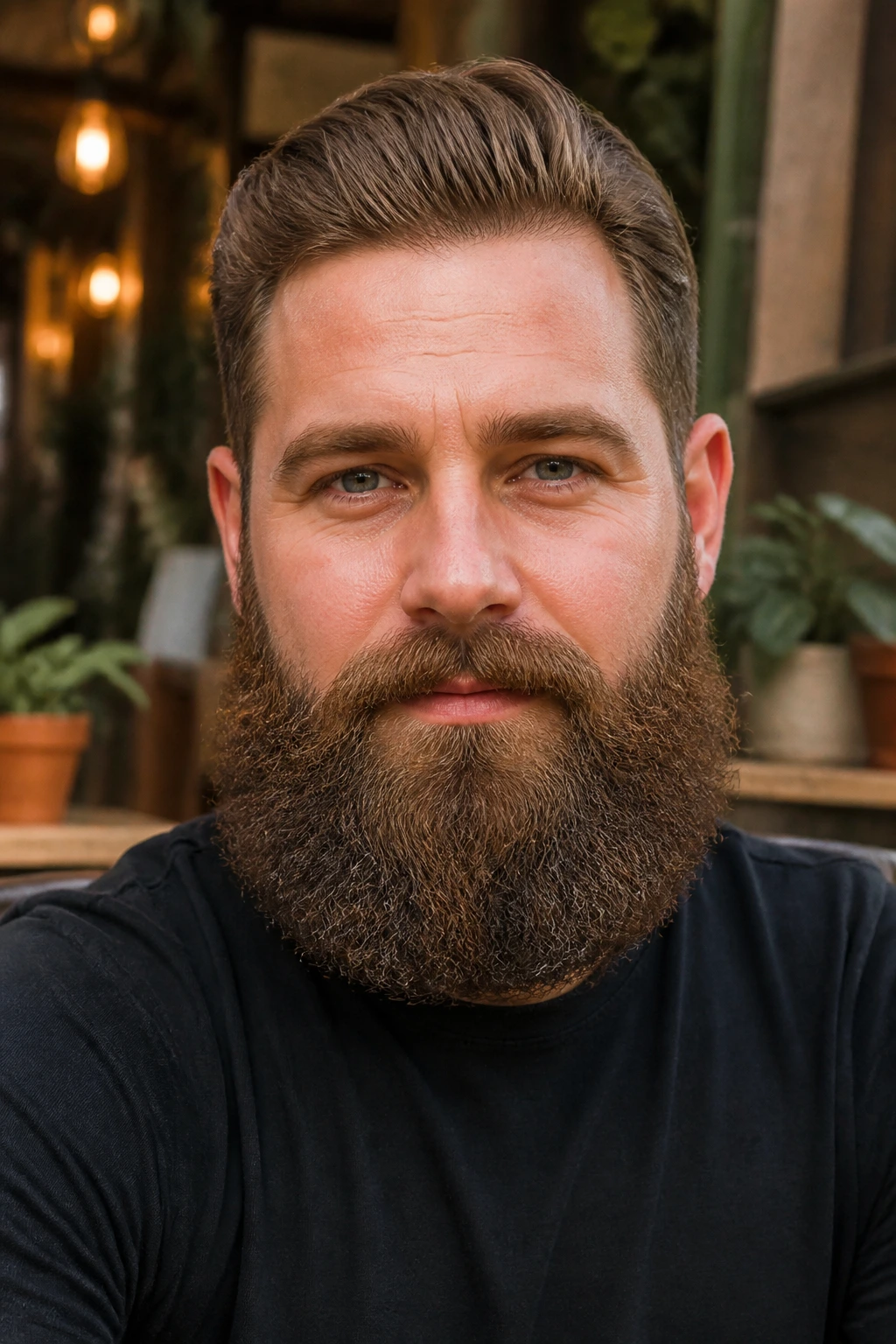
A Garibaldi beard has volume, width, and a natural bottom edge, but it still needs trimming or it turns into a shape with no shape. The mustache usually stays connected, and the overall beard is rounded with enough length to feel substantial. Think full and relaxed, not wild.
It suits men with dense growth and a little patience. The beard needs regular brushing and a clean neckline to keep the silhouette from fraying out. If the bottom starts to split or the sides puff sideways, take a little off and restore the curve.
Garibaldi is for guys who like presence. You can see it from across the room.
16. Bandholz Beard
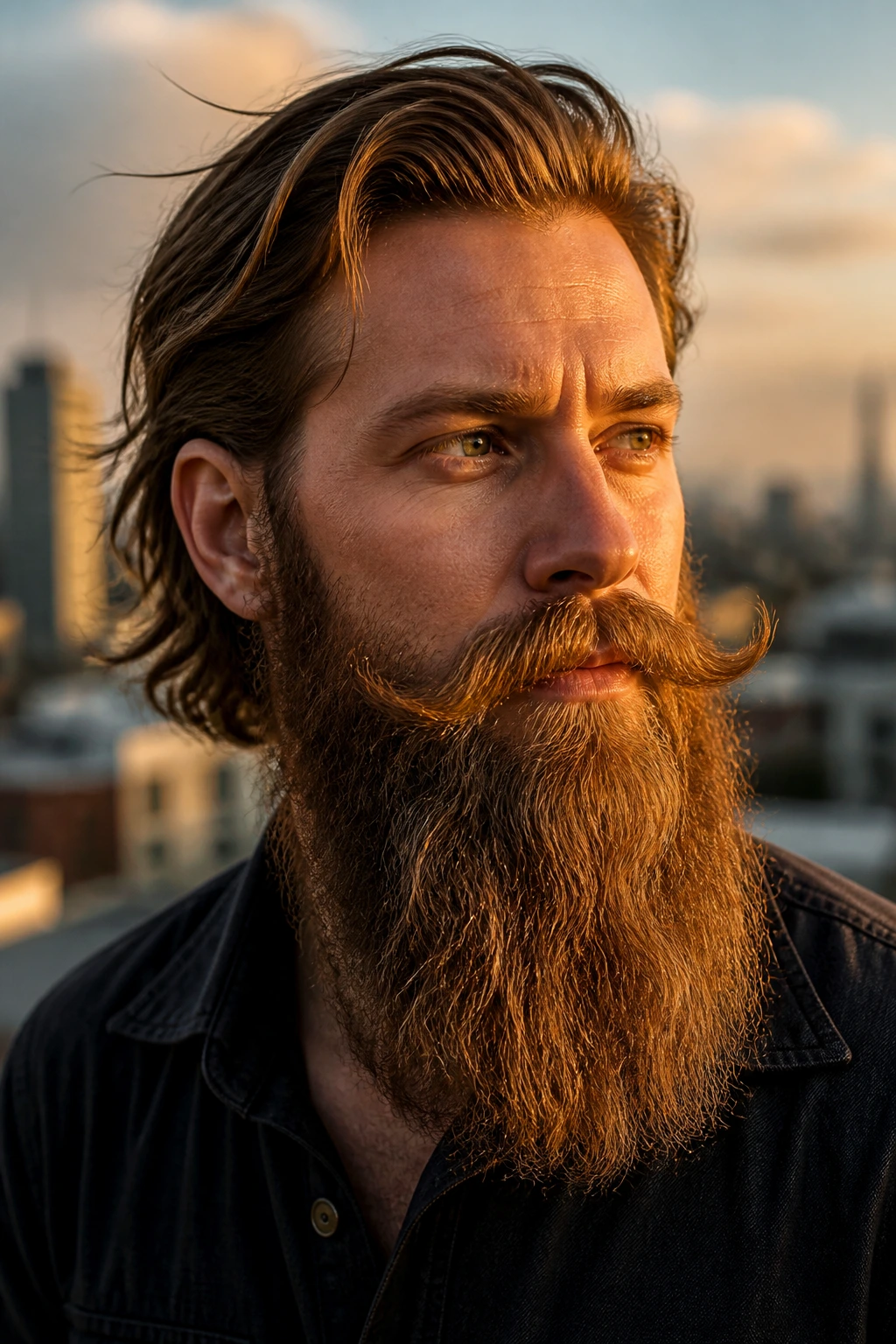
The Bandholz is bigger and more freeform than a Garibaldi, with a long beard and a mustache that often gets longer too. It looks best when the lower edge is still shaped, because otherwise the length starts to read as neglect instead of style. A little balm or oil goes a long way here.
This beard style asks for good growth and steady grooming. You are not trimming it into submission every few days; you’re guiding it. That means brushing downward, checking the side profile, and removing only the ends that break the shape.
It’s a statement beard. Not subtle, but not sloppy either, if you respect the line.
17. Verdi Beard
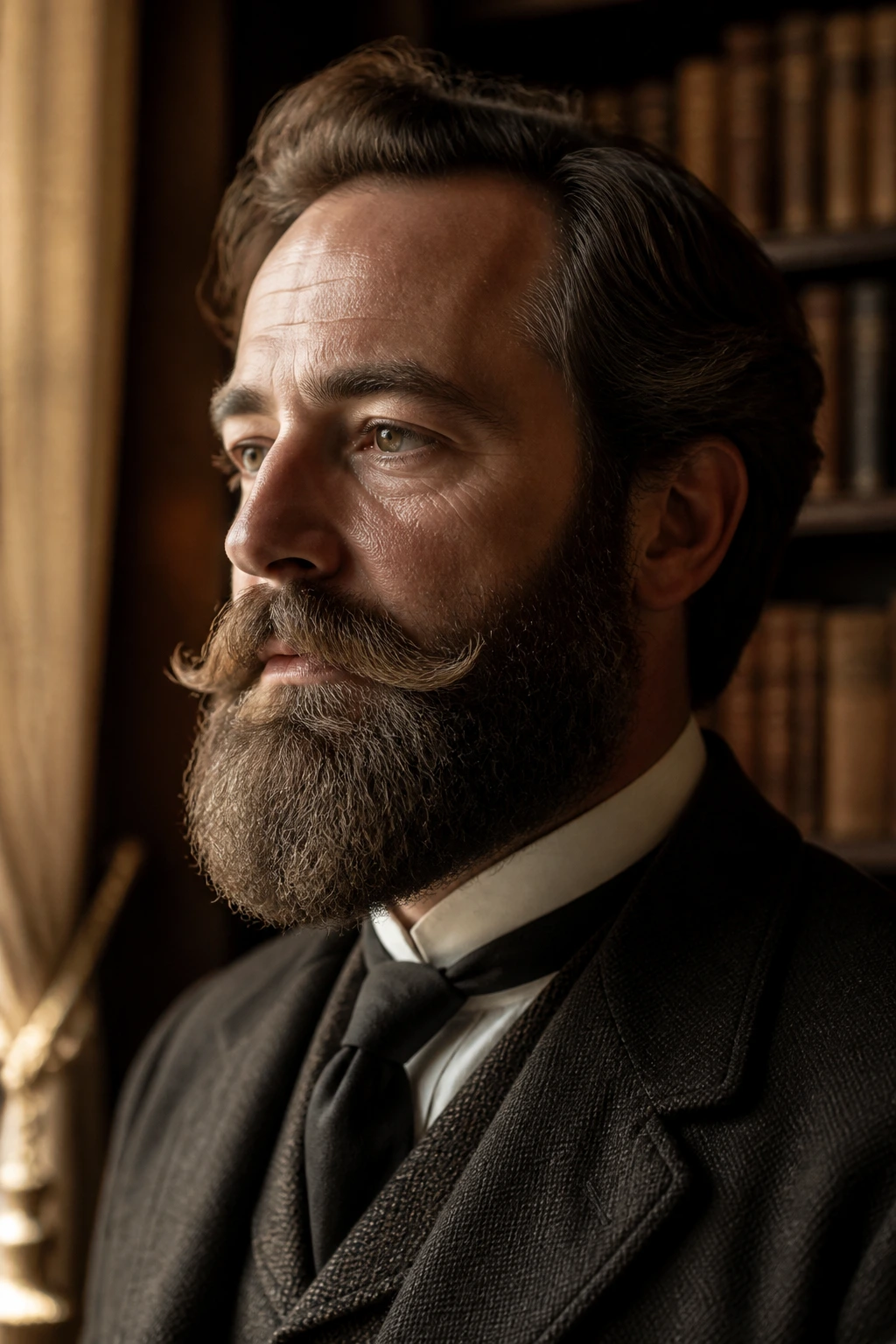
The Verdi is a classic for men who like a groomed beard with a standout mustache. The beard itself stays full but rounded and controlled, while the mustache is shaped separately and often gets a little style of its own. The contrast makes the whole face look deliberate.
This style works well when you have decent cheek growth but want the upper lip to matter more. A small amount of mustache wax can help keep the front clean, especially if the hair starts to cross the lip. The beard should not swallow the mustache; that balance is the whole point.
Verdi has a polished, old-school edge. It feels thoughtful without feeling costume-like.
18. Circle Beard

A circle beard wraps the mustache and goatee together into a rounded shape around the mouth. It’s compact, neat, and easy to keep sharp because the outline is small enough to manage carefully. If your cheeks grow in patchy, this style is often kinder than trying to force a fuller shape.
The look works especially well for men who want facial hair but need the chin and mouth to do most of the talking. Keep the ring even on both sides and trim the lower curve regularly. A ragged circle beard stops looking like a style very fast.
This one is neat in the best sense. Small footprint. Clean payoff.
19. Goatee

The goatee focuses all the visual weight on the chin, which can sharpen the face if your jaw needs help. It usually keeps the cheeks clean and the mustache separate or minimal, depending on the version you wear. Because the beard mass is concentrated in one place, the shape can look very crisp when the edges are tight.
Goatees suit men whose cheek growth is lighter or uneven but whose chin fills in well. A good goatee is not just a patch on the chin; it has a defined perimeter and a clear bottom edge. If it starts spreading up the cheeks without intention, the style loses its point.
Simple. Direct. Still sharp if the line is clean.
20. Extended Goatee
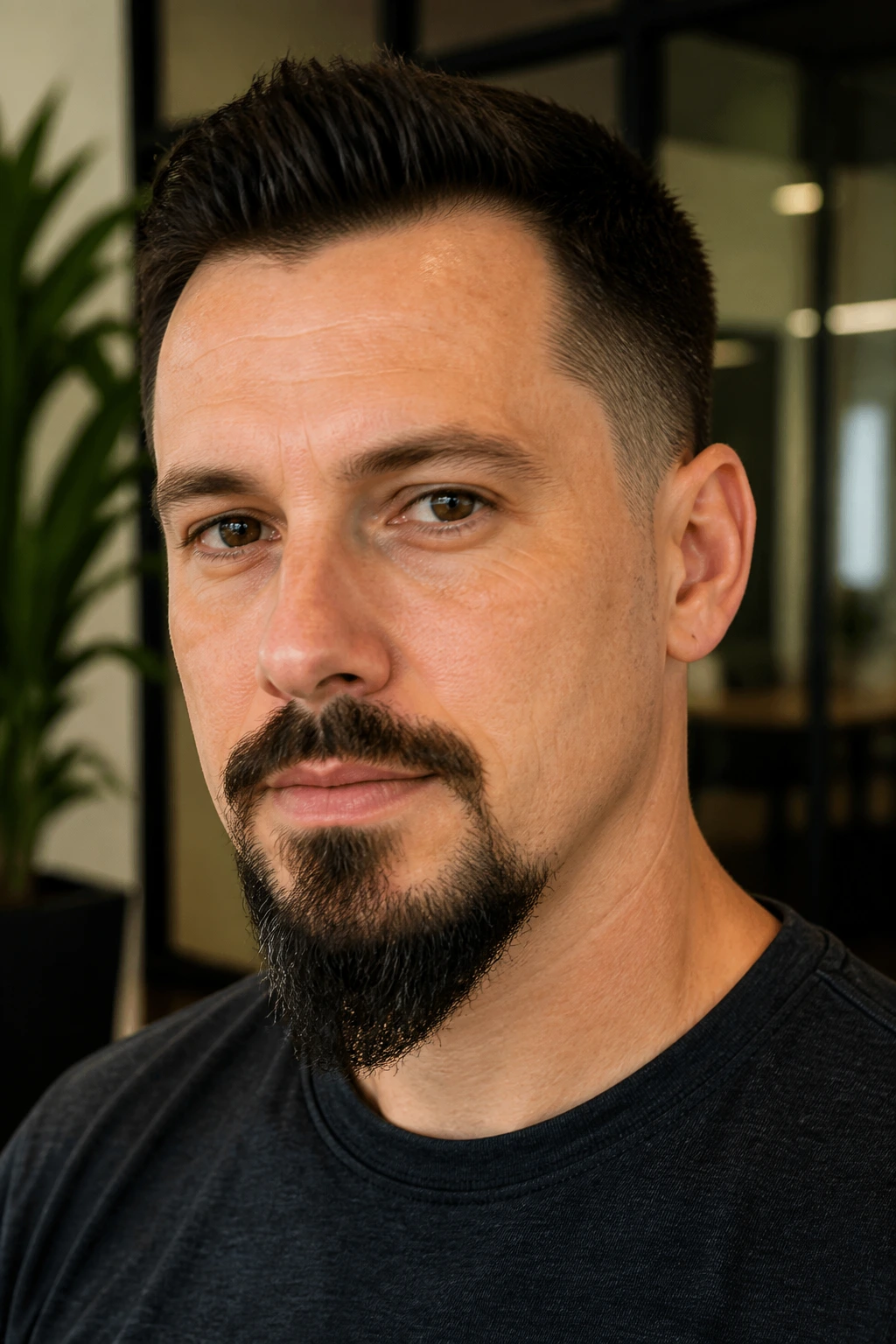
The extended goatee spreads the goatee toward the corners of the mouth and sometimes toward the jaw, giving more shape without turning into a full beard. It’s a smart option if you like the goatee look but want a little more face coverage. The shape can be squared, rounded, or slightly pointed depending on your face.
This style often works well on men with good chin growth and lighter cheeks. That little extra extension fills out the lower face and can make the jaw look stronger. Keep the cheeks shaved and the outline obvious, or it starts to blur into something less specific.
Extended goatees are useful because they’re flexible. They can look sharp in a suit or relaxed with a tee.
21. Balbo Beard
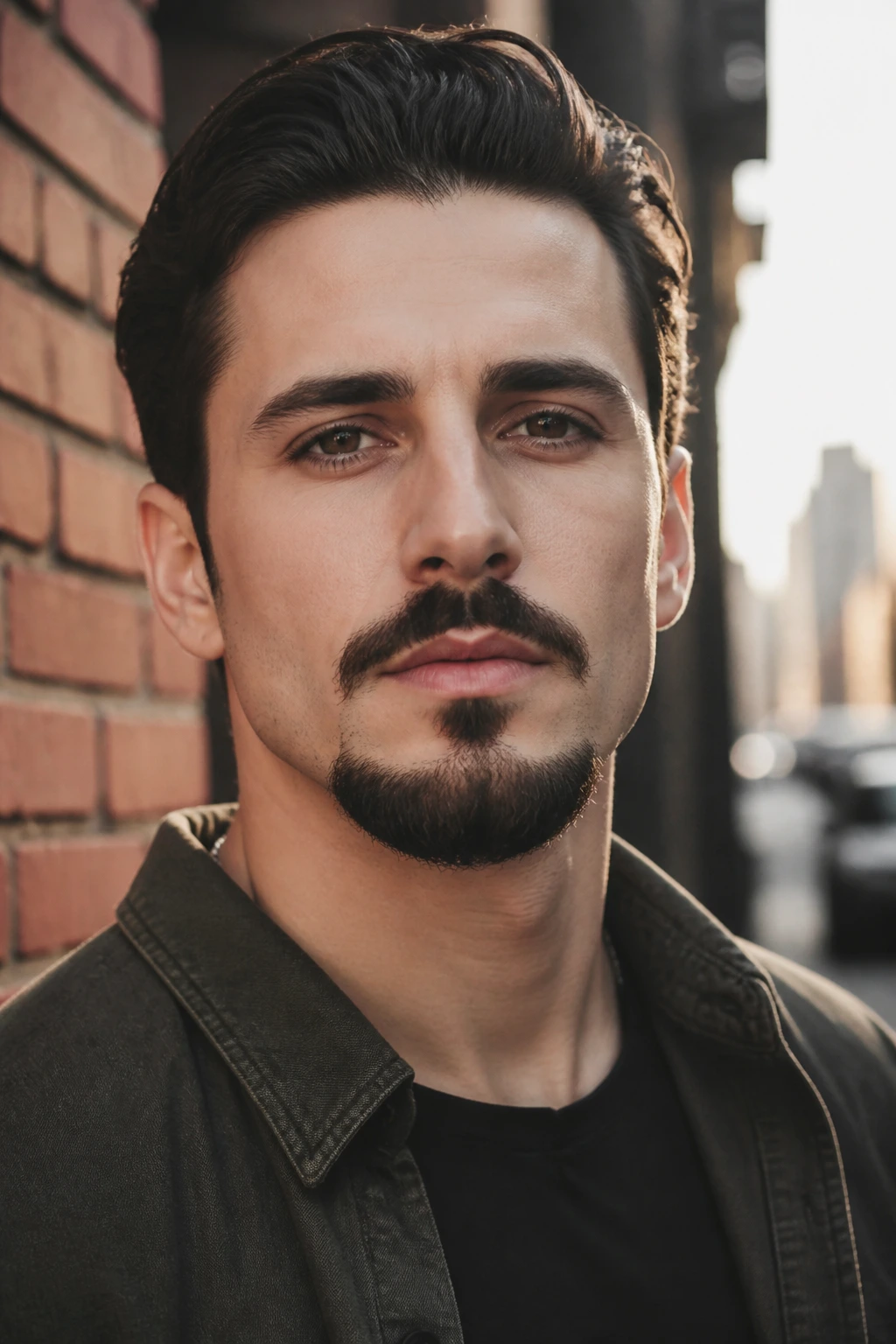
The Balbo beard is one of the sharpest-looking styles because it disconnects the mustache from the chin beard. That separation gives the face a cleaner, more graphic shape, and it works especially well when the chin area is strong and the cheeks are less dense. A good Balbo feels deliberate from every angle.
The style needs symmetry. If one side dips lower or the mustache sits too heavy, the whole effect falls apart. Trim the chin piece with a defined bottom edge and keep the upper lip neat so the gap between sections stays visible.
It has a clean, modern edge without being trendy for the sake of it. There’s a difference.
22. Anchor Beard

The anchor beard gets its name from the shape: a pointed chin section with a mustache that frames it like an anchor’s arms. It’s compact, sharp, and especially good when you want a strong lower-face shape without growing a lot of cheek beard. The outline is everything here.
This style suits men with defined chins or men who want to make a softer chin look more deliberate. The point should be centered, not drifting off to one side, and the mustache should stay tidy enough to support the shape rather than crowd it. Tiny mistakes show fast with an anchor, so take your time.
It’s a precision beard. Small, but it has attitude.
23. Van Dyke

A Van Dyke combines a detached mustache with a pointed goatee, and the separation gives it a sharp, almost painterly look. It’s less common than the goatee, which is part of the appeal. If you want a beard style that looks intentional even before people know what to call it, this is a strong choice.
The style works best when the chin piece is narrow and the mustache is shaped cleanly. A sloppy Van Dyke just looks disconnected. A neat one has angles that pull the eye down the center of the face and make the jaw appear leaner.
I’d call this the sharpest style for men who want facial hair with a little drama. Not too much. Just enough.
24. Beardstache
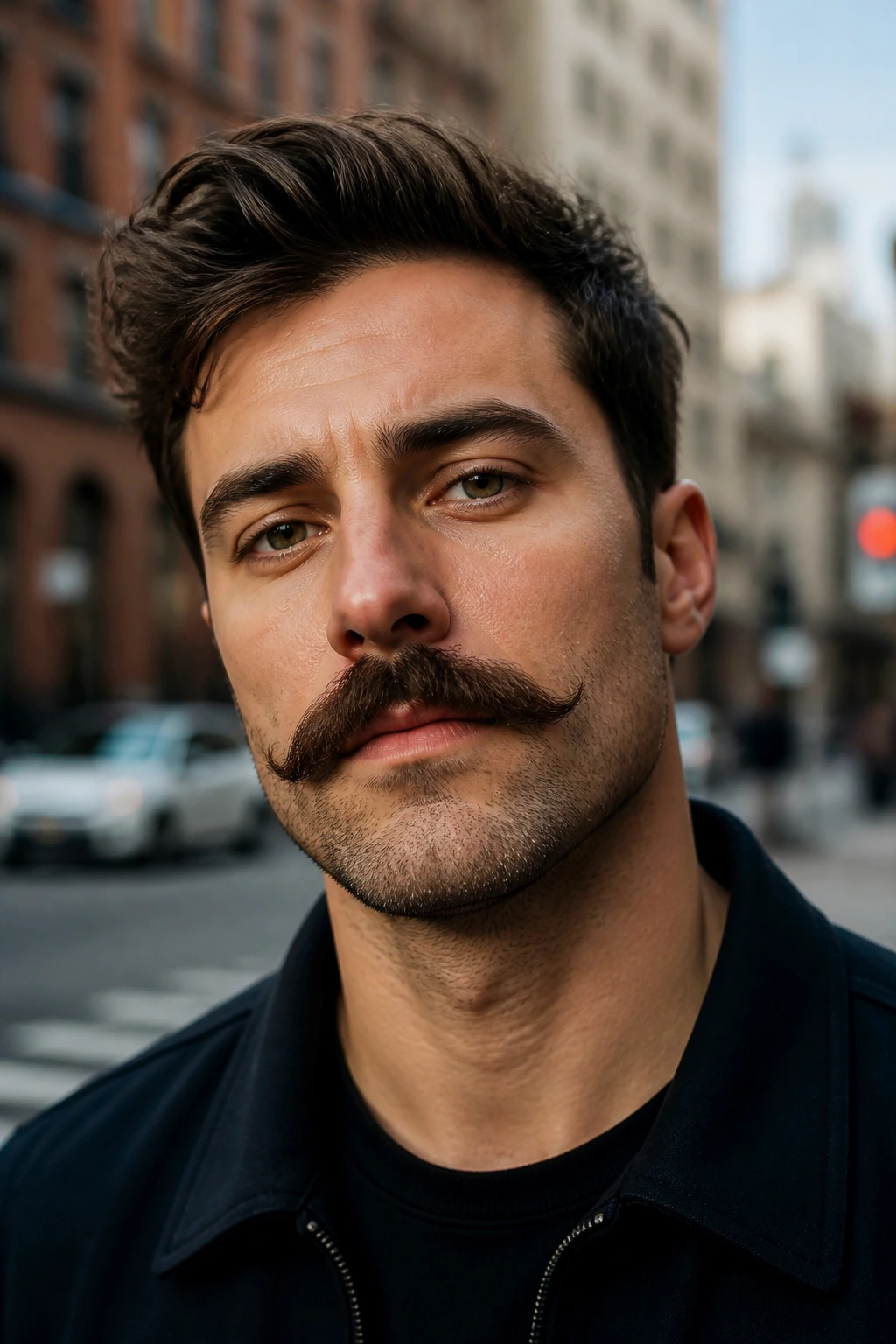
A beardstache puts the mustache in front and keeps the beard short enough to stay in the background. Usually that means a strong mustache with 2 to 4 mm of stubble underneath and around it. The contrast is the point, and it works because the mustache gets the attention while the beard keeps the face grounded.
This style is good for men whose mustache grows thicker than the rest of the beard. That asymmetry becomes a feature instead of a problem. Keep the lip line tidy and let the stubble stay even, or the style turns into accidental neglect with a mustache attached.
A beardstache has edge. It is a little old-school, a little rugged, and very easy to mess up if you overthink it.
25. Chevron Mustache With Stubble
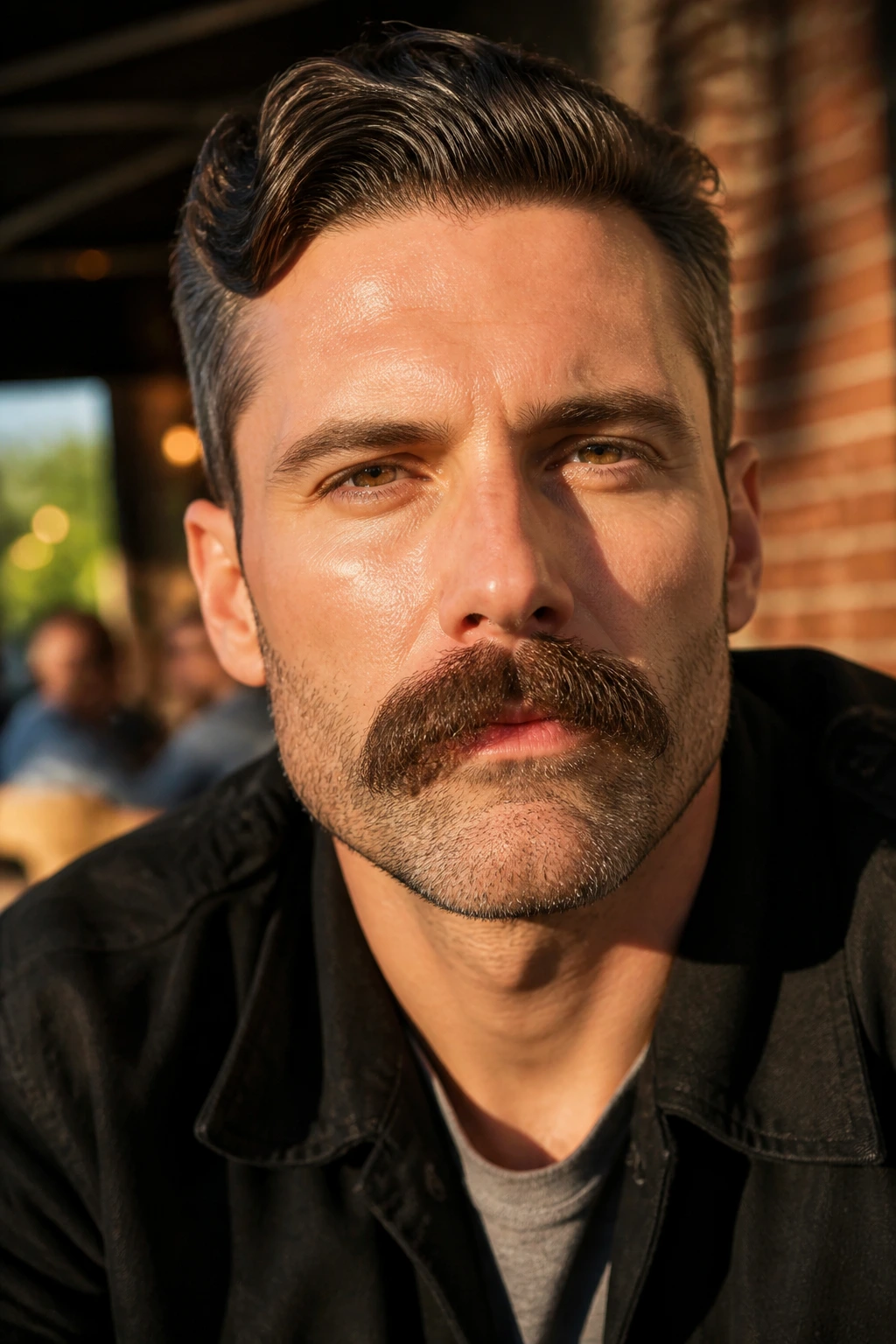
The chevron mustache with stubble is straightforward and sharp. The mustache is thick, full, and slightly brushed downward, while the beard stays short enough that it supports the look without competing with it. It’s a strong choice if your upper lip grows well and your cheeks are slower.
The stubble keeps the face from looking bare, and the chevron gives the whole look direction. Trim the mustache just above the lip so it doesn’t spill over and hide your mouth. That spill is the fastest way to make this style look heavy.
It suits men who want facial hair that reads masculine from a distance but still feels clean up close. Easy to wear. Hard to fake.
26. Chin Strap
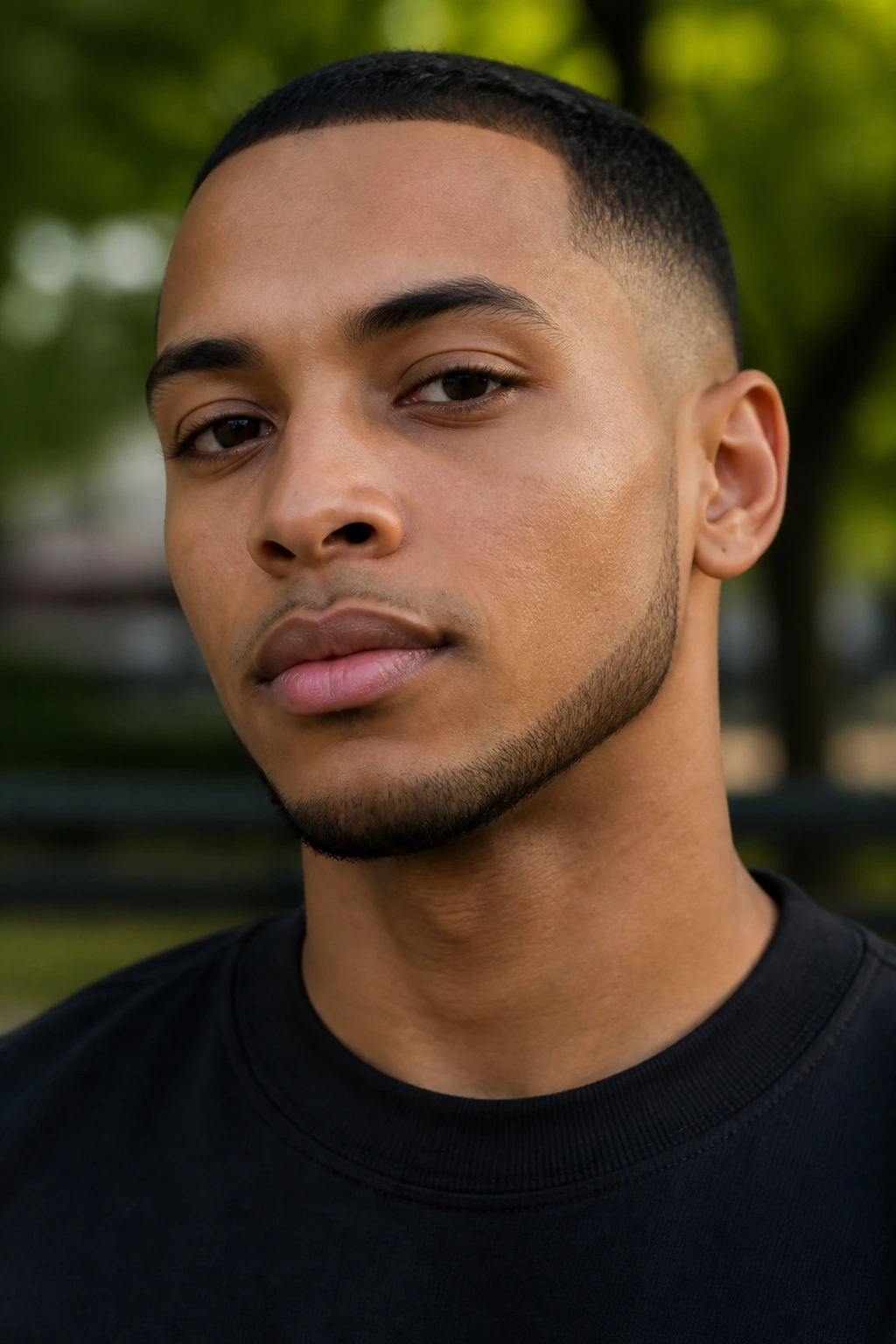
A chin strap is a narrow band of beard that follows the jaw line from one sideburn to the other. It needs a careful hand because the width matters so much; too thick and it loses its edge, too thin and it can look accidental. The sharpness comes from symmetry and a clean lower border.
This style works best when your jawline is already decent and you want to emphasize it, not invent one from scratch. It can sharpen the face nicely, especially when paired with a fade or a short haircut. The neckline should be invisible; if you see a blurry patch under the jaw, the strap has already gone off course.
The chin strap is unforgiving, but that is why it looks good when it’s done right.
27. Chin Curtain
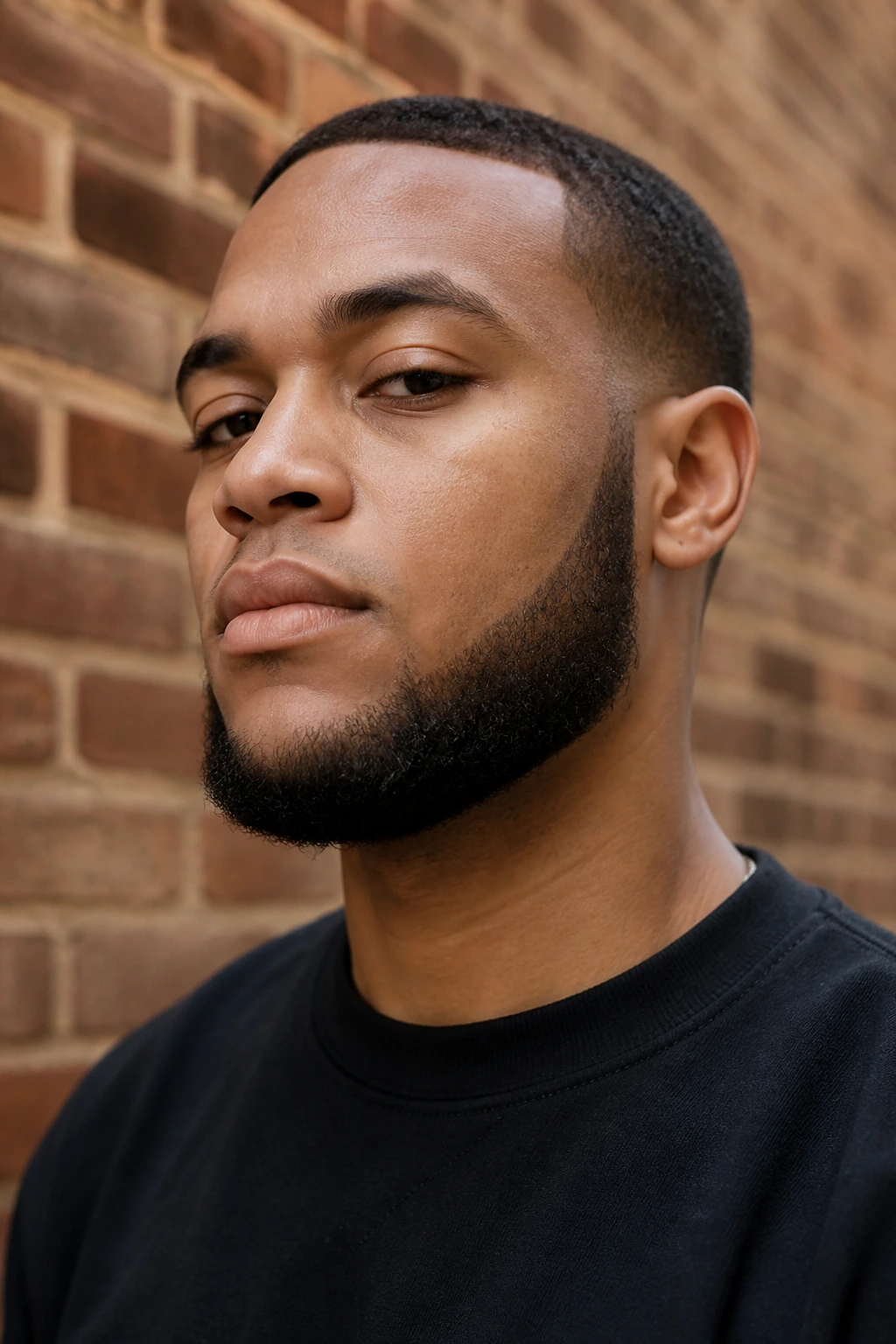
The chin curtain runs along the jaw and chin with the mustache shaved away, which gives the lower face a framed look. It can be narrow or broad, but the clean upper lip is the defining feature. On the right face, it makes the jaw seem larger and the lower face more grounded.
This is a strong option for men who like the idea of a full jaw frame but don’t want the mustache in the way. It also works if the upper lip grows weaker than the chin. Keep the edges clean where the beard meets the cheek, or the style starts to look like a beard that forgot what it wanted to be.
It’s old-fashioned in a good way. Clean lines make it look current again.
28. Mutton Chops
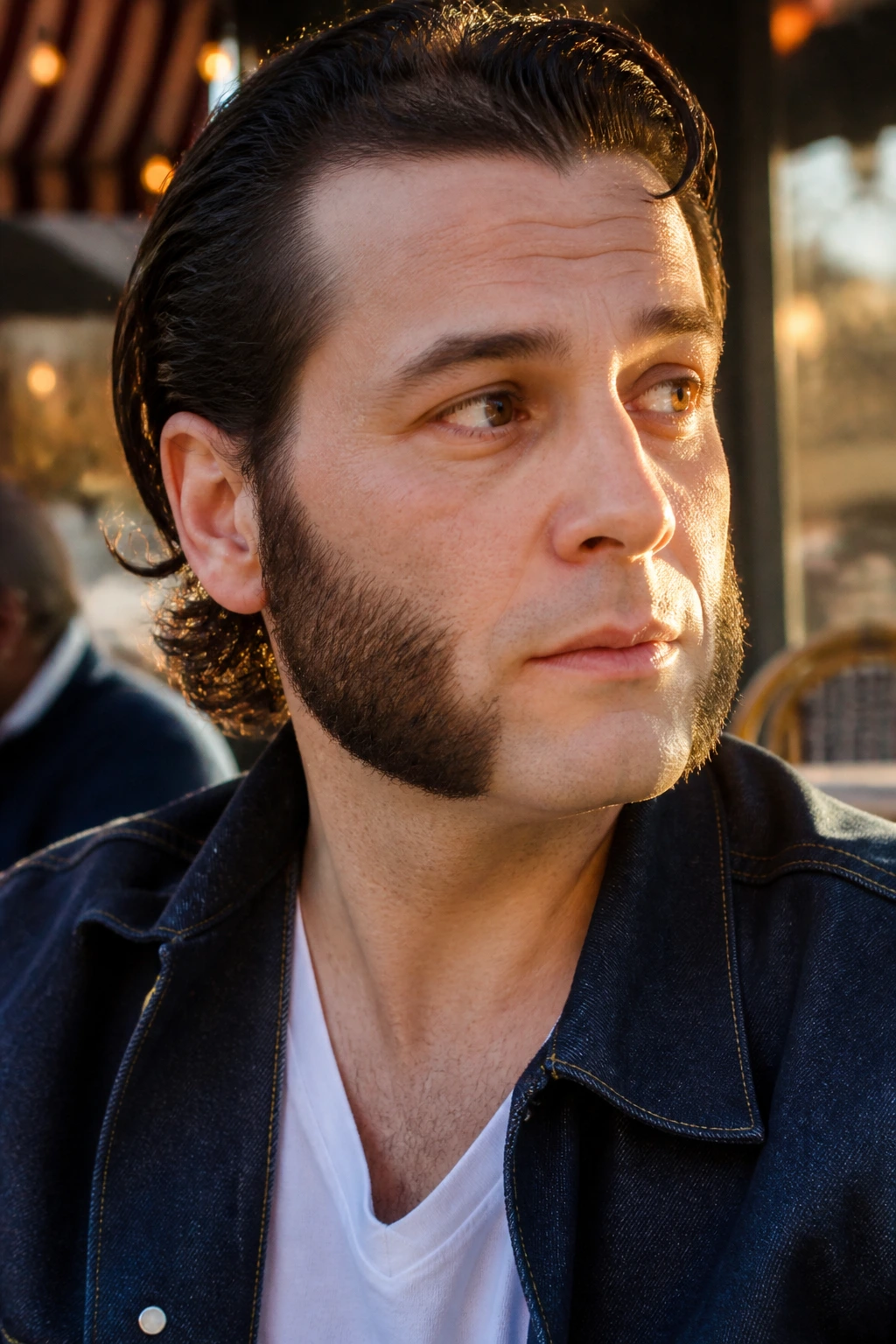
Mutton chops put the focus on the sideburns and cheeks while leaving the chin mostly open. That gives the face a wide, dramatic frame and a shape that is hard to ignore. Done cleanly, it can look sharp and a little rebellious; done badly, it can look like costume hair from a school play.
This style works best when the sideburns are thick and the cheek line is carefully trimmed. Keep the lower face intentional—often clean-shaven or nearly so—and the chops become the statement. The trick is confidence and maintenance. There’s no half-committing to mutton chops.
These are not for everyone. Which is exactly why they work.
29. Friendly Mutton Chops
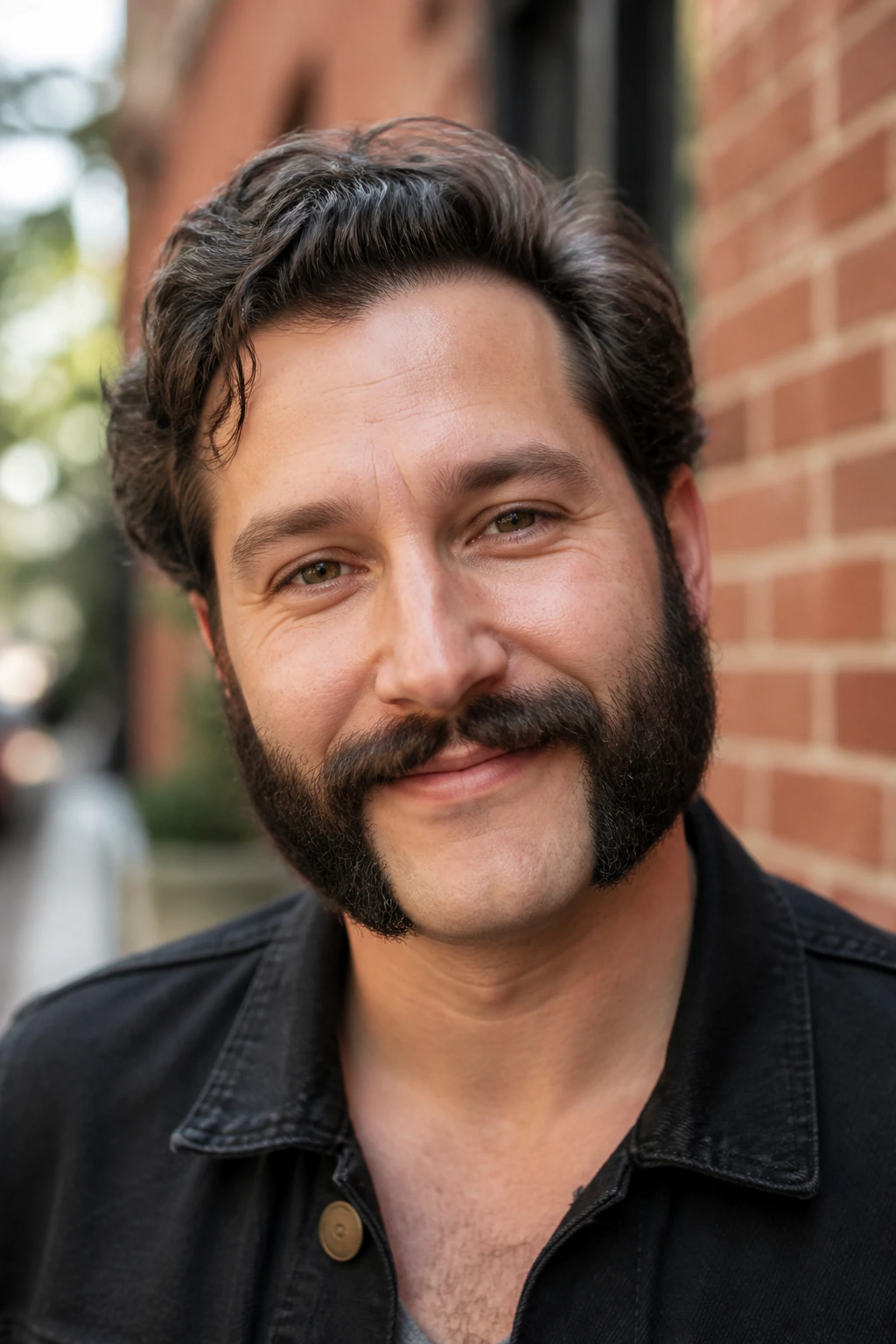
Friendly mutton chops soften the old-school chop shape by connecting it to the mustache. That small connection makes the style feel more wearable and less theatrical, especially if you want something with personality but still recognizable as a beard style rather than a costume. The cheeks do the heavy lifting here.
It suits men with strong sideburn growth and decent cheek density. The connection to the mustache should stay tidy, and the chin can remain lighter or clean depending on how bold you want the shape. If the cheeks flare too wide, trim them back before the whole thing takes over your face.
This version is the easier conversation starter. Less wild, still memorable.
30. Old Dutch Beard
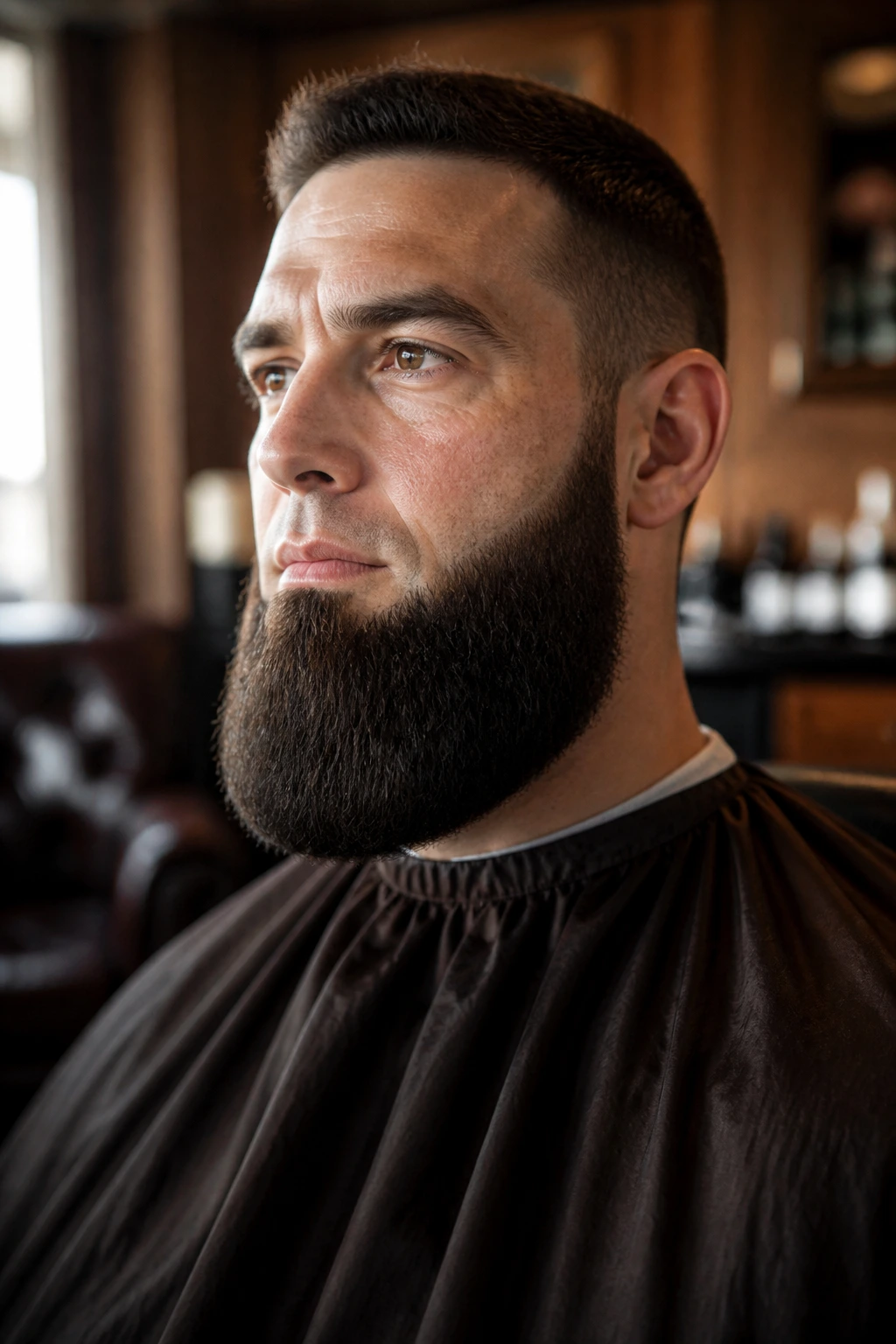
The Old Dutch beard is big, bottom-heavy, and famously lacking a mustache. That absence changes the whole mood of the face, making the lower beard feel broader and more self-contained. Sharp edges matter a lot here because the style can quickly tip into unruly territory if the sides are left alone for too long.
This shape works if your beard grows thick through the chin and jaw. Keep the upper cheek line clean and the bottom rounded or squared depending on your face. Without those controls, the beard grows like a cloud. With them, it looks intentional and strong.
It’s an unusual style, but not a gimmick when the trim is right.
31. Wolverine Beard
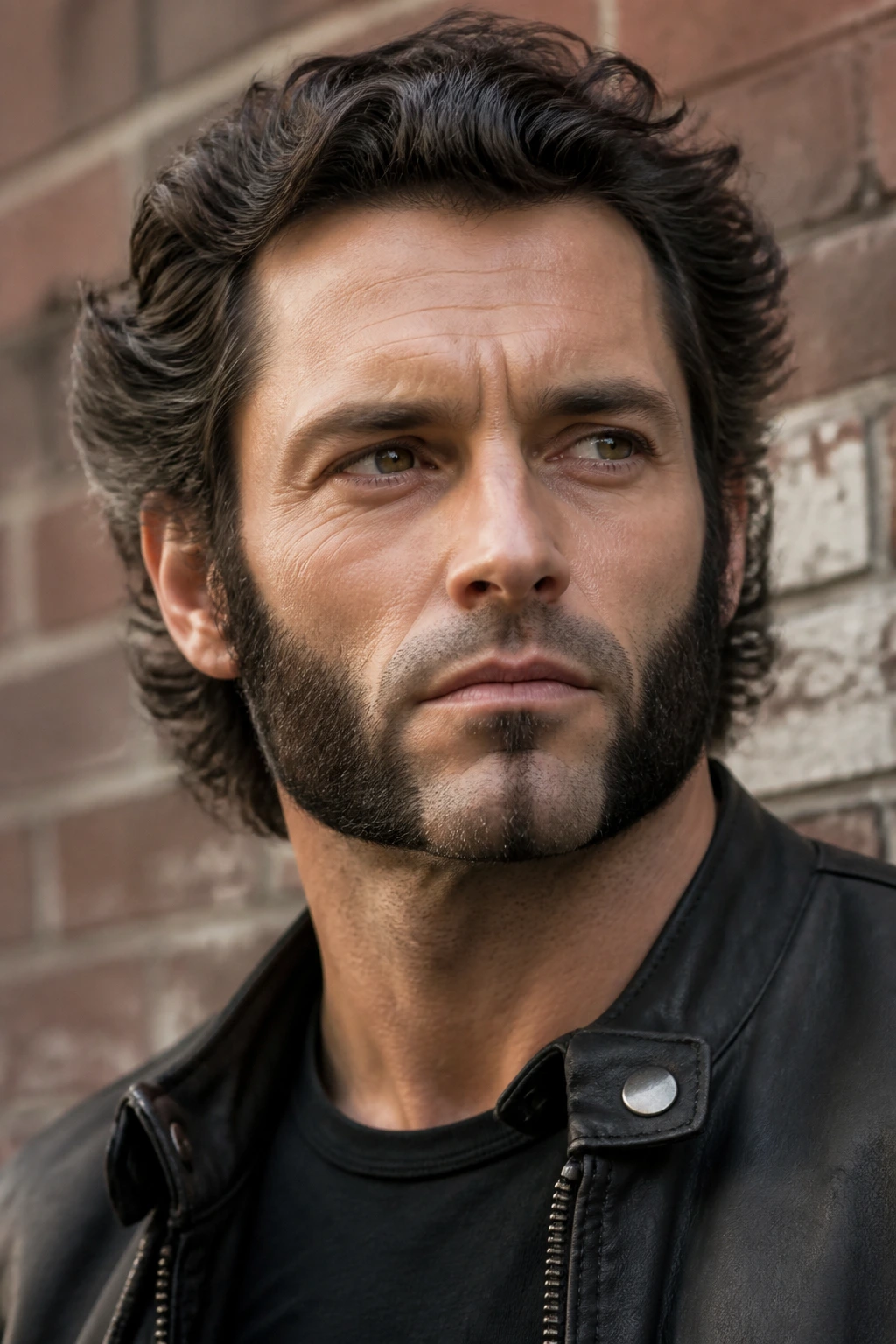
A Wolverine beard leans on thick sideburns and a strong jaw connection, with the chin either kept tighter or shaped into a controlled strip. The whole look is about width through the temples and cheeks, which gives the face a more rugged outline. If your sideburns grow faster than your chin, this can be a surprisingly good fit.
The important part is control. Let the sideburns be the star, but keep the transition to the jawline clean so the beard does not collapse into a fuzzy block. A razor-edged neckline helps a lot here, especially if the haircut is short and clean on top.
It has character. A lot of it. But the line work decides whether it looks sharp or just loud.
32. Soul Patch Beard

A soul patch is tiny, but it can still look sharp when the edges are tidy and the placement is centered under the lower lip. Sometimes it stands alone. Sometimes it anchors a bigger style. Either way, the shape depends on precision more than density.
This is the beard style for men who want minimal facial hair or whose growth is sparse elsewhere. The patch should be trimmed to a neat teardrop or small rectangle, not left shaggy. Pair it with a clean shave or a tight mustache if you want more visual structure.
Small styles are picky. That’s the trade-off. But when the placement is right, a soul patch reads cleaner than a messy full beard ever could.
33. Patchy Beard Kept Short

A patchy beard kept short is less a compromise than a smart decision. Instead of chasing length that exposes gaps, you keep the beard in the 1 to 5 mm range, where patchiness blends into texture and the face still gets some shadow. The result can look more polished than a longer beard that tries too hard.
This style depends on honest trimming. If one area is weak, do not leave the rest to grow wild in the hope that it will catch up. Keep the outline clean, set the neckline, and use the beard’s short length to hide the thin spots instead of advertising them.
A lot of men could wear this style better than they think. The problem is usually patience, not growth.
34. Salt-and-Pepper Beard
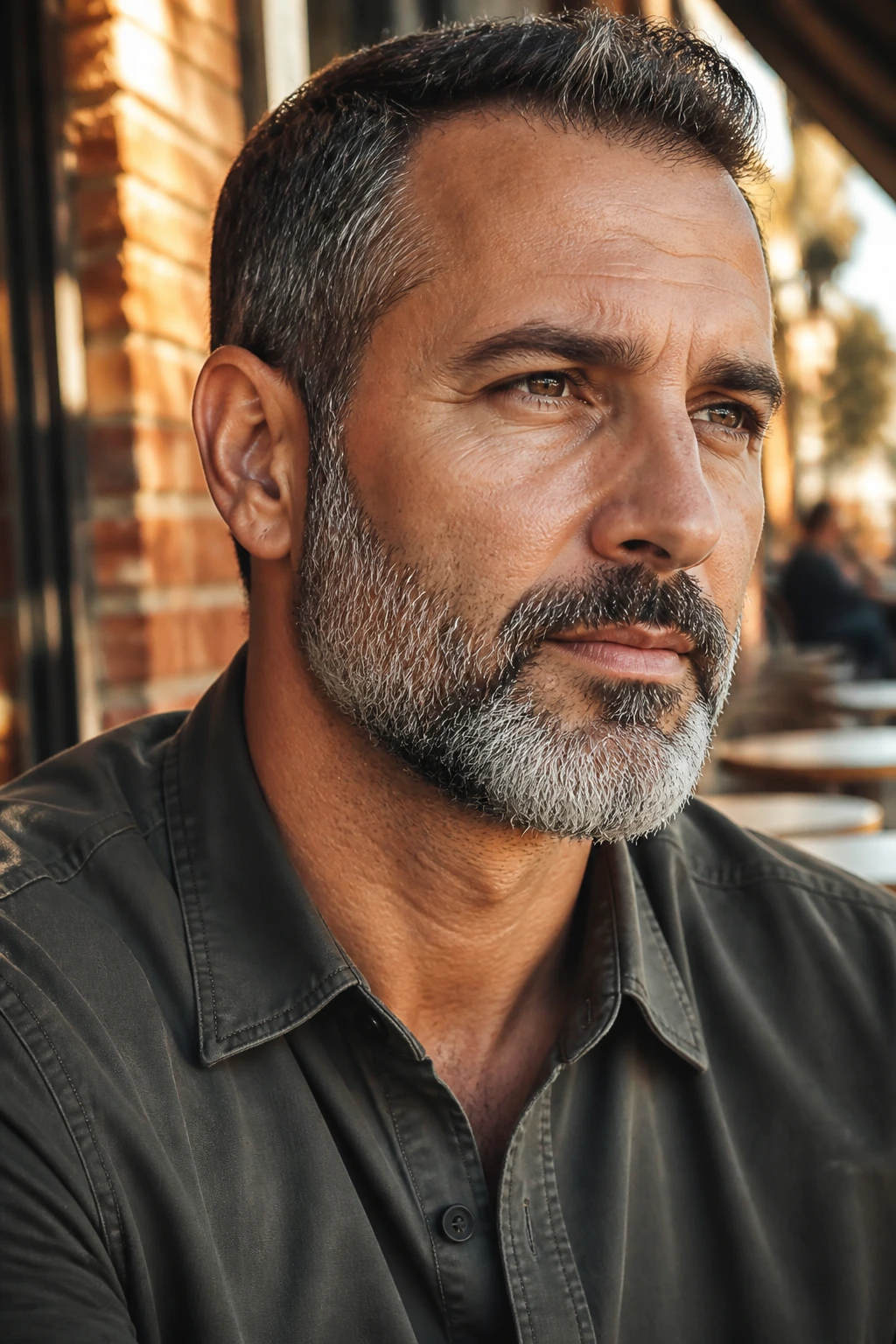
A salt-and-pepper beard gets sharper when the shape is clean, because the color contrast already gives the beard depth. Grey hairs can look coarse if the edges are sloppy, but when the line-up is tight and the length is even, the mix of dark and silver looks deliberate and strong.
This style works with nearly any beard shape, which is part of why it matters. You can wear it as stubble, a boxed beard, or something longer, and the texture does a lot of visual work. Keep the beard conditioned so the greys don’t stick out dry and wiry.
Grey is not a problem to hide here. It’s part of the style.
35. Sculpted Long Beard With Razor Line
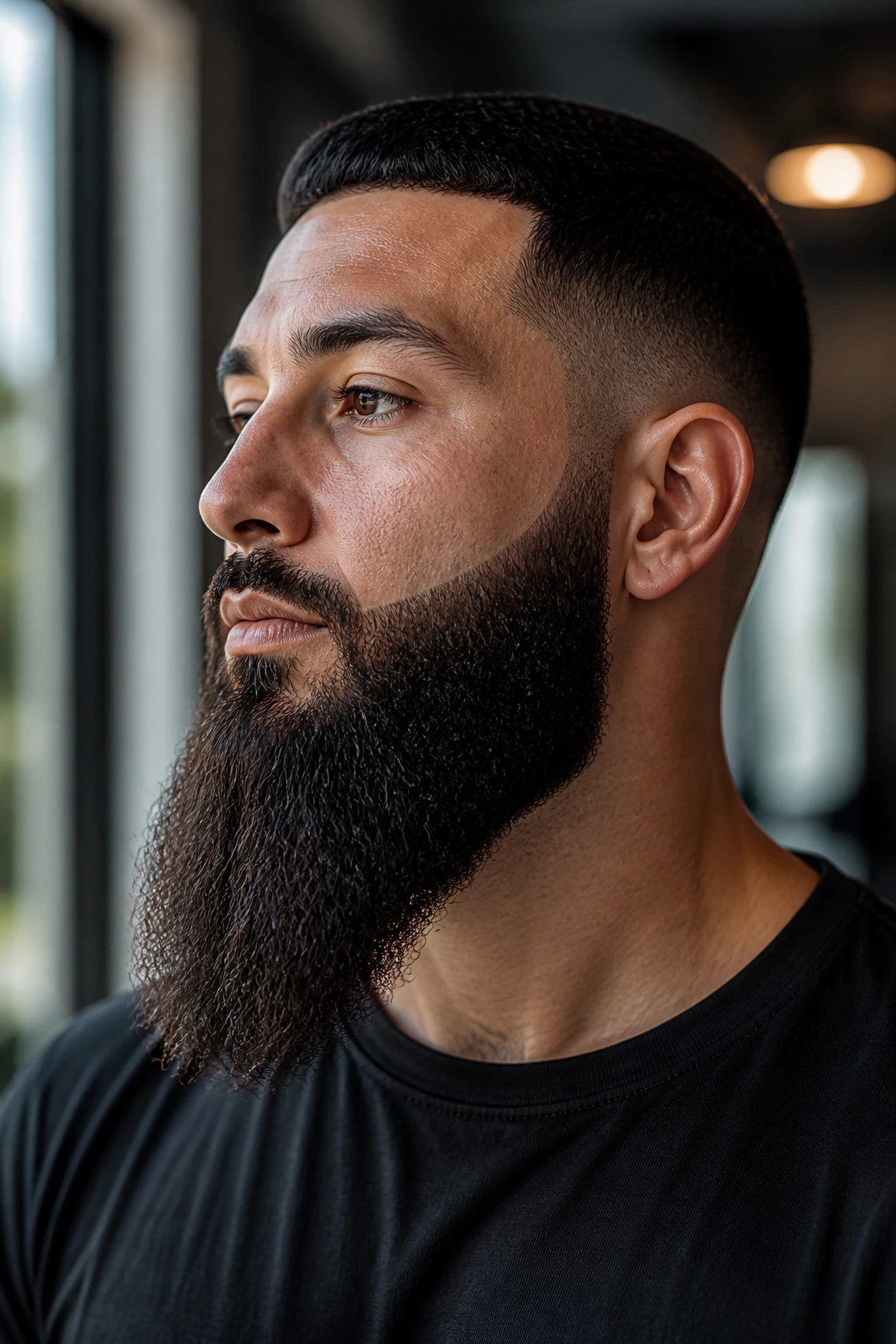
A sculpted long beard with a razor line is the long-beard answer to “how do I keep this from looking wild?” The beard can be full and substantial, but the cheeks, neckline, and side edges are cleaned up with a razor or detail trimmer so the shape stays clear. That contrast between length and precision is what makes it sharp.
This is a strong look for men with dense growth and enough patience to brush, oil, and trim regularly. The razor line should be crisp but not cartoonish; overly sharp edges on a long beard can look fake fast. Keep the bulk healthy, then clean the frame around it.
Long does not have to mean loose. This style proves it.
Why the Shape Matters More Than the Length
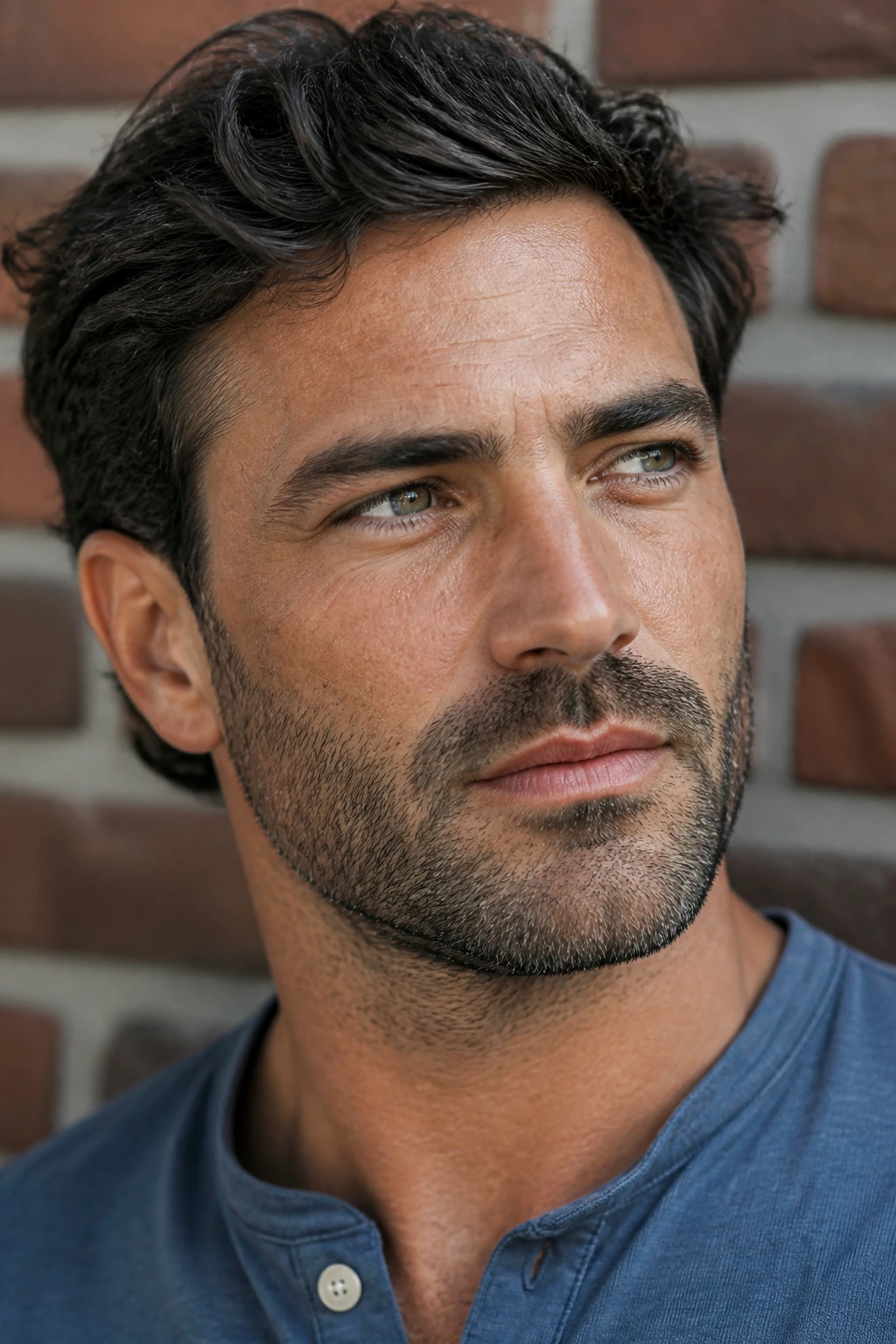
A sharp beard is mostly a story about boundaries. The neckline tells the viewer where the beard ends. The cheek line says how much of the face the beard gets to claim. The jaw shape decides whether the whole thing looks lifted or drooping.
That’s why a 3 mm stubble can look more polished than a 2-inch beard with no outline. Length is visible. Shape is what people actually notice. Once the cheek line is clean and the neckline sits in the right place, even a simple beard starts looking like a choice instead of an accident.
I’ve always thought men overcomplicate beard “style” and undercomplicate line work. One is decoration. The other is the frame.
Essential Beard Trimming Tools and Products
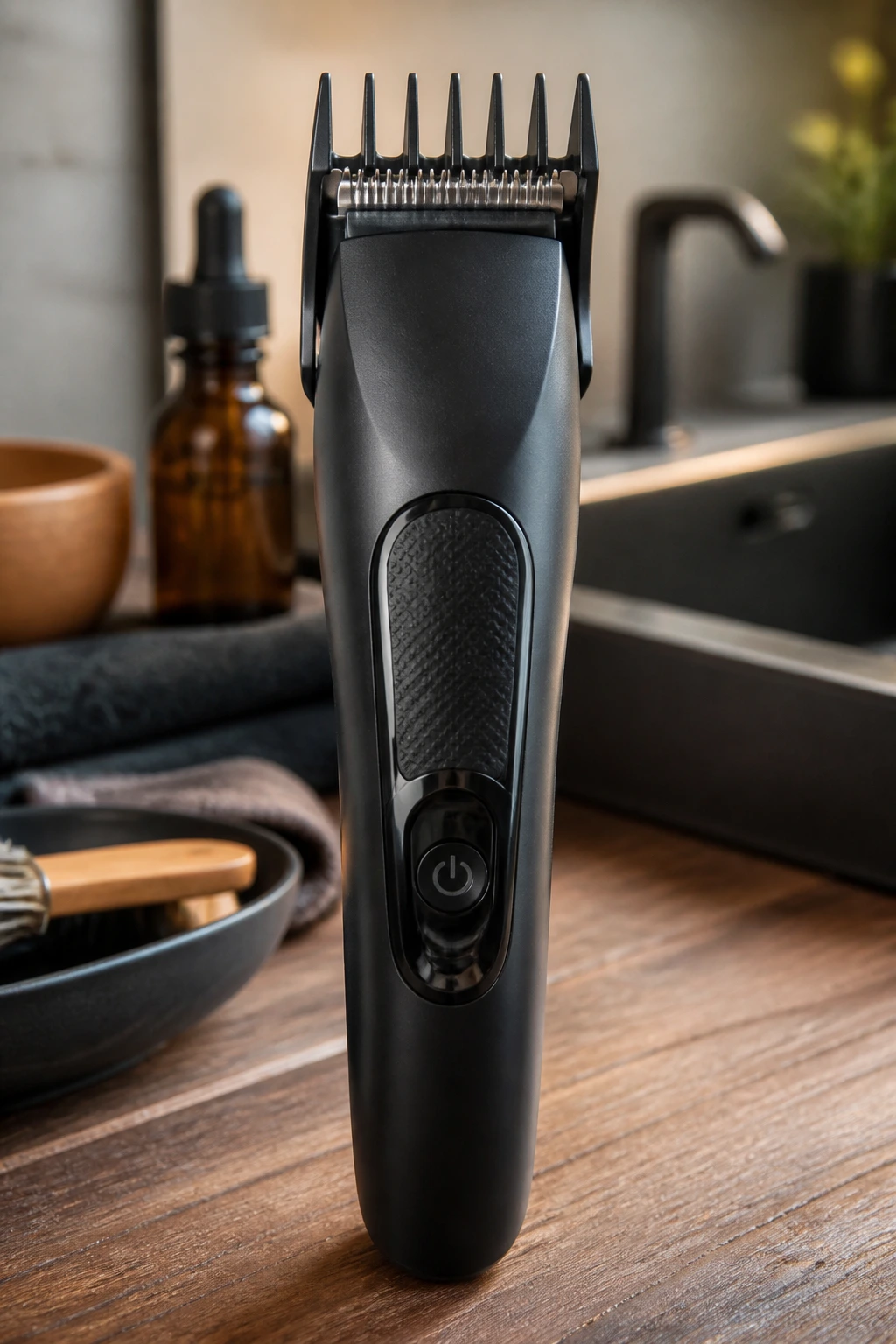
- Adjustable beard trimmer: A trimmer with guard lengths from 1 mm to 13 mm covers most of these looks without guessing.
- Detail trimmer or liner: Use this for cheek lines, neckline cleanup, and the tight edges around a goatee or chin strap.
- Single-blade or sharp cartridge razor: Good for cleaning below the neck and sharpening the upper cheek line.
- Beard comb: A comb helps expose uneven spots before you cut them off.
- Boar-bristle brush: Best for longer beards because it pulls hair downward and helps the shape settle.
- Small scissors: Useful for stray ends, mustache hairs on the lip, and the odd whisker that refuses to cooperate.
- Beard wash: Regular shampoo can strip the beard; a dedicated wash keeps longer styles softer.
- Beard oil: A few drops reduce itch, make gray hair feel less wiry, and keep the beard from puffing up.
- Beard balm: Better for medium and long styles that need hold, shape, and a little control.
- Hand mirror or three-way mirror: Side views matter more than front views, and this saves you from trimming one side too high.
Smart Grooming Moves That Keep the Edge Clean
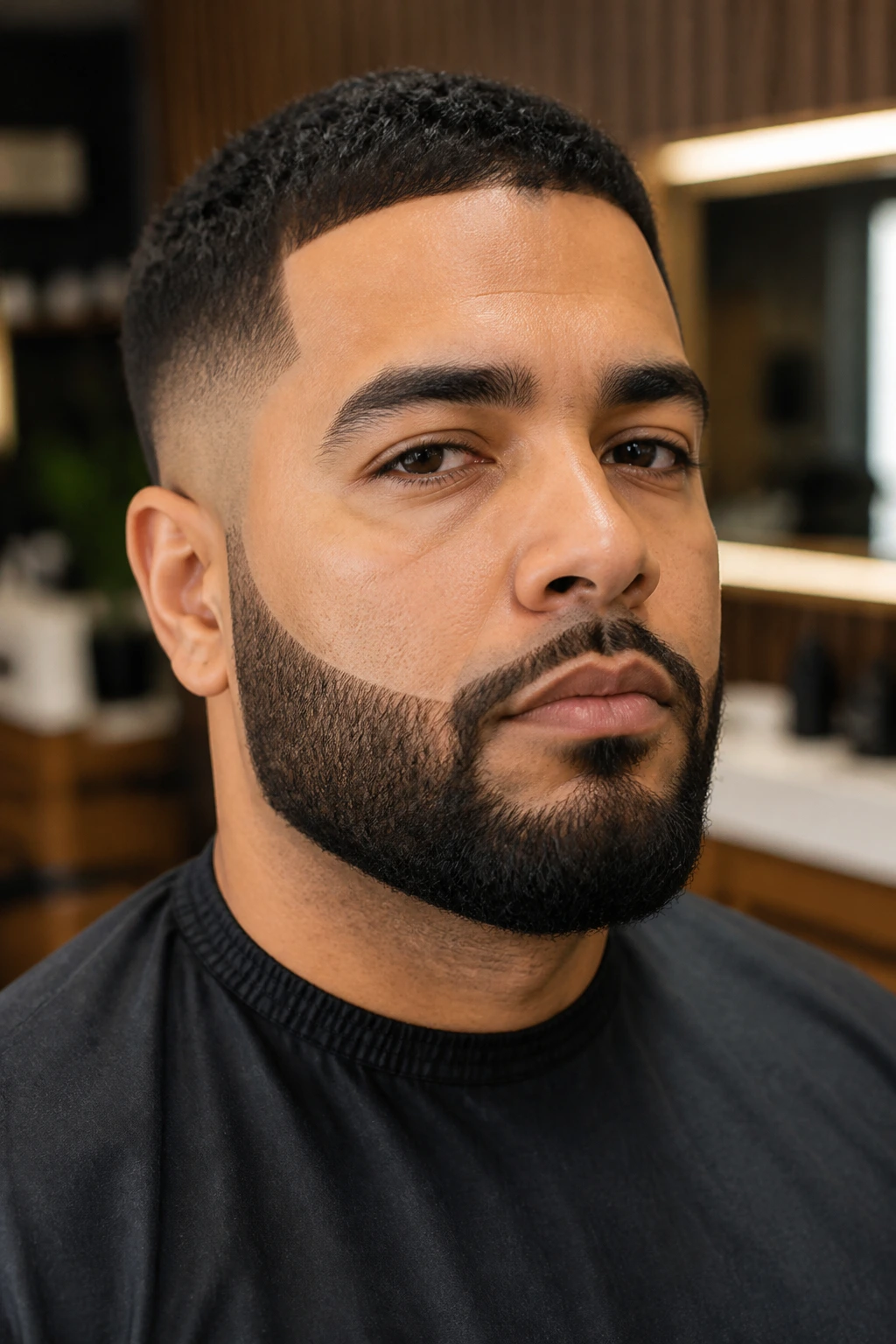
Length control: Pick a guard and stay honest with it. A short boxed beard at 8 mm looks better when the whole beard sits near 8 mm than when the chin runs away to 12 mm and the cheeks stay at 6 mm.
Cheek line discipline: Don’t chase every natural hair high onto the cheek. Most men look better with a slightly lower line that follows the shape of the face instead of climbing into the cheekbone. Clean is the point. Not aggressive.
Neckline placement: The sweet spot usually sits above the Adam’s apple, curved from behind one jaw angle to the other. Too high and the beard looks chopped off. Too low and it drags the jaw down.
Product use: Two or three drops of oil are enough for short styles. Long beards need more, but even then you want the hair coated, not soaked. Balm gives shape, not greasiness, so warm a pea-sized amount between your palms before you work it through.
Daylight check: Bathroom lighting lies. Step near a window once in a while and look at the beard in natural light. The bad edges show up fast.
How to Match the Style to Your Face and Haircut
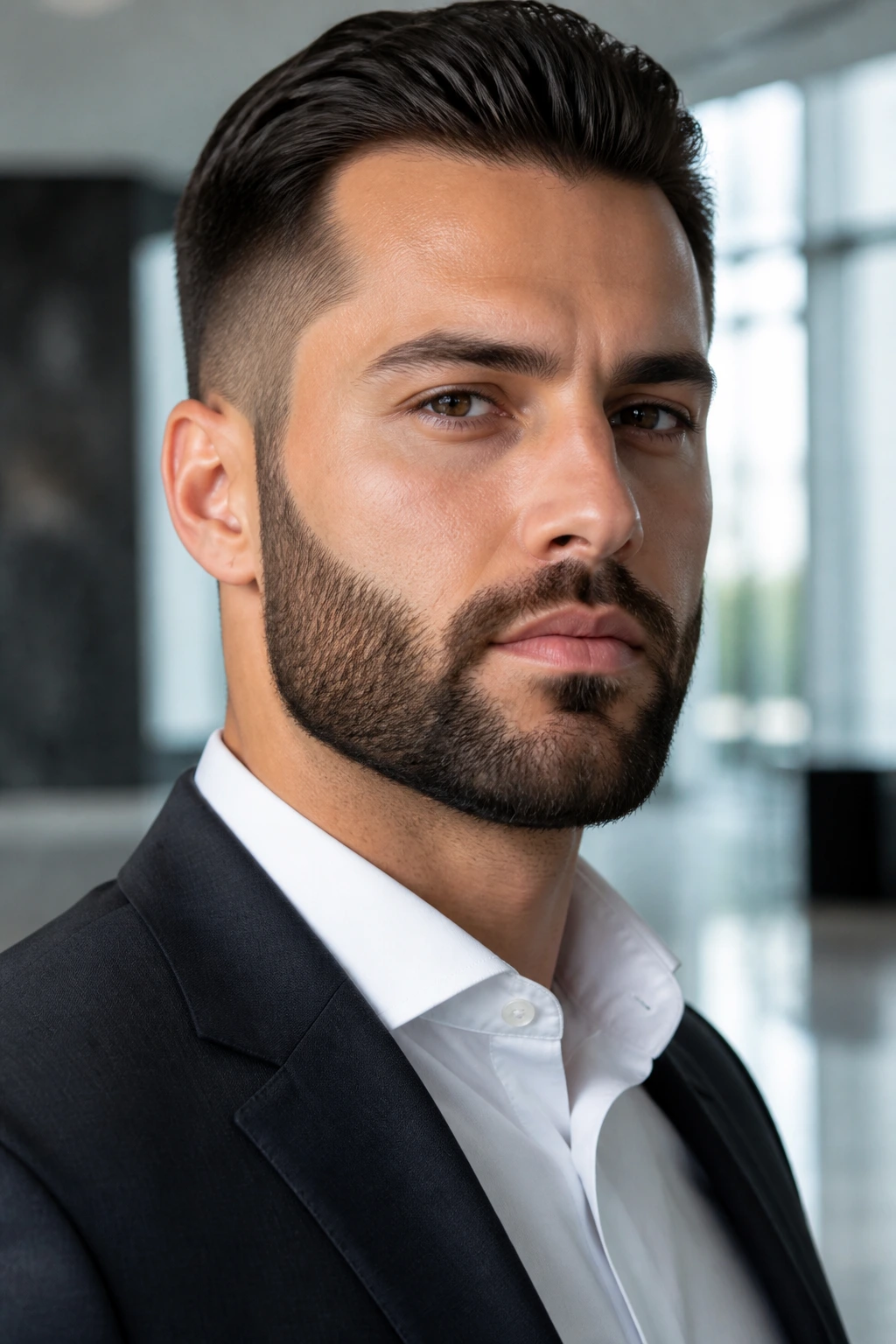
Round faces: Go for structure. A ducktail, square beard, Balbo, or any style with a little more length under the chin helps stretch the face visually. Keep the sides controlled so the beard does not widen the cheeks.
Square faces: Soften the corners. Rounded beards, tapered full beards, and even a Garibaldi with rounded lower edges can keep the jaw from looking too boxy. You want shape, not hard edges everywhere.
Long faces: Add width, not more height. Chin straps, heavy stubble, rounded beards, and full beards that stay fuller through the sides can keep the face balanced. A long pointed beard can make the face look longer than it already is.
Patchy growth: Stick to shorter styles that blur density gaps. Designer stubble, beardstache, short boxed beards, and a clean corporate beard usually hide inconsistency better than a long style that exposes every weak spot.
Haircut pairing: Skin fades and temple fades match low fade, mid fade, and high fade beards because the transition feels natural. Textured crops work with stubble and short boxed beards. Side parts and classic cuts pair nicely with boxed, corporate, and Verdi styles.
Small Upgrades That Make a Beard Look Finished

Edge trick: Leave the cheek line slightly softer on the first pass, then clean it up a day later. Freshly carved lines can look harsh in your bathroom mirror, but they settle nicely once the skin stops looking irritated.
Texture trick: For medium and long beards, comb downward before trimming. Hair that sticks out at the sides can fool you into taking off too much.
Grey trick: If the beard is salt-and-pepper, do not over-tame it with heavy product. A light oil and a neat shape usually look better than trying to make grey hair lie flat like straight brown hair.
Profile trick: Check the side view before you stop. A beard that looks great head-on can still jut out under the chin or disappear near the jawline.
Mustache trick: Trim the upper lip a little more often than the rest. A mustache that creeps over the mouth makes even a clean beard look lazy.
Growth, Trims, and Day-to-Day Maintenance
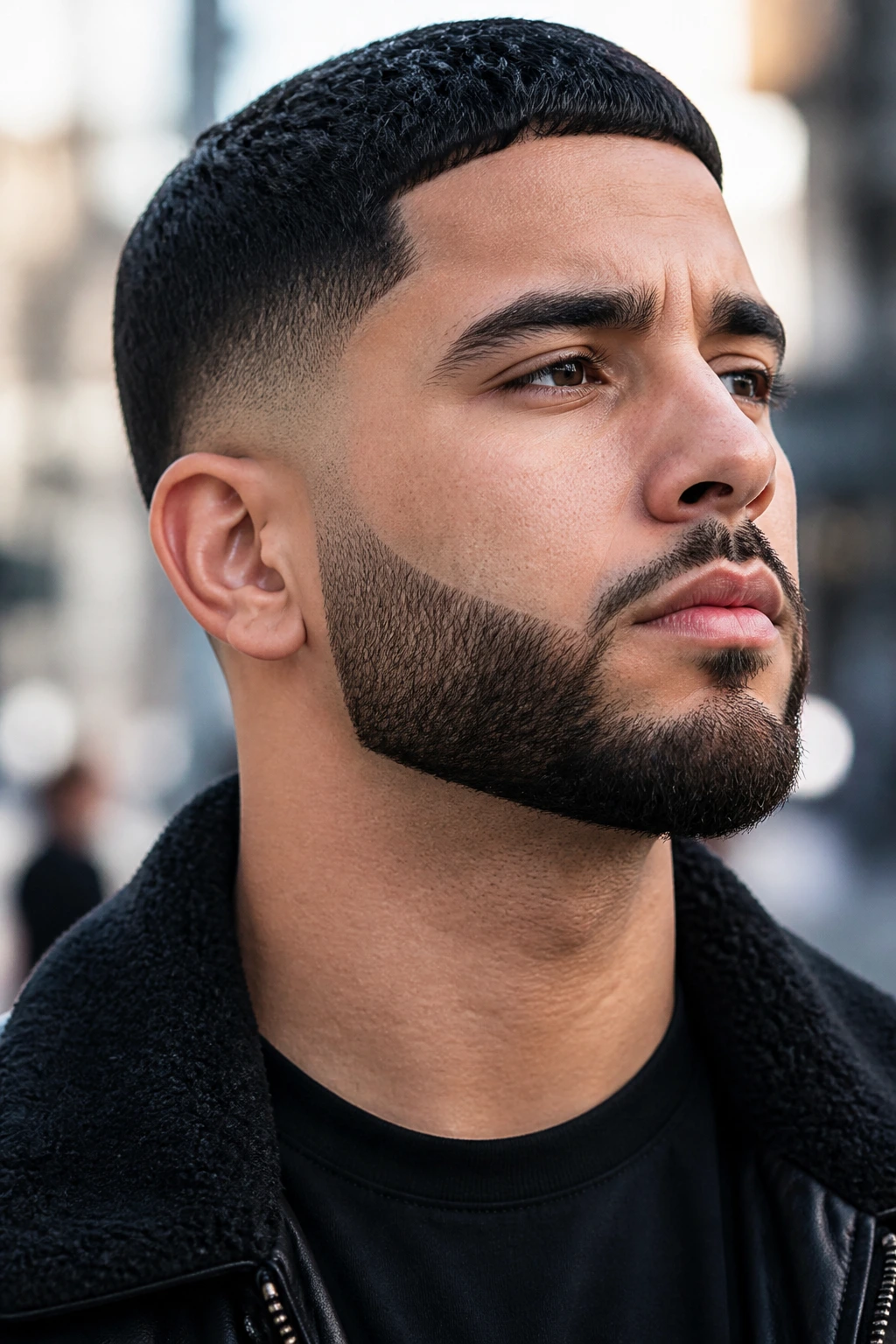
Most sharp beard styles need a rhythm. Short stubble and boxed styles usually want a touch-up every 3 to 5 days, because the line work does most of the visual work. Medium and full beards can stretch to once a week for the shape, with a quick comb and a few snips in between if one side starts getting ahead of the other.
Wash the beard 2 to 3 times a week with a beard wash if it’s short to medium. Longer beards can still get washed that often, but use a conditioner or oil afterward so the hair doesn’t dry into a rough, puffy mess. Dry the beard gently. Rubbing it with a towel roughs up the cuticle and makes the outline frizzier than it needs to be.
If you’re growing into a bigger style like a Garibaldi, Bandholz, or Viking beard, resist the urge to trim every imperfect spot. Let the beard get enough length to show its actual shape first. The first awkward stage is part of the process. Skip over it too aggressively and you’ll keep resetting the same beard forever.
Variations and Adaptations to Try
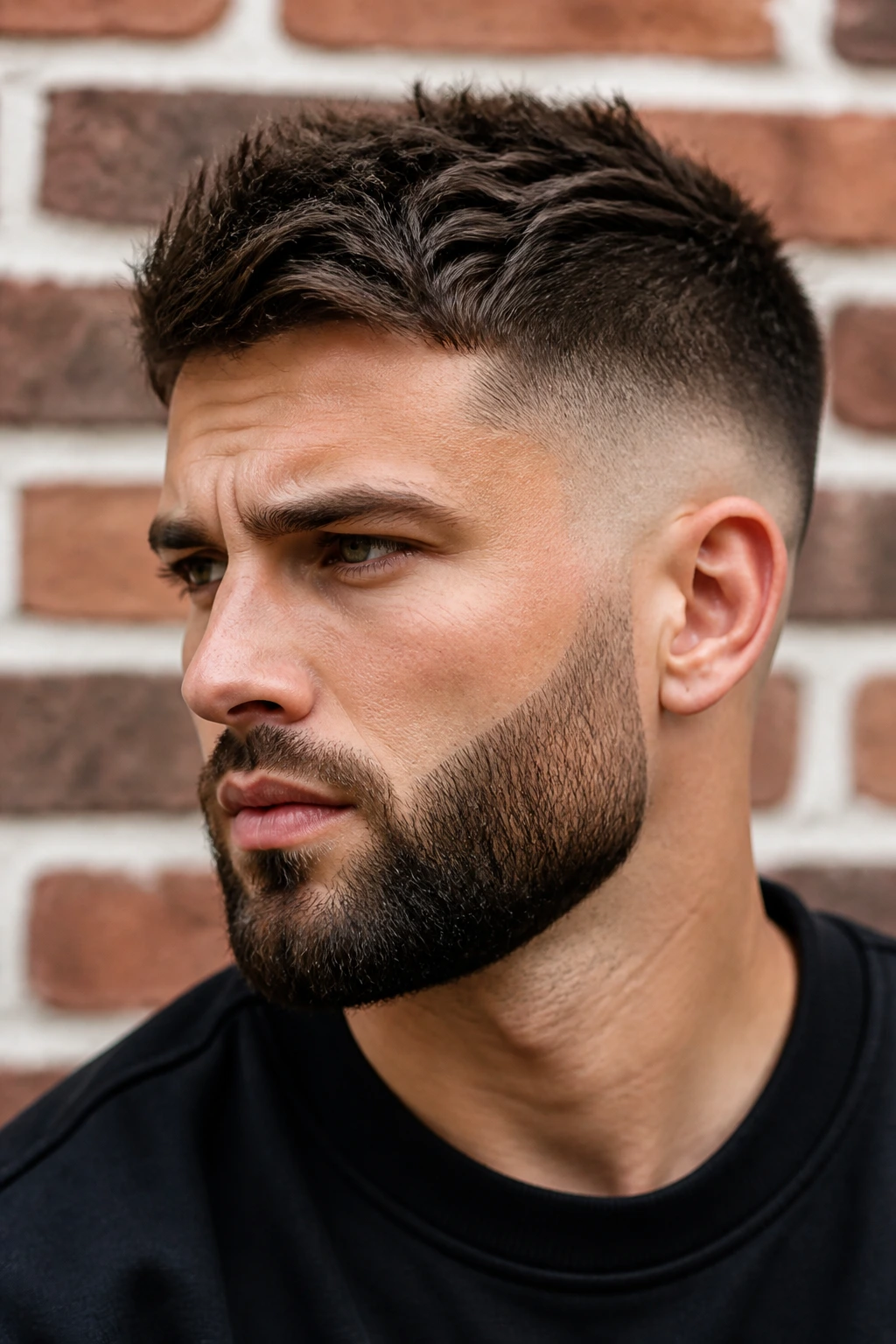
The Office Tighten-Up: Start with a corporate beard or short boxed beard and keep the cheek line a little lower than your natural growth. It looks formal, fits under most dress codes, and only needs a short trim once or twice a week. This is the safest place to begin if you want sharp without looking styled.
The Heavy Shadow: Use heavy stubble or a beardstache if your cheeks grow better than your chin or the other way around. The contrast between a strong upper lip and short facial hair gives the face character without asking for full density. It also grows out gracefully.
The Fade Link-Up: Choose low, mid, or high fade beards if your haircut already sits in a fade or taper. Matching the beard fade to the haircut keeps the whole head shape coherent. That’s a small detail, but it changes the whole profile.
The Long-Beard Discipline: Try a sculpted long beard, Garibaldi, or Bandholz if your growth is dense and you can commit to brushing and oiling. Keep the cheek line and neckline crisp so the length feels earned, not accidental. Long beard, yes. Wild hedge, no.
The Shape-Softener: Rounded beards and rounded full beards are useful if your face is already sharp or long. They take the hard corners off the jaw and make the lower face look calmer. Good when you want structure without severity.
Common Beard Grooming Mistakes to Avoid
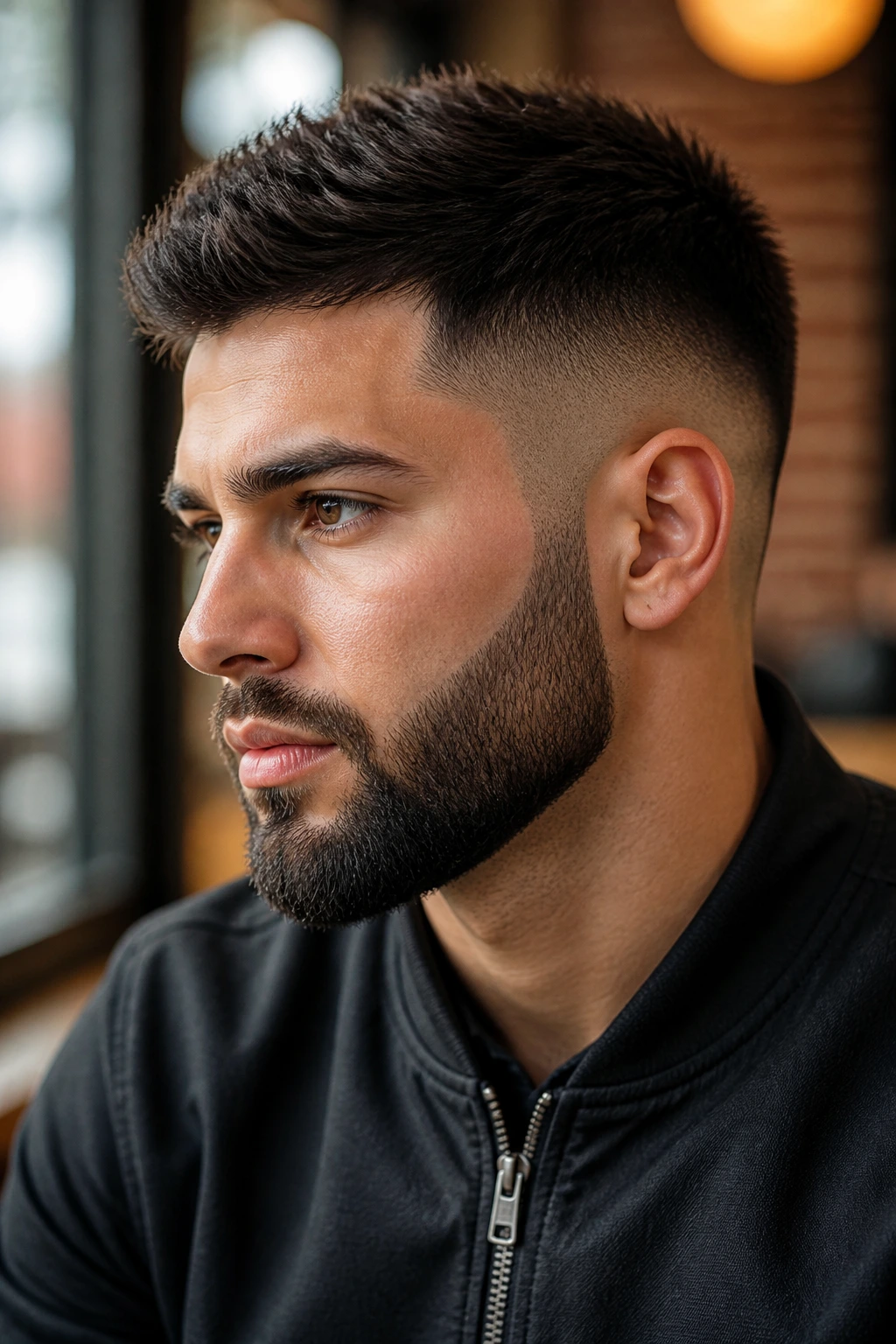
A beard can look sloppy even when the hair itself is healthy. The first mistake is setting the neckline too high. That makes the chin look like it’s floating, and once you see it, you can’t unsee it. Keep the line under the jaw, not halfway up the neck.
The second mistake is overcutting the cheeks. Men tend to carve a line that is too steep or too high because it feels cleaner in the moment. A few days later, it starts looking thin and unnatural. Use a lighter touch and clean the stray hairs rather than drawing a hard stripe across your face.
Third, don’t let the mustache go rogue. A mouth-covering mustache makes even a clean boxed beard look careless. Trim it above the lip line and comb it downward before every trim.
Finally, don’t force a long style before your growth supports it. If your beard is patchy on the cheeks, a Bandholz or Viking shape will expose that faster than a shorter style would. Sharp beards work because they respect the growth you actually have.
Frequently Asked Questions About Sharp Beard Styles
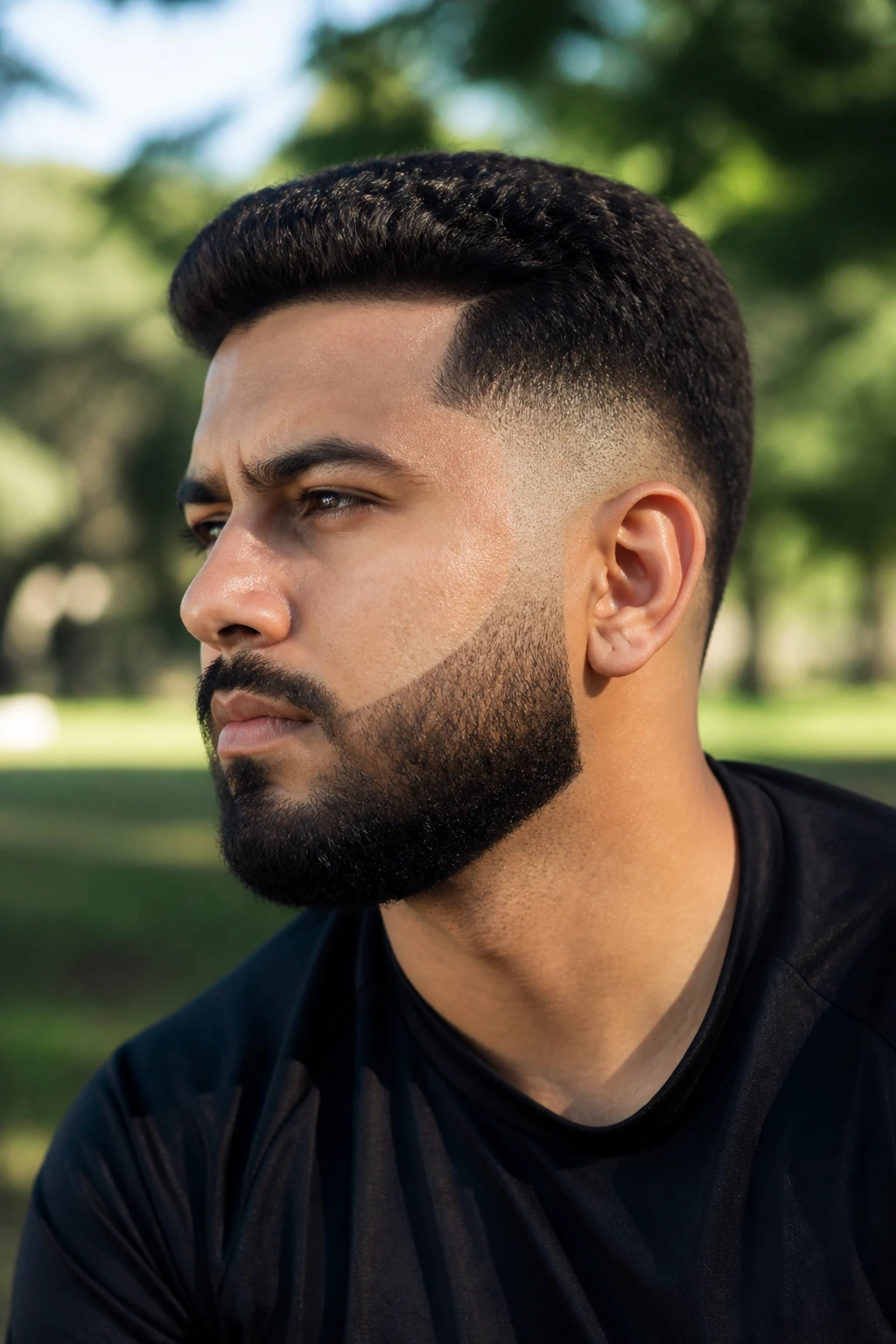
What beard style looks best on a round face?
Styles with more length under the chin usually help, especially ducktails, square beards, and Balbo styles. The goal is to stretch the face a little without adding width at the cheeks.
How often should I trim my neckline?
Most men do well trimming it every 5 to 10 days, depending on how fast the neck hair grows. If the beard starts spilling down the neck, the shape loses its edge fast.
Can a patchy beard still look sharp?
Yes, but shorter styles usually work better. Designer stubble, heavy stubble, beardstache, and short boxed beards hide uneven density far better than a long beard that exposes every gap.
Should I trim my beard wet or dry?
Dry trimming gives you a more honest read on length, especially for curly or wavy beards that puff up when they dry. Wet trimming can work for a quick shape-up, but it’s easier to cut too much if the hair lies flatter than usual.
What’s the difference between a boxed beard and a faded beard?
A boxed beard focuses on a square or rectangular outline, while a faded beard blends the sideburns and upper beard into the haircut. You can combine the two, but the fade is about transition and the box is about shape.
How do I keep a long beard from looking wild?
Brush it downward, oil it, and clean the neckline and cheeks often. Long beards need shape as much as short beards do—maybe more—because extra length makes bad edges stand out.
Do beard oils help with sharpness or only comfort?
Both. Oil keeps the hair softer so it lies more neatly, which helps the beard look controlled. It also cuts down the dry, wiry look that makes edges seem fuzzier than they are.
What if one cheek grows higher than the other?
Trim to the lower side and keep the line a touch softer until the difference evens out. Chasing perfect symmetry with a razor usually makes the mismatch more obvious.
The Shape That Fits
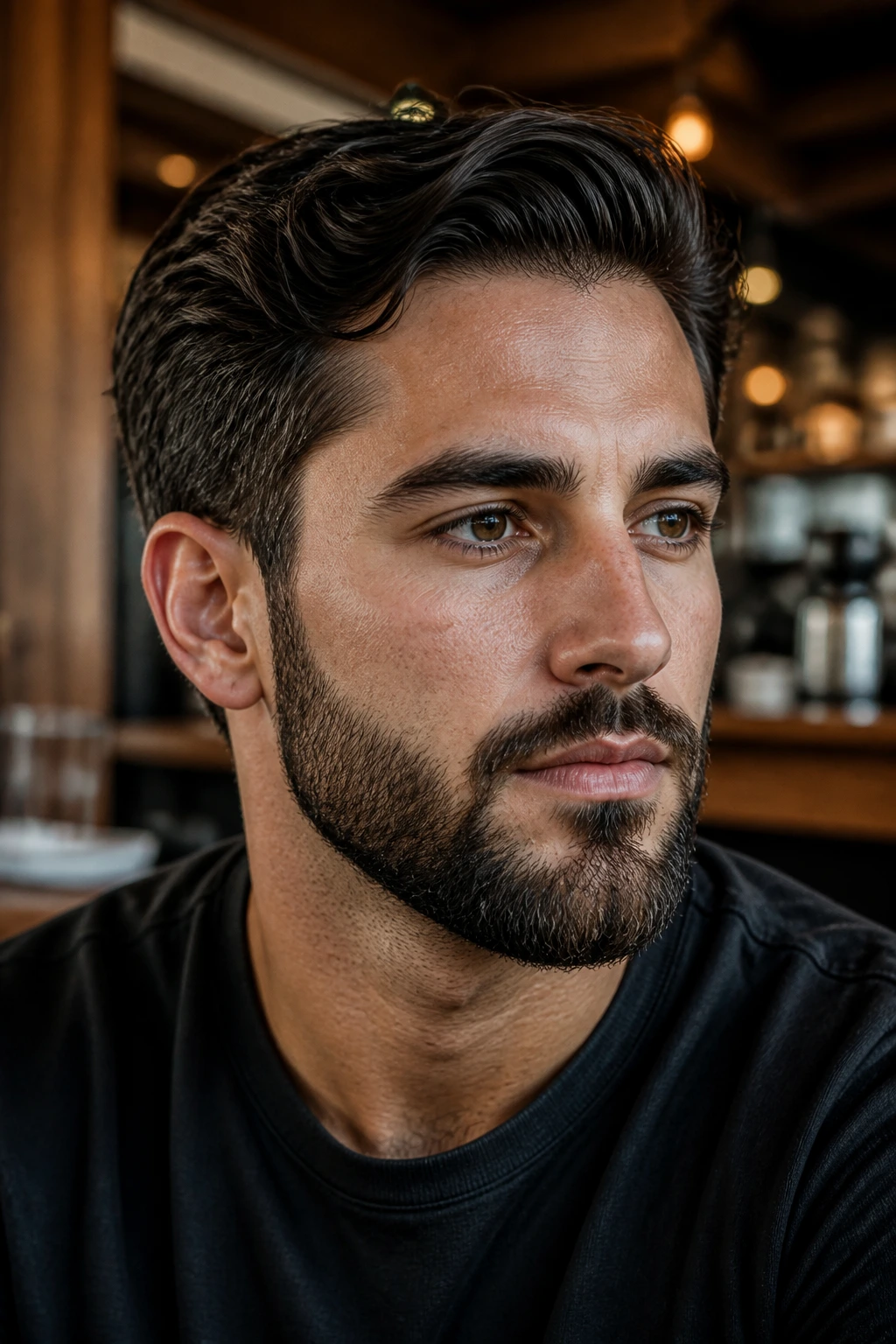
A sharp beard is never just about hair. It’s about where the line stops, where the chin gets weight, and how the whole face reads from three feet away. That’s why the best beard styles for men are the ones that work with your growth instead of demanding some fantasy version of it.
Start with the shape you can maintain, not the shape you wish you could maintain. A clean stubble, a short boxed beard, or a well-kept fade often looks better than a bigger style that needs rescuing every morning. Once the frame is right, the rest gets easier.
Pick one style, keep the lines honest for a few weeks, and watch what happens in the mirror. The beard usually tells you what it wants to be if you stop fighting it and start shaping it.
