



The best kids’ short haircuts do one quiet, underrated job: they make a busy morning behave itself. A good cut should survive sleep-squashed bangs, a hoodie, a backpack strap, and a child who would rather chase the dog than sit still for a comb. That is the real test. Not how it looks in the chair. How it looks when the cereal is on the table and someone is already asking where their left shoe went.
Short hair for kids can be neat, playful, and surprisingly flexible. A number-two buzz cut has a completely different personality from a softly layered pixie or a chin-grazing bob, even though all three live in that shorter-length zone. The shape matters. So does the child’s hair texture, cowlick pattern, and tolerance for a brush. A cut that fights the crown or falls into the eyes by lunch is not a cute idea. It is a problem with good lighting.
The sweet spot is finding a style that looks clean on day one and still behaves on day fourteen. That means thinking about the grow-out line, the neckline, the part, the fringe, and how much styling a child will actually tolerate before breakfast. A haircut can be simple without being boring. It can be practical without looking like an afterthought. And when it’s chosen well, it saves time in a way parents can feel immediately.
Why These Cuts Keep Mornings Calm
-
Less wrestling at the mirror: A short cut usually needs a quick mist of water or a dab of product, not a full detangling session that turns into negotiations.
-
Better helmet and hat comfort: Tapered sides, cropped necklines, and shorter ends sit more neatly under bike helmets, school caps, and hooded sweatshirts.
-
Cleaner grow-out: Styles with soft edges, light layers, or a taper around the ears tend to grow out in a way that still looks intentional for several weeks.
-
Works with real hair, not fantasy hair: Cowlicks, thick crowns, fine strands, and curls all behave better when the cut is shaped around the child’s natural growth pattern.
-
Easy to tune up at home: A fringe trim, a neckline cleanup, or a quick side part can stretch the time between full haircuts without making the style look neglected.
-
Enough personality to feel chosen: Kids usually notice whether a cut feels sleek, sporty, soft, or a little bit edgy. That matters more than adults admit.
1. The Number Two Buzz Cut
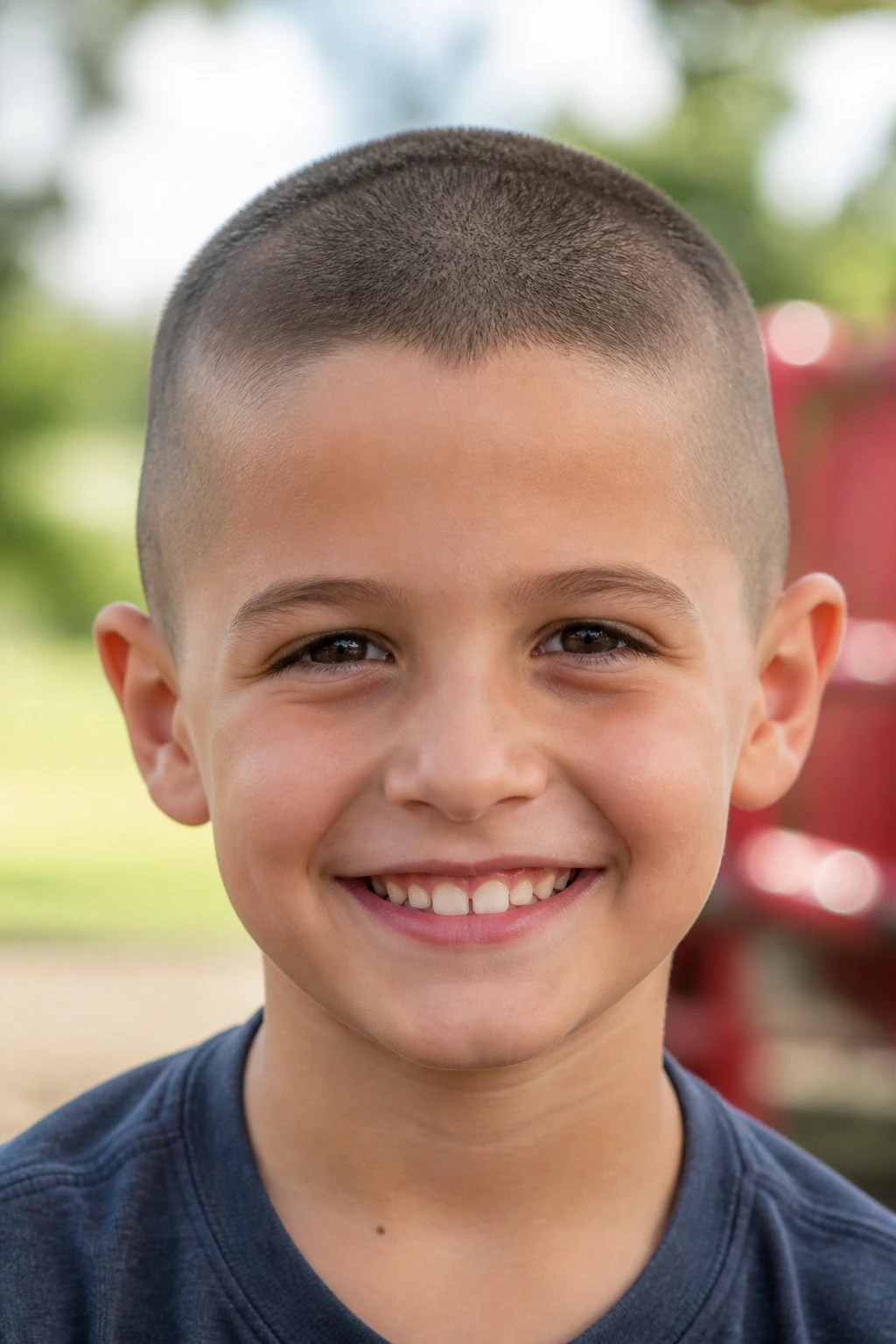
A buzz cut is the blunt instrument of kids’ short hair, and I mean that as a compliment. It strips out the daily drama. No fringe in the eyes. No knot behind the ear. No argument about “one more brush.” A guard number two leaves about 1/4 inch of hair, which is short enough to stay neat but not so close that the scalp feels bare.
Why It Works on Busy Kids
This cut shines on children who run hot, hate styling, or never sit still long enough for a proper part. It also makes thick growth look even, which is handy if a child’s hair sprouts in every direction after a nap. The downside is simple: a buzz cut shows the head shape more than longer cuts do, so the top of the head, crown, and hairline all matter.
- Best for: Active kids, summer sports, and first-time clipper cuts.
- Ask for: A #2 all over, or a #2 on top with a softer #1.5 around the sides.
- Watch for: Very prominent cowlicks or a child who dislikes the feel of bare ears and necks.
- My take: A slightly longer buzz almost always looks friendlier than skin-close edges.
A tiny bit of length makes a big difference. It softens the outline, and it gives the scalp some coverage if the hair grows unevenly.
2. The Tidy Crew Cut
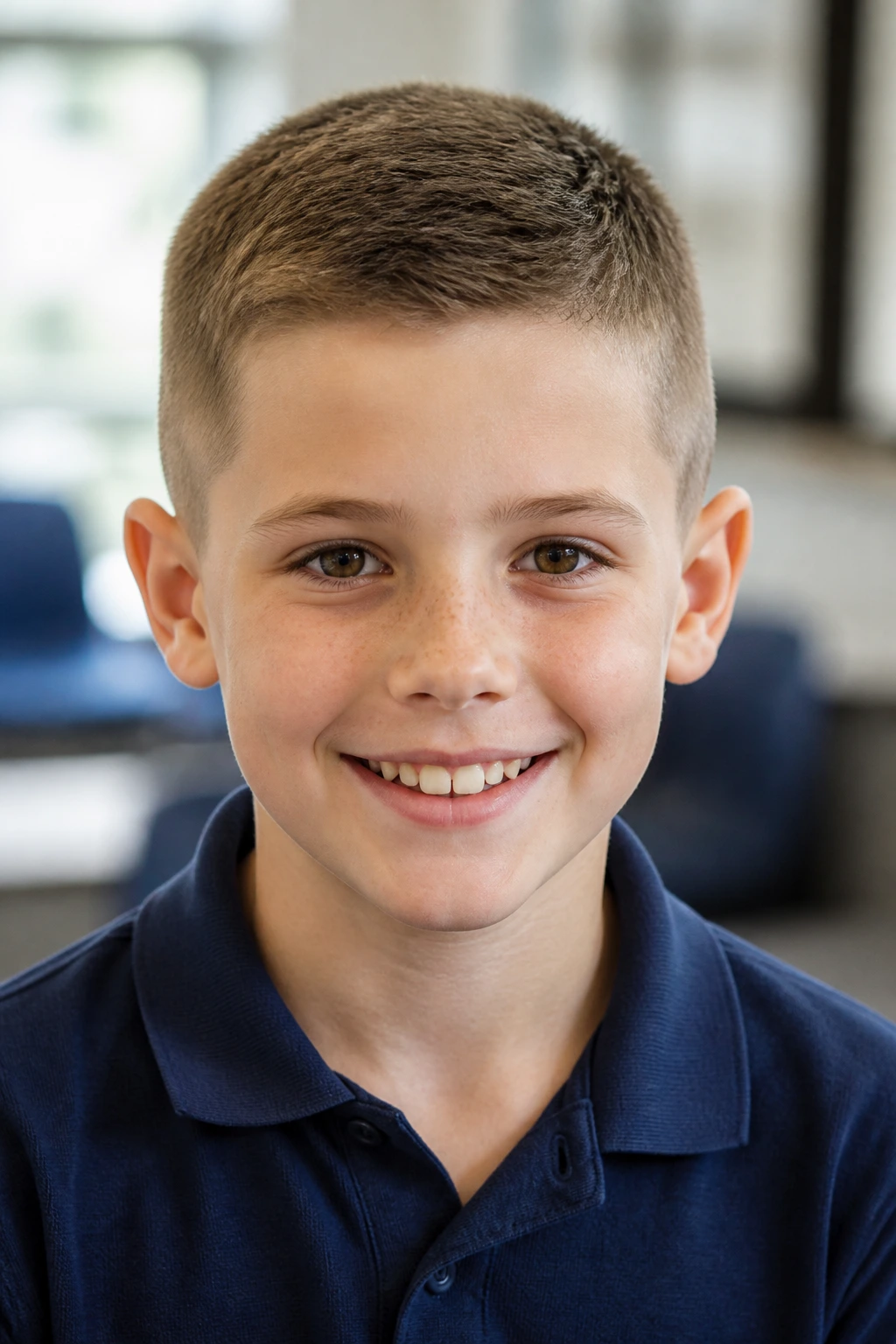
The crew cut is the polite cousin of the buzz cut. It keeps the sides short, but leaves more length on top so the hair can be brushed forward, lightly to the side, or left a touch tousled. If the buzz cut is “get in and get out,” the crew cut is “look neat without trying too hard.”
This one works especially well for kids whose hair starts to stick up the moment it gets any length. The top usually sits around 1 to 1 1/2 inches, while the sides taper down cleanly. That balance matters. Too little length on top, and the style flattens into a helmet. Too much, and it turns into a fussy little quiff that nobody asked for.
A crew cut is a strong choice for school photos, uniform dress codes, or any child who wants a “big kid” haircut without the maintenance of a longer style. It grows out gently too, which is one reason parents end up circling back to it after trying more ambitious cuts.
3. The Textured Crop
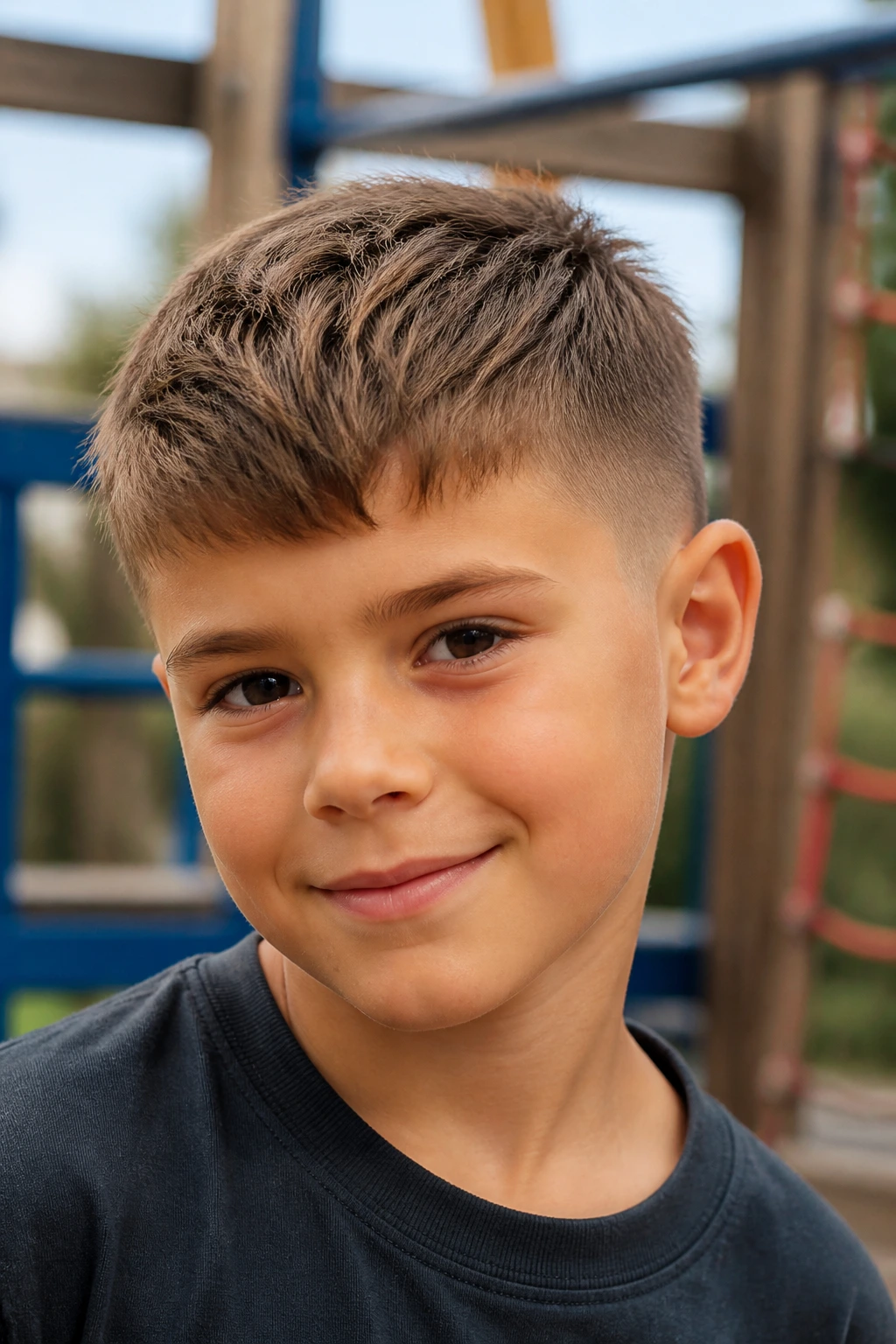
The textured crop has a bit of personality baked into it. Short sides, a short-to-medium top, and choppy ends that keep the hair from lying flat and boring. It looks best when the top is cut with a little point-cutting or chipping into the ends, not left as one smooth block.
What makes this cut so useful is the way it deals with straight or slightly wavy hair that wants to fall forward. Instead of fighting that movement, the crop uses it. A tiny amount of matte paste on damp hair is usually enough. Finger-combed, not brushed. That’s the move.
What to Tell the Stylist
Ask for the top to stay textured and for the sides to taper neatly into the ears. If the child has a stubborn crown, mention it before the scissors start. A good crop should sit down in the front without hanging into the eyes by noon.
The shape is a little modern, a little messy, and very forgiving when a child’s hair grows out faster on one side than the other.
4. The French Crop
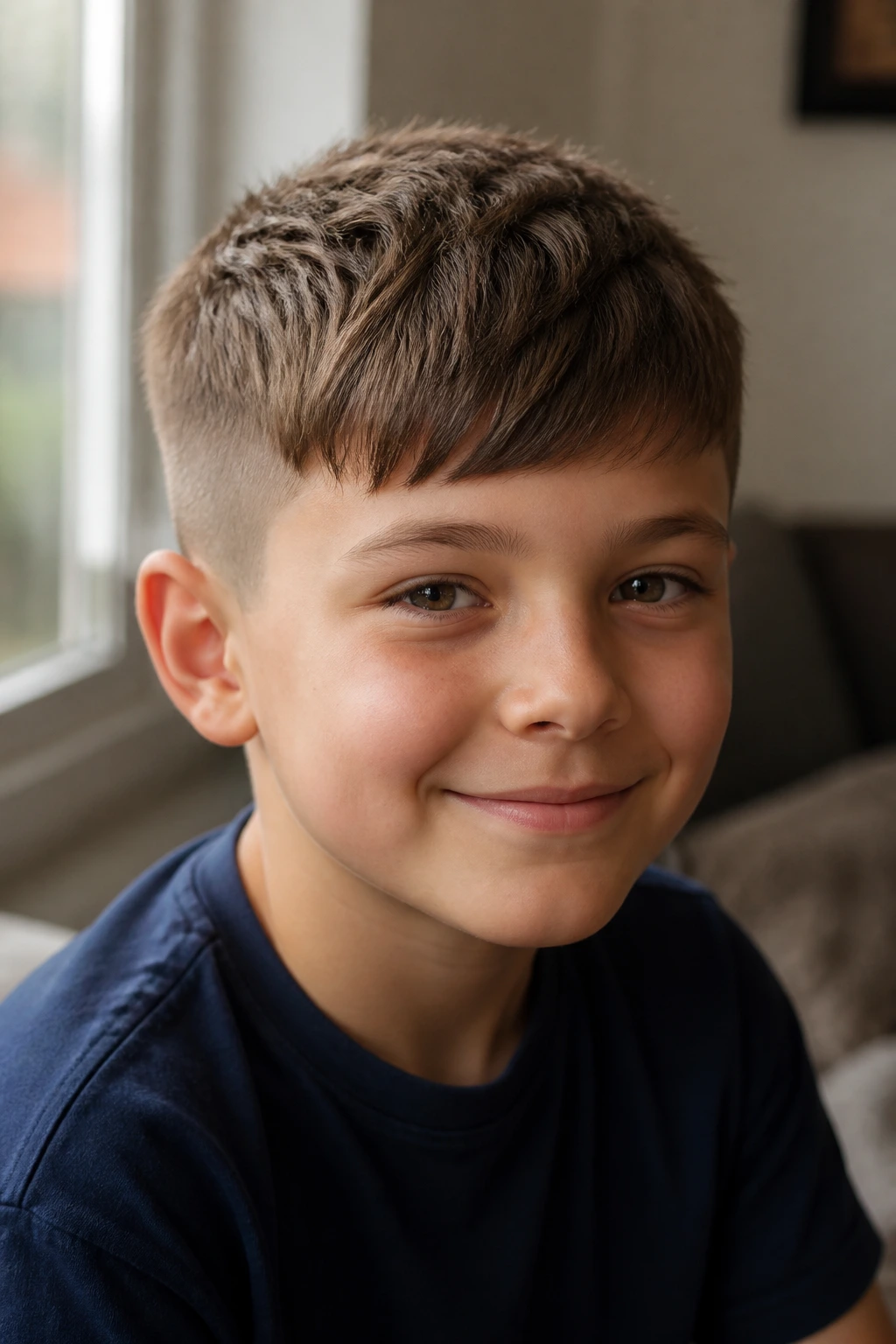
The French crop is the haircut I recommend when a child needs short hair but refuses to look “too short.” It keeps the fringe slightly longer and pushes it forward, which is useful for broad foreheads, fine hair, or kids who hate anything touching the ears. The line across the front can be soft or blunt, depending on the look you want.
This cut has a nice trick to it. It makes short hair feel deliberate. Even a simple version looks finished because the fringe gives the eye a place to land. The sides can be tapered, faded, or kept softly clipped. A high fade changes the mood fast, but a low taper keeps it school-friendly.
Kids with strong cowlicks at the front can wear this surprisingly well, as long as the fringe is not cut too short. A little length is the difference between “styled” and “upright in protest.”
5. The Side-Part Taper
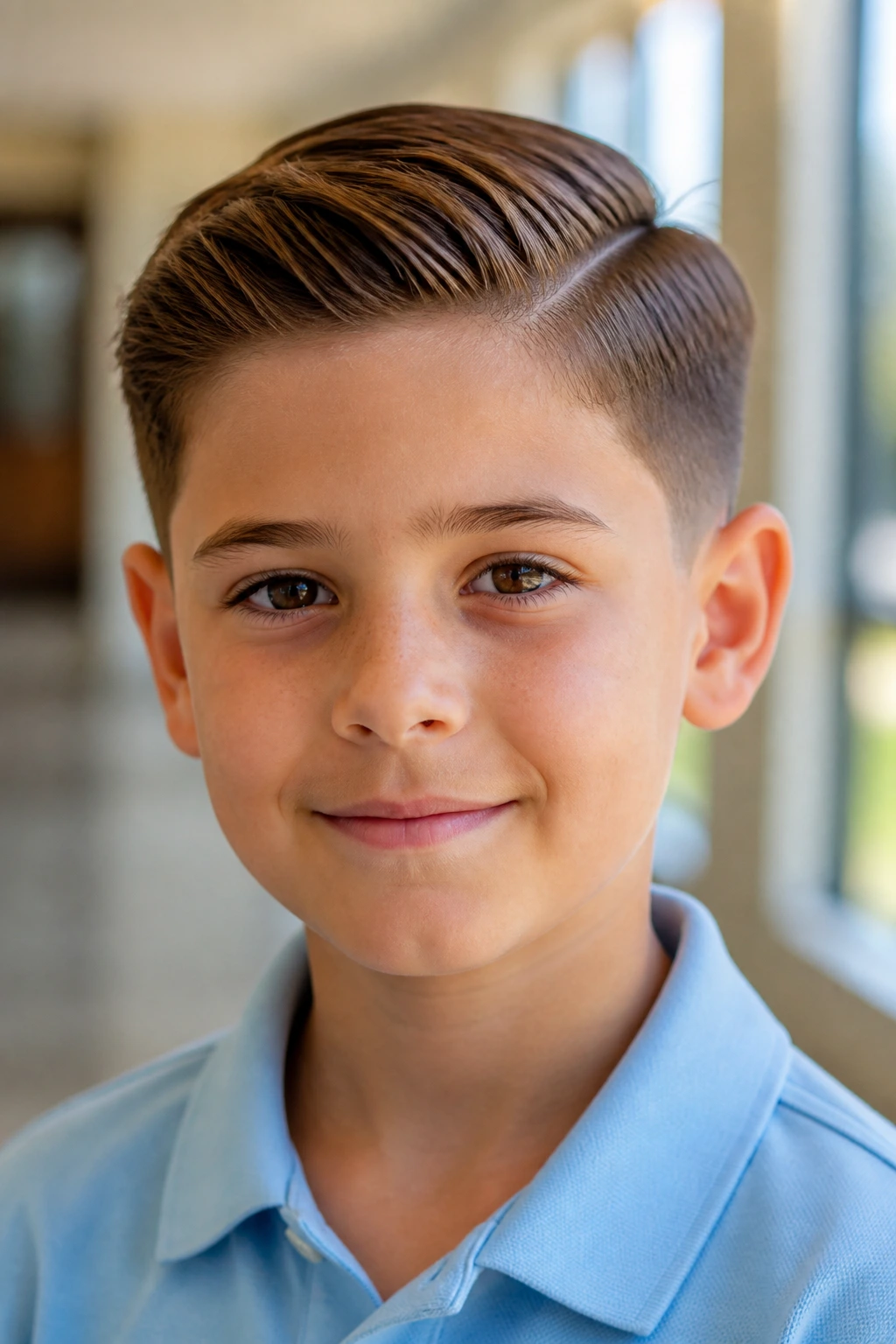
A side-part taper is one of those cuts that looks calm before the child even opens their mouth. It’s neat, familiar, and easy to comb into place with almost no effort. The taper around the ears and nape keeps it from feeling bulky, while the part adds structure on top.
How to Ask for It
- Keep the top long enough to part naturally, usually around 1 1/2 to 2 1/2 inches.
- Taper the sides and back without making the cut too skin-tight.
- Follow the child’s natural part if it’s obvious. Fighting a part is a losing game.
- Ask for the neckline to be cleaned up gently, not squared off like a wall.
This is a good choice for formal events, school portraits, or kids who like to look polished without a lot of product. A little cream or water is usually enough. If the child’s hair is very thick, thinning shears can help the top lie down instead of puffing outward.
6. The Ivy League
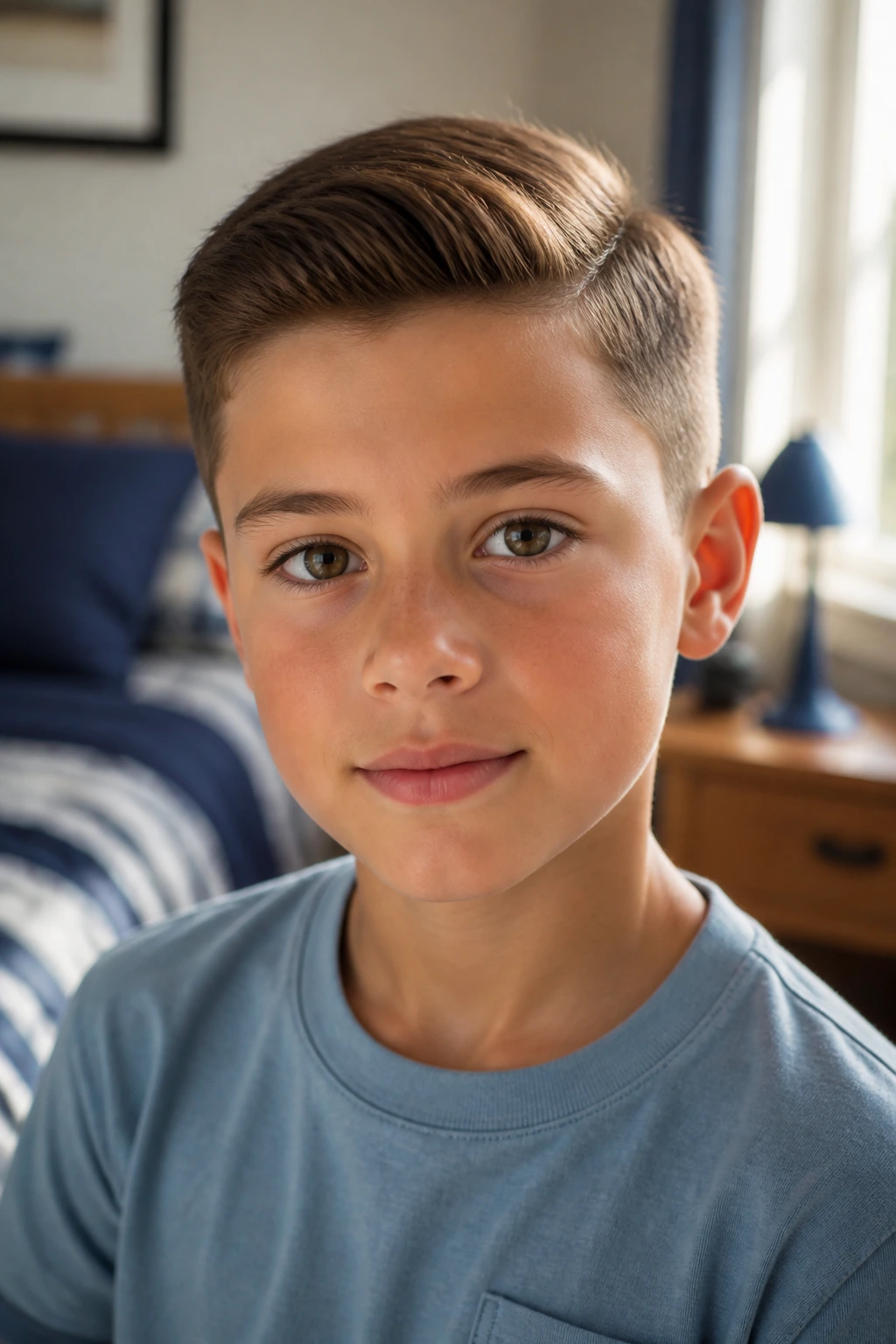
The Ivy League sits right between a crew cut and a longer side-part style. That middle ground is why it works. It keeps the sides short and controlled, but leaves enough length on top to comb, sweep, or finger-style into place. If a child wants a clean cut that still has a little shape, this is one of the safest bets.
It also grows out with less drama than a sharply faded style. The top can get a touch longer before it starts bothering anyone, which buys you extra time between trims. That matters more than people think. A haircut that still looks decent at week five is a gift.
Best Hair Types for This Cut
Straight hair shows the part clearly. Slightly wavy hair gives the style a softer, fuller look. Very curly hair can wear it too, but the top needs enough length to show the shape instead of shrinking into a short puff.
A dab of light cream and a quick comb through the front is usually enough. No need to turn it into a little businessman helmet.
7. The Caesar Cut

The Caesar cut is short, forward, and practical. The fringe sits across the forehead in a neat band, and the rest of the cut stays close to the head. It’s especially useful for kids whose hair grows down into the eyes no matter how often it gets trimmed.
There’s a reason this cut has hung around forever. It handles fine hair, straight hair, and even some thicker textures without asking for much. The trick is not to make the fringe too severe. A tiny bit of softness around the front keeps it from looking like a rigid line drawn with a ruler.
How to Style It
- Mist the hair lightly with water.
- Push the fringe forward with your fingers or a small comb.
- Use a pea-sized amount of matte paste only if the front keeps flipping up.
- Leave it alone once it’s set. Fussing makes it puff.
This one is not the pick if a child dislikes anything across the forehead. But if the goal is short hair that stays put, the Caesar earns its keep.
8. The Curly Top Taper
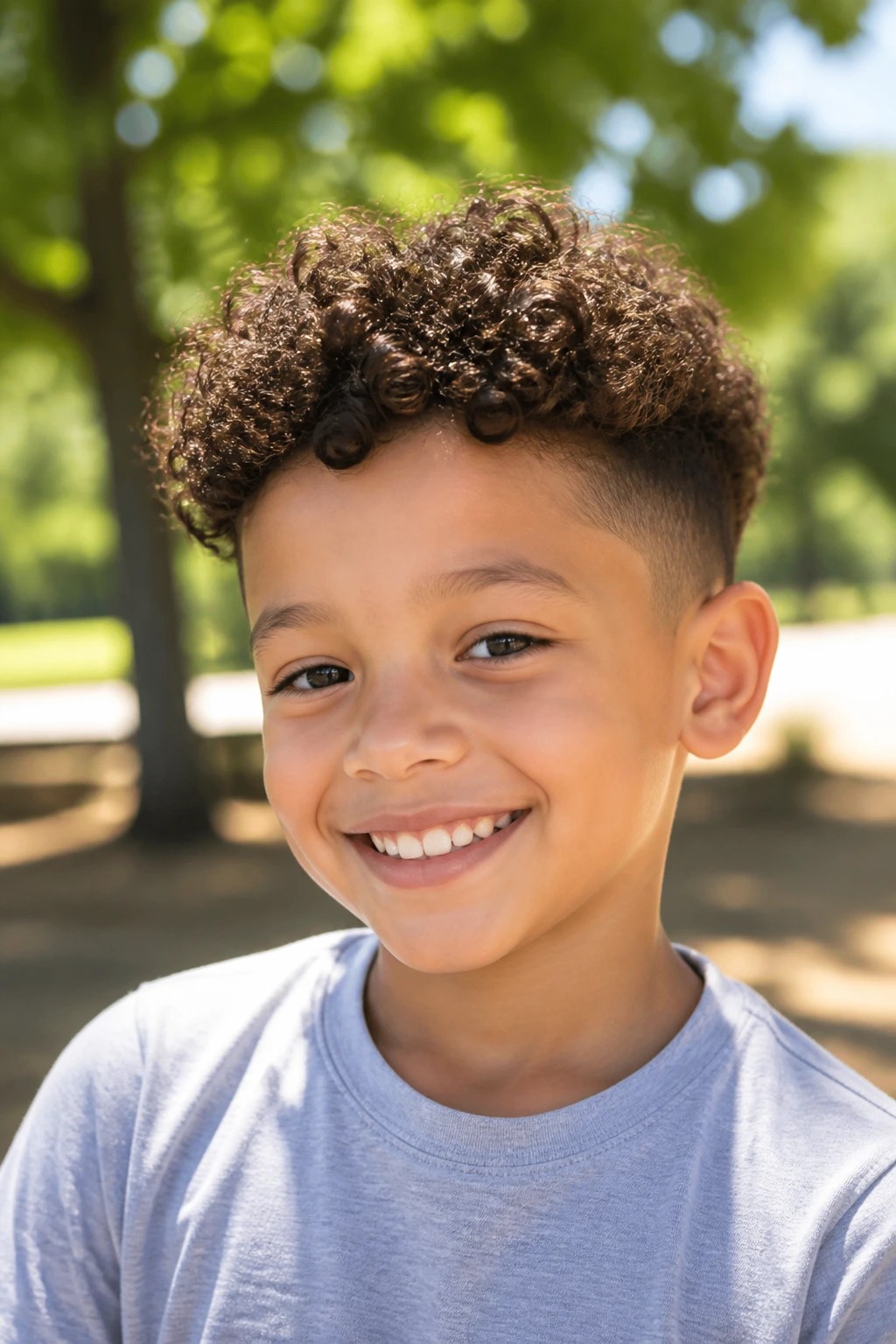
Curly hair changes the rules. It always does. A curly top taper keeps the sides clean and short while leaving enough length on top for the curls to spring up instead of collapsing into a fuzzed-out halo. The key is balance: too much length, and the shape gets wide; too little, and the curl pattern loses its personality.
A good taper on curly hair makes the top look intentional. It sharpens the outline without flattening the curls themselves. That is the whole game. The hair should still move when the child turns their head, but the sides need to be neat enough that the style does not balloon out around the ears.
Use a light leave-in conditioner and a bit of curl cream if the hair dries frizzy. Heavy grease usually makes the top look limp. And if a barber is used to cutting straight hair, speak up about shrinkage. Curly hair always looks longer when it’s wet. Then it shrinks. Then you blink and wonder where the length went.
9. The Short Shag
A short shag is soft, layered, and slightly wild in the best way. It works on kids whose hair has some natural wave or bend, because the cut is designed to move. Instead of creating a stiff shape, it lets the ends feather out around the face and ears.
I like this cut when a child hates anything that feels too “done.” It has a relaxed look even when it’s freshly cut. The layers break up heavy hair, and that helps thick strands sit better around the head. On finer hair, the shag adds the illusion of fullness without building a giant triangle at the bottom.
The fringe can be kept light and wispy, or it can be pushed to the side. Either way, the cut is meant to look a little lived-in. That is the charm. If the child’s hair grows in different directions, the shag usually hides the mess instead of exposing it.
10. The Classic Pixie
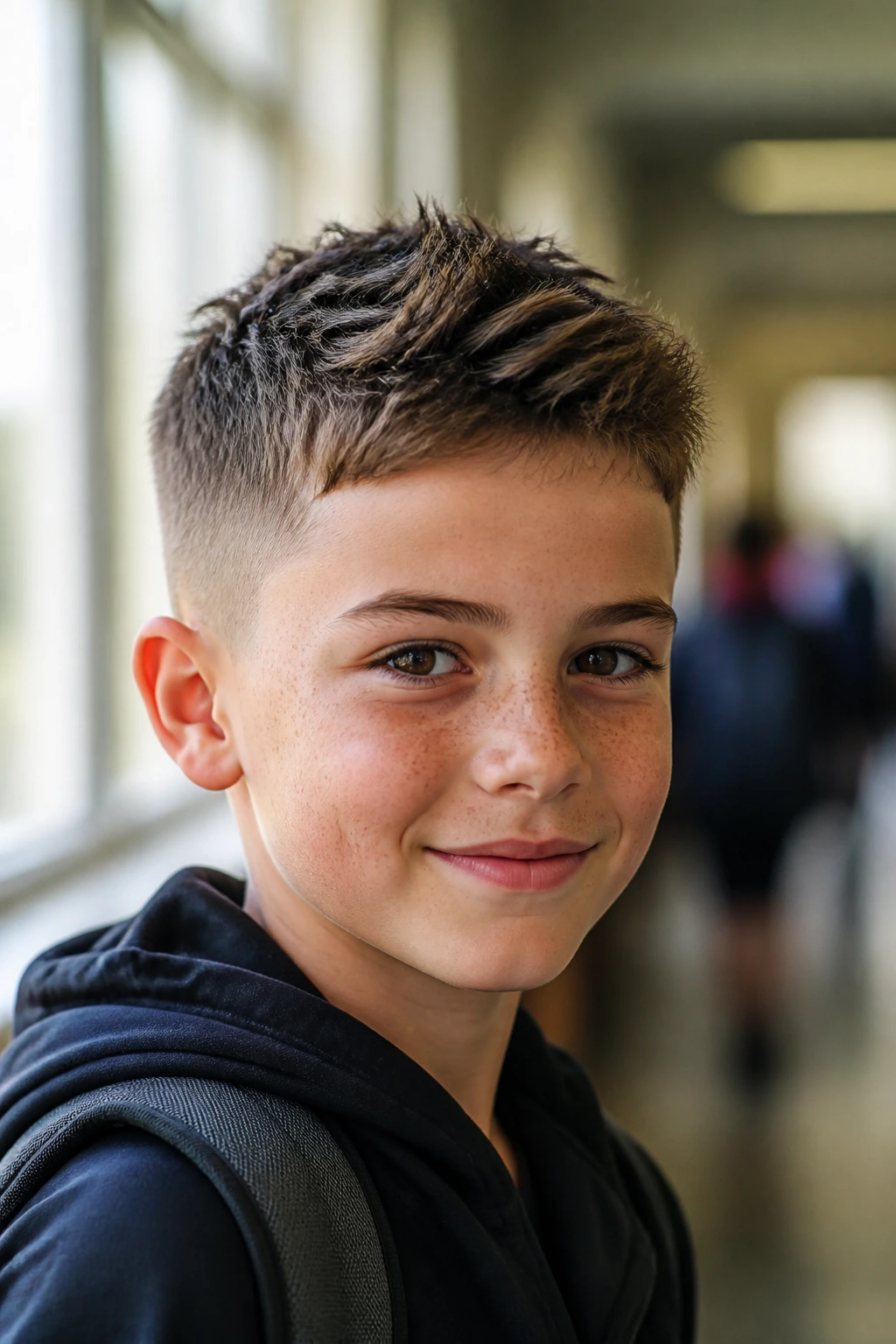
A pixie cut does not have to be delicate or fussy. In a kids’ version, it can be cropped around the ears and nape with just enough length on top to sweep forward or to the side. The silhouette stays neat, but it still has softness.
What I like about a pixie on short hair is the way it frames the face without weighing it down. It opens up the eyes. It also makes mornings faster, which is usually the bigger point. A child with fine hair or a child who likes a quick finger-style finish can wear this without much effort.
A Few Good Notes
- Keep the nape soft, not blocked out hard.
- Leave a little length at the fringe if the child wants options.
- Ask for the ears to be partially or fully uncovered, depending on comfort.
- Use a tiny amount of styling cream if the top needs direction.
A pixie can look sweet, sporty, or sharp. It depends on the line around the face and the amount of texture left on top.
11. The Blunt Bob
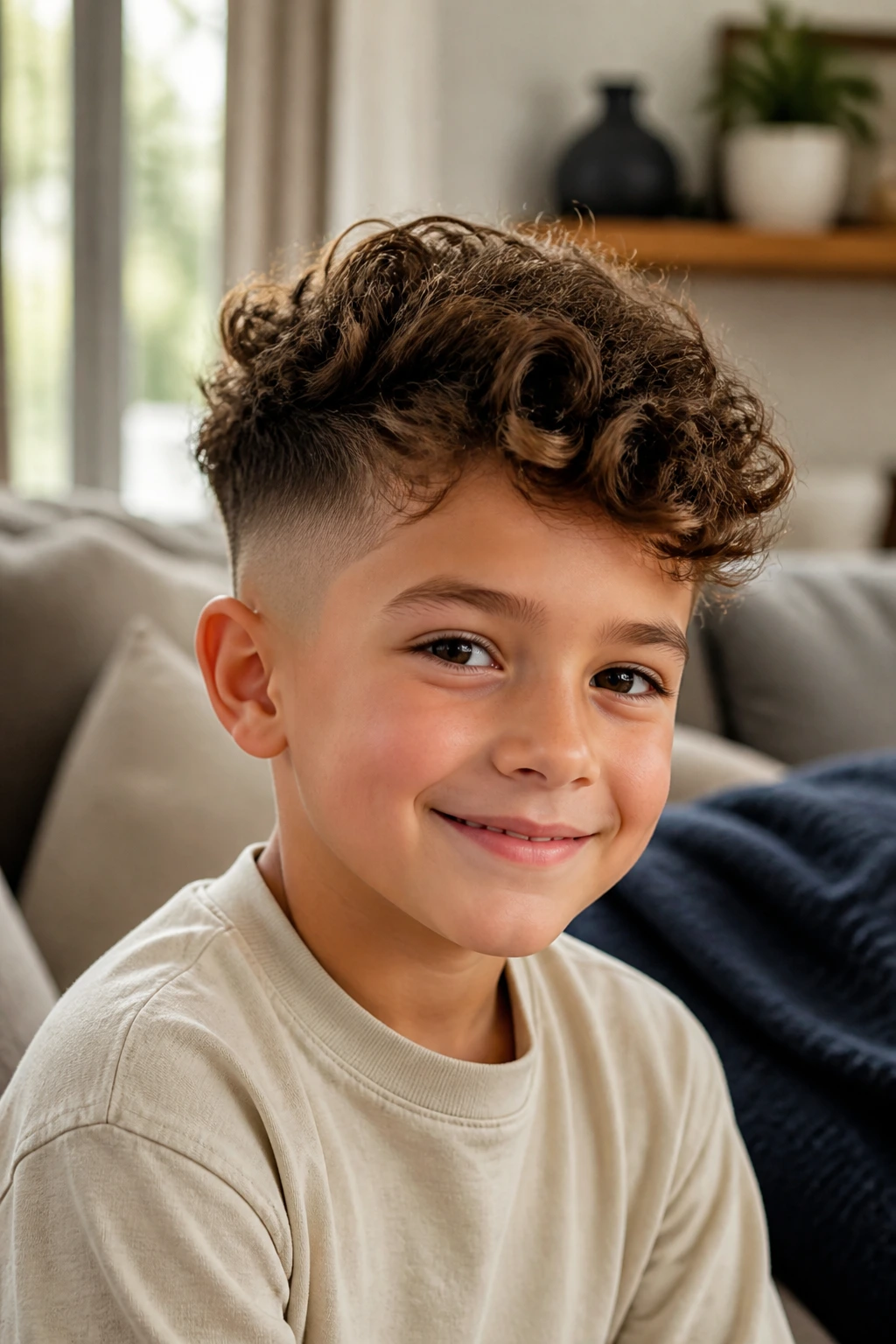
A blunt bob is the haircut equivalent of a clean sentence. No extra fluff. Just a strong, even line at the jaw or slightly below it. On straight hair, it looks crisp right away. On thick hair, it looks controlled and tidy, which is often the whole battle.
This cut is at its best when the ends are left solid, not over-layered. Too many layers and the bob loses that sharp edge that makes it so appealing in the first place. The line should swing cleanly when the child turns their head. That motion is half the fun.
It works well for kids who want short hair but still like some length to tuck behind the ears or clip back. It also photographs neatly, which is why parents keep returning to it for school pictures and family events. A quick blow-dry or air-dry with a side part is usually enough.
12. The Angled Bob

The angled bob keeps the back shorter and the front slightly longer, and that small difference changes the whole shape. It gives the face a little frame without letting the hair pile up at the nape. If a child likes the feel of a bob but wants a sharper outline, this is the version to try.
What to Ask For
Ask for the back to sit just above the collar and the front to drop a little longer toward the chin. The angle does not need to be dramatic. In fact, a subtle angle usually looks cleaner on kids. Too much slope and the cut starts reading as a grown-up style wearing a kid costume.
This cut suits straight and wavy hair best. Thick hair benefits from some internal weight removal so the front does not puff outward. If the child likes to tuck one side back, the angle gives them that option without making the style feel too short.
13. The Pageboy
The pageboy is a tidy little classic with rounded ends and a gentle curve under the jaw. It has a retro feel, but on kids it just reads as neat and even. The fringe is usually straight or softly curved, and the rest of the hair wraps around the head in one smooth shape.
This cut likes straight hair. A lot. It can work on slightly wavy hair, but the ends behave best when they can be brushed under with a round brush or left to dry in that curved shape. On thick hair, the pageboy can look too heavy if the interior isn’t thinned a bit.
Parents often like this style because it keeps everything contained. The ears stay partly covered or neatly framed, the neckline stays clean, and the whole cut holds together well through a school day. It’s not flashy. That’s the point.
14. The Soft Bowl Cut
A modern bowl cut is not the rigid helmet people joke about. At least, not if it’s done well. The soft version has textured edges, a little movement around the perimeter, and a shape that follows the head instead of sitting like a cap. It can look charming, graphic, and unexpectedly cool.
The main difference is softness. The old-school version was heavy and blunt. The newer version uses feathering around the ears and nape so it doesn’t box in the face. A good bowl cut on a child should look deliberate, not accidental.
It works best on straight hair and on kids with a sense of humor about their style. That sounds silly, but it’s true. Some children love a haircut that looks a little bold. Some want something softer. This one sits in the middle if you keep the edges light.
15. The Undercut With a Long Top
The undercut with a long top is for kids who like contrast. The sides and back are clipped short, sometimes very short, while the top is left long enough to comb, push back, or wear messy. The result is sharp. Clean underneath. Bigger on top.
I like this cut on older kids who actually want a style with a little attitude. It can be brushed neatly for school, then pushed up or off to the side after practice. That flexibility is the real draw. One cut, a few moods.
Best Use Case
It’s a strong pick for straight or thick hair that gets bulky around the ears. The undercut removes that weight fast. The tradeoff is maintenance. If the sides are taken too short, you will notice regrowth quickly, so this cut asks for more regular cleanups than a bob or shag.
A little styling cream or light gel helps, but the top should never look stiff. Stiff hair on a child has the same energy as a plastic toy in a suit.
16. The Faux Hawk
A faux hawk gives the impression of a mohawk without shaving the sides down to the skin. The center stays longer, the sides get short, and the hair is styled upward or slightly toward the middle. It’s playful, but not too extreme.
This cut is popular with kids who want something that feels bold while still being manageable for school or family photos. The sides can be faded, tapered, or kept short and tidy. The top is where the personality lives. A bit of gel or styling cream helps, but the style can also be worn messier, which is usually kinder to real life.
How to Keep It Looking Good
- Leave enough length in the middle for the hair to stand up.
- Keep the sides short enough that the shape reads clearly.
- Use a light product, not a crunchy helmet.
- Trim the sides before the top gets too long and floppy.
A faux hawk is fun. It just needs restraint. Too much product and it starts looking like a costume.
17. The Mini Mohawk
The mini mohawk takes the faux hawk and narrows it down. The strip of longer hair runs from front to back, and the sides are cut shorter so the middle stands out more clearly. It has a little edge, but not the full drama of a classic mohawk.
This is one of those cuts that works better when the child actually likes attention. That sounds obvious, yet it matters. A style like this gets noticed at school, on the playground, and in every family gathering photo. If the child is into it, great. If not, it will feel like a costume by Thursday.
Thicker hair and coarser textures hold the shape well. Fine hair can still wear it, but it may need more product or a slightly shorter strip. Keep the top long enough to style, and don’t overcut the sides if you want the contrast to show.
18. The Tapered Natural Cut
A tapered natural cut keeps the sides and nape clean while letting natural curls or coils stay fuller on top. It respects the hair’s texture instead of trying to flatten it into something else. That alone makes it worth considering.
The best version has shape. Not puff. Shape. The taper around the ears and neckline gives the style a tidy outline, while the top is shaped to follow the head and the curl pattern. A leave-in conditioner or moisture cream helps the cut stay soft and defined. A dry, undefined natural cut can get fuzzy fast.
This is a cut that grows out with grace if the taper is done well. It also keeps the scalp cooler and makes the edges easier to maintain. If a child’s hair has strong coils, ask for a barber or stylist who actually cuts textured hair often. That detail saves a lot of guessing.
19. The Rounded Afro
A rounded afro is all about silhouette. The hair is shaped into a soft, even curve that follows the head rather than pushing outward in random spots. On coily hair, it can look clean, full, and balanced without being overly sculpted.
What I like here is the honesty of the shape. It lets the texture stay visible. It doesn’t hide the hair’s natural spring, and it doesn’t need to. A little shape-up around the hairline can sharpen the look if that’s the family preference, but the rounded outline should still feel soft.
Maintenance Notes
- Moisture matters. Dry coily hair loses shape fast.
- A wide-tooth comb or pick helps lift the roots gently.
- Protect the style at night with a satin pillowcase or bonnet.
- Re-shape the outline before it gets too puffy around the ears and nape.
This is not a haircut you choose if you want zero upkeep. It is a haircut you choose when you want the texture itself to do the talking.
20. The Asymmetrical Bob
An asymmetrical bob gives one side a slightly longer line than the other, or shifts the front forward just enough to create a noticeable angle. It is subtle enough for kids, but different enough to feel special. That’s a rare combination.
The cut works best when the difference is small. Half an inch to an inch can be plenty on a child. Too much difference and the style can feel awkward rather than stylish. The whole point is to make the shape look intentional, not mismatched.
This version is good for straight and wavy hair, especially if the child likes to tuck one side behind the ear. It adds movement without adding a lot of maintenance. A quick comb-through and a side part are usually enough. If the hair is thick, some light internal layering can prevent the longer side from flaring out.
21. The Bixie Cut
The bixie cut sits between a bob and a pixie, and that in-between space is why parents keep eyeing it. It has more movement than a blunt bob, but more length than a classic pixie. On a child, that means the cut can feel soft without looking too precious.
This is a smart choice for a first big chop. It keeps some length around the face, which makes the transition easier if a child is nervous about short hair. The layers can be feathered, the fringe can be soft, and the neckline can stay light instead of severe. That combination usually grows out nicely too.
It works across a wider range of textures than people expect. Straight hair gets shape. Wavy hair gets bounce. Fine hair gets lift if the layers are kept careful rather than choppy. It’s one of the few short cuts that can look neat, playful, and a little grown-up without trying too hard.
How These Short Cuts Hold Up in Real Life
The whole reason short hair earns its keep on kids is simple: it survives ordinary chaos better than longer lengths do. That includes sleep, sweat, backpacks, sports, and the stubborn little cowlick that shows up only when there are five minutes left before school. A crop, bob, or taper doesn’t erase those problems, but it makes them smaller.
Short hair also changes how often you notice shape. With a longer cut, a child can go a while before anything looks obviously off. With short hair, a neckline grows out fast and a fringe can turn annoying in a hurry. That is not a flaw. It’s just the tradeoff. The payoff is a cleaner look day to day, with far less detangling and far fewer tangles hiding under jackets and hats.
The best short cuts have one thing in common: they are shaped around the child’s actual head, not a photo of someone else’s. Crown growth, density, and texture matter. A good barber or stylist will take five seconds to check the natural part and the swirl at the back before touching the scissors. Those five seconds save days of annoyance.
What to Tell the Barber Before a Kids’ Short Haircut
A lot of haircut disappointment comes from vague instructions. “Short on the sides” can mean twelve different things. “Just tidy it up” can be a crew cut in one chair and a mushroom in another. Bring a photo, yes, but also say what you want the hair to do.
Say the Practical Stuff Out Loud
- How much length can stay on top: Use real numbers if you can. One inch is not the same as three.
- Whether the fringe should touch the forehead: Kids who hate bangs in their eyes need this clarified.
- How short the sides should feel: Clipper short, scissor short, or just tapered?
- How often you want trims: That tells the stylist how fast the cut needs to grow out gracefully.
- Any cowlicks or hard parts: Especially at the crown, temples, and back hairline.
If your child hates clippers, say so before the cape goes on. If they are sensitive around the ears, say that too. A good stylist can switch tools, soften the outline, or work with scissors longer. And if the child is old enough to care, let them have one voice in the decision. Even a small choice helps the haircut feel like theirs.
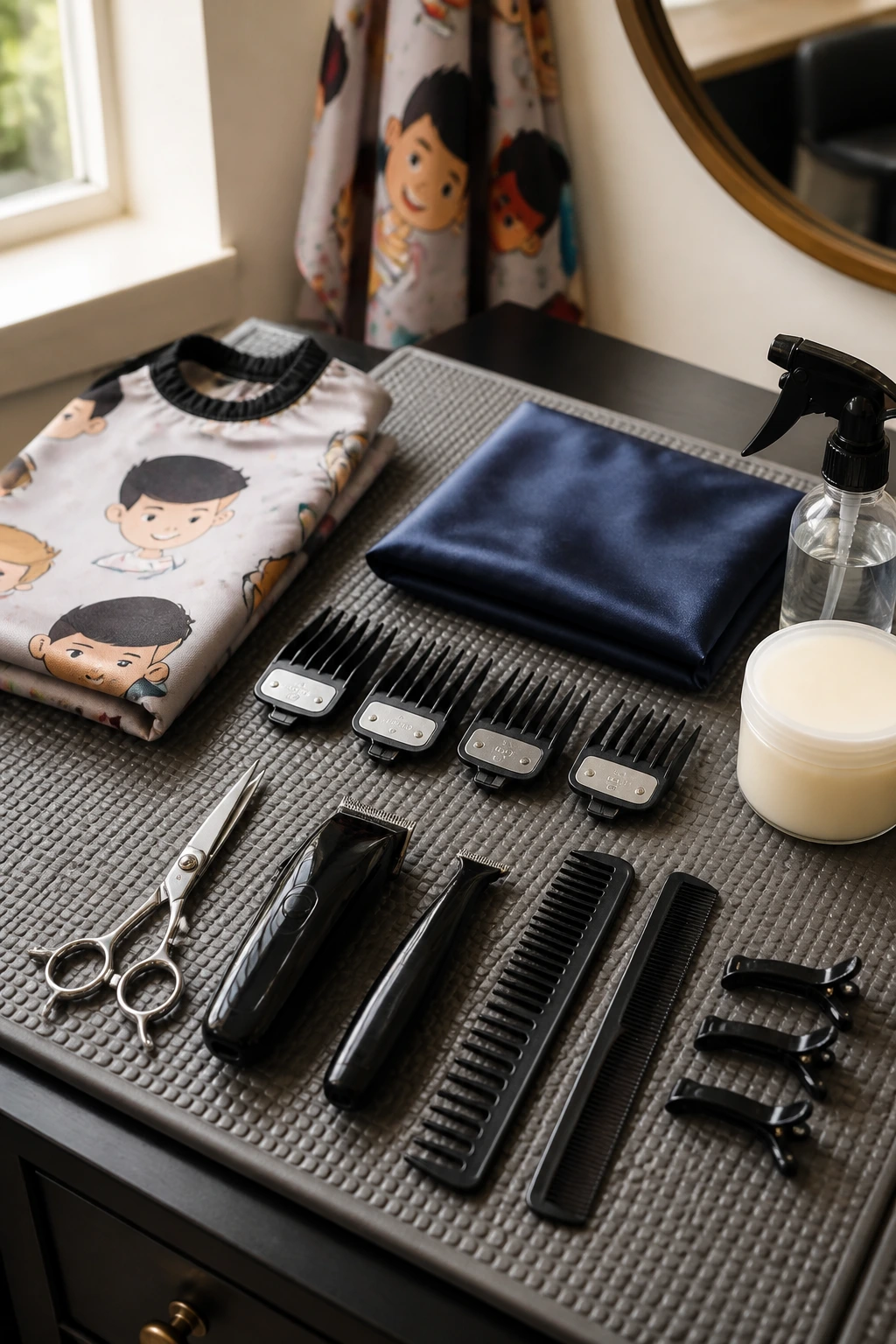
Essential Tools for Kids’ Short Hair
- Sharp barber scissors: Best for clean lines on bobs, pixies, shags, and any cut that needs soft movement.
- Clippers with guards #1 to #4: Useful for fades, buzz cuts, tapers, and tidy necklines.
- Detail trimmer: Helps around the ears and hairline, especially for crisp edges.
- Spray bottle: A light mist makes cowlicks, parts, and fringe control much easier.
- Wide-tooth comb: Better for curls, coils, and wet detangling without snapping strands.
- Fine-tooth comb: Useful for parts, clean sections, and polished side parts.
- Sectioning clips: Keep longer bangs or the top out of the way when trimming around the sides.
- Child-sized cape or towel: Saves clothes from tiny hair splinters that seem to travel everywhere.
- Light styling cream or matte paste: A pea-sized amount is often enough for short hair.
- Satin pillowcase or bonnet: Helps curly and coily short hair stay softer overnight.
Picking the Right Cut for School, Sports, and Photos
Short hair is not just about the chair. It has to live in the rest of the day. The same cut can look polished in a school picture, flat at soccer practice, and adorable after a nap. That is why a little planning matters.
School mornings: Choose cuts that can be fixed with water and fingers: crew cuts, textured crops, side-part tapers, pageboys, and soft bobs. These styles need less product and handle a rushed comb-through without falling apart.
Sports practice: Go for tapered sides, buzz cuts, curly top tapers, and pixies with clean necklines. Hair that sits close to the head stays out of the eyes and under the helmet better. Very long tops on short sides can work too, but only if the child actually likes styling it before every practice.
Picture day: Blunt bobs, Ivy Leagues, angled bobs, and softly shaped pixies tend to photograph well because the outline is clear. A quick trim around the ears and nape a few days before the photo usually makes more difference than a fancy product.
Rainy-day rescue: Keep a small comb, a travel spray bottle, and a dab of cream in the car or backpack. That is enough to reset most short cuts when the weather turns the fringe into a question mark.
Common Mistakes That Make Short Hair Fussier Than It Needs to Be
The first mistake is going too short too fast. A child who has never worn short hair may not like a very tight buzz or a high fade on day one. Start with a little more length than you think you need. You can always trim again. Waiting for it to grow out is the part that tests patience.
The second mistake is ignoring the natural hair pattern. Cowlicks, a strong crown, or a deep side part can change the whole shape of a short cut. If the hair wants to stand up at the front, cutting the fringe too short usually makes the problem louder. Leave enough length to weigh it down a bit.
The third mistake is overusing product. Short hair needs less than people think. Too much gel turns a crop crunchy and dull, and heavy cream can flatten fine hair into the scalp. Start with a pea-sized amount. Add more only if the front is refusing to behave.
The fourth mistake is skipping neckline cleanup. Short hair looks crisp only if the back edge stays neat. A messy nape makes even a good haircut feel overdue. If you can’t get to the barber yet, a quick trim around the neck and ears can buy you another week.
The fifth mistake is choosing a cut that grows out badly for the child’s texture. A blunt bob on very thick hair can triangle out. A super-short fringe on a strong cowlick can kick straight up. Match the shape to the hair you actually have, not the haircut you wish would appear.
Variations and Adaptations to Try
The School-Rule Version: Keep the sides tapered, the fringe off the eyes, and the top soft rather than dramatic. This works for kids who need a neat look that won’t draw attention from a dress code.
The Curly-Top Version: Leave more length on top and shape the sides with a taper instead of a hard fade. Curls need room to spring, and the right length keeps them defined instead of puffed out.
The Coily-Hair Version: Ask for a rounded shape, a clean neckline, and moisture-friendly styling. A satin pillowcase and leave-in conditioner do more for the result than most people expect.
The Grow-Out-Friendly Version: Choose cuts with soft layers, a low taper, or an angled line instead of razor-sharp edges. These look better for longer between trims, which matters if the child hates salon visits.
The Helmet-Friendly Version: Keep the crown a little flatter and avoid bulky sides. This helps with bikes, scooters, skating, and anything else that presses hair down for an hour at a time.
The Nervous-First-Cut Version: Leave the ears partly covered, keep the fringe a touch longer, and avoid removing too much weight from the front. A gentle cut gives children time to get used to short hair without feeling like the change was too big.
Keeping Kids’ Short Hair in Shape Between Cuts
Short hair needs less daily work, but it still needs regular upkeep. That’s the part nobody likes to hear, yet it saves a lot of frustration. A buzz cut may stay neat for two to three weeks before it starts looking fuzzy around the edges. Tapers, crews, and crops often need a cleanup in three to five weeks. Bobs and pixies can stretch a little longer if the shape is soft.
Washing frequency depends on the child and the texture. Fine hair and active kids may need a shampoo every other day. Curly and coily hair usually does better with less washing and more moisture. If the scalp gets dry, a smaller amount of shampoo and a good rinse usually solve more problems than scrubbing harder.
For maintenance at home, use the right tool for the job. A spray bottle and comb are enough for most straight and wavy styles. A leave-in conditioner or light cream helps curls stay soft. A quick neckline tidy with clippers can extend a haircut by days, sometimes a full extra week. That sounds small. It is not. On a school morning, a week matters.
Frequently Asked Questions
How short should a child’s first short haircut be?
Start a little longer than the shortest version of the cut. A number-three buzz or a soft crop gives you room to adjust if the child feels strange about the change. You can always go shorter at the next appointment.
What short haircut works best for curly hair?
A curly top taper or a tapered natural cut usually gives curls enough room without letting the sides puff out. The key is leaving enough length on top for shrinkage. Curly hair never looks as long as it does when it’s wet.
Will a fade work on a toddler?
Yes, but a softer taper is often easier for very young kids. A skin-tight fade can look sharp, yet it grows out fast and sometimes feels too stark on a small head. A low taper keeps the cut neat without looking severe.
What if my child hates clippers?
Scissor cuts are your friend. Pixies, bobs, pageboys, shags, and crops can all be done with mostly scissors and a light trim around the neckline. Tell the stylist ahead of time so they do not reach for the clippers by habit.
How do I know if the fringe will get in the way?
Check where the child’s hair falls when it dries naturally. If it already brushes the eyebrows in the chair, it will probably bother them by next week. Leave a little extra length if the child likes to move their hair to the side.
Which short styles grow out the nicest?
Soft bobs, shags, pixies, Ivy Leagues, and low tapers usually keep their shape longer than very sharp fades or hard lines. Anything with some texture or softness around the edges tends to forgive slower trim schedules.
Can short hair still be styled in different ways?
Absolutely. A crew cut can be brushed forward or to the side. A bob can tuck behind one ear or wear a clip. Even a buzz cut changes with a part, a headband, or the way it’s faded at the sides.
How often should I trim a short kids’ haircut?
Every three to six weeks is the usual window, depending on the cut. Very short styles need touch-ups sooner. Bobs, shags, and layered pixies can often go longer if the shape still sits right.
Short Hair That Fits Real Kids
The best kids’ haircut is not the one with the most attitude in the mirror. It is the one that still behaves after recess, survives the hoodie, and does not turn into a daily fight. That is why short hair can be such a good choice. It trims the morning chaos down to something manageable.
Pick the cut that fits the child’s texture, habits, and patience. A confident buzz, a soft bob, a curly taper, or a tidy crop can each do the job in a different way. The trick is matching the shape to the person wearing it, not chasing a photo that ignores the crown swirl and the cowlick at the front.
A haircut that works in real life earns its spot fast. Once you find that one, the mirror gets quieter, the brush comes out less often, and the whole day starts a little smoother.
