



A long wavy shag with bangs has a useful kind of mess to it. The shape looks relaxed, but it is doing a lot of work: softening the forehead, breaking up the ends, and keeping long hair from hanging there like a curtain with no opinion. If you have waves that bend, swell, frizz, or do all three in the same afternoon, this cut gives them a job.
What makes long wavy shag haircuts with bangs so good is the way they move with the hair instead of fighting it. A blunt, one-length cut can make waves look bulky at the bottom and flat at the crown. A shag removes weight in the right places, so the bend shows up where you want it — around the cheeks, through the mid-lengths, and around the collarbone. The bangs matter, too. They can be soft and split, heavy and piecey, or barely-there wisps that take the edge off a strong forehead line.
The 33 looks below cover the full range: curtain bangs, bottleneck bangs, feathered fringes, grown-out shapes, dramatic side parts, thick-hair versions, fine-hair versions, and a few cuts that lean hard into texture without turning into a helmet. Some are polished. Some are a little wild. All of them rely on the same basic idea: long hair looks better when it has some air in it.
Why These 33 Cuts Keep the Hair Moving
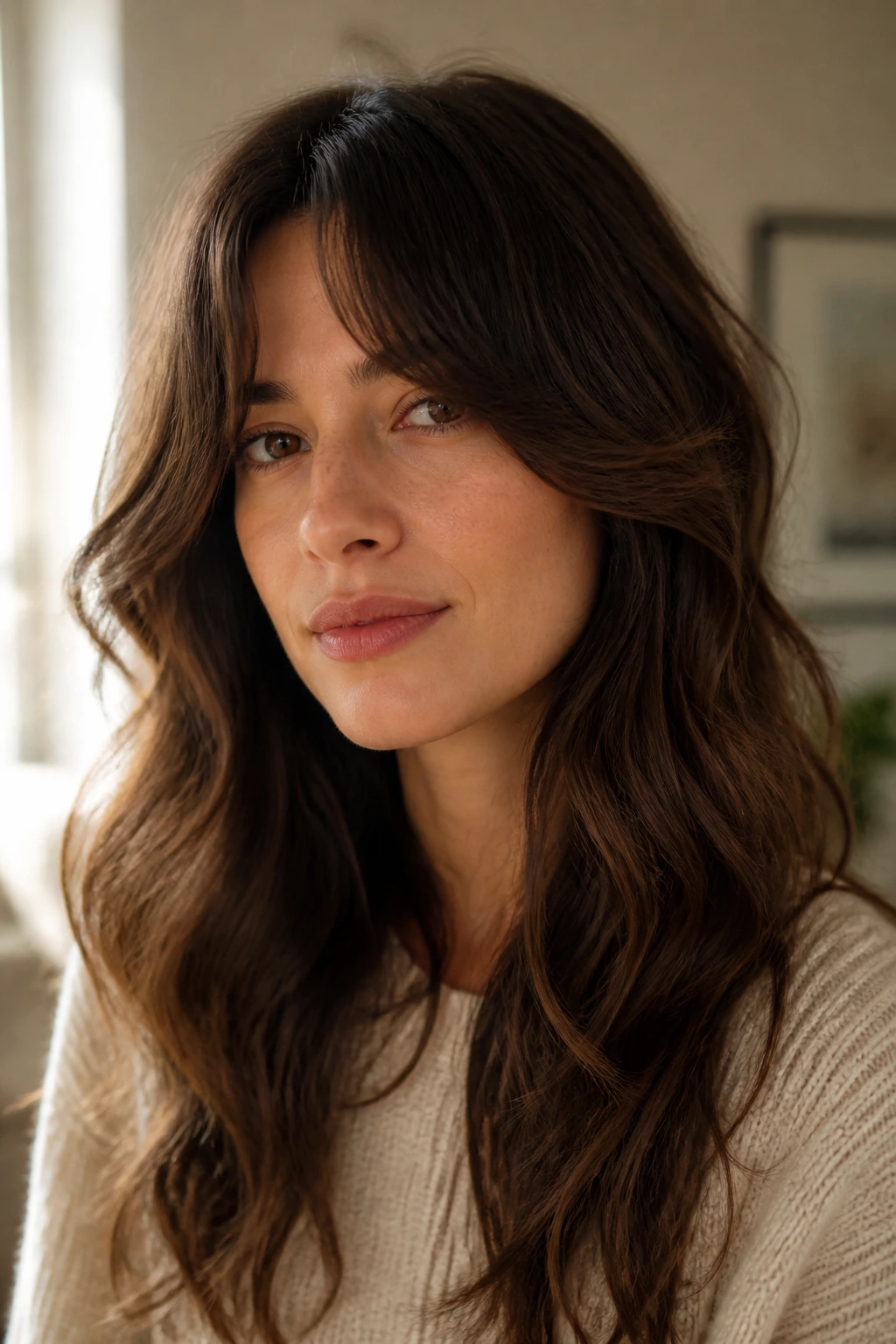
- The fringe does the framing: The bangs are not decoration here; they steer the eye and keep the top of the cut from feeling heavy.
- The layers remove dead weight: Long waves get their shape back when the lower lengths are thinned out strategically instead of hacked into random choppy bits.
- The grow-out is forgiving: A shag can look better after a few weeks of wear, which is rare enough to be worth praising.
- The styling can stay simple: Most of these looks work with air-drying, a diffuser, or a quick bend from a wand — no full salon blowout required.
- The cut adapts to density: Fine hair gets lift, thick hair gets movement, and medium-density waves get a shape that doesn’t collapse by lunch.
- The bangs change the mood: The same layered base can read soft, edgy, retro, or polished depending on where the fringe lands.
Why Long Wavy Shag Haircuts With Bangs Work on So Many Hair Types
The reason this cut family hangs around is simple. Waves like freedom, and a shag gives them that without turning the whole head into fluff. The layers are usually staggered, not stacked, so the hair can bend in pieces instead of all at once. That makes a difference in real life. Hair with a natural wave pattern rarely falls into one clean sheet, so asking it to behave like one is usually the wrong fight.
Bangs change the geometry. A long fringe can shorten a long face, soften a high forehead, or make a blunt jaw feel less severe. A shorter, pieceier bang can wake up a flat crown, which is why shag cuts often look better when the front has a little separation. The best versions do not shout for attention. They just keep the face from being swallowed by length.
There’s also a practical angle people miss. Long waves often get weighed down at the ends, especially if the hair is dense or the same length from root to tip. When that happens, the whole shape loses lift. A shag cuts that weight back in layers, so the hair moves when you turn your head. It does not sit there waiting for perfect weather. That alone is worth a lot.
1. Curtain Bangs That Split Cleanly at the Cheekbones
This is the safe entry point, and I mean that in the best way. The fringe opens in the middle, falls into the cheekbones, and gives long waves a soft frame without boxing in the face. If you like the look of hair that falls forward and then parts easily, this is the one that behaves.
Ask for bangs that start around the eyebrow or slightly lower, then angle down toward the jaw. The longest pieces should brush the top of the cheek, not stop abruptly at the brow line. That little extra length keeps the fringe from looking blunt when it dries and shrinks.
It works especially well when the waves are loose and wide rather than tight and springy. A round brush at the root and a quick bend through the front pieces is usually enough. No need to overthink it.
2. Bottleneck Bangs with Broken Ends
Bottleneck bangs are a smart middle ground. They sit a little narrower at the center, then flare softly at the temples, which gives the eyes more room and makes the whole cut feel less heavy. The “broken” ends matter here — they keep the fringe from turning into one solid line.
This version is handy if you want bangs but do not want to babysit them every morning. The shape can be pushed apart with fingers, misted with water, and reshaped in under a minute. That is not a small thing when the rest of your hair already has enough texture to manage.
I like this cut on hair that has some density through the front but not a ton of volume at the crown. It gives structure without turning into a curtain. Clean, but not stiff.
3. Feathered Fringe and Airy Crown Layers
Feathered bangs have a lightness that a lot of modern cuts forget. The fringe is sliced so the ends taper instead of stopping square, and the crown layers are lifted just enough to stop the top from lying flat. That makes the cut feel active, even when the hair is resting.
The key here is not to over-thin the fringe. Feathered does not mean see-through. You still want enough hair in the bang area to keep the shape visible in daylight and not just in a salon mirror under perfect lights.
This is the kind of shag I reach for when the hair needs motion more than drama. It looks especially good when you tuck the sides behind the ears and let the front pieces fall forward. Small move. Big difference.
4. Heavy Fringe, Soft Ends
Not every shag has to whisper. A heavier fringe gives the front of the haircut some weight, which is useful if the face is long, the forehead is wide, or the rest of the cut is very layered and you need one solid anchor point. The ends stay soft, so the whole thing doesn’t tip into helmet territory.
The trick is to keep the bangs dense but the lower layers loose. That contrast is what makes the shape interesting. Heavy bangs with heavy ends look boxy fast. Heavy bangs with airy mid-lengths look intentional.
If your waves are fairly controlled, this can be a sharp-looking cut. It has a bit of an editorial feel without asking for constant hot-tool work. The fringe does the talking.
5. Cheekbone-Grazing Layers for Long Faces
Long faces usually need width more than height, and cheekbone-grazing layers are a clean way to get it. The shortest layers land around the cheekbones, which pulls attention outward instead of straight down. That keeps the face from looking stretched.
The bangs in this version should not be too short. They need room to fold into the layers around the face. Think of the front as one continuous shape, not two separate events.
This cut shines on long, loose waves because the bends echo the face-framing layers. When the hair hits the sides of the face in the same area where the bangs split, the whole thing feels balanced. It’s subtle. That’s why it works.
6. Face-Framing Cascade with Low Layers
Some shags start too high. This one doesn’t. The layers begin lower, often around the chin or a little below, and then cascade toward the ends. That keeps the top from getting frizzy or overcut, which matters if your hair is fine, damaged, or simply prone to puffing up.
The bangs here are usually longer and softer, almost as if they were grown out on purpose from a previous fringe. They merge with the face frame instead of sitting on top of it. That’s useful if you wear glasses or if your hair tends to separate on its own.
It’s a quieter cut, and I like that. Not every shag needs to look like it was built with a razor and a grudge.
7. Piecey Rocker Shag with Grit
This is the one with a little attitude. The ends are broken into distinct pieces, the fringe is separated enough to show texture, and the overall shape feels slightly off-center in a good way. If your waves already have some bend, this cut lets them look like they mean it.
The styling should stay loose. A texture spray at the mids, a little scrunching at the ends, and maybe a touch of pomade on the bang pieces is usually enough. Don’t brush it into a smooth sheet. That kills the point.
I like this on hair that gets a little bigger as the day goes on. The volume is part of the look. You want movement, not perfection.
8. Air-Dried Shag for Finer Waves
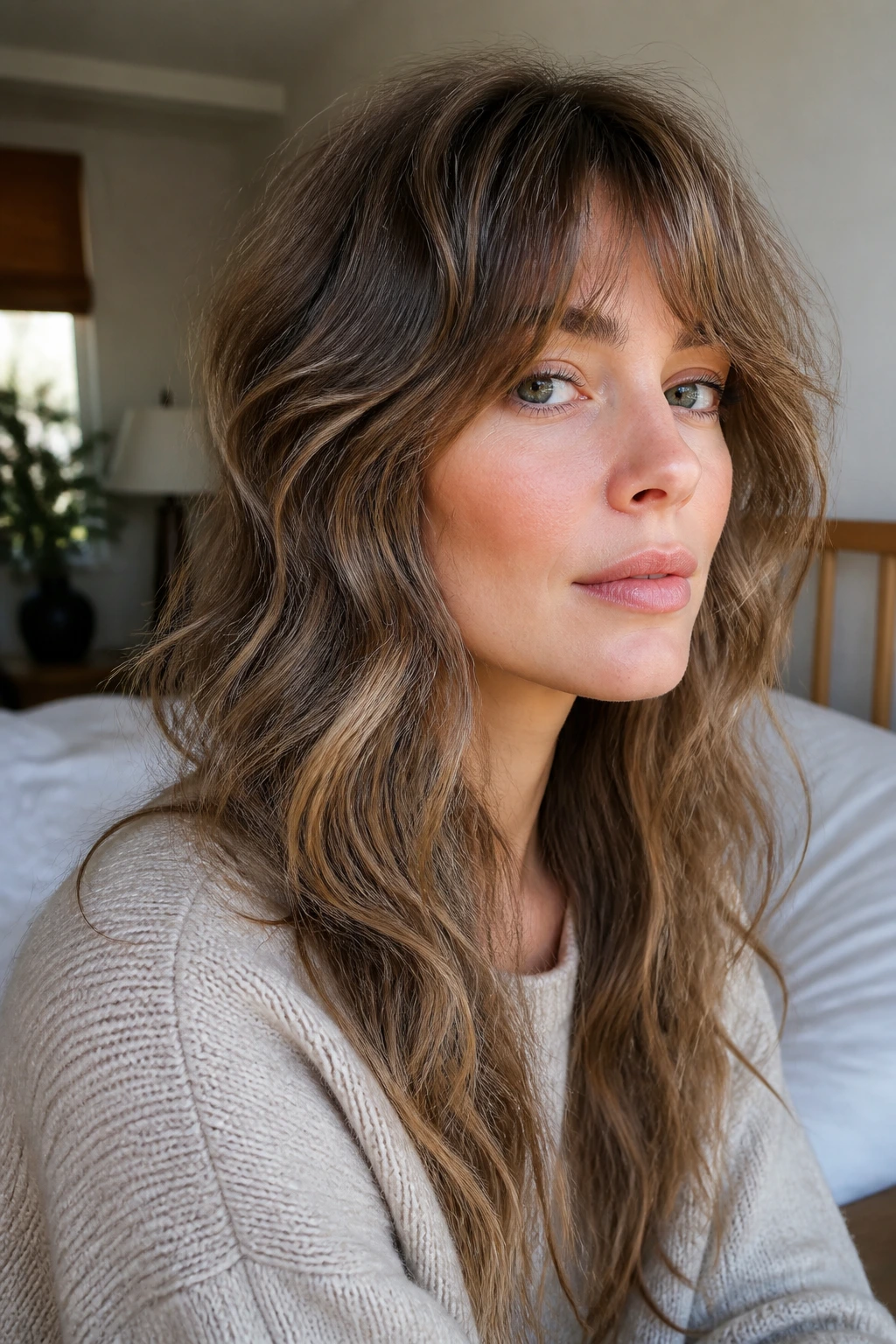
Fine waves can go flat in a hurry, which is why this cut keeps the layers light and the fringe soft. You need enough shape to wake the hair up, but not so much thinning that the ends look stringy by noon. That balance is the whole trick.
The bangs should be long enough to bend naturally as they dry. Short bangs on fine hair often spring up too far and separate in odd little chunks. Longer fringe pieces behave better and are easier to tuck or split.
A small amount of mousse at the roots and a leave-in on the mids is usually enough. Let it dry with the front pieces clipped in place for ten minutes if they insist on falling into your eyes. That tiny trick saves a lot of fixing later.
9. Big-Volume 90s-Inspired Shag
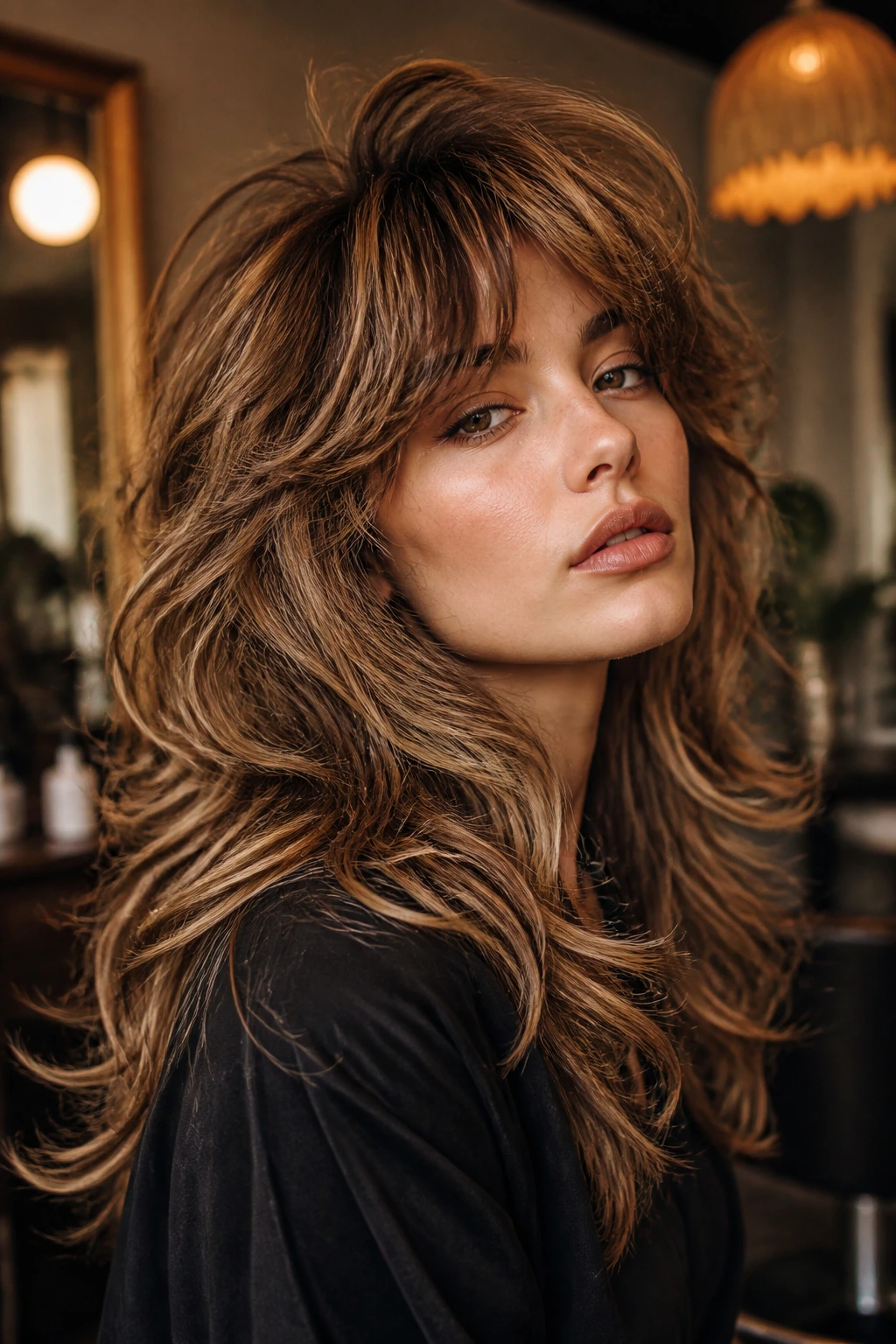
This cut leans into lift at the crown and bounce through the layers. The shape is fuller, rounder, and a little more theatrical than a soft beach shag. If you miss hair that had a pulse, this scratches that itch.
The bangs should be blended into the front layers so they sit with the rest of the cut instead of looking pasted on. A round brush and a quick blow-dry at the roots matter here. Air-drying alone can leave it too collapsed at the top.
What I like most is the way the ends flip out just a little. Not too much. Just enough to keep the silhouette from going limp. A shag like this has presence even when the rest of the outfit is plain.
10. Long Shag for Fine Hair That Needs Lift
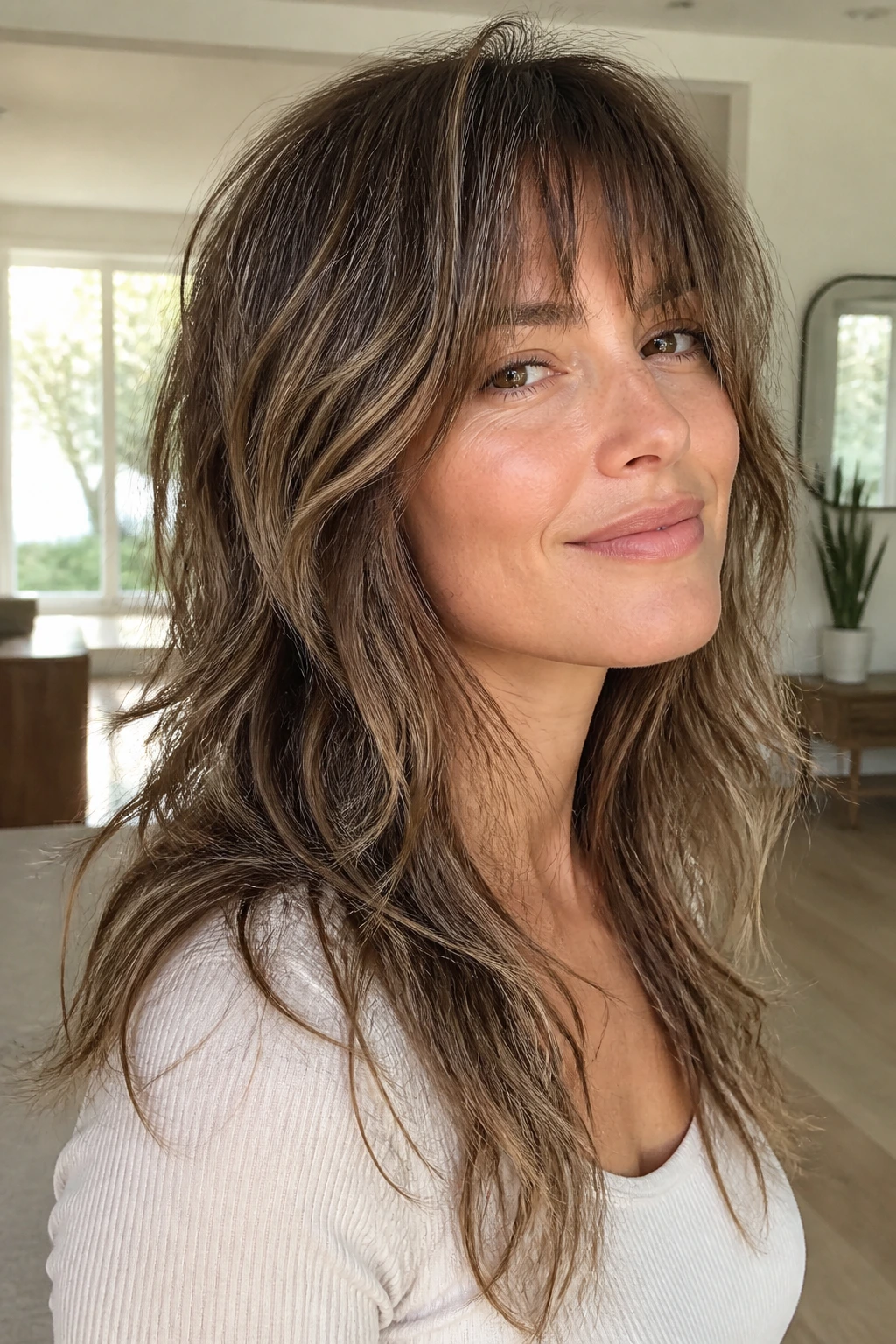
Fine hair needs shape, but it does not need aggression. This version keeps the lengths long and uses internal layering to create lift without taking the perimeter too far up the neck. The bangs stay light enough to blend, but not so wispy that they vanish.
The smartest move is to keep the layers concentrated around the crown and cheek area, where they can create the illusion of fullness. If the lower half gets over-thinned, the ends start to look wispy in the bad way. Nobody wants that.
A volumizing mousse at the roots and a light bend through the mid-lengths can make the cut look twice as full. The hair should move, not float away.
11. Thick-Hair Shag with Internal Weight Removal
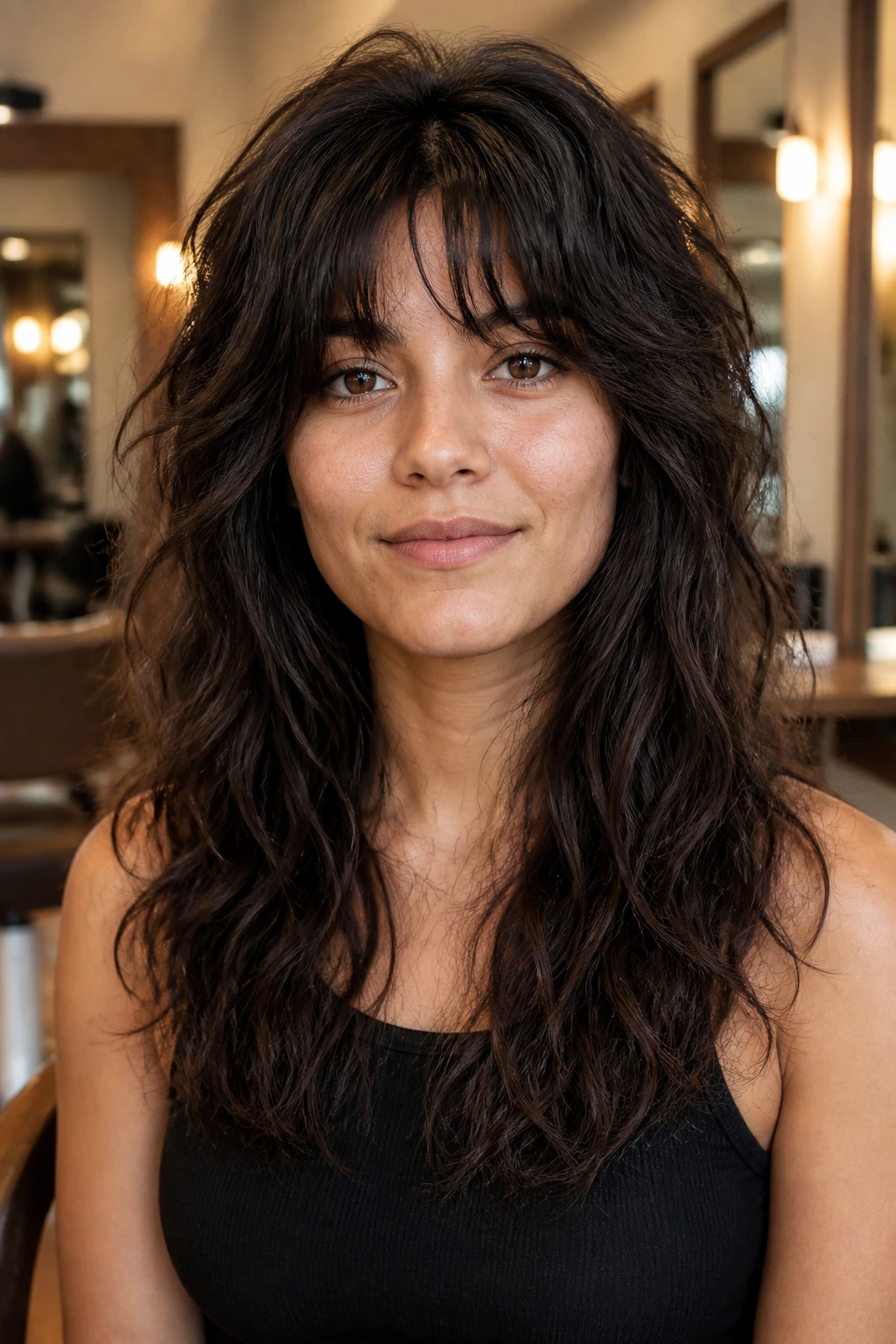
Thick hair can take a shag beautifully, but only if the weight is removed from the inside, not just the surface. Otherwise you end up with a soft top and a bulky bottom shelf. That is not the same thing.
The bangs here can be a little fuller because thick hair usually has enough density to support them. I would still keep the ends piecey. Heavy fringe plus blunt ends can look dense in the wrong way.
The best version of this cut feels cool around the neck and lighter around the face. That’s the sign the weight was taken out in the right places. The hair should still feel like hair. Just less of it where you don’t need it.
12. Round-Face Shag with Longer Fringe
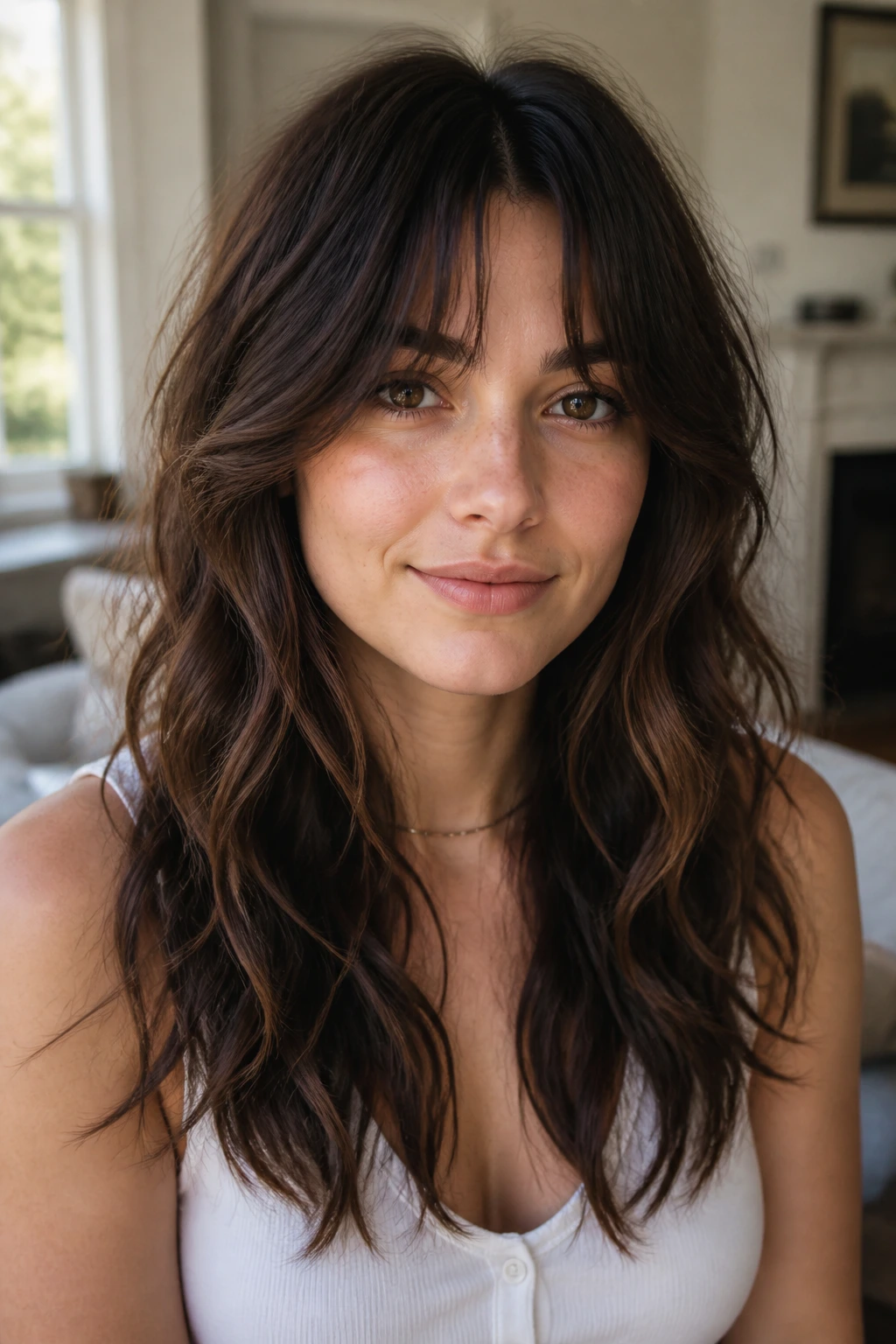
Round faces benefit from a bit of vertical pull, and this cut gives it without making the hair severe. The fringe stays longer and opens lower, which helps lengthen the face visually. The layers then travel downward instead of outward at the widest point.
I like a center part here, but a soft off-center part can work too if the waves settle that way naturally. The important thing is that the front pieces fall along the cheek line, not directly across the widest part of the face. That small shift changes the whole effect.
The cut looks especially good when the bangs are not too dense. Too much fullness at the front can crowd the face. A little break-up goes a long way.
13. Oval-Face Shag with Balanced Bangs
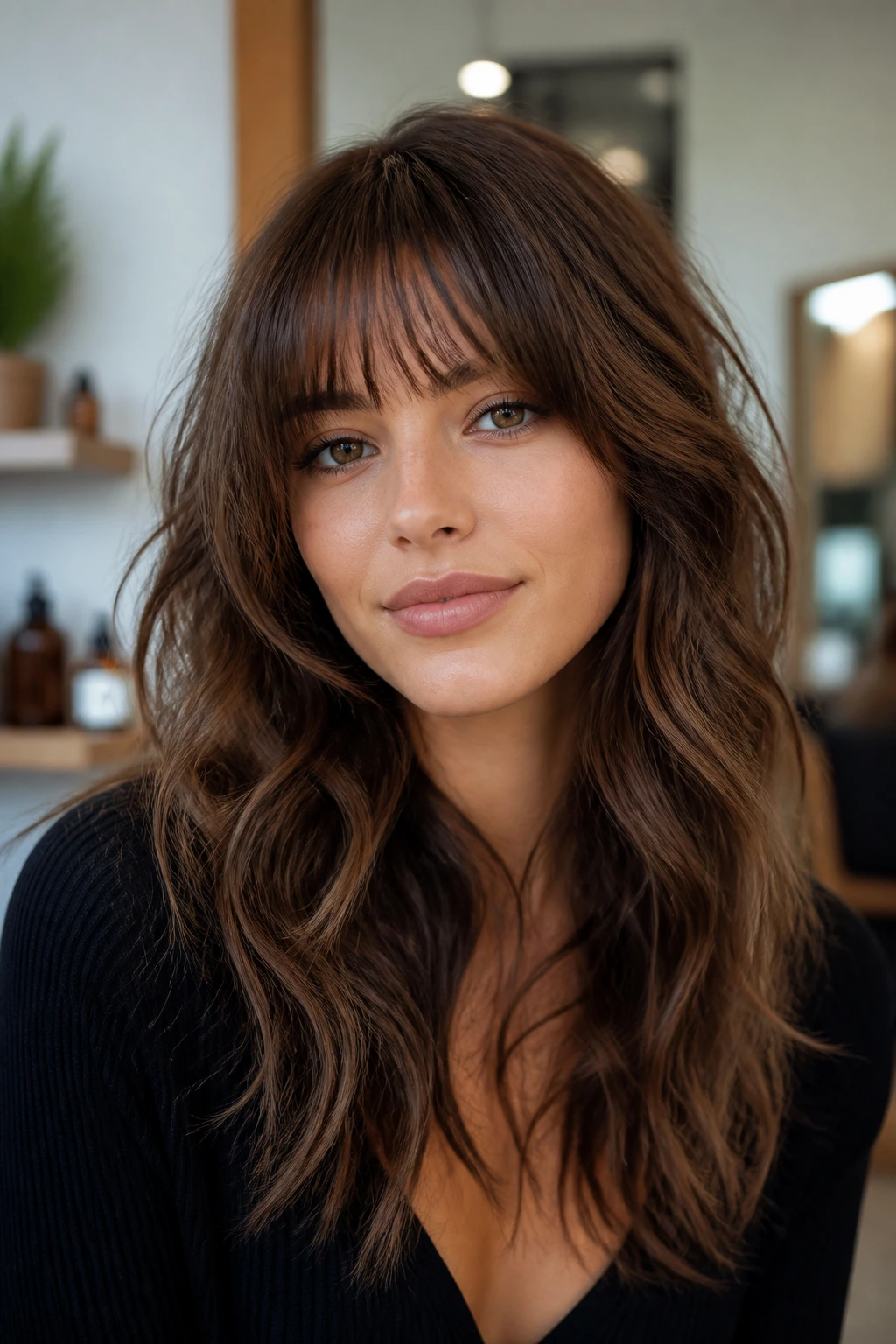
Oval faces can wear almost any fringe shape, which is the nice part, but balance still matters. This cut keeps the bangs at a medium length and lets the layers carry the shape, so nothing overwhelms the face. It is the least fussy of the group.
The bang line can be curtain-style, bottleneck-style, or softly rounded. What matters is proportion. If the fringe gets too short, the whole haircut starts to feel top-heavy. If it gets too long, it disappears into the layers and you lose the point of having bangs at all.
This is the cut I’d point to if someone says they want a shag but not a statement haircut. It sits in the sweet spot between neat and undone. That’s harder to get right than it sounds.
14. Square-Face Shag with Soft Corner Breaks
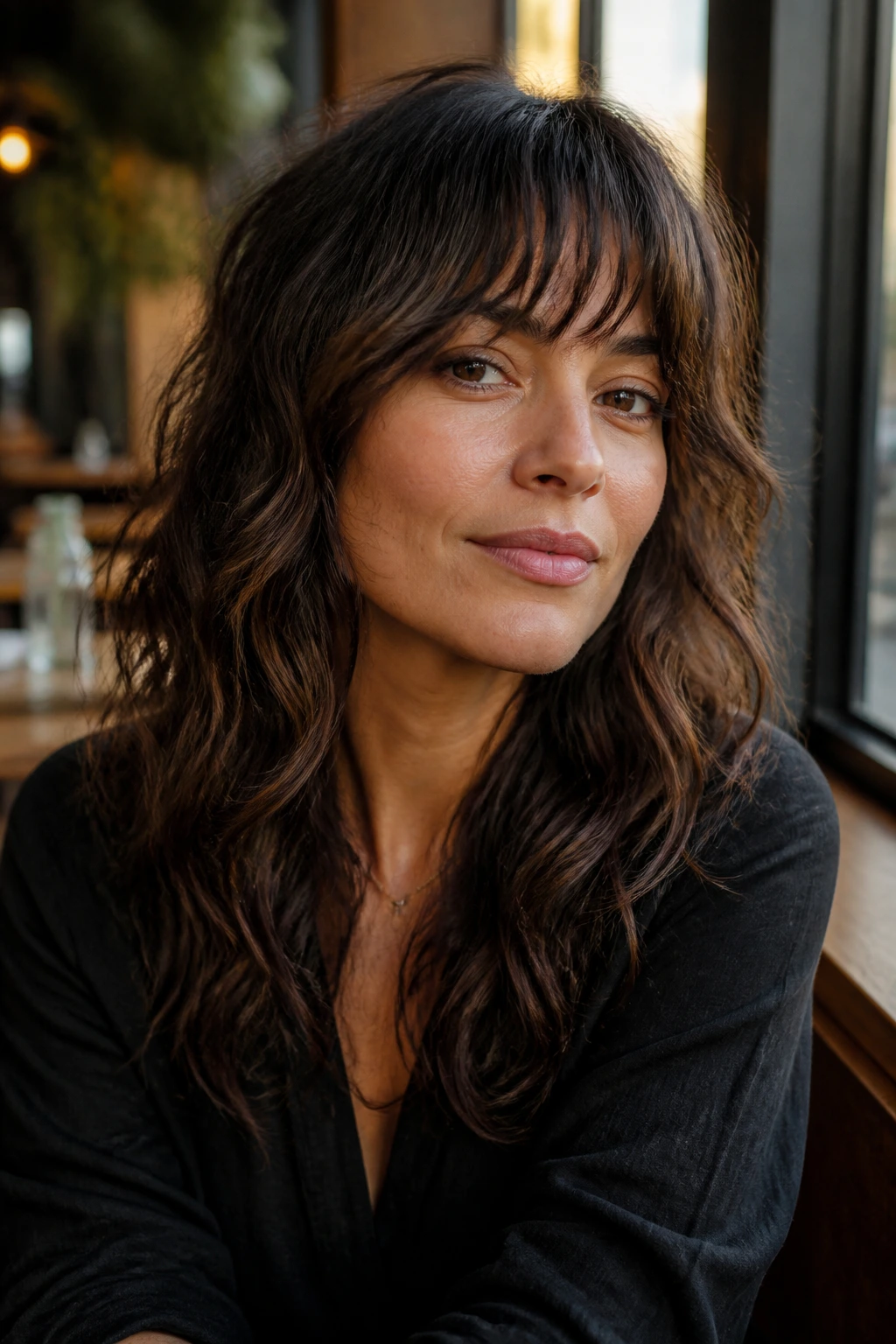
Square jaws look good with softness around the temples and cheekbones, not hard lines that stop at the jaw. This shag uses rounded, broken layers to blunt the edges without hiding the face. The bangs should bend instead of sit straight across.
A little extra length at the sides helps a lot. So does fringe that splits and opens rather than dropping in one solid band. The cut should feel fluid. If it feels rigid, it’s wrong for this face shape.
I prefer this version with waves that have some irregularity. A perfectly uniform wave can look too neat here. A little mess makes the angles softer.
15. Heart-Face Shag with Swept Fringe
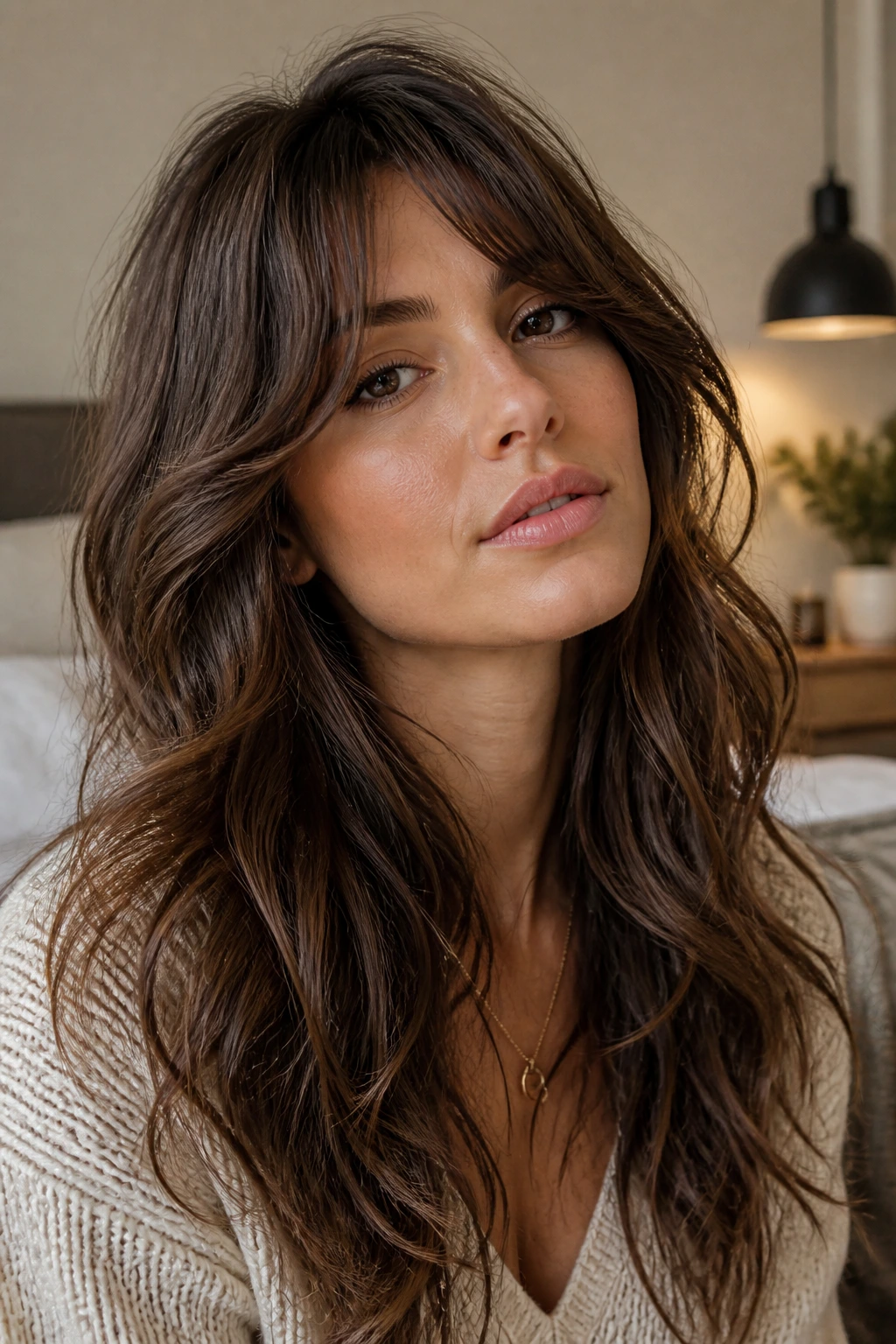
Heart-shaped faces often want less width at the forehead and a little more substance near the jaw. Swept fringe handles that beautifully. The bangs arc to one side or split softly off-center, which lets the upper face breathe.
The layers should build around the cheekbones and lower half of the face so the chin does not feel lost under a cloud of hair. That means the front pieces matter a lot. They should be long enough to tuck or sweep, not cropped into short pieces that spike out.
This cut reads especially well when the waves are loose and slightly glossy. The movement gives the lower half of the face some visual weight. It’s a nice way to keep a long length without making the forehead feel exposed.
16. Deep Side-Part Shag with Drama
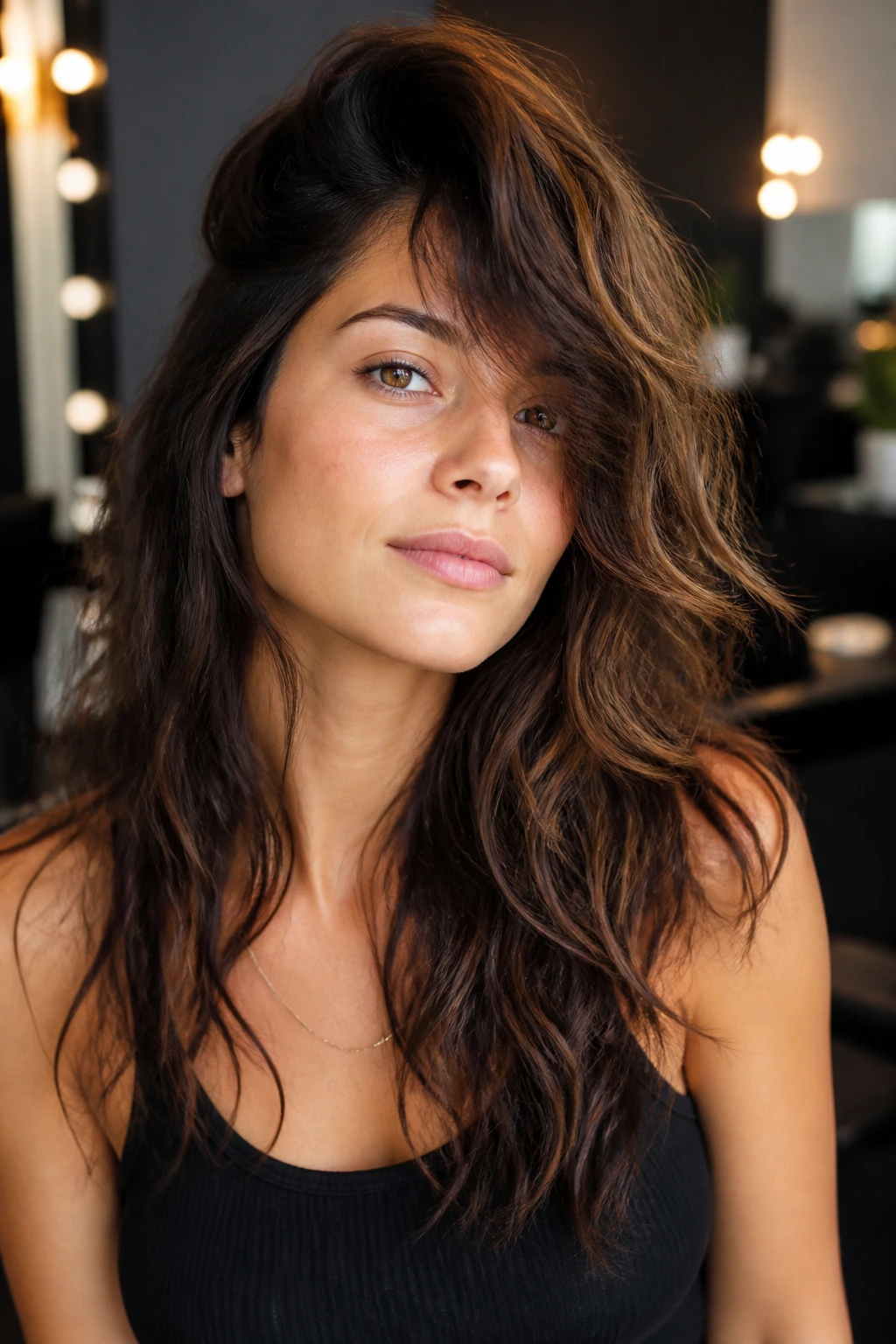
A deep side part changes the whole mood of a shag. Suddenly the bangs become a sweep, the crown gets volume from the root direction, and the layers fall in a more dramatic line. It’s a simple shift, but it changes the haircut from soft to sharp.
This works well if the hair naturally wants to fall to one side anyway. Fighting that tendency is a waste of time. Let the part do the work, then shape the bangs so they skim across the forehead and fold into the side length.
I like this on thicker waves, especially when the ends are kept a little airy. The part creates lift where a center part might flatten the top. Clean, asymmetrical, and not trying too hard.
17. Wispy See-Through Bangs and Loose Waves
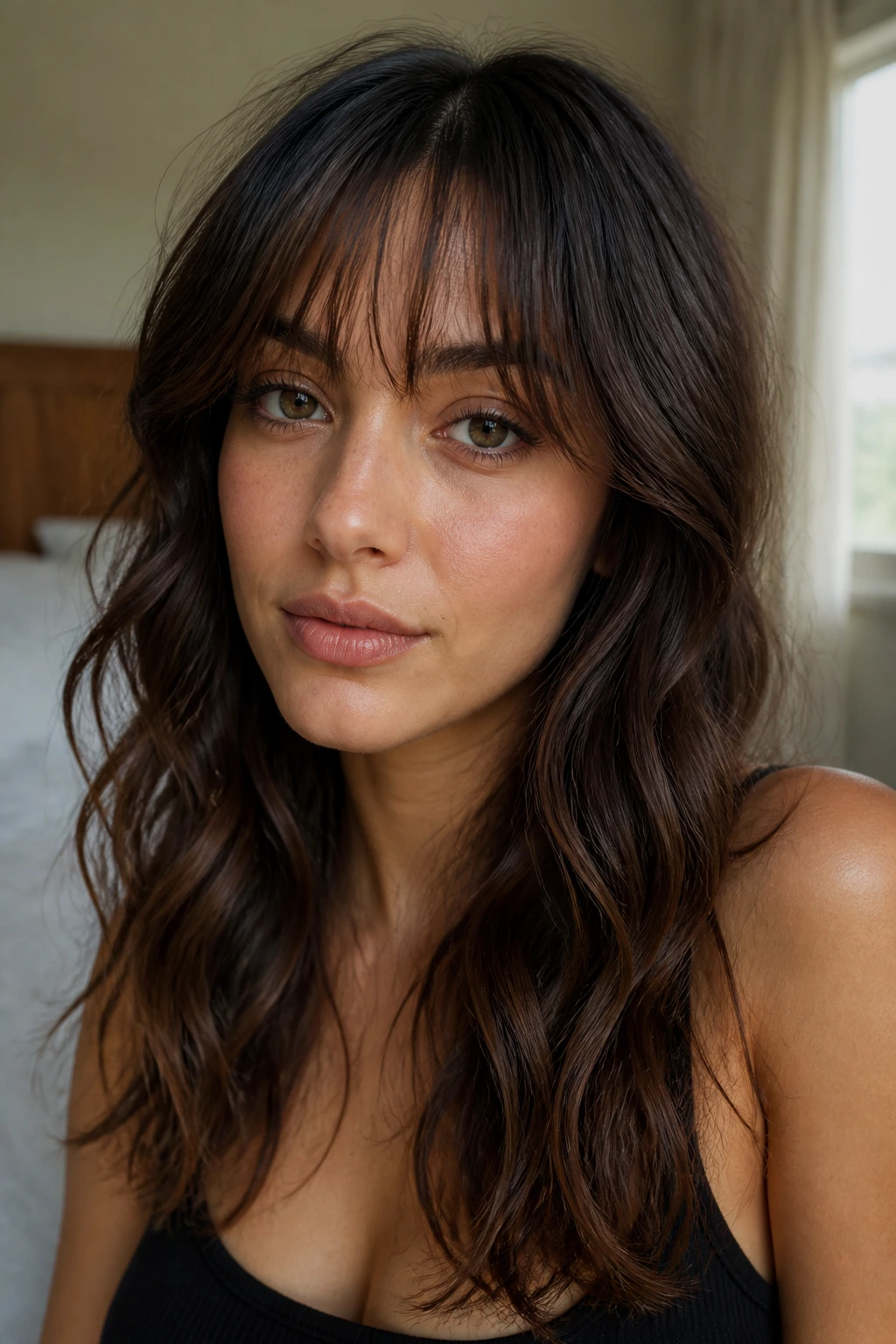
See-through bangs can look delicate in a good way if they are cut with enough intention. The fringe should still have shape, just less density. That lets the forehead peek through and keeps the front from feeling crowded.
The waves need to stay loose so the bangs don’t look out of place. If the rest of the hair is too big, the fringe gets lost. If it is too flat, the bangs look disconnected. You want a soft middle ground.
This version is nice for people who want bangs but panic at the thought of heavy fringe. It gives you the idea of bangs without the full commitment. A little playful. A little cleaner than expected.
18. Curly-Wavy Hybrid Shag
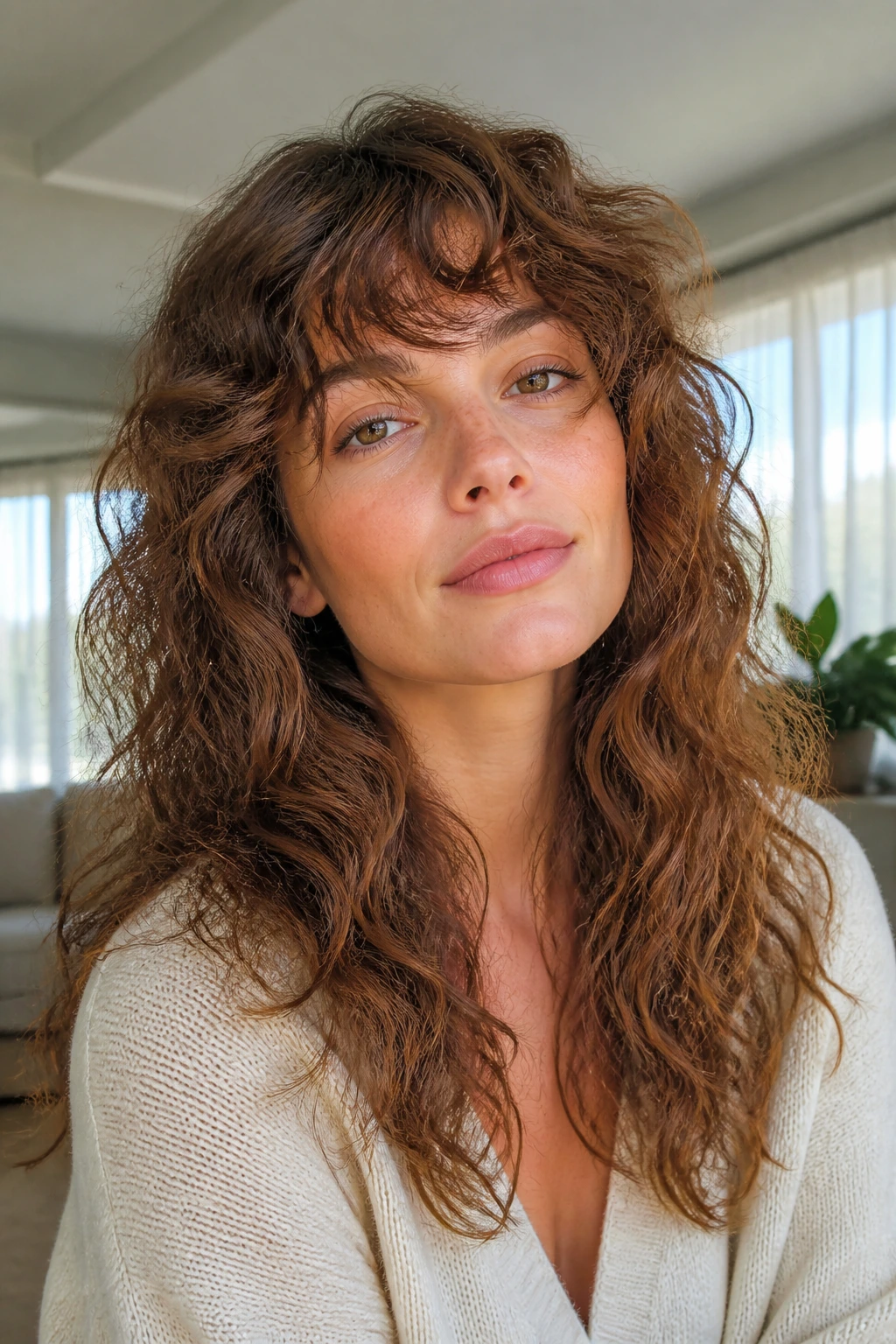
Some hair lives in the messy space between wavy and curly, and that’s exactly where this cut belongs. The layers should respect curl pattern and avoid carving the front too aggressively. If the bangs are overcut, they spring up and separate into odd little hooks.
The better approach is to keep the fringe long, then refine it dry so it follows the bend of the hair. That’s a small but important detail. Wet curls lie.
I like this cut because it celebrates the texture instead of trying to standardize it. The shape may shift from day to day, and that is fine. A good shag can handle that.
19. Rounded-Edge Shag with Polished Ends
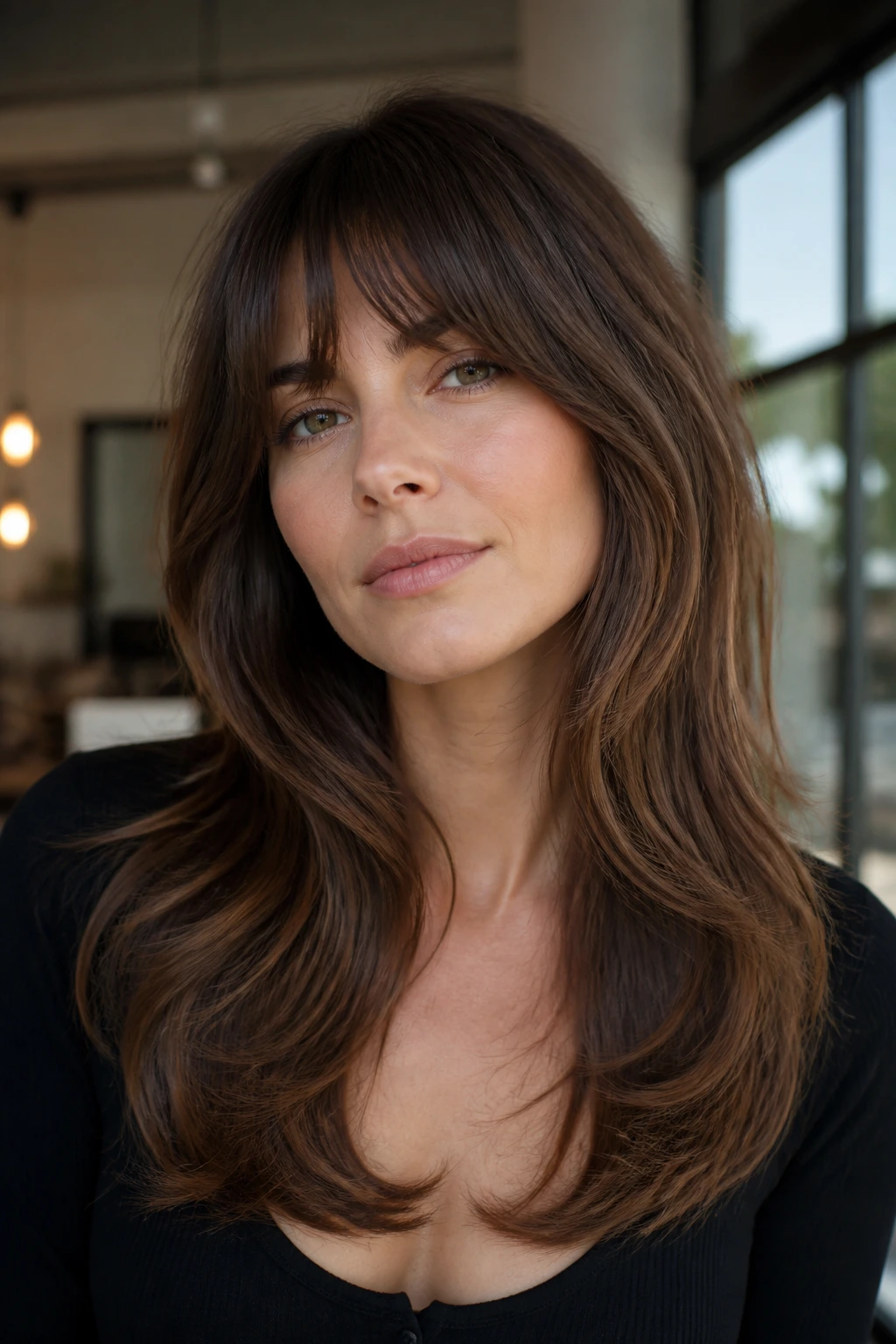
Not every shag has to look chopped. This version keeps the silhouette rounded and the ends smoother, which gives long waves a softer, more finished look. The bangs still break up the forehead, but the overall line stays graceful.
This is a smart choice if you want texture at the top but do not love a lot of broken ends around your shoulders. The haircut keeps its shape when tucked behind the ears or worn loose. It reads more refined than rebellious.
The styling should follow that lead. Use a medium round brush, bend the ends under lightly, and keep the wave pattern calm. You can still have movement without making it ragged.
20. Choppy-Edge Shag with Broken Texture
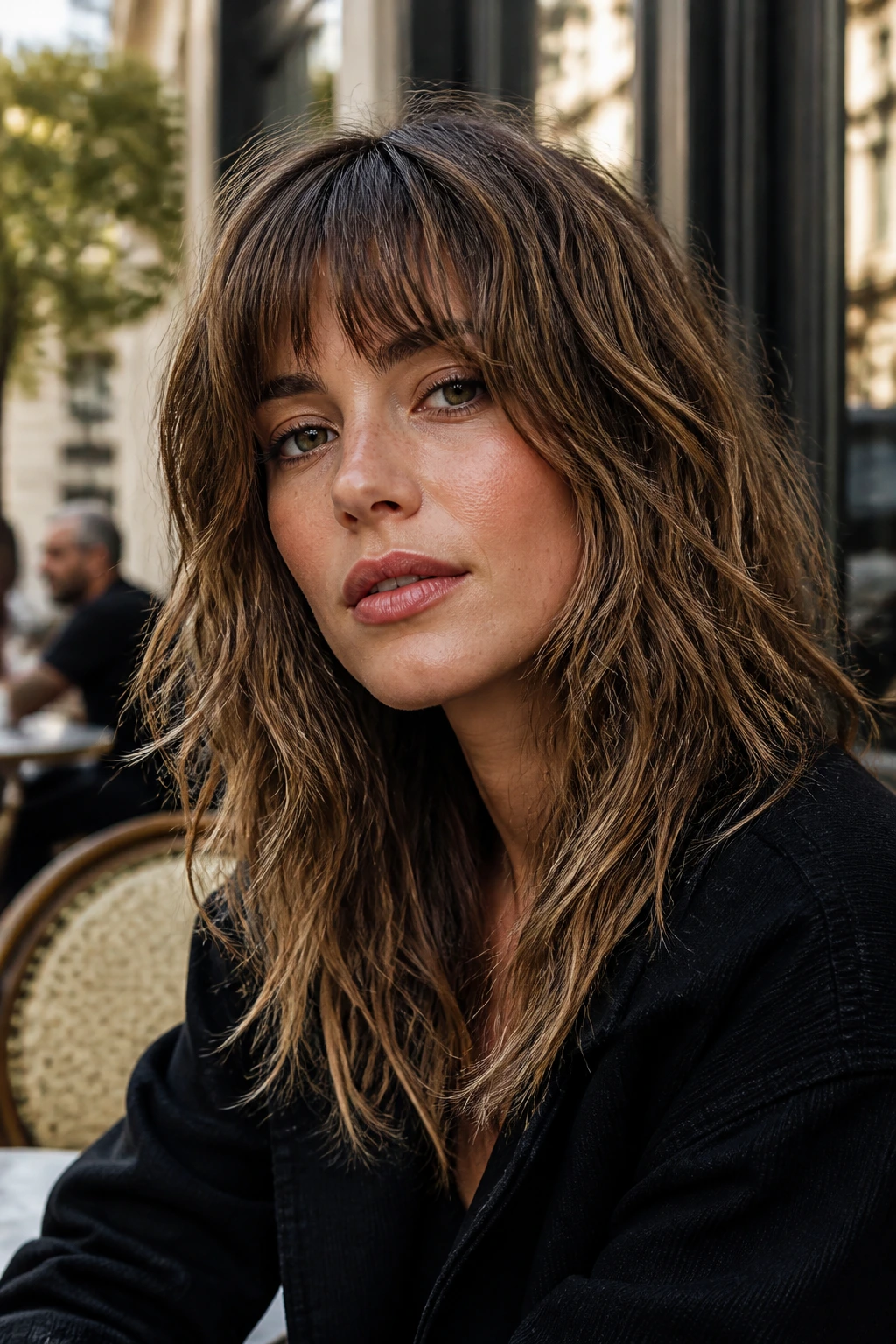
Here’s the louder cousin. The ends are visibly textured, the bangs are sliced into pieces, and the whole cut says it prefers fingers to brushes. If you like hair that looks a little bitten, this is your lane.
The key is to stop before the texture gets stringy. Choppy is not the same as sparse. You still need enough density in each section to hold together when the hair dries.
This version is good when the outfit is simple and the hair can carry some of the mood. It also photographs well in real life because the broken pieces catch light at different lengths. That’s not a phrase I use lightly, but it’s true here.
21. Bronde Shag with Sunlit Layers
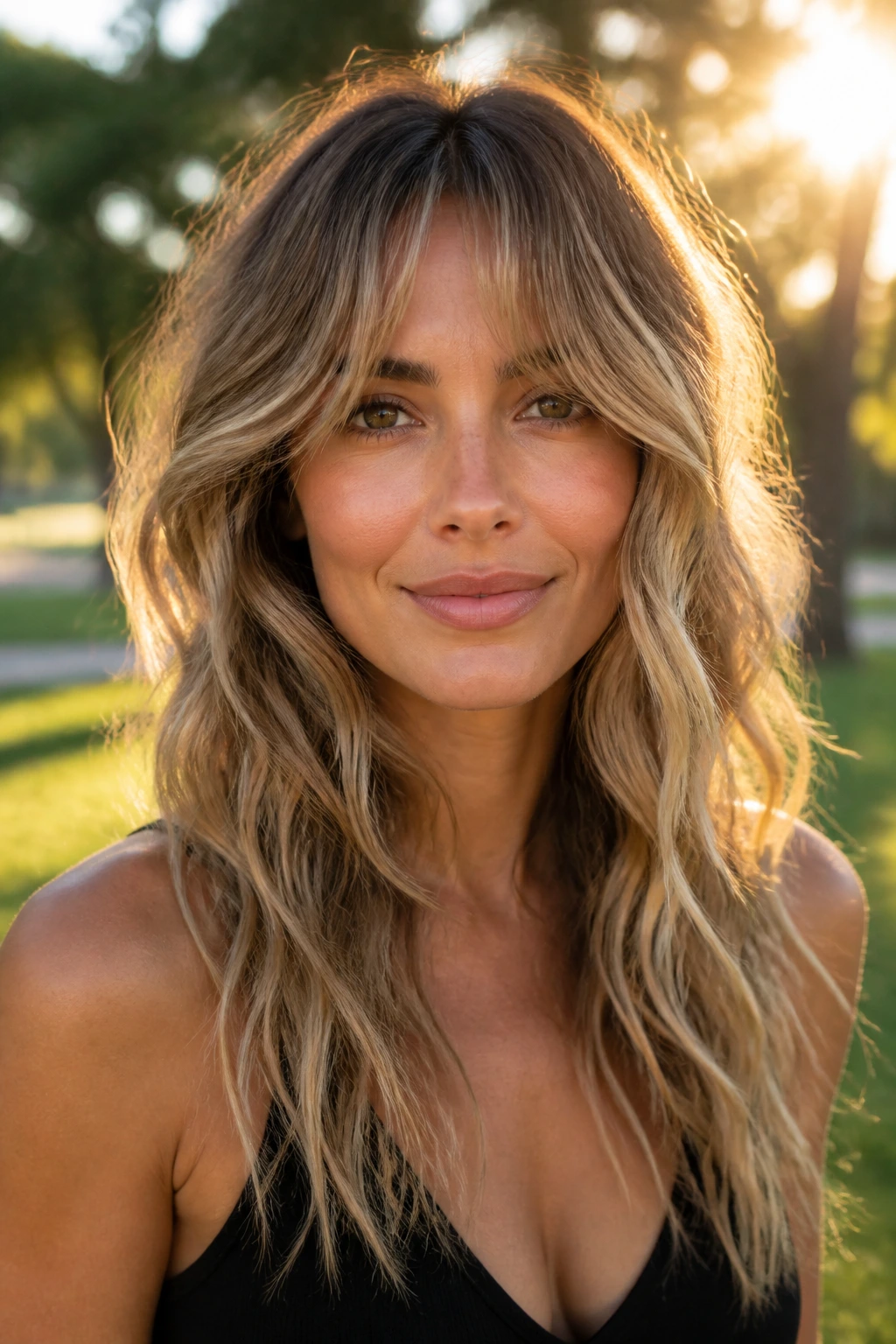
Color changes the way a shag reads. Bronde — that in-between brunette-blonde zone — makes the layers easier to see without a hard stripe of contrast. The bangs pick up lighter pieces, and the face frame gets more definition.
This works especially well if your hair has waves that bend in different directions. The light pieces show off movement that would otherwise get lost. It’s subtle enough to age well and clear enough to keep the cut from disappearing.
I’d keep the bangs soft and split here. The color already gives the haircut visual movement. Too much fringe drama can crowd the face.
22. Grown-Out Bang Shag for Low Maintenance

A grown-out bang does not have to mean “I forgot to book a trim.” In this cut, the fringe is intentionally long, a little shaggy around the eyes, and able to blend into the sides when you want it out of the way. That makes it easier to live with.
The layers should stay generous through the front so the longer bang pieces do not look accidental. The result is softer than a true fringe and less fussy than a blunt bang. That is a very useful place to be.
This is the one I’d suggest to someone nervous about commitment. It buys time. And time, when it comes to bangs, is a solid luxury.
23. Collarbone-Length Shag with Long Fringe
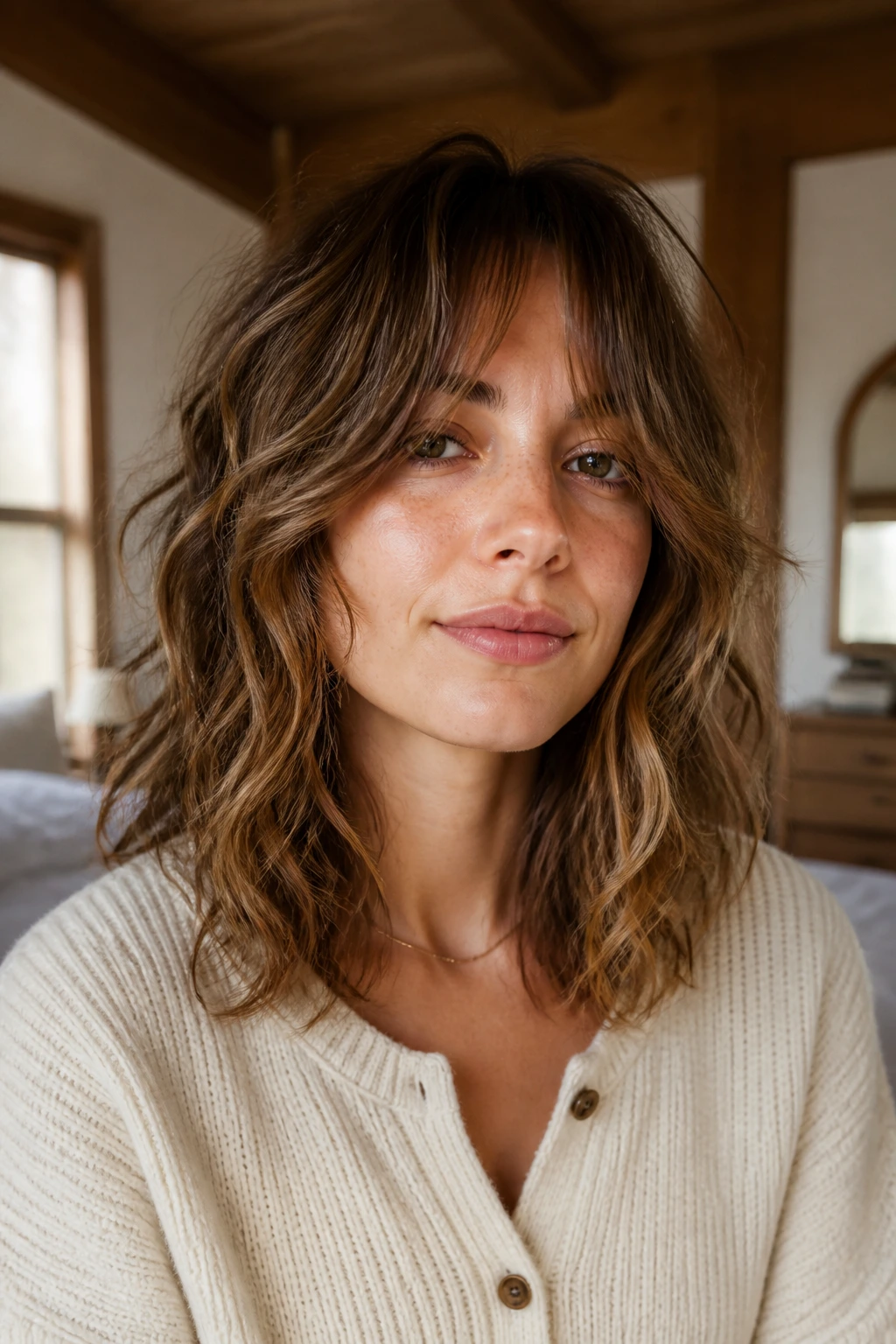
Collarbone length is a sweet spot for wavy hair. It is long enough to pull back, short enough to keep shape, and it lets the bangs lead the eye upward so the cut doesn’t sink. The fringe can sweep into the cheekbones or sit in a curtain shape.
The big win here is proportion. Because the ends stop around the collarbone, the layers can show up without the whole head feeling too long and heavy. That matters if your waves tend to elongate the face.
I like this cut when the hair has medium density and a bit of movement from the roots. It’s practical, but not boring. Which, honestly, is harder to find than you’d think.
24. Mermaid-Long Shag with Hidden Layers
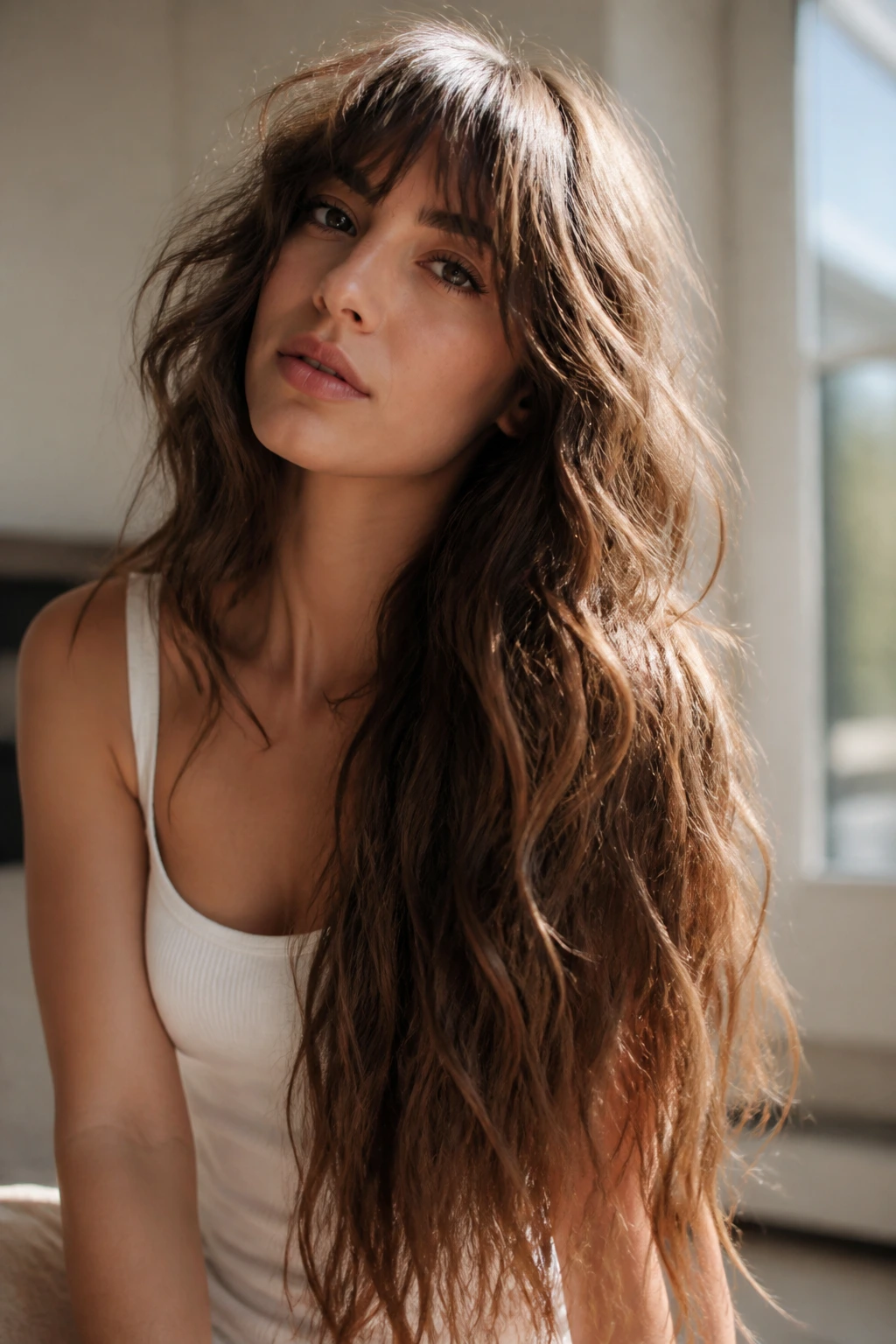
If your hair is very long and you don’t want to lose that length, hidden layers are the move. They take weight out from the inside while leaving the outline long and flowing. The bangs do the front work, the layers do the support work.
This cut needs restraint. Too many visible layers and it stops looking mermaid-long. Too few and the waves lie flat. The balance is in the middle.
The best part is how it moves when worn over one shoulder. The front fringe breaks up the length, and the hidden layers keep the ends from looking like a single block. It is a long haircut with some intelligence in it.
25. Copper Shag with Bright Fringe
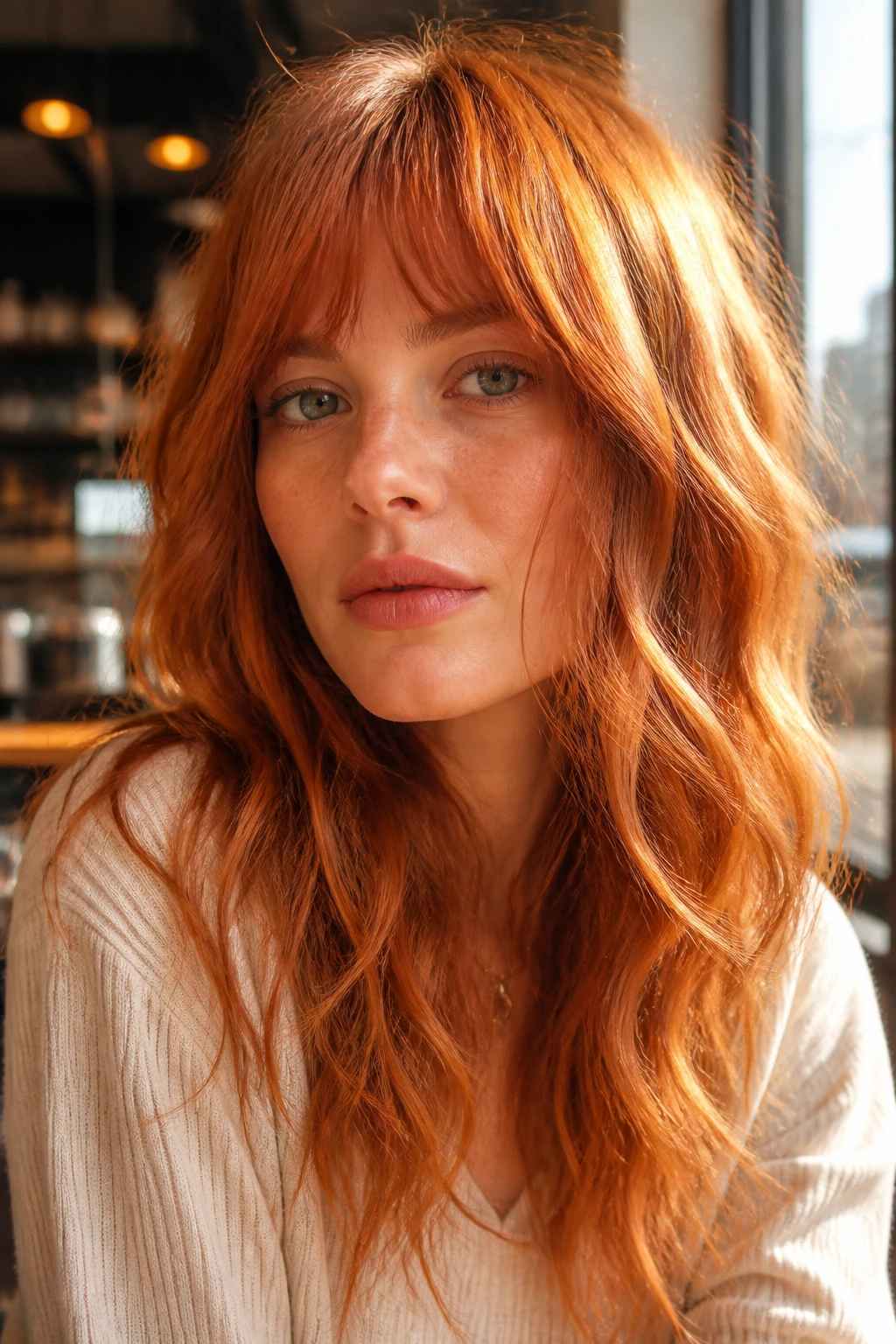
Copper color makes a shag feel warmer and more alive. The bangs catch the light first, so the front of the haircut gets the most visual punch. That’s useful if you want the shape to be noticed without making the layers harsher.
The cut itself should stay soft enough to let the color do some of the heavy lifting. A strong outline plus bright color can get busy fast. Here, the layers are there to support the tone, not compete with it.
This is a good pick if your waves are loose and you want the hair to look richer around the face. It has energy. Not loud energy. Just enough.
26. Brunette Gloss Shag with Subtle Layering
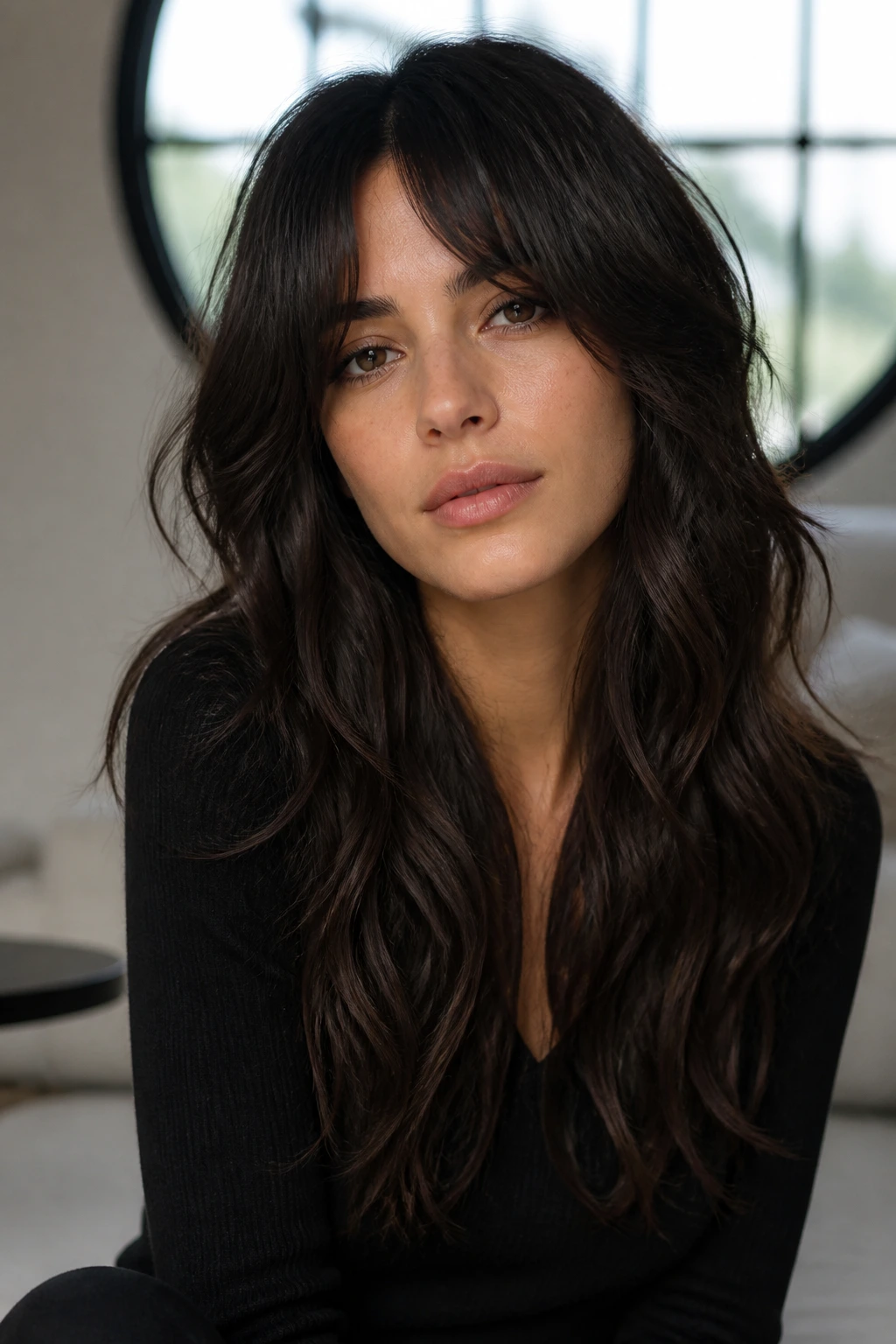
Dark hair can swallow layers if the cut is too timid, so this version relies on subtle but strategic movement. The bangs should still separate from the forehead, while the rest of the cut keeps a sleek shine. Think gloss, not bulk.
I like this one when the waves are medium and the ends need a little shaping. The goal is to keep the silhouette clean enough for dark color to look deep, while still giving the haircut something to do. That tension is the appeal.
A lightweight serum on the mids and a bit of root lift can keep the cut from collapsing into one dark mass. It doesn’t need much. That’s the beauty of it.
27. Razor-Cut Shag with Sharp Movement
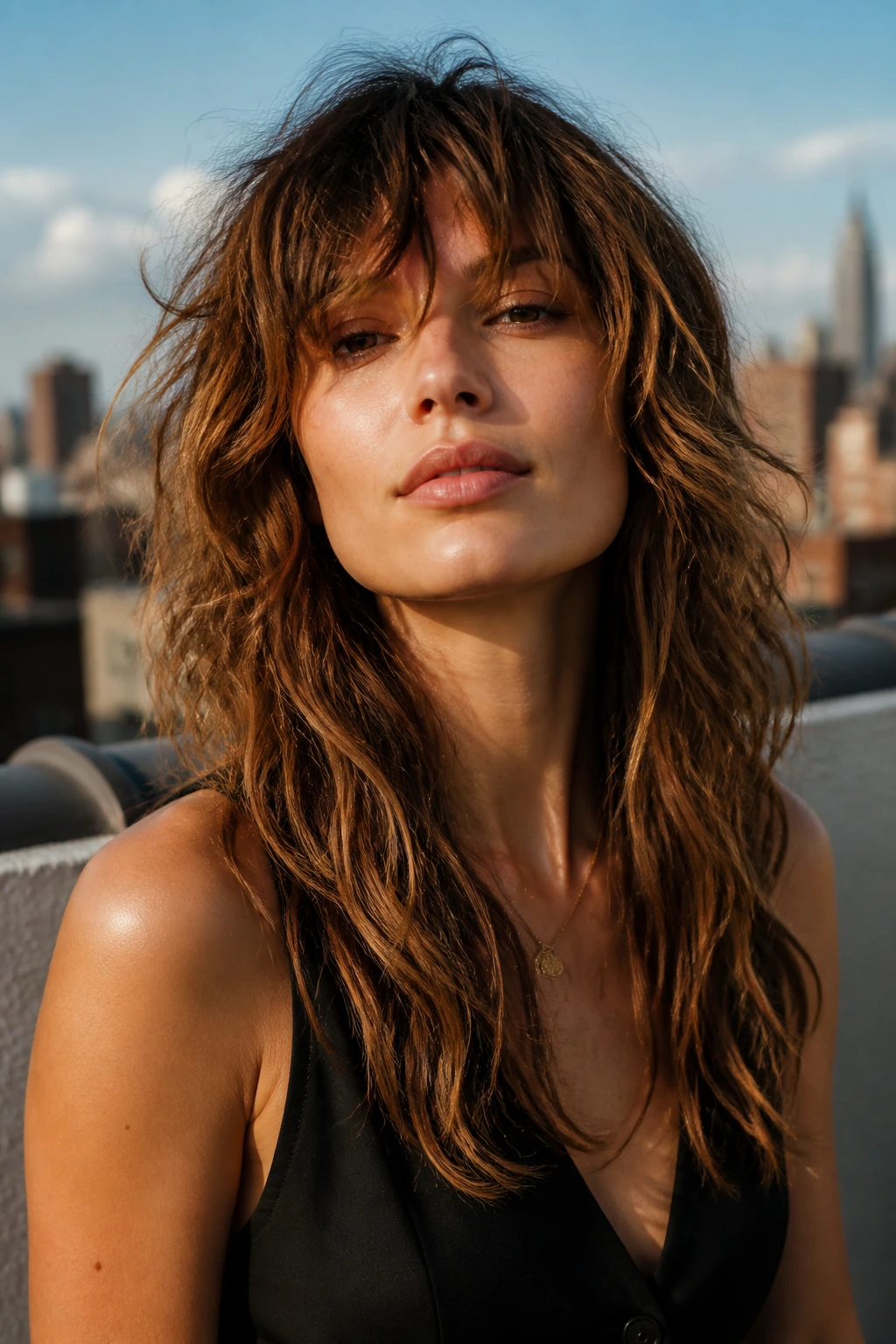
A razor-cut shag has more bite. The ends taper quickly, the fringe looks a little more shredded, and the waves separate into fine pieces instead of broad ribbons. If you want movement that feels quick and edgy, this is the one.
The downside is that it can get frizzy if the hair is already porous or very dry. So the styling has to be a little careful — leave-in conditioner, heat protection, and not too much aggressive brushing. Razor cuts reward restraint.
When it works, though, it really works. The hair seems to move faster. That sounds odd, but anyone who has worn this cut knows what I mean.
28. Scissor-Only Shag with Softer Ends
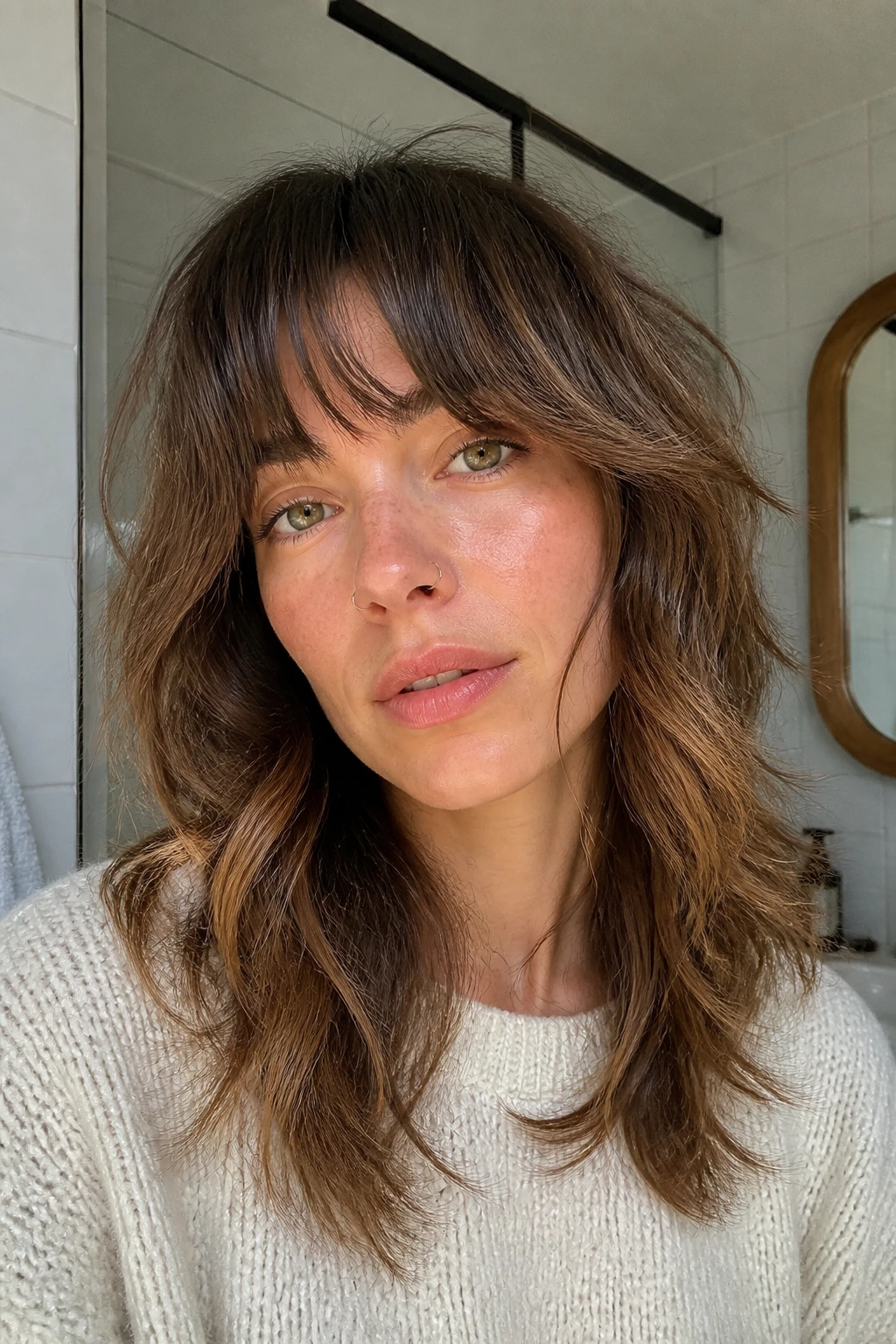
Scissor work gives a different finish. The layers are still there, but the ends feel smoother and more rounded, which is useful if your hair already gets rough on the edges. The fringe reads softer too, less sliced and more lived-in.
This is a good option for people who want texture without the sharp edges of a razor cut. It grows out in a calmer way. The shape hangs on longer before it starts to look shaggy in the wrong sense.
I’d choose this for wavy hair that frizzes at the ends but stays pretty cooperative through the mids. That’s the sweet spot for scissor-soft layering.
29. Minimal-Layer Shag with Quiet Texture
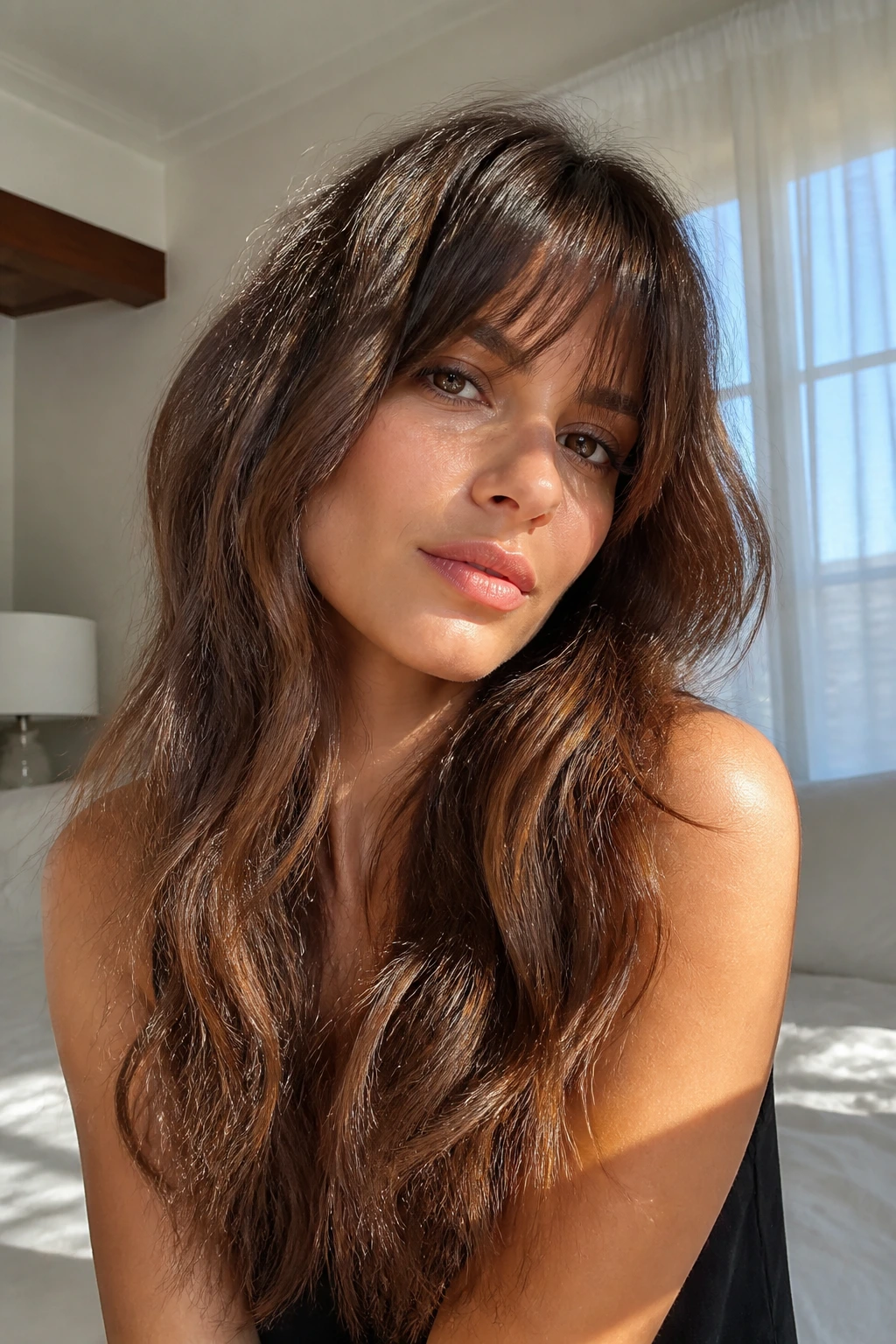
Not every shag needs a dramatic haircut story. A minimal-layer version keeps the long outline intact and just nudges the hair into movement at the right spots. The bangs are soft, the face frame is light, and the ends keep their length.
This is the cut for someone who wants the idea of a shag without surrendering a lot of hair. It’s especially good if you wear your hair down most days and don’t want a heavy styling routine. The shape is there, but it doesn’t announce itself.
Quiet texture can be hard to photograph, but it looks nice in motion. Which is what matters.
30. Wolf-Edge Shag with Long Bangs

This cut borrows the rougher edge of a wolf cut but keeps the overall length and shag structure intact. The layers are more pronounced around the crown and through the top half, while the bangs stay long enough to blend instead of spike. It feels a little wilder than a classic shag.
I would not do this on hair that already lacks density. It needs enough body to support the heavier top layers. On thicker or medium-thick waves, though, it has a lot of shape.
The best version looks like it was cut by someone who knew exactly when to stop. That matters. Too much layering and the cut turns to smoke.
31. Retro Disco Shag with Flipped Pieces
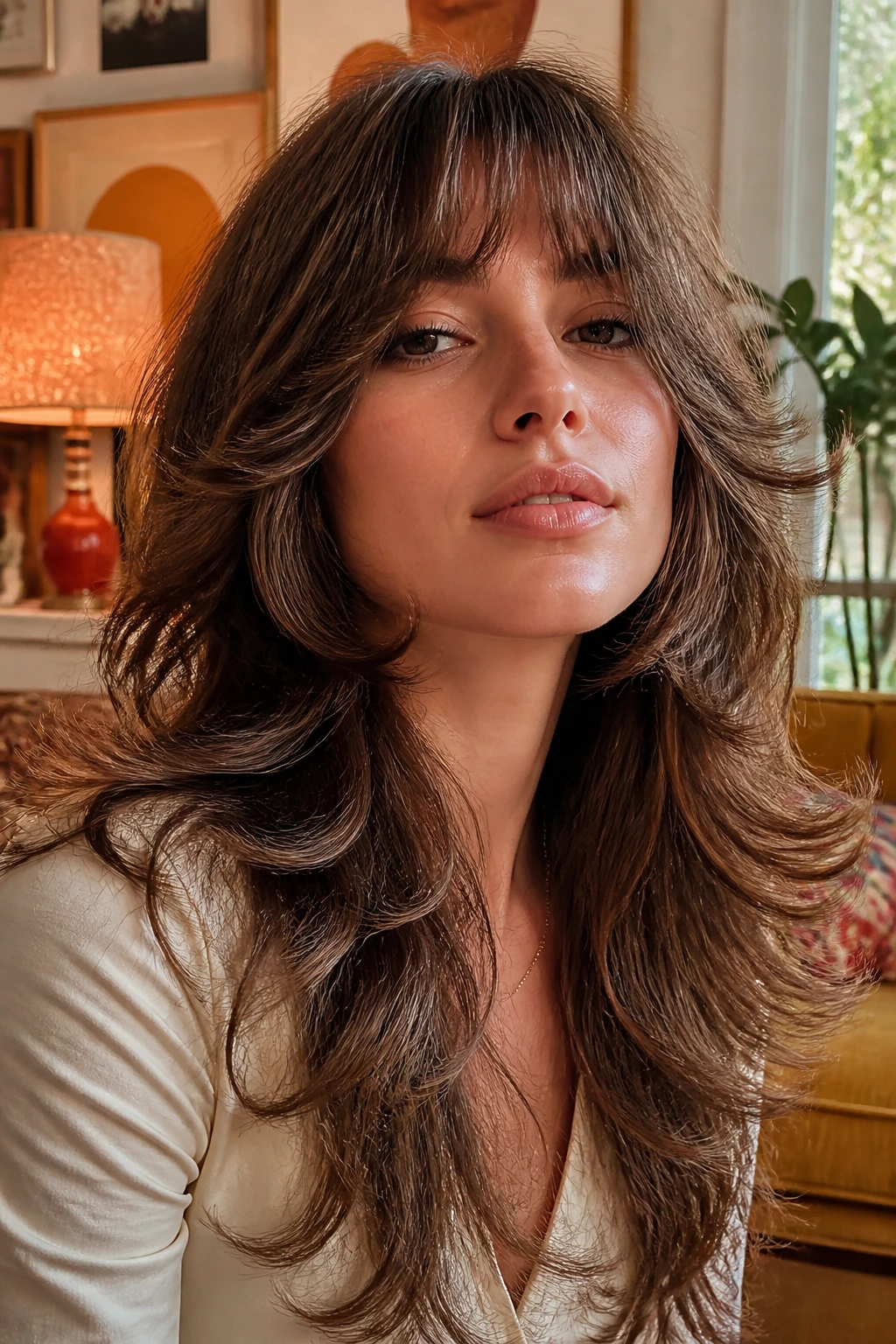
There’s a fun, old-school swagger to this one. The ends kick out a bit, the bangs are airy, and the whole cut has movement that feels almost playful. It’s not trying to look undone; it is intentionally a little extra.
You get this effect by keeping the layers distinct and styling the ends with a round brush or a large barrel iron. A soft flip at the bottom changes the silhouette more than people expect. The hair suddenly has a shape again.
If you like a little drama but do not want severe bangs, this is a good compromise. It’s nostalgic without looking costume-like.
32. Heat-Free Shag Styled with Mousse and Plopping
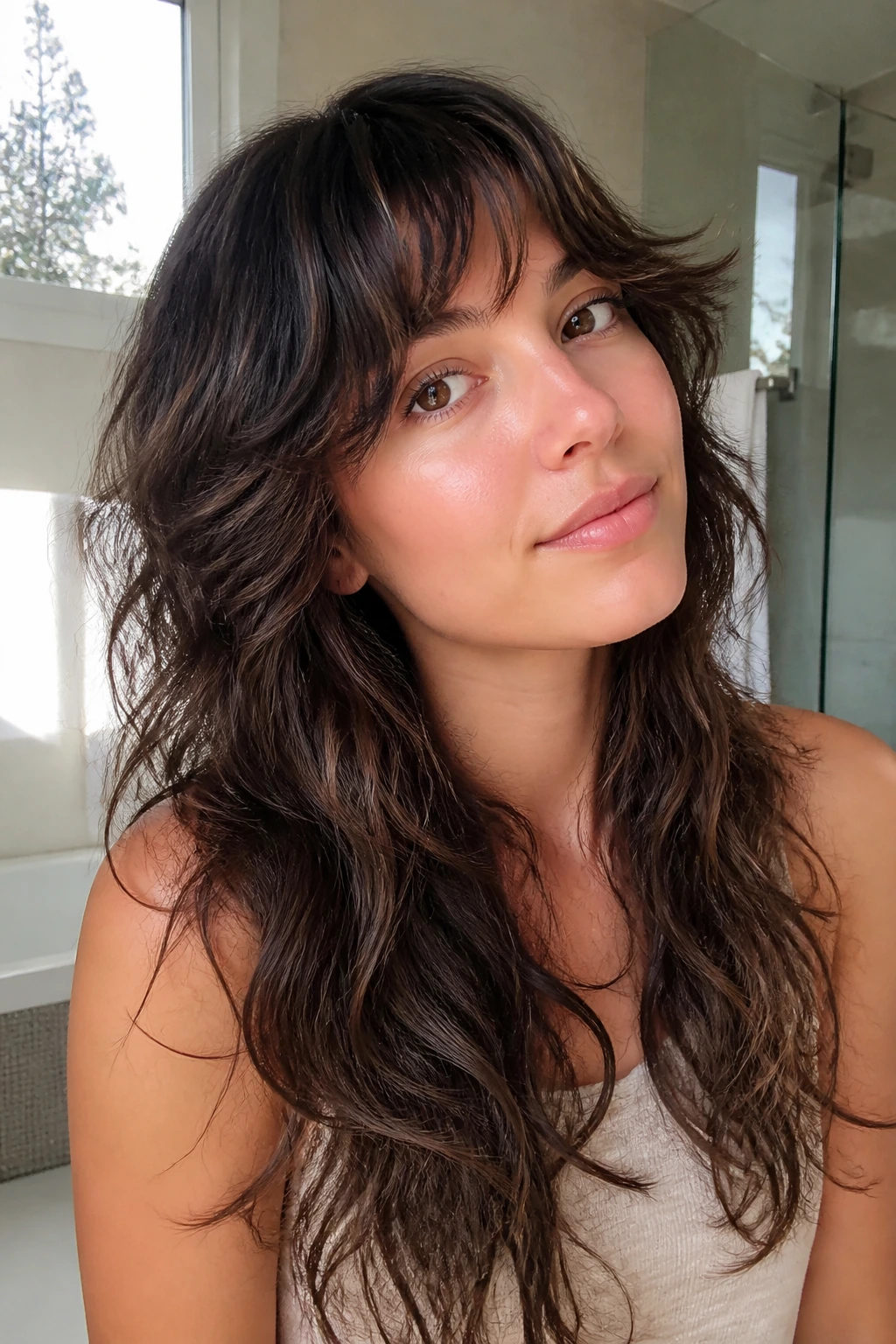
This is less about a special cut line and more about a special routine. The haircut should still have long layers and bangs that can air-dry cleanly, but the styling method keeps the whole thing soft and touchable. Mousse at the roots, plopping for the mids, and a little finger shaping at the front can do a lot.
The fringe needs attention first, not last. If the bangs dry crooked, the whole haircut feels off. I usually pin them into place for the first part of the dry and then release them once the wave pattern starts to hold.
It’s a solid fit for people who don’t want to heat-style every wash day. The hair keeps some of its natural bend and loses less of its own character.
33. Salt-Spray Weekend Shag with Messy Finish
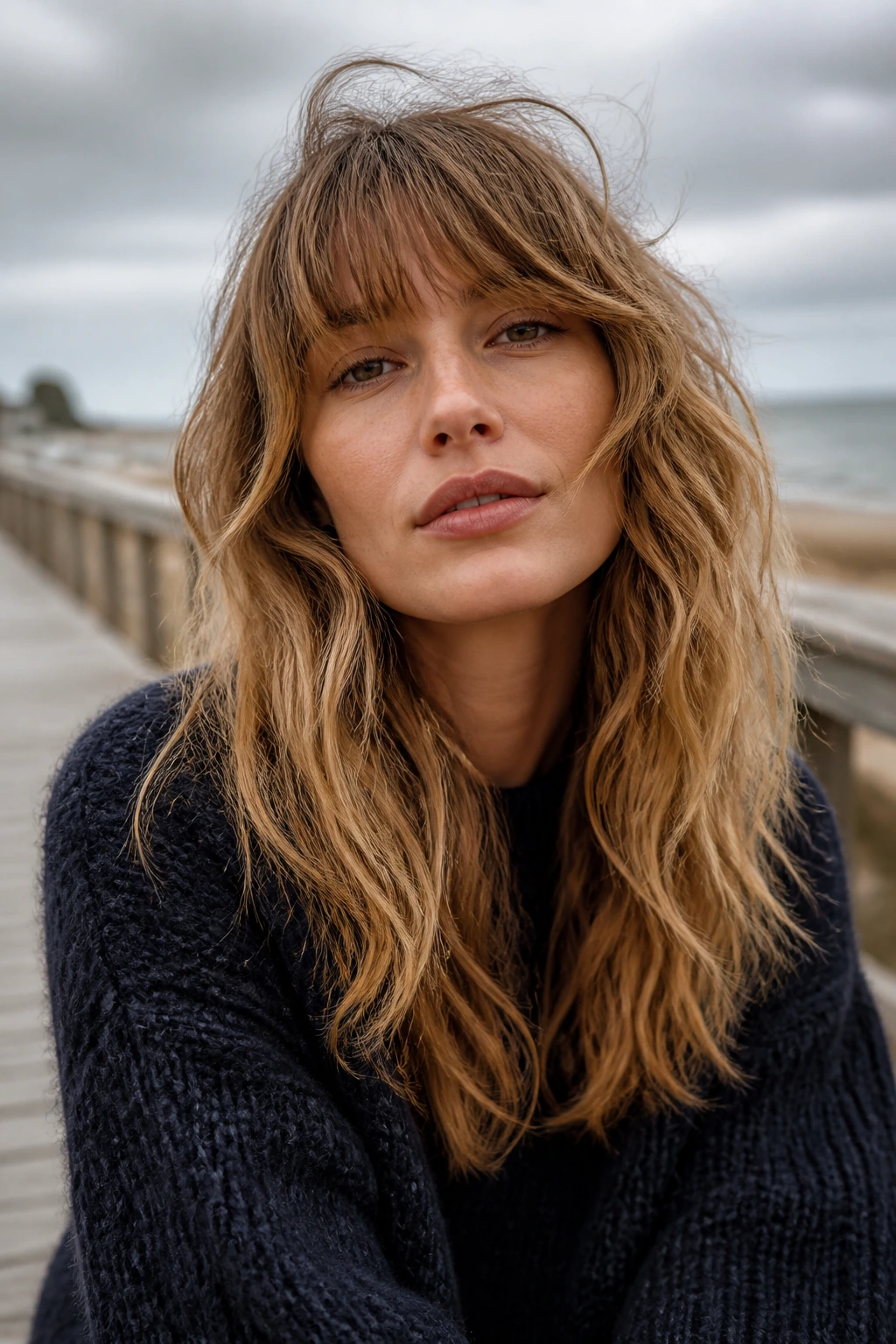
This is the cut’s easygoing mode. The layers are loose, the bangs are separated just enough to show shape, and the finish leans matte and piecey. It looks better when you stop fussing with it, which is rare and refreshing.
Salt spray helps, but only in moderation. Too much and the hair goes crunchy. A light mist, a scrunch, and a little air-drying usually get the job done. The point is separation, not stiffness.
If you want a shag that can survive a windblown day and still look like it belongs on your head, this is the mood. Unpolished on purpose. Nice change.
How Long Wavy Shag Haircuts With Bangs Work in Real Life
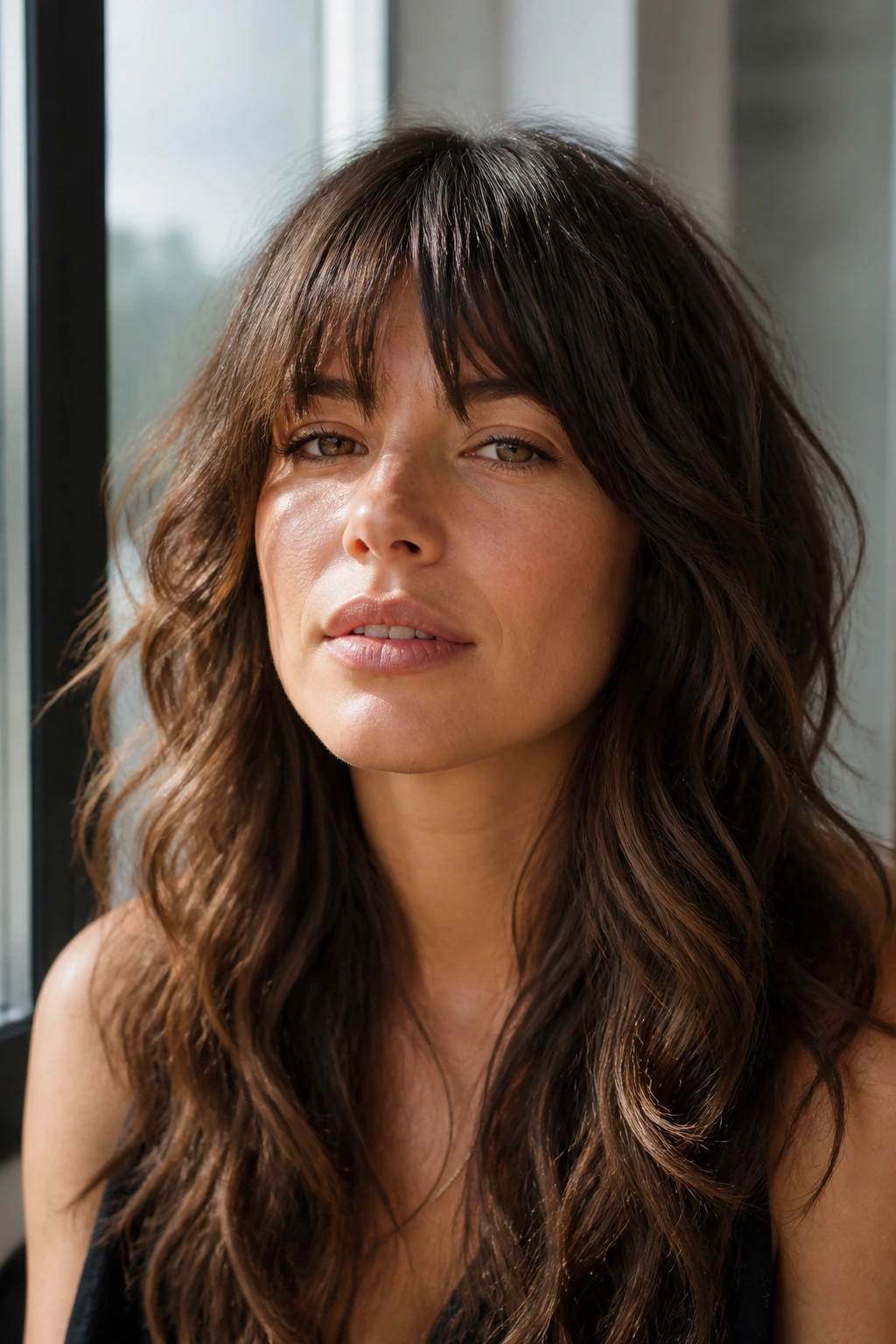
The haircut works because it lets the hair bend where it already wants to bend. That sounds obvious, but a lot of bad shags ignore it. They over-layer the crown, carve the sides too short, and then wonder why the hair puffs out like a dandelion. A good shag should feel lighter, not thinner in the sad sense.
On wavy hair, the best layers usually live between the cheekbone and collarbone zone. That range keeps movement visible without pulling the ends apart too aggressively. Bangs sit in the front like a small control center. They can soften the face, hide a high forehead, break up a strong jaw, or just make long hair feel more finished.
The styling part matters, but less than people think. You do not need a perfect blowout every day. You need a cut that can tolerate a mist bottle, a diffuser, a round brush, or even nothing at all. That’s why these looks are so durable. They are built for motion, not stillness.
How to Ask for the Shape You Actually Want
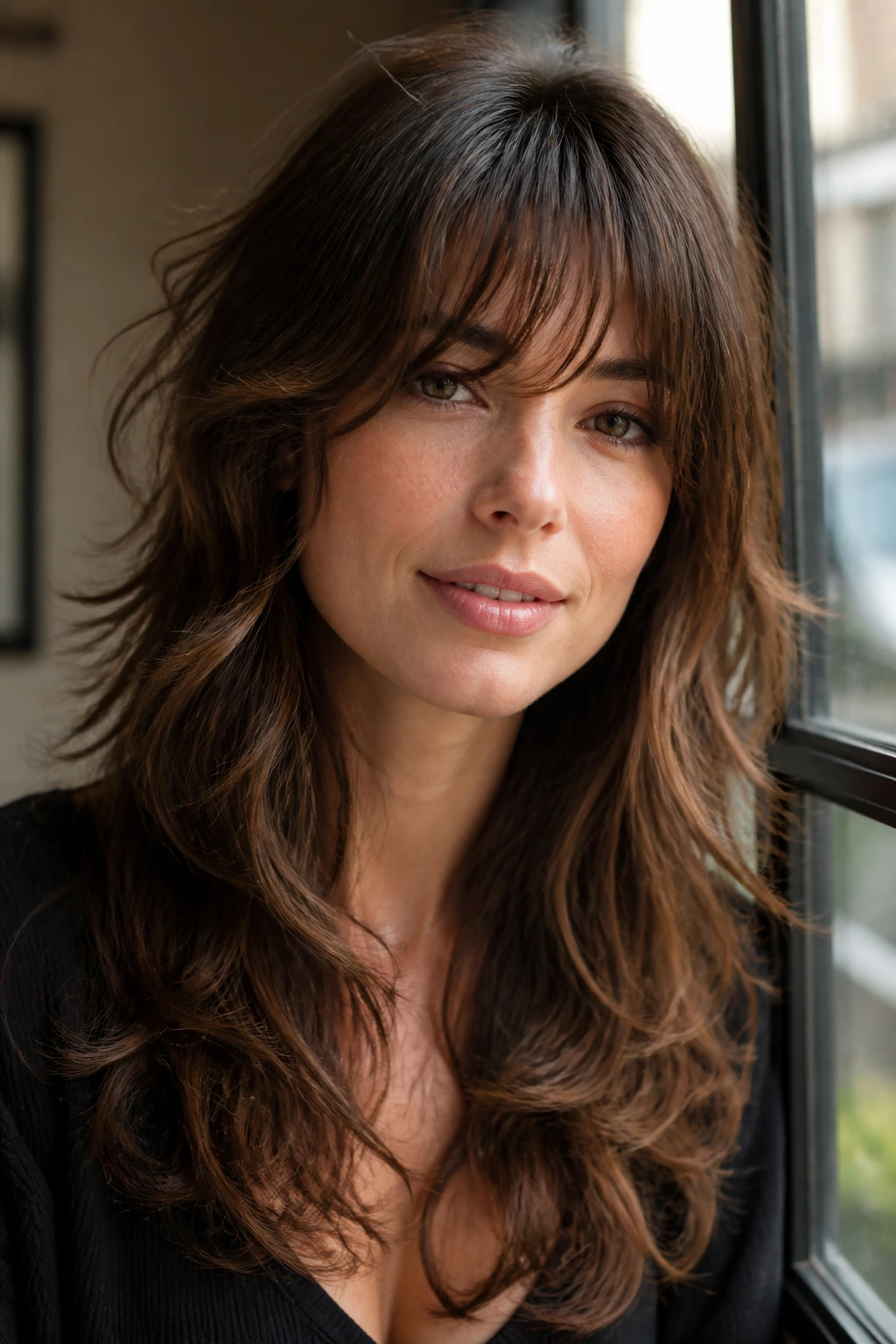
Bring two photos if you can. One should show the bang shape you like. The other should show the layer pattern or overall length. A single perfect photo rarely tells the whole story, and stylists can’t read your mind any more than the next person.
Say where you want the shortest front pieces to land. Brow, cheekbone, nose bridge, chin — those are different jobs. If you want a curtain bang, say whether you want it to split high and open wide or sit lower and blend more softly. That sentence saves a lot of regret.
Be honest about how you wear your hair. If you air-dry most of the time, say so. If you round-brush the fringe but leave the rest rough, say that too. The cut should fit your habits, not your best-case fantasy of daily styling discipline.
Essential Tools for Styling and Refreshing the Cut
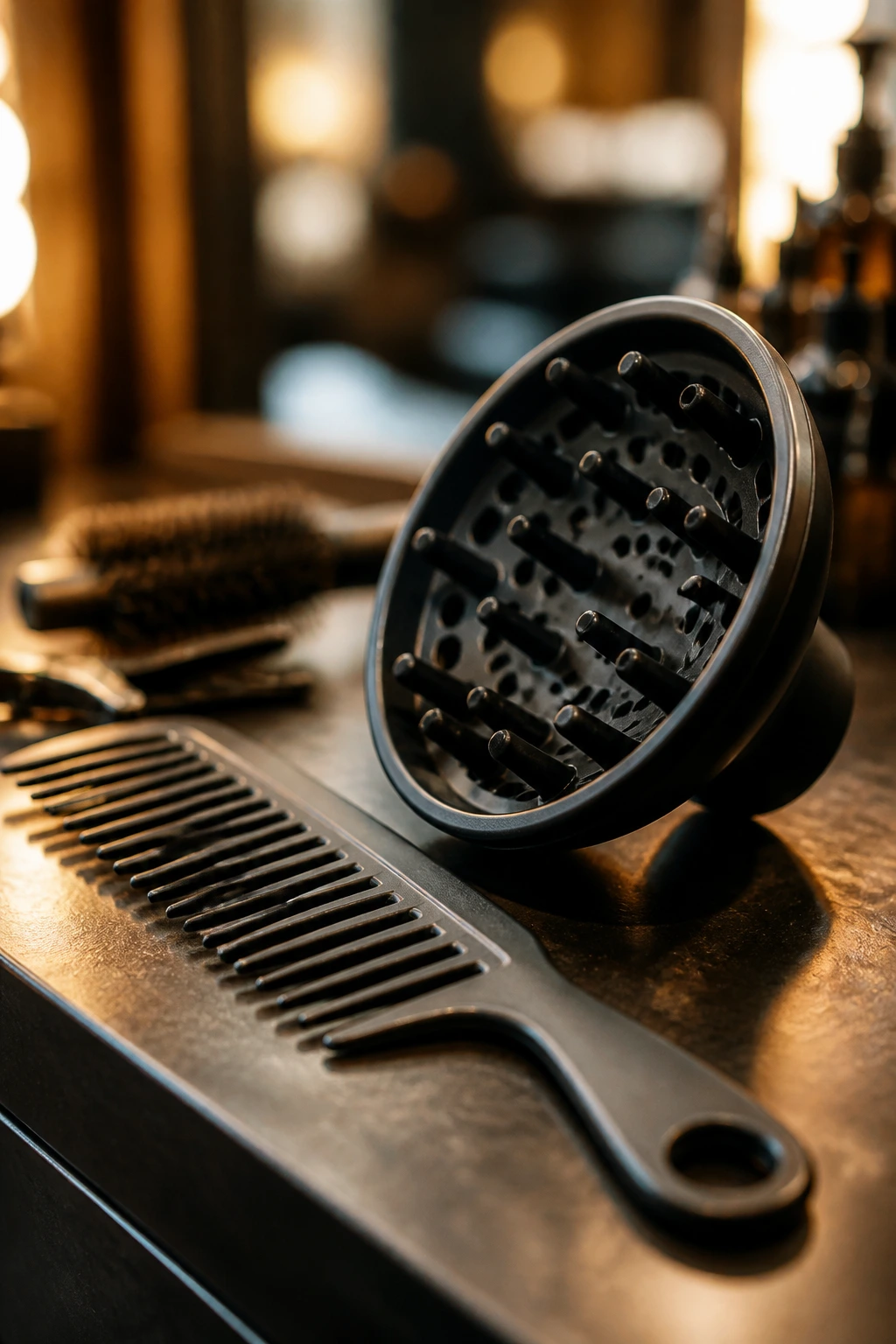
- Wide-tooth comb: Gentle enough for waves, especially when the hair is damp and prone to stretching.
- Duckbill clips: Useful for pinning bangs or sectioning the crown while the front dries in the right direction.
- Diffuser attachment: Helps waves dry with less puff and gives the layers some lift at the root.
- Medium round brush: Best for shaping curtain bangs, flipping the ends, or smoothing the fringe without flattening it.
- 1-inch or 1.25-inch curling wand: Good for adding a loose bend to face-framing pieces when the haircut needs a reset.
- Microfiber towel or soft T-shirt: Cuts down on friction, which matters when the bangs frizz first.
- Lightweight mousse: Gives the crown lift without turning the hair sticky.
- Texture spray or salt spray: Adds separation to the ends, but use it lightly or the hair can get rough fast.
- Heat protectant: Non-negotiable if you touch the front pieces with a dryer or wand.
- Dry shampoo: Best kept at the roots, not the bangs, unless you enjoy chalky fringe.
Keeping Long Wavy Shag Haircuts With Bangs Alive Between Washes
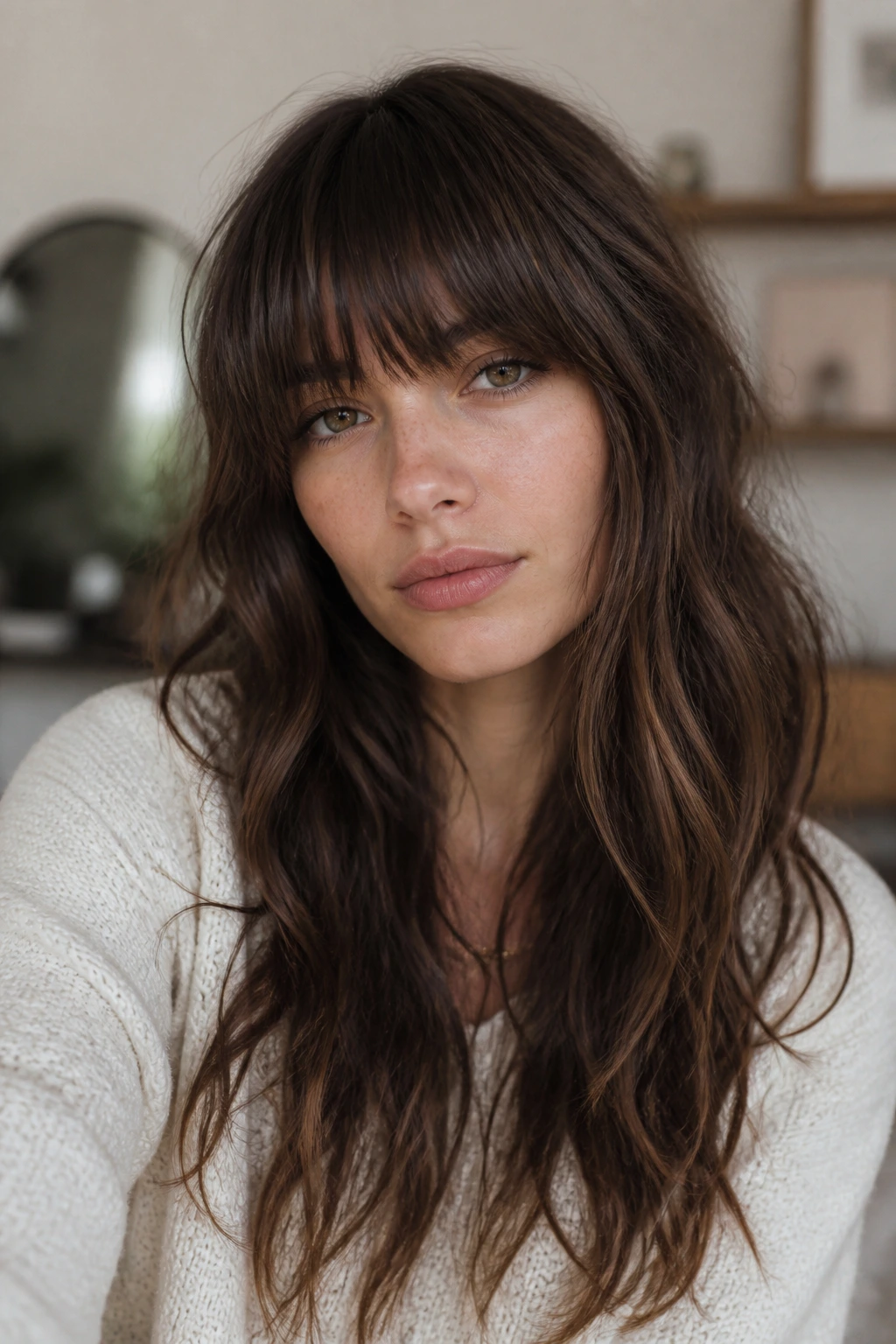
Wash frequency depends on scalp oil, product load, and how much your bangs touch your face. For most wavy shags, every 2 to 4 days is a sensible range. If the fringe gets greasy first, clean just the front section in the sink or with a damp cloth instead of washing the whole head.
Bangs need more frequent attention than the rest of the cut. A quick blow-dry or bend with a round brush in the morning is usually enough to reset them. If they kink overnight, mist them lightly with water and clip them to the side for a few minutes while you finish getting ready. That beats attacking them with hot tools every day.
Trims matter. Bangs usually need a touch-up every 3 to 5 weeks if you want them to stay in the intended zone. The full shag can go longer — often 8 to 12 weeks — but if the layers lose their relationship to the fringe, the shape starts to sag. Night care helps too. A loose braid, a silk pillowcase, or a soft scrunchie at the crown keeps the waves from getting smashed flat.
Common Mistakes That Flatten the Shape
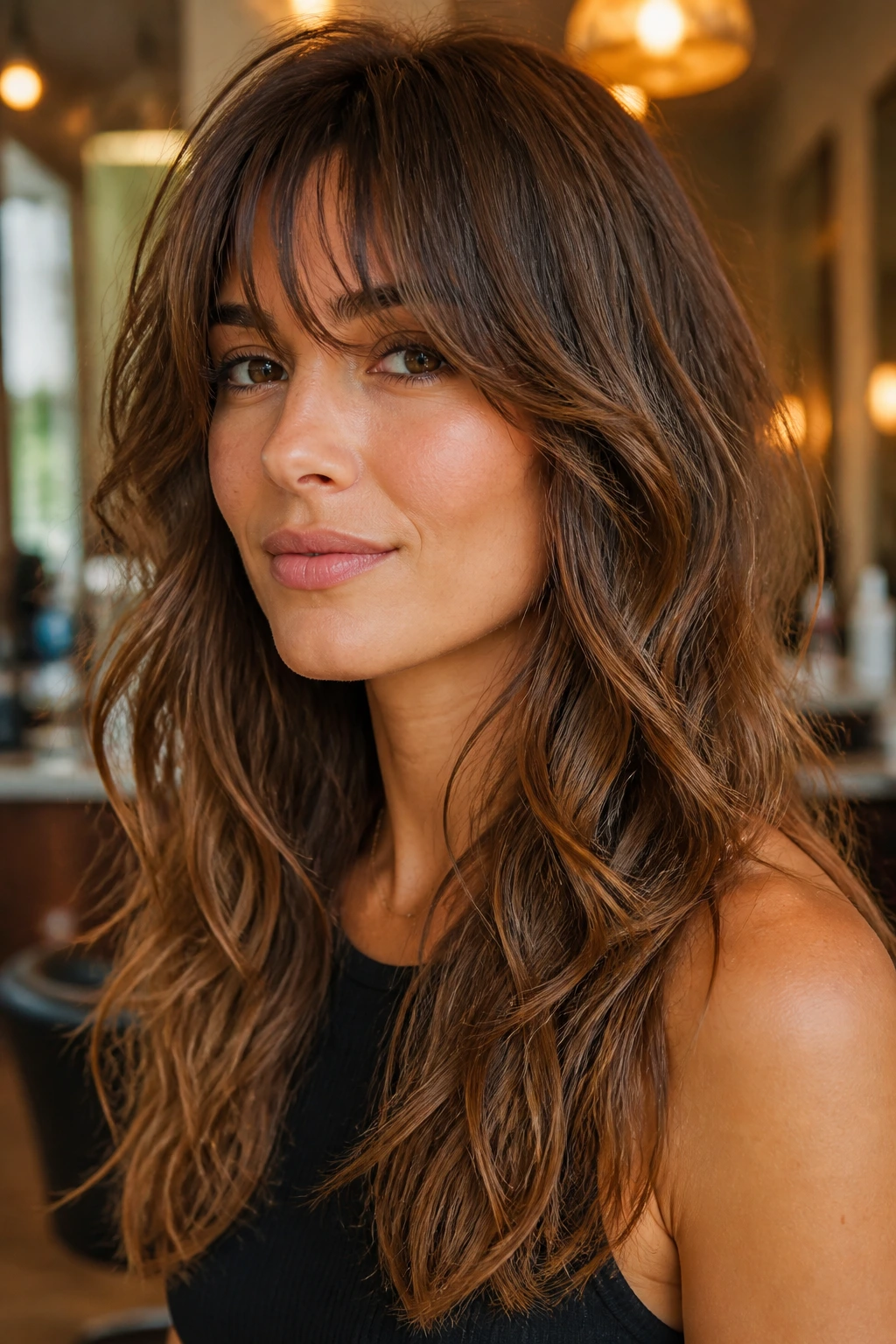
- Cutting the bangs too short on wavy hair: Waves spring up, so a fringe that looks fine wet can jump an inch shorter when dry. The fix is to leave more length than feels safe and refine it after the hair has dried.
- Thinning the ends too hard: If the lower half feels wispy and see-through, the haircut loses its base and starts to frizz. Ask for internal weight removal, not random shredding.
- Using heavy cream on the fringe: Bangs collect product fast, and one too-rich cream can make them stringy by lunch. Keep heavier products on the mids and ends, not the front.
- Starting the layers too high on fine hair: The crown gets airy in the bad way and the ends go sparse. Lower layers keep more body intact.
- Forcing a straight, polished blowout every day: Wavy shag haircuts look dead when they are flattened into submission. A bend, a slight flip, or a rough dry usually looks better.
- Ignoring the part line: A bang shape that only works from one side can become annoying fast. Make sure the cut can survive your real part, not just a salon pose.
Variations That Change the Mood
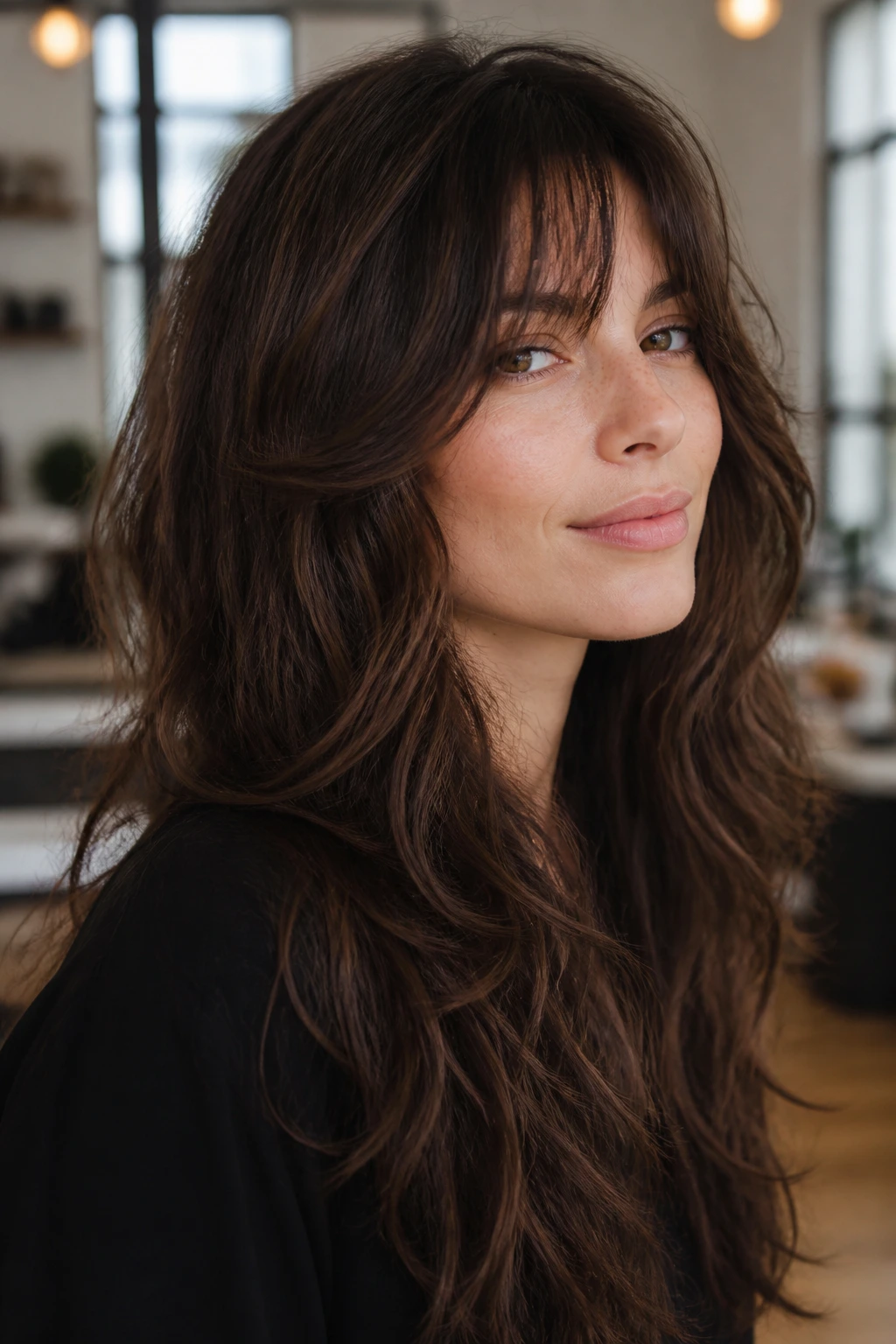
Soft Professional Version: Keep the layers long and the bangs just below the brow line, then style with a round brush for a calmer finish. This version fits easily under a blazer and still keeps some movement.
Rocker Version: Push the texture harder with choppier ends, a slightly deeper side part, and more separation through the fringe. It looks better with a matte finish than with shine.
Fine-Hair Lift Version: Concentrate layers at the crown and around the face, then keep the lower lengths cleaner so the ends don’t disappear. A mousse-and-diffuser routine helps the shape last.
Thick-Hair Control Version: Remove weight from the inside, leave the perimeter more intact, and keep the bangs piecey but not sparse. This keeps the cut from ballooning out.
Low-Heat Air-Dry Version: Ask for a fringe that can split on its own and layers that bend cleanly without a lot of styling. You’ll spend less time with hot tools and more time with a shape that still looks deliberate.
Questions People Ask Before Booking the Cut
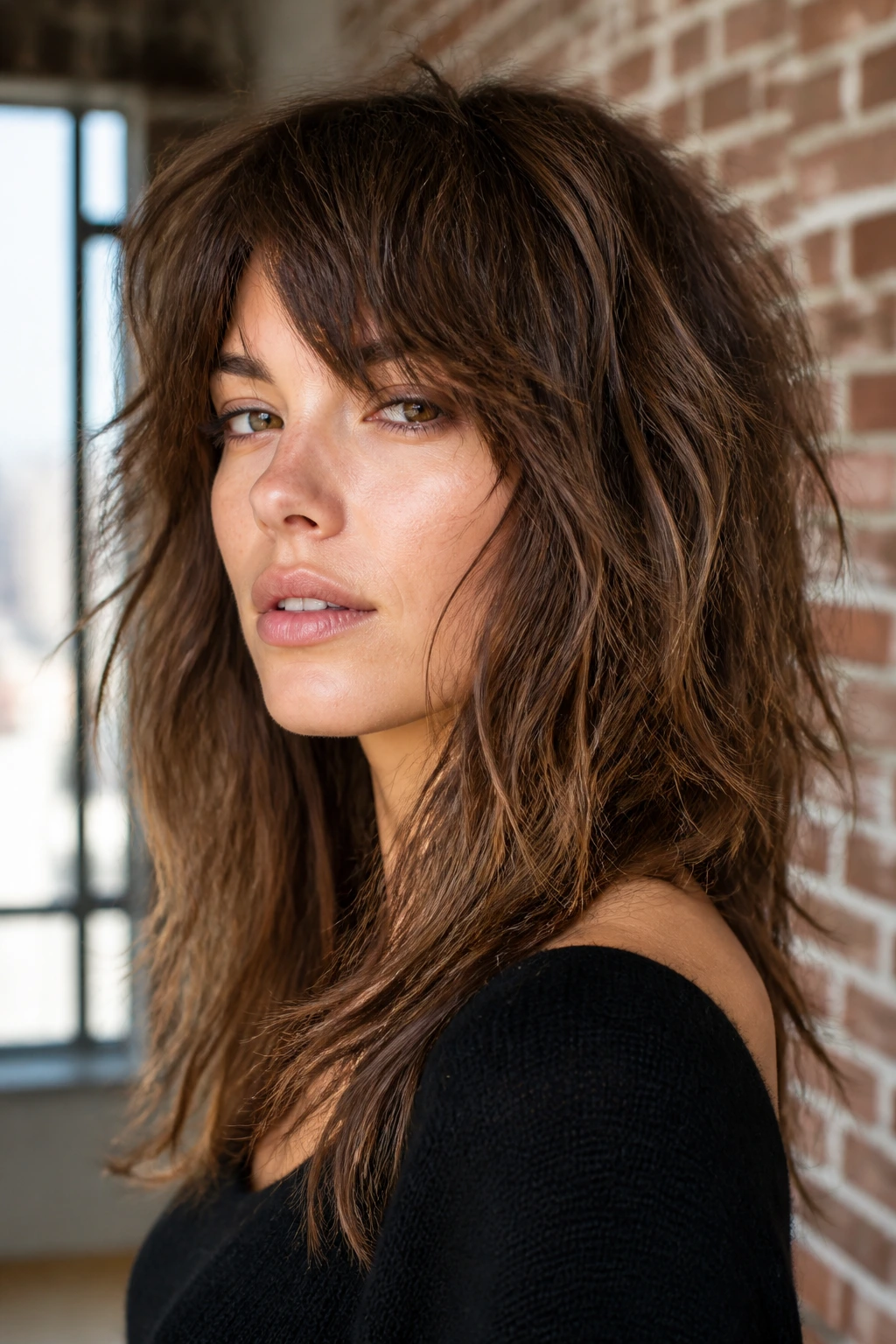
Will this work if my waves are frizzy?
Usually, yes — but the cut has to respect the frizz, not fight it. Longer layers and a softer fringe tend to behave better than heavily sliced ends on frizz-prone hair.
Which bang shape is easiest to grow out?
Curtain bangs and bottleneck bangs are the easiest to live with as they lengthen because they already blend into the side pieces. Heavy blunt fringe is more demanding during the grow-out stage.
Can I wear this cut with a side part?
Absolutely. A deep side part gives the crown lift and can make the bangs feel more dramatic. Just make sure the fringe still has enough length to fall naturally with the part.
Is this a good cut for fine hair?
Yes, if the layering stays controlled. Fine hair needs lift and movement, not a lot of internal shredding that leaves the ends looking sparse.
Is it too much for thick hair?
Not if the weight is removed in the right places. Thick hair often looks better with a shag because it stops the ends from behaving like one heavy sheet.
How often do bangs need trimming?
Most fringes need a touch-up every 3 to 5 weeks if you want them to stay in the right zone. If you like them a little longer and softer, you can stretch that a bit.
Can I air-dry the whole thing?
Yes, and some versions look better that way. The important part is getting the bangs to dry in the right direction so they don’t split into weird little hooks.
What if my waves only show at the ends?
Then ask for layers that bring some movement higher up without taking too much off the bottom. A shag can help wake up the mid-lengths, but only if the cut is placed with care.
A Cut That Keeps Moving
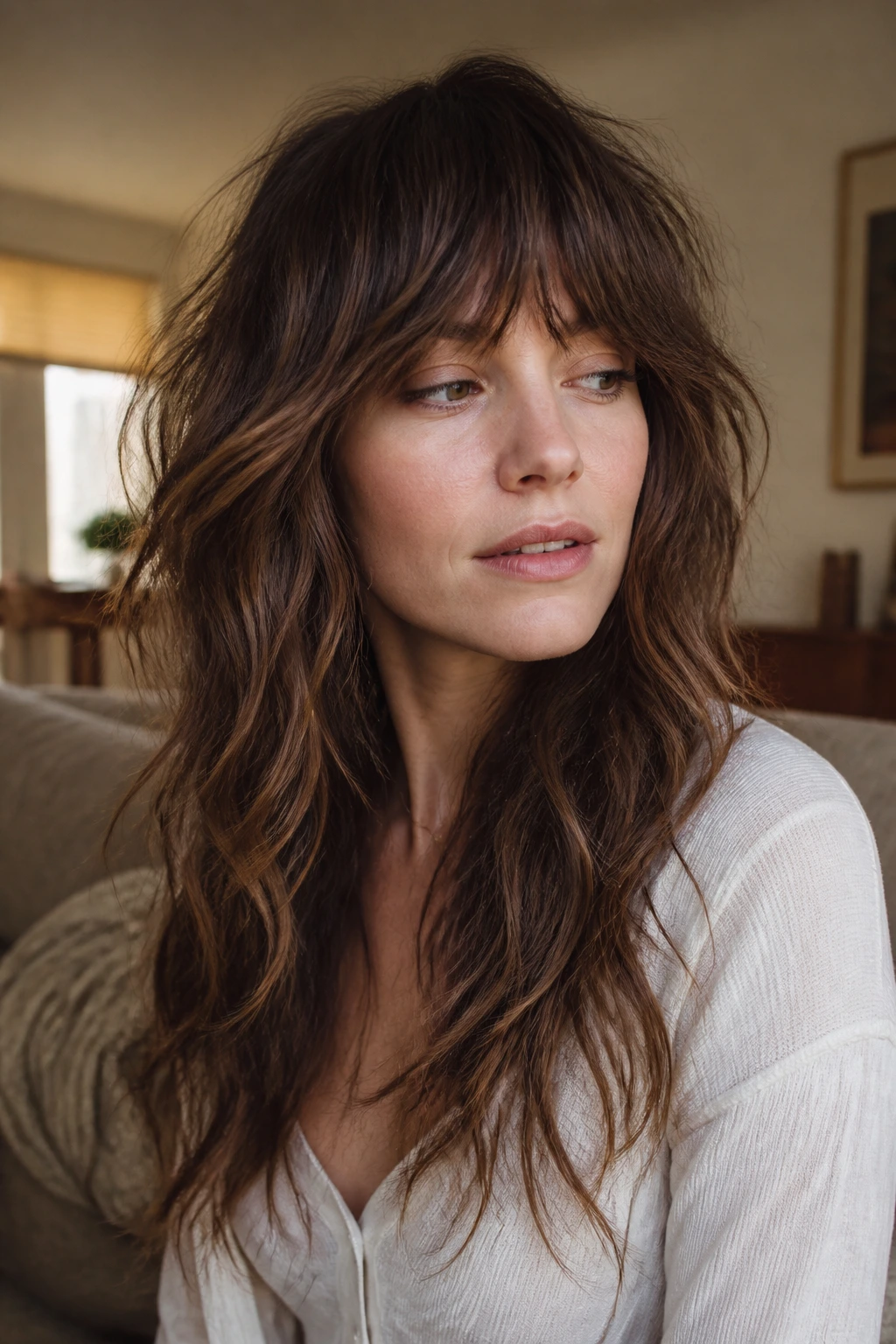
The best thing about a long wavy shag with bangs is that it does not punish you for having real hair. It lets waves bend where they want, lets fringe soften the face instead of sealing it off, and keeps long lengths from turning into one heavy block. That’s a useful haircut, not a decorative one.
If you’re bringing this to a stylist, show them where you want the shortest pieces to land and tell them how much work you actually plan to do each morning. That part matters more than the photo. A good shag should fit the way you live, then look even better after a little wear.
