



Thick hair is generous until it isn’t. Leave it too long in the wrong place and it swells into a helmet; cut it too short in the wrong place and it sticks up like a broom head after a bad night’s sleep. The best hairstyle ideas for men with thick hair do one simple thing well: they remove weight where the hair needs relief and keep density where the shape needs support.
That’s the part a lot of haircut photos leave out. A thick head of hair can hide a sloppy shape for three days, maybe four, then the crown starts splitting, the sides puff out, and the front loses the line you paid for. The good cuts below aren’t just “styles.” They’re shapes that still make sense when you sweat, sleep on them, or run your hand through them five times before coffee.
And thick hair is not one thing. Straight, wavy, curly, and coily hair all carry bulk differently. A dense straight crop needs different handling than a dense curly top, and a barber who treats them the same is usually the person causing the trouble. Get the shape right, and thick hair stops being a problem and starts doing the heavy lifting for you.
Why These Styles Work Better on Thick Hair
-
Bulk gets controlled, not hidden: These cuts use tapering, layering, and texture to take weight off the places that balloon first — the sides, the crown, and the front edge.
-
Shape lasts longer: Thick hair has enough body to hold a quiff, fringe, or side part even after a long day, so the style doesn’t collapse the second product wears off.
-
The haircut does more of the work: A good cut on thick hair needs less product than fine hair. That matters when you don’t want your hair to feel sticky by lunch.
-
They handle growth better: When thick hair grows out, it can turn blunt and boxy fast. These styles keep some movement in the cut, so the grow-out phase doesn’t look accidental.
-
They suit different routines: Some of these looks need ten seconds and a towel. Others need a blow-dryer and a brush. Either way, you can pick a cut that matches your patience, not just your face shape.
-
They play well with real hair texture: Straight hair gets direction, wavy hair gets control, curls get room, and coily hair gets shape without losing its natural spring.
How Thick Hair Changes the Shape of a Cut
A thick haircut is not just a shorter haircut. That’s where people get burned.
Density changes everything. If your hair is packed in tightly, the same inch of length weighs more, hangs differently, and resists direction more than fine hair does. A barber can leave the top looking neat in the chair, then the crown expands once the hair dries and the natural lift kicks in. That’s why the cut has to work from the inside out — weight removal, layering, and clean edges before styling ever enters the picture.
The best thick-hair cuts also respect growth patterns. Cowlicks at the front, a strong whorl at the crown, or a side that sticks out more than the other side all show up hard on dense hair. If the barber cuts against those patterns without a plan, you get a style that looks controlled for one afternoon and messy for the next three weeks.
There’s another thing people forget. Thick hair usually looks better when the silhouette is deliberate. A dense top with a clean taper reads as strong. The same density with no shape reads as helmet-like. That’s the difference between “full” and “too much.”
1. Textured Crop
A textured crop is one of the safest bets for thick hair, and I mean that in the best way. It doesn’t fight the density; it trims it down into something sharp, short, and easy to live with. The top stays choppy, the fringe sits a little forward, and the sides stay tight enough that the whole cut feels light instead of puffy.
Why It Works
Thick hair loves a crop because the style wants body. You’re not trying to create height from nothing. You’re just shaping what’s already there and making sure it lies in a controlled direction. Ask for about 1 to 2 inches on top with point cutting, not a blunt chop. That tiny bit of texture keeps the front from turning into a shelf.
A low fade or tight taper on the sides makes the top look cleaner without making the cut severe. That’s the sweet spot. Too much contrast and the crop can start looking disconnected; too little and the head keeps its bulk.
How to Style It
Use a pea-sized amount of matte clay on dry or nearly dry hair. Warm it in your palms, push it through the top, then pinch the ends at the fringe so the texture shows. Don’t smooth it flat. The whole point is that choppy, broken-up finish.
Best for men who want a cut that can survive a rushed morning. Also strong for square and oval faces, since the crop adds structure without dragging the face down.
2. Classic Side Part
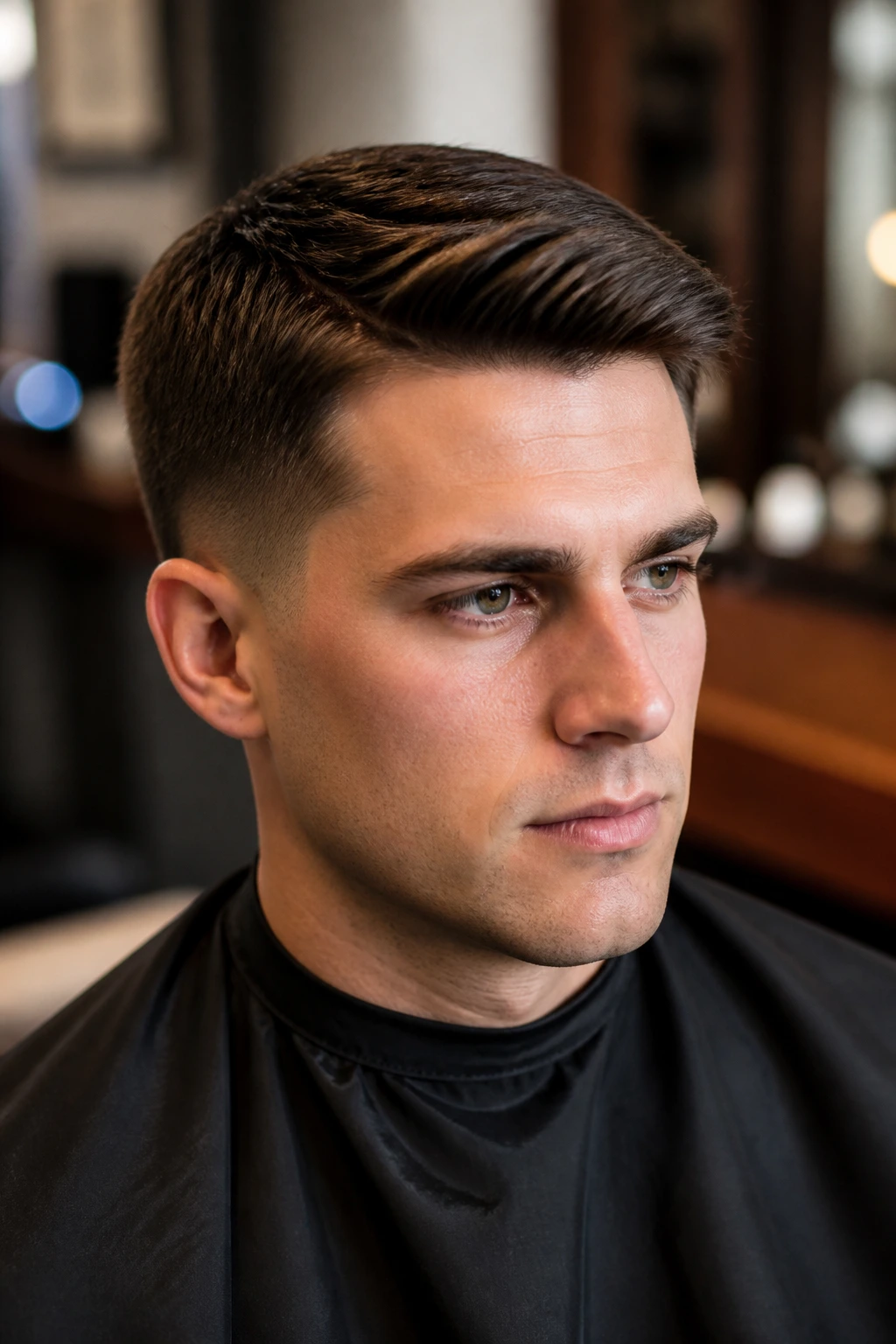
The classic side part is what thick hair should do when you want it to look clean, not fussy. It gives the hair a lane to follow, which matters because thick hair without a lane tends to spread. A crisp part, a controlled top, and tapered sides turn a lot of density into something sharp and easy to read.
What Makes It Different
On thick hair, the side part needs a little more internal weight removal than people expect. If the top is left too heavy, it will puff over the part and the shape gets lost by noon. Ask for roughly 2 to 3 inches on top with enough softness through the crown so the part can sit naturally instead of looking painted on.
A low or mid taper keeps the look classic rather than old-fashioned. I prefer a taper over a hard skin fade here because thick hair already gives you presence; you do not need the sides shouting too.
Styling Notes
Use a lightweight pomade if you want some shine, or a cream if you want a softer finish. Comb the part while the hair is still damp, then let it dry in place. If you want the side part to look especially neat, blow-dry the front down and to the side before combing it back into line.
It suits office settings, weddings, and any day you want your hair to look intentional without looking overworked.
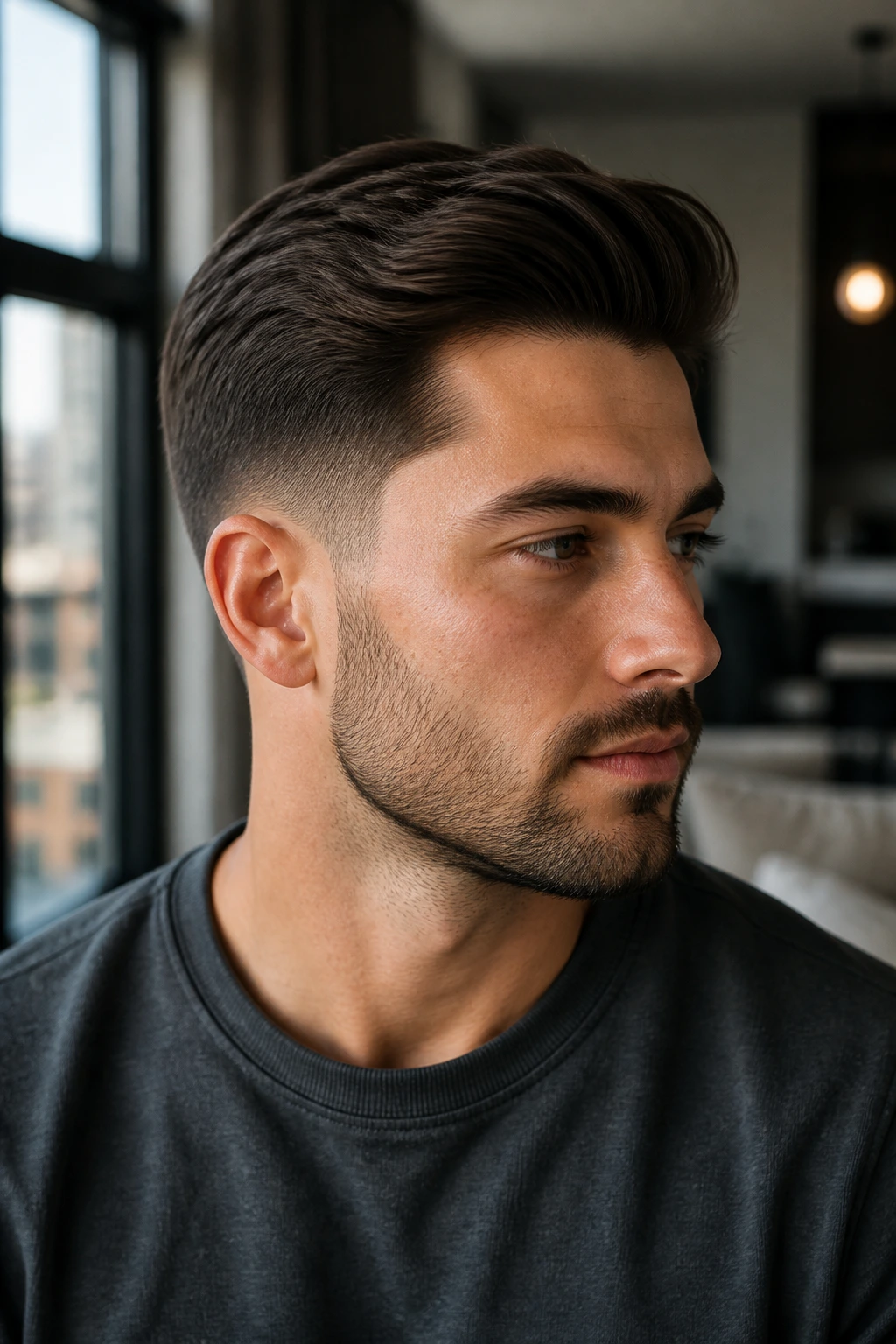
3. Low Taper Fade with a Swept Top
Need the easiest way to stop thick hair from ballooning over the ears? This is one of them.
A low taper fade keeps the edges tight at the neckline and around the temples, while the top stays long enough to sweep back or diagonally to the side. That combination works because the taper removes the visual bulk where thick hair usually gets widest, and the longer top gives you something to shape instead of just subduing.
Why It Works
Ask for 3 to 4 inches on top if your hair is straight or only slightly wavy. That length gives enough movement for a sweep without flipping awkwardly at the ends. The barber should also soften the area behind the parietal ridge, because thick hair there can stick out like it has a mind of its own.
I like this cut because it gives you room to choose your finish. Want polished? Use a comb and a little pomade. Want casual? Finger-comb it with matte cream and let the sweep fall a little looser.
Styling Cue
Blow-dry the top in the direction you want it to go. Do not skip that part if your hair is dense; product alone usually won’t pin it down. Once it’s dry, work in a small amount of cream or paste and keep the front soft.
This cut is a quiet winner for round and square faces because the sweep adds a bit of length without turning the head into a tower.
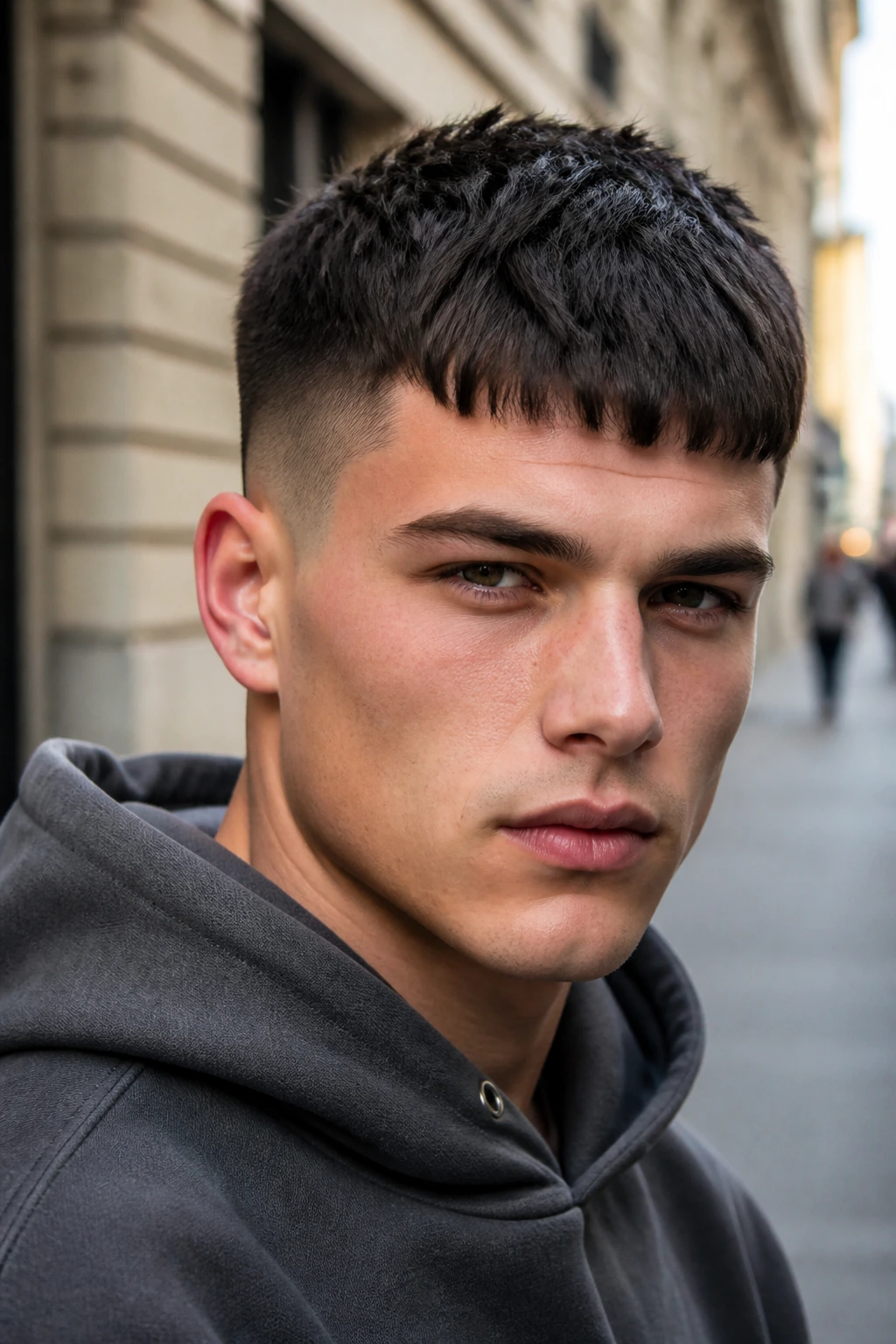
4. French Crop
If your hair stands up the moment you skip a day, the French crop is worth a serious look. It keeps the length short, gives the fringe a blunt edge, and uses texture to break up the density so the style looks deliberate instead of bulky. It’s the kind of cut that says, “I’m not spending twenty minutes negotiating with my hair.”
The Shape That Matters
The fringe should sit forward, not heavy. That’s the difference between a French crop and a bowl-shaped mistake. Ask for the top to be textured with scissors and the front to be slightly shorter than the rest of the top, so the fringe falls with some weight but doesn’t swallow your face.
The sides can be faded, tapered, or kept short with a scissor-over-comb finish. I lean toward a taper if you want the cut to grow out gracefully. Thick hair grows fast enough already; you do not need a harsh grow-out line every two weeks.
Styling It Fast
Rub a tiny amount of matte paste through damp hair, then push the fringe forward with your fingers. That’s usually enough. If your hair is extra coarse, hit the front with a quick blast from the dryer while pushing it forward so the fringe settles where you want it.
The French crop works especially well for men who want short hair with some edge. It’s tidy, but not stiff. There’s a difference.
5. Ivy League Cut
The Ivy League sits between a crew cut and a side part, and thick hair makes that middle ground look better than you’d expect. The top is long enough to part and sweep, but short enough that the style never gets floppy. That’s a useful combination when you want clean lines without the rigidity of a formal part.
Why It’s a Strong Choice
Think of it as a smarter crew cut. The extra length on top gives thick hair room to show shape, while the sides stay neat enough that the silhouette doesn’t turn boxy. Ask for the top to be scissor-cut with a little internal texture, not just clipped to one flat length. The barber can taper the sides gently and keep the transition soft.
This style suits men who want a haircut that works in a suit and still looks fine with a T-shirt. It’s also one of the better options if your hairline is getting a little mature, because the shorter length and side sweep can soften that transition.
How I’d Wear It
A dab of cream or light pomade is enough. Comb a side part if you want polish, or push the front slightly up and over if you want it looser. Thick hair has a nice advantage here: the cut holds its shape even when it’s not glued in place.
If you like haircuts that look expensive without trying too hard, this is one of the best places to start.
6. Quiff
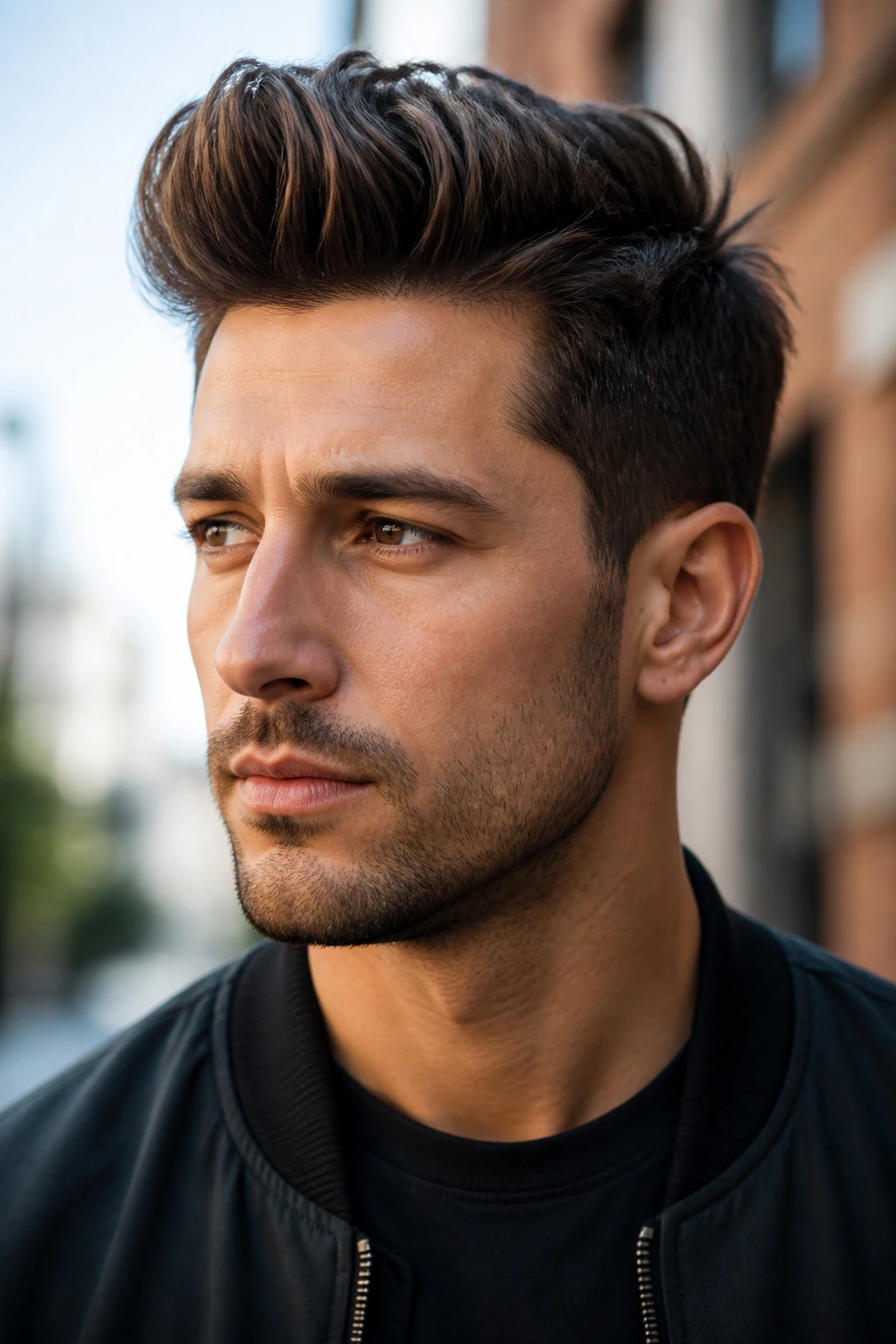
A quiff can look fake on thin hair. On thick hair, it often looks natural.
That’s because the front already has enough body to lift. You’re not building a shape out of scraps; you’re directing a lot of strong hair upward and back so it lands with purpose. The quiff works especially well when the front is dense and the sides are trimmed down enough to leave the top as the star.
What to Ask For
You want length in the front — usually around 3 to 4 inches — with gradual shortening toward the crown. That taper in length is what helps the hair stand up instead of collapsing into one heavy block. If the top is cut all one length, the quiff gets clumsy fast.
A low or mid fade can sharpen the look, but I prefer leaving a little softness around the temples if your hair is very dense. Otherwise the top starts looking like it’s floating over a shaved base.
Styling Without Overdoing It
Use a heat protectant or pre-styler on damp hair, then blow-dry the front up and slightly back with a vent brush or your fingers. Once the hair is dry, lock the shape in with matte paste. Not a lot. Thick hair usually needs less than people think.
The quiff is one of the best styles for adding height without going into pompadour territory. It’s a little looser, a little less formal, and easier to wear daily.
7. Pompadour
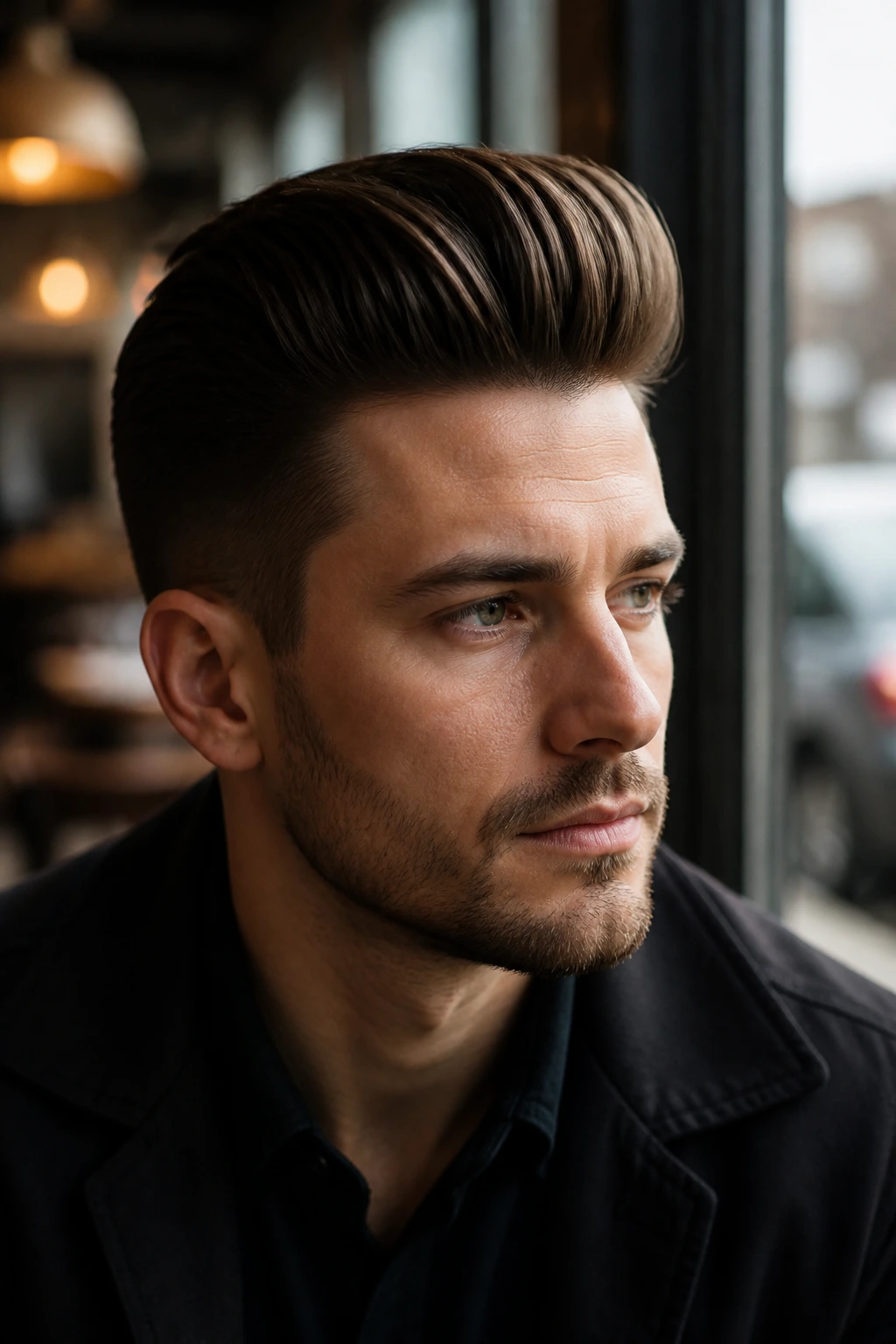
The pompadour is the quiff’s more polished cousin. It asks for more length, more lift, and a little more patience, but thick hair gives it a real advantage because the front has enough density to support the shape. Thin hair often needs a small miracle to hold a pompadour. Thick hair just needs direction.
The Barber’s Job Here
The top needs gradual length, with the front left the longest part. The sides should be tapered tight enough that they don’t compete with the volume on top. If the barber leaves too much weight at the temples, the pompadour ends up looking like a wide blob instead of a clean crest.
I’d call this a medium-maintenance cut. It looks best when the silhouette is tidy and the top has a smooth arc. It is not the style for guys who want to roll out of bed and be done by breakfast.
Daily Styling
Blow-dry the front up and back using a round brush if you want a more sculpted finish, or your fingers if you want it looser. Finish with a medium-hold pomade for shine, or a matte product if you want the shape without the gloss. If your hair is coarse, a touch of cream underneath can stop it from feeling dry.
The pompadour looks especially good on men who want a little height to balance a strong jaw or a broader face. It’s deliberate. That’s why it works.
8. Slick Back with a Taper
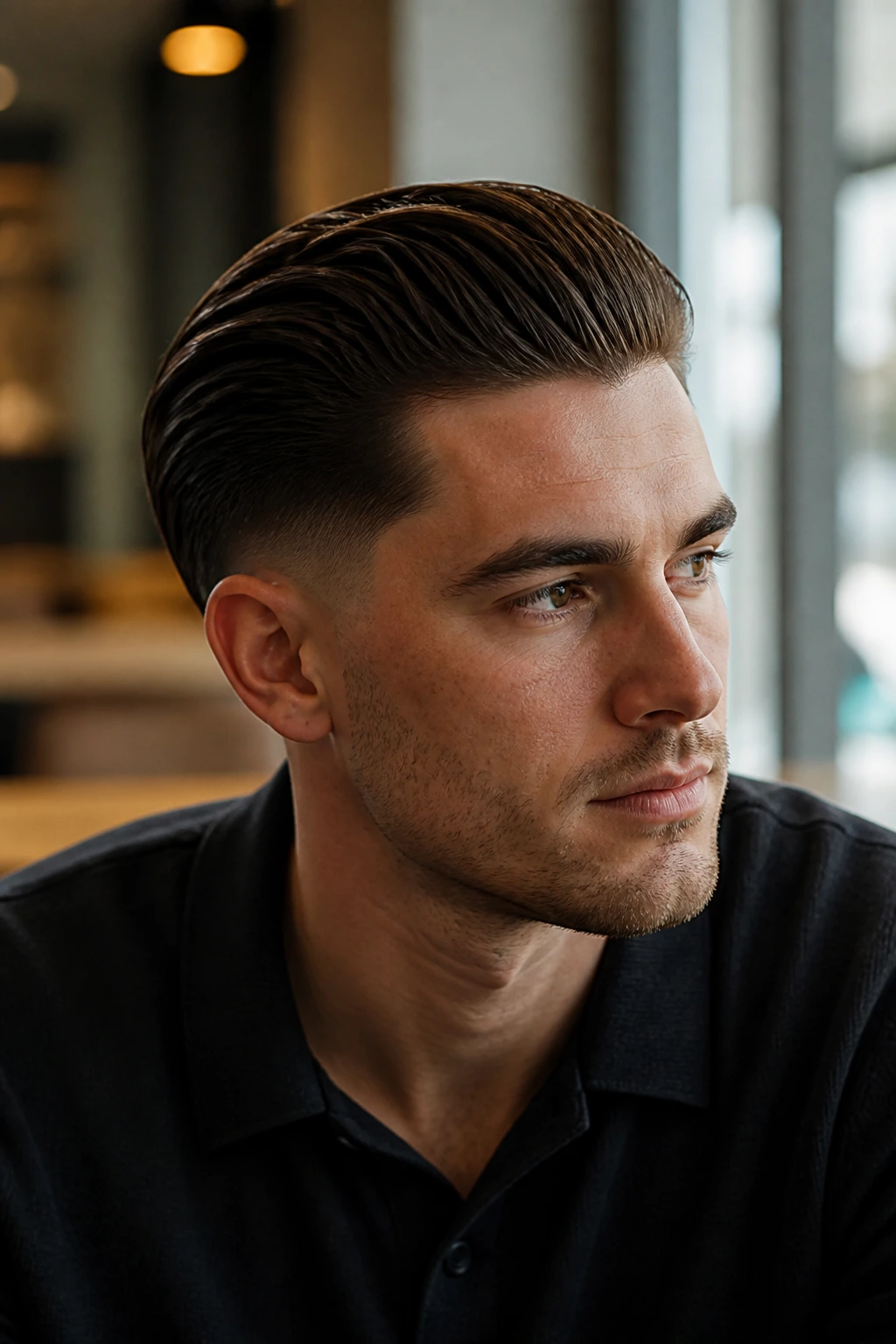
The slick back goes wrong when the hair is too dense at the sides or too heavy on top. A taper fixes both. Instead of creating one hard wall of hair, the taper keeps the edges neat and the top smooth enough to comb back without fighting the natural bulk.
Why Thick Hair Likes It
Thick, straight, or slightly wavy hair can hold a slick back better than fine hair can. There’s enough texture to keep the style from falling flat, which is half the battle. Ask for 3 to 5 inches on top depending on how full you want the finish, and keep the taper soft around the neckline and ears so the cut doesn’t turn severe.
If you want a sharper version, a medium fade can work, but I think a taper looks more grown-up. Less nightclub, more clean coffee shop owner who never seems rushed.
Styling It Well
Start with damp hair, not soaking wet hair. Work in a light pomade or cream, then comb back in sections so the product spreads evenly. Thick hair can clump if you throw too much product at it all at once, and once that happens you’re basically wrestling grease.
This style is best for men who want a controlled look and don’t mind a bit of grooming each morning. It pairs well with straight hair, but wavy hair can wear it too if you keep the hold flexible.
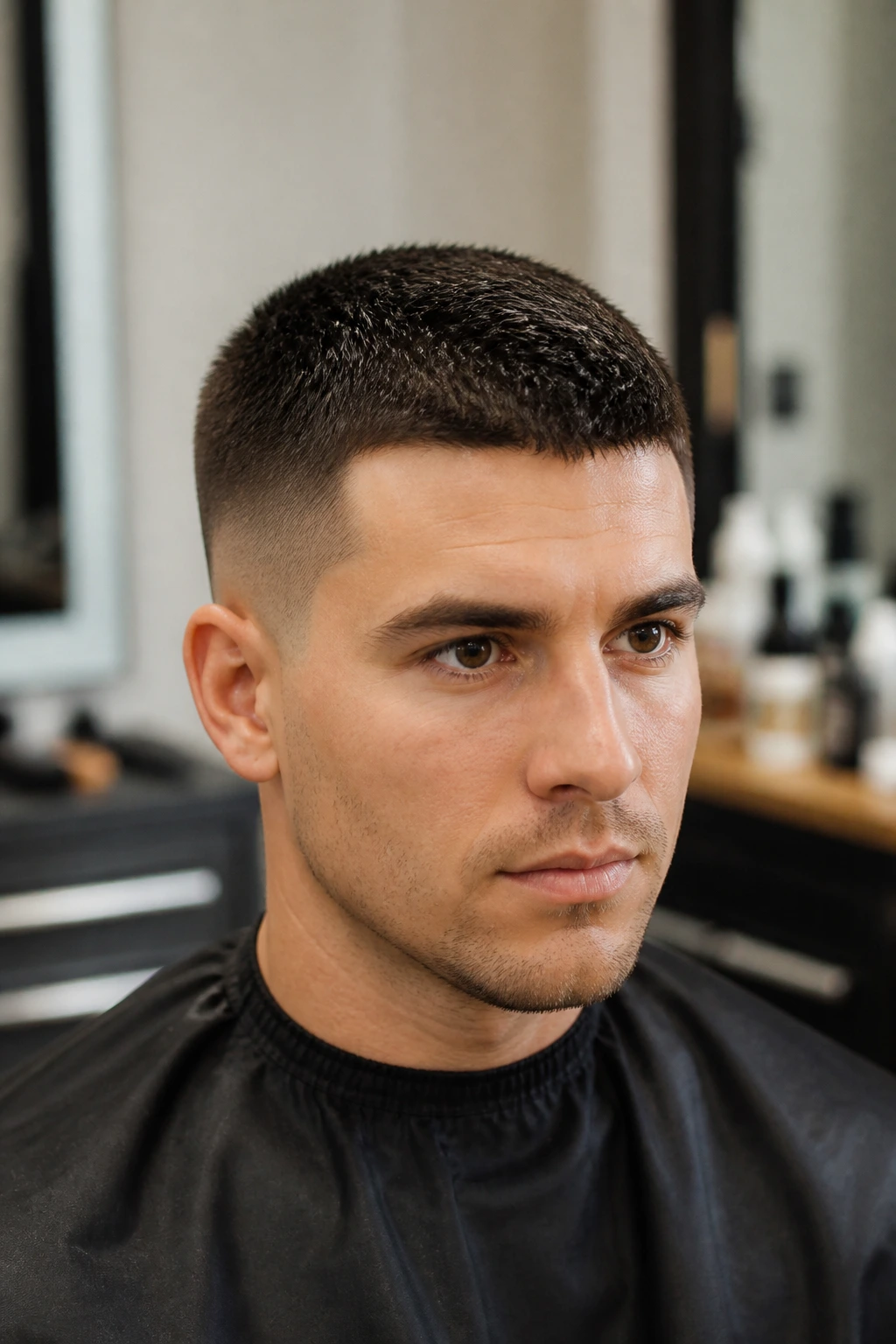
9. Crew Cut
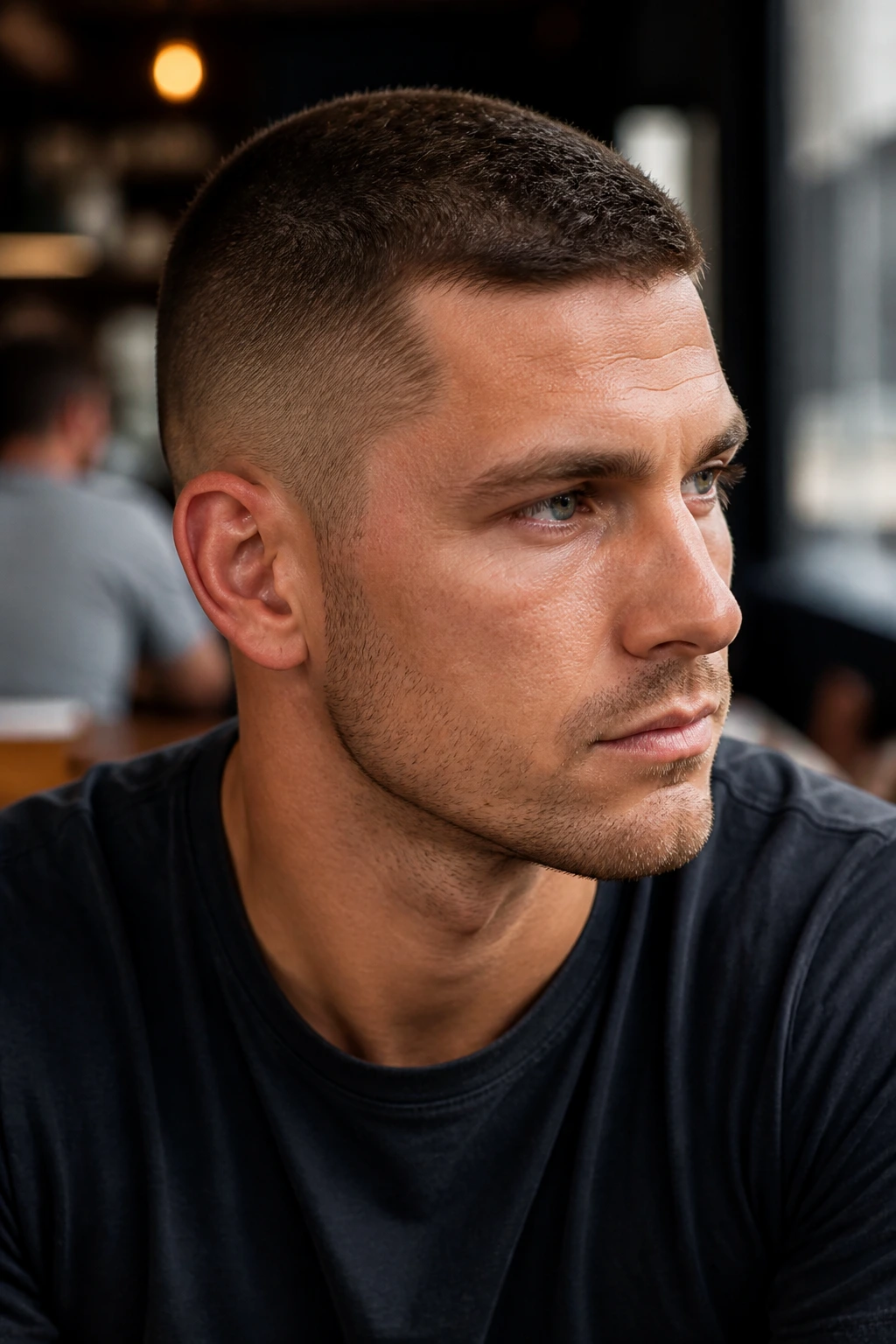
The crew cut is what happens when thick hair decides to behave. Short sides, a slightly longer top, almost no styling drama. It’s not glamorous. That’s part of its charm.
Why It Works on Dense Hair
Thick hair can make a crew cut look too round if the top is left too full. The fix is simple: keep the top short enough that it lies close to the head, but not so short that it sticks straight up. Roughly 1 to 1½ inches on top is the zone where this cut usually makes sense for dense hair.
A taper on the sides keeps the shape from looking like a helmet. If you go too blunt, the haircut can become boxy in a hurry, especially when the hair grows out.
Best Part
You can wear this cut with almost no product. A little cream if the hair has a stubborn bend. Nothing if it doesn’t. That’s not laziness. That’s efficiency.
The crew cut is ideal for men who want a low-maintenance haircut that still looks intentional when they leave the house. It’s also one of the best answers if your thick hair gets hot and heavy in warmer weather, since there’s less mass to trap heat.
10. Curtains
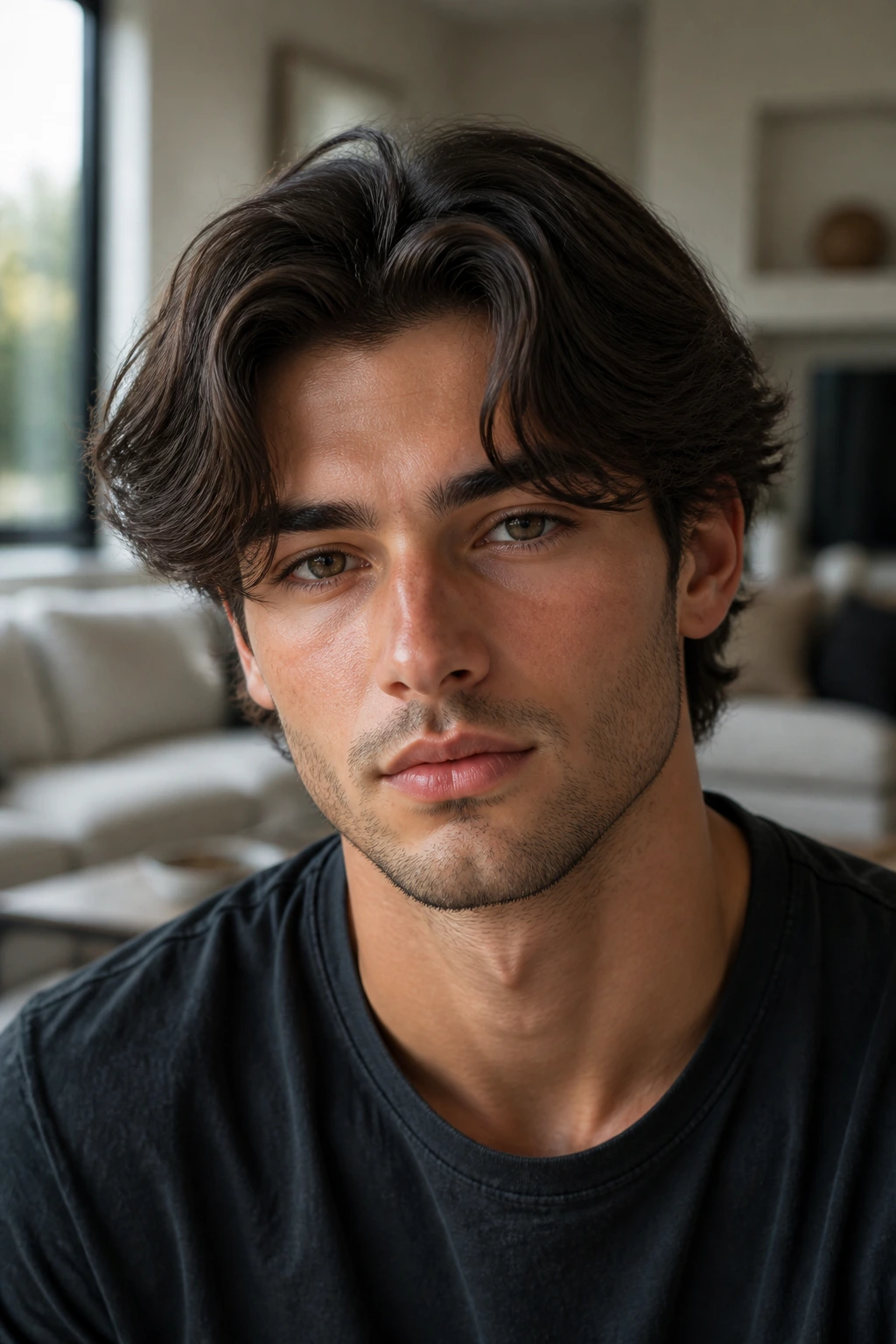
Can thick hair do the middle part without looking floppy? Yes, if the cut is shaped properly.
Curtains need enough length to fall away from the face, but not so much weight that the front collapses into a curtain in the wrong sense of the word. For thick hair, that usually means layers through the top and a careful clean-up around the temples so the hair can split and fall instead of sitting as one heavy block.
What Makes It Work
You need at least a few inches on top — usually 4 to 6, depending on how dense and wavy your hair is. The barber should remove bulk through the crown and keep the front soft so the part can sit naturally. If your hair is straight, you’ll want a bit more shape through the sides. If it’s wavy, a touch less trimming can preserve the movement.
Styling Notes
Use a light cream or sea salt spray, then blow-dry the hair away from the face with your fingers or a round brush. The middle part should feel casual, not pinned down. Thick hair has enough body to keep the curtains from going limp, which is exactly why this style works better on dense hair than on fine hair.
Curtains suit guys who want a younger, looser silhouette without going full long-hair mode. They’re a strong choice if your face is narrower and you want a little width around the cheek line.
11. Bro Flow
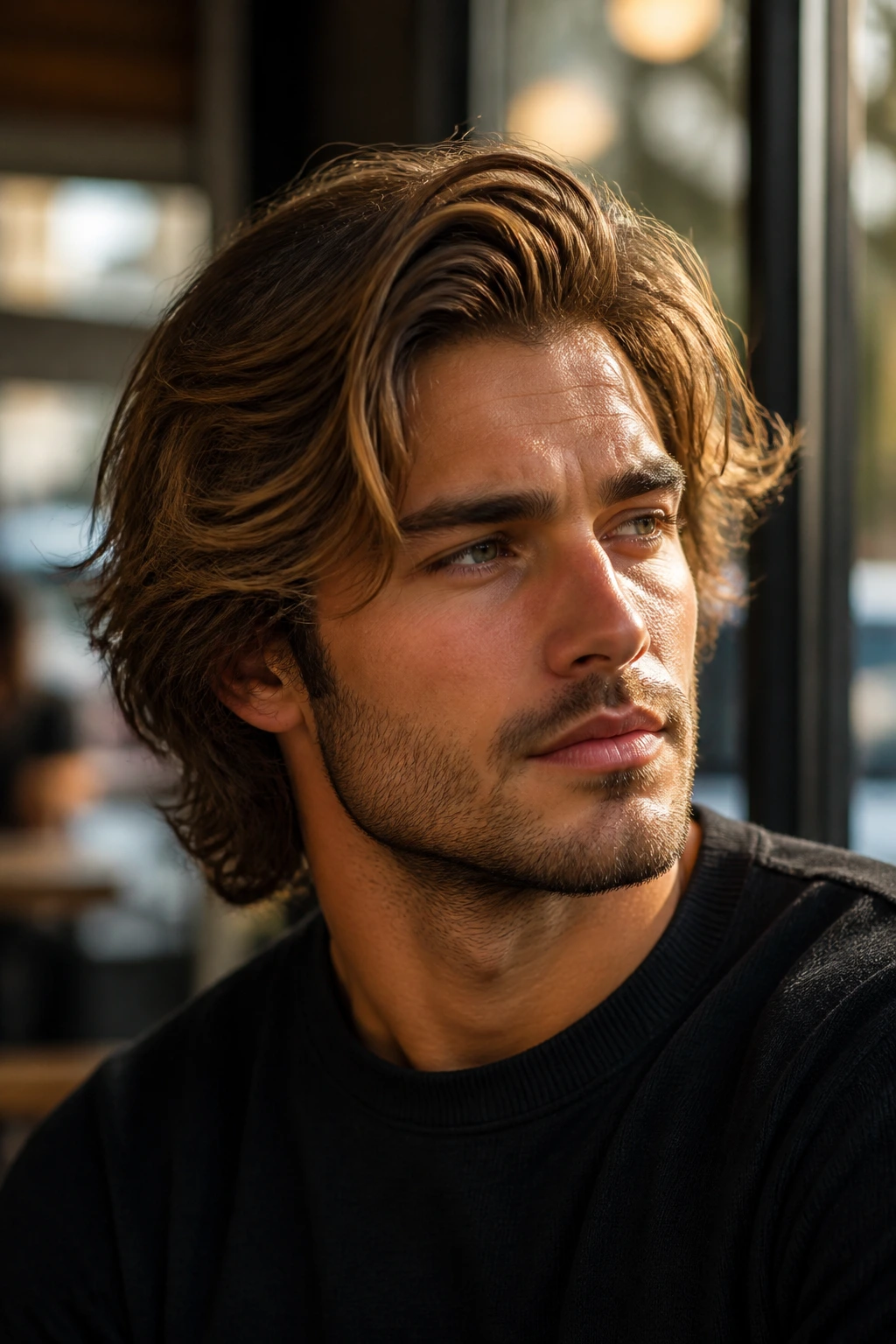
The bro flow is one of those cuts that looks simple until you try to grow it out without layers. Then it turns into a triangle, and nobody needs that. Thick hair can wear a bro flow well, but only if the ends are shaped and the weight is kept under control from the crown through the sides.
The Difference Is in the Layering
Ask for medium layers, not a blunt perimeter. The hair should move, not hang like a curtain rod. A good bro flow leaves length around the ears and neckline while shaving off enough interior bulk that the hair falls back and slightly out instead of puffing sideways.
That’s the whole game. Movement over bulk.
How It Lives Day to Day
Use a light conditioner and a small amount of leave-in cream if your hair gets coarse or frizzy. Thick hair tends to drink less styling product than people assume, but it does like moisture. If you rough-dry it with a towel like you’re cleaning a countertop, the cut can expand in ugly ways.
I like this style for guys who want length but not a polished finish. It’s easy, but not careless. There’s a difference there too, and the haircut knows it.
12. Brush-Up
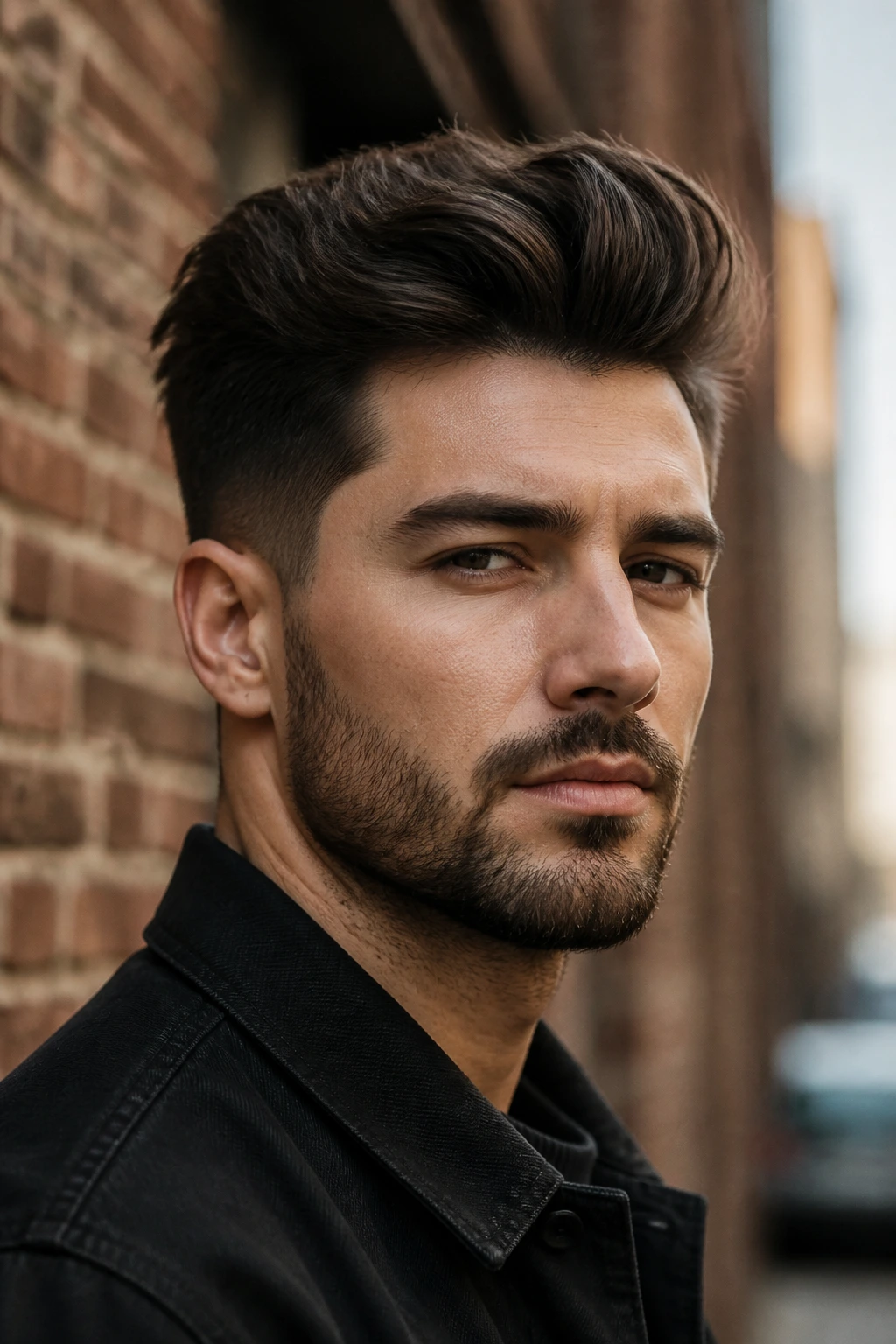
The brush-up is what you choose when you want height without the slickness of a pompadour. Thick hair makes it easier because the front has enough body to stand on its own, especially if the top is textured properly. The result is clean, a little sporty, and not precious.
Why It’s a Smart Use of Thick Hair
This style depends on lift through the front and a slightly shorter crown so the shape doesn’t collapse backward. Ask for choppy texture on top and tighter sides, usually with a taper or low fade. If the top is left too blunt, the brush-up can look like a block pushed upward.
A lot of guys think they need more product for this. Usually they need better drying. Blow-dry the front up and slightly forward first, then push it back into shape. That creates a base the product can hold.
Product and Finish
Use texture powder or a matte paste if you want the lift to stay touchable. Heavy wax works against this style. It weighs the front down and makes the whole thing look greasy by the time you sit in traffic.
The brush-up works well if you want something between casual and sharp. It’s not as formal as a pompadour, and not as plain as a crew cut. That middle lane is where a lot of thick hair looks best.
13. Curly Top with a Mid Fade
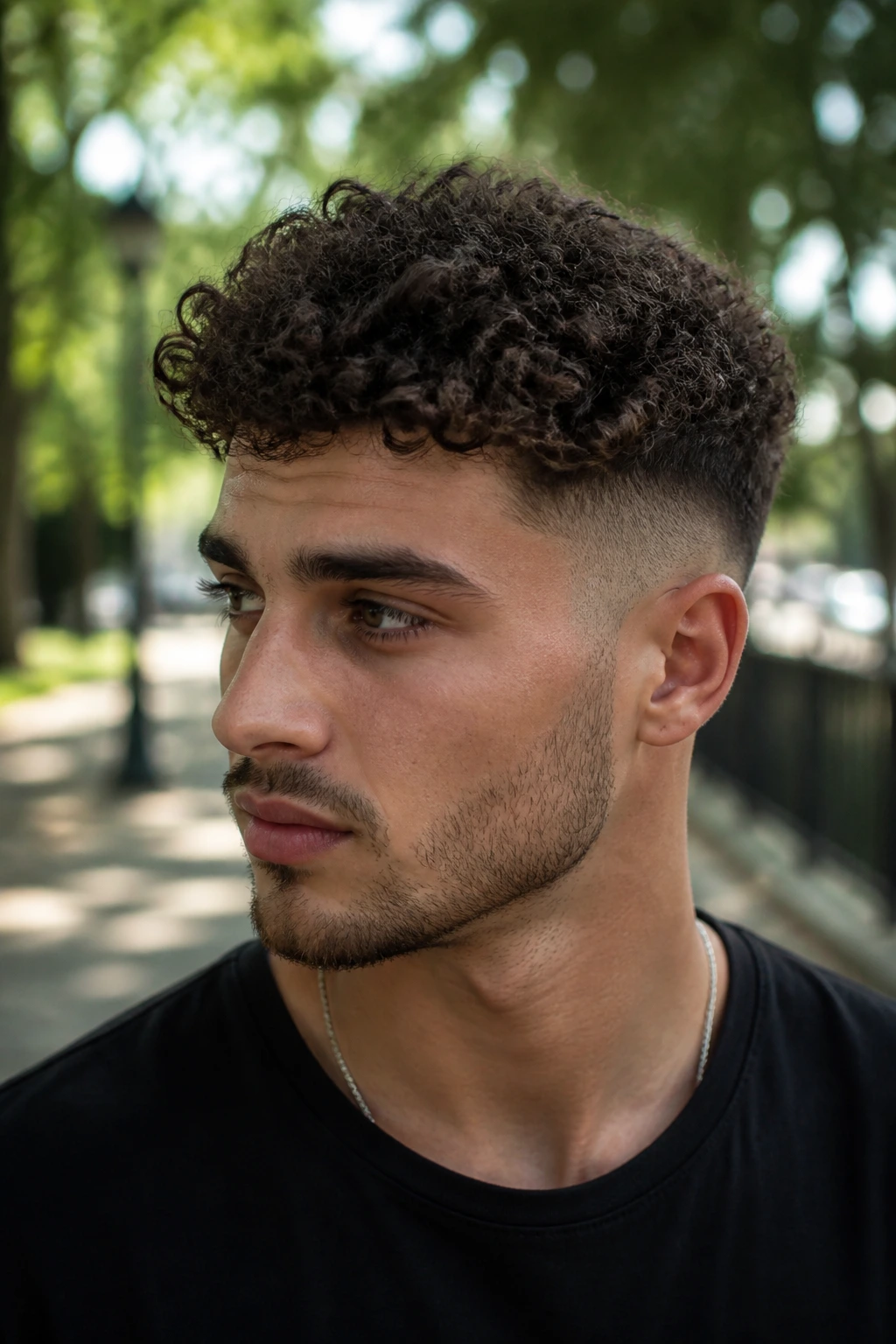
Thick curly hair should be shaped, not flattened. That’s the mistake. A curly top with a mid fade gives the curls room to live on top while removing the bulk from the sides, which is usually where the silhouette starts to go wild first.
Keep the Curls Where They Matter
Ask for enough length on top to let the curl pattern form — usually 2 to 5 inches depending on how tight your curls are. The fade should start around the middle of the sides so the top keeps presence without turning into a mushroom. If your hair is coily or very tight, a shaped top with clean edges can do the same job with less length.
I’d avoid over-thinning the top here. That can leave curls frizzy and patchy. Thick curls need structure, not hollowing out.
Styling It Right
Use curl cream on damp hair, then let it air dry or diffuse on low heat. Pulling a brush through it too aggressively can break the curl and create a puffy halo. If you want more definition, scrunch a small amount of gel over the cream while the hair is still wet.
This is one of the best choices for men who want to keep texture visible instead of fighting it. The fade sharpens the profile, and the curls give the haircut personality without needing much extra help.
14. High and Tight
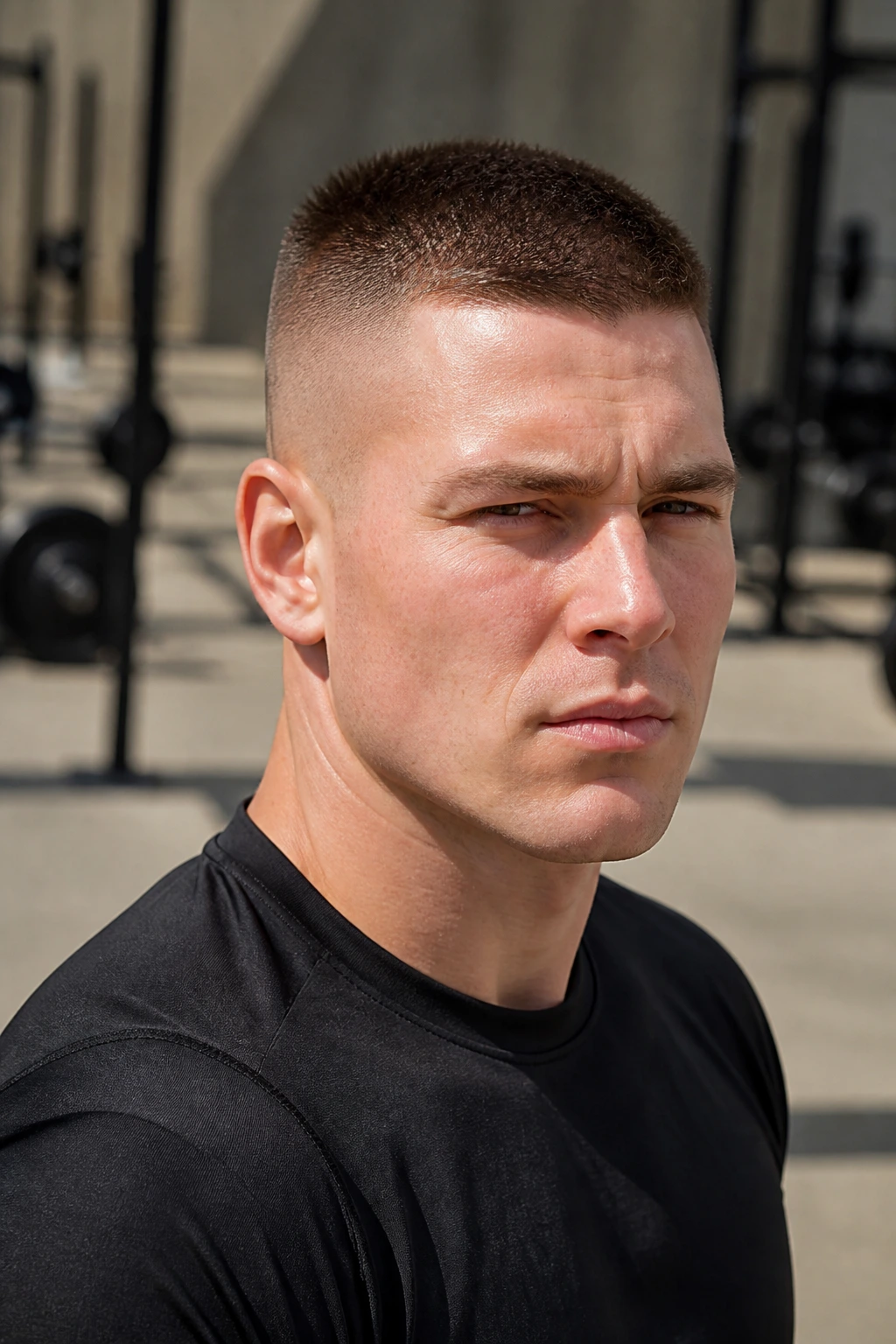
The high and tight is the most honest haircut on this list. It does not pretend to be soft. It does not pretend to be effortless. It gives thick hair a hard shape, strips away bulk at the sides, and leaves just enough on top to keep the head from looking shaved flat.
Why It Works So Well
Dense hair can make this cut look crisp fast, especially if the hairline is clean and the fade is tight. The top should stay short, but not so short that it stands up in random directions. If you go too close to the scalp on top, thick hair often turns bristly in a way that looks more accidental than deliberate.
A high and tight is useful for men who want minimal styling, strong edges, and a cut that survives sweat, helmets, and long days. It’s blunt. That’s the point.
Best Use Case
I like this cut for coarse hair and for guys who want to get out of the chair and stop thinking about it. A touch of matte cream can soften the top if needed, but most days you can leave it alone.
If you want a neat cut with zero fuss, this one belongs near the top of the list.
15. Disconnected Undercut
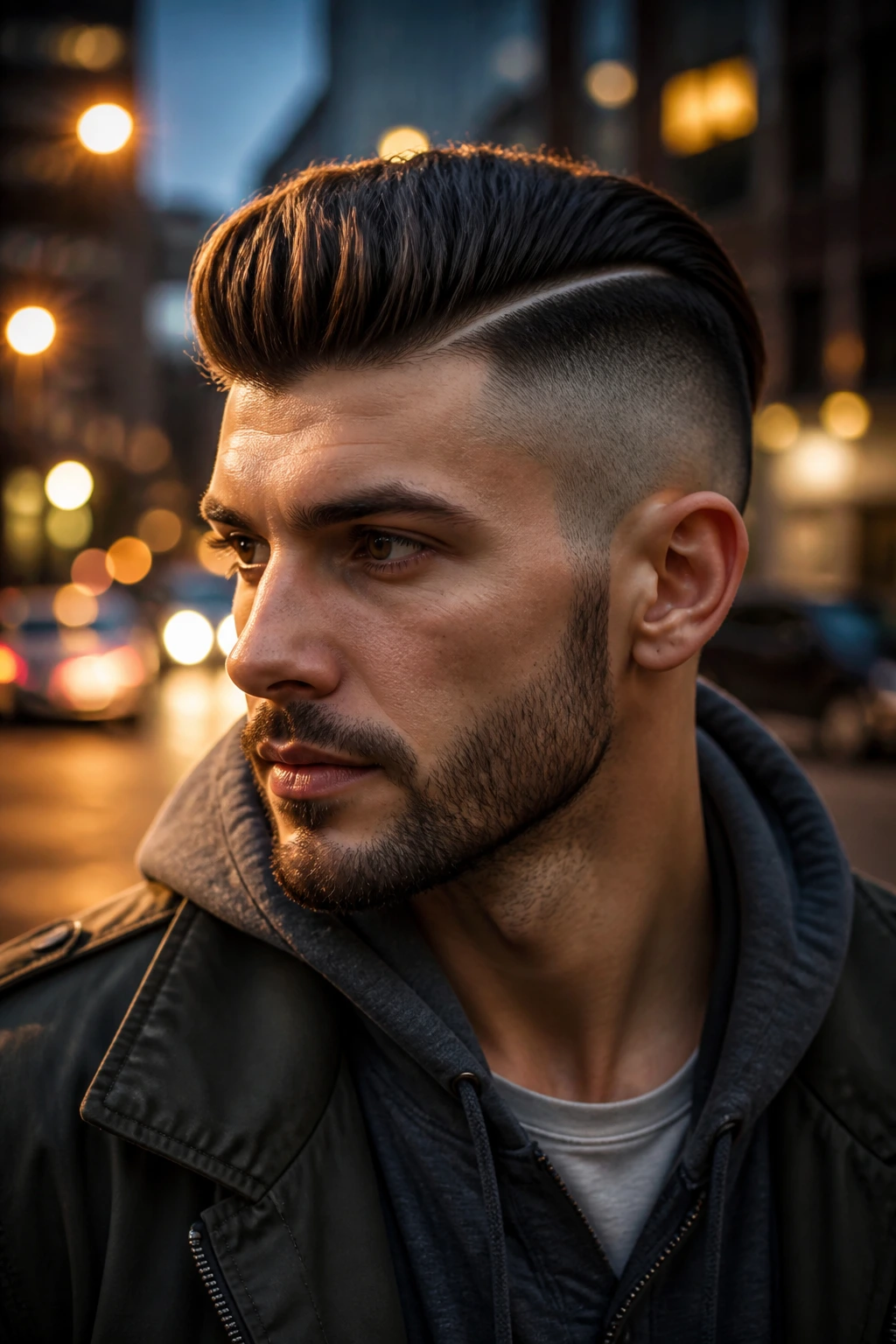
The disconnected undercut is a bold shape, and thick hair gives it the mass it needs to look intentional. Long top, short sides, clear separation. That contrast is the whole story.
Why Thick Hair Makes It Better
With fine hair, an undercut can look a little thin on top unless you style it carefully. Thick hair doesn’t have that problem. It gives you enough density to create a strong silhouette, whether you’re wearing the top slicked back, swept over, or pushed upward.
The catch is simple: the top must be controlled. If the length is left too long and heavy, the cut turns into a shelf. If the sides grow out too much, the contrast disappears and the whole point of the style vanishes.
What to Expect
This is not a low-maintenance cut. It needs regular shape-ups on the sides, and the top needs direction every morning. Use matte clay for a rough finish or pomade if you want it sleeker. Thick hair can handle both, which is part of why this style stays popular.
I prefer this cut on men who actually like their hair to look styled. If you want clean edges and a clear break between top and sides, it delivers that every time.
16. Modern Mullet
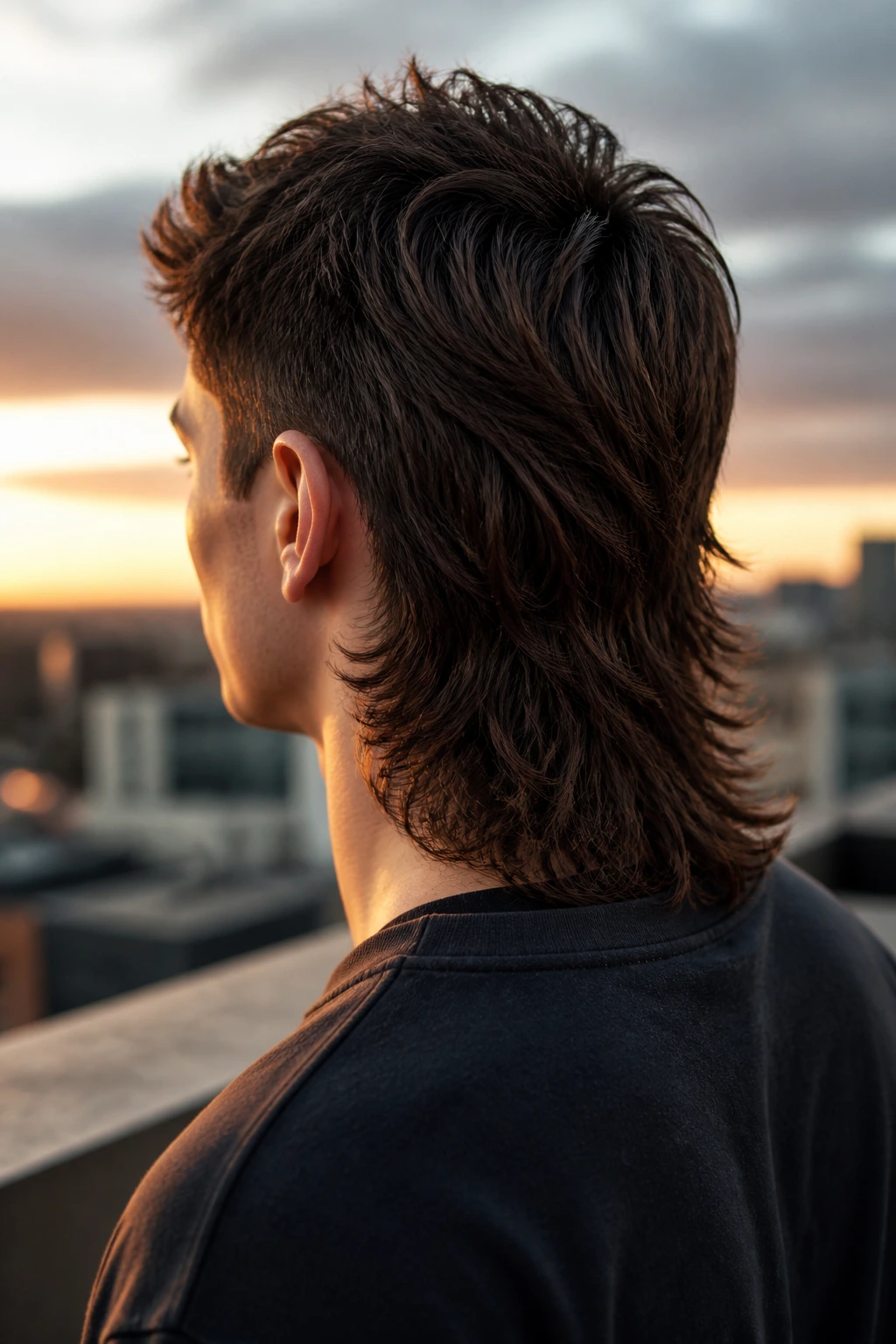
Still think the mullet is a joke? Cut it well and thick hair makes it look deliberate instead of ironic.
The modern mullet is shorter in front and on the sides, longer in back, and shaped with enough layering that it flows rather than drags. Thick hair is useful here because it gives the style body through the back without making the whole cut collapse.
The Important Part
This is not a throwaway grow-out. The back should be planned, trimmed, and blended so it moves with the rest of the cut. Ask for texture through the top and crown, plus enough length in the back to show the shape without turning into a rat tail situation. Nobody needs that.
A mid taper or faded sides help keep the contrast neat. If you leave the sides too bulky, the back loses its purpose and the cut just looks unbalanced.
Who It Fits
Men with wavy or thick straight hair usually get the cleanest version. A little cream or texture spray is enough to keep it loose. If your hair is extremely dense, you may need a barber who’s comfortable removing weight in stages so the back doesn’t flare.
This style has attitude. If you want something more conservative, skip it. If you want motion and edge, thick hair can carry it well.
17. Caesar Cut
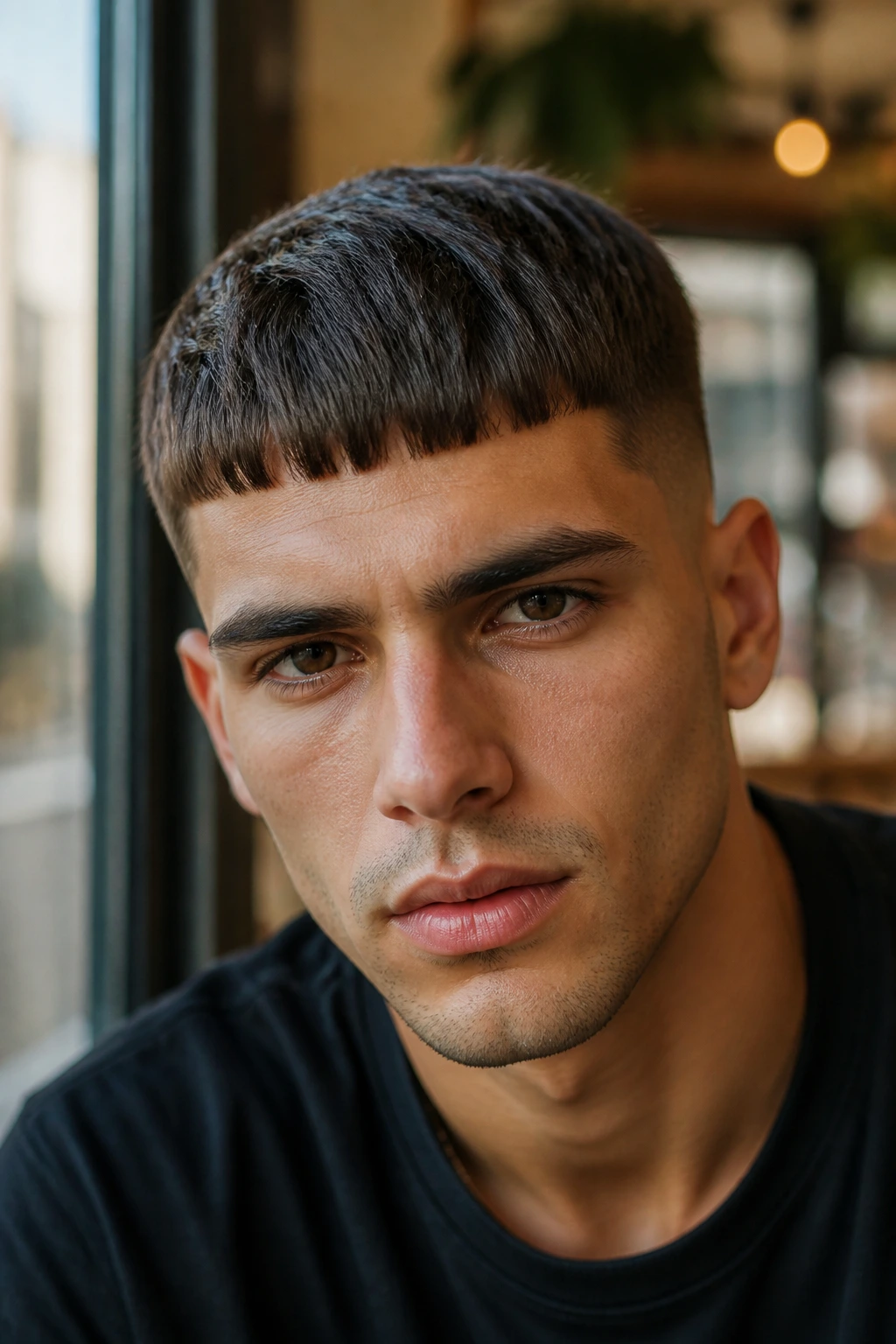
The Caesar cut is short, blunt, and a little old-school in the best way. Thick hair makes the fringe line look strong instead of wispy, which is exactly why this cut still works. There’s no need to fake volume when the hair already has it.
What Makes It Useful
The top stays short and uniform, with the fringe combed forward. A clean, straight fringe edge gives the face a harder line, and the sides stay tight so the shape doesn’t swell outward. Ask for subtle texture on top if you want the cut to feel less rigid.
I like this cut for men who want the forehead softened a bit or who prefer a close, compact style. It’s also one of the better options if you have thick hair that tends to kick up at the front, because the forward direction keeps that energy in one place.
Styling It
Usually, a touch of cream or even nothing is enough. Thick hair carries the shape on its own. If you want the fringe to sit flatter, brush it forward while damp and let it dry that way.
Simple cut. Strong result. That’s the appeal.
18. Long Layers
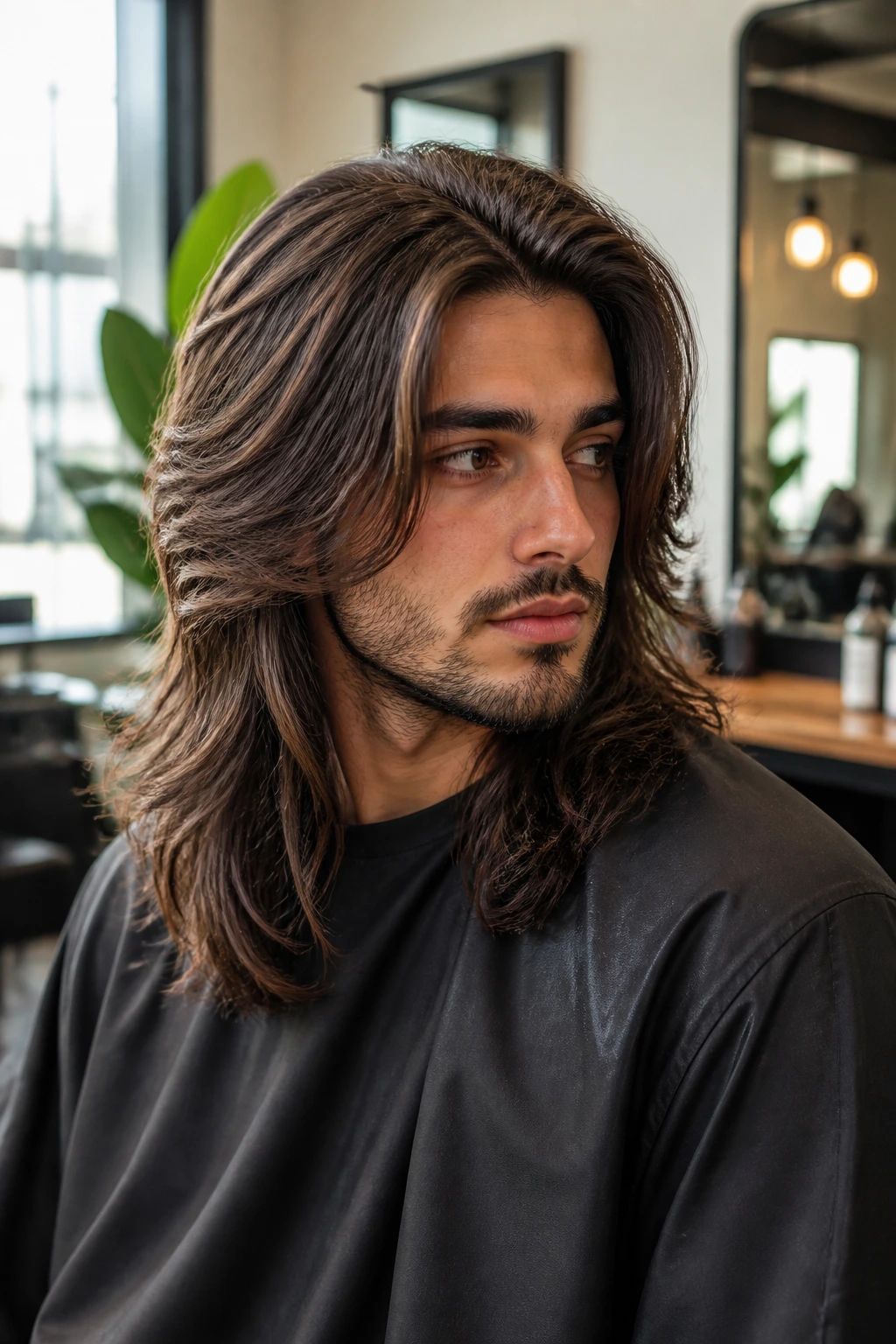
Long thick hair without layers is a triangle waiting to happen. Long layers fix that. They remove weight through the interior so the hair falls with shape instead of hanging in one heavy curtain around the head.
Why Layering Matters Here
The goal is not to thin the hair into nothing. The goal is to break up the mass so the ends don’t flare. Ask for layers that start around the cheekbone or jaw, depending on how much length you want to keep. On very thick hair, the crown may need some internal weight removal too, or the whole top area will sit too full.
That’s the part people miss. Long hair is not automatically easier just because it’s long. Dense hair at length can be more demanding than short hair if the cut isn’t balanced.
Daily Care
Use conditioner every time you wash, and a leave-in cream if the ends feel dry or fuzzy. If you blow-dry, use low heat and a nozzle so the air goes where you want it. Thick hair can survive a rough approach for a while, but it rewards a little restraint.
This is for men who want length with some actual shape left in it. If you want your hair to move instead of hover, layers do the work.
19. Side-Swept Fringe
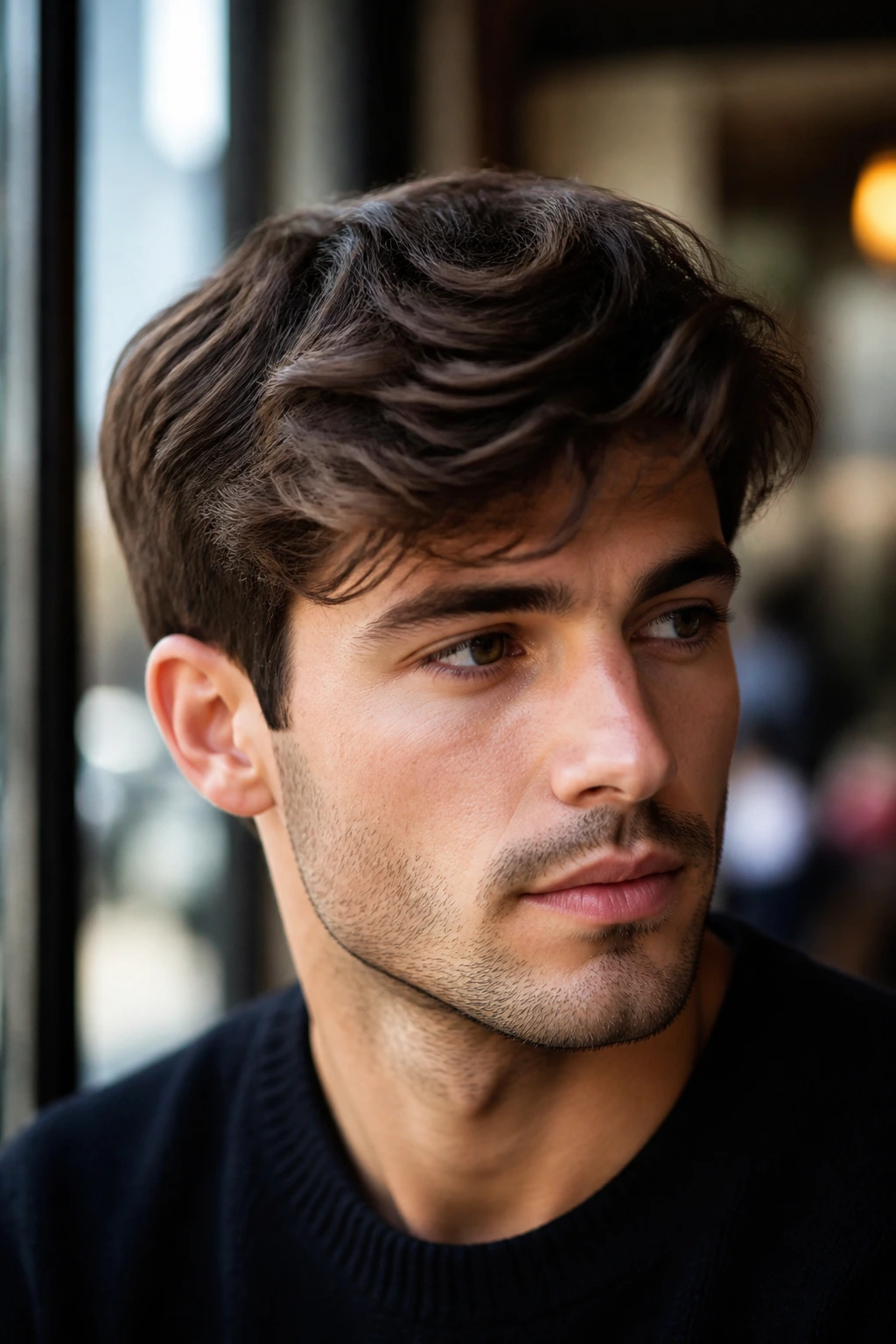
A side-swept fringe is a smart answer when you want the front to feel softer without losing control of the bulk. Thick hair gives the fringe enough weight to sit across the forehead, and the sweep keeps it from looking severe.
Why It’s a Good Final Pick
The cut usually sits in that medium-length zone where the top has enough length to move, but not so much that it gets floppy. Ask for the fringe to be the guiding point, with soft layers through the top and clean tapering on the sides. If the hair is very dense, some internal texture helps the front lie the right way instead of puffing upward.
I like this style because it can read polished or casual depending on how you finish it. Push it more neatly to one side and it looks tidy. Rough it up with your fingers and it feels easier, less formal, more lived-in.
Styling
Use a light cream or texture spray, then direct the fringe with a blow-dryer or your hands while it’s still damp. Keep the product light; the front should move a little. Thick hair already gives you the shape, so you do not need to bury it under styling paste.
It’s a strong choice if you want to soften a strong forehead or just wear your hair in a way that feels a touch less rigid than a standard side part.
How to Get the Most Out of Thick Hair Haircuts
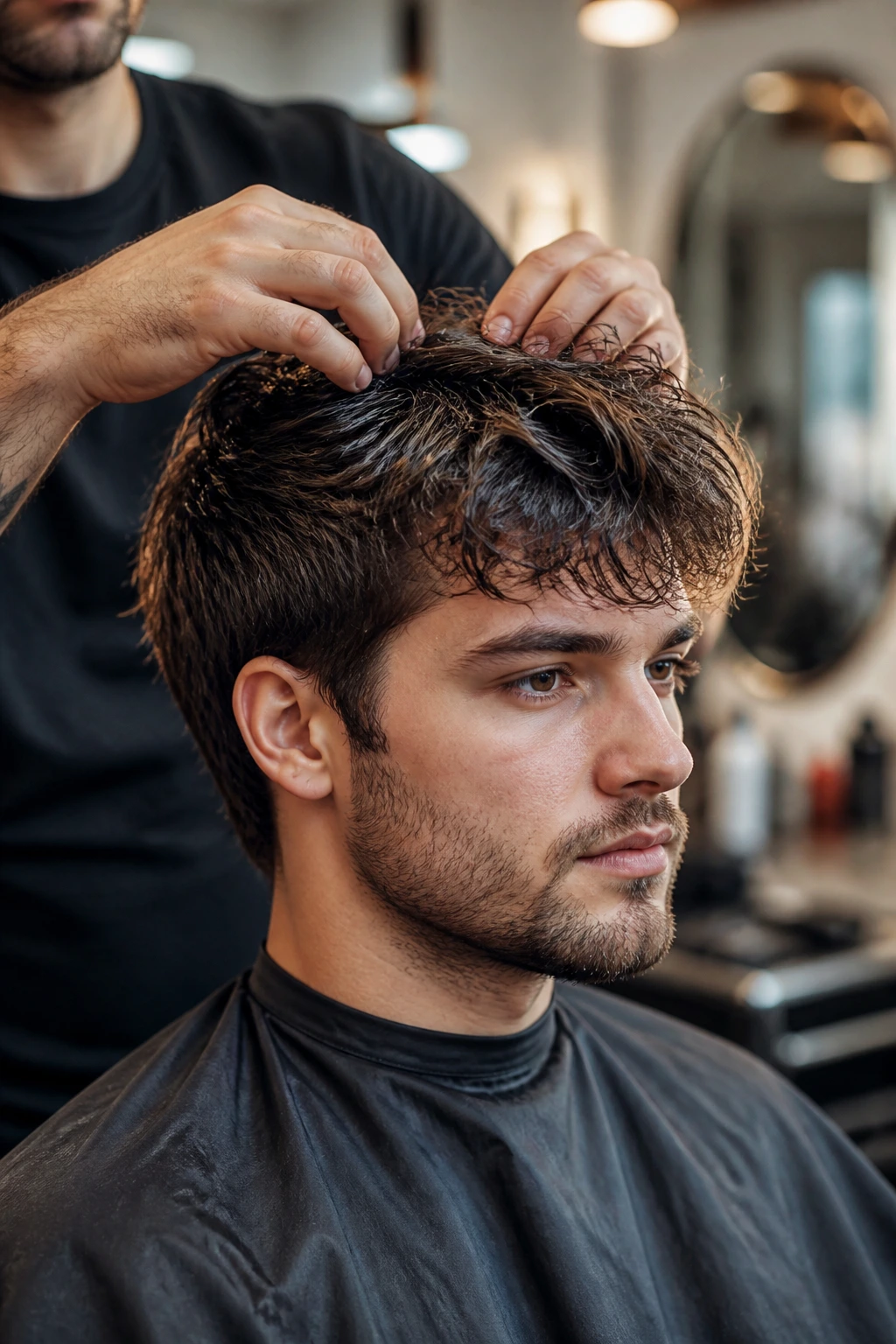
The haircut matters, but the chair conversation matters more than most guys think. Bring two photos if you can — one of the front and one of the side — because thick hair changes shape from every angle. A photo from only the front can hide a bulky crown or a side that’s being carried too heavy.
Ask for weight removal in the right places. Say that plainly. Around the crown. Behind the ears. Through the corners where the hair kicks out. That tells the barber you want shape, not random thinning all over the head.
Dry-cut adjustments are your friend. Thick hair can look tame when wet and entirely different once it dries. If the barber works only on soaked hair and never checks it dry, you can end up with a cut that seems fine for thirty minutes and then goes wide. A quick dry check changes a lot.
Use less product than feels safe. Seriously. Thick hair often needs a pea-sized amount, not a scoop. Build from there. If you start heavy, the front gets sticky and the sides lose the natural movement that makes the cut look good in the first place.
Pick the finish that matches your day. Matte clay for texture, cream for softer control, pomade for shine. Don’t reach for the shiniest thing in the drawer unless the style actually calls for it. Thick hair already has presence. You’re not trying to make it louder.
Thick Hair Mistakes That Make Good Cuts Collapse
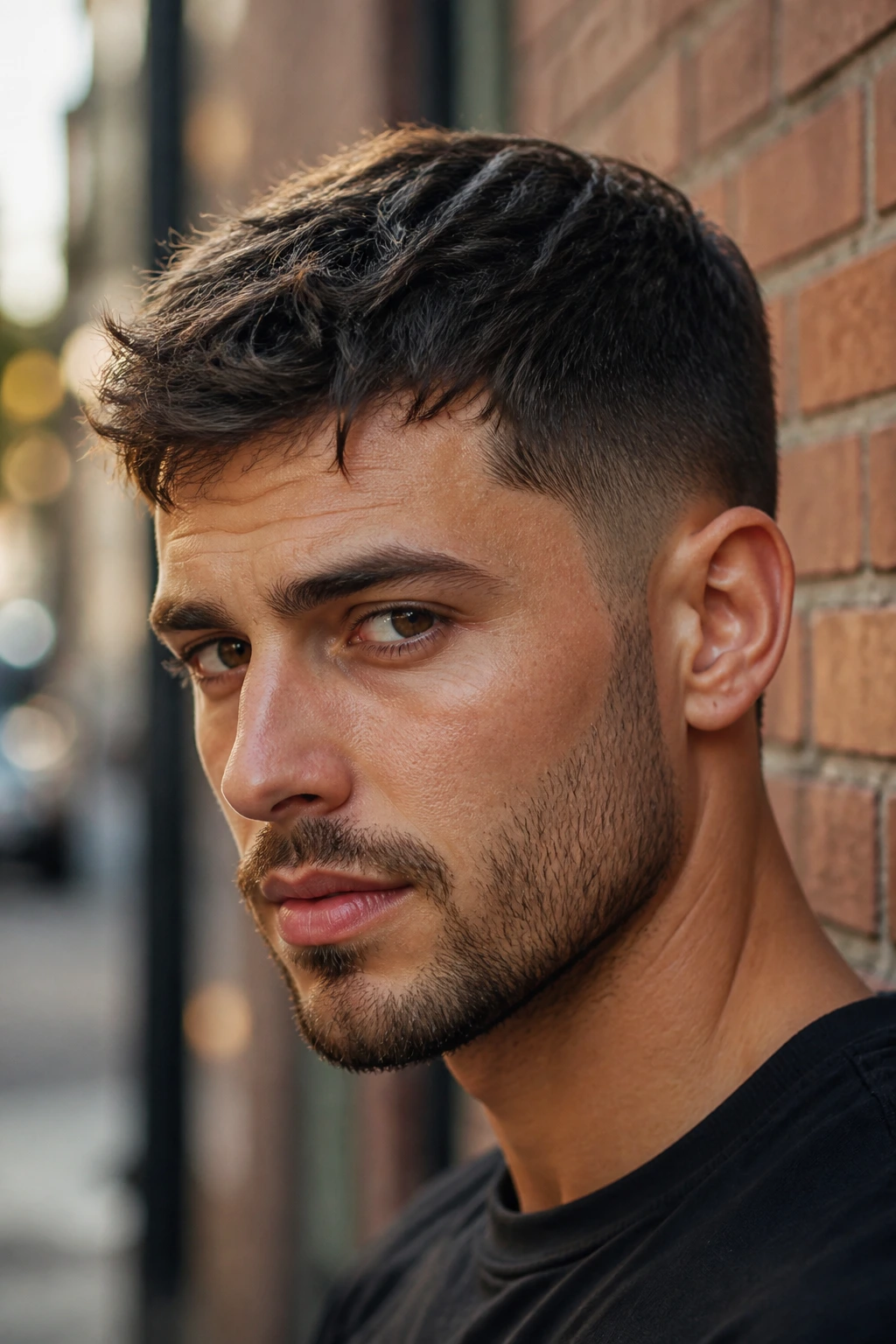
The first mistake is asking for thinning everywhere. That sounds smart until the hair comes back frizzy, hollow, or weirdly puffed in the wrong places. The fix is targeted removal: take weight out where the shape is too wide, not all over the head.
Another common one is loading on too much product. Thick hair can make you feel like you need more paste, more wax, more pomade, more everything. You don’t. When the product sits on top instead of spreading through the hair, the style gets greasy and the texture disappears. Start small. Add more only if the hair truly needs it.
A third mistake is ignoring the crown and the cowlicks. Thick hair with a strong crown can split or stand up no matter how good the rest of the cut is. If your barber doesn’t account for that swirl, the back of the head will betray you every time.
Going too short on top is another trap. Thick hair springs up. Shorter does not always mean cleaner. If the top is clipped too close, it can end up sticking out or looking like a fuzz ball. Leave enough length for the hair to bend and settle.
The last one is letting fades grow out too long. Thick hair expands fast around the sides. A taper that looked neat two weeks ago can start looking bulky at the ears before you notice. If your cut depends on tight edges, keep the cleanup on a shorter cycle.
Other Ways to Wear Thick Hair Without Starting Over
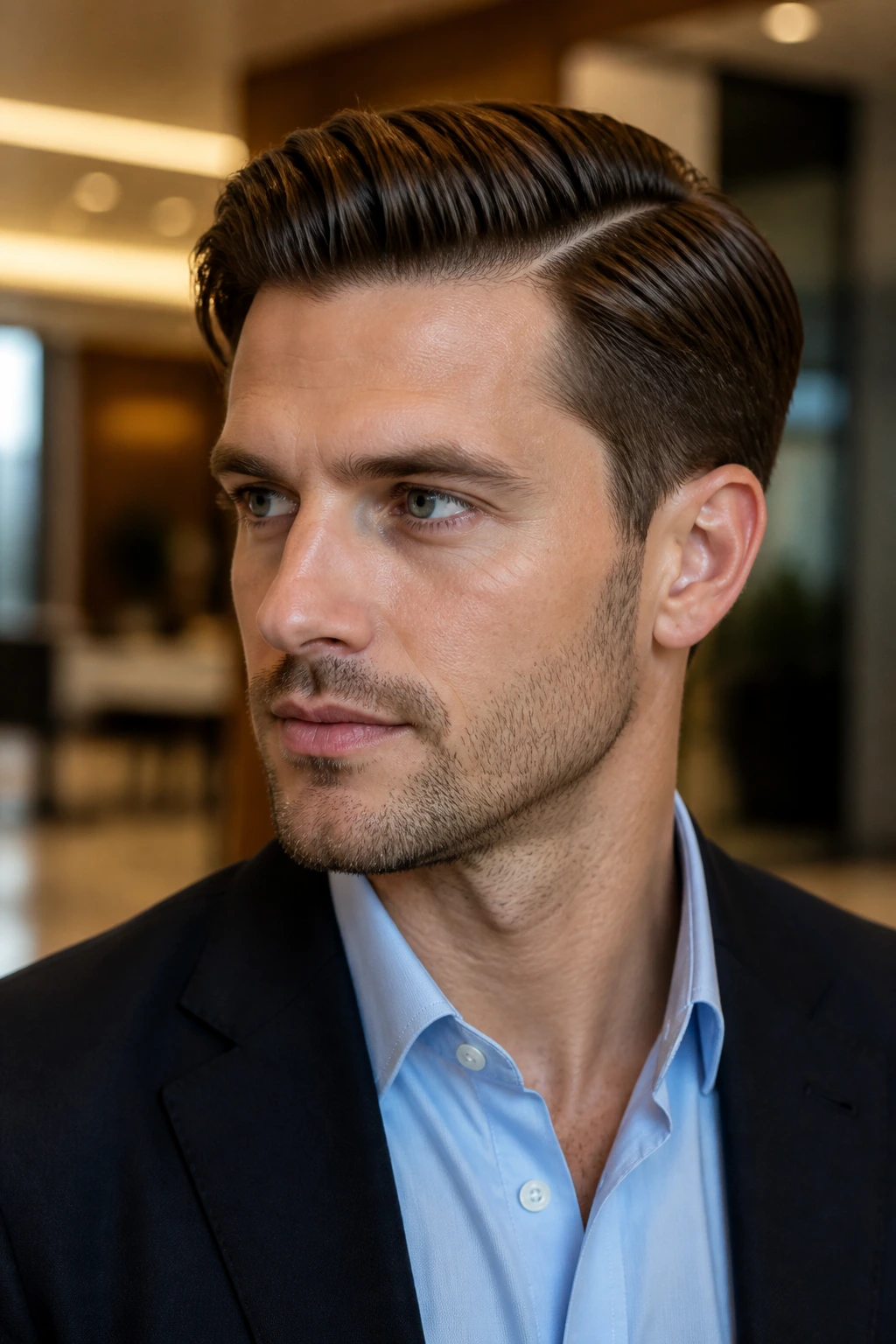
The Clean Office Version: If you need a haircut that slides into a blazer without making a scene, stick to the side part, Ivy League, or slick back with a taper. These keep the silhouette neat and the shine controlled. A light pomade or cream is usually enough.
The Low-Maintenance Version: Crew cut, French crop, and high and tight are your friends here. They keep the morning routine short and they age well between barber visits, which is more useful than people admit. If your schedule is messy, the haircut should not be.
The Texture-Heavy Version: Textured crop, brush-up, and quiff work best when you want the hair to feel alive instead of polished. These styles like matte clay, finger styling, and a little roughness around the edges. Thick hair has the body for it.
The Length-First Version: Bro flow and long layers fit guys who want movement more than precision. The job here is weight control and regular trims. Skip the layers and the whole thing turns into a triangle or a blanket. Neither is flattering.
The Curly or Coily Version: Curly top with a fade handles tight curls, while a shaped afro taper or longer layered top can work when the hair is coily and dense. Moisture matters more than shine. Keep the structure clean and let the texture do what it does best.
Tools That Make Styling Thick Hair Easier
-
Hair dryer with a nozzle: Directs air where thick hair needs it, especially for quiffs, brush-ups, and side parts.
-
Vent brush or round brush: A vent brush is fast for lift; a round brush gives more control when you want a smoother finish.
-
Wide-tooth comb: Better than a fine comb for thicker, denser hair that tangles or resists pulling.
-
Matte clay or paste: Good for textured crops, brush-ups, and casual side sweeps when you want hold without shine.
-
Light cream or leave-in styler: Useful for curls, bro flows, and any cut that needs softness instead of stiffness.
-
Pomade: Best for slick backs, classic side parts, and Ivy League styles when you want a neater finish.
-
Sea salt spray or texture spray: Helps thick hair get separation before the dryer does its work.
-
Microfiber towel or T-shirt: Reduces rough frizz when drying thick hair, especially curly or wavy textures.
-
Hand mirror: Worth having if your haircut depends on how the crown and back look, which is most thick hair cuts, honestly.
Keeping Thick Hair in Shape Between Barber Visits
Thick hair grows with attitude, so the maintenance schedule matters. Short fades and tight tapers usually need a cleanup every 2 to 3 weeks if you want the edges to stay crisp. Scissor cuts like the Ivy League, side part, or textured crop can stretch to 4 to 6 weeks before they start losing their line. Longer looks such as bro flow or long layers often hold for 6 to 10 weeks, though the ends should still be dusted before they split and swell.
Washing habits matter too. Thick hair does not always need daily shampoo, especially if you’re using matte products. Two to four washes a week is a common sweet spot for many guys, with conditioner on the mid-lengths and ends when the hair feels dry or rough. If you go heavy on clay or pomade, use a clarifying shampoo every couple of weeks to stop buildup from making the hair dull and stiff.
Drying is where a lot of thick-hair styles go sideways. Rubbing with a towel makes the cut frizz and expand. Press the water out instead, then shape the hair while it’s damp. If your style relies on direction — quiffs, pompadours, slick backs, side parts — a few minutes with a blow-dryer keeps the haircut from going wild before you even leave the house.
Night care is easier than people think. Don’t sleep with soaking wet thick hair if you can help it. It bends weird, flattens at the crown, and wakes up with a stubborn kink. For longer styles, a loose tie or loose push-back keeps the length from tangling. For shorter cuts, a pillowcase that doesn’t snag helps more than most fancy products.
Questions Men Ask Before Choosing a Style
What haircut is easiest for thick hair if I don’t want to style it much?
Crew cuts, French crops, and high and tight cuts are the cleanest low-effort choices. They control bulk without asking for much more than a quick comb-through or a dab of cream.
Should thick hair be thinned out with thinning shears?
Sometimes, but not everywhere. Over-thinning can leave the hair frizzy, puffy, or weak at the ends, so the barber should remove weight only where the silhouette is too wide.
Can thick hair wear a middle part without puffing out?
Yes, but the cut needs layers and control around the temples and crown. Curtains work best when the top has movement and the part is supported by the haircut, not forced by product.
What product works best on thick hair: clay, cream, or pomade?
Clay gives texture and a drier finish, cream gives softer control, and pomade gives shine and a tighter look. Pick based on the cut, not the bottle. A textured crop and a slick back need different things.
How often should thick hair be trimmed?
Short, faded cuts usually need attention every 2 to 3 weeks. Scissor cuts can go 4 to 6 weeks, and long layered looks can stretch longer if the ends stay healthy and the shape still behaves.
Why does my thick hair puff out on the sides?
Because the cut probably left too much weight around the sides or the taper grew out. The fix is a cleaner shape through the parietal ridge and around the ears, plus a better drying routine.
Do these styles work for curly thick hair too?
Yes, but the cut has to respect curl pattern and shrinkage. Curly tops, curly fringes, and shaped fades usually work better than blunt, boxy cuts.
What if I have a strong cowlick at the front or crown?
Bring that up before the cut starts. A barber can work with the cowlick by leaving the right length, changing the direction, or softening the area around it so it doesn’t fight the style every morning.
The Cut That Fits the Hair You Have
The smartest haircut for thick hair isn’t the one that looks coolest in a photo. It’s the one that still looks right after the first windy commute, a full workday, and a night’s sleep that doesn’t care about your grooming plans. Thick hair gives you options, but only if the cut respects the way it grows.
Pick the shape first. Then think about product. Then think about how much time you actually want to spend in the mirror. When those three things line up, thick hair stops feeling unruly and starts feeling like an asset you can count on.
If you’re taking one thing from this list, make it this: ask for weight control, not just length control. That one detail changes everything.
