



Long hair can look gorgeous on prom night, and it can also turn into a heavy, shiny curtain that slides out of every pin by dessert. Gravity is rude like that.
That’s why prom hair for long hair needs a little engineering. You want shape at the crown, grip where the pins bite, and movement through the ends so the style still looks alive when the flash goes off. A curl that looked soft in the bathroom mirror can go flat under bright lights. A braid that’s pulled too tight can make your face look locked up. The sweet spot lives between those extremes.
The good news is that long hair gives you options most people would kill for. You can do polished waves, a rope braid, a sleek ponytail, a bun with real size, or a half-up style that lets the length do the talking. The trick is choosing the version that fits your dress, your texture, and how much time you want to spend in front of the mirror before you leave.
Why These Styles Work So Well on Long Hair
- Long hair gives you built-in drama: even a simple braid or ponytail looks fuller when the tail has real length behind it.
- The styles here hold shape under motion: these picks lean on anchors, twists, and tucked sections, not just loose curls that collapse after one dance set.
- They play nicely with accessories: pearls, ribbons, pins, flowers, and combs can be added without rebuilding the whole style.
- They fit different dresses: open backs, strapless necklines, high collars, and one-shoulder gowns all get something useful here.
- They work with more than one texture: straight, wavy, thick, curly, and layered hair all have a lane in this lineup.
- They can look soft or sharp: you can go romantic, sleek, vintage, boho, or full-gloss without switching tools or learning a salon trick.
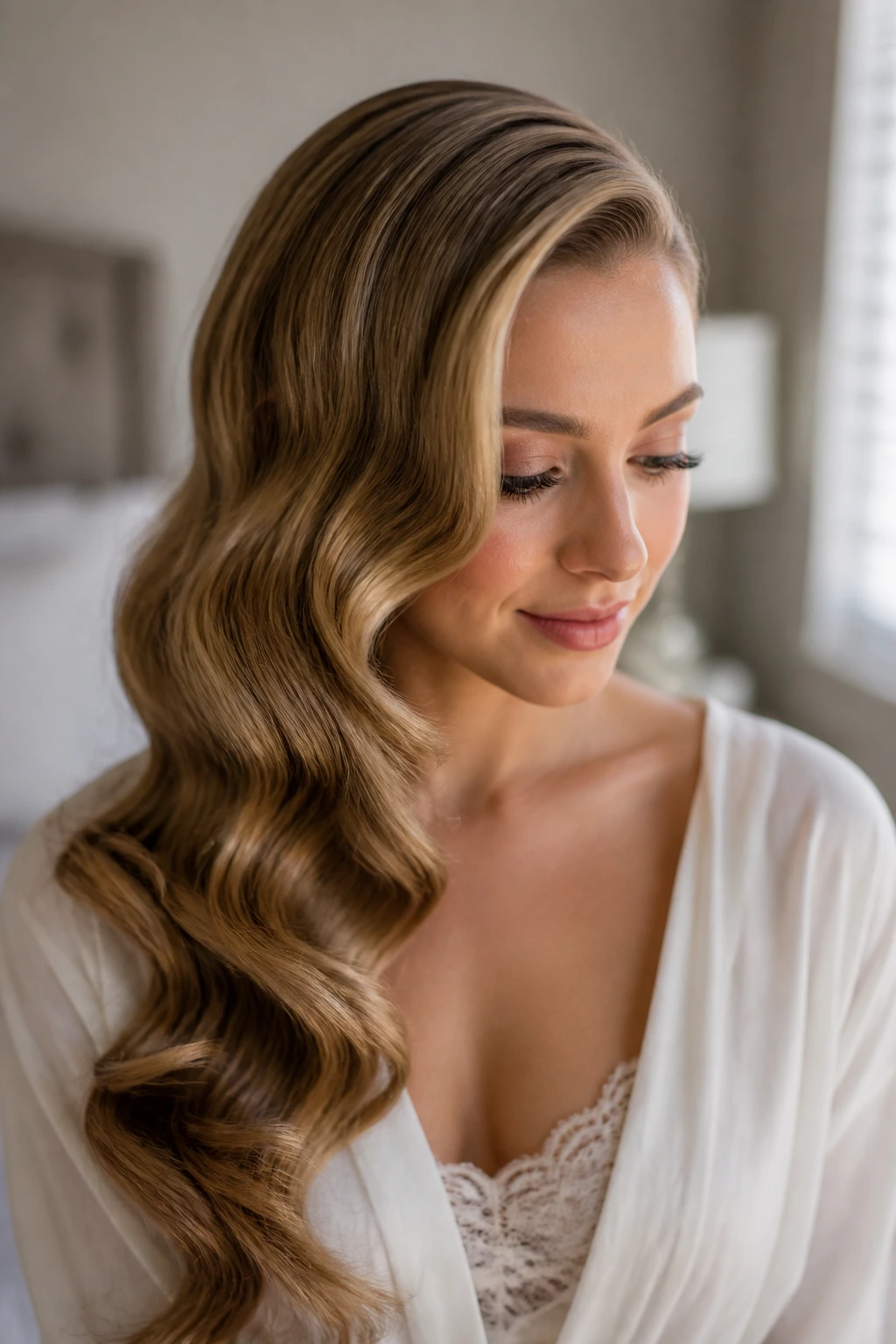
1. Soft Hollywood Waves with a Deep Side Part
This is the prom classic I keep coming back to, mostly because long hair makes it look expensive without trying too hard. The deep side part builds instant shape, and the waves fall in that heavy, glossy S-curve that catches light on every bend. It’s one of those styles that looks finished even before the last spray.
The key is the set, not the spray. Curl 1 to 1½-inch sections with a 1.25-inch iron, pin each one flat while it cools, then brush everything out only after the hair is completely cold. If you brush too soon, the wave turns into a soft puff, and nobody wants that.
I like this style with a one-shoulder dress or a neckline that leaves one side open. Slide one side behind the ear, add a small crystal pin above it, and let the rest fall over one shoulder. It’s polished. It moves well. And on long hair, the weight of the length helps the wave look smooth instead of poufy.
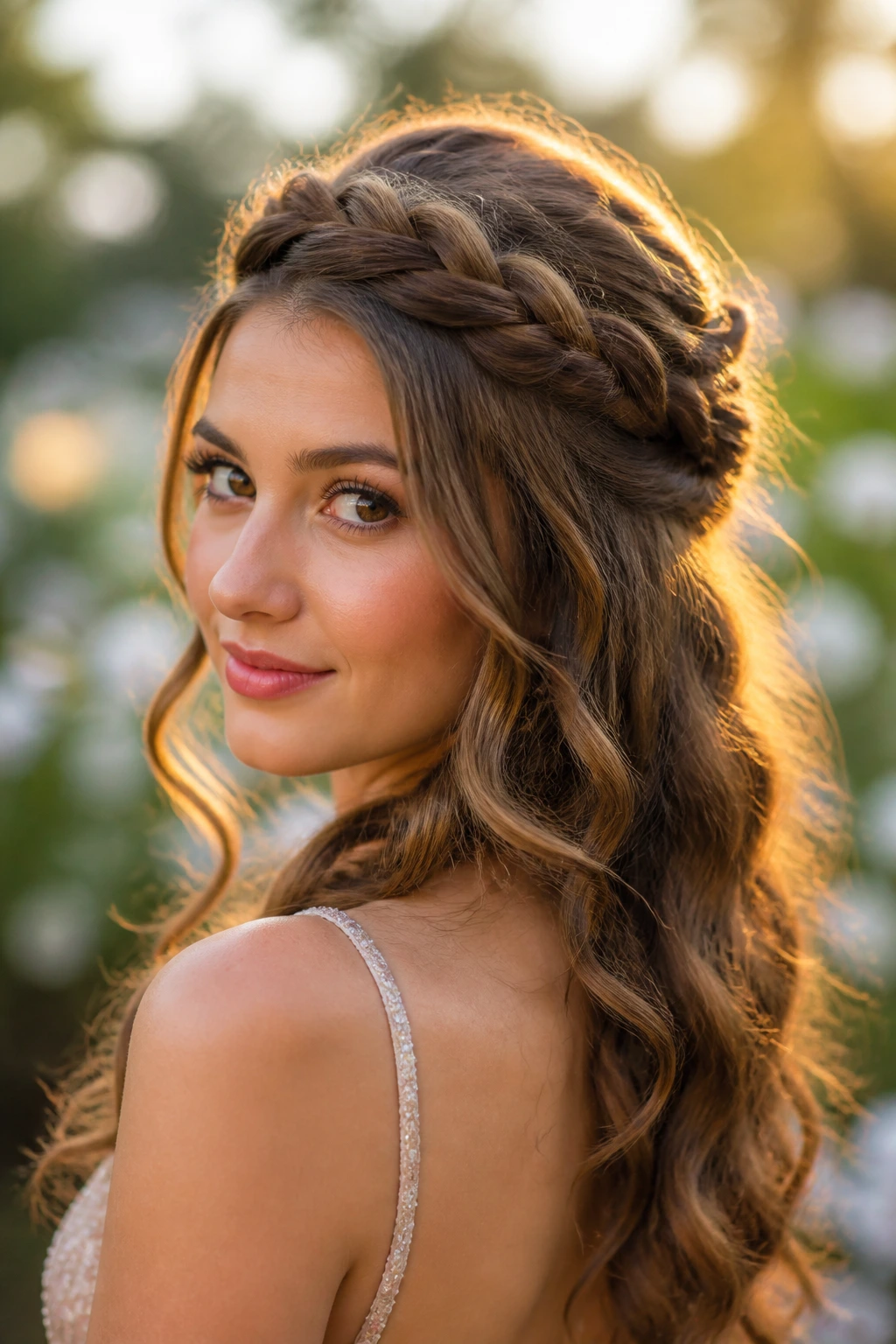
2. Braided Crown Over Loose Curls
A braided crown solves two prom problems at once: it keeps hair off your face and gives long hair a shape that reads from across a room. The braid acts like a frame, and the curls underneath keep the style from feeling stiff. That mix matters.
For this one, take a braid from one temple, wrap it across the top or back of the head, and pin it into the opposite side with crossed bobby pins. Then leave the rest of the hair in loose curls or brushed-out waves. The braid should look a little soft around the edges, not helmet-tight. Tug the outer loops gently with your fingers to widen it by about half an inch.
This is the style I’d choose if you want something romantic but not fussy. It’s also a smart move if you know you’ll be outside for photos or walking between places. Hair stays where it should, and the crown detail gives you something pretty even before the back of the style comes into view.
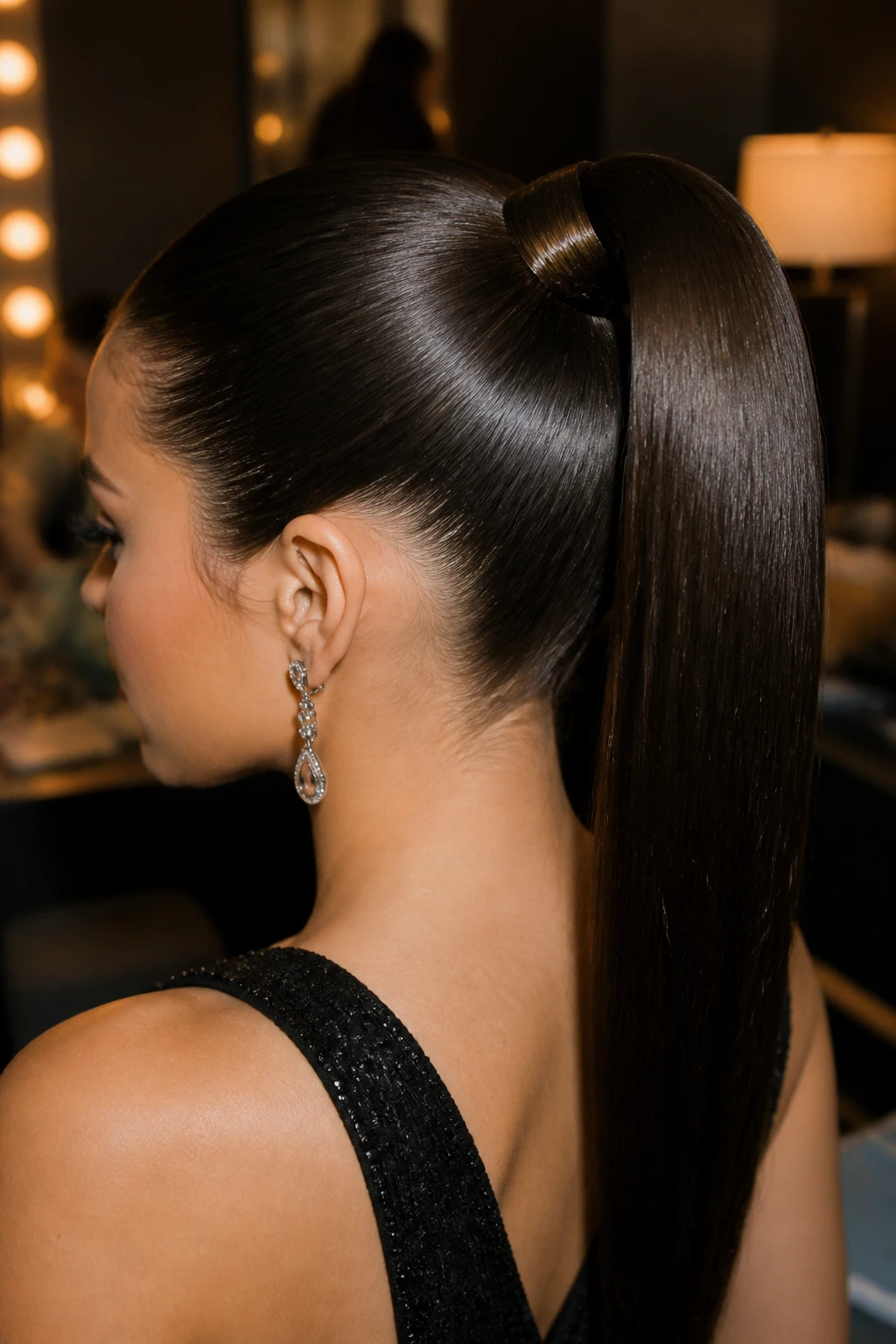
3. Sleek High Ponytail with a Wrapped Base
If you want long hair to look sharp, not sweet, this is the move. A high ponytail puts the length on display, and the wrapped base hides the elastic so the whole thing reads clean and deliberate. The swing of the tail does the rest.
Start by smoothing the roots with a flat brush and a little cream or gel. Pull the ponytail up to the crown or just above it, depending on how much lift you want. Then take a thin section of hair from underneath, wrap it around the elastic once or twice, and pin the end underneath. That small wrap makes a big difference. It looks finished.
This style loves a dress with an open back or sharp lines. If your hair is thick, use two elastics stacked one over the other so the pony doesn’t sag by the third song. If it’s finer, tease the base lightly before tying it off. Keep the top smooth, though. A little roughness on top usually looks accidental, and this style wants clean edges.
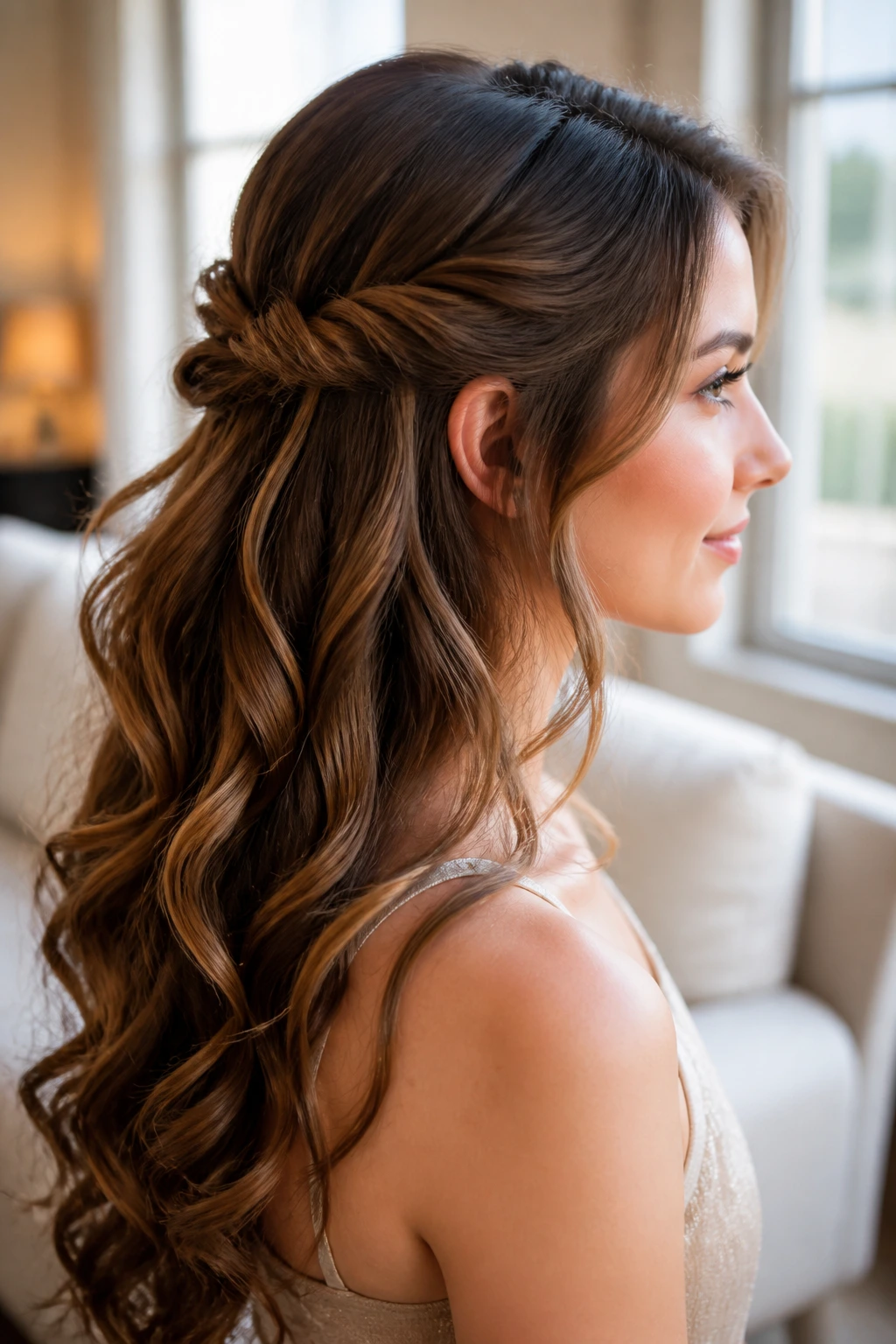
4. Twisted Half-Up Knot with Flowing Ends
This one feels softer than a full updo, but it still keeps the front out of your eyes. Two sections from each side twist back toward the crown and meet in a small knot or loop, while the rest of the hair falls loose in curls or bends. It has that “I made an effort” look without turning into a hair project.
The twist is the part that matters. Pull the sections back with a little tension, but don’t yank them flat against the scalp. You want some lift at the crown so the top doesn’t go limp. If your layers are slippery, crisscross the bobby pins in an X shape under the knot. That tiny trick keeps the whole thing from slipping down when you start moving.
I like this on long hair because the ends still get to show off. A style that hides all your length feels wasteful on prom night. This one gives you the face-framing softness of a half-up style and the structure of an updo, which is a pretty useful middle ground.
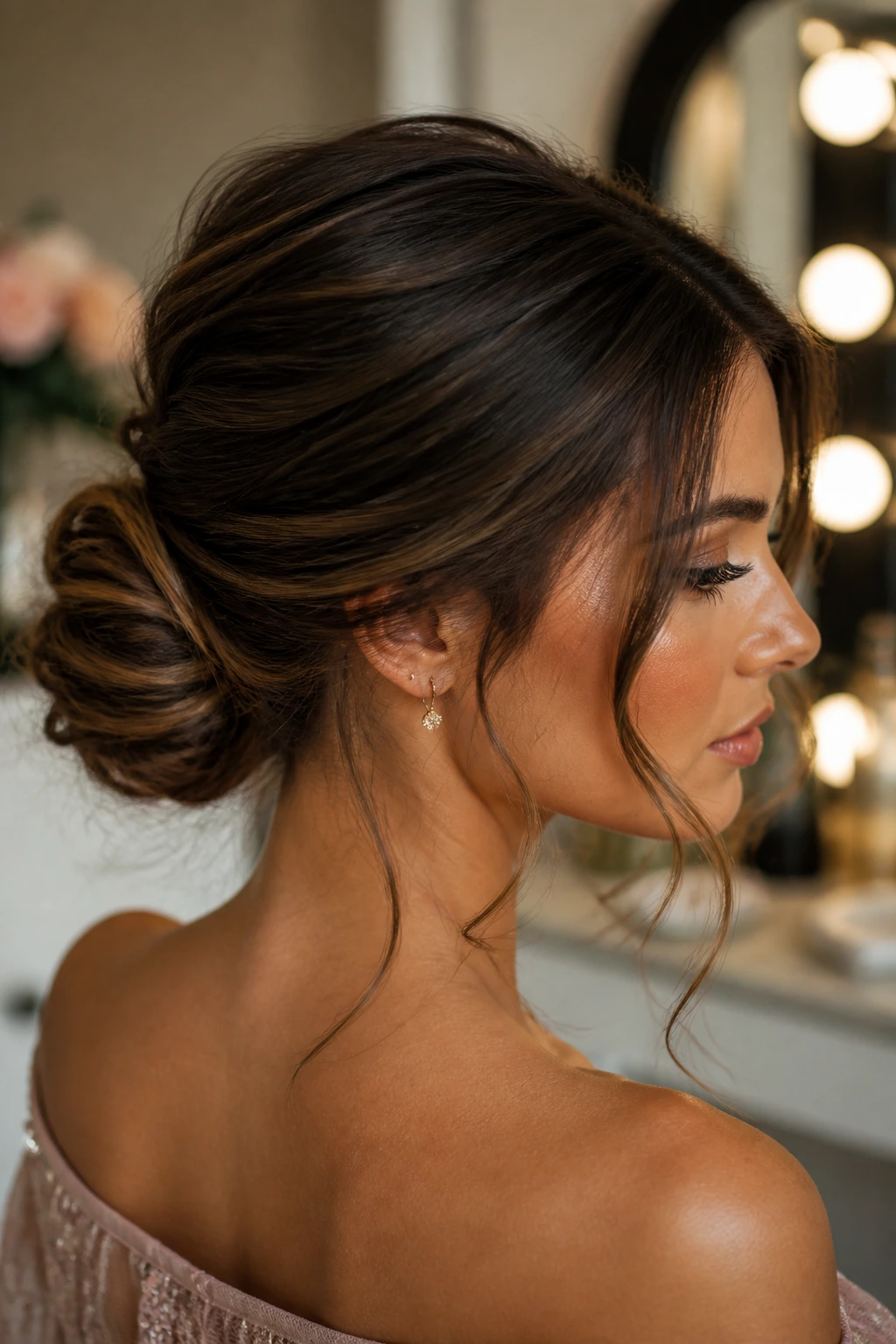
5. Low Textured Chignon with Face-Framing Pieces
A low chignon is still one of the cleanest ways to make long hair look expensive. Long length gives the bun more bulk, so you don’t have to pad it out with a donut unless you want a larger shape. Textured pieces tucked and pinned at the nape create that soft, folded look that photographs well from every angle.
The face-framing pieces are not an afterthought. Leave two slim sections out before you pin the rest up, then curl them away from the face with a 1-inch iron. Keep the bun low and slightly off-center if your dress has a strong neckline or a dramatic back. Perfect symmetry can feel a little stiff here.
This is the style for someone who wants to dance without thinking about hair. It stays close to the head, so it’s less likely to bounce loose, and it gives your earrings and makeup room to stand out. If you want a little extra polish, mist a shine spray over the bun only after the pins are locked in.
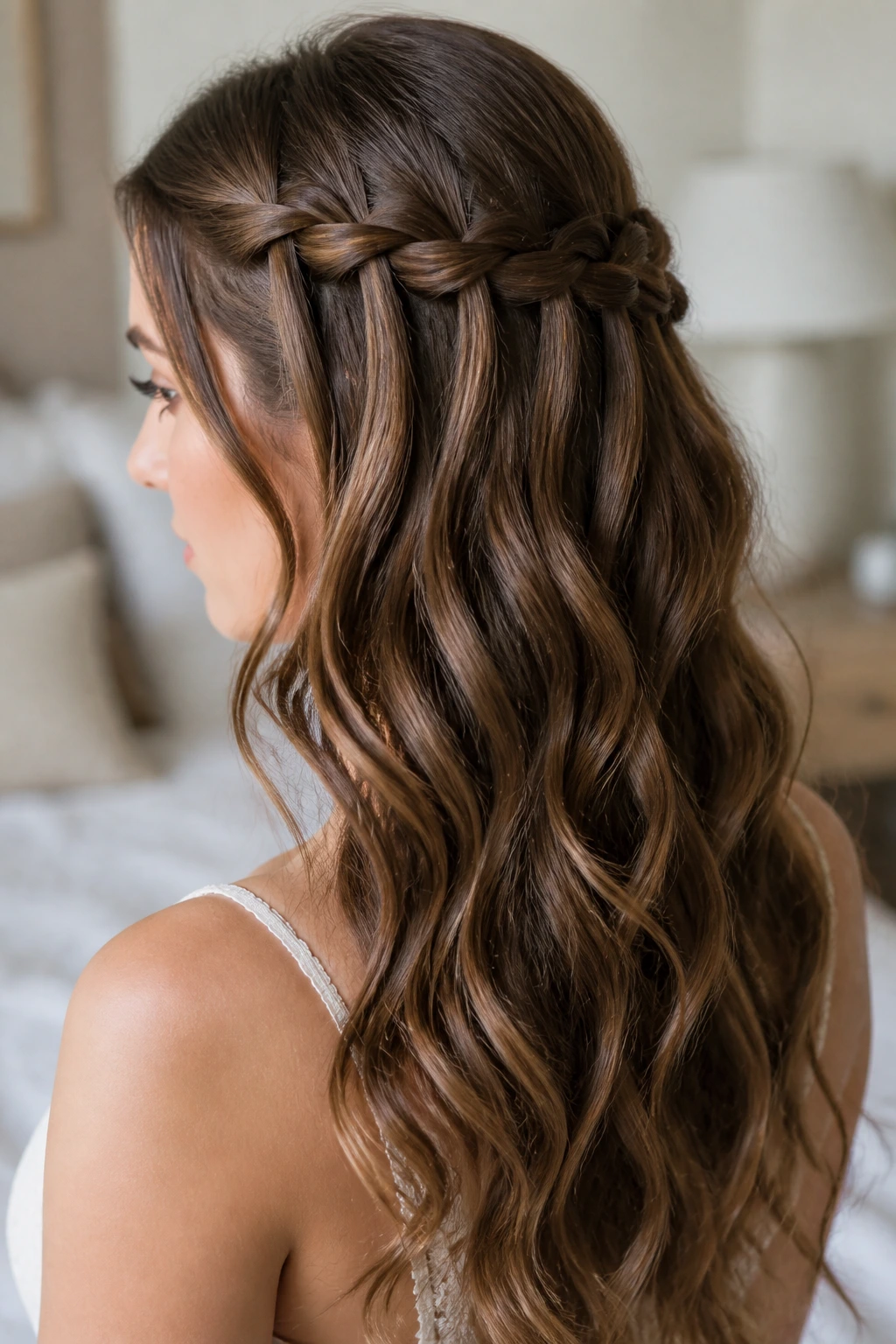
6. Waterfall Braid Over Barrel Waves
Waterfall braids are pretty because they look intricate without requiring a full head of braiding. The braid runs across the back or side of the head, and sections drop through it like little ribbons, which lets the long hair show off underneath. It’s one of the best ways to keep length visible while still building a focal point.
The trick is to start with a smooth base. Barrel waves work better than tight curls here because the braid sits on top of them instead of getting lost in them. Keep the braid loose enough that it can lie flat, then pin the end behind the ear or near the opposite temple. If the braid starts looking too tight, gently pull the loops wider with the tip of a comb.
I’d choose this if you want something romantic but not overdone. It feels a little dreamy, a little grown-up, and it gives you movement every time you turn your head. That matters in photos, and it matters on a dance floor too.
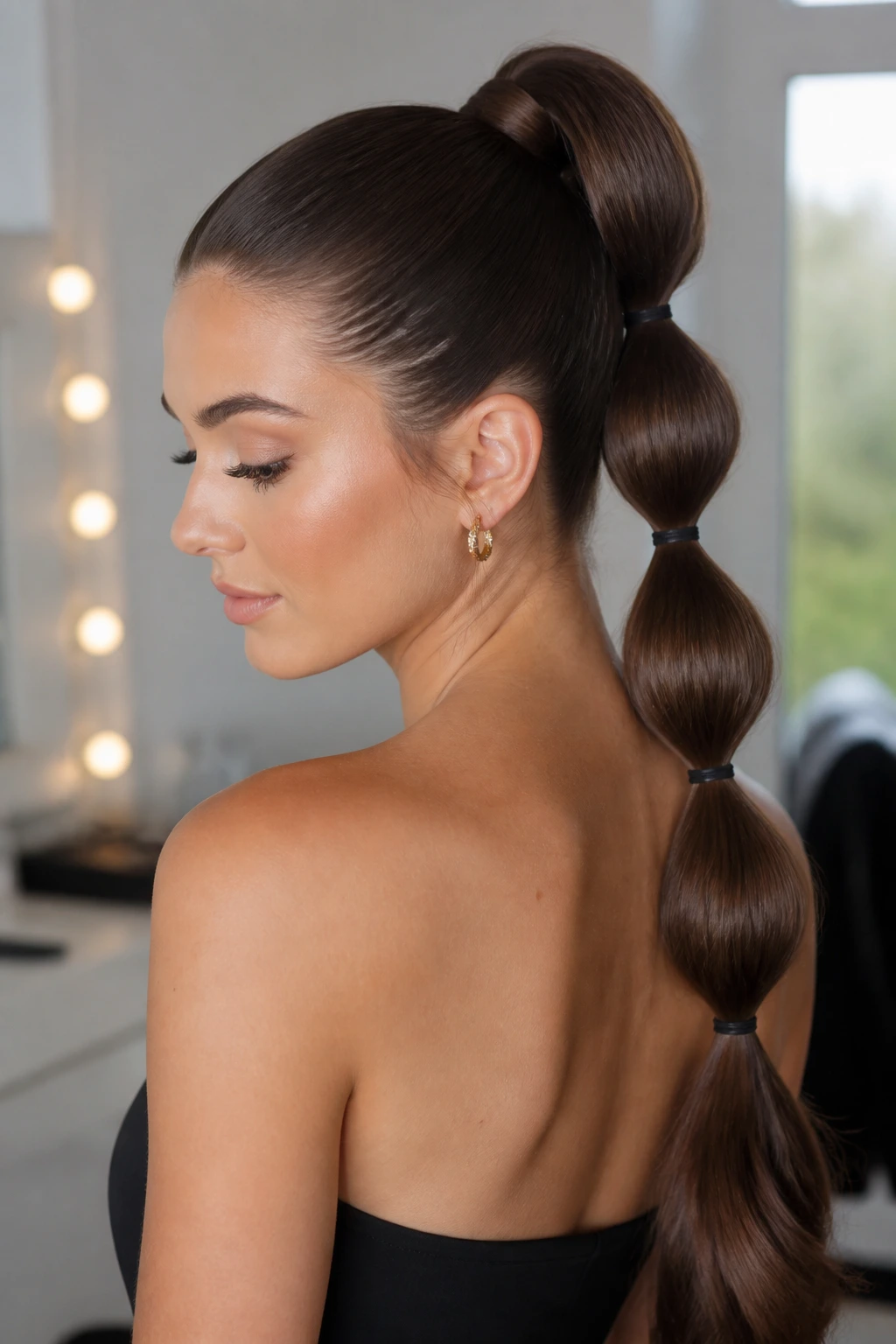
7. Bubble Ponytail with Smooth Length
Bubble ponytails sound playful, but on long hair they can look surprisingly sleek. The style works by sectioning the ponytail with small elastics every 2 to 3 inches, then gently pulling each section into a rounded bubble. The longer the tail, the better the shape.
Start with a smooth ponytail at mid-height or high at the crown. Secure the first elastic, then add the second one a few inches down. After each elastic, tug the hair between them outward just enough to create a round shape. Don’t overdo it or the bubbles lose their clean lines and start looking lumpy. A little space goes a long way.
This style is perfect if you want something that stands out without needing a ton of curling. It works especially well on hair that already has some texture, because the bubbles stay visible. I also like it with a simple dress, since the ponytail itself becomes the detail.
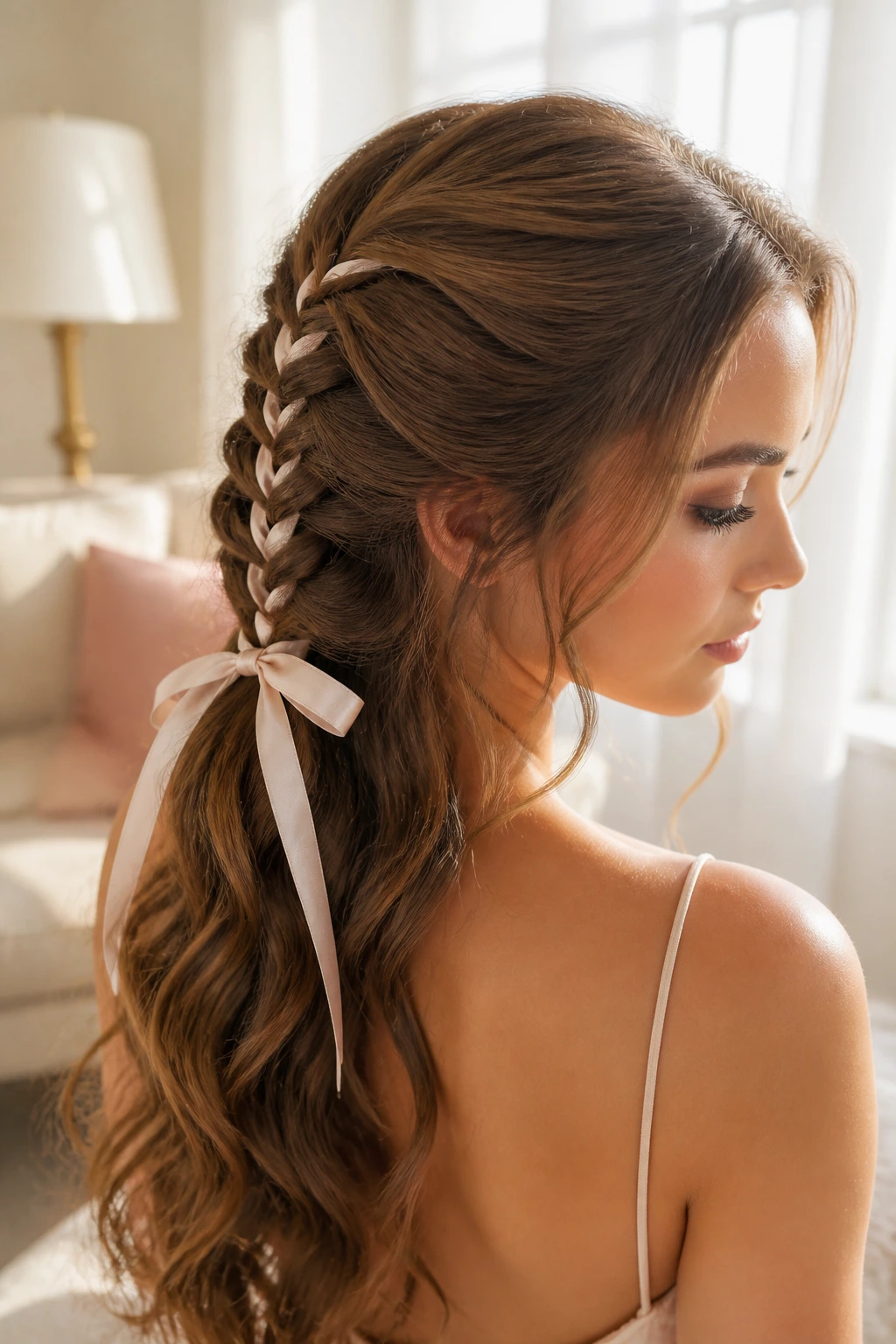
8. Fishtail Half-Up with Soft Ribbon Ends
A fishtail braid has a different feel from a classic three-strand braid. It looks finer, tighter, and a little more intentional, which is exactly why it fits prom. On long hair, a half-up fishtail creates a pretty line down the back before the rest of the length falls away in waves.
Keep the braid loose. That sounds obvious, but tight fishtails can look harsh in formal hair. Start the braid from the crown or just above the ears, then secure it and let the ends disappear into soft curls. If you want a touch of detail, thread a ribbon through the braid or tie one small bow at the base. Satin works better than stiff ribbon because it bends with the hair.
This is one of those styles that looks more difficult than it is. Good news. It’s also easier to refresh during the night if a few pieces slip. A single clear elastic and a couple of pins will usually fix it fast.
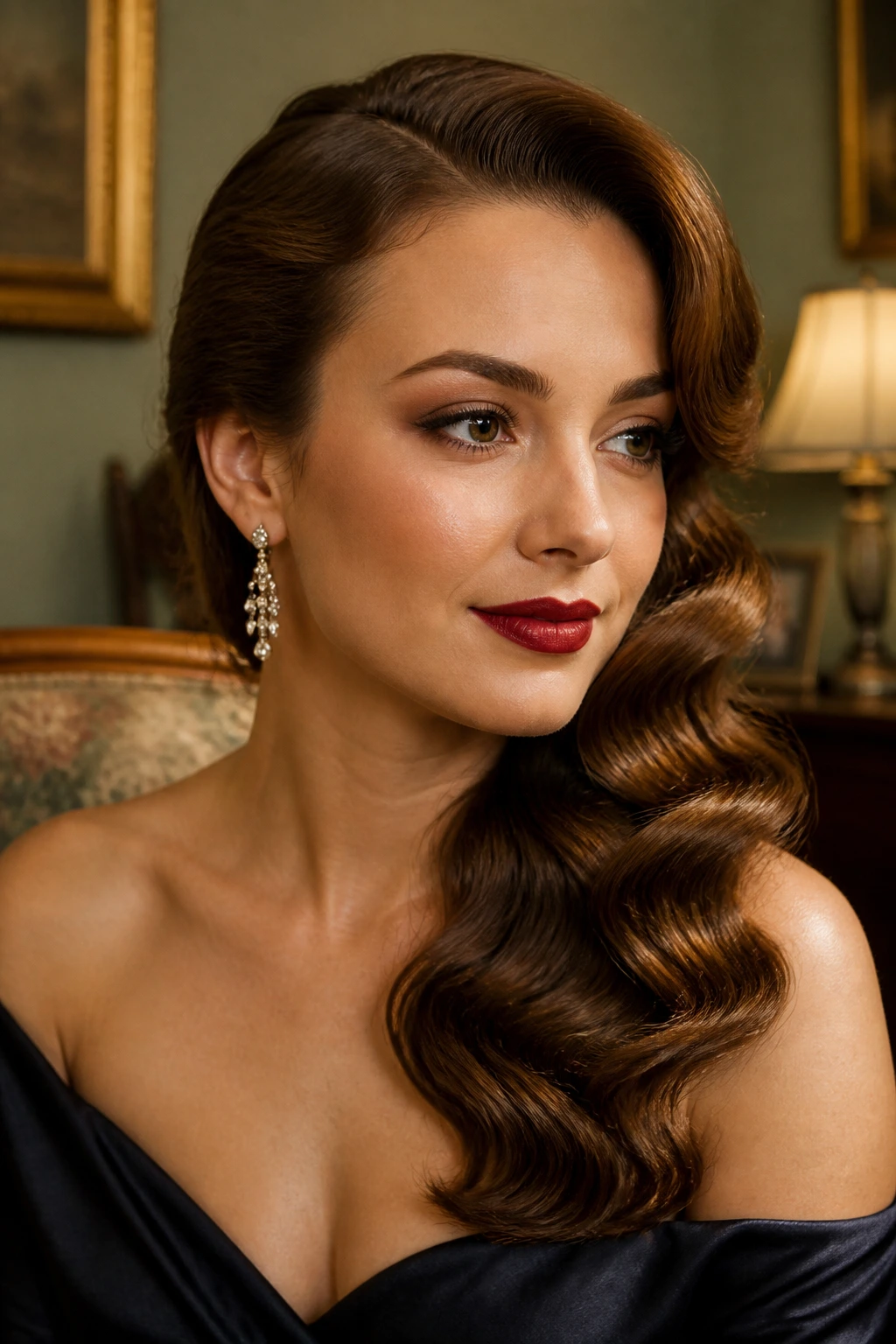
9. Old-School Side Sweep with Glamorous S-Waves
This is the style for someone who wants a little old movie energy. Deep side part. Hair swept to one shoulder. Soft waves pinned and sculpted so they fall in one direction. It looks rich, and on long hair, the drape over the shoulder is half the point.
The front section needs control, so use a smoothing cream before blow-drying and make the part while the hair is still damp. Curl the lengths away from the face, then brush the waves into a unified sweep and pin the back side underneath. If one side feels too flat, hide a small clip under the top layer rather than over-teasing the roots. Flat at the wrong spot is better than puffy at the wrong spot.
I like this style with bold earrings and a gown that shows off the neckline. It has presence. It also keeps hair on one side, which means you won’t spend the night pushing it off your shoulders every twenty seconds.
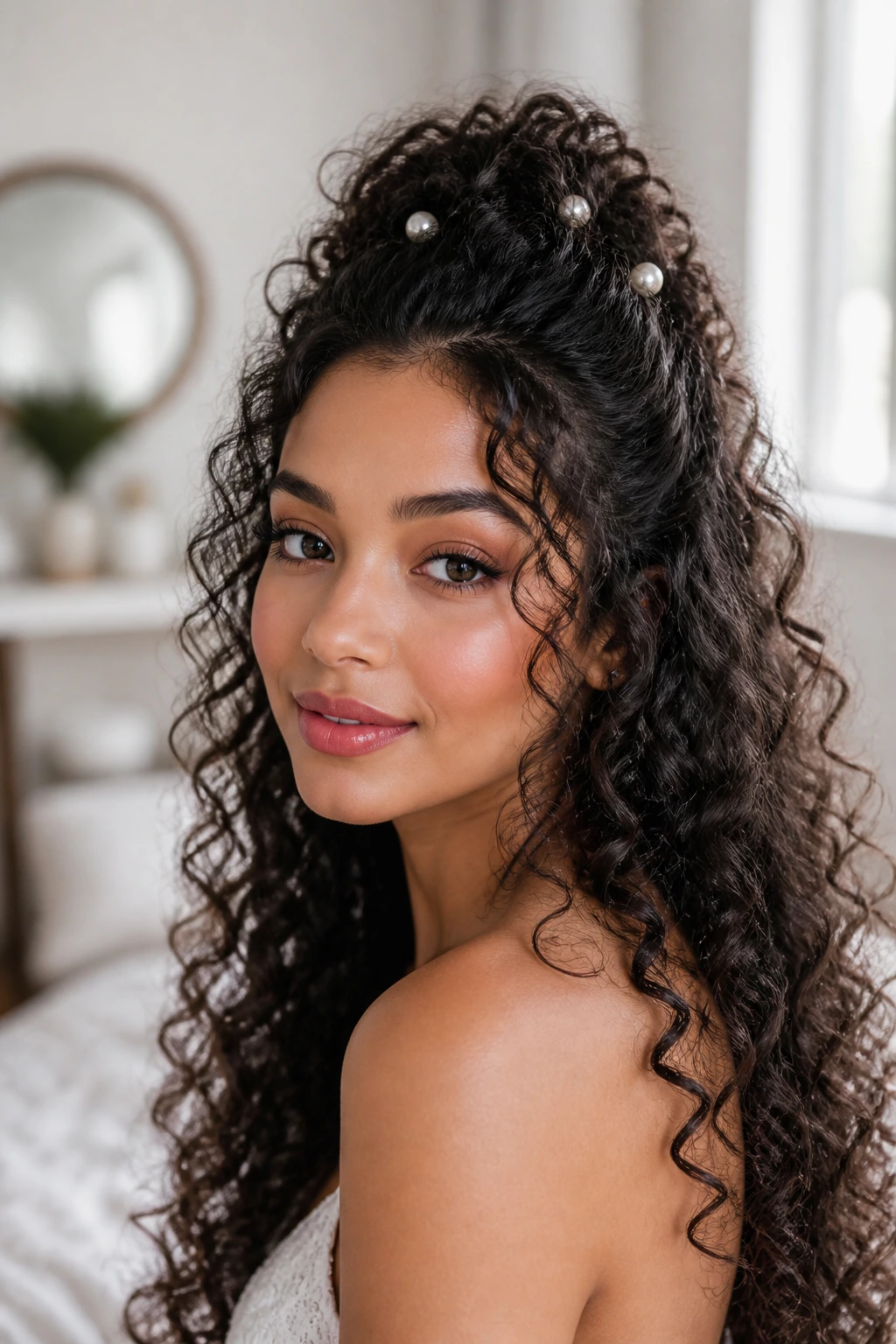
10. Curly Half-Up Crown with Pearl Pins
If your hair already has curl or a little wave, don’t fight it. Pulling the top section back into a crown gives the style structure while the rest stays big and soft. Pearl pins make this look feel finished without turning it into a costume.
The crown should sit just high enough to lift the face, not so high that it looks like a tiny bun perched on top of your head. Pin the top section back in small crosses so the hold is spread out. If your curls are loose, scrunch a bit of mousse through the mid-lengths before styling; if they’re naturally tighter, shape them with your fingers and leave the curl pattern alone. Brushing it out will only make it puffy.
This style is good when you want volume and softness in the same look. It also plays nicely with hair that has layers, because the shorter pieces can fall around the face while the longer length stays visible in the back. That little imbalance makes it feel modern.
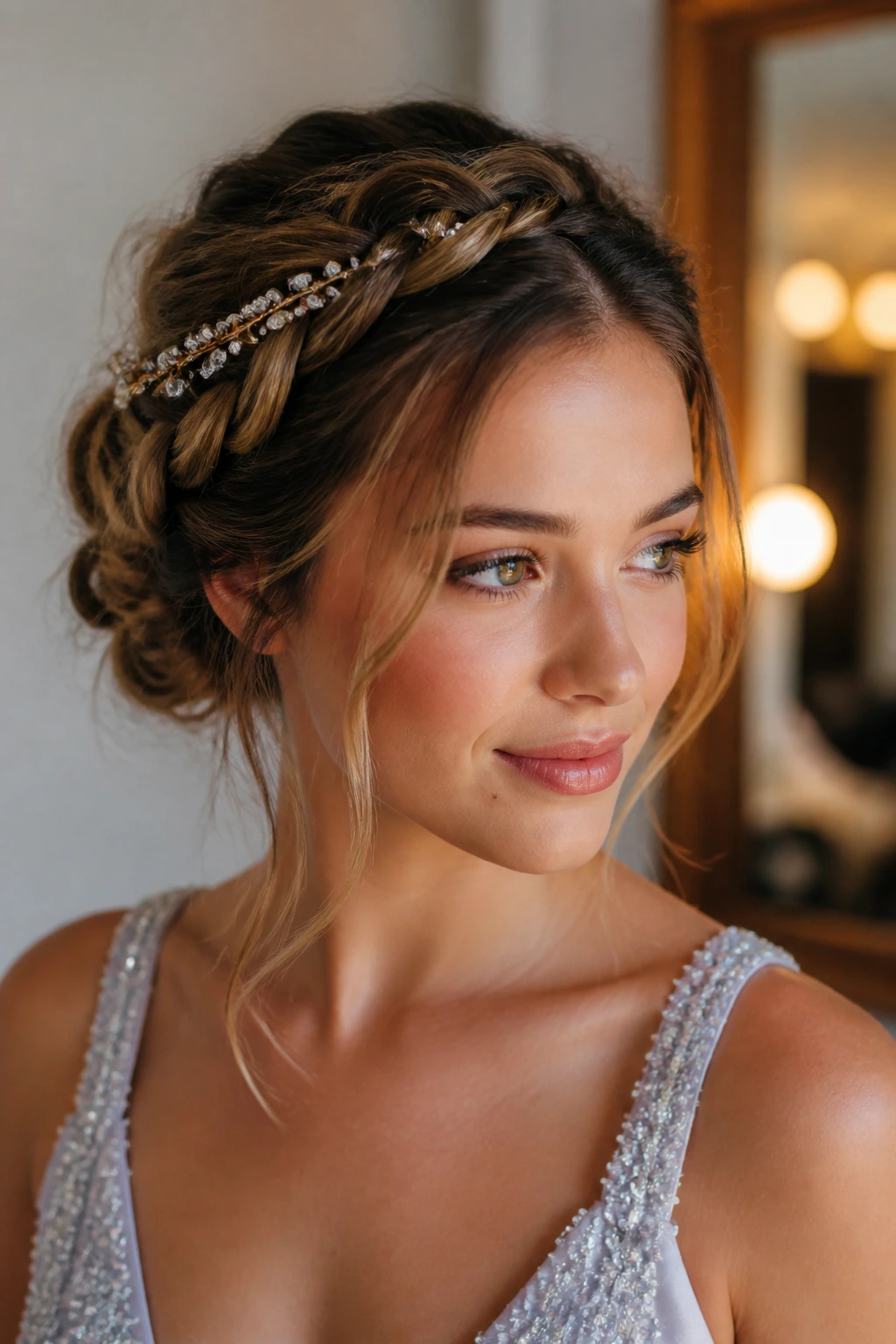
11. Braided Halo Bun
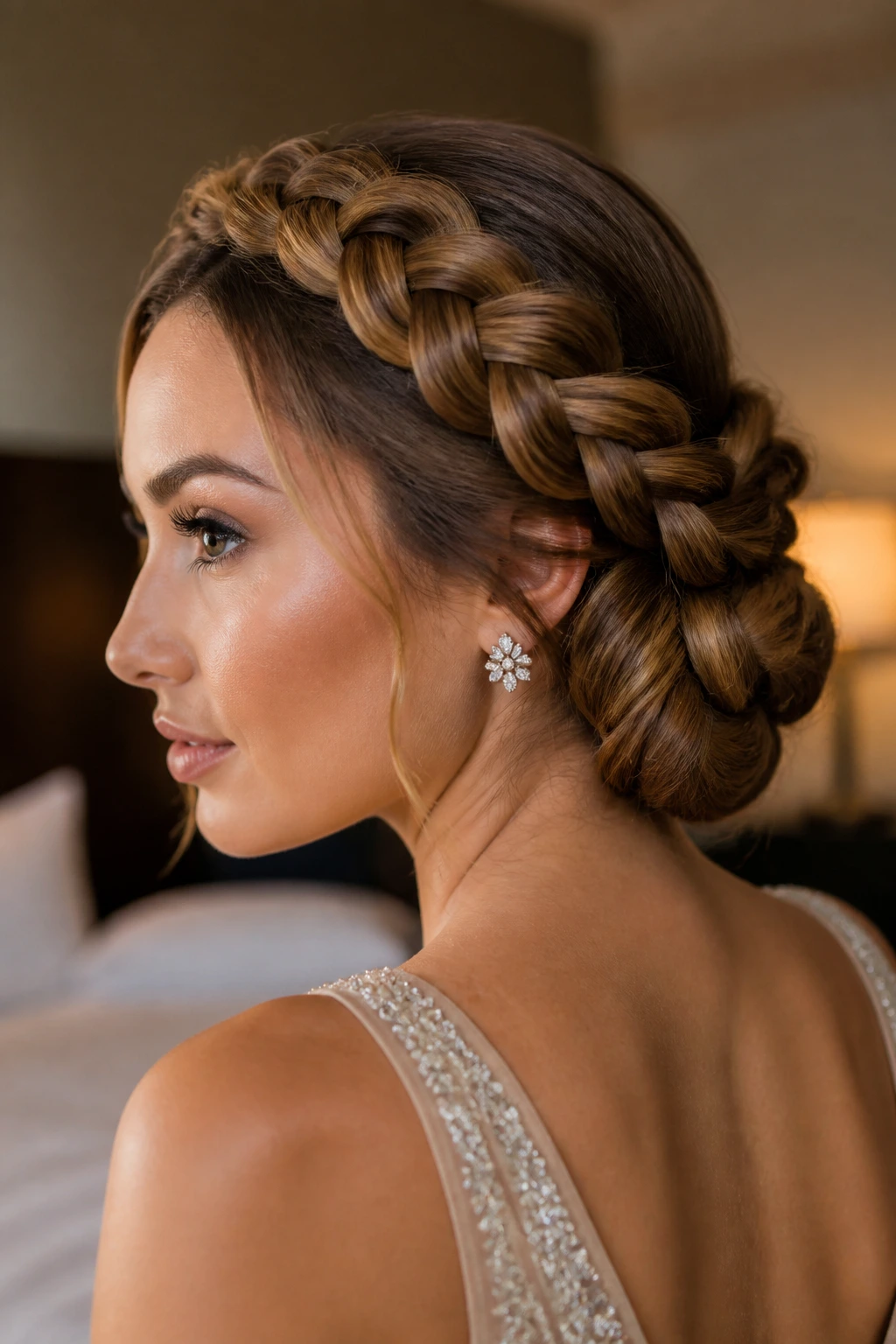
A halo braid into a bun is the kind of style that looks calm and secure from every angle. The braid circles the head like a crown, then feeds into a low bun at the back or sits on its own if your hair is dense enough. Long hair gives you plenty of braid to work with, which means the halo can actually look full instead of thin.
This style is a smart choice if you know you’ll be moving around a lot. It keeps hair close to the head, so it doesn’t whip into your lipstick or stick to your shoulders. If you want a softer look, pull a few tiny pieces free around the temples and nape. If you want it sharper, keep every strand tucked and smooth.
It’s a little more structured than a braided crown, which makes it feel formal without being stiff. And no, you do not need it to be perfect. A slightly uneven halo braid usually looks better than one pulled so tight it loses shape.
12. Center-Part Blowout with Tucked Ends
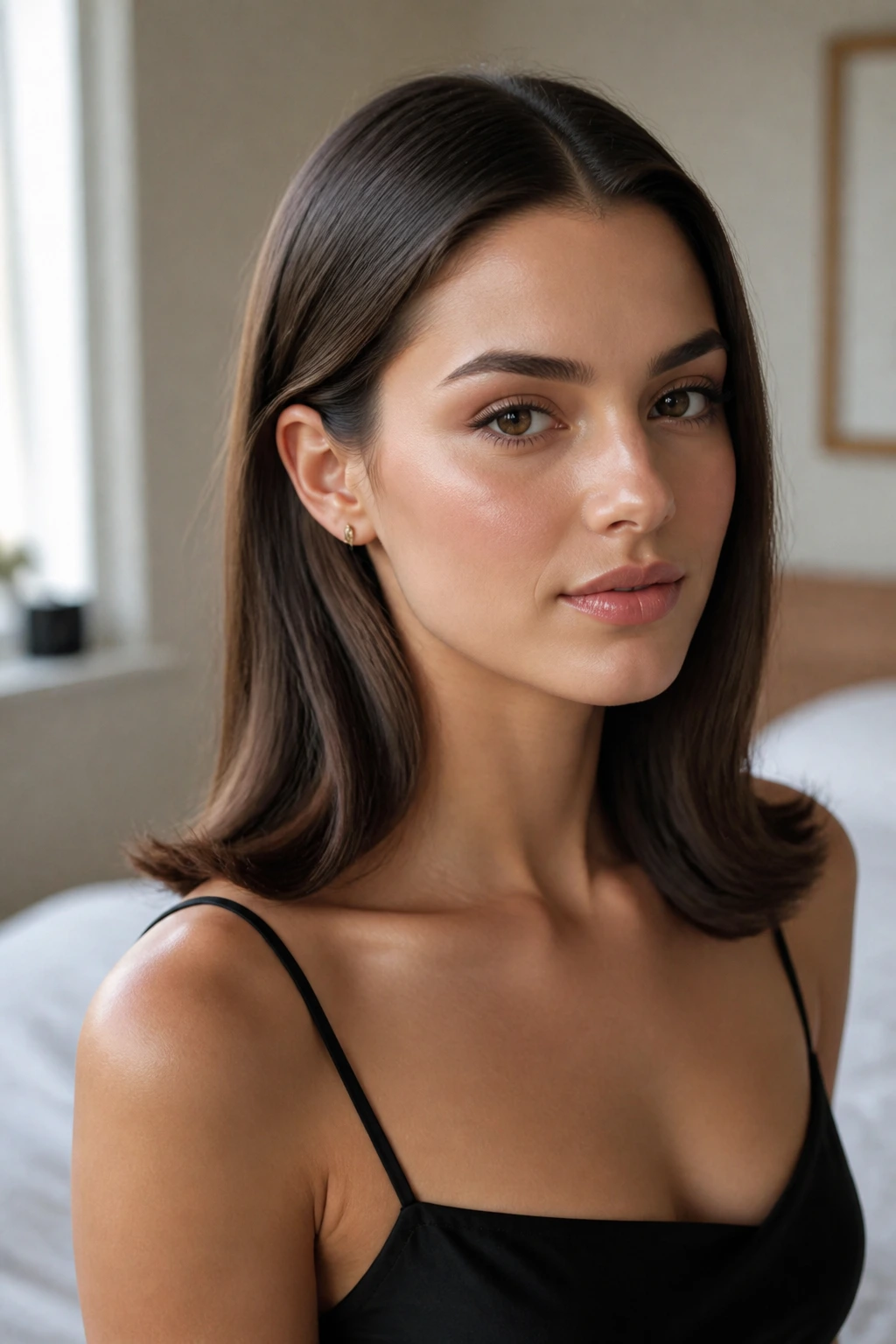
Not every prom style needs curls. A polished blowout with a center part can look cleaner, fresher, and more modern than a full wave set, especially on long hair with good shine. The goal is movement at the ends and smoothness at the top, not stiff roundness all the way down.
Use a round brush or a blow-dry brush and work in sections so the hair dries with direction. Finish the ends with a soft bend inward or outward, then tuck one side behind each ear for a simple frame. If your hair is very thick, split it into four sections and dry from underneath first. If it’s fine, a root-lift spray at the crown keeps the part from falling flat.
I like this style with dresses that have detail at the neckline or shoulders, because the hair doesn’t compete with the outfit. It also looks sharp in flash photos. Clean hair, clean lines. Sometimes that’s the whole answer.
13. Velvet-Bow Low Ponytail
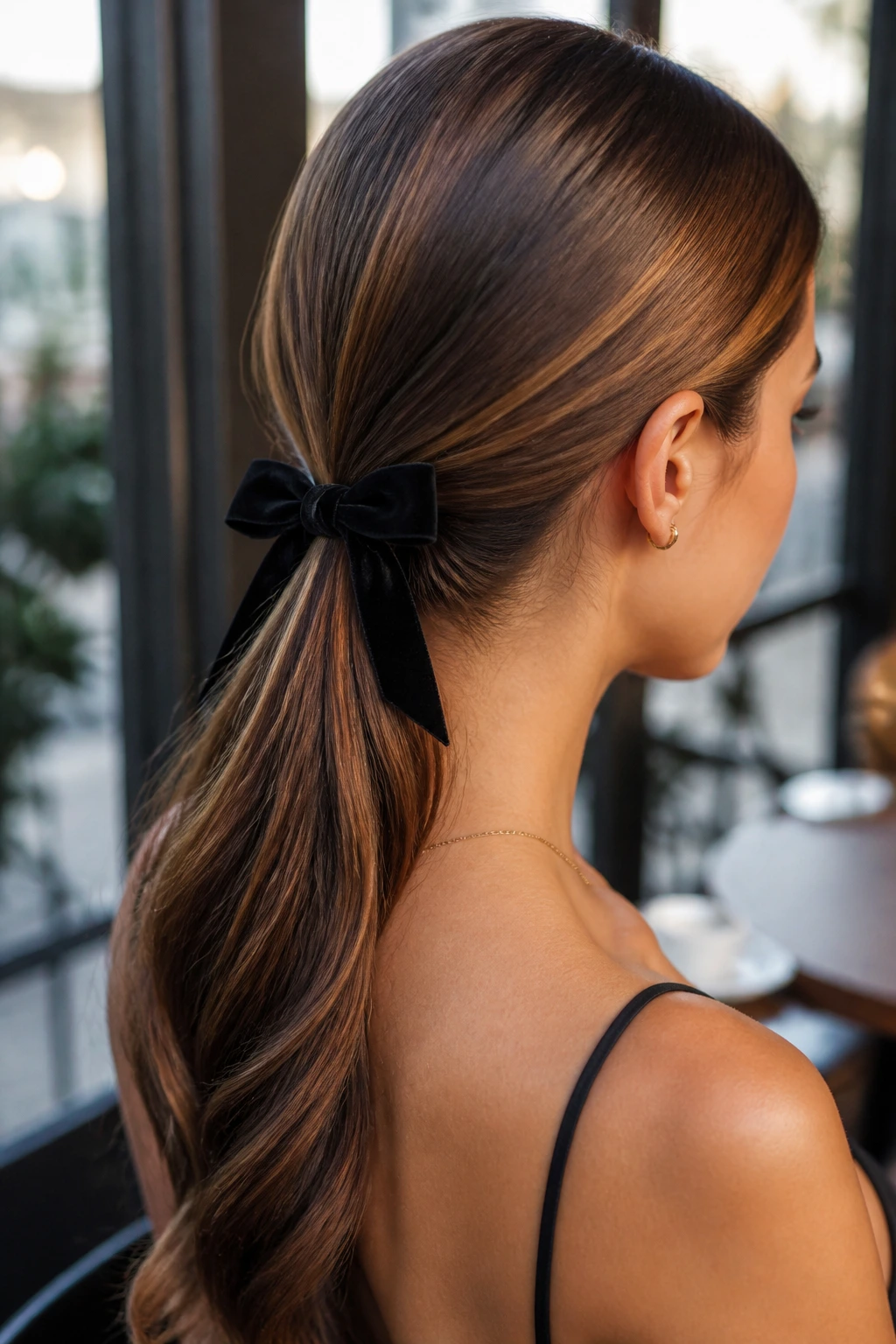
A low ponytail tied with a velvet bow has more personality than people expect. It can read sweet, polished, or a little dramatic depending on the size of the bow and the texture of the tail. On long hair, the ponytail itself gives the ribbon a proper canvas.
Keep the base smooth and the ponytail either sleek or softly waved. If you want the style to feel formal, wrap the elastic with a small section of hair first, then tie the bow right under it. A ribbon that’s about 1 to 2 inches wide usually looks balanced on long hair; anything much bigger can swallow the style.
This is one of the easiest ways to make a simple look feel intentional. It’s also useful if your dress already has strong detail, because the bow adds interest without competing. I’d choose velvet over stiff satin if the gown is rich or structured, since the texture gives the ponytail a little depth.
14. Dutch Braid into a Side Bun
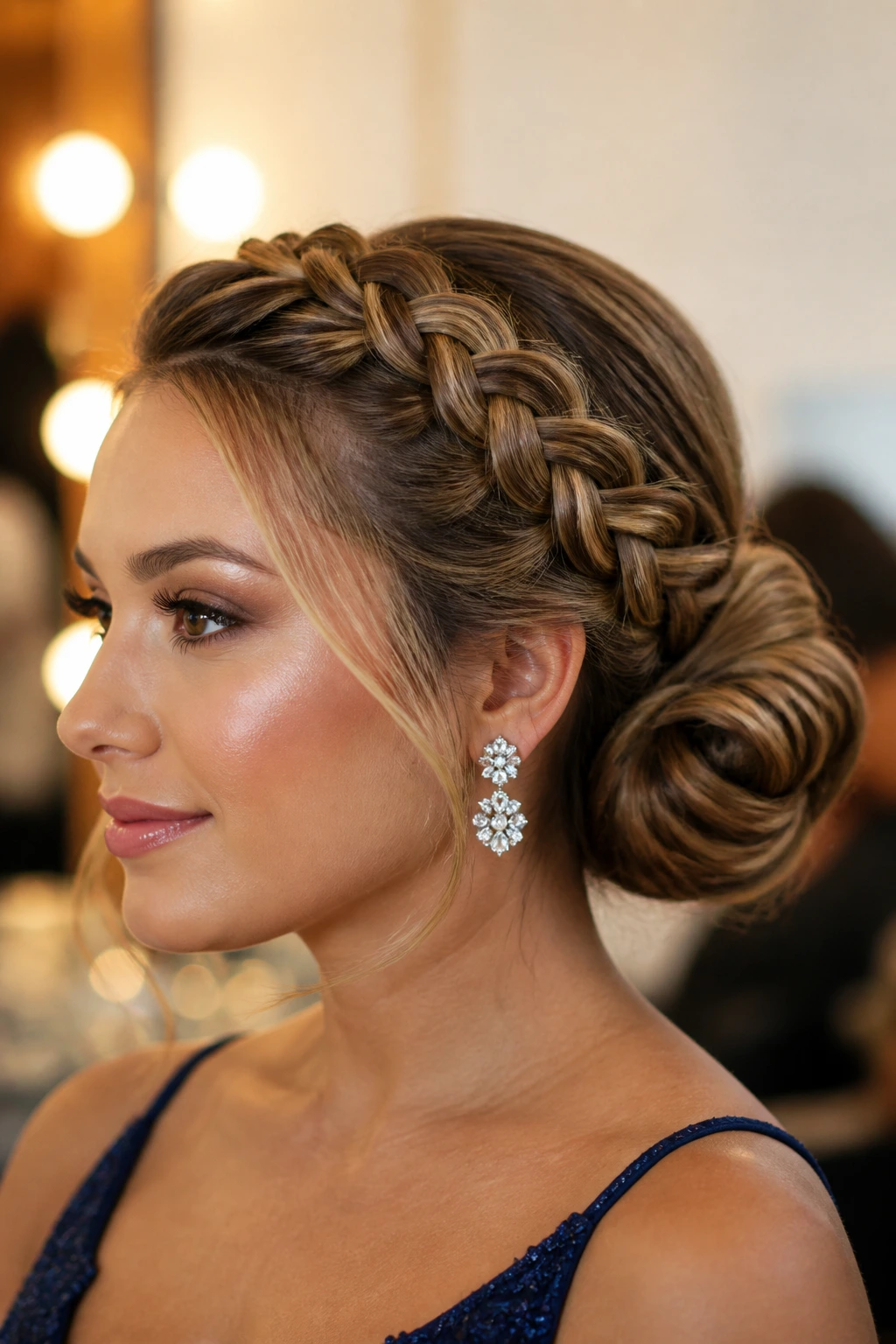
Dutch braids sit on top of the hair instead of sinking into it, which makes them show up beautifully on long lengths. Feeding that braid into a side bun gives you structure, a little edge, and a style that doesn’t flop into your neck when you move.
Start the braid near the hairline and work it toward one side, then gather the rest into a bun just behind the ear or lower at the nape. Keep the braid snug enough to hold shape, but don’t pull so hard that it looks tense. A soft edge around the face helps the whole thing feel less severe.
This style is especially good with high necklines or dresses with a lot going on at the shoulders. It keeps the hair controlled and shifts the visual weight to the braid pattern. If you have really long hair, the bun can get nice and full without much teasing, which is one of the few times hair length does the job for you.
15. Mermaid Waves with Tiny Accent Braids
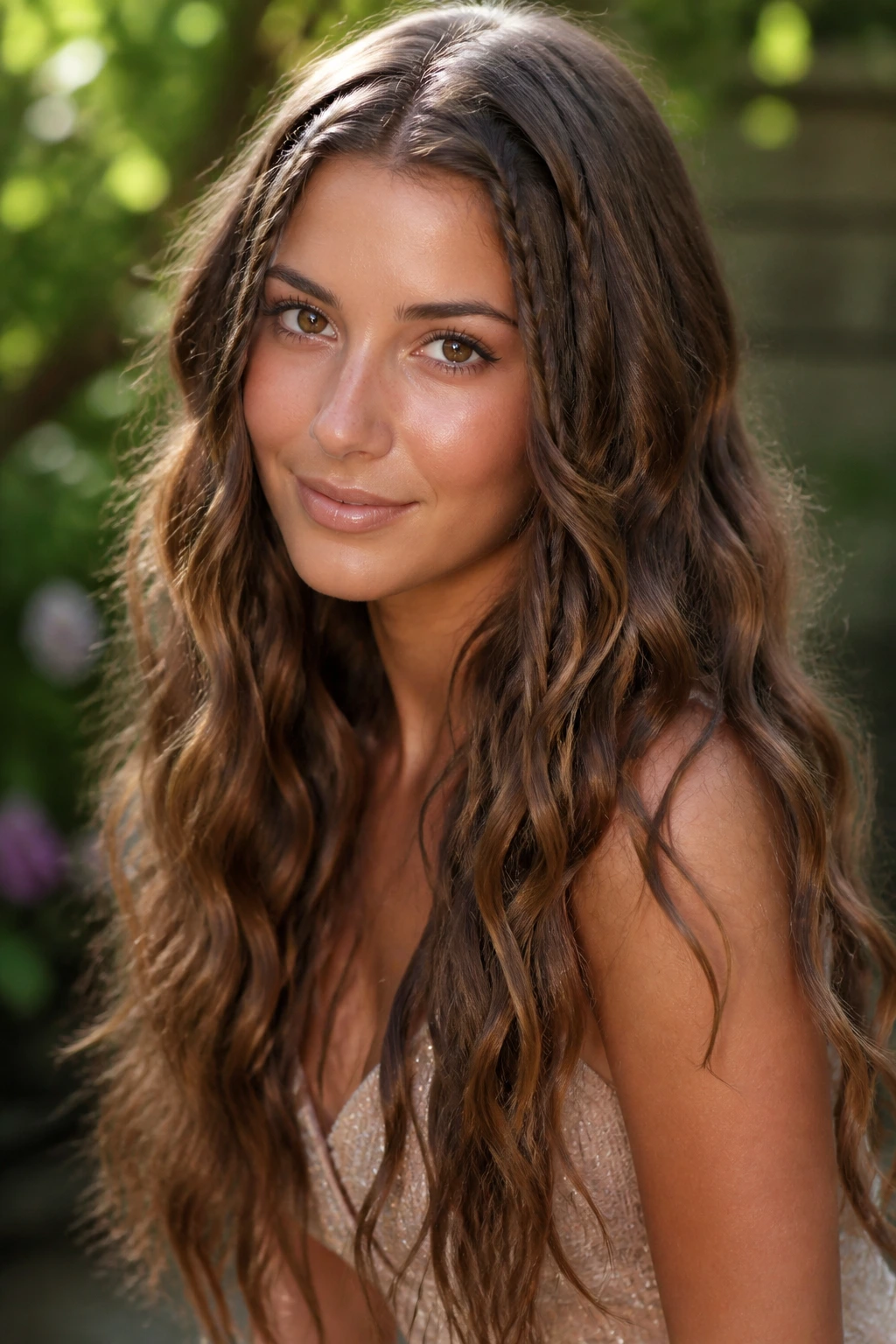
Mermaid waves are all about texture. They’re looser than Hollywood waves, less polished than a blowout, and a lot more relaxed than a formal curl set. On long hair, they look especially good because the length keeps the wave pattern visible from root to end.
The tiny accent braids are the detail that makes the style feel special. Add two or three slim braids near the temples or underneath the top layer, then curl the rest in wide bends. You can leave the braids plain, wrap a thin metallic thread through them, or use tiny cuffs if you want a little sparkle. Keep the braids narrow. Thick accent braids start fighting the wave pattern.
I like this style for someone who wants softness without looking too done. It has a little movement, a little shine, and a little edge. If your hair is naturally wavy, you may not need much heat at all — a bit of mousse, a diffuser, and a few accent braids can do the job.
16. Rope-Braid Ponytail
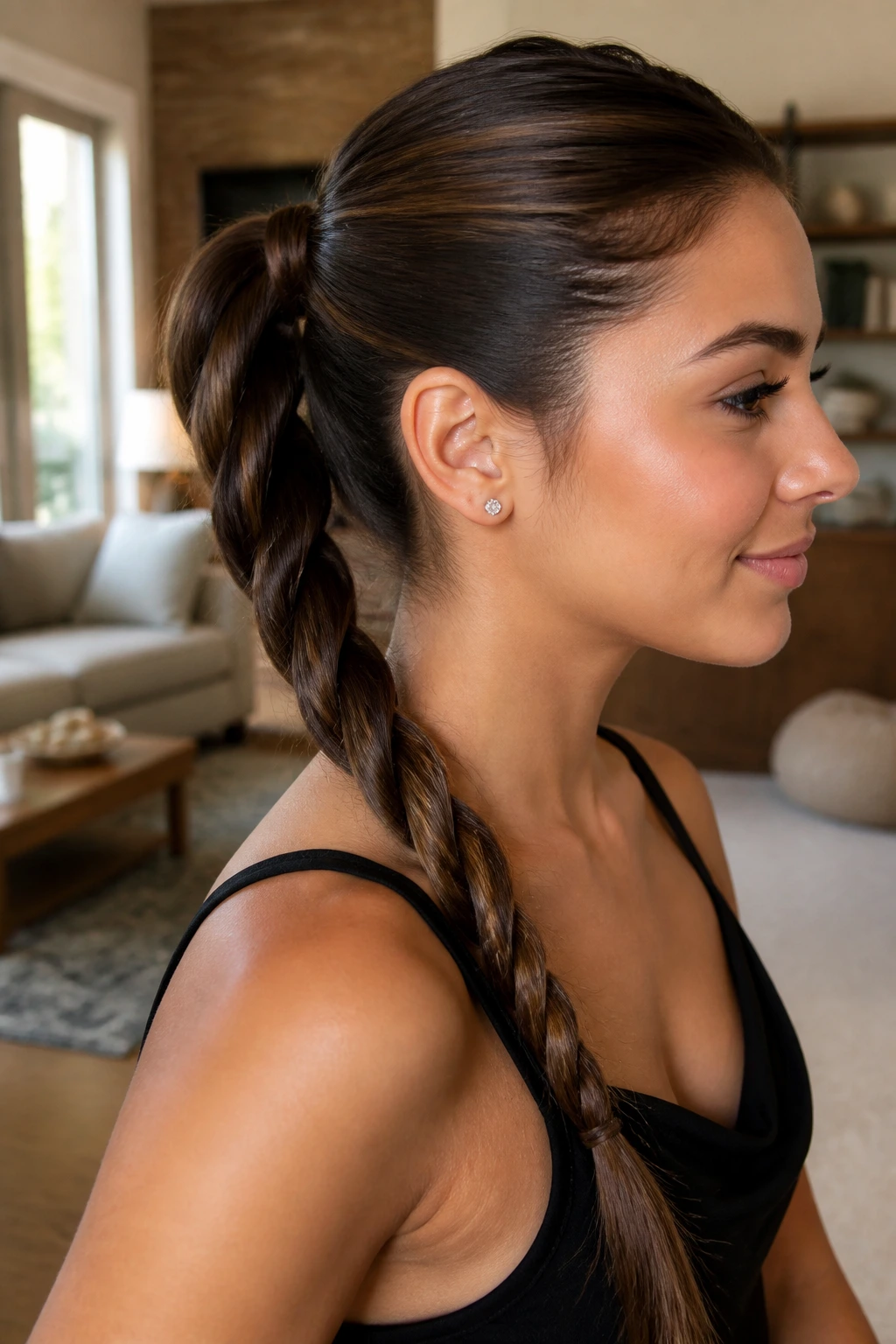
Rope braids are underrated. They look more detailed than a regular ponytail, but they’re faster than a full braid and cleaner than loose curls when you want the length to look controlled. On long hair, the twist pattern stays visible all the way down.
Split the ponytail into two sections, twist each one in the same direction, then wrap them around each other in the opposite direction. That counter twist is what makes the rope braid hold. If you twist both sections the same way all the way through, the braid just loosens. Secure the end with a clear elastic and tug the rope a little at each section to widen it.
This style is a good fit if you want a sleek top with something interesting through the tail. It also works well with layered hair, since the twists help tuck away shorter ends. I’d pair it with a strong neckline or a backless dress — there’s enough detail in the braid that you don’t need much else.
17. Sculpted Top Knot with Loose Tendrils
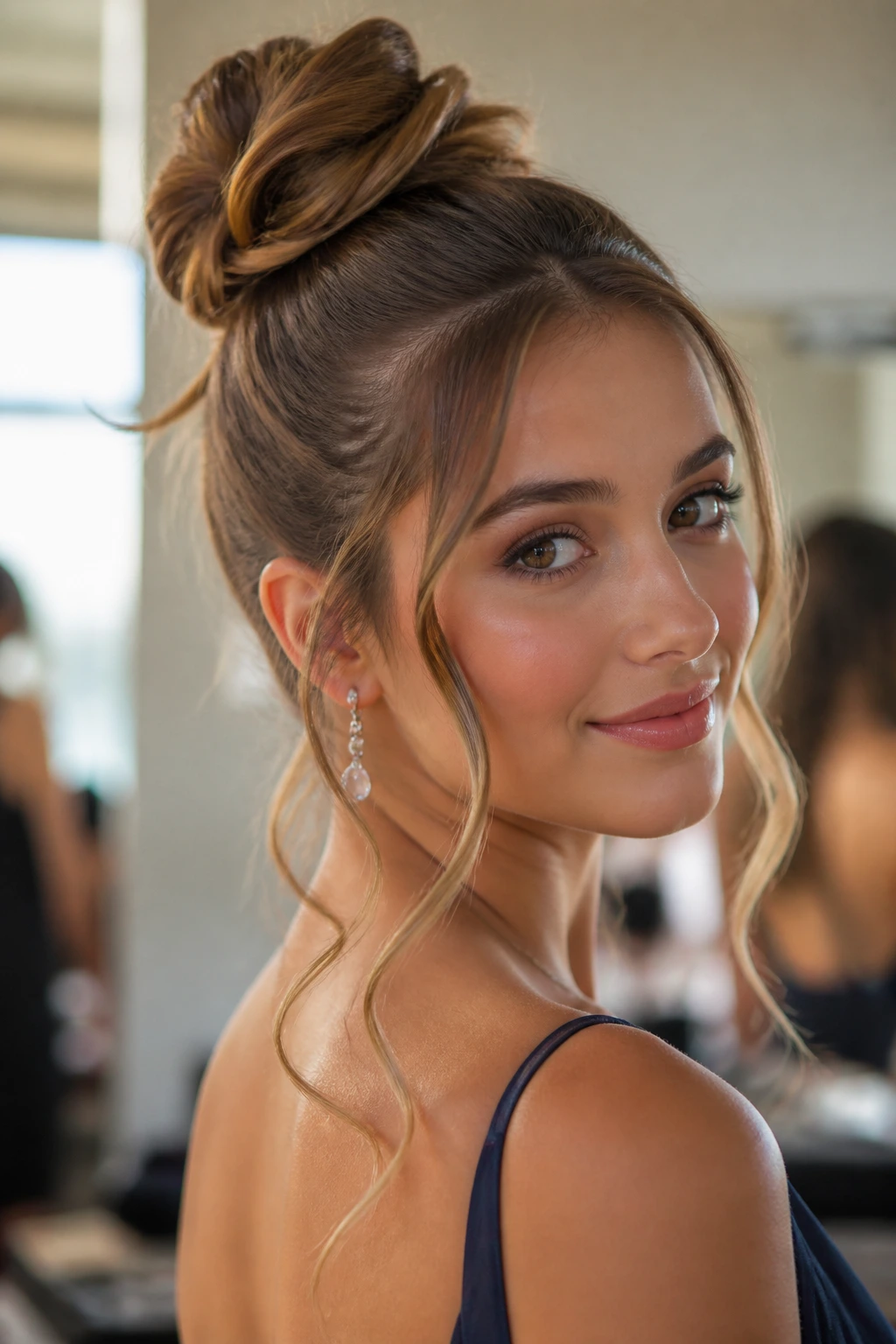
A top knot can look sloppy or sculpted. The difference is in the base. With long hair, you can build a knot that has enough body to look intentional, not like you ran out of time. The trick is to smooth the sides, place the knot high, and keep the tendrils delicate.
Tease the crown a little before pulling the hair up, then twist the ponytail around itself and pin it in a rounded knot. Leave a few thin pieces around the temples and curl them softly away from the face. That little softness keeps the knot from feeling too severe, which can happen fast with long hair and a tight bun.
This one works well with statement earrings and dresses that show the shoulders. It’s also practical if you know you’ll be hot, busy, or on your feet a lot. The style stays put, and the loose pieces give it enough movement that it doesn’t feel stiff.
18. Side Braid into Loose Barrel Curls
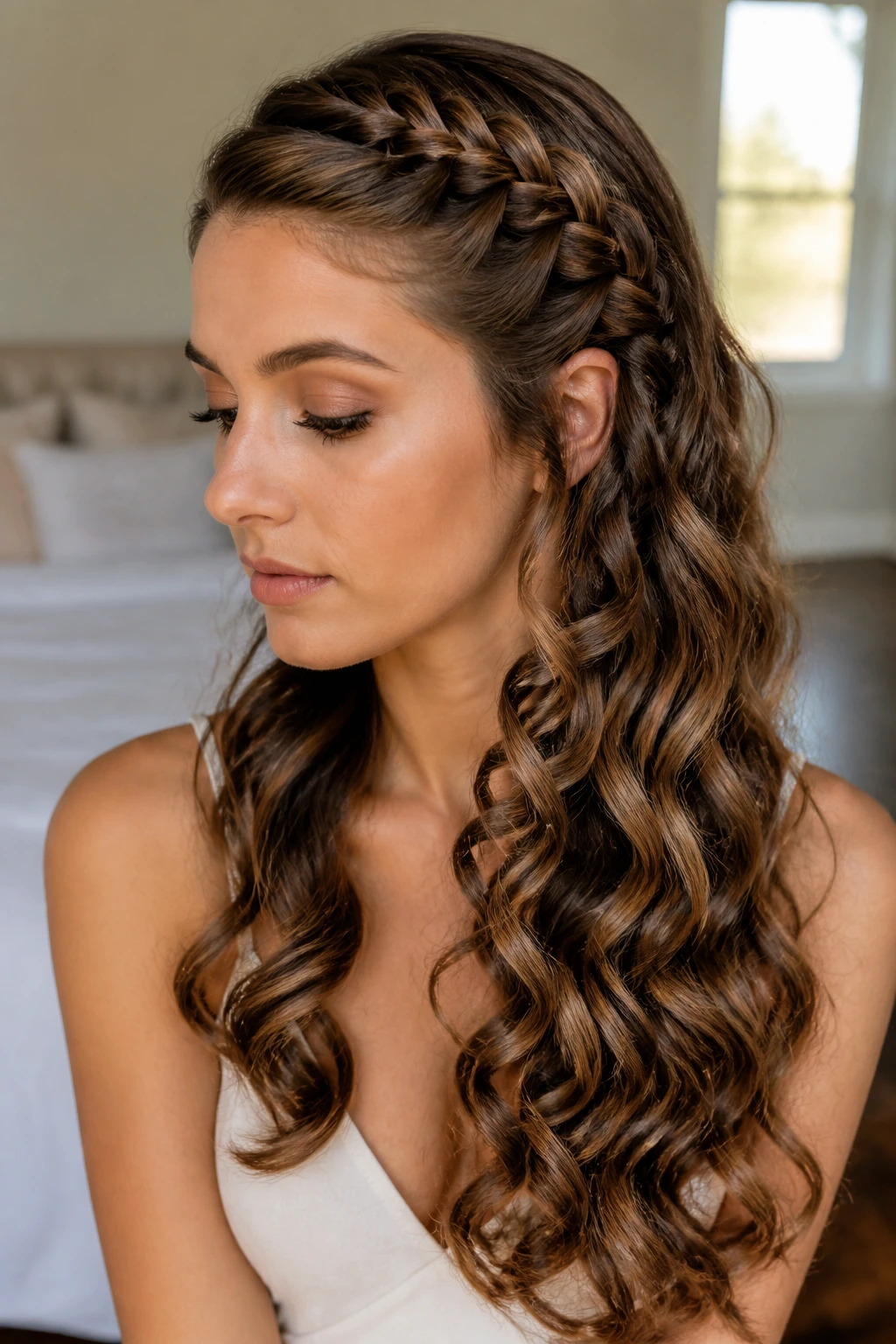
If you want asymmetry, this is a strong choice. A side braid starts the look with a clear line, then the rest of the hair opens into loose curls that soften everything underneath. Long hair gives both parts room to breathe, which keeps the braid from disappearing into the length.
Braid one side of the hair back from the temple or hairline, then secure it behind the ear and let the rest fall into barrel curls. Keep the braid slightly loosened so it doesn’t look like a school style. The curl pattern underneath should be larger and more relaxed than a tight ringlet; otherwise the whole look gets busy fast.
This is one of my favorites for a dress with a little structure on top and softness below. It gives you a focal point near the face and still lets the length stay visible. If you want extra detail, add one small metallic pin where the braid ends meet the rest of the hair.
19. Floral Half-Up with Soft Volume
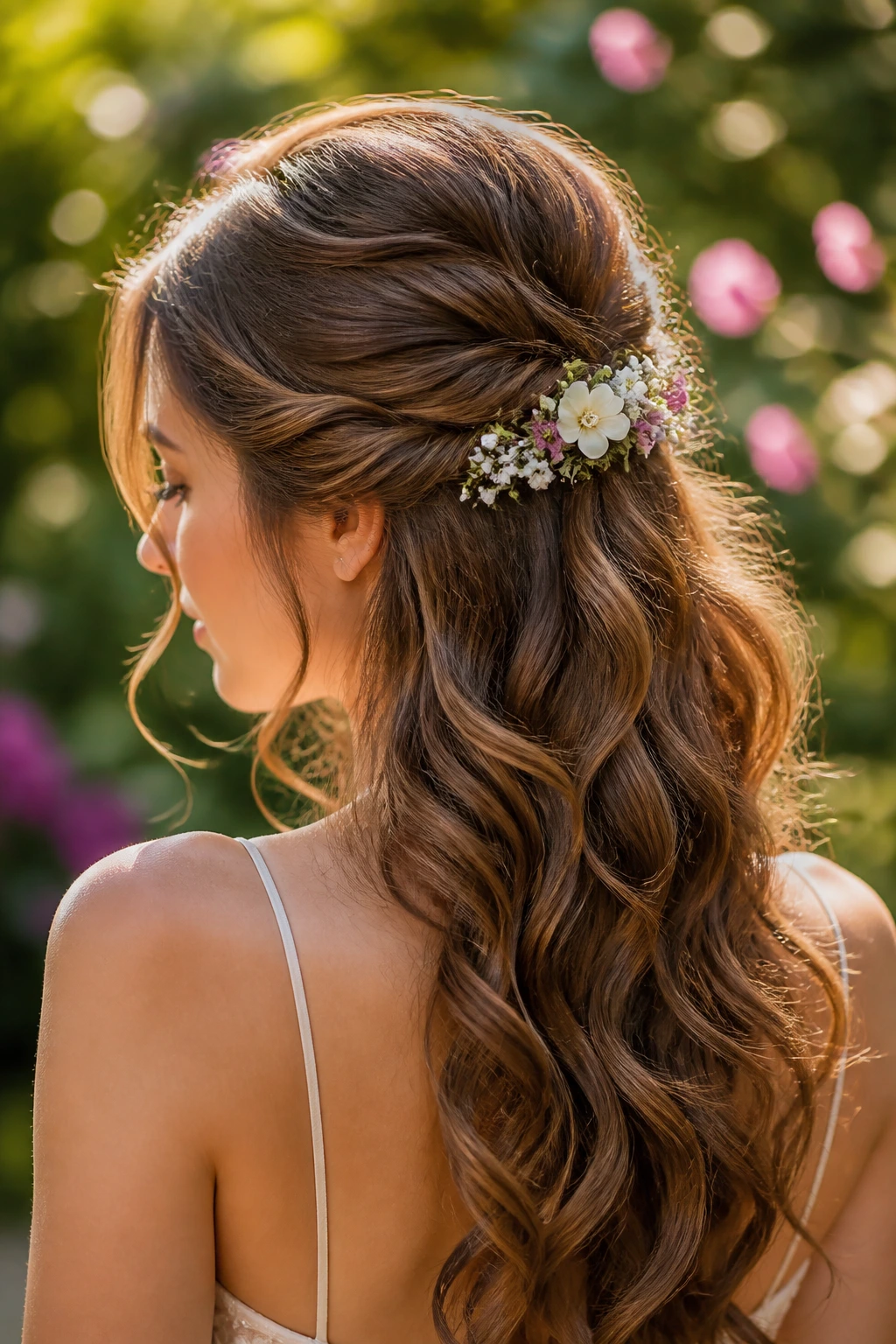
A floral half-up can go twee fast, so the trick is restraint. Keep the crown softly lifted, pull only the top third of the hair back, and place a few small flowers or floral pins where the half-up section meets the loose length. On long hair, that balance lets the flowers sit inside the style instead of sitting on top of it.
I’d use silk flowers or very small fresh blooms if they’re wired securely. Fresh flowers are lovely, but they need support or they droop. The hair itself should stay soft and full, with curls or bends below the pins so the flowers have something to rest against. Too much structure ruins the effect.
This style works when you want something romantic and a little different from the usual prom wave. It’s also the one I’d pick if the dress is simple and the hair needs to do some of the talking. The flowers should feel like an accent, not a bouquet.
What Long Hair Needs to Hold Up Through Prom Night
Long hair is generous, but it is not low-maintenance. The weight pulls on curls, the length drags on pins, and smooth strands slide faster than people expect. That’s why a style has to be built in layers: prep, structure, and finish. Skip one, and the whole thing starts to sag at the sides or puff at the crown.
Root grip matters more than shine at the start. If the hair is too silky, even a good curl can drop fast, so a little mousse or texturizing spray at the roots helps the style bite into itself. Pin placement matters too. Pins hidden inside the base, not perched on top of the surface, hold far better because they anchor to more hair.
The fastest way to save a prom style is to stop touching it. Seriously. Every time you slide fingers through the crown or brush out one front piece “just a little,” you loosen the architecture. A style can survive dancing. It struggles with constant adjustment.
Humidity and heat are the last two troublemakers. If you know you’ll be outside for pictures or moving between places, give the style more structure than you think you need. A slightly firmer set at the beginning usually loosens into the right shape by the time you’re ready to leave.
Essential Tools for Styling Long Hair
- 1.25-inch curling iron or wand — the best barrel size for long hair because it creates a wave that holds shape without turning into tight corkscrews.
- 1-inch curling iron — useful for face-framing pieces, tendrils, and tighter curls around buns or braids.
- Tail comb — perfect for clean parts and precise sectioning; a messy part can throw off a sleek style fast.
- Boar bristle brush or flat brush — helps smooth the top layer without making the style puffy.
- Teasing comb — good for crown lift, especially if you need a little root body under a half-up style.
- Bobby pins in two shades — match them to your hair color if you can; darker pins disappear better in the shadow under braids and buns.
- U-pins — handy for buns and knots because they hold shape without crushing the style flat.
- Clear elastics — small, easy to hide, and useful for bubble ponytails, braids, and half-up sections.
- Flexible-hold hairspray — lets the hair move a little instead of freezing every strand in place.
- Heat protectant spray — non-negotiable if you’re using hot tools; long hair takes a lot of passes, and the ends need protection.
- Texturizing spray or dry shampoo — adds grit to slippery hair and keeps pins from sliding.
- Shine serum or light oil — use a pea-size amount on mids and ends, not the roots, or the style can slip.
Smart Prep and Product Picks for a Smooth Finish
Hair that’s too clean is often too slick. If your strands tend to slide, wash them the day before and let the natural oils build just enough grip. Freshly washed hair can work, but it often needs more product at the roots and a firmer spray at the end.
Start with a heat protectant if you’re curling or straightening. Then decide what your hair actually needs, not what the bottle promises. Fine hair usually likes mousse or a root-lift spray before blow-drying. Thick or coarse hair usually likes a smoothing cream on the mids and ends, plus a little serum after styling. Those two hair types do not want the same product cocktail.
If you’re using clip-in extensions, match the color in daylight if possible and place the clips below the crown so they don’t show when you turn your head. Keep them away from the part line unless the style is built to hide them. And please, keep the top layer thin enough that the clips don’t make a lump. That bump shows in photos.
One more thing: do a trial run. Not the full dress-up fantasy version. Just enough to see where the style slips after an hour, which side falls first, and how much product your hair can actually tolerate before it turns stiff. That little rehearsal saves a lot of panic later.
How to Match the Style to Your Dress and Accessories
Necklines: Strapless and sweetheart dresses can handle hair with more volume at the crown, since the bare neckline needs some balance. High necks and halters usually look cleaner with a sleek ponytail, low bun, or braided updo that doesn’t crowd the collar.
Earrings: Big earrings and big hair can fight each other. If you’re wearing chandelier earrings or anything with movement, choose a style that keeps the hair a little quieter around the face. If the earrings are tiny, the hair can do more of the work.
Hair Accessories: Pearls, pins, combs, ribbons, and flowers should sit inside the style, not on top like a sticker. Tuck them into the braid, bun, or twist so they look woven in. A single focal piece usually looks better than scattering five small ones everywhere.
Dress Details: If your dress has a beaded back or interesting straps, pick a style that leaves that area visible. A high ponytail or a side sweep usually shows off the back better than a dense bun. If the front of the dress is the star, let the hair get softer around the shoulders.
Your Face Shape and Features: Center parts bring balance and symmetry. Deep side parts give drama and soften a strong jawline. Face-framing pieces should land near the cheekbone or chin, not halfway down the mouth where they tend to flick into lipstick.
Practical Tips for Volume, Shine, and Frizz Control
Volume Boost: Tease only the underlayer at the crown, then smooth the top over it with a brush. That gives lift without making the surface look fuzzy. If your hair is very fine, a small crimp at the roots under the top layer can help, though I’d reserve that for styles where the texture stays hidden.
Shine Fix: Use shine spray or a pea-size drop of serum on the outer layer only. Put it on the mids and ends first, then touch the surface lightly. If you hit the roots with oil, the style can slide before you’ve even left the house.
Frizz Control: Let curls cool completely before brushing. Warm hair frizzes faster, and brushing too soon roughs up the cuticle. A cool-shot pass from the blow dryer over the finished style helps lock down the surface without drowning it in hairspray.
Time-Saver: Clip curls up as they cool, then brush them out right before you’re ready. That one habit saves a lot of shape, especially on long hair that likes to pull itself straight under its own weight.
Personal Touch: Add one thing that belongs to you. A velvet ribbon, a pearl pin, a side braid, a flower tucked low near the ear — something small, not a whole craft project.
Keeping the Style Fresh from Photos to Last Dance
The styles that hold best are the ones that are built with the night in mind. Braids, twists, low buns, and ponytails can be finished hours ahead, while brushed-out curls usually need a little more timing so they don’t fall flat before you arrive. I’d style soft waves or a blowout closer to the time you leave, then keep a few pins and a travel spray close.
Night-before prep helps more than people think. You can curl and pin sections, braid your hair, or set the roots with mousse the day before, then refresh the shape the next day with a few minutes of heat and a comb. A silk scarf or bonnet protects smoother styles if you need to sleep on them. Loose braids and twisted styles usually survive overnight better than loose curls.
If your hair is likely to slip, give it one last check right before you go out. Press the bobby pins flat against the scalp, hide the ends under another layer, and mist the base with flexible spray. Don’t load the surface until it feels crunchy. That’s overkill.
Pack a small rescue kit. Six bobby pins, two clear elastics, a travel-size hairspray, and a tiny comb cover most emergencies. If a piece drops, don’t rebuild the whole style in a panic. Pin the problem area back, smooth the surface, and move on. The dance floor is not a salon.
Named Variations and Adaptations to Try
Fine-Hair Lift: If your hair is thin and slips easily, choose styles with a built-in anchor — a braid, half-up twist, or low ponytail. Use mousse at the roots, skip heavy oil, and keep the top a little textured so pins have something to grab.
Curly-Hair Celebration: Natural curls do not need to be flattened into obedience. A half-up crown, halo braid, or loose bun lets the curl pattern stay visible while controlling the front and crown. Use curl cream on damp hair and keep brushing to a minimum.
Heatless Night-Before Set: If you’d rather not use hot tools, go with braids, rope twists, or a pin-curl set. Sleep with the hair protected, then loosen and shape it in the morning. The finish will be softer, but that can work beautifully with a romantic dress.
Accessory-First Styling: Start with the accessory and build the hair around it. A pearl comb wants a chignon or half-up knot; a velvet bow wants a smooth ponytail; small flowers want soft waves with some crown lift. The accessory should look like it belongs there, not like it landed by accident.
High-Drama Glam: If you want a sharper prom look, lean toward a sleek ponytail, deep side wave, or sculpted top knot. Use stronger root hold, cleaner parts, and a gloss finish. That version reads bolder under flash and holds up better when the room gets warm.
Common Mistakes That Make Prom Hair Sag, Puff, or Slip
Using too much conditioner before styling: Hair can get glassy and slippery, which sounds nice until the pins start backing out. If that’s your issue, use conditioner only from mid-lengths to ends and avoid loading the roots.
Curling in huge sections: Big chunks make lazy waves that collapse fast on long hair. Keep the sections around 1 inch to 1½ inches if you want the curl to last past photos.
Skipping the cool-down: Warm curls are soft curls, and soft curls fall. Pin them up or let them sit untouched until they’re fully cool before brushing.
Pinning only the top layer: A pin that sits on the surface is decoration, not support. Slide bobby pins into the base layers where they can catch more hair, and cross them if the section feels slippery.
Over-spraying the finish: A shellacked style can look stiff in person and dusty in flash. Flexible hold is usually enough; add more only where the hair actually needs it.
Forgetting the neckline: A beautiful braid can still fight a halter dress. Step back in the mirror and check the whole outfit together before you decide the style is done.
Frequently Asked Questions
What’s the easiest prom hairstyle for long hair that still looks formal?
A low ponytail with a wrapped base or a soft half-up twist is usually the easiest place to start. Both styles look polished without requiring a full curl set, and they’re forgiving if one section slips a little.
Should I wash my hair the day of prom?
Usually, no. Hair that’s been washed the day before has more grip, which helps curls, braids, and pins stay put. If your hair gets oily fast, use a little dry shampoo at the roots instead of shampooing right before styling.
Can I do these styles on curly hair without straightening it first?
Yes, and sometimes that’s the better move. Styles like the braided crown, halo bun, floral half-up, and textured chignon look richer when the natural curl pattern stays in play. The trick is to work with the curl shape, not fight it into a flat shape.
How do I keep curls from falling before the night is over?
Use smaller sections, let each curl cool completely, and pin the curl up while it sets. A light mousse or heat-set spray before curling helps, too. Heavy oil near the roots is usually the enemy here.
Can I use clip-in extensions for prom hair?
Absolutely, as long as they’re placed low enough to stay hidden and the color match is close in daylight. Clip-ins are useful for adding fullness to ponytails, waves, and braids, but they need to be secured well so they do not show when you turn your head.
What if my hair is very heavy and my style keeps dropping?
Use a firmer base. That means more pins anchored into the lower layers, smaller sections, and a style that sits close to the head — low bun, braided updo, or sleek ponytail usually beats loose curls here. Heavy hair likes structure more than spray.
How far ahead can I style my hair?
Braids, twist styles, and low buns can often be done earlier in the day, then touched up right before you leave. Loose curls and blowouts are better done closer to the time you go out so they don’t relax too much.
What if I’m doing my own hair and I’m not great with braids?
Skip the fussy braid work and choose a style with clean lines: Hollywood waves, a wrapped ponytail, a center-part blowout, or a low chignon. Those styles look formal without needing perfect hand coordination, which is a fair trade.
The Style That Feels Like You
The best prom hair on long length doesn’t try to erase the hair you have. It uses it. That’s the whole point of choosing a style that lets your length work as shape, movement, and detail instead of treating it like something to hide.
Pick the version that matches how you want to feel when you walk into the room: glossy, soft, sharp, romantic, a little dramatic. The right style will hold up better, yes, but it will also make sense with the dress, the jewelry, and the way you actually move. That’s the part people remember.
So do the mirror check, pin the loose piece, and give yourself one last look from the side. The style that survives the night is usually the one that was built to move with you from the start.
