



Sun-kissed hair color works because it doesn’t try to do too much at once. The best versions look like the front pieces spent a few hours in bright weather and the rest of the hair kept the memory of that light. Nothing is stamped on in a hard line. Nothing screams for attention. The shadow at the root stays soft, the lighter strands are spaced out instead of packed together, and the whole thing moves when you turn your head.
The mistake most people make is chasing brightness without thinking about depth. A few foils can look fine in the bowl and terrible on the head if every light piece sits at the same height. That’s how you get the stripey, crunchy look nobody asked for. The good versions keep some brunette, some beige, some honey, maybe a little ash or copper depending on the base, and let those tones sit next to each other without fighting.
That’s why these 20 ideas are worth bookmarking. They lean on placement, tone, and root depth instead of heavy contrast. A skilled colorist can make a level 4 brunette read warm and airy without pushing it orange. A level 7 blonde can get brighter without losing the soft edges that make the color look lived-in. The trick is in the blend.
Why These Shades Feel Soft Instead of Stripey
Soft dimension is about spacing, not just color. When lighter pieces are scattered in different widths and different levels, the eye reads movement. When they all start at the same line, the head reads as bands. That tiny difference is why one highlight job looks expensive and another looks like it was done with a ruler.
Root shadow does a lot of heavy lifting. Leaving the first half-inch to one inch at the scalp a touch deeper gives the color somewhere to rest. It also buys you better grow-out, which matters if you do not want a bright line showing up six weeks later. A root that’s one level deeper than the mids is usually enough.
Tone matters as much as lift. Honey, beige, mushroom, caramel, and copper all sit in different directions on the color wheel, and the wrong one will fight your base. A brunette with strong red undertones usually looks better in beige-caramel than in pure gold. A cooler blonde often needs mushroom or beige to keep the brass down.
Lowlights are not the enemy. A few darker strands woven back in make the lighter pieces look lighter. Without that contrast, hair can go flat fast, especially on thick or porous hair that already wants to puff out and lose shape.
Why You’ll Love This Collection
- Soft grow-out: Root shadows and blurred placement keep the line from your scalp to your highlights from looking harsh, so the color stays wearable longer.
- Customizable warmth: You can push these looks honey-gold, beige, caramel, copper, or smoky without changing the whole idea.
- Works on different bases: Dark brunettes, medium browns, dirty blondes, and even cooler blondes can all live in this family with the right toner.
- Easy to style: Loose bends, round-brush blowouts, and soft waves show the ribbons better than pin-straight hair.
- Salon-friendly language: Terms like babylights, root smudge, gloss, and face frame help you ask for the finish you actually want.
- Less all-over damage: Keeping depth underneath and brightness where it counts means you usually light up fewer strands than with a full blonde overhaul.
1. Honey Bronde With a Root Shadow
Honey bronde is the safe place to start if you want brightness without the drama of a full blonde job. The base stays a little deeper—think level 5 or 6—while the mids pick up honey-beige ribbons and the ends stay soft, not white.
Why It Works
The root shadow keeps the top from looking patchy as it grows. That matters more than people admit. If the crown is too light, the eye lands there first and the whole style can look disconnected. Keep the brightest pieces around the face and the outer canopy, and this reads like natural dimension instead of a row of highlights.
A good honey bronde should look warm in daylight and neutral indoors. If your hair tends to go orange, ask for more beige than gold in the toner. If your hair is naturally dark blonde or light brown, this is one of the easiest ways to get a sunlit finish without losing depth.
2. Caramel Ribbon Balayage on Espresso Brown
Dark brown hair does not need to go blonde to look lifted. A few caramel ribbons, painted through espresso brown in wide but controlled sweeps, are enough to wake the whole head up.
The key is restraint. Keep the ribbons one or two inches apart, let them start lower on the hair shaft, and leave the underlayers rich. Chunky pieces near the crown can make dark hair look dated fast; thinner, uneven ribbons feel softer and more expensive. This is one of those looks that really comes alive when hair bends through the mids and ends, so a loose wave or bend helps a lot.
3. Vanilla Babylights on Dirty Blonde
Why do some blondes look airy while others look streaky? Babylights are usually the answer. They’re finer than standard highlights, placed in smaller sections, and toned to a vanilla-beige finish instead of a flat yellow or icy white.
This works especially well if your natural color sits around level 7 or 8 and you want lift without losing density. Fine hair loves it because babylights don’t expose too much scalp. Ask for extra brightness around the hairline and part line, then keep the rest of the head softer so the color doesn’t feel overdone.
Best for
- Fine to medium hair that needs visual fullness
- Dirty blonde bases that look flat in winter light
- Anyone who wants brightness without obvious stripes
4. Toasted Almond Melt
A melt is what keeps color from looking like a set of stripes. The shade shifts slowly from a deeper root to almond mids and creamier ends, with no hard line where one tone stops and the next starts.
This one likes movement. Medium-to-long layers show it best because the lighter ends sit over the darker base when the hair swings. If your ends are porous, don’t chase extra light there. Leave them a shade deeper and glaze them well; they’ll still look bright once styled, and they’ll feel better too.
5. Buttered Biscotti Blonde
This is the blonde for people who like depth at the root and cream through the mids, not a bright bleach job from scalp to ends. A few lowlights threaded in keep the color from looking flat, and a beige gloss keeps the finish from turning pale yellow.
Buttered biscotti blonde works beautifully on hair that already has some old highlights. You’re not fighting the history of the hair; you’re softening it. If the ends are fragile, ask your colorist to stay conservative there and use toner, not more lift. Over-lightened ends can turn hollow in a hurry.
6. Cinnamon Swirl Copper
Copper gets loud when it’s all one note. Cinnamon swirl copper fixes that by mixing chestnut depth with warmer copper ribbons and a glossy red-brown glaze through the ends.
This is one of the warmer looks in the bunch, and it rewards upkeep. Red-based tones fade faster than beige or ash, so a gloss every four to six weeks helps keep the color from drifting dull. If your skin already wears warm metals well, this kind of copper usually feels easy. If pure red feels too strong, cinnamon is the softer route.
7. Mushroom Brown With Sunlit Ends
Cool brunette can look expensive when the ends are lighter but not gold. Mushroom brown does that by mixing taupe, ash, and soft brown through the mids, then lifting the ends just enough to keep the cut from going flat.
This one is for people who hate brass. Ask for a cooler toner and a few lighter ends, not a full brightening of the whole head. Blue shampoo once a week is usually enough to keep orange tones from sneaking in. Any more than that, and the color can start to look dry and muddy.
8. Maple Syrup Money Piece
Can a money piece look soft instead of loud? Absolutely. Keep the front two sections only one or two levels lighter than the rest, and feather them back into the hairline instead of blocking them off like stripes.
This is especially good with curtain bangs, long layers, or any cut that falls around the cheekbones. The front brightness frames the face, but the darker interior keeps the color grounded. Tuck one side behind the ear and the contrast reads even cleaner. It’s a small move, but it changes the whole mood.
9. Beige Champagne Balayage
Beige is what keeps blonde from reading harsh. Champagne beige sits between gold and ash, which means it can soften a pale blonde without making it icy or flat.
This shade is happiest on bases around level 7 or 8, where the lift is already there and the toner can do most of the work. Ask for the brightest pieces to stay in the top layers and around the face, then let the underside remain a touch deeper. That little bit of shadow makes the whole color look more expensive. And yes, “beige” matters—don’t settle for a toner that pushes everything too gold.
10. Chestnut Latte Dimension
A chestnut base with creamy ribbons is the color equivalent of a soft sweater: warm, muted, and easy to wear. The contrast is there, but it never shouts.
This one really likes thick waves, braids, and long layers because the lighter ribbons slide in and out of view. If the highlights are too wide, the color can go patchy. Keep them narrow and irregular, and let a gloss tie the tones together. It’s a very good option if you want richness at the root but still want the ends to feel lighter.
11. Apricot Brunette Glaze
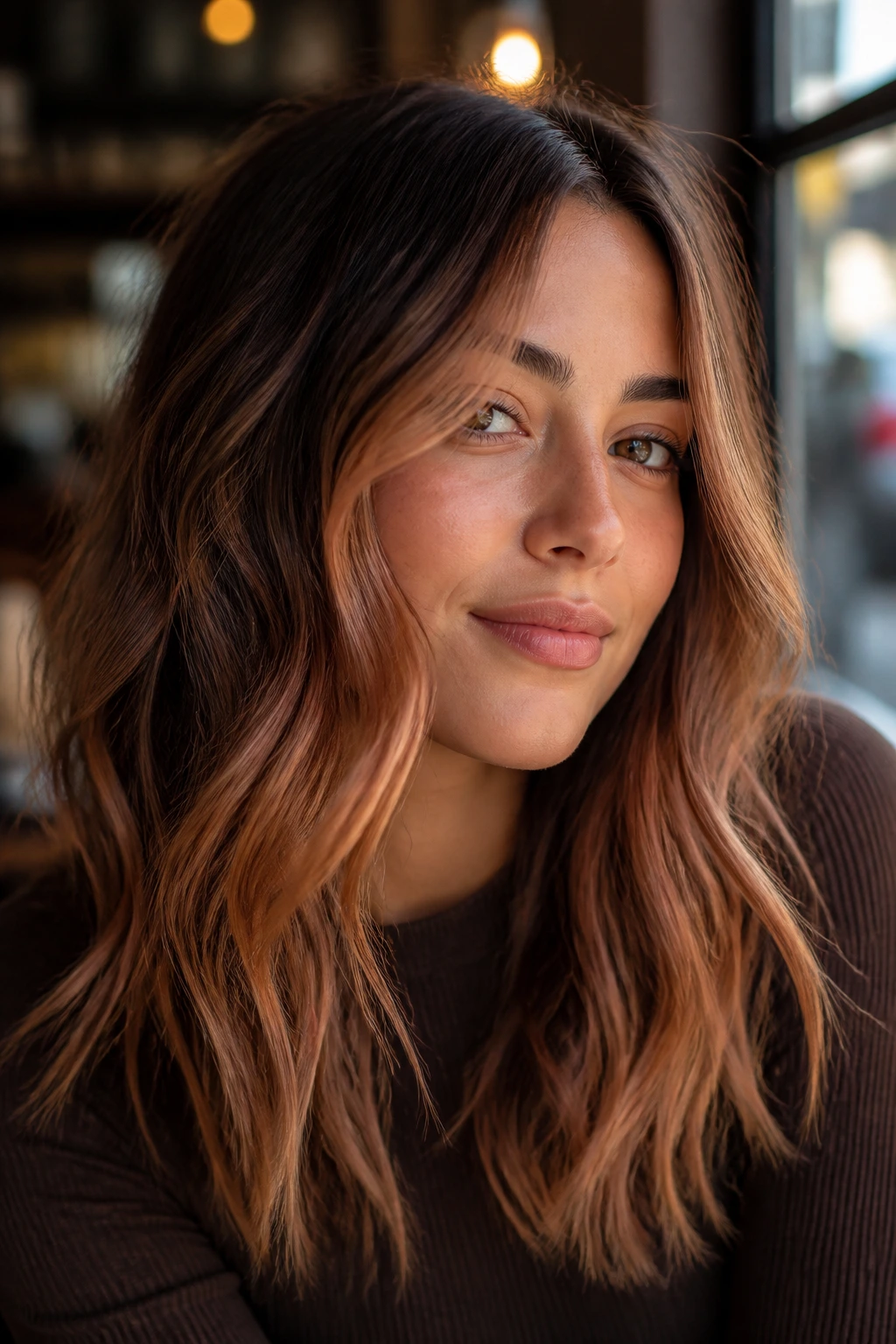
Apricot reads softer than copper because it sits a little peachier and a little lighter. On brunette hair, that makes it feel like a glaze instead of a full red shift.
The brown underneath keeps the whole thing grounded. That’s the appeal. A faint apricot finish around the face and through the ends can wake up flat brown hair without making it look like a fashion color. If your hair is very dark, keep the apricot concentrated in the brighter pieces; the tone shows best when it has some lift behind it.
12. Sandy Toffee Lob
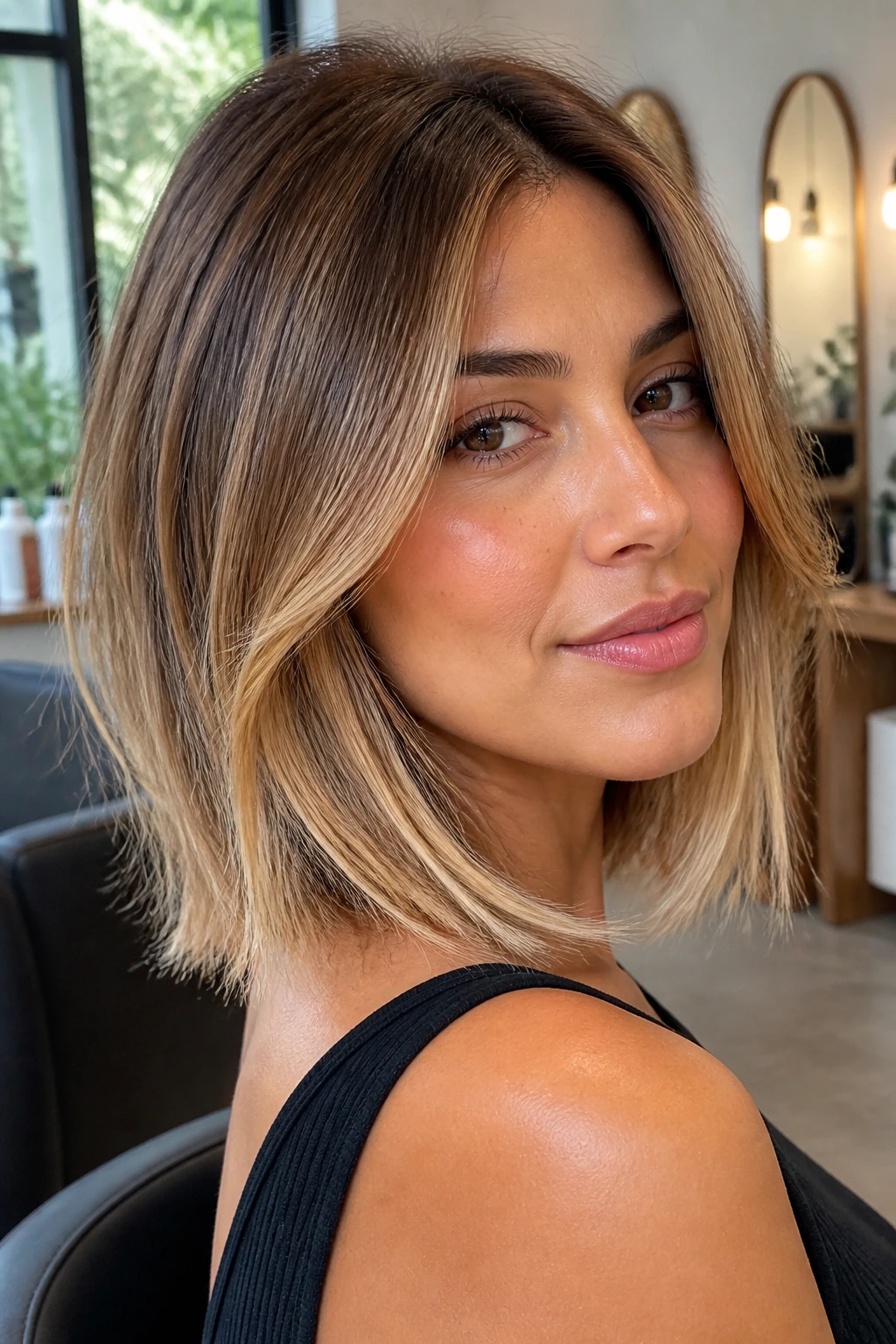
Shorter hair can go blocky fast if the color sits in one heavy band. A lob needs dimension at the ends and around the face, or it starts to feel like a helmet.
Sandy toffee works because it keeps the base soft and the lighter pieces delicate. Ask for brighter ends and a subtle face frame, then leave the crown slightly deeper so the cut has shape. If your hair is fine, don’t overload it with lowlights. Too much darkness on a lob can make it look muddy instead of dimensional.
13. Smoky Bronze Balayage
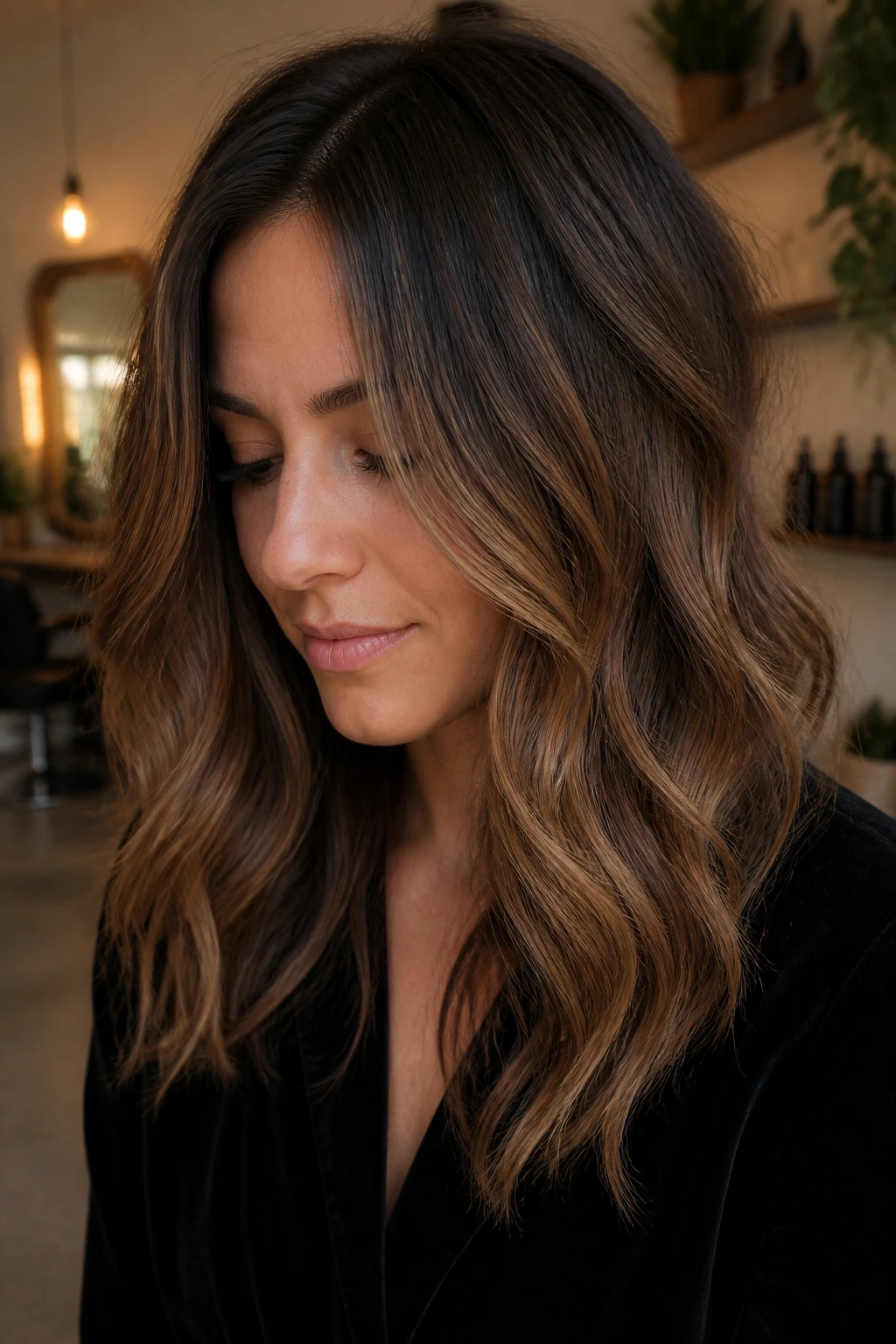
Bronze is gorgeous until it turns orange. Smoky bronze solves that with a taupe veil over the warmer pieces, so the color stays rich instead of loud.
This shade sits in a nice middle ground for brunettes who want warmth but do not want copper. The base stays brown, the ribbons lean bronze, and the toner nudges the whole thing slightly smoky. It’s especially flattering when hair has a bit of bend, because the warmer pieces show at the peaks and the cooler ones hold the shape underneath.
14. Honeyed Auburn Veil
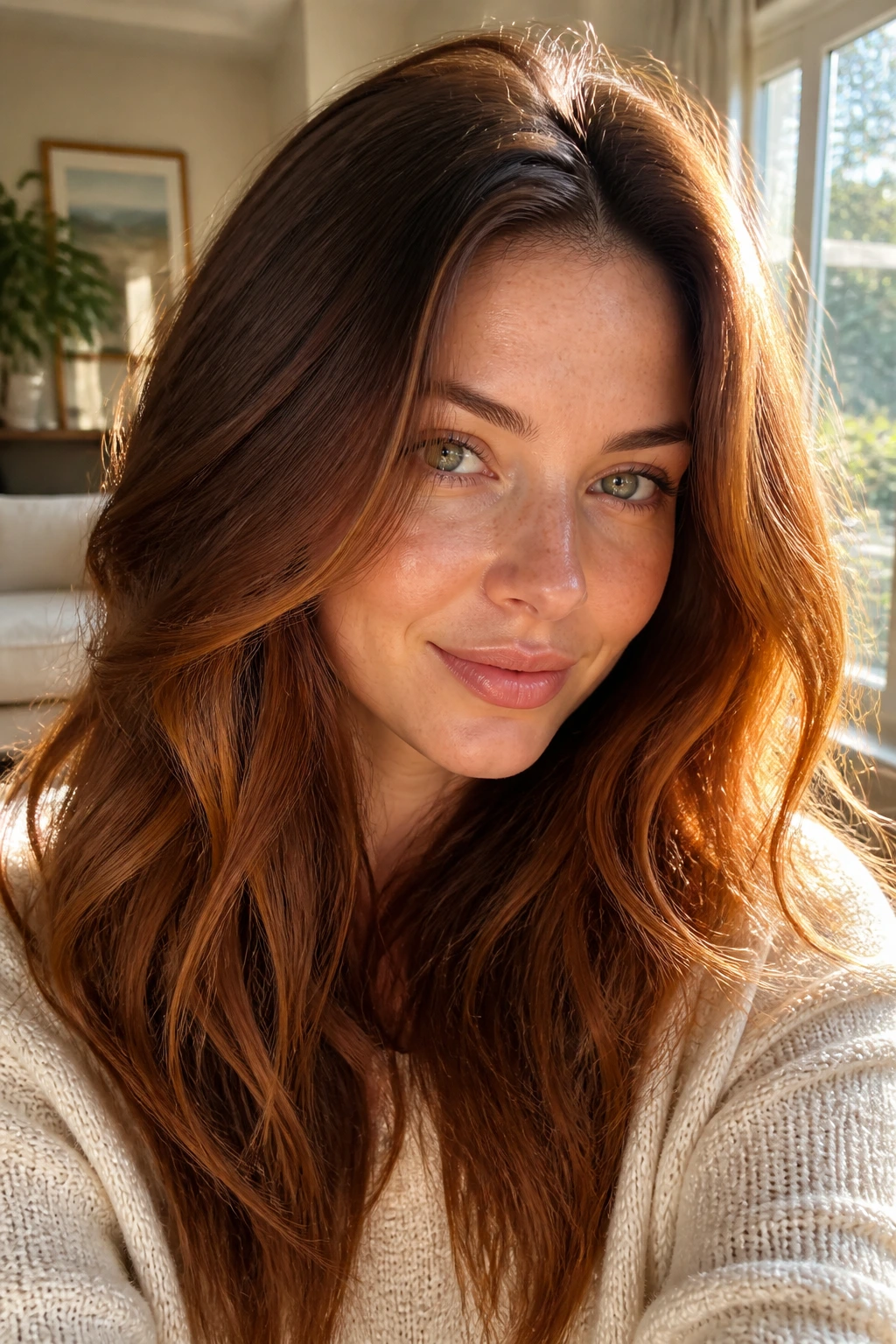
Auburn is the softer cousin of red. Add a honey veil and the whole thing loses some of its intensity, which is exactly why it works for people who want warmth but not a full red commitment.
This color loves layered cuts and loose waves. The warmth sits in the mids and ends, while the root can stay a natural brown or chestnut for depth. A gloss every four to six weeks keeps the auburn from fading into a dull rust. If you like warm tones but hate the maintenance of vivid red, this is the one to keep in your back pocket.
15. Cool Bronde With Lived-In Lowlights
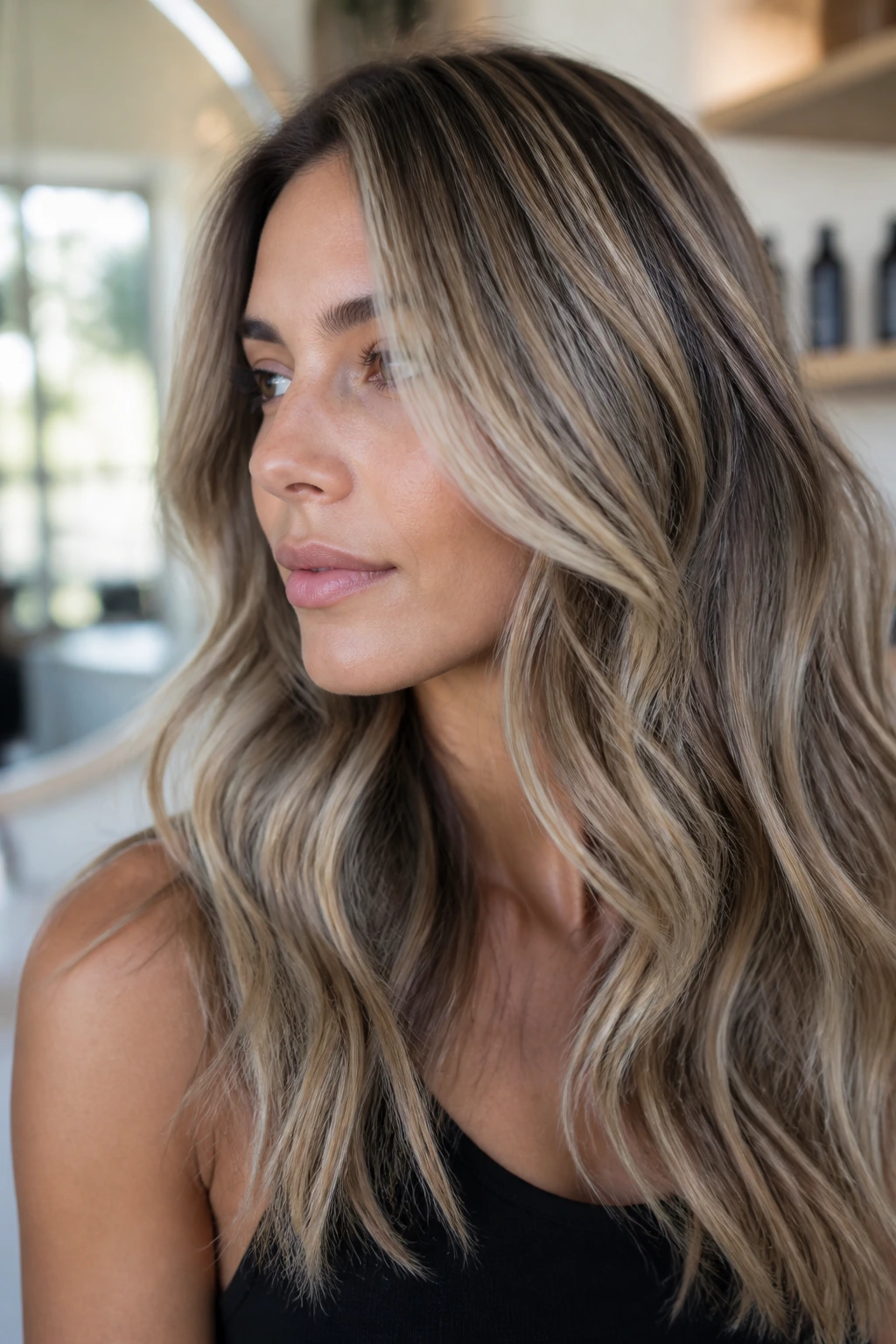
If golden bronde feels too sweet, cool bronde cuts the sugar. This version keeps the blonde pieces beige or ash and weaves in lowlights so the color has structure from root to end.
Thick hair especially benefits here. Without lowlights, heavy hair can go puffy and one-note. With them, the cut gets more shape and the lighter strands look brighter by comparison. Ask for lowlights close to your natural base, not a stark dark brown, or the color can start to look muddy instead of cool.
16. Caramelized Cocoa Curls
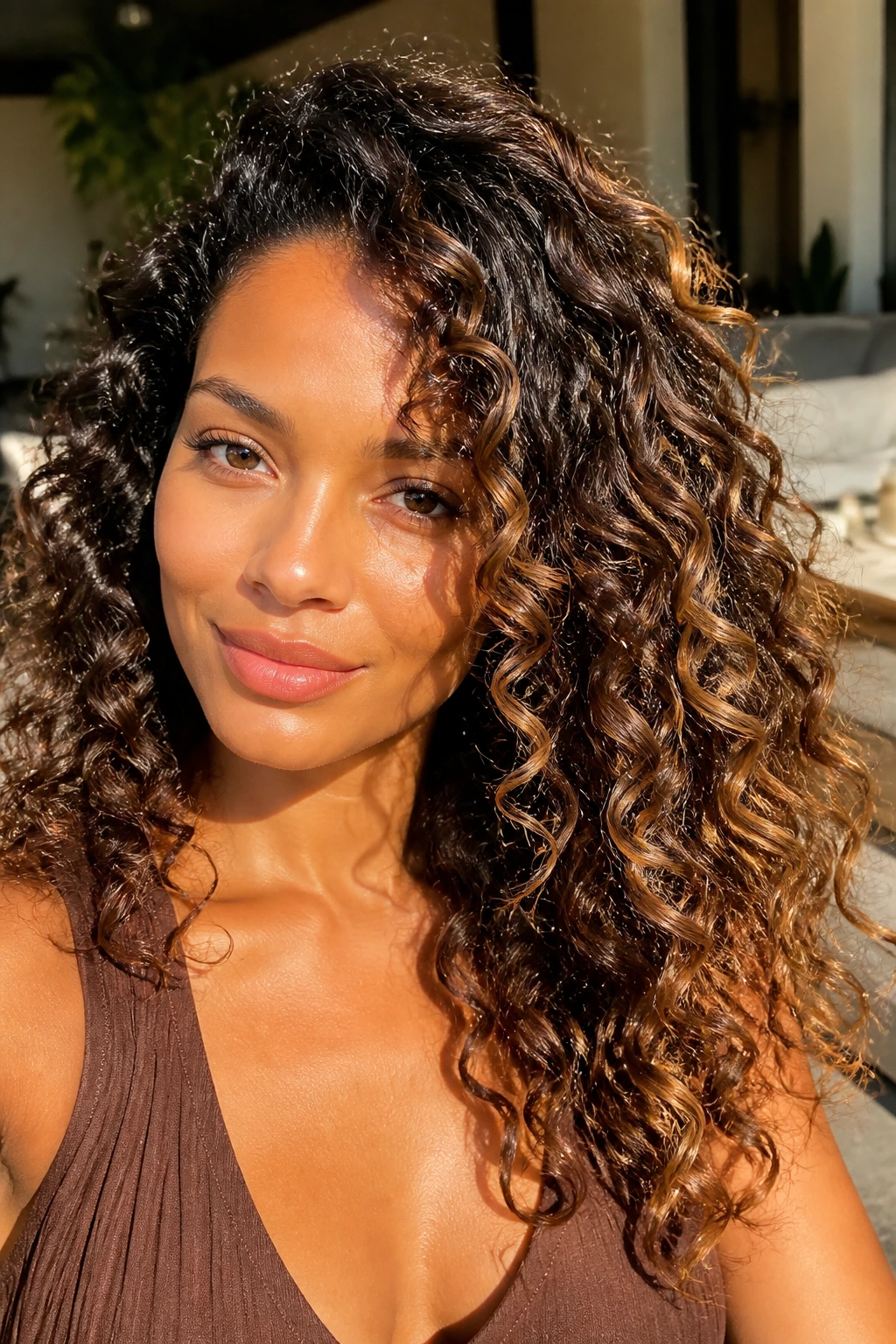
Curls need placement, not just color. If you paint highlights all over the place, the curl pattern disappears and the hair loses its shape.
The better move is to place caramel ribbons around the outer curve of each curl group and keep the underside darker. That way, the dimension appears where the light hits first. The result is warm, glossy, and surprisingly soft. Curly hair usually looks best with wider spacing and fewer foils, not more, because the curl itself already creates movement.
17. Strawberry Beige Dimension
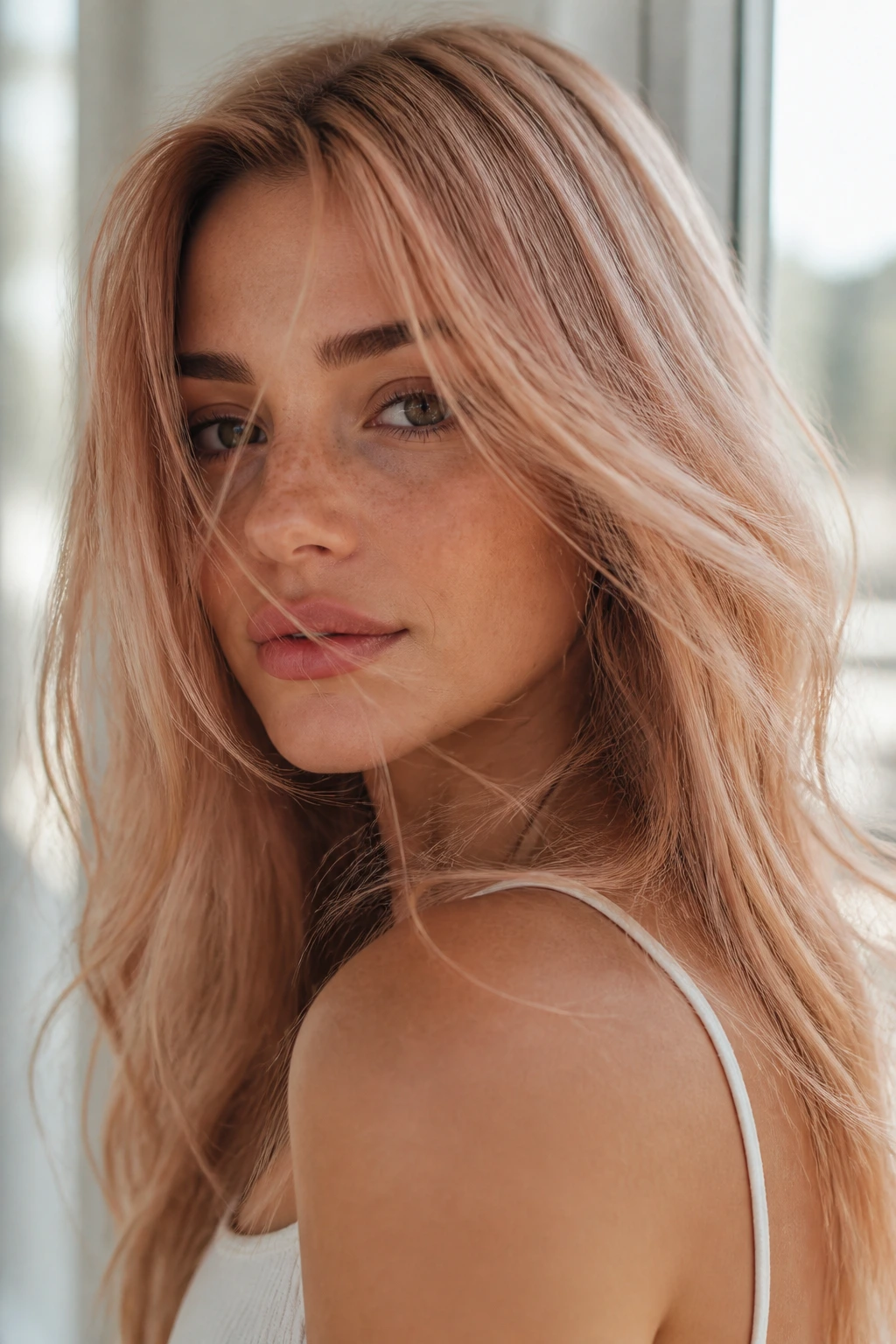
Strawberry beige is pink with manners. It doesn’t shout copper and it doesn’t go full rose gold; it sits somewhere between blonde, peach, and soft beige.
This shade works best on light brown or blonde bases that can take a gentle warm glaze. It’s a nice option if you want something a little different without walking into vivid territory. Since the tone is delicate, it fades faster than a neutral brunette gloss, so color-safe shampoo and regular conditioning matter. It looks especially good when the hair moves, because the strawberry notes appear and disappear with the bend.
18. Golden Walnut Balayage
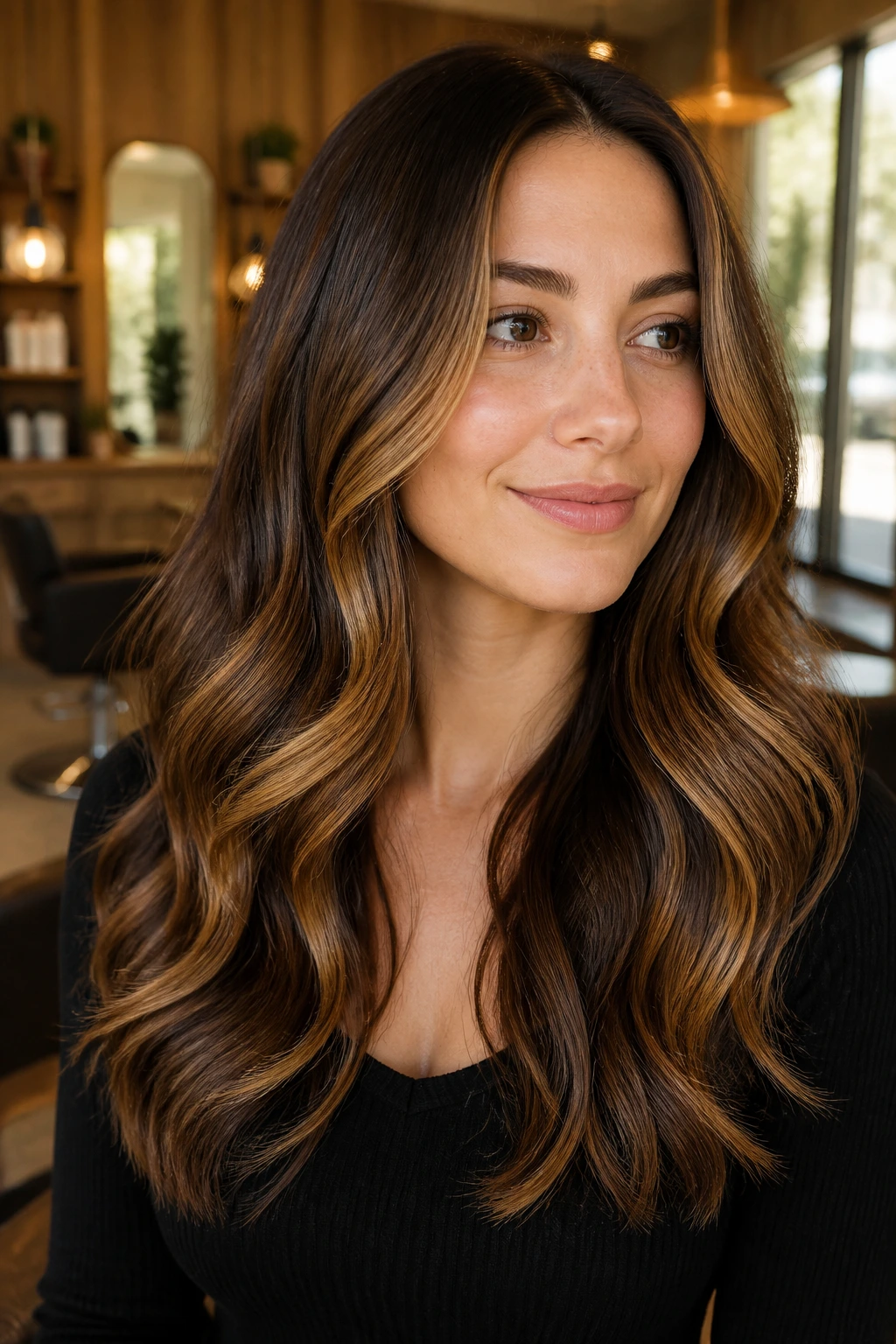
Deep walnut can look flat until gold is threaded through it. Golden walnut balances that richness with narrow gold pieces that keep the color from feeling heavy.
This is a strong choice for medium-dark hair that wants warmth without copper or red. The contrast is subtle enough for everyday wear, but it still shows in daylight and under warm indoor light. Straight blowouts make the walnut depth look sleek; soft waves bring out the gold ribbons. If you like brunette hair that still reads light in the sun, this sits in a very good place.
19. Soft Vanilla Cream Money Pieces and Ends
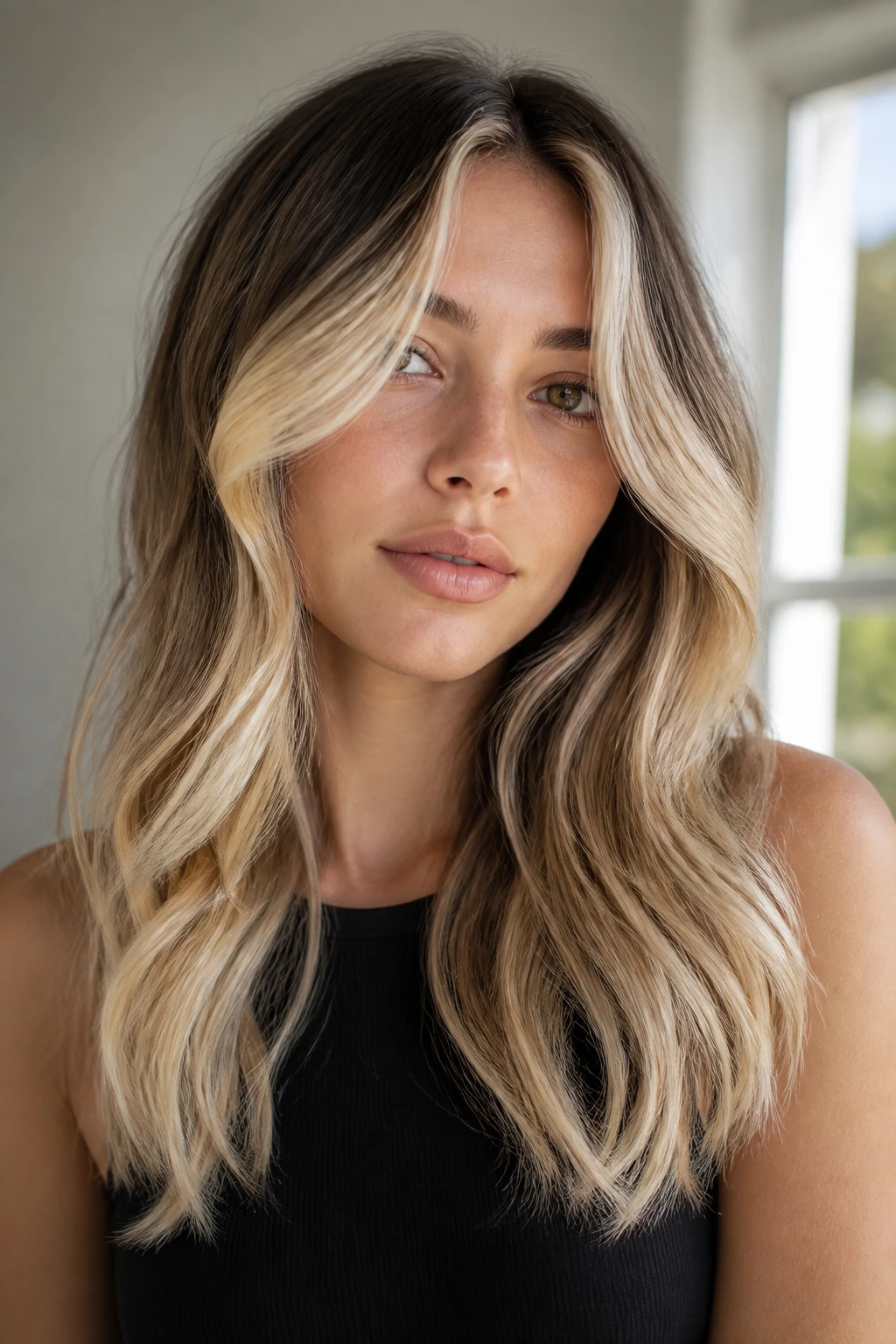
This is the bright-front blonde people want when they do not want a full blonde head. The face frame goes light first, then the ends are softened to a vanilla cream tone so the brightness doesn’t stop dead at the cheekbones.
It’s especially nice on bobs, lobs, and long layers where the ends are visible. The interior can stay deeper, which keeps the hair from looking blown out. Ask for the front pieces to be feathered backward, not blocked off. If the front goes too white, the whole style gets loud; vanilla cream keeps it soft.
20. Dimensional Espresso Gloss With Mocha Veils
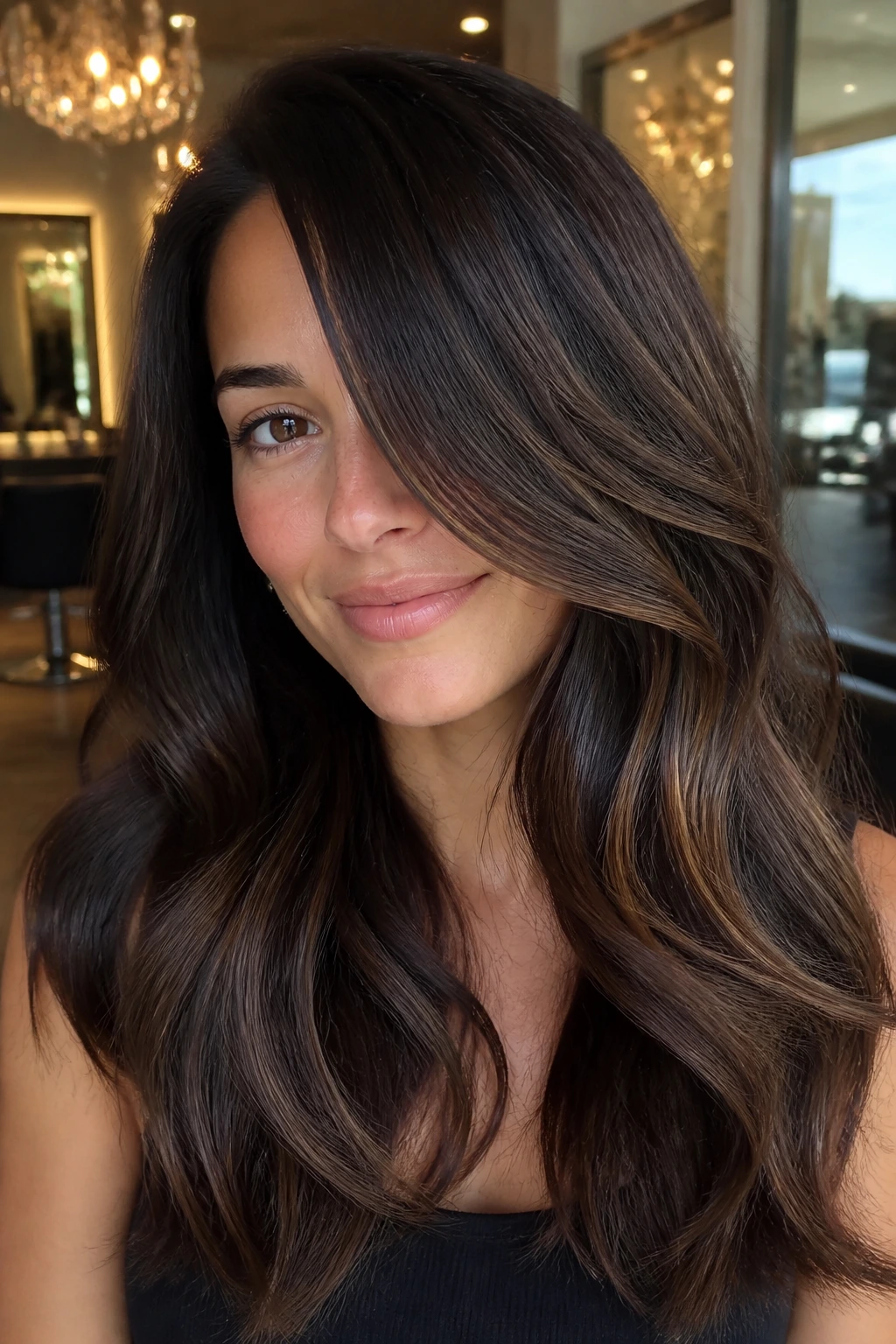
Sometimes the prettiest color is almost the same as your natural hair. Dimensional espresso uses a rich brown base, a few mocha veils that are only a half-step lighter, and a glossy finish that makes the whole head look polished without chasing contrast.
This is the look for anyone who wants shine first and brightness second. It works well on darker bases, on people who avoid heavy bleaching, and on cuts that already have strong lines, like blunt lobs or long layers. The mocha pieces are enough to catch the eye without turning the hair patchy. And when the gloss is fresh, the whole thing looks deeply moisturized, even when it’s not.
Why Sun-Kissed Color Reads Soft Instead of Stripey
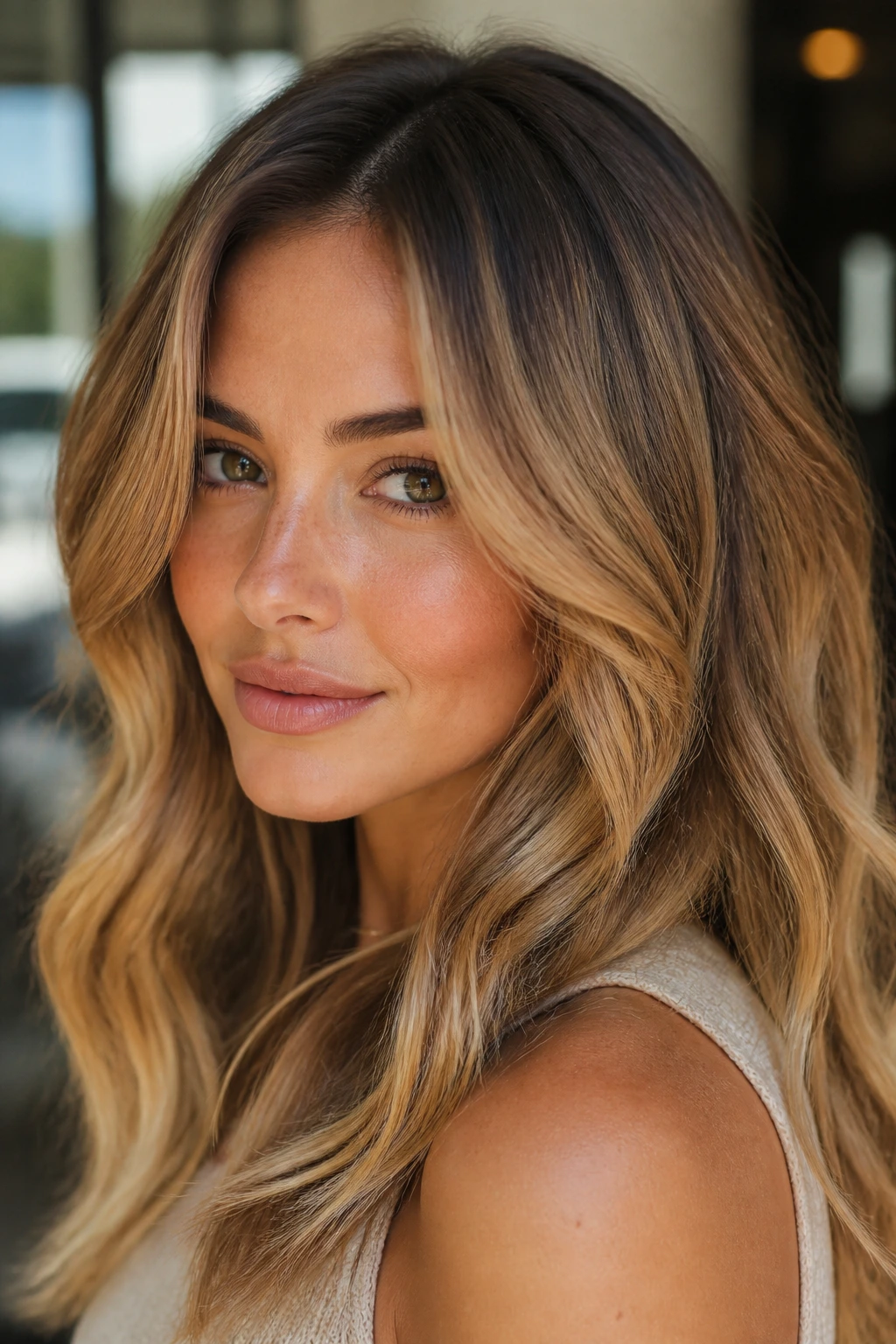
The difference between soft dimension and obvious highlights usually comes down to three things: spacing, depth, and tone. When a colorist spaces lighter pieces unevenly, leaves the root a shade deeper, and finishes with a gloss that sits in the beige or honey family, the hair reads as blended. When any one of those steps gets skipped, the color starts to look obvious.
Placement matters more than people think. A few brighter pieces near the face and the outer canopy create the illusion of light all through the hair, even if the underside stays much deeper. That’s why a good balayage can feel lighter than it actually is. The eye only needs a few bright anchors to believe the whole head has dimension.
The smartest versions also respect the natural base. A level 4 brunette usually looks better with caramel, bronze, or honey than with pale blonde. A level 7 blonde usually looks better in beige, vanilla, or mushroom than in a flat yellow lift. Push too far away from the base and the color starts to look disconnected. Stay close enough, and it feels like your hair, just better behaved.
Essential Equipment for These Looks
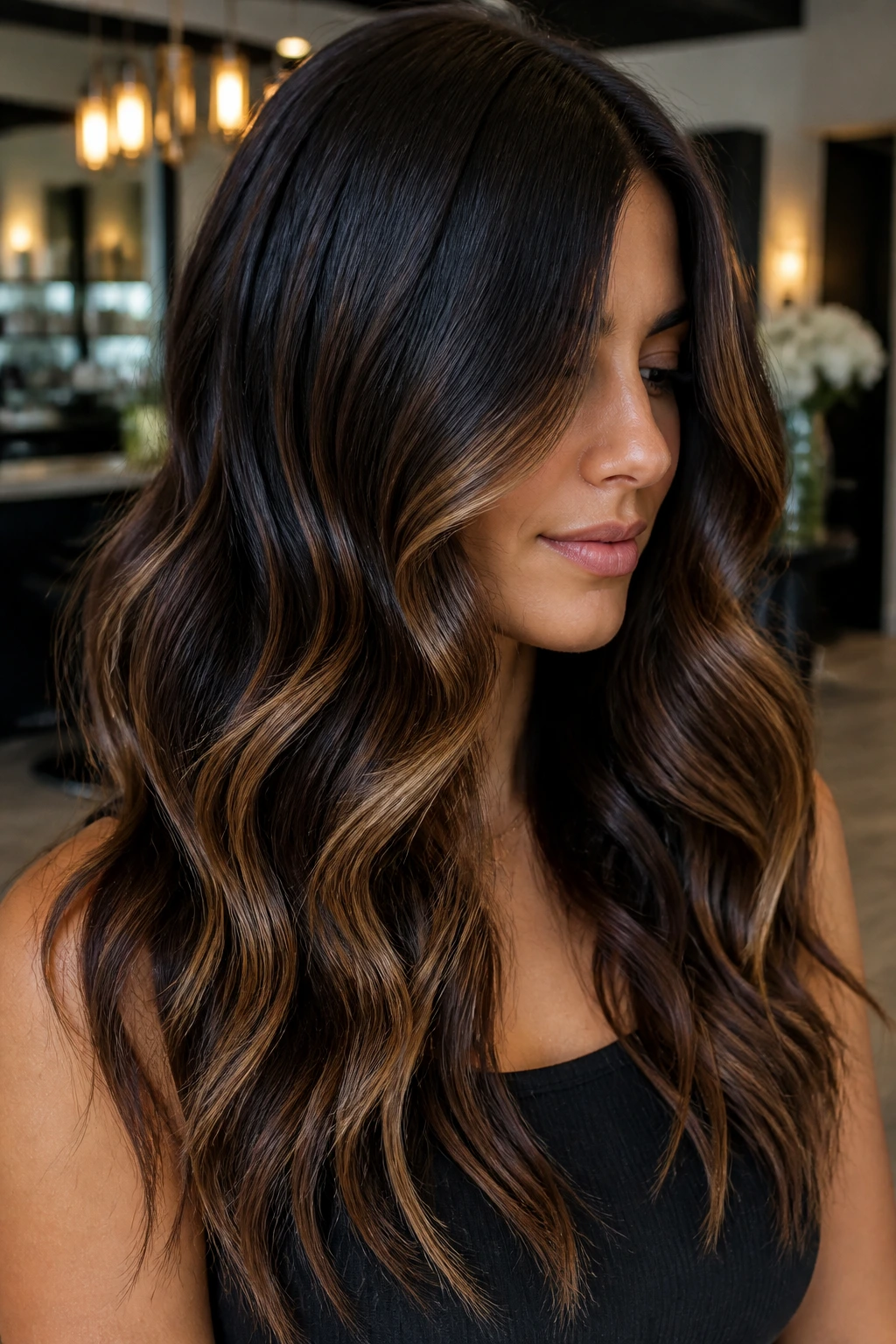
- Saved inspiration photos in daylight: Screenshots from a bathroom mirror do not tell the whole story; natural light shows the tone more honestly.
- A colorist who works with balayage, babylights, and gloss: These looks depend on placement and toning, not one heavy process.
- Fine-tooth tail comb: Helpful for sectioning and for keeping part lines clean if you’re consulting at home before a salon visit.
- Foils and balayage boards: The mix of painted and wrapped pieces is often what gives you both softness and brightness.
- Color brush and mixing bowl: Needed for precise placement, especially around the hairline and face frame.
- Clips for clean sectioning: Good sectioning is half the battle; messy sections give messy ribbons.
- Sulfate-free shampoo: Helps color last longer and keeps highlighted hair from getting stripped fast.
- Purple or blue shampoo: Purple helps blonde stay beige; blue helps brunettes keep orange brass under control. Use either sparingly, not every wash.
- Heat protectant: Non-negotiable if you flat-iron or curl the hair often; highlighted hair is less forgiving of hot tools.
- Microfiber towel or soft T-shirt: Less friction, less frizz, less fading at the ends.
Smart Shade and Consultation Notes
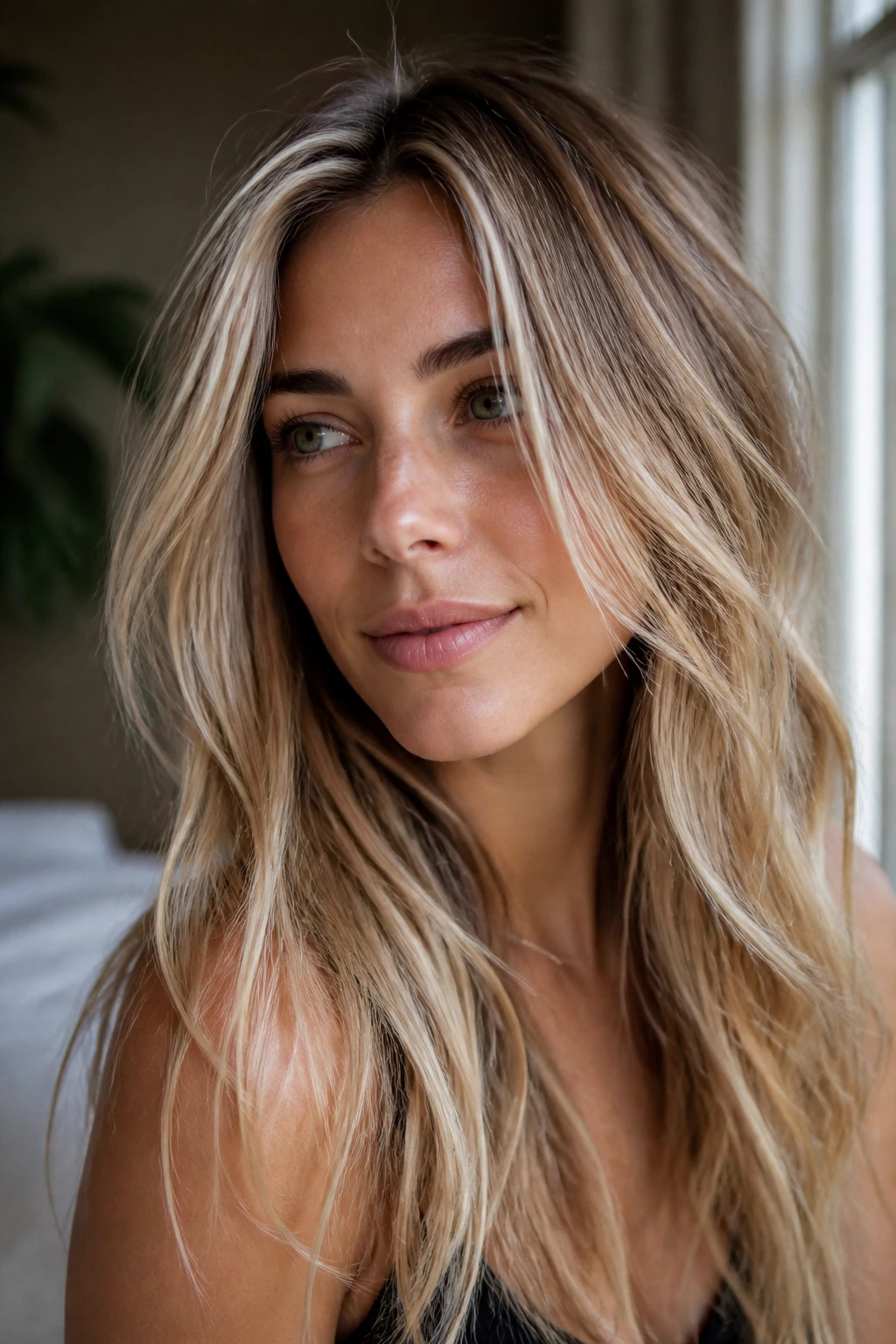
Bring more than one photo. Bring two or three, and make sure at least one was taken in daylight. A dim, warm-filtered screenshot can send your colorist in the wrong direction before the appointment even starts.
Be honest about your base level and your history. If your hair is a natural level 4 but was boxed dark brown three times, that changes what can happen in one sitting. So does old red pigment, henna, previous bleach, or breakage at the ends. No one can plan well around secrets.
Say what you want the color to do, not only what it should be called. “I want soft brightness around my face and a deeper root for grow-out” gives more useful information than “I want honey blonde.” The same goes for upkeep. If you only want to come back every 10 to 12 weeks, say so. That usually means a deeper root, finer highlights, and more gloss than lift.
How to Wear and Style These Shades in Real Life
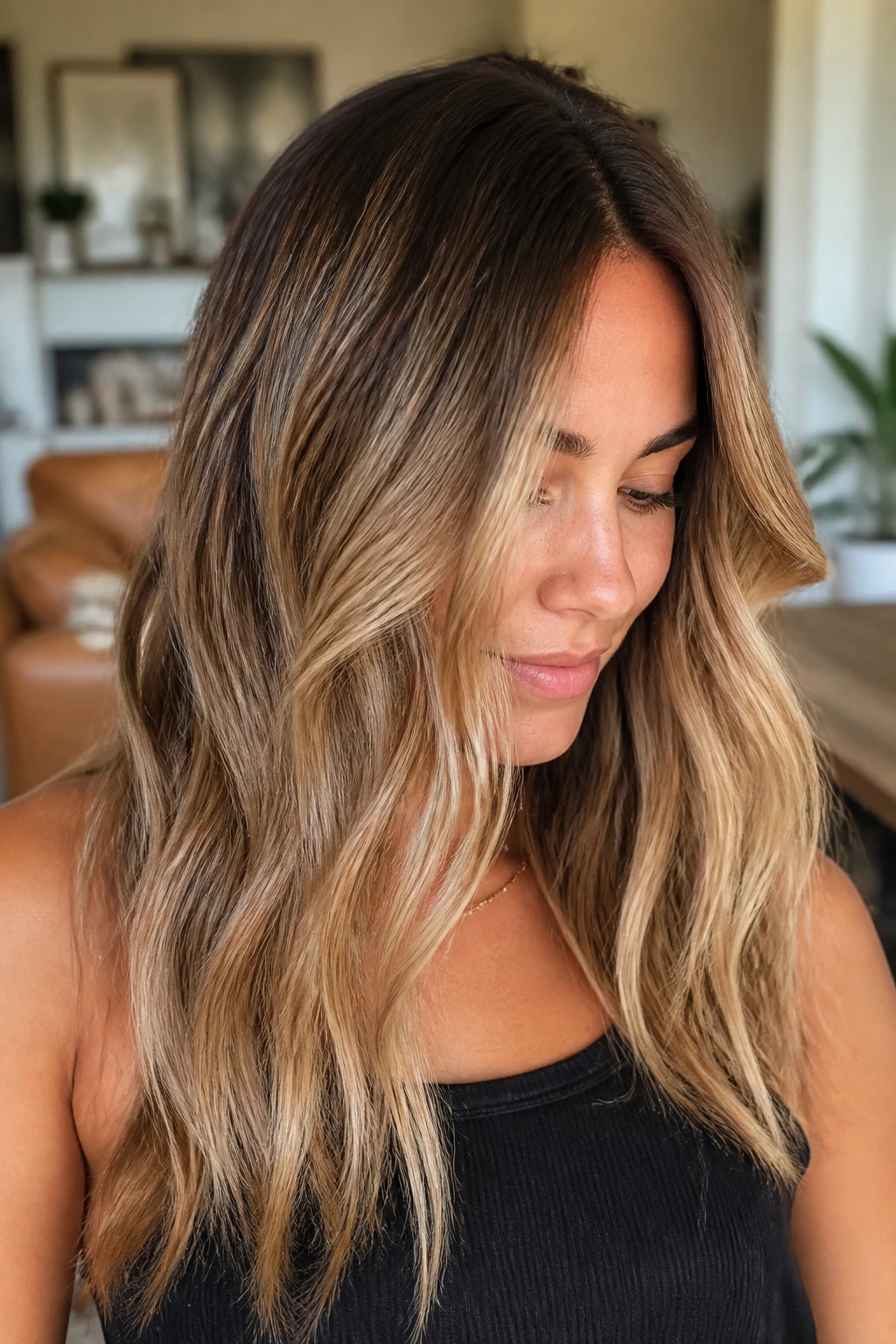
Loose Waves
A soft bend shows the ribbons better than a tight curl. A 1 to 1¼-inch iron on medium heat usually gives enough movement without making the hair look ringlet-heavy. Start the wave a little below the root so the crown stays smooth and the lighter pieces read as fluid, not crimped.
Blowouts
A round-brush blowout is the best friend of bronde, beige blonde, and caramel dimension. It lifts the roots, softens the face frame, and gives the gloss something to reflect. If you want the lighter pieces to show, direct the blow-dryer away from the face and finish with a cool shot so the cuticle lays down.
Straight Styles
Straight hair can hide dimension if you let it fall dead flat. Add a tiny bevel at the ends or tuck one side behind the ear. That small movement is enough to show the contrast between base and ribbon.
Best Cuts
Layers, curtain bangs, lobs, long bobs, and airy mid-length cuts all help these colors read better. The color needs room to move. On a blunt cut, keep the brightest pieces around the face and the ends so the shape doesn’t look too heavy.
Extra Tone and Placement Tweaks That Make a Big Difference
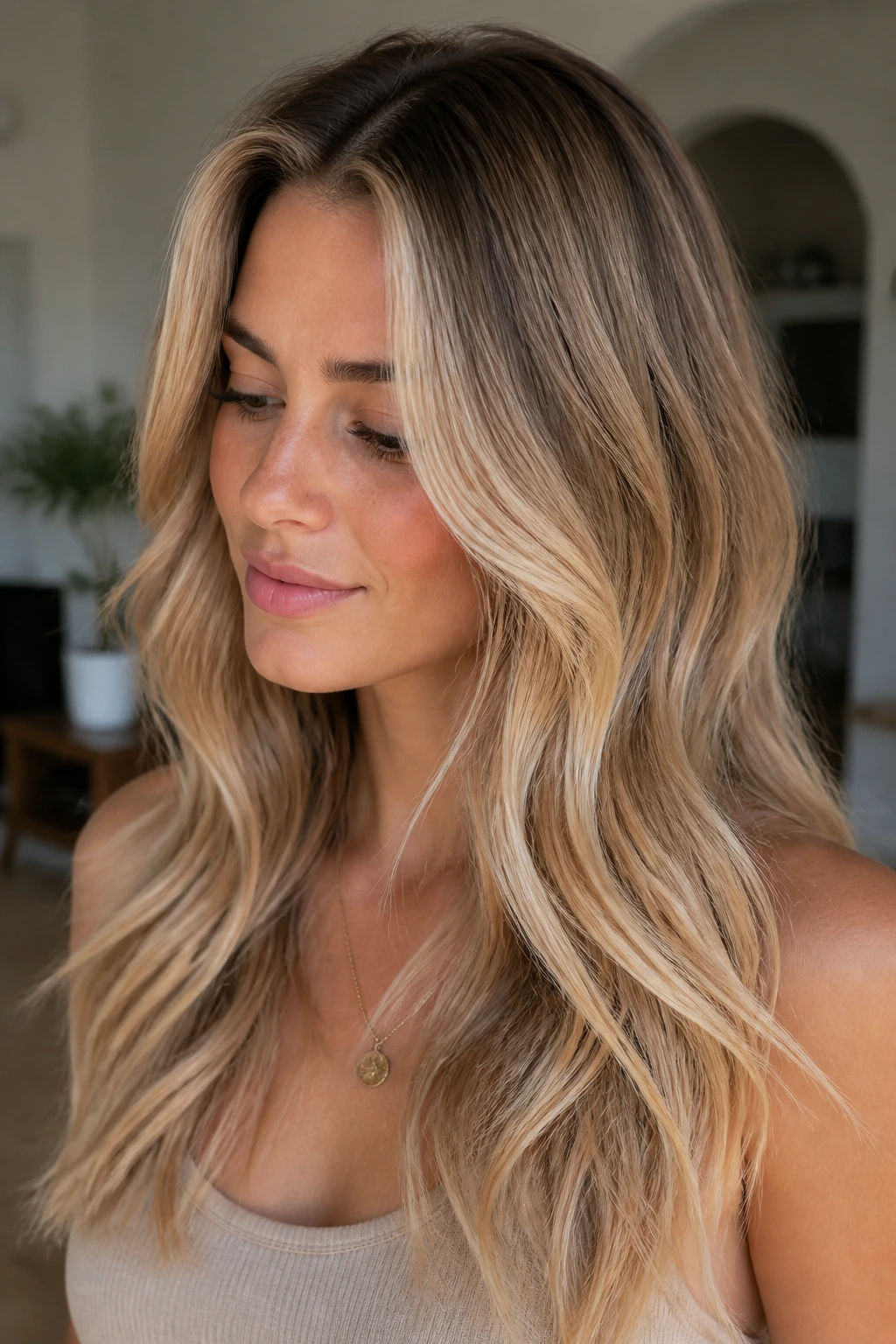
Placement: Put the brightest pieces where the hair naturally breaks first—temples, part line, and the outer layer around the face. Leave the nape and underlayers deeper. That contrast is what gives the color shape when the hair moves.
Tone Control: Beige tones soften blonde without making it icy. Honey adds warmth to brunette without going copper. Mushroom and ash cool down brass, but use them carefully on porous hair or the color can turn dull fast. The toner should suit the base, not fight it.
Glossing: A clear or demi-permanent gloss every 4 to 8 weeks keeps the finish shiny and keeps the lighter pieces from looking dry. If the color looks fine but a little rough at the ends, book a gloss before you book more lightening. That small choice saves a lot of damage.
Make-It-Yours: If you wear your hair up often, ask for a deeper interior so the ponytail still has shape. If you prefer curls, ask for wider spacing and a few extra face-framing pieces. If you want a softer result, tell the colorist to keep the brightest parts no more than two levels lighter than the base on the first visit.
Keeping the Color Fresh Between Appointments
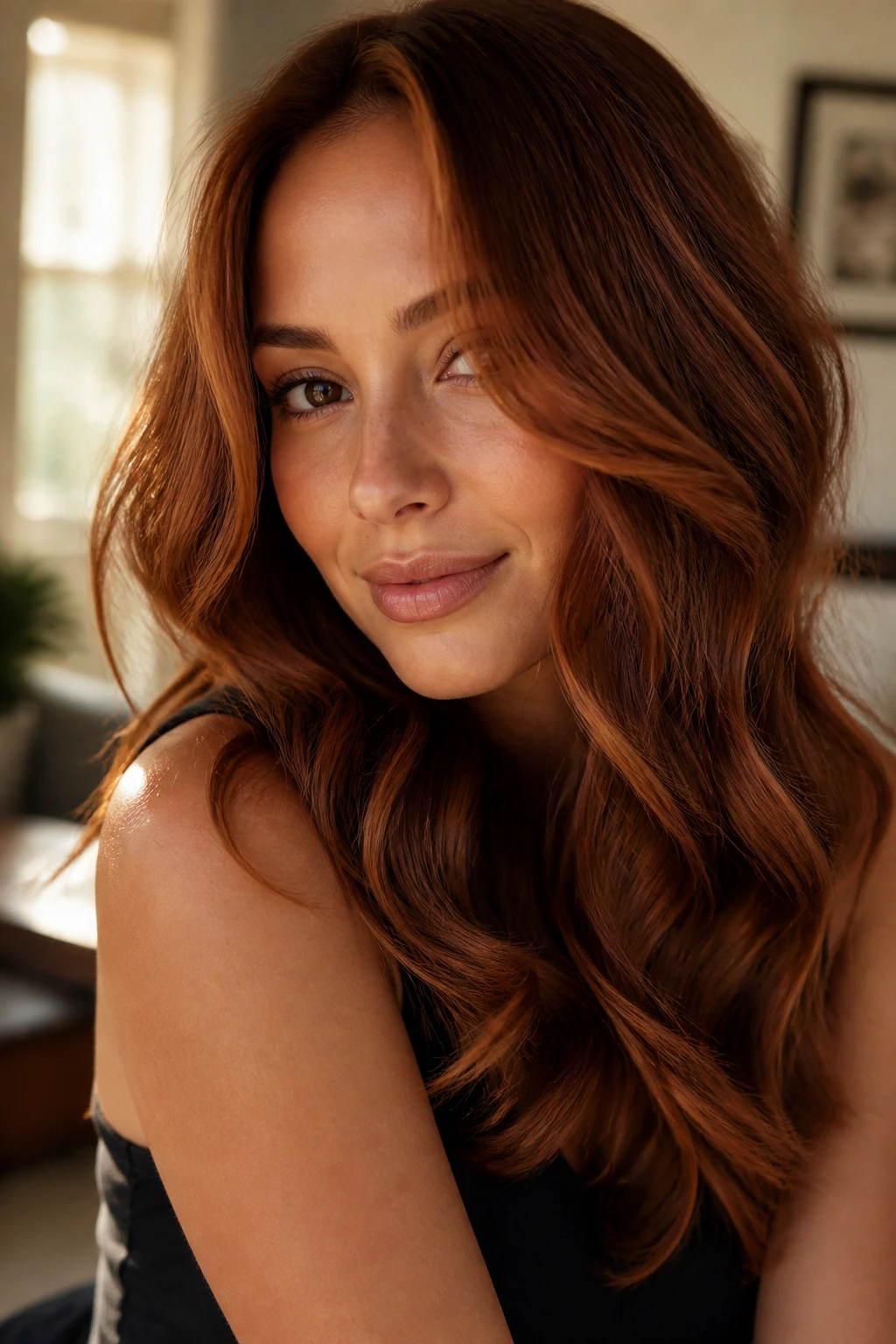
Most balayage and dimensional brunette looks can go eight to twelve weeks before they need a full refresh, but the gloss is what keeps them alive. A toner or gloss every four to eight weeks, depending on how fast your hair shifts warm or dull, usually keeps the shade where it should be.
Wash less often if your hair can handle it. Two to three shampoo days a week is enough for many people, and dry shampoo can buy you a day or two if the roots get oily early. On cool blondes and mushroom brunettes, purple or blue shampoo once a week is usually plenty. More than that and the hair can start to feel dry and chalky.
Heat styling fades color faster than people expect. Keep the iron under control, use heat protectant every time, and let the hair cool before brushing it out. If you swim, wet the hair with clean water first and rinse it right after. Chlorine and mineral water can tug blonde pieces into a strange shade fast.
If the ends look tired before the roots look grown, ask for a gloss and a dusting, not another heavy lightening session. That one choice keeps the cut looking crisp and the color from getting overworked.
Variations and Adaptations to Try
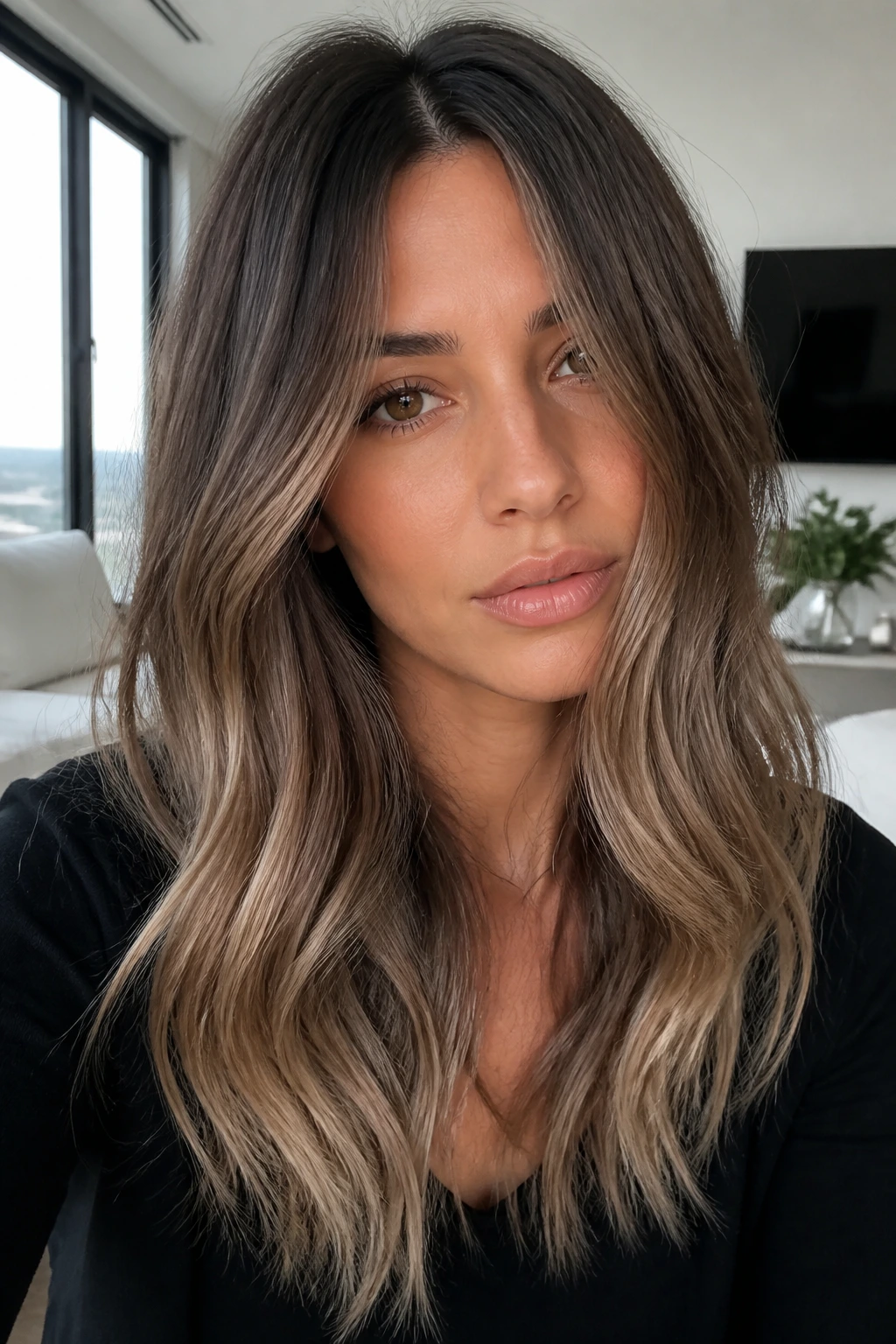
The Cooler Edit: Swap honey and gold for beige, ash, or mushroom tones. This keeps the color softer if warm highlights make your hair look orange or too bright. It works well on neutral and cool skin tones, but the real test is always the hair itself.
The Copper Drift: Add cinnamon, apricot, or auburn ribbons to a brunette base. This is a good move if you like warmth and want more personality than beige brown offers. Keep the root deeper so the copper stays from feeling loud.
The Low-Maintenance Grow-Out: Ask for a deeper root shadow, fewer foils at the scalp, and a soft gloss through the mids. This is the version that stretches time between appointments and still looks deliberate as it grows. It’s the best choice if you don’t want to babysit your color.
The Curly Ribbon Map: Use fewer foils, wider spacing, and highlight the outside of the curl group instead of every strand. Curly hair needs enough contrast to show movement, but too much lightening can erase the pattern. This version keeps the curl definition intact.
The Bright Front, Dark Back: Keep the face frame a little lighter and leave the back deeper. That gives you pop where you want it and depth where you do not need it. It’s a strong choice for people who wear their hair half-up or tucked behind the ears a lot.
Common Slip-Ups That Flatten the Color
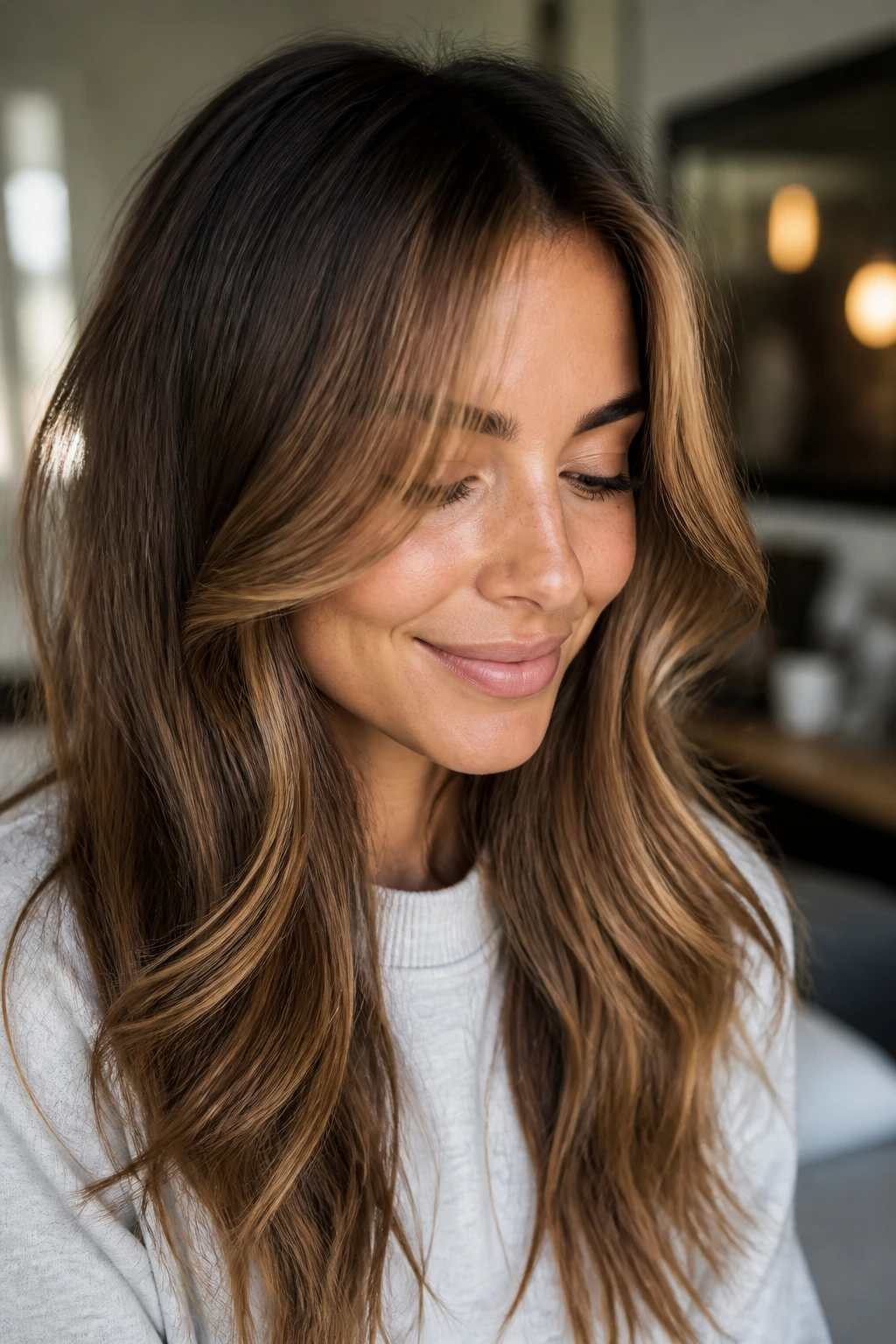
Making every piece the same width: That’s the fastest way to get a stripey result. The fix is a mix of babylights, ribbons, and a few wider face-framing pieces so the eye never sees one repeated pattern.
Ignoring undertone: A gold toner on an already warm brunette can turn orange fast. A too-ashy formula on porous hair can go muddy. The fix is simple: match the toner to the base and ask for beige when you want softness, not gold when you want control.
Over-lightening fragile ends: Dry ends can look brighter in the bowl and worse on the head. They go hollow, frizzy, or see-through. Leave them deeper, use a gloss, and let styling create the illusion of brightness.
Skipping lowlights: Without some darker pieces, even a nice blonde can flatten out. Lowlights add structure and make the light pieces look lighter. A good colorist knows when to put darkness back in.
Styling hair too flat: If the hair hangs like a curtain, the dimension disappears. A bend, a round brush, or even a slight tuck behind the ear brings the ribbons back.
Using toning shampoo too often: Purple shampoo every wash is a fast road to dryness and dullness. Once a week is usually enough for cool blondes; brunettes often need blue shampoo even less often.
Questions People Ask Before Booking
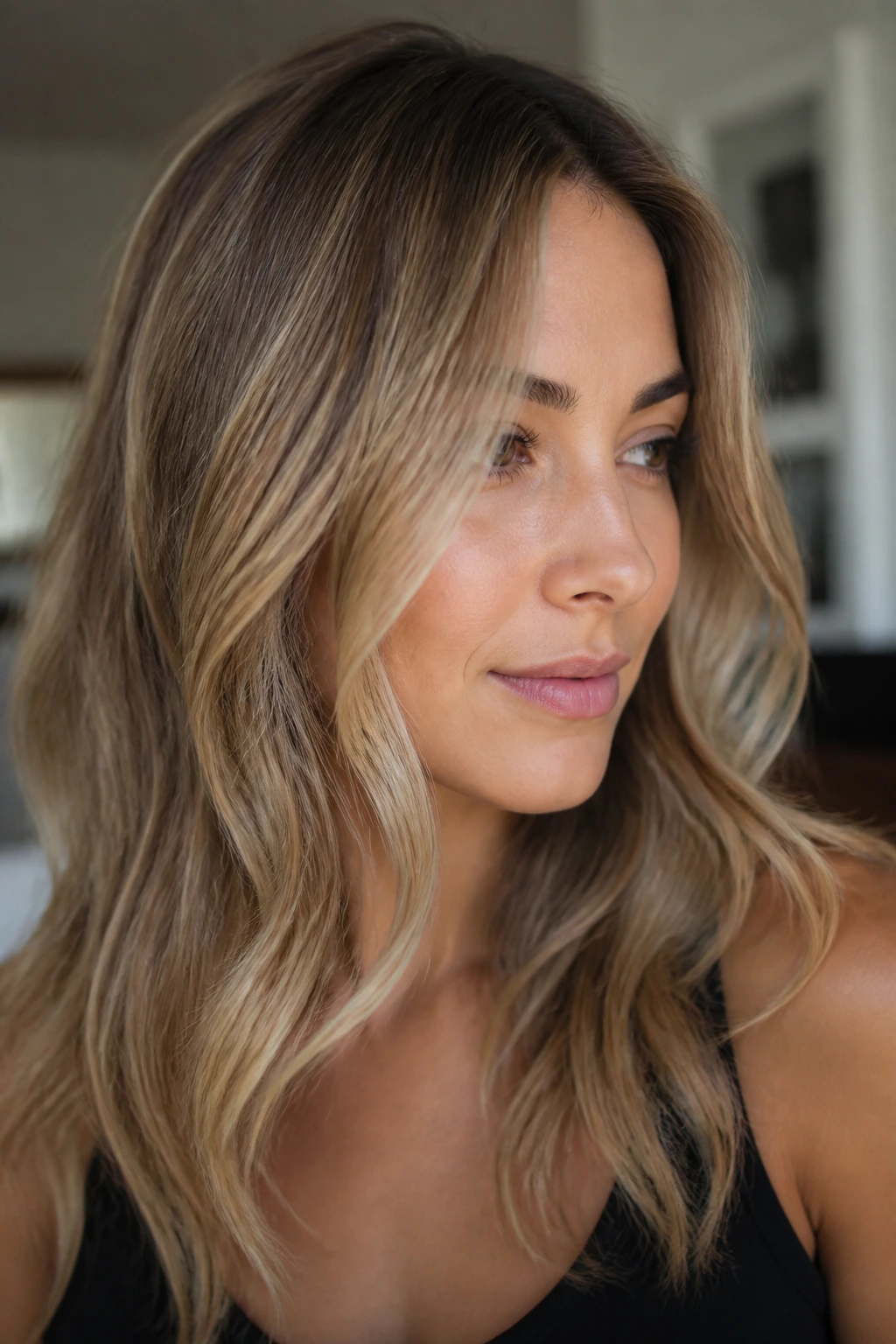
How often does sun-kissed hair color need a refresh?
Balayage and soft dimension can last eight to twelve weeks before a full touch-up, but the tone usually needs a gloss sooner. If the color still looks good but a little flat, a toner appointment can make it look fresh again.
Can dark brunette hair get this look without turning orange?
Yes, but the formula matters. Dark hair usually needs caramel, bronze, or mocha ribbons with the right toner, not a fast lift to pale blonde. If warmth tends to run orange on your hair, ask for beige or smoky tones.
What’s the difference between balayage and babylights?
Balayage is painted placement with soft, sweeping pieces. Babylights are tiny, fine highlights that give a more delicate lift. A lot of the softest sun-kissed looks use both.
Is this good for curly hair?
Very. Curls show dimension well, but placement has to respect the curl pattern. Wider spacing and lighter pieces around the outside of the curl group usually look better than all-over foils.
What should I ask for if I want low maintenance?
Ask for a deeper root shadow, a soft face frame, and a gloss-based finish rather than a heavy all-over lightening. That gives you brightness without a harsh grow-out line.
Can I go from one all-over color to this in a single visit?
Sometimes, but not always. Dark box color, previous red, or very porous ends can make the process slower and more staged. A good colorist will tell you whether it’s a one-session job or something that needs a couple of visits.
How do I keep blonde pieces from turning brassy?
Use a color-safe shampoo, limit heat, and add a purple shampoo once a week if the blonde is warm-toned. Beige glosses also help because they keep the tone soft without pushing it too yellow.
Which shades work best if I like warmth but not red?
Honey bronde, caramel balayage, golden walnut, and beige champagne sit in that lane nicely. They warm the hair without tipping into copper or auburn.
Soft Focus
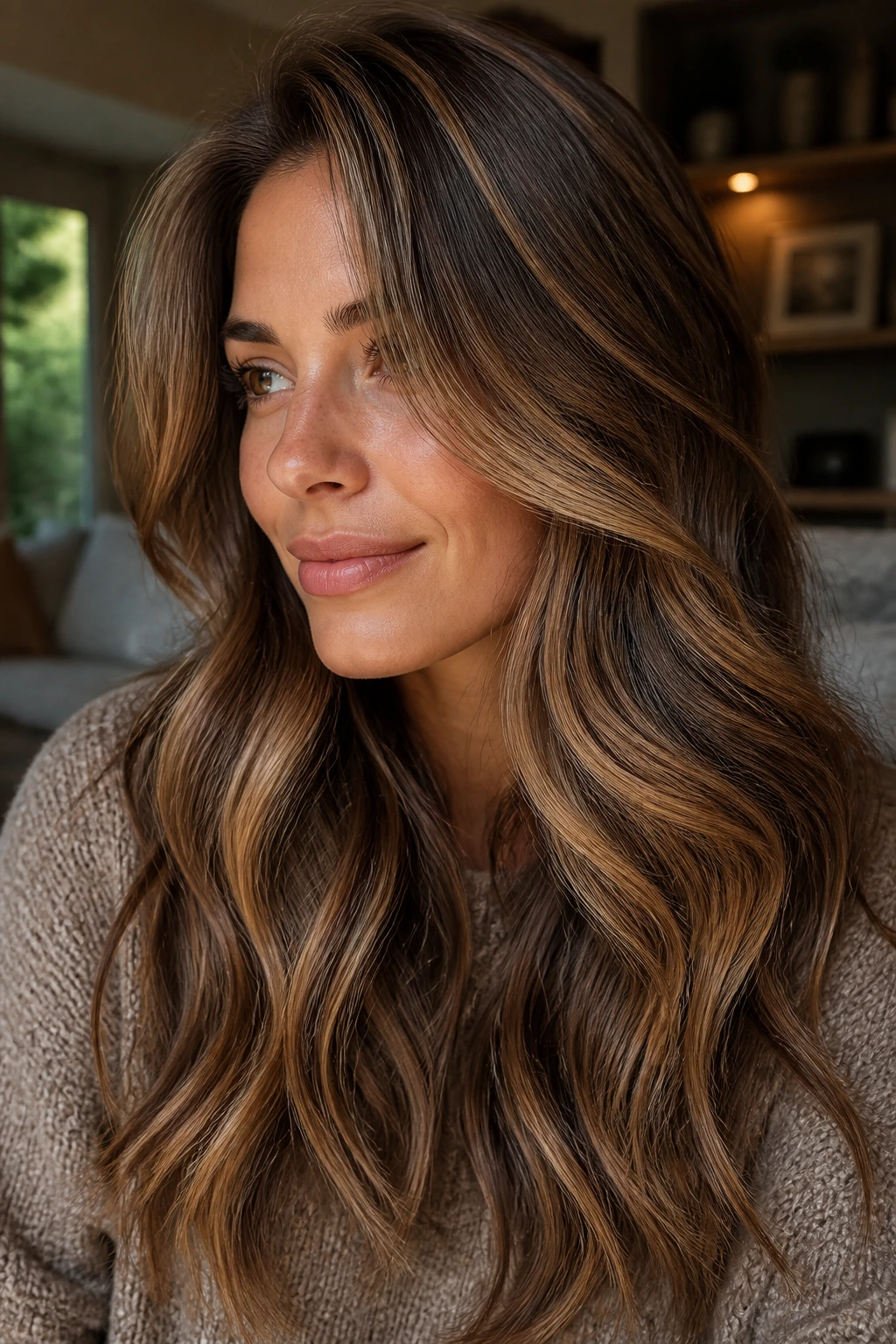
The nicest thing about sun-kissed color is that it never looks like it was trying too hard. The depth at the root, the blur through the mids, and the lighter pieces placed where the hair actually moves all do their own jobs. That’s what makes the color feel lived-in instead of loud.
If you want this look to land well, bring daylight photos, know your base level, and ask for softness before brightness. That order matters. The blur between shadow and light is where these colors become good hair instead of just highlighted hair, and that’s the part worth asking for every time.
