



Wavy hair does not need to be bullied into obedience. It needs a cut with some room in it — a shape that lets the bend happen where it wants to happen, then removes just enough weight that the whole head doesn’t collapse into one heavy sheet. That’s where shaggy fringe long haircuts for wavy hair earn their keep. The fringe breaks the front line. The layers keep the ends moving. The length gives the wave somewhere to stretch out without turning into a triangle.
A bad fringe on waves is easy to spot. It looks tidy for about ten minutes, then the front splits, the crown flattens, and the sides puff out like the haircut is arguing with itself. A good shag does the opposite. It keeps the shape loose enough that air-drying is still an option, but structured enough that your hair does not end up looking accidental. That balance is the whole trick.
The best versions are rarely the most dramatic ones at first glance. A fringe that lands a touch longer than you expected. A few interior layers cut high enough to release bulk, but not so high that the perimeter goes wispy and weak. A face-framing piece that starts near the cheekbone instead of the jaw. Those small choices change everything once waves dry and take their own little route.
Why These Cuts Keep Wavy Hair Looking Intentional
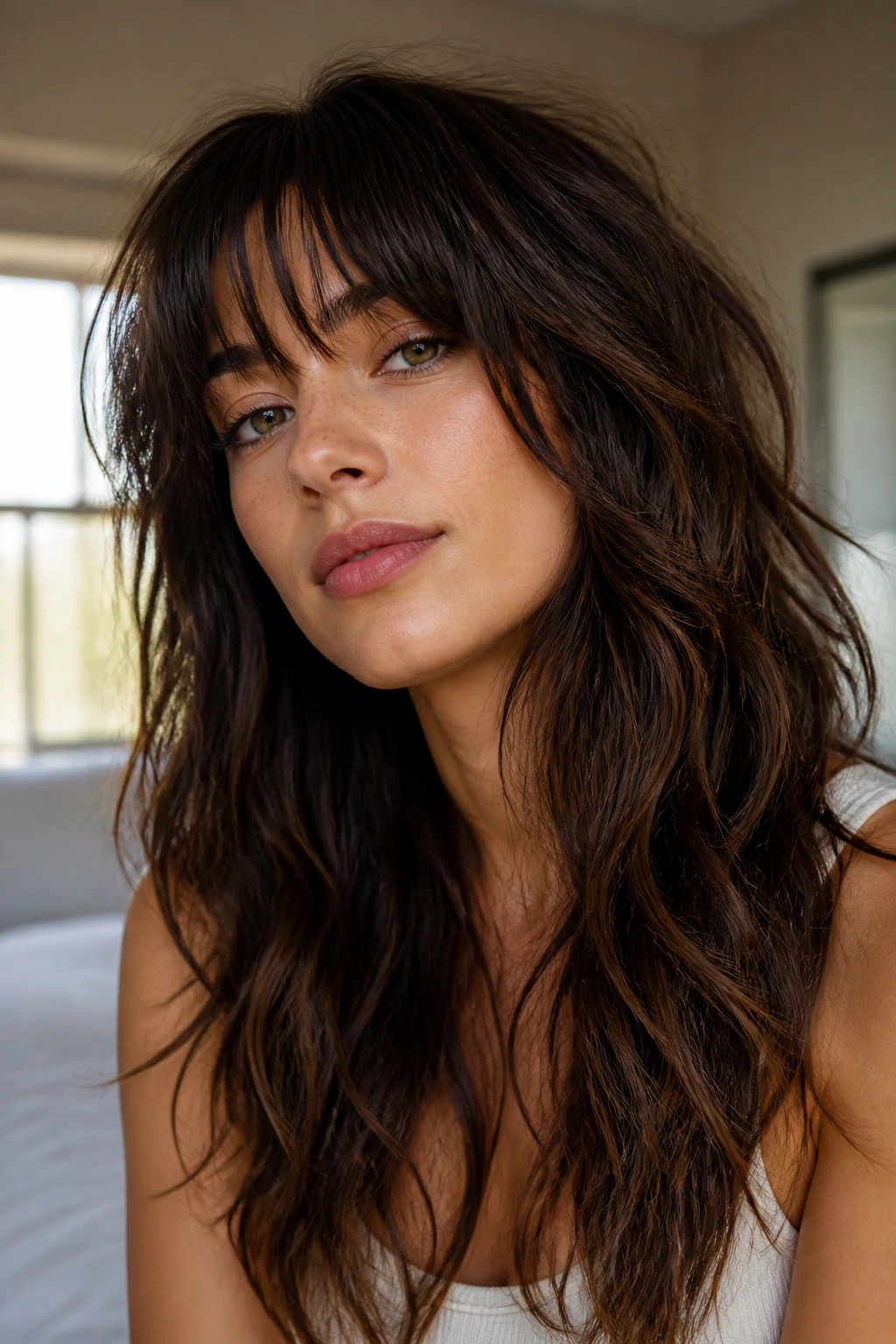
- Wave Memory: Long, sliced layers let the bend reappear after washing, so you’re not fighting a flat shape all day.
- Fringe Flex: A broken or split fringe keeps the front soft, which matters when waves shrink and separate on their own.
- Face Balance: Pieces that land around the cheekbone and jaw stop wavy hair from ballooning outward at the temples.
- Grow-Out Grace: The cut still looks planned after several weeks because the fringe can slide into a curtain, side sweep, or piecey middle part.
- Less Product Panic: A good shag usually needs mousse or cream in smaller amounts than a blunt cut with the same density.
- Shape Without Stiffness: You get movement at the ends and lift near the crown without that helmet feeling some one-length cuts create.
1. Soft Curtain Fringe with Long Sliced Layers
This is the easy entry point, and that is not faint praise. The fringe parts in the middle, brushes the brow bone, and opens just enough to show skin so the front never feels heavy. On wavy hair, the longer corners fall into the cheek area and keep the whole cut from reading like one solid curtain.
Why It Sits Well on Waves
Curtain fringe works because it gives the wave two directions to move in instead of one. The center can split, the sides can drift, and the layers can travel down into the length without a hard stop. Ask for the shortest point to land slightly below where you want it dry; waves shrink, and a half-inch matters.
- Best for: loose to medium waves and middle-part wearers.
- Salon note: ask for sliced layers, not blunt shelves.
- Styling note: mousse at the roots, then diffuse until the hair is about 80 percent dry.
My take: this is the cut I’d hand to anyone who wants fringe without a daily fight.
2. Brow-Grazing Bottleneck Fringe with Rounded Layers
A bottleneck fringe gives the forehead breathing room while still reading as bangs. The center is narrower and a touch shorter, then the length opens out toward the temples. On wavy hair, that shape softens the front without swallowing the face.
The rounded layers behind it matter. Keep them smooth enough that the shape doesn’t splinter into too many short pieces around the ears. This one works especially well when the wave pattern is loose and the front section tends to separate in a gentle S-shape rather than a tight coil.
If your face is round or heart-shaped, this cut has a nice trick: it draws the eye downward instead of out to the sides. That little bit of visual length makes the front feel lighter.
3. Cheekbone Split Fringe with Face-Framing Ribbons
Want fringe that frames the face without sitting across the whole forehead? This is the answer. The shortest pieces sit near the cheekbone, then the front opens away from the center so the hair can move in two soft streams.
The face-framing ribbons are the point here. They start high enough to lift the cheek area, then fall into the length so nothing looks chopped off. On wavy hair, that keeps the front from puffing out at the temples, which is where a lot of shag cuts go wrong when they’re too aggressive.
How to Style It
Use a light mousse or foam on damp hair, finger-part the fringe, and let it dry with a slight twist away from the face. If you blow-dry, use a small round brush only on the front section. The rest can stay messy. It should look lived-in, not arranged.
4. Feathered Birkin Fringe with Long Wave Drop
This one has a little French-girl energy without trying too hard, and I mean that as a compliment. The fringe lands around the brows, but the ends are feathered rather than carved into a hard line. That makes a big difference on wavy hair, because a blunt edge can look stern once the bend kicks in.
The long wave drop behind it keeps the length luxurious. I like this shape on hair that has movement but not a ton of density. The fringe gets a soft, brushed texture, while the back keeps enough weight to swing. If you want the hair to move when you turn your head, this is one of the better choices.
A small warning: don’t ask for the fringe too short unless you want it to bounce up and sit above the brows. That can happen fast with waves.
5. Deep Side Fringe with Waterfall Layers
A deep side part changes the whole mood of a long shag. It pushes the fringe across the forehead and lets one side build more volume than the other, which is useful if your waves need a little direction. The front falls in a diagonal line instead of a center split, and that line can sharpen the cheekbones in a good way.
Waterfall layers keep the length from feeling heavy on the fuller side. They travel downward in soft steps, so the cut still feels long even after the interior weight comes out. This is a smart shape for square faces or anyone who likes asymmetry.
If your hair usually refuses to hold a middle part, stop fighting it. A strong side part with a side fringe often looks more natural on wavy hair than trying to force symmetry that the texture does not want.
6. Rounded Fringe with U-Shaped Length
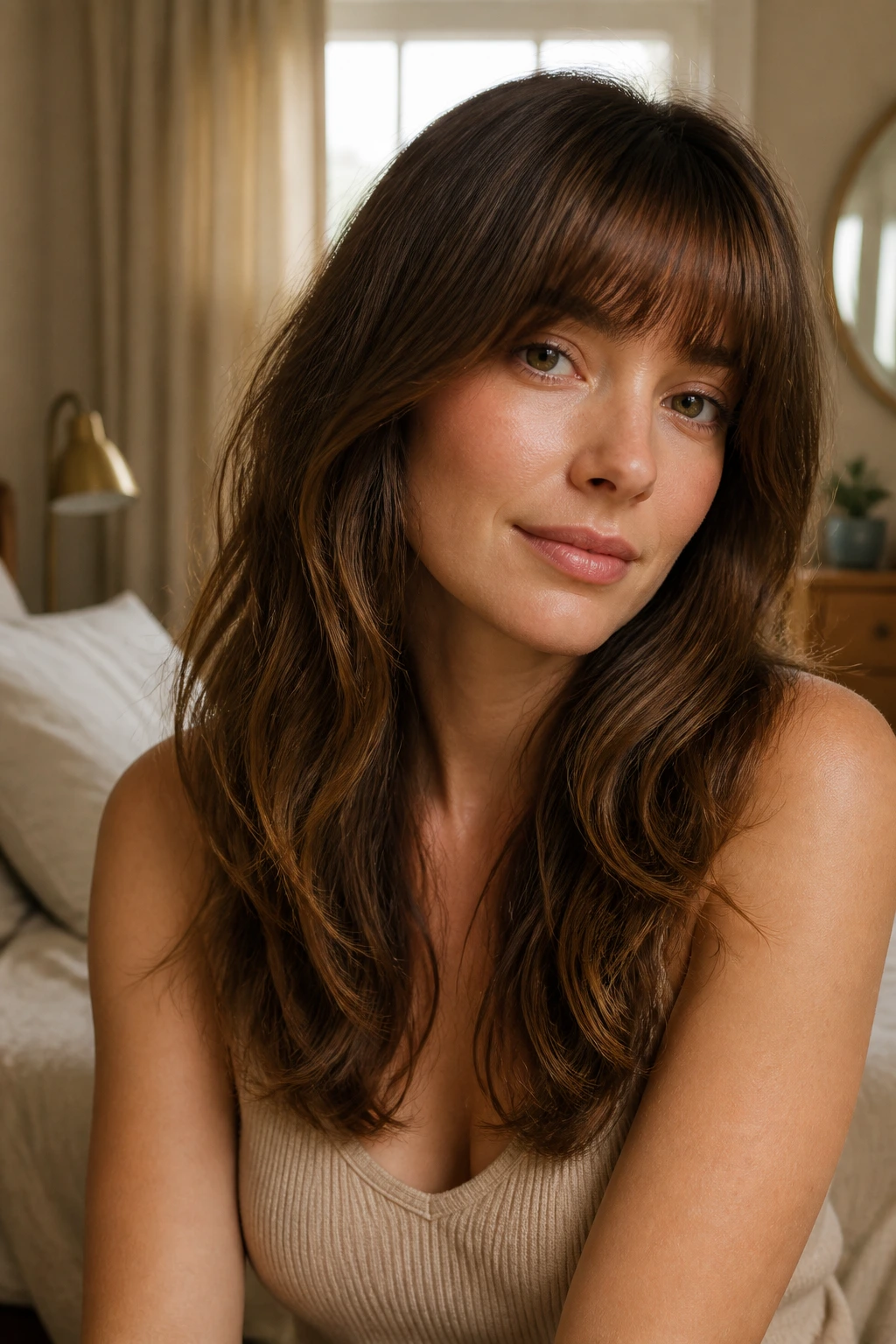
A rounded fringe can look polished on wavy hair when the rest of the cut is allowed to stay soft. The front arcs gently across the forehead, then blends into a U-shaped back that keeps the length fuller in the center and slightly shorter at the sides. That U-shape matters more than people think.
Why? Because it stops the ends from hanging in a flat line. Waves like a little graduation, especially when the hair is long enough to pull weight downward. The rounded fringe gives the front a gentle frame, and the U-cut keeps the back from feeling dragged down by the sides.
This one suits longer faces well. The curved front brings the eye in, then the center length gives the whole cut a calm, settled look.
7. Wispy Micro Fringe with Heavy Wave Length

Micro fringe on wavy hair is not impossible. It just needs honesty. If your waves spring up a lot after drying, the fringe has to be cut longer than you think, because a too-short micro bang can go from cool to awkward in one shampoo.
The contrast is the fun part. The front sits short and airy, while the rest of the hair stays long and textured. That difference makes the wave pattern feel deliberate. I like this on people who don’t mind a little edge and who already know they’ll be styling the fringe with their fingers instead of a brush.
Best for: denser waves or hair that holds shape well.
Avoid if: your fringe area frizzes fast or your hairline is cowlick-heavy.
8. Eye-Skimming Fringe with Razor Ends
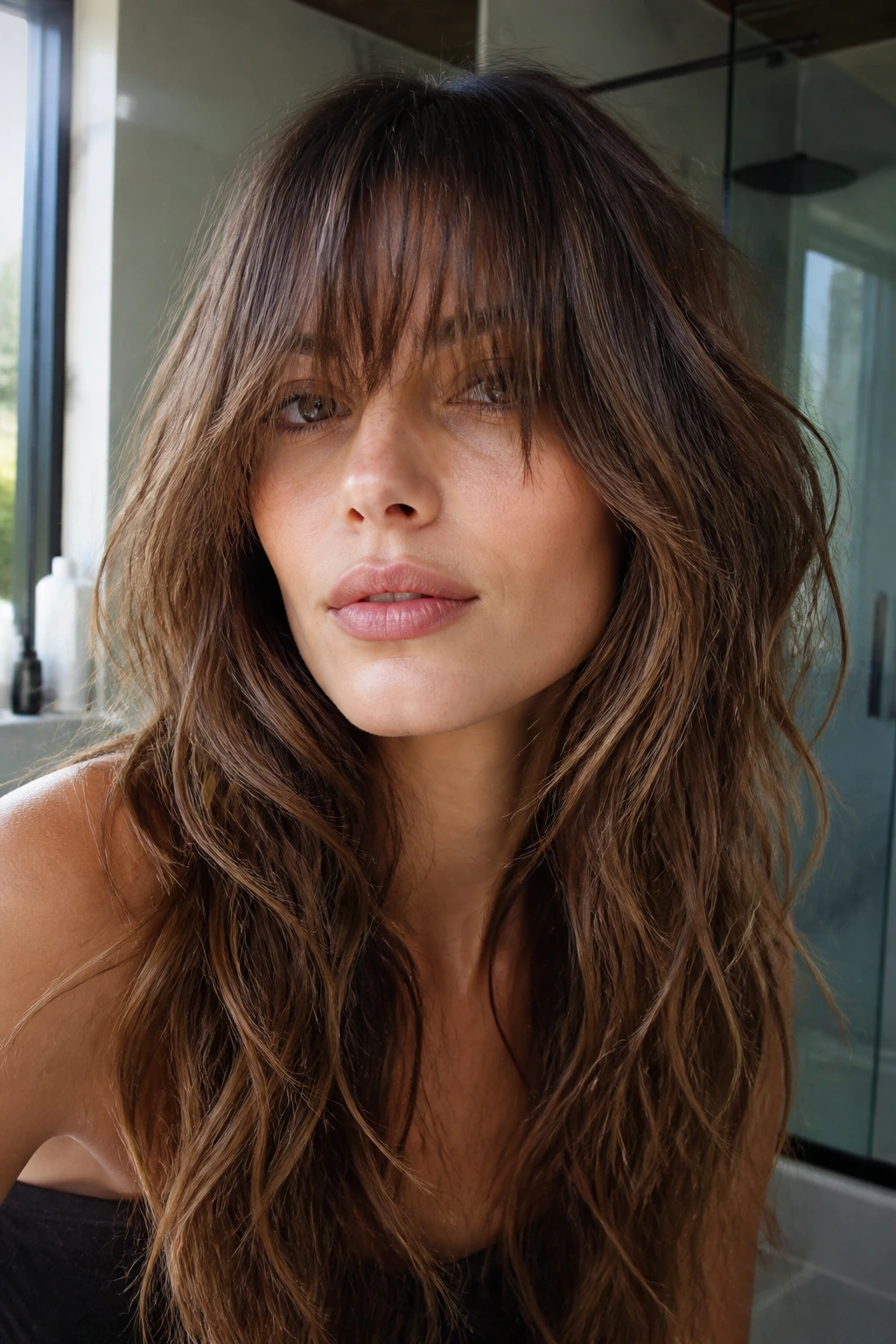
There’s a sweet spot where the fringe brushes the lashes and the ends are broken up enough to keep the front from feeling blunt. That’s this cut. The razor work softens the edge, so the fringe moves instead of hanging like a curtain that forgot to open.
On wavy hair, the razor finish can be gorgeous if the texture is naturally smooth through the front. If the hair is coarse and frizz-prone, you want a very light hand here. Too much razor can make the fringe puff up. Too little and it goes heavy.
The rest of the cut should stay long and slightly sliced, not thinned to death. I’d rather have a little weight left than a wispy fringe with stringy ends. No contest.
9. Face-Hugging Fringe with Collarbone Layers
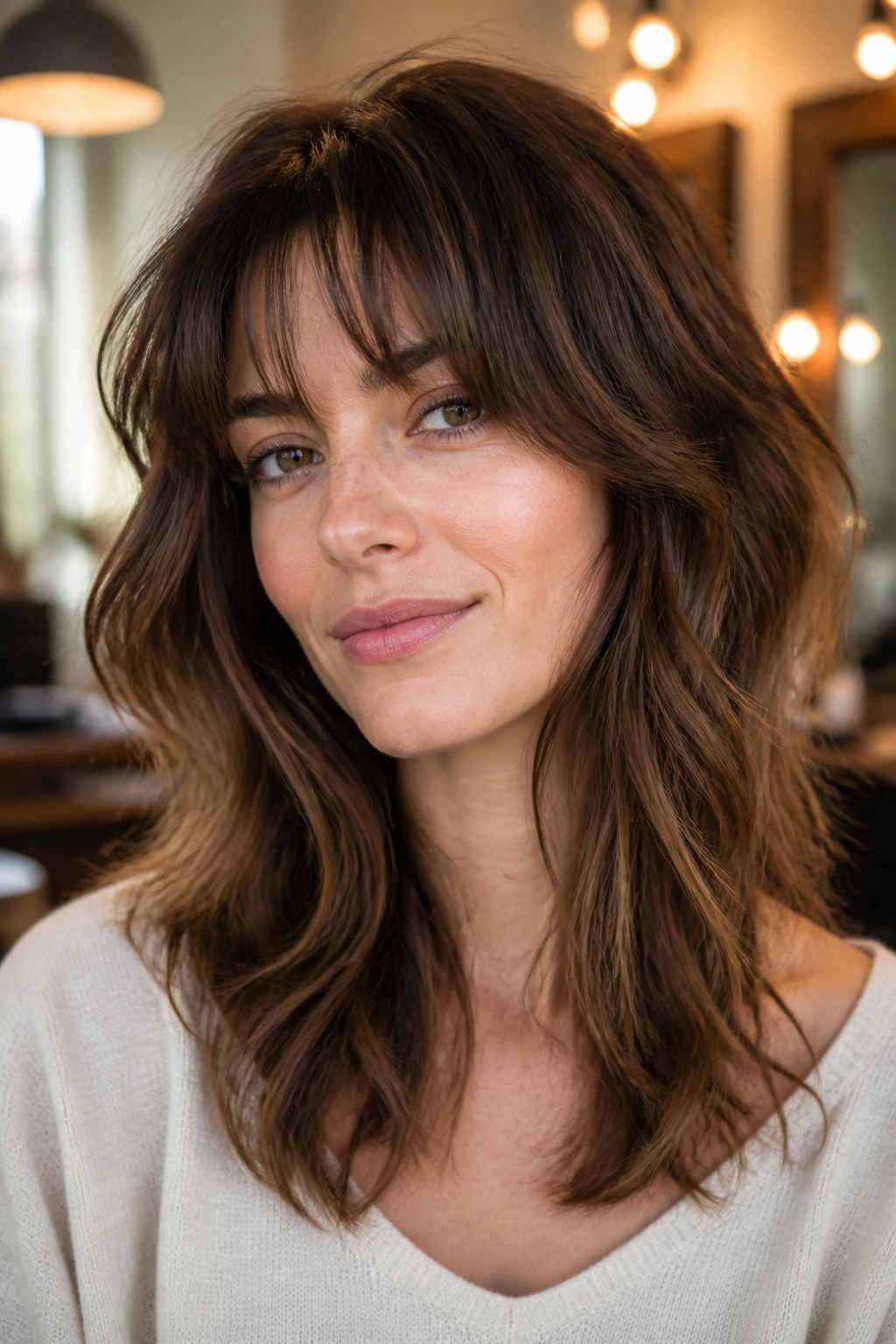
This shape wraps around the face in a way that flatters wavy hair without stealing the show. The fringe drapes close to the cheeks, then the length lands at the collarbone and below, where the bend can move without getting crushed. It has a soft, almost draped look when it’s cut well.
The collarbone length is a good anchor. It gives the waves enough weight to settle, but not so much that they drag. If your face feels broader through the cheeks, the front pieces can be angled slightly shorter near the cheekbone and longer by the jaw. That little adjustment changes the whole profile.
This cut is especially nice when you want fringe but do not want the forehead fully covered.
10. Grown-Out Boho Fringe with Airy Ends
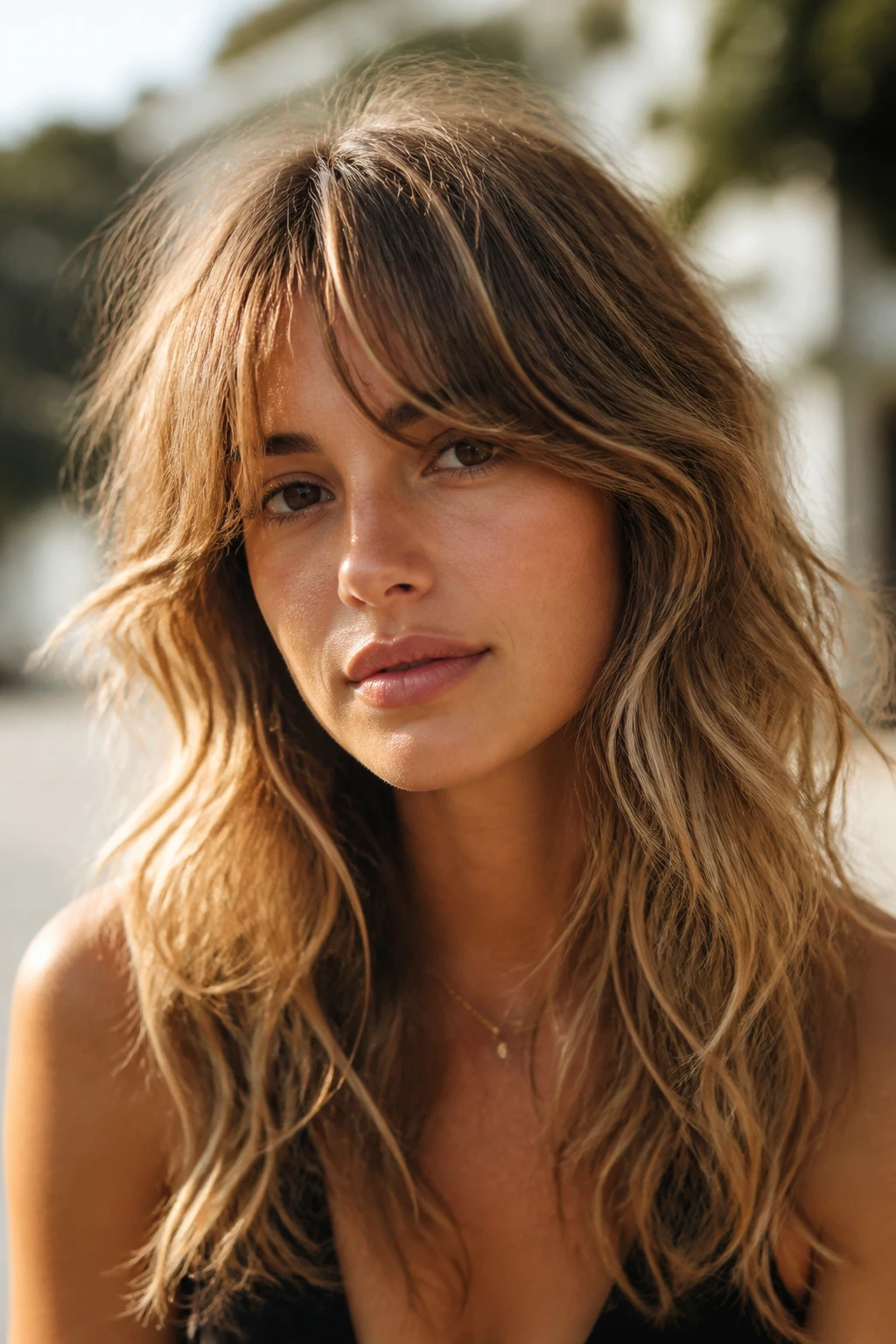
If you hate keeping a strict schedule, this is the friendliest option on the page. The fringe starts as a soft bang shape, then grows into a piecey curtain over time. The ends stay airy, and the layers are cut low enough that the cut still makes sense two months later.
Wavy hair loves this version because it already looks a bit undone. You do not need to force it into perfection. The hair can air-dry, get finger-tousled, and still look like it belongs to the same haircut. That is a rare kind of mercy.
I’d choose this if you want movement but do not want a fringe that demands constant trimming. It hides the grow-out better than a blunt front ever will.
11. Octopus Shag with Short Crown and Long Tail
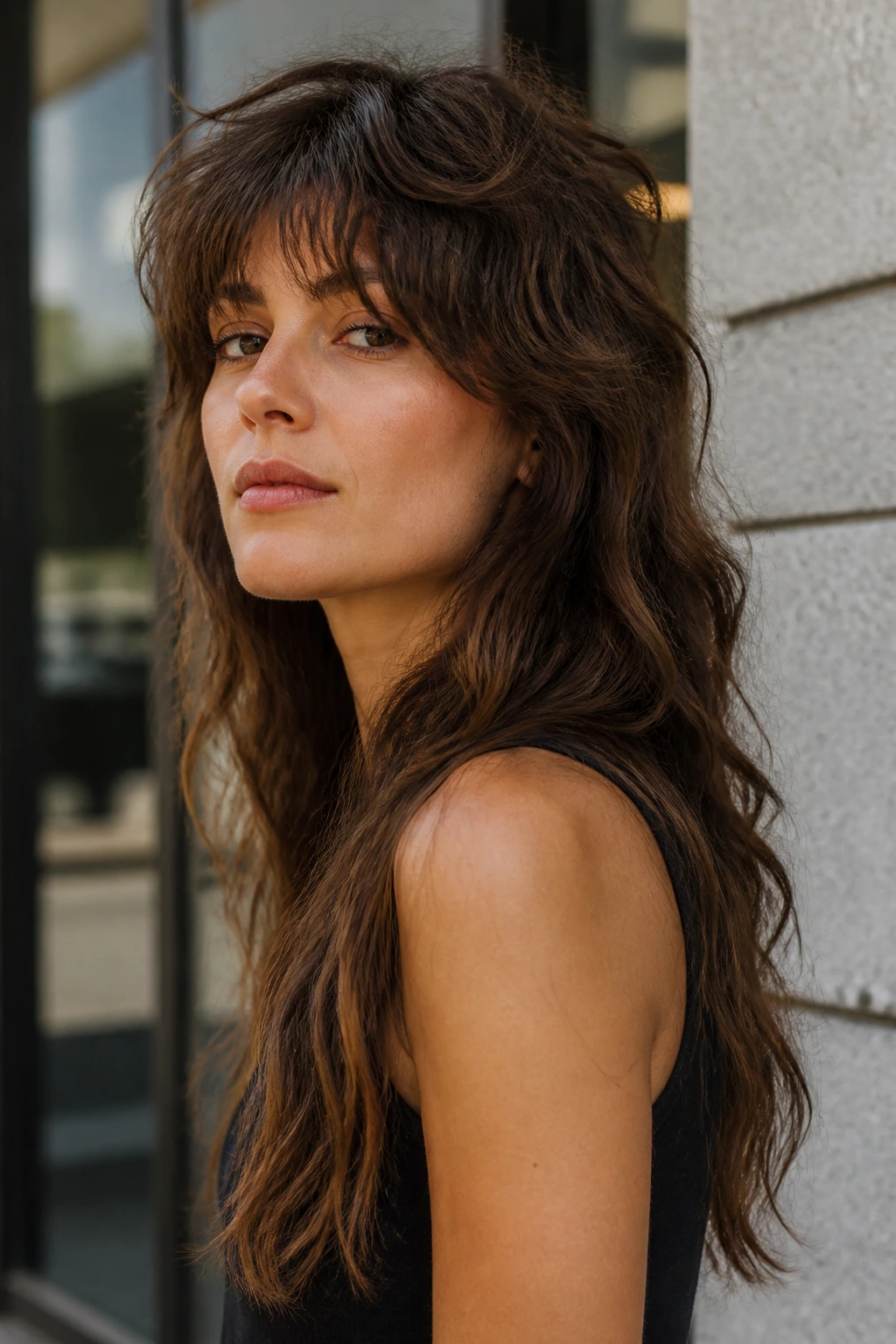
This cut is all about contrast. The crown is shorter and a little lifted, while the ends stay long and loose, almost like the hair has two different moods at once. On wavy texture, that split creates real volume up top without turning the lower half into a puffball.
The fringe is usually soft and broken, not dense. That keeps the front from fighting the rest of the shape. If your hair tends to sit flat at the roots but gets fuller below, this is one of the best ways to balance it. You keep length where you want to feel swishy, and you remove weight where it makes the head look heavy.
It’s a bit more fashion-forward than the curtain fringe versions, but not so wild that you can’t wear it to work.
12. Wolf-Lean Long Shag with Chunky Fringe

This is the edgier cousin in the family. The fringe is chunkier, the layers are more separated, and the whole cut leans into texture rather than smoothing it over. On wavy hair, that can look sharp instead of messy if the layers are placed with intention.
What makes it work is restraint at the bottom. Keep the longest pieces long enough that the shape does not collapse into a mullet blur. Then let the front and crown hold the energy. A little separation in the fringe is part of the look, so don’t over-comb it into submission.
If you like a haircut that looks better after a day of wear, this is a strong candidate. It’s not precious. It wants a bit of grit.
13. Air-Dried Beach Shag with Lifted Fringe
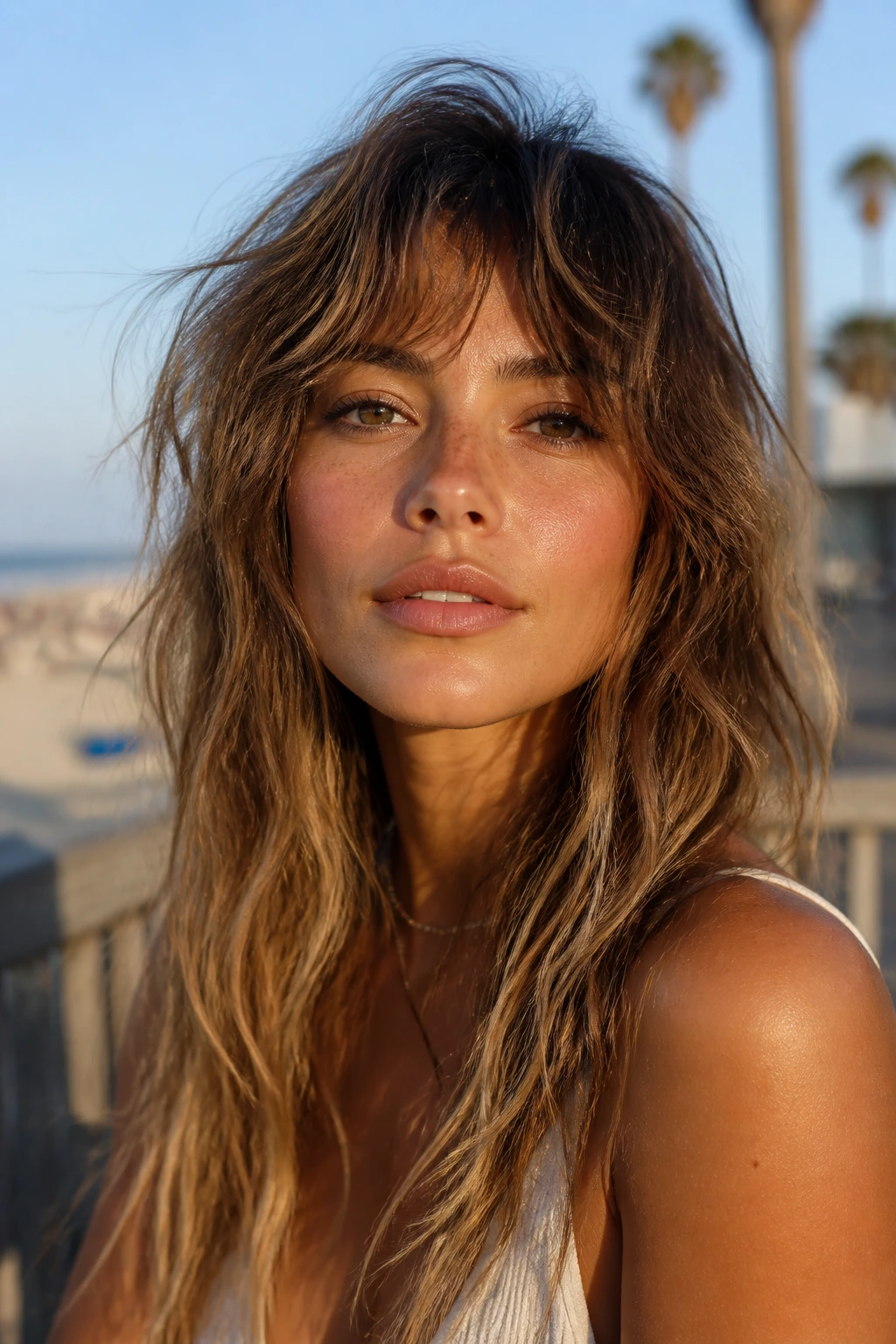
Some cuts are built for blowouts. This one is built for the towel stage. The fringe gets a light lift at the roots, the layers are cut to break up the bulk, and the ends stay loose enough that air-drying creates shape instead of flatness.
Use a mousse or foam through the roots, a small amount of cream through the mid-lengths, and then leave it alone more than you think you should. Touching wavy hair while it dries is usually where the frizz starts. The fringe can be pinched into place with fingers, then clipped lightly at the temples if it wants to fall into your eyes.
This is the cut I’d pick for anyone who wants movement with a minimum of tools.
14. V-Cut Long Shag with Curtain Flip
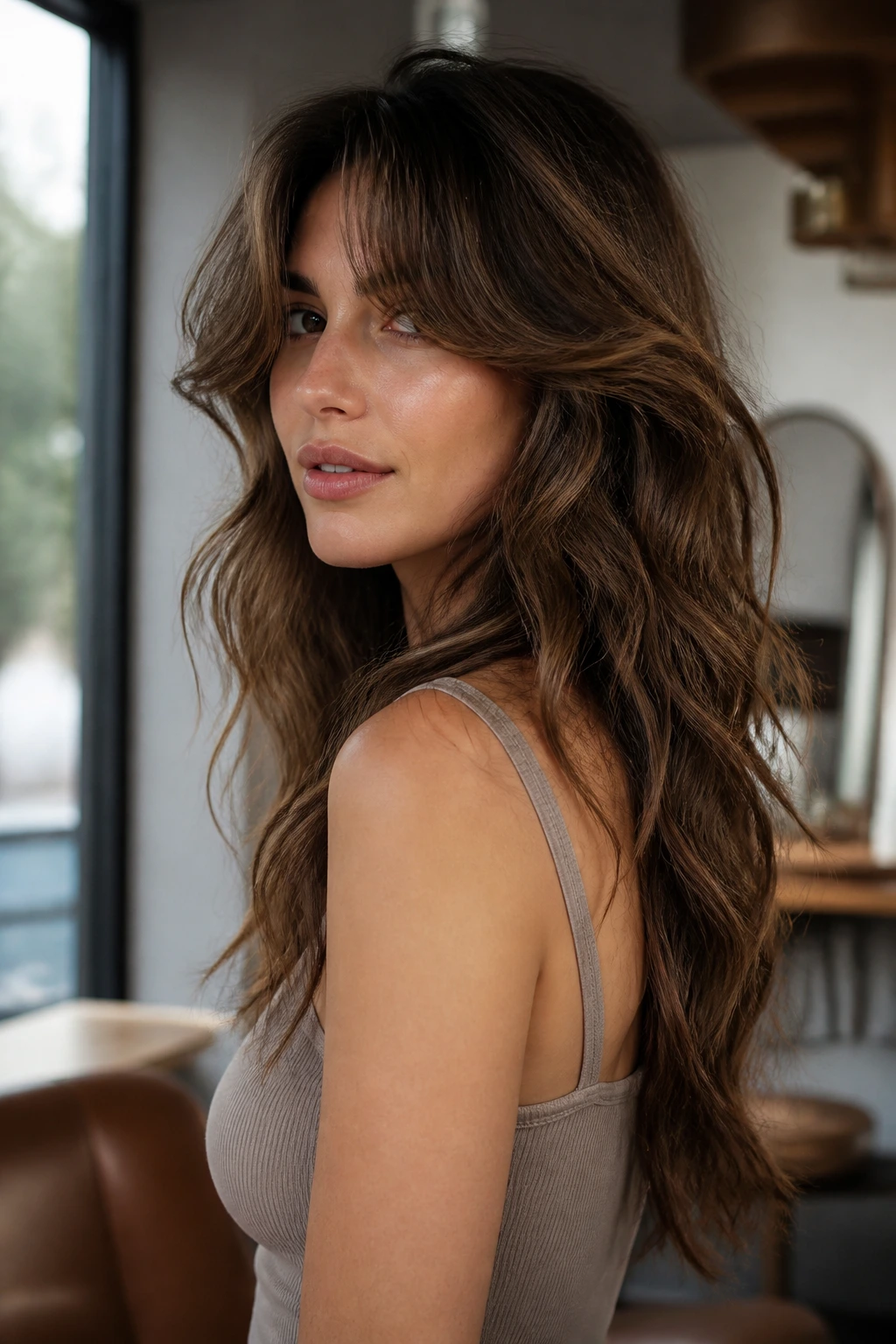
A V-cut keeps the back narrow and pointed, which sounds simple until you see how much it helps long wavy hair. Instead of hanging in a heavy rectangle, the hair tapers toward the center back. That gives the whole cut a little lift and lets the fringe feel lighter up front.
The curtain flip in front keeps the face from disappearing under the length. It can split at the middle or fall slightly off-center, depending on your part. Either way, the fringe should move away from the face rather than sit on top of it.
This is a smart shape for people who want to keep length but remove that weighed-down feeling at the ends. The back still looks long. It just breathes.
15. Thick-Hair Shag with Bulk Removal and Long Fringe
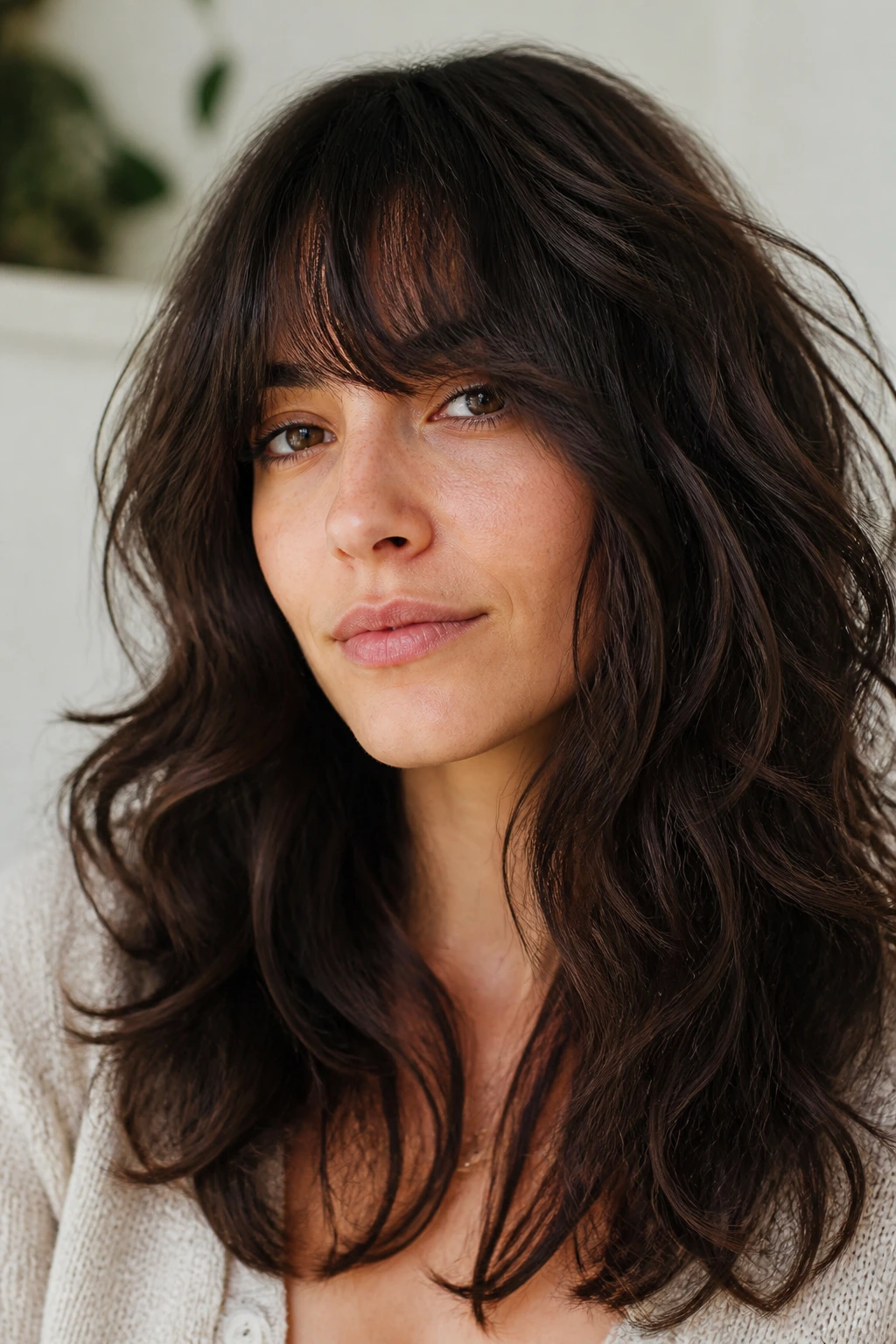
If your waves are dense, this is where a shag earns its keep. Thick hair gets hot and heavy fast when it’s cut in one slab. A good shag removes bulk through the interior, not by hacking the ends into a thin mess.
The long fringe matters because it keeps the front from puffing up too short. Ask for the weight to come out in targeted pockets around the crown, the sides, and the area behind the ears. That way the hair bends instead of bulges. The fringe can still be full, but it should not sit as one solid line.
A thick wavy shag looks best when the perimeter is left strong. Thin the shape too much and it turns fluffy. Leave the bottom with some density and the haircut behaves better.
16. Fine-Hair Shag with Light Layers and Full Fringe

Fine waves need architecture, not subtraction. That’s the rule I keep coming back to. Too many layers can make the ends look see-through before you’ve even left the salon. A better plan is light layering, a touch of lift at the crown, and a full but airy fringe that gives the front some presence.
The fringe can be a bit longer and softer, which helps it sit with more weight. That matters because fine hair can separate at the front and show too much scalp if the bang area gets over-thinned. Keep the layers gentle and let the wave pattern do most of the work.
If your hair loses shape by lunchtime, this is where product choice matters too. A mousse or root spray beats a heavy cream every time.
17. Long Razor Shag with Jagged Fringe
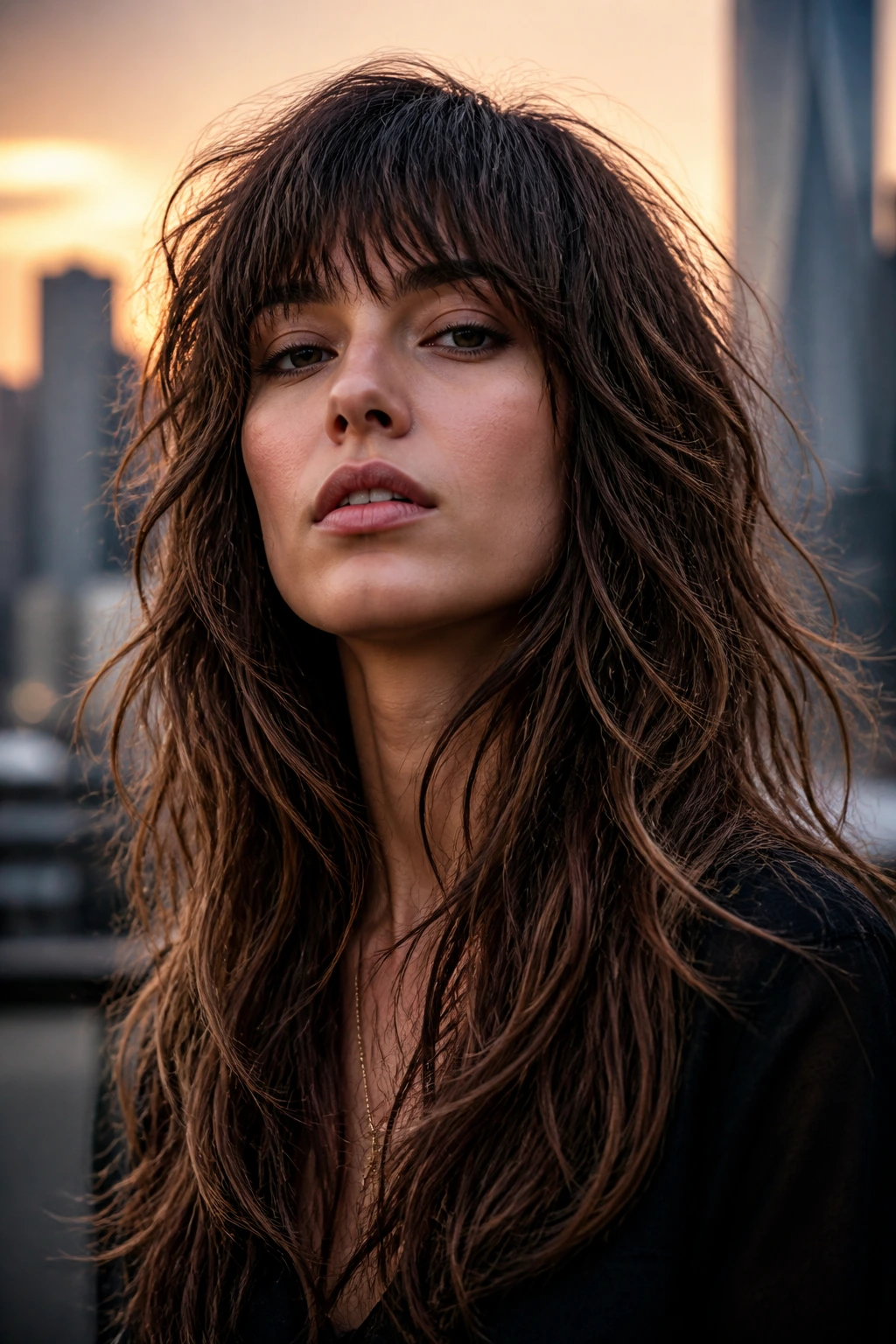
A razor cut gives this shape its bite. The ends look broken in a way that feels intentional, and the fringe comes out jagged rather than blunt. On wavy hair, that can be a strong move because the natural bend already softens the outline.
This cut shines when the wave pattern has a little grit. If the hair is very smooth, the jagged edges can look too sharp. If it’s too coarse, you want the razor used lightly so the fringe does not fray. The sweet spot is somewhere in the middle — rough enough to move, clean enough to sit down.
I like this best on people who wear black tees, boots, and lived-in texture. It has a point of view.
18. Romantic Rounded Shag with Soft Volume at the Crown
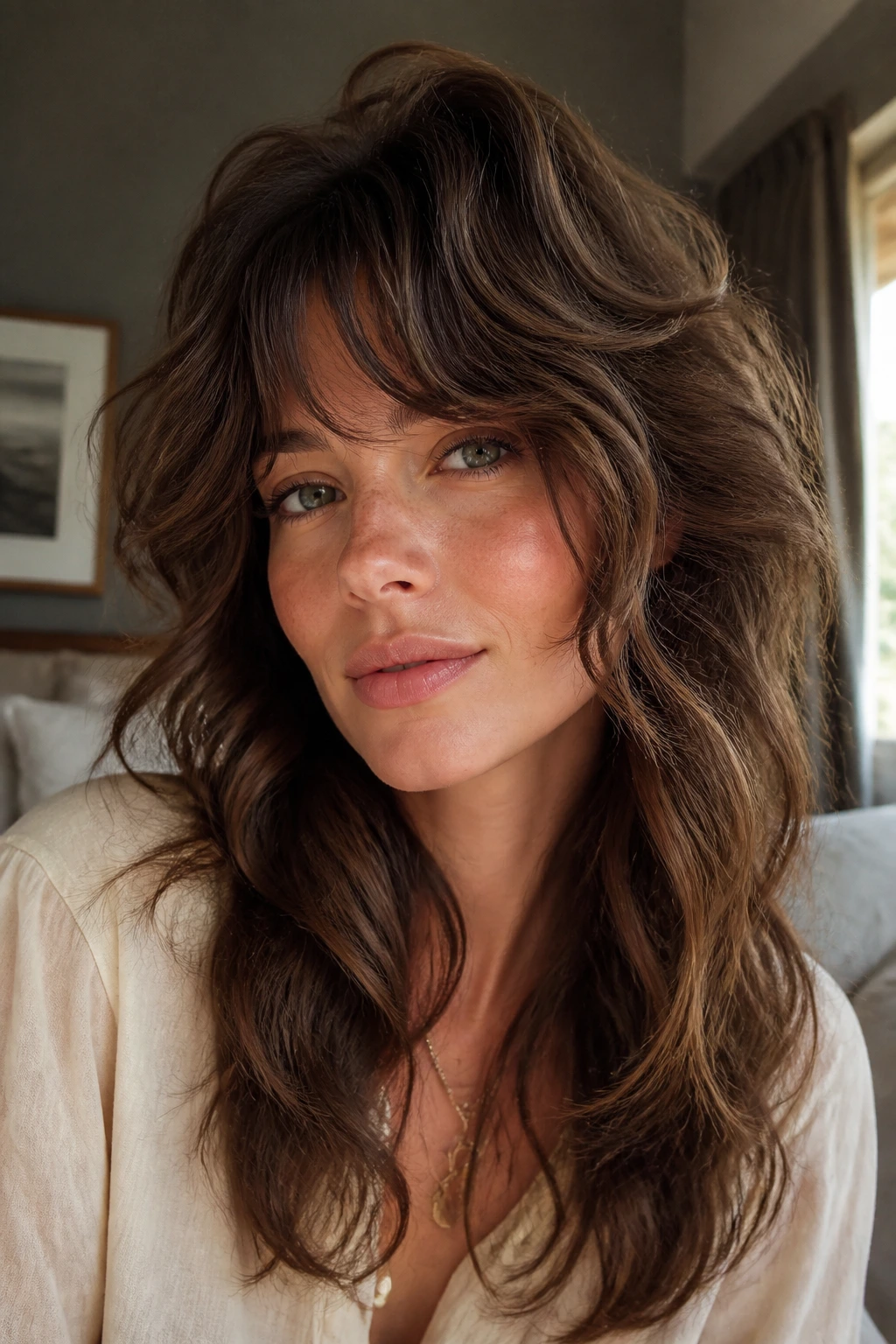
If you want softness instead of edge, this shape does the job. The crown gets a bit of height, the layers arc gently around the head, and the fringe stays rounded rather than chopped. On wavy hair, that creates a fuller silhouette without looking puffy.
The trick is keeping the layers long enough that the wave can fall in soft curves. Too many short steps and the cut turns into a triangle. Too much length and the crown collapses. The balance sits in the middle, with the fringe blending into the sides instead of ending abruptly.
This is one of the better choices for anyone who wants a flattering, easy-to-read shape that still has movement.
19. Narrow Center Fringe with Tousled Length
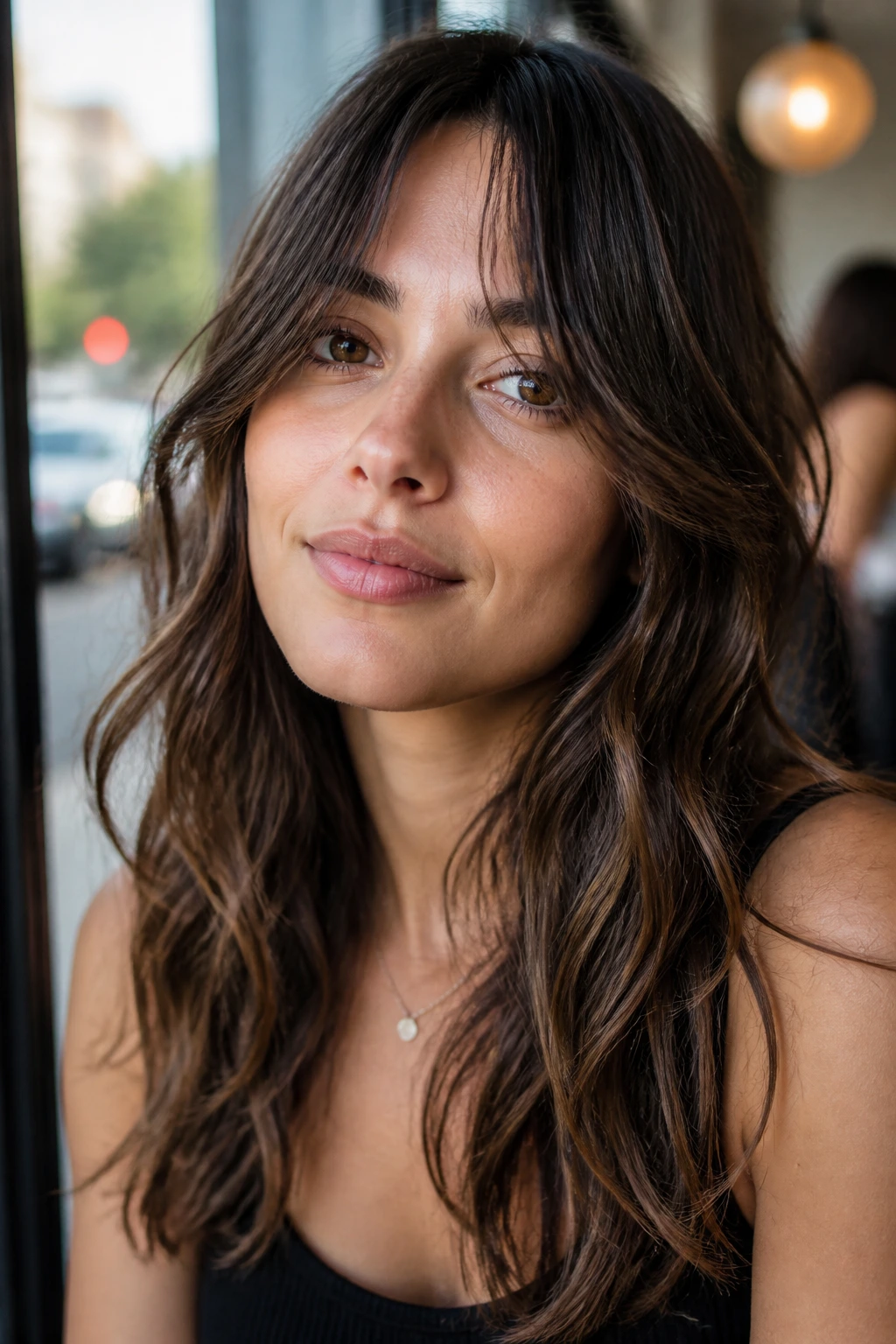
A narrow center fringe gives you just enough front detail without covering the whole forehead. It sits in the middle, then dissolves into wavy pieces that join the rest of the hair. That makes it less rigid than a full fringe and more structured than a true curtain bang.
The tousled length behind it keeps the mood relaxed. I’d call this a good compromise cut. You get shape where people look first, but the overall feel stays loose. On wavy hair, that matters because the front often needs a little control while the rest of the hair wants freedom.
It’s also one of the easier shapes to grow out. The center can widen, and the pieces still read as part of the haircut.
20. Choppy Fringe with S-Curve Layers
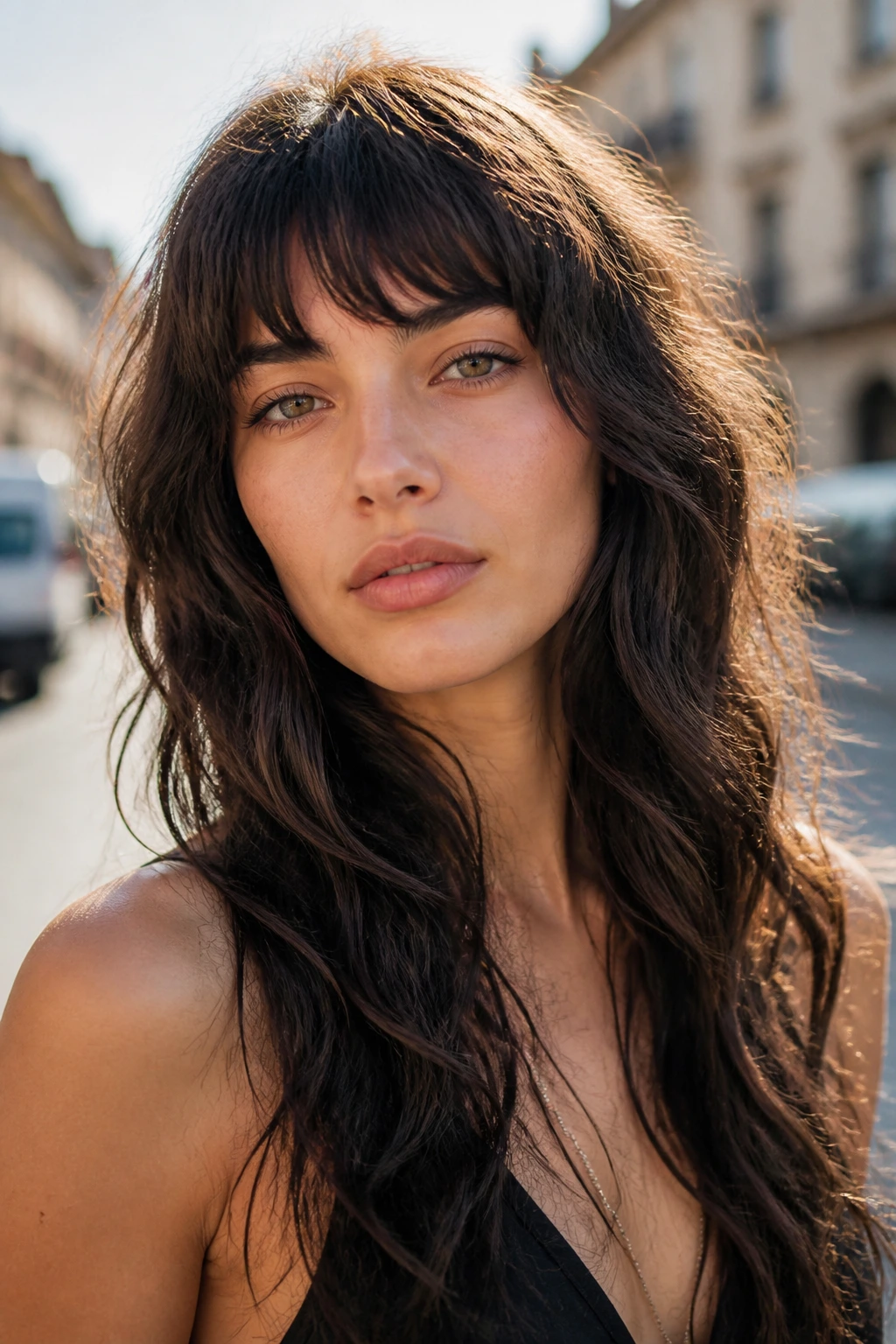
This one is about matching the haircut to the wave pattern instead of pushing against it. The fringe is chopped into soft, uneven pieces, and the layers follow the bends the hair already makes. That keeps the shape lively instead of overworked.
If your waves make visible S-curves, this cut can look almost built from the texture itself. Ask the stylist not to over-blend the layers. Some separation is the point. You want little pockets of movement, not a polished sheet.
Best of all, the haircut gets better when it settles. A fresh cut may look a touch piecey, but after a wash or two, the sections relax and the shape starts to make sense.
21. Shoulder-Grazing Long Shag with Split Fringe
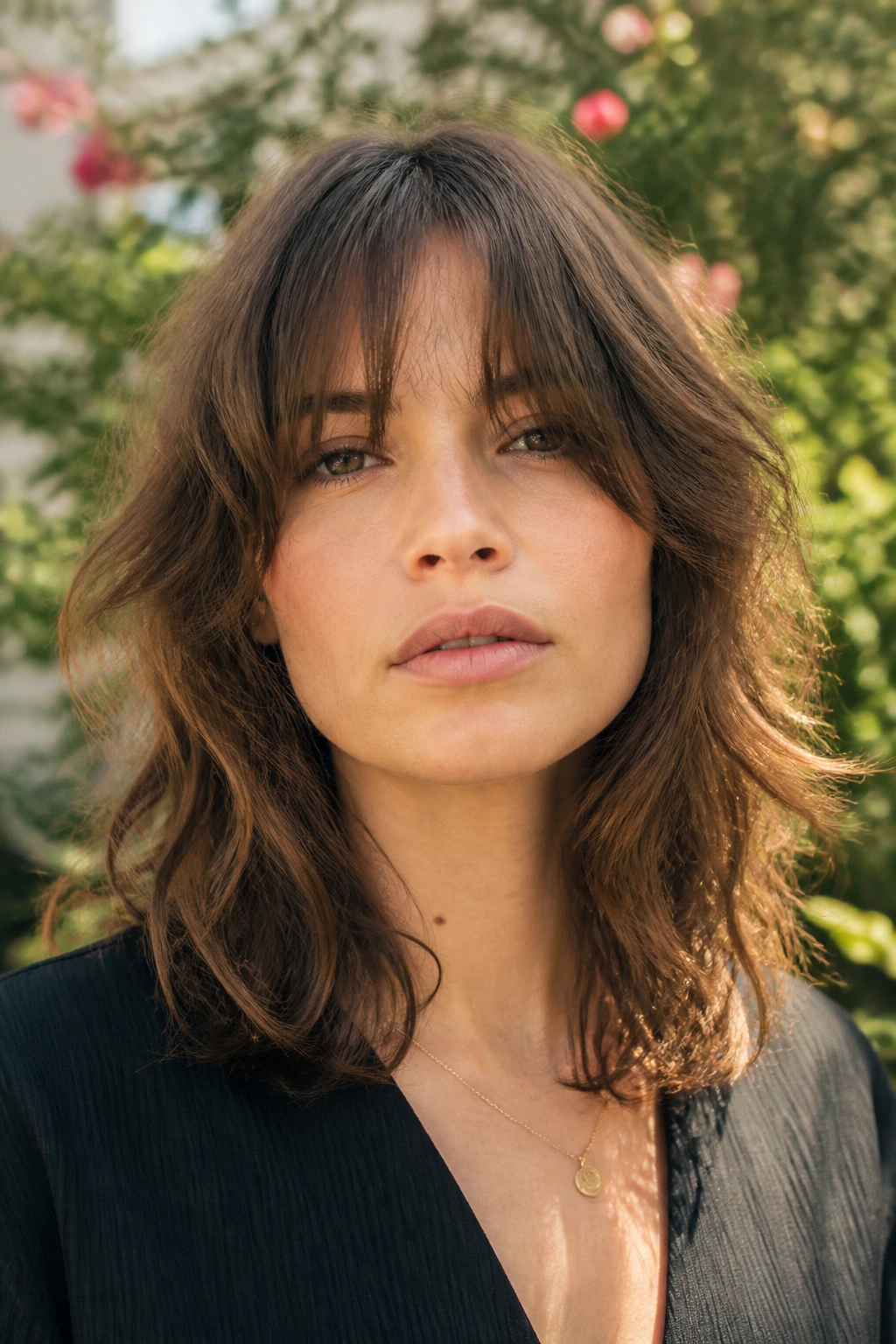
Shoulder-grazing length is underrated. It keeps enough weight to make waves fall in a clean line, but it is still short enough to move. Add a split fringe, and the front opens up without losing softness around the face.
This is a nice middle road if you’re tired of hair that feels too long and too heavy. The shoulders become the resting point, which helps the cut swing. The split fringe keeps the front from looking boxed in, and the long layers stop the ends from sitting like a shelf.
I’d call this one practical without being plain. It still has shape. It just doesn’t shout.
22. Hidden Internal Layer Shag with Soft Bangs
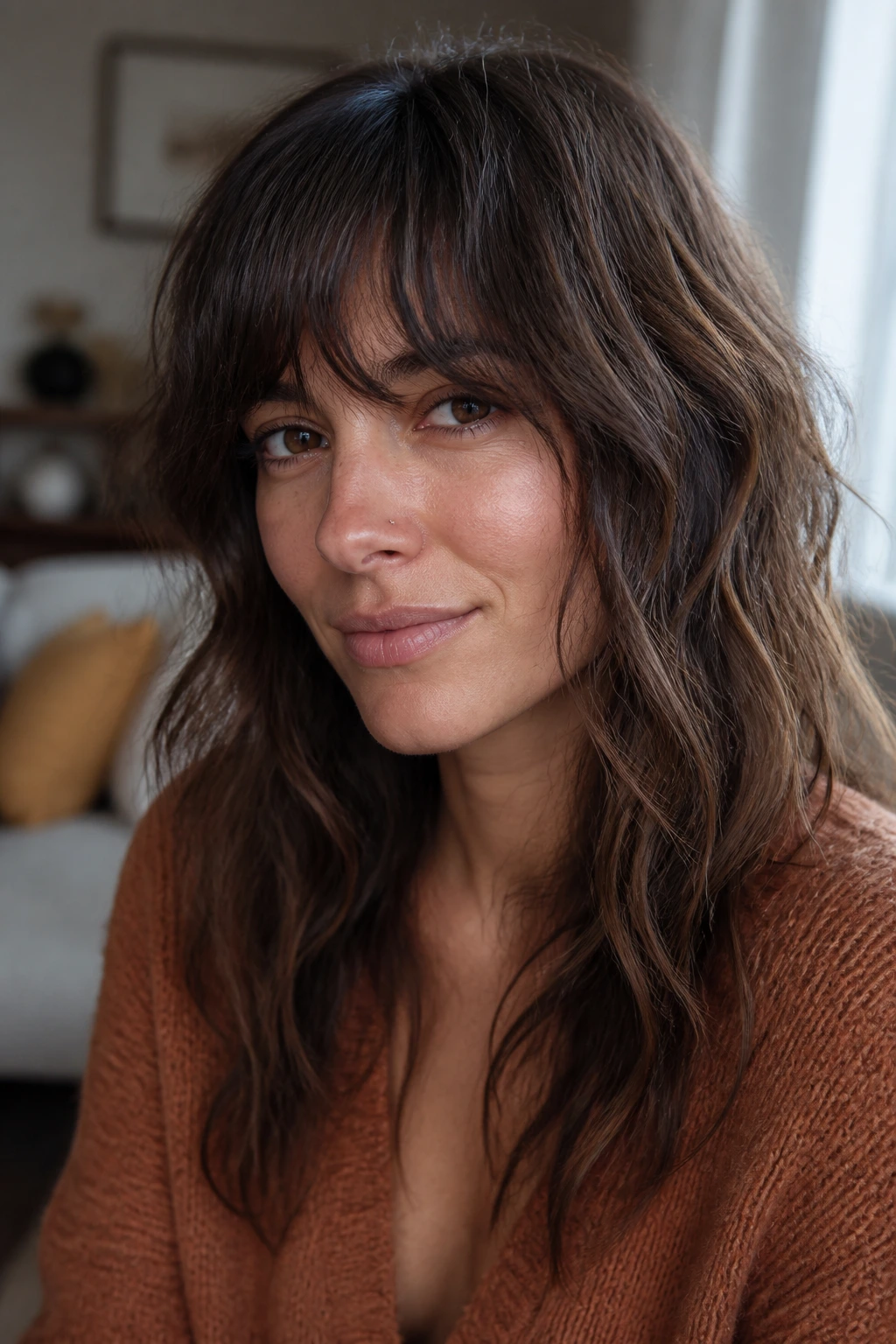
The best part of this cut is what you do not see right away. The interior layers remove bulk under the surface, so the top looks smooth and the waves underneath have room to bend. The soft bangs sit lightly at the front and help disguise any uneven shrinkage.
This is a smart option if you want the haircut to feel lighter without looking chopped apart. The outer line stays long. The hidden layers do the real work. On wavy hair, that often looks cleaner than an aggressively layered shape, especially if your texture is mixed — loose on top, denser underneath.
It’s a quiet cut, but not a boring one. The movement shows up once the hair dries.
23. Mermaid-Length Shag with Feathered Bangs
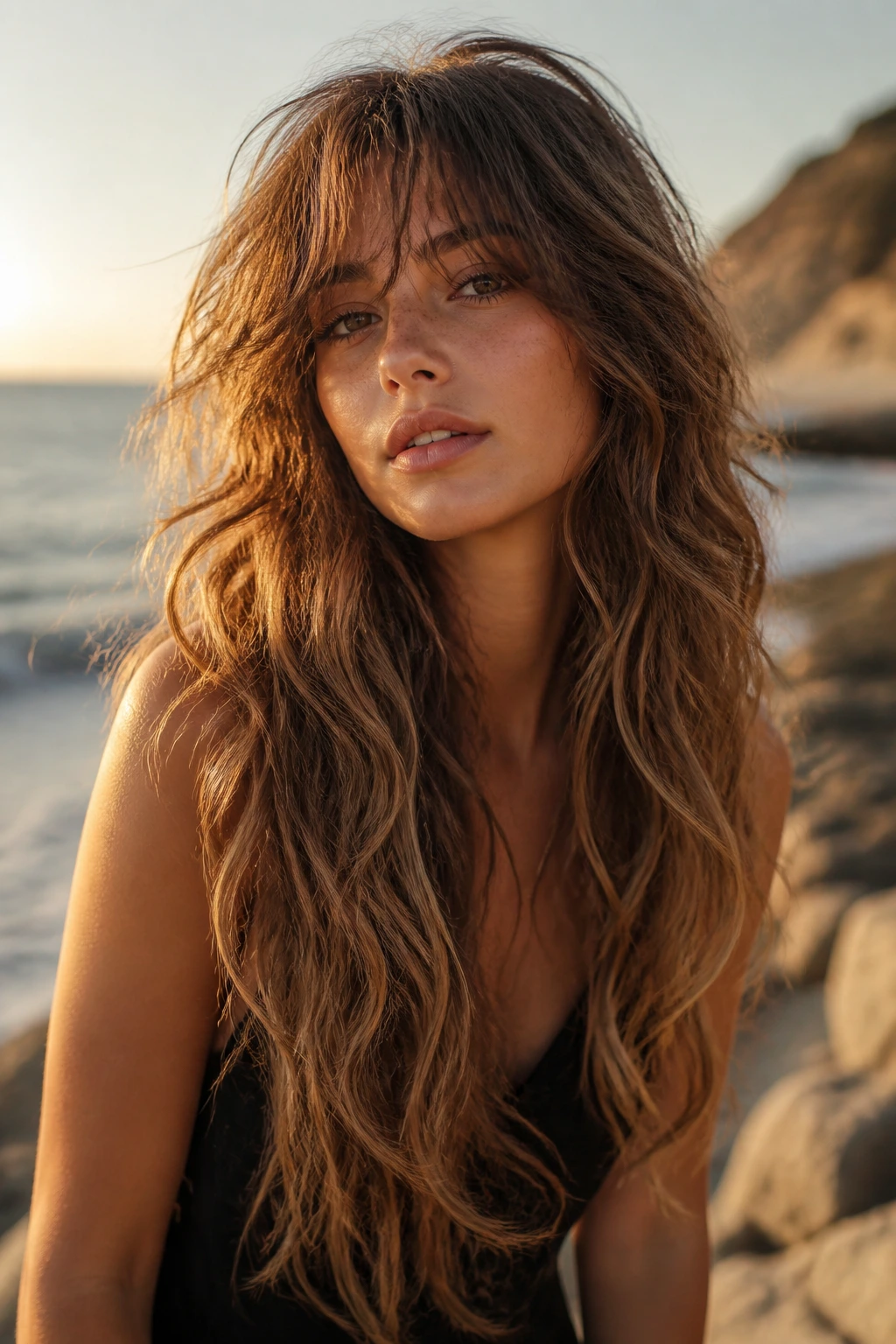
Long hair that reaches well past the shoulders can start to feel like one heavy curtain. Feathered bangs change the balance. They break up the front just enough to keep the shape from dragging, while the length stays dramatic and flowing.
This is for someone who wants to keep the length but not the dead weight. The feathering should be soft, especially near the temples. You want the waves to cascade, not fight a blunt fringe. A little lift through the crown helps too, or the top can go flat under all that length.
If your hair is naturally glossy and your waves are loose, this is a pretty hard shape to beat.
24. Soft Mullet-Inspired Long Shag with Short Fringe

This is the boldest shape so far, and it works because the contrast is clear. The fringe stays short, the top is lifted, and the back keeps length. A soft version of this cut is not about shock. It’s about a clean difference between the front and the length.
Wavy hair makes the transition easier because the texture helps blur the change in length. Still, the cut needs a careful hand. If the back is too sparse, it can look unfinished. If the fringe is too blunt, it steals the whole show. The soft version keeps the edges feathered and the transition line gradual.
Choose this if you like hair that has attitude but still moves.
25. Statement Straight Fringe with Loose Wavy Body
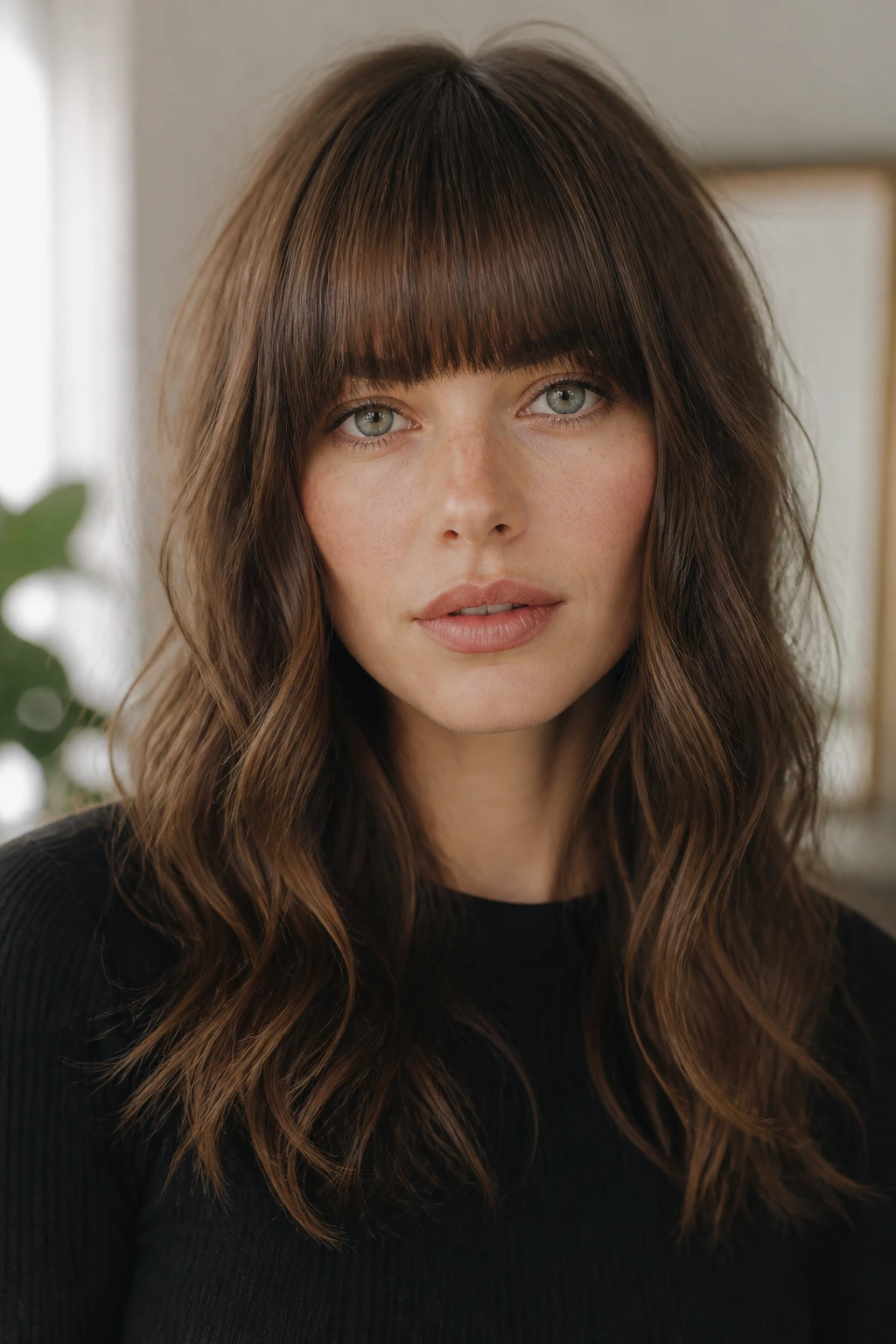
This is the contrast cut. The fringe is straighter and more exact, while the body of the hair stays loose and wavy. That tension makes the shape feel deliberate. It’s a sharp front paired with a softer, moving length.
It does ask for more upkeep. Straight fringe on waves usually needs a round brush or flat brush pass to settle it. If you hate touching your bangs, skip this one. If you enjoy the ritual of fixing the front while letting the rest dry on its own, it can look excellent.
The key is not to make the fringe too thick. A slightly softer density keeps it from looking like a wall across the forehead.
26. Low-Maintenance Grow-Out Shag with Blended Fringe
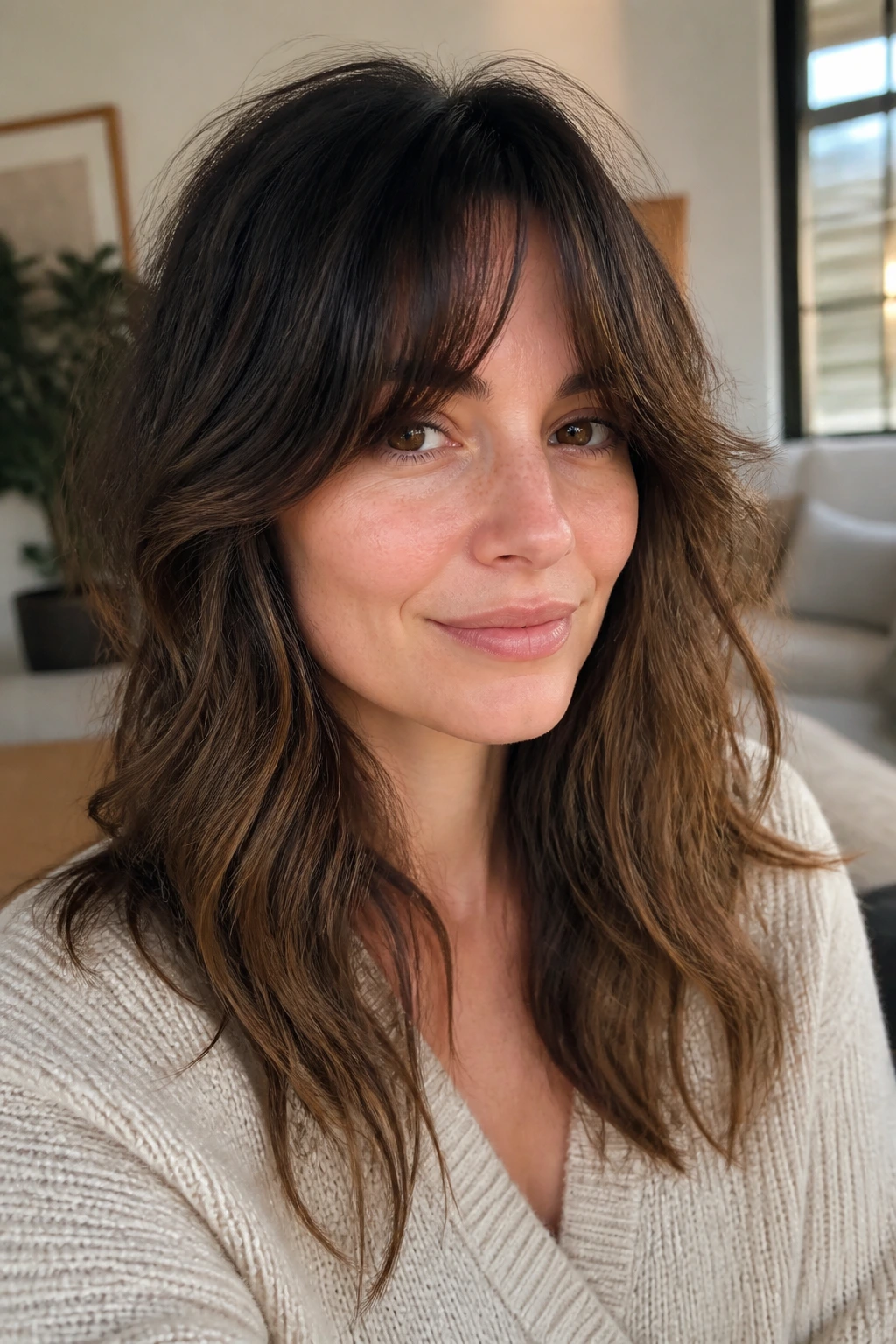
This cut is for the person who wants the haircut to behave after the salon chair stops spinning. The fringe blends into the face-framing pieces early, and the layers are long enough that the grow-out is easy to live with. On wavy hair, that matters because a cut can look perfect at week one and weird by week five if the front is too precise.
The blended fringe can be worn straight down, swept aside, or parted in the middle. It gives you choices. The hair around the face should feel soft and movable, not carved into one fixed line.
If you know you’ll wait a little too long between trims, choose this shape. It’s forgiving without losing style.
27. High-Crown Volume Shag with Deep Curtain Fringe
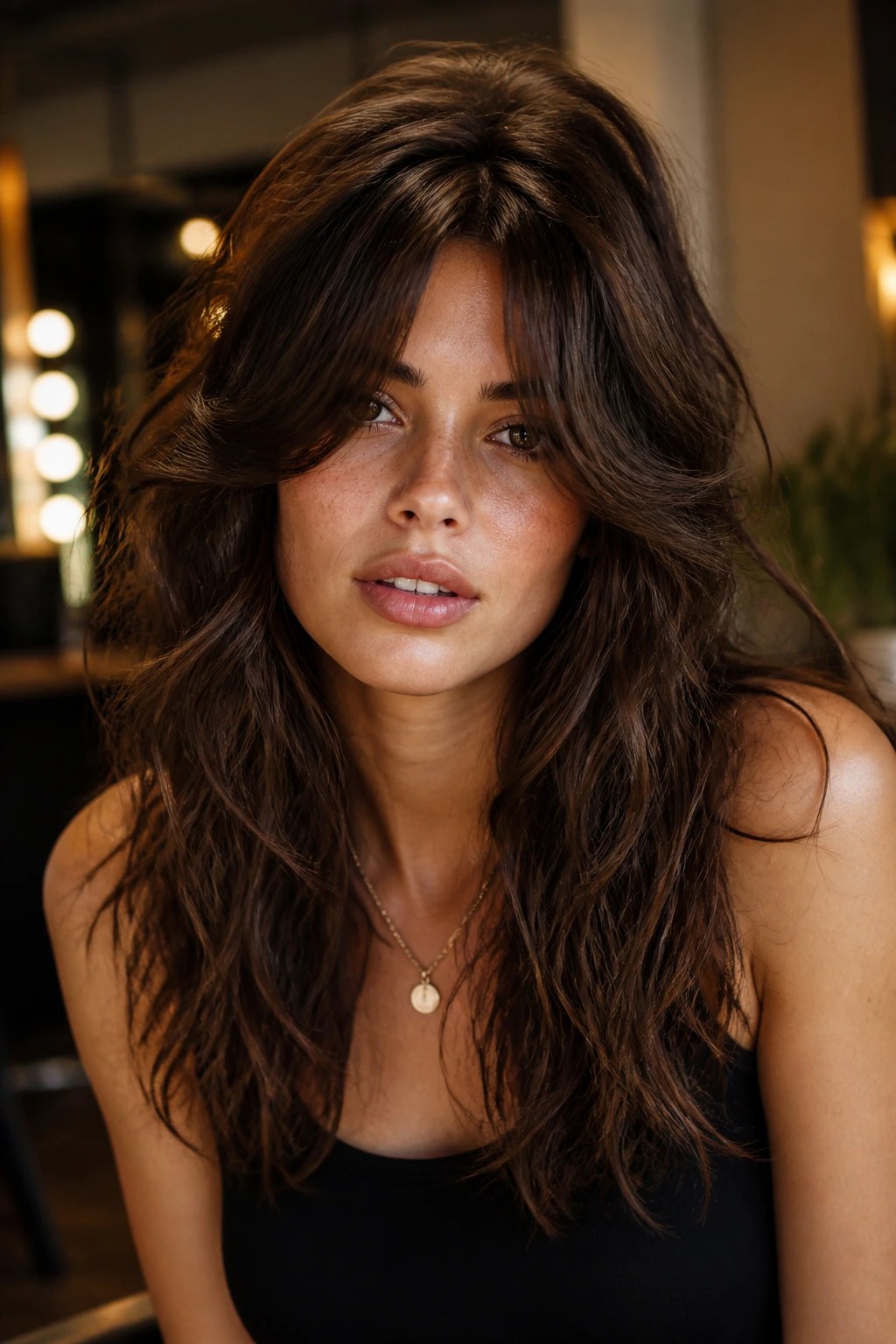
A high crown changes the whole silhouette. The lift sits near the top of the head, which makes the waves look fuller before they even reach the ends. Pair that with a deep curtain fringe and the cut suddenly has shape from root to tip.
This one works well on hair that falls flat at the scalp but has nicer movement below. The crown gets strategic layers, not random ones. The fringe splits early enough to keep the forehead open, and the longer side pieces help the cut settle into the cheeks. It’s dramatic in a good, wearable way.
Use a diffuser here if you can. The volume belongs near the roots, not only at the ends.
28. Side-Part Shag with Swept Fringe and Long Ends
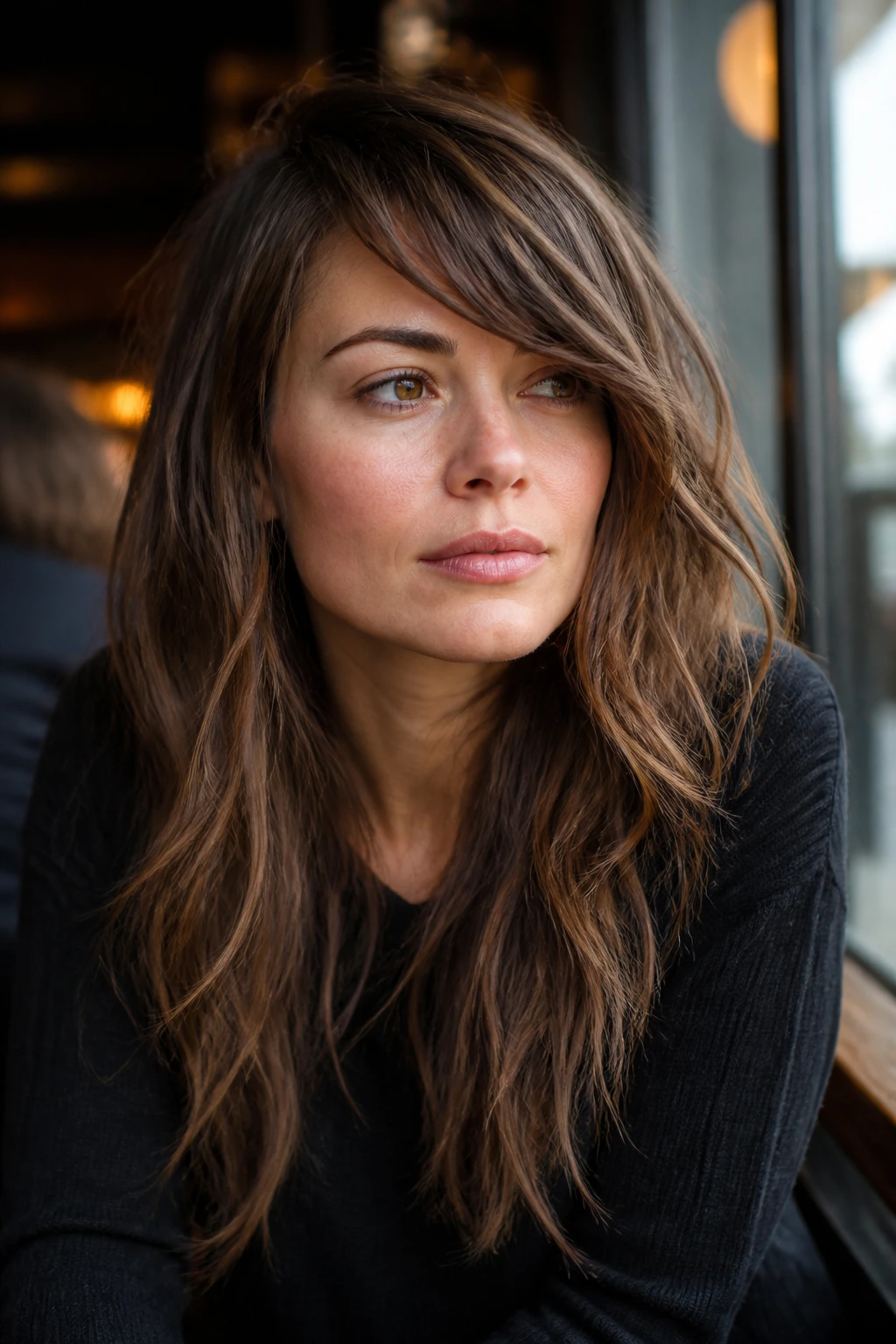
A side part can make wavy hair look richer because it changes where the weight falls. The fringe sweeps across the forehead, then one side carries more movement than the other. That asymmetry keeps the haircut from going too symmetrical and stiff.
The long ends are important. They keep the cut from becoming too short and too airy at once. I like this version for anyone whose waves fall forward around the face and need a little redirection. The side sweep handles that without forcing the hair into a middle-part shape it does not want.
If your natural part keeps trying to shift, listen to it. Wavy hair usually knows where it wants to live.
29. Halo Fringe with Cascading Layers
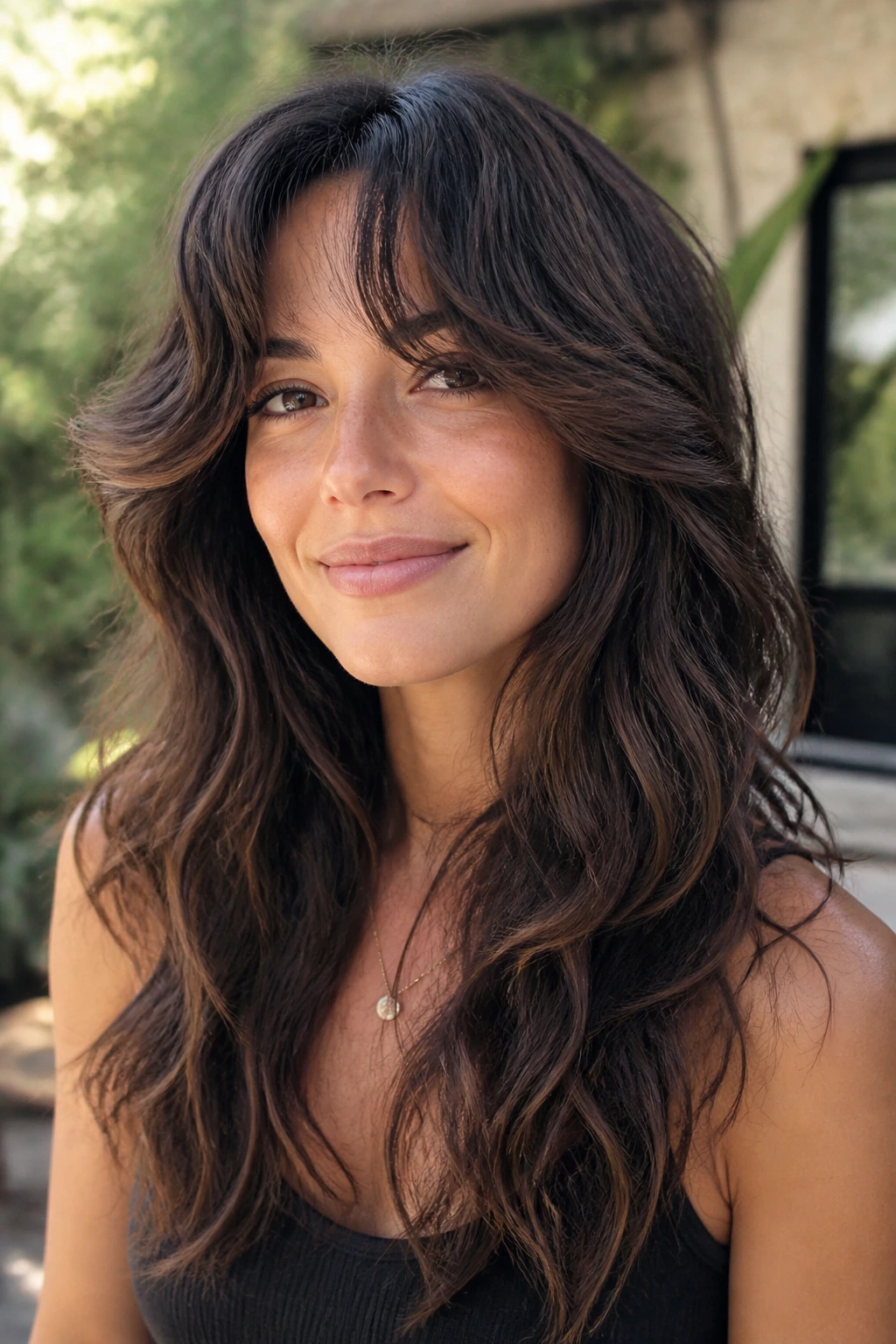
The halo fringe arcs around the face like a soft frame, then the layers fall in a cascade behind it. That sounds dramatic, but the cut itself can be subtle if the edges are feathered. On wavy hair, the arc keeps the front from collapsing inward.
What I like here is the way it wraps the face without closing it off. The fringe does not sit flat across the forehead. It curves and opens, which makes it easier to wear when the wave pattern changes day to day. The cascading layers keep the movement going down the body of the hair instead of stopping at the cheekbones.
This is a nice choice when you want a bit of polish but still want the hair to feel loose.
30. Tapered End Shag with Piecey Brow Fringe
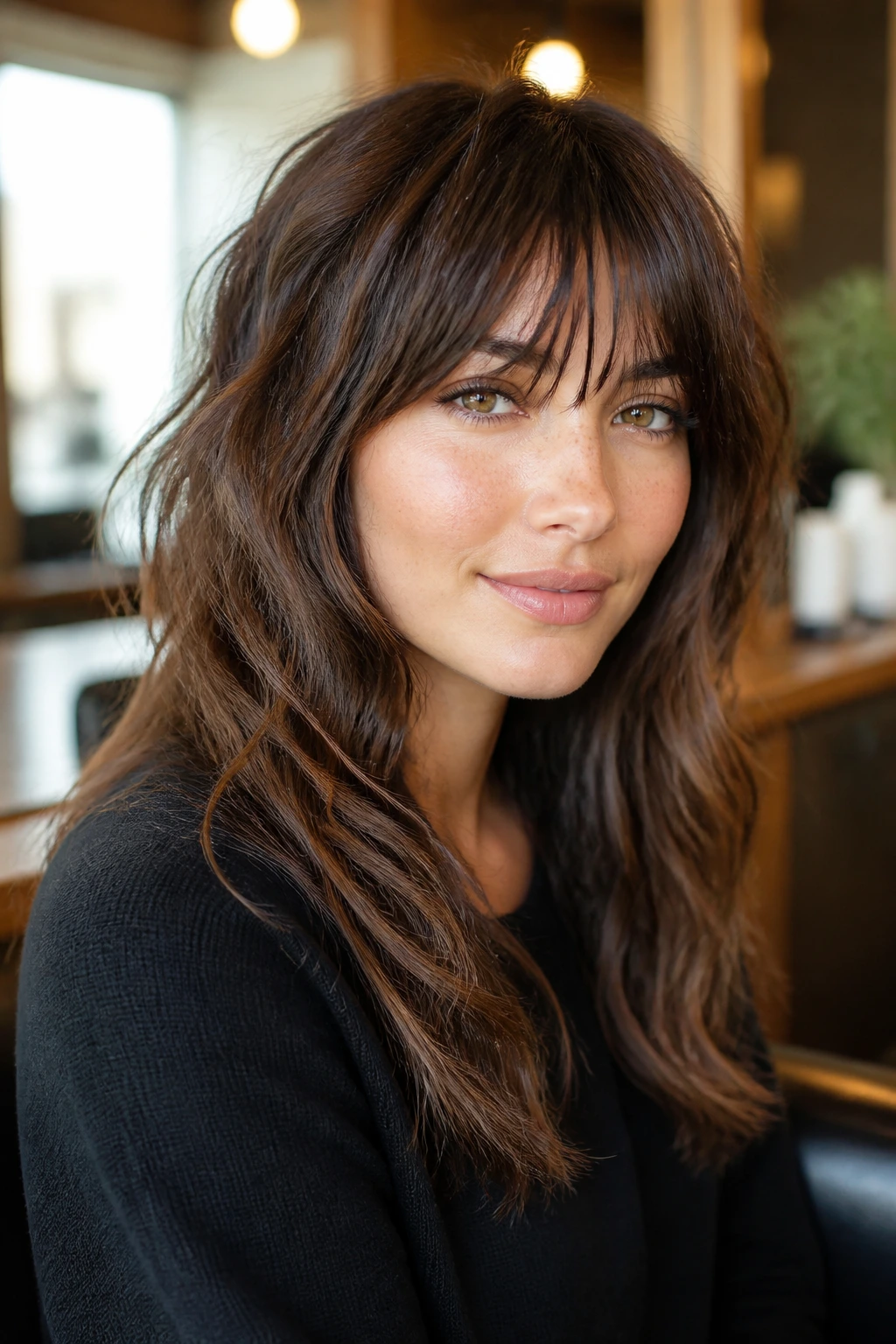
Tapered ends give the whole haircut a cleaner finish. Instead of ending in a blunt, heavy line, the hair narrows toward the bottom. The piecey brow fringe adds texture at the front so the shape feels lighter from the first glance.
This is a useful cut for hair that gets dense at the bottom or starts to expand in humidity. Tapering the ends removes that blocky look. The fringe should stay broken up, not over-processed. If it gets too sparse, the cut loses its frame.
For styling, keep the ends soft with a small amount of cream and leave the fringe a little drier so it keeps its texture.
31. Curl-Enhanced Wavy Shag with Curved Fringe
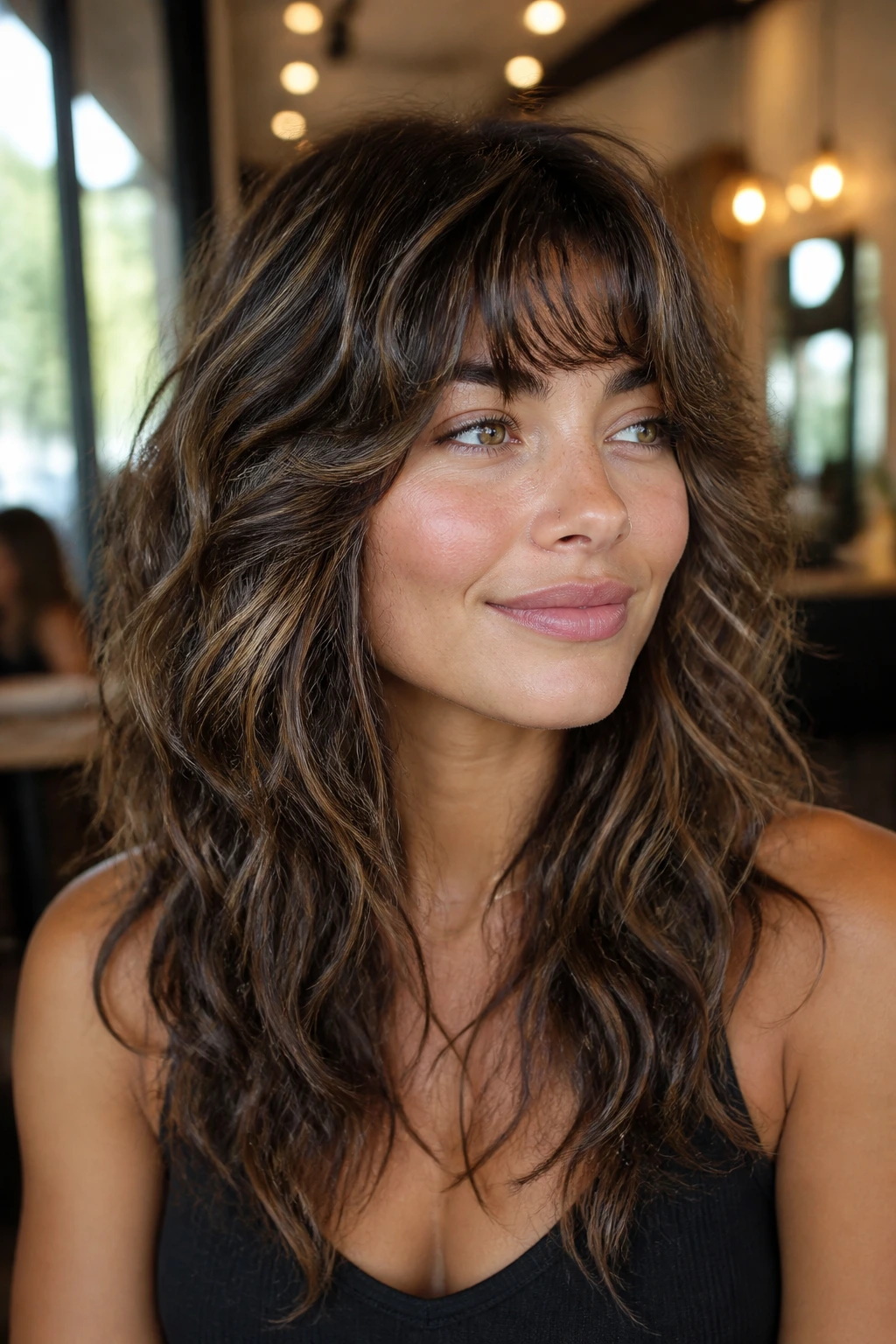
Some wavy hair sits one step away from curl. This shape leans into that. The curved fringe follows the bend instead of flattening it, and the layers are cut to encourage the wave to stack rather than stretch out.
If your hair gets ringy in humid weather or after a proper diffuser session, this cut can look especially good. The fringe should be left longer than a straight-haired version, because the curlier sections will bounce up. The curved front keeps the shape soft while still making the bangs visible.
This is the haircut that reminds me not to over-guess the texture. Let the hair show what it wants to be.
32. Lightweight Long Shag with Airy Crown Layers

This is the cut for when the top of the head feels too heavy and the ends feel too tired. The crown layers are light, airy, and placed to encourage lift without exposing too much scalp. The fringe stays soft so the front does not feel dense.
On wavy hair, lightweight layers can wake the whole head up. They make the bend more obvious, especially if the waves usually get buried under weight. Keep the longest pieces long enough that the cut still feels like long hair, not a medium-length compromise.
Use this shape if you want movement first and length second. It is a good trade.
33. Editorial Long Shag with Dramatic Fringe
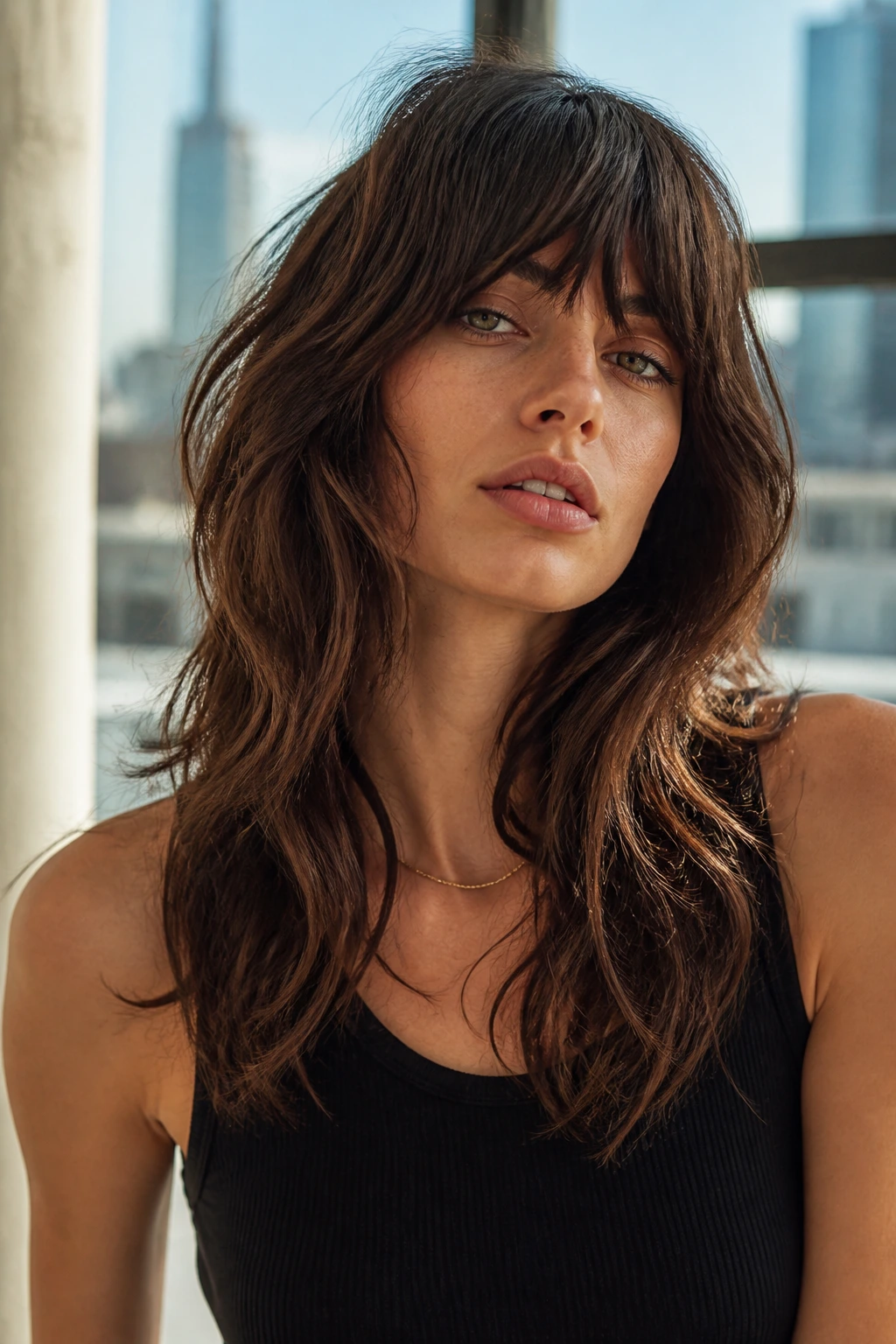
The final cut is the one with the strongest point of view. The fringe is more dramatic, the layers are more visible, and the shape reads from across the room. Wavy hair gives it enough softness that it doesn’t turn stiff or costume-like.
This version works best when the cut is clean and the styling is committed. A little mousse, a diffuser, and a bit of pieceing at the fringe can make the whole thing look intentional. If you want hair that feels like it belongs in a fashion spread but still behaves in daylight, this is the one to pin.
A dramatic fringe on waves needs confidence and a good stylist. No shortcuts.
Why Wavy Hair and a Shaggy Fringe Usually Click
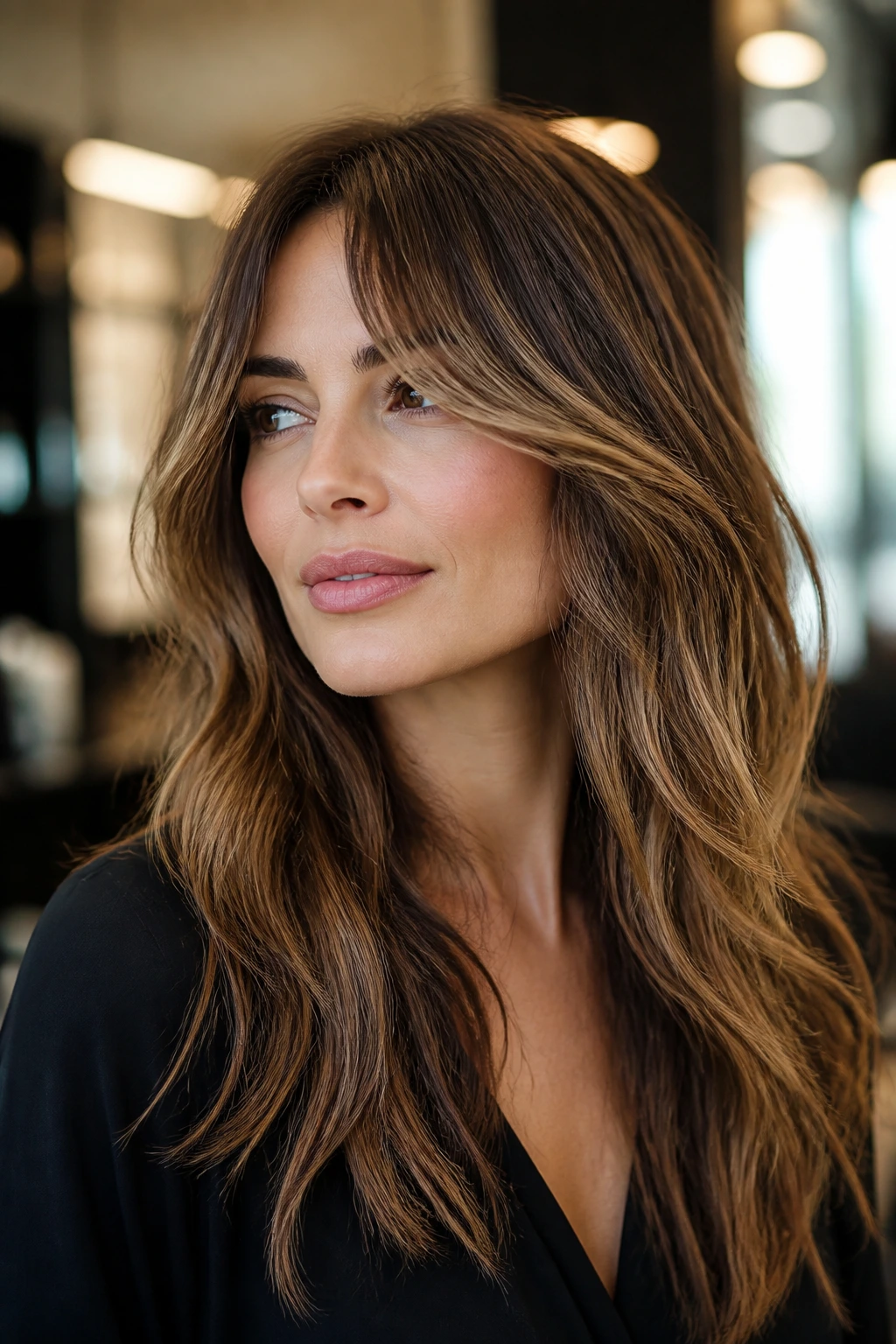
Wavy hair already has bend, and a shaggy fringe works with that bend instead of trying to erase it. That sounds obvious, but a lot of bad haircuts still ignore it. They cut the front too blunt, strip too much weight from the sides, and then act surprised when the hair puffs where it was supposed to fall. A shag lets the texture move through the shape instead of trapping it under one hard line.
The trick is restraint. Too many short layers can leave the ends thin and the crown wide. Too little layering leaves the hair heavy and sleepy. The sweet spot lives in the middle, where the fringe softens the forehead and the interior layers release bulk without making the perimeter look scraggly. That is why these cuts tend to look better air-dried than over-brushed.
Dry cutting helps here more than people admit. Waves shrink in uneven ways, and a clean wet cut can look shorter and harsher once the hair dries. A stylist who checks the fringe dry, or at least refines it after the initial cut, is paying attention to the part that matters. That attention is what keeps the haircut from turning into a guess.
How to Ask for the Right Shape at the Salon
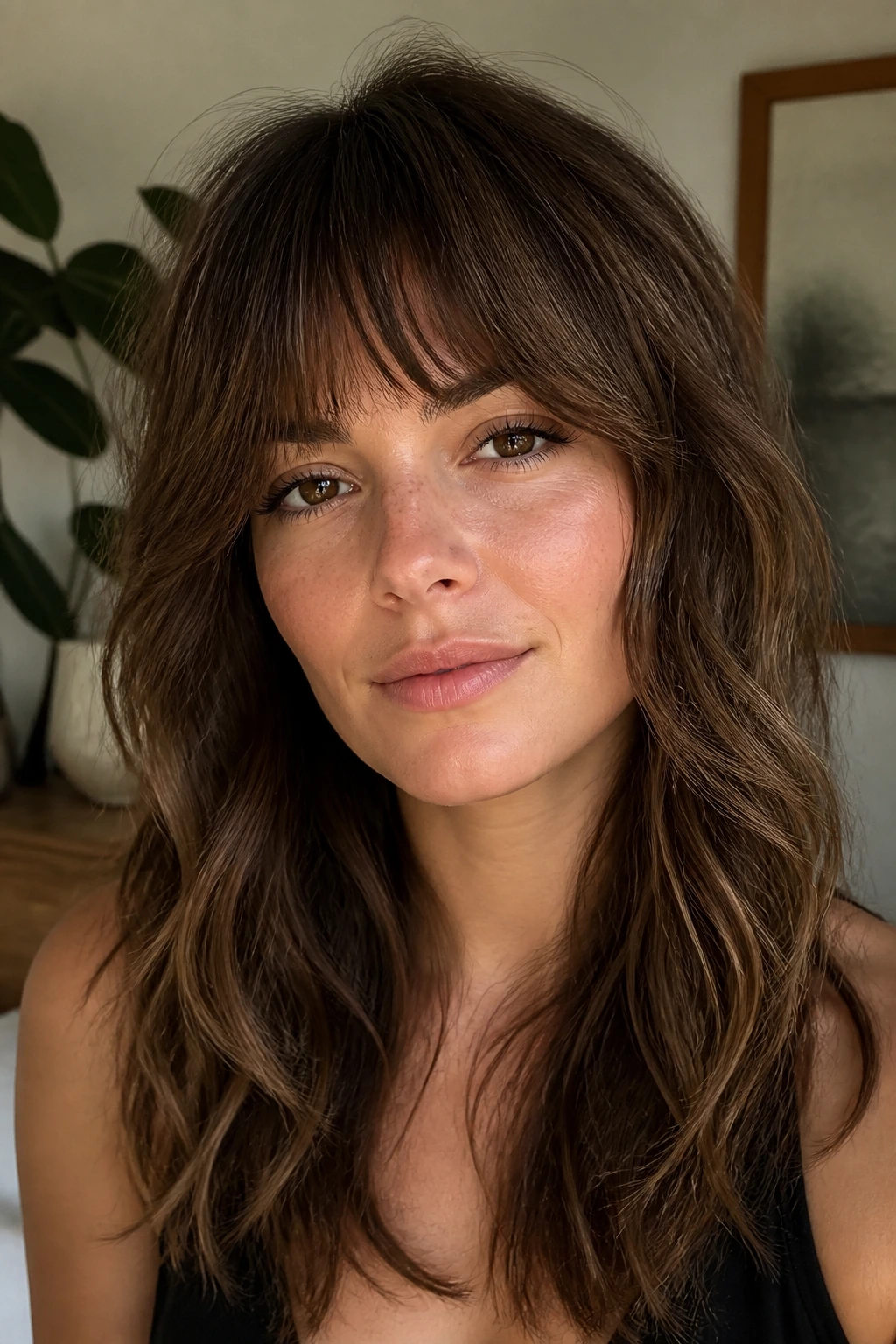
Bring photos, yes, but bring the right photos. Show hair that looks like yours when it is dry and worn in the real world, not a glossy finish with hot tools tucked into every bend. If your wave pattern is loose, point to cuts with softer curtain pieces and longer sides. If your hair is denser, point to the versions that remove bulk inside the shape rather than shaving the ends thin.
A few phrases help a lot:
- “Keep the fringe longer than eyebrow length when dry.”
- “Remove weight inside the shape, not just from the bottom line.”
- “Leave the corners longer so the front can split.”
- “Refine the fringe dry if it needs adjustment.”
- “I want movement, not a bunch of short shelves.”
Say where your part lives. Say whether your hair puffs at the temples or collapses at the crown. That tiny bit of honesty saves the haircut.
Essential Tools for Styling and Refreshing the Cut
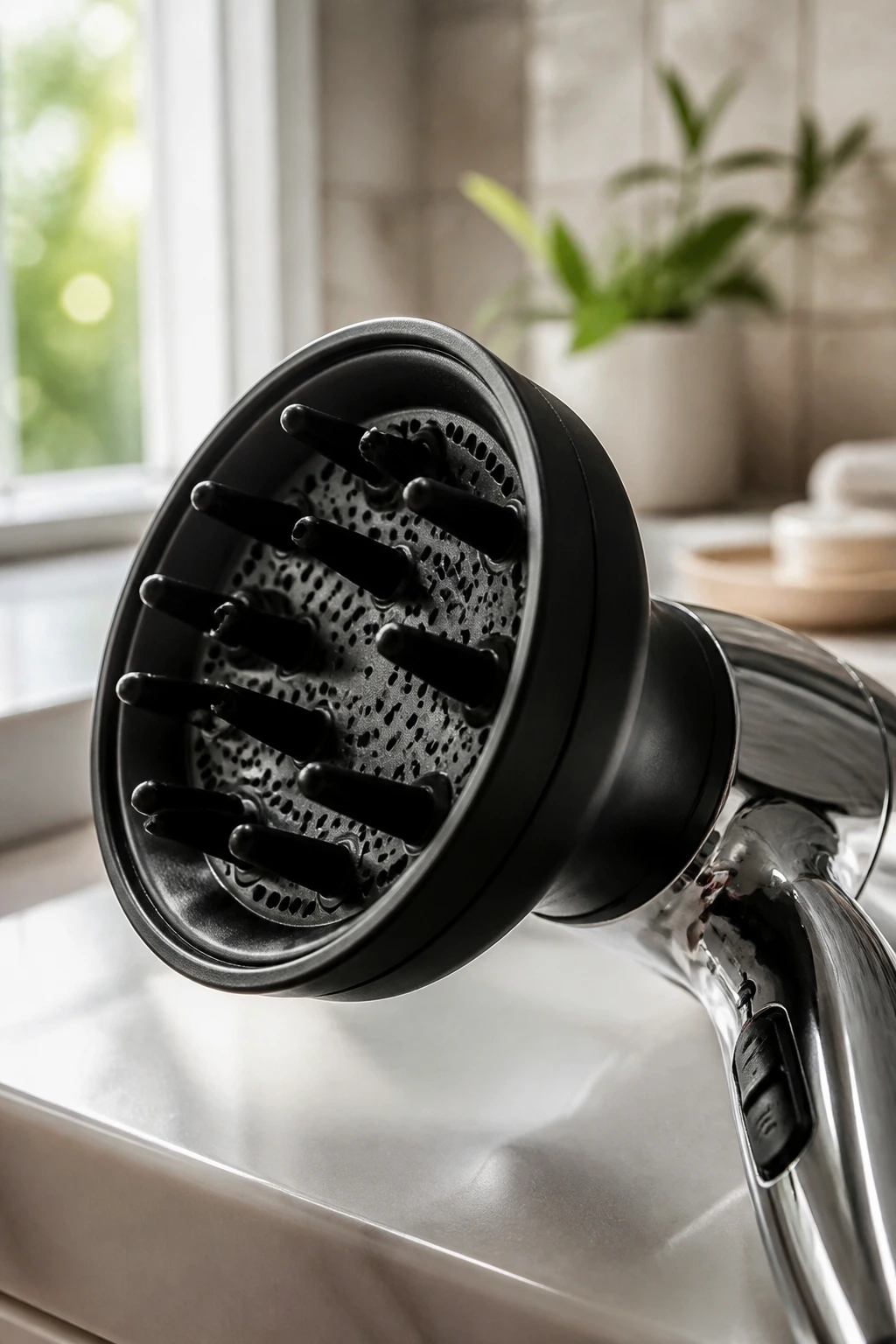
- Diffuser attachment: The fastest way to dry waves without blasting the fringe flat.
- Microfiber towel or cotton T-shirt: Cuts down on rough frizz right after washing.
- Light mousse or foam: Gives the roots lift and helps the fringe keep a shape.
- Curl cream or light leave-in: Useful on the mid-lengths and ends, but keep it off the roots.
- Texturizing spray: Good for second-day separation when the layers start to blur.
- Small round brush: Handy for just the fringe, not the whole head.
- Duckbill clips or small claw clips: Useful for pinning the front while it dries.
- Wide-tooth comb: Better than a brush when the waves are still damp.
- Dry shampoo: Helps the roots keep volume when the fringe starts to feel oily.
- Silk pillowcase or wrap: Keeps the fringe from getting crushed overnight.
Practical Styling Moves That Make the Cut Behave
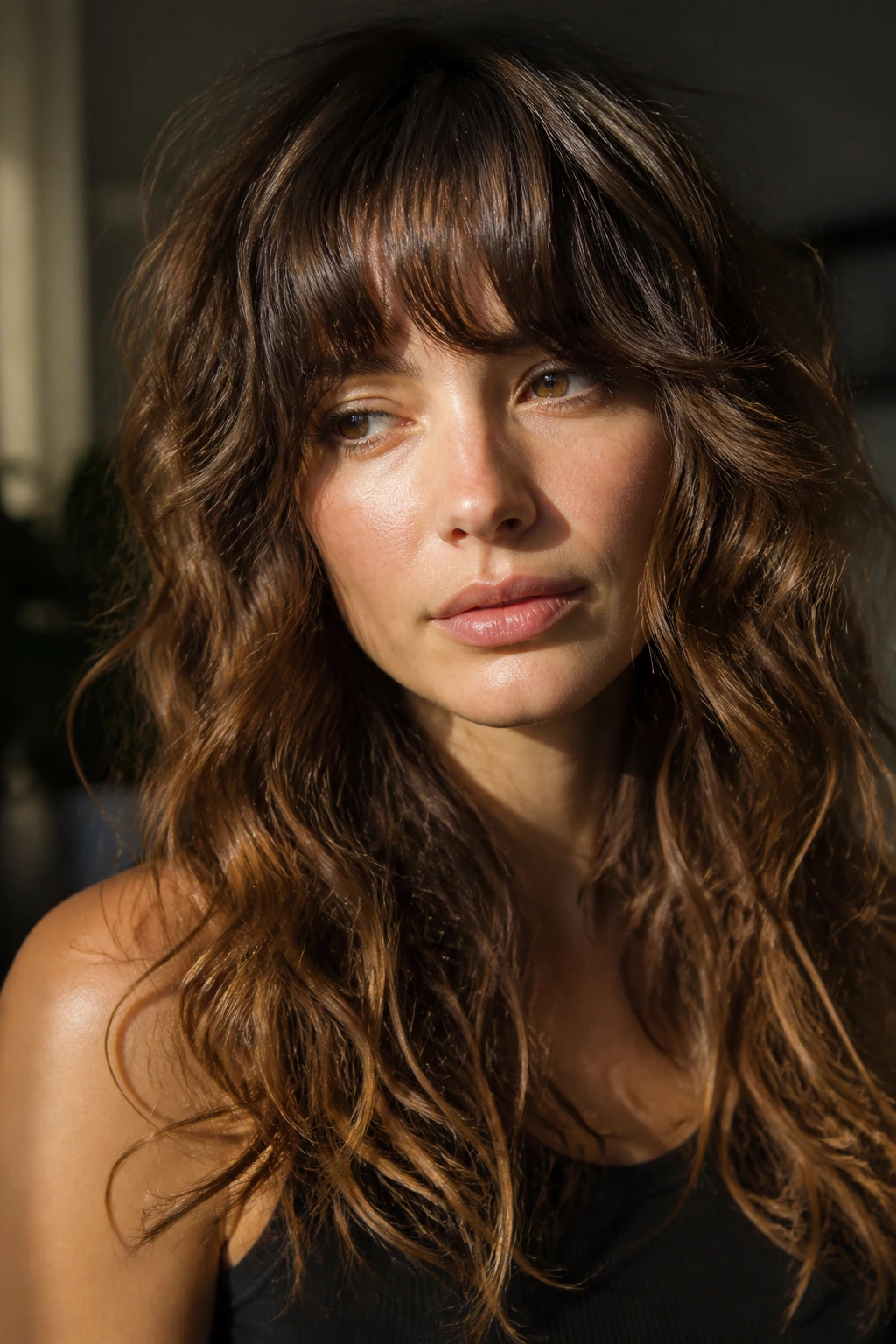
Start with less water than you think. Soaking wet waves take forever to dry and often get frizzier while they do it. Blot the hair until it’s damp, not dripping, then work in a palm-sized amount of mousse or foam at the roots and a lighter touch through the lengths. If you pile product onto the fringe, it goes stringy fast.
Diffuse the front separately. The fringe usually needs a different drying routine than the rest of the head. I like to dry it with the diffuser pointed upward from underneath, then stop before it turns crispy. A quick cool shot at the end helps it settle. The rest of the hair can stay a little imperfect. That’s part of the appeal.
Do not brush dry waves into submission. Fingers or a wide-tooth comb are enough once the hair has set. If the front splits awkwardly, mist it lightly, twist it once, and let it dry again. The shortcut of over-brushing usually costs you texture.
Keep a drop of serum for the ends only. One drop. Not three. The goal is to smooth the longest pieces, not flatten the whole haircut. That tiny bit of control keeps the long layers from fuzzing up while the fringe stays lively.
Common Mistakes That Flatten the Shape or Puff the Sides
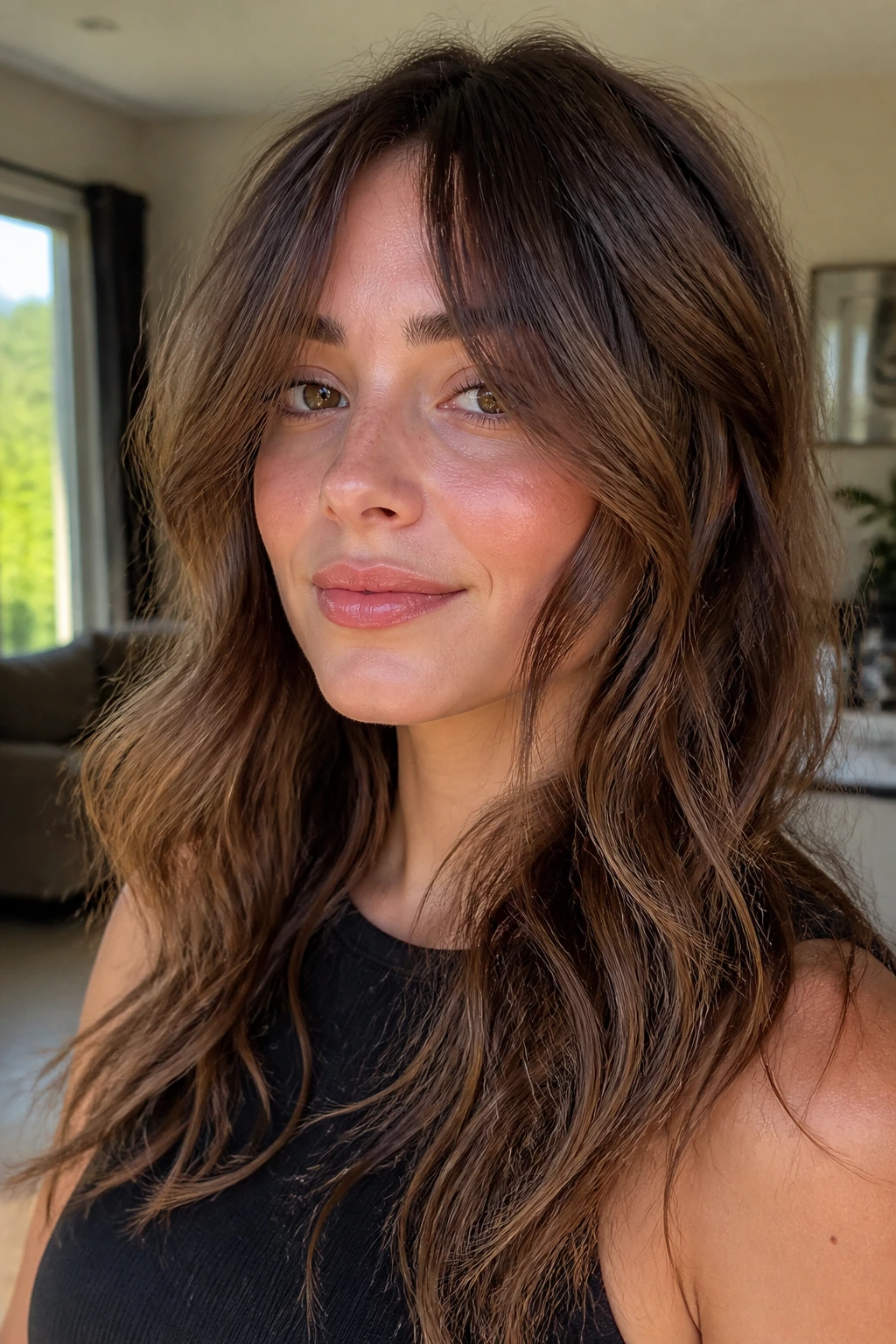
- Cutting the fringe to match straight hair. Wavy hair shrinks as it dries, and a brow-skimming fringe can jump higher than expected. Fix it by asking for a dry check and leaving more length at the start.
- Over-layering thick hair. If the layers are too short and too frequent, the sides turn fluffy while the bottom goes thin. The fix is interior removal and a stronger perimeter.
- Using too much cream or oil. The waves lose grip, the fringe separates in greasy strands, and the crown collapses. Start with a pea-sized amount and add only if the hair actually needs it.
- Brushing the hair after it dries. That’s how you get halo frizz and a blunt-looking puff. Use fingers, a mist bottle, or a wide-tooth comb instead.
- Ignoring the crown. A fringe can look good on its own and still fail if the roots at the top lie flat. Ask for lift where the hair parts and dries.
- Skipping fringe trims too long. Once bangs poke the eyes, people start pinning them and pretending it’s a style. Sometimes it is. Usually it just needs a trim.
Variations and Styling Paths to Try
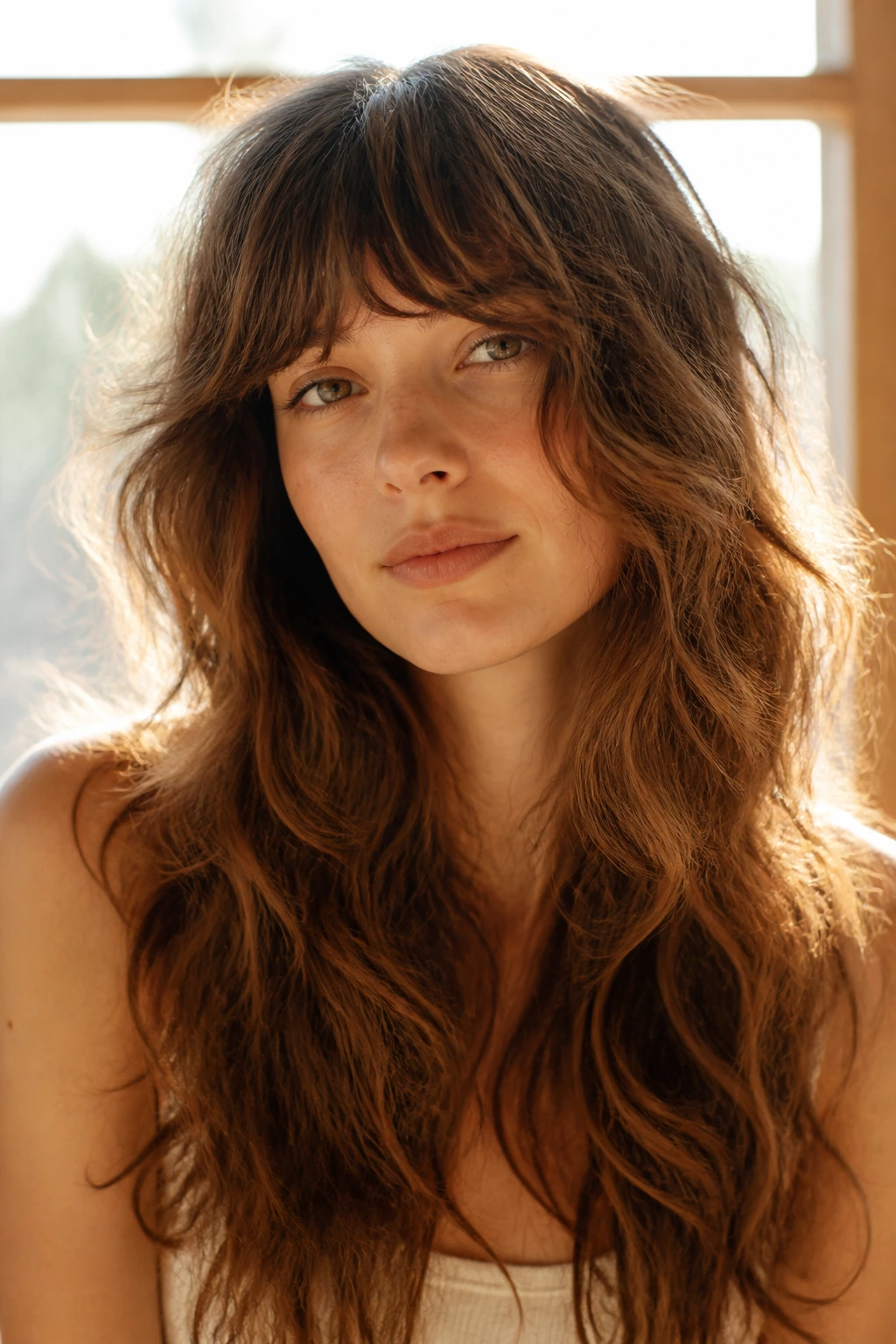
The Air-Dry Version: Keep the layers long and the fringe soft, then let the hair dry with mousse and a touch of cream. This suits loose waves that settle well on their own.
The Diffused Volume Version: Add more root lift through the crown and use the diffuser until the fringe sits with a bit of bend. This works better on fine or flat hair than a heavy cream-and-air-dry approach.
The Sleek Fringe Contrast: Blow-dry only the fringe straight while leaving the rest wavy. The contrast makes the front more graphic and the body more relaxed. It’s sharp, but it asks for daily styling.
The Piecey Second-Day Version: Refresh with a water mist, a touch of texturizing spray, and finger separation at the fringe. Good for cuts that look better when they’re slightly tousled.
The Soft Grow-Out Version: Let the fringe lengthen into a curtain shape and keep trims light. This keeps the haircut useful even when you miss a salon window.
Care, Trims, and Grow-Out Between Salon Visits
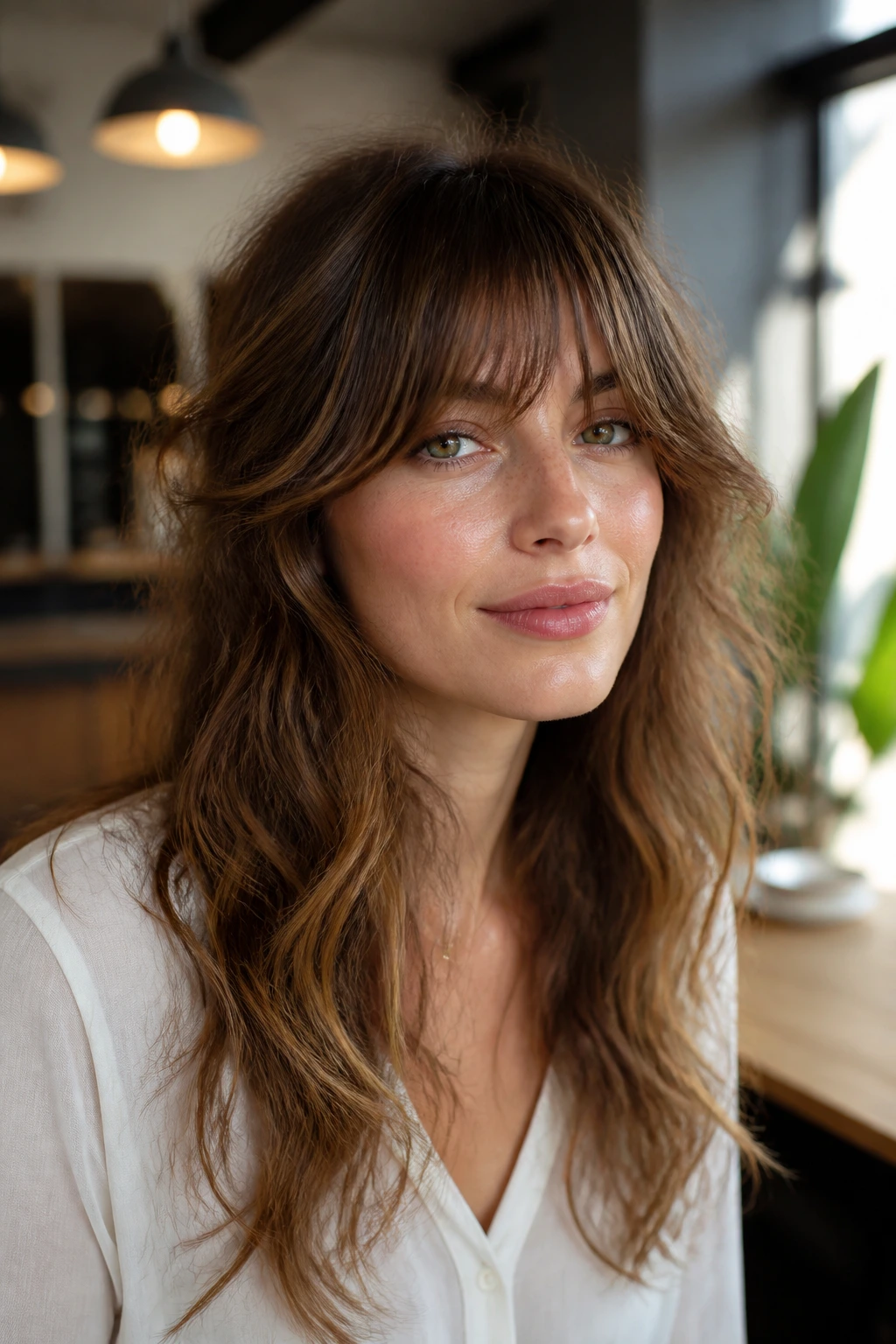
Wavy shag cuts stay sharp when you stop pretending they’re maintenance-free. The fringe usually needs the most attention. If it’s short or eye-skimming, a trim every 3 to 5 weeks keeps it from crowding the eyes. If it’s a curtain or bottleneck shape, 6 to 8 weeks is often enough. The rest of the haircut can usually go 8 to 12 weeks before the layers start losing their shape.
Wash rhythm matters too. Most wavy hair does well somewhere between every 2 and 4 days, depending on scalp oil and product use. On the in-between days, dry shampoo at the roots can keep the crown from falling flat, and a light mist of water can wake the fringe back up. Don’t drench it. A few sprays and a finger twist often do more than another full wash.
Night care is underrated. A silk pillowcase keeps the front from getting crushed, and a loose clip can keep the fringe from pressing straight into your forehead overnight. If your waves tangle easily, sleep with the hair loosely gathered low at the back. Tight elastics leave dents. Soft clips do not.
Humidity can push the fringe out of shape first, so keep a light styling product in rotation. Heavy creams can weigh the front down; a touch of mousse or lightweight gel at the roots usually works better. The point is to keep the shape alive, not frozen.
Frequently Asked Questions
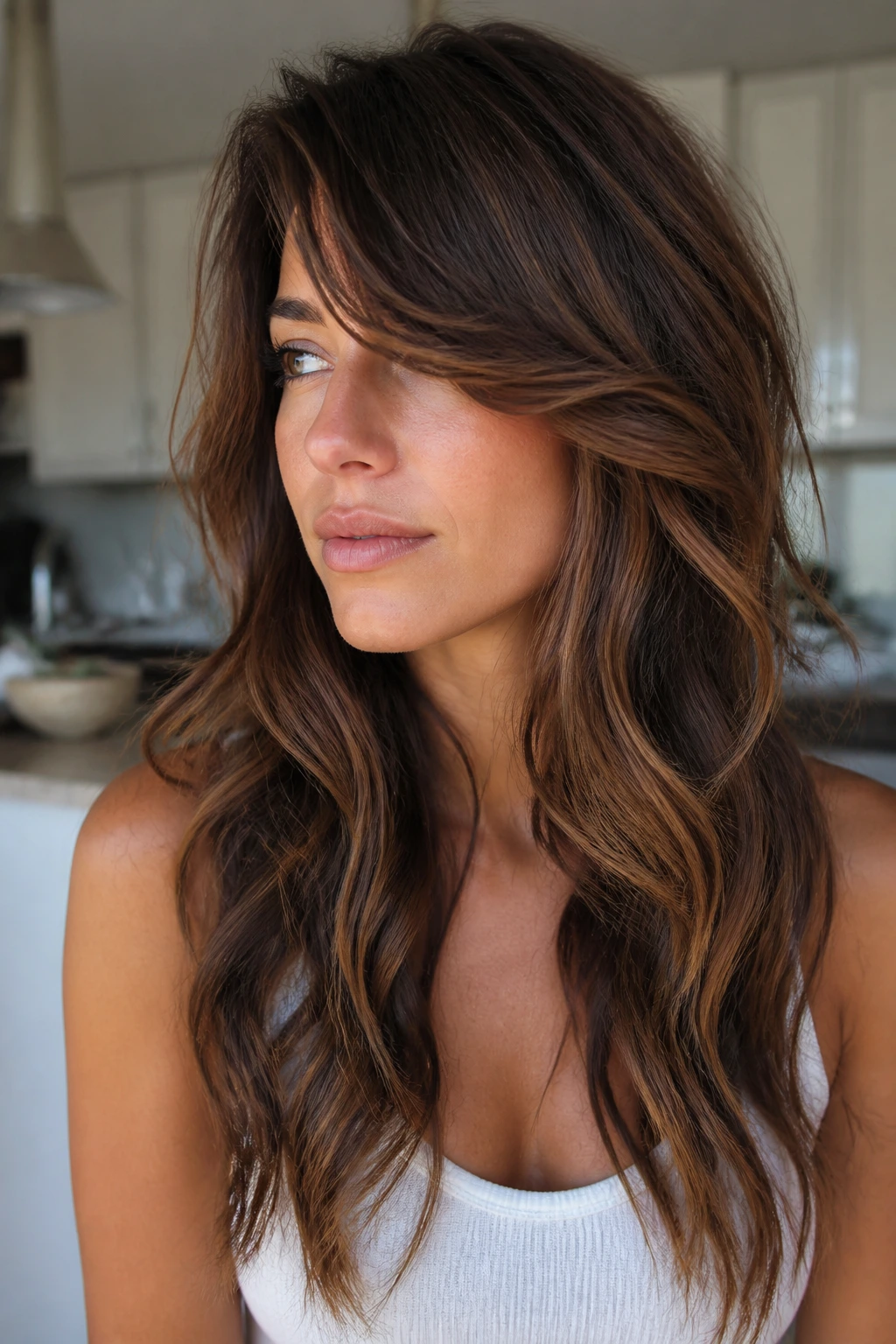
Will a shaggy fringe work if my waves are loose, not curly?
Yes, and loose waves often make these cuts look especially clean. The fringe can stay softer and longer, which keeps it from bouncing up too far once it dries. Ask for the front to be cut with your natural bend in mind, not against it.
How short should the fringe be on wavy hair?
Shorter than most people expect on the chair, but longer than the final look you want. Waves shrink, and the front can jump up by half an inch or more once it dries. If you want brow length, ask for a dry length that lands just below the brows.
Can I wear this cut straight sometimes?
You can, but the fringe and layers will read differently when the hair is flat-ironed. A soft curtain or bottleneck fringe usually handles that switch better than a micro fringe or a very choppy wolf shape. If you straighten often, tell the stylist so the layers stay balanced in both states.
Does this cut work on thick hair?
Very well, as long as the weight is removed in the right places. Thick wavy hair usually needs interior debulking so the sides do not puff out, while the perimeter stays strong enough to hold shape. Thin the wrong spots and the haircut turns fluffy.
What if my fringe splits down the middle no matter what I do?
That usually means the part or the growth pattern is stronger than the bang shape. Try a curtain, bottleneck, or side-swept version instead of fighting the split. Sometimes the answer is not more product; it is a better fringe shape.
How do I keep the shag from looking triangular?
Triangle hair shows up when the ends are too heavy and the crown is too flat. Ask for lift at the top, bulk removal through the interior, and a little more softness around the cheeks. That keeps the width from building only at the bottom.
Can I air-dry a shaggy fringe without it going weird?
Yes, but the fringe needs a little help while it dries. Pinch it into the direction you want, clip it loosely if needed, and keep your hands off once it starts setting. A tiny bit of mousse at the roots gives it a better chance of staying where you put it.
What if my waves get frizzy around the face?
Use less cream near the fringe and more control at the roots. A microfiber towel, a small amount of mousse, and a light diffuser pass usually help more than heavy smoothing products. If the face-framing pieces frizz first, the cut may also need a little more length there.
The Shape That Keeps Its Edge
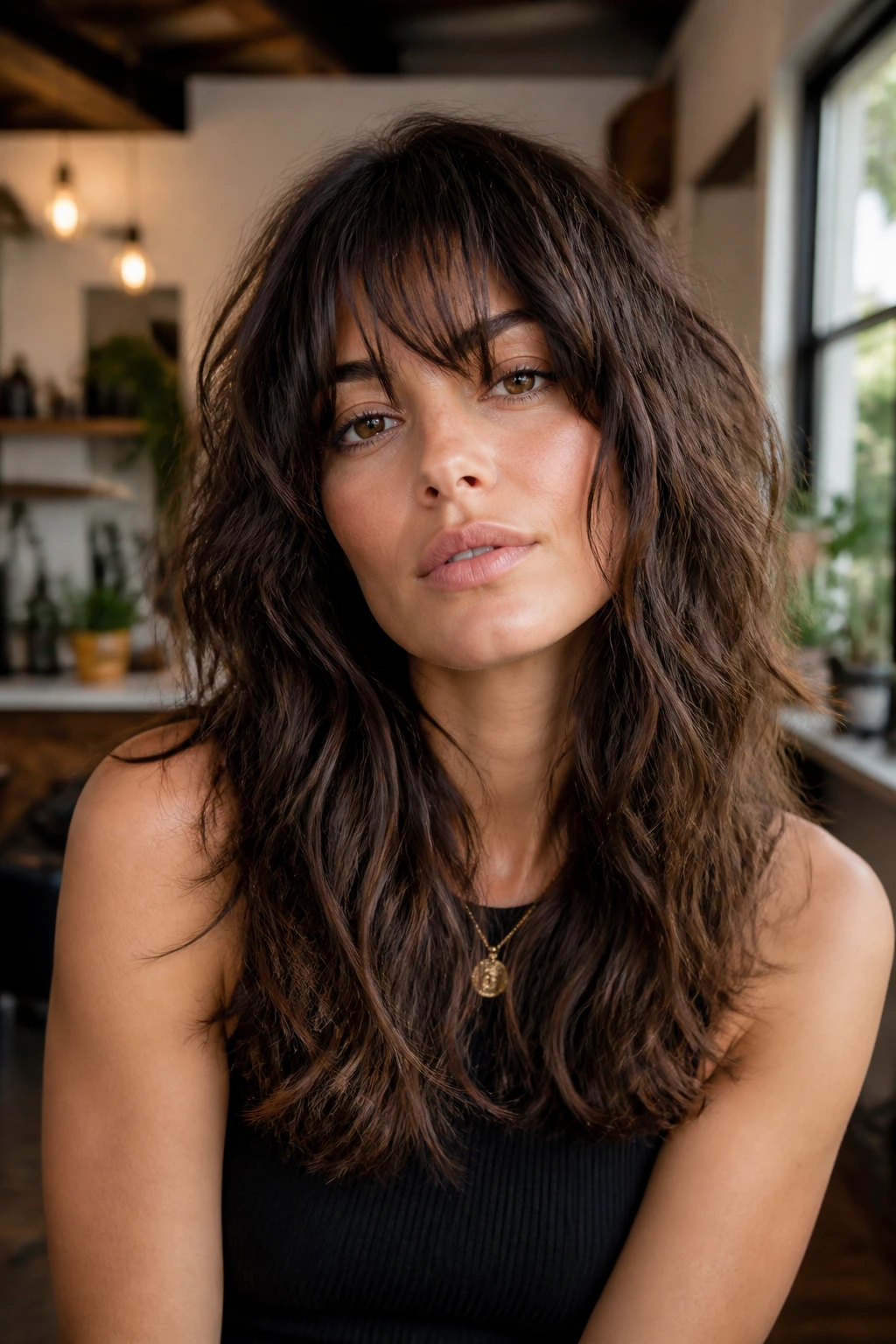
The reason these shaggy fringe long haircuts for wavy hair keep showing up in good salons is simple: they respect the hair instead of forcing it into a shape it does not want. The fringe can be soft, blunt, short, long, split, or side-swept. The layers can be feathered, sliced, or kept heavier through the ends. What matters is that the bend has somewhere to go.
Pick the version that matches your wave density and your patience level. A curtain fringe if you want the safest start. A bottleneck or side sweep if you like shape with less forehead coverage. Something more dramatic if you enjoy a haircut that announces itself before you’ve even added product.
Bring a photo that looks like your hair, talk about shrinkage, and keep the fringe a touch longer than your first instinct. Wavy hair usually rewards that kind of restraint.
