



An undercut at 50 is rarely about shock value. More often, it’s the haircut that finally stops the puff at the nape, the shelf behind the ear, and that annoying little triangle that shows up every time your hair starts drying on its own.
The best undercut styles for women over 50 solve a practical problem first. Fine hair that collapses, thick hair that swells, gray hair that stands up with a mind of its own, curls that spread sideways instead of down — all of that changes the shape you live with every day. A good undercut works with those changes instead of fighting them.
And no, it doesn’t have to look severe. Some versions are hidden under a bob. Some show a little skin at the temple. Some go all the way to a buzz cut and still feel polished because the top is shaped with intent, not just chopped off. The sweet spot is the one that makes your hair easier to wear and easier to like. Start there.
Why These Undercut Styles Work So Well After 50
-
Less bulk where hair fights the head shape: Taking weight out of the nape or sides keeps short hair from flaring out under coat collars, behind the ears, and at the base of the neck.
-
Cleaner lines for silver and gray strands: Gray hair often has a wiry, reflective finish, so a neat undercut gives it a sharper outline instead of letting it puff into a halo.
-
Better volume where you want it: Removing bulk underneath lets the crown, fringe, or top layers sit higher without teasing them into a stiff helmet.
-
More room for glasses, earrings, and collars: A shaved temple or tidied neckline makes frames and jewelry look intentional instead of crowded.
-
Easier grow-out when you start small: A hidden nape undercut or soft temple fade can grow back quietly, which is a relief if you’re not ready for a full buzz.
-
A cut that fits real life: Some mornings call for a brush and nothing else. Others need a dab of paste. These styles work because they don’t demand a full styling ritual.
1. Hidden Nape Undercut Pixie
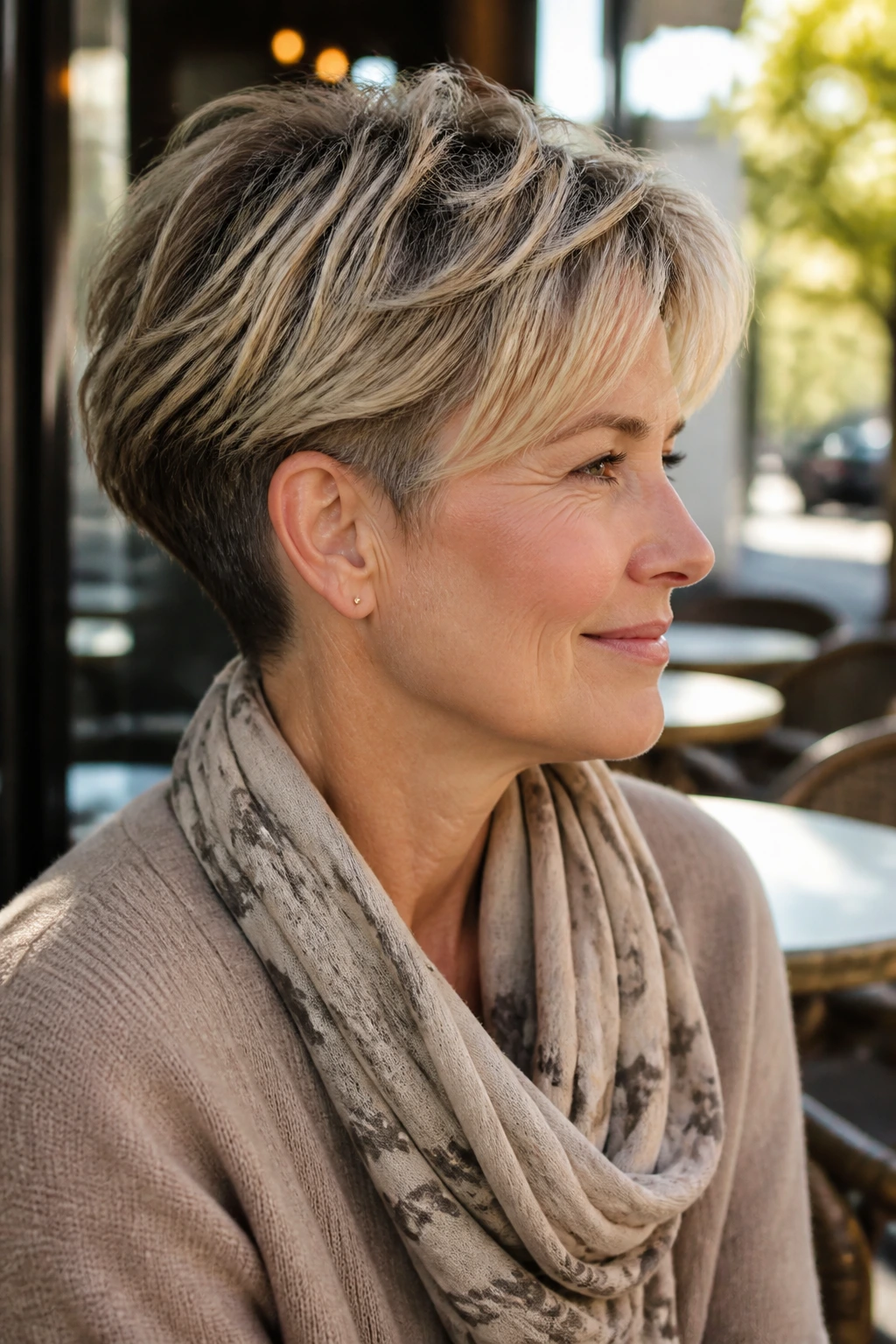
A hidden nape undercut pixie is the haircut I reach for when someone wants the relief of shorter hair without the shock of seeing a lot of scalp. From the front, it reads as a neat pixie with soft fringe and a little lift at the crown. From the back, the lower section is clipped close enough to stop the collar-area puff that thick hair loves to create.
Why it behaves so well
The trick is where the weight is removed. Keep the top around 2 to 3 inches, leave the fringe soft, and ask for the undercut to begin just below the occipital bone so it stays tucked out of sight. That gives the top enough body to move, while the neckline stays clean under scarves, blouses, and winter coats.
If your hair is silver or salt-and-pepper, this cut has a nice side effect: the texture on top looks deliberate instead of fuzzy. I like it best for women who are ready to wear their ears and neckline on purpose. That sounds dramatic. It isn’t.
Styling note: A golf-ball-size puff of mousse at the roots, then a quick blow-dry with your fingers, is usually enough. A small round brush can smooth the fringe if you want it tidier.
2. Asymmetrical Bob With a Shaved Side
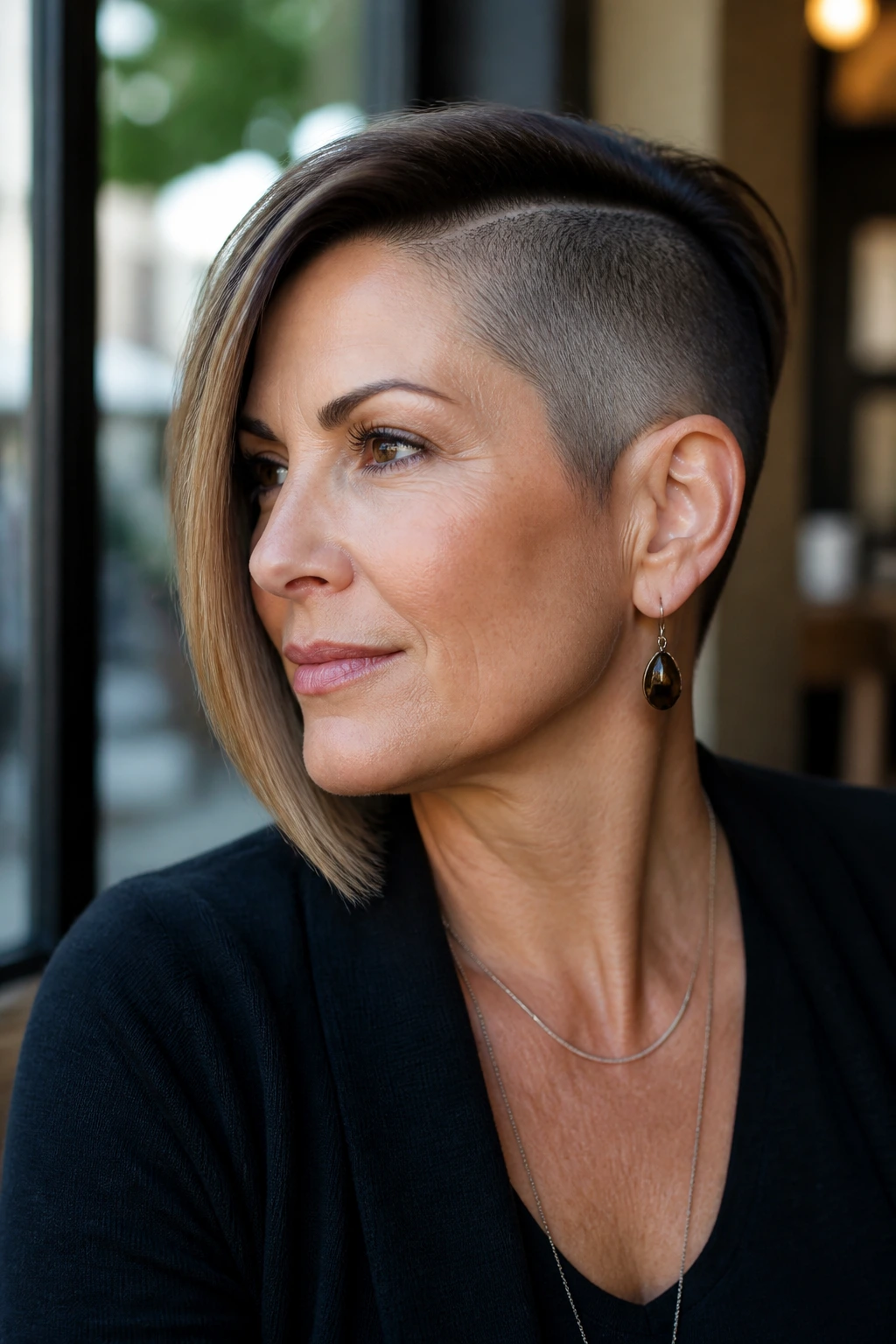
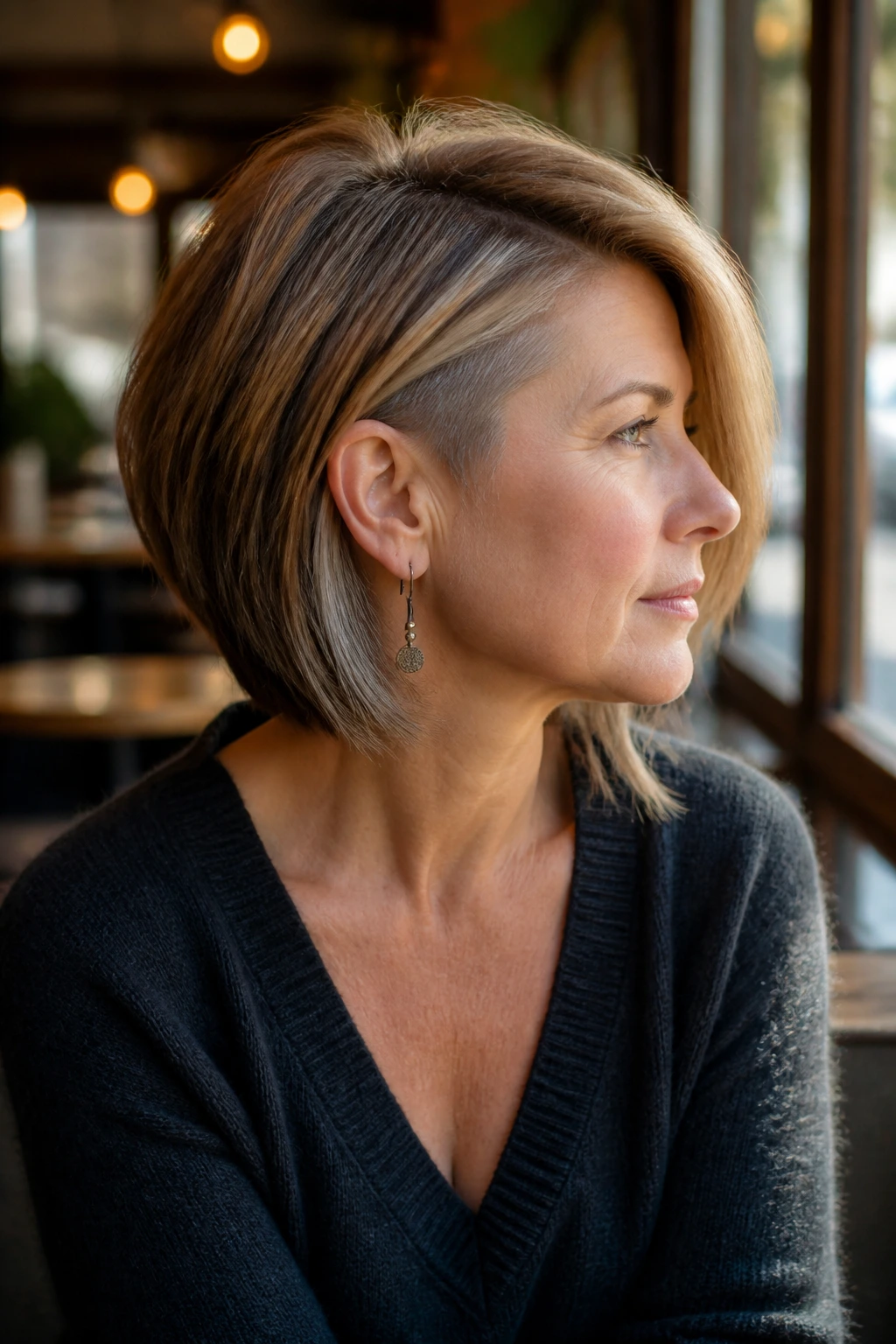
A side that falls longer and a side that disappears into a close shave creates a strong line right away. It’s one of the few short cuts that can look polished and a little sharp at the same time, which is why it works so well on straight hair and soft waves.
The longer side should skim the jaw or land just under it, not hang so low that the shape loses its point. On the shaved side, don’t go skin-close unless you truly want that contrast. A #1 or #2 guard gives the cut room to breathe and makes the grow-out less abrupt. If you tuck hair behind the ear, the shaved side can hide most of the time and then appear when you want it to.
This is a good choice if you like earrings, glasses, or a strong lip color. It frames the face instead of swallowing it. That’s the real appeal.
Keep in mind: The diagonal line matters more than the shave itself. If the front is too flat or too blunt, the whole thing starts looking accidental.
3. Curly Crown Crop With Tapered Sides
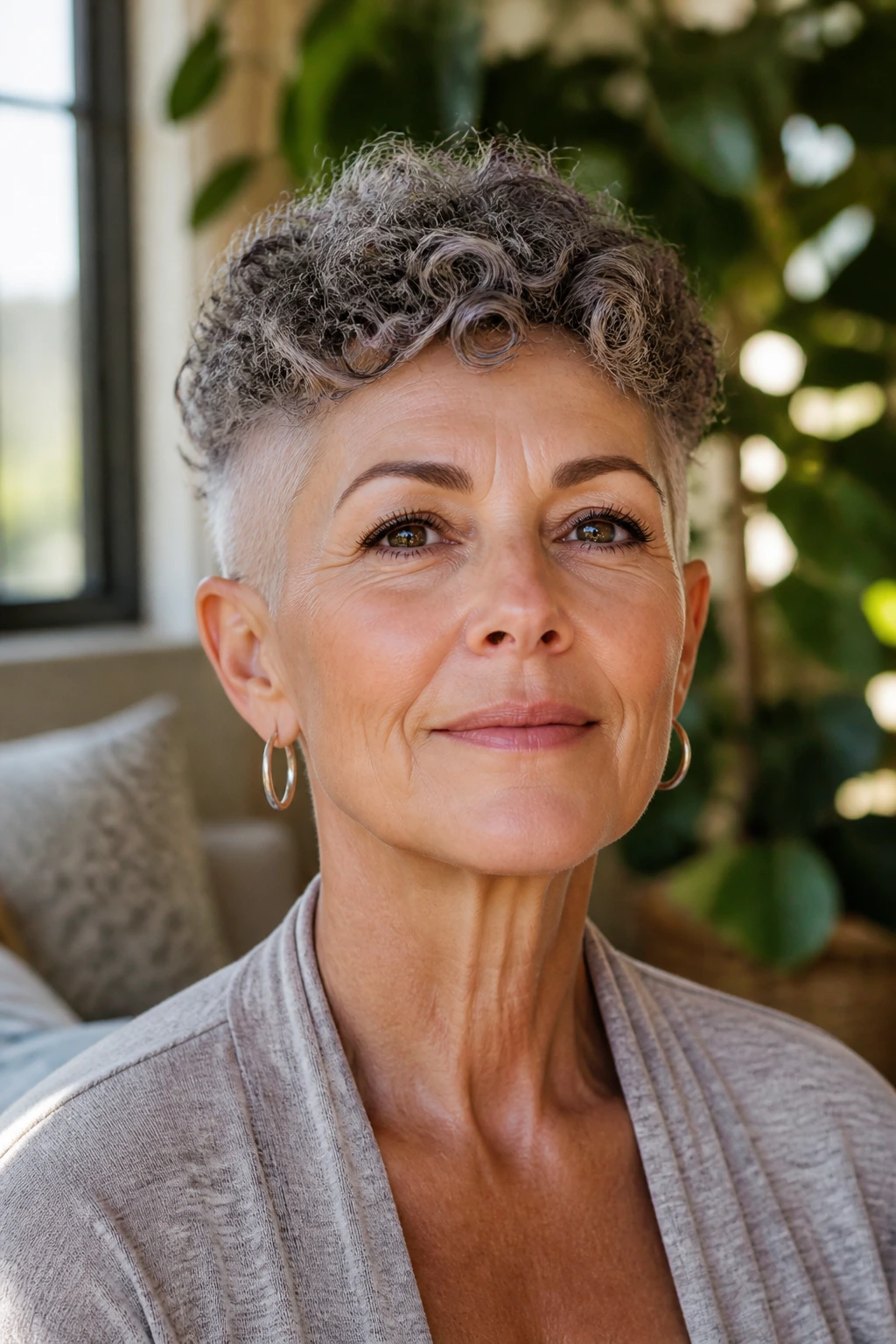
Do curls like to spread sideways when they get short? Then a curly crown crop with tapered sides is one of the smartest moves you can make. It keeps the action on top, trims the bulk around the ears, and lets the curl pattern sit where it has the most shape.
Why this cut feels balanced
Ask for the top to stay around 3 to 4 inches, depending on shrinkage, and have the sides tapered instead of clipped bluntly high. On curly hair, blunt undercuts can create a shelf. A taper softens the edge and lets the curl shape settle into a rounder silhouette. If your hair is tighter coil or ringlet texture, a dry cut gives the stylist a better read on how much it will shrink.
This cut is especially good if you’ve spent years trying to flatten curls that want to live with volume. Stop flattening them. Let the crown do the work.
Use leave-in conditioner first, then a curl cream or light gel. Scrunch, don’t rake. That one change makes the shape hold better and keeps the top from turning into a frizzy cloud by noon.
4. Silver Buzz Cut With Soft Edges
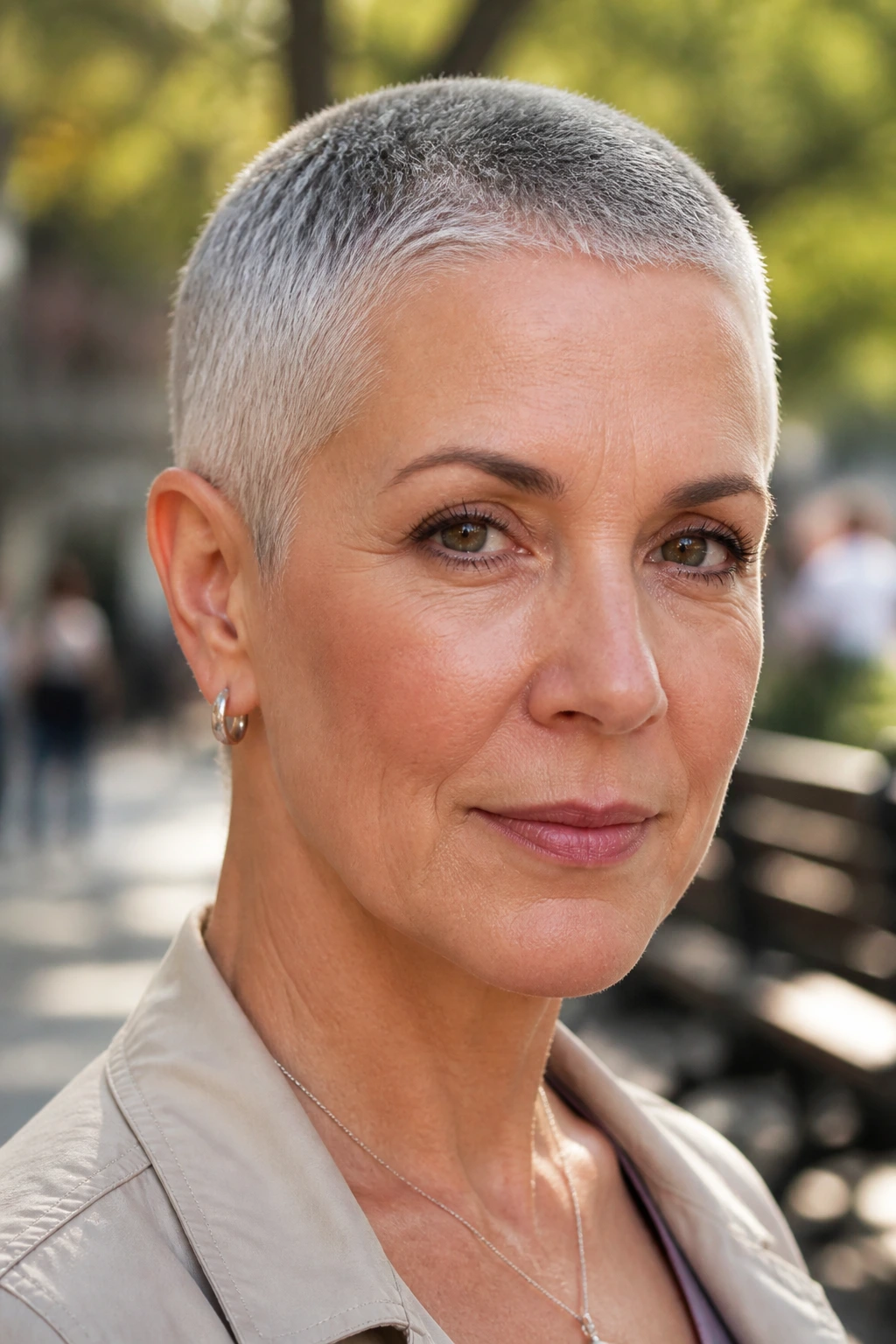
A silver buzz cut is not timid. It’s honest. It shows the shape of your head, the line of your brows, the curve of your ears, and the exact place where your hair color changes from pewter to white under natural light.
That sounds stark, but the softer version is more wearable than people expect. Ask for a guard in the #1 to #3 range rather than going straight to skin. Keep the neckline and around the ears slightly softened so the edge doesn’t look boxy. The result is neat, not severe. There’s a big difference.
I like this look on women who are done wrestling with hair that won’t lie down. It also suits strong glasses and a crisp collar. The face becomes the focal point, which is a good thing when the cut is short enough to stop pretending otherwise.
One caution: a buzz cut exposes the scalp, so sunscreen matters. Not a lot of people think about that until the first sunny walk with a bare crown.
5. Long Pixie With Temple Undercut
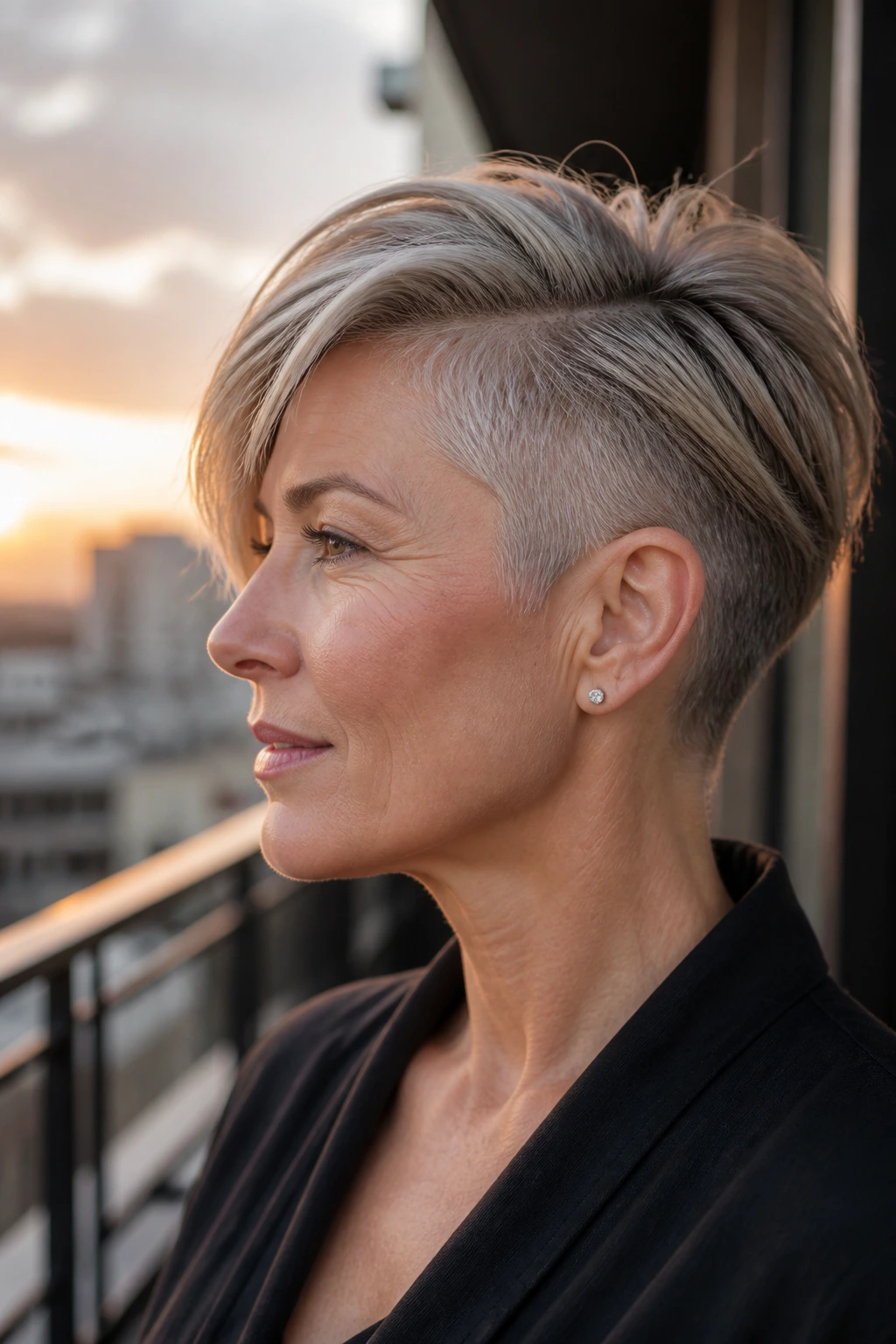
A long pixie with a temple undercut gives you options, which is why it keeps showing up on women who don’t want to commit to one mood all the time. Sweep it to the side, tuck one side back, push it forward over the forehead — the shape changes with the styling, not just the scissors.
The undercut lives at the temple and sideburn area, where hair often grows thick enough to make the front look bulky. Removing that little triangle of weight keeps the line close to the face. Leave the top and fringe at 4 to 5 inches if you want movement; shorter than that, and the whole cut starts to feel too fixed.
This is one of my favorites for people who wear glasses, because the temple area can get crowded fast. Clean that zone up and the frames sit better. The cut looks more considered, even when you style it in two minutes.
A light cream or soft wax is enough. Use too much pomade and the long top turns heavy. That’s the quickest way to ruin a good pixie.
6. Salt-and-Pepper Shag With Nape Clearance
A shag can get a little wild in the back once the hair starts changing texture. The answer is not always “more layers.” Sometimes it’s a hidden nape undercut that steals the bulk before it turns into a triangle under the collar.
This version keeps the shaggy movement up top and around the cheekbones, but clears the lower neckline so the cut sits closer to the neck. That matters if your hair is wavy or if your gray strands have more stiffness than they used to. They do. Gray hair often behaves differently than the hair you had five years ago, and pretending otherwise makes a haircut harder than it needs to be.
I’d ask for the layers to stay feathered rather than choppy. Choppy on a shag can go fuzzy fast, especially in humid weather. Feathered ends move without fraying.
Dry texture spray works here, but lightly. You want separation at the ends, not a dry straw effect. There’s a line between lived-in and thirsty.
7. Feathered Pixie-Bob With Back Undercut
This cut sits in the middle ground between a pixie and a bob, which is one reason it’s so useful. It keeps enough length to tuck behind the ears, but the back undercut removes the round heaviness that can build up at the nape and upper neck.
What makes it different
Feathered layers on top give the hair a softer outline than a blunt bob ever can. That makes it especially kind to fine or medium hair that needs lift but doesn’t need a lot of top-heavy styling. The back undercut should be subtle — not a dramatic shave, just enough to stop the shape from bulking out under the layers.
This is also a very good cut if you like to blow-dry with a round brush. A little bend at the ends turns the whole thing from practical into polished, and it doesn’t take much. Two minutes with the brush can do a lot here.
If your hair is highlighted, feathering helps the color show through the shape. That’s a quiet bonus. The cut does some of the work for the color.
8. Soft Mohawk Pixie
A soft mohawk pixie sounds tougher than it usually looks. The center strip stays longer through the crown, while the sides are clipped close enough to make that center line stand up a little without needing a lot of product.
What I like about this cut is that it gives height without making the hair feel overworked. Women with flatter crowns often get the best payoff here, because the shape naturally draws the eye upward. If you keep the front a little longer, the cut can still soften around the face instead of reading like a hard strip.
Use a pea-size amount of matte paste and push the top slightly back or slightly forward, depending on your face shape. Straight up can look too sharp unless you really want that edge. A soft bend is usually more flattering. You don’t need to shout with this one.
It grows out into a very decent short crop, which matters. Some bold cuts collapse when the salon visit ends. This one tends to loosen in a good way.
9. Layered Lob With a Hidden Undercut
A layered lob with a hidden undercut is for the woman who wants to keep length but hates the weight that comes with it. The underlayer is removed from underneath, so the visible top still falls like a bob, but the back doesn’t feel like it’s carrying a brick.
This works especially well on thick straight hair, which can create a blunt wall when it’s all the same length. A hidden undercut lets the ends swing instead of just sitting there. If your hair flips out at the neck or feels hot under the collar, this solves both problems in one move.
The best version keeps the top layers long enough to bend around a brush or flat iron. I’d avoid over-thinning the ends. A lob that’s too heavily texturized starts looking tired, and that’s not the point.
A clean bend at the mid-lengths and a little smoothing cream at the ends are enough. It’s a cut that likes restraint.
10. Tapered Afro With Side Undercut
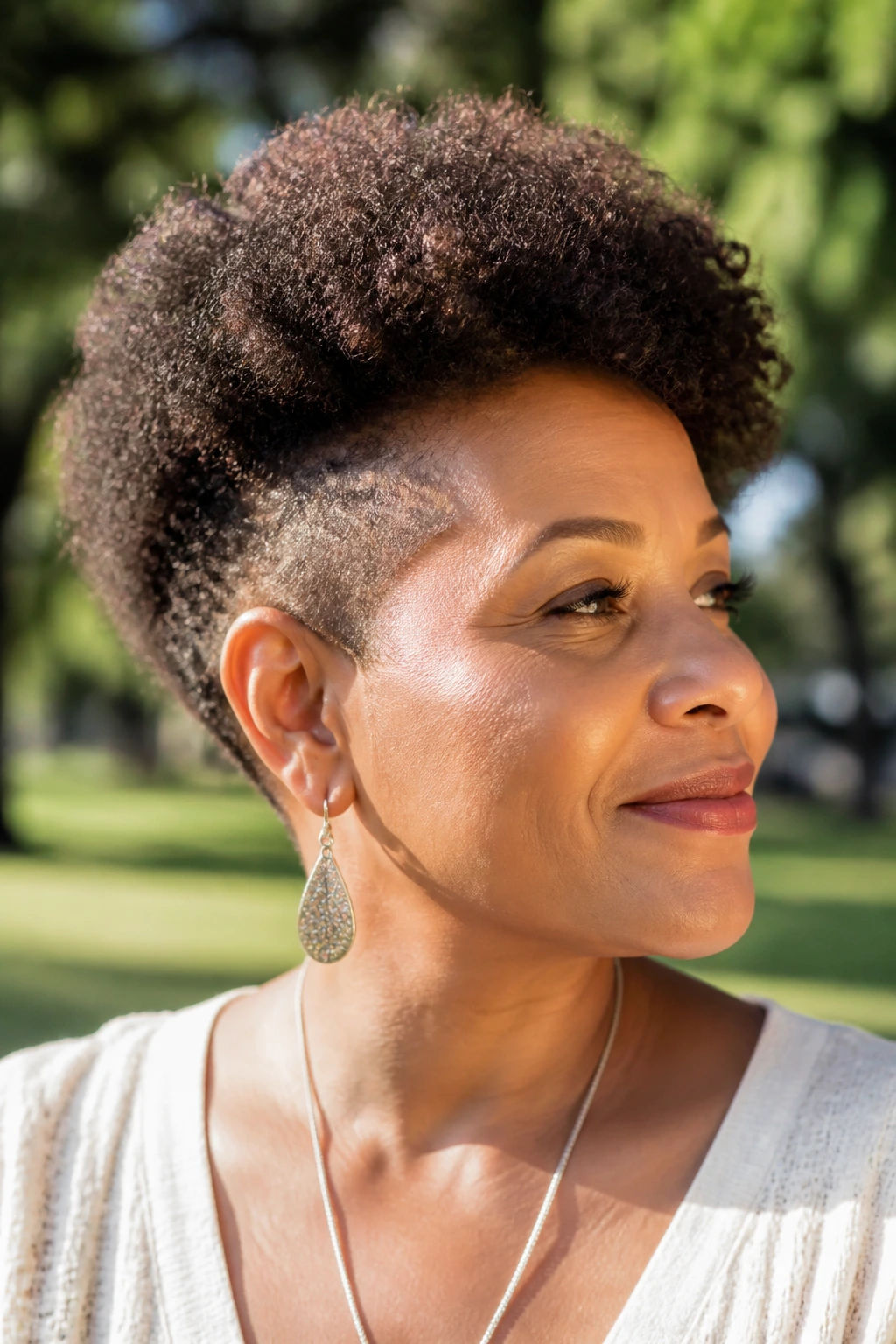
A tapered afro with a side undercut gives natural texture room to sit in a shape instead of turning into a triangle around the ears. The taper keeps the silhouette rounded, while the side undercut removes the extra width that often piles up near the temple line.
The cut shines when the coils are dry-cut by someone who understands shrinkage. That part matters. If the hair is cut too wet, the shape can come back shorter than expected, and the side balance gets thrown off. Keeping more length on top lets the crown stay soft and visible.
This style looks especially good when the fade or undercut is low enough to stay neat without eating into the fullness you actually want. You’re aiming for a clean frame, not a stripped-down shape. The difference is obvious when the hair is in motion.
Moisture is the maintenance word here. Leave-in conditioner first, then a cream or gel that keeps the coil pattern together. Skip the heavy grease unless your hair truly needs it; otherwise, the roots can collapse and the sides lose their lift.
11. French Crop With a Side Fade
A French crop with a side fade is one of those cuts that looks expensive without demanding much at all. The fringe sits short and neat across the forehead, the sides fade down cleanly, and the top keeps just enough texture to avoid looking flat.
I like this cut for straight hair that wants order. It’s blunt in a smart way, not in a stiff way. If you have a strong brow line or a lot of expression in your eyes, the crop frames that beautifully. The short fringe does a lot of work.
Keep the fade soft rather than high and dramatic if you want the cut to feel age-appropriate without being dull. A low fade around the ears and temple is easier to wear every day. It also grows out less abruptly.
Styling takes almost nothing. A dab of matte paste rubbed between the palms and pushed forward is usually enough. Don’t slick it down. The texture is part of the charm.
12. Slicked-Back Pompadour Crop
This is the short cut for someone who likes a little height at the front and doesn’t mind a sharper outline. The pompadour crop keeps the top lifted and the sides short, so the shape reads clean from every angle.
Compared with a full pompadour, the crop version is less fussy and less formal. That matters. You don’t need a lot of length to create lift — just enough to get a brush under the roots and a blow-dryer to push the hair upward while it cools. If the sides are too long, the whole look slumps. If they’re too tight, it starts looking like a different haircut altogether.
This style suits women with dense hair, because density holds the front up naturally. It also works well with statement glasses, since the lifted top keeps the frame from disappearing into the hairline.
Use a light pomade or styling cream, not a greasy one. You want hold, not shine that slips. And if your hair grows straight forward at the crown, ask the stylist to account for that before they start cutting.
13. Textured Bowl Cut With an Undercut
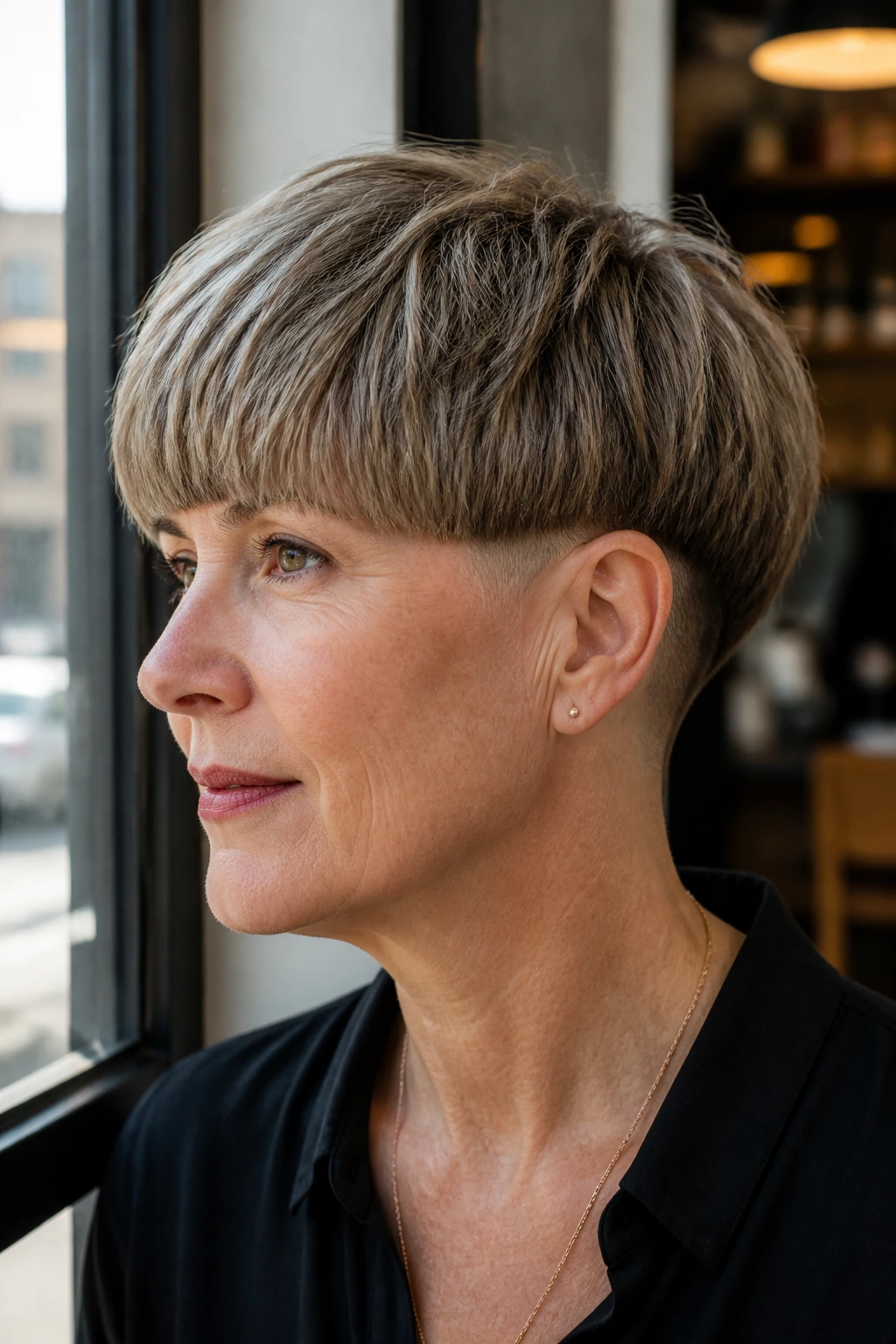
A textured bowl cut sounds far more severe than it actually is when it’s done with a hidden undercut. The undercut removes the bulk underneath so the rounded top shape can sit close to the head instead of puffing out into a mushroom.
The modern version is softer around the edges, with point-cut ends and a little movement through the fringe. That makes it a completely different animal from the blunt bowl you may remember from childhood photos. It’s cleaner, sharper, and a lot more flattering when the hairline at the back is kept tidy.
I like this one on straight hair with some natural thickness. It gives you geometry without stiffness. If the shape is too blunt, it can shorten the face, so a stylist who knows how to soften the perimeter is worth the extra effort.
If you want to style it fast, blow-dry with a small round brush and then pinch the ends with a dry wax. Don’t overload it. The shape should read first. The product should disappear.
14. Choppy Crop With Micro Fringe
A choppy crop with a micro fringe has attitude, but it doesn’t need a lot of theatrics to wear well. The tiny fringe sits high on the forehead, and the rest of the cut is textured into little pieces that move independently instead of lying in one flat plane.
This is the kind of style that looks best when the ends are intentionally irregular. Too much symmetry makes it feel stiff. The point is to create small, broken-up edges that catch the light and keep the haircut from feeling helmet-like. If your hair is naturally fine, this can actually make it look fuller because the cut gives the eye something to follow.
A word of caution: the micro fringe can be unforgiving if you cut it too short. Leave a touch more length than you think you need. Hair shrinks, and foreheads don’t need to be overexposed unless that’s your thing.
Matte paste or a dry cream works better than glossy product here. Gloss can flatten the texture and make the fringe look too deliberate.
15. Side-Parted Crop With Temple Fade
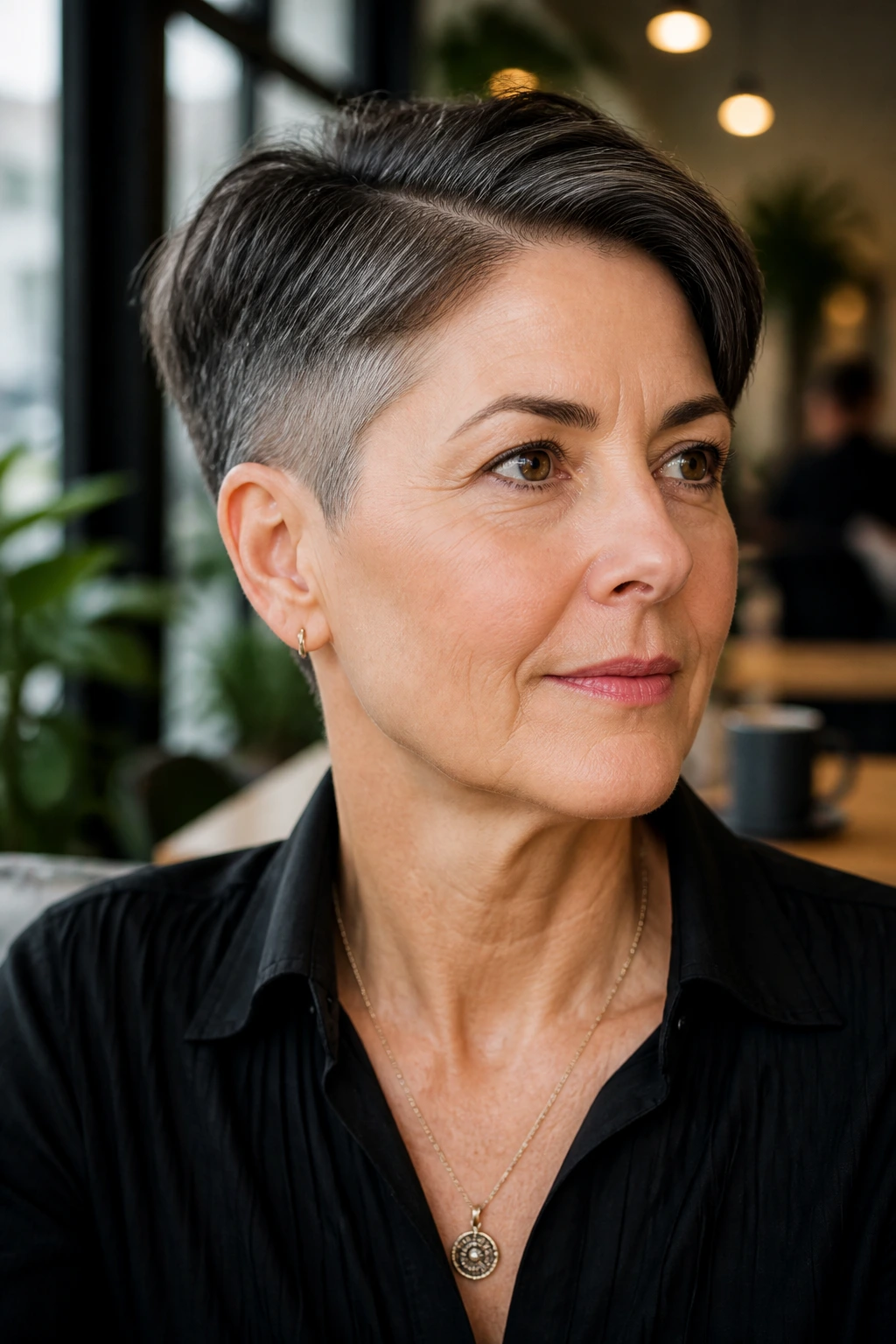
A side-parted crop with a temple fade is the haircut equivalent of a tailored jacket. It has structure, but not a single part of it is loud. The side part keeps the front flattering, and the fade at the temples stops the outline from feeling blocky.
This is one of the best options if you want something polished enough for work but short enough to stay easy on weekends. The top can be brushed over neatly or given a little lift at the root. Either way, the fade keeps the shape fresh around the face.
If your hair is silver or salt-and-pepper, the side part gives the color a clean frame. That matters more than people think. Gray hair can look flat when it’s all the same length and direction. A side part breaks that up without needing heavy layering.
I’d ask for the fade to stay soft. A hard temple line can be too severe unless you want a sharper finish. The softer version ages better and grows out more gently.
16. Wash-and-Go Curly Bob With Nape Undercut
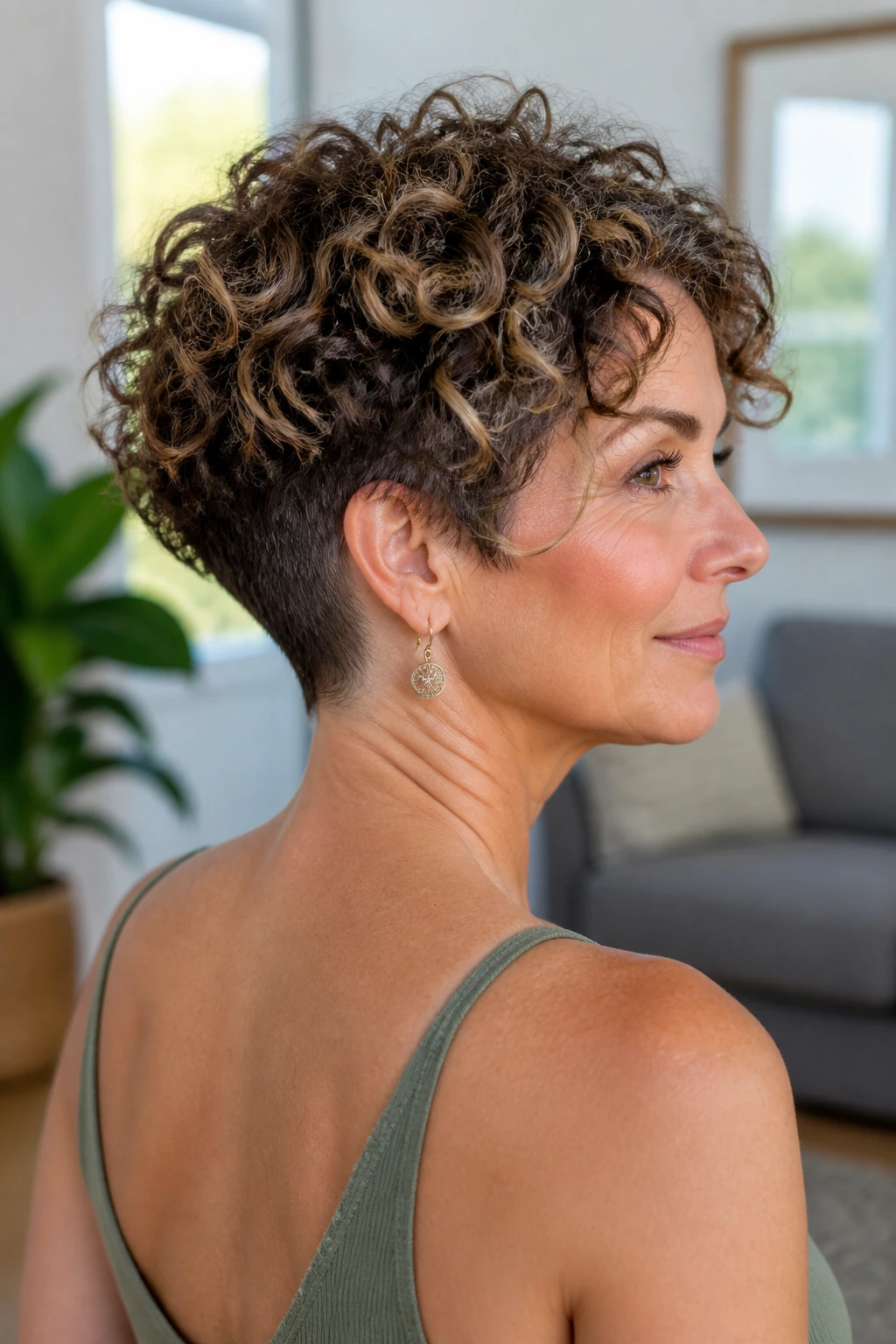
If your curls have enough spring to balloon at the nape, a wash-and-go curly bob with a hidden undercut can feel like somebody turned off the noise. The shape stays bob-like from the outside, but the shaved or closely clipped nape removes the dense section that makes curly hair kick outward.
Why it works on curls
Curly hair often needs less weight at the bottom and more room at the top. That sounds backwards until you see it dry. A hidden nape undercut lets the curls settle without that triangular spread that shows up on day two. Keep the visible bob line around the jaw or just below, and let the curl pattern do the rest.
This is a cut that likes a dry shape check. A stylist who cuts curls wet, without checking the shrinkage, may leave you with a much shorter bob than intended. Ask about that before the scissors come out.
For styling, a leave-in plus a light gel is enough for many curl types. If you prefer softer curls, use a cream first and a touch of gel only on the outer layer. The haircut already does half the work.
17. Undercut Mullet Lite
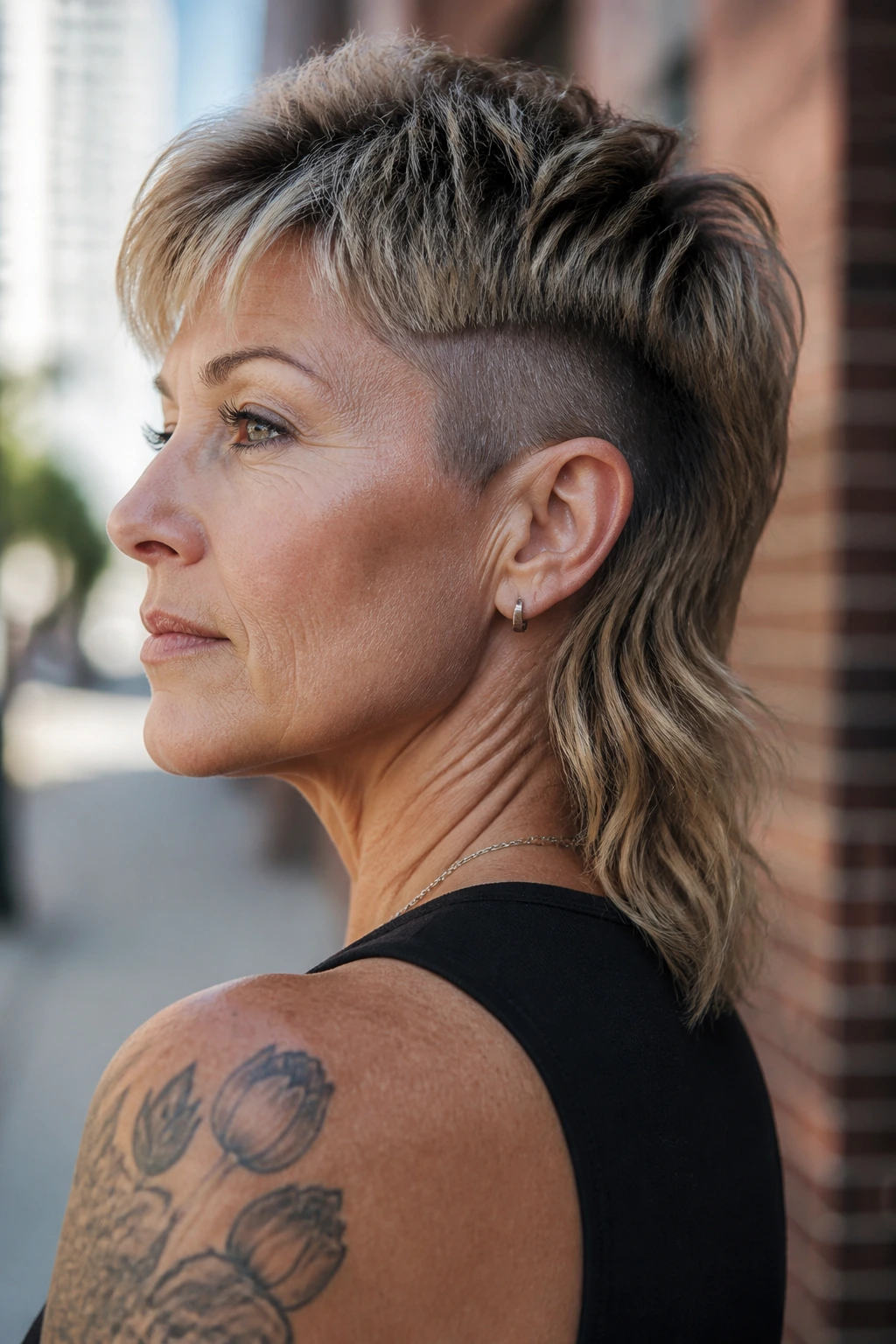
A mullet can be too much if it’s handled like a costume. The lite version is different. The front stays shorter, the back keeps some length, and the undercut at the sides or nape keeps the whole thing from feeling like a heavy cap hanging off the head.
This is a good cut for women who want movement and a bit of edge without going full retro. The layers can be blended enough that the haircut looks modern from the side and back. If the top is soft and the back is not overextended, it reads more like a shag with attitude than a strict mullet.
I like this best on hair with natural wave. Straight hair can make the disconnect look harsher than intended. Wavy hair gives the cut some softness around the longer back section, which keeps it wearable.
The upkeep is moderate. You’ll want the undercut maintained every 5 to 6 weeks so the sides don’t puff out, but the rest of the shape can stay a little imperfect. That’s part of the appeal.
18. Brushed-Forward Buzz Pixie
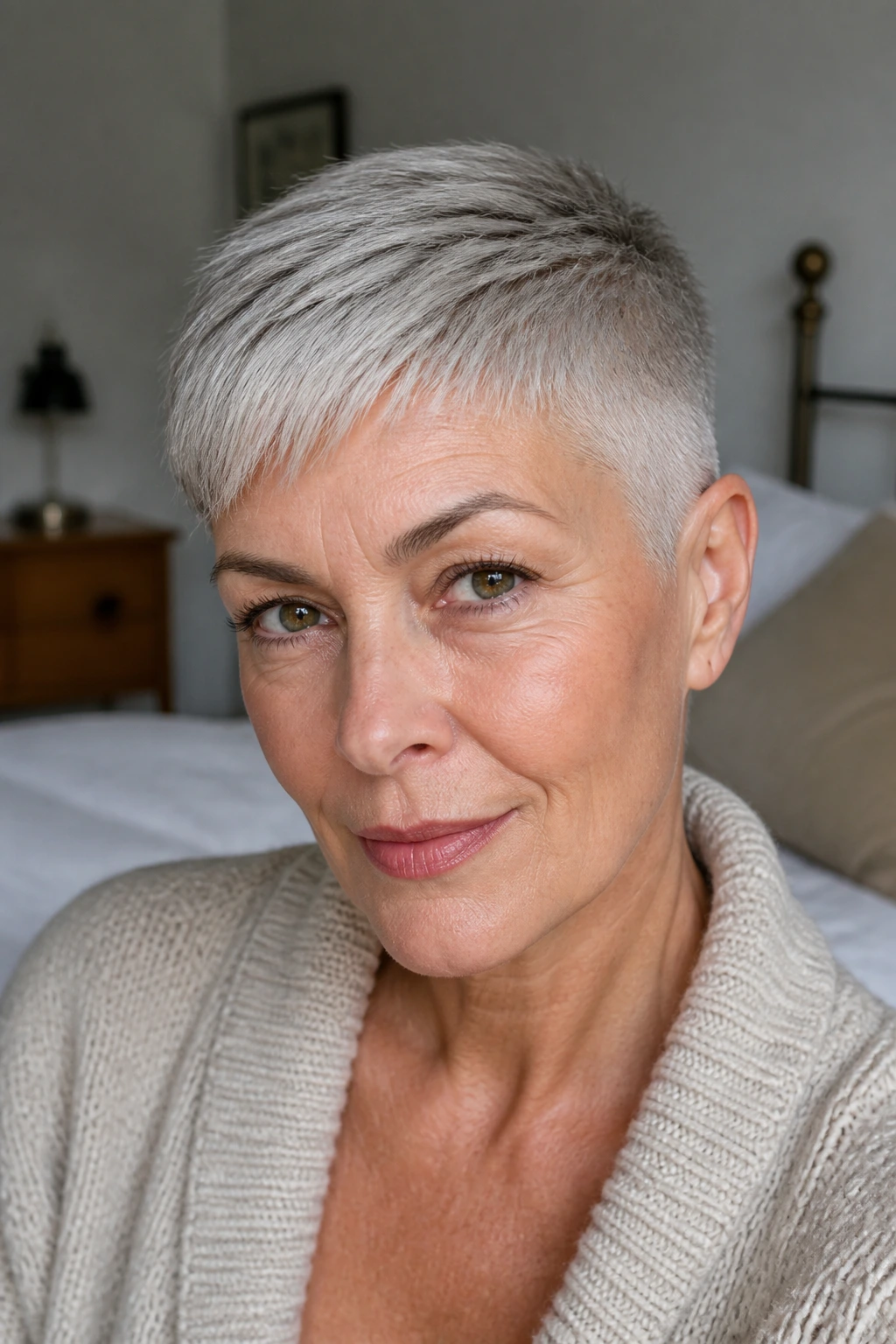
A brushed-forward buzz pixie sits between a buzz cut and a pixie, and that middle ground is exactly why it works. The sides and back stay very short, while the top has just enough length to be nudged forward with your fingers or a small brush.
The forward direction softens the shape. A full buzz can feel stark on some faces, especially if the hairline is uneven or the forehead is more prominent. Brushing forward gives a little shadow and movement, which makes the cut easier to wear with everyday clothes instead of just statement outfits.
This is one of the best cuts for very fine hair because it stops the struggle to create volume that isn’t really there. Keep the top a touch longer than the sides — not much, just enough to catch a bit of texture paste. That small difference makes the cut feel deliberate rather than clipped.
Maintenance is frequent. If you like the shape crisp, book trims every 2 to 4 weeks. Wait too long and the silhouette loses its clean line fast.
19. Sleek Straight Bob With a Shaved Back Panel
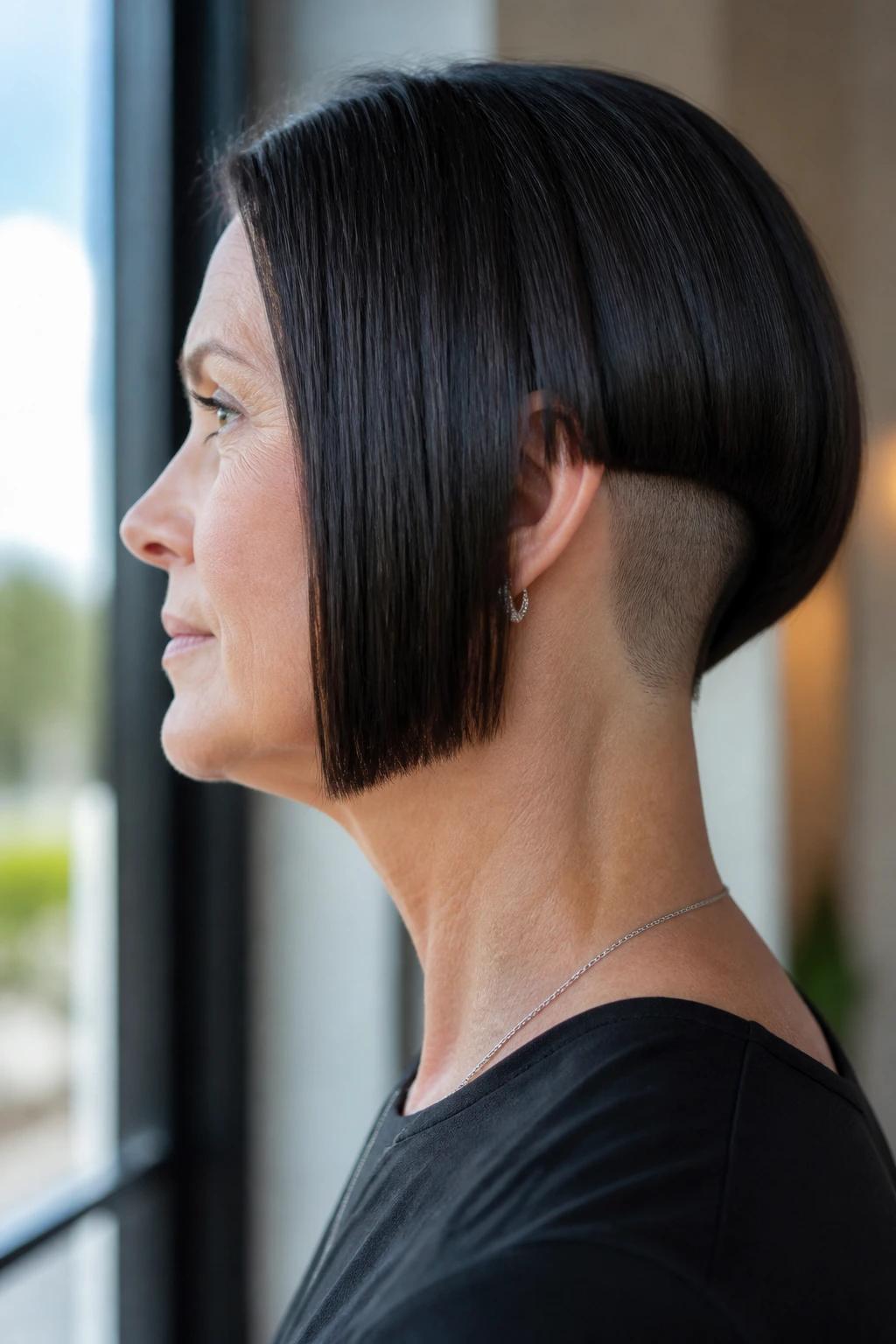
A sleek straight bob with a hidden shaved back panel is for the woman who wants polish without bulk. The visible perimeter still reads like a classic bob, but the underlayer is removed in the back so the ends don’t stack up and sit heavy against the neck.
This is a smart cut for dense, straight hair that tends to sit flat at the crown and puff at the base. Removing only the hidden section changes the whole balance. You still get the clean bob line, but it feels lighter in motion and cooler on the neck.
It also plays nicely with scarves, collars, and jackets because the back doesn’t bunch up. That sounds minor until you’ve lived through a winter of hair pressing into wool. Then it feels like a small miracle.
Use a smoothing cream and a paddle brush or flat brush to dry it straight. If you need extra polish, a flat iron on the outer layer is enough. Keep it moving; the goal is sleek, not pin-straight and stiff.
20. Razor-Cut Shag With Hidden Temples
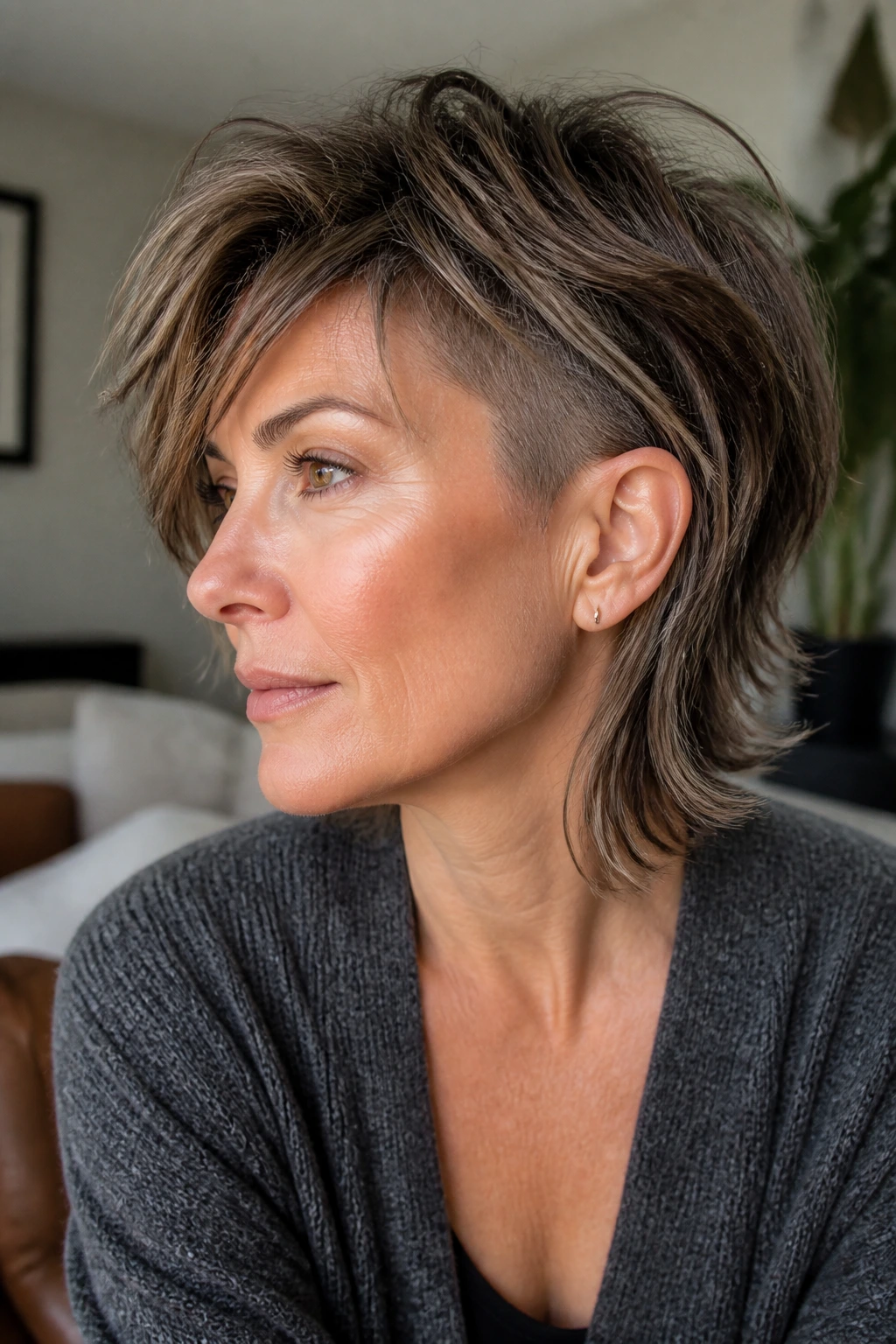
A razor-cut shag can either look airy or shredded. The hidden temple undercut is what often saves it. By removing a bit of weight at the temples and behind the ears, the rest of the shag gets room to fall naturally instead of puffing out around the face.
This cut suits wavy hair that wants movement but not chaos. The razor work should be soft, especially on the ends. On hair that has become drier or coarser, over-razoring can make the ends look tired. A little roughness is good. Too much is not.
The best thing about this style is the way it sits after a quick scrunch. It doesn’t need perfect styling. A texture spray or a light mousse can wake it up, and air-drying often looks better than forcing it flat.
If your hairline at the temples tends to stick out, this is one of those cuts that quietly solves the problem. Not with drama. With geometry.
21. Ear-Hugging Bob With a Secret Undercut
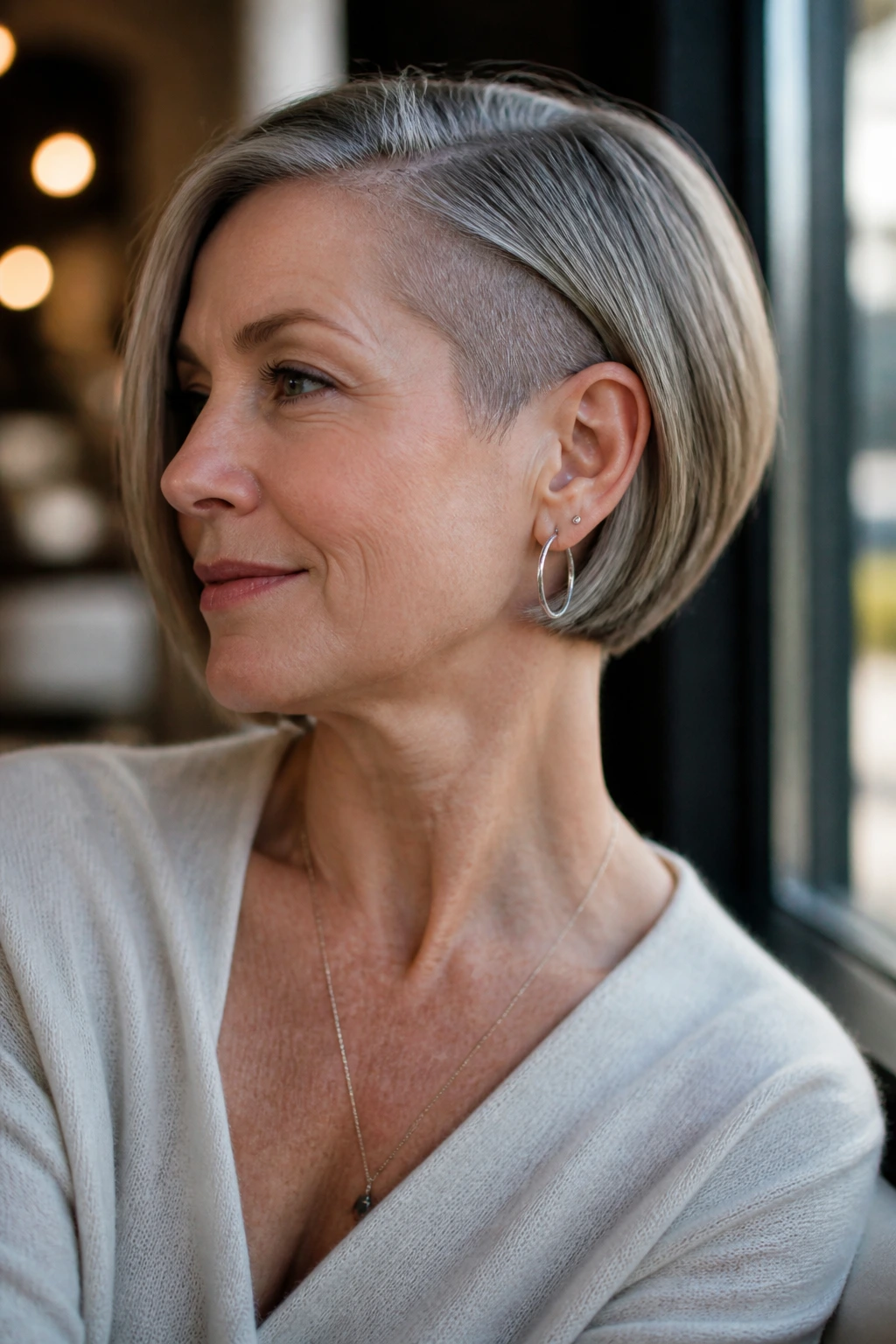
An ear-hugging bob works when the hair is allowed to fall close to the head without bulking out at the sides. The secret undercut removes the hidden weight behind the ears and at the lower back, so the visible line can curve neatly around the face.
This is a good one if you like earrings and want them to show instead of competing with your hair. It also behaves well with glasses, because the area around the arm of the frame stays cleaner. A lot of bob problems are really ear-area problems. Once you clear that up, the whole haircut calms down.
Keep the ends soft, not blunt as a ruler. A tiny bit of texture at the perimeter helps the cut feel lived-in rather than shell-like. If your hair is very straight, a slight bend with a brush or iron keeps the line from looking too rigid.
I’d call this one polished without being stiff. That balance is harder to find than it sounds.
22. Copper Crop With Swept Fringe and Fade
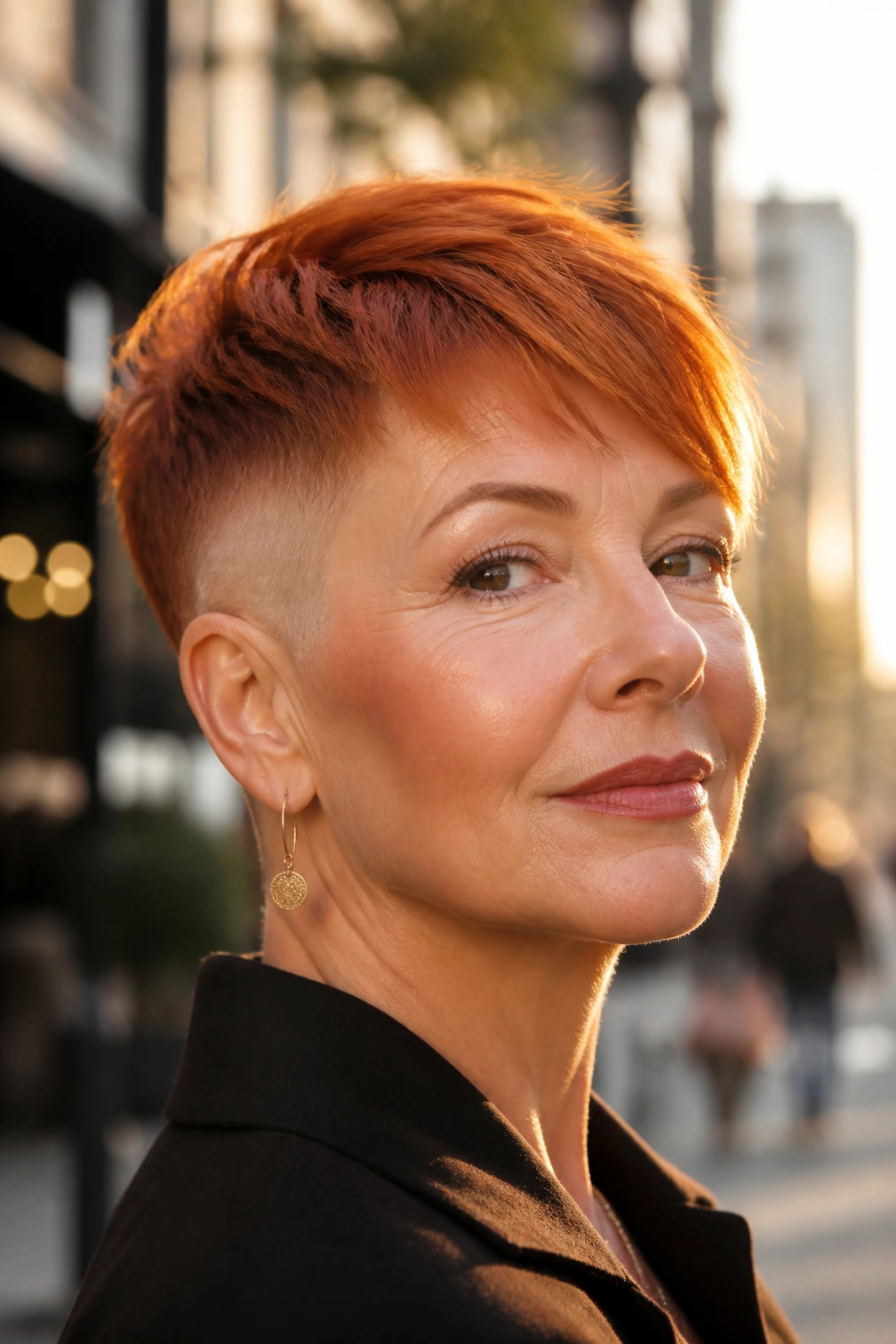
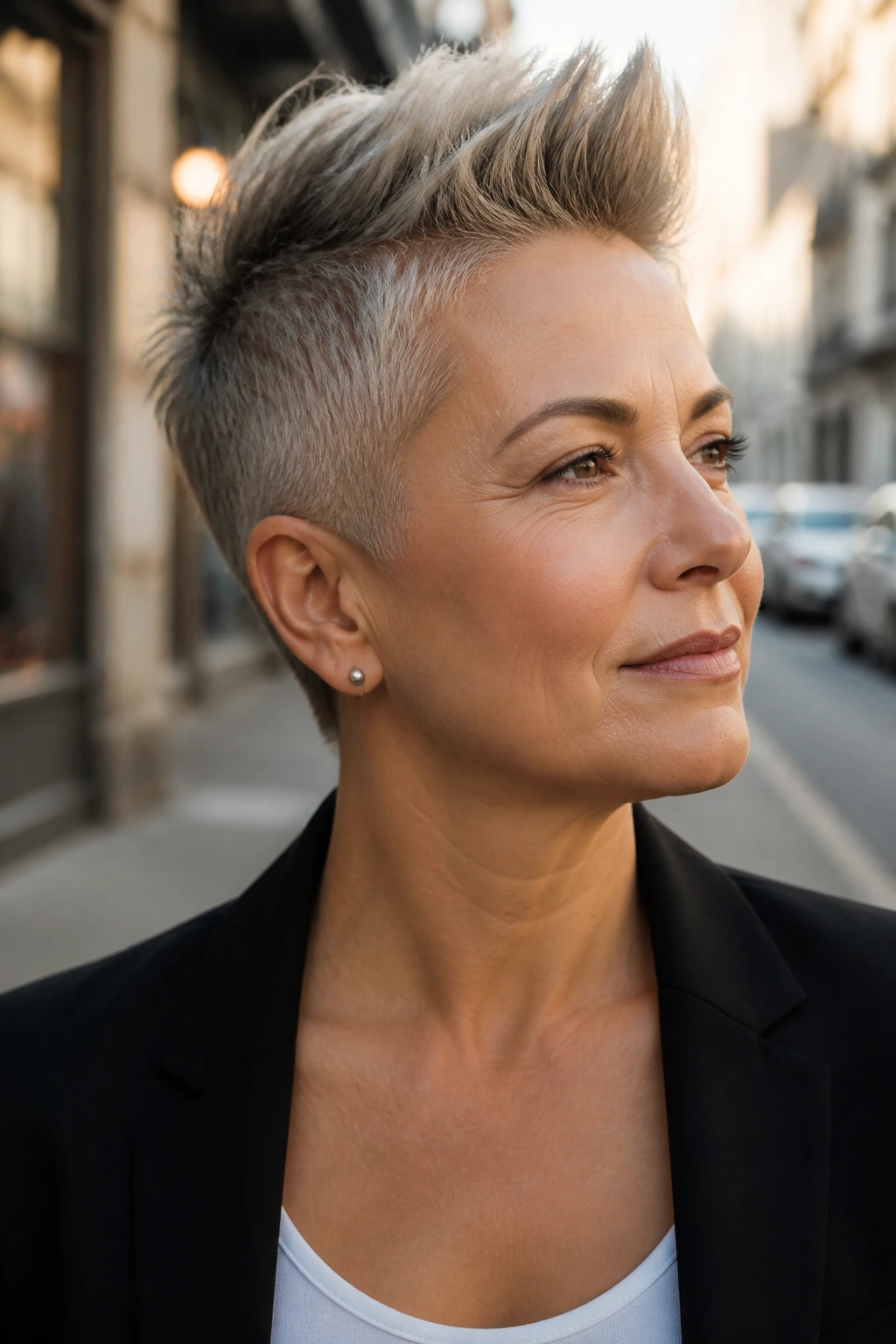
Color changes how a haircut reads. Copper hair, especially when it has depth and shine, can make a short crop feel bolder than the cut line itself. A swept fringe plus a soft fade keeps the shape moving and keeps the color front and center.
The swept fringe matters because it gives the eye a diagonal line to follow. Straight-across fringe can fight the warmth of copper tones. A side sweep lets the color glow instead of sitting there in one flat block. If the sides are faded softly, the crop gets more shape around the temples and ears, which helps the whole head look balanced.
This cut is especially good when the color has dimension — golden copper, auburn, strawberry, or a richer red-brown. The fade lets those tones stack visually instead of getting lost in thick sides.
A shine spray or lightweight serum on the top layers is enough. Don’t drench the ends. Copper already does the talking.
23. Soft Spiky Pixie With a Shaved Nape
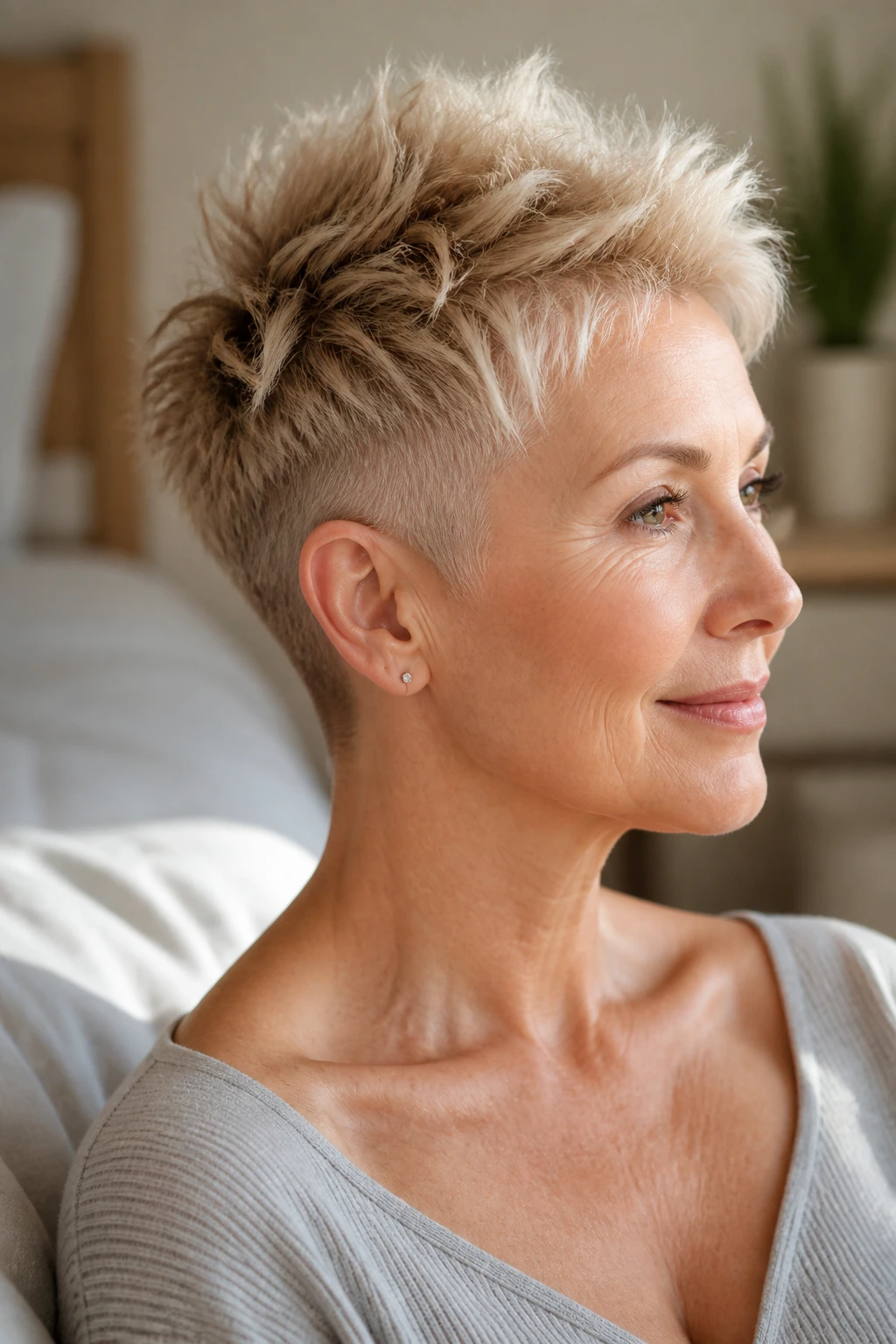
A soft spiky pixie is one of those cuts that can look playful without turning cartoonish. The nape is shaved or clipped close, the crown stays piecey, and the front can be pushed forward or slightly upward with fingers.
What makes it age well is the softness. The spikes should be more “lifted pieces” than pointed ends. Use a matte paste and pinch small sections, then stop before the shape gets stiff. If you use too much product, the cut turns crunchy fast. That’s not the look.
This is a terrific option for coarse hair that already has some stand-up texture. Instead of fighting that, the cut works with it. It also keeps the neckline neat, which makes coat collars and scarves sit better in daily life.
A short trim every 4 to 5 weeks keeps the top from sprawling. If the nape grows in too far, the whole cut loses its clean base and starts to feel like it’s slipping out of shape.
24. Tapered Crop With Long Crown
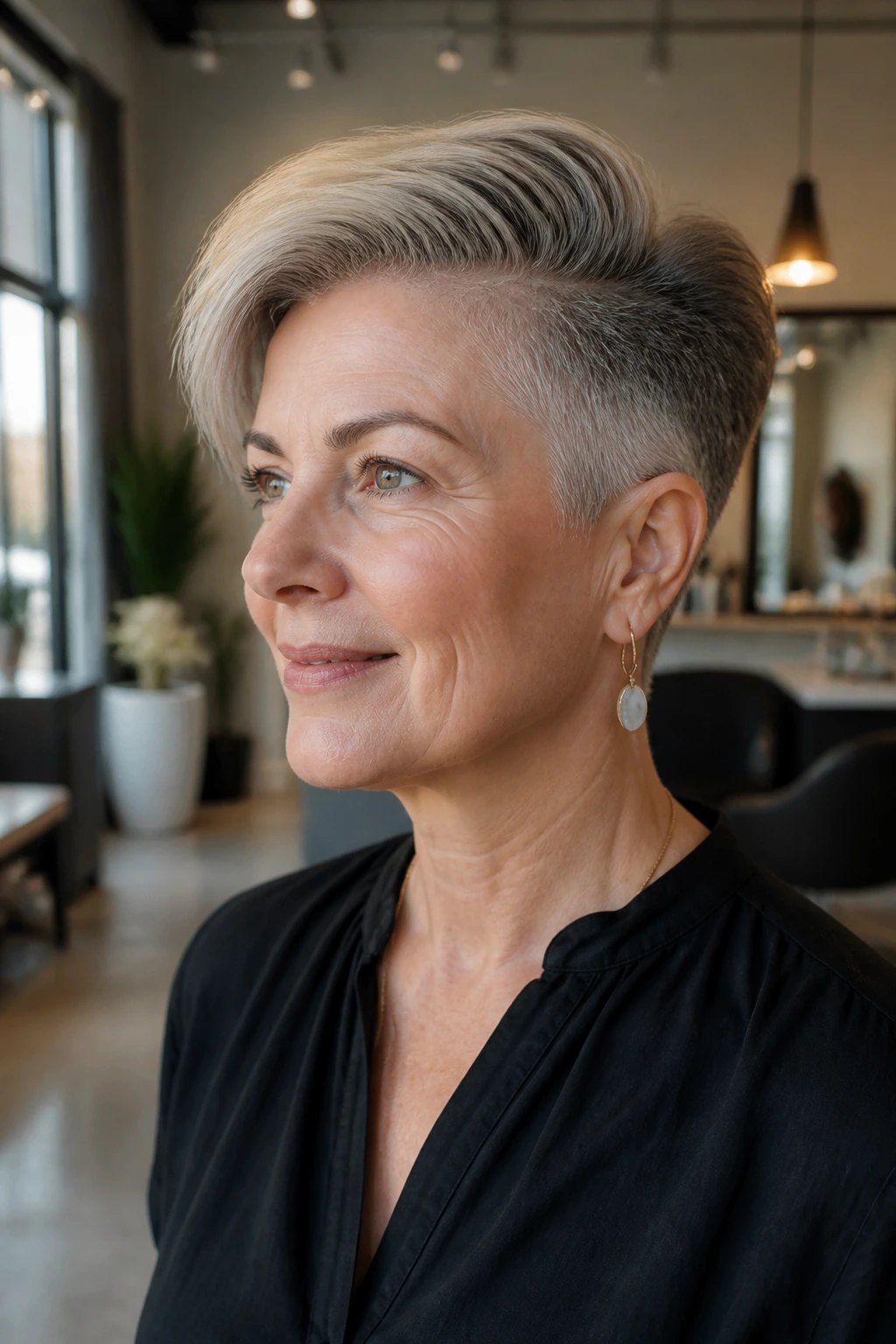
The tapered crop with a long crown is a smart transition cut for anyone who wants to go shorter but not too short. The sides and back taper down neatly, while the crown stays long enough to sweep, lift, or tuck depending on the day.
This is a very forgiving shape. If your hair is straight, the long crown gives you something to work with. If it’s wavy, the crown can fall softly while the shorter sides keep the outline tidy. Either way, the shape prevents the heavy helmet effect that a one-length crop can create.
I like this cut for women who are testing the water before a bigger change. You can wear the crown with a side part or push it slightly forward. There’s room to adjust. That room matters.
A root-lift spray at the crown and a quick blow-dry with fingers usually do enough. If the undercut is hidden, the grow-out is also easier than you’d expect. It’s a sensible haircut, which is not the same thing as a boring one.
25. Curly Quiff With an Underside Shave
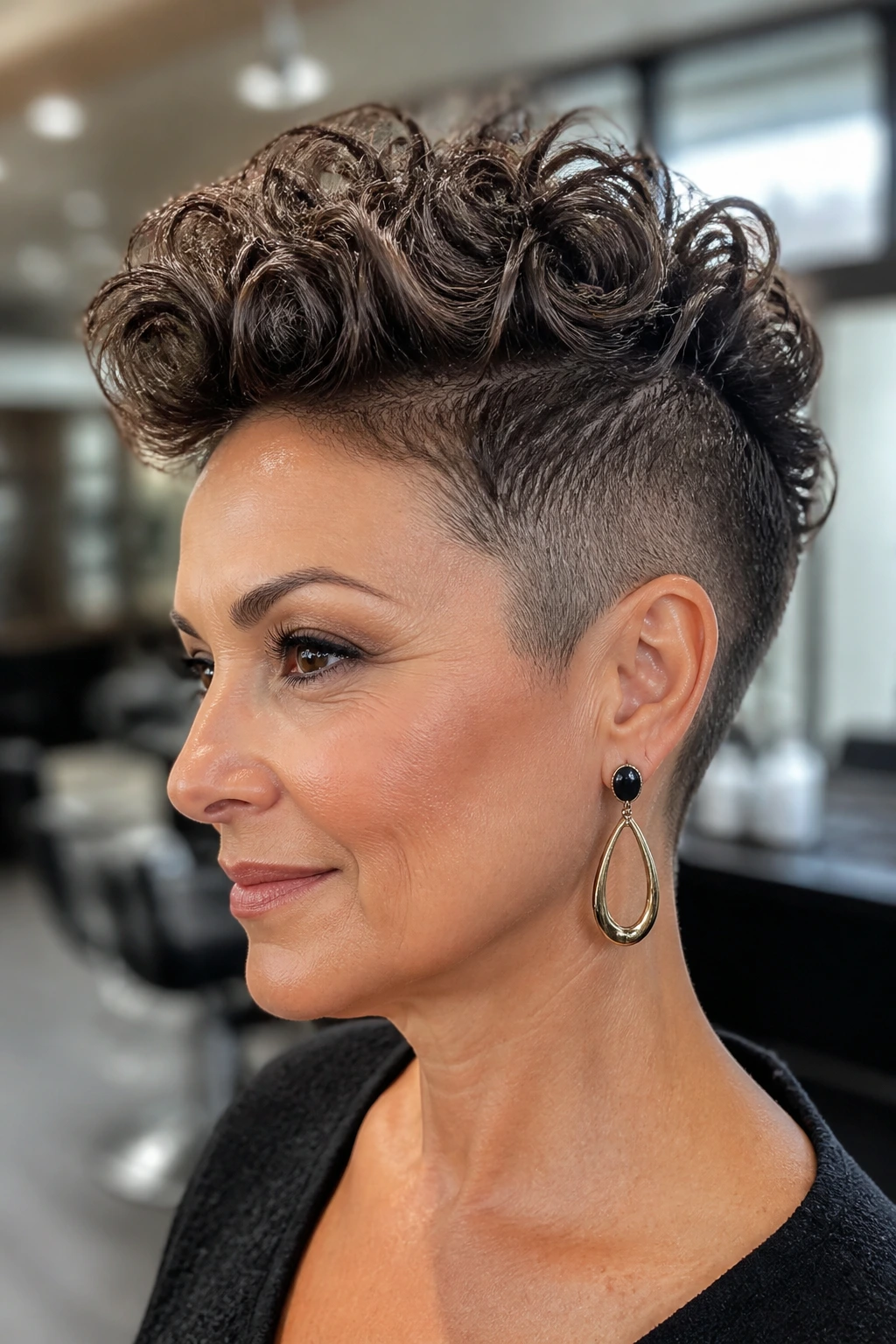
A curly quiff is all about upward energy. The underside shave clears out the bulk underneath so the curls on top can rise instead of spreading sideways. That makes it a strong choice for women whose hair has enough body to hold height but gets floppy around the ears.
The quiff works best when the curls are cut with their shrinkage in mind. Ask for the stylist to leave enough top length for lift after it dries. If the underside is too high or too wide, the shape can turn into a strip instead of a crown. Keep the shave low and let the curls own the top.
This cut has a nice relationship with strong brows and earrings. It leaves the face open but not bare. And if you like a little asymmetry, you can push the front slightly off-center to soften the line.
Use curl cream first, then a small amount of root-lift product near the crown. Diffuse, don’t flatten. The quiff wants air.
26. Cropped Pageboy With a Hidden Undercut
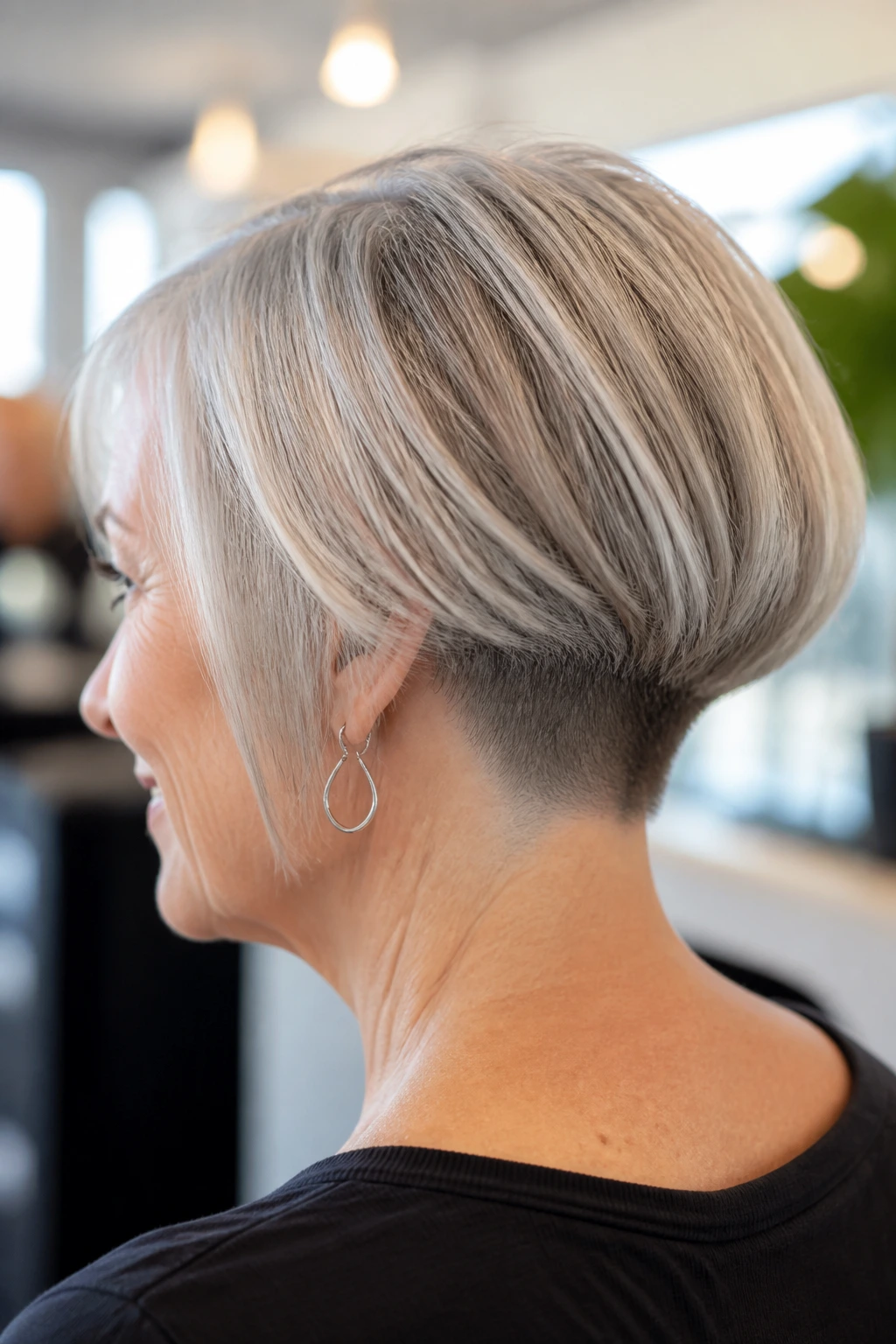
The pageboy is back when it’s done with a hidden undercut and a softer perimeter. That sounds nostalgic, but the modern version is more useful than retro. The underside is cleared out so the shape curves in instead of flaring out, and the visible line stays smooth around the jaw.
This cut is especially good on straight hair that likes to sit flat but heavy. The hidden undercut removes the dense section that can make the pageboy feel helmet-like. With the bulk gone underneath, the outer shape has room to round softly.
If you like a polished finish, this is a lovely choice. It pairs well with a clean side part, smooth ends, and clothes that have structure. But it doesn’t have to feel prim. A little texture at the tips keeps it from reading too formal.
I’d avoid making the front too blunt unless you want a harder line. A soft curve around the face is usually kinder, especially if you’re wearing the cut every day.
27. Bold Brush-Up Crop With Clean Sides
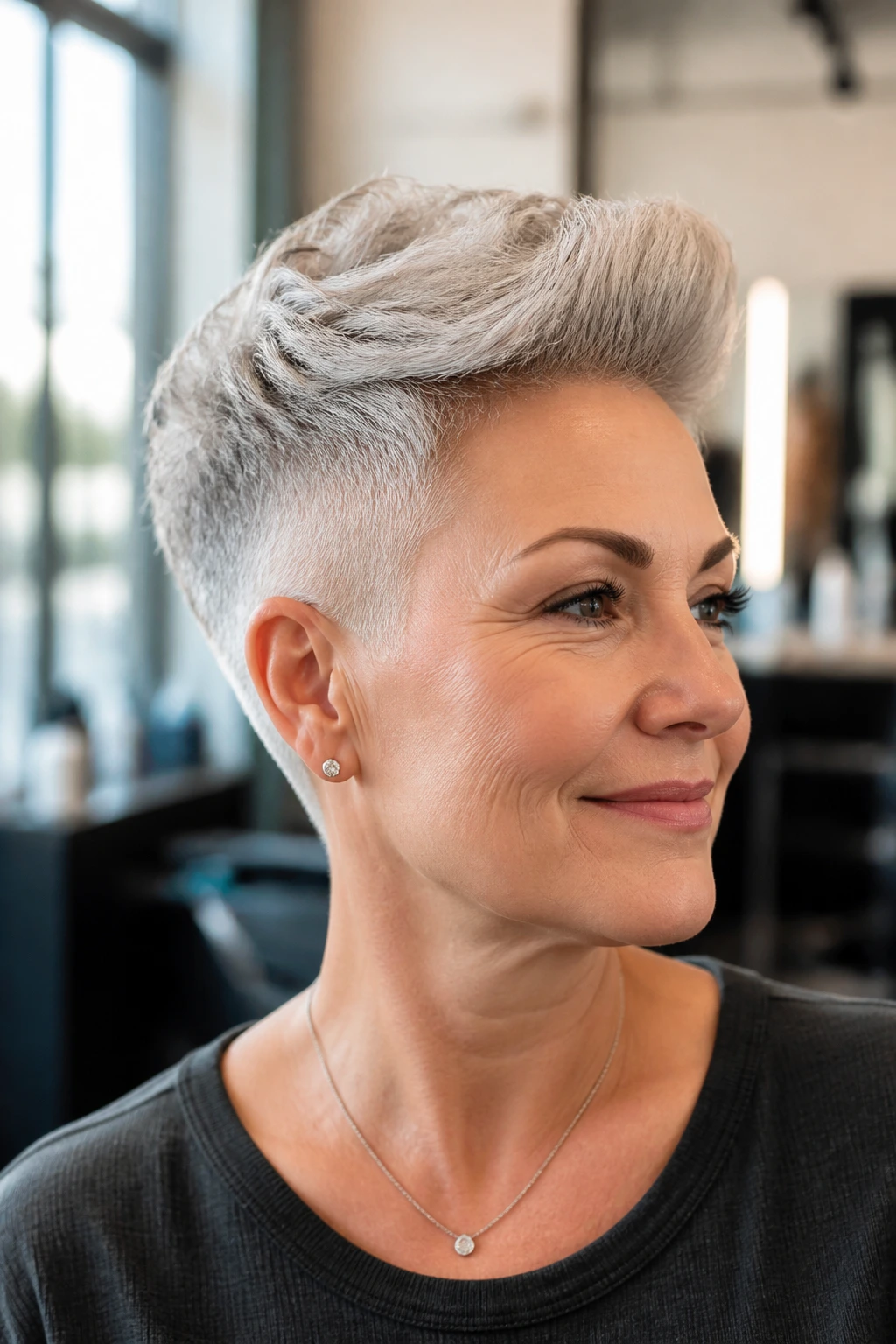
A brush-up crop is a cut with confidence in its bones. The sides are clipped clean, the top is left with enough length to brush up or slightly back, and the whole shape depends on good proportion more than on a lot of styling.
This is the kind of haircut that can make dense hair easier to live with because the top keeps its structure while the sides stop competing with it. If your hair has a strong growth pattern, this cut can turn that into lift instead of fight. That’s the appeal. It uses the direction of the hair instead of arguing with it.
It works especially well if you like statement earrings, bright lipstick, or glasses with some shape to them. The face gets a clean frame, and the hair doesn’t crowd the features.
Use a vent brush and a blow-dryer to push the top upward while it cools. Finish with a small amount of paste. If you use too much hold product, the top can look frozen. That’s not brush-up hair. That’s shellac.
28. Long Fringe Undercut With Soft Ends
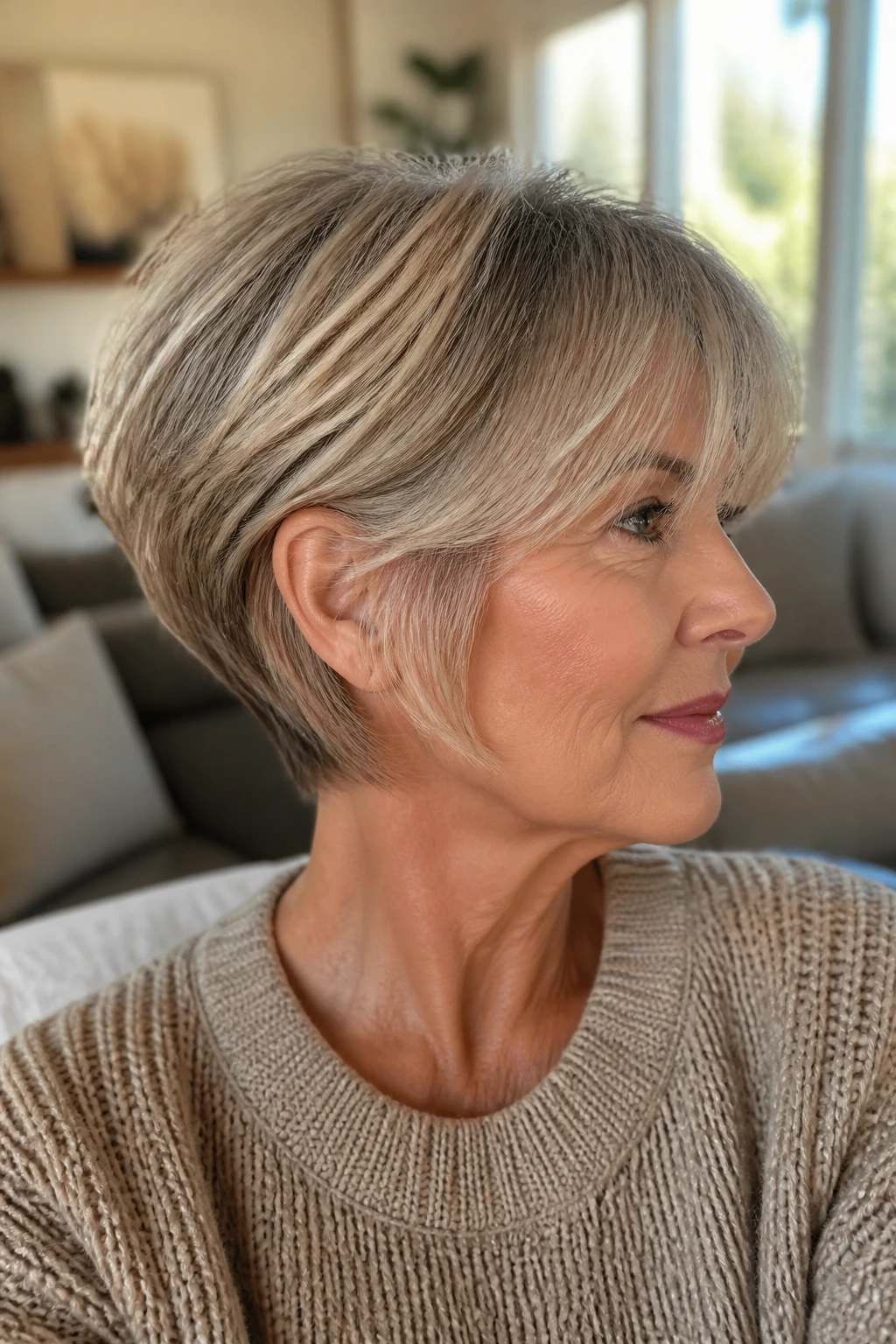
A long fringe undercut with soft ends is for women who want the ease of an undercut without giving up a little length around the face. The fringe can sweep across the forehead or tuck to one side, while the hidden undercut clears the bulk underneath and at the nape.
This is one of the gentlest entries in the whole group. It doesn’t announce itself from across the room. It works by making the top hair fall better. That’s the kind of haircut I trust on mature hair that still wants some softness around the face.
The soft ends matter. Keep the perimeter feathered enough to move, not so layered that it becomes stringy. If the undercut is too high, the length above can lose its shape. Keep it low and hidden unless you actively want the contrast to show.
It’s a very good choice if you’re not ready for a strong shave but want the comfort of less bulk. Quiet cuts can be the smartest ones.
Why Undercut Styles for Women Over 50 Work on Changing Hair
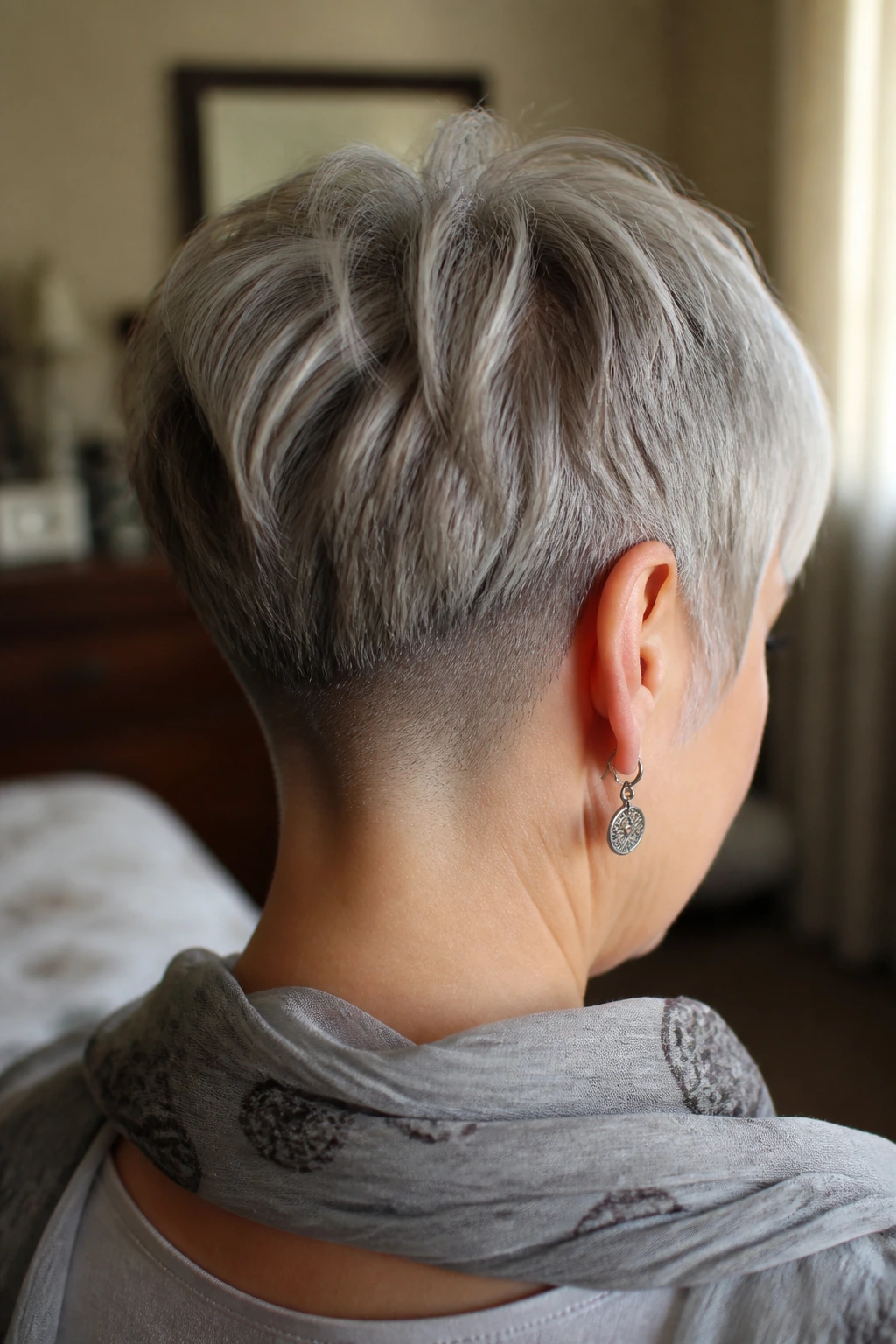
Hair changes shape as the years go by. Sometimes it gets finer at the crown, sometimes coarser at the ends, and sometimes both at once, which is irritating in a very specific way. A haircut that looked balanced at 40 can sit too heavy, too flat, or too wide now.
That’s where undercut styles for women over 50 earn their place. They remove weight from the places that cause the most trouble — the nape, the temple, the lower side panel — without forcing you into an ultra-short cut everywhere. The result is less bulk, less puff, and a cleaner outline around the neck and ears.
I’m not a fan of adding more and more layers when the problem is really weight distribution. Layers can help, sure, but on coarse gray hair they can also create frizz and little shelves that stick out on humid days. An undercut goes after the problem more directly.
There’s also a nice practical side to it. Coats, scarves, glasses arms, earrings, and even collars all interact with short hair. A well-placed undercut gives the hair room to sit without being pressed into odd angles. Small detail. Big difference.
Choosing the Right Undercut for Women Over 50
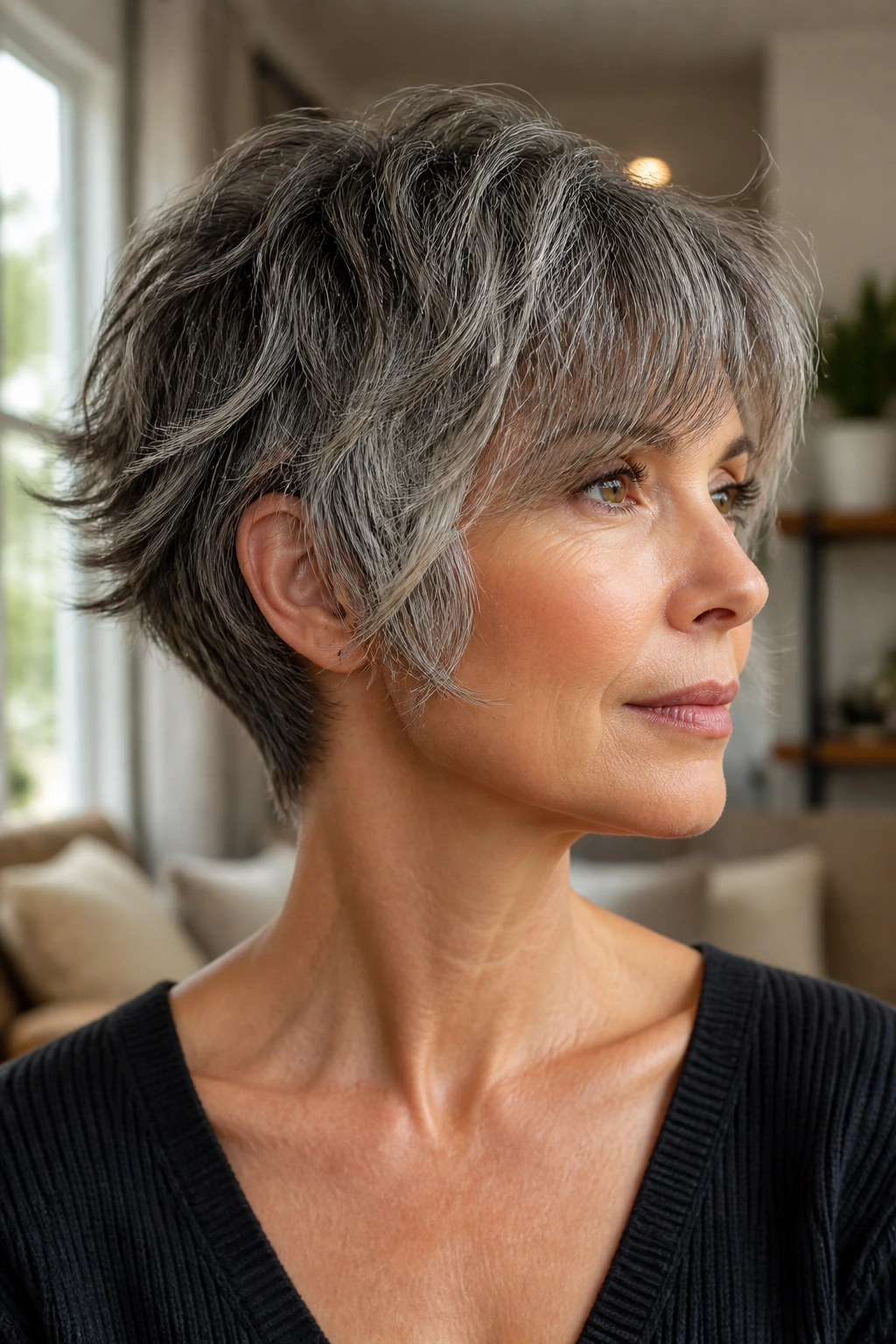
Start with your hair’s natural behavior, not the photo you saved because it looked cool. Fine hair, thick hair, curly hair, straight hair, gray hair, and highlighted hair all respond differently to the same clipper line. That’s not a flaw. It’s the haircut telling the truth.
If your hair is fine and flat, a hidden nape undercut or long pixie with temple cleanup usually works better than a hard shave. You want lift, not a shortage of hair where the shape needs coverage. If your hair is dense or coarse, you can be bolder. A more visible undercut or side fade often gives the best relief because it clears the bulk that keeps the cut from settling.
Curly hair needs a different approach altogether. Dry cutting matters, and the undercut should be low enough to preserve the curl pattern on top. Straight hair can handle cleaner lines, but it also shows every blunt edge, so the finish needs to be careful rather than rushed.
Face shape plays a role, but not in the cartoonish way people talk about it online. The real question is where you want width and where you don’t. Strong jawline? You may want softness at the temples. Narrow face? A little volume at the crown can be a gift.
What to Tell Your Stylist Before the Clippers Come Out
Bring pictures, yes, but bring them like a person who knows the pictures are just starting points. Show one from the front, one from the side, and one from the back if you can get them. The back view matters more than people think, especially with hidden undercuts.
Be specific about the level of contrast you want. Say whether you want the undercut to show when your hair is tucked up or only when it’s lifted. If you’re nervous, ask for a conservative first pass with a #2 or #3 guard instead of going straight to skin. That gives you room to decide whether you want more.
Mention your cowlicks. Mention your glasses. Mention whether you wear your hair down most days or tuck it behind your ears all the time. Those details change the shape in real life, which is where hair has to work.
And say how often you’ll come back. A stylist can cut a gorgeous buzz if you’re willing to maintain it every 3 weeks. The same cut looks different at 8 weeks. That’s not a moral failing. It’s math.
Tools and Products That Keep the Shape in Place
-
Small round brush: Useful for lifting the crown on pixies, crops, and long fringe styles without blowing the sides wide open.
-
Paddle brush: Best for sleek bobs, pageboys, and straight crops where you want smooth direction rather than volume.
-
Vent brush: Helps speed drying at the roots and keeps short hair from sitting flat while you style it.
-
Matte paste or clay: Good for pixies, buzz-pixies, and choppy crops; it gives hold without that shiny, greasy finish.
-
Light styling cream: Works well on gray, coarse, or frizz-prone hair when you want softness more than separation.
-
Mousse or root-lift spray: Helpful for crown volume on long pixies, brush-up crops, and soft mohawks.
-
Curl cream or lightweight gel: Keeps curls grouped on curly crops and bob shapes without making them crunchy.
-
Texturizing spray: Gives movement to shags, feathered pixie-bobs, and wavy crops with almost no effort.
-
Finishing hairspray: Use a light mist, not a lacquer helmet. You want the style to stay where you put it, not freeze.
-
Scalp sunscreen or a hat for bright weather: Buzz cuts and high fades expose more skin than people expect.
-
Dry shampoo: Useful for second-day lift at the crown, especially on short styles that flatten overnight.
-
Small trimmer, if you know how to use it safely: Handy for tidying the neckline between appointments, but only if you’re comfortable with it. Otherwise, leave it alone.
Smart Styling and Product Tips
Fine hair: Keep the product light and put most of it at the roots, not the ends. A pea-size amount of paste on a pixie does more than a full palm on the same cut.
Thick hair: Ask for weight removal where the hair bulks out, not all over. Thick hair often looks best when the underside is cleared and the top is left with enough length to move.
Curly hair: Style on damp hair, not soaking wet hair, and stop touching it once the curl pattern starts to form. Fingers are useful. Constant fussing is not.
Gray hair: Gray can be wiry and dry, so a small amount of cream or leave-in product usually beats oil-heavy gloss. Too much oil can make the style collapse and show the scalp in odd places.
Short buzzed sides: If the sides are very short, keep them neat with frequent trims rather than piling on product. Product can’t fix a growth pattern that’s already out of line.
Second-day hair: A little dry shampoo at the crown and a mist of water at the fringe can reset most short cuts. You don’t need to start from scratch every morning.
Common Mistakes That Make Short Hair Look Hard
Going too short too fast: The most common error is a hard shave when you’re really only ready for a hidden nape cleanup. The symptom is that the cut feels severe the second you step outside. The fix is easy: start with a conservative guard length and leave more top length than you think you need.
Ignoring the hairline and cowlicks: A clean undercut can still look messy if the growth pattern at the crown or nape pushes the hair in a strange direction. You’ll see little bumps or flips that never settle. Fix it by showing your stylist how your hair dries naturally and letting them cut around that pattern.
Using too much product on short hair: Short cuts go greasy fast. The symptom is flat roots and piecey ends that look wet even when they’re dry. Use less product than feels safe, then add a touch more only where needed.
Letting the undercut grow too long between appointments: Once the nape fuzz starts creeping up, the whole shape can turn boxy. The fix is routine maintenance — especially on buzzed sides, temple fades, and neck cleanup.
Forgetting the neckline matters: A beautiful top can still look unfinished if the back edge is ragged. If you wear your hair up often or have a high collar lifestyle, the neckline needs to stay tidy.
Choosing a style that fights your texture: Forcing a straight, severe fade onto very curly hair — or a fluffy pixie onto dense coarse hair — usually ends badly. Match the cut to what your hair already wants to do.
Easy Ways to Make the Cut Yours
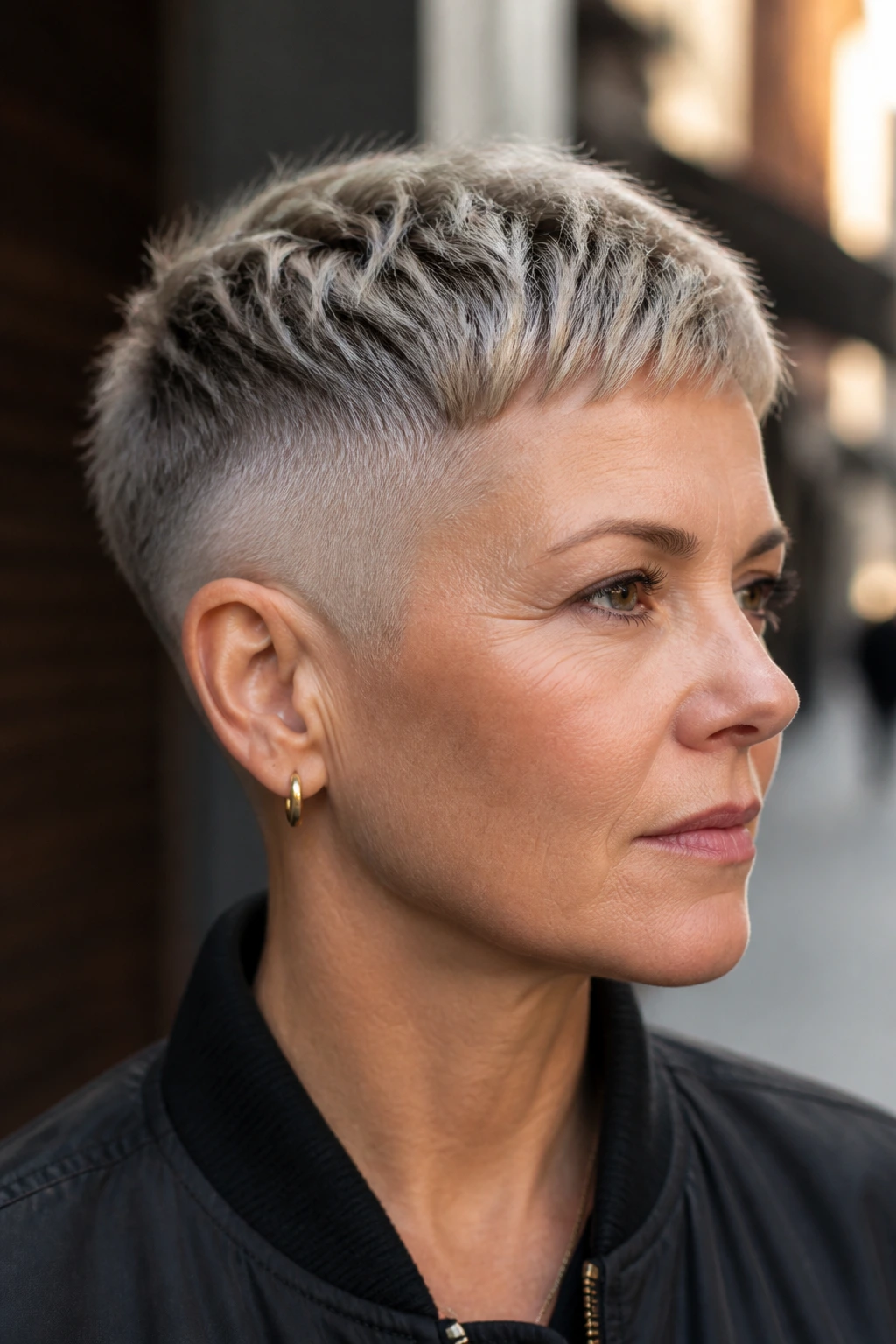
Hidden-First Version: Start with a nape-only undercut if you want the relief without the visual edge. It’s the safest way to test the shape, and it grows out quietly.
Temple-Clean Version: If you wear glasses or want a little sharpness around the face, focus the undercut at the temples and sideburns. It clears the frame area without changing the whole haircut.
Curl-Forward Version: Keep the undercut low and let the curls or waves stay full on top. This works when you want your texture to be the star and the shave to stay in the background.
Silver-Showcase Version: If your gray or white hair has a strong silver shine, leave a little more crown length so the color reads as shape, not just texture. A clean edge underneath makes the silver look deliberate.
Bold Buzz Version: If you’re tired of fussing with hair altogether, take the sides shorter and the top close enough to style with your fingers. This is the least time-consuming version, but it asks for confidence and regular trims.
Office-Soft Version: Keep the lines soft, the fade low, and the fringe a little longer. It gives you the practicality of an undercut without looking like you stepped out of a clipper-only salon.
Keeping the Cut Sharp Between Salon Visits
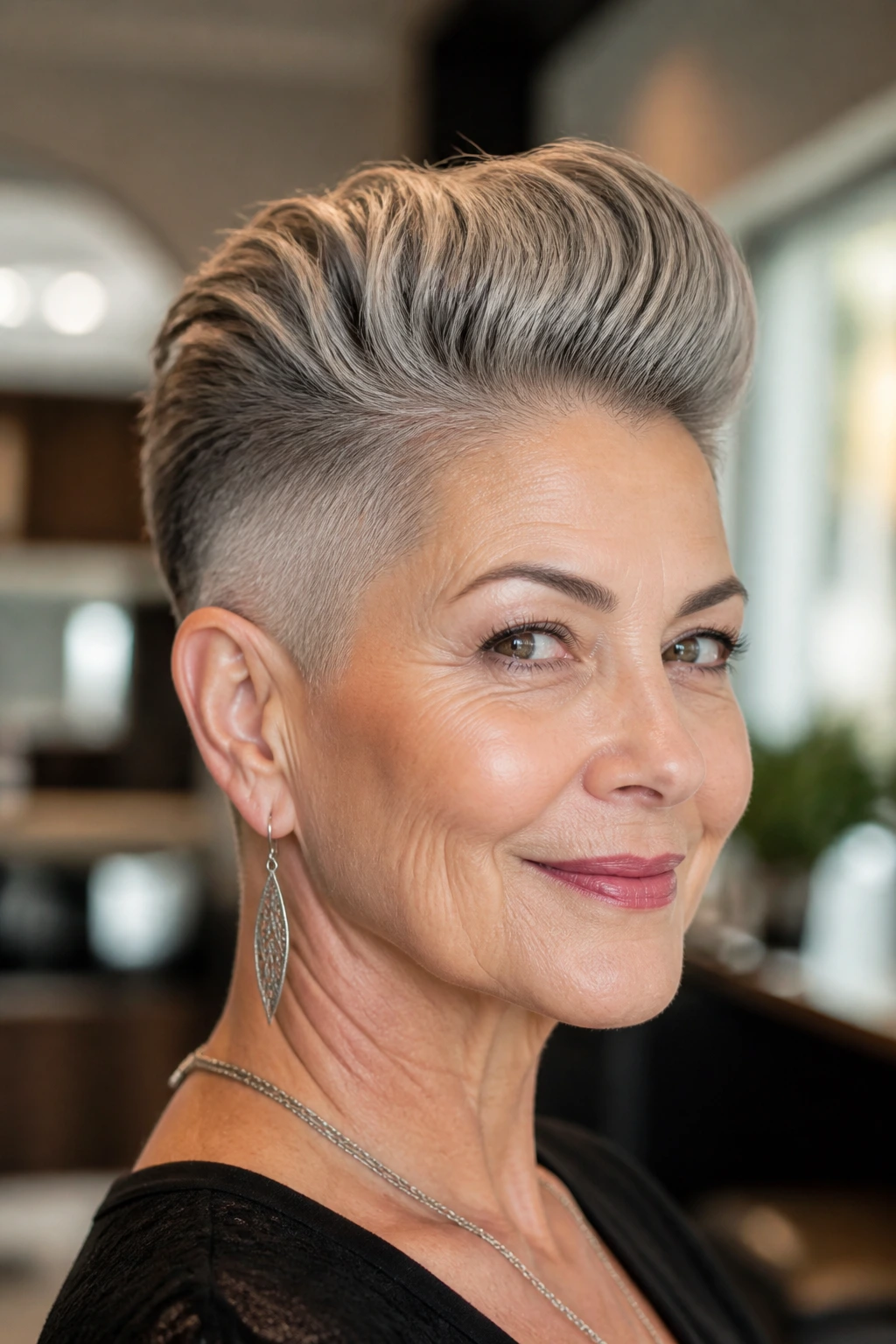
A buzz cut asks for the most frequent upkeep. Every 2 to 4 weeks is normal if you want the lines to stay clean. Pixies and soft crops usually hold for about 4 to 6 weeks before the outline starts getting fuzzy. Hidden undercuts under bobs or lobs can stretch to 6 to 8 weeks, but that depends on how fast your neckline grows.
Between visits, the main job is not overworking the cut. If you keep flattening the top with too much product or brushing the sides repeatedly, the shape can get tired before the haircut itself does. Use the product once, set the hair, and leave it alone unless the day truly demands a reset.
A satin pillowcase can help short textured cuts stay calmer overnight. So can a quick mist of water at the crown in the morning, followed by finger styling. You do not need a full wash every day. In fact, many short cuts behave better on day two or three when the roots have a little grip.
If you want to grow the cut out, stop touching the undercut first. Let the sides and nape fill in before you mess with the top length. That keeps the shape from turning into a lopsided in-between stage.
Frequently Asked Questions
Will an undercut make fine hair look thinner?
Not if it’s placed well. A hidden nape or temple undercut can make fine hair look fuller on top because it removes the bulk that was dragging the shape down. The mistake is shaving too much too high, which leaves the top without enough support.
Can I hide an undercut at work?
Yes, if you start with a low nape or hidden side shave. Most undercuts can stay invisible when the hair is worn down, then show only when you tuck or lift it. That’s one reason hidden versions are so popular.
How short should I go the first time?
If you’re unsure, ask for a conservative guard length like a #2 or #3 on the shaved areas. You can always go shorter at the next visit. Going too short too soon is the easiest way to regret a cut you might have otherwise loved.
Do these styles work with curly hair?
Absolutely, but the cut has to respect shrinkage and curl pattern. Curly hair usually does better with a lower undercut and a dry or curl-aware cut, not a flat, one-size-fits-all clipper job.
How often do I need trims?
Buzz cuts can need a touch-up every 2 to 4 weeks. Pixies and crops usually stay sharp for 4 to 6 weeks. Longer bob-based undercuts can last 6 to 8 weeks if the neckline stays neat.
What if I want to grow it out later?
Choose a hidden undercut or a low nape shave. Those are easier to grow back because the top layers can cover them as they fill in. The grow-out looks much smoother than a high, exposed shave.
Will these styles work if I wear glasses?
Yes, and some look better because of glasses. Temple fades, ear-cleaned bobs, and long pixies all benefit from having the frame area cleared out a little. The trick is not letting the hair crowd the arms of the glasses.
Is a buzz cut too harsh for mature faces?
Not if the lines are balanced and the brows, earrings, or makeup are allowed to do some work. A soft-edged buzz can look crisp and modern instead of severe. The most flattering version is usually the one that leaves the hairline tidy, not the one that shaves everything to the skin.
A Sharper Line and a Little Breathing Room
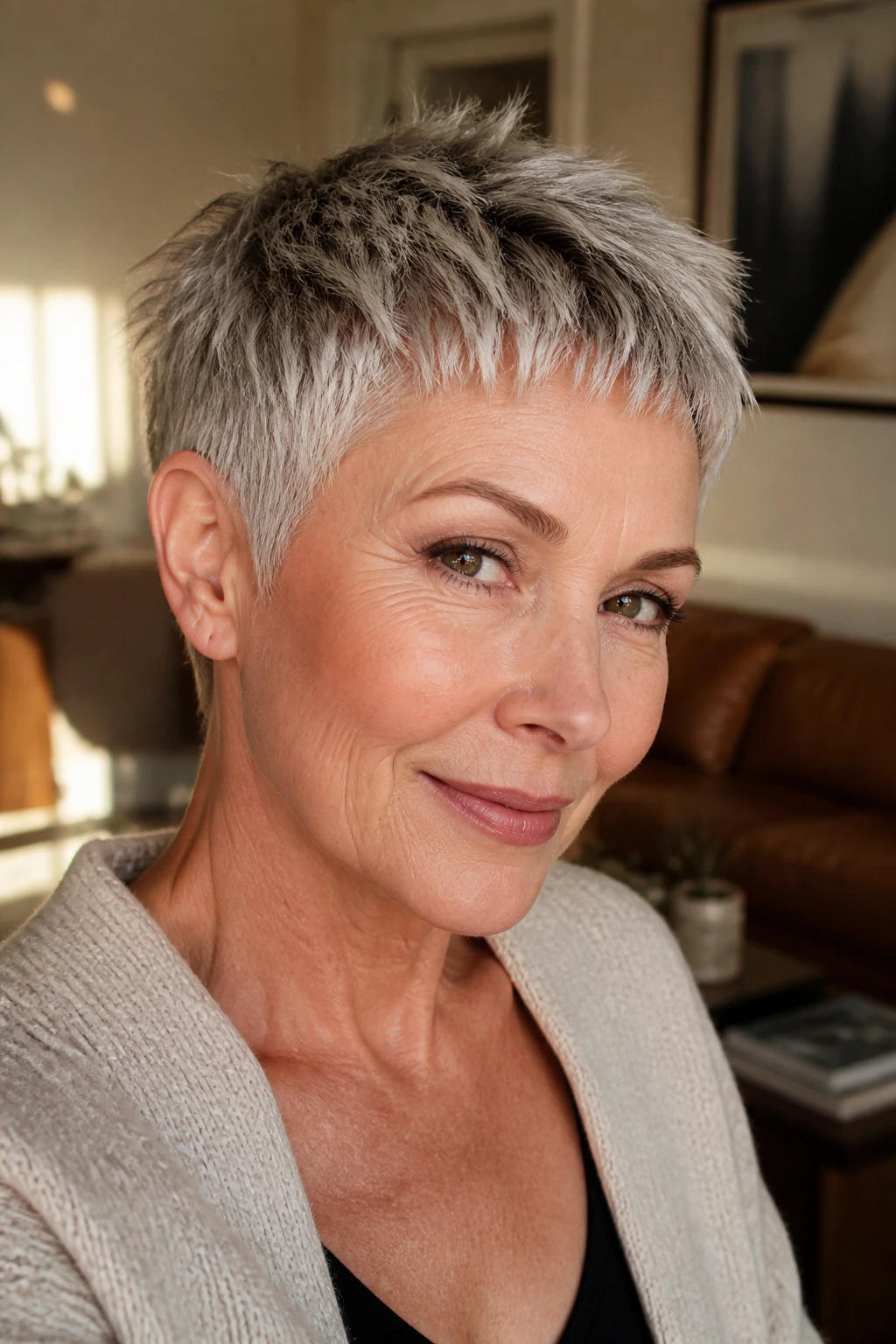
The reason these cuts keep coming back is simple: they solve a shape problem. They take away the places where hair piles up, sticks out, or stops behaving, then leave enough length up top to keep the look human. That’s the whole game.
If you’ve been wearing the same heavy bob or overlayered pixie for too long, the right undercut can feel like the first honest haircut you’ve had in years. Start small if you want to. Go bolder if you’re ready. The best version is the one that makes your hair feel lighter the second you leave the chair.
