



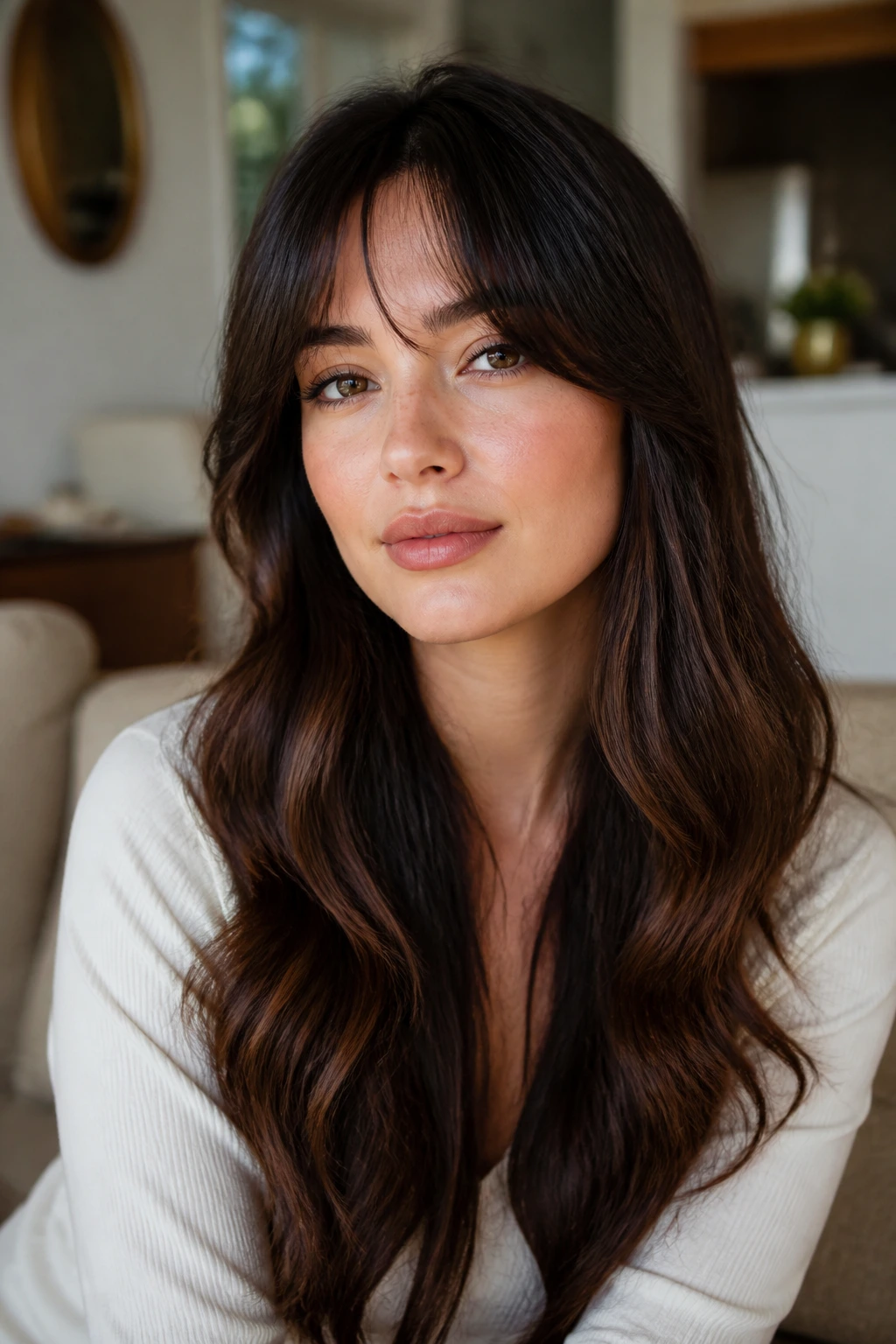
Long hair with bangs for round faces can look soft and balanced, or it can land in that awkward middle ground where the fringe sits right on the cheeks and makes everything feel wider. The difference usually comes down to line and placement: where the bangs start, where they end, and how the rest of the cut keeps moving downward instead of puffing out around the face. Get that part right and the whole haircut reads longer, cleaner, and more intentional.
That’s why some round faces look best with curtain bangs that split at the cheekbones, while others need a side-swept fringe that drops lower on one side and keeps the eye moving diagonally. Texture matters, too. Fine hair needs a different approach than thick, wavy hair, and curly hair has its own rules entirely. A fringe that looks feather-light on straight hair can turn into a blunt little shelf if the same cut is copied onto a denser texture without adjusting the weight.
These 19 styles stay on the useful side of the line. Some are polished, some are messy in the best way, and a few are specifically built for low-maintenance people who would rather not spend twenty minutes fighting a round brush every morning. If bangs have ever flattened your face instead of framing it, there’s a better version of the cut waiting below.
Why This Collection Earns Its Place
-
Face-lengthening shapes: Every look keeps the fringe away from the widest part of the cheeks, which helps the face read longer instead of broader.
-
Texture-aware choices: Straight, wavy, curly, fine, and thick hair all get their own lane here, so you are not stuck forcing one bang shape onto every hair type.
-
Salon-friendly language: These are styles you can actually describe to a stylist without waving around a blurry photo and hoping for the best.
-
Low-drama grow-out: Several of these cuts stay wearable for weeks after the trim, which matters if you do not want to babysit bangs every four days.
-
Styling range: Some need a round brush and five minutes. Others look better air-dried with a little cream and left alone.
-
Built for long hair: The length stays the star. The bangs frame it, not fight it.
Why Long Hair With Bangs Suit Round Faces
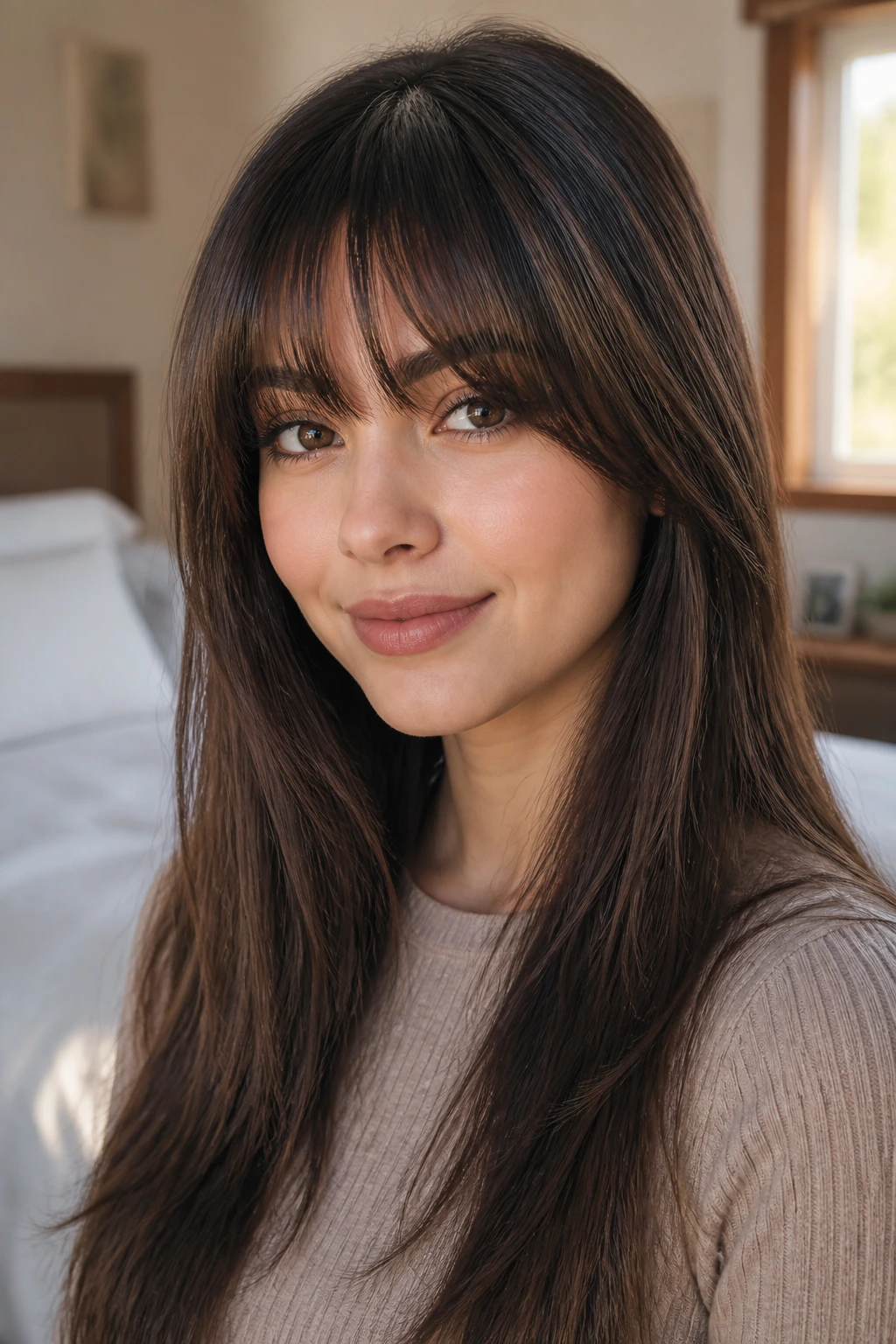
Round faces usually have softness through the jaw and cheek area, with width and length that feel close to equal. That is not a problem. It just means the haircut has to create shape where the face naturally has less of it. Bangs can do that job beautifully when they bring in angles, not bulk.
The easiest way to flatter a round face is to move the eye vertically or diagonally. A center-split fringe, a side sweep, or a long piece that falls past the cheekbone gives the face a little more stretch. A straight, heavy line that lands exactly at the cheek usually does the opposite. It cuts the face in half and stops the eye where you do not want it to stop.
Long layers help in the same way. They keep the sides from ballooning around the face, especially if the shortest layers begin below the cheekbone. I also like a touch of height at the crown. Nothing dramatic. Just enough lift so the top of the haircut does not collapse into the widest part of the face.
The line matters more than the length
A bang does not have to be long to work. It has to be placed well. A soft fringe that starts higher on the forehead but drops to the cheekbone can slim the face more than a longer bang that sits heavy and flat.
Weight placement changes everything
The old mistake is simple: too much bulk at the cheek, too much bluntness at the brow, too little movement anywhere else. Once the weight moves lower and the ends break up, the whole haircut opens up.
1. Curtain Bangs That Split at the Cheekbones
Curtain bangs are the first place I point people with round faces because they give shape without boxing the face in. The center part opens the forehead, then the two sides sweep outward and downward, which creates one long diagonal line on each side. That line does a lot of quiet work.
Ask for the shortest point to land around the bridge of the nose or just under the brows, then let the sides drop to the cheekbone or even the lip. If the bang stops too high, the cut loses its lengthening effect. If it gets too dense, it starts behaving like a curtain in the literal sense — heavy, flat, and a little bossy.
Best with a loose bend
A small bend away from the face is the whole story here. Blow-dry the fringe with a medium round brush, then twist the ends outward for a soft flick. That tiny turn keeps the bang from sitting straight across the face.
A shoulder-length or longer cut works especially well with this fringe because the layers can continue the same movement. Straight ends are fine. Soft waves are even better.
2. Side-Swept Bangs With Soft Waves
Why do side-swept bangs keep showing up in flattering round-face haircuts? Because they break the face up instead of dividing it evenly. A deep sweep creates a diagonal line from the part toward the opposite cheek, and that angle gives the face more length than a blunt fringe ever will.
This version looks best when the bangs are not too thick. You want them to move, not sit in a sheet. When they’re paired with loose waves, the whole cut feels airy around the cheek area, which is exactly where round faces need a little breathing room.
The nicest part is how forgiving it is. If your hair grows fast, the bang still works as it softens. If your part shifts a little during the day, the style just gets messier, not worse. That’s useful.
3. Bottleneck Bangs and Long Face-Framing Layers
Bottleneck bangs are a smart middle ground when you want fringe, but not too much fringe. They start narrower at the center, then open out around the temples and cheekbones, which gives round faces the kind of taper that makes the upper face feel less wide. It’s a subtle shape, but it matters.
The long face-framing pieces are the real partner here. Let them begin near the cheekbone and fall past the jaw. That keeps the shortest part of the haircut from sitting right where the face is widest. On a round face, that little bit of positioning does more than extra layers stacked all over the place.
Ask for this exact balance
Tell your stylist you want softness at the brow and movement through the sides, not a thick block of fringe. Bottleneck bangs can go flat if the center is too heavy, so I like them better with a light hand and a little separation at the ends.
This is one of the better choices if you wear your hair down most of the time and want a fringe that still behaves when you pull the rest back.
4. Wispy Bangs on Sleek, Straight Lengths
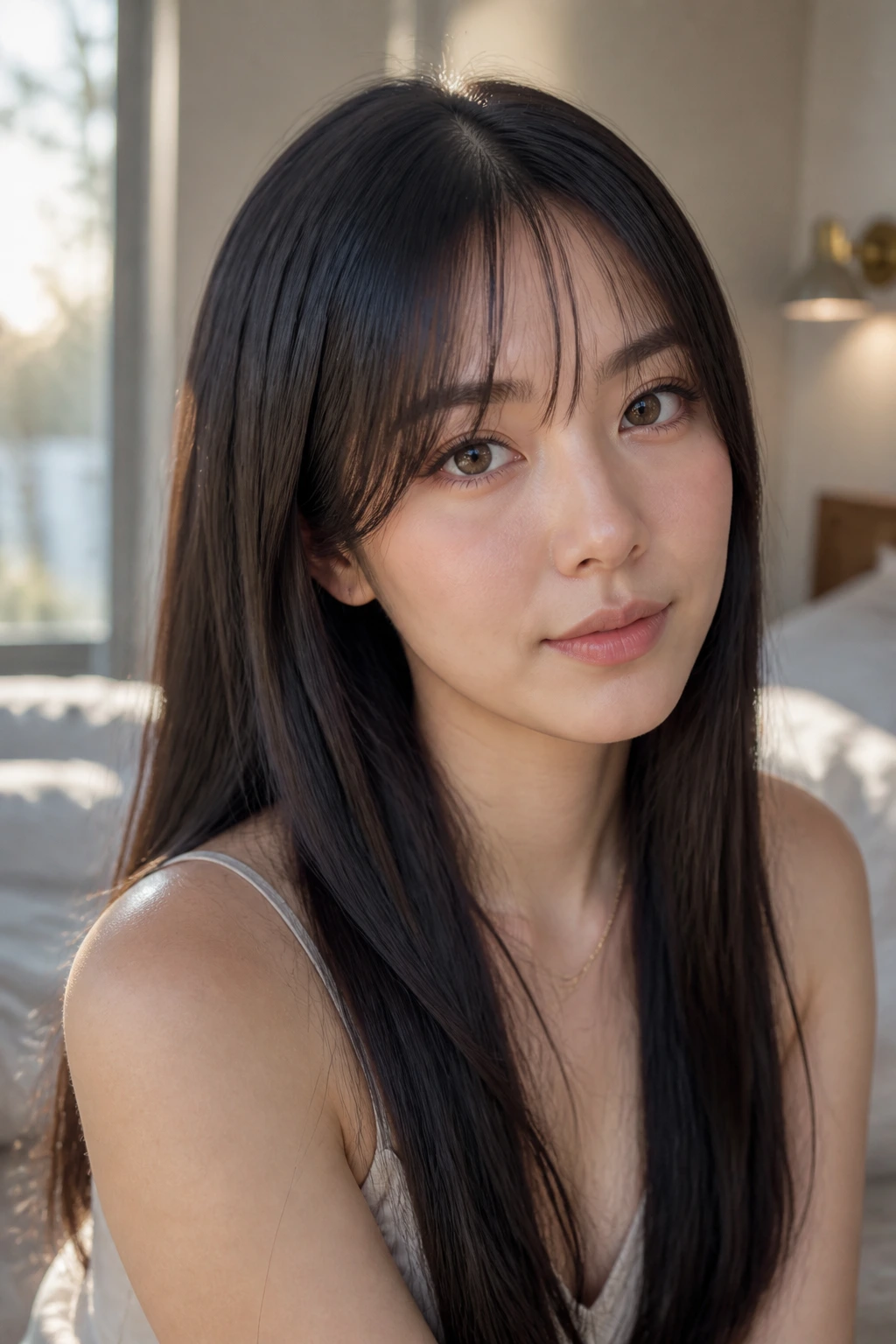
Wispy bangs work when you want the face framed without a lot of visual weight. They sit light on the forehead, leave bits of skin showing through, and keep the eye moving. That is the opposite of the shelf effect you get from a thick, straight-across bang.
The rest of the hair matters here. Sleek lengths keep the haircut from puffing out around the cheeks, which is useful on round faces because bulk on both sides can make the whole shape feel wider. A long, straight outline gives the fringe room to breathe.
I like this look when the hair is naturally fine or medium in density. Very thick hair can make wispy bangs look accidentally heavy unless the internal weight is taken out well. And yes, that matters more than whether the ends are perfectly even.
5. A Long Shag With Jagged Fringe
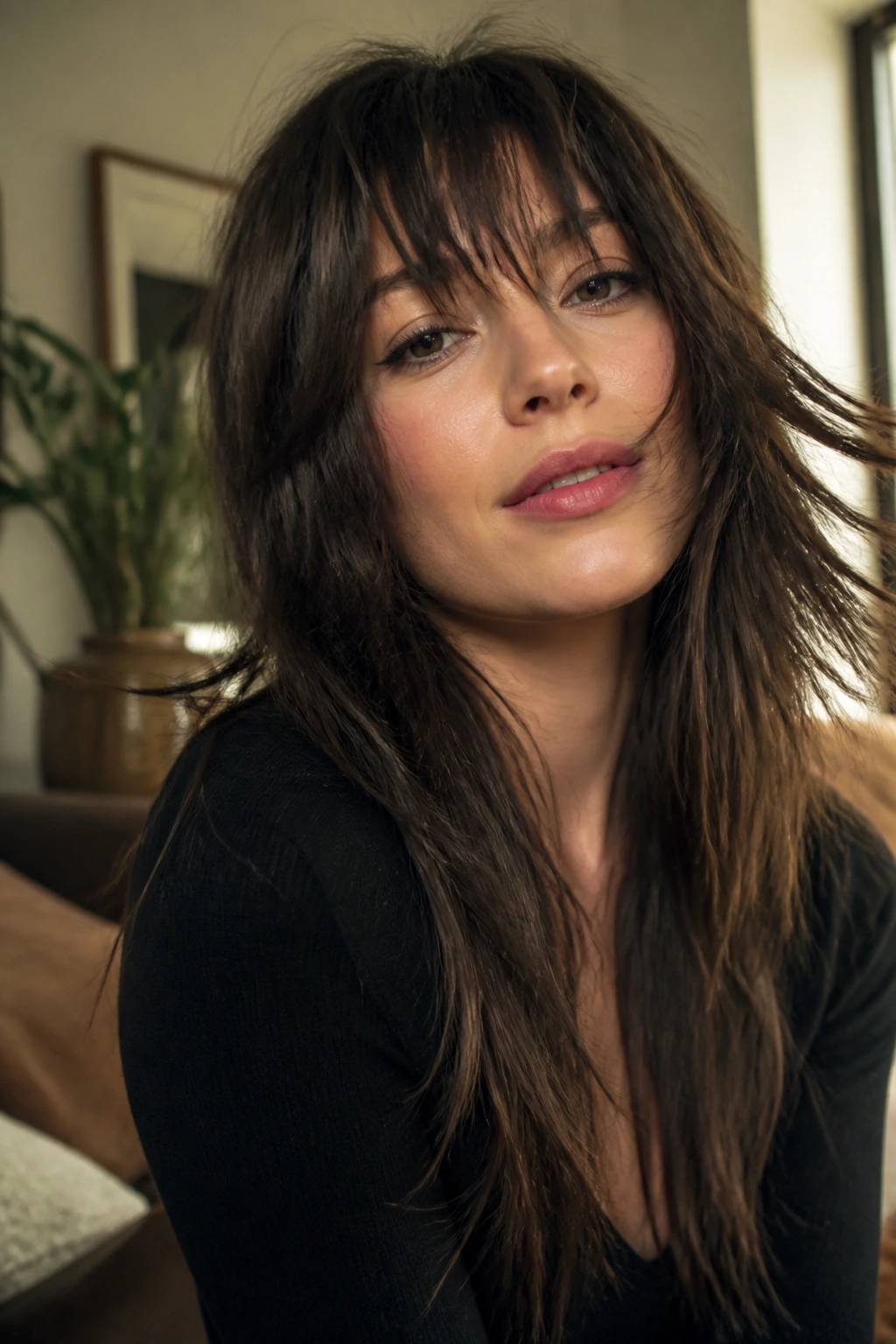
If you like hair with a little attitude, the long shag is your friend. The layers are choppy, the ends are broken up, and the fringe has enough texture to stop it from reading as one solid block. That unevenness flatters round faces because it keeps the haircut from echoing the face’s softness too closely.
The shag works especially well when the shortest pieces sit below the brow and the longest front pieces graze the jaw. That creates a vertical path around the face. It also means the haircut keeps moving when you shake it out, which is half the point.
What to watch for
Too many layers starting at the cheeks can make a round face look broader. Keep the shortest visible pieces above the cheekbone or well below it, not parked right on it.
This is the cut I’d choose for someone who wants shape without polish. It does not need to be smooth to look good. In fact, a little mess helps.
6. Butterfly Layers With Feather-Light Bangs
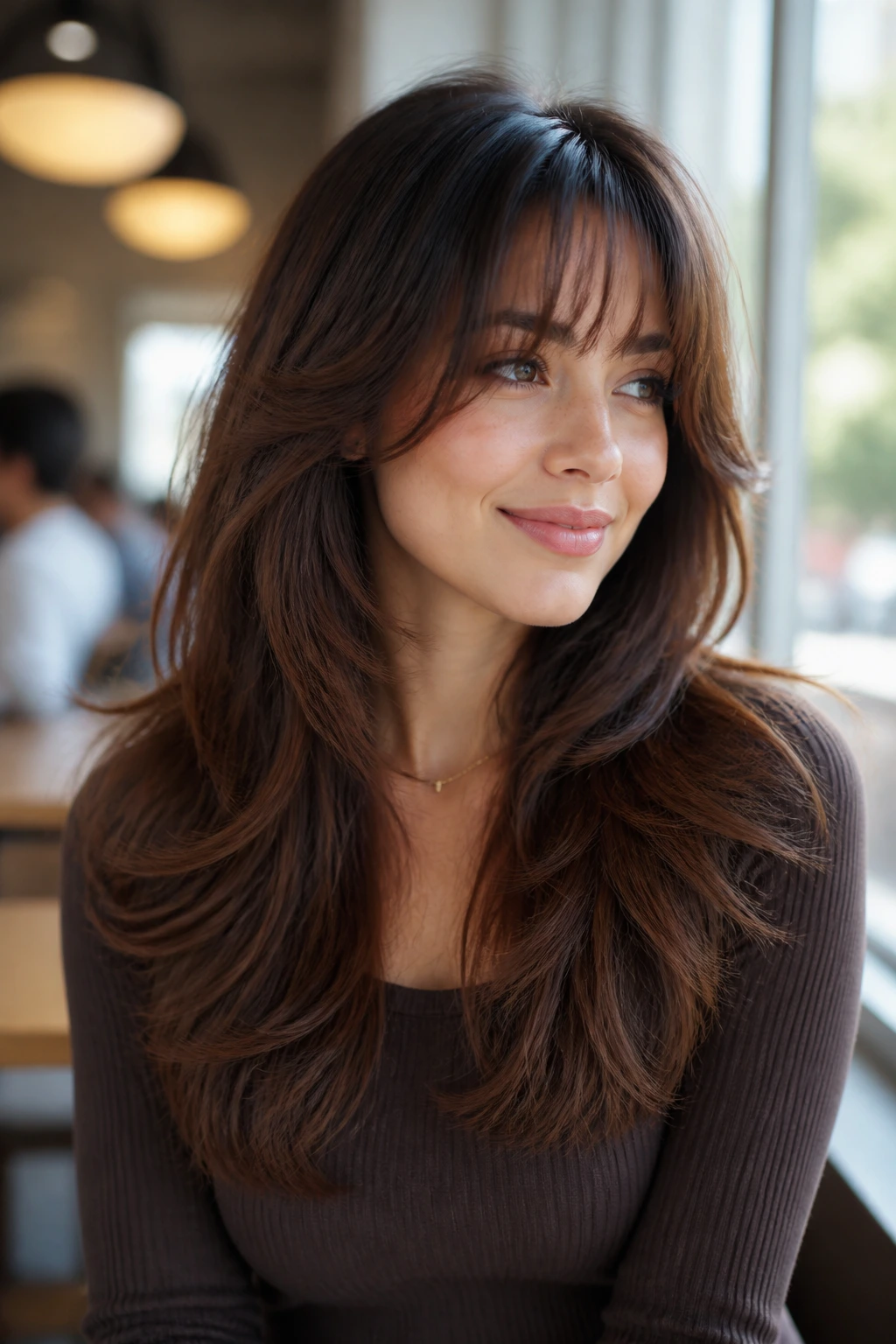
Butterfly cuts have a built-in trick for round faces: they create height at the crown and movement through the front without taking away length. That combination is useful because the top of the haircut feels lifted while the sides fall away in soft, face-framing pieces.
The fringe should stay light. Feather-light, really. You want the bangs to blend into the longest front layers instead of sitting apart from them. When the shorter pieces fan out into the rest of the hair, the haircut feels airy instead of heavy.
This style is one of the easiest ways to fake a blowout shape. The front can be flipped away from the face with a round brush, then the rest of the hair keeps that soft, swoopy look. It’s not casual in the sloppy sense. It just does not look overworked.
7. A Deep Side Part With a Sweeping Fringe
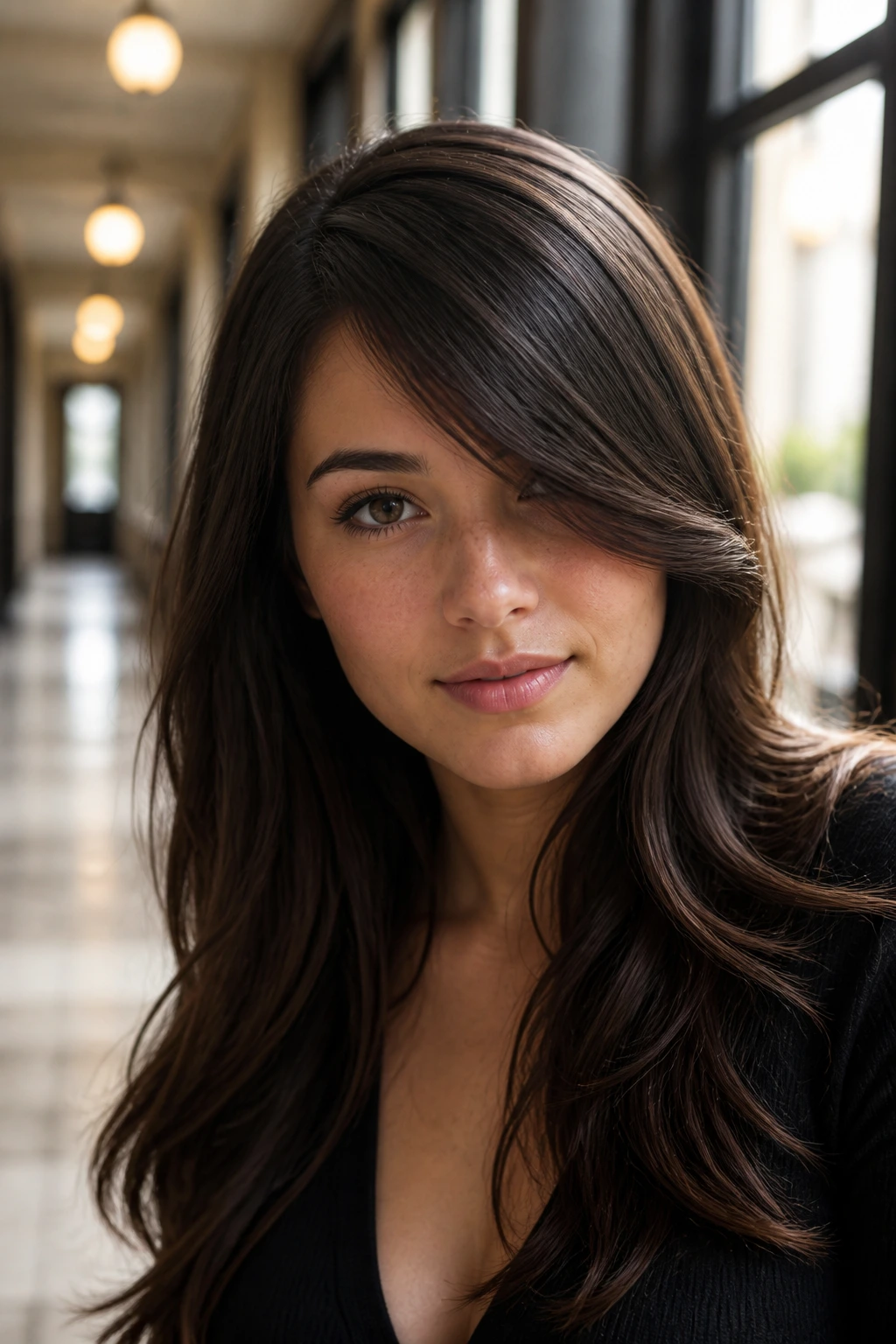
A deep side part does one thing very well: it breaks symmetry. On a round face, that can be a gift. The eye goes to the higher side of the part, then drops across the longer sweep of fringe, which makes the face feel longer and less evenly wide.
This style is especially useful if your face tends to look widest when hair is parted down the middle. You do not need to abandon the center part forever. You just need a version that stops your hair from sitting too evenly on both sides.
A sweeping fringe like this works best when it starts heavy enough to stay in place but not so heavy that it covers half the face. The sweet spot is a bang that follows the brow, skims the cheek, and then blends into the length.
8. Arched Bangs That Skim the Brows
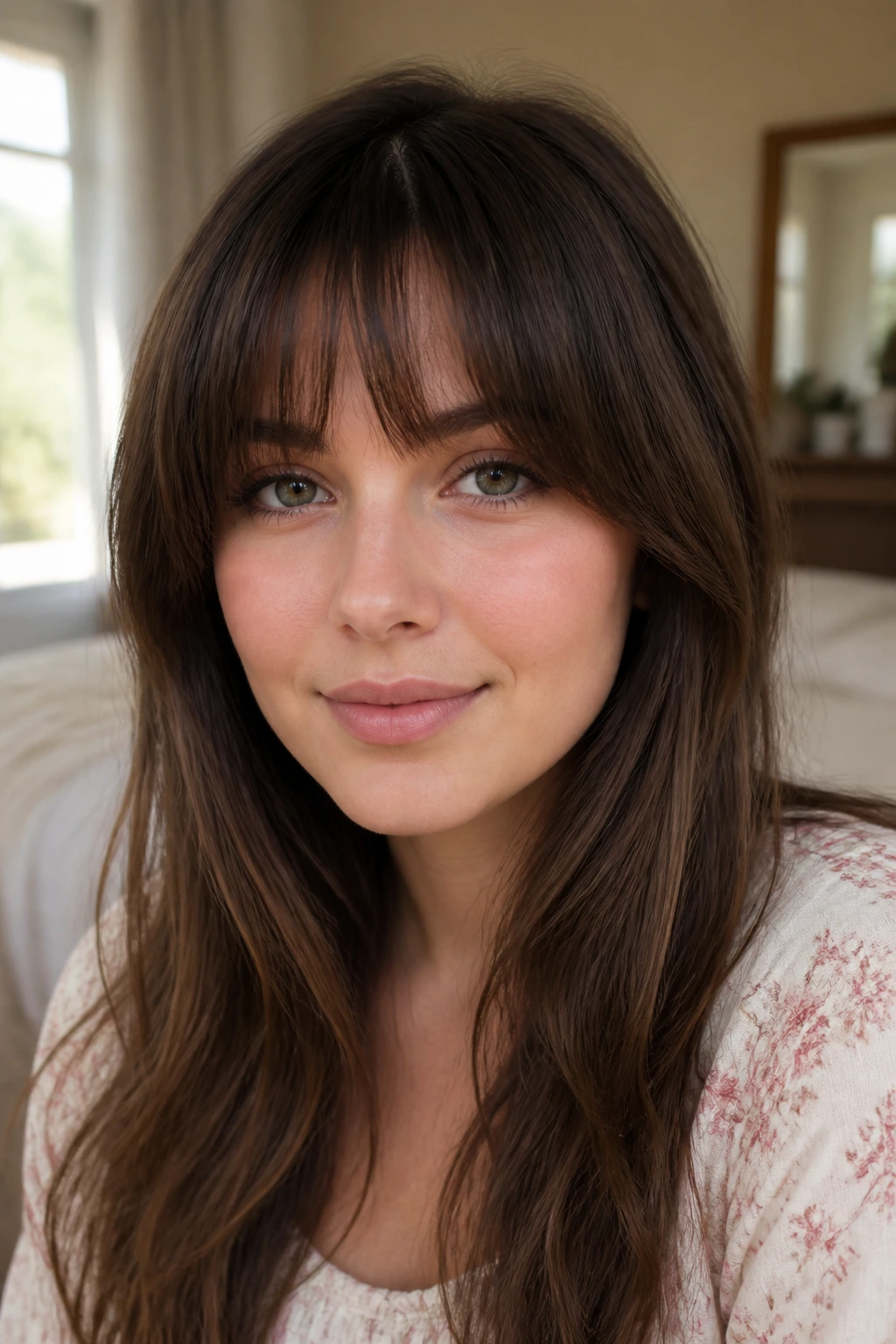
Arched bangs are underrated because they sound severe and usually look softer than people expect. The gentle curve at the brow helps the fringe sit neatly across the forehead while still keeping some openness at the sides. That shape can flatter a round face if the arch is subtle, not cartoonish.
The key is keeping the center slightly shorter and the corners longer. That gives the bang a lifted center and a tapered edge, which stops it from landing like a heavy bar across the face. If the arch is too dramatic, the style can look dated fast. Soft is better.
I like this with long, straight hair or a smooth blowout. The clean line of the lengths gives the arch something to contrast with. Without that contrast, the bang can lose its shape by lunch.
9. Feathered Bangs on a V-Cut Shape
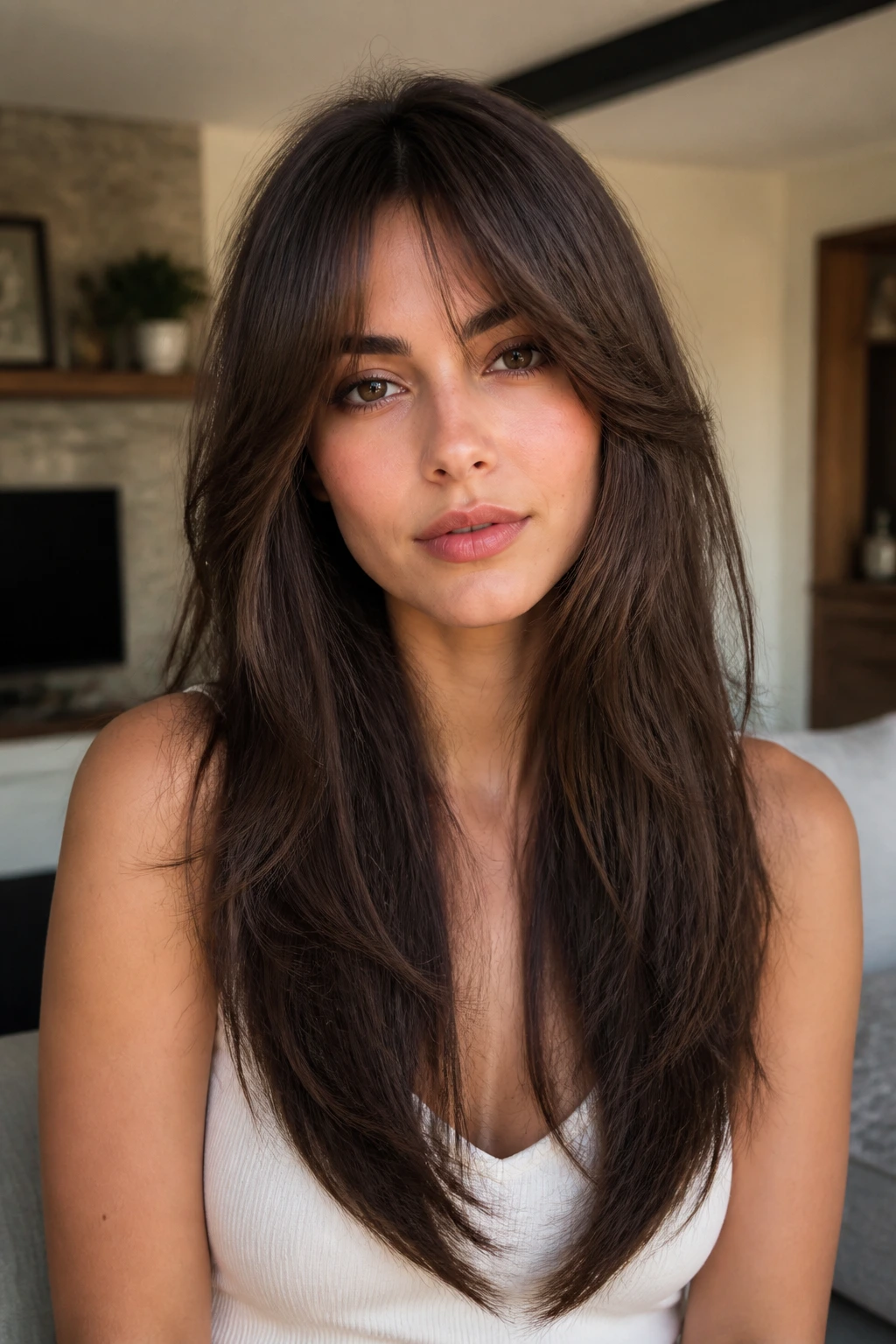
Feathered bangs are all about broken ends and movement, and that’s exactly why they work with a V-cut. The V shape draws the eye down the back and sides of the hair, while the feathered fringe keeps the front from feeling stiff or dense.
This combination is good if your round face needs a little edge. Not harshness. Just enough structure to keep the softness from taking over. The feathering also helps thick hair behave. Instead of one heavy block, the fringe splits into light, touchable pieces.
A tiny detail that matters
Ask for the bangs to be cut dry or nearly dry if your hair expands when it dries. Feathering on wet, springy hair can get risky fast. A bang that looks perfect wet can pop up half an inch higher once it’s dry.
That extra half-inch changes the whole face line. It really does.
10. Piecey Bangs With Beachy Texture

Piecey bangs give you separation, and separation is useful on a round face. The forehead never gets covered by one solid sheet, so the style feels lighter right away. Add beachy texture through the lengths and the whole cut has that relaxed, slightly undone shape that does not over-emphasize the cheeks.
This is one of the easiest looks to wear if your hair has natural wave. You do not need to smooth every strand into submission. A bit of frizz can even help, as long as it stays soft and not puffy. The fringe should look touched, not helmeted.
I’d go here if you want bangs but hate the look of over-styled bangs. A few bends with a flat iron or a wand, plus a light texturizing spray, usually does the job.
11. Curly Bangs on Long Natural Curls
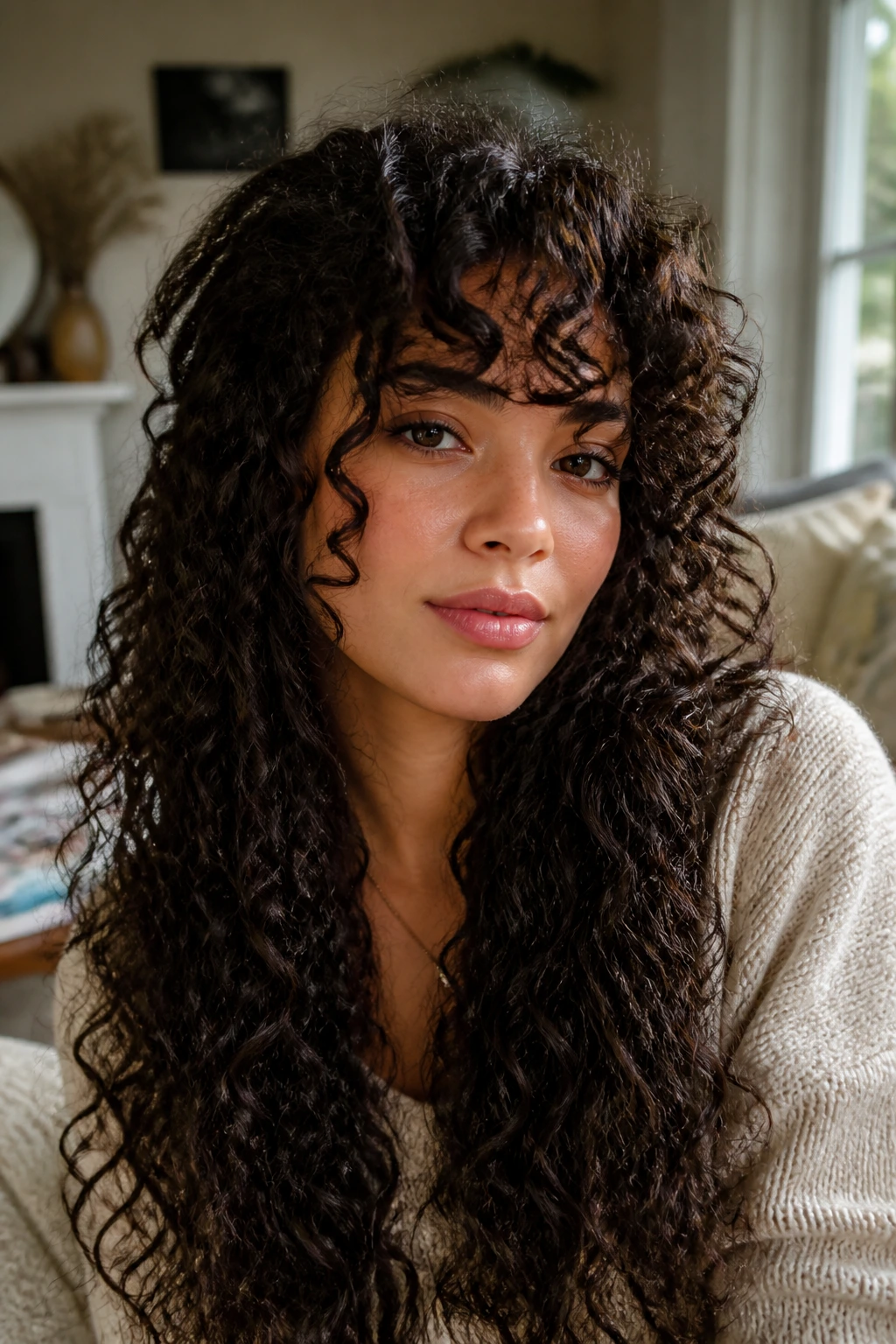
Curly bangs can be gorgeous on round faces, but only when they’re cut by someone who understands curl shrinkage. That’s the part people skip, and then they end up with a bang that sits too short, too wide, or too round. A good curly fringe should move with the curl pattern, not fight it.
The best version usually lands somewhere between the brows and cheekbone when dry, then springs up into shape. The rest of the long curls keep the silhouette vertical, which helps balance facial width. Straightening the bang every day is not the point here. Let the curl do what it does.
Why it works
Curly fringe adds texture at the front without flattening the face. The curls break up the line in a softer way than straight bangs do, and that softness often works beautifully against a round cheek line.
The catch is maintenance. A curl refresh routine matters. If you ignore the front pieces, they separate and go fuzzy first.
12. Soft Blunt Bangs That Stay Airy
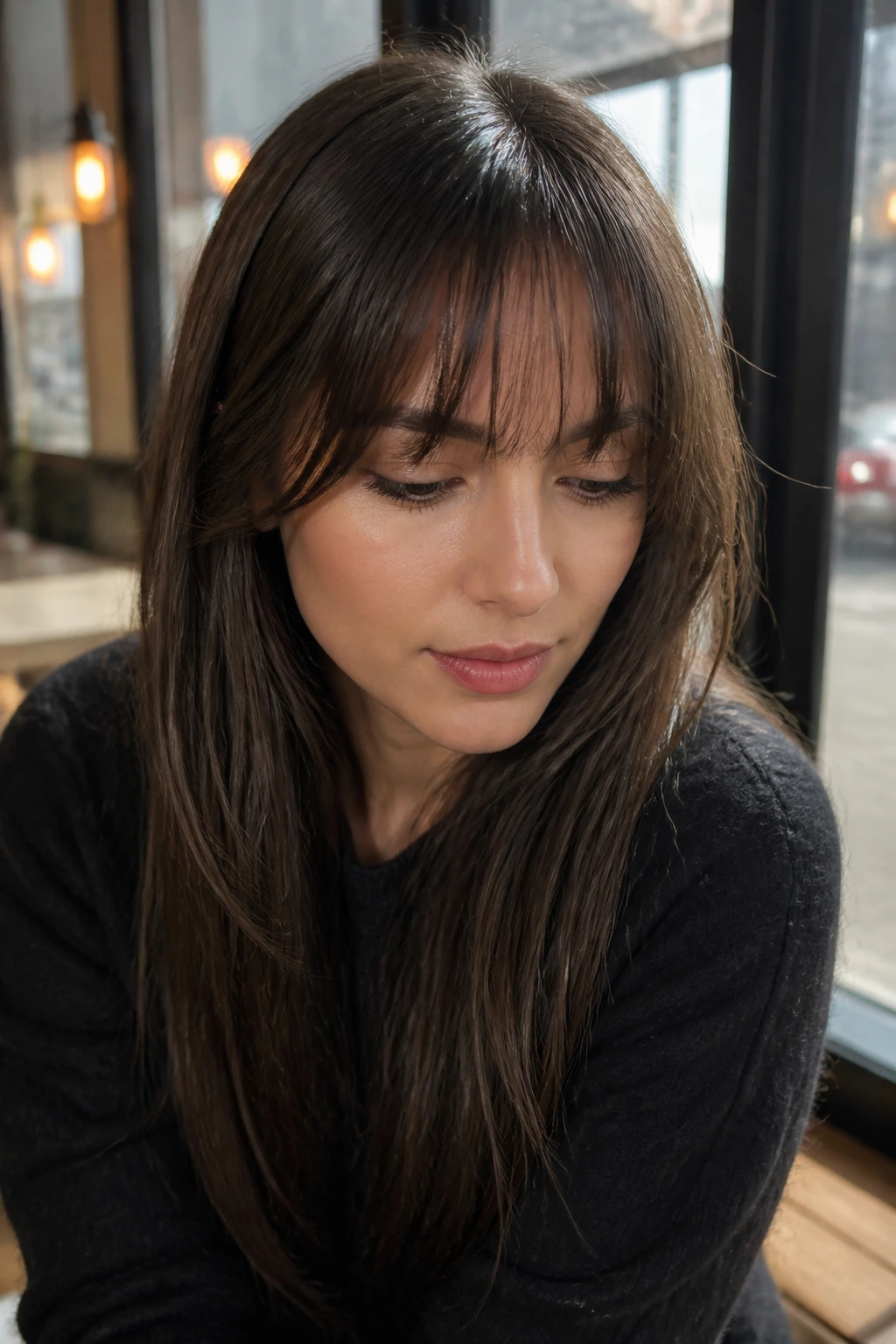
Blunt bangs get a bad rap with round faces, and I get why. Cut them too thick, too heavy, too straight, and they can make the face look shorter. Cut them softly, though — with a bit of air between the strands and a longer edge at the sides — and they can look polished without flattening everything.
This is the version for someone who wants a more defined fringe but still needs the face to breathe. The ends should not stop like a ruler line. They should sit with a little movement, especially near the temples. That keeps the cut from feeling boxy.
I like this with long, sleek hair and a slight inward bend at the ends. It gives the cut shape without making the bangs themselves the loudest thing in the room.
13. Razored Fringe With Smooth, Glossy Ends
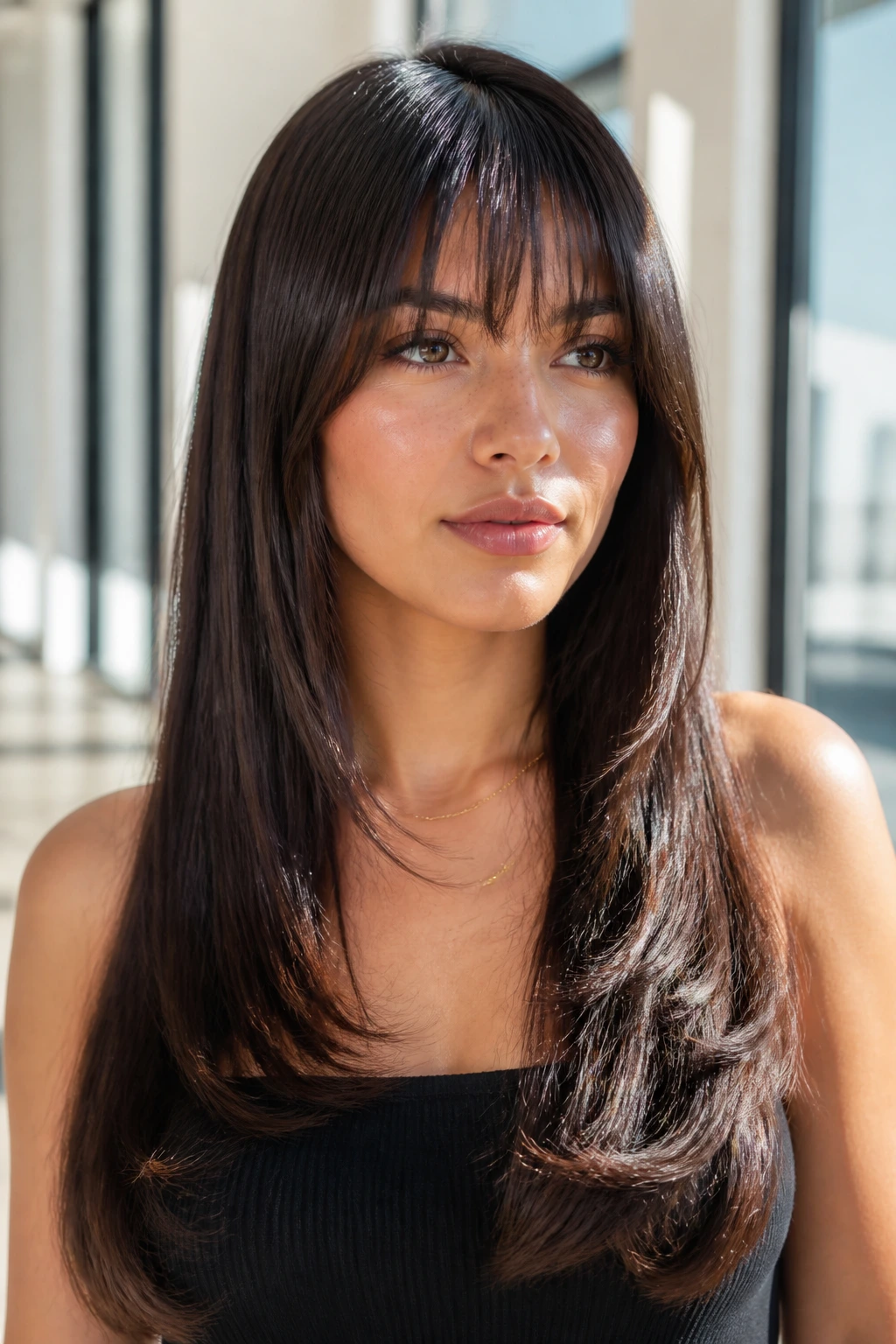
A razored fringe has a softer edge than a blunt cut, but it still gives structure. On round faces, that can be useful because the shape feels deliberate without becoming heavy. The razor removes density from the ends, so the fringe can fall in thinner, more movable pieces.
The long lengths should stay smooth and glossy. That contrast matters. If both the bangs and the ends are too textured, the whole haircut can puff out. A sleek perimeter with a soft fringe keeps the face framed instead of surrounded.
This look suits people who like a neat finish but do not want a stiff blowout every single day. A few passes with a brush and a touch of serum on the ends are usually enough.
14. Invisible Layers and a Grown-Out Fringe
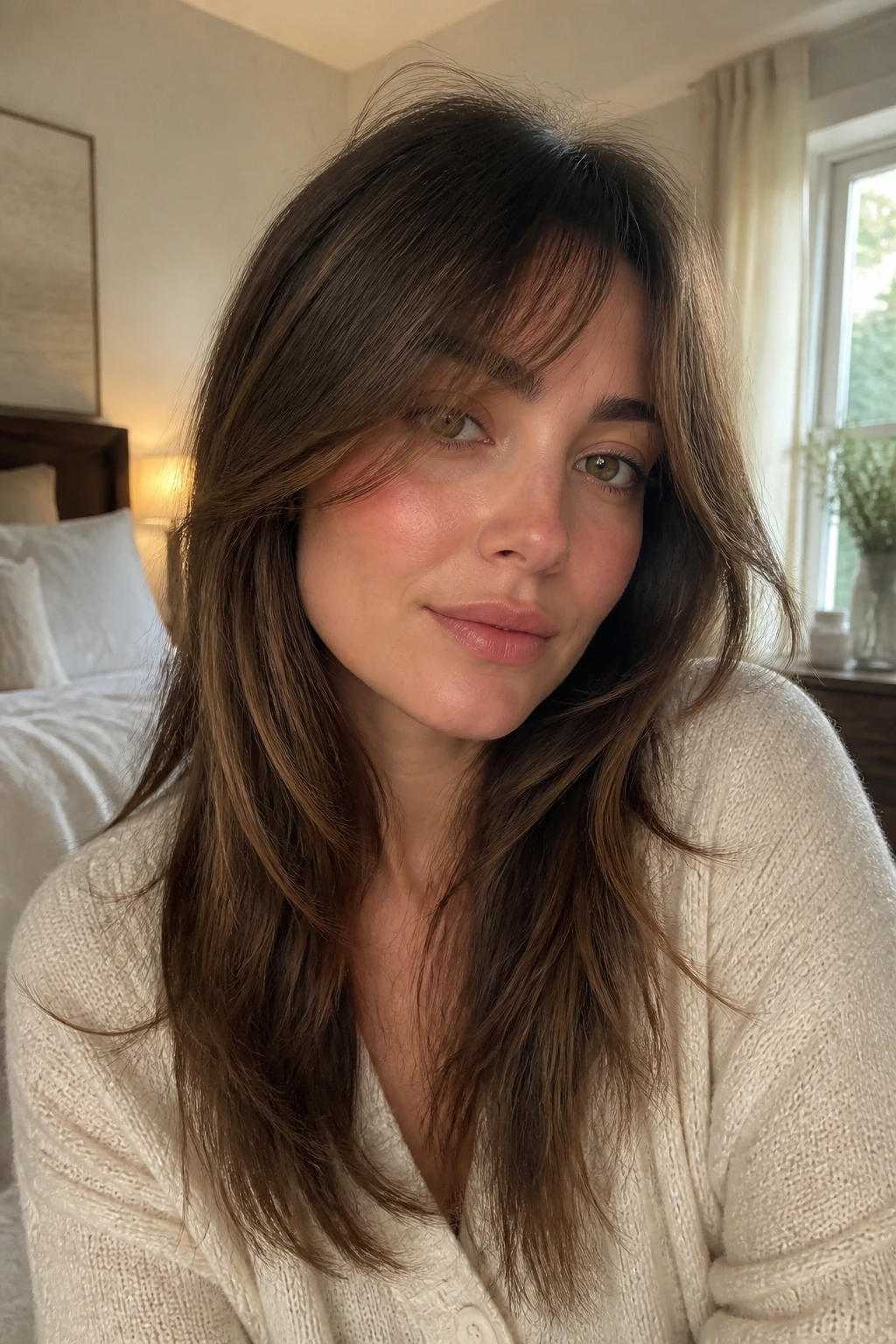
Invisible layers are the quiet heroes of long hair. They take weight out without announcing themselves, which means the front keeps moving and the back keeps length. Pair that with a grown-out fringe and you get a cut that feels lived-in rather than freshly carved.
This is a smart option if you like bangs but do not want to be trapped by them. A fringe that sits a little below the brow and blends into the front layers is easier to manage than a sharp, high-maintenance bang. It also tends to flatter round faces because it does not stop at the widest part of the cheek.
Best part
You can push this style forward for polish or tuck it back when you want the face more open. That flexibility is worth a lot on bad hair days.
15. A Long V-Cut With Center-Skimming Bangs
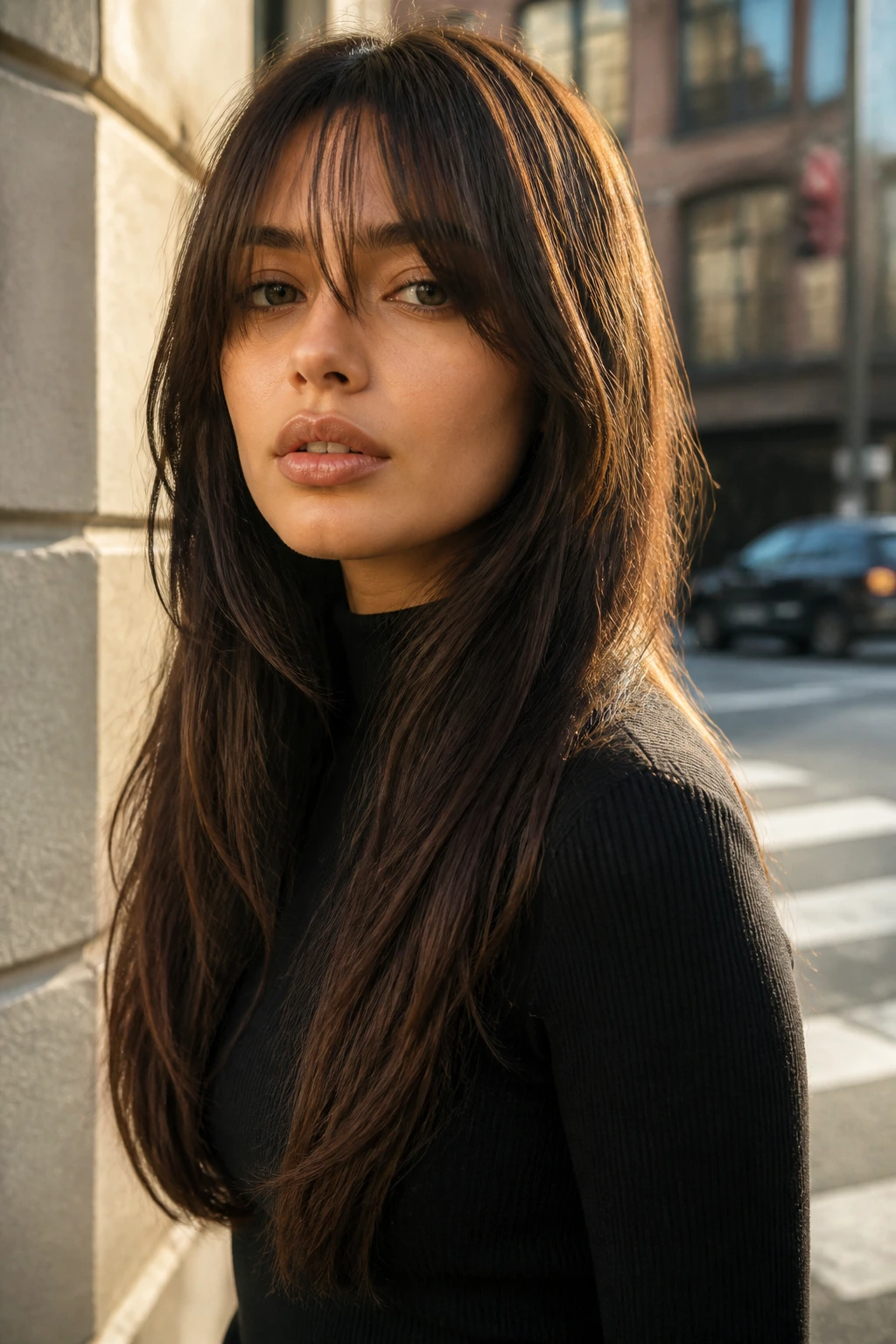
The V-cut pulls the weight downward in the back and keeps the front narrow enough to avoid that side-bulge problem round faces can get with too much fullness. Add center-skimming bangs and the whole cut feels directional. The fringe opens the forehead, then the V shape continues the line down the body of the hair.
This cut looks especially good when the bangs are not overly thick. A little separation in the middle keeps the forehead visible and the face from feeling crowded. I’d avoid cutting the fringe too high on the temples. The soft taper matters.
If your hair is naturally straight or only lightly wavy, this shape can look very clean. With more texture, it becomes softer and a little more romantic.
16. Thick Hair Tamed With Thinner Bangs
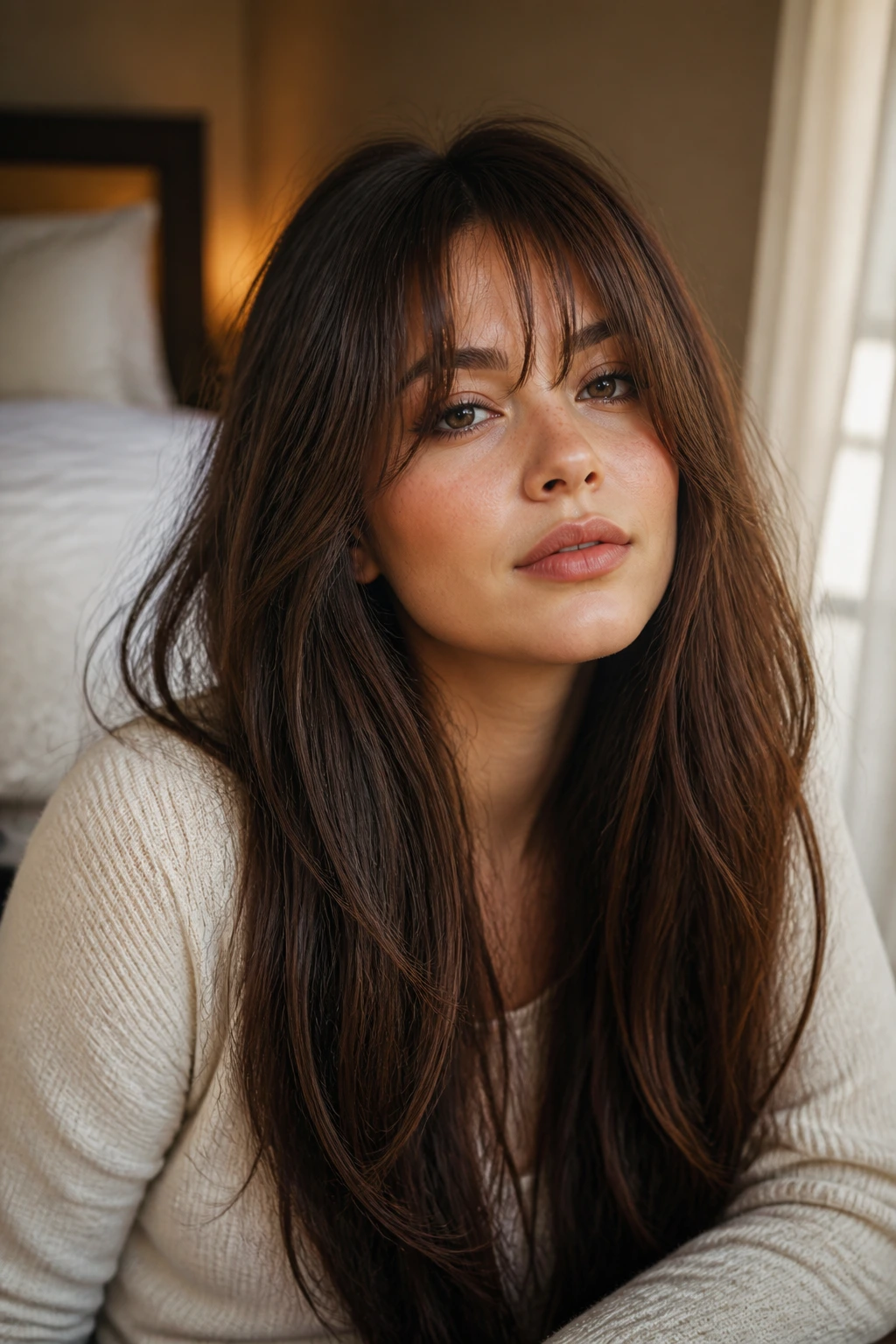
Thick hair needs a different strategy. If the bangs are left too dense, they can land like a wall across the forehead, and that is not what a round face needs. Thinner bangs let the style keep the hair’s body without piling all that weight into the front.
The length can stay long and dramatic. Just reduce the bang density and keep the sides of the fringe longer so the cut drifts into the rest of the hair. That keeps the silhouette from widening at the cheeks. It also makes styling easier, because thick bangs that are cut too full often take forever to dry.
My opinion
This is one of those cases where less fringe looks more polished. A little space between strands looks better than a dense slab every time.
17. Fine Hair Boosted by a Lightweight Fringe
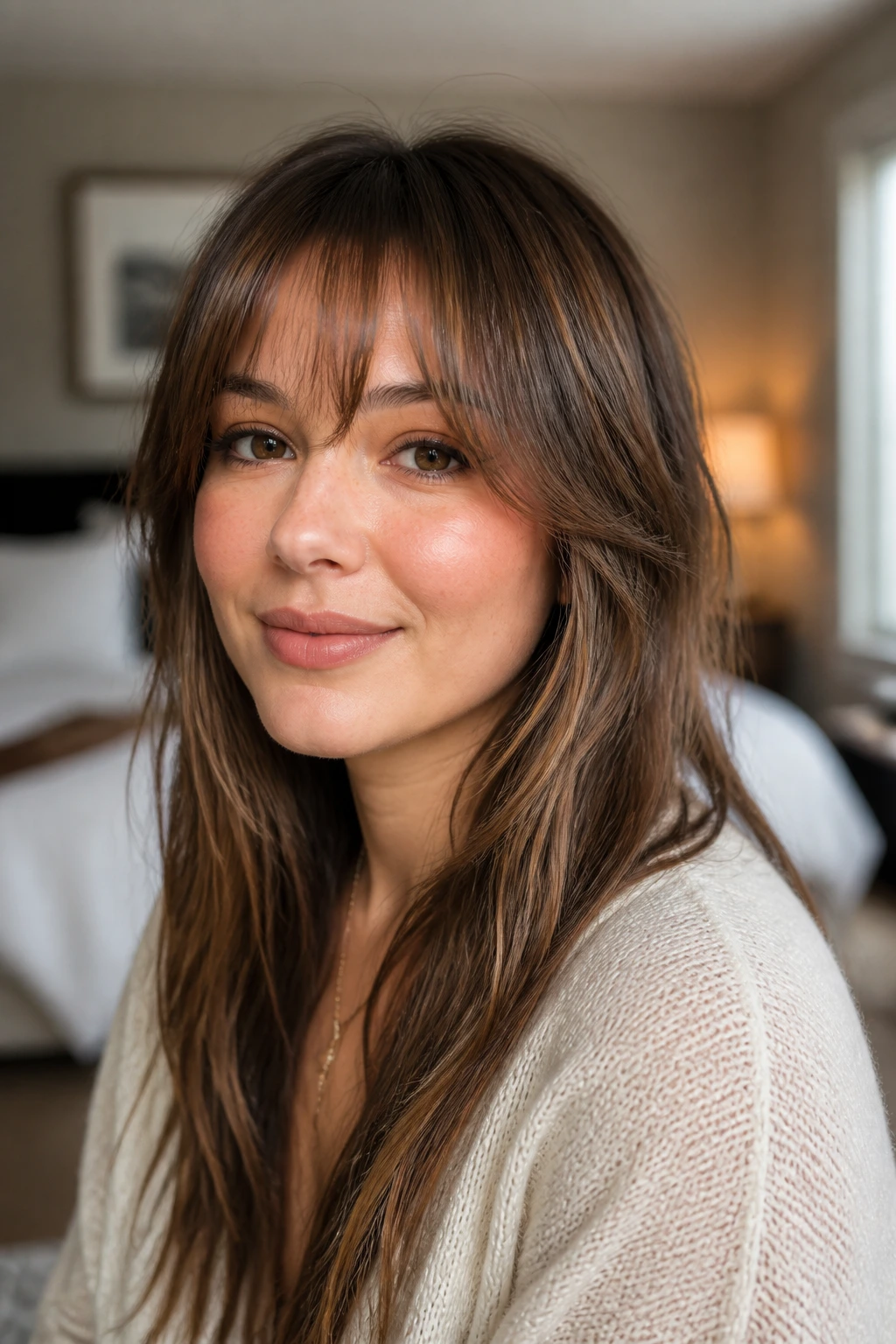
Fine hair benefits from bangs that do not fight its texture. A lightweight fringe gives the haircut a front point of interest without draining the volume from the rest of the hair. If the bangs are too heavy, they collapse. If they’re too short, they can stand away from the forehead and look sparse.
The best version usually starts soft at the center and gets a touch longer toward the sides. That little taper gives the face shape without demanding too much density. A blunt finish is tricky here. I’d rather see a soft edge and a bit of air.
This style is useful if your hair falls flat at the roots but still needs movement around the face. A root-lifting spray and a quick blow-dry at the fringe change the whole read of the cut.
18. Glam Blowout Layers With Bombshell Bangs
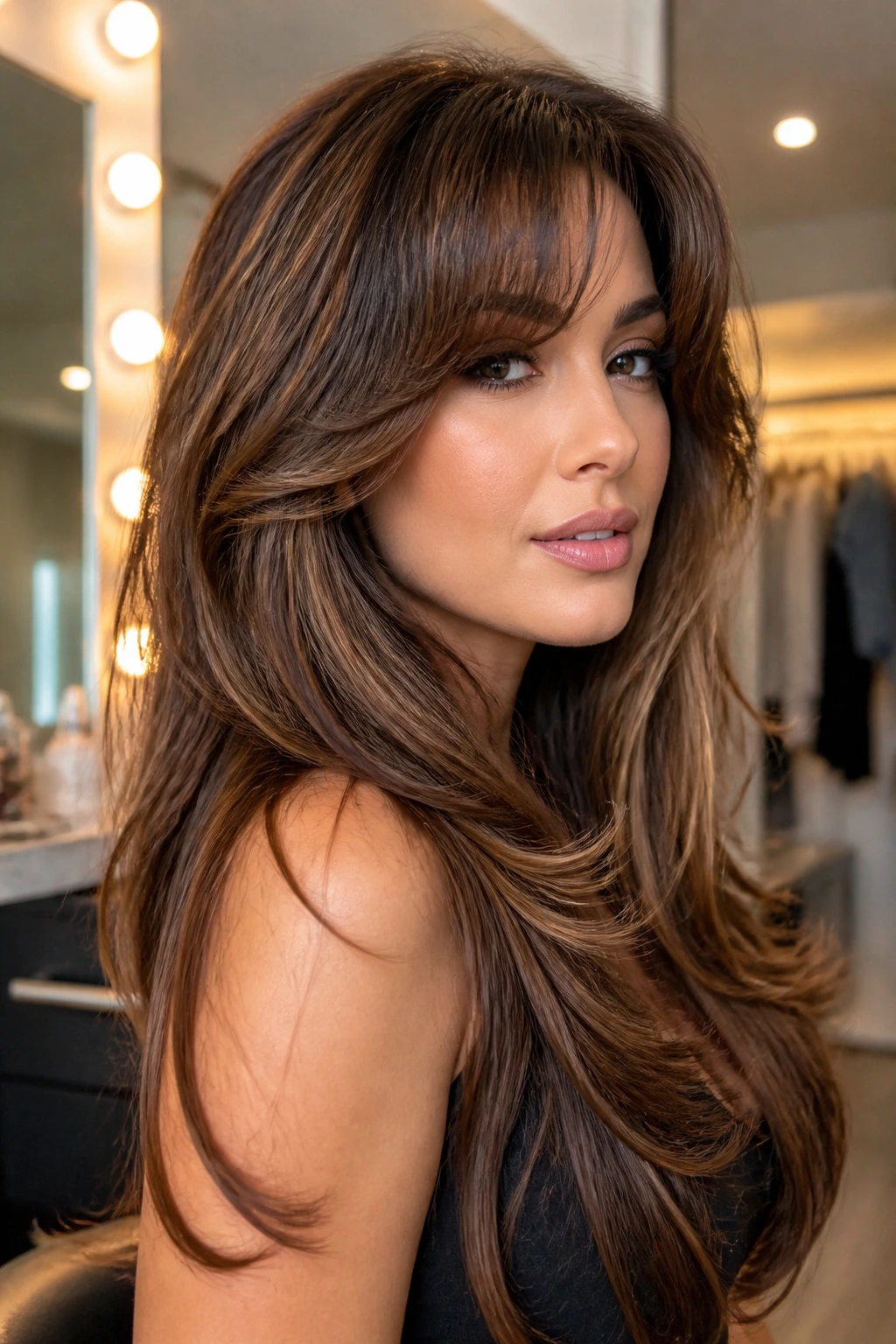
This is the most dressed-up version in the bunch. The long layers are blown out with bend, the bangs are full enough to feel glamorous, and the whole shape moves away from the face instead of sitting on it. On round faces, that stretch and lift can look excellent.
The bangs should never stop dead at the cheeks. They need to swoop. A round brush, a little tension, and a few seconds of cool air at the end of the blow-dry help them hold that bend. The rest of the hair should follow the same direction, with the front pieces flipped back from the face and the ends soft rather than pin-straight.
This is the cut I’d choose for an event, a photo-heavy day, or any time you want hair that looks as if it had a plan.
19. The Low-Maintenance Grow-Out Fringe
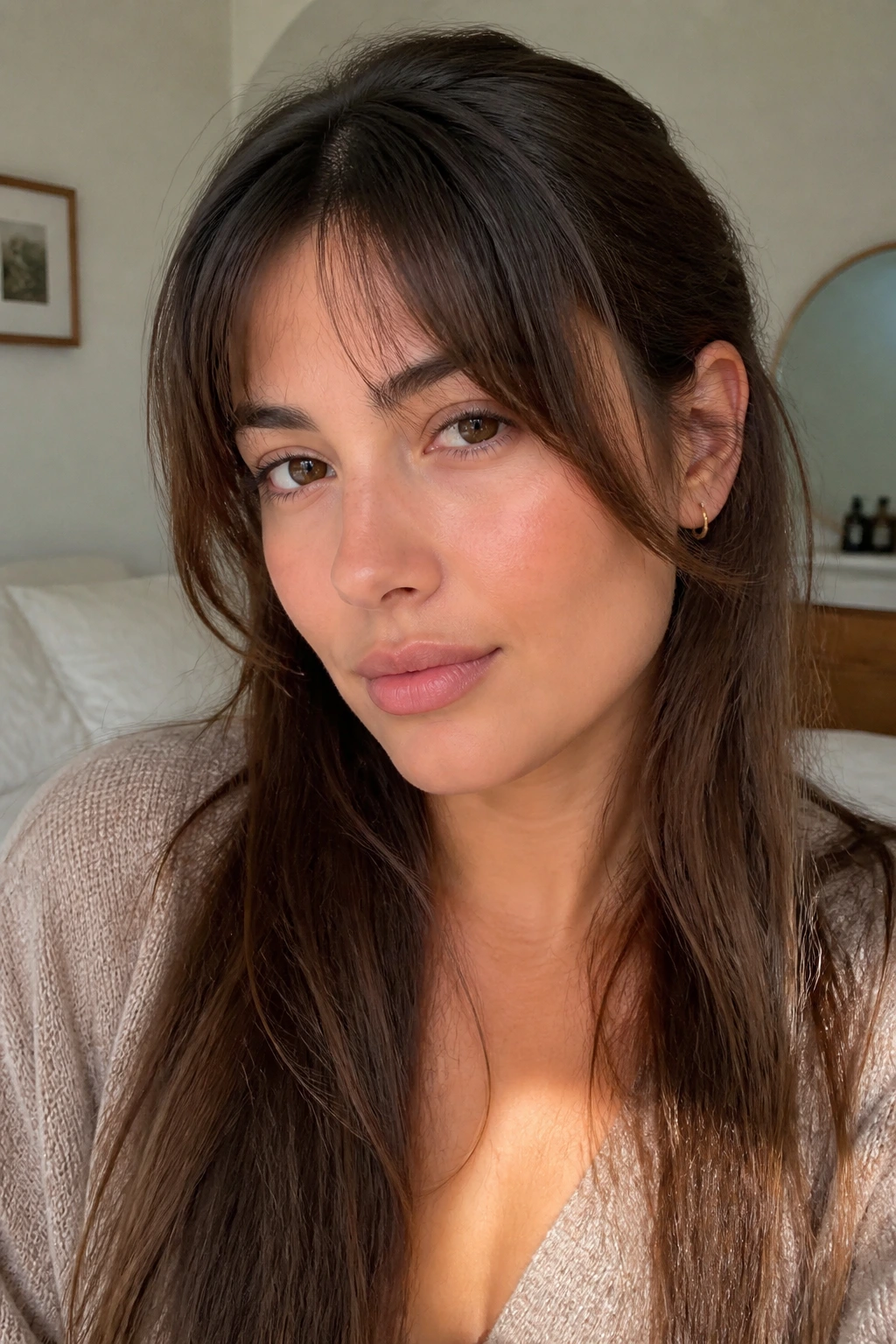
Not every round face wants a polished bang. Sometimes the better move is a fringe that already looks a little grown out, because it stays useful longer and does not need daily coaxing. The front pieces blend into the lengths, and the bang line softens as it moves toward the cheek.
This works especially well if you hate the awkward in-between stage. A grown-out fringe can be tucked behind the ear, parted in the middle, swept to the side, or pushed off the face with a clip. That flexibility makes it one of the easiest long-hair-with-bangs options to live with.
It’s also forgiving. If the cut is a little too short on day one, it can still look good once it settles. That alone is reason enough to keep it in the mix.
What to Ask for at the Salon
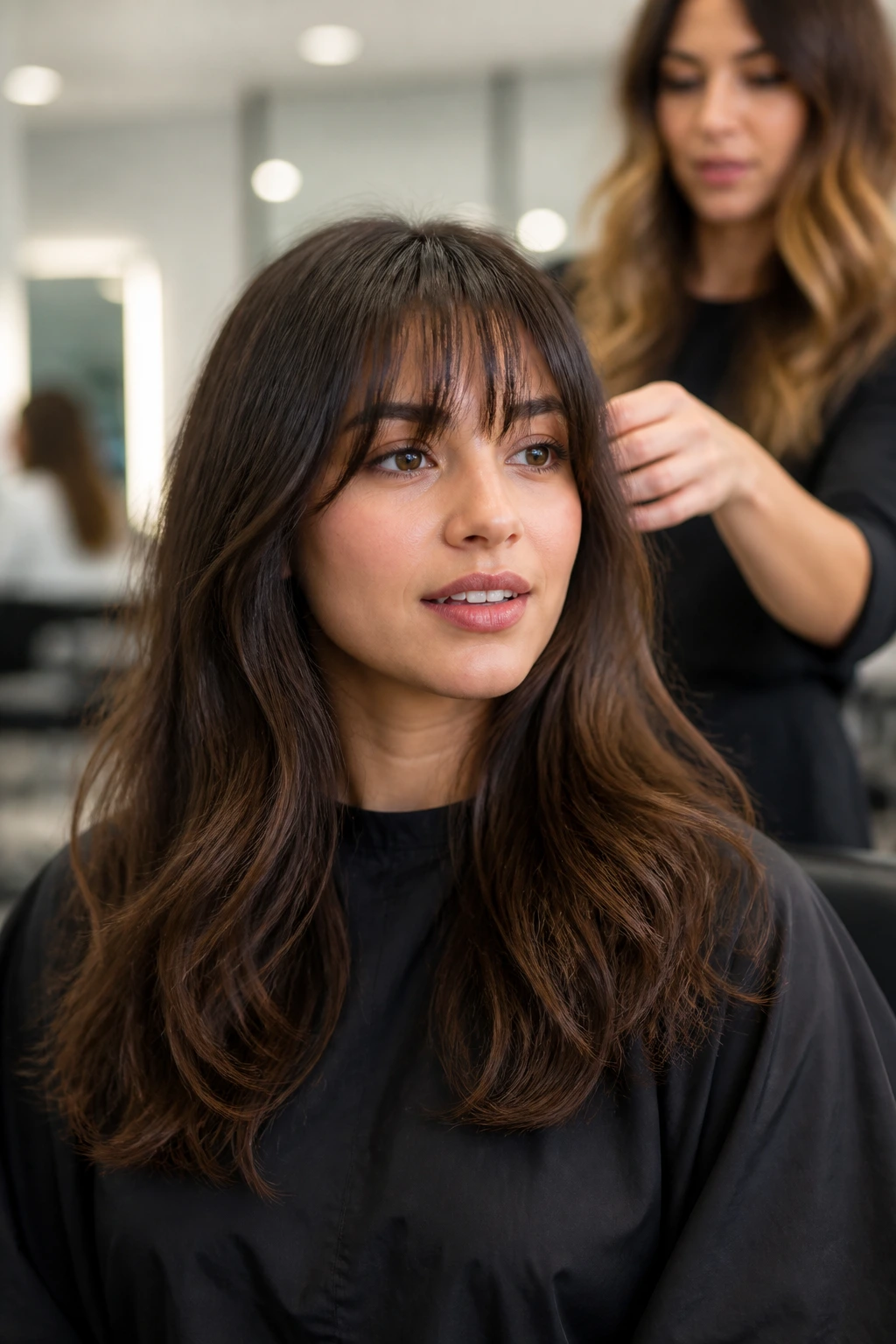
The best bangs are usually the ones that were described clearly, not the ones that were guessed at. Bring photos, yes, but also bring a few plain sentences about where you want the fringe to sit when it’s dry, how much forehead you want visible, and whether you wear a middle part or a side part most of the time. That gives the stylist something useful to work with.
Tell them where your face feels widest. On round faces, that’s often at the cheekbone. The shortest part of the fringe should avoid stopping there. Ask for the longer pieces to begin below that point, not right on top of it. If your hair is wavy or curly, ask whether the fringe should be cut dry or with your natural texture in mind. That one question saves a lot of regret.
Useful things to say out loud
- “I want the shortest part to hit around the brow, but I want the sides to drop lower.”
- “My hair puffs up when it dries, so I need the fringe cut with shrinkage in mind.”
- “I wear a center part most days, but I want the bangs to still work if I shift it.”
- “Keep the width narrow enough that it doesn’t sit on my cheeks.”
That last one matters more than people think.
Essential Tools for Styling the Shape
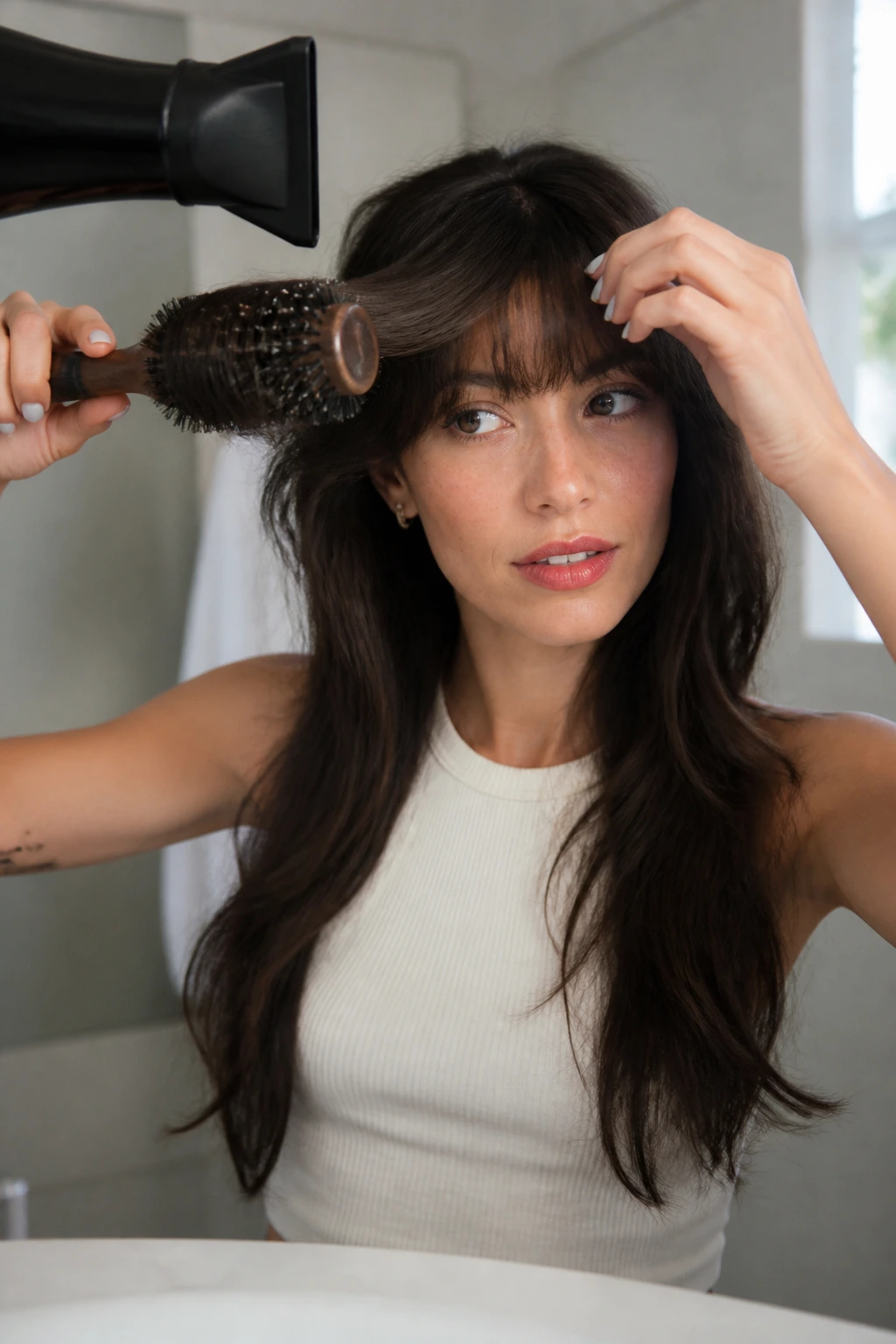
A good cut helps, but the right tools keep it from turning into a morning wrestling match. You do not need a drawer full of gadgets. You need a small set of tools that solve the actual problems bangs create: frizz, split parts, flat roots, and ends that won’t sit where you want them.
-
Blow dryer with a concentrator nozzle: Directs airflow so the fringe dries smooth instead of flying around the room.
-
Medium round brush: Gives curtain bangs, side sweeps, and bombshell fringe a bend away from the face.
-
Small flat brush or paddle brush: Useful for sleek styles and for taming wispy bangs without too much volume.
-
Heat protectant spray: Helps keep the front pieces from drying out, which they do faster than the rest of the hair.
-
Duckbill clips: Great for setting a bend in curtain bangs or pinning the fringe while it cools.
-
Dry shampoo: Handy for bangs, since the forehead area gets oily faster than the rest of the hair.
-
Texturizing spray or light mist wax: Helps piecey, shaggy, and feathered styles keep their separation.
-
Large-barrel curling iron or wand: Best for soft waves that keep long bangs moving around the cheeks.
Daily Styling Tips That Keep the Fringe Soft, Not Heavy
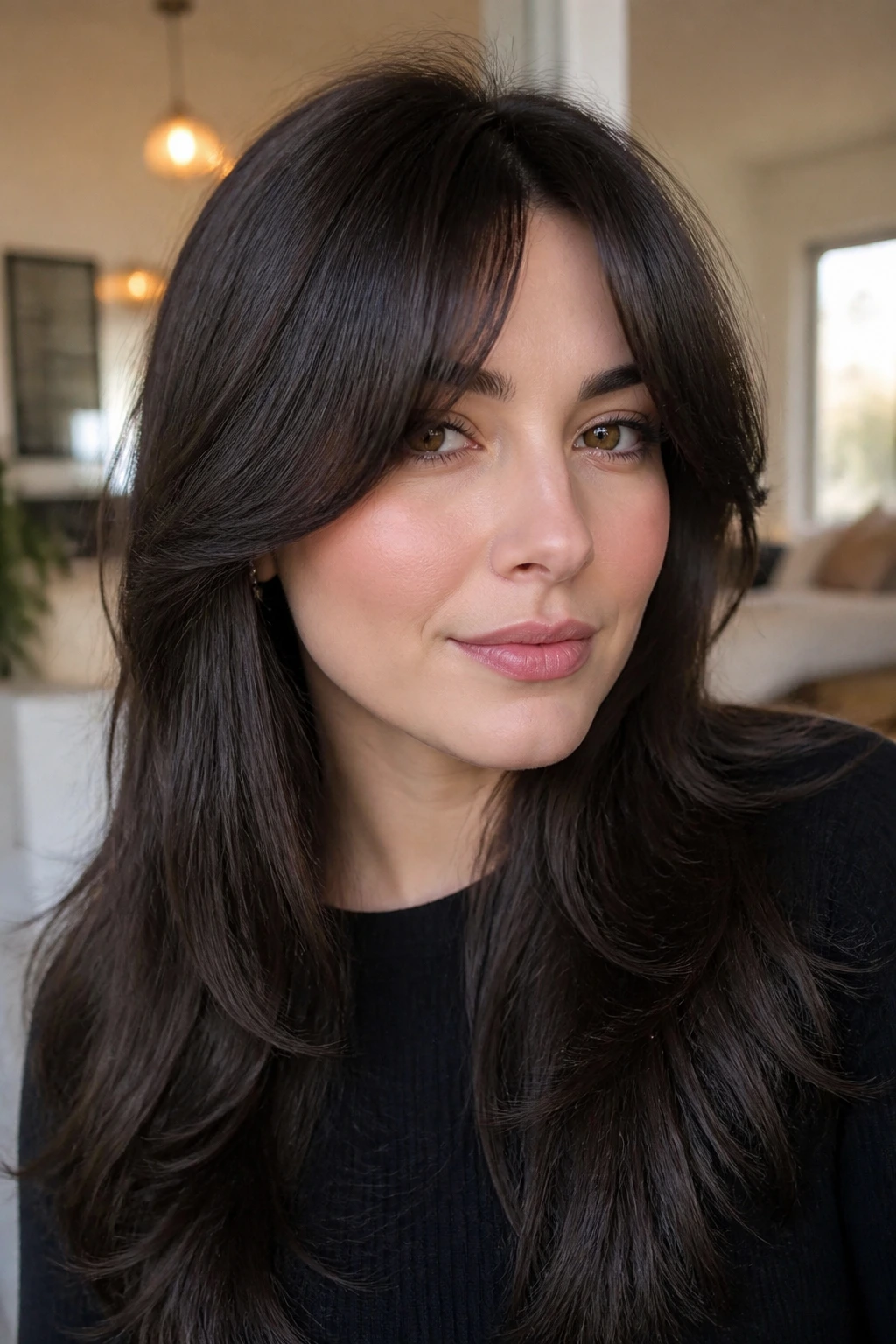
A fringe looks best when it moves. That sounds obvious, but people overdo bangs constantly. They brush too hard, flatten too much, and then wonder why the cut looks stiff. A little bend is better than a perfect helmet shape.
Start at the roots. Bangs dry fastest, and the roots decide where they live. Blow-dry them in the direction you want them to sit, then use the round brush only for the last bit of shape. If you try to create all the shape at the ends, the top still collapses and the fringe splits in odd places.
Use less product than you think. One pump of styling cream can be enough for the front pieces. Too much makes bangs greasy by noon. Dry shampoo at the roots is usually a better move than piling on oil or balm.
Keep the crown alive. Round faces benefit from a little lift up top. A flat crown can make the face feel wider, especially when bangs are involved. A quick blast of root spray or a lift from the blow dryer changes the whole balance.
Do not force straightness where the hair wants a bend. Hair with a natural wave usually looks better with soft movement than with a rigid ironed line. If you fight the texture too much, the style loses the ease that makes these cuts work.
Common Mistakes That Make the Cut Lose Its Shape
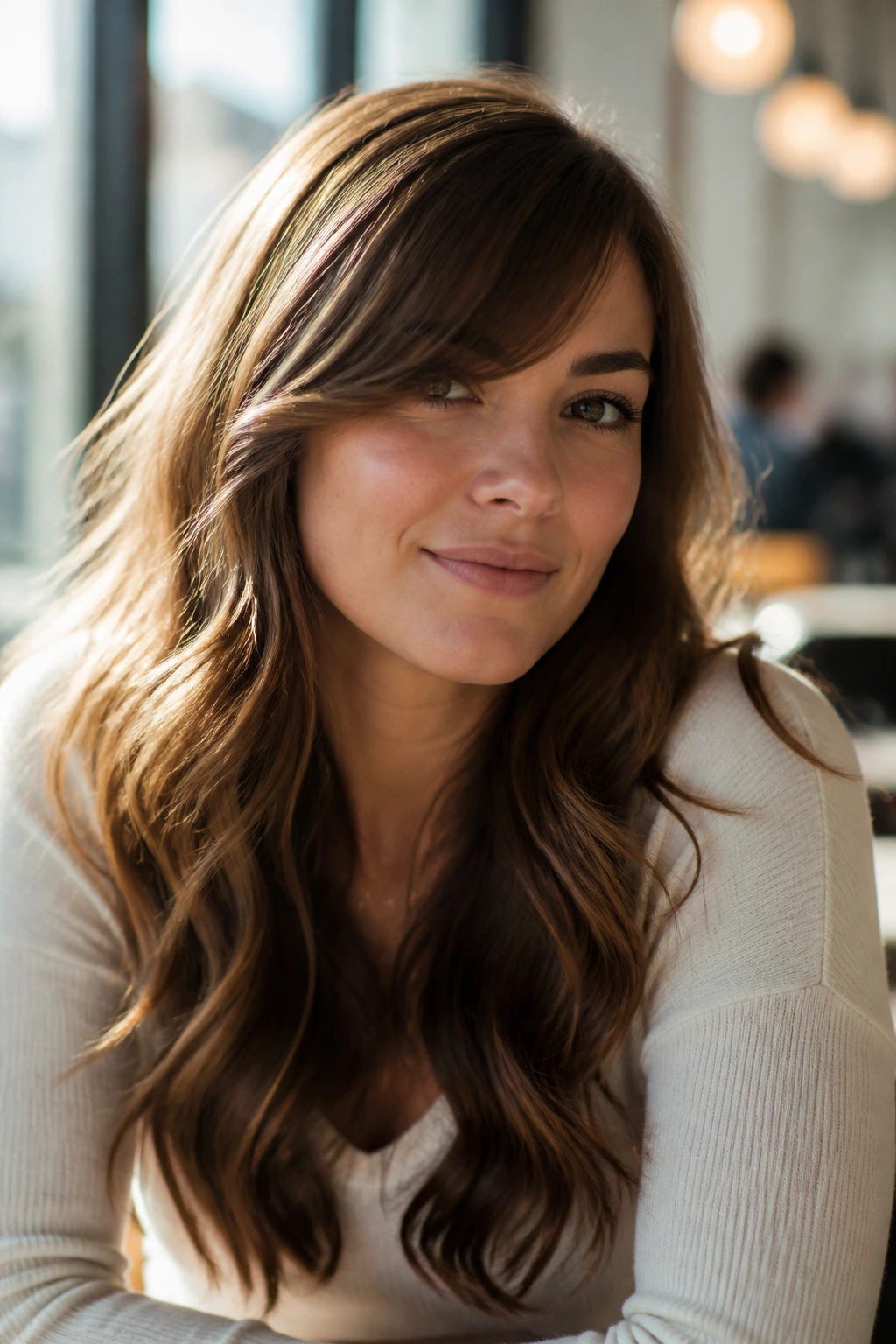
The most common mistake is cutting the bangs too short across the widest part of the face. That puts the visual break right where you want the eye to keep moving. The fix is simple: let the fringe travel lower on the sides and keep the shortest point away from the cheekbone.
Another problem is overthinning thick hair. It sounds like the right move, until the fringe turns wispy in the front and bulky everywhere else. The better fix is balanced weight removal, not just cutting out chunks from the ends.
Watch for these, too
-
Too much width in the fringe: A wide bang can echo the width of a round face. Keep the fringe narrower and let the sides soften into the length.
-
Flat roots at the crown: This makes the whole style sit low and wide. A bit of lift changes the silhouette fast.
-
Overusing heavy serums: They can separate bangs into oily strands and make the front look stringy. Use a tiny amount only on the ends if needed.
-
Starting layers at the jaw: That’s a classic width mistake. Layers should begin higher or lower, not right on the broadest part of the face.
-
Ignoring shrinkage: Especially with waves and curls, bangs cut too short spring up after drying. Leave room for that bounce.
Variations and Alternatives to Try
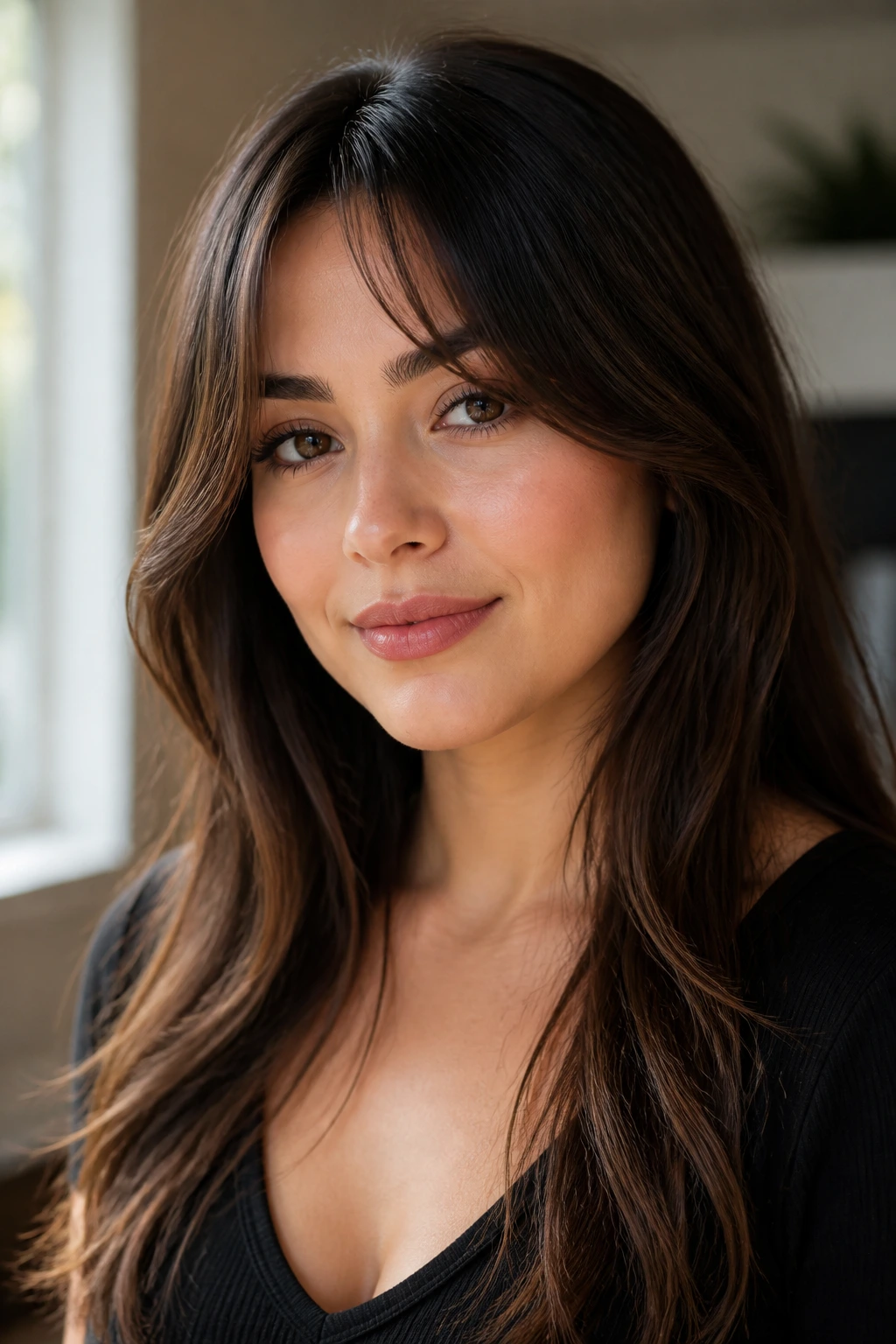
Soft Center Split: If a full curtain fringe feels like too much, try a narrower center split with longer sides. It keeps the face open and still gives you that diagonal frame around the cheeks.
Side Sweep With Hidden Layers: This version is good for people who want bangs only on styling days. The fringe can be worn sweeping across the forehead or tucked into the front layers when you want more openness.
Curly Halo Fringe: For curly hair, a rounded fringe that follows the curl pattern can look softer than any straightened version. It works best when the curls are cut dry and left a touch longer than you think.
Sleek Long Line: If texture makes you nervous, go cleaner. Long, smooth lengths plus a soft fringe create a long line down the sides of the face, which is useful on round faces that need more length than width.
Lived-In Shag Fringe: This is the messier option, with broken ends and lots of movement. It’s a good fit if you want the haircut to look better after a day of wear, not only right after styling.
Keeping the Cut Fresh Between Trims
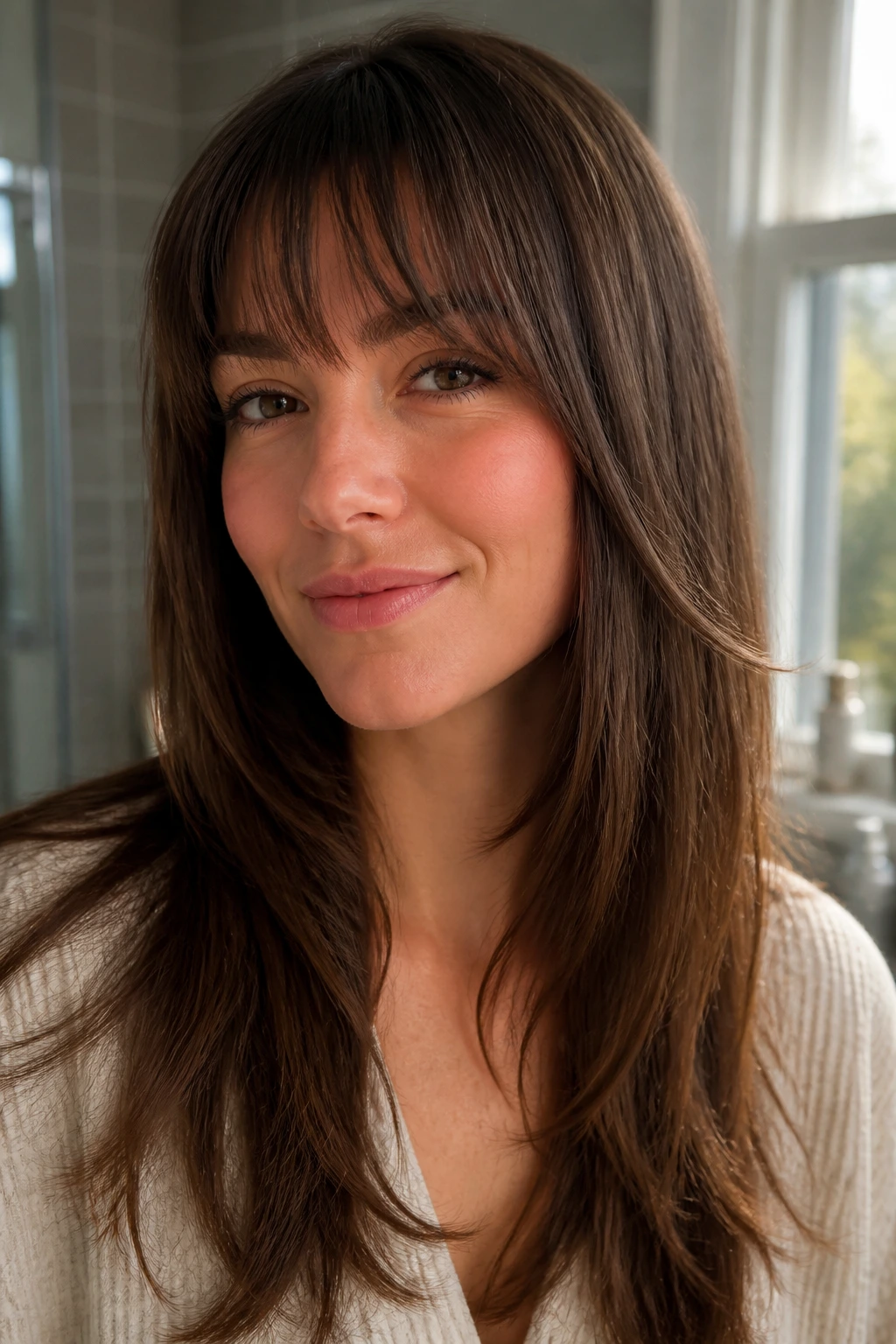
Bangs grow fast enough to annoy you and slow enough to make you think you can ignore them. Bad plan. A fringe usually needs a trim every 4 to 6 weeks if you want the shape to stay crisp. Longer curtain bangs can stretch a bit more, especially if they’re meant to blend into the face-framing layers.
Wash the front pieces more often than the rest of your hair if they get oily. The forehead area picks up skin oils fast, and bangs show it first. Dry shampoo helps, but it works best on clean-ish hair, not on a fringe that’s already weighed down. A quick shampoo of just the bangs and crown can buy you a day or two without a full wash.
If you’re growing them out, pin the fringe to the side on damp hair so it learns the new direction. A small roller or round brush at the roots can also redirect the front without heat styling the whole head. For curly hair, mist the fringe, finger-shape the curls, and leave them alone once they settle. Touching them too much breaks the pattern.
Frequently Asked Questions
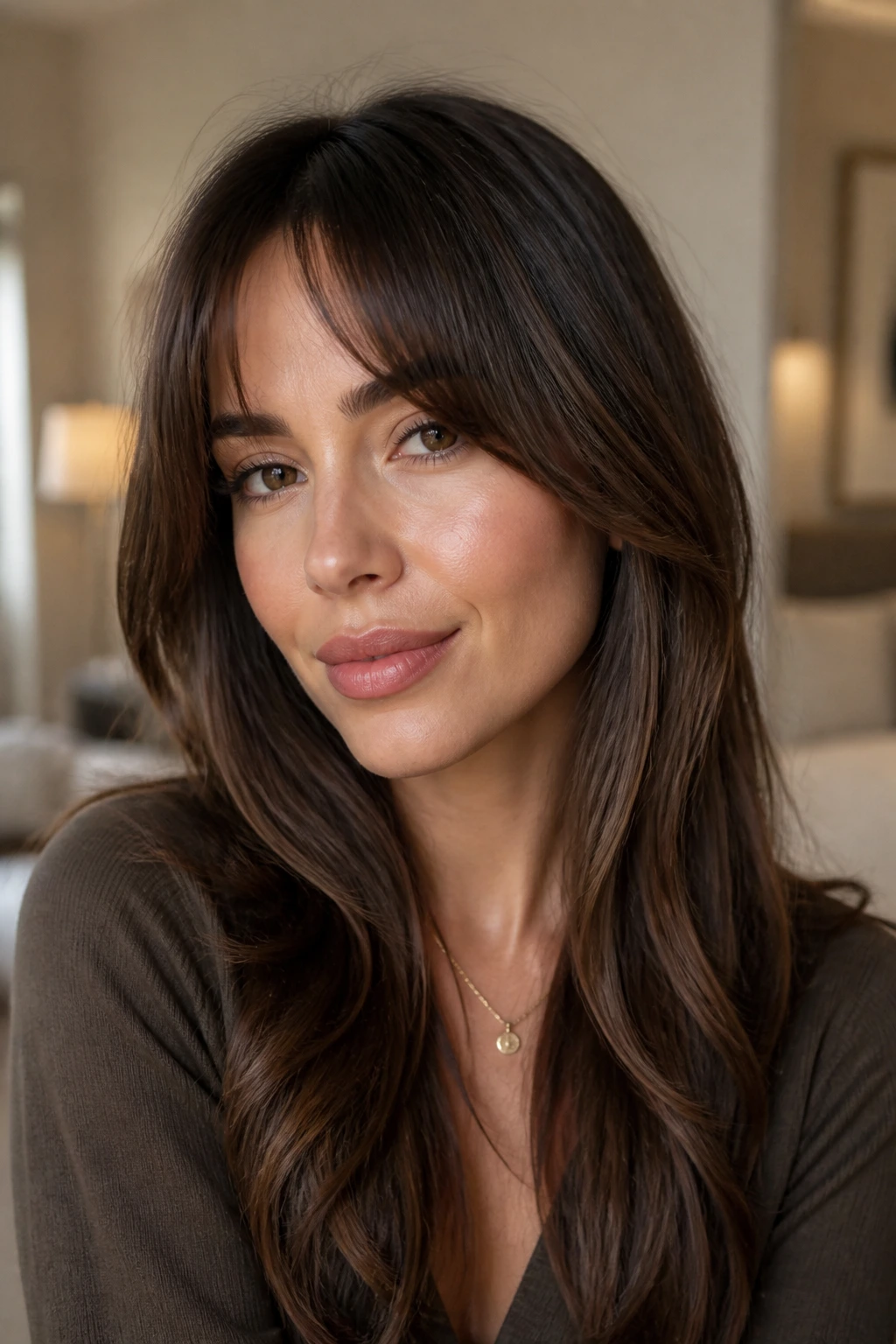
Are bangs actually flattering on round faces?
Yes, when the shape is chosen well. The best bangs for round faces create angles or vertical movement instead of stopping at the cheeks in a blunt line. Curtain bangs, side sweeps, and longer fringe shapes usually do the heaviest lifting.
Which bang style is the safest choice if I’m nervous?
Curtain bangs are the easiest starting point for most people. They grow out more gracefully than a sharp blunt fringe, and they can be parted or swept aside if you decide you want more forehead showing.
Can curly hair wear bangs on a round face?
Absolutely, but the cut has to respect shrinkage and curl pattern. Curly bangs usually need to be cut dry or almost dry, and they should be left slightly longer than you expect so the curl can spring into shape.
How often will I need trims?
Straight, blunt, or soft blunt bangs often need a trim every 4 to 5 weeks. Curtain bangs and grown-out fringes can often go 6 to 8 weeks, sometimes longer if you like them a little undone.
Do center parts or side parts work better?
Both can work. Center parts are good for curtain bangs and bottleneck bangs, while a deep side part helps break up symmetry and can make a round face look longer. The part should support the fringe, not fight it.
What if bangs make my face look wider?
That usually means the fringe is too wide, too blunt, or landing too high on the cheek area. Ask for longer side pieces, less density through the center, and a little more vertical movement through the rest of the cut.
Can I air-dry these styles, or do I need heat every day?
Some can air-dry well, especially shaggy, curly, and piecey looks. Curtain bangs, side-swept fringe, and bombshell styles usually look more polished with at least a quick blow-dry at the front.
Is it hard to grow bangs out without looking awkward?
It’s less painful when the original cut already has soft sides and blended layers. Curtain bangs, bottleneck bangs, and grown-out fringe shapes tend to grow into the rest of the hair instead of forming a hard line.
A Better Frame for a Round Face
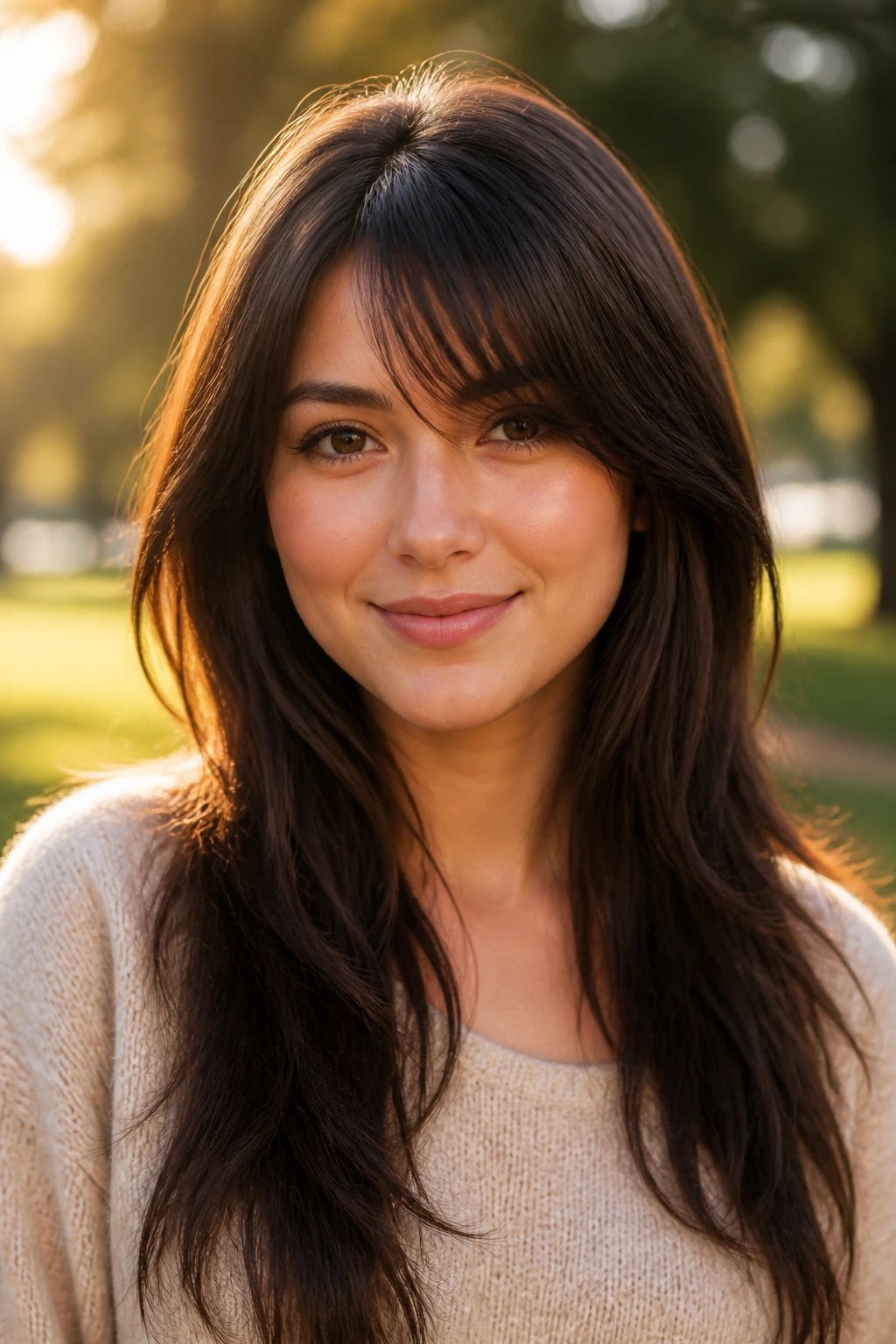
The right fringe does not hide a round face. It gives it better lines. That’s the part people miss when they treat bangs like a mask instead of a design choice. Long hair gives you the length; the bangs decide where the eye goes first.
If you keep the fringe soft, the sides longer than the cheeks, and the overall shape moving downward instead of outward, the haircut does the framing for you. That is the whole game. Pick the version that fits your texture, wear it with a little shape, and let the rest of the length do what it does best.
