



Round faces are not the enemy here. The wrong fringe is.
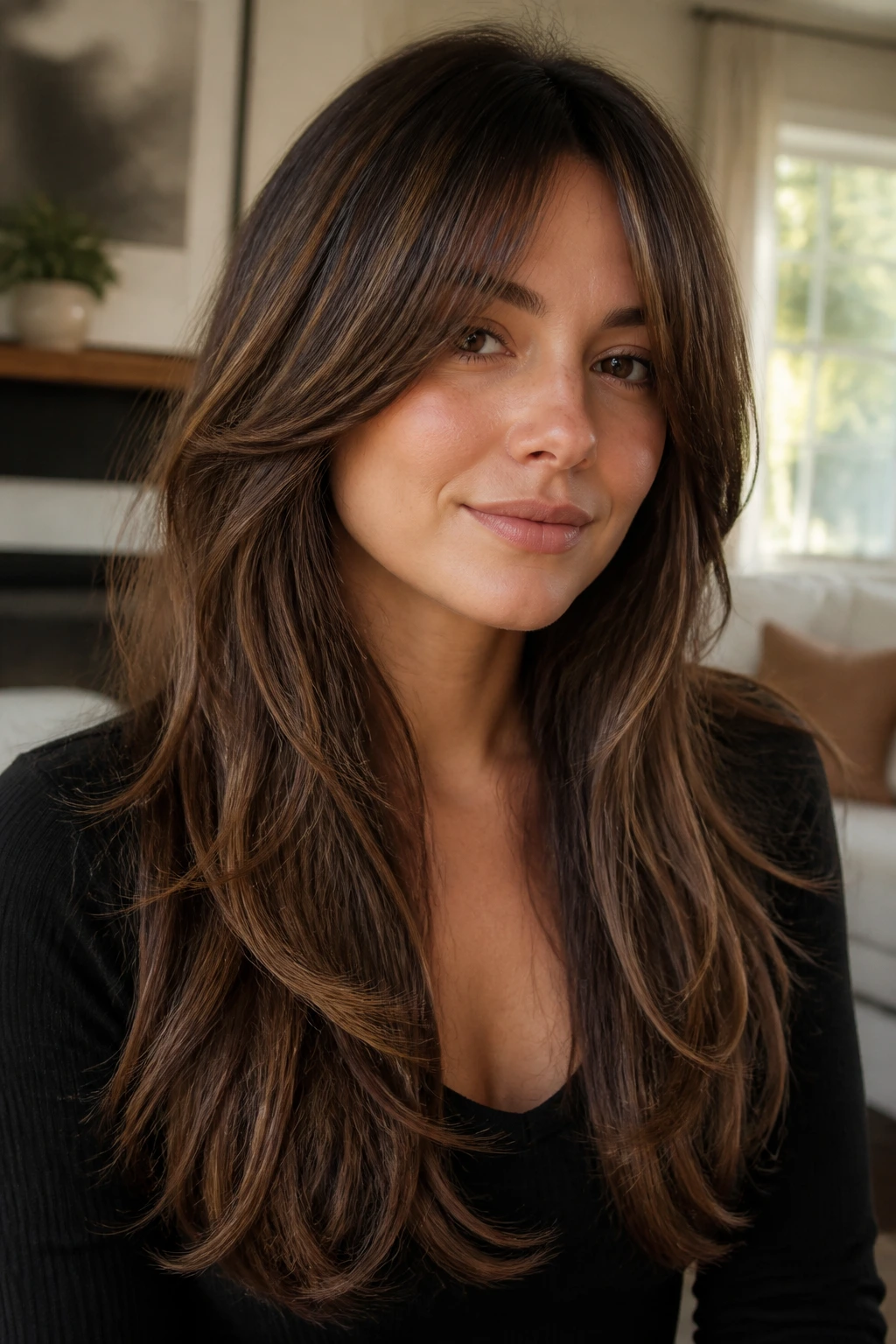
The best long hairstyles with bangs for round faces do one useful thing: they pull the eye down the length of the hair instead of trapping it around the middle of the face. That usually means curtain bangs, side-swept pieces, bottleneck fringe, or long face-framing layers that start below the cheekbones—not a blunt line that lands right at the fullest point of the cheek.
And there’s a practical side to it, too. Long hair gives you room to move the shape around with a middle part, a deep side part, a loose wave, or a polished blowout, so the same haircut can read softer, sharper, or fuller depending on how you wear it. The real trick is picking a fringe shape that works with your texture and your daily routine, not just the photo you saved on your phone.
If you’ve ever looked in the mirror and thought a bang made your face feel wider instead of sleeker, you already know how picky this category is. The good news: the right cut changes everything. The better news: there are more flattering options than most people think.
Why These Shapes Flatter a Round Face
-
They create vertical movement: Long lengths below the shoulders pull attention downward, which keeps the silhouette from bunching up around the cheeks.
-
They break up the widest point: Bangs that open in the center, sweep to one side, or taper at the temples keep the face from reading as one clean circle.
-
They build shape without heaviness: Soft layers and feathered ends add motion, but they don’t form a thick wall at jaw level.
-
They let the crown do some work: A little lift at the roots changes the whole outline. Flat hair at the scalp tends to widen the face; height at the crown does the opposite.
-
They stay flexible: You can wear the same cut sleek, brushed out, wavy, or pinned back without losing the length that gives the face its line.
What to Tell Your Stylist Before the Fringe Is Cut
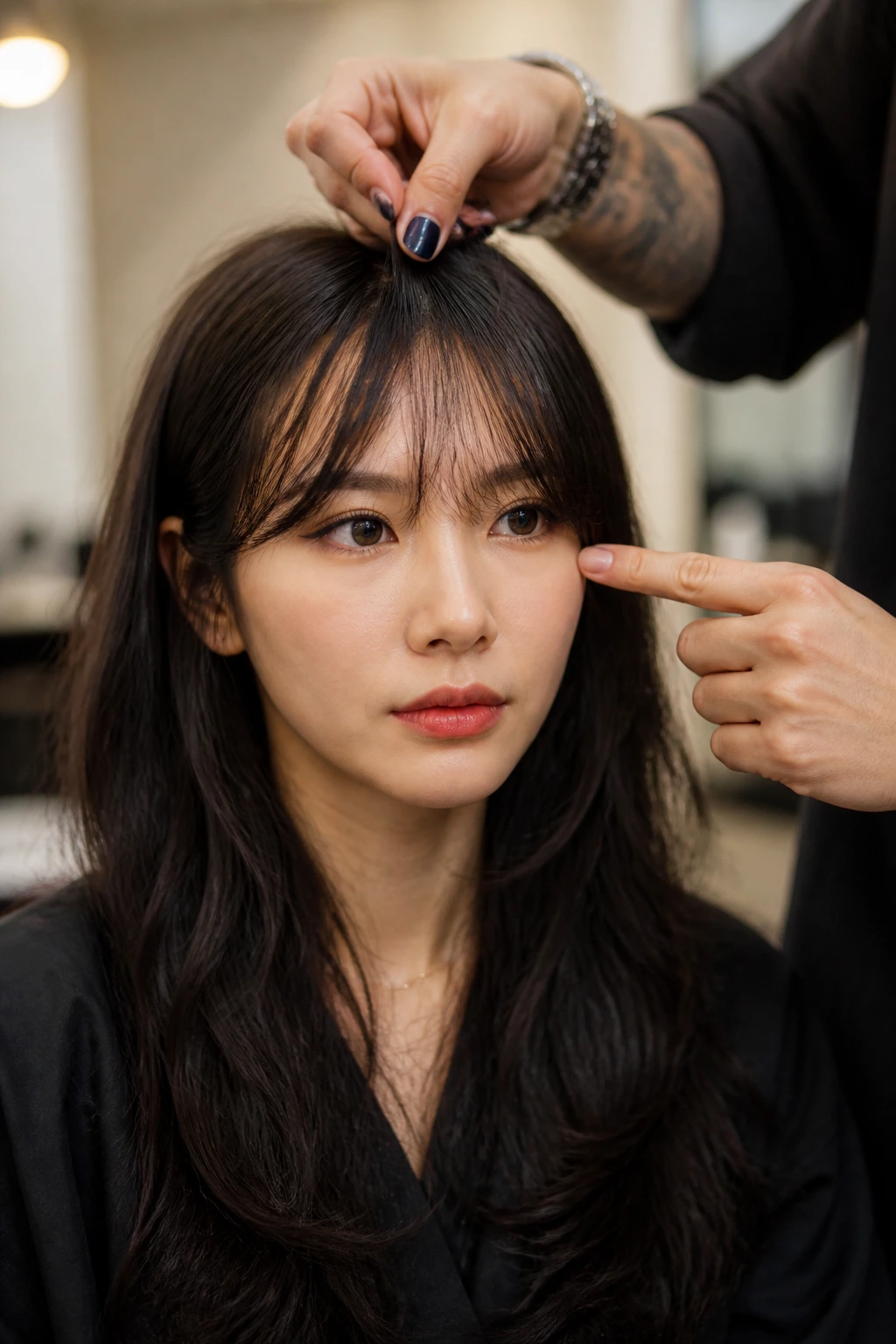
A round face can wear bangs beautifully, but the details matter more than most people expect. The shortest piece of the fringe, the point where your layers start, and the way your hair falls when dry all change the result. If you walk in with a vague “something like curtain bangs,” you may get a version that looks fine in the chair and wrong at home.
Check Your Growth Pattern
If you’ve got a cowlick, a deep widow’s peak, or bangs that split fast, say so before the scissors come out. A stylist can usually adjust the bang length, weight, or starting point so the fringe doesn’t fight your forehead.
Decide How Much Styling You’ll Really Do
Air-dried fringe and round-brushed fringe are not the same haircut, even if they look related in a photo. If you don’t want to heat-style every day, ask for a softer, longer version that can live with a bend instead of a sculpted curve.
Ask for the Fringe to Be Cut Dry
This matters more than people think. Hair shrinks, swells, and swings in different directions once it dries, especially around the face. Cutting the fringe dry—or at least checking it dry before the final trim—helps keep the shortest pieces from landing too high.
1. Long Layers with Curtain Bangs
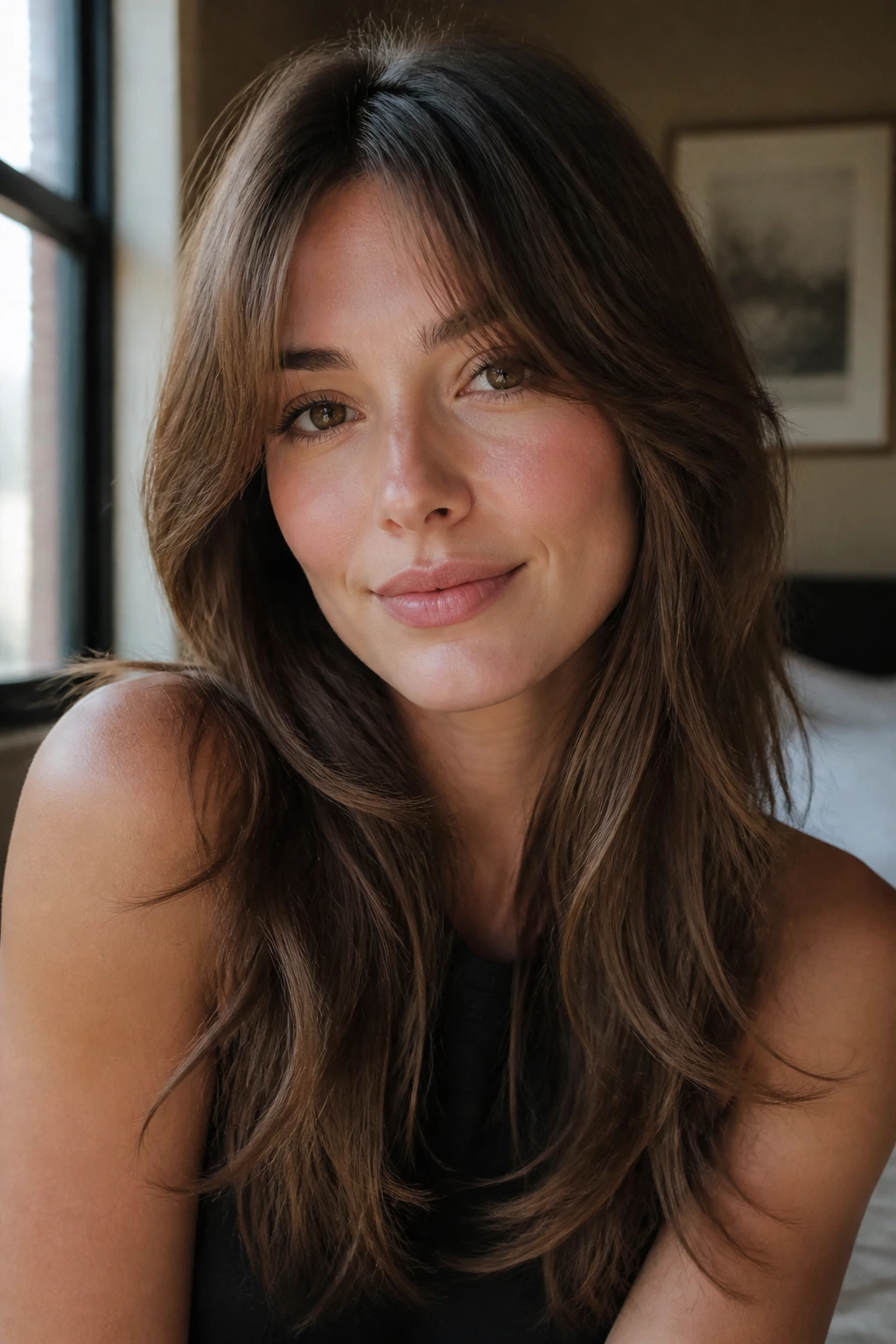
Curtain bangs are the safest place to start if you want a long style that softens a round face without making it feel boxed in. The center stays open, the sides sweep out toward the cheekbones, and the long layers keep the whole cut from sagging at the bottom.
What makes this version work is the spacing. The bangs should hit around the brow or just below it in the center, then stretch longer toward the cheekbone. That diagonal line matters. It draws the eye down and out, but not in a way that adds width at the cheeks.
Style it with a medium round brush and a quick bend away from the face. If the fringe flips too much, pin it in place for 2 to 3 minutes while it cools. That little step makes the shape hold longer than you’d expect.
2. Butterfly Cut with Soft Curtain Fringe
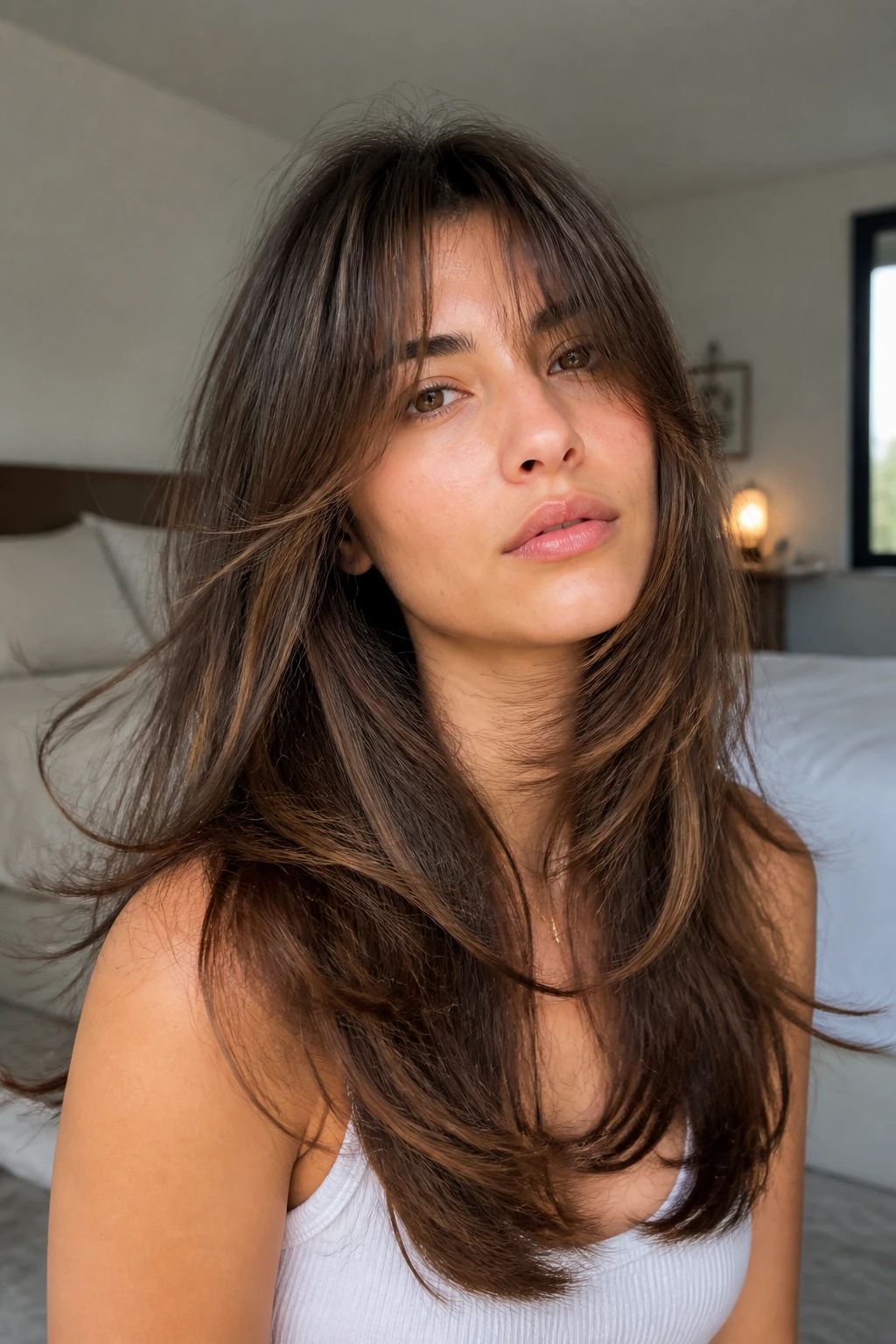
This is the style for anyone who wants body without losing length. A butterfly cut gives you shorter layers around the crown and face, then leaves the lower length long enough to keep the silhouette stretched. On a round face, that upper lift is doing real work.
The curtain fringe should stay soft, not thick. Keep the shortest point around the brow and let the outer pieces fall toward the cheekbone. That keeps the bang from forming one heavy horizontal line across the face.
I like this cut on medium-to-thick hair because the layers move instead of collapsing. Blow-dry the crown first, then the fringe, then the ends. If you skip the crown, the whole cut can go flat and lose the height that makes it flattering.
3. Deep Side Part with Swooped Bangs
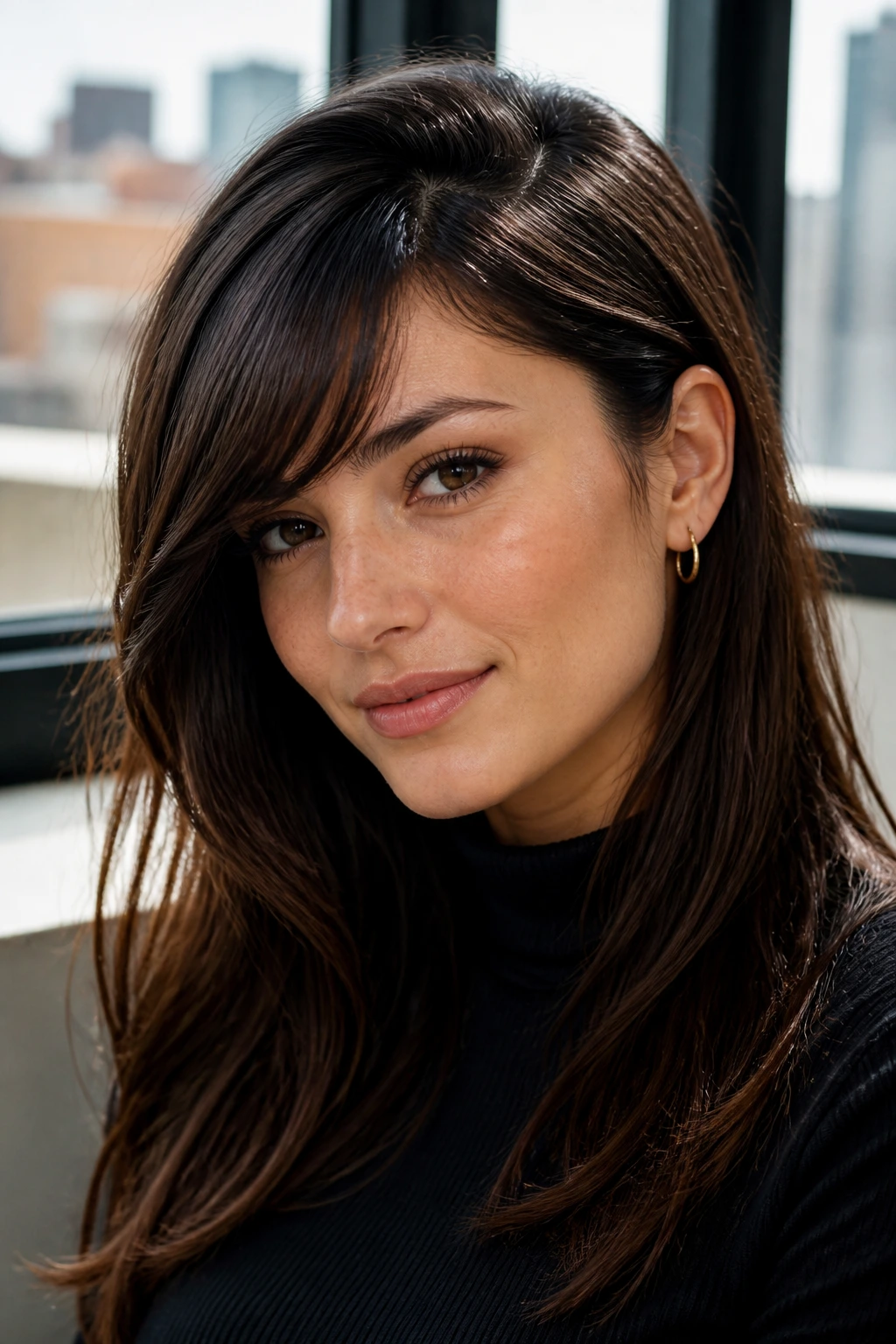
A deep side part can change the shape of a round face in a hurry. It breaks the symmetry, and that alone makes the face read a little longer. Add a long, swooped fringe and the effect becomes even cleaner.
The trick is not to let the bang fall straight down. It should slide across the forehead and end somewhere around the high cheekbone or just below it. That diagonal line is the whole point. It keeps your widest area from becoming the center of the haircut.
This one especially helps if your face feels widest through the middle and you like a polished finish. Give the roots a little lift at the part with a blow-dry nozzle or a root spray, then tuck the heavier side behind the ear for a sharper line.
4. Bottleneck Bangs with Loose Waves
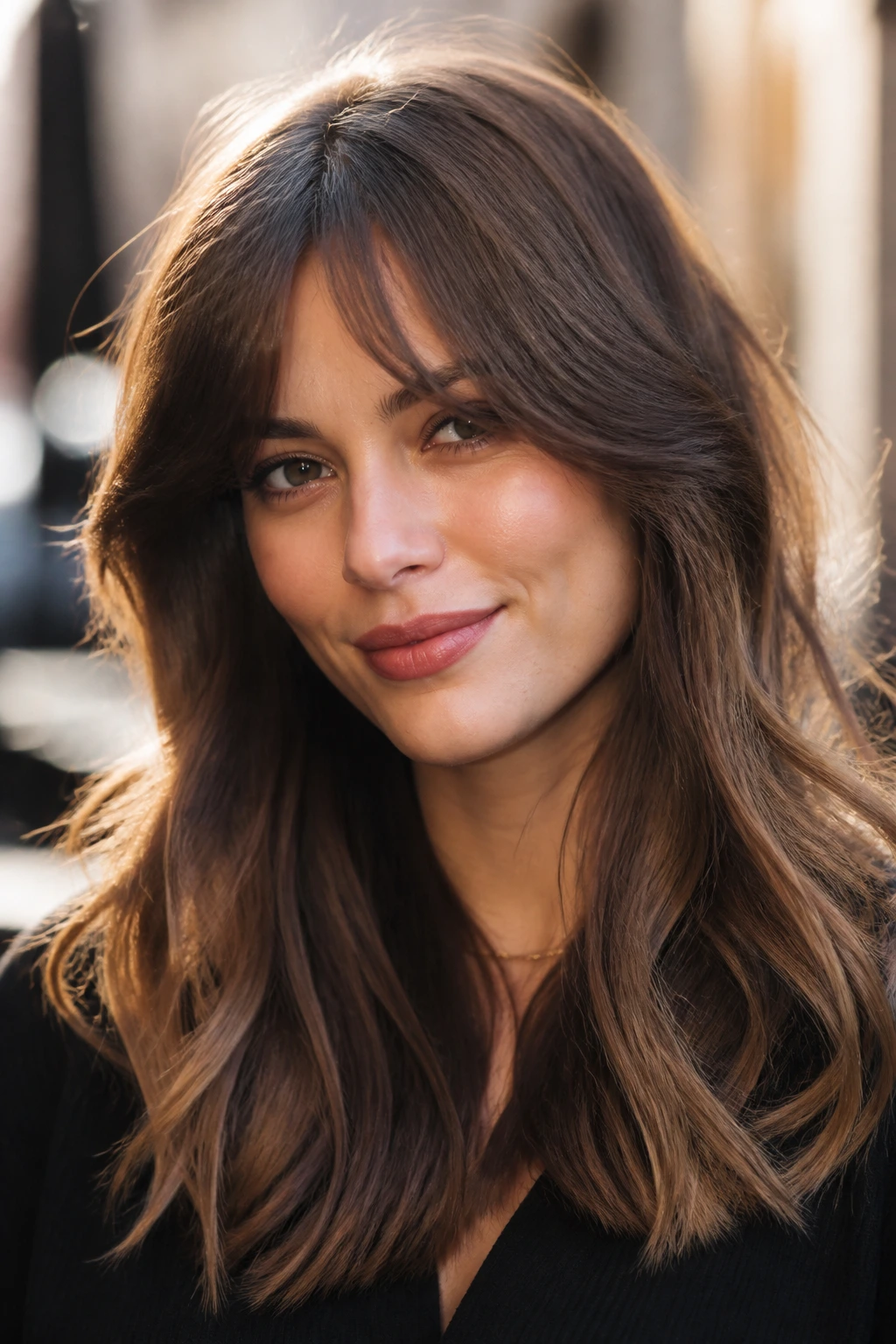
Bottleneck bangs are one of those fringe shapes that sound fussy and end up looking effortless. They’re short in the center, then gradually longer toward the sides, which gives a round face a gentle frame without slashing straight across the forehead.
Loose waves make the whole thing feel softer. The wave pattern creates movement below the cheeks, and the fringe opens the face instead of closing it in. If your hair naturally bends a little, this cut usually sits well without a lot of daily work.
Use a 1.25-inch iron or a large hot brush and bend the front pieces away from the face first. The fringe should be textured enough to separate at the ends. If it’s cut too blunt, it loses that airy middle-to-side taper that makes the style flattering.
5. Long Shag with Piecey Bangs
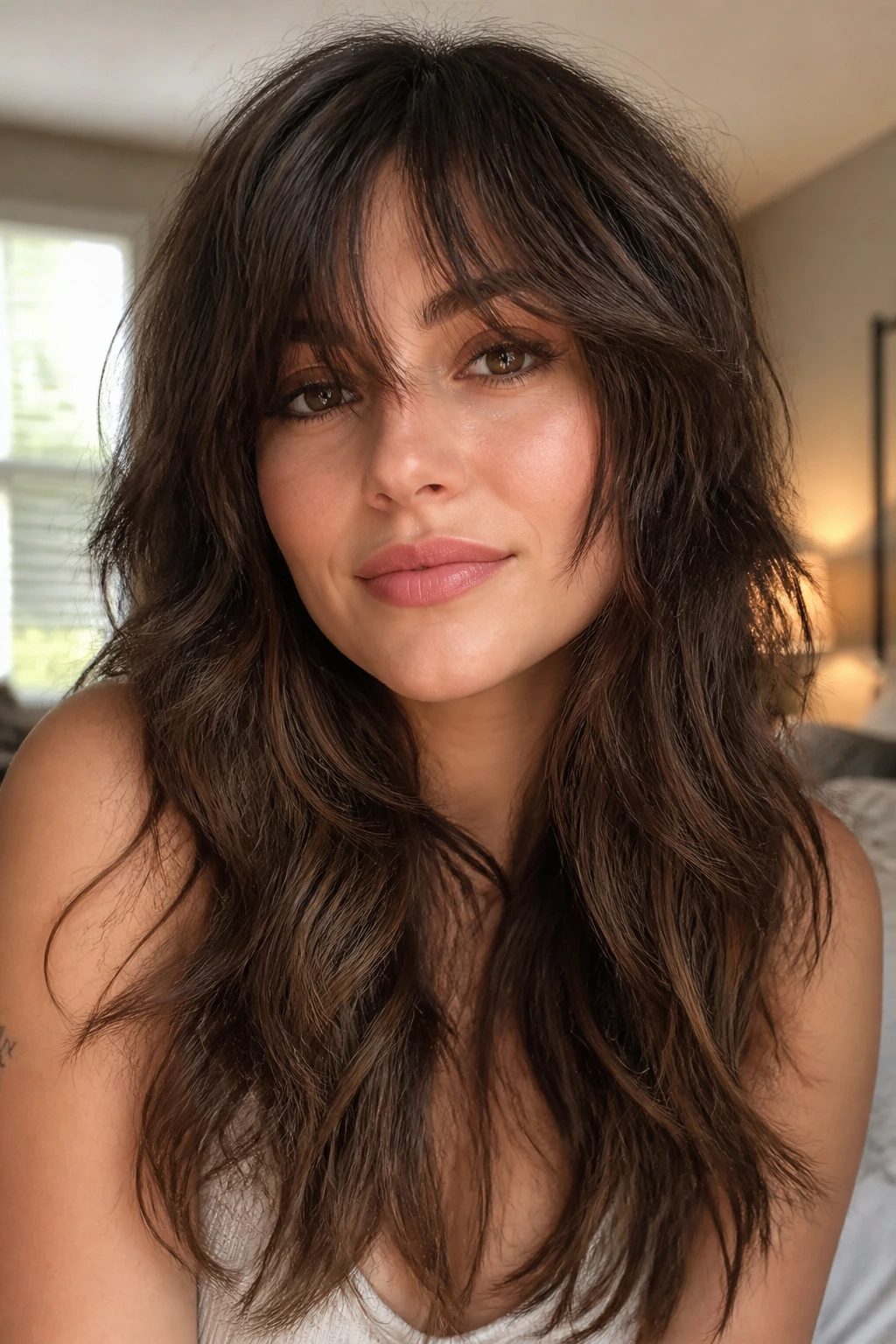
The long shag is for people who don’t want the hair to behave. It’s got edge, but not the harsh kind. The layers are broken up, the fringe is separated, and the whole cut keeps moving instead of sitting in one heavy block.
On a round face, that messier texture helps a lot. The piecey bangs don’t lay as a single bar across the forehead, so the face stays open. The long layers also keep bulk away from the cheeks, which matters if your hair gets puffed out by humidity or natural wave.
This cut likes a little grit. Texture spray, a small amount of mousse, or even an air-dry cream can help. Skip the rich oils up top; they turn a shag into a limp curtain fast.
6. Feathered Blowout with Wispy Bangs
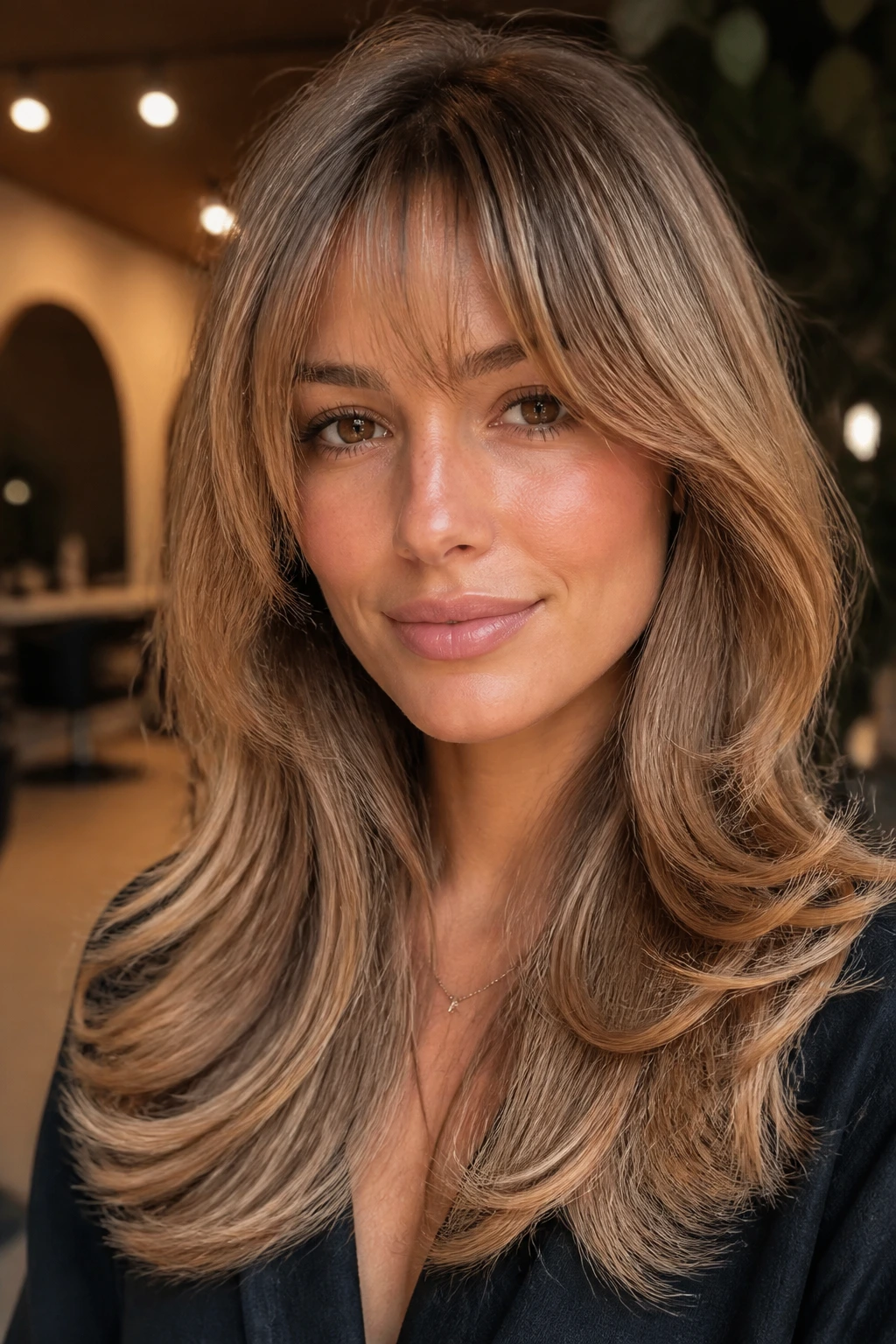
If you like hair that looks brushed, smooth, and a little cinematic, this is the lane. A feathered blowout gives the ends a soft flip, and the wispy bangs keep the forehead light instead of heavy. On a round face, that matters because the shape never crowds the cheeks.
This style works best when the bangs are thinned just enough to separate, not so much that they go stringy. The ends should skim the eyebrows and blend into the front layers. That way the fringe reads as part of the cut, not something sitting on top of it.
A round brush and a clip to set the fringe while it cools are worth the effort. I’d also keep dry shampoo nearby. Feathered styles fall flat fast at the roots, and a little lift keeps the face from looking wider than it is.
7. Center-Part Layers with Cheekbone Bangs
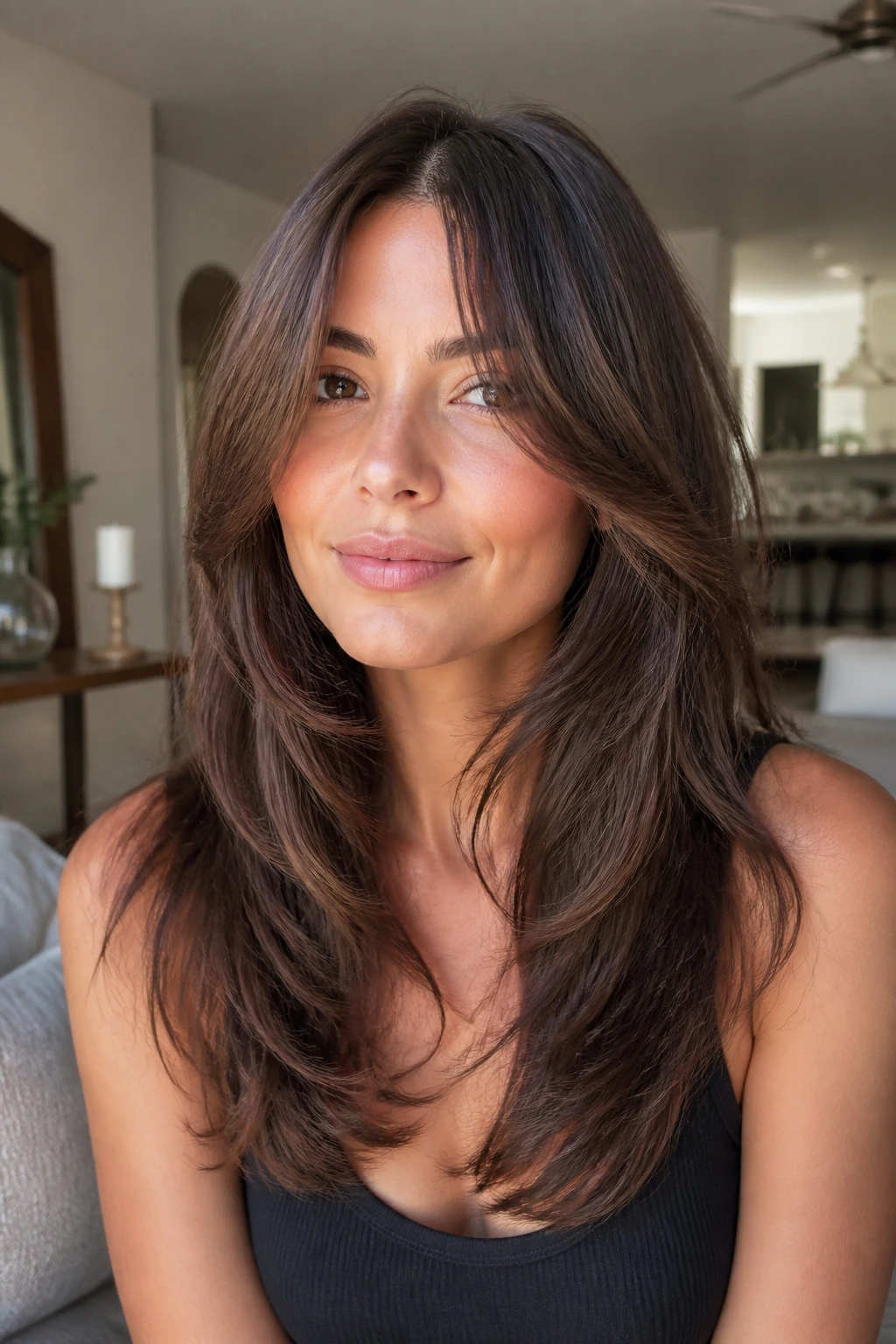
A center part can work on a round face, but the front pieces need to earn their keep. Cheekbone bangs do that job. They break the width, frame the eyes, and keep the middle part from turning into a dead-straight line that emphasizes the cheeks.
The secret here is where the layers begin. Ask for movement that starts below the cheekbone or near the jaw, not right at the ear. When the shortest front pieces land in the right spot, the face looks longer and the hair feels softer.
This is a good pick if you like symmetry but don’t want a severe look. It also suits straight or softly wavy textures that can hold a clean line. If the hair is very flat, add a little root powder or mousse at the crown before styling.
8. U-Shaped Length with Brow-Skimming Fringe
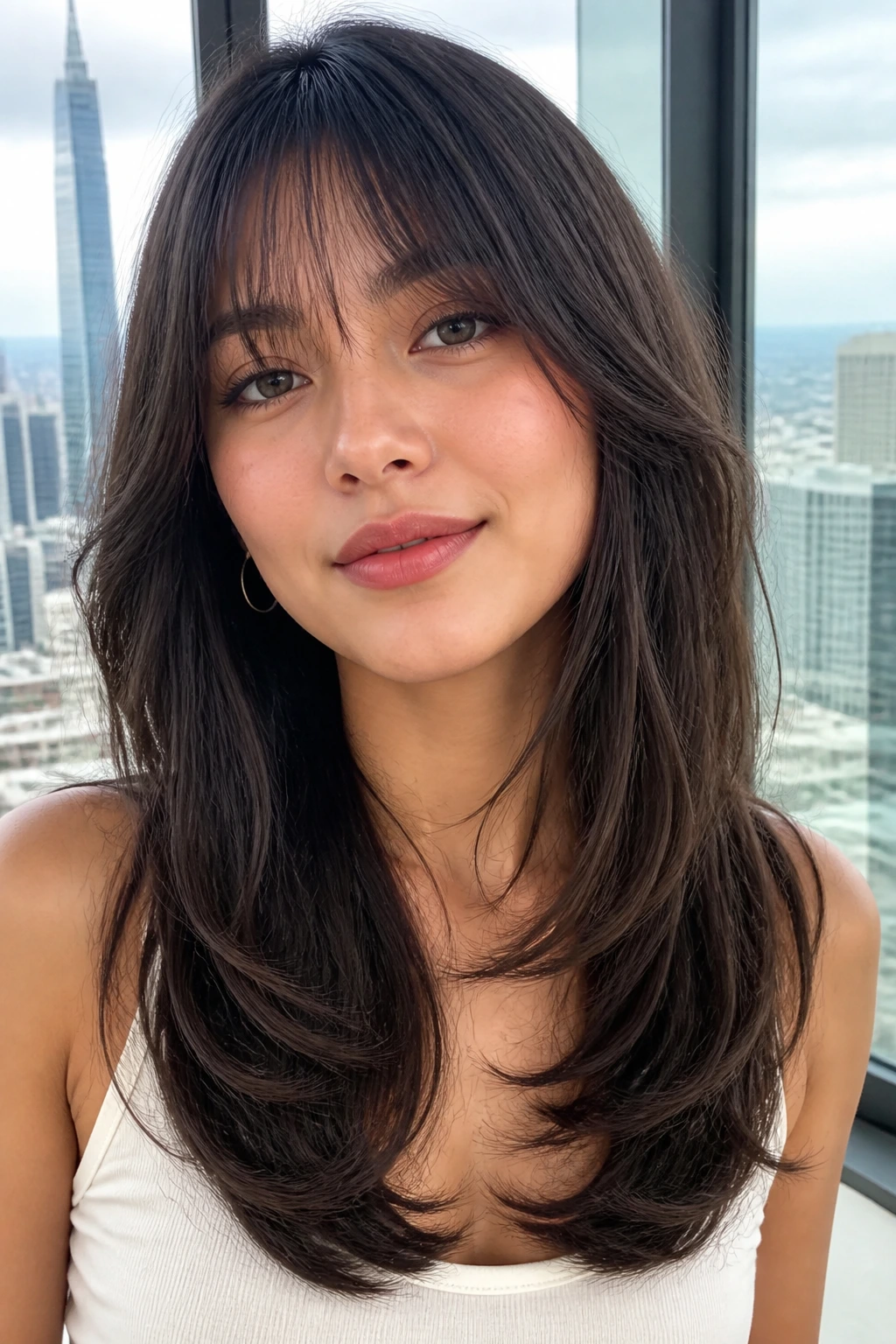
A U-shaped cut keeps the perimeter soft while the front does the shaping. The hair stays longer in the center back, then curves slightly around the sides, which keeps the bottom from reading boxy. Add a brow-skimming fringe and the face gets a nice vertical pull.
This works especially well on thick hair because the U-shape removes some of that blunt heaviness. The bangs should stay light enough to move, but not so sparse that they disappear. I’d avoid a fringe that ends too high here; a little length at the brow gives the face more room.
It’s a strong choice if you want hair that can go sleek or wavy without looking like two different cuts. The line is simple. The details do the shaping.
9. Curly Length with Curved Bangs
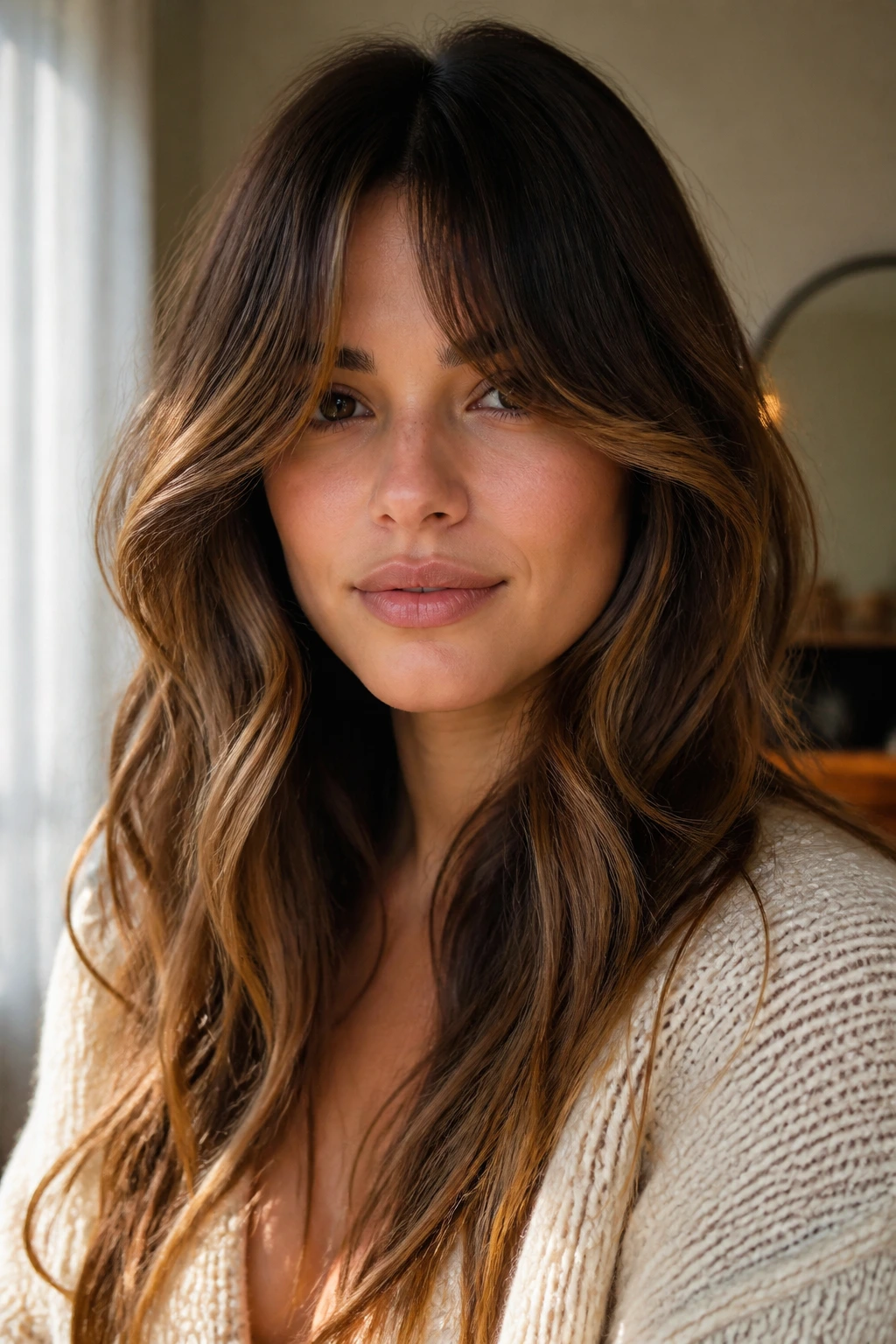
Curly hair and bangs can be a mess if the shape is forced straight. Cut them to follow the curl pattern, and the whole thing turns graceful instead of fussy. On a round face, that curved fringe can frame the forehead while the length keeps the eye moving downward.
The bang should be cut dry or at least checked dry before the final trim. Curly hair springs up more than straight hair, and a fringe that looks perfect wet can bounce too high once it dries. Keep a little extra length in the center and let the sides taper.
This style rewards a diffuser, leave-in conditioner, and a curl cream that doesn’t make the curls sticky. If the bangs puff up too much, mist them lightly and reshape with your fingers rather than grabbing a brush and flattening the whole curl.
10. Mermaid Waves with Sliced Curtain Bangs
A friend of mine with a round face wears this kind of shape, and it always looks like she spent more time on it than she did. The waves are big and loose, the fringe is lightly sliced, and the whole cut keeps the eye traveling up and down instead of side to side.
The “sliced” part matters. The bangs shouldn’t be heavy enough to sit like a curtain panel. They need enough separation at the ends to blend into the waves and keep the cheeks from feeling boxed in.
Use a large iron or a hot brush with a soft bend, then brush the wave out once it cools. That brushed-out finish matters. Tight curls can add width; soft waves tend to lengthen the shape more cleanly.
11. Long Feathered Bangs with a Deep Side Sweep
This is the more polished cousin of the heavy side part. The fringe starts long, gets feathered at the ends, and sweeps across the forehead in one clean line. It’s less about drama and more about making the face feel slimmer by angle alone.
The long bang length gives you room to tuck, pin, or wear it loose. That flexibility is useful on a round face because you can move the fringe around the widest area without losing the cut’s structure. The front pieces should fall past the cheekbone, not stop at it.
If your hair has medium density, this style is easy to keep in shape with a quick blow-dry and a soft-hold spray. Too much product kills the feathering, so go light. The fringe should look touched by air, not lacquered.
12. Sleek Straight Hair with Arched Full Bangs
Straight hair can carry a full fringe on a round face if the line is arched, not flat. The center can sit a touch shorter, while the outer corners soften and lengthen. That tiny arch keeps the face from feeling cut in half.
The rest of the length should stay smooth and clean. If the ends are too blunt and the bangs are too dense, the haircut can feel heavy fast. A little movement in the lower lengths keeps the shape from turning severe.
This is a good one if you like structure and don’t mind regular bang trims. It reads sharp, but not harsh, when the eyebrows still show slightly and the front pieces skim the temples. Flat iron the fringe only if you need to; too much heat makes it look pin-straight and less forgiving.
13. Thick Hair with Choppy Bangs and Light Layers
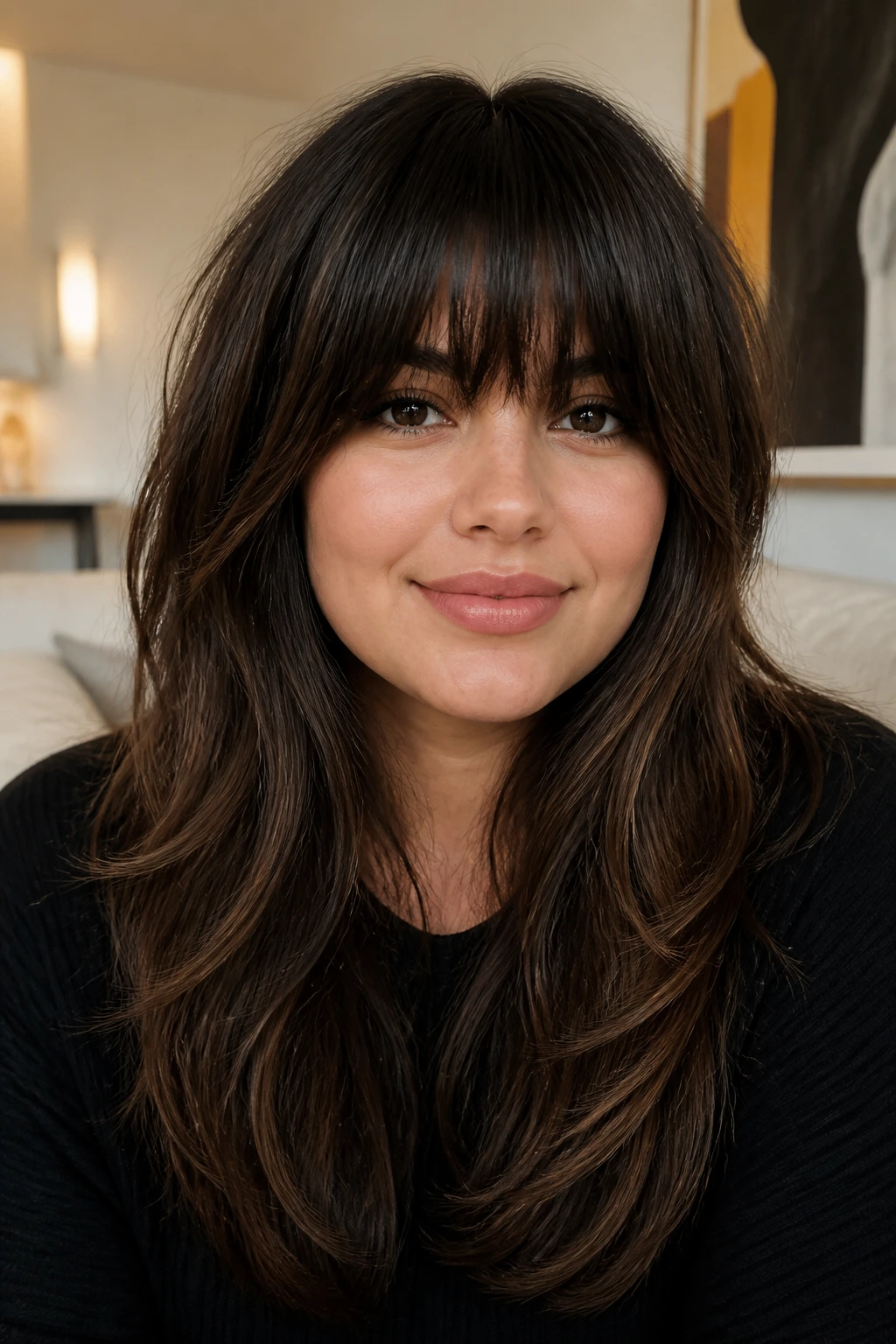
Thick hair can swallow a face if the bulk sits in the wrong place. Choppy bangs and light layers solve that by breaking the mass into smaller pieces. The cut feels lighter, and the face doesn’t get surrounded by one wide, heavy shape.
The bangs should be point-cut or softly razored so they separate instead of forming a single block. The layers around the face need to start low enough to avoid the cheeks. If they begin too high, the width lands right where a round face already carries volume.
A texturizing shears pass can help, but only if it’s done sparingly. I’m not a fan of over-thinning thick hair; it tends to frizz out and swell at the ends. The better move is controlled weight removal, not aggressive shredding.
14. Fine Hair with See-Through Bangs
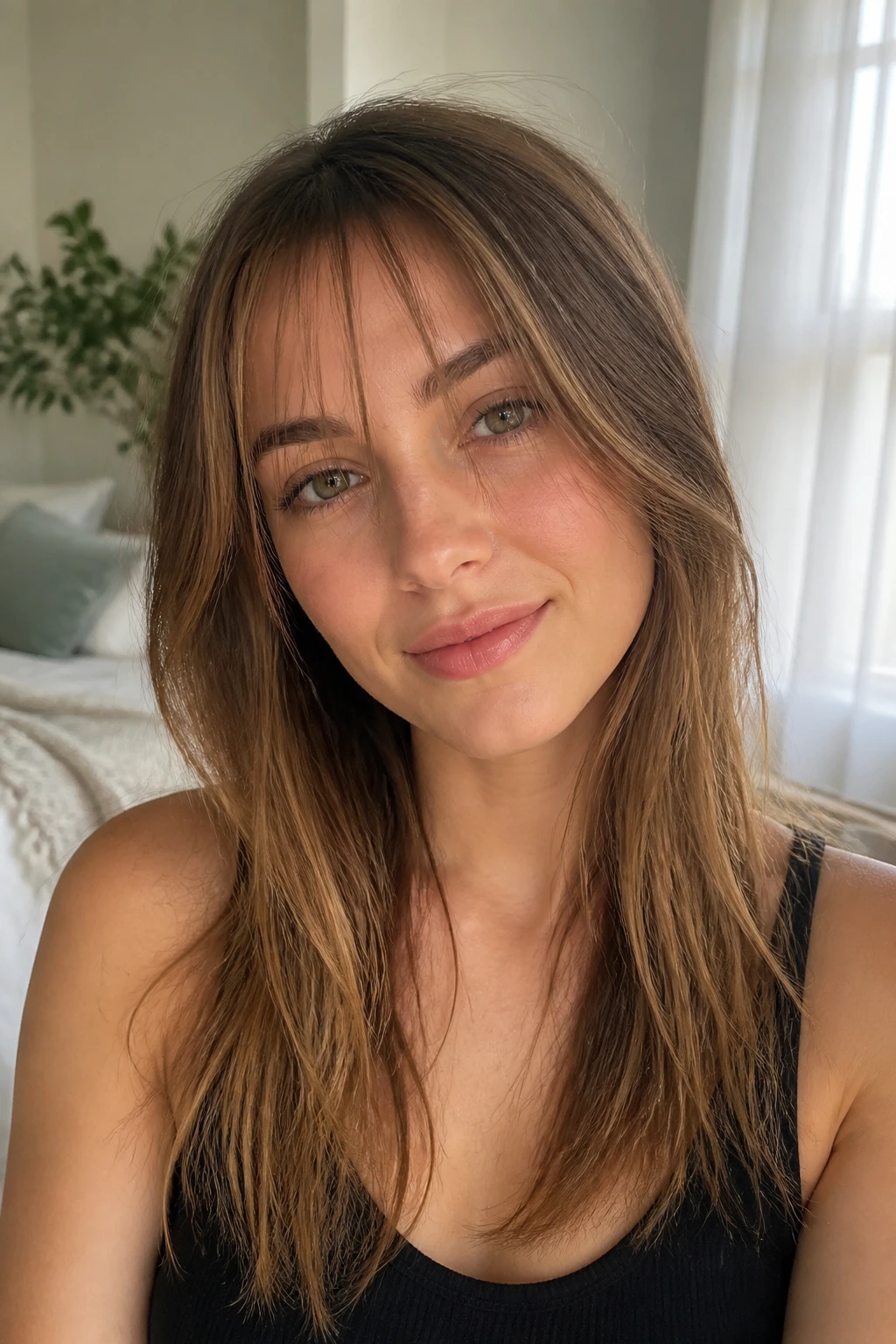
Fine hair needs air, not bulk. See-through bangs keep the forehead framed without creating a dense line that flattens the face. On a round face, that lightness matters because heavy bangs can feel like a shelf.
The bangs should be soft enough to see a bit of skin through them. That doesn’t mean sparse in a bad way. It means the fringe is light, delicate, and easy to move. Pair it with long layers that keep the lower half of the cut from looking stringy.
Volume mousse at the roots and a round brush at the crown are your friends here. Avoid loading the front with oil or cream; fine hair shows every ounce of it. If you want the fringe to last all day, clip it to set for a few minutes after drying.
15. Layered Curls with a Bang Blend
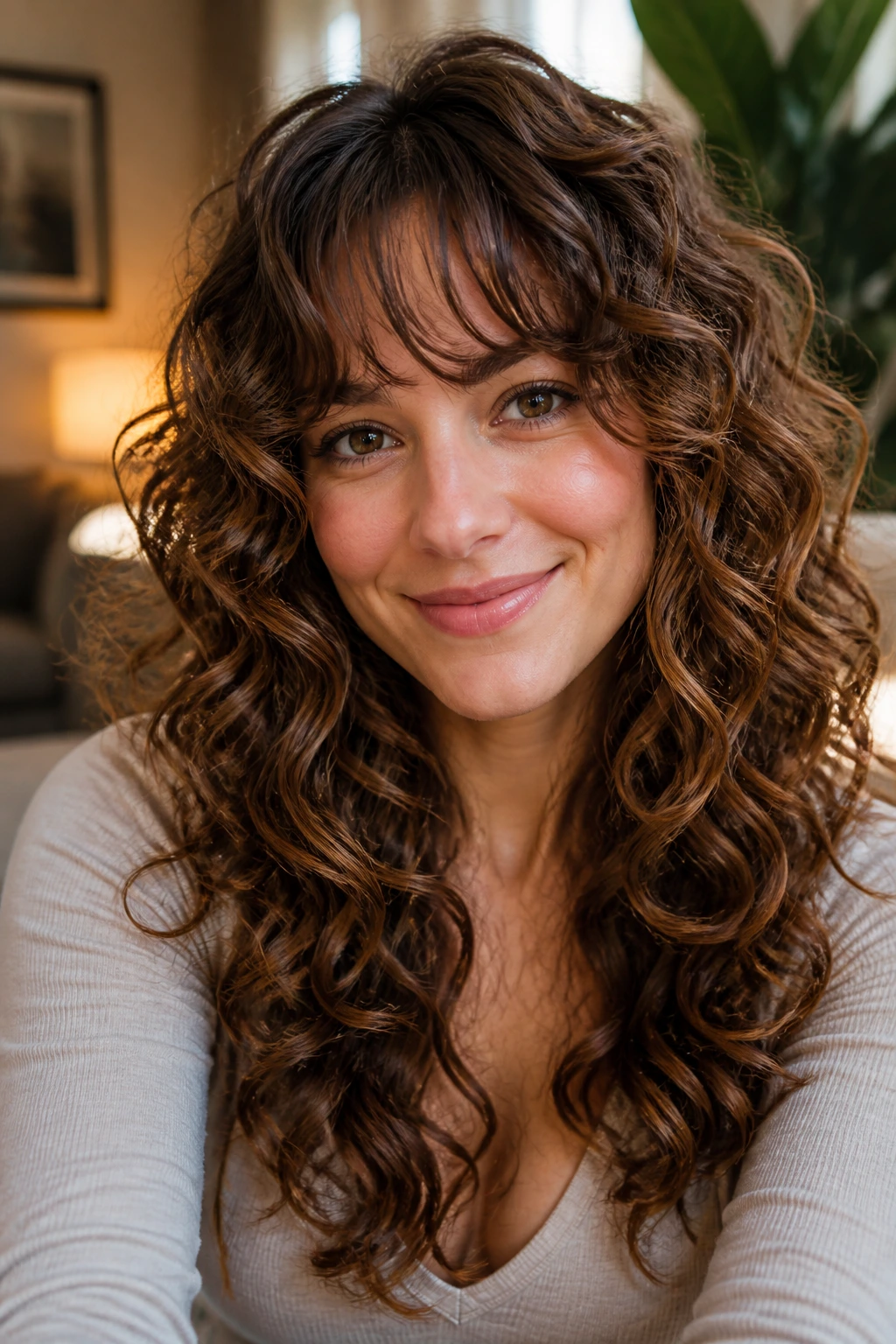
A bang blend is exactly what it sounds like: the fringe melts into the front curls instead of announcing itself. That’s a smart move on a round face because the eye sees shape, not a hard line. The result feels softer and more vertical.
The cut works best when the shortest curl at the forehead isn’t cut too short. Give the curl room to spring up. Then let the pieces around the temples and cheeks fall into longer layers so the face stays open on the sides.
This is a good option if you want bangs but don’t want to commit to a dramatic straight-across fringe. You can wear it diffused or air-dried, though I’d use a little gel or cream to keep the curl pattern defined near the forehead. Undefined curls at the fringe can puff in a way that widens the face.
16. Soft Wolf Cut with a Long Fringe
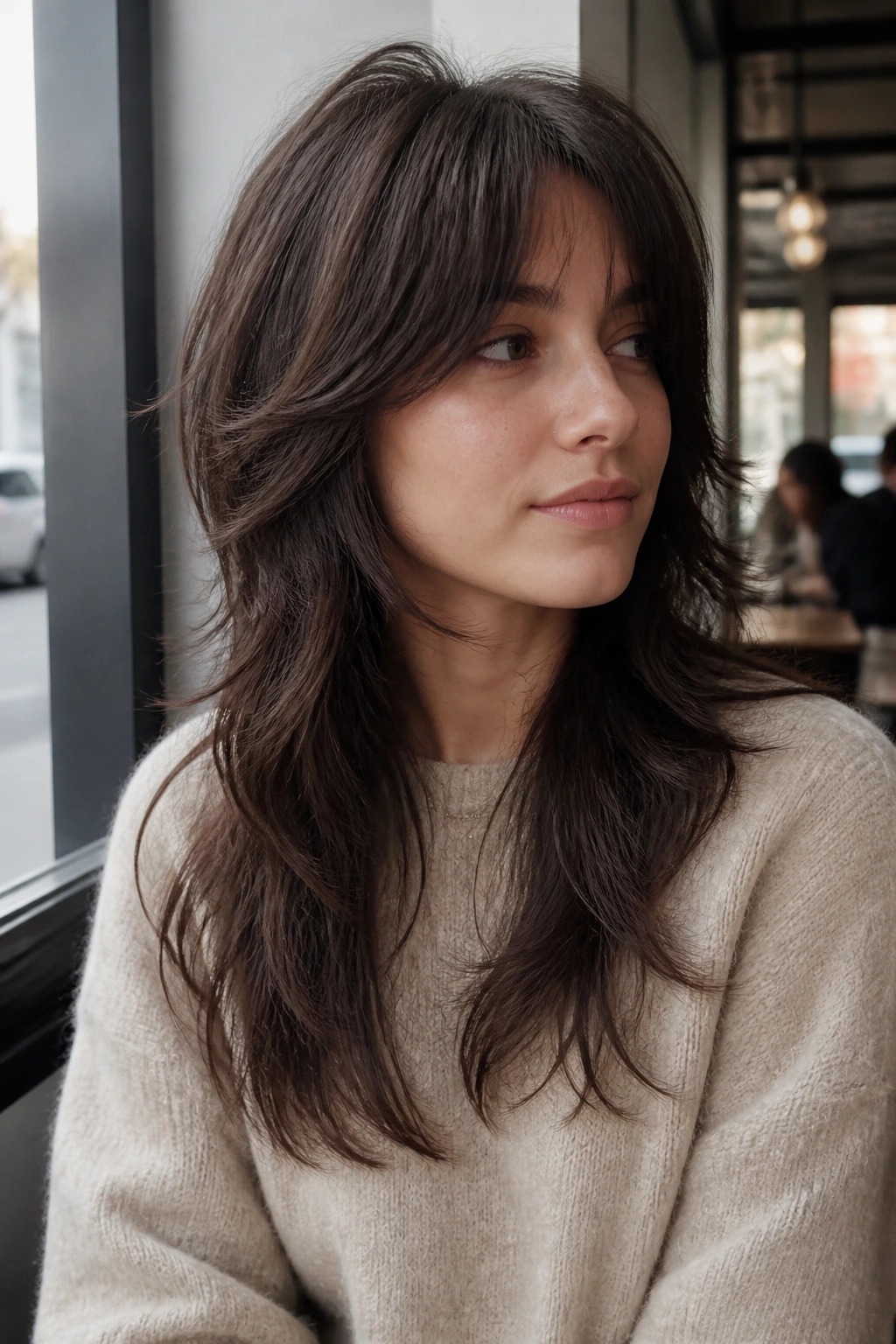
The wolf cut gets a bad reputation when it’s too choppy. A softer version is a different animal. You still get crown lift and a little edge, but the layers are long enough to stay flattering on a round face.
The long fringe should start high enough to add shape, then taper around the cheekbone. That keeps the cut from feeling like a mullet with bangs. The whole point is movement through the top and sides, not a giant triangle of volume around the jaw.
This style likes texture spray, a rough blow-dry, or a natural wave pattern. It’s one of the easier choices if you don’t want to spend ages smoothing every strand. Just don’t overdo the choppiness. Too many short pieces at the cheeks can widen the face fast.
17. Half-Up Waves with Curtain Bangs
Sometimes the cut is only half the story. A half-up style with curtain bangs gives a round face instant height at the crown, which is one of the easiest ways to stretch the outline. The loose front pieces keep the style from feeling pulled back too tightly.
This works especially well on day-two hair. The bangs can be refreshed with a little water mist and a quick bend, while the rest of the hair gets pulled into a loose top section. Leave the half-up section a little high and a little loose. Tight pulling can make the face look rounder, not slimmer.
I like this on medium to long layers because the pieces around the cheek stay soft when the top is lifted. It’s a nice compromise if you want to show off the length without wearing it down every day.
18. Low Ponytail with Swooped Bangs
A low ponytail sounds simple, but on a round face the details matter. If the pony sits too high, it can drag the eye across the widest part of the face. A low, slightly loose pony with swooped bangs does the opposite.
The bangs should be brushed across the forehead and allowed to fall toward the cheekbone. Keep a couple of face-framing pieces free if the hair is long enough. Those pieces extend the line of the face and stop the style from looking severe.
This is a practical choice for humid days, workouts, or any time you want the bangs to do the styling work. A touch of root volume at the front and a clean tie at the nape make the whole thing feel deliberate instead of thrown together.
19. Braided Crown with Airy Fringe
Braids can work on a round face when you leave the front soft. A braided crown pulls the hair away from the cheeks, and airy fringe keeps the forehead from looking bare. The contrast is what makes it interesting.
The bangs should be light, not heavy. If the fringe is too dense, the braid and the bangs start competing with each other. A wispy or curtain shape lets the eye travel around the style without getting stuck at the center of the face.
This one’s useful for weddings, summer days, or any moment when you want the hair up but still want some movement around the face. A few loose strands around the temples make a big difference. Don’t pin everything back tightly unless you want to emphasize the roundness.
20. Sleek Low Bun with Face-Framing Pieces
This is the cleanest option in the whole group, and it works because the bun sits low. A low bun lengthens the neck and keeps the volume away from the cheeks. Add soft face-framing pieces or long bangs, and the face gets a slimmer outline.
The front should not be too stiff. If the bangs are brushed straight back and frozen with too much gel, the face can look wider by comparison. A loose sweep at the forehead or a couple of long pieces around the jaw gives the style balance.
This is especially good for polished settings, but it doesn’t need to look formal. A few tiny bends in the front pieces and a softly tucked bun are enough. The goal is neat, not helmet-like.
21. Air-Dried Waves with an Undone Fringe
There’s a lot to be said for a style that gets better when you stop fussing with it. Air-dried waves with an undone fringe work because the hair keeps its natural bend and the bangs stay soft instead of over-controlled. That softness helps a round face read longer.
The fringe should be cut with enough length to survive shrinkage and a bit of movement. If your hair springs up when it dries, ask for the bang pieces slightly longer than you think you need. Then twist the front lightly while it dries so it doesn’t split too far apart.
A little leave-in cream on the mid-lengths and a touch of gel or mousse near the front is enough. You don’t need a lot. Too much product makes the air-dried finish sticky and collapses the wave.
22. Glam Curls with Broad Curtain Bangs
Big curls can work beautifully on a round face when the fringe is wide enough to frame the eyes and cheekbones without crowding them. Broad curtain bangs create that shape. They open in the center, then blend into the curls at the sides.
This style has a little more drama than the softer wave looks. The curls should be large and brushed out enough to feel smooth, not tight and springy. I’d use a 1.5-inch barrel, let the curls cool completely, and brush them through so the pattern reads as soft volume instead of ringlets all over the cheeks.
The fringe should move with the curl pattern rather than fight it. That way the front doesn’t become a dense curtain across the forehead. It’s a better fit for round faces than a heavy full bang paired with lots of tight curl at the cheeks.
23. Crown-Boosted Layers with a Side Fringe
If your hair lies flat on top, the face can look wider no matter how long the rest of the cut is. Crown-boosted layers fix that. A little lift at the roots changes the outline, and a side fringe keeps the forehead from taking up too much space.
The layers here should start high enough to create movement, but not so high that they puff out at the cheeks. Think of the cut as a shape that rises near the crown and softens toward the ends. That line adds length where a round face needs it most.
This is a strong option for people who like volume and don’t mind a bit of styling. Root mousse, a blow-dryer nozzle, and a quick side sweep are enough to give it shape. Flat roots are the enemy here. Don’t let them happen.
24. Brow-Grazing Bangs with Long, Clean Ends
Not every fringe has to be dramatic to matter. Brow-grazing bangs can work on a round face when the ends stay soft and the length falls just low enough to avoid a blunt wall across the forehead. The rest of the hair should stay long, smooth, and clean.
This cut is especially good if you want bangs without losing the simple line of your length. The fringe adds detail up top, while the straight ends below keep the silhouette tidy. That balance keeps the face from feeling crowded.
It’s a nice choice for straight hair or a controlled blowout look. If your hair is wavy, you’ll need a little more attention in the fringe area. Still, the shape is forgiving because the bangs sit close to the brow rather than far down on the face.
25. Blunt Ends with a Long Side Fringe
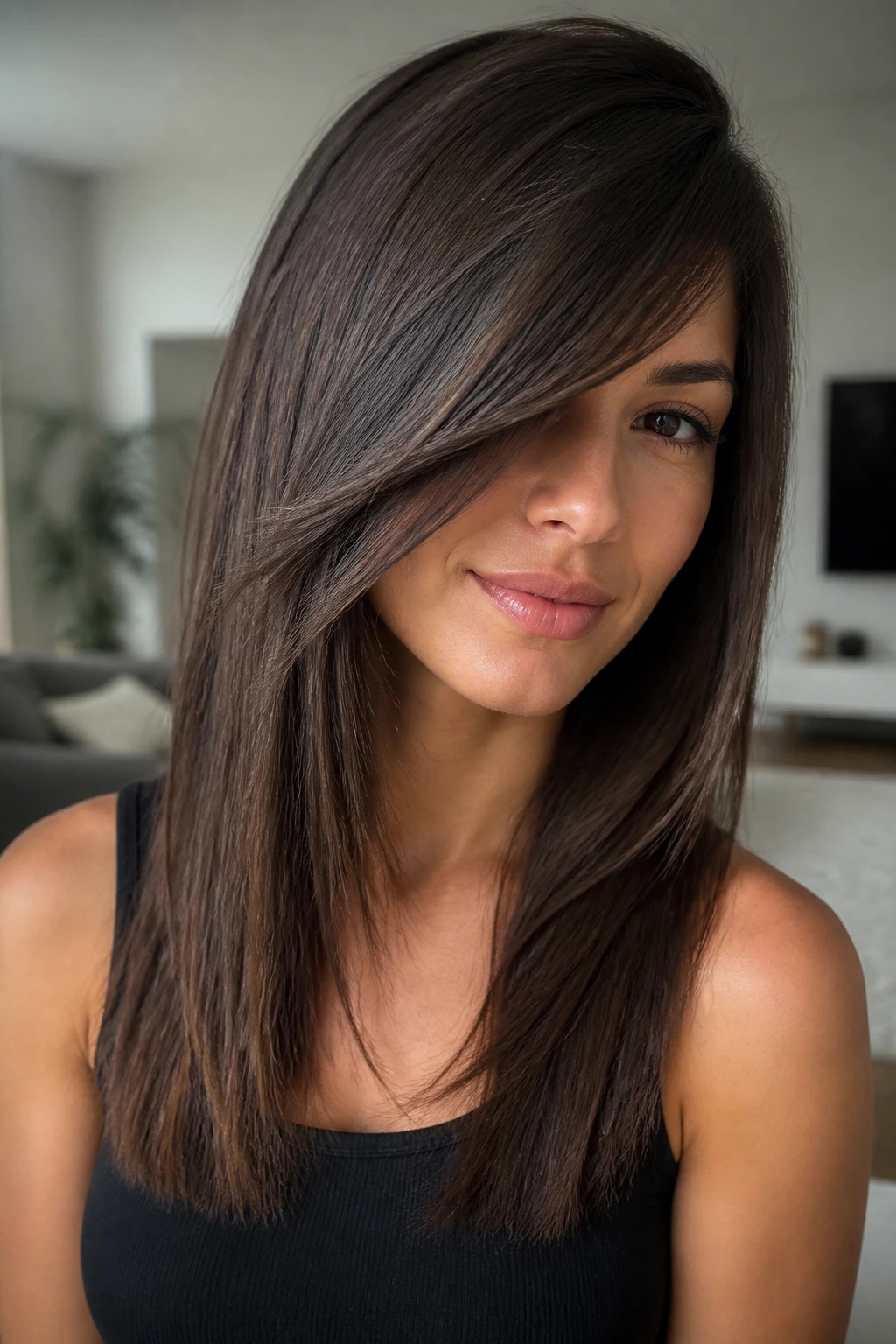
Blunt ends are risky on round faces when they’re paired with blunt bangs. A long side fringe changes the equation. It breaks the width, adds a diagonal line, and stops the haircut from feeling too square or too puffed out.
This cut suits straight or slightly wavy hair that can hold a clean perimeter. The ends should be sharp enough to feel intentional, but not so rigid that the hair becomes one heavy block. The side fringe is doing the softening, so it needs enough length to sweep.
I like this on people who want structure and don’t mind a little maintenance. It’s less “soft and airy” and more “clean and modern.” If you’re after a sharper silhouette without making the face look wider, this is a solid move.
26. Waist-Length Layers with Wispy Bang Mix
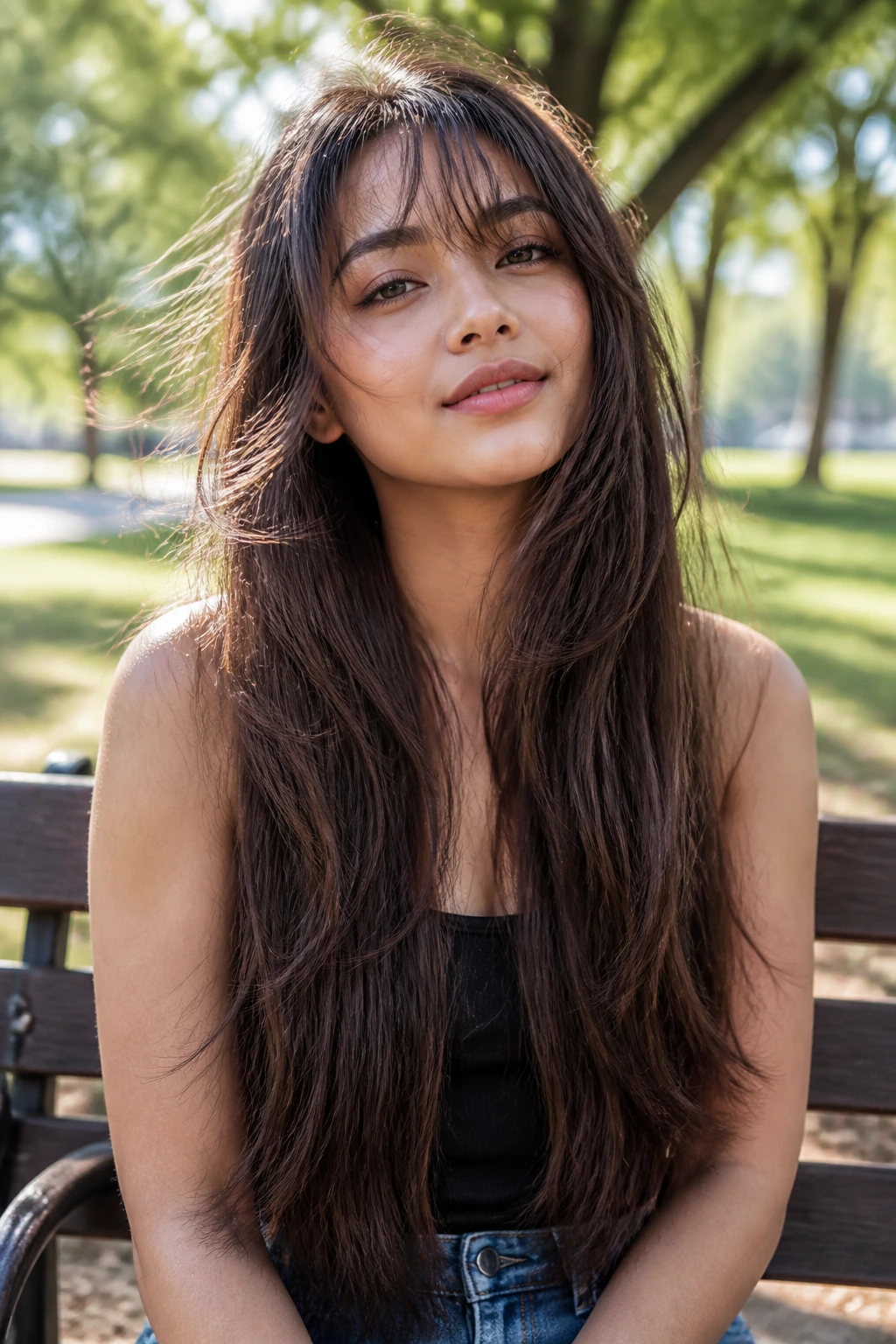
Very long hair can look gorgeous on a round face, but only if the top doesn’t go flat. Waist-length layers with a wispy bang mix keep the length dramatic while the fringe stays light enough to lift the features.
The layers should start below the collarbone, not around the chin. That keeps the widest point of the face from getting boxed in. The bangs can be a little broken up—part curtain, part wispy fringe—so they don’t form a hard line across the forehead.
This is a good pick if you want softness and lots of length in the same haircut. The risk with ultra-long hair is drag; the hair pulls the face downward in a dull way. Wispy bangs and smart layers keep it alive.
27. Razored Length with Textured Bangs
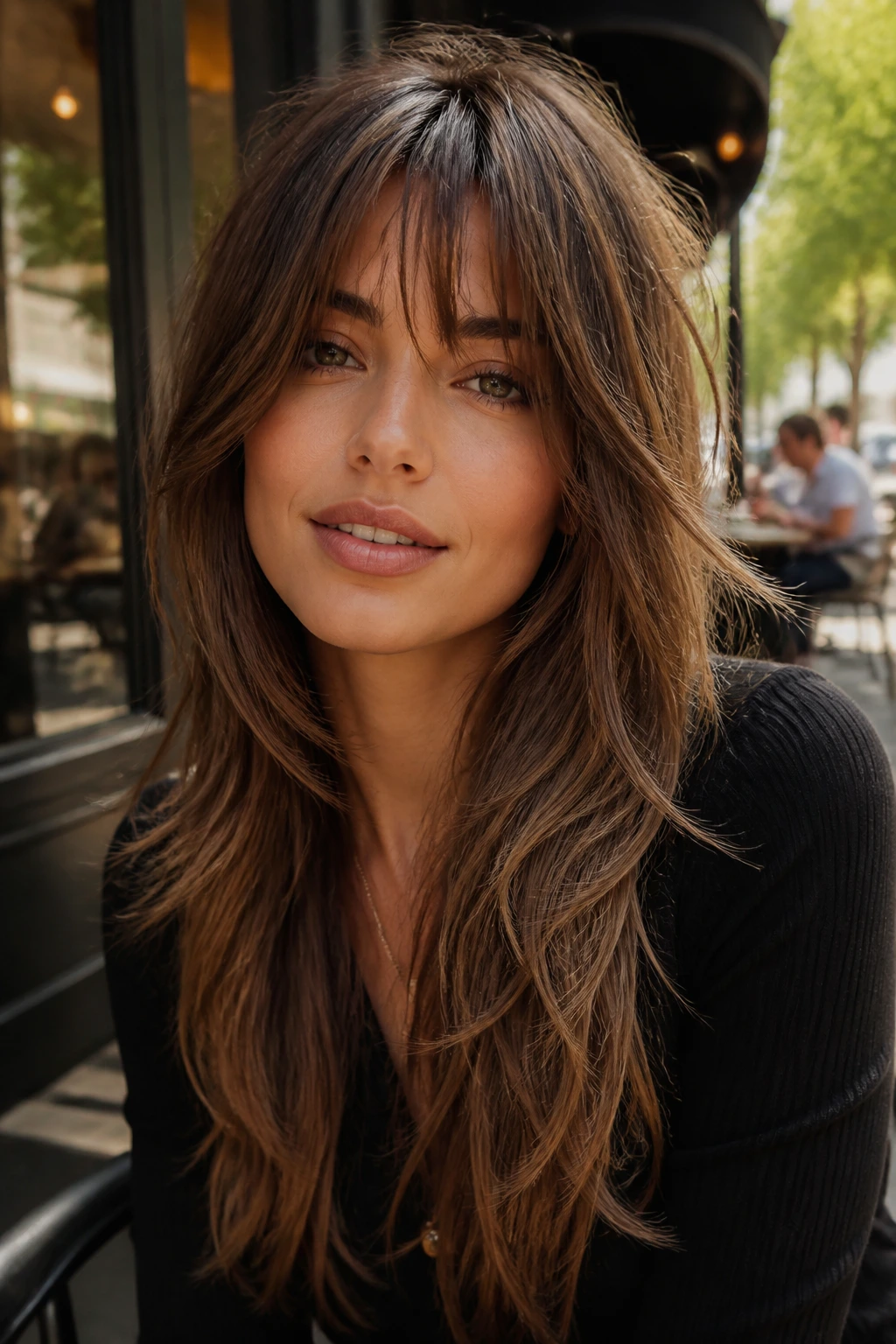
Razored ends aren’t for everybody, and I’m glad about that. They’re specific. But on the right hair, they create movement that a round face needs, especially when the bangs are textured and feathered instead of dense.
The key is to keep the texture controlled. Too much razor work near the cheeks can make the sides fray, which adds width where you don’t want it. The better version breaks up the ends, lets the fringe separate slightly, and keeps the front pieces longer than the rest of the bang area.
This works best on medium-to-thick hair with some natural bend. A bit of texture spray can make the movement show without turning the hair crunchy. If the cut looks airy in motion and not thin at the ends, you’re in the right zone.
28. Long Coils with Curly Fringe and Shape Layers
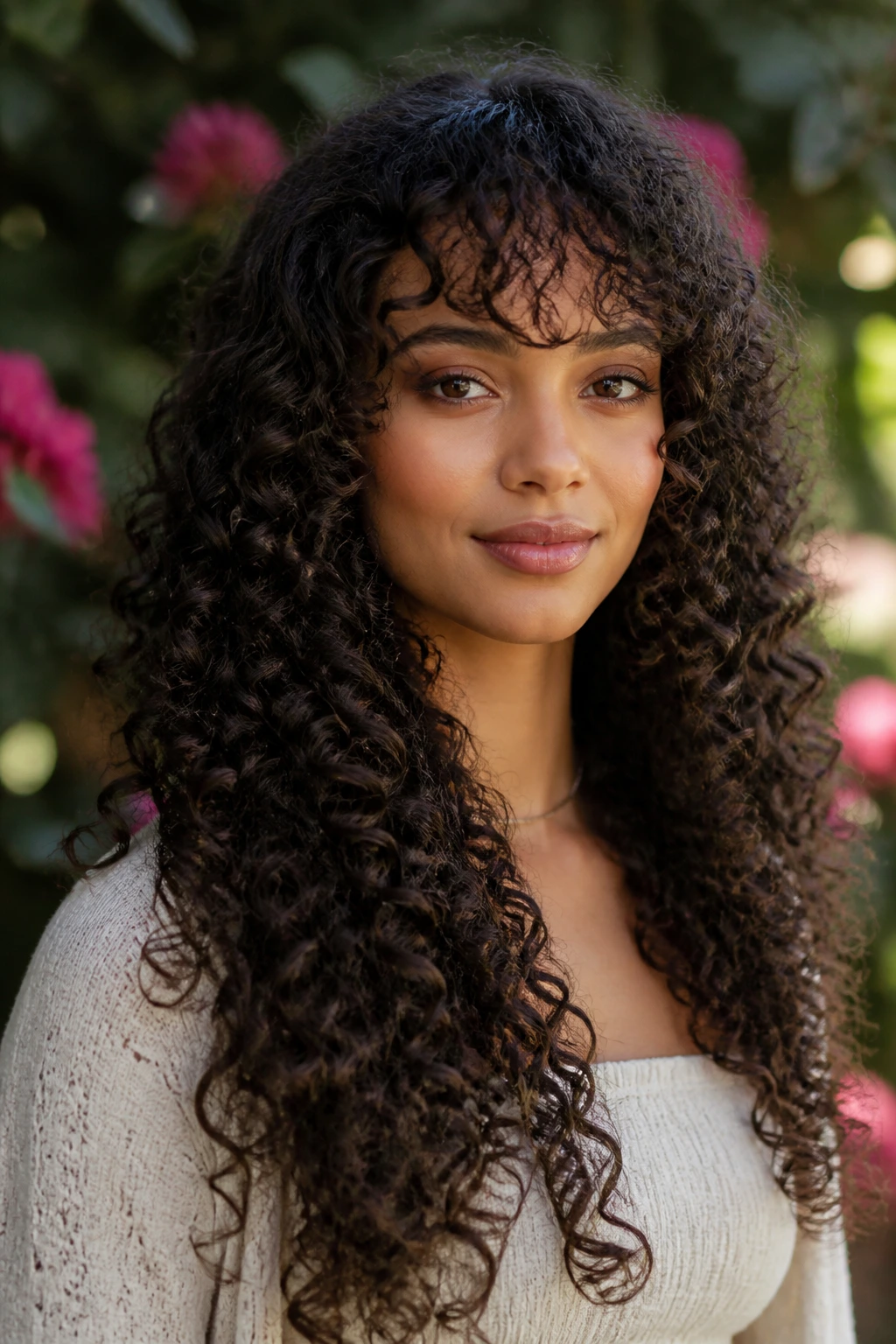
Curly and coily hair deserves its own answer, because the shape rules shift a little. Long coils with a curly fringe and smart shape layers keep the hair vertical and lively, which is exactly what a round face needs. The volume sits where it can be admired instead of where it widens the face.
The fringe should be cut dry and longer than the final target, since coils spring up. The shape layers need to work with the curl pattern, not against it. That means letting some curls fall forward at the temples while keeping other sections longer so the outline stays balanced.
This style is at its best when the curls are defined and the roots aren’t crushed flat. Use leave-in conditioner, a curl cream or gel that holds without stiffness, and a diffuser if you want extra lift. The cut should feel full, not bulky. That’s the line.
What Long Hairstyles With Bangs for Round Faces Need From a Cut
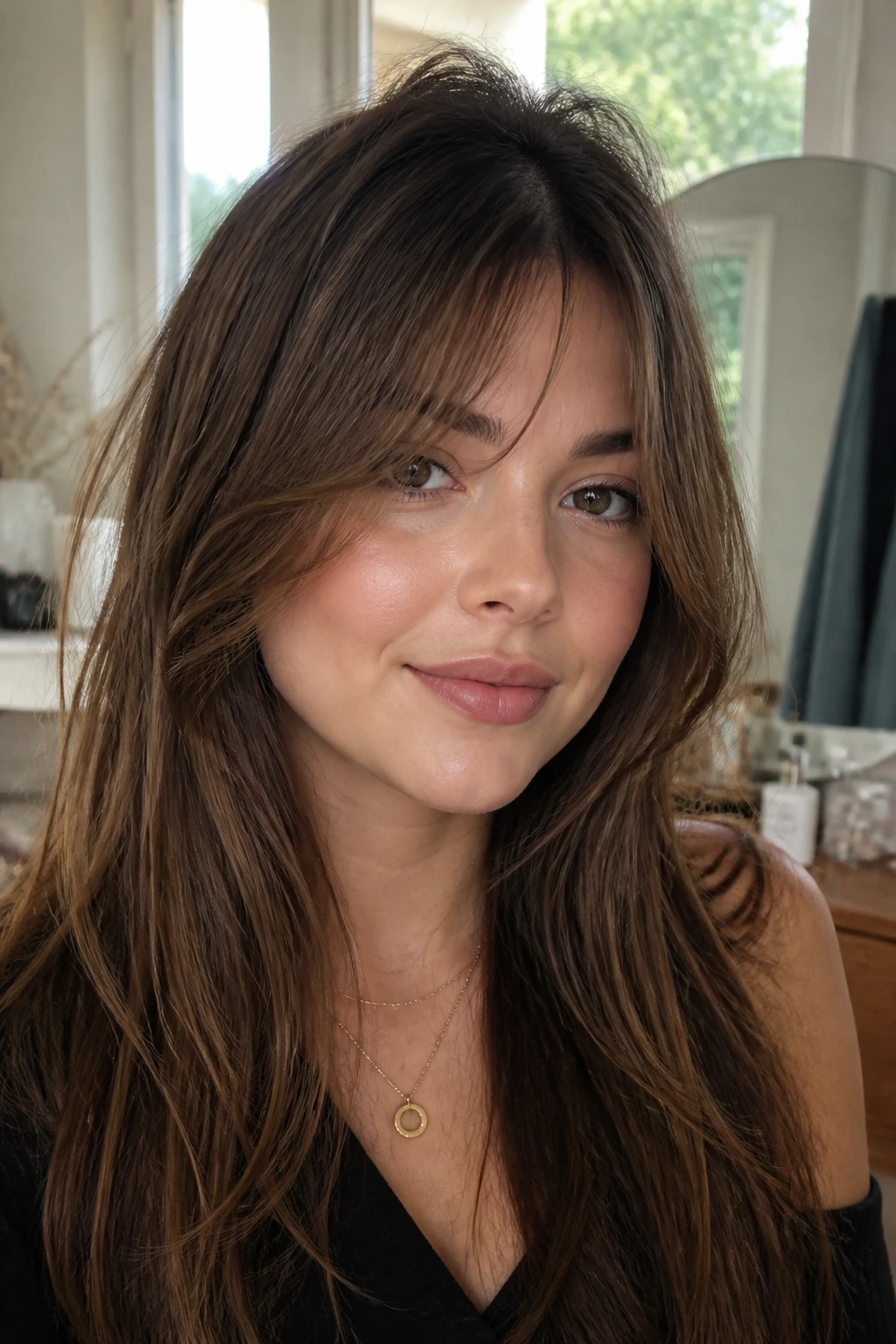
A flattering cut on a round face usually does three things at once. It keeps the shortest pieces away from the widest part of the cheeks, it adds some height at the crown, and it lets the length drop past the shoulders so the eye has somewhere to go. That’s the whole game, really.
The mistake people make is thinking any bang will do if the hair is long enough. Not true. A thick fringe that lands straight across the middle of the face can make long hair feel shorter, because it creates a strong horizontal line. A softer fringe, a deeper part, or a longer face frame gives the same hair a completely different shape.
I also like a cut that can survive imperfect styling. If you need a precise blowout every morning, the style may look good in photos and annoying in real life. The best cuts here still look intentional when the fringe has a little bend, the waves are a little loose, or the crown isn’t perfectly set.
Essential Tools and Products for the Shape
-
Blow dryer with a nozzle attachment: Directs the airflow so bangs and roots dry in the shape you want instead of puffing everywhere.
-
1.25-inch to 1.5-inch round brush: The sweet spot for lifting the fringe and turning the front pieces away from the face.
-
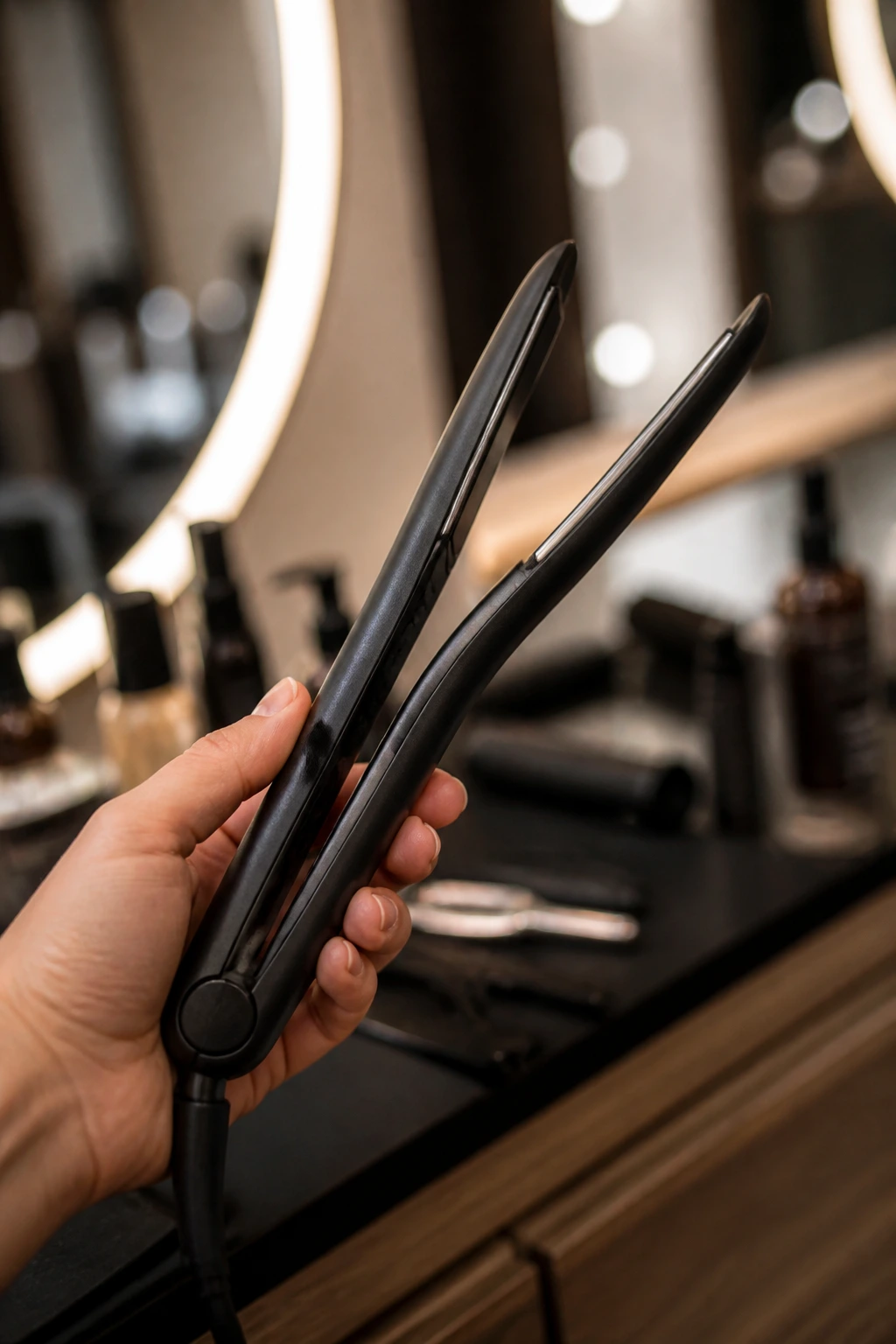
Flat iron with slim plates: Useful for a quick bend in bangs or a small curve through the front layers; don’t use it to iron the life out of the hair.
-
Duckbill clips or small sectioning clips: Hold the fringe in place while it cools so the shape stays instead of collapsing.
-
Heat protectant spray: Non-negotiable if you style bangs or front layers with heat more than once a week.
-
Lightweight mousse or root spray: Adds lift at the crown without making the fringe stiff.
-
Texturizing spray: Best for shag, wolf cut, and piecey fringe styles where movement matters more than polish.
-
Dry shampoo: Helps keep the fringe from separating into oily strands by midday.
-
Leave-in conditioner or curl cream: Important for wavy, curly, and coily versions so the front stays soft instead of frizzy.
-
Silk or satin pillowcase: Doesn’t style the hair for you, but it saves the bangs from waking up smashed.
How to Style Long Hairstyles With Bangs for Round Faces on Busy Mornings
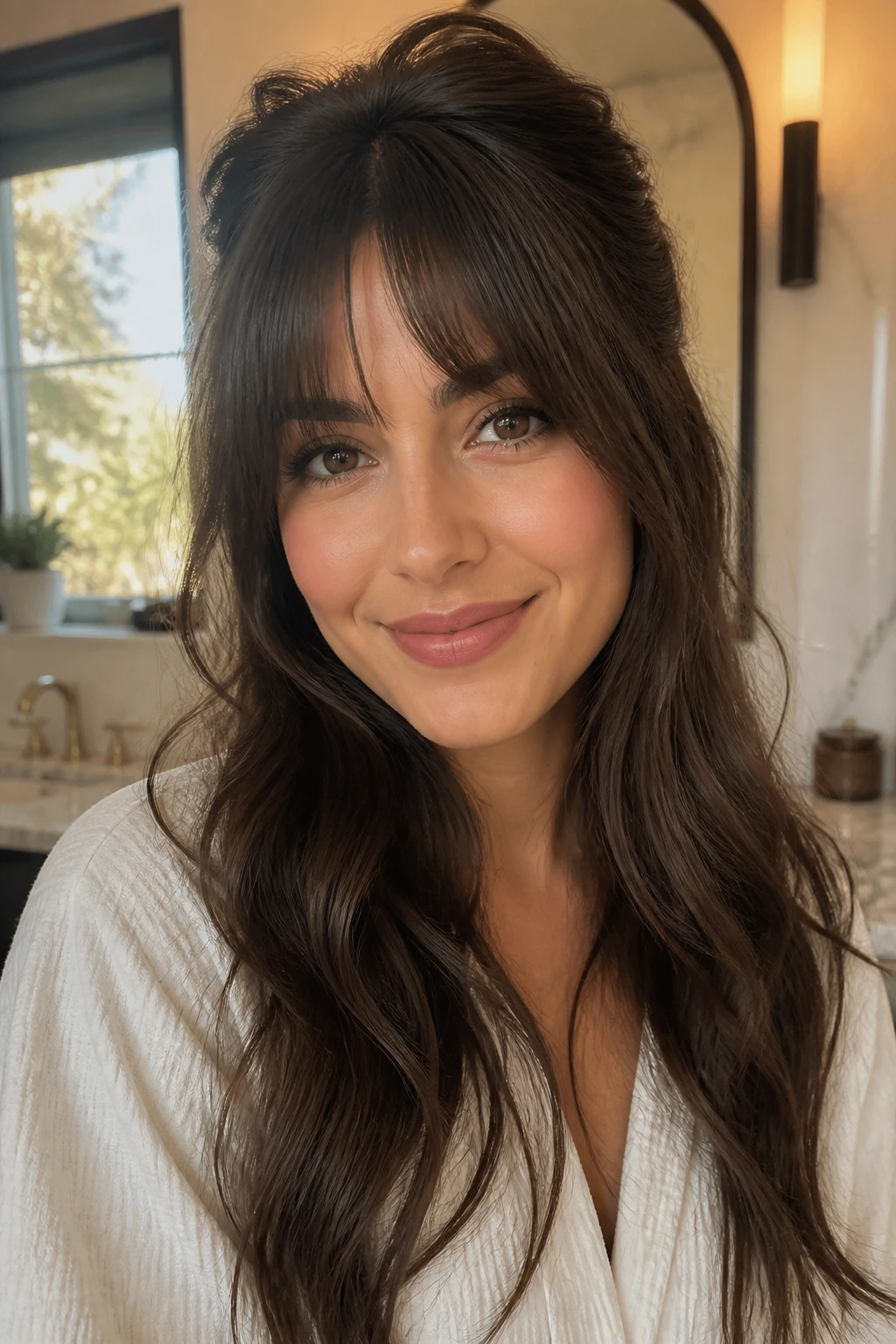
You do not need a 20-minute blowout every day for these cuts to work. You need the front to fall in the right direction and the crown to keep a bit of height. That’s a much smaller job.
The 5-Minute Version
Mist the bangs lightly, hit them with a round brush or flat iron for a single bend, and add dry shampoo at the roots if the hair is flat. For wavy styles, scrunch the mid-lengths and leave the fringe a little softer than the rest of the hair.
The Polished Version
Blow-dry the fringe first, then the crown, then the front layers. That order matters because bangs dry fast and set the face shape early. Clip the fringe while it cools, then brush it out with your fingers rather than a paddle brush.
The Air-Dry Version
Twist the front pieces away from the face and let them dry that way. It helps if the bangs are cut slightly longer, because they’ll bounce up a little as they dry. If your hair gets puffed at the roots, add a small amount of mousse there and leave the ends alone.
The Third-Day Fix
Use a water mist, a pea-sized bit of styling cream, and a quick re-bend at the fringe. Don’t soak the whole head. That’s how a good shape turns into a frizzy reset you didn’t ask for.
Extra Tips for Volume, Softness, and Hold
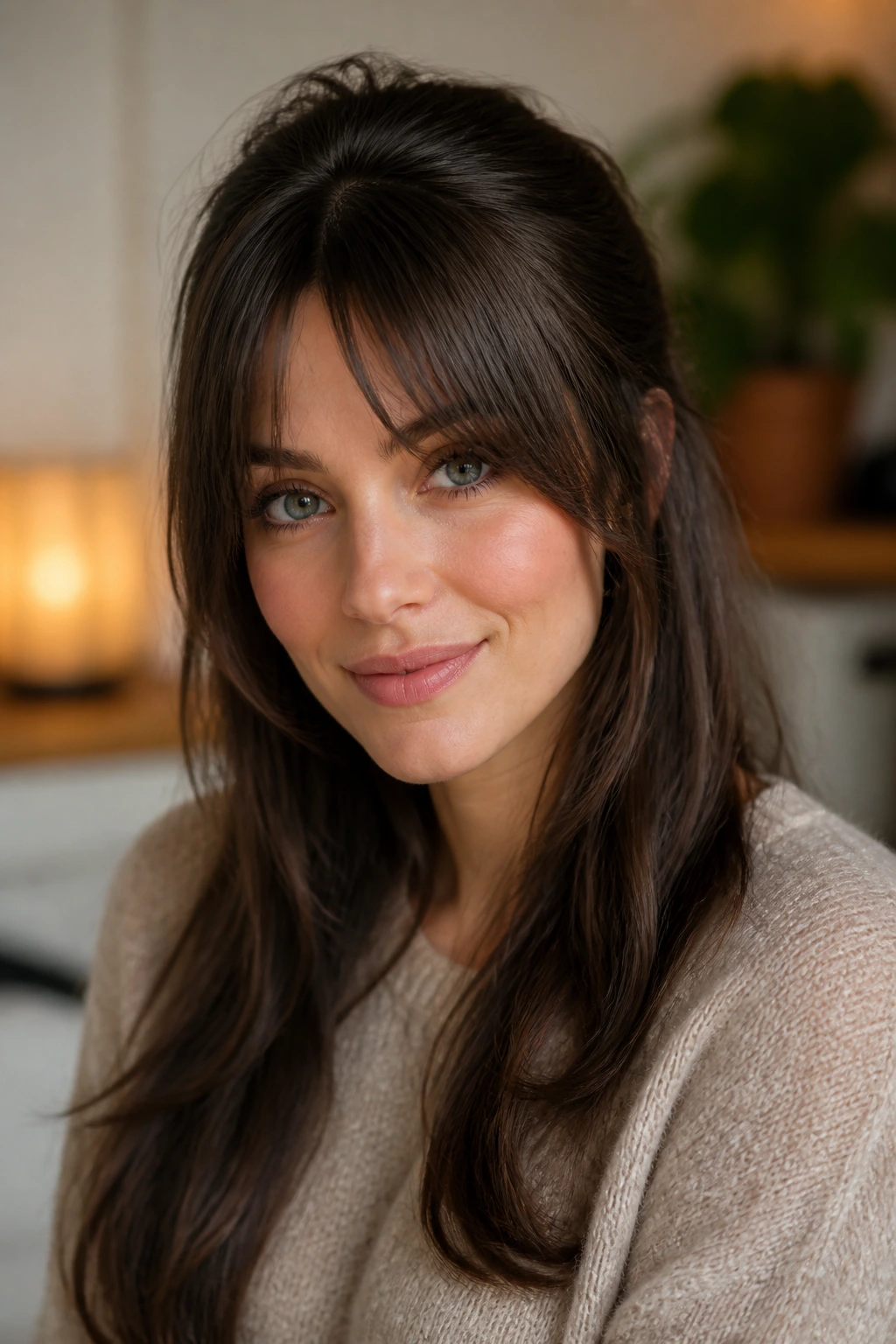
Root Lift: A little mousse at the crown beats a lot of product everywhere else. If the top goes flat, the face tends to look rounder, so lift where the eye starts.
Softness: Keep serum and oil away from the fringe unless the hair is coarse. A tiny amount on the ends is enough. The front pieces should move, not stick together.
Texture: For shaggy, wavy, or layered looks, apply texture spray at the mid-lengths and scrunch from underneath. That creates separation without puffing the hair out at the cheeks.
Hold: Clip the bangs in place while they cool. It’s a small old-school trick, but it works because the hair remembers the shape better once it’s set.
Weather Plan: If humidity is part of your life, ask for the fringe a touch longer than your ideal length. Hair tends to swell and spring, and a little extra length gives you room to work with.
Common Mistakes That Make a Round Face Look Wider
The first mistake is cutting the fringe too short in the center. Short bangs can look cool, but on a round face they often shorten the top third of the face and make the cheeks feel more prominent. The fix is simple: keep the shortest point near the brow or cheekbone, not halfway up the forehead.
Another problem is starting the face-framing layers too high. If the layers hit at the cheeks and stop there, they draw a ring around the face. Ask for the shape to begin lower—often below the chin or at least below the widest cheek point.
Flat roots cause trouble, too. When the top lies too close to the scalp, the face reads wider. A little lift at the crown makes a real difference.
Heavy product in the bangs is a sneaky one. It turns the fringe into a damp strip that separates weirdly and sticks to the forehead. Use less than you think. You can always add more; taking it out is a nuisance.
And then there’s the blunt, over-even edge. A straight line across the forehead or the jaw can work on some faces, but on a round shape it often adds width. Softening the edge with point cutting, feathering, or a longer side sweep usually helps.
Variations and Adaptations to Try
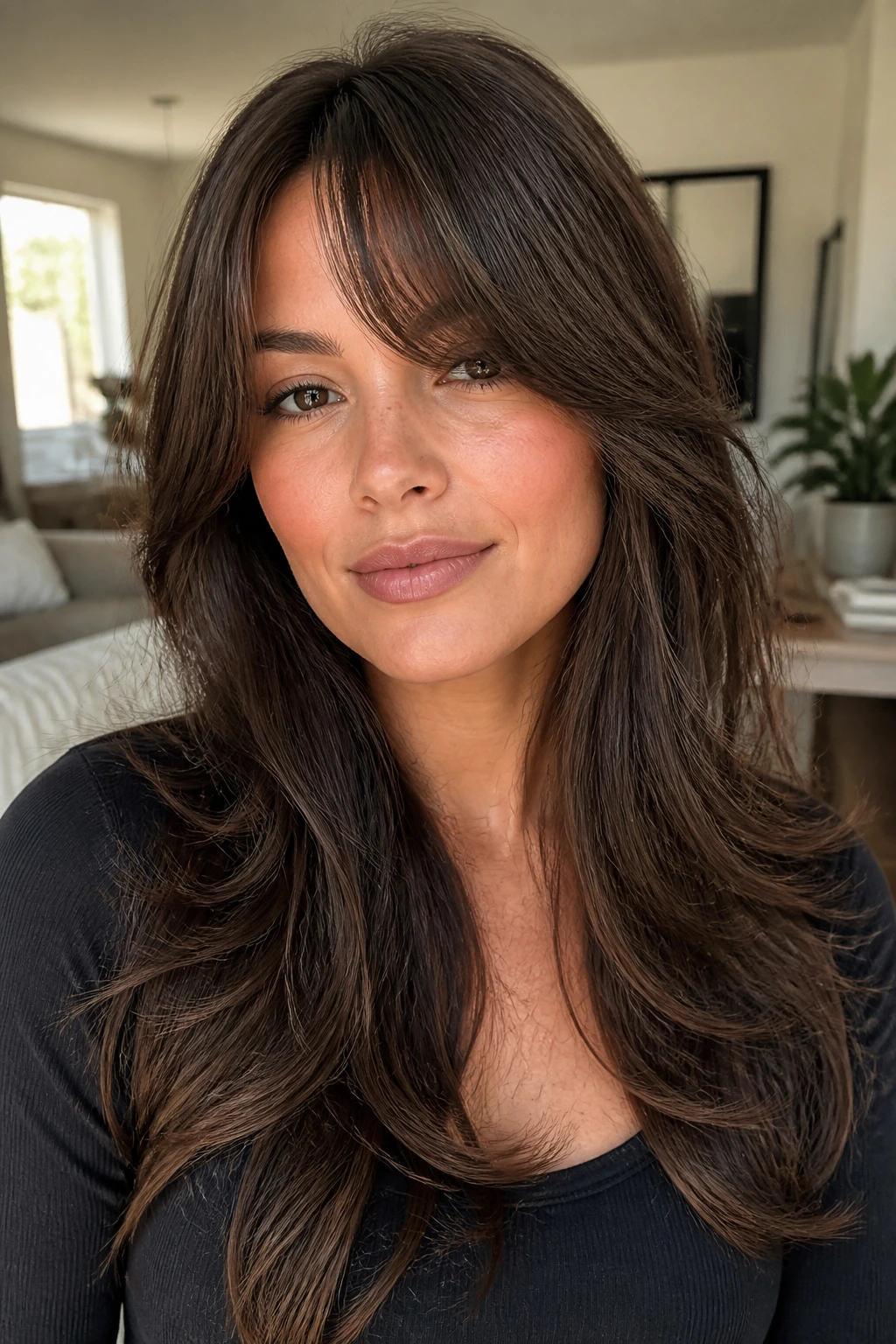
The Air-Dry Friendly Version: Keep the bangs longer, soften the ends, and let the front pieces fall in a loose bend. This is the low-effort option for wavy hair or anyone who hates styling tools.
The Fine-Hair Lift: Ask for see-through fringe, minimal layering, and a little extra height at the crown. Fine hair can get limp fast, so the cut has to avoid bulky bangs and over-thick face framing.
The Thick-Hair Relief Cut: Use more internal layering and lighter fringe weight. The goal is to remove bulk without making the hair frizzy or thin at the ends.
The Curly-Safe Shape: Cut the fringe dry, leave room for shrinkage, and let the layers follow the curl pattern. This keeps the face open without flattening the curls into a helmet.
The Grow-Out Version: Choose a side fringe or a long curtain bang that can drift into layers. If you think you might want to grow the bangs out later, this is a kinder starting point.
Trims, Grow-Out, and Second-Day Refresh
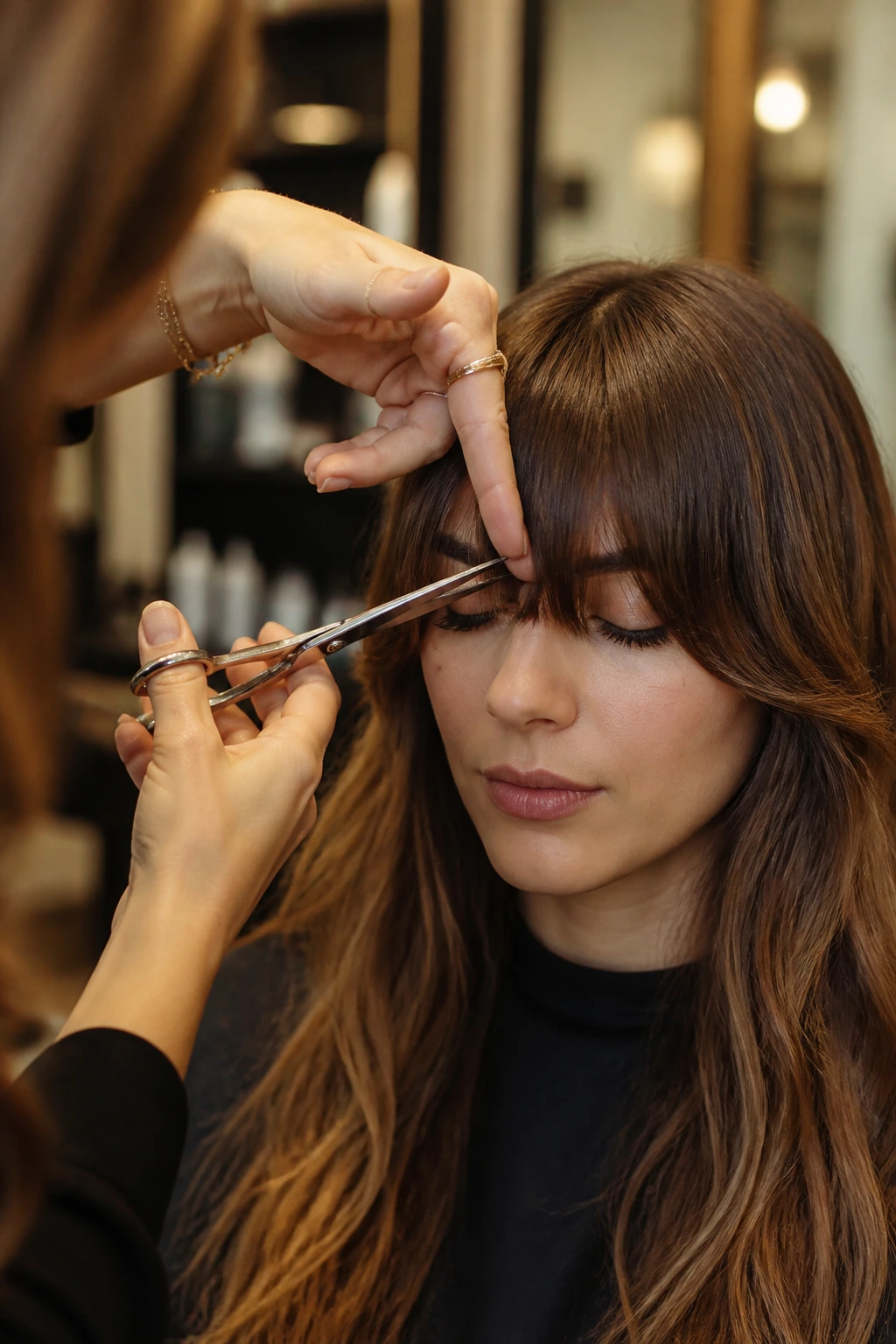
Bang trims happen more often than full cuts. Plan on a fringe touch-up every 3 to 5 weeks if you want the shape to stay crisp. Longer layers can usually go 8 to 12 weeks between shape-ups, depending on how fast your hair grows and how precise the cut is.
Second-day hair is your friend here. Dry shampoo at the roots, a quick pass of the round brush on the fringe, and a little re-bend at the front pieces can make the whole haircut look freshly done. Don’t start from scratch unless you really need to.
Growing bangs out is easiest when they were cut with some side-swept length to begin with. Clip the fringe to the side, blend it into the layers, and avoid re-cutting it too high in frustration. A lot of awkward grow-out phases happen because people keep “fixing” the bangs every week and removing the very length they need.
At night, a loose clip or a soft bend at the fringe can save you a morning. The hair doesn’t need a lot of help. It just needs not to be smashed flat for eight hours.
Frequently Asked Questions
Are curtain bangs the safest choice for a round face?
Usually, yes. Curtain bangs are forgiving because they open in the center and taper out toward the cheekbones, which helps the face look longer. They’re also easier to grow out than a blunt fringe.
Can blunt bangs work on a round face?
They can, but the version matters. A very thick, very straight line can shorten the face, while a softer, arched, or slightly textured blunt bang can look much better. Keep the rest of the hair long and moving so the fringe doesn’t carry the whole cut.
Where should face-framing layers start on a round face?
A good rule is to start them below the widest cheek point or just under the chin. Layers that begin too high can wrap around the face and make it look wider. The sweet spot is usually lower than people expect.
Do long hairstyles with bangs work on curly hair?
Absolutely, but the fringe needs to be cut for the curl pattern. Curl-by-curl or dry cutting helps the bangs land in the right place once they spring up. A straightened curly fringe often looks fussy by the end of the day.
What if my bangs split down the middle?
That’s often a growth pattern issue, not a bad haircut. A stylist can adjust the weight, length, or starting point of the fringe, and a quick blast of heat at the roots can help train the direction. If the split keeps coming back, a side fringe may suit you better.
How often should I trim the bangs?
Most fringes need attention every 3 to 5 weeks if you want them to stay neat. The rest of the haircut can usually go longer between trims. If you’re growing them out, trim less often and let the front blend into the layers.
Will a center part make my round face look wider?
Not always. A center part can work if the front pieces are long enough to frame the face and the crown has some lift. The part itself matters less than where the bangs and layers land.
What’s the easiest low-maintenance version of this whole look?
A long curtain bang with soft layers is probably the easiest starting point. It grows out well, works with loose waves, and doesn’t need a precise daily blowout to look intentional. If you want even less upkeep, choose a side fringe instead of a heavy full bang.
The Fringe That Fits
The best haircut for a round face isn’t the one that hides the face. It’s the one that changes the line of it. Long lengths, the right fringe, and a little crown lift can make a face feel longer, sharper, softer, or all three at once depending on how you style it.
If you want the simplest starting point, ask for curtain bangs that hit around the cheekbones and long layers that begin below the face’s widest point. That one move gives you room to play later—swept to the side, brushed out, waved, pinned up, or left a little undone on purpose.
And that’s the part I like most: these cuts aren’t rigid. They bend with your texture, your routine, and your mood, which is exactly what a good haircut should do.
