



Lesbian long haircuts for wavy hair work best when the cut follows the bend instead of fighting it. That sounds obvious until you sit in a chair with hair that’s halfway between straight and curly, and the wrong scissor work turns your lengths into a triangle, a mushroom, or a heavy curtain that never moves. Wavy hair wants shape. It wants air in the right places, weight left in the right places, and a front that does something interesting when you turn your head.
What makes this topic fun is how many directions it can go. A long wave can read soft and romantic, sharp and androgynous, shaggy and cool, or sleek with a blunt edge that feels almost graphic. The cut does most of the talking. Styling matters, sure, but the bones of the haircut decide whether your waves spring, stretch, or collapse by lunch.
And that’s the real trick with these lesbian long haircuts for wavy hair: the best ones don’t try to erase texture. They give it a shape worth having. Some keep the length heavy and glossy. Others carve out the crown, open the face, or taper the ends so the whole thing moves when you walk. Once you start seeing the differences, the same shoulder-length-to-waist-length hair stops looking like “long hair” and starts looking like a point of view.
Why These 38 Cuts Keep Waves Looking Fresh
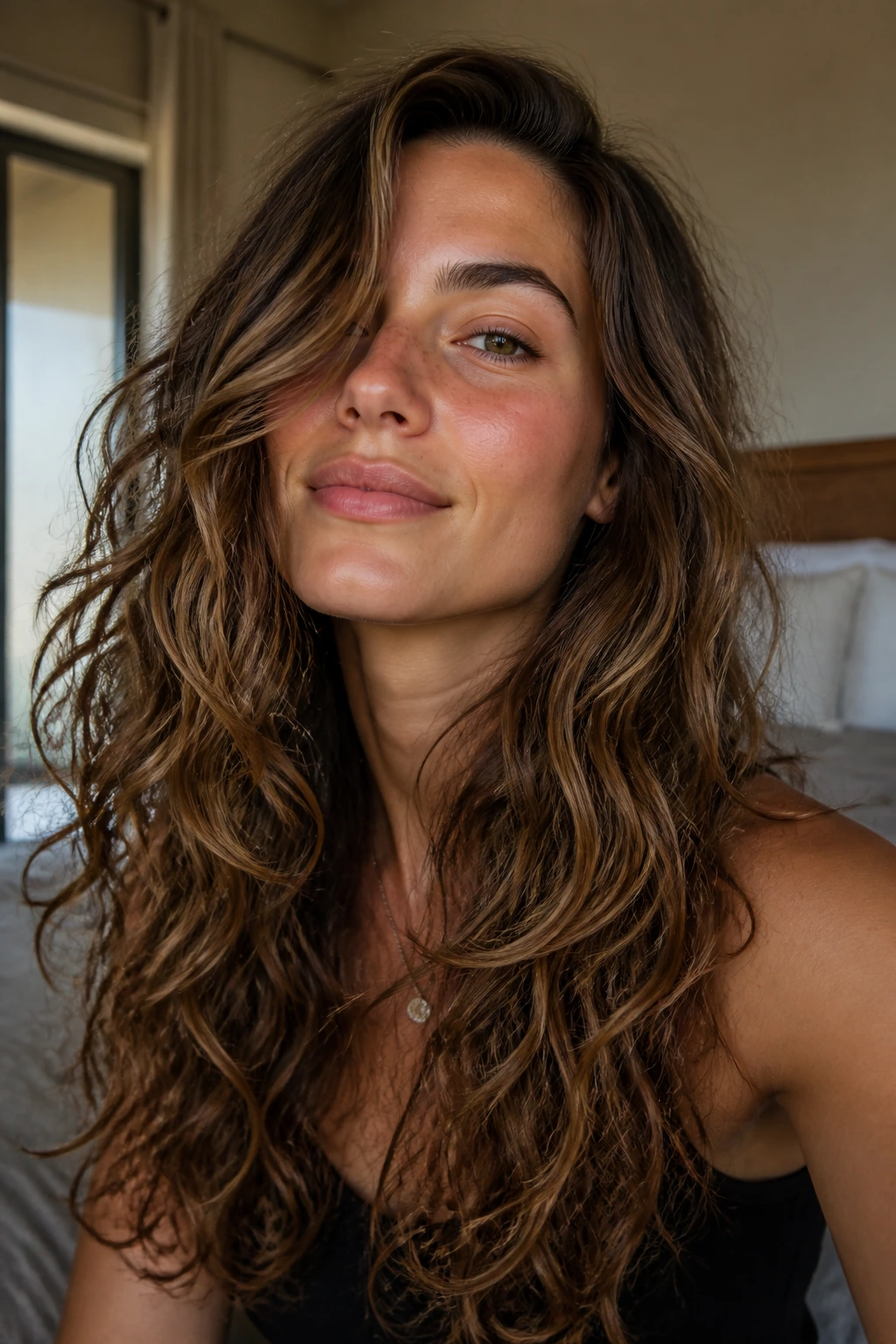
Wave-Friendly Weight: Long wavy hair needs weight in the ends and lift near the top, or the silhouette goes flat and boxy.
Built-In Movement: The right layers let the bends stack naturally, so your hair looks alive even when you air-dry and leave the diffuser in the drawer.
Style Range: Some of these cuts lean soft and feminine, some feel sharper and more masc, and a few sit right in that satisfying middle where the shape does the flirting.
Lower Fuss: A good long wave cut can look done with a little leave-in cream and a scrunch, which is a relief on days when you’d rather not negotiate with a round brush.
Grow-Out Friendly: The better shapes here still look decent at 8, 10, even 12 weeks past a trim, which matters when you want length and you don’t want the salon every month.
1. Soft Long Layers
Soft long layers are the quiet workhorse of this whole category. They keep the length, but they stop the ends from hanging like one heavy sheet. On wavy hair, that makes a huge difference: the bends show up instead of getting dragged down.
Ask for layers that start below the chin and blend gradually into the lower half of the hair. If the shortest pieces are too high, the cut can start puffing around the cheekbones. If they’re too low, you lose the lift you were trying to create.
Why it works on waves
The softest versions of this cut let 2A, 2B, and looser 2C waves keep their shape without losing polish. It’s the haircut I’d hand to someone who wants movement but doesn’t want the shaggy look.
2. Butterfly Cut
The butterfly cut gives you two things at once: shorter face-framing layers that create volume around the top, and long lengths that stay dramatic in back. On wavy hair, it can look airy without feeling thin.
The trick is keeping the front pieces long enough to blend into the rest of the hair. Too short, and the cut jumps into feathered nineties territory fast. Too long, and it loses the whole butterfly shape.
If you like the look of a blowout but your waves refuse to behave like one, this cut gives you a better starting point. The front lifts. The back stays long. That balance is the whole point.
3. Curtain Bangs with Long Waves
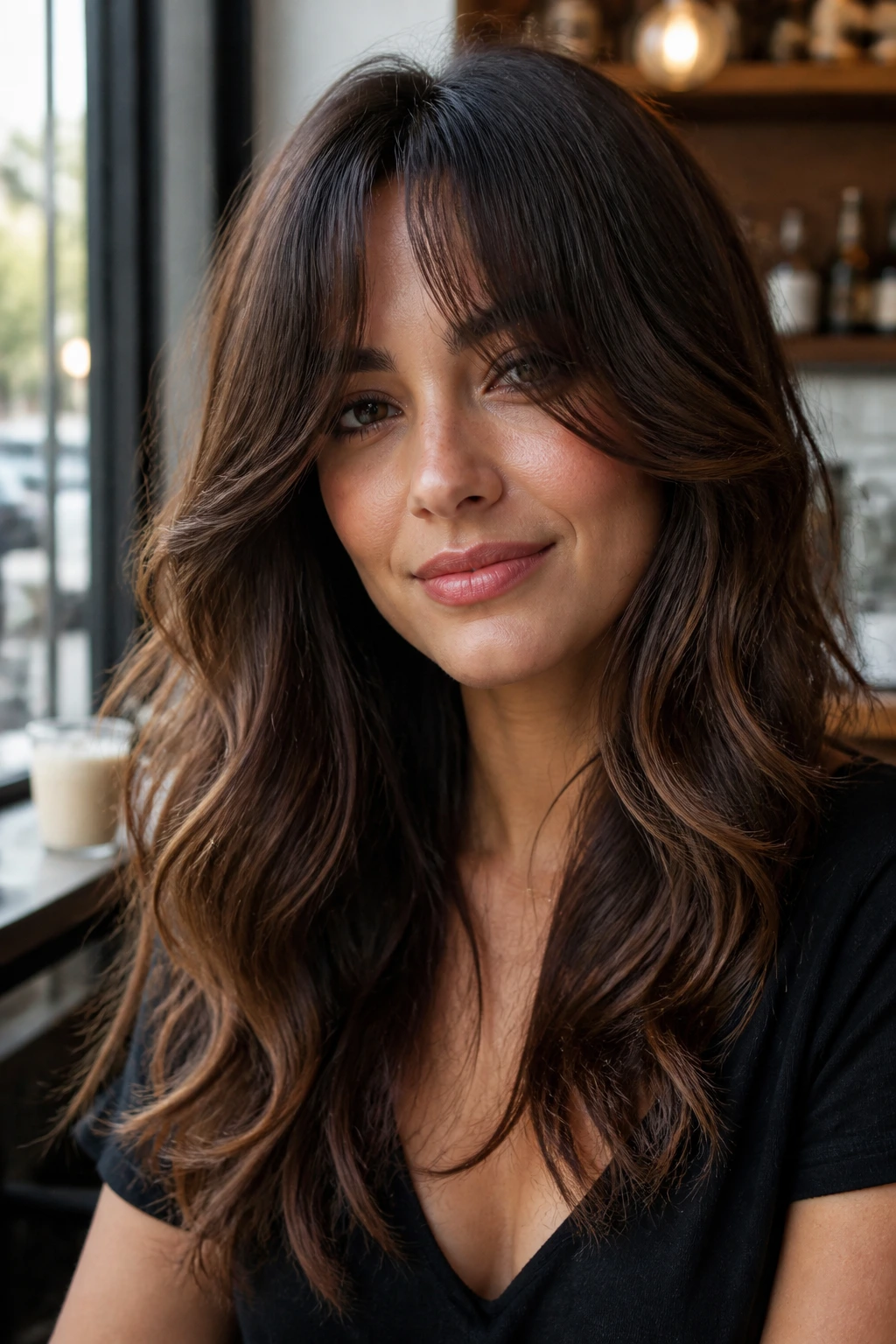
Curtain bangs are a favorite for a reason: they open the face without committing you to a heavy fringe. On long wavy hair, they split nicely around the cheekbones and blend into the side layers.
The best version isn’t blunt. It’s soft enough to tuck behind the ears on lazy days, but still present enough to frame glasses, strong brows, or a jawline you like showing off.
If your waves form a little S-shape near the front, curtain bangs tend to cooperate instead of fighting back. They are a safer bang choice than a straight-across fringe, which can puff up or separate if your wave pattern is strong.
4. U-Shaped Hemline
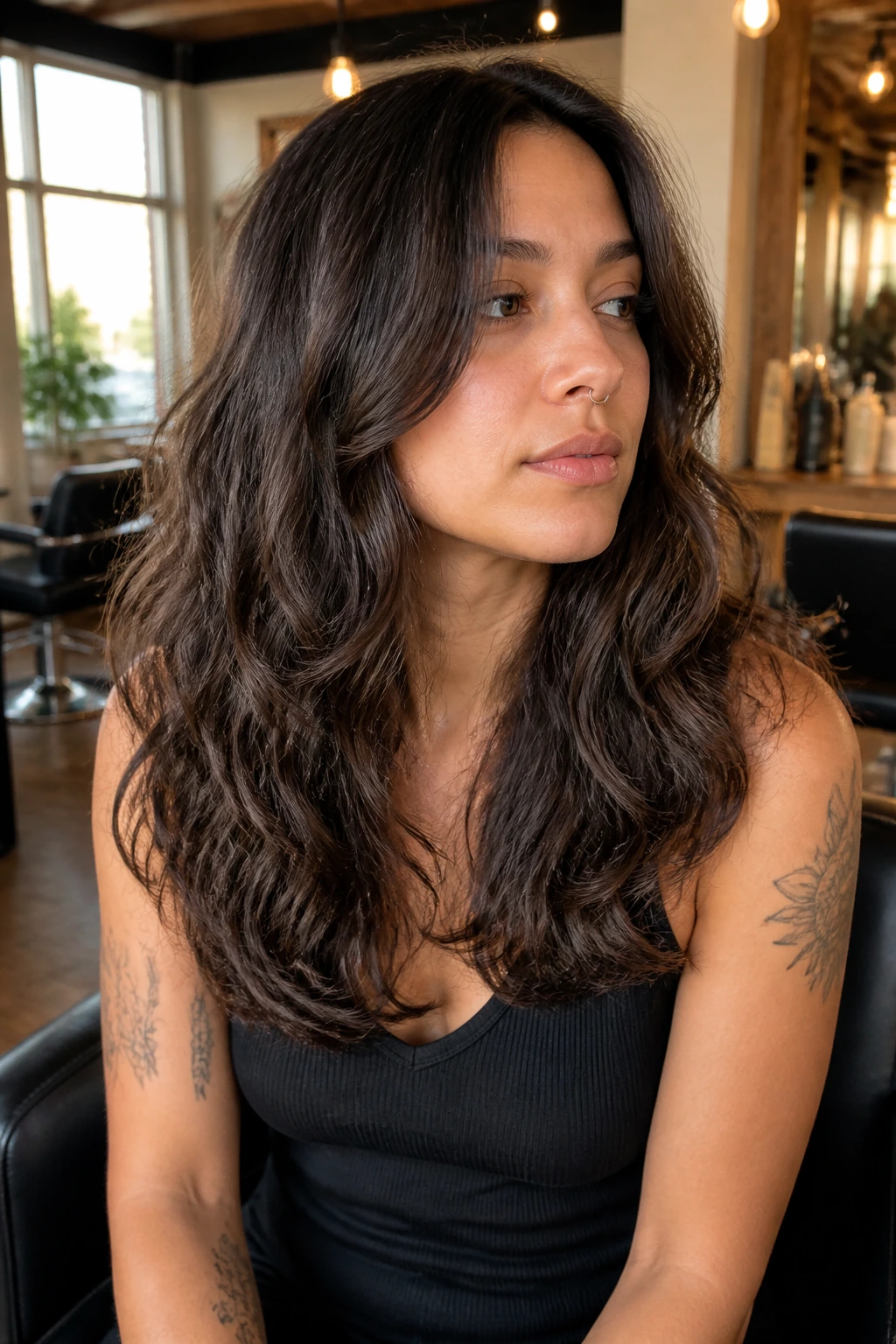
A U-shaped cut keeps the perimeter rounded, which makes the whole style feel soft and full. It’s a subtle shape, but on long waves it avoids that harsh “cut straight across and hope for the best” effect.
This is one of my favorite choices for people who want their hair to look thick at the bottom. The curve keeps the eye moving, and the ends don’t get visually chopped off.
If you wear your hair down most of the time, a U-shape gives the lengths a clean finish without making them look severe. It’s low-drama. In a good way.
5. V-Shaped Hemline
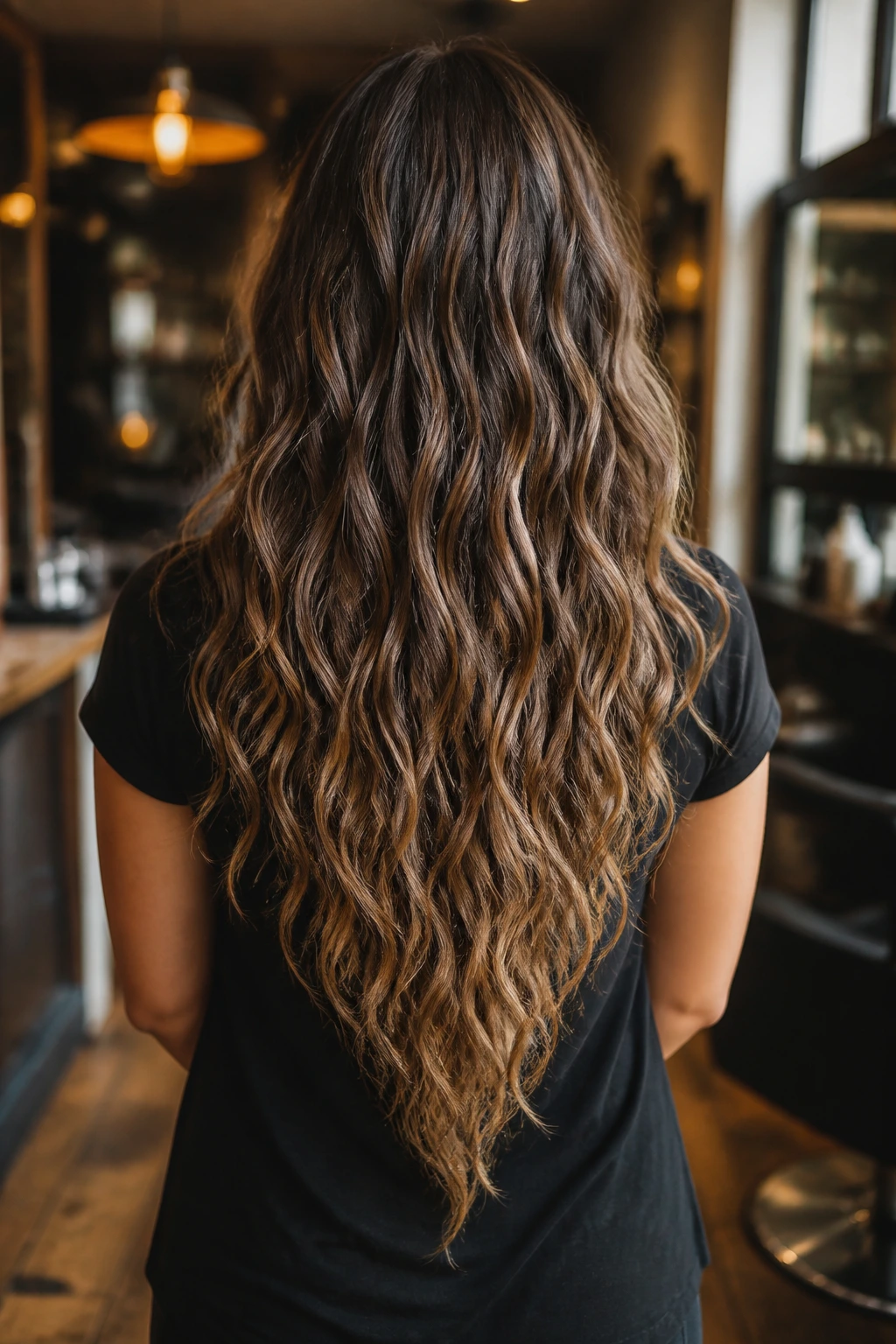
The V cut brings the opposite energy: sharper, longer-looking, a little more edge. The back tapers to a point, which makes long wavy hair feel narrower at the hem and more dramatic in motion.
It works especially well if your hair is thick and tends to spread wide at the bottom. The V shape pulls everything inward and makes the lengths look longer than they are.
For a lot of people, this is the cut that scratches the itch for something a little more intentional without going full shag. It’s long. It’s clear. It knows where it wants to end.
6. Long Shag
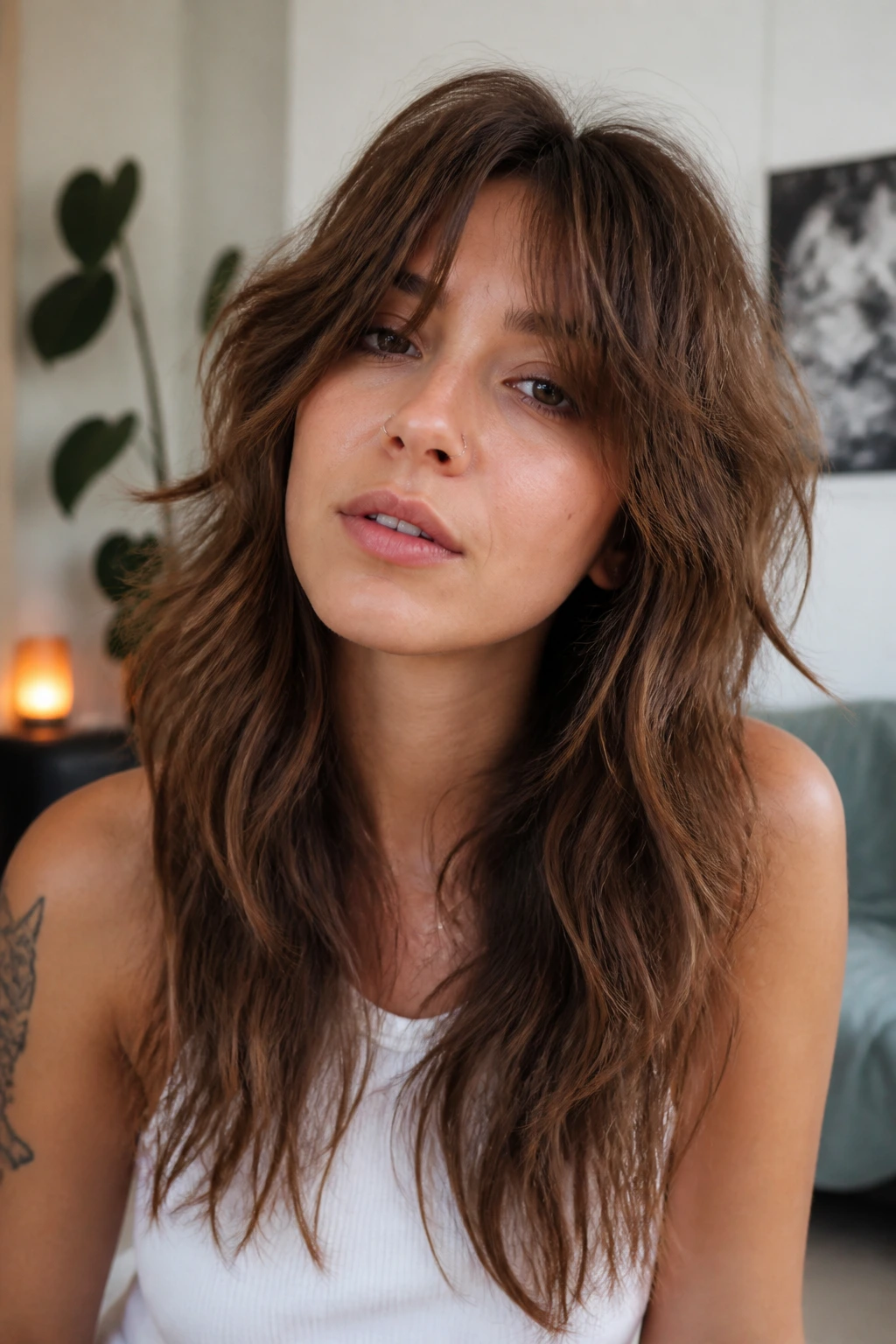
A long shag is where wavy hair starts having a little attitude. The layers are more broken up, the ends are more piecey, and the whole shape feels lived-in instead of polished.
This cut likes texture spray, scrunching, and a bit of mess. If you brush it to perfection, you flatten the point of the whole thing. The point is movement. The point is a little disorder.
Best for:
- Hair that gets heavy fast.
- Waves that look limp when the length gets too uniform.
- People who like a cut that looks better a day after washing.
7. Wolf Cut for Length
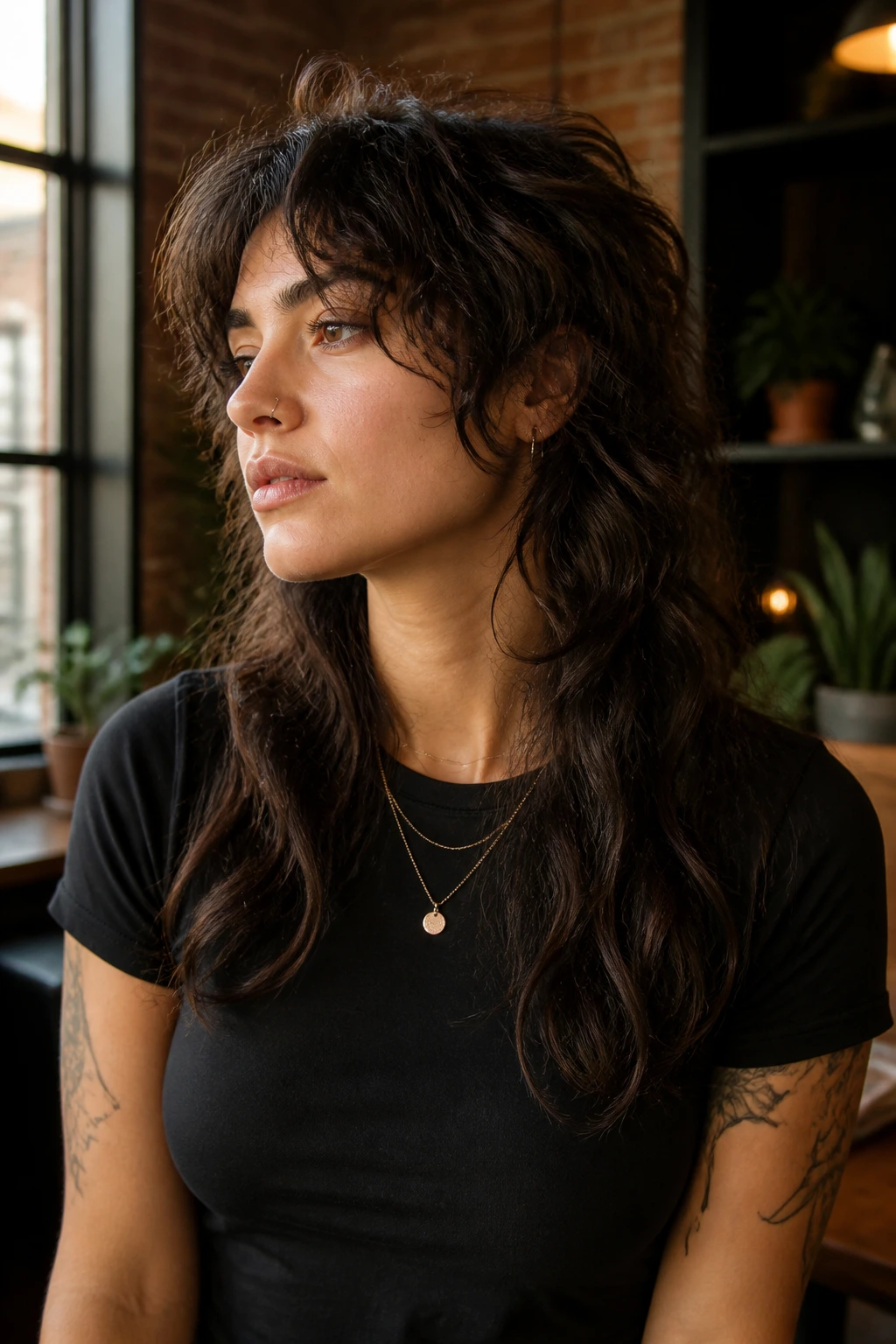
The wolf cut keeps the crown shorter and the lengths longer, which gives wavy hair a kind of controlled wildness. It’s a little more dramatic than a shag, and that’s exactly why some people love it.
The crown layers lift the top, while the lower lengths keep enough weight to avoid a mullet collapse. If the balance is right, the result is messy in a very deliberate way.
This cut can lean more feminine or more androgynous depending on how much fringe and face-framing the stylist leaves. That flexibility is part of the appeal.
8. Face-Framing Layers
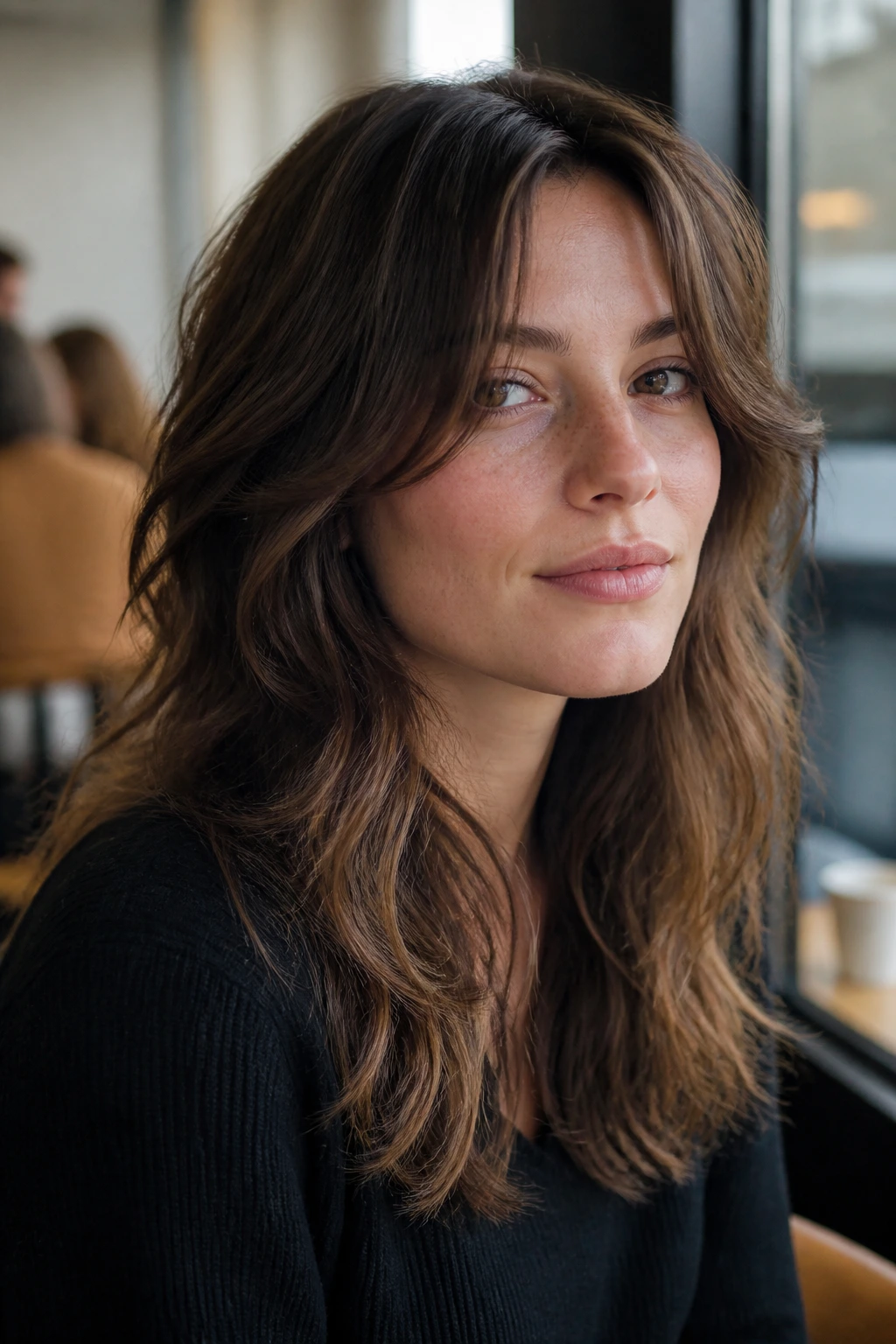
Face-framing layers are the easiest way to change the mood of long wavy hair without sacrificing length. Pieces around the cheeks, jaw, and collarbone break up the bulk and give the front a clear shape.
They’re especially good if you wear your hair tucked, clipped back, or half-up a lot. You still get the long silhouette, but the front doesn’t vanish into a single heavy curtain.
If you have glasses, earrings, or a face shape you want to emphasize, these layers do a lot of quiet work. Not flashy. Just effective.
9. Invisible Layers
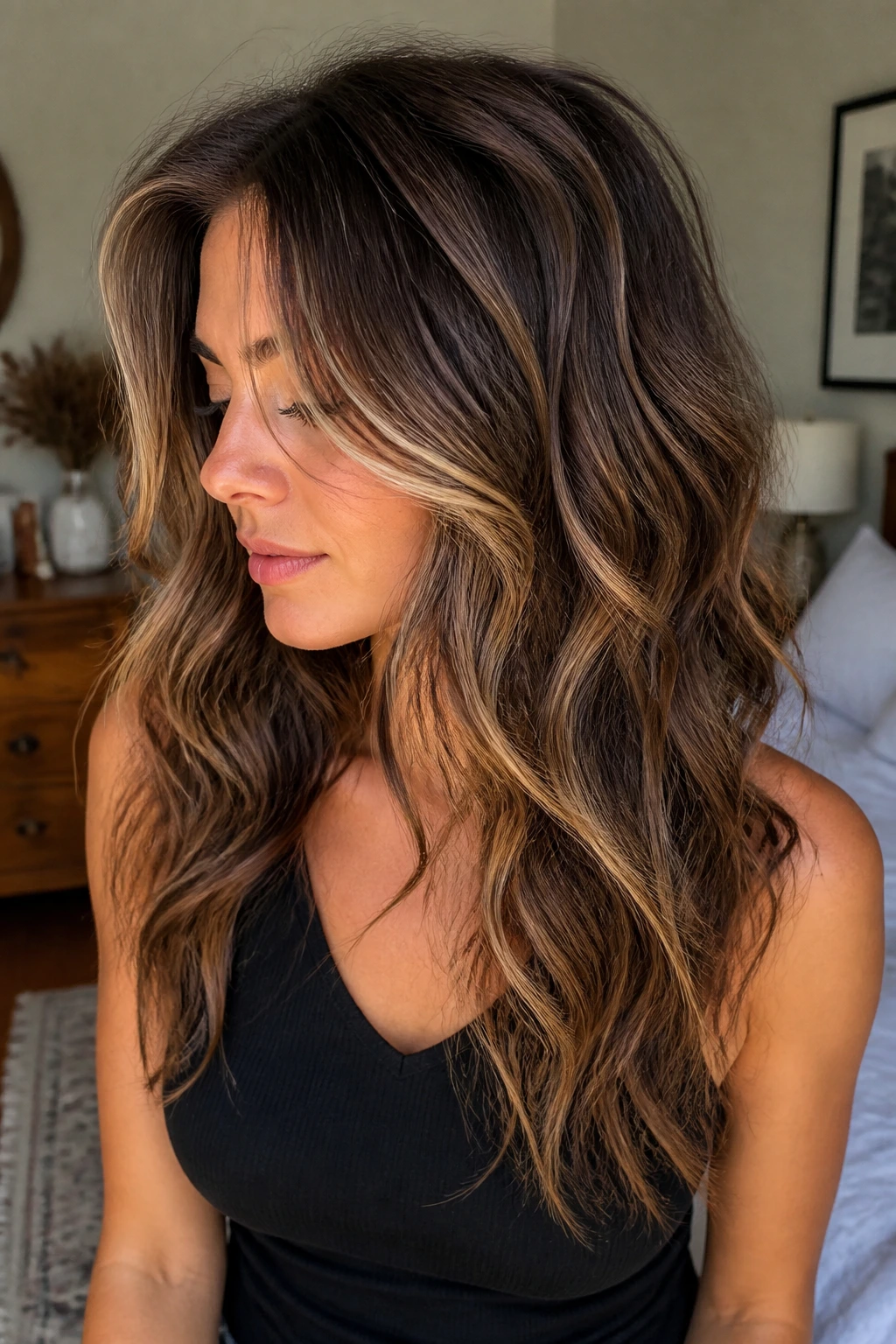
Invisible layers are for people who want movement without obvious steps. The haircut is shaped inside the length, so the waves fall better but the outline stays smooth.
This is a smart pick for finer wavy hair that gets shredded by aggressive layering. You keep the perimeter, which helps the ends look fuller, and you still remove enough bulk to keep the wave pattern from collapsing.
Ask for internal layering rather than visible chopping. A good stylist will know the difference immediately. If they don’t, that’s a useful warning sign.
10. Rounded Layers

Rounded layers curve softly around the head, which creates a fuller silhouette through the mid-lengths. On wavy hair, that roundness keeps the cut from feeling boxy or bottom-heavy.
It’s a clean choice if you want softness but not a shag. The shape reads polished, but not stiff. The waves still get to move.
Rounded layering also plays nicely with side parts and off-center styling. The curve changes as you move, which is the sort of thing that makes long hair feel expensive even when it isn’t.
11. Feathered Ends
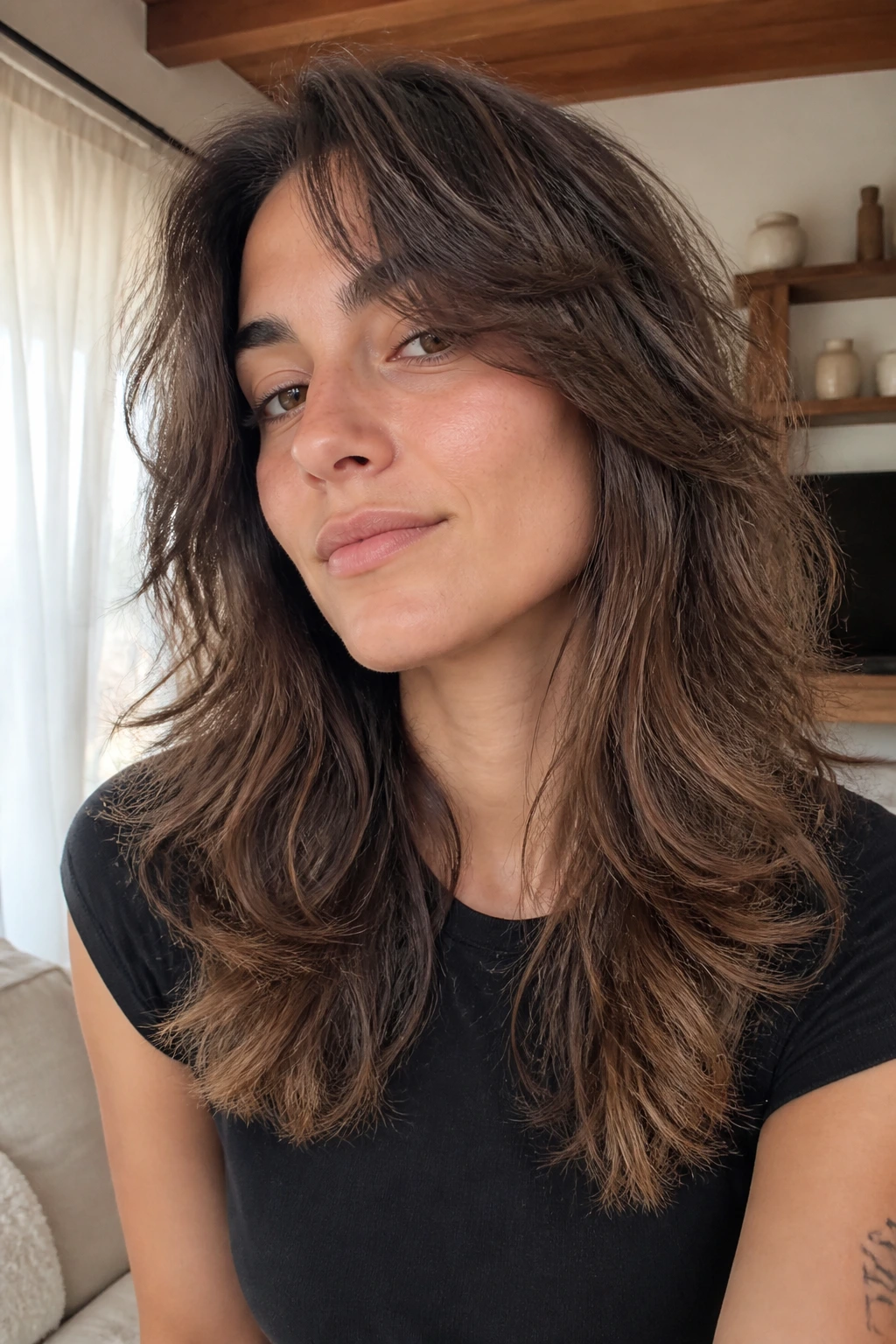
Feathered ends lighten the bottom without making the cut look thinned out. The ends separate softly, which is useful when your wave pattern wants to puff in one place and flatten in another.
This style works best when the feathering is controlled, not overdone. If the razor work goes too far, the ends can get fuzzy. A little feathering goes a long way.
I like this for medium-thick wavy hair that needs motion more than it needs shape correction. It breathes. That’s the appeal.
12. Razor-Cut Ends
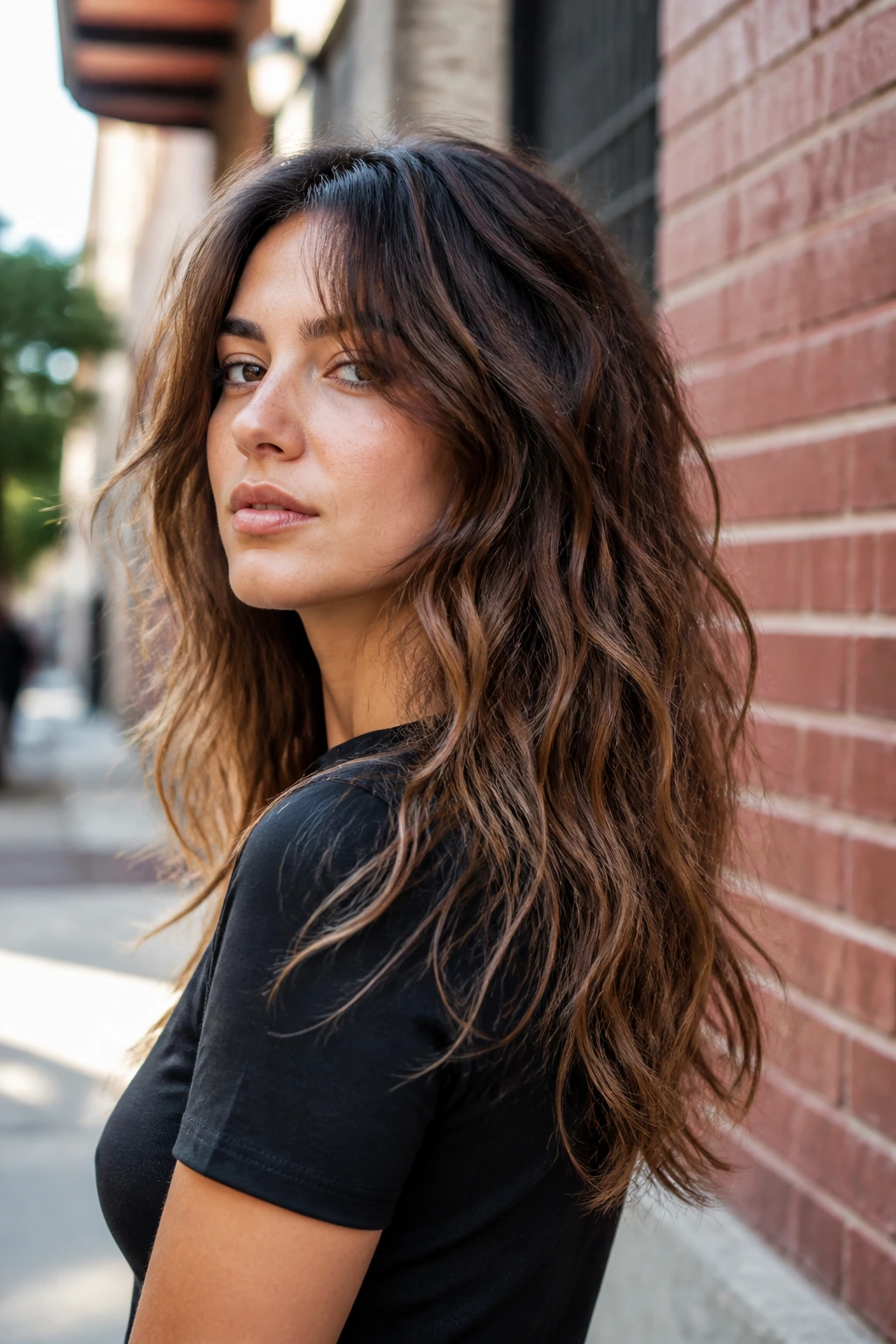
Razor-cut ends can make thick wavy hair feel lighter and more fluid, especially if the hair has a lot of density at the bottom. The finish is softer and a bit more undone than scissors alone.
But this is not the cut to ask for if your hair frizzes easily or your waves are already dry at the ends. Razor work can expose roughness fast. On the right hair, though, it gives a lovely airy finish.
What to tell your stylist
Ask for razor shaping only on the densest parts, not every inch of the perimeter. That keeps the softness without turning the whole cut frizzy.
13. Bottleneck Bangs
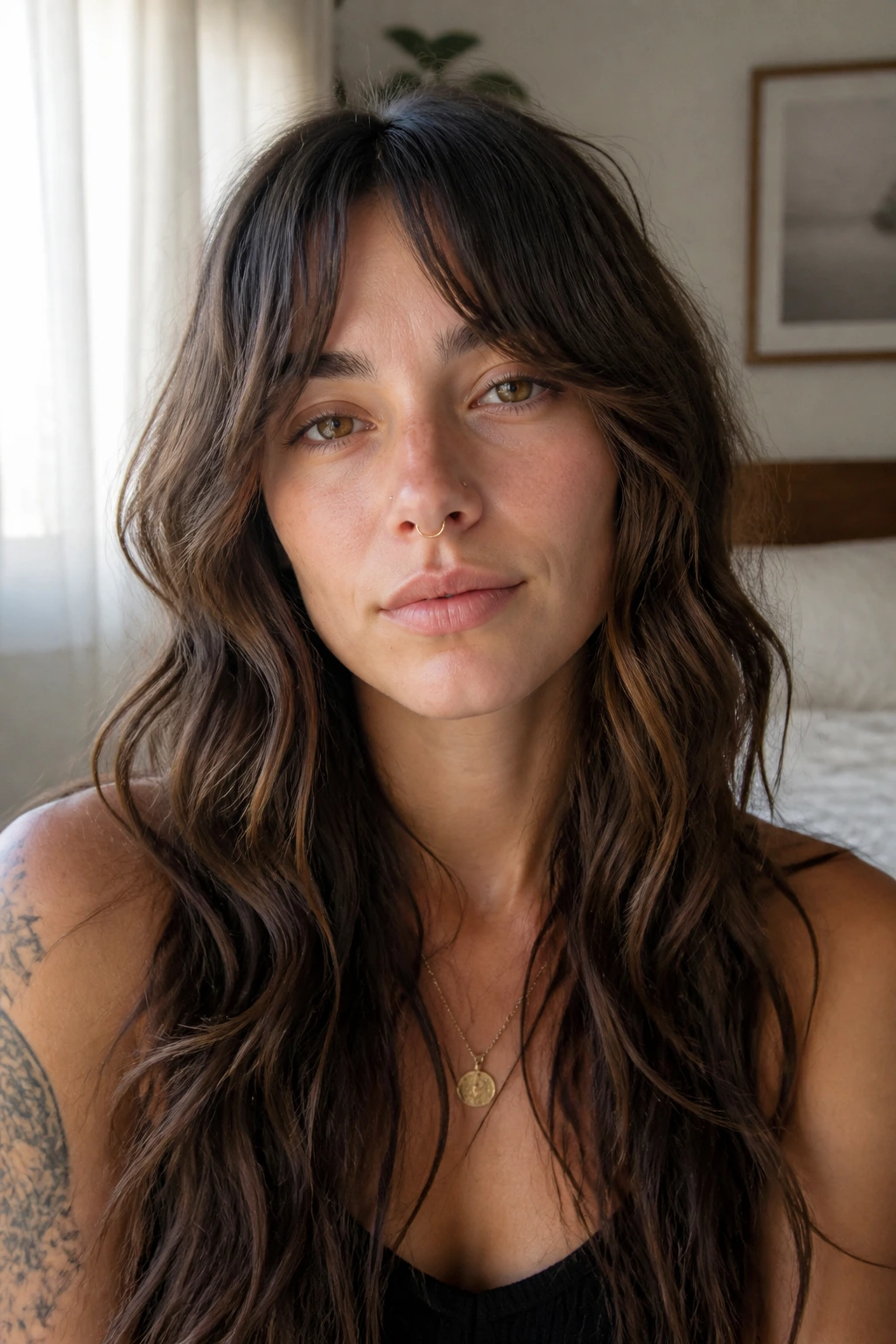
Bottleneck bangs start narrow in the center and open wider toward the cheeks. On long wavy hair, they’re a nice middle ground between curtain bangs and a fuller fringe.
They frame the face without covering it. That matters if you want to keep the front alive but not heavy. The shape is also easier to grow out than a blunt bang, which saves a lot of regret.
If your waves split naturally at the center, these bangs tend to fall into place with less arguing. Less arguing is always a plus with fringe.
14. Side-Swept Fringe
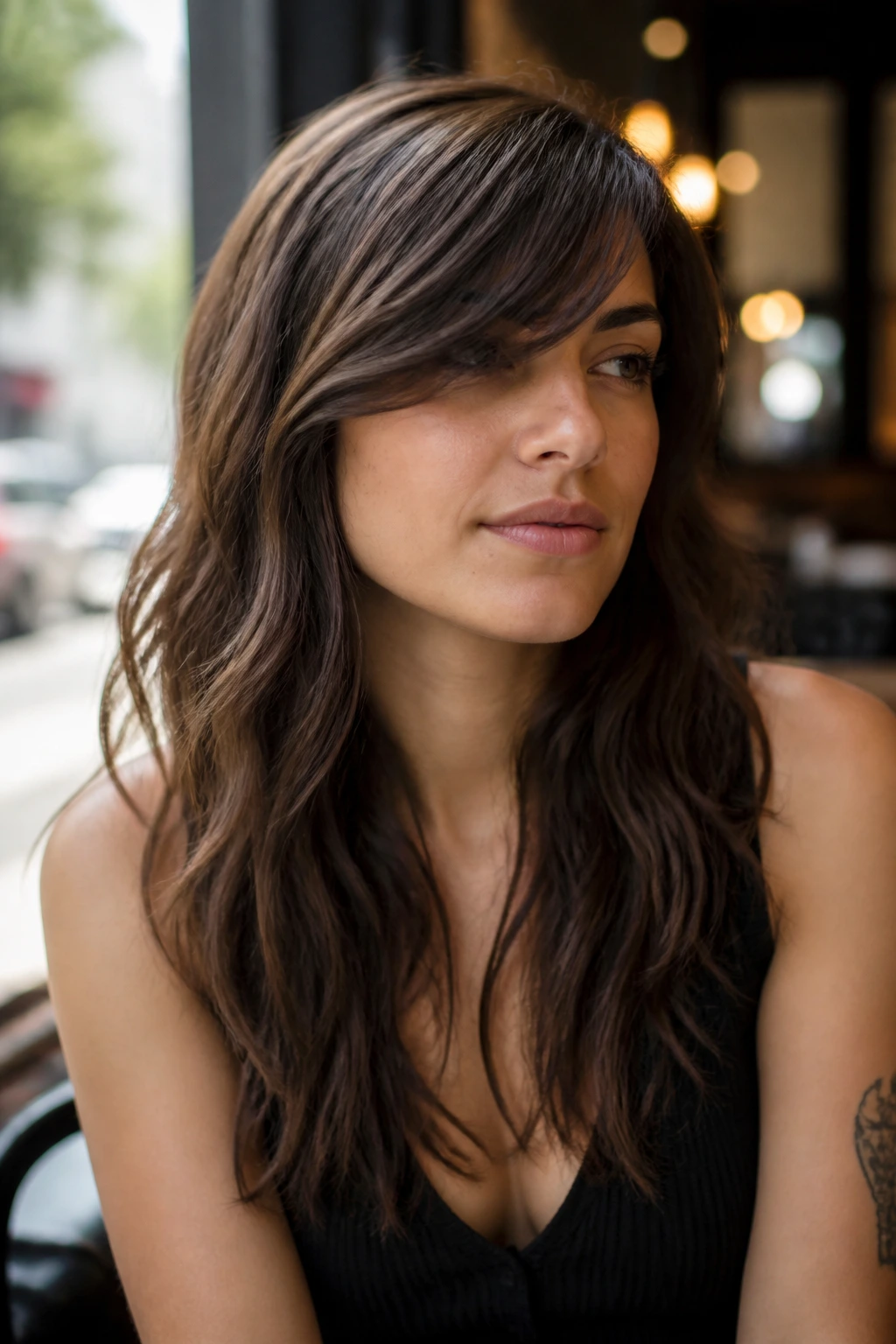
Side-swept fringe gives wavy hair a softer, older-school motion that still feels current when the rest of the cut stays long. It draws the eye diagonally, which can be useful if your face feels extra round or extra long.
The key is keeping the fringe long enough to blend. Short side-swept bangs can look stuck on. Longer ones settle into the rest of the hair and look more natural.
This cut works well for people who never love a strict middle part. If you always flip your hair to one side anyway, why fight it?
15. Nape Undercut with Long Top
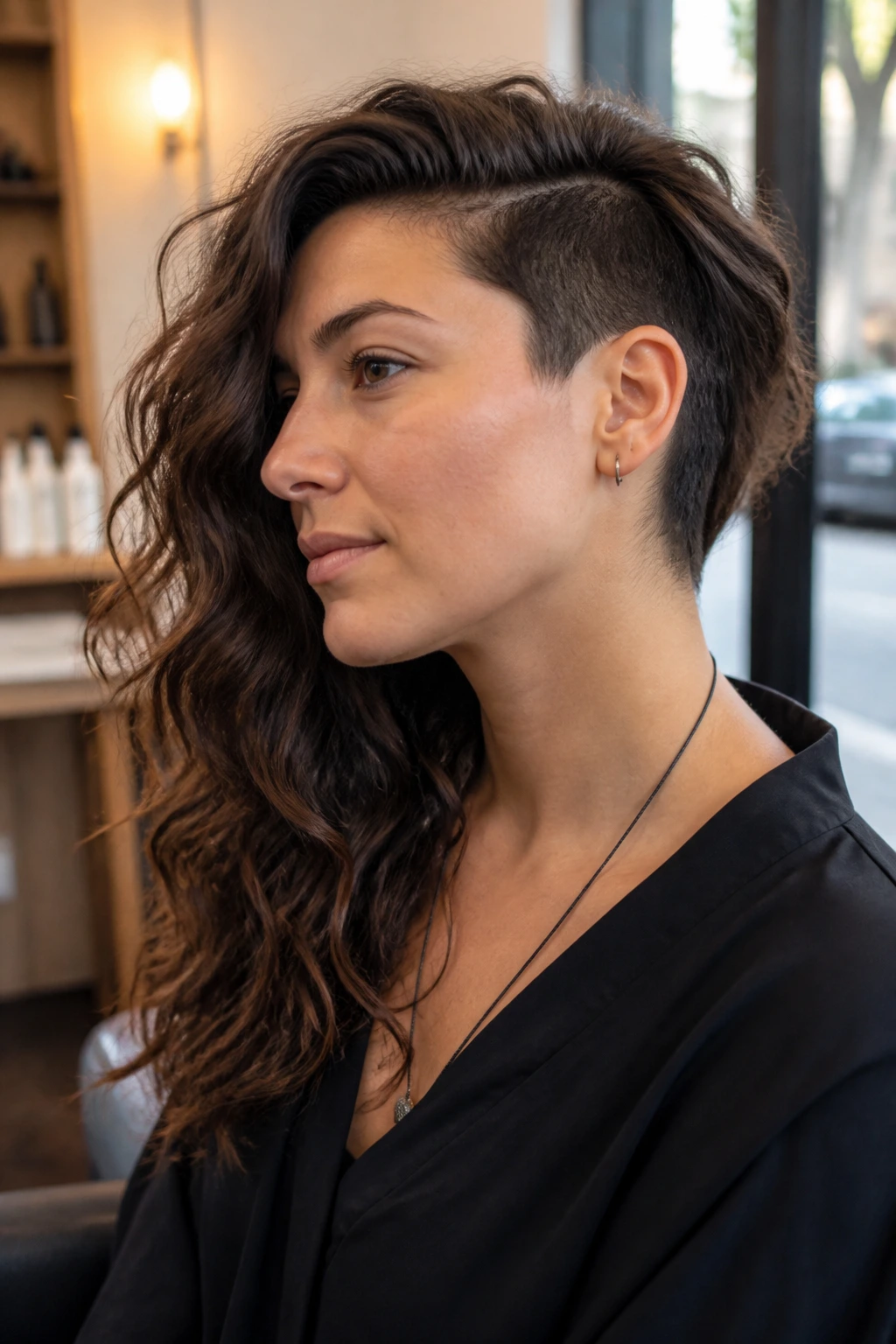
A hidden or visible nape undercut takes bulk out from underneath the top layers. For thick wavy hair, that can be a relief. A real relief.
The top length stays long, which keeps the feminine or androgynous long-hair line intact, but the underside sheds enough weight to help the waves sit better. It’s especially handy if your hair mushrooms at the neck.
If you want drama without losing length, this is a strong option. It also grows out with a nice edge, which is a bonus if you like the contrast.
16. Asymmetrical Long Cut

An asymmetrical long cut gives one side a little more length or weight than the other. It’s subtle when done well, and that’s what makes it interesting.
On wavy hair, asymmetry can make the whole cut feel more alive. The bends land differently on each side, so the movement doesn’t get too predictable.
This is a good choice if you want the haircut itself to signal personality without relying on color or heavy styling. It says something. Not loudly. Just enough.
17. Deep Side Part Shape

A deep side part can change the whole haircut without changing the scissors much. Waves fall harder on one side, the crown gets lift, and the front takes on a more dramatic sweep.
It’s one of those small moves that looks bigger than it is. If your waves are limp at the roots, this parting trick can wake the whole shape up.
Pair it with long layers or a rounded cut. The side part does the heavy lifting up top, while the layers keep the rest from sagging.
18. Waterfall Layers
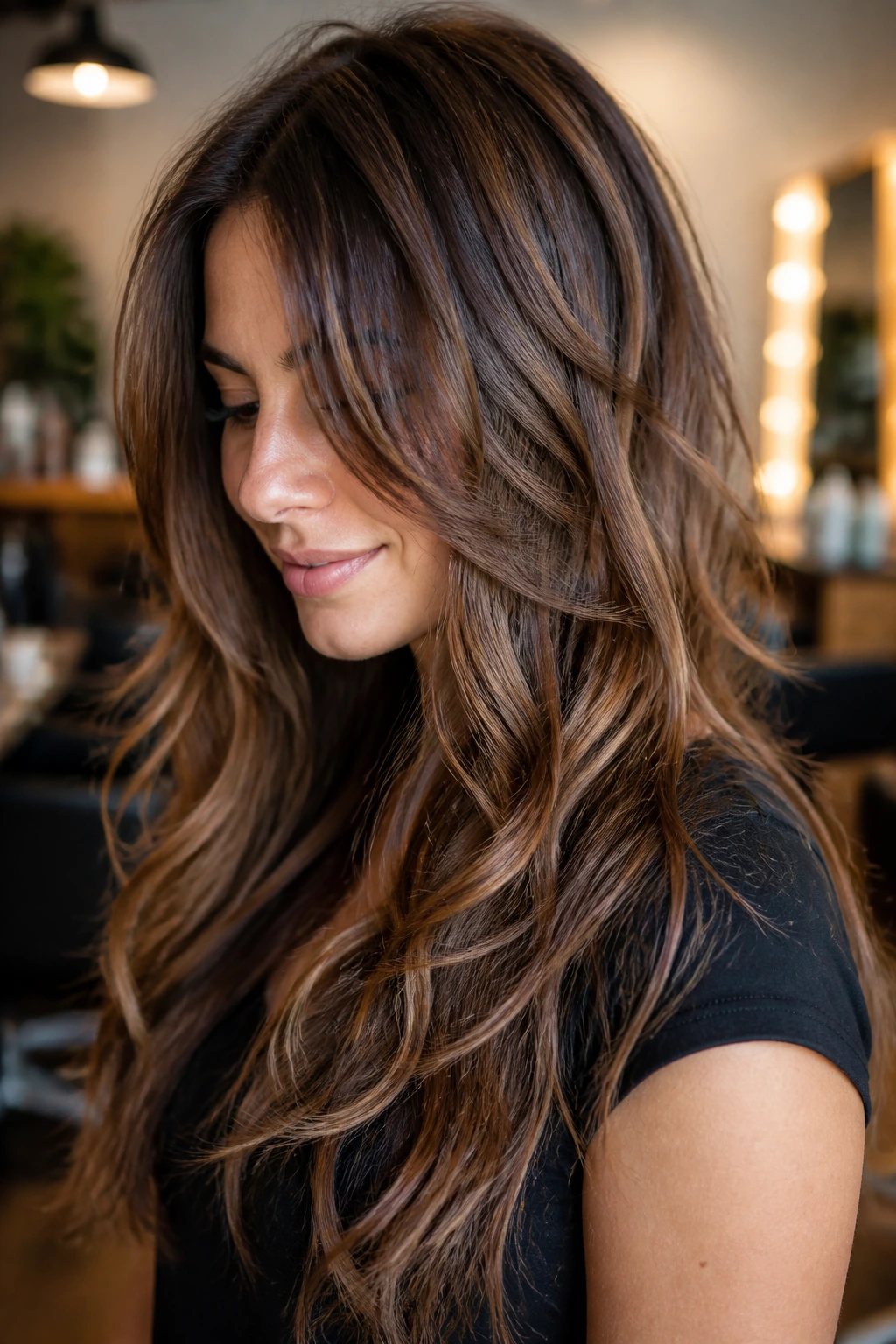
Waterfall layers are built to cascade, not stack. Each layer blends into the next so the hair falls like moving fabric instead of stepped shelves.
That kind of flow suits wavy hair beautifully because the bends already want to travel downward. The layers give them a path.
If you like soft, fluid movement and you hate anything that looks choppy, this is one of the smarter choices. It keeps the line elegant without feeling formal.
19. Mermaid Layers
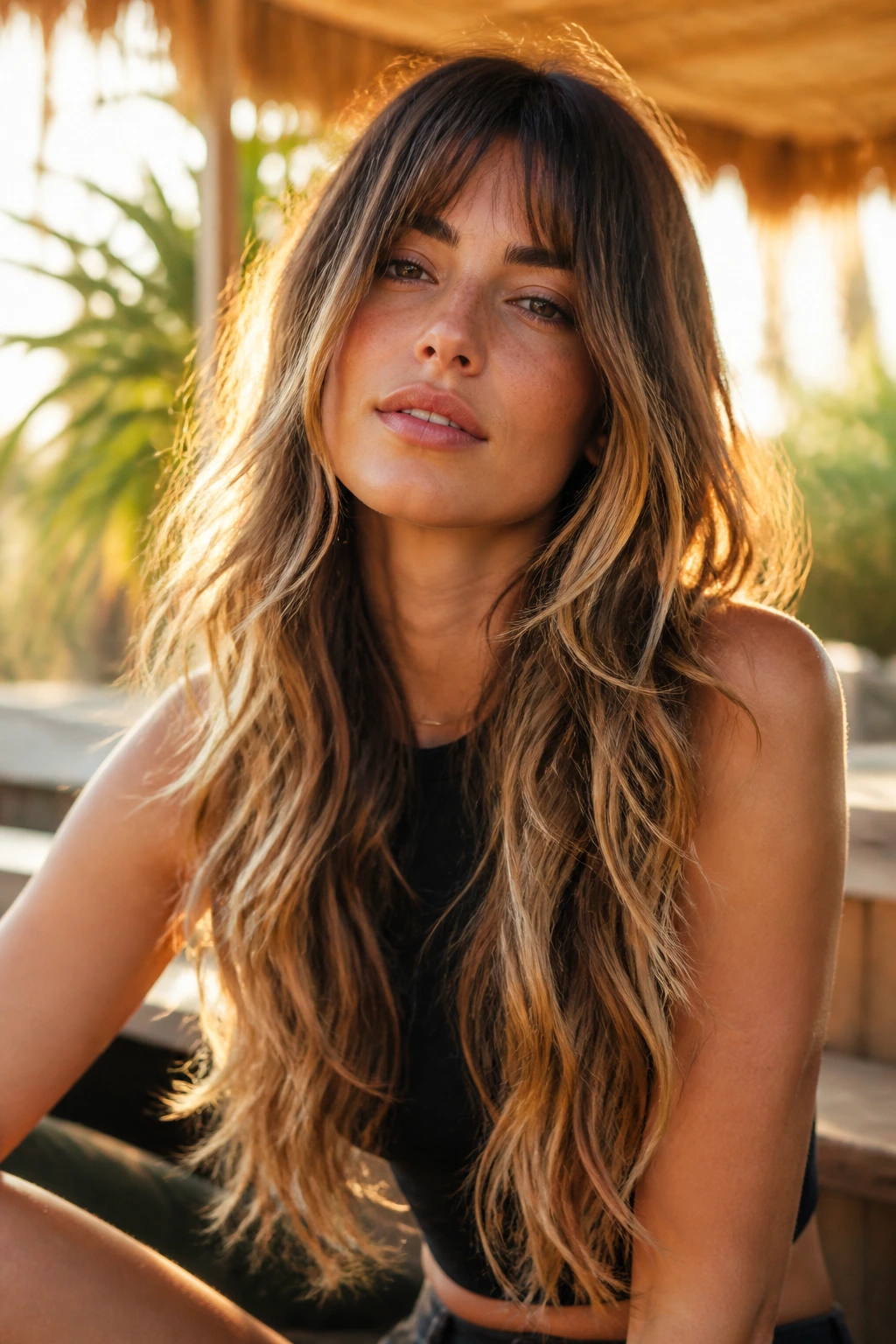
Mermaid layers keep the fantasy of long hair alive, but they use shaping to stop it from looking flat. The longest lengths stay dramatic, and the layers around them create a rippling effect.
This is a good cut for thick or medium-thick waves that can support length without collapsing. It’s also a favorite if you like hair that swings when you walk.
The best mermaid layers are not overcut. They’re spaced so the long lines still matter. That restraint is what separates a pretty shape from a hair disaster.
20. Micro Fringe with Length

A micro fringe on long wavy hair is a bold move, and that’s the whole point. The short bang creates contrast against the length, which can look striking in a very clean way.
It works best when the rest of the haircut stays simple. Too many layers plus a micro fringe can turn the shape noisy. Keep the body of the hair controlled, and let the front be the statement.
If you like a haircut that reads a little sharper, a little more fashion-forward, this is one to keep in the folder.
21. Birkin Bangs with Long Hair
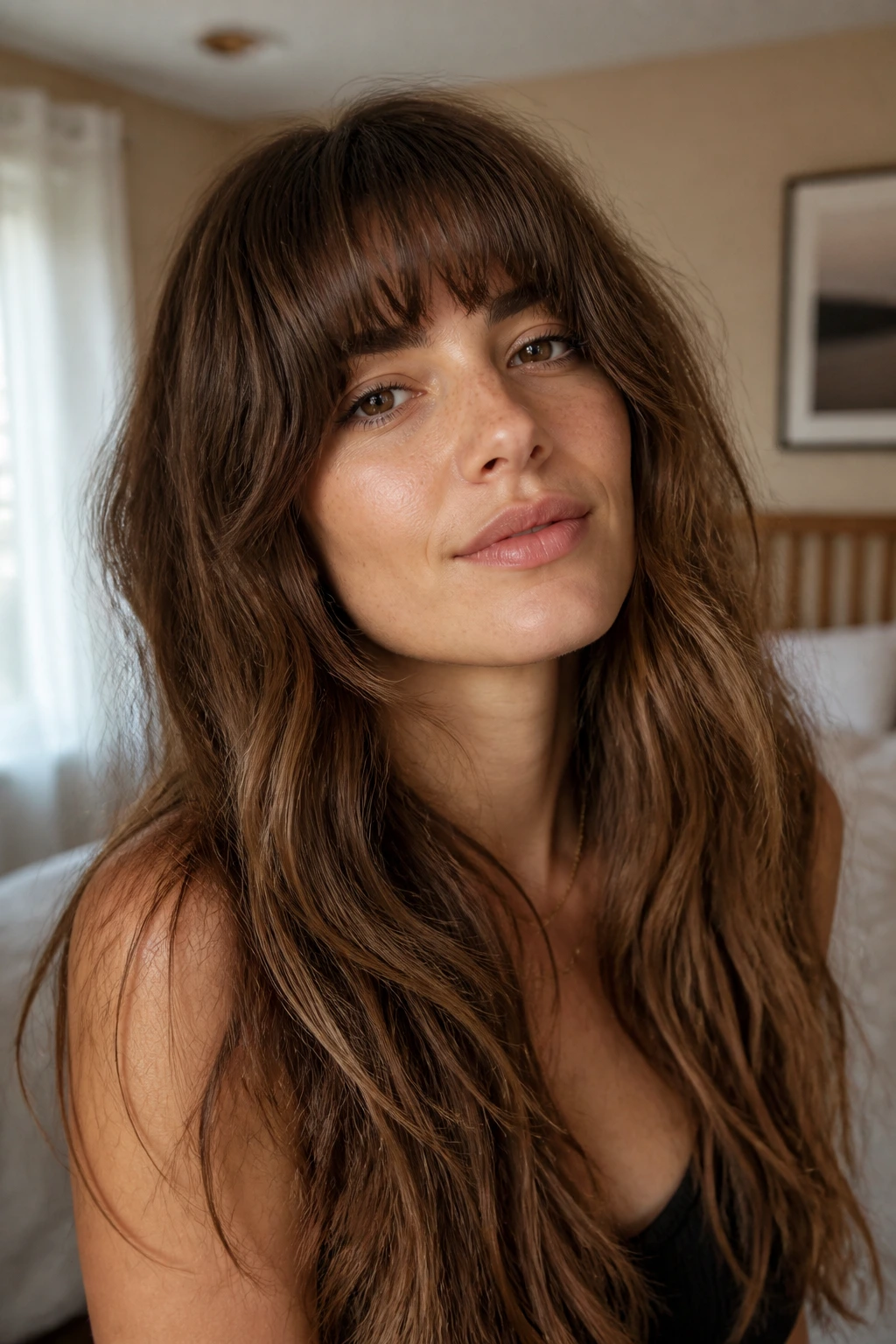
Birkin bangs sit softer and fuller than a micro fringe, but they still carry some weight. On long waves, they create a face-forward shape that feels classic without turning stiff.
They’re especially nice when you want your hair to have a centerpiece. The bangs do the framing; the lengths do the flowing.
Ask for the fringe to be cut so it moves, not like a ruler line. With wavy hair, that little softness keeps the front from separating into strange little spikes.
22. Tapered Ends
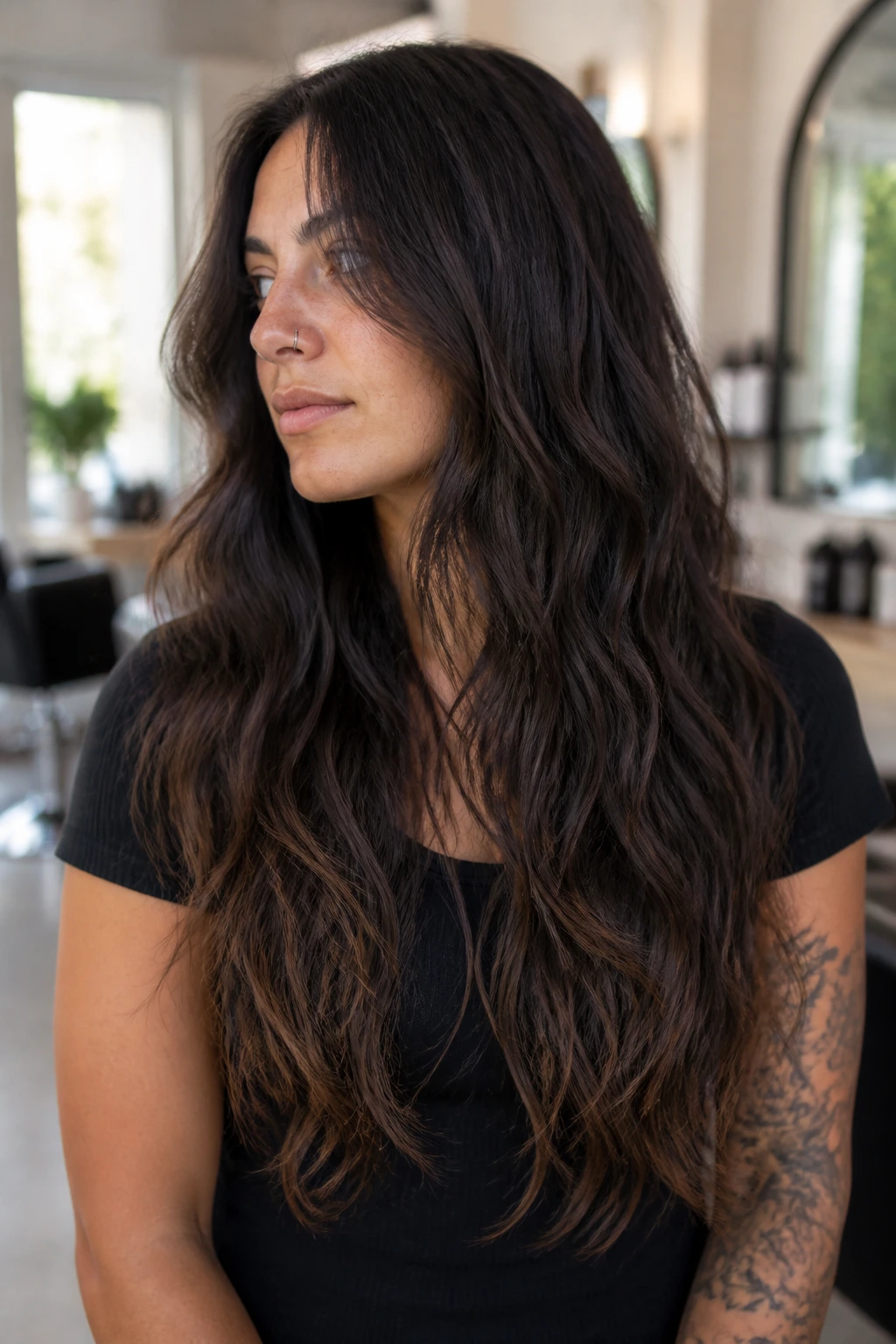
Tapered ends help thick wavy hair narrow gently toward the bottom instead of ending in a blunt, heavy block. The result is cleaner movement and less visual bulk.
This is useful if your hair feels like a blanket by the end of the day. You still keep the length, but the cut stops the ends from sitting like a shelf.
It’s a practical choice, which I think gets overlooked because it doesn’t sound as sexy as a shag or wolf cut. But on the right hair, tapering solves actual problems.
23. Crown Layers
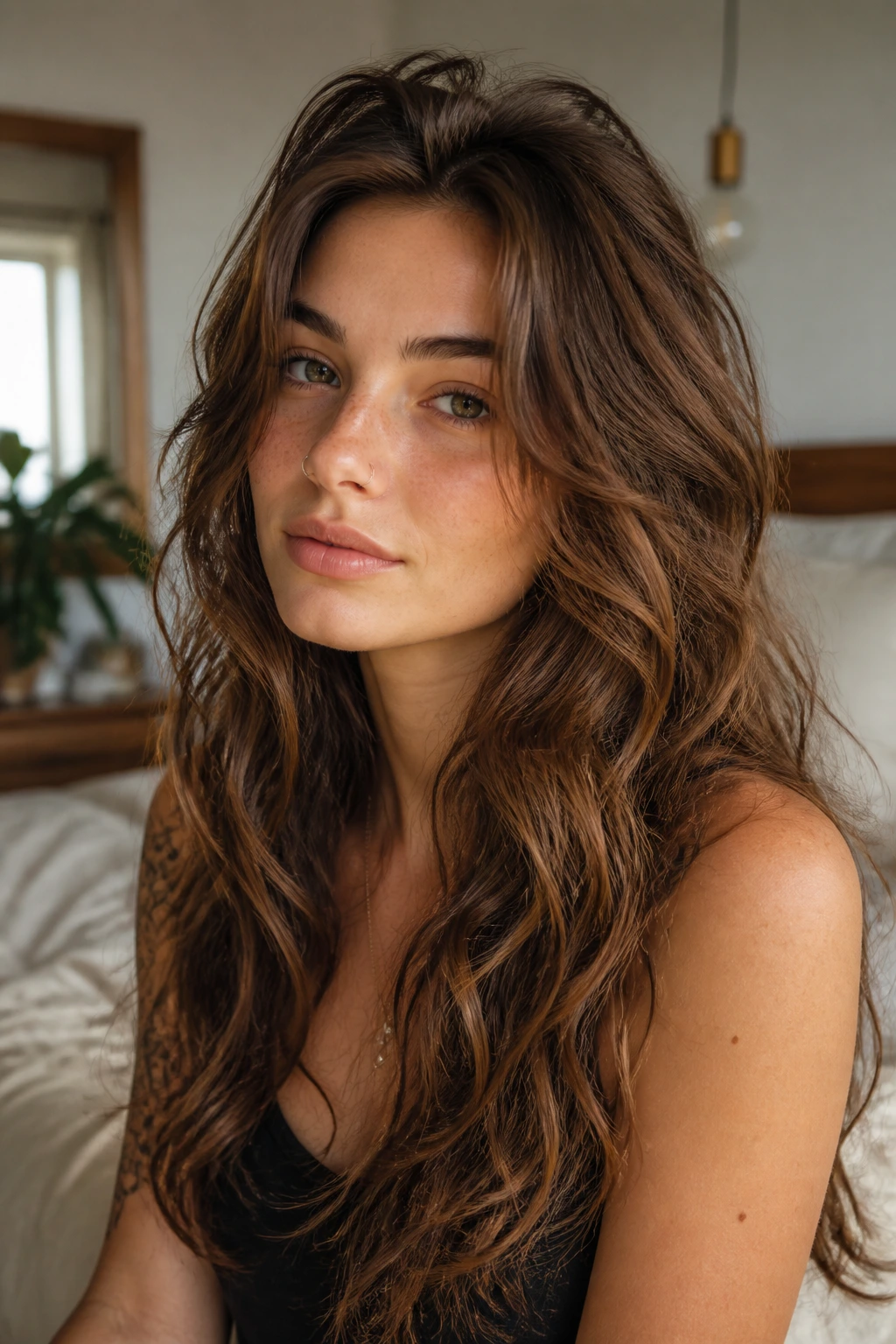
Crown layers create lift where long wavy hair often falls flat: up top. That extra movement at the roots stops the style from drooping and gives the whole head more shape.
If your hair is dense or heavy, this matters a lot. A little lift at the crown changes the profile from “long hair” to “long hair with a point of view.”
The style can be subtle or strong, depending on how much the stylist removes near the top. I’d keep it moderate unless you like a bigger silhouette.
24. Minimal Layers, Maximum Length
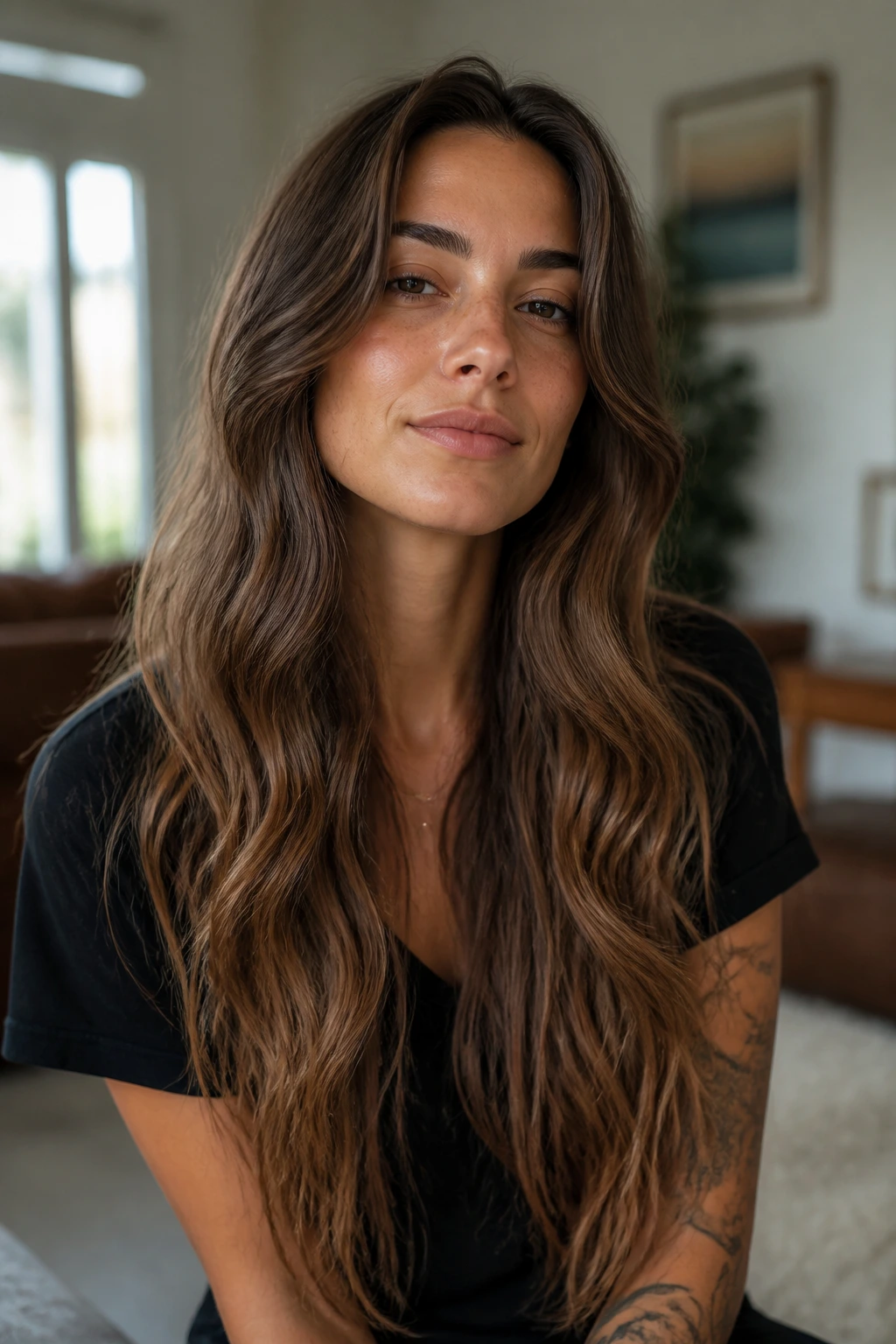
Not every wave needs lots of layers. Sometimes the smartest move is leaving most of the length alone and making just enough adjustments to keep the cut from going flat.
This is ideal if you’re attached to length, or if your waves are already defined and don’t need a lot of sculpting. A small amount of shaping near the front and around the ends can be enough.
It’s also a good option if you want a long lesbian haircut that reads sleek rather than shaggy. Fewer layers. More line. Nice and clean.
25. Internal Layers
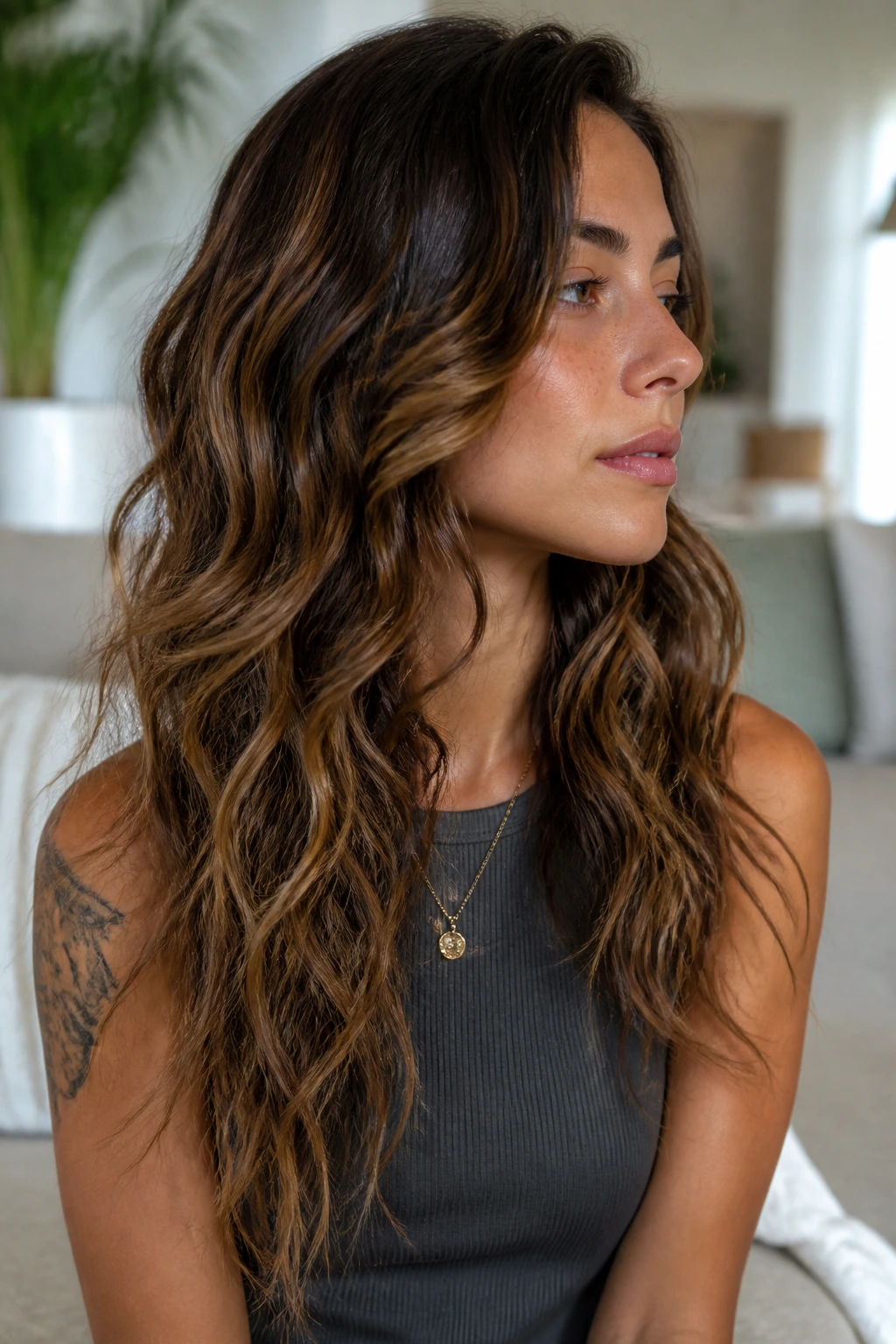
Internal layers hide inside the haircut, so the outer line still looks full while the inside loses weight. That’s a smart technique for dense waves that swell out at the sides.
The shape stays long and polished, but it won’t feel as helmet-heavy. On many heads, that is the whole battle.
Ask for the stylist to remove bulk inside the shape rather than slicing up the perimeter. Tiny wording change. Big result.
26. C-Cut
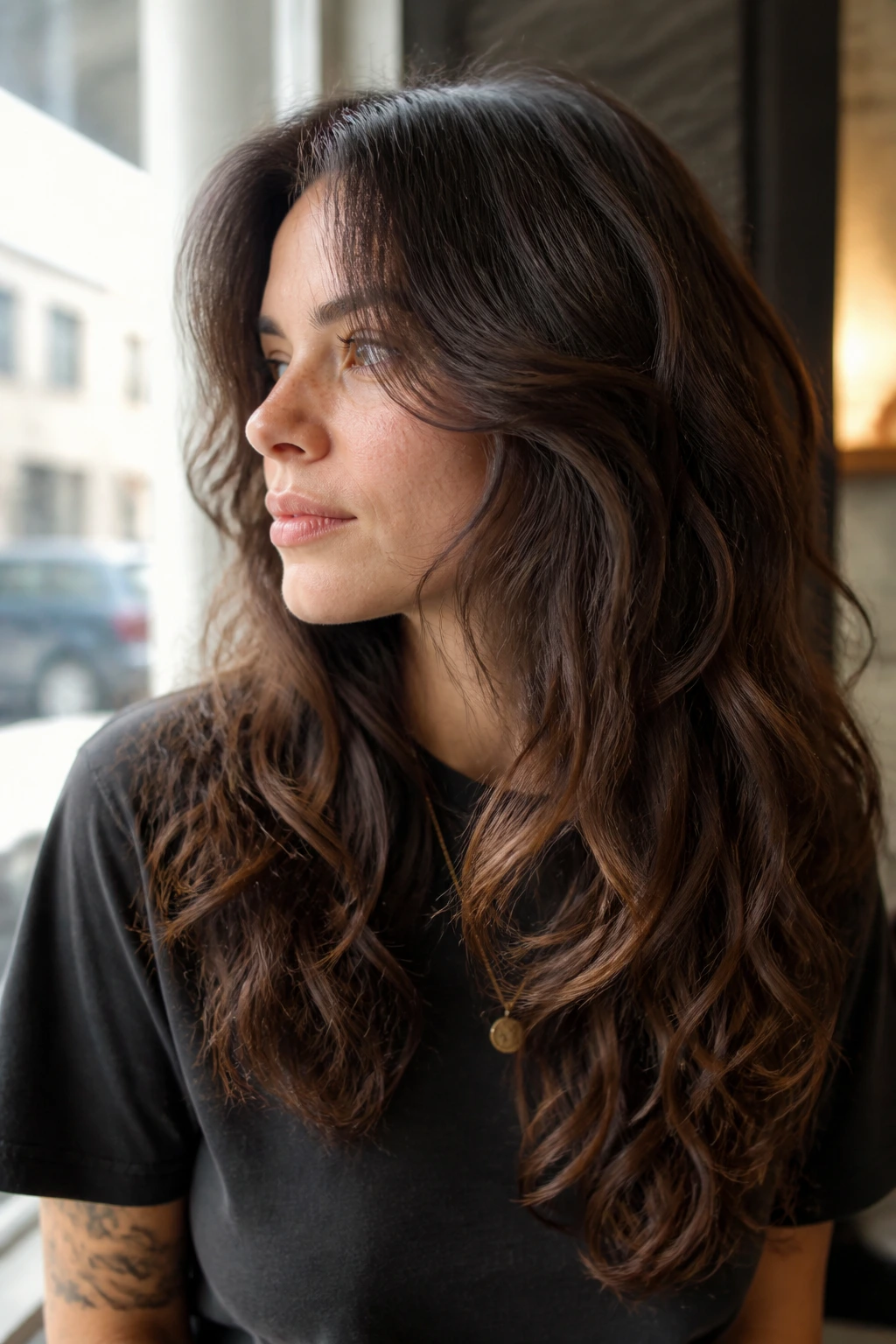
A C-cut curves around the face and down toward the ends in a smooth arc. It’s softer than a V-cut, more sculpted than one-length, and especially flattering on waves that like to bend in naturally.
I like this cut because it feels finished from every angle. The front opens, the sides carry movement, and the bottom doesn’t look abruptly chopped.
If your face-framing pieces tend to puff out, a C-shape can calm that down. It gives the waves a route to follow.
27. Long Mullet
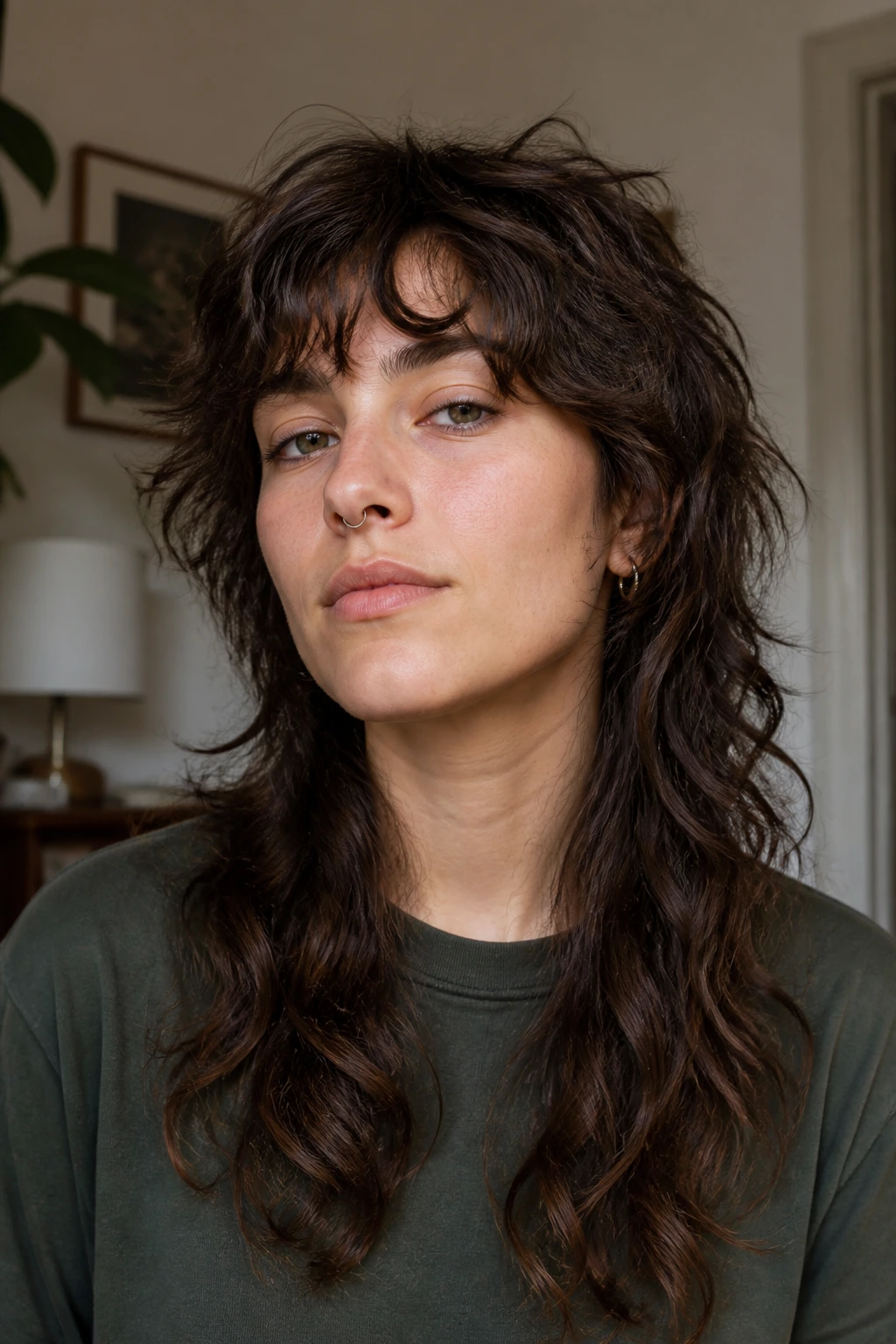
The long mullet is not trying to be subtle. Shorter layers on top and around the face, longer lengths in back, and a little edge all around — that is the whole game.
On wavy hair, it can look playful and strong at once. The texture helps soften the transition, so the cut feels deliberate rather than costume-y.
This is for people who want their haircut to have some bite. If you prefer quiet hair, skip it. If you like a little tension in the shape, this one is delicious.
28. Chin-Skimming Front Pieces
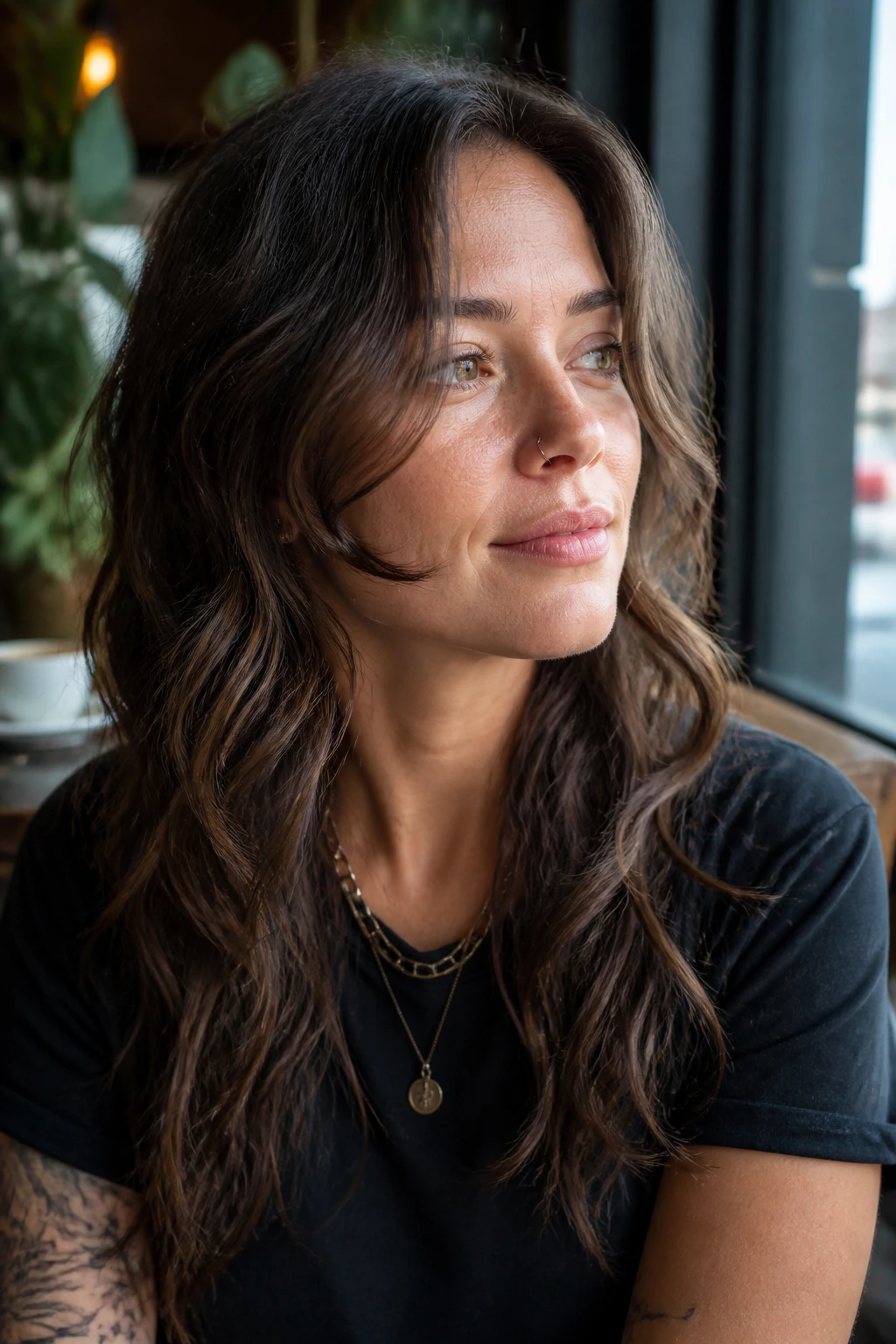
Chin-skimming front pieces create instant structure. They cut across the face at just the right point to highlight cheekbones, earrings, jawline, and a sharp lip color if you like wearing one.
The rest of the hair can stay long and relatively simple. The front does the talking.
This is one of those details that looks small until you see it in motion. Then it changes everything. It’s a clean way to make long wavy hair feel styled even when it isn’t.
29. Blunt Cut with Natural Bend
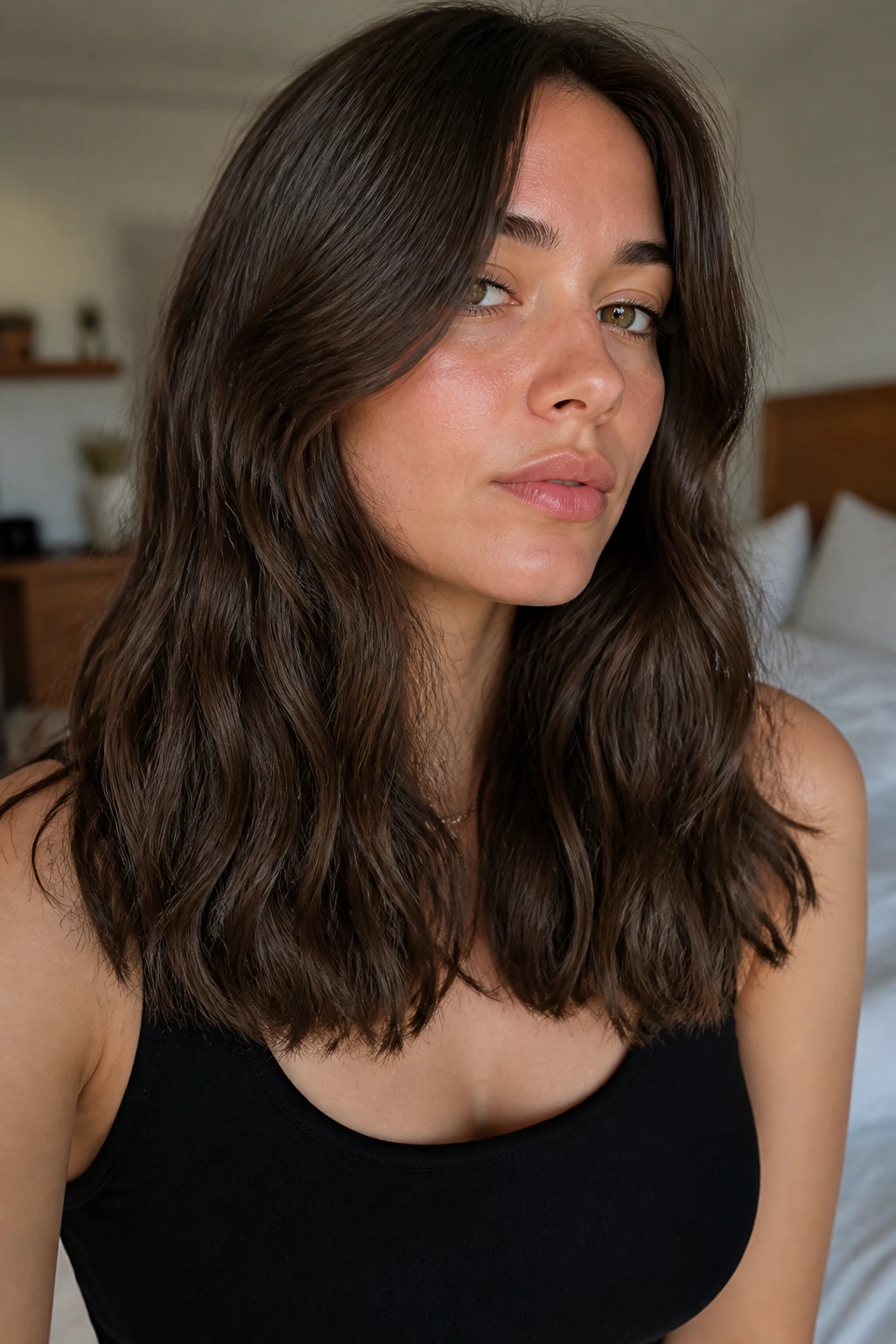
A blunt cut on wavy hair sounds risky, but when it’s done correctly, it can look strong and polished. The trick is respecting the wave pattern so the ends don’t kick out in odd places.
This cut gives you a heavier line, which some people love because it makes the hair feel expensive and deliberate. It also makes fine waves look fuller at the ends.
I’d choose this if you like structure more than softness. The wave provides the movement. The blunt edge provides the attitude.
30. Piecey Ends
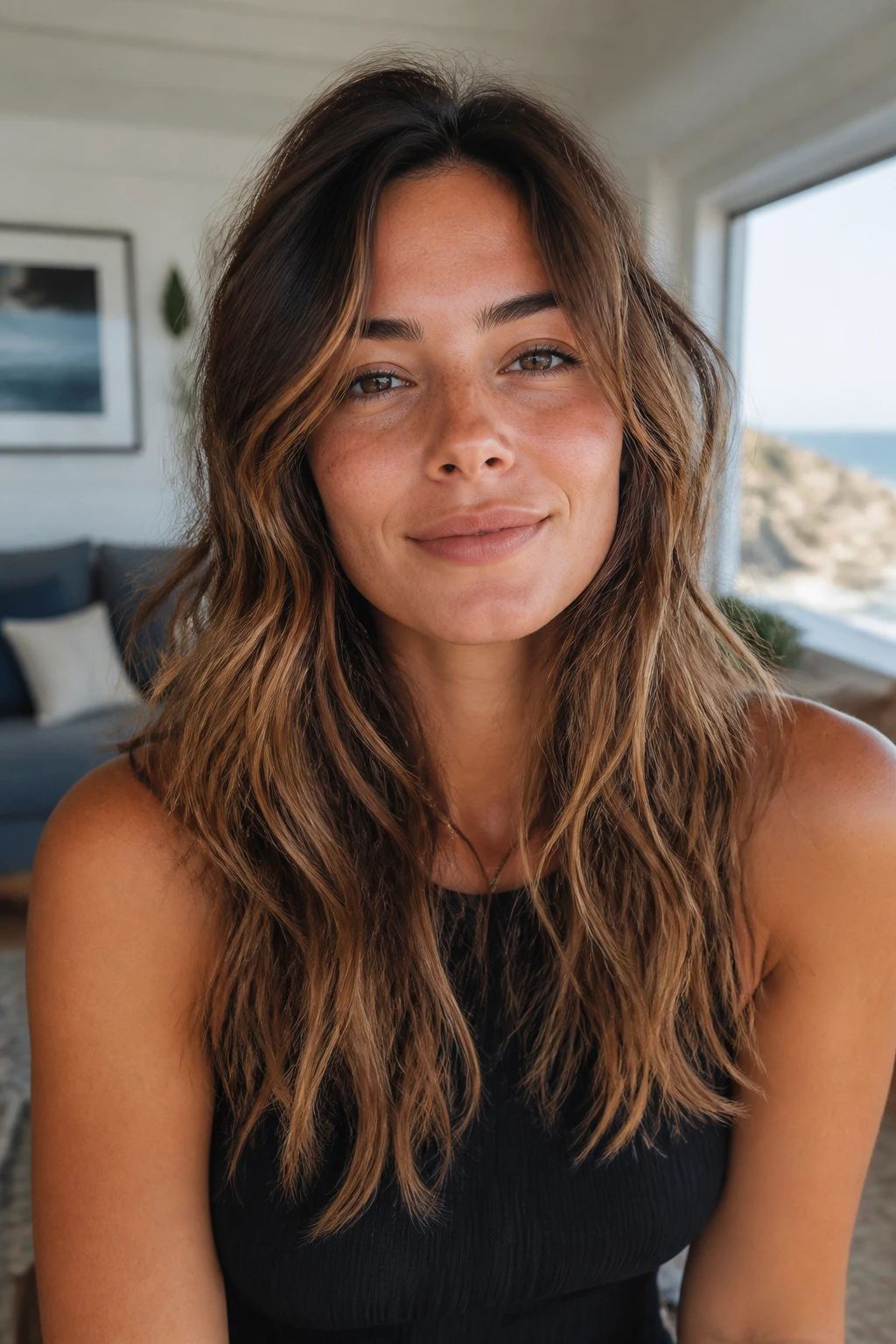
Piecey ends break the bottom line into smaller sections, which stops thick wavy hair from becoming one solid block. The result feels lighter and more relaxed.
This cut is a good middle ground between shaggy and polished. You still have length, but the ends don’t sit there like a curtain.
It works especially well with salt spray or a little wave cream scrunched through the bottom half. Give the ends some separation and they’ll do the rest.
31. Airy Sides
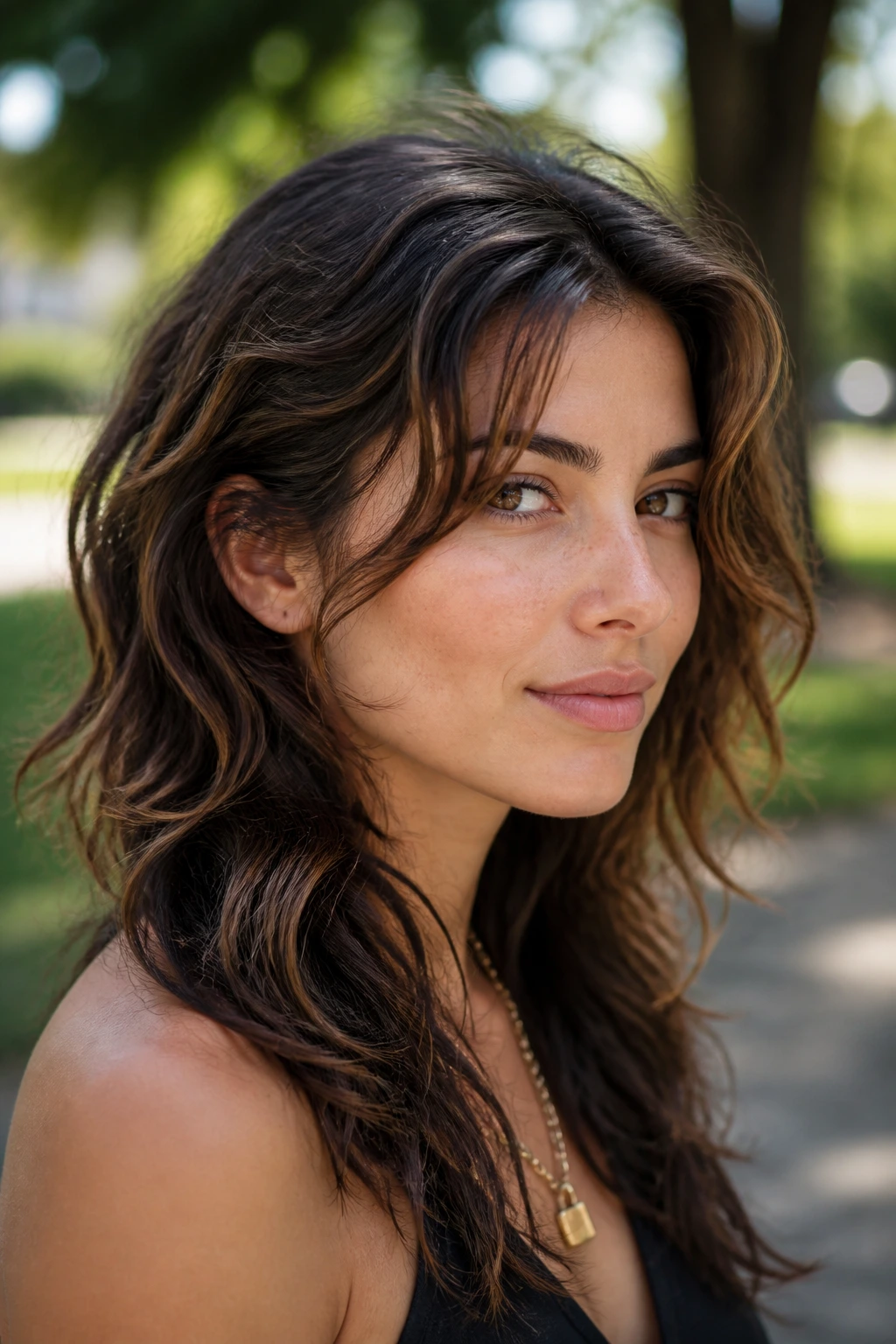
Airy sides lighten the hair around the temples, ears, and upper jaw. That can make long hair feel less boxy and more open around the face.
For wavy hair that tends to expand outward, this shaping is a practical fix. It removes the visual heaviness where it usually collects.
If your face gets swallowed by your hair on day three, this is worth considering. The cut keeps the side view from going flat and bulky.
32. Half-Up Friendly Layers
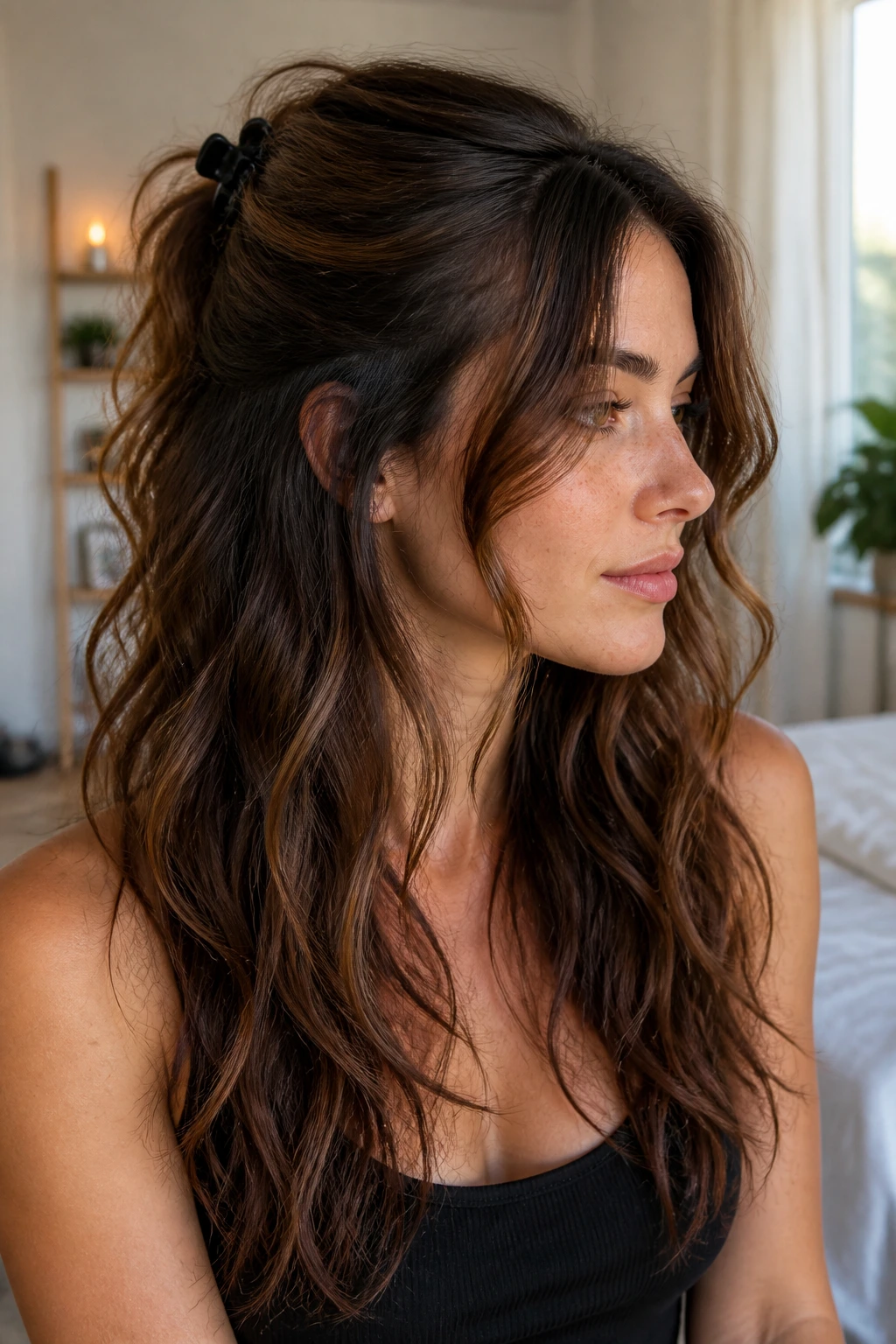
Some cuts look fine worn down and fall apart the second you clip them up. Half-up friendly layers are made to solve that.
The front pieces stay long enough to frame the face when the back is pulled away, and the shorter top layers still leave some lift near the crown. That means your claw clip doesn’t crush the whole shape.
If you live in half-up styles, messy buns, or those quick “out the door in 30 seconds” twists, this shape earns its keep.
33. Tucked-Behind-Ear Shape
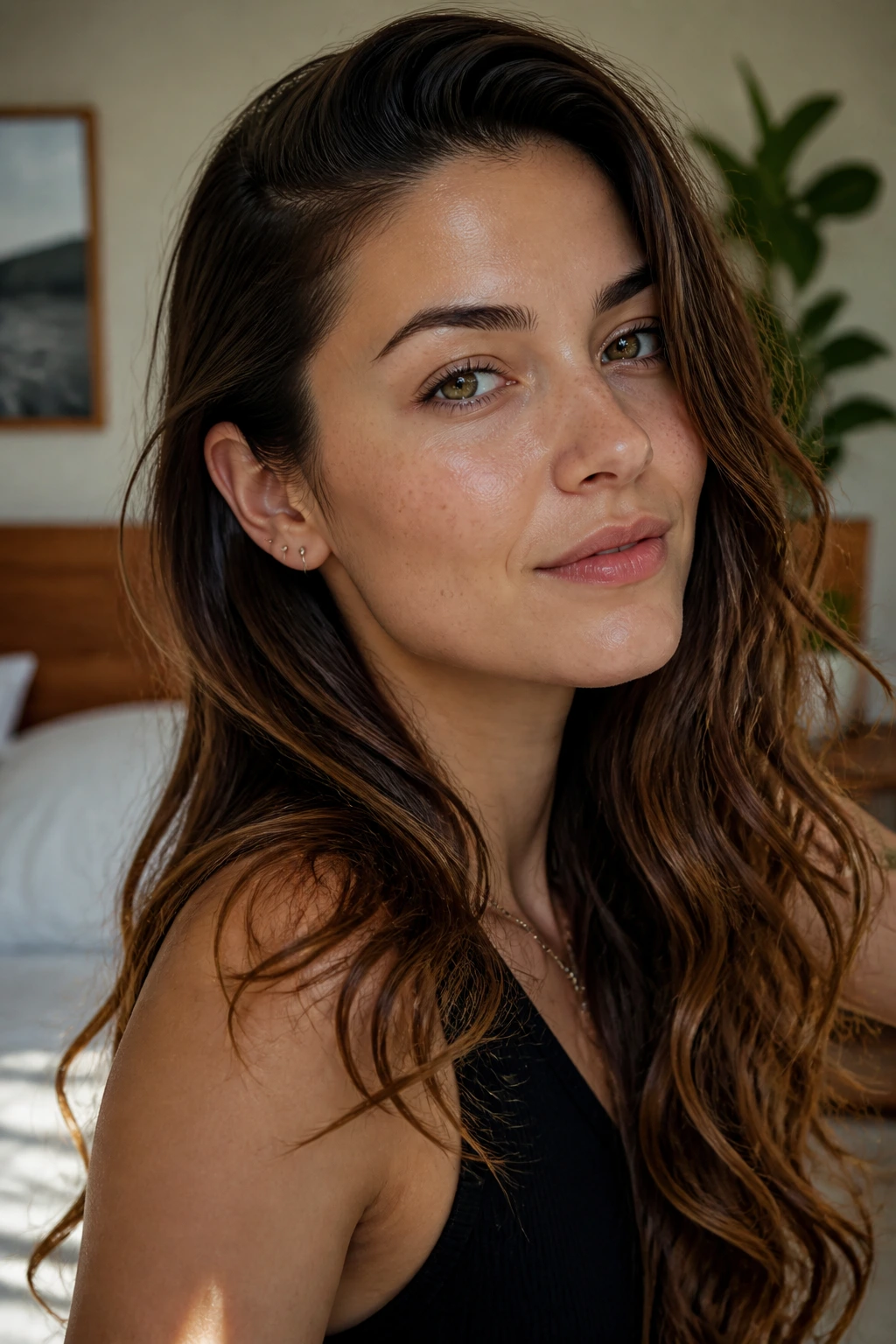
A tucked-behind-ear shape keeps the front sections sleek and controlled, then lets the rest fall long and loose. It’s a quiet way to create contrast.
Wavy hair loves contrast. A smoother front against a fuller back gives the haircut a clearer outline and makes the ear area feel cleaner.
This is good for people who want to show off earrings, piercings, or jawline details without giving up length. Simple. Very effective.
34. Boho Fringe
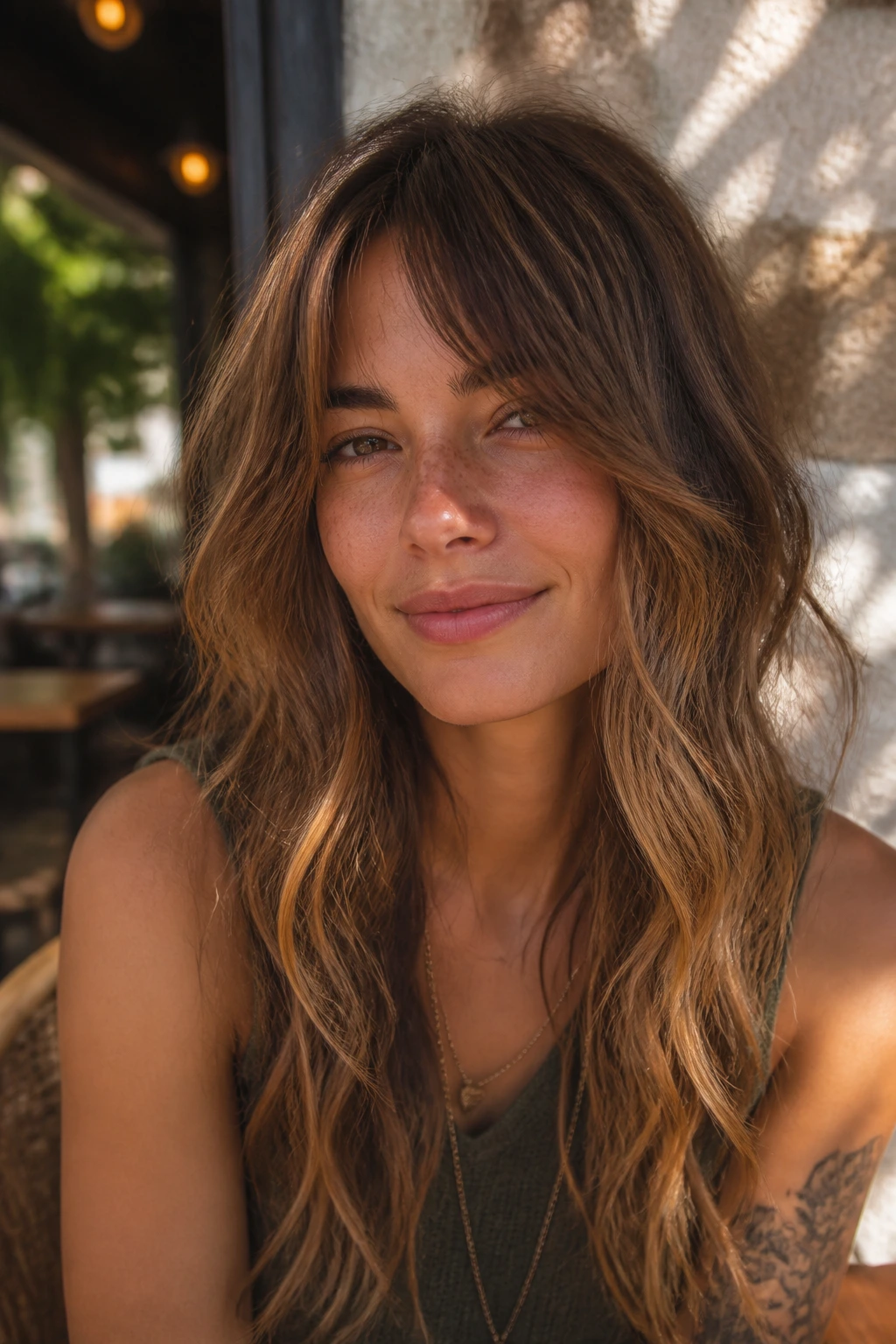
A boho fringe is soft, split, and a little imperfect in the best way. It blends into wavy lengths instead of sitting like a separate piece.
If you hate the look of bangs that need daily correction, this is easier to live with. It can be pushed aside, parted down the middle, or allowed to fall a little unevenly.
The whole shape feels relaxed and romantic, but not precious. That matters. Nobody wants bangs that look like they need a supervisor.
35. Waist-Length Gradation
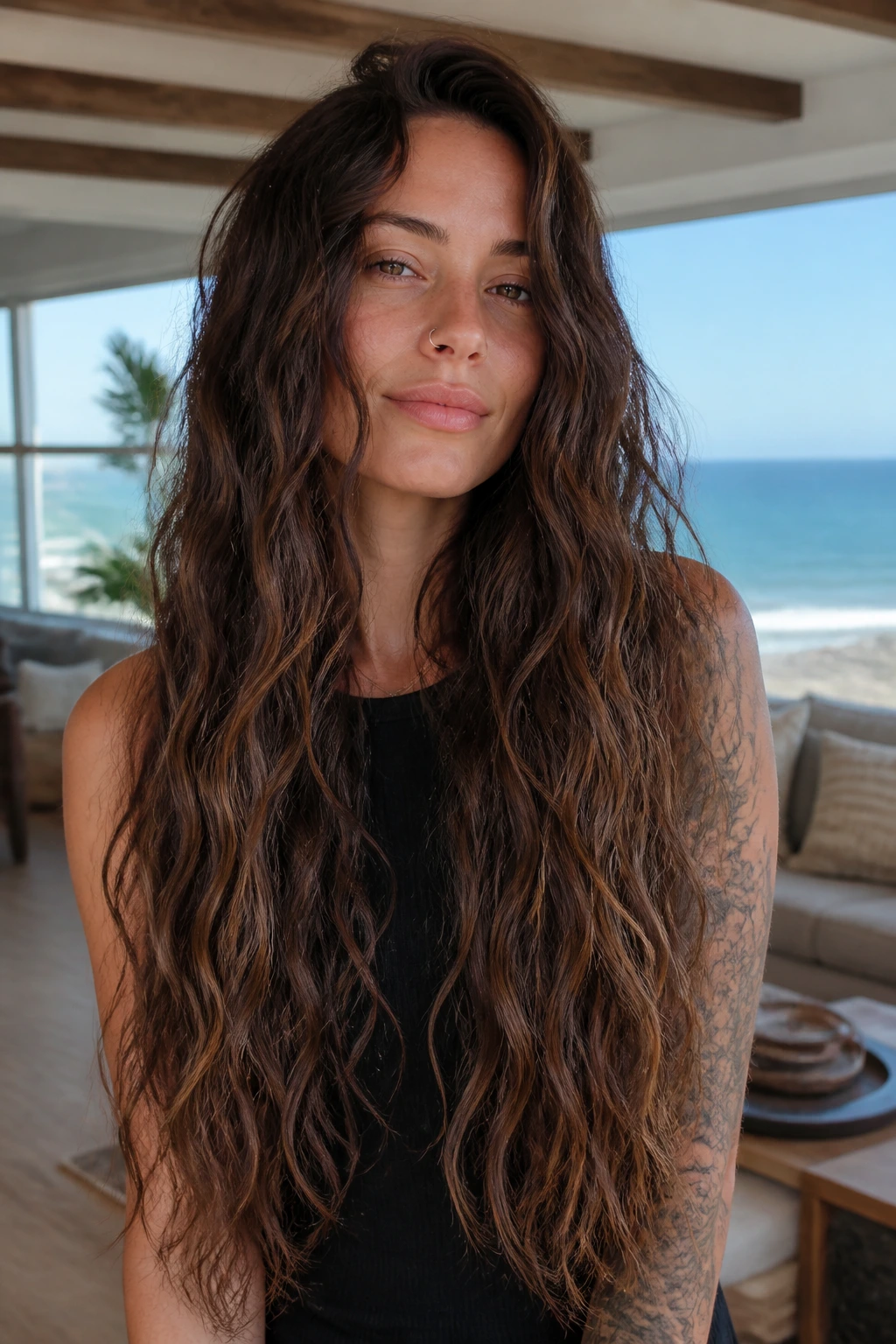
Waist-length hair needs shaping or it can start looking heavy and tired at the bottom. A gradual cut through the lengths keeps the drama but removes the dead weight.
This works best when the gradation is subtle. You want the length to feel endless, not sliced into obvious layers that break up the line too much.
If you love long hair and hate when stylists get scissor-happy, this one gives you a useful compromise. Length stays. Movement comes back.
36. Swoop Bangs
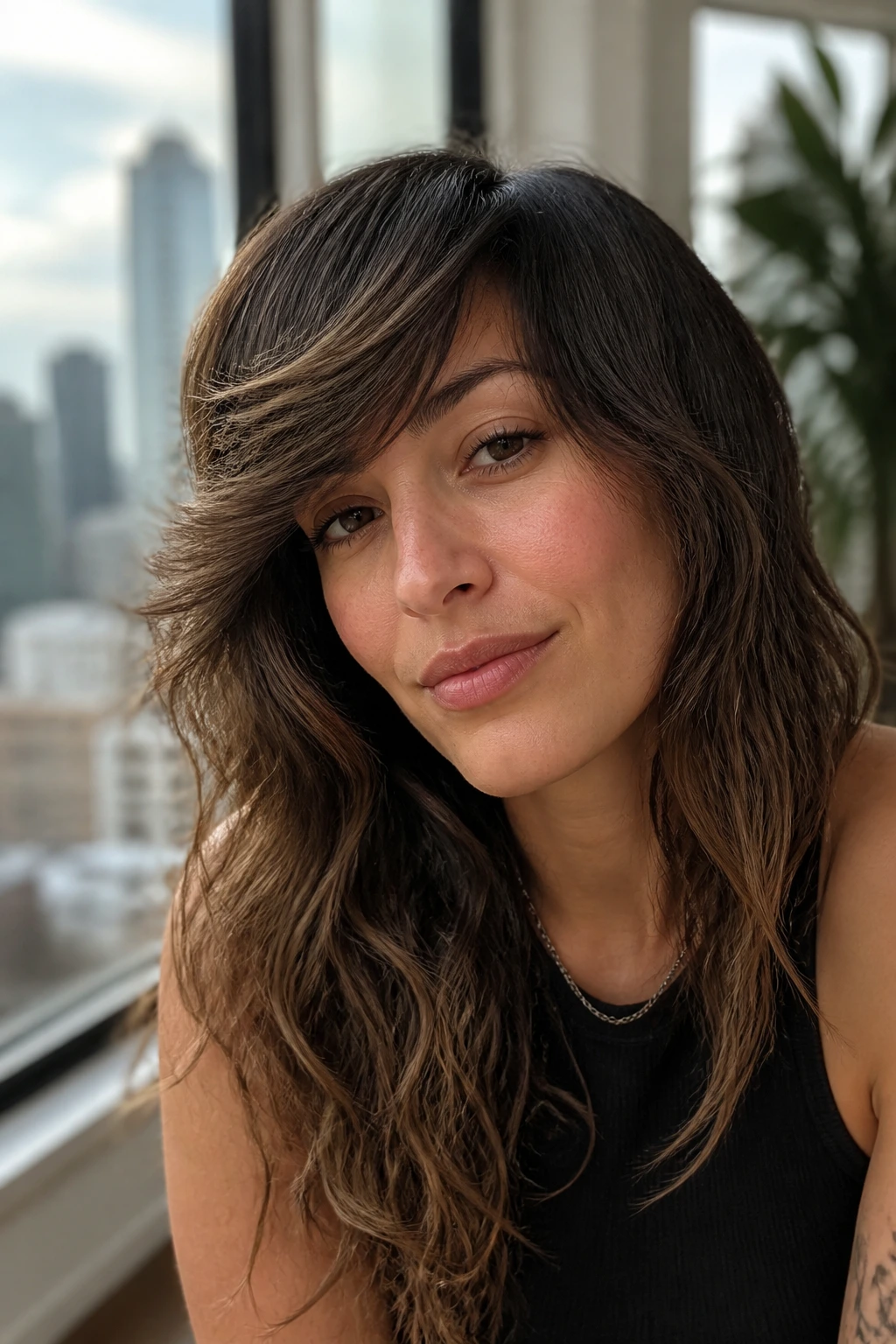
Swoop bangs are all about direction. They sweep across the forehead and into the side lengths, which gives wavy hair a little glamour without needing a full fringe.
They’re especially flattering on side parts and on hair that likes to move when it dries. The sweep creates a natural line the waves can follow.
I’d pick this if curtain bangs feel too centered for you. The swoop has more motion and a bit more drama.
37. Soft Edge Cut
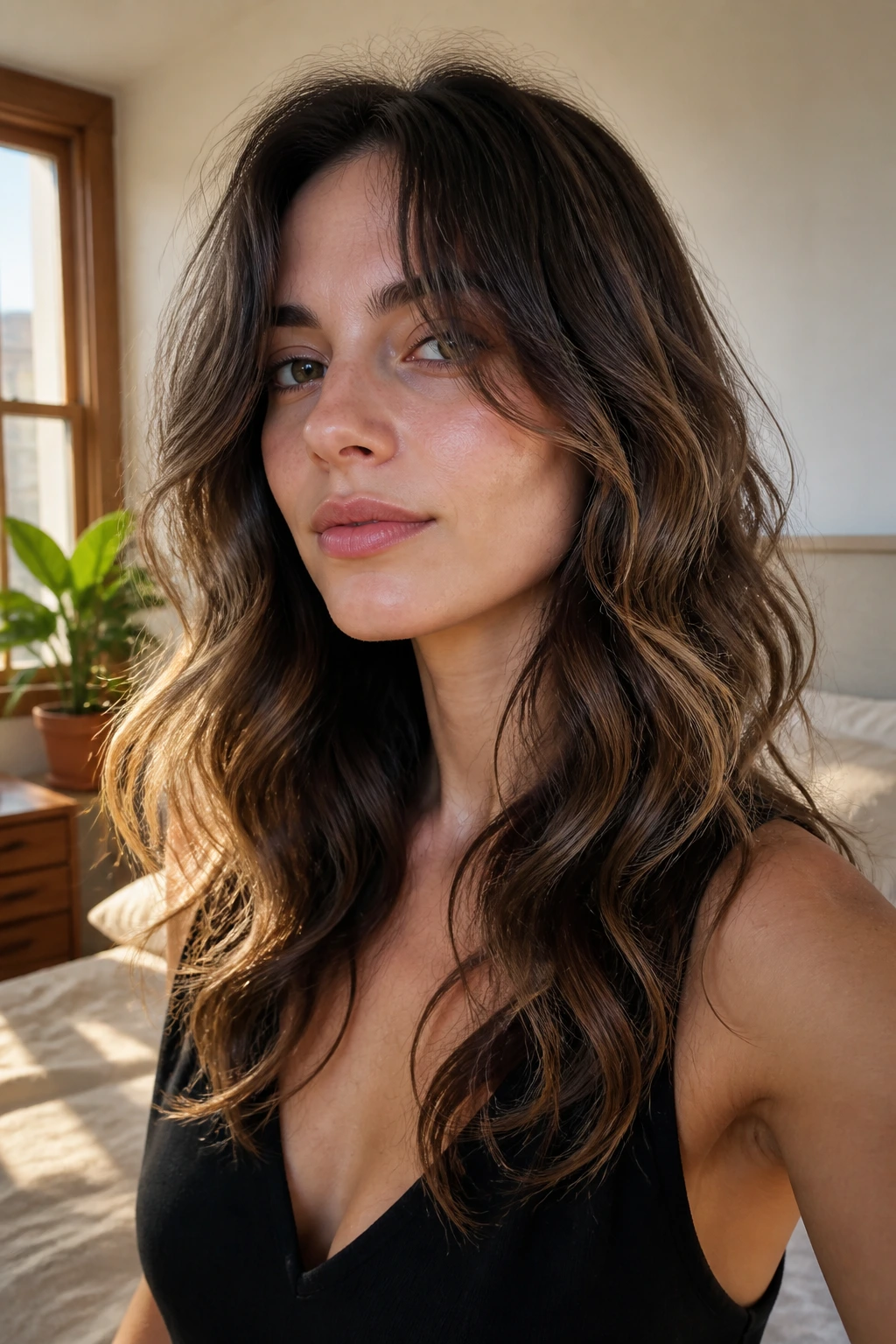
A soft edge cut keeps the perimeter gentle instead of blunt or sharply tiered. It’s a good answer for people who want a long haircut that does not announce itself too loudly.
That doesn’t mean boring. It means the shape is there when you look closely, but it doesn’t fight the texture for attention.
If your waves already have personality, this cut lets them lead. The haircut supports them without trying to outshine them.
38. Dramatic Face Frame

A dramatic face frame is for people who want the front to matter as much as the length. Long front pieces can start near the cheekbones or jaw and carry a stronger outline than regular layering.
This shape gives wavy hair a little theater. The ends still move, but the front anchors the haircut and keeps it from disappearing into the rest of the length.
It’s a strong choice if you like the feeling of hair that changes the second you turn your head. Quiet in the back. Bold in the front. That contrast is hard to beat.
Why These Long Waves Work Better Than One-Size-Fits-All Layers
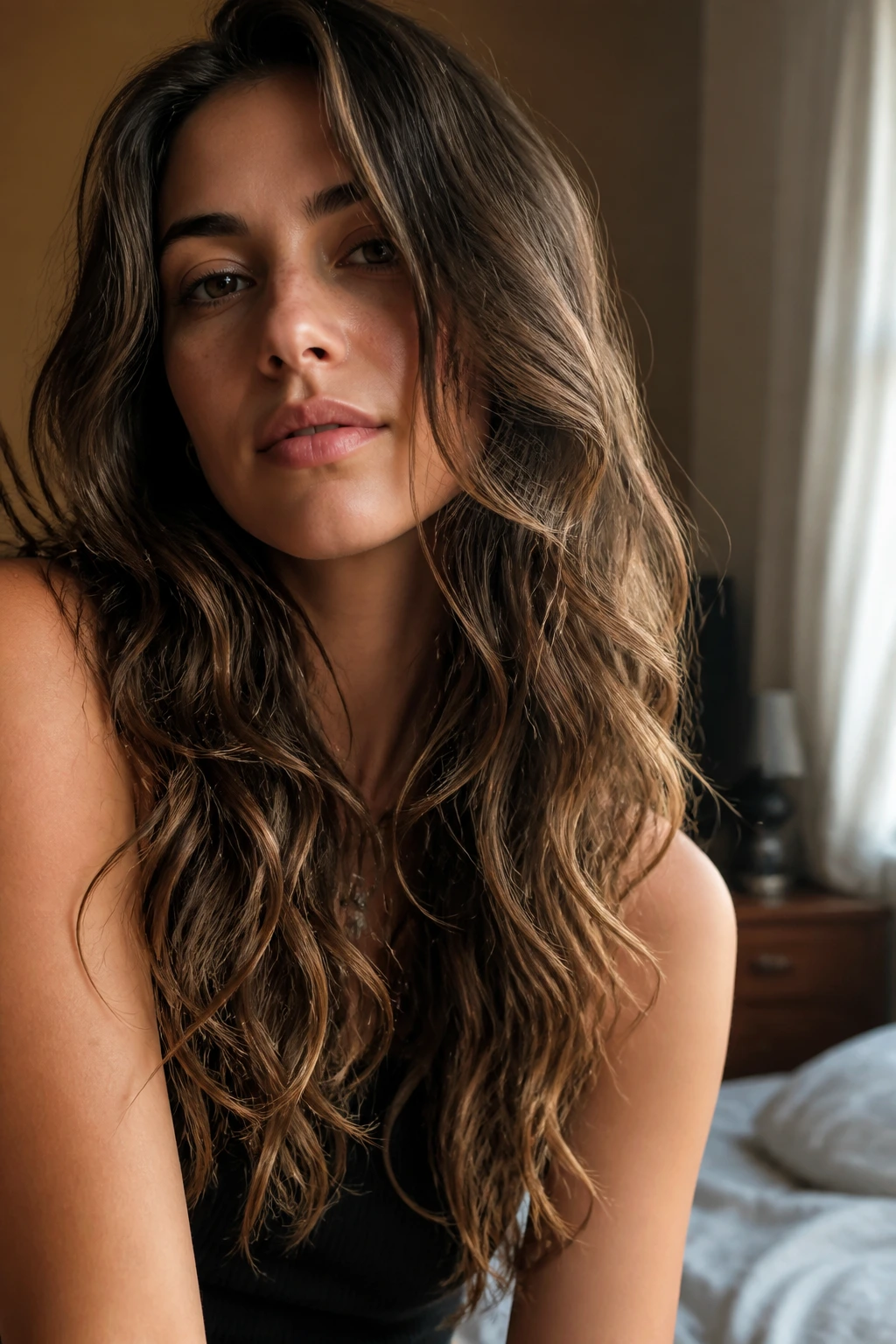
Long wavy hair is temperamental in a way straight hair usually isn’t. Cut too blunt and it can sit like a sheet. Cut too high and it balloons. Leave it all one length and you often get the dreaded triangle, where the bottom looks wide and the top looks flat. That’s why these shapes matter.
The best lesbian long haircuts for wavy hair respect three things at once: the wave pattern, the density of the hair, and how much time you want to spend styling it. Fine waves need a different kind of lift than thick waves. Loose bends need different handling than dense, springy ones. And if your routine is mostly air-dry and go, your cut has to do more of the work.
How to Ask for the Shape You Want at the Salon
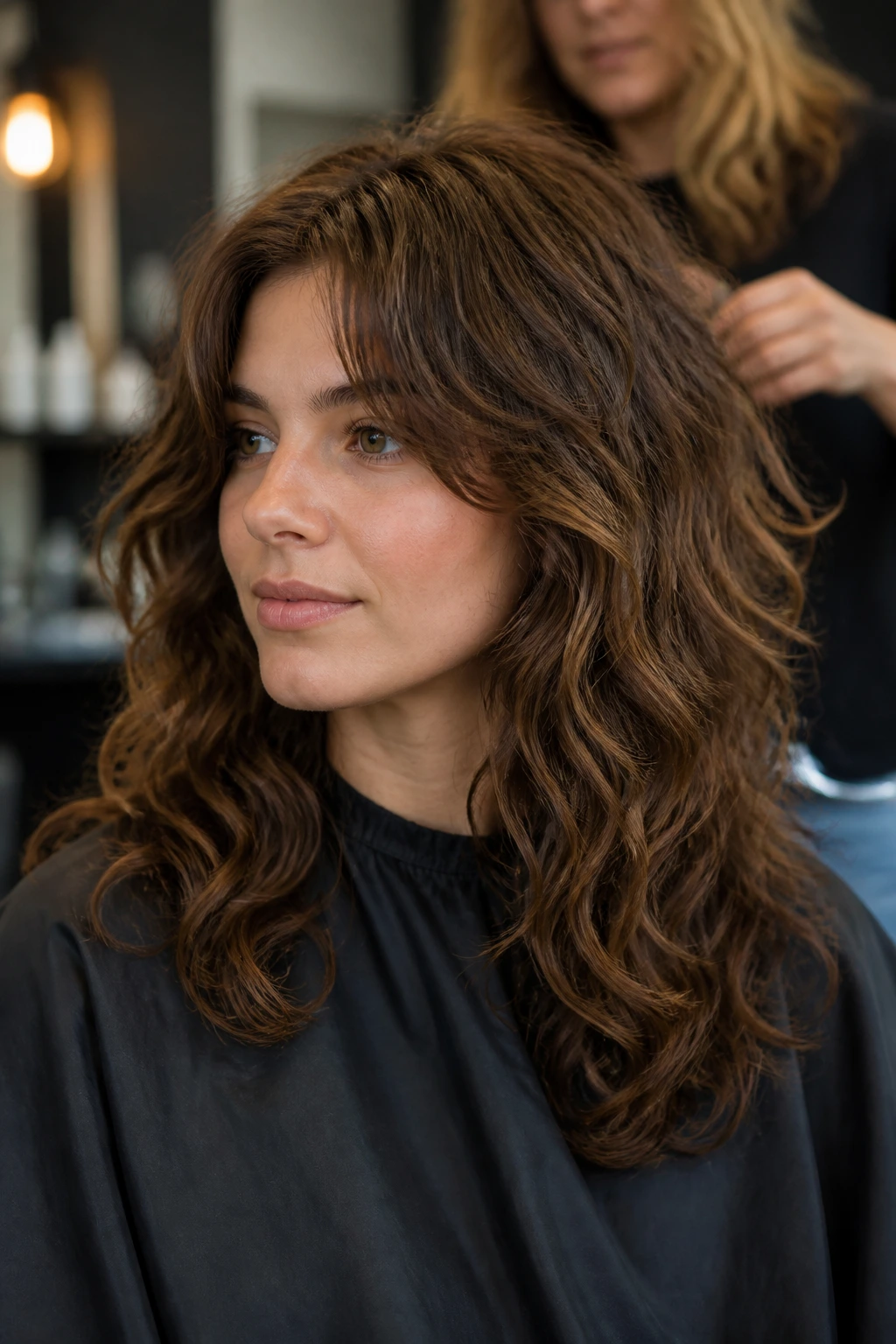
Bring photos that match your texture. A pin-straight photo of curtain bangs on a model with no wave pattern will not tell your stylist what your hair will do. Look for reference images where the hair bends in the same way yours does, even if the color or face shape is different.
Say where the bulk lives. Tell the stylist if your hair gets heavy at the ends, puffs at the sides, or collapses at the crown. That one piece of information changes everything. A good cut is less about the name and more about where the weight gets removed.
Mention your daily routine. If you air-dry, say so. If you diffuse for six minutes and quit, say that too. A haircut that only looks right after a 45-minute blowout is a bad fit for most people, full stop.
Use specific words. Ask for point cutting, internal layers, a rounded hemline, or face-framing pieces that start at the jaw. Avoid vague instructions like “just make it lighter.” Lighter where? At the ends? Around the crown? Near the ears? Be specific.
Essential Tools for Styling Long Wavy Hair
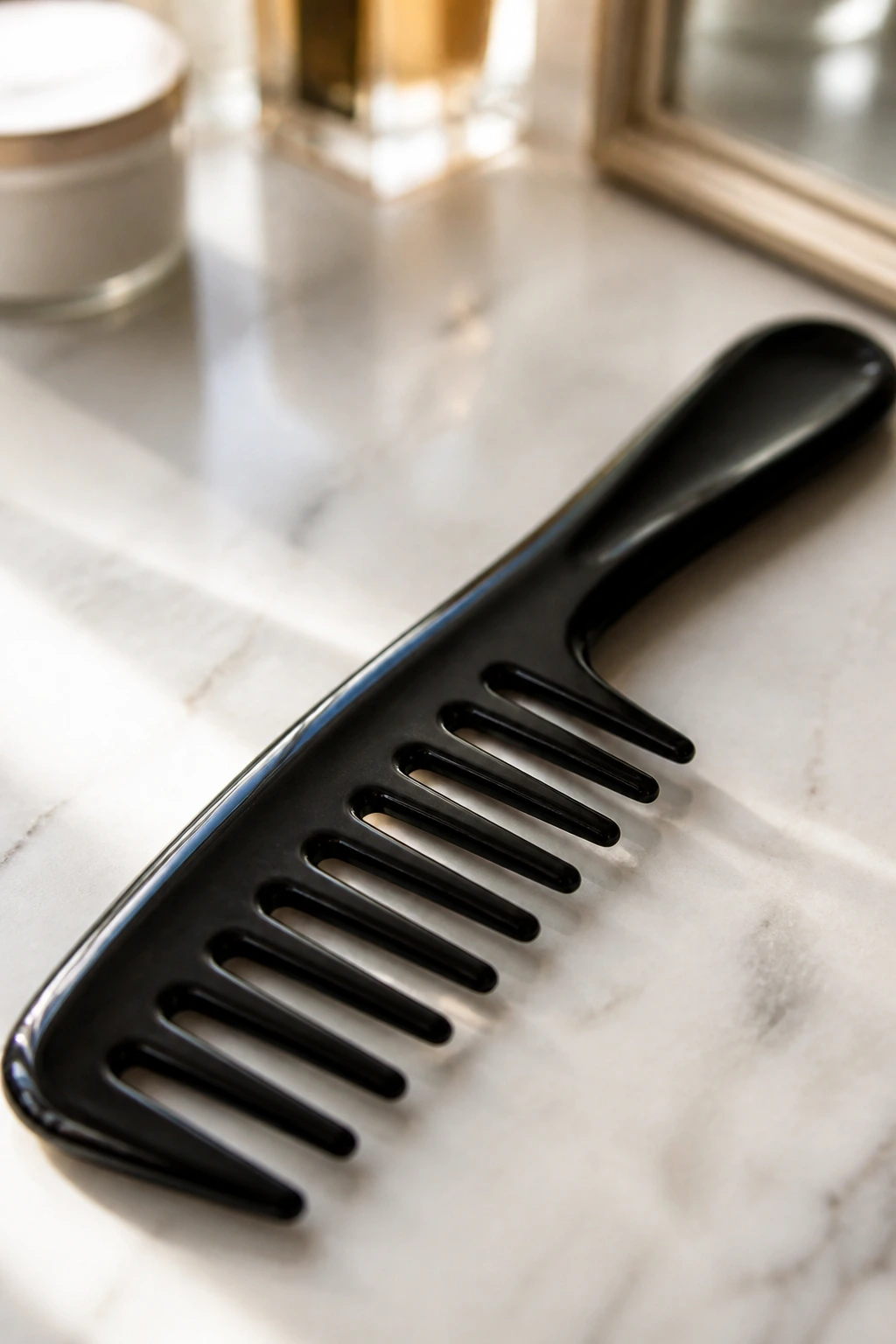
- Wide-tooth comb: Good for detangling when conditioner is in the hair, and much kinder than a fine brush on wet waves.
- Microfiber towel or cotton T-shirt: Helps soak up water without roughing up the cuticle and puffing the waves into fuzz.
- Diffuser attachment: Useful if you want root lift and a more defined bend without blasting the hair flat.
- Leave-in conditioner: Gives the lengths enough slip to stop them from frizzing out after the first hour.
- Wave cream or light curl cream: Adds shape without making long hair feel sticky or heavy.
- Hair clips or a claw clip: Handy for setting face-framing pieces, clipping sections while drying, or wearing the cut half-up.
- Heat protectant: Non-negotiable if you use a flat iron, curling iron, or blow dryer on the ends.
- Small round brush or paddle brush: Optional, but helpful if you like smoothing bangs or giving the front a little direction.
Smart Product Choices for Hold, Slip, and Frizz Control
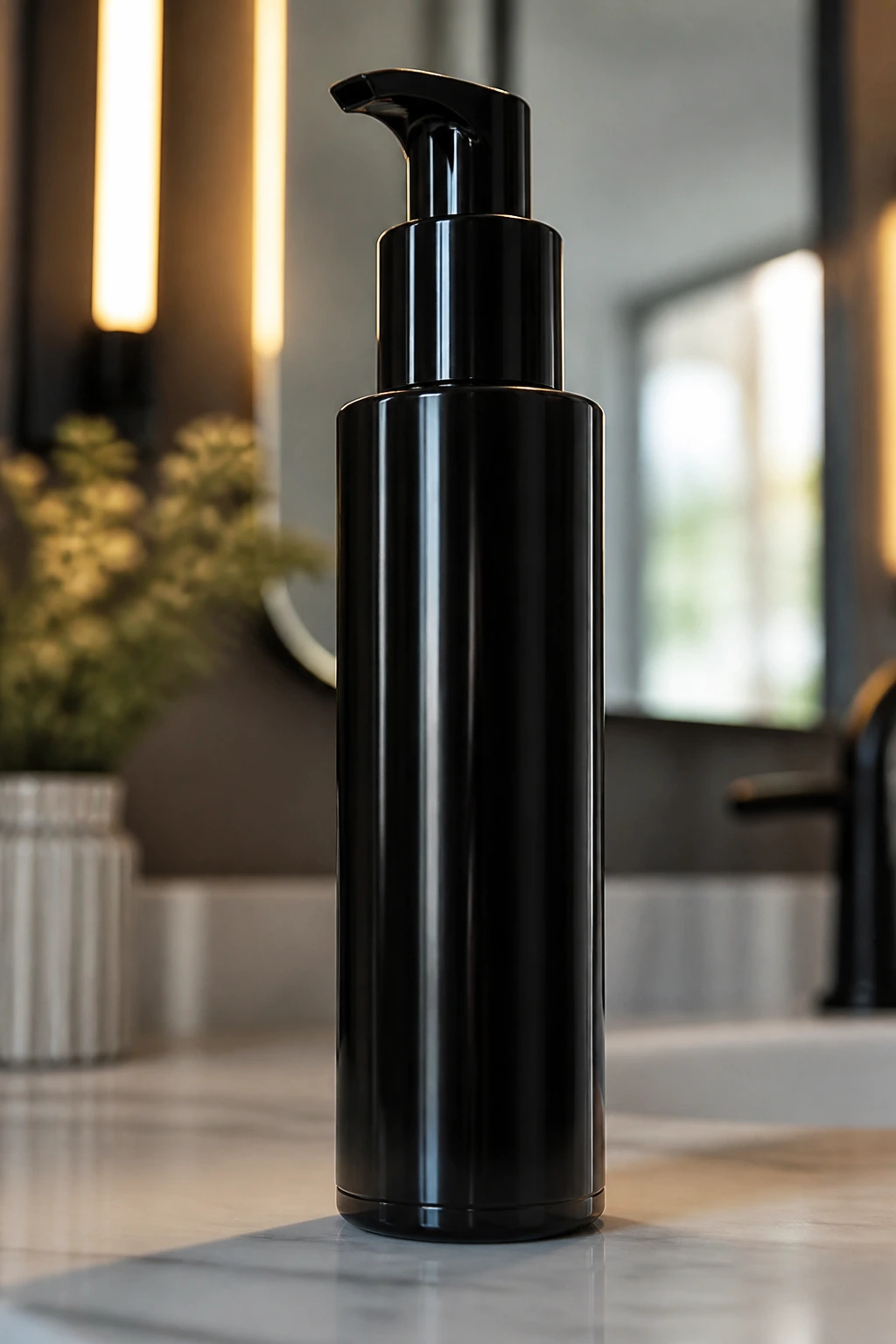
Choose products by how your waves behave, not by what the bottle promises. If your hair goes limp fast, reach for lighter creams and mousses. If it expands in humidity, use more slip in the leave-in and a stronger finishing product on the ends. Heavy oils are useful in tiny amounts, but they can flatten long waves fast if you smear them from root to tip.
A lot of people make the mistake of buying products meant for curls that are too rich for wavy hair. That usually gives you greasy roots and ends that still frizz. Start lighter than you think. You can always add another pea-sized amount of cream, but getting rid of too much product is a pain.
If your hair is color-treated, bleached, or rough from heat, focus on moisture plus a little protein. If it’s soft but fluffy, skip the heavy reconstruction and keep the finish airy. Your hair will tell on you pretty fast.
How to Style and Wear These Cuts
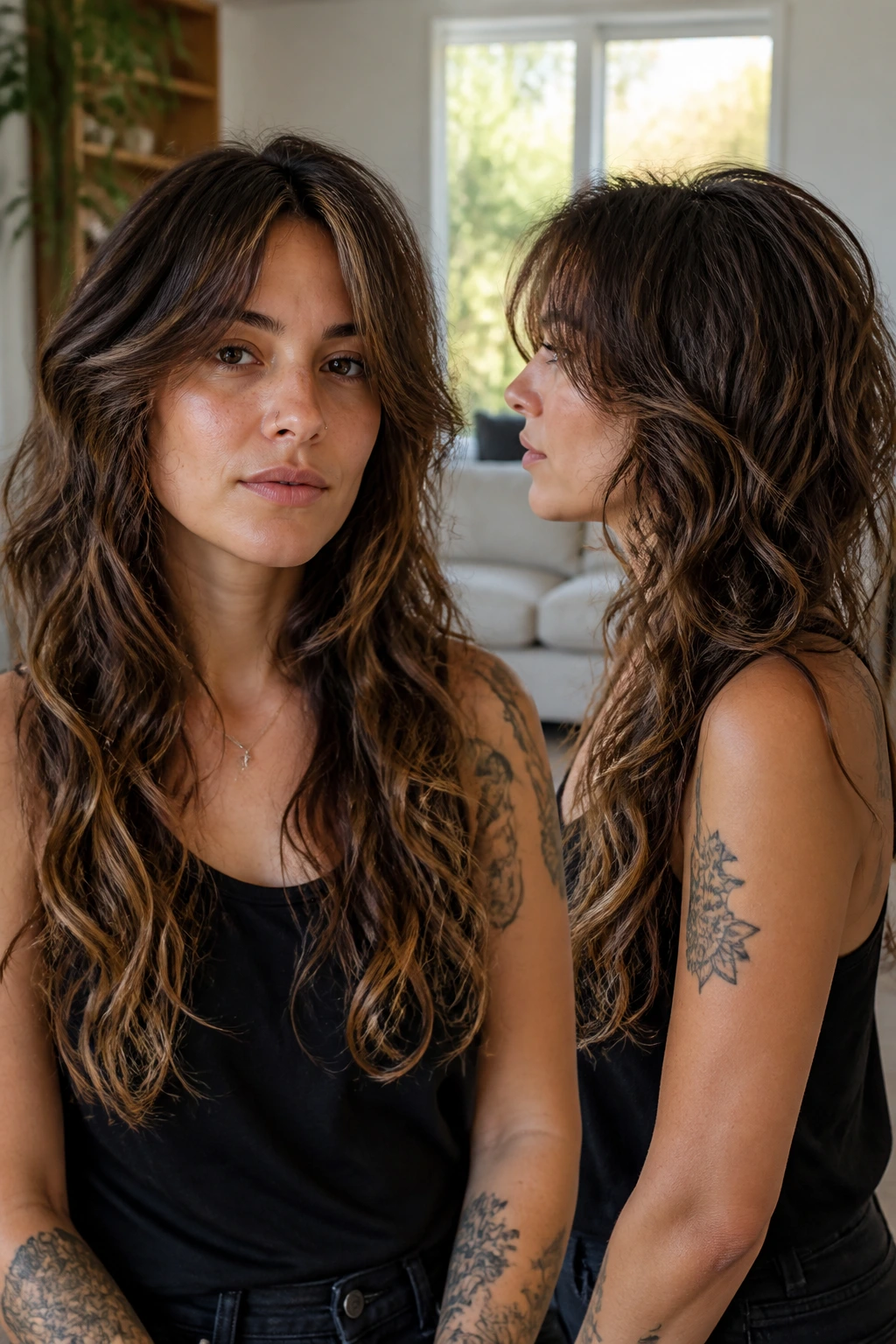
Presentation: The cut should be visible from the front and the side. That means parting, face-framing, and a little lift at the roots matter as much as the bottom line. If you only ever look at your hair from the mirror straight on, you’ll miss half the shape.
Accompaniments: Claw clips, metal barrettes, bandanas, and thin headbands work well with these cuts because they don’t fight the length. A middle part makes curtain bangs and butterfly layers behave differently from a side part, so keep both in your back pocket.
Wearability: For everyday wear, air-dry with leave-in and a small amount of cream, then scrunch the lower half only. For a cleaner finish, diffuse just the crown and leave the ends slightly damp so they keep their bend.
Finish: Long wavy hair looks best when the last inch or two isn’t overworked. Leave some separation in the ends. A little pieceiness reads richer than a perfectly polished sheet of hair.
Extra Tips and Personalization
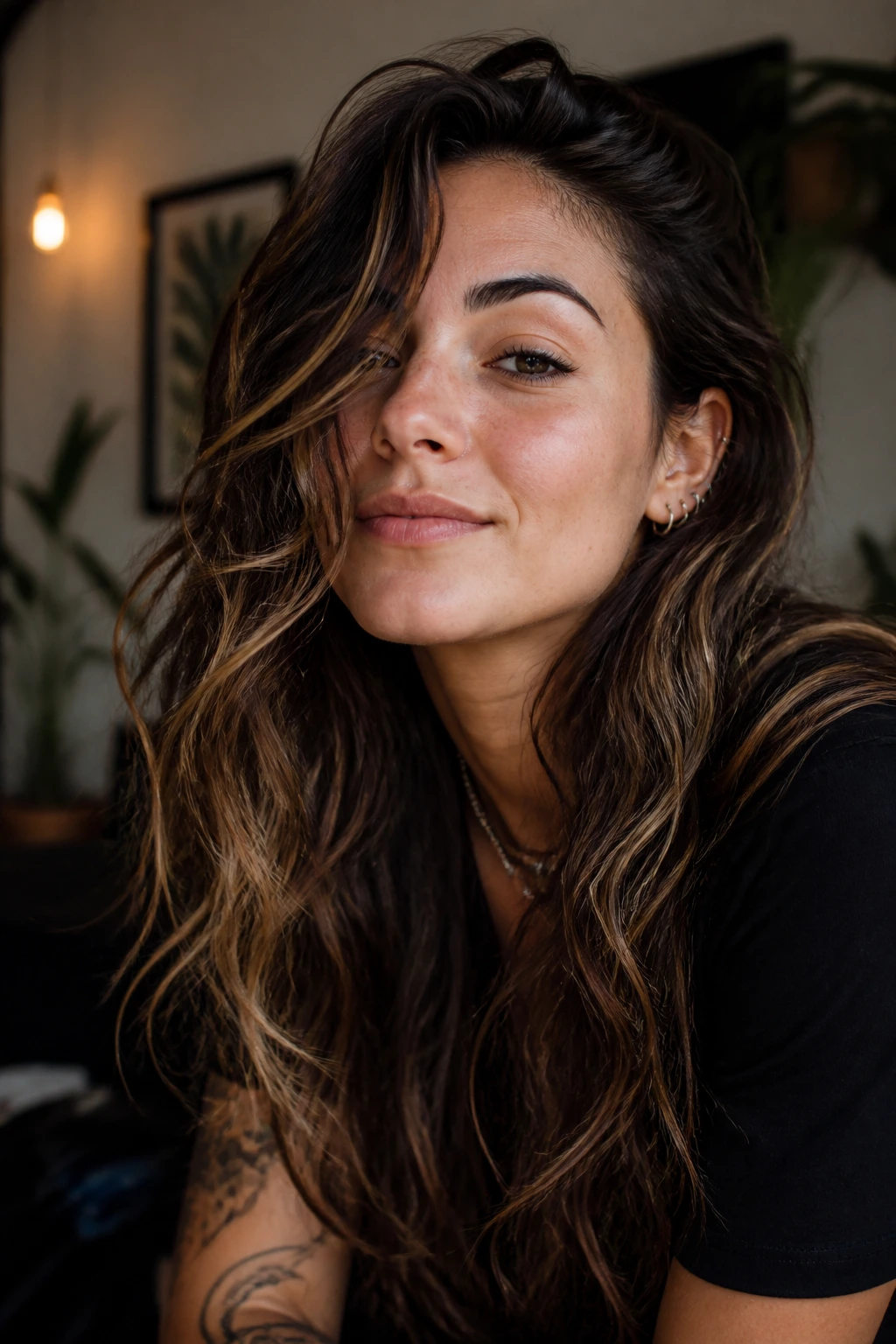
Texture Boost: If your waves fall flat halfway through the day, mist the mids with water, add a touch of foam or wave spray, and scrunch from the ends upward. Don’t soak the whole head again unless you enjoy waiting forever for it to dry.
Flavor Enhancement: A tiny bit of shine serum on the lower third of the hair can make long waves look deeper and less dry, especially on blunt or U-shaped cuts. Keep it off the roots. Root shine is rarely the goal.
Customization: Want a more masc read? Add a stronger side part, keep the fringe shorter, and ask for a firmer perimeter. Want a softer look? Let the face frame stay longer and blend the front pieces more gently.
Serving Suggestions: Tiny clips near the temples, a tucked ear on one side, or a loose half-up twist can change the whole feel of the cut. That’s the fun part. The haircut gives you the range; the styling chooses the mood.
Keeping the Shape: Maintenance, Trims, and Night Care
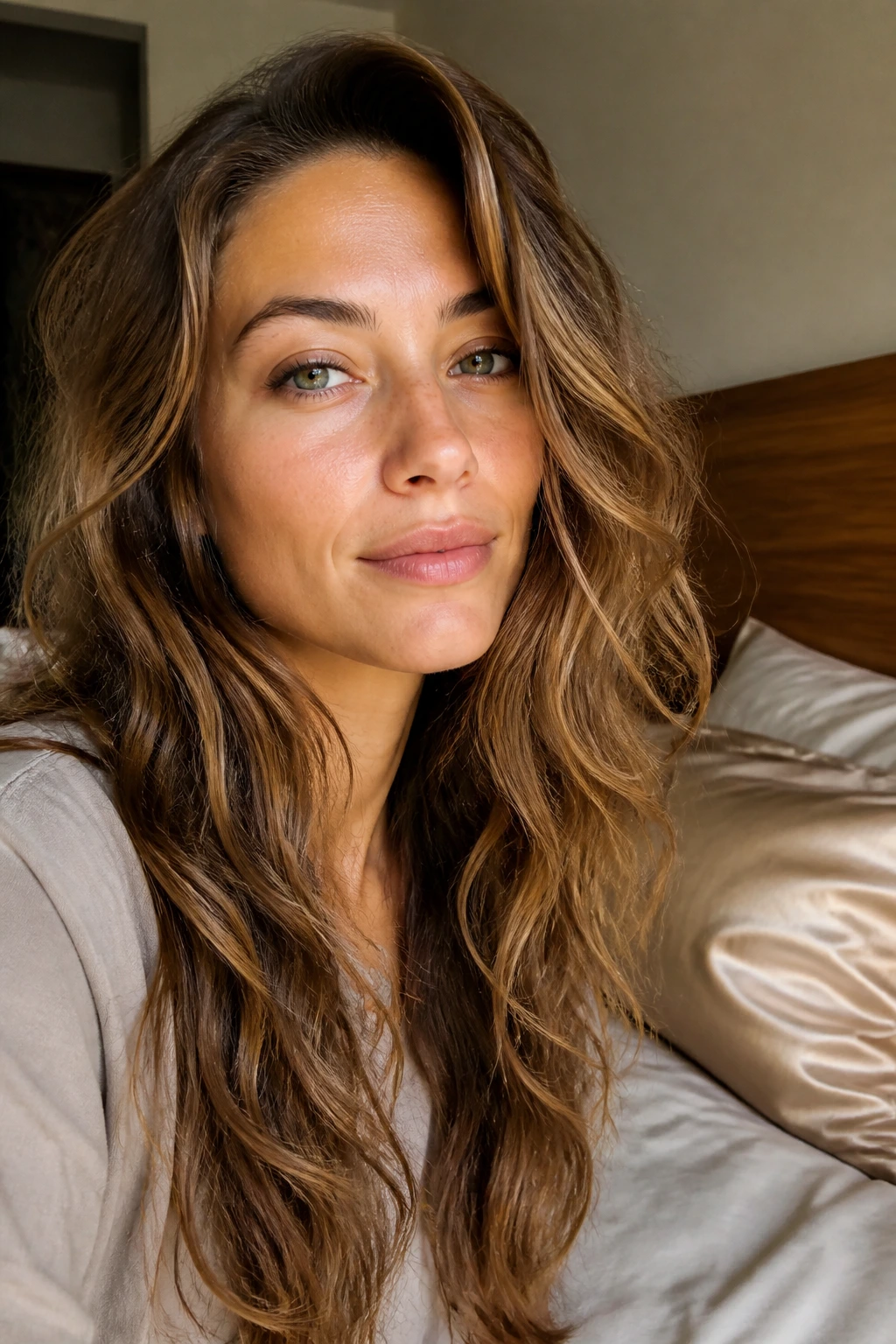
Long wavy hair grows out fast in the mirror and slow in the styling chair. That means maintenance is mostly about protecting the shape you already paid for. For layered cuts, a trim every 8 to 12 weeks keeps the layers from sliding into mush. For blunt or minimal-layer shapes, you can often stretch that a bit longer, but the ends will start to feel thinner and more ragged if you wait too long.
Night care matters more than people want it to. A loose pineapple bun can work on some wave patterns, but if that leaves dents, try a satin pillowcase and a soft scrunchie instead. You’re trying to preserve the bend, not force the hair into a weird overnight kink.
If a cut relies on fringe or face-framing pieces, plan for tiny in-between trims or learn how to dust the ends carefully. A bang that grows into your eyes doesn’t always ruin the haircut, but it changes the whole mood fast. For long styles, the difference between “finished” and “sloppy” is often just half an inch.
Common Mistakes to Avoid
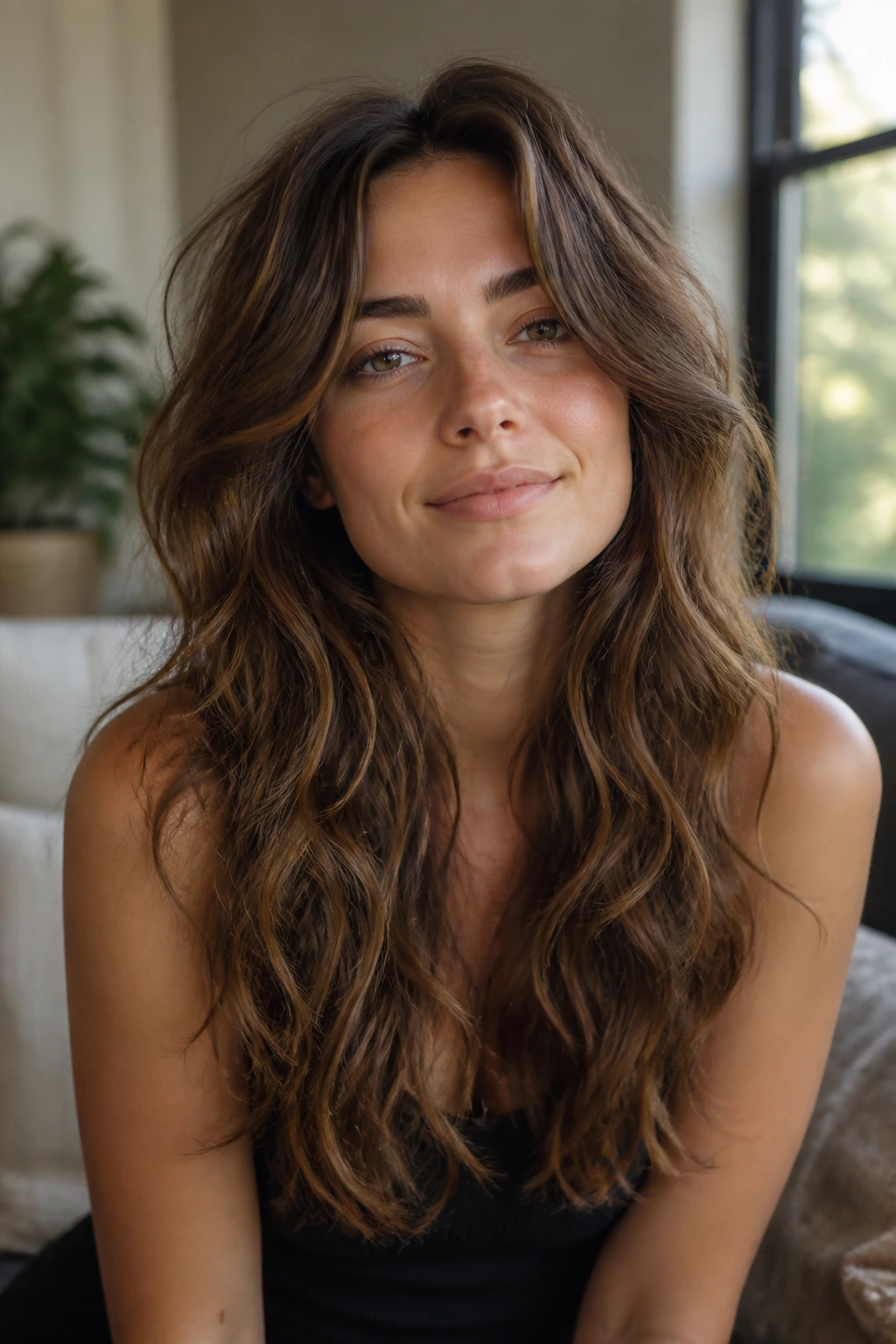
The biggest mistake is asking for layers without saying where the bulk sits. That usually leads to overlayered ends and a flat crown, which is the exact wrong trade. Tell the stylist what the hair does when it’s dry.
Another trap: cutting wavy hair as if it were straight. Wet waves can look longer and tighter than they really are, so the dry shape matters more than the wet one. If a stylist is not checking how the hair falls as it dries, be cautious.
Overusing heavy creams is a quiet sabotage move. The hair may feel soft in the hand, but it can hang limp by noon. If your waves disappear after product, you probably used too much, or the formula is too rich for your texture.
Skipping trims because you want to “hold onto length” can backfire. Split ends travel, and once the bottom goes frayed, the haircut looks thinner even when the length is still there. A clean half-inch trim often keeps more hair looking healthy than a year of avoiding the scissors.
Frequently Asked Questions
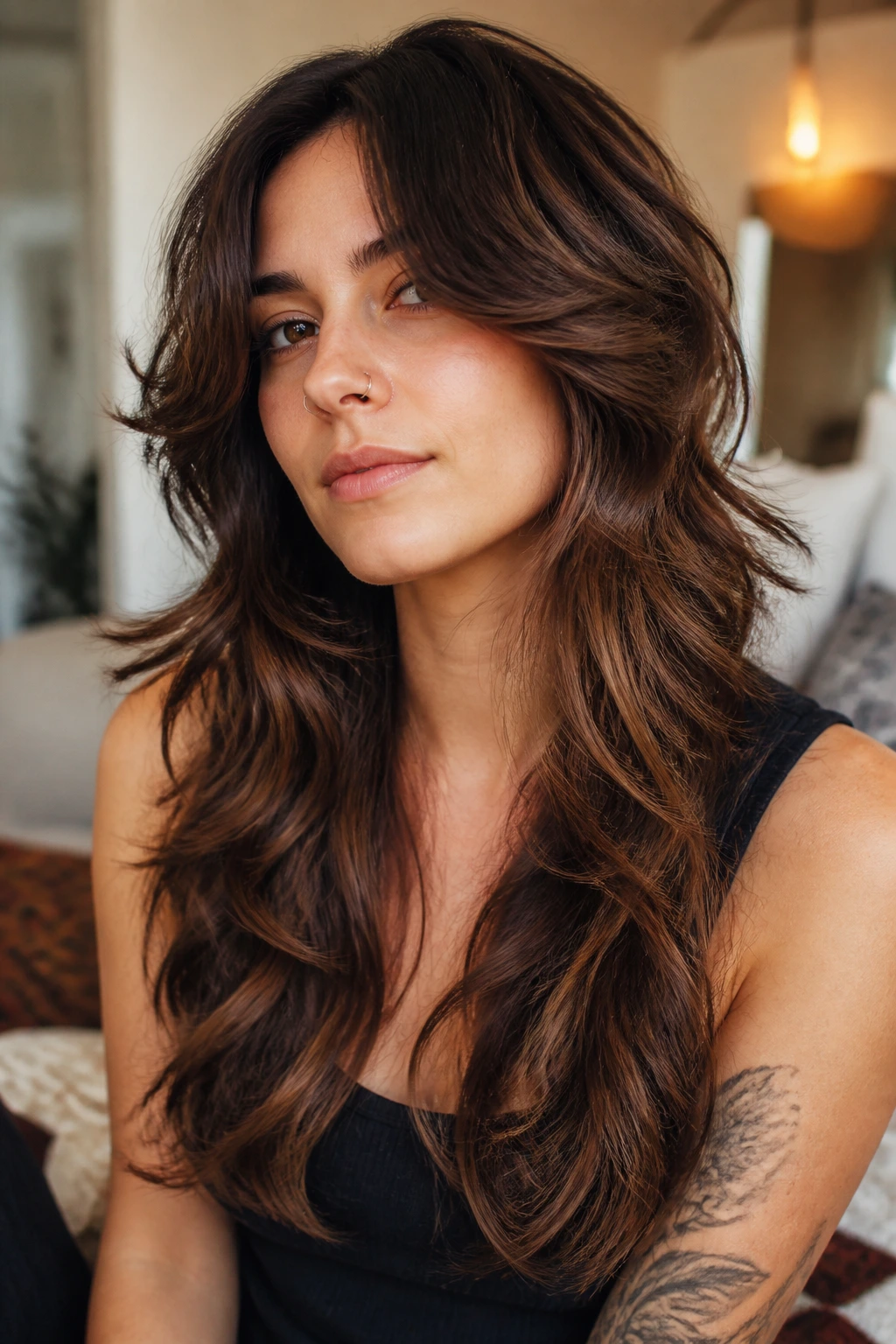
What haircut looks best on wavy hair if I want a more androgynous feel?
Long shags, wolf cuts, asymmetrical cuts, and blunt shapes with strong face framing usually read the most androgynous. The difference comes from the outline: sharper edges and less obvious softness tend to shift the look away from traditional long layering.
Do wavy haircuts need layers?
Not always, but they usually need some kind of shaping. Fine waves can get by with invisible layers or a soft edge cut, while thick waves often need more structure to keep the bottom from turning bulky. The answer depends on where the weight lives.
Are curtain bangs hard to manage on long wavy hair?
They’re manageable if they’re cut long enough to blend and short enough to frame. The real work is in the first five minutes after washing: part them where they naturally want to fall and let them dry in that direction. Fighting the part is what makes them annoying.
How do I stop my long wavy hair from becoming a triangle?
Remove weight from the right places, usually the crown or the inner bulk, not just the outer perimeter. A triangle shape happens when the bottom is too wide and the top is too flat. Rounded layers, internal layers, or a butterfly shape can fix that.
Can fine wavy hair wear long layers without looking thin?
Yes, but the layers need to be subtle. Invisible layers, crown shaping, and a little face framing are safer than heavy chopping. The goal is motion without leaving the ends see-through.
What if my waves get frizzy after a razor cut?
Then the razor was probably used too aggressively for your texture. You may need a softer scissor-based shape, or razor work only in the densest zones. Frizz-prone hair often prefers point cutting and careful layering over a lot of blade work.
How often should I trim long wavy hair?
Most long wavy cuts need a shape check every 8 to 12 weeks. Bangs and face-framing pieces may need attention sooner. If the ends start looking wispy or the layers stop blending, it’s time.
Is it better to cut wavy hair wet or dry?
Both have a place, but dry cutting shows the real shape better, especially on strong waves. Wet cutting can still work for refining the base line or removing bulk, yet the final check should happen with the hair in its natural state.
The Shape That Makes Waves Behave
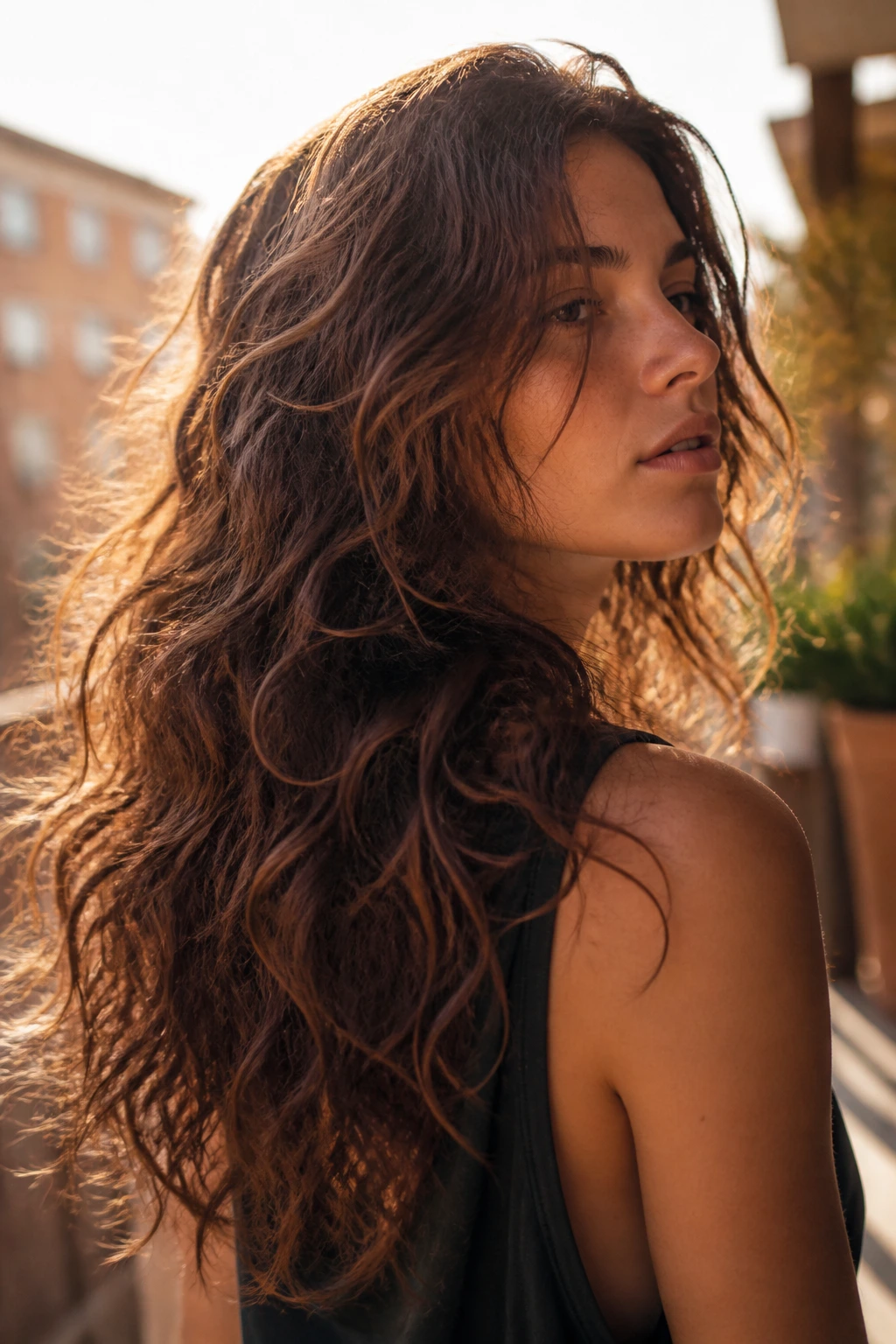
The nicest thing about long wavy hair is that it never has to look identical twice. One day it falls soft and sleepy. The next, it’s all movement and edge. A good haircut gives that texture a lane to drive in instead of boxing it up.
That’s why these lesbian long haircuts for wavy hair matter so much: they let the length stay long while making the wave pattern easier to live with. Some are softer, some sharper, some quietly practical, and a few have enough edge to feel like a statement. Pick the shape that matches your habit, not just your mood in the salon chair.
And if you’re still torn between two options, choose the one that will still look good on a day when you only had time for leave-in conditioner and a thumb-sized dab of cream. That’s the real test.
