



A clean fade on short hair does something longer cuts can’t quite manage: it makes the whole head read as intentional, even when the top is barely an inch or two. The best fade haircuts for short hair don’t rely on length to carry the look. They lean on contrast, clean graduation, and a barber who knows exactly where to stop the blend before the shape starts to vanish.
That’s why these cuts keep showing up on men who want a sharp outline without a lot of morning fuss. Short hair shows every decision. If the fade is too high, the head can look narrow. If the top is too flat, the haircut starts to read like a helmet. Get the balance right, though, and the result is crisp in a way that feels practical, not precious.
I’ve always thought short fades work best when they don’t try too hard. A little texture on top. A clean neck. Maybe a hard line if the haircut can handle it, maybe not. The whole point is to make the cut look like it belongs on the head it’s on — not like it was copied from a poster and forced into place.
Why These 23 Cuts Keep Working
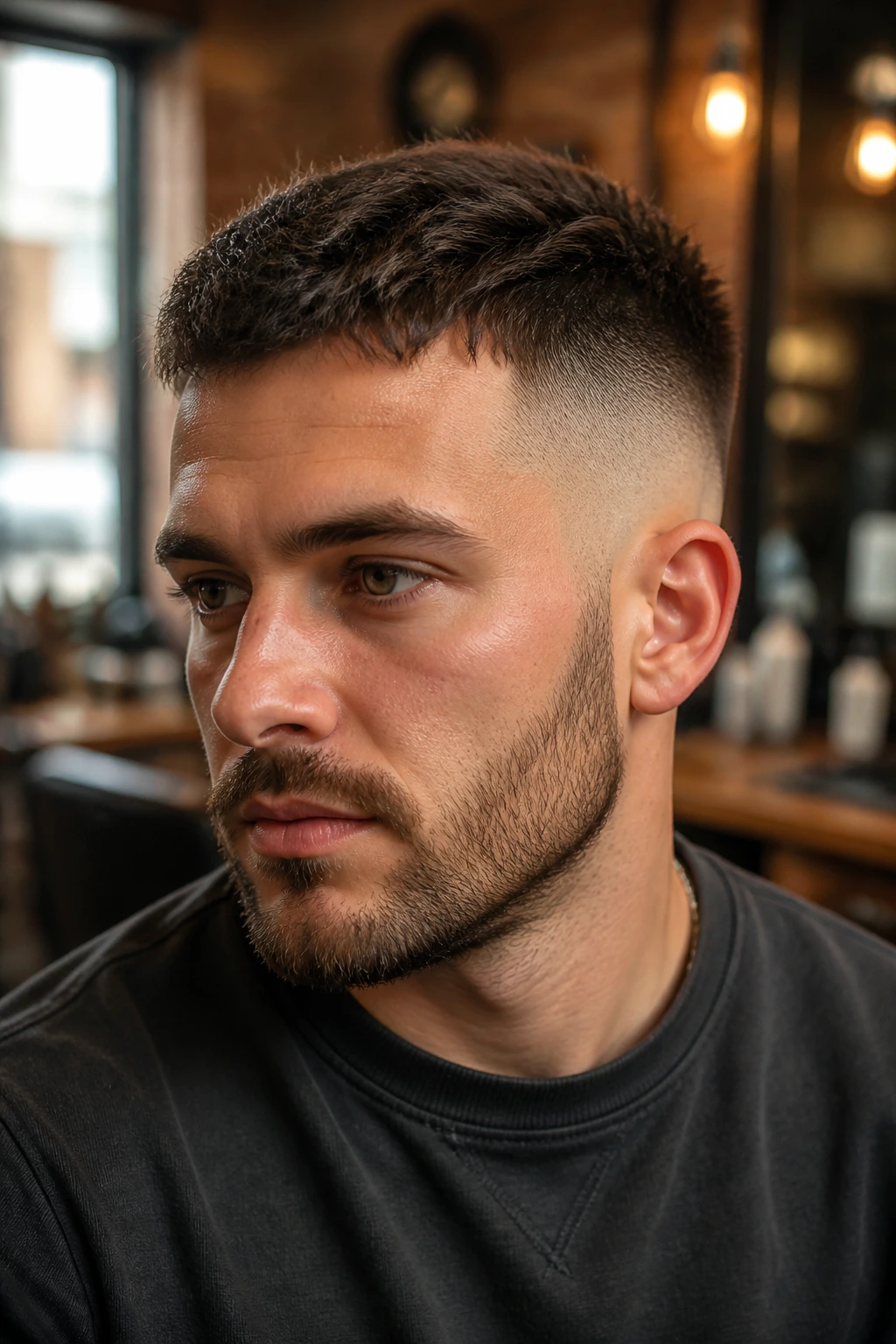
-
Shorter length grows out cleaner: A short top and faded sides keep the silhouette readable for longer, so you don’t get that puffy, awkward triangle after a week and a half.
-
Texture matters more than bulk: On short hair, a choppy crop, a brushed-up top, or a blunt fringe changes the whole mood without needing extra inches.
-
The fade does the heavy lifting: Low, mid, high, skin, or taper — the fade gives the haircut its shape, so the top can stay simple.
-
They fit different hair types: Straight, wavy, curly, and coily hair all work here, but each texture needs a slightly different length on top and a different fade height.
-
Barber communication is easier: You can point to the top length, the fade height, the neckline, and the line-up separately. That makes the chair conversation far less guessy.
-
They can look strict or relaxed: Same short fade, different finish. Matte clay makes it casual; a sharper edge-up and a closer fade push it toward formal.
1. Low Skin Fade and Buzz Cut
If you want the least fussy short fade, start here. The buzz on top keeps the haircut tight, and the low skin fade around the ears and neckline gives it enough contrast to keep it from looking plain. I like this cut on guys with thick hair, but it’s also one of the better options for thinning hair because the short length removes any chance of the top fighting the sides.
Ask for a #1 to #3 on top, depending on how much scalp you want showing, then take the sides down to skin only at the lower third of the head. The transition should feel smooth, not dramatic. A crisp line-up at the forehead sharpens the whole thing fast.
2. Mid Fade and Textured Crop
Why does this cut work so often? Because it gives the top just enough room to break up. A textured crop on short hair looks best when the front is chopped into small uneven pieces, not combed into place like a school photo.
Why It Feels So Modern
A mid fade starts around the temple and lets the haircut show a bit more shape than a low fade. That matters with short hair, because the top doesn’t have much length to hide behind. Leave about 1.5 to 2.5 inches on top, then use matte clay or paste and push the hair forward and slightly up with your fingers.
- Best for: Straight or wavy hair with decent density.
- Top length: 1.5 to 2.5 inches.
- Fade height: Mid temple.
- Styling note: Rough-dry first, then add a small dab of product.
The trick is not to make the fringe too neat. A little mess reads as texture. A lot reads as bedhead.
3. High Fade and Crew Cut
A high fade with a crew cut is blunt in the best possible way. The sides disappear fast, the top stays short and tidy, and the whole haircut has a military-clean silhouette without looking like it belongs on a parade ground. It’s one of my favorites for men with strong jawlines, because the high fade opens the face and makes the bone structure do some work.
Keep the top around 1 to 1.5 inches, shortest at the crown and slightly longer at the front. The barber should remove weight above the temples so the cut doesn’t mushroom out. If you want a slightly softer version, ask for a shadow fade rather than skin.
4. Drop Fade and French Crop
The drop fade is the move when you want the fade to curve around the head instead of cutting straight across it. Pair that with a French crop — short fringe, blunt or slightly choppy front — and the haircut gets a little more shape without becoming loud.
What Makes the Shape Interesting
The drop fade dips behind the ear, which keeps the haircut looking rounded instead of boxy. That’s useful on short hair because the top can stay compact while the sides still feel designed. A French crop usually sits best with 1 to 2 inches on top and a fringe that falls forward, not upward.
This is also one of the easiest cuts to wear with glasses. The fringe keeps the forehead area busy, while the fade clears the temples so the frames don’t compete with hair hanging over them.
5. Taper Fade and Ivy League
A taper fade with an Ivy League is the polished option in this group. The taper keeps the sides neat without stripping them to skin, and the Ivy League gives you just enough length on top to make a side part, a light comb-over, or a brushed-over finish.
It’s the haircut I recommend to men who want short hair that still looks finished after a jacket goes on. Keep the top around 2 to 3 inches, with the front a touch longer than the crown. Use a light cream or matte paste if you want movement, or a little pomade if you want the part to sit in place all day.
6. Burst Fade and Short Curls
Short curls need room to breathe, but they do not need a lot of length to look good. A burst fade keeps the shape tight around the ears, then curves out and back in a way that flatters curl patterns instead of fighting them.
Why It Works on Curlier Hair
The burst fade lets the curls stay full on top while the sides stay clean and easy to maintain. If the top is left around 1.5 to 3 inches, the curls still spring up, but they don’t overpower the head shape. That makes this a strong choice for men who want short curls without the bulk that can creep in around the temples.
Use a curl cream or leave-in conditioner, then scrunch with your hands. Don’t rake through it with a fine comb unless you want the curls to separate into frizz. The fade does the framing; the curls do the rest.
7. Temple Fade and Short Quiff
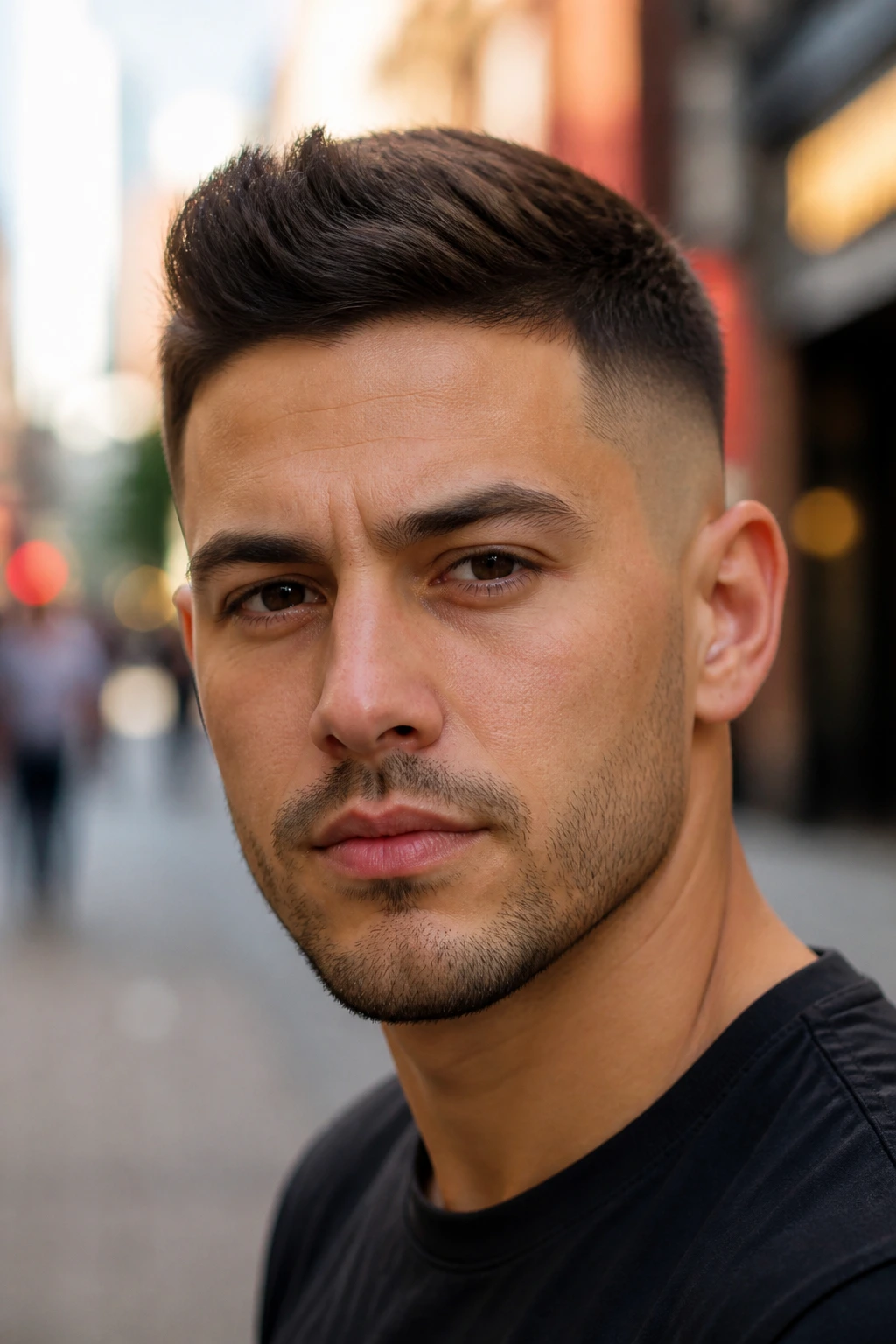
A temple fade is subtle in a way that looks expensive without showing off. It clears the temples and sideburn area while keeping more weight in the back and lower sides, which is perfect for a short quiff that needs a little lift in front.
The quiff doesn’t need to be tall here. In fact, it usually looks better when the front rises just enough to break the profile line. Blow-dry the front upward and slightly back, then lock it in with a light matte product. If the hair is very straight, a sea salt spray before drying helps the front keep shape.
8. Shadow Fade and Caesar Cut
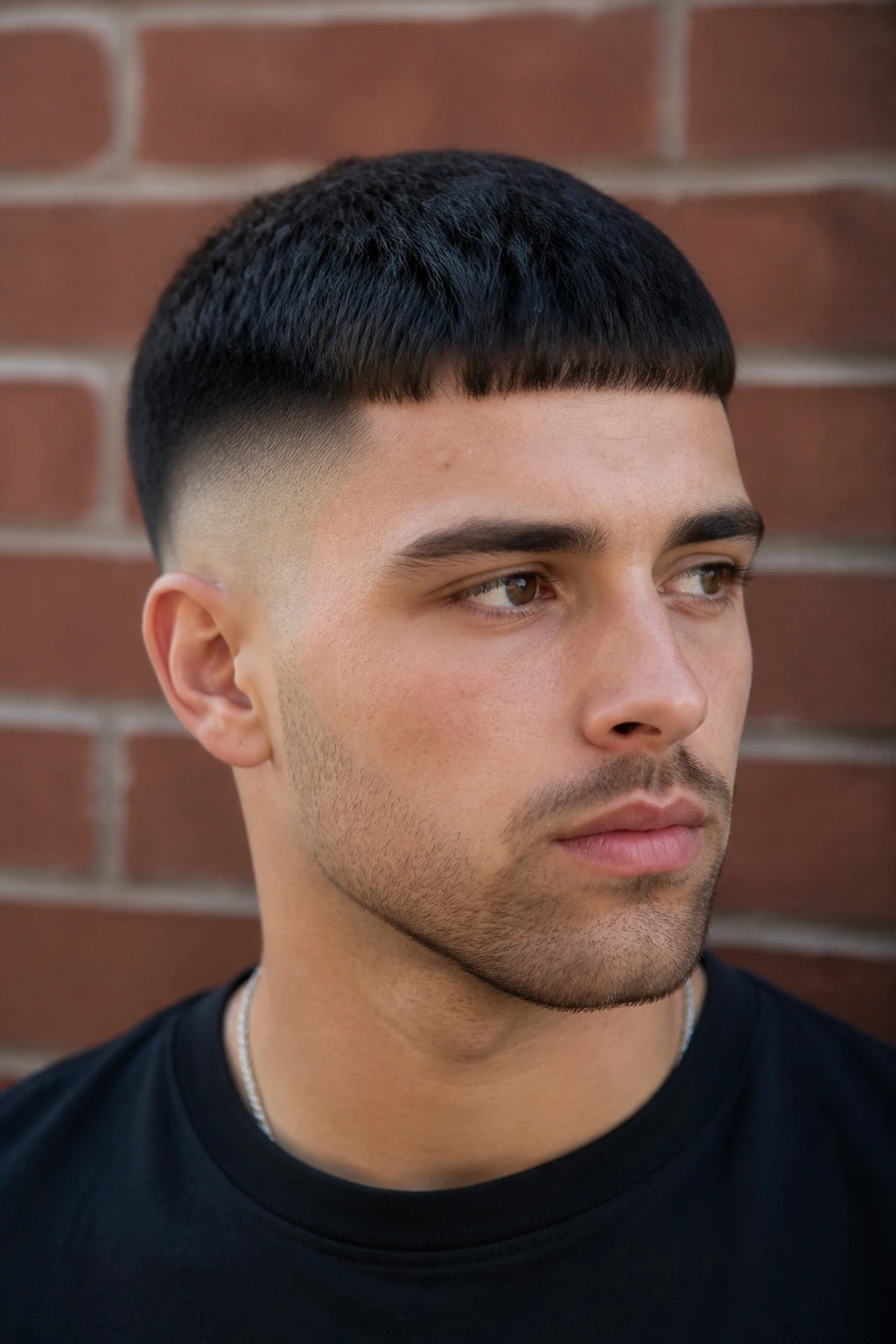
This one is for men who want the clean lines of a fade without the hard contrast of skin. A shadow fade keeps a touch of darkness at the base, which softens the whole haircut and makes the Caesar cut feel deliberate rather than severe.
The Caesar fringe is short and blunt, usually about half an inch to an inch, with the front brushed forward. That blunt edge looks stronger when the fade stays low and gradual. If the hairline is a little uneven, this cut can be a lifesaver — the fringe does the framing work up front, so the rest of the cut can stay tidy.
9. Bald Fade and Side-Part Crop
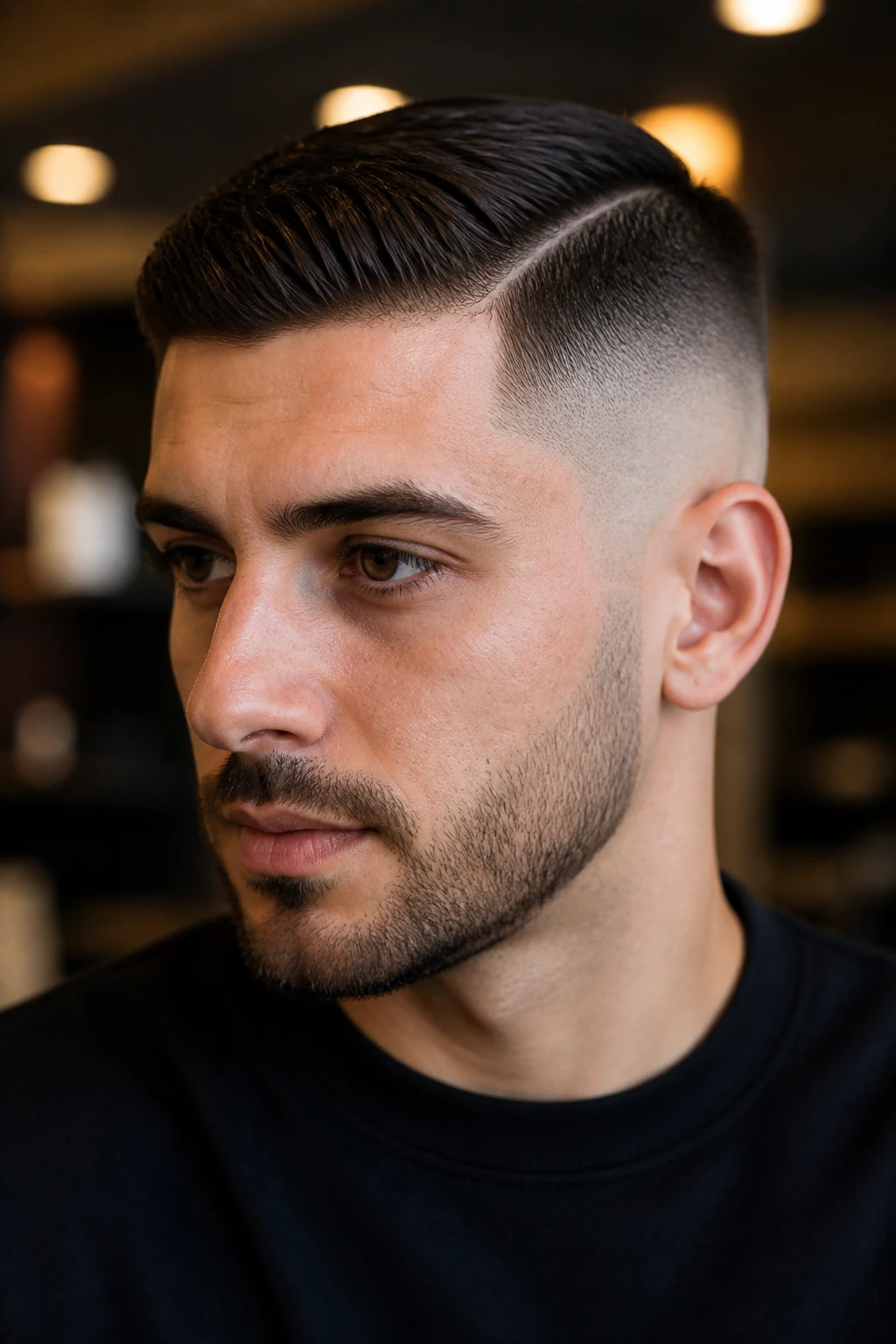
A bald fade with a side-part crop has one job: look sharp fast. The bald fade takes the sides to skin, the side part creates a clear lane through the top, and the crop keeps the haircut short enough to avoid looking overbuilt.
The key is proportion. Keep the top short — around 1.5 to 2 inches — so the part doesn’t turn into a floppy comb-over. A hard part can work here, but I prefer a softer natural part if the hairline already has enough structure. Use a small amount of matte cream and push the front over with your fingers, not a brush, unless you want a stiffer finish.
10. Skin Fade and Short Pompadour
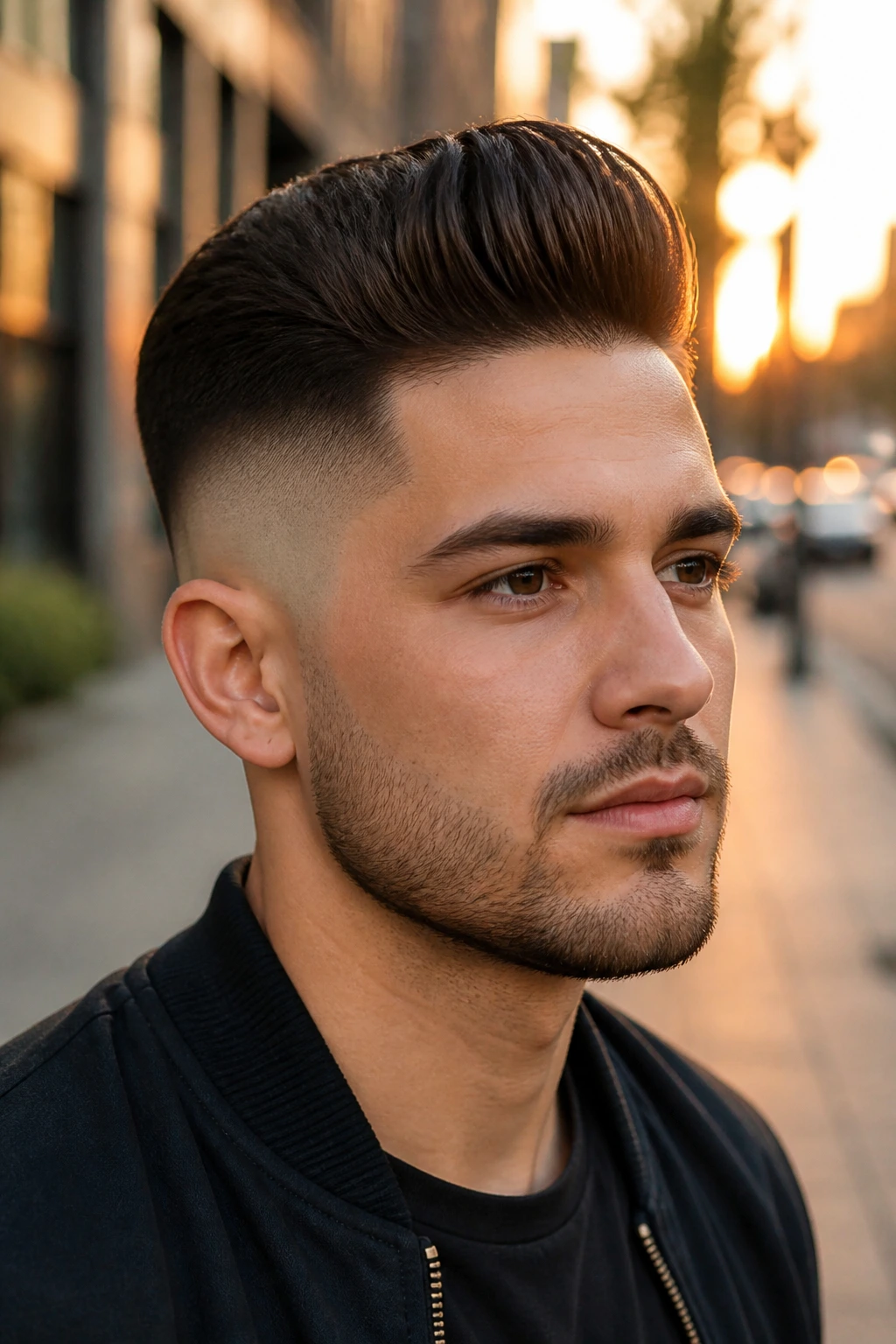
This is the cut for someone who wants height but does not want long hair in the morning. A short pompadour on top gives you lift at the front, while the skin fade strips the sides down so the volume is concentrated where it matters.
The pompadour only works if the front has enough length to stand up — think 2.5 to 4 inches, depending on your texture. Blow-dry the front up and slightly back using a vent brush. If you skip the dryer and hope product alone will do it, the style usually collapses by lunch. That’s the price of height. Still worth it.
11. Low Taper Fade and Spiky Top
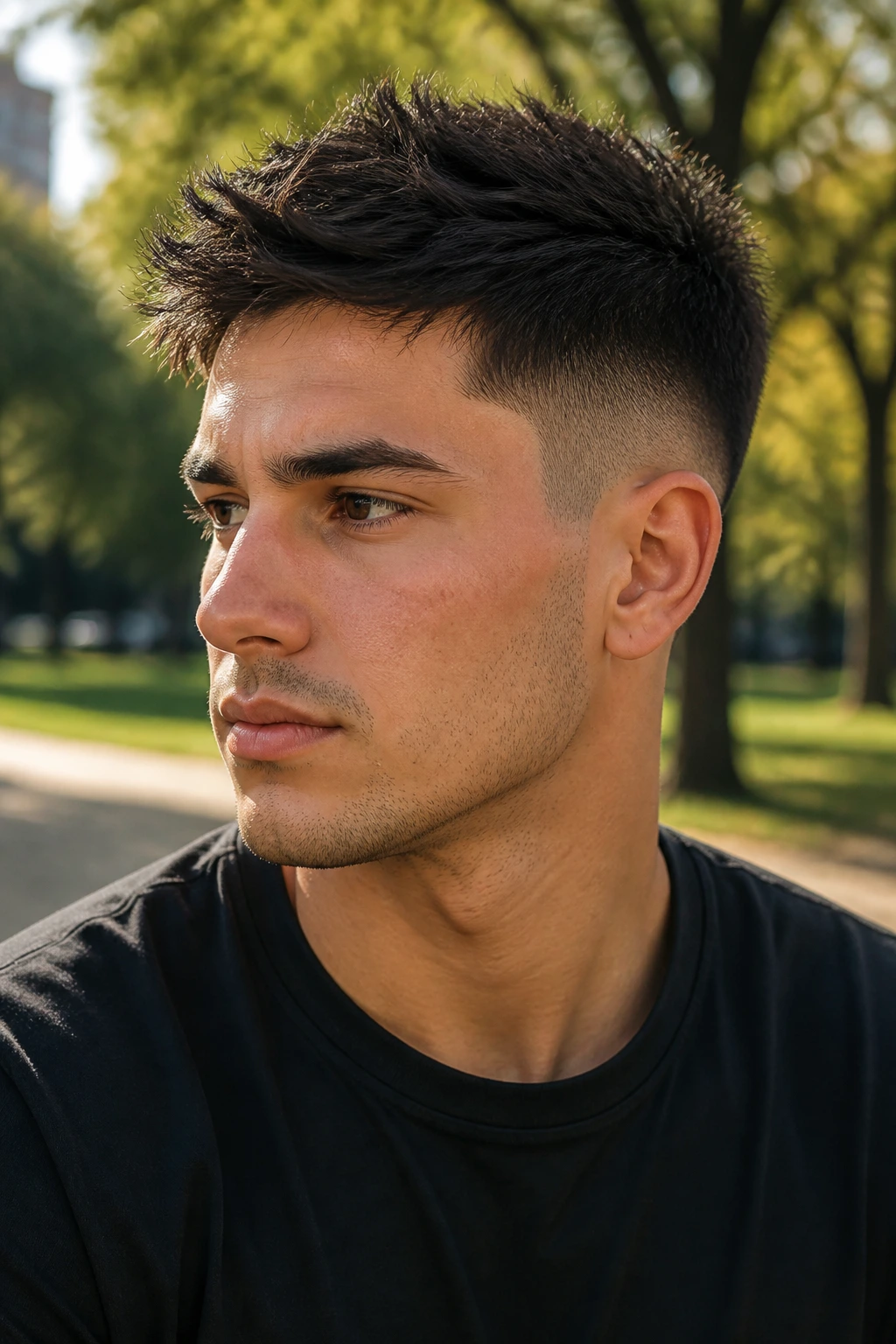
A low taper fade is the quiet one in the room. It doesn’t erase the sides the way a skin fade does, and that makes it useful if you want the haircut to stay soft around the ears and neckline. Add a short spiky top and you get a style that feels a little casual, a little sharp, and not at all fussy.
Keep the top around 1 to 2 inches and let the spikes be irregular. Perfectly even spikes can look dated fast. What works better is a slightly broken texture — some pieces pointed up, some leaning sideways, nothing too stiff. A matte paste with a dry finish gives you that effect without making the hair crunchy.
12. Mid Fade and Brush-Up
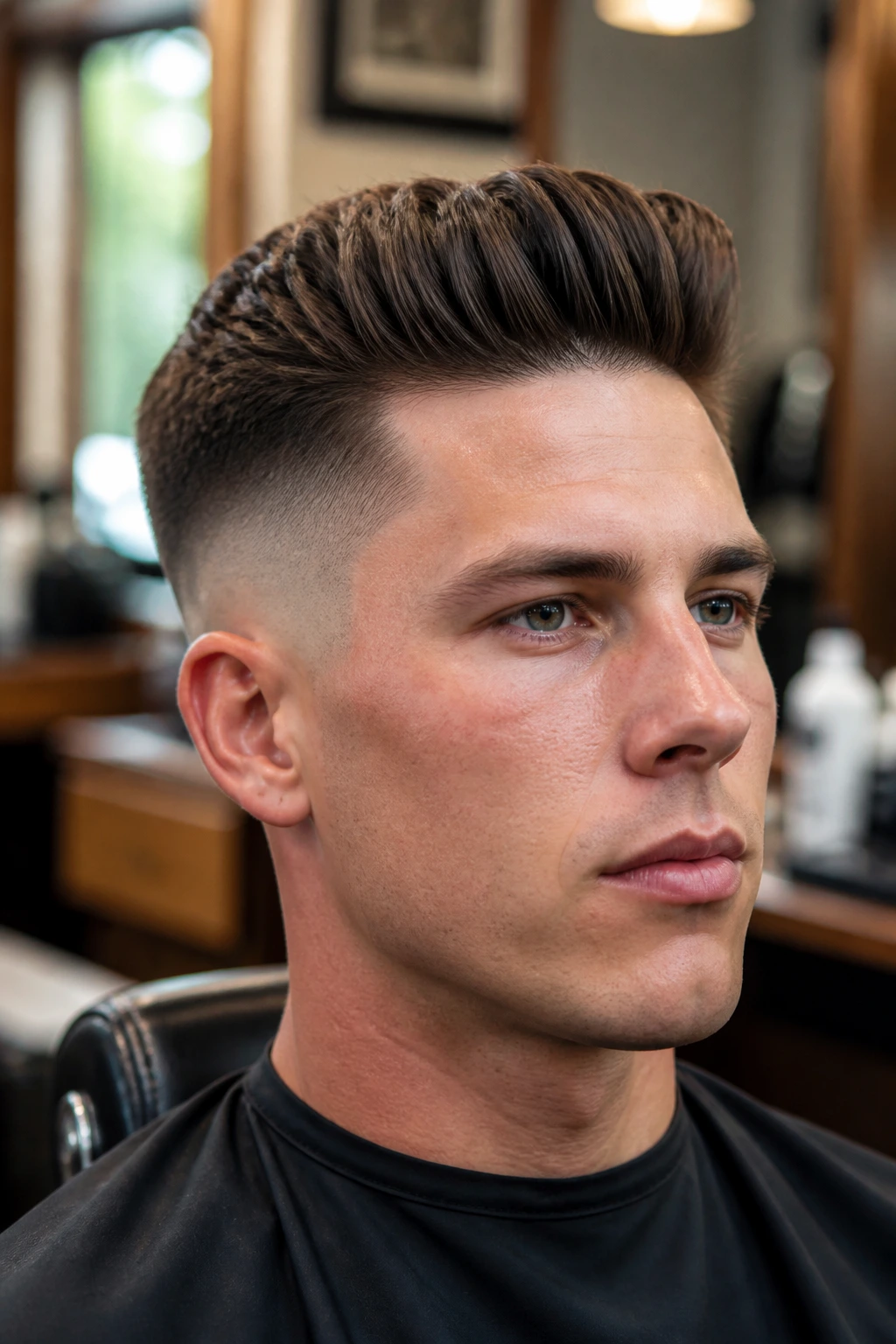
A brush-up is one of those cuts that looks simple until you see it in person. The top rises off the forehead, the mid fade opens the sides, and the whole haircut gets a bit of vertical movement without becoming a full quiff.
This is a good cut for guys with a straight hairline or a high forehead, because the upward styling changes the visual balance. Leave the top long enough to move — usually 2 inches or a bit more in front — and use a blow-dryer to lift the roots before product goes in. If you want it to last, spray the roots lightly with water, then dry them upward before touching paste.
13. High Drop Fade and Hard Part
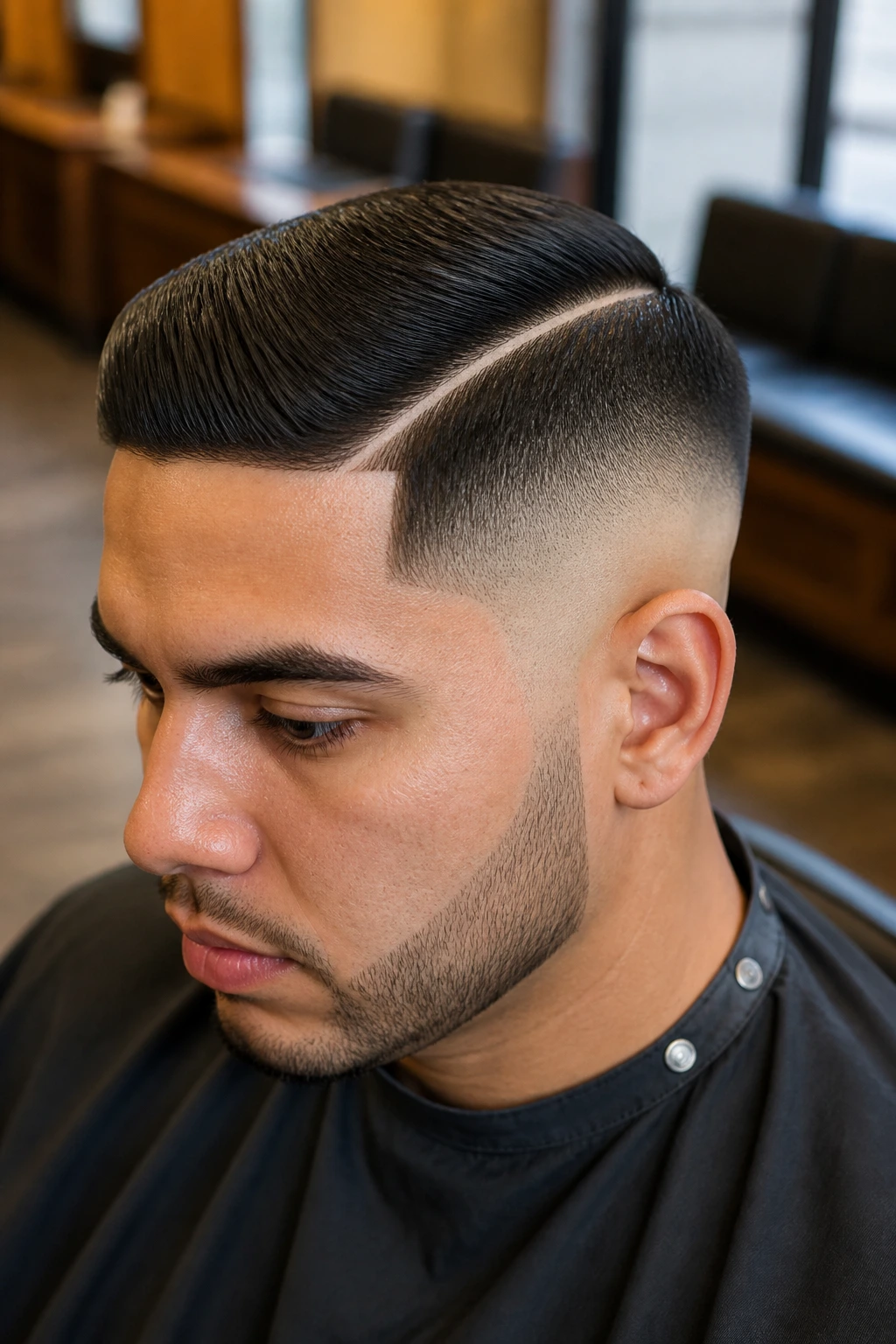
A hard part adds attitude fast, but it needs the rest of the haircut to stay disciplined. A high drop fade helps because it gives the part a clear frame and keeps the side profile from looking too square.
The drop matters here. It curves the fade lower behind the ear, which stops the high fade from making the head look flat at the temples. Keep the top short enough to comb cleanly to one side — usually around 2 inches — and tell the barber whether you want the part shaved in or just defined with a comb and razor. A real hard part grows out quicker than most people expect, so this cut needs more upkeep than it first seems.
14. Short Burst Fade Mohawk
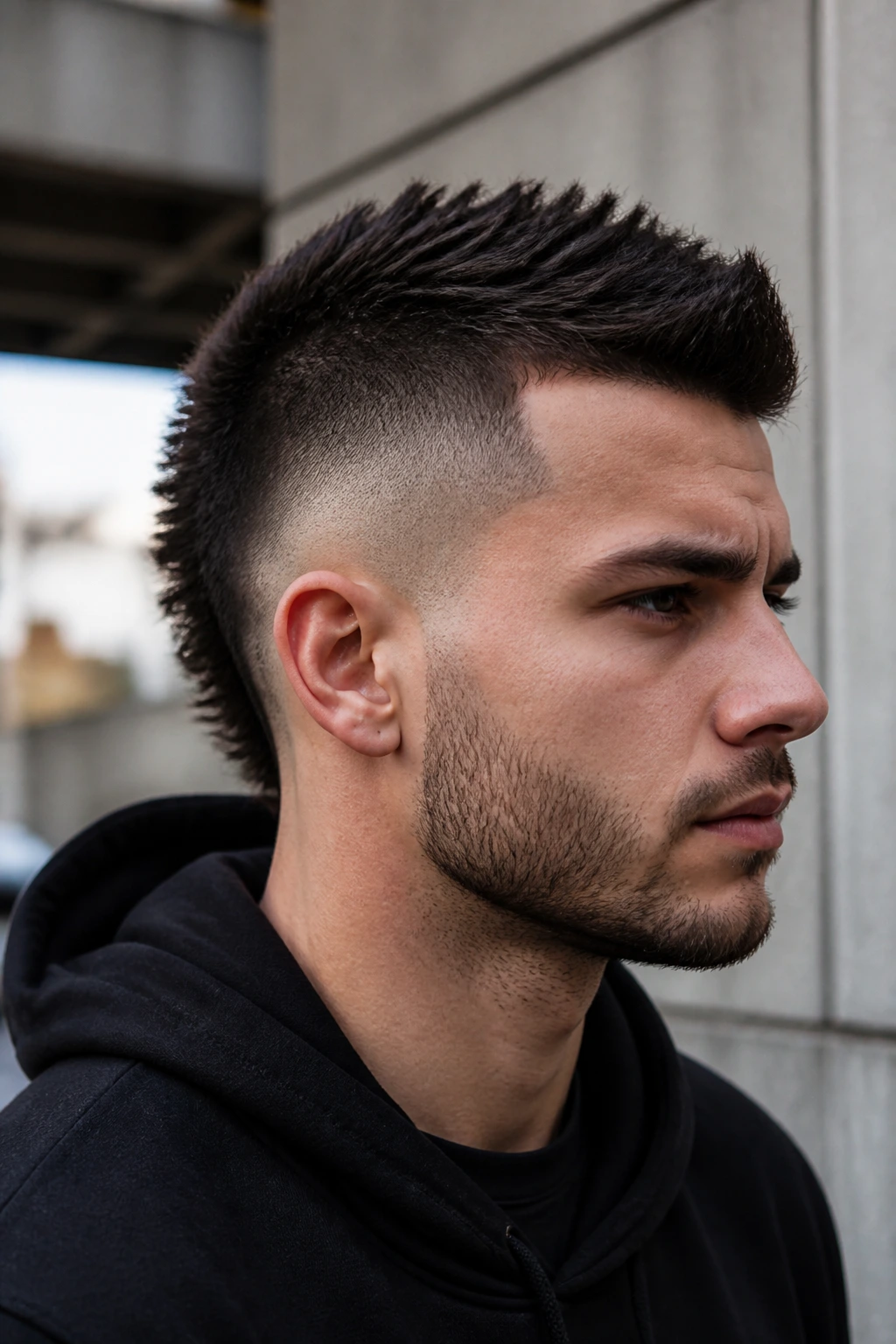
A short burst fade mohawk is more wearable than the name suggests. The fade bursts around the ear, the center ridge stays short, and the shape reads as sharp instead of theatrical when the top is kept modest.
I like this version when the hair has a little natural lift or curl, because the center strip can stand up without much effort. Keep the middle around 1.5 to 3 inches and let the sides taper tightly into the fade. If the top gets too long, the mohawk line starts to wobble. Shorter is better here. Cleaner too.
15. Temple Fade and 360 Waves
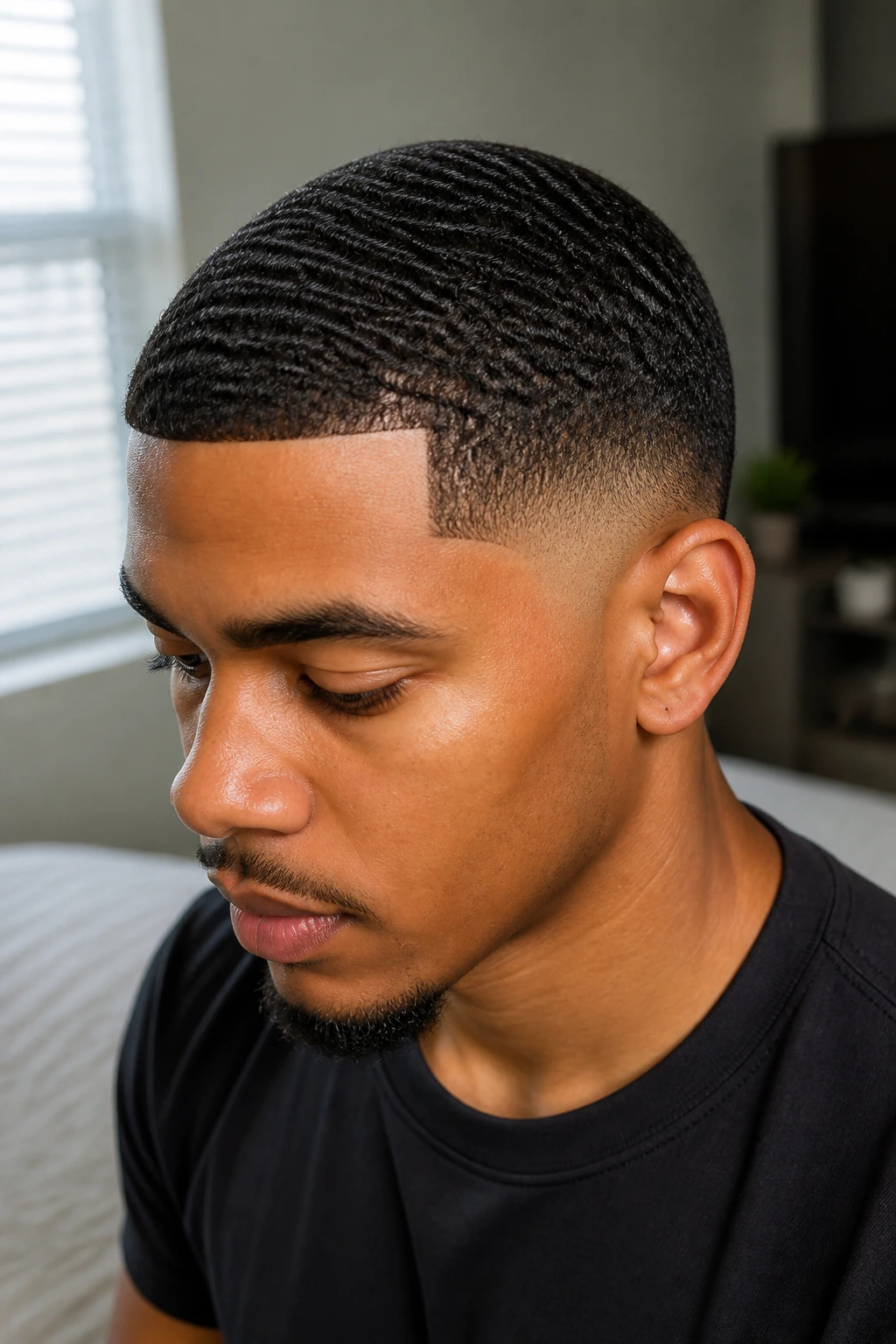
Waves need discipline, not length. A temple fade gives the pattern room to show, keeps the edges clean, and avoids cluttering the wave pattern with heavy side bulk.
The Wave Pattern Needs Space
For 360 waves, the crown, brush pattern, and durag routine matter as much as the cut itself. Keep the top short enough that the waves can compress and lay down — usually around a low guard length that still leaves enough hair to form the ripples. A soft line-up at the forehead and temples finishes the look without stealing attention from the wave pattern.
Brush daily in the direction of your crown, then wear a durag or wave cap when you sleep. If the cut is too high on the sides, the whole shape gets busy. A temple fade keeps the focus on the pattern, where it belongs.
16. Low Fade and Sponge Twists
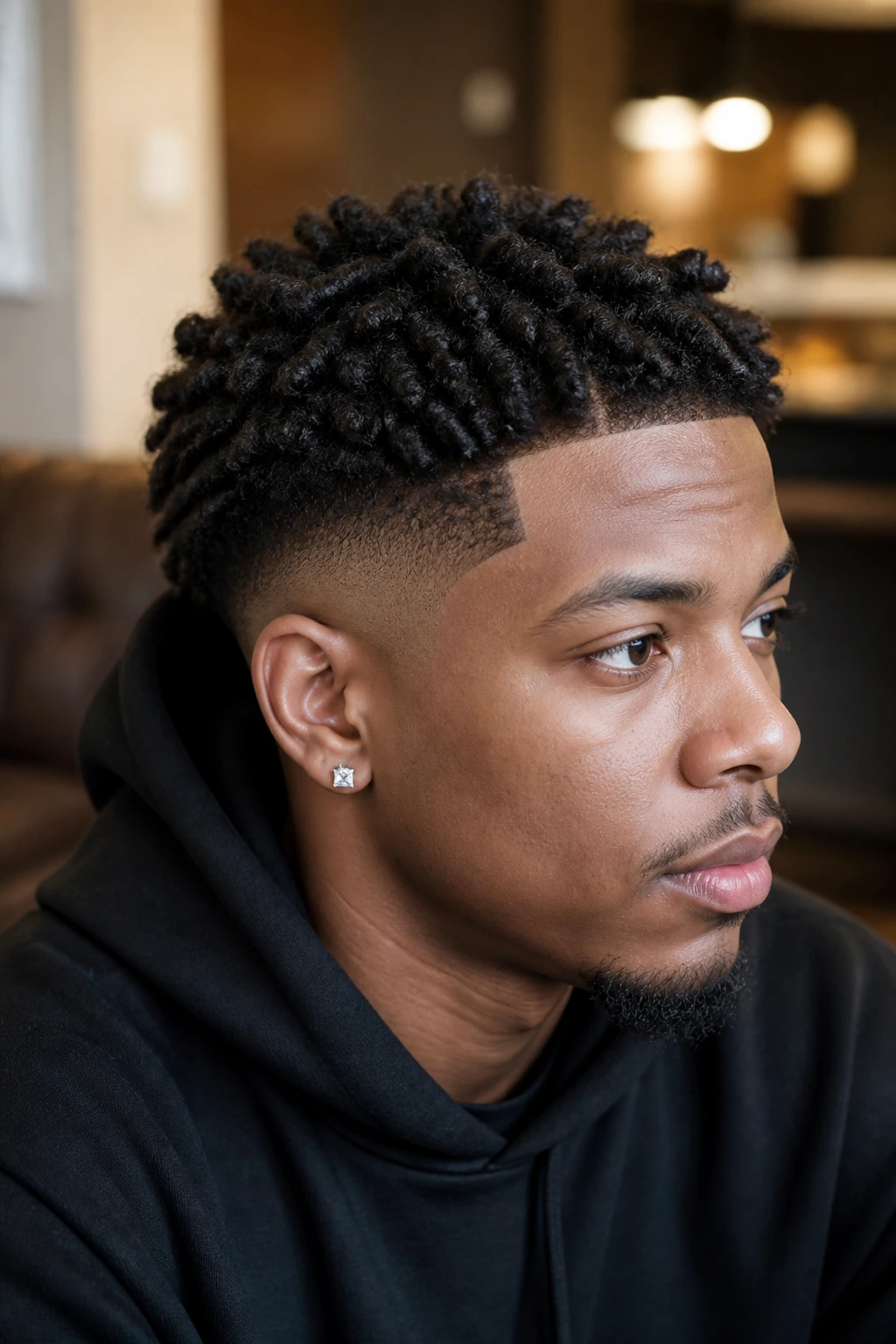
Sponge twists give short coily hair texture without needing much length, and a low fade keeps the edges neat while the top stays visible. The result has a casual, textured look that doesn’t collapse when the weather gets humid or the day gets long.
Use a curl sponge in small circles on damp hair, not soaking wet hair. A light leave-in conditioner or twist cream helps the coils separate cleanly. The fade should stay low enough that the twist texture remains the star. If the sides climb too high, the whole cut can start to feel top-heavy.
17. Mid Taper Fade and Short Afro
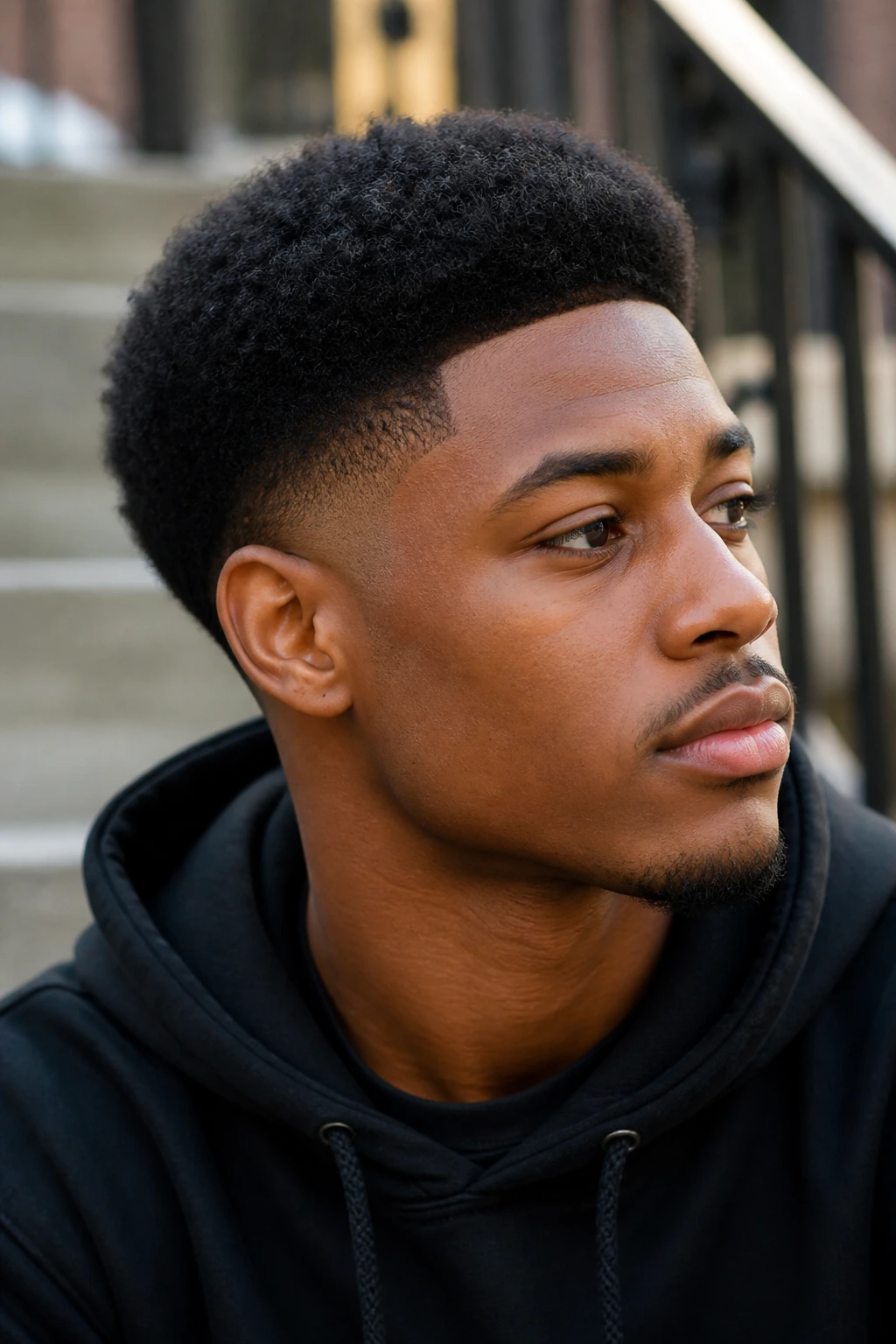
A short afro with a mid taper fade is one of the smartest low-maintenance cuts on this list. The taper keeps the edges clean around the neckline and sideburns, but the afro shape stays intact on top instead of being chopped into something too narrow.
This works best when the top is rounded and even, not forced into a square. A barber who understands afro shape will preserve the outline where the hair naturally wants to sit. Use a pick or wide-tooth comb if needed, then leave it alone. Overbrushing can flatten the shape and make the fade feel disconnected from the top.
18. High Skin Fade and Angular Fringe
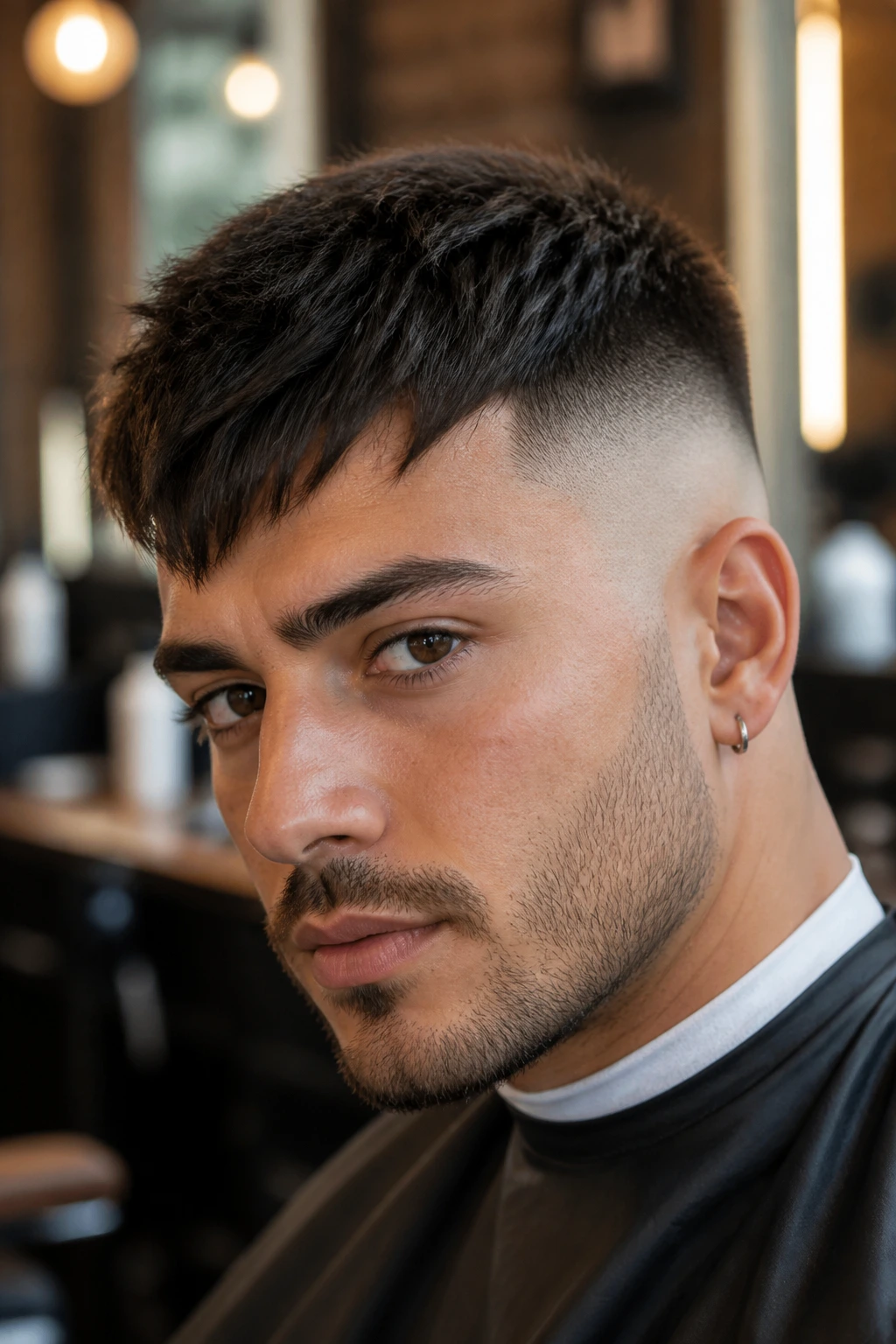
An angular fringe changes the whole mood of a short fade. Instead of sitting straight across the forehead, the front drops on a diagonal, which gives the haircut movement even when the top is short.
The high skin fade underneath does two useful things: it creates contrast, and it keeps the fringe from looking bulky. This cut looks best when the front has a little texture, so don’t ask the barber to make every strand even. A slight point-cut finish softens the edge and keeps the fringe from looking like it was cut with kitchen scissors.
19. Drop Fade and Disconnected Crop
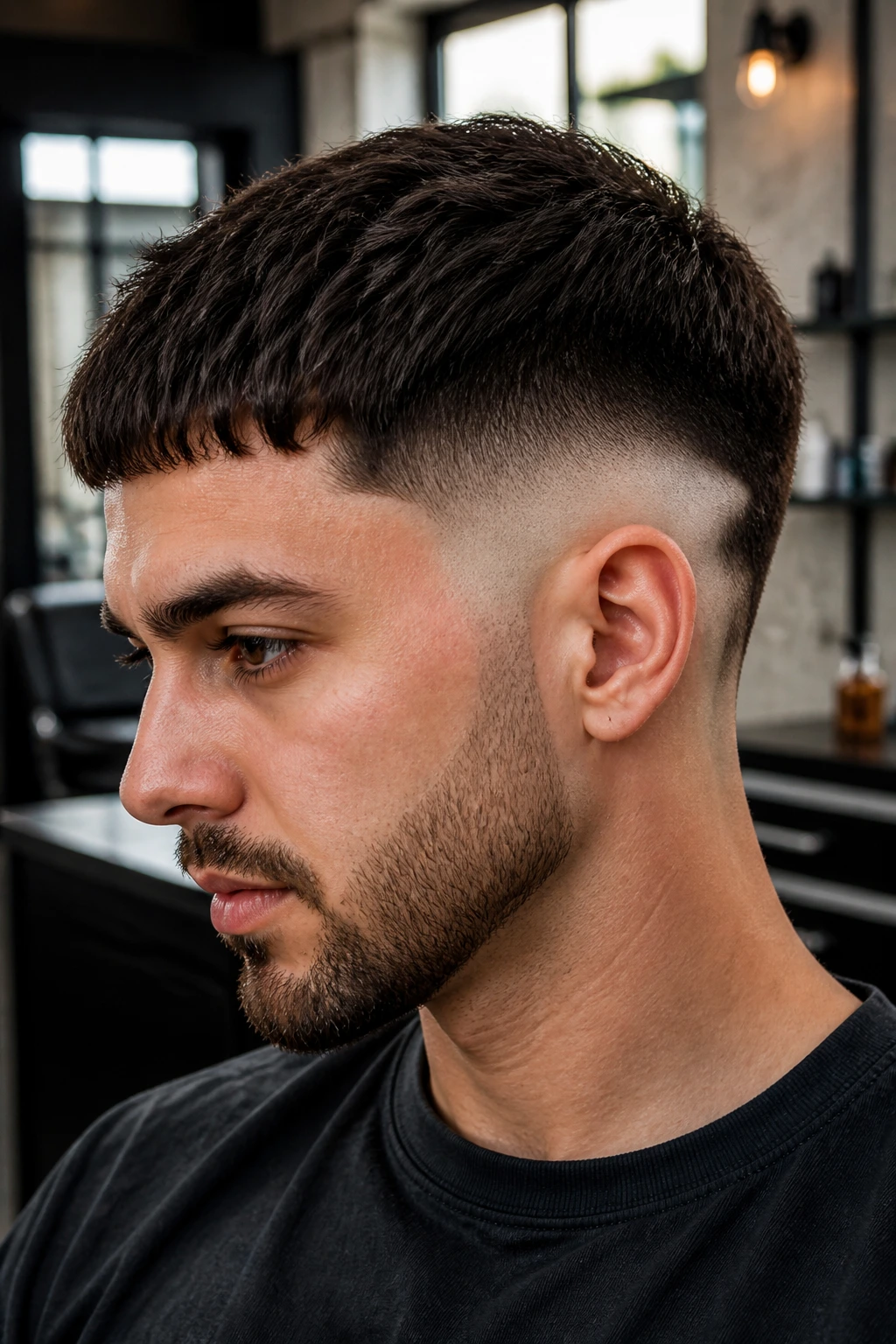
A disconnected crop is what happens when the top and sides are meant to be different on purpose. Add a drop fade underneath and the contrast feels sharper still, but the curve behind the ear keeps it from turning boxy.
This is a strong pick if you like a haircut that announces itself fast. The top can stay short and choppy, with a hard visual break above the fade line. It’s not the most conservative choice in the group. That’s fine. Not every haircut should whisper.
20. Short Flat Top Fade
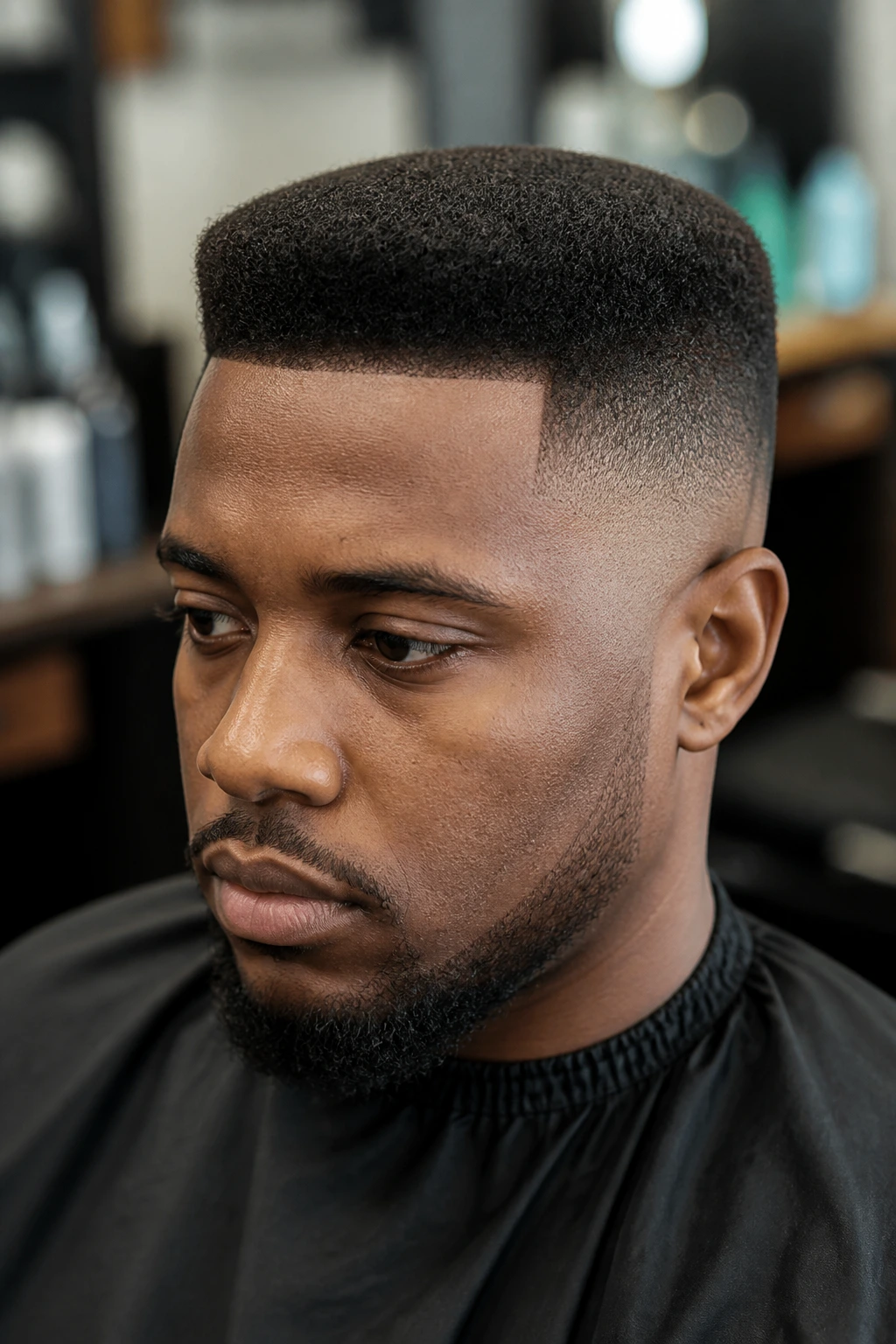
A short flat top is geometry on purpose. The fade strips the sides down, the top gets cut level, and the shape reads strongest when the head itself has enough width to support it.
This is a great cut if your hair stands up well and you like a precise outline. The top usually sits around 1.5 to 3 inches, depending on density, and the barber needs to square the corners carefully so the flat plane doesn’t look lopsided. Maintenance matters here; even a few weeks of growth can soften the shape enough to blur the whole effect.
21. Comb Over Fade with Short Top
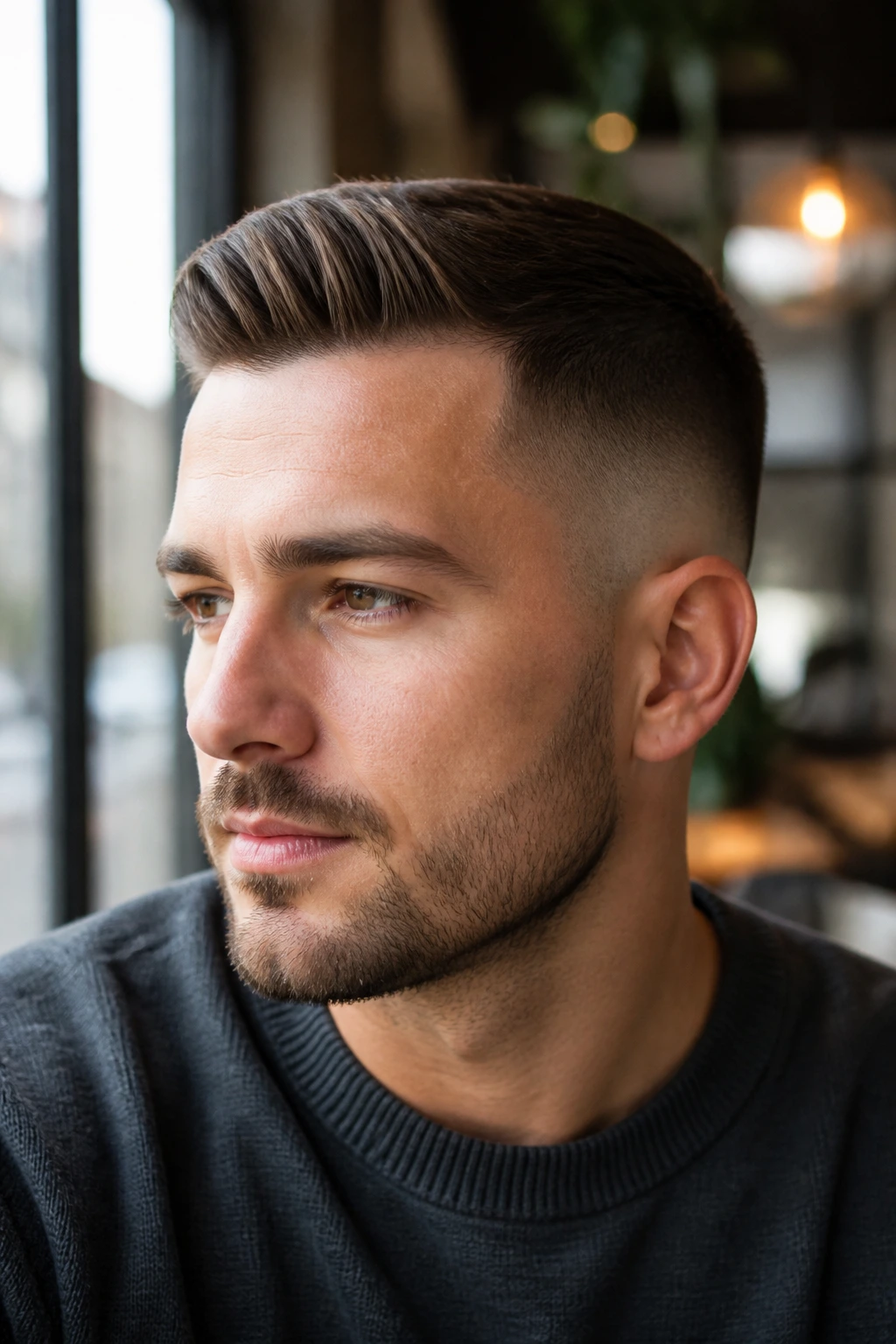
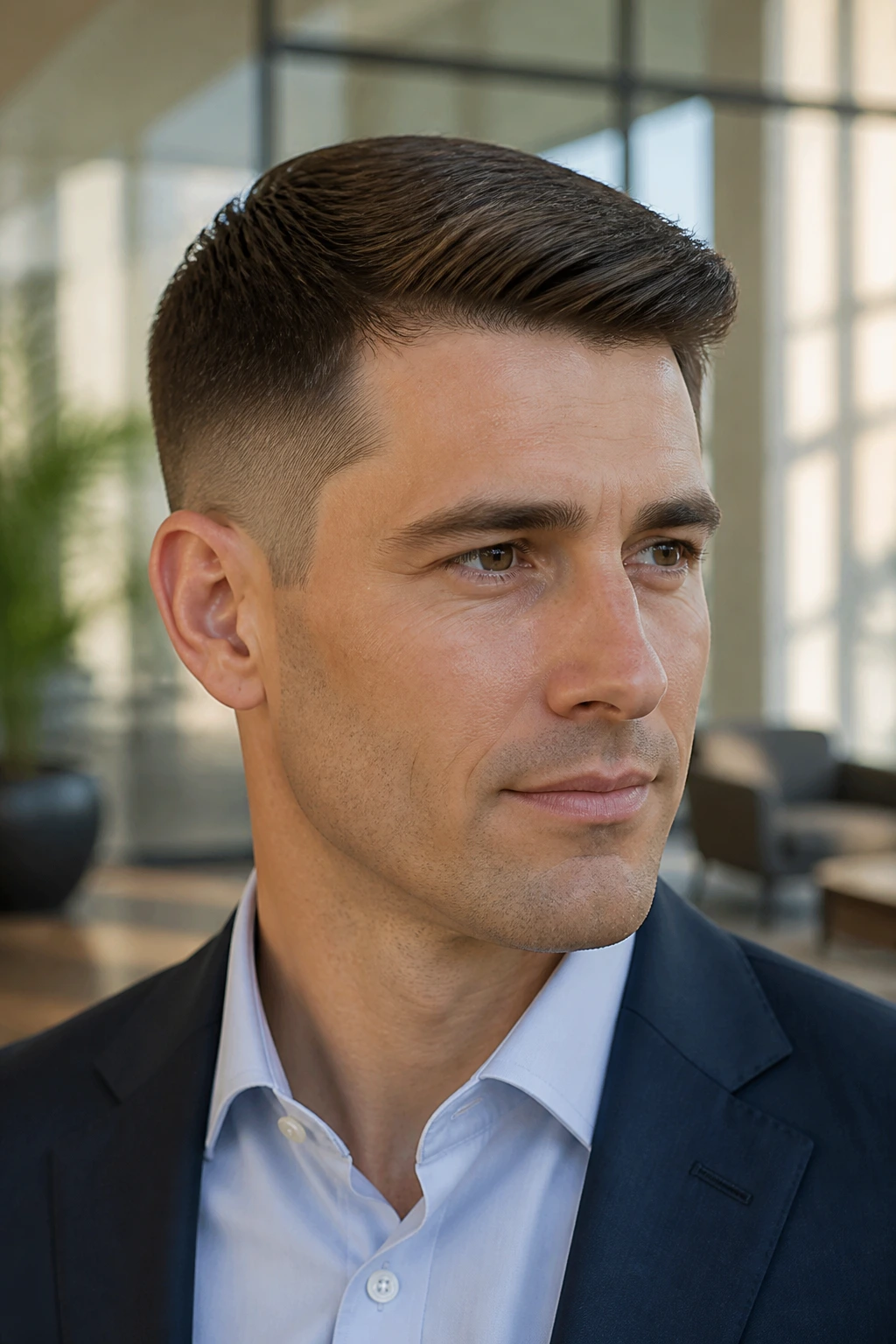
A short comb over fade is a sensible haircut, and I mean that as a compliment. It gives you a side-swept top without the exaggerated sweep some comb overs lean on, and the fade keeps the sides from feeling bulky.
Best When You Want Clean, Not Loud
Keep the top around 2 inches or slightly more, with enough length to move but not enough to flop over. The comb-over line should feel natural, almost accidental. Use a light cream or low-shine pomade if you want the hair to stay in place, but don’t load it up. Too much product makes short hair clump, and clumping is the enemy of a clean comb over.
This is one of the better short fades for work settings because it looks put together even if the styling is minimal.
22. Beard-Connected Short Fade
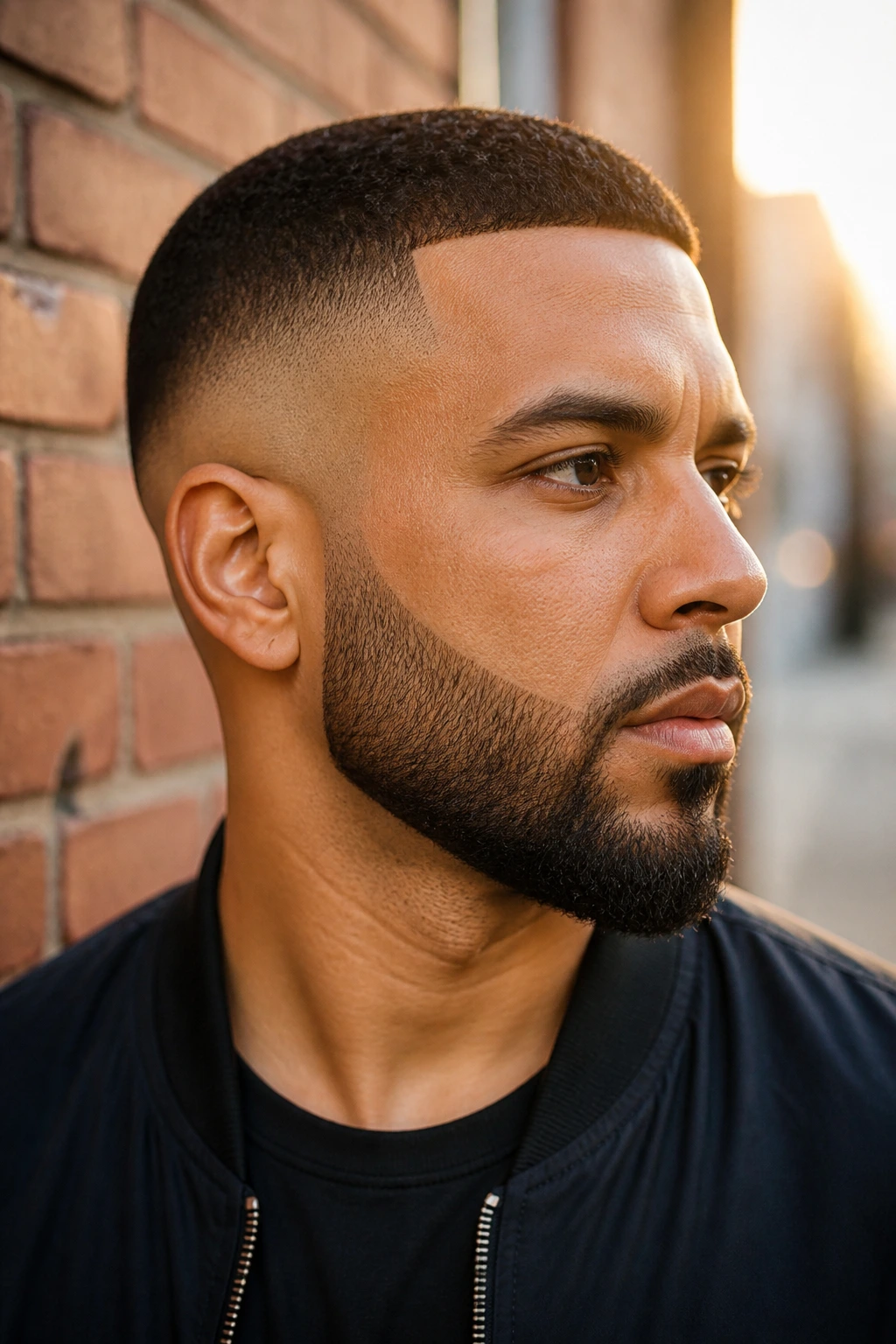
A beard-connected short fade matters because the haircut does not stop at the hairline. The fade flows into the beard, which makes the face look longer and the whole style look planned from every angle.
The barber has to get the transition right around the sideburns and cheek line. If the beard is thick, keep the fade a touch softer so the jump from scalp to facial hair doesn’t feel abrupt. If the beard is lighter, a sharper fade can carry more contrast. Either way, the neck should stay clean. A muddy neckline ruins the whole thing faster than a bad top length ever will.
23. Soft Taper Fade with Side-Swept Top
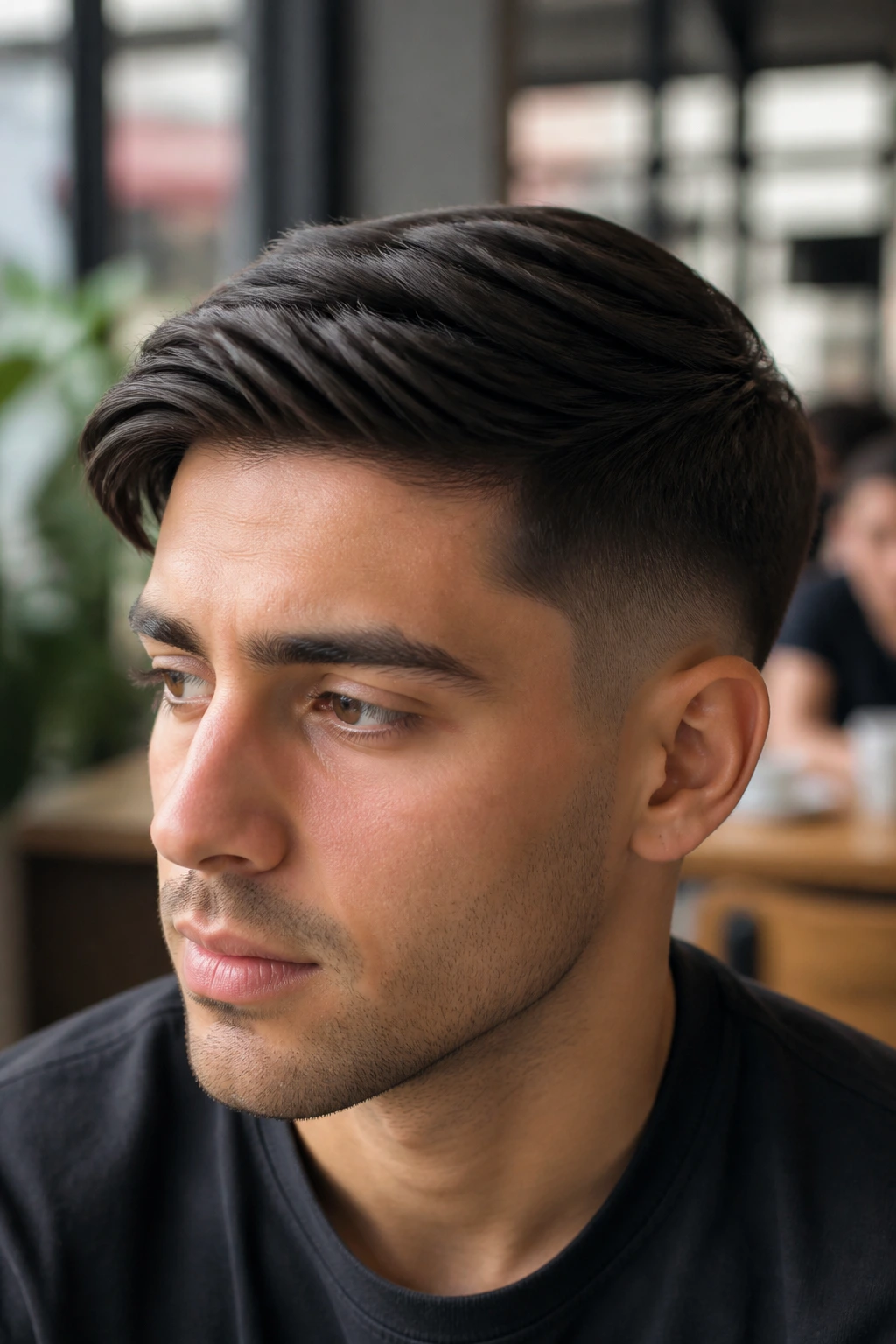
This is the one I reach for when someone wants a short fade that still feels approachable. The soft taper keeps the haircut from looking severe, and the side-swept top gives just enough movement to make the cut feel finished.
A side-swept top works best with 1.5 to 2.5 inches on top, brushed lightly in the direction the hair naturally falls. If you fight the growth pattern, the haircut will spend all day sliding back out of shape. If you work with it, the style sits neatly with almost no effort. That’s the charm here. Quiet, not boring.
Why Short Hair and a Fade Work So Well Together
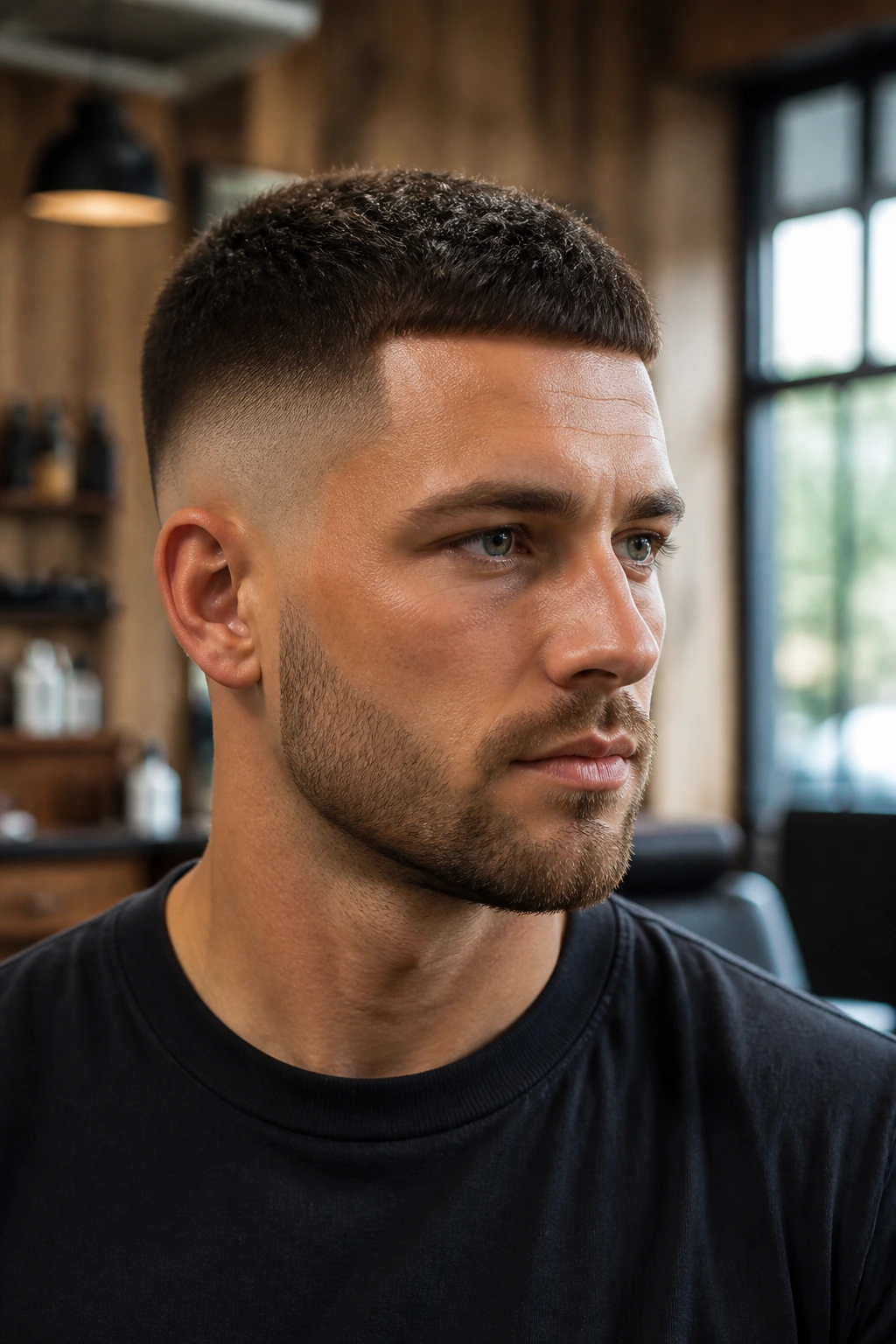
A short fade works because it solves the part of the haircut that usually looks messy first: the sides. Short top lengths expose shape fast, and the fade gives that shape a border that your eye can read immediately. You’re not waiting on a long fringe or a heavy crown to make the haircut make sense.
The other advantage is grow-out. A blunt short cut can puff out at the temples and around the ears in a hurry. A fade grows softer instead of uglier, especially if you choose a low or mid version rather than a high skin fade. That softer grow-out is the reason so many men stay with fade haircuts for short hair once they find a good barber. It doesn’t require perfect timing every three days.
There’s also a face-shape angle people ignore. A high fade opens space around the cheeks and jaw. A low taper keeps width where the face needs it. A drop fade rounds out a stronger skull shape. Tiny adjustments. Big difference.
Essential Tools for These Cuts
-
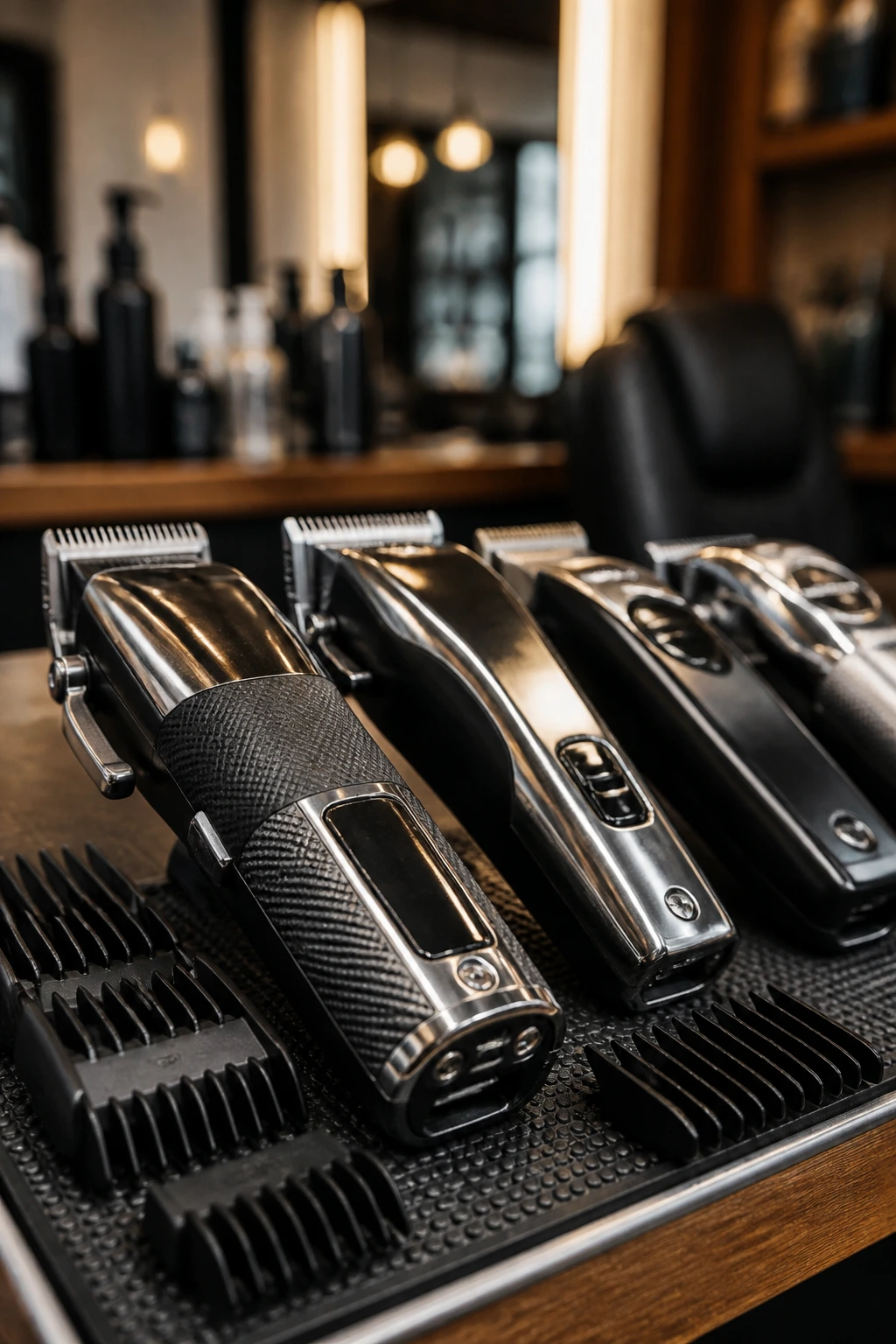
Quality clippers with guard attachments: You need dependable guard lengths if you’re trimming at home or checking your barber’s work.
-
Detail trimmer: This cleans the neckline, sideburns, and edge-up without hacking into the fade.
-
Handheld mirror: Necessary for seeing the back of the head and checking whether the fade curves evenly behind the ears.
-
Blow-dryer with a concentrator nozzle: Best for brush-ups, pompadours, and any style that needs lift at the front.
-
Matte clay or paste: Gives short hair texture without shine or clumping.
-
Light pomade: Useful for Ivy League cuts, side parts, and comb overs when you want a bit more hold.
-
Wide-tooth comb or vent brush: Helps shape short tops without flattening texture.
-
Curl sponge or leave-in conditioner: Handy for short curls, coils, and sponge twists.
-
Beard trimmer: If the fade connects into facial hair, the beard needs its own clean line.
-
Satin pillowcase or bonnet: Cuts down on friction and keeps short textures from sticking up like static.
How to Brief Your Barber and Choose the Right Product
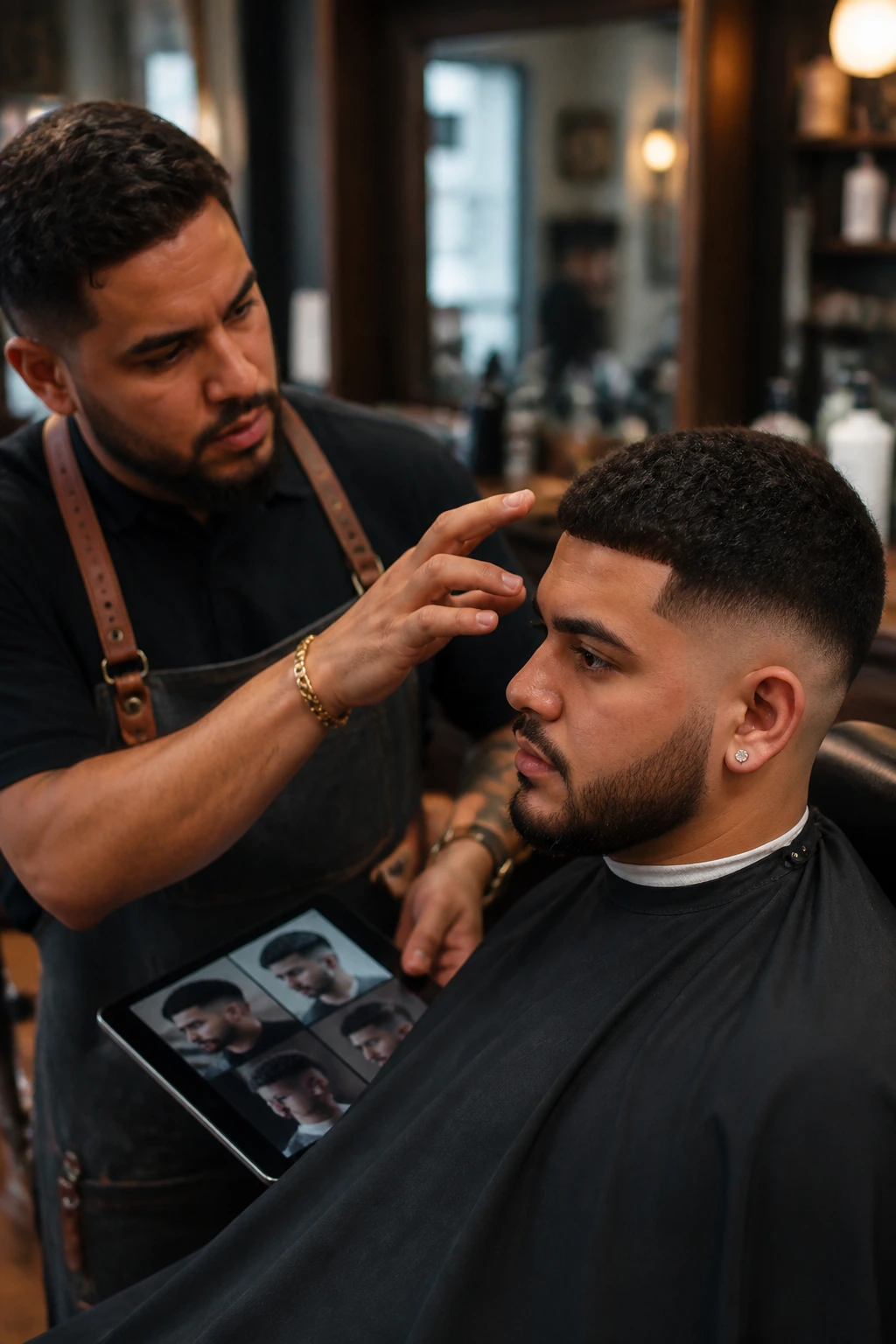
A good barber conversation starts with three things: top length, fade height, and edge work. Bring at least two photos if you can — one from the front and one from the side — because short fades change a lot with angle. A low fade in one picture can look mid-height in another if the head shape is different, so a single screenshot often lies.
Guard numbers help, but they are not universal. A #1 on one clipper can feel a touch different from another brand, and the same goes for a #0.5. Still, the numbers give you a language for the chair: #0 or skin at the base, #1 near the transition, #2 or #3 on the top if you’re keeping it buzzed short. If you have a cowlick, a recession at the temples, or a very flat crown, say so before the clippers start.
Product choice is about length and texture. Under an inch? Go light or skip product entirely unless you need control. Around 1.5 to 3 inches? Matte clay, paste, or cream can shape the cut without making it shiny. Curly or coily short hair usually wants moisture first, style second. Heavy product on short hair is a mess waiting to happen. The hair starts to clump, and the fade looks less clean because the top steals all the attention.
How to Wear These Cuts Without Overstyling Them
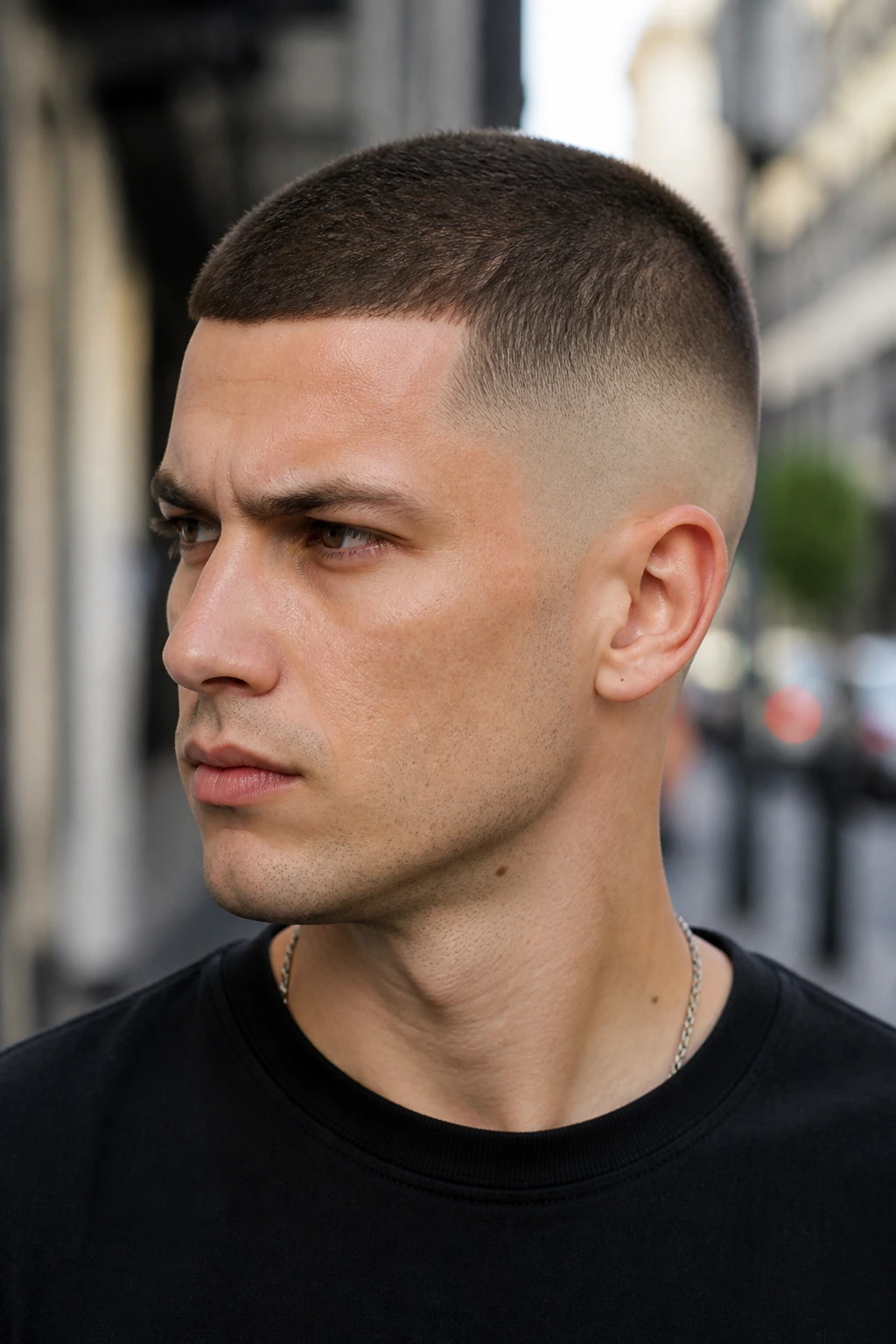
Presentation: Keep the neckline crisp, the sideburns deliberate, and the top shaped to the haircut’s natural movement. A short fade looks strongest when the outline is tidy from every angle, not just straight on in the mirror.
Accompaniments: A clean beard, if you wear one, should echo the fade rather than fight it. Glasses, jewelry, and even collar shape can change the read of the cut — a sharp fade with a heavy beard looks different than the same fade with a bare jaw and a crew neck.
Portions: On short hair, “portion” really means balance. A high fade wants a shorter top. A low fade can carry a bit more length. A narrow face can usually take a touch more width on the sides, while a wider face often looks better with a cleaner taper and more height on top.
Finishing Product: Matte clay, light paste, curl cream, or almost nothing at all — the finish should match the texture. If you can see product sitting on top of the hair, you’ve used too much. That’s the blunt truth.
Small Styling Moves That Change the Whole Cut
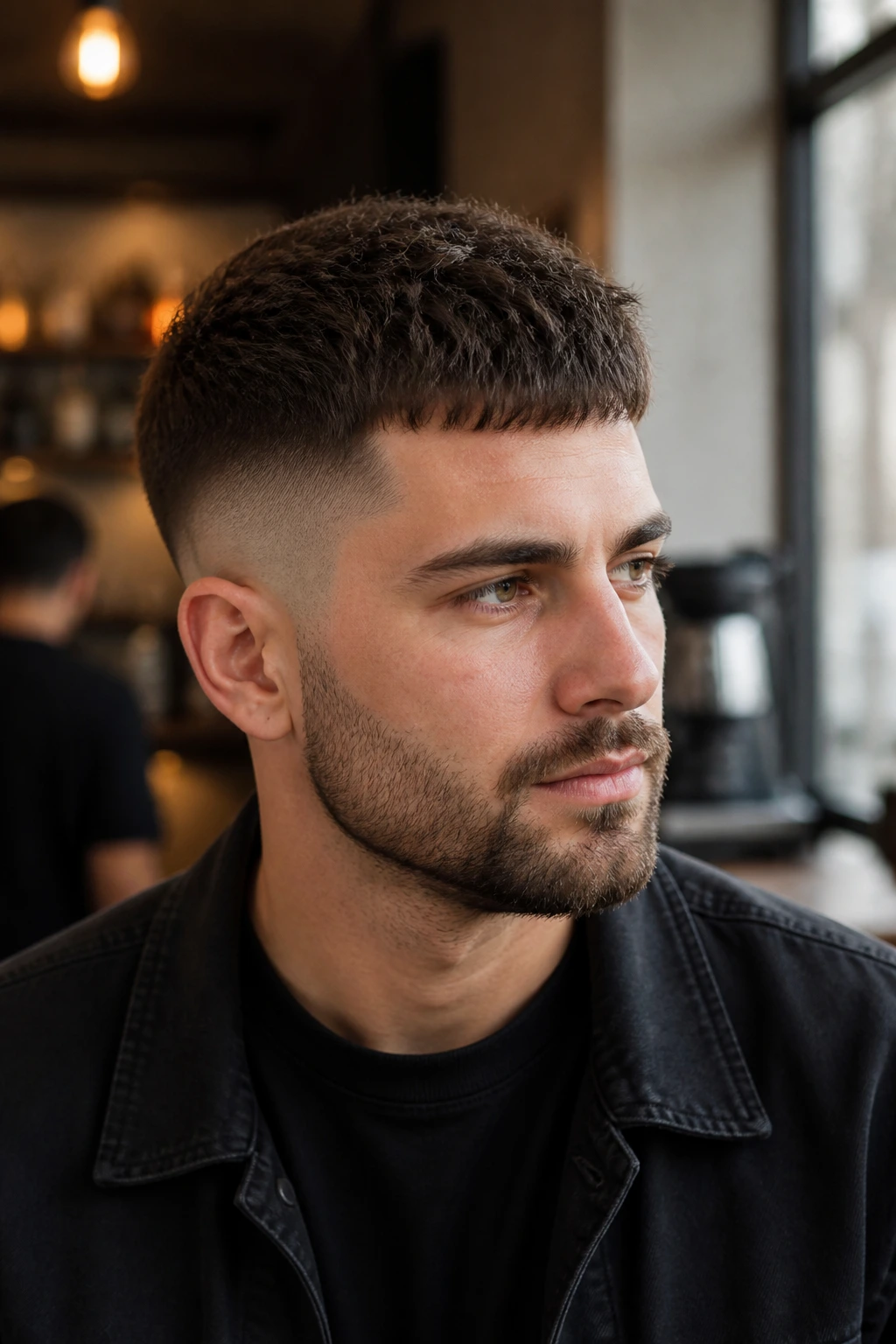
Texture Boost: Blow-dry the top in the opposite direction of growth for 30 seconds, then push it back into place with your fingers. That tiny bit of lift keeps short hair from lying flat against the head.
Sharper Edges: Ask for the neckline and sideburns to be cleaned up every 7 to 10 days, even if you’re not getting a full cut. It keeps the fade from looking half-grown out, which is where a lot of short styles start to lose their snap.
Face-Shape Adjustments: If your face is long, keep more width on the sides and avoid pushing the top too high. If your face is round, add a little height and keep the fade tighter around the temples. That one choice changes the whole silhouette.
Low-Effort Finish: On rushed mornings, dampen the top with your hands, rub in a pea-sized amount of matte paste, and stop there. No comb. No mirror marathons. Short hair usually looks better when it keeps a little roughness.
Keeping a Short Fade Looking Fresh Between Cuts
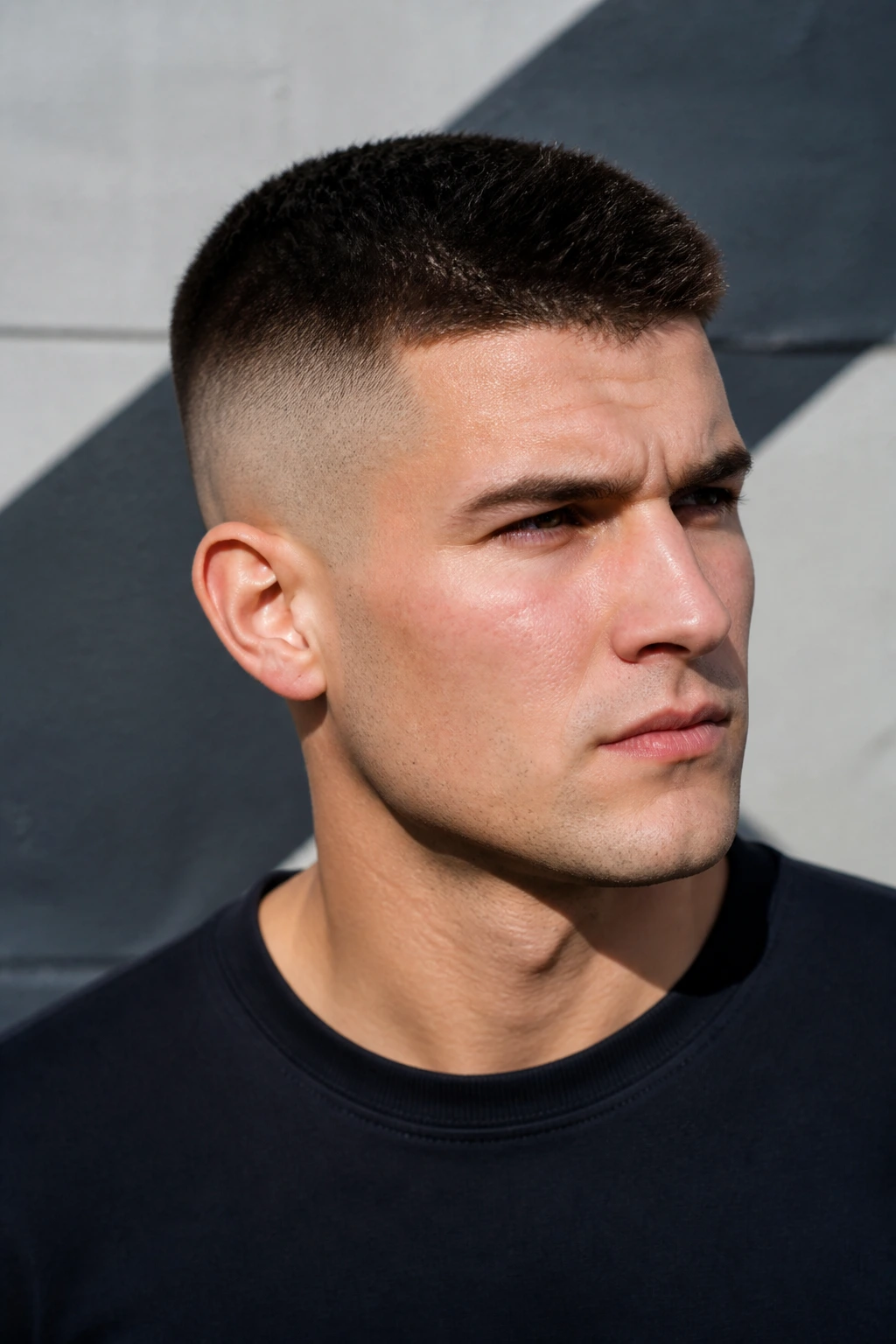
A short fade is forgiving, but it does not stay fresh forever. Most men need a full barber visit every 2 to 4 weeks depending on how fast their hair grows and how tight the fade is. Skin fades and hard parts drift out of shape faster; taper fades and shadow fades give you a little more room.
The neckline and around-the-ear area are the first places to clean up at home. A small trimmer every week or so can keep stray hairs from making the cut look tired. Be careful with the sideburns. One bad pass and you’ve got an uneven edge that takes another haircut to fix.
Washing matters too. Short hair shows scalp oil fast, but blasting it with strong shampoo every day can leave the top dry and flat. Two to four washes a week works for many men, with more frequent rinsing if you sweat a lot or use heavy product. If the style needs lift, a quick reset with water and a blow-dryer is usually better than piling on more paste.
Variations and Adaptations to Try
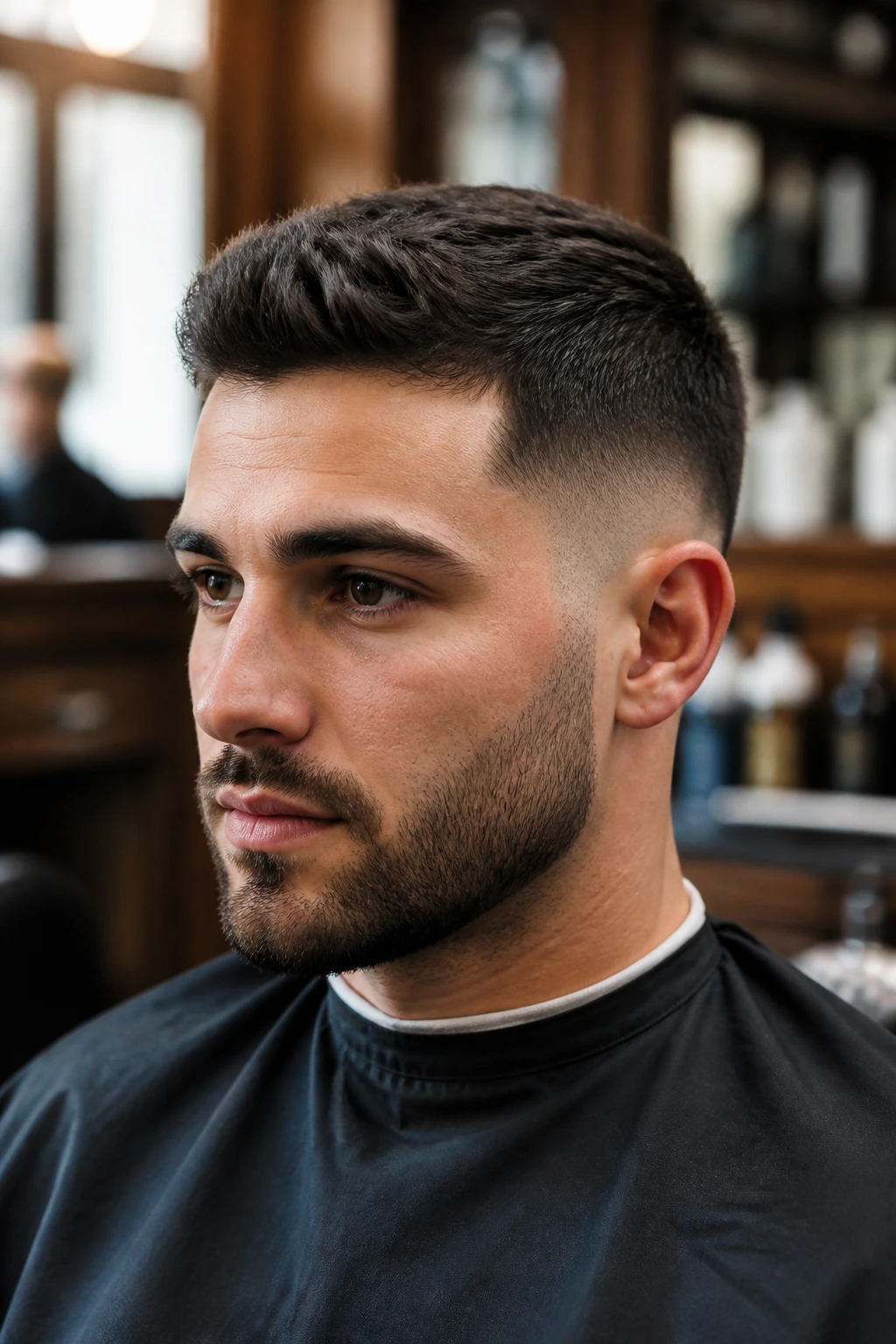
The Office-Quiet Taper: Keep the fade low and shadowed, skip the skin line, and leave 1.5 to 2 inches on top. It reads neat without shouting for attention, which makes it a safe choice for conservative settings.
The Texture-First Crop: Let the top get choppier and a touch messier, then use matte clay to separate the pieces. This works well on straight or wavy hair that needs some grit to avoid looking flat.
The Beard-Balanced Version: Connect the fade into a medium beard with a soft sideburn transition. The cut looks stronger when the facial hair is shaped with the same patience as the scalp hair.
The Wave-Respecting Cut: Keep the top short enough for waves to lay down, taper the temples lightly, and avoid high fade lines that interrupt the pattern. This version is clean without stealing from the texture.
The High-Contrast Statement: Ask for a skin fade, a crisp line-up, and a defined hard part or fringe line. This suits men who want the haircut to look sharper from a distance and are fine with more upkeep.
The Grow-Out-Friendly Cut: Choose a shadow fade or low taper and keep the top in a range that still looks good after 3 weeks. This is the practical version for anyone who hates the in-between stage.
Mistakes That Make Short Fades Look Off
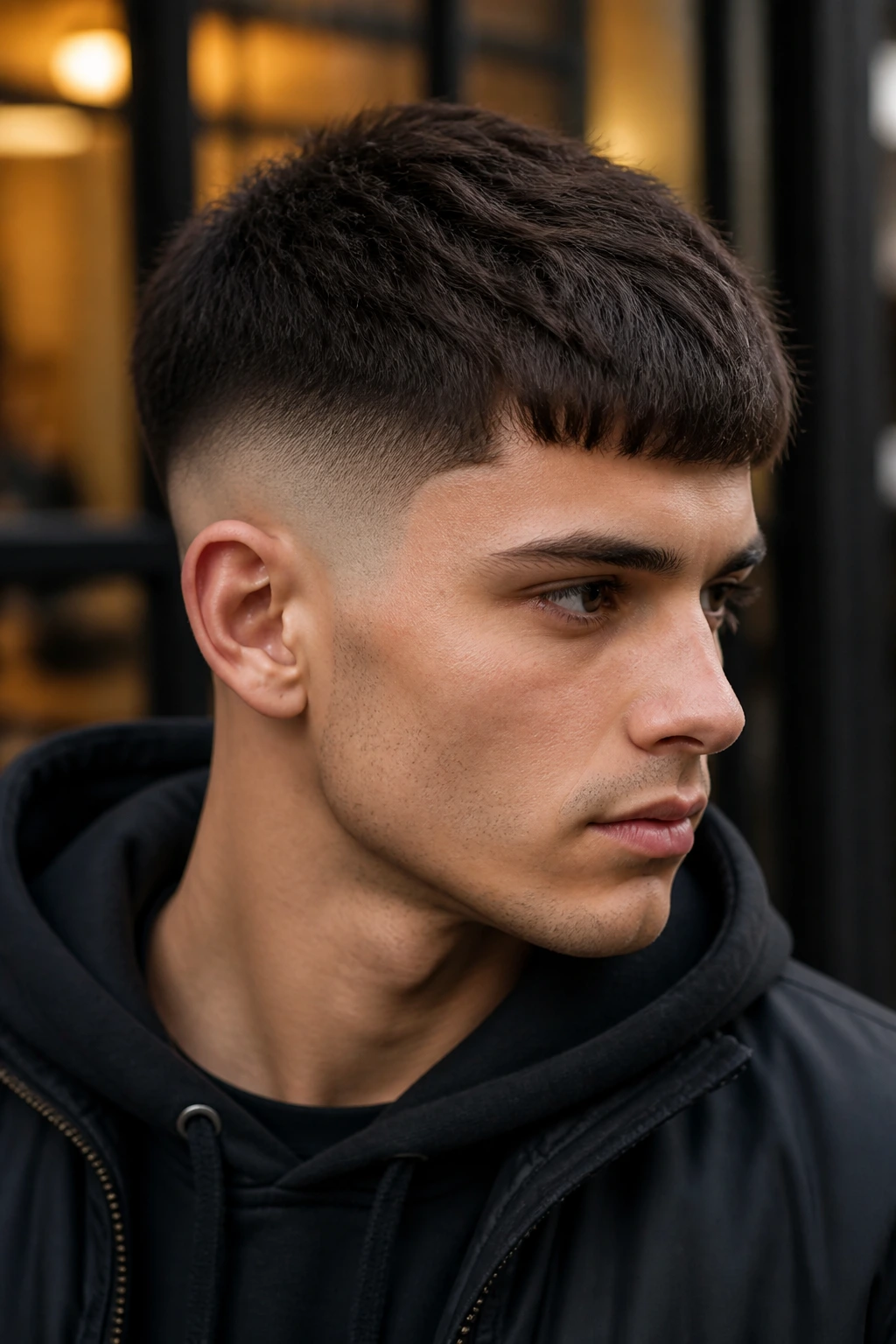
Making the fade too high for the head shape: A high fade on a narrow or long head can make the top look like it’s floating. Ask the barber to mark where the fade should begin and check the side silhouette before they remove too much.
Leaving the top too long for a “short” style: If the top drifts past 3 or 4 inches, the haircut stops reading as short and starts fighting the fade. The result is usually a top-heavy shape that needs more styling than you wanted.
Using too much product: Short hair clumps fast. If it feels sticky or looks shiny in chunks, the product is too heavy. Start with a pea-sized amount and add more only if the hair is swallowing it.
Ignoring the neckline: A clean fade with a messy neck looks unfinished from ten feet away. Even a quick neckline cleanup can buy you another few days before the next barber visit.
Not talking about the growth pattern: Cowlicks, widows’ peaks, and strong side growth change how a short fade sits. If the barber doesn’t know about those spots, the cut can look good for one day and awkward the next.
Questions People Ask Before Getting One
What fade works best on very short hair?
A low skin fade with a buzz cut is usually the safest starting point because it stays clean without needing much styling. If you want a little more shape, a crew cut or short crop is the next step up.
How often should a short fade be trimmed?
Most short fades need a full cut every 2 to 4 weeks. Skin fades and hard parts need more frequent touch-ups if you want them to stay crisp.
Can a fade work if my hair is thinning?
Yes, and sometimes it works better than heavier styles. A short top with a low or mid fade can reduce the contrast between dense and sparse areas, especially if the barber avoids leaving too much length on the crown.
Will short fades work with curly hair?
They can look excellent on curls, coils, and short waves. The trick is to leave enough top length for the texture to show and keep the sides shaped so the cut doesn’t balloon.
What should I tell the barber if I don’t know the names?
Use guard numbers, point to where you want the fade to begin, and show a photo from the side. “Short top, low fade, keep the neckline tight” is better than trying to sound like a barber and getting the words scrambled.
Do short fades need product every day?
Not always. If the top is buzzed or cropped very short, a quick finger shape or a bit of water may be enough. Longer short styles like a brush-up, quiff, or comb over usually need at least a light product.
How do I stop the fade from looking awkward as it grows out?
Pick a lower fade or shadow fade instead of a very high skin fade. The softer the transition, the less harsh the grow-out stage will look.
Can I wear a beard with any of these cuts?
Yes, but the beard should be shaped with the same logic as the haircut. A sharp fade plus a wild beard looks unfinished; a matched sideburn and cheek line makes the whole style read as one piece.
Picking the Right Fade for Your Face and Routine
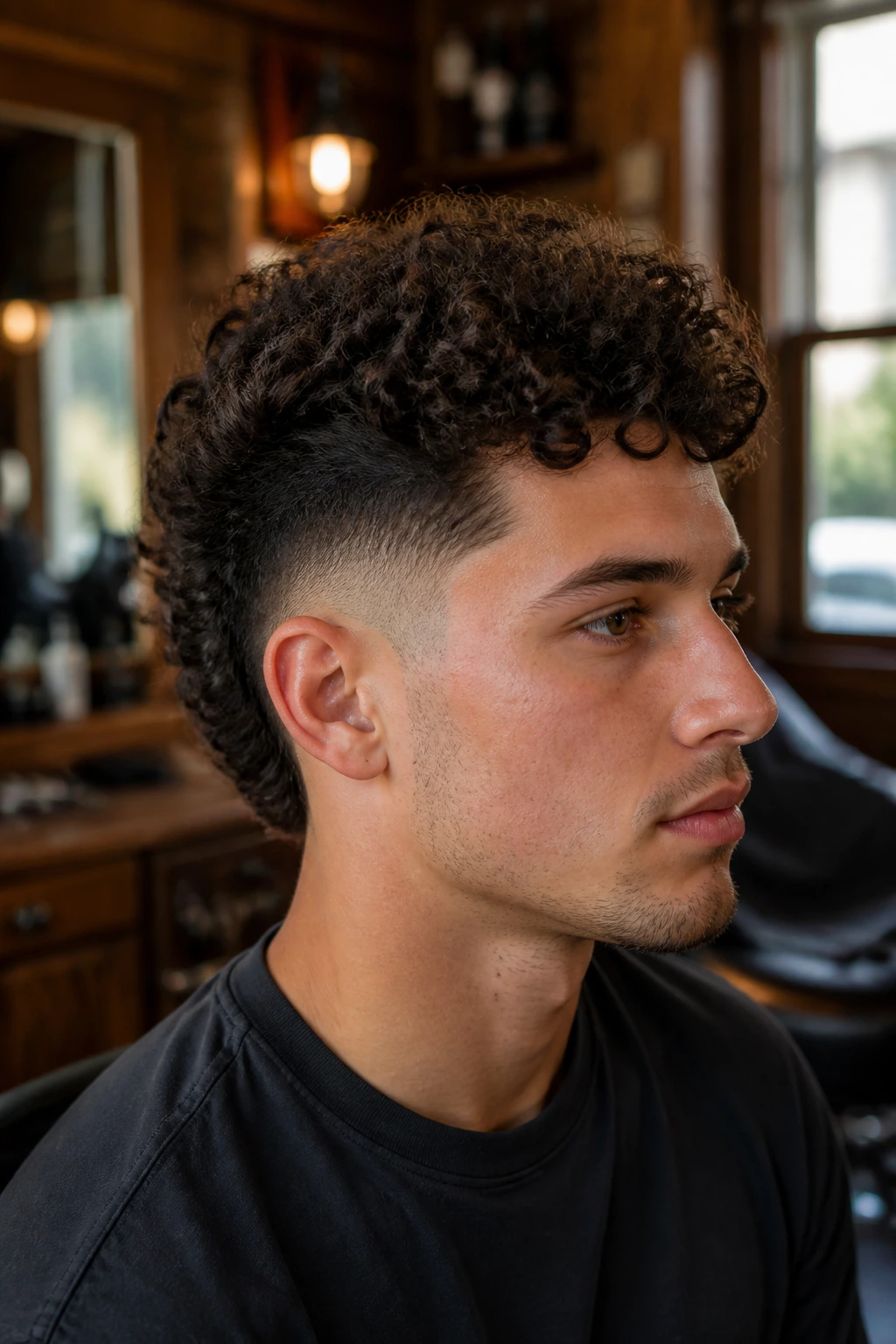
A short fade is not one haircut. It’s a family of cuts with different personalities. The low, soft versions are better if you want flexibility and less maintenance. The high, tight versions bring more contrast but ask for more upkeep. The right choice usually comes down to how much time you want to spend in the mirror and how much shape you want the haircut to carry on its own.
The barber chair is where this gets decided. Bring a photo, say what you hate, and be honest about your routine. If you never blow-dry, don’t ask for a pompadour and expect it to sit there by magic. If you want something that still looks decent on day twelve, ask for a fade that grows out softly instead of snapping into a blocky outline.
Pick one cut, wear it for a month or two, and pay attention to the parts that actually matter on your head. The best short fade is the one that looks sharp when you walk out, then still behaves when the week gets messy.
