



Short blonde hair has a sharper edge than people expect. A jaw-skimming bob with a beige toner can look cleaner than waist-length blonde ever will, and a pixie with the right root shadow can make the whole face look more awake in a way that feels almost unfair. Blonde hair looks for short hair are not about squeezing color onto less length; they’re about making every millimeter count.
The trouble is that short cuts expose everything. Tone, placement, regrowth, fringe shape, and even the way light hits the crown all show up fast. That can be a gift. It can also turn into brass, flatness, or a bleach job that looks too harsh against the haircut if the shade and shape are fighting each other.
The good versions are easy to spot once you know what to look for: creamy bobs that hug the jaw, airy pixies with a pale crown and deeper roots, textured crops with ribbon highlights, and glossy short shags that look like they were cut with a razor and styled with a very light hand. The best blonde short hair is rarely one shade. It’s a conversation between cut, undertone, and texture, and that’s where the fun starts.
Why This Collection Feels Different
- Tone-first choices: Each look is built around a blonde shade that actually suits the cut, so the color does more than sit there and look pretty in a swatch.
- Short-hair realism: These styles account for grow-out, root visibility, and the way short ends can go crispy if you overprocess them.
- Shape matters here: A blunt bob reads differently from a shaggy pixie, even in the same blonde, and the cut changes how bright the color feels.
- Low and high maintenance are both here: Some looks need a toner refresh every 4 weeks; others can live happily with a root melt and a trim every 8 weeks.
- Styling stays practical: You’ll see ideas that work with a round brush, a flat iron, or air-dried texture, not only salon-day perfection.
- Face-framing power: Short blonde hair can pull light toward the eyes and cheekbones fast, especially when the money piece or fringe is placed on purpose.
1. Creamy French Bob with a Soft Side Part
This is the kind of blonde bob that looks polished without trying too hard. Think chin length, a soft bend through the ends, and a creamy beige blonde that sits between warm and cool. It’s not icy. It’s not honey. It has that quiet, milky tone that makes the cut look expensive even if the styling took twelve minutes.
The side part matters more than people realize. On short hair, a deep side part gives the blonde a little shadow on one side and a brighter sweep on the other, which stops the whole cut from looking blocky. Ask for a blunt outline with only a whisper of internal texture, then finish with a light shine spray rather than anything sticky.
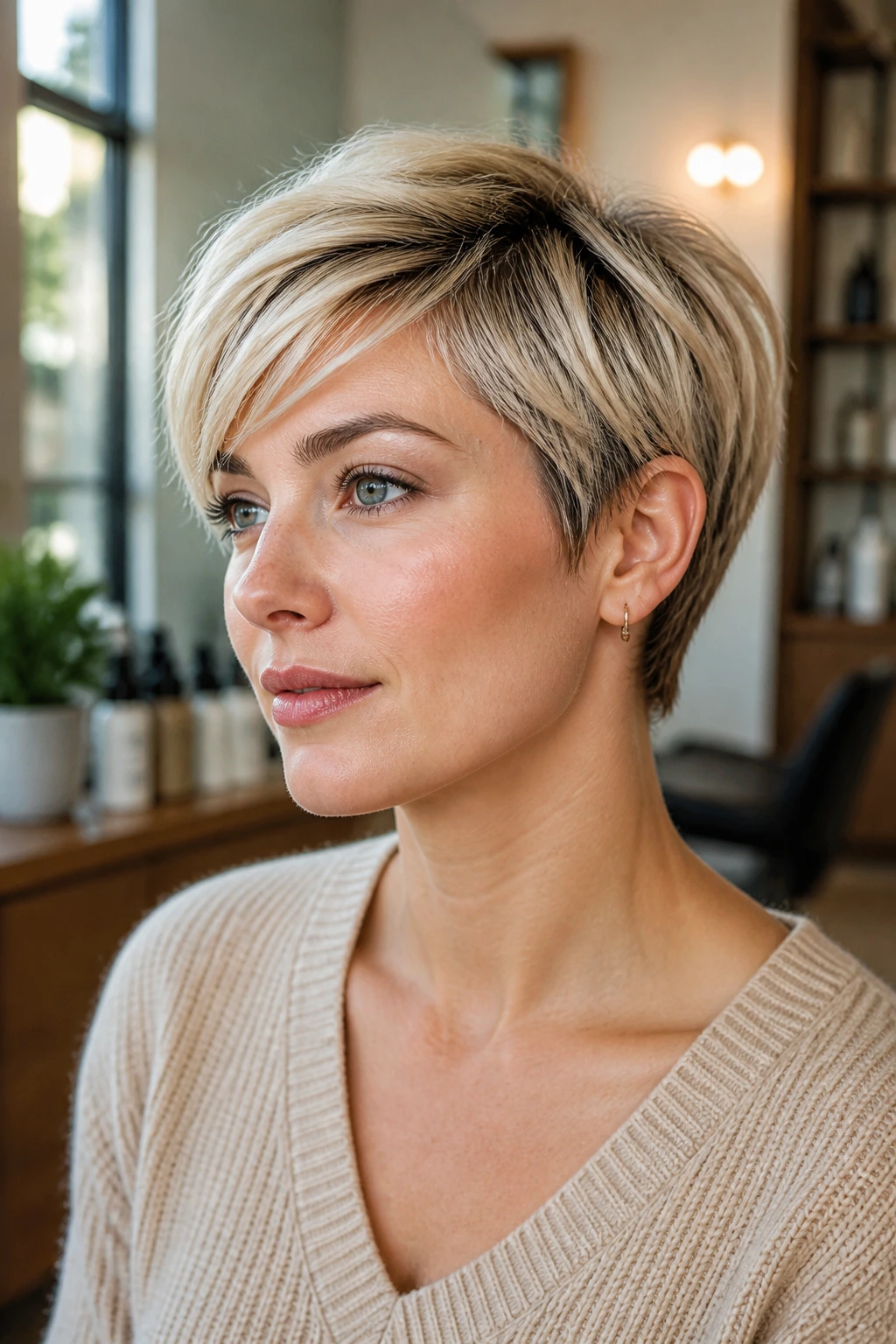
2. Platinum Pixie with Root Shadow
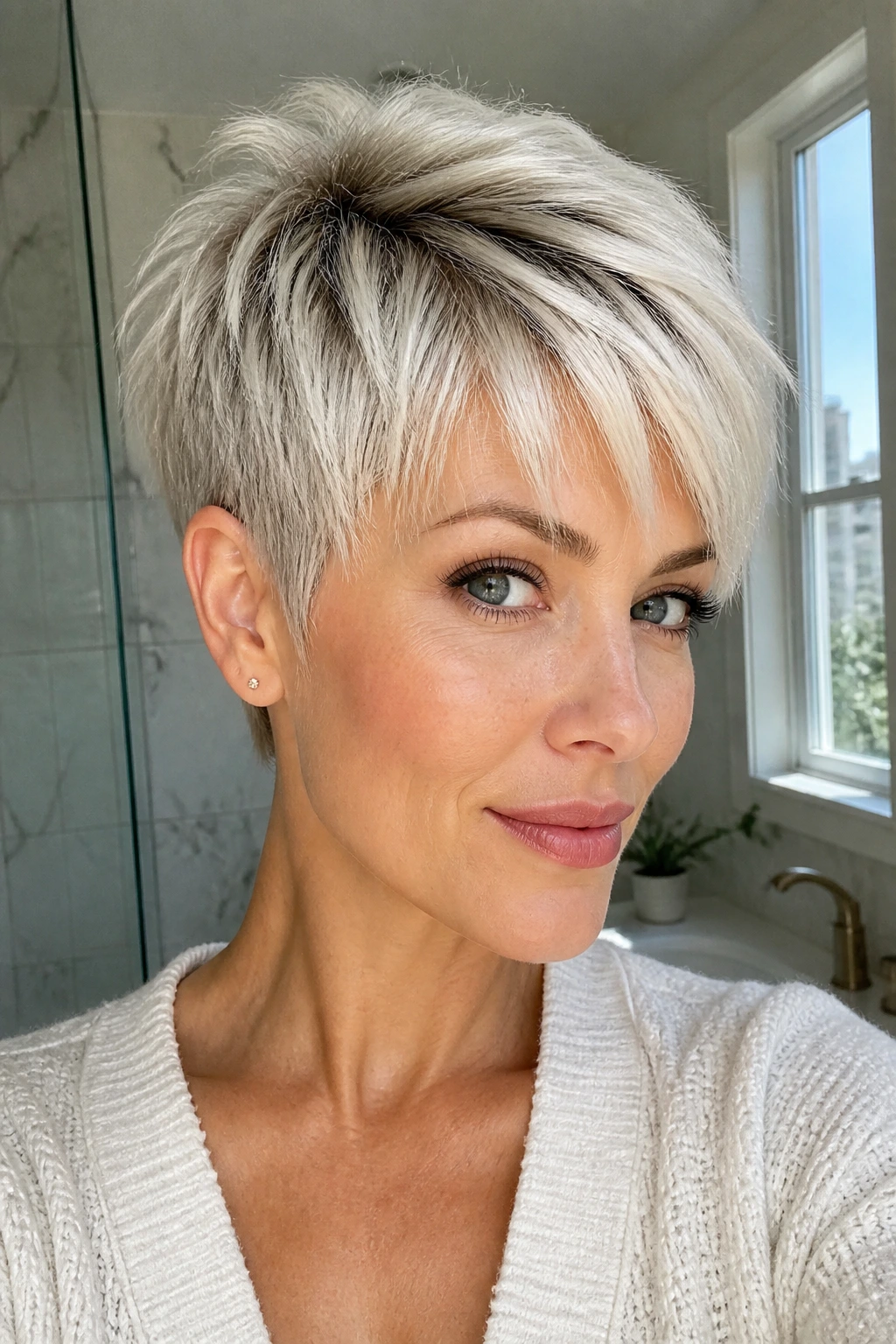
A platinum pixie is bold, but the root shadow is what keeps it from looking cartoonish. The darker root gives the crop depth at the scalp, so the pale lengths don’t sit flat against the head. On very short cuts, that little blur also buys you a few extra weeks before the grow-out starts shouting.
This look works best when the crown has a touch of lift and the fringe is piecey, not helmet-like. I’d ask for a level 10 blonde with a soft smudge at the roots, then style it with a matte paste only at the tips. Too much product kills the whole point. You want sharp, not crunchy.
3. Honey Blonde Blunt Bob
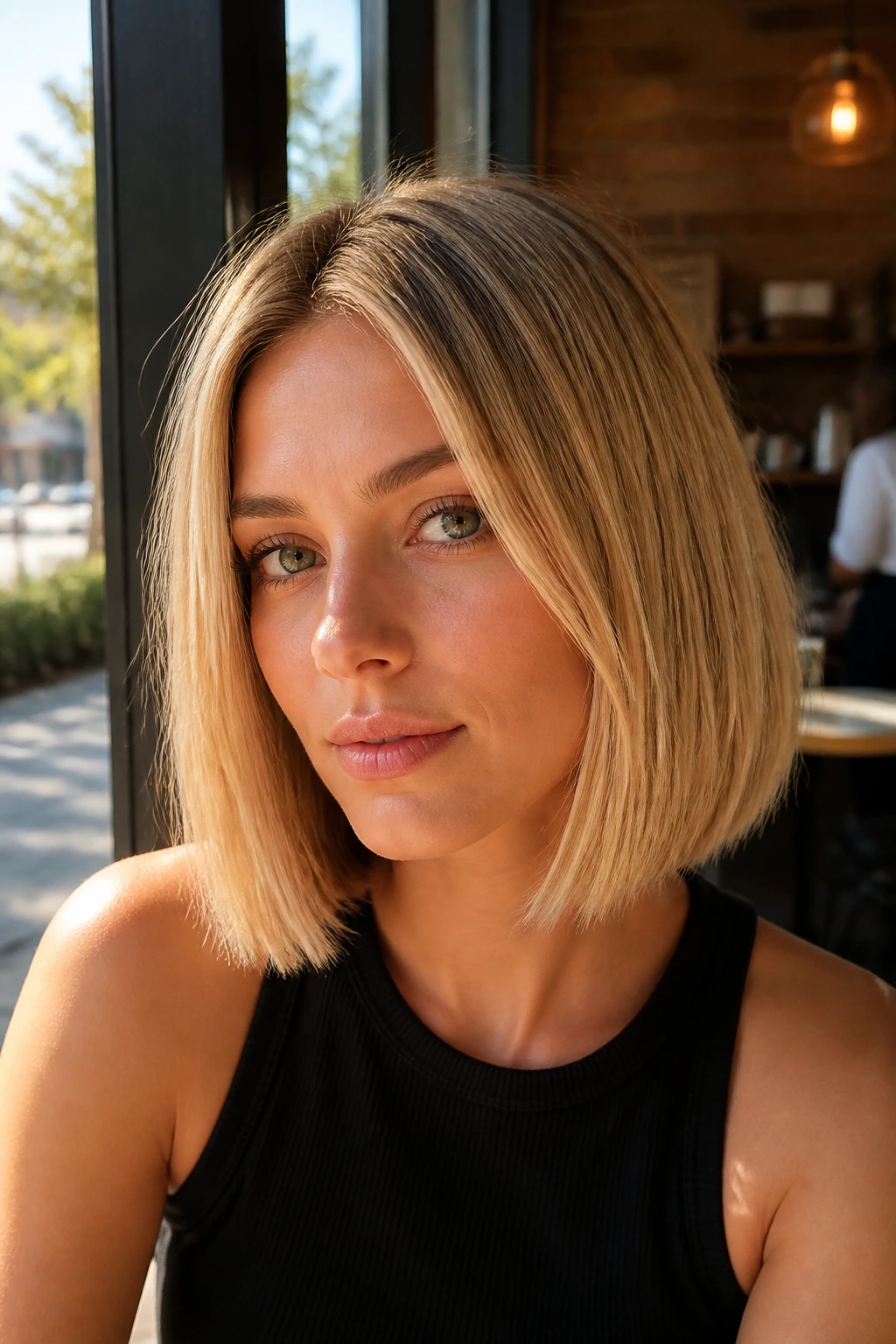
Honey blonde on a blunt bob is warm, full, and easy to wear. The color has enough gold in it to make the hair look denser, which is handy if your ends are fine or fragile. On short hair, that warmth keeps the cut from feeling severe.
The blunt line should hit somewhere between the jaw and the top of the neck. Straighten it only if the ends are healthy; otherwise, a soft underbend at the bottom looks better and hides the fact that you didn’t spend an hour battling your round brush. This one loves a center part, but a slight off-center part gives it more movement.
4. Ash Blonde Long Pixie
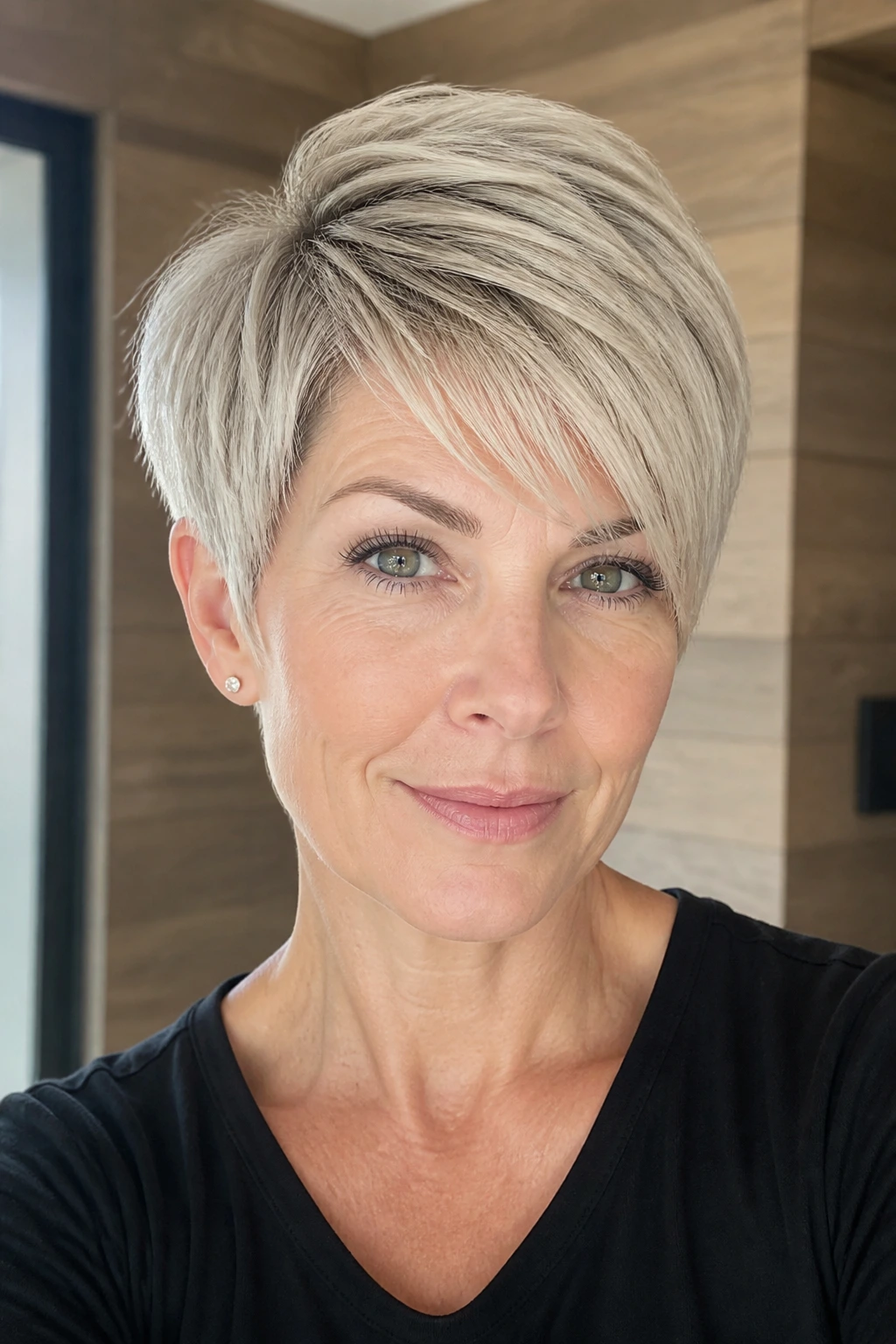
Ash blonde on a long pixie can look cool, crisp, and a little tailored. The trick is not to go too gray. A good ash blonde still has brightness; it just swaps gold for a smoky beige base so the cut looks clean instead of yellow. Short hair shows brass fast, and ash tones are ruthless in the best way.
Keep the top a little longer than the sides so you can brush it back, sweep it forward, or push it diagonally. That length variation gives the blonde some dimension, especially if the underside is a shade darker. If your hair tends to go flat, a root lift spray at the crown does more than piling on wax.
5. Butter Blonde Shag Crop
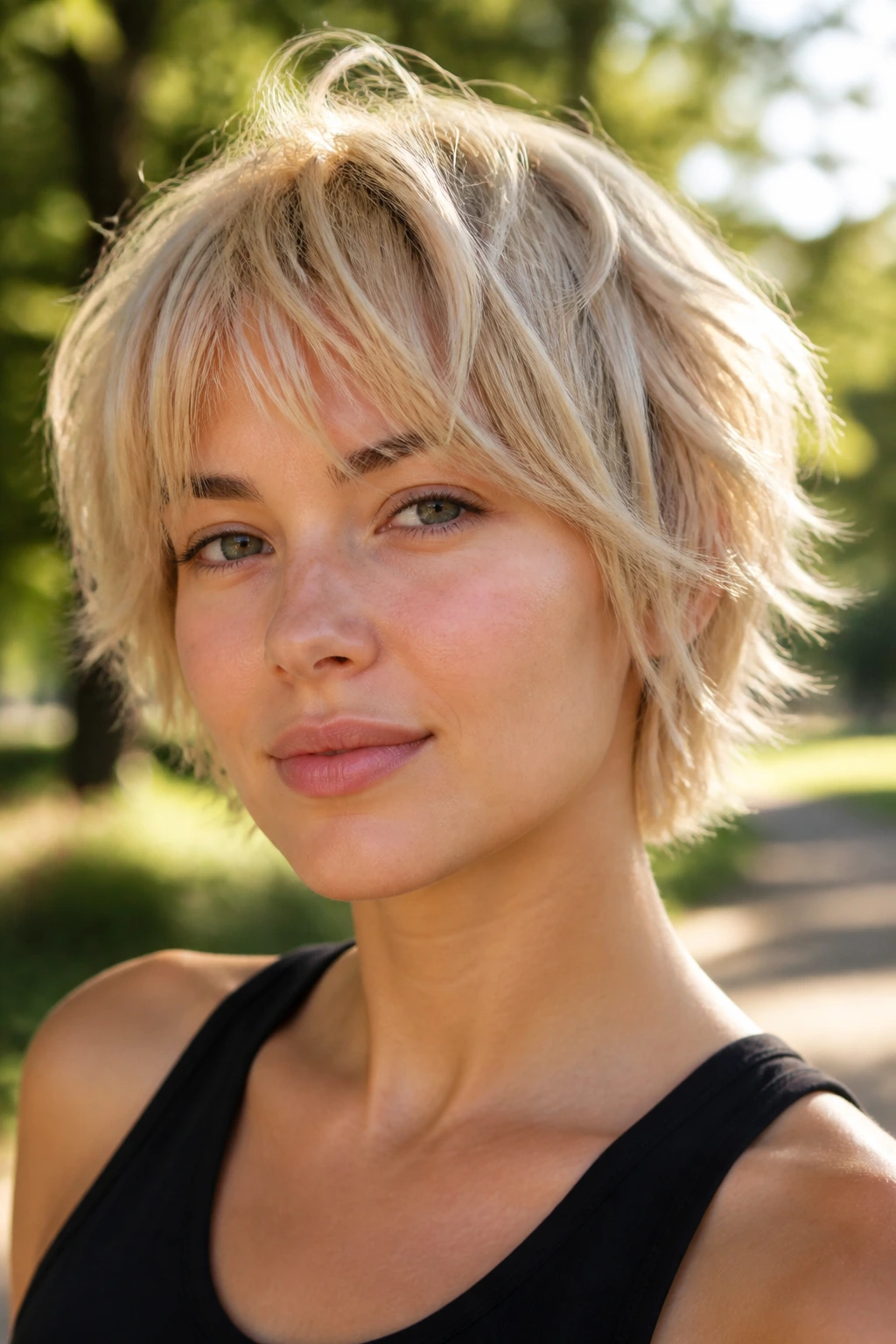
Butter blonde is soft and sunny, and on a shag crop it gives the layers a lived-in glow. The warmth is what makes this look feel casual instead of overdone. You still get brightness, but the blonde sits low enough in the yellow-gold range to flatter the texture rather than fight it.
The cut should have choppy ends, a slightly broken fringe, and enough movement that the layers separate on their own. Air-drying with a curl cream or mousse usually suits this one better than a sleek blowout. If your hair is naturally wavy, this may be the easiest blonde short style to keep from looking too “done.”
6. Beige Blonde Lob with Curtain Fringe
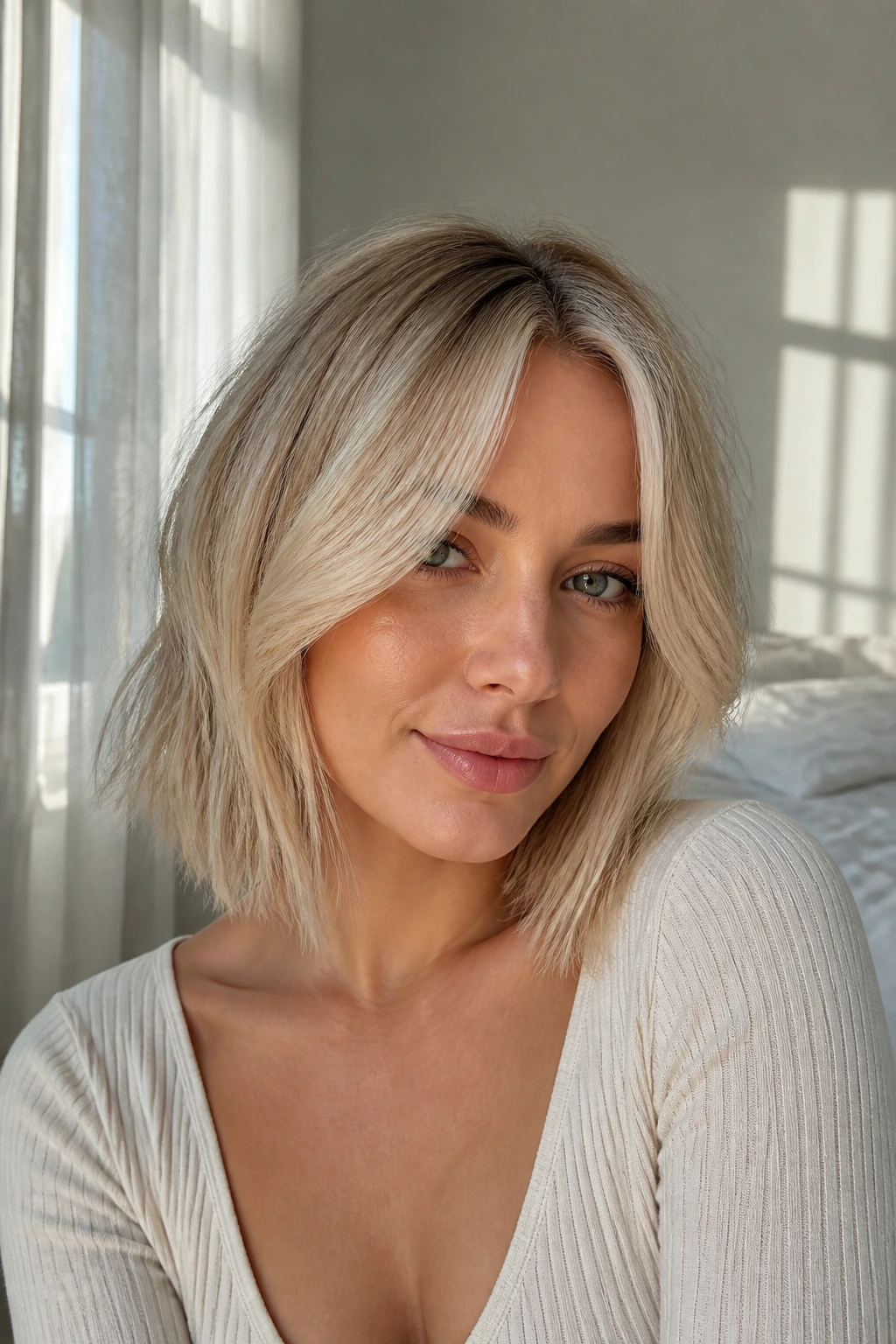
A lob is technically longer than some people think of as short, but it belongs here because the neckline still stays light and easy. Beige blonde keeps the whole thing soft, and the curtain fringe brings color right to the eyes and cheekbones. It’s a smart choice if you want blonde without the hard flash of platinum.
The fringe should open in the middle and taper toward the jaw, not hang like two heavy curtains. That shape lets the blonde move, which matters on shorter hair because the cut can start looking boxy if the face-framing pieces are too blunt. A quick bend with a flat iron and a touch of gloss cream is enough.
7. Ice Blonde Buzz Cut
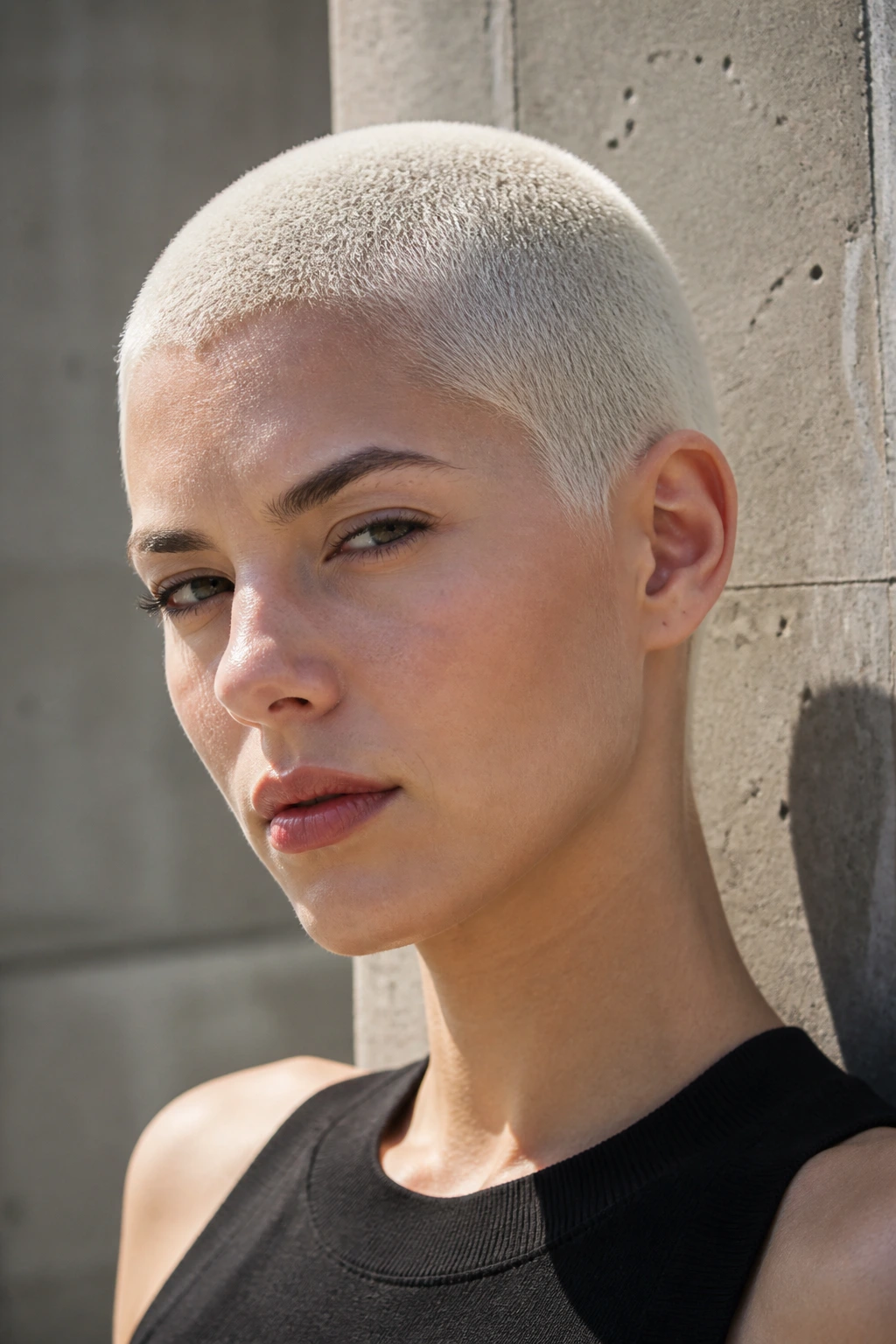
An ice blonde buzz cut is unapologetic. There’s nowhere to hide, which is exactly why it works. The pale tone makes the scalp line part of the look instead of something you’re trying to cover, and on a very short clipper cut that brightness feels graphic in a good way.
This style needs careful bleaching and honest upkeep. If the hair lifts unevenly, the whole cut shows it, so a professional color job is worth the money here. Use a purple shampoo sparingly; too much can leave the surface chalky. The best version looks clean, cool, and almost metallic under daylight.
8. Champagne Blonde Textured Crop
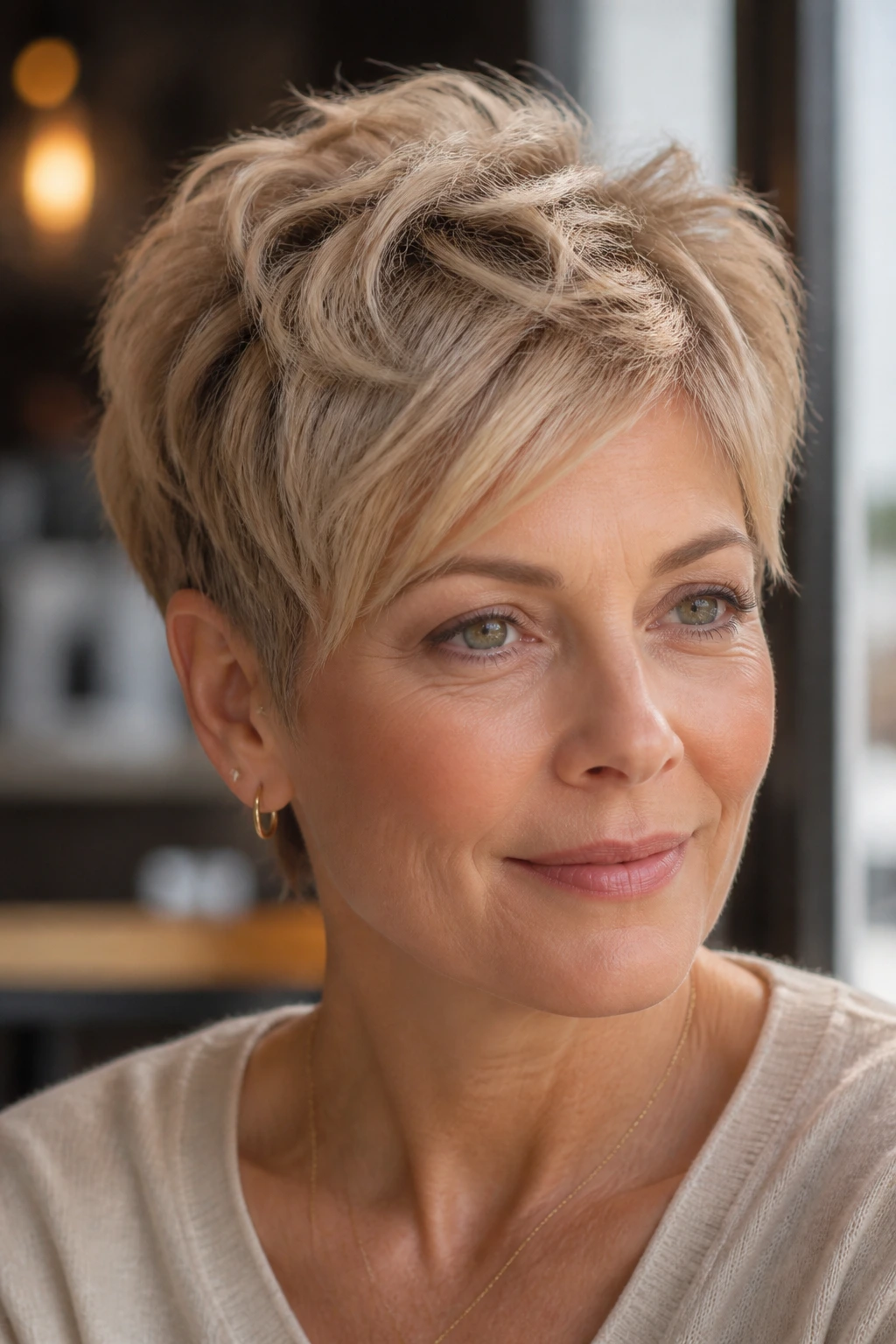
Champagne blonde sits in that pretty middle space between beige and pale gold. On a textured crop, it gives the hair a soft sparkle without making it look frosted. I like this shade on short cuts because it reflects light in a way that still feels warm enough for skin, especially if the haircut has lifted crown layers.
Ask for short layers through the top and slightly longer bits around the hairline. That combination gives the blonde something to break over, so the color looks dimensional instead of painted on. A little texture powder at the roots can help, but don’t overload it. The ends should still move.
9. Golden Blonde Jaw-Length Bob
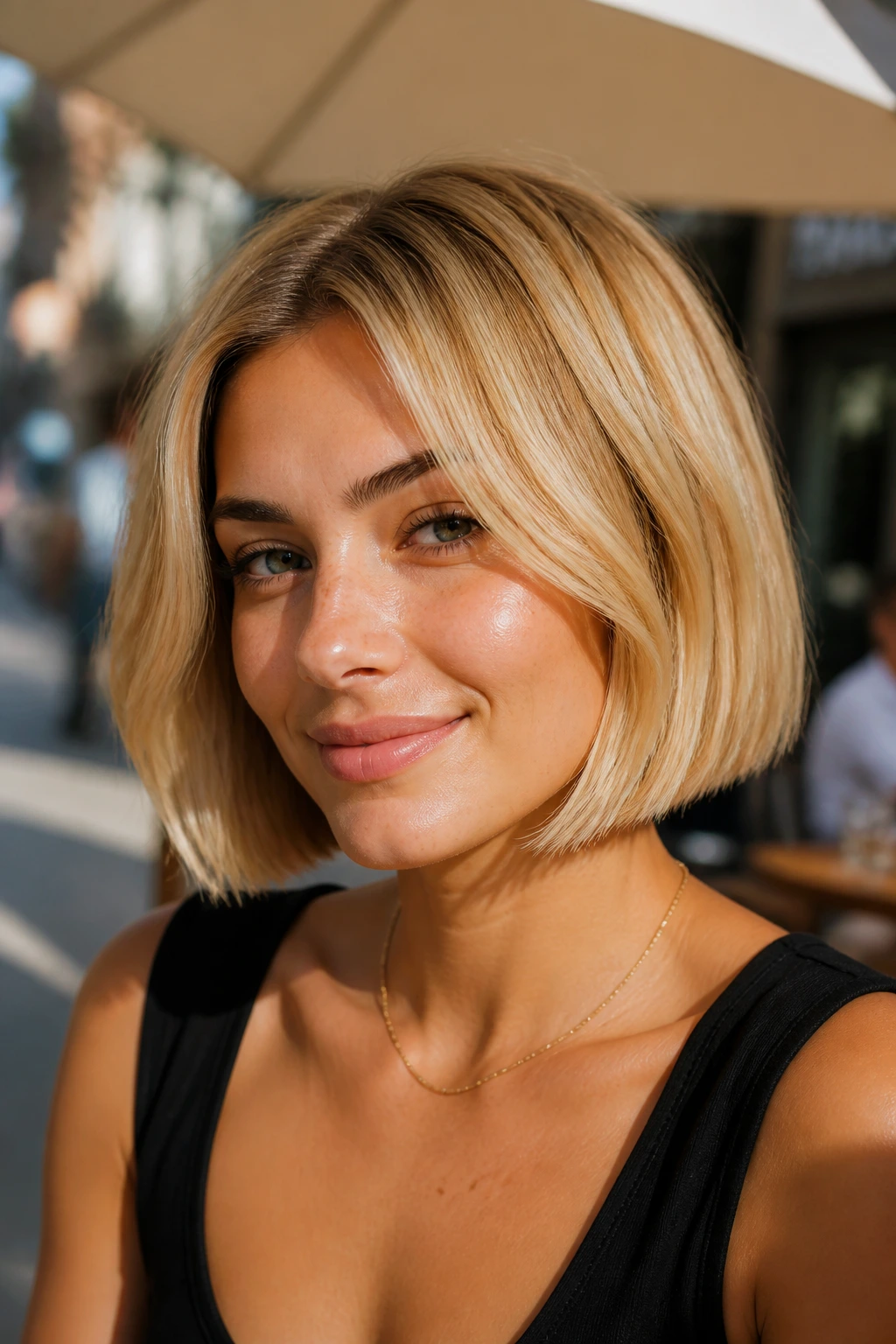
Golden blonde is one of the easiest shades to wear on a jaw-length bob because it brings life back to the face. The warmth makes the skin look less washed out, and the length sits close enough to the jaw to sharpen the whole silhouette. This is a very flattering match when you want softness without losing structure.
The finish matters here. A slight bevel under the ends keeps the bob from puffing out at the bottom, especially if your hair is thick. If it’s fine, let it fall straighter and rely on the gold tone to create fullness. Either way, the color should read rich, not orange.
10. Mushroom Blonde Pixie Bob
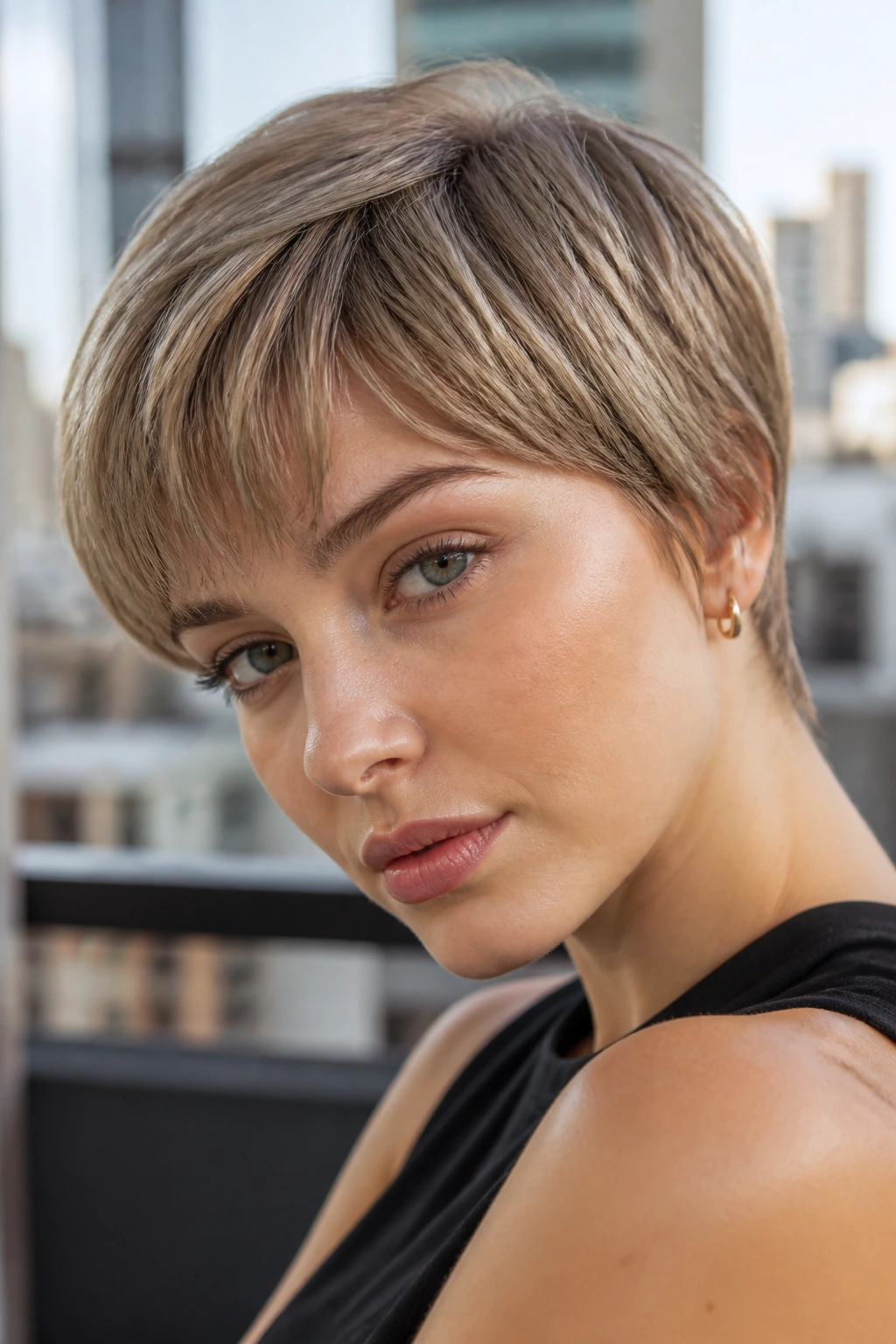
Mushroom blonde is the quiet overachiever of short blonde hair. It has beige, ash, and a touch of taupe, which gives the cut a cool, earthy depth that works especially well on a pixie bob. If bright yellow blondes wash you out, this tone is often the better move.
The cut itself wants a little length at the nape and softness around the ears so the color can show off its subtle shifts. You won’t get the drama of platinum, but you do get something more wearable day to day. It also grows out better than a very pale blonde, which is no small thing.
11. Sandy Blonde Wavy Bob
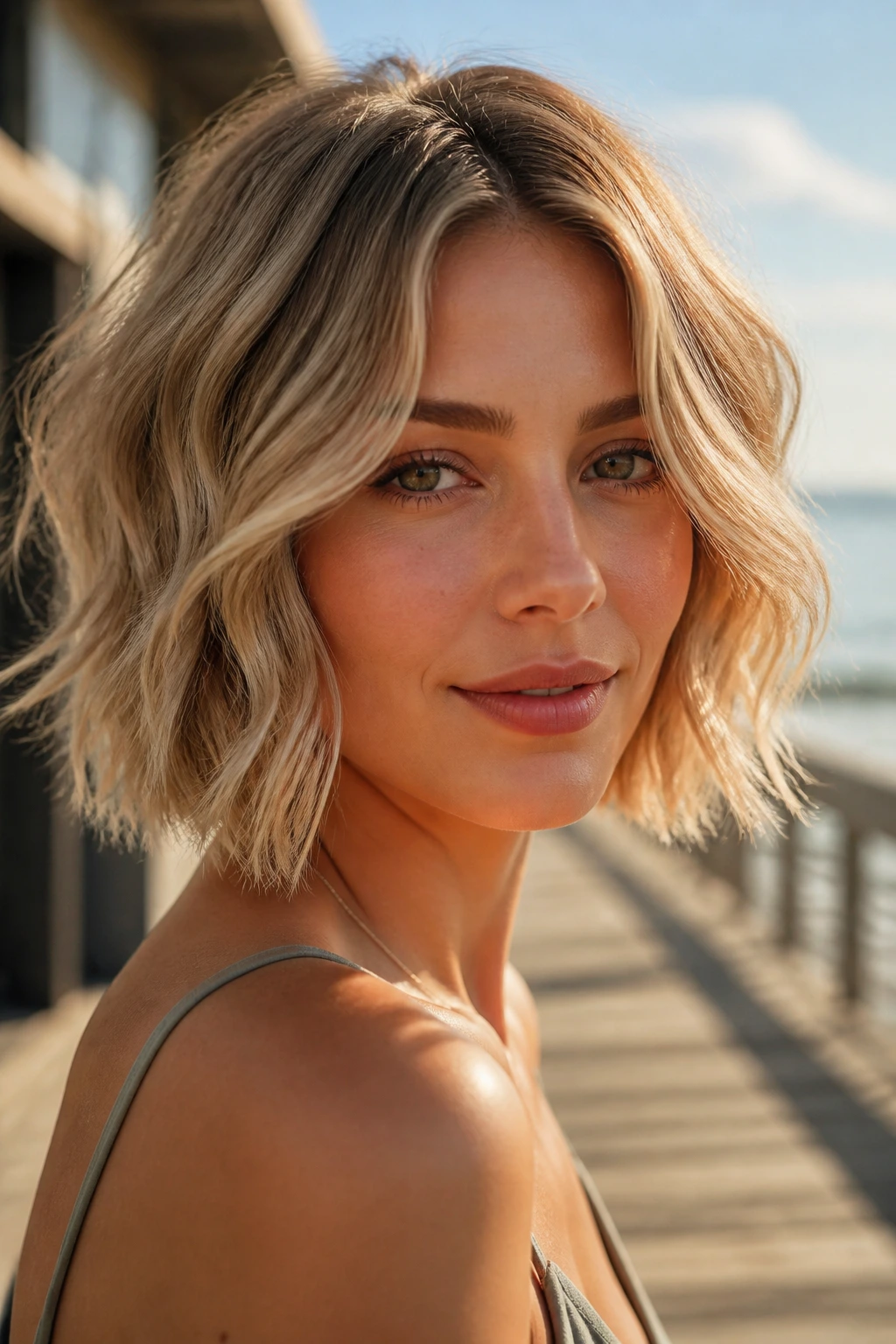
Sandy blonde is the color you choose when you want a bob to look as if it has been lived in for months, even when it was just toned yesterday. The shade mixes beige and pale gold, so it doesn’t scream for attention. It works especially well on a wavy bob with soft, broken ends.
The waves should be loose, not tight. A curling iron around 1 inch is enough if you only wrap the mid-lengths and leave the ends straight for that beachy, undone feel. Too much curl turns the blonde into a pageant look. The better move is irregular movement and a little shadow at the roots.
12. Vanilla Blonde Choppy Pixie
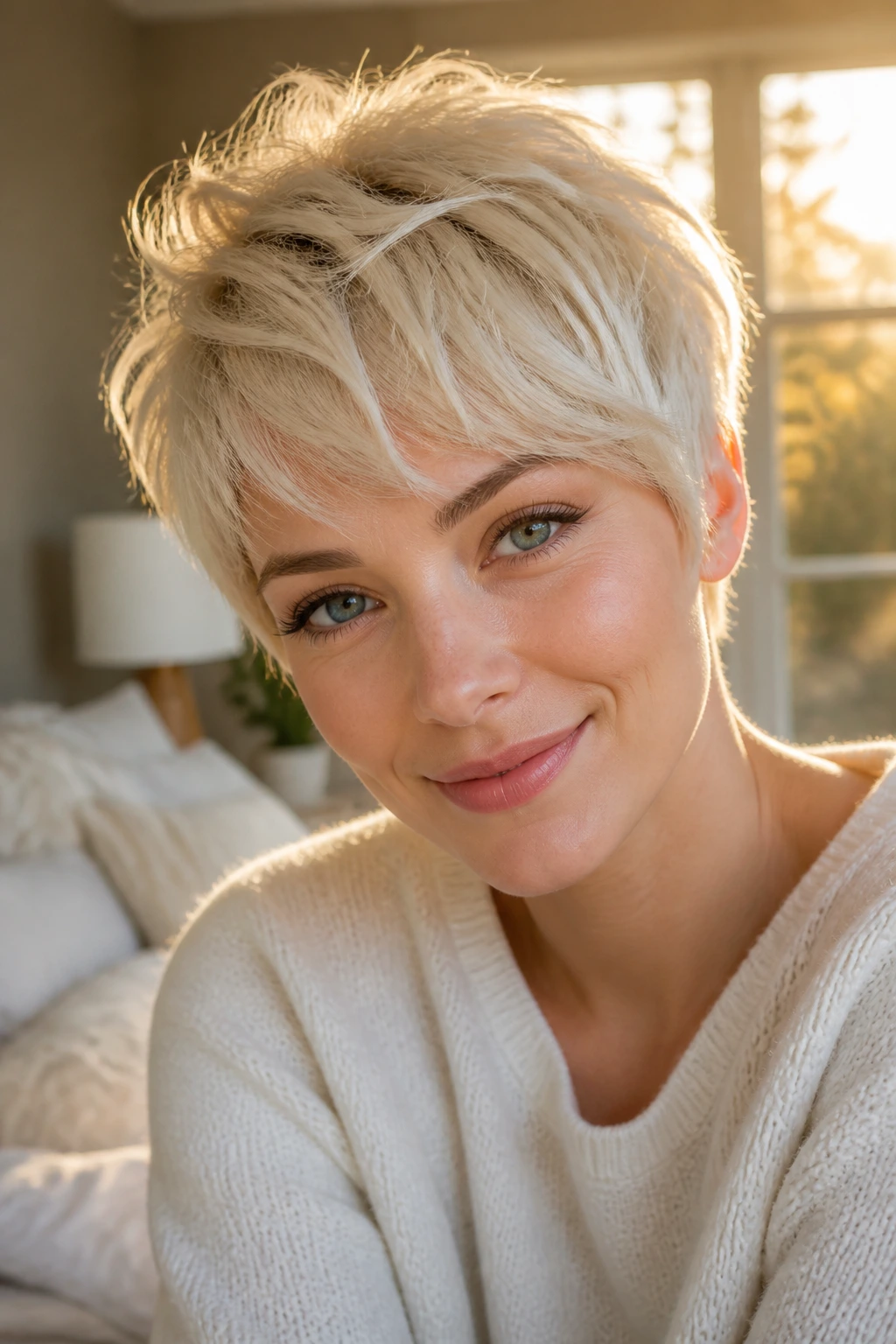
Vanilla blonde sounds sweet, and honestly, it is. The tone is creamy, pale, and smooth without tipping fully into icy territory, which keeps the short crop from looking harsh. On a choppy pixie, the color catches on each little layer differently, so the whole cut looks fuller.
This look is best when the fringe is a little piecey and the top has some direction. Brush it forward, then break it apart with your fingers and a pea-sized amount of paste. If you over-style it, the softness disappears. That’s the whole charm here.
13. Caramel Blonde Tapered Crop
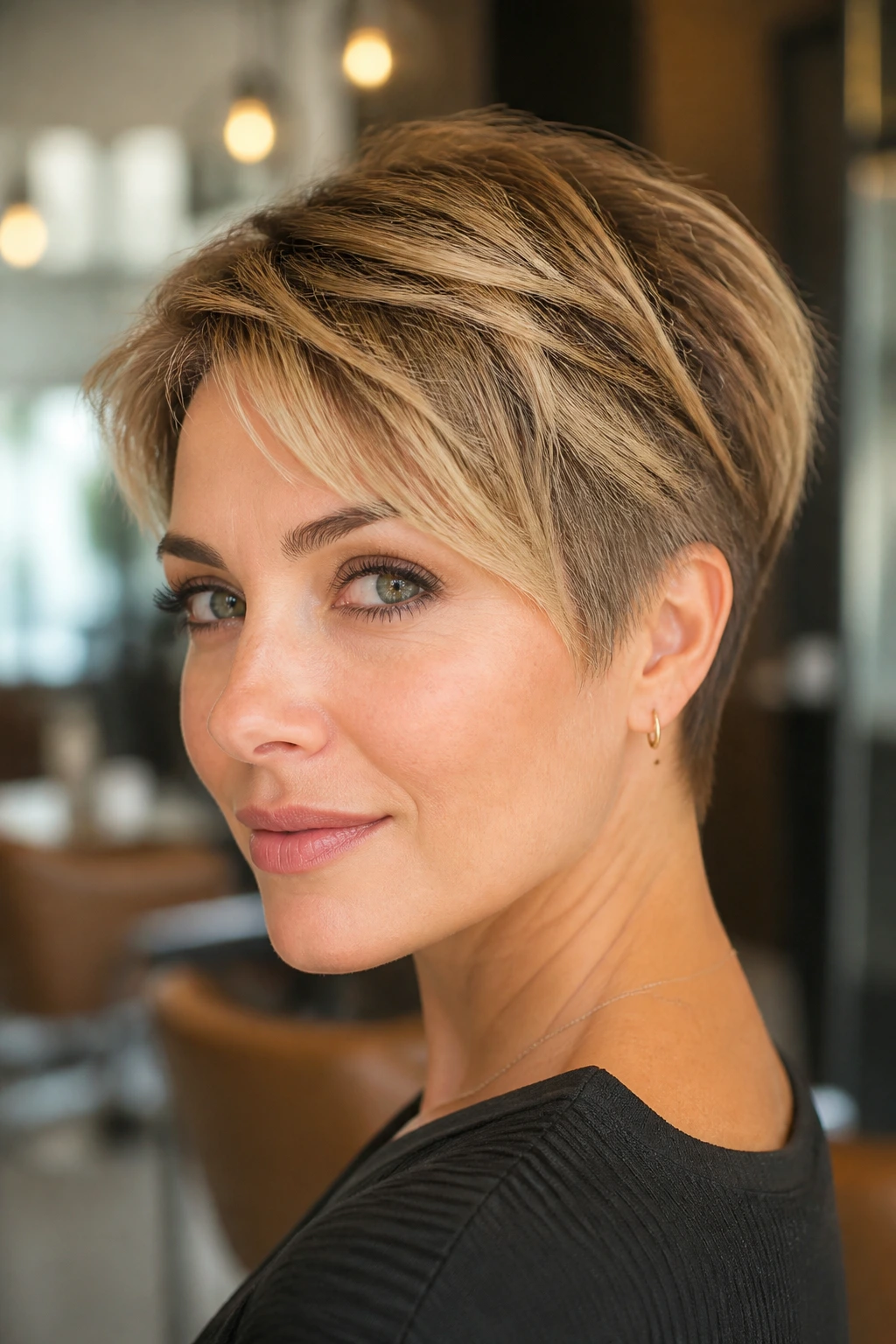
Caramel blonde has more depth than most people expect, and that’s why it works on a tapered crop. The darker golden ribbons near the root and crown keep the haircut grounded, while the lighter ends stop it from looking heavy. It’s a smart choice if you want dimension without bleach-blonde drama.
The tapered sides give the face a clean frame, and the longer top lets the color show its variation. This is one of those looks that actually gets better on day two, when the product softens and the shape settles. A little dry shampoo at the roots is usually enough to refresh it.
14. Icy Money Piece Bob
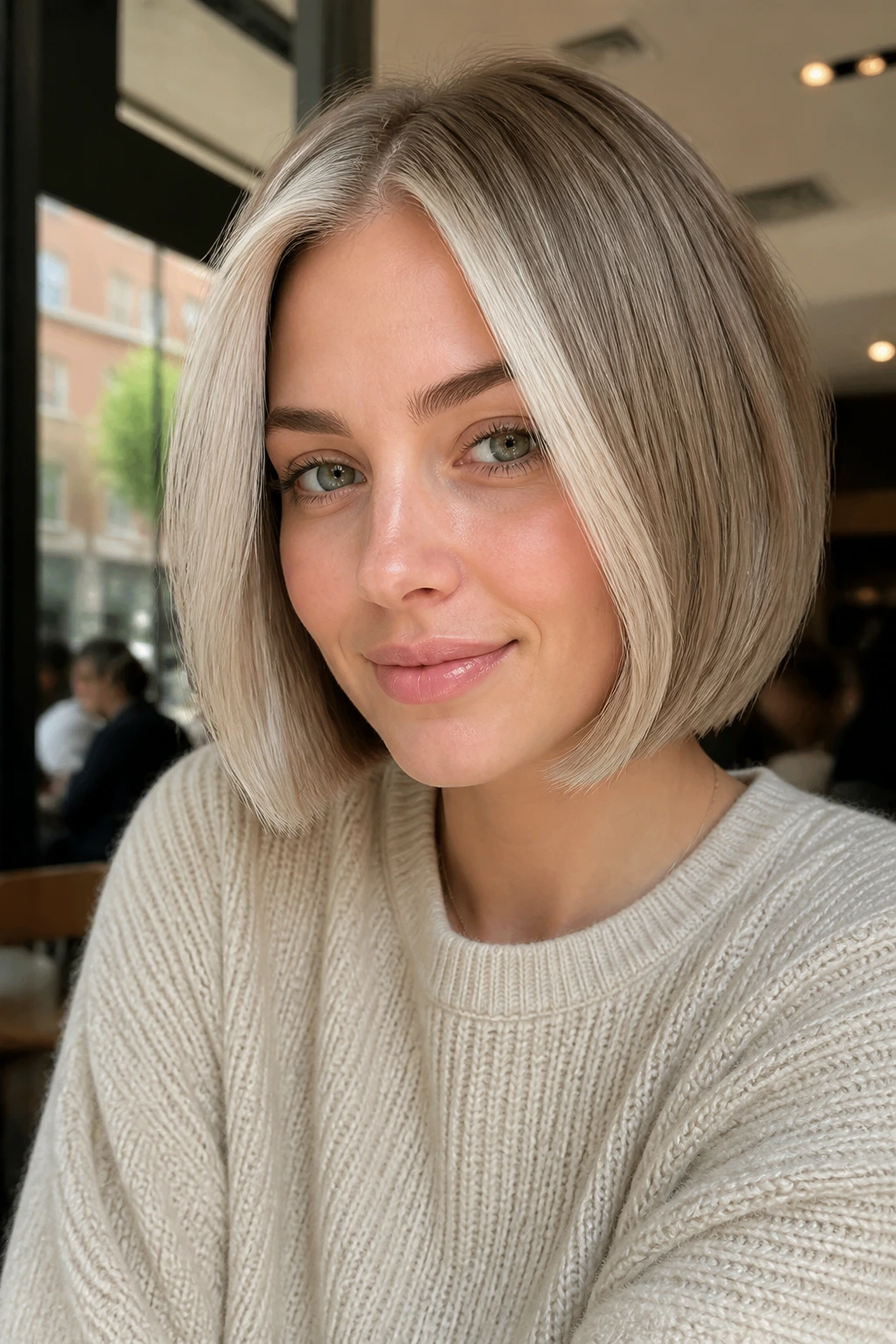
If you want contrast, this is the one. An icy money piece bob keeps the base deeper and focuses the brightest blonde right at the face, which pulls attention to the eyes in a very direct way. The money piece should be thick enough to be visible, but not so heavy that it looks like two stripes.
I like this on a blunt or barely layered bob because the clean line gives the front highlight something strong to sit against. The rest of the hair can stay beige or soft ash, which makes the icy front pieces feel intentional instead of over-bright. It’s a bold look, but it doesn’t need a huge amount of length to make sense.
15. Strawberry Blonde Short Shag
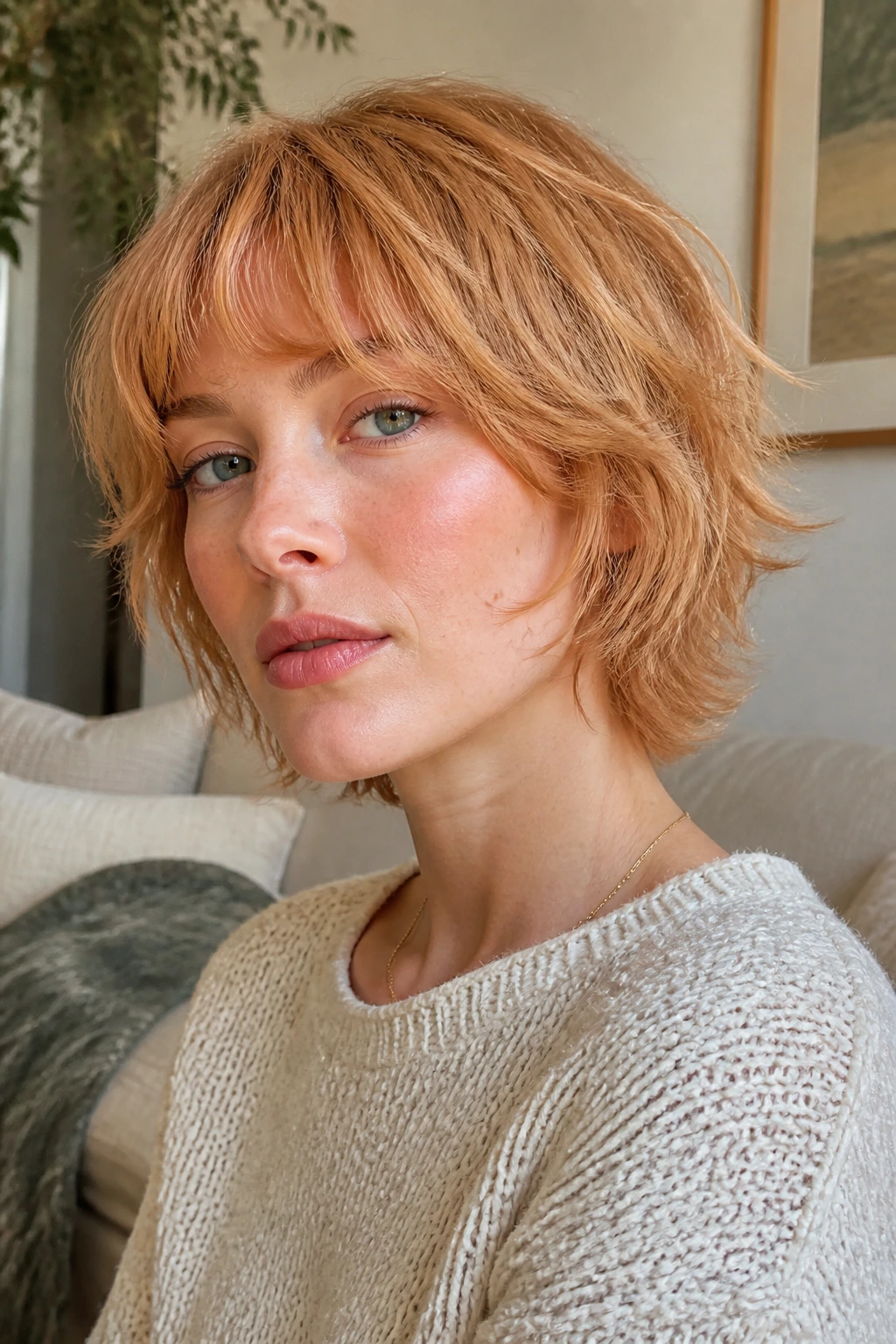
Strawberry blonde is one of those shades that looks soft in one light and lively in another. On a short shag, the slight red-gold tint adds warmth to the texture and keeps the layers from looking washed out. It’s a nice pick if straight blonde feels too pale for your skin or too common for your taste.
The shag should be loose and feathered, with a fringe that can split on its own. The color does a lot of the work, so you do not need perfect styling. A rough-dry with mousse and a bit of cream at the ends is enough. The result feels airy, touchable, and a little bit vintage.
16. Pearl Blonde Side-Part Bob
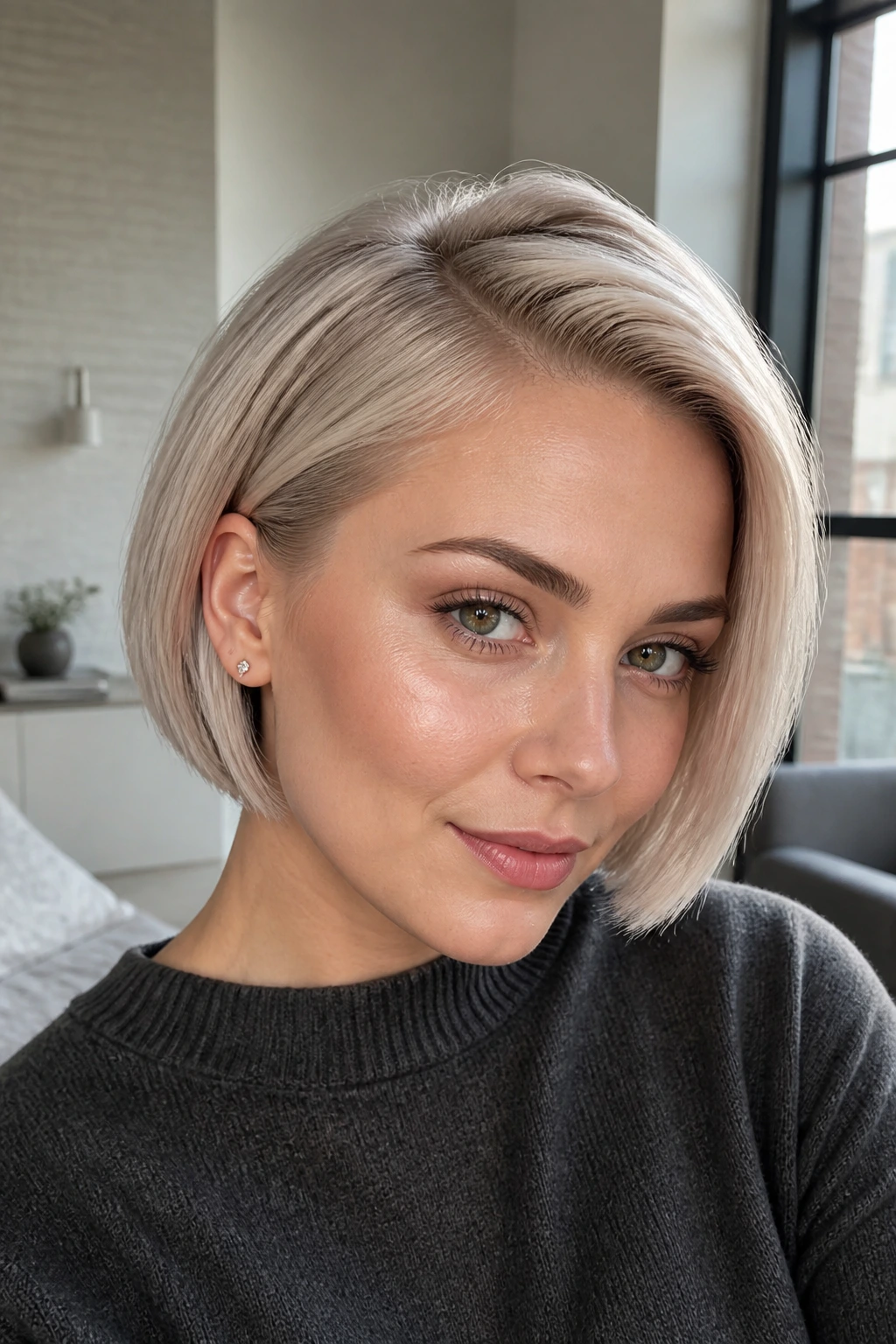
Pearl blonde has a faint reflective quality that makes short hair look almost satin-like. On a side-part bob, that polished tone works because the asymmetry keeps it from feeling stiff. The side part also helps create lift at the crown, which short hair often needs if it’s naturally flat.
This shade sits cooler than champagne and softer than ice, so it can flatter a lot of undertones if the toner is handled well. Ask for a glossy finish at the salon, then maintain it with a light toning mask rather than constant purple shampoo. Too much purple will dull the shine.
17. Baby Blonde Crop with Micro Bangs
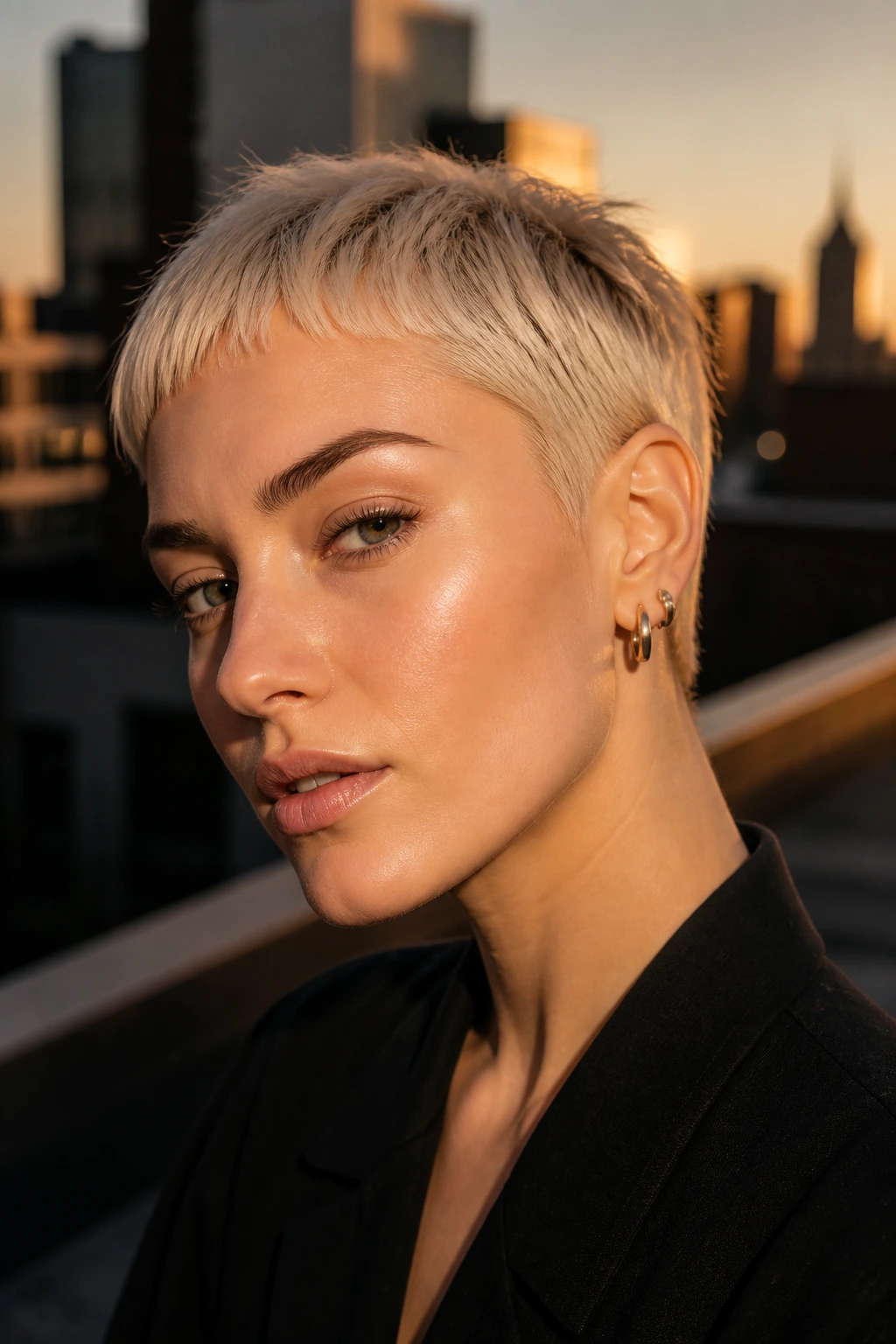
This one is tiny, sharp, and a little mischievous. Baby blonde with micro bangs gives a short crop a fashion edge that depends on precision, not length. The blonde should be bright enough to show the fringe clearly but not so white that it swallows the face.
Micro bangs leave almost no room for lazy cutting, which is why the shape needs to be deliberate. Keep the sides close and the top lightly textured so the bangs don’t sit like a shelf. A dab of lightweight wax at the tips is enough. Anything heavier turns the fringe into a helmet, and that kills the look fast.
18. Sunlit Blonde Undercut Pixie
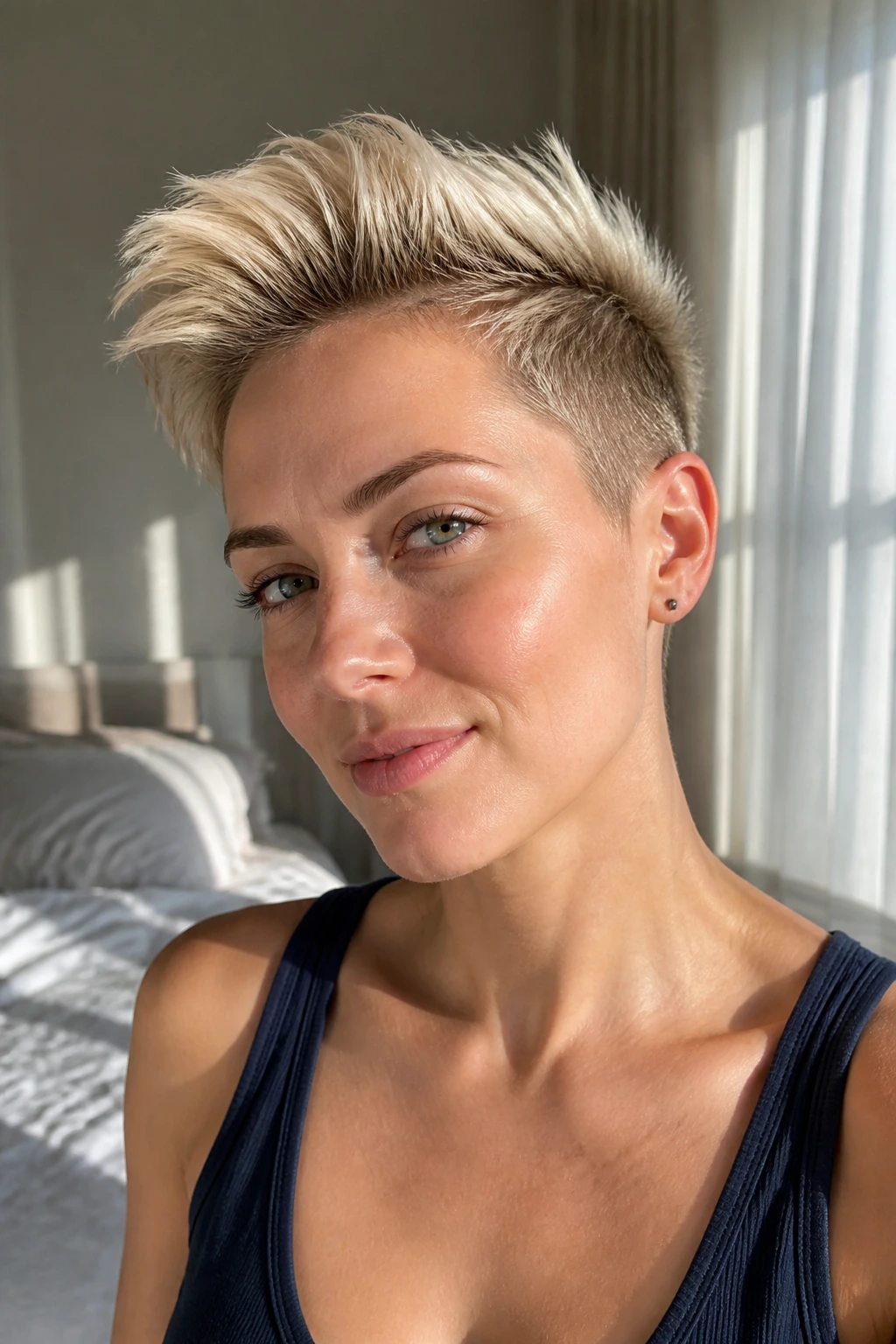
An undercut pixie is already built for contrast. Add a sunlit blonde top, and the whole shape starts to feel sharper without becoming severe. The brightness on top makes the shorter sides disappear just enough to create that lifted, airy silhouette.
This is a good style if you want something low on bulk but high on personality. The undercut keeps the neckline neat, while the top can be brushed up, forward, or slightly to the side. If your hair has stubborn cowlicks, the undercut actually helps manage them instead of fighting them.
19. Buttery Blonde Rounded Bob
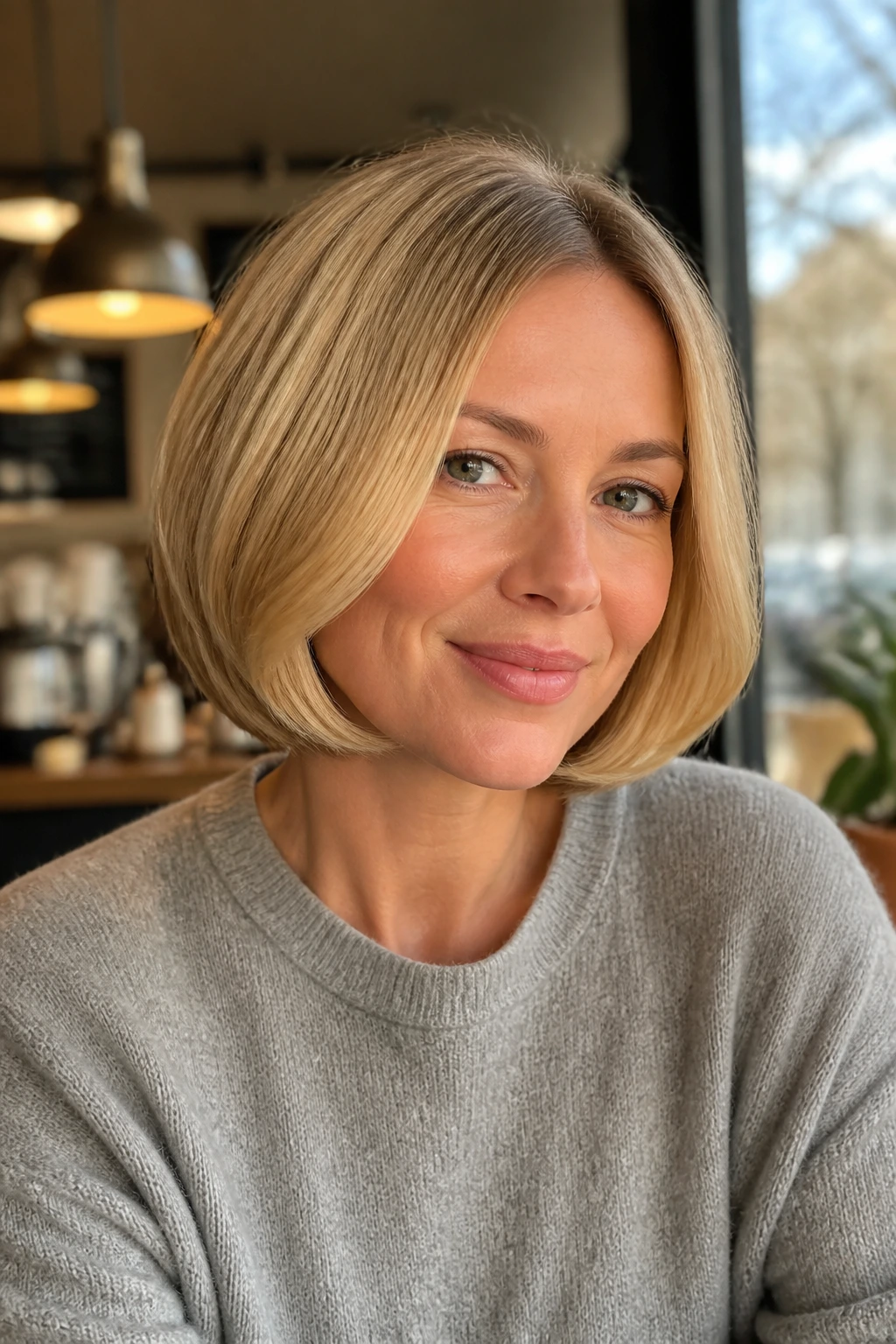
A rounded bob gives the head shape a soft curve, and buttery blonde supports that shape by warming up the edges. The color has enough gold to keep the bob from reading flat, especially if the ends are tucked slightly under. It’s a very flattering choice for anyone who likes smooth lines more than messy texture.
The rounded outline also makes the blonde look fuller because the light follows the curve. A blowout brush does most of the work. If you want it to feel less formal, leave the front pieces a little straighter and let the back keep the bend. That contrast makes the haircut feel less stagey.
20. Dimensional Balayage Lob
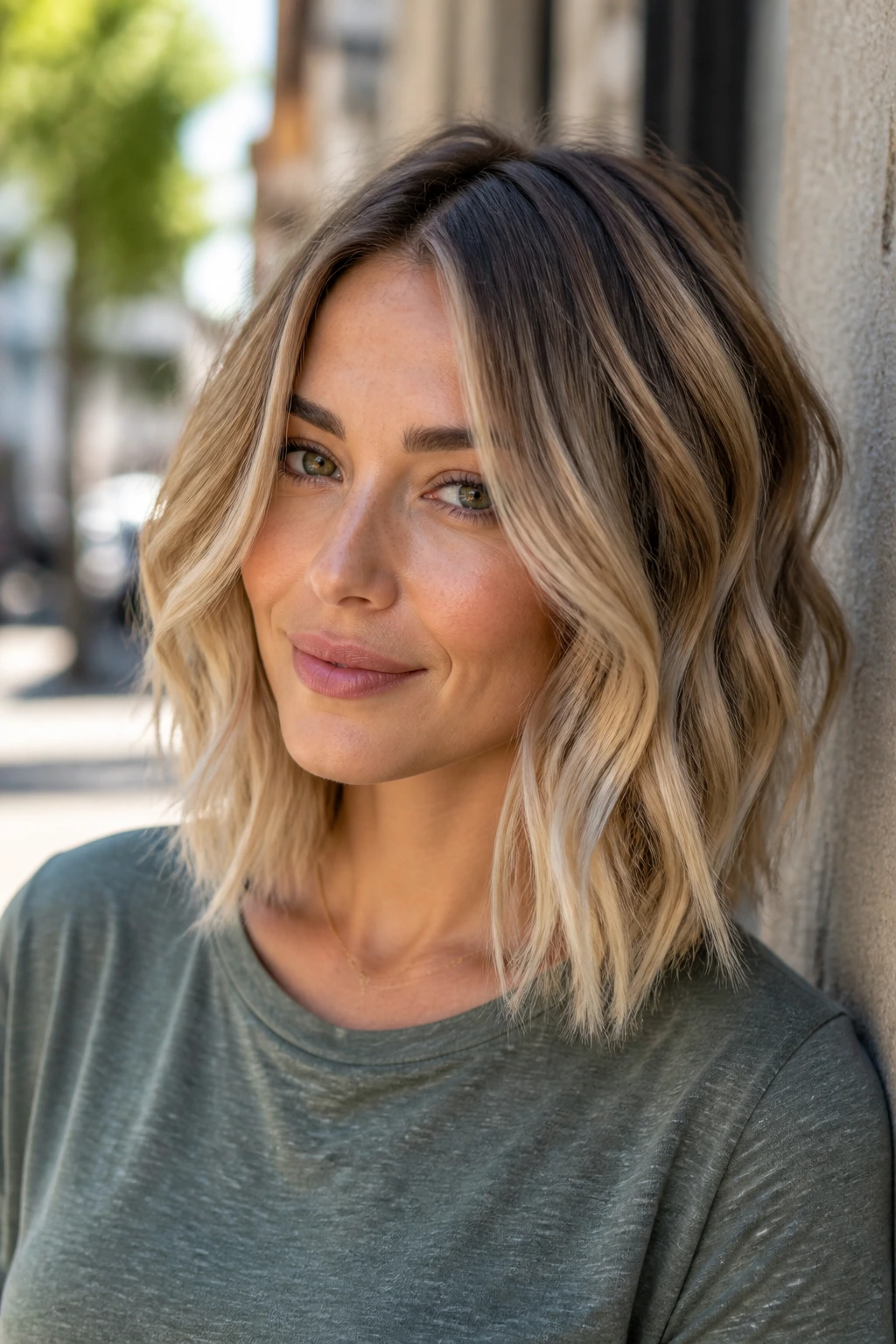
Dimensional balayage on a lob is one of the easiest ways to wear blonde on shorter hair without committing to a fully light base. The hand-painted ribbons break up the shape, especially if the hair has a slight wave. You keep depth near the roots and brightness where the light naturally hits.
A lob gives the balayage enough room to spread, which matters. On very short hair, highlights can crowd each other if they’re packed too tightly. Here, the soft placement means the blonde grows out without a harsh line, and that is the whole appeal. You can wear it straight, bent, or air-dried and still see the contrast.
21. Cream Soda Blonde Pageboy
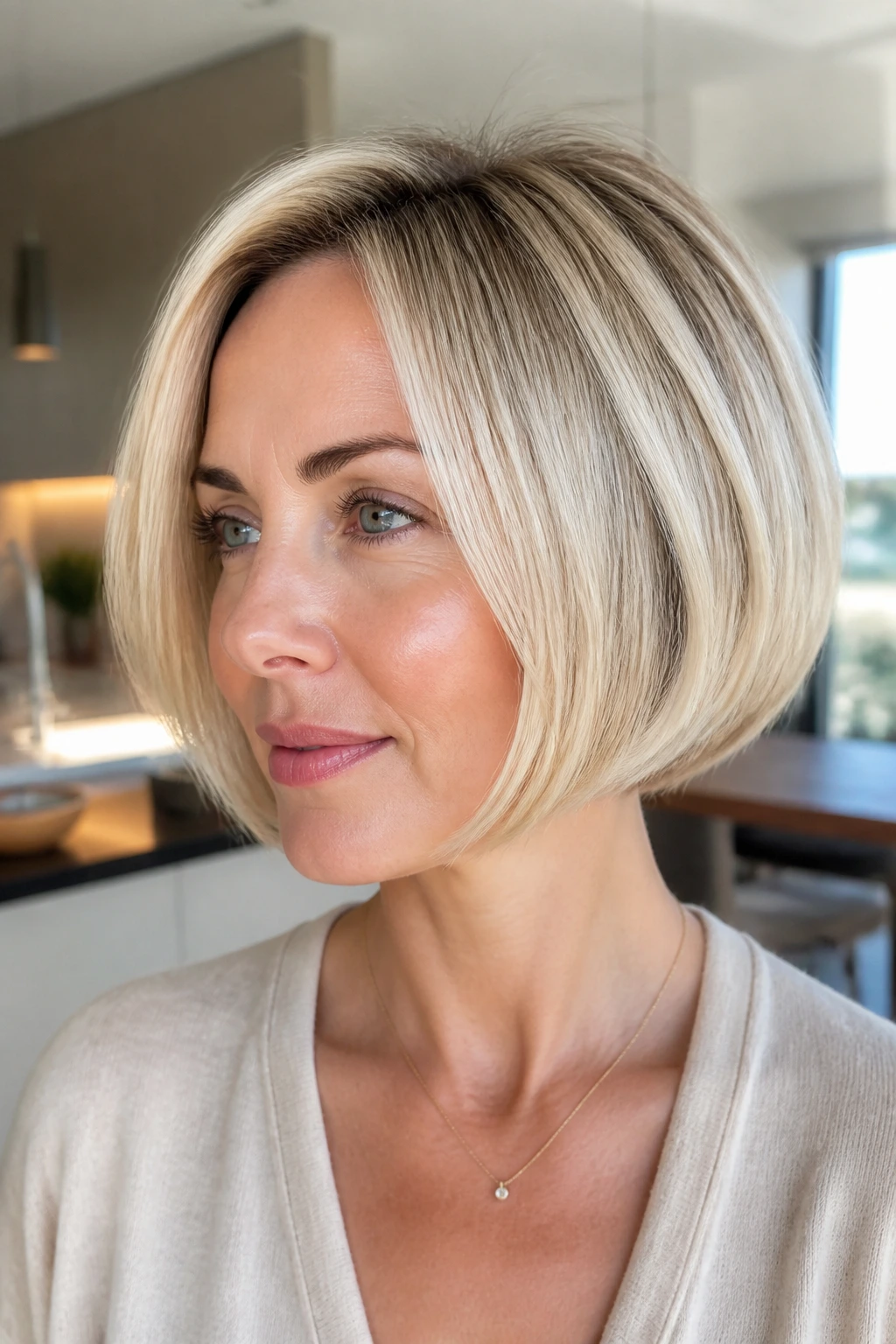
Cream soda blonde sounds playful, but the color itself is very controlled. Think creamy beige with a hint of warmth, almost like foam on a glass, and pair it with a pageboy shape that curves under the chin. The rounded outline makes the tone feel smooth rather than stripey.
This look is surprisingly modern when the ends are kept blunt and the crown slightly lifted. A pageboy can look too retro if the blonde is too flat, so a bit of dimension near the roots helps. It’s the kind of style that looks intentional from every angle, which short hair always demands.
22. Soft Bronde Bob
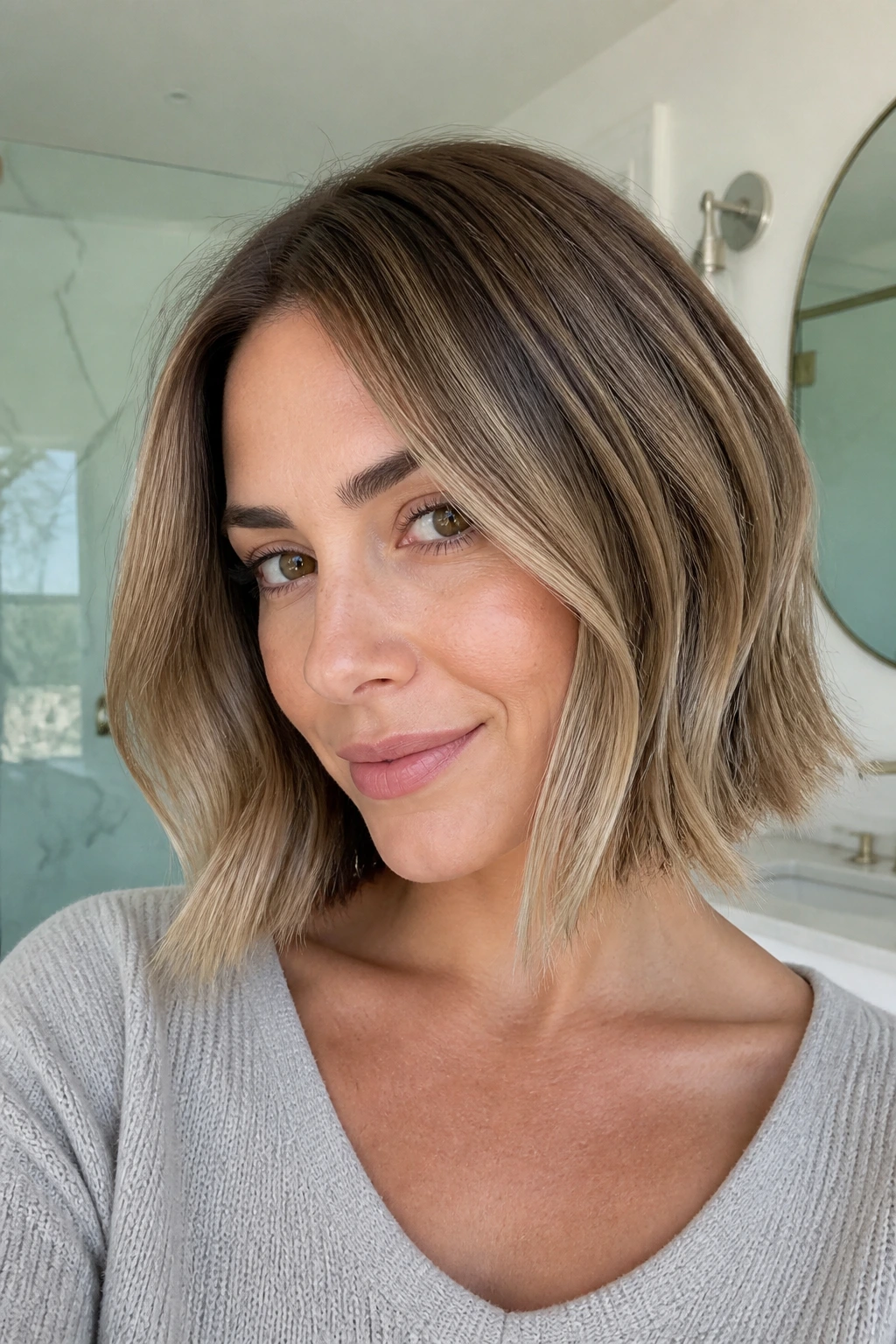
Bronde is the answer when you want blonde but don’t want the upkeep of a full light blonde. On a short bob, the brown-blonde mix creates depth at the root and brightness through the ends, which gives the hair a thicker appearance. The shade also softens facial features in a way that very pale blonde sometimes doesn’t.
This works best if the cut is clean and the tone is glossy, not dusty. A little warmer at the mids and lighter at the front keeps the look from turning muddy. If you’re growing out old highlights, this is one of the nicest ways to bridge the gap without starting from scratch.
23. Champagne Pixie with Longer Crown
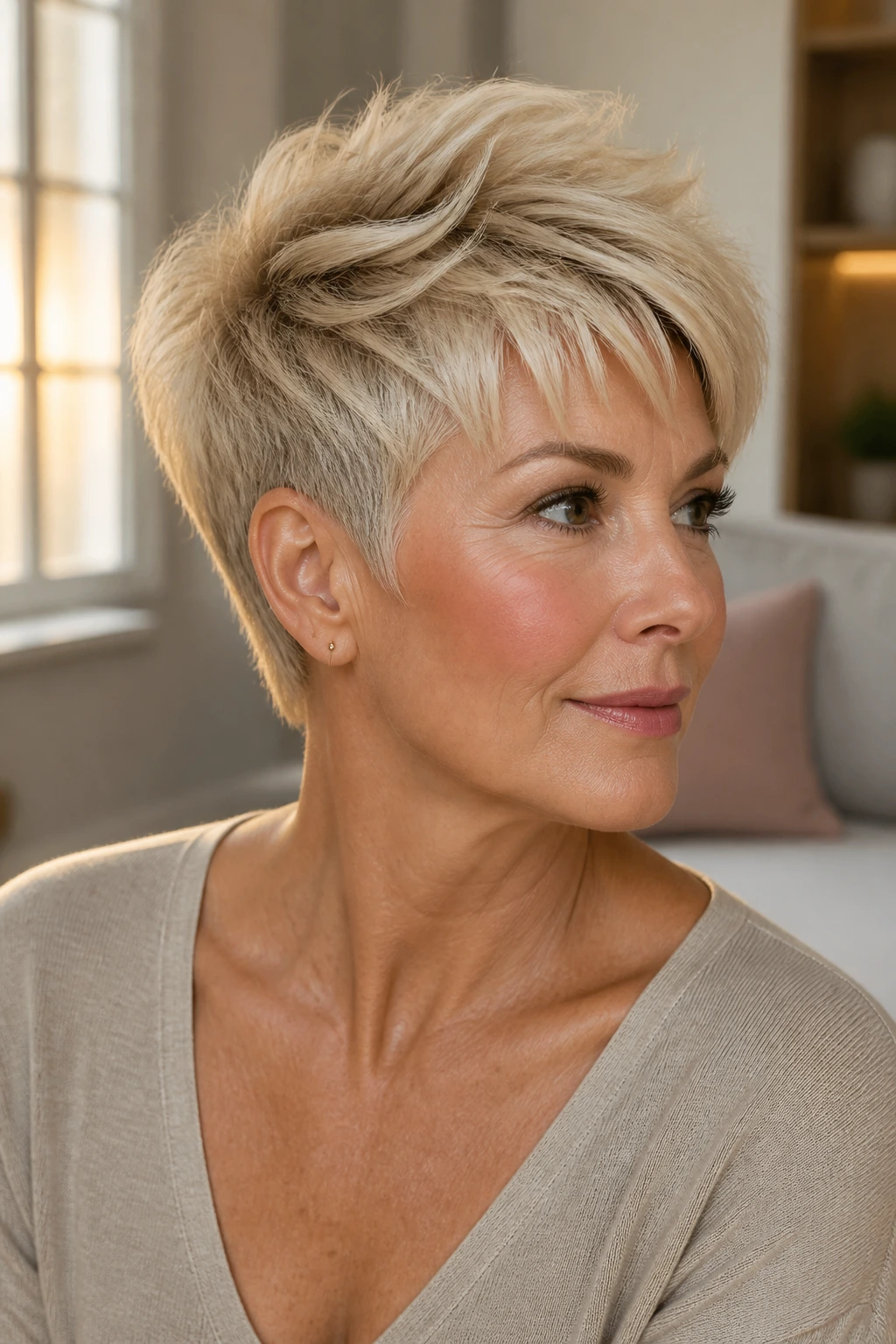
A pixie with a longer crown has room for movement, and champagne blonde makes that movement visible. The tone lands between cool and warm, which keeps the shape from feeling too hard. It’s especially good if you want a short cut that can be styled upward without looking spiky.
The longer crown gives you options. Push it forward for softness, or lift it slightly for a sharper outline. The blonde should be glossy enough to show the difference between the top and the sides. If the crown is too flat, the whole style loses personality, so a bit of root lift matters here.
24. Bright Beige Blunt Cut
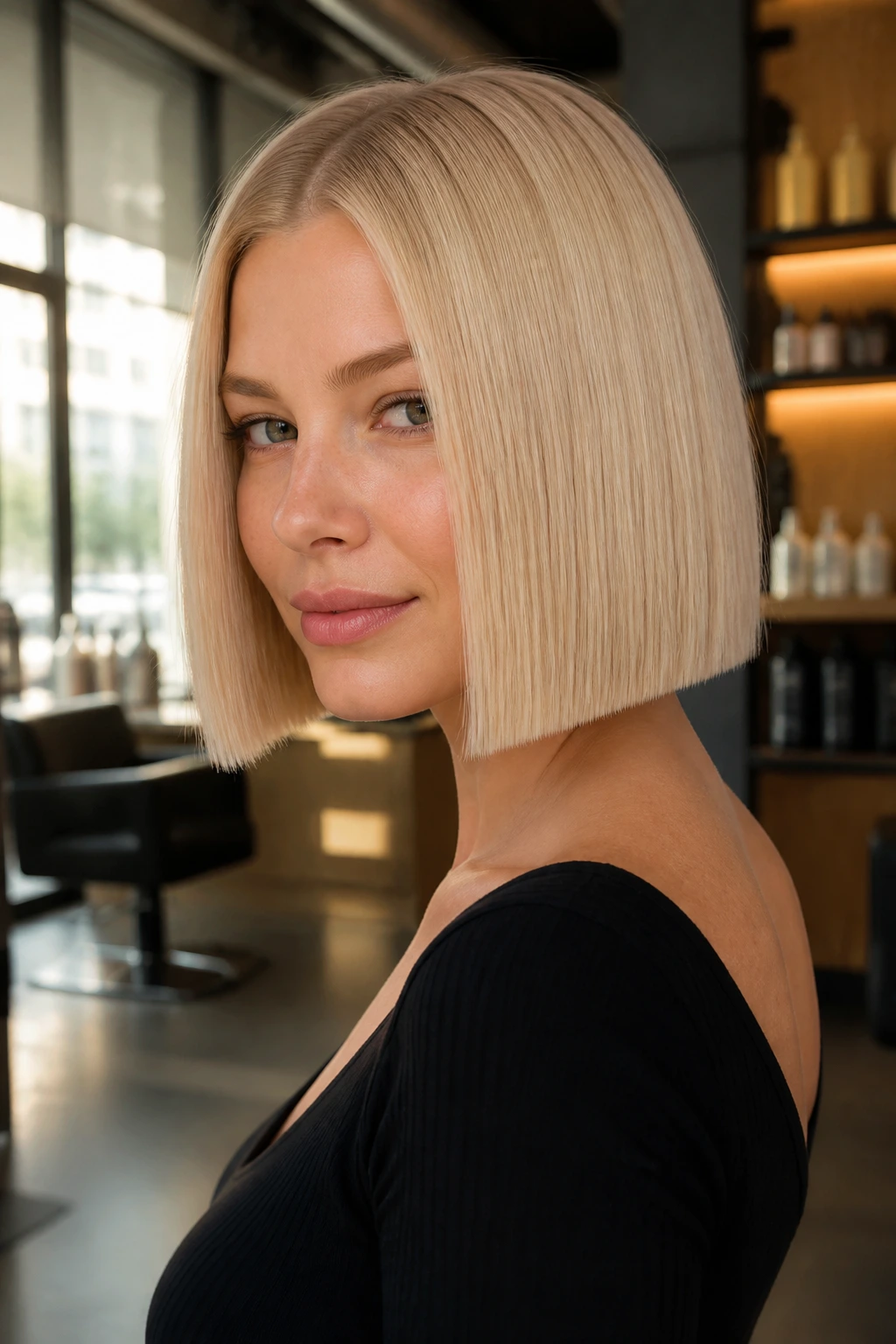
Bright beige blonde sits in a sweet spot. It’s light enough to feel blonde, but soft enough to keep a blunt cut from looking severe. On short hair, that matters because hard edges and stark color can turn a chic bob into something boxy fast.
The blunt cut should be precise from the side profile, with the ends all sitting at roughly the same level. A bright beige toner makes the line look clean and expensive, especially if the hair has been pre-lightened evenly. This is a very good choice if you want a crisp look that still feels wearable every day.
25. Rooty Honey Curly Crop
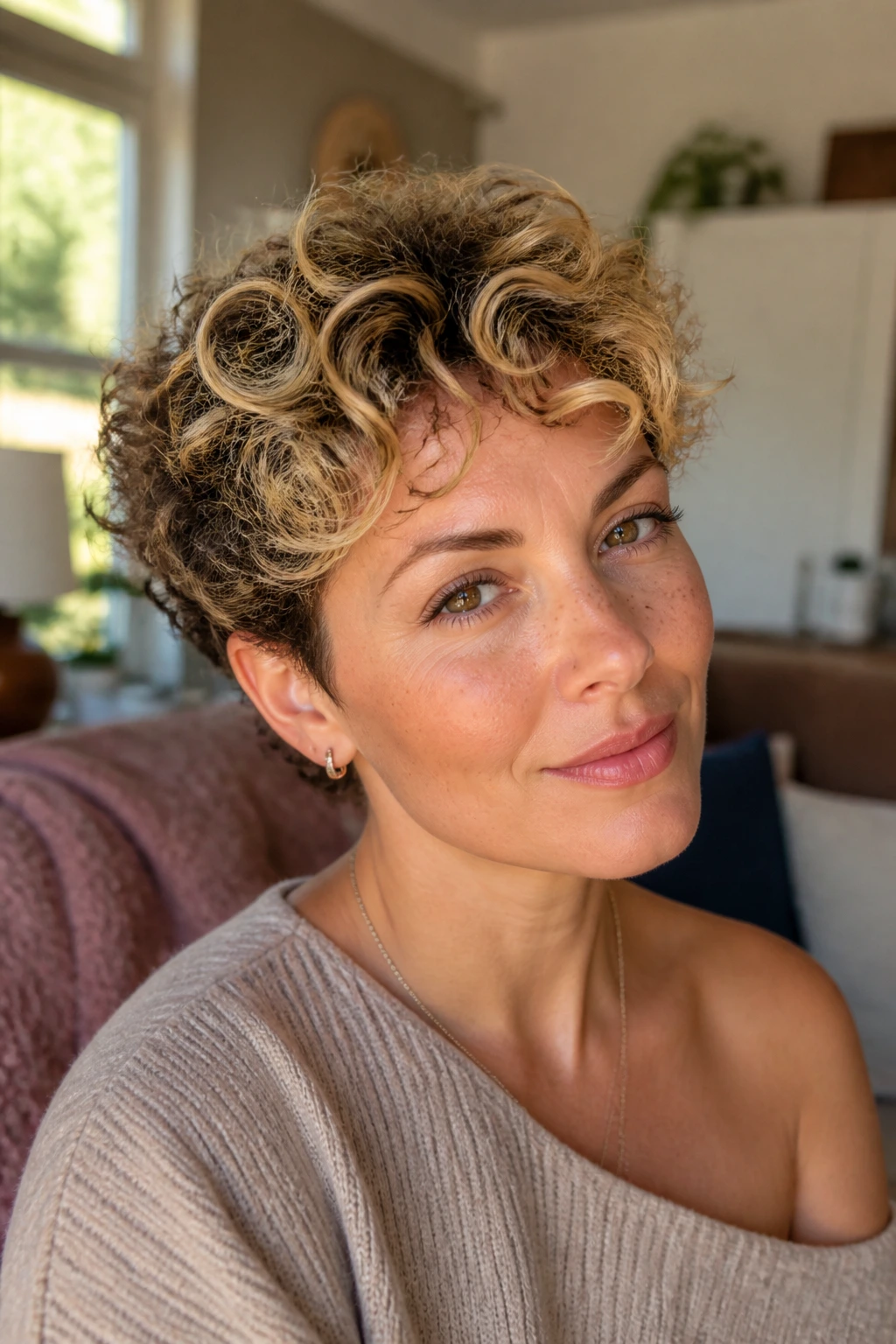
Curly hair and blonde can be a tricky pair if the tone is too pale. A rooty honey crop solves that by keeping depth near the scalp and putting the warm blonde where the curls open up. The contrast helps the texture show instead of disappearing into a flat blonde mass.
The curls should be shaped, not forced. A good crop keeps enough length on top for the curls to spring while the sides stay tidy. Honey tones reflect light nicely on textured hair, and the root shadow keeps the grow-out soft. It’s one of the easiest ways to make short blonde curls look rich instead of dry.
26. Scandinavian Blonde Buzzed Pixie
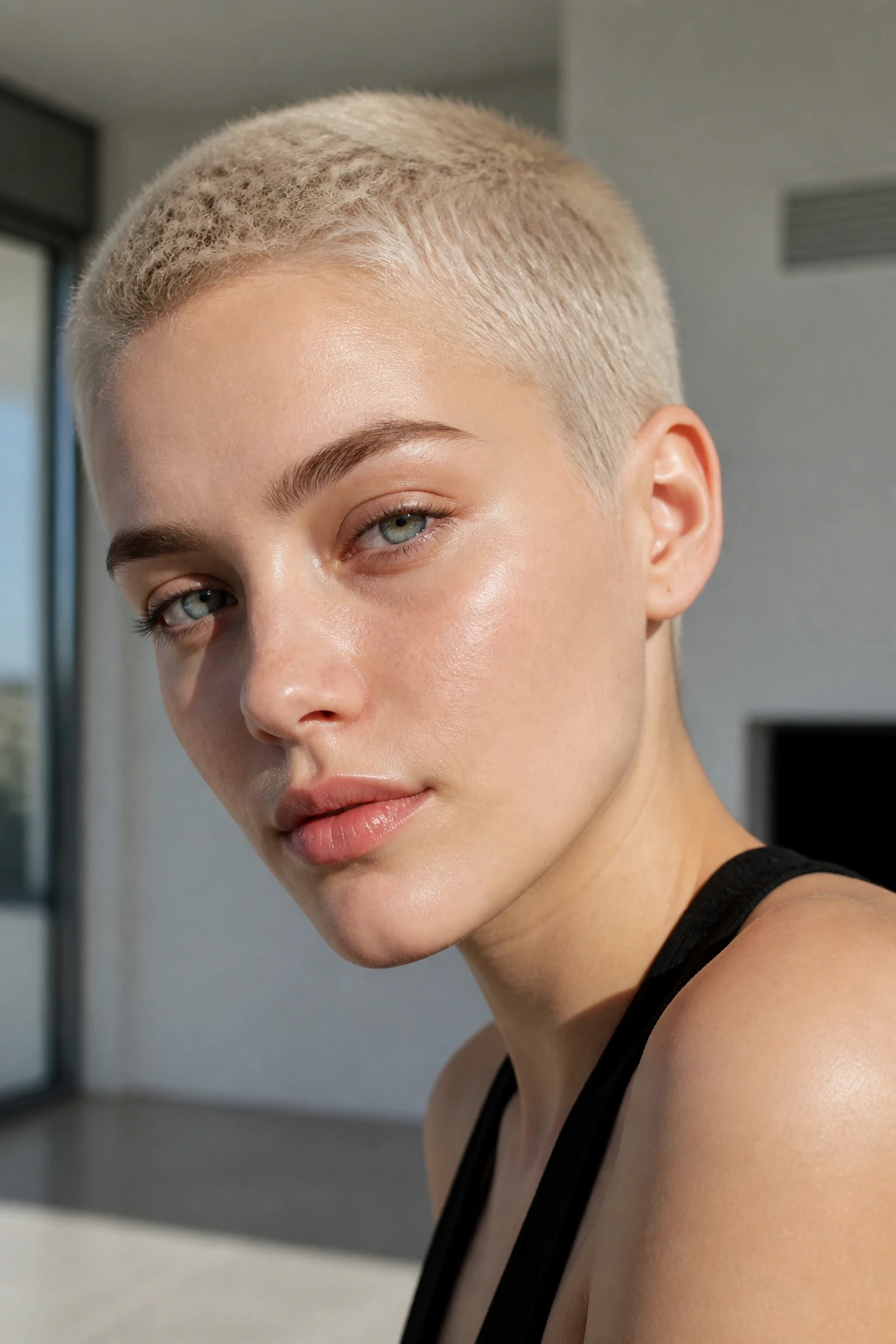
This is the high-commitment, high-payoff version of blonde short hair. Scandinavian blonde is pale, cool, and very light, and on a buzzed pixie it looks almost graphic. The short length keeps the color from feeling overwhelming, because there’s not much hair mass for the pale tone to fight against.
The maintenance is intense. Roots appear fast, and the color needs to stay even or the whole effect falls apart. But when it’s fresh, the result is striking in a clean, minimalist way. If you like crisp lines, pale skin-brightening blonde, and a cut that refuses to hide, this one has real force.
27. Face-Framing Blonde French Girl Bob
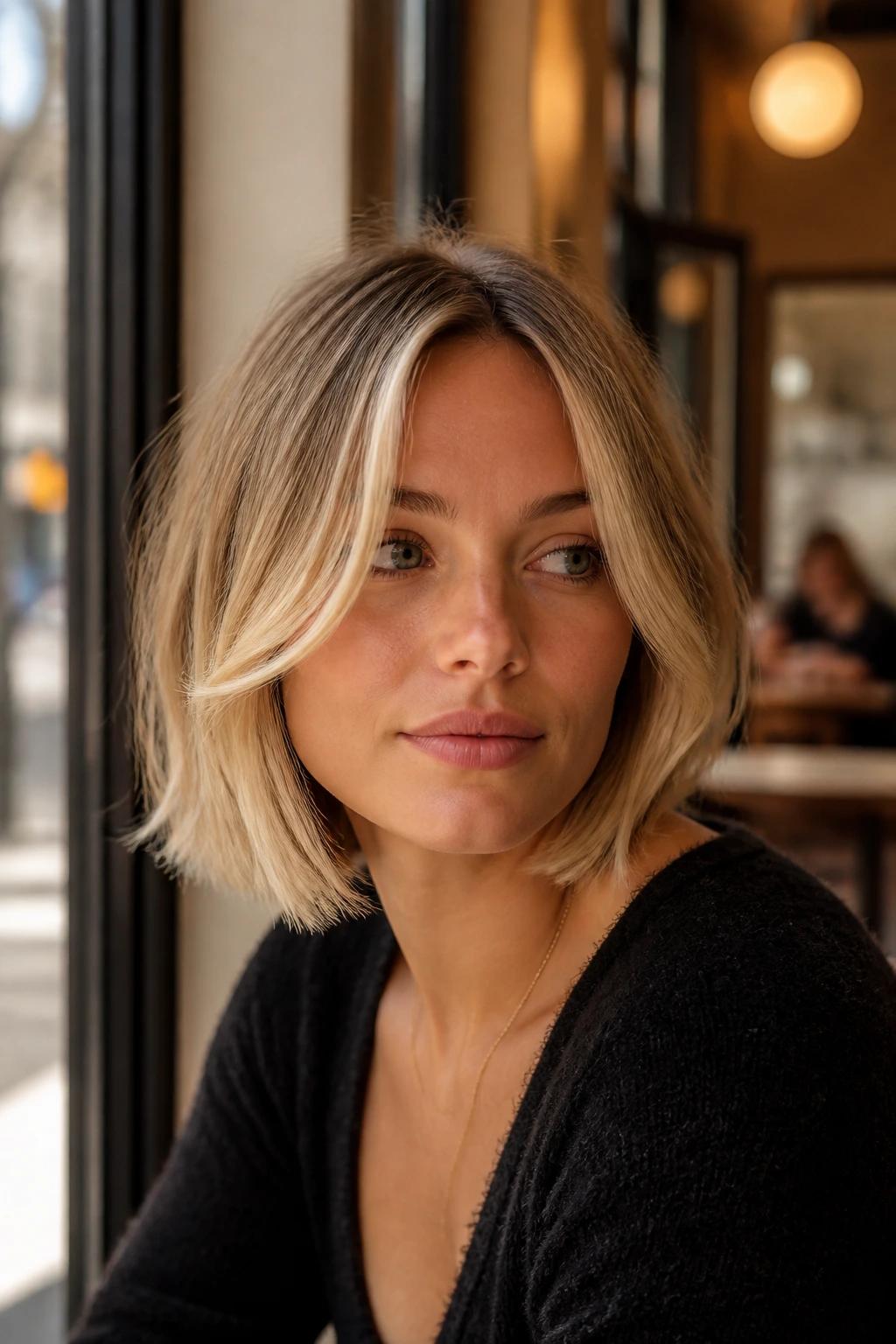
A French-girl bob gets even better when the blonde is concentrated around the face. The cut stays soft and slightly undone, while the brighter pieces near the cheekbones do the flattering work. You do not need a full-head platinum lift to get that airy effect.
The face-framing sections should be a touch lighter than the rest of the bob, not miles ahead. That subtle contrast keeps the style believable. I also like this with a slightly off-center part and a bend through the ends, because too much symmetry can make the haircut lose its easy feel.
28. Piecey Ash Blonde Shaggy Bob
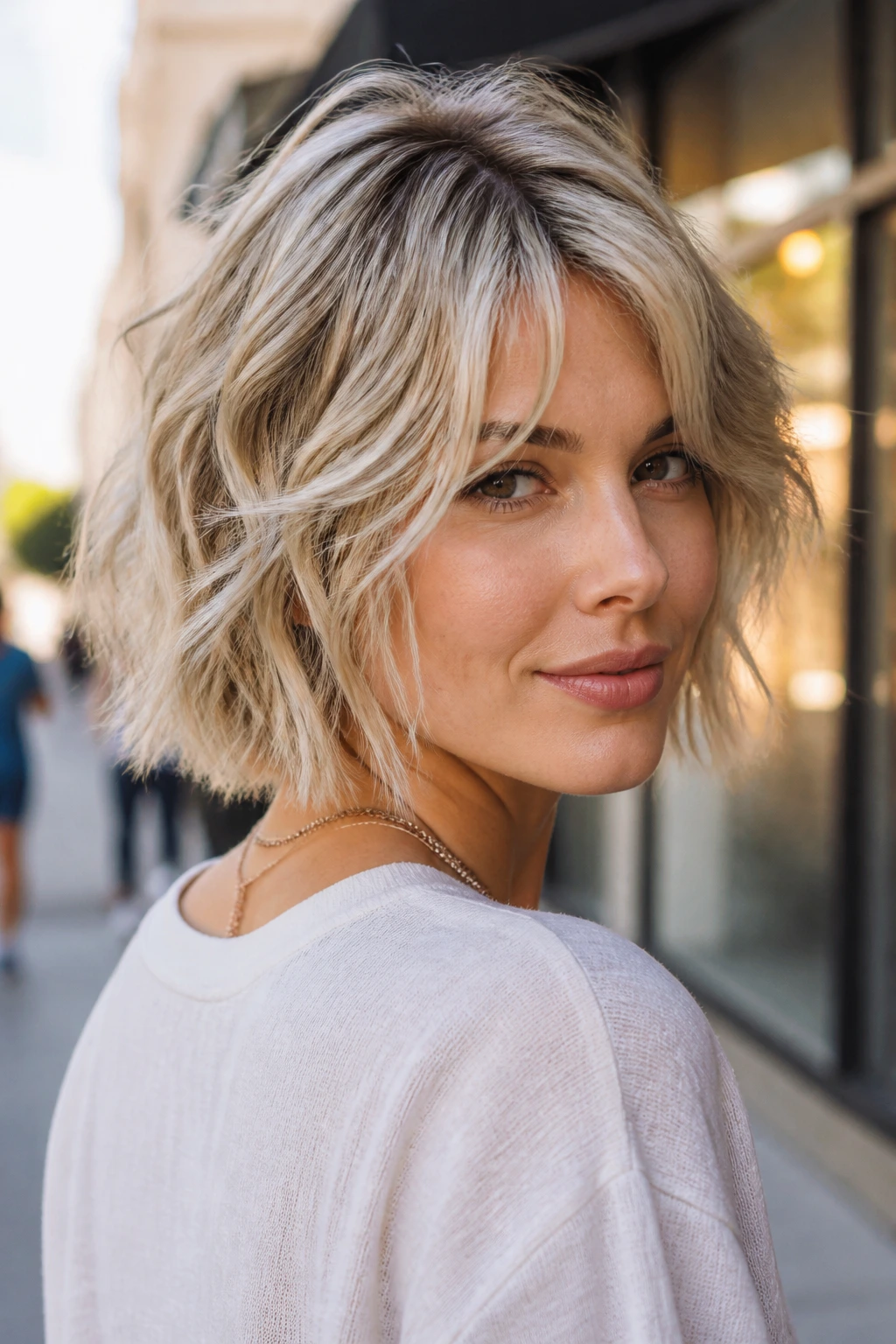
Ash blonde loves a shaggy bob because the texture stops the color from looking flat. The cooler tone can sometimes go dull if the cut is too tidy, but with piecey layers and a little separation, it reads as crisp and modern. It’s a good pick if yellow tones bother you.
The styling should lean airy. A diffuser, a bit of mousse, and finger separation usually beat a stiff blowout. The ends should look broken up, not cut into a hard line. If you want a bob that feels light around the face without giving up dimension, this is a very strong option.
29. Golden Beige Tuck-Behind Bob
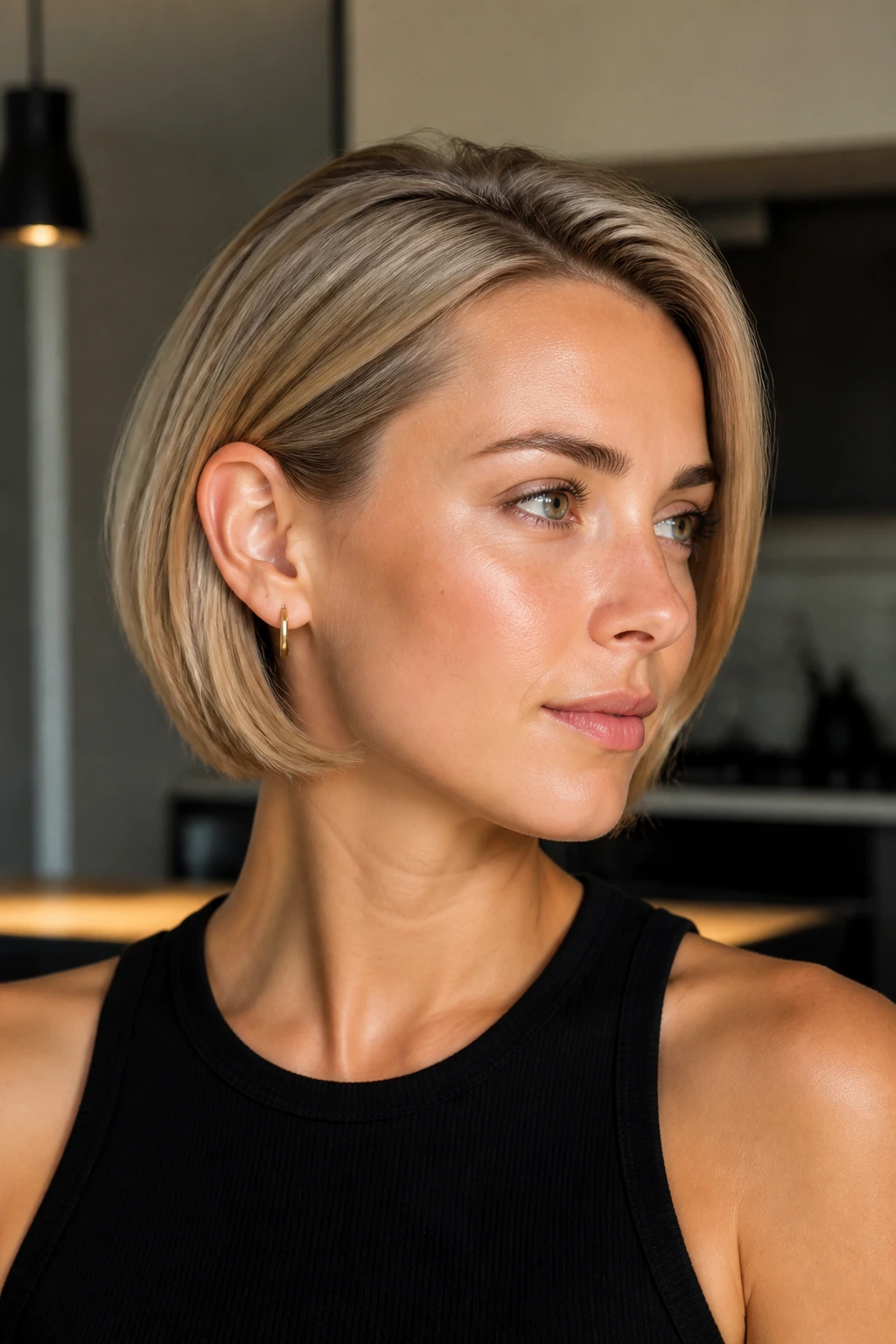
This one is quiet in the best way. Golden beige sits closer to the natural blonde family, and when you tuck a short bob behind the ears, the whole cut gains a neat, almost tailored shape. The style looks clean without being stiff.
The tucked-back front pieces matter because they reveal the jawline and the neckline in a way that changes the whole mood of the haircut. A soft bend under the ends keeps it from feeling flat against the head. It’s the kind of blonde bob that works for office days, dinner plans, and everything between, without needing different styling tricks each time.
30. Snow Blonde Cropped Layers
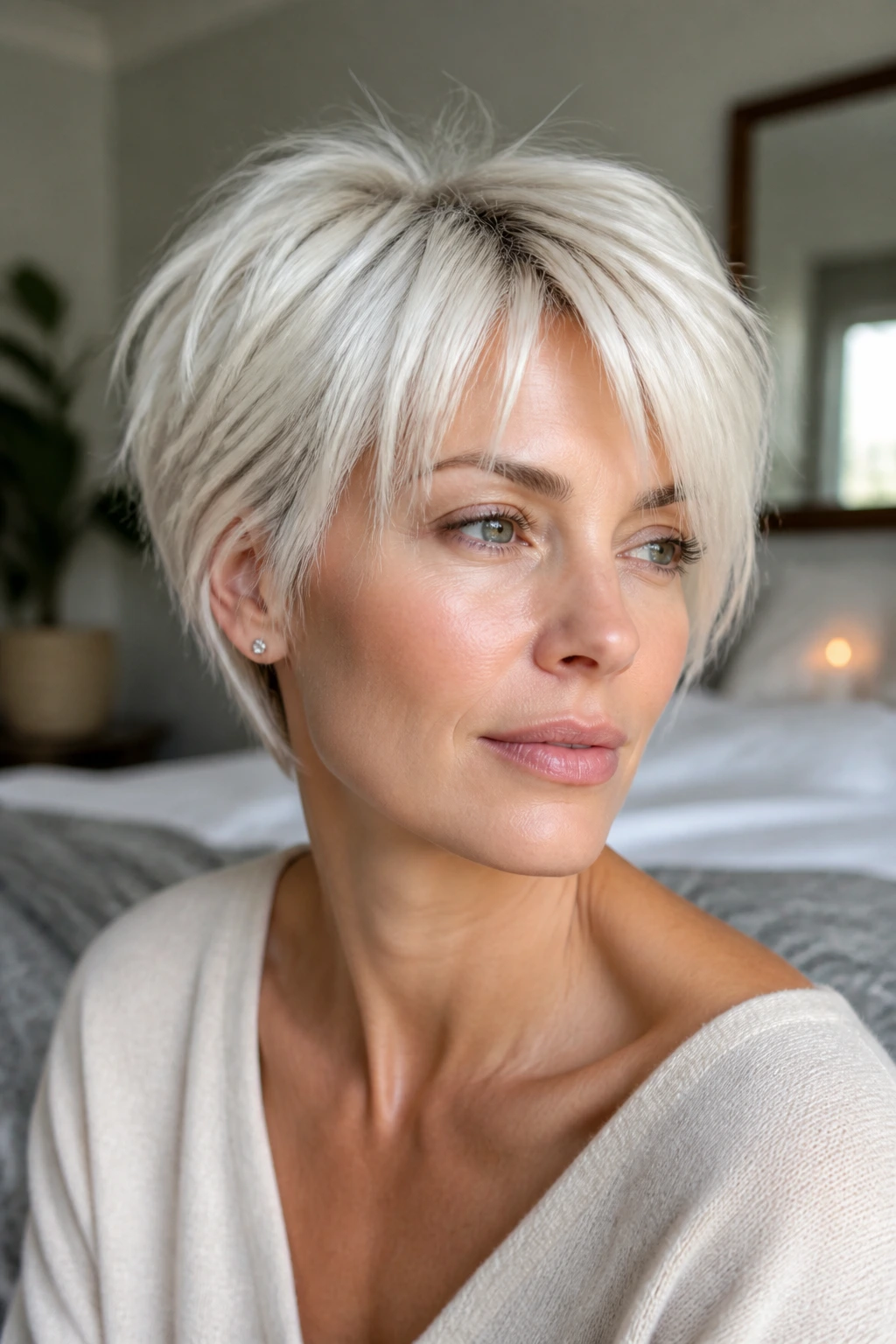
Snow blonde is brighter and cooler than most people expect. On cropped layers, it has a fresh, sharp look that can make the haircut feel airy and almost weightless. The layers help keep the pale tone from becoming a single flat block.
Because the color is so light, the cut has to carry some of the visual interest. Ask for soft movement through the top and fringe rather than a blunt helmet shape. It also helps if the roots are smudged just enough to prevent the white blonde from looking pasted on. Clean, yes. Harsh, no.
31. Copper-Tinged Strawberry Blonde Bob
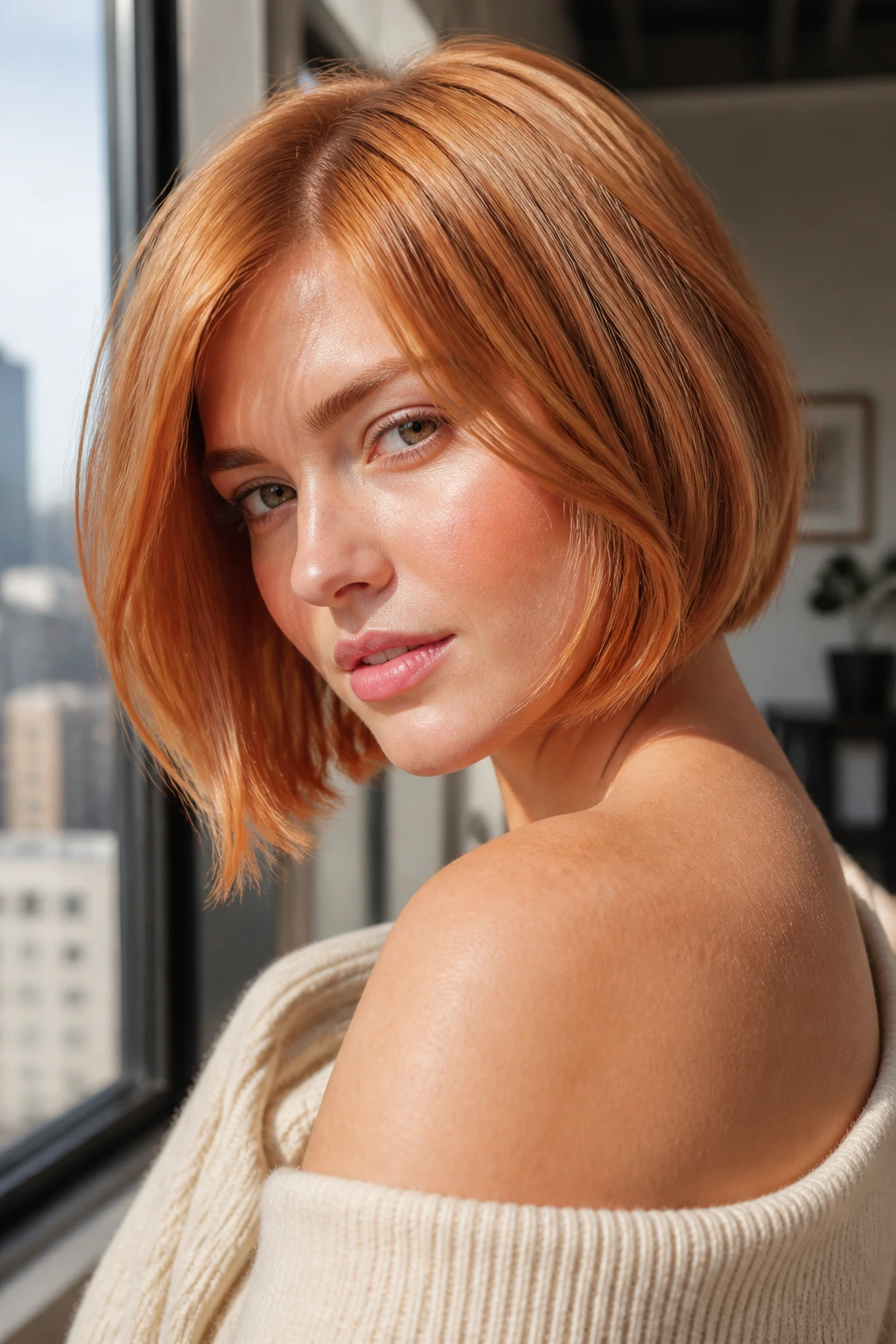
This is one of the warmer entries in the whole set, and I love it for that. The copper tint gives strawberry blonde a little more spark, which keeps a short bob from feeling too cute or too soft. It lands somewhere between ginger and blonde, and that middle ground is where the interest lives.
The bob itself can be blunt or lightly layered, but the tone should stay glossy. Copper shades fade faster than people expect, so a color-depositing conditioner can help keep the warmth alive between salon visits. If you want a short blonde look with a bit of fire in it, this is the one.
32. Soft Platinum Tapered Pixie
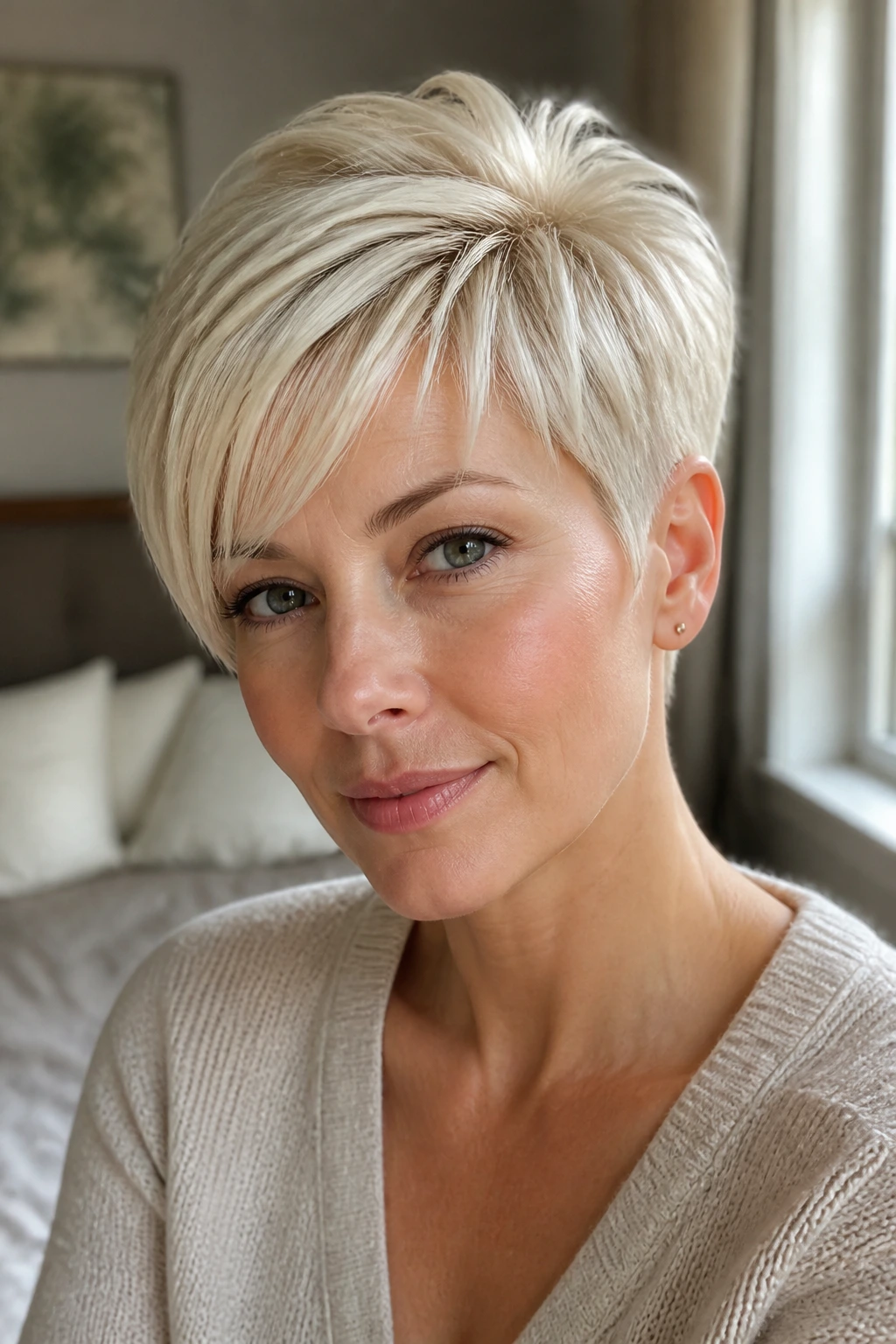
Soft platinum is not the same thing as stark white blonde. There’s a slight creamy finish to it, which makes a tapered pixie easier to wear than a harsh, flat platinum. The taper keeps the sides neat, and the longer top gives the eye something to follow.
This style thrives on shape. The crown should have lift, the fringe should move, and the sides should stay close enough to show the contour of the head. It’s a sharp look, but the “soft” part matters. Without it, platinum on short hair can look brittle fast.
33. Vanilla Bean Wedge Bob
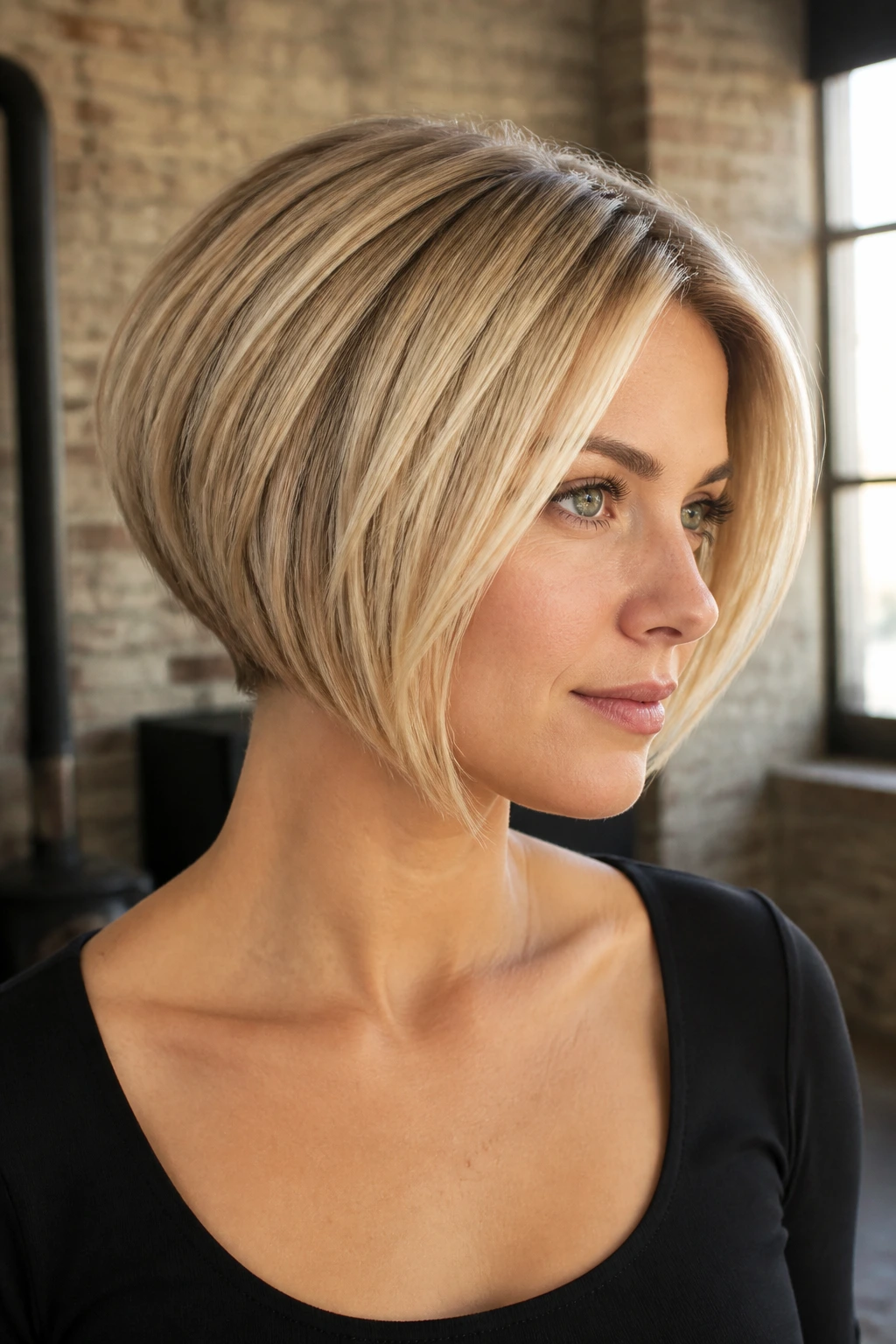
A wedge bob brings structure, and vanilla blonde softens the geometry. The stacked back creates a neat lift at the nape, while the creamy tone stops the shape from looking dated. On short hair, that balance can be hard to hit, but this one gets there.
The color should be even through the back and slightly brighter near the face. That keeps the wedge from feeling heavy in profile. If your hair is fine, the stacked shape helps it look fuller. If your hair is thick, the cut removes bulk without losing its clean outline.
34. Lived-In Root Melt Lob
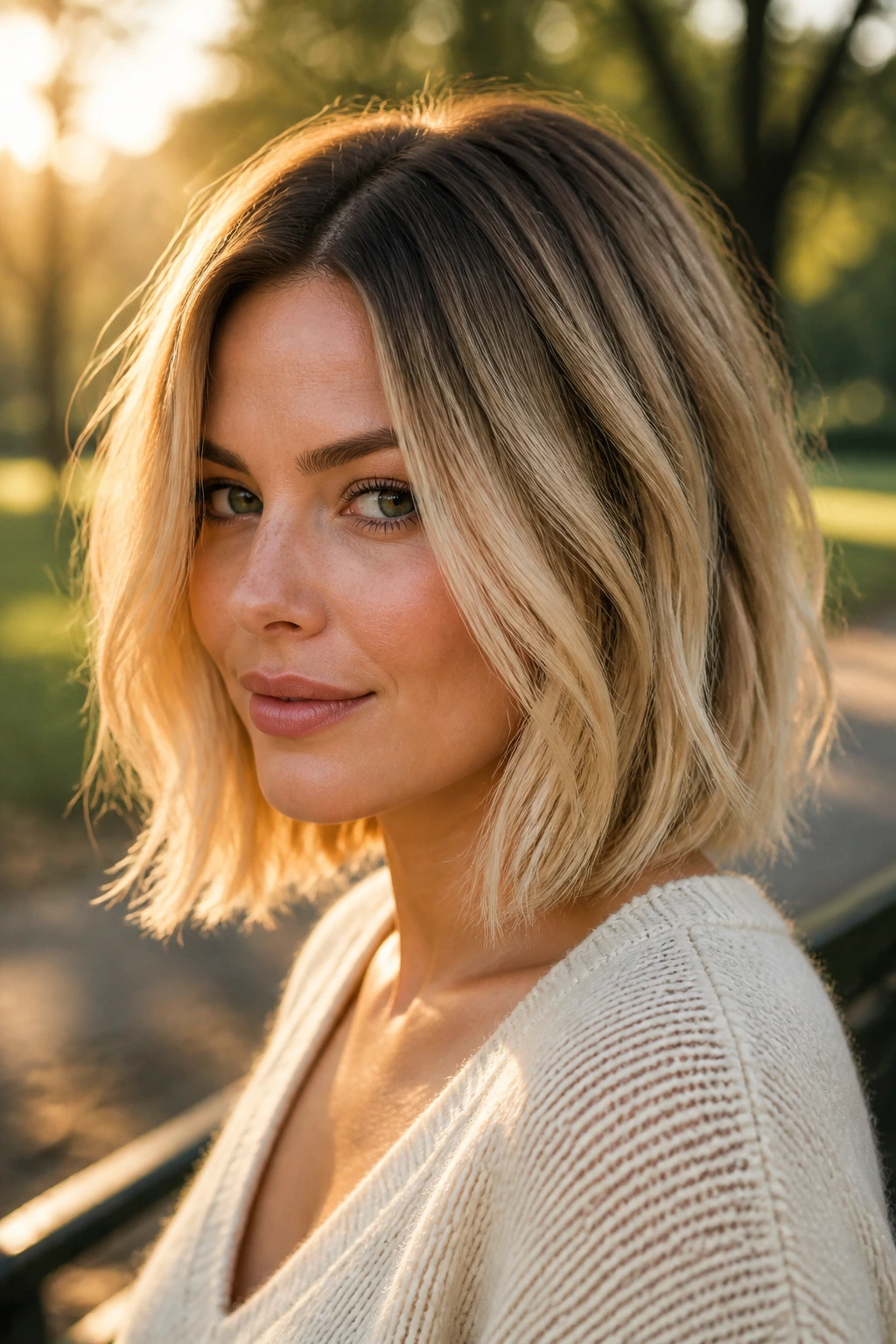
A root melt lob is one of the smartest blonde choices if you dislike obvious grow-out. The darker root fades smoothly into lighter lengths, which means the color can stretch longer between appointments. On a lob, that transition looks deliberate rather than lazy.
The best version keeps the root shade one to two levels deeper than the mids. That’s enough contrast to create depth without making a stripe. I like this look because it gives you the brightness of blonde and the practicality of a softer base. Not every blonde needs to be loud.
35. Glossy Butterscotch Short Cut
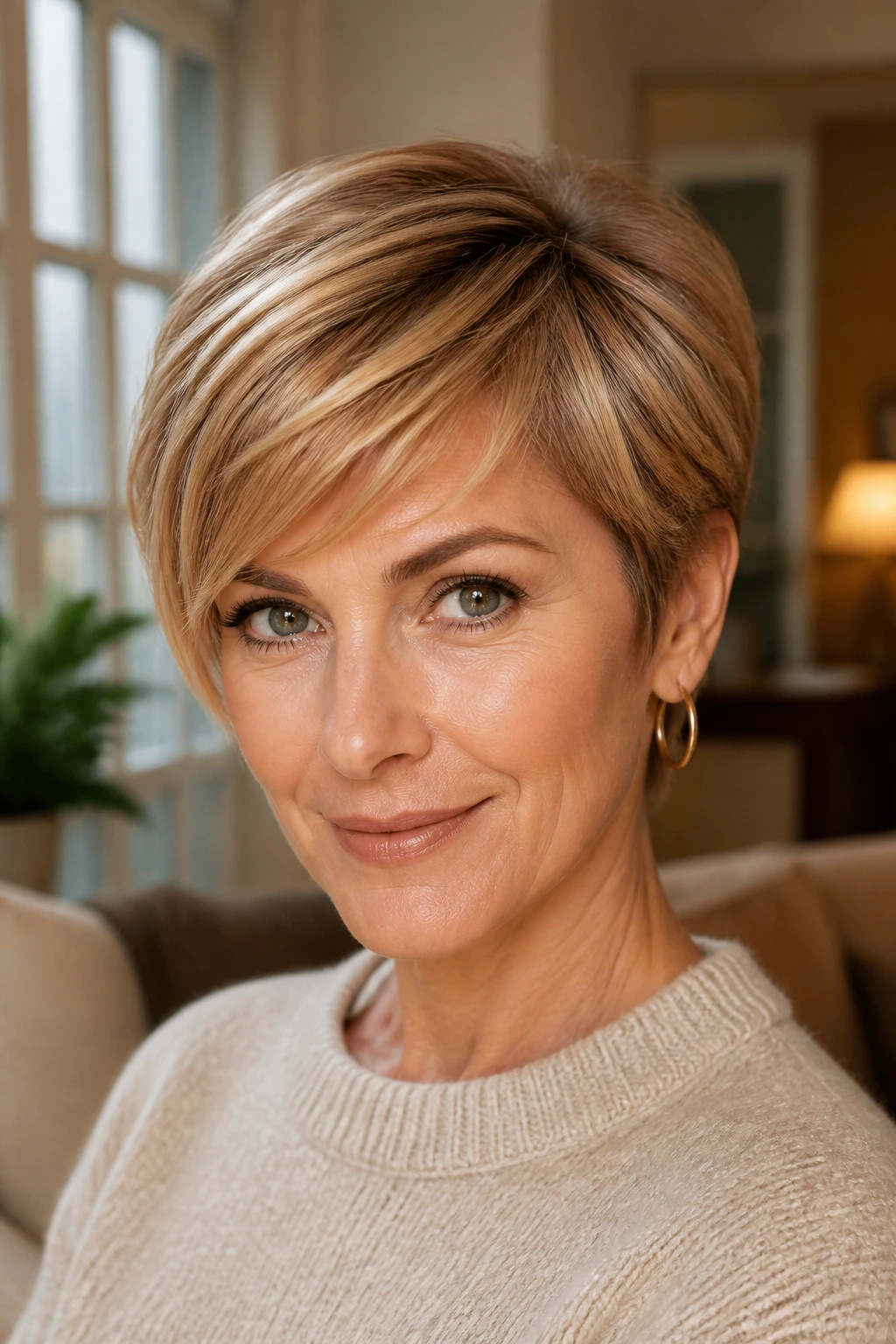
Butterscotch blonde is warm, rich, and a little decadent. On a short cut, the tone gives the hair a glossy, almost syrupy finish that reads full and healthy. If you want a blonde that doesn’t drift into icy territory, this is a very flattering lane.
The shape can be a crop, a short bob, or even a rounded pixie, but the shine has to stay high. Use a smoothing cream before blow-drying and finish with a light serum on the ends only. The blonde should look polished, not greasy. There’s a difference.
36. Cool Pearl Bob with Airy Ends
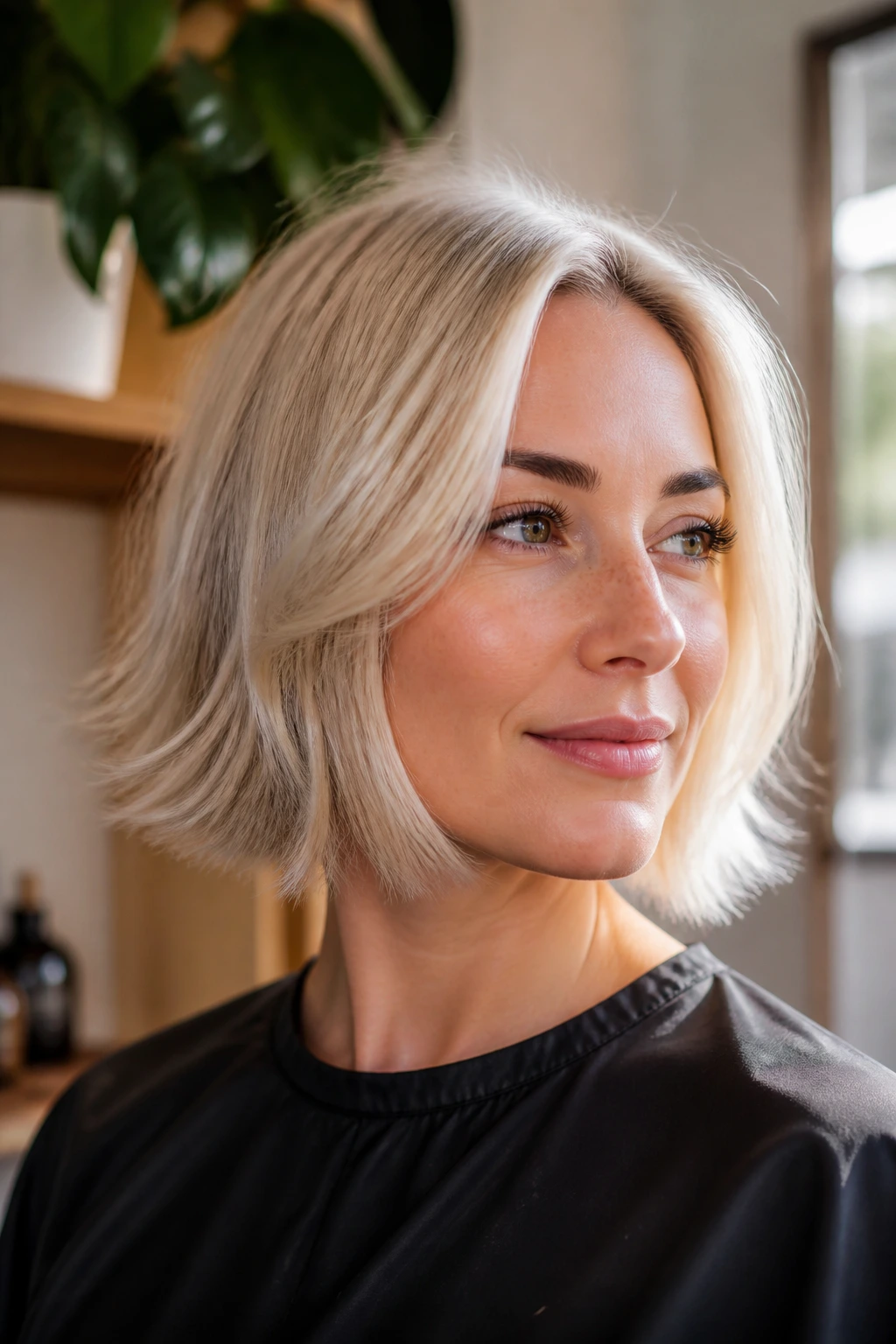
Pearl blonde can be very elegant when it’s paired with airy ends instead of a heavy blunt line. The cooler tone gives the bob a soft sheen, and the wispy finish keeps it from feeling too fixed in place. It’s a good choice if you like a neat shape with a little movement.
The ends should be feathered just enough to flip lightly with a brush or flat iron. That little bit of separation stops the color from looking like one solid block of brightness. On short hair, that’s often the difference between chic and stiff.
37. Bright Blonde Clavicle Crop
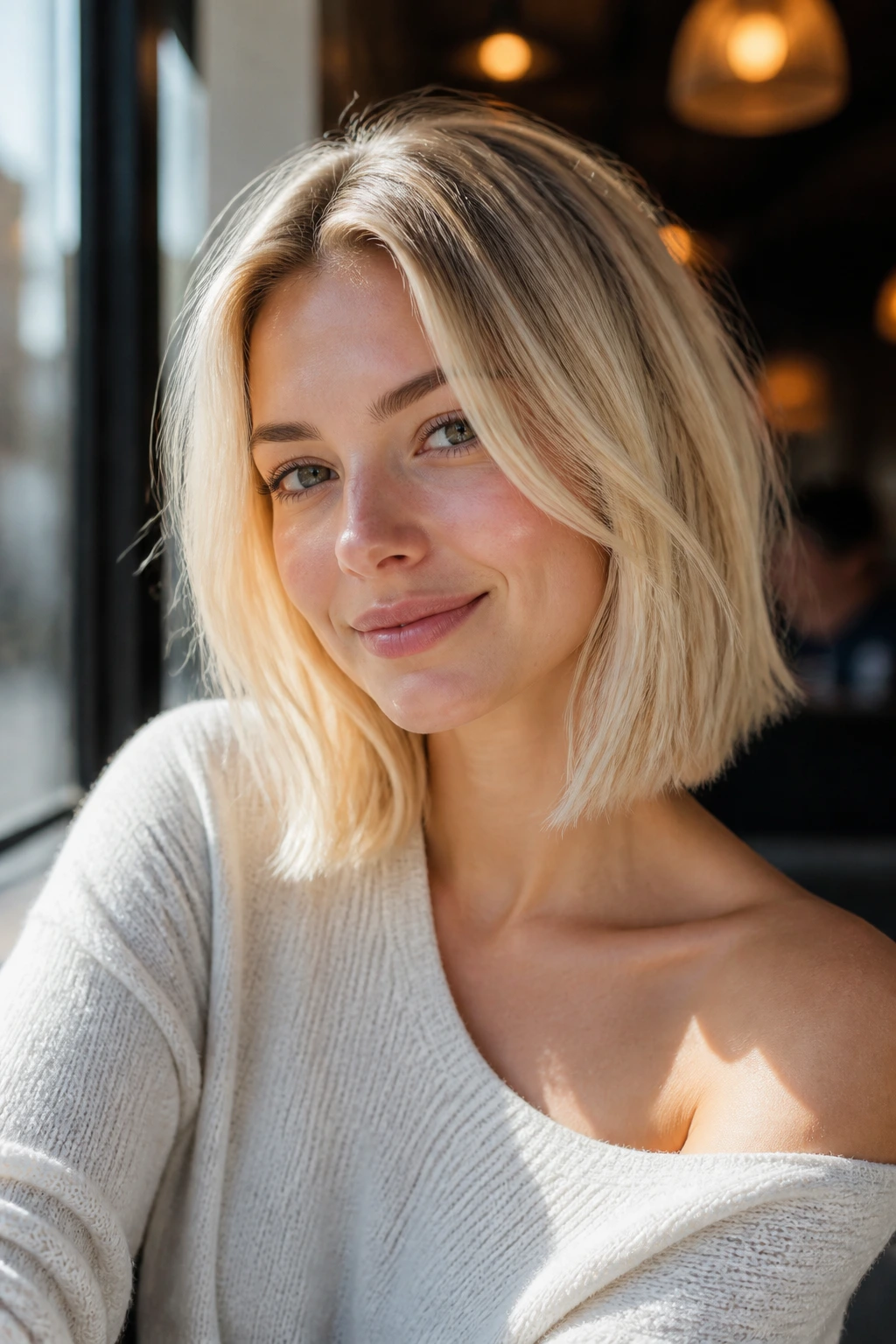
A clavicle crop gives blonde just enough length to move, but not so much that the style loses its short-hair energy. The bright blonde pushes the cut into clearer territory and makes the line across the shoulders feel clean. It’s a smart bridge for anyone growing out a bob or trimming down from longer layers.
This is a good canvas for face-framing brightness, but the rest of the hair should still have some softness. A tiny bit of bend through the ends keeps the look from going flat against the collarbone. If you want a blonde cut that feels easy to style and still reads polished, this one earns its keep.
38. Smoked Vanilla Pixie with Choppy Fringe
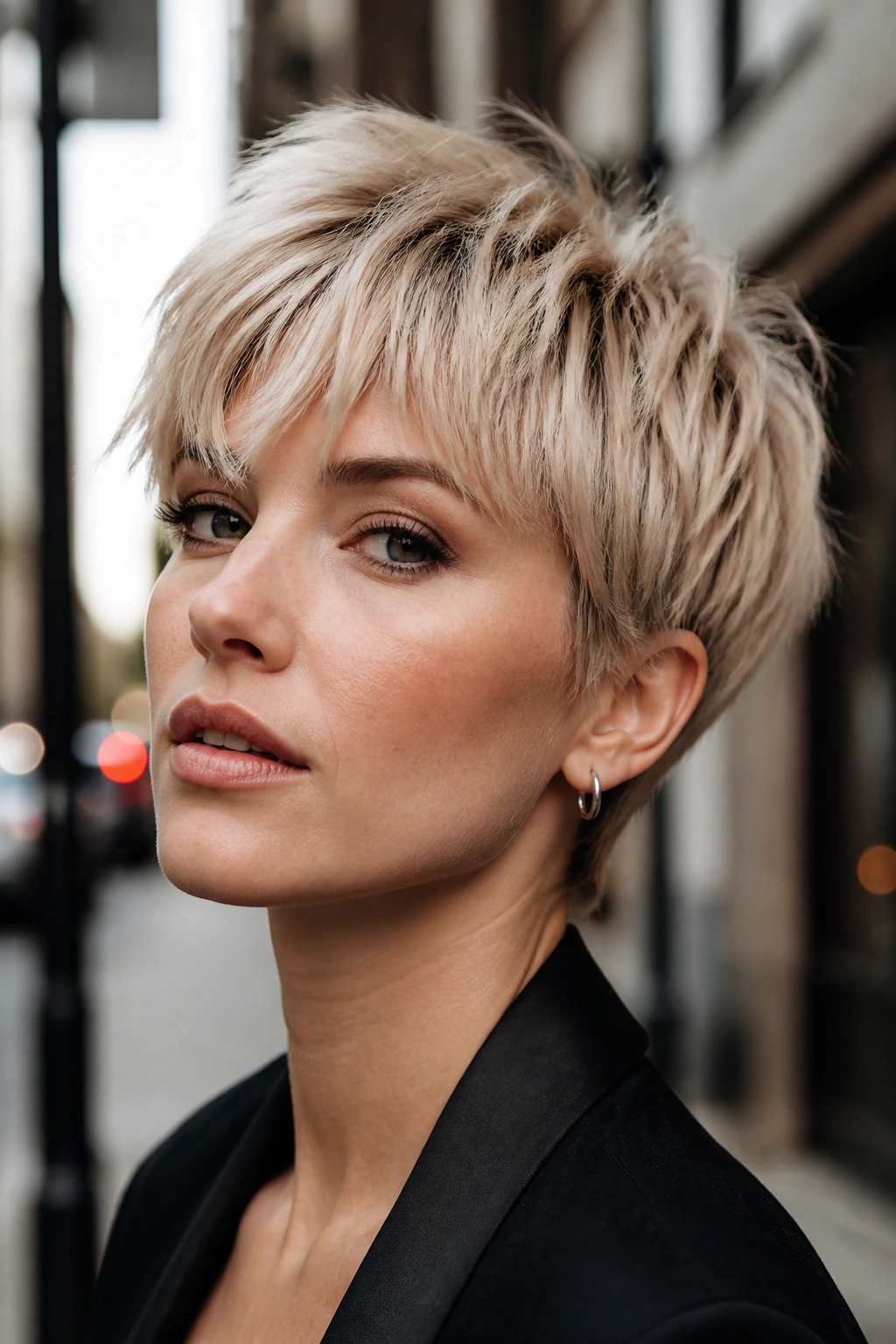
Smoked vanilla is a muted cream blonde with just enough depth to keep it from looking washed out. On a pixie with a choppy fringe, the tone feels modern and a little moody, which is a nice change from the usual bright-blonde expectation. The fringe gives the cut attitude; the color gives it softness.
This look is strongest when the fringe is deliberately uneven and the top is lightly textured. You want movement, not precision to the point of stiffness. A matte paste through the fringe tips and a gloss mist on the crown can be a good combo. It’s blonde, but it has some edge.
Why Short Blonde Hair Works So Well
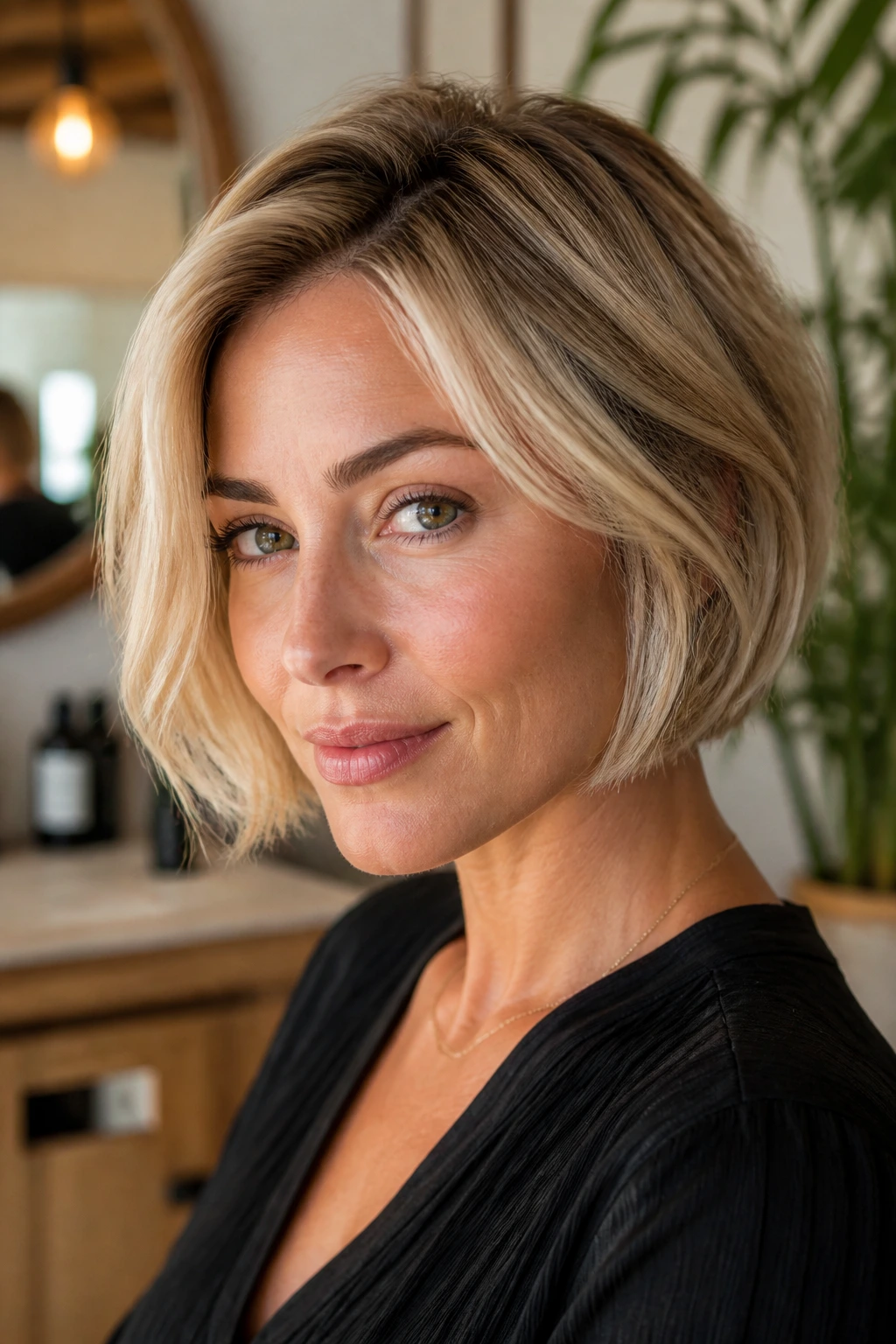
Short blonde hair has one advantage people underestimate: it changes faster, and you can see the change faster too. A few foils around the face are enough to brighten the whole cut. A darker root blur can make the shape look deeper. A toner shift from beige to ash can alter the mood of the haircut in a way that long lengths often hide.
There’s also less hair to fight. That sounds obvious, but it matters. Short ends get dragged down by heavy products, long layered blondes can look stringy if the color placement is off, and over-lightened sections show damage fast. On a short cut, you can focus the brightness where it matters most and keep the rest of the head a little softer, which usually looks better in real life than the photos suggest.
The other reason these looks work is simple: short hair frames the face before it frames the rest of the body. That means the blonde is doing instant work around the eyes, cheekbones, and jawline. If the tone is wrong, you’ll know in five seconds. If the placement is right, you’ll know that fast too.
Essential Tools for These Blonde Looks
- Color-safe shampoo: Keeps toner from stripping too fast; a gentle cleanser matters more on blonde hair than people admit.
- Purple or blue shampoo: Use purple for yellow brass and blue for stronger orange warmth, but don’t overdo either or the hair can turn dull.
- Deep conditioning mask: Short blonde ends still get dry, especially after lightening, and a weekly mask helps keep them from feeling rough.
- Heat protectant spray: Essential if you’re using a flat iron, blow-dryer, or curling wand; bleached hair does not like hot tools without a barrier.
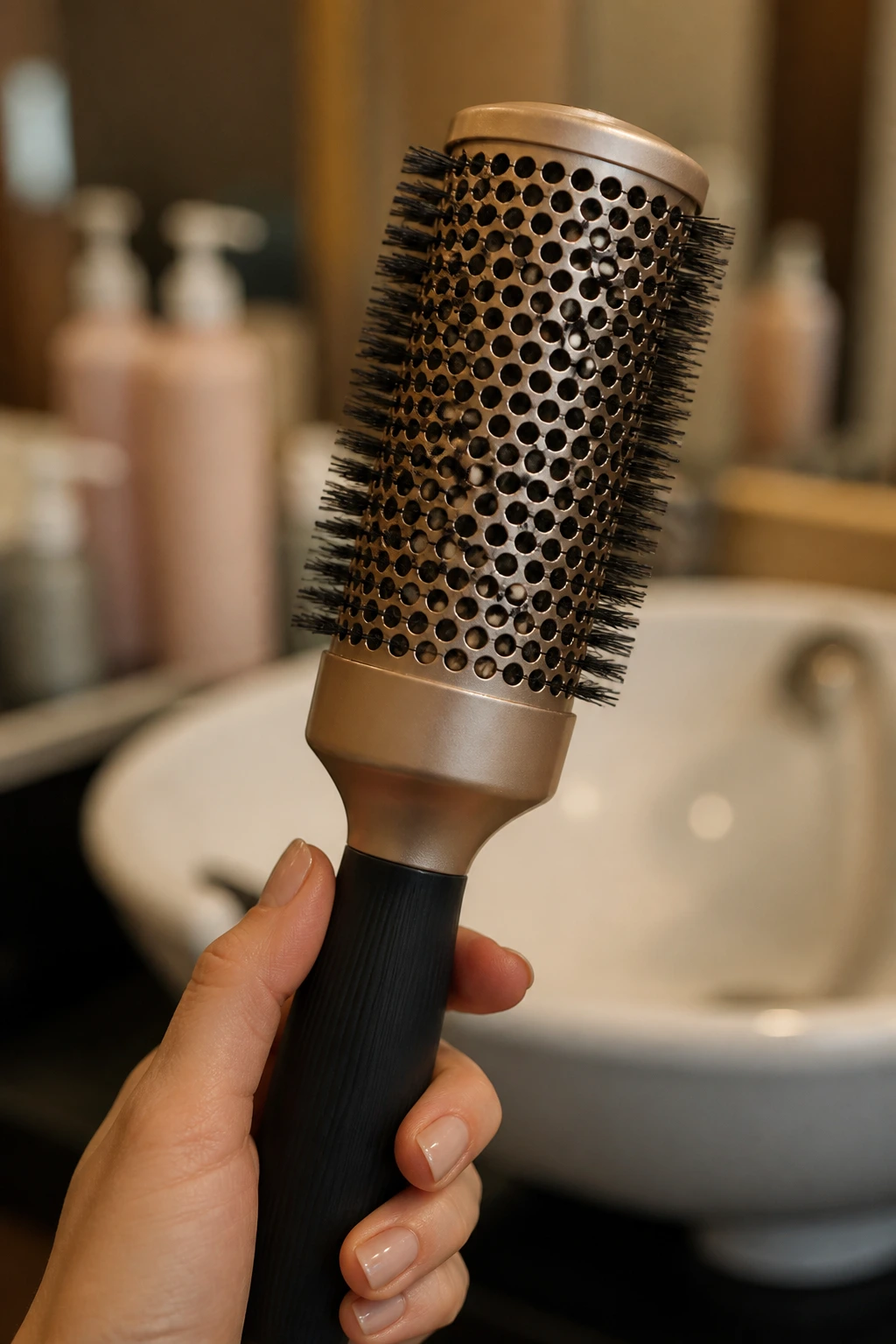
- Round brush or blow-dry brush: Useful for bob shapes, beveled ends, and any cut that needs a little polish at the root.
- Rat-tail comb: Handy for clean parts, sectioning highlights, and smoothing the crown on pixies.
- Lightweight styling paste or cream: Gives short layers separation without making them sticky or heavy.
- Root clip or duckbill clips: Great for setting lift at the crown while the hair cools.
- Microfiber towel or T-shirt wrap: Cuts down on rough friction, which helps keep lightened hair smoother.
- Fine-tooth tint brush and bowl: Only if you handle glosses or at-home toning with care; skip DIY color if the hair is fragile or uneven.
- Wide-tooth comb: Safer than yanking through wet blonde hair with a brush.
- Silk or satin pillowcase: Reduces tangling and friction on short, lightened cuts that snag easily.
Smart Color Choices for Short Blonde Hair
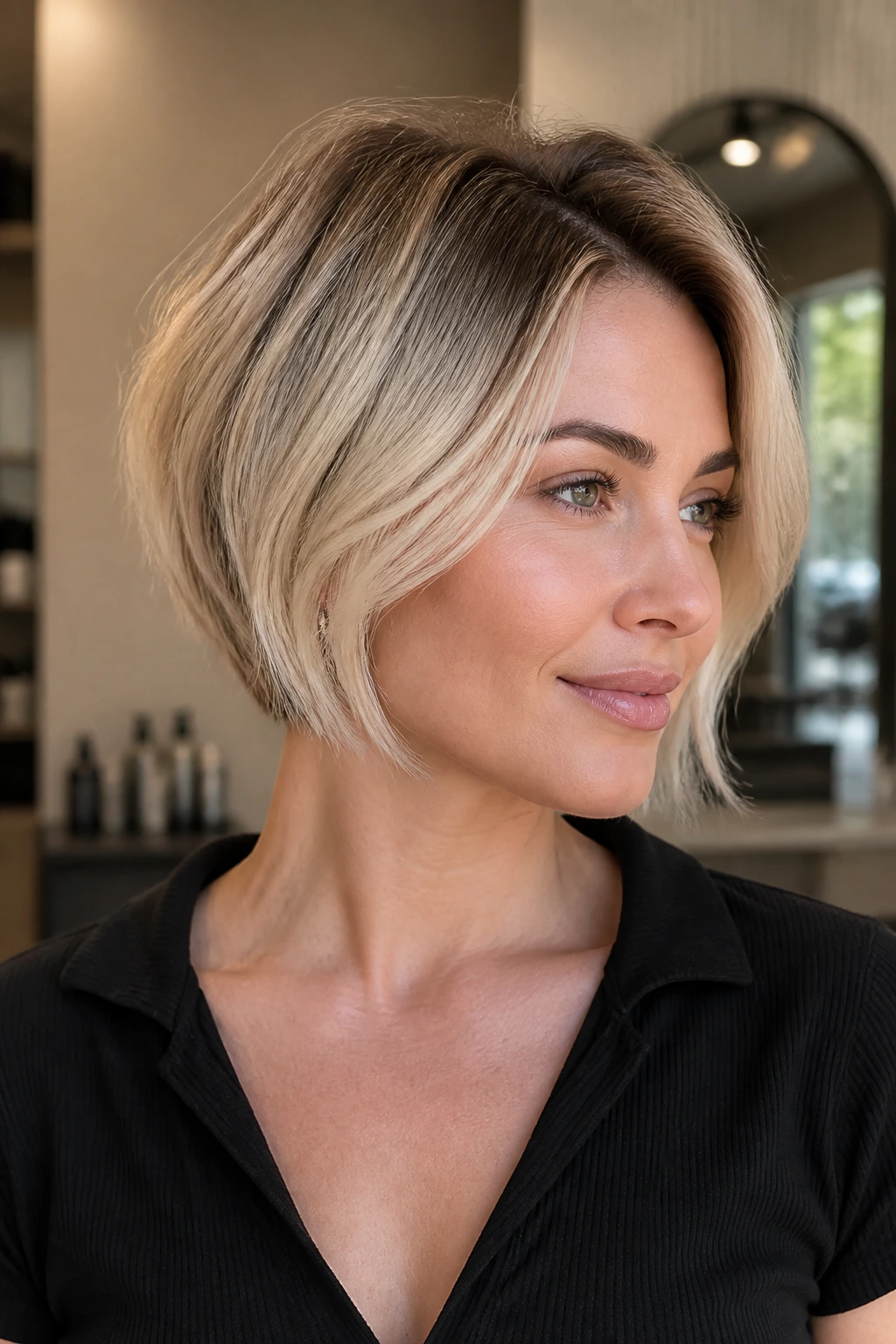
Short blonde hair looks best when the tone matches the cut, not when the color is chosen in isolation. A blunt bob can handle a solid beige or honey blonde because the line is clean. A shag or pixie usually benefits from dimension, root shadow, or a softer melt so the layers stay visible.
Warm blondes like honey, butter, caramel, and golden beige tend to flatter skin with warmth in it, especially when the haircut is close to the face. Cooler shades like ash, pearl, mushroom, and icy platinum can look stunning, but they need a tidy cut and a careful toner plan. If the color turns yellow fast, the problem is often not the blonde itself. It’s either the underlying lift or the maintenance routine.
Bond builders matter. So does a strand test. On short hair, over-lightening is easier to spot because there’s less length to spread the damage around, and a bleach line near the nape or temple can ruin the whole look. I’d rather see a slightly softer blonde that stays shiny than a pale one that feels dry after two shampoos.
How to Style and Wear These Looks
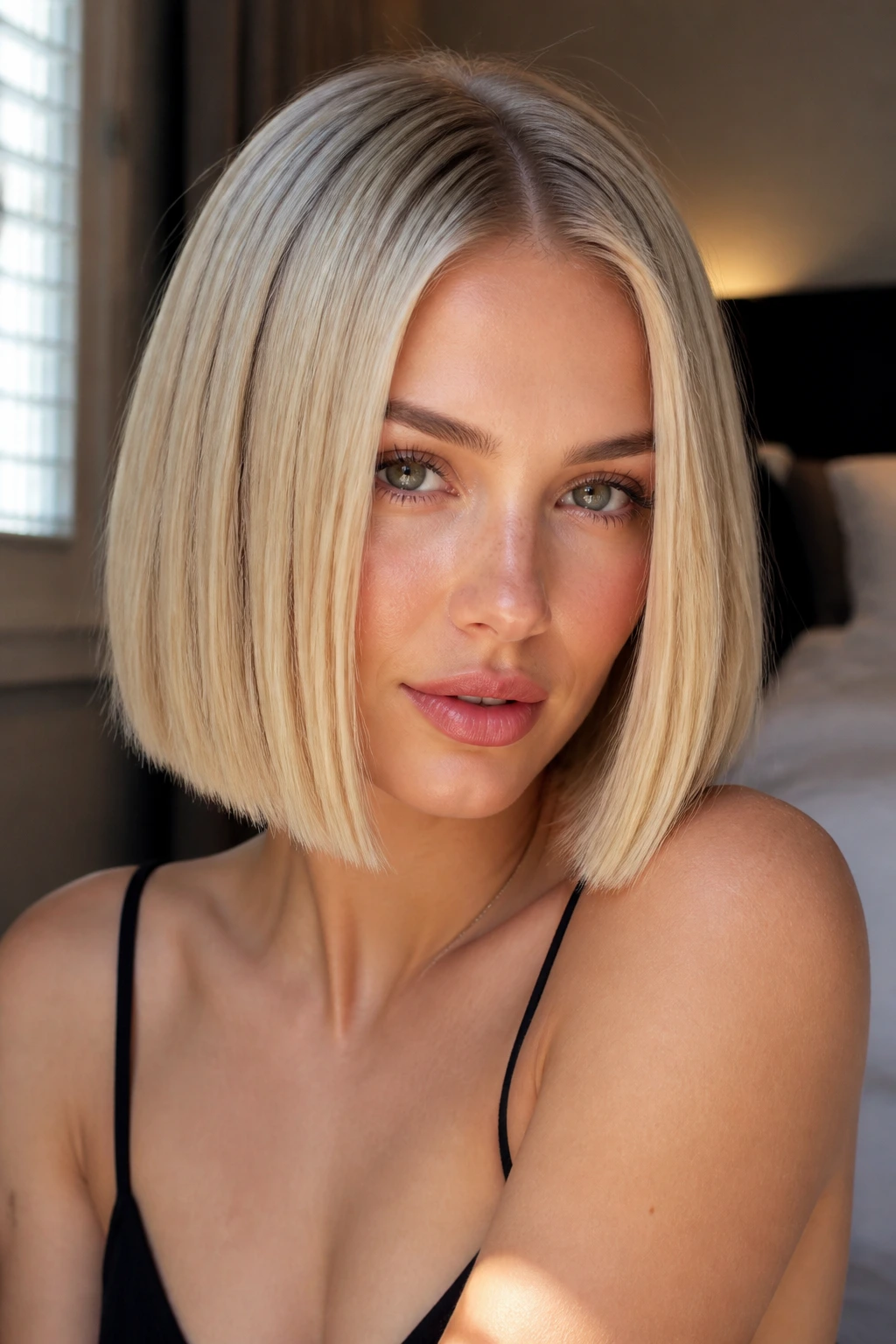
Presentation: Keep the part deliberate. A center part sharpens a blunt bob, while a side part gives a pixie or crop more lift and shadow. Smooth roots make polished blondes look cleaner, while a piecey finish suits shaggy or textured cuts.
Accompaniments: Short blonde hair plays well with simple earrings, open necklines, and makeup that doesn’t fight the hair. A warm blonde can handle peach blush and brown liner. Cooler blondes usually look better with a cleaner brow and a softer lip so the face doesn’t compete with the color.
Shape: Let the haircut do some of the work. A bevel at the ends, a tapered nape, or a longer crown changes how the blonde reads. On short hair, shape and tone are welded together. You can’t really separate them.
Daily Wear: Some of these looks can go two or three days with only a mist of dry shampoo and a finger comb. Others need a quick re-bend with a flat iron to keep the outline from collapsing. The more precise the cut, the more the finish matters.
Additional Tips and Tone Boosters
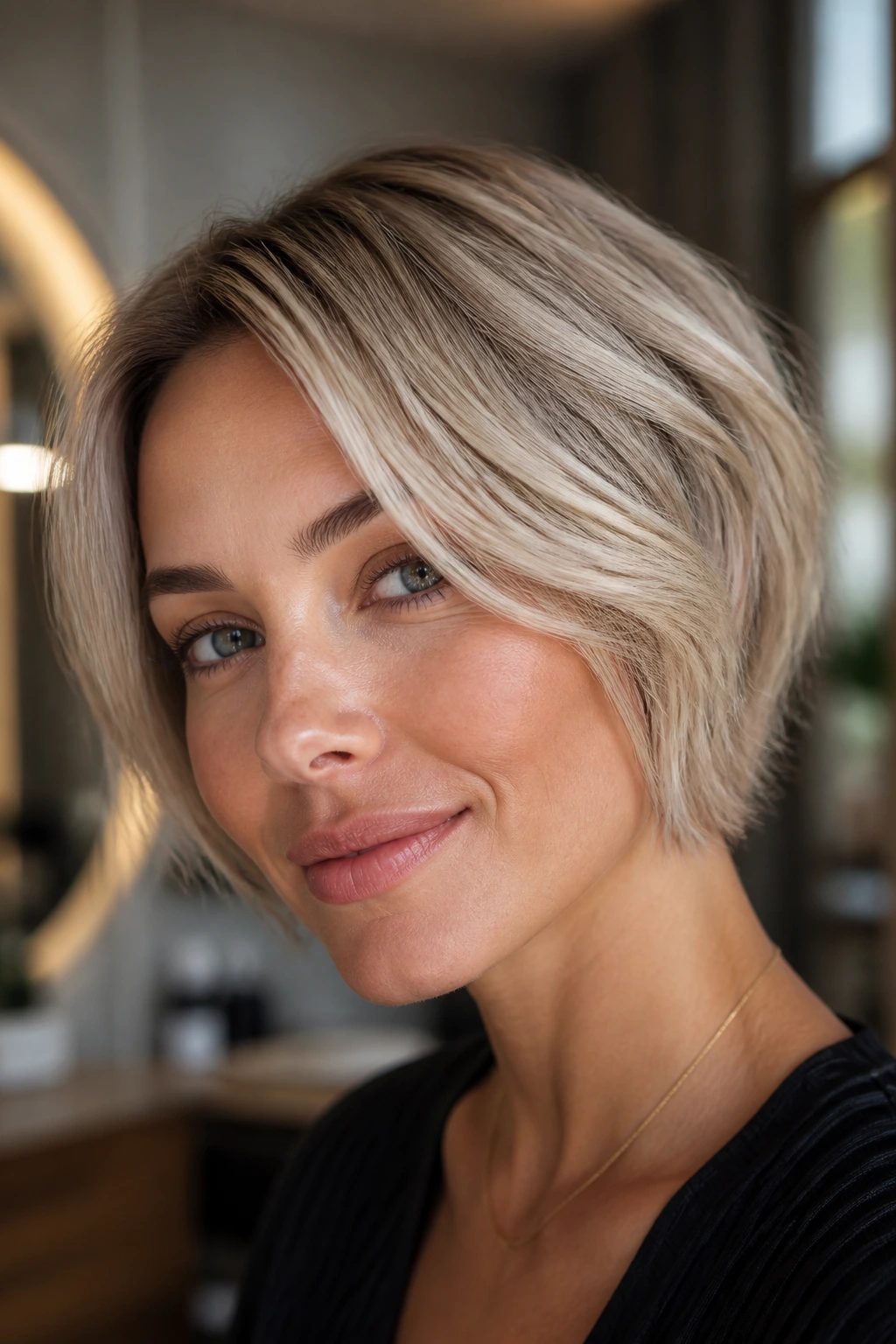
Tone Enhancement: If your blonde starts to look tired, try a clear gloss or beige toner instead of reaching straight for purple shampoo. Purple shampoo is useful, but it can make bright blondes look dusty if you use it too often.
Dimension Boost: Ask for babylights or fine face-framing foils if your short cut looks flat. A few thin ribbons around the crown and temples can create more movement than a whole new color level.
Texture Trick: On pixies and crops, dry texture usually looks better than heavy shine. On bobs, the opposite is often true. Keep the product honest to the shape. A buttery bob wants polish; a shag wants separation.
Salon Ask: Bring photos that show both the cut and the color. That matters. A platinum bob and a platinum pixie may look similar at a glance, but the placement, root depth, and finish are completely different when you’re actually sitting in the chair.
Common Mistakes to Avoid
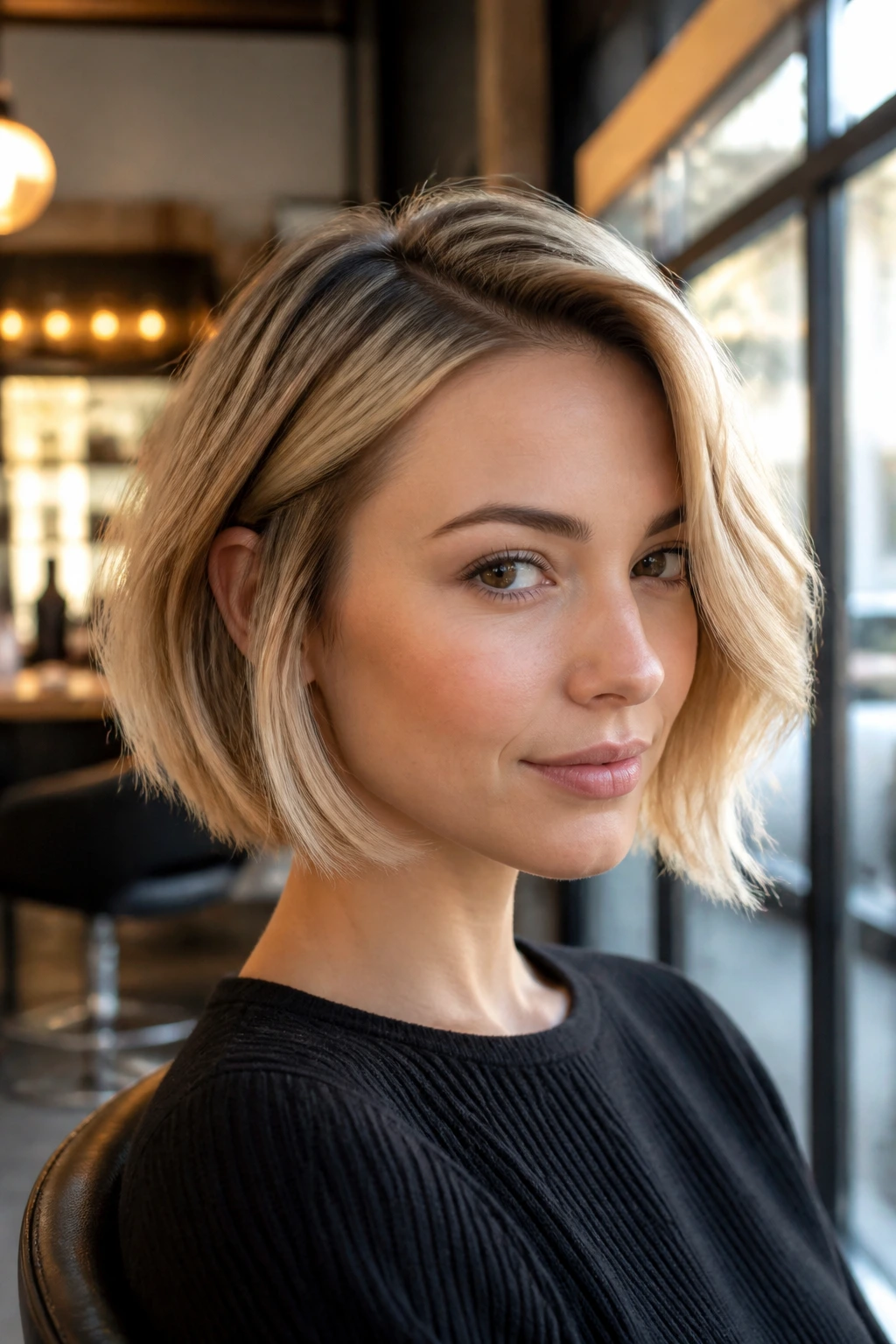
The first mistake is choosing the blonde shade before you choose the cut. A pale tone on a blunt, dense bob can look harsh if the line is too heavy. A soft beige on a choppy pixie can disappear if the layers are too busy. The haircut and the color need to talk to each other.
Another common problem is over-toning. If you keep trying to cancel every trace of gold, the hair can turn gray, flat, or chalky. That’s especially obvious on short cuts because there’s nowhere for the eye to wander. One weak toner session is fixable; six weeks of over-pigmented shampoo is harder.
Skipping root management is a trap too. A root shadow isn’t a failure. It’s a tool. Without it, even a nice blonde can start to look disconnected from the scalp after a short grow-out. The fix is simple: ask for blur, not a hard line.
Dryness is the last big one. Blonde short hair can still feel brittle, even if the cut is tiny. Bleach, heat, and too much product all stack up. Use a mask weekly, keep the flat iron under control, and trim before the ends start to fray. Frayed blonde ends are visible from across the room.
Variations and Adaptations to Try
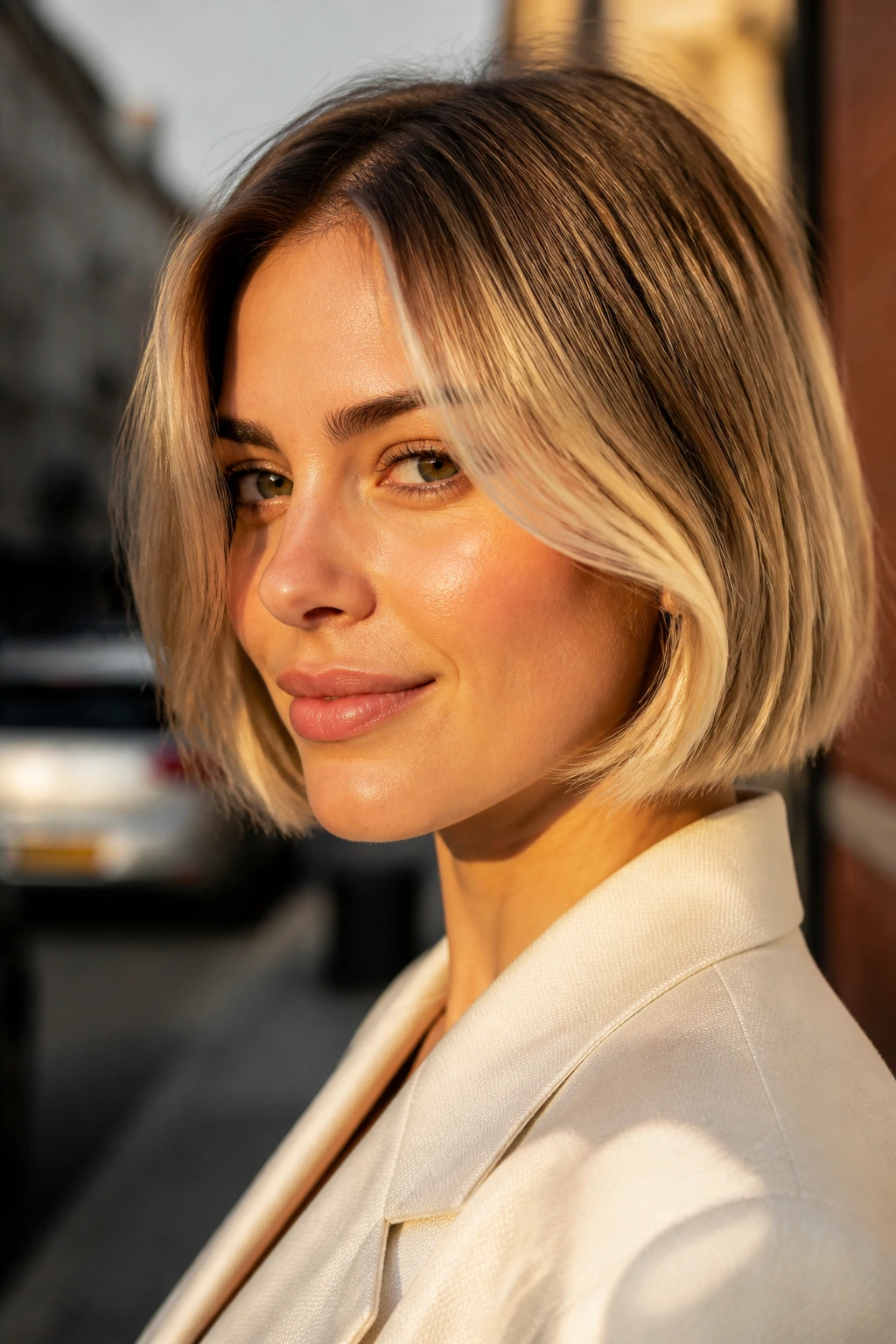
Soft Grow-Out Blonde: Ask for a deeper root melt with beige lengths if you want a look that stretches between appointments. It keeps the short cut soft as it grows, which is handy if you hate obvious regrowth.
High-Contrast Money Piece: Keep the base deeper and brighten the front sections only. This works well on bobs and lobs when you want brightness near the face without fully committing to pale all over.
Curly Blonde Shortcut: For curls, use warmer tones and less uniform lightening. The variation in the curl pattern already creates movement, so the color should support that instead of flattening it.
Editorial Ice Blonde: Go paler, cooler, and cleaner, but keep the cut simple. The more extreme the color, the more the haircut should hold steady and not compete with it.
Bronde-to-Blonde Blend: Ideal if your natural base is dark blonde or light brown. It gives you the feel of blonde short hair while keeping the maintenance lower and the grow-out softer.
Maintenance, Toning, and Grow-Out Care
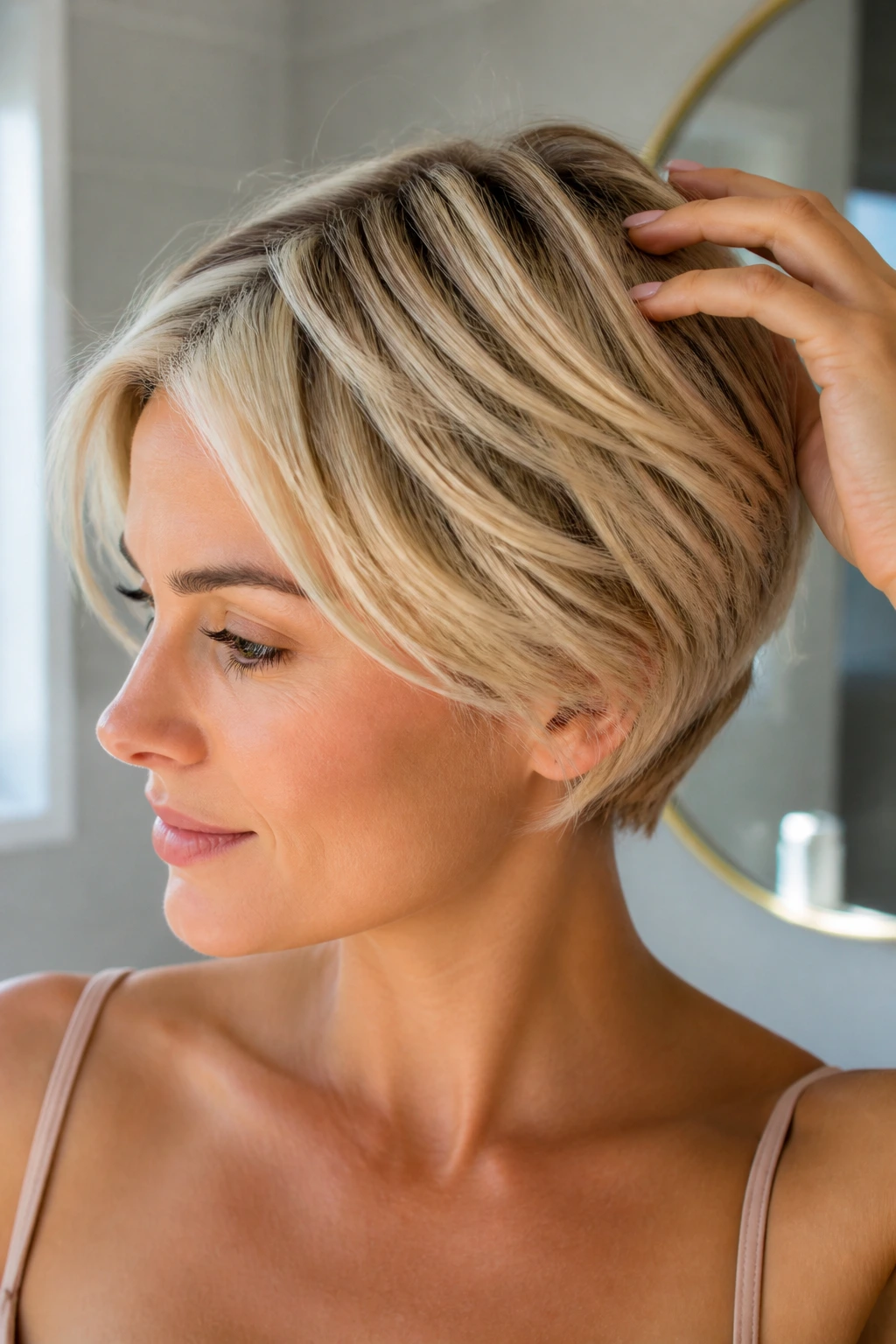
Short blonde hair usually needs a little more toner attention than longer blonde because the shape sits close to the face and shows warmth fast. A gloss every 4 to 6 weeks is a good rhythm for most beige, pearl, or ash blondes. If you live in purple shampoo, keep it to once a week or every other week unless your colorist says otherwise.
Trims matter more than people think. A pixie or short bob can go from sharp to awkward in a few weeks if the shape grows out unevenly. Plan on a trim every 5 to 8 weeks for very structured cuts, and closer to 8 to 10 weeks for softer bobs and lobs. If the nape starts flipping out or the fringe keeps falling into your eyes, that’s your sign.
At home, wash with lukewarm water, not hot. Hot water strips toner and roughs up the cuticle. Sleep on satin if your hair tangles, and use heat protectant every time you blow-dry or iron the ends. If you’re coloring at the salon, ask whether your hair needs bond support or a conditioning service between lightening sessions. That small step can make a pale blonde stay glossy instead of straw-like.
Frequently Asked Questions
What blonde shade is easiest to maintain on short hair?
Rooted beige blonde or soft bronde usually wins here. Both grow out more quietly than icy platinum, and they don’t need the same level of toner upkeep to stay flattering.
Can short hair handle balayage, or is it too little length?
Short hair can absolutely handle balayage, but the placement has to be tighter and more thoughtful. On bobs and lobs, hand-painted ribbons near the face and mid-lengths work well; on pixies, traditional balayage is often too diffuse.
Will blonde make fine short hair look thinner?
It can if the color is too pale and the cut is too flat. Fine hair usually looks fuller with a little root depth, beige or honey tones, and a blunt or slightly beveled outline rather than a wispy edge.
How often should short blonde hair be toned?
Most short blondes do well with a gloss or toner refresh every 4 to 6 weeks. If the shade is very pale or your water runs hard, you may need attention a little sooner.
Can brunettes go blonde on a short cut without ruining the hair?
Yes, but the hair has to lift in stages if it’s dark and resistant. Short length helps because you can trim off the oldest, driest ends later, but that doesn’t make the bleach safer by magic. A strand test and a patient color plan still matter.
What if my blonde turns brassy fast?
First, check your water and shampoo. Hard water, hot showers, and harsh cleansers can all drag the tone warm quickly. If brass keeps coming back, ask for a cooler toner formula or a stronger root shadow so the grow-out doesn’t fight the rest of the color.
Is platinum blonde a bad idea for short hair?
Not at all. It just needs discipline. Platinum on short hair looks fantastic when the haircut is clean and the maintenance is realistic, but it will show every uneven patch and every dry end.
Should I choose highlights or all-over blonde for a short cut?
Highlights are usually easier if you want dimension and a softer grow-out. All-over blonde gives more impact and a cleaner read, but it asks for more upkeep and more care with the ends.
How do I keep a short blonde style from looking flat after day one?
Use less conditioner at the roots, dry the crown with a round brush or clip for lift, and avoid burying the hair under heavy oils. A little movement near the top keeps the cut lively.
The Shape Makes the Shade
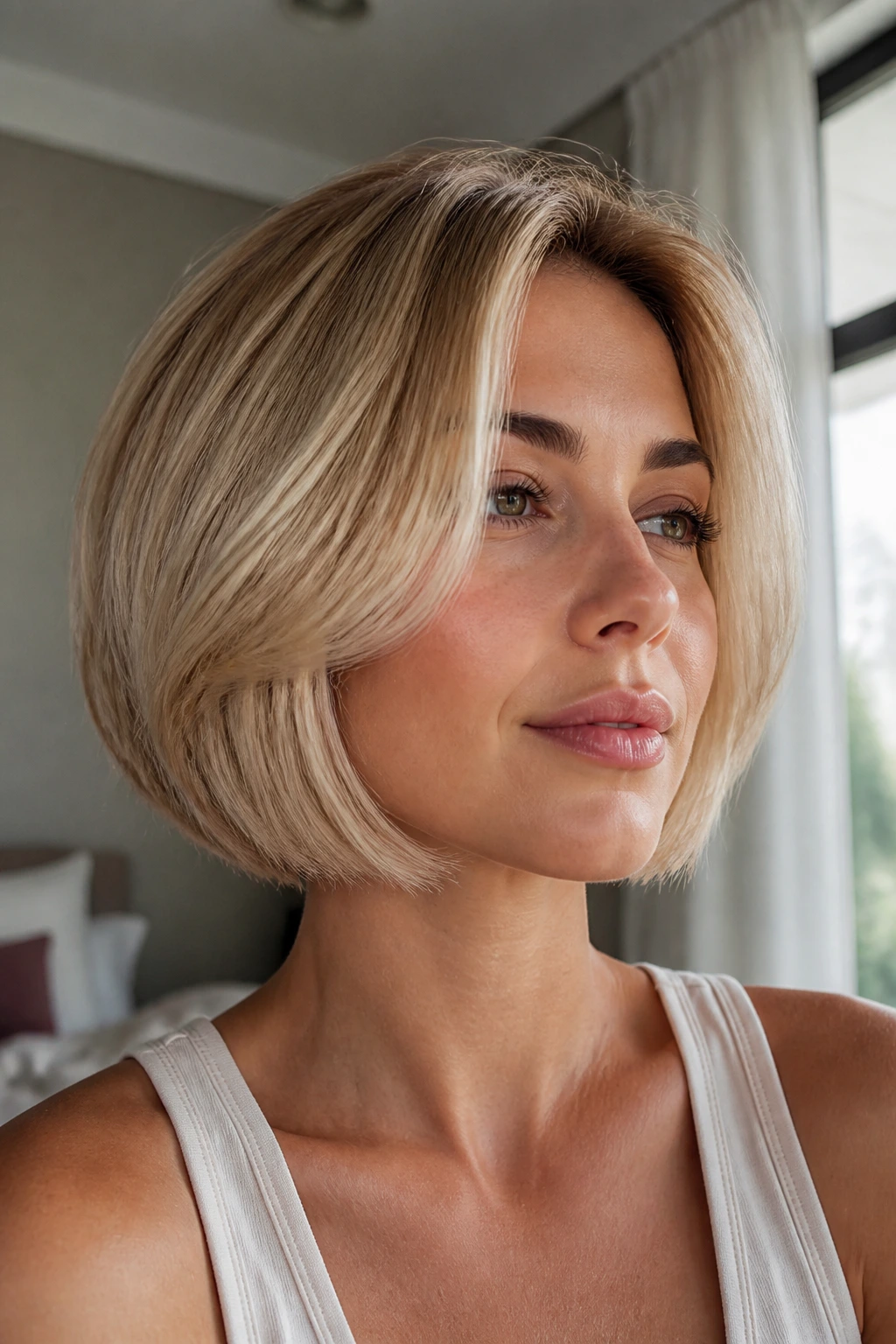
Short blonde hair works when the tone and the cut agree with each other. That’s the real lesson hiding inside all 38 looks. A creamy bob, an ash pixie, a buttery shag, and a platinum crop can all be right, but only if the shape supports the color and the color supports the shape.
If you take one practical idea from the whole lineup, let it be this: choose the blonde based on how much work you want to do after the appointment. Some shades need glosses and toners on a schedule. Some grow out quietly. Some need a trim every month to stay crisp. The good news is that short hair makes those decisions visible fast, which means you can dial in the version that fits your life instead of the one that only looks good for six hours in a salon chair.
