



Thick hair can swallow highlights whole.
A few skinny foils that sparkle on fine hair often disappear in dense lengths because the top layer hides the work underneath. That’s the reason thick-hair highlights need more intention: wider ribbons, better saturation, and placement that shows up when the hair moves, not only when it’s sectioned on a salon cape.
The good news is that thick hair can carry contrast in a way finer hair usually can’t. Caramel stripes, creamy blonde panels, smoky lowlights, and hidden peekaboo color all read with more depth on a full head of hair, but only if the color is placed with enough honesty. Too delicate and it vanishes. Too chunky in the wrong spots and it looks striped. There’s a sweet spot, and thick hair rewards the stylist who finds it.
That sweet spot is what makes the best highlight ideas for thick hair so satisfying. The right placement turns bulk into movement. The right tone keeps the finish from going brassy or muddy. And the right mix of bright pieces and shadow pieces gives you that expensive-looking dimension people notice even when the hair is pulled into a loose knot or tucked behind one ear.
Why These Highlight Ideas Work on Thick Hair
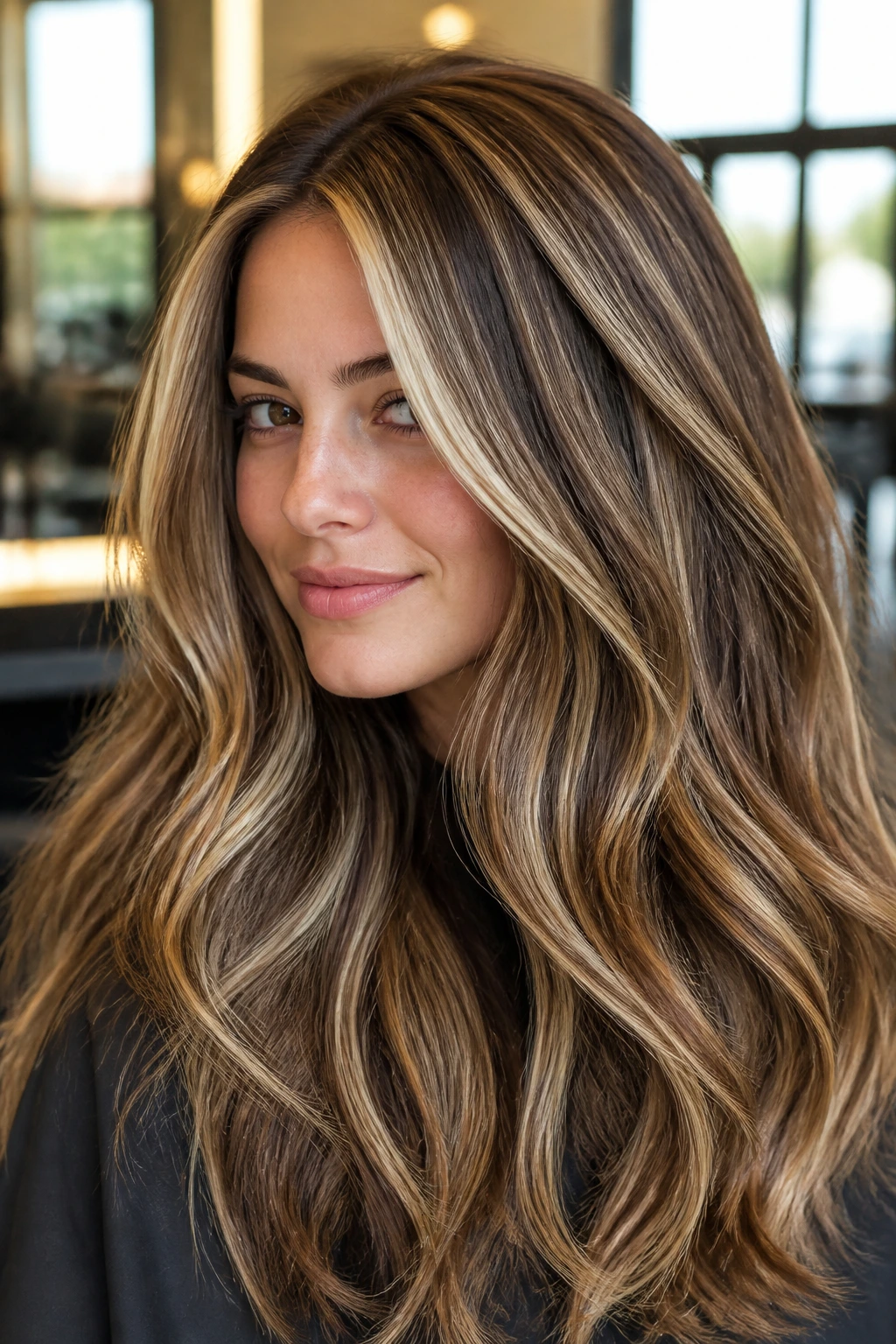
Dimension matters more here: Thick hair has enough density to hide very fine color, so the ideas below lean on ribbons, panels, lowlights, and face-framing light that actually shows up.
Grow-out can be softer: A lot of these looks use balayage, root smudging, or peekaboo placement, which means you don’t get that harsh line one or two weeks after a fresh appointment.
Dense hair can handle contrast: Bigger panels, brighter money pieces, and darker lowlights look intentional on a full head of hair instead of busy.
Curl and wave patterns play well with them: Thick hair often has bend, body, or a bit of puff. The right highlight placement rides that texture instead of fighting it.
You get more room to personalize: Warm caramel, icy champagne, copper, beige, ash, bronze, mushroom brown — thick hair can hold those tones without looking washed out if the undertone is chosen well.
1. Caramel Ribbon Balayage
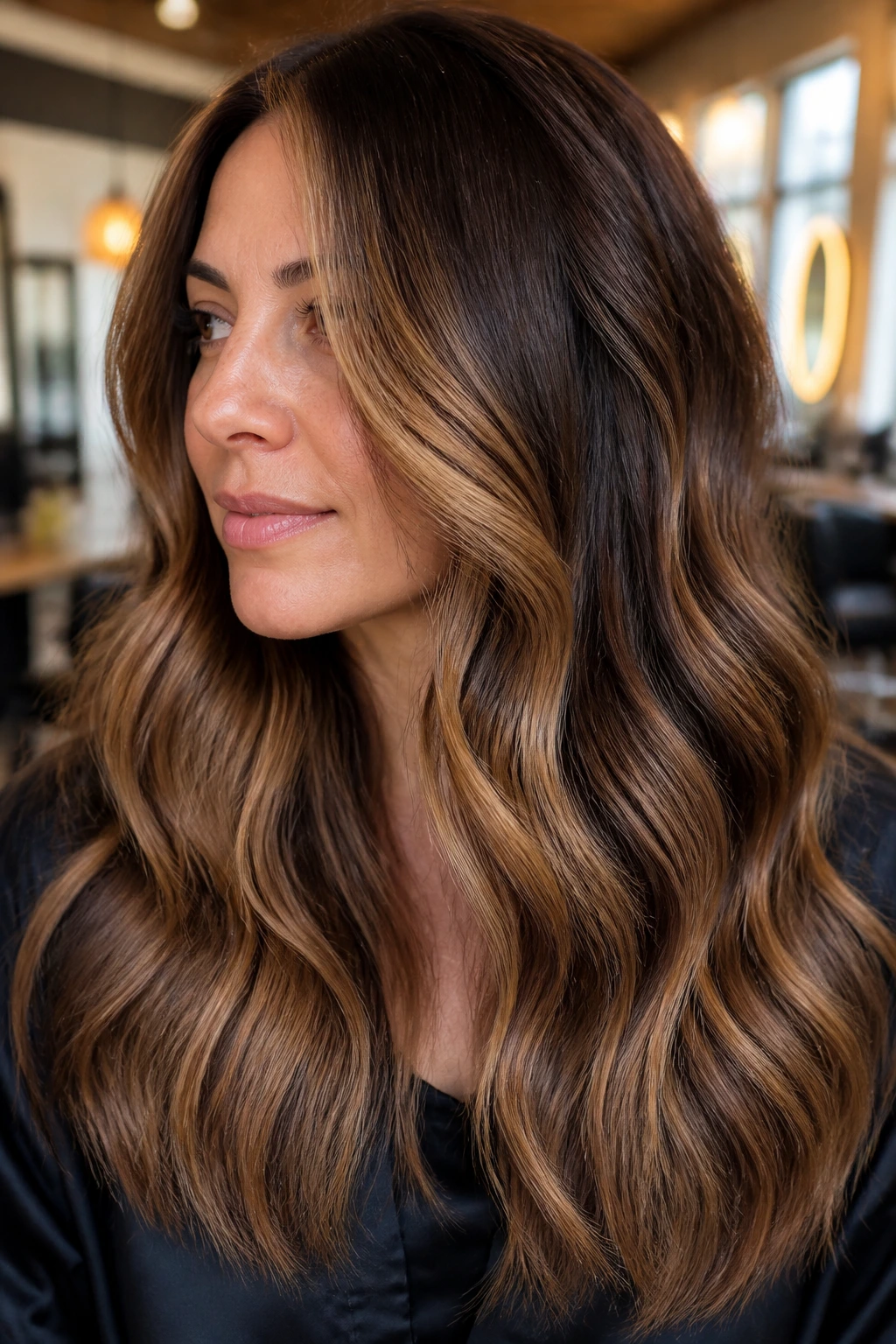
Caramel ribbon balayage is the safe bet I’d still recommend first, because it gives thick brunette hair movement without blasting the whole head lighter. The ribbons should be wide enough to read through the top layer — not tiny baby streaks that disappear the second the hair falls back into place.
On a level 4 to 6 brunette base, caramel around level 7 or 8 adds warmth that looks polished instead of orange. Ask for hand-painted midlengths and ends with a few brighter pieces around the face. The result is soft, but not shy. Thick hair needs that extra width.
2. Mushroom Brown Lowlights
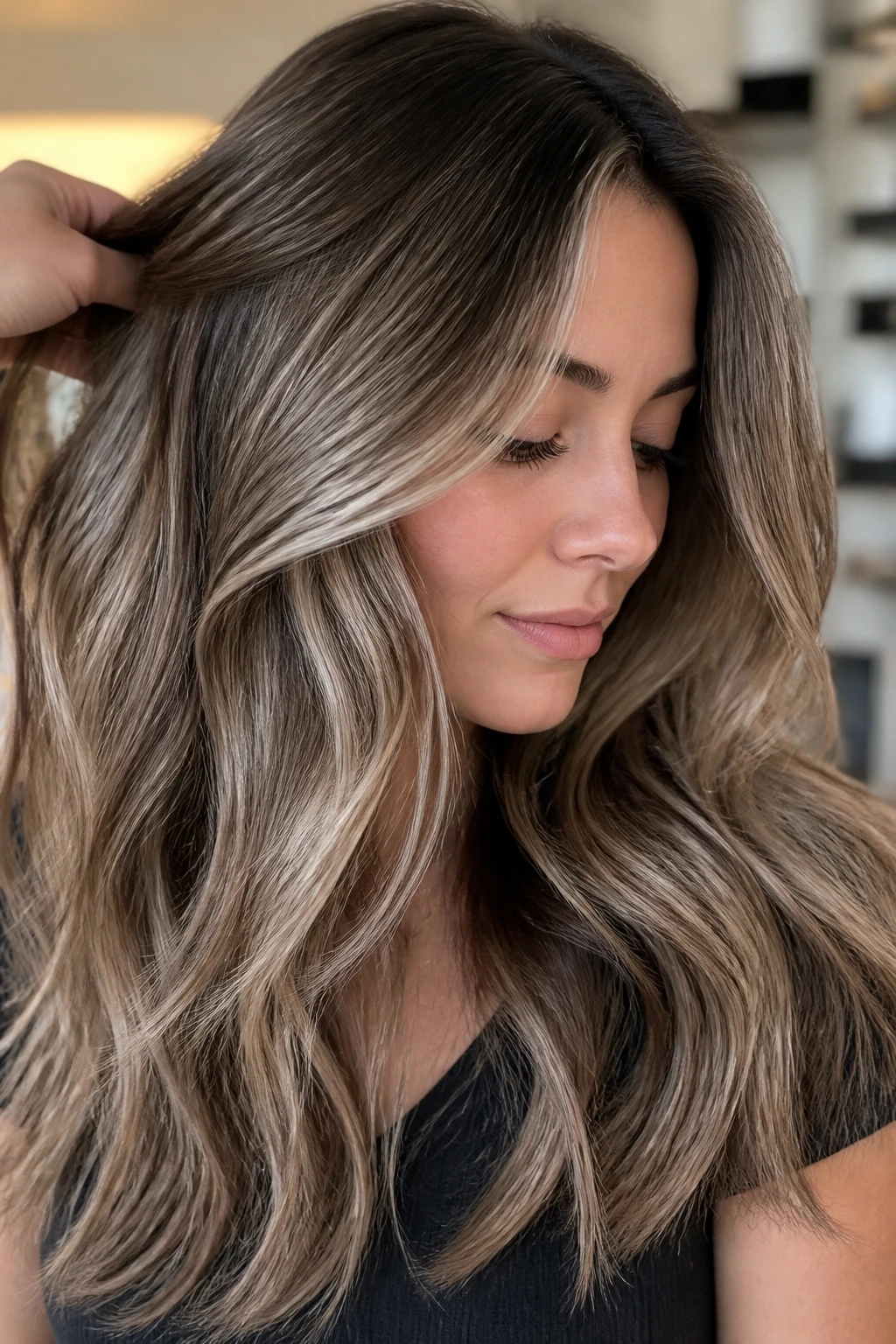
If your thick hair is already light and starts to look fuzzy or over-bright, mushroom brown lowlights fix the problem fast. This is one of those ideas that looks minor on paper and does a huge amount of visual work in the chair.
The cool taupe-brown pieces break up flat blonde and give the hair a cleaner shape, especially through the interior layers. Ask for lowlights that sit two to three levels deeper than the base, placed where the hair bends or flips. That’s where the eye catches them.
3. Face-Framing Money Piece
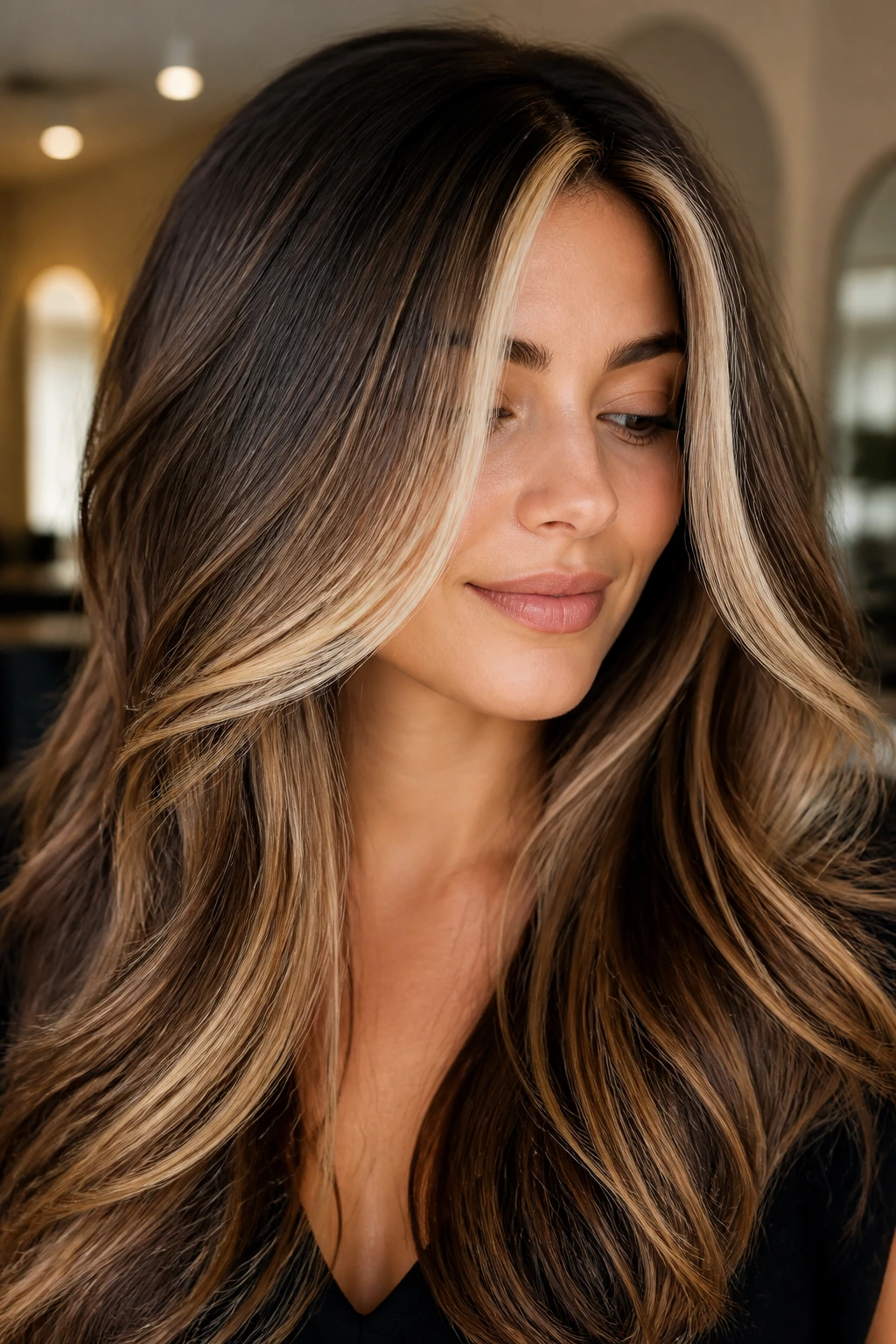
A money piece on thick hair can be a little louder than most people expect, and that’s a good thing. Dense hair can carry a bright face frame without looking like a stripe glued to the front, as long as the contrast is repeated in a few interior touches.
Ask for two to four foils on each side, then soften the transition just behind the front section. The bright frame should sit at cheekbone to jaw level if you want the face to open up. If your hair is heavily layered, this is one of the fastest ways to make the cut feel lighter.
4. Honey Blonde Foilayage
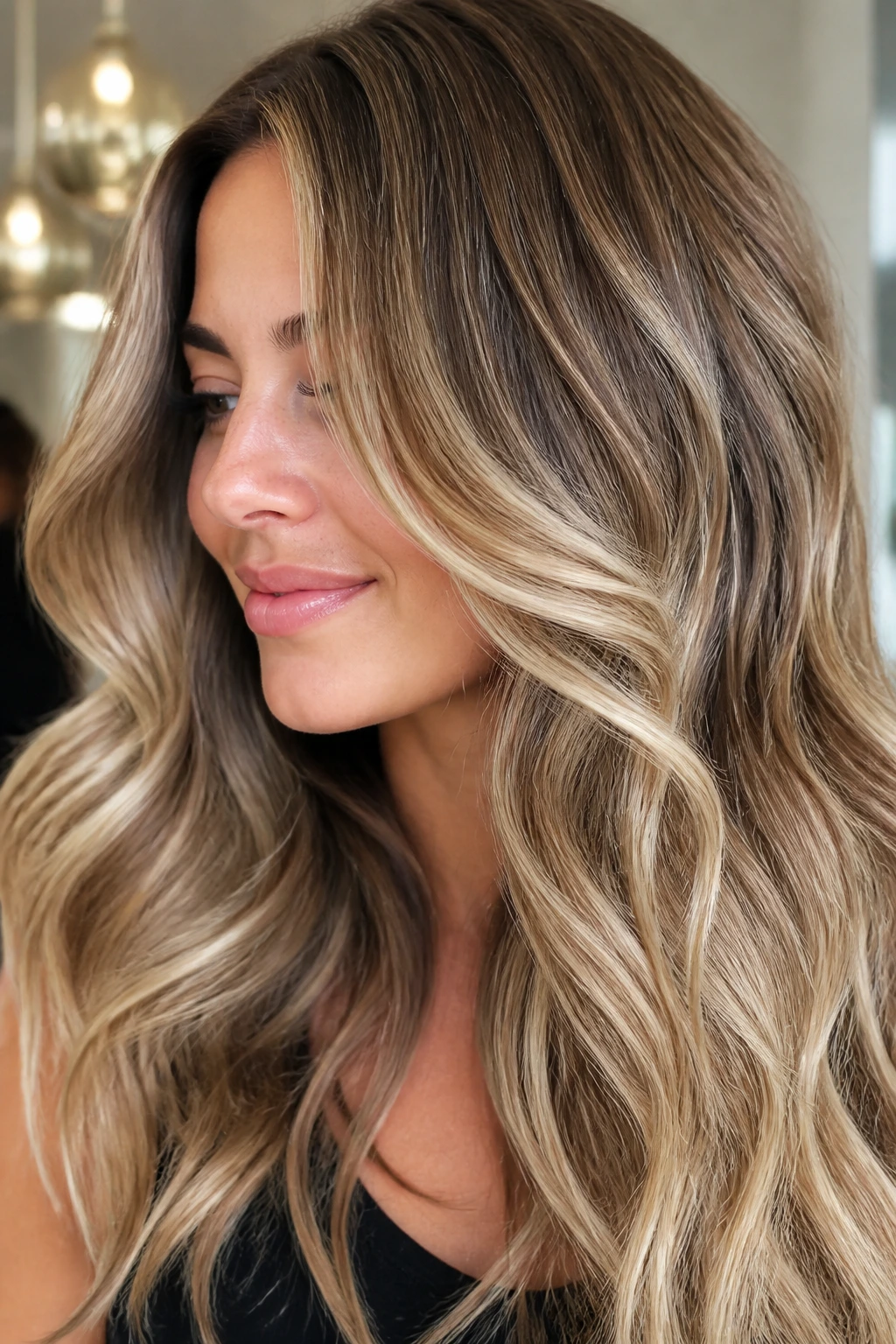
Foilayage gives thick hair the lift it sometimes refuses to give through freehand painting alone. Honey blonde is the warm, glossy version that keeps the finish from looking flat or stark.
The foil part matters here. It creates enough heat for denser strands to lift evenly, while the painted ends keep the result soft. Ask for honey tones around level 8 with a beige-gold base, then let the stylist leave a touch of depth near the root so the color doesn’t look pasted on.
5. Chunky ’90s Blonde Panels
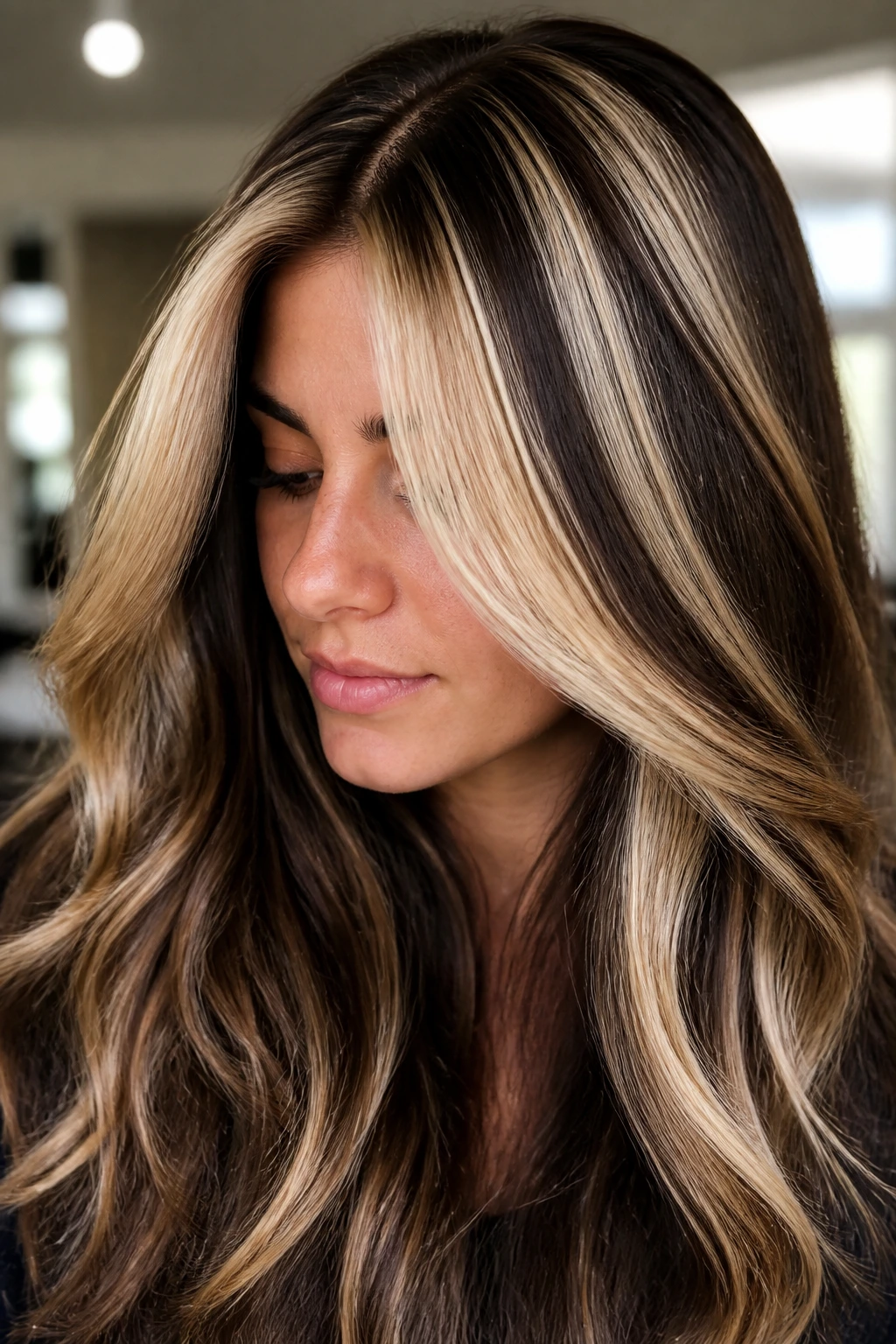
Chunky blonde panels are back for a reason: thick hair can wear them without apology. Fine hair often needs subtlety to avoid looking stringy, but dense hair benefits from larger placements that show from root to ends.
The trick is spacing. Don’t crowd the head with too many panels. Place a few strong blonde slices near the crown, through the fringe, and at the front side sections, then leave enough brunette or base color in between so the highlights have somewhere to breathe. The contrast should look deliberate, not accidental.
6. Espresso Peekaboo Depth
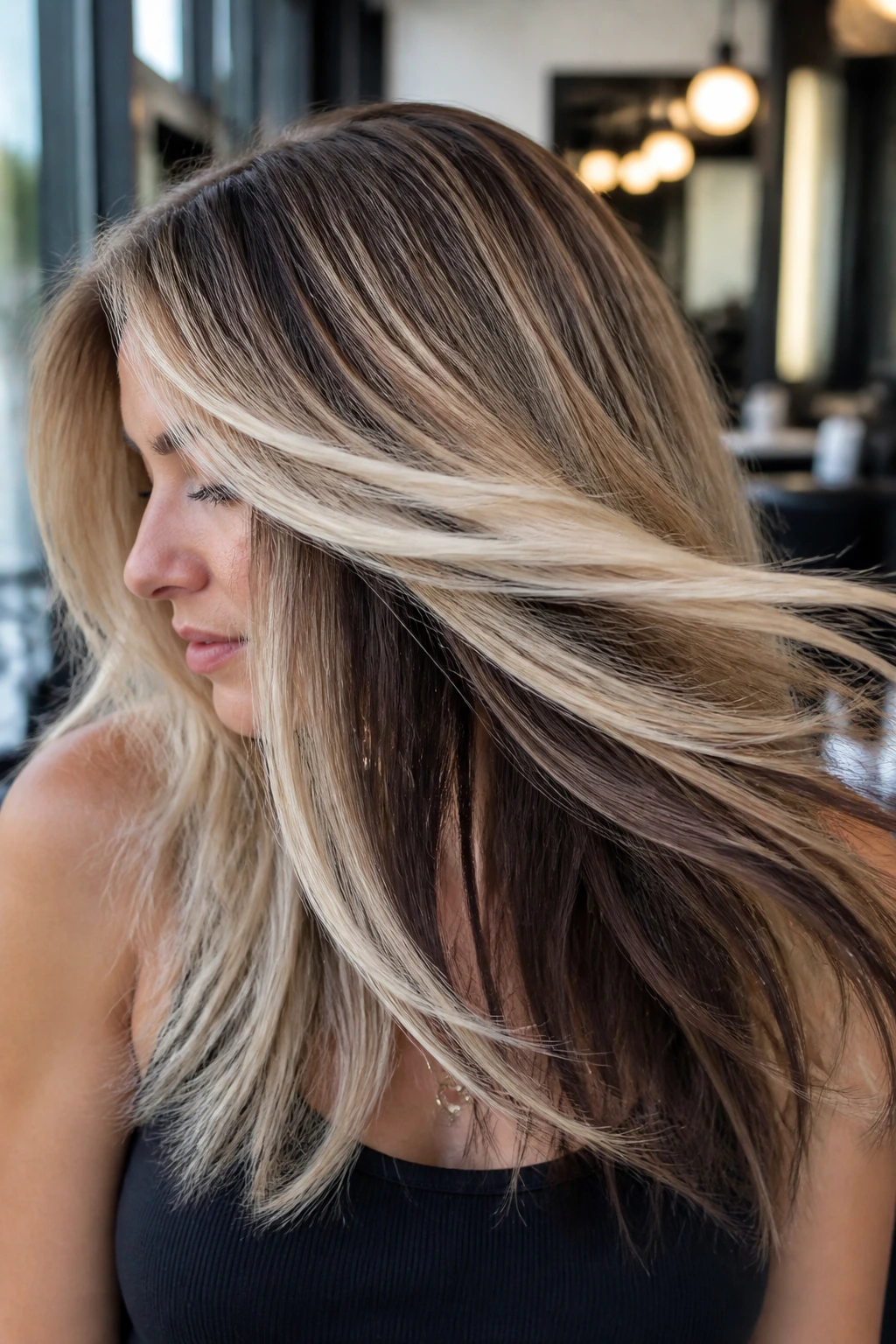
Hidden espresso panels are the move when thick hair is blonde or light brown and starting to look like one soft blur. The darker underlayers give shape back to the haircut, especially when the hair is curled or pinned up.
Ask for peekaboo depth placed under the crown, around the nape, and in the interior side layers. It’s a clean fix for hair that needs more contrast without changing the surface color much. When the wind moves the hair, the darker pieces flash through. Nice and controlled.
7. Ash Beige Babylights
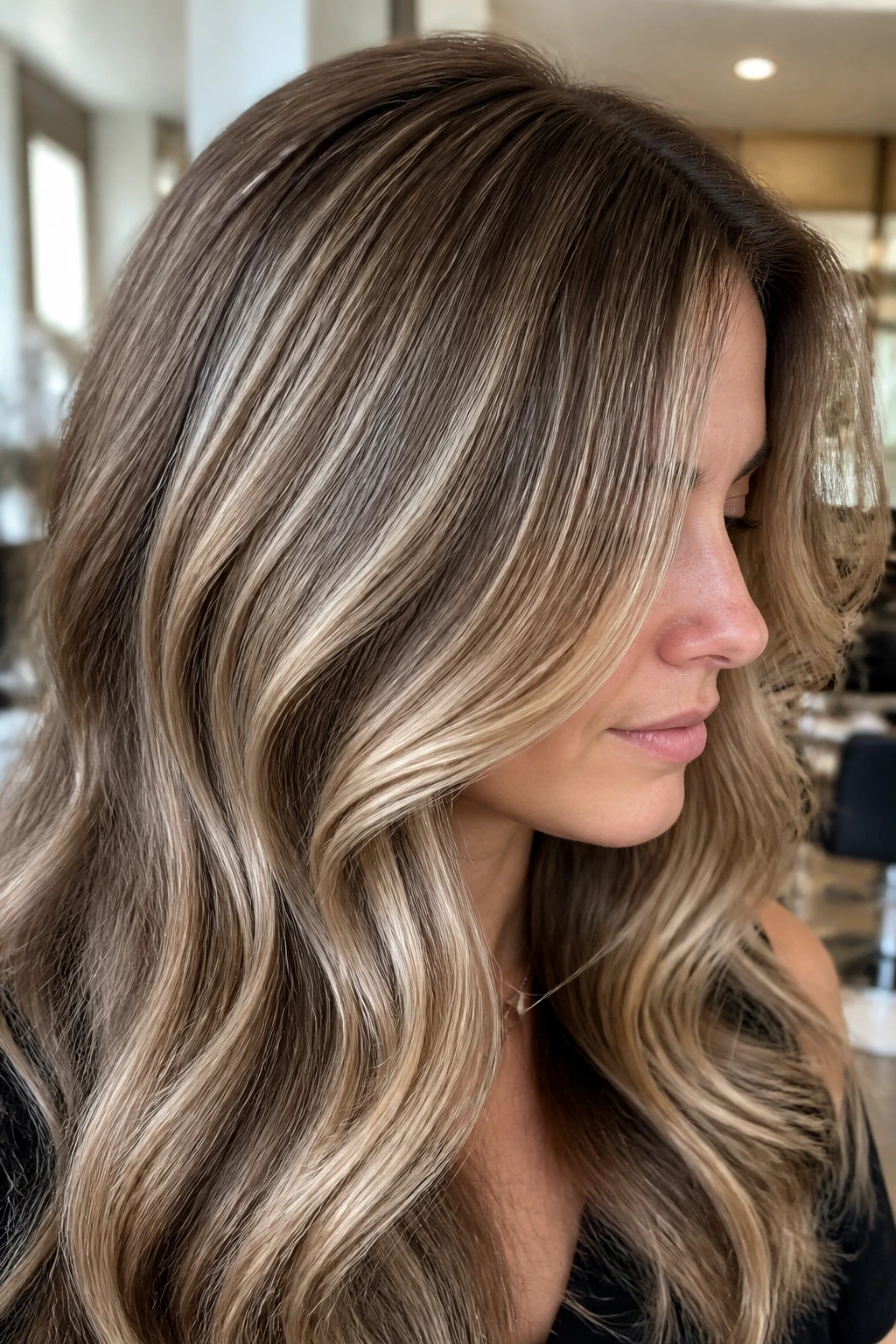
Babylights are tiny, delicate highlights, but on thick hair they need enough density to be visible. Ash beige is the right tone if you want brightness without yellow or gold crowding the finish.
This look works best when the stylist weaves very fine sections across the crown and top sides, then keeps the toner on the cooler beige side instead of icy silver. Thick hair can hide a fine weave, so the color has to be placed in enough volume to read as soft brightness, not dust.
8. Copper Ribbon Highlights
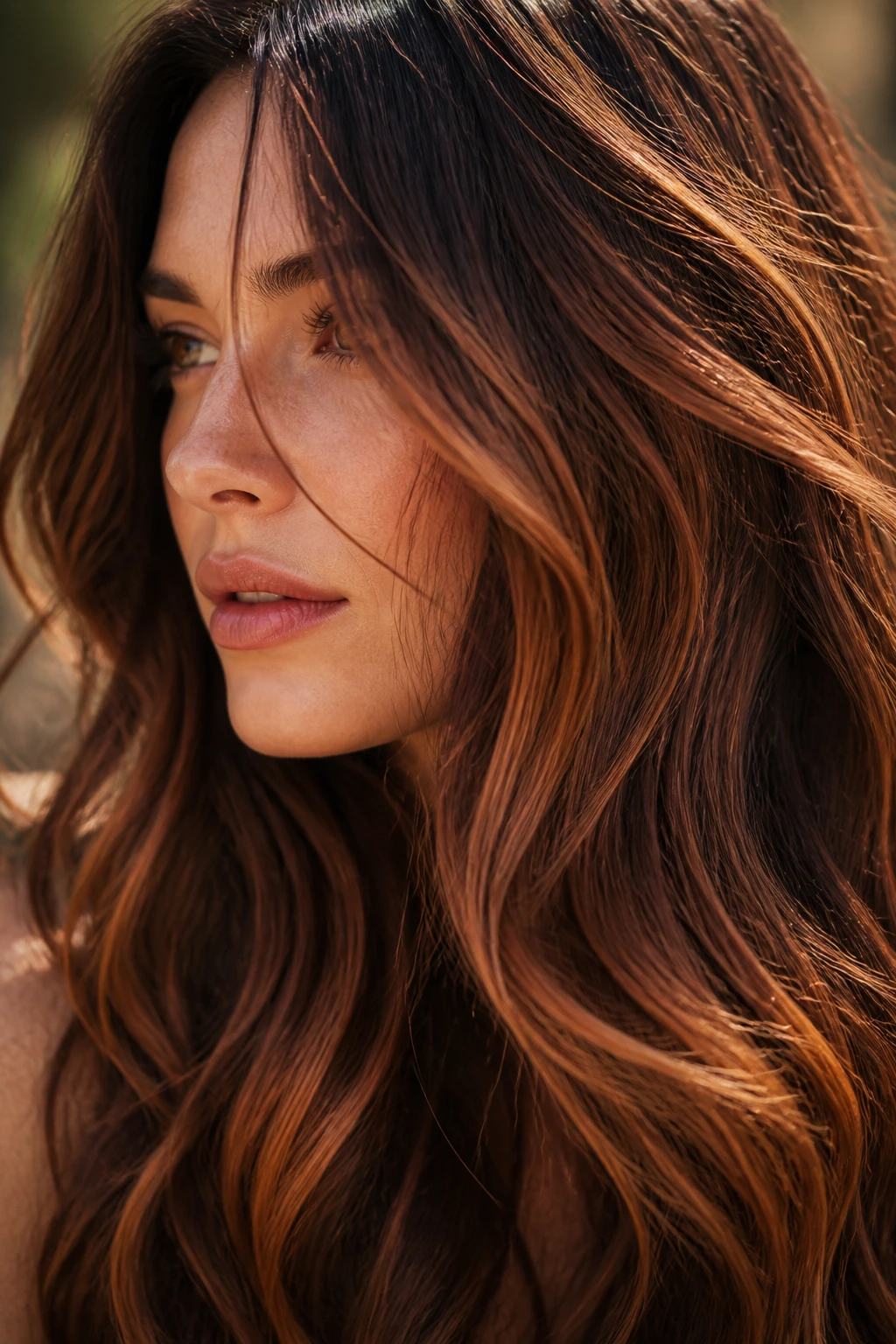
Copper ribbons on thick brunette or auburn hair feel lively in a way blondes don’t. The color catches movement fast, especially on layered cuts where the pieces swing through the midlengths.
Ask for ribbons that sit one to two levels lighter than the base, with a true copper or copper-gold tone rather than a red that turns flat. Thick hair likes copper when it’s placed in bands, not peppered everywhere. A few richer pieces around the face keep the color from disappearing.
9. Bronde Contour Balayage
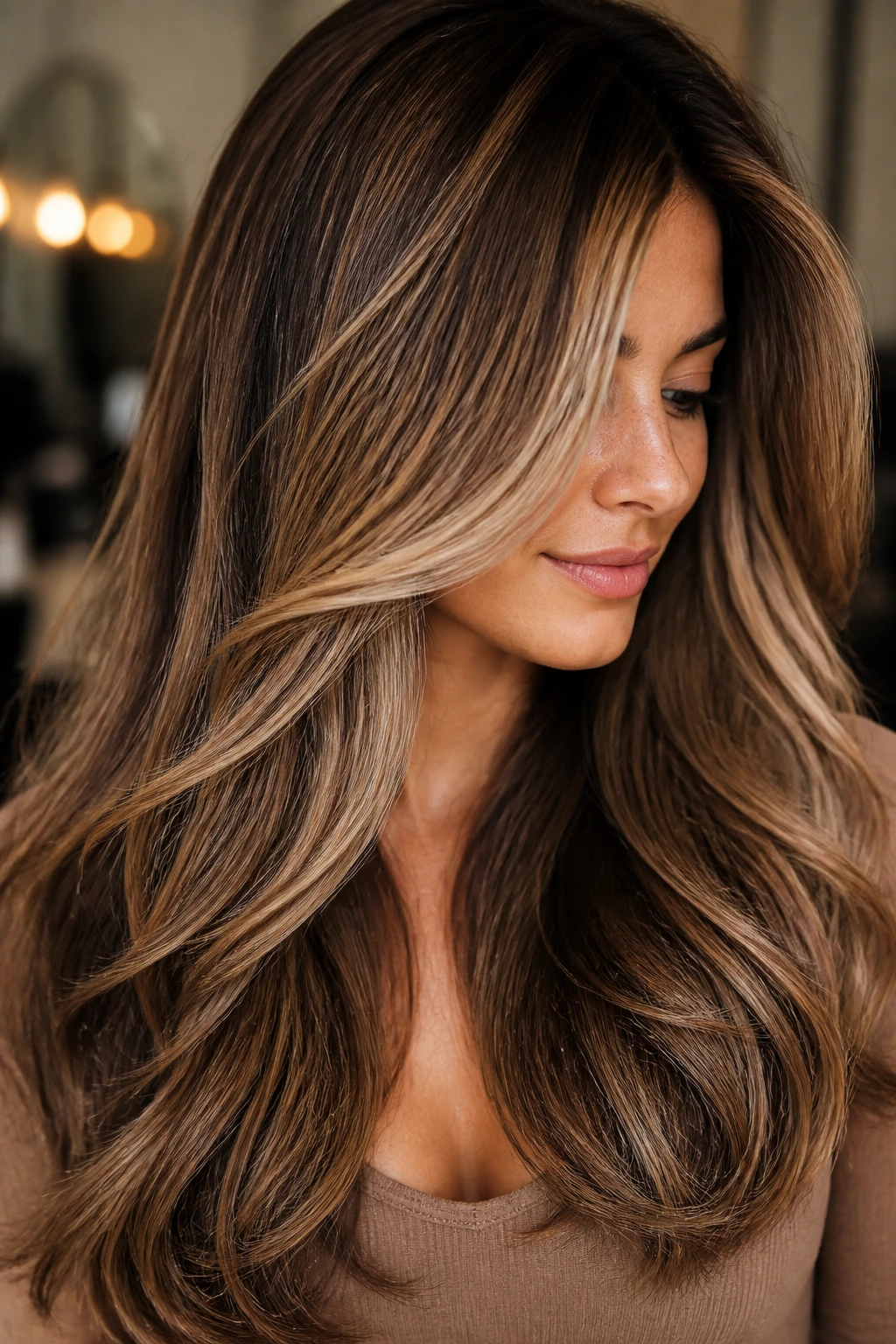
Bronde contour balayage is basically makeup contouring, but for hair. Brightness goes where the light naturally hits first — around the face, through the crown, and along the outer layers — while deeper pieces sit underneath to keep the shape strong.
On thick hair, that contrast is the point. If everything gets lightened evenly, the hair can lose its body and look puffy. Keep the lighter pieces around level 7 to 9 and the deeper pieces close to the natural base. The balance gives you softness without blowing out the structure.
10. Platinum Slice Highlights
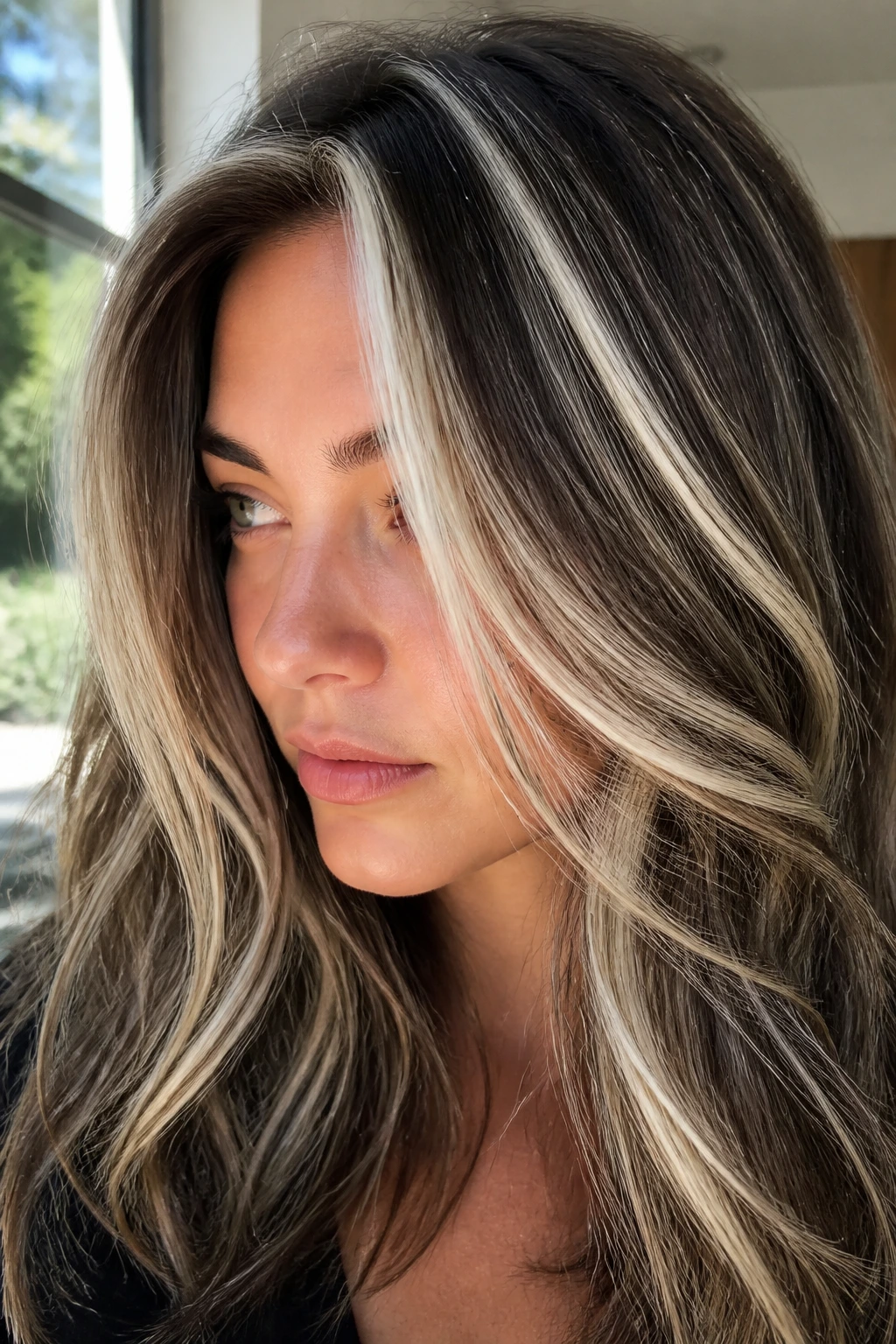
Platinum slices are not subtle, and thick hair is one of the few places they actually make sense. The density can hold a crisp high-contrast look without the style turning threadbare.
These need careful spacing and strong saturation. Ask for thin but solid slices, not tiny overweaved pieces, especially around the face and crown where the light hits first. Thick hair can take platinum better when the rest of the head stays grounded in deeper blonde or brunette tones. Otherwise the whole look can start to feel brittle.
11. Cinnamon Melt
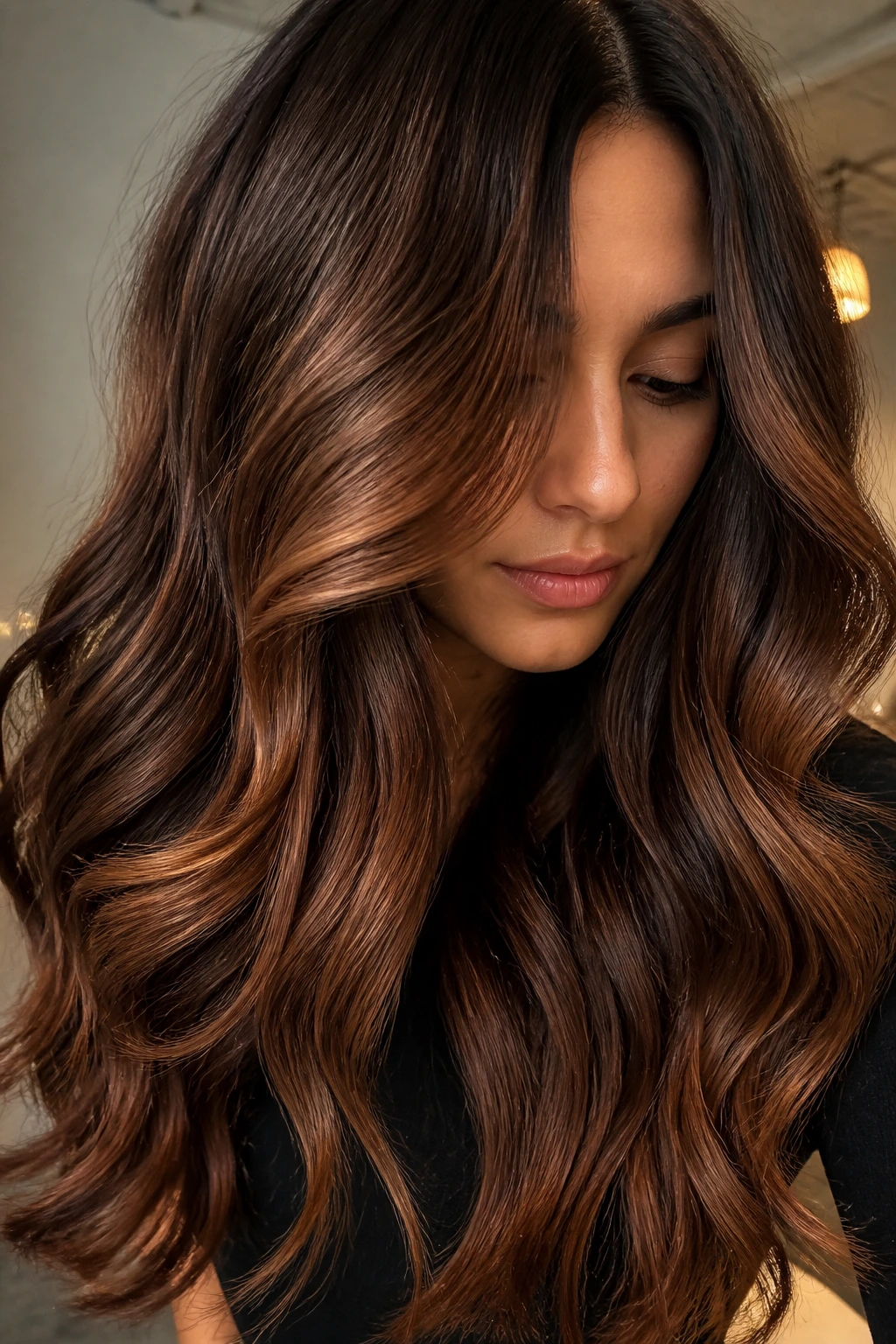
A cinnamon melt is a warm gradient that starts deeper at the root and turns softly spiced through the midlengths and ends. It’s one of my favorite choices for thick brunette hair that wants richness more than brightness.
The warm red-brown tone gives a lot of visual depth without demanding a high lift. Ask for a root color one shade deeper than the natural base, then weave cinnamon through the ends so the transition feels smooth. Thick hair loves this because the color shifts as the hair moves, not in harsh bands.
12. Rose Gold Veil
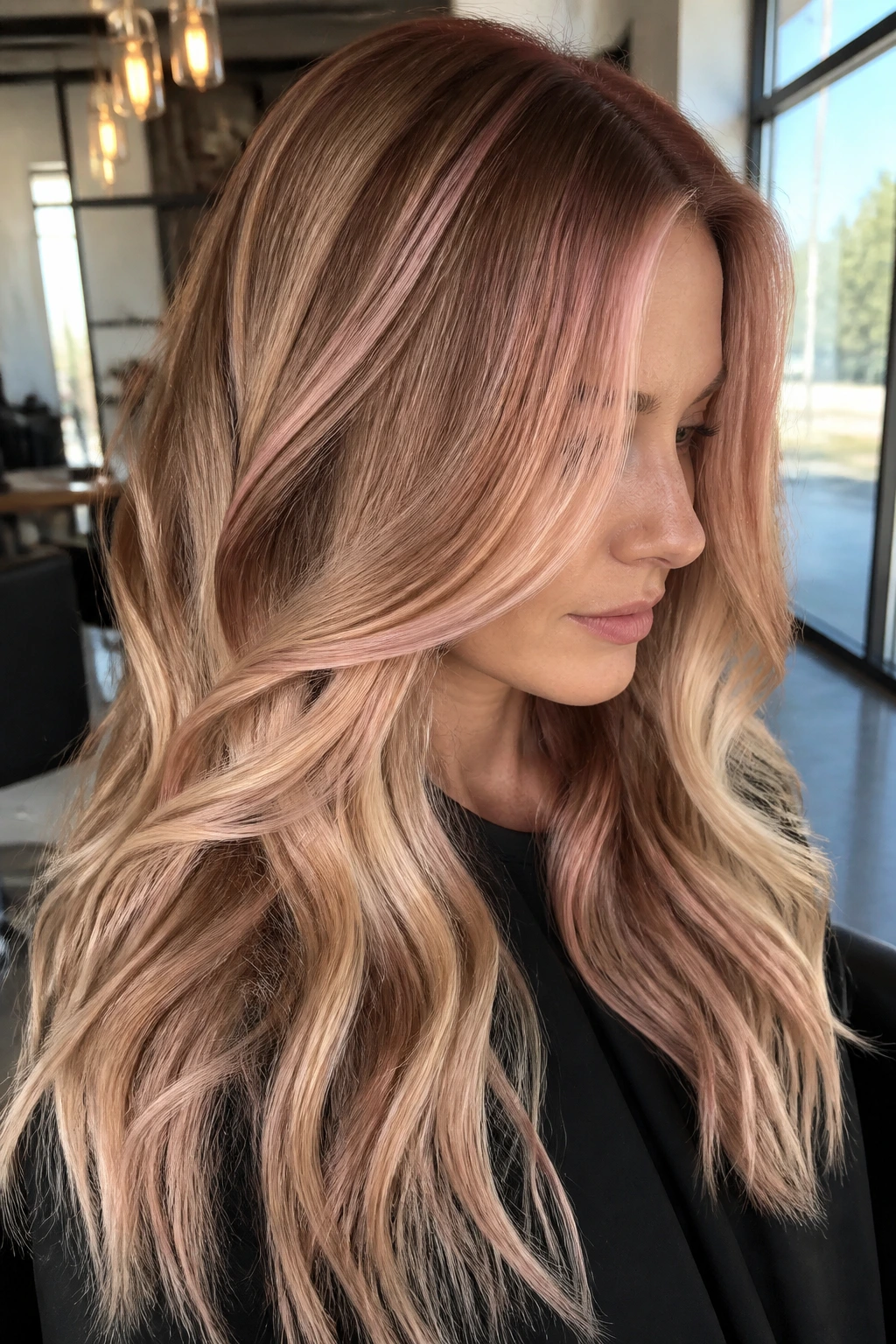
Rose gold can go tacky fast if it’s too pink, but on thick hair it reads beautifully when the shade is kept muted and glossy. Think blush over gold, not candy color.
This idea works best on pre-lightened medium blonde or light brown hair. The colorist can glaze rose gold over warm beige highlights so the finish looks soft in daylight and richer indoors. On thick hair, a veil of color has more room to show than it does on fine strands, which makes the effect feel fuller.
13. Chestnut-and-Toffee Dimension
Chestnut and toffee together make thick brown hair look expensive without trying too hard. That mix of deeper brunette and warm light brown gives the cut shape, especially if the layers are long and slightly carved.
Ask for chestnut lowlights under the top layer and toffee ribbons on the outer surface. The result is broader than a standard caramel balayage, which matters on dense hair because skinny streaks can get lost. This is one of those color jobs that looks even better after the first few washes.
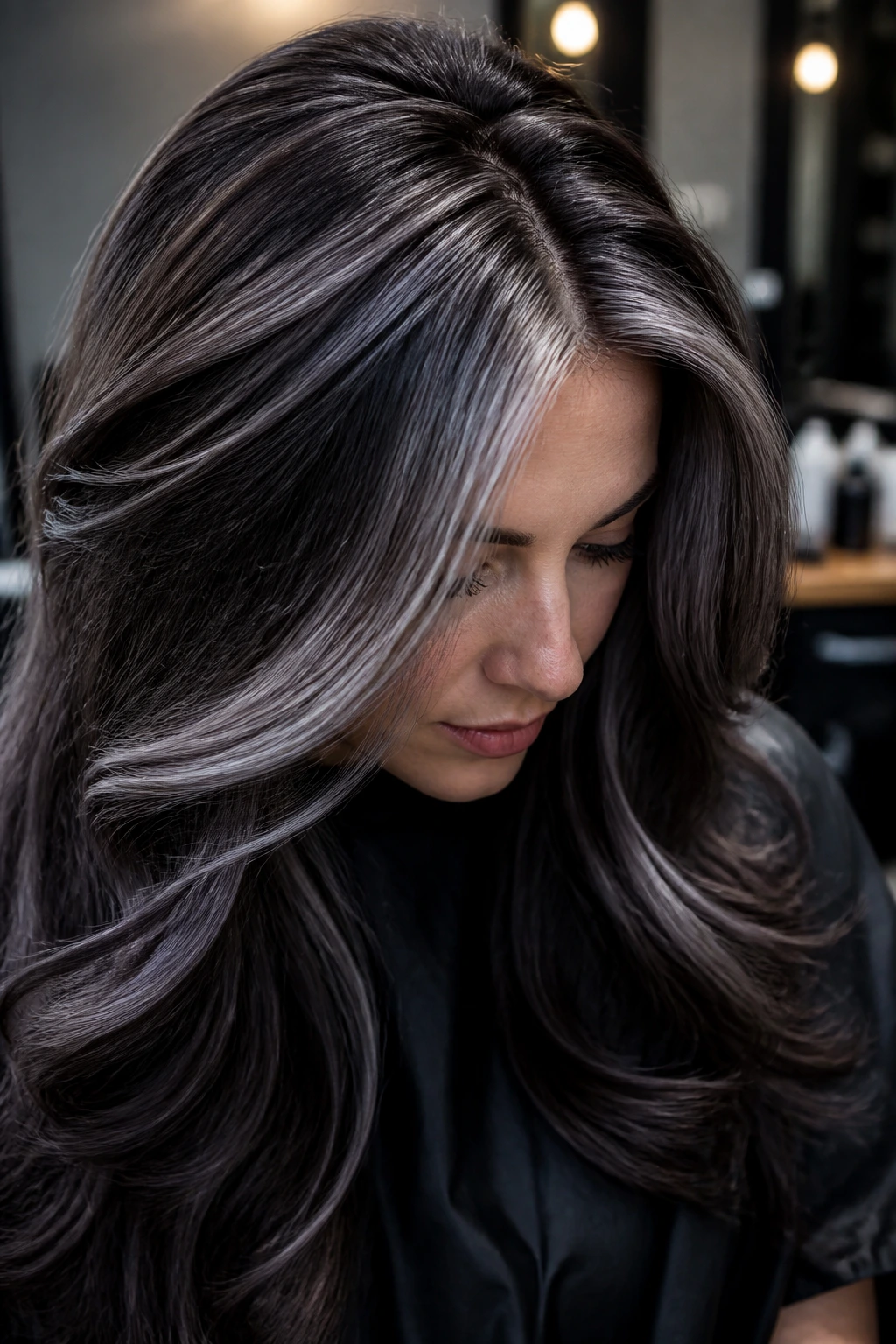
14. Smoked Silver Streaks
Smoked silver streaks are for anyone who wants cool contrast instead of warm brightness. On thick hair, silver does not have to read as icy or harsh; it can sit in a smoky zone that feels elegant and a little moody.
This works especially well if your natural hair is dark and you want the silver to show as a feature, not a whole-head overhaul. Place the lighter pieces around the front, crown, and a few interior ribbons, then tone with a soft gray-violet glaze. The thickness gives the silver somewhere to live.
15. Butter Blonde Ends
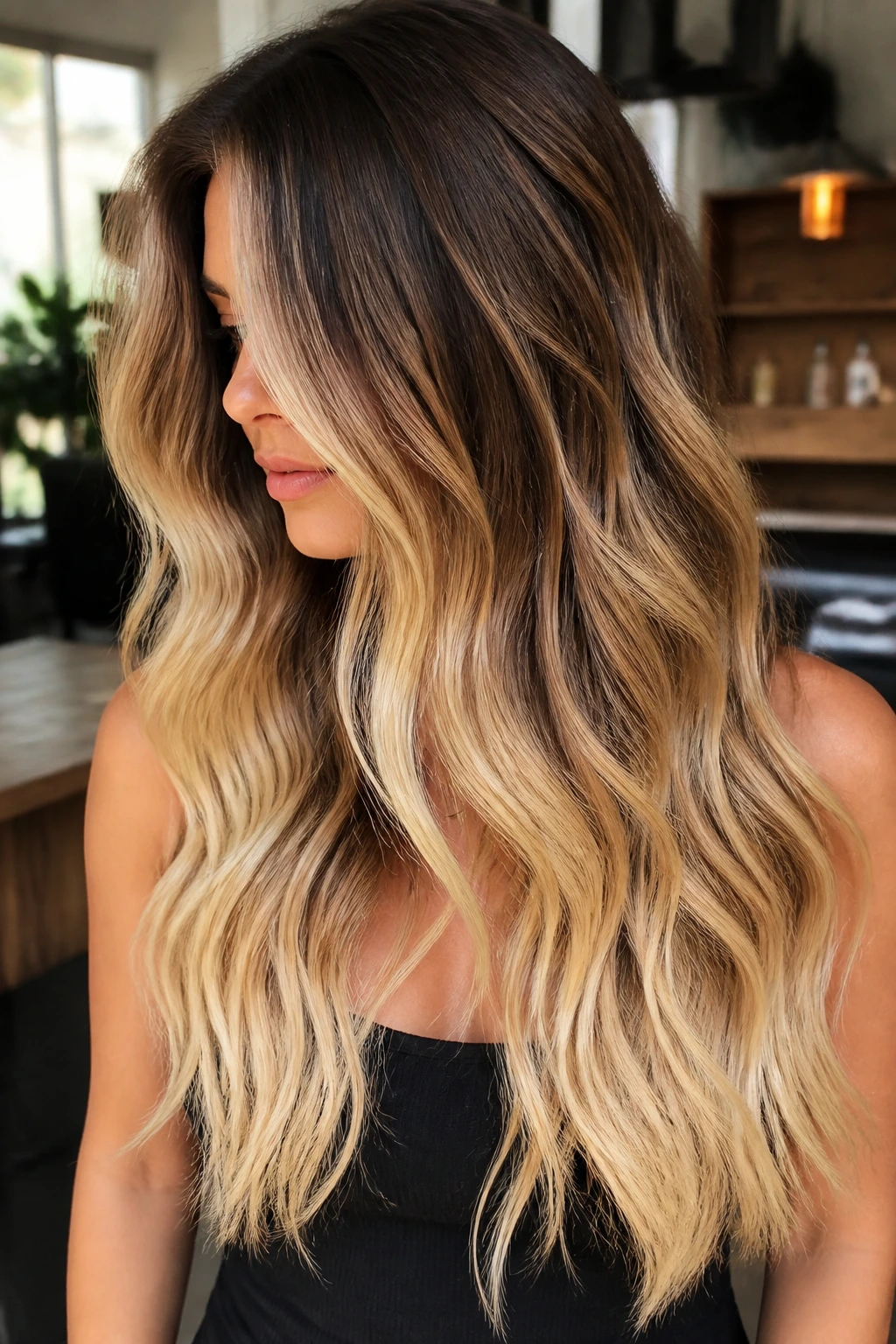
Butter blonde ends are a smart choice for long thick hair that starts to feel heavy at the bottom. By concentrating the lightness through the ends, you keep the root area grounded and the overall style cleaner.
The key is warmth. Butter blonde sits softer than platinum and tends to flatter thick hair more easily because it doesn’t fight the natural bulk. Ask for a gradual lift that stops a few inches above the hemline, then tone the ends to a creamy yellow-beige rather than a flat beige. It should look soft, not chalky.
16. Auburn Glow Highlights
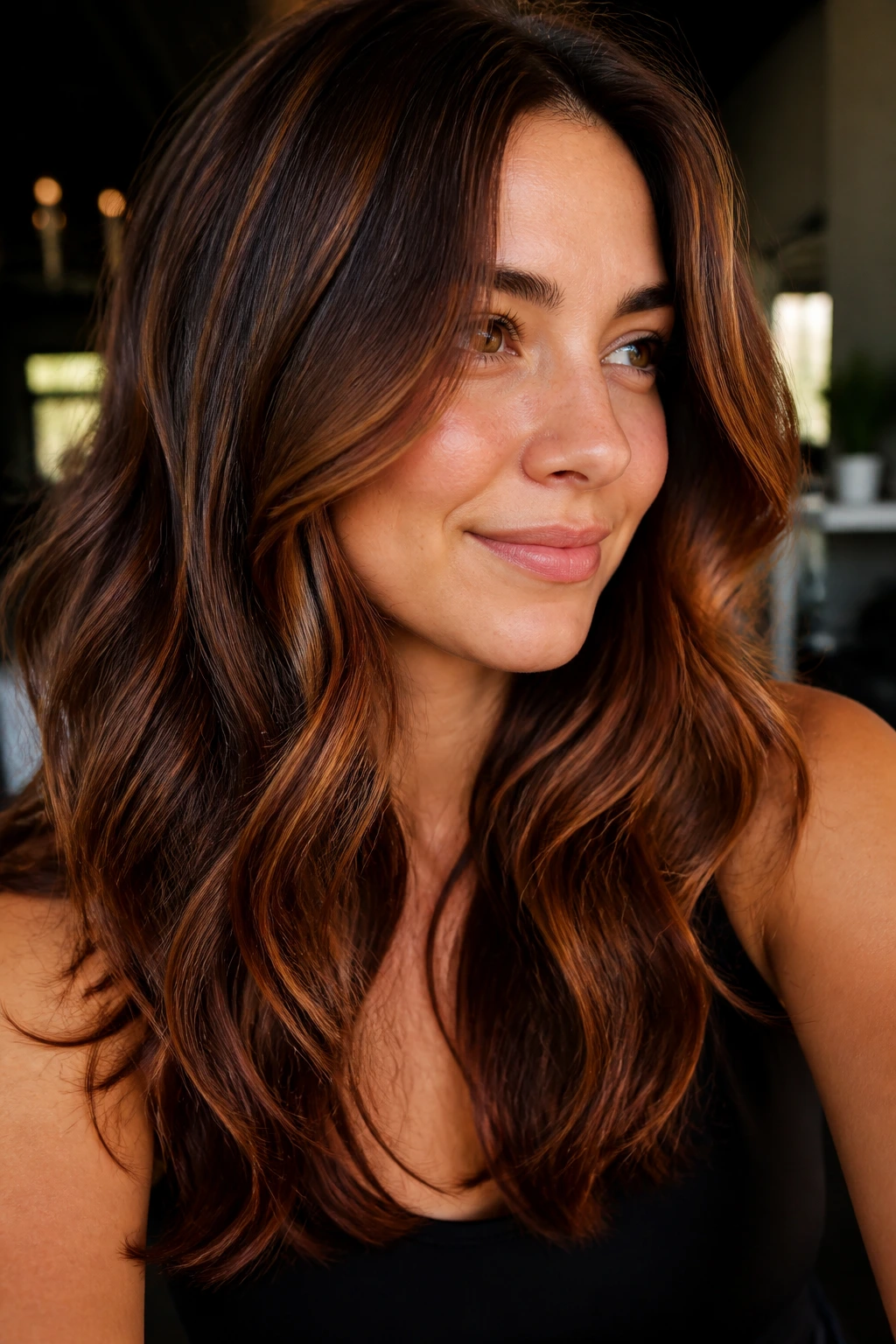
Auburn glow highlights work best when the goal is depth with a little fire, not bright copper drama. Thick hair can take those red-brown ribbons and still look controlled.
Keep the auburn pieces dispersed through the midlengths and around the face, then leave enough brunette base between them so the warmth feels woven in. On layered thick hair, these highlights can make the haircut look more deliberate because the red tones catch movement around the edges. Subtle? Not really. But subtle wasn’t the brief.
17. Pearl Blonde Halo
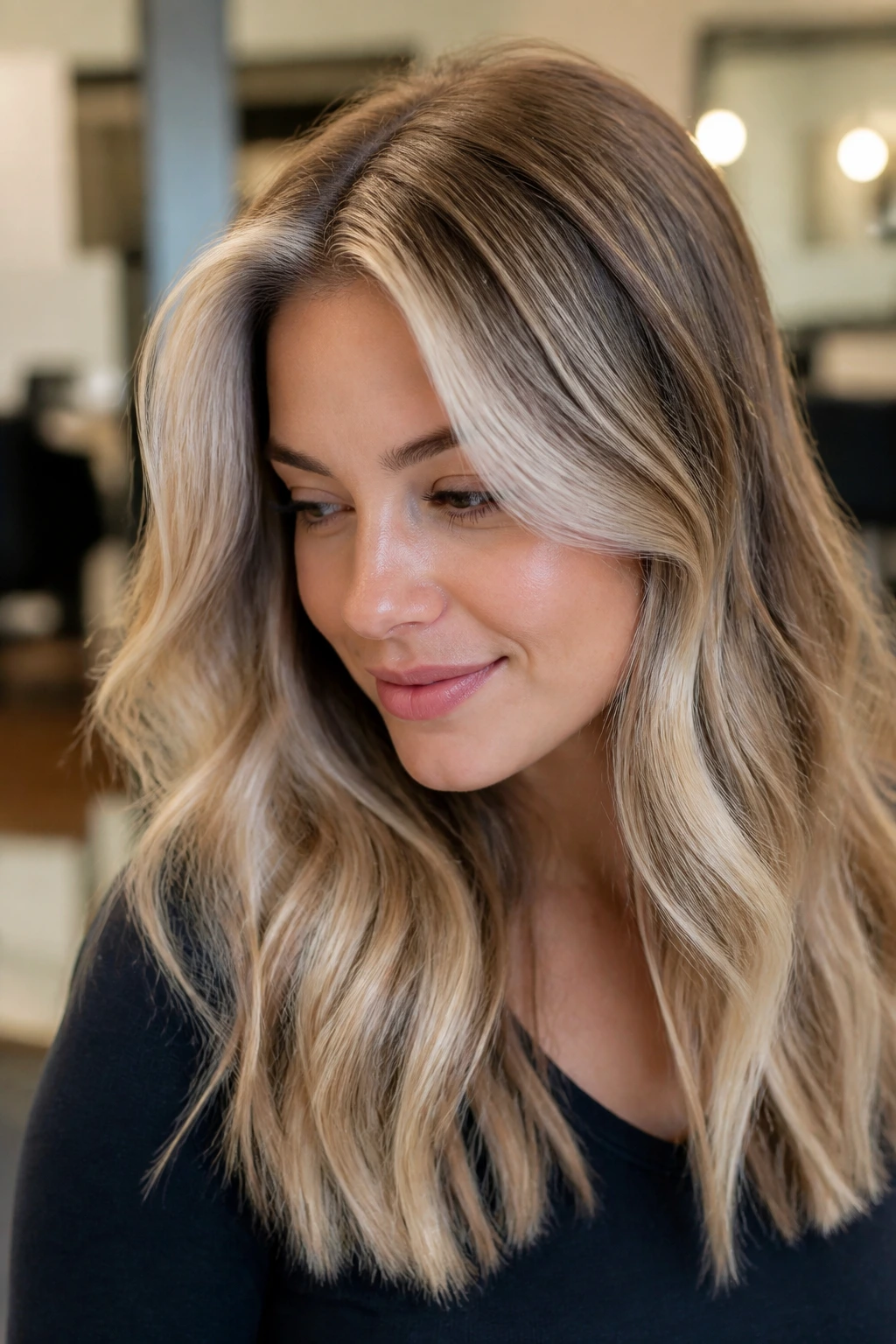
Pearl blonde around the crown and face is a good fix for thick hair that needs brightness in the places people actually see first. The halo effect keeps the color concentrated where the top layer usually blocks light.
Ask for lighter pieces at the hairline, through the part, and just behind the front sections, then soften the rest so the halo doesn’t stop abruptly. Pearl blonde should sit cooler than honey and warmer than silver. That middle ground is what keeps thick hair from turning dull.
18. Mocha Shadow Root
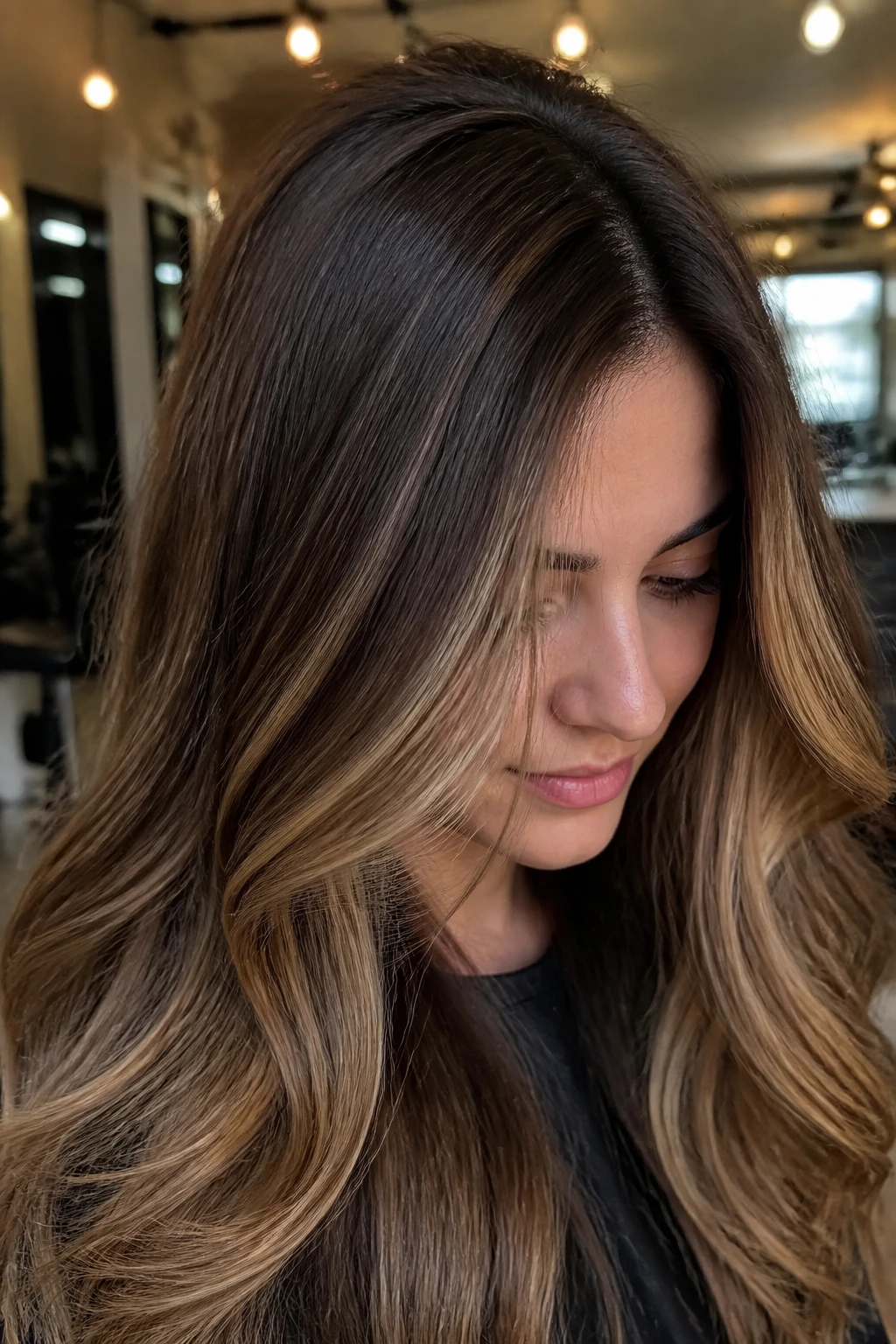
A mocha shadow root is one of the easiest ways to keep thick highlighted hair looking polished between appointments. The root stays rich and slightly deeper, while the lightness starts a little lower and blends out in a controlled way.
This works especially well if your hair is naturally dark brown and you want the grow-out to feel soft instead of obvious. Ask for a root shade around level 4 or 5 and let the highlights open from there. Thick hair does not need color at every inch to look finished. It needs shape.
19. Sandy Beige Micro-Weave
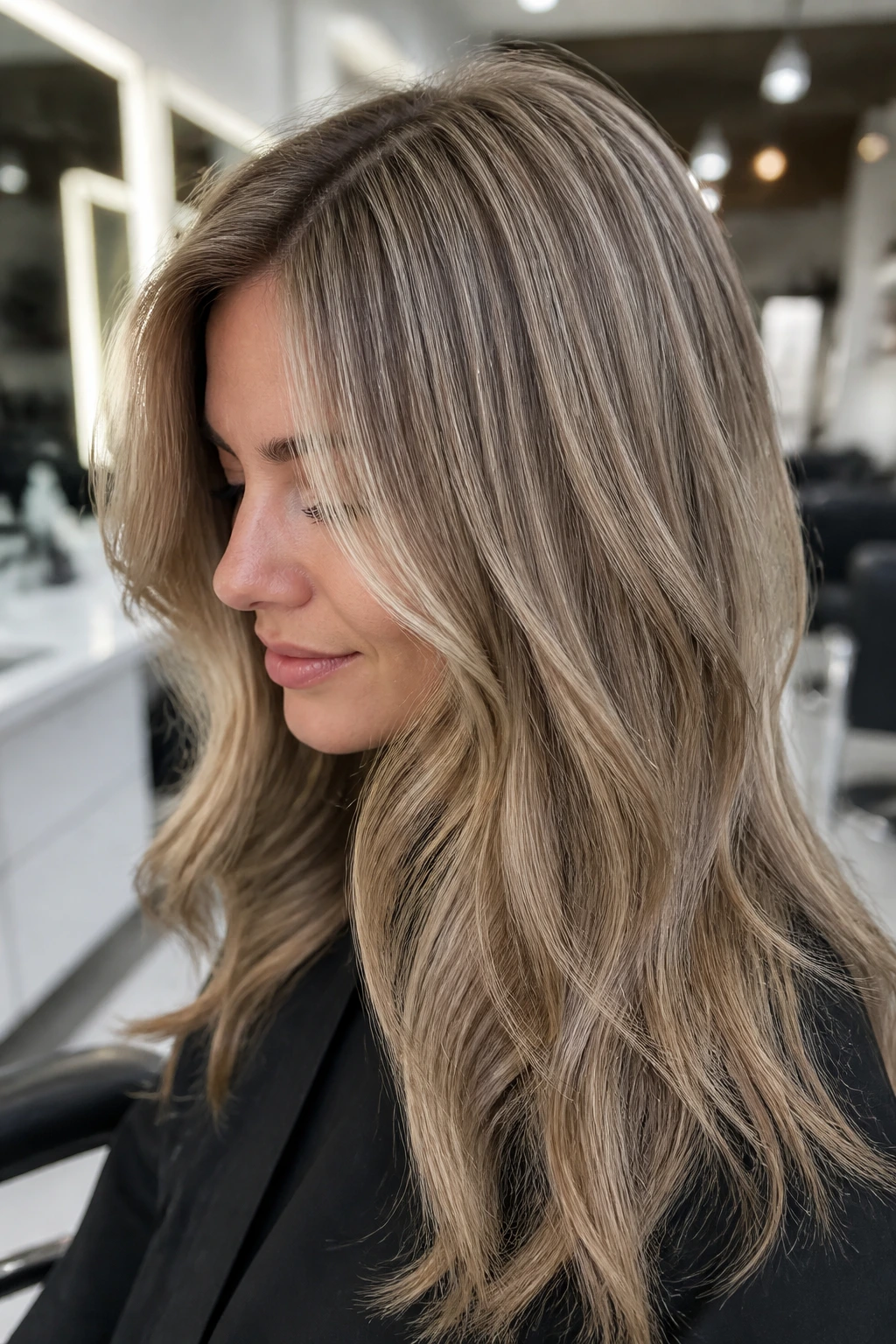
Sandy beige micro-weave is the quieter cousin of chunky blonde, and on thick hair it can be gorgeous when the goal is softness. The difference is the density of the weave: lots of tiny ribbons instead of a few bold ones.
This technique works when you want the hair to look naturally sun-lightened, especially around the crown and upper sides. Sandy beige sits between cool and warm, which keeps the finish from skewing too gold or too gray. On thick hair, the micro-weave only works if there are enough pieces to read from a distance.
20. Bronze Ribbon Curls
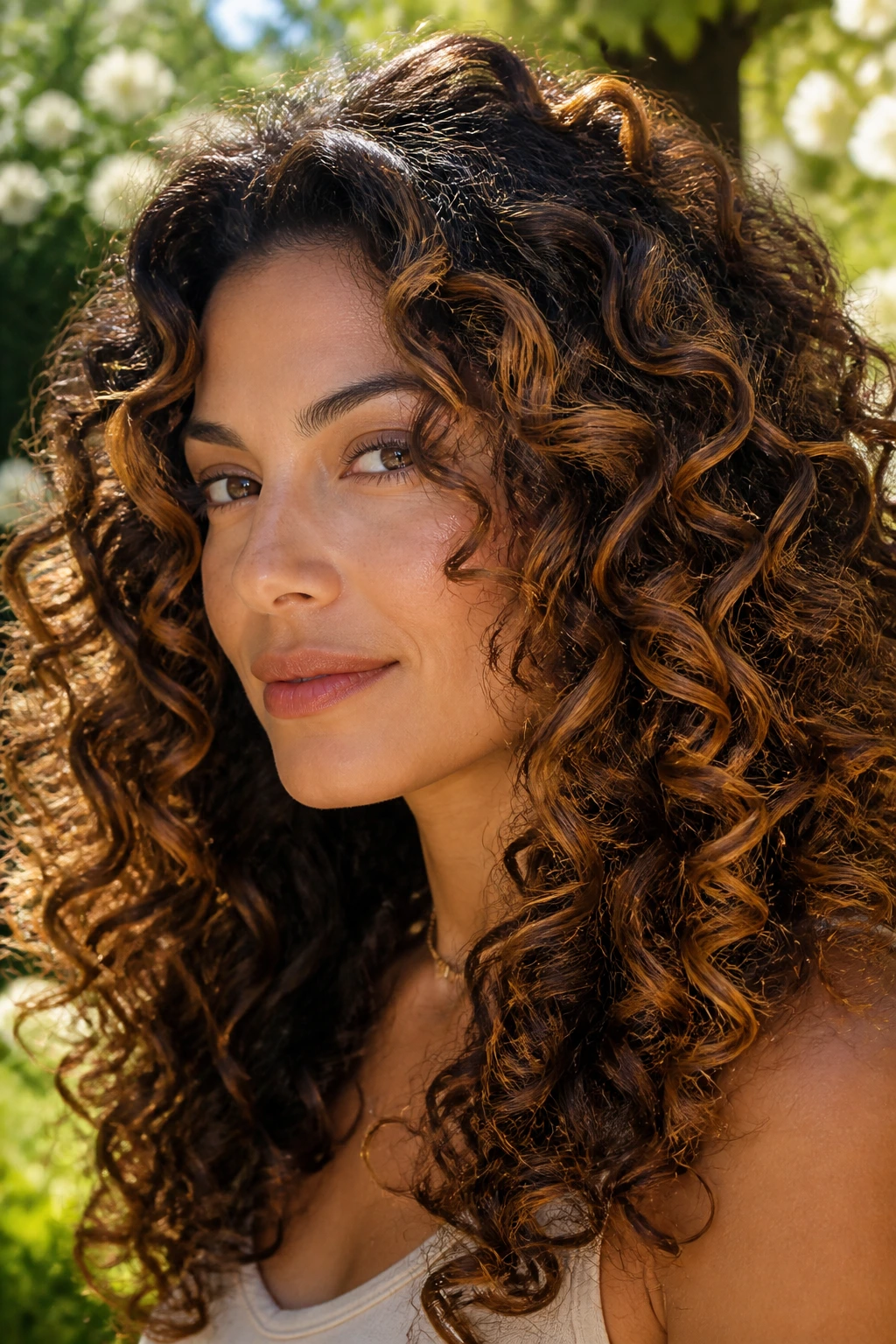
Curly thick hair and bronze ribbons are a strong pair because the highlight follows the curl rather than sitting on top of it. You can see the color spiral through the shape instead of slicing across it.
Ask for ribbon placement that lands where the curl opens: midlengths, outer bends, and the front halo. Bronze is a useful tone here because it reflects light without looking blond. If the curls are dense and springy, broader ribbons make more sense than a delicate babylight that vanishes inside the pattern.
21. White Blonde Face Framing
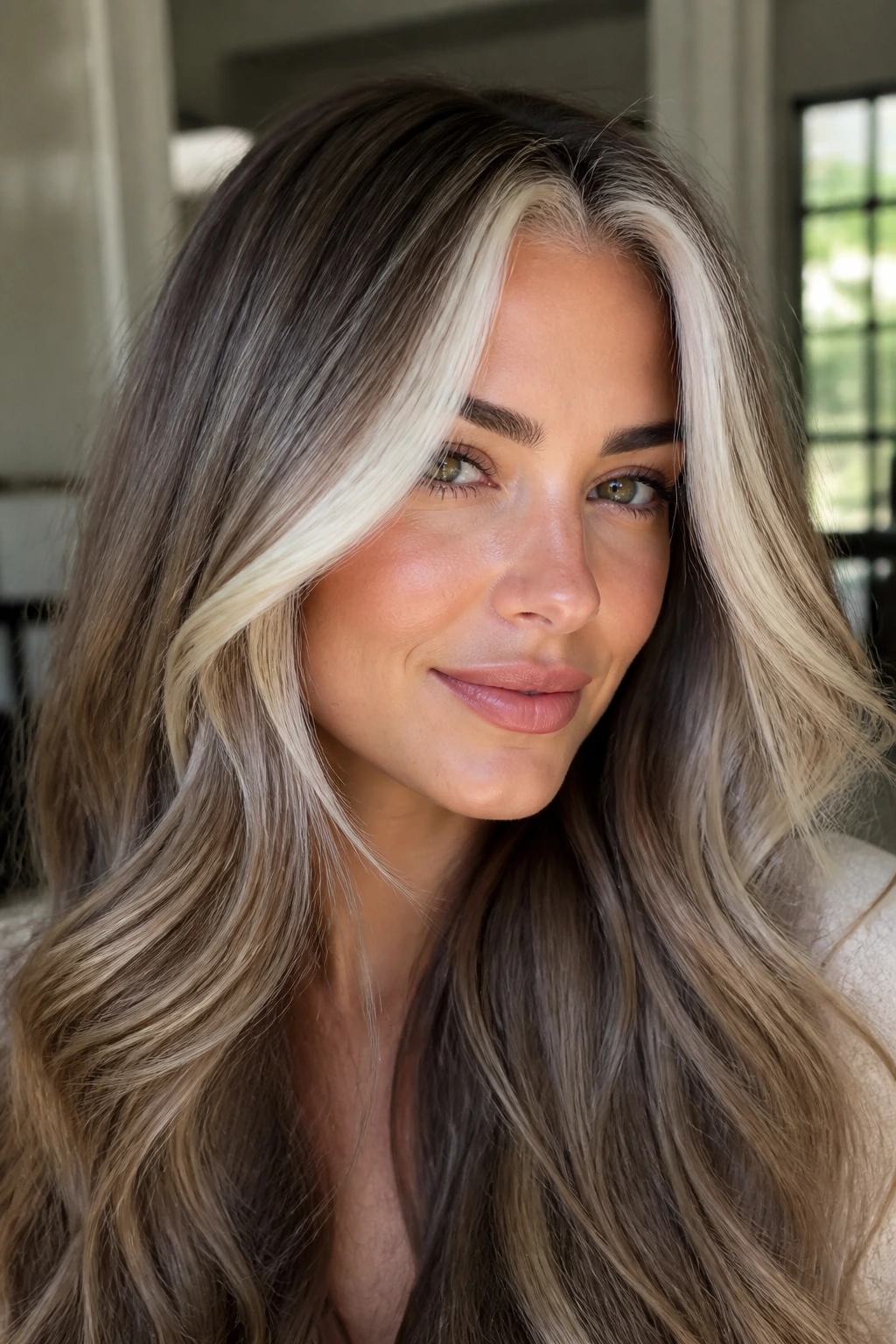
White blonde around the face is a bolder move, but thick hair can support it better than most textures. The density keeps the look from feeling too thin or patchy, which is exactly where a lot of bright face frames fail.
Keep the rest of the hair grounded in beige, dark blonde, or light brown so the contrast stays sharp. Ask for the brightest lift only along the front hairline and a few supporting pieces just behind it. That keeps the face frame from looking detached from the rest of the head.
22. Maple Syrup Lowlights
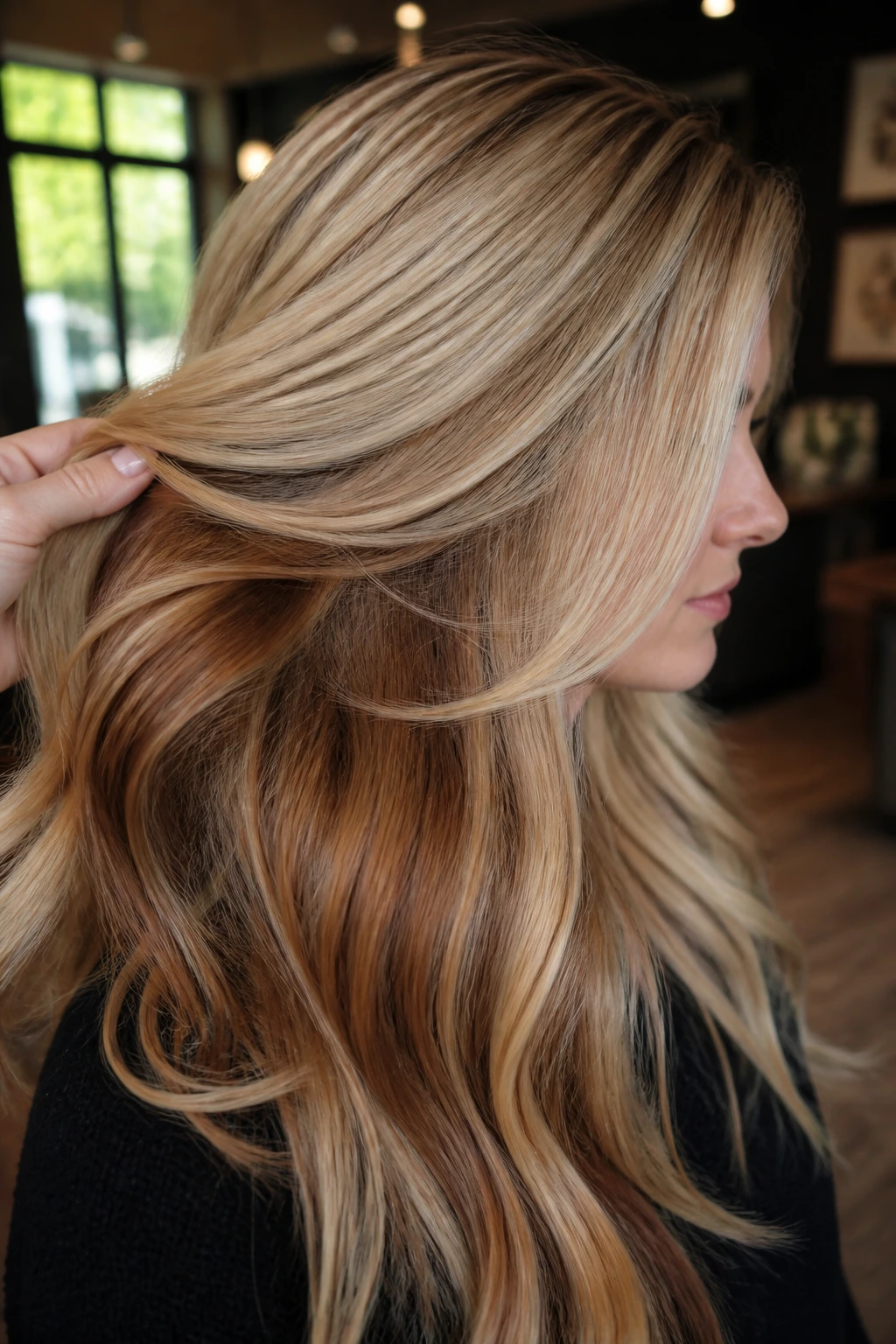
Maple syrup lowlights are the fix when blonde thick hair starts to look a little washed out or over-processed. The warm amber-brown pieces bring the shine back, and they do it fast.
Place the lowlights through the interior and underneath the top layers, especially where the hair feels puffier or wider. Thick hair often looks best with both light and dark pieces doing the work. Maple syrup tones are warm enough to keep the blonde from going flat, but not so deep that they swallow the brightness.
23. Cool Brunette Contour
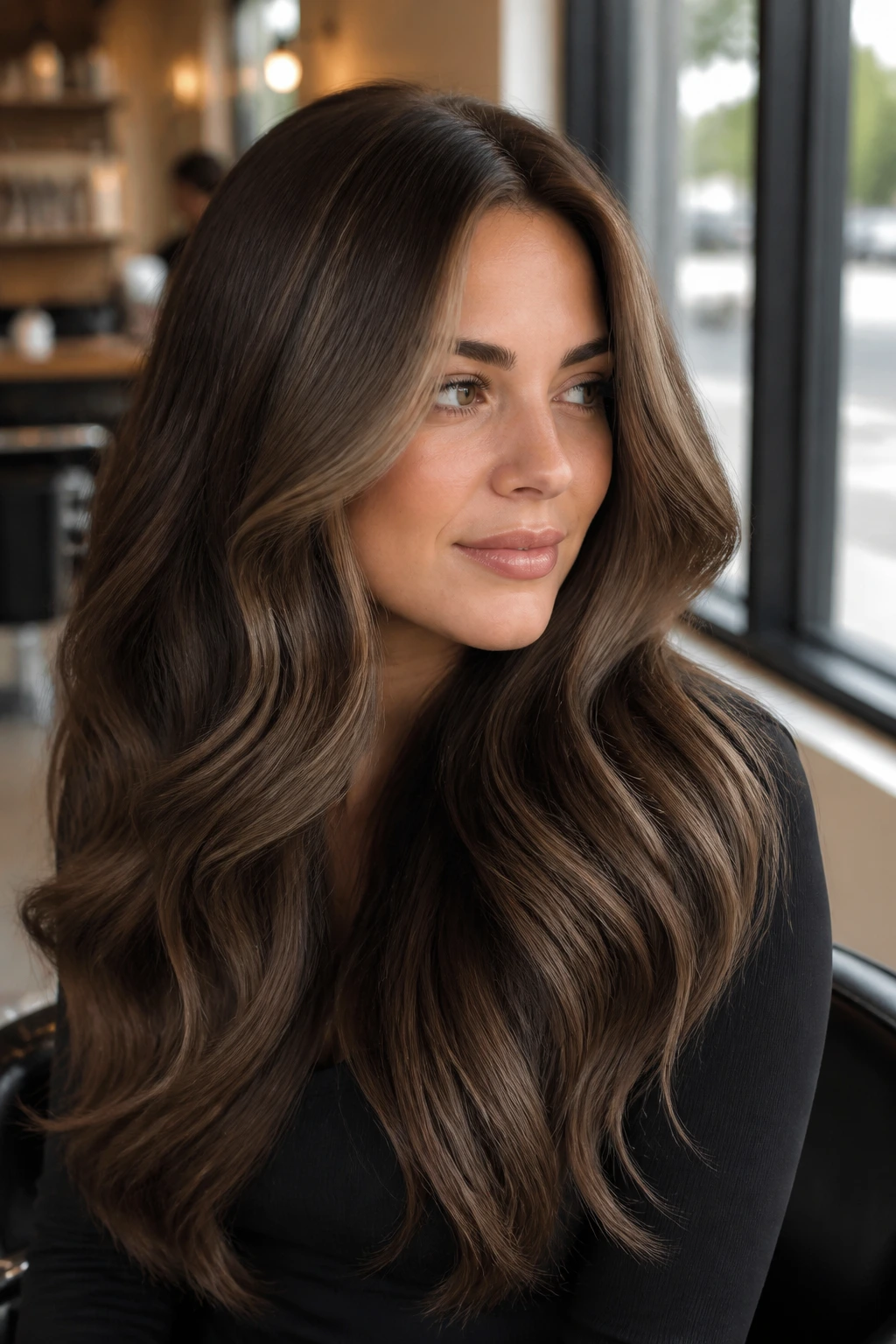
Cool brunette contour is for people who like espresso, cocoa, and mushroom-brown territory more than warmth. It’s a clean, glossy look that makes thick hair feel sharper and more sculpted.
The contour comes from placing slightly lighter cool brown pieces around the face and crown, then anchoring the underside with deeper brunette. On dense hair, cool brunette can read richer than warm brunette because it gives the cut a smoother outline. The shape matters here more than the amount of lightness.
24. Hidden Underlayer Panels
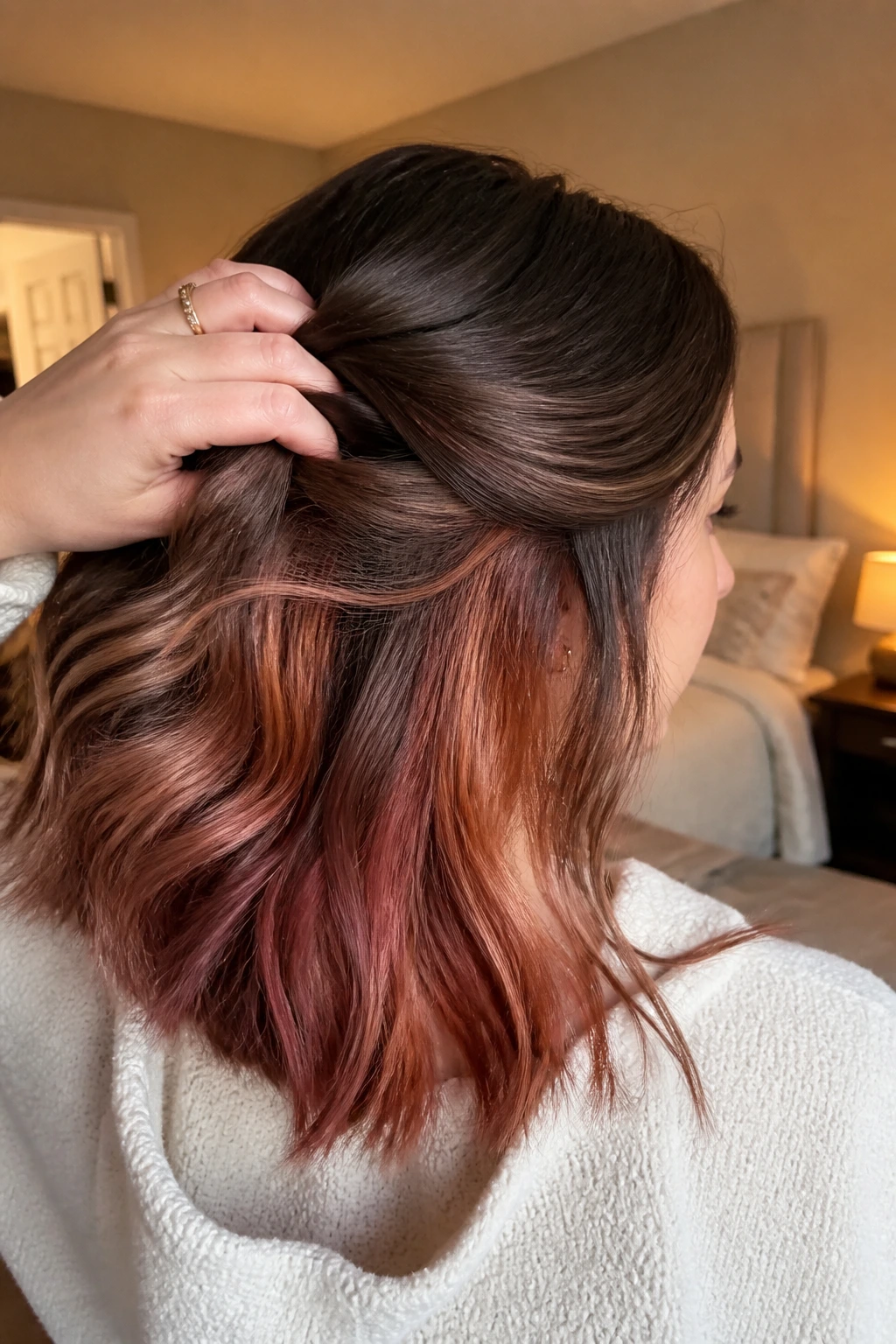
Hidden underlayer panels are one of the most fun choices for thick hair because they only show when the hair moves, parts, or gets pinned up. You can keep the surface calm and still have a little surprise underneath.
This works with blonde, copper, burgundy, or even silver. The secret is placing the color in the lower interior and nape area where the top layer can hide it. Thick hair gives you room to stash color without making the whole head busy. Very few styles do that cleanly.
25. Vanilla Cream Balayage
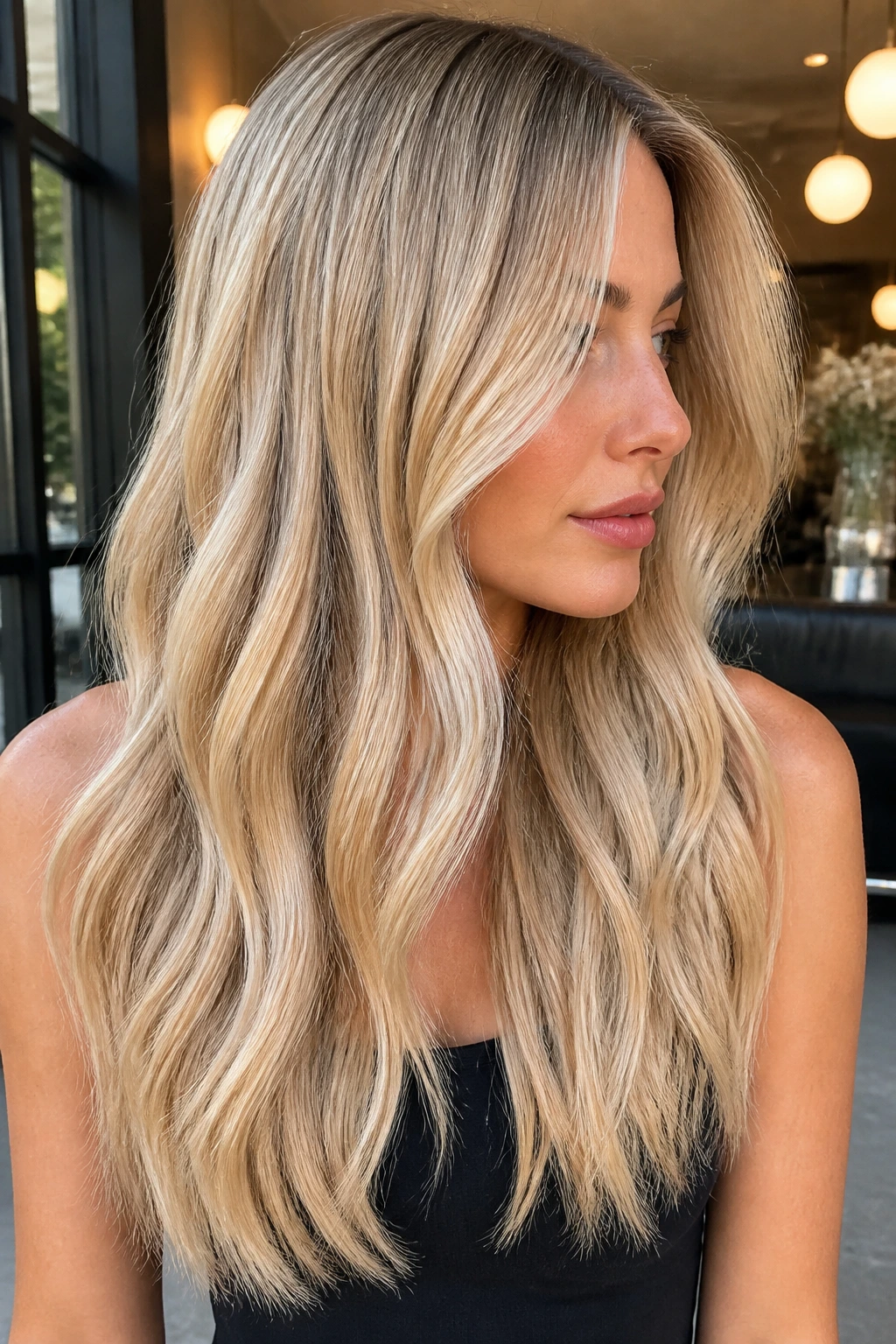
Vanilla cream balayage sits in that soft neutral-blonde zone that flatters thick hair when you want lightness without a yellow cast. It’s creamy, not stark, and that matters once the hair gets dense.
Ask for hand-painted brightness through the ends and a few face-framing pieces, then tone it toward beige with a hint of warmth rather than paper-white. Thick hair shows creamy tones well because the layers catch them at different angles. The finish looks soft, but still lifted.
26. Smoky Bronde Melt
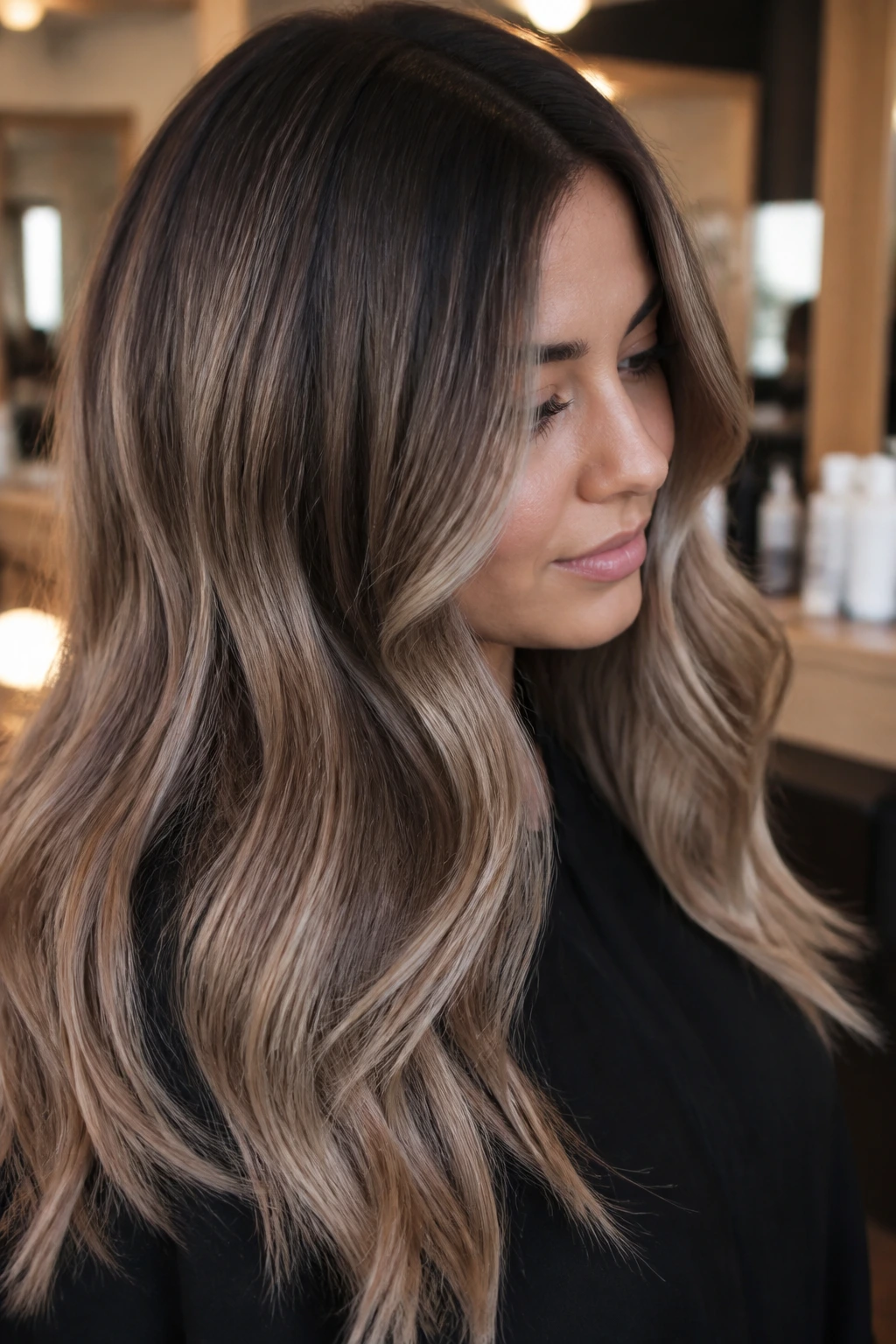
Smoky bronde is what happens when brunette and blonde stop arguing. The transition is gentle, but the overall effect still has enough depth to hold up on thick hair.
This is a smart option if your base is between dark blonde and light brown and you want the grow-out to be easier. Ask for a darker root zone, a neutral midtone, and lighter ends that stay smoky rather than gold. Thick hair benefits from this kind of melt because the color shift gives the cut movement even when the styling is simple.
27. Cherry Cola Peekaboo
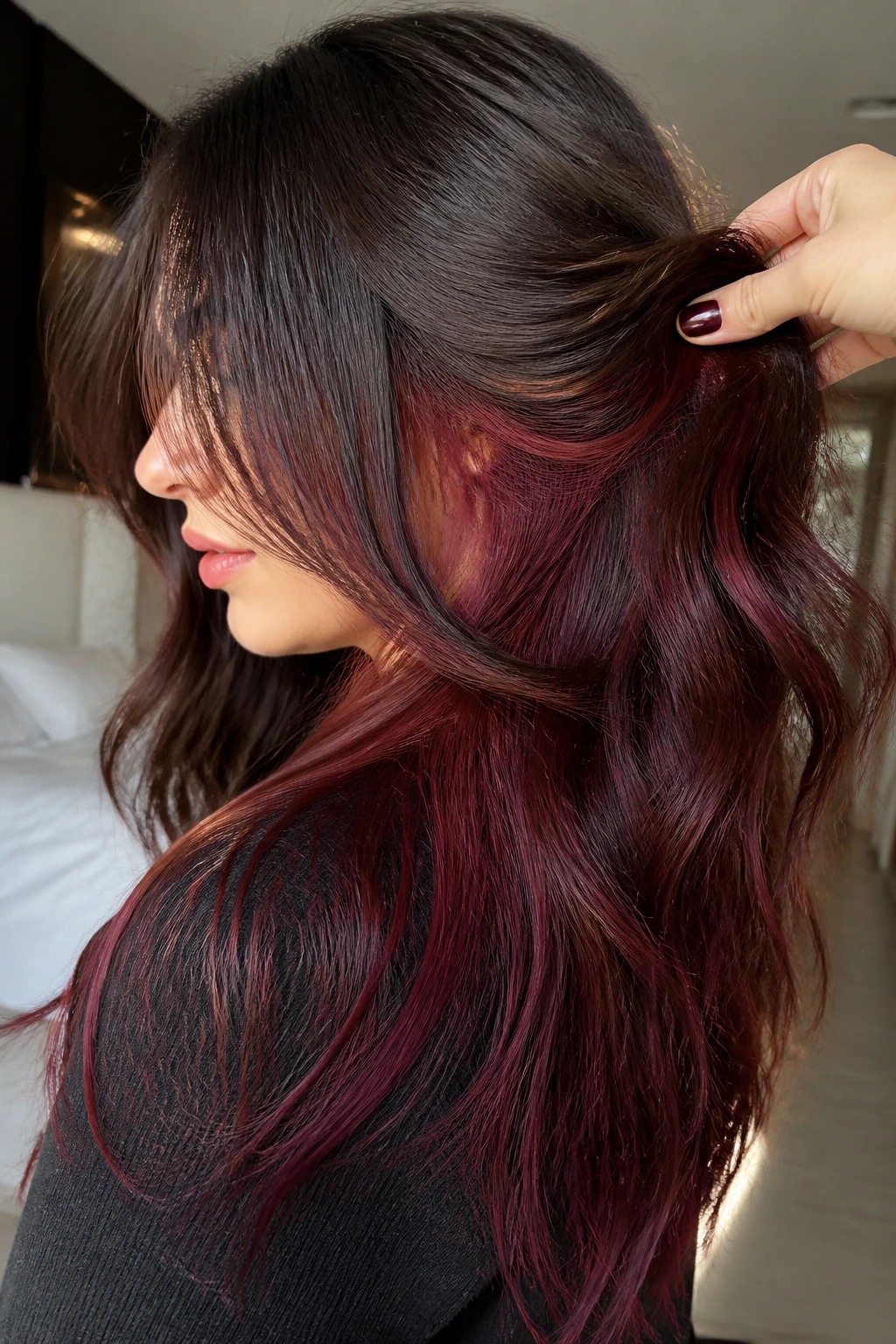
Cherry cola peekaboo color sits hidden beneath the surface and flashes burgundy-red when the hair swings. Thick hair is perfect for it because the color can stay tucked under the outer layer without disappearing completely.
The best placement is under the crown, around the nape, and along a few side panels. Keep the red rich and dark rather than neon. The effect is more sophisticated when the shine is deep and winey, not bright. It’s a good choice if you want something playful but don’t want the entire head shouting.
28. Golden Caramel Carving
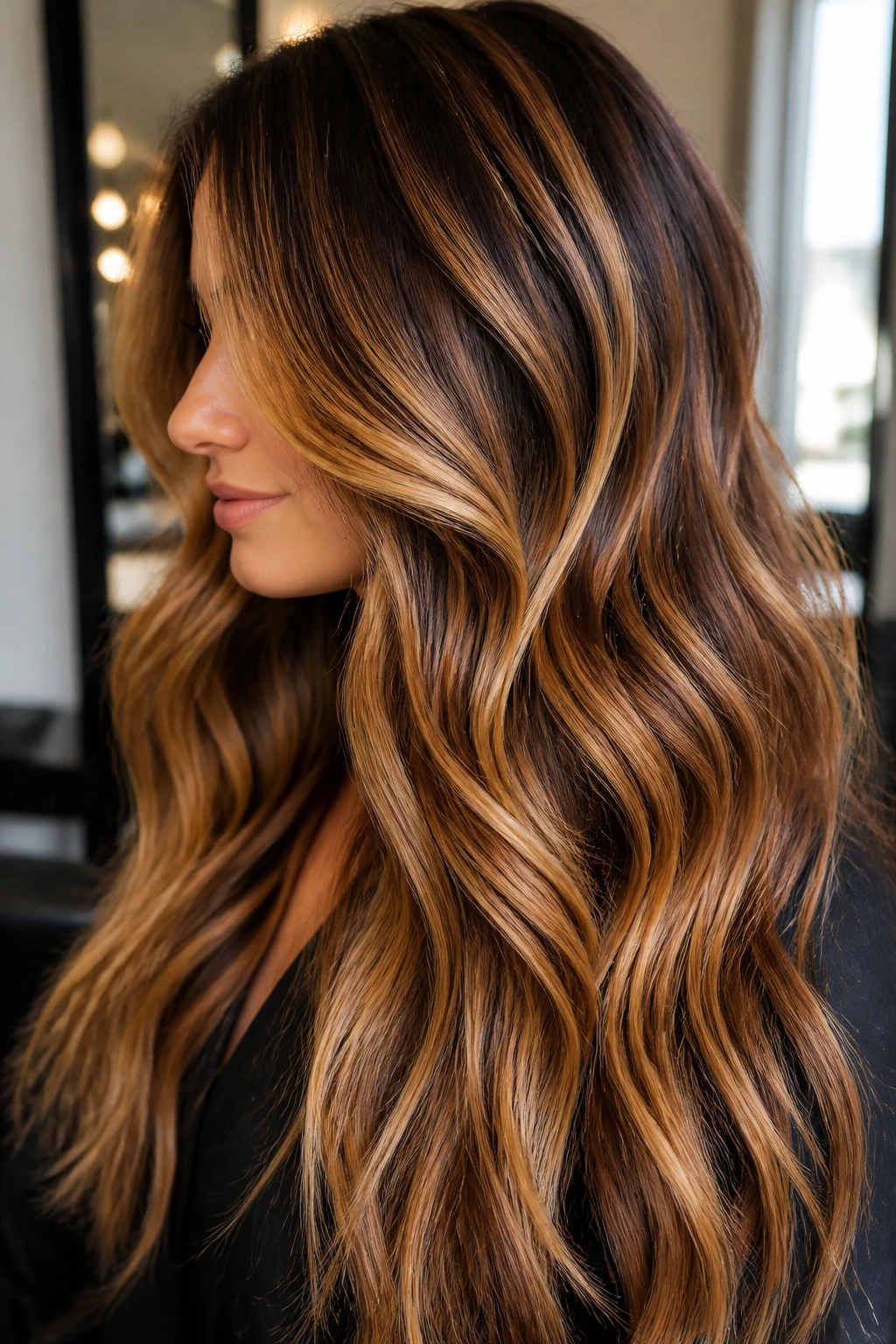
Carving highlights are broader, sliced pieces cut through thicker sections so the light catches the shape of the hair, not just the surface. Golden caramel is the warm, glossy version of that idea.
This look is especially useful on heavy layered cuts where delicate weaving would vanish. The carved pieces should be wide enough to show from root to ends, with a few lighter points near the face and crown. Thick hair doesn’t need every strand highlighted. It needs the right ones highlighted.
29. Icy Champagne Contrast
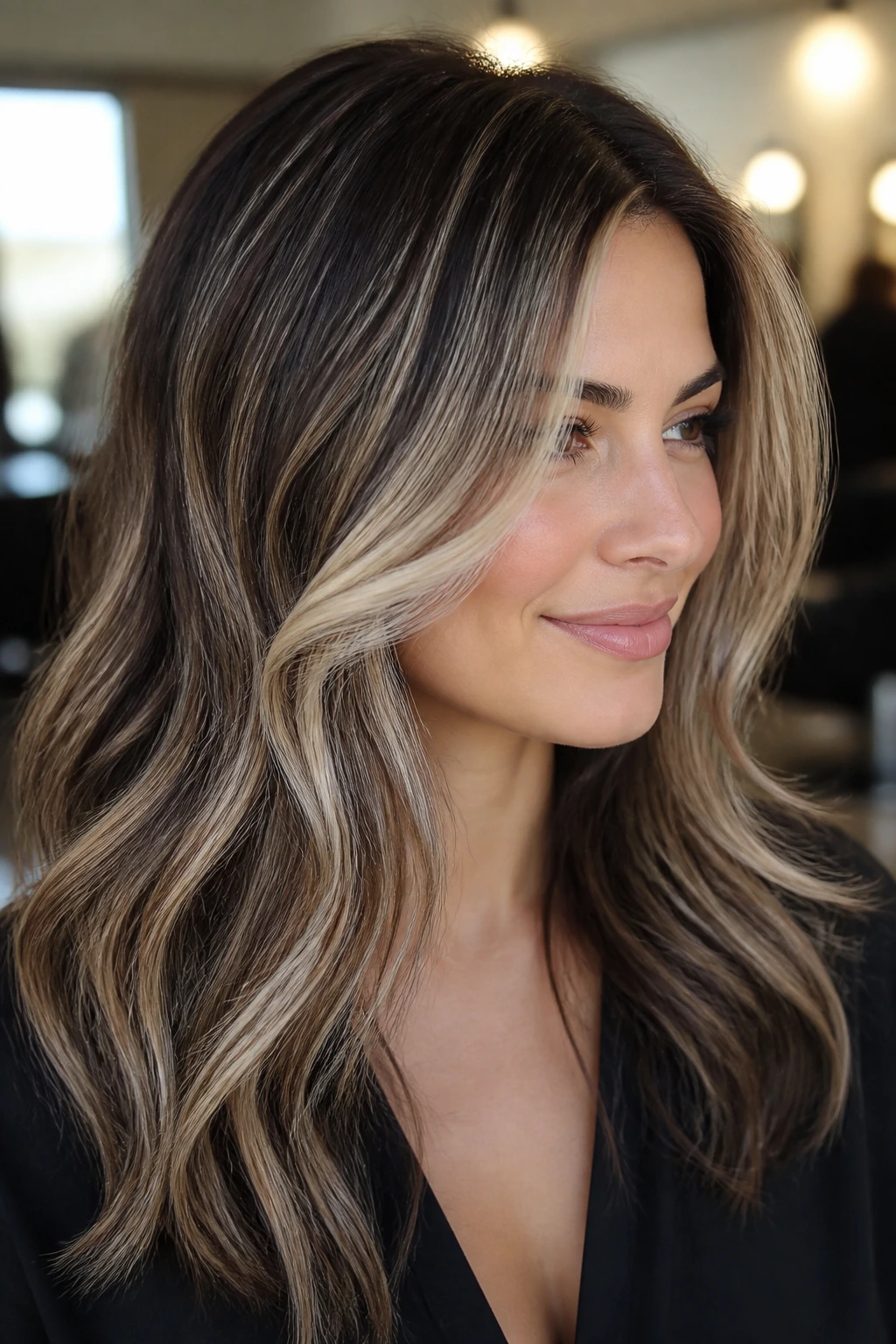
Icy champagne is brighter than beige and softer than platinum, which makes it one of the better cool-toned choices for thick hair that needs lift without a bleach-blonde shock.
Keep the base neutral or slightly dark, then place champagne pieces where the hair naturally exposes itself: around the front, through the top layer, and in a few undercut sections if the haircut has them. Thick hair carries icy contrast well because the shape stays full even when the ends are light.
30. Chocolate and Hazelnut Slices
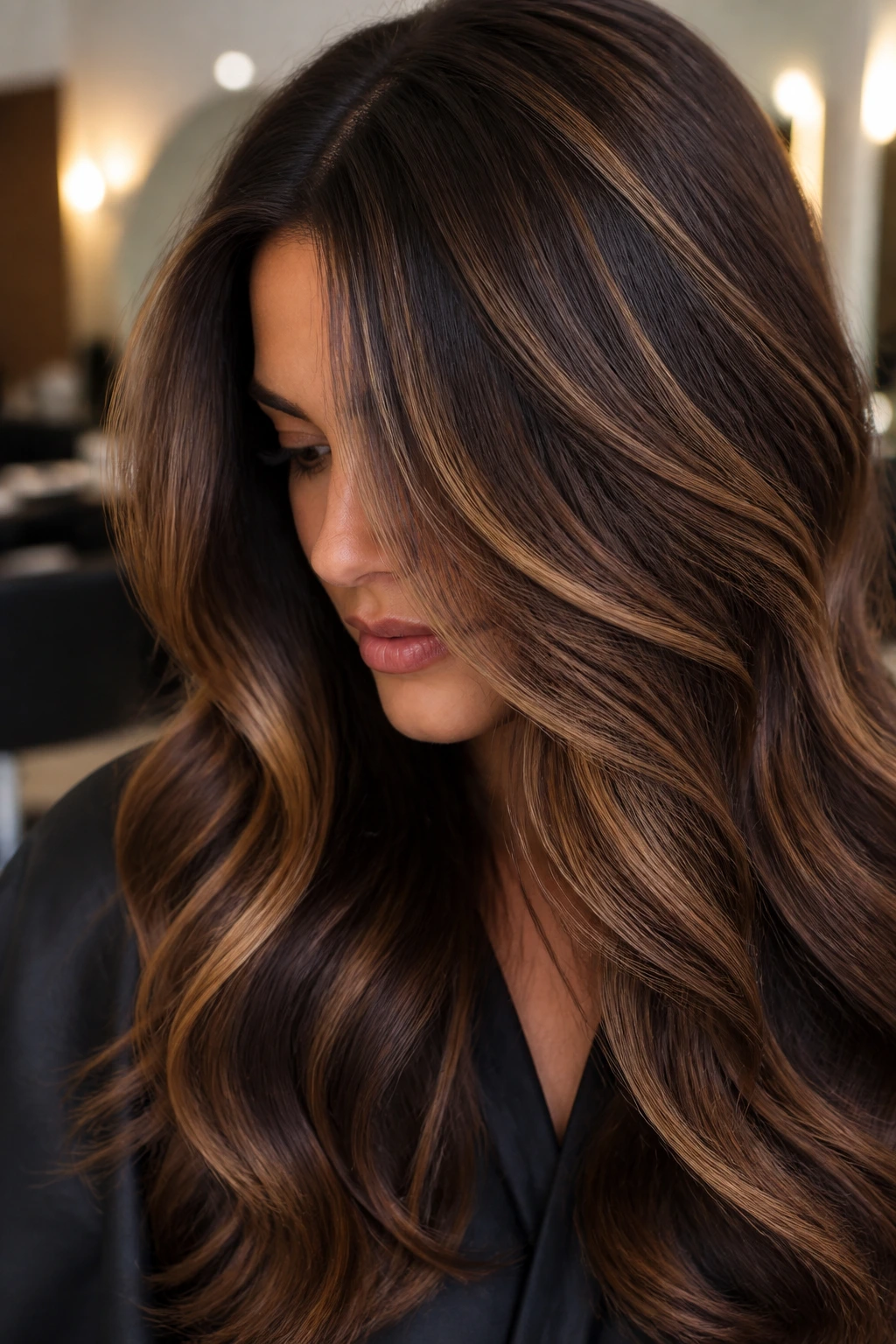
Chocolate and hazelnut is basically dimensional brunette at its most polished. The chocolate base keeps the head from looking hollow, and the hazelnut slices add just enough light to show movement.
This is a good fit for thick hair that wants richness more than blonde. Ask for carved slices through the surface and a few lighter pieces around the sides. It’s cleaner than all-over caramel, and on dense hair that difference matters. The hair reads as shiny, not busy.
31. Warm Copper Money Piece
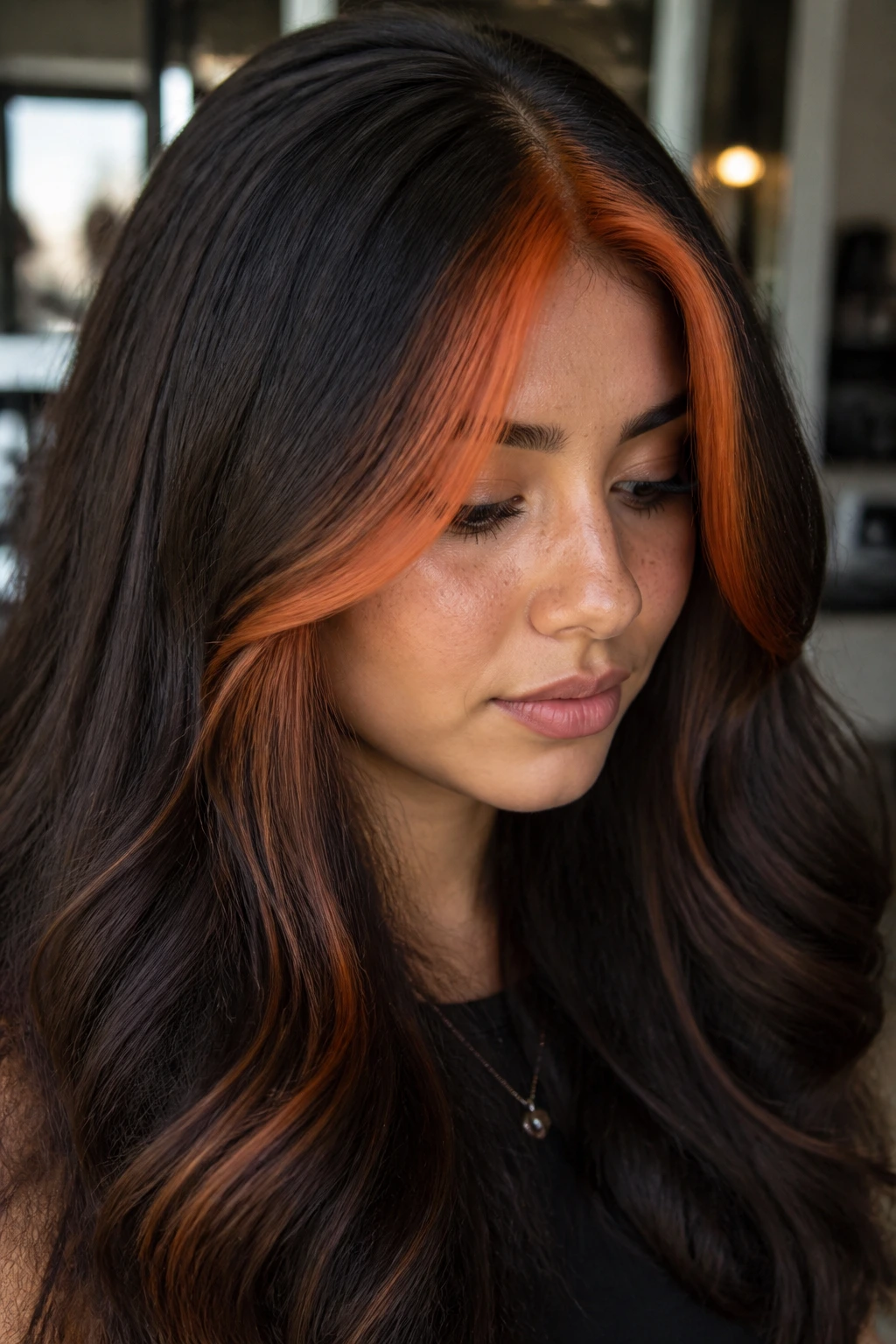
A warm copper money piece is the brighter, moodier cousin of the standard blonde front frame. On thick hair, it can be a knockout because the color has enough body behind it to stay strong.
Keep the copper concentrated at the hairline and fringe area, then let it fade into deeper brunette or auburn lengths. That contrast gives the face a sharper outline and makes the whole style feel intentional. If your thick hair holds warmth well, this one can stay vivid longer than a pale blonde frame.
32. Taupe Gloss Highlights
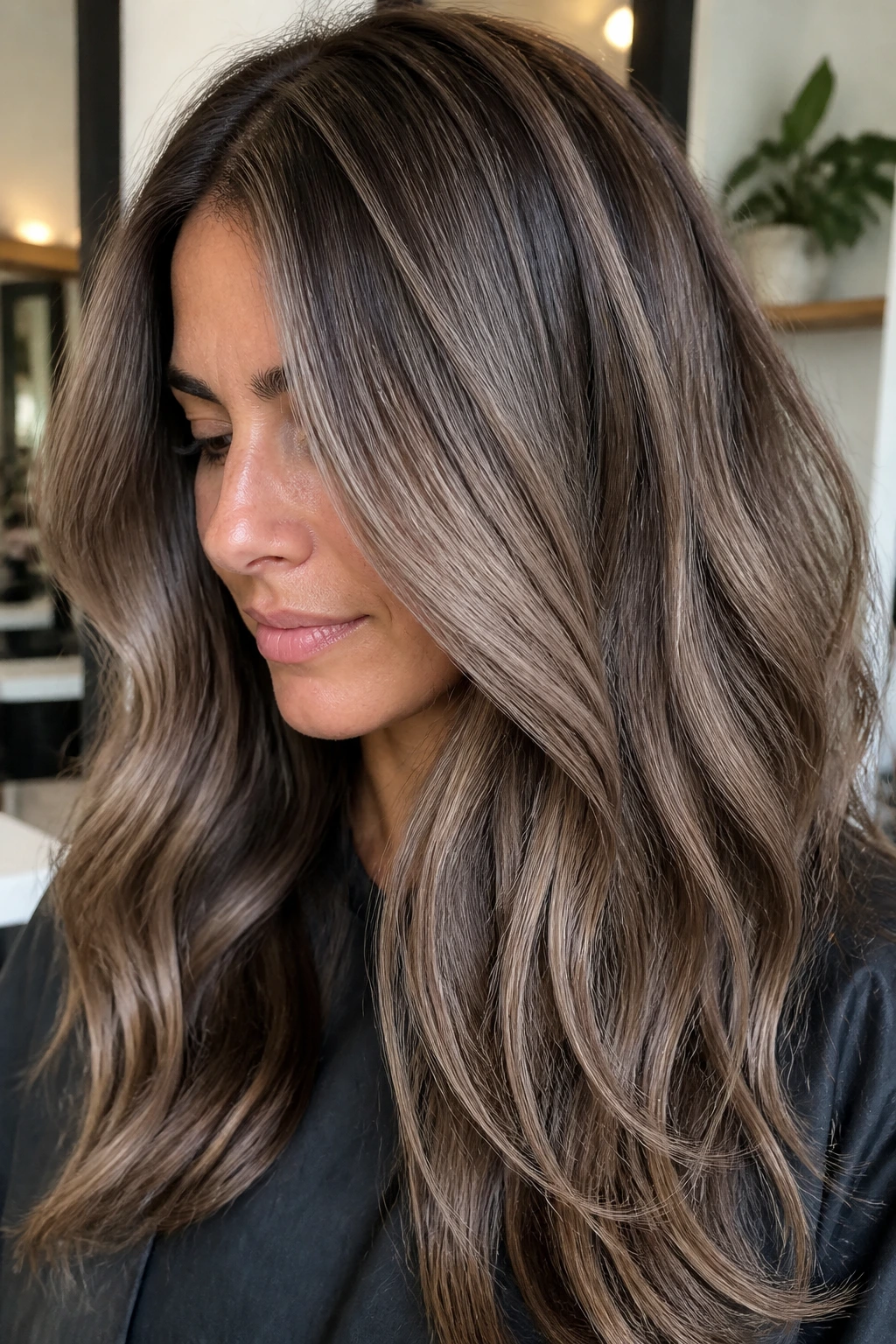
Taupe gloss highlights are the answer when you want dimension without obvious stripes. Think cool beige with a hint of brown and gray, all sitting under a glossy finish.
This is a clever move for thick hair that can look too warm or too brassy after lightening. A taupe gloss over highlights softens the contrast and makes the whole head feel more expensive, for lack of a better word. On denser hair, the cool-neutral tone helps the layers separate visually instead of clumping together.
33. Dimensional Rooty Blonde
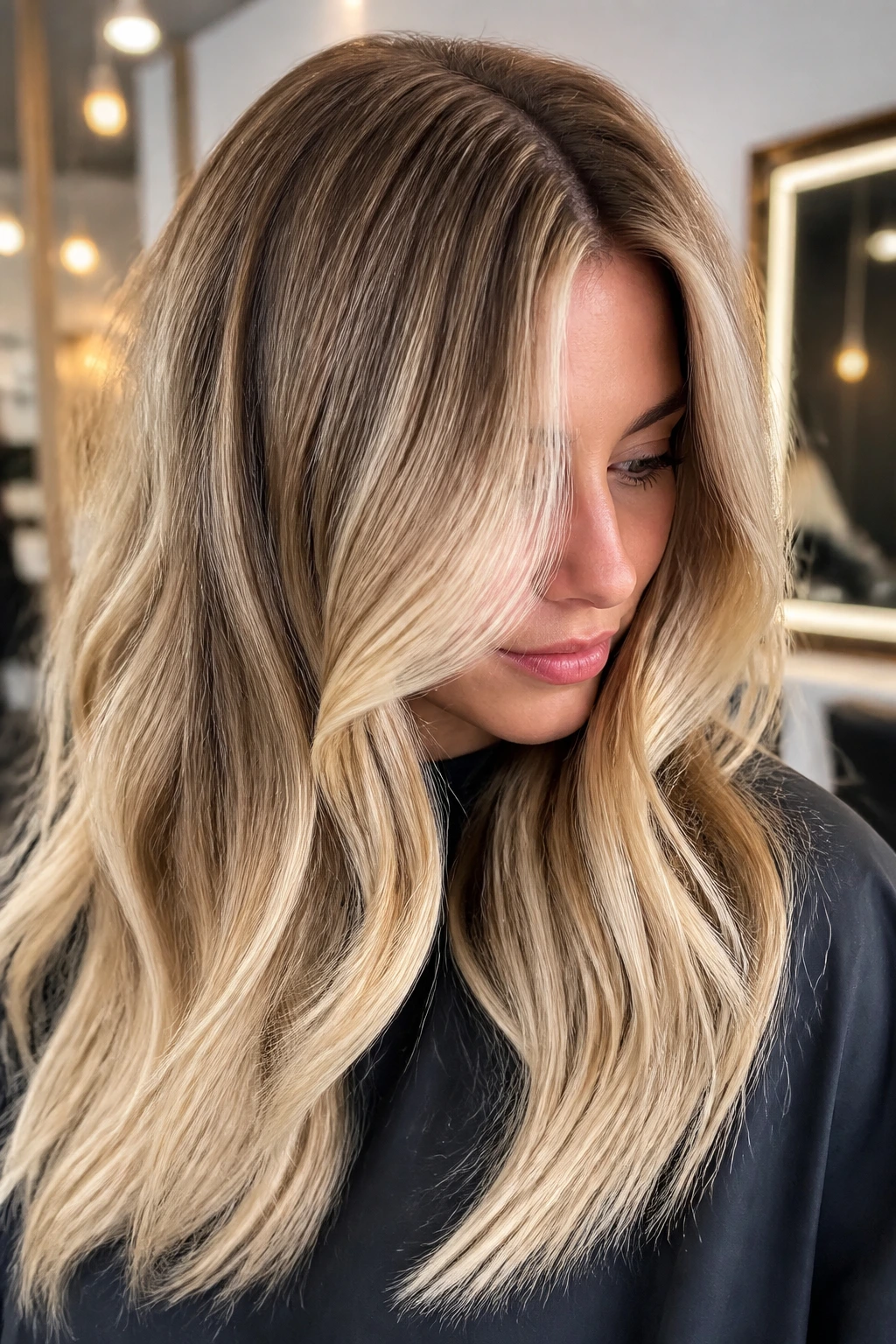
Rooty blonde is a bluntly practical choice, and I mean that as praise. Thick hair grows fast enough that a clean grow-out matters, and leaving a deeper root buys you time.
Ask for a darker shadow at the root, then bright blonde through the midlengths and ends. The contrast should look softened, not stripey. Thick hair wears rooty blonde better than fine hair because the density keeps the finish from looking flat at the scalp. It gives you brightness with a little breathing room.
34. Bronze-to-Ash Blend
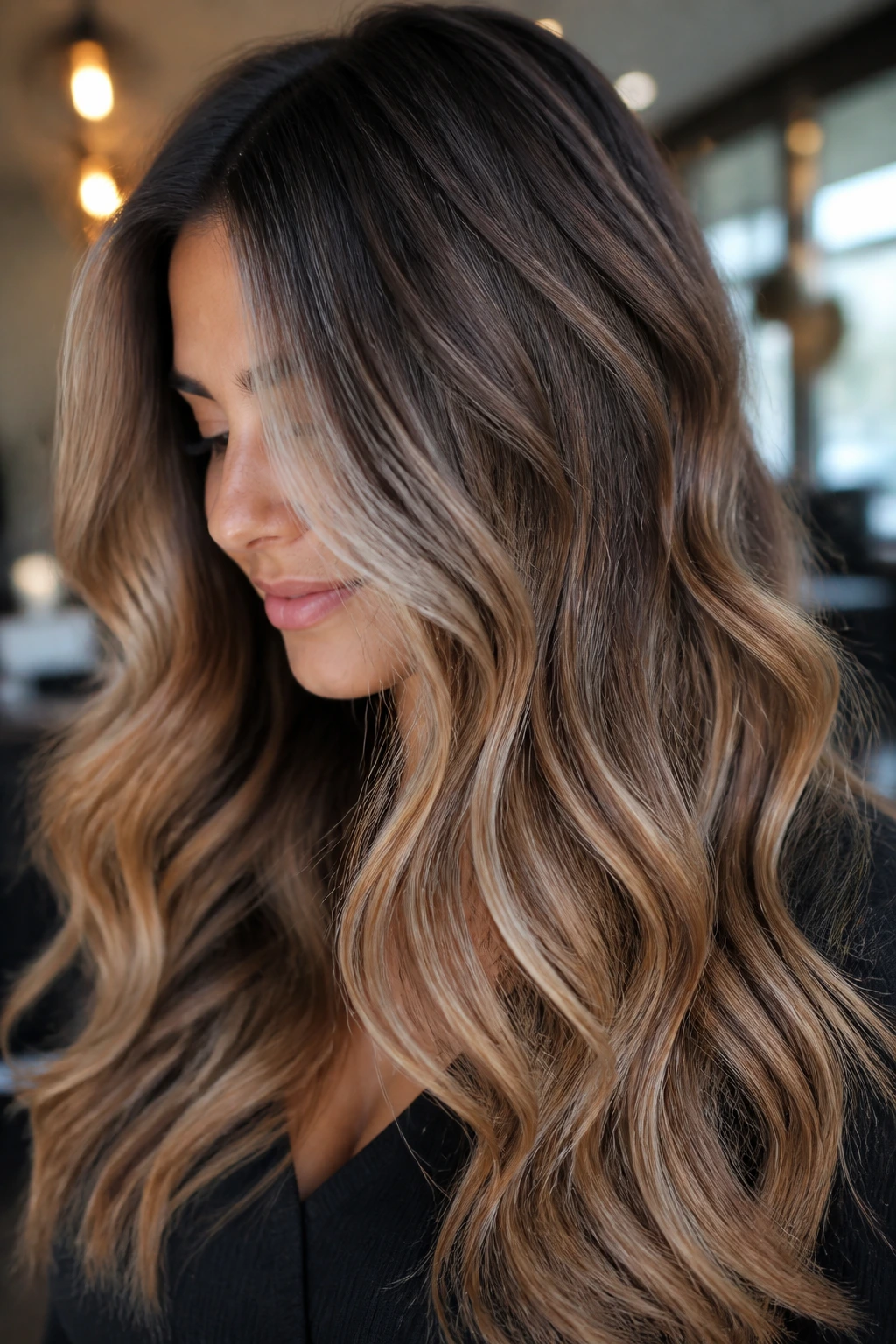
Bronze-to-ash blends warm and cool in one head of hair, which sounds risky until you see how well thick strands hold the transition. The warmer bronze keeps the color alive; the ash keeps it from drifting orange.
This works nicely on brunette bases that need both shine and control. The lighter pieces can lean bronze around the ends, then shift cooler near the face or crown. Thick hair benefits from that kind of tonal movement because it mirrors the way the hair naturally catches light in different sections.
35. Mahogany Veil
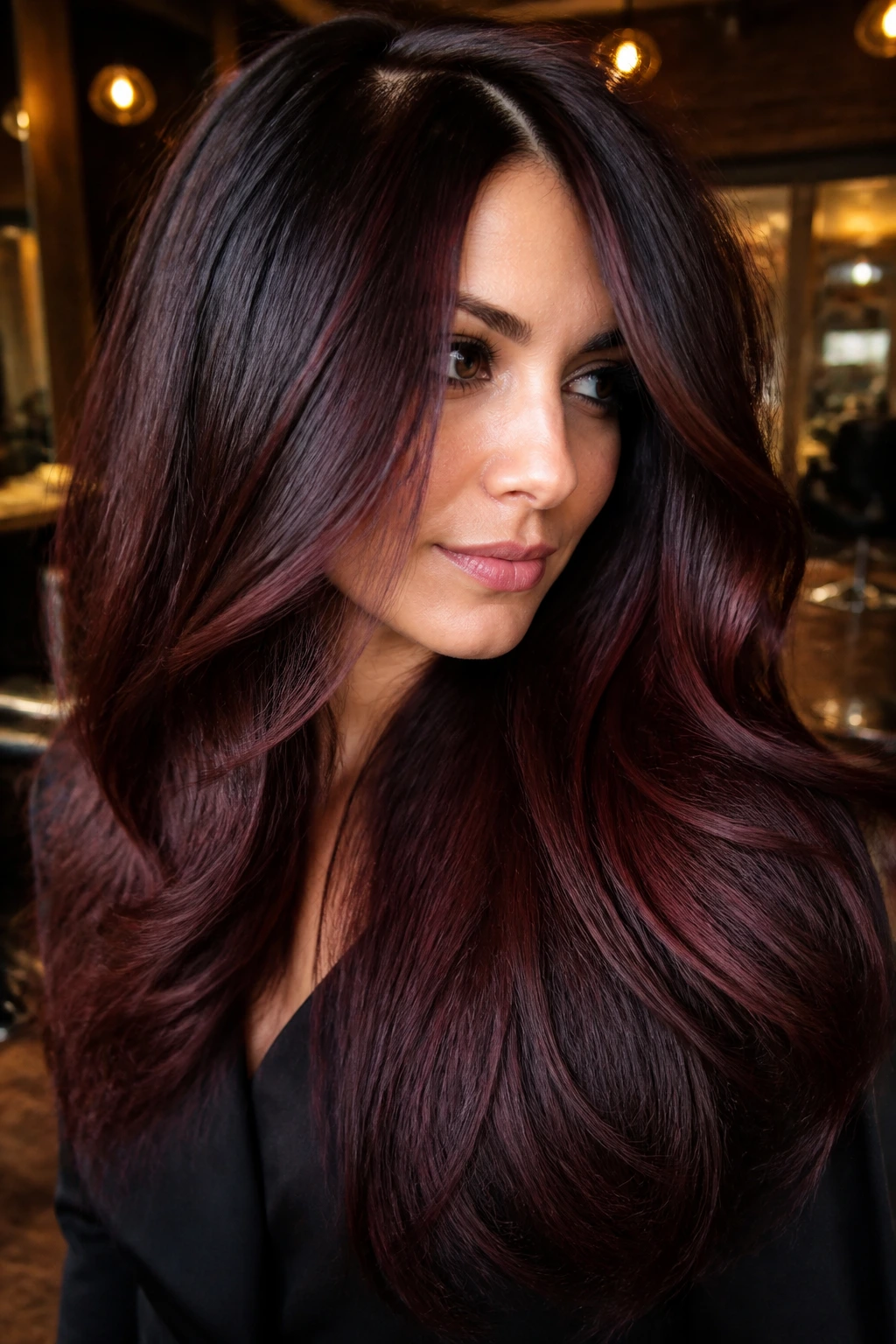
Mahogany is one of those shades that can disappear if it’s used too thinly. On thick hair, though, a mahogany veil reads like depth with a wine-colored edge.
This is a strong choice if you want to stay dark but still change the mood of the hair. Ask for a transparent glaze or soft veil over the midlengths and ends, not a solid block of red. Thick hair can hold that translucent richness and still look full, which is the whole point.
36. Soft Platinum Nape Panels
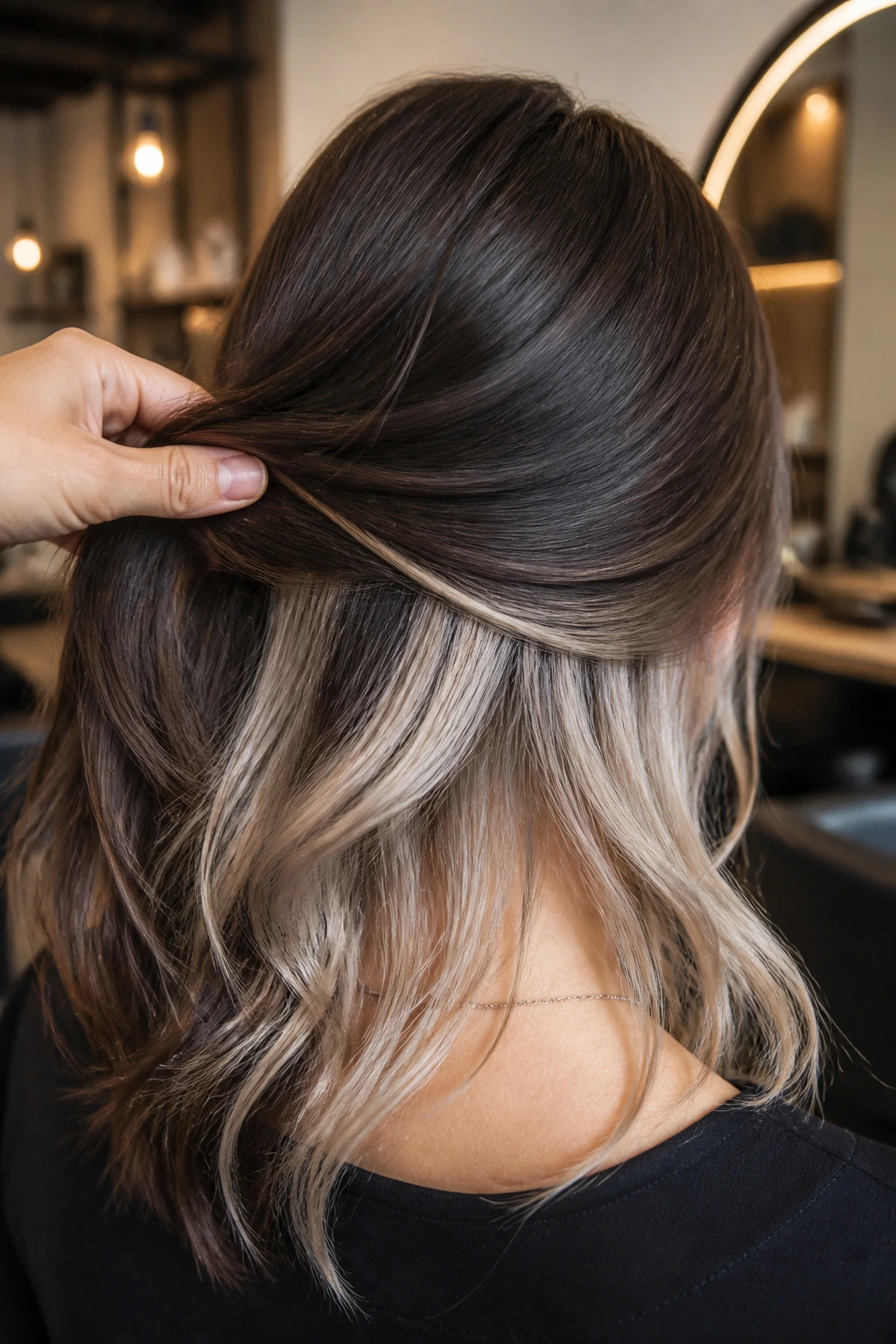
Soft platinum nape panels are hidden brightness with a little attitude. The color lives near the neckline and lower back sections, where thick hair usually keeps its secrets.
The best part is the reveal. Wear the hair down and the panels stay tucked away; pull it into a ponytail or claw clip and they show up like a surprise. Ask for clean platinum but keep the tone soft, not razor-bright. On thick hair, hidden light works because there’s enough bulk to keep it from looking sparse.
37. Sunlit Beige Ribboning
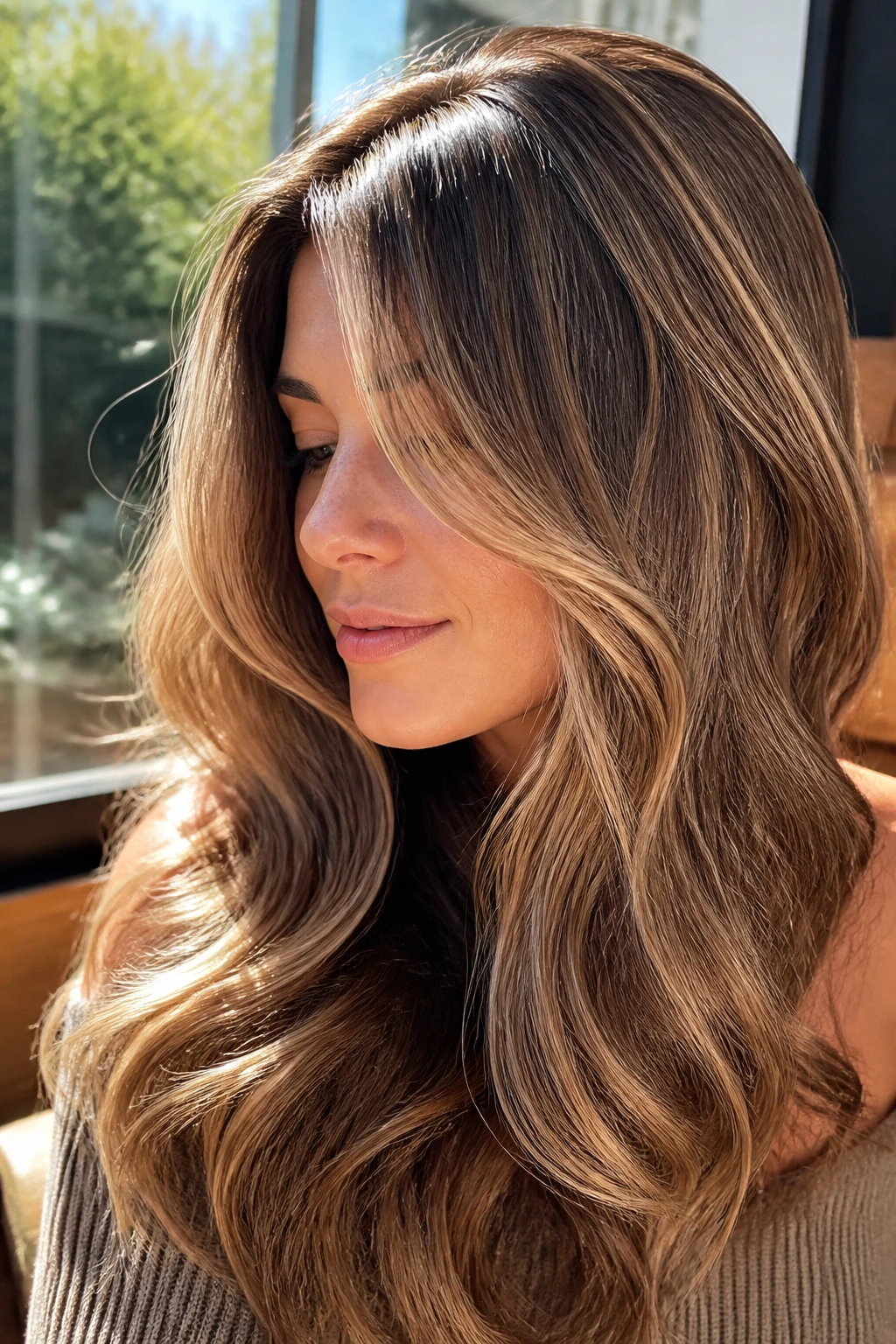
Sunlit beige ribboning is the polished version of “I want my hair to look lighter, but not obviously colored.” Beige is the middle road that thick hair handles well when the highlights need to feel natural.
Place the ribbons through the top layers and outer sides, then let a few pieces drop into the interior so the color isn’t only surface-deep. The result looks like real light hit the hair in sections. On thick hair, that scattering keeps the style from turning into a single blond sheet.
38. Espresso-to-Honey Spiral Highlights
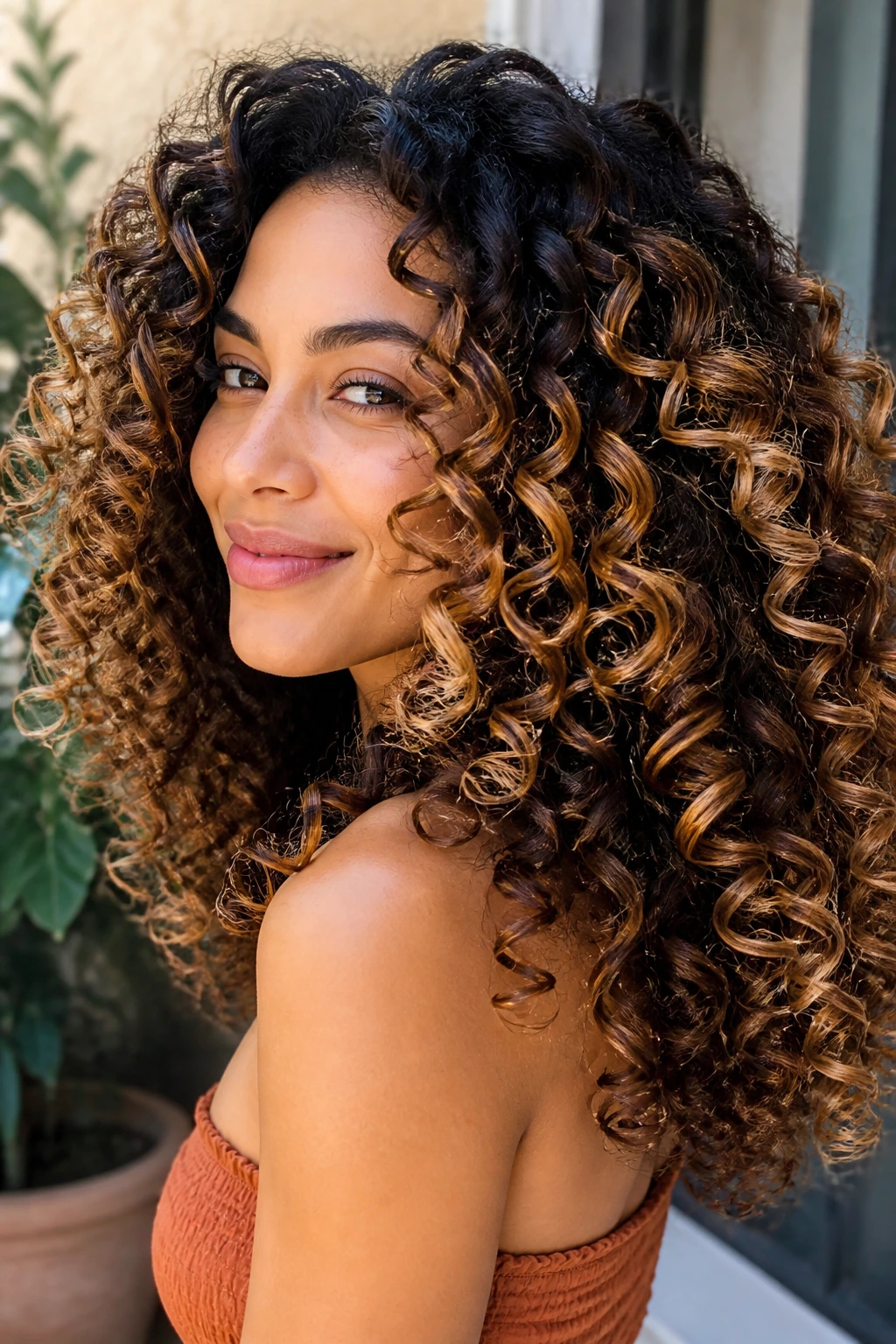
Spiral highlights are made for thick curls and strong waves because the placement follows the bend of the hair. Espresso at the root and honey through the curl path gives you contrast that actually moves.
Ask the colorist to place the lighter pieces where the curls open, not randomly across the section. That’s the difference between highlights that disappear inside dense texture and highlights that dance through it. Thick curly hair can hold this look beautifully because each curl gets its own little ribbon of light.
How Thick Hair Changes the Highlight Conversation
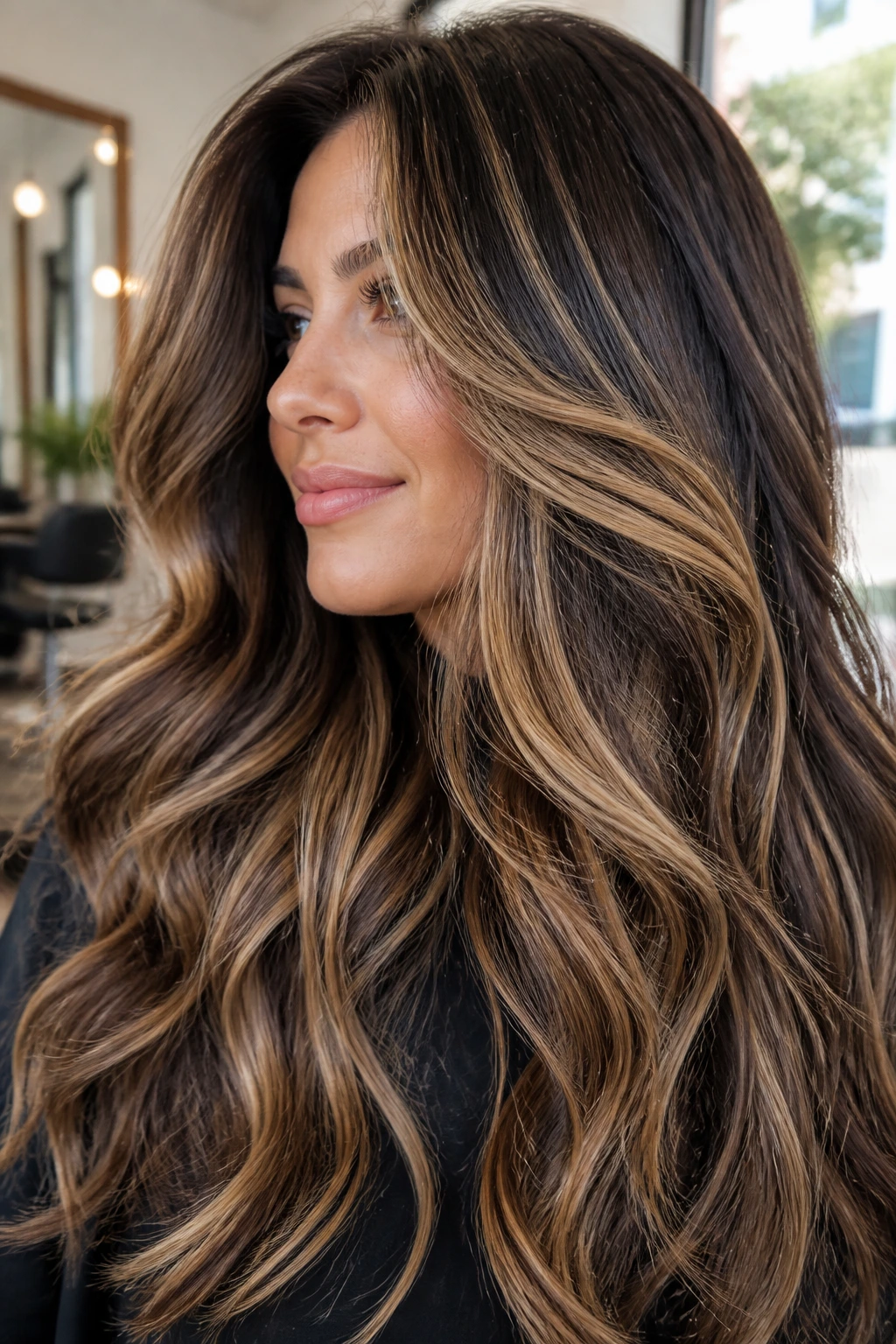
Thick hair is not just “more hair.” It behaves differently under light, under bleach, and under styling heat. That matters more than people admit in the salon chair. Dense strands often hide fine weaving, so the highlight pattern needs enough size or density to show through the top layer. Otherwise the color looks lovely in foil and vanishes once the hair falls.
The other thing thick hair does well is hold contrast. A deeper root, a cooler lowlight, or a stronger face frame doesn’t usually overwhelm it the way it can overwhelm fine hair. That’s why so many of the strongest ideas above rely on ribbons, slices, panels, and shadows rather than a dusting of tiny brightness. Thick hair needs the color to read from across the room, not only in the mirror.
The Tools and Products That Make Thick-Hair Color Behave
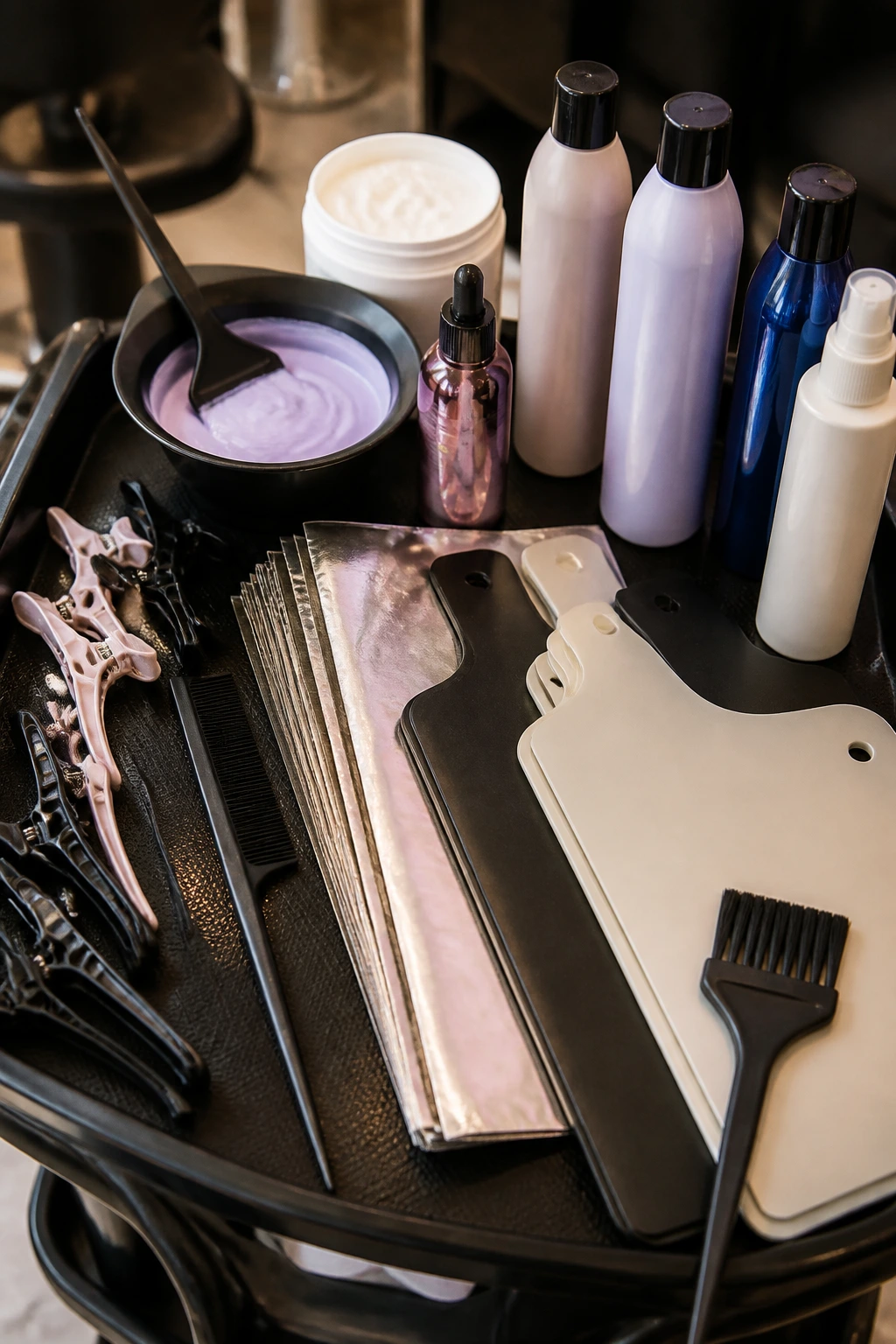
A good color result starts with the right tools on the chair, not only the shade formula. Thick hair eats time, product, and patience. Skimp on any of those and the result turns patchy or under-lifted.
- Sectioning clips: Thick hair needs clean, small sections so the color reaches the interior instead of sitting on the surface.
- Tail comb: Useful for neat slices, tight weaves, and controlled face-framing placement.
- Foils or balayage boards: Foils help with lift and saturation; boards keep hand-painted sections from sliding around in dense hair.
- Color brush and bowl: A wider brush makes saturation faster, which matters when the hair is packed.
- Lightener and toner: The lightener creates the lift; the toner keeps the shade in the caramel, ash, beige, copper, or champagne lane you actually want.
- Bond builder: Thick hair can still feel rough after lightening, so a bond-supporting additive is worth the extra step.
- Purple or blue shampoo: Choose purple for blonde brass, blue for orange-brown warmth that skews too copper.
- Heat protectant: Styling heat can blur a fresh highlight faster than people think.
How to Ask for the Right Tone, Width, and Placement
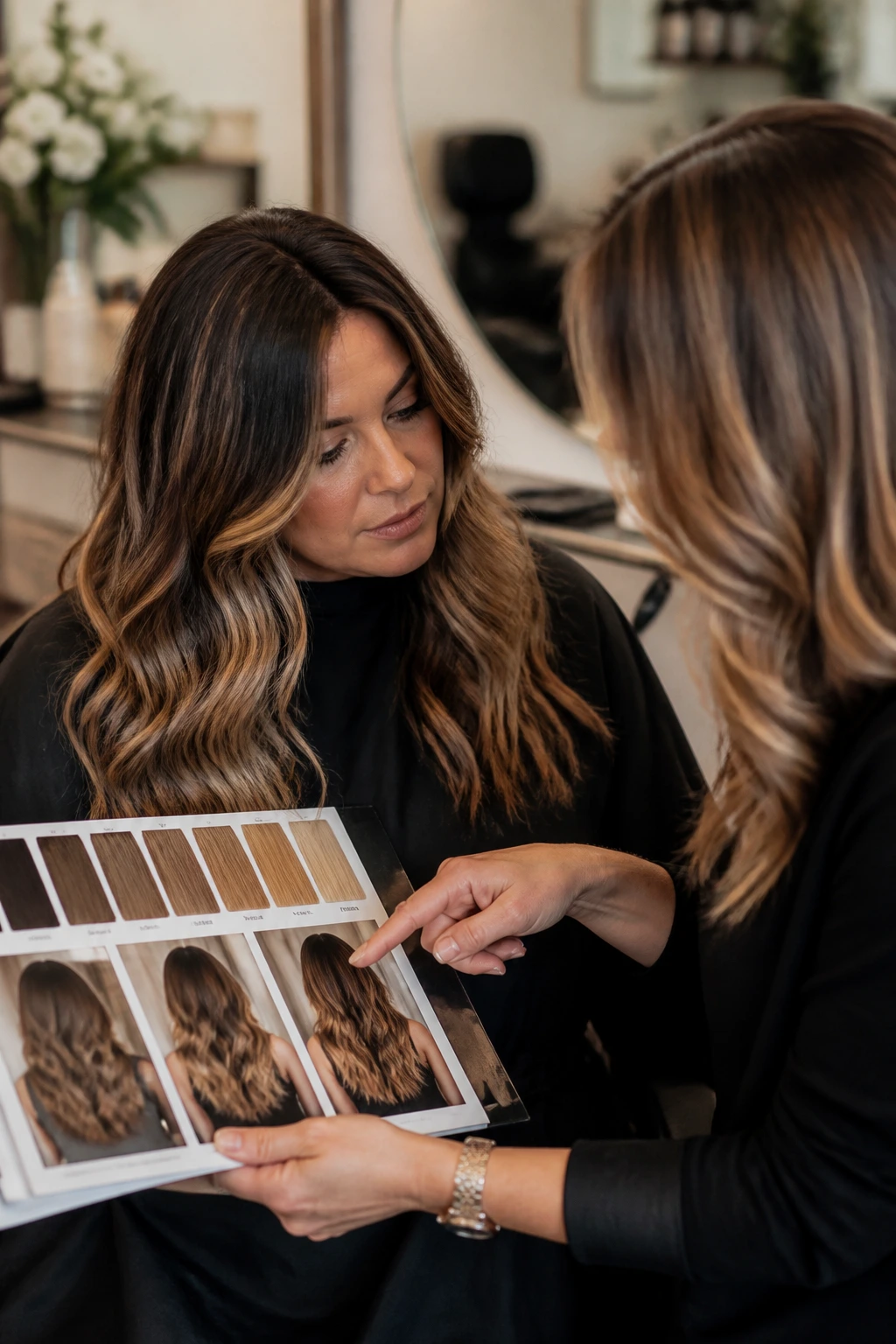
The easiest way to miss the mark is to walk in saying “I want highlights” and leave the rest to chance. Thick hair needs a bit more direction. Bring pictures, yes, but bring the right kind: photos with similar density, similar length, and similar base color to your own. A platinum bob on fine hair tells your colorist almost nothing about what will happen on a long, heavy mane.
Be specific about width and brightness. Do you want fine baby pieces, chunky ribbons, or a mix? Do you want the front brighter than the back? Do you want the interior lit up or kept deep? Those choices change the whole result. Tone matters too. Beige is softer, ash is cooler, honey is warmer, and copper is louder. Pick the family first, then let the stylist shape the details.
How to Style These Highlights So They Show Up
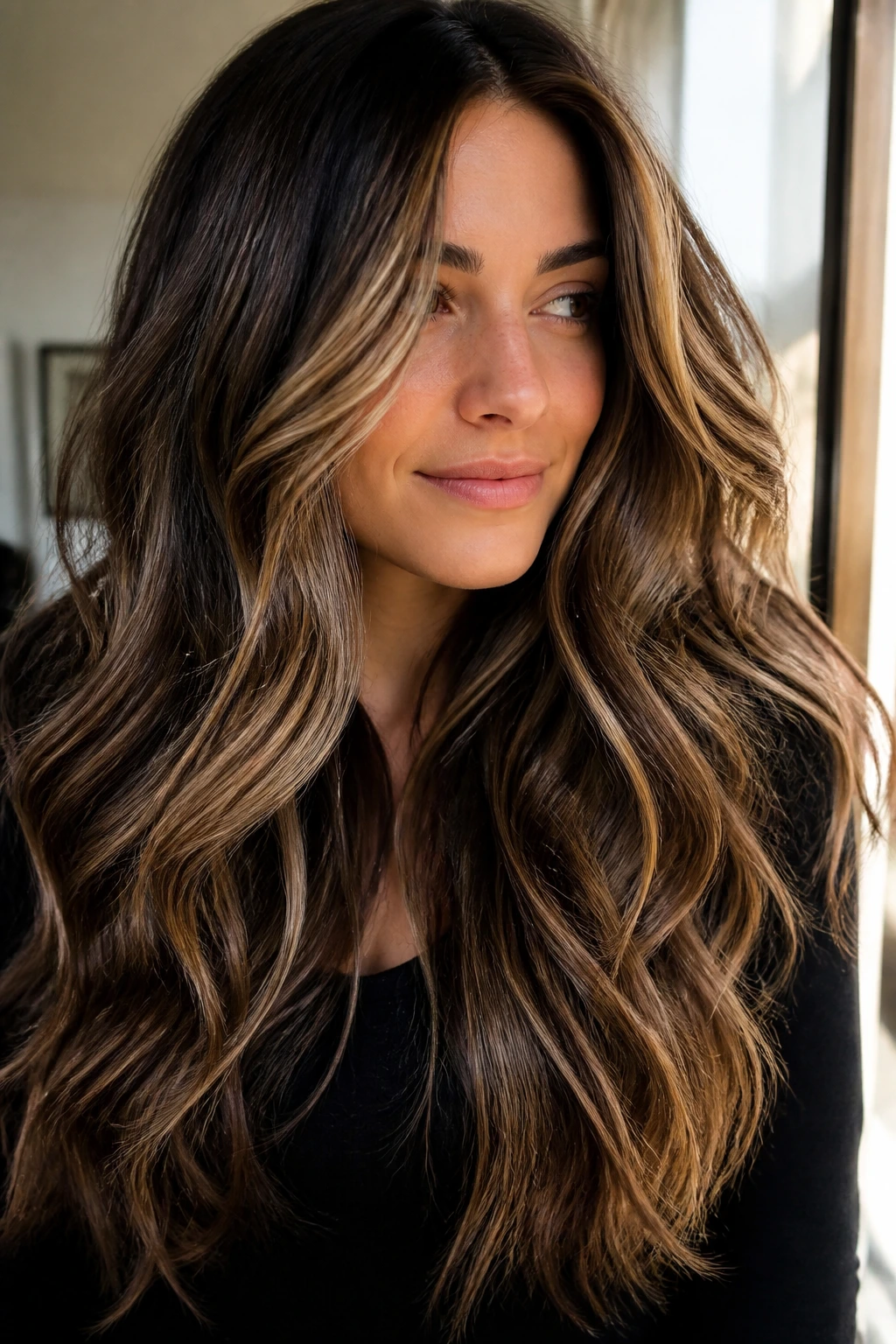
A highlight job on thick hair can look twice as good or half as good depending on the styling. Loose waves show ribbons, a round-brush blowout reveals contour, and a half-up style exposes the underlayer where a lot of the hidden dimension lives.
- Blowout: Use a medium round brush and direct the front sections away from the face so the money piece and contour pieces sit in view.
- Air-dry: Scrunch in a light curl cream or mousse if the hair is naturally wavy; the highlights bend around texture instead of disappearing into it.
- Parting: A deep side part throws more light across one side and makes face-framing pieces stand out. A center part shows symmetry and works better for halo and contour looks.
- Updos and clips: Claw clips, low buns, and half-ups show underlayers, peekaboo panels, and nape highlights that are easy to miss when the hair is worn straight.
One small thing people forget: thick hair often holds shape better on the second day. That’s when a lot of these colors read best. The blowout has settled, the part is less perfect, and the ribbons look like they belong there.
Additional Tips and Color Boosters
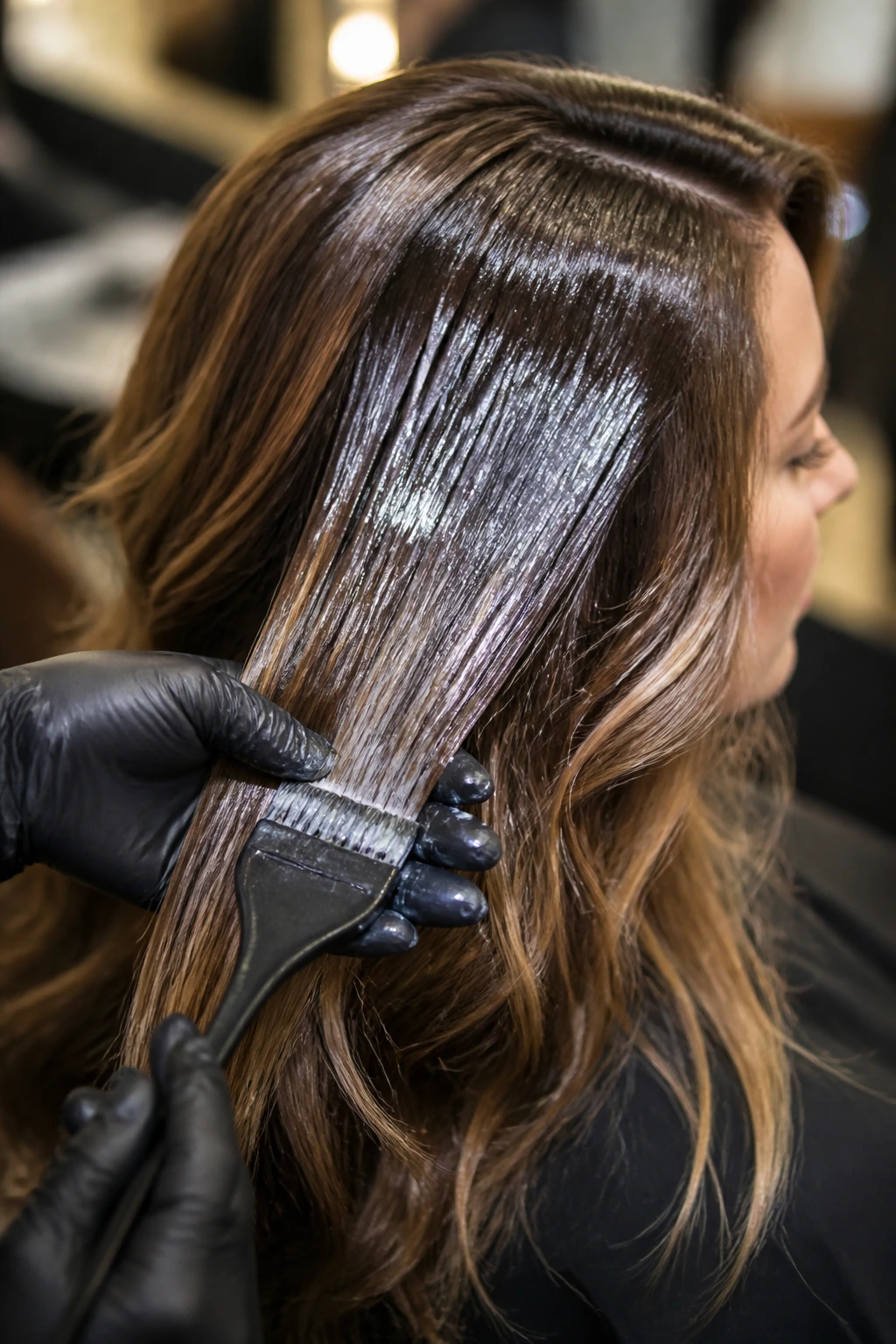
Glossing: A clear or tinted gloss every 4 to 6 weeks keeps caramel, honey, beige, and copper pieces from looking dry. Thick hair can go dull at the ends long before the root looks tired.
Root smudge: If you like brightness but hate obvious regrowth, ask for a softened root shadow. It keeps the highlight from floating on top of the head like a helmet.
Heat discipline: Thick hair usually takes more effort to style, so people go over it with a flat iron too many times. Two passes are enough for most sections. More than that and the shine starts to flatten.
Make the interior count: A lot of people only lighten what they can see from the front mirror. That’s a mistake. Interior ribbons, nape pieces, and lower panels are what stop thick hair from looking like a single wall of color.
For curls: Place highlights where the curl opens, not where the hair lies flat on the head. The color will follow the spiral instead of hiding inside it.
Common Mistakes That Flatten Thick Hair Color
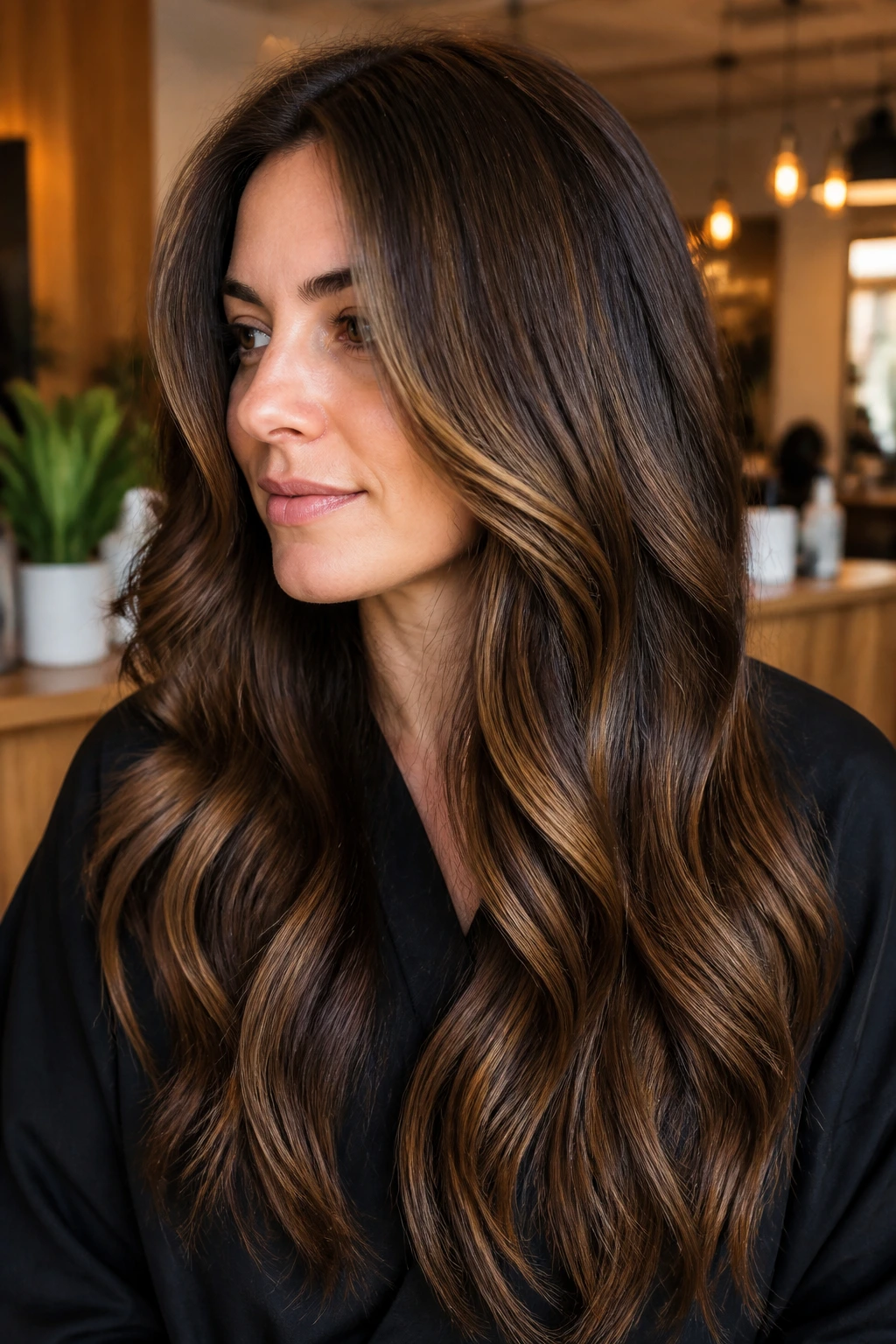
The first mistake is making the highlights too fine. Tiny baby lights can look delicate on paper, then vanish inside dense hair. The fix is wider ribbons, a denser weave, or a few stronger panels around the crown and face so the color can actually be seen.
The second mistake is ignoring the interior. Thick hair often looks dark underneath and bright on top, which reads as heavy, not dimensional. Ask for lowlights or underlights in the inner layers so the hair has shape from every angle.
Another common problem is choosing a toner that fights the base color. Too ash on a warm brunette can turn muddy. Too gold on a cool base can look brassy fast. The toner should support the natural undertone, not wrestle it.
Overusing purple shampoo causes trouble too. If you reach for it every wash, blonde and beige highlights can go flat or violet-gray. Use it sparingly — once every week or two is enough for most people — and follow with a moisturizing mask.
Variations and Adaptations to Try
The Low-Maintenance Grow-Out: Ask for a rooty balayage with softer ends and a shadow at the scalp. It’s the easiest version to live with if you do not want a strict 6-week touch-up schedule.
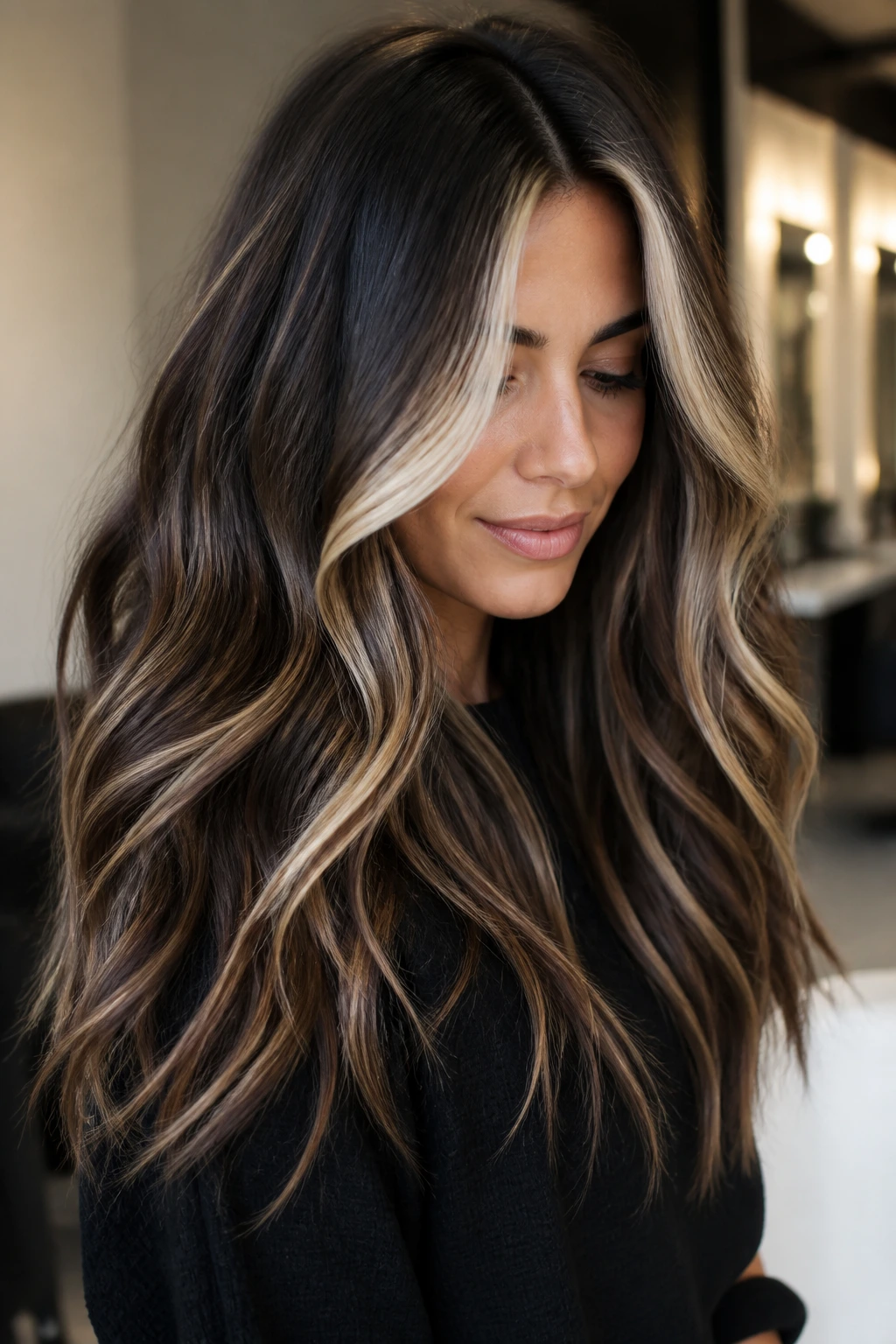
The High-Contrast Statement: Use a money piece, chunky front panels, and a few bold interior slices. Thick hair can carry the contrast without losing body, which is why this looks sharper here than it does on fine hair.
The Curly-Hair Ribbon Map: For curls and coils, place ribbons where the curl opens and keep the foil sections larger. The highlights should move with the spiral, not sit like lines across the curl.
The Gray-Blending Route: Add mushroom brown, taupe, pearl, or silver pieces to soften gray without hiding it. Thick hair can take mixed tones better than a flat dye job, and the result grows out cleaner.
The Warm Brilliance Version: Go caramel, honey, copper, auburn, or bronze if your skin and base already like warmth. Thick hair often holds warm tones beautifully because the depth underneath keeps the color from looking thin.
Keeping the Color Fresh Between Appointments
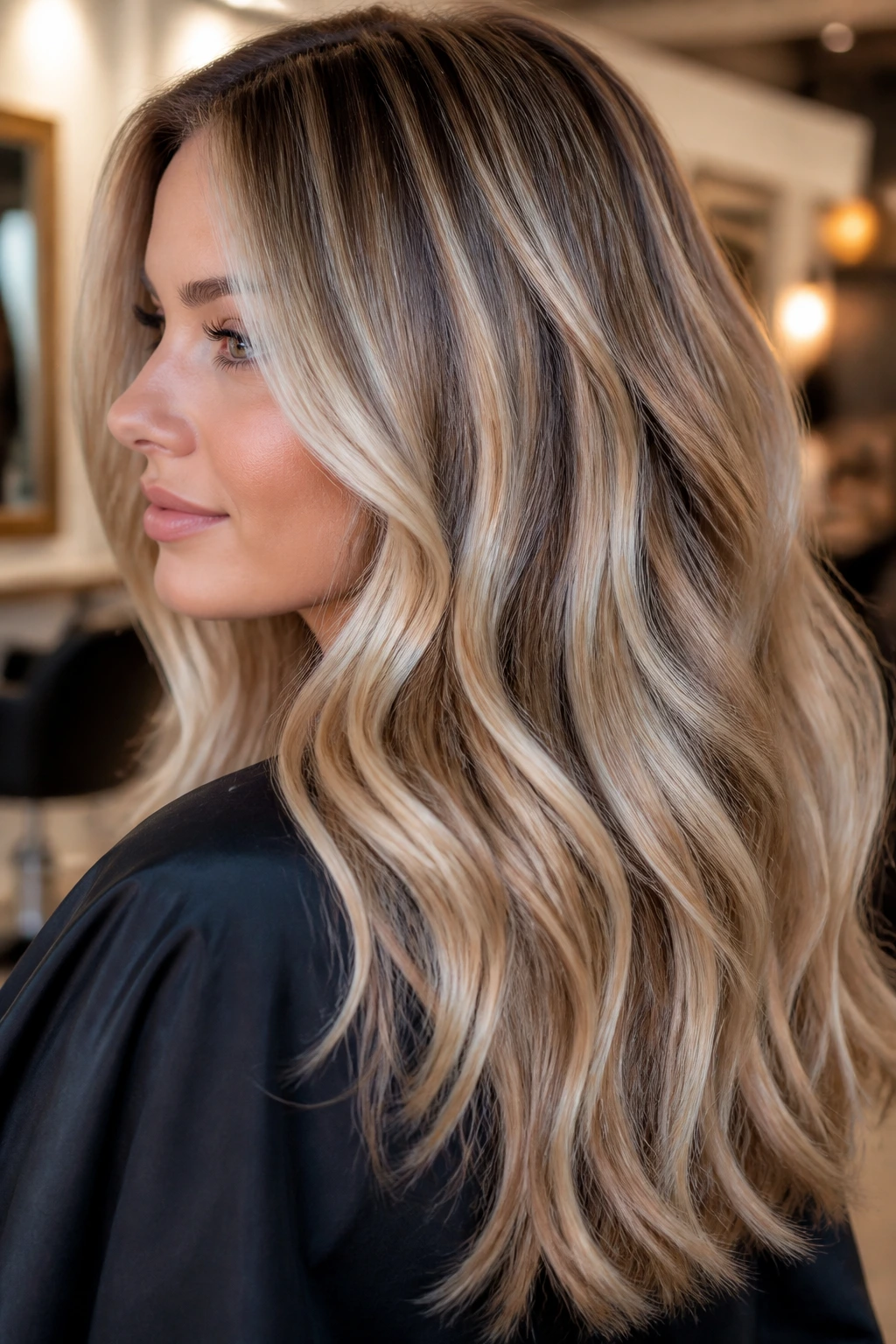
Thick hair can stretch the time between color sessions, but the maintenance still has a rhythm. Blonde and champagne pieces usually need a gloss or toner refresh every 4 to 6 weeks if you want the tone to stay clean. Rooty balayage and shadow-root styles can go longer — often 8 to 12 weeks — because the grow-out is part of the look.
Wash less often if you can, especially with warm caramel or copper highlights. Every wash knocks a little tone out, and thick hair tends to keep product residue in the mids and ends unless you rinse well. Use sulfate-free shampoo most of the time, switch to purple shampoo only when the blonde starts going yellow, and lean on a deep conditioner once a week. If your hair is porous from lightening, a weekly bond treatment helps the ends stay smooth instead of fuzzy.
Heat matters too. Thick hair often needs a blowout, which means heat protection on damp hair and a finishing spray if you use a flat iron or curling wand. If the color is bright on the ends and darker at the roots, that contrast looks best when the finish is shiny. Dry, puffy ends make even a good highlight job look tired.
Frequently Asked Questions
Are highlights or balayage better for thick hair?
Balayage is easier to wear if you want softer grow-out and a more blended surface. Foils are better when you need stronger lift or a brighter result, especially on very dense brunette hair that refuses to lighten evenly.
How many highlights does thick hair need to look dimensional?
More than most people think. Thick hair usually needs either wider ribbons or a higher count of finer pieces so the color shows through the top layer; one or two stray streaks can disappear completely.
Do highlights make thick hair look thinner?
Not if the placement is done well. Strategic light and dark pieces actually create movement and separation, which can make thick hair look lighter and more shaped without reducing the real density.
What’s the best highlight choice for thick curly hair?
Ribboned placement that follows the curl pattern usually wins. Bronze, caramel, honey, and cinnamon shades work well because they show up through the bend of the curl instead of sitting flat on top of it.
Can thick dark hair go blonde in one visit?
Sometimes enough to look bright, but not always to look healthy. Dark, dense hair often needs more than one lightening session if you want a pale blonde that stays shiny rather than fragile.
Why do my highlights look great at the salon and dull at home?
Salon lighting is mercilessly flattering. At home, the fix is often a better blow-dry, a cleaner part, and a gloss refresh rather than more bleach. Thick hair also needs enough movement for the ribbons to show.
What if the highlights turned too brassy?
Use the right shampoo for the problem, not a random purple bottle every day. Yellow brass needs purple, orange brass may need blue, and a toner or gloss is sometimes the cleaner fix.
Should thick hair get lowlights too?
Yes, often. Lowlights stop the color from looking like one bright sheet and help the layers show. On dense hair, that depth is what keeps highlights from floating on top.
Choosing Your Next Shade
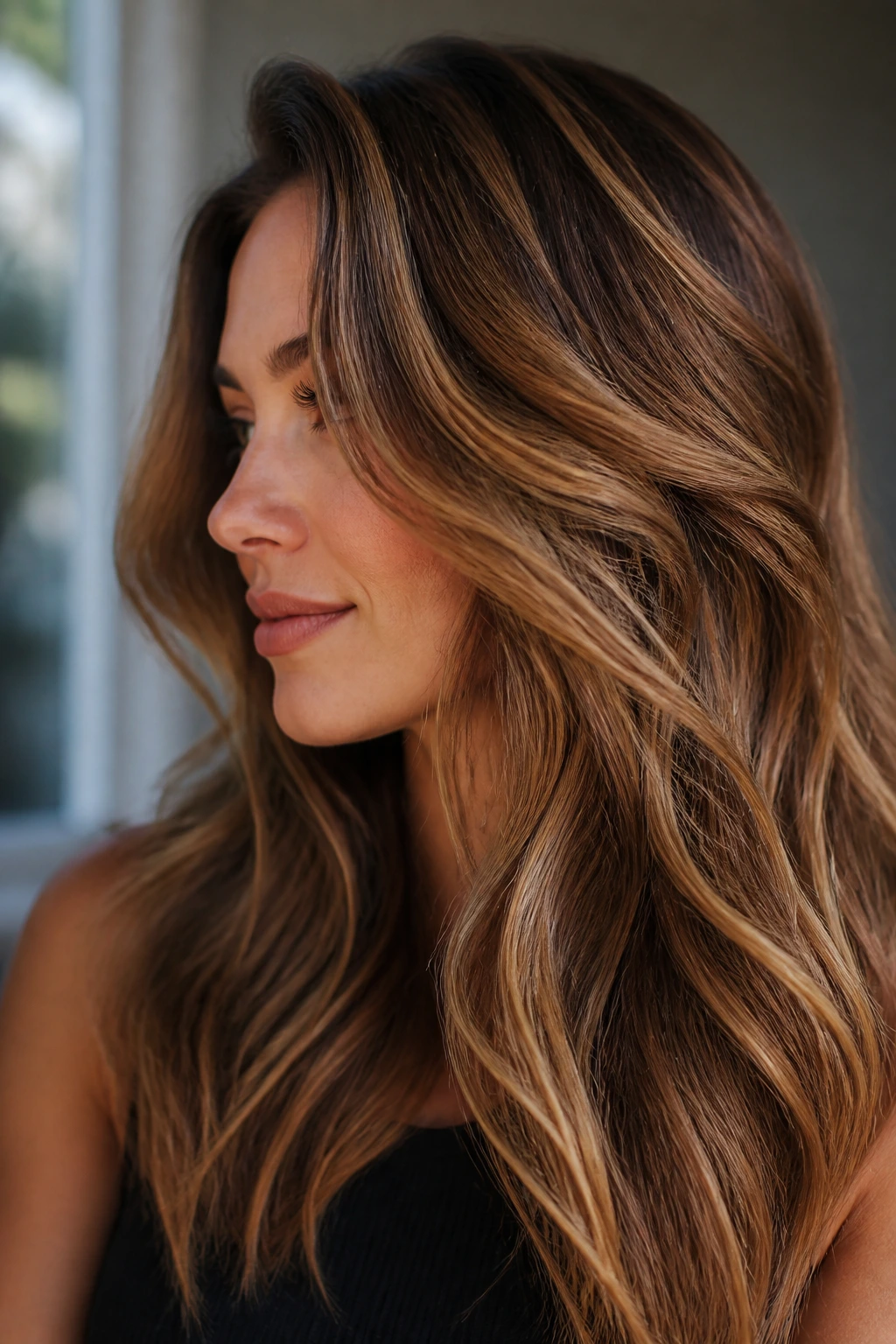
Thick hair gives you room to be bolder than most people realize. That’s the whole charm of it. A face frame can be brighter, a ribbon can be wider, a hidden panel can be deeper, and a warm shade can stay rich instead of looking washed out.
The trick is not to chase more color everywhere. It’s to place the right color where the hair actually moves, parts, and flips. Get that part right, and the rest tends to take care of itself.
A good highlight plan on thick hair should look like it belongs to the cut, the texture, and the way you wear it on an ordinary Tuesday. Pick one of these directions, show a few photos, and ask your colorist where the light should land first.
