



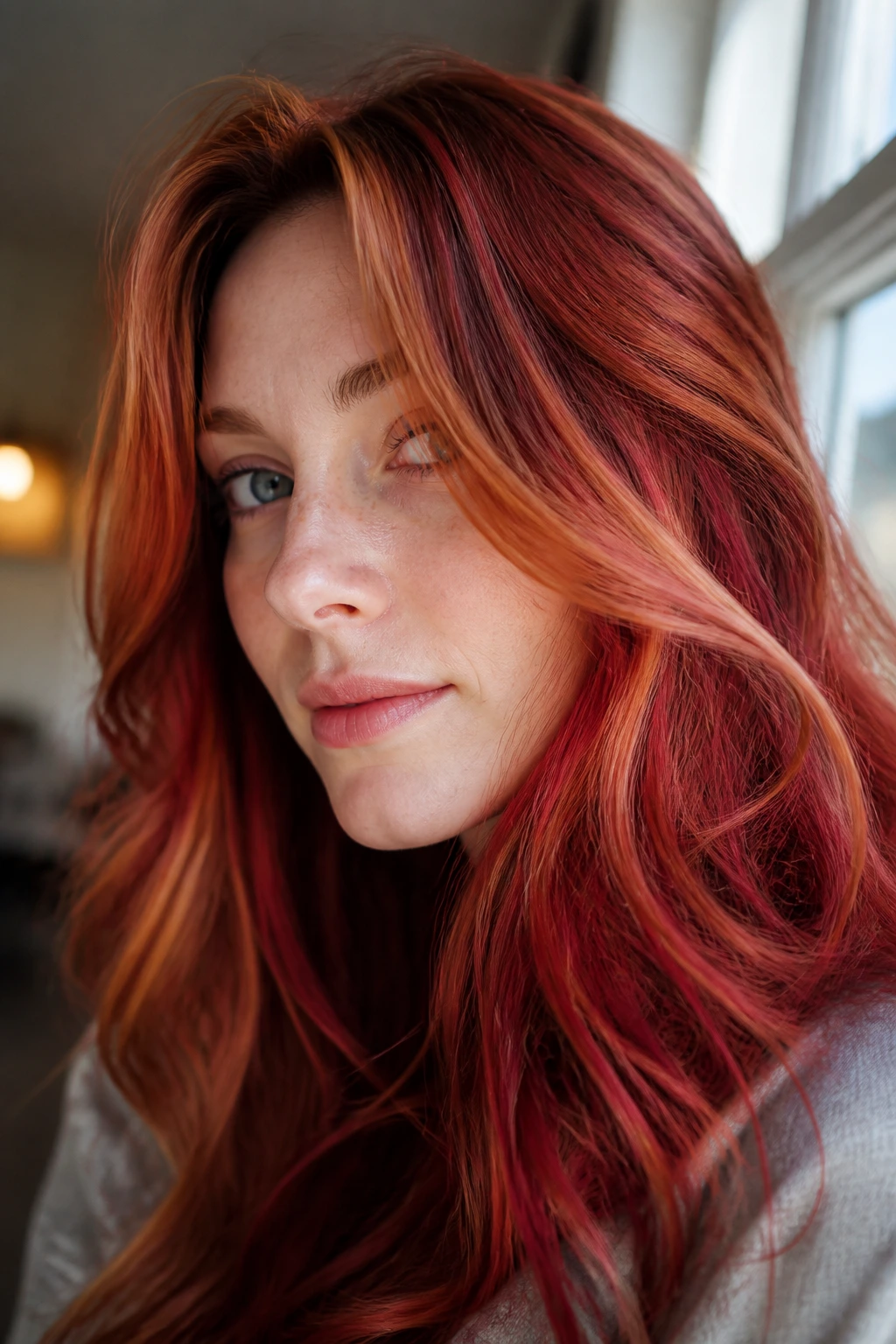
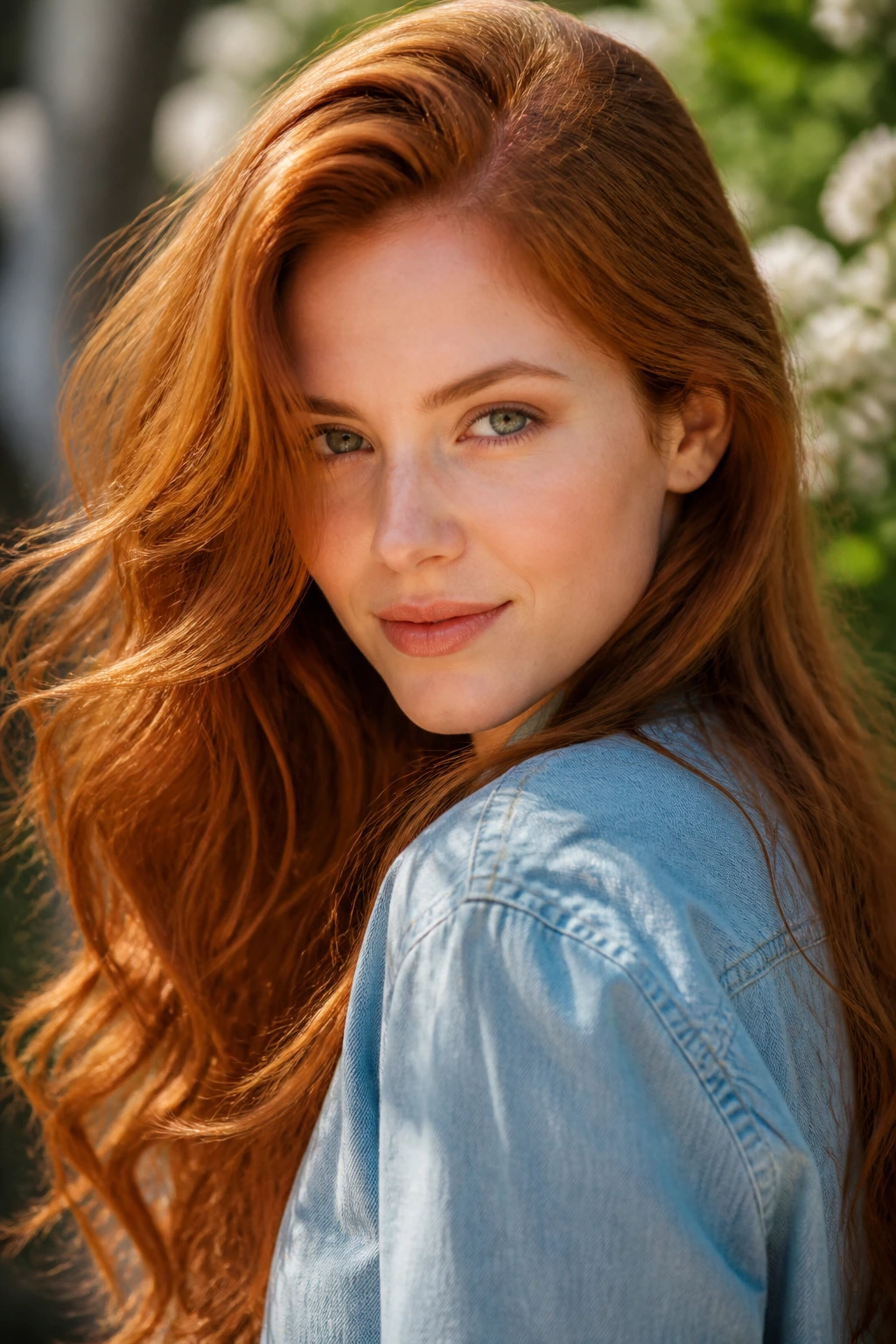
Red hair in spring hits a sweet spot that winter shades often miss. The color can breathe a little. Copper reads less like a heavy blanket and more like sunlight on a copper mug, and strawberry tones stop looking sugary once they’re set against fresh denim, linen, and that bright, slightly ruthless daylight that shows every tone shift in the mirror.
The trick with red hair looks for spring is choosing shades that move. A good red for this time of year does not sit flat. It catches light at the ends, softens at the root, and changes character when you step from a shaded hallway into the sun. That’s why a single red formula can look expensive on one person and boxy on another. Placement matters. So does depth. So does whether your hair can actually hold pigment without going muddy on the second shampoo.
Some of the looks here are glossy and subtle. Some are loud on purpose. A few barely ask for bleach; others need a clean lift first so the red has somewhere to live. The best part is that red is not one note. It can be apricot, merlot, brick, cherry, rust, strawberry, auburn, or a copper glaze so soft you notice it a little late. That range is what makes the color fun instead of fussy.
Why You’ll Love This Collection
-
There’s a red for every base: Light blondes, medium brunettes, deep brown hair, and curly textures all get their own lane here, so you are not forced into one blunt shade.
-
The maintenance levels are mixed on purpose: Some looks are simple gloss jobs, while others use balayage or money pieces that grow out without screaming for a touch-up.
-
Spring light actually helps these shades: Copper, strawberry, and cherry tones look livelier in daylight, which means the color feels intentional instead of heavy.
-
You can go bold without going full-red: Peekaboo panels, face-framing pieces, and ribbon highlights let you test the waters without repainting your whole head.
-
These looks play well with real-life styling: Waves, curls, bobs, lobs, shags, and pixies all show red differently, and the set below gives each cut something worth showing off.
-
Several options skip major bleach: If your hair is already brown or damaged, there are still red shades here that lean on gloss, deposit-only color, or low-lift placement.
1. Soft Strawberry Copper
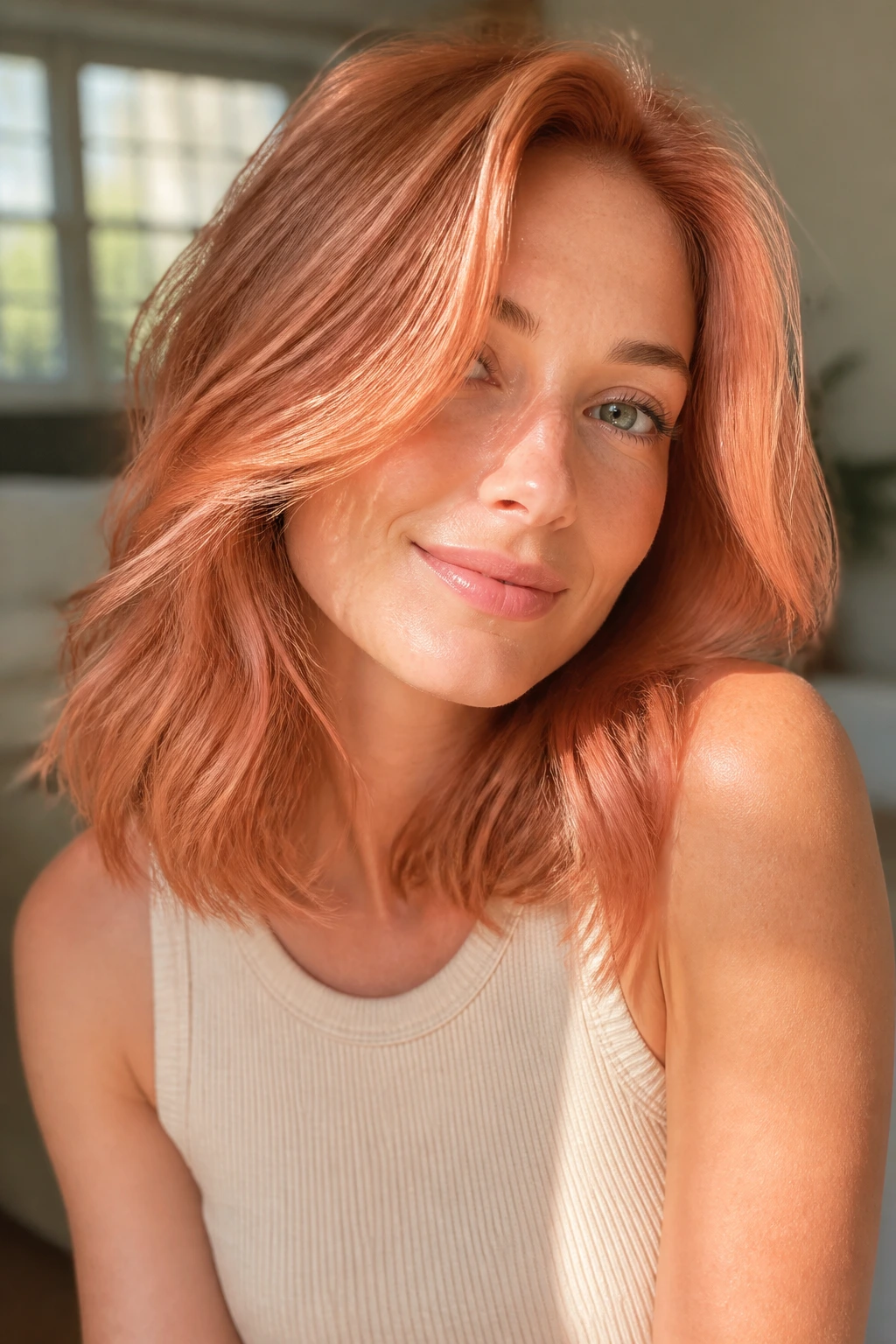
Soft strawberry copper is the sort of red that looks like it has been sitting in warm morning light for ten minutes. It’s peachy, pale, and a little cheeky without going pastel-flat. On a level 8 or 9 blonde base, it reads airy and clean. On darker hair, it needs lift first, or it just turns into a vague warm brown with a pink memory.
A shade that flatters fast
What makes this look work is the balance between gold and red. Too much gold and it slides into apricot. Too much red and it gets loud in a hurry. The sweet spot is a translucent copper glaze with strawberry undertones, usually best kept as a demi-permanent finish so the tone can fade softly rather than collapse into brass.
Ask for a soft root melt if you want it to look modern. That keeps the scalp area one shade deeper and saves you from the helmet effect that some all-over reds can give. The ends should stay the brightest part, but not blindingly so. You want a hair color that moves when you turn your head, not one block of neon sugar.
Best for
- Fine hair that needs visual warmth
- Blondes who want red without committing to full crimson
- Bob cuts, lobs, and airy layers
- People who like color that softens after a few washes
The styling is easy. Loose bends with a 1-inch iron show the peach-copper shift better than pin-straight hair. If your skin has a cool lean, keep the formula more strawberry than orange. If your skin is warm, let the copper come forward a little more.
2. Apricot Money Piece
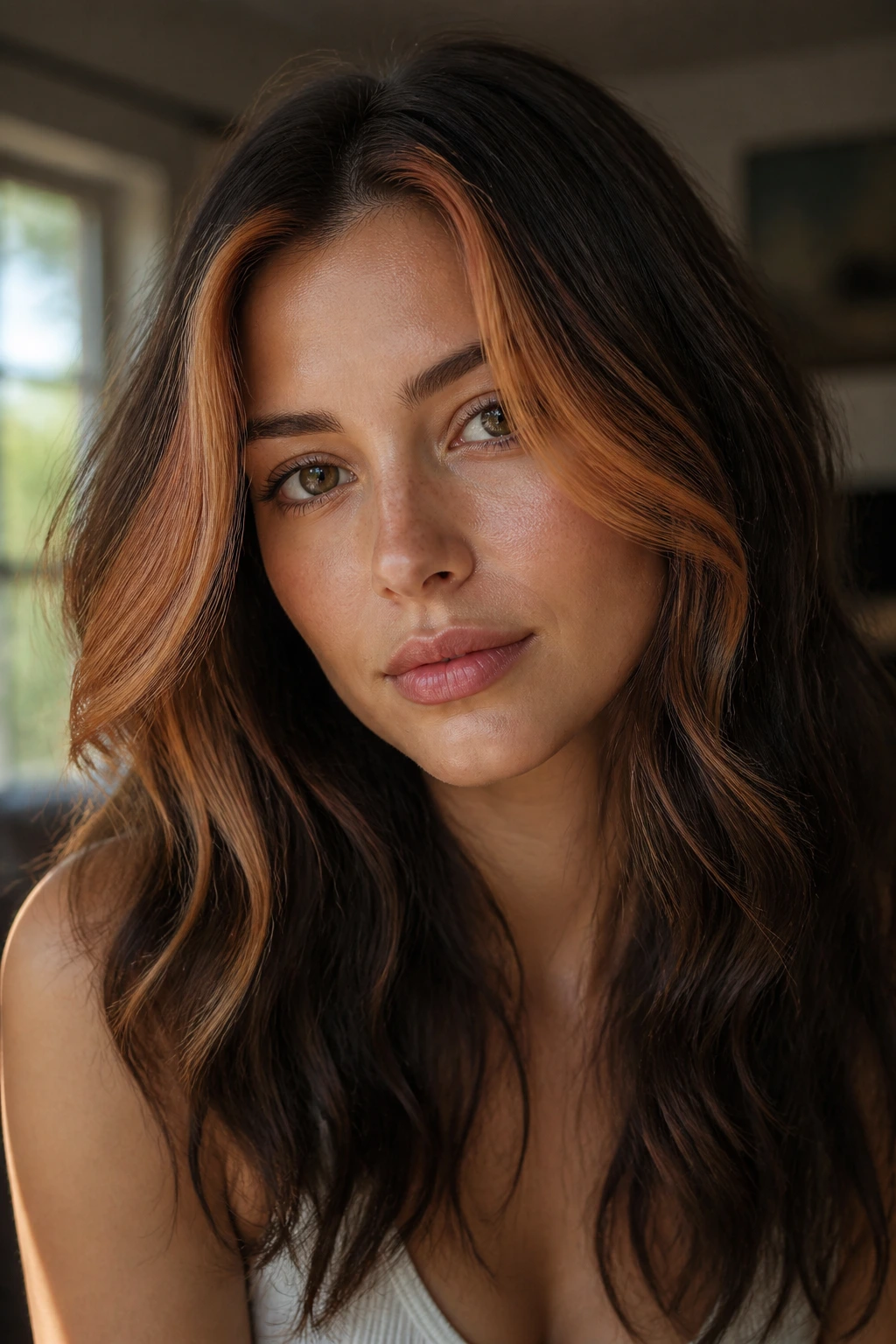
Want something brighter near the face without rebuilding your whole color? An apricot money piece does that job in a few foils and a lot of attitude. It frames the cheeks, wakes up the eyes, and lets the rest of the hair stay calmer, which is why I like it so much for people who are flirting with red but not ready to date it full time.
The contrast is the point. Keep the base a brunette, mushroom blonde, or soft copper-brown, then lift the front ribbons to a pale orange-peach level before glazing them apricot. If the face frame is too saturated, it can look like a highlighter. Too pale, and it disappears the minute the hair gets tucked behind the ears.
How to ask for it
- Two to four face-framing ribbons around the hairline
- A peach-apricot glaze, not a flat orange
- Slightly deeper root depth so the pieces pop
- Soft blending at the temples, not chunky stripes
This look is a lifesaver if you wear your hair in a middle part or pull it back a lot. The front pieces do all the talking. Everything else can stay understated. That makes the upkeep easier too; when the money piece fades, it usually fades into a warmer blonde rather than a harsh stripe.
3. Auburn Balayage on Brunette Hair
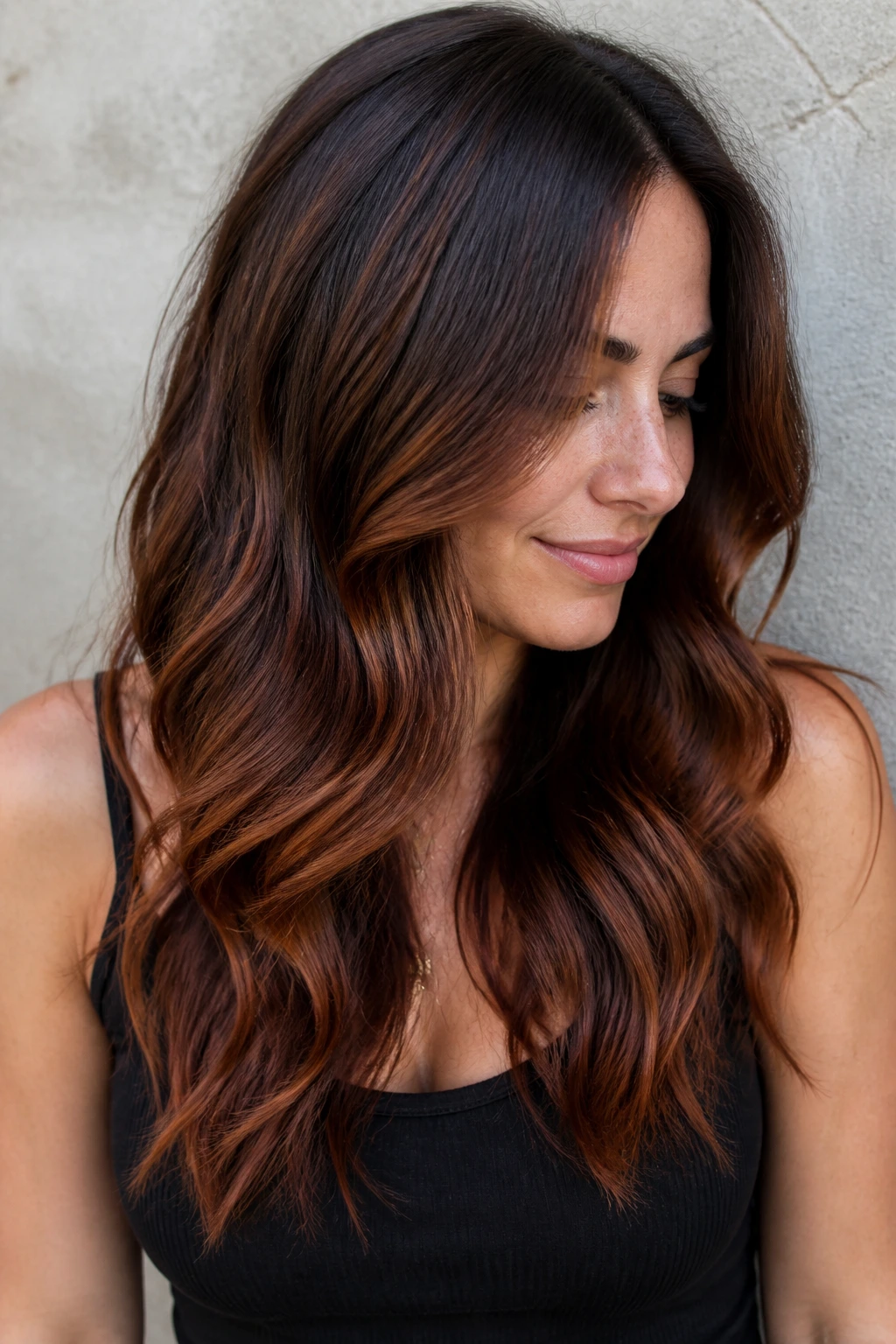
Auburn balayage on brunette hair is the most practical red in the group, and I mean that in the nicest way. It gives you warmth without blowing up the whole head, and the grow-out line is forgiving because the red is painted in ribbons rather than dumped from root to tip.
The shade works best on a medium brown base, around level 5 or 6. You want the auburn to sit just a few notches above the natural color, not scream over it. A good colorist will feather the lighter pieces around the mids and ends so the red shows when the hair moves. That keeps the color from looking static.
Why it holds up so well
The brown base does half the work. It gives the red somewhere to anchor, which means the overall look stays rich after several washes instead of drifting into orange fuzz. I also like this option for people who heat-style a lot, because a big balayage panel can look dry fast, while auburn ribbons hide that dryness better.
Wear it with soft waves, a low twist, or even a blunt blowout. The shape changes the tone. Waves make the red more obvious; a smooth finish keeps it understated. If you are nervous about red hair, start here. It is the most diplomatic version of the color.
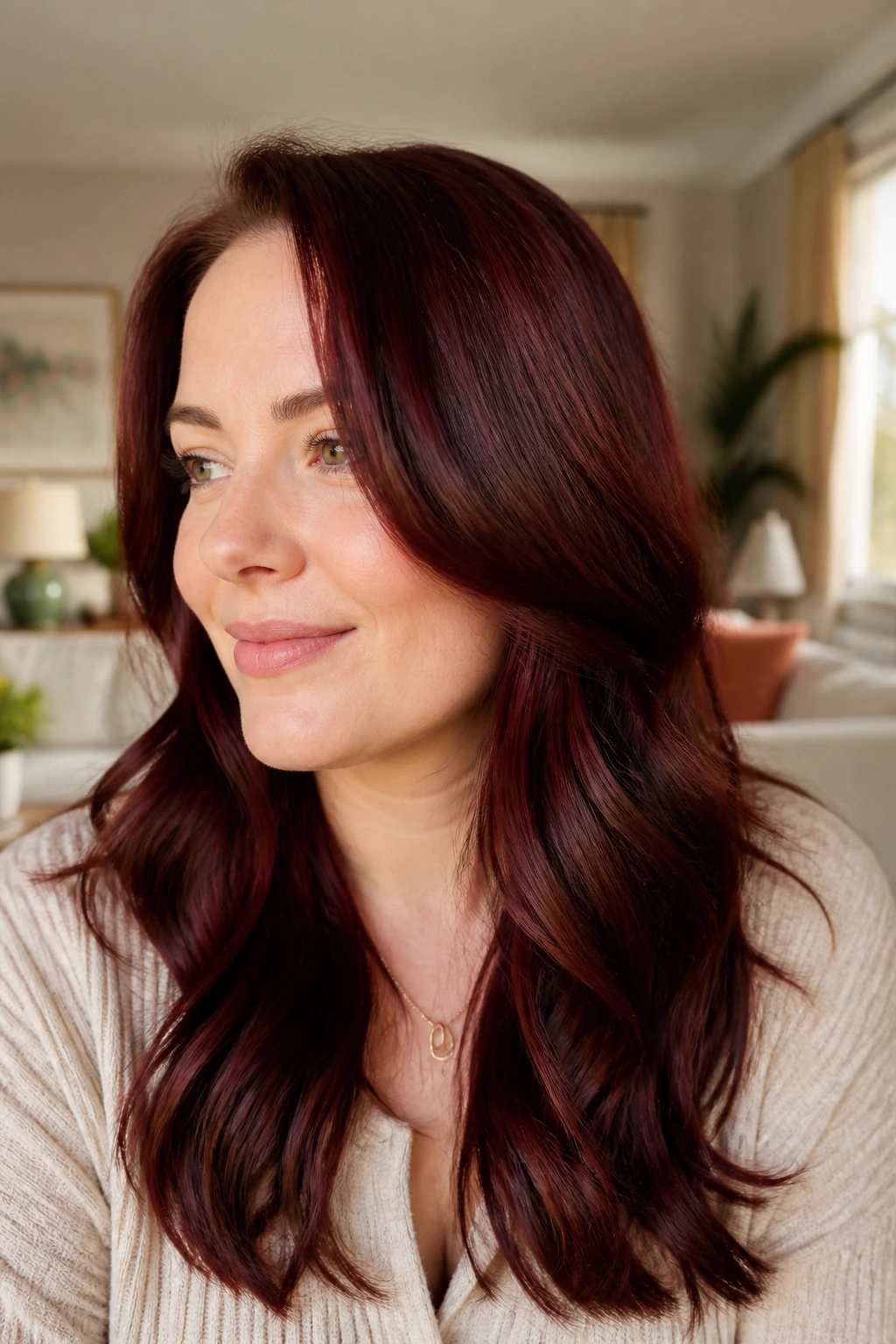
4. Cherry Cola Gloss
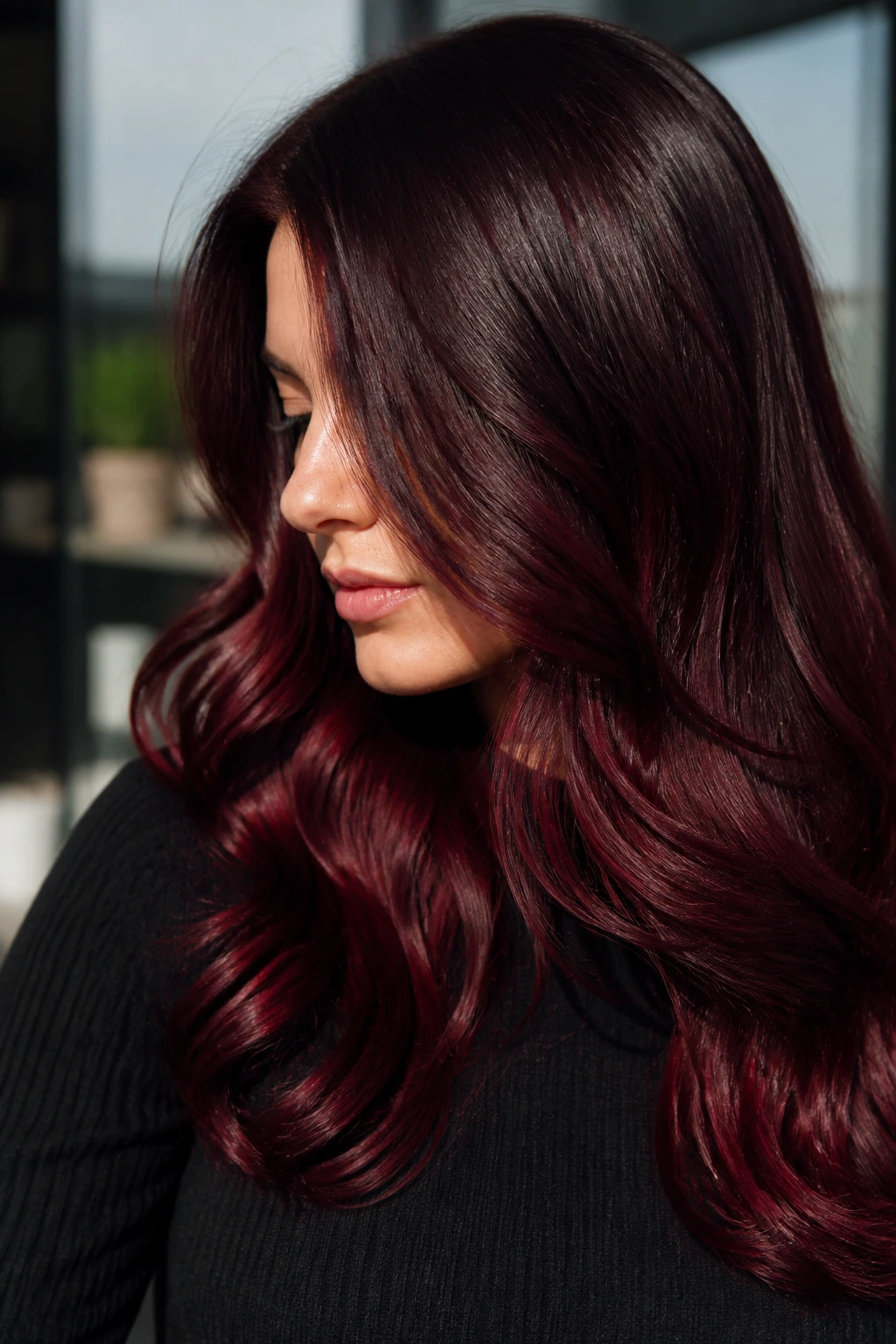
Cherry cola is one of those shades that behaves differently indoors and outside, and that’s the fun of it. Under warm light, it reads like a deep brunette with a red secret. In daylight, the cherry comes forward and the whole thing gets richer at the ends.
This look is built on depth. The base stays brown or nearly black-brown, then the red is layered through as a gloss or demi-permanent color. If you want the cola part to show, keep the formula deep. If you push the red too bright, you lose the moody effect and it becomes another fire-engine shade. That is not the goal here.
The best thing about cherry cola is that it makes textured hair look expensive without trying too hard. On straight hair, it looks sleek and dramatic. On waves or curls, the red slips through the bends and gives the hair a kind of liquid finish.
If you like red but hate obvious upkeep, this is a strong choice. The roots can grow in with almost no drama if your natural color is already brunette. The shade also works with a glossy blowout, which is a nice change from all the beach-wave red hair ideas floating around.
5. Rose Gold Copper Lob
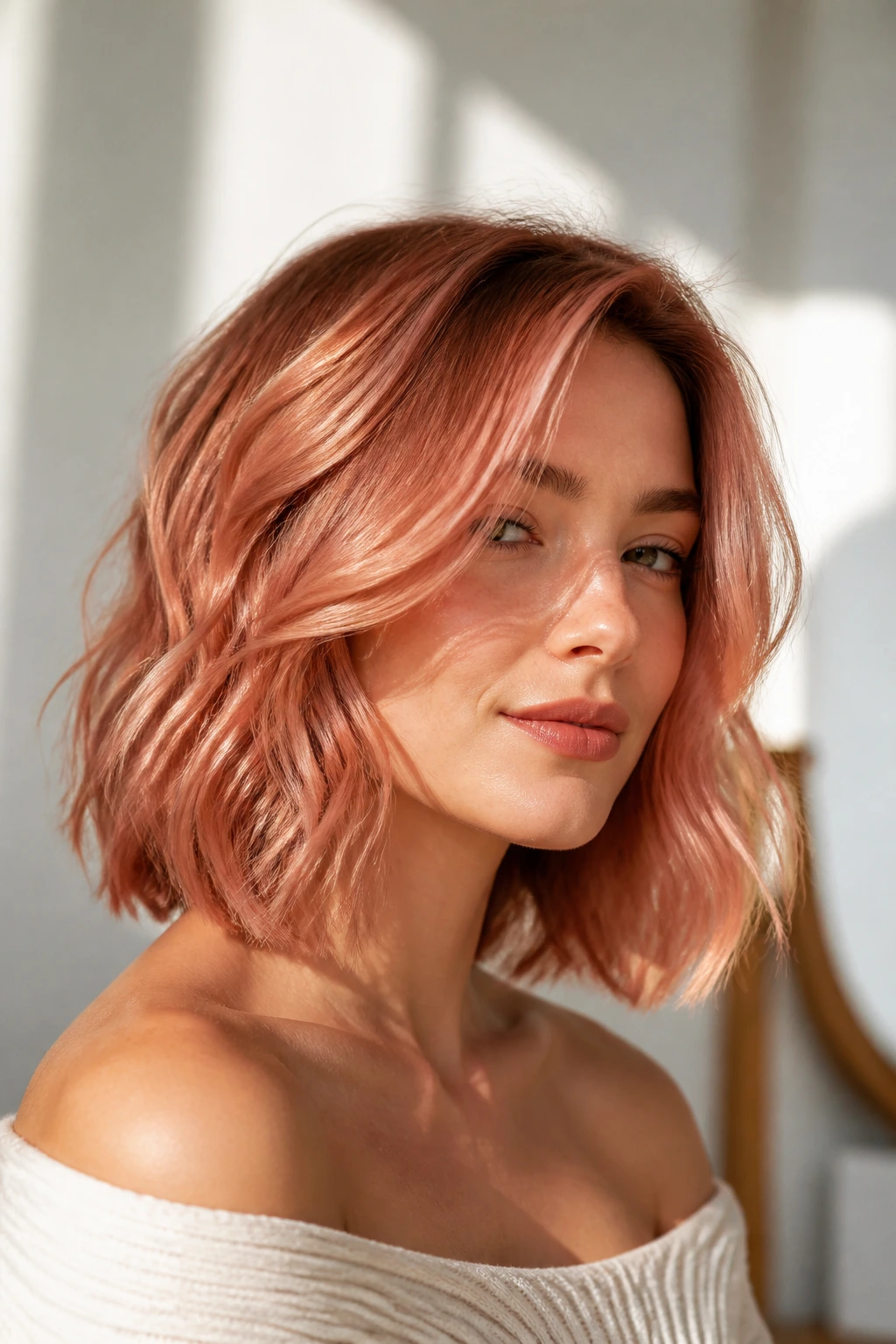
A rose gold copper lob is what I suggest when someone wants red, but not a red that shouts from across the room. The pink warmth softens the copper, and the lob keeps the whole look crisp. It lands between jewelry and hair color, which sounds a little precious until you see it on a clean shoulder-grazing cut.
The trick is keeping the pink faint. If you pour too much rose into the formula, the shade can go dusty. Keep it warm, bright, and polished, with enough copper underneath that the color still feels like hair and not candy. A demi gloss is usually the right move if the base is light enough.
Where it works best
- Straight, blunt lobs
- Softly textured waves
- Light blondes or pre-lightened brunettes
- Anyone who wants a red that leans polished instead of spicy
This look is one of the easiest to style in spring because the cut does half the visual work. A lob exposes the neck, the collarbone, and the light around the face, so the rose-copper doesn’t have to fight heavy layers. Add a side part if you want a little more softness. Keep the ends blunt if you want it to read cleaner.
6. Cinnamon Brick Layers
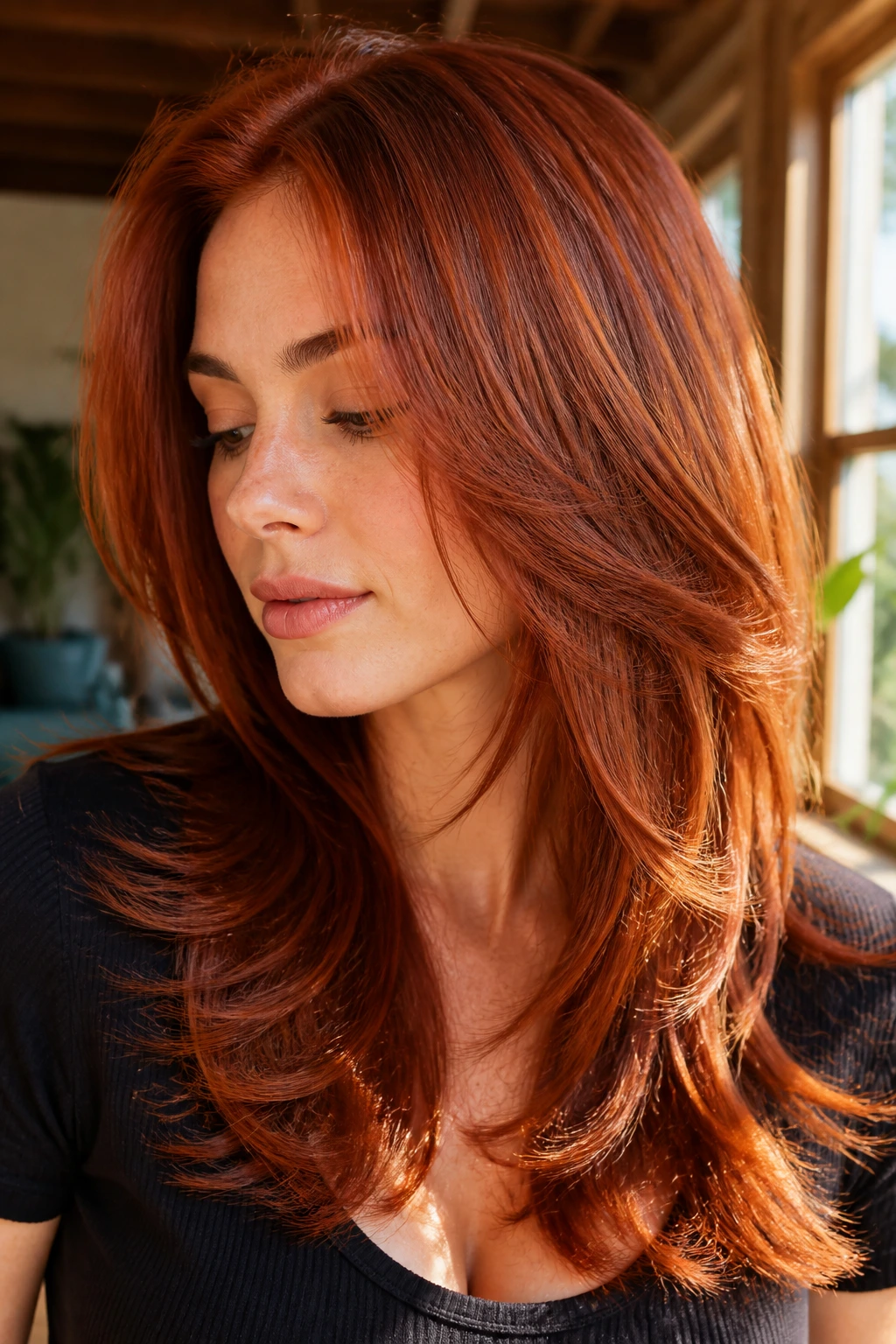
Cinnamon brick layers are a little darker and a lot more grounded than apricot or strawberry tones. The color lives in the warm brown-red zone, which makes it a smart choice if you like red hair but do not want your head to look like it was lit from inside.
This shade loves movement. On layered hair, the red bends around the layers and shows little flashes of rust, cinnamon, and brick depending on the angle. On one-length hair, it can flatten faster. So if your cut has a decent bit of shaping, you’re in good shape already.
The color usually works well as a gloss over a medium brunette base. If the hair is lighter, the red can come forward more strongly and lose that smoky depth. That’s fine if you want a brighter result, but the brick tone is the whole charm here.
I also like it because it doesn’t fight spring wardrobes. Cream, olive, faded black, denim, and warm gray all sit next to it without turning the outfit into a costume. The color feels considered. That’s the word. Considered.
7. Velvet Merlot Ends
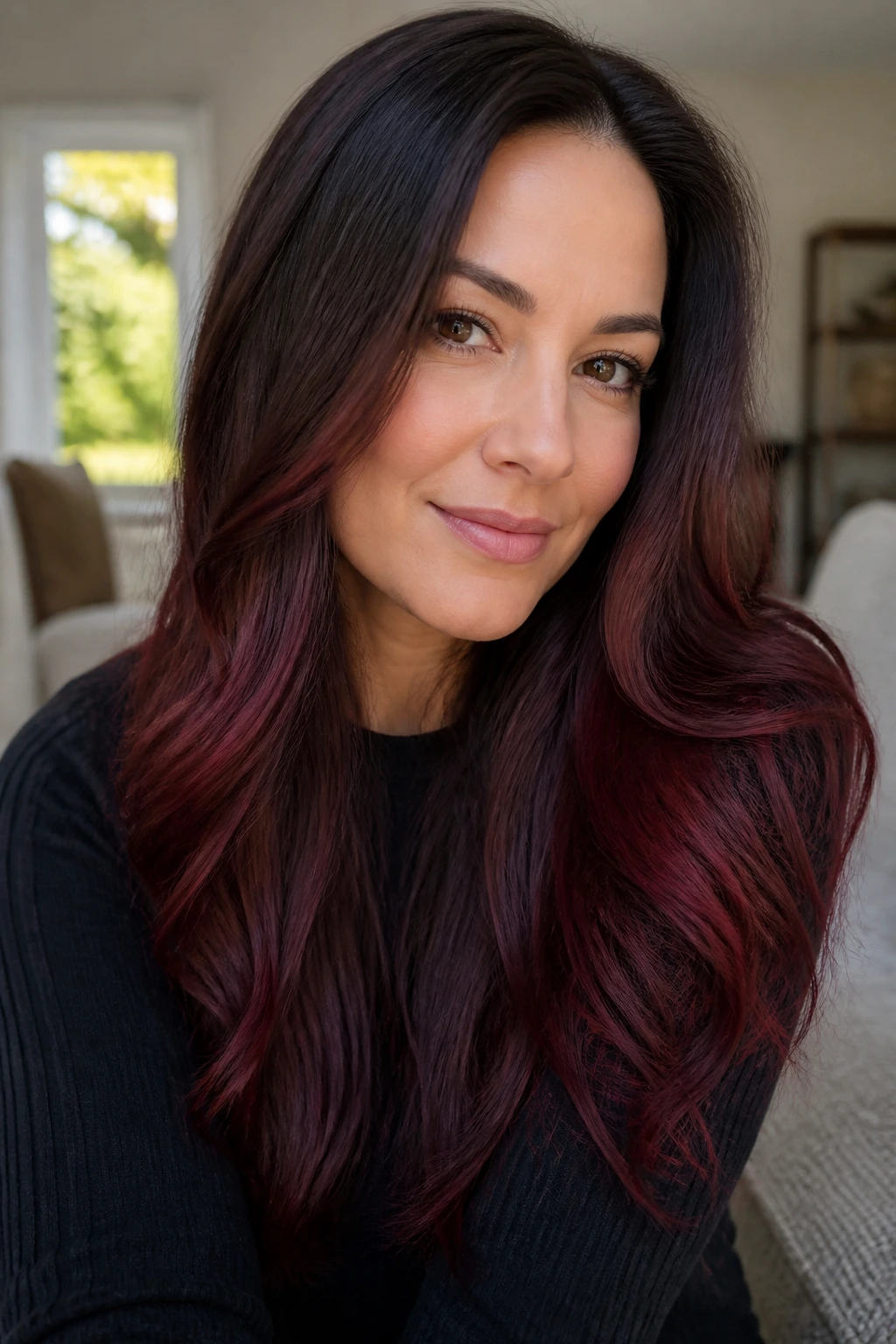
Velvet merlot ends are for the person who wants red but has no interest in touching the roots every other minute. Keep the top area deep, almost espresso-brown, then let the ends drift into wine, merlot, and a little crimson around the bend. The result is lush, not loud.
The contrast does the heavy lifting. Darker roots make the bottom color look richer, and the gradual shift helps the hair keep its shape as it grows out. This is especially smart on long layers, where the ends need a bit of brightness so the cut does not disappear in a dark sheet.
What I like most is the way this shade behaves in motion. A still photo catches one thing. A moving head catches another. The red flashes when the light hits the last two inches, which feels far more expensive than a solid all-over stain.
This one works if you want a deeper red for spring but you still want your hair to feel light enough around the face. The ends carry the color load. The top gets to breathe.
8. Fiery Ginger Pixie
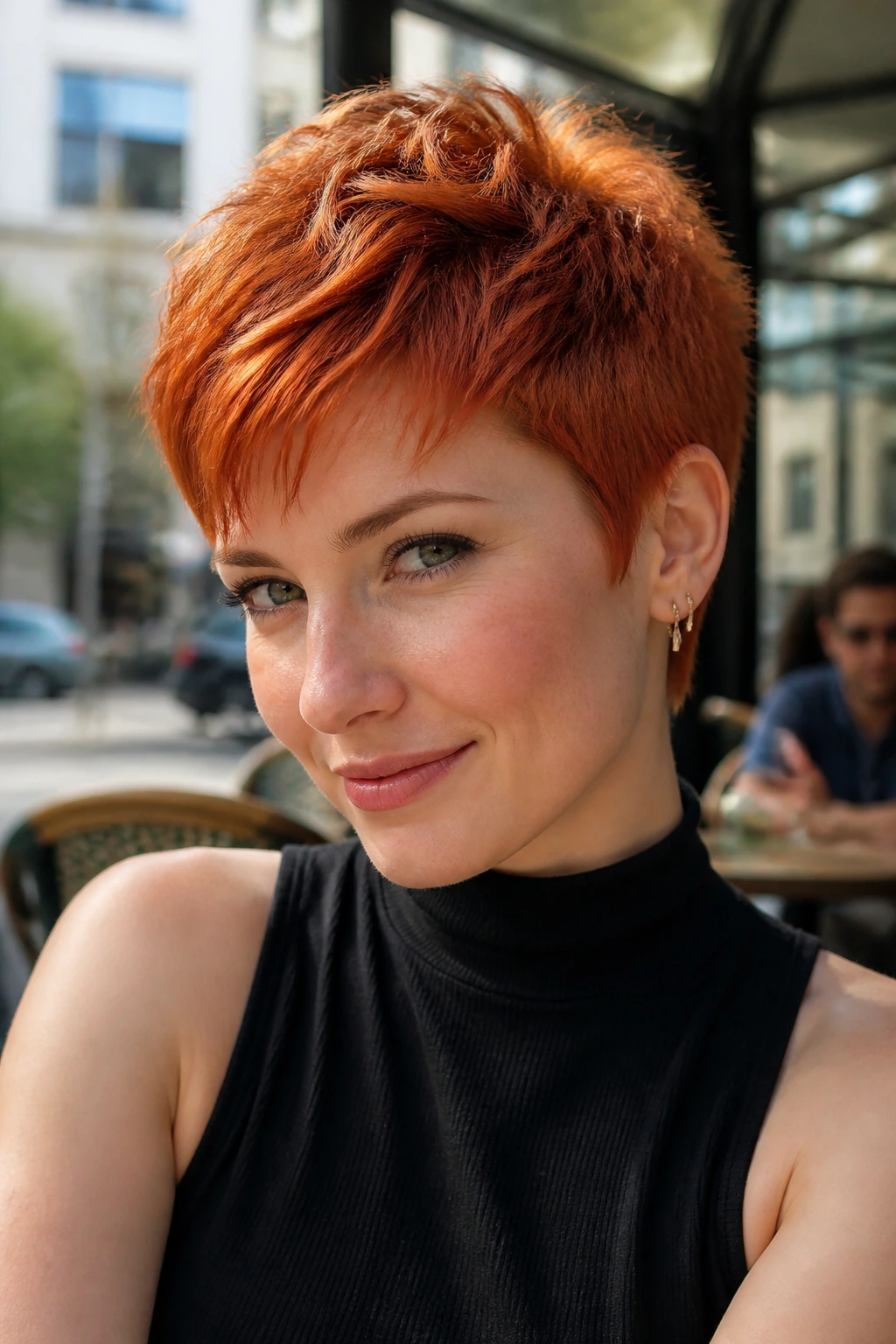
If a pixie cut feels like a dare, ginger makes it feel like a plan. Fiery ginger on short hair is blunt, fresh, and oddly easy to wear once the cut is right. There is nowhere for the color to hide, so the tone needs to be clean and even from the crown to the hairline.
Short hair exposes mistakes faster than long hair. That means the ginger has to be precise, with no muddy root area and no patchy front corners. A bright copper or true ginger shade can work on a pre-lightened base, but on deeper hair it often needs more lift than people expect. Short lengths show saturation fast.
The cut matters too. A little texture on top keeps the color from looking too severe. A smooth, rounded pixie reads polished. A choppier one reads playful. Both can work; they just tell different stories.
This is not a low-visibility color. It’s a statement cut with a statement shade. If that sounds like too much, skip ahead. If it sounds like fun, ginger pixie is one of the most satisfying red looks in the whole set because there is no clutter around it. Just shape and color. Done.
9. Rusted Brunette Ribbon Highlights
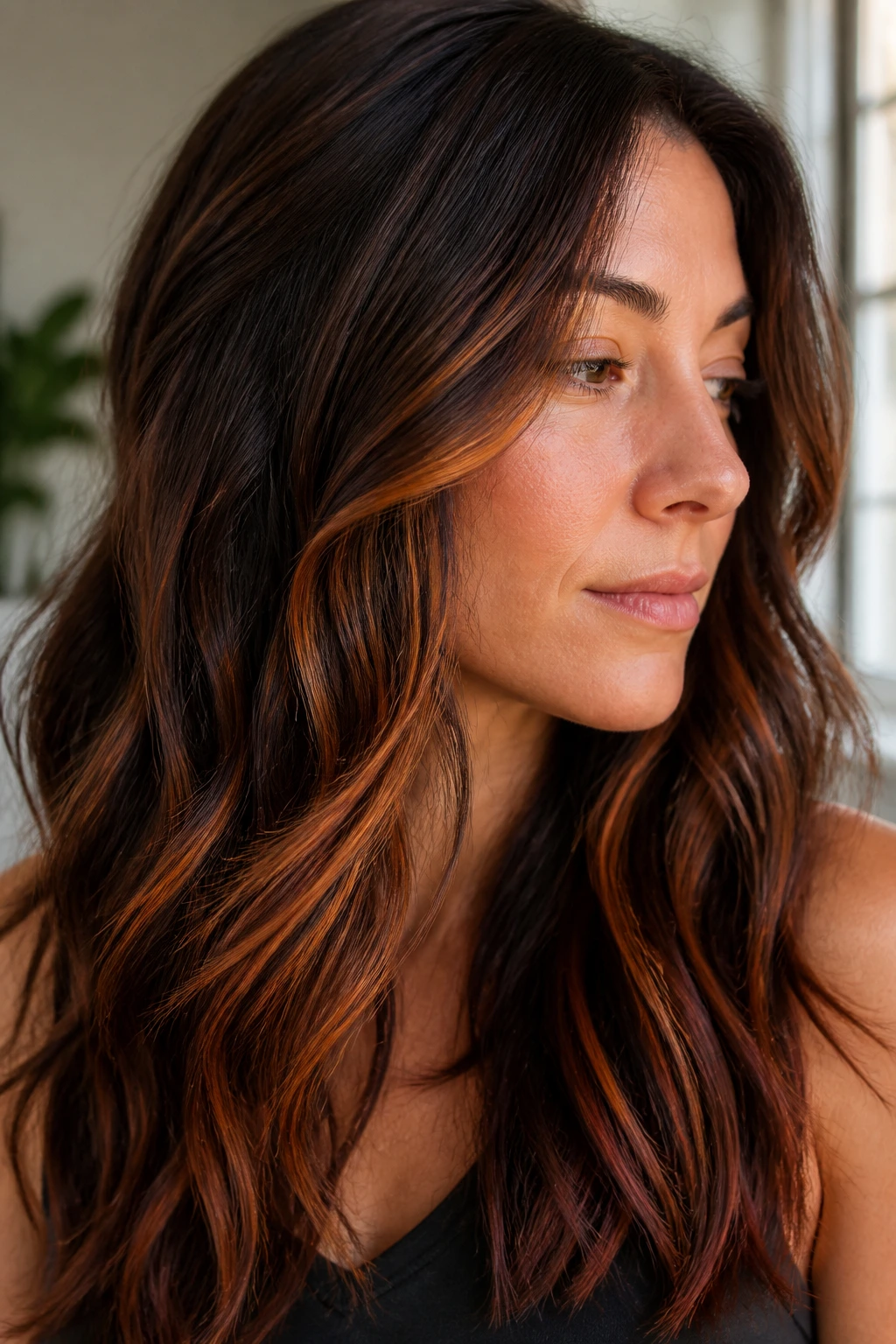
Rusted brunette ribbon highlights are the move when you want red to live inside brown hair instead of sitting on top of it. The ribbons are warm, thin, and slightly irregular, which keeps the result from looking striped. They also make straight hair and loose waves look more expensive than a heavy all-over color usually does.
The base should stay brunette. Not dark red, not copper-brown, just brown enough that the rust can peek through when the hair moves. If the highlights are too thick, the whole thing starts to feel dated. Keep the foil sections narrow and staggered. That’s the difference between “I got color” and “my colorist knows what they’re doing.”
This look is useful for people who wash often or need low-maintenance grow-out. The brown base stays believable, and the rust ribbons fade into warm caramel-red tones instead of glaring brass. That means you can stretch appointments a little longer.
It’s also one of the more office-friendly ways to wear red. From far away, it reads brunette. Close up, it has a copper pulse. That’s a nice trick.
10. Peach Copper Bob
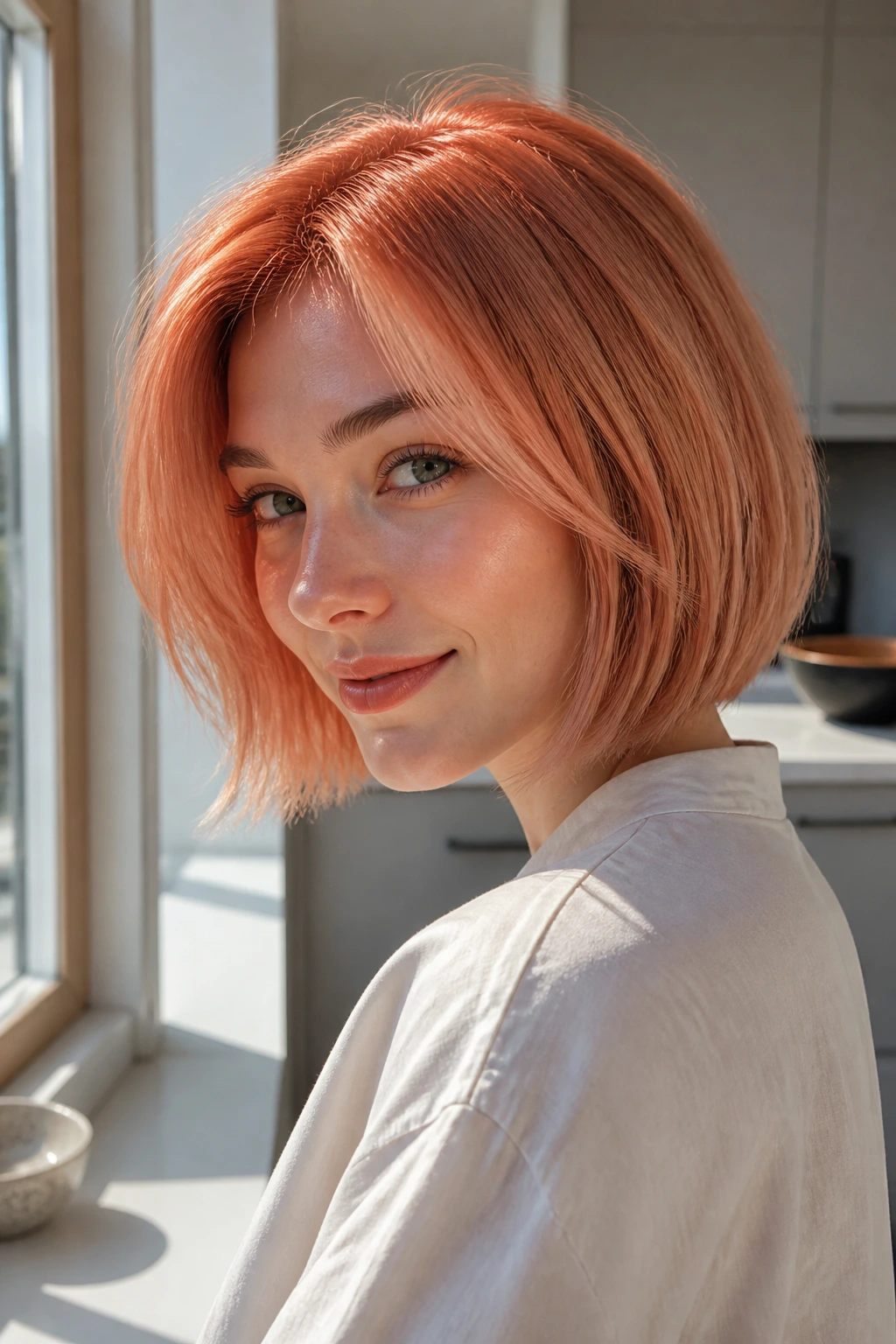
Peach copper on a bob is the kind of shade that changes every time the hair flips. The length is short enough to keep the color lively, and the peach tone stops the copper from feeling heavy. On a chin-length bob, the result is fresh, clipped, and slightly glossy, like the hair was meant to be seen from every angle.
This look needs a clean, even lift. A bob shows the ends too clearly for sloppy lightening, so the color has to sit smooth from root to hemline. I prefer this shade with a slightly translucent glaze rather than an opaque dye. That keeps the peach from turning chalky.
A blunt bob makes the color look cleaner. A softly layered bob makes it look softer. Both work, but the blunt version gives the best contrast. If the cut has a tucked-under bend, the peach-copper almost glows around the jaw.
This is a good choice if you want spring energy without a dramatic cut. The shade supplies the lift. The bob keeps it tidy.
11. Cranberry Peekaboo Panels
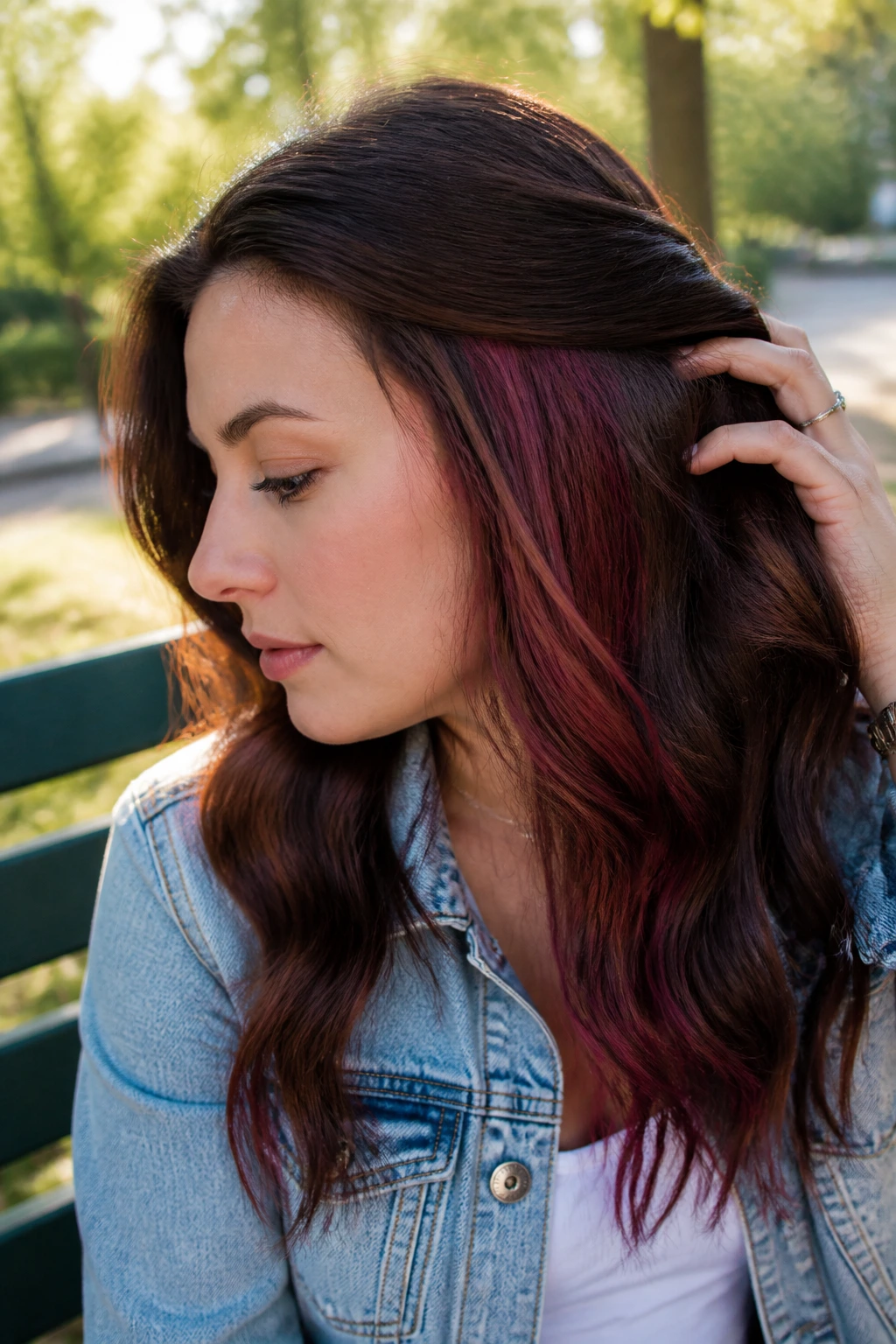
Need color that hides under the top layer until you want it to show? Cranberry peekaboo panels are the answer. They sit below the outer veil of hair, which means you get a flash of deep red when the hair swings, parts, or gets pinned up. Leave it down and it stays quiet. Tie it back and the color shows off.
That hidden placement is why it works so well for people with dress codes, layered routines, or a little color commitment anxiety. You can keep the top layer brunette, chestnut, or dark blonde, then tuck cranberry panels underneath in a more saturated shade. The contrast is strongest on shoulder-length cuts and medium-long hair.
Best use cases
- Under layers on straight or wavy hair
- Half-up styles
- Braids that open the hidden color
- People who want red without a full-head commitment
The biggest mistake here is making the panels too wide. Keep them narrow enough that they feel like a reveal, not a second full head of hair. That little bit of surprise is the whole point.
12. Burnt Sienna Shag
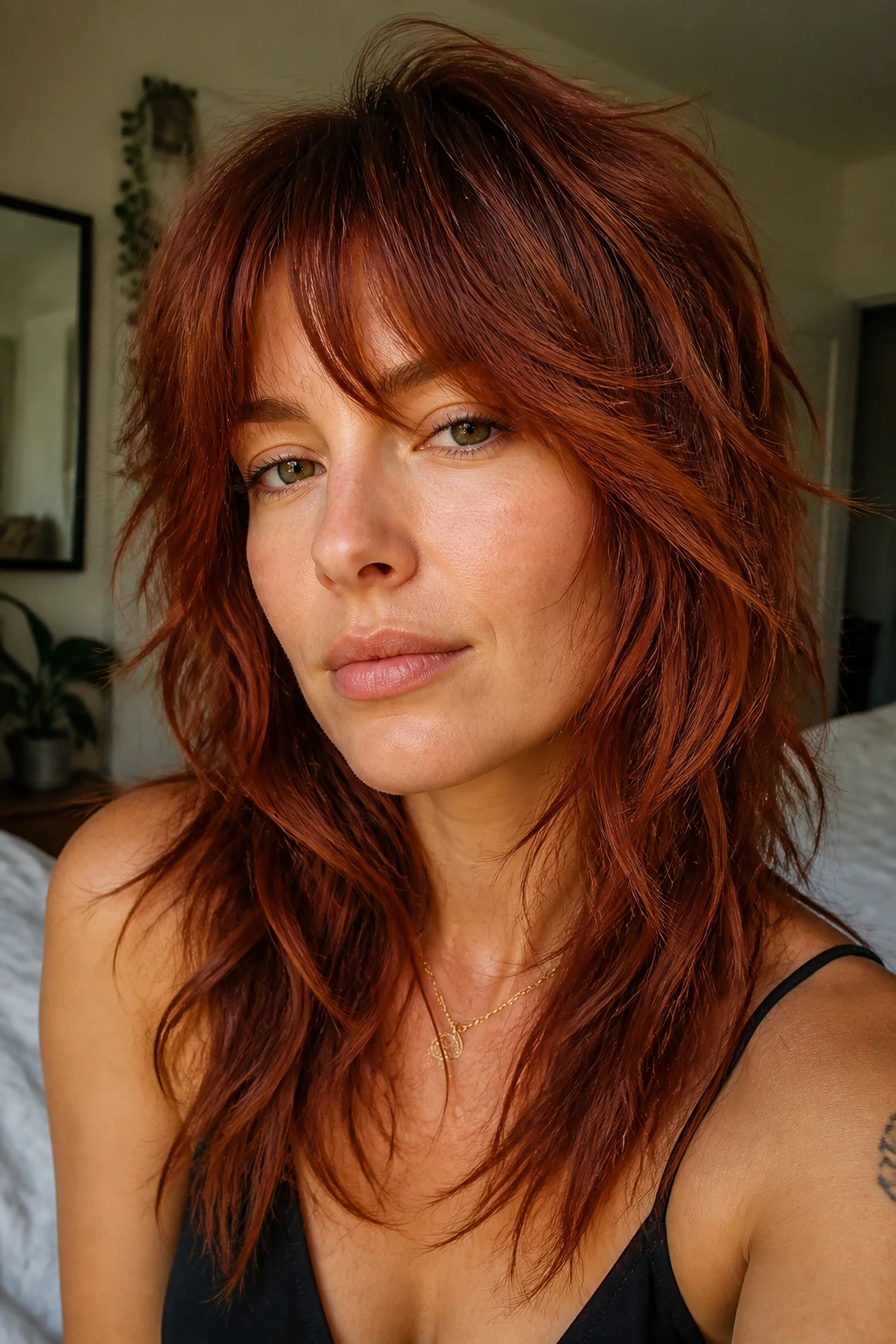
Burnt sienna and shag layers go together like cracked leather and a white tee. The color is warm, earthy, and a little gritty, which gives the shag cut some backbone. On a shag, the layers do not need a neon shade to stand out. They need a tone that can live inside the movement. Burnt sienna does that.
This is a low-glam red, and that’s why I like it. It looks a little lived-in from the start, which takes the pressure off the color being flawless every day. If your hair is naturally medium brown, this shade can often be done with a deposit-rich gloss instead of a harsh lift. The result is warm, dimensional, and less likely to feel flat on day one.
The shag’s texture is the real stage here. Curtain bangs, broken layers, and a bit of wave give the sienna different surfaces to land on. If you wear it too smooth, the color becomes less interesting. If you rough it up slightly with a diffuser or a light bend, the tone starts to separate into copper, rust, and cinnamon pieces.
This one suits people who like hair with a little attitude and zero fuss.
13. Scarlet Face-Framing Strands
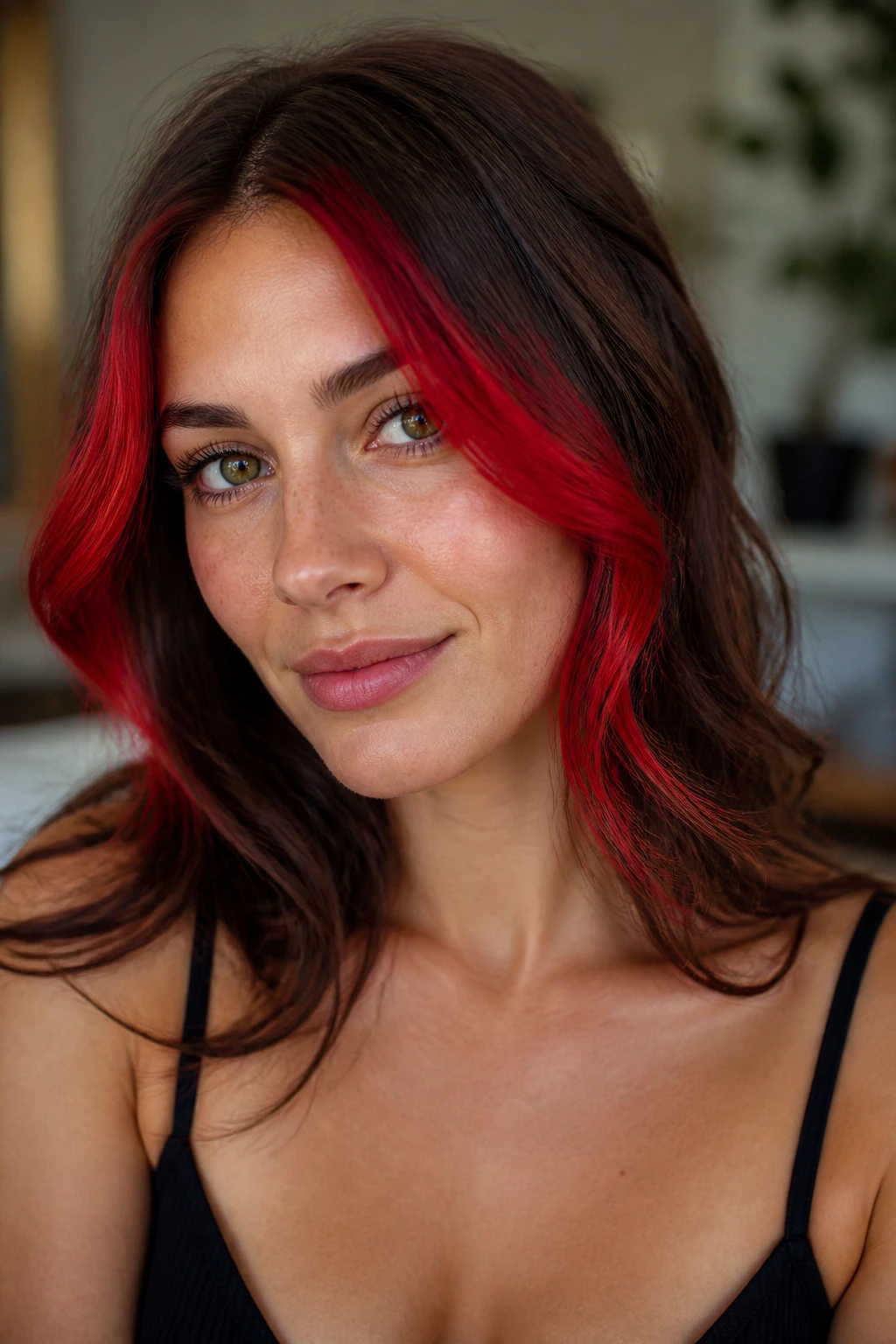
Scarlet face-framing strands are a mood, not a life sentence. That is why they work so well. You keep most of the hair in a softer brunette, copper-brown, or dark blonde family, then place the scarlet right where the eye lands first: temples, cheekbones, and the front edge of the part.
The color needs to be strong enough to read as scarlet, not just warm red. If it’s too muted, the impact disappears. If it’s too bright across the whole head, the whole look stops feeling selective. The face frame should do one job only: wake up the cut and pull attention forward.
This is one of the few red looks that plays nicely with updos. A messy bun, claw clip twist, or low ponytail suddenly looks styled because the front pieces are doing all the work. It also photographs well in natural light, though I’d use that phrase carefully because the color can go very flat under yellow bulbs.
A good colorist will keep the back softer and the front sharper. That contrast is the entire trick.
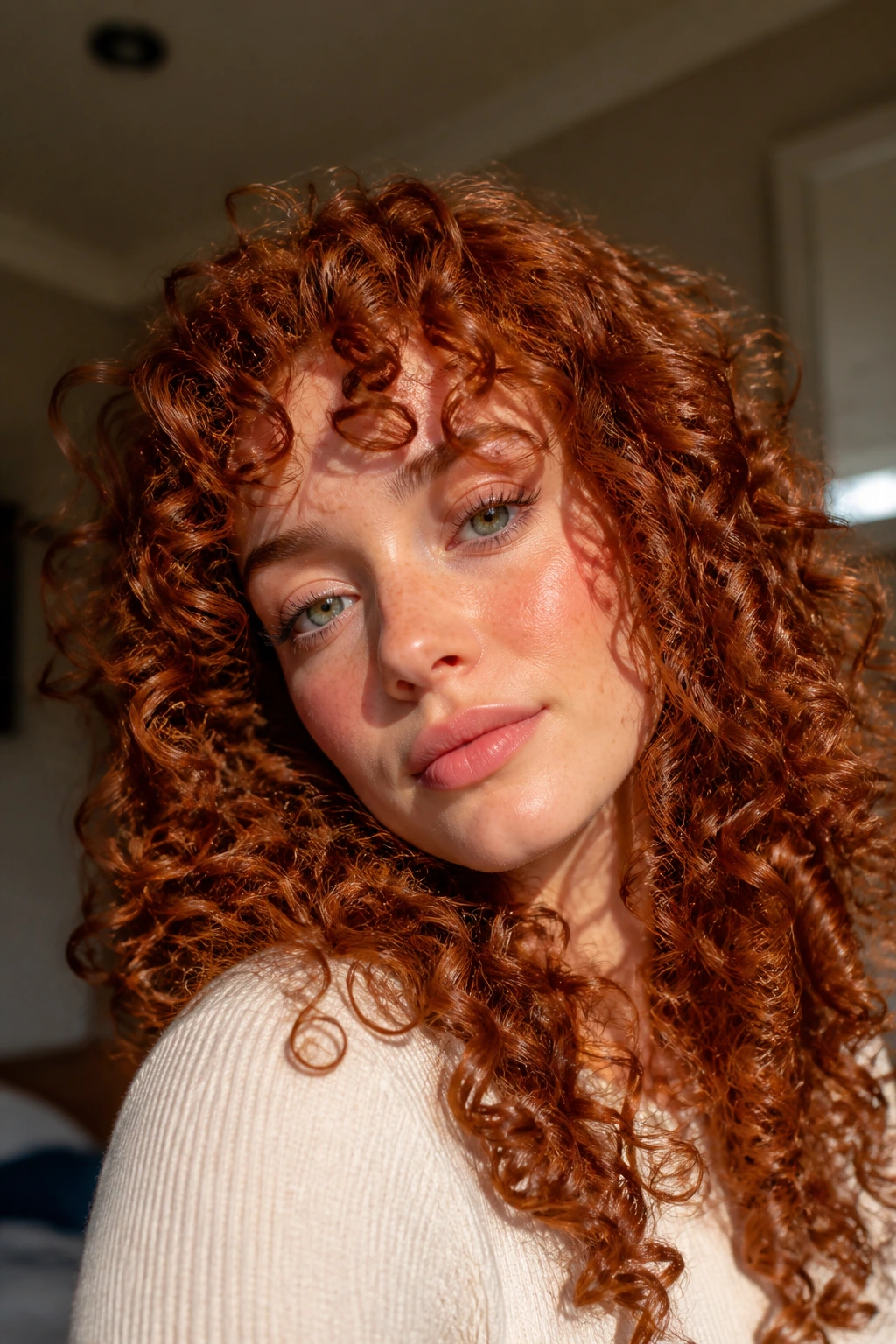
14. Warm Copper Curls
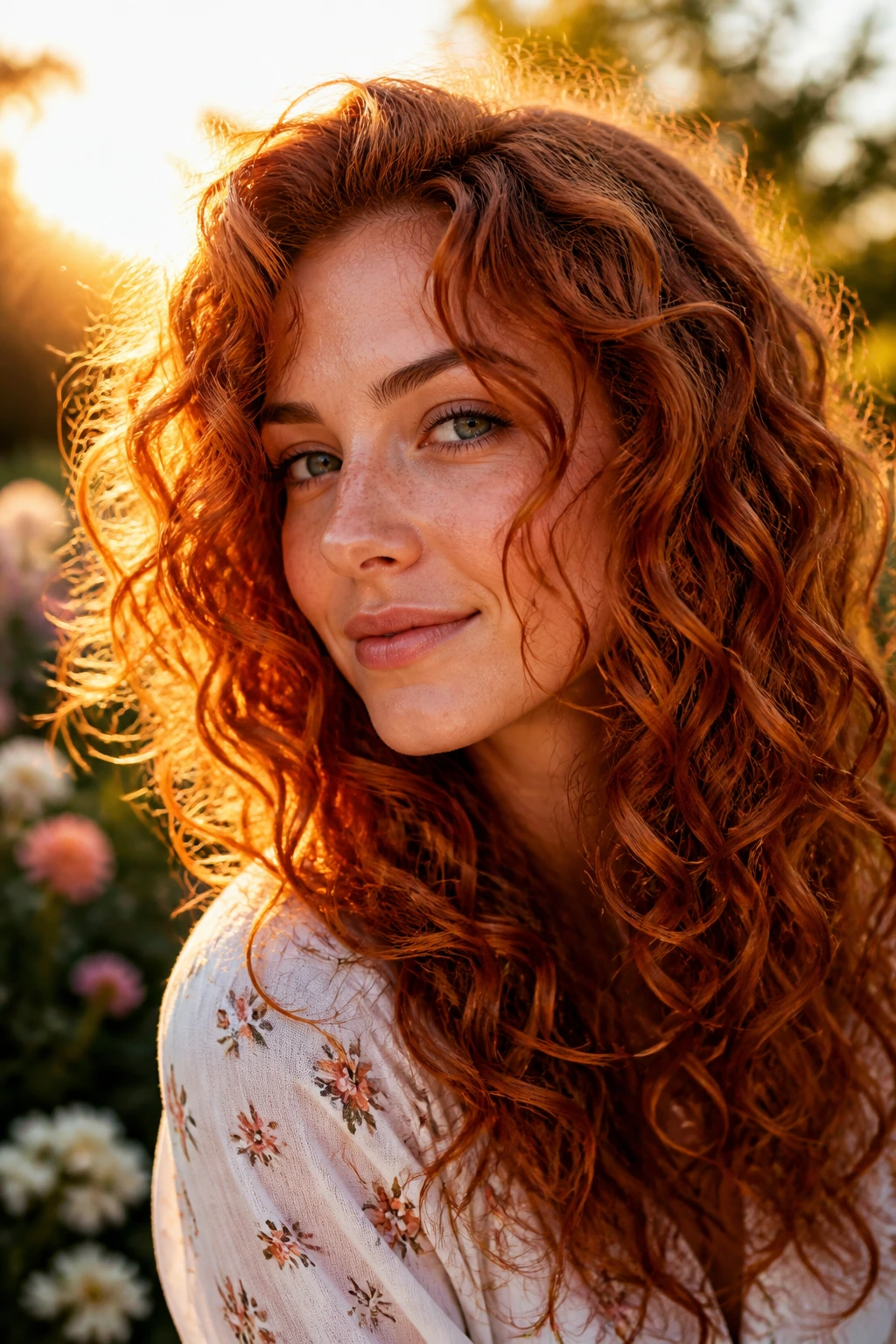
Curly hair and copper get along better than people think. The spiral pattern catches warmth in tiny flashes, so the color does not need to be overly loud to show up. Warm copper on curls reads rich, not one-dimensional, especially when the shape has enough hydration and definition to hold the form.
The most common mistake here is over-lightening. Curly hair often looks lighter once it dries and expands, so if you lift it too far in the bowl, the end result can feel brassy and dry. A warm copper glaze on a healthy base is usually more flattering than pushing for maximum brightness.
What helps this look
- Leave enough depth at the root to keep the curls grounded
- Use a gloss or demi formula if the curls already have dimension
- Diffuse on low heat so the cuticle stays smoother
- Finish with a light cream or serum, not a heavy butter that smothers the shine
What I love most is the way the color changes from curl to curl. No two ringlets catch it the same way. That alone makes the look feel alive.
15. Mahogany Foilayage
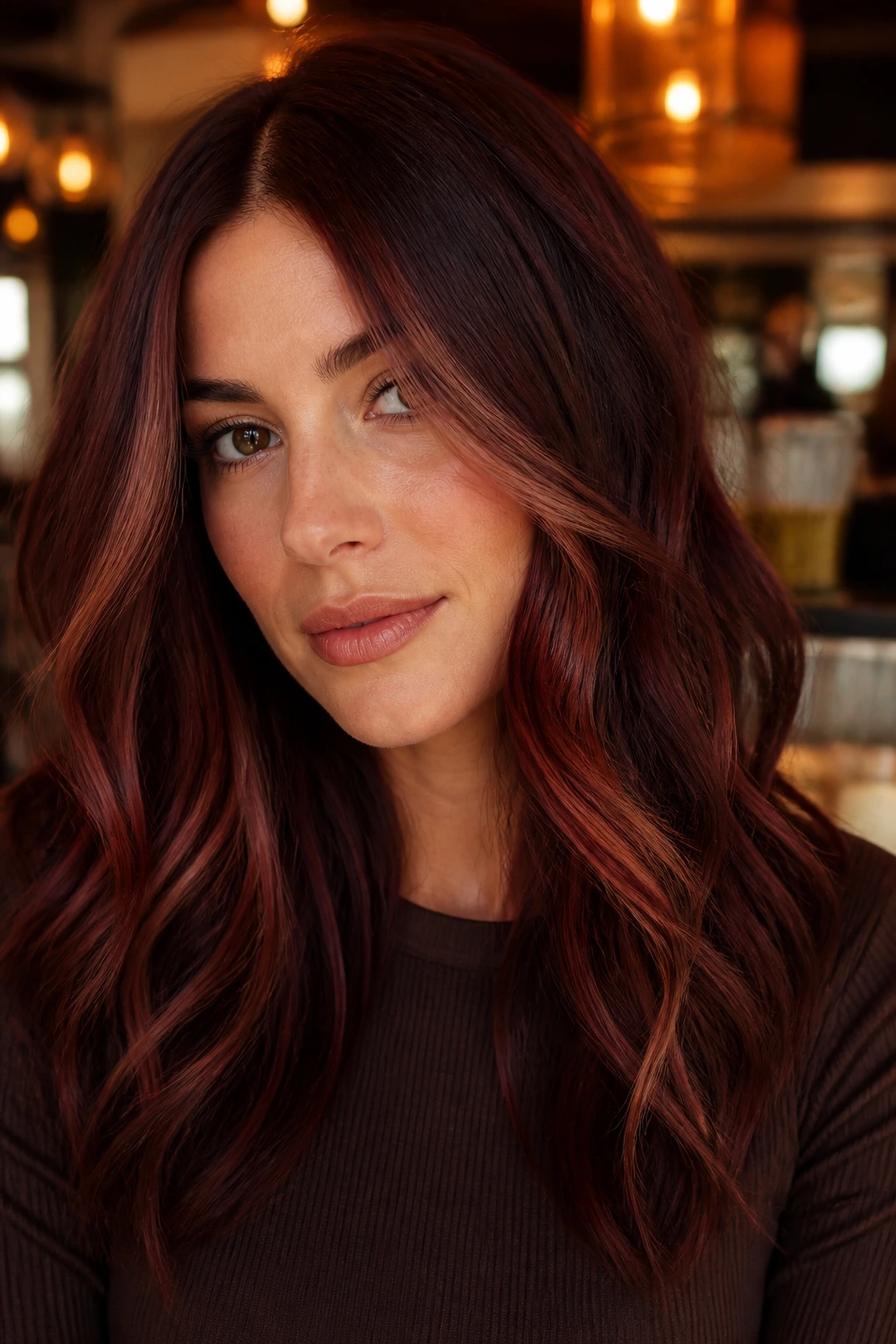
Mahogany foilayage is the answer when somebody wants red that still reads polished at the office. It sits in that deep red-brown lane where the hair looks expensive in both daylight and restaurant lighting, which is not a bad thing to want.
Foilayage gives you a little more lift control than open-air balayage, so the mahogany can be painted into the hair with real depth at the mid-lengths and ends. On dark brunette hair, this keeps the color from disappearing. On medium brown hair, it gives the shade enough contrast to show movement without turning fiery.
The best version of this look has a soft shadow root and a few brighter mahogany threads around the face. That keeps the whole head from feeling blocky. It also helps the grow-out stay soft, which matters if you do not like obvious appointment cycles.
This is a sensible red. Still red. Just not screaming.
16. Sunkissed Red Balayage
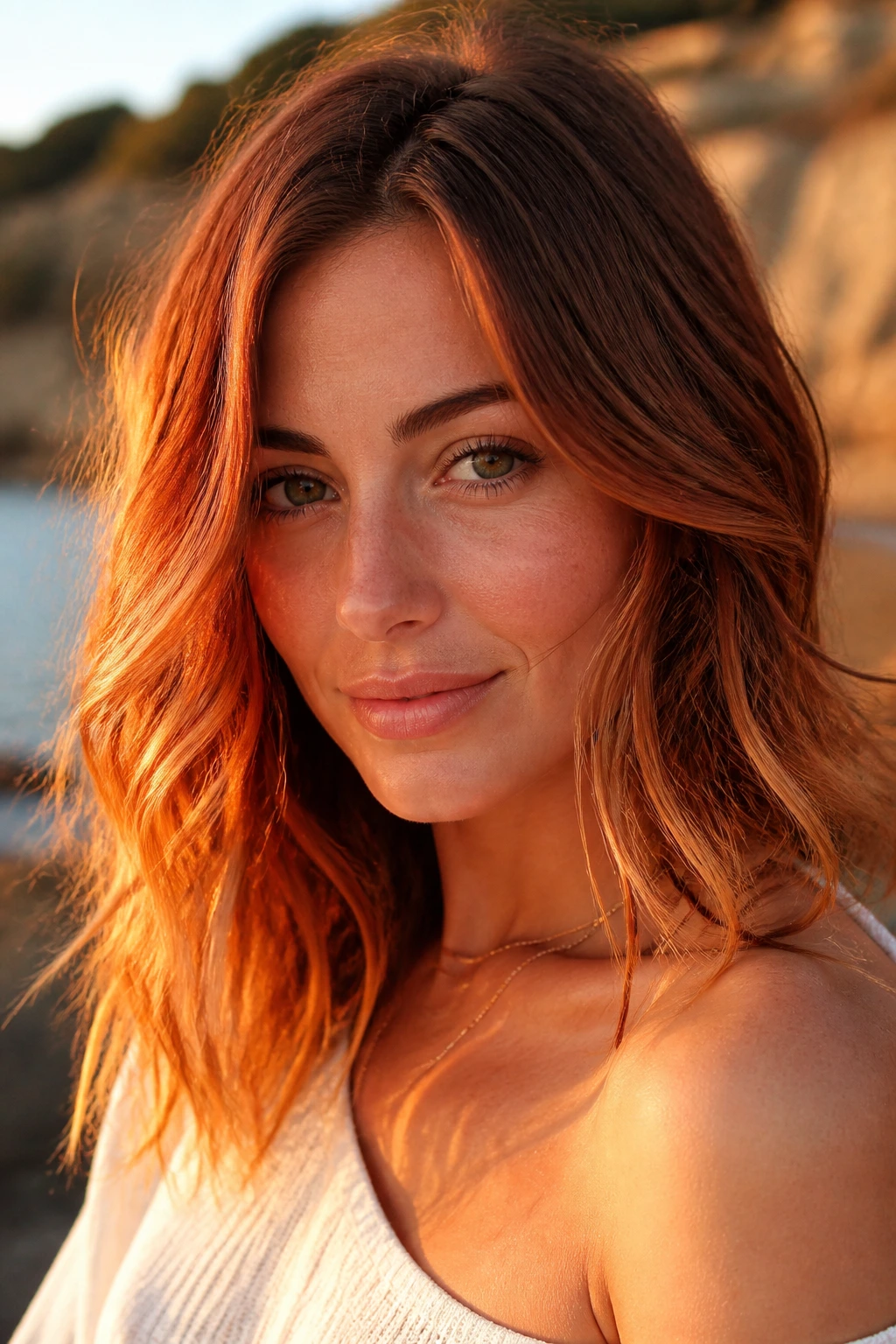
Sunkissed red balayage works because the ends stay lighter and the roots stay calm. That contrast gives the color a beachy, lifted feel without leaning blonde. It is red hair with some air in it, which is rare enough to be useful.
The key is keeping the red warm rather than true crimson. Copper, apricot, and soft auburn all belong here. The balayage pieces should be placed where the sun would naturally hit: top layers, around the face, and the outer curve of the waves. That makes the hair look brighter from a distance and softer close up.
This is one of the easiest red looks to pair with loose styling. A middle part and a wave through the ends make the balayage read evenly. Straight hair can work too, but it loses some of the color play. If your hair has a naturally wavy bend, use it. It helps.
The grow-out is friendly, which is a relief. As the lighter pieces fade, the look just gets warmer. That is the kind of fade I can live with.
17. Brick Red Ringlets
Brick red ringlets bring back that old salon red that looks rich instead of neon. The tone sits between brown and scarlet, with enough weight to stay grounded and enough warmth to keep the curls from looking dark and muddy. On ringlets, that’s a sweet spot.
This shade likes definition. If the curls are dry or fuzzy, the red can disappear into the texture. Give the hair moisture, a clean shape, and a bit of hold, and the brick tone starts to separate beautifully. It shows in the ridges, not just the surface.
Good signs this will suit you
- Your curls already hold a strong spiral
- You like richer reds over bright copper
- You want color that still looks good on day three
- You wear your curls out more than you pin them back
Brick red is a little retro, a little polished, and a lot more wearable than many people expect. It’s one of my favorite answers for someone who says, “I want red, but not clown red.” Fair request. This shade gets it.
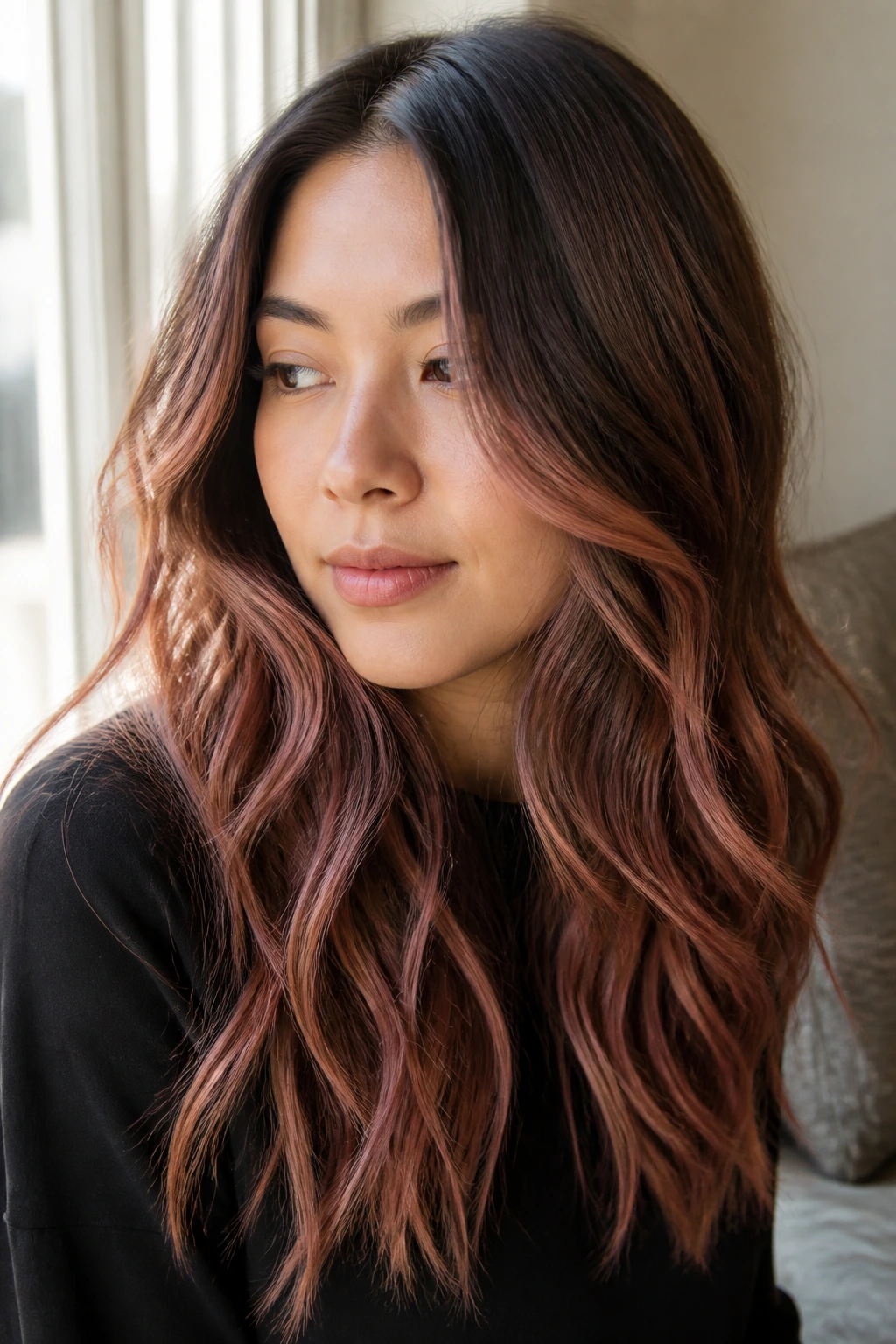
18. Rosé Brunette Melt
Rosé brunette melt is what happens when you want warmth, but you do not want the upkeep of a bright copper. The brunette base stays intact, while the mids and ends pick up a faint rose-copper tint that shows most in sunlight and less under indoor bulbs. That makes the color feel discreet in the best way.
The melt matters here. You do not want a sharp line where brown stops and red begins. The tones should slide into each other so the hair feels like one long blend. A clear gloss can help keep that finish glossy instead of chalky, especially if the ends are porous.
This look is good for people who wear a lot of neutral clothes and want the hair to do a little quiet work. It changes the face without dominating it. That’s rare. A lot of “subtle red” shades end up either too brown or too pink. This one can sit in the middle if the formula is handled with restraint.
If you want the easiest version of red hair for spring, this may be it.
19. Burnished Copper Lob
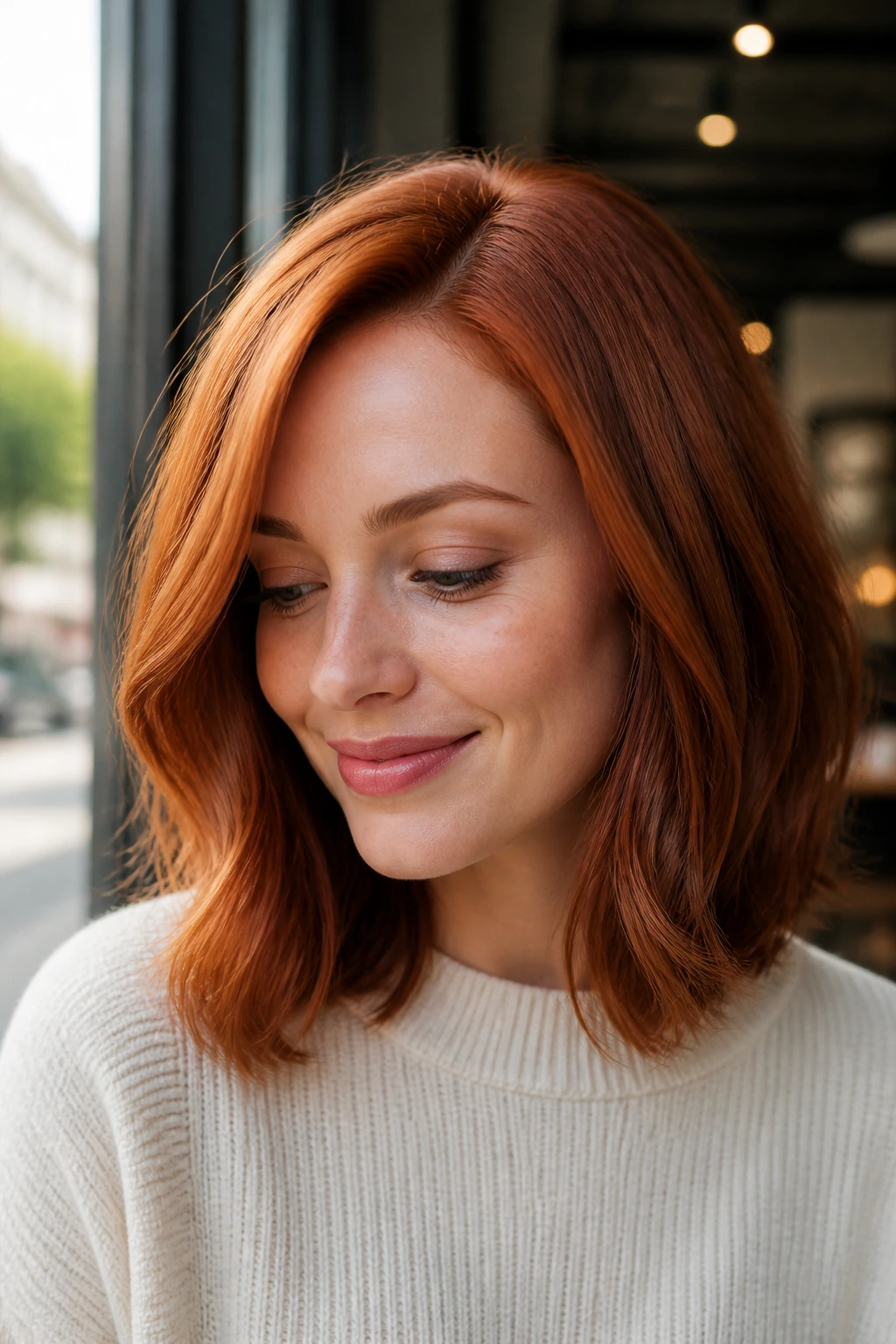
Burnished copper lob is the cleanest red in the bunch. It is not peachy, not cherry, not wine-dark. It’s copper with enough depth to look polished and enough shine to keep the cut from feeling heavy. On a lob, the color sits in a tidy frame and the whole thing feels deliberate from every angle.
The lob is doing you a favor here. It keeps the color from dragging down the face, especially if the copper is fairly saturated. A soft off-center part and a slight bend through the ends make the shade look expensive without asking for much styling time.
I like this one on someone who wants red hair but still wants the haircut to matter. The lob shape gives the color a clean edge. The copper gives the cut some warmth. Put the two together and you get a red that looks adult without feeling dull.
Why Red Hair Reads So Fresh in Spring Light
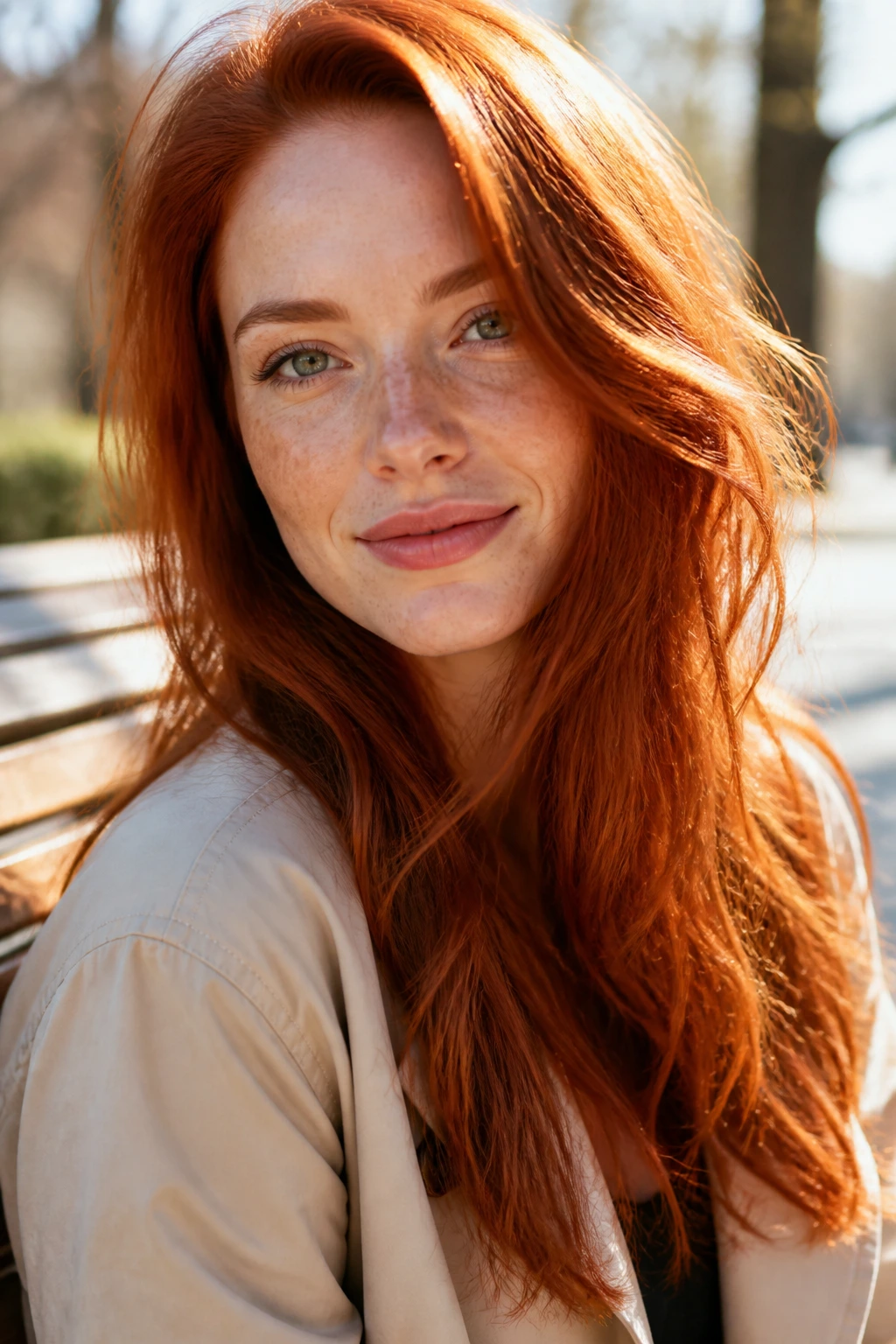
Spring light is less forgiving than winter light, and that is exactly why these tones work. A heavy red can look flat under dark skies and indoor lamps, but once the days get brighter, the same color gets more dimension. Copper shows its gold. Strawberry shows its peach. Merlot picks up a wine sheen at the ends. Even the deeper brunettes here get a little life from the shift in light.
That is also why placement matters so much. A red look with a shadow root, a ribbon highlight, or a softer melt tends to hold its shape longer because the eye has more than one tone to read. Flat all-over red can still be pretty, but it asks more from the formula and from your maintenance routine. Ribbons, glosses, face frames, and balayage pieces do some of that work for you.
Spring wardrobes help too. Cream sweaters, light denim, white tees, black tanks, olive jackets, and simple gold jewelry all sit next to red hair without turning the whole thing into a costume. The color gets to stay the main character. That matters. Nobody wants hair that fights the shirt every time they get dressed.
Essential Tools for Coloring, Glossing, and Keeping Red Hair Healthy
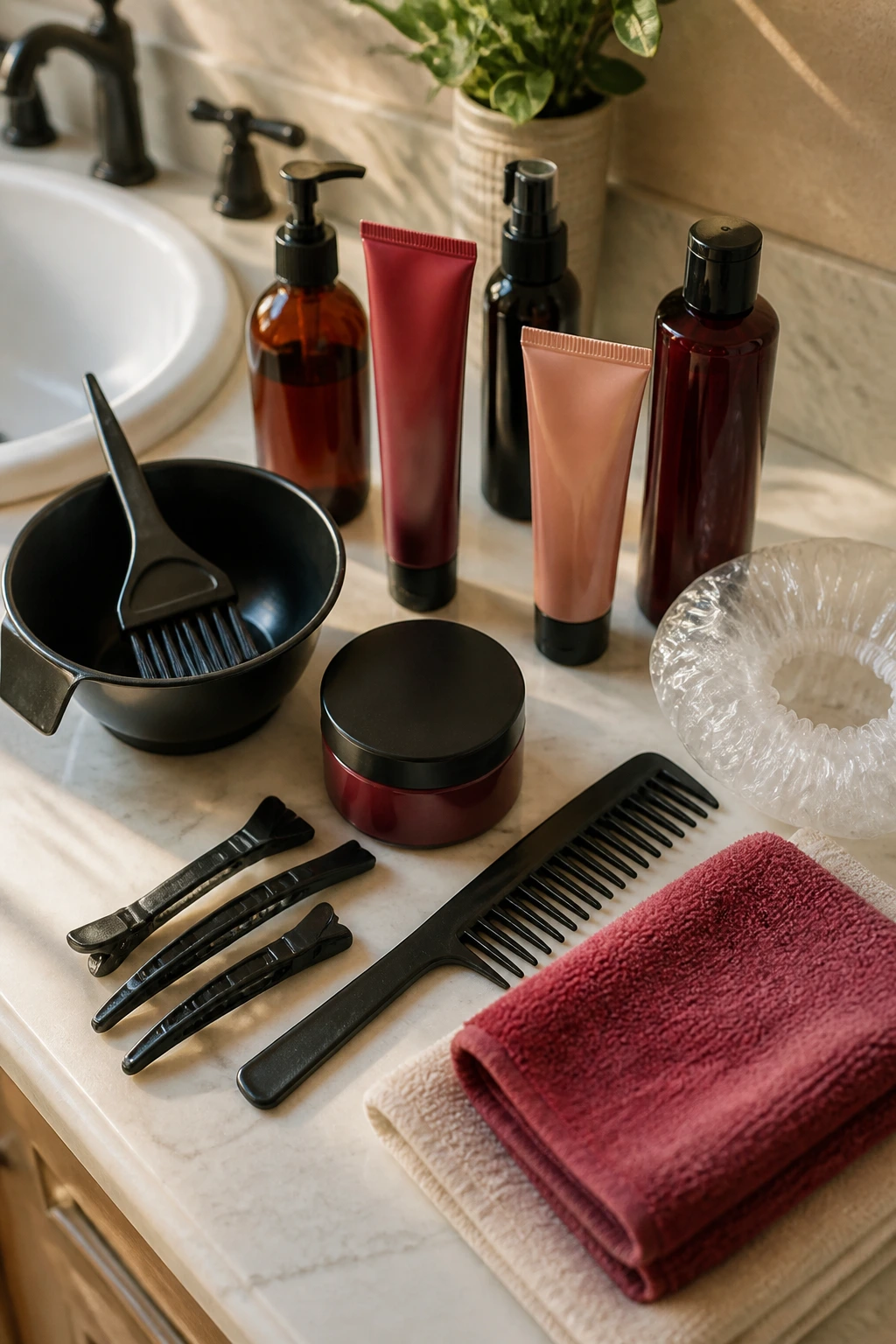
- Tint brush and mixing bowl: Handy for applying glosses, color masks, or root melts with more control than fingers alone.
- Sectioning clips: Red placement gets messy fast if you try to work from loose hair.
- Wide-tooth comb: Good for distributing gloss or leave-in conditioner without ripping through curls or freshly lightened ends.
- Color-safe shampoo: The gentler the wash, the longer the red hangs on to its tone.
- Deep conditioner or mask: Use it weekly if your hair has been lightened, especially on the ends.
- Heat protectant: Reds fade faster when the cuticle gets hammered with hot tools.
- Microfiber towel or soft tee: Less friction, less frizz, less color loss on damp hair.
- Shower cap: Useful for keeping a gloss treatment on longer or protecting hair on wash-light days.
- Color-depositing conditioner: A smart maintenance tool for copper, auburn, or cherry shades between appointments.
- Hair gloss or clear glaze: Optional, but it’s the fastest way to bring back shine without another full-color process.
How to Pick the Right Red for Your Base
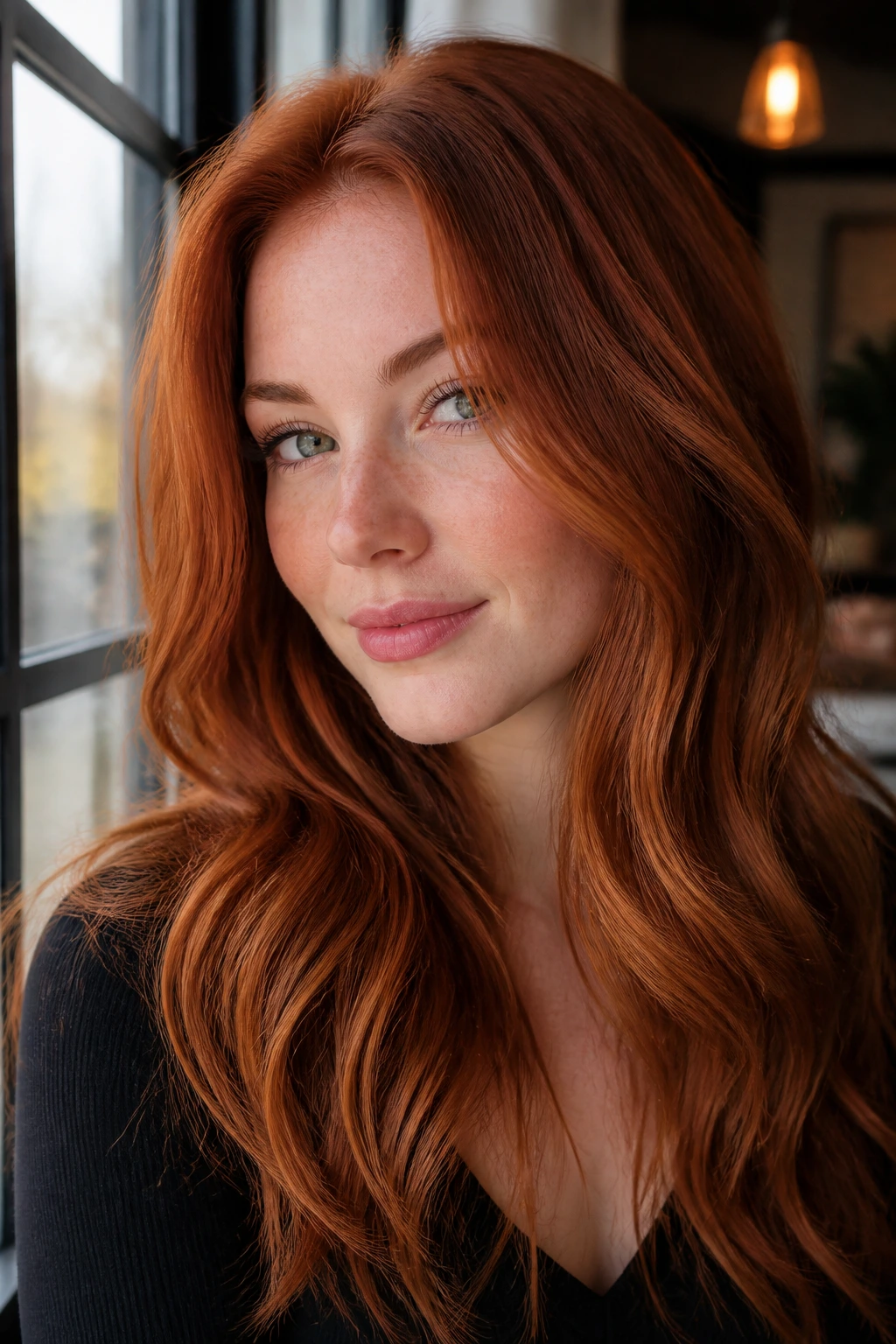
Your natural base decides a lot more than people like to admit. A level 8 blonde can wear strawberry, apricot, rose gold, and soft copper with very little fighting. A level 5 or 6 brunette usually does better with auburn, cinnamon, rust, or merlot tones that have enough depth to sit on top of the brown rather than vanish into it. Very dark hair can still go red, but it often needs more lift or a deeper wine shade to show up cleanly.
Skin undertone matters too, though not in the rigid way some salon charts pretend it does. Warm undertones usually get a nice push from copper, apricot, burnt sienna, and ginger. Cool undertones often look striking with cherry, cranberry, merlot, or rosé-brown blends. Neutral undertones can wear almost all of it, which is mildly irritating if you like rules.
Bring more than one photo to a consultation. Bring one bright image, one softer one, and one that shows the shade in daylight. Hair color on a phone screen shifts with the room, and a copper that looks mild on a bright white background can read much warmer in real life. If your colorist asks about your routine, answer honestly. Daily washing, hot tools, hard water, and previous bleach jobs all change how red behaves.
How to Wear These Shades With Makeup, Clothes, and Styling
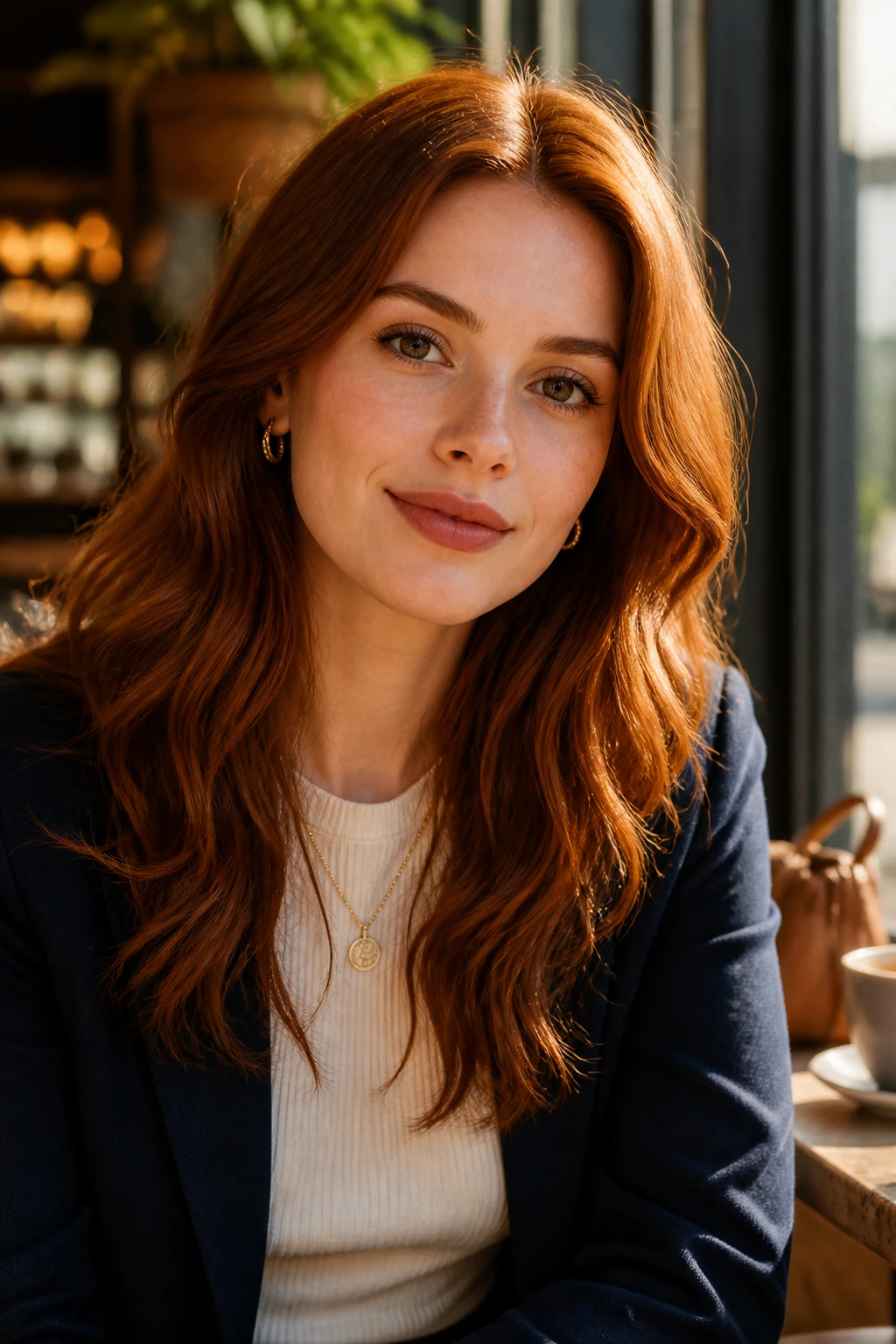
Cut and Shape:
Soft reds like strawberry copper and rose gold copper look best when the cut has movement: waves, curtain bangs, airy layers, or a blunt lob that keeps the ends tidy. Deeper shades such as cherry cola or mahogany can handle sleeker shapes because the color already has depth. If the hair is very long and one-length, ask for some face framing so the red has a place to catch the light.
Makeup Pairing:
Warm reds love peach blush, soft brown liner, and a lip color that sits one step below the hair, not above it. Cherry and merlot shades can take berry lips and a little more contrast. Copper shades usually look best when the makeup stays warm but not orange; think bronzed skin, not a matching hair-and-cheek situation.
Clothes and Accessories:
Cream, olive, washed denim, camel, black, and deep navy are easy neighbors for red hair. Gold jewelry usually behaves better than silver with copper, while rose gold can be nice with strawberry and rosé brunette tones. A loud red top and a loud red head can work, but it takes confidence and good lighting.
Best Light:
Natural daylight shows the most truth. Warm indoor bulbs make copper richer and can push cherry shades darker. If you want to show off the color, stand near a window or step outside for a minute. The difference can be dramatic, and not always in the same way you expected.
Additional Tips and Color Boosters
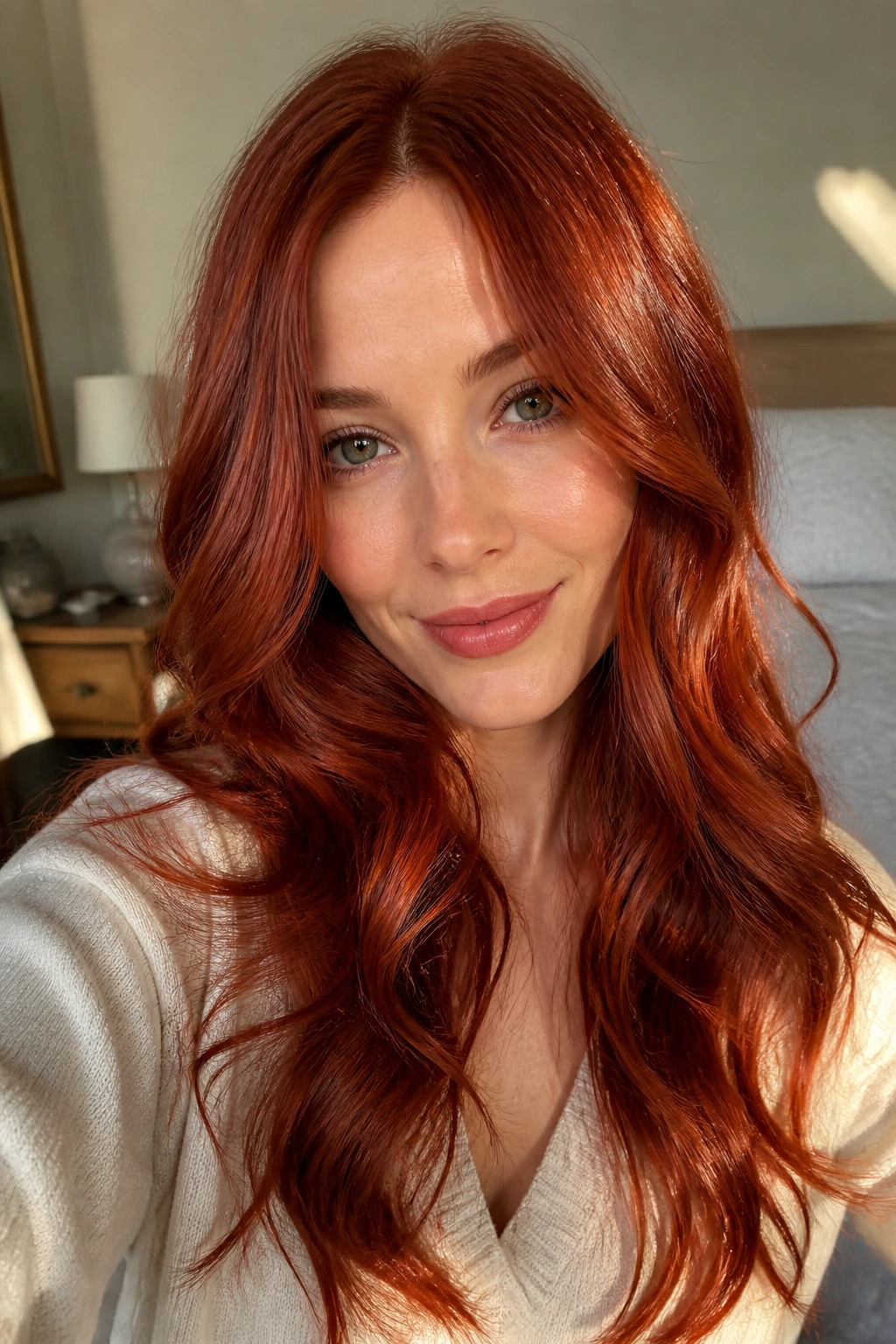
Gloss Finish:
A clear or lightly tinted gloss every 4 to 6 weeks keeps red hair from drying out into matte fuzz. If you’re wearing copper or auburn, a color-depositing gloss can revive the warmth between salon visits without forcing a full recolor.
Customization:
Ask for a shadow root if you want softer grow-out, or a brighter money piece if you want the face to wake up faster. One of the easiest ways to change the whole mood of a red is to shift the placement, not the pigment itself.
Styling Moves:
Loose bends show ribbon highlights better than tight curls, while glassy straight hair makes deep cherry and merlot shades look richer. Shorter styles like pixies and bobs usually need cleaner edges, because the color ends up doing the visual framing.
Make-It-Yours:
If you need low maintenance, choose a brown-based red with fewer light pieces. If you want drama, push the front section brighter and keep the rest deeper. If you like soft color, ask for a glaze rather than a permanent all-over change.
Make-Ahead, Wash Day, and Fading Care
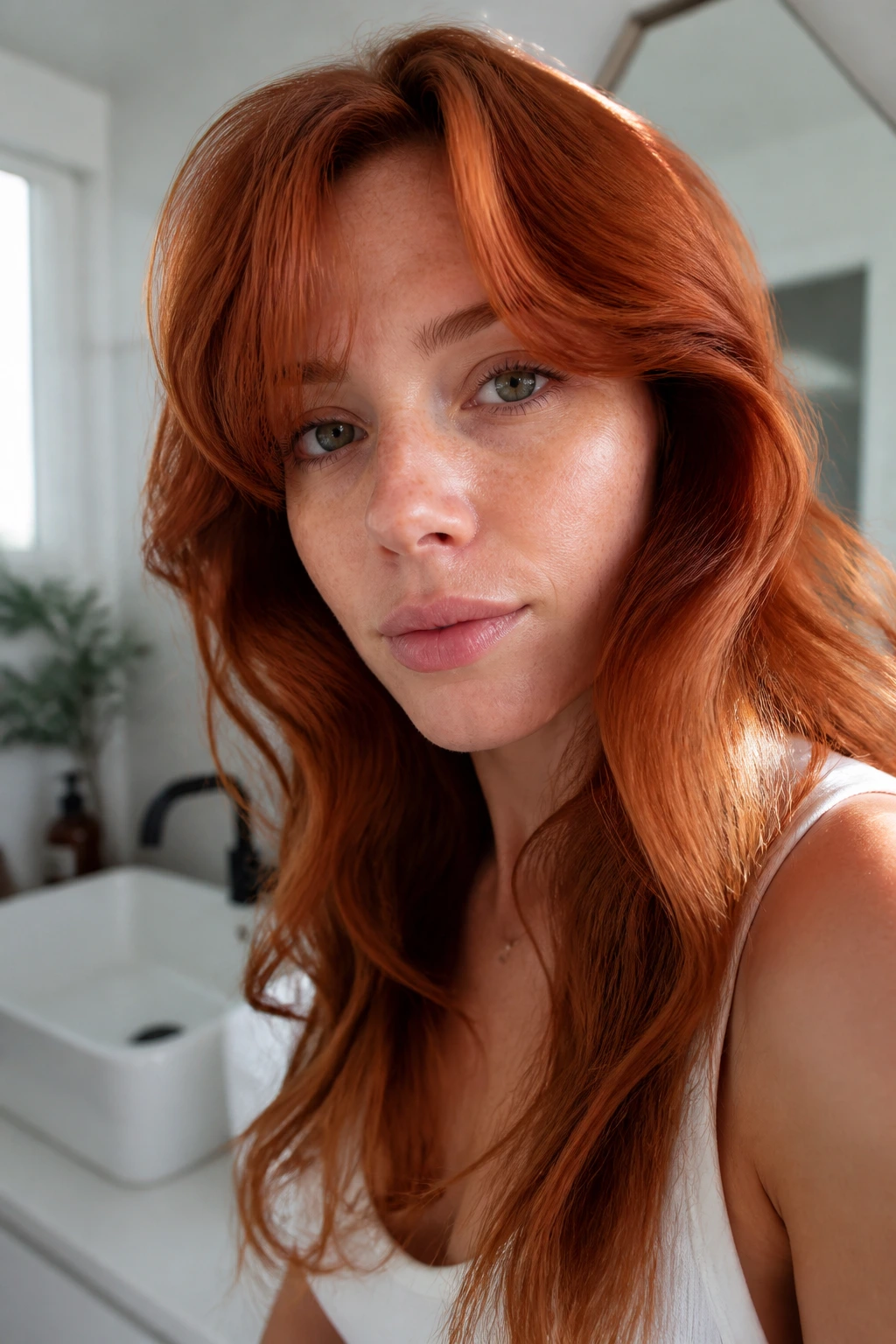
Red hair does not reward rough treatment. Fresh color usually holds best if you wait at least 48 hours before the first shampoo, and many stylists will tell you 72 hours if the hair was heavily processed. That pause lets the cuticle settle down a bit. Wash too soon and you can watch the water run pink down the drain, which is never a fun look.
Once the color is in, cooler water helps. Not freezing-cold, unless you enjoy punishment. Just cool enough that the cuticle stays flatter during the rinse. A color-safe shampoo two or three times a week is usually enough for most red shades, though very curly or dry hair may do better with even less washing and more dry shampoo at the roots.
Gloss-based reds and strawberry tones often need a refresh every 4 to 6 weeks if you want the tone to stay bright. Auburn balayage, merlot ends, and brunette ribbon highlights can usually stretch a little longer because the darker base hides fade better. If the red starts looking dull before the next appointment, a deposit conditioner once a week can bring some life back fast.
Heat is the other thief. Flat irons and curling wands are fine, but they should not be cooking the same section over and over. Keep the iron around 300 to 350°F for most color-treated hair, use a protectant every time, and let the hair cool before you brush it out. On sunny days, UV spray helps more than people think. Red pigment is touchy. It likes shade.
Variations and Adaptations to Try
Low-Lift Copper Veil:
If your hair is already light brown or dark blonde, ask for a copper gloss instead of a full color service. The veil version gives warmth without a hard commitment, and it fades in a soft, wearable way.
Cherry Brunette Shadow Root:
Keep the roots deep and thread cherry through the mids and ends. This version works well for people who wash often or want red to show mostly in movement rather than at the scalp.
Apricot Front Light:
Take one of the brighter looks and shift the focus to the front panels only. The rest of the hair can stay brunette or blonde, which keeps maintenance down and still gives you that spring punch around the face.
Mahogany Curly Melt:
Use a mahogany gloss over curls instead of trying to force a bright copper through a textured pattern. The deeper tone lives better in coils and ringlets and keeps the hair looking plush rather than dry.
Rosé Bob Refresh:
If a full red change feels too big, pick a bob and add a faint rose-gold glaze. The short cut keeps the color visible, and the softer pink-copper blend won’t demand constant root work.
Bright Ginger Crop:
For short cuts, lean into the brightness. Cropped hair can carry a louder ginger tone because there’s less surface area for the color to go flat. It’s bold, clean, and weirdly easy to style.
Common Mistakes to Avoid
The first mistake is choosing a red that ignores your base. A pale strawberry on very dark hair will not magically appear; it usually turns into a muddy warm brown. The fix is simple: either lift first or choose a deeper red that can actually show.
Another common problem is pushing the color too orange. Orange can be lovely in copper hair, but if the tone gets too bright, the result can look harsh under indoor light. Ask for copper, apricot, auburn, or cherry with the warmth controlled, not maxed out.
Skipping porosity care causes trouble too. Lightened ends grab red fast, then release it even faster, which leaves you with bright roots or dull mids after a few shampoos. A weekly mask, cooler rinsing, and a gloss schedule help keep the color even.
People also forget that red fades faster than brown. That’s not a flaw; it’s a fact of the pigment. If you expect a bright red to behave like dark brunette, you’ll spend half your time annoyed. Plan for maintenance from the start. It makes the color feel intentional instead of fragile.
One more: using heavy clarifying shampoo because the hair “feels dirty.” Don’t do that to red hair unless you want to strip out the tone early. Use a gentle cleanser, then save the strong stuff for the rare reset wash.
Frequently Asked Questions
Which red shade is easiest to maintain?
Brunette-based reds like cherry cola, mahogany foilayage, and rusted ribbons are the easiest to live with because the natural base hides grow-out. They also fade into softer brown-red tones instead of a sharp line.
Can you go red without bleach?
Yes, if you’re staying within a darker red family. Cherry, merlot, mahogany, and some auburn glosses can show on brunette hair without lightening, though the result will be deeper than copper or strawberry.
What red tones suit cool skin undertones?
Cool undertones usually look strong with cherry, cranberry, merlot, and rosé brunette shades. A copper can still work, but it usually looks better when there’s some brown base or rose in the formula so it doesn’t skew orange.
How fast does red hair fade?
Bright copper and strawberry shades often fade faster than deeper red-brown tones, especially on porous hair. With careful washing and regular glosses, you can stretch the color much longer, but red will still need more upkeep than brown.
What if my hair is already damaged?
Choose a lower-lift version, like a gloss, shadow-root red, or brunette ribbon highlight. Avoid chasing a bright copper on fragile ends; the hair usually pays for it later with rough texture and faster fade.
Can curly hair wear red without looking dry?
Absolutely, but the curl pattern needs moisture and a formula that respects depth. Warm copper, brick red, and mahogany usually look better on curls than pale strawberry because they keep the shape looking plush.
How often should I refresh the color?
Gloss-based looks often benefit from a refresh every 4 to 6 weeks. Balayage and deeper brunette reds can stretch farther, but if the ends start looking dusty or the tone goes dull, that’s the sign to refresh.
What’s the safest way to test a new red before committing?
Start with face-framing pieces, a peekaboo panel, or a color gloss. Those options let you see how the shade behaves on your skin, in daylight, and with your usual wardrobe before you go all in.
The Red You Keep Reaching For
The best red hair looks for spring are not the ones that shout the loudest. They are the ones that sit well with daylight, hold their shape through a real wash routine, and still look good when the roots start to come back in. That’s why the list above covers everything from strawberry copper to merlot ends to hidden cranberry panels. Red has range. Use it.
If you’re choosing one shade, start with your base color and your patience level. That sounds dull, but it saves money and disappointment. A brilliant copper on hair that can’t hold it is just a fast trip to the salon chair again. A softer auburn, though, can look better for longer than the flashy option you almost picked.
And that’s the part I like most about red hair. It does not have to be one thing. Pick the version that fits your cut, your upkeep, and the kind of light you live in, then let it do its work.
