



Red hair looks for short hair have a way of turning a neat cut into something sharper, louder, and far less polite. A pixie in copper reads one way. The same pixie in burgundy reads another. And a blunt bob with cherry tones can look almost architectural, like the haircut was built around the color instead of the other way around.
Short hair is unforgiving in the best possible sense. There’s nowhere for a weak shade to hide, but there’s also nowhere for a strong red to waste itself. The line at the nape, the curve at the jaw, the little flick of fringe over one eyebrow — all of it gets framed by pigment. That’s why red on short cuts often looks richer than it does on longer hair. You see the shape. You see the shine. You see the regrowth too, which matters more than people admit. A soft root shadow or a deeper base can keep the whole look from turning into a harsh block of color after a few weeks.
The thing about red is that it isn’t one color, not even close. Copper, auburn, cranberry, merlot, cherry cola, paprika, garnet — they all do different jobs on different cuts. Some sharpen a bob. Some bulk up fine hair. Some make curls look denser. Some are there for drama, plain and simple. The trick is matching the shade to the cut, the texture, and how much maintenance you’re willing to live with when the roots start showing through at the temples.
Why These Red Short-Hair Looks Work So Well
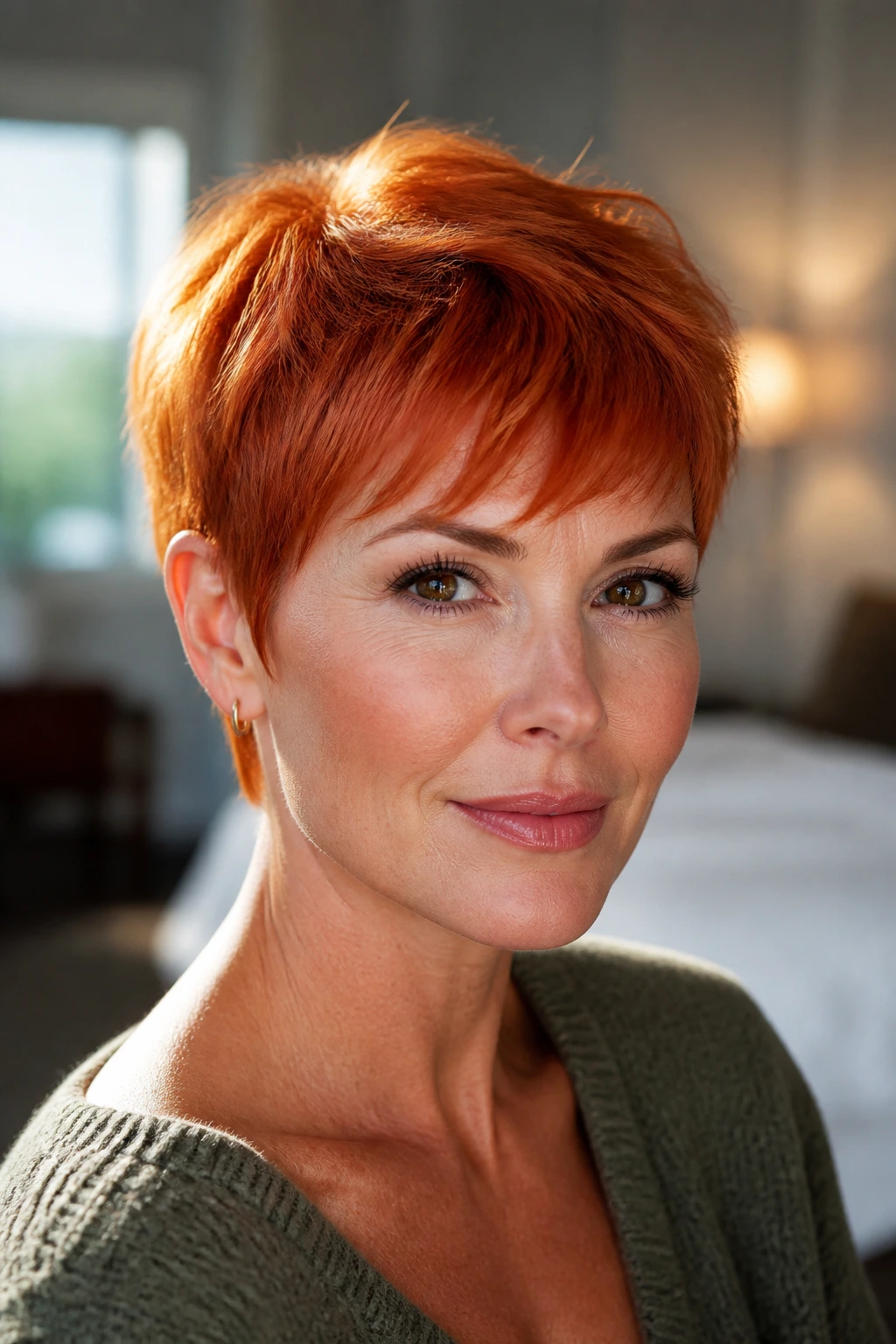
- The haircut does half the work. A short bob, crop, or pixie gives red pigment hard edges to land on, so the shade looks cleaner and more deliberate.
- Red adds shape fast. Even a small shift from auburn to copper can make layers, bangs, and nape lines read more clearly.
- Short hair shows dimension better than length does. A root shadow, lowlight, or money piece doesn’t get lost in the ends the way it can on long hair.
- Regrowth can look intentional. A darker root with brighter mids makes short red hair wear longer between appointments.
- Texture changes everything. Straight hair turns red glossy and crisp; waves make it look softer; curls make the color sink in and look deeper.
How to Choose the Right Red for Your Base Color
Warm-toned reds — copper, paprika, amber, auburn — tend to sit easiest on golden, peachy, or olive skin. They also behave nicely on darker blondes and light brunettes because the pigment doesn’t need to fight the base as hard. If you want the color to look bright without screaming, those are the reds I’d start with.
Cooler reds change the mood fast. Burgundy, merlot, cherry cola, and rosewood lean berry or wine, which can flatter cool undertones and darker natural bases. They also make short cuts look denser because the shade holds depth near the roots and along the outline of the haircut. That matters on a pixie or blunt bob where every millimeter is visible.
A quick rule that saves regret
If your hair is dark brown or black and you want a copper or bright cherry result, expect lightening first. Not every strand needs to be pushed to pale blonde, but the mid-lengths and ends often need a lift if you want the red to show cleanly instead of sinking into brown. On the flip side, if you want low upkeep, ask for a rooted red or a glossed brunette-red blend. It grows out with much less drama.
1. Soft Copper Pixie
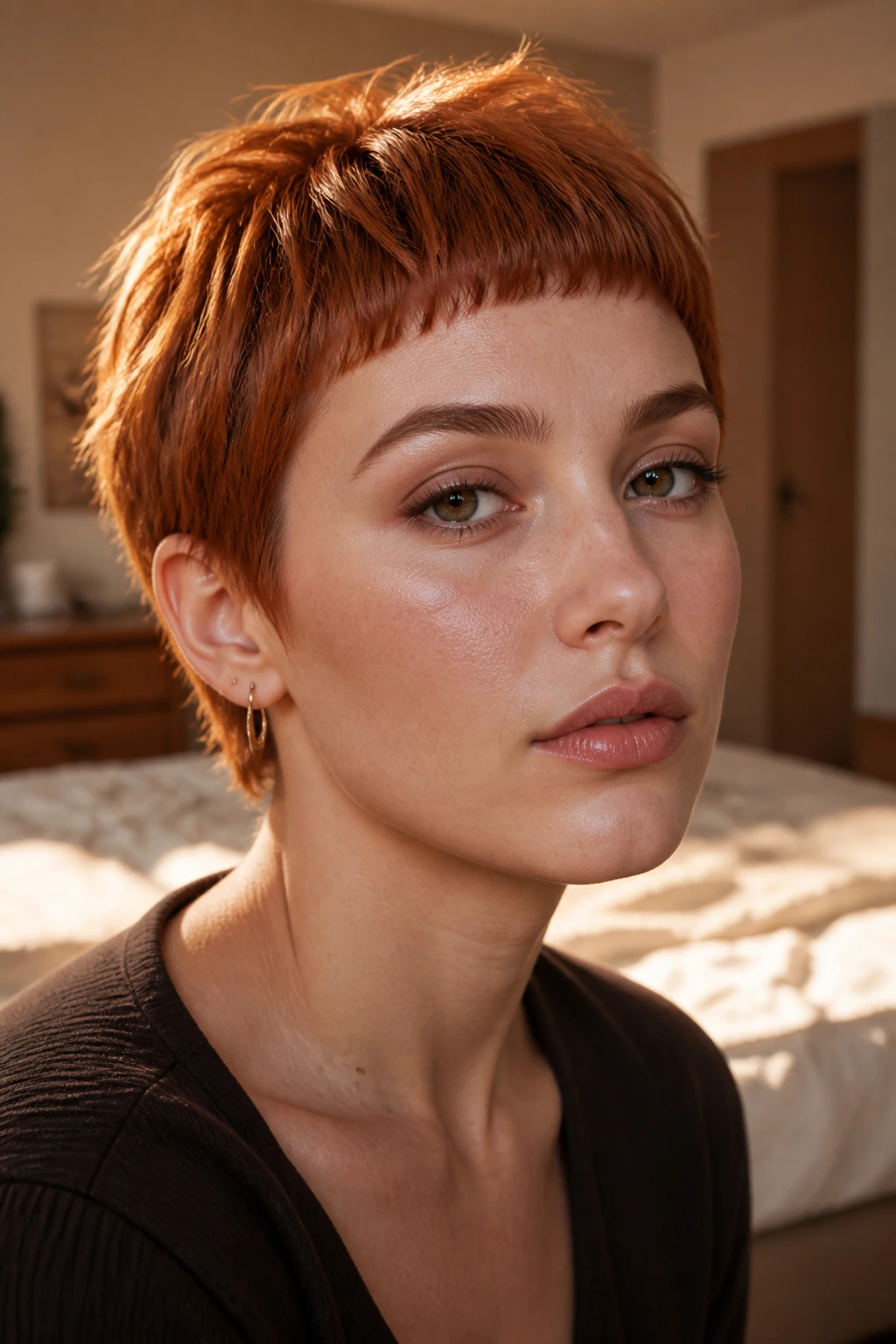
A soft copper pixie is the red I recommend when someone wants warmth without committing to a full flame. The cut stays close to the head, which means the color can do subtle work: a little shine at the crown, a brighter edge at the fringe, a soft glow around the ears. It’s one of those looks that makes fine hair feel fuller because the copper sits on every tiny layer instead of disappearing into length.
Why it works
The shape stays crisp while the shade stays wearable. Copper on a pixie catches light at the temples and crown, so even a simple blow-dry looks finished. If the hair is naturally light brown or dark blonde, this can often be done with a gloss or demi-permanent color. Darker bases usually need a lift, at least on the top layer.
Best for: fine hair, soft features, and anyone who wants red without heavy upkeep.
Styling note: a pea-sized amount of texture paste is enough. Too much and the cut turns greasy.
2. Auburn French Bob
The auburn French bob has old-school charm, but not in a stuffy way. Think jaw-skimming length, a clean line, and a red that sits somewhere between brown and copper. It’s one of the few short red looks that can feel polished in a white shirt and lip balm, then suddenly a little dangerous when you tuck one side behind the ear.
Auburn works because it doesn’t need to shout. The haircut already gives you shape; the color just tightens the whole outline. If your hair is naturally straight or slightly wavy, this is a smart place to start. The blunt ends make the red look richer, and a soft side part keeps it from looking too severe.
The upkeep is manageable too. Auburn fades more gracefully than brighter copper, so it doesn’t look tired after every wash. If you like a neat bob that still has some personality, this is the red I’d put in the first row.
3. Cherry Cola Chin-Length Bob
Cherry cola is the kind of red that looks dark at first glance and then shifts when the light hits it. On a chin-length bob, that depth matters. You get the brunette base, the ruby reflection, and a little wine-colored sheen all in one cut. It’s especially good if you want red but don’t want the hair to read as orange from across the room.
How to wear it
Ask for a deep brunette-red base with cherry reflect through the mids and ends. If you want more movement, a few thin face-frame pieces can keep the front from looking too flat. This one looks best when the bob is smooth and slightly tucked under at the ends.
Maintenance: lower than a bright copper, but you’ll still want a color-safe shampoo and a gloss every 4 to 6 weeks.
Who it suits: brunettes making a first move into red, and anyone who wants a darker, moodier finish.
4. Cinnamon Crop with Micro Bangs
Cinnamon on a crop feels spicy in the right way. The color lands between copper and brown, which keeps the look grounded, and the micro bangs add a little edge that a longer fringe would soften away. On short hair, the bang length matters more than people think — a tiny shift at the forehead changes the whole mood.
This cut shines on dense hair because the crop removes bulk while the cinnamon tone keeps the style warm instead of heavy. If your hair tends to puff out, a little smoothing cream and a small round brush at the bangs can stop the whole thing from getting fluffy in the wrong places.
It’s not the quietest look on this list. Good. It shouldn’t be. The shape is sharp, and the cinnamon shade gives it enough heat to feel intentional from every angle.
5. Burgundy Buzz Cut
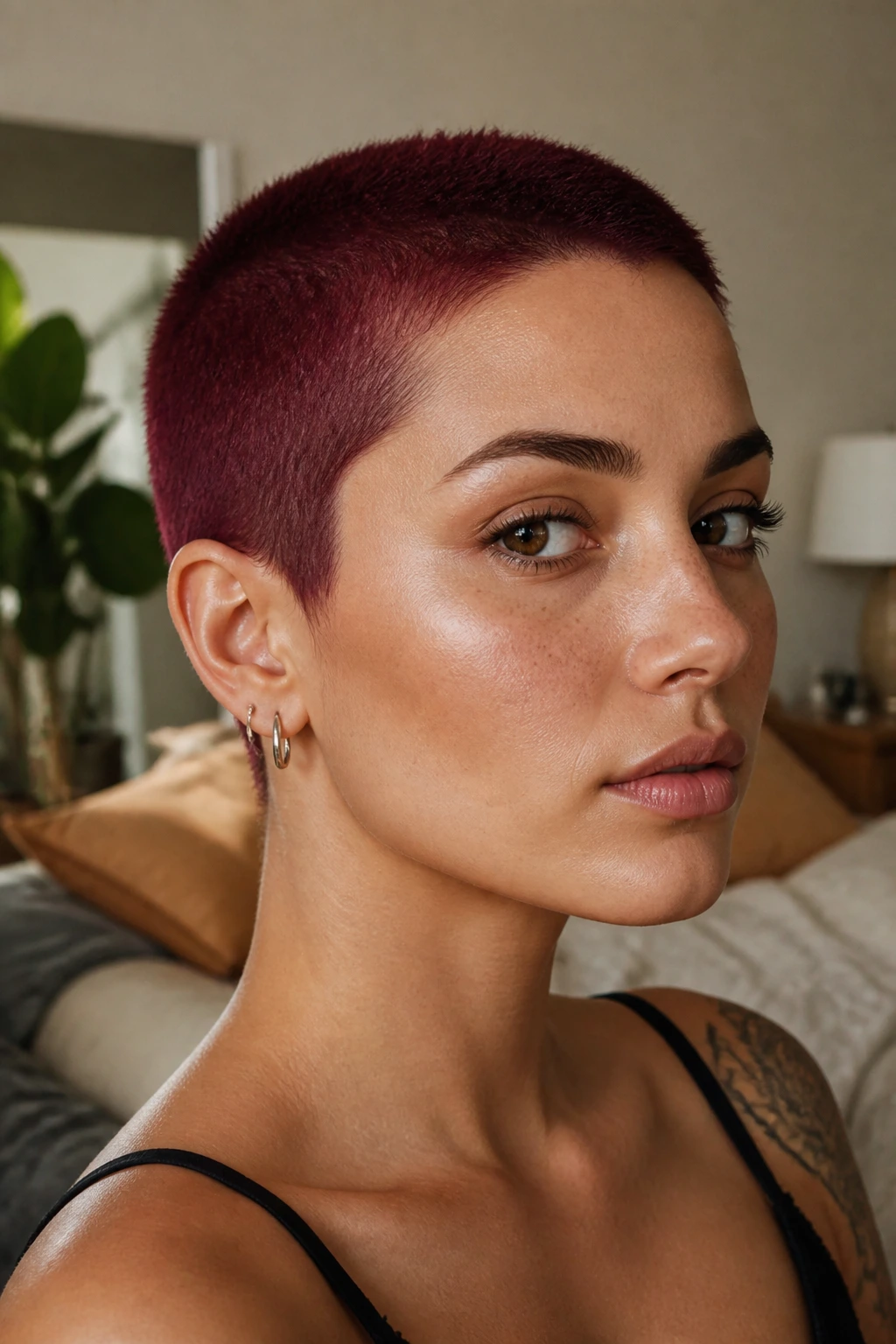
A burgundy buzz cut is almost unfairly good on strong bone structure. When the hair is that short, there’s nothing softening the color, so every bit of pigment lands right on the scalp line and the head shape itself. Burgundy does the best job here because it gives you depth without making the crop look flat or cartoon-bright.
This is one of the easiest cuts to live with day to day and one of the easiest colors to keep from looking sloppy as it grows out. The buzz keeps the silhouette tidy. The burgundy keeps it from disappearing. If you want something low-maintenance on the styling side but still rich and noticeable, this is a very sane choice.
A small warning: short crops expose the scalp more, so red roots and fading are easier to spot. That’s not a dealbreaker. It just means a satin pillowcase and a color-depositing mask matter more than they would on longer hair.
6. Strawberry Copper Bob
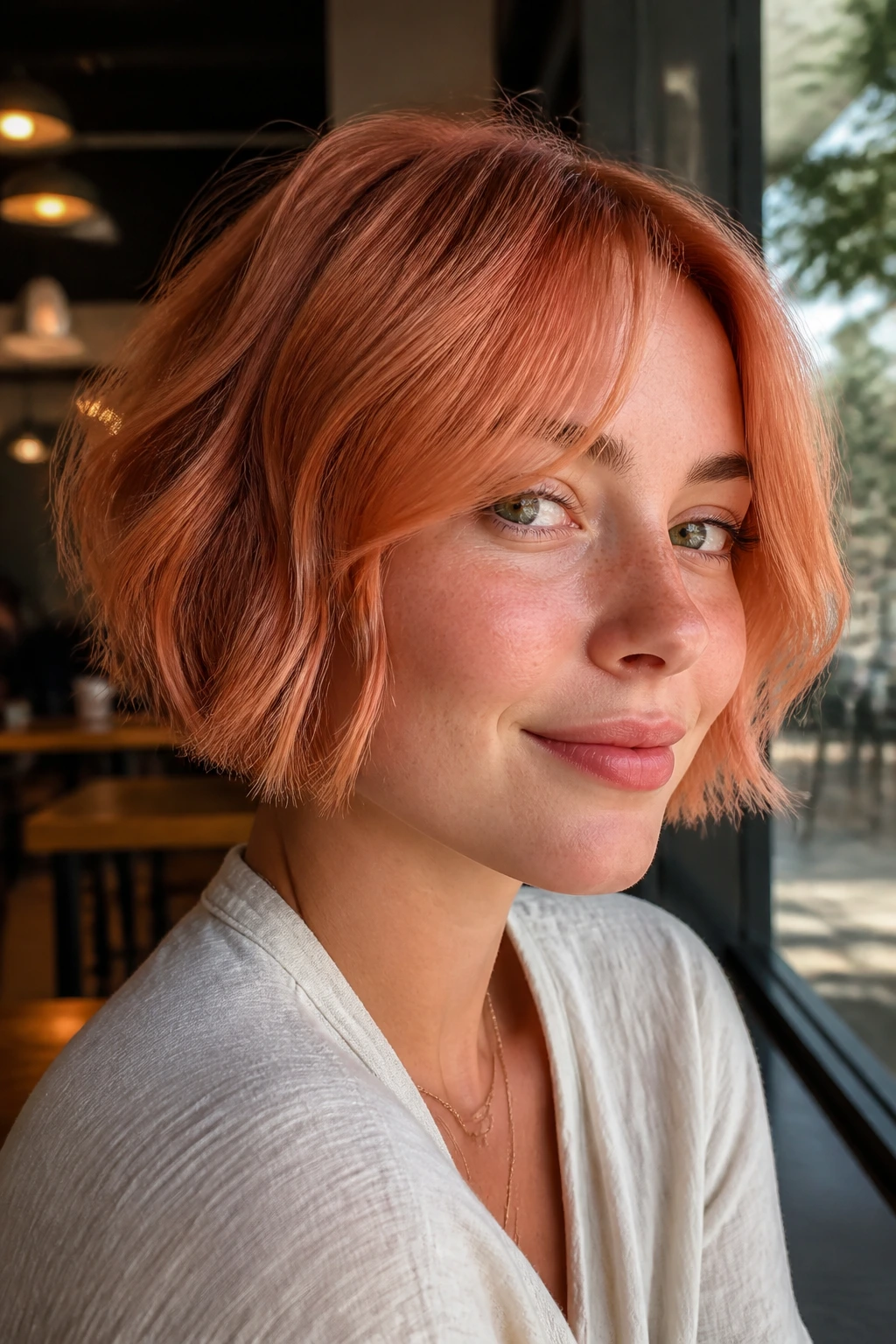
Strawberry copper sits lighter and sweeter than auburn, with enough pink in the mix to keep it from turning brassy. On a bob, that softness is the whole point. The length gives the shade room to move, and the color gives the cut a softer edge than a blunt dark brunette bob would ever manage.
This look is especially good if your hair is naturally blonde or light brown. You can keep the copper bright without pushing the hair too far, and the pink cast helps the shade feel fresh instead of orange-heavy. It’s also one of the better reds for softer makeup looks — rosy cheeks, peach lips, brushed brows. All of it fits.
If you go this route, protect the color from hot water and strong clarifying shampoos. Strawberry tones vanish faster than deeper wine shades, and they show that fade at the front first. Annoying? Yes. Predictable? Also yes.
7. Crimson Shag
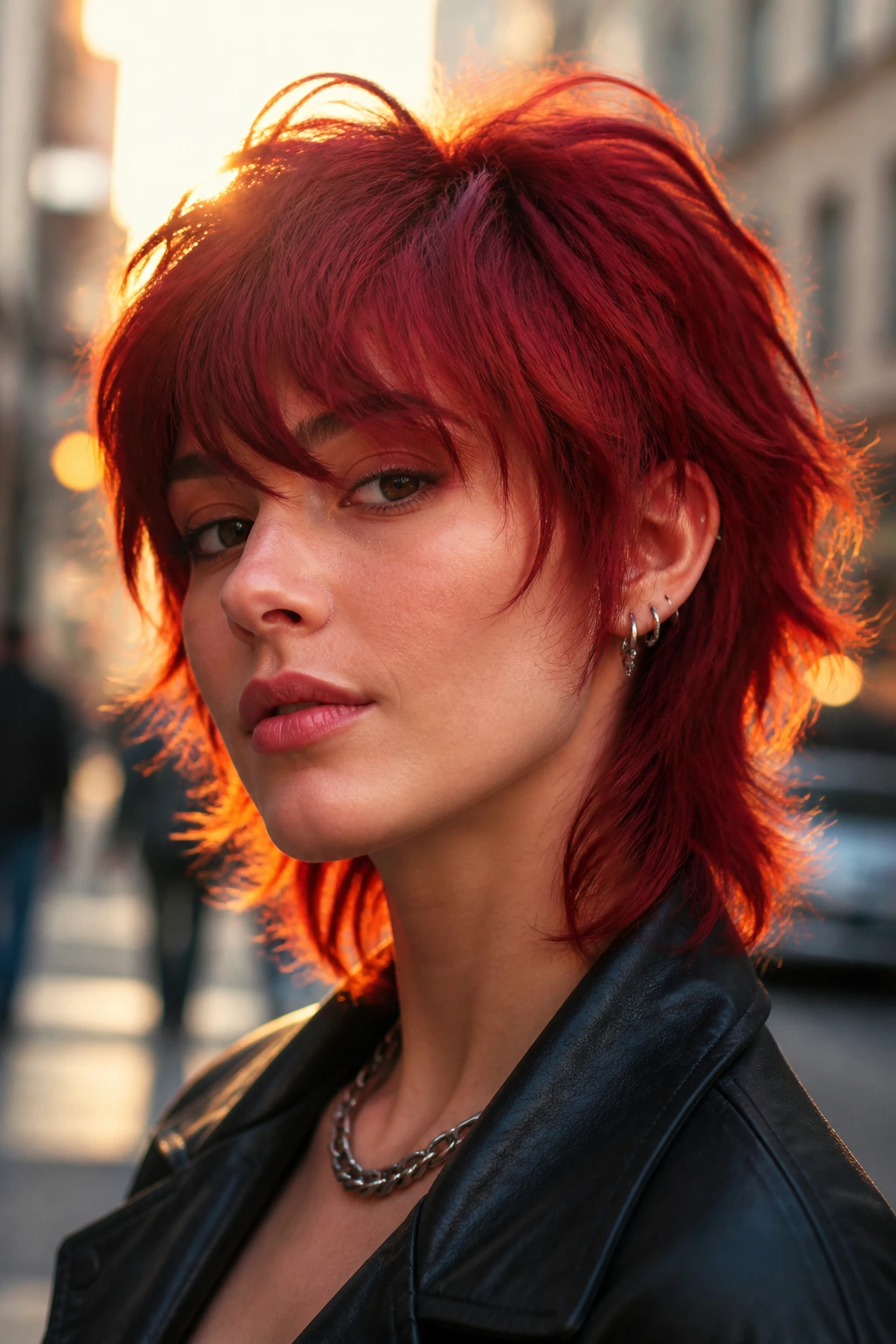
The crimson shag is messy in the right way. Choppy layers, a little lift at the crown, and a red that sits brighter than burgundy but deeper than cherry. The cut gives the color movement; the color gives the cut attitude. On wavy hair, this combo can look like you spent 20 minutes on it when you really spent five.
What makes it different
A shag depends on texture. Crimson helps each layer show up instead of blending into one soft mass. If you like air-drying, this is one of the better short red looks to choose because the uneven layers dry into shape without much coaxing.
Add a lightweight mousse or sea-salt spray at the roots, then scrunch once and leave it alone. Too much brushing ruins the separation. Too much product makes the red look muddy. The sweet spot is somewhere in between, and it’s not hard to find.
8. Rusted Undercut Pixie
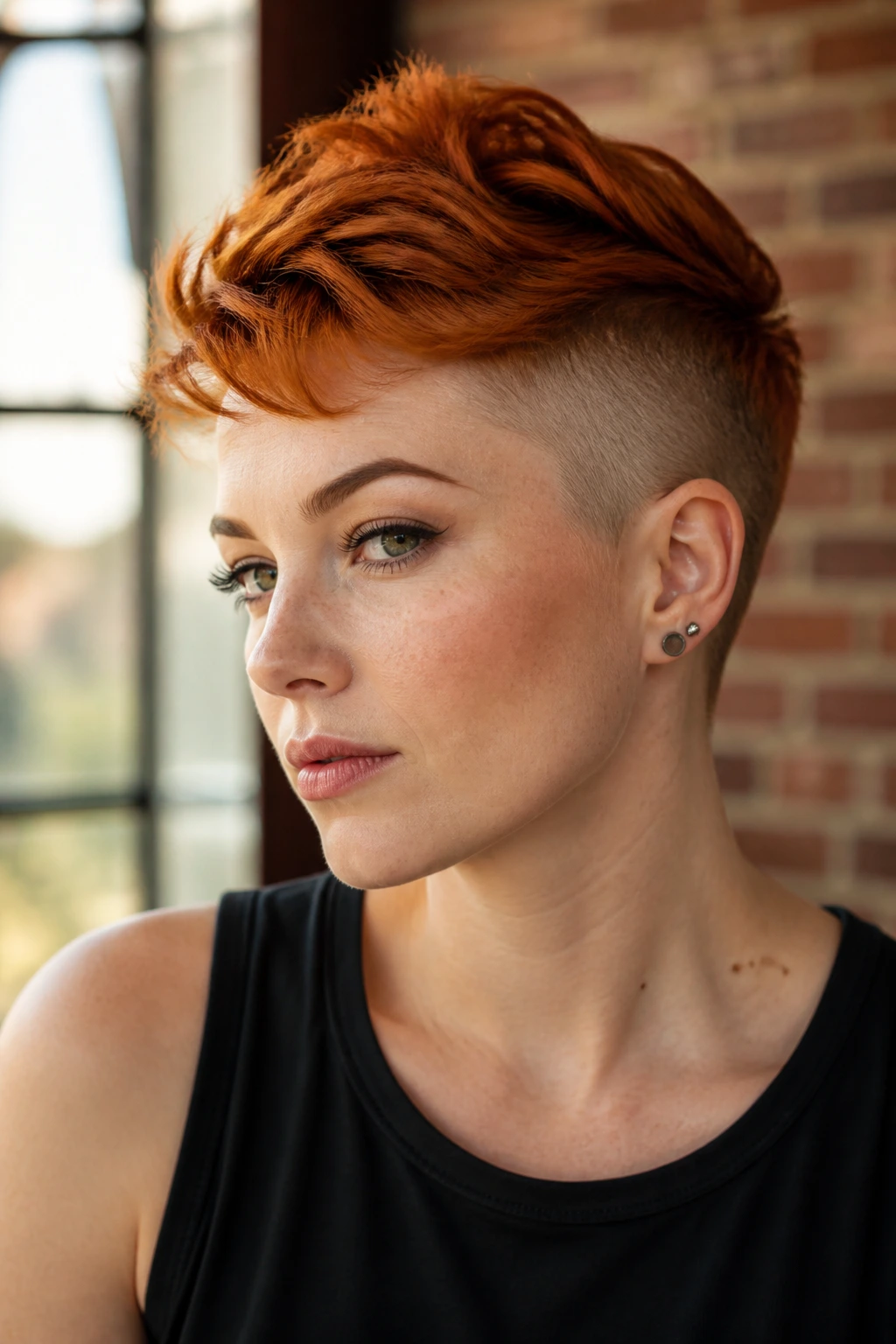
A rusted undercut pixie is all about contrast. The sides stay close, sometimes shaved, while the top carries the color — a burnished rust with copper and bronze mixed through it. That contrast makes the top look fuller and the sides look cleaner, which is exactly why this cut works so well on thick hair.
If you’ve got a lot of bulk, this is one of the smartest ways to make a red color feel lighter and more wearable. The undercut removes puff, and the rust tone keeps the remaining top layers from reading too soft or too sweet. It’s practical. It’s sharp. It grows out with attitude.
Keep the undercut tidy every few weeks if you want the lines to stay crisp. Once the sides start fuzzing out, the whole cut loses its edge, and rust is not a forgiving color when the shape goes soft.
9. Merlot Sleek Bob
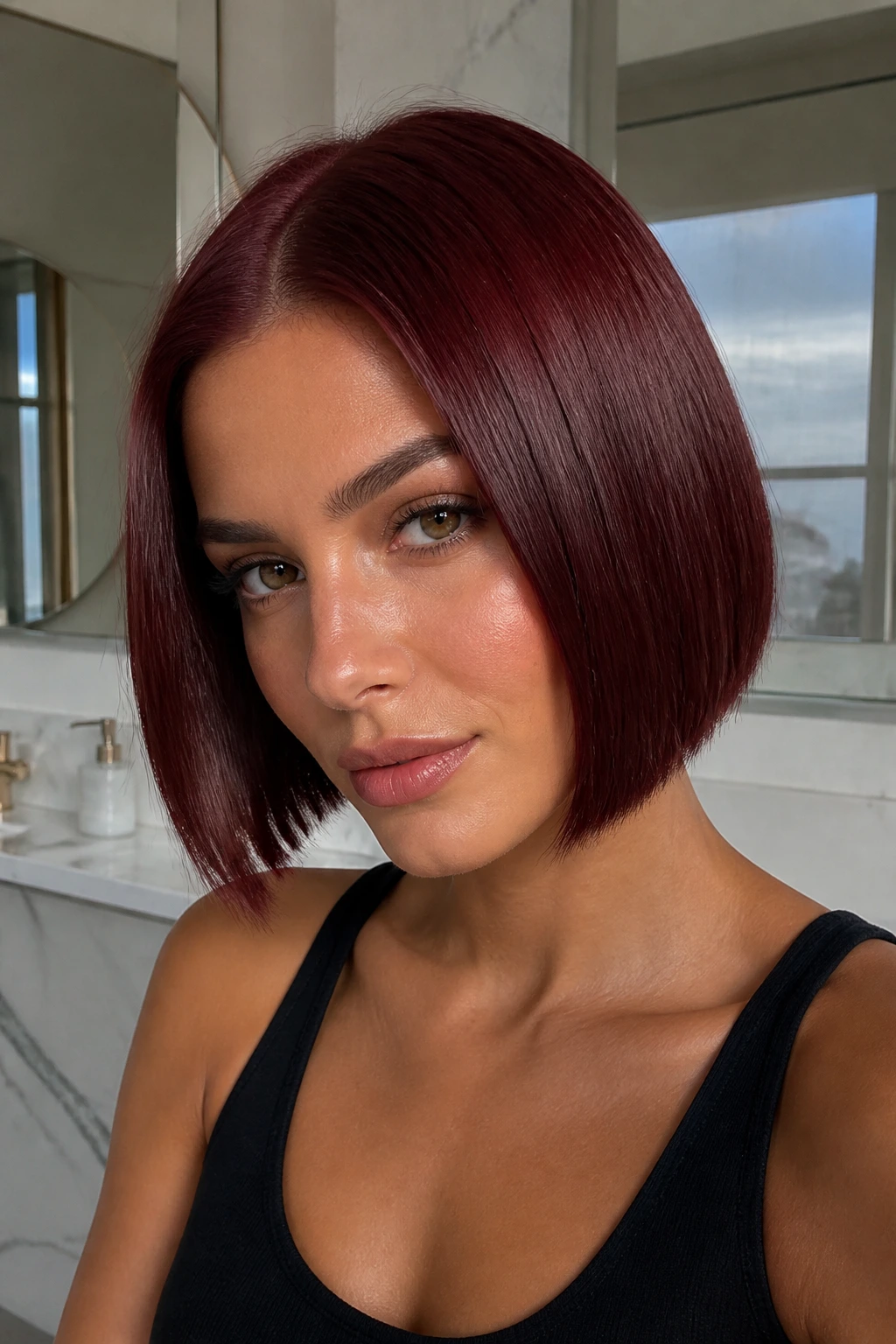
Merlot on a sleek bob has that polished, expensive look people always describe badly. Let me say it more plainly: it’s glossy, dark, and a little bit dangerous-looking in the best possible way. The color leans wine-red, which gives the cut depth, and the straight finish makes the reflection look even richer.
This is a smart choice if your hair is fine and flat. The darker red makes the line of the bob look denser, and the smooth styling gives it one clear shape instead of a fuzzy outline. On short hair, that clarity matters.
Use a heat protectant and keep your flat iron at a sane temperature — around 300°F to 350°F is usually enough unless your hair is very coarse. Too much heat chews through the shine, and merlot without shine loses half its appeal.
10. Fire-Engine Asymmetrical Bob
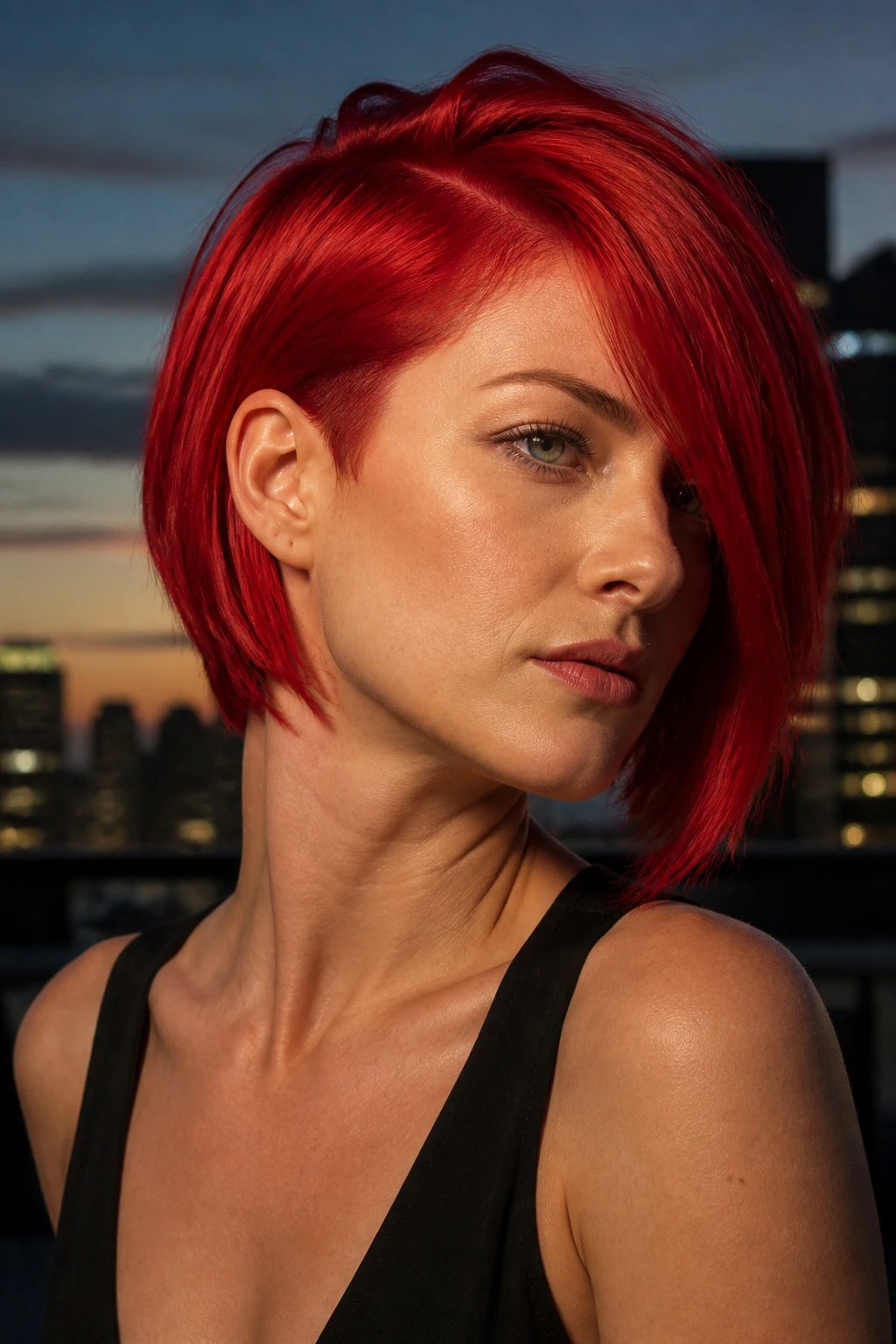
The fire-engine asymmetrical bob is not for blending in. One side sits shorter, the other longer, and the color lands in a bright true red that looks almost lacquered when it’s freshly styled. The asymmetry gives the shade a reason to exist beyond shock value. Without the cut, the color could feel loud for no reason. With the cut, it reads as shape.
This style works best when the barber or stylist leaves the ends blunt enough to hold the line. If the asymmetry gets too wispy, the whole thing starts to look accidental. And no one wants accidental fire-engine red.
Keep the color vivid by spacing out shampoo days and using cold-to-lukewarm water. Red pigments don’t care about your feelings; they care about friction and heat.
11. Paprika Pixie with Side Fringe
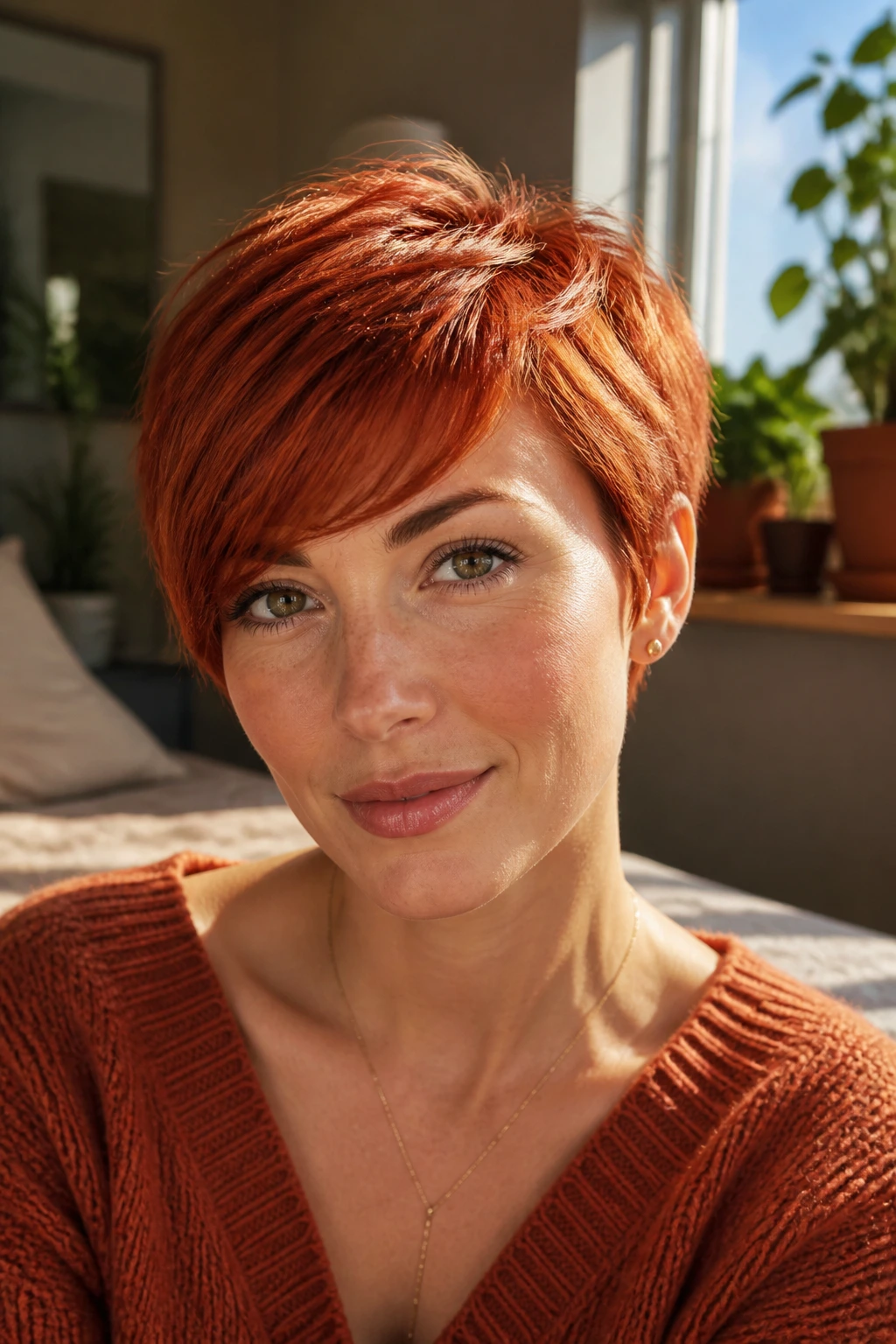
Paprika is the kind of red that sneaks up on you. It’s warm, a little orange, and less sugary than strawberry shades. On a pixie with a side fringe, the color softens the forehead while the fringe gives the whole cut some shape. That little side sweep matters. It keeps the style from feeling too severe.
If your face leans long or angular, the fringe can make a big difference. It breaks up the forehead line and pulls the eye sideways instead of straight down. The paprika tone then fills in the rest, especially around the temple area where short cuts can sometimes look thin.
Styling trick: blow-dry the fringe across the forehead with a round brush, then let the ends fall naturally. Over-polishing this look kills its charm.
12. Garnet Curly Crop
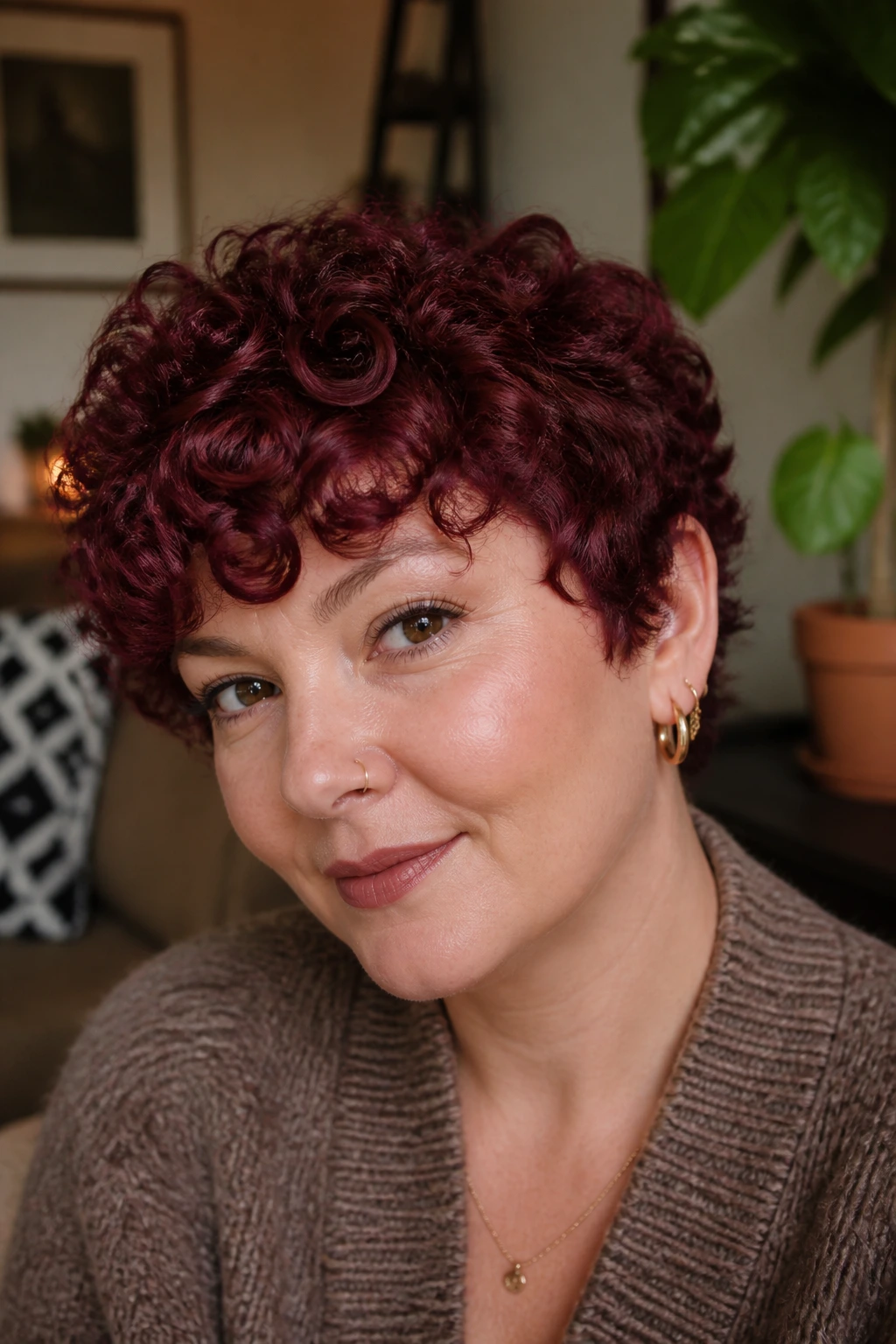
Garnet on curls is a lesson in restraint. You don’t need the brightest red in the room when the curl pattern already brings movement. A deep jewel red sinks into the coils, then flashes at the bends and ridges. The result looks richer than a flat shade ever could.
This crop is especially good for dense curly hair because the red adds definition without making every curl look separately outlined. You still get texture, but it feels layered instead of busy. If your hair tends toward dryness, a curl cream and a little oil on the ends will keep the garnet from looking thirsty.
A small but useful note
Curly short hair shrinks more than long hair, so the color will show slightly differently once it dries. That’s normal. Judge the shade on dry curls, not just wet hair in the sink.
13. Copper Balayage Lob
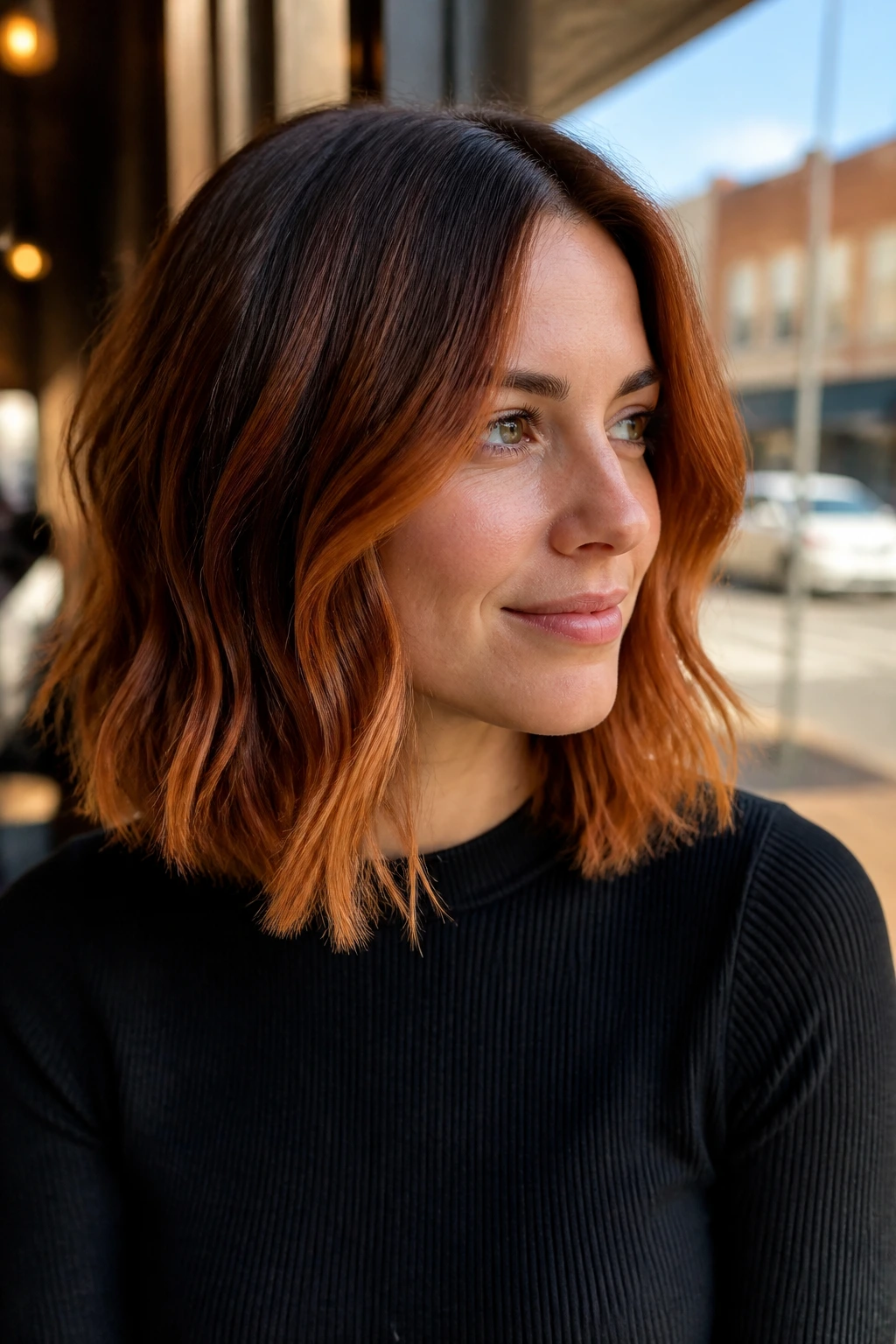
A copper balayage lob is for the person who wants red but wants a little breathing room around it. The base stays deeper, while copper ribbons get painted through the mids, ends, and face frame. On a lob, that placement keeps the color dimensional instead of blocky, which is a real gift if your hair is thick or straight.
This is one of the easiest ways to wear red on short hair without locking yourself into a solid all-over tone. The balayage makes grow-out softer, and the longer short length gives you enough hair to actually see the blend. If your hair is only barely long enough for a bob, this is a smart middle ground.
Ask for the copper pieces to sit around the hairline and toward the ends, not all the way to the scalp. That keeps the roots calmer and the maintenance a little saner.
14. Chili Pepper Shag
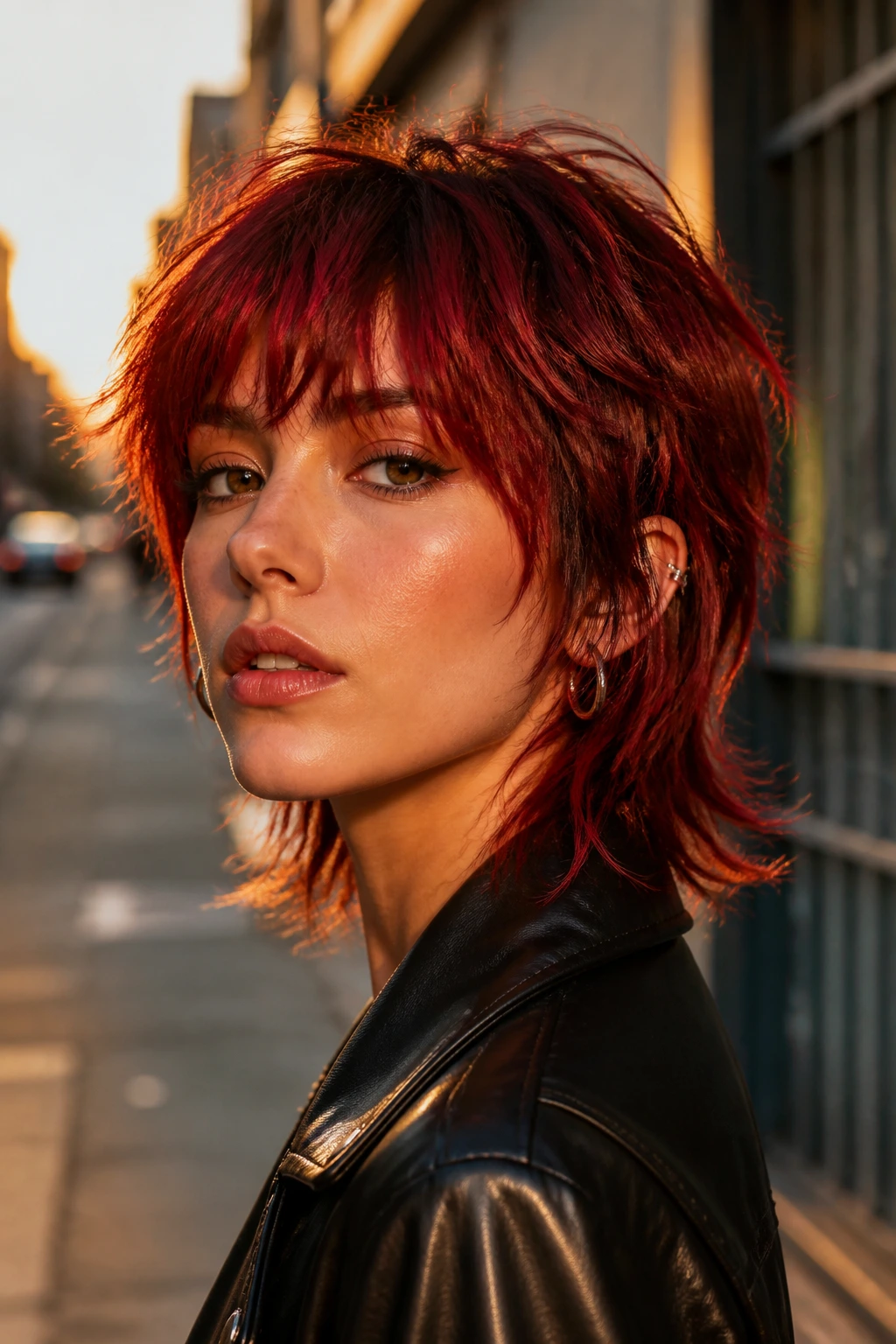
Chili pepper red has a kick to it. It leans brighter than auburn and hotter than burgundy, which makes it a nice match for a shag that already carries movement and edge. The layers break the color into pieces, so the whole thing feels alive instead of painted on.
This cut is good when you want the red to look a little rebellious. The shag already has a rougher silhouette, and chili red deepens that feeling. It also works well on hair that air-dries with some wave, because the shape doesn’t need to be perfect to look right.
If your hair fades fast, expect the chili tone to slide toward copper before it goes dull. Honestly, that fade can still look good. It just changes the mood.
15. Mahogany Rounded Bob
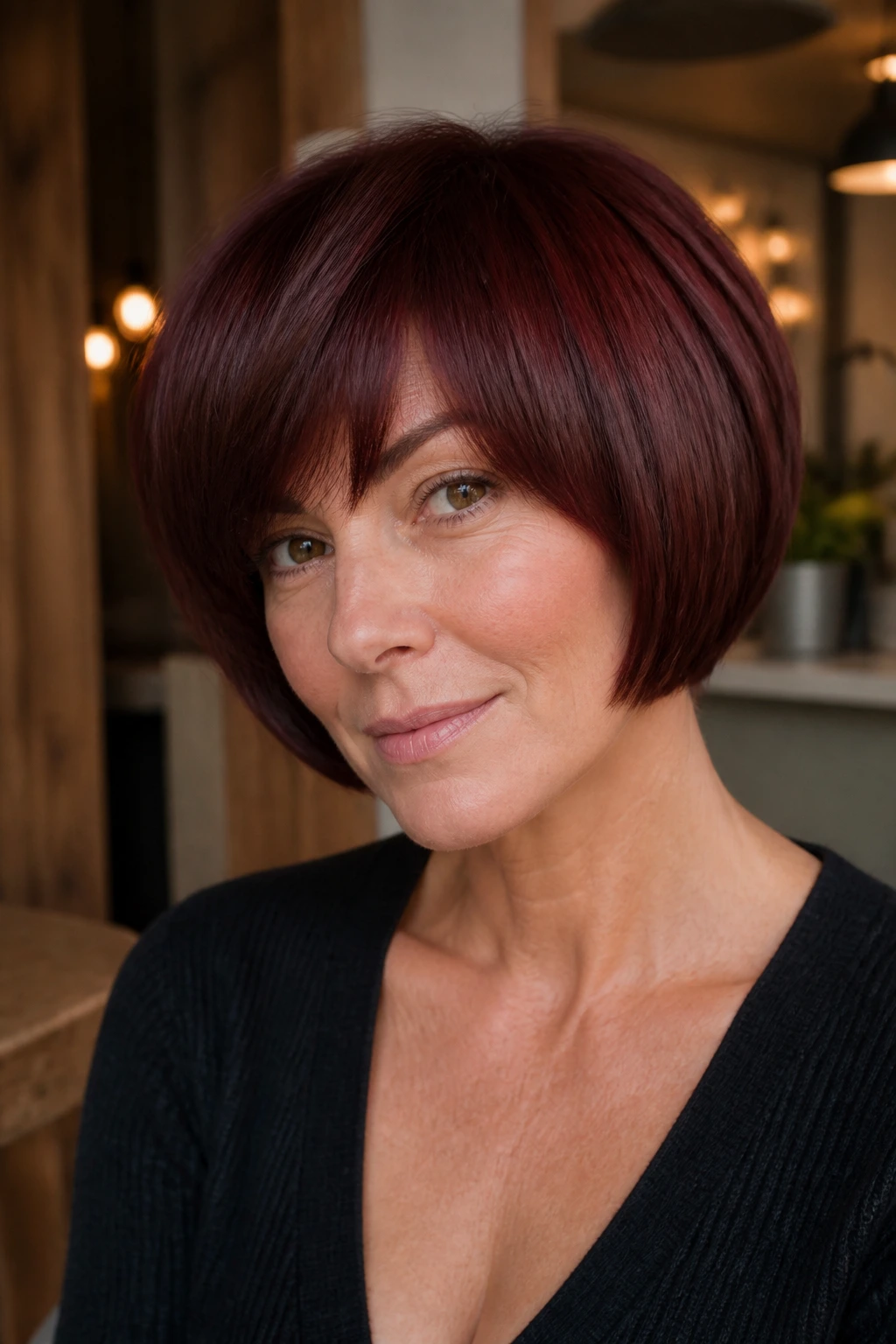
Mahogany is a grown-up red, and I mean that in the nicest way. It sits darker, with brown and red folded together, which makes a rounded bob look thicker and calmer. The shape curves around the jaw, and the color deepens that curve instead of fighting it.
This is a strong choice if you work in a place where bright red might feel too loud. It still reads as red, but it does so quietly and with polish. If your hair is fine, the rounded bob plus mahogany tone can make the whole head look denser from the front.
A center part can look a little severe here. A slight off-center part usually feels softer and gives the shine somewhere to land.
16. Blood Orange Textured Crop
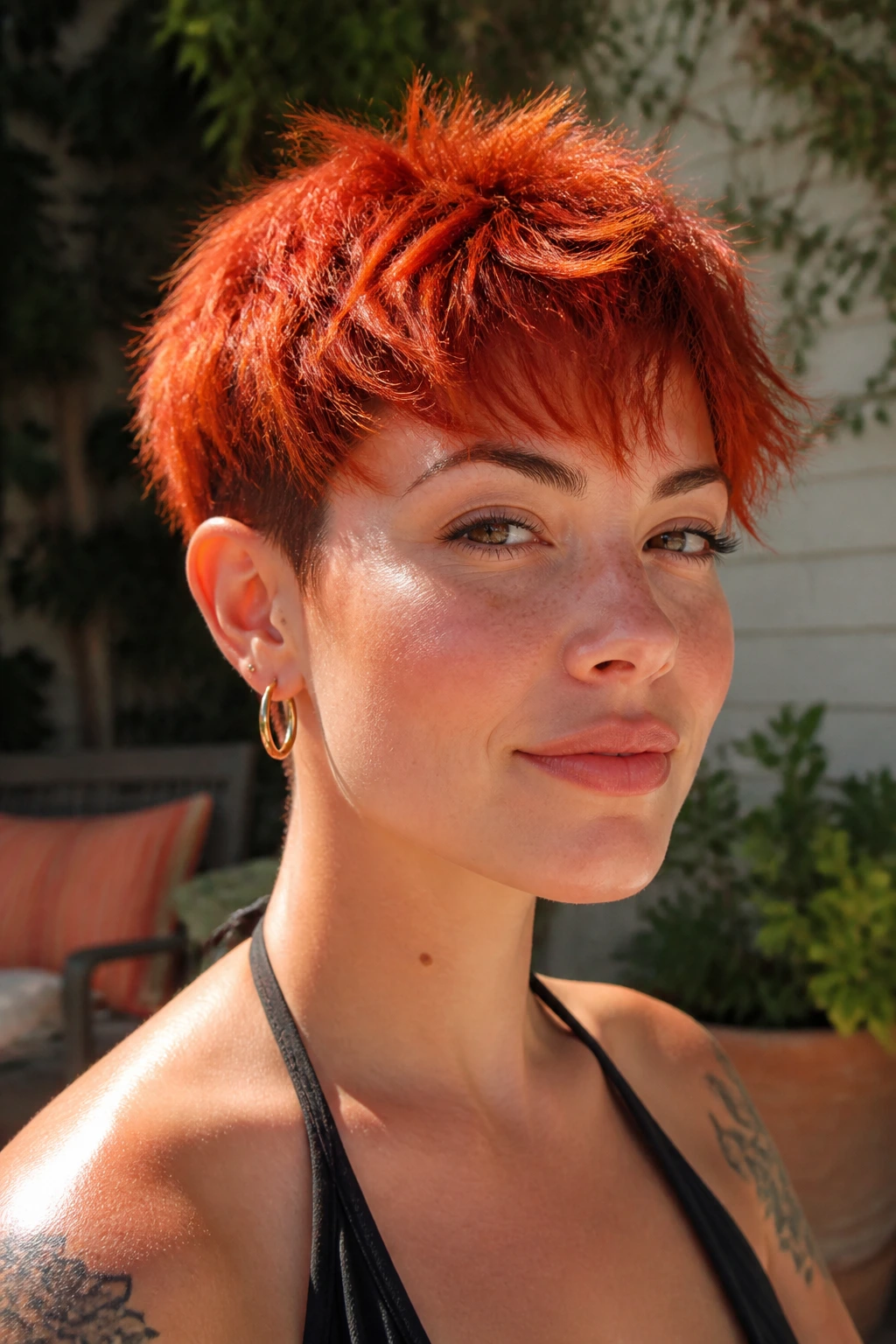
Blood orange on a textured crop is a full-sun color. It’s brighter than copper, more citrus than wine, and it looks especially good when the cut has rough ends or choppy layers. The texture keeps the brightness from feeling flat. Every tiny ridge in the hair catches a little more light.
This one does ask for confidence, or at least curiosity. The color is loud, and that’s the point. If you want a short red look that reads immediately from across a room, this is one of the clearest options on the list. It’s also a good match for warm undertones and tan-to-medium skin, where the orange in the shade doesn’t clash.
Use heat protection every time you touch it with a flat iron or curling wand. Bright red-orange shades fade fastest when you cook them repeatedly.
17. Rosewood Pixie
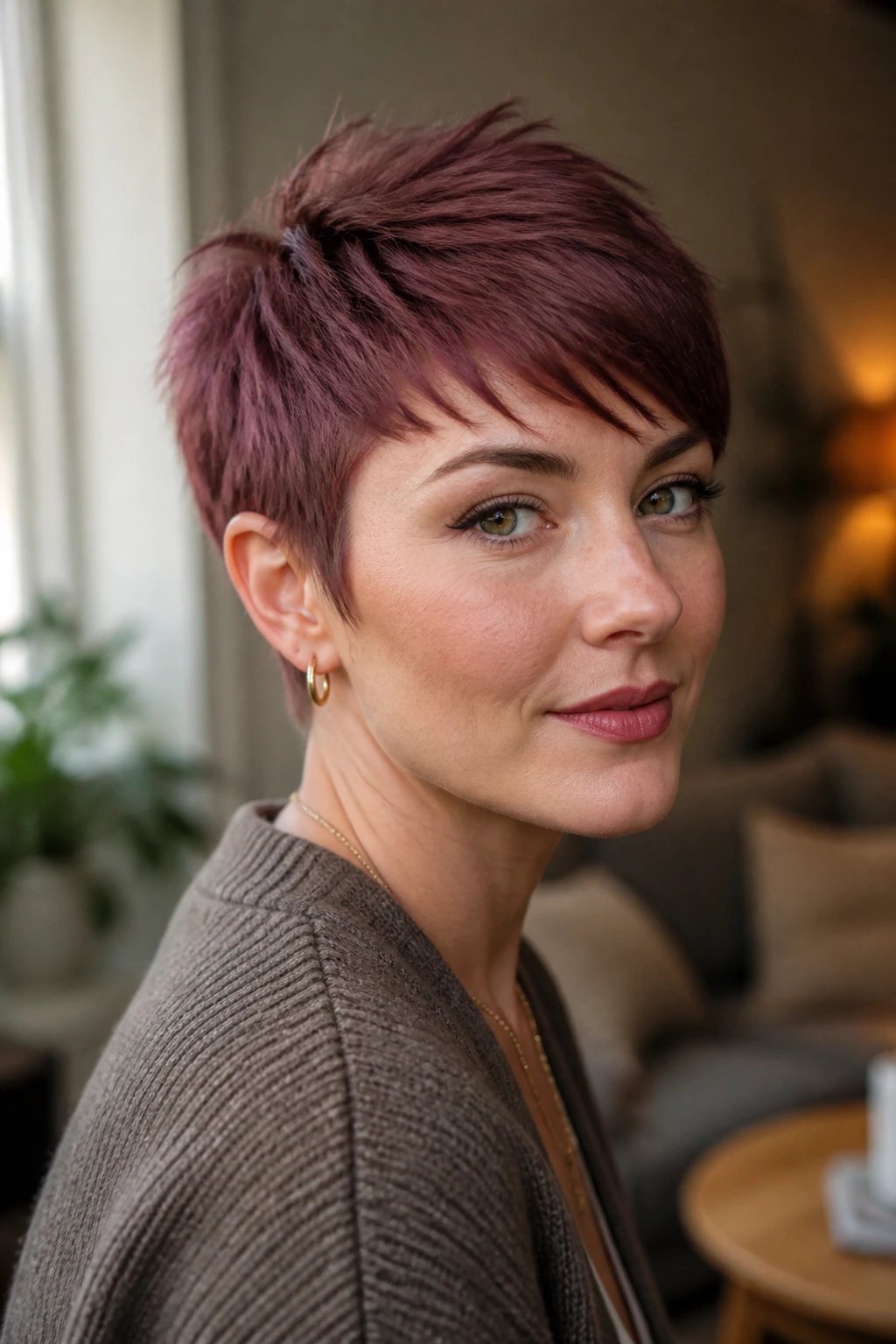
Rosewood is for people who want red but don’t want to look as if they borrowed a stop sign. It’s muted, slightly dusty, and just pink enough to feel modern. On a pixie, that softness is useful because the cut already carries edge; the color keeps it from becoming too severe.
This is a good bridge shade if you’re nervous about going bright. Rosewood sits between red, mauve, and brunette, which means it can work in both cool and neutral palettes. It also fades in a way that’s less annoying than vivid reds, drifting into a softer blush-brown instead of going muddy.
If you like subtle makeup and sharp clothes, this color plays well. It doesn’t do all the talking. It just keeps the haircut interesting.
18. Scarlet Slick-Back Crop
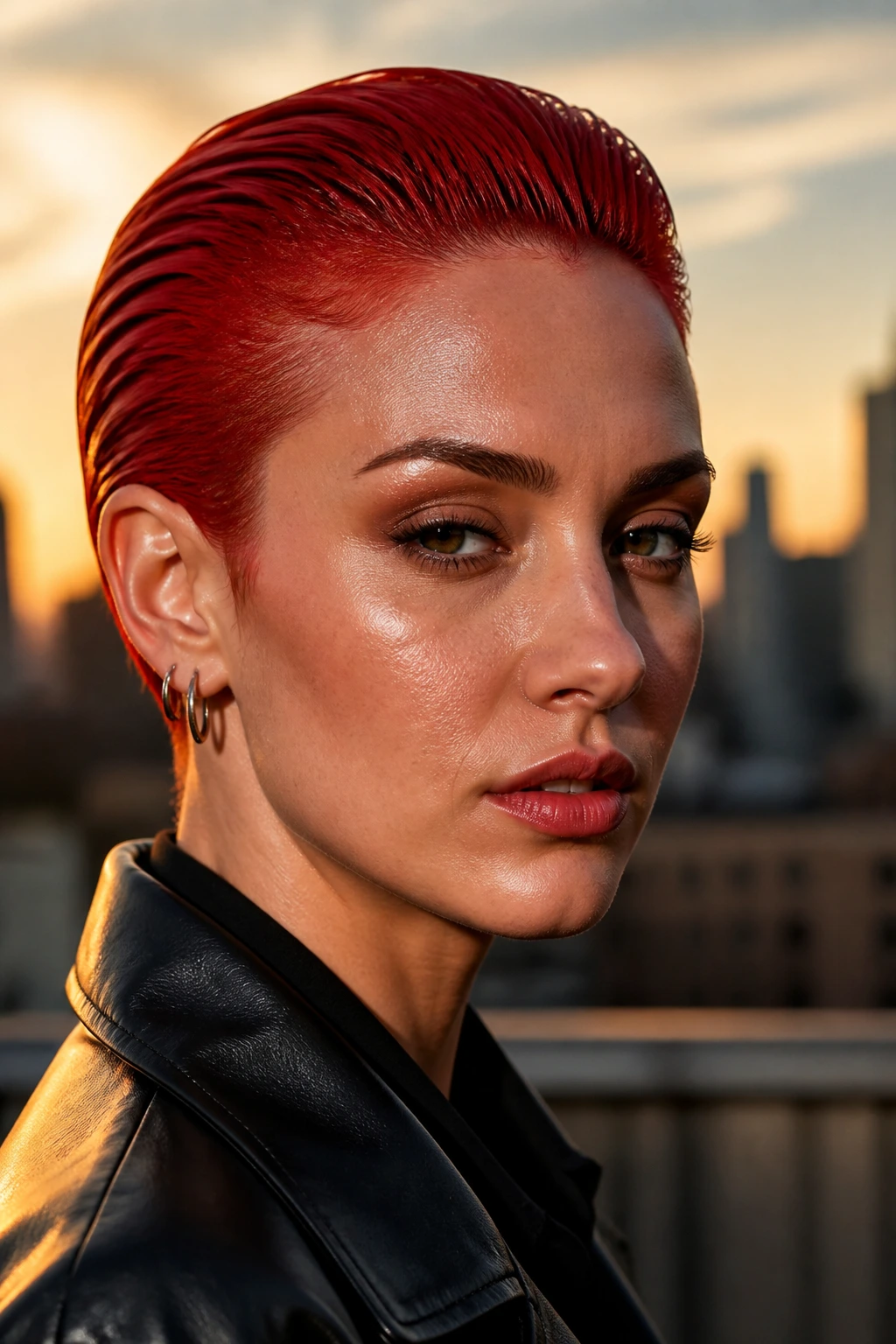
The scarlet slick-back crop is dramatic in a very clean way. The color is bold, yes, but the real move is the styling: hair brushed back and held in place so the face takes center stage. On short hair, scarlet against a slick finish can look nearly graphic.
This style works when the cut is tidy and the layers aren’t too long around the crown. If the top is too soft, the slicked shape collapses. Keep the sides neat, use a strong-hold gel or cream, and comb back from the hairline while the product is still damp.
It’s a good look for evening, but it also has a practical side. When you need your hair out of your face and want it to look like you meant it, scarlet does the job.
19. Wine-Red Curly Bob
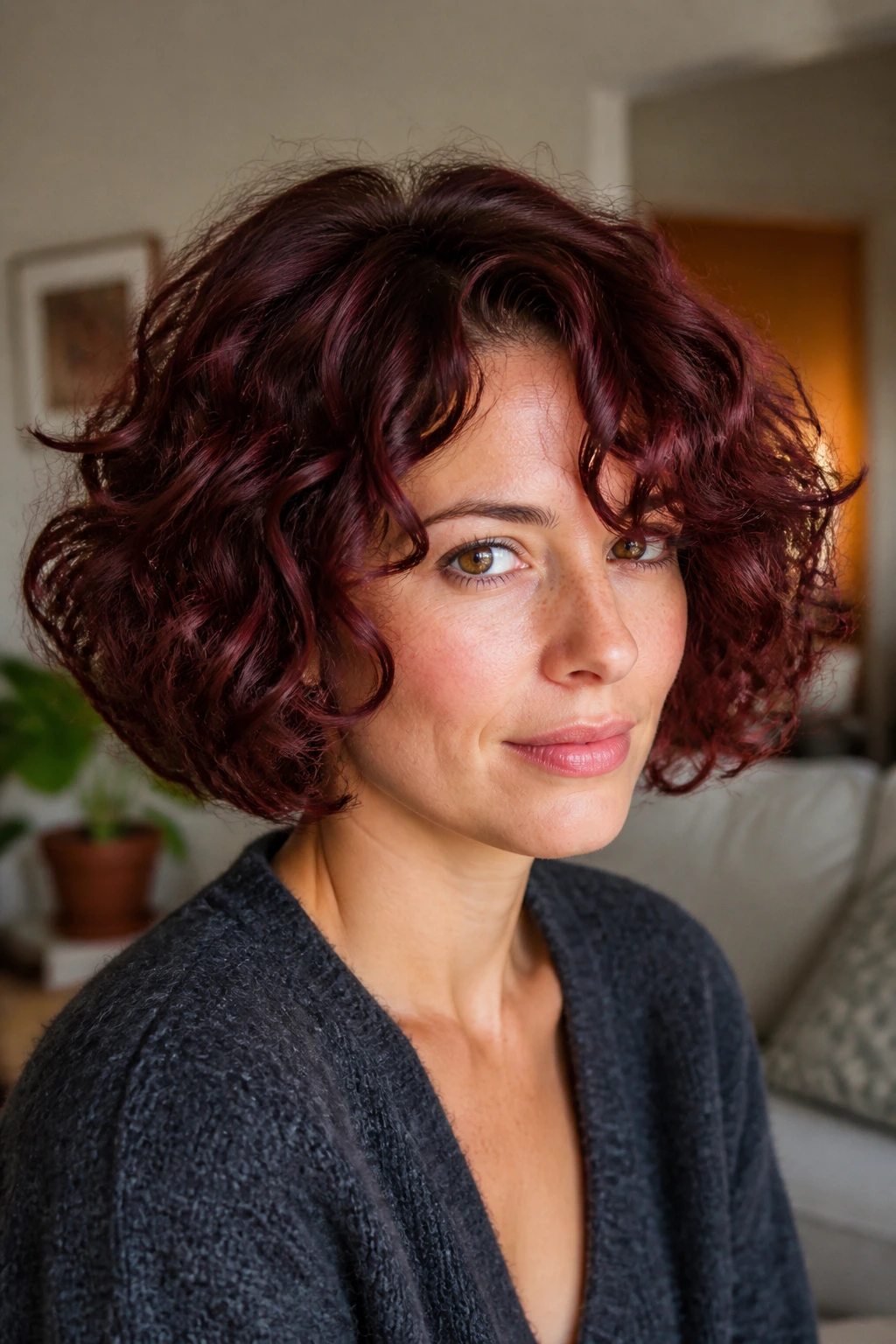
Wine-red curls are rich, but not in a stiff way. The shade sits deep enough to let the curl pattern show, and the bob length keeps the shape bouncy instead of triangular. It’s one of the nicest red options for people with natural curls because the depth adds body without forcing the hair into a single flat plane.
Why it lands so well on curls
Curly hair already creates shadows and highlights through the bend of the strand. Wine-red deepens those shifts, so the color appears layered even when you only use one shade. If you want the red to look more dimensional, ask for a slightly darker root and a lighter wine through the mids.
A diffuser helps, but don’t over-dry it. Once curls get crunchy, the wine tone loses its softness.
20. Pumpkin Spice Undercut
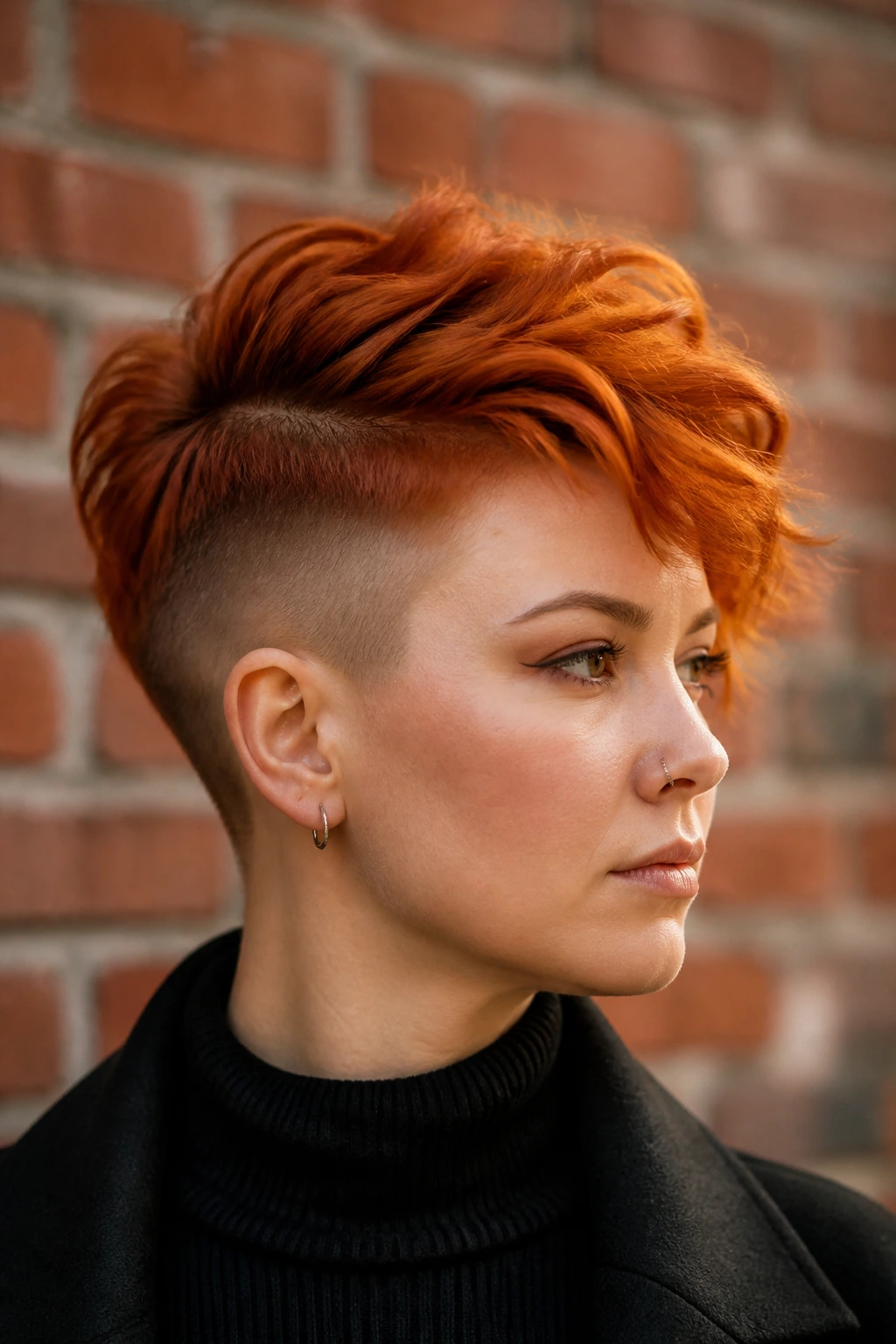
Pumpkin spice sounds playful, but the look itself can be sharp. The top stays warm and coppery, the undercut removes bulk, and the overall result feels light around the nape while still giving the top half of the hair some presence. It’s a smart balance for thick hair that tends to balloon out at the ends.
This is the kind of cut that works because the color and shape each do a different job. The undercut keeps everything easy to manage. The pumpkin tone keeps the style from looking too hard or too dark. If you like warmth and you want the cut to stay clean, this is an easy yes.
Just make sure the undercut stays trimmed. A fuzzy grow-out underneath can make the whole look feel unfinished fast.
21. Cranberry Blunt Bob
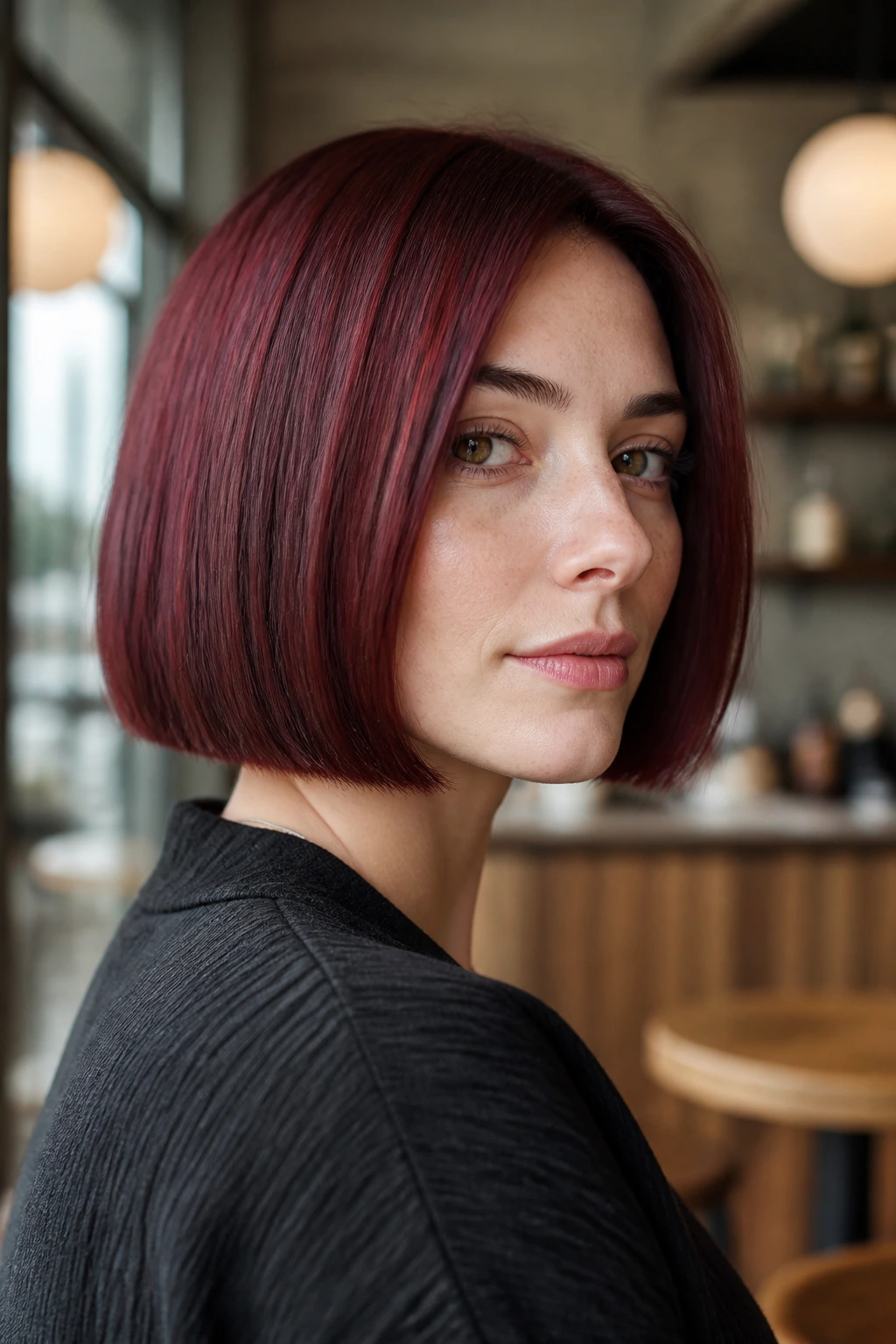
A cranberry blunt bob has a crisp edge that I really like on short hair. The line is sharp, the color is slightly cool, and the whole thing reads neat without being boring. Cranberry leans toward red with a berry undertone, so it can flatter cooler complexions and deeper eye colors in a way copper sometimes won’t.
The blunt ends make the color look denser, which matters if your hair is fine or medium density. A rough cut would weaken the effect. This one needs the clean line.
If you want to wear it straight, keep a smoothing balm on hand. If you like a small bend at the ends, use a flat iron and curve the tips under just a little. Tiny adjustments matter here.
22. Peachy Copper Mullet
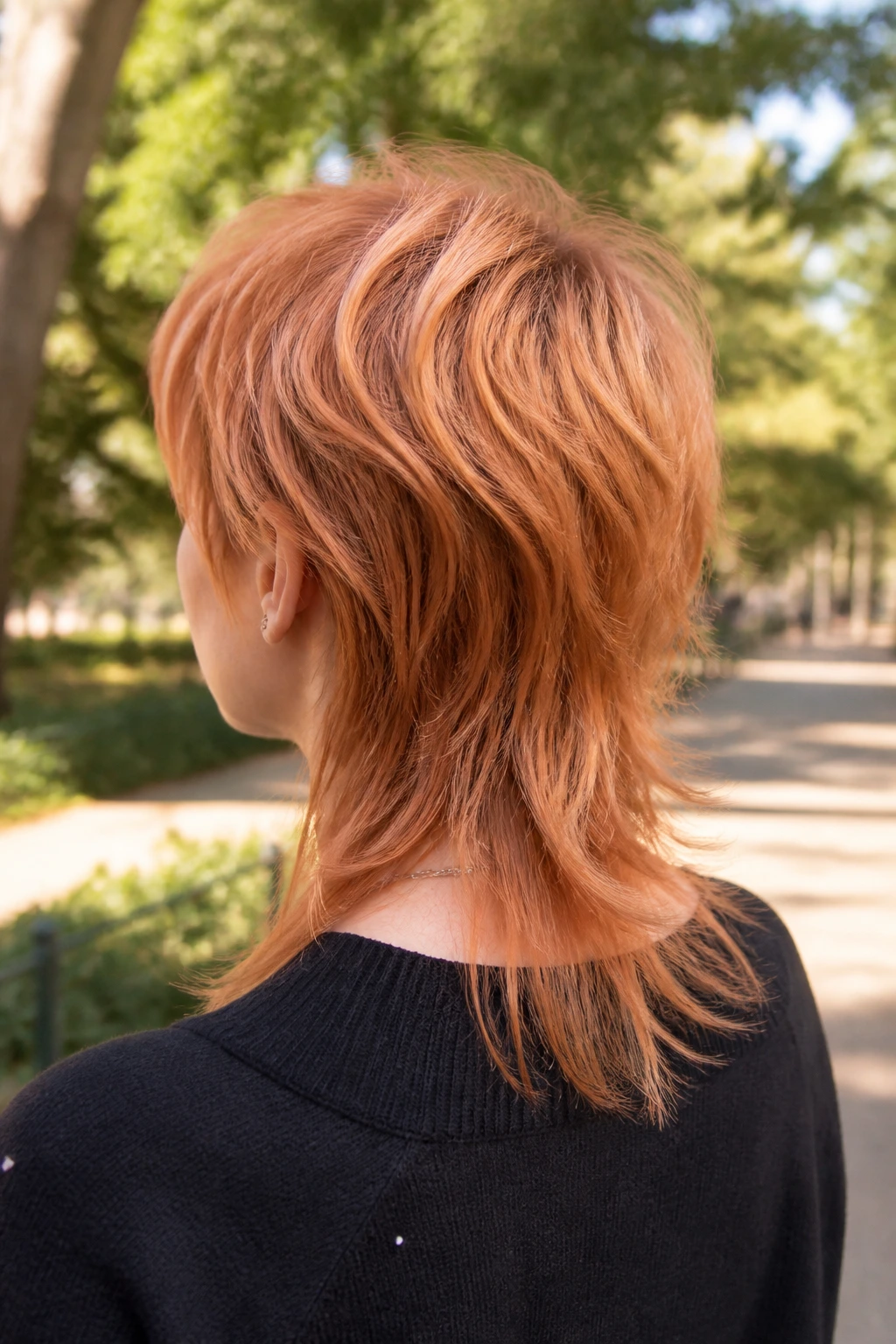
The peachy copper mullet is for someone who likes a little weirdness in their haircut. Shorter on top, length left in the back, and copper that leans peach so the whole thing feels lighter and more playful. The shape gives you movement at the nape while the color keeps the edges soft.
This is a strong choice if you want short hair that doesn’t behave too neatly. The mullet silhouette already has attitude. Peachy copper keeps it from becoming harsh. It’s especially good on wavy hair, where the length in back can flick and move instead of hanging dead straight.
If you’re nervous about a full mullet, ask for a softer version with feathered layers. The color can handle the shape either way.
23. Ruby Wedge Bob
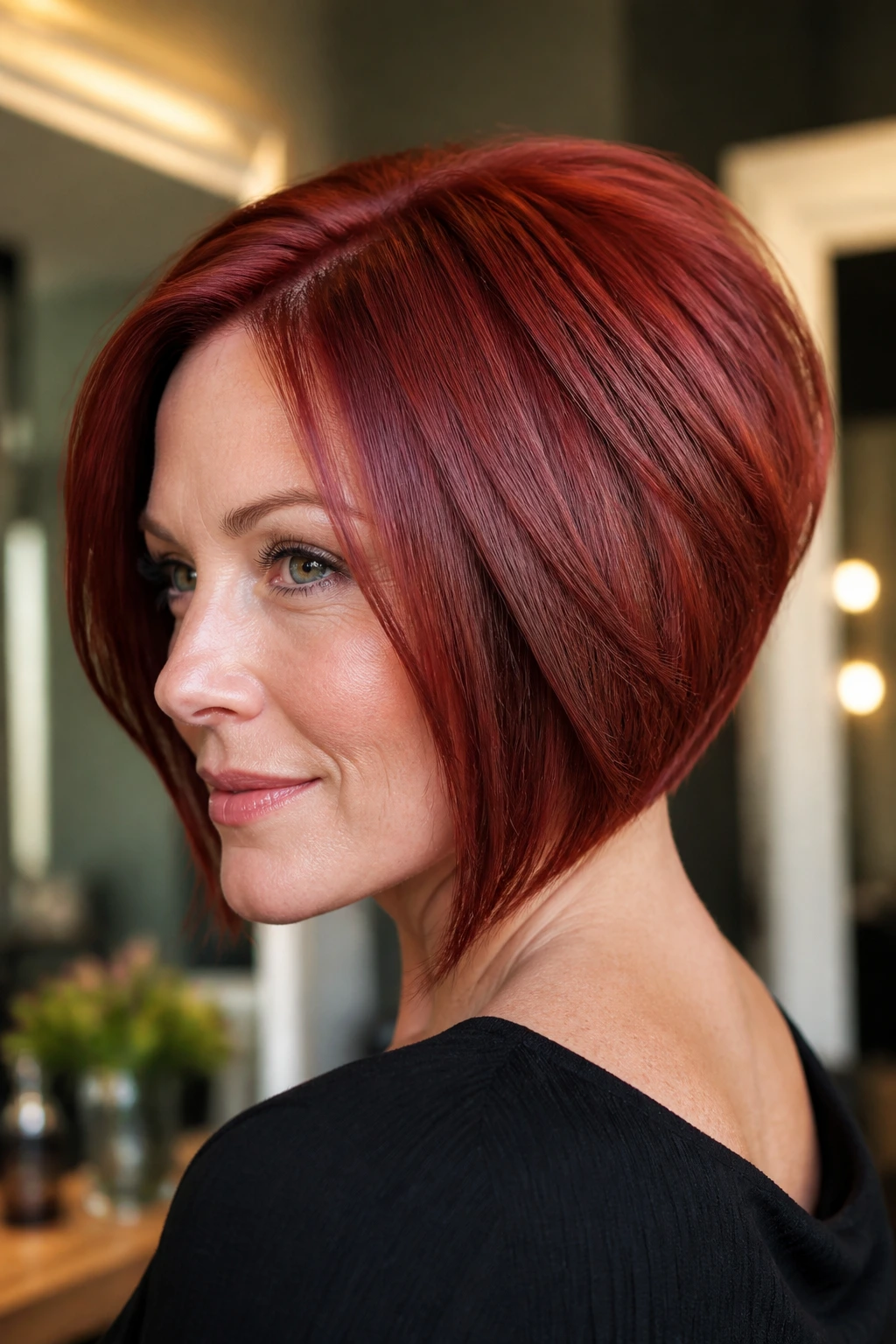
The ruby wedge bob brings volume exactly where fine hair usually needs it: the back and crown. The wedge shape lifts the hair up and in, while ruby red makes that curve look even stronger. It’s one of the best short red looks if you want fullness without teasing the life out of your roots.
Ruby is a brighter jewel red, but it still has enough depth to avoid looking neon. That balance is useful on a wedge because the cut already has a defined silhouette. Add too much brightness and the shape can start looking a little costume-like. Ruby keeps it elegant enough.
It’s also a good pick if you like your hair to sit neatly. A wedge bob tends to stay put, which is rare and useful.
24. Mulled Wine Layered Crop
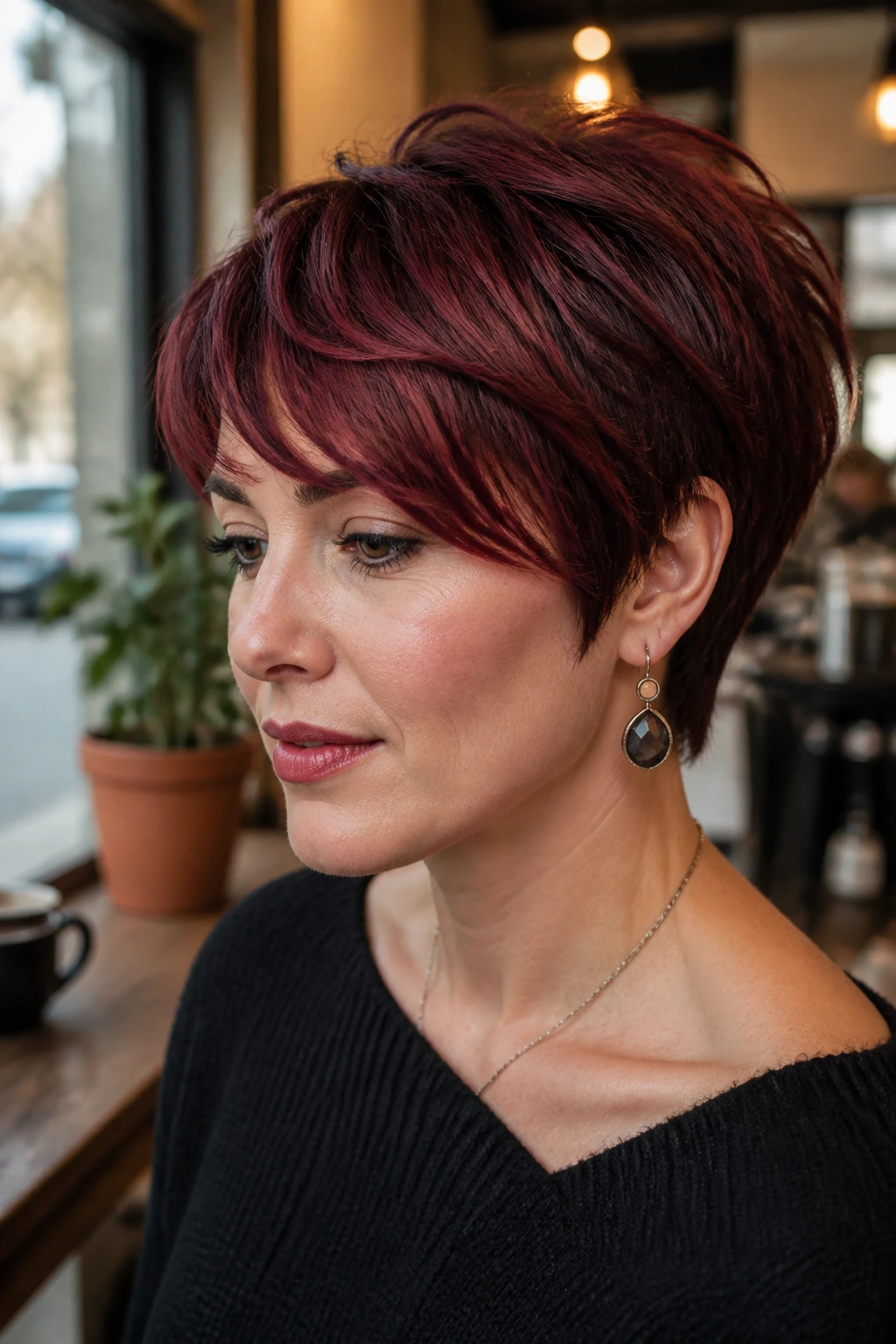
Mulled wine is one of my favorite reds because it doesn’t behave like a one-note color. It has red, plum, brown, and spice in it, which means a layered crop can show different pieces of the shade as the hair moves. The layers keep the color from collapsing into one dark block.
This look works especially well if you want something autumnal without tying it to a season. That warmth lives in the shade itself. The cut just gives it somewhere to go. On straight hair, the layers make the color break up nicely. On wavy hair, they show off movement even better.
A gloss every few weeks helps keep the wine tone rich. When it fades too far, it loses that spicy depth and starts looking tired.
25. Sunset Auburn Side-Part Bob

A sunset auburn bob is softer than some of the louder reds on this list. Think auburn with gold and copper woven through it, then parted to one side so the front pieces sweep across the face. It’s flattering without trying too hard, which is a rare quality in red hair and a useful one.
The side part matters more than people think. It adds height at the crown, shifts the weight of the bob, and gives the auburn places to catch light. If your face shape needs a little softness around one cheekbone or the forehead, this cut does that job without obvious tricks.
This is a strong choice for someone who wants red that feels wearable on ordinary days, not just on the days you style it to the hilt.
26. Ember Red French Crop
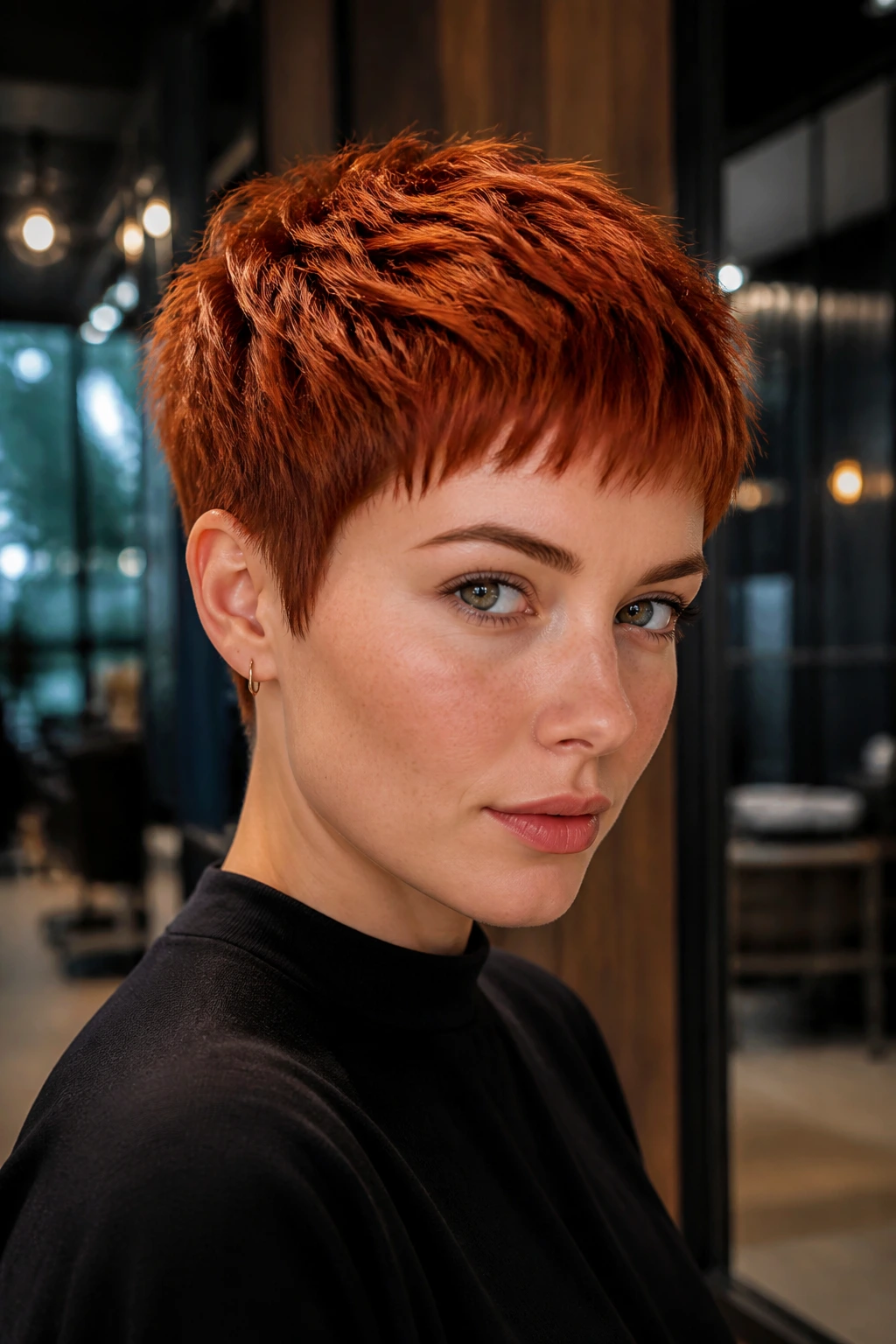
An ember red French crop is compact, tidy, and a little fierce. The sides stay close, the top has enough length to show the color, and the fringe usually sits short and blunt or lightly textured. Ember red sits between copper and true red, so it keeps the crop warm without pushing it into orange territory.
How to get the shape right
Ask for a crop that leaves enough length at the top to show the color shift from root to tip. Too little length and the red disappears into the cut. Too much, and it starts behaving like a longer style. The sweet spot is a short top with visible texture.
This one suits straight hair especially well, but it can also work on coarse hair if the top is thinned slightly. Keep the fringe clean. That little line is half the look.
27. Cherry Embers Pixie-Bob
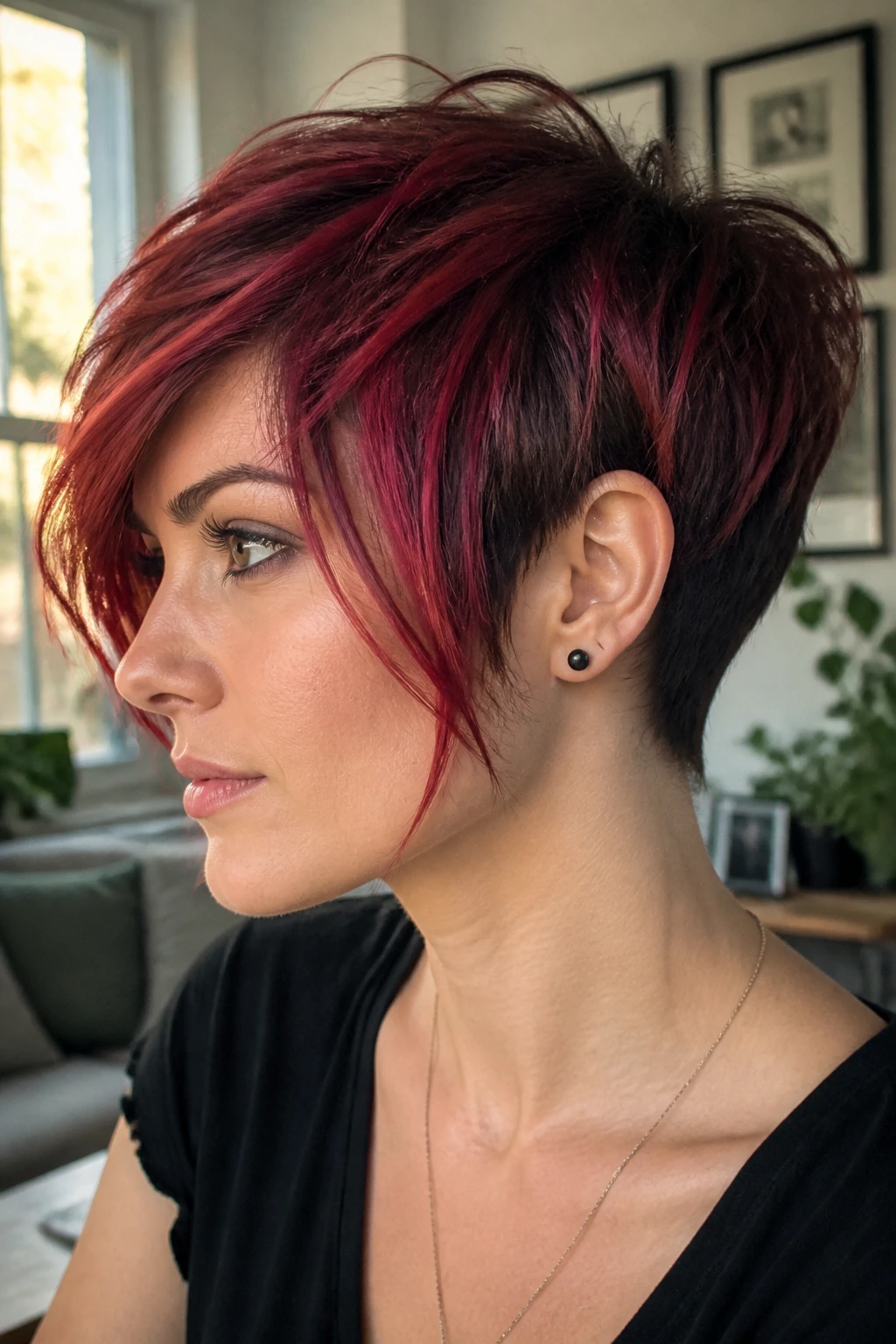
Cherry embers is the hybrid I’d hand to someone who can’t decide between a pixie and a bob. The back stays short enough to feel cropped, while the front keeps a little more swing. The color follows that same idea: cherry brightness at the surface, ember depth underneath.
That combination gives you movement and depth at once. The shorter back keeps styling easy, and the extra length in front means you can tuck, sweep, or finger-comb the hair depending on the day. It also grows out in a forgiving way, which is a nice bonus if you don’t want to be in the salon every month.
If you want one look that sits between edgy and polished, this is the one I’d point to first.
How to Ask for These Reds Without Getting a Surprise
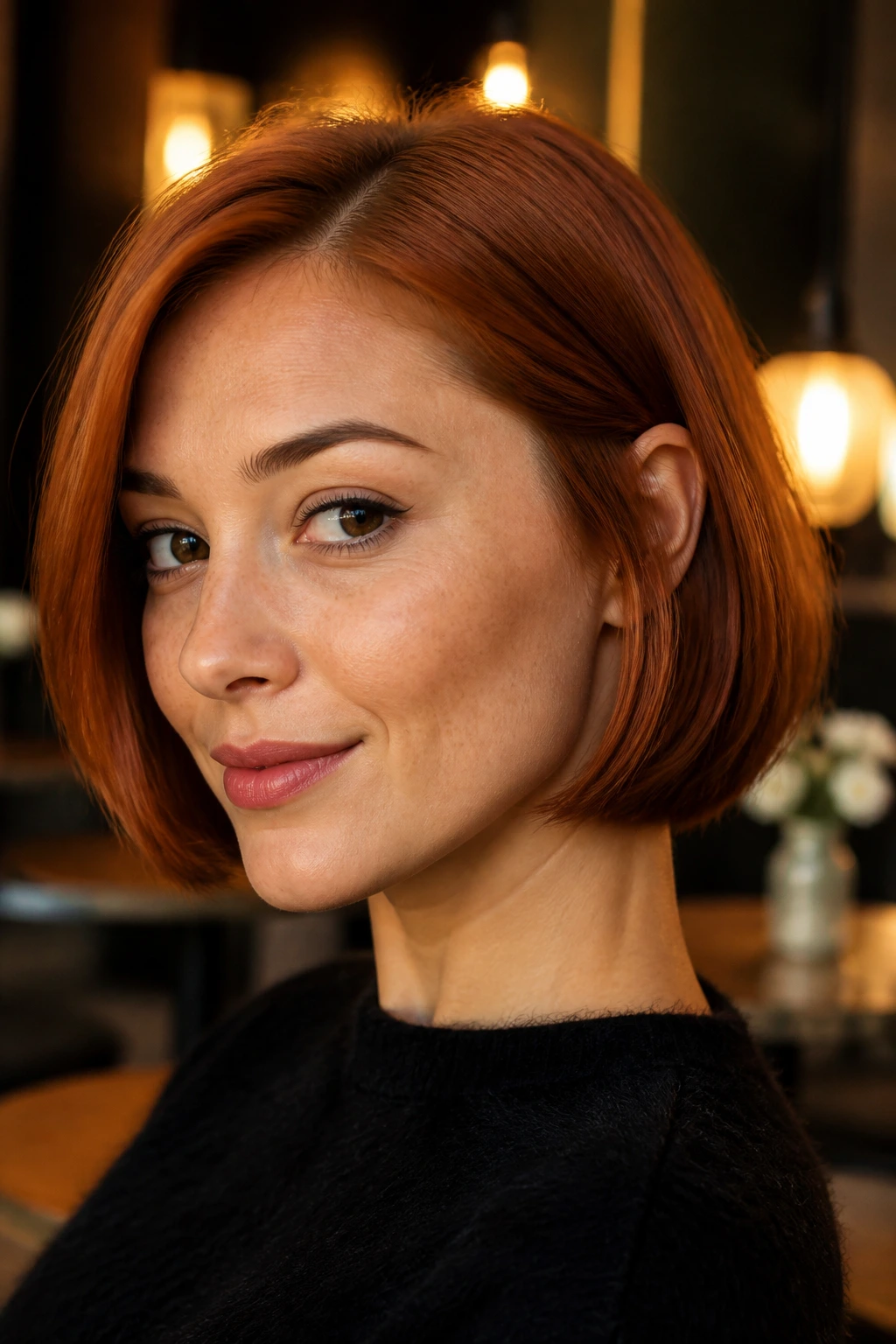
Bring two photos when you sit in the chair: one of the cut, one of the color. A single reference picture can hide a lot. Maybe you love the shape but hate the tone, or maybe the tone is right and the layers are wrong. Separating those ideas helps the colorist read your mind without having to guess.
Say what you do not want. That matters more than people think. If copper makes you nervous, say so. If you don’t want red that turns orange in daylight, say that too. The same goes for maintenance. A vibrant red on short hair can look fantastic, but only if you’re honest about how often you’re willing to gloss, touch up roots, or style it.
Also mention your base color and what’s already on your hair. Permanent box dye, old highlights, and porosity around the ends all change how red lands. On short hair, especially, the ends are often the oldest and most porous part, which means they can grab too much pigment or fade first. A good colorist will adjust the formula, not just slap red on top and hope.
The Tools and Products That Make Short Red Hair Easier to Live With
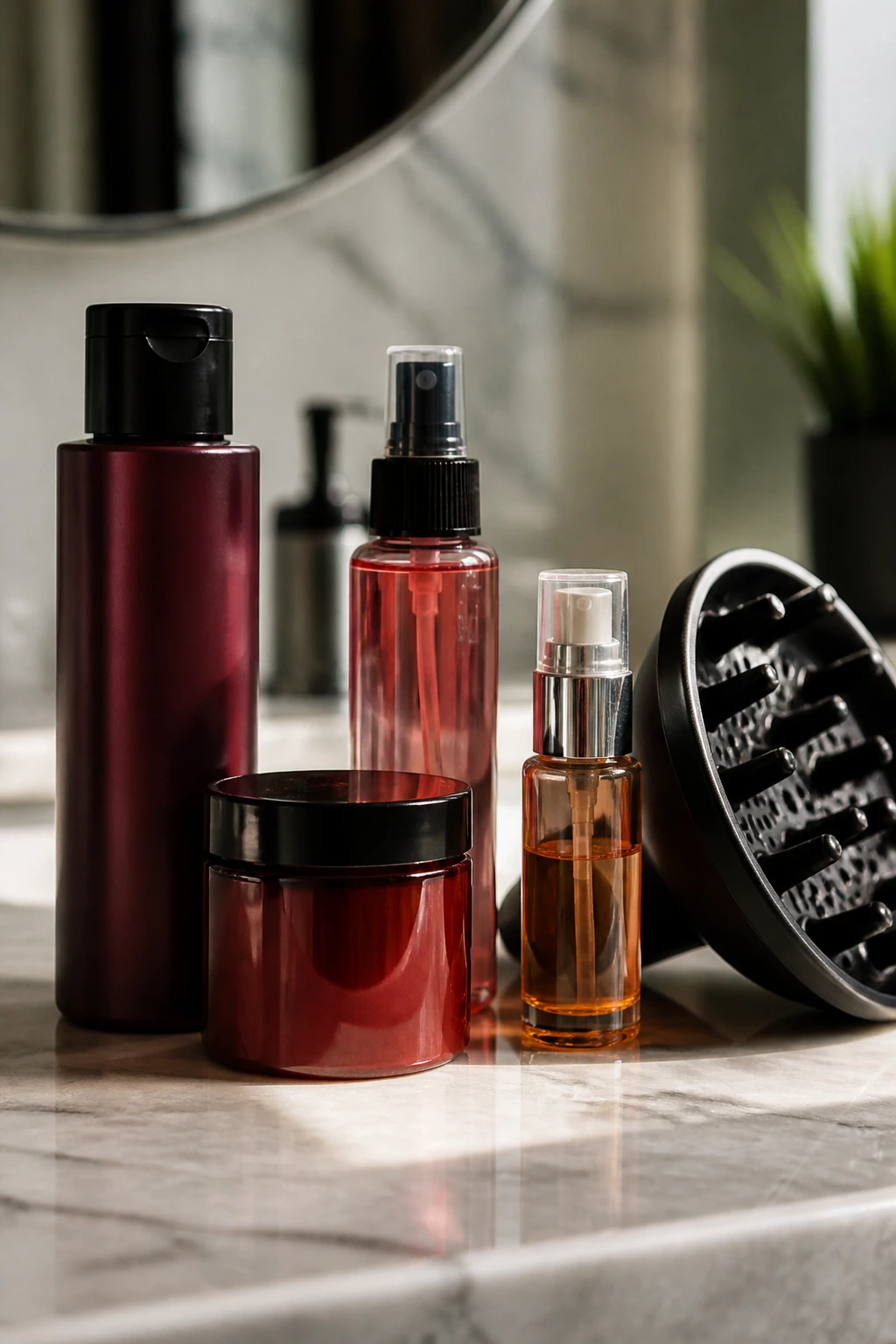
- Sulfate-free color shampoo. It cleans without stripping the red out of the cuticle as fast, especially on porous ends.
- Color-depositing conditioner or mask. A copper, red, or burgundy mask can keep the tone from looking washed out between appointments.
- Heat protectant spray. Short hair still gets fried by flat irons, curlers, and hot blow-dryers; don’t let the length fool you.
- Lightweight shine serum. A half-drop rubbed between the palms helps red read glossy instead of dry.
- Diffuser attachment. Essential if your short red cut has waves or curls and you want the shape to stay defined.
- Flat iron with adjustable heat. Good short red styles often need a bend, not a full straightening job, so lower heat control matters.
- Tail comb and sectioning clips. Handy for root touch-ups, fringe styling, and keeping the color even while you work.
- Satin pillowcase or bonnet. Short red hair rubs against fabric just like long hair does, and friction dulls the finish faster than people expect.
How to Keep Red Tone Bright Between Appointments
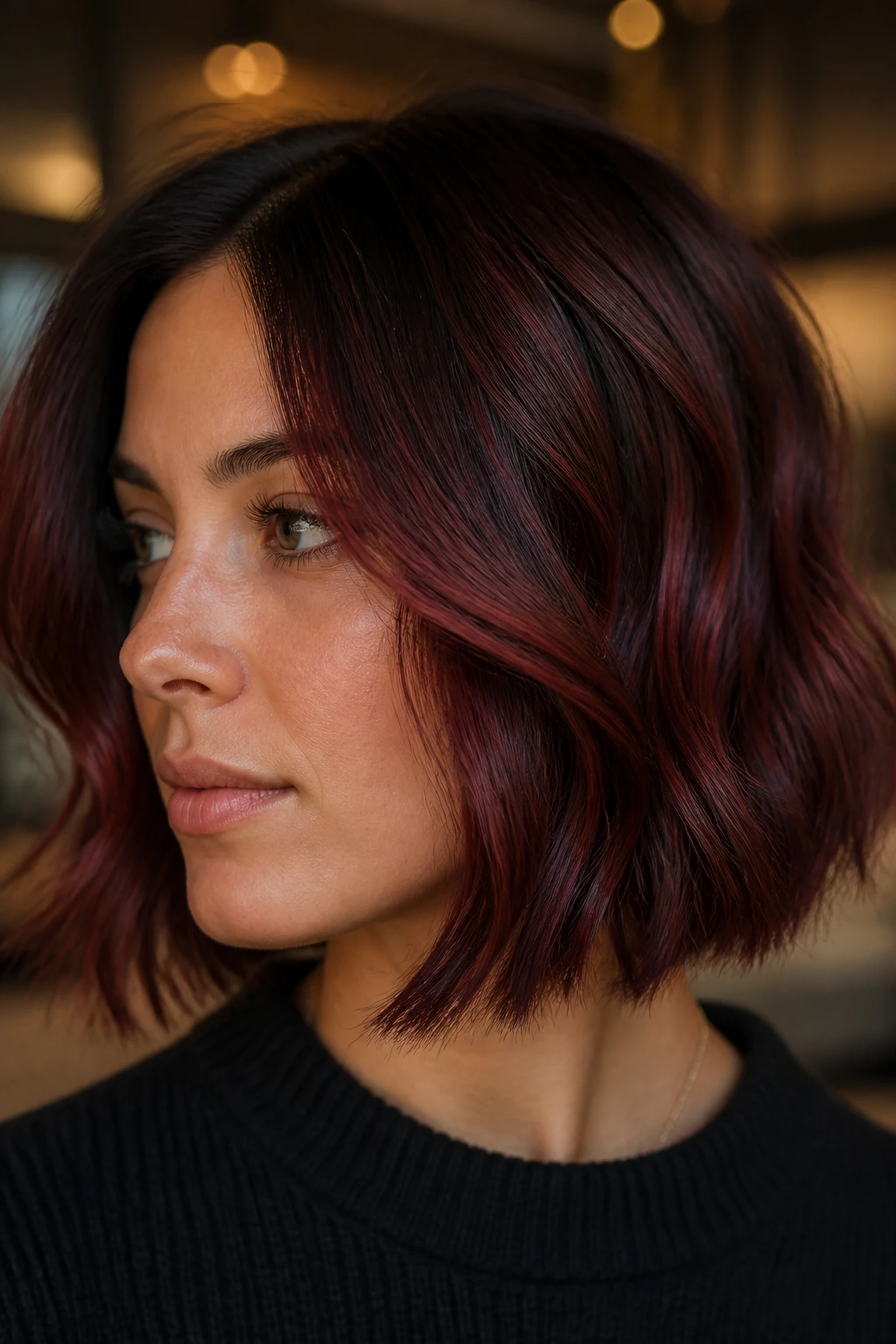
Short red hair needs more frequent attention than a dark bob, mostly because the shape exposes everything. Roots show sooner. Fading shows sooner. Dry ends show sooner. That isn’t bad news. It just means your routine needs a little discipline.
Wash with lukewarm water, not hot. Hot water opens the cuticle more, which pushes red pigment out faster, and on a short cut you’ll notice the fade first around the fringe and temples. If you can stretch washes to two or three times a week, do it. Between washes, a dry shampoo at the roots can buy you an extra day or two without flattening the shape.
Plan on a gloss or toner refresh about every 4 to 6 weeks if your red is vivid, and about every 6 to 8 weeks if it’s a deeper auburn or burgundy. Bang trims often need attention every 3 to 4 weeks because a tiny bit of growth changes the whole face frame. That’s the price of short hair. Also the charm.
Use a color-depositing mask once a week if the shade starts looking tired, but don’t overdo it. Too much pigment buildup can make the red turn dull or muddy, especially on fine hair.
Common Mistakes That Make Short Red Hair Look Flat or Patchy
- Choosing one flat red for every short cut. A pixie, bob, and shag do not need the same tone; a one-shade approach can make the cut look heavier than it is. Ask for a root shadow, lowlight, or face-frame piece when the shape needs help.
- Ignoring porosity at the ends. Short hair often has older, more porous ends that grab color fast and fade fast. If the tips look darker than the roots or wash out in patches, the formula needs adjusting.
- Going too bright on damaged hair. Porous hair can turn red in a blotchy, thirsty way. A demi-permanent or softer glaze often looks better than a full vivid formula when the hair is already stressed.
- Using the same heat setting every day. A flat iron set too hot can mute shine within a week. Lower the temperature and use less pressure; short hair needs shaping, not ironing into submission.
- Letting the grow-out get fuzzy. On short red cuts, a crisp neckline and clean side shape matter. Once the edges blur, the color loses its structure too.
Variations and Alternatives to Try
Rooted Copper Melt
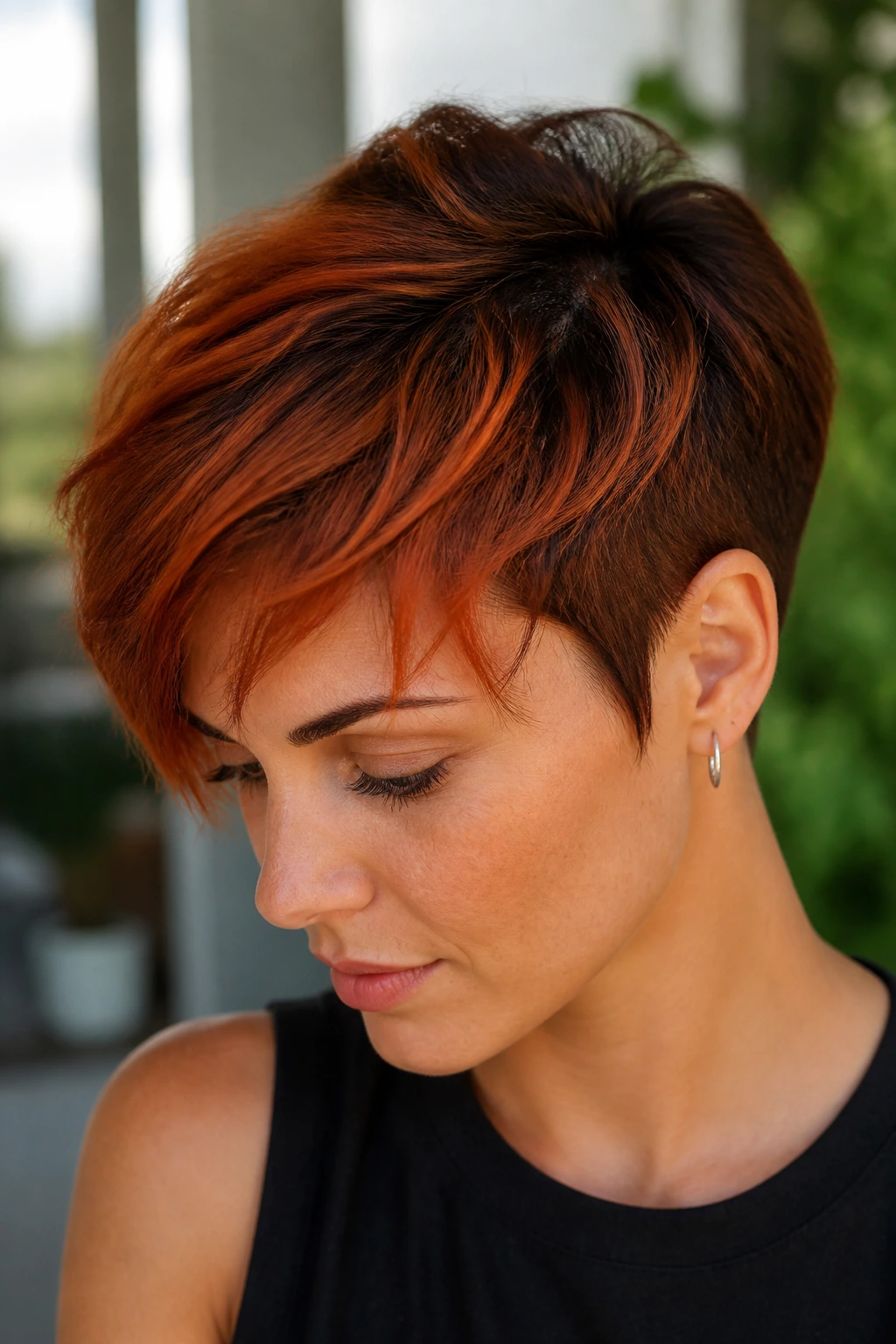
Keep the roots deeper and let copper rise through the mids and ends. This is a good move if you want warmth but don’t want to see every inch of regrowth after two weeks. It also makes short layers look thicker because the darker base creates depth underneath.
Muted Rosewood Wash
Blend red with mauve and brown for a softer finish. This works well if bright copper feels too loud or if your wardrobe leans cool, black, cream, or gray. On short hair, it still reads as red — just with a quieter voice.
Peekaboo Cherry Panel
Keep the top layer darker and hide cherry red underneath. When the hair moves, clips back, or tucks behind the ear, the color flashes through. It’s one of the easiest ways to wear vivid red without living in full-on maintenance mode.
Curly Ribbon Red
Instead of one solid color, ask for red ribbons placed through curls or waves. The depth helps the texture pop, and the grow-out is softer than an all-over vivid shade. Good for anyone whose short hair tends to expand instead of sit flat.
Deep Burgundy Gloss
If you want low-maintenance red, go darker. Burgundy gloss on a short cut gives shine, depth, and a little drama without demanding constant touch-ups. It’s the one I’d pick for someone who wants red hair that still feels calm.
Frequently Asked Questions
Which red shades are easiest to wear on short hair?
Auburn, burgundy, merlot, and rooted copper are usually the easiest because they fade with more grace than bright cherry or true scarlet. They also work well with the shape of short hair since the outline stays clean even as the color softens.
Do red hair colors fade faster on short cuts?
They can, mostly because short hair gets washed, styled, and exposed at the hairline more often. You’ll notice the fade first around the fringe, temples, and nape, so a gloss schedule and color-safe shampoo help more than people expect.
Can dark brown hair go red without bleaching?
Sometimes, but usually only into deeper red-brown shades like mahogany, merlot, or cherry cola. If you want bright copper, paprika, or blood orange, the hair often needs some lightening first so the red has room to show.
What red works best for curly short hair?
Deep jewel reds like garnet, wine, and burgundy are strong choices because they create depth inside the curl pattern. If you want brighter results, ask for ribbons or face-framing pieces instead of one flat vivid formula.
How often should I refresh the color?
For bright reds, plan on a gloss every 4 to 6 weeks. Deeper reds can stretch a little longer, but short cuts usually need some kind of refresh before the shape starts to look faded at the edges.
Will red make short hair look thinner?
Not if the shade and cut are chosen well. Darker reds, rooted blends, and dimensional highlights can make hair look fuller, while a flat bright red on very fine hair can sometimes expose the scalp more. The cut matters just as much as the color.
What if my red turns orange or brassy?
That usually means the red is fading unevenly or the base was too warm to begin with. A blue-based or cooler gloss can help in some cases, but if the color is very off, a salon correction is usually safer than piling on more dye at home.
Can I keep red short hair with bangs?
Yes, and bangs can make the color look sharper. Just know they fade faster because they get more washing, touching, and forehead oil. Trim them often and avoid heavy products near the fringe if you want the color to stay even.
Short Red Hair That Actually Fits the Cut
Short hair and red pigment are a better match than most people expect, but only when the shade respects the shape. A blunt bob wants different red energy than a shaggy crop. A pixie wants light-catching warmth or a jewel-tone edge. And a buzz cut can carry a color that would look too much on longer hair.
The nice part is that there’s room to play. Copper can be soft. Burgundy can be sharp. Cherry can go sleek, and auburn can go almost quiet. Once you stop thinking of red as one shade and start matching it to the cut in front of you, the options open fast.
Pick the version that fits your life, not just your camera roll. That’s where the good short red looks start to feel like your own.
