



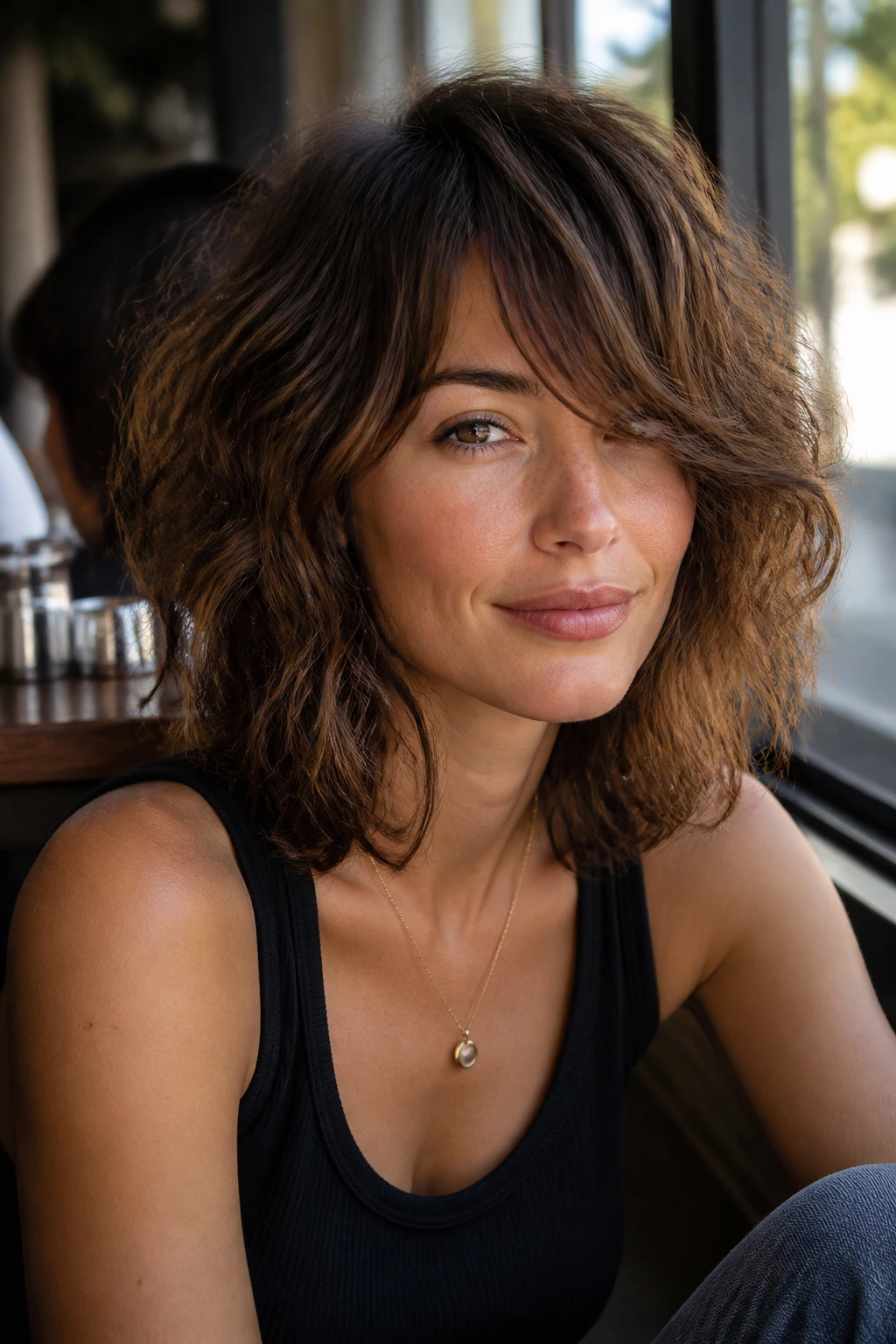
Curly shag hairstyles with long bangs have a specific kind of charm. They don’t sit still, and that’s the whole point. The cut lets the curls pile up in the right places, then leaves the front long enough to soften the forehead, skim the cheekbones, or drop into that loose, lived-in bend that makes a face look framed instead of boxed in.
The part most people get wrong is the bang length. Curly hair shrinks. Sometimes a little. Sometimes a lot. If the front is cut too short while wet, the fringe can bounce well above the eyebrows and stay there like it’s made a decision on its own. Long bangs buy you room. They can be worn swept apart, tucked to one side, pushed forward, or let to collapse into a curtain when the curls dry.
That flexibility is why this haircut keeps showing up on so many heads with different curl patterns, densities, and face shapes. It isn’t one look. It’s a whole family of looks. Some are soft and rounded, some lean wolfish and edgy, some are quiet and low-drama, and some have enough volume to take over a room. The common thread is movement, and the fringe does a lot of the visual work. The rest comes down to how the layers fall.
Why These Curly Shag Hairstyles with Long Bangs Keep Working
- The fringe has room to breathe: Long bangs can be cut to lip, nose, or cheekbone length while wet, then still land in a flattering place once the curl springs up.
- The layers keep the sides from puffing into a triangle: A good shag takes bulk out of the interior, so the shape moves instead of sitting in one heavy block.
- There’s a built-in grow-out plan: If the bangs get a little long, they slide into face-framing layers instead of looking like a mistake.
- The cut works with day-two hair: A shag looks better a little undone than a blunt cut does, which is why it tends to survive sleep and humidity with more grace.
- It suits several curl types: Soft waves, springy ringlets, and denser coils can all wear the shape, as long as the layering matches the texture.
- The front can be styled three different ways: Wear the bangs split, swept, or pushed forward, which makes the haircut feel less fussy than it sounds.
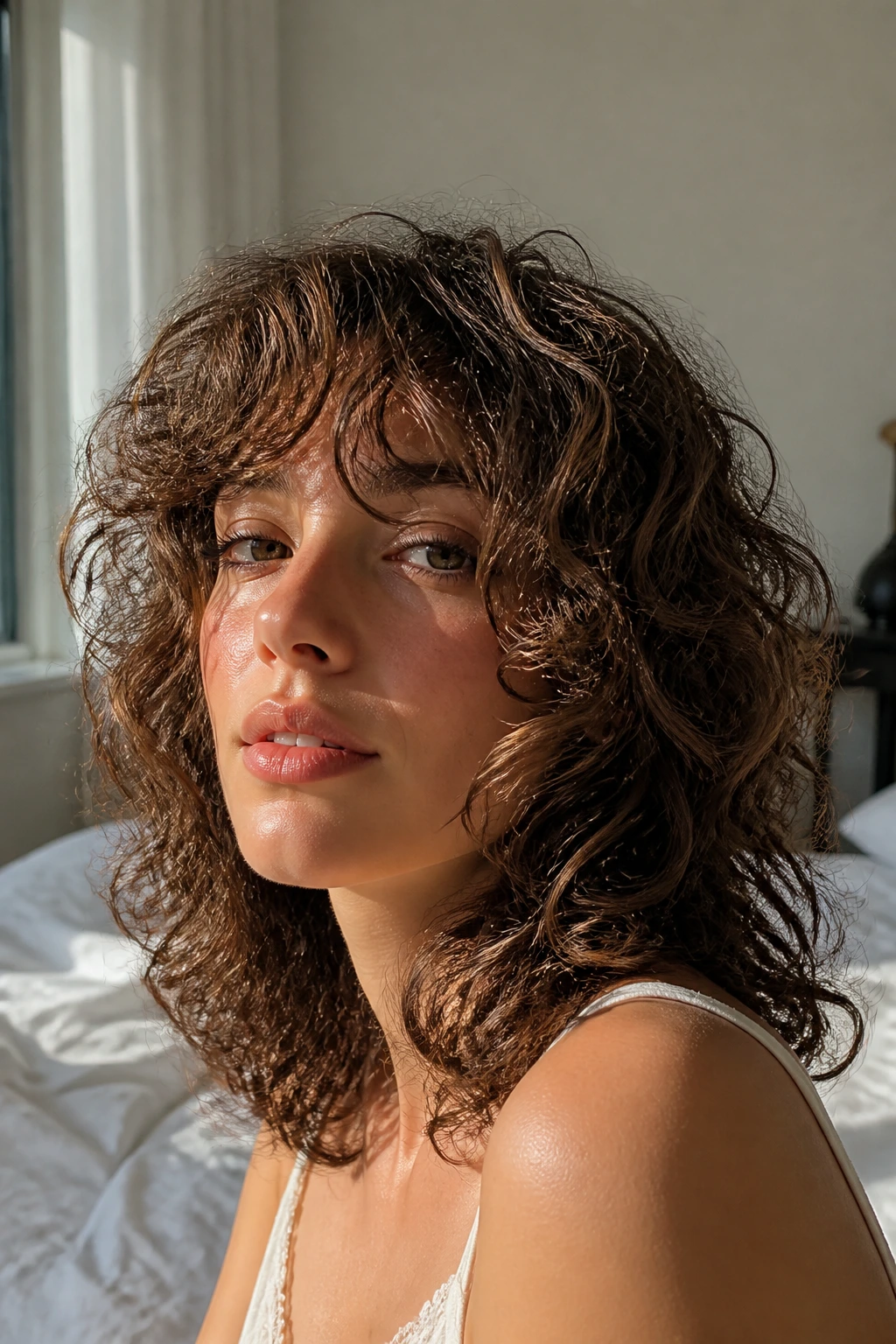
1. Shoulder-Skimming Shag with Soft Curtain Bangs

This is the easiest place to start if you want movement without a dramatic chop. The shoulders give the curls enough length to hang, while the curtain bangs break right down the center and drift into the cheekbones instead of sitting like a hard line. It reads relaxed, not plain. That matters.
Ask for the shortest front layer to land around the nose or upper lip when dry, with softer layers beginning at the chin. On medium-density curls, this shape keeps the top from collapsing and the bottom from turning into a frilly shelf. A little mousse at the roots and a diffuser on low heat are enough to keep the curtain from puffing out into a cloud.
2. Jaw-Grazing Shag with Lip-Length Bangs
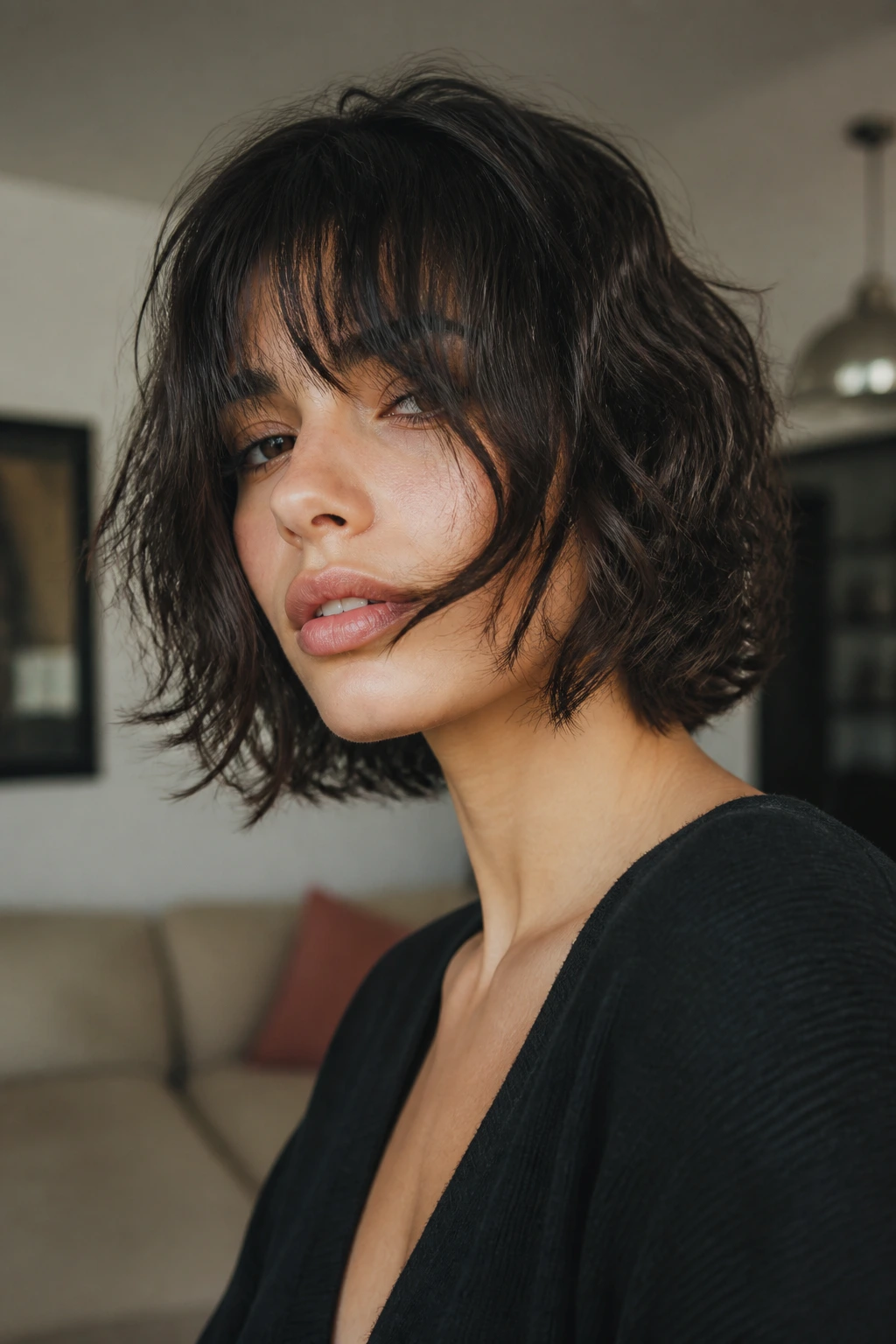
Shorter, but not choppy. This cut sits right at the jaw, which gives the curls a clean edge, and the long bangs hover at lip length so they can swing forward or split apart. The result has a little bite to it. Not too sweet. Not too severe.
I like this version on curls that need a nudge to spring upward, because the jawline length creates a visible shape even on wash day when the hair is still deciding what it wants to do. The bangs should be left longer than you think. If they land at the lips when wet, they usually end up around the cheekbones dry. That extra room saves you from the too-short bang problem.
3. Collarbone Curl Shag with Cheekbone Fringe
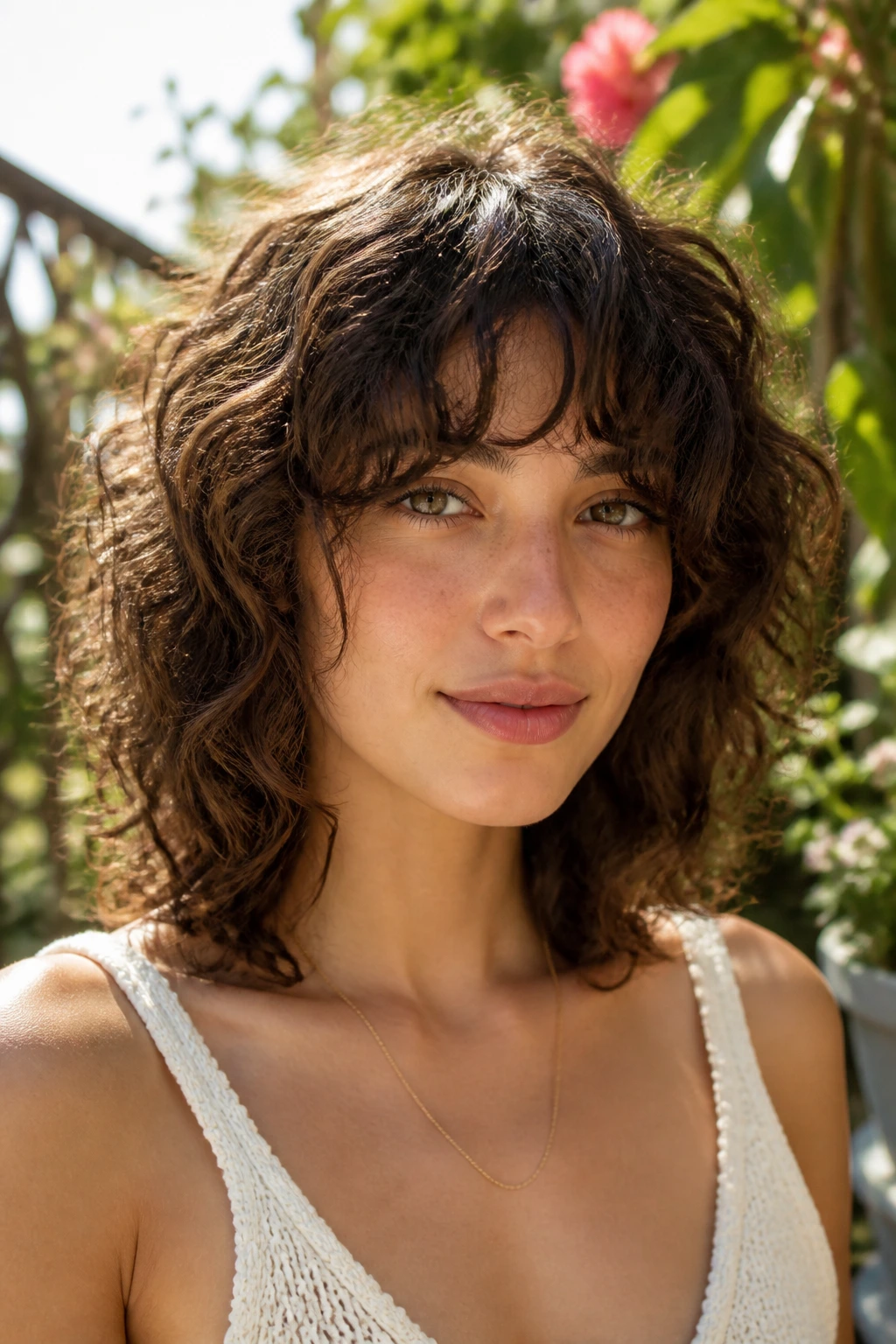
The collarbone is a sweet spot for curly shags. It gives the ringlets enough length to show their pattern, but it still lifts away from the chest so the shape stays airy. The cheekbone fringe is what sells it. It draws the eye upward before the length has a chance to dominate.
This one works especially well on people who want to soften a longer face or soften a strong jaw. The layers begin high enough to remove weight, but they don’t get so short that the haircut turns fluffy. If your curls are dense, ask for internal layers instead of slicing away too much perimeter length. That keeps the silhouette from going thin at the ends.
4. Copper Mid-Length Shag with Bottleneck Bangs

Copper loves a shag. The color shows off every bend, every coil, every little turn in the layer pattern. Bottleneck bangs make the front feel tailored without being stiff: narrow near the brows, then wider through the cheekbones, then loose as they blend into the rest of the cut.
This shape is especially good when you want the bangs to be noticeable without taking over your whole face. The front can be cut a bit longer at the center and slightly shorter at the sides, which gives the curl room to settle into a soft arc. On texture that frizzes easily, a pea-size amount of cream plus a stronger hold gel at the fringe keeps the shape from spreading out.
5. Rounded Shag with Feathery Bangs
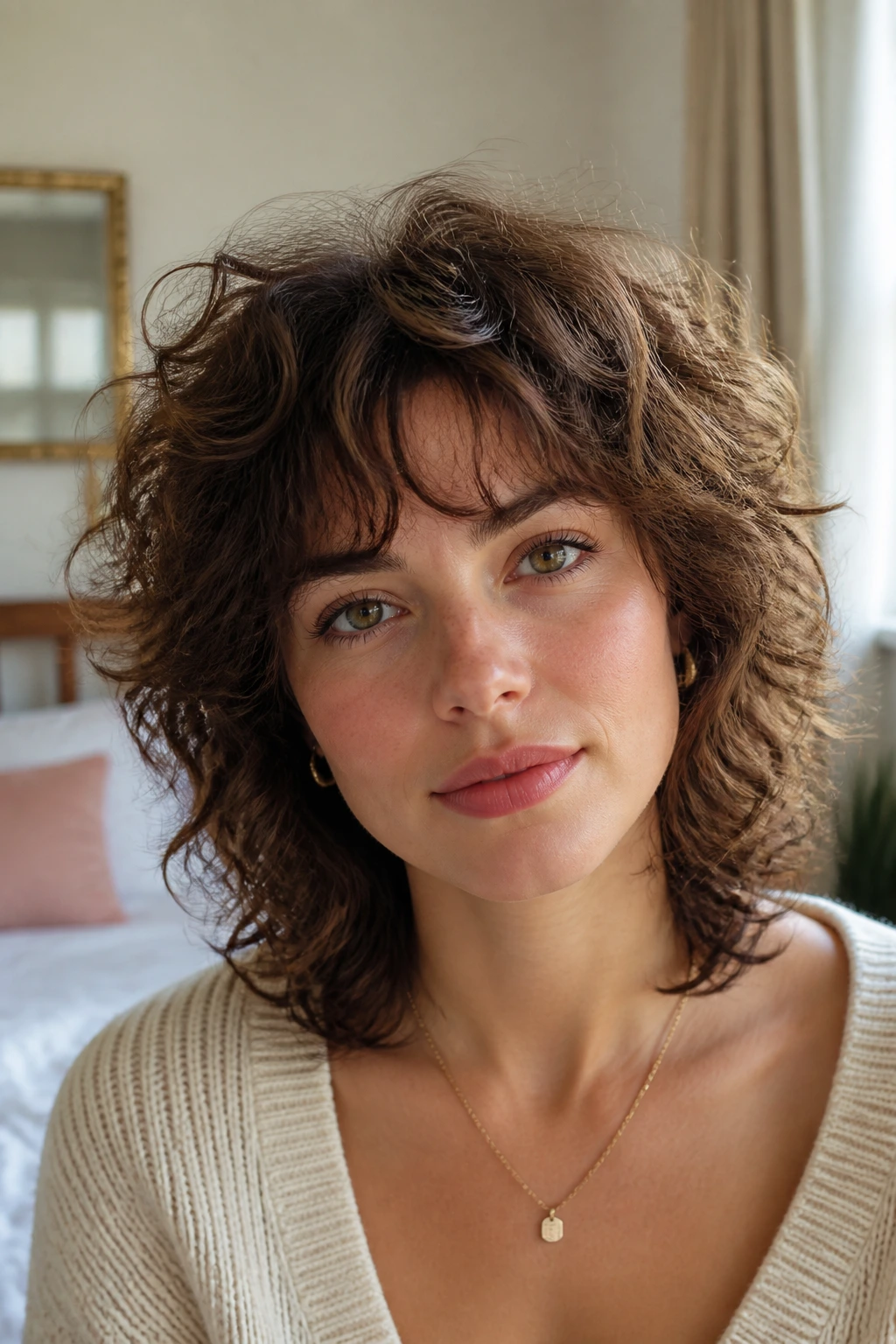
This is the shapeliest option on the list. The whole cut is rounded, almost halo-like, with feathery bangs that land in a soft veil over the forehead. It’s a smart choice if your hair naturally wants to build width on the sides. The curve of the shag keeps that volume where it belongs.
I’d call this the “nice shirt, no effort” cut. It looks deliberate even when you air-dry in a hurry. The key is keeping the crown layered enough to avoid a flat top, while leaving the fringe light so it doesn’t hang in one heavy curtain. A small round diffuser bowl helps here, but so does patience. Let the bangs set before you mess with them.
6. Wolf-Edge Shag with Long Swooping Bangs
This one has more attitude. The layers are pushed shorter near the crown and more separated through the ends, which gives the cut that shag-mullet tension people either love immediately or grow into after one glance in the mirror. The long bangs swoop instead of curtain, which keeps the front moving with the rest of the shape.
It works best on thick curls or hair with enough density to hold a bit of disconnection. If your hair is too fine, the edge can get stringy fast. Ask for the front to be cut long enough to tuck behind the ear on a lazy day. That way you can wear the bangs forward, sweep them over, or let them fall into the rest of the layers without fighting them.
7. Tousled Lob Shag with Side-Swept Fringe
A side part changes everything. Instead of splitting the curls down the middle, this lob lets the fringe sweep across one brow and drop softly toward the other side of the face. The result is looser and a little more romantic, without sliding into too-pretty territory.
I like this on people who know they won’t keep a center part aligned all day. Some heads just want a side part. Fighting that never ends well. The lob length keeps the hair from ballooning, and the shag layers take out enough bulk that the side-swept fringe doesn’t feel like one big curl sitting on the forehead. A light mist of water and a finger twist on the front pieces is usually enough to reset it.
8. Deep Side-Part Shag with Floating Bangs
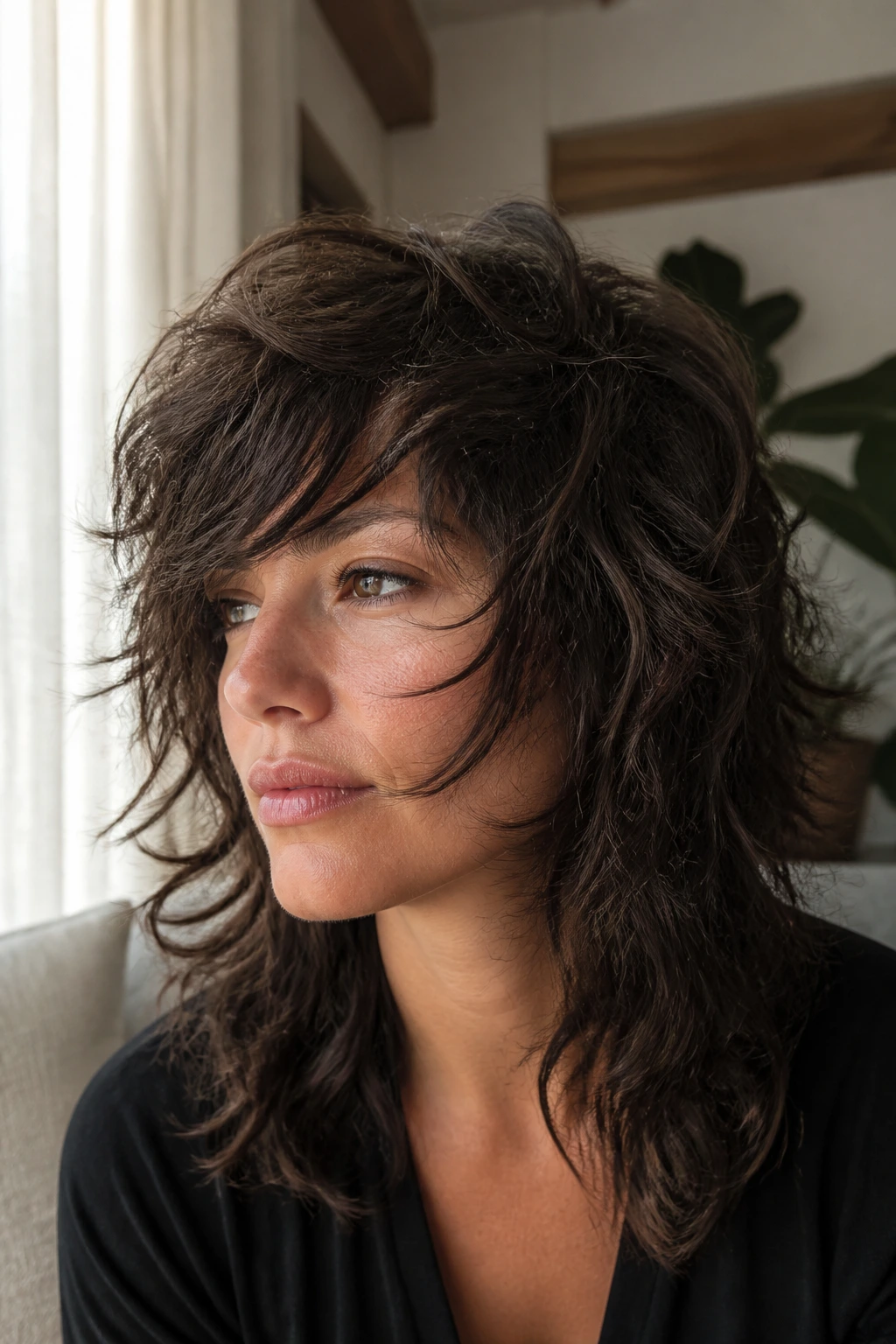
This is the version for anyone who wants asymmetry on purpose. The deep side part pushes volume to one side, and the floating bangs fall in that in-between space where they frame the face without behaving like a strict fringe. The haircut looks especially good when the curls have a loose bend rather than a tight coil.
The trick here is not to overcut the front. Floating bangs need length so they can hover instead of springing up into a mini puff. If you’re asking a stylist for this, say you want the fringe to start around the cheekbone on the heavier side and blend gradually into the rest of the cut. It’s a small detail, but it keeps the shape from looking accidental.
9. Curly Pixie-Bob Shag with Grown-Out Bangs
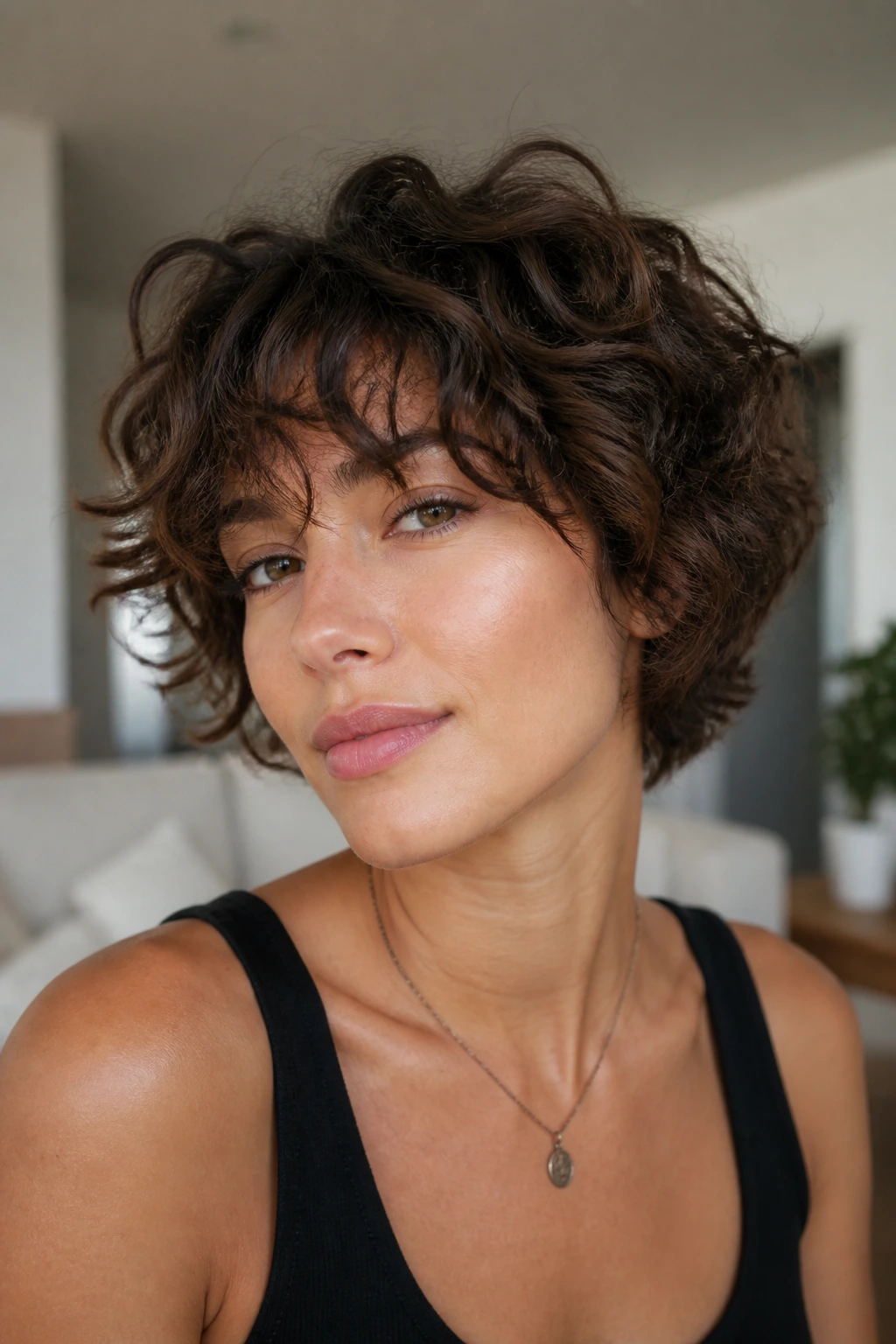
This is the shortest haircut in the group, and it has a little mischievous energy. The back stays close to the neck, the crown has enough layer to lift, and the bangs are left grown-out so the front doesn’t read like a standard pixie. It feels playful without tipping into helmet territory.
The grown-out fringe matters because it softens the whole cut. Short curly hair can get boxy fast if the top is cut too bluntly. Leaving the bangs longer creates a diagonal line that keeps the face open. If you like a wash-and-go routine, this is one of the better choices on the list. It dries fast, it needs less product, and it doesn’t panic if you sleep on it badly.
10. Long Boho Shag with Piecey Curtain Fringe
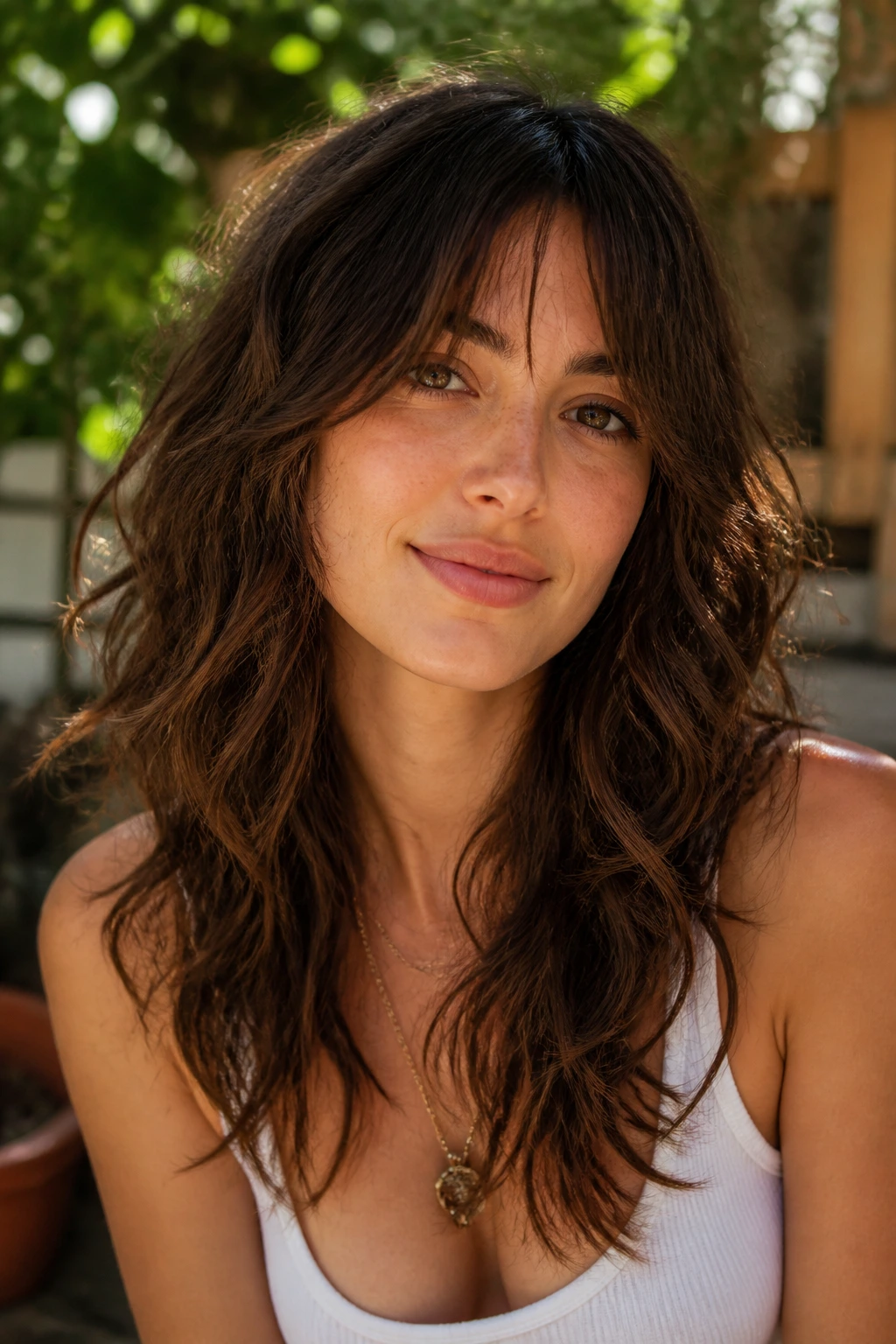
This is the version that gives you length and shape at the same time. The curls fall past the shoulders, but the shag layers break up the weight so the ends don’t just hang there. The piecey curtain fringe keeps the front from feeling too dense. It’s especially nice on hair with a natural bend that likes to separate into ribbons.
The best part is how the front behaves on second-day hair. A little water, a little scrunch, and those front pieces come back with the exact amount of mess you want. If your hair is prone to flat roots, clip the crown while it dries. The bangs will do more for the face if the top has a bit of lift behind them.
11. Tight-Curl Shag with Curved Bangs
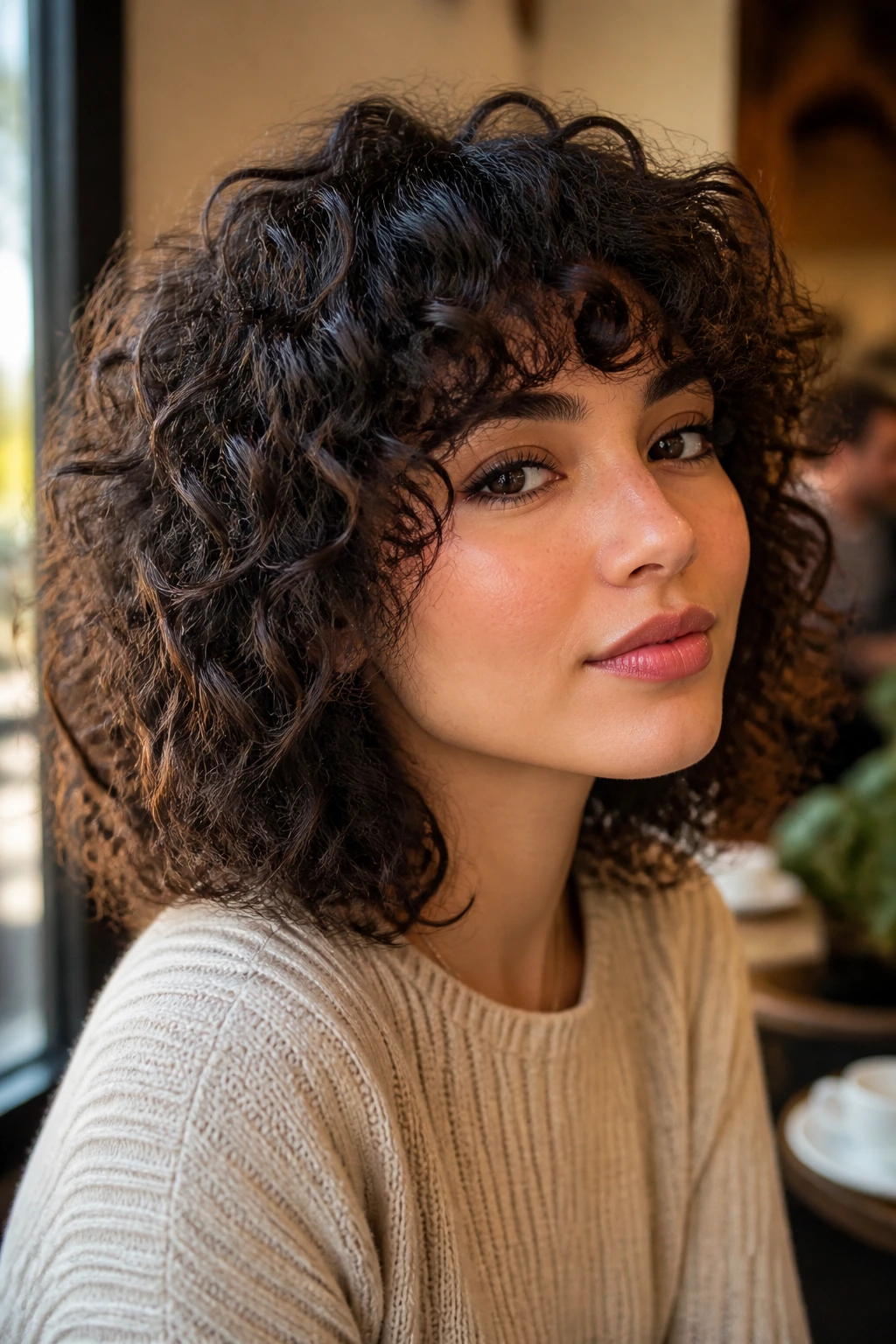
Tighter curls need a different kind of planning. You can’t cut a 3c or 4a fringe the same way you’d cut a looser wave and expect the same result. This curved bang shape follows the head a little more closely, then bends outward where the curls spring. It’s controlled, but not stiff.
A lot of people with tighter texture avoid bangs because they’re afraid the front will shrink too much. Fair. That fear comes from experience, not drama. The answer is to leave the fringe longer and let the curve happen on its own. A curl-by-curl cut, done dry or nearly dry, gives the stylist a real picture of where each piece wants to sit. That’s the only way this shape behaves.
12. Coily Shag with Blended Front Layers
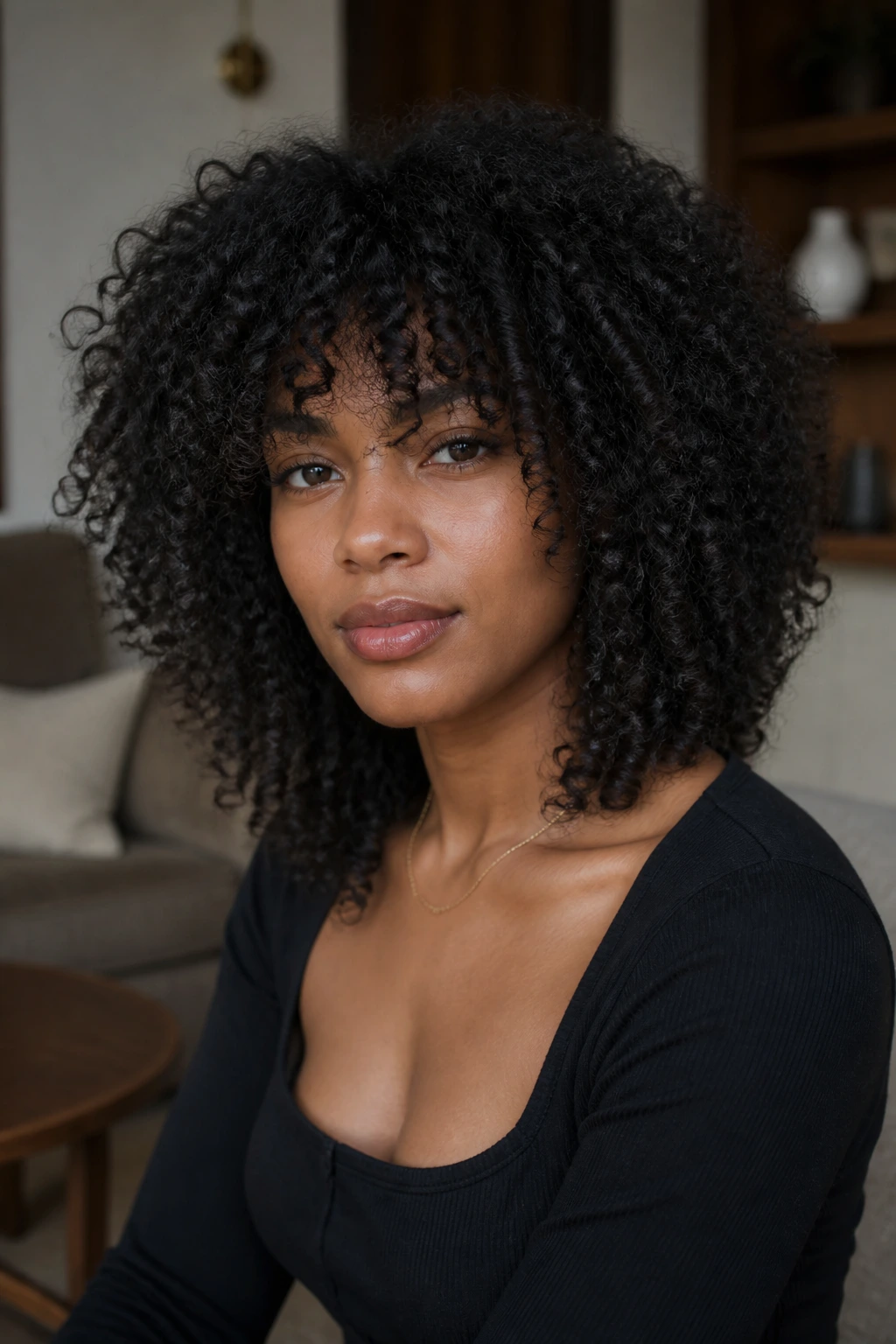
Here’s the thing with coils: the front can either frame the face beautifully or sit there as one heavy block. Blended front layers solve that. Instead of a straight bang line, the front pieces taper into the sides, which creates movement without breaking the curl pattern into little broken ends.
This style works best when the layers are placed with restraint. Too much thinning, and the coils lose their spring. Too little, and the front can feel dense enough to cast a shadow over the face. Ask for the bangs to be long enough to fall around the brow and cheekbone area once dry, then let the stylist shape the sides so the whole front reads as one motion.
13. Chocolate Shag with Face-Framing Fringe

Rich brunette curls make every layer visible, which is why a chocolate shag can look so full even when the haircut is fairly simple. The face-framing fringe starts just below the brow area and curves into the cheekbones, drawing a soft line around the face before the rest of the curls take over.
This is a good cut when you want the face to stay open but not exposed. The front can be styled forward for more shape or split with fingers for a looser look. If your hair is medium density, ask for a few shorter internal layers at the crown and a gentler perimeter. That balance keeps the silhouette from turning bulky under the fringe.
14. Ash-Blonde Shag with Wispy Curtain Bangs
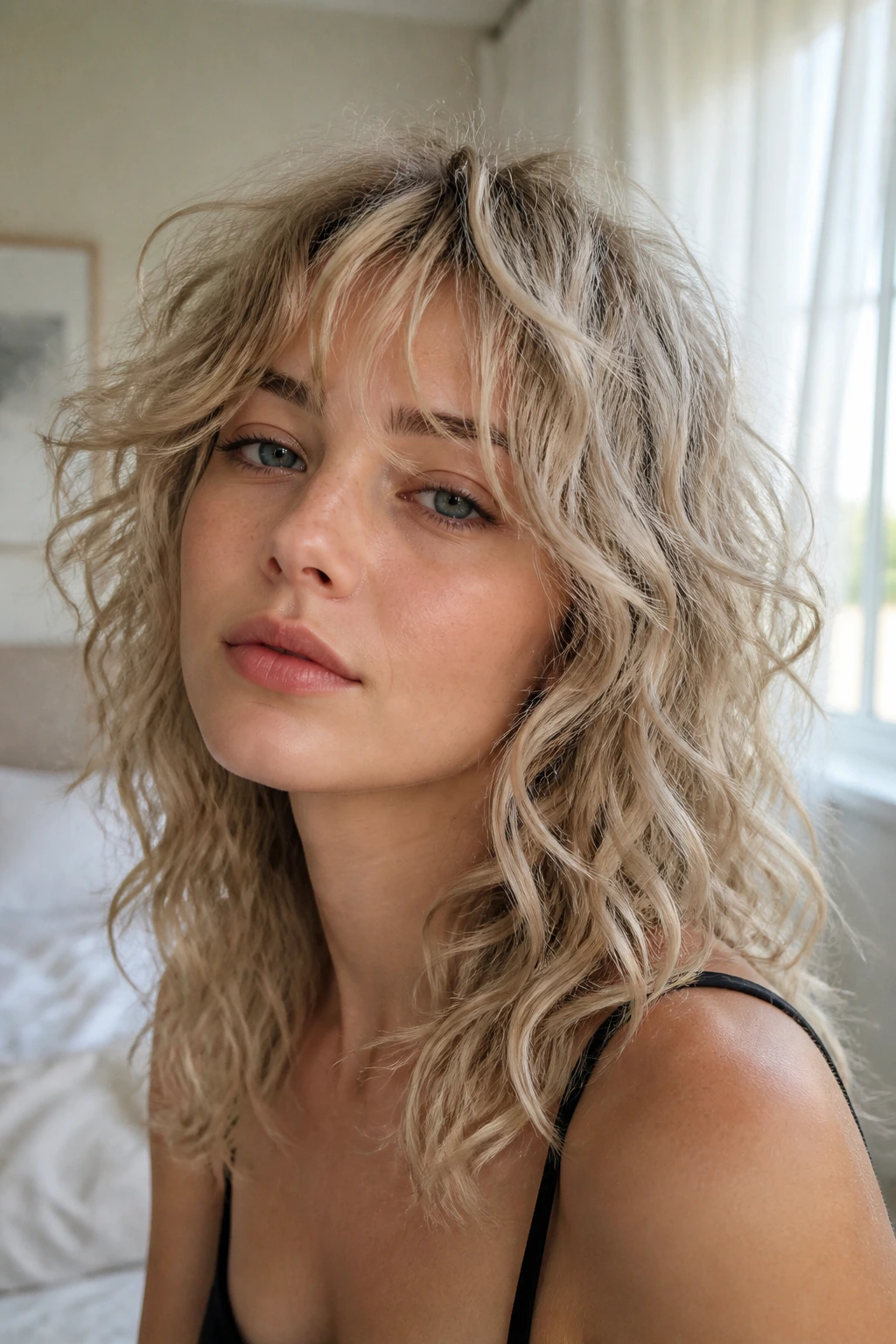
Wispy curtain bangs on curly hair can go wrong if they’re too thin. Too few pieces and they disappear. Too many and they get fuzzy. This version keeps the fringe light but still connected, which matters when the color is pale and every curl pattern shows. The ash-blonde tone sharpens the layer lines and gives the haircut an airy look.
The best part is how soft it feels around the face. The bangs break into little pieces rather than one solid sheet, so the haircut reads light even when the hair is thick. I’d avoid heavy butters and oils near the front with this one. They make wispy bangs collapse fast. A foam or light mousse gives more lift than cream, which is usually the better call here.
15. High-Volume Center-Part Shag with Split Bangs
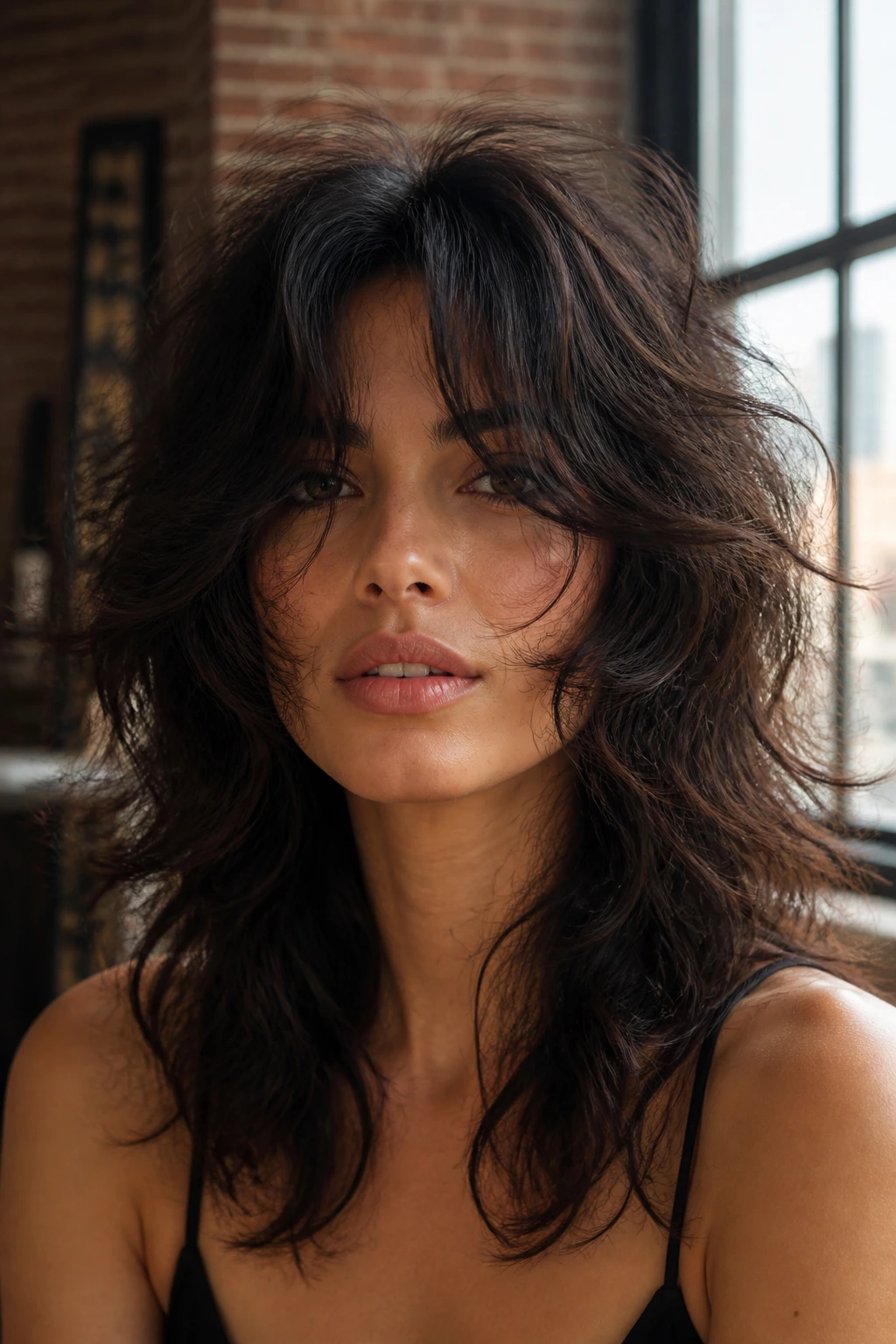
If you want drama, start at the part. A center split creates two long front panels that open the face and let the volume build up around the crown. The shag layers do the rest. This is the version that looks fantastic when the curls have body and a little stiffness in the pattern.
The split bangs should be cut with enough length to sit near the nose when wet, then fall into the cheekbones once dry. That keeps them from making the forehead look chopped off. I like this cut for people who wear their hair big and don’t mind a little maintenance. It’s not a quiet haircut. It wants to be noticed, and it gets there without needing a hard line.
16. Air-Dry Shag with Soft Long Fringe
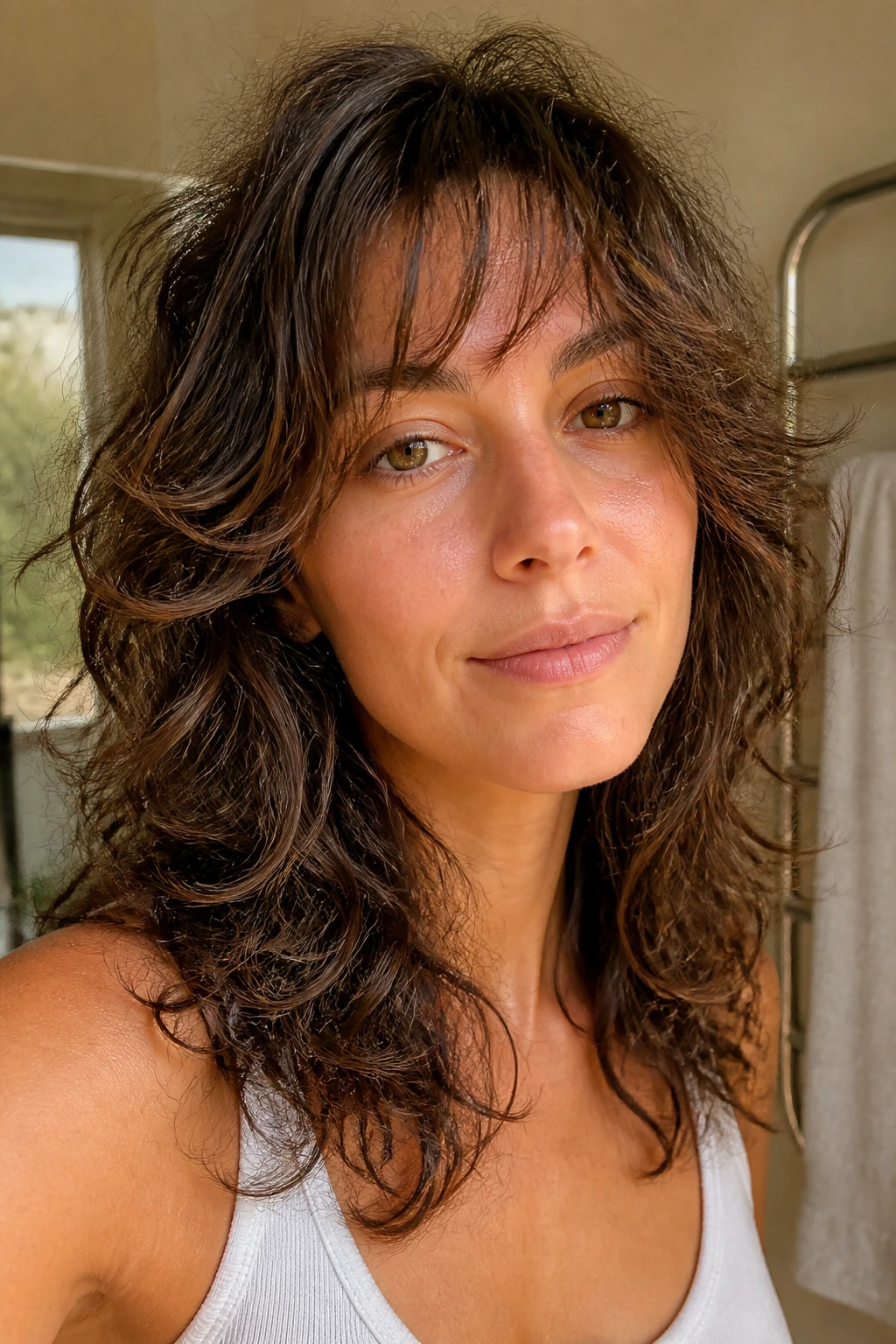
Some cuts are built for a diffuser. This one is built for a towel, a good leave-in, and time. The layers are soft enough to dry without much intervention, and the long fringe keeps the front easy to manage. If you live with curls that hate heat, this is one of the better shapes to ask for.
The main job is to keep the front from drying flat against the forehead. After applying product, rake the bangs into place, then leave them alone until they’re about 80 percent dry. Touching them too early is how you get fuzzy separation. A satin pillowcase matters more than people admit here too, because the front pieces stay smoother overnight and don’t need as much rescue in the morning.
17. Micro-Layered Shag with Lip-Skimming Bangs
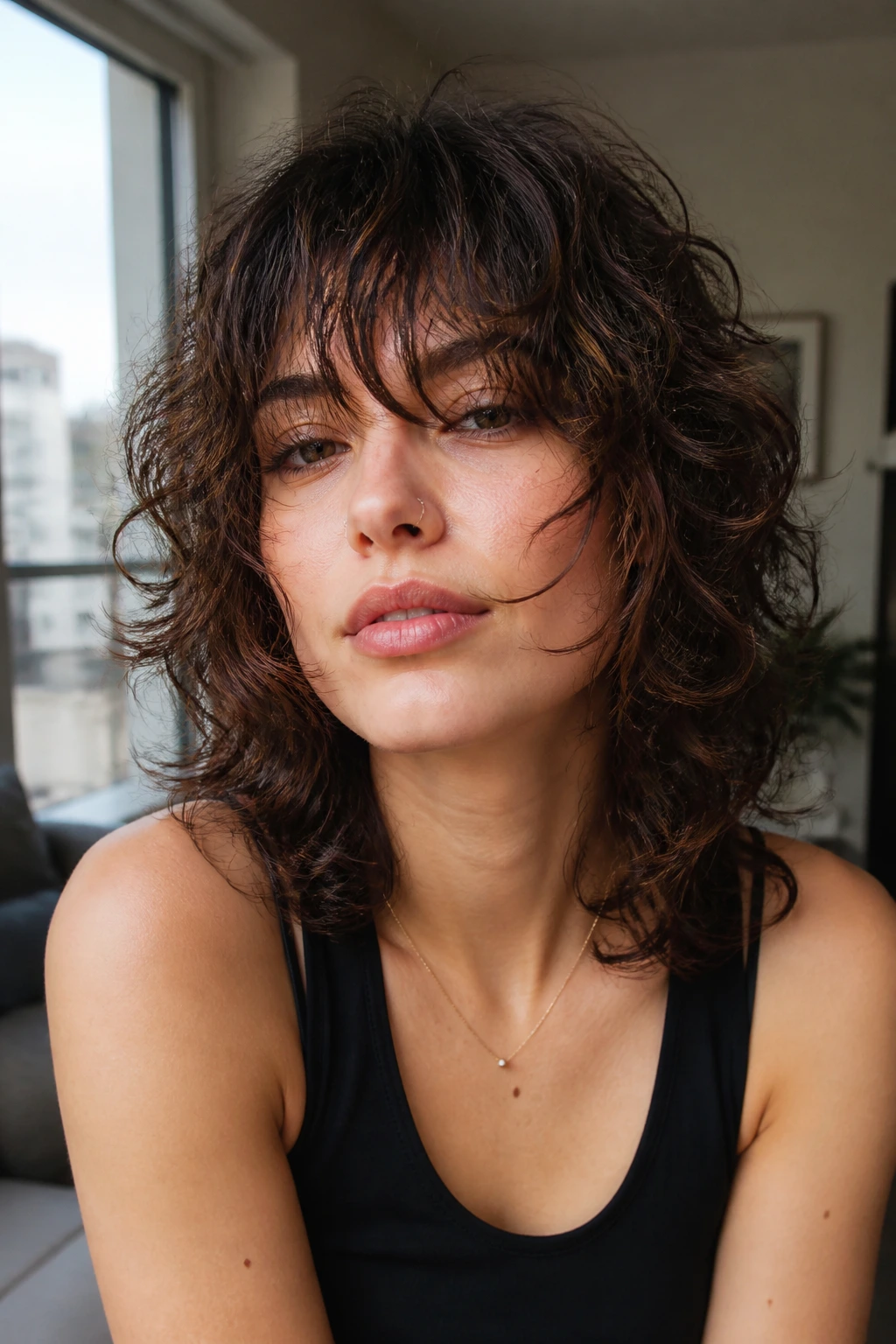
This version leans into texture without going full wolf cut. The layers are smaller and closer together, which gives fine-to-medium curls more movement at every level. The bangs skim the lips when wet and settle somewhere around the cheekbones dry, which makes the front feel fluid rather than heavy.
It’s a good choice if your curls lose shape in long, blunt lengths. The micro-layers give the hair somewhere to stack without collapsing. I’d keep the product light and focused at the mid-lengths, because too much cream on this shape turns it mushy. A small amount of mousse at the roots and a touch of gel through the bangs will usually do more than a heavy curl butter ever could.
18. Sunlit Shag with Lived-In Fringe
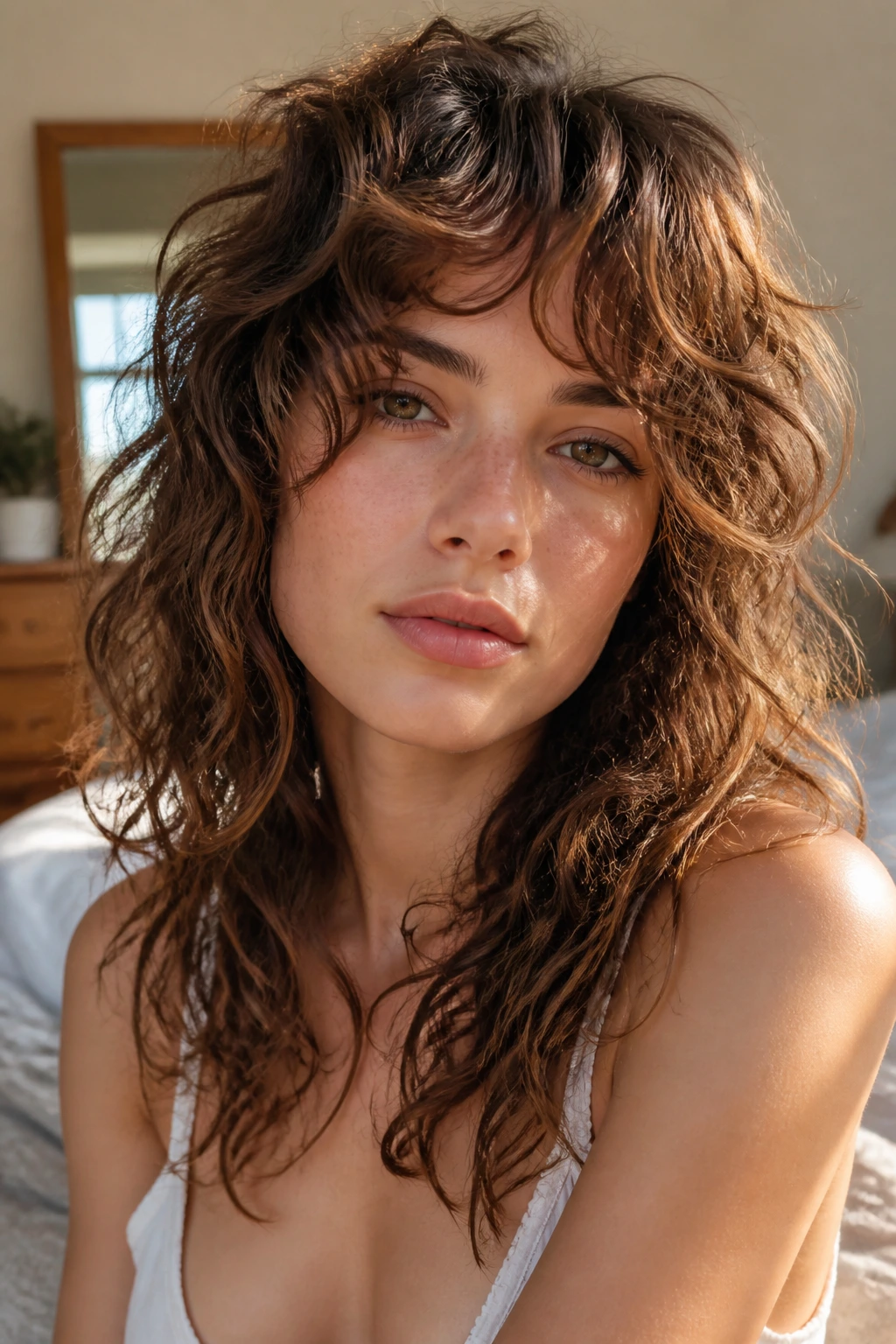
This is the haircut that looks like it’s been worn for a while in the best possible way. The layers are soft, the fringe isn’t too precise, and the whole shape has that lived-in bend that makes curls look expensive without trying to look polished. A few sunlit highlights help separate the layers visually, but the cut does most of the work.
The fringe should be left long enough to move between center part and side sweep. That flexibility keeps it from aging badly as it grows. If you want this look to stay easy, don’t ask for too much thinning at the ends. You want the ends to look soft, not see-through. Big difference. One will grow out. The other will annoy you.
19. Rounded Halo Shag with Long Swoop Bangs
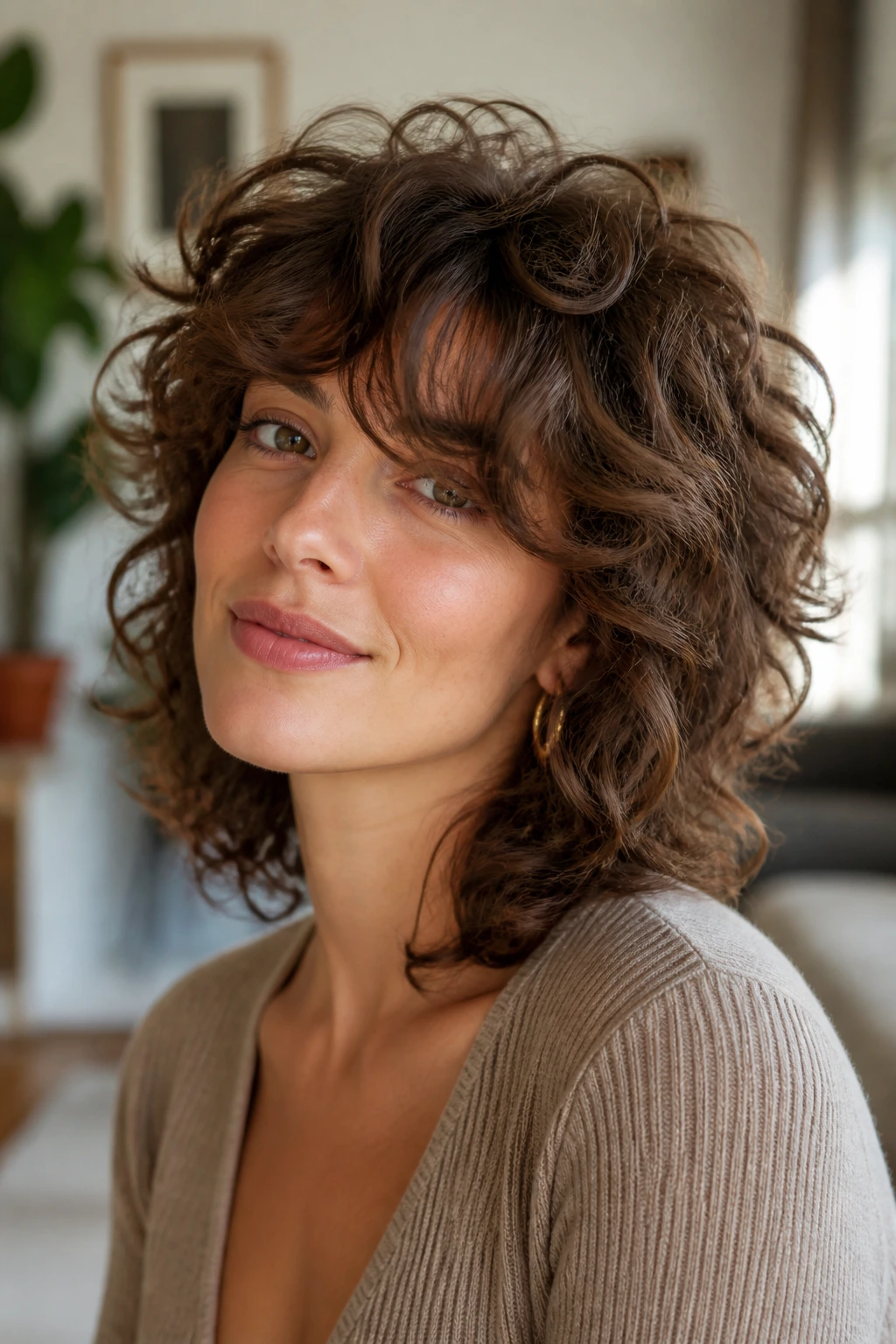
This is almost a shape study. The curls form a rounded halo around the head, with the long swoop bangs bending across the forehead before joining the side layers. It’s a little vintage, a little modern, and it works especially well when the curls have a springy pattern that holds an arc without effort.
The important part is balance. If the crown is too flat, the halo disappears. If the bangs are too short, the swoop becomes a puff. Ask for lift at the roots and a gentle taper around the face so the front can travel downward rather than sticking outward. On humid days, this shape benefits from a stronger gel at the fringe and lighter product everywhere else.
20. Medium Shag with Bottleneck Fringe and Lift
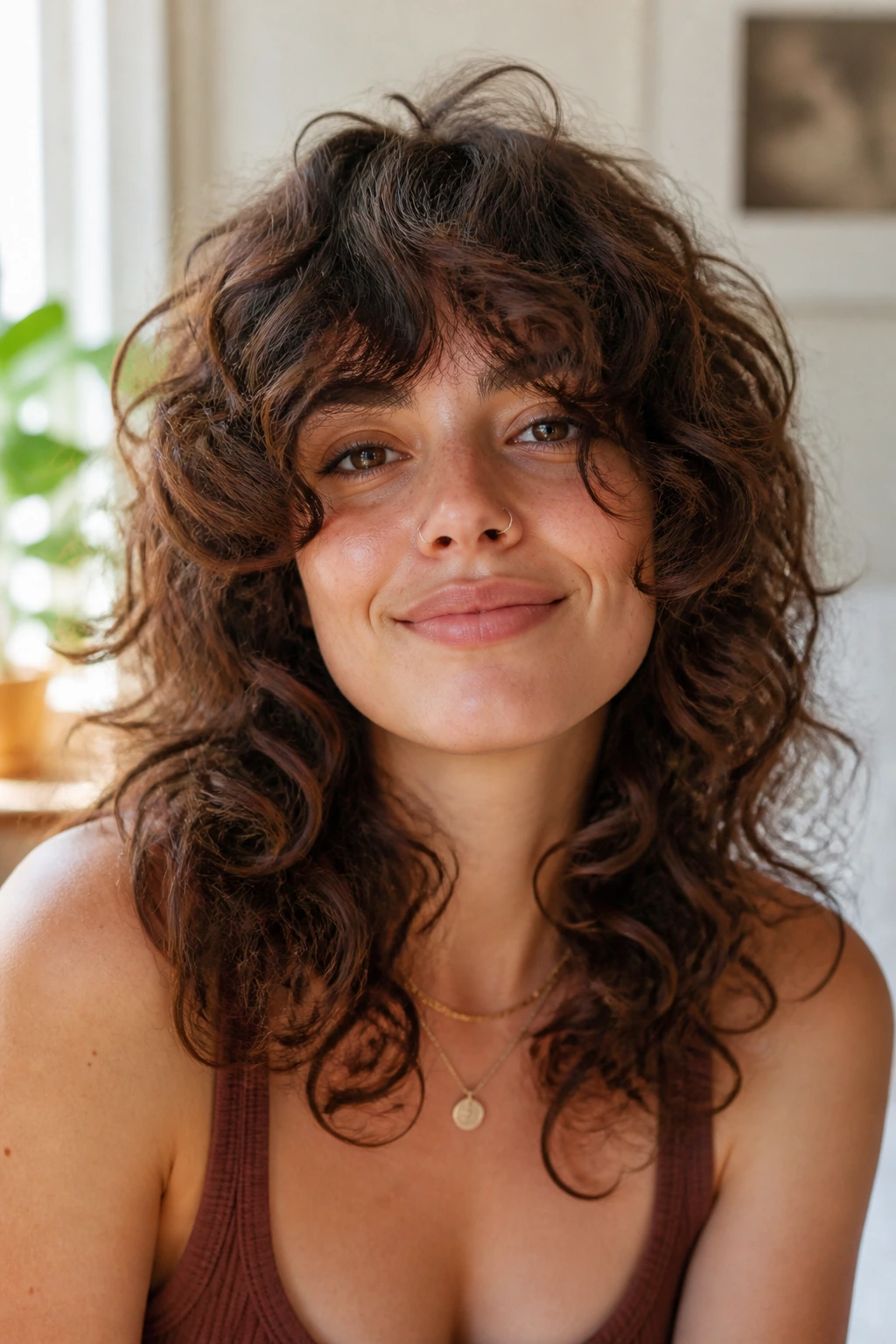
A bottleneck fringe makes curly hair look finished even when the rest of the haircut stays loose. That narrow-to-wide shape near the front gives the eye a clear place to land. Paired with a medium shag, it lifts the whole cut off the shoulders and keeps it from getting boxy.
This is one of my favorites for people who want a shag but don’t want the word “shag” to announce itself too loudly. It’s subtle in the best way. Ask for the bangs to start narrow near the center and widen as they reach the cheekbones. If the curl pattern is uneven, have the stylist cut the bang area curl by curl instead of forcing one straight guide. The front will behave better, and grow-out is less awkward.
21. Tapered Shoulder-Length Shag with Curly Fringe
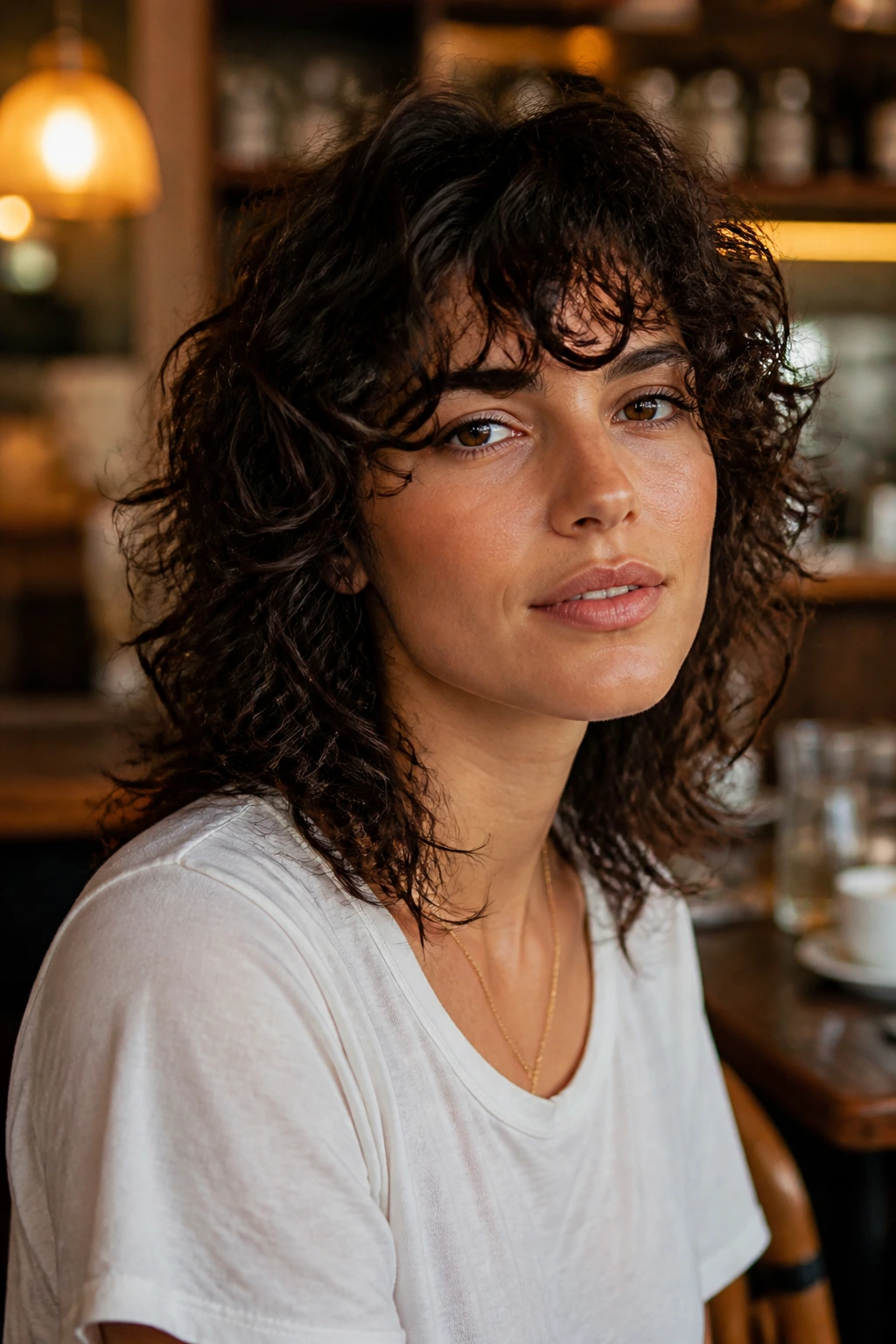
Tapered ends matter more than people think. They stop shoulder-length curls from sitting like a triangle, which is a constant threat when the hair has density. The curly fringe stays long and soft, so the front still frames the face while the rest of the cut narrows cleanly toward the ends.
This shape is especially useful if you wear your hair down most of the time. The taper keeps the bulk under control without shaving off too much length. I’d avoid heavy layered slicing on the bottom if the curls are fine, because that can leave the silhouette too wispy. A gentle taper and a fringe that lands at cheekbone level are enough to keep it interesting.
22. Curly Mullet Shag with Sweeping Bangs
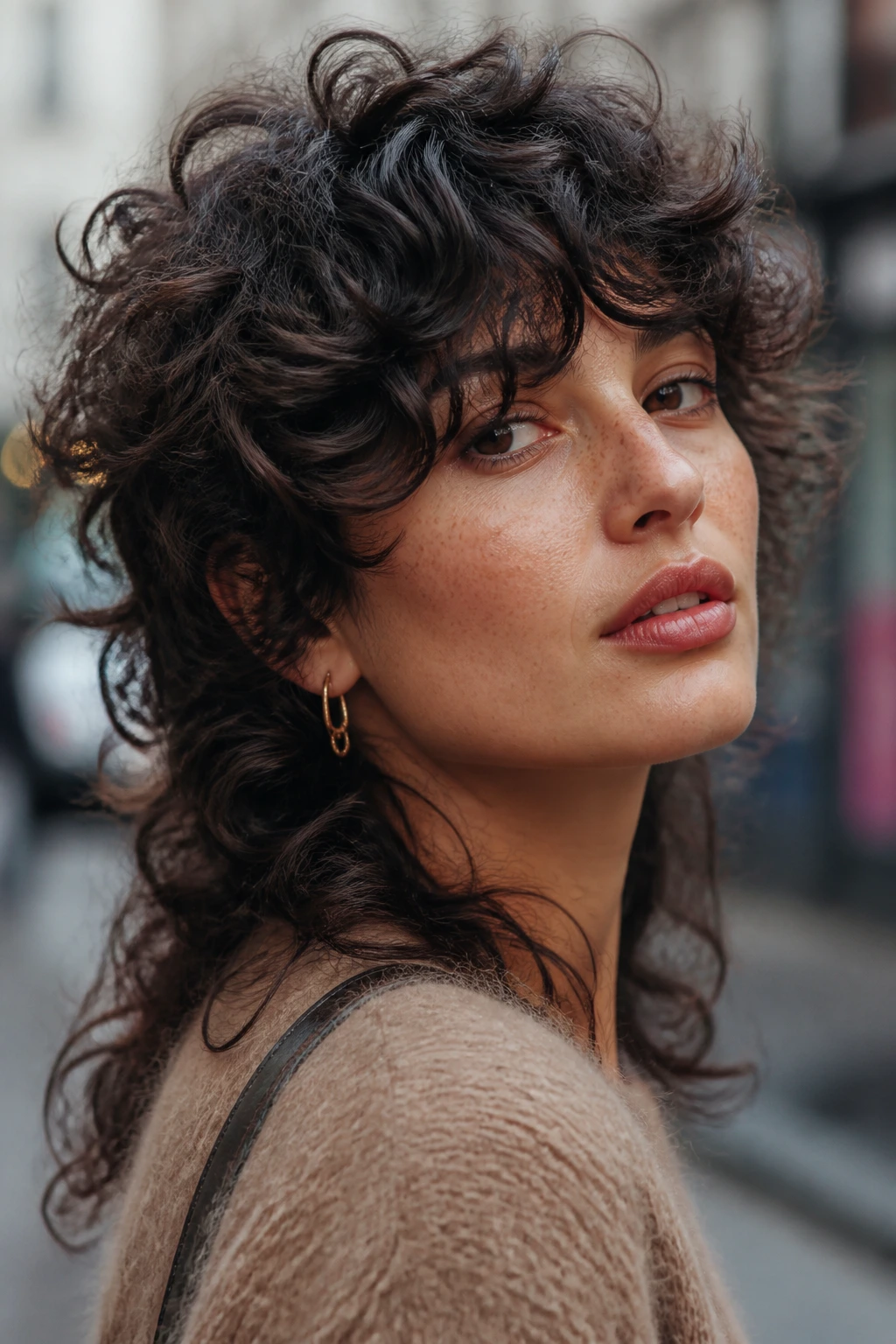
Yes, this one has edge. No, it doesn’t have to be loud about it. The front stays soft with sweeping bangs, while the back keeps more length and a little extra looseness. The contrast creates a shape that feels deliberate rather than accidental, which is why the style has lasted past its novelty phase.
If your curls are dense, this cut gives them room to move without turning into a mushroom. If they’re fine, be careful not to overdisconnect the back from the front. The bangs should still connect to the sides in a way that makes the haircut look like one idea. Ask for the shortest layers to stay under control near the crown, then let the back carry the attitude.
23. Raven-Black Shag with Dense Long Bangs
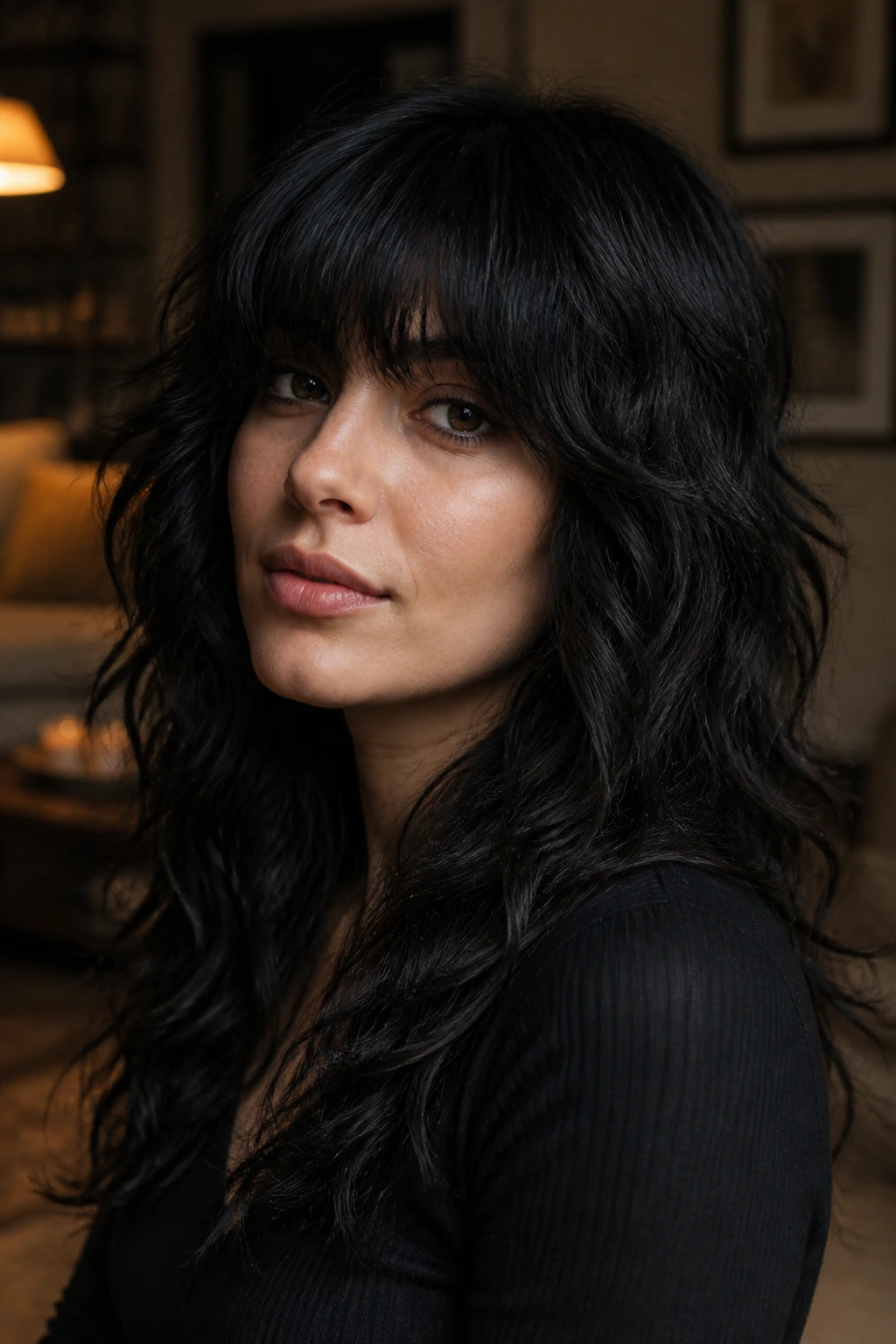
Black curls show every curve, and they also show every gap. That’s why dense long bangs can look so striking on a raven-shaded shag. The fringe makes a dark frame across the face, and the long layers keep the density from becoming a helmet.
This cut works best when the bangs are long enough to split or sweep, because a dense fringe at eyebrow length can feel too blunt on curly texture. Leave more length than you think you need. The weight of the color makes the shape look fuller anyway. A light root lift and a soft diffuser finish keep the front from sitting flat against the forehead, which is the one thing this haircut does not forgive.
24. Copper-Caramel Shag with Grown-Out Fringe
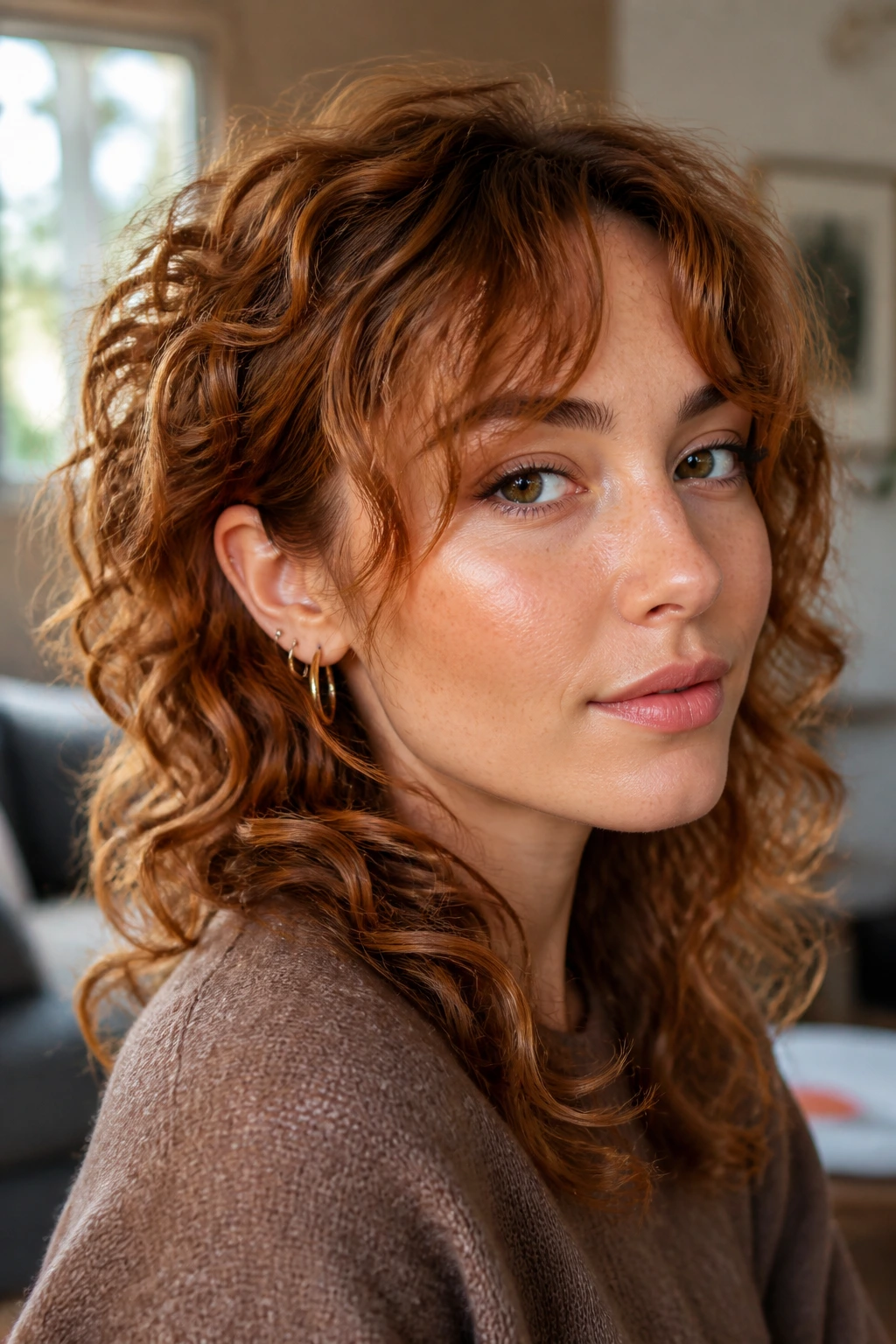
This is warm, easy, and quietly bold. The copper-caramel blend brings out the curl definition, while the grown-out fringe keeps the face from being buried under too much front weight. It’s one of those cuts that looks even better after a few weeks, once the bangs have relaxed into place.
The best version has layers starting around the cheekbones and a fringe long enough to tuck behind the ears when you want it out of the way. That makes it practical without looking apologetic. If you wear glasses, this shape is especially useful because the bangs can sit above the frames or sweep around them instead of fighting them all day.
25. Fine-Curl Shag with Lightweight Bangs
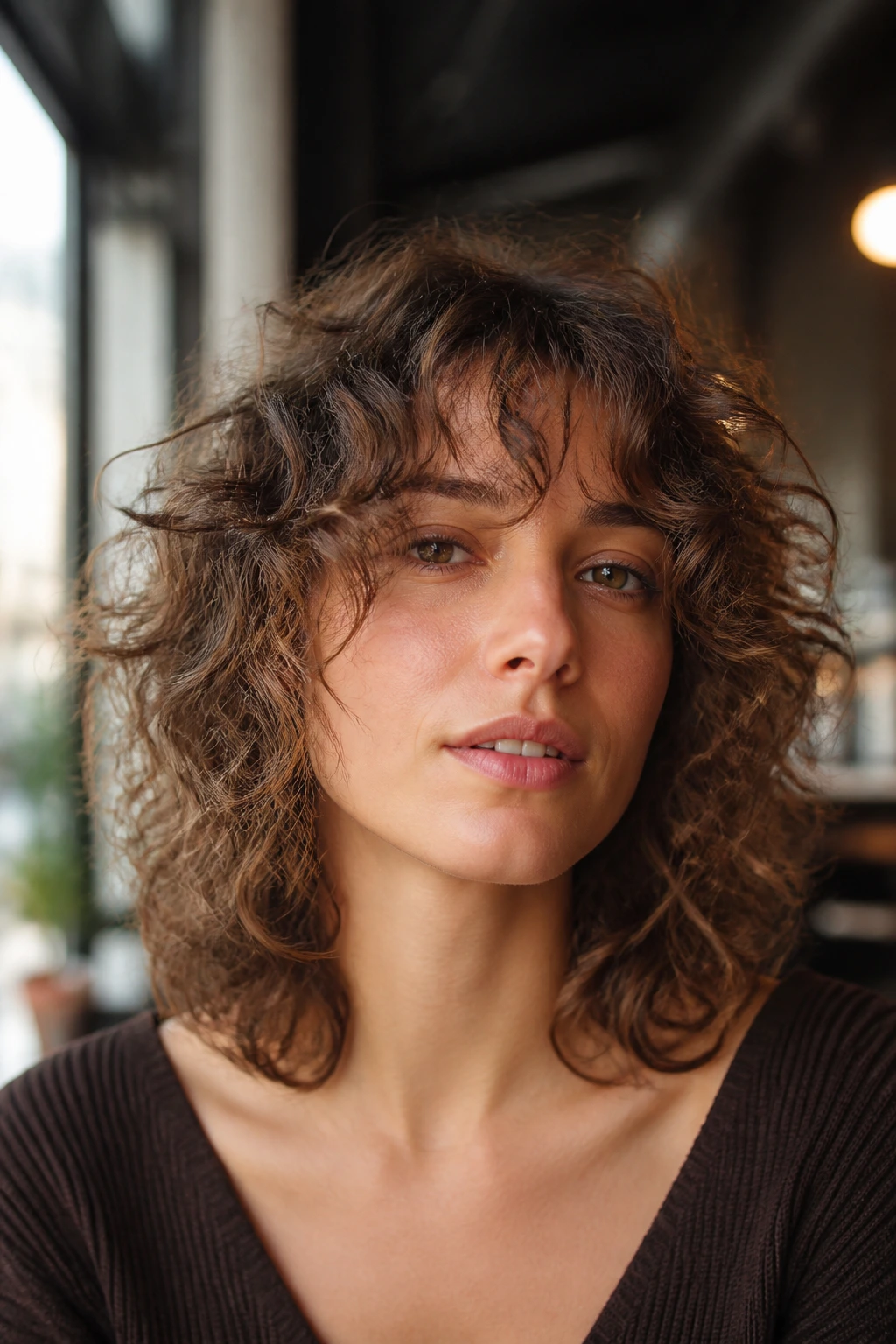
Fine curls need a lighter hand. Too many layers, and the ends disappear. Too little, and the shape falls flat. This shag keeps the perimeter fuller and uses lightweight bangs to frame the face without overloading the front. The result is airy, but not flimsy.
The secret is restraint. Ask for fewer internal layers and a soft fringe that lands around the nose or cheekbones when dry. Foam is your friend here. Heavy creams usually are not. A light mousse at the roots, a curl cream only on the mid-lengths, and a quick diffuse upside down can give you more lift than three richer products stacked together.
26. Dense-Curl Shag with Weight-Removed Fringe
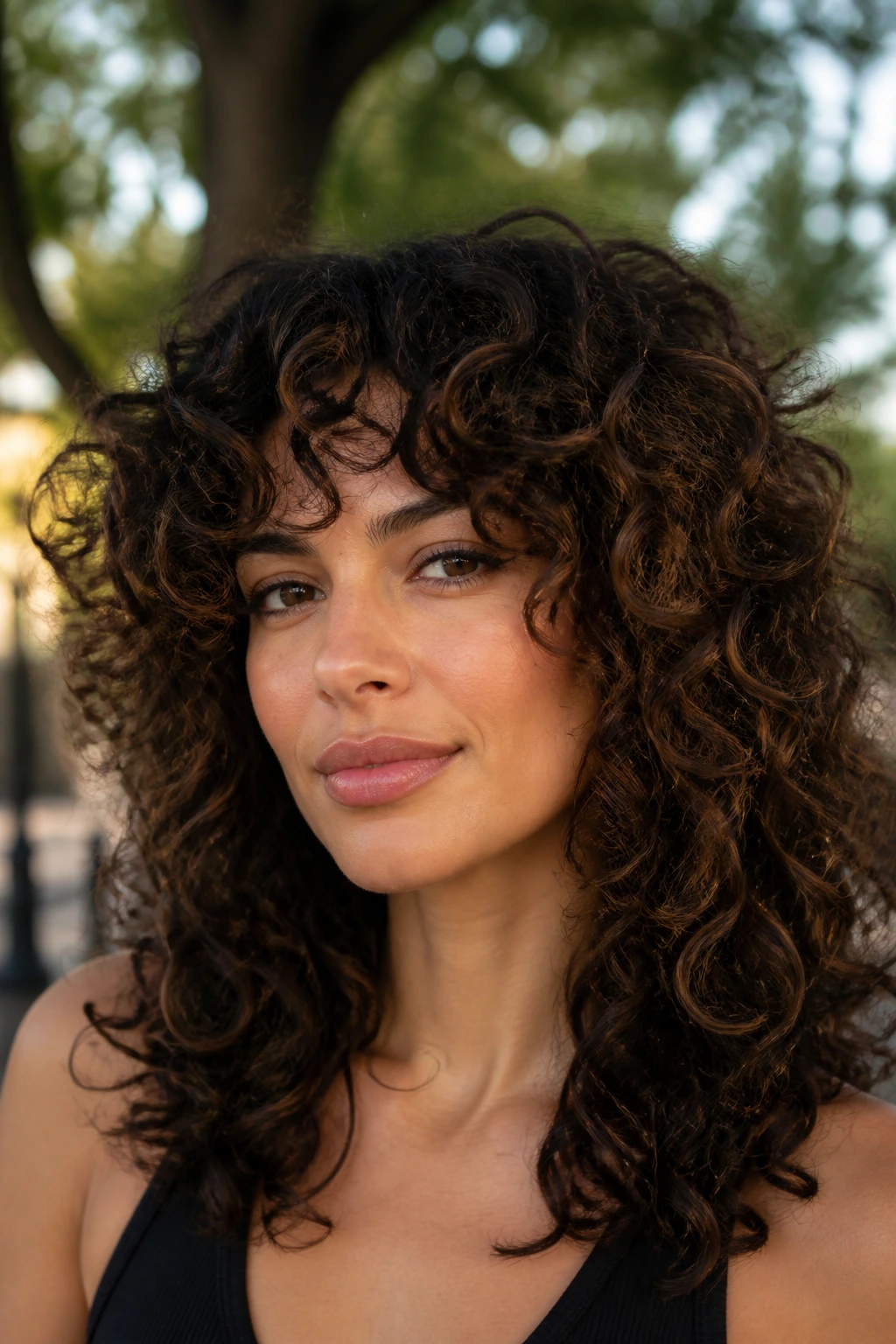
Thick curls can carry a lot of shape, but they also carry a lot of bulk. This version removes enough weight to let the curls bounce, then leaves the fringe long so the front doesn’t puff up into a block. It’s a useful middle ground for hair that is dense enough to fight almost any cut.
The real trick is in the ends. If the stylist takes too much weight out of the bottom, the haircut will feel hollow. Ask for weight removal mostly through the interior and around the face. The bangs should stay chunky enough to read as a fringe, not a halo of frizz. This is one of those styles that benefits from a trim schedule. Let it go too long, and the shape blurs fast.
27. Wavy-Curly Shag with S-Curve Bangs
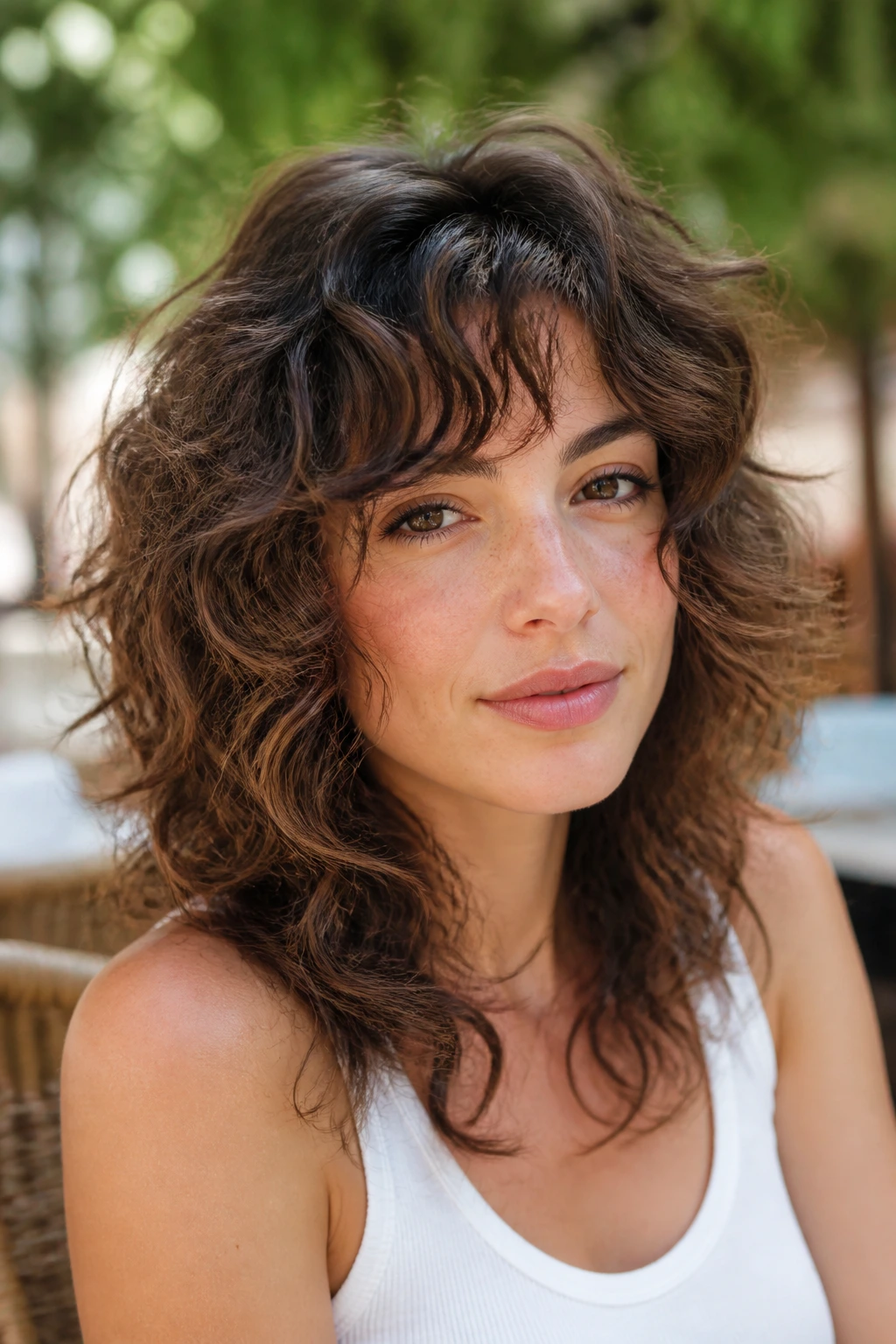
When your texture sits between wave and curl, the shape can go limp if the layers are too blunt. The S-curve bang shape fixes that by letting the front bend in two directions instead of one. It gives the fringe a little bounce even when the rest of the hair is only partly curled.
This cut is lovely on hair that flips easily around the face. The bangs don’t need to be heavily styled; they need to be encouraged. A brush twist while damp, followed by a soft scrunch, is usually enough. If the ends tend to fray, keep the bottom slightly blunt so the texture has something to hang on to. That one detail keeps the whole haircut from dissolving.
28. Oval-Face Shag with Parted Bangs
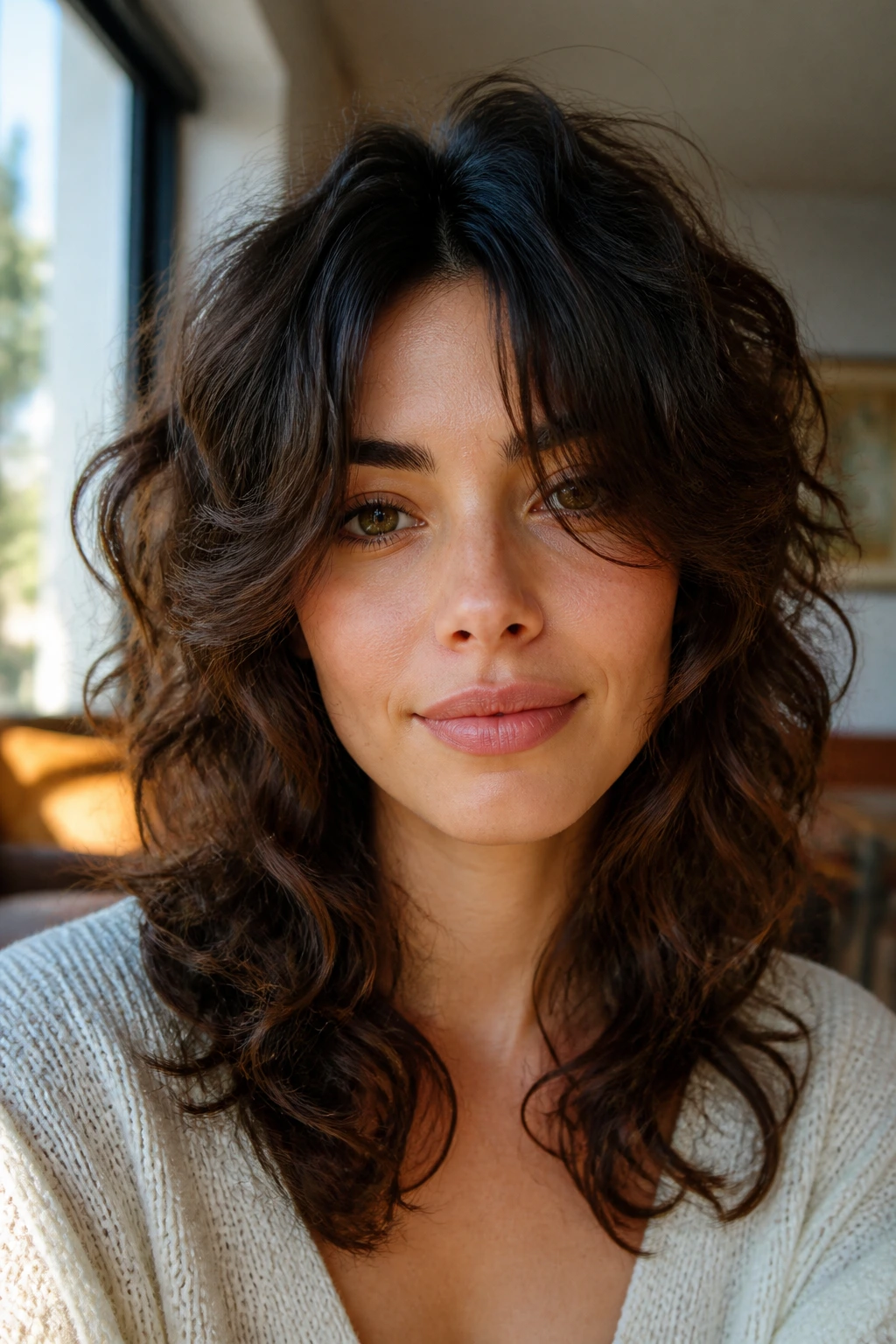
Oval faces can wear almost anything, which is annoying and useful at the same time. The parted bang version uses that flexibility without wasting it. The bangs split gently, framing the center of the face and giving the curls room to fall around the cheeks instead of hiding the forehead.
This shape does best when the fringe is cut a bit longer than a classic curtain bang. Too short, and the split pops up. Too long, and the front loses its job. The shag layers should start high enough to create movement near the crown, but not so high that the sides get too airy. If you’re bringing this to a stylist, mention that you want the front to stay open, not heavy.
29. Round-Face Shag with Cheekbone-Opening Bangs
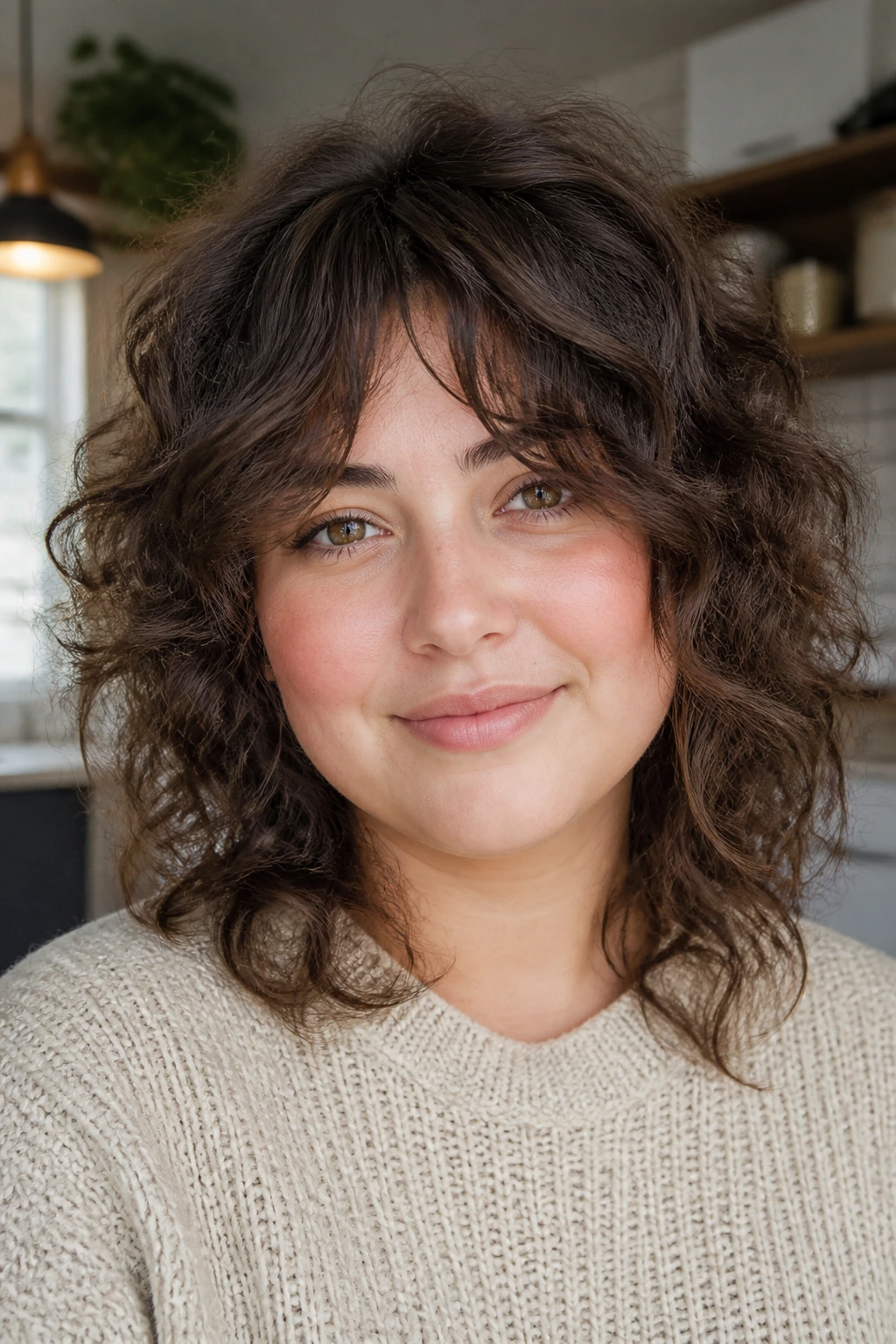
Round faces usually do well with vertical lines, and cheekbone-opening bangs deliver exactly that. The front pieces part just enough to reveal the cheekbones, then fall into the sides so the eye keeps moving downward. That creates length without turning the haircut stiff.
I’d keep the layers around the jaw a little longer here so the face doesn’t widen at the cheeks. The bang line should never sit straight across the forehead. A gentle diagonal is better. Better still, one side can be just slightly longer than the other, which makes the whole cut feel relaxed and less engineered. It’s a small difference, but it matters.
30. Square-Face Shag with Softening Long Fringe
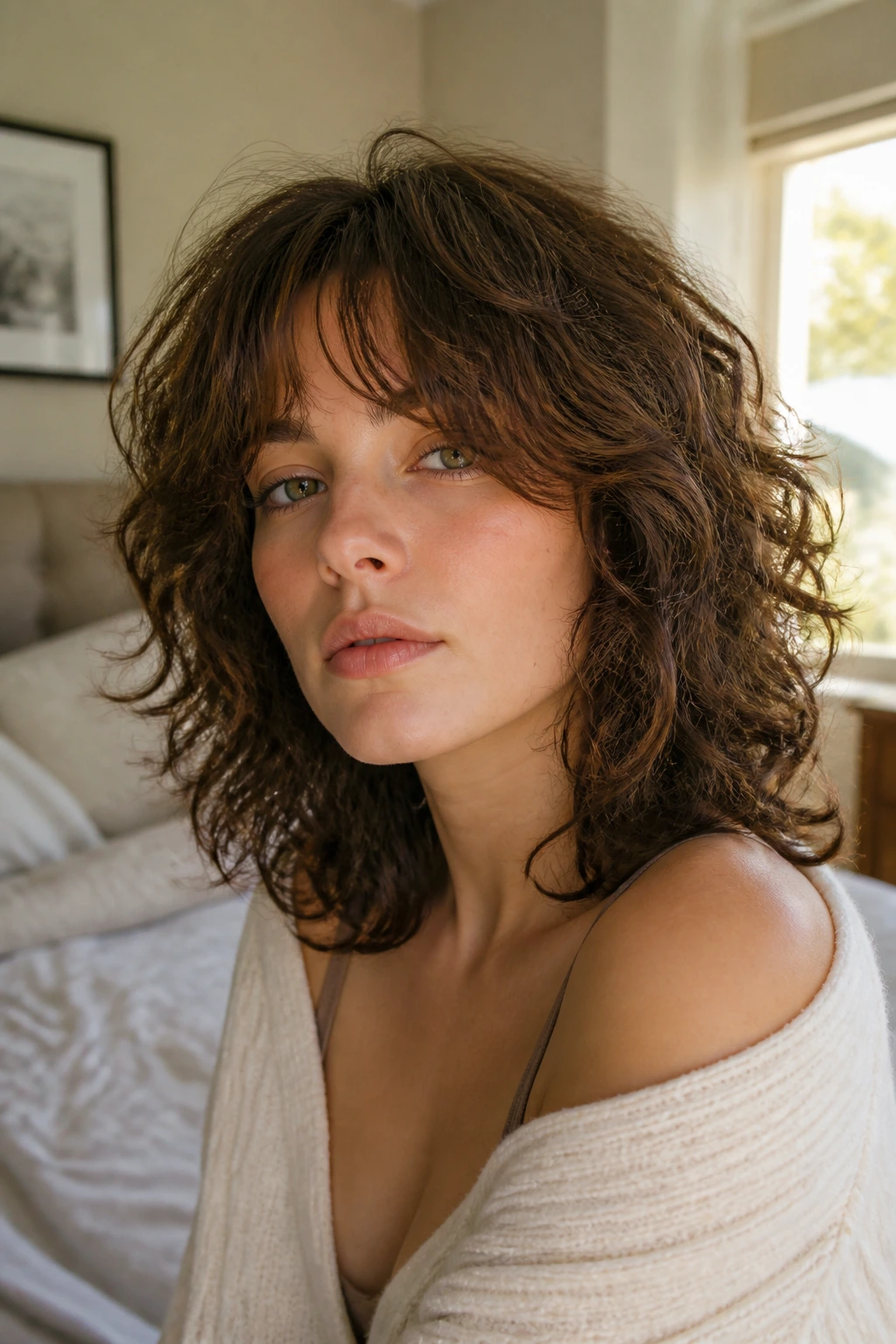
Strong angles do not need to be hidden. They need something soft beside them. That’s what the long fringe does in this shag. It breaks up the straight edges of the jaw and forehead while the curly layers keep the rest of the style moving.
The important bit is avoiding bluntness. A square face can get boxed in fast if the bangs are cut too straight or too short. Keep the fringe long enough to bend around the temples, and let the layers around the cheeks feather out. If the curls are dense, separate the fringe with fingers after drying so it doesn’t sit in one dark block across the forehead.
31. Heart-Shaped Face Shag with Floating Bangs
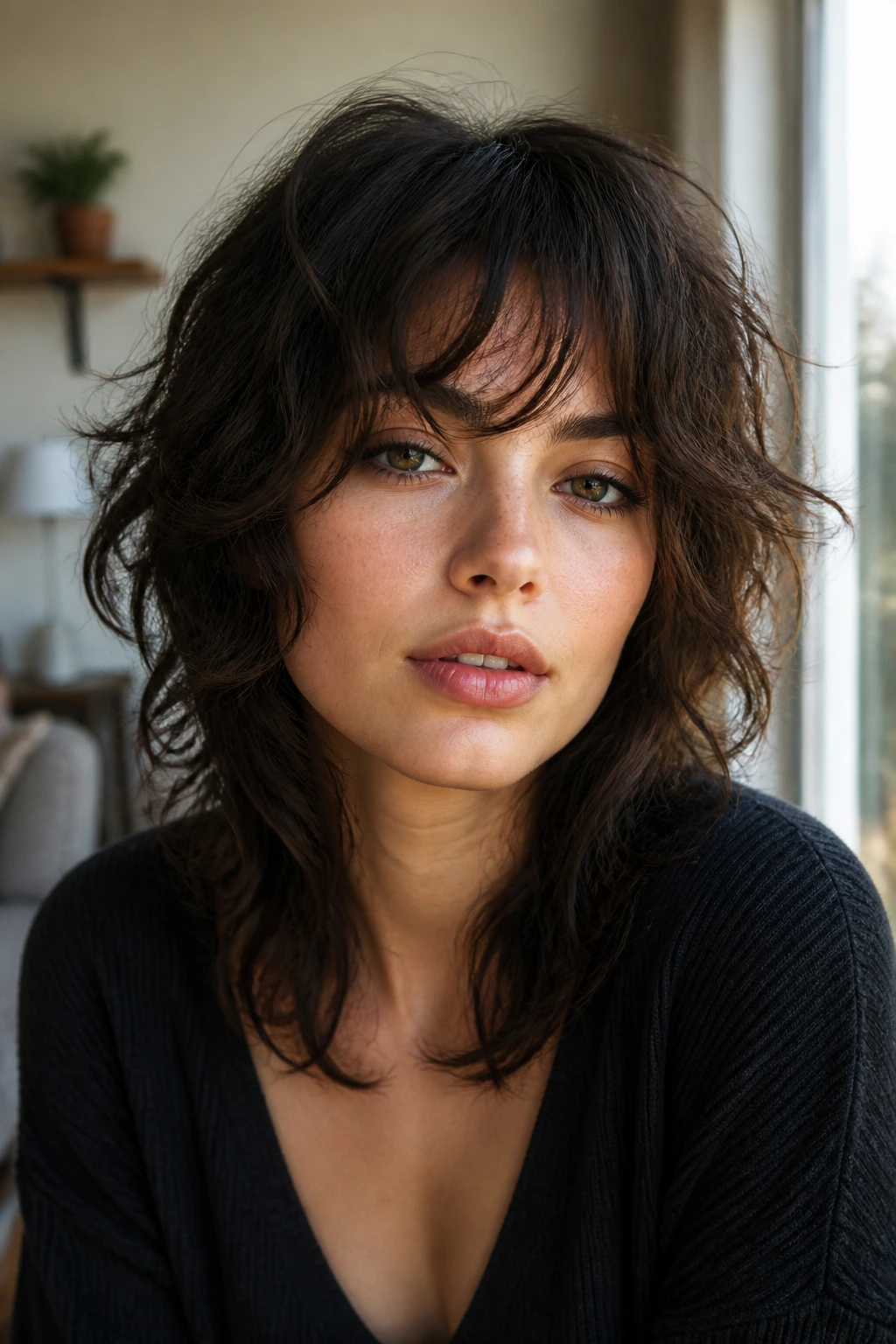
Heart-shaped faces often carry more width at the forehead and less at the chin, so a floating fringe can be a smart move. The bangs break up the top half of the face without sealing it off, and the layers below the cheekbones bring more movement near the jaw. That balance feels natural.
What I like here is the softness. The fringe shouldn’t look chopped. It should feel like it drifted into place. Ask for the shortest bits to stay longer than you think—around the nose or upper lip when wet—so they can settle after shrinkage. A little root lift at the crown keeps the style from going top-heavy, which is the one thing a heart-shaped face does not need.
32. Waist-Length Curly Shag with Long Curtain Bangs
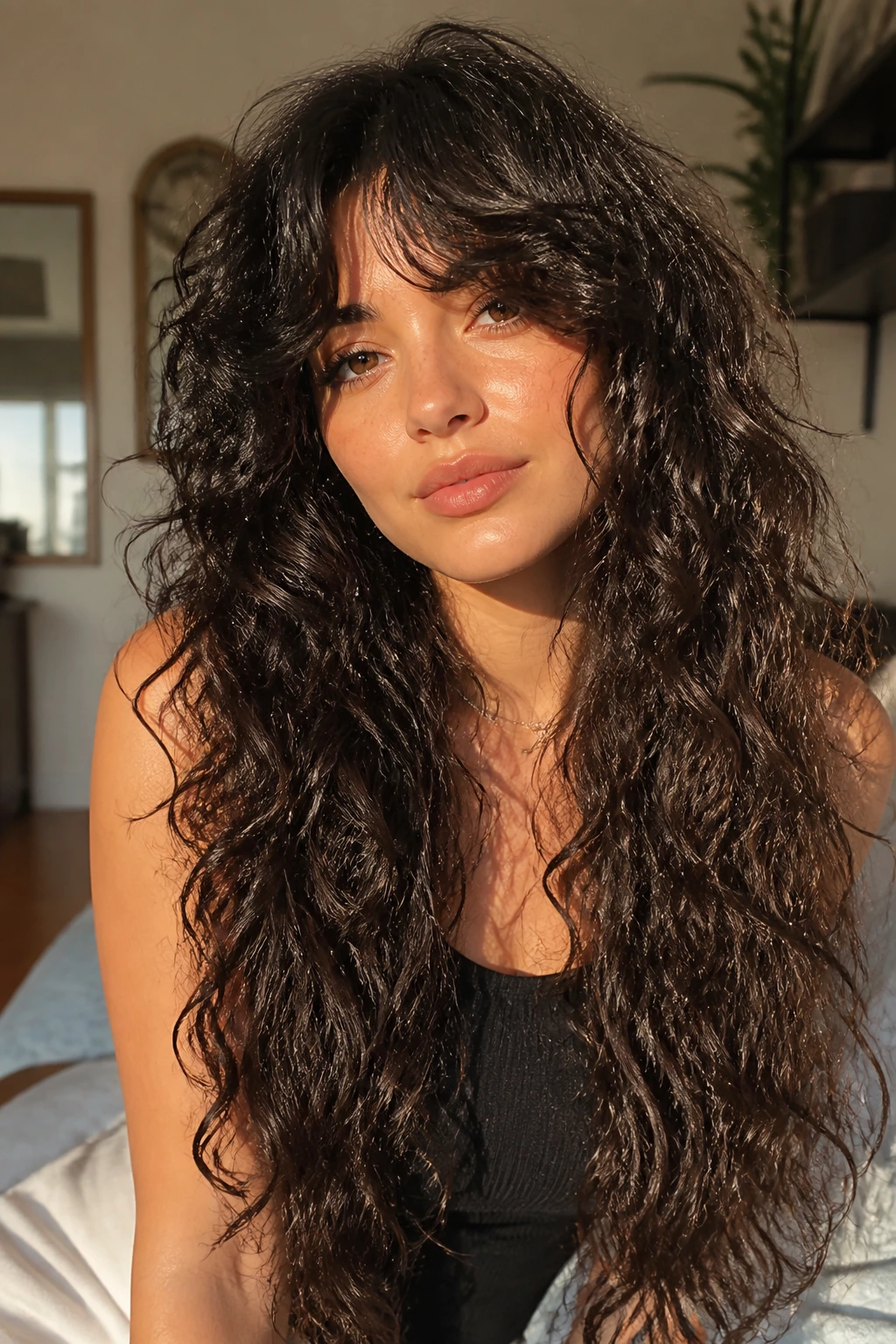
Long hair and shag layers can get along beautifully if the front is handled well. The waist-length version keeps the drama of the length while using long curtain bangs to stop the hair from looking like one endless sheet. The bangs give the eye a place to start before it travels down the curls.
This cut needs discipline in the layering. Too many short pieces in the front, and the length loses its power. Too few, and the shape turns flat. Keep the fringe long enough to tuck, part, or sweep. On dense curls, this is a good place for a subtle face frame at chin and cheekbone level, so the weight stays away from the front of the face.
33. Internal-Layer Shag with Curved Fringe
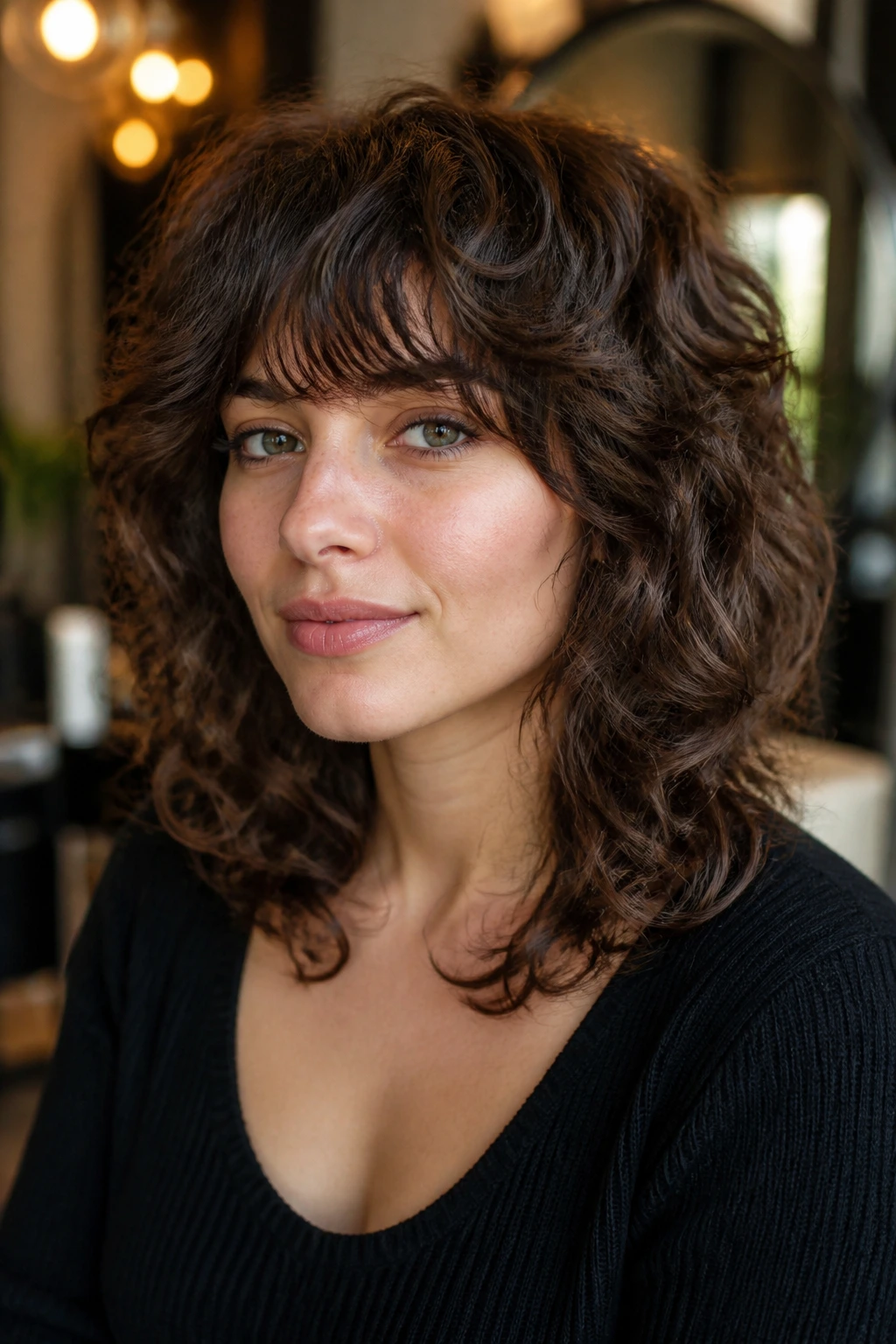
This is the quiet architect of the group. From the outside, it looks soft and easy. Underneath, the internal layers do the heavy lifting, removing weight where the curl pattern wants to swell. The curved fringe completes the shape without shouting about it.
It’s the haircut for someone who wants movement but not obvious disconnection. The bangs should have a bend, not a straight edge, and the interior should be thinned enough to let the curls stack without puffing. If you like to wear your hair up sometimes, this version is especially forgiving, because the longer front pieces slide back into a ponytail without leaving a harsh line.
34. Salt-and-Pepper Shag with Elegant Long Bangs
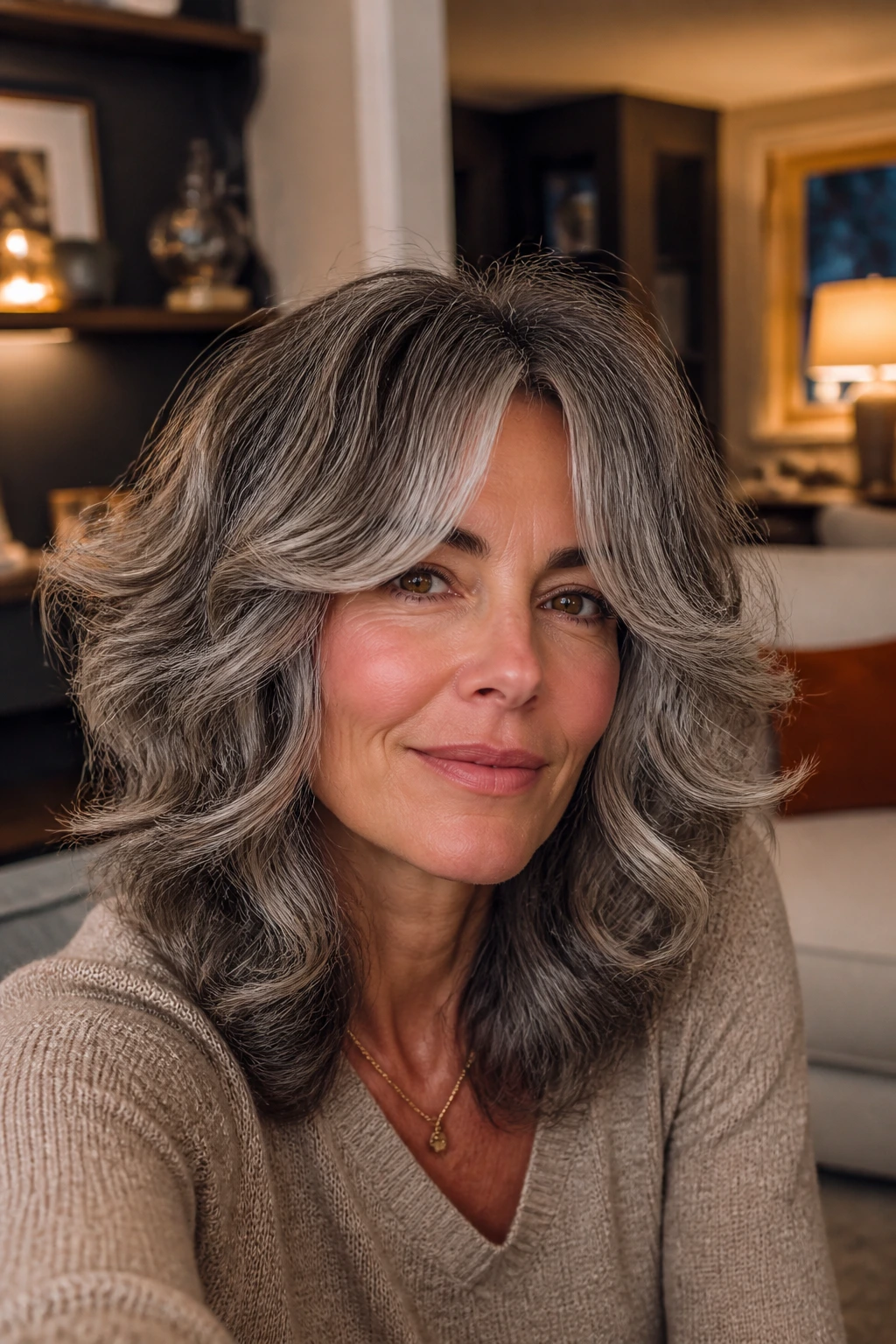
Salt-and-pepper curls have built-in dimension that colorists spend all day trying to fake. A shag lets those tones show through the layers, and the elegant long bangs give the front some polish without making it stiff. It’s a grown-up cut in the best sense. Confident, not plain.
The fringe should be left long enough to move around glasses, brows, and any natural cowlicks at the front. That matters more than people realize. Grey strands can be coarser, so they often need a bit more moisture at the mid-lengths but less at the roots. A light cream and a soft gel on the bangs are enough to shape the front without flattening the silver pieces.
35. Jet-Black Shag with High-Contrast Fringe
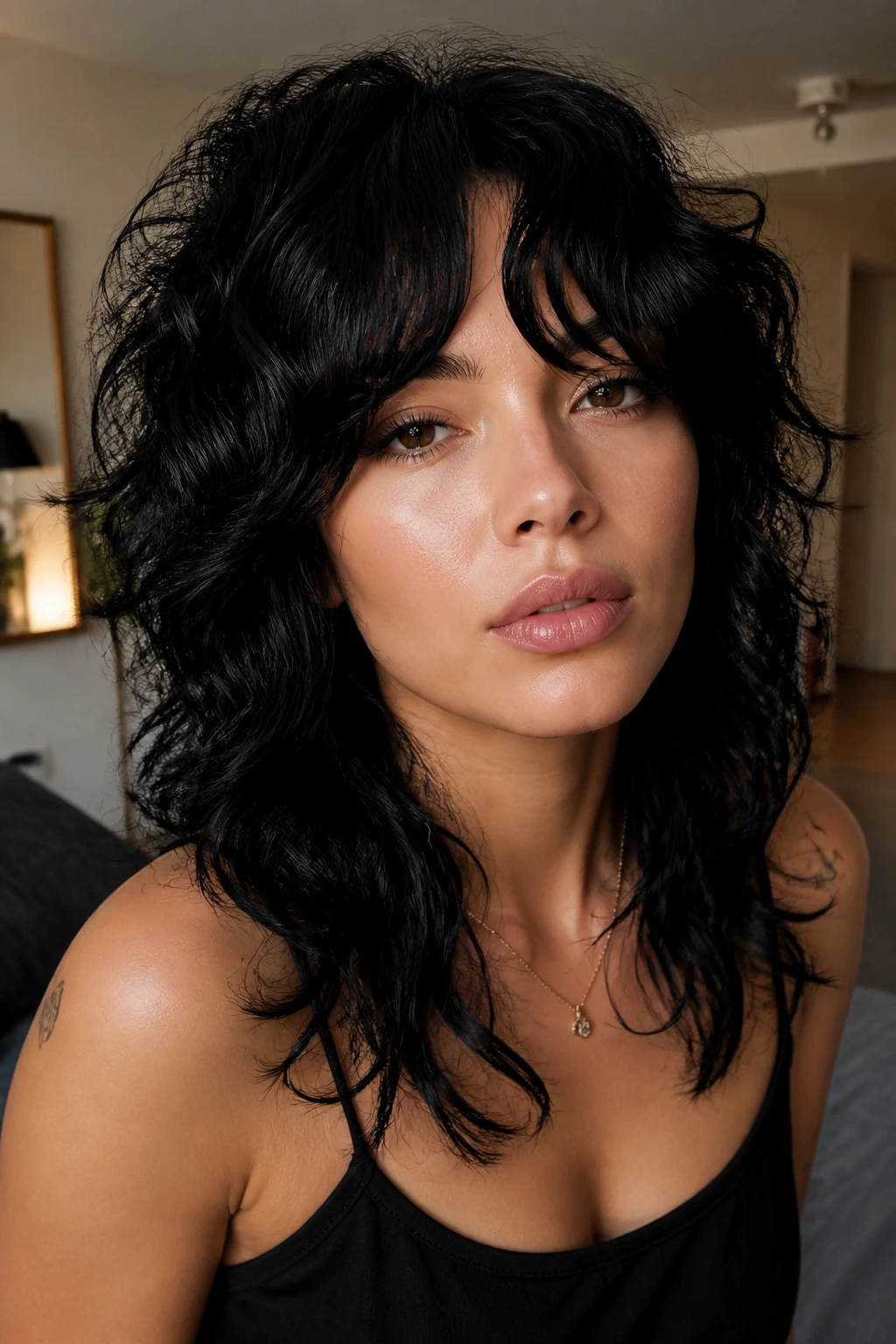
This cut is all about edge and sheen. Jet-black curls make the shag layers look sharper, and the high-contrast fringe creates a bold frame around the face. It’s dramatic, yes, but not in a loud costume-y way. The structure does the talking.
The secret here is keeping the bangs visible without making them heavy. If the fringe is too thick, the black can swallow the face. If it’s too thin, the contrast disappears. Aim for a long fringe that can split in the center or sweep to one side. A glossing serum on the ends—not the roots—helps the color stay rich and keeps the layer tips from looking dry under indoor light.
36. Caramel Balayage Shag with Long Bangs
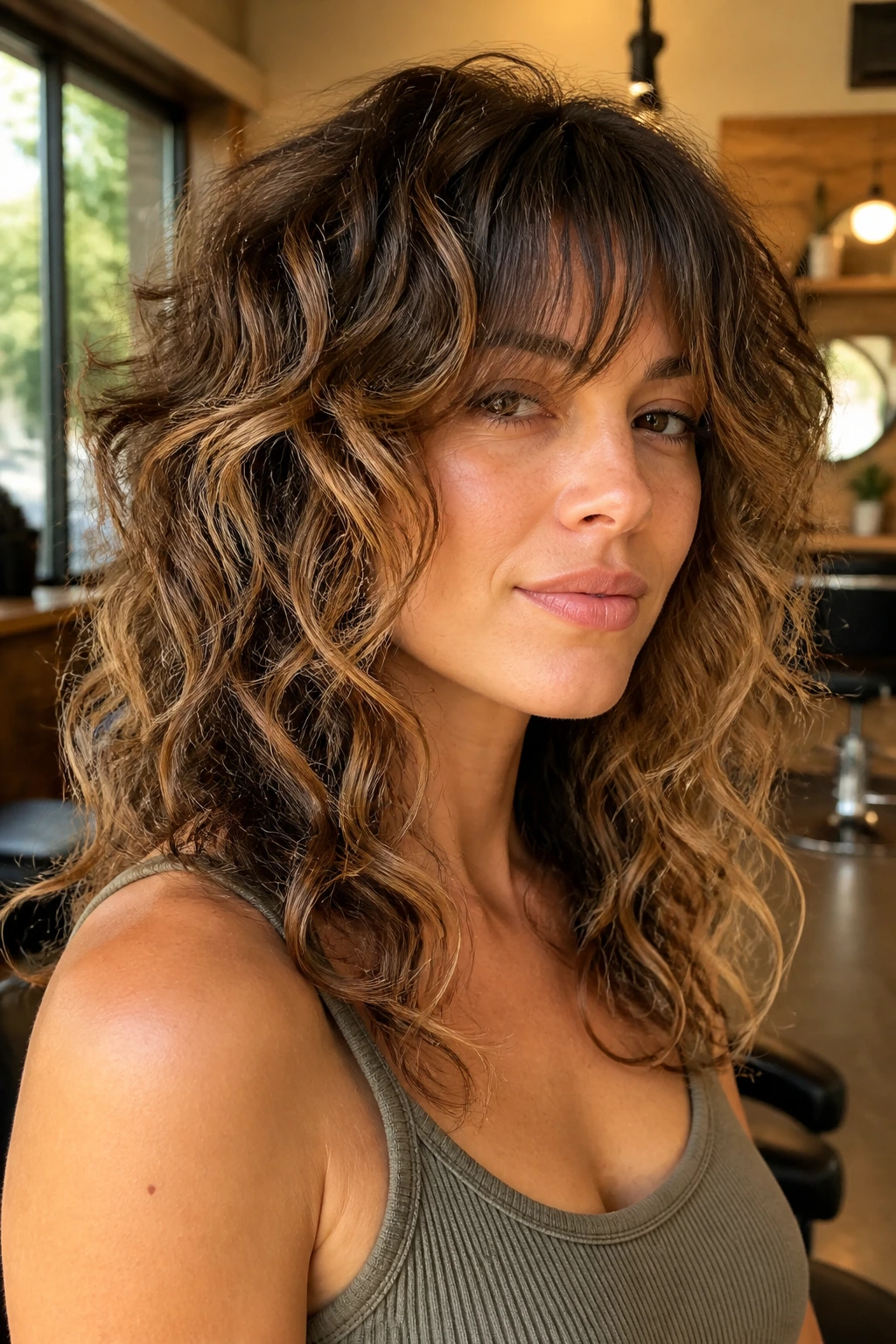
Balayage and shag layers are a good match because the highlights trace the movement of the cut. Caramel pieces catch the bends around the face, especially when the long bangs fall into a curtain or split softly down the middle. The whole haircut looks more dimensional without needing a complicated finish.
This is a strong choice if you want the bangs to read as part of the haircut rather than as a separate front piece. Ask for the highlight placement to start around the cheekbones so the fringe shows its pattern when it moves. On curly hair, too much lightening near the ends can dry out the silhouette, so keep the color concentrated where the layers frame the face.
37. Natural Gray Curly Shag with Silvery Fringe

Natural gray curls can be some of the most striking hair on the page, and a shag makes that brightness feel intentional rather than accidental. The silvery fringe brings light to the forehead and softens the overall outline, while the layers keep the curls from forming one heavy cap.
This cut loves a bit of moisture and a clean shape. Gray hair often feels coarser or wirier, which means the fringe can kick out if it’s cut too bluntly. Ask for softer ends and a long bang line that can live around the cheekbones. The style looks best when the front is brushed only with fingers or a wide-tooth comb. A stiff brush can turn the silvers frizzy fast.
38. Short Volume Shag with Eye-Skimming Bangs
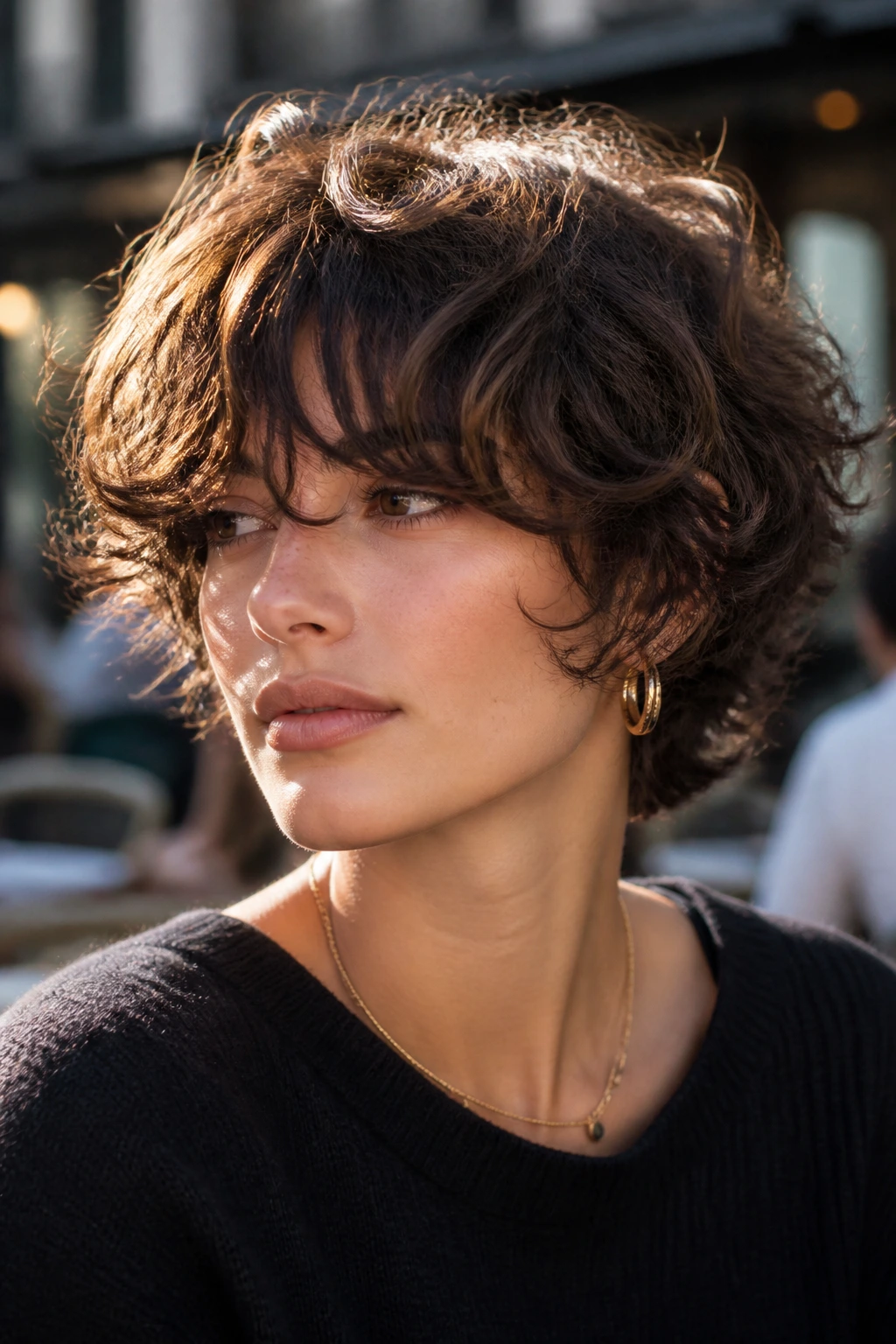
This is the bold ending note. The length stays short enough to feel fresh, but the crown has enough lift to keep the silhouette from flattening. Eye-skimming bangs are the star here. They sit low enough to feel dramatic, then spring just enough to keep the face open.
It’s a good option for dense curls that need somewhere to go. The shorter shape prevents the bulk from collecting at the shoulders, and the fringe keeps the front interesting. You do need to stay on top of trims, though. Once those eye-skimming pieces grow past the bridge of the nose, the haircut starts to lose its edge. Small trim, big difference.
How Curly Shags with Long Bangs Shape the Face Without Boxing It In
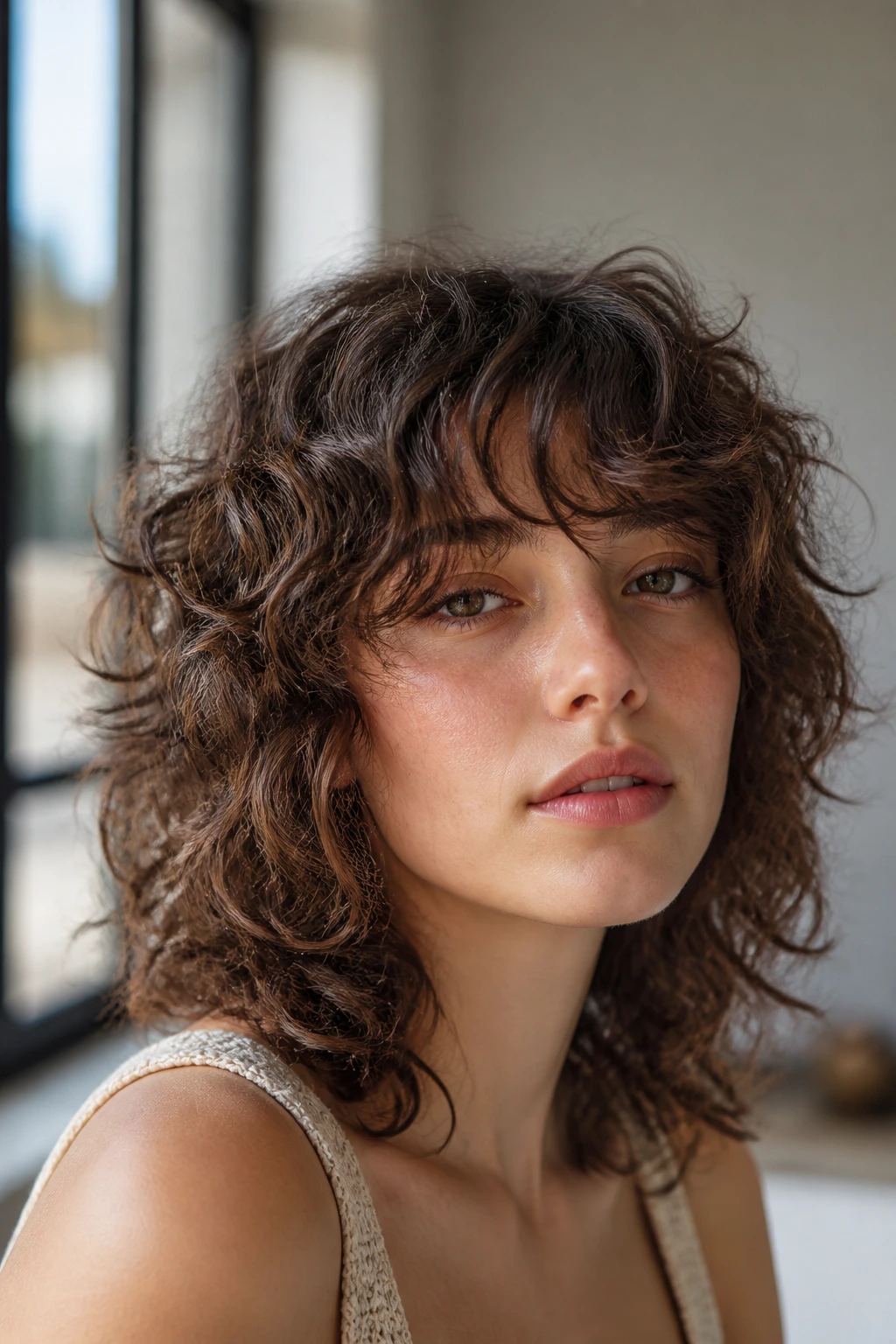
The best thing about a curly shag is that it doesn’t ask the face to do all the work. The layers create movement around the cheekbones, the jaw, and the crown, which means the silhouette can soften strong angles or lengthen a rounder shape without becoming stiff. Long bangs are the control panel. They decide whether the look feels open, moody, airy, or a little bit dangerous.
Shrinkage is the part that separates a good curly shag from a bad one. On a straight haircut, bangs are cut to where they will land. On curly hair, the stylist has to think in two positions at once: wet and dry. That’s why long fringe is so useful. It leaves space for the curl to spring, settle, and sometimes change its mind after the first wash. The front pieces can sit at nose length wet and drift up to the cheekbones dry, which is usually where the shape starts making sense.
There’s also the matter of balance. If the layers are too short everywhere, the cut can balloon. If they’re too long everywhere, the hair goes flat and the bang line disappears into the rest of the hair. The long fringe gives the face a clear edge, while the shag keeps that edge from feeling heavy. It’s one of those rare cuts that can look both casual and engineered, which is a better trick than it sounds.
The Tools and Products That Keep the Fringe from Frizzing Out
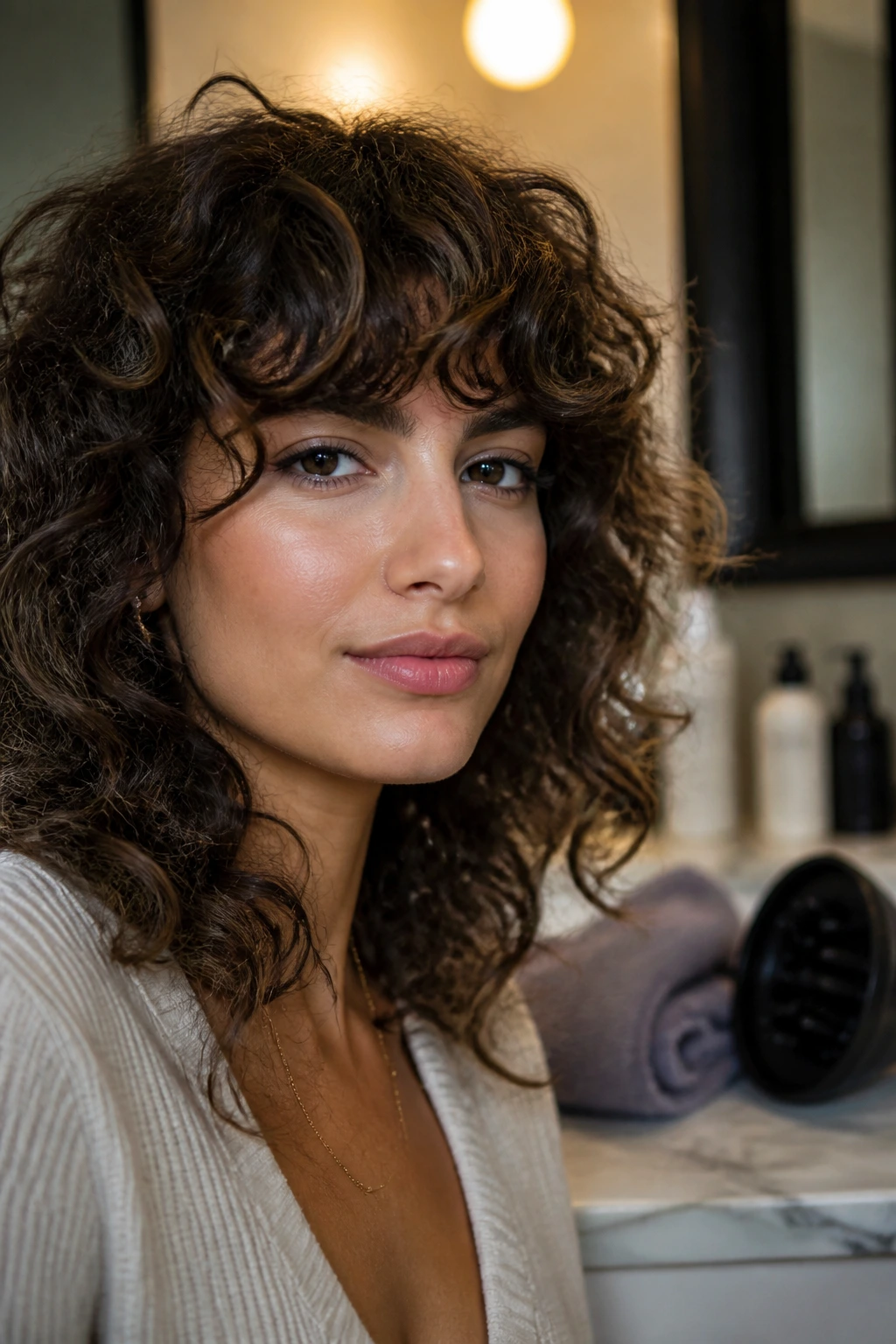
You do not need a drawer full of gadgets, but a few specific tools make curly shag hairstyles with long bangs much easier to live with. The bang area is small, which means tiny mistakes show fast. The right brush, the right diffuser, and the right amount of product matter more here than they do on longer, all-one-length hair.
- Microfiber towel or cotton T-shirt: Blotting instead of rubbing keeps the fringe from fuzzing up before you even style it.
- Curl cream: Use a small amount through the mid-lengths if your hair is coarse or dry; skip heavy layers near the roots.
- Mousse or foam: Helpful when you want lift at the crown and the bangs need shape without weight.
- Flexible-hold gel: Gives the fringe enough control to keep its part or sweep without turning crunchy.
- Diffuser attachment: A deep-bowl diffuser helps set the curl pattern around the bangs and crown without blasting them apart.
- Duckbill or root clips: Clip the roots while they dry if your shag tends to flatten at the top.
- Wide-tooth comb or fingers: Better than a brush for separating the front pieces after product goes on.
- Satin pillowcase or bonnet: Keeps the bang line from getting roughed up overnight.
- Small styling brush: Optional, but useful if you like to guide the fringe into a soft bend before diffusing.
How to Ask for Curly Shag Hairstyles with Long Bangs at the Salon
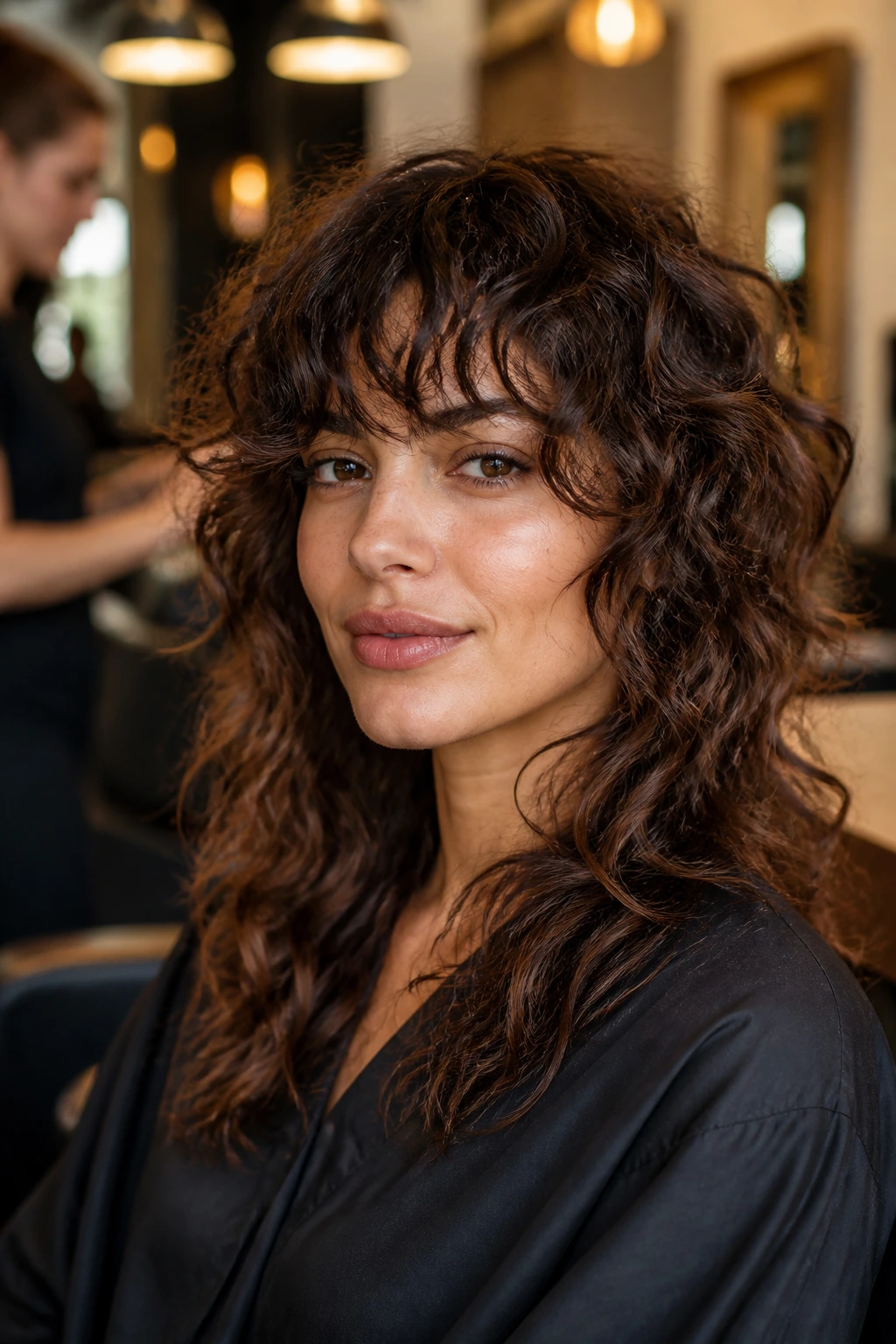
A good salon conversation saves weeks of regret. Bring photos, yes, but bring photos of hair that actually behaves like yours. A loose wave and a tight coil can wear the same fringe very differently, and no stylist can ignore physics forever. If you can, show at least one photo of the curl pattern, one photo of the length, and one photo of the bang shape you like.
Say where you want the fringe to land when the hair is dry. That part matters more than the exact wet length. For many curls, asking for the bangs to sit near the upper lip or nose when wet is safer than asking for eyebrow level. Also say whether you part your hair in the middle, on one side, or whatever the cowlick decides. A fringe cut against your natural part will fight you every morning.
Ask for curl-by-curl shaping if your hair is textured or unpredictable. That usually means the stylist looks at how each section springs before making the final cut. It’s slower, but the result is cleaner. If you want more fullness, ask for internal layers. If you want less volume, ask for a softer perimeter and fewer short layers near the crown. Those are small words. They make a big difference.
Styling Moves That Make the Layers Sit Right
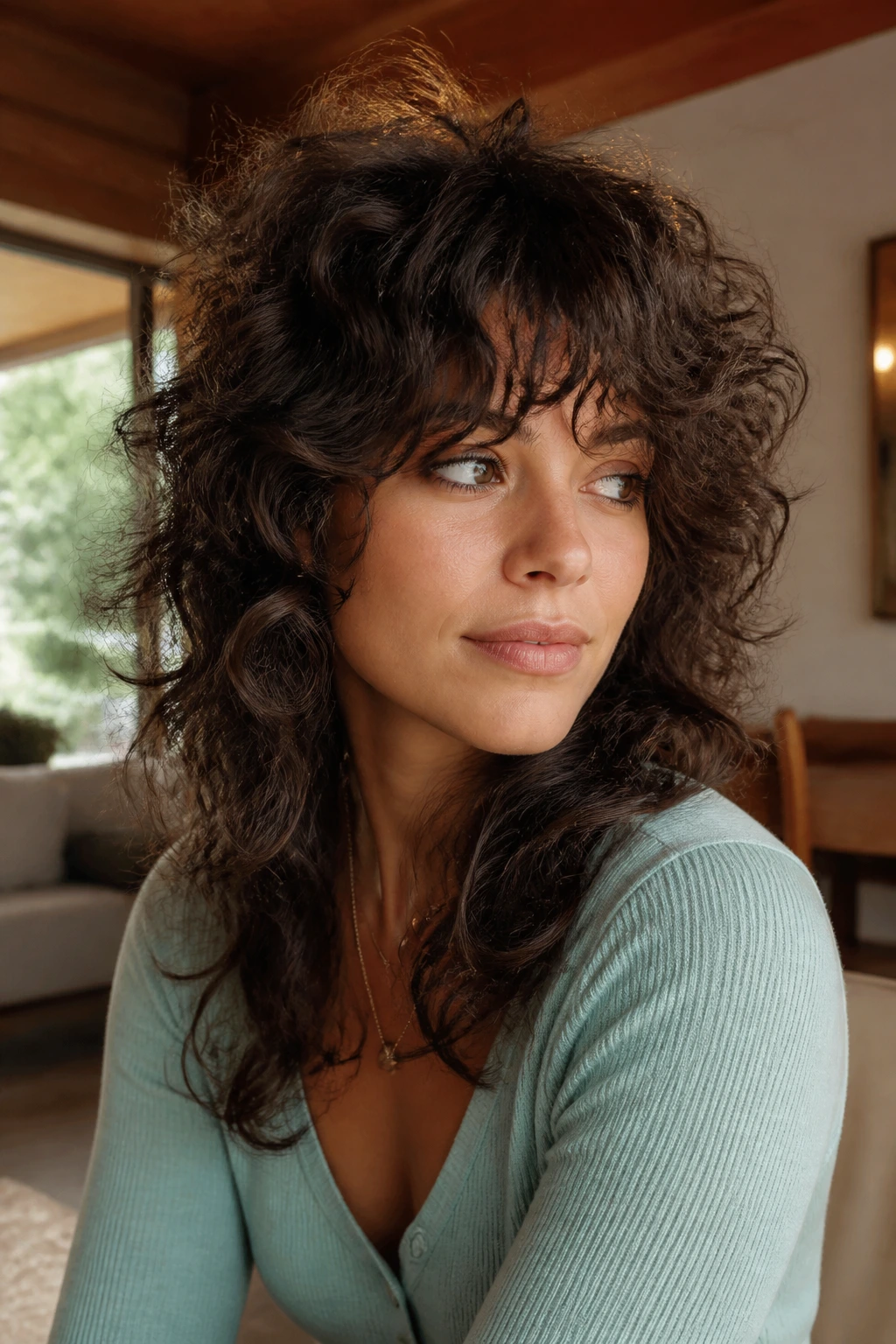
Start with the bangs
The front sets the whole mood. If the fringe dries weird, the haircut can look off even when the rest is fine. Work your leave-in or curl cream through the front first, then decide whether the bangs should part, sweep, or fall forward. Don’t treat them like the leftover section.
Build shape from the roots up
A shag lives or dies by its crown. If the roots flatten, the layers at the sides can make the haircut look wide and sleepy. Use a root clip at the top for 10 to 15 minutes while the hair dries, or flip the hair side to side as you diffuse on low heat. That tiny bit of lift changes the whole outline.
Stop touching it too early
Once the curl pattern starts to set, leave it alone. That’s especially true around the bangs, which turn fuzzy if you keep raking through them. Let the hair get about 80 percent dry before you break any cast with your hands. If you like a softer finish, use a drop of serum on the ends only, not through the front.
A curly shag does not want to be fussed over. It wants a clear shape and a little room to move. Give it that, and it tends to behave.
Common Mistakes That Flatten the Shape
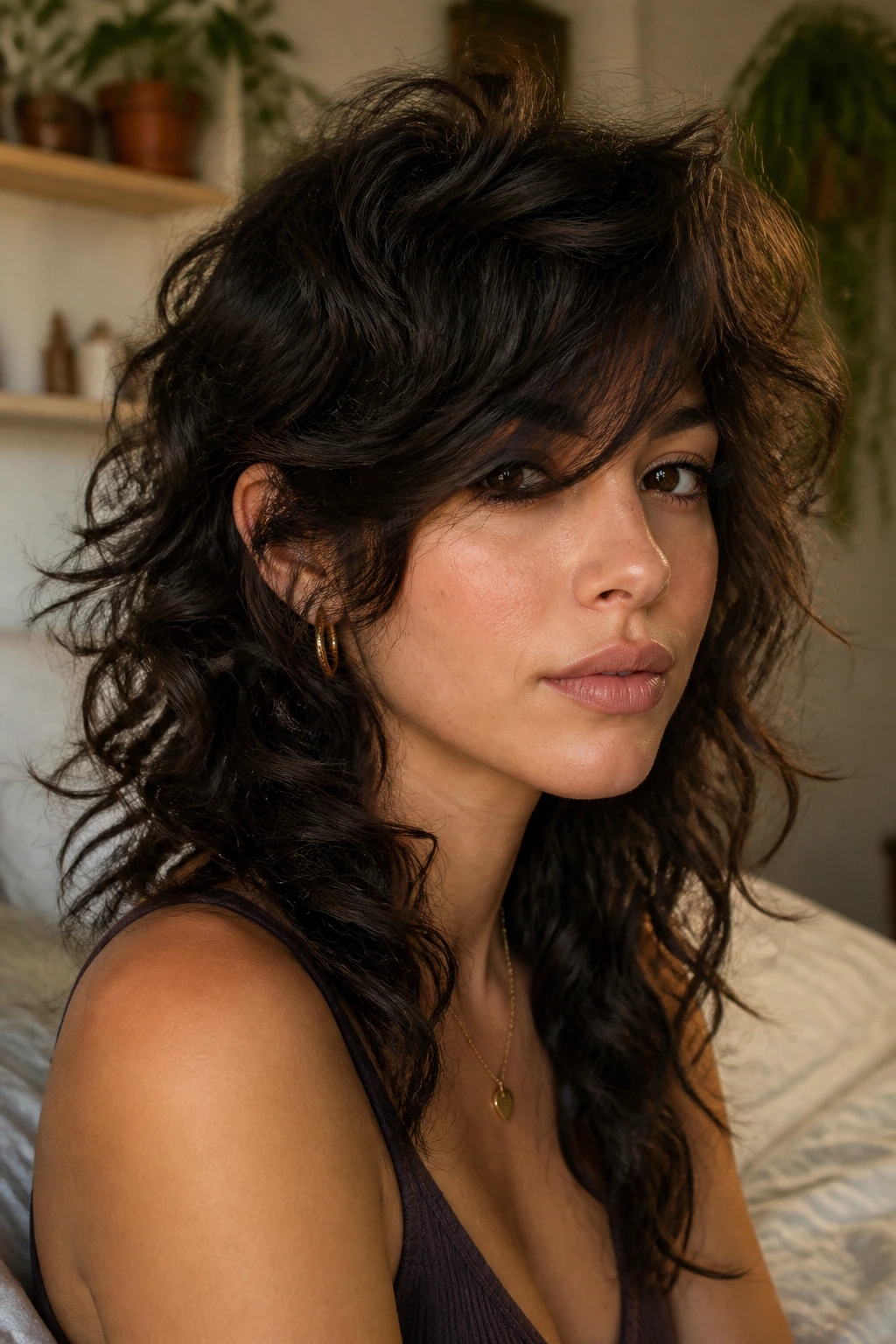
- Cutting the bangs to eyebrow length while wet: Curly fringe springs up. A lot. If the front is chopped too short, it can sit well above the face and never settle where you planned. The fix is to leave the bangs longer, especially on tighter curl patterns.
- Using too much cream near the roots: Heavy product at the top makes the crown collapse and the bangs droop. Keep richer products through the mid-lengths and ends, then use mousse or gel for lift and hold near the front.
- Over-thinning fine hair: Fine curls need movement, not holes. If the stylist removes too much weight, the ends get wispy and the shag loses its outline. Ask for internal layers, not aggressive thinning shears near the perimeter.
- Ignoring the part: A center part, side part, and off-center part all change how the fringe falls. If you wear one part every day, say so before the cut. Otherwise the bangs may look great in the chair and awkward at home.
- Waiting too long between trims: Long bangs hide growth better than blunt bangs, but they still need maintenance. Once the front starts landing in your eyes or folding into the cheek instead of framing it, the cut needs a clean-up.
Variations and Alternatives Worth Trying
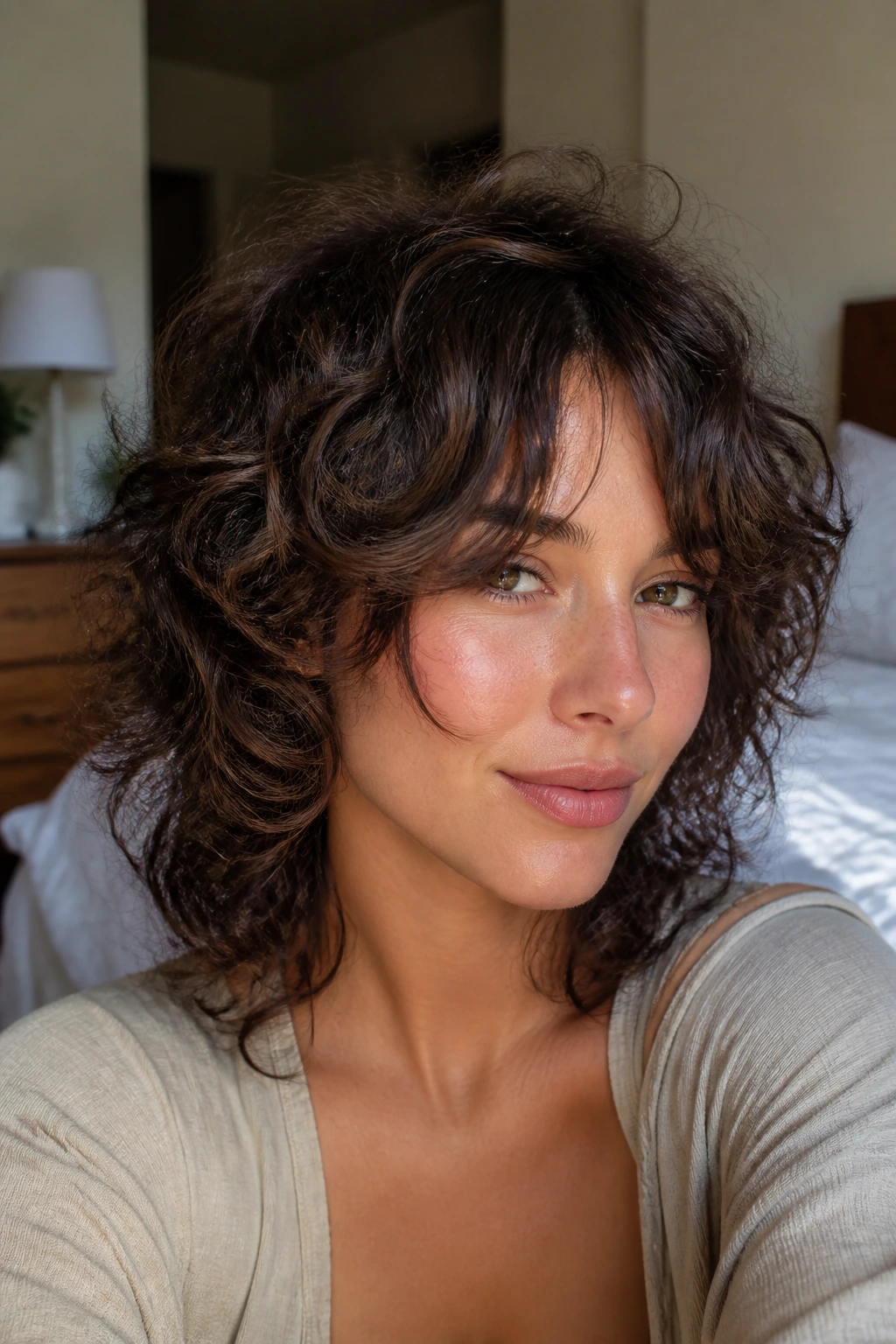
The Softer Curtain Version
Keep the fringe long and loose, with layers that barely graze the cheekbones. This is the least committed version of the shag-fringe combo, and it’s a smart choice if you want to test the shape without going all in.
The Wolfier Edge
Push the crown shorter, add more separation through the ends, and let the bangs sweep instead of curtain. This version has more bite and works best on thick curls that can hold a little disconnection without looking thin.
The Fine-Hair Friendly Version
Use fewer layers, keep the fringe lightweight, and preserve a fuller perimeter. The goal is lift, not fray. This version gives movement without eating up volume.
The Coily Halo Version
Let the bangs arc around the forehead instead of stopping straight across it. On tighter coils, this gives the shape room to shrink without turning the front into a helmet.
The Polished Curl Shag
Use a brush to guide the front into a soft bend before diffusing, then separate the curls with fingers once dry. It’s a cleaner finish for people who want texture but not a messy look.
Maintenance, Refreshing, and Trim Timing
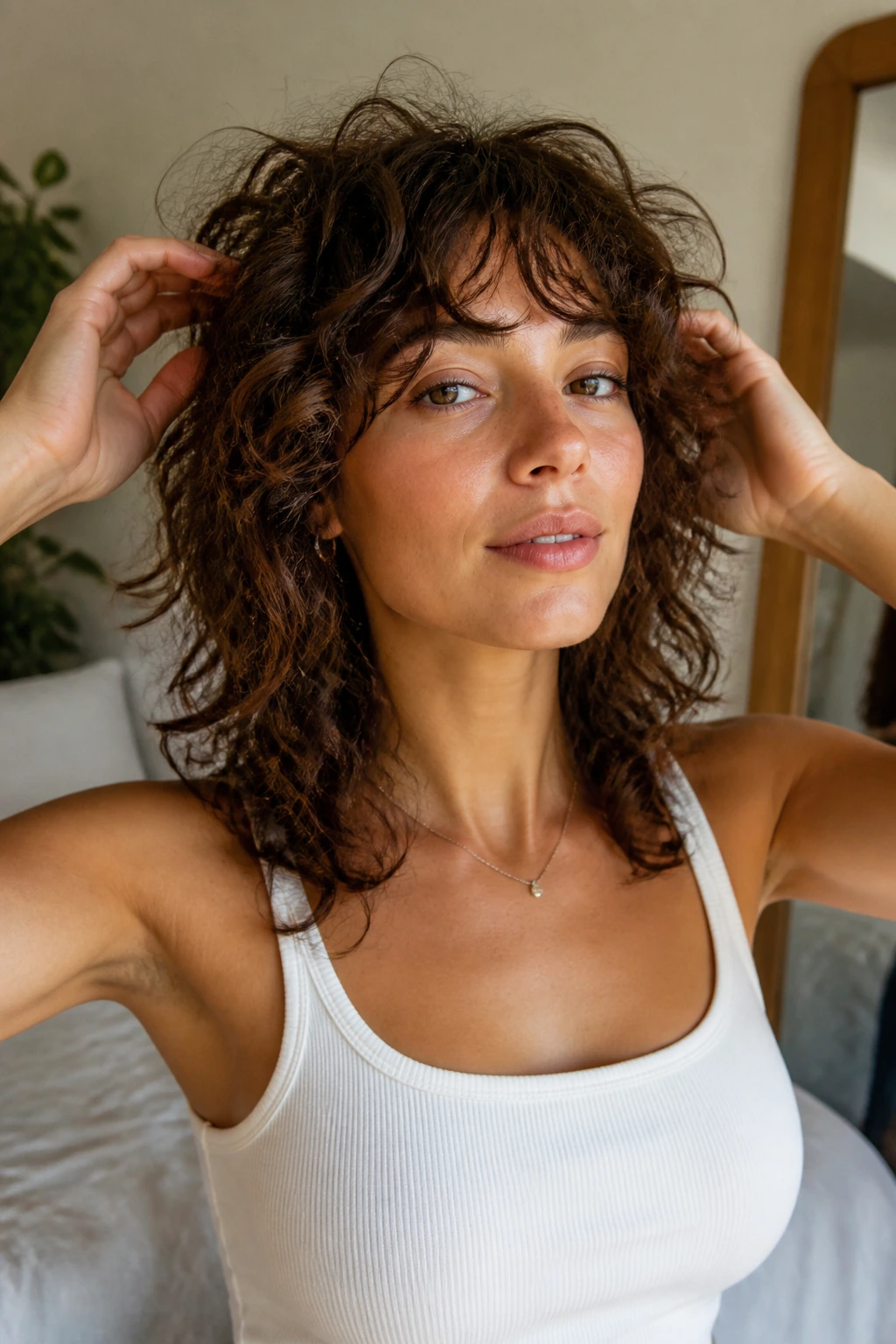
Night routine
Satin matters. So does not sleeping on a wet bang. If the fringe is still damp when you go to bed, it usually wakes up in the wrong shape. Either let it dry fully before sleep or clip the front up and out of the way so it doesn’t flatten into your forehead.
Morning refresh
A mist bottle with water and a tiny bit of leave-in is enough for most day-two bangs. Damp the front lightly, twist the pieces you want to re-form, and let them dry for a few minutes before touching them again. If the bangs separated too much overnight, a pea-size amount of gel smoothed over the ends can pull them back together without making them stiff.
Trim schedule
The fringe usually needs attention first. For many curly shags, a bang trim every 6 to 8 weeks keeps the front from sliding into your eyes. The full shape can go a bit longer, often 10 to 14 weeks, depending on how fast your curls grow and how much weight you like in the cut. Dense curls may need shape checks sooner, while looser waves can stretch the timing a little.
If the haircut starts feeling wide at the sides or heavy at the crown, do not wait for a dramatic bad-hair week. That’s the point where the shag stops looking layered and starts looking tired.
Frequently Asked Questions About Curly Shags with Long Bangs
Will curly shag hairstyles with long bangs work on every curl pattern?
Not every pattern will wear the same version of the cut, but the shape can be adapted for loose waves, springy ringlets, and tighter coils. The key is matching the layer placement and fringe length to how much the hair shrinks.
Should long curly bangs be cut wet or dry?
Dry or nearly dry cutting is safer for a lot of curly hair because you can see the real spring of each curl. Wet cutting can work, but only if the stylist understands how much the texture rebounds once it dries.
How long should the bangs be when I leave the salon?
Longer than your instinct says. For many curl types, asking for the fringe to sit around the nose, upper lip, or cheekbone when wet gives the hair enough length to land in the right place dry.
Can fine hair pull off a shag with long bangs?
Yes, if the cut is handled lightly. Fine curls usually need fewer layers, a fuller perimeter, and lighter styling products so the shape doesn’t thin out at the ends.
How do I keep the bangs from splitting in the middle?
Use a small amount of gel or mousse at the roots of the fringe, then clip the front in place while it dries. A center split often happens when the bangs dry in two different directions or get touched too soon.
What if my curls shrink more than expected?
That usually means the bangs were cut too short or the layers started too high. The fix is a longer fringe and a curl-by-curl approach next time, not more product. Product can shape the curl. It cannot change the curl pattern.
Do curly shags need a lot of styling every day?
Not if the cut is right. Many versions only need a mist, a little scrunch, and a quick refresh around the bangs. The more precisely the layers match your curl pattern, the less you’ll need to fight the shape.
A Cut That Keeps Its Shape
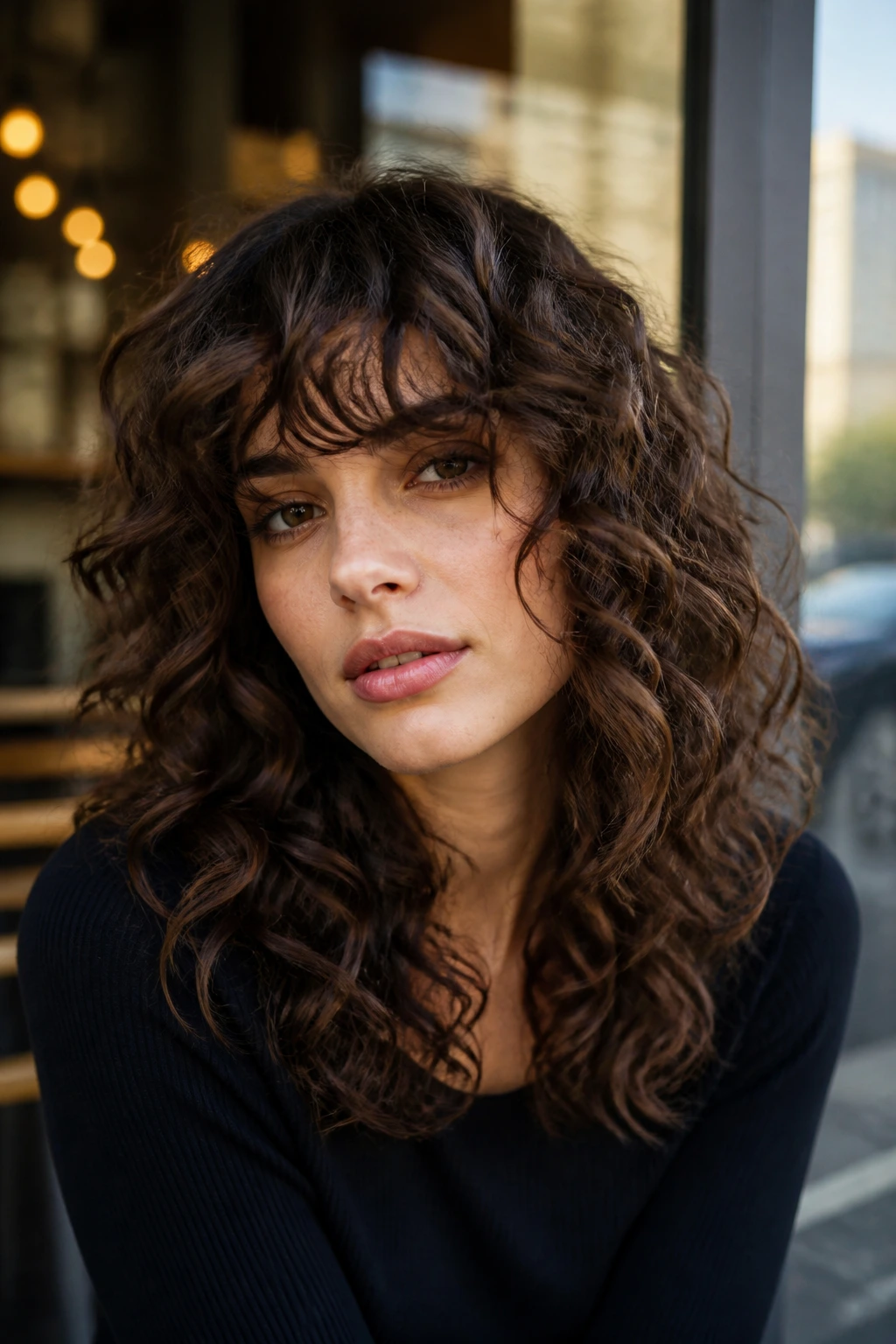
Curly shag hairstyles with long bangs work because they respect two things at once: the way curls move, and the way faces like to be framed. The long fringe keeps the haircut flexible. The shag layers keep it from turning bulky. Put those together, and you get a style that can feel soft, edgy, polished, or messy without needing a full reinvention every morning.
The best part is the grow-out. A good shag does not punish you for waiting a little too long between trims. It shifts, softens, and changes character instead of falling apart. If you want a haircut that gives you shape without trapping you in one look, this is one of the smartest places to start.
