



Short hair on little girls has a way of looking tidy even after a hard run across the playground—if the shape and the texture actually agree with each other. The phrase short hairstyles for little girls sounds simple until you’re standing over the sink with one cowlick at the crown, a part that won’t stay put, and a child who has already decided the brush is the enemy.
The good news is that short hair doesn’t have to mean the same plain bob on repeat. A clean little cut can look sweet, polished, sporty, or a bit dressy with almost no extra length at all. A chin-length shape can tuck behind the ear and stay put under a hood. A pixie can survive a nap and still look intentional. A curly crop can look shaped instead of frizzy, which is a much better deal than most people expect.
What makes short hair worth paying attention to is that it exposes the real structure of the hair. There’s nowhere to hide. That sounds unforgiving, but I actually like it. When the cut is right, the hair stops fighting the child’s face and starts working with it. The styles below are the ones that keep coming back because they behave in real life, not just in a salon chair.
Why This Collection Feels Practical Instead of Fussy
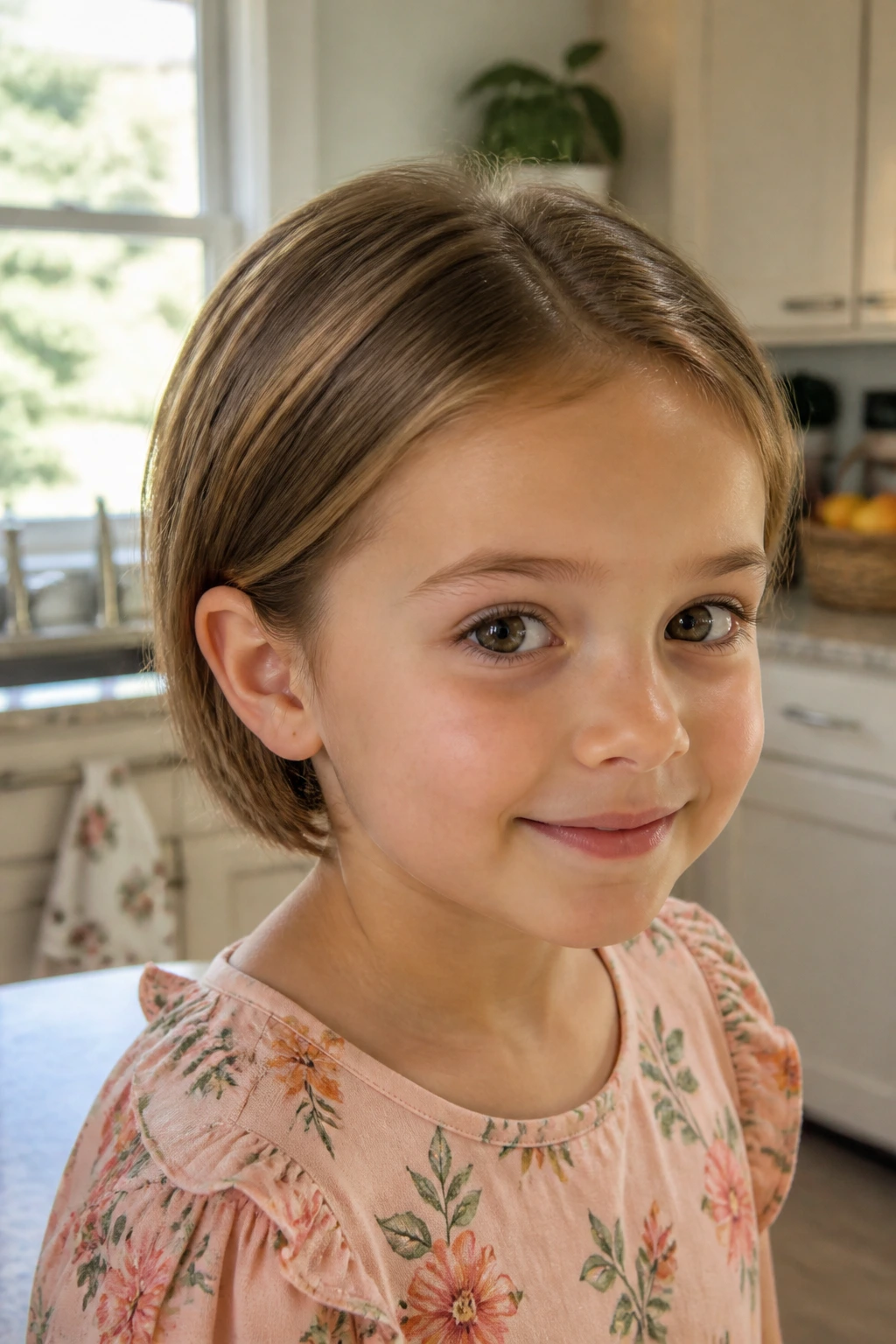
- Less tugging: Short hair usually needs fewer passes with the brush, which matters when a child flinches at every snag near the ears.
- Faster drying: A bob, crop, or pixie dries much faster than longer hair, especially around the nape and behind the ears.
- Accessory-friendly: A single clip, bow, or headband has more impact on short hair because it isn’t buried under layers.
- Better grow-out shape: The better short cuts still look intentional when they start growing, instead of turning into a strange in-between stage overnight.
- Texture works with you: Curls, waves, and cowlicks can be shaped instead of flattened, which makes mornings calmer.
- School-day proof: Short styles usually sit better under helmets, backpacks, and car seat straps than bulky updos do.
How to Choose the Right Short Style for Straight, Wavy, Curly, or Coily Hair
Short hair behaves very differently depending on texture, and that’s where people get tripped up. A blunt bob on fine straight hair can look crisp and neat. Put the same line on thick waves and it may puff at the sides unless the cut has a little internal shaping. The cut is not the whole story; the hair’s natural movement decides whether the style looks calm or chaotic.
Fine or Straight Hair
Fine hair tends to lose shape fast, so blunt edges, side parts, and light accessories usually work better than heavy layering. If the hair lies flat at the crown, a soft side part gives it a bit of lift without forcing a pouf that collapses by lunch. Matte clips grip better than slick plastic ones here.
Wavy Hair
Waves need room to bend. A shag, feathered crop, or asymmetric bob gives the hair places to move without turning into a triangle. If the ends flip outward in a way that feels accidental, a quick pass with a round brush or a damp finger-twist can settle them down.
Curly or Coily Hair
Curly hair looks best when the shape respects shrinkage. Rounded crops, tapered cuts, twist-outs, and side styles that do not require aggressive brushing are the safest bets. If a style depends on forcing the curls straight, it will fight back by lunchtime.
Cowlicks and Growth Patterns
A strong cowlick at the crown can be a gift if you work with it instead of against it. Side parts, messy fringes, and swept styles usually behave better than hard center parts. If the hair flips in one direction every single morning, that’s not a flaw. That’s the hair telling you where it wants to go.
1. Chin-Length Blunt Bob with a Side Part
A chin-length blunt bob is the kind of cut that looks tidy before you’ve even touched a clip. The blunt edge gives fine hair a solid line, and the side part softens the face so it doesn’t feel stiff or overly formal. On little girls, I like this shape because it sits neatly at the jaw and doesn’t bunch up at the collar.
Why it behaves so well
The straight edge makes the ends look fuller than they are. That matters for kids with fine or medium hair, because a wispy cut can look frayed in daylight. A side part also helps if there’s a cowlick near the front; it gives the hair a direction instead of starting a daily battle.
- Best for: straight or slightly wavy hair.
- Watch for: very thick hair that needs a little interior shaping.
- Quick finish: smooth with a damp brush and tuck one side behind the ear.
Tiny tip: if the ends flip out after a bath, wrap them around a round brush for 20 seconds with warm air, then let them cool before touching them.
2. Soft Pixie with Feathered Fringe
If a child hates hair in her eyes, a soft pixie solves that problem without making her look boxed in. The top stays a little longer, the sides are shorter, and the fringe skims the forehead instead of hanging in it. It’s neat, fast, and surprisingly sweet when the front is feathered instead of chopped blunt.
The part I like most is the freedom around the ears. No constant tucking. No dangling ends getting caught in a sweatshirt zipper. And because the fringe is light, it can be pushed to one side with a wet fingertip or left a little tousled on purpose.
This cut works especially well on kids who move nonstop. It also grows out better than people expect if the top is kept slightly longer than the sides.
3. Curly Rounded Crop
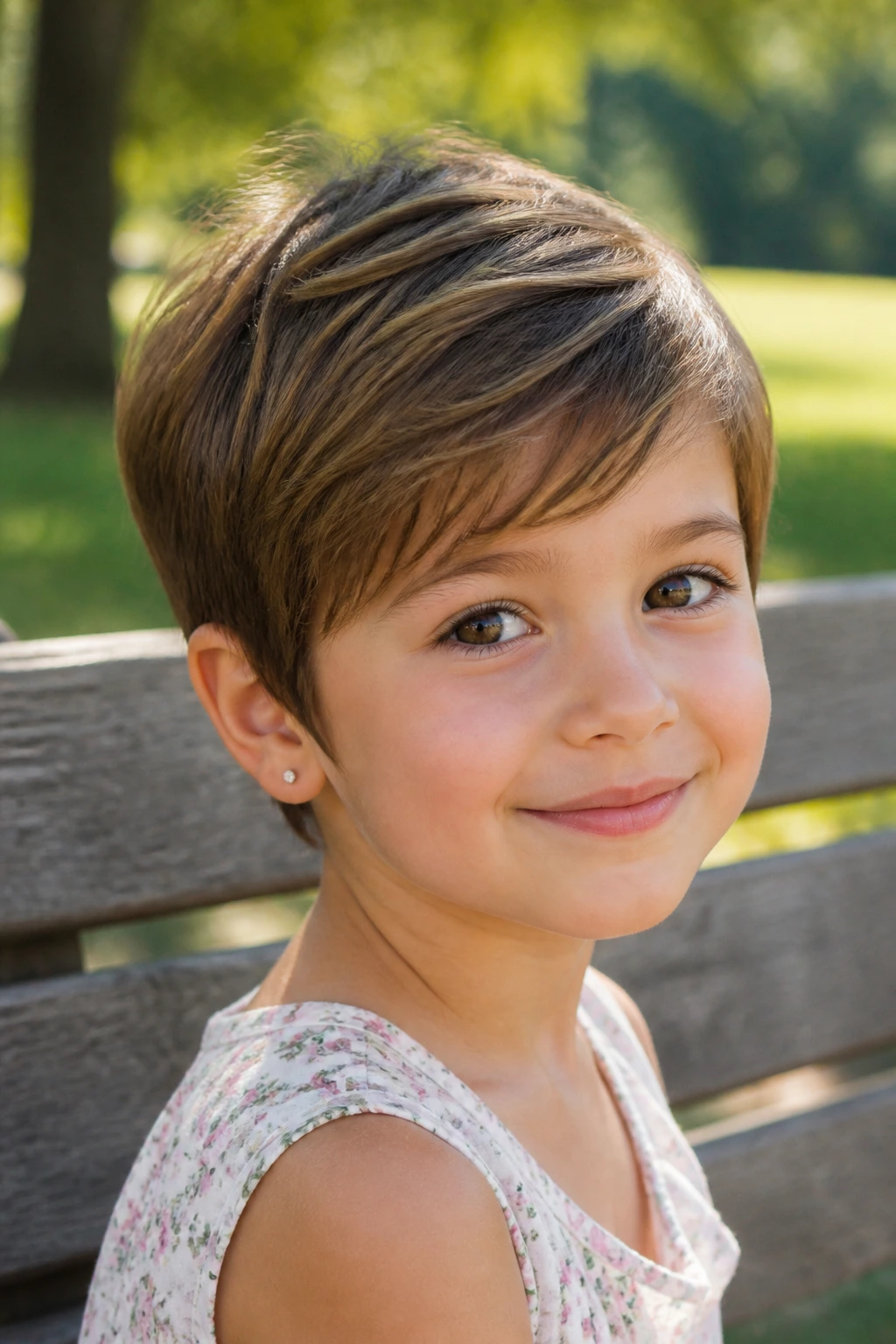
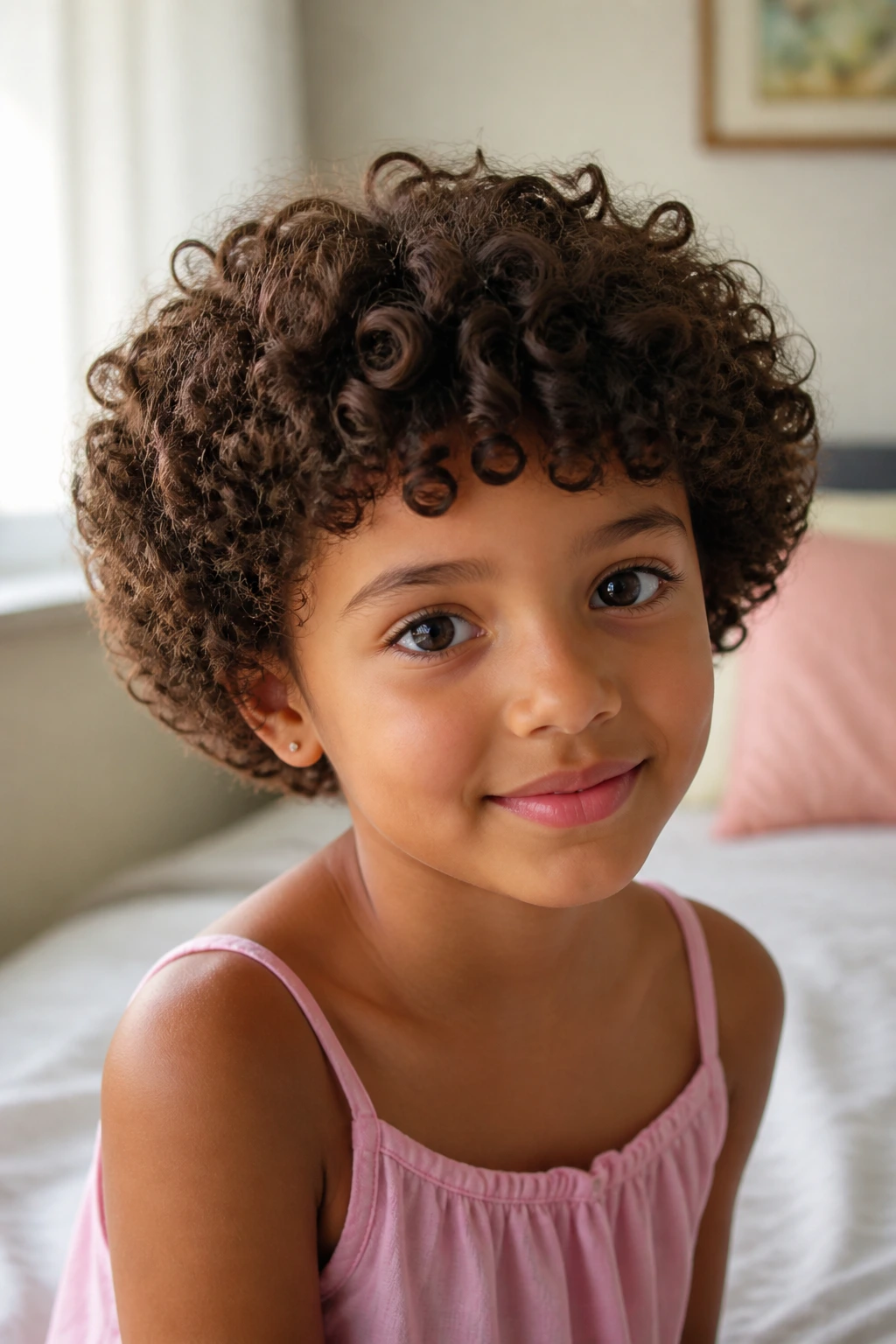
Why do some short curly cuts look springy and shaped while others balloon out sideways? Because the silhouette matters more than the length. A rounded crop follows the curve of the head, keeps the edges soft, and lets the curls sit on top of one another instead of spreading into a triangle.
I’d use this shape for kids with curls that want to lift at the root. The cut looks best when the curls are left in their natural pattern, not brushed apart. After washing, scrunch in a little leave-in conditioner, then leave the curls alone until they’re dry. Fiddling with them every ten minutes is the fastest route to frizz.
How to wear it
A rounded crop looks nicest when the curls are clumped and defined, not puffed out. A satin pillowcase at night helps the shape last, and a quick mist of water in the morning wakes the curls back up. If one side bends differently from the other, that’s normal. Curl patterns rarely match perfectly from temple to temple.
4. French Bob with Full Bangs
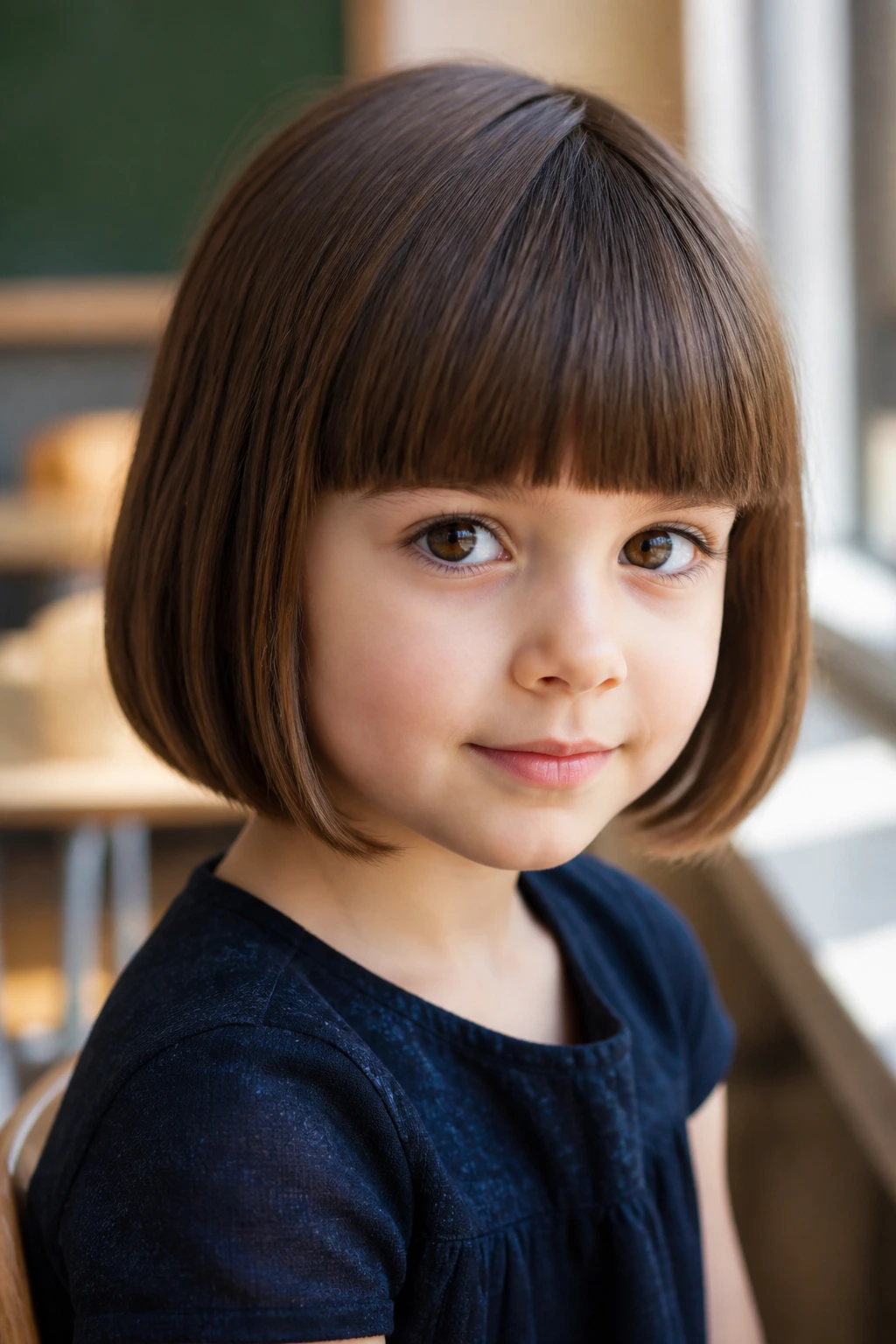
A French bob has a neat little confidence to it. The length sits around the cheek or jaw, and the bangs land straight across or just above the brows, which gives the cut a crisp shape without needing much styling. On a small head, it can look especially polished when the lines are clean and the fringe is trimmed often.
This is the cut I’d choose when the goal is structure. It does ask for regular bang trims, though, and I would not pretend otherwise. Bangs grow faster than people think, and once they’re in the eyes, the whole style starts to feel fussy. A tiny side clip can buy you time between trims, but only so much.
It suits straight to lightly wavy hair best. On very thick hair, the bangs may need a little thinning so they don’t sit like a shelf.
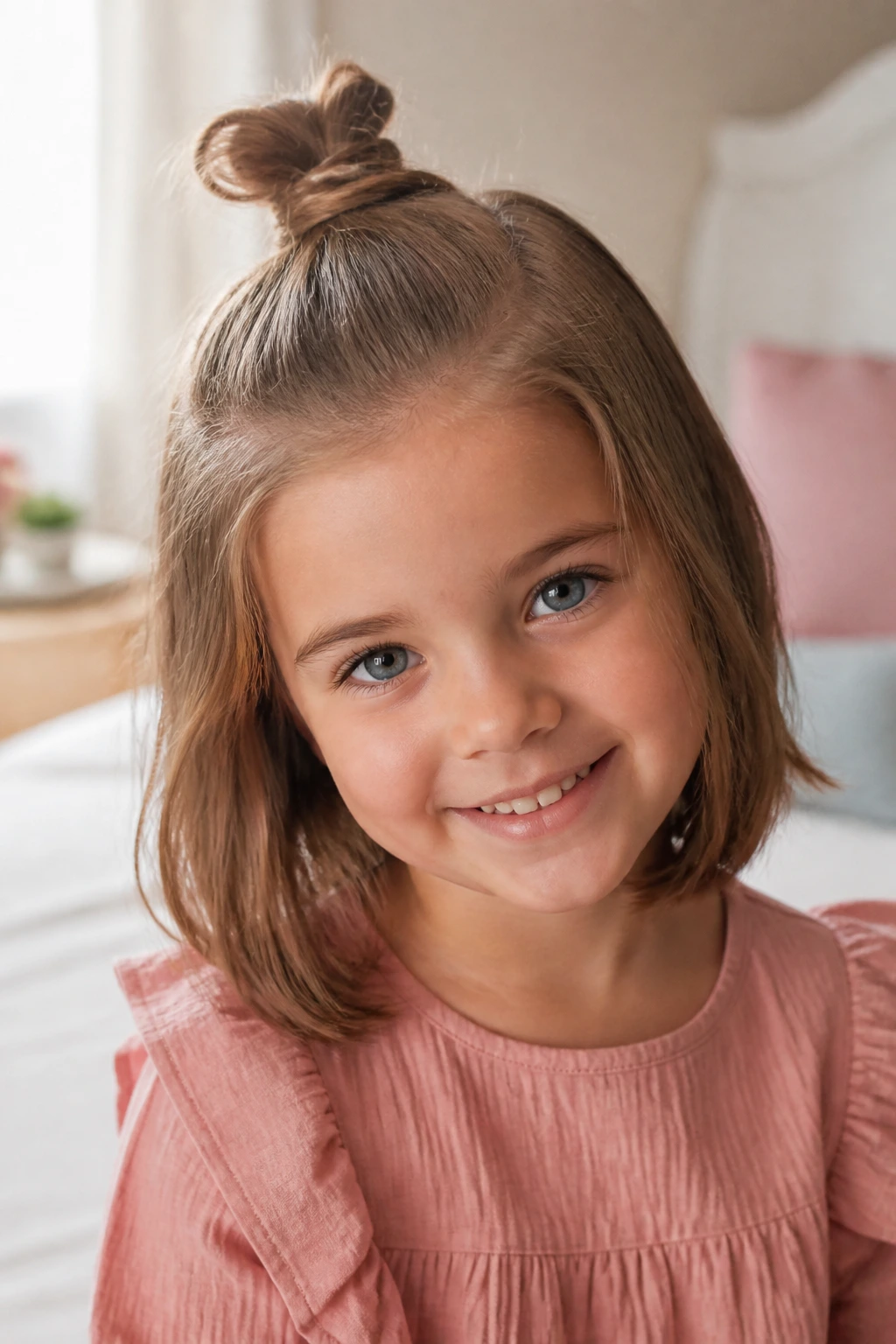
5. Mini Half-Up Top Knot
A mini top knot is one of those styles that looks more involved than it is. You gather just the crown section, twist it loosely, and secure it with a small elastic or soft tie while the lower layers stay down. On a short bob or lob, it keeps the front out of the face without asking for a full ponytail that the hair can’t quite manage.
I like this on second-day hair because the slight texture helps the knot stay put. Freshly washed hair can be too slippery. If that happens, add a tiny bit of mousse or a dusting of texturizing spray to the crown before gathering it.
The trick is to keep the knot small. If it starts looking like a lopsided mushroom, there’s too much hair in it. Pull less hair, not more.
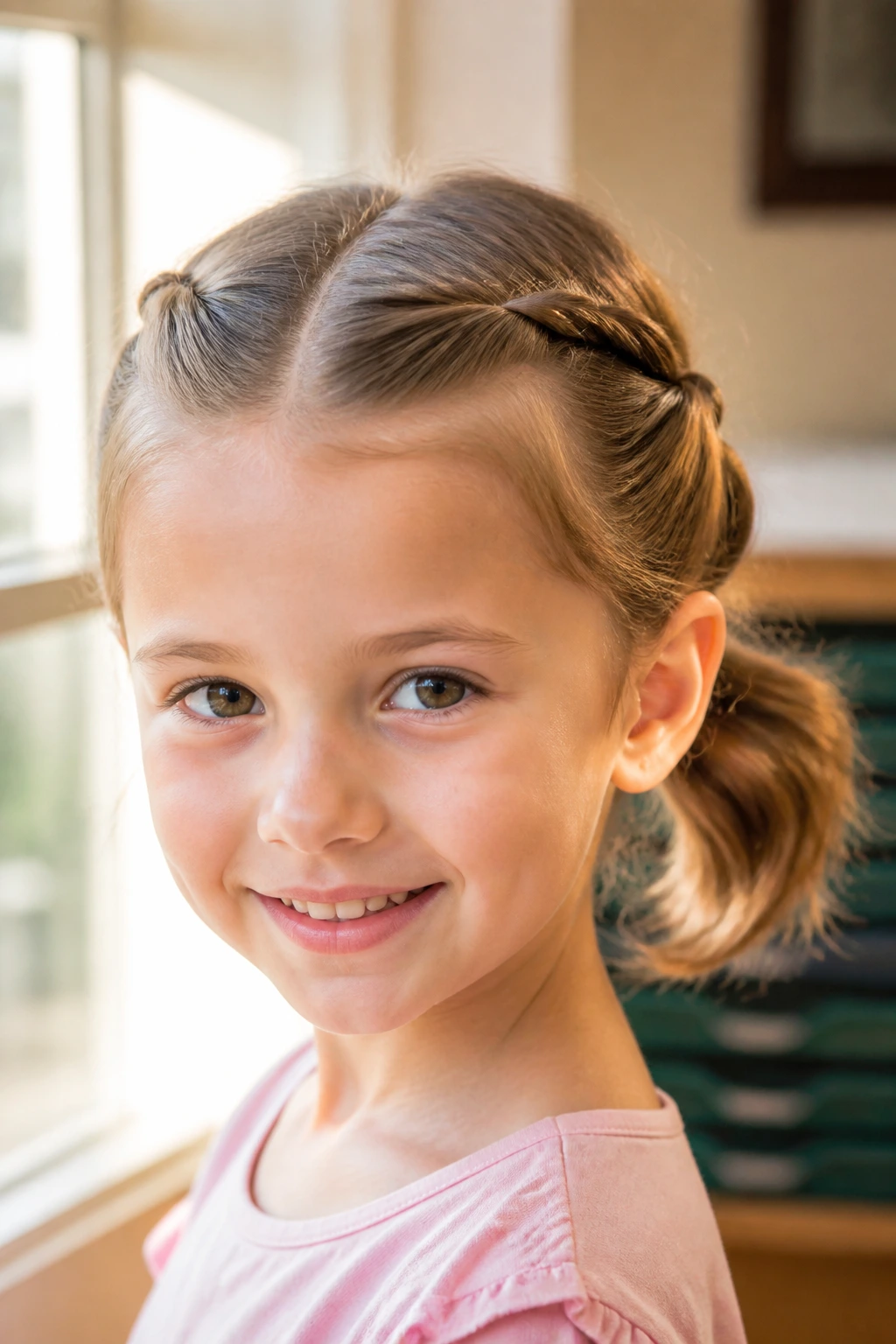
6. Two Front Twists with a Short Ponytail
Two front twists are one of the smartest ways to get hair off the face without pulling everything back tightly. You take a small section from each temple, twist it toward the back, and join or pin it near the nape. The rest can stay loose, go into a small ponytail, or sit under a clip.
Unlike a single tight pony, this keeps the front from slipping forward into the eyes. It also handles uneven bangs well. If one side grows faster than the other, nobody notices once the twists are pinned.
This style is a good middle ground for kids who want to keep some length visible but hate hair on the cheeks.
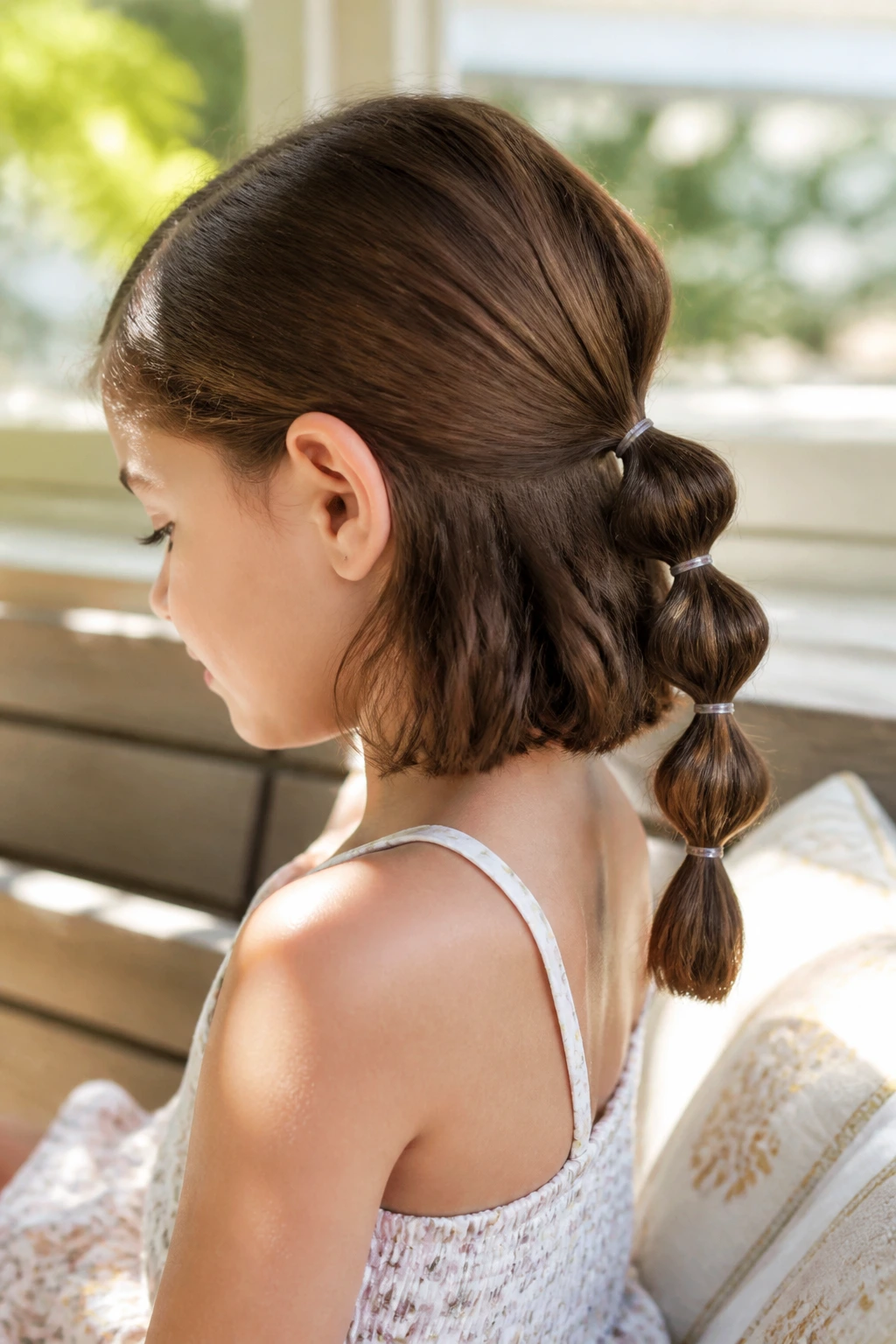
7. Bubble Ponytail on a Short Lob
A bubble ponytail needs a little more length than a true bob, which is why it shines on a short lob or shoulder-skimming cut. You secure the hair into a low or mid pony, add small elastics every few inches, then gently tug each section wider so it puffs into a bubble. It’s playful, but it still feels neat.
Fine hair benefits from tiny clear elastics because they vanish into the hair. Thick hair may need sturdier bands. The bubbles should feel soft, not carved into hard spheres; if they’re too tight, the style looks rigid and the child will probably start pulling at it by recess.
This is a good choice for days when a plain ponytail feels too plain and a braid would take more patience than anyone has.
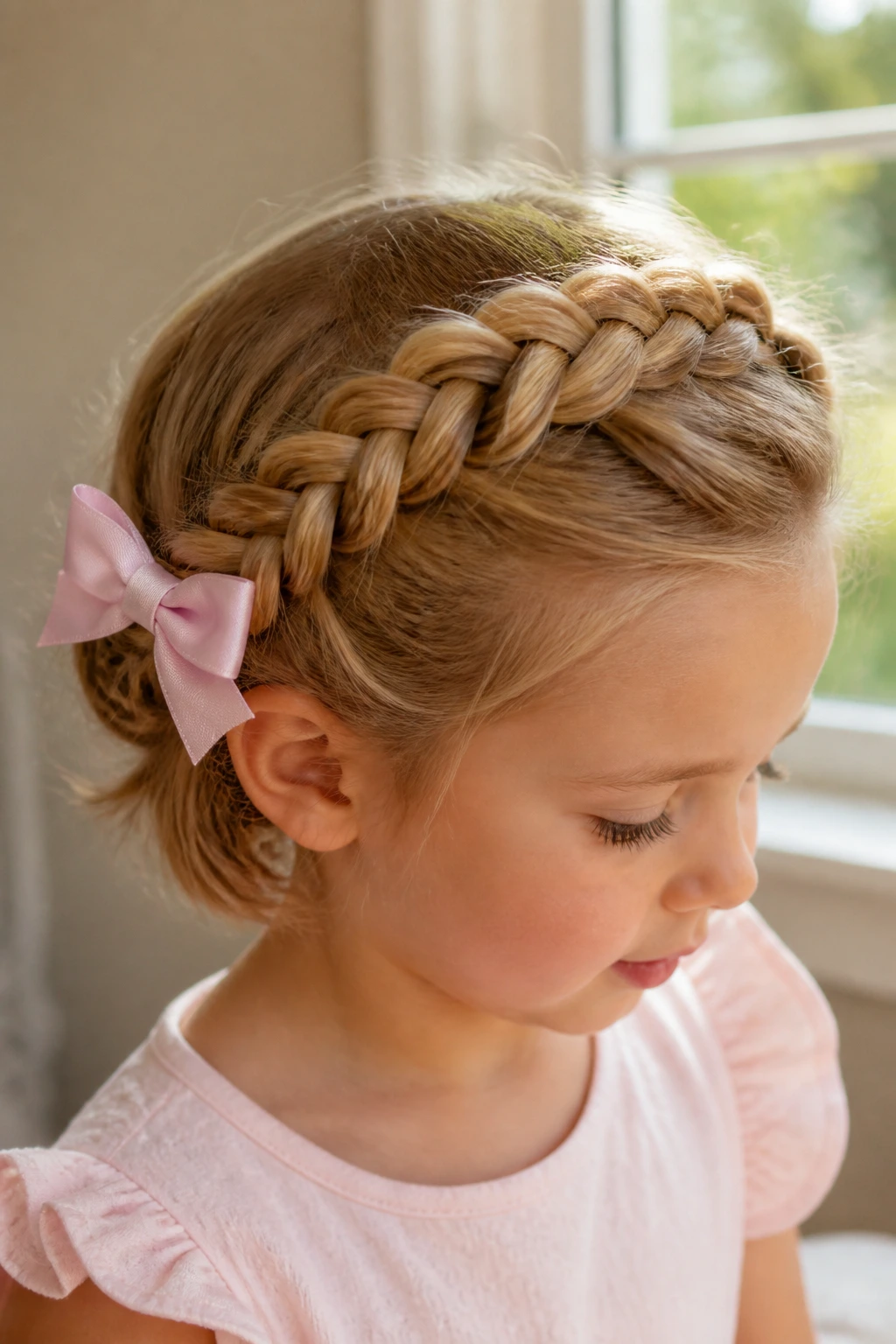
8. Braided Crown on a Bob
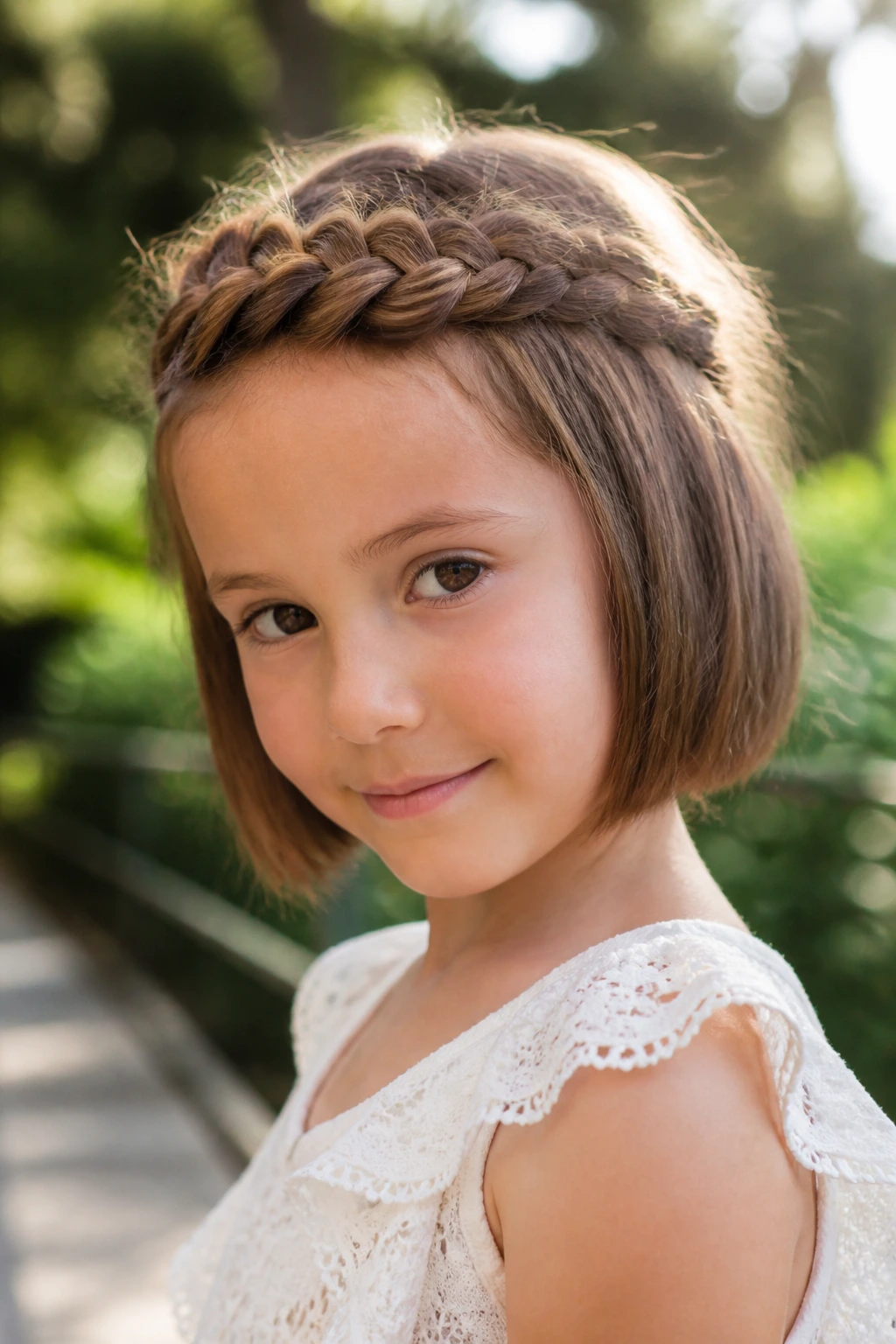
A braided crown gives short hair the look of a more elaborate style without needing a full head of length. You braid small sections from each side and pin them across the top or around the front hairline like a loose halo. On a bob, it can turn a basic haircut into something that feels special in about five minutes.
The best version of this stays soft. Tight braids can make a child’s scalp sore fast, and there’s no prize for pulling the hair flat against the head. Leave a little slack at the temples so the shape sits comfortably.
I especially like this for photo day, concerts, or any occasion where the child needs to look dressed up but still be able to move around without hair falling into her face.
9. Asymmetrical Bob with a Tucked Side
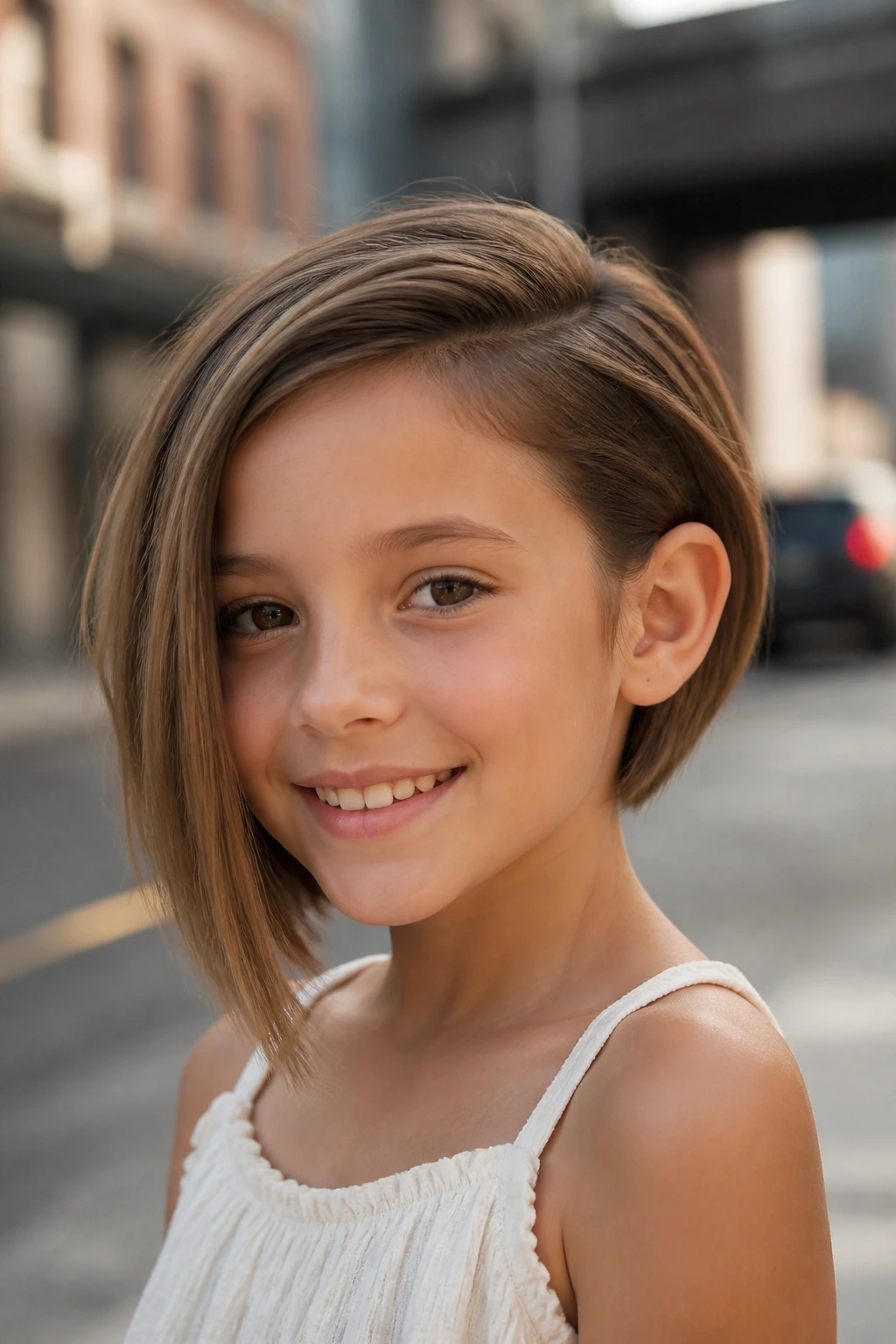
An asymmetrical bob is a little sharper than the classic version because one side is just slightly longer than the other. That tiny difference gives the haircut movement and makes the tuck-behind-the-ear trick look intentional instead of lazy. It’s a nice choice if the hair naturally falls to one side anyway.
This cut can be subtle or obvious. For little girls, I prefer subtle—maybe half an inch to an inch difference, not a dramatic slant. The longer side gives you something to tuck behind the ear or hold with a clip, while the shorter side keeps the line clean.
It works best on straight or softly wavy hair. If the ends start flipping around, a quick pass with a damp brush settles them back into place.
10. Layered Shag with Curtain Bangs
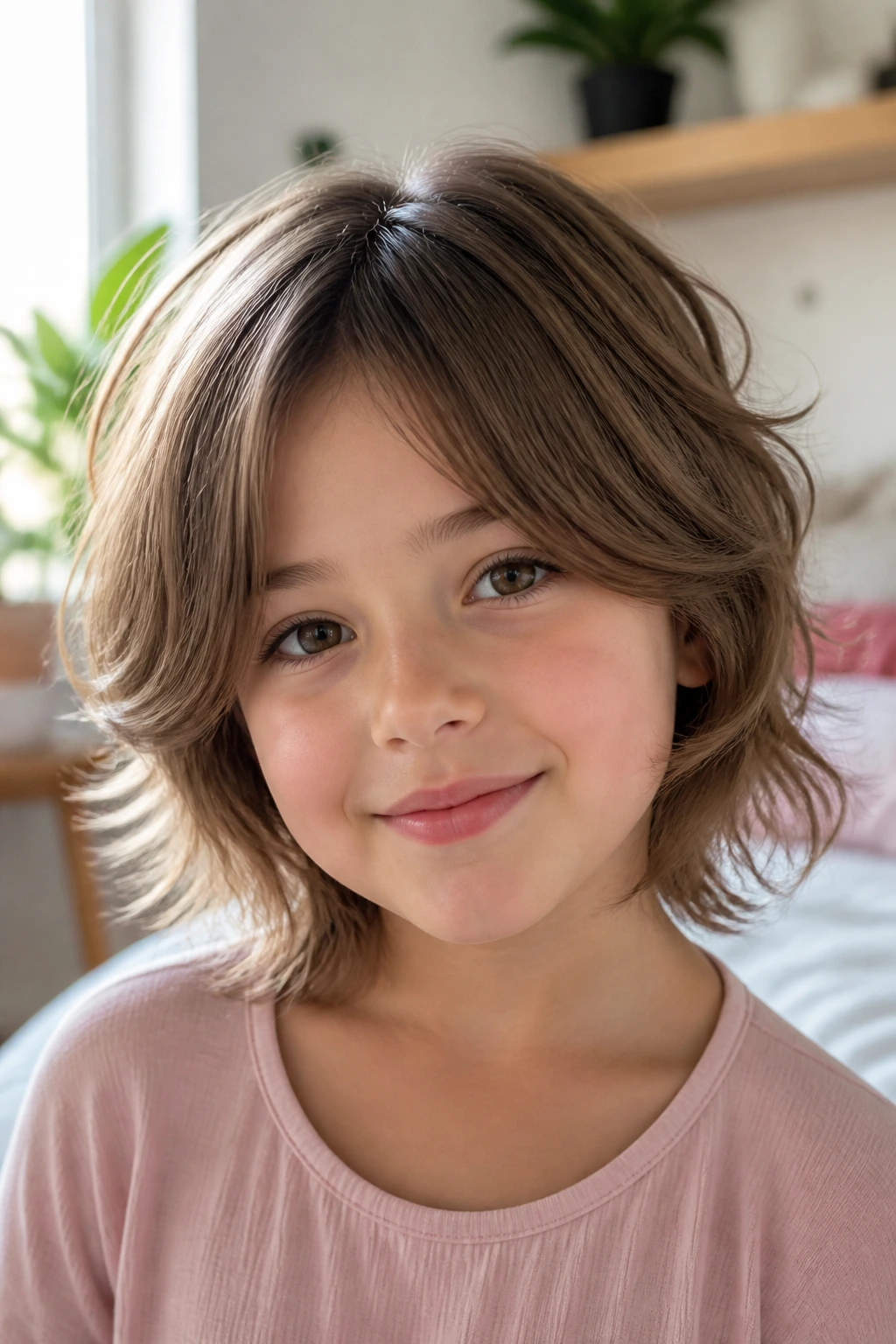
A layered shag gives short hair movement that feels loose instead of controlled. Curtain bangs split in the middle or just off-center, and the layers around the face break up the bluntness that can make short hair look heavy. On wavy hair, this cut is especially nice because the waves have space to move.
This one suits kids who don’t want their hair to feel “done” in a stiff way. The shag looks better with a little texture. A pea-size amount of curl cream or light mousse can keep the ends from frizzing without weighing everything down.
If the bangs get a little long, they can be swept to the side and clipped back. That makes the grow-out stage less annoying, which is half the battle.
11. Side-Swept Crop with a Clip Cluster
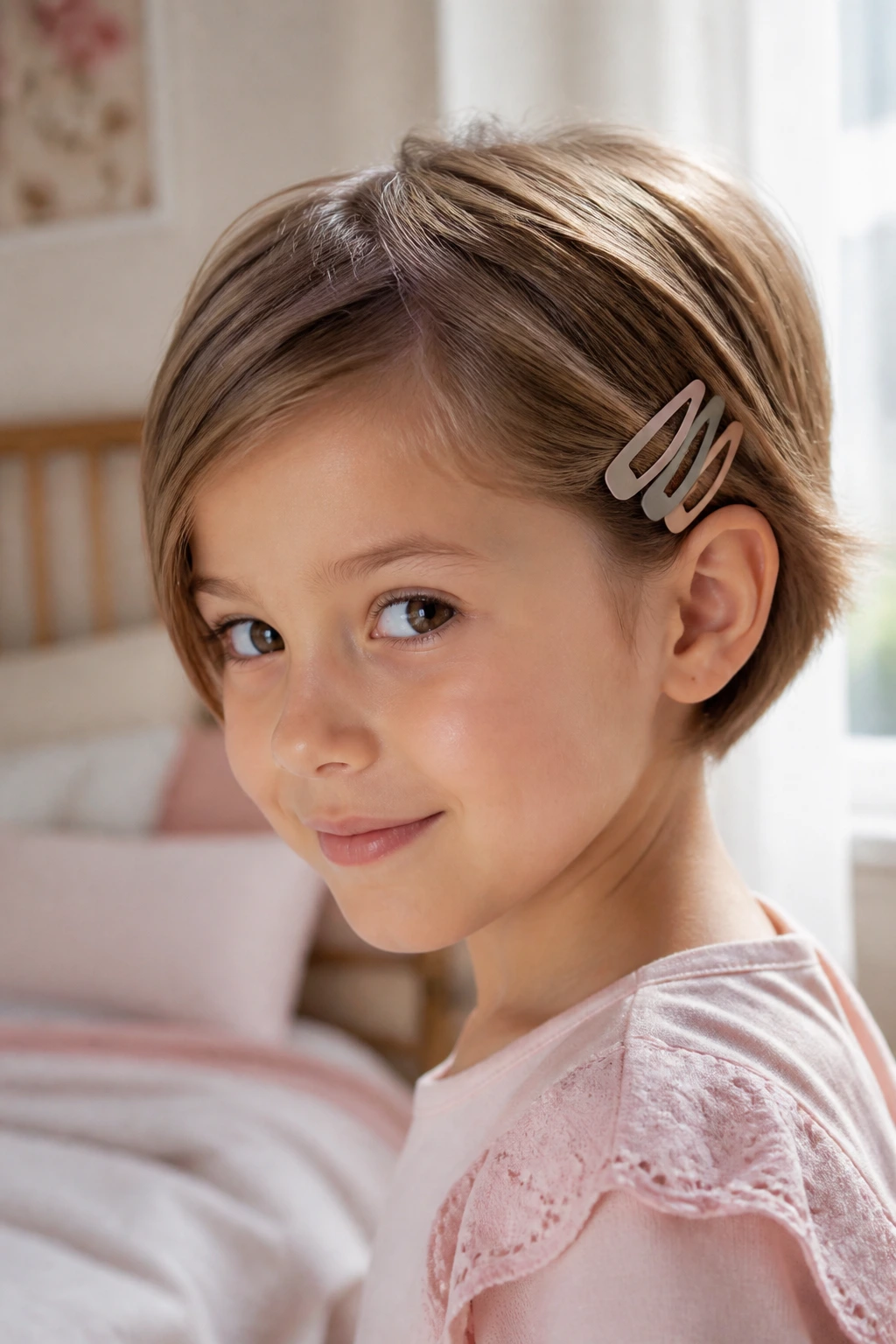
Sometimes one good styling trick is enough. A side-swept crop takes short hair and pushes it all to one side, then holds it with two or three small clips stacked near the temple. The result is simple, clean, and a bit playful without needing any extra length.
I reach for this when a haircut is in that awkward stage between a pixie and a bob. The clips give shape to the front, and the sweep keeps hair off the forehead. Matte clips grip better than shiny ones, especially on silky hair that likes to slide.
If you want the style to feel less plain, use clips in the same color family rather than a loud mix. It looks calmer, and the eye reads it as intentional instead of random.
12. Twist-Out Bob for Natural Hair
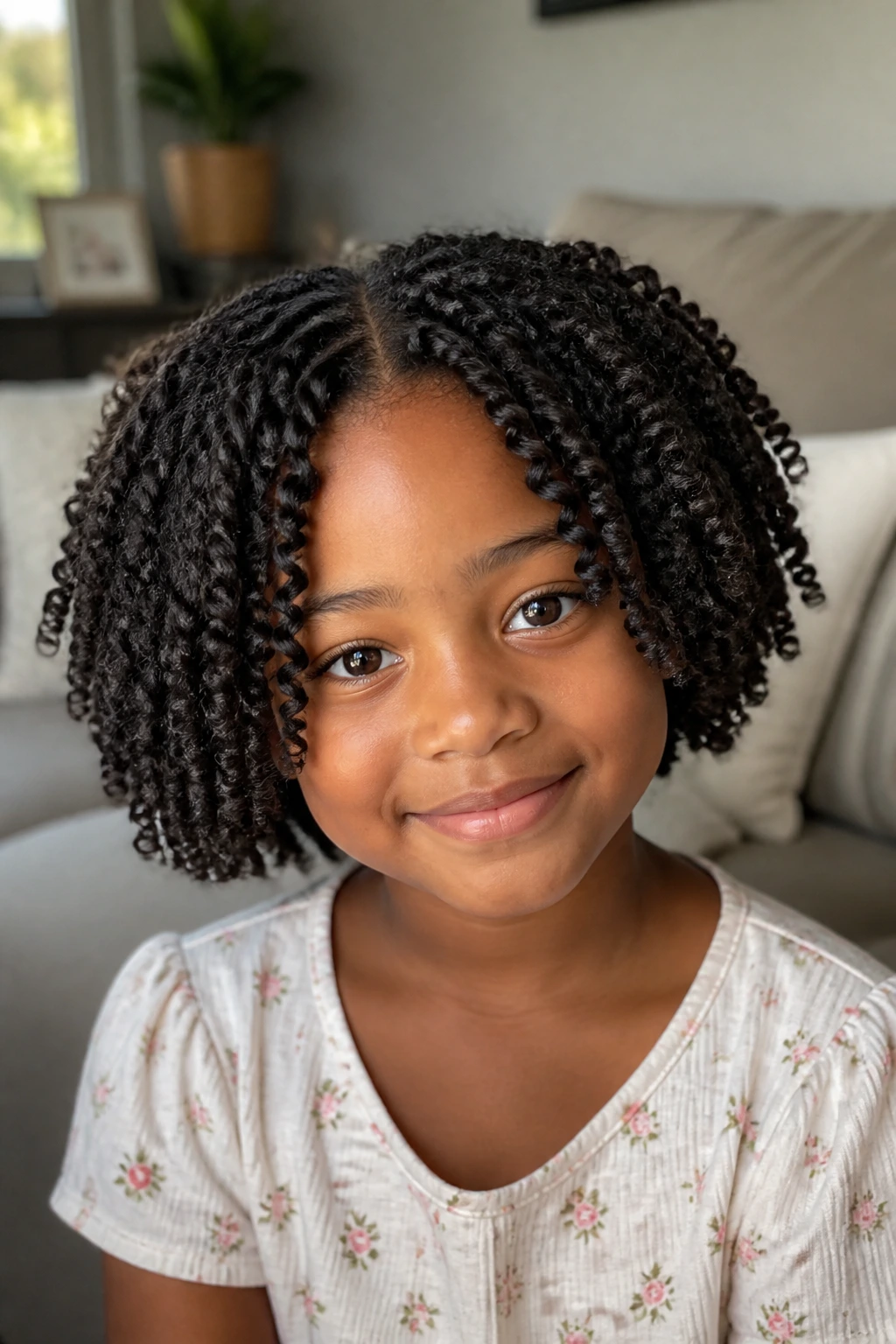
A twist-out bob gives natural hair a soft, rounded shape that can look fuller without being puffy. Small two-strand twists are set while the hair is damp, allowed to dry fully, then separated gently so the curls fall into a bob-like shape. It’s one of the better choices when you want definition and movement at the same time.
The biggest mistake is rushing the dry time. If the twists come apart while they’re still damp, the shape frizzes fast and loses the neat pattern you wanted. I’d let them dry overnight, or longer if the hair is dense.
Use leave-in conditioner and a little curl cream on the ends, because short natural hair can dry out at the tips. A satin bonnet at night keeps the twist-out from catching on the pillow.
13. Tiny Space Buns on Short Hair
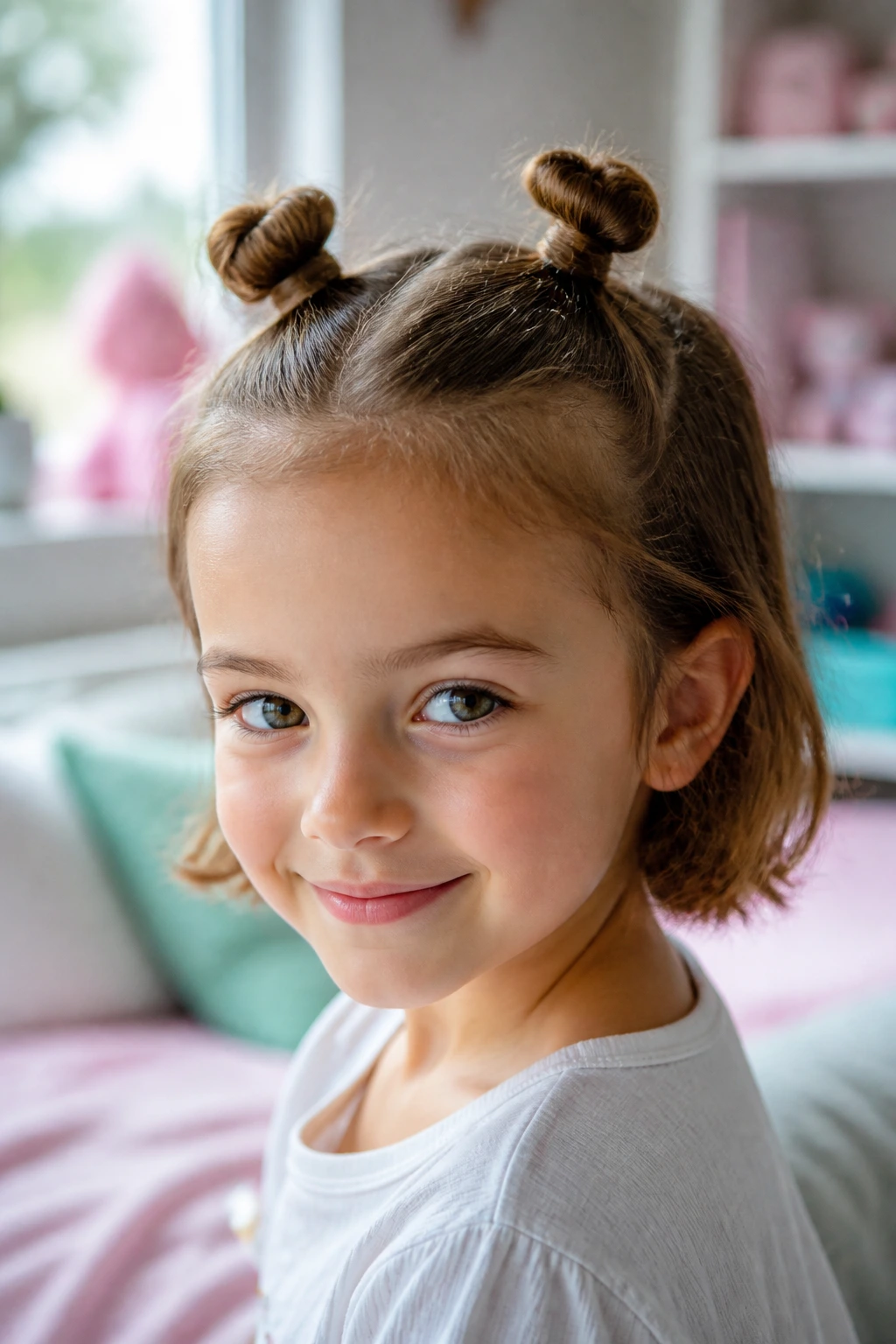
Can short hair do space buns? Yes, if there’s enough length to gather two small sections near the crown. The buns do not need to be huge. In fact, the smaller ones usually look better on little heads because they sit neatly and don’t tip sideways.
This style is a good fit for shoulder-length hair or a bob that’s just past the chin. Pull the buns a little higher than the ears so the face stays open. Leave the rest of the hair tucked in, loose, or clipped depending on how much length you have.
If the hair is very fine, tease the sections lightly before twisting them into buns. If it’s thick, keep the buns lower and softer so they don’t pull.
14. Tapered Cut with Defined Curls
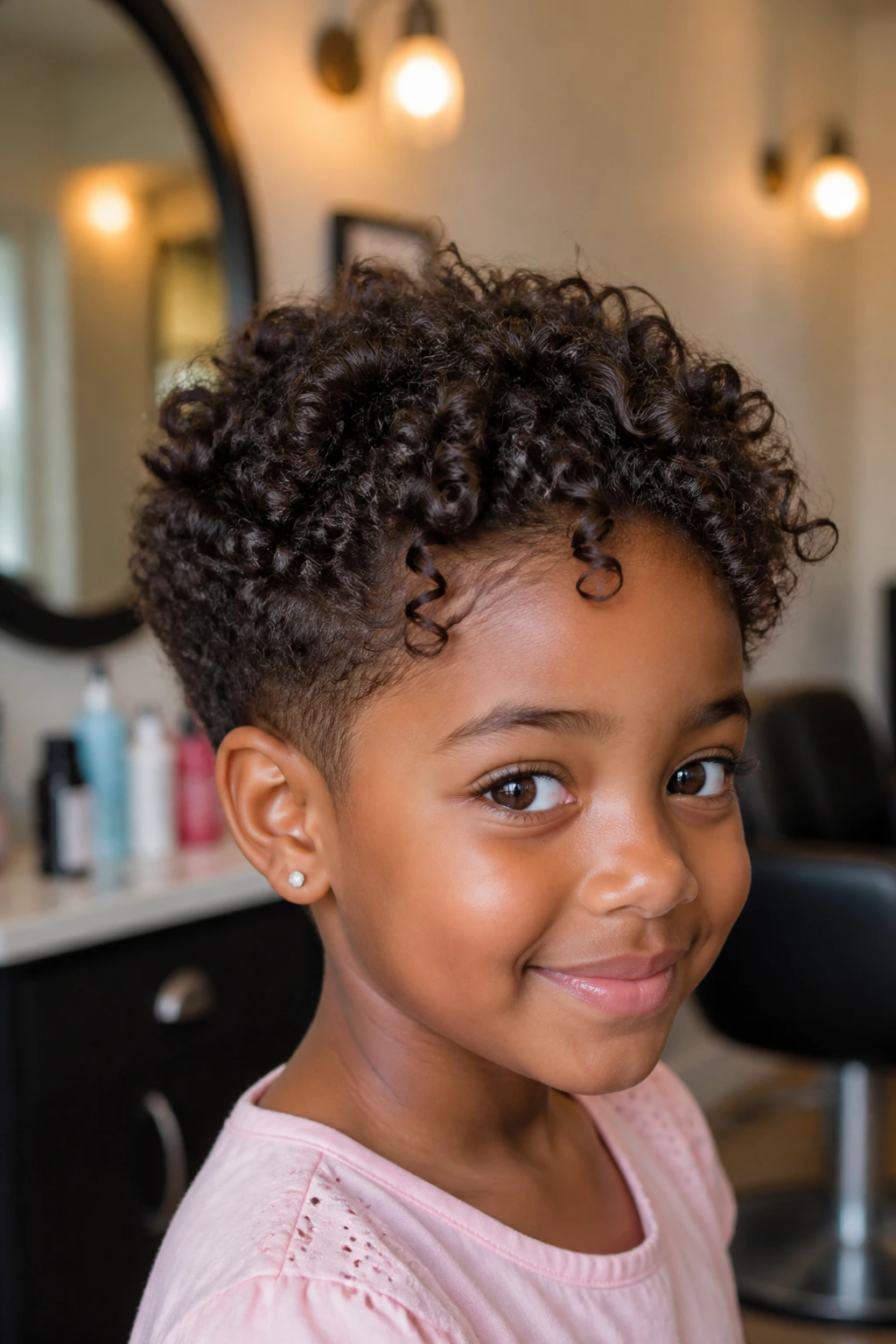
A tapered cut is one of the strongest options for coily hair because it builds shape right where the curls naturally want to sit. The sides and nape are kept shorter, while the top stays fuller and rounded. The result is neat around the ears and back of the neck, with enough height on top to show off the curl pattern.
I like this cut because it stops the back from getting bulky. It also means less tangling at the nape, which is where little kids often get fussy during detangling. A curl cream and a light oil on the ends are enough for most days.
The key is not to over-brush the shape out. Use fingers or a wide-tooth comb, and keep the curl definition where the cut already wants to be.
15. Blunt Bob with a Headband

A blunt bob with a headband is the style I’d call plain in the best possible way. The haircut gives the hair a clean edge, and the headband does the work of moving it off the face. That combination is hard to beat for school mornings, especially when bangs are growing out or the front is always falling forward.
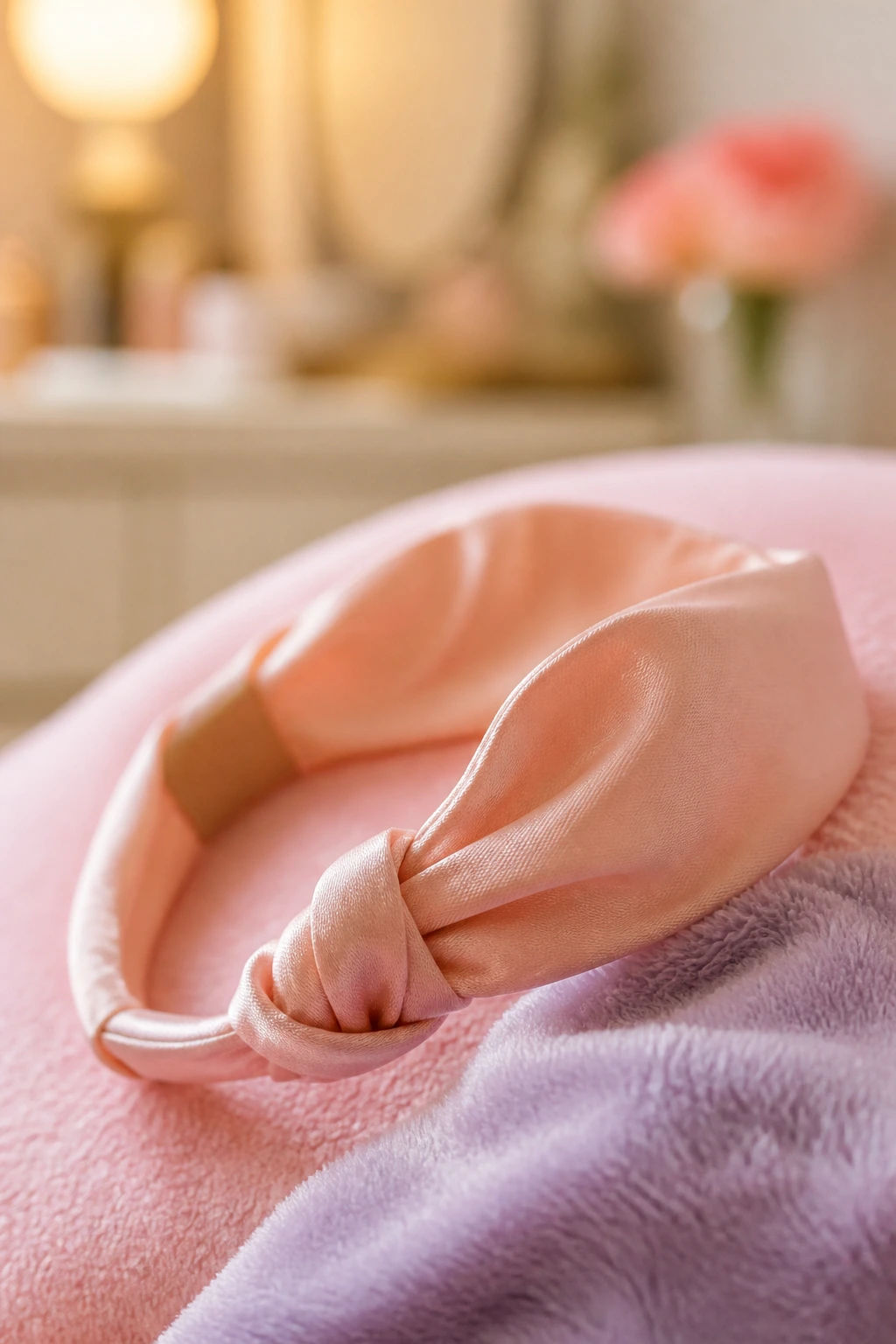
Soft, stretchy headbands work better than stiff ones on kids because they don’t create pressure behind the ears. If the band slides, tuck two tiny clips behind the ears before putting it on. It makes a boring-looking detail behave like a small miracle.
The whole style feels orderly without being fussy. That’s a nice place to land.
16. Waterfall Braid on Shoulder-Length Hair
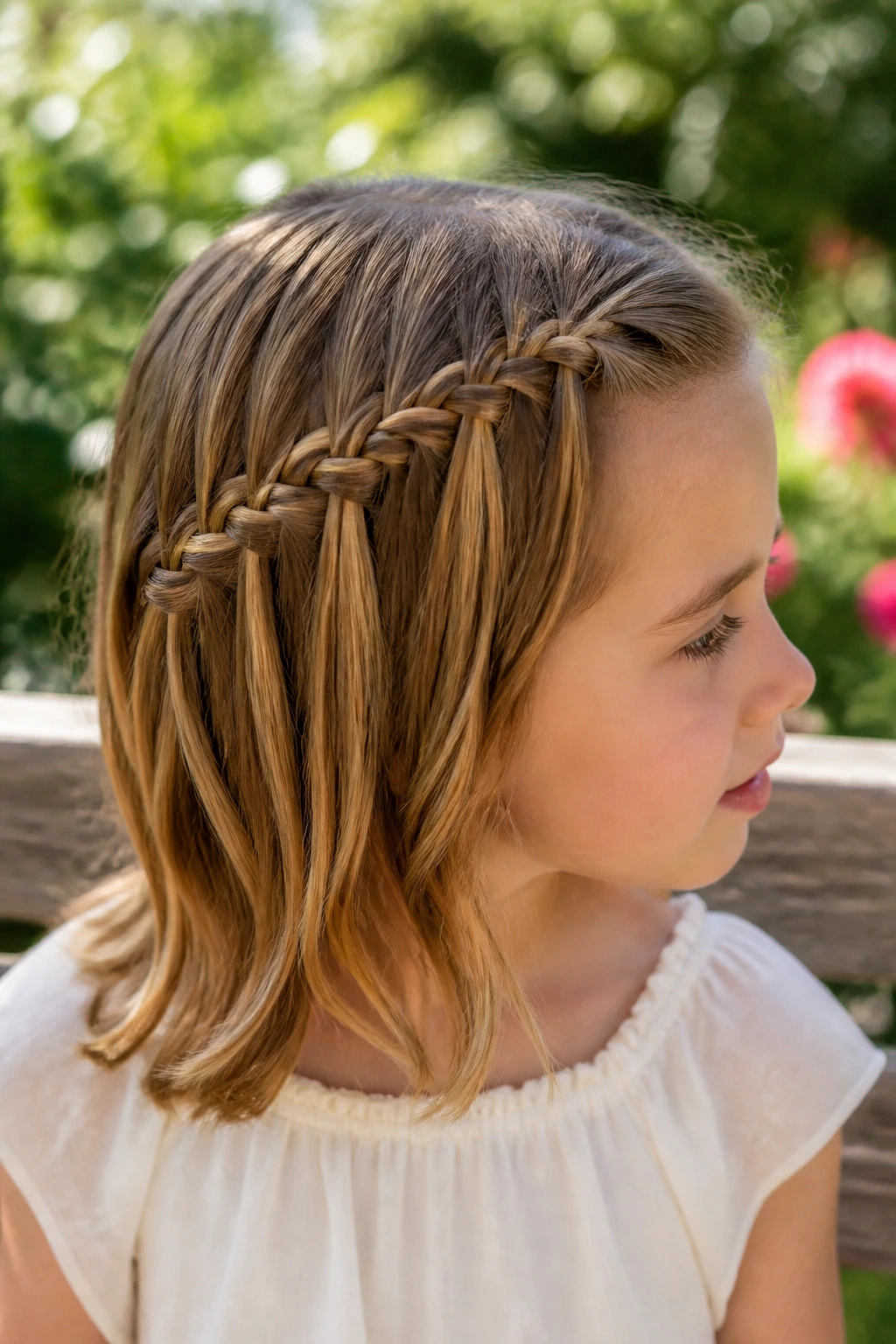
A waterfall braid is one of those styles that looks more complicated than it is, which is exactly why people keep using it. It works best on shoulder-length short hair or a lob, because the braid needs enough length to hold the top section while the dropped strands hang cleanly underneath.
I wouldn’t use this on a very short bob. It will fight you. On longer short hair, though, the braid makes a pretty line across the side of the head and lets the rest of the hair fall in soft pieces.
A little texturizing spray or dry grip at the roots helps the braid hold. If the hair is slippery, the sections slide apart before you’re done.
17. Pinned-Back Pixie with a Barrette Sweep
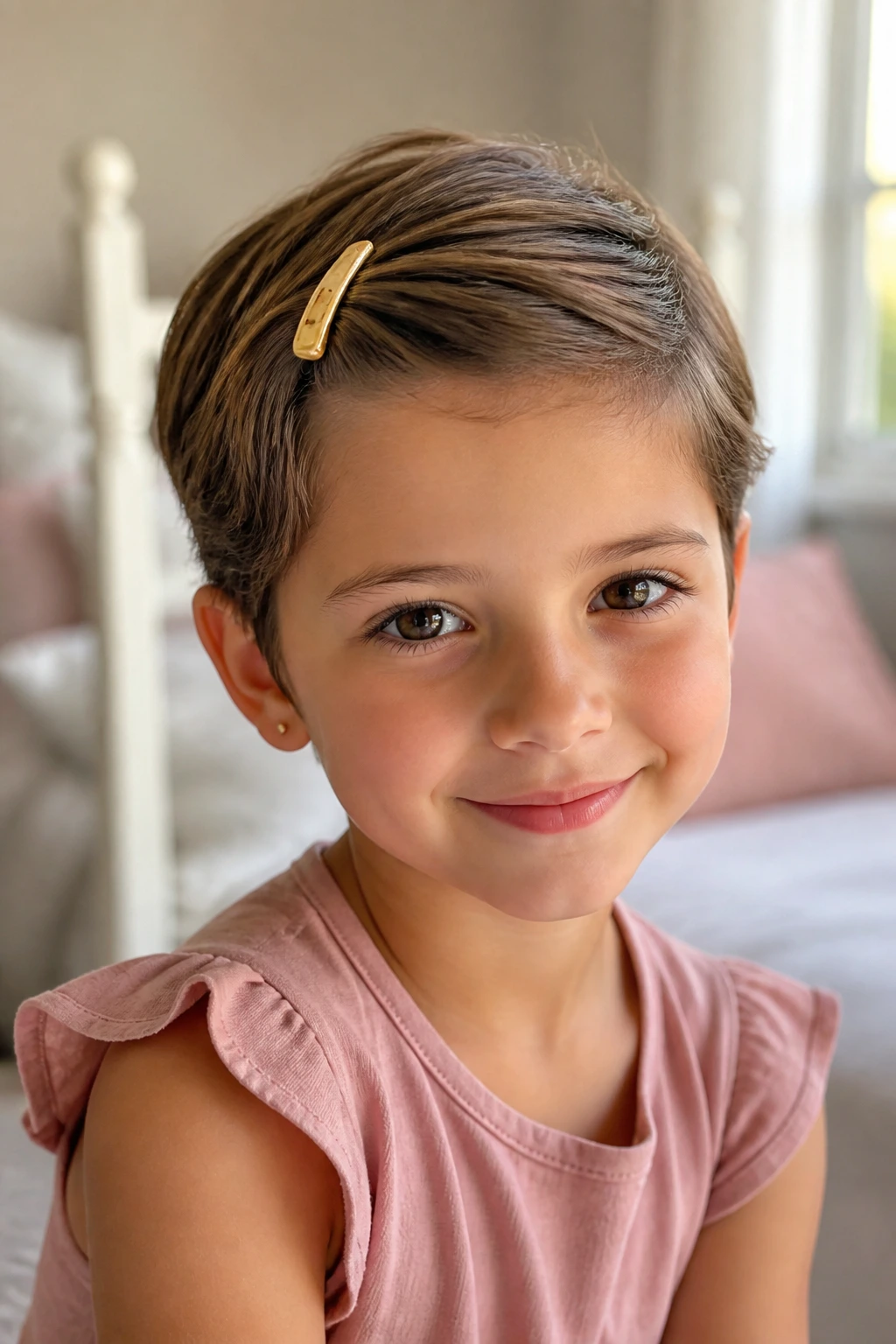
A pinned-back pixie is the sort of style that looks almost too simple until you see how useful it is. Sweep the front or one side back, pin it with a sturdy barrette or snap clip, and the face is suddenly open. That’s all. No hard part, no tight pony, no battle with short layers falling into the eyes.
The style is especially useful for kids who hate anything touching the forehead. It also helps on grow-out days when the front is long enough to bother them but not long enough to braid. A barrette with a flat back sits more comfortably than a bulky decorative clip.
If the hair is very fine, use two clips in a row instead of one big one. The hold is better, and the shape stays in place longer.
18. Single Accent Braid with Loose Ends
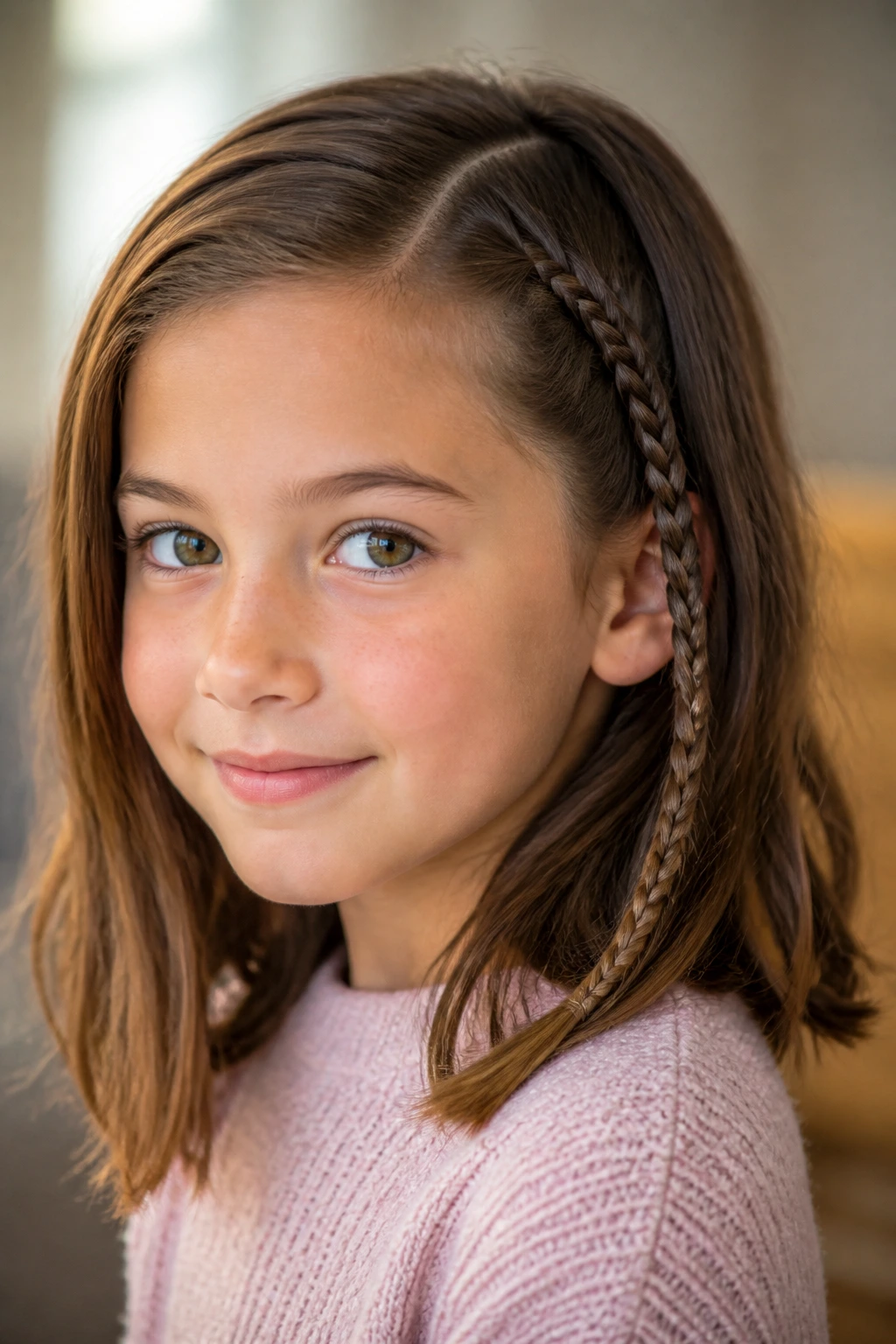
Sometimes the simplest braid does the most work. A single accent braid starts near the temple or just above the ear and runs down one side, while the rest of the hair stays loose. It keeps one problem area controlled without committing to a full braid or ponytail.
This is a good answer when one side of the hair keeps dropping into the face. It also suits bobs and lobs that have enough length to catch the braid but not enough for a thick plait all the way down. If the braid feels too small, gently pull it wider after tying it off. That little bit of looseness makes it look softer.
I like this one for active days because it stays neat and does not ask for much fuss later.
19. Feathered Crop with Wispy Bangs
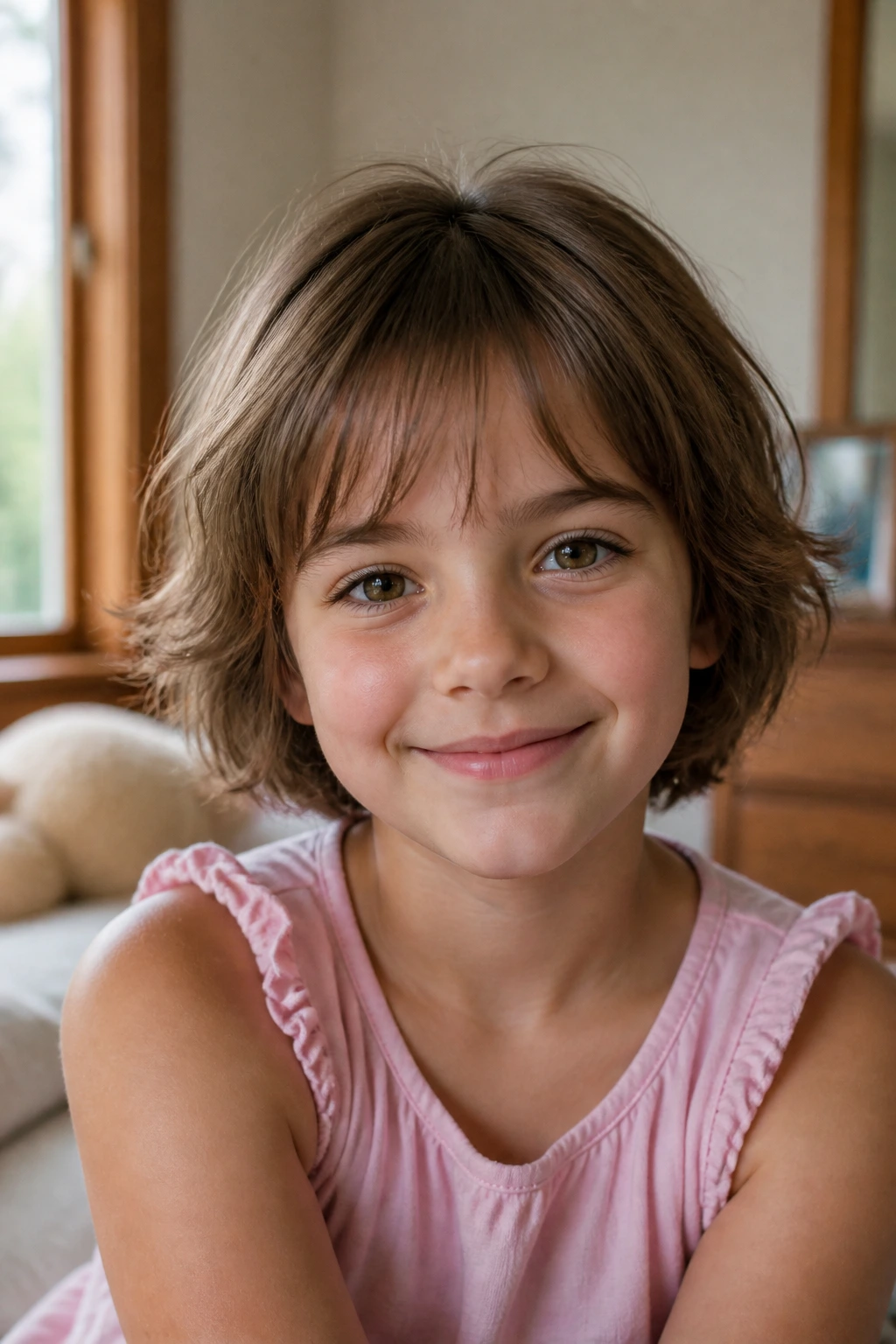
A feathered crop has a softness that blunt cuts sometimes miss. The layers flick around the cheeks, the bangs break into lighter pieces, and the whole shape looks airy instead of heavy. On fine hair, that feathered edge gives the cut movement without making it disappear.
This is a particularly good choice when the hair has a cowlick at the front or a bend that refuses to sit flat. Wispy bangs work with that. They can be side-swept, finger-dried, or tucked with a clip if they start to bother the eyes.
The style grows out nicely, too, because the layers blend instead of leaving a hard line. That matters more than people admit.
Why Short Hair Wins on Busy Mornings

Short hair pays you back in small, daily ways. Brushing takes less time because there’s less length to detangle, and washing is faster because shampoo reaches the scalp without working through a curtain of hair. When a child is tired, impatient, or halfway through breakfast, that matters.
There’s also the shape issue. Longer hair can look messy fast if one section bends wrong. Short hair tends to keep its outline even when it’s not perfect. A slightly crooked part or a loose clip is easier to forgive on a bob than it is on a long ponytail that’s sagging by the time the shoes are on.
And yes, short hair can still look dressed up. That’s the part people sometimes miss. A tiny braid, a clean side part, or a headband changes the whole read of the cut without adding strain to the scalp. That’s a good trade.
Essential Equipment for These Styles
- Wide-tooth comb: Best for working through damp hair without yanking at the ends.
- Detangling brush with flexible bristles: Useful on straight, wavy, and loosely curly hair when you want smoothness without a lot of pull.
- Spray bottle with water: A few mists wake up bedhead and help clips sit flatter.
- Leave-in conditioner or detangling spray: Makes brushing easier and keeps the hair from feeling scratchy after styling.
- Small snag-free elastics: Needed for top knots, bubble ponytails, twists, and tiny braids; the smooth kind is kinder to fine hair.
- Snap clips or duckbill clips: Great for holding sections while you braid or for pinning bangs aside.
- Soft headbands: Useful for bob lengths and growing-out bangs, especially if they have a little stretch.
- Barrettes with smooth backs: Better for short hair that needs a quick sweep off the face.
- Rat-tail comb: Helps create clean parts and neat sections.
- Lightweight mousse or curl cream: Gives shape to waves and curls without making short hair heavy.
- Satin bonnet or satin pillowcase: Keeps the shape from getting crushed overnight.
- Microfiber towel or soft T-shirt: Gentle drying matters more than people think on short textured hair.
Smart Product and Accessory Picks
For kids, the least fussy product is usually the one that disappears into the hair instead of sitting on top of it. A water-based leave-in conditioner is a safer daily bet than anything thick or greasy. If the hair is fine, one or two sprays may be enough; if the hair is coarse or curly, you can use a little more and still keep it light.
Accessories need to match the hair’s grip. Silky straight hair tends to spit out glossy clips, so matte snap clips or barrettes with teeth hold better. Curly and coily hair usually does better with elastics that have a soft outer layer and don’t chew up the strands when you take them out. Tiny clear elastics are handy, but only if you cut them off instead of ripping them free.
For styling products, I’d keep the list short. A light curl cream, a small bottle of mousse, and a detangler cover most of what these styles need. Heavy gels can make short hair feel crisp in a bad way, especially on a child who rubs her hands through it all day. If the hair starts looking wet long after styling, there’s too much product.
One more thing: headbands should be soft where they touch behind the ears. If a child keeps pulling it off, the band is probably pressing in the wrong spot. That’s not a personality problem. It’s a fit problem.
How to Finish and Wear These Styles
Presentation: Keep the finish close to the hair’s natural shape. A blunt bob looks better when the ends are smooth and even, while a crop with curls looks better when the curls are clumped and springy rather than brushed apart.
Accessories: Use one clear statement piece instead of piling on five tiny things. A single bow, clip cluster, or satin headband usually reads cleaner on short hair than a crowded mix of pieces that starts sliding by lunch.
Scale: Size the accessory to the haircut. Huge bows can overpower a pixie, while a tiny clip can vanish on thick curls. The sweet spot is the size that adds shape without taking over the whole head.
Where it works best: School days, photo days, family events, and active afternoons all call for different levels of polish. A pinned pixie or side-swept crop is great for busy days. A braided crown or waterfall braid makes more sense when the goal is a little more finish.
Additional Tips and Style Boosters
Texture Prep: Start with slightly damp hair, not dripping hair. On straight or wavy hair, two or three sprays from a bottle are often enough. On curls, use enough water to help the strands clump together, then work in a small amount of leave-in.
Time-Saver: Section the hair before you start. A couple of clips at the crown and temples saves you from chasing the same pieces over and over, especially when a child keeps turning her head to look at the mirror.
Shape Boost: If the roots lie flat, lift them at the crown with your fingers while the hair is drying. For a bob, this keeps the top from collapsing. For a pixie, it stops the front from sticking to the scalp.
Accessory Swap: Swap the mood of the style with one change. A plain side part becomes dressy with a barrette. A curly crop feels sportier with a headband. A little braid can do more work than a whole drawer of clips.
Make-It-Yours: If your child likes things neat, keep the part clean and the accessory small. If she likes a little drama, go one notch bigger with the bow or clip, but stop before the whole style starts feeling crowded.
Keep It Neat Between Wash Days
Short hair doesn’t need the same upkeep as longer hair, but it still needs a rhythm. For most kids, a full wash every 2 to 3 days is enough if the scalp is normal and the child is not sweating through every afternoon. Curly and coily cuts can often stretch a little longer if they’re protected with a satin bonnet or pillowcase and refreshed with water in the morning.
The refresh step should be gentle. A light mist, a quick finger-smooth at the part, and a tiny bit of leave-in at the ends usually does the job. Brushing curly hair dry is where the frizz starts, so skip that unless you want to rebuild the shape from scratch.
Trims matter more than people think with short cuts. Pixies usually look sharp with a tidy-up every 4 to 6 weeks. Bobs can usually go 6 to 8 weeks before the ends lose their line. Layered shags and feathered crops can stretch a little longer, around 8 to 10 weeks, if the shape still falls well. If the front keeps dropping into the eyes or the nape starts curling under in a weird way, that’s the haircut asking for help.
At night, I’d use a satin bonnet for curls and a satin pillowcase for straighter textures. It sounds small. It isn’t. One rough night on a cotton pillow can undo a clean braid or flatten a fluffy crop so badly that you’re back at square one.
Variations and Adaptations to Try
Curly-First Version: Choose the rounded crop, twist-out bob, or tapered cut and let the curls set the shape. These styles respect shrinkage instead of forcing it into something else, which makes them easier to maintain and kinder to the scalp.
Fine-Hair Lift: Use blunt lines, side parts, and small accessories that grip well. A blunt bob or pinned-back pixie keeps the hair from looking see-through, and a little mousse at the roots can stop it from collapsing by noon.
No-Tight-Style Rule: If the child is sensitive to pulling, keep elastics loose, skip tight braids, and lean on headbands, clips, and side sweeps. The hair can still look neat without feeling yanked.
Grow-Out Bridge: When bangs are in the awkward phase, a side-swept crop, headband bob, or clip cluster saves the day. These styles let you wait a few more weeks between trims without the haircut looking half-finished.
Photo-Day Finish: A braided crown, waterfall braid, or French bob with a soft bow adds enough polish for dressier moments. The key is not to overdo it. One well-placed accessory usually beats a pile of them.
Common Mistakes to Avoid
Pulling too tight is the one I see most often. If the child keeps touching her temples or the skin looks dented after the elastic comes out, the style is too tight. Loosen it, move the placement, or switch to a softer band.
Choosing a cut that ignores the hair’s texture creates more work later. Fine hair with too many layers can go flat. Thick hair with no shaping can puff out around the ears. If the haircut fights the hair, the styling will never quite catch up.
Styling dry tangles is another easy mistake. Short hair still knots, especially at the nape and behind the ears. A few sprays of water or detangler before brushing makes the whole process easier and cuts down on breakage.
Tiny rubber bands are convenient until they aren’t. They snag, snap, and sometimes get buried in curly hair like little traps. If that happens, cut them out instead of pulling them free.
Overloading the hair with product can make a short style collapse fast. You do not need much. A pea-size amount can be plenty on a child’s head. If the hair feels sticky or looks damp all afternoon, scale back.
Finally, don’t ignore the crown and hairline. If there’s a cowlick or a swirl near the top, build the style around it. Trying to flatten it into submission usually ends with more fuss, not less.
Frequently Asked Questions
Which short hairstyle is easiest for a little girl who hates sitting still?
A pinned-back pixie or a blunt bob with a side part is usually the quickest. Both can be done in a couple of minutes, and neither needs a lot of sectioning or tight pulling.
Can short hairstyles work on curly or coily hair?
Absolutely. Rounded crops, tapered cuts, twist-outs, and side-swept styles usually work very well because they respect the curl pattern instead of trying to flatten it. The shape matters more than the length.
How short is too short if my child still wants some styling options?
If the hair is cropped above the ears and very close at the nape, your options narrow to clips, parts, and headbands. Once the hair reaches the chin or a little past it, braids, mini knots, and twists become much easier.
What if barrettes keep slipping out?
Usually that means the hair is either too silky or too freshly washed. Try matte clips, add a little texture spray at the section, or place two small clips in a cross pattern instead of one large one.
How often should a short haircut be trimmed?
Pixies often need shaping every 4 to 6 weeks. Bobs can go 6 to 8 weeks, and layered cuts may stretch to 8 to 10 weeks if they still fall correctly.
What should I do if my child has a strong cowlick at the front?
Work with it. A side part, soft fringe, or asymmetric style usually behaves better than a hard center part. If the cowlick pushes the hair up, use that lift as part of the shape instead of fighting it down.
Can I style short hair on second-day or third-day hair?
Yes, and in some cases it’s easier. A little texture gives clips and tiny elastics more grip. If the hair starts looking flat or fuzzy, a light mist of water and a tiny amount of leave-in usually wakes it back up.
Are these styles okay for school or sports?
They are, especially the bob, pixie, side-swept crop, and pinned-back styles. For active days, keep the accessories soft and the placement low enough that the child can move without feeling hair bounce into her face.
A Short Cut That Actually Pulls Its Weight
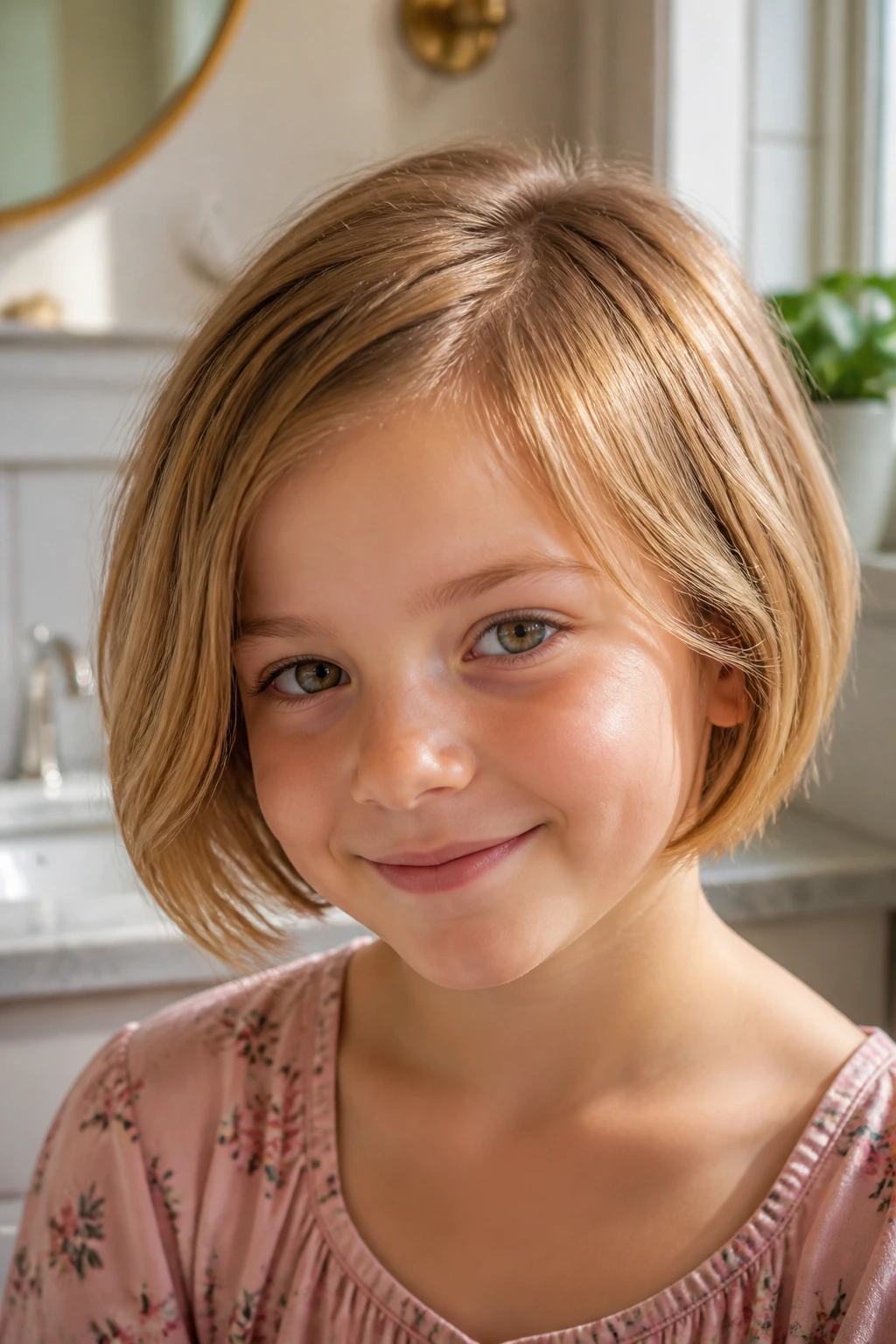
Short hair earns its keep when it stops fighting the child’s texture and starts following it. That’s the real trick. A good bob, pixie, crop, or braid-accent style does not need a lot of fuss to look finished, and it doesn’t fall apart the second a child runs, naps, or takes off a sweater.
The nicest part is that there’s room to keep it simple. One clip can be enough. One part can change the whole shape. One clean cut can save a lot of morning arguments, which is a pretty solid return for something that starts at the haircut chair.
Pick the shape that suits the hair you already have, then let the style stay small and neat. That’s the version worth repeating.
