



The best short layered haircuts for women over 40 do one thing most salon cuts never bother to do: they move. A clean layer can wake up a flat crown, pull thick hair in at the sides, and keep a jaw-length bob from sitting there like a little box on your head. That matters more than age, by the way. Hair changes with density, with texture, with gray coming in at the temples, and with the simple fact that most people do not want to spend twenty minutes wrestling a round brush before breakfast.
Short hair after 40 is not some dramatic reinvention. It is usually a practical decision that happens to look sharp. Some people want less drying time. Some want shape around glasses. Some are tired of a heavy length that looks fine for three hours and then collapses into a sad triangle. A good layered cut handles those annoyances quietly, which is one of the reasons I’m such a fan of it.
The trick is layer placement. Not all layers are doing the same job. Some lift the crown. Some soften the jaw. Some keep thick hair from swelling outward when humidity shows up and ruins your mood. Some are almost invisible until the light hits the hair and you can see the shape tucked inside the cut. That quiet kind of structure is what makes these styles worth a serious look.
Why Short Layered Haircuts for Women Over 40 Feel Better Than a Blunt Chop
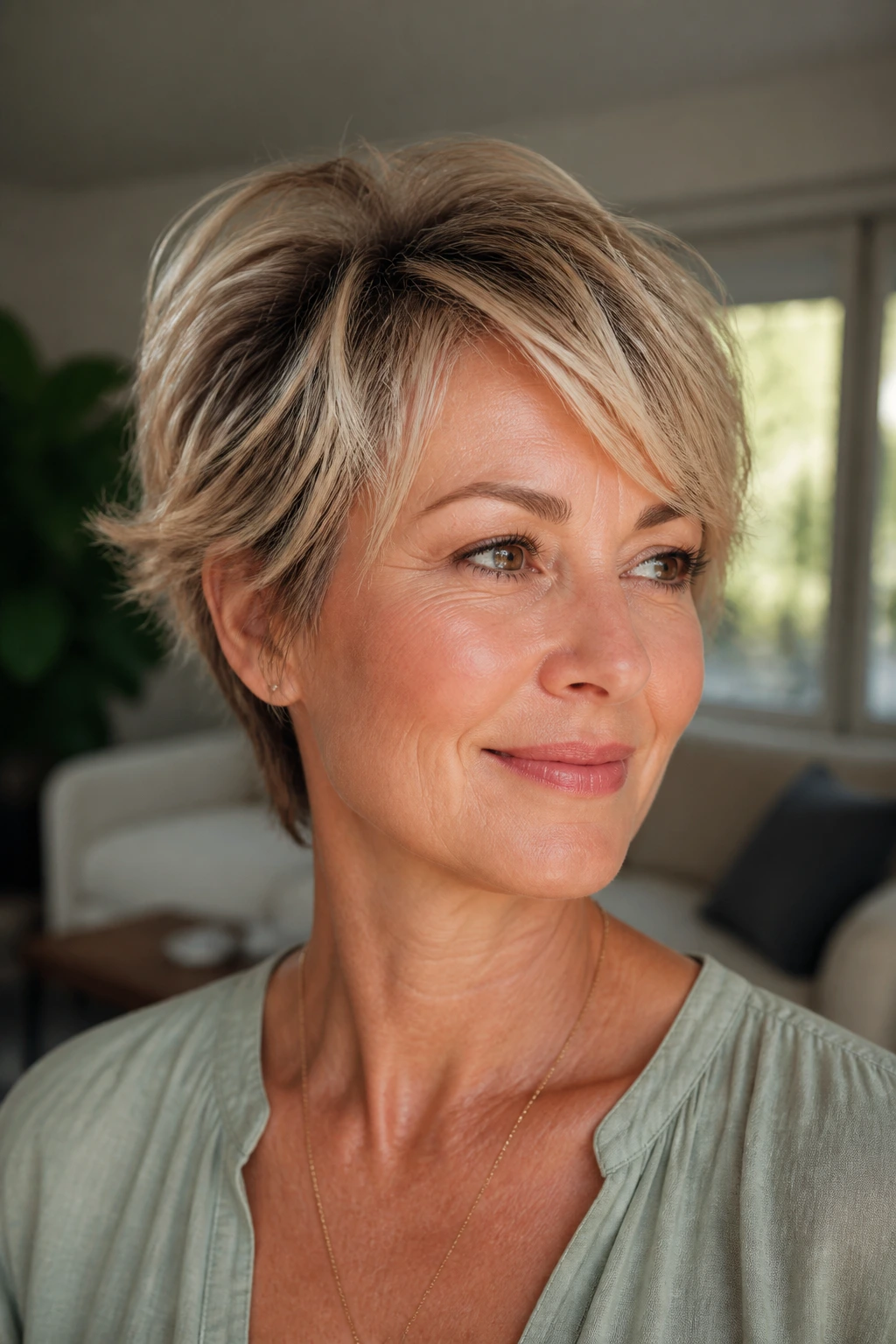
Lift without teasing: A few well-placed layers can make fine hair stand away from the scalp at the crown without forcing you into a daily battle with backcombing and spray.
Softness where the face needs it: Short layers can skim the cheekbone, jaw, or temples in a way that takes the edge off a strong line around the face.
Gray hair looks deliberate: Salt-and-pepper strands catch light differently when the cut has shape, so the silver does not read as flat or accidental.
Less bulk, less puff: Thick hair needs weight removed in the right places, not all over the head, or it turns into a helmet with opinions.
Short does not have to mean severe: The best short layered styles still leave room for movement, tuck-behind-the-ear ease, and a little bend at the ends.
How to Choose Short Layered Haircuts for Women Over 40 by Texture and Face Shape
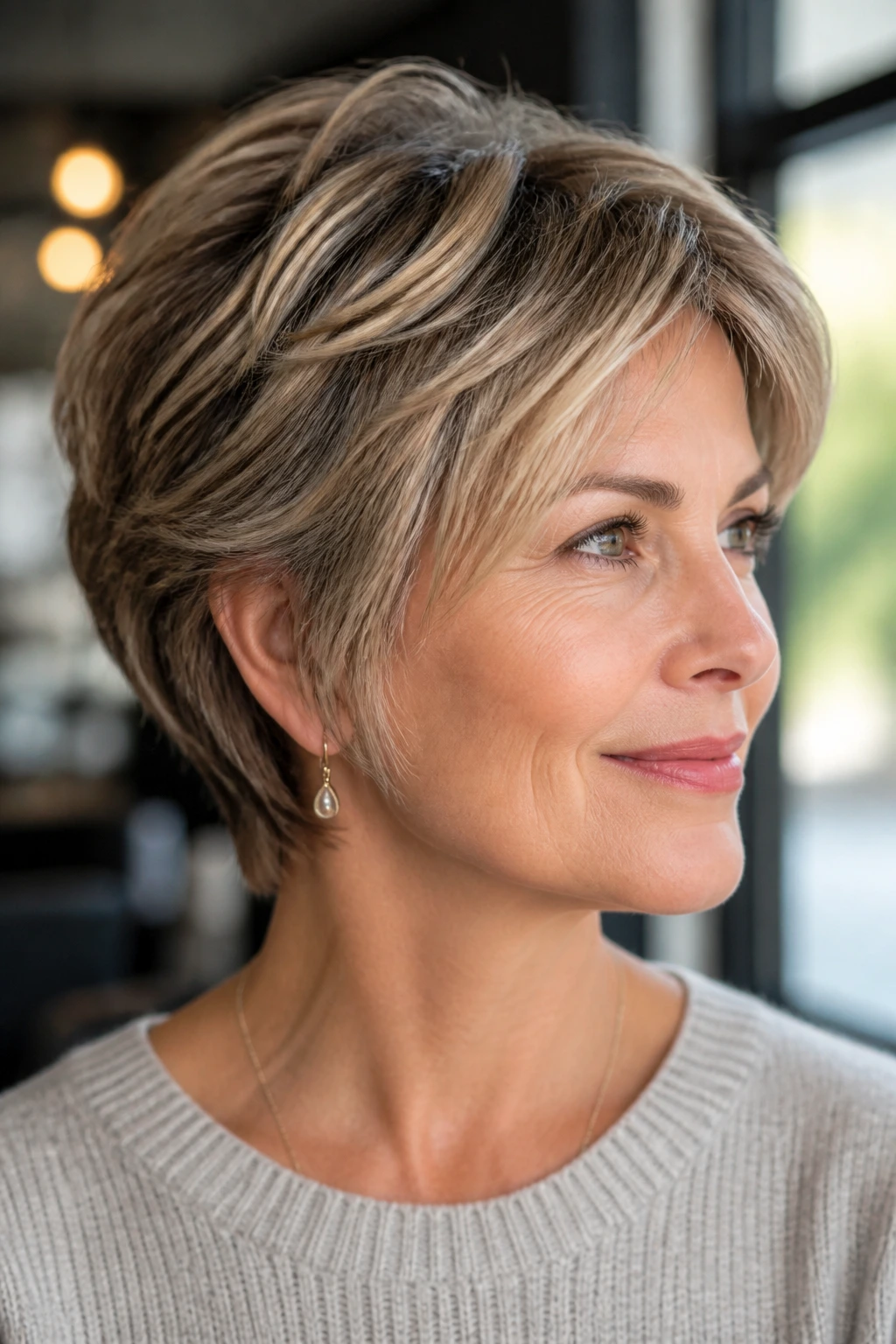
Fine Hair That Flattens Fast
Fine hair usually needs lift more than it needs lots of cut pieces. Ask for layers that start around the crown or just under the cheekbone, not short snips all through the interior that leave the ends see-through. A chin-length bob with soft layers often looks fuller than a shorter cut that has been thinned too hard.
Thick Hair That Puffs Instead of Falling
Thick hair needs weight removed inside the shape, not hacked off at random. Interior layering, gentle stacking in the back, and a perimeter that still has some bluntness keep the cut from blowing outward. If your hair is coarse, the wrong layering can make it frizzy-looking in the ends, so the finish matters as much as the shape.
Wavy or Curly Hair That Changes Its Mind Hour by Hour
Waves and curls like room to spring, but they also need enough length in the top layers to avoid that triangle shape nobody asked for. Dry cutting or cutting mostly dry helps a stylist see where the curl actually lands. If your hair shrinks a lot, the best short layered haircut for you may need to sit a touch longer than you first expect.
Straight Hair, Cowlicks, and Glasses
Straight hair can look elegant in a short layered cut, but cowlicks at the crown or temple will push a fringe around if the cut is too short in the wrong spot. Glasses change everything too. The best face-framing layers stop a fraction above or below the temple line, so the hair and the frames do not fight for attention.
1. Chin-Grazing Layered Bob with Soft Ends
A chin-grazing layered bob is the haircut I recommend when someone wants movement without a lot of drama. The length skims the jaw, which gives the face some structure, while the soft ends keep it from looking too boxy. It is especially good if your hair tends to tuck in at the neck or flip out at the shoulders and make the shape feel messy by lunch.
The layer placement matters here. Keep the layers subtle and let them live mostly through the mid-lengths and the face-framing pieces. If the shortest pieces are chopped too high, the whole cut starts to puff.
This one works well with a side part and a quick blow-dry using a 1.5-inch round brush. If you like air-drying, a little cream through damp hair and a tuck behind one ear is often enough.
Best for: fine to medium hair, oval faces, and anyone who wants a bob that still looks like hair, not architecture.
2. Feathered Pixie Bob with Lifted Crown
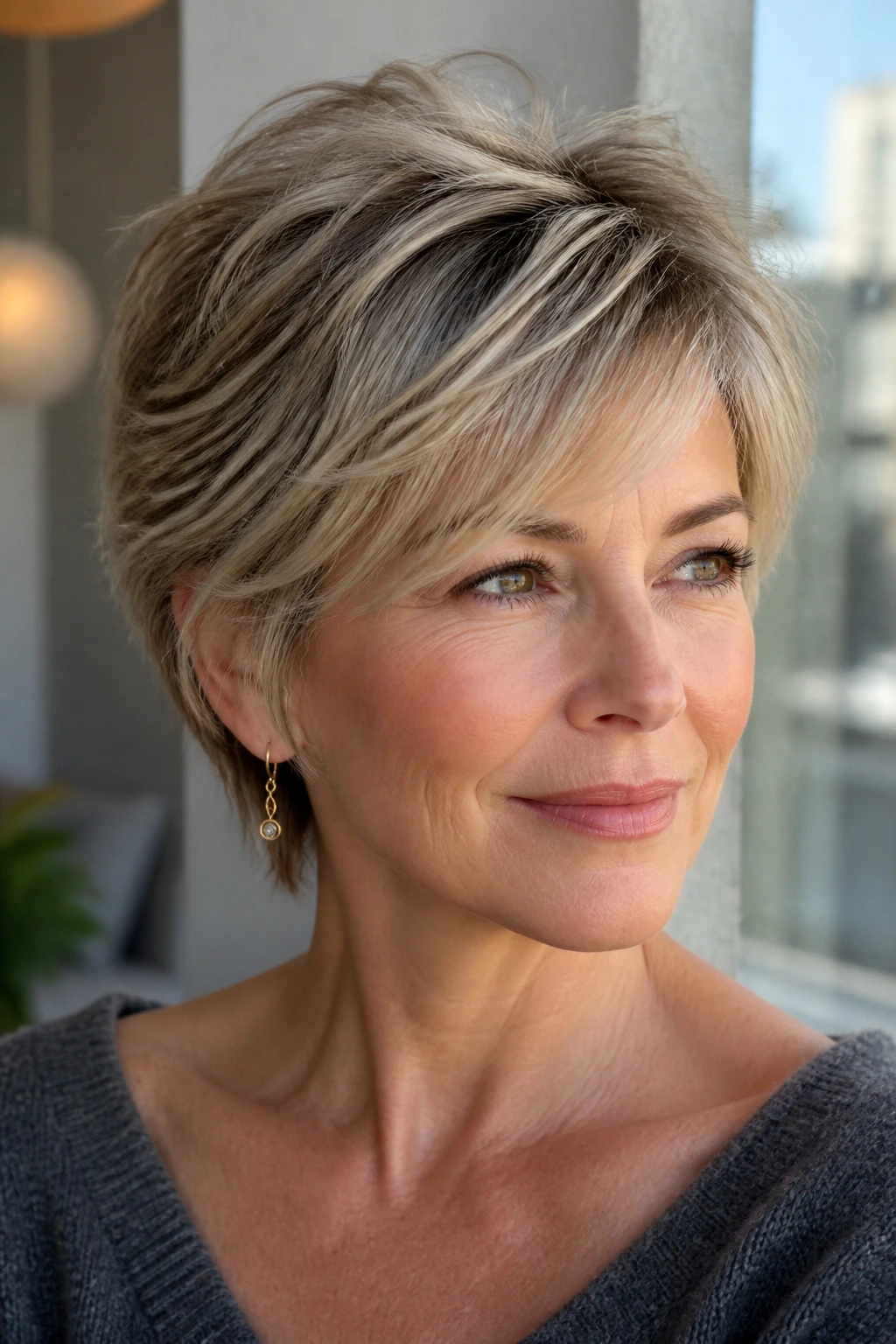
A feathered pixie bob gives you the clean neckline of a crop with just enough top length to keep the shape soft. The feathering around the crown opens up the hair and makes it look lighter, which is useful when your roots go flat before the rest of the style has even left the bathroom.
Why It Keeps Its Shape
The longer top layers create movement, while the shorter sides keep the cut close to the head. That balance is what makes a pixie bob easier to live with than a very short crop. You get lift without the “I cut it all off” feeling.
What to Ask For
- Keep the top long enough to pinch between your fingers.
- Leave a little fullness at the temples if you wear glasses.
- Ask for soft tapering around the ears instead of hard clipping.
- Use a pea-sized amount of paste, not a full scoop.
This is a strong choice if your hair is fine, your crown is a little flat, and you want the cut to look finished even when you barely style it.
3. Stacked Bob with Crown Volume
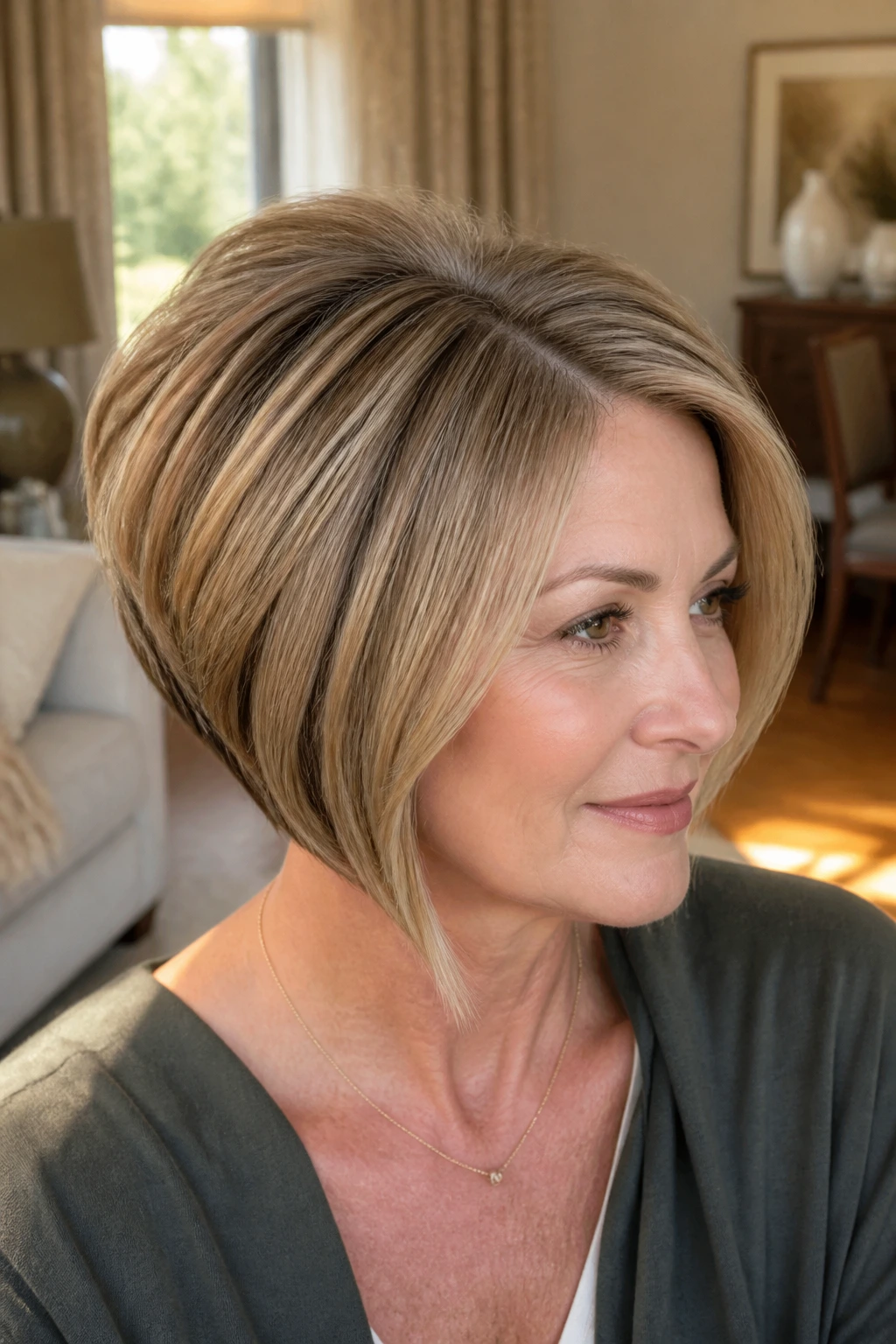
A stacked bob is all about shape in the back. The layers rise neatly toward the crown, which gives the head a little lift and stops the back from lying dead flat against the neck. When the stacking is controlled, it feels polished. When it is too steep, it can look dated fast.
That’s why I like a softer stack for women who want short layered haircuts for women over 40 without the hard wedge shape from older haircut photos. Keep the back snug, but not severe. Let the front length drift a bit longer so the cut feels modern instead of stiff.
This cut is especially kind to fine hair because it creates the illusion of density where the head needs it most. A root-lift spray at the crown and a quick blow-dry with the nozzle pointed upward can make the shape pop without much work.
4. Shaggy Crop with Curtain Fringe
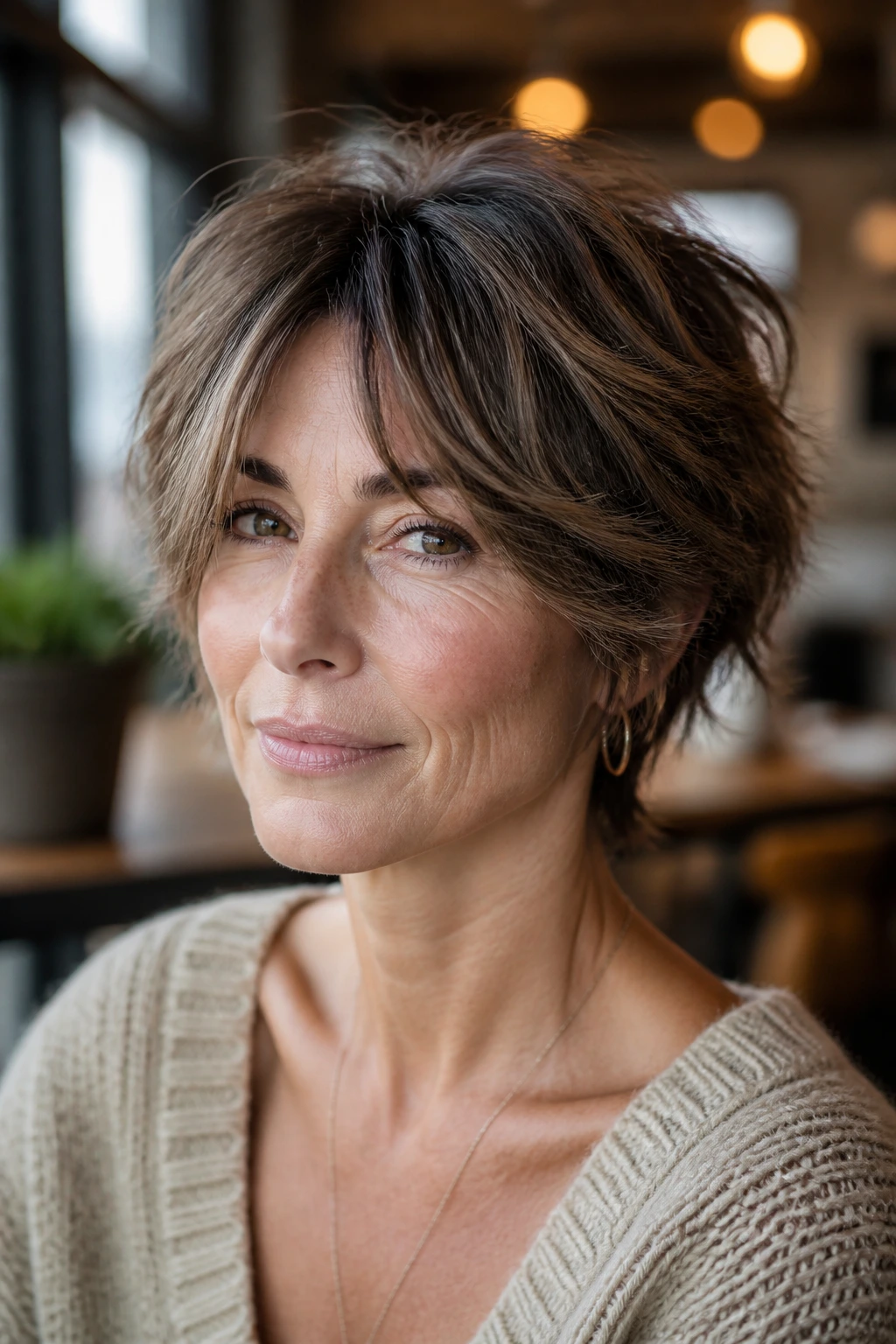
This is the cut for someone who wants texture to do the talking. The shaggy crop lives on piecey layers, broken ends, and a curtain fringe that parts softly in the middle or just off-center. On wavy hair, it looks relaxed right away. On straighter hair, it takes a little more styling, but the result has more movement than a tidy bob.
A good shaggy crop should never look like someone attacked it with thinning shears. The pieces need to be deliberate. The fringe should feather away from the face, not hang there like a curtain rod with bangs attached.
If your hair air-dries with some bend, this cut is a pleasure. Scrunch in a little mousse, twist a few sections with your fingers, and leave it alone. If your hair is pin-straight, use a small round brush or a bend iron to put a soft wave into the ends.
5. French Bob with a Tucked Nape
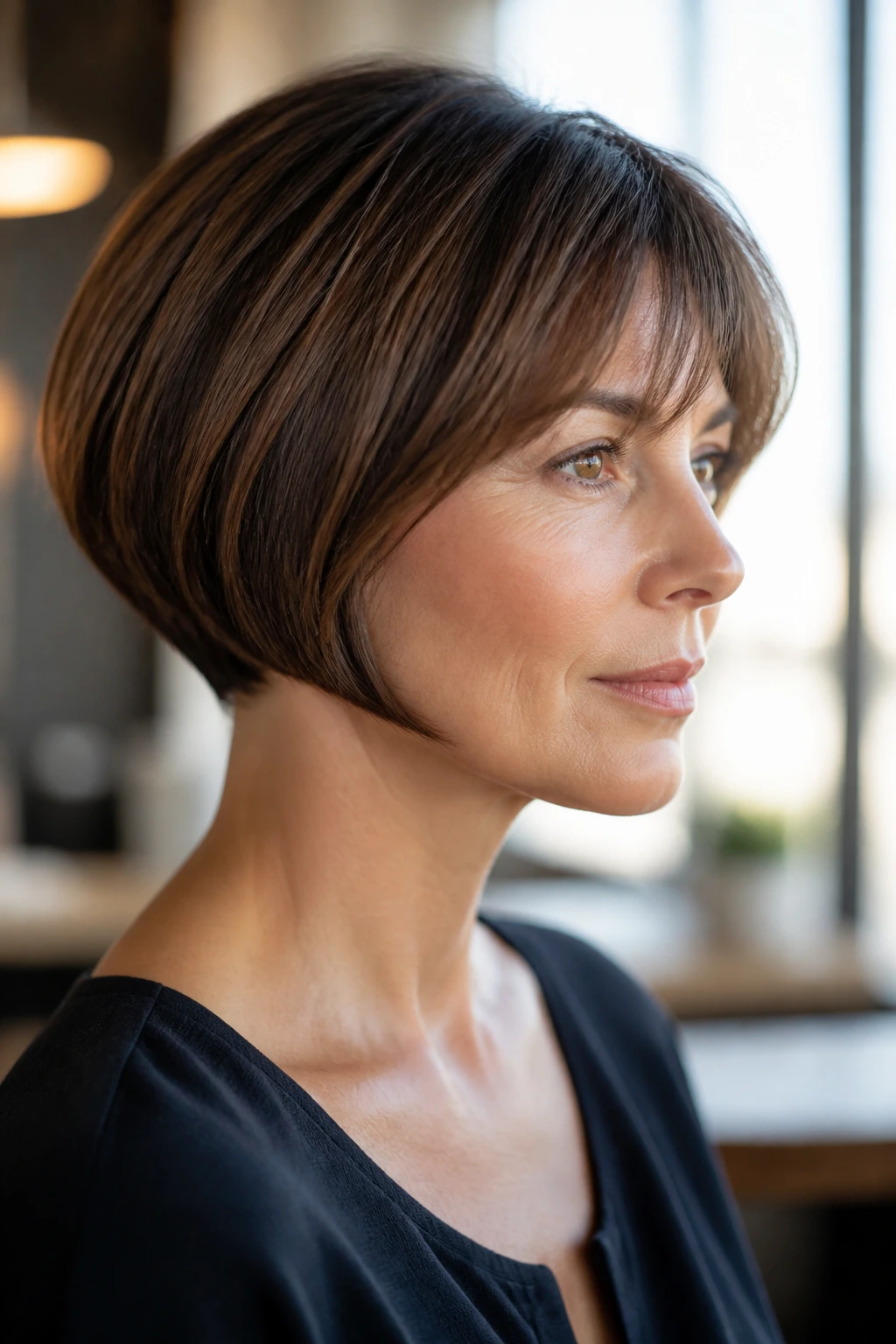
A French bob sits shorter and cleaner than most layered bobs, usually around the jawline, with a tucked nape and a face line that feels crisp but not hard. It has a neat little confidence to it. The layering is there, but it stays quiet, mostly helping the hair curve inward instead of flipping out.
That tucked nape is the part I like best. It keeps the neckline light and makes the silhouette look sharp from the side, which is where a lot of short cuts either shine or fall apart. Add a soft fringe or a side-swept front, and the whole thing gets a little more ease.
This works especially well if your hair is straight or only slightly wavy. Thick hair needs internal removal of bulk; otherwise, the bob gets too wide at the bottom. Keep the trim schedule tight. A French bob that grows out for too long loses its clean shape fast.
6. Collarbone Lob with Invisible Layers
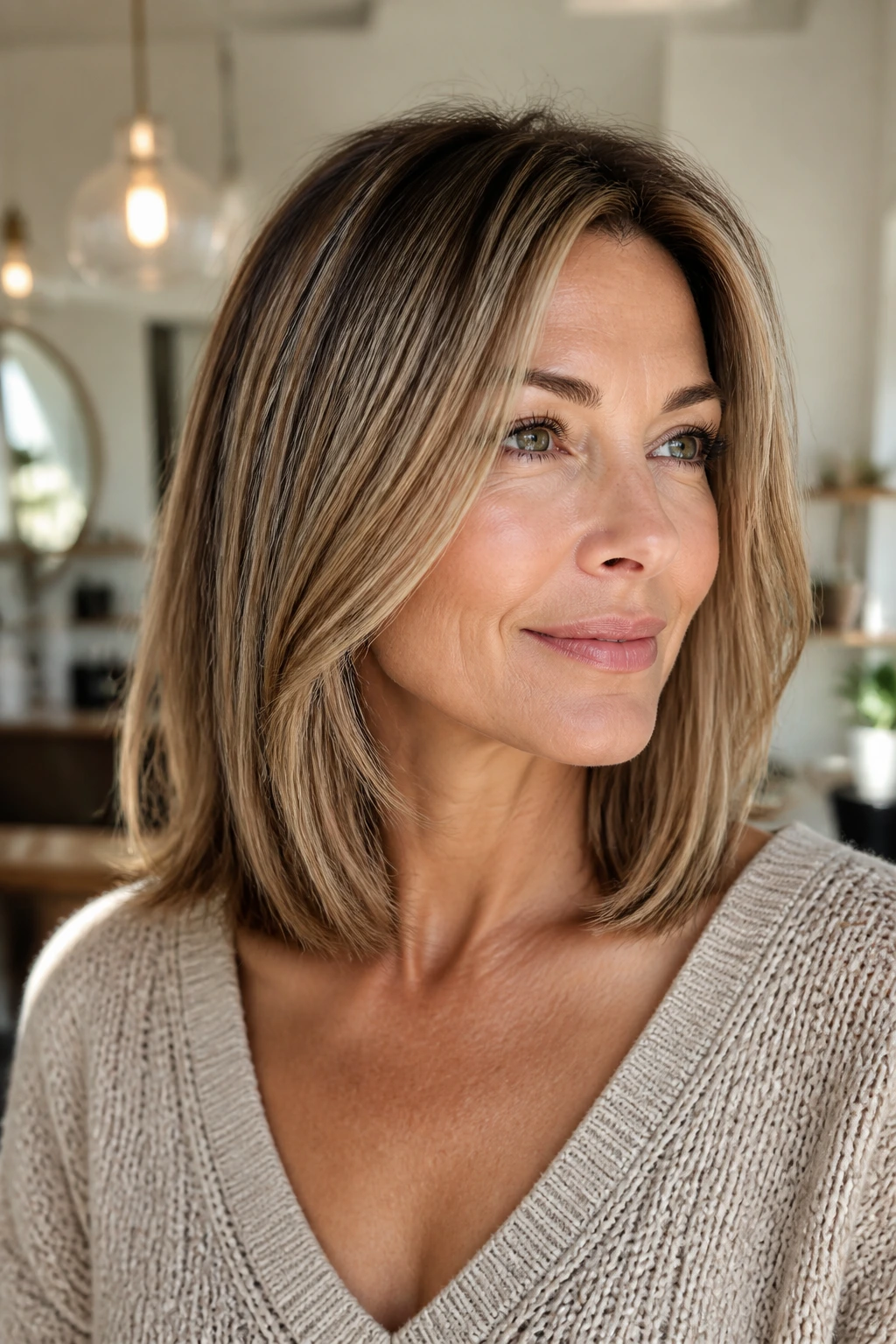
Not every woman who wants short layered haircuts for women over 40 wants to go all the way to the jaw. A collarbone lob is the compromise that still counts, because the length is short enough to feel fresh but long enough to clip back, flip behind the shoulders, or tuck into a scarf.
The secret here is invisible layers. You do not want obvious steps. You want hidden movement inside the cut so the hair doesn’t hang like one heavy sheet. That makes the lob feel lighter without sacrificing the cleaner outline that keeps it grown-up and polished.
If you want a cut that can survive both a blowout and an air-dry, this is one of the safest bets on the list. It is also a good starting point if you are nervous about going shorter and need something that won’t feel like a leap off a cliff.
7. Razor-Cut Crop with a Side Sweep
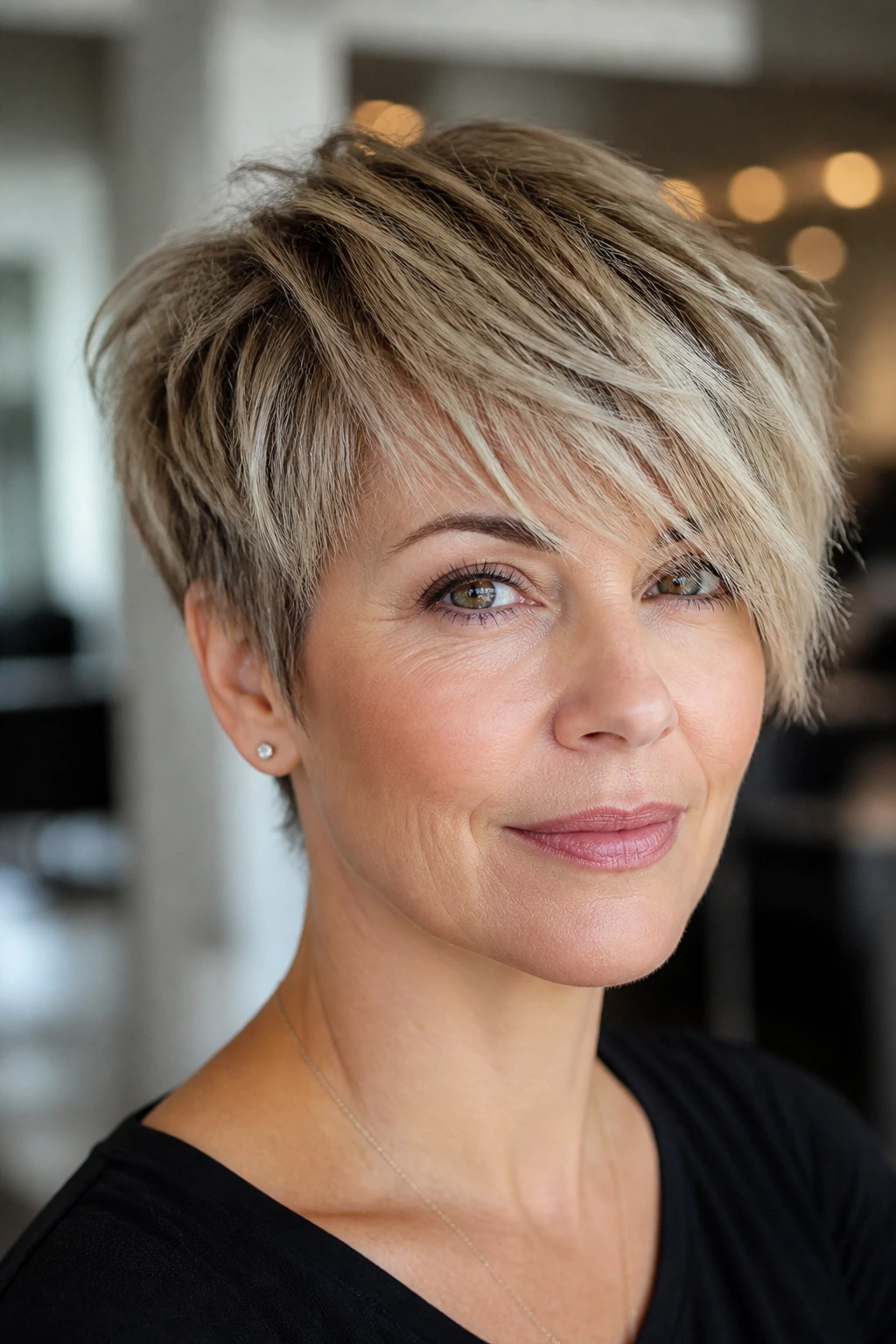
A razor-cut crop has a little edge to it, and that edge comes from the ends. They’re softer, airier, and less blunt than scissor-cut lines, which makes the whole style feel lighter around the face. The side sweep gives it direction so the hair doesn’t look shredded or random.
This cut shines on thick or coarse hair because the razor removes bulk without turning the shape boxy. That said, razor work is not for every head of hair. If your ends are already dry, frayed, or fragile, too much razor can leave them looking wispy and tired.
I like this style for people who want something modern but not fussy. A little paste rubbed between the palms and pushed through the top gives the crop separation. Keep the sides clean, keep the sweep intentional, and the whole cut reads as confident rather than overworked.
Do not let a stylist take a heavy razor to already delicate hair. The ends will tell on you within a week.
8. Wavy Inverted Bob
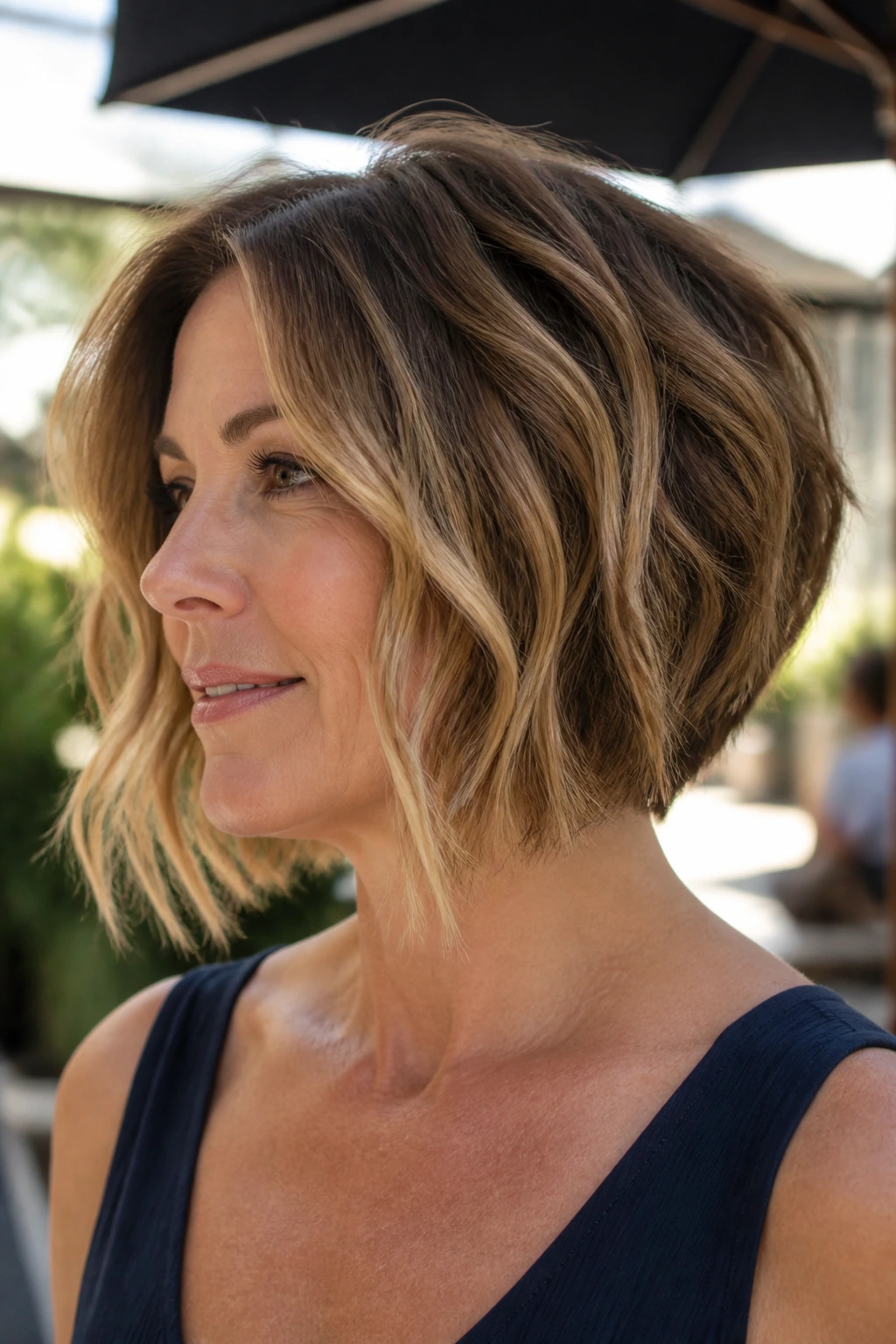
An inverted bob gives you length in the front and a shorter back, which creates a nice diagonal line across the jaw. On wavy hair, that angle can be lovely because the movement keeps the shape from looking stiff. It is one of those cuts that looks different from every side, which I enjoy. Front view, side view, back view — all three matter.
The angle should stay gentle. If it gets too steep, the cut starts to look like a wedge, and that is a very specific vibe that not everyone wants. A slight lift at the back and soft face-framing in the front usually does more work than a dramatic angle ever will.
This is a strong choice if your jawline feels like the area you want to soften. The longer front pieces pull the eye downward, while the shorter back keeps the cut from feeling heavy.
9. Tousled Pixie with Long Top Layers
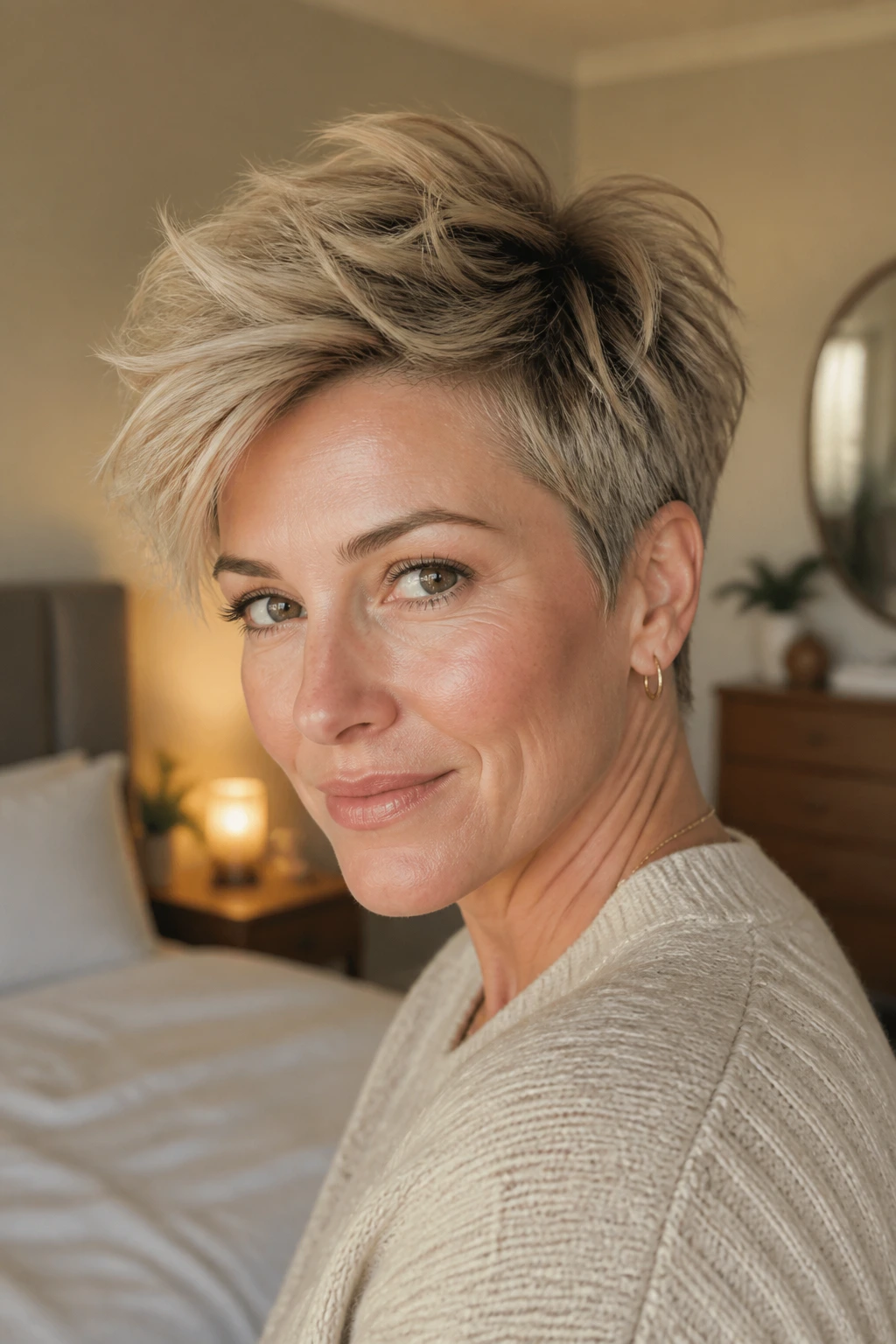
A tousled pixie with long top layers gives you a lot of styling freedom in a small footprint. The sides and back stay neat, but the top has enough length to sweep, spike, fluff, or flatten depending on your mood. It is the kind of cut that can look casual one day and polished the next.
The long top is the real feature. Too short, and the pixie loses its versatility. Long enough to bend with your fingers, it suddenly becomes a shape you can mess with instead of a shape you have to obey.
Who This Cut Loves
- Women with strong cheekbones.
- Hair that naturally has some texture.
- Glasses wearers who want a tidy neckline.
- Anyone who hates spending time with a blow dryer.
Keep the product light. A dab of paste or cream is enough. If you use too much, the top collapses and the whole point of the cut disappears.
10. Angled Bob with Face-Framing Pieces
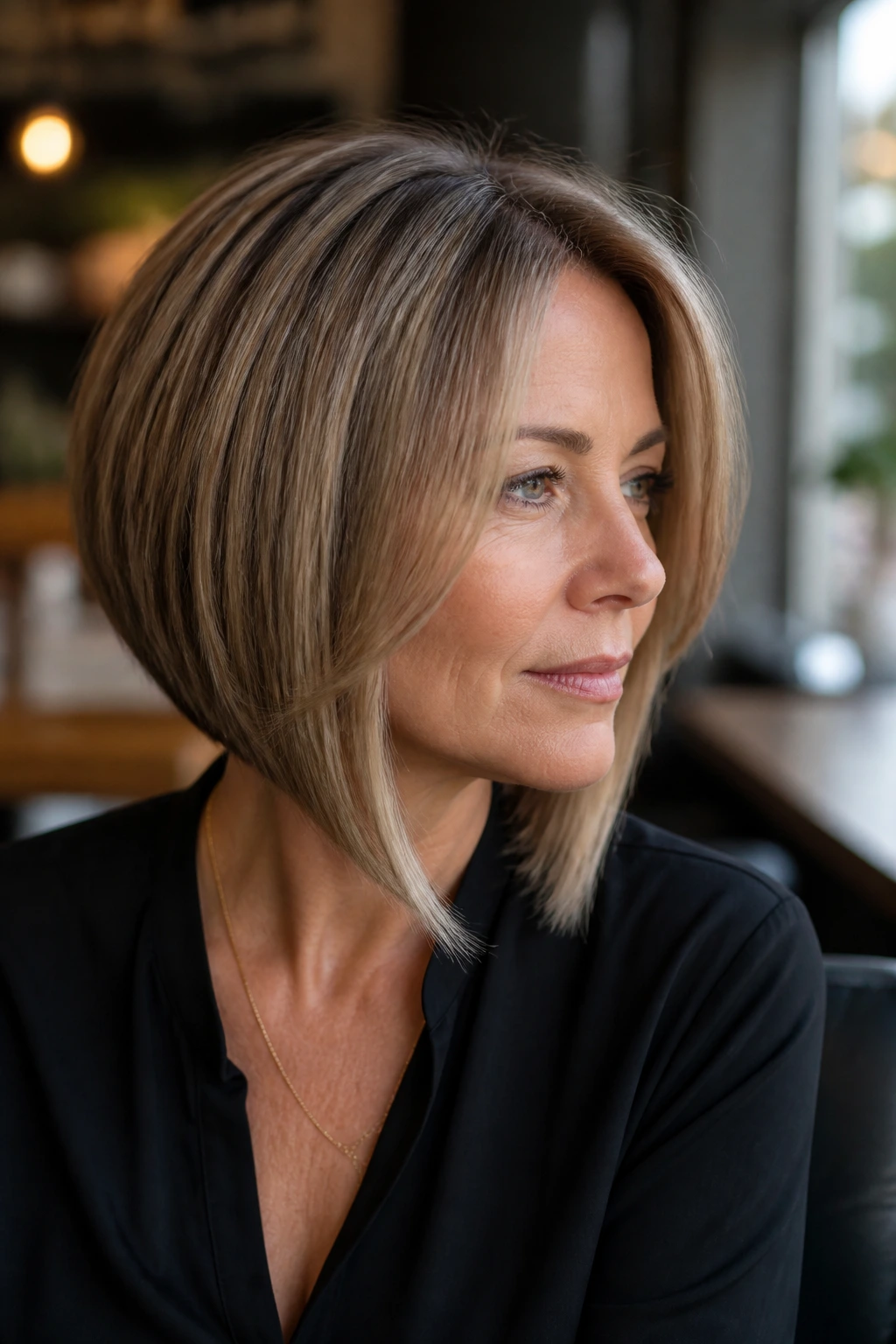
An angled bob does one useful thing very well: it pulls the eye forward and down. The front pieces are longer, the back is shorter, and the result is a cleaner line through the jaw and neck. When face-framing layers are added near the temples, the shape stops feeling severe.
I like this cut on square and round faces because the angle creates a little length where it helps most. It also works on straight hair that tends to sit too neatly. The diagonal line gives it direction.
What to Ask Your Stylist For
- A visible but not dramatic front angle.
- Pieces that skim the cheekbone or lip line.
- A back that is short enough to give lift, not expose the entire neck.
- A dry check of the part before the cut is finished.
If you wear your hair behind one ear a lot, this cut keeps that habit looking intentional. That sounds small, but it changes the way the whole head shape reads.
11. Layered Bob with a Micro Fringe
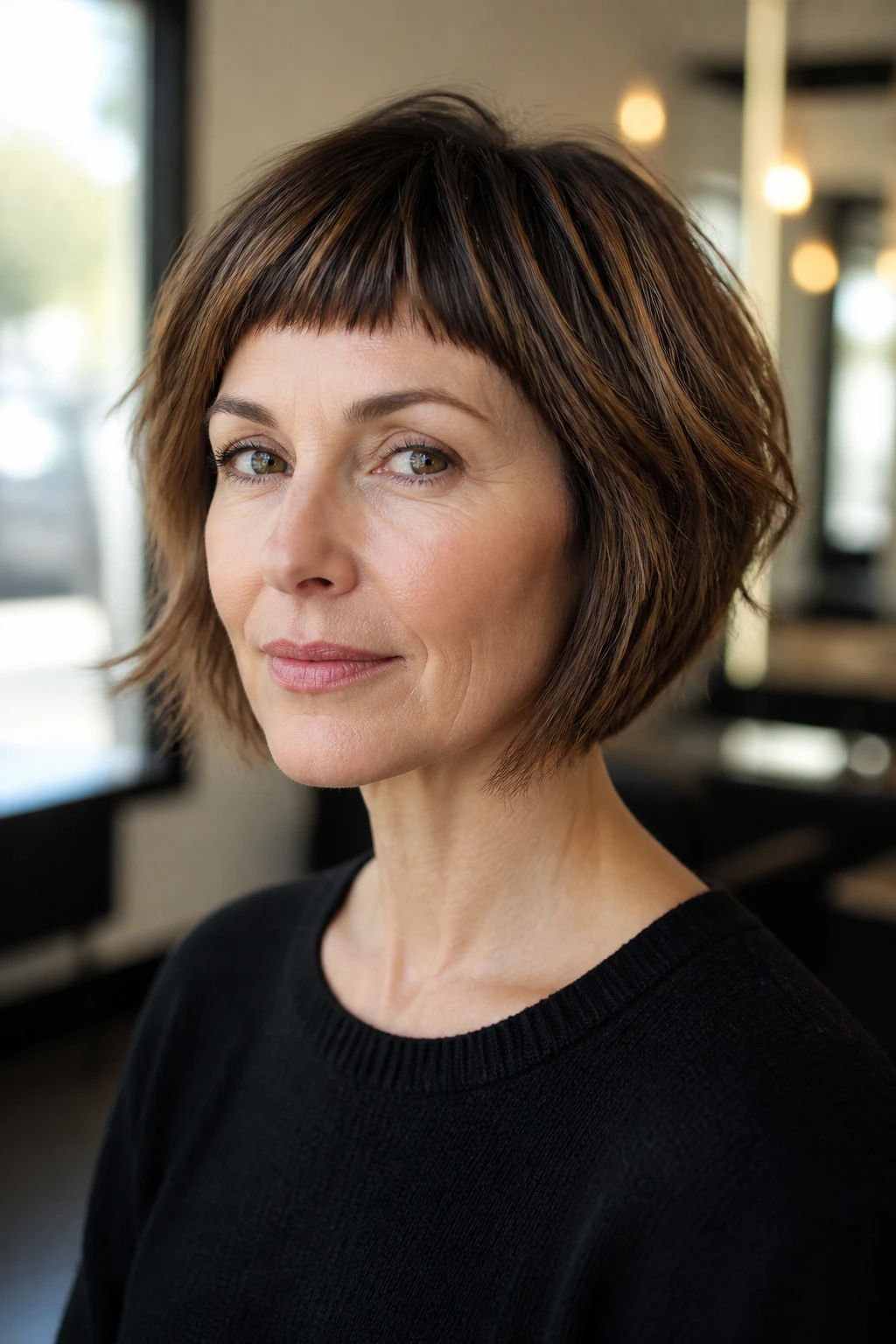
A micro fringe is a bold choice, and I won’t pretend otherwise. It sits above the eyebrows and creates a sharp little window for the face. Paired with a layered bob, it can look modern and crisp, especially on straight hair that holds a clean edge.
The tradeoff is maintenance. Micro fringe grows fast, and once it starts falling into the eyes, it loses the neat line that makes it work. It also asks for confidence. There is no hiding it in a side part the way you can with longer bangs.
Still, on the right face shape, it is excellent. It can shorten a high forehead, sharpen a soft bob, and give the entire cut a fashion-forward feel without making the rest of the hair heavy. The key is balance. Keep the bob soft so the fringe can be the statement.
12. Curly Layered Bob
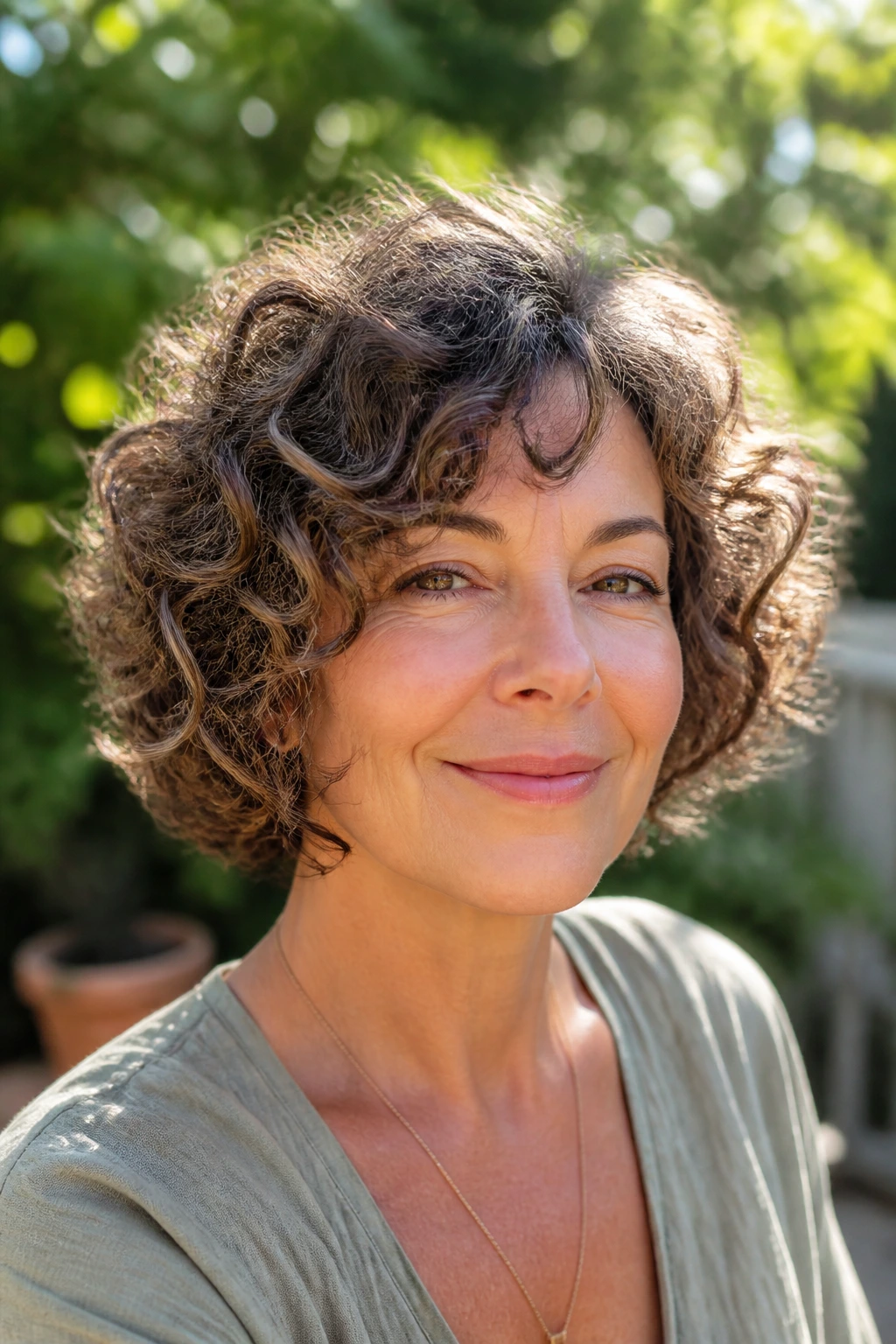
Curly hair needs layers that respect the curl pattern, or the whole shape turns triangular and bulky at the bottom. A curly layered bob solves that by letting the curls stack in a controlled way from the inside out. The result is rounded, not wide.
This is one of those cuts that should be judged dry, or at least mostly dry. Curl length changes as it dries, and a bob that looks perfect wet can bounce up far shorter than expected. A stylist who understands curl pattern will usually leave more length than you think you need.
The styling part is mercifully straightforward. A leave-in, a curl cream or gel, and a diffuser are usually enough. Brush it when it’s wet, not dry. Dry brushing breaks the curl map and gives you fuzz instead of shape.
13. Sleek Bob with Interior Layers
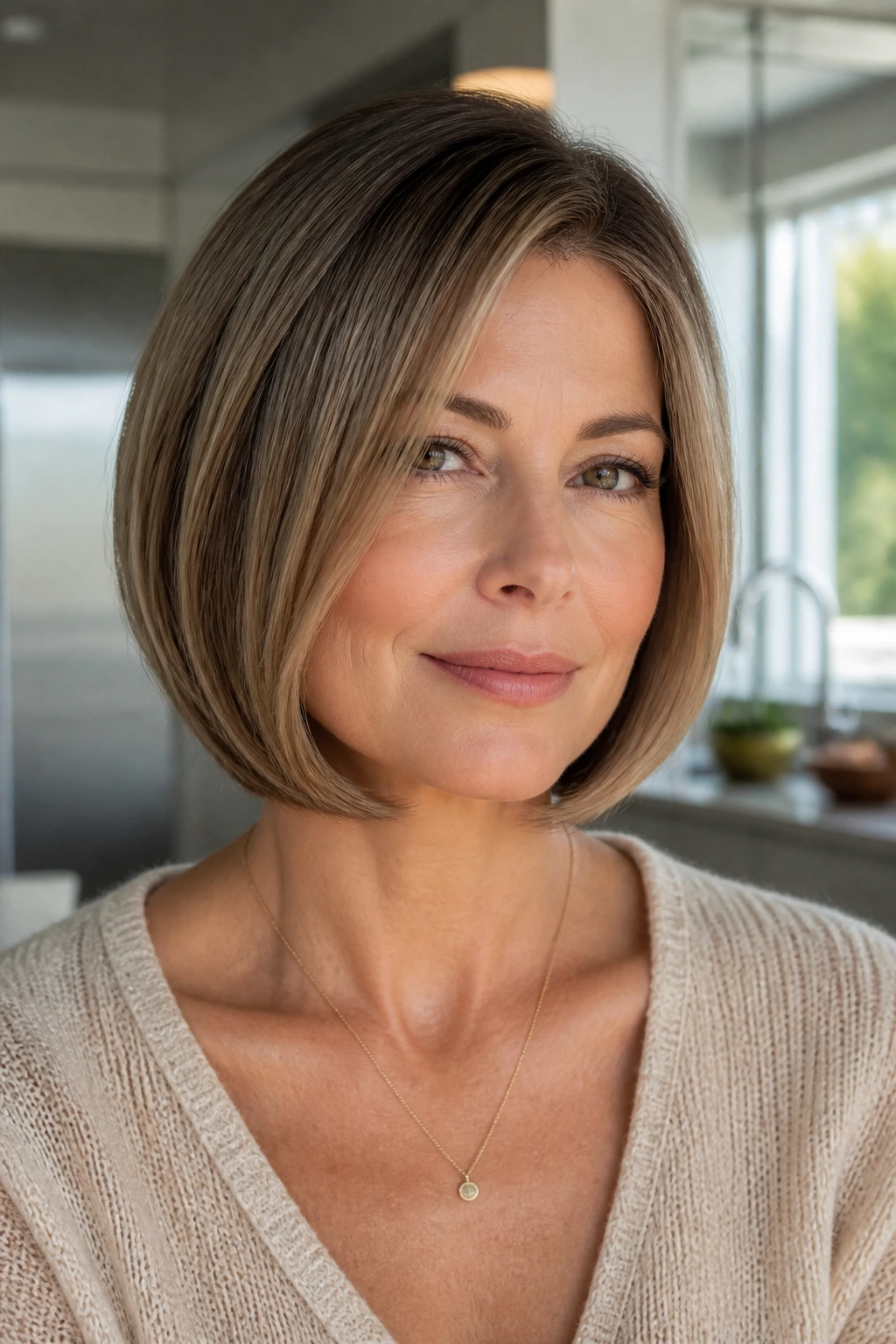
A sleek bob with interior layers is for someone who wants a clean outer line but refuses to wear a heavy helmet of hair. The exterior stays smooth. The hidden layers inside remove enough bulk to keep the bob from feeling stuffy at the bottom.
This is one of my favorite answers for thick straight hair. The outside reads neat. The inside breathes. That’s the whole game. It also makes the bob sit closer to the head, which is useful if you’re after something polished that still moves when you turn your face.
A round brush and a blow dryer with a nozzle are enough for most of the styling. Finish with a touch of serum on the ends, not the roots. If you put shine product everywhere, the sleekness turns greasy fast.
14. Asymmetrical Layered Cut
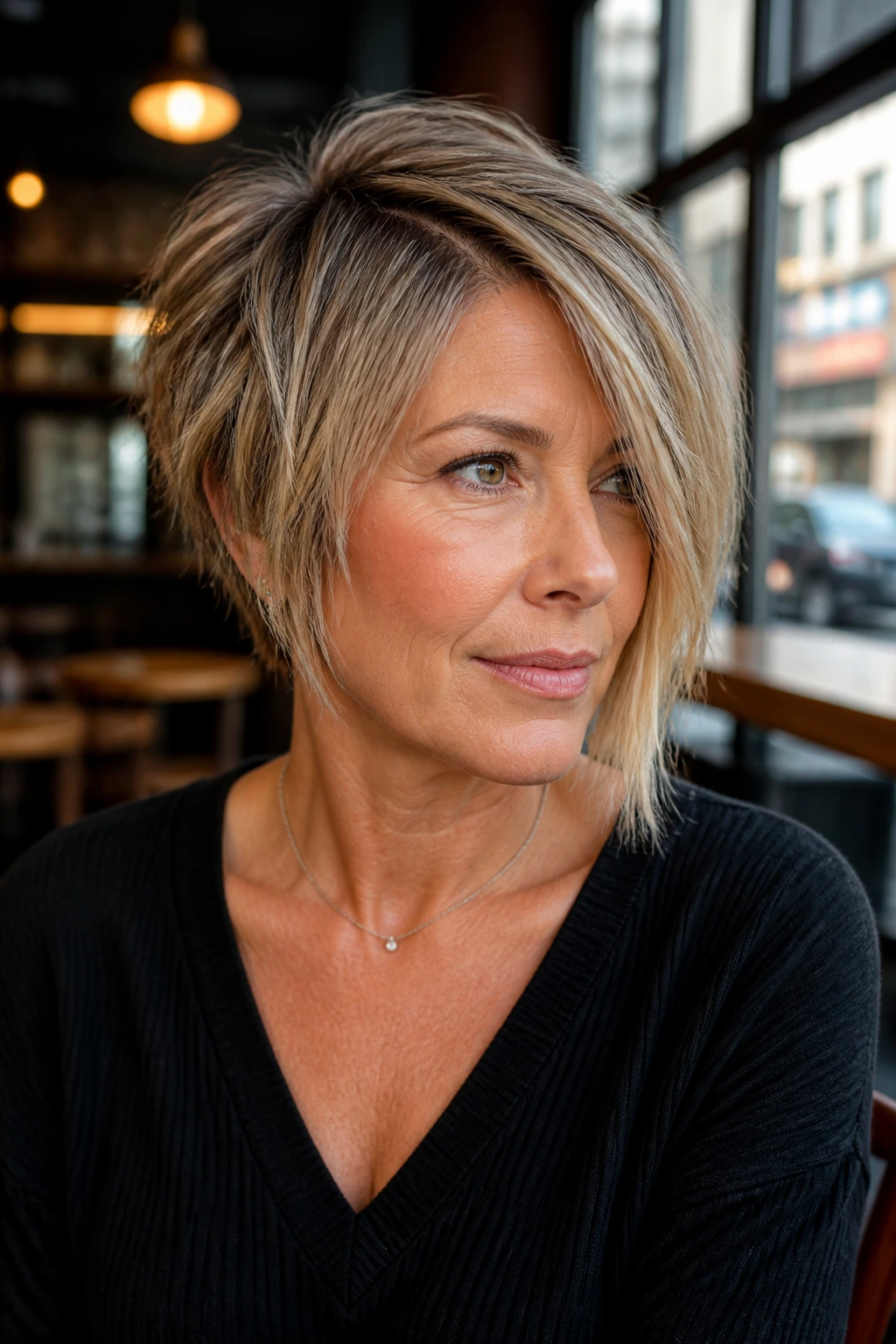
An asymmetrical cut asks for a little more confidence and a little more precision. One side stays longer than the other, and the layers tie the whole thing together so the difference feels intentional instead of lopsided. Done well, it gives the haircut a sharp line and a bit of drama.
Why the Asymmetry Works
The longer side pulls the eye downward, which can slim the face visually. The shorter side opens one side of the neck and jaw. Together, they create movement even when the hair is barely styled.
Best Ways to Wear It
- Side part the hair on the longer side for extra lift.
- Keep the layers soft, not jagged.
- Use it if you want something a little less common than a classic bob.
- Trim it on schedule, because asymmetry grows out unevenly and shows it fast.
This cut is not the answer for someone who wants the easiest possible morning. It is the answer for someone who likes shape and doesn’t mind a little maintenance.
15. Tapered Cut with a Lifted Crown
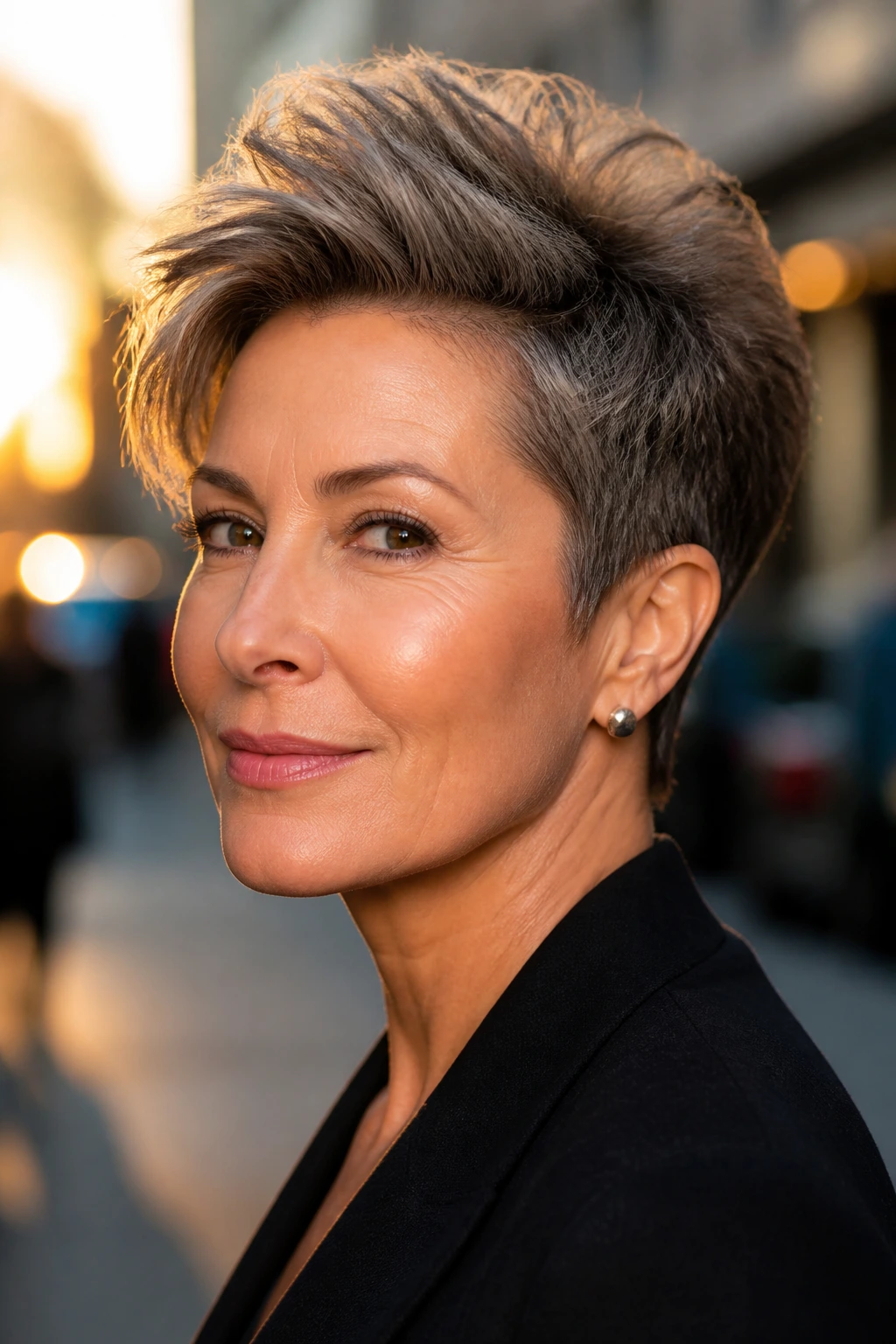
A tapered cut sits close at the nape and around the ears, then keeps more length and lift on top. It is tidy, clean, and a little sporty. When the crown is shaped well, the whole cut looks awake even if you only run your fingers through it.
This style can be a lifesaver for dense hair. The taper removes the bulk that makes shorter cuts swell outward, while the top stays long enough to create height. If your hair is naturally heavy, this cut can make it feel like somebody took two pounds off your head.
I’d choose it if you like a shorter neckline and do not want to fuss with side pieces that fall into your face all day. It needs periodic trims to keep the taper clean, but that’s the tradeoff for having hair that sits where you put it.
16. Choppy Jaw-Length Cut
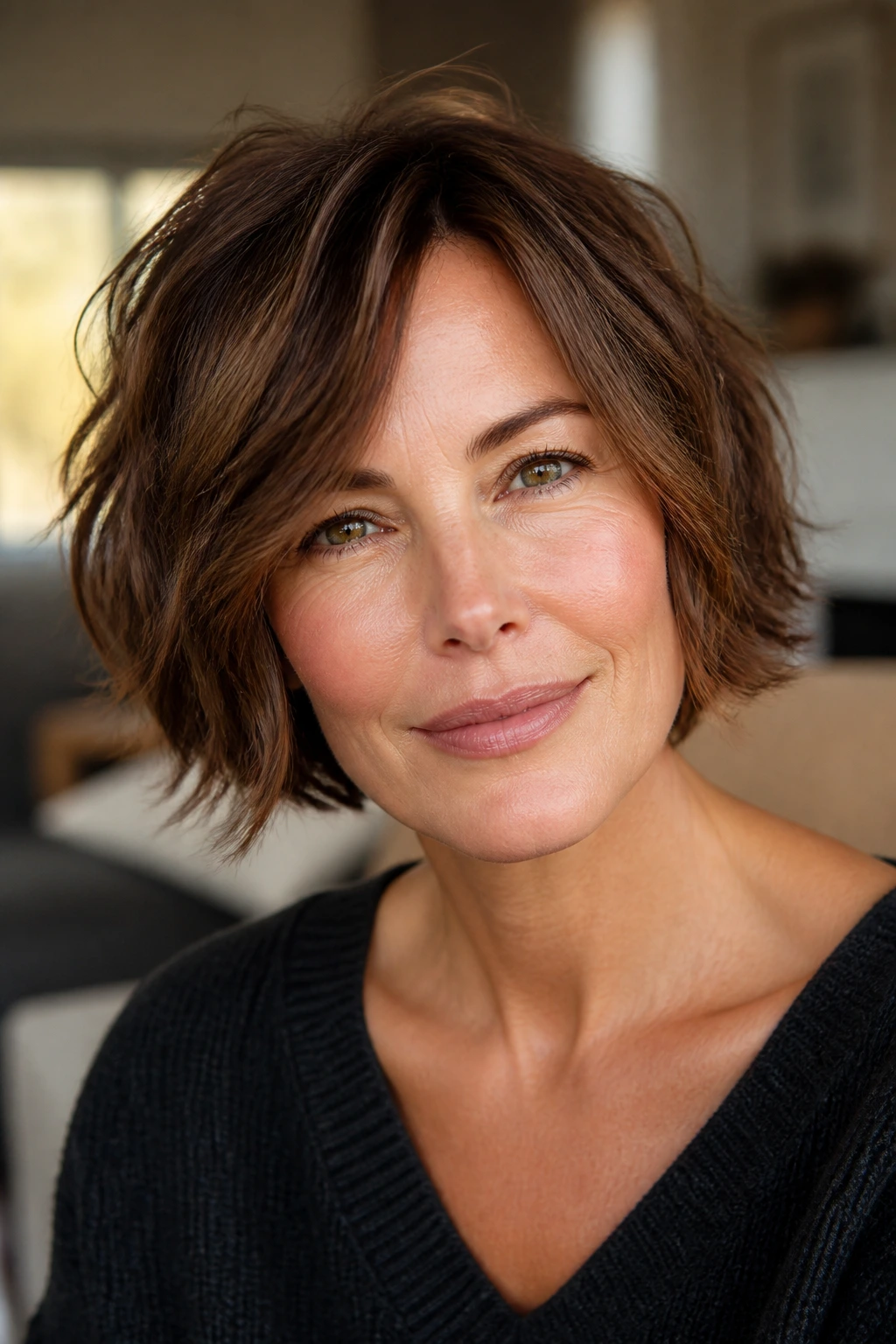
A choppy jaw-length cut is all about texture at the ends. The layers break up the perimeter just enough to keep it from feeling blunt, but not so much that the shape falls apart. It’s especially useful if your hair is thick and tends to hold a heavy line around the face.
The jaw length is the interesting part. It frames the lower face, which can be flattering if you want to show off cheekbones or a strong lip line. The choppiness keeps the haircut from looking too prim.
Styling Notes
- Use a light styling cream on damp hair.
- Rake it through with fingers, not a brush, if you want movement.
- Add a slight bend at the ends with a flat iron if the cut feels too straight.
- Keep the texture controlled. Too much and the haircut starts to look frayed.
This is one of those styles that looks best when it looks like hair, not effort.
17. Soft Wolf Cut for Short Hair
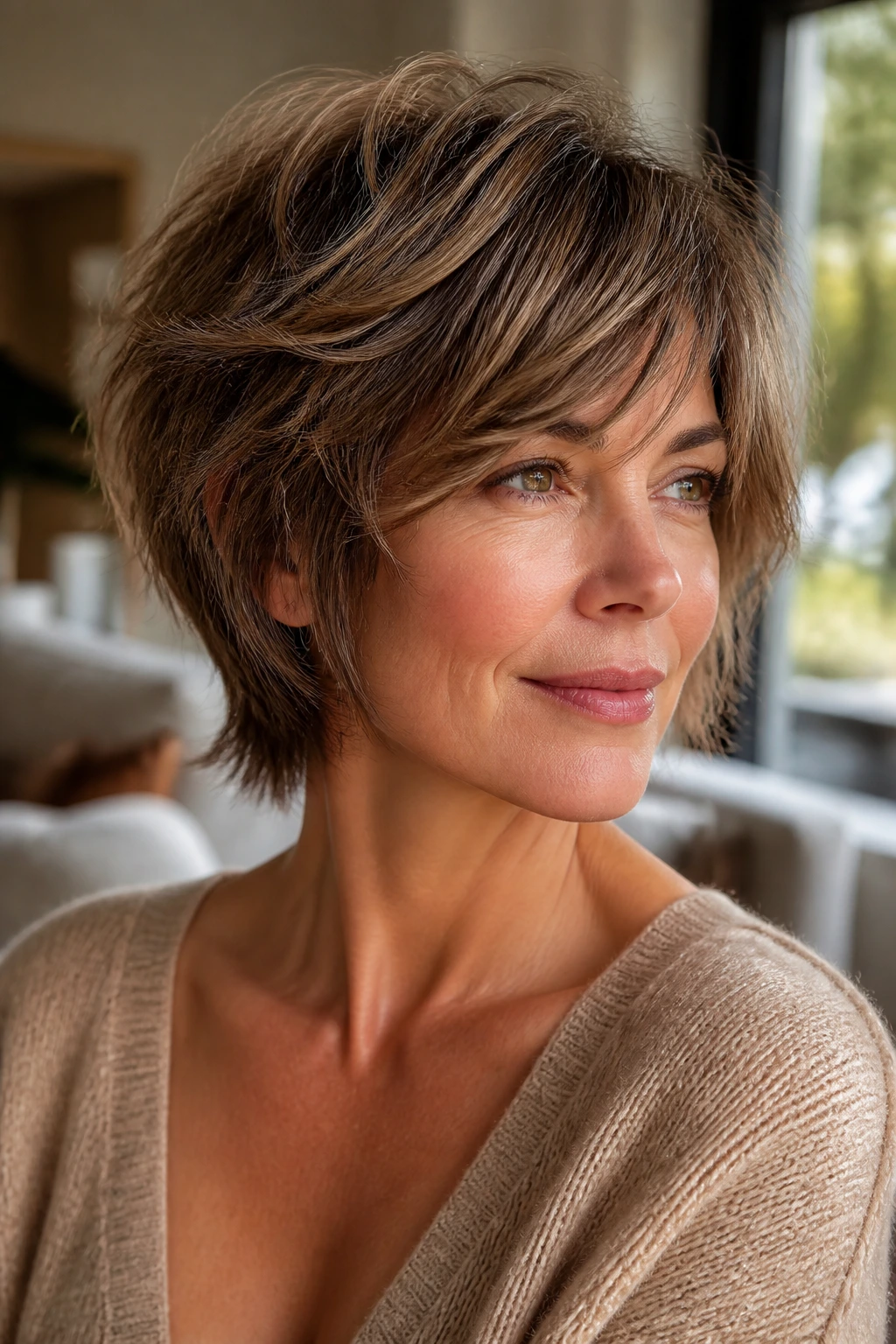
A soft wolf cut takes the shag and trims away the extreme edges. You still get crown layers, face-framing pieces, and a slightly longer bottom section, but the whole thing is gentler and easier to wear than the bolder version you see on younger heads. That matters. The shape needs to fit real life, not a photo shoot.
What I like here is the looseness. The cut does not need to be perfect to look right. If your hair has a wave, a bend, or a little frizz, the style can actually benefit from it. Straight hair can wear it too, but it usually needs some texturizing spray or a small iron bend to keep the layers from lying too flat.
If you want movement more than polish, this is a strong pick. If you want crisp lines, skip it.
18. Side-Parted Layered Bob with Volume
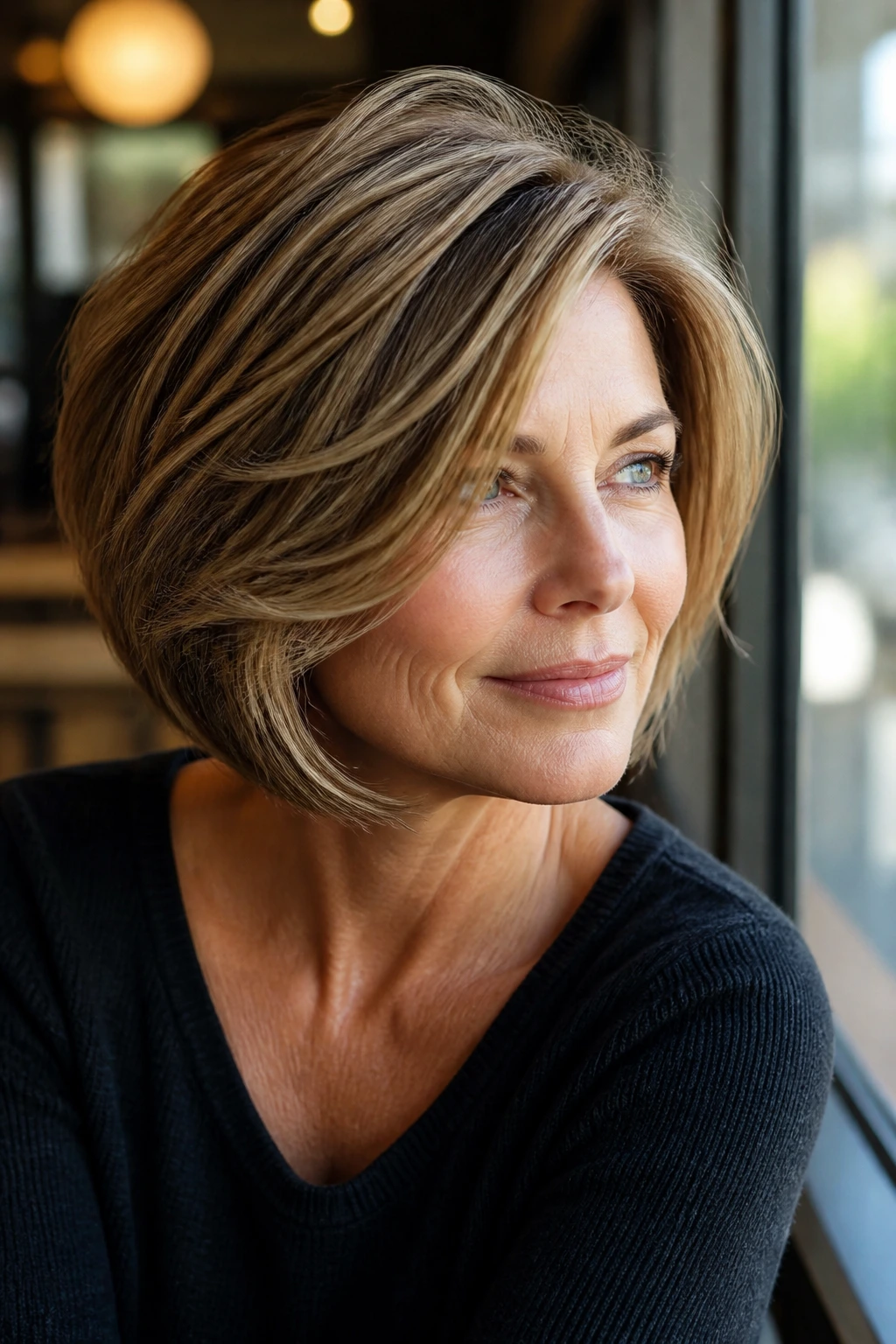
A side-parted layered bob is one of the most dependable ways to get lift without going shorter than you want. The part creates instant height on one side, and the layers help the bob keep that shape instead of falling dead flat by noon.
The side part is doing more work than people give it credit for. It changes the entire balance of the haircut. A center part can make a bob feel symmetrical and calm. A deep side part gives it direction and a little lift at the root.
Good Reasons to Choose It
- Fine hair gets more body with less styling.
- Round faces get a cleaner vertical line.
- Cowlicks near the crown are easier to work with.
- It grows out gracefully if you miss a trim by a week or two.
A large round brush or a couple of Velcro rollers at the crown can make this cut look like you spent more time on it than you did. I’m fond of that kind of trick.
19. Salt-and-Pepper Textured Crop
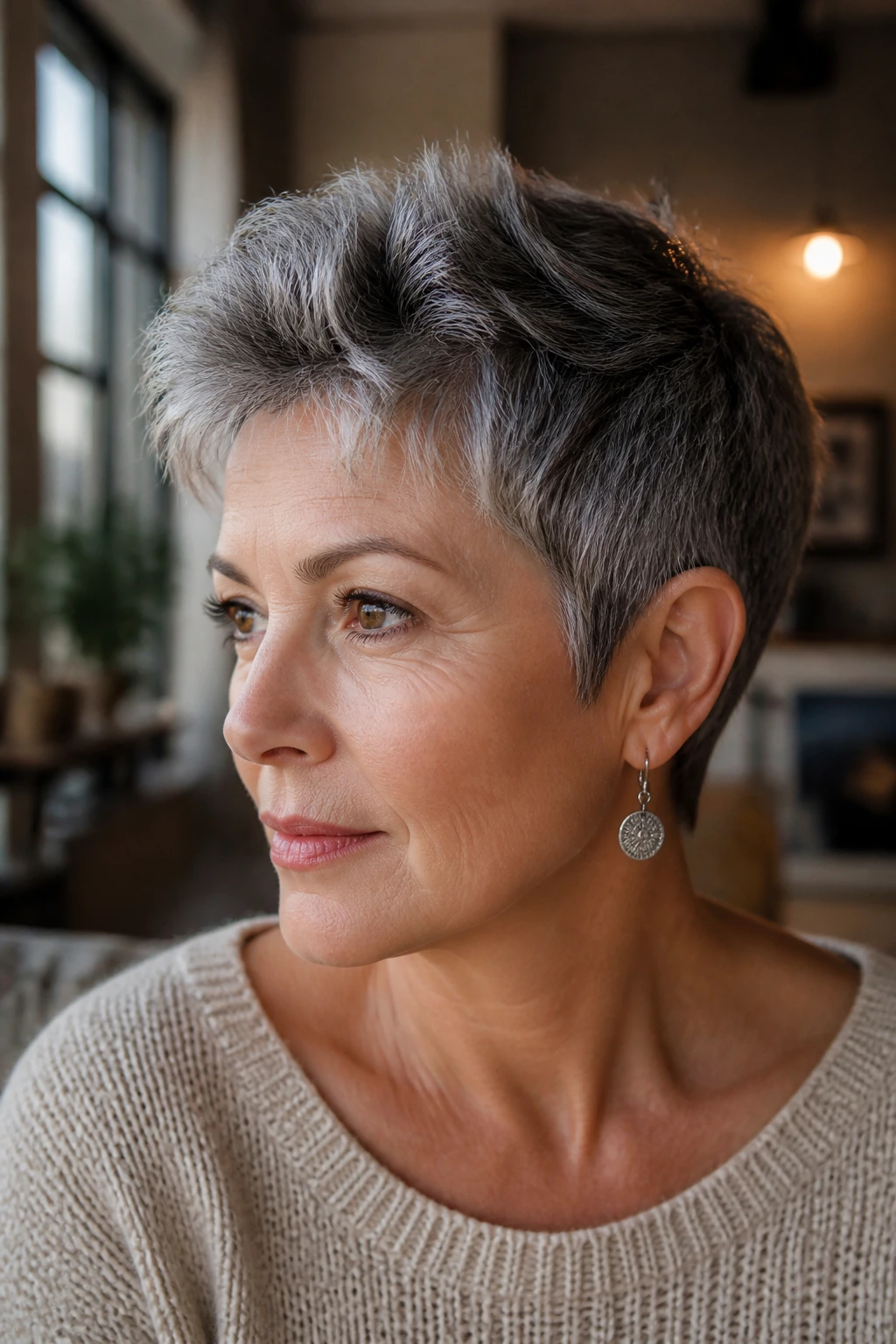
A salt-and-pepper textured crop can be one of the best-looking short layered haircuts for women over 40 because the cut lets the color do its job. The silver, gray, and darker strands show up differently when the hair has texture. Flat hair hides that contrast. A good crop brings it forward.
The shape should stay compact on the sides with some texture on top. Not spiky. Not fussy. Just enough movement for the silver strands to catch light and keep the whole style from feeling static. If the crop is cut too heavily, gray hair can look wiry. If it is cut too softly, it can lose its edge.
I like this style on people who are done apologizing for their natural color. A little styling cream, a clean neckline, and a precise top layer can make salt-and-pepper hair look deliberate in the best way. Gray does not need rescue. It needs a cut that respects it.
How to Style Short Layers Without Overworking Them
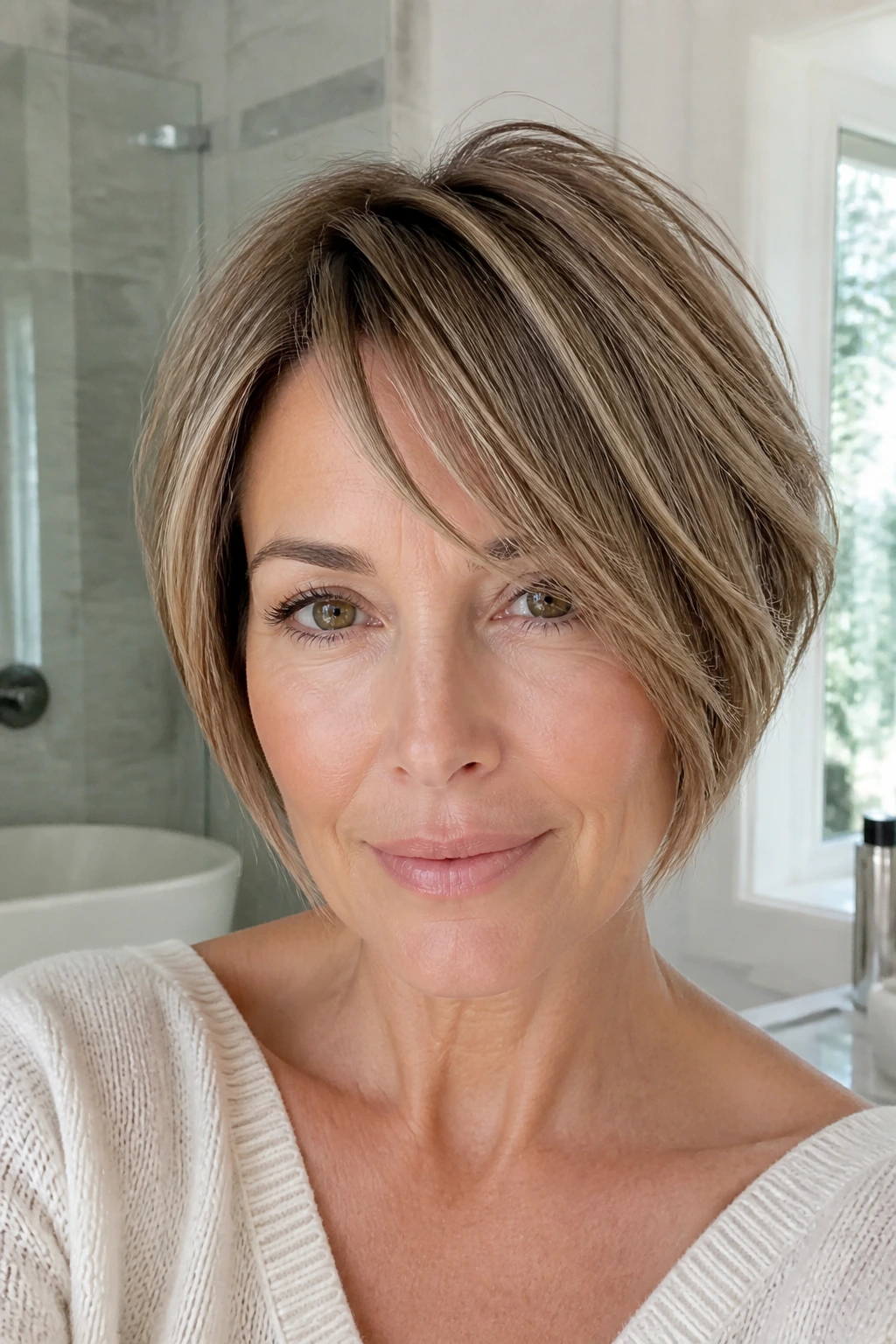
A short layered cut should not need a full production every morning. That is the whole point. If you’re using four products, two hot tools, and a prayer, the cut probably needs adjusting.
Root lift first: On fine hair, a little mousse or root spray at the crown does more than heavy conditioner ever will. Work it into damp roots, not the ends. The ends need softness; the roots need support.
Pick one finish, not five: If the hair is meant to look smooth, use a round brush and a cool shot. If it is meant to look piecey, use paste or texture spray and stop there. Product overload makes short layers collapse or stick together in weird little ropes.
Air-dry with intention: For wavy or curly cuts, scrunching is fine. Twisting a few face-framing pieces can help too. Let the hair dry all the way before deciding it needs more help; half-dried short layers often lie to you.
Be gentle with heat: Short hair does not need a blazing iron at full blast. A lower heat setting and smaller sections do the work just as well, and the ends stay less fried.
Mistakes That Make Short Layers Puff, Split, or Collapse
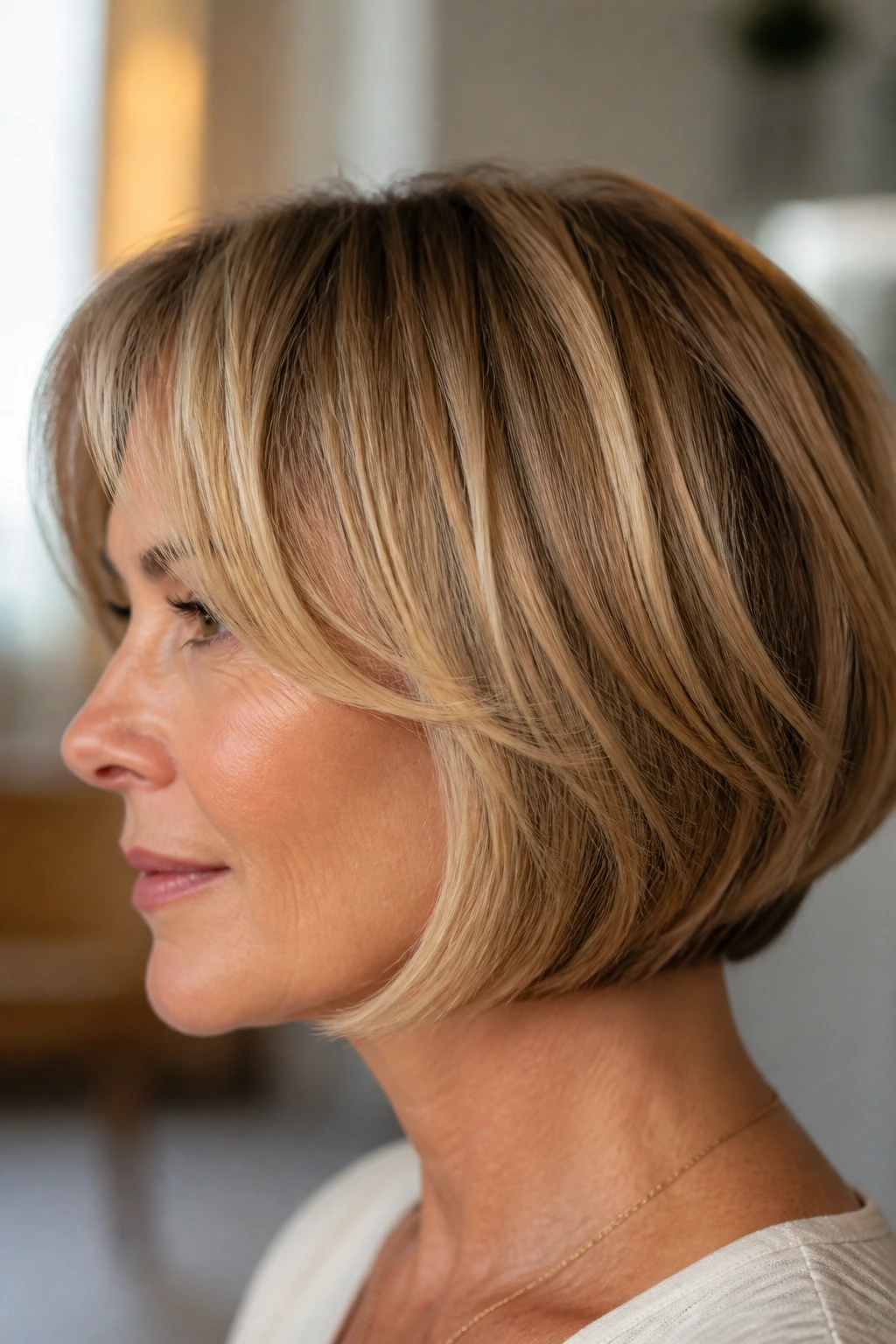
Too many short layers around the crown: The symptom is a round, fluffy top that feels bigger than the rest of the head. The fix is to keep crown layers controlled and let the volume live in one or two strategic spots, not all over the top.
Over-thinning thick or gray hair: Hair ends start looking wispy, see-through, or dry at the bottom. Instead of aggressive thinning shears, ask for interior removal of bulk and a cleaner perimeter.
Ignoring your growth pattern: Cowlicks, a stubborn side part, or a strong swirl at the crown can push a fringe in the wrong direction. Bring your hair dry to the salon or show your stylist what happens after a normal morning, not after a blowout.
Choosing a photo that ignores density: A cut that looks light on one person can look bulky on another. The fix is to match the photo to your texture, not just the shape.
Letting the fringe grow too long: Bangs that cross the eyes change the balance of a short layered cut fast. Trim them early, or ask for a softer fringe that grows out with less drama.
Variations Worth Asking For at the Salon
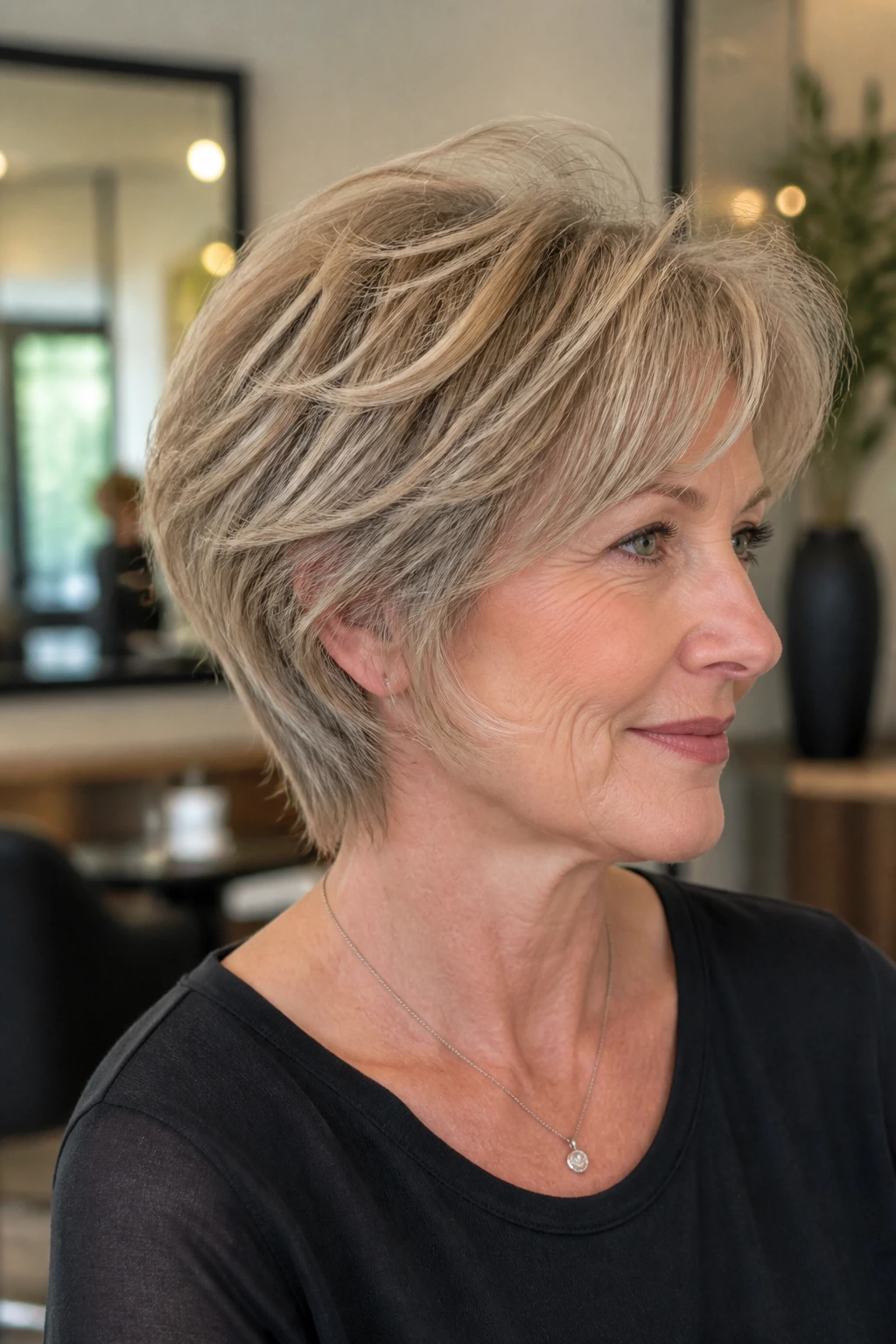
The Air-Dry Edit: Keep the layers softer and a touch longer so the haircut falls well without a blowout. This suits wavy hair, busy mornings, and anyone who wants movement without round-brush commitment.
The Silver-Forward Edit: Ask for a cleaner outline, less texture at the ends, and enough lift at the crown to show the salt-and-pepper pattern. It’s a smart choice if you want the gray to look deliberate rather than blended into nothing.
The Glasses-Friendly Edit: Leave room around the temples and keep the fringe light so frames don’t crowd the face. Short layers can look excellent with glasses when the sides are opened up instead of boxed in.
The Thick-Hair Taming Edit: Keep the perimeter blunt enough to hold shape while removing bulk from the inside. That keeps thick hair from ballooning outward and saves you from the triangle effect.
The Curly-First Edit: Cut the hair with its curl pattern in mind, not stretched straight. Leave extra length, because curls shrink, and a good layered bob on curly hair is usually longer than people expect.
Tools and Products That Help Short Layers Behave
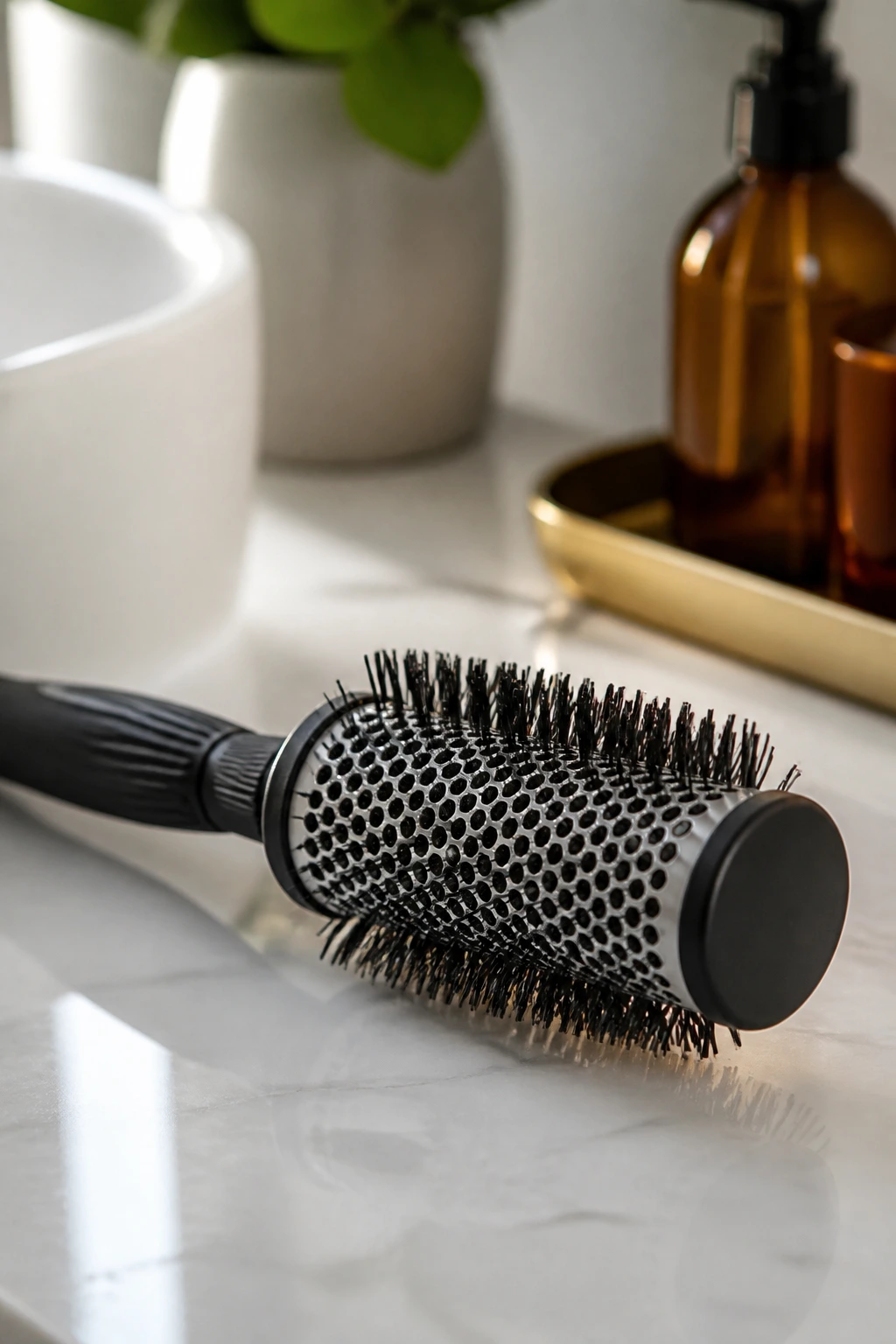
- 1.25- to 1.5-inch round brush: Good for bobs, lobs, and soft face-framing bends without making the hair too curled under.
- Blow dryer with a concentrator nozzle: The nozzle directs air so the cuticle lies flatter and the layer ends look smoother.
- Small flat iron: Handy for polishing the front pieces or adding a slight bend to a bob that dries too straight.
- Root-lift mousse or spray: Best at the crown on fine hair; use sparingly or the roots will feel stiff.
- Texturizing spray: Useful for pixies, shags, and choppy cuts when you want separation rather than shine.
- Lightweight styling cream: Better than heavy balm for curly and wavy cuts that need softness without grease.
- Duckbill clips: Useful for sectioning the top while you dry the sides and back, especially on stacked bobs and pixies.
- Wide-tooth comb: A safer choice for curls and waves than a brush when the hair is wet.
- Good reference photos on your phone: Bring more than one. Haircuts are easier to explain when the stylist can see the side view and the back too.
Keeping Short Layered Haircuts for Women Over 40 in Shape Between Visits
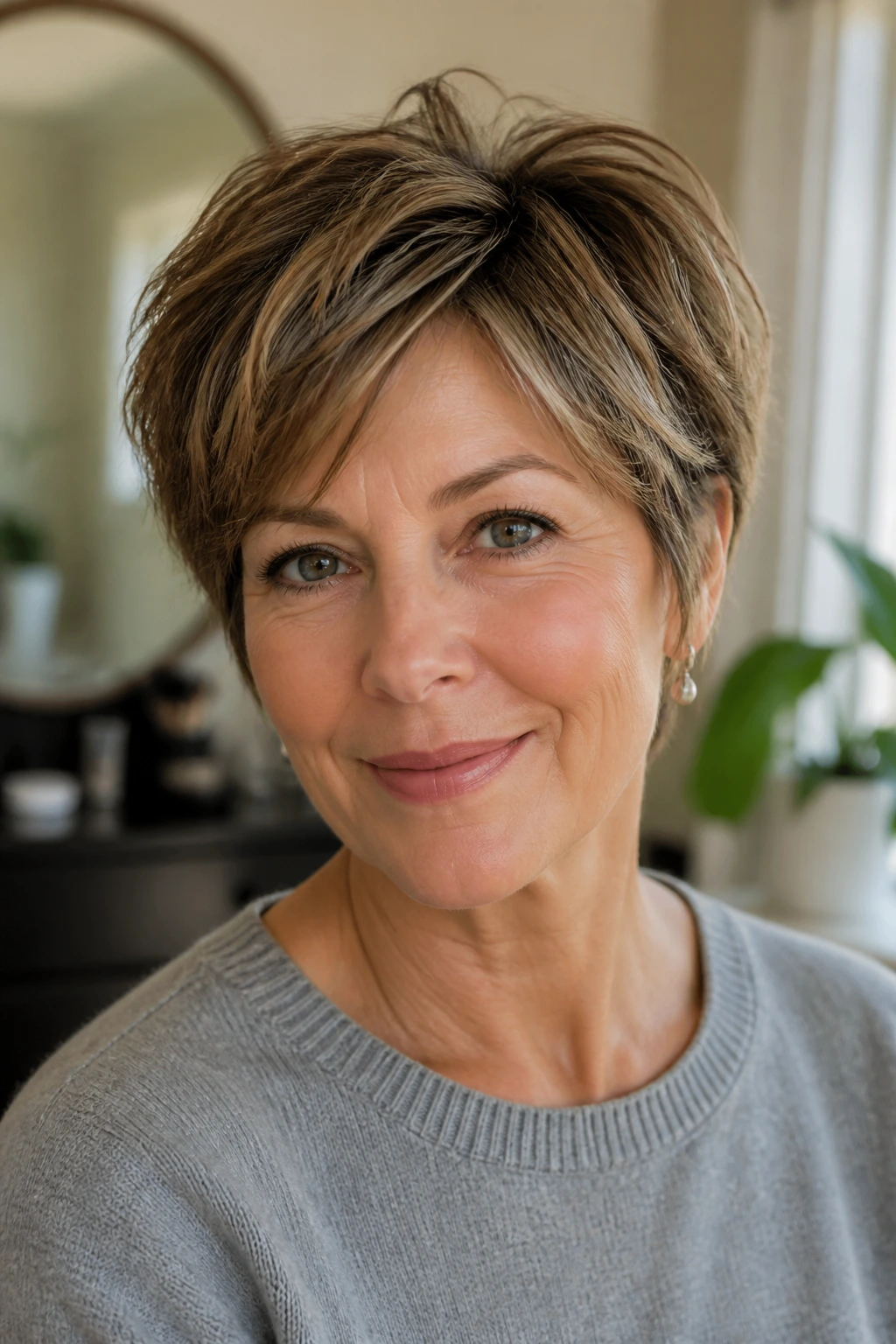
Short layered cuts live or die by the trim schedule. A pixie or tapered crop usually wants a tidy-up every 4 to 6 weeks. Bobs and shaggy crops can stretch to 6 to 8 weeks. A lob can go a bit longer, but once the layers lose their balance, you start styling around the cut instead of with it.
Fringe needs separate attention. If you wear bangs or a micro fringe, they may need cleanup every 2 to 3 weeks, sometimes even sooner if your hair grows fast. That small trim changes the whole shape of the haircut.
At home, the biggest mistake is trying to “fix” growth with more product. If the crown gets flat, refresh the roots with a little water and mousse or dry shampoo. If the ends stick out, use a touch of cream or a quick pass of heat, not a full restyle.
Gray and silver hair need their own care. If brass shows up, a purple shampoo once every 1 to 2 weeks usually helps. If the hair feels dull or coated, a clarifying wash every few weeks brings the texture back. Too much purple shampoo can leave silver hair looking dusty, so keep it in the rotation, not every wash.
Sleeping on a silk or satin pillowcase helps short layers keep their shape, especially around the crown and fringe. A loose clip can save the front pieces too. Tight elastics are overkill for a cut this short and usually leave bends in the wrong place.
Questions Women Ask Before Cutting Their Hair Short

Will layers make fine hair look thinner?
Not if the layers are placed well. Fine hair usually looks thinner when it is over-cut or shredded at the ends, but a layered bob with a clean perimeter can add lift and keep the shape from collapsing.
Do short layered cuts work on thick hair?
Yes, and sometimes they work better than longer cuts because the weight can be controlled more easily. The key is removing bulk from the inside instead of hacking the ends to pieces.
Can I air-dry a short layered haircut?
You can, especially if the hair has natural bend or curl. The best air-dry cuts usually have softer layers and a little extra length, because very short cuts can dry in odd directions.
How often do I need a trim?
Most short layered cuts need trimming every 4 to 8 weeks, depending on the shape. Pixies and fringes need the most frequent upkeep. Bobs and lobs can usually stretch a little longer.
What if I wear glasses?
Choose layers that leave room around the temples and keep the fringe from landing right on the frame. A bob or pixie can look excellent with glasses when the cut and the frames have some breathing room.
Is a bob safer than a pixie if I’m nervous?
Usually, yes. A chin-length bob gives you short hair without losing the option to tuck, clip, or pin it back. It is a smart middle ground if you’re unsure how far you want to go.
What if my hair has a cowlick at the crown?
Tell the stylist before the cut starts. Cowlicks need planning, not wishful thinking, and the wrong short layer at the crown will stand straight up and announce itself every morning.
Can gray hair look good with layers?
Absolutely. Gray hair often looks better with shape because the different tones catch the light through the layers. A textured crop or layered bob can make silver look crisp instead of flat.
The Cut That Still Feels Like You
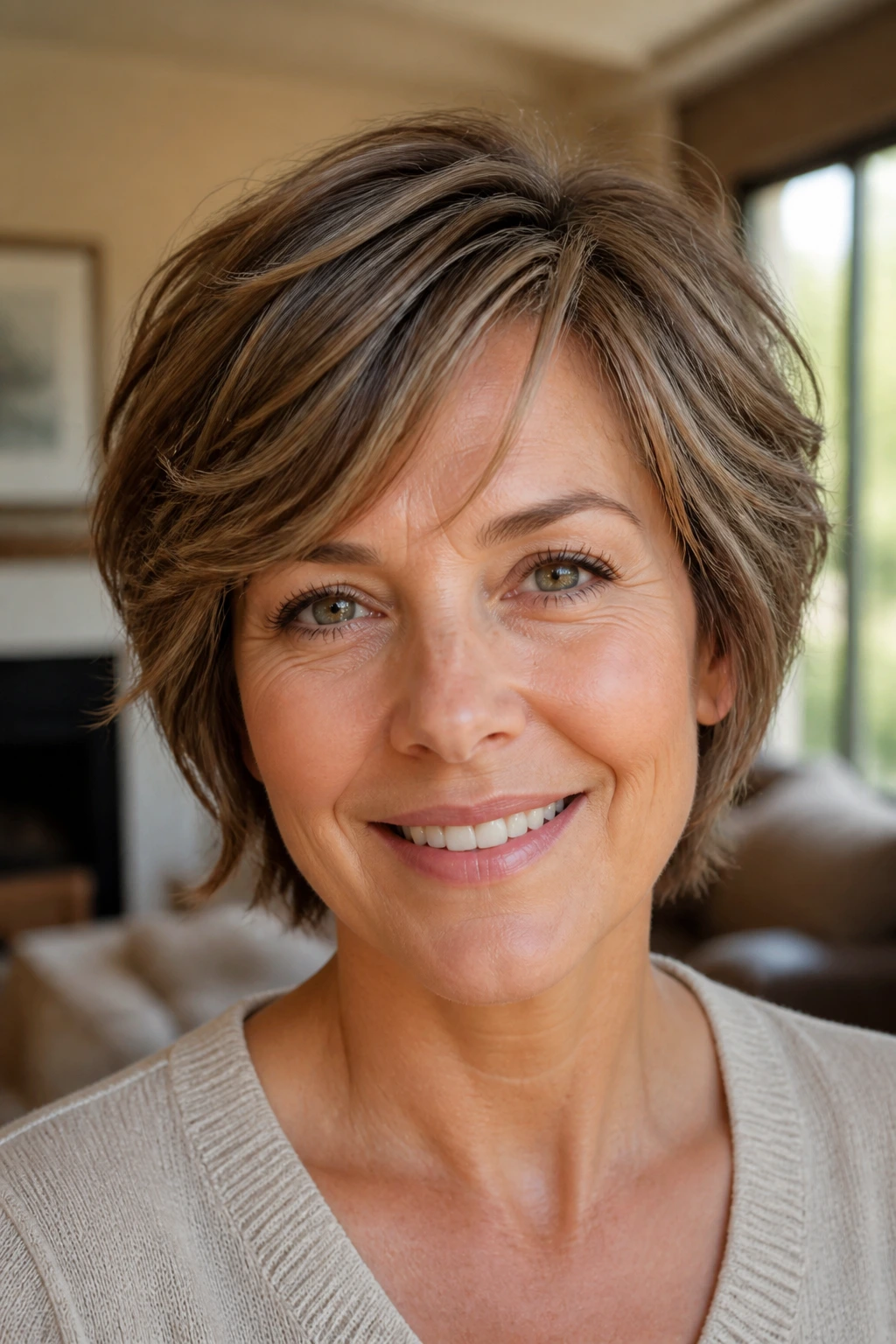
The right short layered cut should not feel like a costume. It should feel like your own hair, only better behaved. That usually means cleaner shape, smarter layer placement, and less bulk where the hair wants to fight back.
I like short layered haircuts for women over 40 because they respect how hair actually lives. They work with glasses, with gray, with cowlicks, with busy mornings, with the fact that nobody wants to spend half an hour coaxing the back of the head into submission. When the cut is right, the haircut does some of the work for you.
That is the goal. Not to chase a younger look, not to chase a trend, just to get hair that sits well, moves well, and doesn’t make a fuss the second you walk out the door.
