



Short hair gets called low-maintenance, and then it spends the afternoon lying flat at the crown and puffing out at the jaw. Annoying, isn’t it? A blunt bob or cropped cut can look sharp in the mirror and a little boxy an hour later.
That is why layered hairstyles for short hair matter more than people think. A few well-placed layers can change where the eye lands, how the ends move, and whether the cut feels airy or heavy. The difference between clean and lively and why does this look like a helmet? is often just the way the weight is removed—behind the ear, through the top, or softly around the cheekbone.
I like short layers when they’re specific. Not shredded. Not over-thinned. Specific. Short hair has less room to hide a bad cut, so the best versions keep a clear outline while still letting the ends bend, flip, or tuck instead of sitting like one solid block. If you’ve ever pushed hair into place with your fingers and watched it fall right back, you already know why the right shape matters.
The cuts below lean into that difference in very different ways, from soft and feathered to sharp and choppy.
Why These 23 Cuts Work So Well on Short Hair
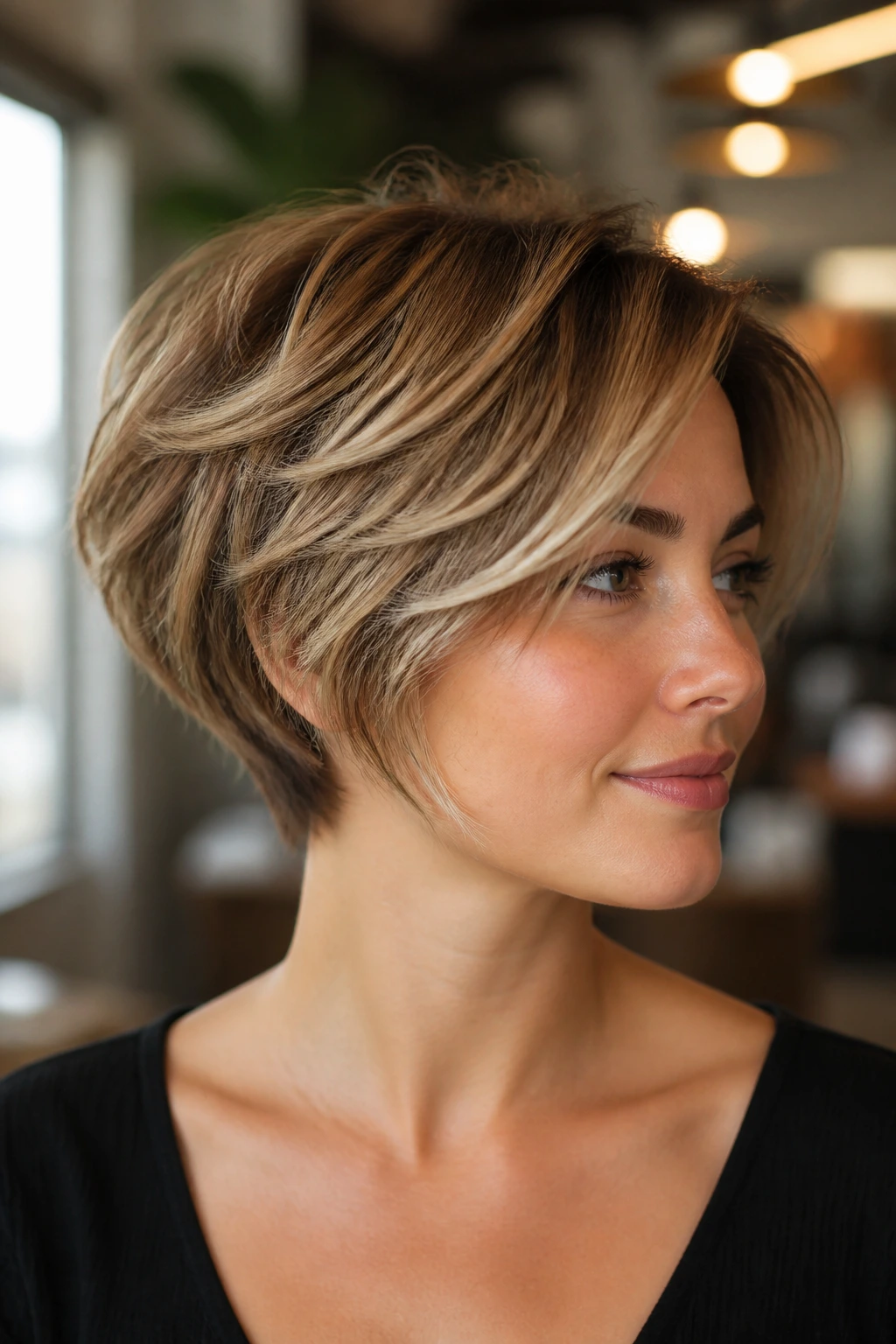
- They control bulk where short hair gets bulky: A good layer in the back or around the crown keeps the silhouette from swelling into a triangle, especially on thicker hair.
- They keep fine hair from collapsing: Internal layers and lighter ends can create lift without stripping away the perimeter that gives short hair its shape.
- They make air-drying look less accidental: When the cut has the right movement, a quick scrunch or finger-dry leaves texture that looks deliberate instead of fuzzy.
- They give face-framing options without a full grow-out: A cheekbone piece, side-swept fringe, or soft fringe can shift the whole mood of the cut in a single move.
- They work with the tools most people already own: A blow-dryer, a round brush, a bit of mousse, or a flat iron can change the finish fast.
- They grow out with more grace: The better the layering pattern, the less awkward the in-between stage feels when your cut starts stretching past the salon shape.
1. Textured French Bob
A French bob with texture has that neat, slightly undone shape that lands right around the cheek or jaw. The outline stays crisp, but the ends move instead of sitting like a shelf. It’s the kind of cut that looks especially good when a scarf rubs it a little. That tiny mess makes it better.
Why It Works
Short bobs can go stiff fast. A little internal layering softens the line so the cut bends toward the face instead of flaring outward.
Quick Shape Notes
- Best length: cheekbone to jaw
- Best hair types: straight, wavy, and medium-density hair
- Styling mood: airy, not polished to death
- Product fit: texture spray or a small touch of mousse
One detail to ask for: keep the back just a hair shorter than the front so the bob doesn’t flip out like a mushroom cap.
2. Choppy Pixie with Long Crown
This is the cut that gives fine hair some backbone. The sides stay close, the crown stays longer, and the choppy top pieces let you push the shape forward, sideways, or a little messy. It never reads flat if it’s cut with enough intention.
The trick is balance. If the top is too short, you lose styling options. If the sides are too heavy, the whole thing feels helmet-like. Ask for texture through the top 2 to 3 inches, with the nape and sideburns tapered tighter so the outline stays clean.
This one likes a pea-sized dab of paste worked through dry hair. Fingers, not a comb. A comb makes it look too neat, and neat is not the point here.
3. Curly Layered Bob
Why do some curly bobs bounce and others turn into a triangle? Usually because the layers were cut without respecting shrinkage. Curly hair needs shape built around the curl pattern, not against it.
A curly layered bob works when the longest pieces land somewhere between the chin and collarbone while the inner layers are left long enough to let the curls stack softly. Dry cutting is often the safer call, because curls spring up in their own odd little way. If the cut is too short at the top, the volume can shoot upward and widen the sides.
How to Style It
Use a leave-in conditioner on damp hair, then a light gel or curl cream from mid-length to ends. Scrunch once, diffuse on low heat, and stop touching it when it starts to set. The less you poke at it, the better the curl clumps stay.
4. Shaggy Bob with Curtain Bangs
You tuck one side behind the ear, the fringe falls into your cheekbones, and the whole cut suddenly looks lived in. That’s the appeal of a shaggy bob with curtain bangs: it does a lot of work without looking fussy.
The layers start higher than in a classic bob, so the top gets lift and the ends get that broken, piecey finish. Curtain bangs soften the forehead and give the style a bit of swing when you move. It’s especially good if your hair has a natural bend or a little wave that fights against a strict line.
A round brush helps, but not for every strand. Just the fringe and maybe the front corners. The rest can air-dry with a salt spray or texture foam.
5. Stacked Bob with Soft Layers
A stacked bob gives the back real shape, and the soft layers keep it from looking too formal. The nape sits slightly shorter, then the length graduates forward toward the jaw. That creates lift in the back without making the front too heavy.
This cut is one of my favorites for medium-density hair because it holds its silhouette all day. You can blow-dry it smooth and still get a little movement at the ends. If your hair is very thick, the layers need to be controlled; if it’s very fine, the stack should stay subtle so the back doesn’t disappear.
It’s a good “office but not boring” haircut. That sounds a little plain, maybe, but that’s the point.
6. Bixie Cut with Tapered Nape
A bixie sits in that useful middle ground between a pixie and a bob. You get the short, open feel around the ears, but the front and crown hold enough length to tuck, tousle, or sweep to one side.
The tapered nape is what keeps it from getting clunky. Without that taper, the back can balloon out or curl under in the wrong way. Ask for shorter sides, a soft fringe if you want one, and enough length on top to get at least two styling options. That last part matters more than it sounds. A bixie with no styling range gets boring fast.
This cut works especially well if you like short hair but don’t want the maintenance of a very tight pixie grow-out.
7. Feathered Crop
Feathering is not old-fashioned when it’s done cleanly. It just means the ends are softened so they don’t land as one blunt wall. On short hair, that softness can make the whole shape breathe.
A feathered crop is especially kind to fine or straight hair because it creates motion without demanding a lot of product. The best versions keep the perimeter tidy and use feathering through the top and around the ears. Too much slicing at the ends, though, and the cut starts to look wispy in a bad way.
Ask your stylist for soft, directional texture rather than harsh thinning. There’s a difference. One gives movement. The other can leave little frayed ends that misbehave when the air is dry.
8. Asymmetrical Layered Bob

One side a little longer than the other changes the whole read of the haircut. Even half an inch can shift the focus and make the neck look longer, the jaw a bit sharper, or the front feel more deliberate.
The asymmetrical layered bob works best when the layers support the angle instead of fighting it. That means the shorter side needs enough weight to stay smooth, while the longer side should fall cleanly rather than splitting into too many pieces. If your hair waves strongly, the asymmetry needs a bit of extra shaping or it can look lopsided instead of styled.
This is a good pick if you want short hair that doesn’t look generic. It has edge without needing an aggressive undercut.
9. Razor-Shag Pixie
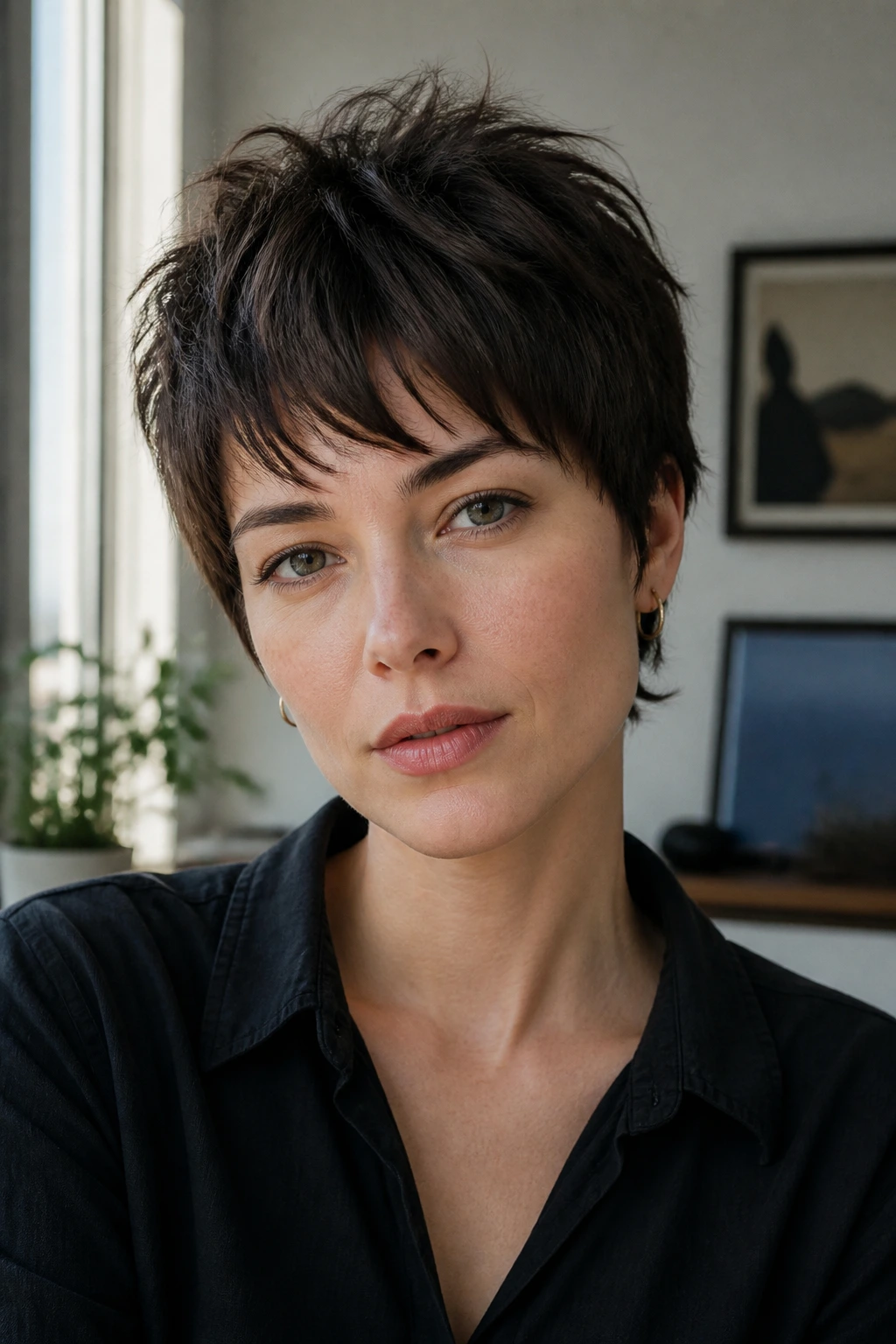
This one is for people who like hair that looks a little wild on purpose. A razor-shag pixie uses softer, broken ends to create movement through the crown and fringe, which gives the cut that cool, slightly ragged finish.
It shines on thick or wavy hair because the razor can remove bulk without chopping the shape too bluntly. On very fine hair, it can go sparse fast, so I’d be careful there. The top should stay long enough to push forward or separate with your fingers, and the sides should be tight enough that the cut doesn’t puff out around the ears.
Use a matte paste or dry texture cream. Shine products flatten this kind of cut, and that defeats the point.
10. Wavy Jaw-Length Bob
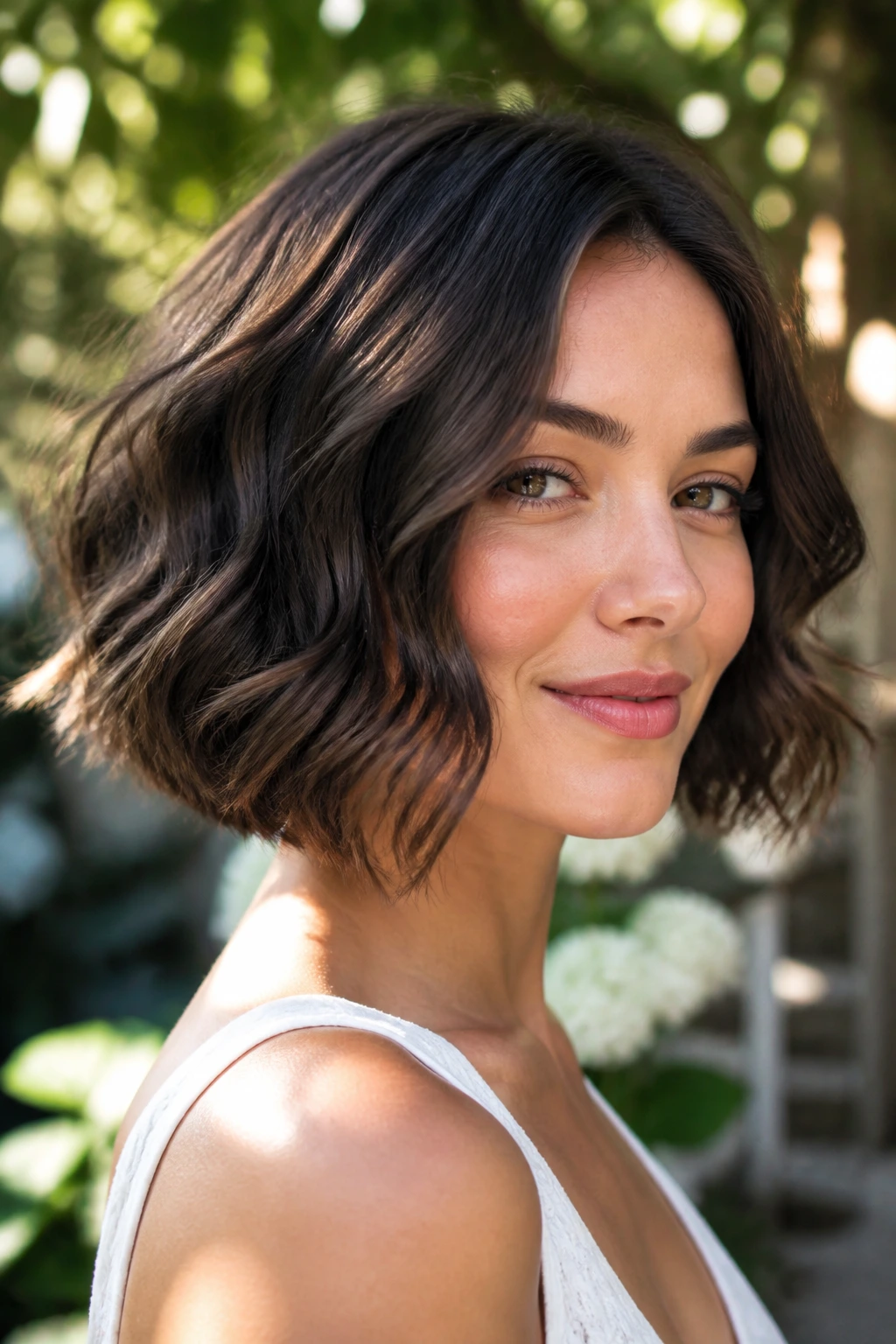
What if you want movement without a lot of short, choppy pieces? A wavy jaw-length bob is the answer. It keeps the outline simple and uses the wave pattern to do the visual work.
This cut looks best when the perimeter lands right around the jaw, with a few soft internal layers to stop the ends from hanging like one heavy curtain. It’s a good choice if you air-dry most days and want something that still looks shaped after a quick scrunch. The hair should bend, not frizz.
A little cream through the mids and a diffuser on low heat can make this cut look polished without making it stiff. If your hair goes poofy, the layers are probably too high or too aggressive.
11. Soft Mullet Crop
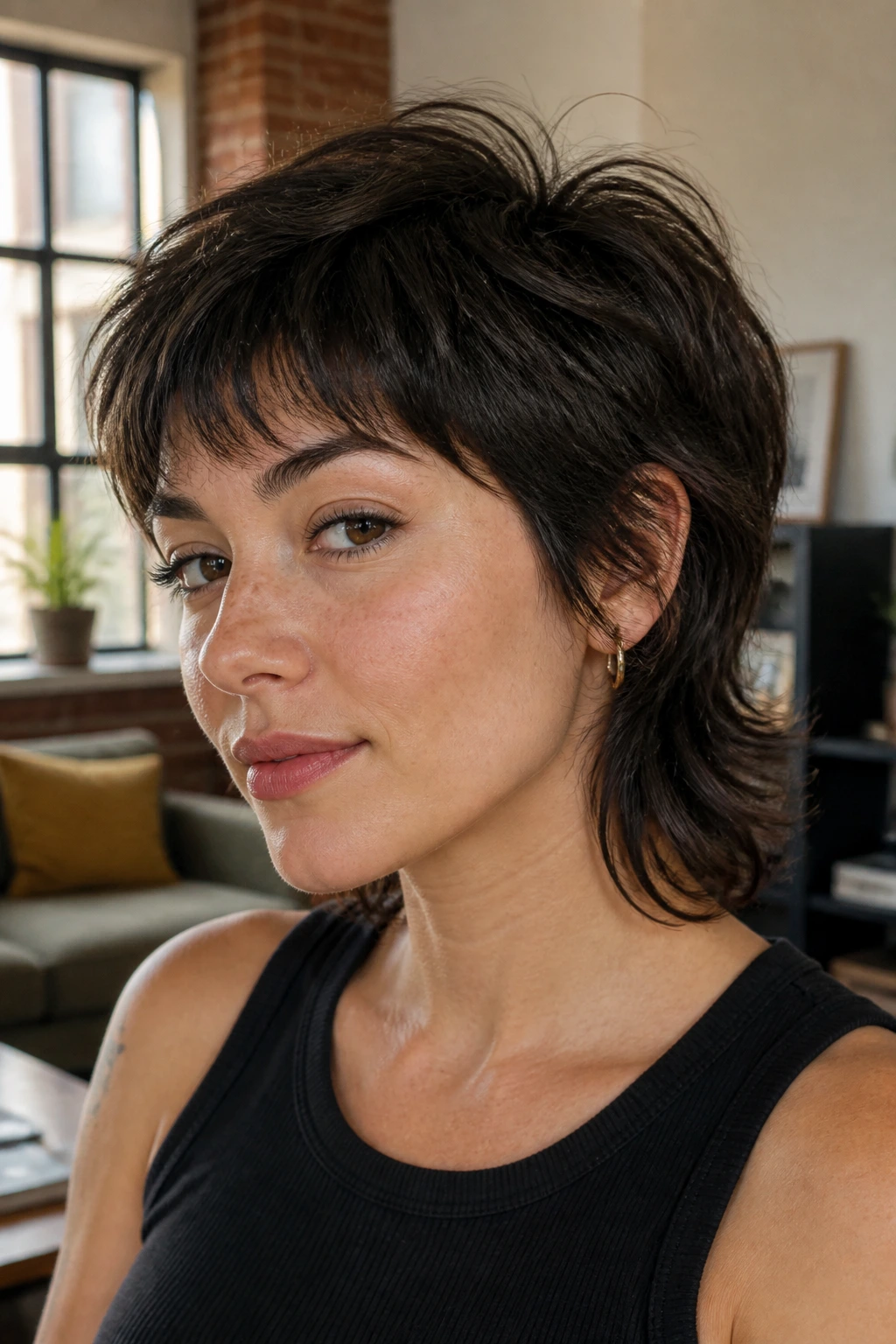
The soft mullet crop keeps length in the back and shorter pieces around the crown and face, but it stops short of looking theatrical. That makes it easier to wear than a sharper mullet and a little more interesting than a classic crop.
The front usually lands in the brow-to-cheek area, while the back keeps enough length to swing. The layers should be soft and blended so the transition doesn’t look abrupt. This cut works well if you like a little edge but still want something you can tuck behind the ear or smooth down on a workday.
It’s not the haircut for someone who wants neat symmetry. It is the haircut for someone who likes shape with some attitude.
12. Side-Swept Layered Pixie
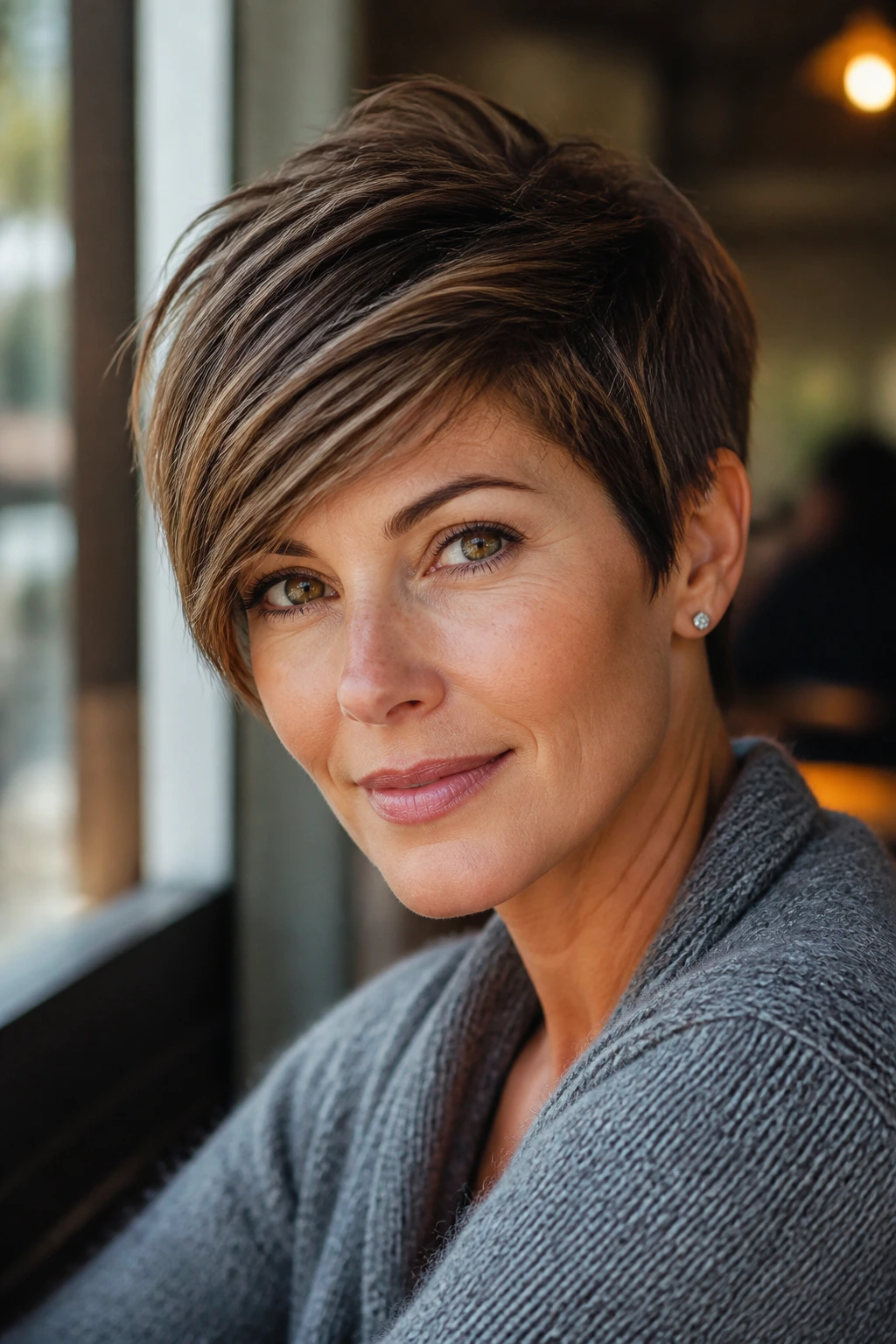
A side-swept layered pixie calms a stubborn cowlick better than most short cuts. The longer top and fringe give the hair somewhere to fall, while the sides stay short enough to keep the shape clean.
The side sweep does two jobs at once: it adds softness around the forehead and gives the crown a lift when you blow-dry it in the opposite direction first. That little trick matters. Set the root, then push the fringe over. If you skip the root work, the bangs will slide back to whatever your hair wants to do naturally.
This style is especially good if you wear glasses. The sweep keeps the top from crowding the frames.
13. Chin-Length Bob with Invisible Layers
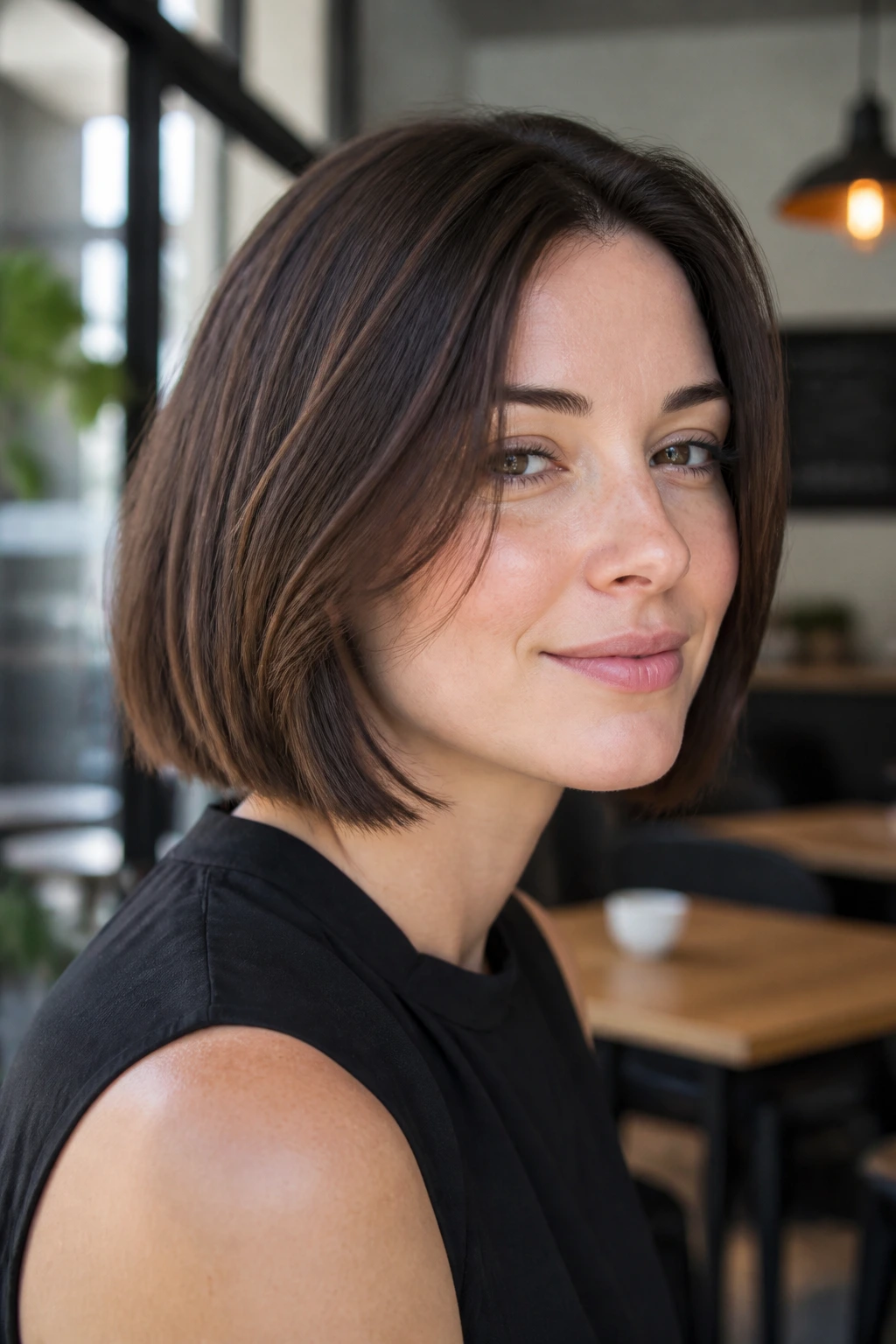
Invisible layers are the kind you do not notice first, and that’s the point. The outline stays smooth, but the hair underneath gets enough movement that the bob doesn’t sit like a hard block.
This version is ideal if you want polish without stiffness. Straight hair gets a little bend. Fine hair gets lift without looking chopped up. Thick hair gets just enough removal to stop the ends from puffing outward. The best part is that it grows out cleanly, because the silhouette is still mostly one length.
Ask for subtle internal layering starting below the eye or cheek, not all the way up near the crown. If the layers start too high, the “invisible” part disappears fast.
14. Rounded Layered Crop
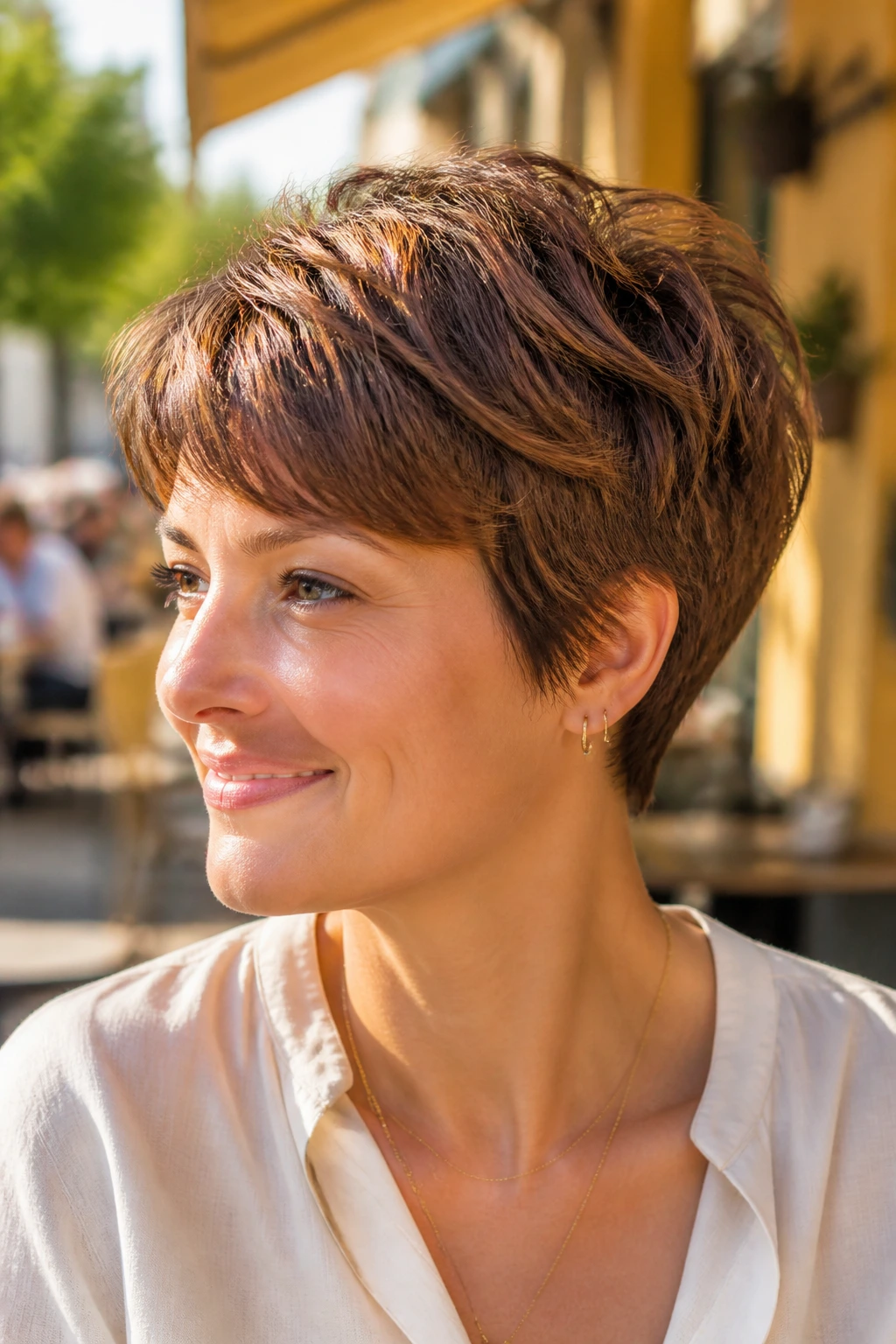
Rounded shapes soften strong angles, and that can be a good thing on short hair. A rounded layered crop keeps the fullness around the head rather than making the sides too flat or too narrow.
This cut suits narrower faces, sharper jawlines, and anyone who wants the haircut to feel a little sweeter without going fluffy. The layers should be concentrated near the top and upper sides, with the outline kept soft and curved. If you want more edge, add a side part. If you want less volume, dry it with the brush pointed downward at the sides and outward only at the roots.
One warning: if your hair is very dense, too much rounding can make the cut feel helmet-like. Shape matters more than volume here.
15. Undercut Pixie with Crown Volume
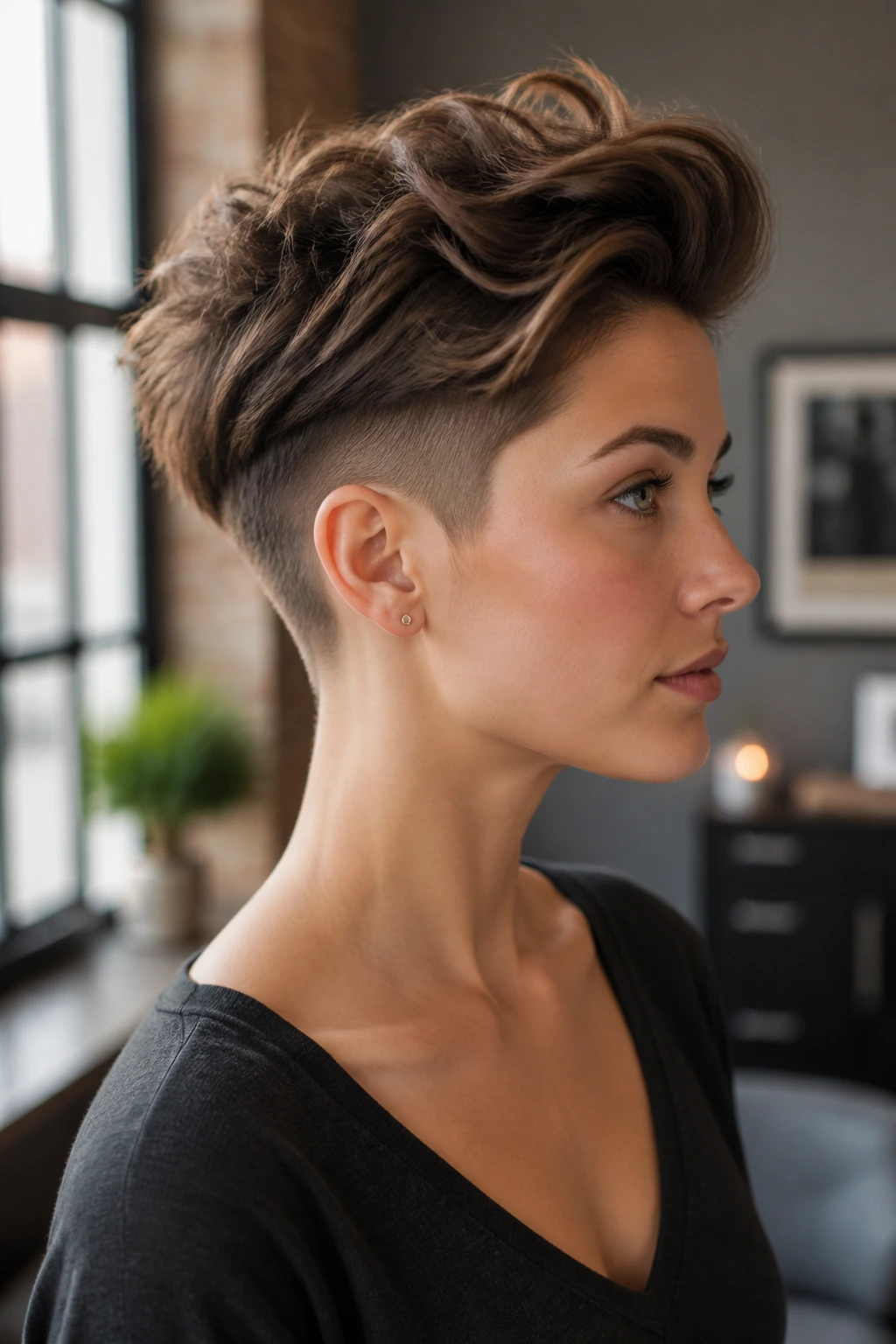
If you have thick hair and your neck gets hot, this cut can be a relief. The undercut removes bulk from the nape or lower sides, while the crown stays full enough to style upward, forward, or a little messy.
The contrast does the heavy lifting. You get visual lift on top without carrying all that weight underneath. It also helps the haircut sit closer to the head, which can make thick hair feel lighter the second it’s dry. Ask for a controlled undercut rather than shaving too much away at once. You can always go shorter later. Growing it back is the annoying part.
This one does need regular touch-ups. The undercut shows growth faster than the rest of the cut.
16. Layered Bob with Face-Framing Pieces
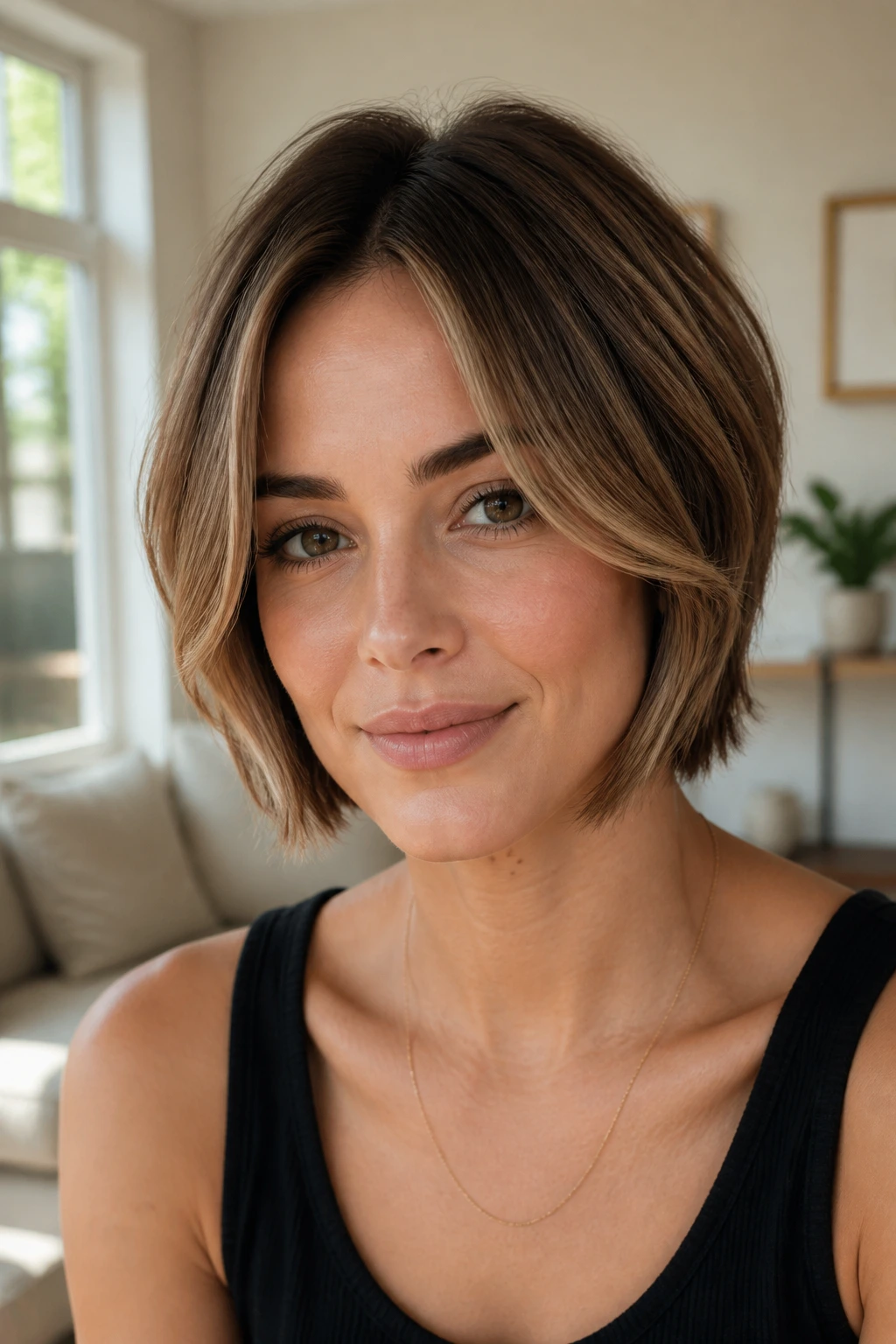
A plain bob can look severe near the face. A few face-framing pieces change that immediately. They soften the cheek area, lighten the front, and pull attention where you want it.
The longest front pieces usually start around the chin or just below it, depending on how much length you want to keep. The layers behind them should blend rather than separate, or the front pieces end up looking disconnected. This style is especially nice if you wear a middle part, because the framing pieces break up the symmetry just enough.
If you want the most flattering version, ask for the shortest face-framing bit to land around the cheekbone or lip, not the jaw. That tiny shift makes a difference.
17. Tapered Coily Crop
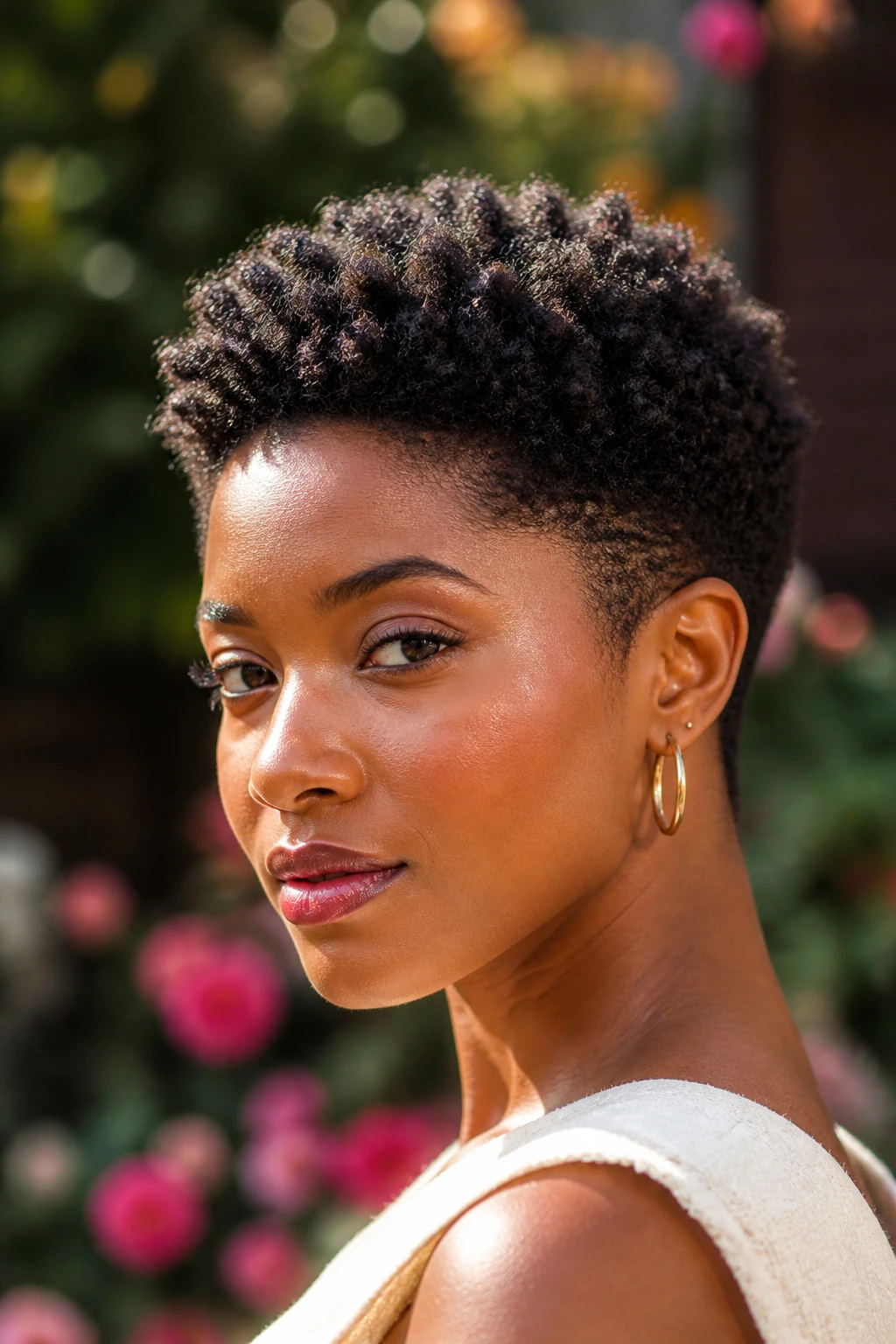
Can short layered hair work on coily texture without turning into a puffball? Yes, if the cut is shaped around shrinkage instead of against it.
A tapered coily crop keeps the sides and nape neat while allowing the top and crown to hold their natural volume. The layering should create a rounded, tapered silhouette, not random thinning. Coily hair usually benefits from cutting in its natural dry state or very close to it, because wet shrinkage can hide the true shape by a mile.
This cut feels strongest when the perimeter is clean and the interior shape is intentional. Moisture and definition matter more than heat styling here. A leave-in cream and gel combo can keep the coils defined without making them hard.
18. Piecey Short Cut with Deep Side Part
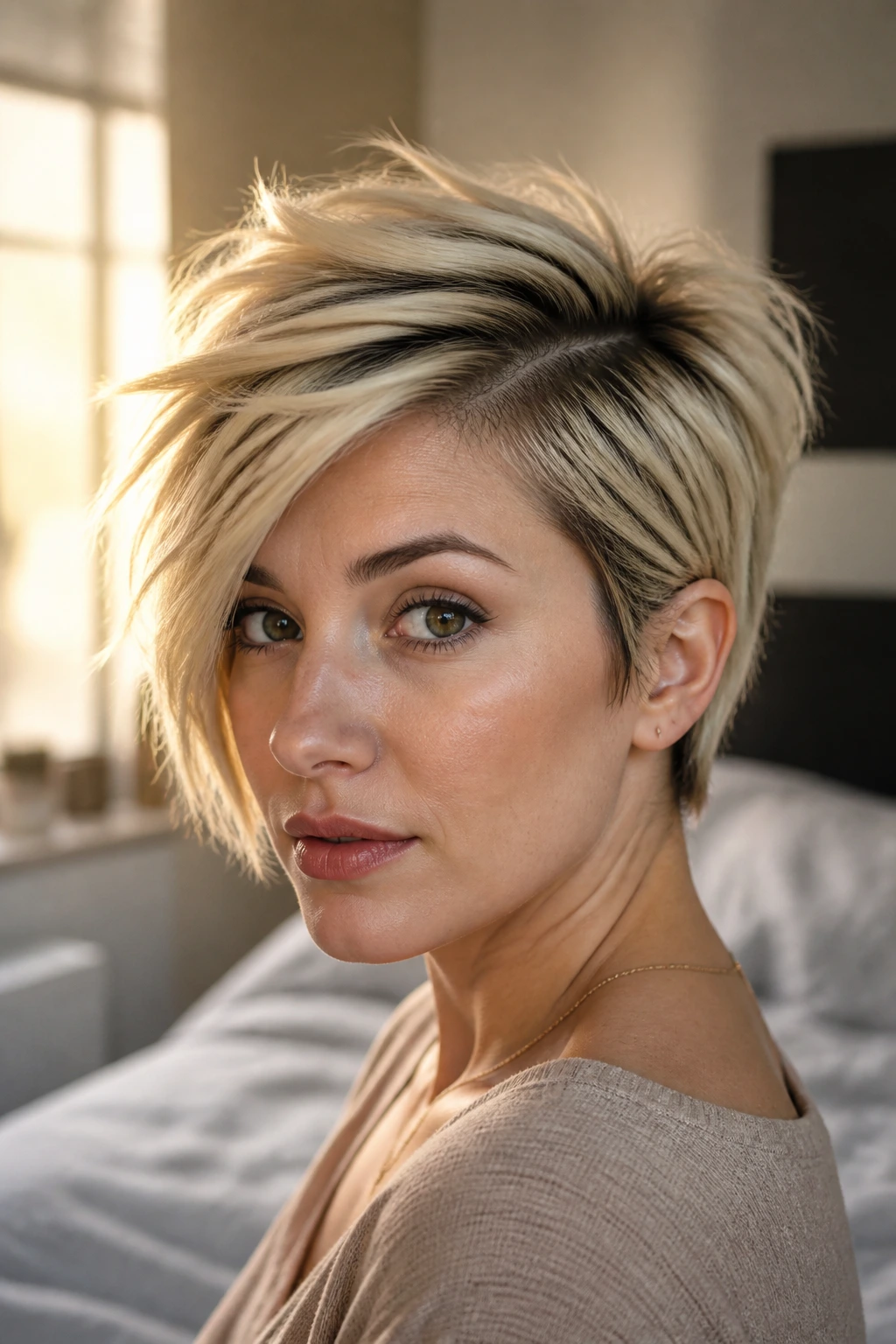
A deep side part can rescue short hair that keeps falling flat in the same place. It gives the crown instant lift and lets the layers fall in a more dynamic way.
The piecey finish comes from separating a few top sections with a light paste or texture spray. You do not need a lot. Too much product and the whole style clumps together in a greasy little row. The longer side can skim the cheekbone, while the shorter side gives the cut its shape and edge.
This is a good choice if your hair has a natural swirl that refuses to obey a center part. Work with the swirl instead of fighting it. Less drama, better result.
19. Micro Bang Layered Bob

Micro bangs are not for playing it safe. Put them with a layered bob, though, and the effect gets sharper and more deliberate instead of costume-like.
The bob keeps the lower half soft enough to balance the short fringe. That matters, because a tiny fringe can make the rest of the haircut feel heavy if the perimeter is too blunt. The best versions keep the fringe soft at the edges and the bob slightly textured underneath. Straight hair handles this easiest. Wavy hair can do it, but the bangs need more styling.
If you want to try this cut, be honest about cowlicks and forehead shape. Micro bangs expose everything.
20. Tousled Ear-Length Crop
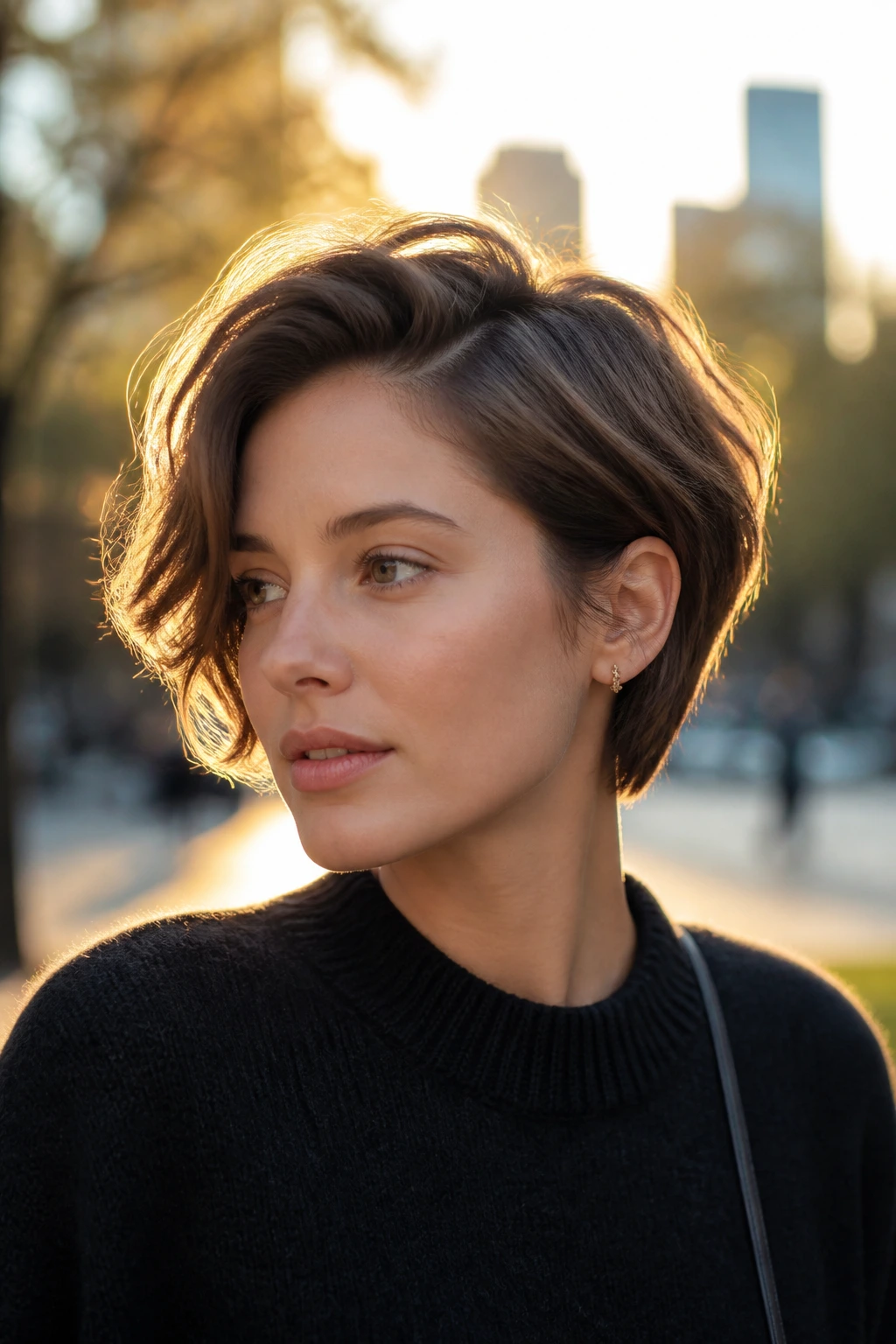
This is the haircut that looks better when it isn’t trying too hard. The length lands around the ear, the layers break up the outline, and the whole thing can be tucked, lifted, or left to do its own thing.
It’s a strong option for someone who likes short hair but wants enough length to play with texture. A little bend at the ends makes it feel deliberate. A clean side part makes it feel sharper. Either way, the cut needs enough internal shape that it doesn’t collapse into one flat line.
I like this style most on hair that has a little natural movement. It doesn’t need much product, but it does need a good cut.
21. Short Wolf Cut
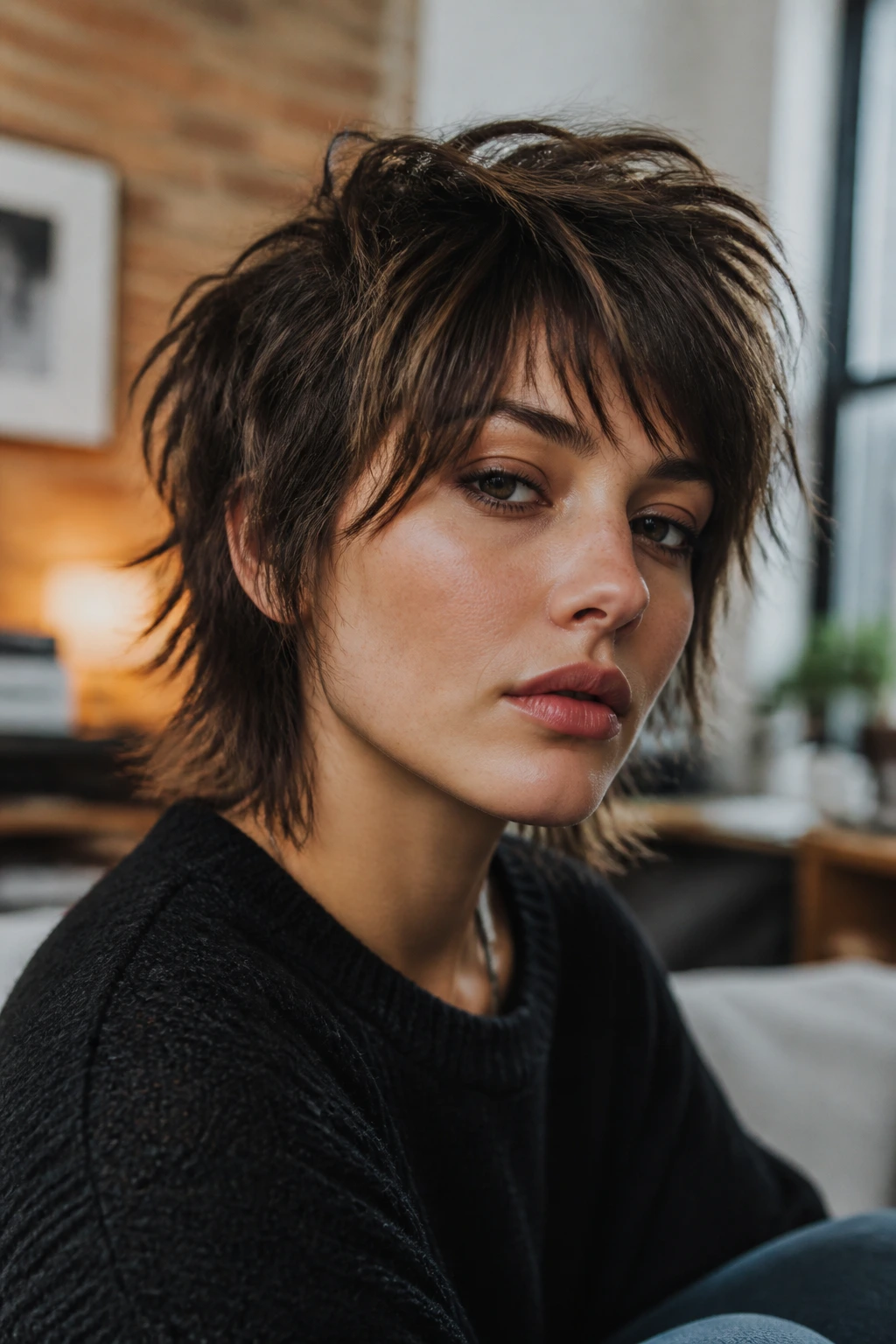
The short wolf cut borrows the shag’s texture and the mullet’s shape, then shortens the whole thing so it sits above the shoulders. The crown stays fuller, the ends stay broken up, and the fringe or front layers carry a lot of the attitude.
This cut is strongest on wavy or thick hair. On fine hair, it can look too sparse if the layers are too aggressive. Ask for a soft transition from crown to nape rather than a hard disconnect unless you want that sharper, fashion-forward edge. The wolf cut lives and dies on shape. If the crown is flat, the whole thing loses its point.
A diffuser and texture spray usually beat a brush here. Smooth is not the goal.
22. Airy Layered Bob for Fine Hair
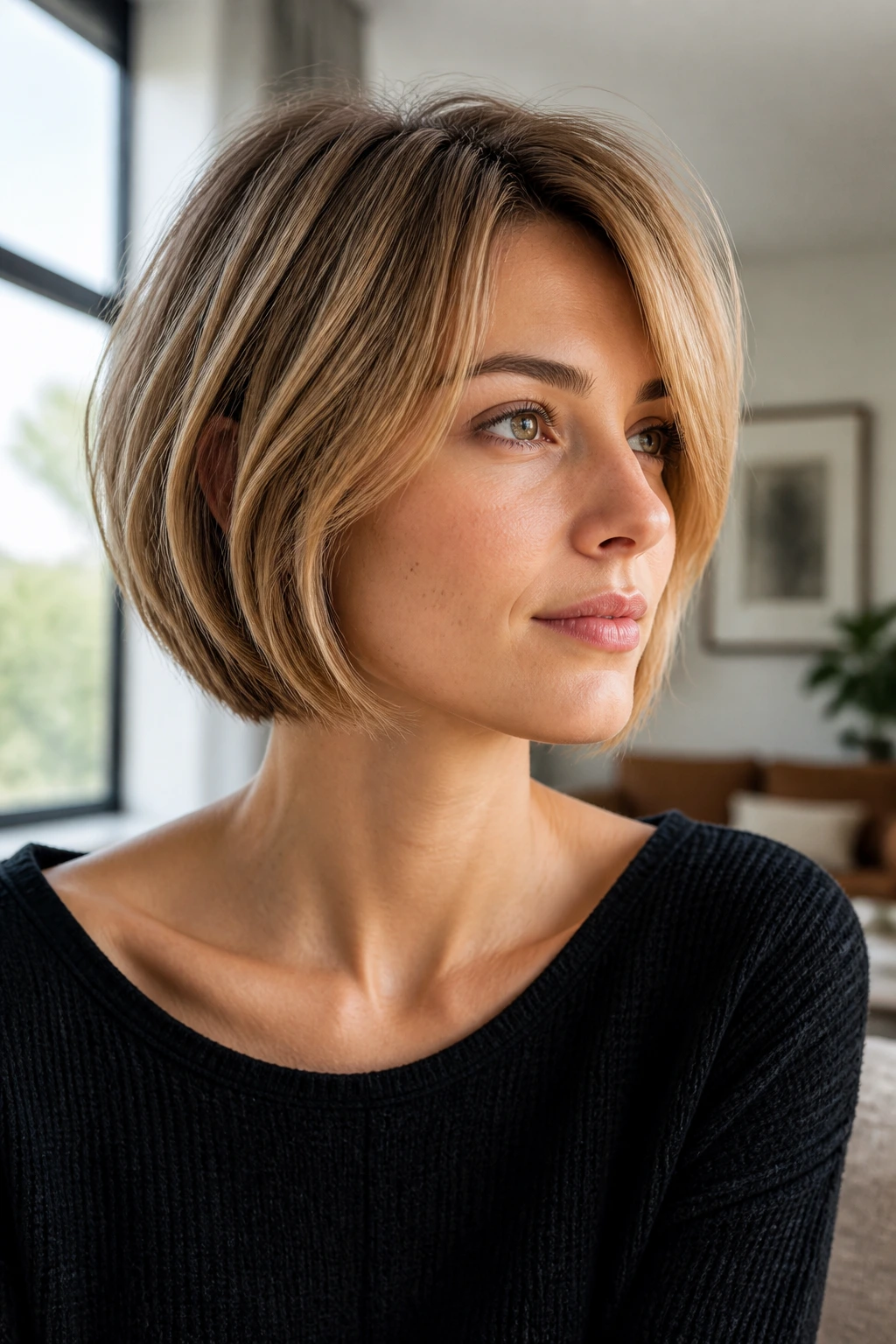
Not all layers help fine hair. Some of them strip away so much weight that the ends look thin and the shape disappears. The airy layered bob avoids that mistake by keeping the perimeter blunt enough to hold the outline.
The layers stay internal and light, which gives the hair room to move without losing density. That balance is the whole game. Fine hair needs lift at the roots and body at the edge. If both disappear, the cut goes limp fast.
This version usually looks best with a side part or soft off-center part, because that gives the crown a little lift without making the style feel overdone. I’d keep the product light too—foam, root spray, maybe a dry texture mist. Heavy creams weigh it down before lunch.
23. Sleek Layered Crop with Tucked Ends
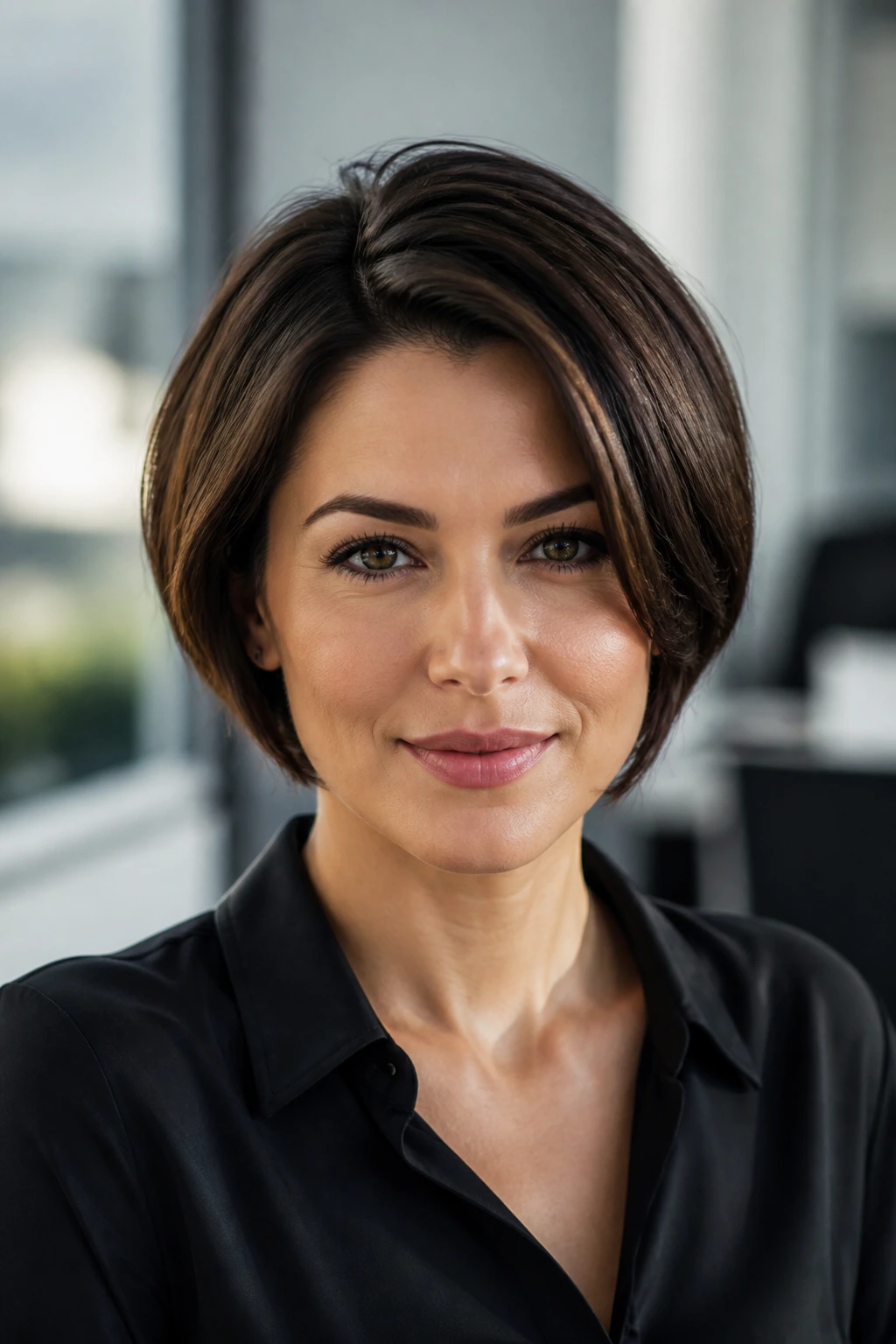
A sleek layered crop proves that layers do not have to look messy. The shape stays smooth, the ends tuck inward, and the layers live mostly under the surface so the outline still reads clean.
This cut works well if you like a neat finish but need a little movement so the hair doesn’t sit like a block. Blow-dry it with a round brush or a flat brush, then bend the ends just slightly under with a flat iron if needed. The key is restraint. You want enough movement to soften the edges, not enough curl to make the silhouette fuzzy.
It’s a good fit for straight hair, office settings, and anyone who wants short hair to look considered instead of casual.
Why Short Layers Change the Shape So Fast
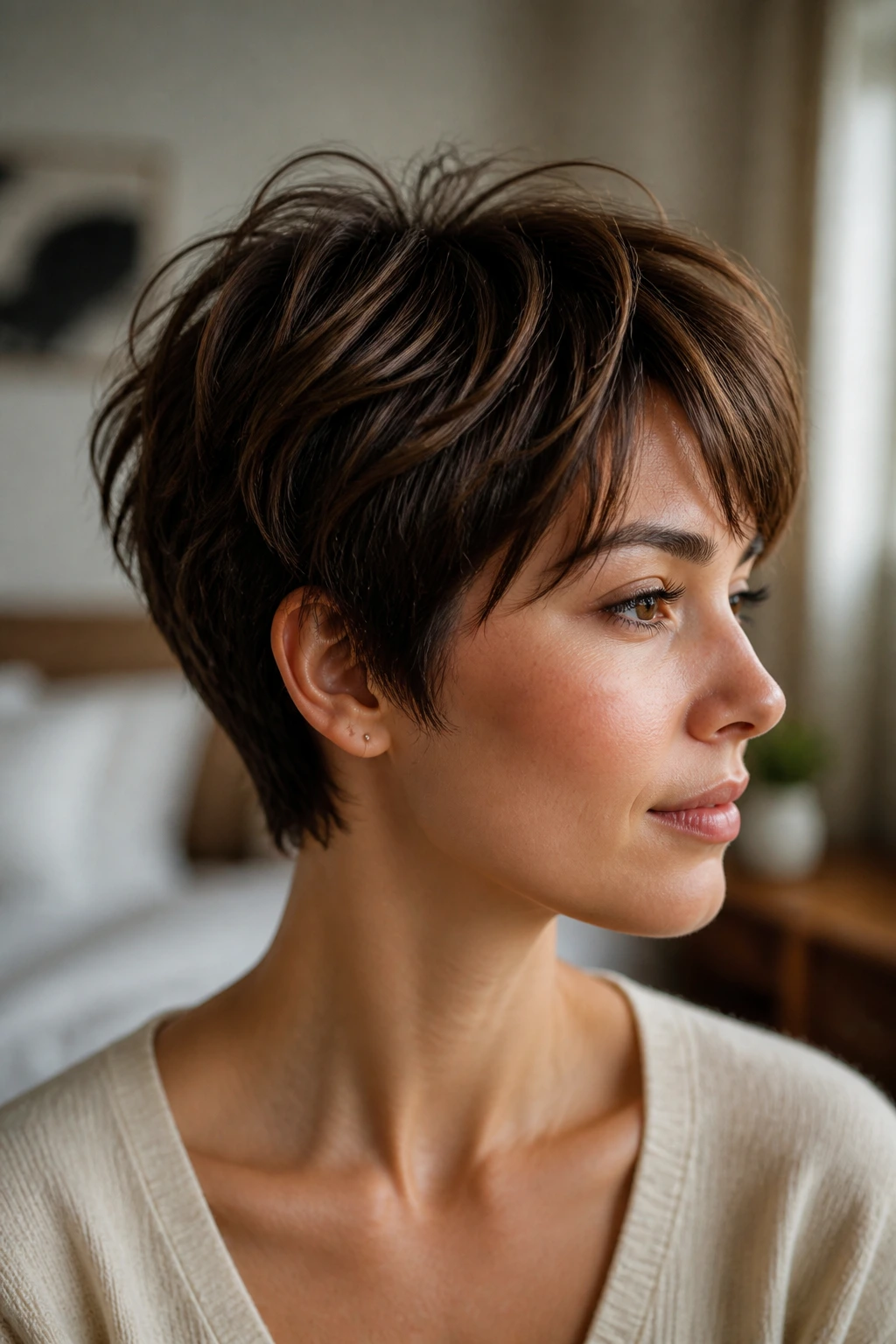
Short hair is less forgiving because every bit of weight removal changes the silhouette. On long hair, a half-inch of layering can hide in the length. On short hair, that same half-inch can shift the whole line around the cheek, ear, or nape.
Weight and Movement
A solid, one-length crop can look heavy at the ends. Layers open tiny pockets of movement so the hair bends instead of sitting like one panel.
Where the Shape Lives
On short cuts, shape lives in the crown, the perimeter, and the area just behind the ears. If the crown is too flat, the haircut looks tired. If the sides are too wide, it looks boxy. If the nape is too heavy, the whole thing drags downward.
Texture Changes the Story
Straight hair shows every line. Wavy hair shows every layer. Curly and coily hair shrink, so the shape has to be built with that in mind or the result gets smaller and wider than expected. That is why a good short layered cut starts with texture, not trend photos.
How to Ask for the Cut at the Salon
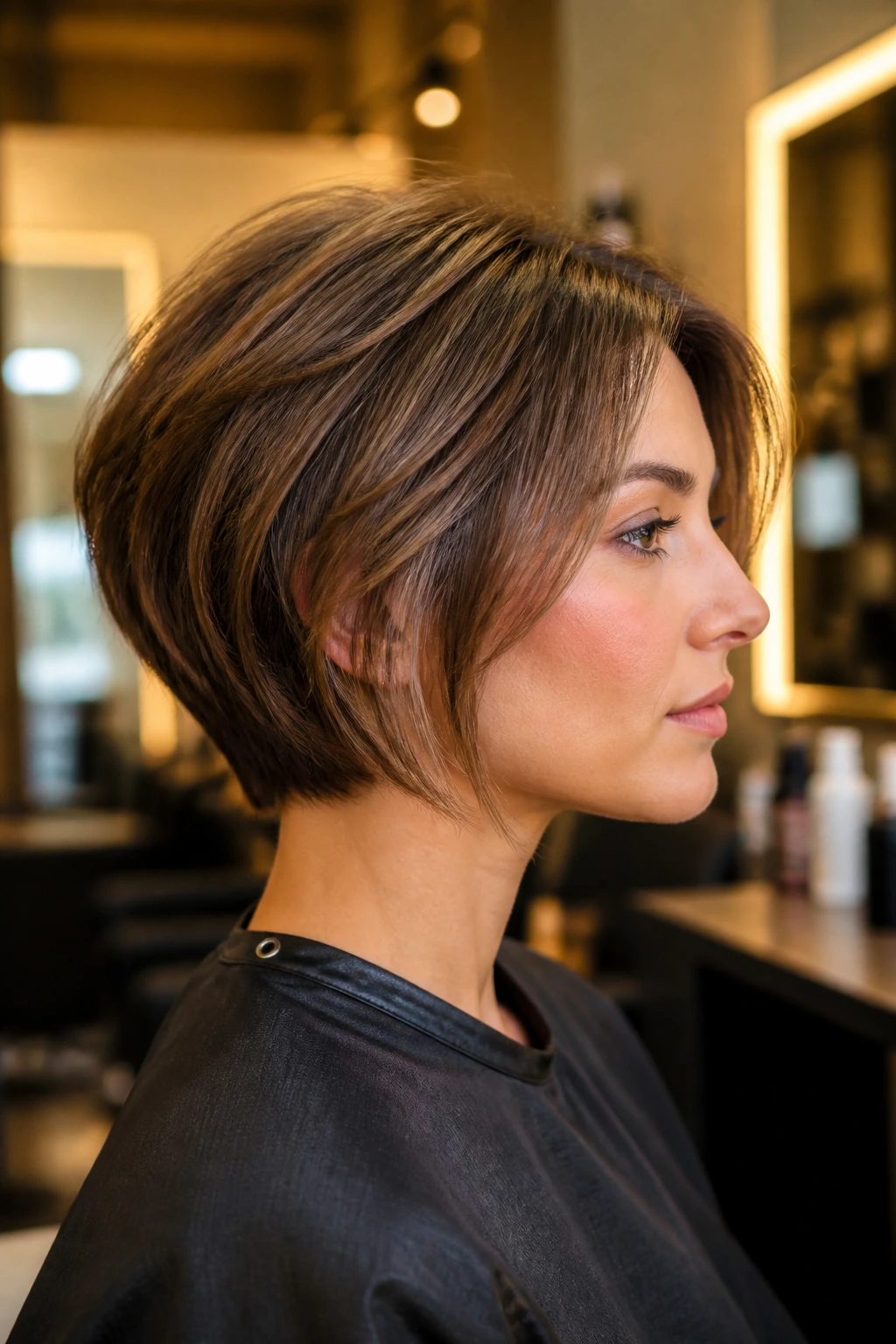
Bring more than one photo. One front view is not enough. You need a side view or back view too, because short layered hair lives and dies on profile shape.
Say where you want the longest pieces to land: cheekbone, jaw, chin, or nape. That one detail helps a stylist decide whether the cut should feel lifted, sleek, soft, or sharp. If you want volume, ask where the fullness should sit. If you want less width, say that plainly. Stylist language matters here, but plain language matters more.
A few useful things to mention:
- How often you style your hair
- Whether you air-dry or blow-dry
- Any cowlicks at the crown, temple, or neckline
- Whether you want the fringe to be easy or dramatic
- Whether you like a side part, middle part, or either
For curls, ask for a dry shape or a dry finish if the salon offers it. Wet curls can hide shrinkage, and that is how you end up with a cut that looked right in the chair and wrong the next morning.
Essential Tools and Styling Gear
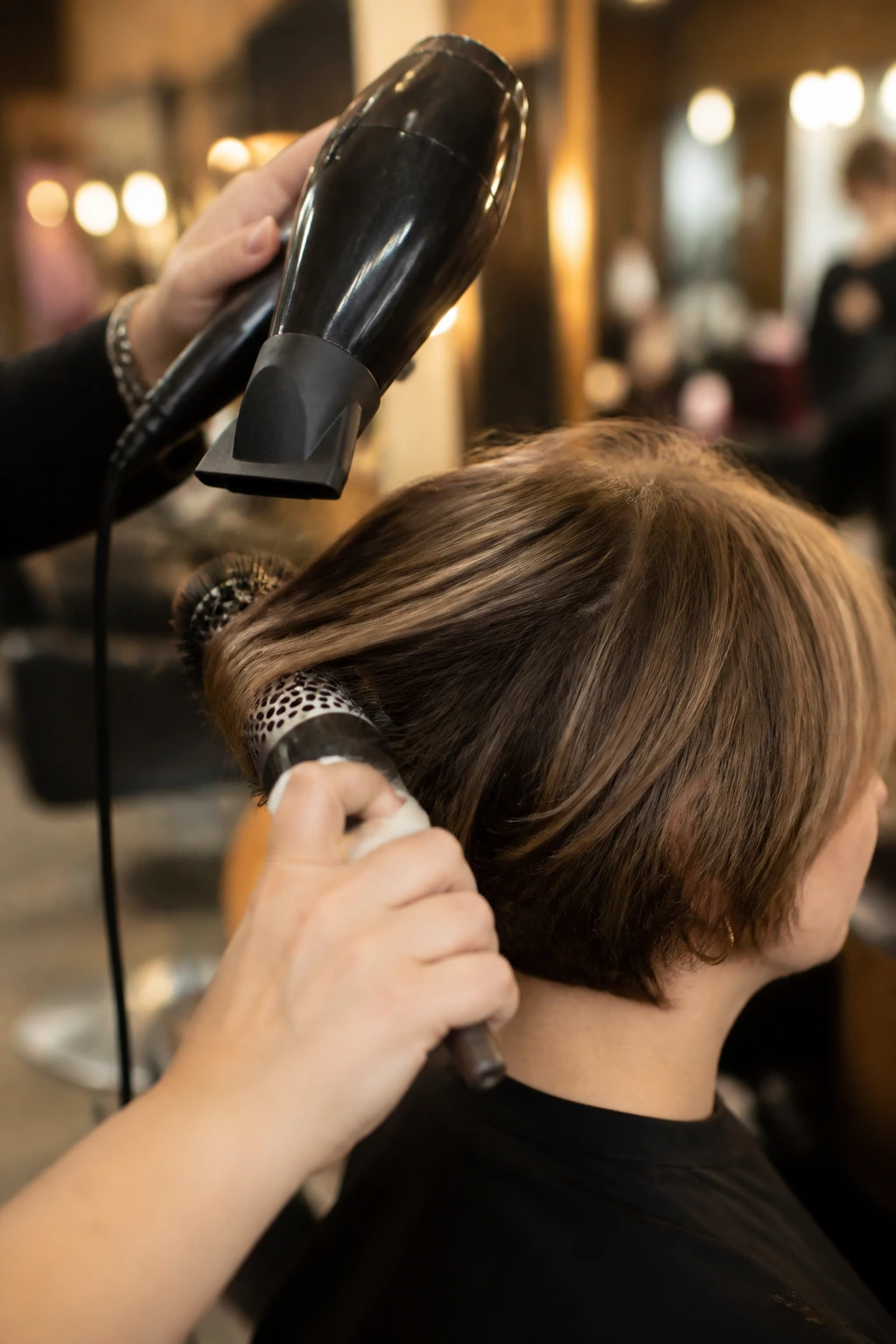
- A small round brush: Best for shaping bobs, curtain bangs, and tucked-under ends without creating too much curl.
- A blow-dryer with a nozzle: The nozzle helps aim the airflow at the roots instead of blasting the whole head into frizz.
- A diffuser: Useful for curls, waves, and shaggy layers when you want definition without disturbing the pattern.
- A flat iron or mini straightener: Handy for bending just the ends, smoothing a fringe, or flipping one side under.
- Texturizing spray: Gives short layers that piecey separation that makes the cut look deliberate.
- Volumizing mousse or root foam: Good for fine hair and for any cut that needs lift near the crown.
- Light styling paste: Best for pixies, bixies, and cropped cuts where the ends need definition.
- Heat protectant spray: Skip this and your layers can fry fast, especially around the fringe and face-framing pieces.
- Wide-tooth comb or styling pick: Helps curls and waves keep their shape without dragging them flat.
- Clips: Useful for setting the top away from the face while the roots cool in the right direction.
Picking Products by Hair Texture and Density
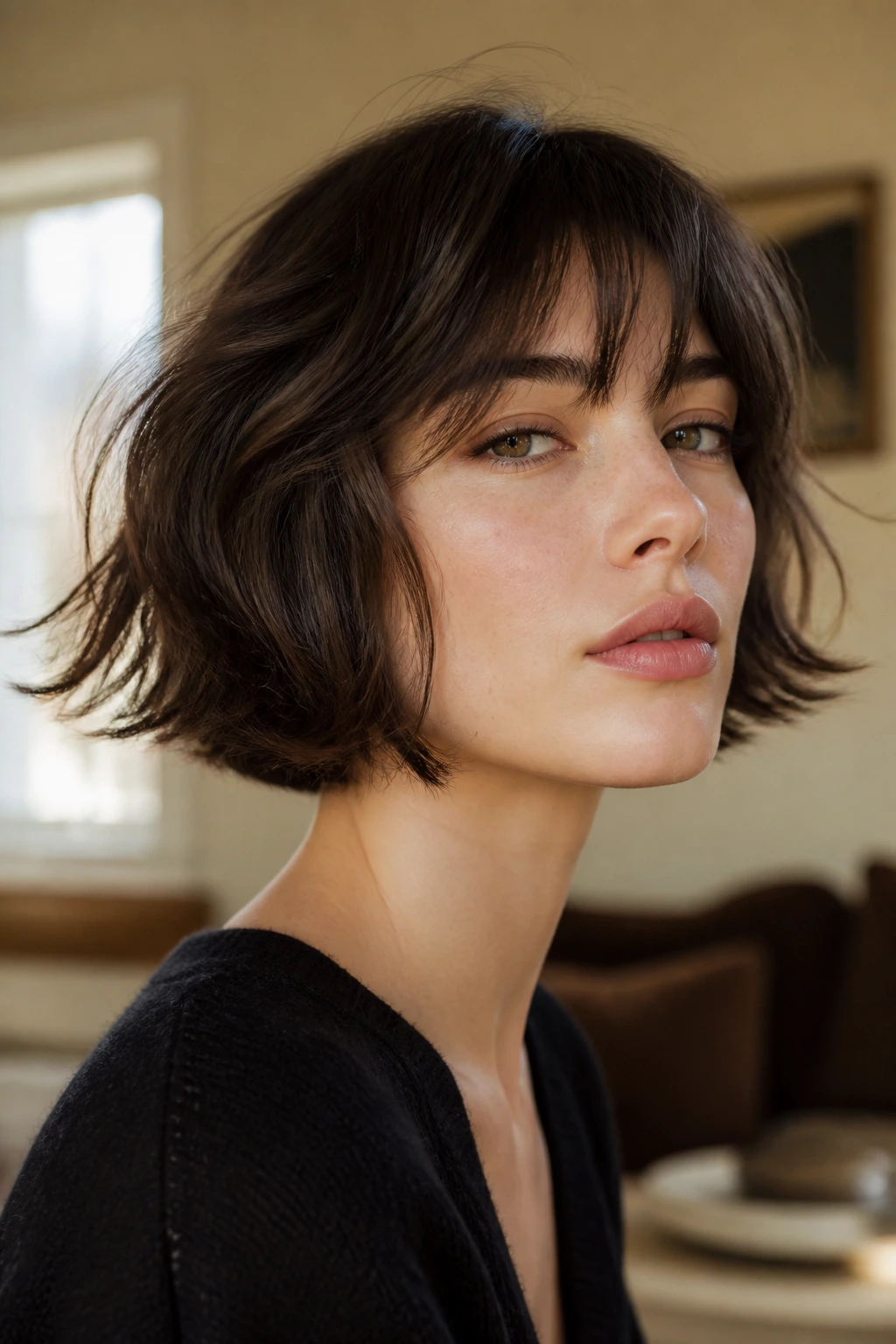
Product choice matters more on short hair because there is less length to soak up too much cream or oil. Fine hair usually wants light foam, root spray, dry shampoo, and a texture mist with a matte finish. Thick hair usually needs more control: smoothing cream, a flexible paste, and a stronger heat protectant that keeps the ends from puffing out.
Curly and coily hair tend to behave best with leave-in conditioner, gel, and a diffuser-friendly styling base. Straight hair often needs a little grit, so salt spray or a light texture cream can keep the layers from sliding flat. If your hair is both thick and straight, avoid heavy oils near the roots. They sink the shape fast.
A good rule: if the product leaves your hands feeling coated, it will probably flatten a short layered cut unless you use almost none of it.
How to Wear These Cuts So They Look Intentional
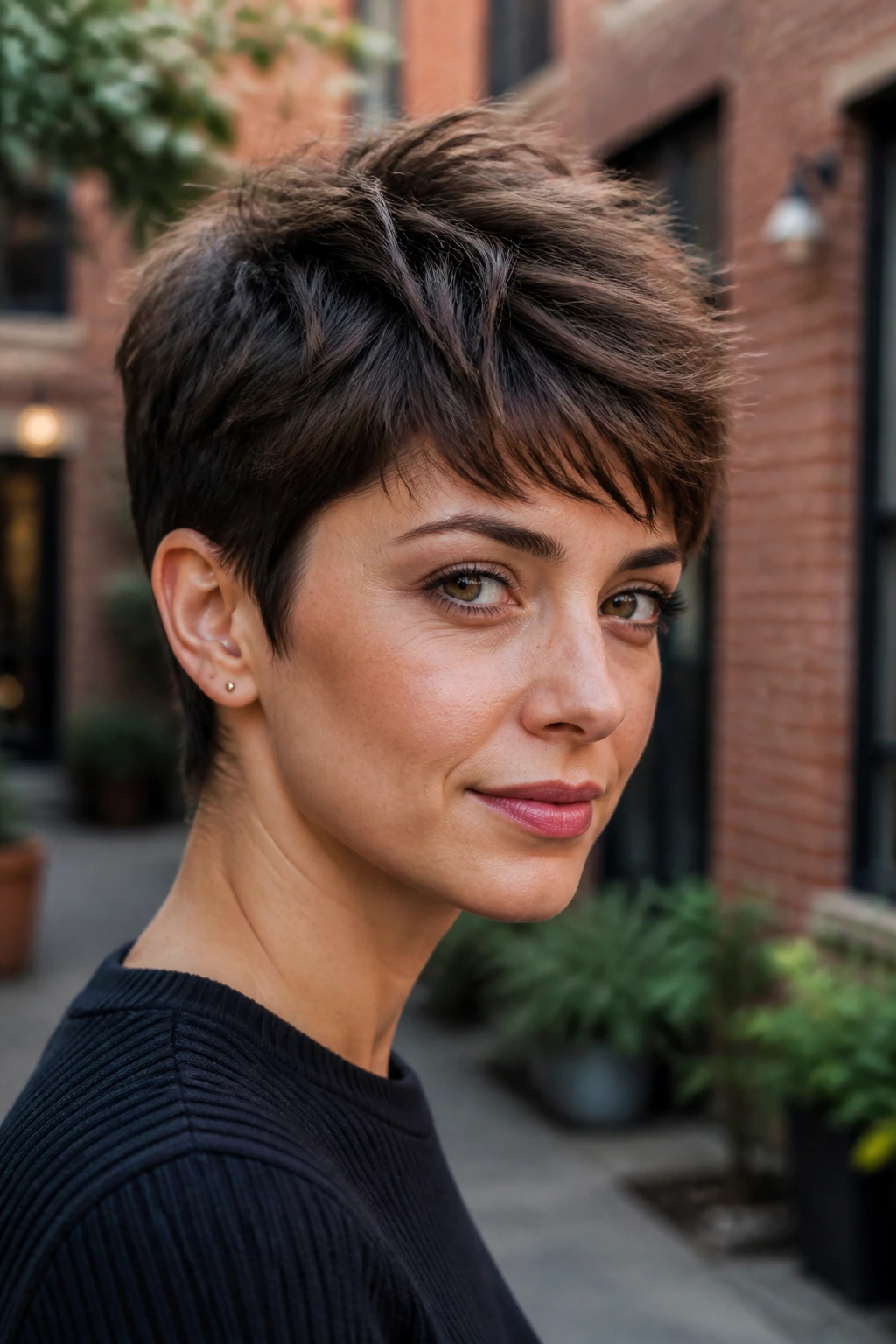
Finish: Decide early whether you want smooth, piecey, or soft-textured. A sleek bob and a tousled shag are both short layered cuts, but they need different styling habits and very different product choices.
Accessories: Short hair gives earrings, glasses, and clips more room to show. Small hoops sharpen a pixie. A barrette can calm a shaggy bob. A headband can pull a layered fringe away from the face when you need a cleaner look.
Pairings: High necklines and short hair can look crisp together, while an open collar or scoop neck lets a crop feel lighter. That matters more than people expect. The haircut does not live in a vacuum.
Styling Time: If you only have five minutes, lean into air-dried texture, a side part, or a quick bend at the ends. If you have fifteen, set the roots first, then refine the front and crown. That order keeps short layers from collapsing before you leave the house.
Small Styling Moves That Change the Whole Finish

Root Lift: Clip the crown while the hair cools, or blow-dry the roots in the opposite direction of your part for a minute or two. That tiny move gives short layers the lift they need without a lot of product.
Texture Boost: Spray texture mist from mid-length to ends, then scrunch or rake with your fingers. Too much at the roots can make the cut gritty and heavy, so keep the product lower on the hair shaft.
Color Trick: A few subtle highlights around the front pieces can make layered cuts read more clearly. You do not need a full color overhaul. Even a soft brightness change around the cheekbone can show off the shape.
Finish: A pea-sized amount of paste or serum on the ends is often enough. More than that and the layers start to stick together in a sad little clump.
Make-It-Yours: If you wear your hair behind one ear all day, ask for a little extra length on that side. If you live in a side part, build the cut around it instead of forcing a center part you never use.
Keeping the Shape Between Salon Visits

Short layered hair grows out faster than people expect because the shape starts losing its edge almost as soon as the neck and sides grow in. Pixies and bixies usually need a tidy-up every 4 to 6 weeks if you want the silhouette to stay crisp. Bobs and crop-bobs can stretch a little longer, but the fringe or face-framing pieces may need attention sooner.
Wash routine matters too. If you use a lot of texture spray or dry shampoo, use a clarifying shampoo about once every 2 to 4 weeks so the hair does not get dull and sticky at the roots. Curls and coily hair usually prefer more moisture between washes, so a leave-in refresh or a light mist of water and conditioner can bring the shape back without starting from scratch.
Sleep helps or hurts. On straight hair, a satin pillowcase reduces frizz and odd bends at the nape. On curls, a loose top clip or a very gentle pineapple can keep the pattern from getting crushed. And never go to bed with the back half of a short layered cut still damp. The neckline will remember.
Variations and Adaptations to Try
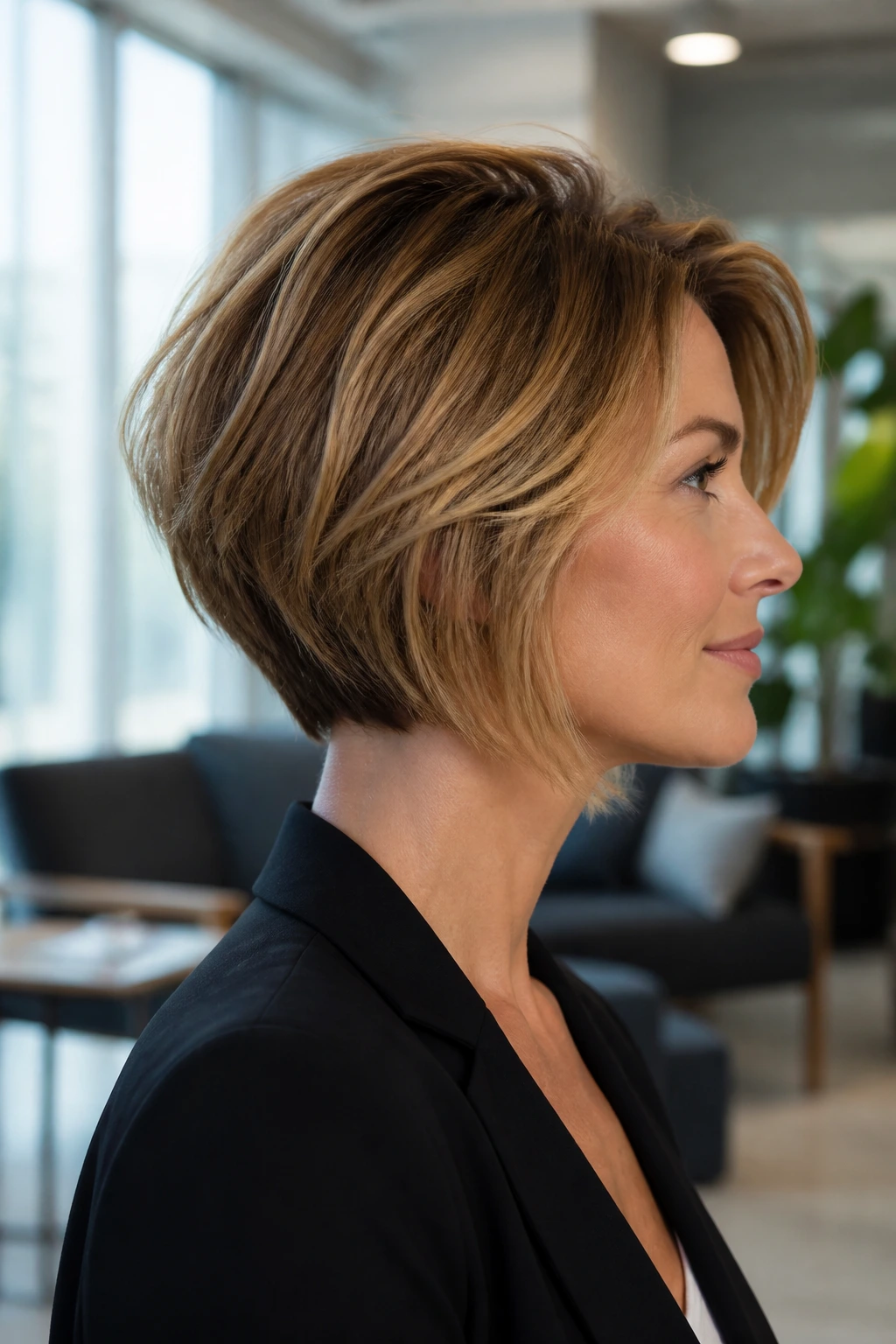
The Fine-Hair Version: Keep the perimeter blunt and let the layers stay internal. That gives the cut body without making the ends look see-through.
The Thick-Hair Version: Ask for more weight removal through the crown and behind the ears, but keep the outer line controlled. Thick hair needs room to move, not just more cutting.
The Curly Version: Shape the cut in the curl’s natural state and keep the longest layers long enough to avoid shrinkage shock. Short curls can look adorable or uneven very fast, and the difference is in placement.
The Grow-Out Version: Leave a little more length at the nape and around the fringe so the haircut still makes sense after six to eight weeks. This is the version for people who hate awkward in-between phases.
The Low-Styling Version: Build the shape around your natural part and cowlicks, then keep the layering soft enough that the cut still falls right with a quick finger-dry. Not every short layered hairstyle needs a round brush and a morning mood.
Common Mistakes That Flatten Short Layers
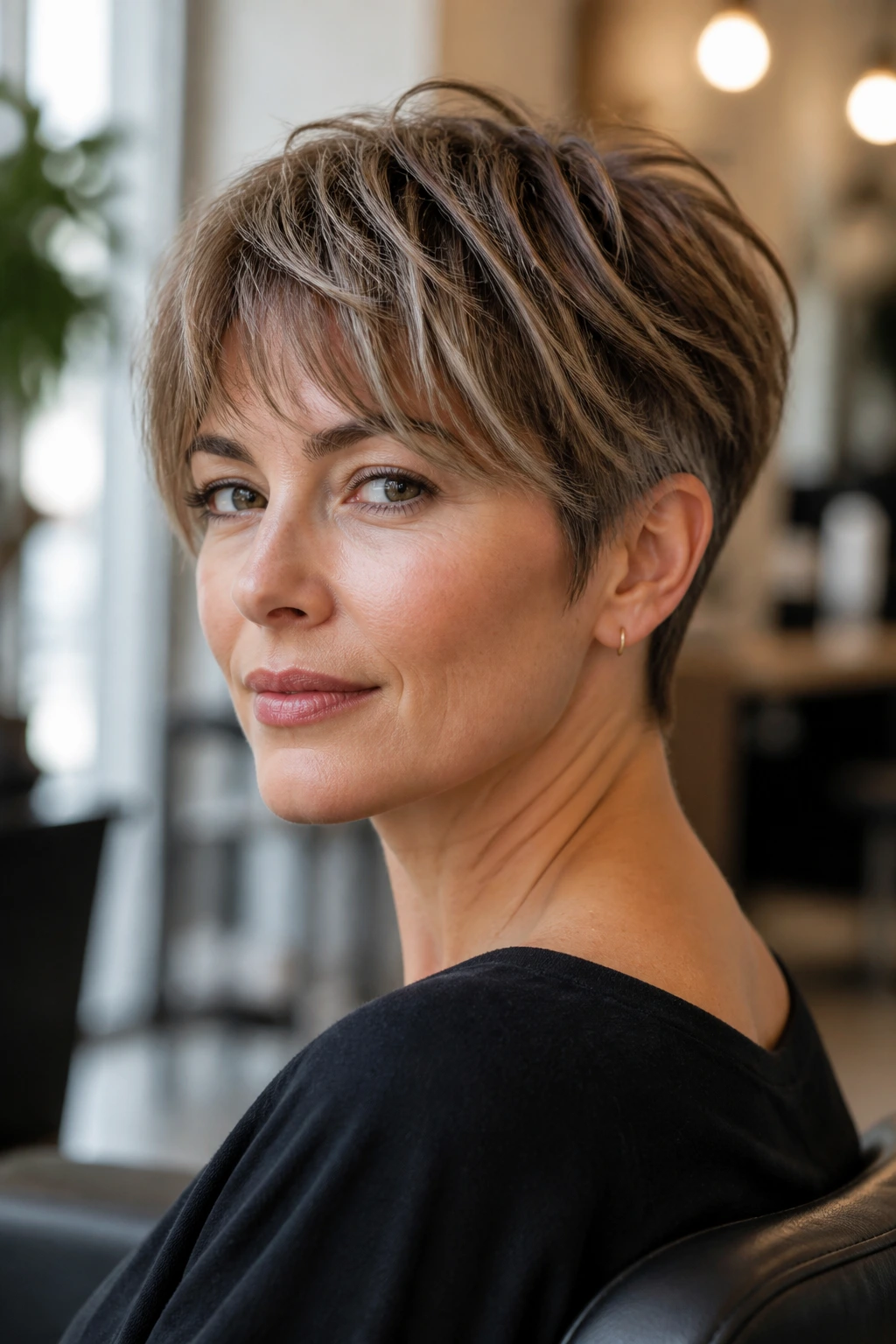
- Over-layering fine hair: The symptom is wispy ends and a see-through crown. The fix is a blunt perimeter with only light internal layers.
- Ignoring the back view: A haircut can look great from the front and blow up at the nape. Ask your stylist to show you the side and back before you leave.
- Cutting bangs too short for your cowlicks: The fringe stands up, splits, or swings in the wrong direction. Start longer and let the fringe settle before taking more off.
- Using too much cream or oil: The hair looks greasy by noon and the layers stop showing. Short hair needs a tiny amount, not a palmful.
- Letting the neckline go too long: The whole cut starts to lose its shape and the layers stop reading. That’s usually your sign that a trim is overdue.
- Styling every cut the same way: A sleek layered bob and a shaggy pixie need different tools and different finishes. If you force them into one routine, something always looks off.
Questions People Ask Before They Cut It Short
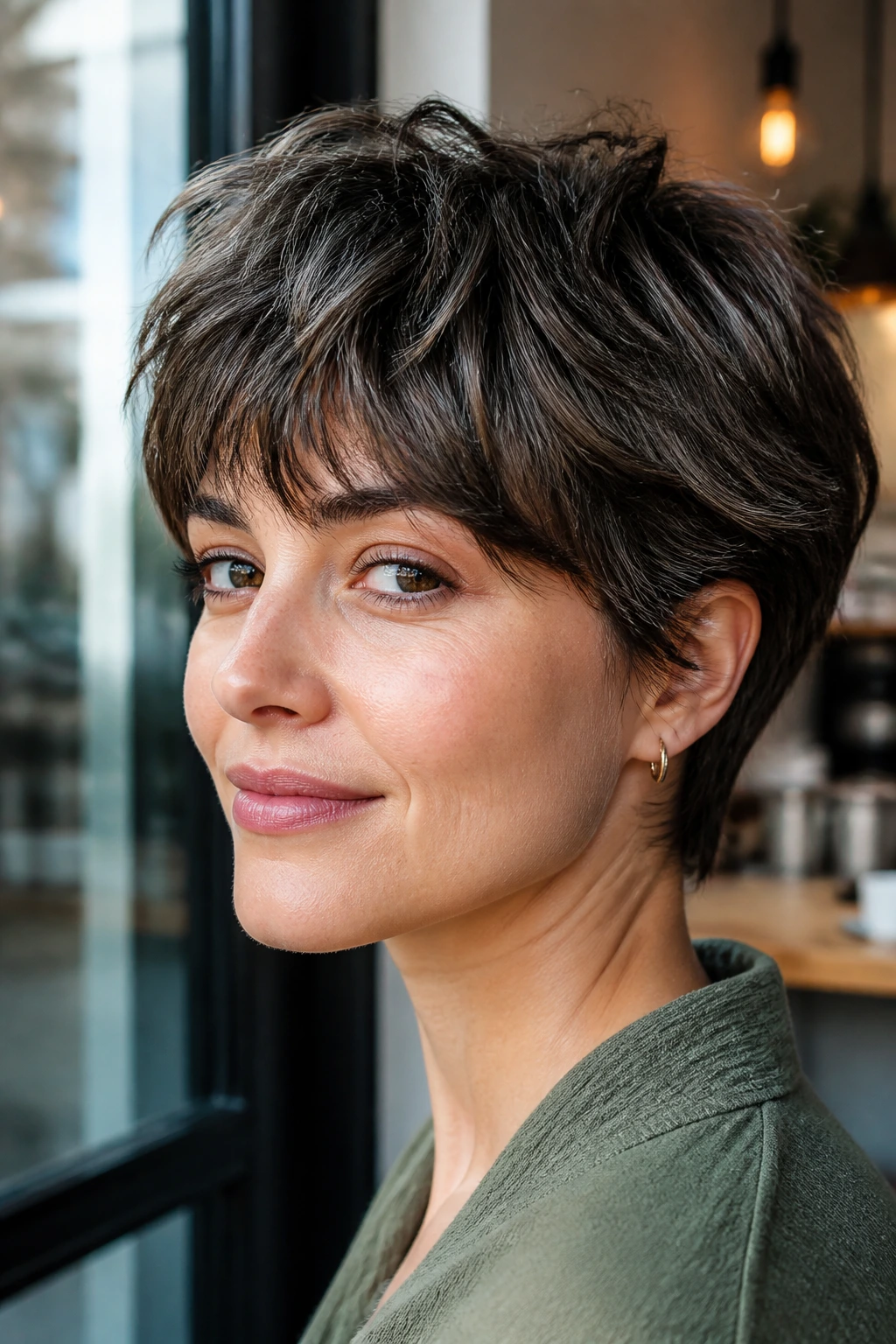
Which layered hairstyle for short hair is best for fine hair?
An airy layered bob or a bixie with a blunt perimeter usually gives fine hair the best balance. You want enough lift to keep the crown alive, but not so much removal that the ends go stringy.
Can short layered hair work on curly hair?
Yes, and it often works better than a one-length cut because curls need room to spring. The key is cutting for shrinkage and shape, not just for length.
How often should short layered hair be trimmed?
Pixies and bixies often need cleanup every 4 to 6 weeks. Layered bobs can sometimes go 6 to 8 weeks, but the neckline and fringe usually tell the truth before the calendar does.
Do layers make thick hair easier to manage?
They can, if the layering removes bulk in the right places. Too many short pieces can make thick hair look fluffy, so the weight has to come out in a controlled way.
What if my short layered cut looks too puffy?
First, check the product. Heavy creams, too much mousse, or rough-dried roots can all swell the shape. If it still puffs out, the layers may be starting too high or the perimeter may need more structure.
Can I air-dry layered short hair?
Absolutely, but the cut has to be shaped for it. A little leave-in, a light texture product, and finger placement at the roots usually help more than brushing it around a lot.
How do I ask for face-framing pieces without getting bangs?
Say where you want the shortest front pieces to land—cheekbone, lip, or chin—and explain that you want them to blend into the cut. That keeps the front soft without turning it into a fringe you did not ask for.
What’s the difference between a pixie, bixie, and short bob?
A pixie is the shortest and most cropped. A bixie sits between a pixie and a bob, with more length around the front and crown. A short bob keeps a fuller outline and usually lands around the jaw or chin.
A Short Cut That Still Has Range
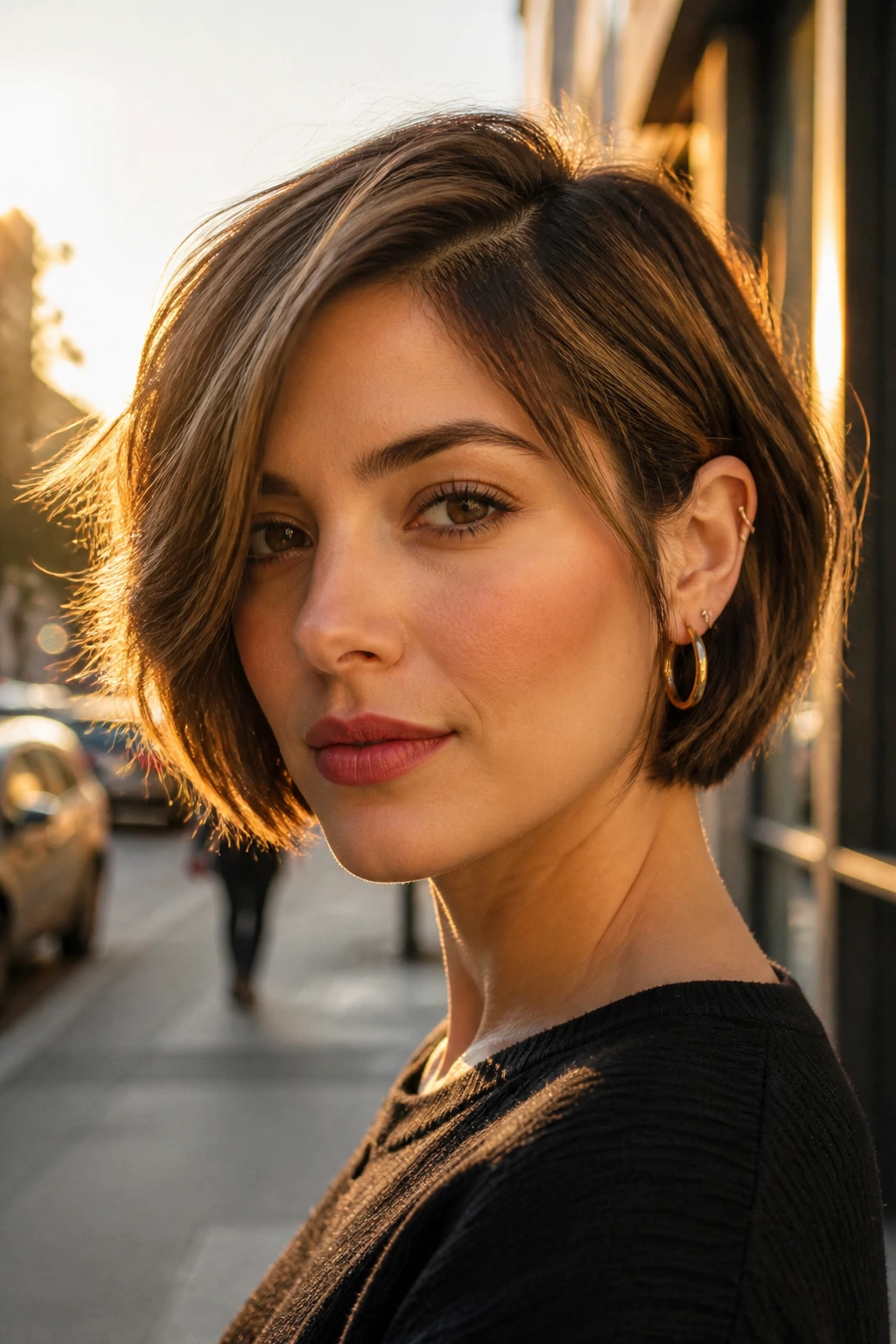
The best short layered haircuts do one thing very well: they keep shape without feeling stiff. That is the whole game. A good cut should let you tuck one side behind your ear, rough it up a little, or smooth it into place without losing the line.
If you choose the layer pattern based on your texture, your part, and how much time you actually spend styling, short hair gets a lot easier to live with. Not effortless. Just easier. And that is usually the difference between a haircut you tolerate and one you reach for again and again.
