



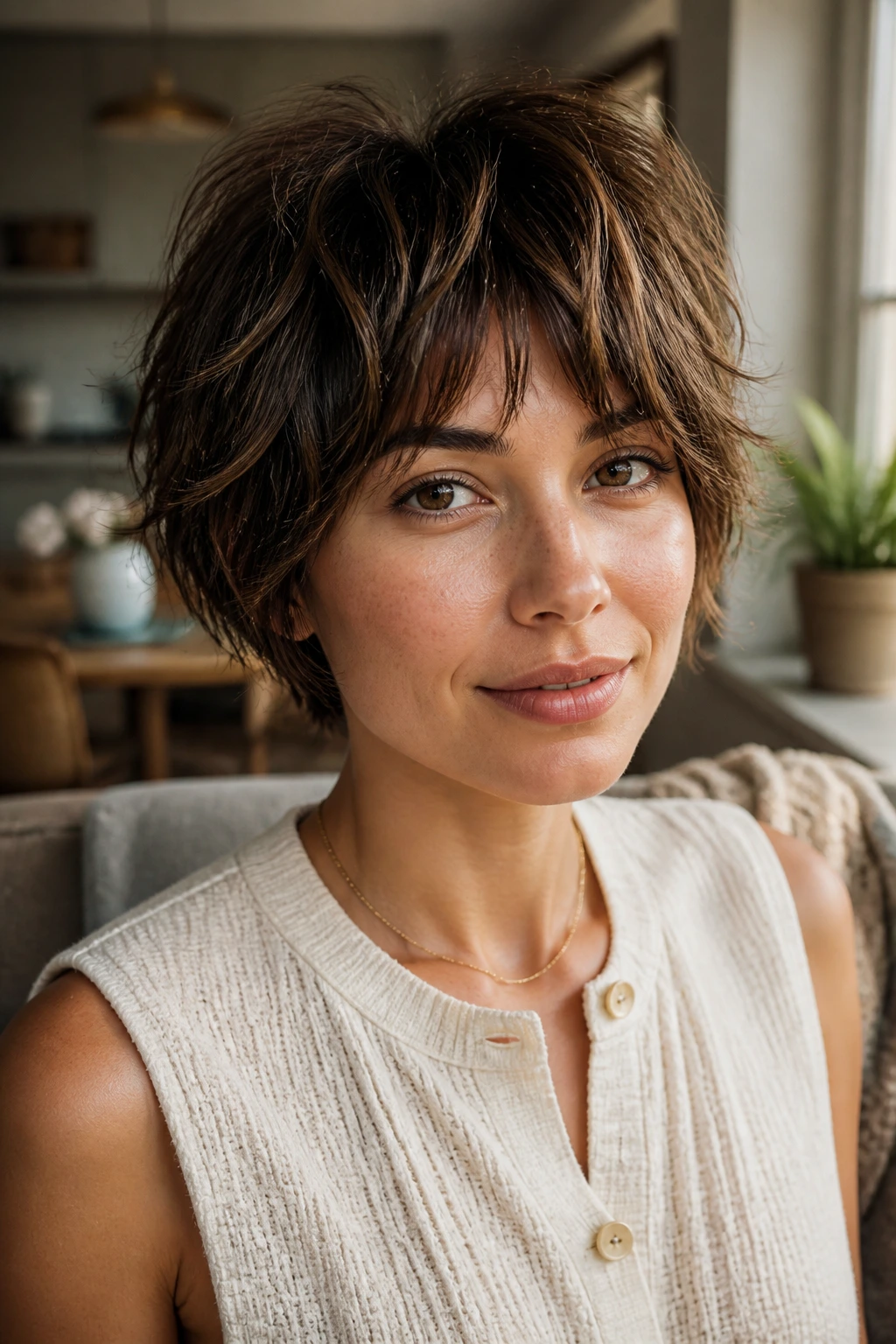
Short choppy haircuts work best when they don’t look freshly argued into shape. The ends should move. The layers should catch a little air when you turn your head. And the whole cut should feel like it has already lived a little, even if you walked out of the salon ten minutes ago.
That’s the sweet spot people chase and rarely name out loud: soft texture, broken-up edges, and enough structure that the haircut still does its job on day three. A blunt bob can feel too tidy. A heavily razored crop can turn wispy fast. The good versions sit in the middle, with just enough roughness to feel modern and just enough weight to keep the shape from going puffy or thin.
I keep coming back to this family of cuts because they’re honest. They show the hair you actually have. Cowlicks. Bend. Density. A weird little swell at the crown. Short choppy haircuts don’t pretend those things don’t exist; they use them. And when the cut is done well, the result is softer than people expect — not stiff, not helmet-like, not overworked.
Why These Cuts Earn Their Spot in Real Life
-
They move on day two, not just on salon day. The broken ends and internal layers give your hair a little slip and separation, so a quick mist of water or dry shampoo usually brings it back.
-
They soften the face without hiding it. A choppy fringe, a side-swept front, or a bit of texture at the cheekbone can blur a strong jaw or a long forehead without swallowing your features.
-
They suit both fine hair and thick hair, but in different ways. Fine hair gets lift from the texture; thick hair gets relief from the bulk being removed in the right places.
-
They do not need perfect styling. A bend at the front, a rough dry, or a tiny bit of paste through the ends is often enough. That’s the whole appeal.
-
They grow out in a useful way. If the perimeter is cut with some thought, the shape usually turns into a longer bob or a shaggy crop instead of a weird triangle.
-
They give you options. Tuck one side. Push it forward. Part it off-center. Let the crown go flatter one day and more lifted the next. The cut should handle the mood swing.
1. Chin-Length Choppy Bob
A chin-length choppy bob has a clean outline, but the ends aren’t blunt enough to feel hard. That’s the difference between a haircut that sits there and one that seems to breathe a little. I like this cut on hair that wants movement without losing its shape, especially when the jawline is the part you want to soften rather than spotlight.
Why the shape works
The length lands right around the face’s hinge point, so the hair can skim the jaw instead of boxing it in. A stylist who point-cuts the last half-inch of the perimeter will give you that slightly broken edge that keeps the bob from reading as a helmet. It’s a small detail. Huge payoff.
Ask for a touch of internal layering near the crown if your hair is fine and flat. If your hair is thick, keep the underlayer lighter and let the weight line stay visible. Too much thinning here turns the bob stringy fast.
Best on: straight, wavy, or lightly bent hair
Good clue to ask for: “soft ends, not a blunt line”
Style it with: a 1-inch iron, then finger-comb the bend apart
One more thing. This cut looks better with a slightly imperfect part. A dead-center part can make it feel stern. A side part or an off-center part gives the texture somewhere to go.
2. French Bob with Broken Ends
The French bob gets a lot of attention, but the version I actually trust is the one with broken ends and a little air around the face. Shorter than the chin, usually with a cheekbone-skimming fringe, it has that neat shape people like in photos — then the texture keeps it from looking too crisp in real life.
If your hair is naturally straight, this one can be almost unfairly good. The outline stays readable, but the soft point cutting at the ends stops it from sitting like a cut block. On wavy hair, the movement feels even better. The bob sways instead of swings. Small difference. Better haircut.
What to ask for
- A perimeter that hits between the cheekbone and the chin
- Soft, shattered ends instead of a blunt edge
- A fringe that can be worn brushed down or split at the middle
- Minimal layering through the back so the shape doesn’t puff up
This is one of those cuts that loves glasses. The fringe can sit above the frames or kiss them a little, and the cheek-skimming length keeps the whole thing feeling balanced. If your features are delicate, this cut gives you presence without crowding your face.
3. Textured Pixie with Long Top Layers
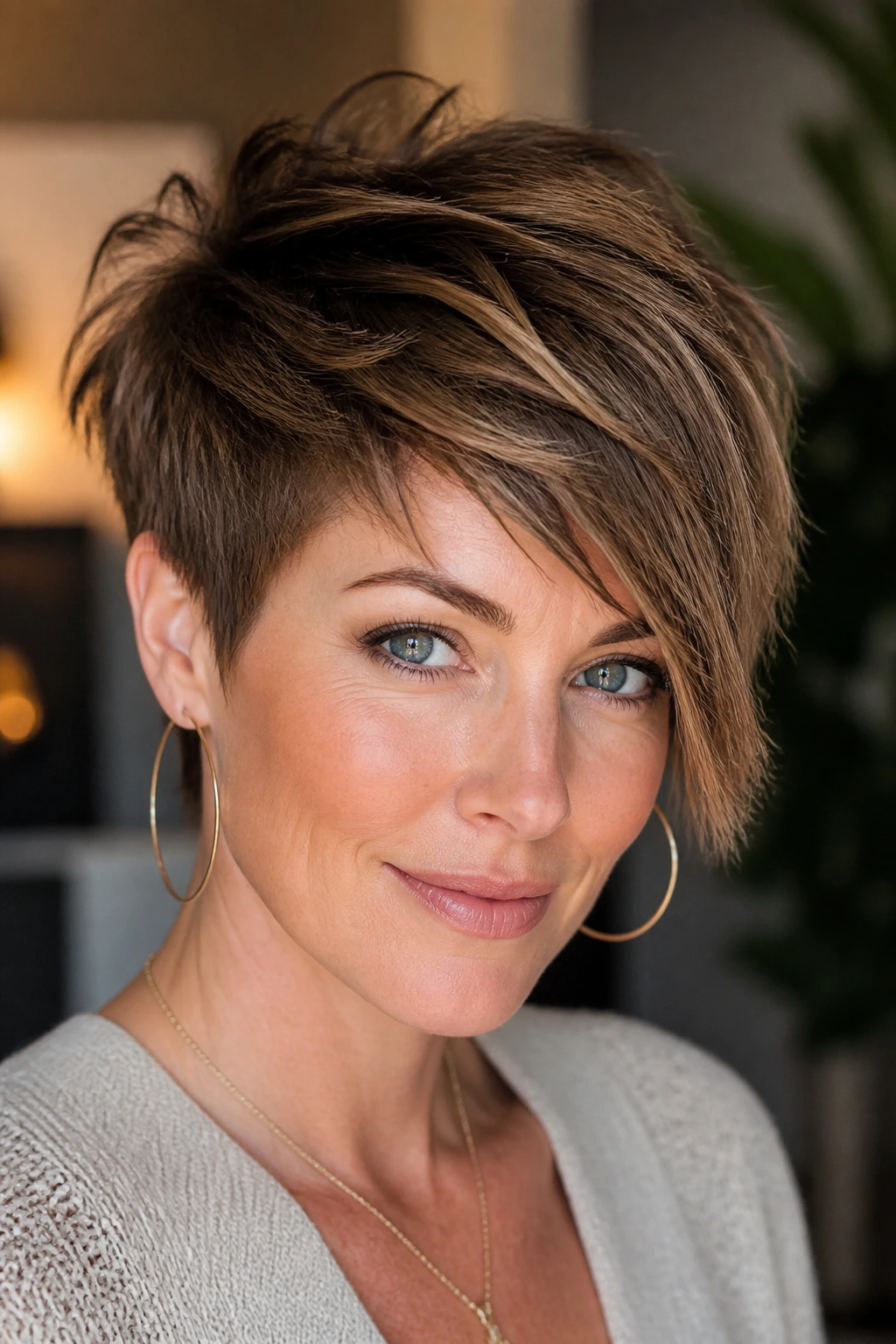
Why does a pixie feel soft instead of severe? Usually because the top is left long enough to bend, sweep, or fall forward in pieces. That’s what separates a flattering textured pixie from the kind that looks like a rushed buzz with ambition.
The long top layers matter more than people think. Three to four inches up top gives you room to push the hair sideways, forward, or slightly back. Shorter sides keep the shape neat, but the movement lives on top. That’s where the lived-in part comes from.
How I’d wear it
- Push the top forward with a pea-size cream for a piecey finish
- Rake it to one side if you want a softer profile
- Use a blow dryer on low heat, then stop before the roots are bone dry
- Finish by pinching the ends between your fingers, not combing them flat
This works especially well if you like earrings, bold brows, or a little makeup drama. The haircut gives your face room. It does not compete with it. And if your hairline has a cowlick or two, a long-top pixie can work with that instead of fighting it every morning.
4. Modern Shag Bob
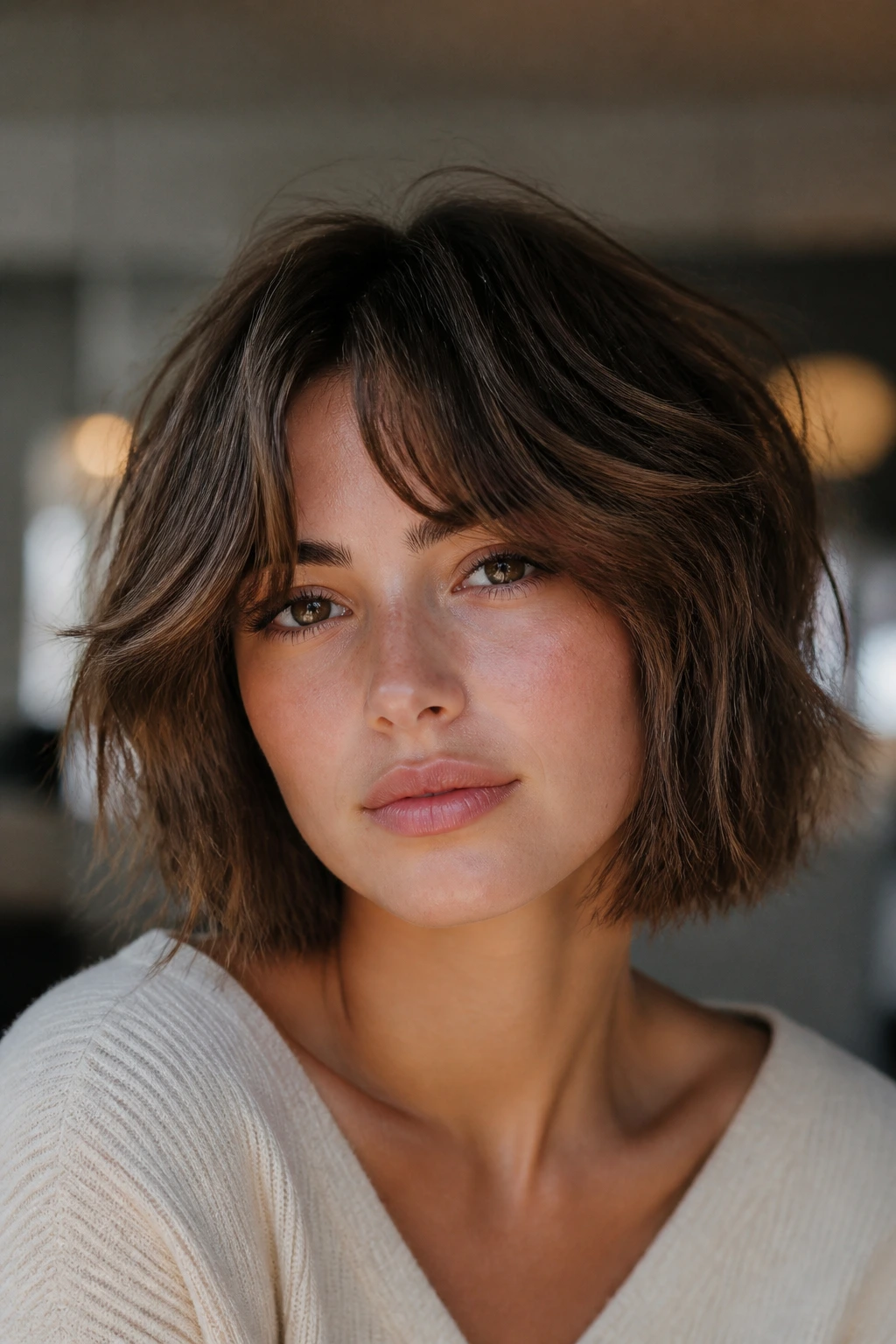
A modern shag bob is what I suggest when someone says they want texture but does not want the haircut to feel fussy. It has movement through the crown, a bit of swing at the ends, and enough layering around the face to make the whole cut feel relaxed rather than precise.
The trick is not over-layering the back. That’s where a lot of shag-inspired cuts go sideways. If the crown is chopped too high and the perimeter gets thinned out too much, the shape balloons in humid air and collapses at the roots. The good version keeps some density at the bottom so the bob still reads as a bob.
A soft curtain fringe or a longer face frame is the natural companion here. The hair falls in loose, irregular pieces that dry well with mousse and a diffuser, or even air-dry with a little scrunching. If your hair has a slight bend already, this cut can look expensive without trying to look polished.
5. Piecey Crop with Micro Fringe
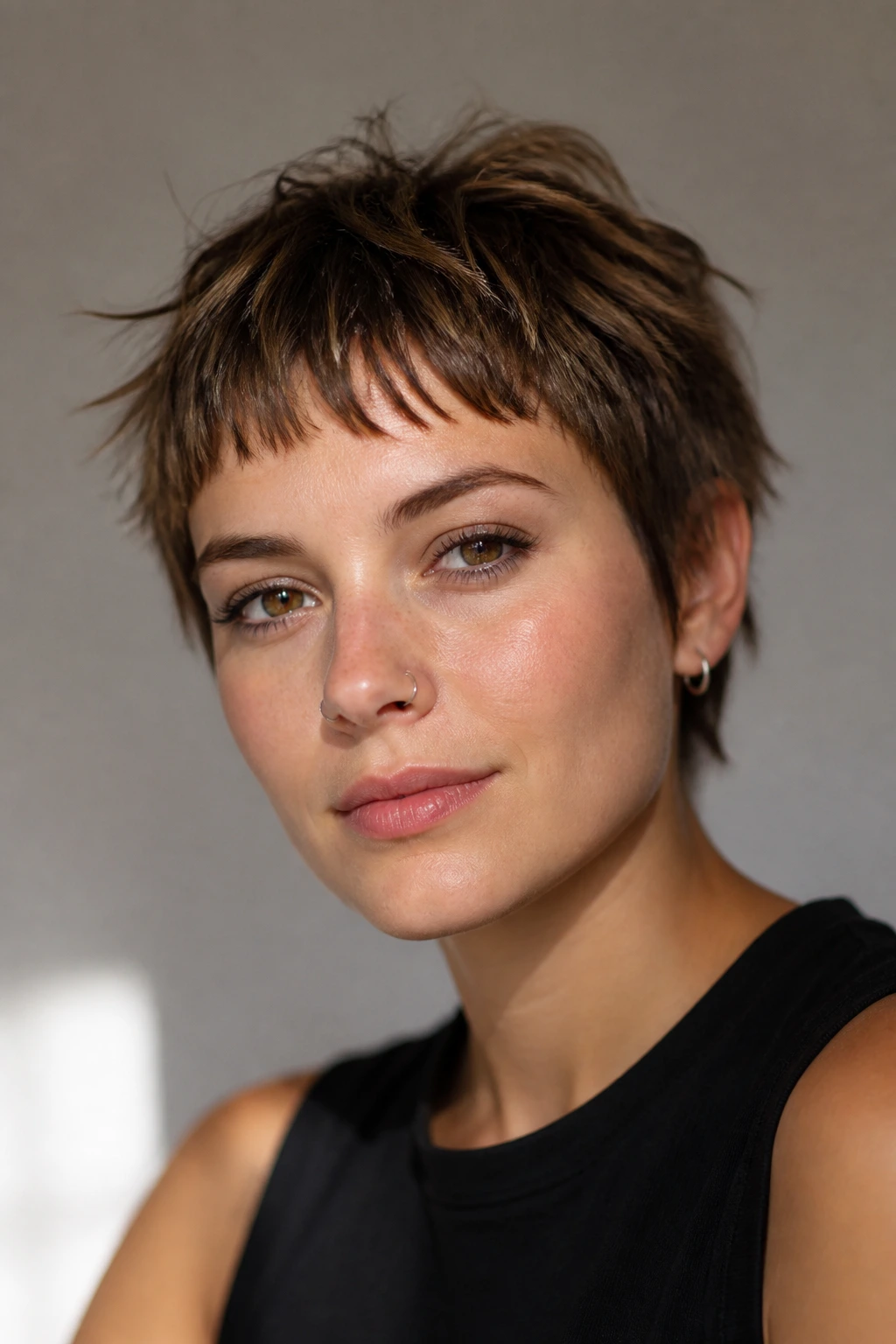
A piecey crop with a micro fringe is not shy. It’s short, expressive, and surprisingly wearable when the fringe is feathered instead of chopped bluntly across the forehead. That last detail matters a lot. A hard micro fringe can pull the whole cut into harsh territory. A soft one gives you shape without the stare-down.
This cut suits people who want the shortest possible length without giving up texture. The sides stay neat, the top has enough separation to move, and the fringe opens the face instead of pinning it down. It also works well with strong brows and a clean neckline.
Good to know
- Ask for the fringe to be point-cut, not cut straight across
- Keep the top long enough to pinch and separate with a matte product
- Skip heavy oils near the fringe or it will clump by noon
- This cut looks best when the texture is deliberate, not crunchy
I like this one on straight hair that tends to lie flat. A tiny bit of lift at the roots makes the whole thing feel sharper. On thicker hair, the fringe needs extra softness or it can read blunt very quickly.
6. Jaw-Length Razor Bob
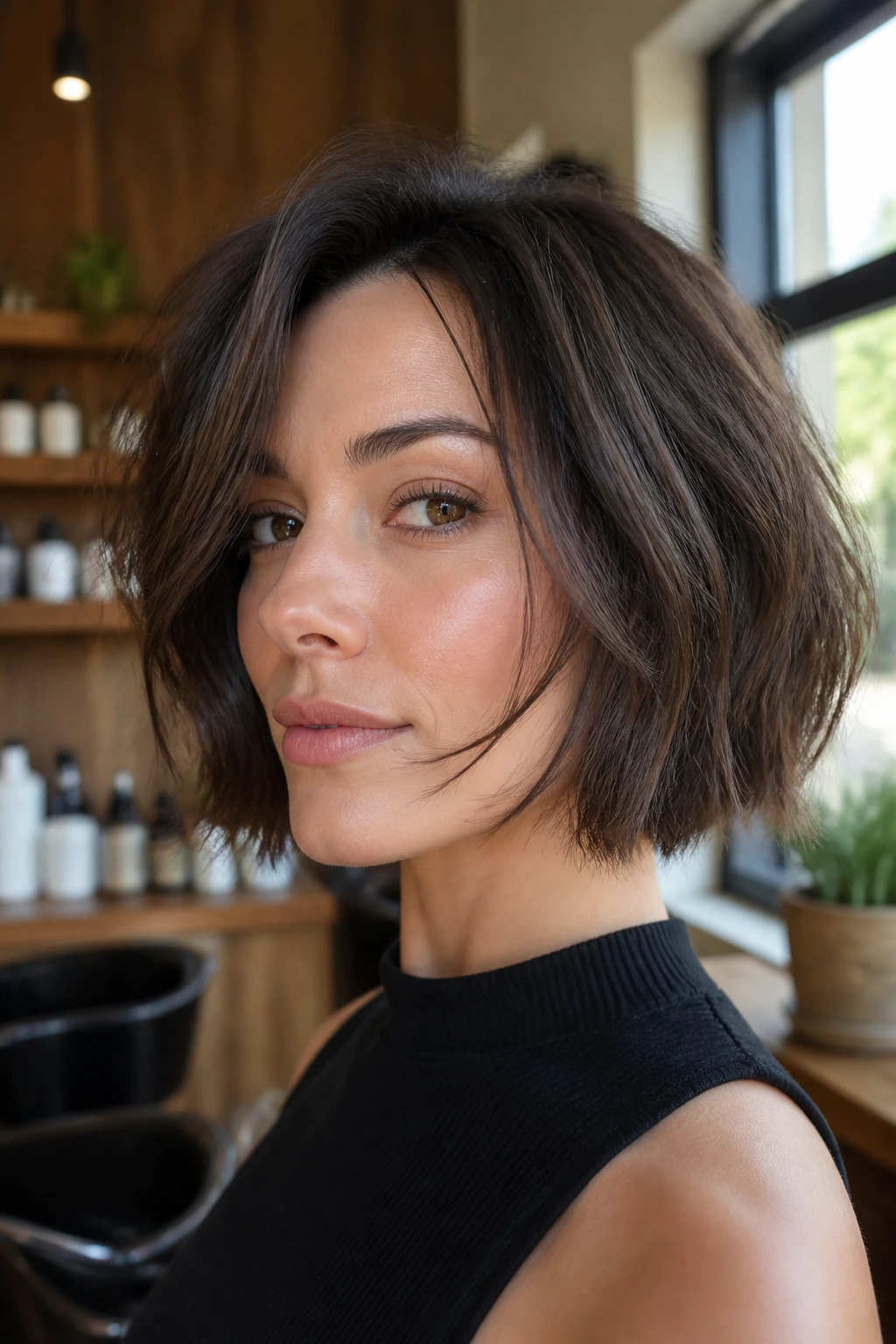
A razor bob can be gorgeous, but only when the razor is used like a pencil, not a machete. At jaw length, the right razor work creates feathery edges that flick a little at the ends and keep the line from looking boxy. The wrong one makes the hair too airy, especially if it’s fine.
This cut favors hair with some natural bend. Straight hair can hold the sliced texture nicely. Wavy hair gets a little more texture than it bargained for, which is usually the point. If your hair is coarse or very frizzy, I’d be careful here; a razor can exaggerate roughness unless the stylist knows exactly where to stop.
A jaw-length razor bob looks especially good when the front pieces graze the cheekbones. It gives the face a soft frame without turning into a long bob. If you want something that can be tucked behind the ear but still fall forward in wisps, this is a strong choice.
7. Messy Cub Cut
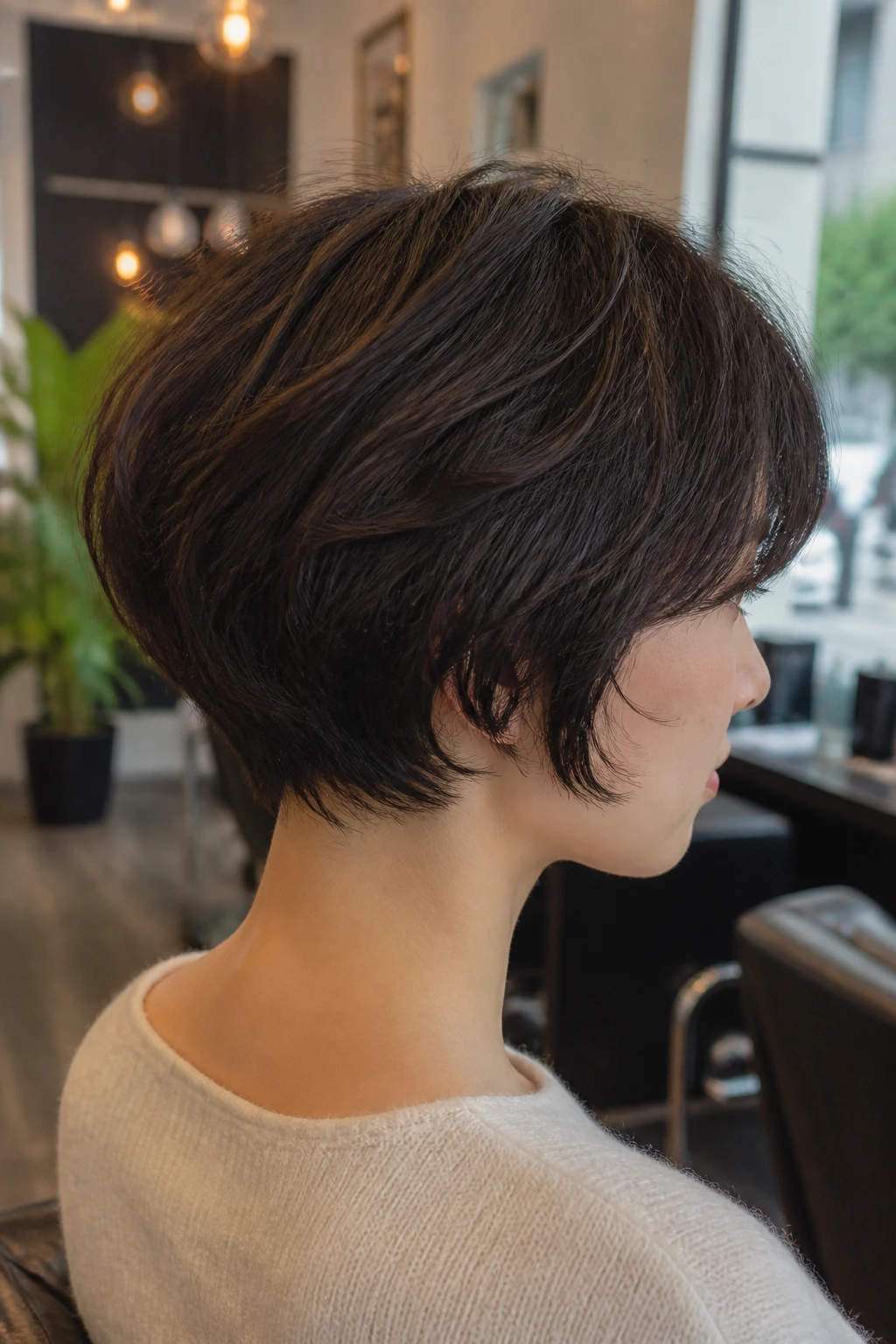
The cub cut sits between a pixie and a bob, and that in-between zone is part of its charm. It has a rounded shape, a slightly fuller crown, and short layers that keep the hair from looking too precious. The overall effect is soft, not shaggy in the sloppy sense. More “lived-in after a long lunch,” less “I gave up halfway through styling.”
This cut is especially nice on thick hair that needs bulk removed near the sides and around the nape. The cub shape keeps enough weight to avoid puffiness, while the choppy top gives you movement. If you have a narrow face, the rounded silhouette adds a bit of width without making the cut heavy.
The styling is refreshingly simple. A light mousse at the roots, a rough blow-dry, and a tiny bit of paste through the crown usually does it. If you want more definition, twist a few top pieces around your fingers while the hair is still warm.
8. Soft Mullet with Feathered Ends

A soft mullet sounds dramatic until you see one done well. Then it makes sense. The front stays short and face-framing, the crown gets some lift, and the back is left a little longer so the shape has swing. The feathered ends keep it from turning punkish or severe.
This cut is one of the best places to use choppy texture without losing softness. The layers should blend, not stab. The nape can be a touch longer if you want the back to move when you walk, which I like because it keeps the haircut from feeling frozen in place.
Wavy hair loves this shape because the natural bend fills in the layers. Straight hair can wear it too, but it usually needs a bend iron or a bit of finger-drying to keep the ends from lying too flat. If you want a haircut that looks better a little imperfect, this is in the top tier.
9. Tousled Layered Lob

Technically, a lob lives a bit longer than the shortest cuts in this list, but a cropped, textured lob still earns its place if you want short choppy haircuts with a little more length to play with. This is the one I recommend to anyone who likes the idea of texture but doesn’t want to lose the ability to clip it back.
The best version skims the collarbone and uses soft layers to break up the shape around the face. Nothing severe. Nothing over-sliced. The front can be slightly shorter than the back, which helps the hair fall forward in a way that feels relaxed instead of stale.
Why it stands out
You get enough length for a low bun or half-up style, but the ends still move like a shorter haircut. That matters. If the layers are placed well, the lob will dry with a bend even without much effort, especially if your hair has any wave at all.
A middle part makes this cut feel cooler. A side part makes it softer. I prefer the side part if you want the haircut to feel more “lived-in” than “styled.”
10. Curly Choppy Bob
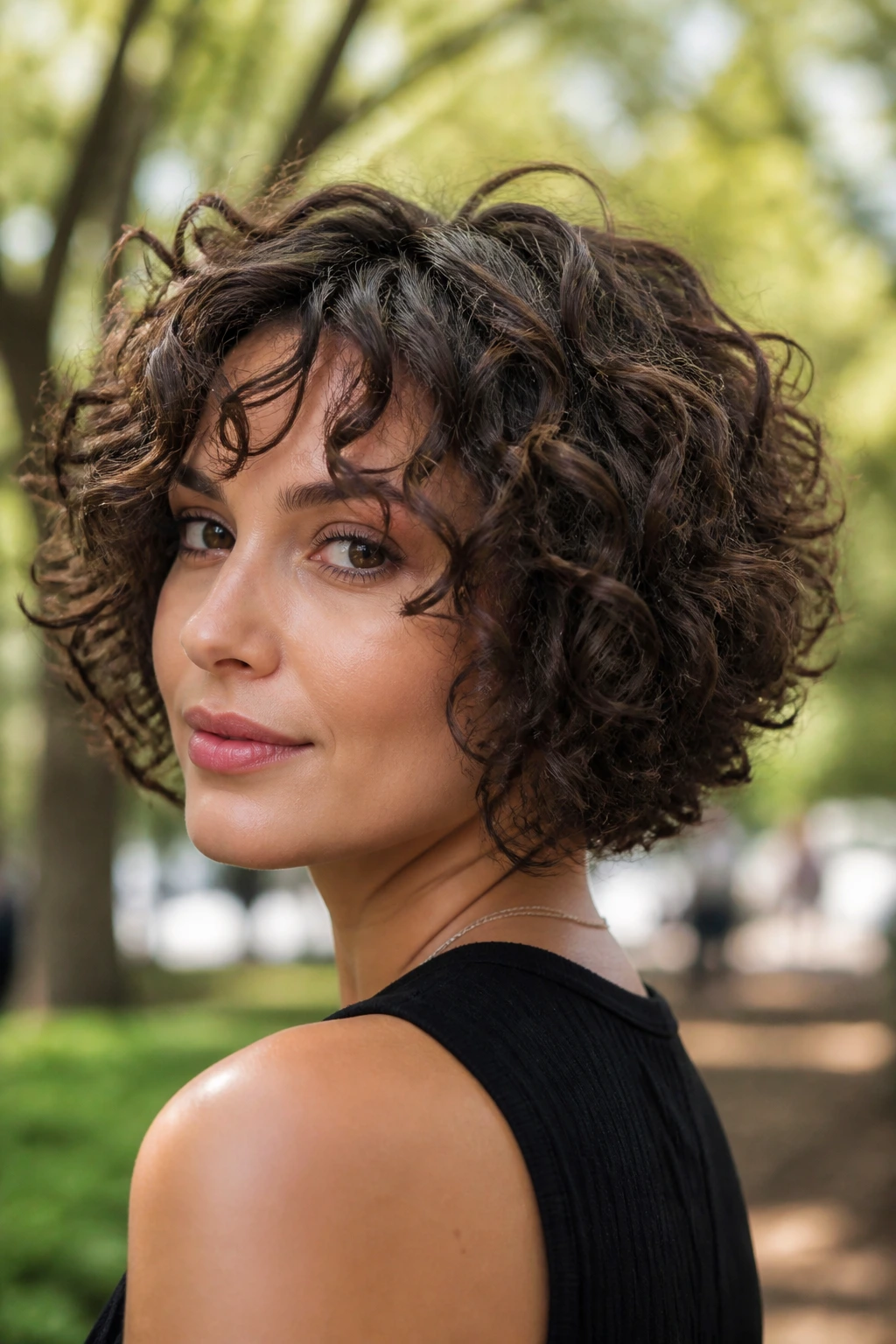
Curly hair and choppy texture are good friends when the cut respects the curl pattern. A curly choppy bob should not be carved like straight hair. It needs to be shaped so the curls can stack without exploding upward into a triangle.
Dry cutting is often the cleanest path here because curls shrink in their own strange little way. A stylist who cuts curl by curl can keep the perimeter from getting too blunt while still preserving enough weight to stop the crown from puffing. The result should look airy, not thin.
What to ask for
- Length that sits between the cheekbone and the jaw
- Internal layers that remove bulk without opening holes
- A soft face frame that starts around the nose or cheekbone
- A shape built around your curl pattern, not against it
If your curls are loose, this cut can feel bouncy and easy. If they’re tighter, leave a little extra length so the shrinkage doesn’t surprise you. A curl cream and a diffuser are useful, but the haircut does most of the work. That’s the point.
11. Asymmetrical Choppy Bob

An asymmetrical bob has a little edge built in, but it does not need to shout. When one side is only a bit longer than the other — say half an inch to an inch and a half — the shape feels modern without becoming a statement piece. The choppy texture keeps that asymmetry from feeling rigid.
This cut is especially useful if one side of your hair naturally flips better or your part line favors a certain direction. Instead of fighting the asymmetry your hair already has, the cut leans into it. That makes the style feel easier on busy mornings, which I appreciate more than a dramatic salon moment.
It’s also a smart option if you like tucking one side behind your ear. The longer side gives you something to work with, while the shorter side keeps the neckline clean. Add a little separation at the ends and the whole thing softens up fast.
12. Shattered Pixie-Bob
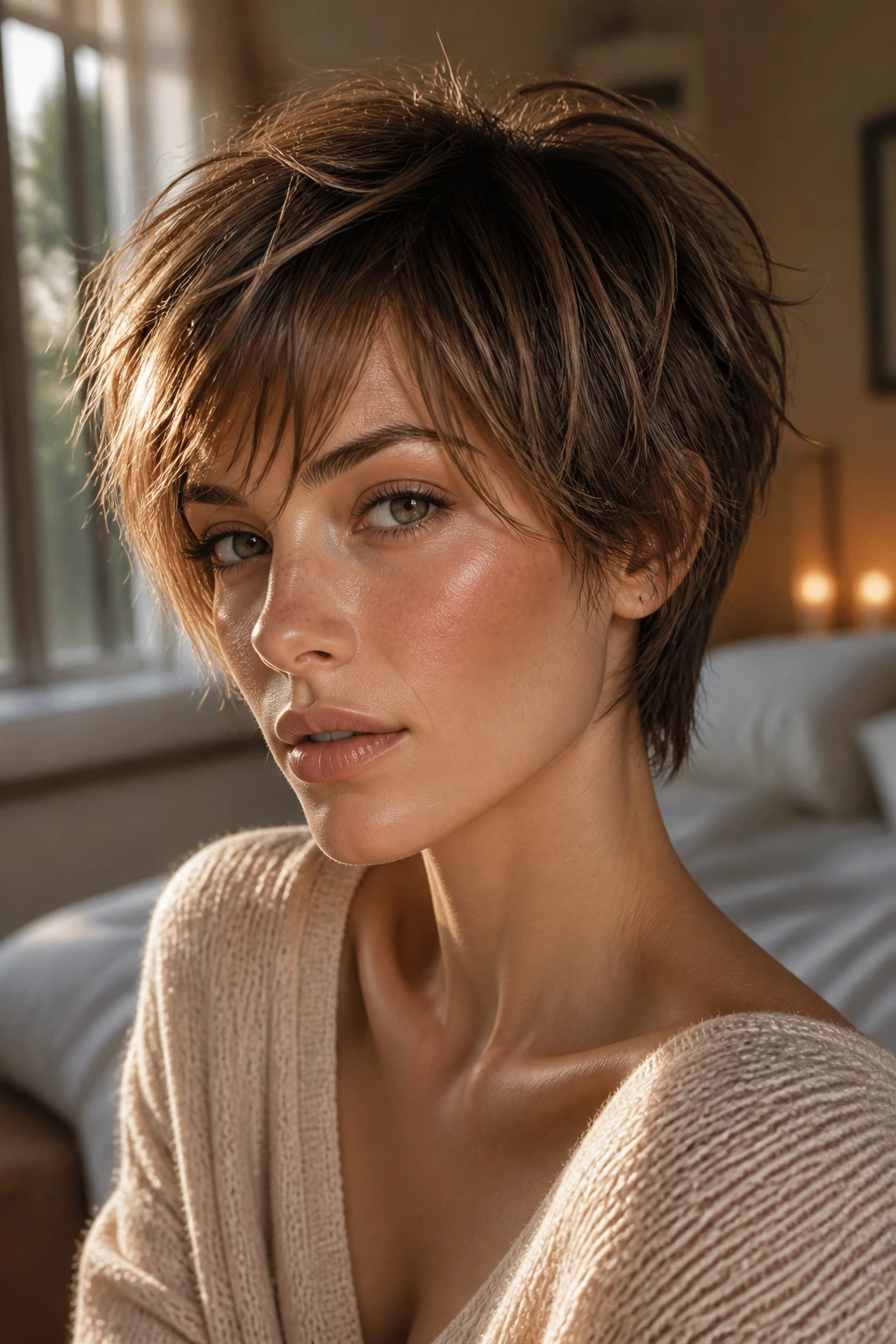
The bixie — pixie-bob hybrid, if we’re being plain about it — is one of those cuts that sounds awkward on paper and looks excellent on the right head. The shattered version has broken-up ends, a slightly longer top, and enough length around the ears to stop it from reading as a pure pixie.
I like this cut for people who want to go shorter but are not ready for a true crop. It gives you the ease of a short haircut with the face-framing comfort of a bob. The shattered texture keeps it from feeling too polished.
Styling it is less about control and more about direction. Blow-dry the roots for lift, then let the ends fall where they want. A light cream or paste on the fingertips is usually enough. If your hair is thick, ask for interior debulking rather than aggressive thinning so the shape keeps its body.
13. Wedge with Choppy Crown Layers
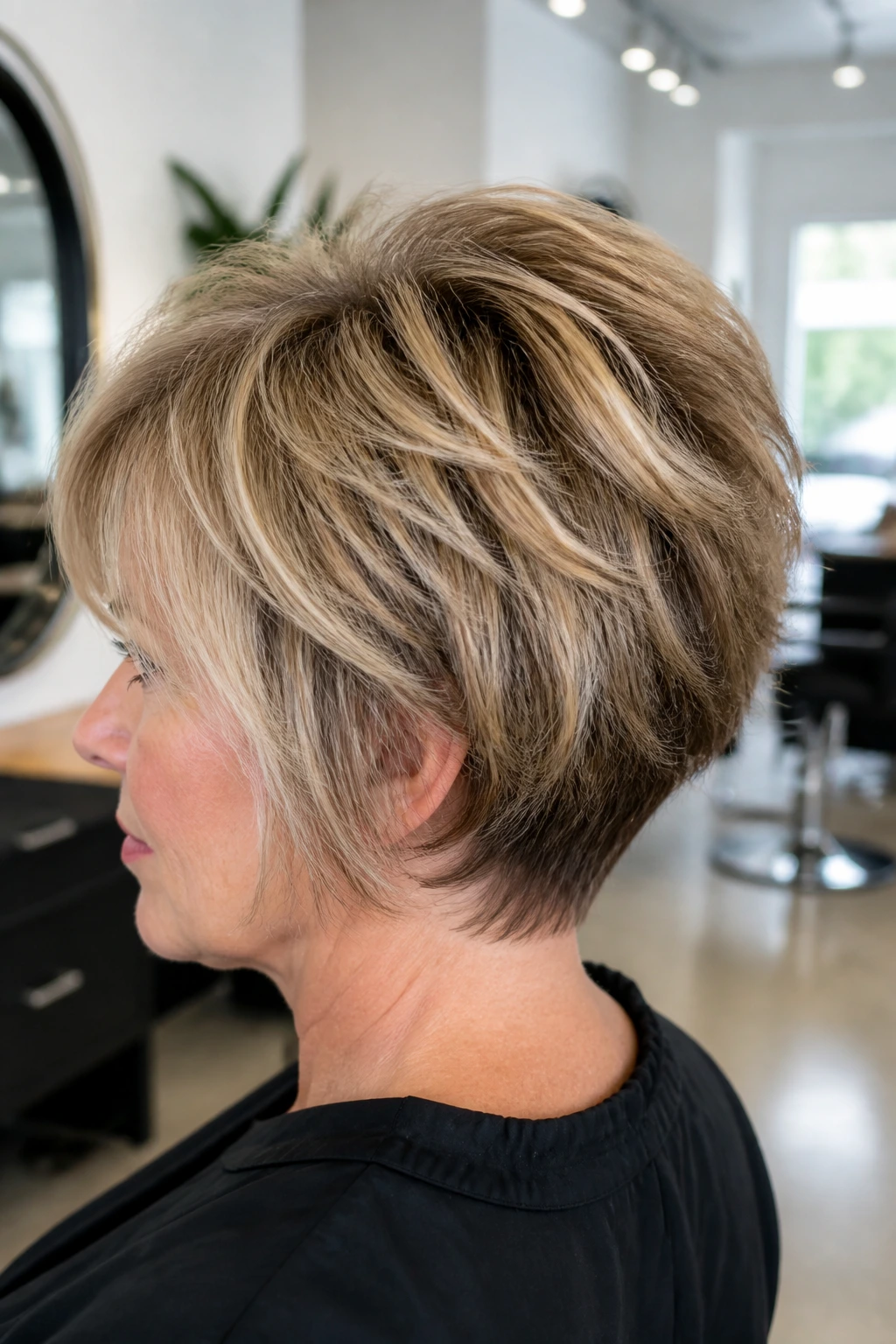
A modern wedge can look a little too neat if it’s cut without texture. Give it choppy crown layers and it wakes up. The back stays stacked enough to support the shape, while the top gets broken up so the haircut doesn’t feel locked in place.
This is a good one for fine hair that needs the illusion of fullness. The wedge shape lifts at the back, and the crown layers create movement where flat hair usually gives up. It also behaves well with a round brush if you want a little polish, though I prefer it a bit messier.
The key is not over-texturizing the perimeter. The line around the ears and nape should stay readable. That crispness is what keeps the haircut from slipping into a generic short shag.
14. Blunt Bob with Interior Texture

This one is for people who like structure but hate stiffness. On the outside, the bob looks blunt and clean. Inside, the hair is lightly layered or point-cut so it moves when you shake it out. That hidden texture is what keeps the style from feeling too severe.
Thick hair benefits most here. A blunt perimeter gives the illusion of density, while the interior texture removes the heavy blockiness that can make a short bob feel like a stack of bricks. The cut still looks strong, but it doesn’t sit like a shelf.
If you want a haircut that works in an office and still loosens up on the weekend, this is one of my favorites. Straightened, it looks precise. Rough-dried, it gets a little swing. That range is useful, and it’s harder to find than people think.
15. Airy Wolf Cut on Short Hair
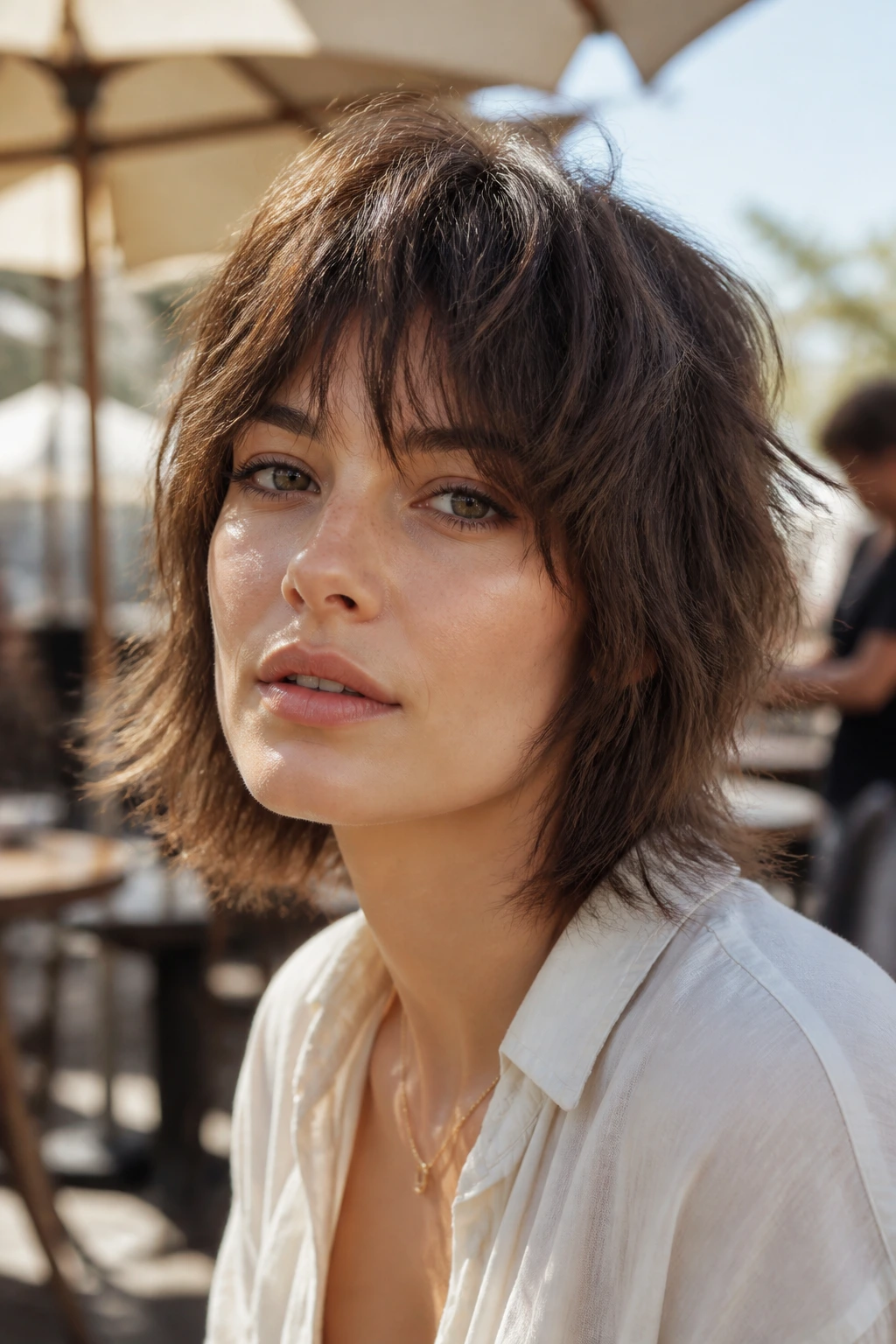
A short wolf cut can go very wrong if the layers are too high and too disconnected. The soft version keeps the crown lifted, the sides feathered, and the ends broken up just enough to move. It should feel airy, not mangled.
This cut loves natural wave. If your hair bends on its own, the shape will fall into place with surprisingly little work. On straighter hair, a small bend iron at the front and a little texture spray through the midlengths usually does the trick. Do not overload it with product. The shape needs air.
I’d skip this if you want a tidy, one-length outline. A short wolf cut is all about variation in length. That’s the point. If you want something with a little more attitude but still soft at the edges, it lands in the right place.
16. Layered Crop with Side-Swept Fringe
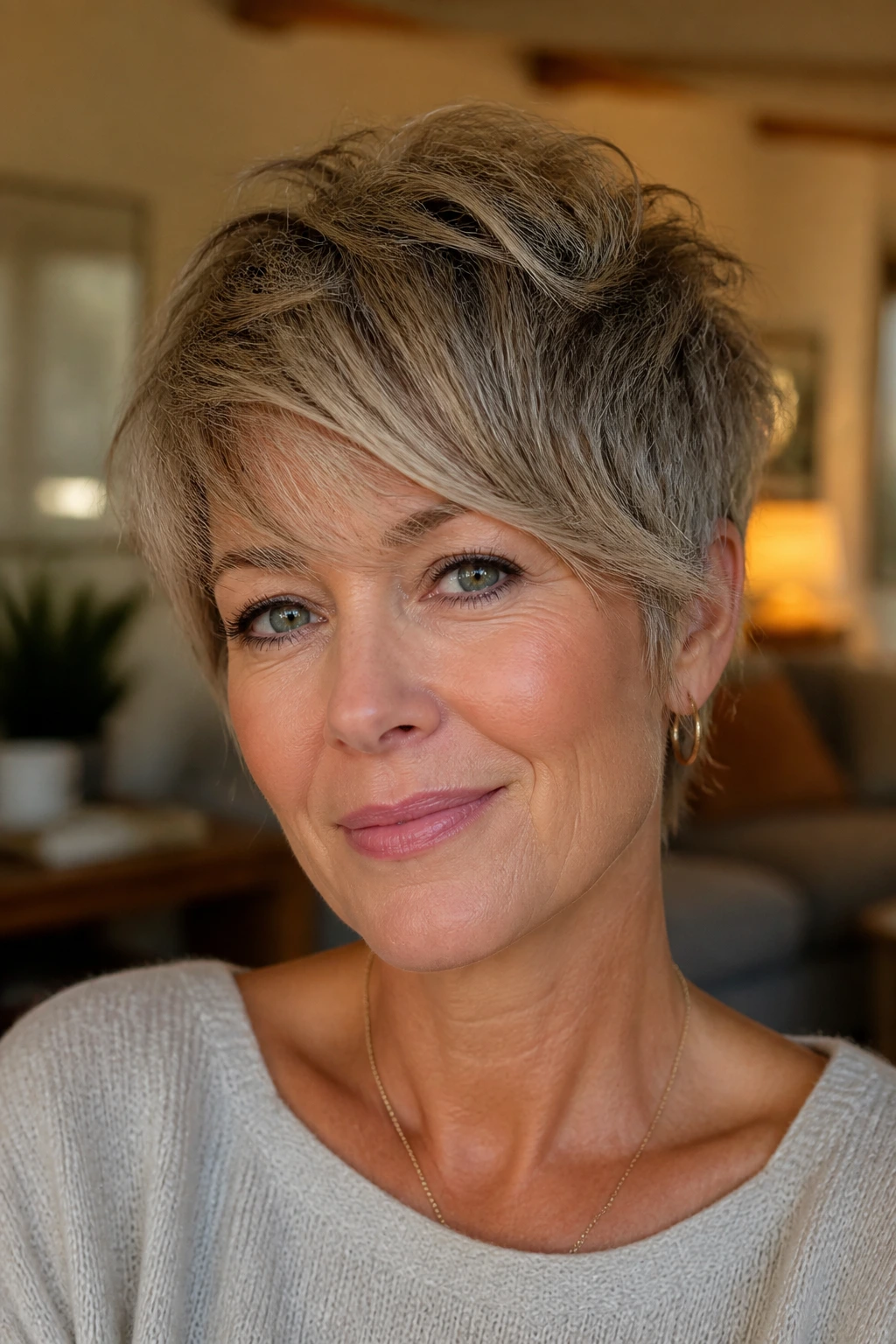
A side-swept fringe can save a lot of bad haircut decisions. It softens the forehead, hides a cowlick, and gives the crop an easy direction. When paired with short choppy layers, it creates movement without forcing the haircut into a heavy bang shape.
This is a strong choice for fine hair because the fringe adds interest where the hairline might otherwise look sparse. The layers around the crown should be light and mobile, not short enough to stand up like a brush. A little softness around the temples keeps the cut from looking sharp-edged.
Small but useful detail
If your hair grows straight down at the front, ask for the fringe to be cut slightly longer than you think you need. That lets it sweep instead of snap back into your eyes. And if you wear glasses, this cut tends to play nicely with the frame line.
17. Tapered Cut with Choppy Nape
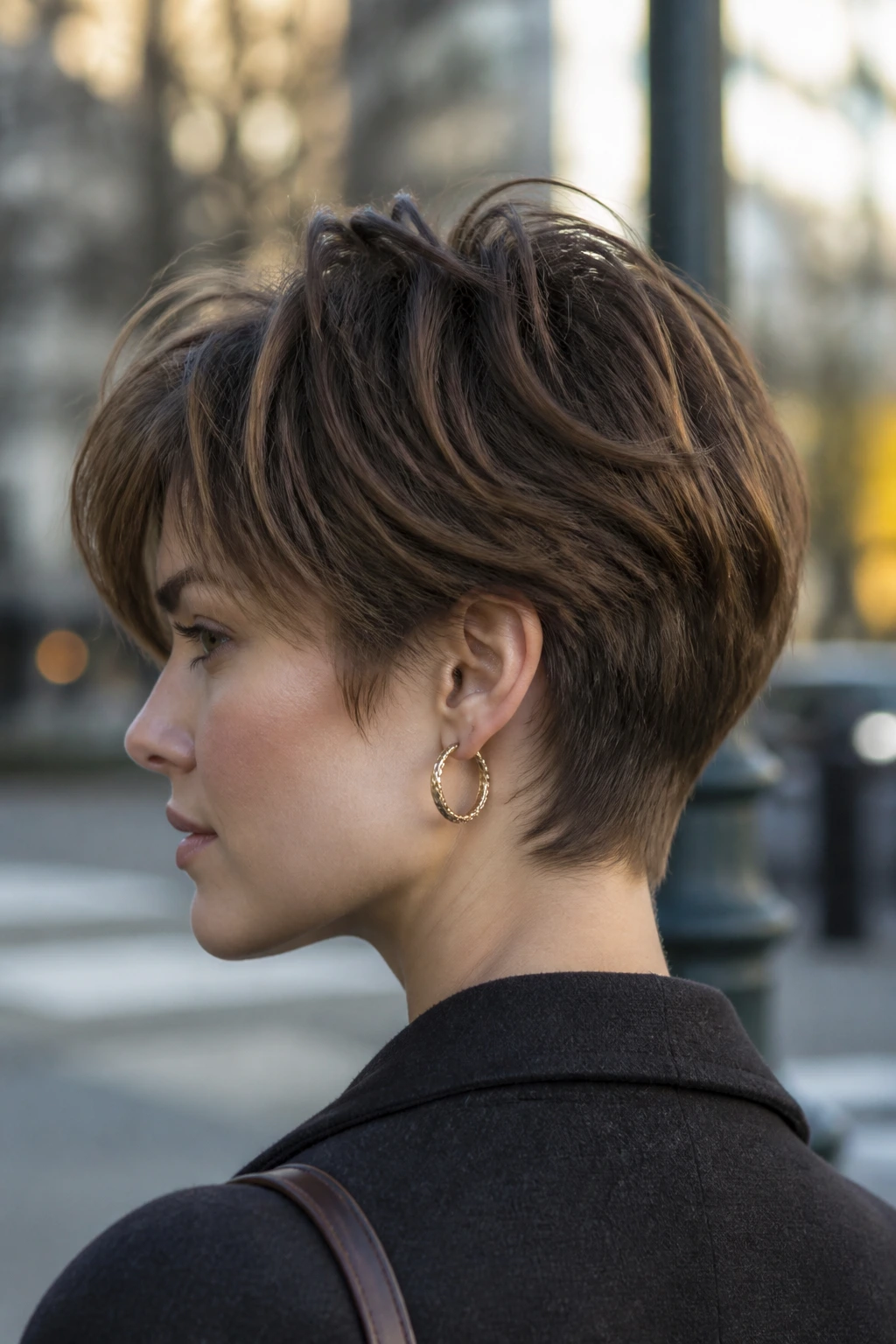
A tapered cut with a choppy nape sounds tidy, and it is — but the top gives it enough looseness that it doesn’t feel strict. The neckline is cleaned up, the sides taper in, and the top pieces are left uneven enough to fall with a little softness.
This is the haircut I think about for people who like a neat silhouette but don’t want a classic close crop. It works well on hair that grows fast at the nape, because the taper keeps the grow-out from getting shaggy too soon. It also feels good if you wear collared shirts or scarves, since the hair sits close to the neck instead of bunching under fabric.
The texture on top should be broken, not spiked. A tiny bit of matte cream goes a long way. If you use too much product here, the whole thing can flatten into a shiny cap, which is not the vibe.
18. Wavy Bixie
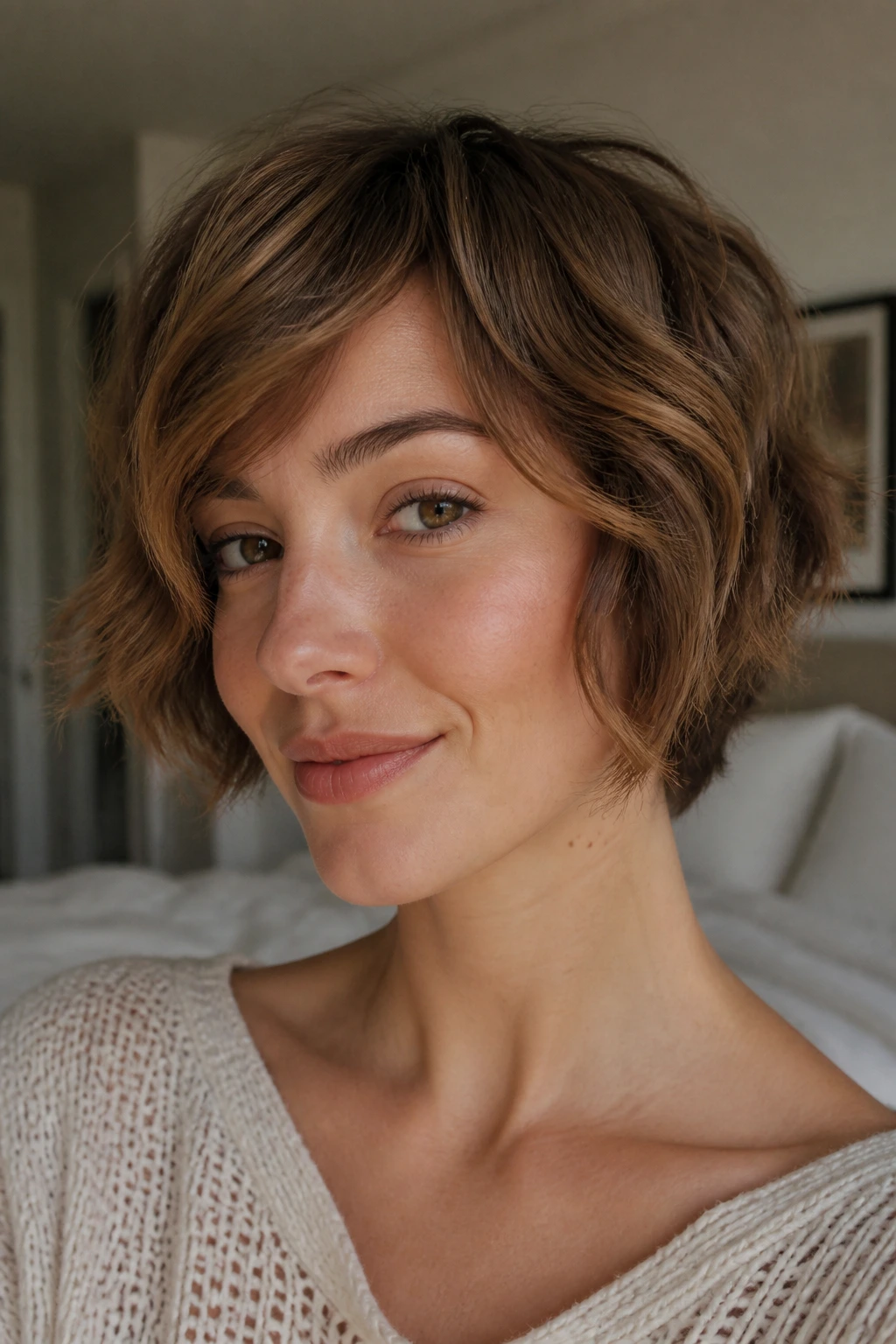
A wavy bixie is one of the easiest short choppy haircuts to live with if you already have a natural bend. It has the softness of a bob around the face and the ease of a pixie at the back and sides. The result is loose, touchable, and far less dramatic than it sounds.
The thing to get right is length. Too short, and the wave springs up in unpredictable ways. Too long, and the bixie stops behaving like a short haircut and starts looking like a grown-out bob. The sweet spot usually sits between the cheekbone and the jaw, with enough layering to let the wave show.
I like this cut with a side part and a little scrunching cream. It can air-dry well on its own, but if you want a cleaner outline, a diffuser on low heat helps keep the pieces from separating too much.
19. Sliced Bob with Curtain Bangs
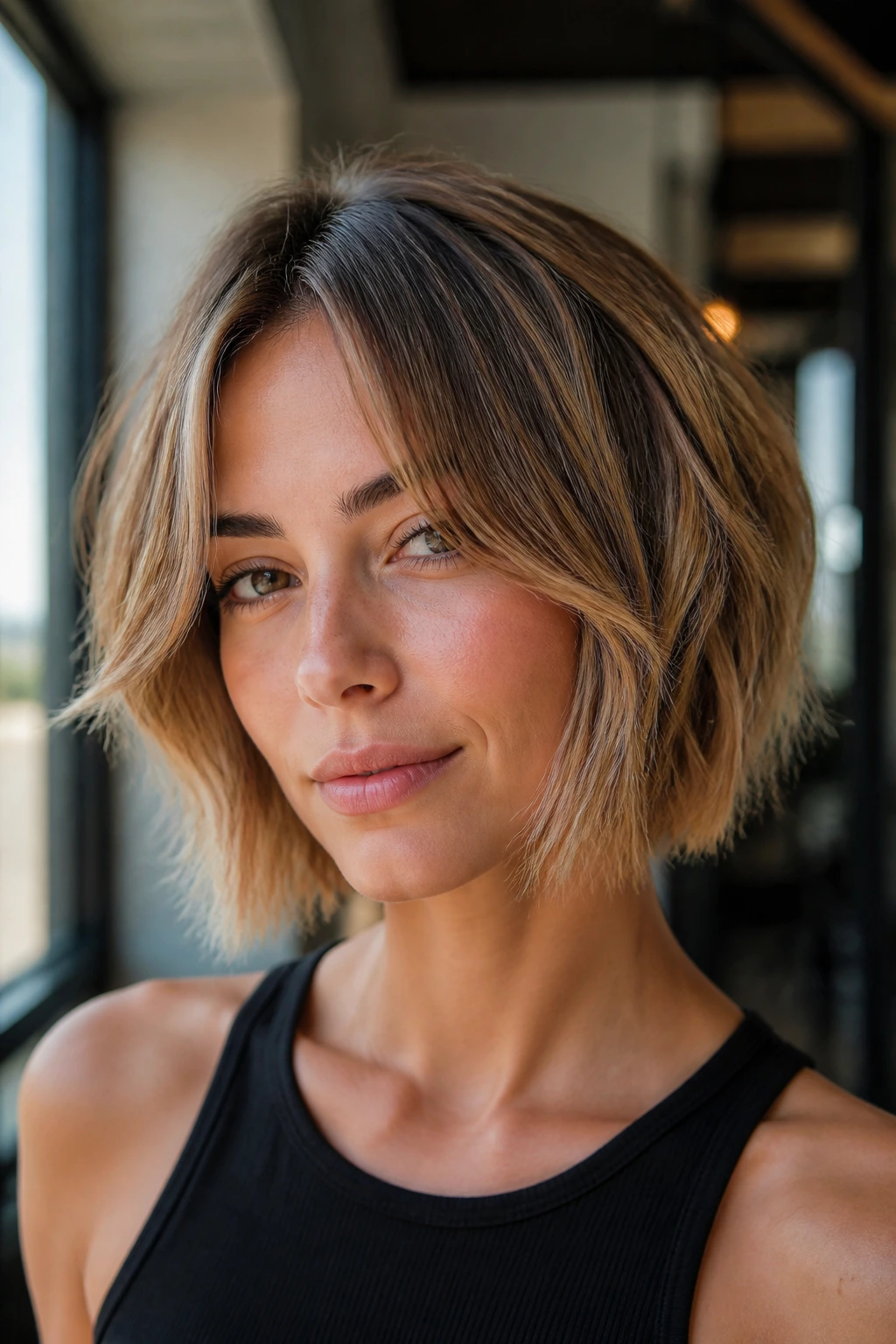
A sliced bob has lighter, more separated ends than a blunt bob, and curtain bangs make the whole thing feel softer around the face. It’s a smart pairing if you want movement without going full shag. The bangs open in the center and fall away from the cheeks, which can be a very flattering line.
This cut tends to work best on medium-density hair. Fine hair can wear it too, but the bangs need enough weight to sit well. If the fringe is too wispy, it can look unfinished by lunchtime. Slightly heavier curtain bangs usually wear better than over-thinned ones.
The bob itself should have enough texture to keep the bangs from feeling disconnected. When the layers and fringe echo each other, the shape looks deliberate. When they don’t, the haircut can feel like two different ideas in one head.
20. Razored Ear-Length Crop
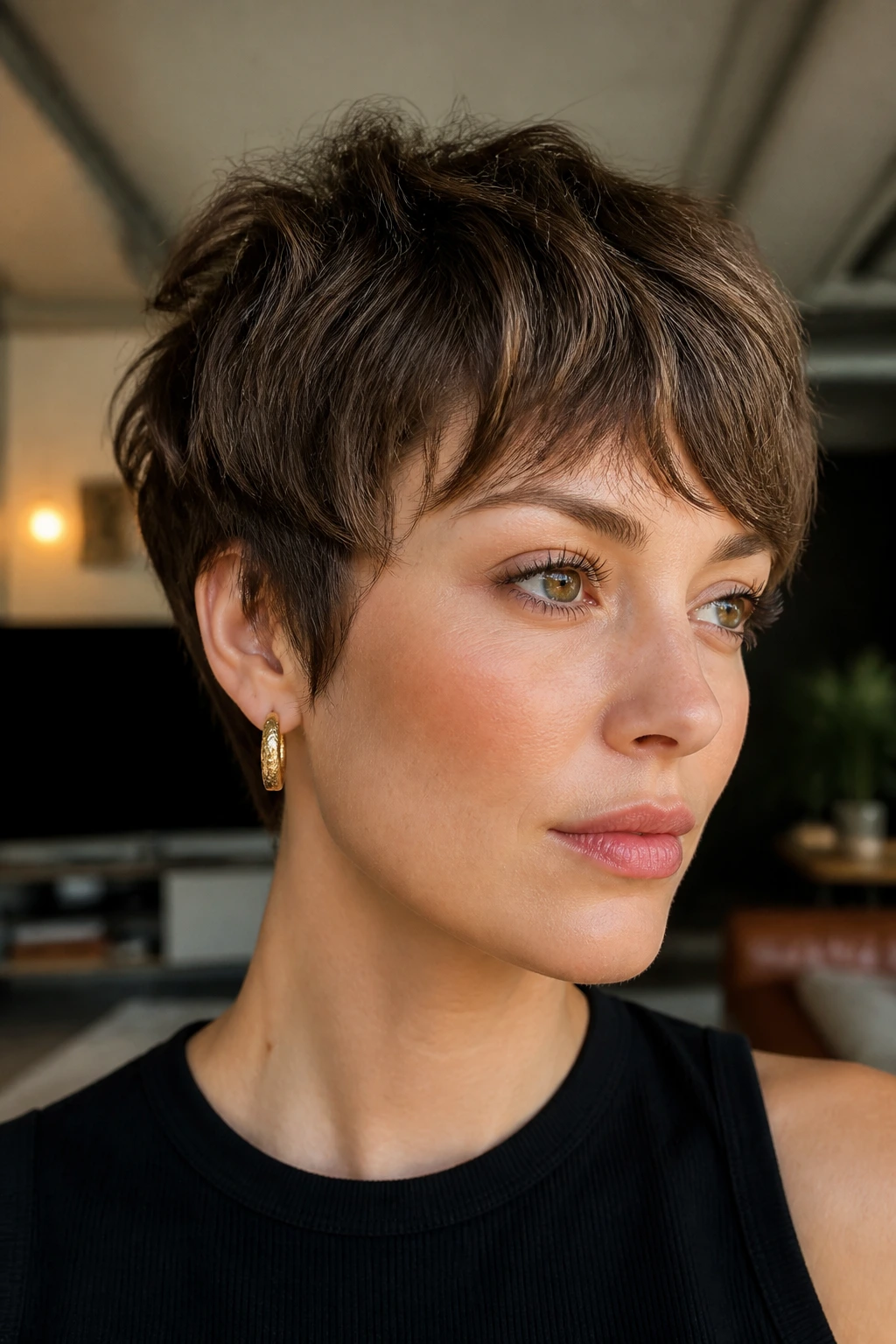
Ear-length hair is short. No pretending. It shows your face, your neck, and your earrings whether you planned for that or not. But with a soft razor finish, it can also be one of the prettiest choppy cuts in the bunch because the edges lift and separate instead of sitting flat against the head.
This is the shortest option here, so it asks for confidence and maintenance. The upside is how light it feels. The haircut dries fast, needs very little product, and looks sharp with almost no effort once the shape is right. If your hair is dense, this length can remove a surprising amount of bulk. If your hair is fine, keep the texture soft so it does not disappear.
I’d ask for a little extra length around the temples if you want to tuck it behind the ear. That small cushion makes the cut easier to wear on ordinary days, which matters more than people admit.
Why Short Choppy Haircuts Stay Soft Instead of Spiky
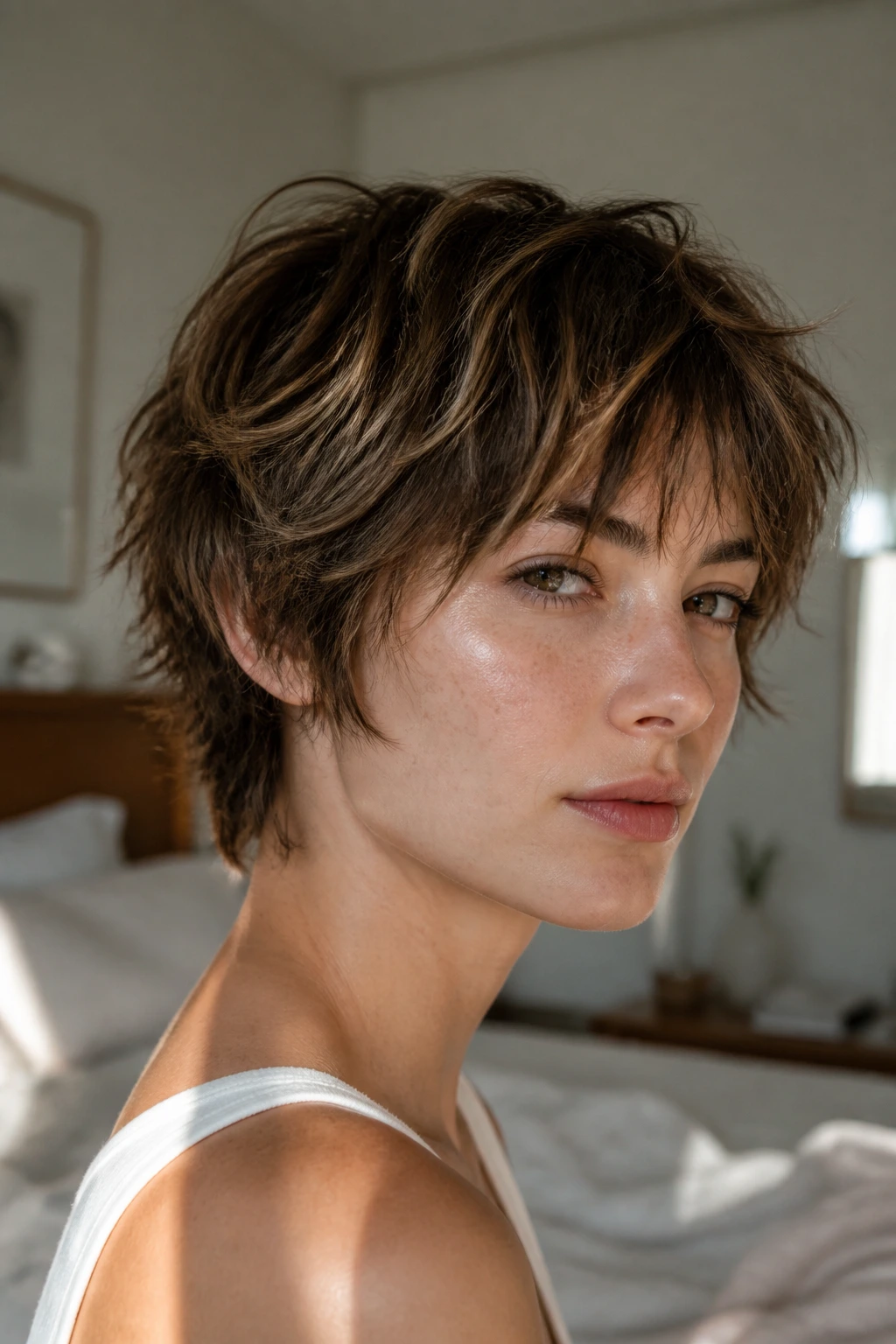
Soft texture comes from restraint. That’s the part people skip when they get excited about “choppy.” If every layer is hacked short and every edge is thinned, the haircut stops looking lived-in and starts looking frayed. The good versions leave enough weight at the perimeter to hold the shape while the interior layers do the moving.
Point cutting helps because it breaks up the line without destroying it. Razor cutting can help too, but only on hair that can handle the extra lift. On coarse or frizz-prone hair, too much razor work can make the ends look fuzzy in bright light. That’s not texture. That’s a warning sign.
The difference between soft and shredded
Soft means the hair separates into pieces, but the silhouette still reads clearly from across the room. Shredded means the shape loses its boundary. One is easy to style. The other usually needs more fixing than it deserves.
A good stylist keeps the crown, sides, and nape talking to each other. The haircut should collapse in a flattering way when air-dried, not split into random bits. If you run your fingers through it and the ends still feel supple rather than dry and see-through, you’re in the right zone.
Essential Equipment for These Cuts
-
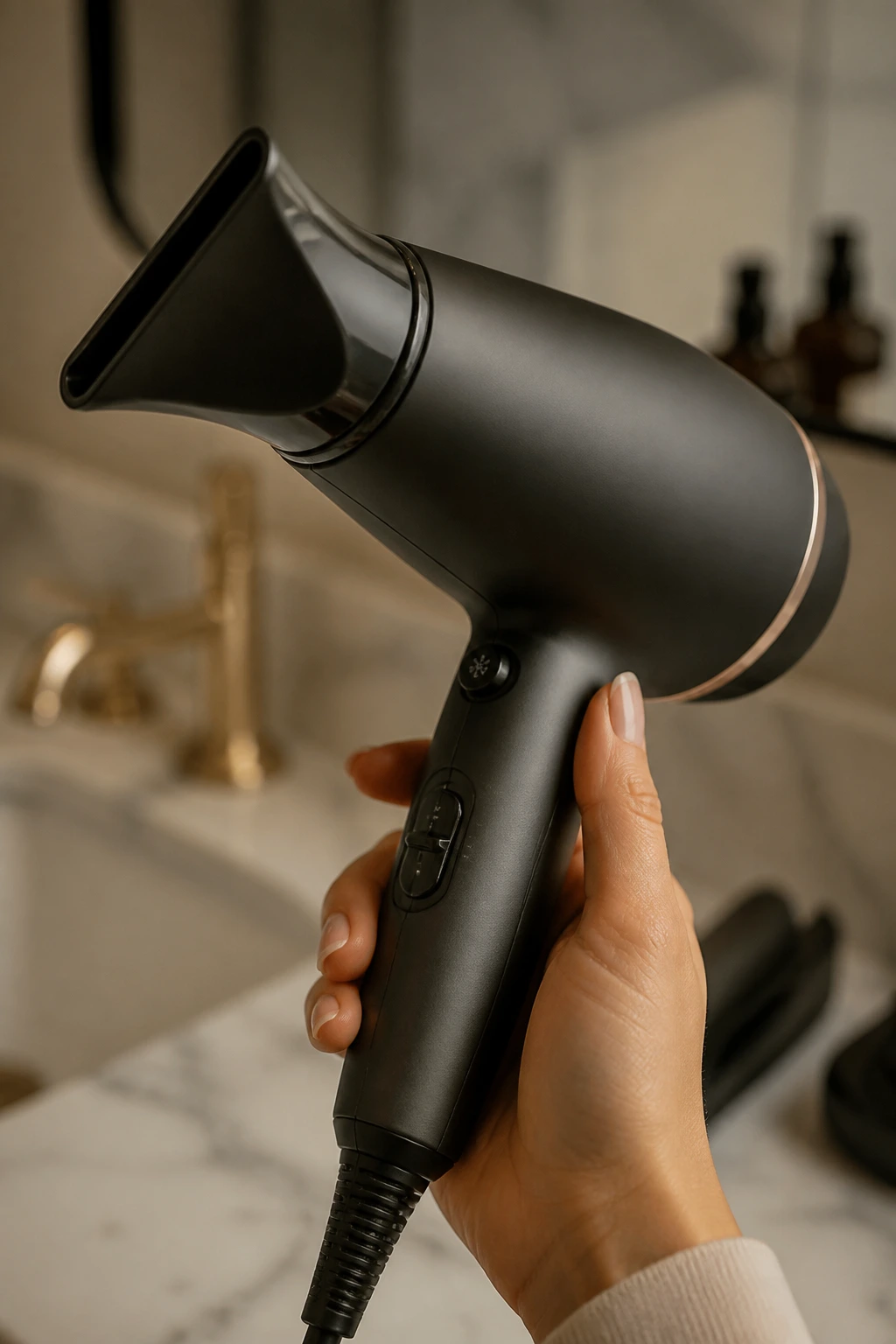
A blow dryer with a nozzle attachment — The nozzle helps direct the air so short layers don’t scatter before they dry.
-
A small round brush, about 1 to 1.5 inches — Best for lifting the crown and smoothing a fringe without flattening the texture.
-
A 1-inch curling iron or flat iron — Useful for bending short pieces just at the ends instead of making them look curled on purpose.
-
Heat protectant spray — Non-negotiable if you use hot tools, even on low heat.
-
Light mousse or volumizing foam — Gives fine and medium hair a little hold without the sticky helmet effect.
-
Texturizing spray — Good for second-day separation, especially on bobs and pixie-bobs.
-
Matte paste or flexible styling cream — A pea-size amount is usually enough for short cuts; more than that can make the texture collapse.
-
Wide-tooth comb and tail comb — The tail comb helps with parts; the wide-tooth comb keeps waves from being brushed into fluff.
-
A clip or two for sectioning — Short hair still needs sectioning if you want the crown and fringe to behave.
-
Satin pillowcase — Not glamorous, but it keeps the ends from roughing up overnight.
How to Choose the Right Shape for Your Hair Type
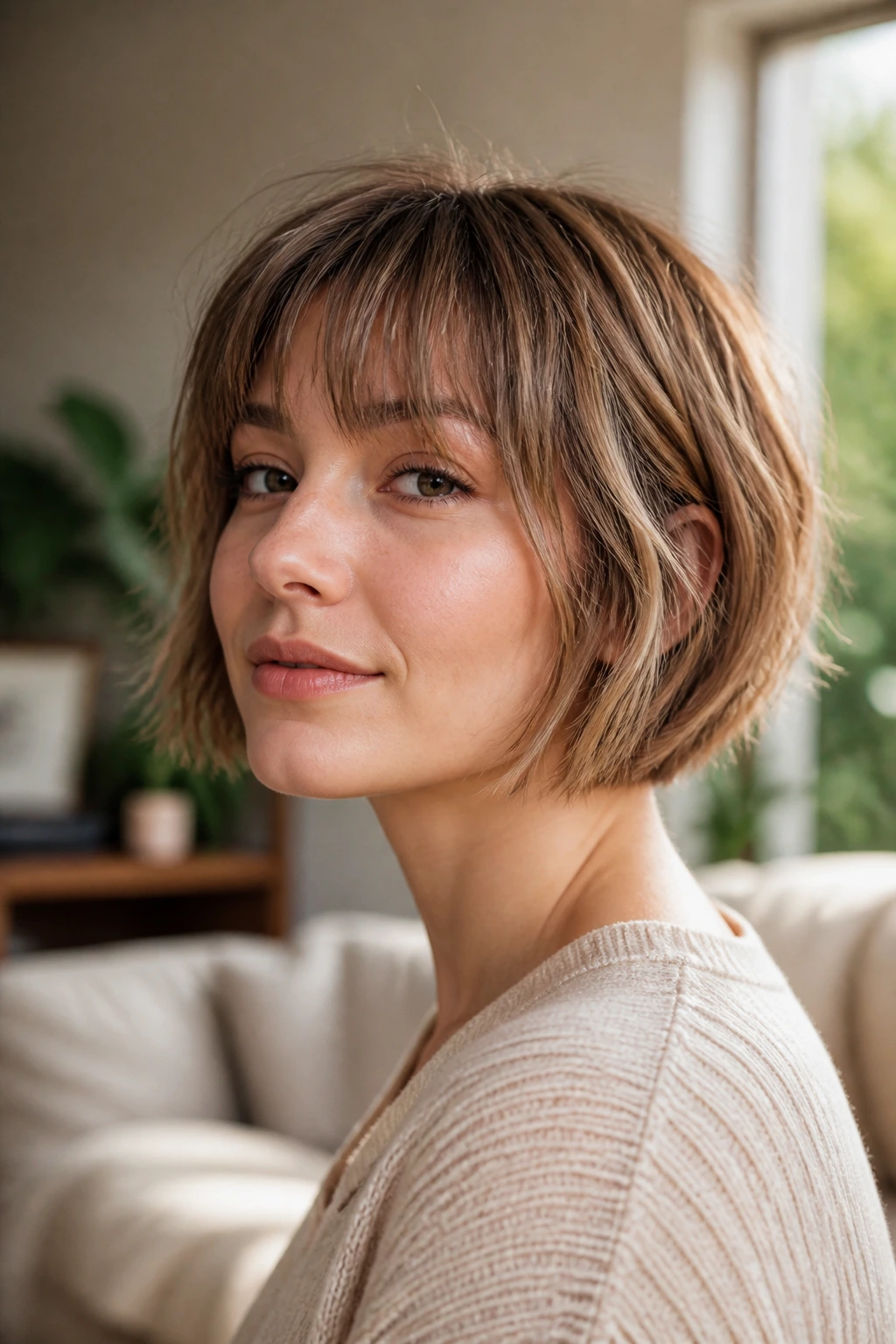
Fine hair and thick hair want different things from the same haircut. Fine hair usually needs a stronger perimeter and lighter internal layering so it can keep the look of density. Thick hair often wants more weight removal inside the shape, but not so much that the ends go hollow. The temptation is to ask for “lots of layers.” That phrase causes more trouble than it solves.
If your hair is fine
Choose cuts with a clear outline: chin-length bobs, French bobs, blunt bobs with hidden texture, or a pixie-bob with a full top. Avoid too many shredded ends and too much thinning at the crown. You want movement, not see-through strips.
If your hair is thick
Look for shapes that remove bulk without erasing the perimeter. Jaw-length razor bobs, shag bobs, soft mullets, and tapered crops can all work well if the stylist keeps the balance under control. A little more length usually helps thick hair behave.
If your hair is wavy
You’re in a lucky spot. Wavy hair makes choppy layers look intentional fast, especially in bixies, lob-to-bob hybrids, and soft wolf cuts. Ask for the cut to support your wave pattern instead of forcing it flatter.
If your hair is curly
Dry cutting or curl-specific shaping matters. The curl’s spring will change the length more than people expect. Leave the perimeter a touch longer than a straight-haired client would, and keep the layers soft around the crown so the shape doesn’t widen too much.
If you have cowlicks or a stubborn hairline
Don’t fight them with a blunt, short fringe unless you want a daily argument. Side-swept bangs, broken fringe, and slightly longer front pieces are easier to live with. Hair that grows in two directions needs a cut that leaves room for that reality.
How to Style Them on Air-Dry Days, Blowout Days, and Second-Day Mornings

Air-Dry Finish: Work a light mousse or curl cream through damp hair, then scrunch or finger-shape the pieces into place. Leave the roots alone until they’re mostly dry. If you keep touching the hair while it dries, the ends can lose the soft separation you wanted in the first place.
Blowout Finish: Rough-dry the hair about 80 percent of the way first, then use a small round brush or flat brush to lift the crown and tuck the ends under just a little. You are not trying to create a pageant bob. You’re trying to bend the hair enough that the choppy layers show without looking frozen.
Second-Day Refresh: Mist the hair lightly with water, then rub a pea-size amount of paste or cream between your palms and press it into the ends. A little dry shampoo at the roots can bring back lift if the crown has gone flat. Too much product here is the enemy. Start small.
When you want it cleaner: Use a side part and tuck one side behind the ear. That instantly changes the mood of most short choppy haircuts without changing the cut itself. Cheap trick. Works every time.
Extra Tips for More Lift, More Movement, or Less Fuss
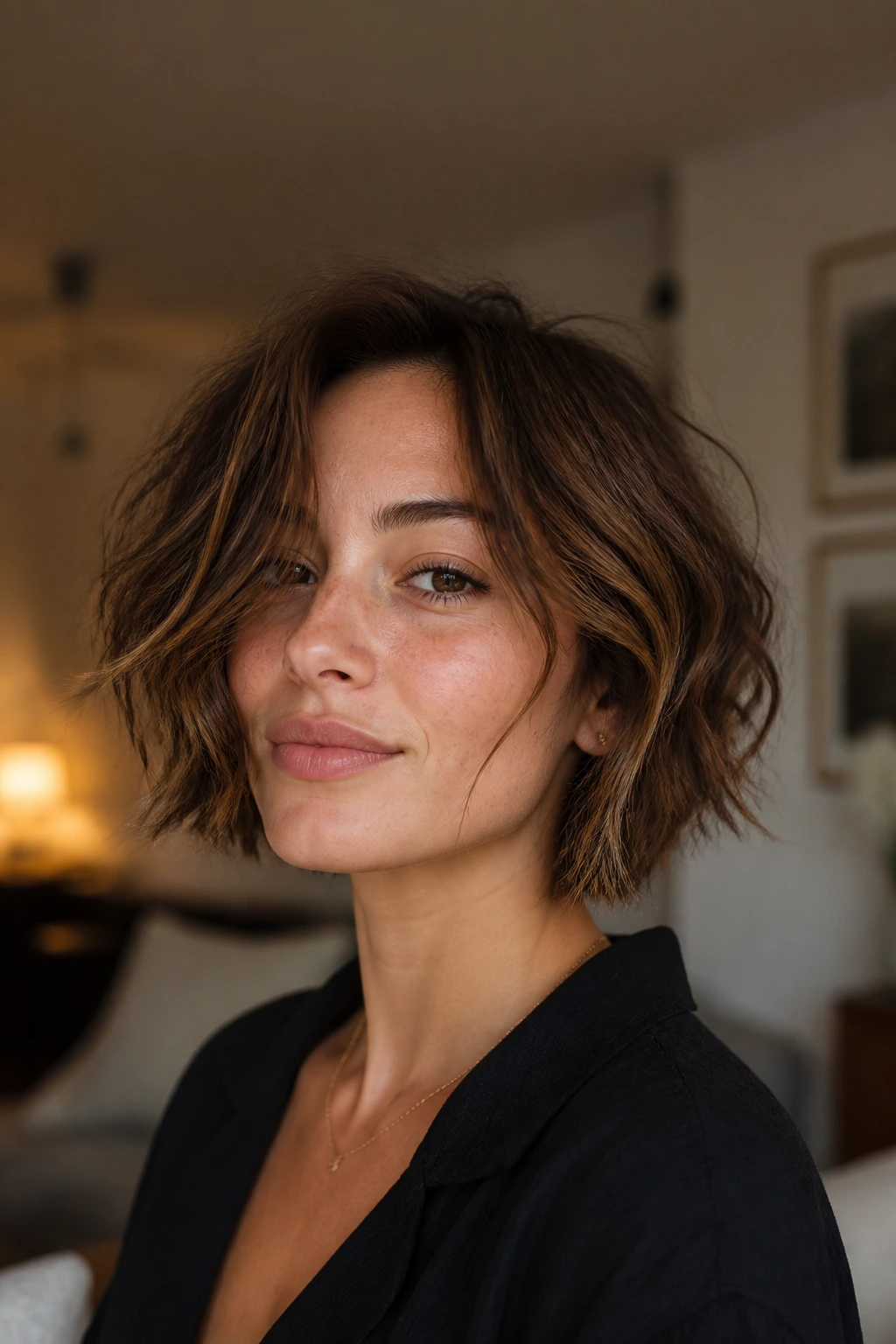
Lift at the Crown: Spray dry shampoo under the top layers before the hair is fully dry. Let it sit for a minute, then rough it up with your fingertips. That gives short hair a little root memory, which matters on flat heads and humid days.
Texture Boost: Use a matte paste only on the last inch of the ends. If you smear it through the mids, the haircut can go heavy and separated in the wrong way. The tips should look lived-in, not coated.
Softer Fringe: Blow the bangs from side to side while they’re damp, then settle them into place at the end. This keeps them from drying in one hard line across the forehead.
Make-It-Yours: If you love a polished finish, keep the perimeter a touch cleaner and use fewer shattered layers. If you want more undone movement, ask for point cutting around the face and a little more texture through the crown. Same haircut family. Very different mood.
Common Mistakes That Make the Cut Lose Its Shape
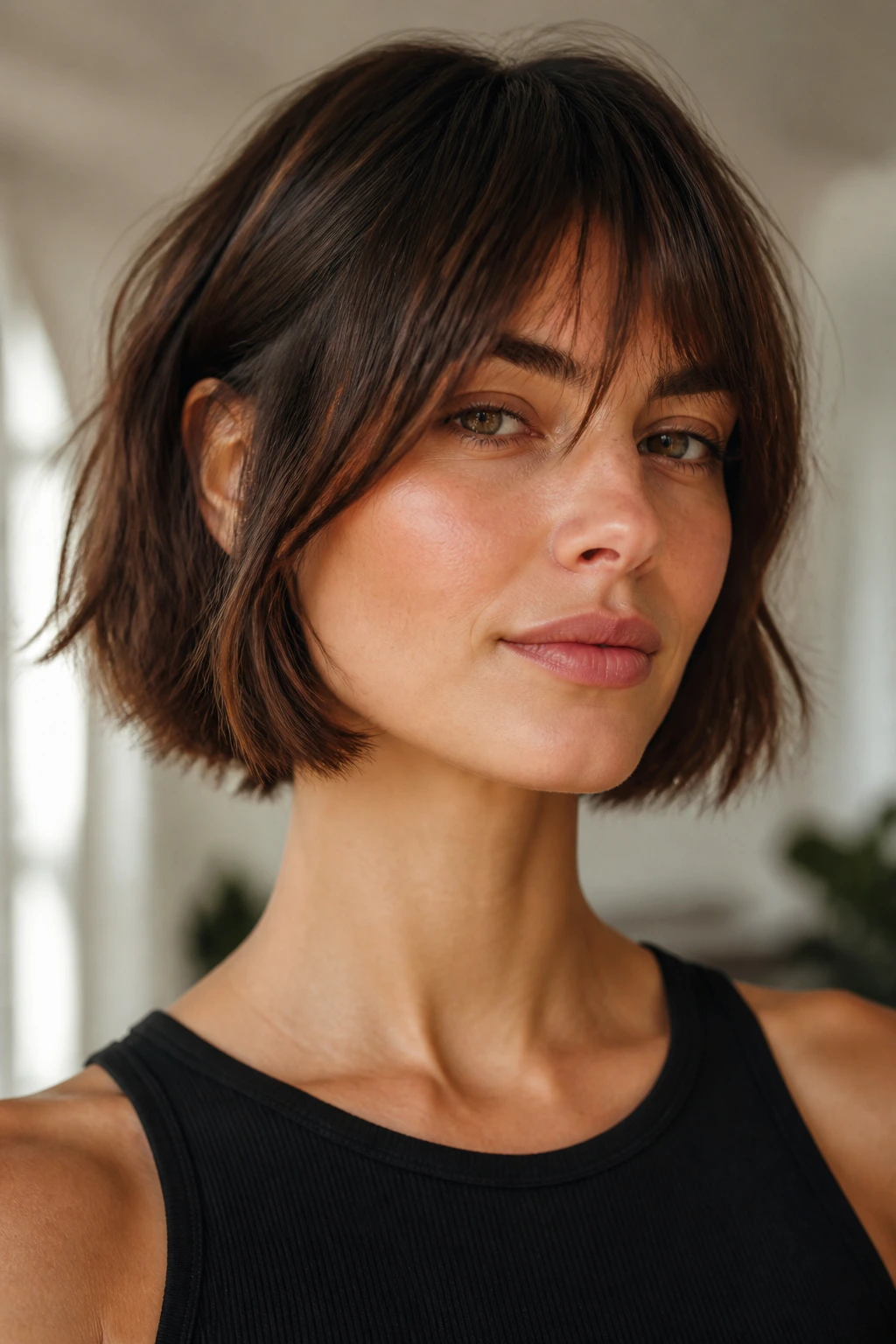
The first mistake is over-thinning the ends. The haircut may look airy in the chair, but after a wash or two it can start to look see-through and choppy in the wrong way. The fix is simple: leave more weight at the perimeter and let the internal layers do the softening.
The second mistake is asking for a fringe that ignores your hairline. If you have a strong cowlick or a deep widow’s peak, a super short fringe will spend its life standing up or splitting apart. A longer, softer bang usually solves the problem before it starts.
The third mistake is using heavy cream at the roots. Short textured hair does not need to be drowned to behave. If the crown collapses by midday, the product is probably sitting too close to the scalp. Keep it on the mids and ends.
The fourth mistake is waiting too long for a trim. Short choppy haircuts lose their balance faster than long hair. Once the nape grows out and the sides flare, the shape can start to feel shaggy in a way that is no longer charming.
Variations and Adaptations to Try
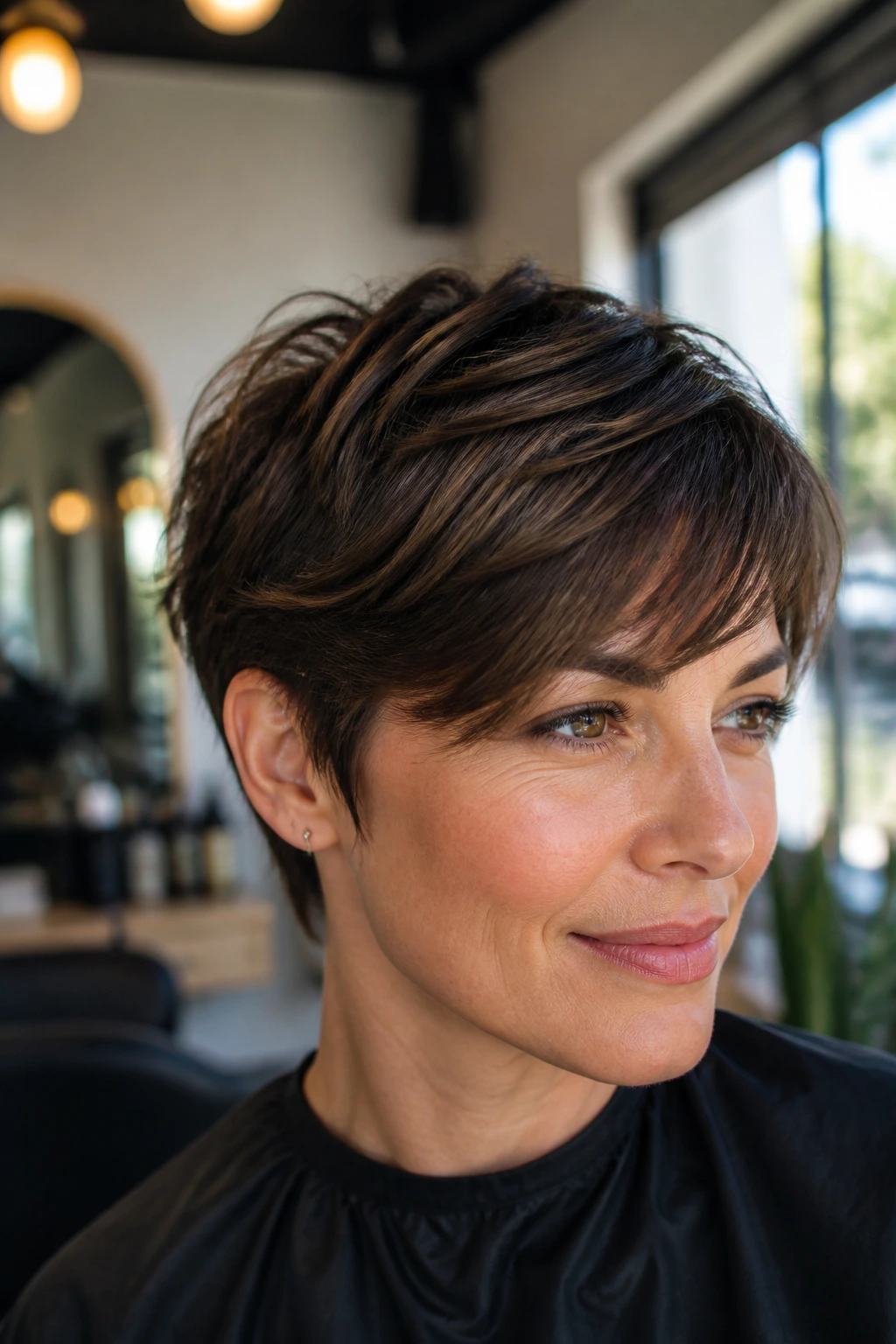
Soft Retro Crop: Keep the shape close to the head with a side-swept fringe and lightly feathered ends. It feels a little vintage, but not costume-y, and it suits hair that likes a neat outline.
Beachy Air-Dry Bob: Leave the perimeter just below the jaw and build the texture around the natural wave. This one is useful if you want a cut that mostly styles itself after a quick scrunch.
Office-Friendly Bixie: Hold some length around the ears and keep the layers softer at the crown. It reads polished enough for work, but it still has that casual, piecey finish when you ruffle it with your hands.
Curly Cloud Crop: Shape the curls into a rounded bob with soft internal layers and a gentle face frame. The haircut stays short, but the texture feels airy rather than tight.
Thick-Hair De-Bulked Shag Bob: Ask for careful bulk removal around the sides and a little more movement through the top. The silhouette stays short, but the hair stops acting like it’s wearing a winter coat.
Low-Maintenance Grow-Out Cut: Keep the front and side lengths a little longer so the shape stays wearable as it grows. This is the one to choose if you hate obvious grow-out lines and need time between trims.
Maintenance, Grow-Out, and Trim Timing
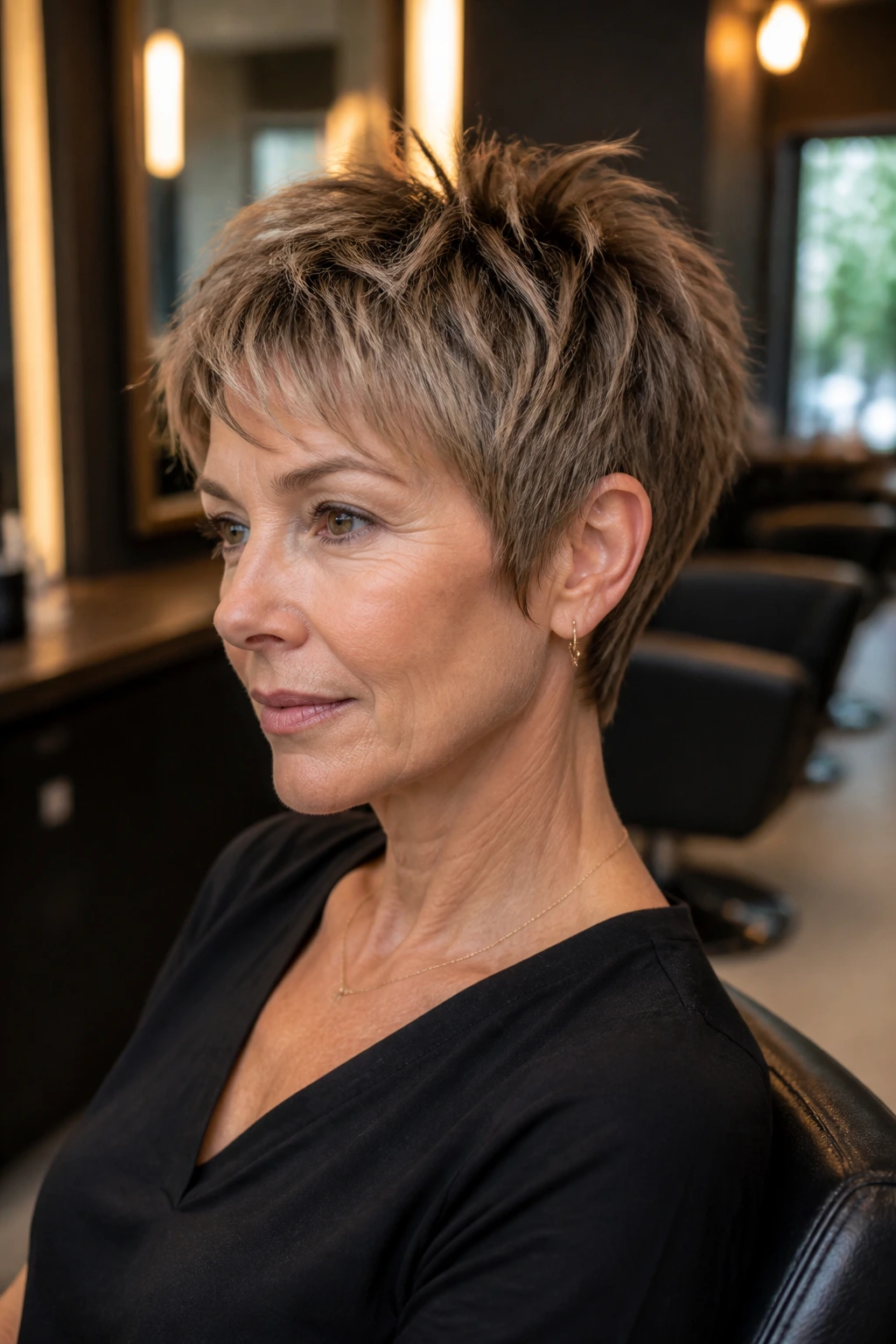
Short hair tells on itself fast. A few millimeters matter more here than they do on longer cuts, which is why trim timing is part of the haircut, not a separate chore. Pixies and cropped bixies usually need a tidy-up every 4 to 6 weeks if you want the shape to stay crisp. Bobs and jaw-length chops can usually go 6 to 8 weeks before they need a clean-up.
Fringes deserve their own schedule. A micro fringe may need a small dusting every 2 to 3 weeks because even a short bit of growth changes the line across the forehead. Curtain bangs are more forgiving, but they still benefit from a little reshaping once they start falling into the eyes in a way that feels accidental.
Night care matters too. A satin pillowcase helps, and so does sleeping with the hair loosely tucked back if it’s long enough to bend awkwardly. On curly or wavy cuts, a little pineapple clip or a soft scrunchie can keep the crown from getting flattened. You’re not trying to preserve perfection. You’re trying to avoid that lopsided, slept-on ridge that shows up at 7 a.m.
If you’re growing one of these cuts out, ask your stylist to keep cleaning the nape and softening the sides while the top gains length. That stops the shape from turning into a triangle or a helmet. The grow-out can be graceful. It just needs direction.
Frequently Asked Questions About Short Choppy Haircuts
What exactly makes a haircut “choppy”?
Choppy usually means the ends are broken up with point cutting, slicing, or layered texturizing so the hair doesn’t fall in one solid line. The cut can still look soft and controlled; it does not have to feel edgy or ragged.
Will a short choppy haircut work on fine hair?
Yes, but it needs a careful hand. Fine hair does better with a stronger perimeter and lighter internal texture, because too much layering can make the hair look sparse at the ends.
Can thick hair handle a soft textured crop?
Absolutely. Thick hair often looks better with short choppy layers because the bulk can be removed in the right spots instead of sitting like a block. The trick is to thin strategically, not everywhere.
Do these cuts need a lot of styling?
Not usually. That’s part of their appeal. A little blow-drying at the roots, a bend at the ends, or a quick scrunch with product is often enough to bring the shape back.
How do I ask my stylist for one of these cuts?
Bring a photo, then describe the parts you like: the length, the fringe, the amount of texture, and how polished or undone you want it. Say things like “soft ends,” “broken-up layers,” or “keep some weight at the perimeter” so the cut doesn’t get over-thinned.
What if my hair is curly or wavy?
Then the cut should be shaped around the pattern you already have. Curly and wavy hair usually looks best when the layers respect shrinkage and the stylist leaves enough length to keep the silhouette balanced after drying.
How often should I trim it?
Short crops usually need attention every 4 to 6 weeks. Short bobs and bixies can stretch a little longer, but once the ends lose their shape, the haircut stops looking intentional.
What if the haircut feels too wispy after the first wash?
That usually means too much weight was removed from the perimeter or the product is too light for your hair density. A stylist can add balance back at the next trim, and in the meantime a small amount of cream or paste on the ends can help the pieces sit together.
Soft Texture That Lasts
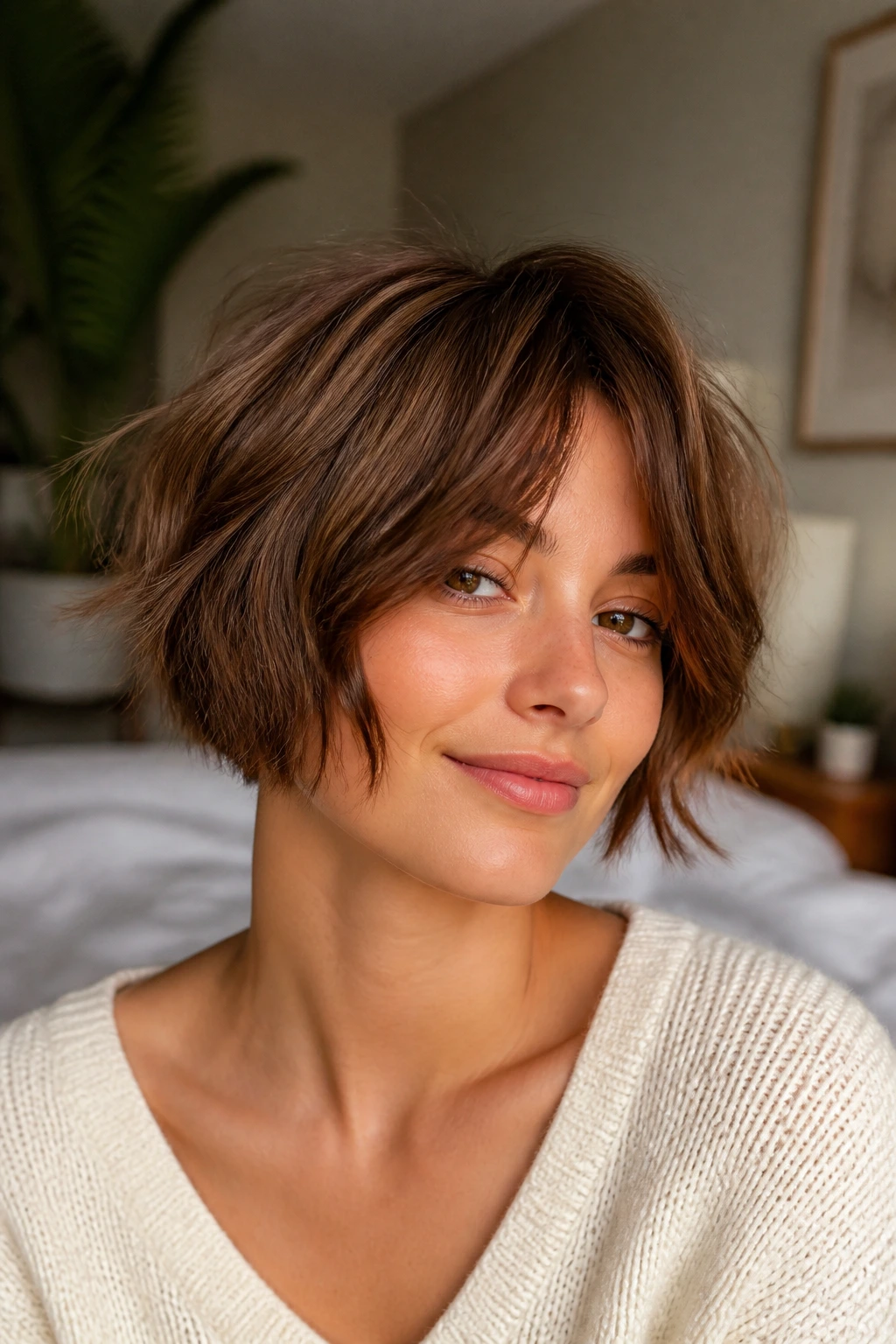
The best short choppy haircuts do one thing very well: they make effort look optional. The shape is there if you want to polish it. The movement is there if you want to rough it up. And the softness keeps the cut from crossing into that brittle, overdone territory that so many textured styles never quite escape.
If you’re bringing one of these ideas to the salon, think in layers of intention. Length first. Then fringe. Then where you want the hair to break apart and where you want it to hold. That order matters more than the buzzword version of the haircut ever will.
Bring a photo, sure. Bring a few plain-English sentences too. That’s usually where the right cut starts.
