



Round faces can wear short tomboy hairstyles with more edge than most salon advice admits. The trick is not chasing length for its own sake. It’s about where the weight sits, where the fringe breaks, and whether the cut gives you a little vertical line instead of a wide one.
That’s why shaved sides, undercuts, and tight crops matter so much here. A clean taper at the temples takes bulk off the cheeks. A bit of lift at the crown stretches the silhouette. Even a half-inch shift in where the texture lives can change the whole read of the haircut. Small thing. Big difference.
Buzz cuts, pixies, crops, and short fades don’t have to make a round face look “too soft” or “too full.” Done well, they sharpen the outline, show off the eyes and brows, and keep the style from puffing out at the sides. The cuts below do that in different ways—some with height, some with asymmetry, some with a very clean shave—and that range is the point.
Why These Cuts Earn Their Keep
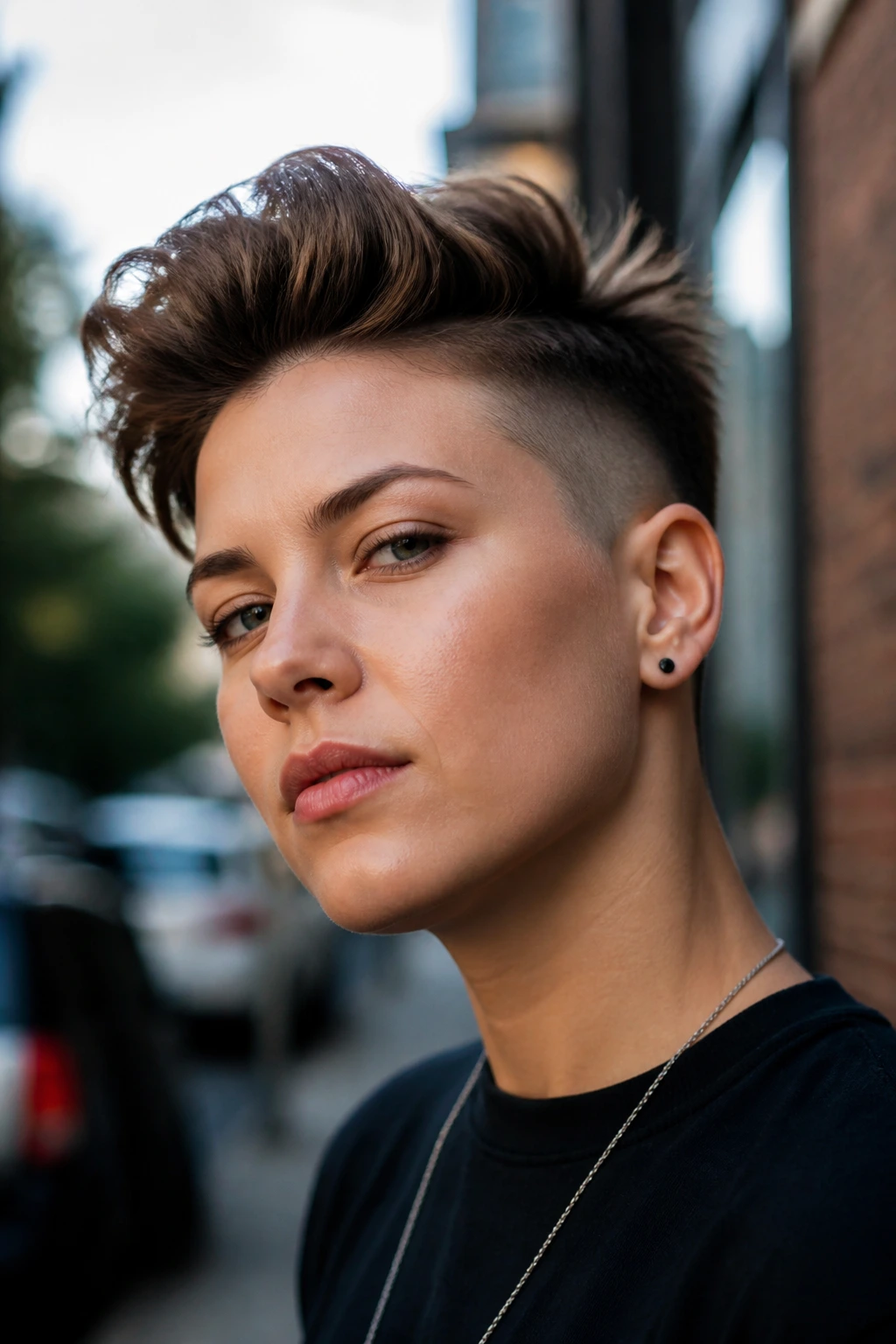
-
Crown lift: Many of these cuts push weight upward, which lengthens a round face instead of echoing its width.
-
Tight sides: Shaved temples, undercuts, and close fades keep bulk off the cheekbone zone, where round faces tend to look widest.
-
Texture with purpose: Choppy ends and broken fringes add movement without turning the whole head into a fluffy halo.
-
Easy range: The list moves from buzzed-close to soft pixie territory, so you can go as short as you want and still keep the shape on your side.
-
Real-world wear: Most of these styles need a quick paste, spray, or blow-dry, not a full morning routine with four products and a prayer.
1. Soft-Fade Buzz Cut With a Little Crown
A buzz cut is not the same thing as going blank. On a round face, a soft fade with a little extra length on top gives the head shape instead of turning it into one flat note. Ask for the sides at a #1 or #2 guard and leave the top a guard longer—just enough to catch light and show a hint of texture.
The reason it works is simple: the eye reads the slightly longer top first. That tiny shift pulls attention upward, which matters when your cheeks are the widest part of your face. Keep the fade gentle at the temples rather than carving a hard line right across the head. That line can make the face look wider than it is.
Best for: straight hair, dense hair, and anyone who wants the cleanest possible outline with very little styling.
Ask for: a soft taper at the temples and nape, not a sudden skin fade unless you like a sharper look.
2. Clean Crew Cut With Brushed-Up Top
Why does a crew cut work on a round face so often? Because it keeps the shape tidy without flattening the top into the sides. The front can sit a little taller—roughly 3/4 inch to 1 inch—while the back and sides stay tighter, which creates a small but useful vertical lift.
That brushed-up front is the part that matters. If the hair lies straight across the forehead, the cut gets boxy fast. If the front rises just a bit, the whole face looks longer and less broad. It’s a plain haircut, sure, but plain is not the same as weak.
What makes it flattering
- The top stays short enough to avoid helmet bulk.
- The sides can taper close without looking severe.
- A matte paste keeps the front upright without shine.
Pro tip: If your hair grows forward hard at the hairline, ask for the front to be point-cut instead of chopped blunt. That keeps the edge from turning into a shelf.
3. Tapered Pixie With a Side-Swept Fringe
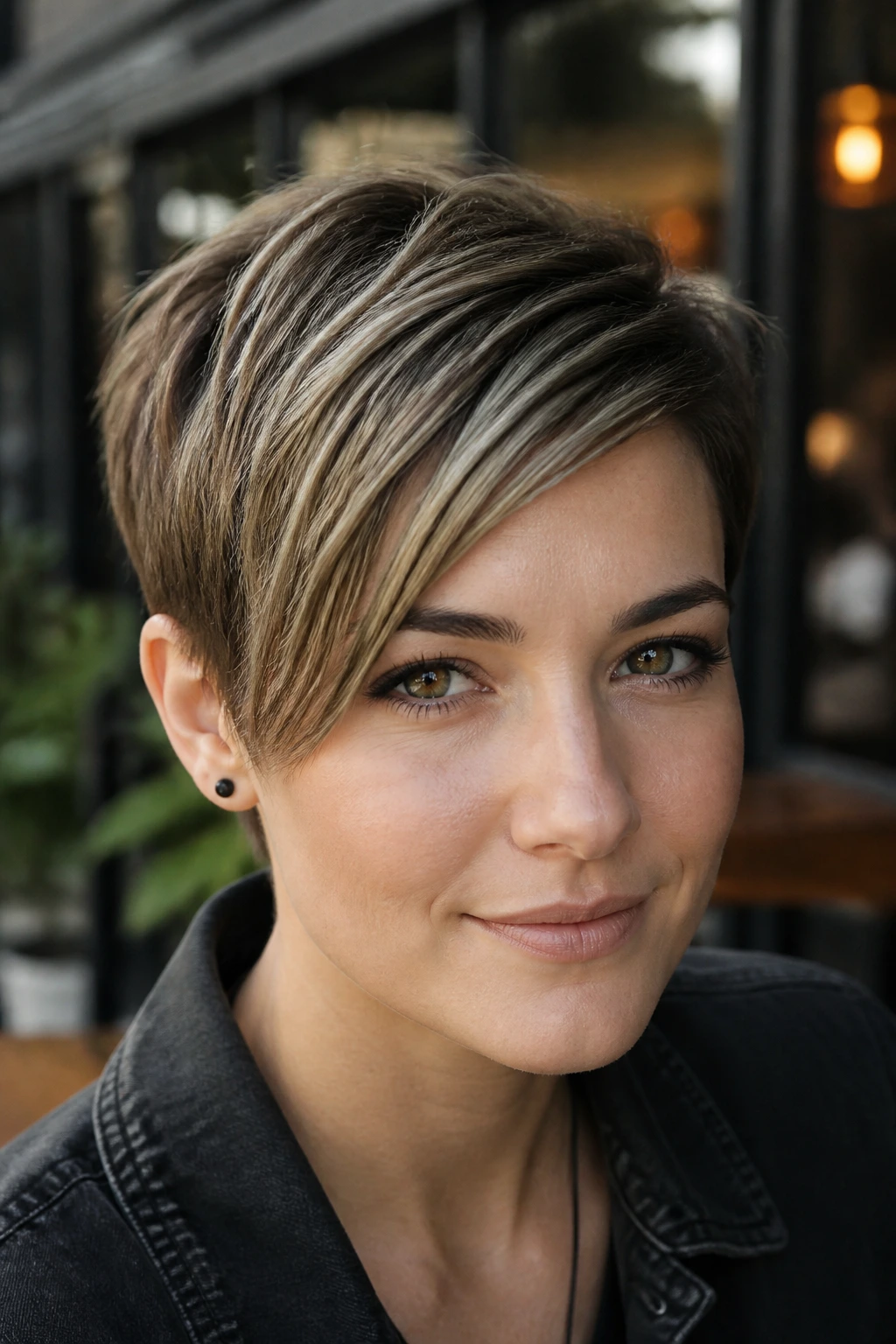
What if you want softness without losing shape? This is the cut. A tapered pixie with a side-swept fringe gives you a little movement across the forehead while keeping the sides neat around the ears and jawline.
The diagonal line of the fringe does most of the work. Round faces like diagonal movement because it breaks the symmetry that makes the face feel broader. Keep the fringe long enough to skim the brow, not heavy enough to sit on it like a curtain. The crown can hold a little lift, but the real win is the way the fringe angles away from the cheeks.
How to wear it
- Blow-dry the fringe in the opposite direction first, then sweep it across.
- Use a pea-sized dab of cream or paste.
- Tuck one side behind the ear when you want a sharper line.
This cut looks especially good with glasses, because the side sweep frames the frame instead of fighting it.
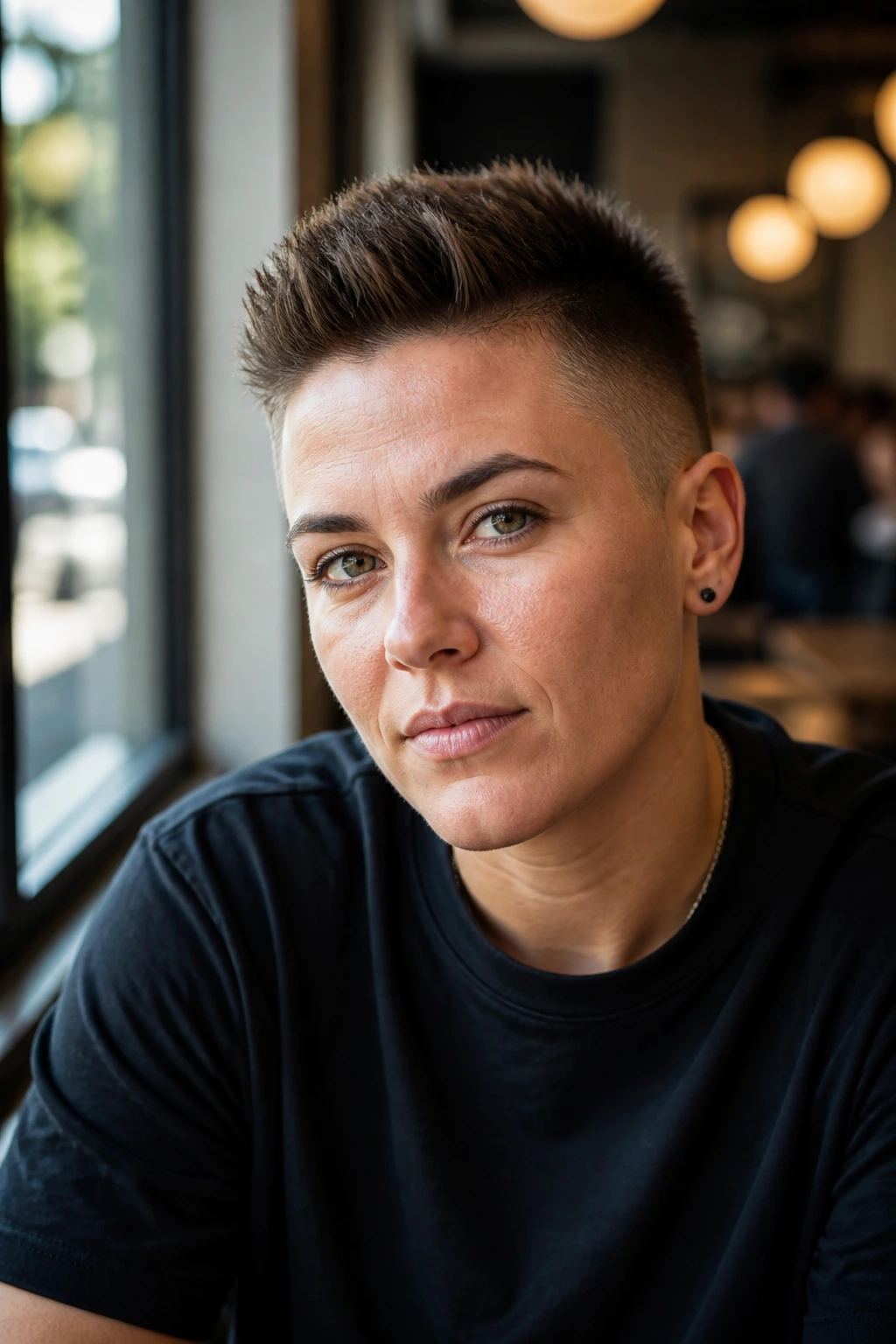
4. Choppy Crop With Spiked Texture
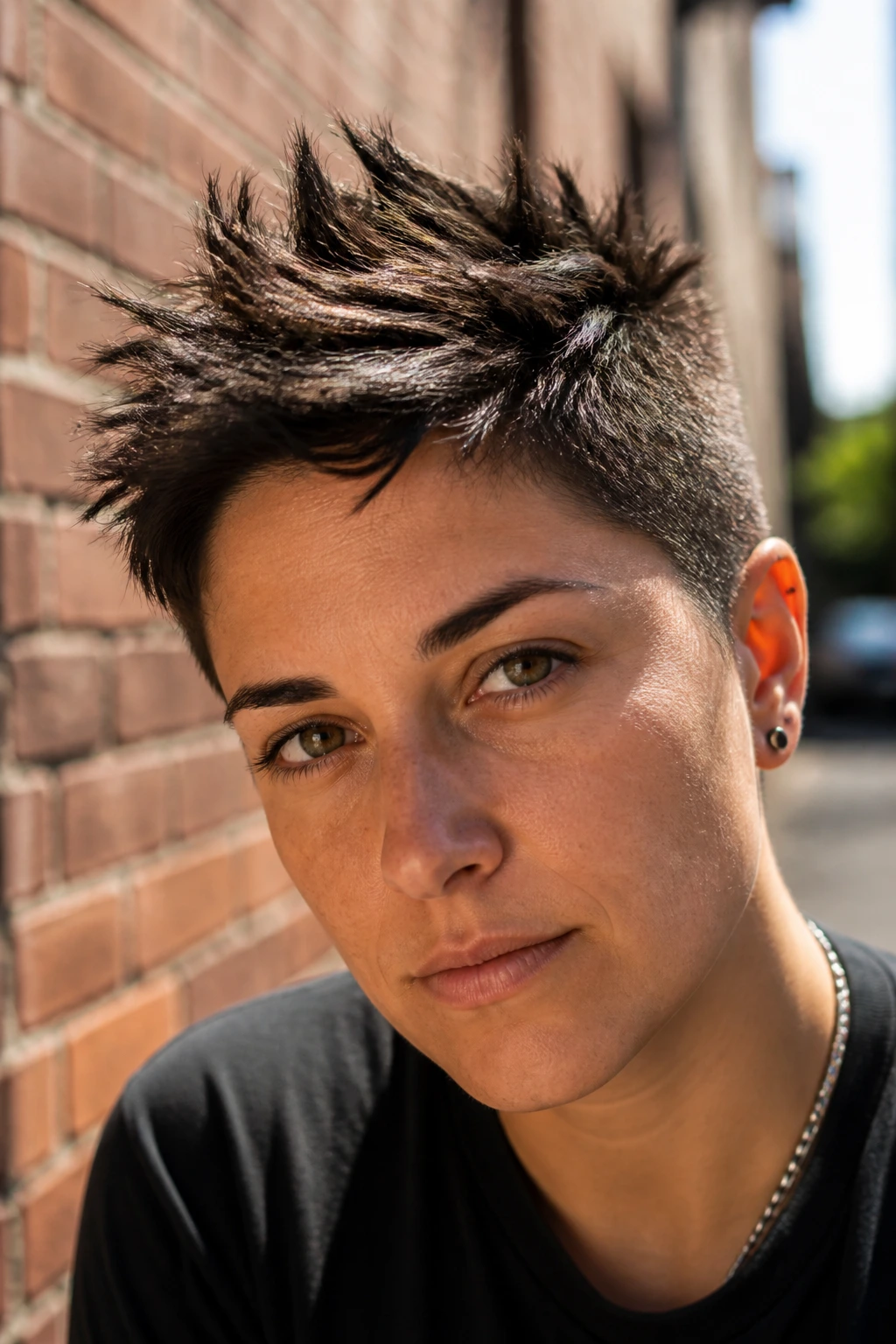
A little mess on top beats polished sides almost every time on a round face. The choppy crop uses short, point-cut layers to build broken texture through the crown, then keeps the sides tight so the width stays controlled. It feels spare, but not flat.
The spikes do not need to stand up like a punk cut from a music video. Better if they’re irregular—some pieces lifted, some bent forward, some lying off to one side. That unevenness keeps the eye moving. A smooth, even surface can make a round face feel wider; a jagged one cuts across that softness.
How to style it: Warm a matte clay between your palms, work it through dry hair, then pinch small sections at the crown. Don’t rake it through from roots to ends or you’ll erase the separation you want.
5. Broken-Fringe French Crop
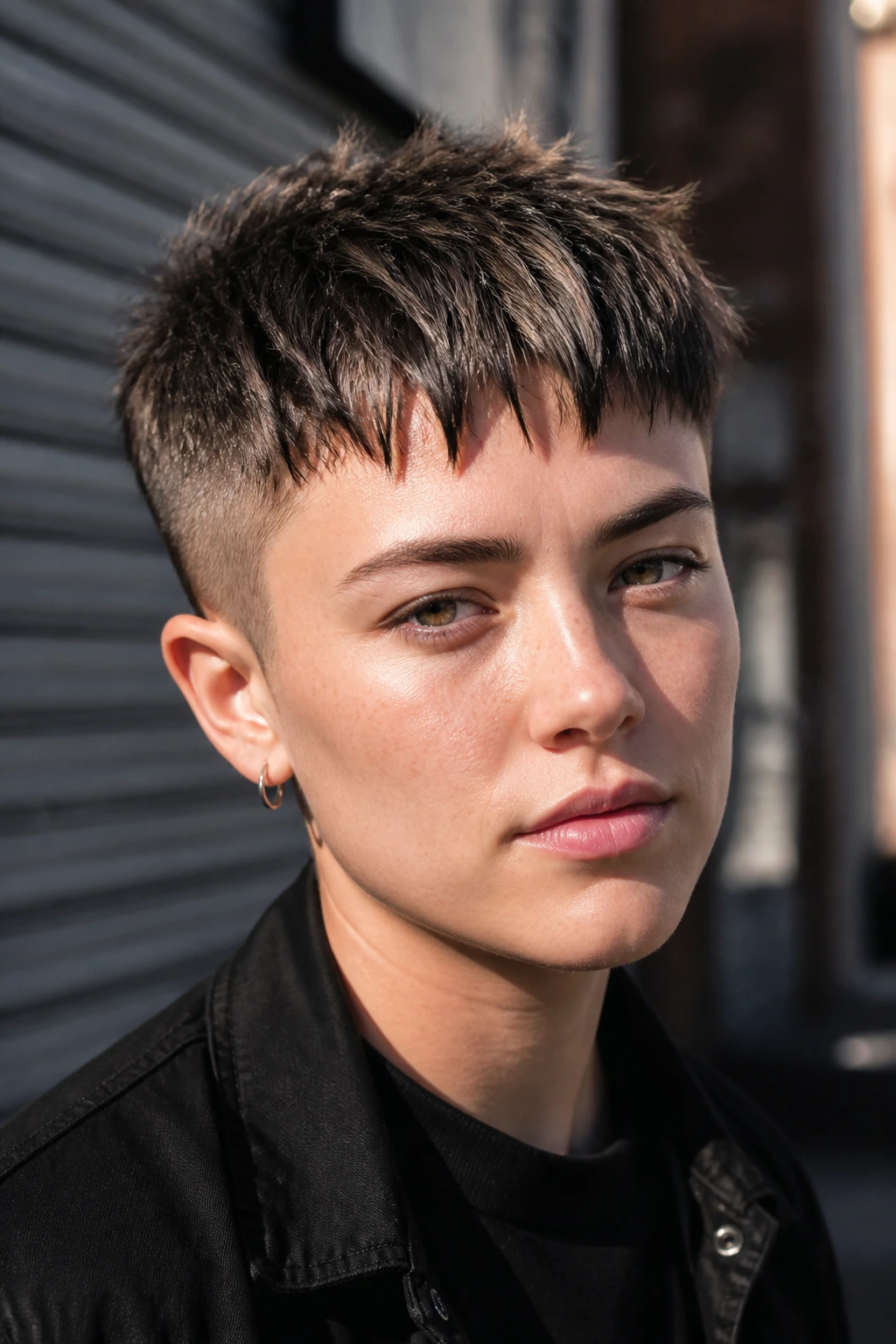
The French crop can be a trap on a round face if the fringe is too blunt. Too much horizontal weight at the brow line makes the face look shorter and broader. The fix is a broken fringe—short, choppy pieces that sit just above or lightly touch the eyebrows instead of forming one solid line.
This version feels sharp and low-maintenance. The sides stay close, the top stays short, and the fringe adds just enough attitude without taking over. If your forehead is on the shorter side, keep the fringe a little lighter and more piecey. If your forehead is taller, you can let it come down slightly more.
Ask your barber for
- A point-cut fringe, not a heavy block.
- Tapered sides around the ears.
- A little extra texture through the top so the crop doesn’t lie flat.
That small adjustment keeps the cut from widening the face across the brow. It’s a tiny thing. It changes everything.
6. Side-Parted Undercut Pixie
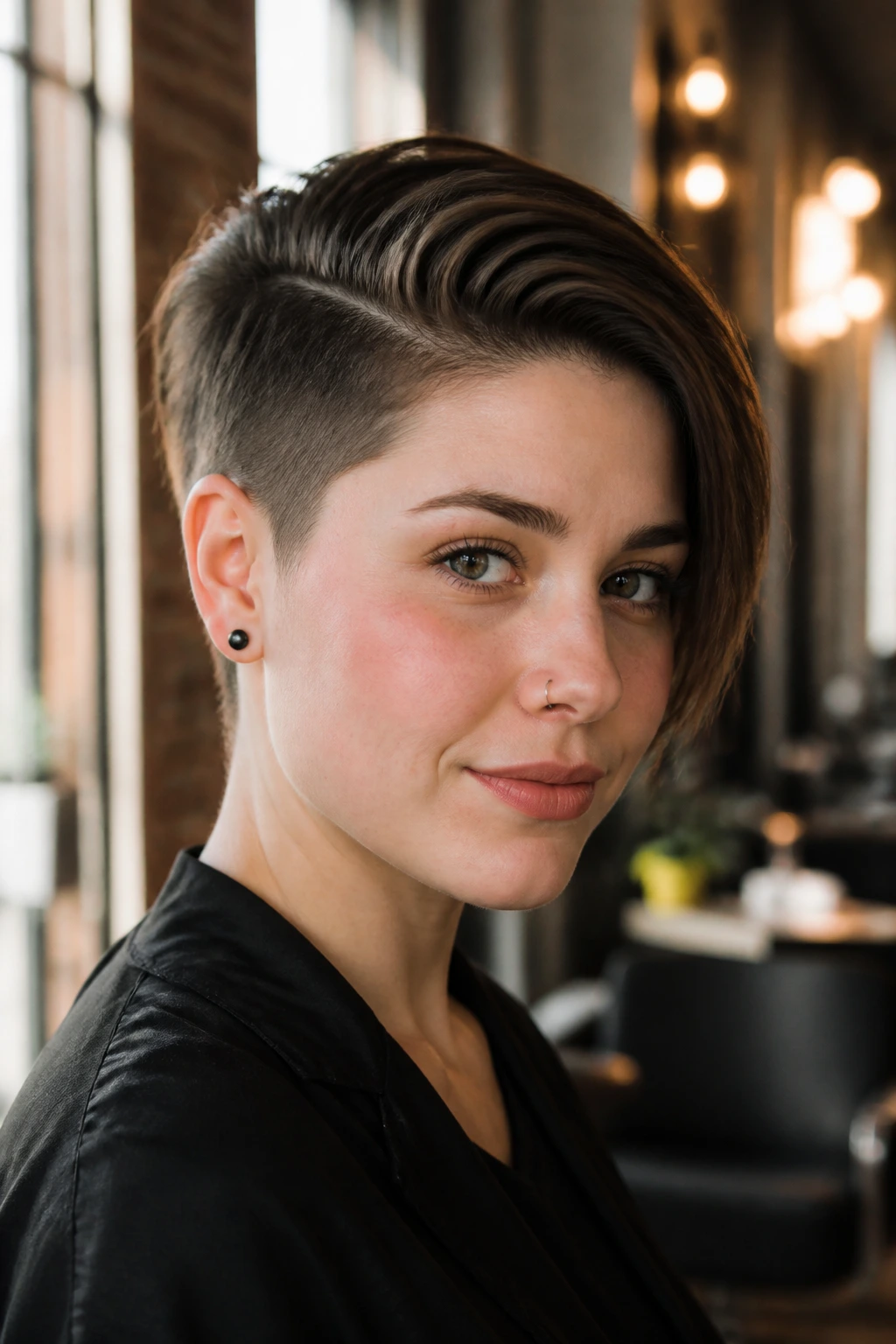
A deep side part does useful work on a round face. It breaks the symmetry, sends the eye diagonally, and lets one side sit closer to the head while the other side carries more of the shape. Pair that with an undercut and you remove a lot of bulk where round faces usually don’t need it.
This cut can feel sharper or softer depending on how you finish it. A little matte paste keeps it modern and piecey. A light cream gives it a calmer, more brushed look. Either way, the side part creates a line that the eye follows, and that line helps lengthen the face without trying too hard.
7. Mini Mohawk With Soft Edges
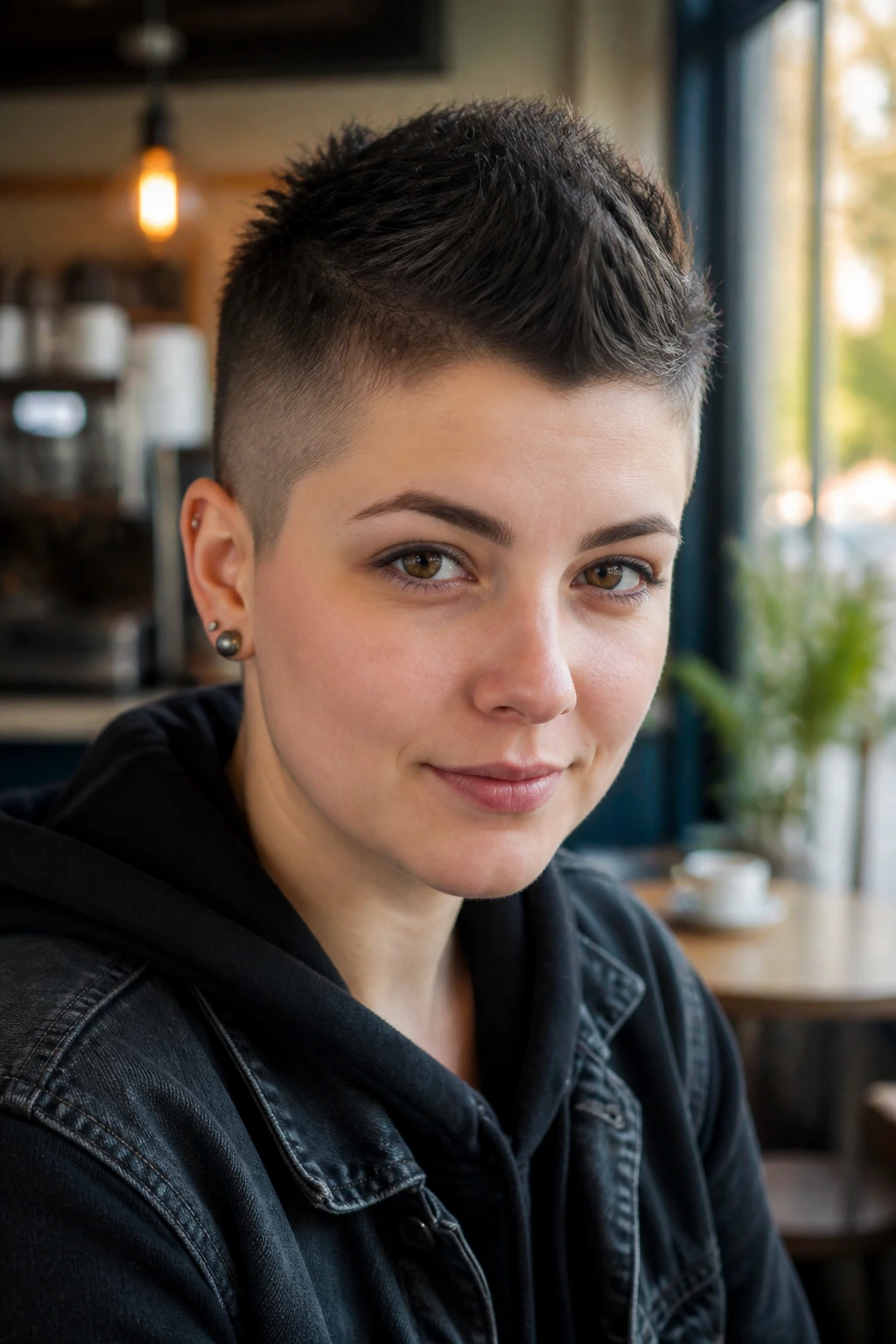
A mini mohawk sounds louder than it usually is. In short tomboy hair, it can be surprisingly wearable—especially for round faces—when the sides are tapered and the center strip stays narrow and a little soft. The point is height, not drama for its own sake.
Keep the center section feathered so it bends instead of sticking up in one hard ridge. That softer line reads better on fuller cheeks because it pulls the eye toward the middle of the head. The sides should stay close enough that the cut doesn’t spread outward near the temples.
Good to know: This cut works best when the top is 2 to 3 inches long. Any shorter, and you lose the shape. Any longer, and it starts behaving like a different haircut altogether.
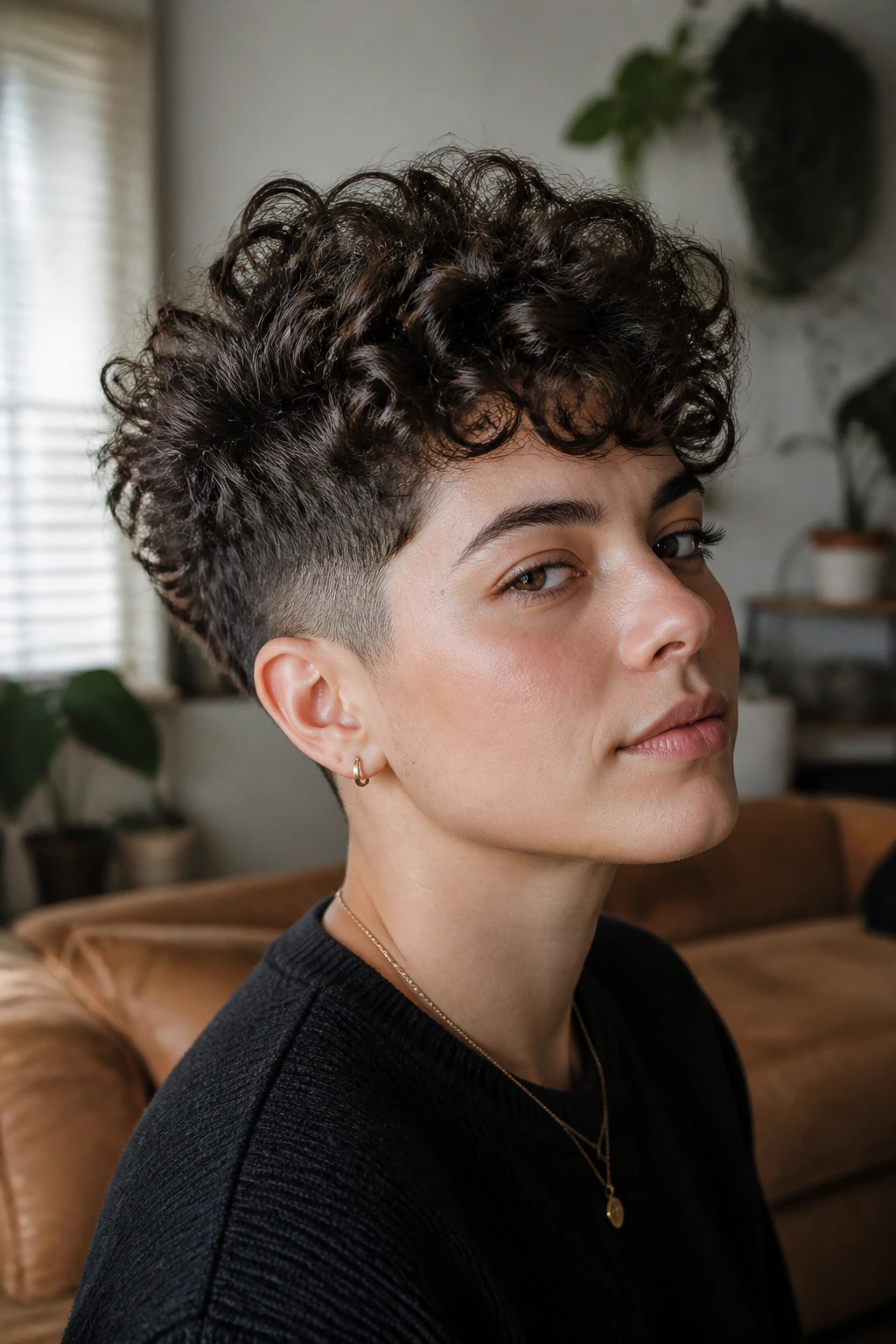
8. Curly Top Fade
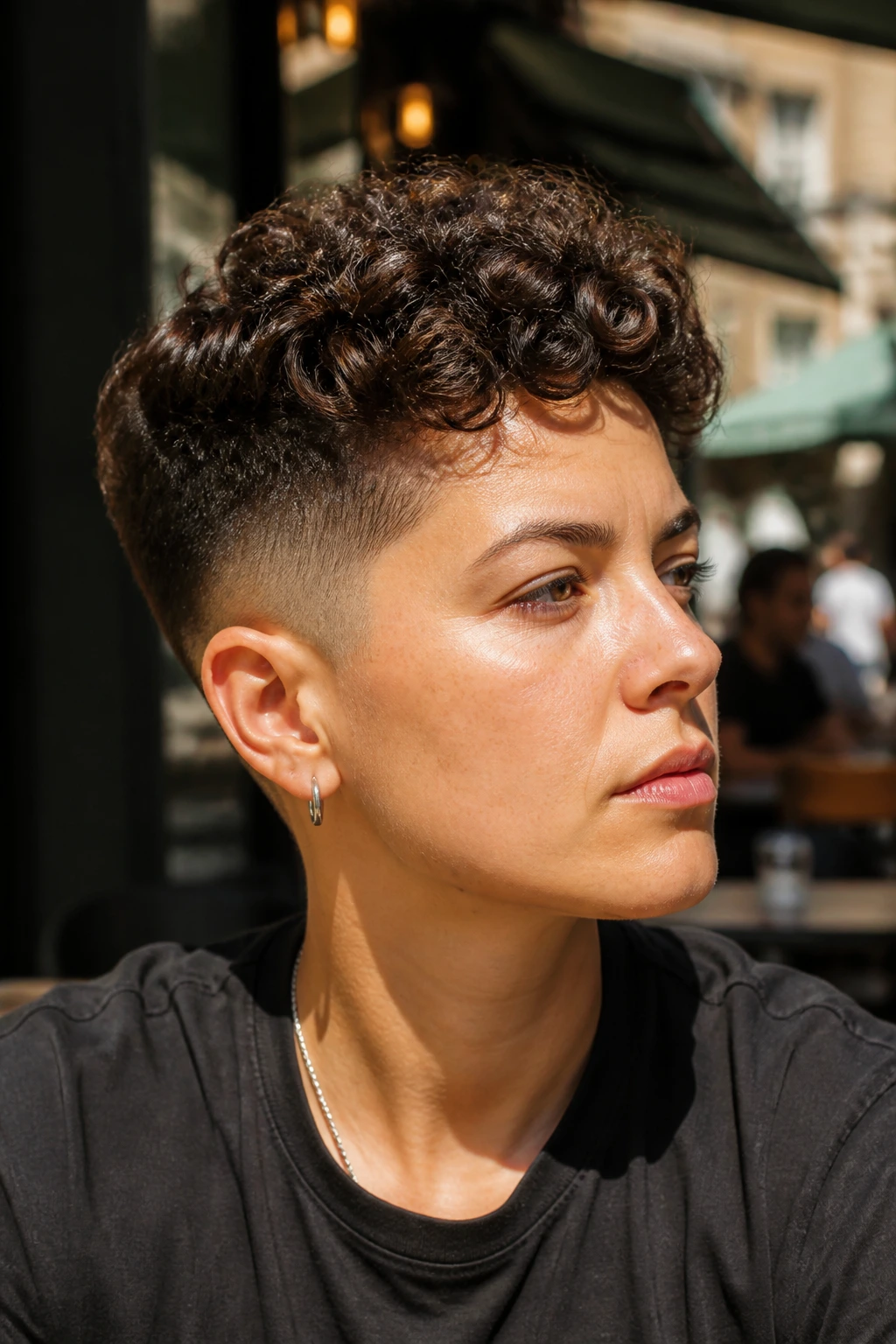
Curly hair can make a round face look even rounder if the sides are left puffy. A curly top fade fixes that by keeping the coils tall and the sides tight. The height comes from the curl pattern, not from blow-drying the hair into some fake shape.
Ask for the top to stay long enough to spring—usually around 2 1/2 to 4 inches depending on curl tightness. The fade should sit low to mid around the temples, where the bulk would otherwise widen the face. If your curls shrink a lot, leave a little more length than you think you need.
Best curl types for this cut
- Tight coils that hold a rounded top.
- Loose curls that can be shaped with cream and a diffuser.
- Wavy hair that wants to puff at the sides unless it’s tapered down.
A curl cream the size of a nickel is usually enough for short lengths. More than that, and the top starts to clump instead of lift.
9. Slicked-Back Undercut Pixie
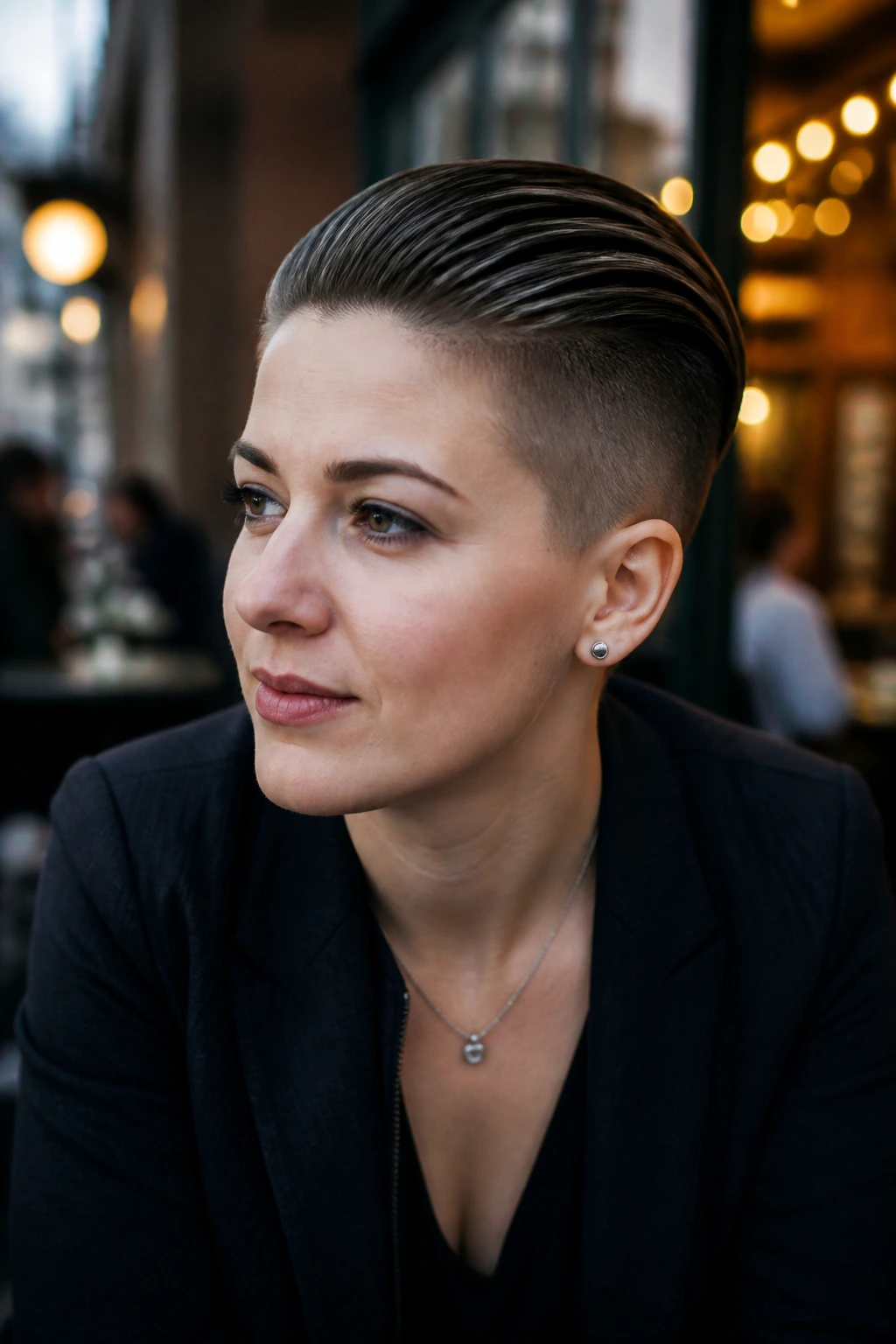
This is the sharp one. The slicked-back undercut pixie opens the face fully, which is a smart move on round shapes because it shows the forehead and keeps the width away from the cheeks. The top can be 2 to 3 inches long, just enough to comb back with a little control.
Use a light gel or styling cream, not a greasy pomade that sits on top like wax. Comb the hair back while it’s damp, then let it set naturally or with a quick blast from the dryer. If you want it softer, rake the front back at a slight diagonal rather than straight off the forehead.
It’s a good cut for strong brows, sharp earrings, and blunt necklines. Clean lines suit it. Messy makeup does not.
10. Bixie With Jagged Ends
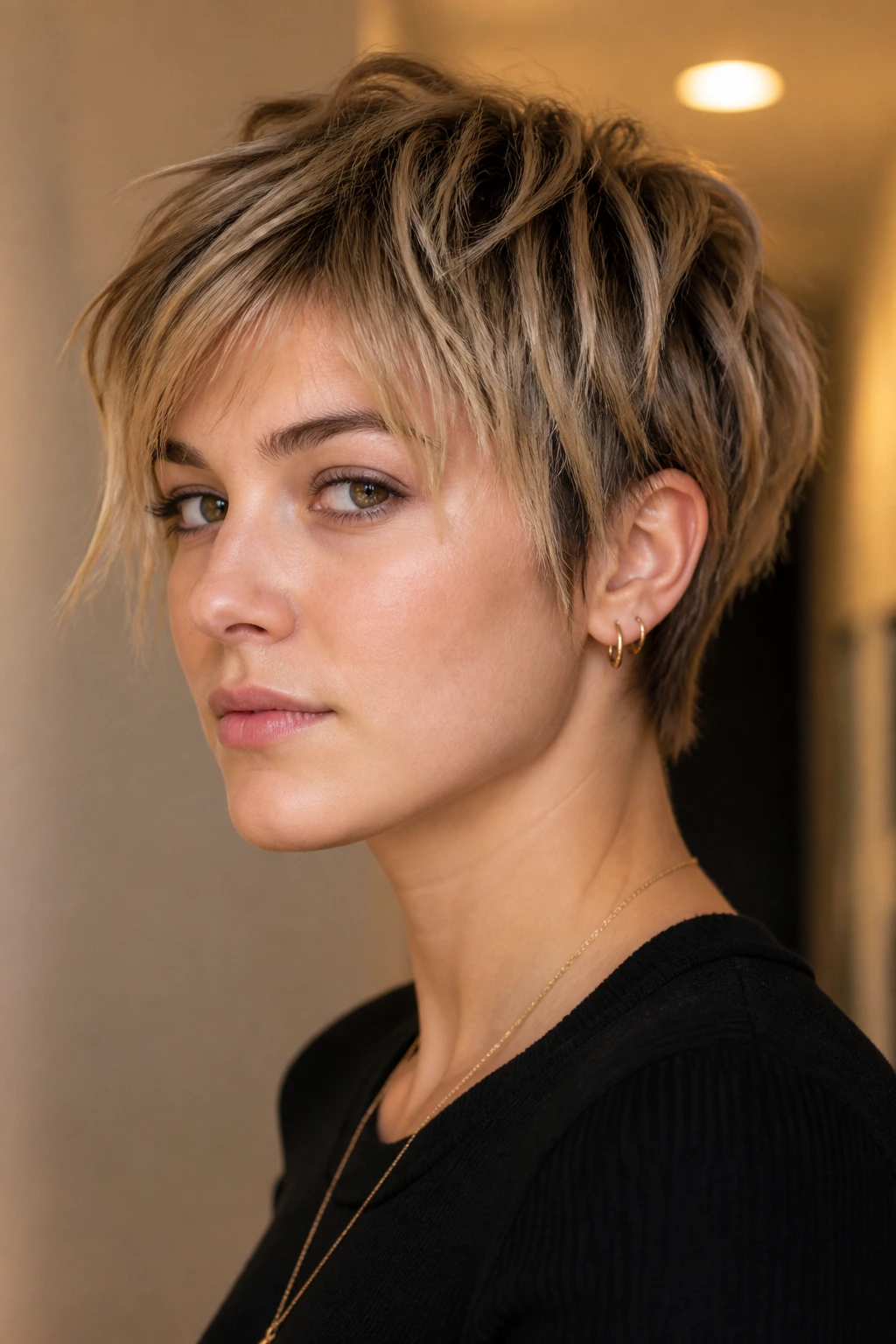
The bixie sits between a bob and a pixie, which makes it useful if you want short hair without going ultra-close. For round faces, the trick is keeping the ends jagged and the front a touch longer than the back so the shape doesn’t balloon out at the cheeks.
This version works because it gives movement without bulk. The layers should live high enough to lift the crown, not sit low and wide around the jaw. If the cut gets too blunt at ear length, it stops reading tomboy and starts reading rounder than it needs to.
A quick finger-dry and a bit of texturizing spray can make this shape look broken and light. That little roughness is what keeps it from feeling heavy.
11. Mini Quiff Crop

A mini quiff is basically a small promise of height, and that’s enough. A round face tends to look longer when the front is lifted up and back, even if the lift is only an inch or so. Keep the sides neat and the front section slightly longer than the rest.
This style likes a blow-dryer more than a comb. Dry the roots against the natural fall first, then guide the front upward with your fingers. Finish with a matte paste so the quiff holds without going shiny or stiff.
If your hair is fine, a root-lifting spray helps more than extra product. Too much paste will drag it down. Too much hairspray will make the front brittle. One small scoop, then stop.
12. Soft Caesar Crop With Lifted Front
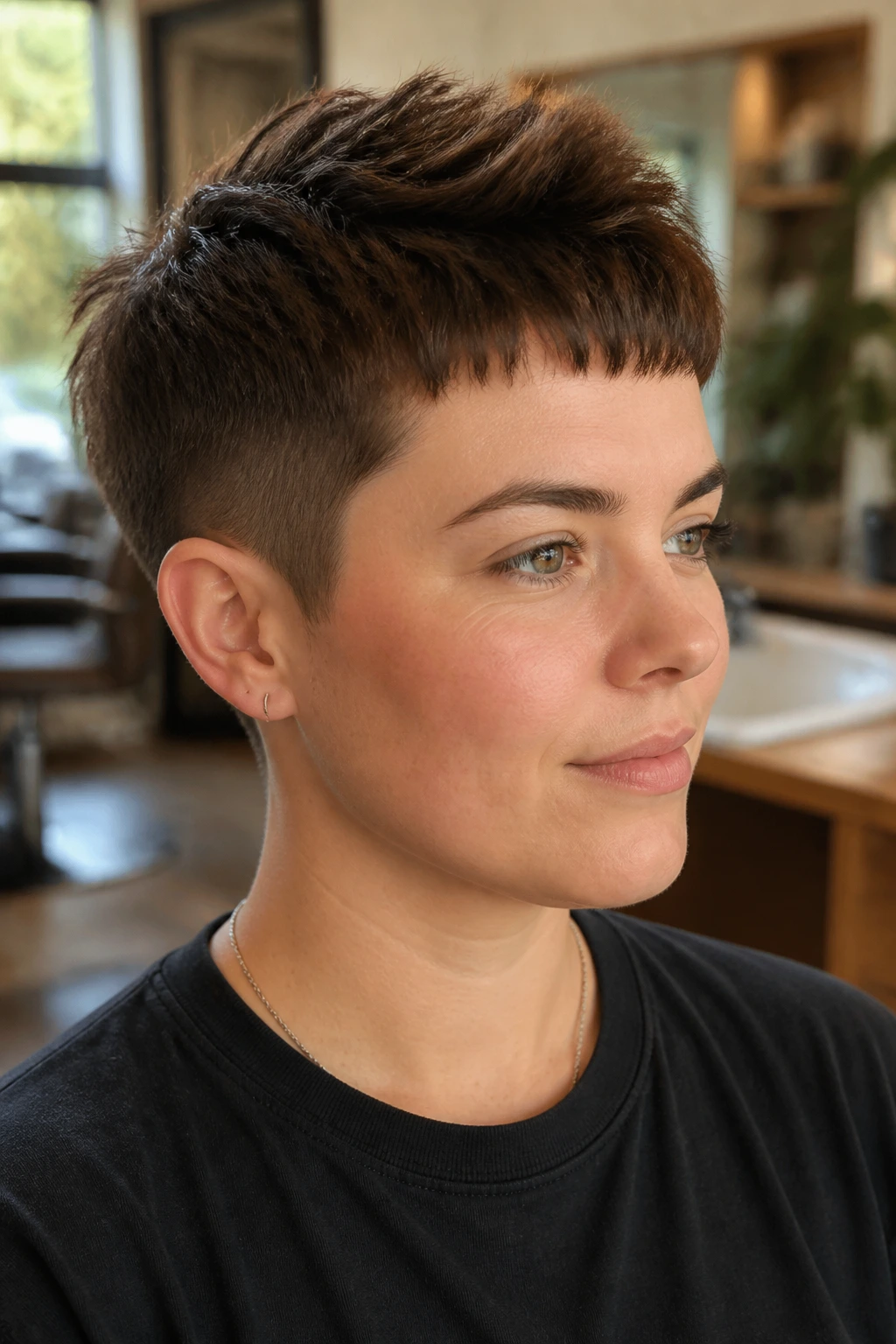
A Caesar crop can be brutal on a round face if the fringe is heavy and blunt. A soft Caesar keeps the short, forward feel but breaks the line enough to avoid that wide, flat look. The front should be chipped or lightly textured, not cut into one straight bar.
The lifted front matters more than people expect. Even a subtle rise at the center changes how the face reads. The sides can stay close and tidy, which helps pull bulk away from the cheekbones. It’s a neat cut, but not a stiff one.
What to ask for
- A short fringe with point-cut ends.
- Tapered sides at the temples.
- Slight lift at the crown, not a dead-flat top.
The result is clean, spare, and a little sharper than a traditional Caesar.
13. Asymmetrical Crop With a Long Fringe
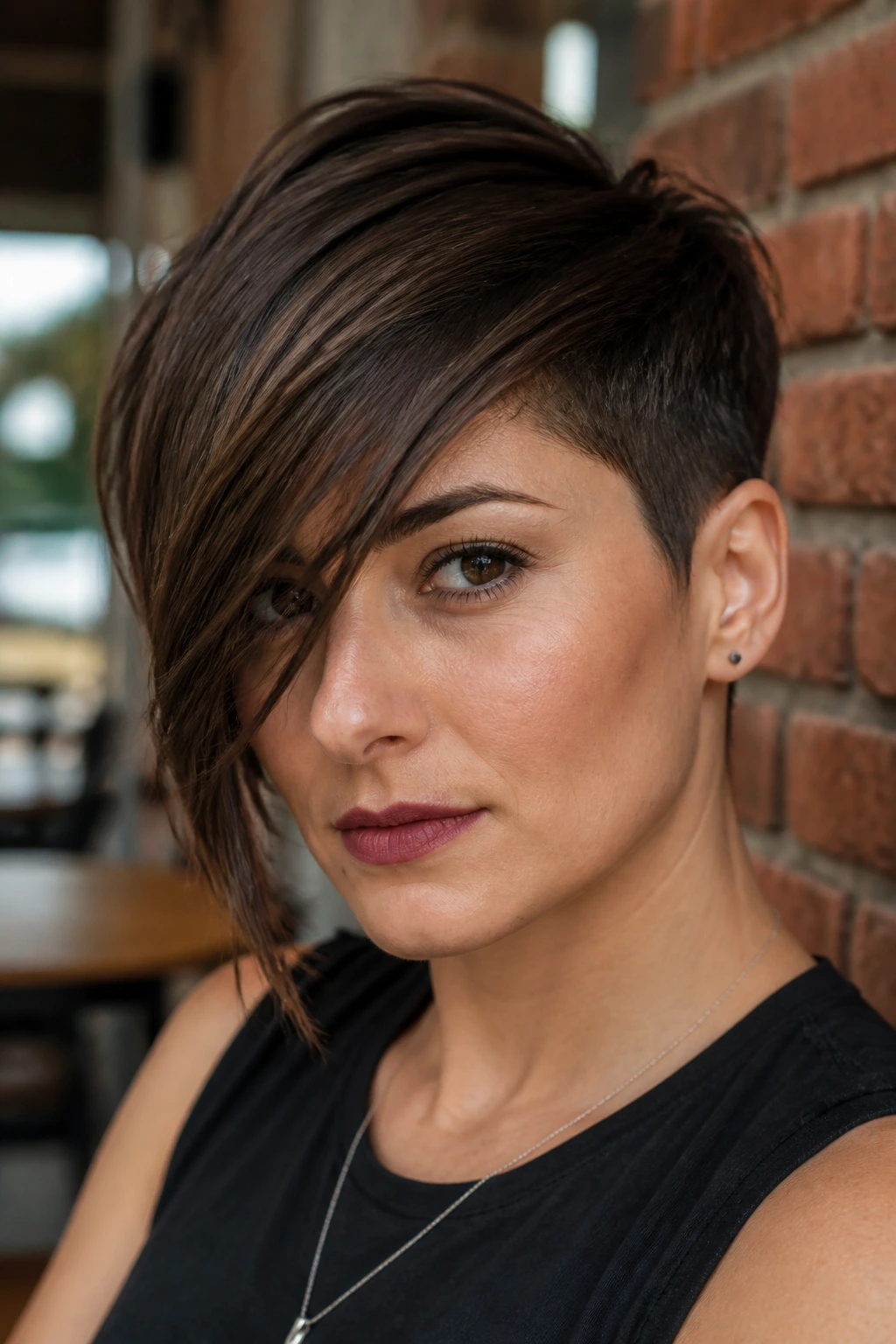
One side shorter, one side longer. That’s the whole point, and it works because asymmetry breaks the roundness of the face fast. A long fringe can sweep across one cheekbone while the shorter side keeps the outline close and controlled.
The diagonal line is what matters. It draws the eye away from the widest part of the face and toward the longer side. This cut is a good fit if you want something arty or slightly rebellious without losing the practicality of short hair.
Why asymmetry works
It gives the face a directional line. Round faces need direction more than they need softness. A single longer panel of hair can do more shaping than a whole head of even length.
If you wear it tucked on one side and loose on the other, the effect gets even stronger. Tiny adjustment. Big pay-off.
14. Temple-Fade Curl Crop
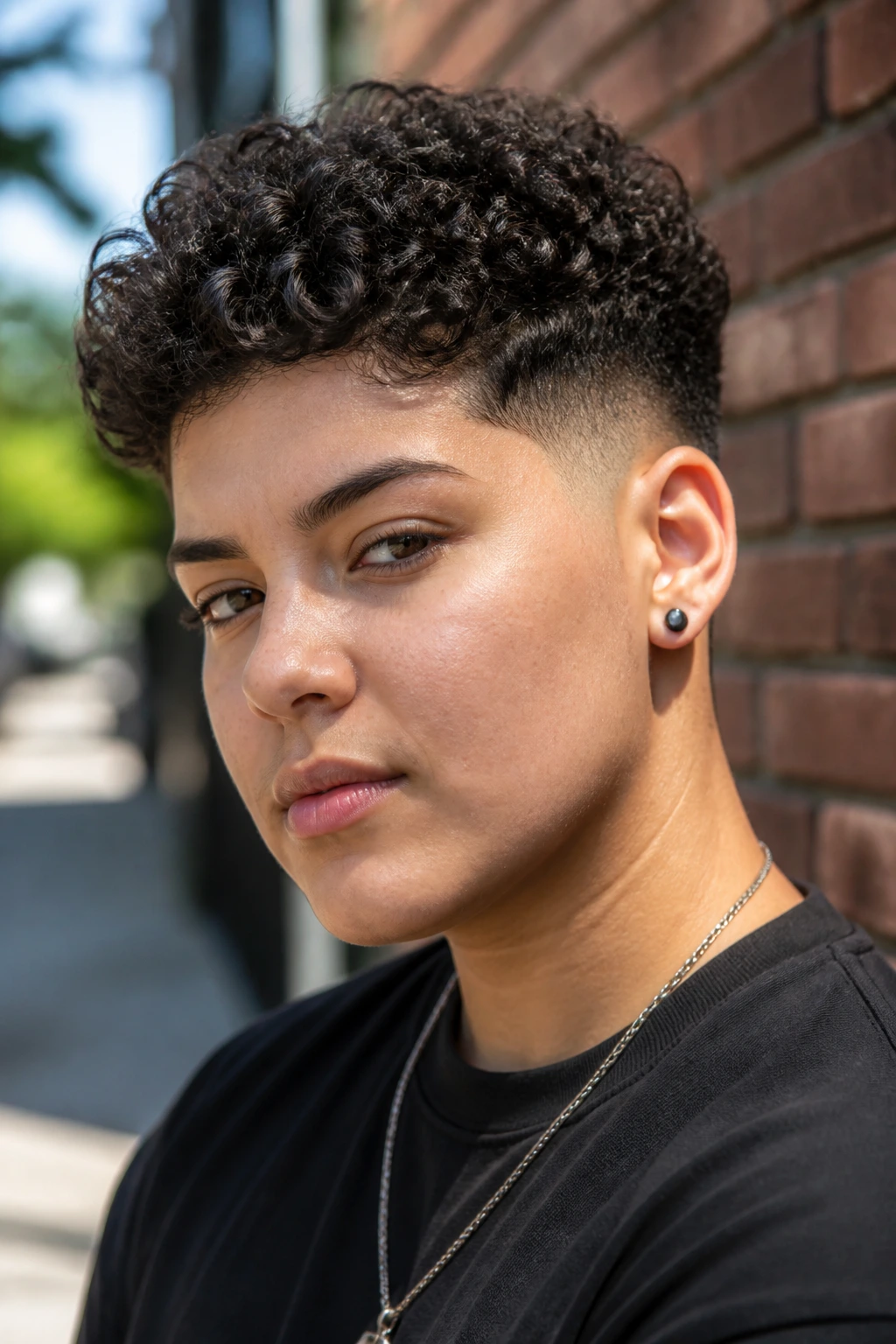
Curly and coily hair can wear a tomboy cut beautifully when the temples are cleaned up. A temple fade lets the curl pattern stay on top while removing the puff that usually gathers beside the cheeks. On round faces, that matters more than almost any other detail.
Leave enough length on top for the curls to stack. Shorter than that, and the shape can collapse into a box. A curl sponge, diffuser, or a small amount of curl cream can help the top sit up without making the edges heavy.
This is one of those cuts that looks much more deliberate than it is. From the chair, it can seem simple. In motion, it does a lot.
15. Micro Bangs With a Tight Nape Taper
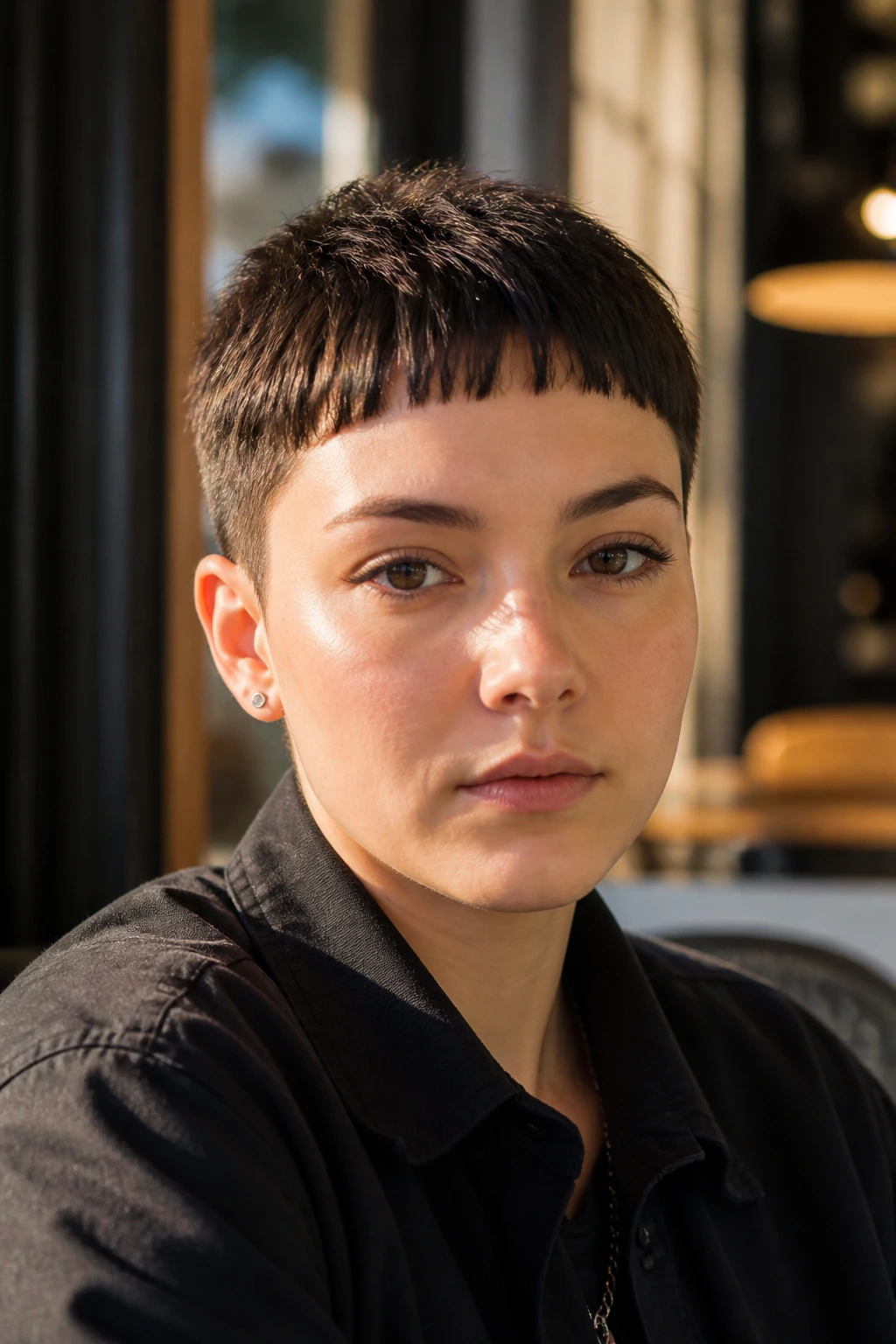
Micro bangs change the mood fast. On a round face, they can work if the rest of the cut stays tight and the top has enough texture to keep the overall shape from looking broad. The bangs should sit above the brows, not crush them.
The nape taper is the quiet hero here. It keeps the back of the head neat, which matters because short fringe cuts can turn blocky if the bottom edge is heavy. Keep the sides slim, the crown a little lifted, and the fringe broken rather than one straight strip.
This is not the easiest cut to grow out, and I’d say that plainly. If you want to keep it polished, it rewards regular trims and a little discipline.
16. Flat-Top-Inspired Short Cut
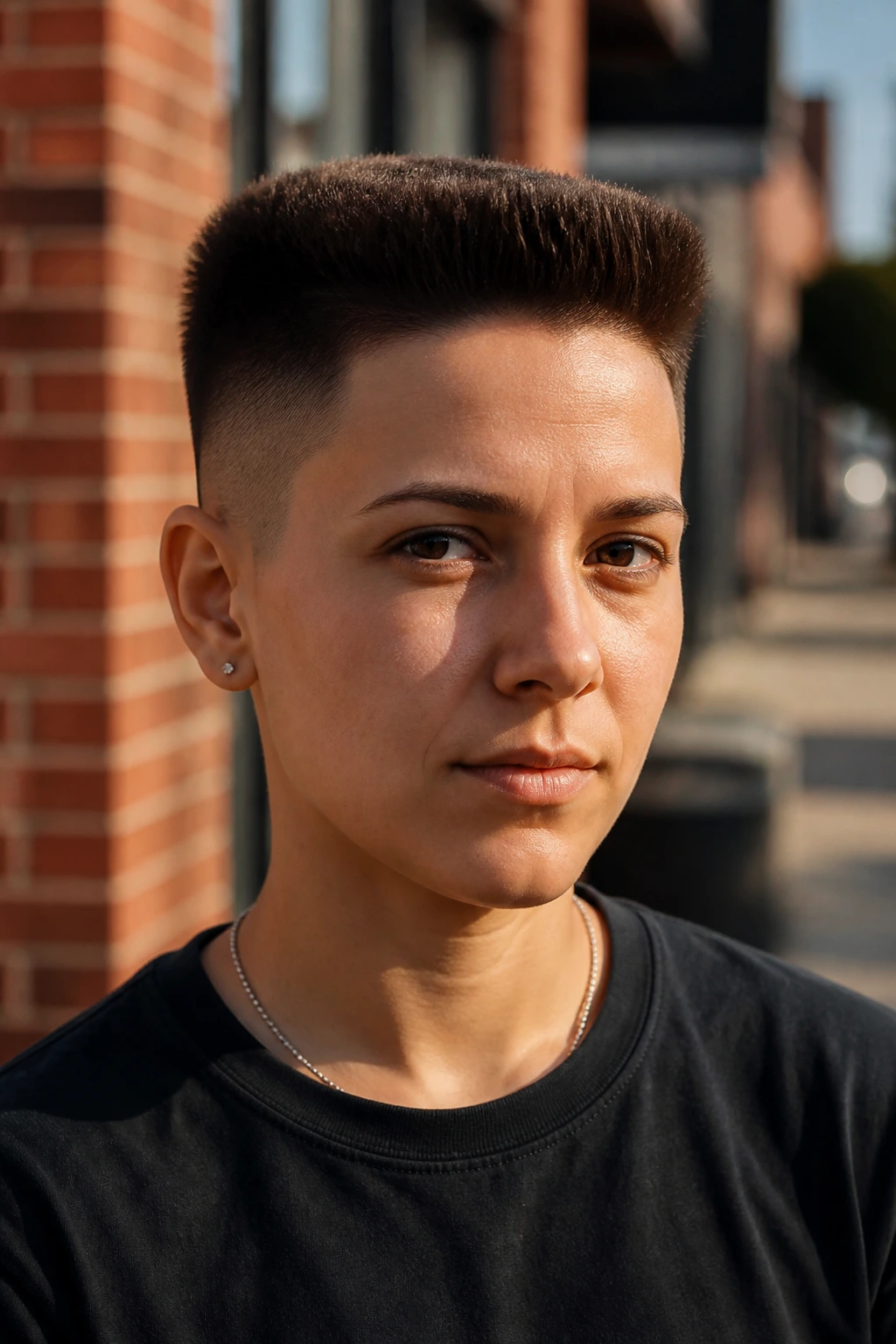
A true flat top is a commitment. A short version inspired by it is much easier to wear, and on a round face it can work because the top creates a clean plane that adds structure. The sides stay close, the corners stay softened, and the height sits in the center where it helps the most.
This cut likes dense hair. If your hair is fine, the top can collapse and lose the shape. If it’s thick or coarse, the outline can be gorgeous with a little clipper work and a touch of product to keep the top clean.
Best approach: ask for the top to be level but not boxy. That last part matters. A hard square can look harsh; a softened top feels sharper and more wearable.
17. Ear-Length Layered Tomboy Cut

Ear-length sounds longer than the rest of this list, but on a round face it earns its place because the layers keep the sides from sitting too heavy. This cut is a good in-between if you’re growing out a pixie or don’t want to go down to skin.
The texture should be built through the interior, not left in one blunt mass. Tuck one side, leave the other loose, and the face looks less broad right away. If the ends are feathered, the shape stays light around the jaw instead of sitting there like a helmet.
It’s a practical cut for people who switch between masculine and softer clothes a lot. The hair has range. That’s useful.
18. Wet-Look Pixie
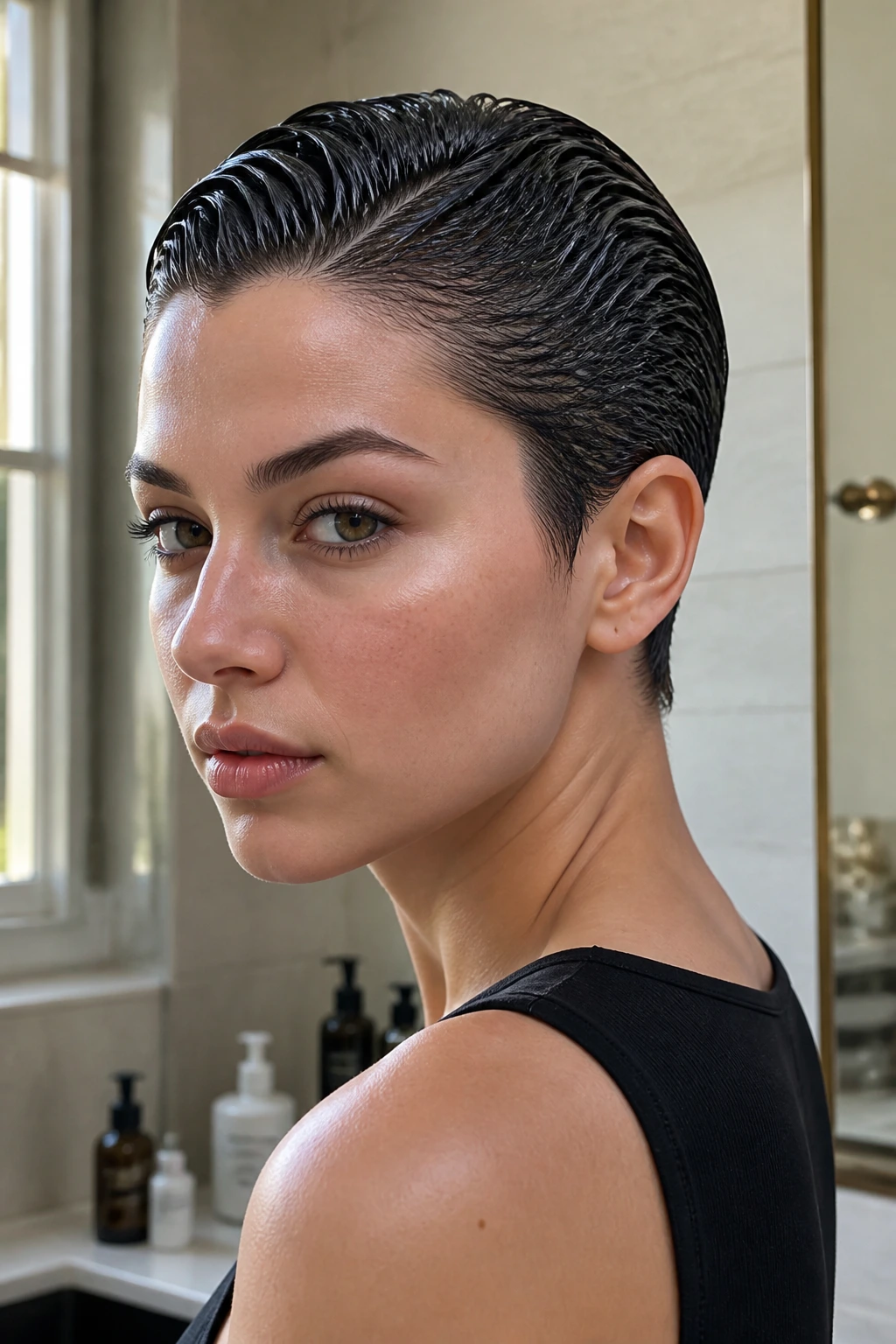
A wet-look pixie works because the product keeps the hair close to the head. That means less width, less puff, and a more sculpted line around a round face. It can look sharp, glossy, and a little severe in the best way.
Use gel or a strong cream on damp hair, then comb the top back or to the side with a narrow tooth comb. Don’t overdo the amount. A nickel-size blob is plenty for short hair, and too much product will make it look greasy instead of sleek.
Styling note
- Push the front away from the cheeks.
- Keep the temples neat.
- Let the finish set for 5 to 10 minutes before touching it again.
This one looks best with clean edges. If the neckline is fuzzy, the whole thing loses its punch.
19. Deep Side-Part Disconnected Undercut
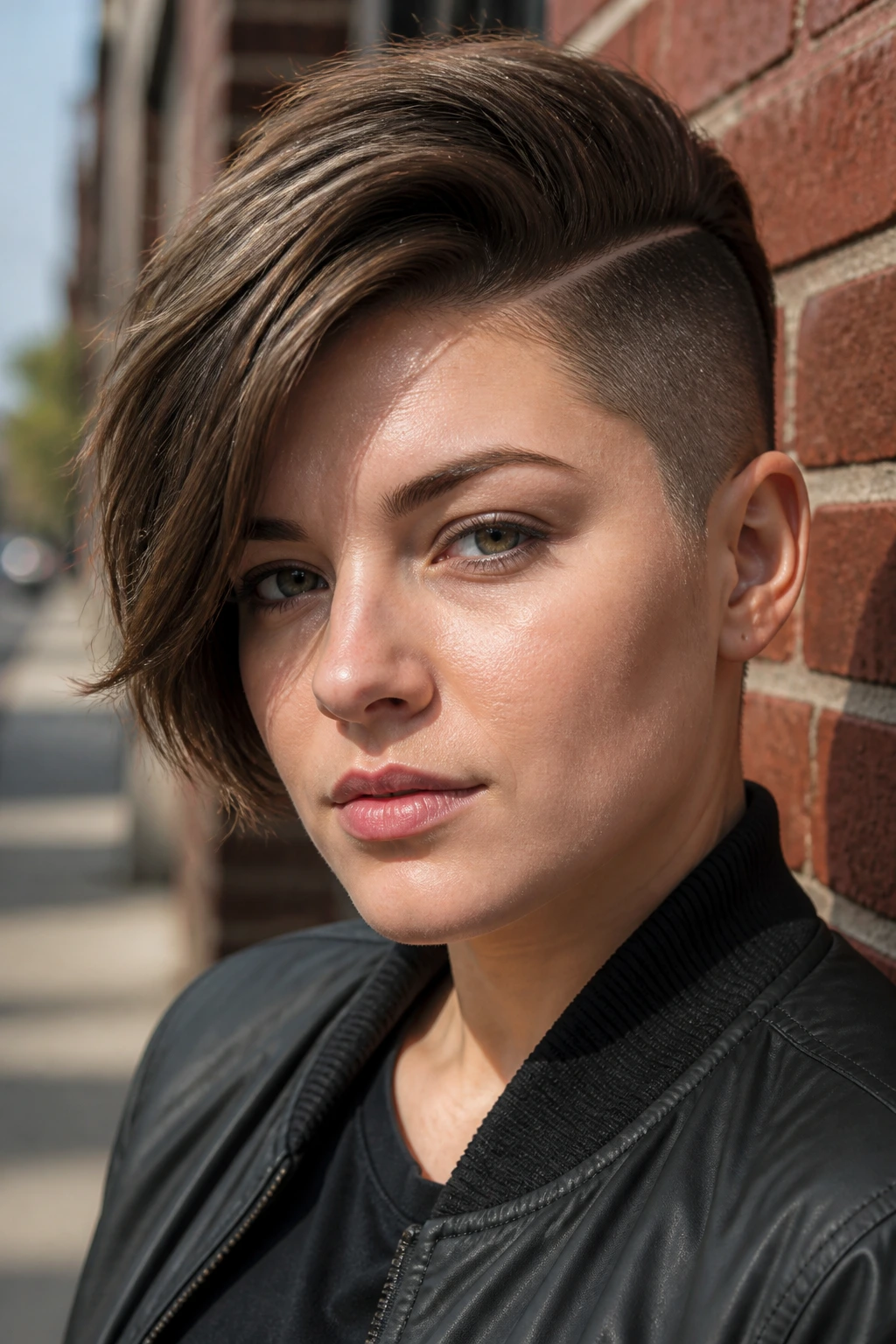
This cut gives you a hard split between the long top and the close side. On a round face, that disconnect is useful because it creates a dramatic diagonal line and cuts straight through the softness of the cheeks. The longer side can skim the brow or temple while the short side stays tight.
It feels modern without needing much length. If your hair is straight, the side part stays crisp. If it’s wavy, the longer side can fall with a little bend, which softens the look just enough. Either way, the undercut does the heavy lifting at the sides.
This is one of the stronger shapes on the list. If you like a haircut that looks deliberate from across the room, this is the one.
20. Razor-Cut Pixie With Piecey Crown
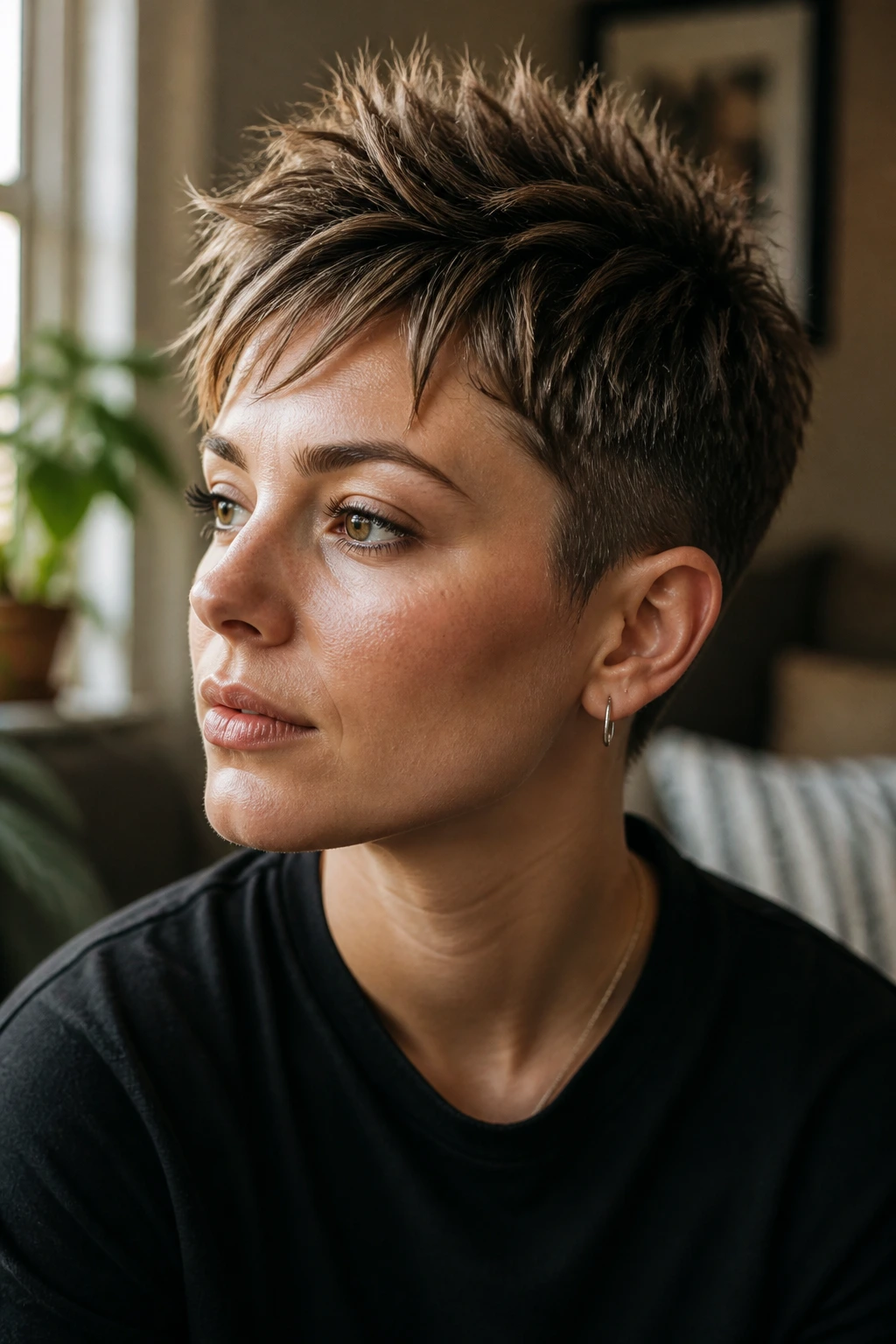
Razor-cut ends bring softness that scissors sometimes miss. The piecey crown gives the pixie movement while keeping the sides snug, which is exactly what a round face needs when it wants short hair without extra bulk. The top should feel airy, not chopped into a heavy block.
Razor work is especially nice on fine to medium hair because it removes some weight without making the shape too blunt. Use a light styling cream and separate the crown with your fingers once the hair is dry. The result is a cut that looks broken in a good way, not unfinished.
What to watch for
If your hair is already frayed or dry, too much razor work can make the ends look fuzzy. In that case, ask for point cutting instead. Same idea. Softer edge.
21. Shaggy Crop With Lived-In Texture
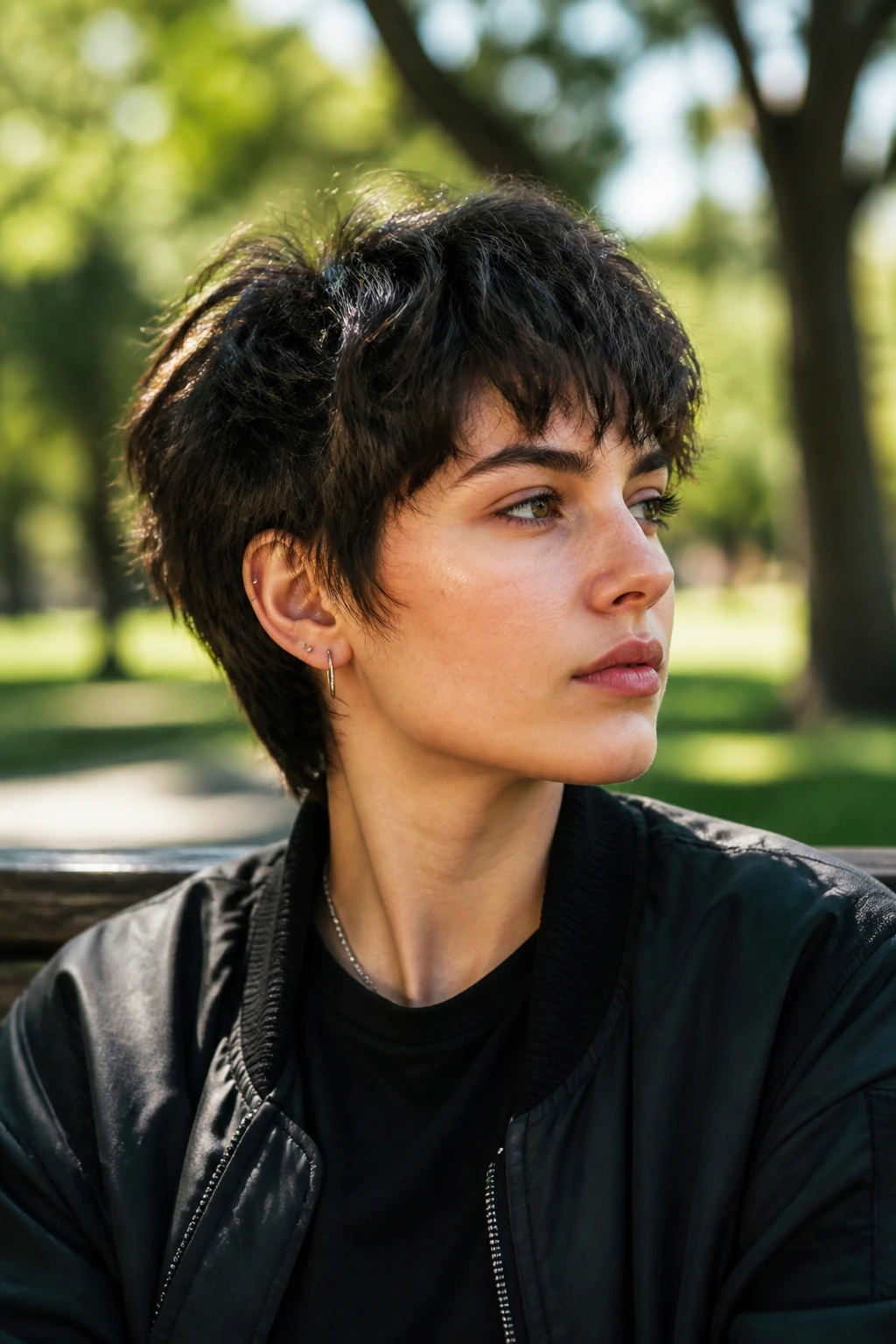
A shaggy crop can work for a round face if the shag stays short and the weight stays off the sides. The point is movement through the crown and front, not broadness at the cheeks. You want the hair to look like it has been roughed up a little, not exploded outward.
This cut is good for people who hate precise styling. A bit of salt spray, a quick scrunch, and you’re done. Keep the fringe broken and the ends light, because a blunt shag can widen the face faster than you’d think.
It also grows out well. That matters. Some short cuts need constant rescue. This one can drift for a while before it looks tired.
22. Hard-Part Short Fade
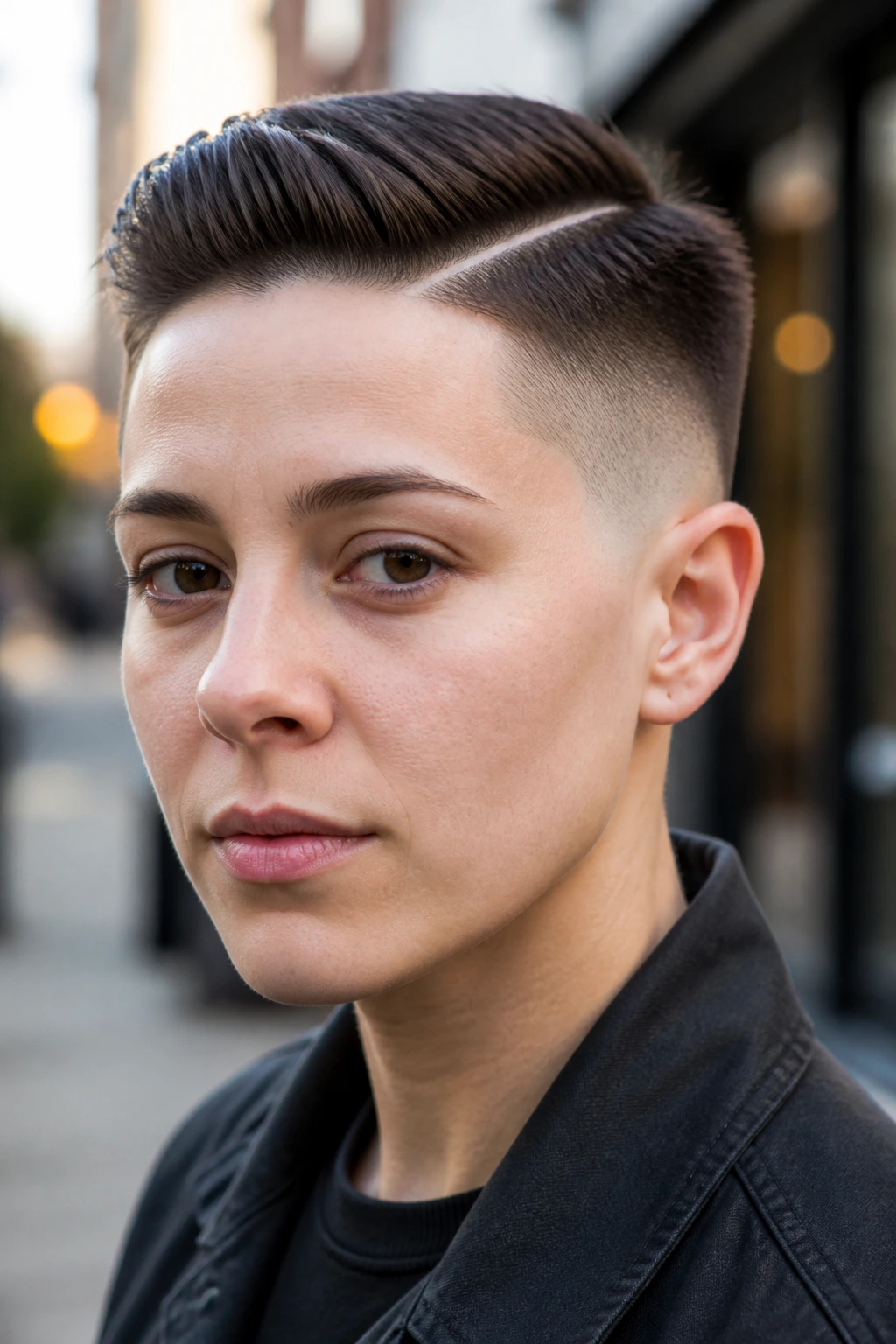
A hard part gives the haircut a line to follow, and lines are useful on round faces. The part creates direction, the fade removes side bulk, and the short top keeps the outline neat. It’s one of the cleanest options if you like a crisp, barbered look.
The part should be visible but not carved so deep that it starts looking theatrical. Keep the top short enough to brush over with a comb, then use a touch of cream to hold it in place. The whole point is structure. No fluff. No extra width.
Good for
- Straight hair that wants to fall flat.
- People who like a defined, office-friendly edge.
- Anyone who wants a short cut that still feels put together at the end of the day.
23. Sideburn-Forward Pixie
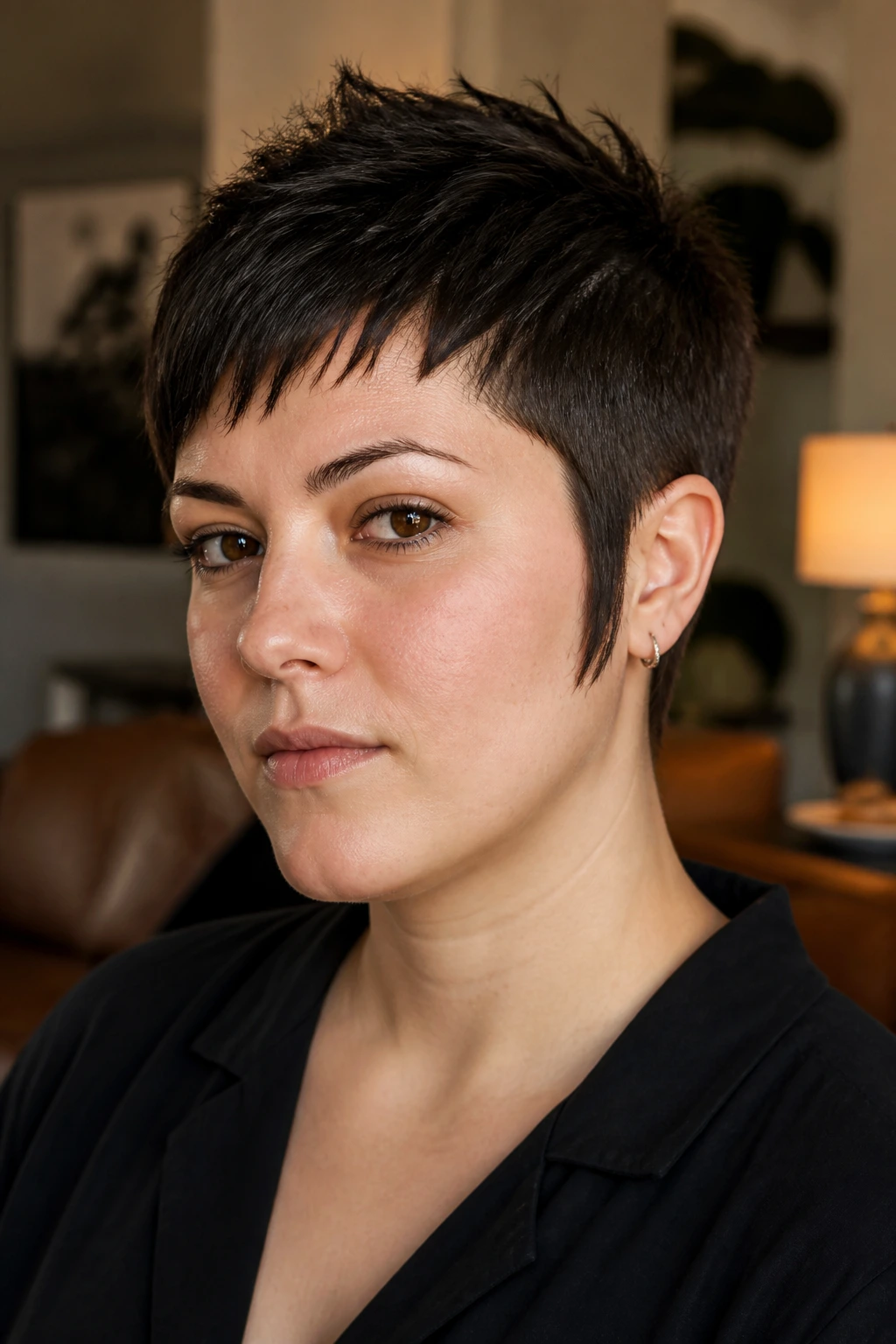
This one is underrated. Letting the sideburn area stay a little longer draws the eye downward, which can help a round face look less wide. Pair that with a short top and a tight back, and the whole shape feels intentional instead of random.
The sideburns don’t need to be dramatic. A half-inch longer than the surrounding hair can be enough. That little strip creates a vertical line near the cheeks, which is exactly where a round face benefits from a bit of visual pull.
It’s a quiet trick, and quiet tricks are often the best ones.
24. Pompadour Pixie With Close Sides
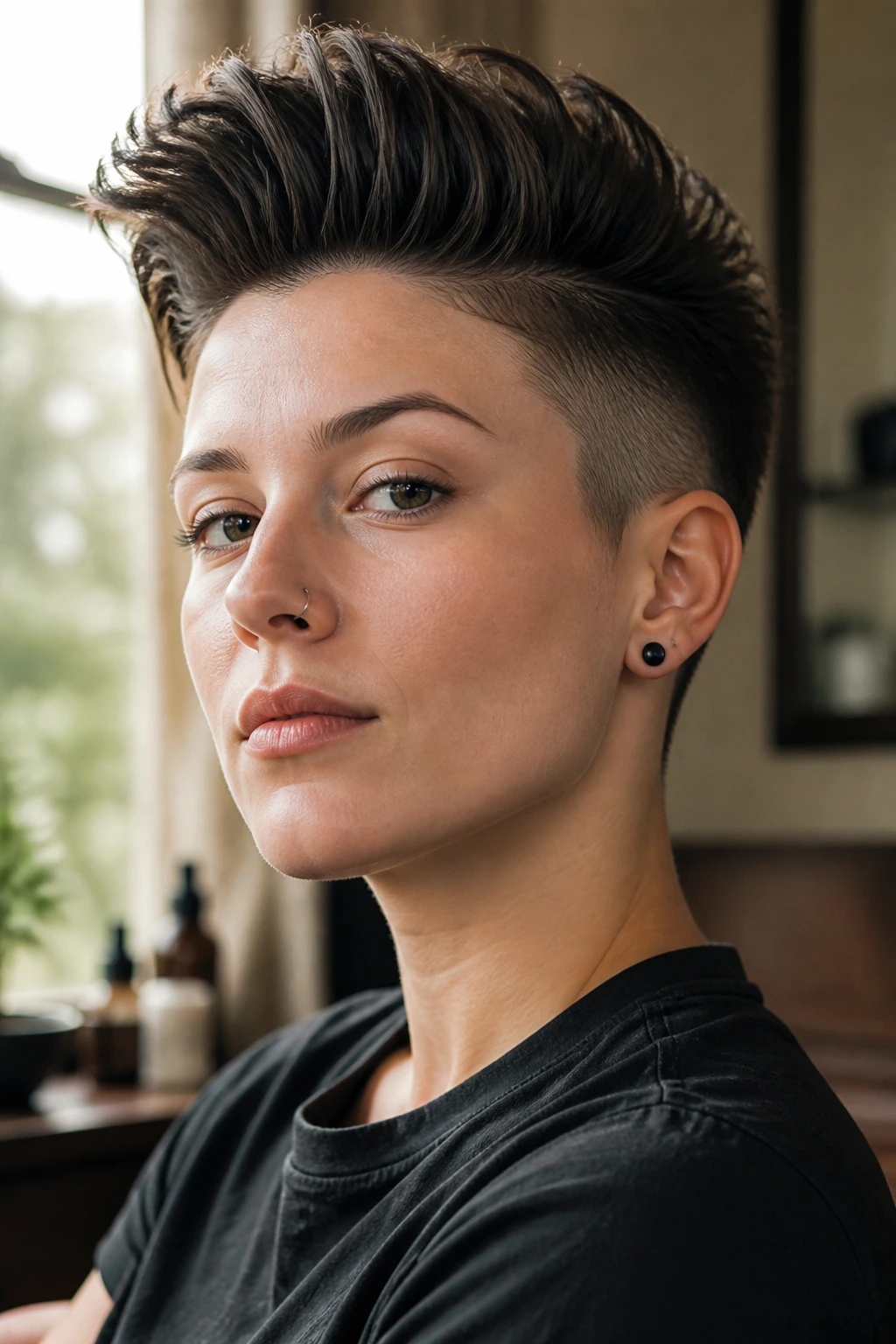
A pompadour pixie gives you height at the front and almost nothing at the sides. That’s a smart proportion for round faces because it stretches the silhouette upward instead of outward. The top should be long enough to sweep back, but not so long that it turns into a full quiff.
You’ll need a blow-dryer for this one. Lift the front at the roots, direct it back, then set it with a matte product so it holds without shine. If your hair is fine, a root spray or mousse at the base helps more than piling on paste after the fact.
It can look polished or messy depending on how much you separate the front. A neat version reads sharp. A piecey version reads more casual and tomboyish.
25. Feathered Crop With a Lifted Crown
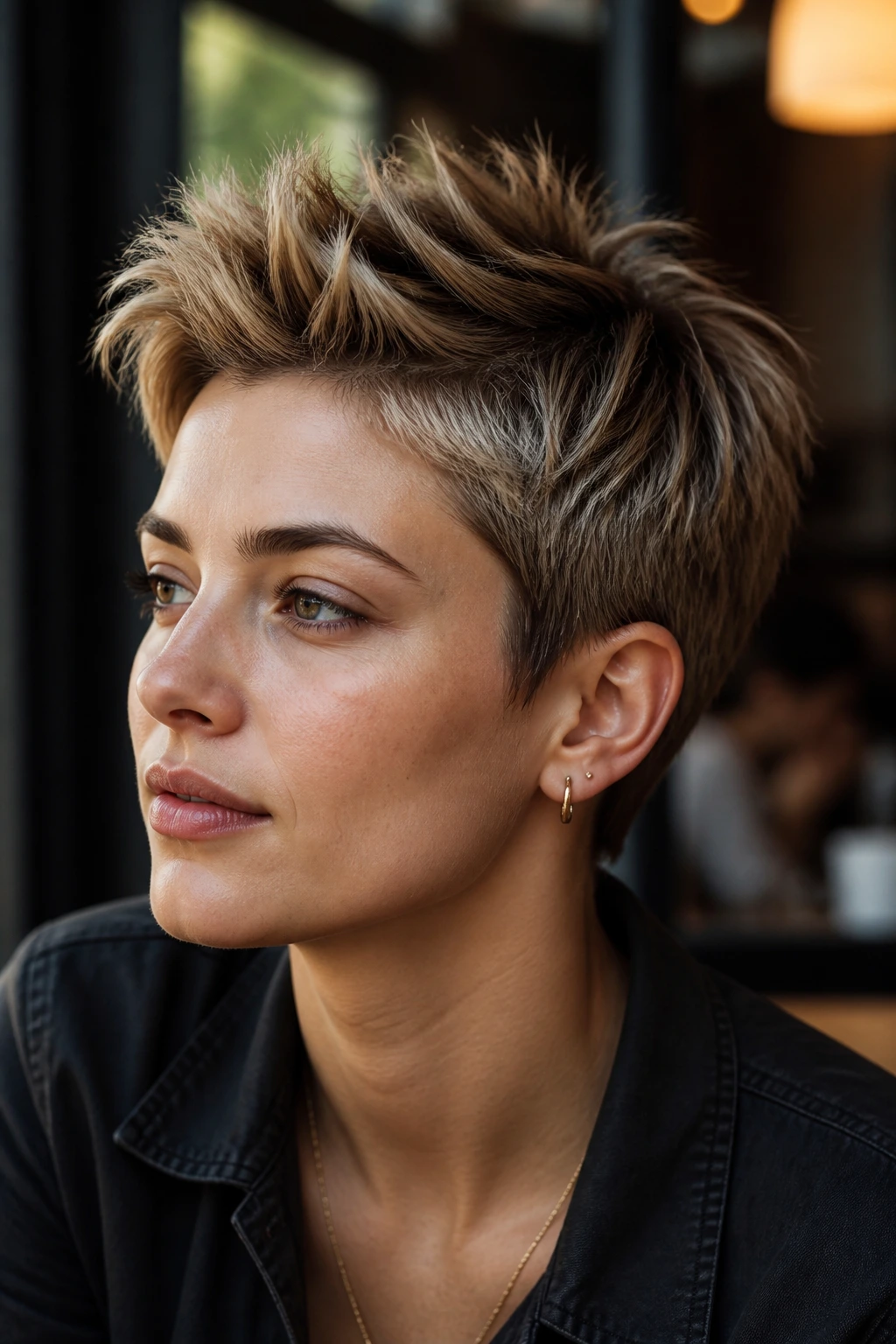
Feathering matters when you don’t want a heavy edge. A feathered crop keeps the ends light, which helps a round face because the hair doesn’t sit in one thick band around the head. The lifted crown gives you the bit of height that keeps the silhouette from spreading sideways.
This cut is a solid choice for soft hair that tends to lie flat. It doesn’t need aggressive product; often a little spray and finger-drying are enough. The feathered ends catch movement as you turn your head, so the style feels alive without needing a lot of work.
If you’ve ever hated how blunt short hair can look at the jaw, this is the quieter alternative.
26. Close Crop With a Soft Hairline
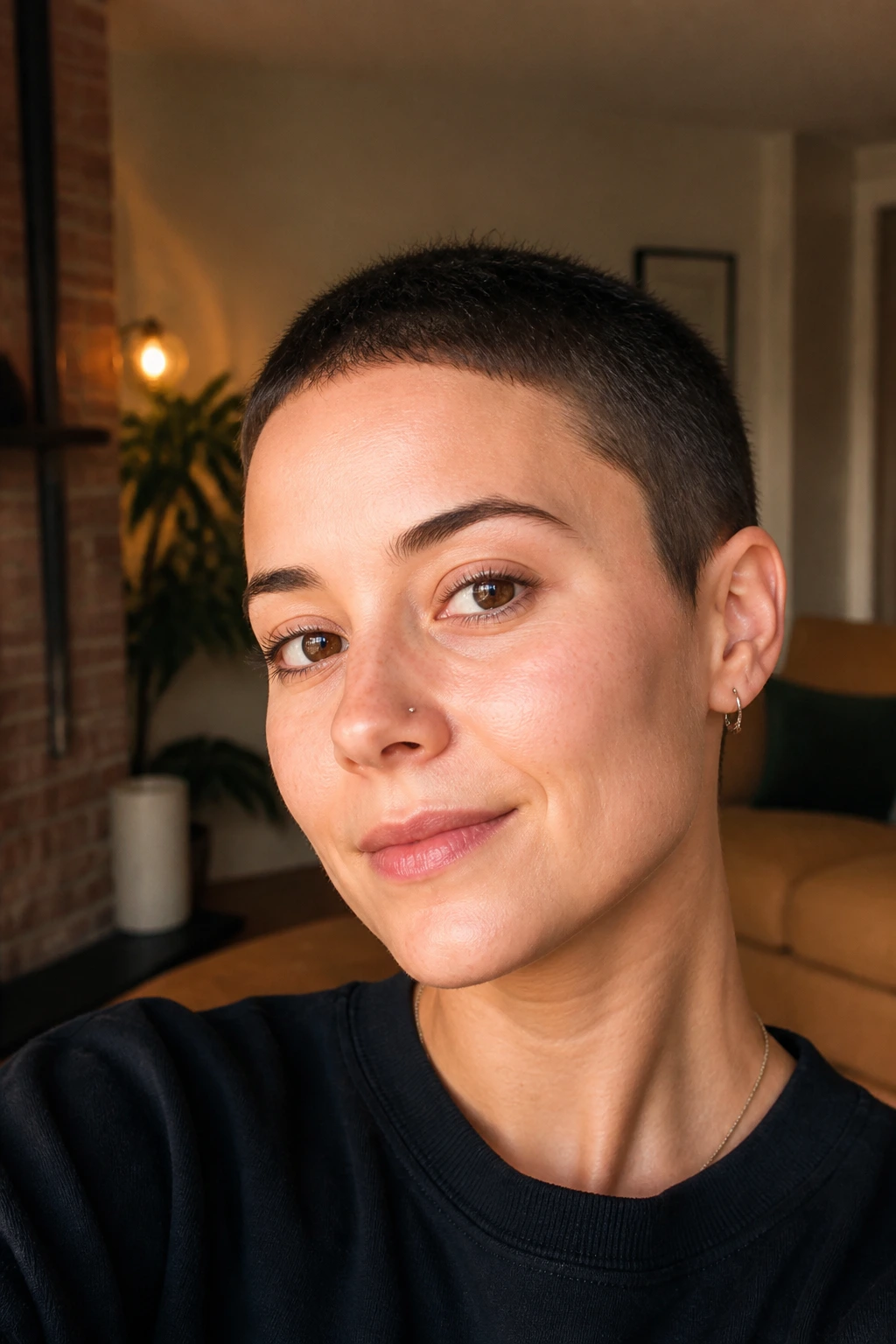
Can a very short cut still look gentle on a round face? Yes, if the hairline is softened instead of squared off. A close crop removes bulk all over, but the outline around the forehead and temples should stay a little blurred, not severe.
That softness keeps the cut from looking harsh against fuller cheeks. Use a tiny amount of lightweight styling cream if the hair stands up at the front, but don’t try to force it into a stiff shape. The charm of this cut is in its restraint.
It’s low-maintenance, direct, and very easy to live with. That counts.
27. Floating-Top Undercut
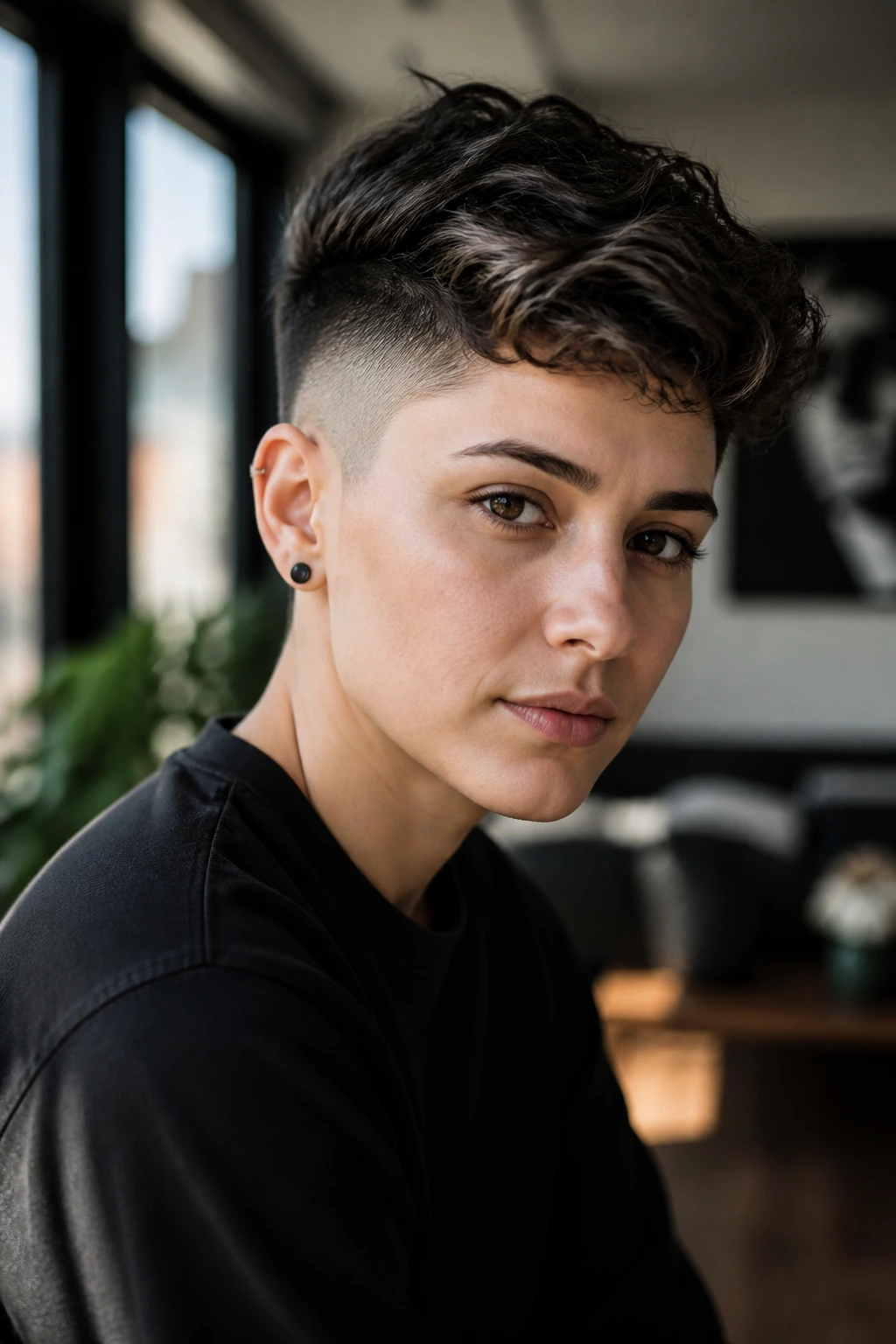
The floating-top undercut is all about separation. The top sits a little longer and is disconnected from the sides, so it looks like it hovers above the head rather than melting into the temples. On a round face, that floating effect builds height without adding width where you don’t want it.
This cut is especially good for thick hair. The undercut removes weight underneath, which keeps the top from puffing out into a mushroom shape. Ask for enough length on top to move—usually 2 to 4 inches depending on texture—then style it forward, back, or slightly off-center.
What to ask for
- Tight sides, often clipped.
- A detached top with visible contrast.
- Enough crown length to create lift instead of bulk.
28. Ivy League Crop With Tapered Sides
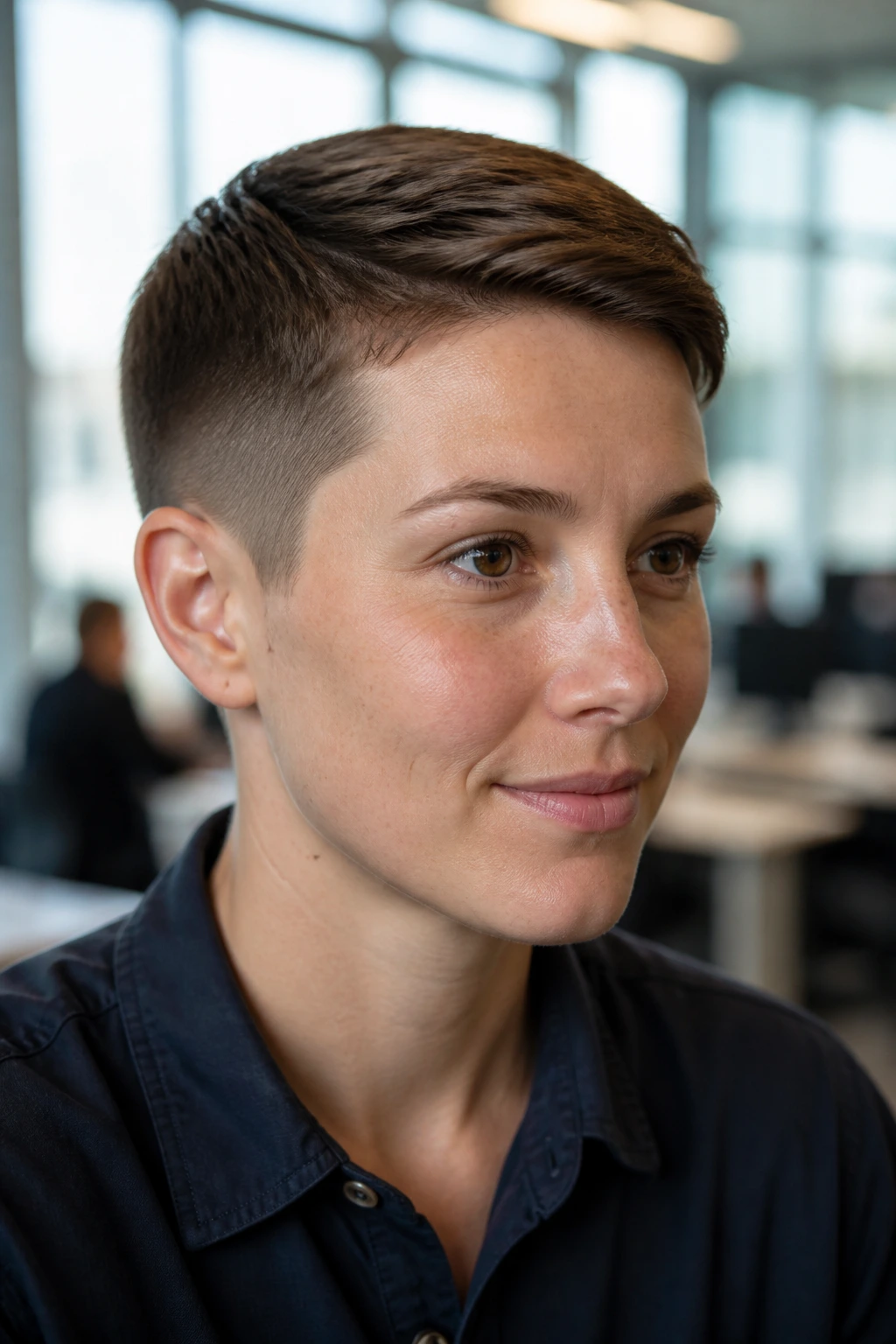
The Ivy League is a classic for a reason. It stays short, clean, and easy to brush to the side, which gives a round face a little structure without going full military. Tapered sides keep the head narrow; the slightly longer top gives you the brush-up or side-sweep that adds shape.
This cut leans more polished than rebellious, but it still counts as tomboy when it’s cut close and worn with a bit of texture. A side part is the simplest way to keep it from feeling flat. If the hair is thick, ask for some internal weight removal so it doesn’t spread out at the temples.
It’s one of the easiest cuts to wear with glasses, collared shirts, and a clean neckline.
29. Line-Detail Buzz Cut
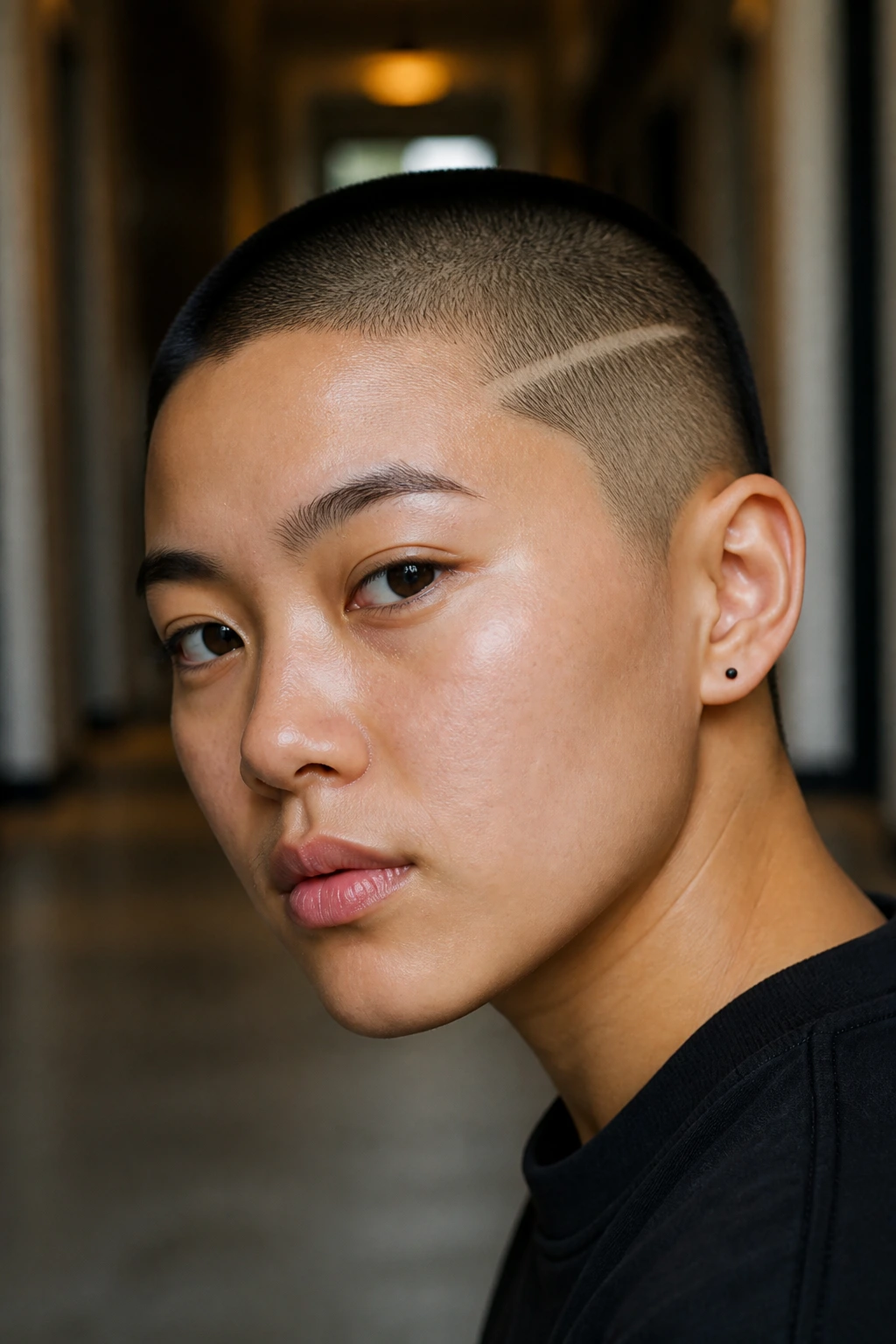
A buzz cut with a line detail gives you one sharp visual break, and that break matters on a round face. The line can run at the temple or through the fade, and it pulls the eye sideways in a controlled way instead of letting the head read as one smooth circle.
Keep the base cut simple. The line should be a detail, not the whole show. If it’s too wide or too many lines get added, the haircut can start fighting itself. One clean mark usually does the job.
My take: this is the strongest option if you love buzz cuts but want a little edge without extra length. Small stroke. Big attitude.
30. Soft Faux-Hawk With a Clean Nape
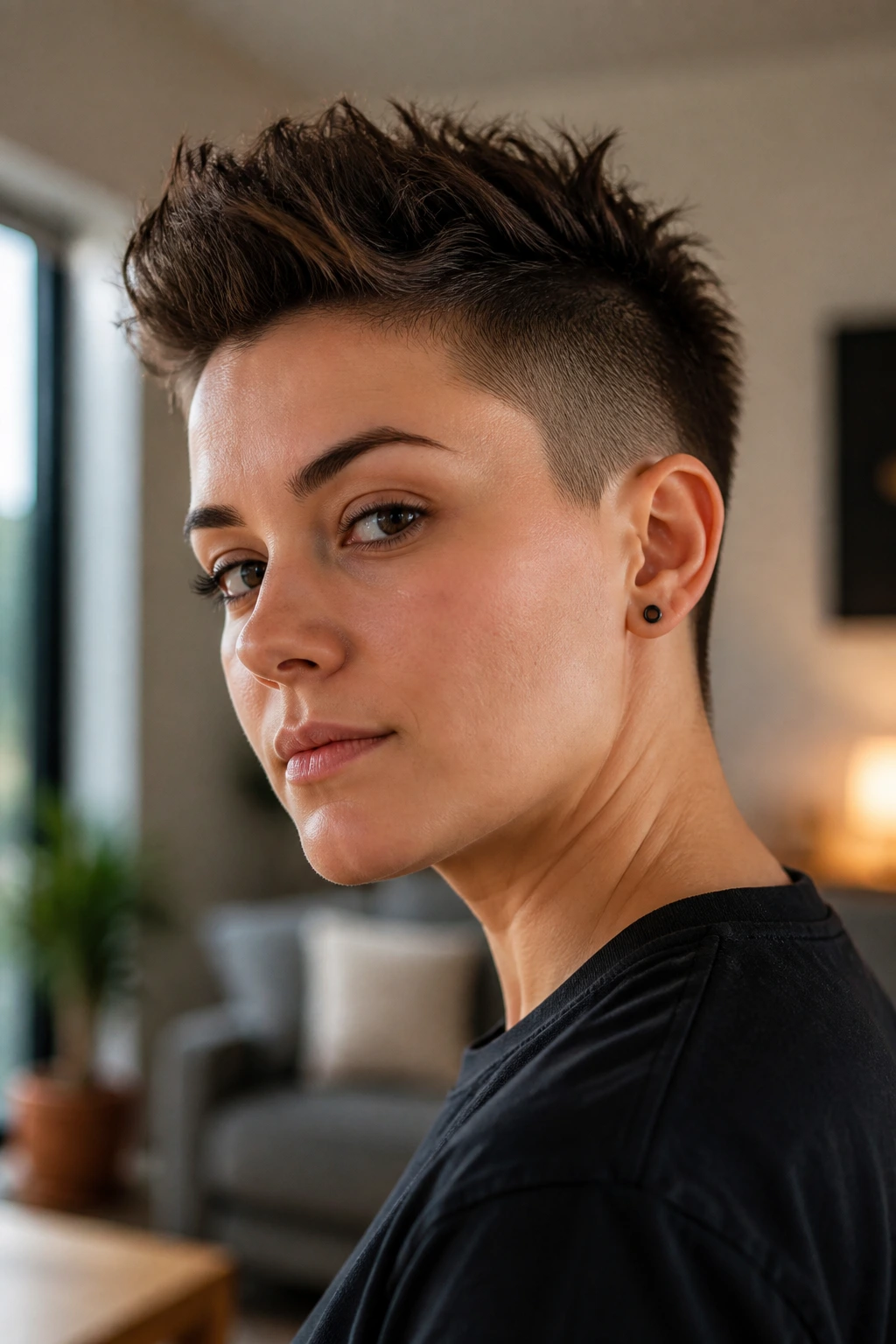
A soft faux-hawk is the last cut on the list because it’s one of the easiest ways to get edge and vertical lift without committing to a hard mohawk. The middle section stays a little longer, the sides stay close, and the nape stays clean so the shape doesn’t drag downward.
That line through the middle helps round faces more than people expect. It creates a narrow corridor from forehead to crown, which lengthens the face in a way that looks natural, not forced. Keep the spikes or lift soft; a stiff center strip can get too punk too fast.
This works on straight, wavy, or curly hair if the side length is controlled. If the sides puff out, the whole cut loses its shape. Tight sides. Soft center. That’s the formula.
How Short Tomboy Hair Changes the Shape of a Round Face
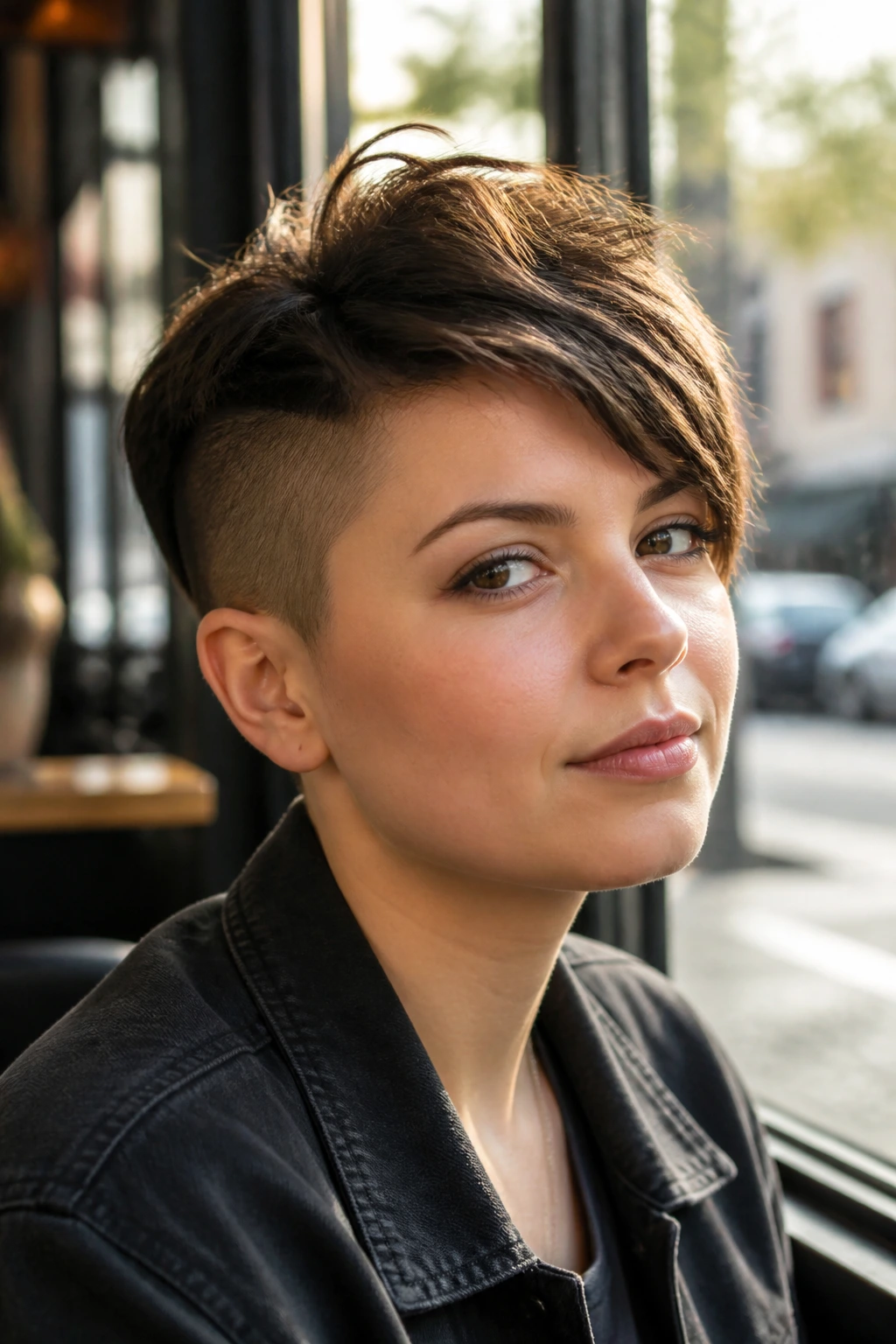
Round faces usually have soft width through the cheeks and a jawline that doesn’t come to a sharp point. That does not make a short cut harder to wear. It just changes the rules. The haircut needs to create a little more vertical line and a little less side-to-side spread.
Shaved sides and undercuts help because they remove weight where the face is already widest. A lifted crown adds length without asking for actual length. Diagonal fringes, deep side parts, and asymmetry all interrupt the circle effect and keep the eye moving. A blunt line across the forehead or a puff of volume at the temples does the opposite.
The good news is that the best short tomboy cuts are already built around these ideas. You don’t need a face shape lecture every time you sit in the chair. You just need the right balance: tighter near the cheeks, a little higher at the top, and enough texture to keep the cut from turning smooth and wide.
The Tools That Make These Cuts Easier to Wear
-
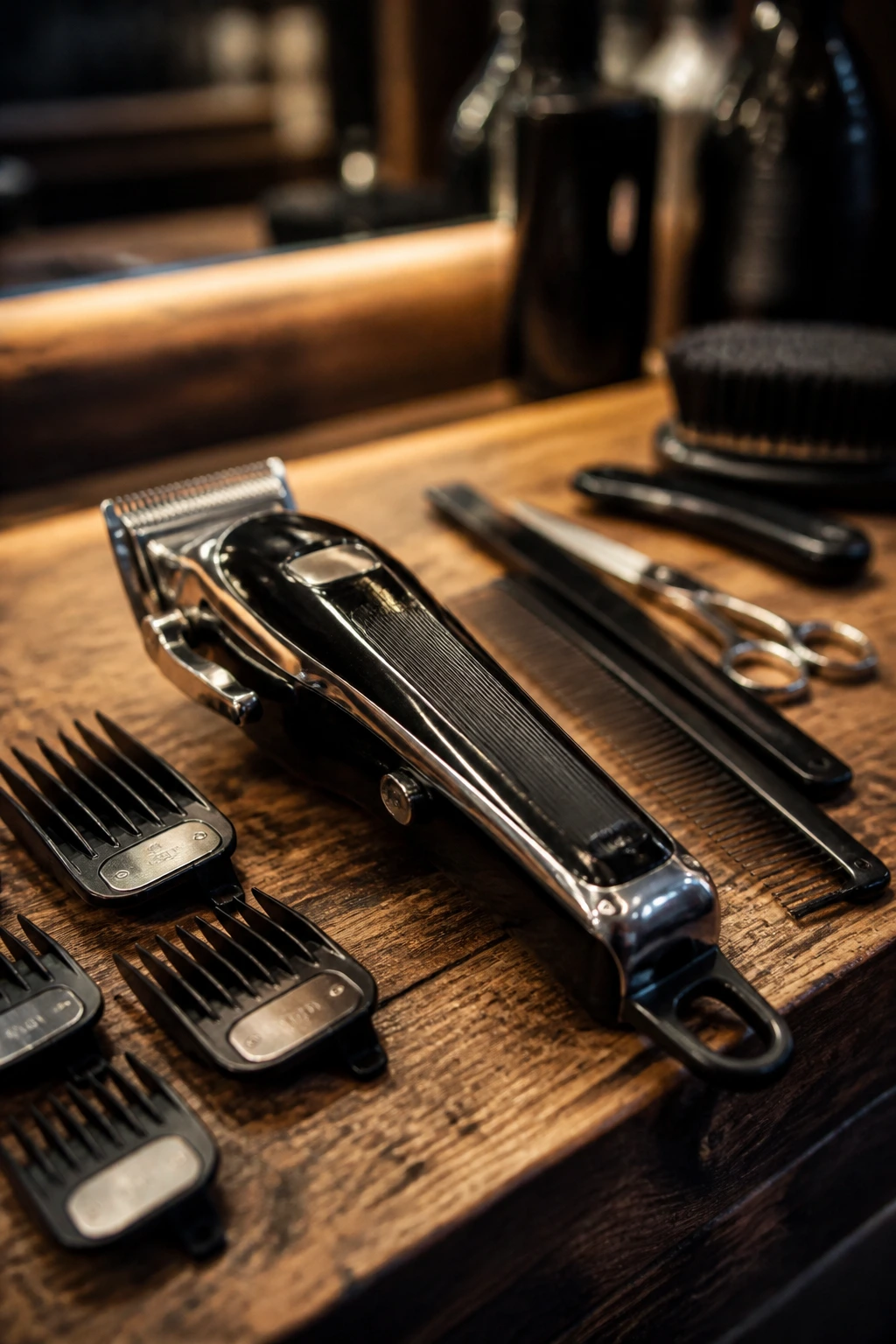
Clippers with guards #0.5 through #4: Essential if you’re maintaining a fade, buzz, or tight undercut at home.
-
Detail trimmer: Good for sideburns, necklines, and cleaning the edges around the ears without taking length off the top.
-
Matte paste or clay: Best for pixies, crops, and quiffs when you want separation instead of shine.
-
Texturizing spray: Helps piece out short layers so the style doesn’t sit flat against the head.
-
Sea salt spray: Useful for wavy or fine hair that needs a bit of grit before drying.
-
Blow-dryer with a nozzle: The nozzle matters. It directs airflow at the roots, which is where the lift starts.
-
Round brush or vent brush: Helpful for crew cuts, quiffs, and pixies that need a small bend at the front.
-
Diffuser: Worth having if your curls need shape without frizz.
-
Tail comb: Handy for hard parts, side parts, and neat sectioning when you style.
-
Small scissors for fringe trims: Optional, but only if you already know what you’re doing. Fringe mistakes are easy to see.
What to Tell a Stylist Before the Clippers Come Out
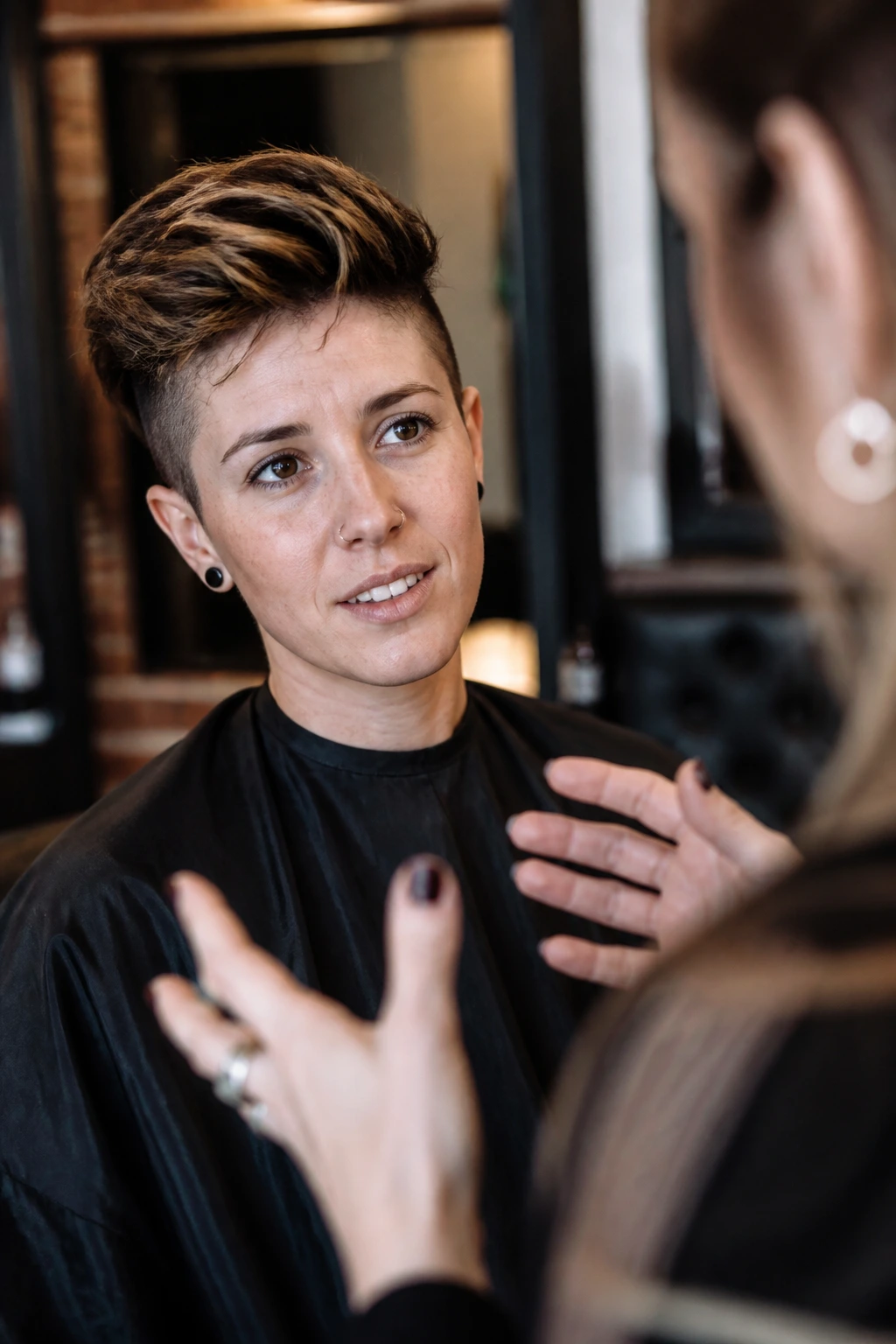
Start with the shape, not the name of the haircut. “I want less width at the cheeks and a little more height at the crown” tells a stylist more than “give me a tomboy cut.” If you know the guard lengths you like, say them out loud. “Sides at a #1, top at a #3” is clearer than vague hand waving.
Bring one photo of the overall silhouette and, if you can, another photo that shows the fringe or fade you want. Photos help with proportion. They also help separate the parts you like from the parts you definitely do not want. That distinction saves time.
Say these things if they apply
- Cowlicks: Mention them before the cut starts. A strong cowlick at the front can change how much length the fringe needs.
- Glasses: Tell the stylist where your frames sit so the temples and fringe don’t collide.
- Hair density: Fine hair, thick hair, and curly hair all behave differently in the same cut.
- Growth pattern: If your hair pushes forward or kicks out at the nape, the shape needs to respect that.
Ask for point cutting if you want softness, tapering if you want clean edges, and a disconnected undercut if you want the top to sit apart from the sides. Those words matter. They make the difference between “short” and “short in the exact way you wanted.”
How to Style the Cuts So They Sit Up, Not Out
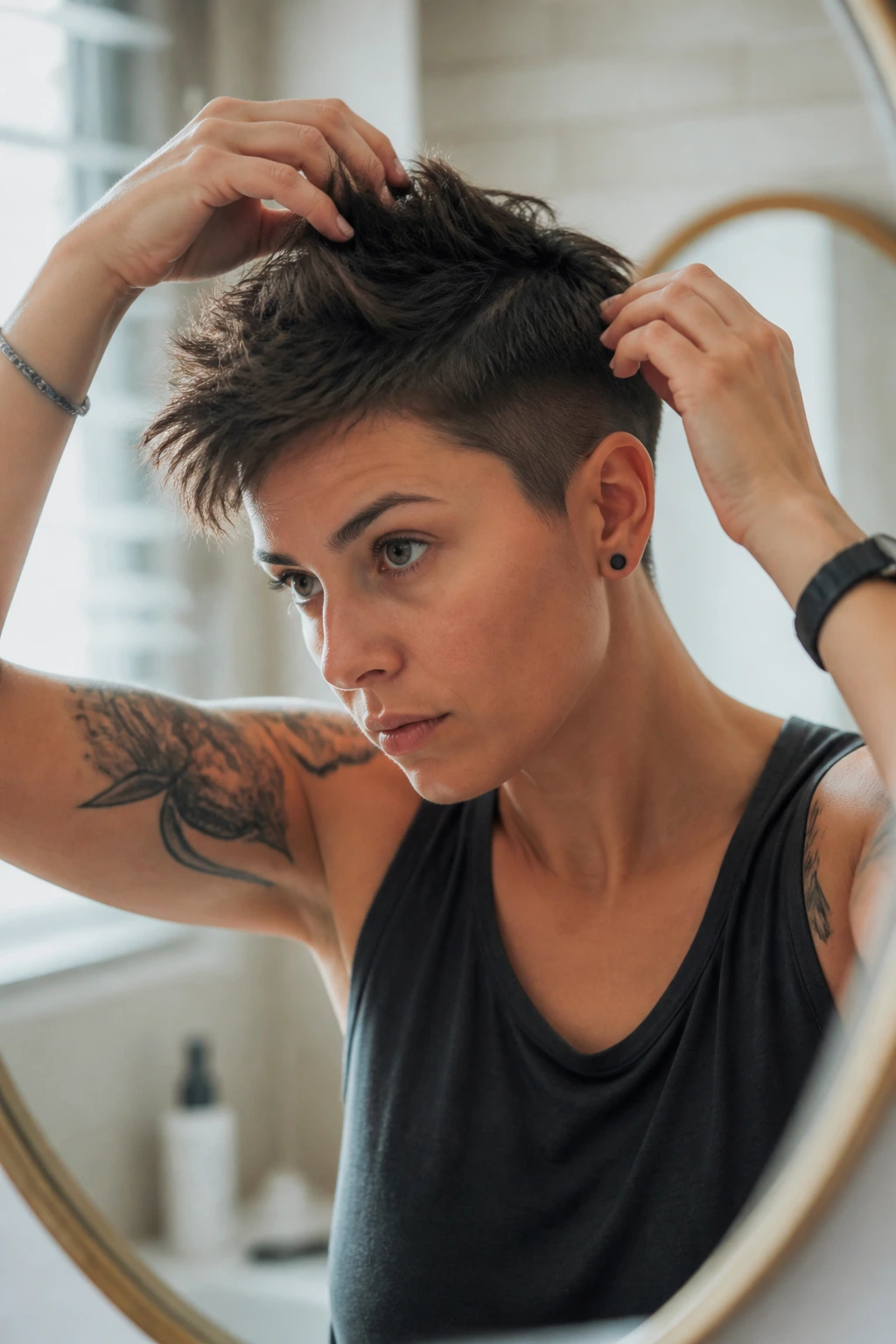
Lift: Start at the roots. A short cut on a round face usually looks better with a little height at the crown or front than with flatness at the temples. A blow-dryer on medium heat, aimed against the natural fall for 20 to 30 seconds, is often enough to wake up the shape.
Texture: Use less product than you think. A pea-sized amount of matte paste, warmed between your fingers, can separate short layers better than a full scoop. If the hair gets sticky, you’ve gone too far. The goal is control, not stiffness.
Direction: Push the front diagonally if you have a fringe, or brush the top slightly back if you’re wearing a quiff or slicked style. Straight-across lines tend to make round faces look shorter. Diagonals soften that effect fast.
Finish: Leave some edge visible. A little fray at the crown or a broken line at the fringe often looks better than perfect smoothness. If the style feels too round in the mirror, flatten the sides with your hands and lift the top again. Two moves. Done.
Accessories: Glasses, small hoops, and collar shapes all change how the haircut reads. Round frames can still work, but a sharp cut needs a frame with some angle. A high collar plus a short crop can look crowded; an open neckline gives the haircut room.
The Small Moves That Make the Haircut Look Sharper
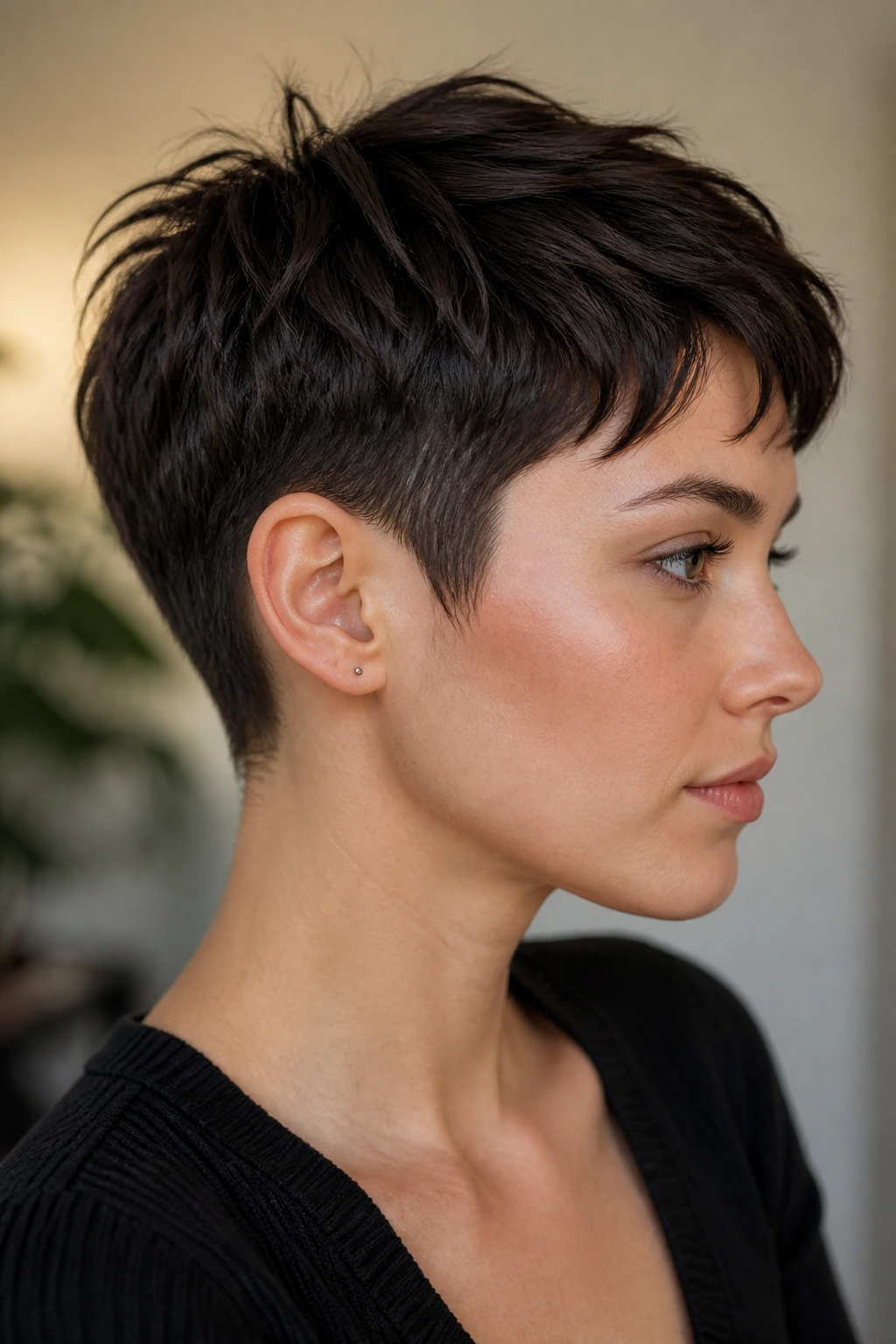
Ear tuck: Tucking one side behind the ear on pixies and crops exposes the jawline and creates a second shape inside the haircut. That little break keeps the style from looking like one round mass.
Neckline cleanup: A fuzzy nape makes even the cleanest cut feel less deliberate. If you wear a buzz, undercut, or very short crop, a quick neckline trim every 10 to 14 days keeps the whole thing tidy.
Shine control: High shine can make short hair sit closer to the head, which is useful in some styles but not all. Matte finishes usually add a little texture and keep the face from looking fuller than it is.
Color placement: Even subtle highlights can shift where the eye lands. A bit of lighter tone at the crown or fringe can pull attention upward. If the sides are dark and heavy, they can visually widen the face.
Root direction: If your hair grows in a stubborn swirl, don’t fight it for the sake of symmetry. Work with the swirl and shape the rest of the cut around it. That’s how short hair stays wearable after a week, not just on day one.
Keeping the Shape Between Trims
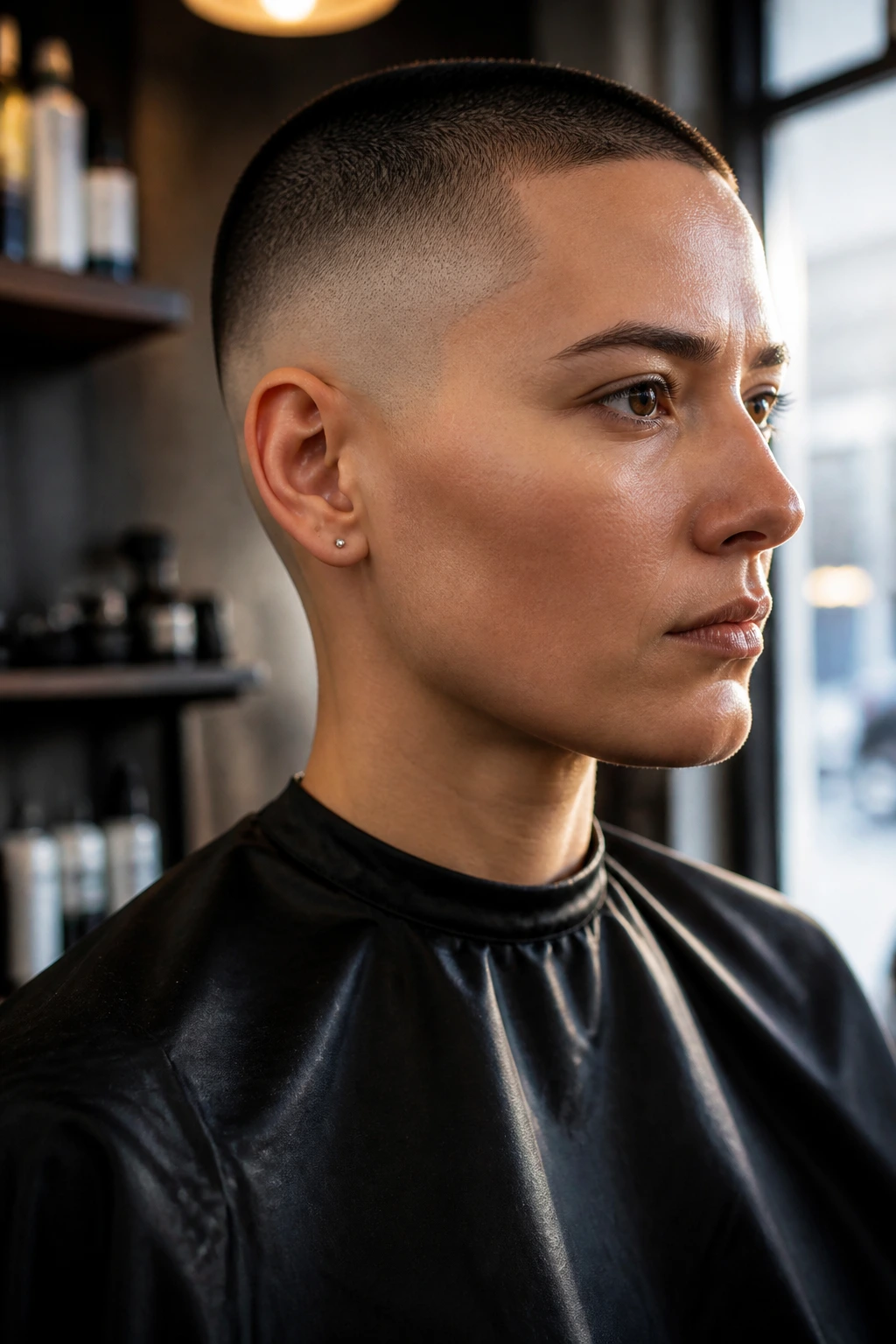
Buzz cuts and short fades need the most upkeep. If you want the lines to stay crisp, plan on a cleanup every 2 to 4 weeks. The sides and neckline show growth fast, and a tiny bit of fuzz can blur the whole shape. A detail trimmer at home helps, but if the fade is tight, a barber visit is still the cleaner move.
Pixies, crops, and bixies usually stretch a little farther, often 4 to 6 weeks before the shape starts to wander. The fringe usually tells you first. When it falls into your eyes or starts sitting too low on the brow, it’s time. If the crown begins to spread sideways, product won’t fix it for long.
Curly cuts need a different rhythm. They can look neat longer because the texture hides some growth, but the sides still need attention. A temple fade or nape cleanup every few weeks keeps the bulk from creeping back in. Between visits, use a light conditioner, a curl cream, and a diffuser if needed. Don’t overload the hair with oils at the root. It collapses the shape.
One more thing. Short hair often looks best on day two, not day one. The product settles, the cowlick calms down, and the cut stops feeling freshly carved. That’s usually when it looks most like itself.
Variations and Adaptations to Try
Fine-Hair Lift Version: Keep the sides tight and leave a touch more length through the crown, then use a root spray before drying. Fine hair needs structure more than product, so avoid heavy creams that drag everything down.
Curly Crown Version: Leave the top longer than you think you need—usually by half an inch to an inch compared with straight hair—and let the curls stack upward. A temple fade keeps the sides narrow so the curl volume stays in the right place.
Thick-Hair Taper Version: Ask for weight removal inside the top, not just the surface. Thick hair can look bulky fast, so point cutting or light texturizing gives you movement without puff.
Soft Office Version: Choose a side part, a tapered nape, and no hard line details. The shape stays short and tomboy, but it reads cleaner in conservative settings.
High-Contrast Version: Go shorter on the sides, even skin-close if that suits you, and keep the top visibly longer. This is the strongest silhouette on the list, and it suits people who like a sharp, barbered finish.
Low-Maintenance Grow-Out Version: Leave a little extra length at the sideburns and nape so the cut still looks intentional as it grows. That way you’re not trapped by a perfect outline that disappears in ten days.
Common Mistakes to Avoid
-
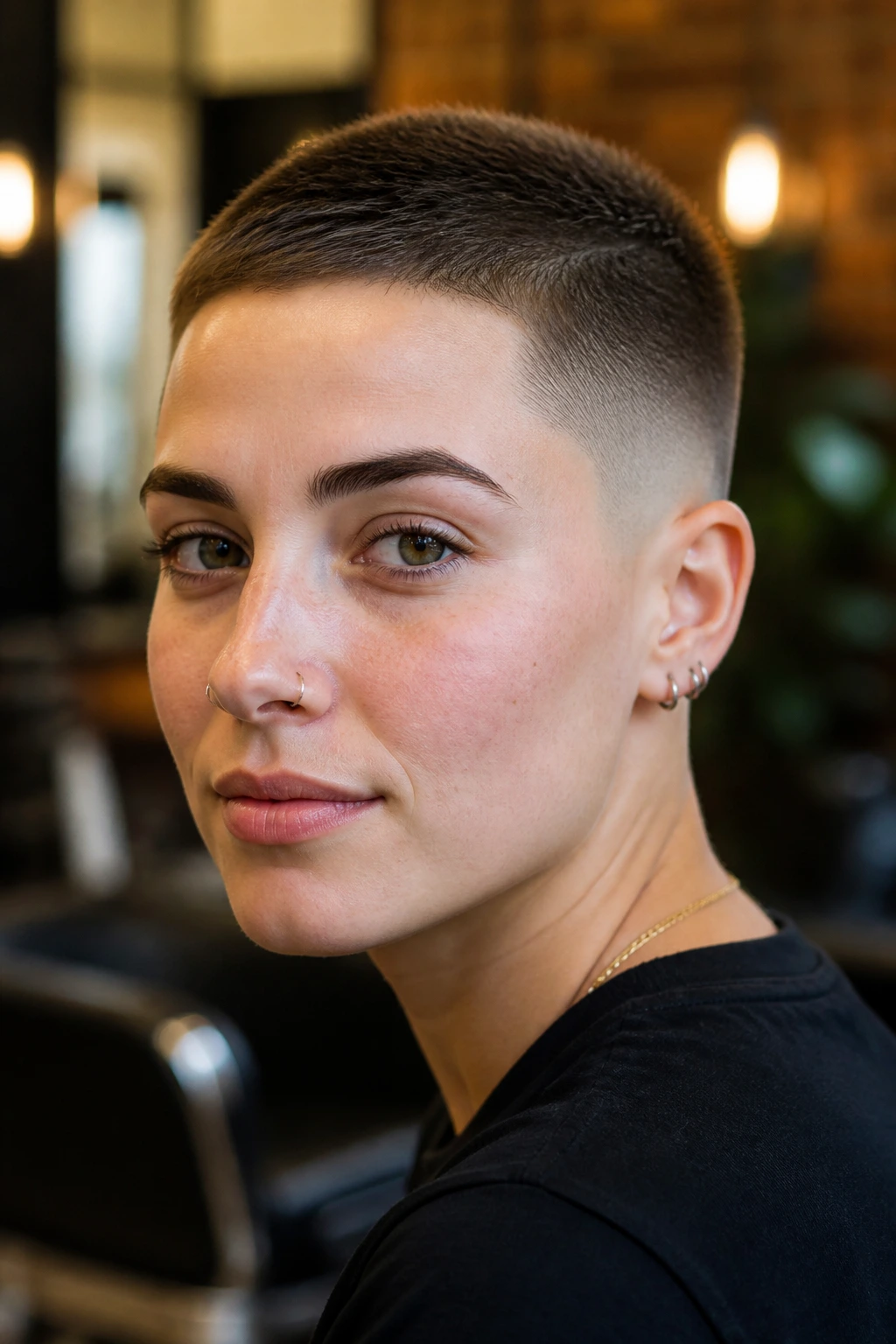
Too much width at the cheeks: If the sides puff out around the temples or ear line, a round face reads even rounder. Fix it by tapering the sides tighter and moving your texture upward.
-
A blunt fringe that stops at the widest point: Heavy bangs across the forehead can shorten the face and make the cut look square in the wrong way. Use broken fringe, a side sweep, or a lighter micro bang instead.
-
Flat crown, no lift: Short hair that lies dead flat can look heavy on top and broad through the middle. A little root spray, a quick blow-dry, or a better cut line usually solves it.
-
Over-texturizing fine hair: Too many razor cuts or too much product can make fine hair look wispy and thin. Keep the layers controlled and use just enough paste to separate the ends.
-
Ignoring growth patterns: Cowlicks at the front or strong growth at the nape can flip the shape sideways after a week. Build the cut around those spots instead of cutting as if they don’t exist.
-
Skipping trims on tight cuts: A buzz or undercut grows out fast enough to blur the silhouette. If you want the shape to stay sharp, trim the edges before they start looking fuzzy.
Frequently Asked Questions
Can a round face wear a buzz cut?
Yes, and it can look very sharp if the top, temples, and neckline are shaped with intention. A slight bit of extra length on top or a soft fade at the sides helps keep the head from reading too wide.
Do bangs make a round face look wider?
Heavy, blunt bangs can, but not all bangs behave the same. Broken fringe, side-swept fringe, and short micro bangs with texture can work because they break the horizontal line across the forehead.
Are undercuts good for round faces?
They usually are, because they remove bulk from the sides and let the top carry the shape. The trick is to keep enough lift or movement on top so the cut doesn’t collapse into a flat band.
What if my hair is curly and I want something short and tomboyish?
A curly top fade or temple fade is one of the safest places to start. Keep enough length on top for the curl to spring, then taper the sides tight so the volume stays centered instead of spreading outward.
How often do short tomboy cuts need trimming?
Buzz cuts and fades often need cleanup every 2 to 4 weeks. Pixies and short crops can usually go 4 to 6 weeks, though the fringe may need attention sooner if it falls into your eyes.
What should I avoid if my face is round and I wear glasses?
Avoid a lot of width at the temples, because the frames already add visual weight there. A tapered side, a side part, or a sweep of fringe usually works better than a blunt, boxy outline.
Can I make a short tomboy cut look softer?
Yes. Keep the sides tapered instead of sharply shaved, use a broken fringe, and finish with cream rather than hard gel. A soft outline still counts as tomboy if the shape is short and controlled.
What if my hair sticks straight up or has a stubborn cowlick?
Then the cut should work with that growth pattern, not fight it. Leave a little more length in the trouble spot, and ask the stylist to point-cut or taper around it so the hair has somewhere to go.
The Shape That Changes Everything
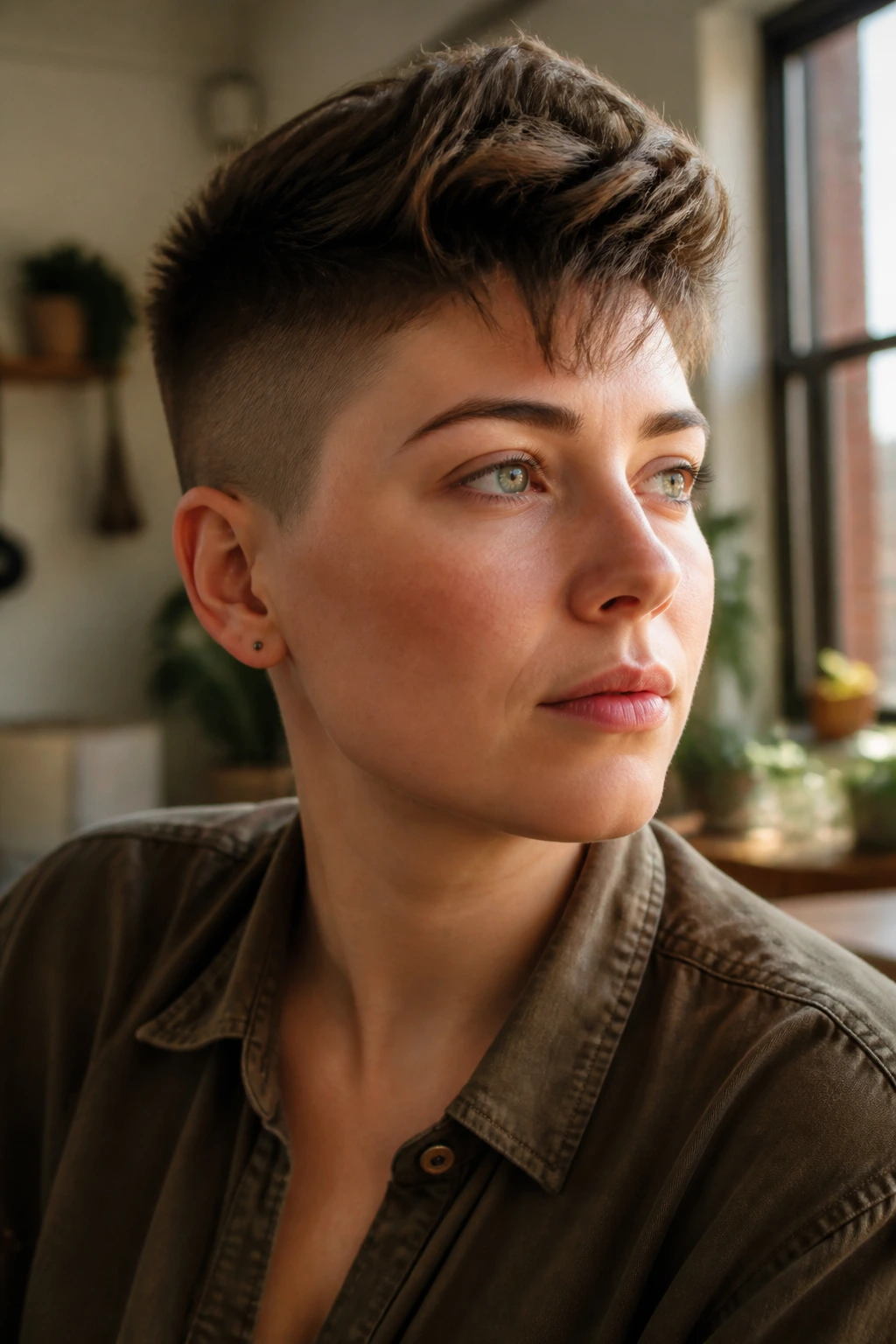
Short tomboy hair on a round face works best when the cut edits the silhouette instead of trying to hide it. Tight sides, a bit of crown lift, and a fringe that doesn’t sit like a shelf can change how the whole face reads in the mirror. That’s the quiet magic here.
Bring a photo, yes. But bring a clear idea of where you want the width to disappear and where you want the eye to go. That one conversation usually does more than the haircut name ever will.
