



A blunt haircut can make waves behave like they missed the memo. The shape goes wide, the ends go heavy, and the top sits flatter than it looked in the salon mirror. Soft layered haircuts for wavy hair fix that by shifting weight instead of fighting the bend.
The trick is not “more layers.” It’s better-placed layers. A half-inch too high can turn loose waves into frizz. A few inches too low can leave the whole cut bottom-heavy and stubborn. I keep coming back to that because it is where most bad wavy cuts go sideways.
Wavy hair has a weird little personality. It can look plush and full one day, then stretch out and lose shape the next. The right cut gives you a better starting point every time you wash it, which is worth more than any product promise. Below are 38 shapes that do that job in different ways, from soft lobs to airy shags to longer cuts that barely look layered until the light hits them.
Why These 38 Cuts Work on Wavy Hair
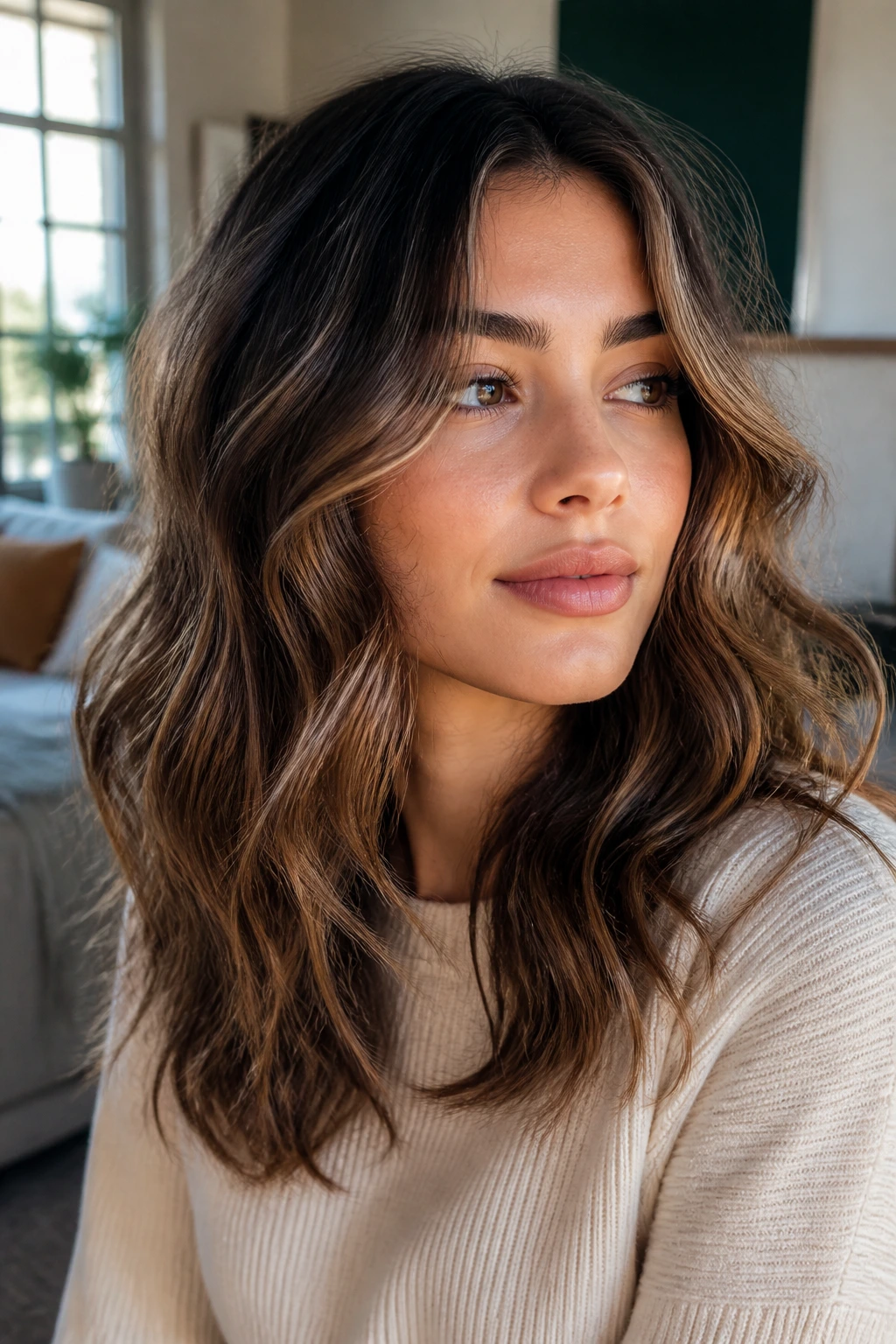
- They keep the wave visible: Soft layering removes enough weight for the bend to show, but not so much that the ends turn wispy and thin.
- They tame the triangle shape: A little movement through the mid-lengths stops the sides from ballooning out while the top sits flat.
- They grow out better: Soft edges and longer layer placements usually hold their shape longer than a hard, choppy cut.
- They suit different densities: Fine waves need a lighter touch; thick waves need more internal release. These cuts cover both ends of that range.
- They give you styling options: Air-dry, diffuse, bend with a round brush, or leave it mostly alone. The haircut still has a job to do even on lazy days.
1. Collarbone Ripple Lob

The collarbone ripple lob lives in that sweet spot where wavy hair still has room to move, but the shape doesn’t drag itself flat. It hits right around the collarbone, which means the hair can swing instead of hanging in one heavy curtain.
Ask for a soft perimeter with long layers that start below the cheekbone. That keeps the line clean and the wave pattern visible. I like this cut for people who want length they can still tuck behind an ear, clip back, or wear with a sweater that hits at the same point.
2. Butterfly Layers With Curtain Fringe
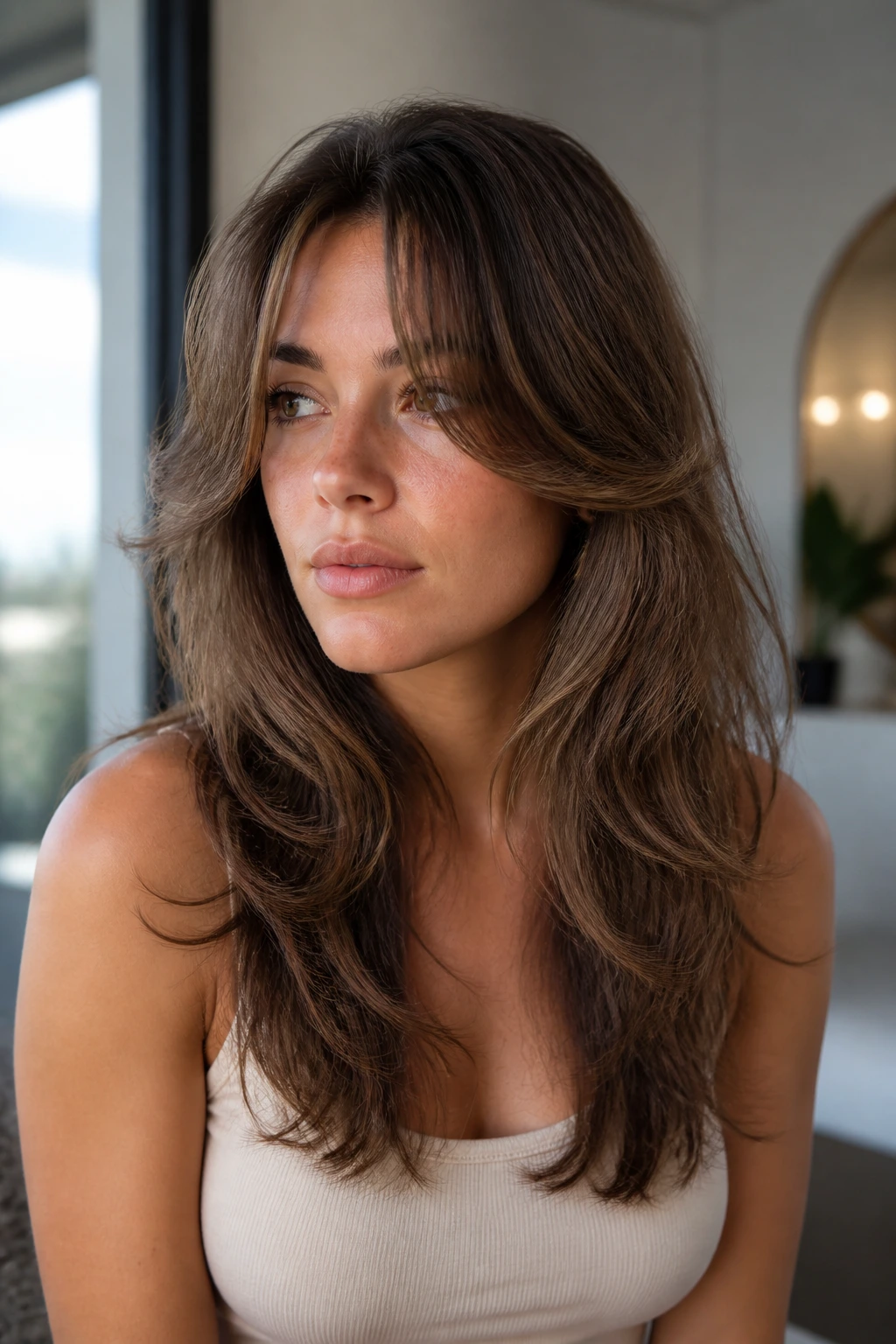
Butterfly layers do their best work when the front of the haircut carries some of the weight. The shorter top layers brush the cheekbones while the longer underlayer keeps the length intact, so you get lift without losing all the drama.
On wavy hair, this shape gives the face a little motion even when the rest of the hair is behaving. It suits medium-density waves especially well. If your hair is very fine, ask the stylist to keep the top layers longer so the ends do not go stringy.
3. Long U-Cut

A long U-cut is the quiet one in the room, and that is why it works. The perimeter curves gently into a U instead of dropping into a blunt line, which lets wavy hair keep length without looking heavy at the bottom.
This cut is a good fit if you want softness but not obvious layering. It also wears well when you tie it back, because the longest pieces still fall neatly instead of sticking out like a rough shelf. If your waves are loose, this shape can make them look thicker than they are.
4. Soft Shag With Curtain Bangs
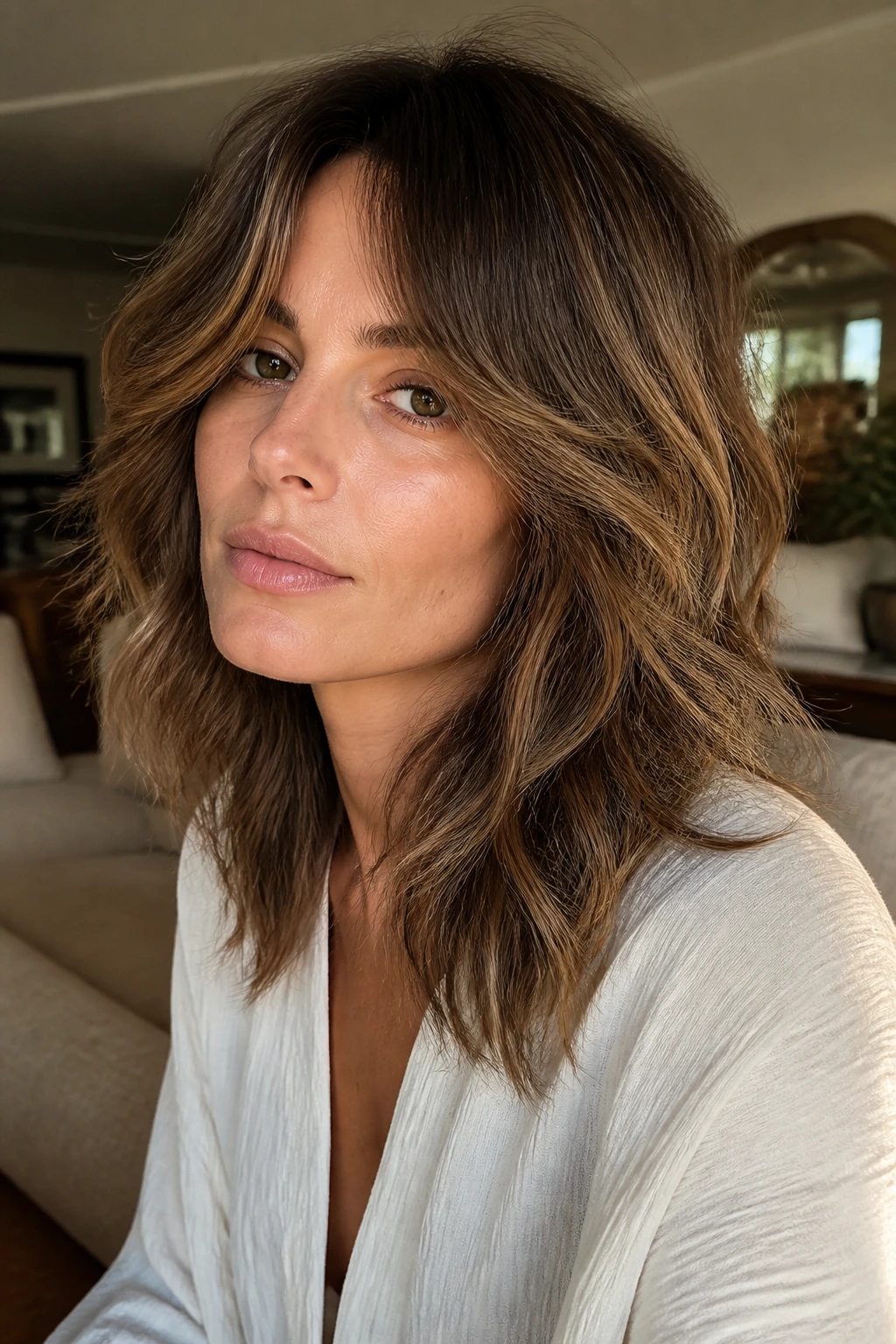
A soft shag does not have to look messy or edgy to earn its place. When the crown is lightly lifted and the bangs are split into a curtain shape, the whole haircut gets movement without turning into a ratty mop at the ends.
Wavy hair likes this because the built-in texture keeps the shape from feeling too precious. It is one of the better options if you do not want to spend ten minutes making your hair look “done.” A small amount of mousse, scrunched in while the hair is damp, is usually enough to wake it up.
5. Invisible Layers
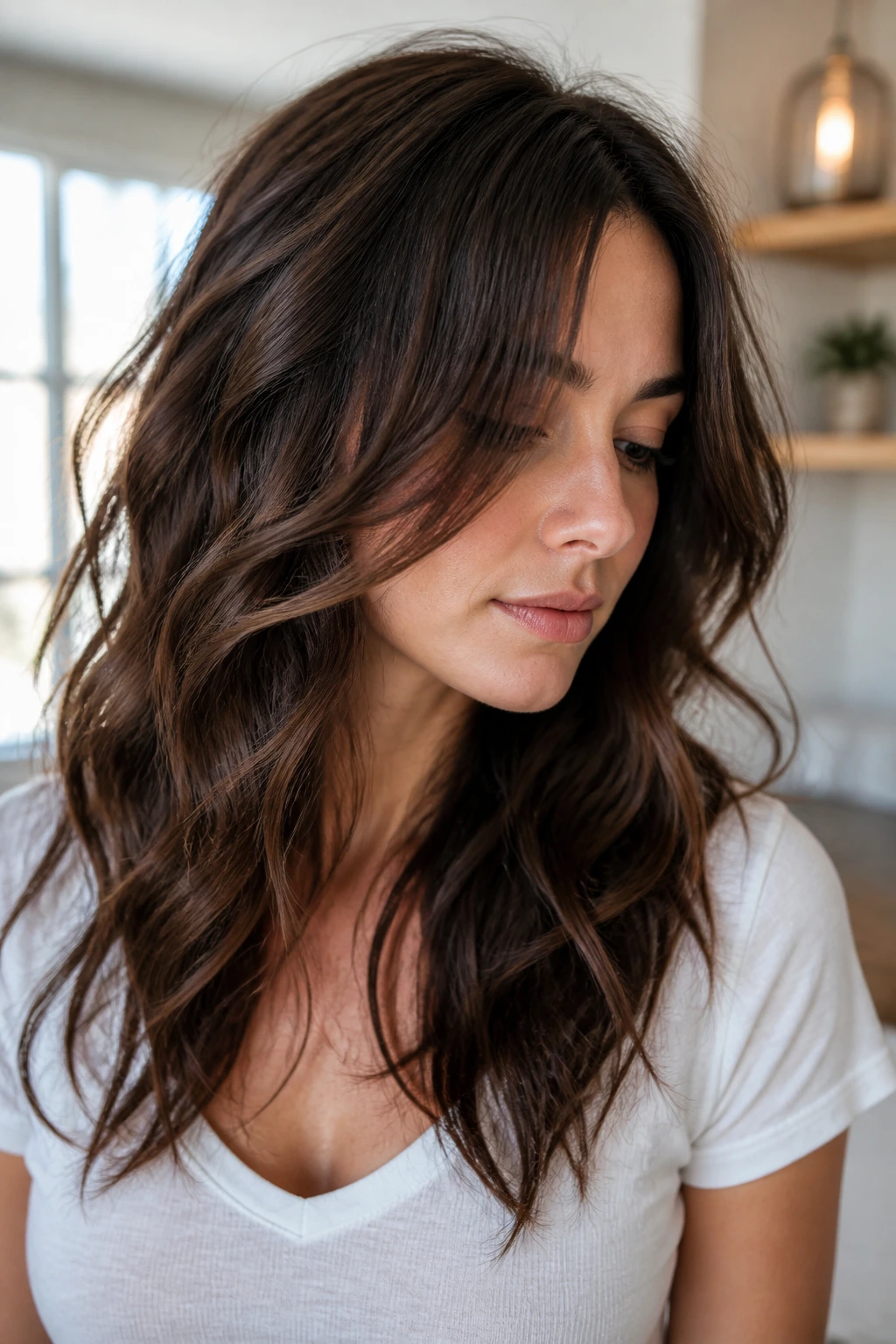
Invisible layers are for people who want movement but hate the look of obvious steps. The outside line stays smooth, while the inside loses weight through point cutting or internal layering. The result is a cut that feels lighter without broadcasting every snip.
This is a strong choice for thick or coarse waves that puff out when the humidity rises. The shape keeps its full outline, so the haircut still looks rich from the outside. Best part: it grows out more gracefully than a blunt cut that gets too bulky at the ends.
What to Ask For
- Long internal layers
- A soft perimeter that keeps its density
- Point-cut ends instead of a harsh straight line
6. Rounded Shoulder-Length Cut
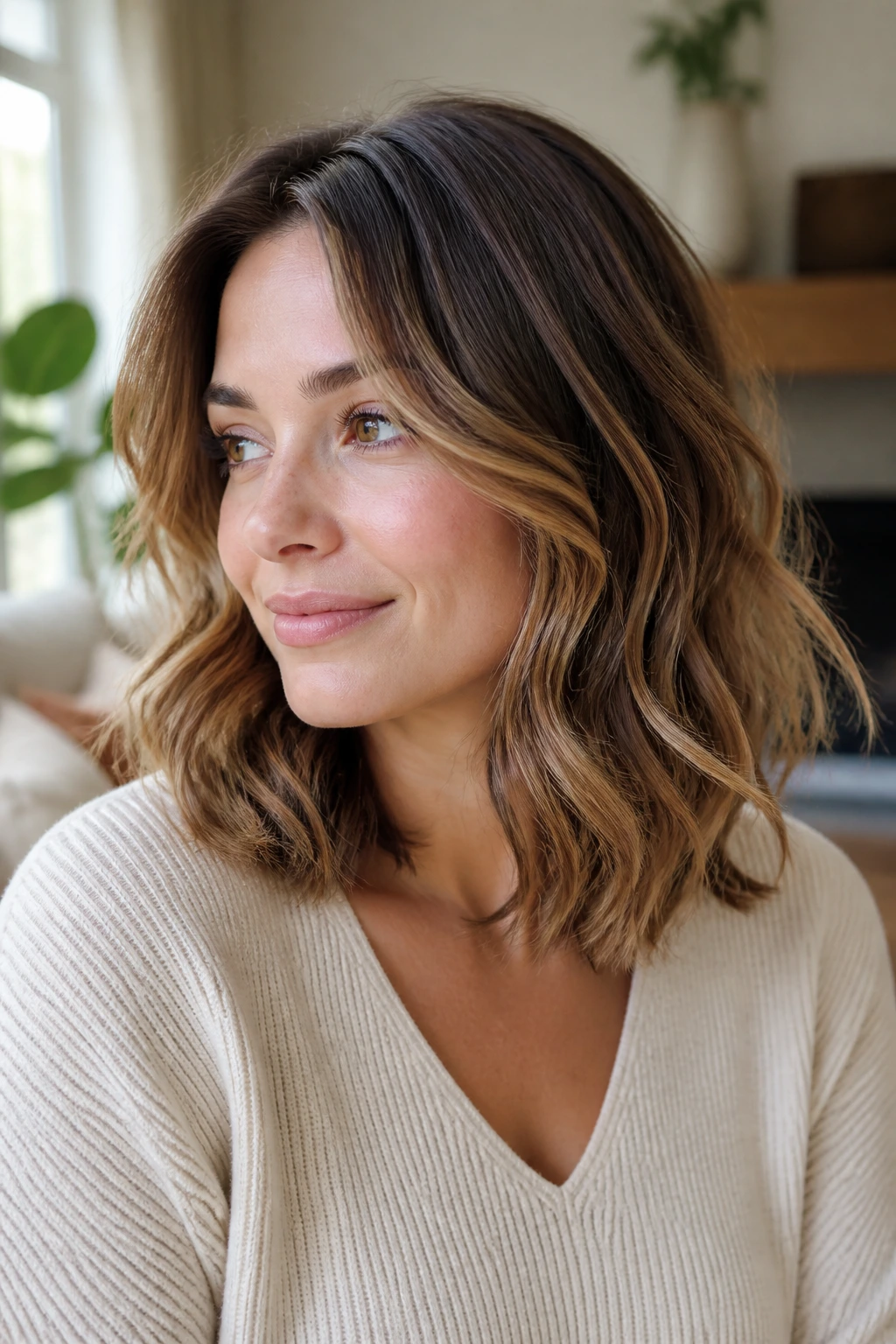
Shoulder-length hair can be tricky because the ends often hit the shoulders and kick outward in a weird flip. A rounded cut solves that by curving the shape around the head instead of letting it sit in a box.
This one works especially well if your waves have a bit of bounce already. The rounded edge helps the hair follow the line of the head, so it does not get puffy in the middle and flat at the root. If you wear sweaters a lot, this is a nice shape because it keeps the hair from getting snaggy and awkward at the neckline.
7. Chin-Length Wavy Bob

A chin-length bob on wavy hair is risky only when it is cut too blunt. Done well, it lands right along the jaw and lets the wave give the shape some softness, not helmet energy.
Ask for subtle graduation under the occipital bone and a little interior layering. That keeps the bob from flaring out at the sides. This is a strong pick if your jawline is one of your favorite features and you want the haircut to frame it instead of hiding it.
8. Midi Cut With Internal Movement
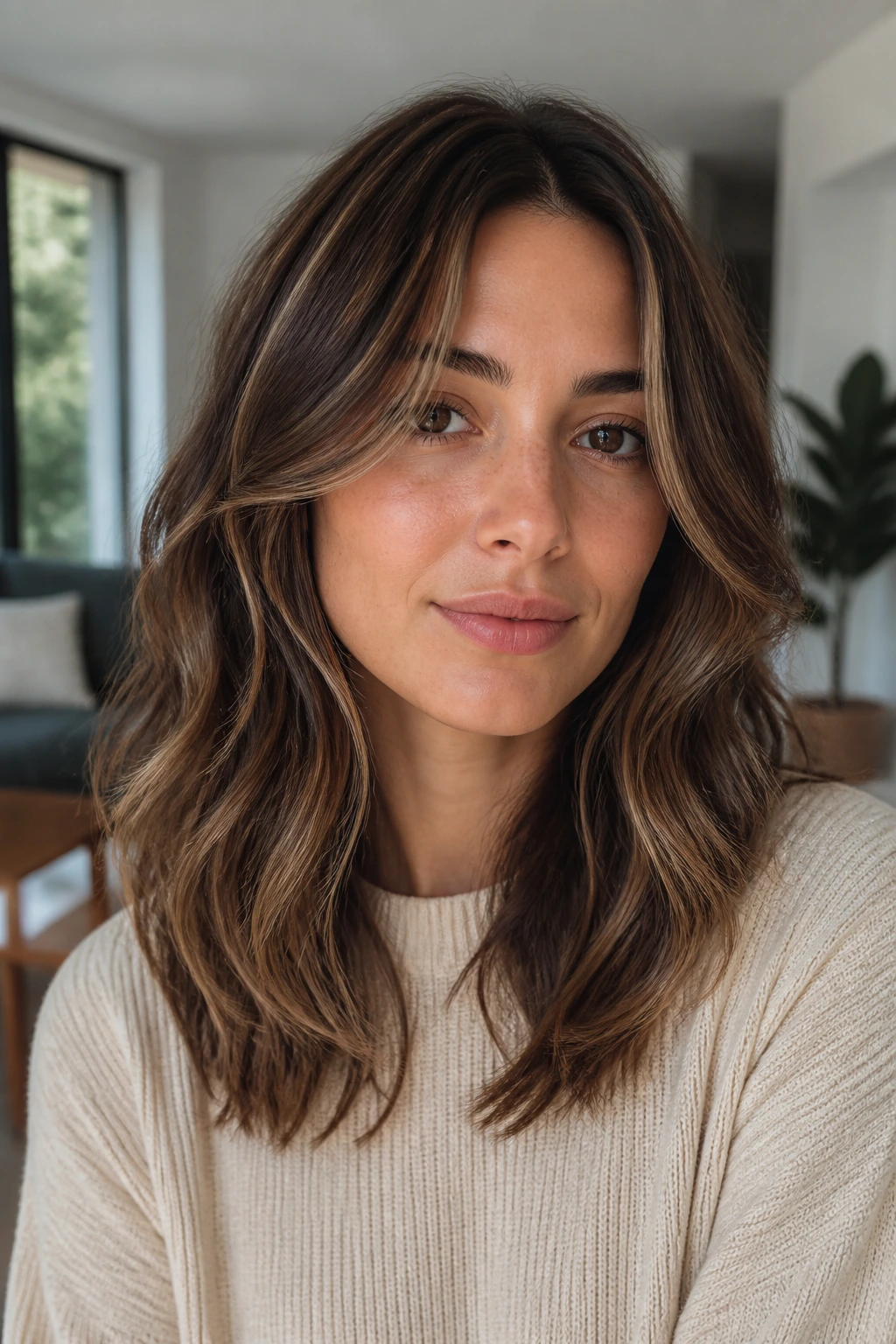
The midi cut sits between shoulder-length and collarbone length, and that middle ground is useful. The shape has enough length to pull back, but the internal movement keeps it from feeling like a weight blanket on the head.
For wavy hair, this cut is one of the most forgiving. It works whether your pattern is loose and beachy or a little more defined. The key is keeping the layers long and hidden enough that the ends still feel full. Too much cutting inside the shape, and the whole thing can start looking broken up.
9. Feathered Long Layers

Feathered layers have a very specific charm: the hair moves with a soft bend instead of a sharp flick. That makes them useful for wavy hair that tends to get bulky around the bottom third.
This cut likes a round brush, but it does not need a perfect blowout. A little lift through the mid-lengths and a bend around the face are enough. I reach for this one when someone wants their long hair to look lighter without sacrificing the feeling of having actual hair left on their head.
10. Tousled Bixie

The bixie sits between a bob and a pixie, and wavy hair gives it a softer edge than straight hair can. The longer top pieces let the wave show, while the shorter sides and nape keep the silhouette neat.
It is a good move if you want something short enough to feel fresh but not so short that styling becomes a science project. The trick is to keep the layers piecey, not choppy. A dab of lightweight cream on the fingertips is enough to separate the front and crown.
11. Hush Cut

The hush cut is all about softness. Wispy layers, airy fringe, and a shape that leans into movement instead of structure—that is the whole point.
On wavy hair, it looks especially good because the natural bend keeps the layers from appearing severe. Fine to medium waves wear this cut well, as long as the stylist avoids over-thinning the ends. If your hair gets flat at the roots, ask for the shortest layers to stay below the crown so there is still some lift left.
12. Soft Wolf Cut

A soft wolf cut keeps the spirit of the wolf shape without going full spiky or disconnected. The crown is a little shorter, the middle is more layered, and the ends stay soft enough to avoid a harsh line.
This is the cut for people who want edge but not chaos. Wavy hair makes it less intimidating because the bend softens the shorter pieces naturally. If you wear it with a diffuser and a little root lift, the shape can look surprisingly polished.
13. C-Cut Face Frame

A C-cut face frame curves around the cheekbones and jaw like, well, a soft C. On wavy hair, that shape is gold because the front pieces can bend inward instead of hanging straight down and fighting the rest of the cut.
This style works best when the front layers start around the cheekbone and slide into longer lengths by the collarbone. It makes the face look framed without locking you into bangs. If you want your waves to do something interesting near your face, this is one of the smarter choices.
14. Deep Side-Part Layers

A deep side part changes the haircut before the scissors even finish. It gives you root lift on one side, a little sweep across the forehead, and enough asymmetry to make waves look fuller.
This cut works well for anyone whose hair collapses at the crown or sticks flat to the scalp. The side part gives the top layers a chance to fall with more air around them. If your wave pattern is stronger on one side, this shape can help that difference look intentional instead of uneven.
15. Bottleneck Bangs
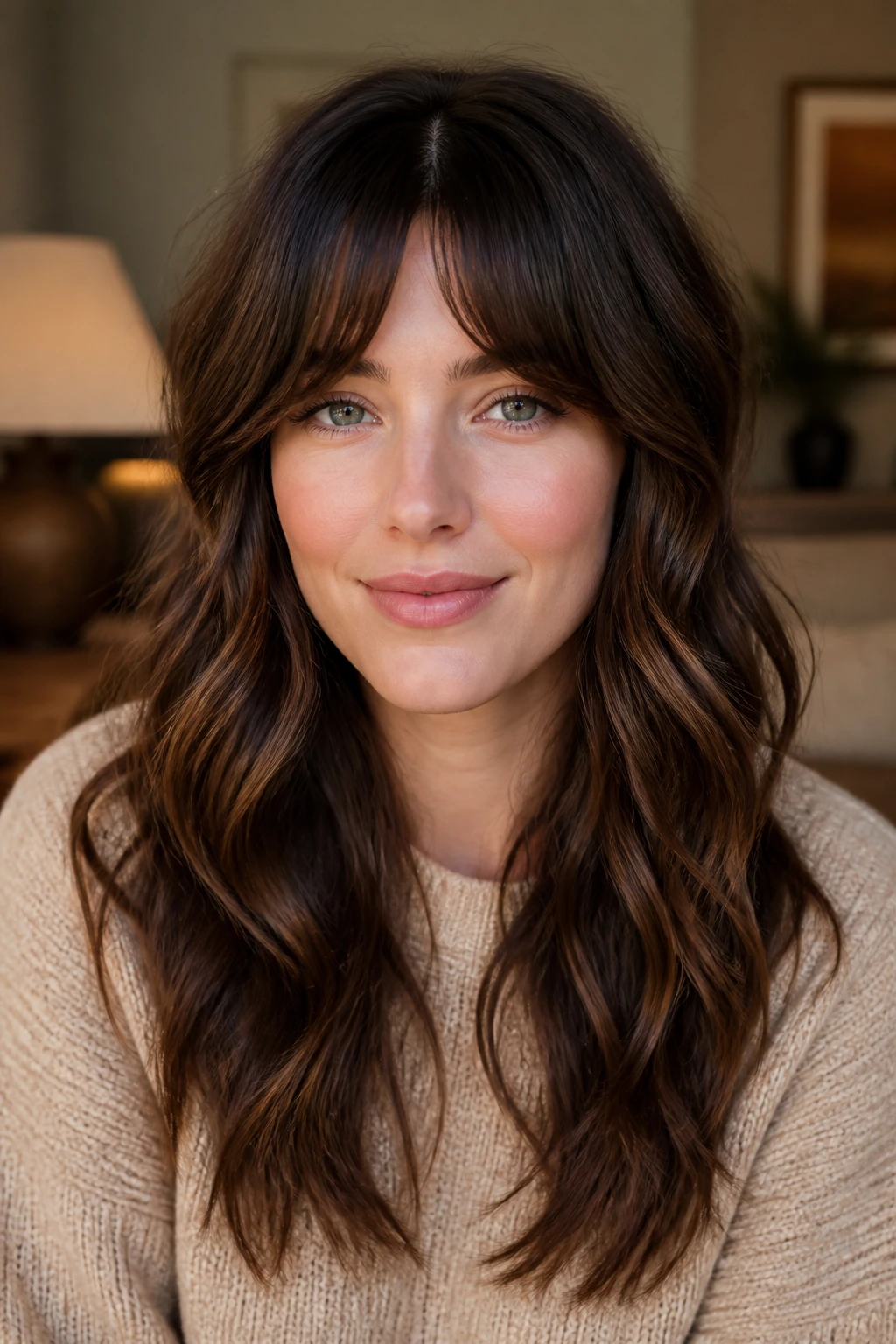
Bottleneck bangs start narrow in the center and open wider at the sides. That makes them a good match for wavy hair because they can move with the wave instead of sitting like a heavy curtain.
They frame the face without boxing it in. If your forehead is on the shorter side, keep the center length a little longer so the bangs do not feel crowded. A round brush can smooth the center, but the sides usually look better with a little bend left in them.
16. Razor-Soft Layers

Razor-soft layers are all about releasing bulk without leaving hard steps. The razor or slide-cut finish softens the edges, which can help dense waves move more freely.
This cut is best on hair that feels too heavy even after it is washed and conditioned. The shape gets lighter, the wave pattern shows up more, and drying time usually drops a bit. Caution: if your hair is very fine, a razor can make the ends look scraggly fast. In that case, ask for point cutting instead.
17. Mermaid Layers
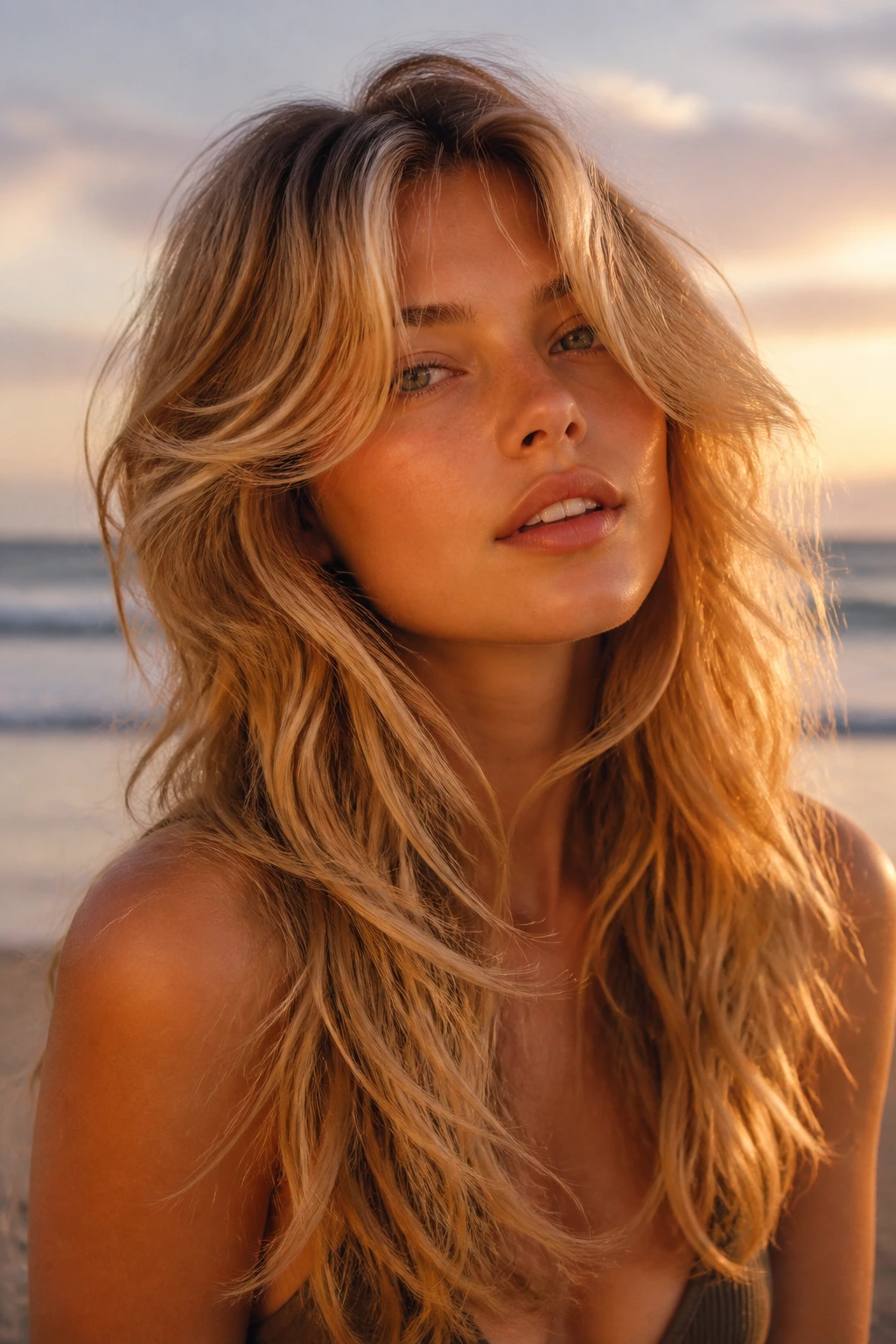
Mermaid layers are for people who love length and do not want to give it up. The layering usually starts lower, so the upper half keeps its fullness while the lower half gets a little movement.
Wavy hair looks especially good in this shape because the long lengths help the bend stretch out in a graceful way. It is not the quickest cut to style, but it does give you that heavy, flowing look without turning into a flat sheet. If your hair is thick, this can keep the bottom from feeling like a blanket.
18. Grown-Out Shag

A grown-out shag takes the rough edges out of a classic shag and leaves the good parts. You still get movement through the crown and sides, but the shape feels more lived-in than rebellious.
I like this on wavy hair because it doesn’t punish you when styling is half-done. You can scrunch, diffuse, or let it dry on its own and the haircut still looks like it had a plan. The layers should blend enough that the cut stays soft even after a few weeks of grow-out.
19. Piecey Layered Lob

The piecey layered lob gives you separation without making the hair feel thin. The layers are spaced so the wave clumps stay visible, and the ends keep a little edge.
This is a good choice if you want that beachy, separated look without going into full shag territory. It works well with a light gel or foam because the product helps define the pieces once the hair dries. If your hair tends to frizz at the ends, keep the layering long and let the product do the detail work.
20. French Bob With Bend

A French bob with bend lands around the jaw or just below it, and the bend is the point. The cut should feel relaxed, not stiff, which is why wavy hair gives it so much life.
This shape works best when the ends are left soft and the interior is not over-cut. A little side part can make it feel less severe. If you like hair that looks intentional even when it is slightly imperfect, this is a strong contender.
21. Soft Mullet

A soft mullet keeps the shorter front and crown pieces, but it eases the contrast so the haircut does not read as extreme. Wavy hair gives the shape a gentler finish, which is the whole reason to try it.
This cut is for someone who wants personality in the shape. The nape stays a bit longer, the sides stay soft, and the top has enough movement to feel light. Keep the fringe or face frame long if you want the cut to stay approachable.
22. Tapered Layered Lob

A tapered layered lob narrows gradually toward the ends, which helps the shape sit neatly instead of flaring. That taper is useful on wavy hair because it keeps the bottom from ballooning out when the roots are flat.
It is a smart option if you want a lob that still looks tidy on day two. The layers should blend into the perimeter, not sit above it like stairs. A quick pass with a wave iron on the front pieces can sharpen the shape without making it look overworked.
23. Crown-Lift Layers
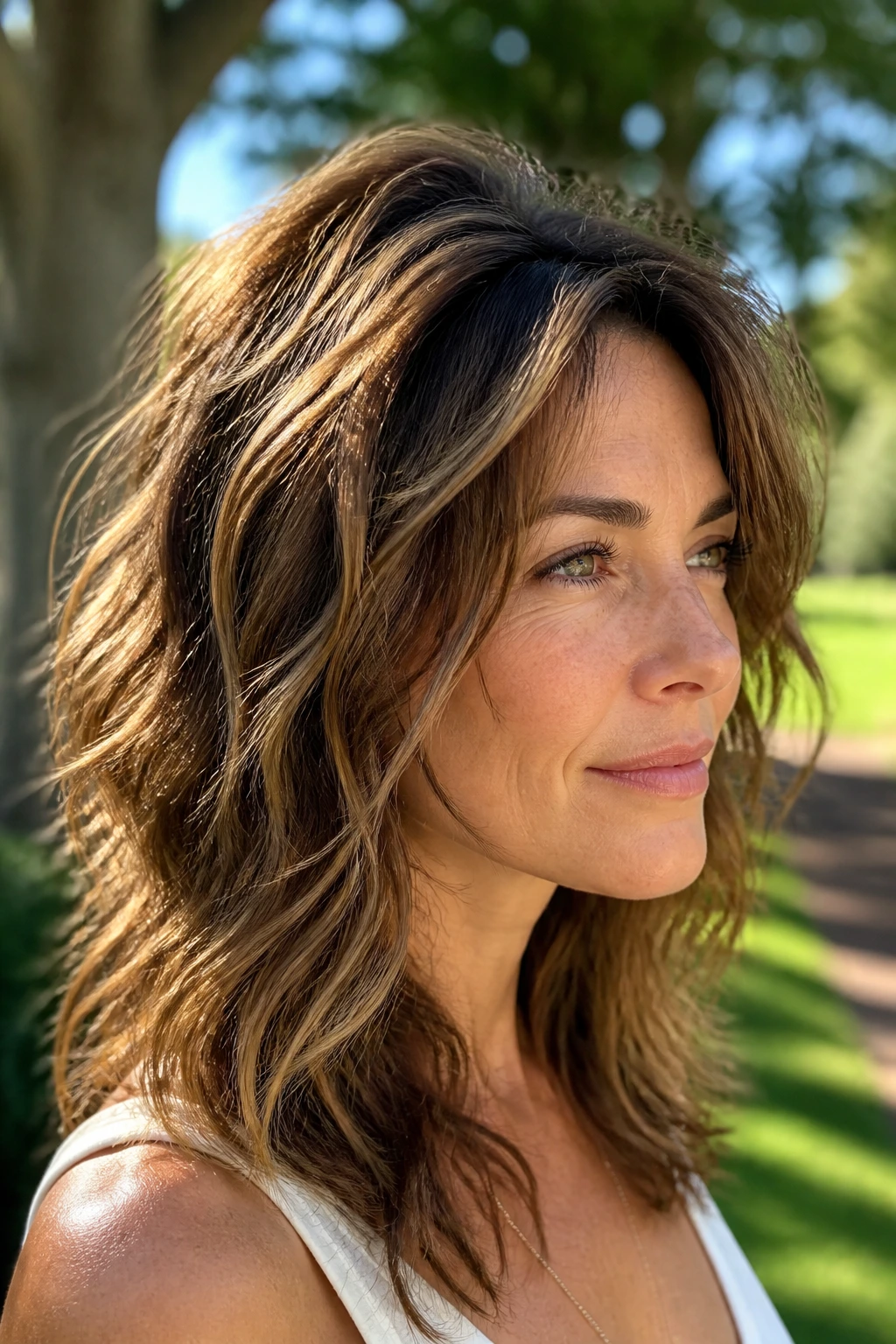
Crown-lift layers are focused where they matter most: the top. If your roots lie flat and your waves start only halfway down, this cut gives the crown a reason to move.
The result is a haircut that looks fuller without relying on a ton of product. It is especially useful for medium-density hair that goes limp when it gets a little too long. Ask the stylist to keep the crown layers soft and not too short, or the top can stick up in a way that feels old-school in a bad way.
24. Choppy Ends, Soft Interior

This shape sounds contradictory, and that is why it works. The outside line stays a little thicker and more controlled, while the interior gets enough texture to keep the wave from sitting there like a solid block.
It is a good pick if you want movement but do not want anyone to spot a heavy layer map from across the room. The haircut still looks full. It just behaves better. That matters when your hair gets bigger in humidity and you do not want the whole thing to explode.
25. Mid-Length Shag
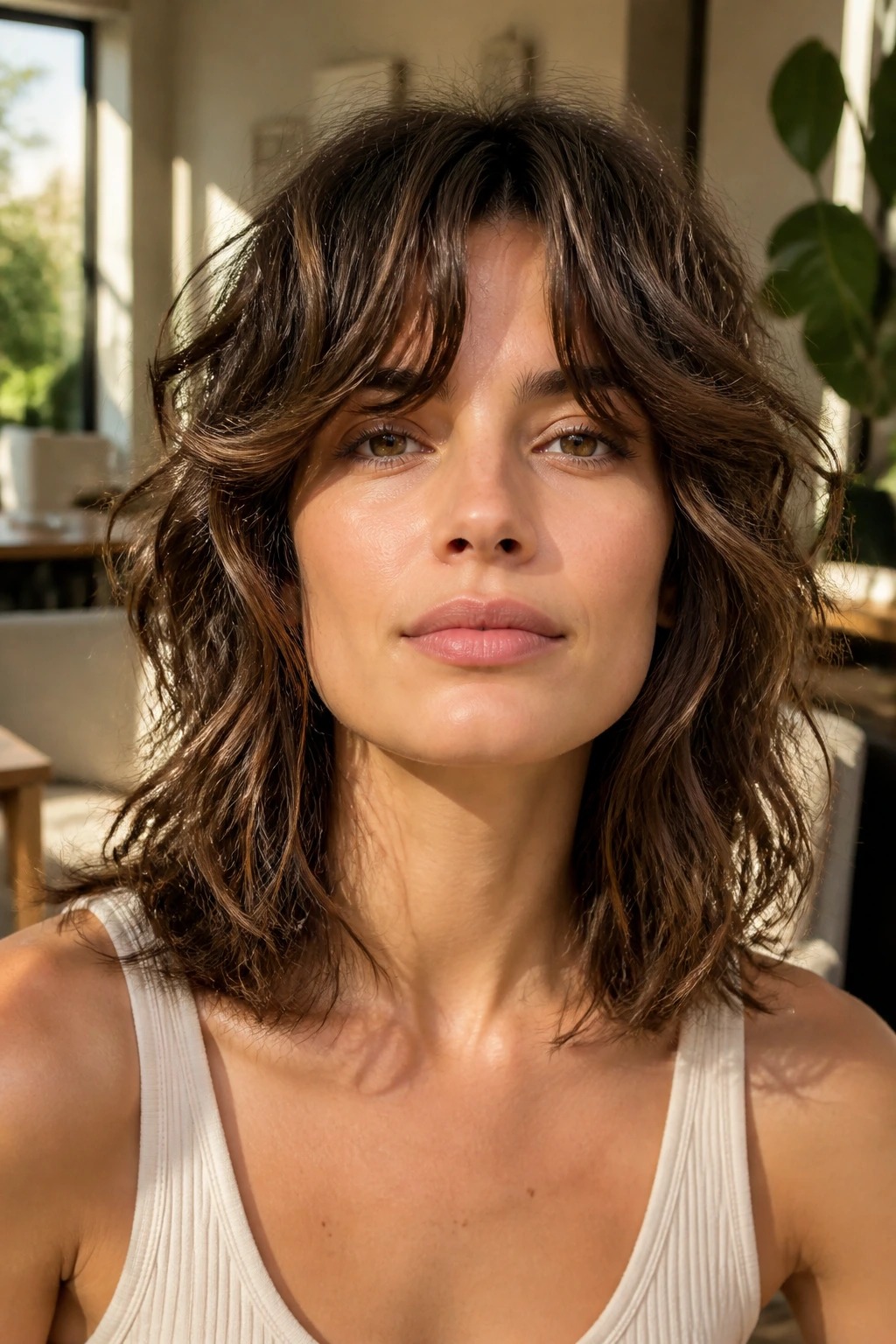
A mid-length shag is one of the more wearable versions of a textured cut. It usually hits at the shoulders or a touch below, which gives the wave room to move without dragging the hair into a heavy line.
This shape has a nice balance: it is casual enough to air-dry, but it still looks good when you clean it up with a diffuser or brush. The layers should feel blended and soft, not carved. If you want texture without a dramatic fringe, this is one of the easier cuts to live with.
26. V-Cut Length
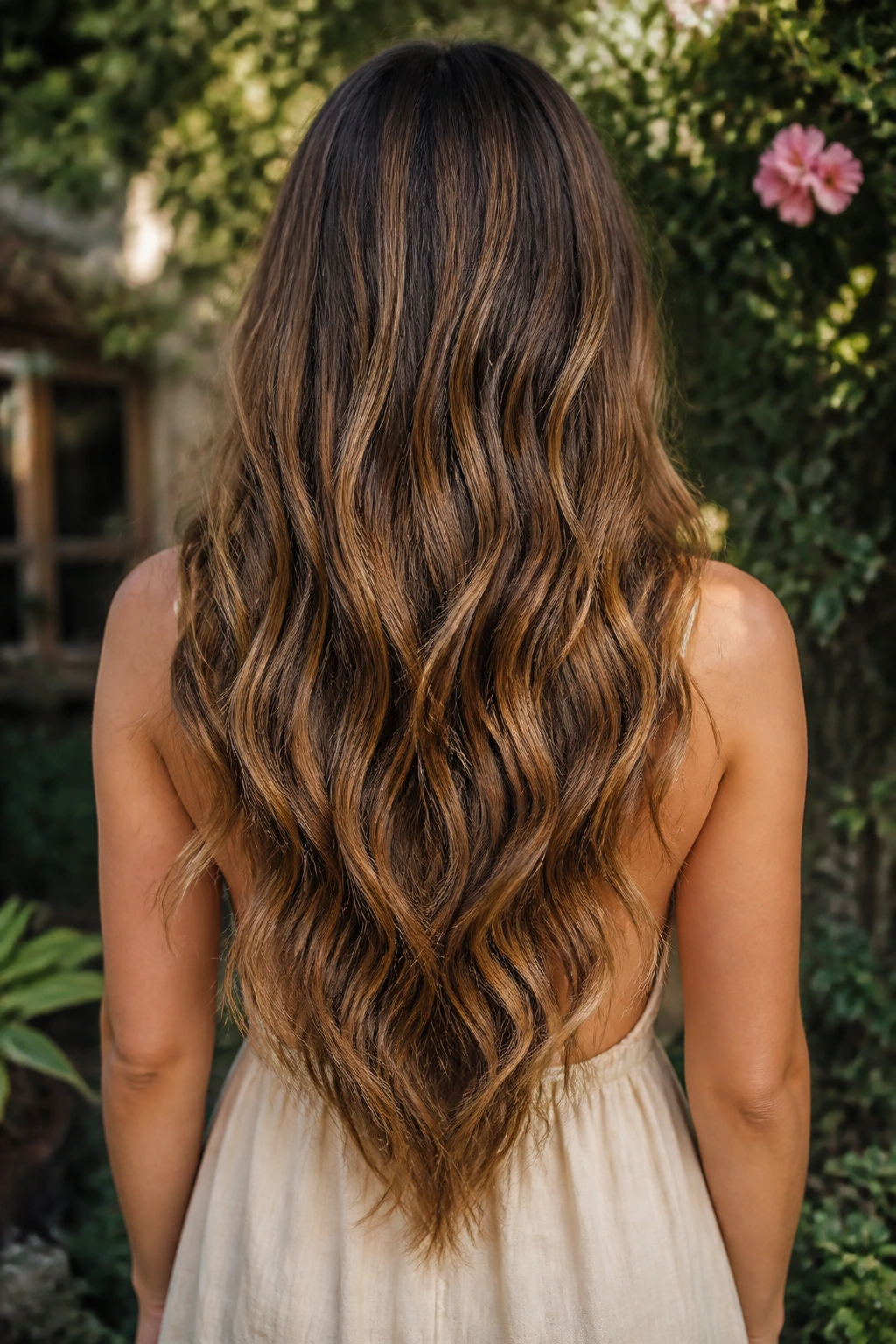
A V-cut gives long wavy hair a pointed back shape instead of one flat curtain. The center stays longest, while the sides angle in a little, which takes weight out of the perimeter.
It works especially well if you like long hair but hate the way it can sit heavy against the back. The V shape lets the waves stack in a more interesting way, especially when the ends are dry and separated. If your hair is fine, keep the V subtle so the bottom does not look sparse.
27. Blunt Ends, Soft Top
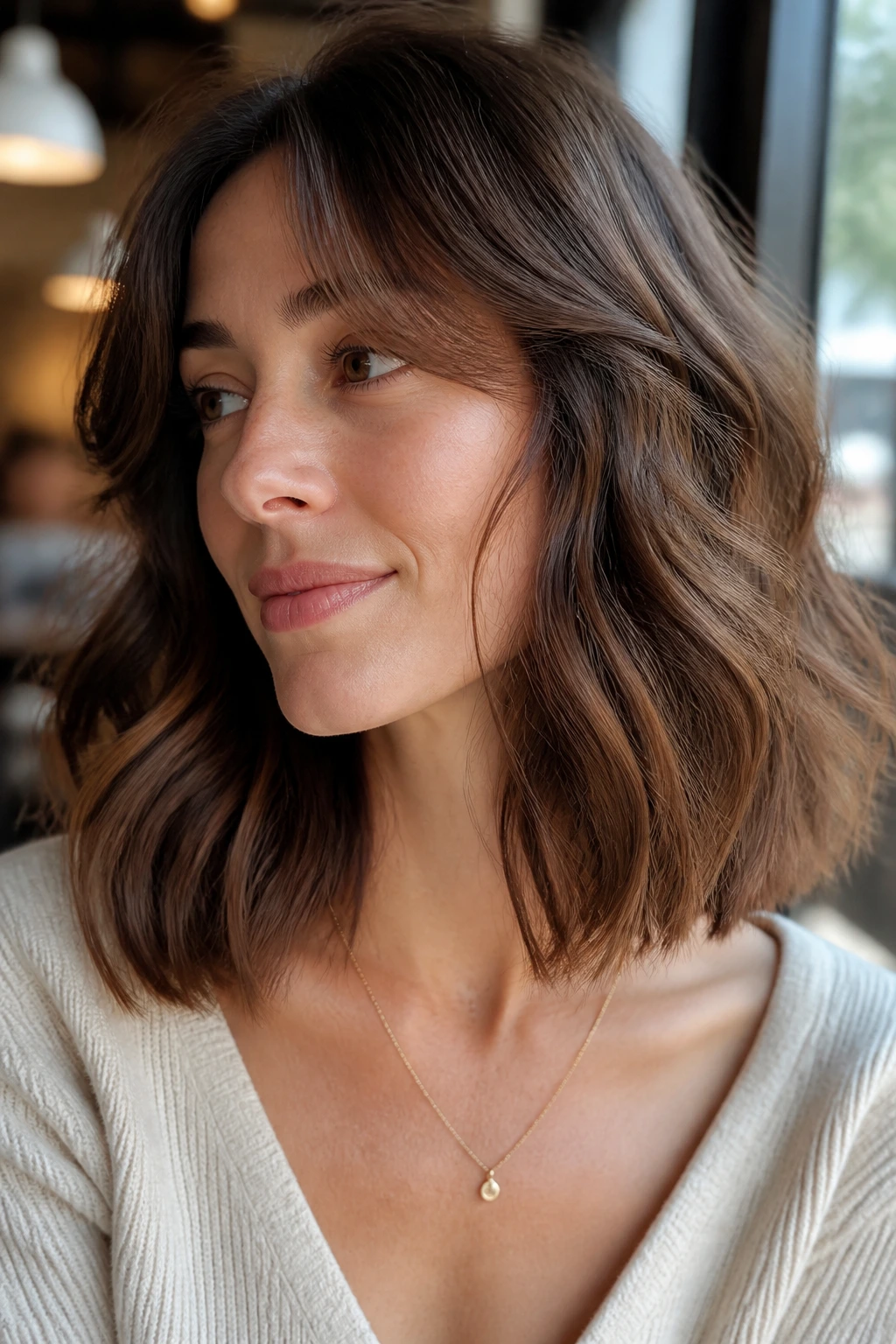
A blunt edge with soft layers above it sounds like a contradiction, but the contrast is useful. The perimeter gives the hair density and a full finish, while the layers through the top let the wave move.
This cut is one of my favorites for people with fine-to-medium waves who want the ends to look thicker. The blunt line gives you that solid feeling, and the soft top keeps the haircut from becoming flat and heavy. It is neat without feeling severe.
28. Fine-Wave Layers
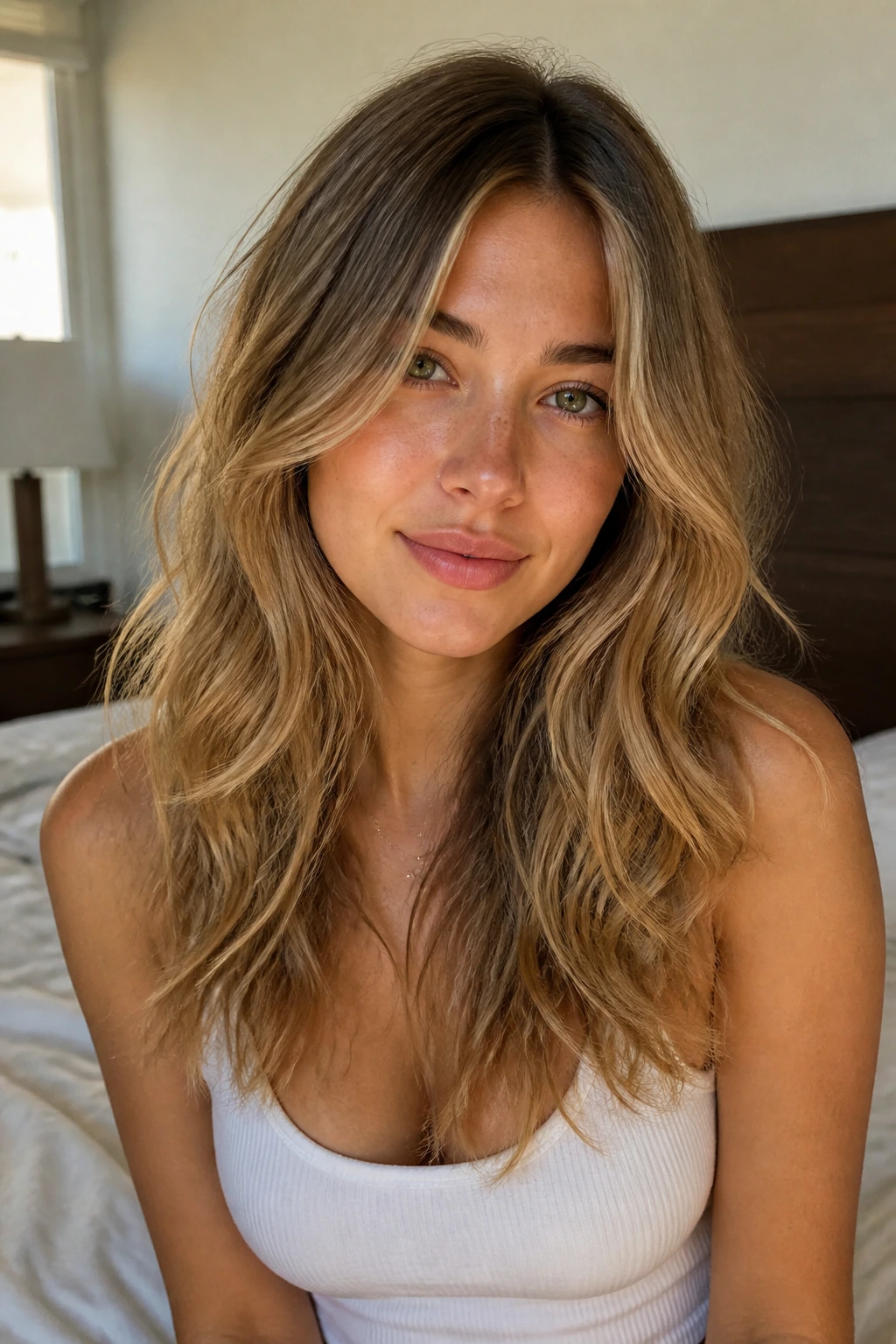
Fine waves need a careful hand. Too many layers and the hair starts looking feathered in the wrong way; too few and it collapses into a flat ribbon by lunchtime.
The best fine-wave cut keeps the layers long, soft, and spaced out. It should build the illusion of body without chopping away the very thing that makes the hair look full. If your waves are loose, this one usually responds well to a light mousse and a gentle root clip while drying.
29. Dense-Wave Layers
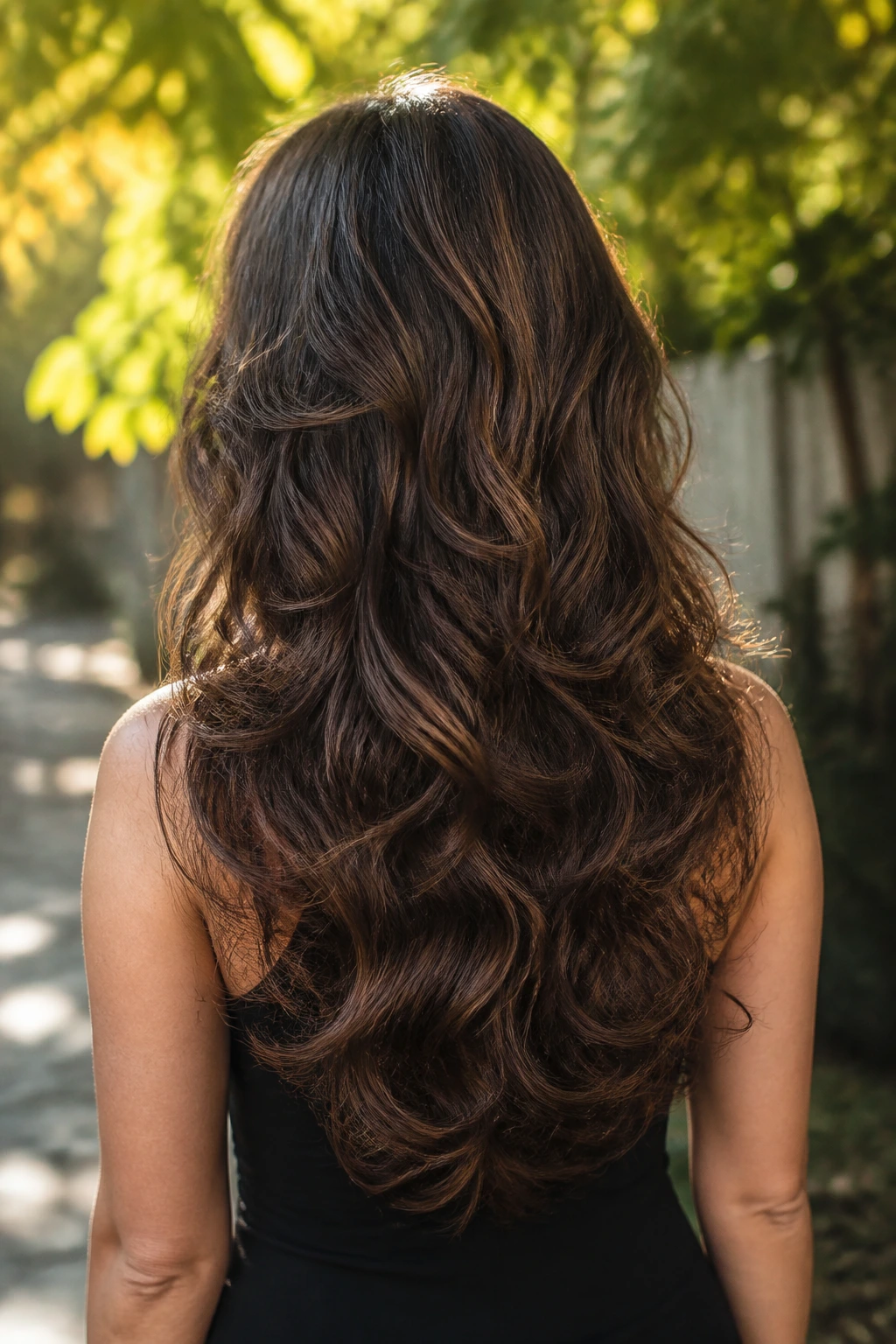
Dense wavy hair needs release, not just shape. If the hair takes forever to dry and swells in the lower half, deeper internal layering can make life easier.
This cut keeps bulk from piling up around the sides and back. The result is less triangle and more movement. Ask the stylist to check the shape dry before they finish, because dense waves often look very different once the moisture leaves.
30. Shoulder-Flip Cut
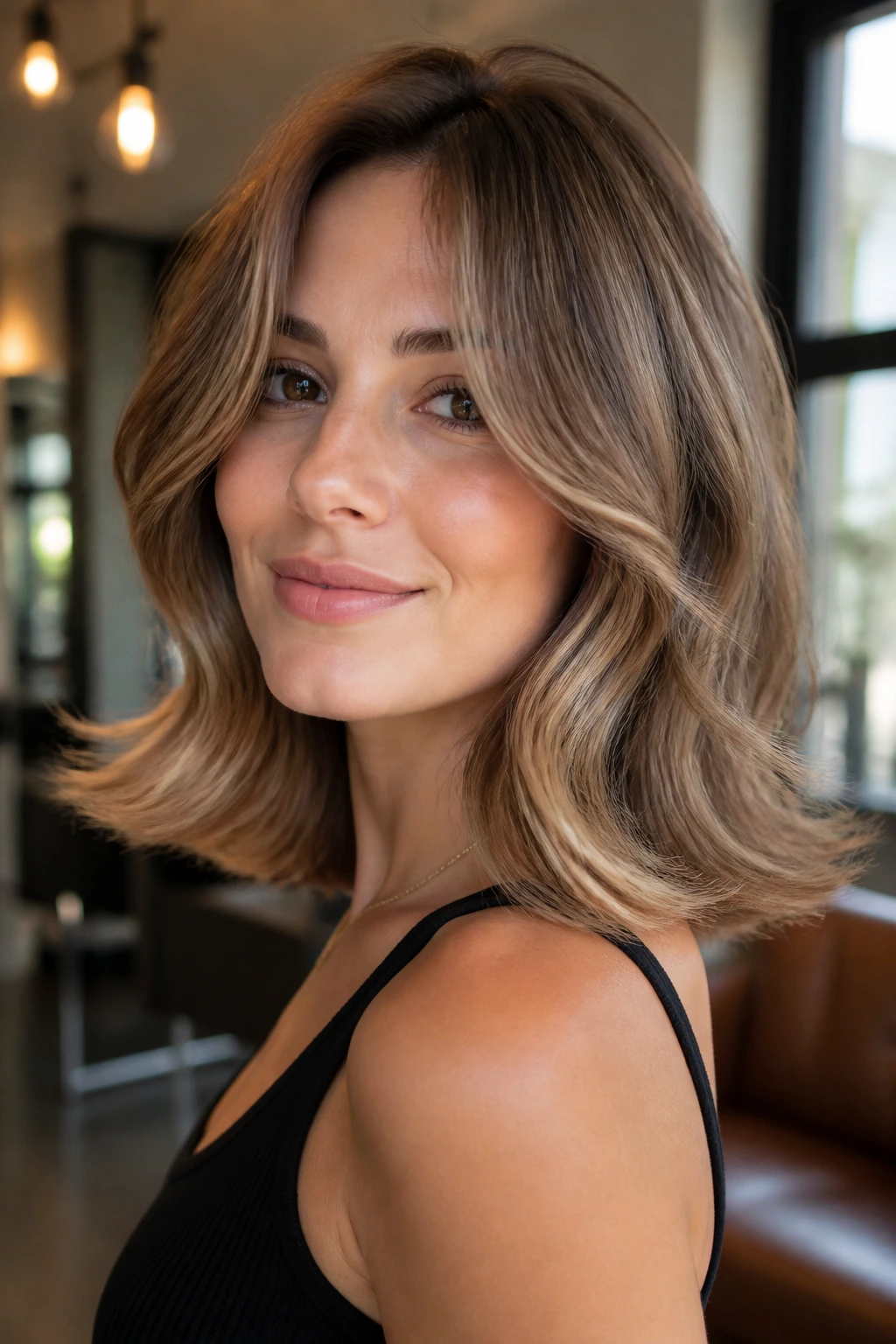
The shoulder-flip cut is built for hair that likes to bend outward at exactly the wrong spot. Instead of fighting that flip, the haircut works with it and gives the ends a soft outward curve.
It is a charming shape on wavy hair because the movement looks intentional. The cut usually sits right around the shoulders or collarbone, which means the flip can live in the style instead of becoming a nuisance. If your hair naturally turns out at the ends, this is one of the few cuts that lets that habit earn its keep.
31. Layered Pixie Bob
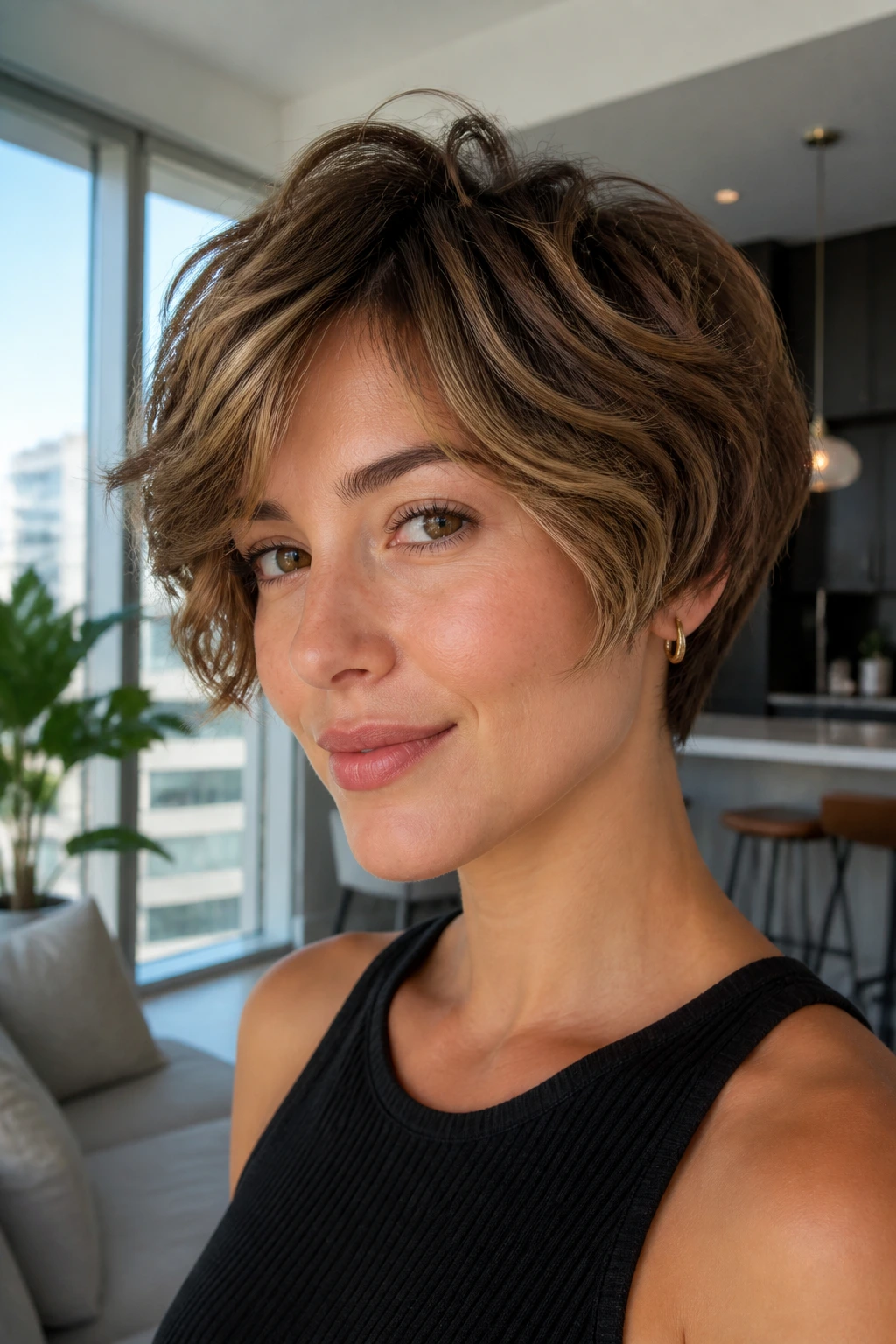
A layered pixie bob sits between short and short-ish. The nape stays neat, the crown has movement, and the sides keep enough length to soften the whole thing.
Wavy hair gives this cut a friendly texture that straight hair sometimes lacks. The layers should be soft enough to avoid a spiky finish but short enough to keep the shape lively. It is a good choice if you want something easy to wash and wear but still want the haircut to have a little personality.
32. Side-Swept Fringe Layers
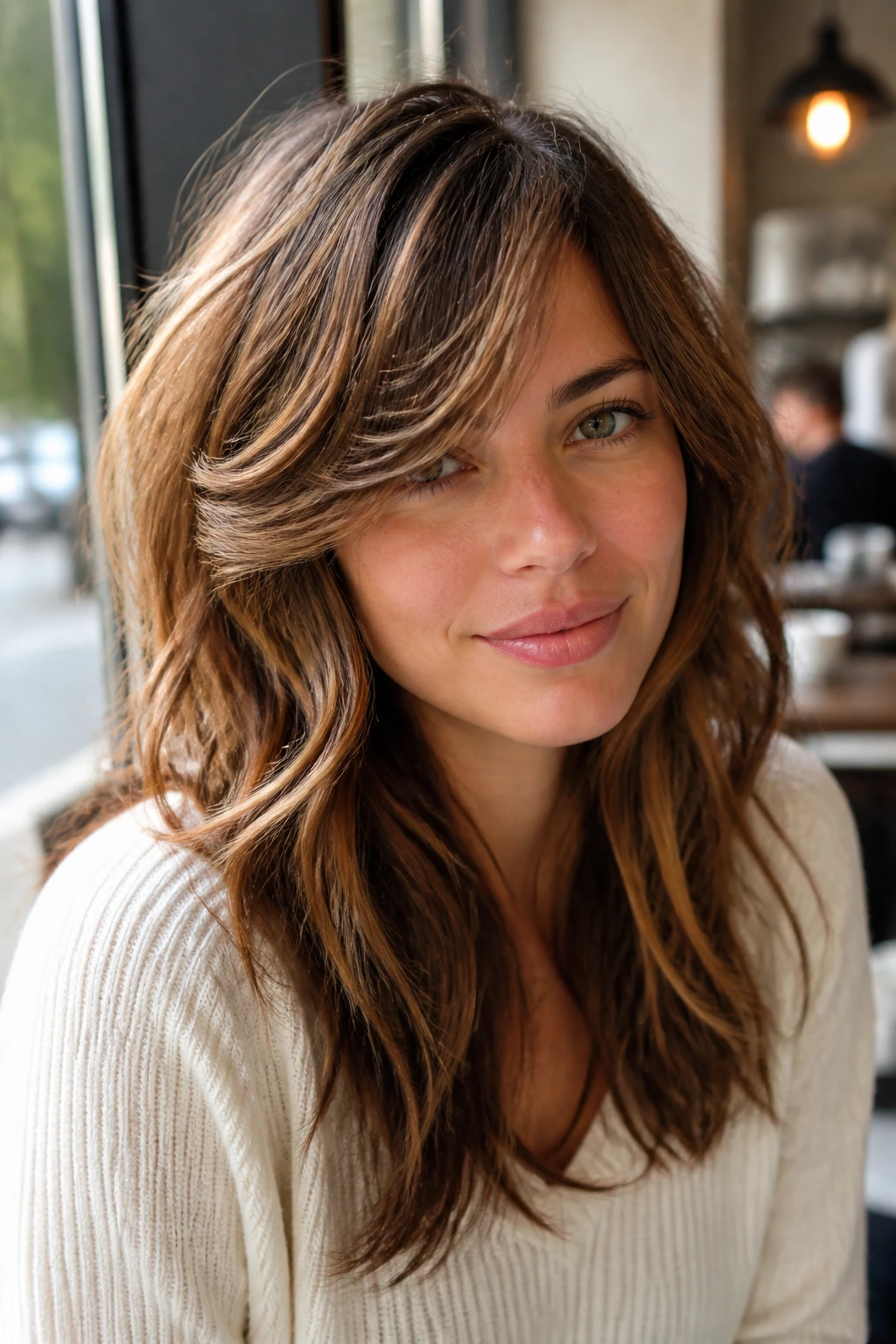
A side-swept fringe can change the whole balance of a haircut. It draws the eye diagonally across the face, which helps soften a strong forehead or a very straight middle part.
On wavy hair, the fringe usually looks best when it stays a little loose rather than pinned to one exact shape. The surrounding layers should echo that sweep so the cut feels connected. If your hair has a stubborn cowlick, a side-swept fringe can still work, but the stylist needs to account for the direction it wants to go.
33. Barely-There Layers
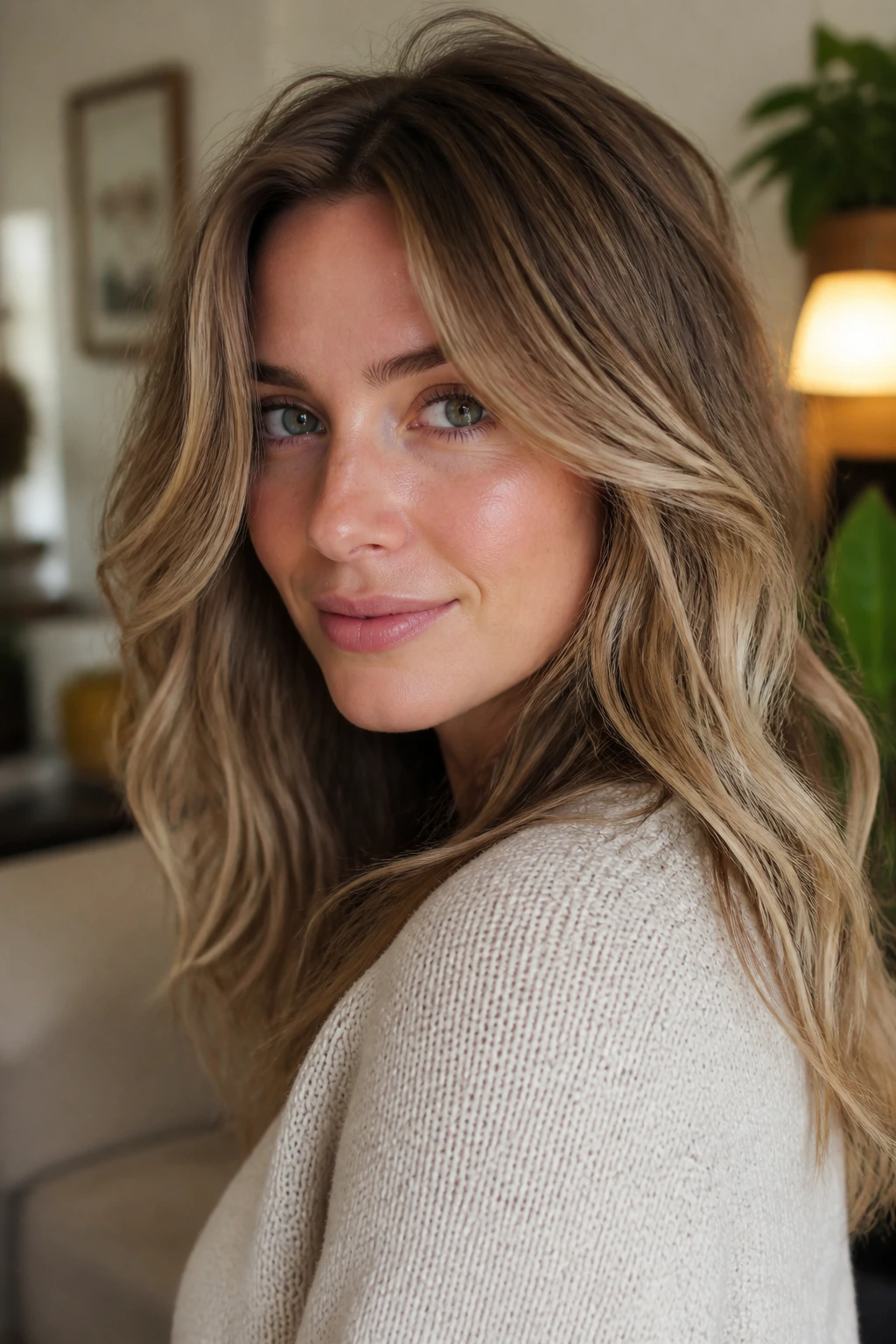
Some people love layers. Some people want to barely know they are there. This cut is for the second group.
Barely-there layers keep the perimeter almost intact while removing just enough weight to let the waves breathe. It is a good pick if your hair is fine, if you like length, or if you want a soft grow-out. The haircut should still look full at the bottom. If the ends start looking see-through, the layers were taken too high.
34. Cheekbone Frame Cut

This cut puts the spotlight on the cheekbones, and it does it with restraint. The front pieces start high enough to matter, then melt into the rest of the hair instead of stopping like a hard shelf.
It is a nice option if you want softness around the face without committing to bangs. Wavy hair makes the frame feel even lighter because the bend breaks up the line just enough. A good stylist will check the front pieces in motion, not only when they’re combed straight down.
35. S-Wave Layers
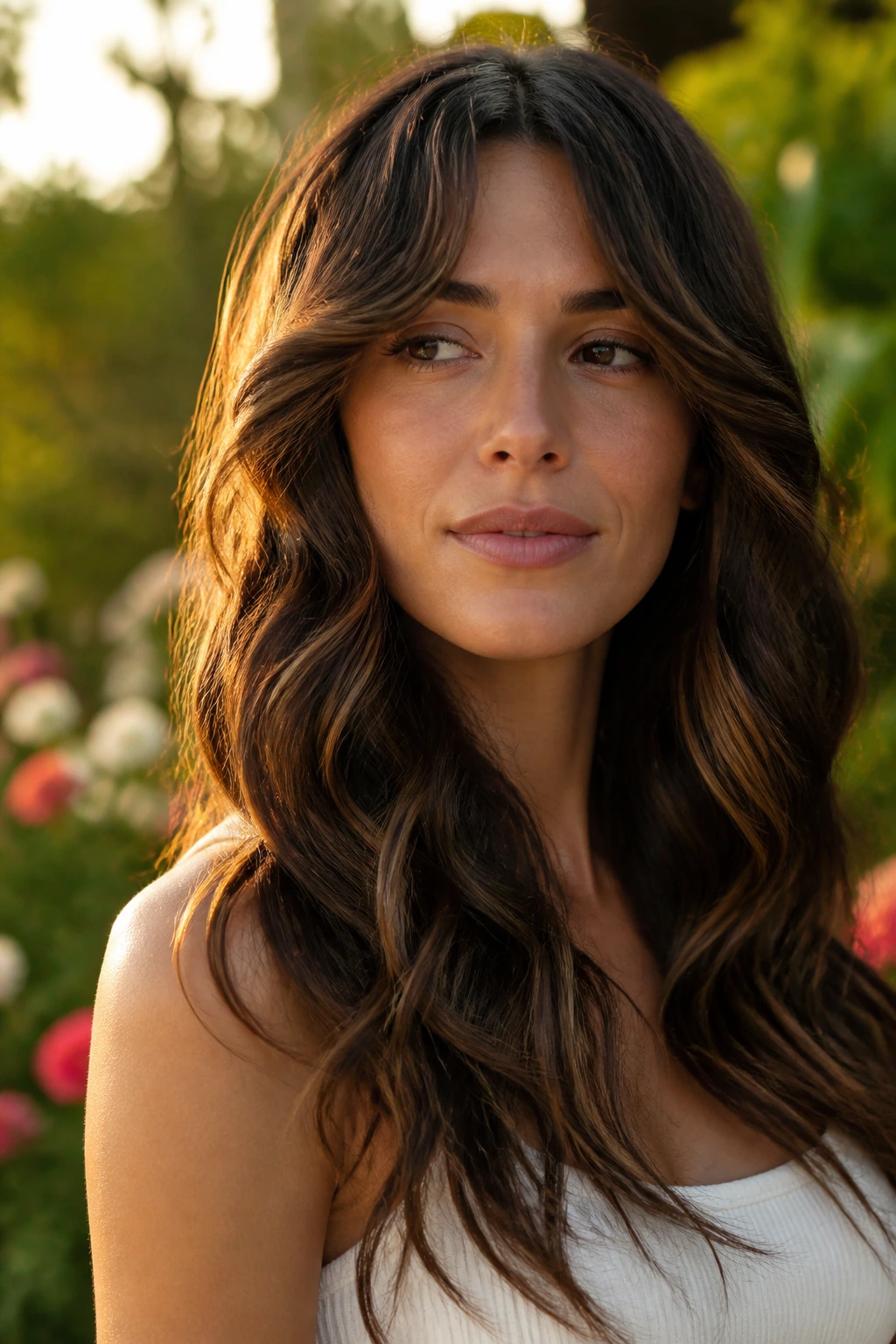
S-wave layers are shaped to encourage that soft S bend that wavy hair does so well. The layers are usually long and fluid, which keeps the wave from breaking into separate, stiff sections.
This is one of the better cuts if your hair air-dries in a fairly predictable pattern. It helps the bend stack cleanly from mid-length to end. A little mousse and a diffuser can make the shape more defined, but it does not need a lot of coaxing.
36. Curly-Wavy Hybrid Cut
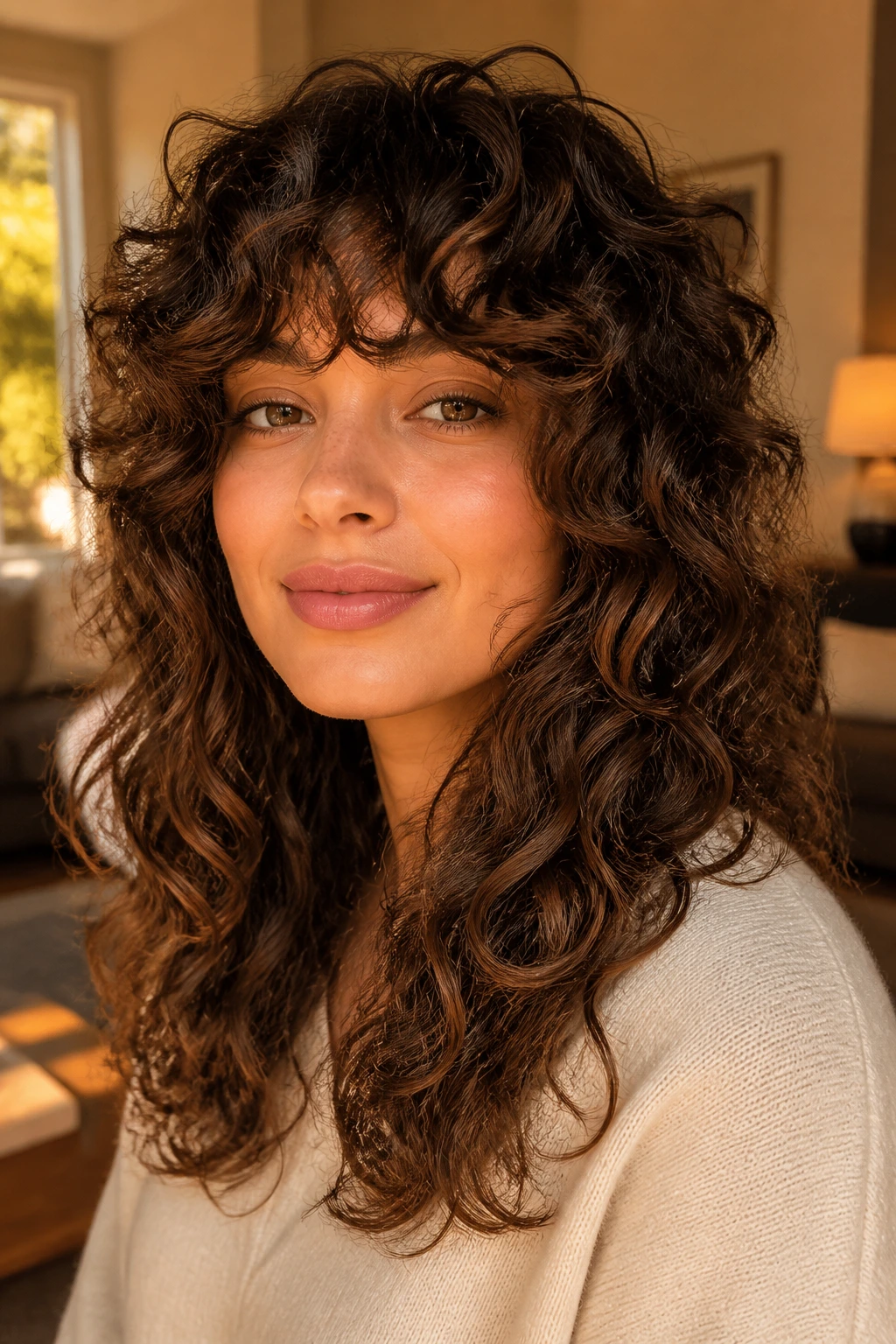
Some heads of hair do not pick one pattern and stick with it. They wave near the crown, curl underneath, and switch moods depending on weather, product, and sleep.
A curly-wavy hybrid cut handles that mix by keeping the structure soft and the layer map flexible. It should not be cut so precisely that one texture dominates the other. This shape is useful if your hair changes once it gets longer, because the layers can keep both patterns from fighting each other.
37. Air-Dry Crop

An air-dry crop is short enough to dry into shape without much help, which is the main reason to choose it. The layers should support the bend rather than demand hot tools.
This is a smart cut for anyone who wants less styling time and fewer moving parts in the morning. Wavy hair tends to give it a little texture all by itself, so the haircut doesn’t need a lot of product. A touch of cream on the ends is usually enough.
38. Grow-Out Shape
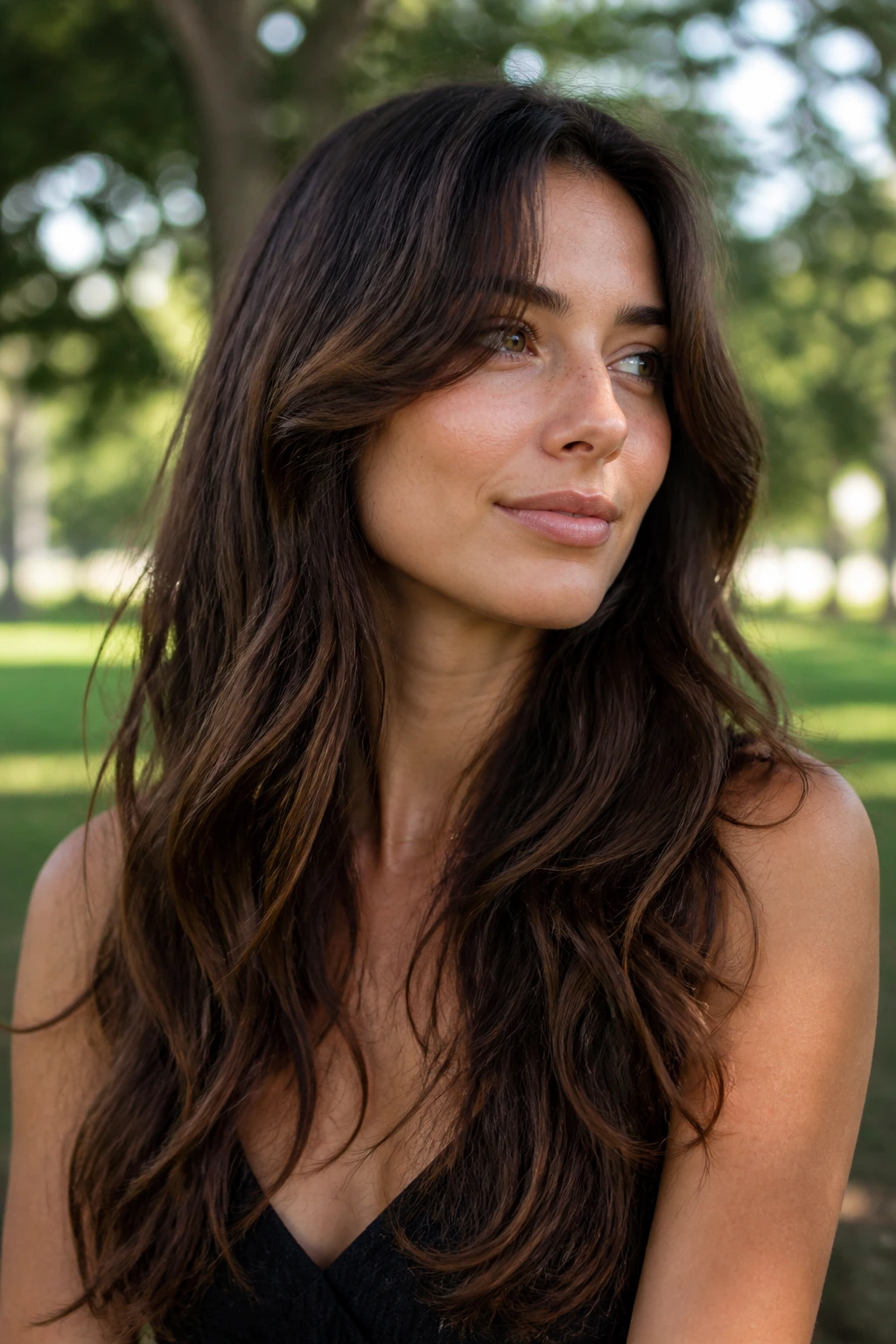
The grow-out shape is not glamorous, but it is useful. The length stays soft, the layers stay long, and the haircut still looks intentional after a few weeks of expansion.
I like this one for people who are tired of fighting their hair every six weeks. The stylist should leave enough structure around the face and enough length through the back that the cut does not fall apart as it grows. It is the kind of haircut that keeps paying rent even when you have ignored it for a month.
Why Soft Layers Change the Way Waves Fall
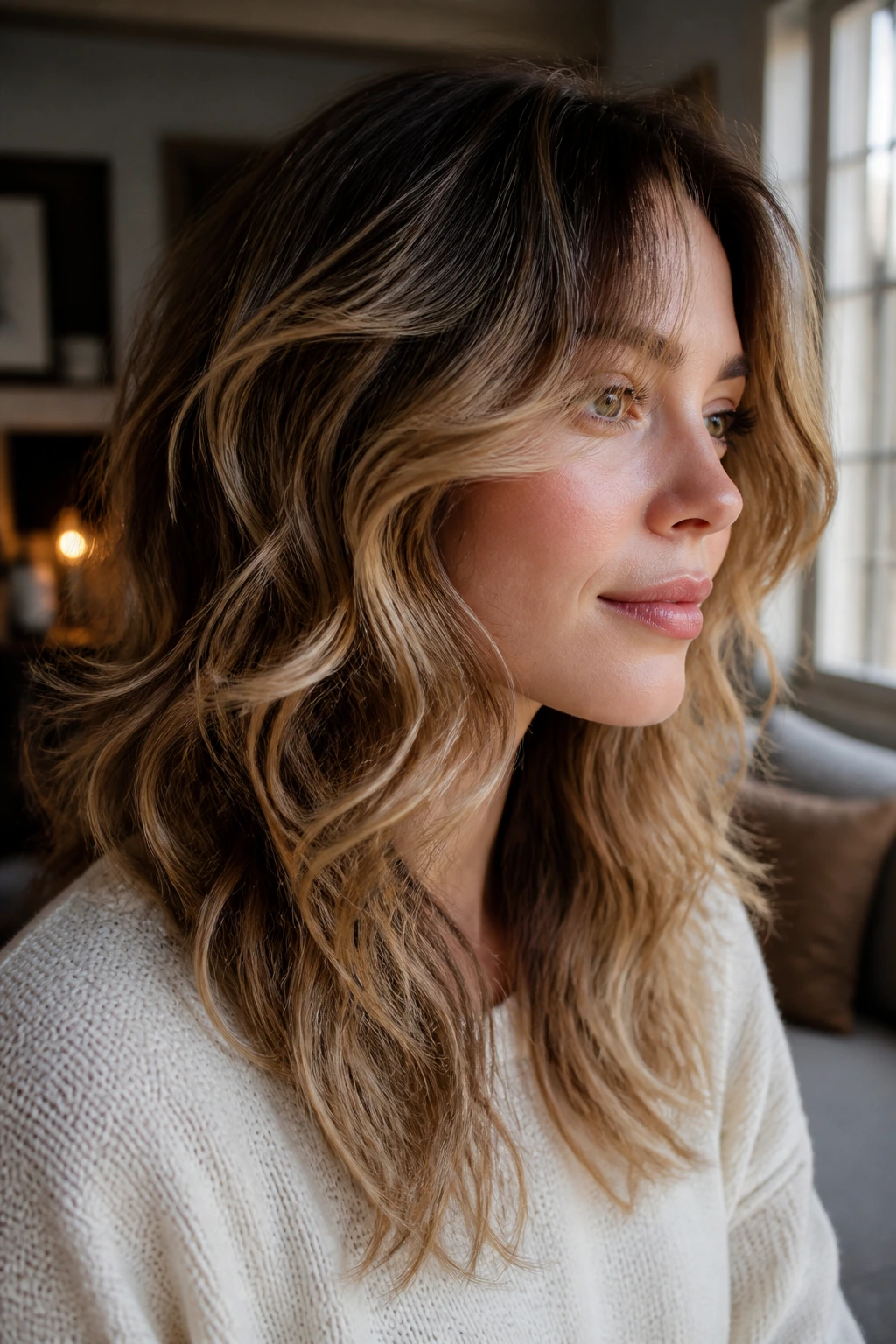
Wavy hair is weight-sensitive. That sounds boring, but it is the whole story. If the ends are too heavy, the wave stretches out and the shape loses spring. If the crown is cut too short or the interior is thinned too much, the top can puff while the bottom goes weak and stringy.
Soft layers solve that by moving weight out of the places where waves fight each other. They make room for the natural bend, which is why the hair often dries with more shape and less stubborn bulk. The effect is subtle when the cut is right. That subtlety matters. You do not want a haircut that announces itself like a neon sign.
The other thing layers do is change how light hits the hair. A blunt line can look dense, which is useful if the hair is fine, but it can also hide the wave pattern. Soft layers create small shifts in length that let the bends stack visually instead of collapsing into one block. That is why the same hair can look twice as interesting with the right layer map and only slightly different in the mirror wet.
Essential Tools for Styling and Salon Visits
- A few inspiration photos with similar texture: Bring photos of hair that looks like yours when it air-dries, not a style that only works after a 45-minute blowout.
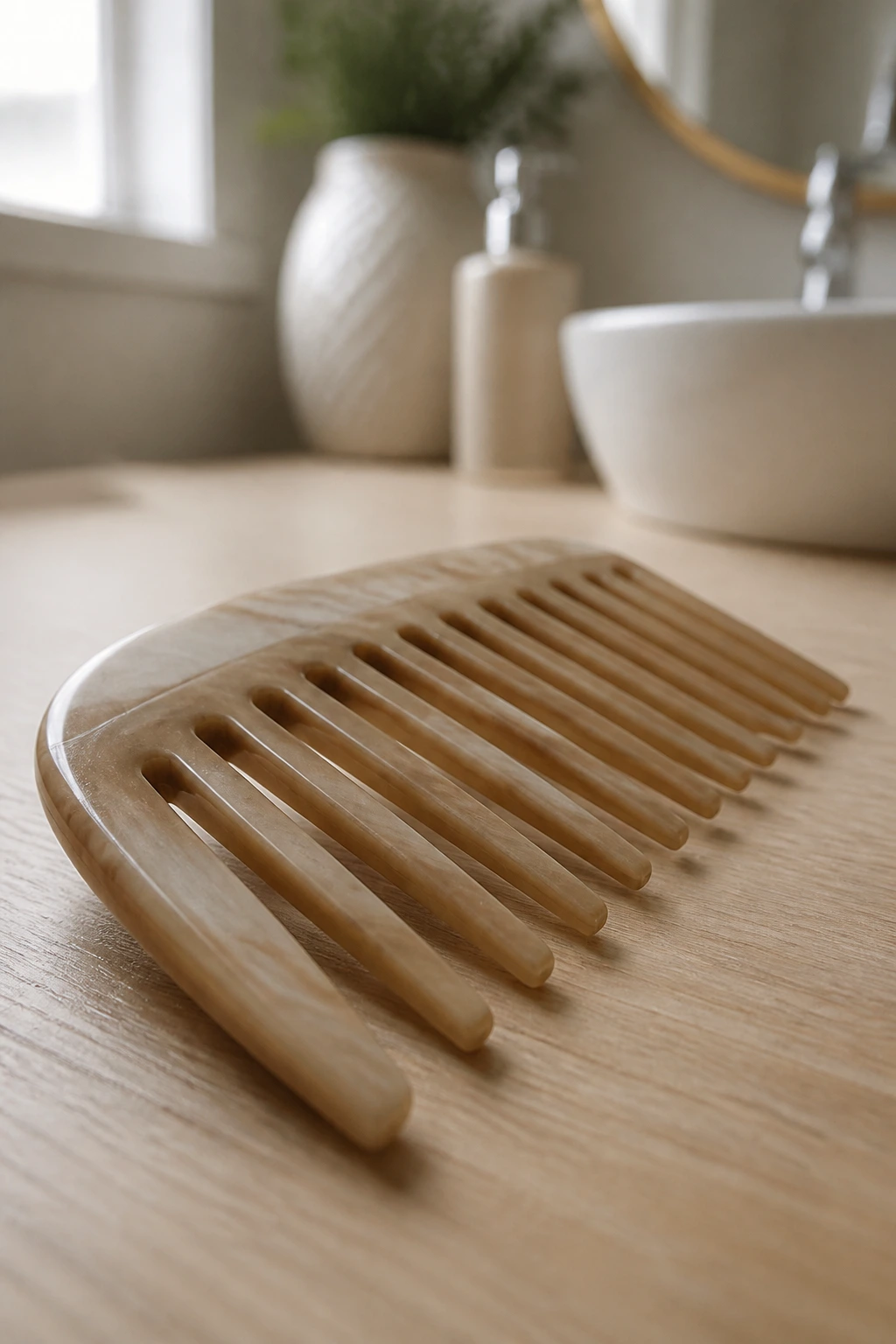
- A wide-tooth comb: Useful for detangling wet waves without pulling the clump apart.
- A tail comb: Helps you show the stylist where your part lives and where your waves flatten.
- A diffuser attachment: If you dry with heat, this keeps the wave pattern intact instead of blasting it flat.
- A 1.25-inch curling iron or wand: Handy for bending the face frame or fixing a stubborn front piece.
- Lightweight mousse or foam: Gives wave support without the sticky feel of heavy creams.
- A gel with flexible hold: Good when you want definition that lasts past lunch.
- Heat protectant spray: Non-negotiable if you use a dryer, iron, or brush.
- Satin pillowcase or bonnet: Helps the shape last overnight and cuts down on friction around the ends.
- Sectioning clips: Useful when you’re styling the top separately from the lower lengths.
What to Tell Your Stylist Before the Cape Goes On
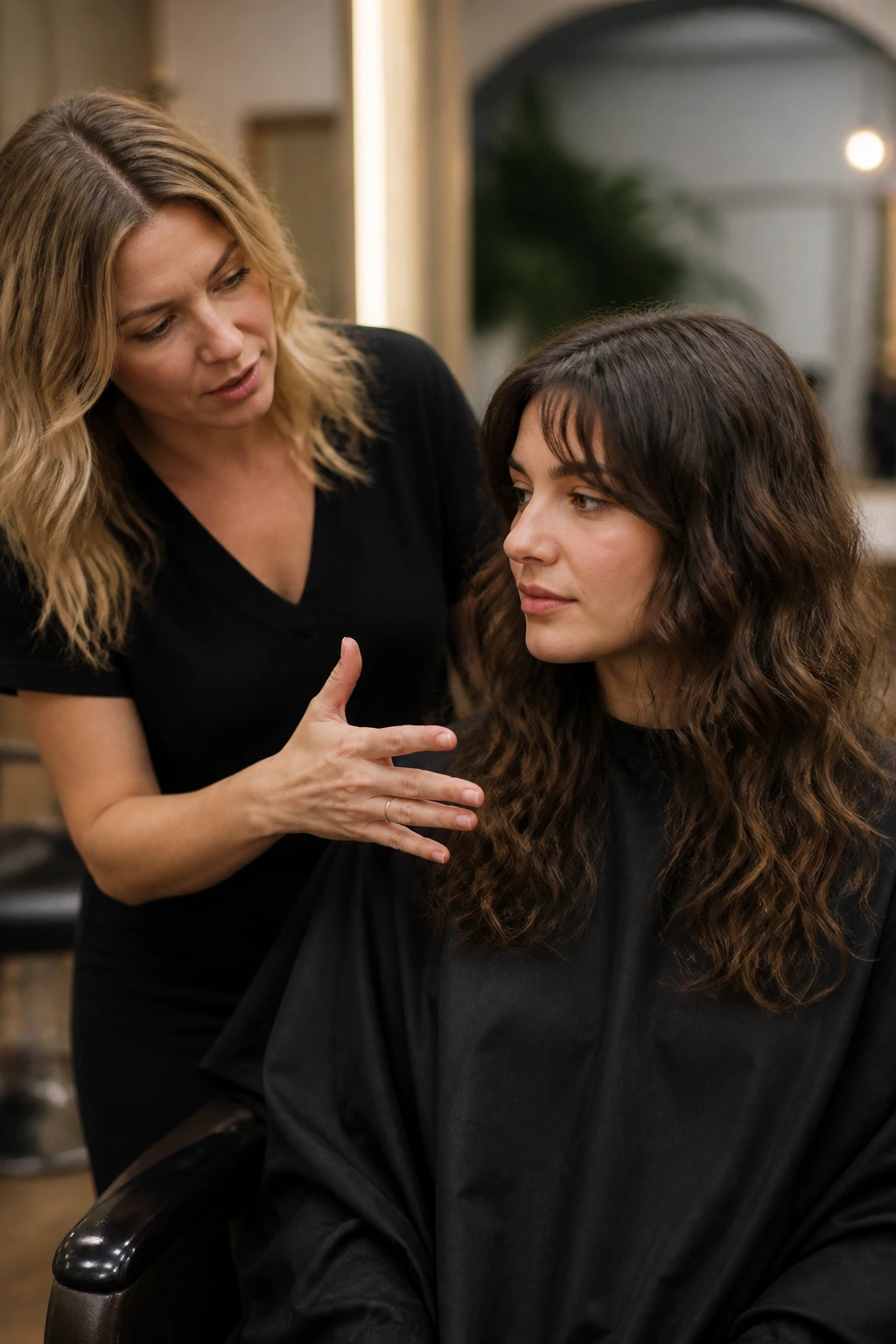
Most bad layer jobs happen because the haircut request was vague. “Just add layers” is how people end up with a shape they did not mean to ask for. Wavy hair needs a length marker, a texture marker, and a note about how much styling you are willing to do.
Say where you want the longest pieces to fall. Say whether you want the layers to be obvious or hidden. Say what your hair does when it dries on its own, because that tells the stylist more than a glossy photo ever will. If your hair flips at the shoulders or poofs at the crown, say that out loud. The stylist cannot fix a problem they do not know exists.
Bring one front photo, one side photo, and one photo that shows the back shape if you can find it. Then point to your current hair and say what you do not want to lose. That last part matters. A lot.
How to Style Soft Layered Haircuts for Wavy Hair on Busy Mornings

Air-Dry: Start with hair that is damp to wet, not half-dry. Work a lightweight mousse or gel through the mids and ends, scrunch once or twice, and leave the curls alone while they set. The less you touch it, the cleaner the wave clumps stay.
Diffuser: Use low heat and low speed. Cup the hair in the diffuser, lift it toward the scalp, and stop before the roots are bone dry if you want some airiness left. Over-diffusing can make the layers look frizzy instead of soft.
Brush Finish: If you want a more polished bend, use a round brush only on the face frame and top layers. You do not need a full blowout unless you enjoy that process. Two or three strategic sections around the front can change the whole read of the cut.
Day Two: Mist the hair with water or a light leave-in spray, then scrunch the old wave pattern back into place. A tiny bit of product goes farther than a fresh handful. Heavy oil on day two tends to flatten the top and make the layers separate in a sticky way.
Additional Tips and Texture Boosters
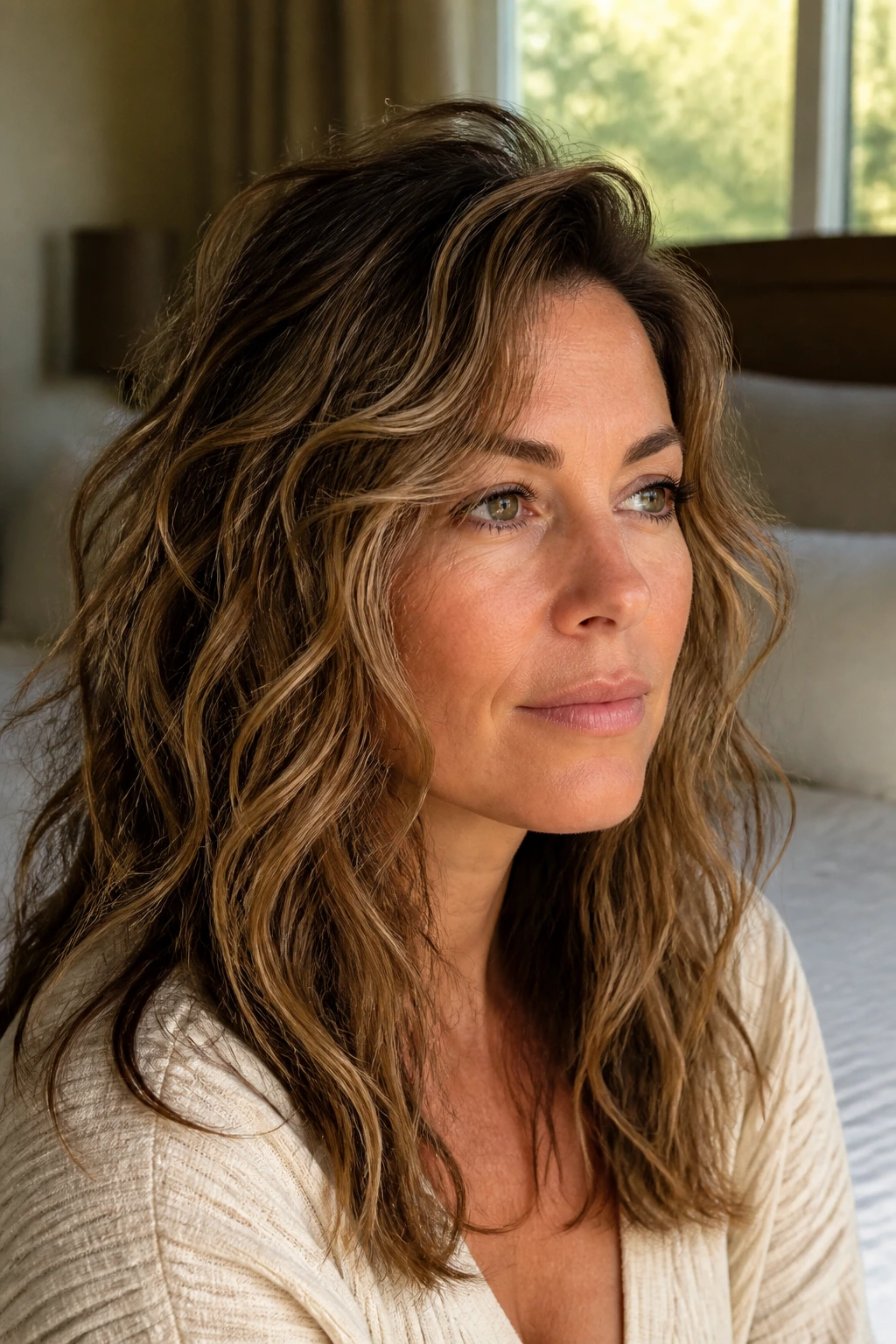
Root Lift: Clip the crown while the hair dries, or work a small amount of mousse into the roots and lift with your fingers. That gives soft layers a little architecture instead of letting them sink.
Definition: A pea-sized amount of gel on the ends can keep the wave clumps tidy without turning the hair crunchy. Use less than you think; wavy hair usually needs support, not a helmet.
Parting: Move your part by one or two inches when the hair looks tired. That tiny shift can wake up the roots and make the cut look fresh without touching the length.
Finish: A drop of serum on the very ends helps if the cut is prone to frizz at the bottom. Keep it off the crown unless you want the top to go limp.
Make-It-Yours: If you like more edge, bend the front pieces under with an iron. If you want softer, let the hair dry naturally and tuck the ends behind the ears for a day. Same cut. Different mood.
Make-Ahead, Maintenance, and Grow-Out Guidance
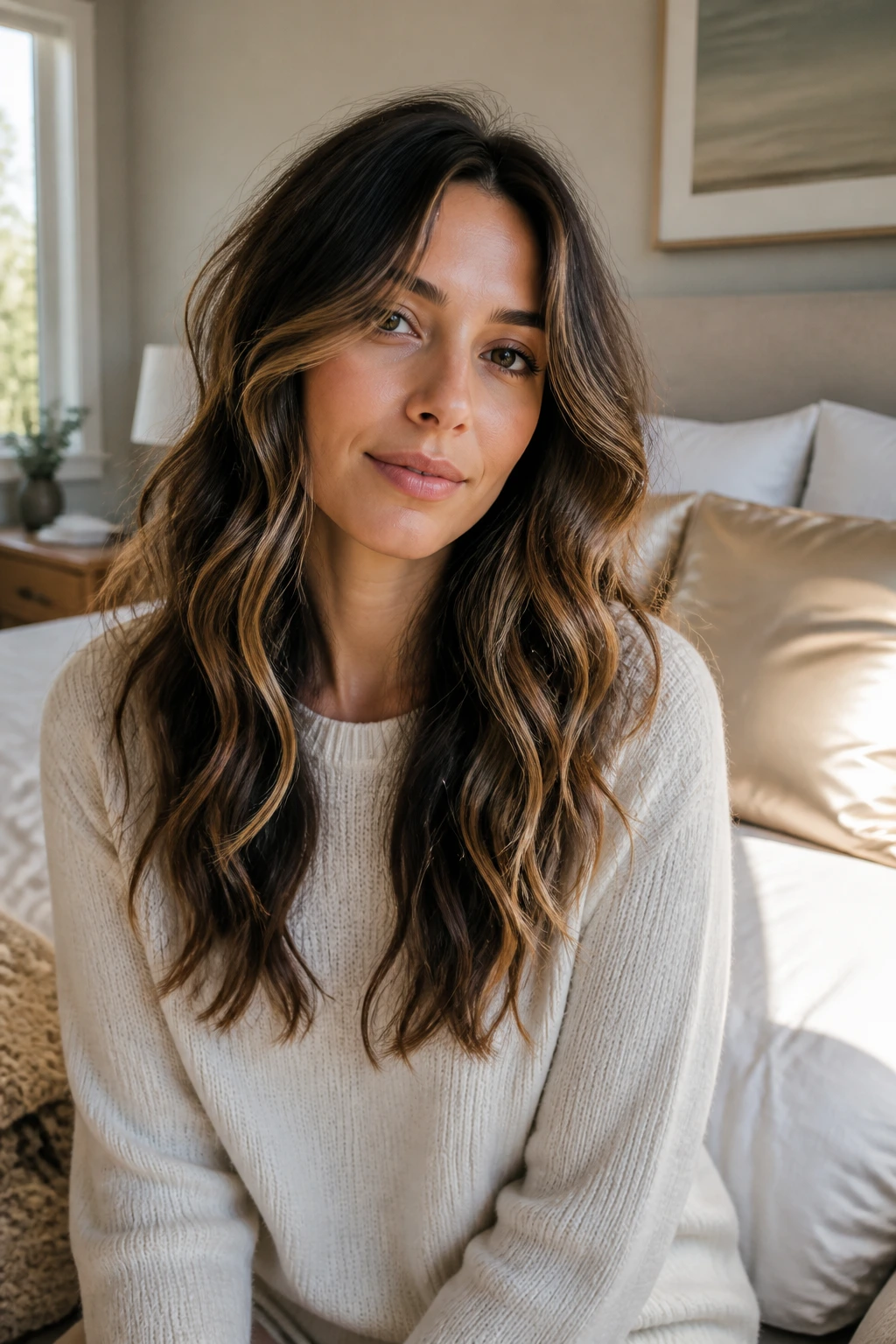
Soft layered cuts usually look best when they are not freshly washed and fussy. Day two often gives the wave a better grip. If you know you have a big day, wash the night before, let the hair dry fully, and sleep on a satin pillowcase so the layers keep their shape.
Trim timing depends on the cut. Shorter shapes like bobs, bixies, and pixie bobs often need attention every 5 to 7 weeks. Longer lobs and shags can stretch to 8 to 12 weeks if the ends still feel healthy. Bangs and fringe pieces usually need more frequent cleanups, sometimes every 4 to 6 weeks, because they show their length first.
Grow-out is where soft layers earn their keep. A blunt line can turn boxy fast. A softer layer map usually bends into a new shape instead of collapsing into a mess. If you are trying to stretch the time between salon visits, ask for long face-framing pieces and a perimeter that stays dense enough to hold the line.
Variations and Adaptations to Try
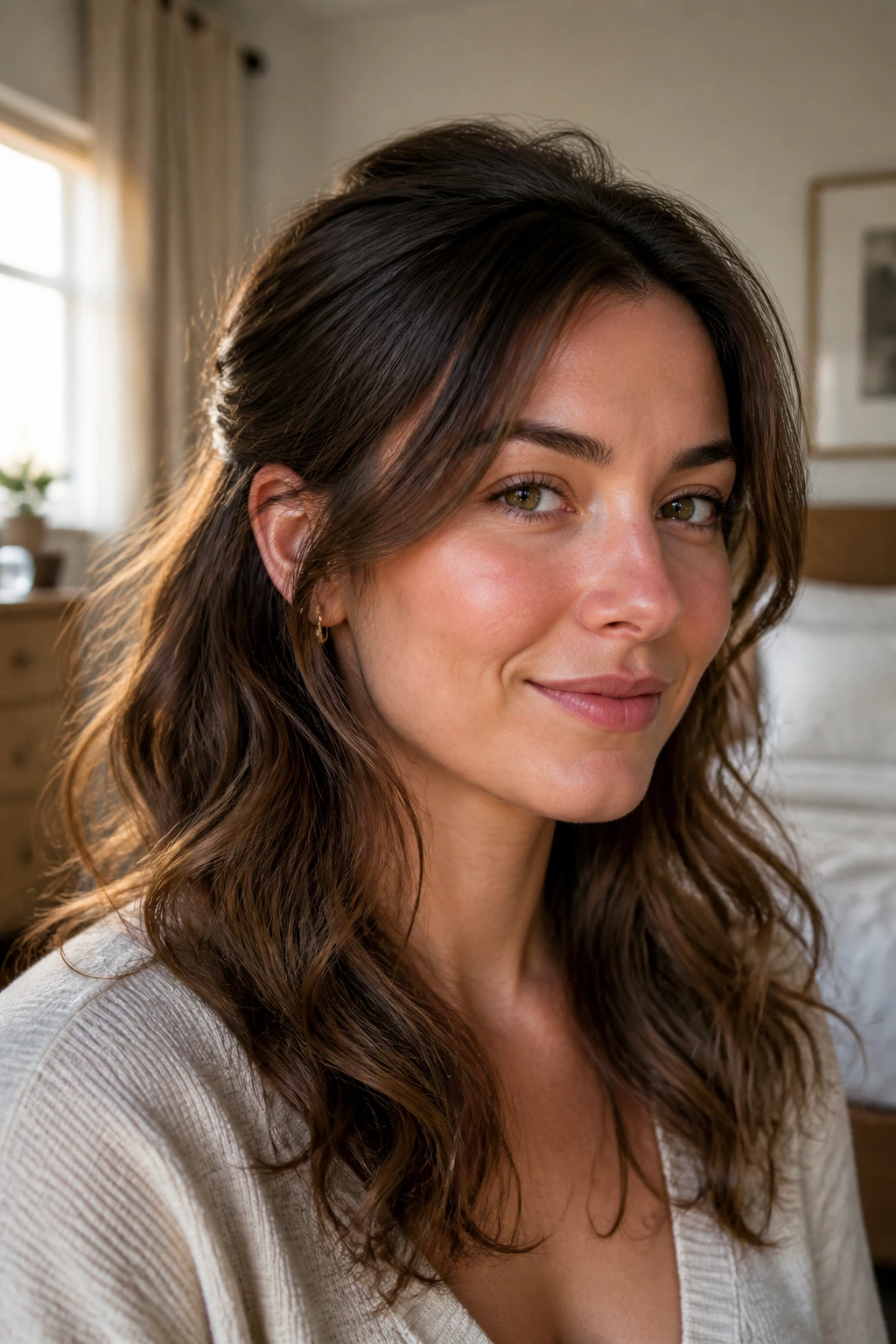
Fine-Wave Softening: Keep the layers long, start them low, and leave the perimeter full. Fine waves need movement, but they do not need to lose too much density or the haircut starts looking thin at the ends.
Thick-Hair Release: Ask for internal layers, weight removal around the mids, and a shape that is checked dry before the cut is finished. Thick waves can take more shaping, and they usually need it.
Fringe-Free Version: Skip bangs altogether and let the front fall into a long C-cut or cheekbone frame. This works well if you want softness around the face without the maintenance of a fringe.
Air-Dry-First Version: Keep the layers longer, avoid aggressive thinning, and leave the ends soft. This version is built for people who want the cut to look good after a towel squeeze and a leave-in spray, not a styling marathon.
Grow-Out-Proof Version: Keep the shortest layers below the cheekbones and preserve enough weight through the ends that the shape stays tidy for weeks. This is the one to ask for if you hate that awkward stage where layers start talking to each other in the mirror.
Common Mistakes to Avoid
Asking for “layers” with no length plan: That phrase is too vague. The symptom is a haircut that looks fine for one week and then falls apart. Fix it by naming the shortest length you want to lose and where you want the longest pieces to sit.
Over-thinning fine waves: This is the fastest way to get scraggly ends and a limp crown. Fine hair needs shape, not a disappearing act. Keep the layers long and let styling products do more of the work.
Removing too much weight from dense waves: The haircut can flip from soft to puffy if the interior gets carved out too aggressively. The fix is to remove bulk in the right places, then check the shape dry before the scissors stop moving.
Cutting the face frame too short on springy hair: Wavy hair often bounces up more than people expect. A piece that looks cheekbone-length wet can land much higher once dry. Leave a little extra length unless you enjoy surprise bangs.
Ignoring the way your hair bends at the shoulders: Some cuts look fine from the front and awful from the side because the ends flip hard at collarbone level. If that happens to you, ask for a rounded, tapered, or shoulder-flip shape instead of a straight line.
Questions People Ask Before Cutting Wavy Layers
Which layered haircut works best for thick wavy hair?
Invisible layers, crown-lift layers, and dense-wave layering usually work well because they remove bulk without wrecking the outline. Thick hair needs shape inside the cut, not just shorter pieces around the face.
What works best for fine wavy hair?
A collarbone lob, hush cut, or blunt-ends-with-soft-top shape usually keeps fine waves looking fuller. The goal is to keep enough density at the perimeter so the hair doesn’t go wispy after it dries.
Should wavy hair be cut wet or dry?
Both can work, but a dry check matters if your waves change a lot as they dry. Wet hair can hide shrinkage, so a stylist should know how much your hair springs up before they finish the shape.
Do layers make wavy hair frizzy?
They can, if the layers are too short or too high. Soft, long layers are usually the safer route because they let the wave move without exposing too much frizz-prone surface area.
Which cut needs the least styling?
The grow-out shape, bare-bones layered lob, and air-dry crop are the easiest to live with. They still need some product or a good scrunch, but they do not demand a daily blowout.
Can I get layers if I want to grow my hair out?
Yes, and it often helps more than a blunt cut does. Ask for long layers and a dense perimeter so the haircut still has shape while it gets longer.
How often should I trim wavy layers?
Short cuts usually need a trim every 5 to 7 weeks, while longer cuts can go 8 to 12 weeks. Bangs and fringe need more frequent touch-ups because they lose their balance first.
What if my waves are flatter at the crown than the ends?
Ask for crown-lift layers and keep the top a little shorter, but not so short that it sticks up. A root clip while drying can also make a bigger difference than people expect.
The Shape That Lets Waves Breathe

Soft layers do one thing better than a blunt cut: they give wavy hair room to behave like wavy hair. That sounds simple, but it changes everything. The hair moves, the ends soften, and the whole shape feels less trapped.
Pick the version that matches your density and your patience. If you like quick styling, choose a cut that looks good after a scrunch and a little drying time. If you love a round brush and a bit more polish, go with something that gives you face framing and a clean perimeter. The haircut should make your routine easier, not give you a second job.
And if you are stuck between two options, choose the one with the softer outline. Waves are usually happier when the cut bends with them instead of trying to control every inch.
