



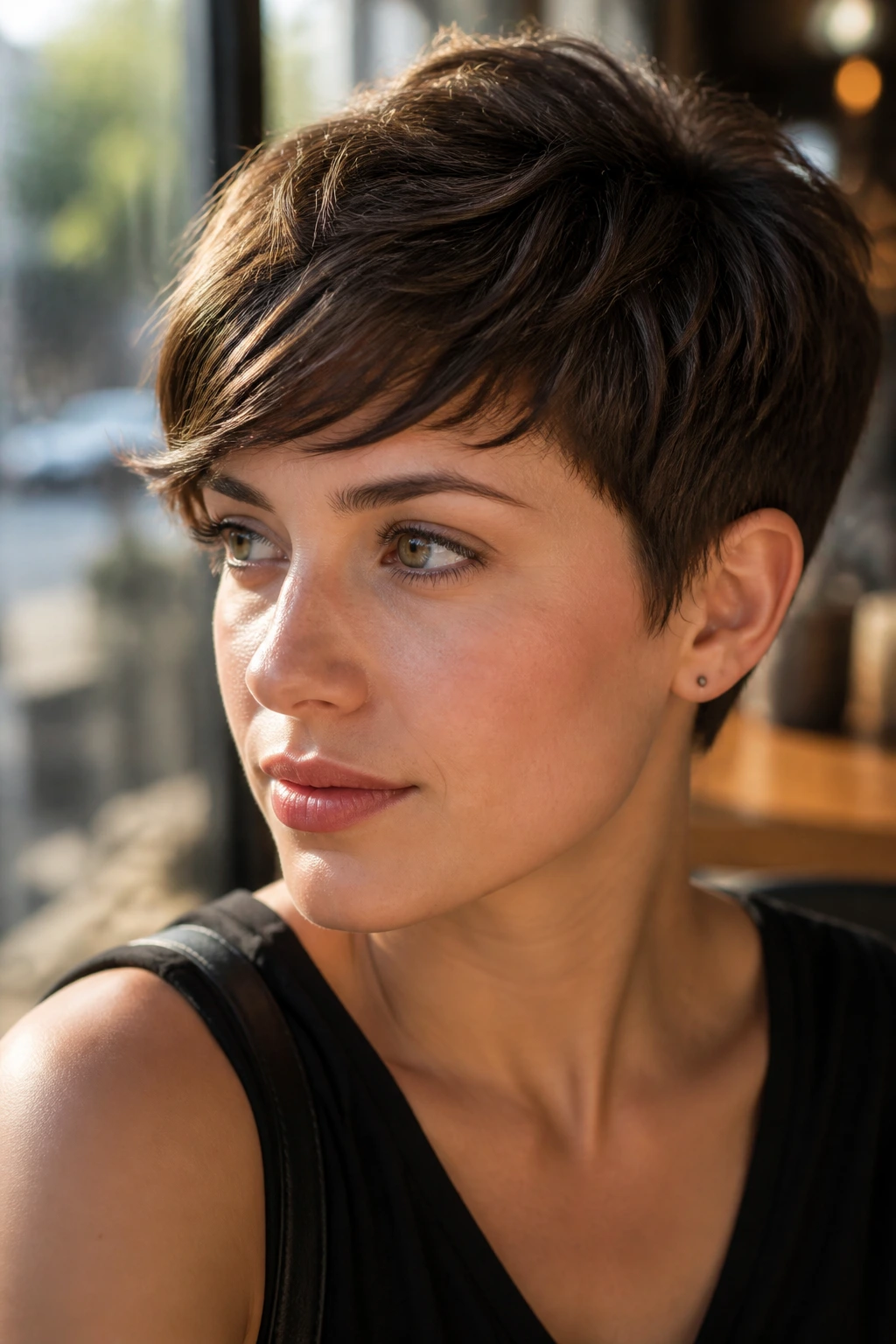
Short, thin hair can go flat in a hurry, and a blunt fringe often makes it worse. The front starts to sit like a little shelf, the roots slump, and the whole cut can feel smaller than it really is. That’s why side bang styles for short thin hair matter so much: the diagonal line opens up the face, gives the eye somewhere to move, and keeps the front from turning into one heavy block.
The best version is rarely the thickest one. It’s the one that bends a little, skims a little, and lands in the right place for your hairline. A good side bang on fine or sparse hair should look light even when it’s freshly cut. Heavy bangs can be dramatic on thick hair; on short, thin hair, they usually just look like a mistake with a round brush.
I trust a side fringe more than a straight-across one when the cut is cropped or delicate. It’s easier to style, kinder during grow-out, and far less likely to make the front look weighed down by noon. The trick is picking the right shape for your part, your forehead, and the amount of effort you’ll actually give it on a rushed morning.
Why These Side Bang Styles Work on Short, Thin Hair
The diagonal line does the heavy lifting. A side bang cuts across the face instead of sitting like a horizontal shelf, and that small change makes the front look softer and fuller at the same time.
Fine hair needs movement more than bulk. When you load short, thin hair with too much density at the fringe, it collapses fast. A lighter, angled bang keeps air between the strands, which is what stops the front from looking stuck to the scalp.
Short cuts need a clear front shape. Pixies, bobs, and cropped lobs all rely on the face frame to do some of the visual work. A side bang gives the haircut a point of emphasis, which is especially useful if the rest of the hair is too short to carry a lot of styling drama.
Grow-out is part of the plan. Side bangs don’t punish you the way blunt bangs do. They can drift longer, get tucked behind the ear, or blend into layers without the awkward “what do I do with this?” stage that straight fringe tends to create.
The right side bang can hide more than it shows. Cowlicks, a higher forehead, a flat temple area, or a slightly uneven hairline all become less obvious when the fringe is cut to move instead of sit rigidly in place.
1. Feathered Side Sweep
A feathered side sweep is the safest place to start if your short hair collapses the minute it gets cut too blunt. The ends are lightly point-cut so they don’t land as one dense strip, and the whole fringe should move when you shake your head. It’s soft, a little airy, and very good at making fine hair look like it has more body than it does.
I like this shape on a short bob or a grown-out pixie because it blends instead of announcing itself. The longest pieces should brush the cheekbone, while the shortest part can sit just below the brow. That little length difference matters. It keeps the front from looking chopped off.
Why It Works on Fine Texture
Feathering removes the visual weight without taking away the line. On thin hair, that’s the sweet spot. You still get a side fringe, but you do not get a heavy curtain that drags the hair downward.
Best styling move: blow-dry the bang from the opposite side first, then sweep it across with a round brush. Let it cool in place for 10 to 15 seconds before you touch it again.
2. Piecey Micro Fringe
This is the one for someone who wants a bit of edge without committing to a full fringe. A piecey micro side bang sits shorter, stays light, and shows a little forehead, which can be a good thing on short, thin hair. It makes the face feel open instead of boxed in.
The key is separation. You want the fringe to read as a few soft pieces, not one tidy ribbon. A touch of lightweight paste, warmed between your fingers until it almost disappears, is enough. Too much product and the whole thing turns stringy. Fast.
Who It Suits
It works best if your hair is straight or only slightly bent, and if you like a cut that feels a little offbeat. If you hate styling your bangs every morning, skip it. This one looks best when the pieces have a little direction, even if that direction is casual.
3. Deep Part Swoop
A deep part swoop gives short thin hair a quick lift right where it needs it most: at the root. Push the part well over to one side, then let the front section fall across the forehead in one clean sweep. The deep part creates the illusion of more density on top, which is often where thin hair looks the flattest.
This style has a nice side effect. It makes a simple haircut look deliberate. A chin-length bob, a grown-out pixie, even a short shag can look sharper once the part moves farther over and the fringe follows the line.
What to Watch
If the hair at your temple is sparse, do not overcut the shortest point. Leave enough length to cover the weaker area, then let the sweep do the rest. A bang that is too short here tends to split and show scalp.
4. Razor-Cut Swoop
A razor-cut swoop has a lighter edge than a scissor-cut bang, which can be a gift on straight, short hair. The ends look airy instead of blunt, and the fringe tends to fold into the rest of the haircut instead of sitting on top of it. That’s a good thing when density is low.
Not every hair type likes a razor. Coarse or frizzy hair can look frayed if it’s razored too aggressively, so this is one to discuss carefully with a stylist. On smooth, fine hair, though, the razor can make the fringe feel like it’s floating rather than dragging.
Best Use Case
Ask for it if your short haircut already has some texture and you want the bang to match that softness. It pairs well with a cropped bob or a pixie that’s grown out just enough to have movement at the front.
5. Choppy Side Fringe
A choppy side fringe is the one I reach for when the haircut needs a little life. The cut is intentionally broken up into uneven pieces, so the front doesn’t sit like a perfect sheet. For short, thin hair, that unevenness is the point. It adds texture without demanding much length.
The choppier the fringe, the more casual the overall look feels. That can be useful if your hair naturally separates or if you want the face frame to look slightly undone. A little mess here is not a flaw. It’s the style.
Best pairing: a short shag, a stacked bob, or anything with short layers around the crown. Keep the styling light so the piecey shape stays visible.
6. Ear-Tucking Long Fringe
This is the grown-up version of a side bang. It’s long enough to tuck behind the ear, but short enough to still act like fringe. On short, thin hair, that kind of flexibility is gold. You get the frame when you want it and the option to clear the face when you do not.
I especially like this shape for people who wear earrings or glasses, because it avoids that constant fight between the bang and whatever sits on the face. The longest piece should land around the cheekbone or just below it. If it falls much lower, it stops reading as a side bang and starts acting like a front layer.
Why It’s Easy to Live With
The grow-out is forgiving. If the trim slips, the style just gets softer. No weird line. No awkward shelf.
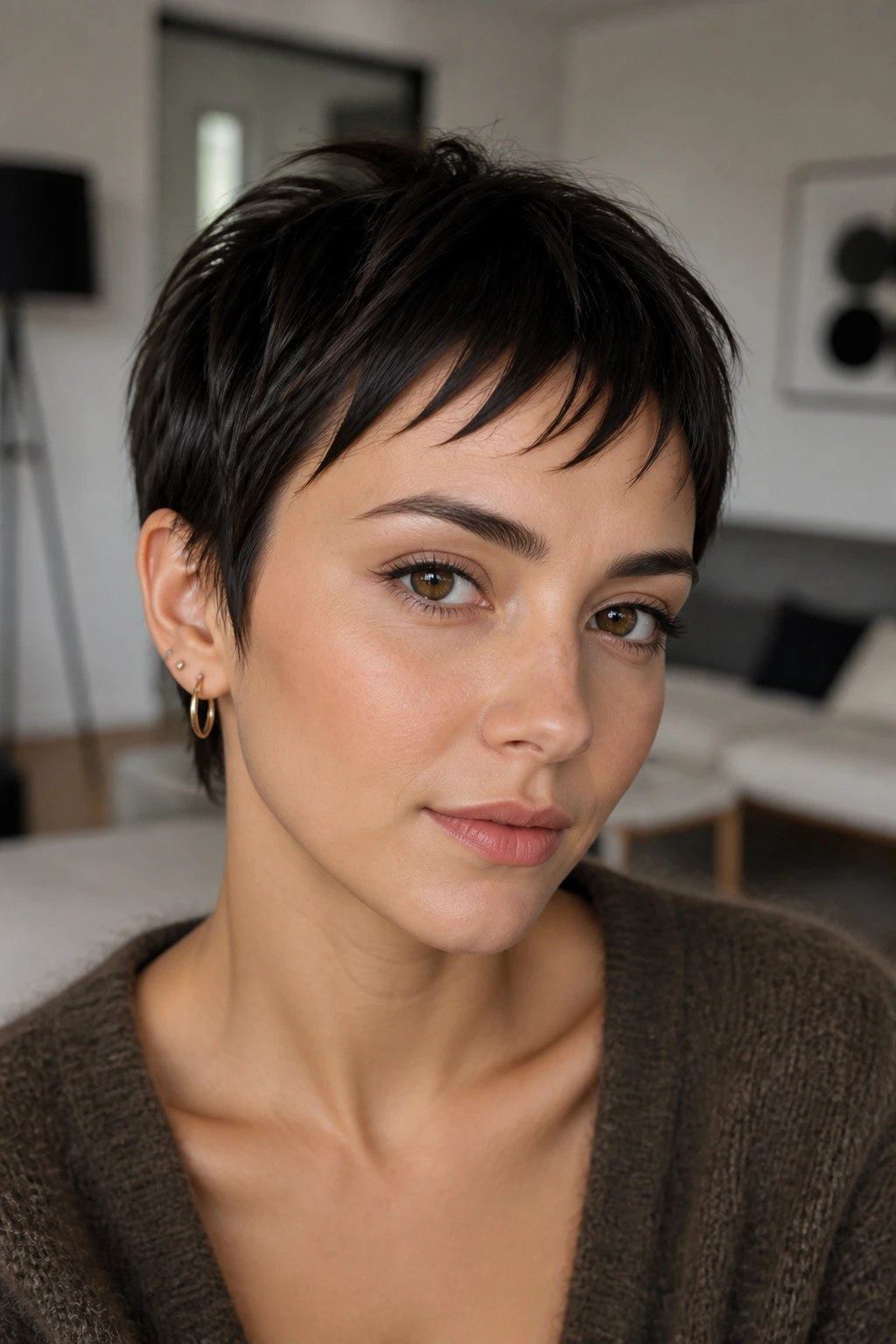
7. Pixie Flick Bang
A pixie flick bang lives at the front hairline and sweeps sideways in one quick motion. It’s not meant to cover much. It’s there to add a little bend, a little lift, and a clean direction to a very short cut. On thin hair, that small gesture can do more than a heavier fringe ever will.
This is the safest side bang for a true pixie, because it blends into the cut instead of sitting apart from it. You should not be able to point to it and say, “There’s the bang.” It ought to feel borrowed from the haircut.
A tiny round brush, a touch of root spray, and a quick blast of air are usually enough. Then stop. If you keep fussing, the flick loses its shape.
8. Cheekbone Sweep
If your haircut feels a little bare around the face, a cheekbone sweep can help. The longest point lands near the cheekbone, which softens the face without swallowing it. On short, thin hair, that length is useful because it gives you a strong visual line without needing much density.
This style is especially good when the rest of the haircut is neat and compact. A tucked bob, a soft pixie-bob, or a cropped cut with one longer front corner can all handle it well. The bang should feel like it belongs to the haircut, not like it was dropped in from somewhere else.
My Take
I like this one because it looks expensive without asking for much. That sounds shallow, but it’s true. A clean cheekbone sweep can make even very simple hair look intentional.
9. Rounded Arc Fringe
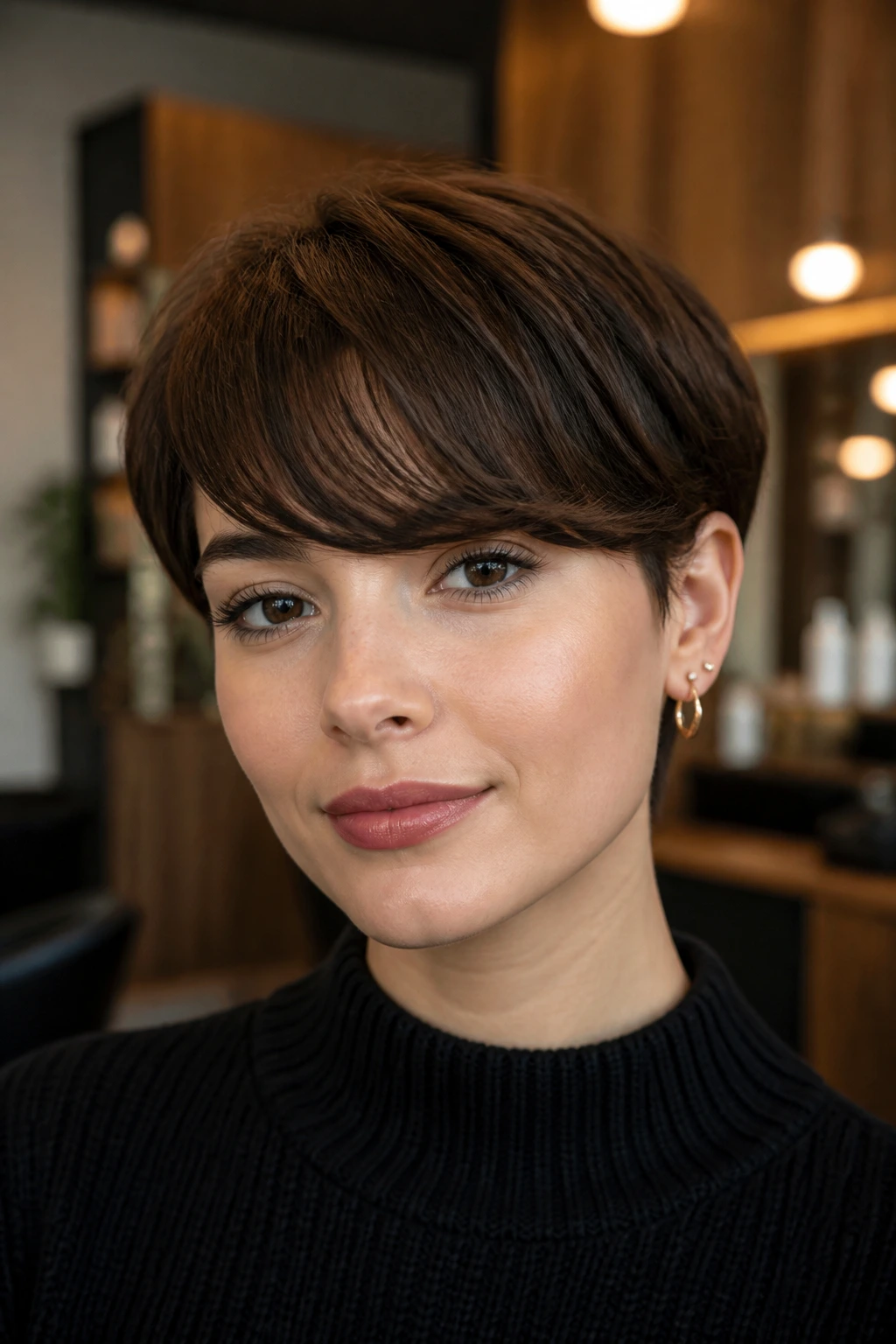
A rounded arc fringe has a little architecture to it. Instead of falling in one straight diagonal, it curves gently across the forehead and into the side. That shape can be a lifesaver on short, thin hair because it creates the sense of fullness without making the front heavy.
The arc is especially helpful if your hairline is uneven or if one side naturally sits flatter than the other. The curve gives the eye a continuous line to follow, which makes the fringe look more complete. It’s a subtle trick. A good one.
What to Ask For
Ask for the fringe to be narrow enough to stay light, but wide enough to cover the front section cleanly. Too wide, and it starts to spread out. Too narrow, and it loses the arc.
10. Textured Bob Bang
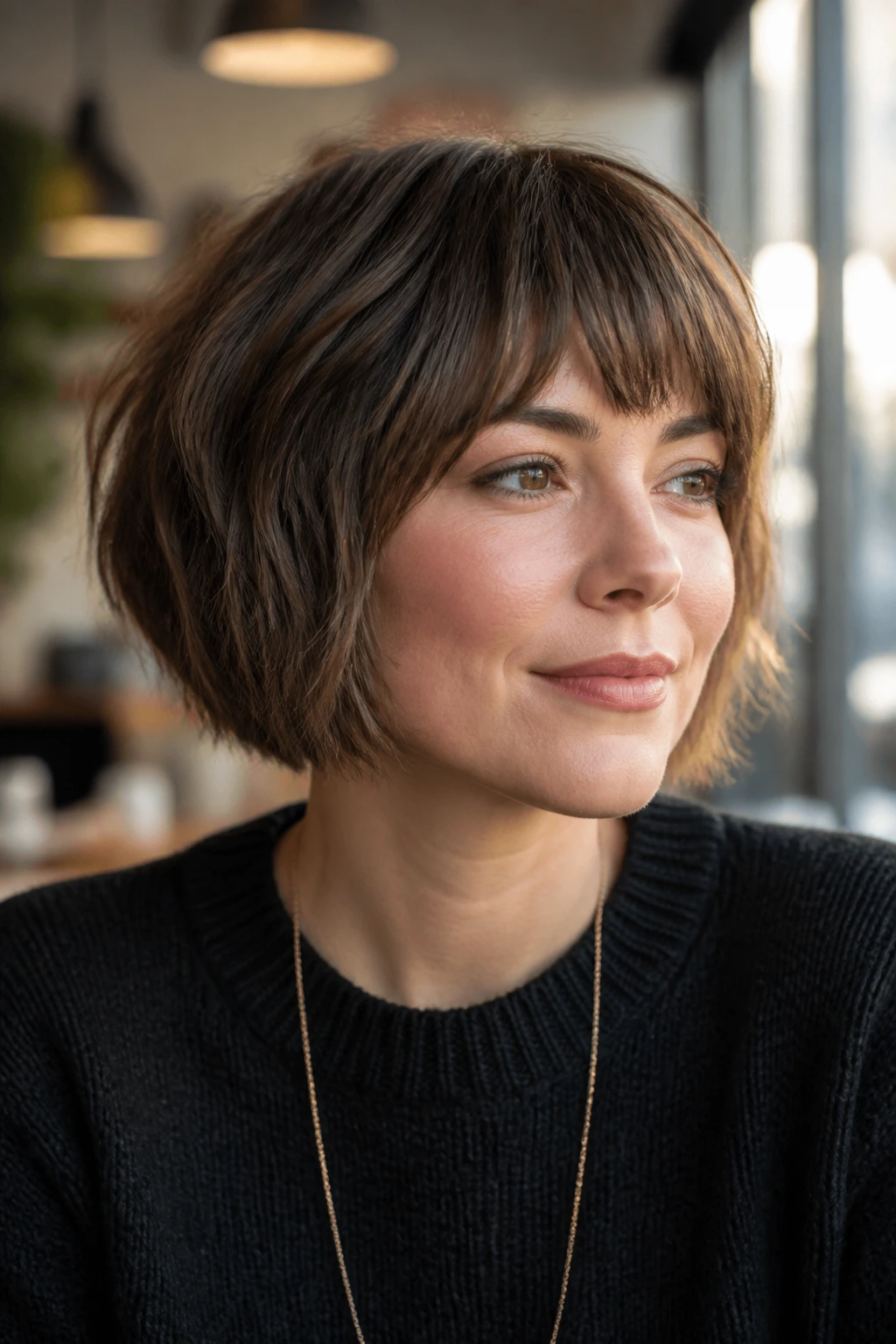
A textured bob bang is built to sit with the shape of a short bob rather than fight it. The bang line should echo the perimeter of the cut, with tiny internal notches or point-cut ends so it doesn’t look blunt. On thin hair, that connection matters more than people think.
If the bob is sharp and one-length, the fringe should still be soft enough to move. If both the bob and the bang are too rigid, the haircut can start looking hard around the face. Nobody wants that. Especially not on hair that already lacks density.
Best Styling Match
A quick bend with a flat iron or a small brush can be enough. You are shaping here, not building a helmet.
11. Overgrown Side Fringe
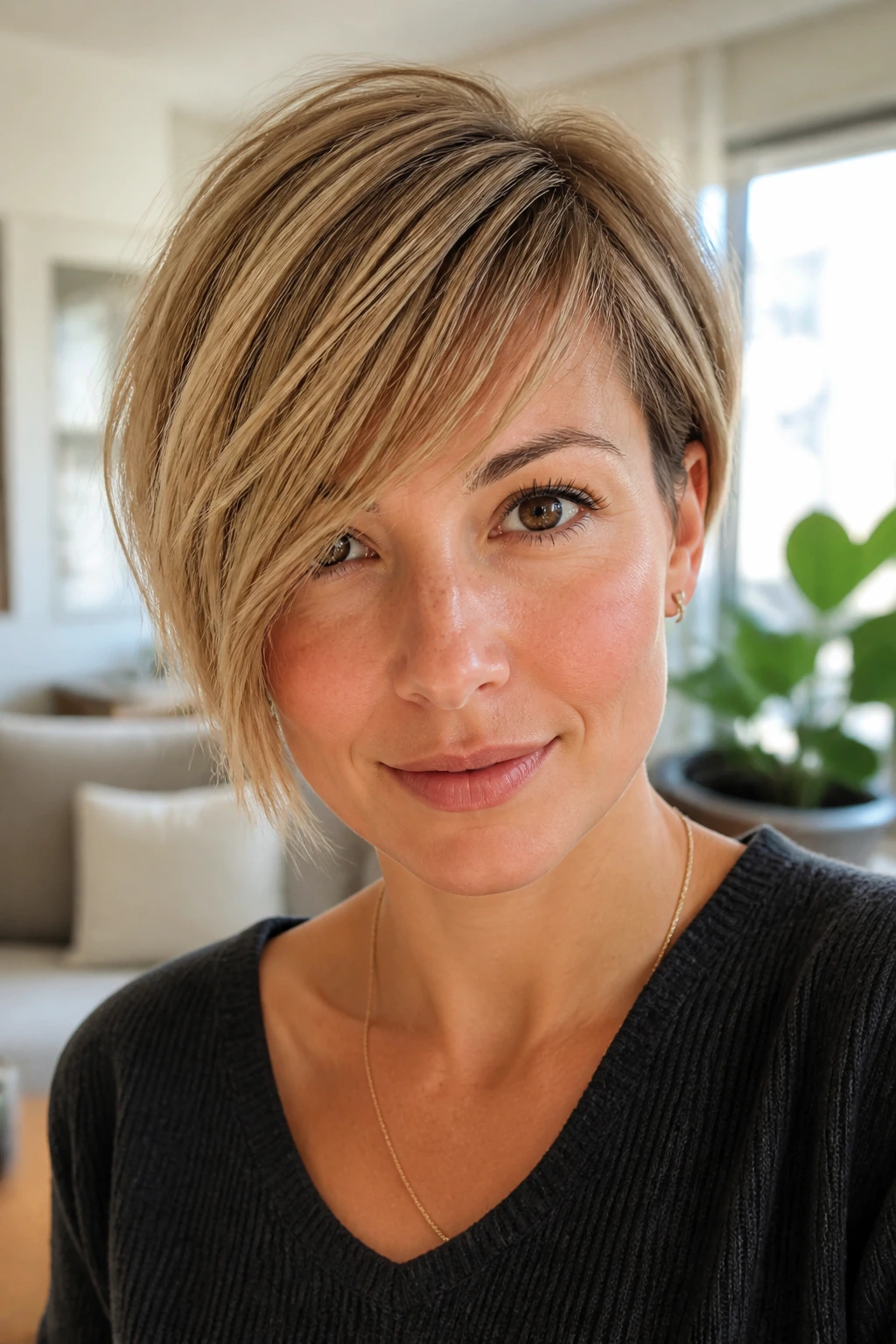
An overgrown side fringe is for the person who likes the idea of bangs but not the maintenance. The pieces sit longer, sweep farther across the forehead, and blend into the rest of the front layers. It feels relaxed rather than precise.
On short, thin hair, that softness can be useful. Shorter bangs can expose too much scalp if they’re cut too tight. The longer version gives you more coverage and a little more flexibility when the part refuses to cooperate.
This is also one of the best choices if you’re between cuts. It still reads as a fringe, but it won’t look wrong when it grows out a half inch.
12. Hidden-Layer Bang
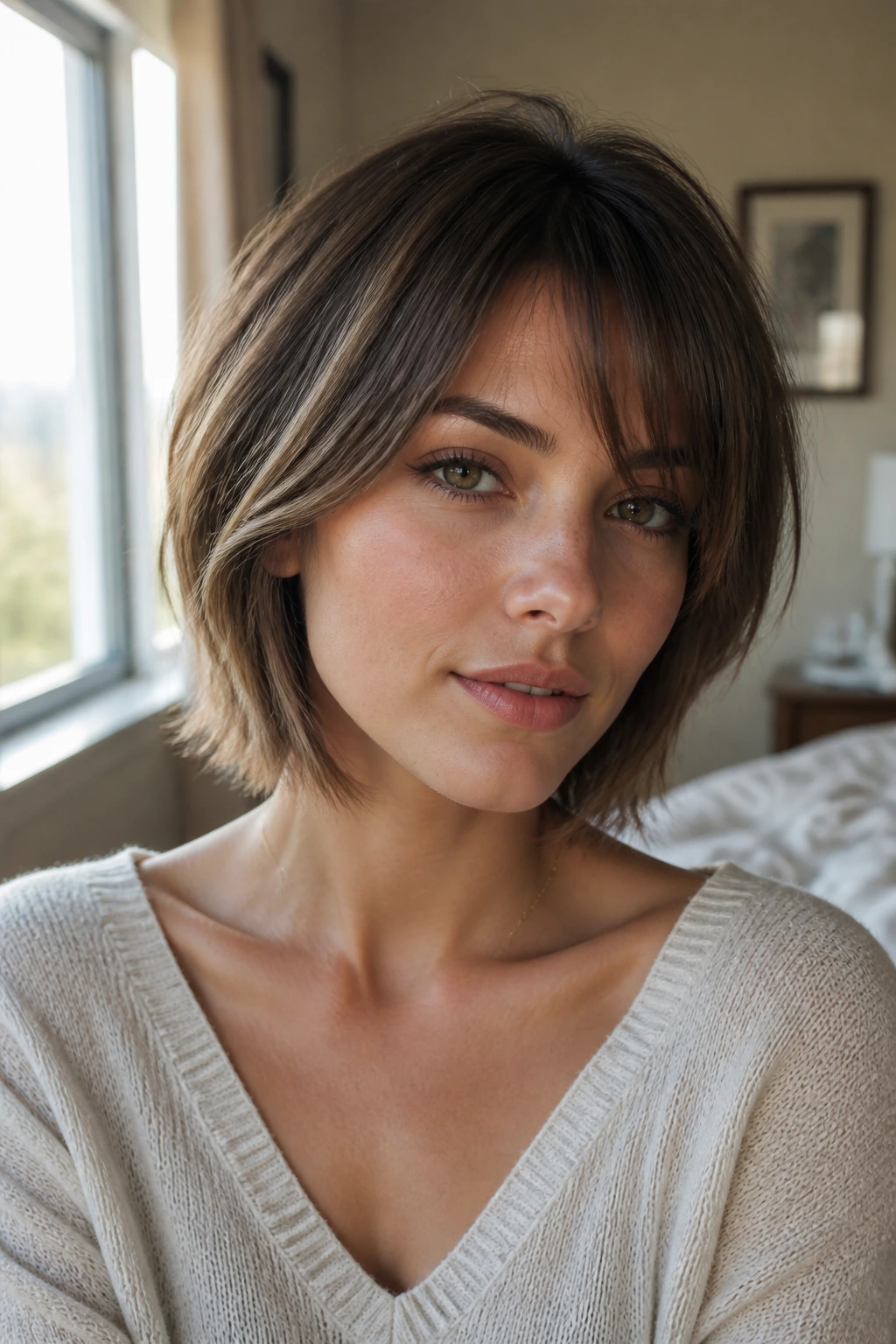
A hidden-layer bang is the quiet one. You barely notice where the fringe starts, because it’s cut to blend into the top layers and temple pieces. That makes it a strong option for short, thin hair that needs shape without a visible block of fringe.
This style works well if you dislike the feeling of hair sitting in your face. The bang is there, but it’s tucked into the haircut. It moves with the rest of the layers instead of demanding its own styling routine. That’s the appeal.
What Makes It Different
The best hidden-layer bang never looks overworked. If you can see every strand, the cut was probably too broken up. You want a soft connection, not an obvious notch.
13. Glasses-Friendly Sweep

Glasses can turn bangs into a negotiation. A glasses-friendly sweep solves that by keeping the shortest point above the frame line and the longest point low enough to soften the face without brushing the lens. On short, thin hair, that balance keeps the fringe from competing with the frame.
I would not cut this too short. Once a side bang starts hitting the top of the glasses arm, it tends to flip in odd directions and lose its shape. A little extra length makes the daily wear much easier.
Small Detail, Big Difference
If you wear glasses, ask the stylist to check the bang with your frames on. That one step saves you a lot of annoying home fixing later.
14. Wavy Bend Fringe

A wavy bend fringe is cut to follow the natural bend in the hair instead of forcing it straight. That matters a lot on short, thin hair with some wave, because over-styling can make the front puff up or separate in strange spots. Better to work with the bend than fight it.
The cut should be slightly longer than a straight-hair fringe, since wave will shorten it once it dries. A little mousse or foam at the roots, then finger-shaping while the hair is still damp, usually gets you there. Do not overbrush it once it starts drying. That’s how you get fluff.
Best Match
This one shines on people who air-dry more than they blow-dry. It gives you a side bang that looks relaxed without looking lazy.
15. Asymmetrical Side Fringe
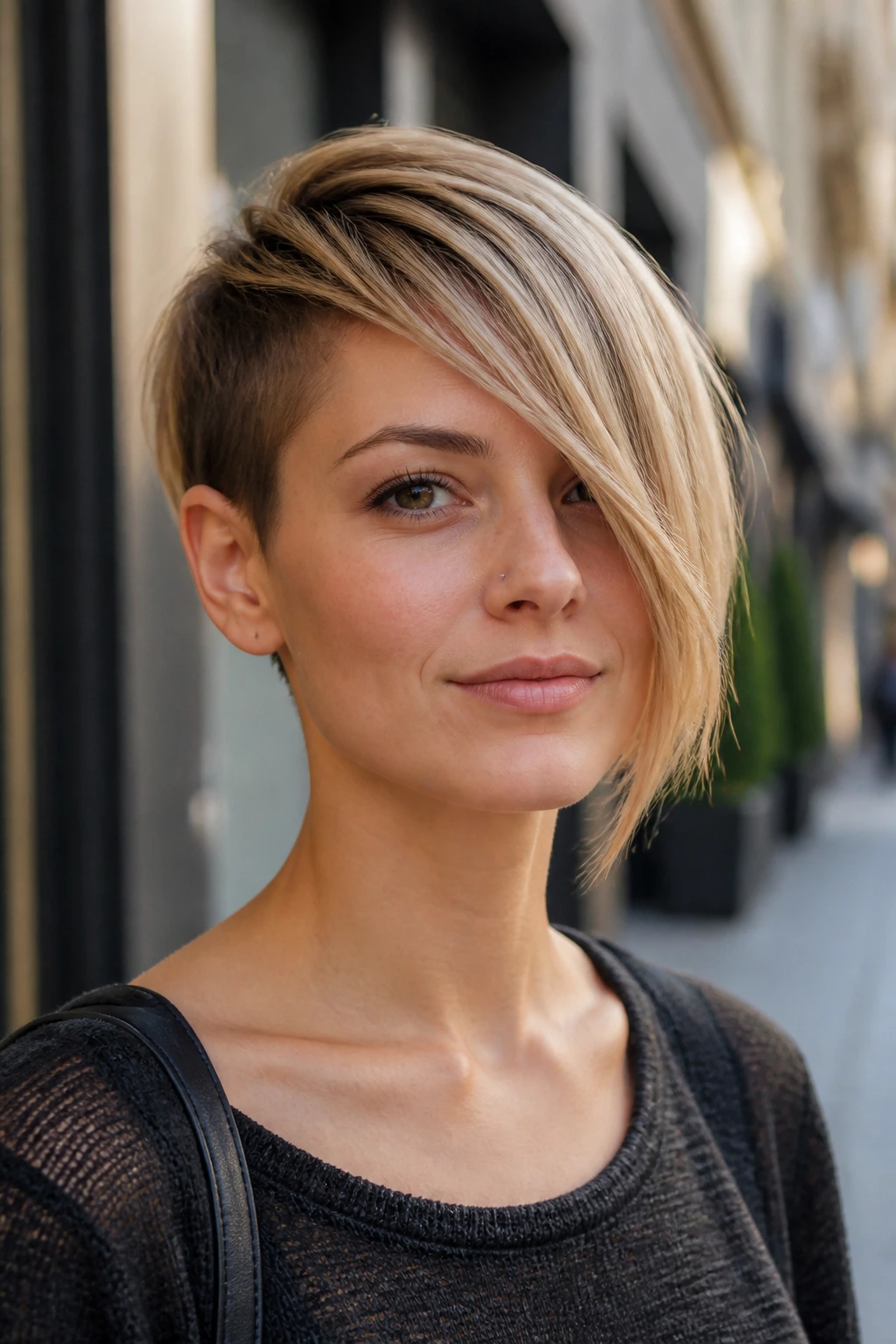
An asymmetrical side fringe brings a sharper angle to a short cut. One side is shorter, the other longer, and the whole thing feels a little more intentional than a standard sweep. It’s a smart choice if your haircut already has some edge to it or if you want the fringe to stand out.
The downside is obvious: it needs a hand in the morning. A quick pass with a brush or flat iron keeps the angle readable. Without that, the asymmetry can disappear into the rest of the hair, which defeats the point.
I like this best on a very short bob or a pixie with a strong silhouette. It gives the front some attitude without adding bulk.
16. Crown-Lift Side Bang
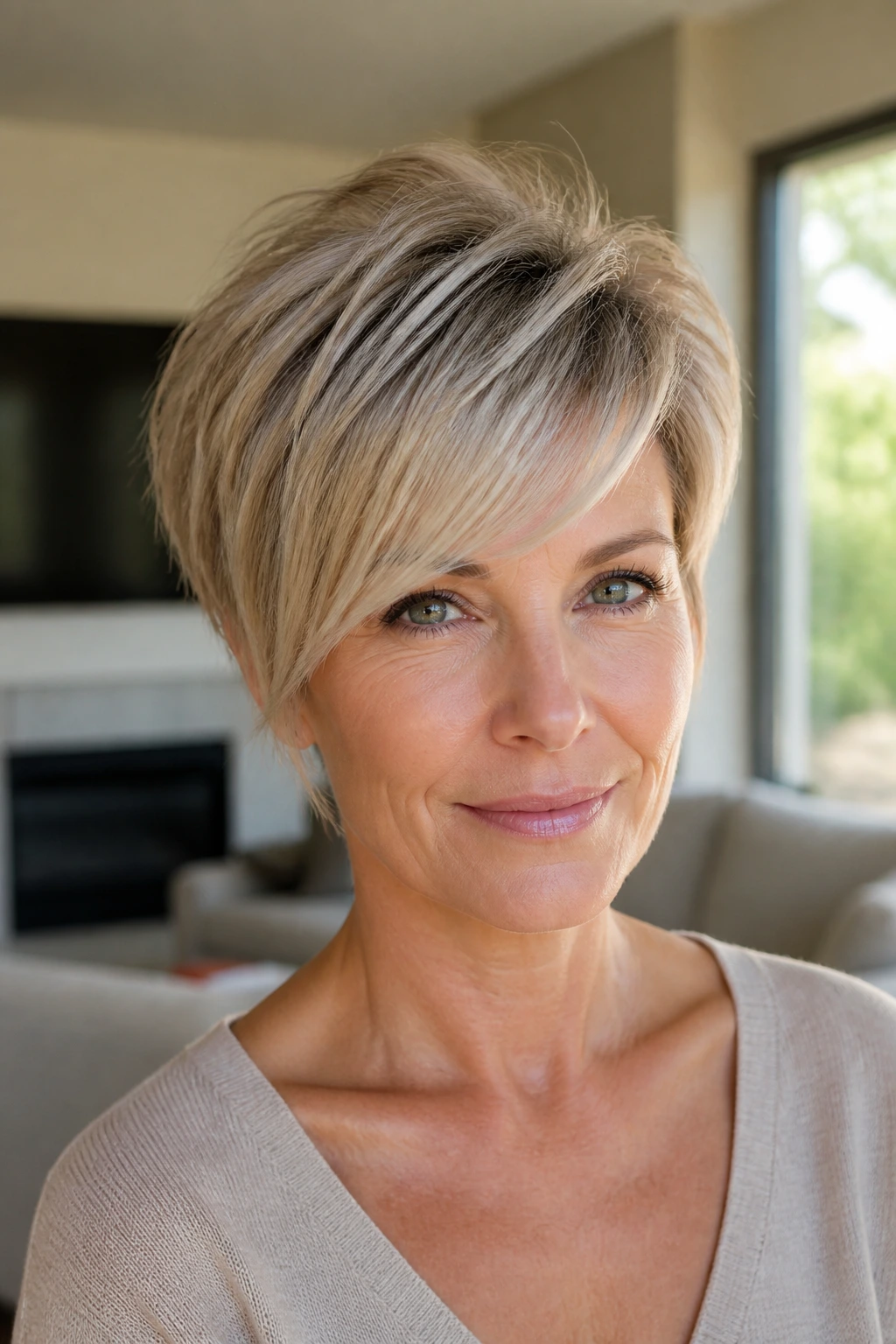
When the crown is flat, the bang should not be the place where you pile on weight. A crown-lift side bang keeps the front light but builds volume where the hair falls from the top of the head. That lift makes short, thin hair look fuller from a distance.
The styling order matters here. Dry the crown first, then shape the fringe. If you do it the other way around, the bang looks decent for five minutes and the top collapses right behind it. Annoying. Predictable, too.
The Small Trick
Clip the front section up for a minute while you dry the roots underneath. That tiny pause helps the bend hold once the clip comes out.
17. Chin-Grazing Sweep
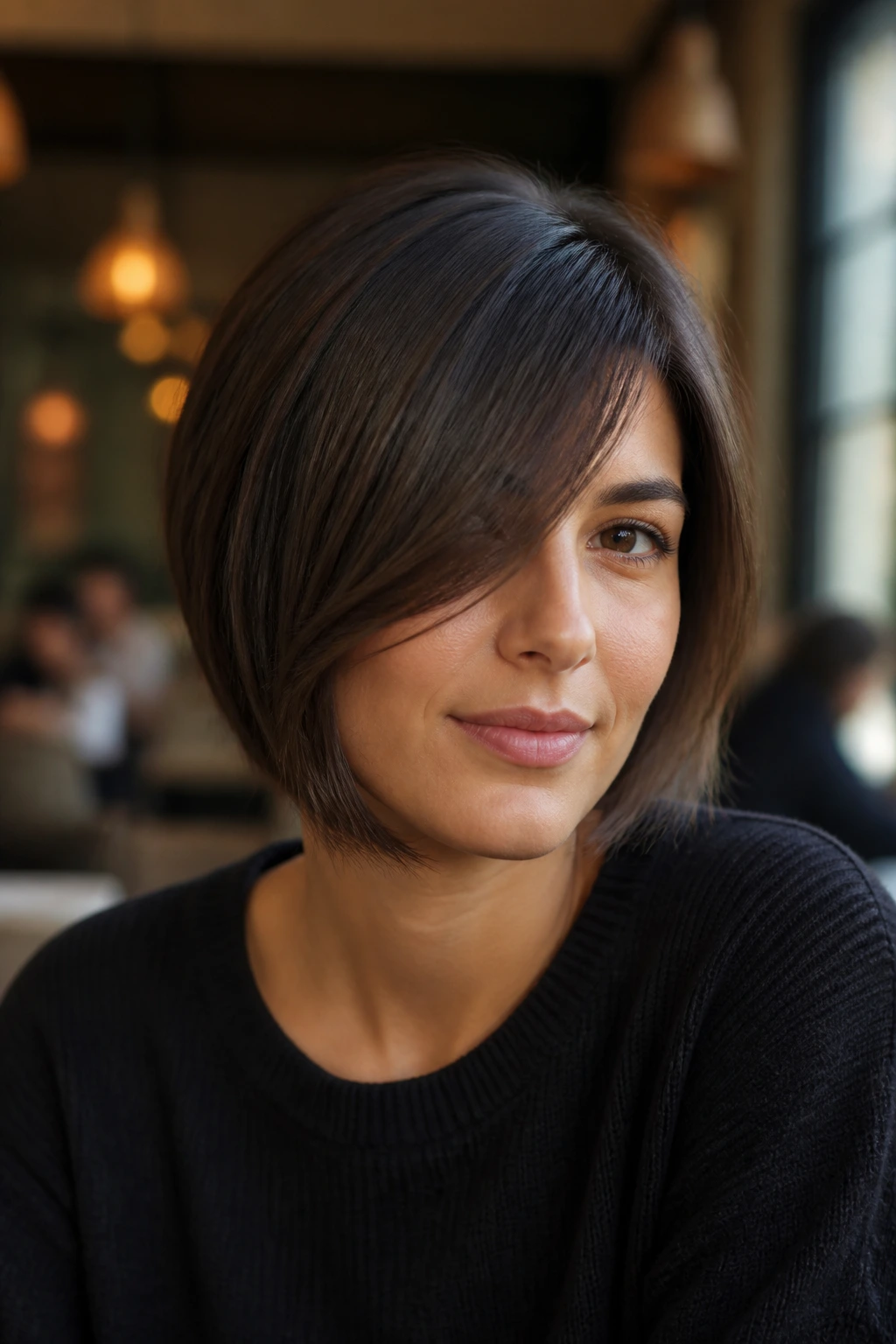
A chin-grazing sweep is longer than most side bangs, and that is the whole point. It gives short, thin hair a long line across the face, which can make the haircut feel more substantial without actually adding weight. It’s especially nice on a short bob that needs a little softness around the jaw.
This style can look expensive when it’s well cut. The ends should stay airy, though. If the line is too solid, it starts acting like a front layer instead of a fringe, and the shape loses that easy swing.
Where It Fits Best
Use it when you want a little glamour but not a lot of daily work. It can be tucked, pinned, or swept forward depending on the day.
18. Wet-Look Side Fringe
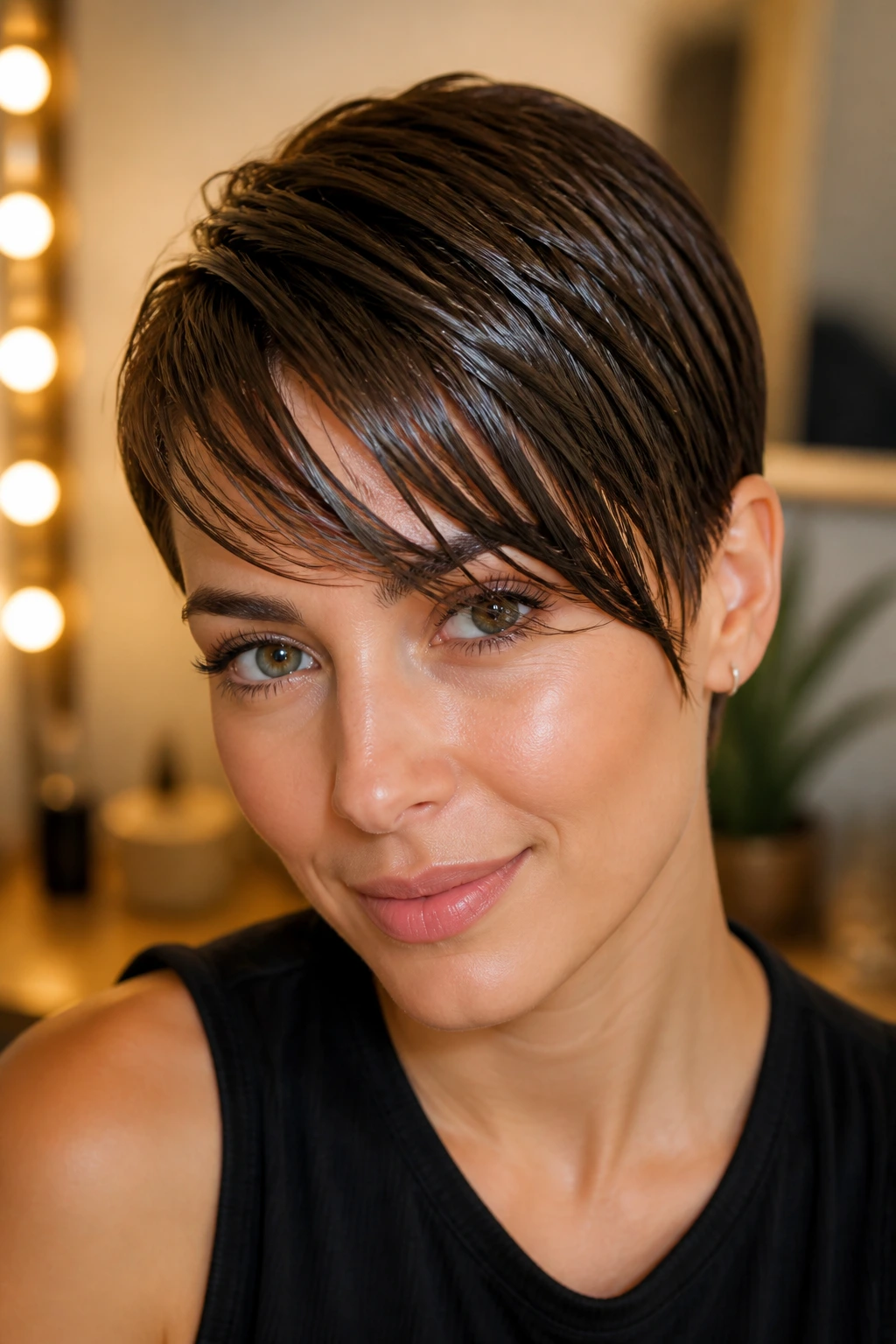
A wet-look side fringe is one of the few styles here that wants product on purpose. The finish is sleek, separated, and a bit glossy, which can be flattering on short, thin hair that gets fluffy after drying. The side sweep gives the style structure, while the finish keeps every strand in place.
Do not drench the fringe. A small amount of gel or styling cream on damp hair is enough. If you load it up, the scalp shows more than you want and the bangs lose that clean, controlled line.
This is a good night-out option, or a useful fix when the weather is humid and your hair refuses to behave. It’s not the most casual look in the group, but it has a purpose.
19. Soft Grow-Out Bang
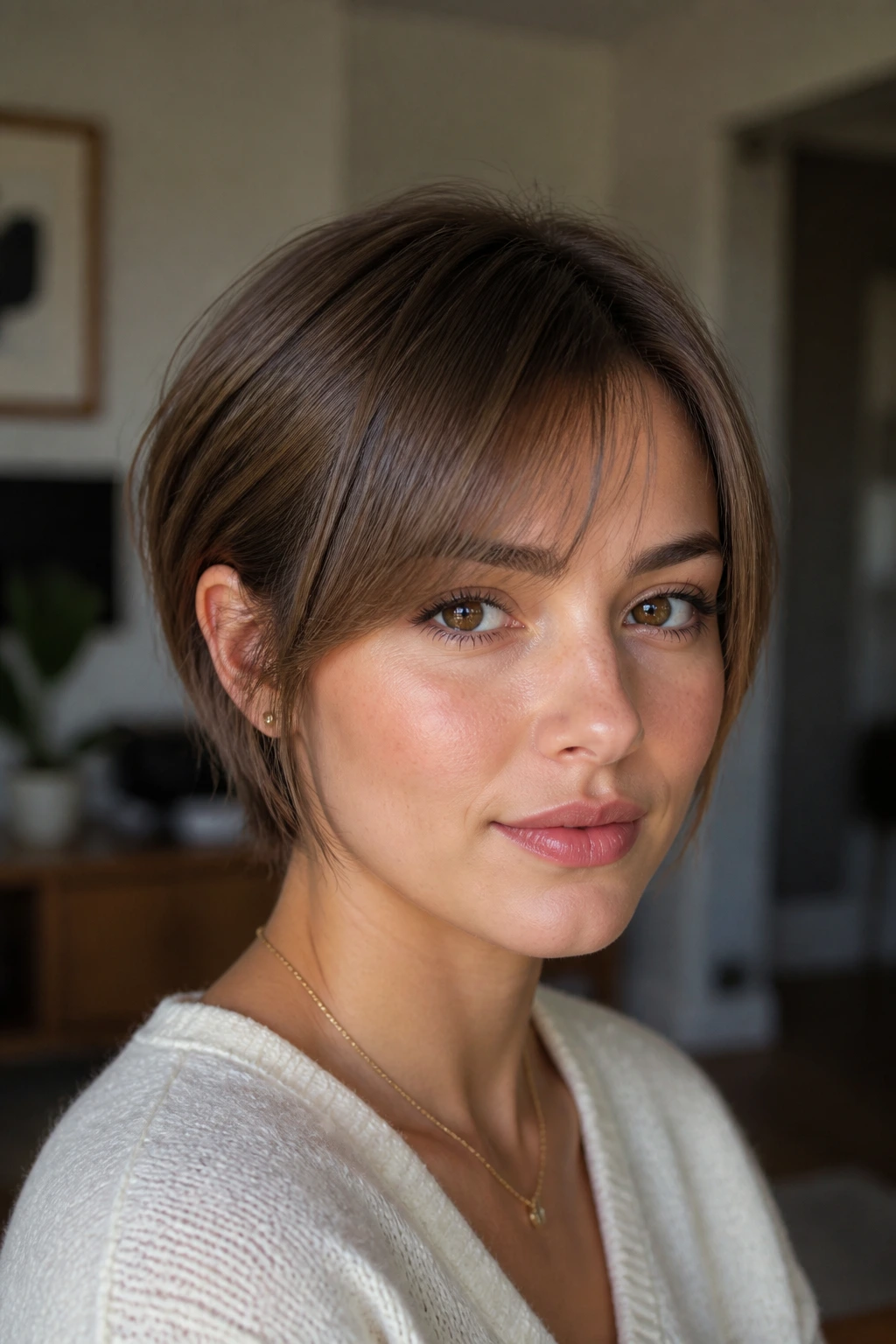
A soft grow-out bang is what I recommend when someone wants side bangs but hates high-maintenance cuts. The length lives between fringe and front layer, which gives short, thin hair a soft frame without a hard edge. It’s a practical shape, and honestly, one of the smartest.
The best part is how it behaves later. As it grows, it doesn’t suddenly become awful. It just becomes longer. You can sweep it farther over, clip it back, or let it merge into the haircut. That’s worth a lot.
Why It’s the Easiest Transition
If you’re unsure about bangs, start here. It gives you the feel of a side fringe with almost none of the regret.
How Side Bangs Keep Short Thin Hair From Falling Flat
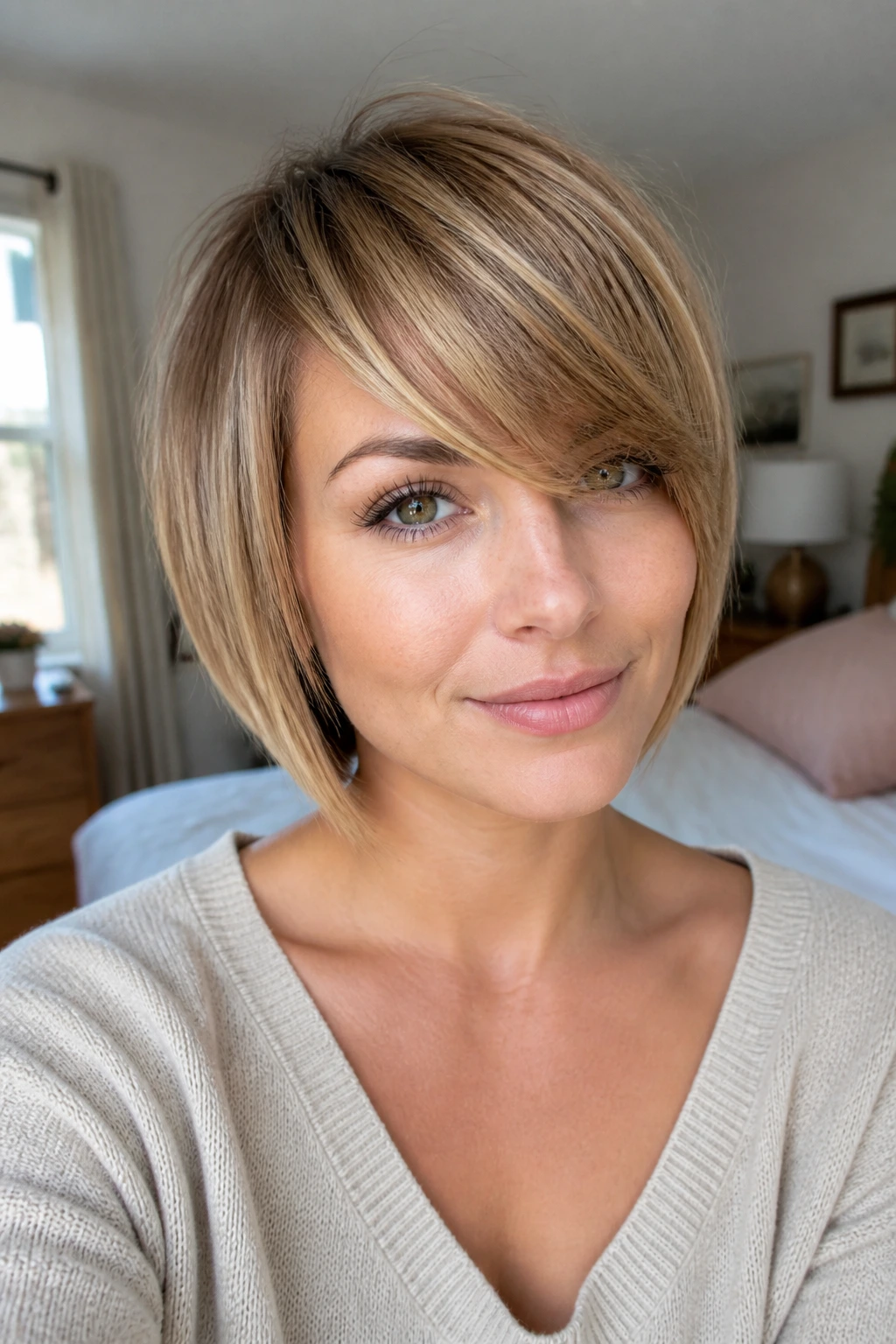
Side bangs work on short, thin hair because they solve a shape problem, not just a styling problem. The front of the haircut often needs more visual help than the back, especially when the hair is short enough that every line shows. A side bang breaks the forehead space into a diagonal instead of a straight band, and that diagonal is what keeps the cut from looking harsh.
The root area matters more than the ends. If the bang is heavy at the root, it will collapse no matter how pretty the cut looks in the chair. Lightness at the base, a clean bend through the middle, and soft ends give you a fringe that moves instead of sitting there like a wet napkin.
The Front Needs Air, Not Bulk
People often think thin hair needs more hair in the bang. Usually, it needs better distribution. A side sweep spreads the visual weight across the forehead, which makes the fringe look fuller than it is.
Length Is a Tool, Not a Problem
Longer side pieces can actually make short hair look thicker because they create a visible edge. That edge gives the eye something solid to track. Short, blunt bangs on fine hair tend to show every gap. Longer, softer side bangs hide them.
Parting Changes Everything
A side part isn’t just a styling preference here. It’s part of the haircut’s structure. Move the part, and you move the lift. Keep that in mind if your bangs suddenly start acting flat for no obvious reason.
What to Ask for at the Salon
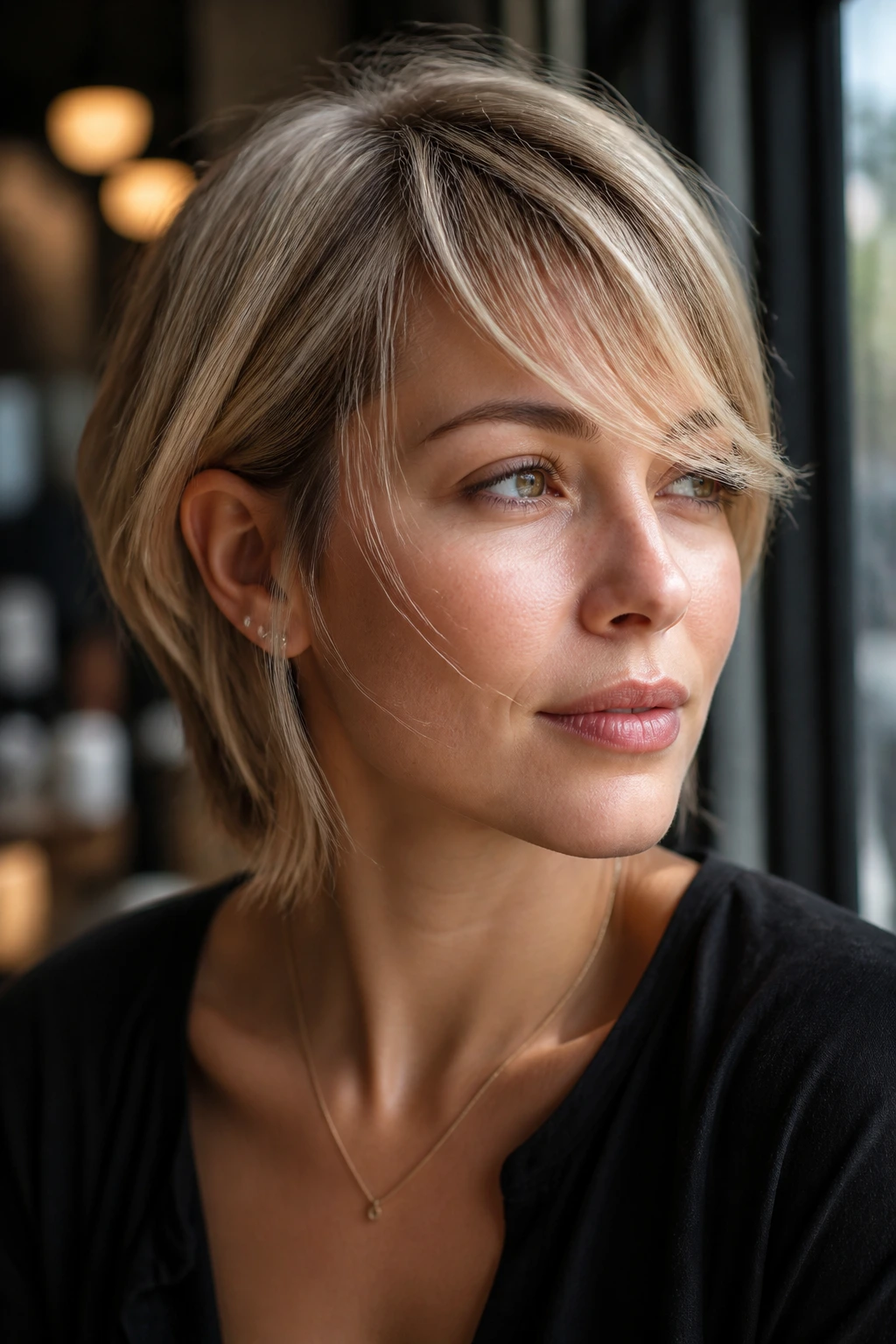
Bring a photo, yes, but bring words too. The best salon result usually comes from a short, plain description: where the shortest point should land, how soft the ends should be, and how much forehead you want to show. A picture alone can be misleading if the model has thicker hair or a different hairline.
Ask for the bang to be point-cut or lightly razored, not cut as a dense strip. On short thin hair, that blunt line can look wider than it really is. If your hair is very fine, say that out loud. Fine hair and thin density are not the same thing, and stylists handle them differently.
Say These Things Clearly
- Ask for the shortest point to sit around the outer brow or just below it.
- Ask for the longest point to land near the cheekbone or upper jaw.
- Ask for the fringe to blend into the side layers instead of sitting on top.
- Mention any cowlicks, temple gaps, or strong part lines before the cut starts.
If you wear glasses, take them with you. If you usually air-dry, say that too. A fringe that only works after a 20-minute blowout is not a good fringe for most real lives.
Tools That Make Styling Easier
-
Blow dryer with a nozzle attachment — The nozzle keeps the airflow aimed at the roots so the fringe bends instead of flying everywhere.
-
Small round brush, 1 to 1.25 inches — Best for shaping a side sweep on short hair without overloading the front with volume.
-
Vent brush or compact paddle brush — Good for quick smoothing when you do not want a polished blowout.
-
Lightweight mousse — Adds grip at the root without making the bang stiff or sticky.
-
Root-lift spray — Helps the front stay off the scalp, especially on very fine hair.
-
Dry shampoo — Useful for day-two bangs and for soaking up the oil that collects right at the hairline.
-
Texture spray — Gives piecey movement to choppy or feathered side bangs without turning them crunchy.
-
Fine-tooth comb — Handy for setting the direction of a smaller fringe or checking the part line.
-
1/2-inch or 3/4-inch flat iron — Good for adding a soft bend to a shorter side bang.
-
Sectioning clips — Small clips make it easier to dry the rest of the hair without disturbing the fringe.
How to Style the Fringe Without Making It Stiff
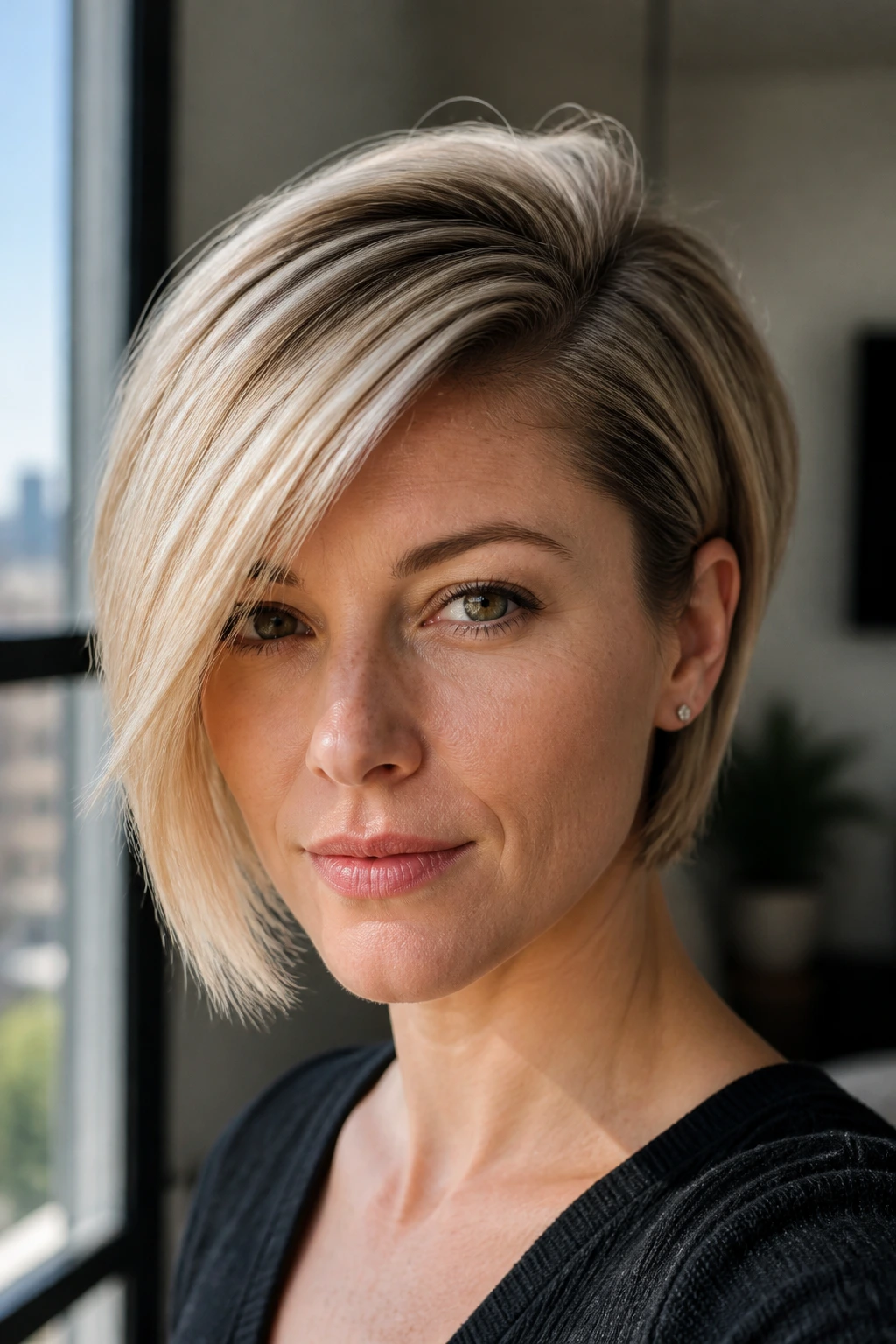
Start with less product than you think. A pea-sized amount of mousse or a light mist of root spray is usually enough for short, thin hair. If the fringe feels coated before you dry it, you’ve already gone too far.
Dry the bang from the opposite side for the first stretch of drying. That little trick encourages lift at the root and keeps the hair from settling flat in the direction it was cut. Once the front is about 80 percent dry, sweep it into place and finish with the brush or your fingers. The cool-down matters. Hair “remembers” the shape better when it sets while cooling.
Do not chase perfect symmetry. Side bangs look best when they have a bit of movement. If one piece flips up slightly or tucks in a little differently, that is usually better than forcing every strand into the same line.
For a smoother finish, wrap the fringe around a small round brush or bend it with a flat iron in one gentle pass. Keep the heat moving. Holding a hot tool on short hair too long creates a stiff, shiny section that sticks out instead of blending in.
Common Mistakes to Avoid
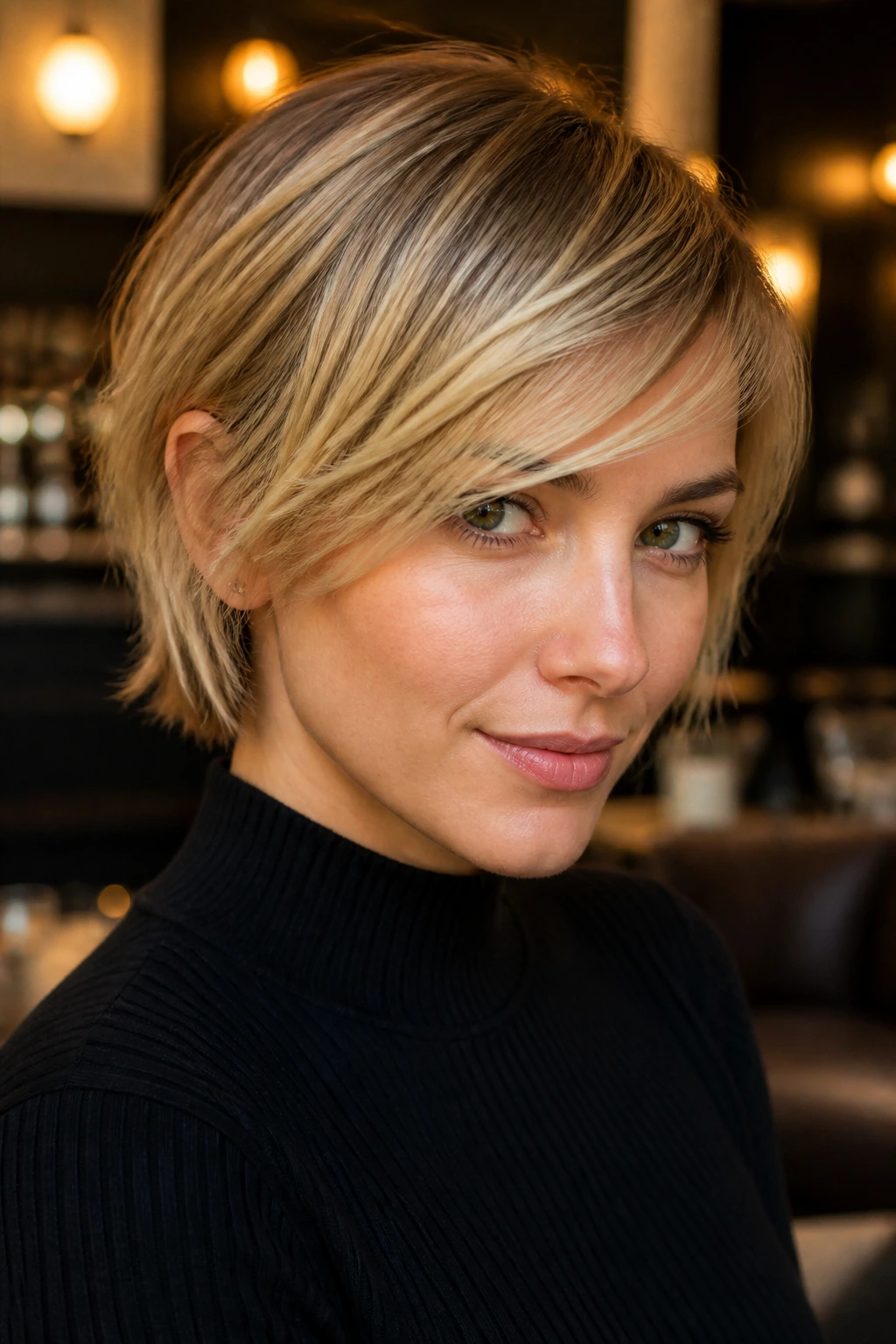
The first mistake is cutting the fringe too thick. On short, thin hair, a dense bang can sit like a slab and make the whole haircut look heavier than it is. The fix is simple: keep the internal weight low and let the side part do more of the visual work.
The second mistake is going too short too soon. A side bang that looks fine in the chair may spring upward once it dries, especially if your hair has any wave or cowlick. Leave a little extra length, then refine it after the first wash if needed.
A third mistake is loading the front with heavy cream or oil. That usually makes thin hair look separated in the wrong way, with little stringy chunks instead of soft pieces. Use lightweight mousse or texture spray instead.
And then there’s ignoring the crown. If the roots above the fringe are flat, the bang loses lift and starts to droop over the face. Dry the root area first, or the front never gets a fair shot.
Finally, do not fight a strong part line without help. If the hair naturally wants to separate in a certain direction, cutting against it too hard can make the fringe split every morning. Work with the fall, not against it.
Variations and Alternatives for Different Hair Types
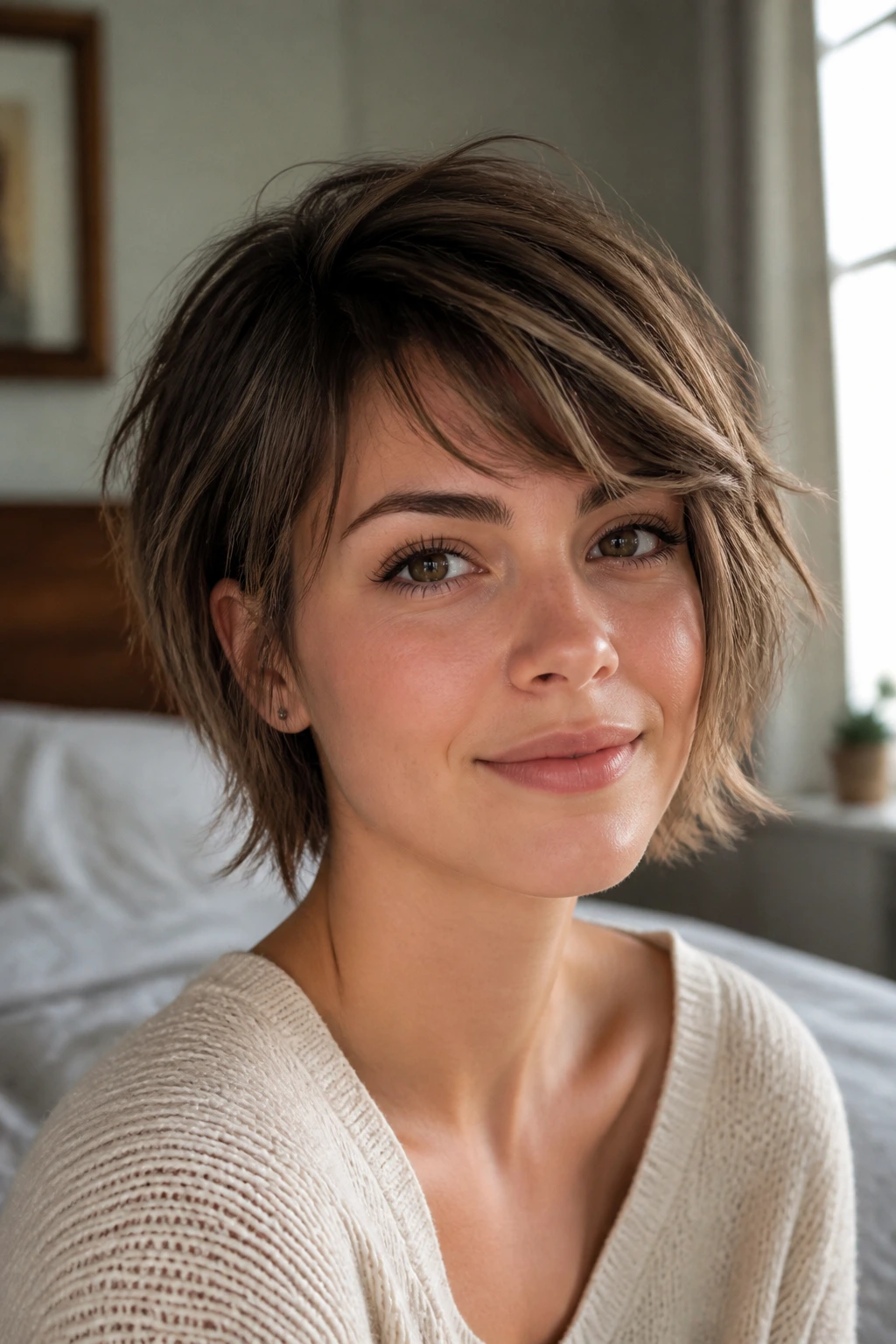
Curly Sweep: Let the curl pattern lead, and cut the side fringe longer than you would on straight hair. Curly hair springs up when it dries, so the front needs extra length to stay visible.
Glasses-Friendly Fringe: Keep the shortest point above the frame and the longest point just under the cheekbone. This version avoids constant lens brushing and keeps the hair from getting caught in the arm of the glasses.
Edgy Uneven Swoop: One side sits shorter, the other longer, with a stronger angle through the forehead. It’s a smart choice if you want the fringe to feel deliberate and a little sharper.
Low-Maintenance Grow-Out: Aim for a soft side bang that already looks halfway grown out. It’s the best option if you want movement without scheduling trims every few weeks.
Smooth Air-Dry Bend: This one works for hair that dries with a natural curve. Use a tiny bit of foam, finger-shape the fringe, and stop touching it once it starts to set.
Keeping the Fringe Light Between Washes
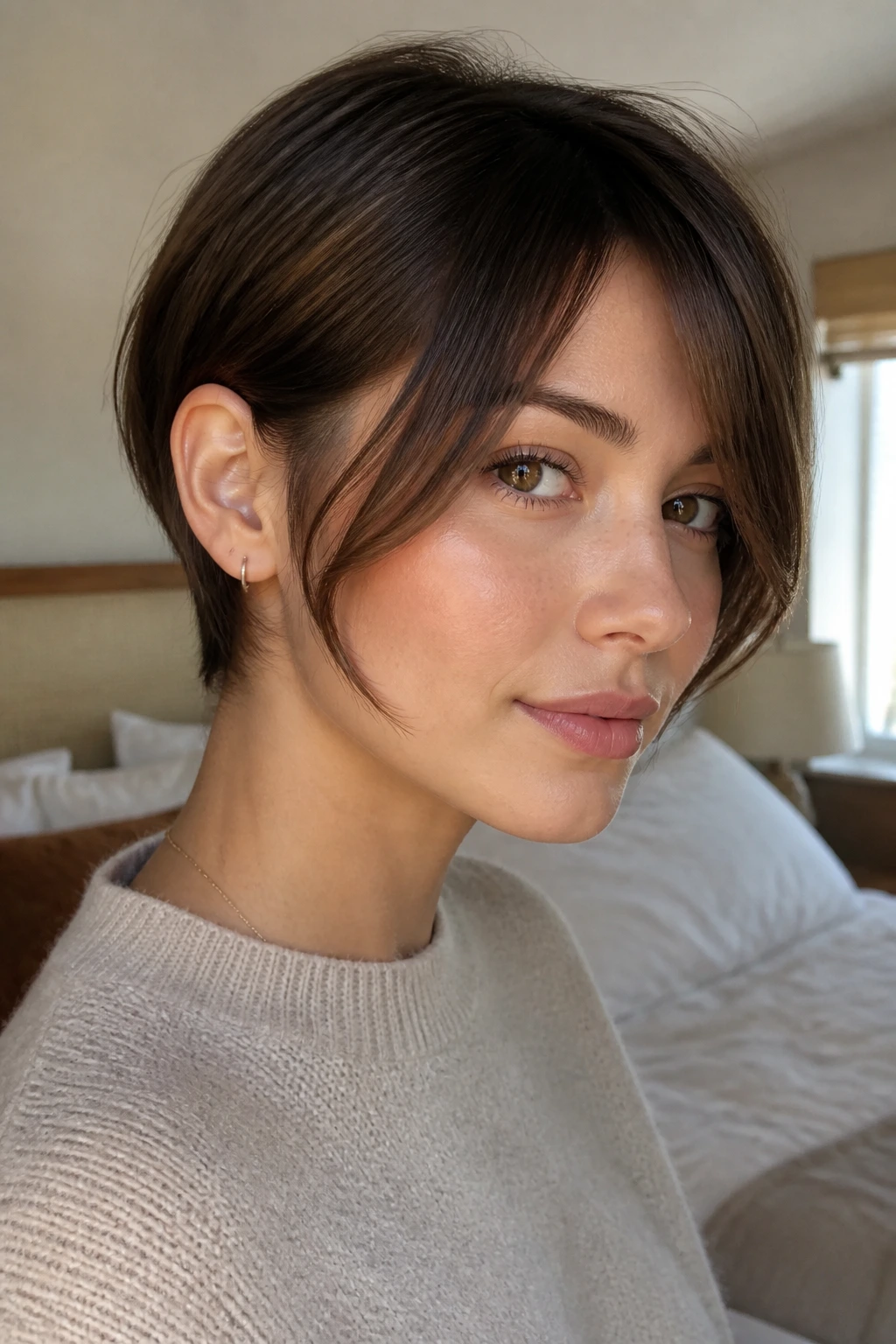
Side bangs usually get oily first because they sit right on the forehead. That is normal. The fix is not to wash all your hair constantly; it is to reset the front section with a little care. A quick blast of dry shampoo at the roots can buy you another day, but use it at the scalp, not halfway down the strand where it only dries the ends out.
If the fringe starts splitting by midday, lightly mist it with water, comb it back into place, and let it dry in the direction you want. For stubborn cowlicks, clip the bang in place for 5 to 10 minutes while you do your makeup or get dressed. That tiny pause helps more than people expect.
Trim timing matters. For a very short side bang, a tidy-up every 3 to 5 weeks keeps the shape clean. A longer, grow-out version can go 5 to 7 weeks before it starts losing its line. If you wait too long, the fringe doesn’t look fashionable-gone-long. It just gets vague.
Sleep can wreck the shape, too. If your fringe bends in a weird direction overnight, pin it loosely to one side or sleep on a satin pillowcase. That won’t solve everything, but it does cut down on the morning battle.
Frequently Asked Questions
Are side bangs good for thin hair?
Yes, when they’re cut light and angled. A side bang adds direction and breaks up the flatness that can make thin hair look sparse at the front. The mistake is making it too dense, which has the opposite effect.
What side bang length works best on short hair?
The sweet spot is usually between the outer brow and the cheekbone, depending on the haircut. Shorter than that can get spiky fast; longer than that can start acting like a front layer instead of a fringe.
Do side bangs make a face look smaller?
They can soften a larger forehead and narrow the front of the face, but they should not hide everything. A little skin showing keeps the cut light. Too much coverage makes short hair feel boxed in.
Can I cut side bangs at home?
You can, but be careful. Short, thin hair does not leave much room for correction, and bangs shrink when they dry. If you do trim at home, take less than you think, cut dry, and use tiny snips rather than one big chop.
What if my bangs split in the middle?
That usually means the part line or cowlick is winning. Dry the roots in the opposite direction first, then clip the fringe across the forehead for a few minutes before releasing it.
Do side bangs work with glasses?
Yes, if the length is planned around the frames. Keep the shortest point above the arm of the glasses and the longest point low enough to frame the face without rubbing the lens.
Should I thin out side bangs on fine hair?
Usually no, not aggressively. Fine hair already lacks body, so over-thinning can leave the fringe see-through. Light point cutting is enough in most cases.
How often should side bangs be trimmed?
Short versions need attention every 3 to 5 weeks. Longer, grown-out versions can last a bit longer, but once the line starts covering the eyes or breaking apart in the wrong spots, it’s time for a trim.
Soft Lines, Easy Mornings
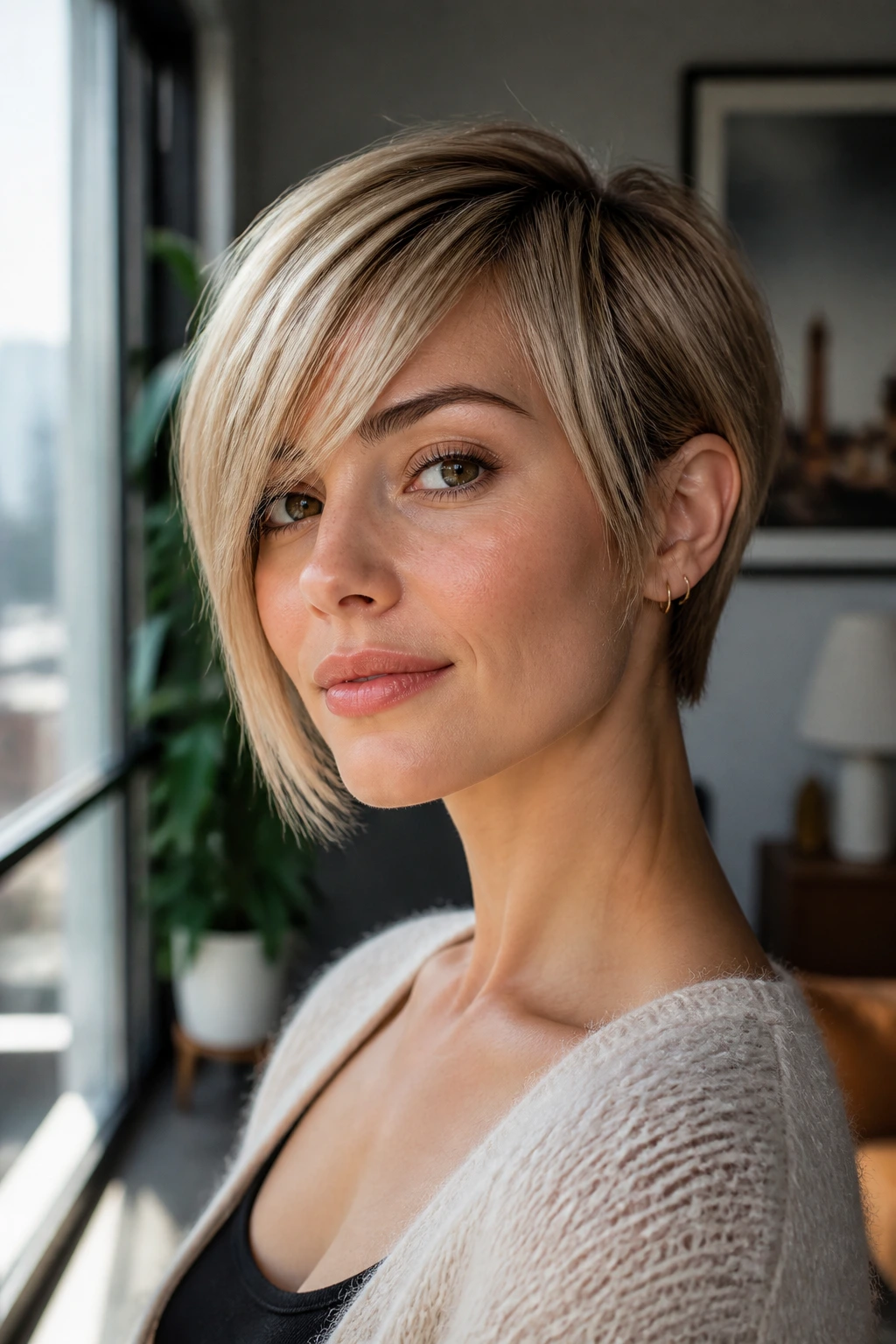
The best side bangs do one simple thing: they make short thin hair look easier to wear. Not bigger. Not louder. Easier. That matters more than people admit, especially when the front of the haircut has to do the work that length can’t.
A good side fringe should bend with you, not fight you. If you can sweep it over, tuck it back, or let it loosen up between trims without feeling stranded, you’ve picked the right shape. And if the first cut feels a little too exact, remember that the softest versions often end up looking the best after two or three washes.
The smart move is to choose a fringe that fits your real routine, not the one that looks best under salon lights. Short, thin hair usually behaves better when the front stays light. Keep it light, keep it angled, and the whole cut starts breathing a little easier.
