



Side swept bangs for long faces work because they interrupt that long vertical line without turning your forehead into a curtain wall. That’s the whole game. You want softness across the face, a little width at the cheekbones, and enough movement that the fringe looks intentional when it falls off to one side — not like hair that got tired halfway through the day.
The wrong kind of side fringe does the opposite. It hangs straight down, lives too high on the forehead, or gets cut so thin that it disappears the second you bend forward. A long face needs a bang shape with some body in it. Not helmet hair. Not a wispy afterthought. Just enough diagonal motion to break up length and give the face a more balanced look.
The nice part is that side-swept bangs are not one single thing. They can be feathered, heavy, piecey, curved, glam, shaggy, barely there, or grown-out and relaxed. The right version depends on your hair density, your texture, how often you’re willing to style it, and how much forehead you want to keep visible. That mix matters more than trend language ever does, and it’s where the real flattering magic lives.
Why Side Swept Bangs Work on Long Faces
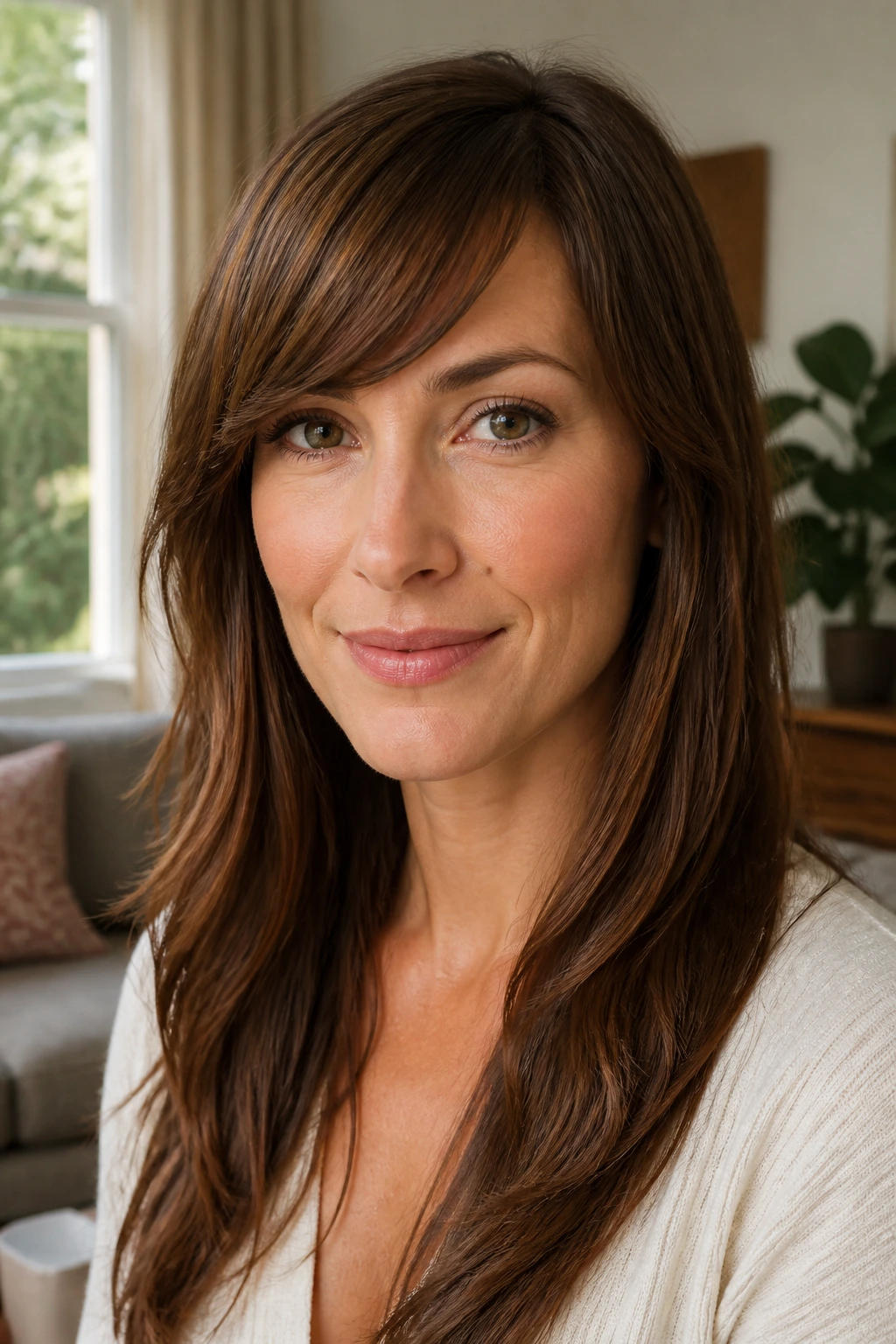
- They create a horizontal break: A long face reads shorter when the eye lands on a sweep across the forehead instead of one uninterrupted vertical line.
- They add width where it helps most: The side sweep pulls attention toward the temples and cheekbones, which softens a narrow look.
- They’re easier to grow out: A good side fringe can blur into layers, so you’re not stuck with a harsh grow-out line in two weeks.
- They work with more haircuts: Long layers, shags, lobs, and even straight hair all take to a side sweep if the length is cut smartly.
- They let you keep some forehead: That matters if you want balance without fully covering the face. Too much fringe can look heavy fast.
The best side swept bangs for long faces usually start with a part that isn’t dead center and don’t end in a blunt wall across the brow. They need movement. A bend. A little swing. If the bang sits like a flat strip, the face still looks long — just with a strip of hair in front of it.
I’m also a fan of side sweeps because they’re honest. They show your forehead, your hairline, your texture, and a bit of your styling habits. That sounds fussy, but it helps. Haircuts that fight all those things usually lose.
1. Feathered Side Swept Bangs
Feathered side swept bangs are the easiest place to start if you want something soft and forgiving. The ends are lightly point-cut, the edges stay airy, and the whole shape glides into the rest of the hair instead of landing as a hard block. On a long face, that softness is useful because it trims visual length without making the forehead feel boxed in.
What Makes Them Work
The feathering gives the eye enough texture to notice the fringe, but not so much density that it feels heavy. Ask for the bang to begin near the brow arch and taper toward the temple, with the longest pieces brushing the outer corner of the eye or cheekbone. That extra diagonal line is doing real work.
- Best for medium to thick hair.
- Looks strongest with a round brush and a quick bend at the end.
- Grows out cleanly if you keep the last inch soft.
Pro tip: If your hair flips oddly at the ends, blow-dry the bang in the opposite direction first, then sweep it over. It makes the feathering sit flatter and last longer.
2. Deep Side Part Bangs
A deep side part gives a long face one of the quickest fixes it can get from a haircut. The part itself adds asymmetry, which breaks up the tall, narrow shape, and the heavier fall of hair on one side gives width near the eye and temple. That little shift changes the whole read of the face.
This style works best when the part is placed far enough over that the fringe crosses the forehead at a real angle, not a timid little bend. If you like a sleek finish, keep the front longer and let it curve just past the brow. If you want something more relaxed, let the pieces land at cheekbone level and use a touch of dry texturizer so the shape doesn’t go limp by lunch.
I like this version on straight hair, but it’s good on wavy hair too. The only catch is that the part has to stay committed. Half-hearted deep side parts collapse fast, and long faces do not need collapse. They need structure.
3. Wispy Brow-Grazing Sweep
Ever seen a fringe that looks like it barely tried, in the best possible way? That’s the wispy brow-grazing side sweep. It’s lighter than feathered bangs and less structured than a glam swoop, which makes it a nice fit if you want to soften a long face without hiding the forehead completely.
How to Wear It
Keep the density light, but not see-through. That distinction matters. The bang should still cast a soft line across the forehead, just a delicate one. If it becomes too thin, it stops balancing the face and starts looking like you forgot to ask for enough hair.
- Works well on fine to medium hair.
- Needs a quick blow-dry with a small round brush or a side-swept velcro roller.
- Best when the ends are blended into cheekbone-length face framing.
Quick note: If your hair is very fine, don’t let the stylist over-thin it with a razor. You want wispy, not weak.
4. Choppy Piecey Side Fringe
Choppy side fringe has more attitude, more separation, and a little less polish. That’s the point. The broken texture keeps the front from sitting as one solid bar, which is useful on a long face because a piecey fringe can add width without looking heavy. It feels modern, but the reason it works is old-fashioned face balancing.
This one is happiest with wavy or slightly messy hair. You can air-dry it with a light cream, then pinch out a few strands with your fingers once it’s dry. If you’re after a softer, lived-in effect, ask the stylist to cut the fringe into small, uneven pieces that still follow a sweep rather than a straight line.
It’s not the best choice if you hate styling. Piecey bangs ask for a bit of product and a bit of hands-on shaping. Nothing dramatic. Just enough to keep the pieces separated instead of clumping together.
5. Long Curtain-Inspired Side Bangs
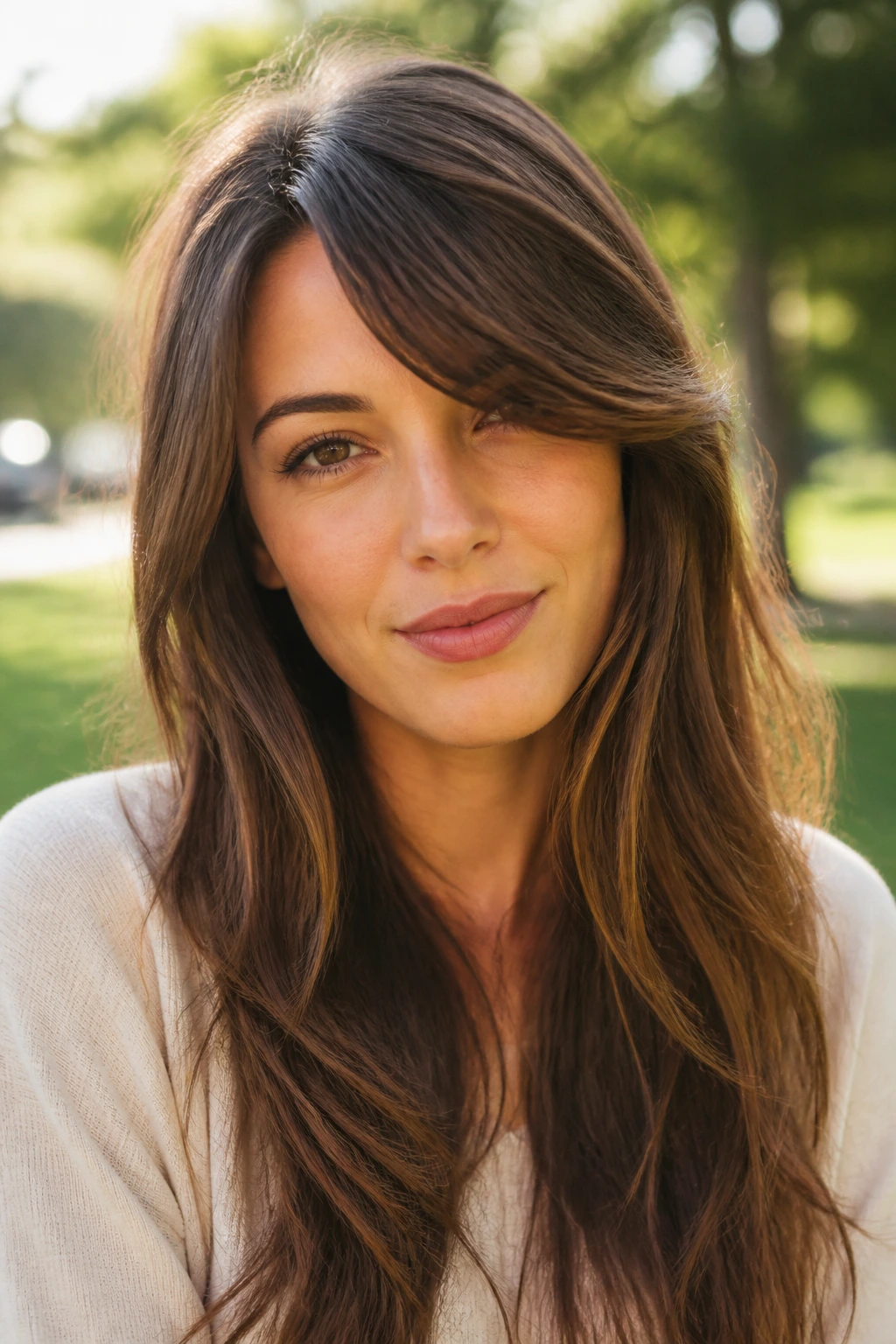
These are the ones I recommend when someone says, “I want bangs, but I’m nervous.” Long curtain-inspired side bangs borrow the split, face-framing feel of curtain bangs and push it off to one side, so the result is softer than a classic side fringe and easier to grow out than a shorter bang.
The shape is useful for long faces because it widens the upper third of the face without sitting too high on the forehead. The longest bits usually land around the cheekbone or just below, which is the sweet spot if you want the face to read a little shorter. It also plays well with layers. Very well, actually. If your haircut already has movement, this kind of side bang slips into it instead of fighting it.
I’d choose this version for medium-length to long hair. It needs room to fall. On very short cuts, it loses the drape that makes it flattering.
6. Razor-Cut Soft Sweep
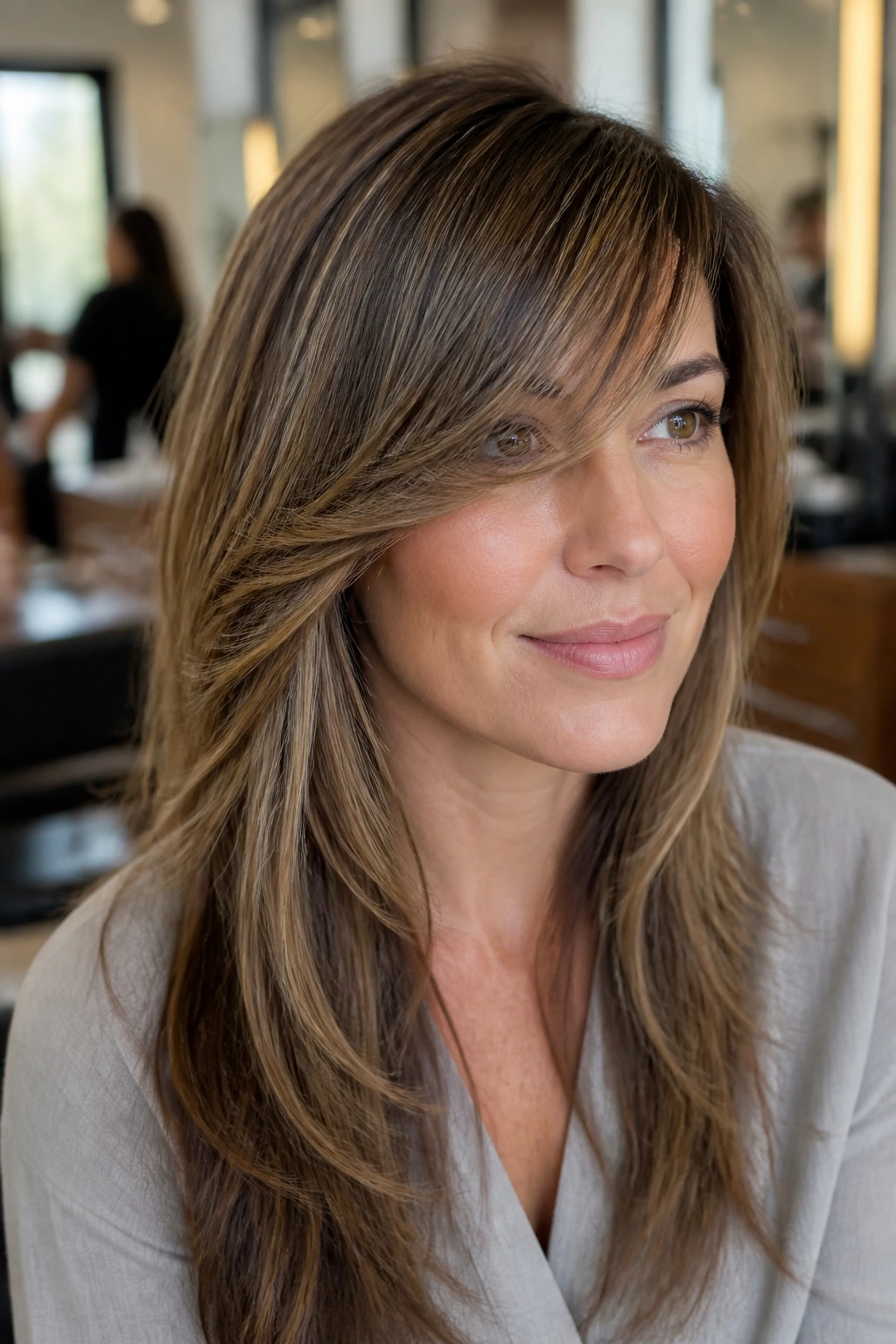
Razor-cut side bangs can look gorgeous on the right hair. The cut gives the fringe a soft, sliced edge that bends easily to one side, and that motion helps long faces by keeping the front airy instead of blocky. The key word is soft. A razor cut can go stringy in a hurry if the hair is already frizzy or fragile.
What to Watch For
If your hair is naturally smooth or only slightly wavy, this shape can be a dream. The ends move well, the sweep feels light, and the bang never looks too engineered. But if your hair expands in humidity, ask the stylist to keep the razor work minimal and preserve some weight at the ends.
The best styling move is a quick blow-dry with a nozzle, brushing the bang across the forehead and back down into place. Don’t overwork it. Razor-cut fringe gets awkward when you keep fussing with it.
7. Side Swept Bangs with Face-Framing Layers
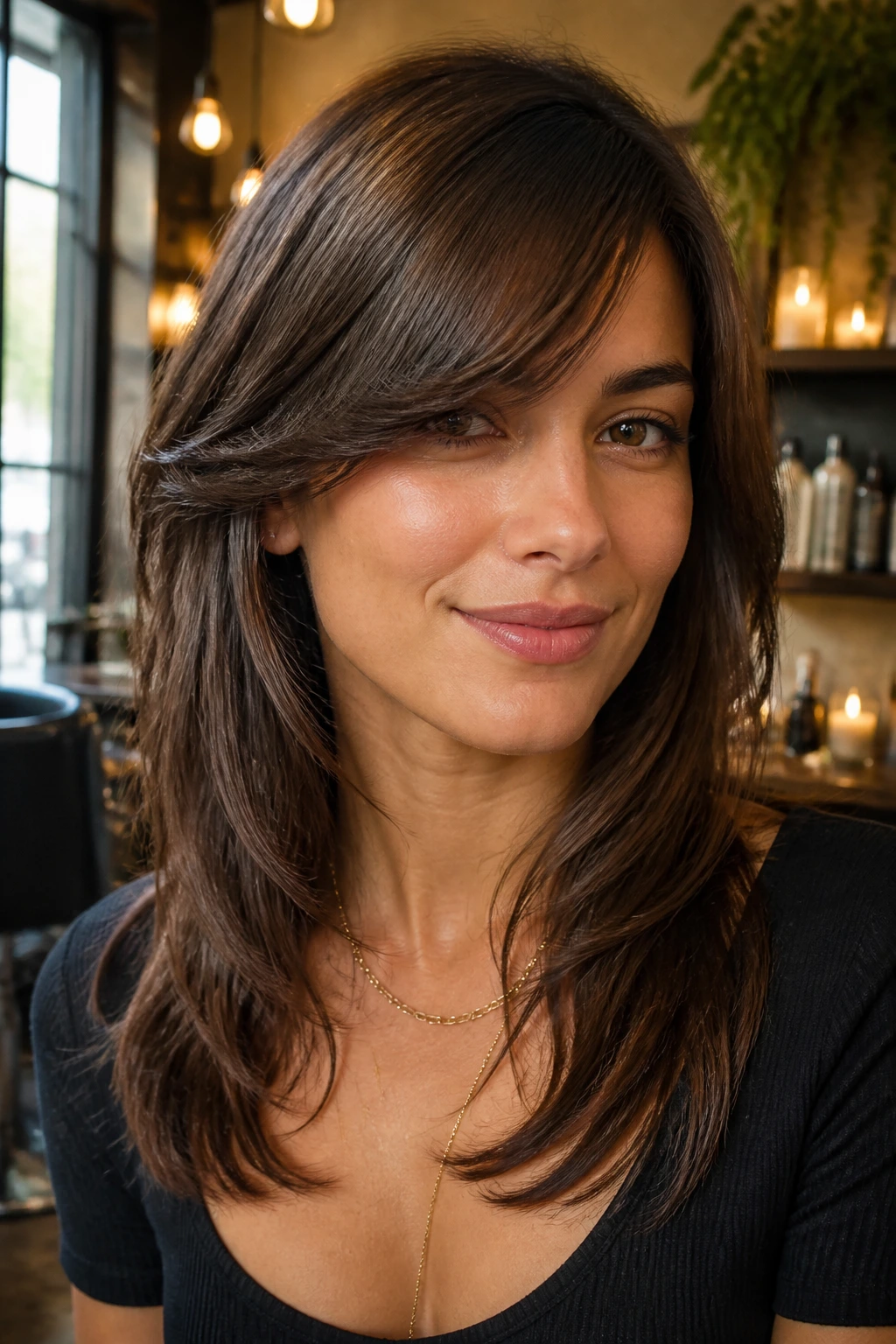
A side fringe can do a decent job on its own, but paired with face-framing layers it does a lot more. The layers around the jaw and cheekbones give the eye a second place to land, which is exactly what a long face needs. The bang handles the forehead, and the layers handle the length below.
This is the cut I reach for when someone wears their hair down most of the time. It creates one continuous shape from brow to cheekbone to shoulder, instead of a long curtain of hair that just drops straight past the face. The effect is subtle, which I actually prefer. You don’t need the haircut to shout. You need it to change the proportions in a way people feel before they can name.
If you want this look to stay flattering, ask for the first face-framing layer to begin around the chin or just above it. Too high, and the front gets busy. Too low, and the face loses the width you wanted.
8. Heavy Side Swept Bangs for Thick Hair
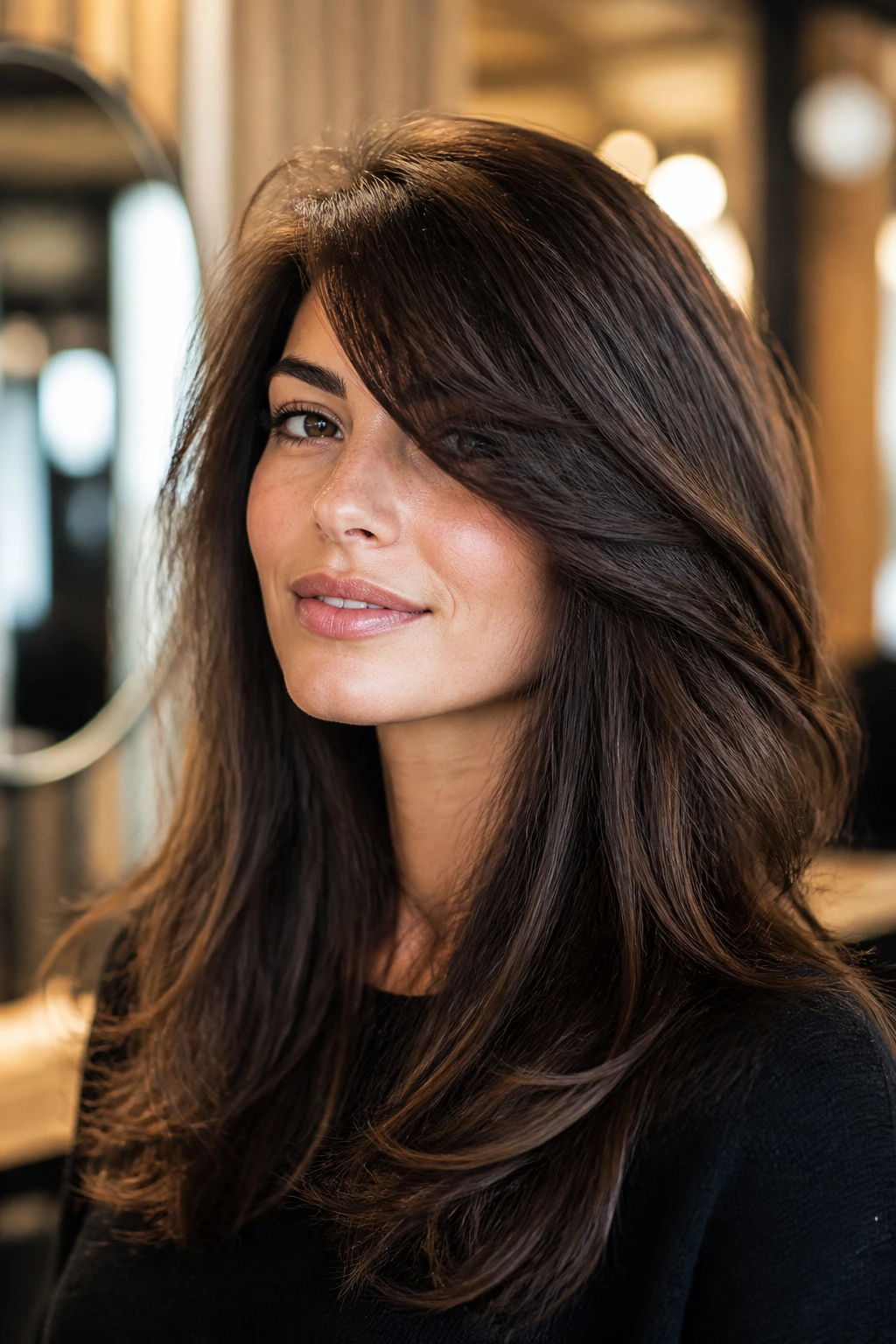
Thick hair changes the math. You can carry more density in the bang without looking sparse, and that can be a gift on a long face because a fuller side sweep creates a stronger visual break across the forehead. Done right, it feels rich and deliberate. Done wrong, it turns into a heavy flap.
The trick is controlled weight. Keep enough volume that the bang actually covers a meaningful slice of the forehead, but not so much that it sits like a shelf. Ask for internal texture, not aggressive thinning. Point-cutting usually works better than slicing out huge chunks, because you want movement inside the bang, not holes.
I like this version best with a side part and a smooth blowout. Thick hair needs direction. If you let it dry on its own, the front can puff upward and steal all the balance you were trying to create.
9. Airy Sweep for Fine Hair
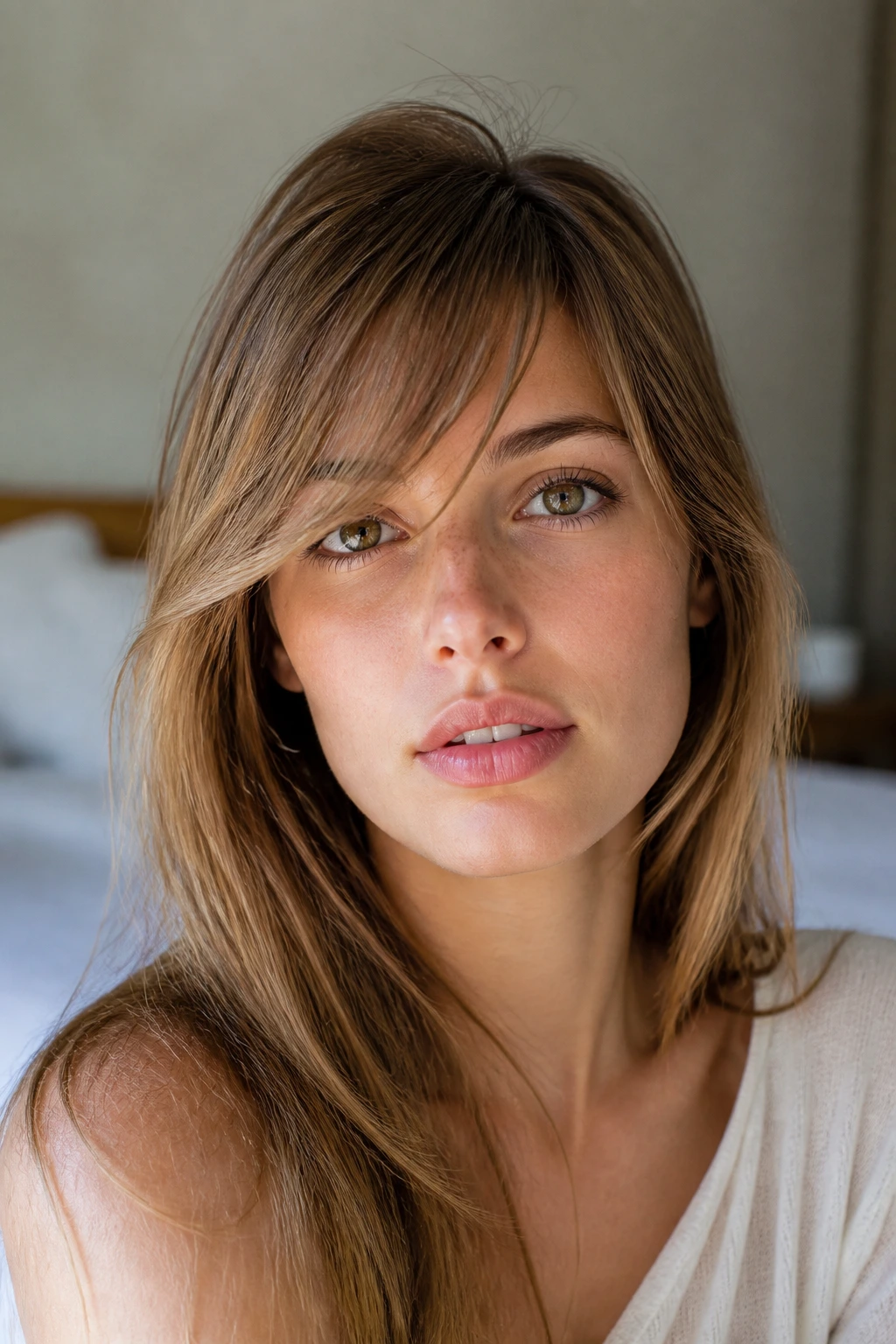
Fine hair can wear side swept bangs beautifully, but the cut has to respect the lack of bulk. A lot of people over-thin fine bangs and end up with something that disappears in daylight. That is not the goal. You want airy, not invisible.
Ask for a longer fringe that can be swept across the forehead and tucked into the rest of the haircut. The shape should feel light at the ends, but the base of the bang needs enough body to sit on the face. A tiny root lift spray and a round brush are usually enough. Sometimes a velcro roller at the front works even better. Old-school, yes. Effective too.
On long faces, this style is useful because it gives softness without swallowing the features. A little forehead shows. The eye still sees a line across the top third of the face. That balance keeps the look from going flat.
10. Side Swept Bangs with a Shag Cut
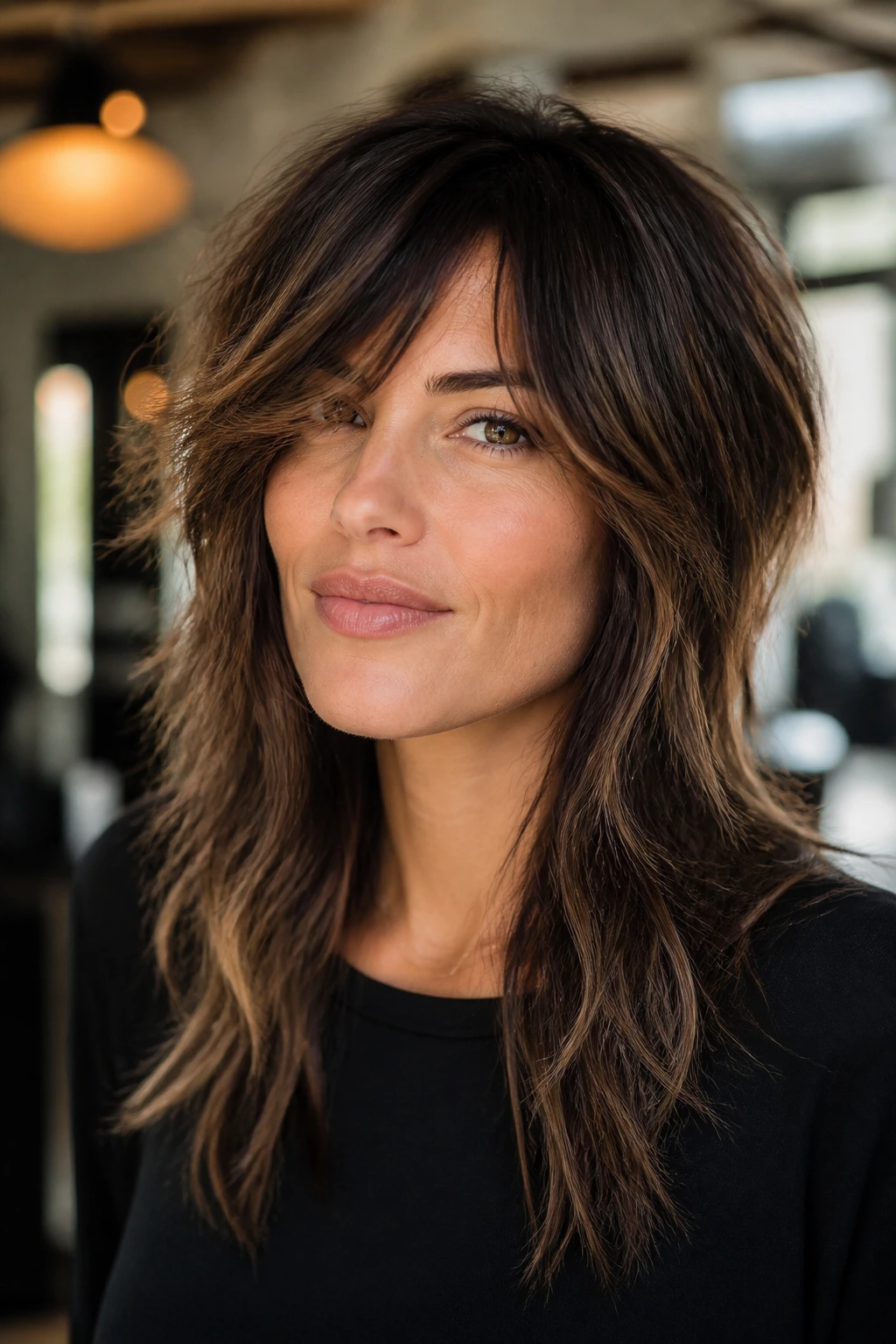
The shag and the side sweep get along because both care more about movement than neatness. On a long face, that’s helpful. The choppy layers around the crown and sides can reduce the stretched-out look, while the fringe falls across the forehead in a way that feels casual instead of strict.
This is not the fringe for someone who wants a glassy, polished finish every day. It wants texture spray, a rough dry, maybe a little finger-combing. But the payoff is shape that holds onto its character all day. The bang doesn’t need to sit perfectly. It just needs to land in the right zone — somewhere from brow to cheekbone — and blend into the rest of the layers.
If your hair is naturally wavy, this cut can look almost effortless. If it’s straight, ask for enough choppiness that the front doesn’t lie there like a strip of ribbon.
11. Glamorous Blowout Side Bangs
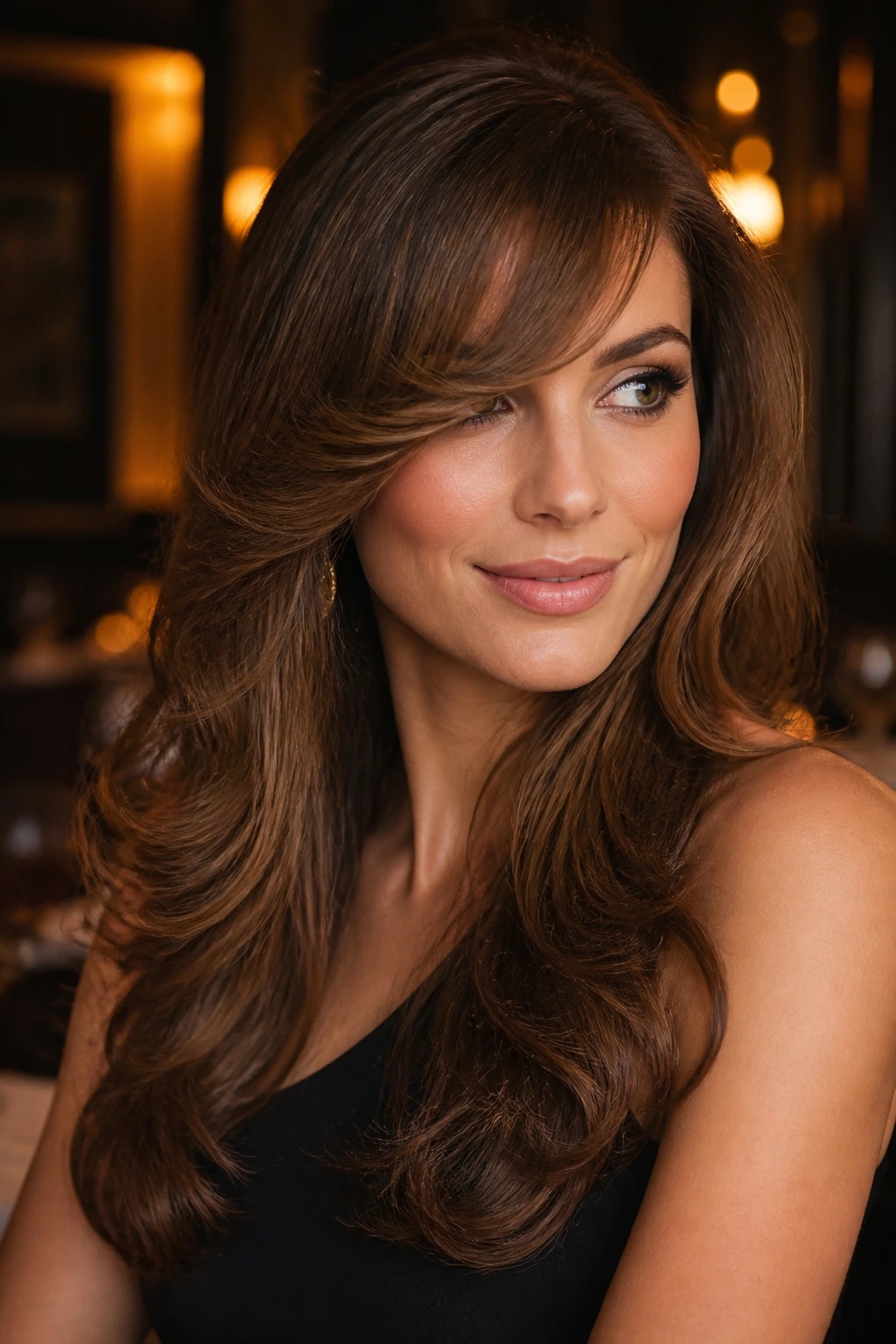
There’s a reason blowout bangs keep coming back. That soft S-curve across the forehead looks expensive for about ten minutes of work, and it gives a long face a wider, softer front edge. The bang curves away from the face, then folds back in near the cheekbone. That shape is doing all the flattering.
This version works best when the fringe is a touch longer than you think you need. Short side bangs are harder to control in a polished blowout because they pop up and lose their sweep. Longer pieces can be wrapped around a round brush or a medium roller, then set with cool air so the bend stays put.
If you like a clean look, this is a strong option for dinners, events, or days when you want the haircut to feel a little dressed up. It’s not the cheapest-feeling fringe. It knows its angles.
12. Curved Sweep That Ends at the Cheekbone
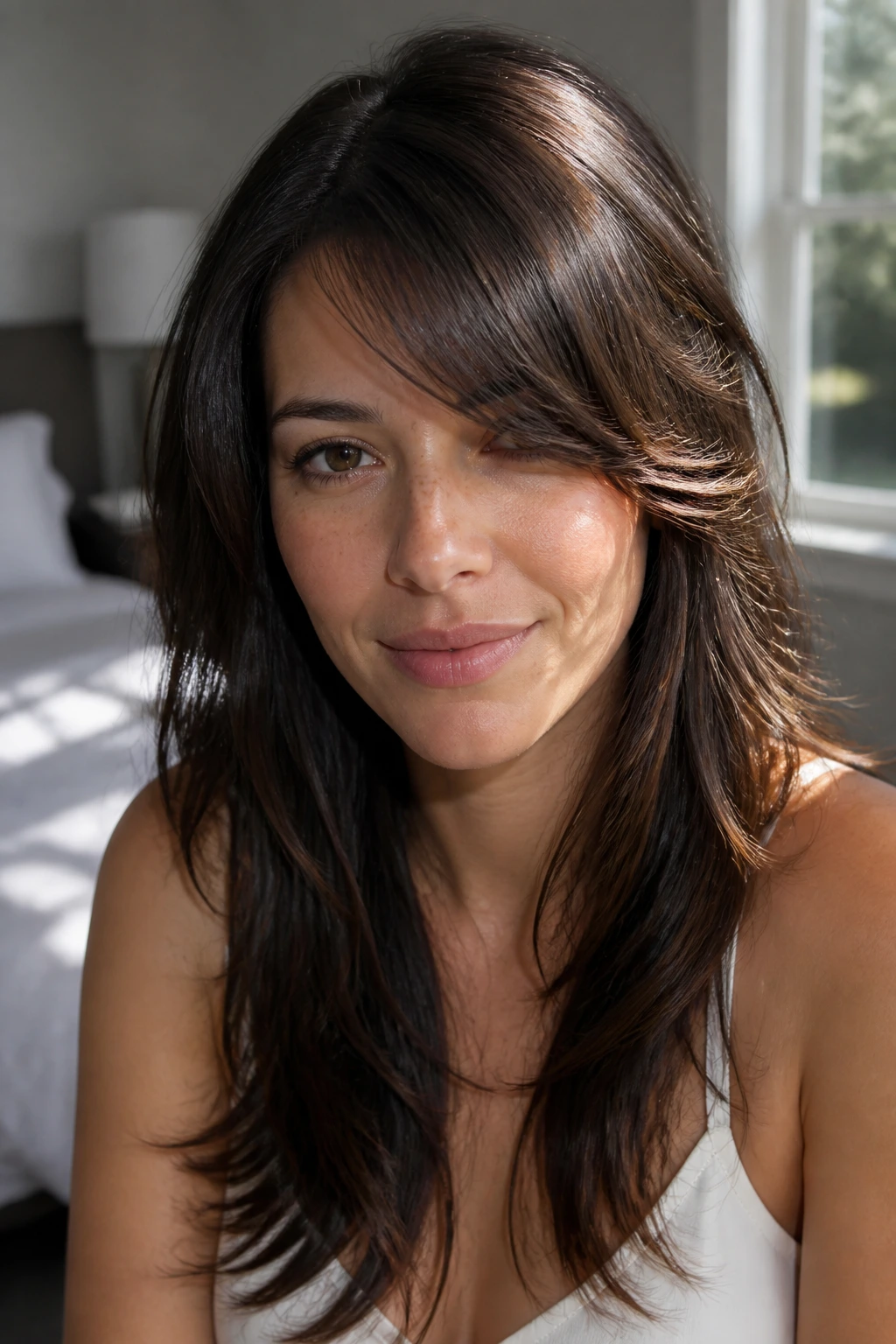
Some side bangs are cut to fall just over the brow. I prefer the cheekbone-ending version for long faces because it pulls the eye outward and upward at once. The curve gives softness, and the cheekbone landing spot adds width exactly where a narrow face needs it.
The shape is more tailored than wispy bangs and less dramatic than a blowout fringe. That makes it a good middle ground. It looks neat, but not stiff. It can be tucked behind one ear on one side, which is handy if you hate hair in your eyes but still want the bang to do its job.
The main thing to watch is the angle of the cut. If the shortest point is too short, the bang loses that cheekbone line. If it’s too long, the sweep can drag down the face. The sweet spot is somewhere between eyebrow and eye level at the shortest point, then gradually longer as it swings sideways.
13. Side Swept Bangs for Curly Hair
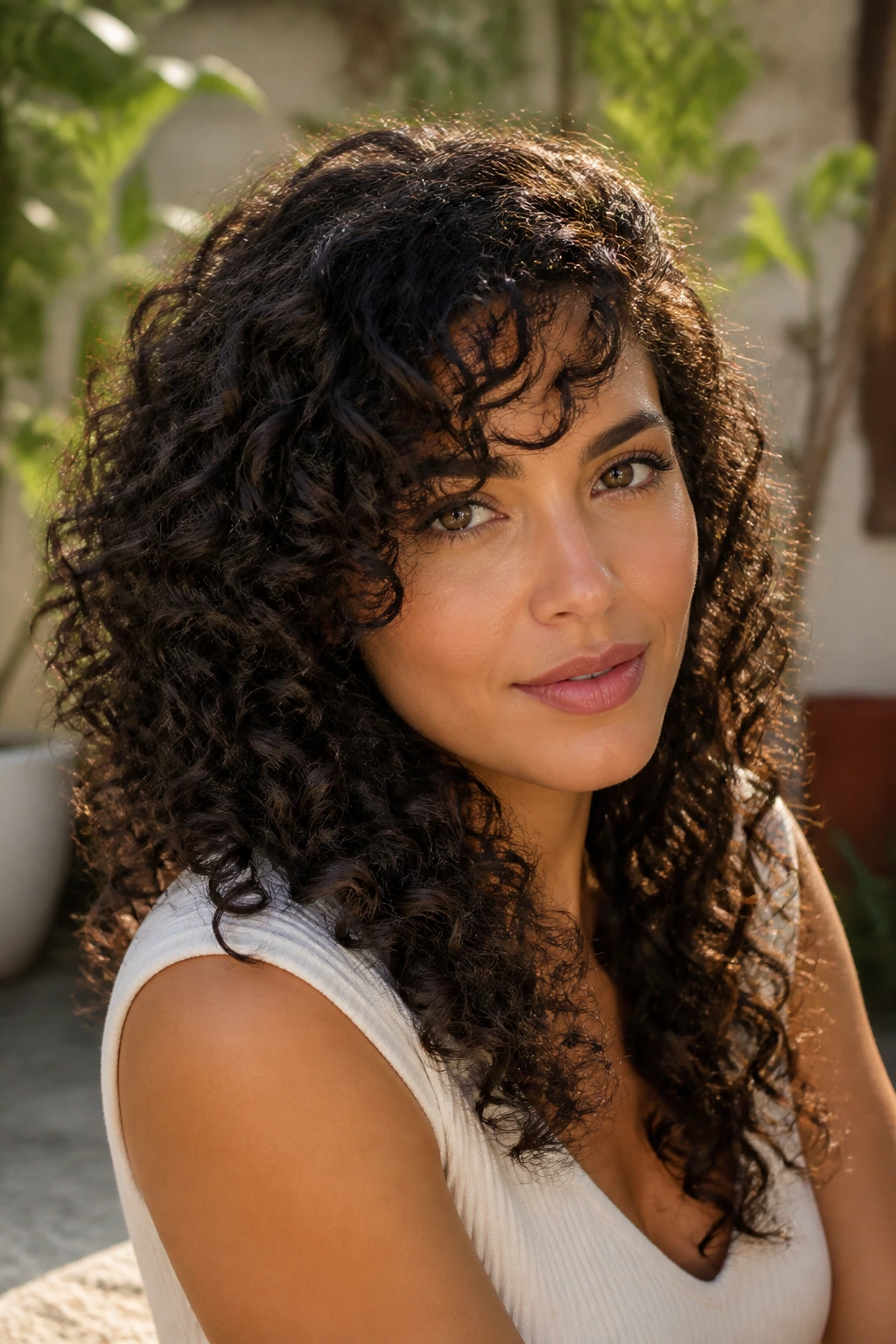
Curly hair needs its own rules, and side swept bangs for long faces are no exception. A curly fringe can be gorgeous here because the curl pattern itself adds width across the face. The trick is leaving enough length for shrinkage so the bang doesn’t jump too high once it dries.
A dry cut is usually smarter than a wet cut. Curls lie. They always do. If a stylist cuts curly side bangs too short while wet, the result can spring up and expose the forehead in a way that makes a long face look even longer. You want the front curl to drop toward the cheekbone or cheekbone-plus, depending on the spring of your pattern.
I like this shape because it softens the face without pretending the curl isn’t there. Let the curl do the work. A small amount of curl cream, scrunched in and left alone, usually beats over-brushing every single time.
14. Swoopy Side Fringe with Lob Length
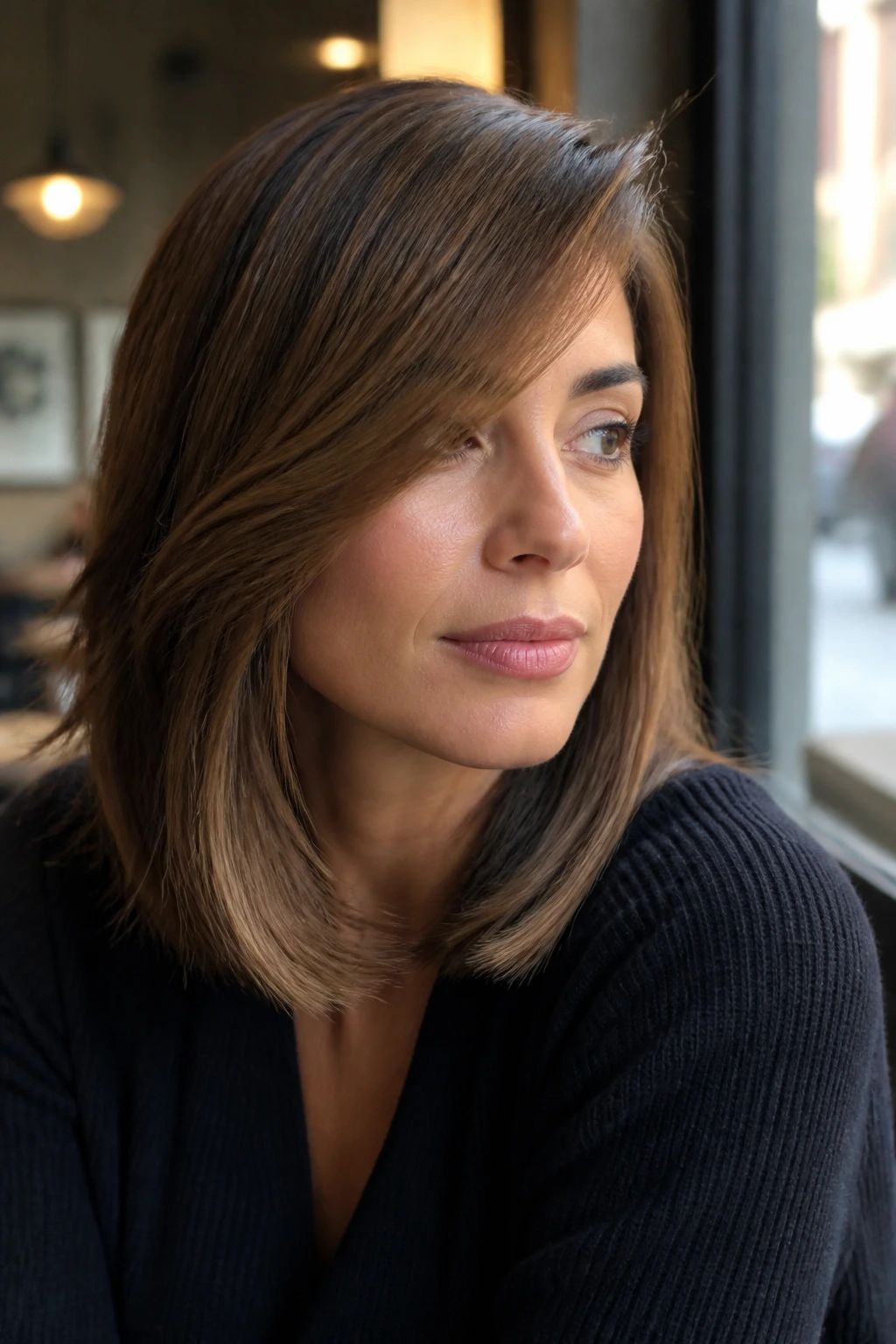
A lob gives a side sweep more context. The shorter length keeps the hair from dragging the face down, and the fringe adds a soft diagonal at the top. Together, they create a shape that feels tidy and flattering on a long face without leaning precious.
The swoop should feel connected to the cut, not pasted on top. If the ends of the lob are blunt, a slightly layered front keeps the whole style from feeling boxy. If the lob is wavy, a longer side fringe can echo that texture and make the face look broader through the center.
This is one of those cuts that does not need much convincing. A quick bend with a flat iron, a side sweep, and you’re done. It’s one of the more forgiving options in the whole list, especially if you want bangs but still need your hair to cooperate in real life.
15. Tapered Side Bangs for a Long Forehead
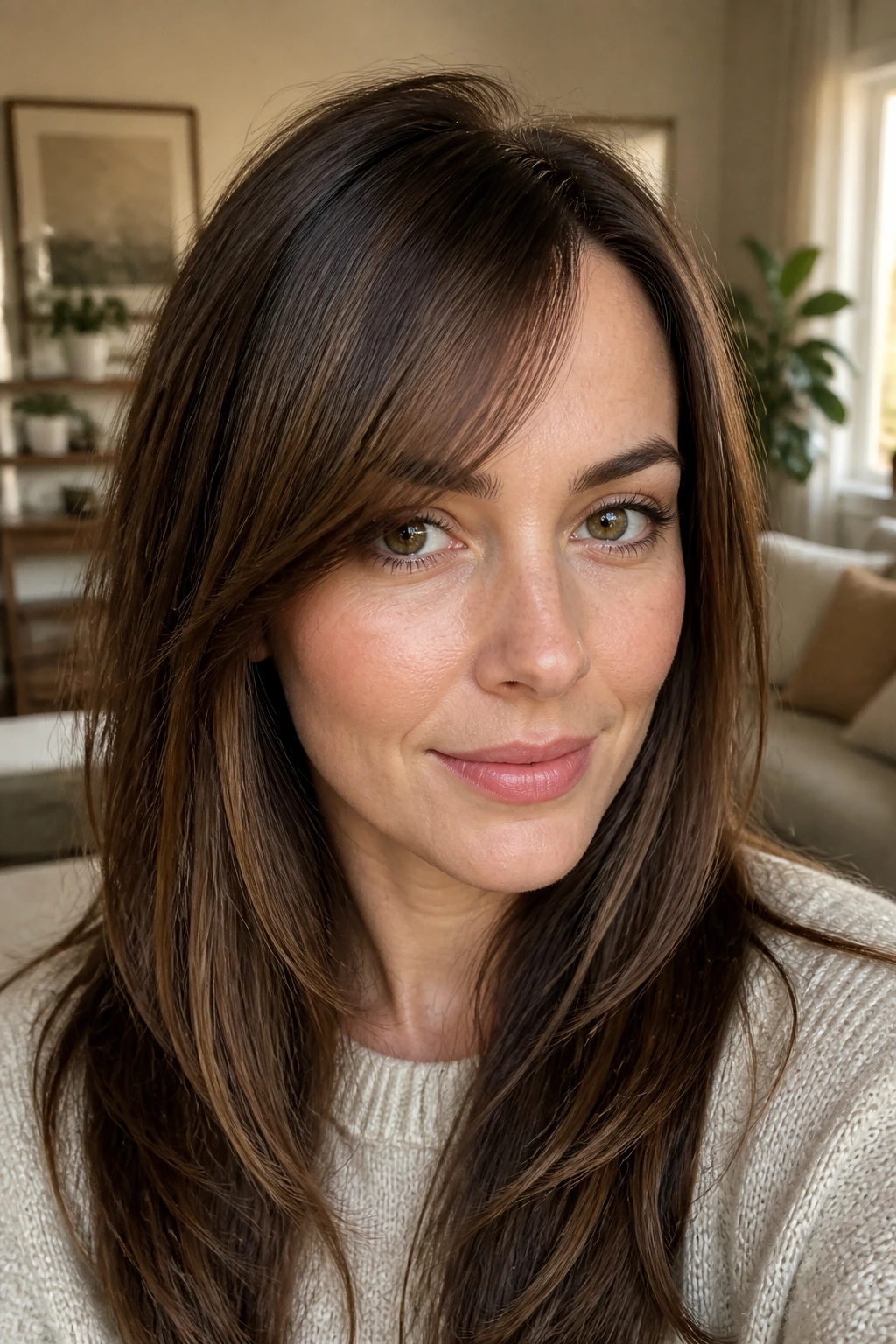
A long forehead changes the priority a little. You want a bang that starts with enough density at the top to make a visible break, then tapers gently so it doesn’t overwhelm the face. That taper is what keeps the fringe flattering instead of heavy.
This style usually begins near a deep side part and gets shorter only where the face can handle it. The side with the most hair should open the forehead in a diagonal path rather than a straight curtain. It’s subtle, but the shape matters. A good tapered side bang gives the eye a soft landing point before it reaches the rest of the hair.
If your forehead is long and your hair is fine, do not over-thin this cut. The taper should come from shape, not from removing so much hair that there’s nothing left to style. That’s one of those mistakes that sounds harmless in the chair and looks disappointing at home.
16. Invisible Side Bangs with Soft Bend
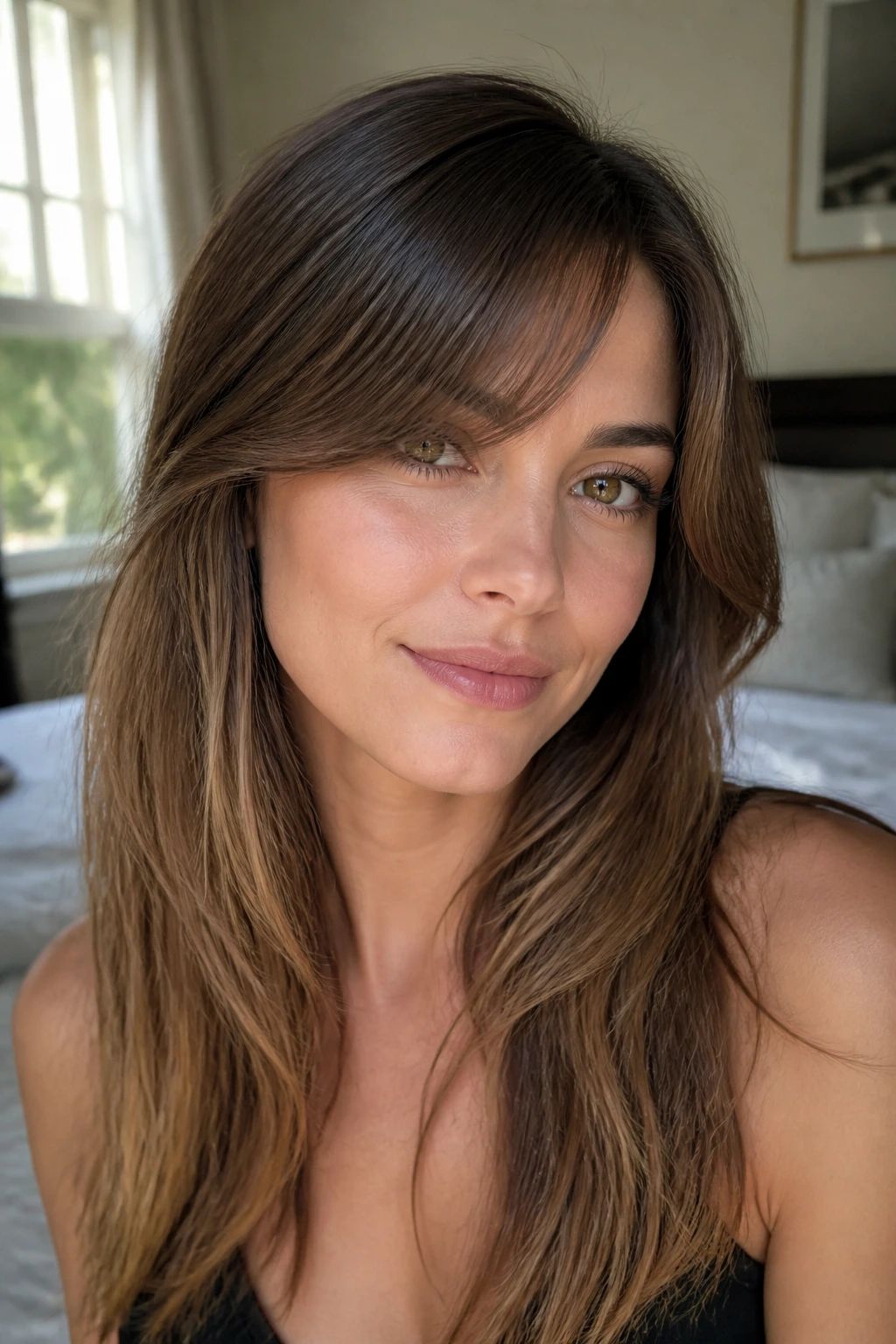
Invisible side bangs are for people who want the idea of bangs more than the maintenance of bangs. The front pieces are long enough to blend, but short enough to fall into a side sweep when you brush them over. On a long face, they create a little forehead break without announcing themselves.
The soft bend is the key. These pieces shouldn’t sit straight and limp, or they vanish into the haircut. A slight curve at the end gives them purpose. If you wear your hair down a lot and like a low-key finish, this is one of the least annoying ways to wear fringe.
It’s also a smart stepping-stone cut. If you’ve never had bangs and you’re wary of regret, invisible side bangs let you test the shape without cutting off a big chunk of hair. That may sound unglamorous. It’s practical. Practical is underrated with bangs.
17. Side Swept Bangs with Bottleneck Shape
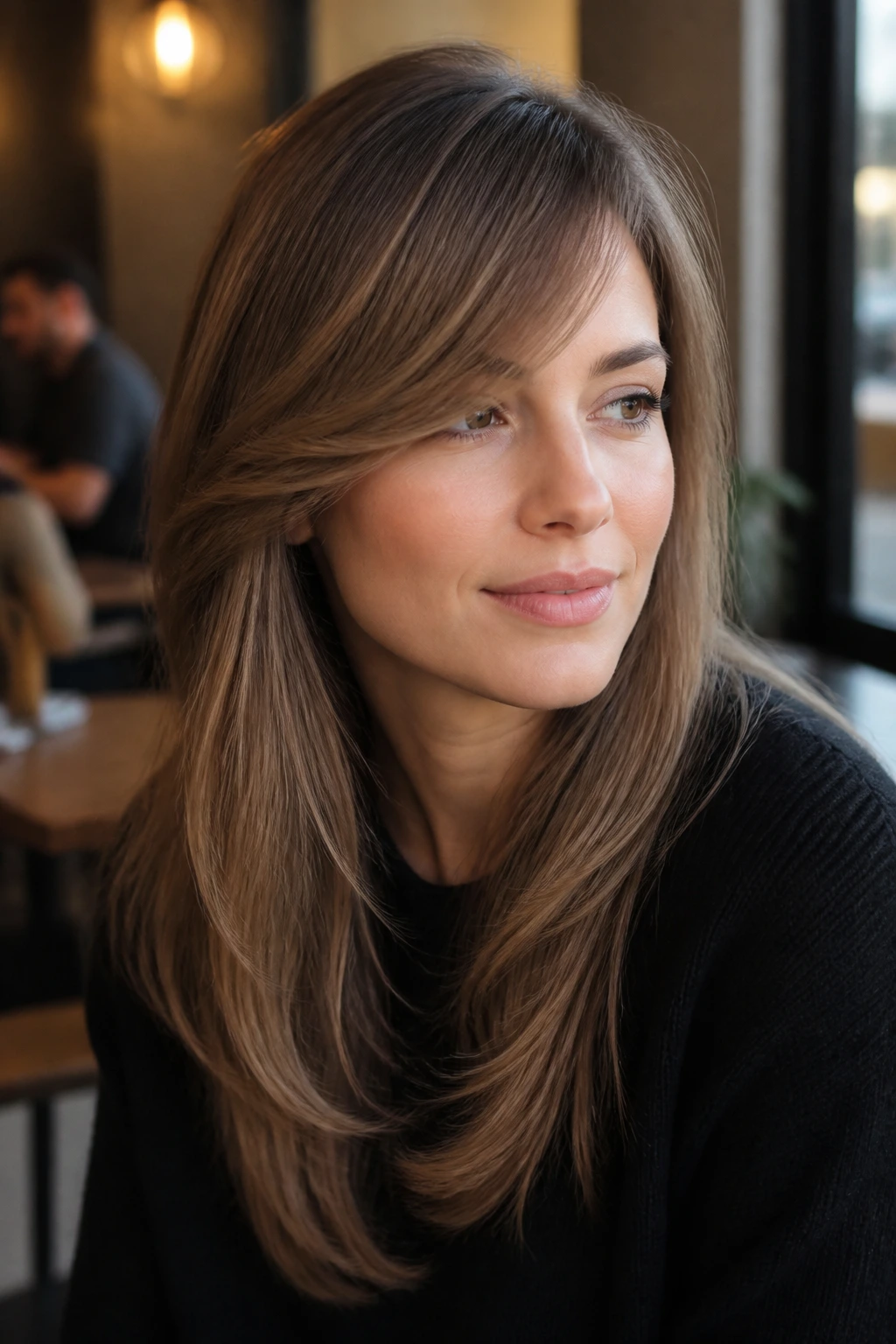
Bottleneck bangs are usually talked about as a center-fringe shape, but the same idea can be pushed to one side. Narrower at the forehead, fuller through the middle, and softer near the temple, the shape works well on long faces because it adds width where the face needs it most. Not at the top. In the middle.
This style has a little more presence than a wispy sweep, but it still stays soft. The middle section usually sits around brow level, then the pieces fan outward toward the cheekbone. I like it on hair that needs a bit of structure without a blunt edge. Wavy hair handles it well. Straight hair can too, if you set the bend with a round brush.
It’s a nice compromise for someone who wants fringe with shape but doesn’t want a hard, straight-across line. The face gets a soft frame. The forehead stays partially open. That balance is why it works.
18. Side Bangs for Glasses Wearers
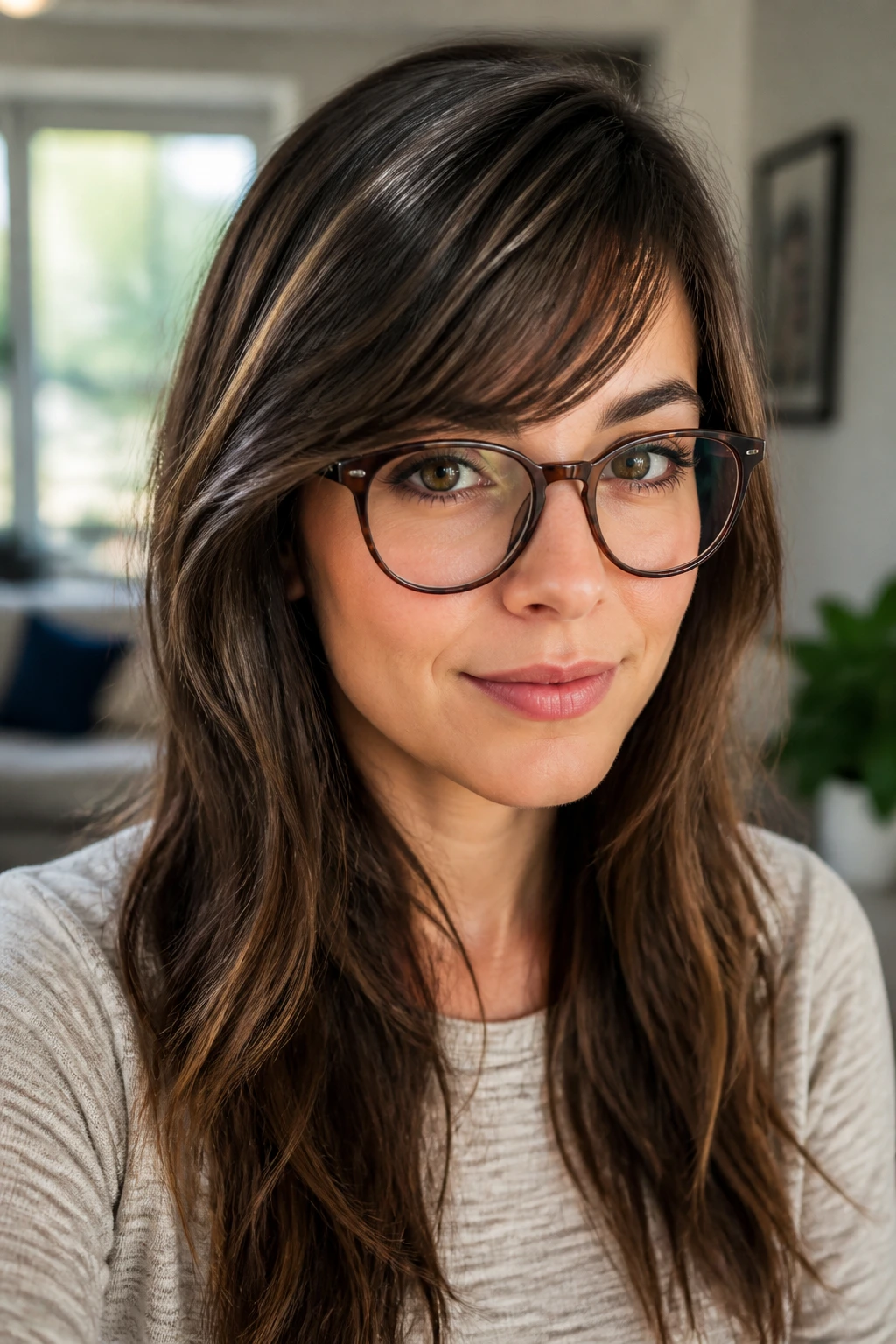
Glasses change where the bang should land. A side sweep that looks perfect in the mirror can suddenly sit right where the frame wants to live, which is irritating in a very specific way. For long faces, the answer is usually a bang that starts a little higher, then bends away from the face so it clears the top corner of the lens.
A slightly longer side fringe usually works best. The bang should skim the brow, not sit on it. If it’s too short, it competes with the frame. If it’s too long and heavy, it can feel like it’s climbing into the glasses. You want air, bend, and just enough separation that both the hair and the frames get to be seen.
I’d also keep this version a little lighter at the ends. A heavy bang plus a bold frame can make the upper face feel crowded. A clean side sweep keeps the look open.
19. Low-Maintenance Grown-Out Side Sweep
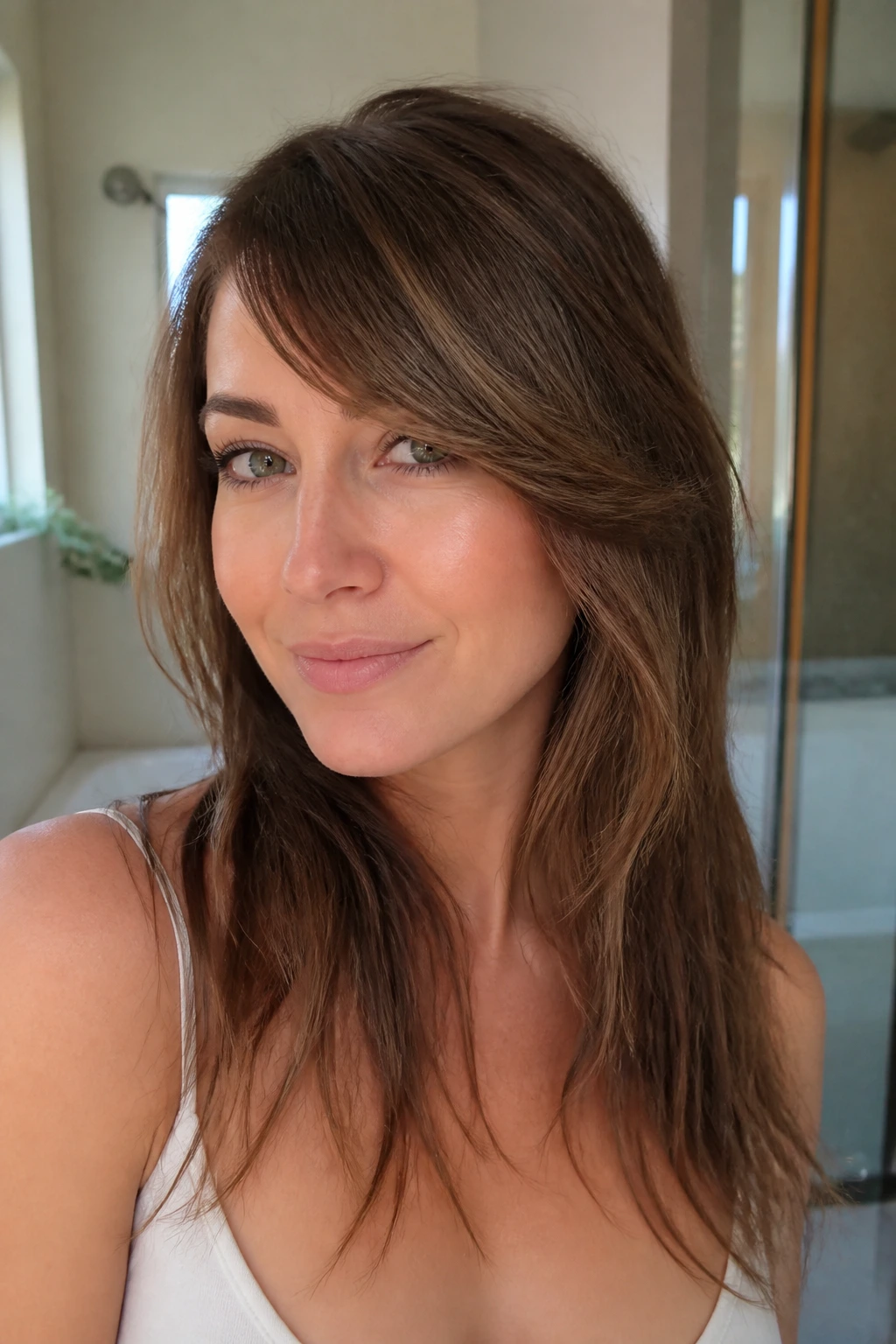
Sometimes the best side swept bangs are the ones that used to be something else. Grown-out fringe often settles into the most flattering version for a long face because it keeps the sweep but loses the sharpness. The result is relaxed, a little layered, and easy to live with.
This is the shape I’d pick for someone who does not want a daily styling project. The front blends into the sides, the longest pieces fall somewhere between the brow and cheekbone, and the whole thing can be pushed over with your fingers after a quick dryer pass. It works especially well if your hair is already long and you want the front to feel softer without committing to regular bang trims.
There’s a nice honesty to this shape. It doesn’t pretend to be fresh-cut. It just keeps doing the job while asking for less.
How Side Swept Bangs Change the Shape of a Long Face
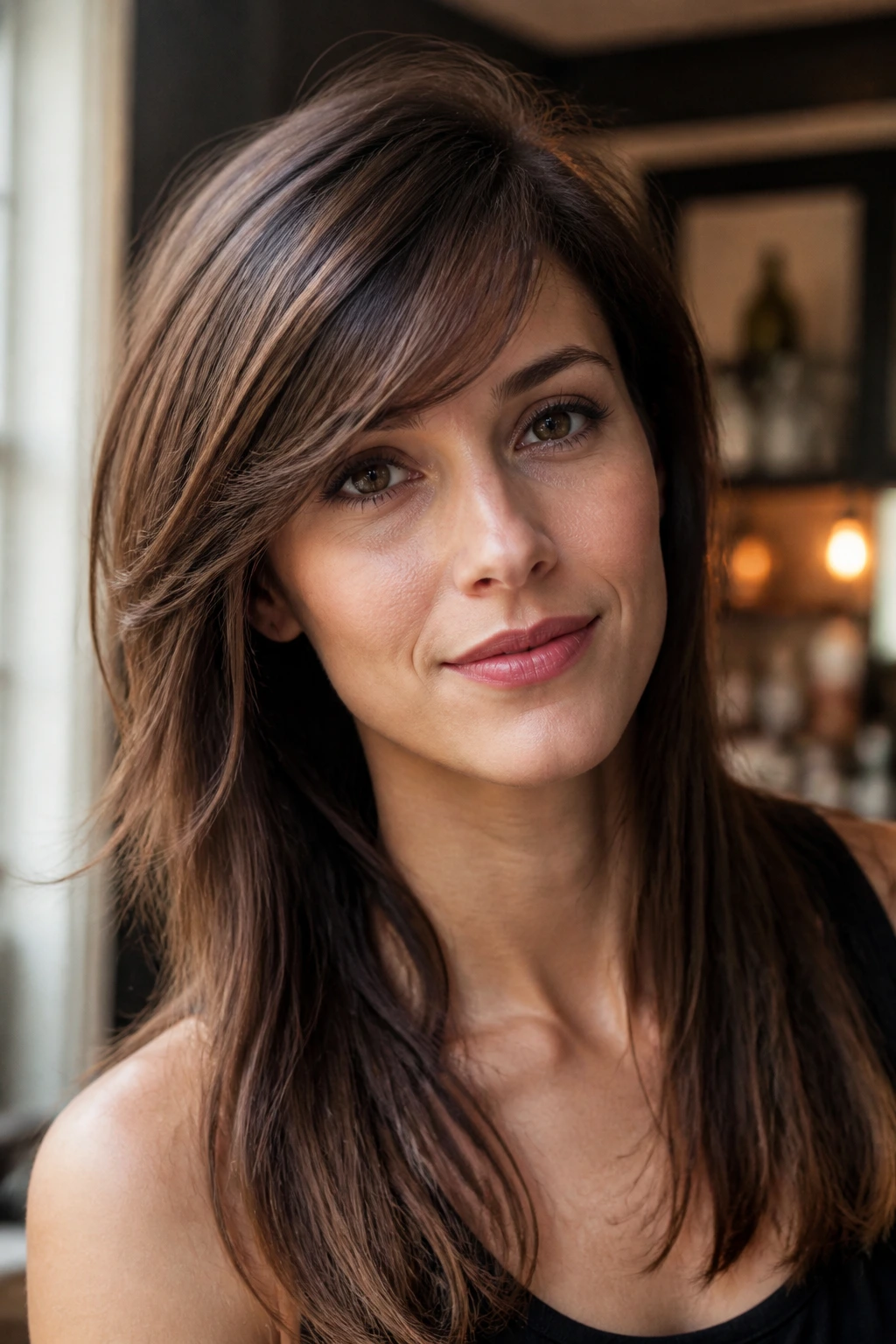
A long face is usually defined by more length than width, especially from forehead to chin. That means the goal with fringe is not to hide everything at the top. It’s to interrupt the stretch. Side swept bangs do that with diagonal movement, and diagonals are your friend here.
The strongest versions widen the forehead area just enough to make the face look more oval. They also pull attention to one side, which breaks the straight-up-and-down read that long faces can fall into. If you’ve ever seen a haircut on someone with a long face and thought, “Why does this work so well?” the answer is usually the front shape.
What to Ask Your Stylist For
Ask for a side fringe that lands somewhere between brow and cheekbone, depending on your hair texture. Straight hair can handle a cleaner edge. Wavy or curly hair usually needs more length to account for shrinkage.
Tell the stylist whether you want the bang to blend into layers or stand out on its own. That changes the whole cut. A side sweep with no blending can look heavy. A fully blended sweep can disappear if your hair is fine. The middle road is usually best.
The Salon Conversation That Saves You from Regret
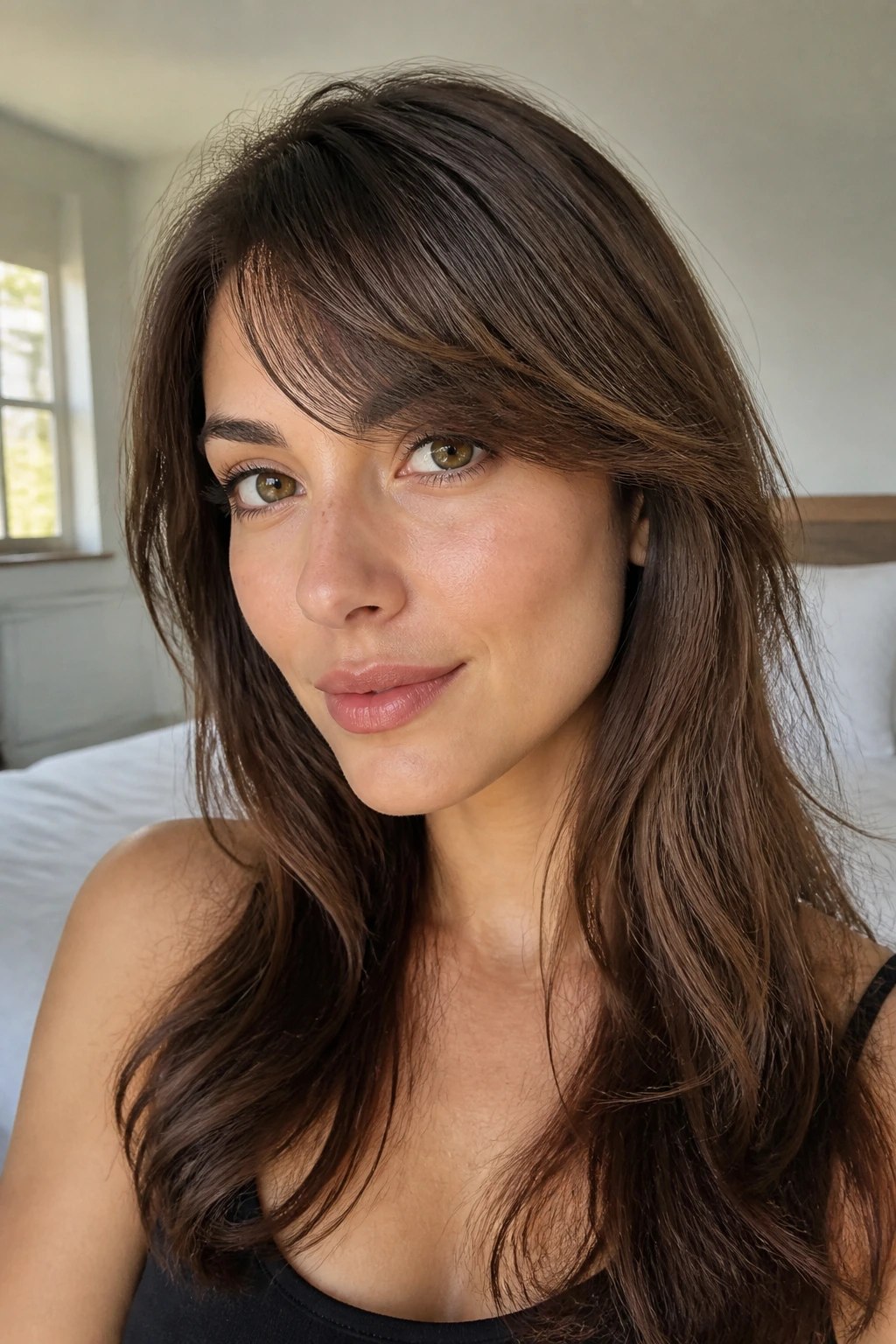
A good bang cut starts before the scissors do. Bring two or three photos, but not just of bangs you like. Bring photos that show your actual hair texture or something close to it. A gorgeous side sweep on pin-straight hair does not help much if your hair bends like a question mark every time it dries.
Say where you want the shortest point to live. I’d be specific: “around the eyebrow,” “just under the brow,” or “at cheekbone level.” Those landmarks help more than vague words like “long” or “soft.” The difference between a flattering fringe and a weird one is often less than half an inch.
And tell the stylist how you style your hair. Every day. Not your best hair day. Your real one. If you air-dry, say that. If you use a round brush for three minutes and then give up, say that too. A side sweep should fit your habits, not your fantasy self.
Styling Tools That Earn Their Space on the Counter
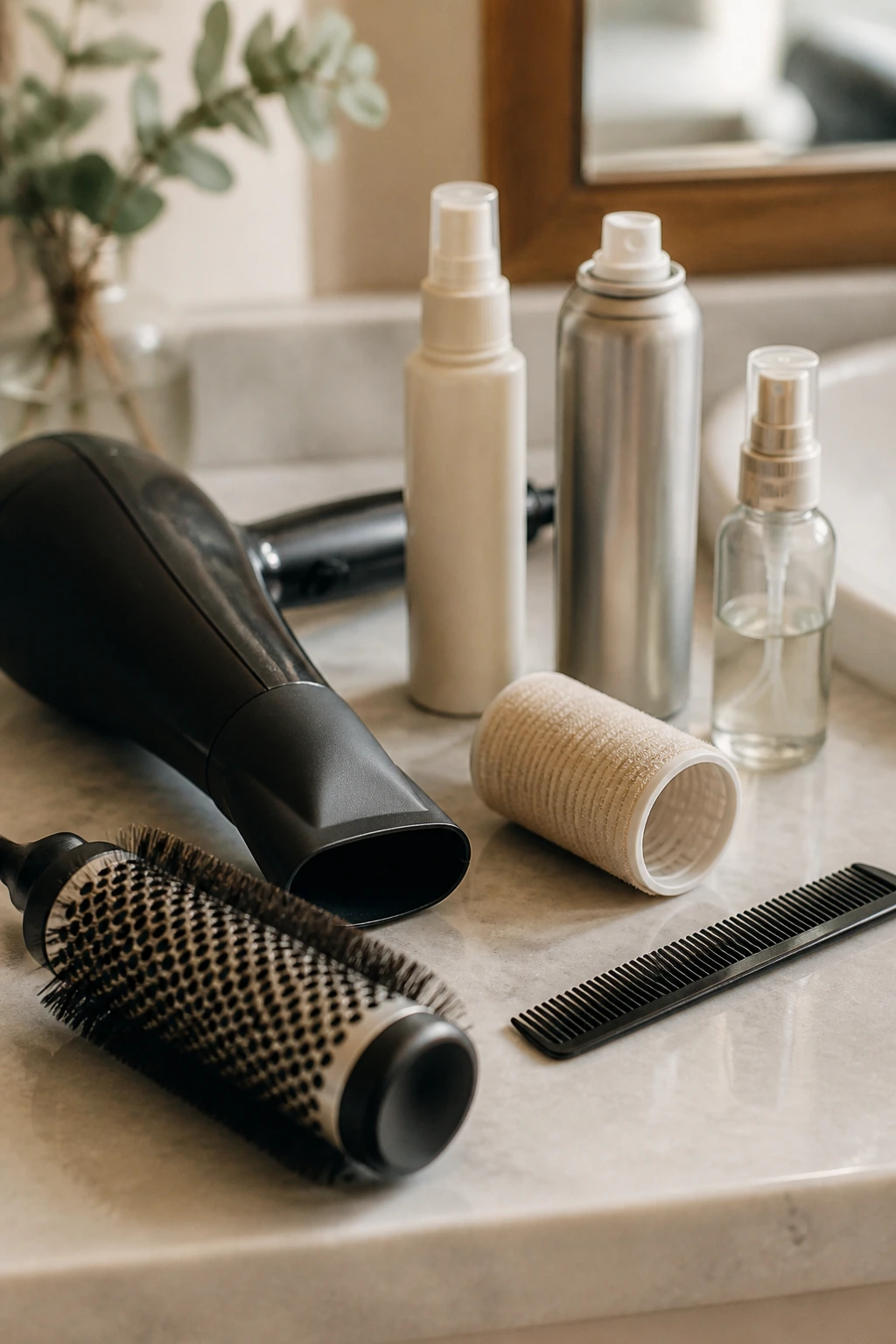
You do not need a drawer full of gear to keep side swept bangs in shape, but a few tools make life much easier.
- 1-inch to 1.5-inch round brush: Small enough to create bend, not so large that the bang stays flat.
- Blow dryer with a concentrator nozzle: Directs airflow where you want it and keeps the fringe from frizzing up.
- Velcro roller or duckbill clip: Useful for setting the bang while you do makeup or get dressed.
- Fine-tooth comb: Helps place the part and separate the fringe without roughing up the cuticle.
- Lightweight heat protectant: Keeps the front pieces from drying out, especially if you style them daily.
- Dry shampoo: Good on day two or three when the front starts to separate at the roots.
- Flexible-hold hairspray or texturizing spray: Keeps the sweep in place without making it stiff.
How to Wear and Pair Them
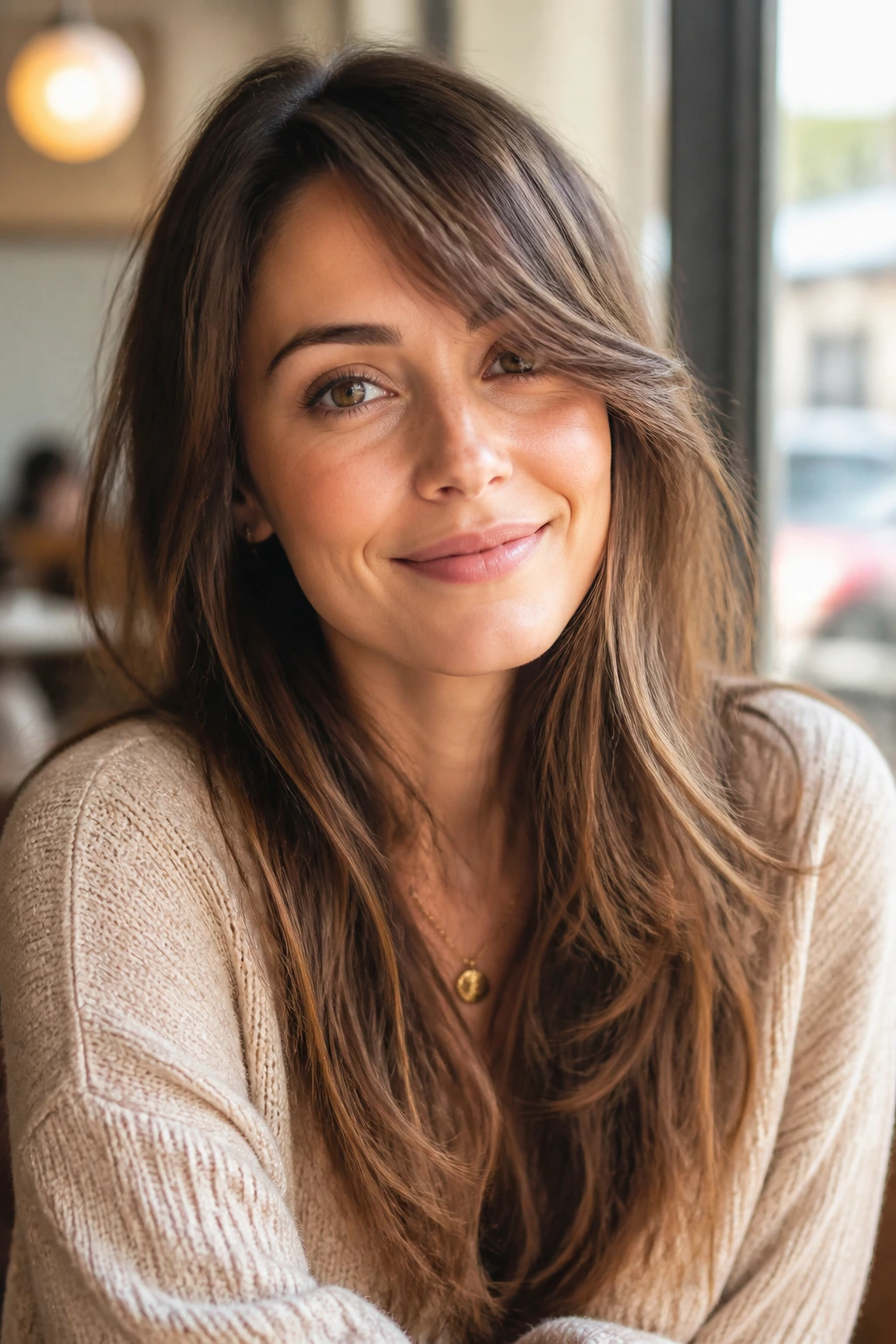
Presentation: The sweep should open the face at one brow and travel toward the cheekbone, not collapse over the eye. If the fringe sits too low, lift it with a round brush for a few seconds and let it cool before you touch it again.
Accompaniments: Long layers, lobs, shags, and soft face-framing pieces all pair well with side swept bangs on a long face. A very flat one-length cut can work too, but it needs more care at the front so the bang doesn’t feel detached.
Portions: Ask for enough fringe to cover a meaningful slice of the forehead, but not so much that it swallows your face. In salon language, that often means a section that starts a few inches back from the hairline and tapers toward the temple.
Beverage Pairing: A quick morning styling routine pairs best with this shape — think blow-dry, cool shot, maybe dry shampoo if the roots are slick. If you’re rushing, this is not the fringe that wants a 20-minute ritual.
Extra Shape Boosters for a Better Fit
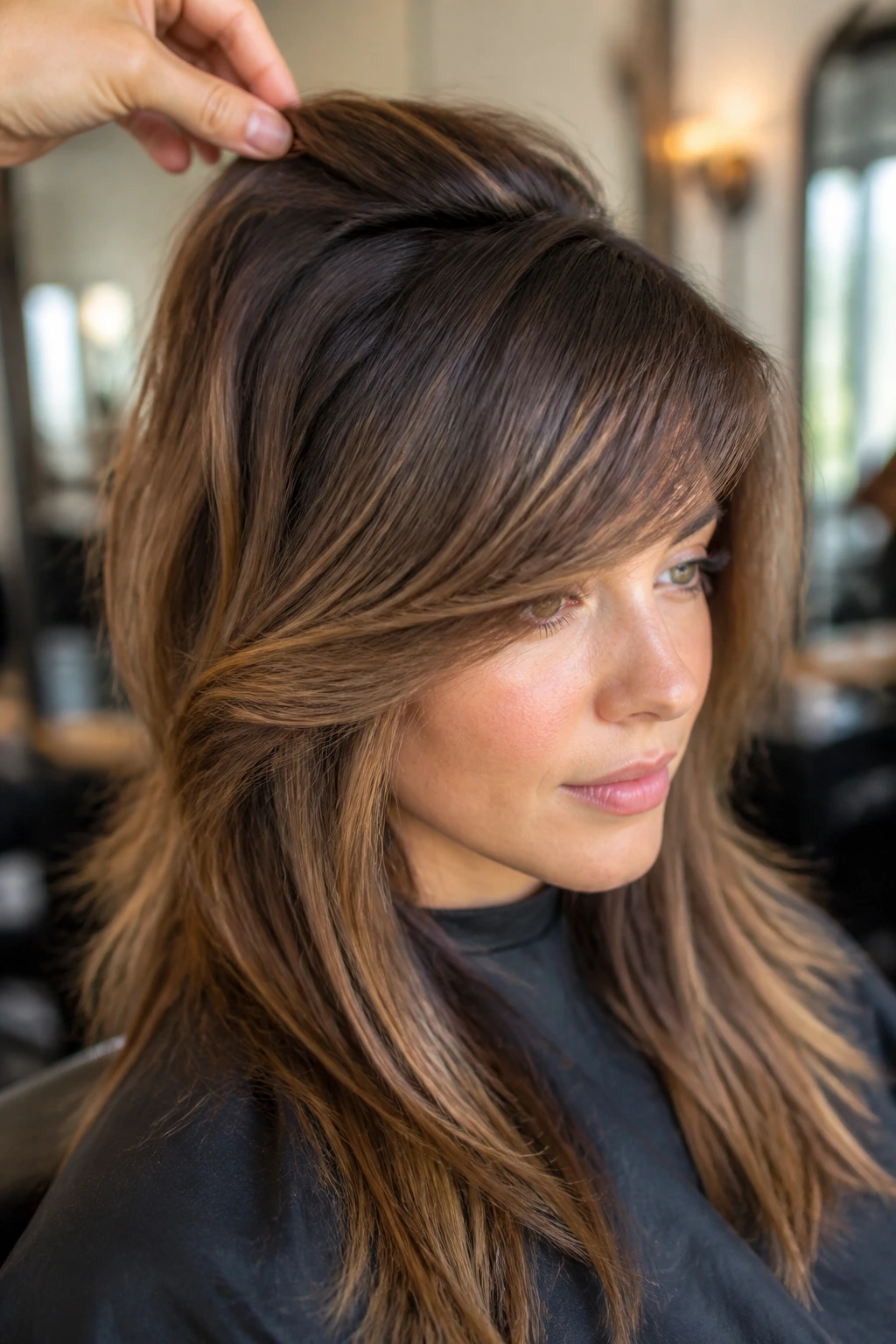
Root Lift: Blow-dry the bang in the opposite direction first, then sweep it across. That one move creates a bend at the root, which matters more than most people think.
Texture Balance: If the rest of your hair is very sleek, give the fringe a touch of movement with a small brush or a light mist of texturizer. If the rest of your hair is messy, keep the bang a little smoother so the front still reads as deliberate.
Face Opening: Tuck one side behind the ear when you want more cheekbone exposure. It stops the sweep from crowding the eye and lets the asymmetry do its job.
Shortcut: On busy days, dampen only the front section, brush it into the side direction you want, and clip it there for five minutes while you do everything else. That often works better than a full re-blowout.
The Mistakes That Make Side Swept Bangs Fight a Long Face
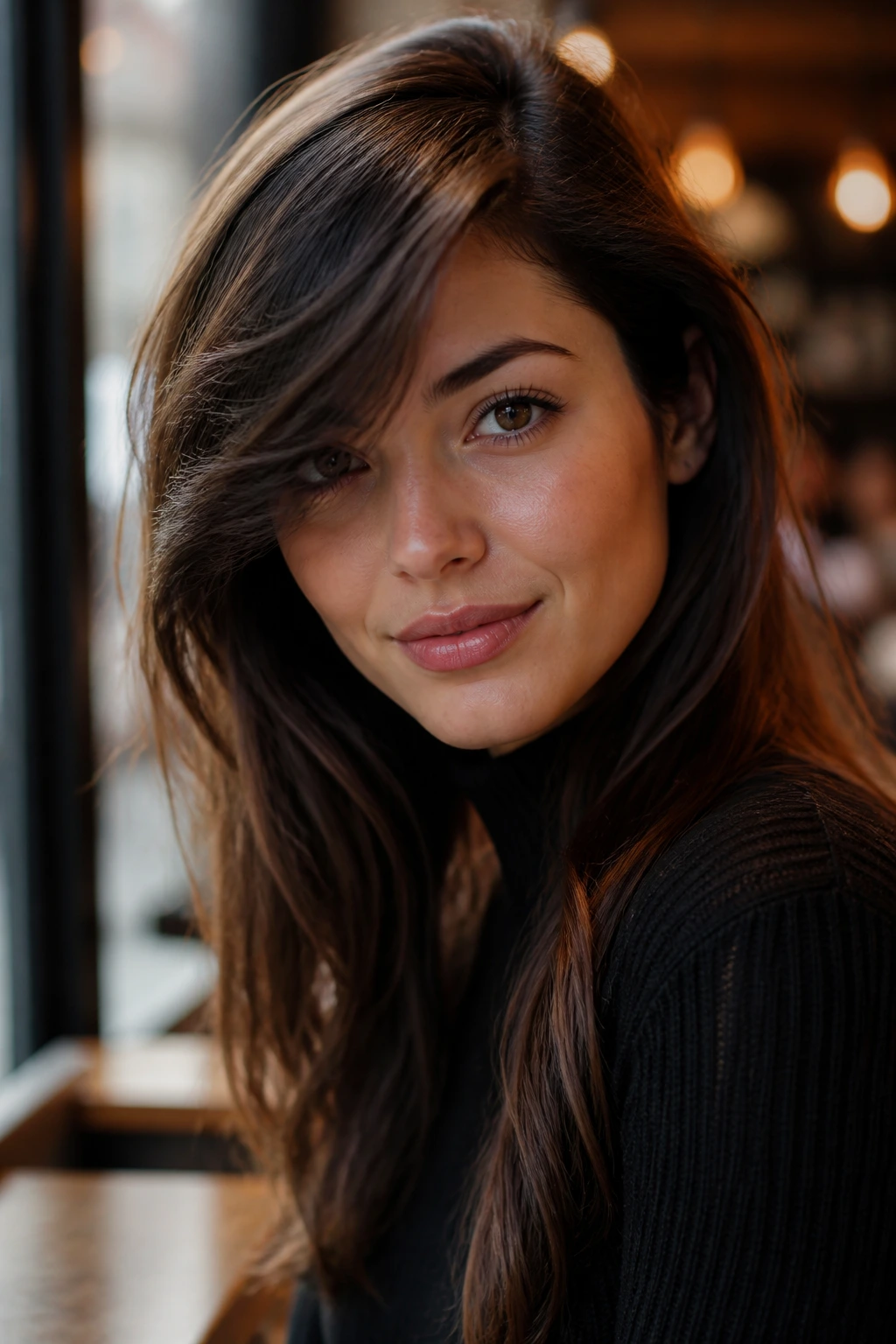
Cutting them too short: Short side bangs can spring upward and make the face look longer, not shorter. The fix is to keep enough length for the fringe to land near the brow or cheekbone, especially if your hair grows forward or has any wave.
Making the fringe too thin: Over-thinned bangs disappear fast and leave the forehead unbalanced. You want softness, not emptiness. Ask for texture through the ends, not a fringe so sparse it needs perfect lighting to be seen.
Ignoring the part: A side bang without a convincing side part usually falls back into the middle and loses its angle. Use a comb to set the part while the hair is still damp, then train it with the dryer.
Styling it only one way: Some bangs need a blowout. Some want texture. Some need both depending on the weather. If your fringe looks wrong on day two, that does not always mean the cut failed. It may mean the styling method needs adjusting.
Letting it grow without shape: Side swept bangs can go from flattering to sloppy if the ends get too heavy. A small trim every 4 to 6 weeks keeps the sweep alive.
Variations and Alternatives to Try
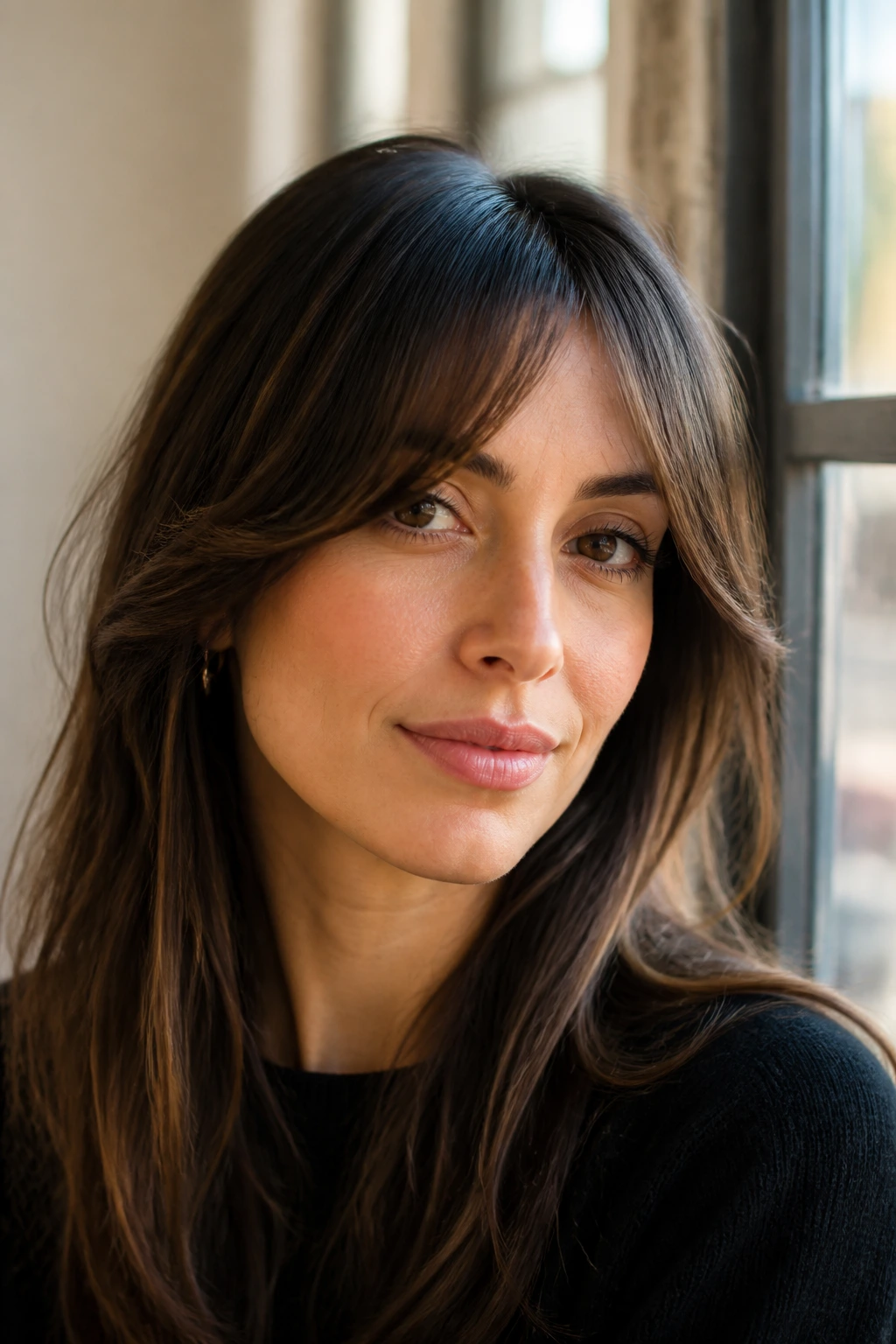
The Soft Side Curtain: This version splits near the part and falls longer at the sides, so it gives you the sweep of bangs without a strong front line. It’s a good bridge if you want to ease into fringe.
The French-Brush Sweep: Here, the bang is styled to bend away from the face with a little airy lift. It suits hair that likes movement and gives a long face some width without much bulk.
The Curly Sweep: If your curls have spring, let them land longer and shape them while dry. The side angle softens the face beautifully, but only if you respect shrinkage.
The Grow-Out Blend: This is for people coming out of full bangs. The front pieces are left long enough to tuck into layers, which keeps the face framed while avoiding a sharp line of demarcation.
The Low-Commitment Piecey Fringe: A few separated strands, a side part, and a bit of texturizer. It’s lighter than a full bang, but still useful when you want the forehead broken up without much maintenance.
Daily Care, Trim Rhythm, and Grow-Out Sanity
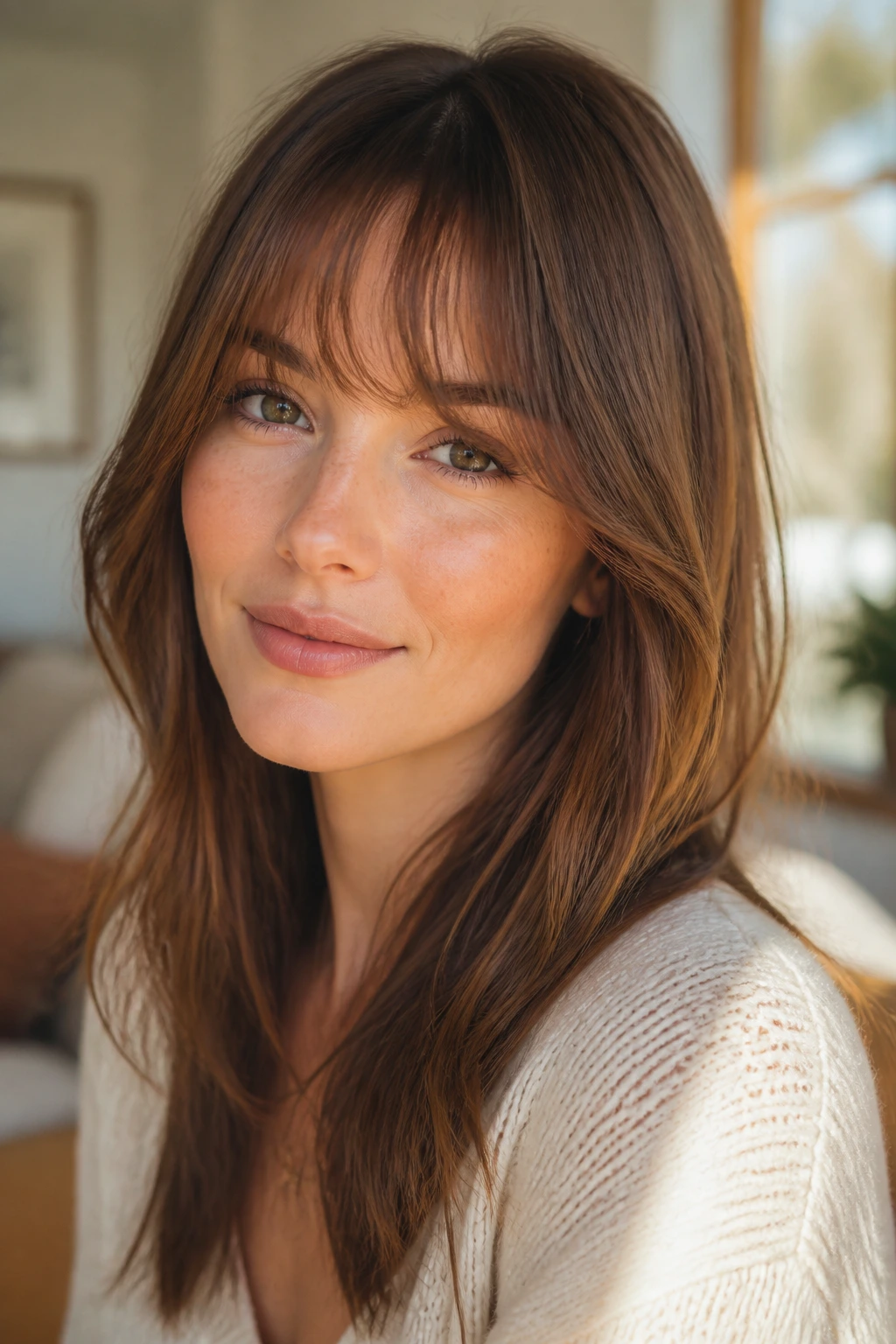
Side swept bangs behave best when you give them a little routine. That sounds dull. It’s also true. Most of the struggle comes from letting the front get oily, flat, or overlong before you touch it again.
If you wear them every day, expect to refresh the front section more often than the rest of your hair. A quick dry shampoo at the roots can buy you an extra day or two, especially if the fringe tends to separate. If you wash daily, keep the front protected with heat protectant so the ends don’t dry out and fray.
Salon trims usually land every 4 to 6 weeks if you want the shape crisp. If you prefer the grown-out look, you can stretch it farther, but the line will soften and drift lower on the face. That can still work on a long face. Sometimes it works better, because the fringe becomes less literal and more blended.
Frequently Asked Questions
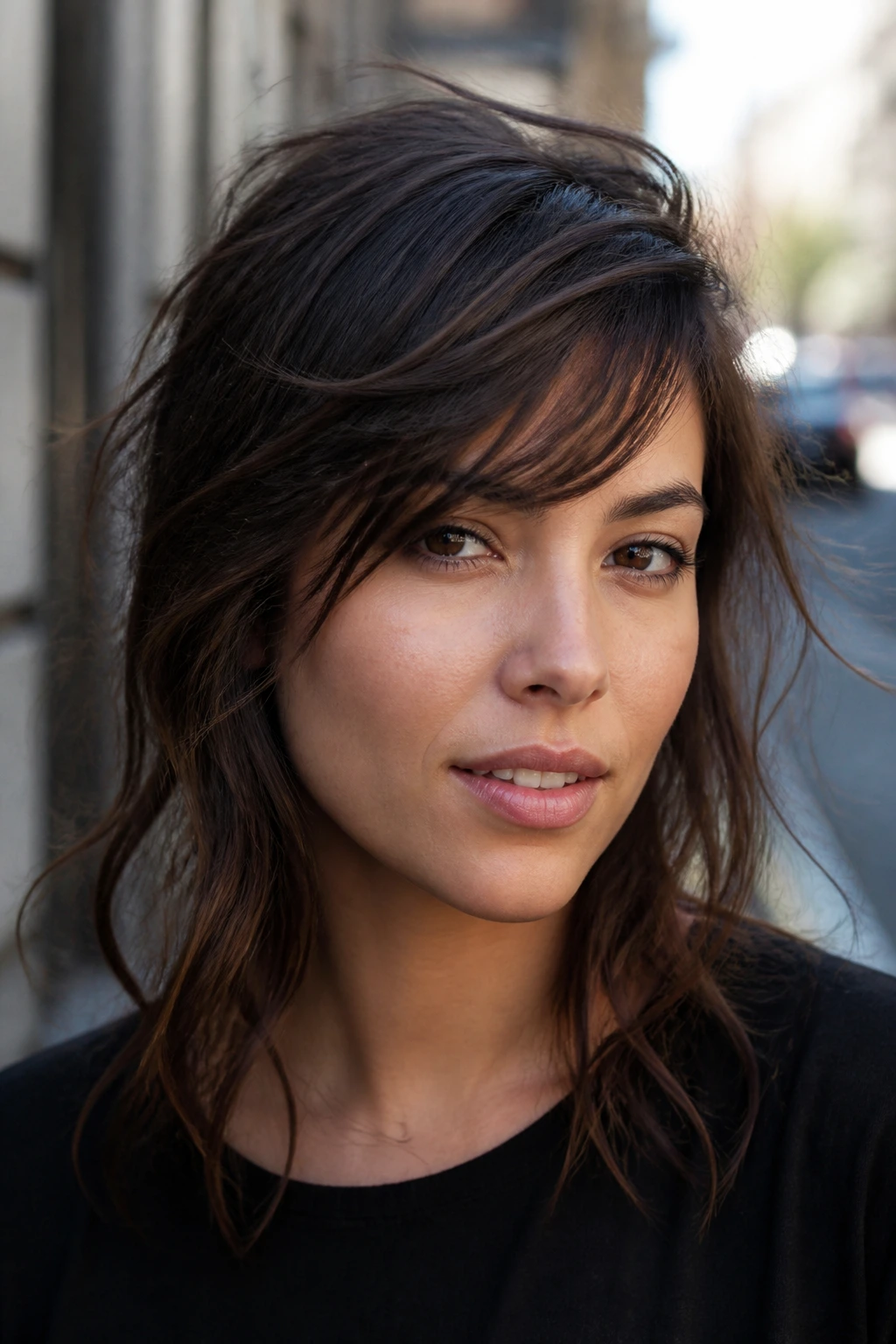
Do side swept bangs really flatter a long face?
Yes, when they add width across the forehead and fall toward the cheekbone. The cut matters more than the label. A limp side bang can miss the mark, while a well-placed sweep can change the whole balance of the face.
Should side bangs be short or long on a long face?
Longer is usually safer. You want enough length to create a diagonal line and enough weight to stay put. Very short side bangs can float upward and make the face look taller.
Do side swept bangs work with curly hair?
They do, but the cut has to account for shrinkage. Curly side bangs should usually be left longer and shaped dry so the final result lands where you expect it to.
What if my hair is fine and flat?
Keep the fringe light, but not over-thinned. A small round brush, a little root lift, and a side clip while the hair cools can make a bigger difference than more product.
Can I wear side swept bangs with glasses?
Absolutely. Just keep the shortest point high enough to clear the frame and make the sweep curve away from the lens rather than straight into it.
How do I stop the bang from splitting apart?
Train it while damp, blow-dry the roots in the direction you want, and let it cool before you touch it again. Oil and humidity near the forehead can also make it separate, so dry shampoo helps on the second day.
What if I hate the styling routine?
Pick a grown-out or invisible side sweep instead of a crisp fringe. Those shapes blend into the haircut faster and ask for less daily attention.
Can I cut side swept bangs myself?
You can trim the ends of a grown-out sweep, but a first cut is better left to a stylist. The angle is harder than it looks, and on a long face, the difference between flattering and awkward can be small.
The Fringe That Does the Work Quietly
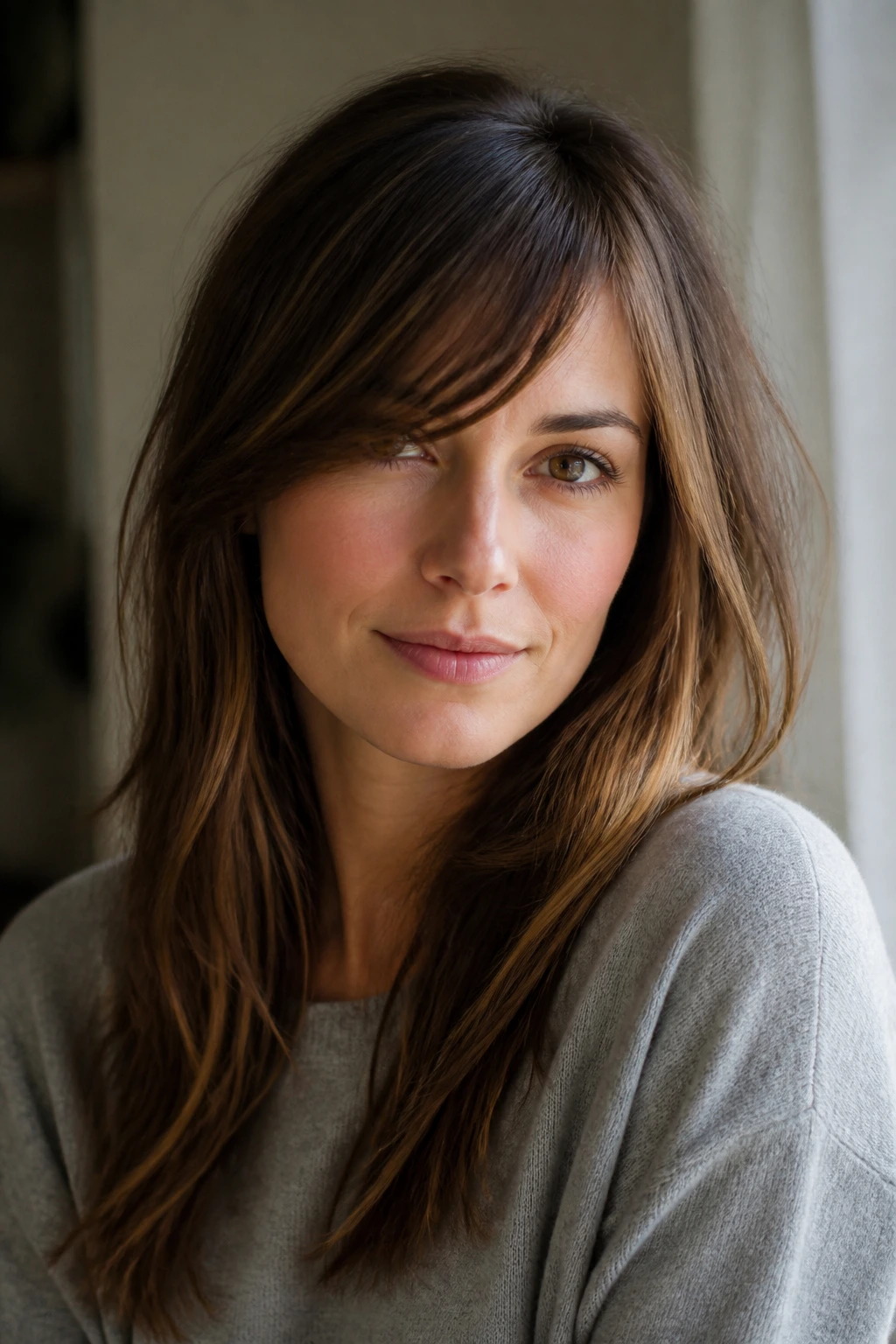
The best side swept bangs for long faces are the ones that change the shape without making a speech about it. They break up length, open the cheekbones, and give the forehead some softness without burying the face under hair. That balance is the whole point.
A good sweep can be feathered, glossy, choppy, curly, or barely there. What matters is where it lands and how it moves. If it keeps the eye traveling across the face instead of straight down it, you’re in the right neighborhood.
And once you find the version that fits your hair and your habits, the rest gets easier. The cut starts doing what good bangs should do: looking like they belong there, even on the days you barely touched them.
