



Olive skin and blonde hair can look stunning together, but the shade has to earn its place. Put a cool ash blonde next to a green-gold complexion and the face can go flat in a hurry; put honey, butterscotch, caramel, or buttercream in the hair and the skin usually looks cleaner, brighter, and less tired around the edges. That’s the whole game with warm blonde hair colors for olive skin: you’re not chasing blonde for its own sake. You’re choosing the kind of light that agrees with your undertone.
A lot of people get tripped up here because “blonde” gets used like it means one thing. It doesn’t. Some blondes are pale and icy, some lean beige, some carry real gold, and some drift into peach or amber territory. On olive skin, those differences are not tiny. They’re the difference between “my hair looks expensive” and “my face looks a bit washed out in bathroom lighting.”
The best warm blondes for olive skin usually have two things going on at once: softness at the root and richness through the lengths. That root depth keeps the color grounded. The warmth keeps the complexion alive. If you’ve ever looked at a photo and thought, “The hair is nice, but something about the face feels off,” that’s usually an undertone problem, not a haircut problem. And that’s exactly where these 19 shades start making sense.
Why These Shades Beat the Wrong Kind of Blonde
-
Gold plays nicely with olive undertones: Honey, caramel, butterscotch, and amber reflect the same warm notes that already live in the skin, so the whole face looks less muted.
-
Root depth keeps the blonde from floating: A soft shadow root, usually one or two levels deeper than the lightest pieces, gives the color shape and makes grow-out easier to live with.
-
Creamy warmth beats icy brightness: Beige-gold and butter tones look softer on olive skin than flat ash or silver, which can make the complexion look gray around the mouth and eyes.
-
Dimension matters more than raw lightness: Babylights, balayage, ribbons, and money pieces move better around the face than one solid blonde block.
-
Warm blonde can brighten without bleaching out your features: The right tone keeps dark brows, olive cheeks, and hazel or brown eyes connected instead of competing.
-
Not all warm blondes are yellow: The good versions live in honey, beige-gold, caramel, apricot, and soft amber territory, not banana-yellow brass.
1. Honey Blonde with a Soft Root Shadow
Honey blonde is the shade I reach for first when someone wants brightness but does not want the hair to shout before the face does. On olive skin, that soft gold reads like light, not bleach. Add a root shadow, and the color stops feeling pasted on.
Why it flatters olive skin
A level 6 or 7 honey through the mids and ends keeps the complexion from drifting gray. The shadow root — usually a neutral level 4 or 5 — gives the blonde a little weight at the scalp and makes the whole look feel anchored.
What to ask for
- A soft root smudge at the bowl, not a hard line.
- Honey-gold ribbons through the face-framing layers.
- A beige-gold gloss instead of a pale ash toner.
Best on: medium olive skin that looks healthier with gold jewelry than silver.
If you like the look of sunlight through tea, this is that feeling in hair. It’s easy to wear, and it does not need to be stripped pale to work.
2. Butterscotch Balayage on a Darker Base
Butterscotch balayage is the move when your natural hair sits at level 4 or 5 and you don’t want to spend every six weeks chasing roots. The caramel-gold pieces stay soft against olive skin, while the darker base keeps the whole look from tipping into brass.
The trick here is placement. You want wider, hand-painted sweeps through the mids and ends, with the lightest concentration around the top layer and the front. Too many foils too close together and you lose that butterscotch softness. Too few, and it just reads brown.
This shade works especially well if your eyebrows are dark and you like some contrast near the face. It also grows out with a softer line than all-over blonde, which matters more than people admit. Nobody likes that crunchy regrowth strip two weeks after a salon visit.
Pro tip: Ask for a caramel glaze at the sink, not a flat yellow toner. The glaze is what gives the shade that cooked-sugar finish instead of a heavy gold wash.
3. Golden Beige Blonde for Quiet Warmth
Why does beige-gold work when honey sometimes feels too loud? Because it gives olive skin warmth without pushing the hair into obvious yellow. The tone sits in that calm middle space — neither icy nor orange, neither chalky nor brassy.
This is one of the safer blondes for neutral-olive skin, especially if your complexion tends to shift depending on lighting. In daylight, the beige keeps the shade soft. Indoors, the gold reflects just enough to stop the hair from going flat. It’s a clever shade, honestly. Not flashy. Just smart.
What to ask for
- Beige-gold babylights, not chunky highlights.
- A level 7 or 8 finish with low contrast at the root.
- A gloss that leans creamy rather than yellow.
If your skin already has a muted olive cast, this is the shade that usually behaves. It doesn’t fight your undertone, and it doesn’t need a lot of styling to look finished.
4. Caramel Ribbon Highlights
Caramel ribbon highlights are for the person who wants movement more than a full blonde transformation. On wavy or curly hair, they’re especially good because the light catches the bends and turns in the curl pattern instead of sitting in one flat plane.
I like this look when the base is a deep brunette and the olive skin has a stronger golden or neutral cast. The ribbons should feel woven through the hair, not striped on top. When they’re done well, you see them as movement first and color second. That’s the part people try to copy and usually miss.
Placement that helps
- Keep the ribbons wider around the cheekbones.
- Leave some deeper pieces under the top layer for contrast.
- Ask for warm caramel, not a pale beige strip.
This is one of those styles that looks even better as it softens. The first salon day is not the only good day. The second and third week, when the blend settles, can be even nicer.
5. Buttercream Blonde Ends
Buttercream blonde is creamy, soft, and a little lighter than honey, which makes it a good choice if your olive skin leans warmer and you want a brighter overall look. The key is keeping the ends luminous while the root stays grounded. That contrast stops the color from drifting into a flat, one-note yellow.
I love this on shoulder-length cuts and long layers because the lighter ends move around when you walk. On straight hair, the result is a clean gradient. On wavy hair, it gets even better — the creamy pieces catch on the bends and look like light that got tangled in the strand.
This shade asks for restraint. Too much lift at the scalp and you lose the softness that makes it work. Too much toner and it turns cold. The sweet spot is a buttery cream with just enough gold to keep olive skin from looking muted.
Best for: people who want a lighter blonde but still need the face to hold some contrast.
6. Champagne Gold Blonde
Champagne gold blonde is not the pale, brittle version people sometimes mean when they say champagne. That cooler take can drain olive skin fast. The warm version has a soft gold base, a little pearly brightness, and enough depth to stay flattering in normal daylight.
This shade tends to work best if your olive skin is neutral or slightly golden rather than deeply green. It looks especially good with soft makeup — peach blush, a brown liner, a nude lip with warmth. The hair and face end up speaking the same language.
It’s also a useful shade if you like lighter hair but don’t want the color to read heavy. Champagne gold sits in a nice middle ground. Not honey. Not beige. Not butter. A little cleaner, a little brighter.
If you want this look to hold, ask for a gloss every few weeks instead of relying on a strong violet toner. The warmth is the point. Over-toning it is the fastest way to lose the charm.
7. Toasted Wheat Balayage
Toasted wheat balayage has a soft, earthy feel that works beautifully when olive skin wants warmth without obvious gold. Think beige, wheat, and a hint of toasted grain around the ends. It reads natural in daylight and quietly polished under indoor lighting.
What makes it different
The color is less sugary than honey and less shiny than buttercream. That makes it useful for people who want blonde energy without a high-maintenance blonde routine. The darker base stays visible, which helps the hair feel thicker at the root.
Ask for
- Fine balayage through the mid-lengths, not just the ends.
- A wheat-beige glaze with a neutral-warm finish.
- A root melt that stays soft for at least an inch and a half.
Where it shines: on shoulder-length cuts, loose waves, and fine hair that needs dimension more than brightness.
I’d call this one a sleeper shade. It doesn’t beg for attention, and that’s why it works.
8. Apricot Blonde Face Framing
Apricot blonde is the easiest way to wake up olive skin without changing the whole head of hair. The peach-gold tone around the face brings warmth straight to the cheekbones and temples, which is exactly where olive skin can sometimes look a little shadowed.
This works best when the apricot is soft, not neon. You want a creamy peach, maybe with a little gold underneath, not a copper streak that grabs all the attention. Around darker bases, just two front pieces can change the whole read of the face. That’s the fun part. You don’t need a full-color overhaul to get a visible result.
If your skin flushes easily or you already wear warm blush, keep the apricot subtle. Too much red can fight with natural redness around the nose or cheeks. But when it’s tuned right, it looks alive in a very flattering way.
A quick salon note: ask for face-framing money pieces that are slightly warmer than the rest of the blonde. That little contrast keeps the front from disappearing.
9. Maple Blonde with Lived-In Depth
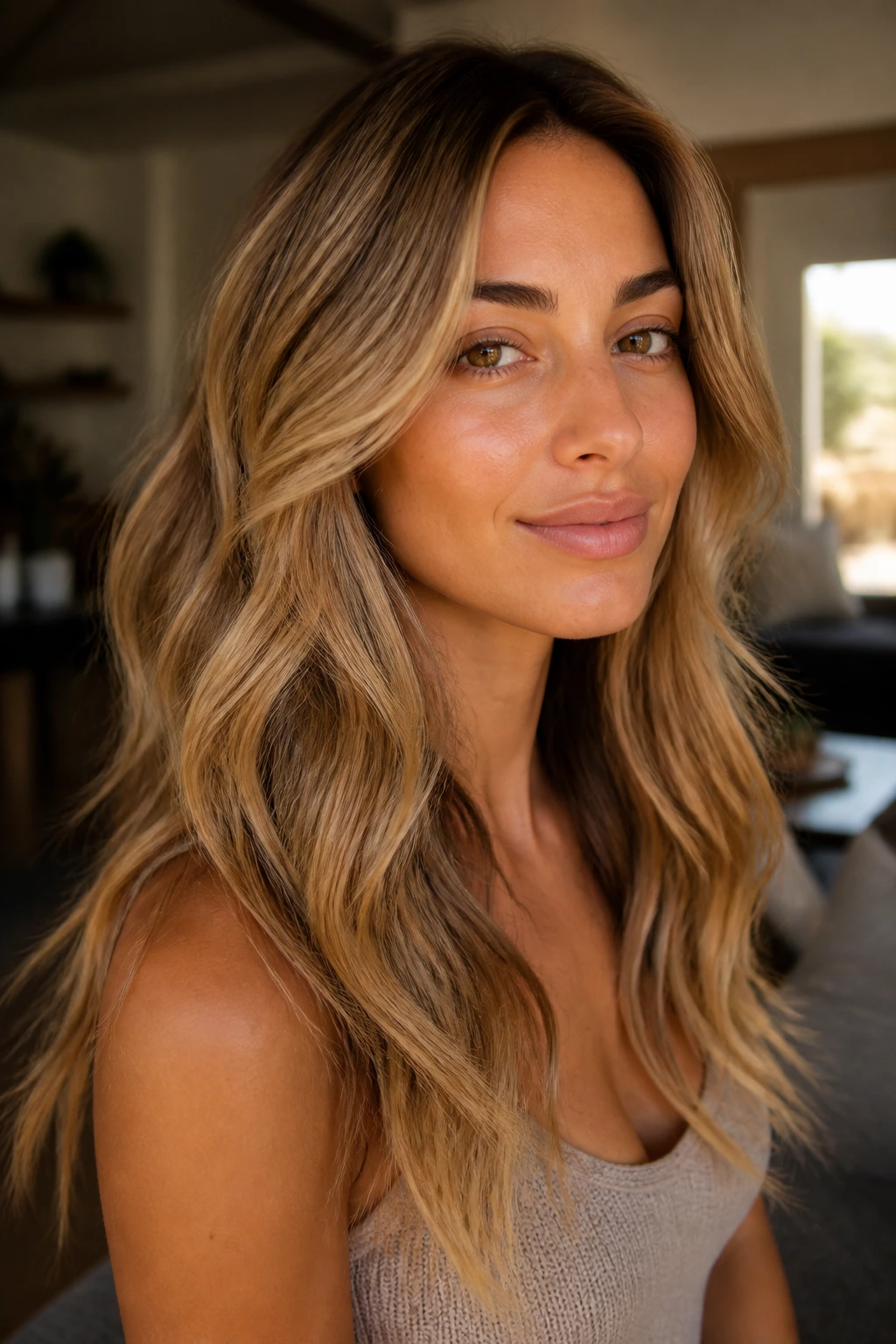
What happens when you want blonde, but not bright blonde? Maple blonde. It sits between golden brunette and deep blonde, with enough warmth to flatter olive skin and enough depth to avoid that stripped, over-lightened feel.
Maple tones are especially good if your eyes are brown or hazel and your brows are dark. The color has a quiet richness to it — think maple syrup poured over toasted bread, not syrupy in the fake sense, but in the way light slides over something warm and brown-gold. That depth helps the face hold together.
How to wear it
A soft wave pattern brings out the color best. Straight hair can still wear maple blonde, but the dimension really opens up once the bends catch the highlights. Keep the root a shade or two deeper than the mids, and ask for a gloss that leans honey-beige rather than orange.
This is a good shade if you want to stay close to brunette without giving up the blonde family entirely.
10. Bronzed Bronde
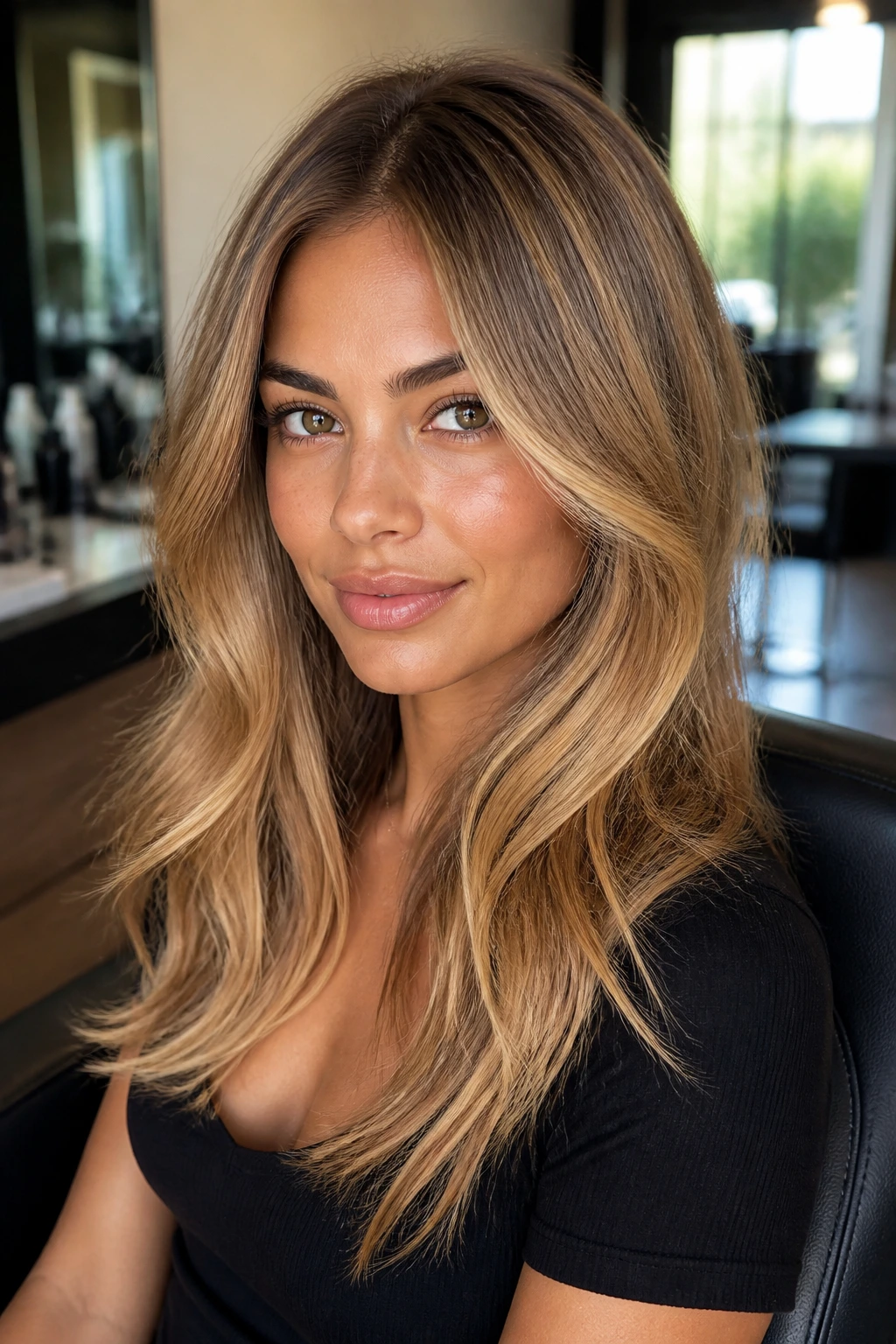
Bronzed bronde is the bridge shade for people who aren’t ready to leave brunette behind. It has blonde pieces, yes, but the brown base does most of the work. On olive skin, that matters. Too much lightness too fast can make the face look disconnected; bronzed bronde keeps the contrast intact.
The bronze note is what makes it sing. It’s warmer than ash bronde, richer than sandy bronde, and less obvious than full honey highlights. When the pieces are placed well — around the hairline, through the surface, and a little in the ends — the hair looks like it’s been sitting in soft sun for weeks.
This is also one of the easier looks to live with. The grow-out is gentle. The color doesn’t scream for upkeep every month. And if your hair is naturally medium to dark brown, that darker base gives olive skin a nice frame.
Best for: anyone who wants a warm blonde effect without going all the way blonde.
11. Vanilla Cream Blonde Money Pieces
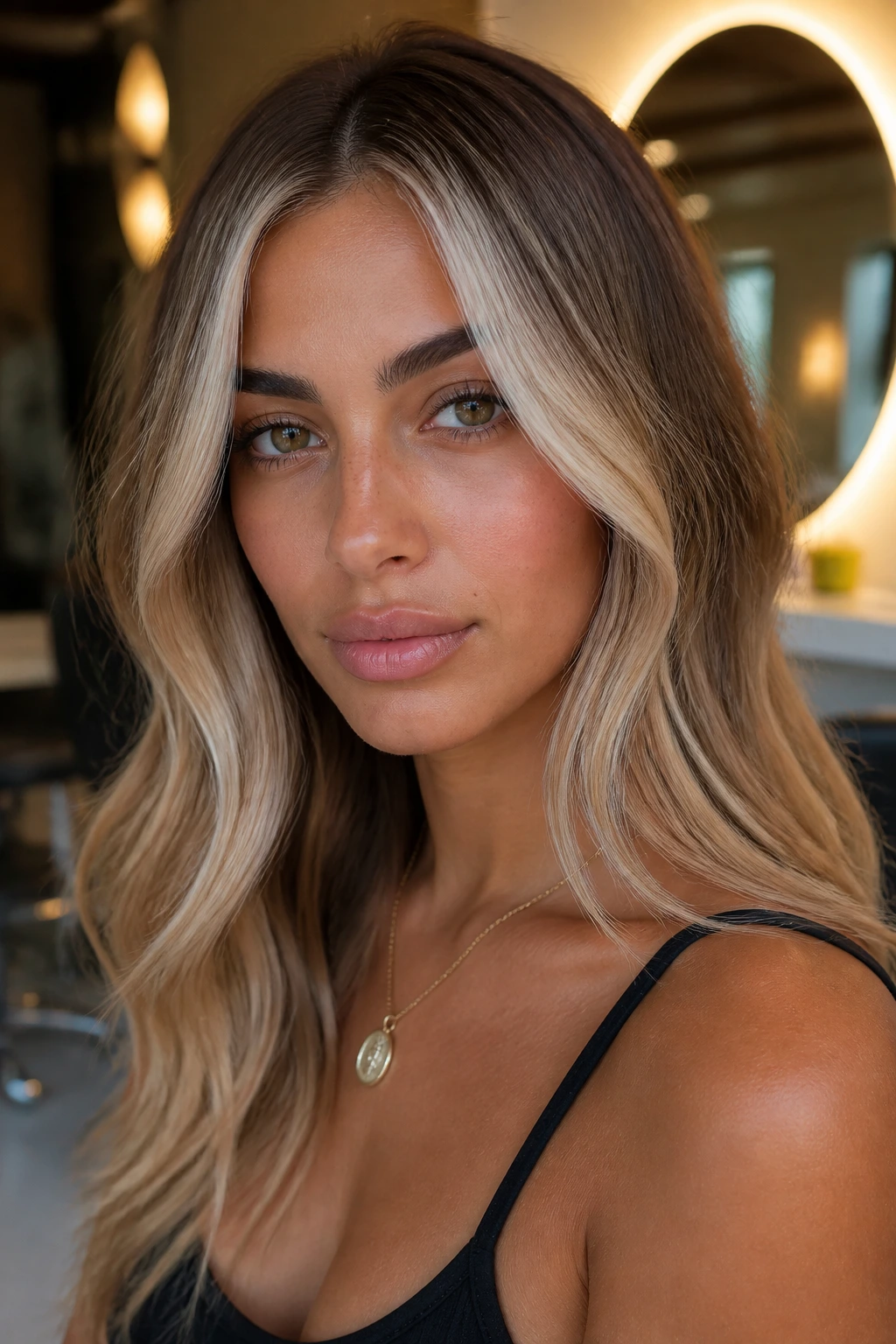
Vanilla cream blonde money pieces can change a face fast. The front sections are the lightest part of the look, but they’re still creamy, not white, which keeps olive skin from looking drained. It’s a brightening trick, not a bleaching contest.
The reason this works is simple: the eye reads the face first. Put the lightest, softest blonde near the temples, part line, and cheekbones, and the whole complexion looks more awake. Keep the rest of the hair a little deeper — beige, honey, or light brown — and the contrast does the rest.
This is a smart choice if you like makeup and want your hair to frame it instead of compete with it. It looks especially clean with winged liner, peach blush, and a warm nude lip.
A lot of people ask for “blonde money pieces” and end up with strips that are too pale. Vanilla cream is the safer version. It has brightness, but it still belongs to the skin tone it sits beside.
12. Cinnamon Honey Blonde
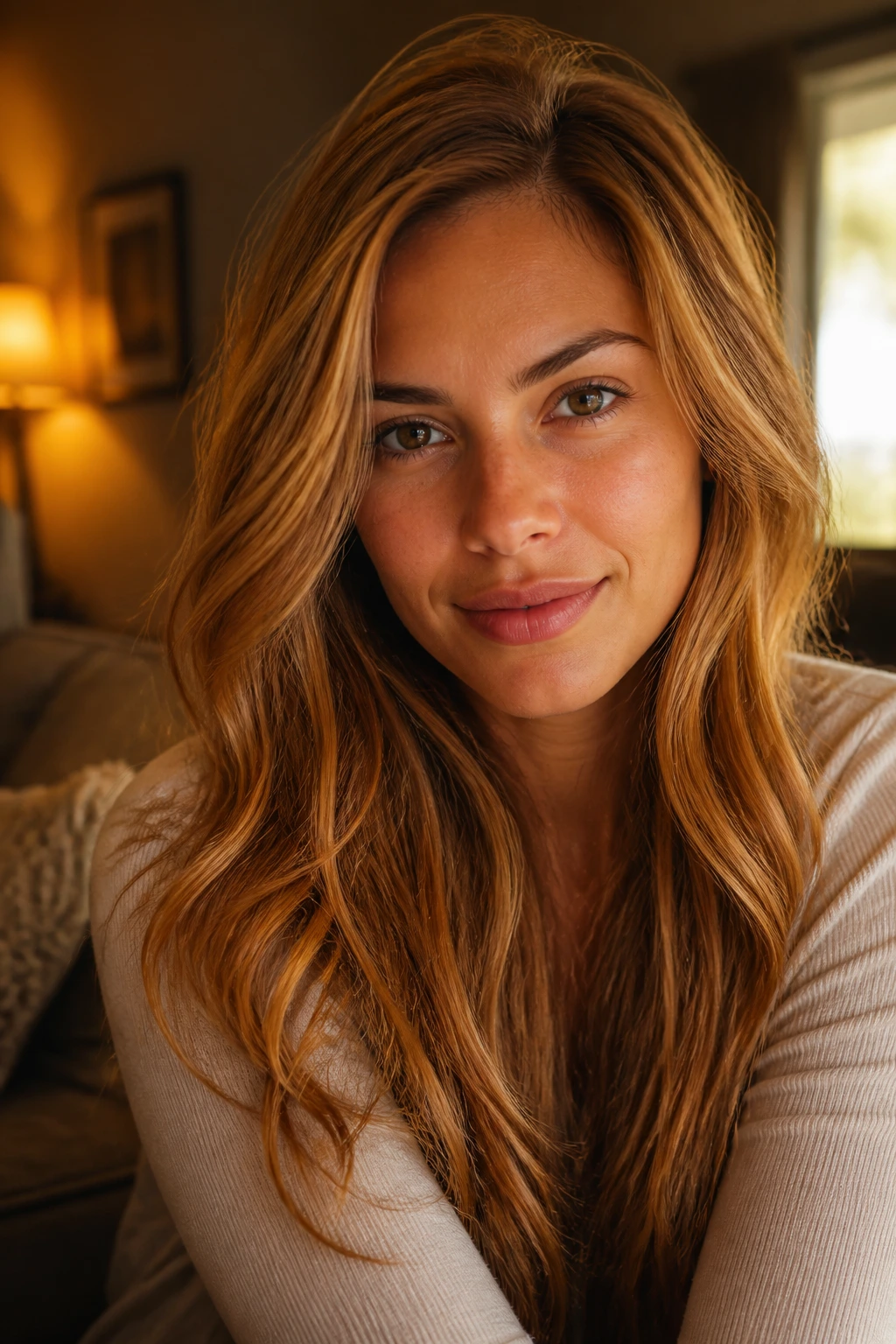
Cinnamon honey blonde is warmer and spicier than standard honey. It carries a faint copper edge, which can be gorgeous on olive skin that already leans warm or golden. The trick is keeping the cinnamon in the background, not letting it take over.
This shade works well when you want the blonde to feel richer in fall-like lighting — not tied to any season, just that kind of warm interior glow. If your skin looks better in terracotta, rust, and bronze makeup, cinnamon honey usually makes sense on you. If you run very pink or very cool, it can be a little much.
Ask your colorist for honey blonde with subtle copper lowlights, not straight copper. That distinction matters. One keeps the blonde family intact. The other turns the hair into a different conversation.
Good match for: olive skin with hazel eyes, golden brown eyes, or freckles that already bring warmth to the face.
13. Sand Blonde with a Warm Melt
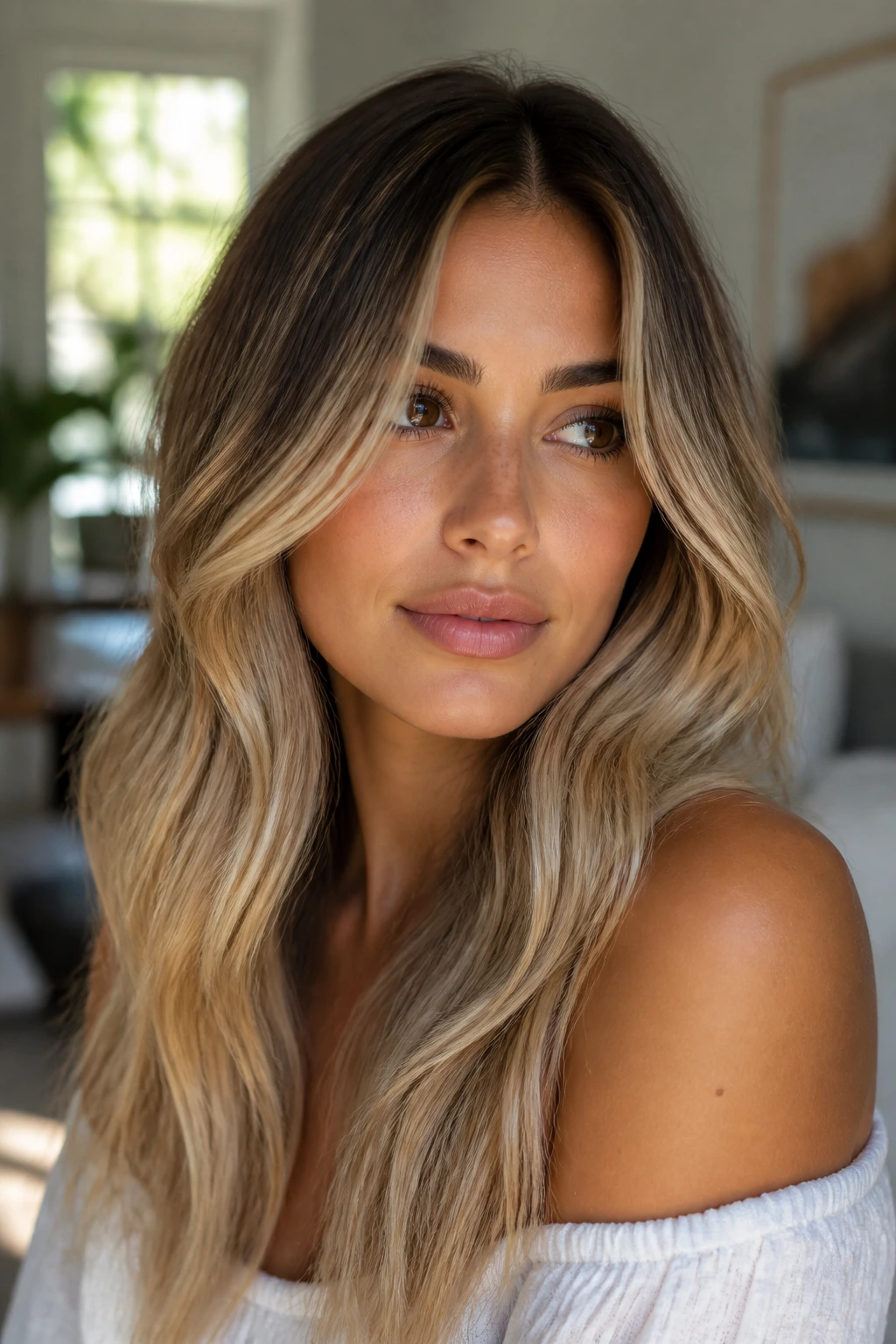
Sand blonde is one of those shades people use loosely, which is a shame because the right version is lovely on olive skin. The warm melt matters. Without it, sand can slide into ash and start working against the complexion. With a gentle gold-beige melt from root to end, it becomes soft, beachy, and believable.
What the melt should do
The root should be a touch deeper — usually level 6 or 7 — then the color should fade into a sandy beige-blonde through the mids and ends. Not stripey. Not flat. Just softly blended.
Ask for
- A warm gloss over the finished blonde.
- Light, fine balayage rather than chunky foils.
- No heavy violet toner at the end.
This is a good shade if you want the hair to look light in a natural way, as if the sun has spent a few months doing the work for you. It’s especially easy on longer hair with a bit of wave.
14. Strawberry Blonde for Olive Skin
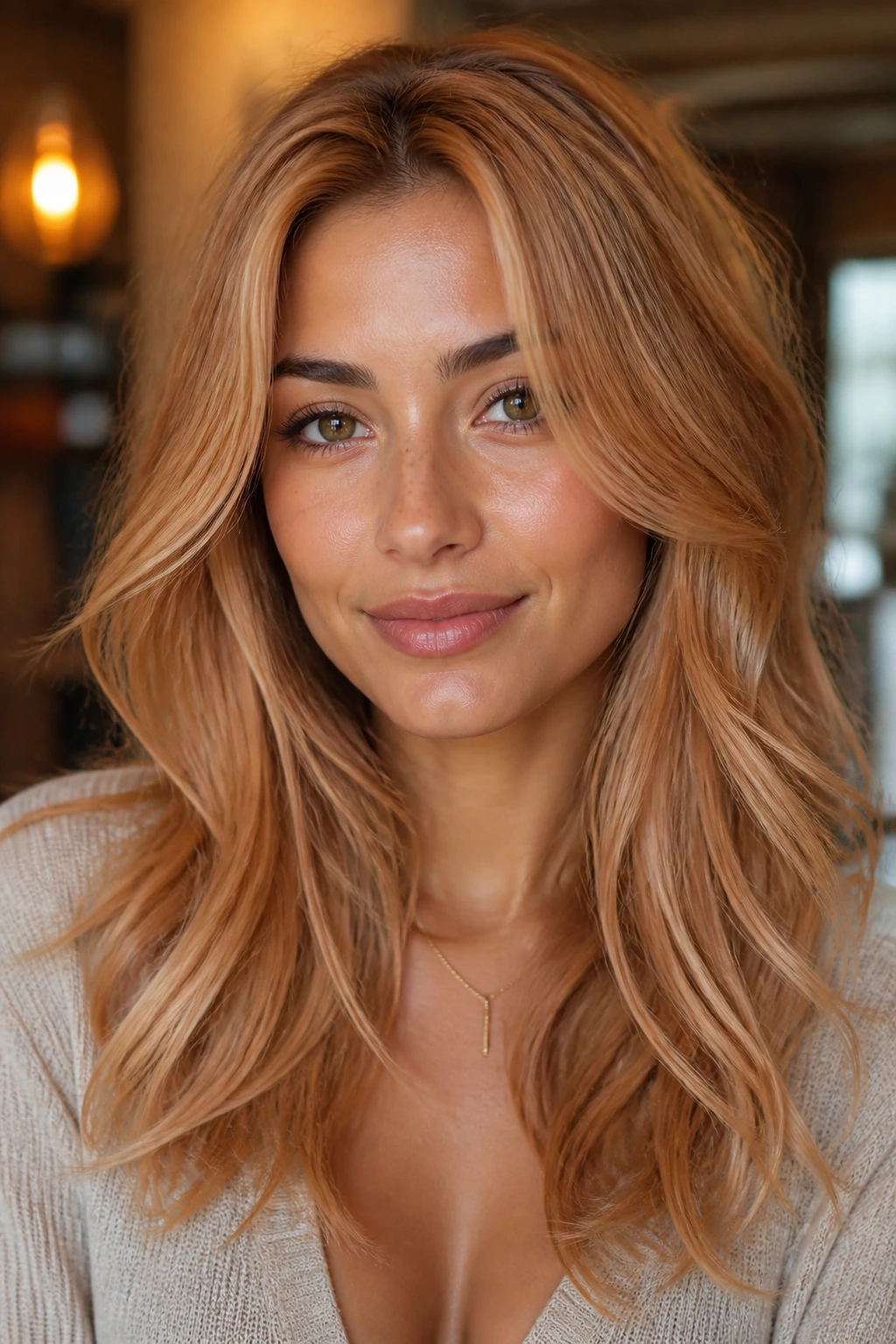
Strawberry blonde can work on olive skin, but only when the strawberry stays soft and the gold still leads. If the red side gets too strong, the face can look redder than it is. If the gold stays in charge, the result is fresh, warm, and a little unexpected.
This shade suits olive skin that leans golden rather than gray-green. Freckles help, but they are not required. What matters more is whether your face likes peach, coral, and warm nude makeup. If those shades look natural on you, strawberry blonde often does too.
The safest version is a golden strawberry, not a true red-blonde hybrid. Think soft copper petals, not fire. It’s prettier in motion than in static photos, so ask your colorist for ribbons and gloss, not a solid block of tint.
People avoid this shade because they assume it will be too red. Sometimes that’s true. Sometimes it’s exactly the thing that makes olive skin look alive.
15. Dulce de Leche Blonde
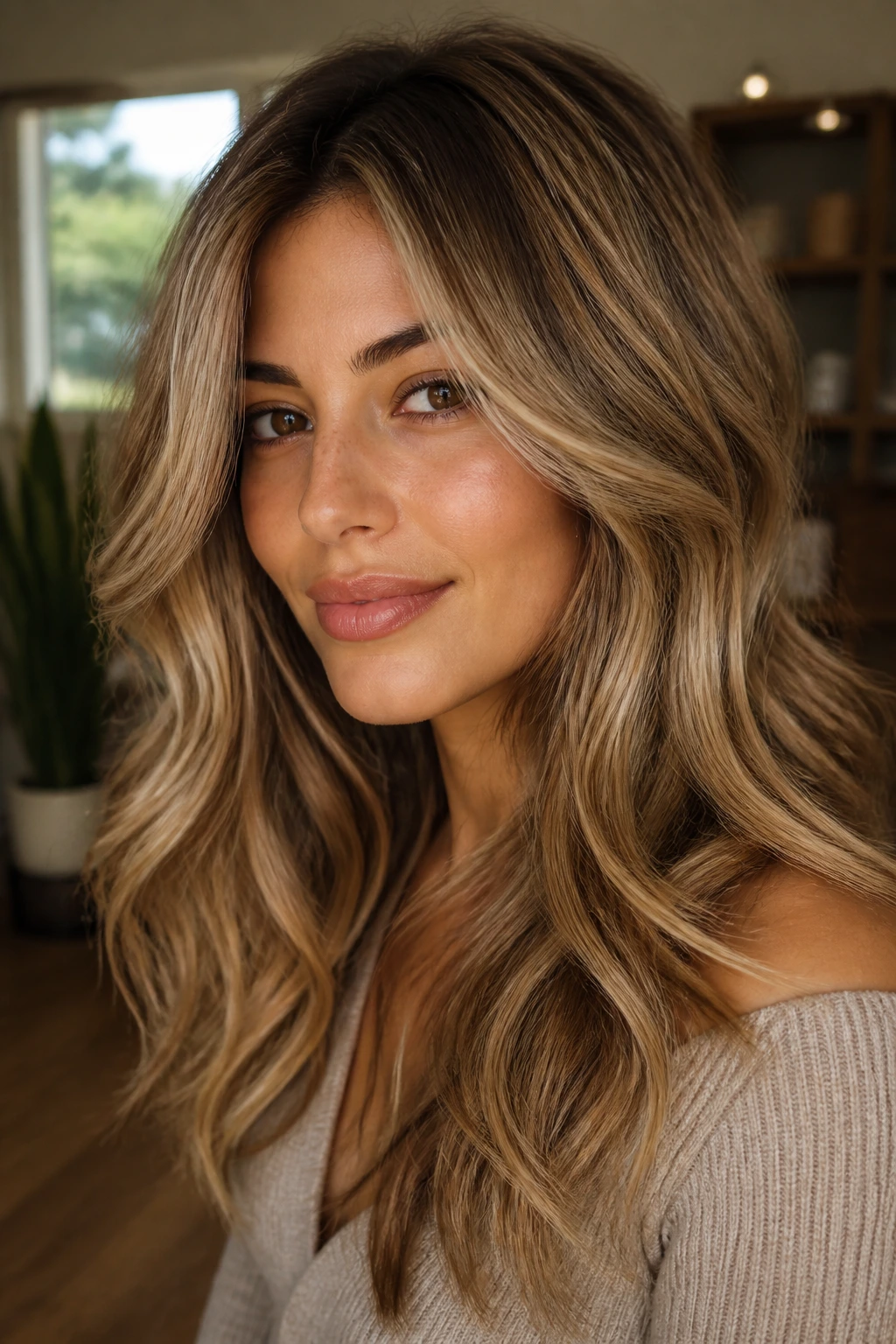
Dulce de leche blonde sits in that rich, creamy zone where caramel and light blonde meet. It’s deeper than honey, smoother than butterscotch, and more swirled than a single-tone beige. On olive skin, that layered warmth can look almost edible — not in a gimmicky way, just in a “this hair has depth” way.
The color works because it doesn’t ask the hair to be one thing. There’s cream in it. There’s caramel in it. There’s enough brown left in the base that the whole look feels grounded. That balance is good for olive skin, which tends to look nicest beside color that has the same kind of mixed undertone.
This is one of my favorite shades for thicker hair. The dimension keeps the cut from looking heavy. On finer hair, it can make the shape feel fuller without pushing the ends too light.
If you like soft waves, even better. The swirls show up in the movement. Straight hair can wear it too, but it lives louder once the strands bend a little.
16. Peach-Gold Blonde
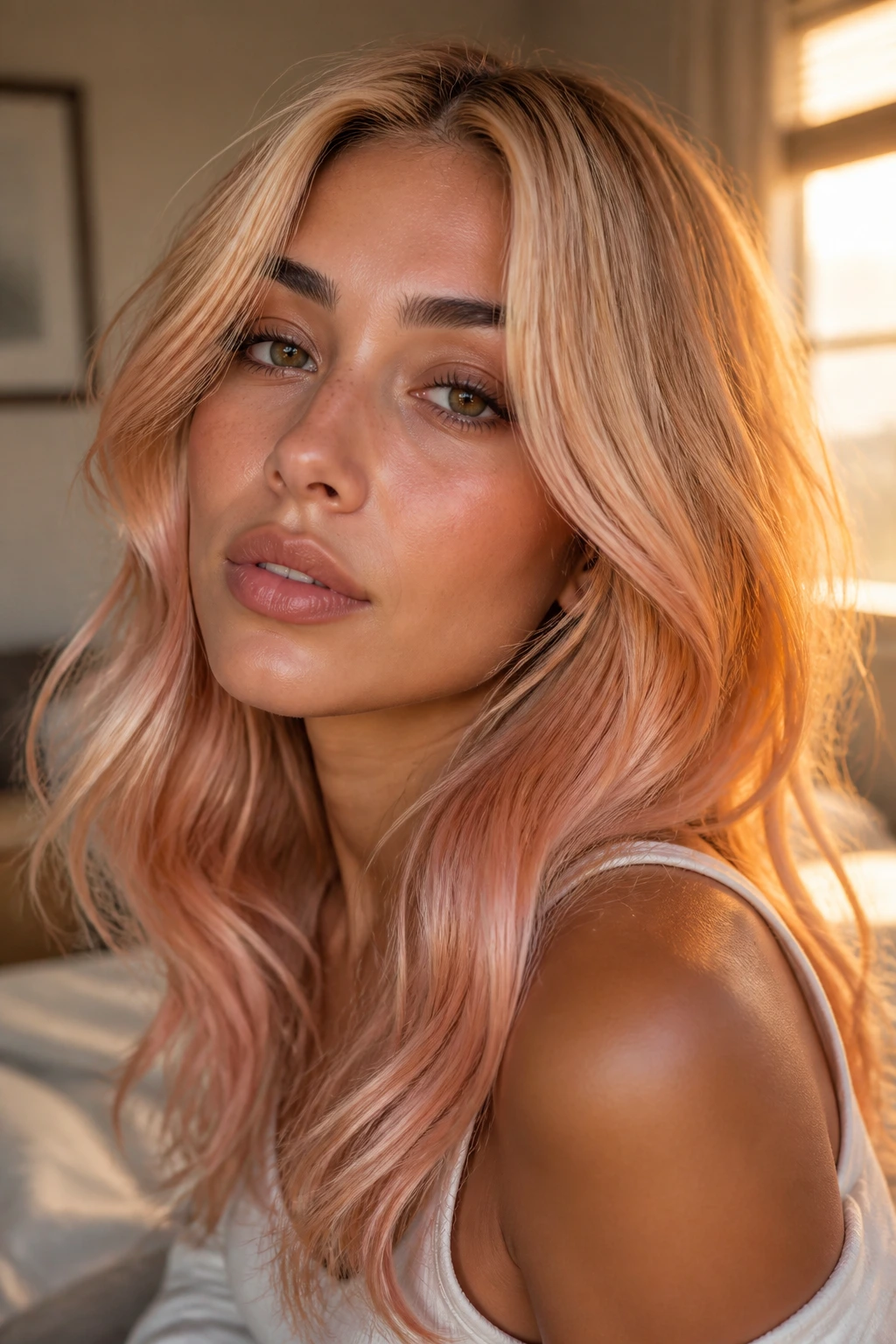
Peach-gold blonde is for the person who wants warmth with a little personality. It’s softer than copper, less obvious than apricot, and more playful than beige. On olive skin, that peach note can bring a fresh look to the face, especially if your makeup already leans warm and rosy.
This shade tends to work best when the peach is tucked inside the gold instead of sitting on top of it. That keeps the color from looking like a dye job and gives it more of a soft reflective quality. It also plays nicely with brown and hazel eyes, especially when there’s a little shimmer in the skin or makeup.
I’d keep this one away from a stark white blonde base. Peach looks better when there’s some warmth underneath it. Think of it as gold with a blush on top.
It’s a nice choice if you want something a little less predictable than honey but still very wearable. Quietly fun. That’s probably the best way to describe it.
17. Amber Blonde Highlights
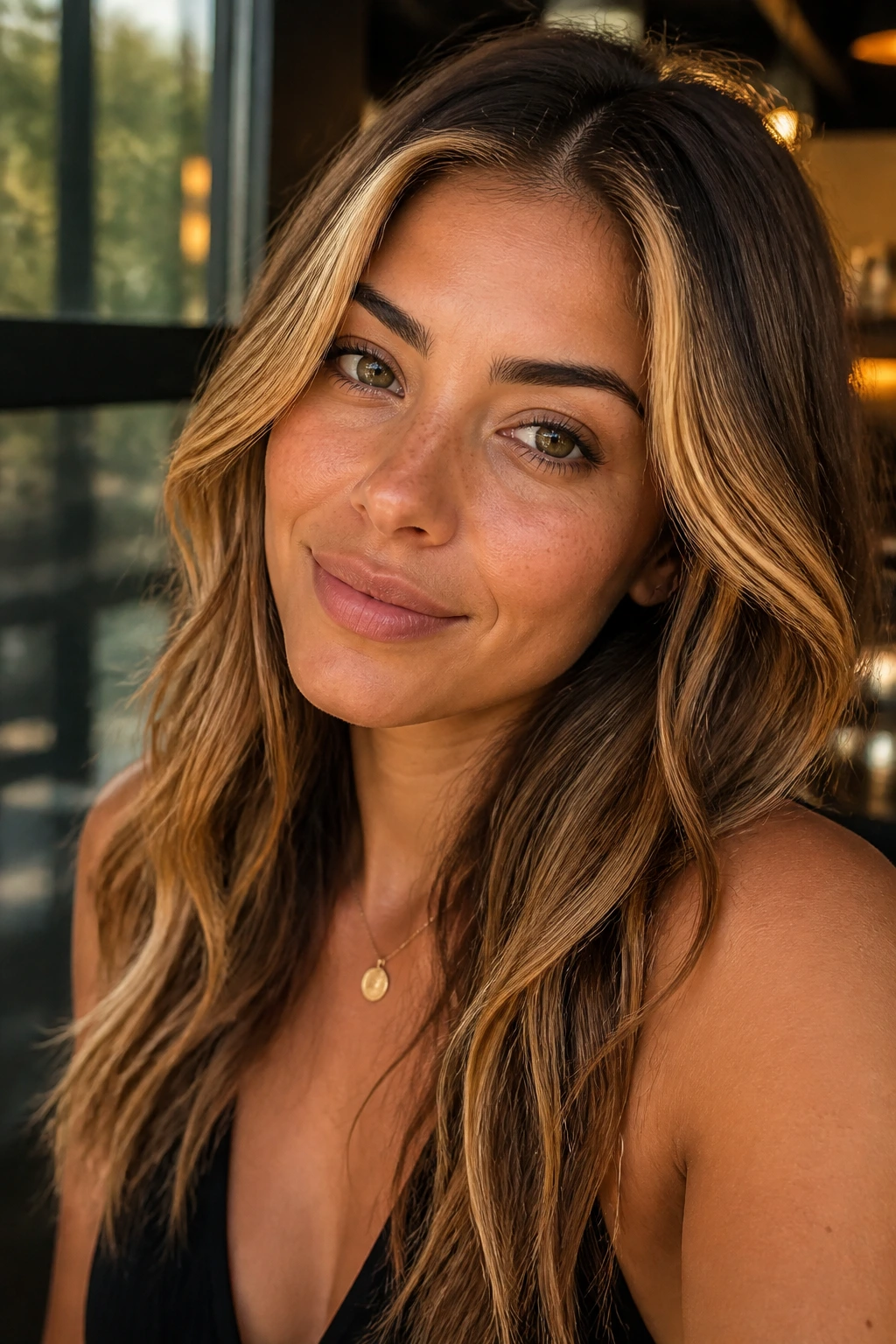
Amber blonde lives between gold and copper, and that middle ground is why it can be so flattering on olive skin. It has enough warmth to brighten the face, enough depth to avoid looking chalky, and enough richness to stand out without turning the whole head orange.
How to use it around the face
Keep the amber brightest at the hairline and the front pieces, then soften it as it moves back through the crown. That keeps the look from feeling heavy. A glaze with a little gold and a little copper is usually better than a pure amber deposit all over.
Amber highlights are especially nice on darker brunettes who want the face to glow more than the rest of the hair. The result is less “new blonde” and more “warm light around the face.” Subtle, but not boring.
If your skin can handle a little spice, this shade has a lot going for it. It also looks good with bronzer, terracotta blush, and warm brown eye makeup. The color and makeup end up pulling in the same direction.
18. Sunlit Wheat Blonde
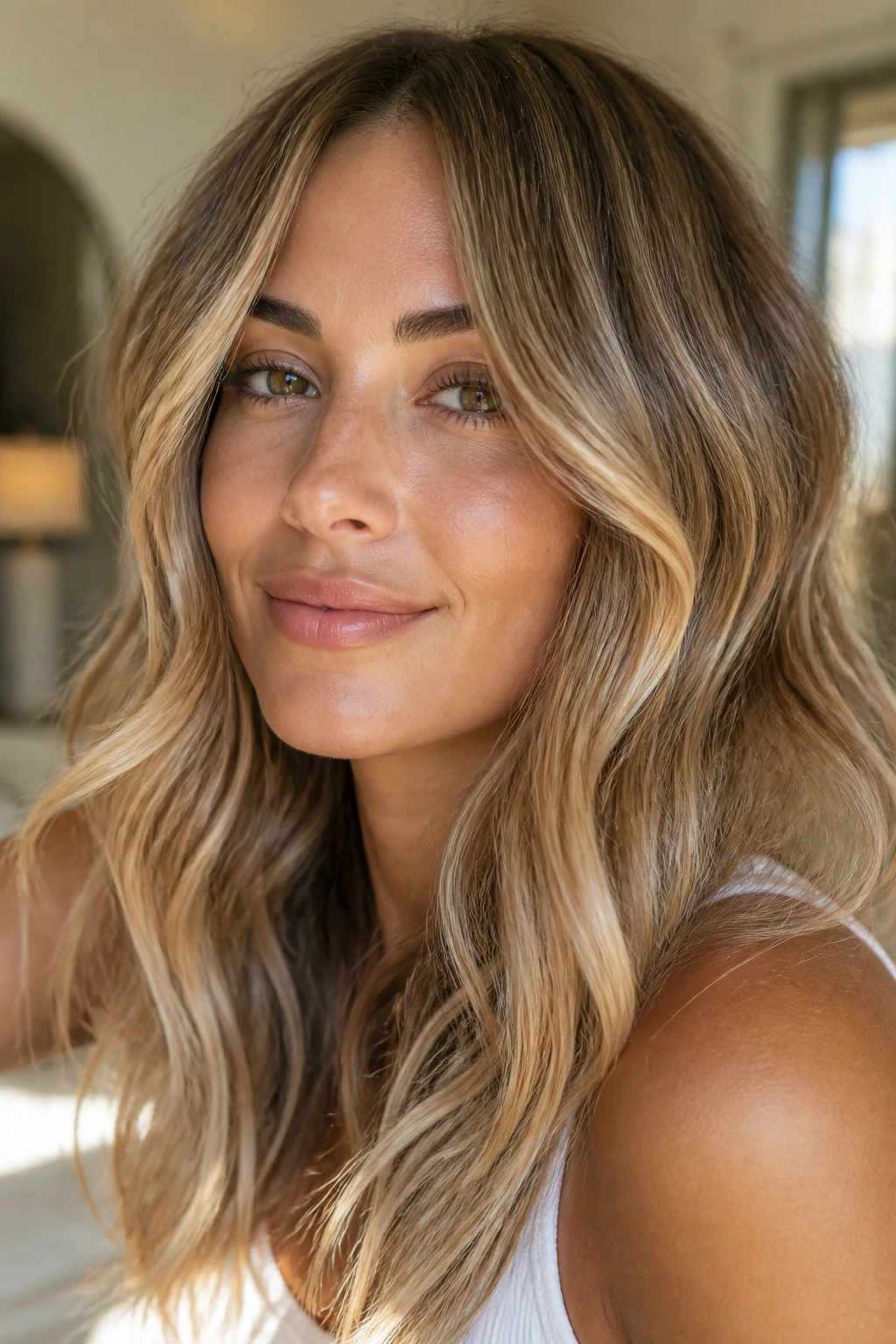
The most flattering warm blonde on olive skin is often not the brightest one. It’s the one with the smallest, finest pieces of light. Sunlit wheat blonde does exactly that. It uses delicate highlights and a warm gloss to make the hair look naturally lightened, not aggressively processed.
This is a good shade for people who want softness first. The wheat tone keeps the blonde in the beige-gold family, which means it won’t compete with olive undertones the way icy blondes often do. It also wears well on fine hair because the fine weaving gives the illusion of density.
Ask for babylights, a warm beige toner, and a soft root blend. If the highlights are too broad, you lose the wheat effect. If they’re too cool, the whole thing slides out of the flattering zone fast.
I like this on layered cuts and curtain bangs. The light pieces move around the face and create that gentle brightness people keep trying to describe as “sun-kissed.” The phrase gets overused. The look, when it’s done right, is still worth the trouble.
19. Buttered Biscuit Blonde
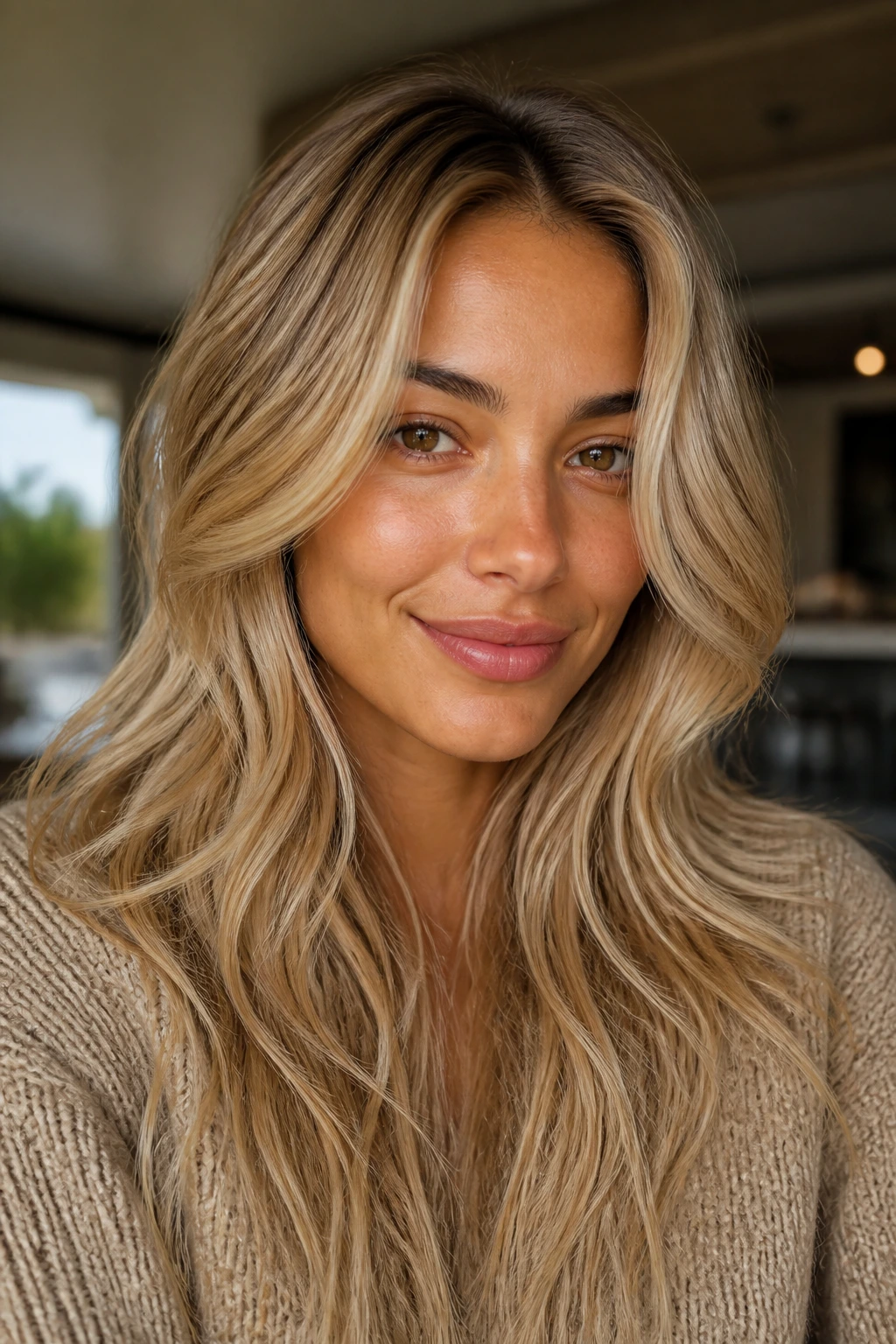
Buttered biscuit blonde is the coziest shade in the bunch, and I mean that in the best way. It’s creamy, warm, and slightly golden without veering into strong yellow. On neutral olive skin, that softness can be incredibly kind. The face stays warm, but nothing feels loud.
This shade is a little like buttercream’s quieter cousin. It gives you blonde, but it doesn’t take over the room. That makes it especially good if you like subtle makeup, soft clothing colors, or a hair color that doesn’t demand a lot of styling to look finished.
Who it suits best
- Neutral-olive skin that gets overwhelmed by heavy gold.
- People who want a calm grow-out line.
- Anyone who likes a creamy blonde rather than a bright one.
My honest take: if you’re torn between beige and honey, biscuit is a smart middle path. It has enough warmth to flatter olive skin and enough softness to stay wearable for months.
Why Olive Skin and Warm Blonde Click So Well
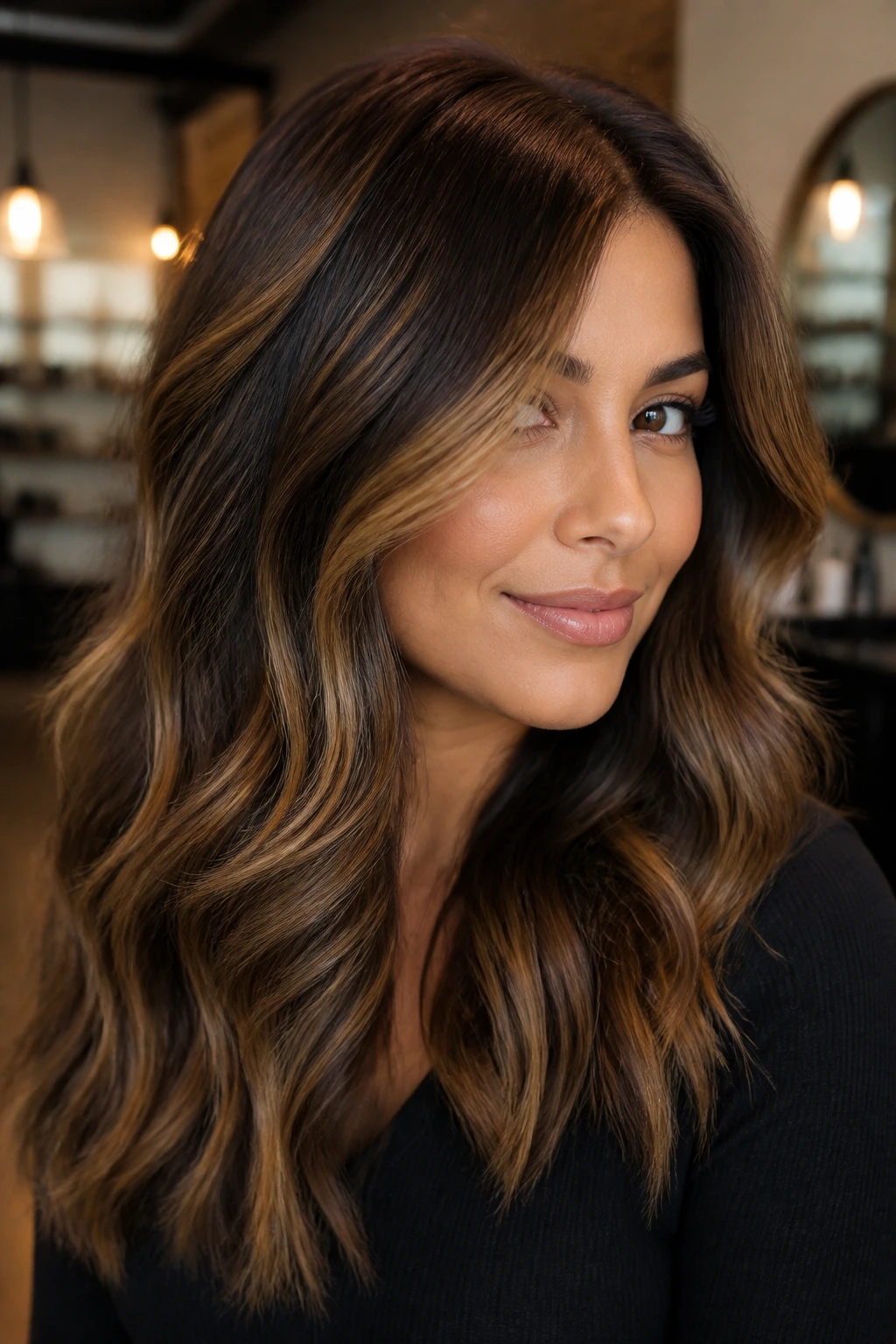
Olive skin usually carries a mix of green, gold, and muted beige under the surface, and that mix is why the wrong blonde can look a little off. Cool ash and silver tones often exaggerate the muted part. Warm blonde does the opposite. It adds reflected light where the complexion already wants it.
That doesn’t mean every olive complexion needs the same level of warmth. A deeper olive skin tone may look best with caramel, butterscotch, or amber. A lighter neutral-olive complexion may do better with beige-gold, champagne, or buttercream. The shade ladder matters. So does the root depth. A blonde with no grounding at the scalp can look disconnected, even if the tone itself is flattering.
The other piece people miss is contrast. Olive skin often looks best when there is still some shape around the face — dark brows, soft shadow at the root, maybe one or two levels of depth under the lightest pieces. Too much brightness all at once can erase that structure. A good warm blonde doesn’t flatten the face. It frames it.
And no, warm does not have to mean orange. That’s the lazy version of the idea. The better versions live in honey, caramel, beige-gold, apricot, amber, and creamy butter territory. They’re warm because they reflect light the right way, not because they look like a paint chip from a bright kitchen.
Essential Tools and References for the Salon Chair
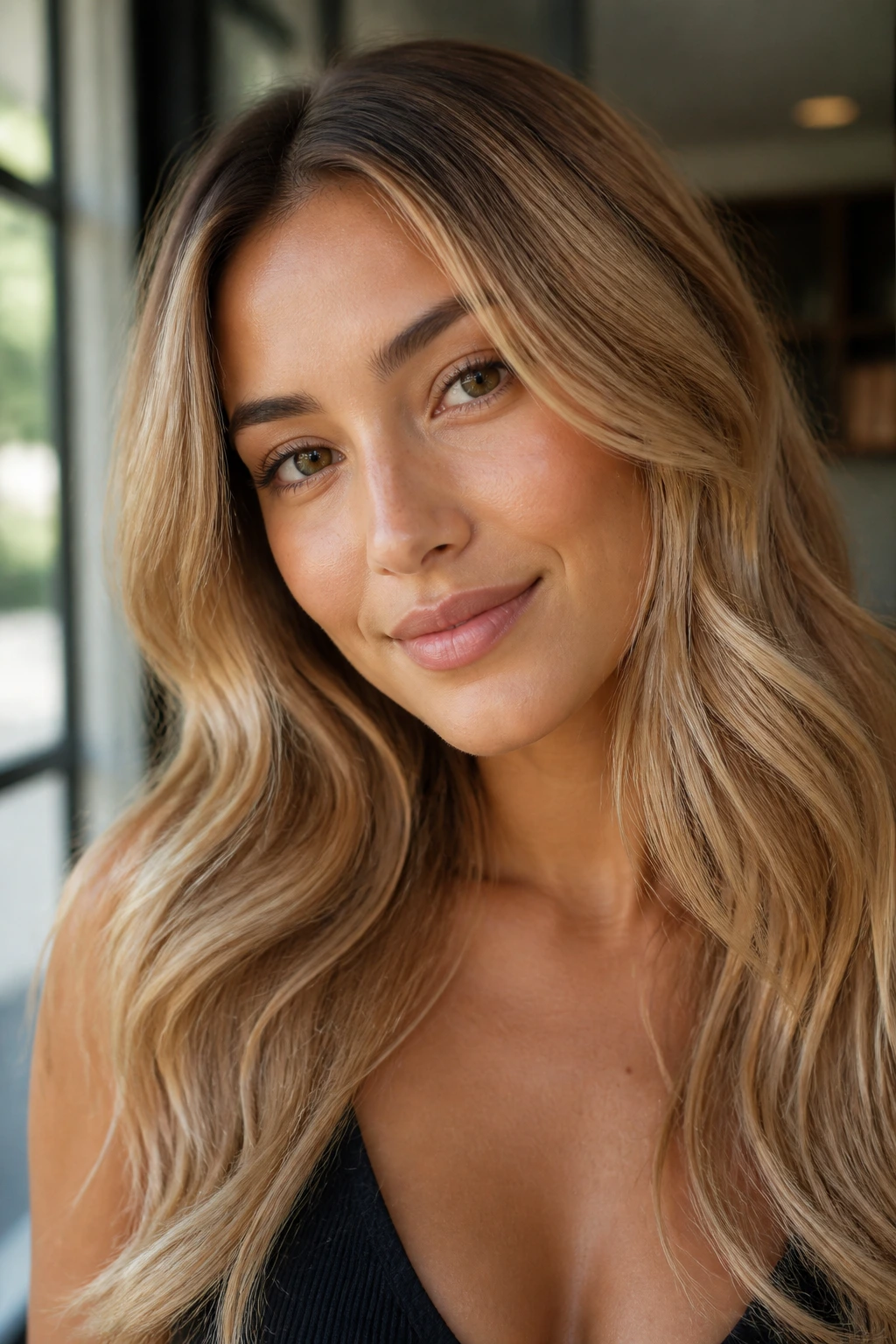
- Three to five reference photos in natural light: Screenshots from indoor lighting lie; daylight shows the real warmth, root depth, and contrast.
- A note about your natural base level: Telling your colorist whether your hair is closer to a level 4 brunette or a level 7 dark blonde helps them map the lift.
- A color-safe shampoo and conditioner: Warm blondes fade faster when you use harsh cleansing products.
- Heat protectant spray: Blonde hair shows heat damage quickly, and fried ends make warm tones look dull.
- A wide-tooth comb: Useful for distributing conditioner and keeping highlighted hair from snagging.
- A microfiber towel: Less friction means less frizz and less roughness in the cuticle.
- Purple shampoo, used sparingly: Handy if the blonde starts turning too yellow, but it can mute the warmth if you overdo it.
- A deep conditioner or bond-repair mask: Bleached or lightened hair needs regular moisture and structure back.
- A shower filter if your water runs hard: Mineral buildup can make warm blonde drift brassy or dull.
How to Pick the Right Warm Blonde Shade Before You Book the Appointment
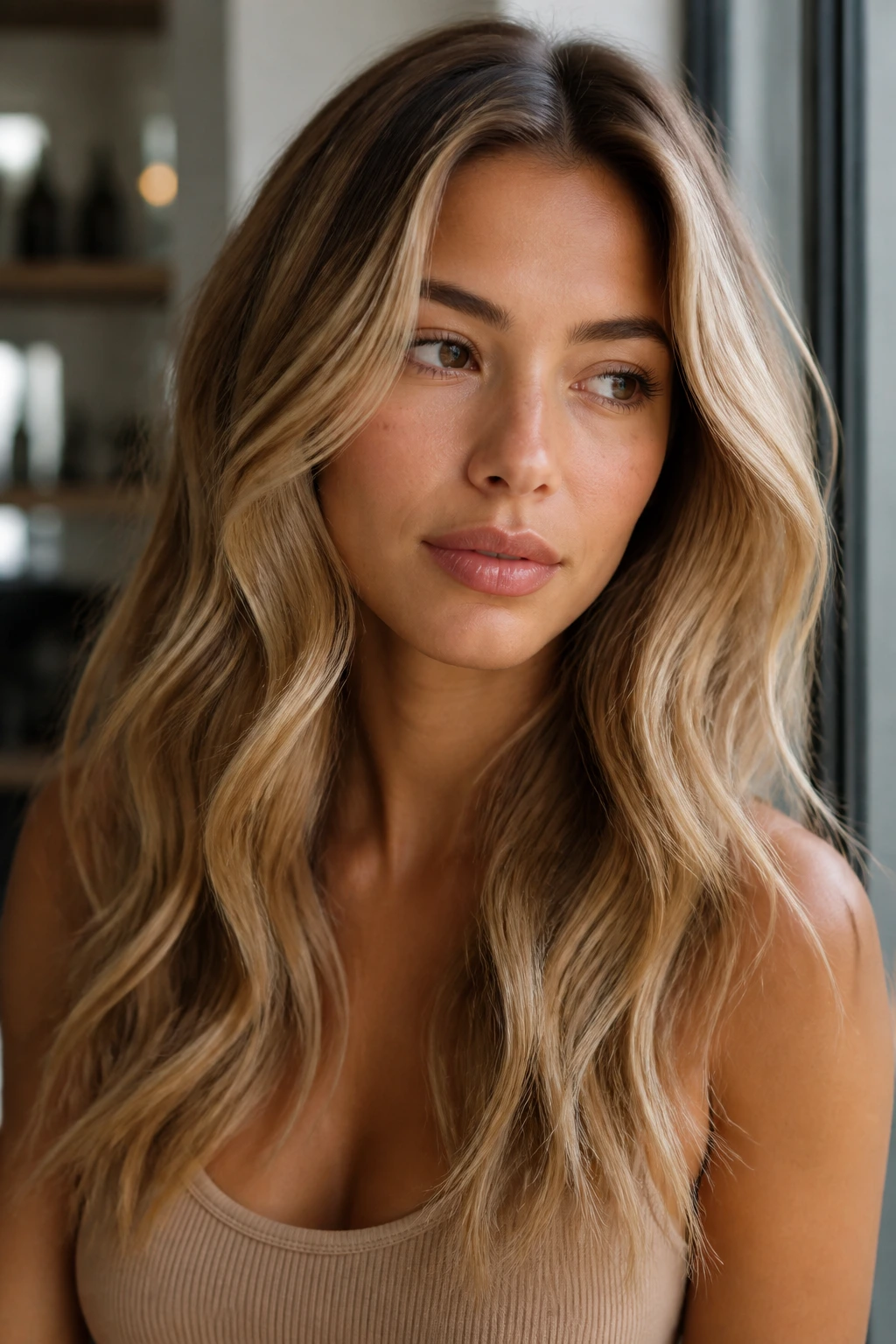
The fastest way to choose badly is to ask for a celebrity picture and stop there. Ask for the tone instead. Is it honey? Beige-gold? Caramel? Apricot? That one word matters more than the face in the photo.
Bring photos shot in daylight. Indoor warm bulbs can make a blonde look richer than it really is, while flash can make it look pale and icy. If you can, save one photo from the front, one from the side, and one that shows the root. Color placement matters as much as the color itself.
Hair history matters too. Previously dark box dye, henna, or multiple rounds of bleach change what your hair can safely do in one visit. A good colorist will talk about whether you need a balayage, fine babylights, a gloss, or a full lift. That is not overthinking. That is the part that keeps the hair attached and usable.
A useful rule: the deeper your natural brunette, the more you’ll want dimension at the root and around the face. Fine, lighter olive skin often looks better in beige-gold or buttercream. Deeper olive skin can handle honey, caramel, and amber with more ease. If you’re stuck between two shades, choose the one with a little more depth first. You can always brighten it later.
How to Wear Warm Blonde So It Flatters Olive Skin
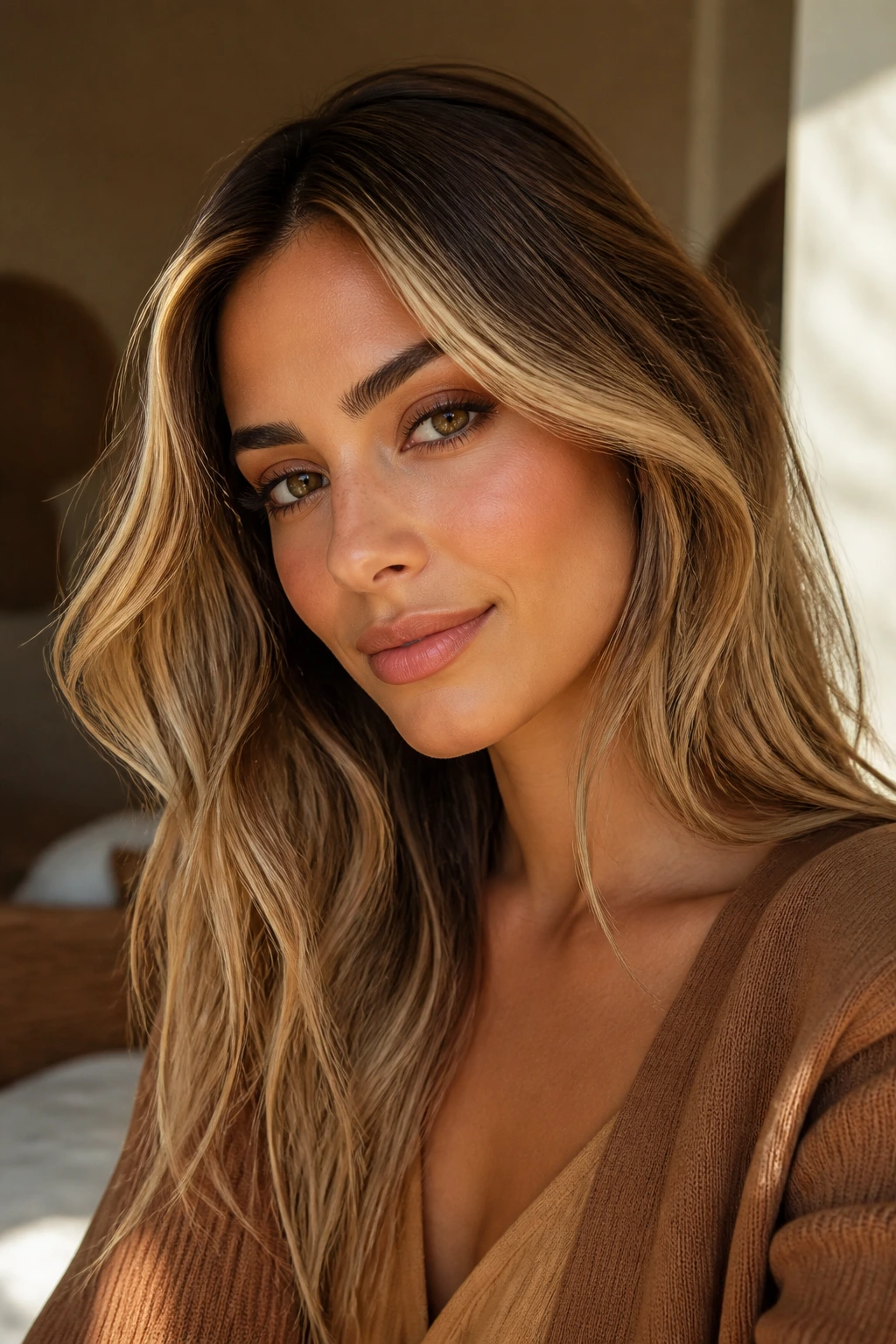
Face Framing: Keep the brightest pieces around the temples, cheekbones, and part line. That’s where the light works hardest and where olive skin usually needs the most lift.
Brows: Don’t bleach your brows into submission. One to two shades deeper than the lightest blonde pieces usually keeps the face from looking washed out.
Makeup: Peach blush, bronze liner, warm nude lips, and terracotta tones are easy companions for honey, caramel, and amber blondes. Cool pinks can work, but they often need a little balancing.
Wardrobe: Cream, espresso, olive, rust, teal, and soft navy tend to make warm blonde read richer. Stark white can be fine, but it tends to make the hair look even warmer by comparison.
Contrast: If your natural base is dark, you need some root shadow or lowlight. Too much all-over lightness can flatten the face and make the hair feel disconnected from your features.
Extra Ways to Keep the Color Looking Fresh
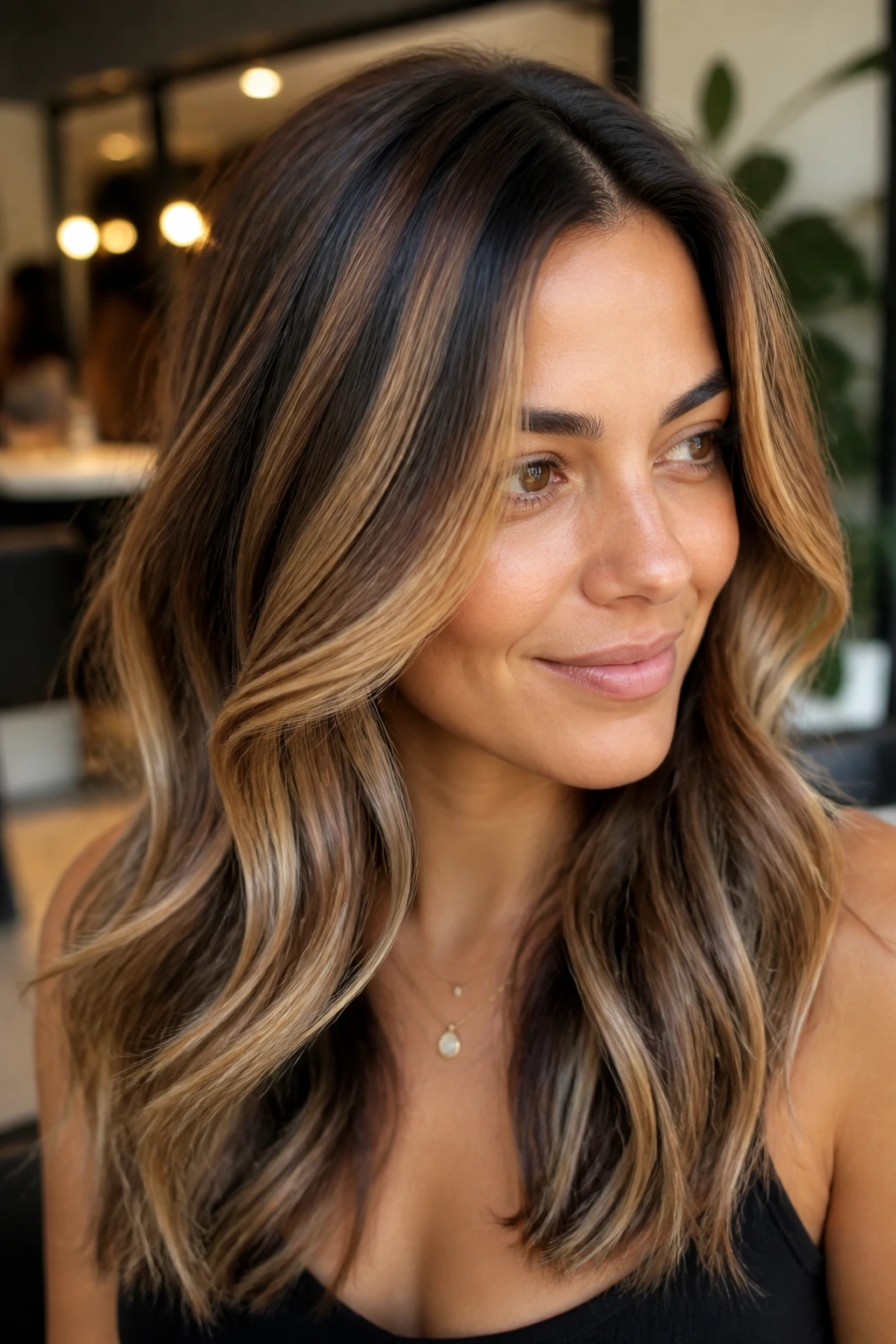
Gloss Timing: Plan on a demi-permanent gloss every 4 to 6 weeks if you want the warmth to stay clean. That’s the easiest way to refresh tone without lightening again.
Purple Shampoo: Use it only when the blonde starts to lean too yellow. Once every second or third wash is usually enough. Leave it on for 30 to 60 seconds, not five minutes, unless your hair is truly pale.
Heat Control: Keep hot tools below 375°F if you can, and always use a heat protectant. Warm blonde loses its shine fast when the cuticle gets scorched.
Water Watch: Hard water and chlorine can dull honey, caramel, and butter tones in a hurry. If you swim, wet your hair first, rinse after, and use a clarifying shampoo once in a while.
Make-It-Yours: If you wear your hair curly, ask for ribbons that are spaced wider apart so the pattern shows. If your hair is fine, go for babylights so the dimension looks airy instead of stripy.
Common Mistakes That Flatten Warm Blonde on Olive Skin
-
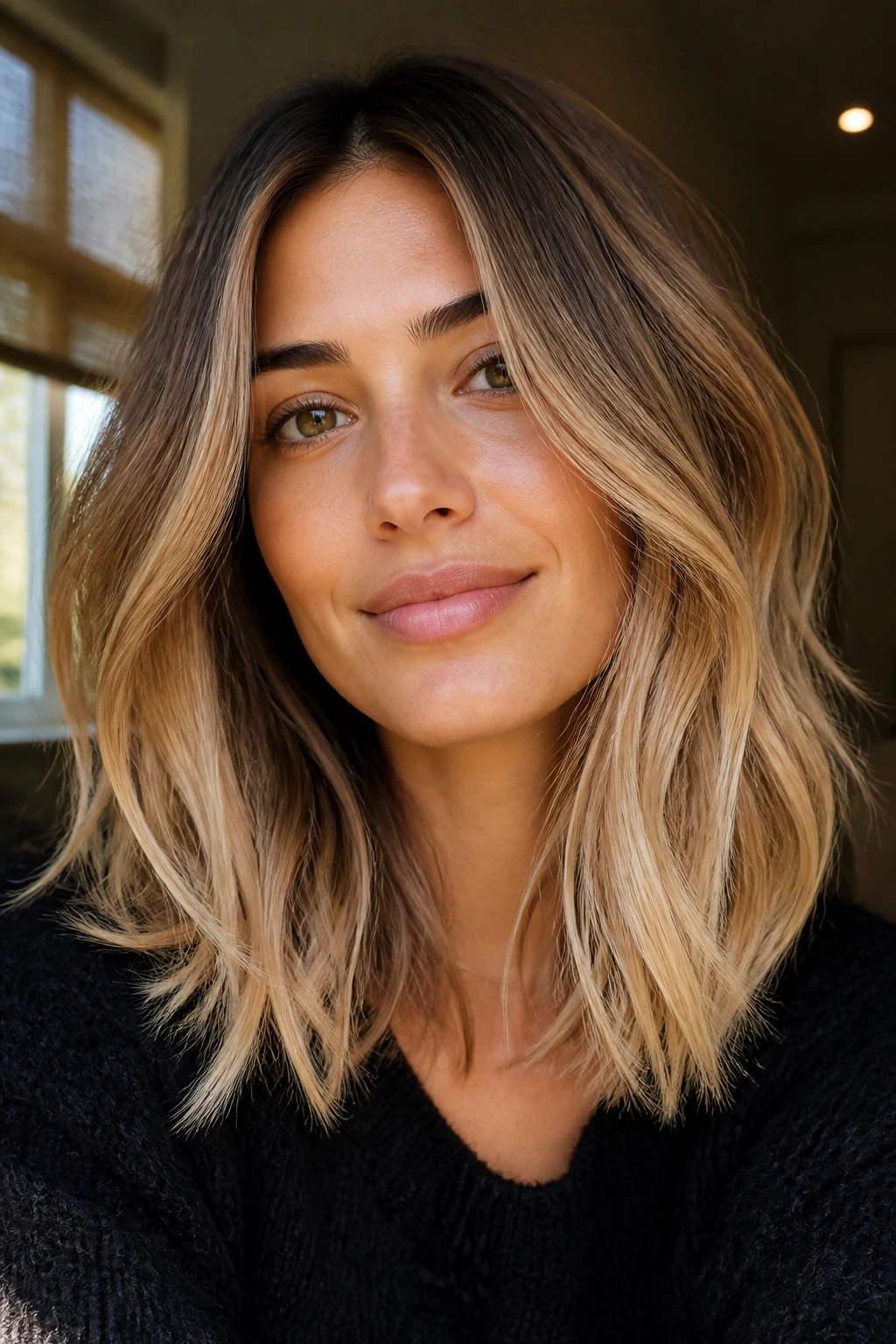
Going too ashy: If the blonde looks beige but your skin looks gray, the tone is wrong. Fix it with a warm gloss in the honey or beige-gold family.
-
Lifting too pale too fast: Very light blonde can erase the contrast that gives olive skin shape. Leave some depth at the root and through the underneath layers.
-
Overusing purple shampoo: It removes yellow, but it can also remove the warmth that makes these shades work. Use it sparingly and stop once the brassiness calms down.
-
Skipping lowlights or root shadow: One-tone blonde can look flat next to olive skin. A little depth keeps the hair connected to the face.
-
Choosing the photo, not the formula: A bright, filtered picture can hide a dozen details — root depth, toner, lighting, and face shape. Ask for the actual tone and placement, not just “that blonde.”
-
Ignoring your brows and makeup: A very light blonde with very dark brows can be gorgeous, but if nothing else changes, the face can feel unfinished. Balance matters.
Variations and Adaptations to Try
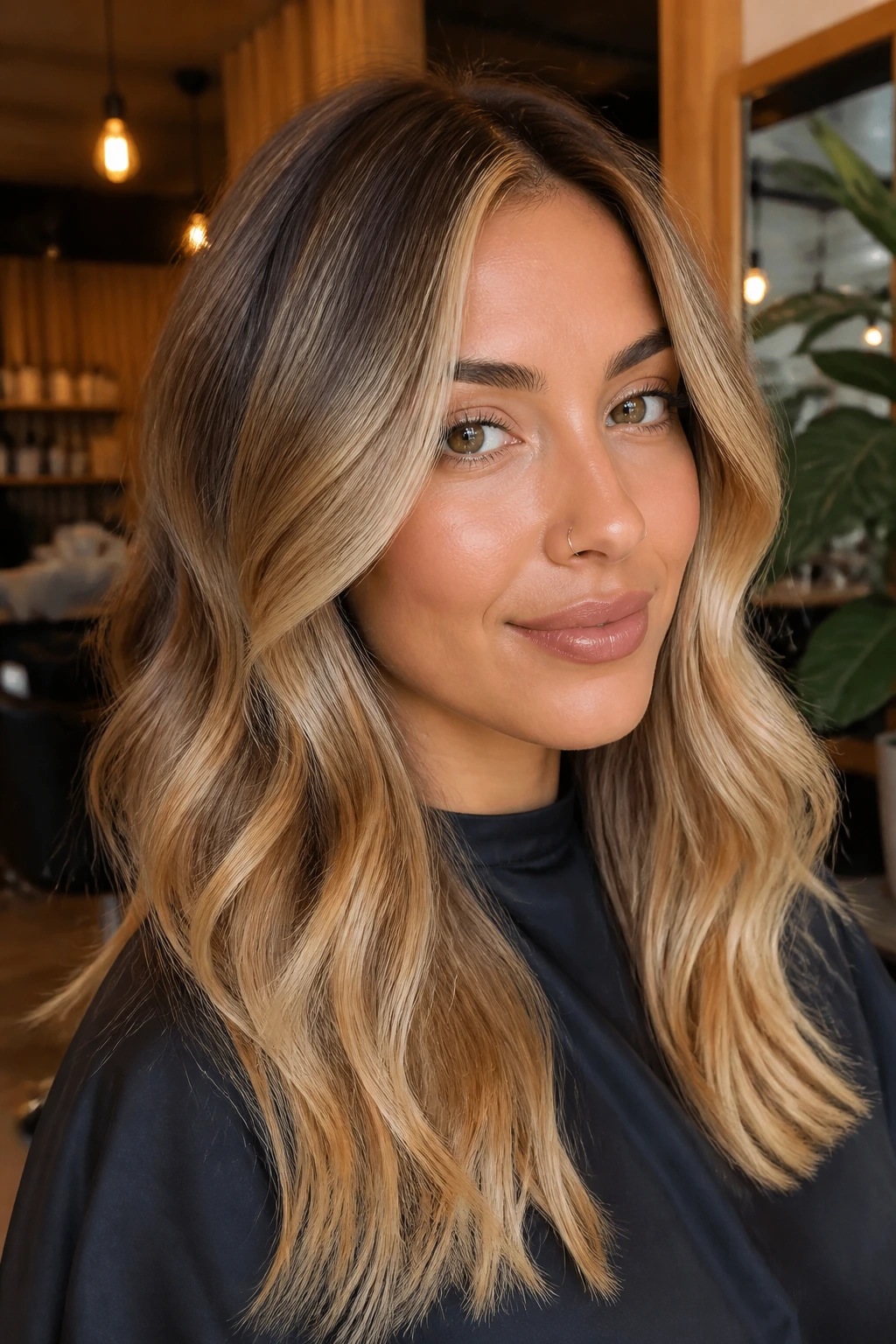
Soft Honey Melt: Keep the roots one to two levels deeper and let honey blonde melt through the mids and ends. This is the least fussy option if you want warmth without obvious maintenance.
Bold Money-Piece Blonde: Lighten only the front sections a touch more and keep the rest of the hair in beige-gold or caramel. It gives olive skin instant brightness without committing to full-head lightening.
Bronze-to-Blonde Bronde: Start with a brunette base and add bronzed blonde pieces through the surface. This works well if you want the blonde effect but still like seeing your darker hair.
Creamy Beige Balayage: Ask for a softer, more neutral-warm blonde with very fine weaving. It’s a good choice if strong gold makes your skin look too yellow.
Rosy Strawberry Gold: Keep the strawberry note soft and let gold do most of the work. This version suits olive skin that already likes peach, coral, and warm blush.
Keeping Warm Blonde Soft Between Visits
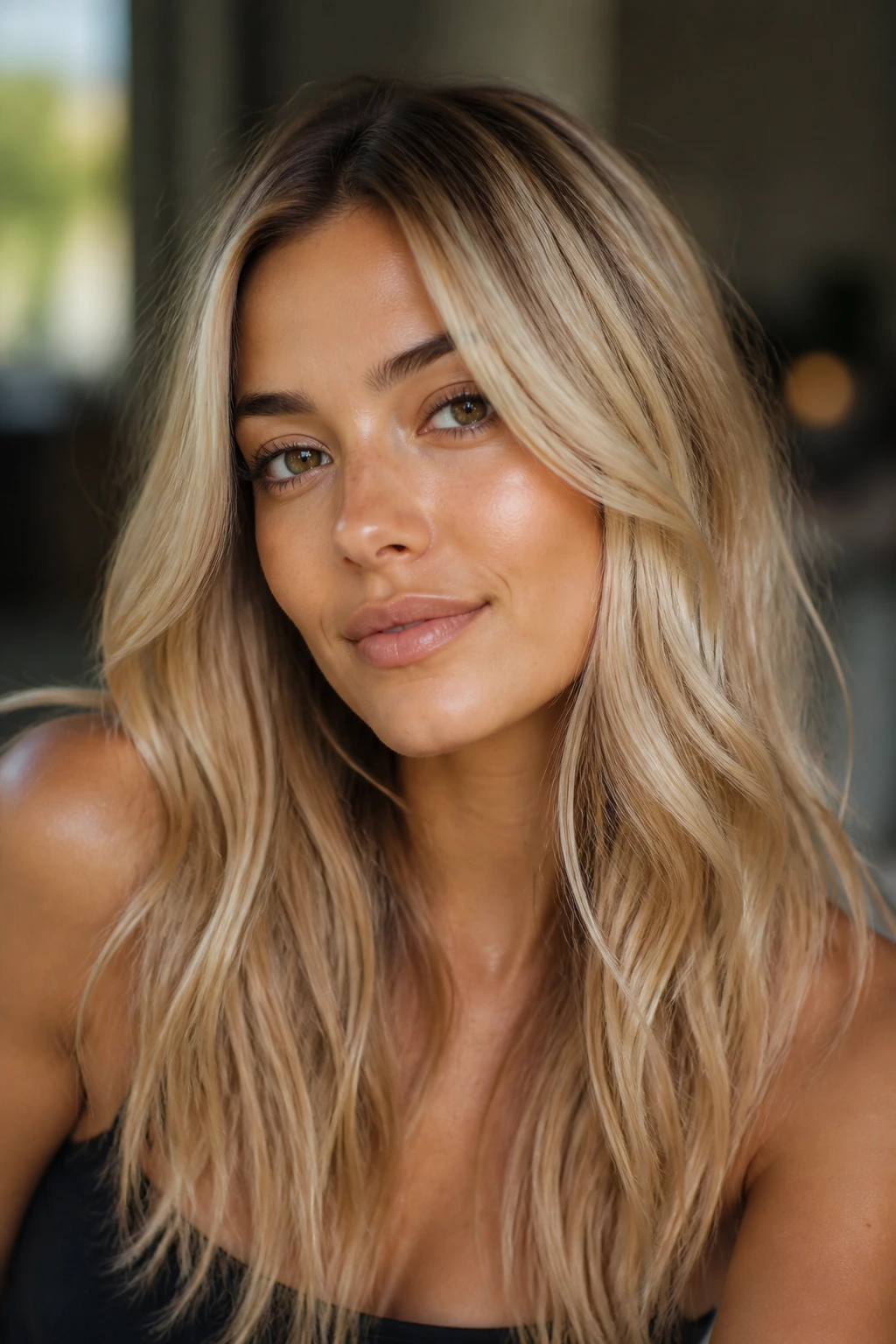
Warm blonde fades in a slightly sneaky way. It doesn’t always turn neon-brassy right away. Sometimes it just gets dull, then yellow, then flat. A little attention early keeps you from needing a bigger correction later.
Plan on a gloss refresh every 4 to 6 weeks if you want the tone to stay creamy. Root touch-ups or balayage maintenance usually happen every 8 to 12 weeks, depending on how much contrast you asked for at the start. If you went with a softer lived-in look, you can often stretch longer. If you chose money pieces or a brighter front, those may need attention sooner.
Wash days matter more than people think. Use a color-safe shampoo, keep very hot water off the hair, and deep-condition once a week if your strands feel rough. If your hair is fine, choose a lightweight mask so it doesn’t go limp. If it’s coarse or bleach-processed, a richer mask will help the blonde reflect light better.
Sun, pool water, and hard water all nibble at warmth. UV spray is worth using if you spend time outside. A clarifying wash once every few weeks can help if mineral buildup starts making the color look muddy. And if the blonde starts leaning too yellow, don’t panic and douse it in purple shampoo for a week. That usually makes the color dull instead of pretty.
Frequently Asked Questions
What warm blonde shade is safest for olive skin?
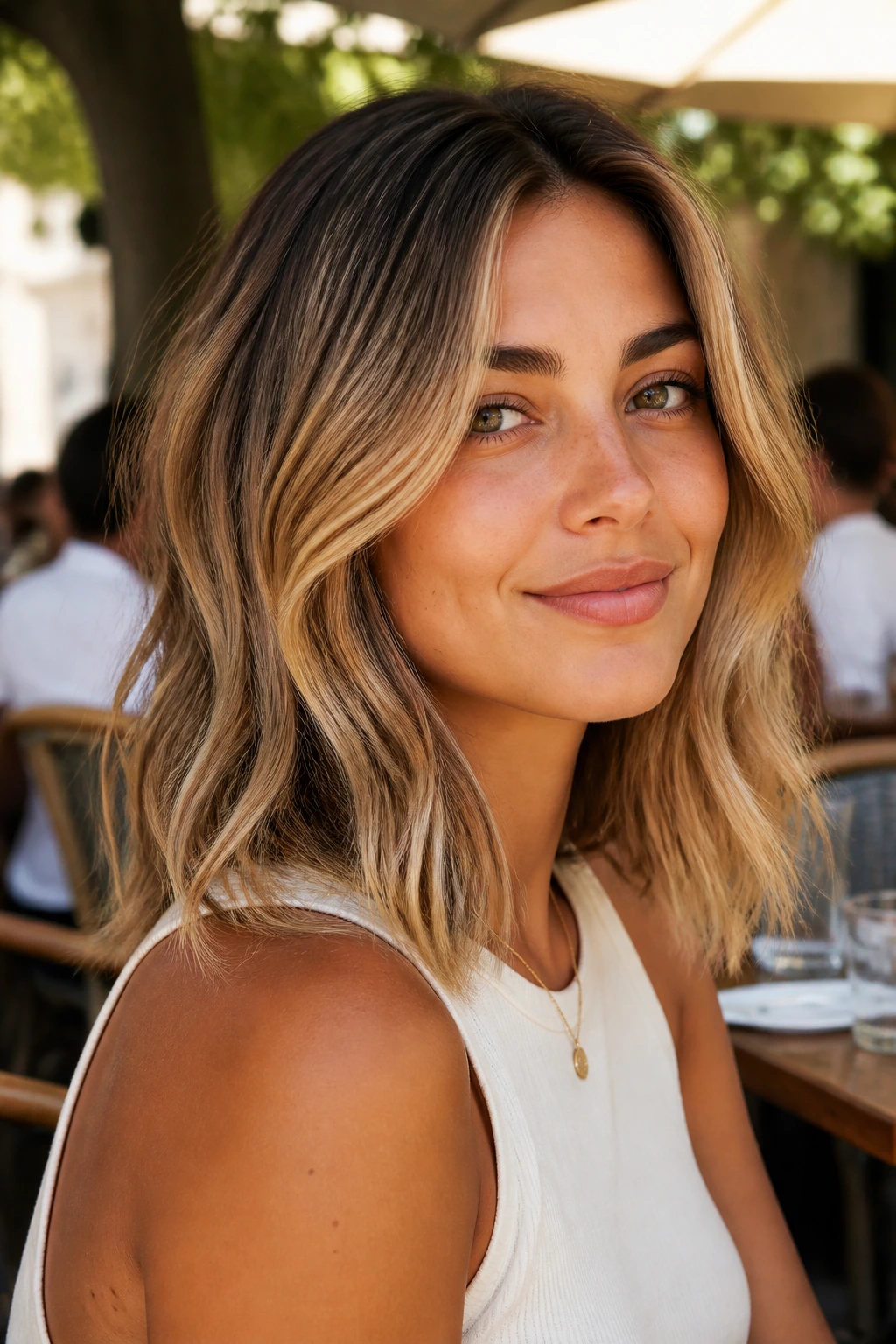
Golden beige blonde and honey blonde are usually the safest starting points because they add warmth without looking orange. If you’re nervous, ask for a soft root shadow and a gloss that leans beige-gold.
Can olive skin wear platinum blonde?
It can, but platinum is harder to balance and usually needs more makeup, brow definition, and salon upkeep. Most olive complexions look easier and fresher in warm or neutral-warm blondes.
Will warm blonde make olive skin look yellow?
Not if the tone is balanced. The goal is honey, beige-gold, butter, caramel, or amber — not a flat yellow toner that sits on top of the hair.
Is balayage better than all-over blonde for olive skin?
Balayage often works better because it keeps depth at the root and around the face. That contrast helps olive skin look structured instead of washed out.
What if my hair is naturally very dark brown?
Bronzed bronde, butterscotch balayage, and caramel ribbons are the easiest warm blonde paths. They let you lighten in stages instead of trying to jump straight to a pale blonde.
How often should I tone warm blonde hair?
A gloss every 4 to 6 weeks keeps the warmth clean. Purple shampoo should be used sparingly, only when the color starts leaning too yellow.
What makeup shades go with warm blonde on olive skin?
Peach blush, terracotta, bronze, soft brown liner, and warm nude lips usually look good. Cool pink can work, but it often needs a warmer balance somewhere else on the face.
How do I stop warm blonde from looking brassy?
Use a color-safe shampoo, avoid too much sun and chlorine exposure, and ask for a beige-gold gloss rather than a heavy yellow toner. Brass usually comes from fading and buildup more than from the original color formula.
The Warm Blonde That Meets the Skin Halfway
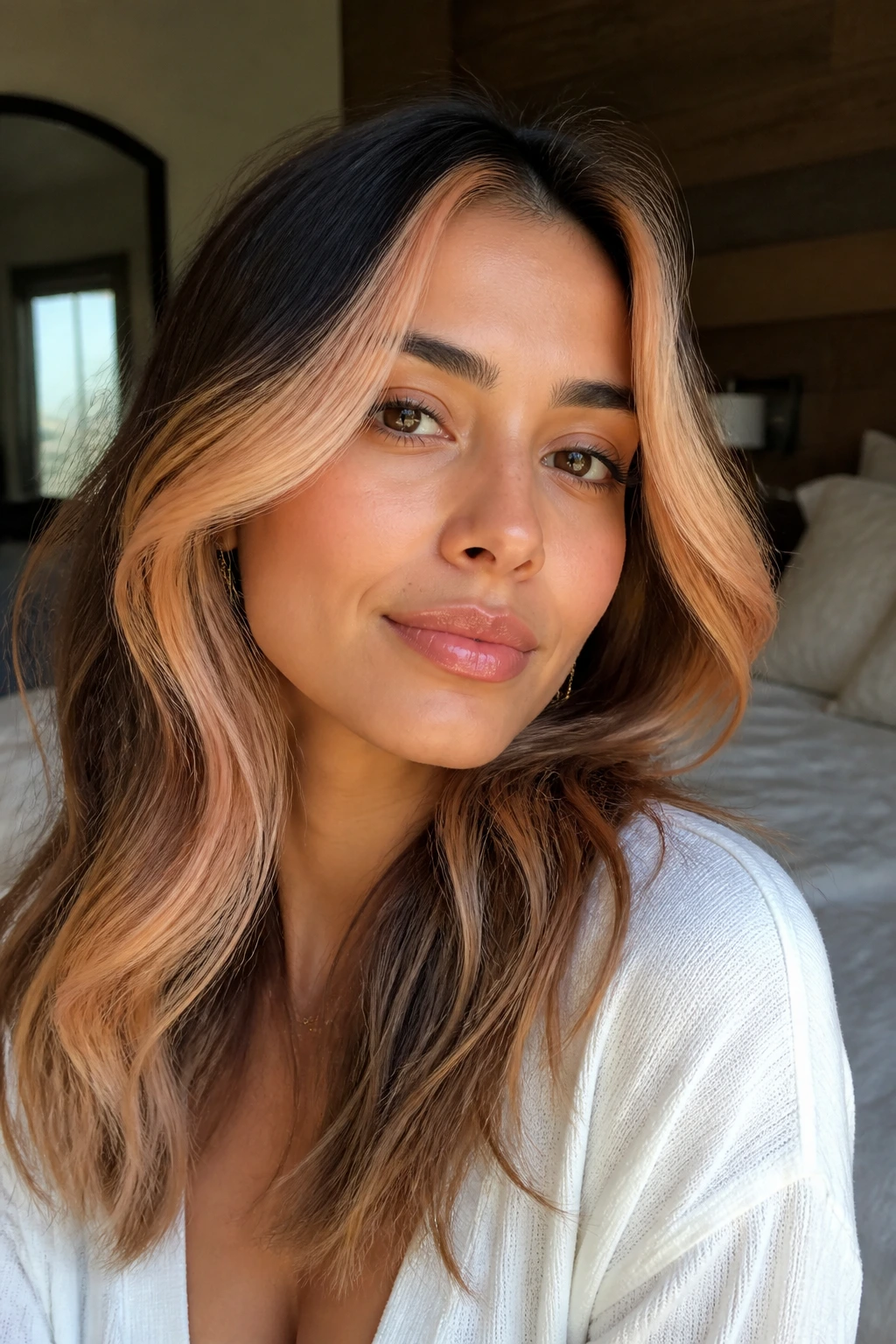
The nicest warm blonde for olive skin usually does one simple thing well: it respects the undertone that’s already there. Honey, caramel, butter, apricot, amber, and beige-gold all work because they don’t fight the complexion. They give it a better reflection.
That’s why the right shade can change the whole feel of a haircut, not just the hair color. The face looks brighter. The brows make sense. The skin stops looking like it’s standing next to the hair and starts looking like it belongs with it.
If you’re deciding between shades, pick the one with the softest root and the most believable warmth first. That little bit of depth is often the difference between blonde that wears well and blonde that needs constant explaining.
