



Some hairstyles collapse the moment the air turns damp. Natural hairstyles for Black women should not do that. A good coil pattern, puff, twist, or braid needs to hold its shape long enough to survive a commute, a headrest, and a full day of being touched, flipped, tucked, and lived in.
That is why these looks matter so much. They do not ask your hair to pretend it is straight. They work with shrinkage, density, and texture instead of fighting them, which is usually where the better results come from anyway. A style that looks clean at the mirror and still makes sense eight hours later earns its place fast.
I also like styles that do a few jobs at once. Give the ends a break. Keep the scalp comfortable. Make a TWA look intentional, make a puff look shaped, make braids look polished without turning the whole thing stiff. The best options here do exactly that, and they do it with enough range that you can find something for short coils, stretched twists, long locs, or the kind of in-between hair that never seems to sit still.
Why These 22 Styles Earn Their Keep
-
Texture-first styling: Every look here leans into coils, curls, and kinks instead of flattening them, so the finish looks like your hair and not a costume.
-
Short-hair included: The tapered TWA, finger coils, flat twists, and shaped afro give you options even when your hair is not yet shoulder length.
-
Protective choices mixed in: Mini twists, cornrows, Fulani braids, and loc buns keep ends tucked away when your hair needs a break from daily handling.
-
Fast and formal options side by side: A high puff can get you out the door in ten minutes; a halo braid or faux hawk can carry a dressier look without heat.
-
Low-heat styling wins: Most of these styles can be done with water, leave-in, gel, mousse, and time. That is a much kinder equation than flatirons every week.
-
Length is not a deal-breaker: Shrinkage, stretching, parting, and a few pins can make the same style work on a TWA, a bob, or long natural hair.
1. Defined Wash-and-Go Curls
A good wash-and-go is not lazy styling. It is controlled styling, and that matters. When the curls are clumped cleanly, dried fully, and left alone at the right moment, the result has a soft edge that never looks hard or overworked.
Why this one stays in rotation
The wash-and-go is the style that shows off your actual curl pattern without a lot of extra shaping. It works best when your hair likes to form neat coils on its own, whether that means loose spirals, tight coils, or a mix of both. The trick is getting enough hold at the roots and enough slip through the ends, then not disturbing the set while it dries.
If your hair tends to frizz at the crown, use smaller sections and apply product on soaking-wet hair. If it tends to look flat, tip your head sideways while you smooth the curls so the roots do not glue themselves to your scalp. A diffuser helps, but air-drying works if you have the patience. You do need patience.
- Best for hair that clumps well when wet.
- Looks sharp with a middle part or a side part.
- Usually lasts 3 to 5 days with a light refresh.
- Works especially well if you do not want to stretch the curl pattern.
Tip: Do not touch it until the hair is dry. That single rule saves more wash-and-gos than any fancy gel ever will.
2. Classic Twist-Out
Why does a twist-out keep showing up in natural hair routines? Because it gives you shape, stretch, and softness at the same time. That mix is hard to beat when your curls need definition but you do not want them plastered down.
The cleanest twist-outs start with damp hair, not dripping hair, and a cream or gel that has enough slip to keep the strands from fuzzying up while you twist. The section size controls the result. Smaller twists mean more definition and more shrinkage control. Bigger twists give you a fuller, fluffier finish that looks almost airy around the face.
Unravel only when the hair is fully dry. Fully dry. Not “mostly dry.” If the inside of the twist is still cool to the touch, wait. A little patience here keeps the whole style from turning puffy too fast. Once you separate, use a tiny bit of oil or a light serum on your fingertips so the strands slide apart instead of catching.
The twist-out is the style I reach for when I want something that looks deliberate without looking stiff. It sits between polished and relaxed, and that is a useful place to be.
3. Braid-Out With Stretched Ends
A braid-out gives a different mood from a twist-out. The texture is a little more zig-zag, a little more stretched, and a little less round at the ends. If you like hair that looks fuller with less puff at the roots, braid-outs do that job well.
Picture this: your hair is clean, moisturized, and sectioned into neat plaits before bed. In the morning, the braid pattern leaves behind a soft wave that holds shape better than many people expect. That is why braid-outs are so handy for thicker hair or hair that shrinks hard after wash day.
What to notice when you set it
Small braids give more definition. Larger braids give more body and quicker drying time. If you are in a rush, that trade-off matters. I would rather see three or four medium braids that are bone-dry than a dozen damp ones that unravel into frizz.
For a sleeker finish, braid the roots firmly but not tightly, then keep the ends tucked so they do not stick out in every direction. A braid-out also likes a good pick at the root after it is dry. Not at the ends. The roots. That is where the lift lives.
- Good for stretched, fuller-looking texture.
- Best if you want a style that lasts a bit longer than a wash-and-go.
- Works well with side parts and deep side sweeps.
- Needs full drying time or it will puff up early.
Quick take: If twist-outs feel too soft for you, braid-outs usually give the hair a little more backbone.
4. High Puff
A high puff is what happens when you want your curls up and out of the way without pretending they are straight enough for a ponytail. It is quick, it shows off texture, and it can look sharp with almost no drama.
The reason it works is simple: the hair at the crown gets gathered with enough tension to lift the shape, while the ends stay loose and full. That contrast gives the puff its volume. The main thing to watch is the hairline. If you pull too hard to get a neat front, the style will start feeling tight before lunch, and that is not the trade you want.
Use a stretchy band or a soft shoelace-style tie, smooth the sides with a small amount of gel or cream, and leave the puff itself loose. A toothbrush can help the edges, but only if you keep your hand light. The puff should look lifted, not pasted down.
This is one of the fastest styles in the bunch, and that matters on days when your hair is not cooperating. It also works whether your curls are freshly washed or a few days old, which makes it a dependable fallback.
5. Low Puff
A low puff feels calmer than a high puff. Same idea, different attitude. The volume sits at the nape or just above it, so the whole style reads a bit neater, a bit more understated, and a little easier to pair with collars, scarves, and earrings.
What I like about a low puff is that it works on hair that is not freshly done. In fact, it often looks better on day two or day three when the roots have settled and the shape is easier to control. You can gather it with a satin scrunchie, a soft elastic, or a band that does not snag the hair while you tighten it.
Keep the front smooth, but do not force it into flatness. If the crown is too slick, the style can look severe. A little softness around the part or hairline gives the puff some life. If your hair is dense, split the front into two sections before gathering the back; that makes the style sit more evenly and prevents one bulky lump.
It is the kind of style that can go to work, then straight to dinner, and not need a full redo in between.
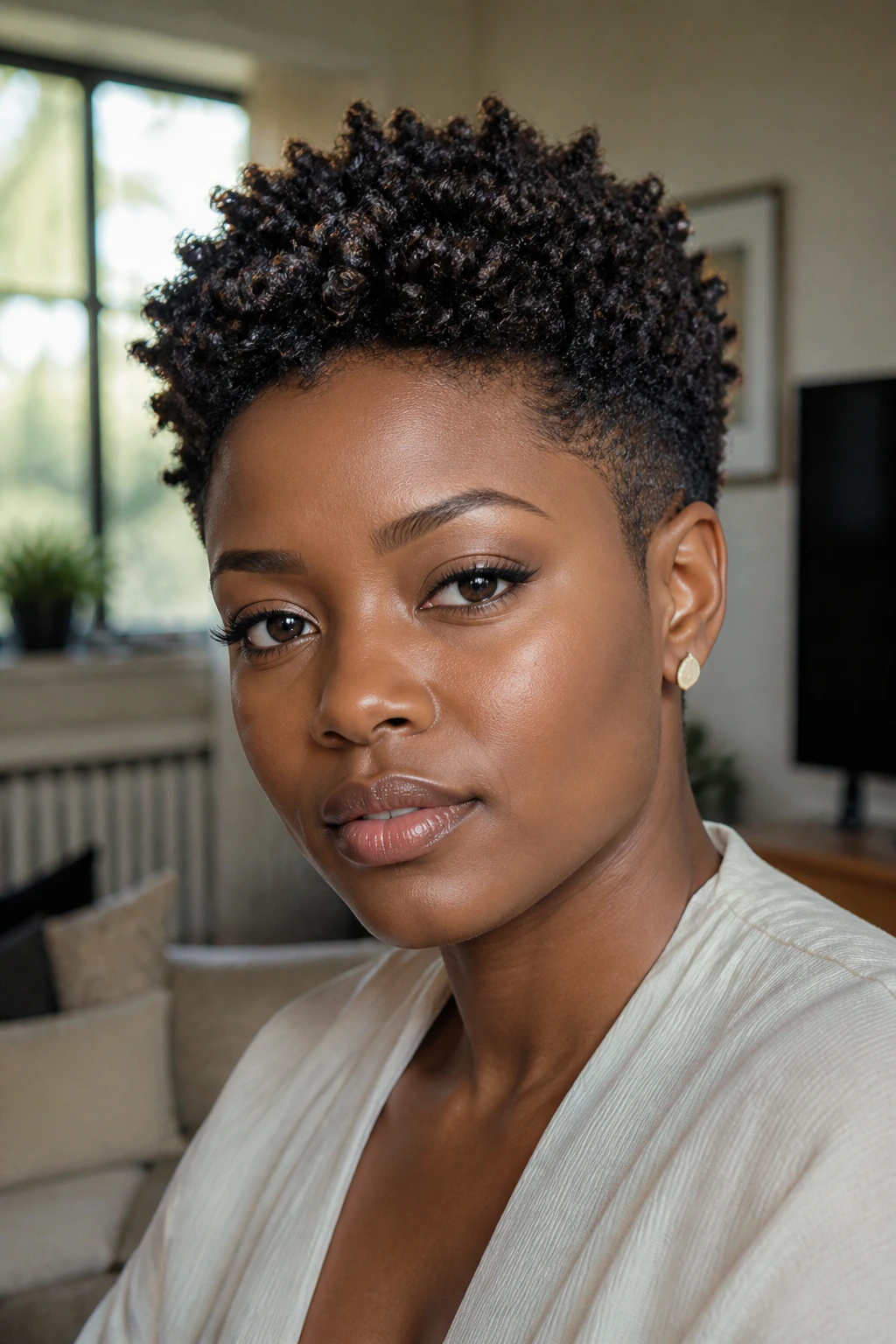
6. Tapered TWA
The tapered TWA is all about shape. A close crop on the sides with a little more length up top gives the hair a clean outline, and that outline does a lot of the heavy lifting. You do not need a lot of product to make it look finished. You need a good cut and a little daily care.
Best when the cut already has shape
This style is the answer for hair that is short, dense, and full of spring. A curl sponge, finger coils, or a small amount of styling cream can bring out the texture on the top, while the tapered sides keep the whole look neat. If the shape gets fuzzy, a damp fingertip and a bit of moisturizer on the very top is usually enough.
The real appeal here is that the haircut does the styling for you. You are not fighting shrinkage. You are using it. That is a much smarter deal. If you have ever spent too long trying to stretch short hair into something it does not want to be, this cut can feel like a relief.
- Great for low-maintenance mornings.
- Gives facial features a lot of room.
- Works well with bold earrings and simple necklines.
- Needs regular shaping to keep the silhouette crisp.
A tapered TWA does not try to be a full afro. It does not have to. The point is the clean line and the texture sitting right where it should.
7. Shaped Afro
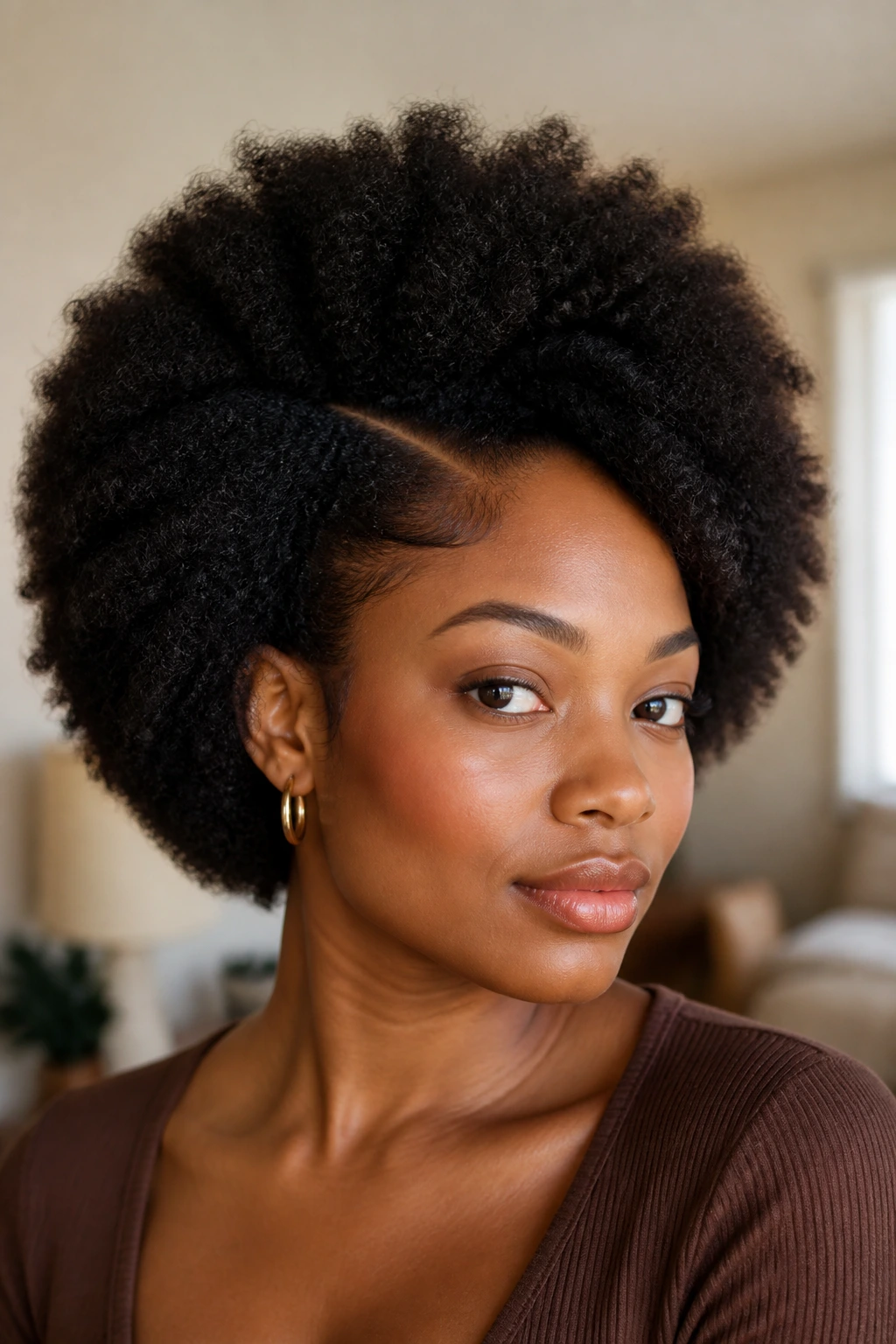
A shaped afro is not just “big hair.” It is deliberate volume, and there is a difference. The shaping happens at the roots and around the edges, while the ends stay as fluffy and soft as your texture wants them to be.
If your hair has enough density, this style can look sculptural without much product. Pick the roots upward, not outward, and stop before the ends start fraying into chaos. That is where people go wrong. They pick the whole head until it turns into a cloud with no outline. The better move is to let the shape stay anchored near the scalp and let the ends do what they naturally do.
A side part changes the mood fast. So does a middle part. And if you like accessories, one or two clips near the temple can keep the shape from feeling too loose. The afro becomes a frame for the face instead of an all-over halo.
This is one of those styles that looks simplest when it is actually well considered. You can tell when the shape has been thought through. You can also tell when it has not.
8. Bantu Knots
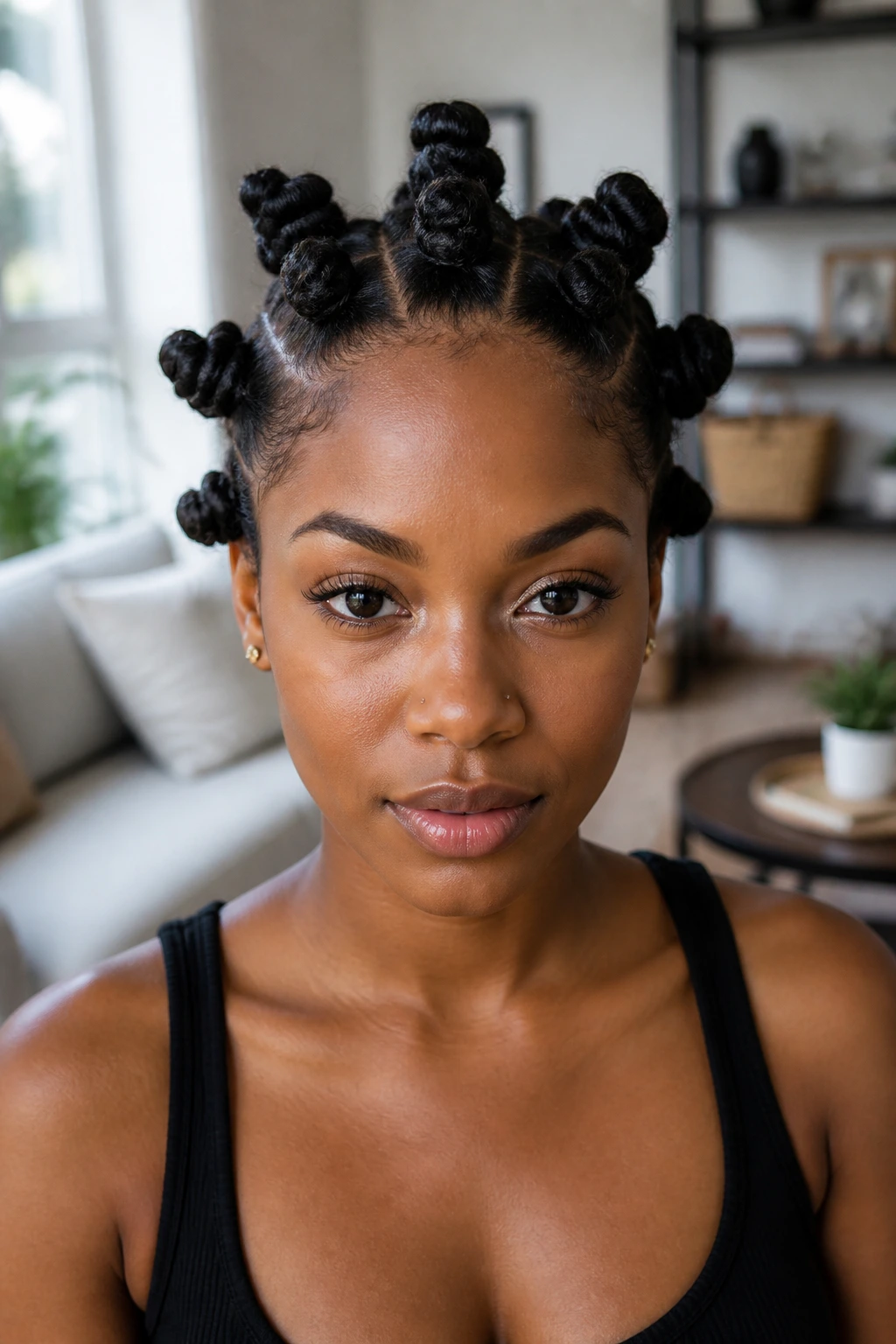
Bantu knots do two jobs, which is why I keep them in the same conversation as braid-outs and twist-outs. You can wear the knots themselves for a sculpted, compact style, then take them down later for a knot-out with a zig-zag texture that sits somewhere between curls and bends.
The set works best on damp, moisturized hair with enough product to keep the sections smooth. Not slippery-wet. Damp enough to shape, dry enough to hold. The size of each knot changes the whole look. Small knots create more of a grid and give you more definition later. Larger knots look chunkier and more dramatic right away.
How to wear them
Wear the knots as-is for a clean, architectural finish. Or let them dry fully, remove them carefully, and separate the resulting curls with oiled fingers. Either way, the style has personality. It also protects the ends from a lot of daily rubbing, which is one reason people come back to it.
Bantu knots are not the fastest style on this list. I will not pretend they are. But they reward careful sectioning, and that care shows from every angle.
9. Flat-Twist Crown
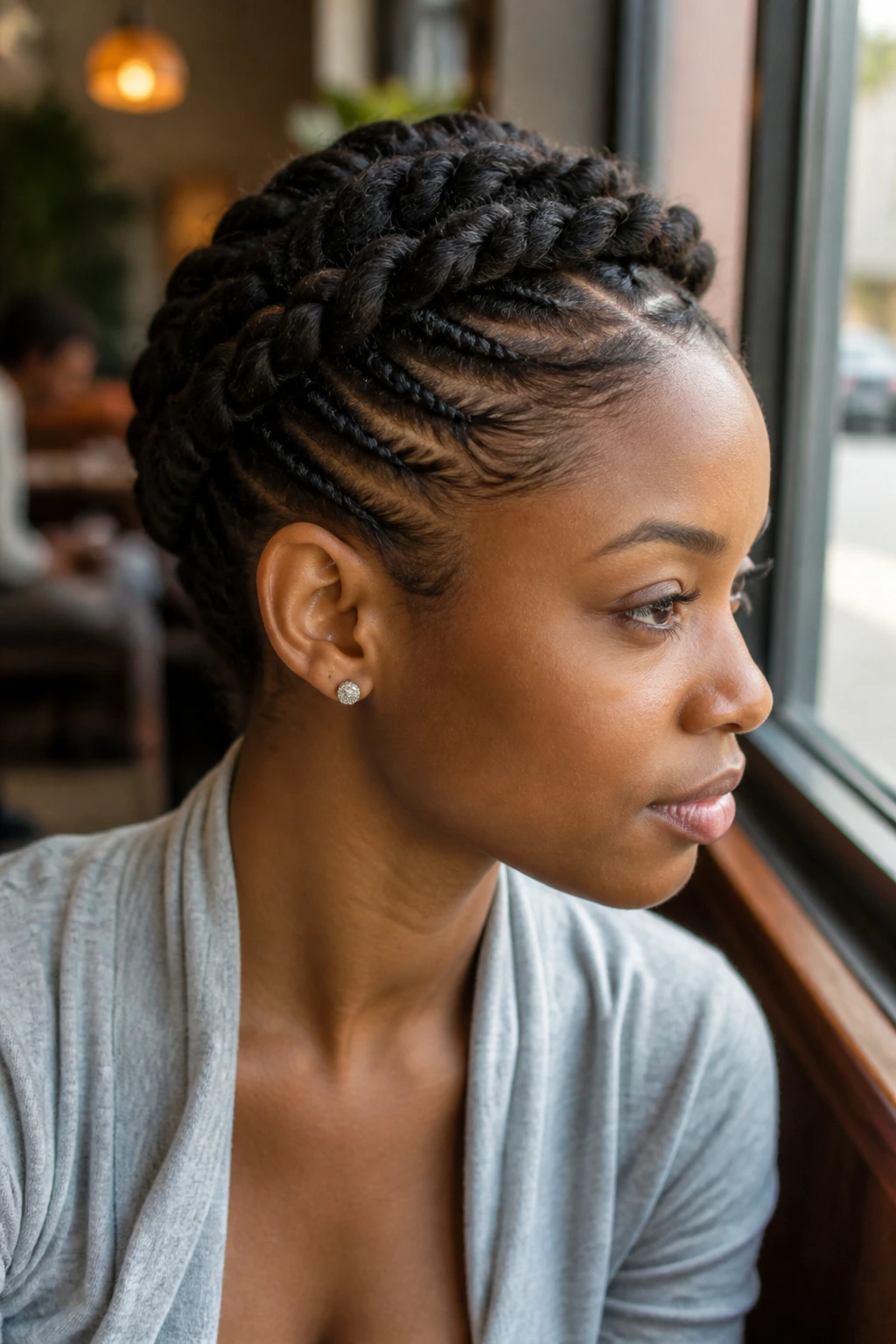
A flat-twist crown wraps the hair around the head in a way that feels polished without being stiff. It is one of those styles that can look very elegant with almost no extra accessories, which I appreciate. Not everything needs a clip or a bead to carry itself.
The key is clean parting and even tension. If the front twist starts too close to the edge, it can pull at the hairline. Start a little back from the temples if your edges are delicate. The twist should skim the scalp, not drag over it.
This style works well on medium-length natural hair because the hair needs enough length to lay flat and enough density to give the crown some body. If your ends are longer, tuck them under at the back with pins. If your hair is shorter, use two flat twists that meet in the center and pin them into a crown shape. Same idea, slightly different route.
A flat-twist crown is a useful answer when you want your hair off your neck but still want something more interesting than a plain bun. It is tidy, but not boring. Good balance.
10. Cornrow Bun
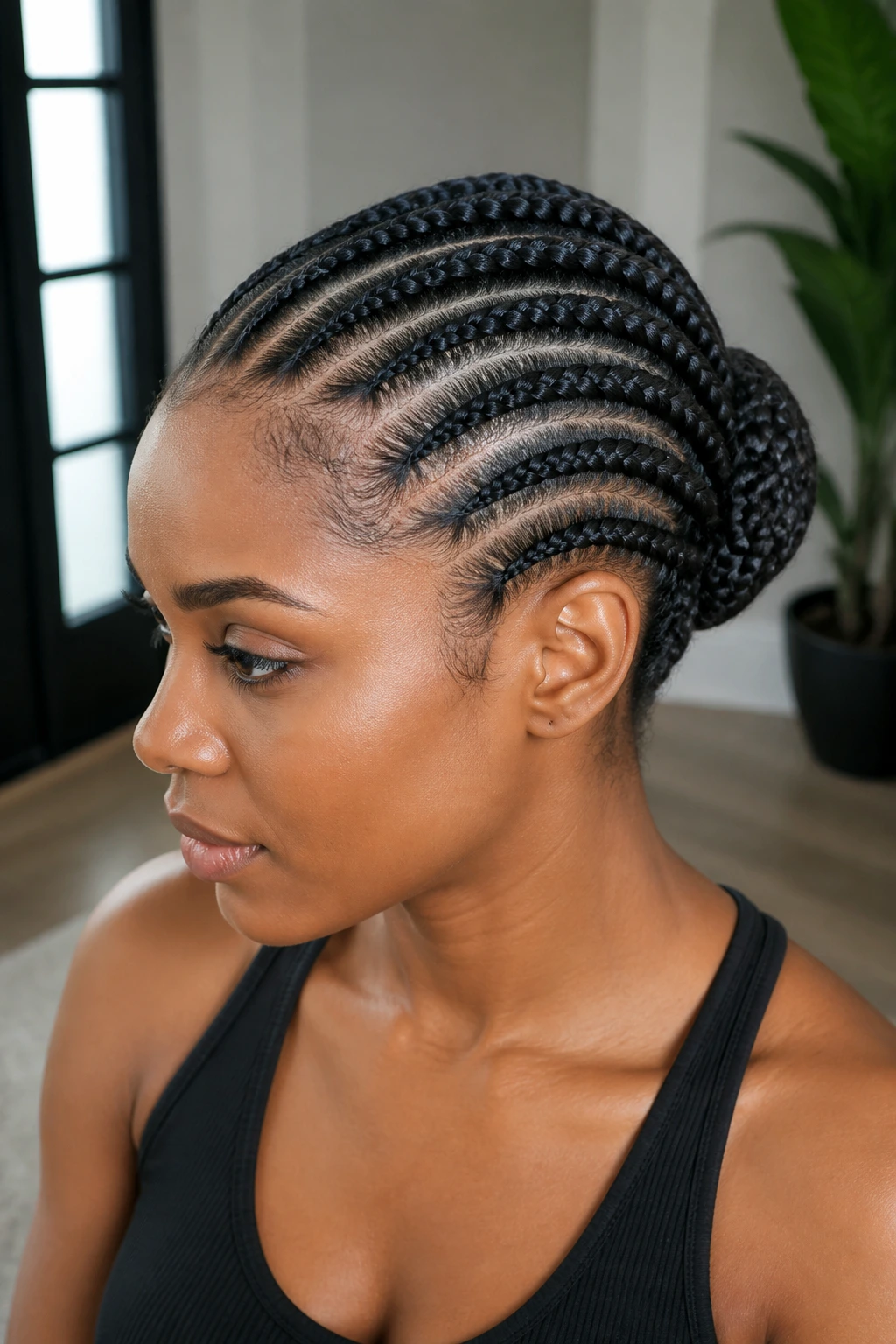
A cornrow bun is one of the more practical styles here, and I mean that in the best way. It stays out of the face, protects the ends, and can handle a few days of real life without falling apart if the parts were done cleanly.
What makes it different from a simple bun is the groundwork. The cornrows feed back into the bun, which keeps the front neat and lets the bun sit more securely at the nape or crown. If you want the style to last, use a lightweight gel at the roots and do not pull the braids tighter than the scalp can comfortably handle. You want a firm hold, not a sore head.
This is one of my favorite styles for busy weeks because it can look sharp with almost no daily handling. Add a little oil to the scalp every couple of days, keep a satin scarf on at night, and the structure stays much cleaner than a loose bun would.
If you need one style that can survive errands, meetings, and a long day in a car seat without turning into a frizz halo, this is high on the list.
11. Fulani Braids With Curly Ends
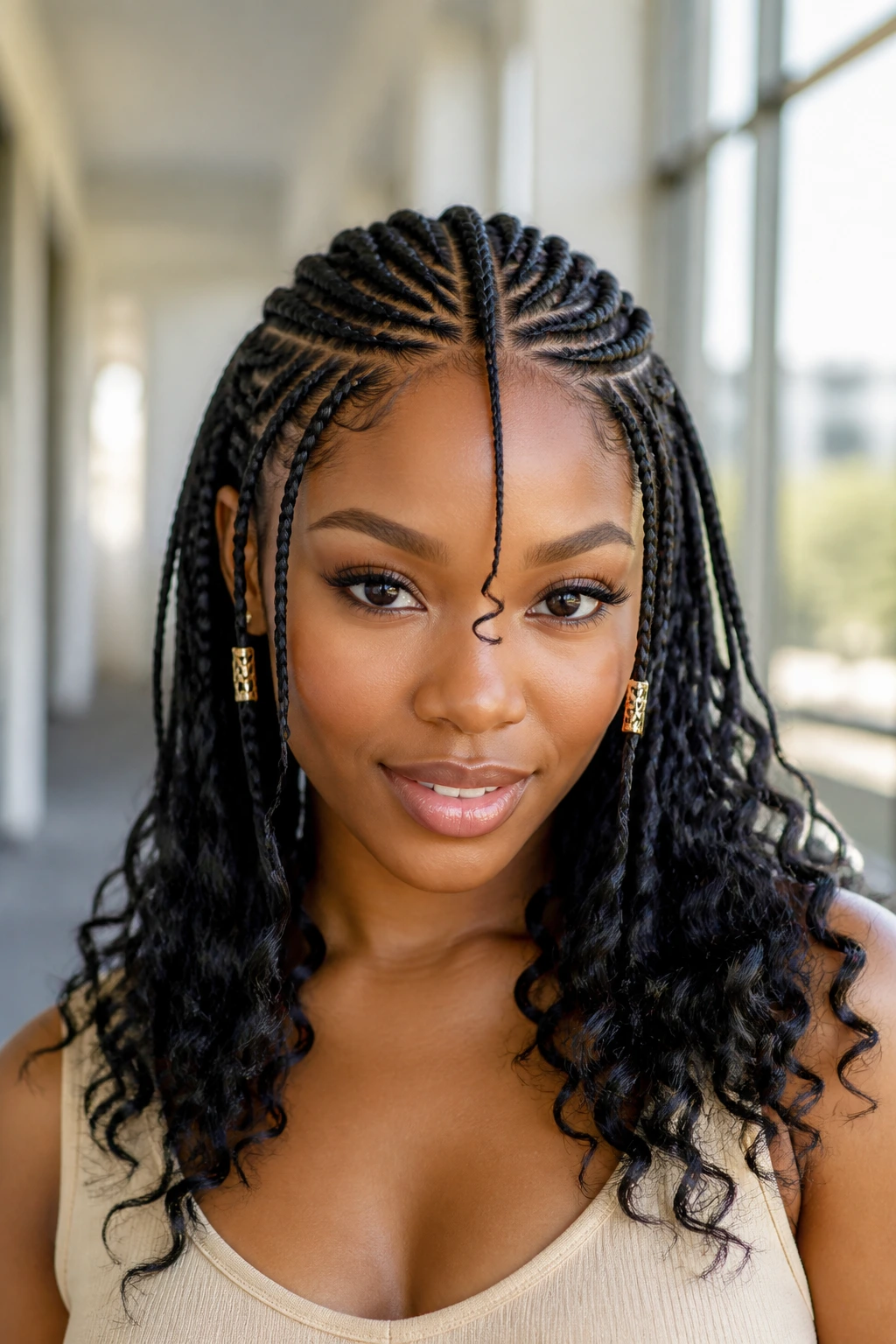
Fulani braids bring structure to the front and movement at the ends, which is why they feel more playful than a plain cornrow set. The center braid, side braids, and curved parting give the style its shape. The curly or braided-out ends soften the finish so the look does not feel too severe.
Beads can change the whole attitude, but they are not required. What matters more is neat parting and a braid size that fits your density. If the braids are too large for your hairline, the front can look bulky. If they are too small, the style can disappear on a very full head of hair. Middle ground usually wins.
This is a style I associate with a little more intention. Not because it is fancy, but because every section shows. You can see the lines. You can see the spacing. If one braid is crooked, the whole thing tells on you. That sounds unforgiving, and maybe it is, but it also means the result can look crisp in a way that loose styles sometimes cannot.
The curly ends keep it from feeling stiff. That tiny bit of motion makes a big difference.
12. Mini Twists
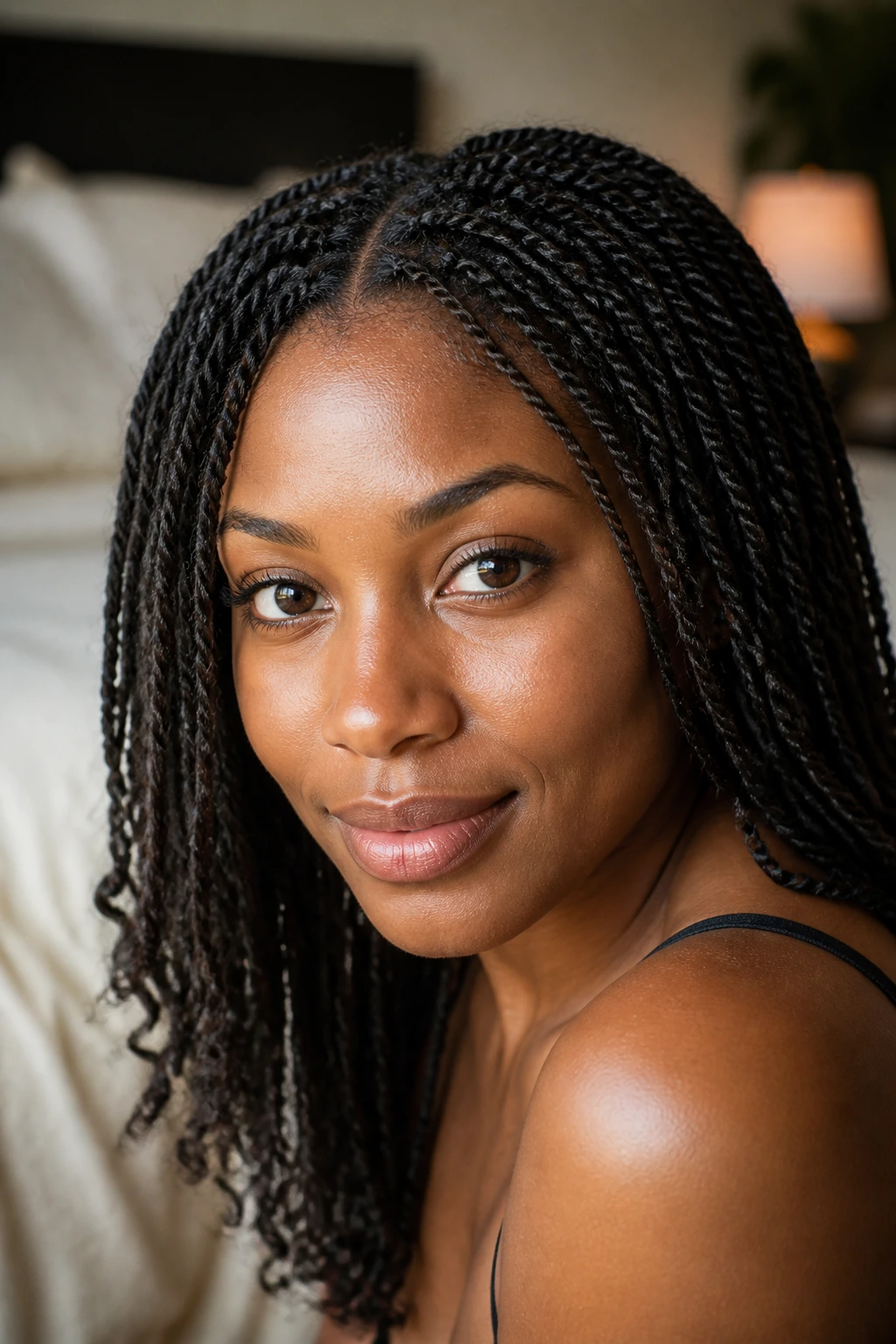
Mini twists are the quiet workhorse of natural styling. They do not shout. They do not require daily reshaping. They tuck the ends away, keep manipulation low, and can sit on the head for a stretch of time without demanding too much from you.
The smaller the twist, the longer the style tends to last, but the longer the installation takes. That is the bargain. Use a cream or leave-in with enough slip to keep the strands from snagging while you twist, and keep each part neat if you want the style to lie flat. Clean sectioning matters more here than in some of the quicker looks.
What they are good at
Mini twists give you length retention, easy bedtime care, and a look that can be worn up, down, or pinned back. If your hair is fragile at the ends or gets tangled fast, this is one of the kinder styles to keep in rotation.
They also age well. A twist-out can frizz fast. Mini twists usually get better with a little age, as long as the scalp stays clean and you do not overload the roots with product. That is a nice change from styles that look their best for exactly six hours and then lose the plot.
13. Finger Coils
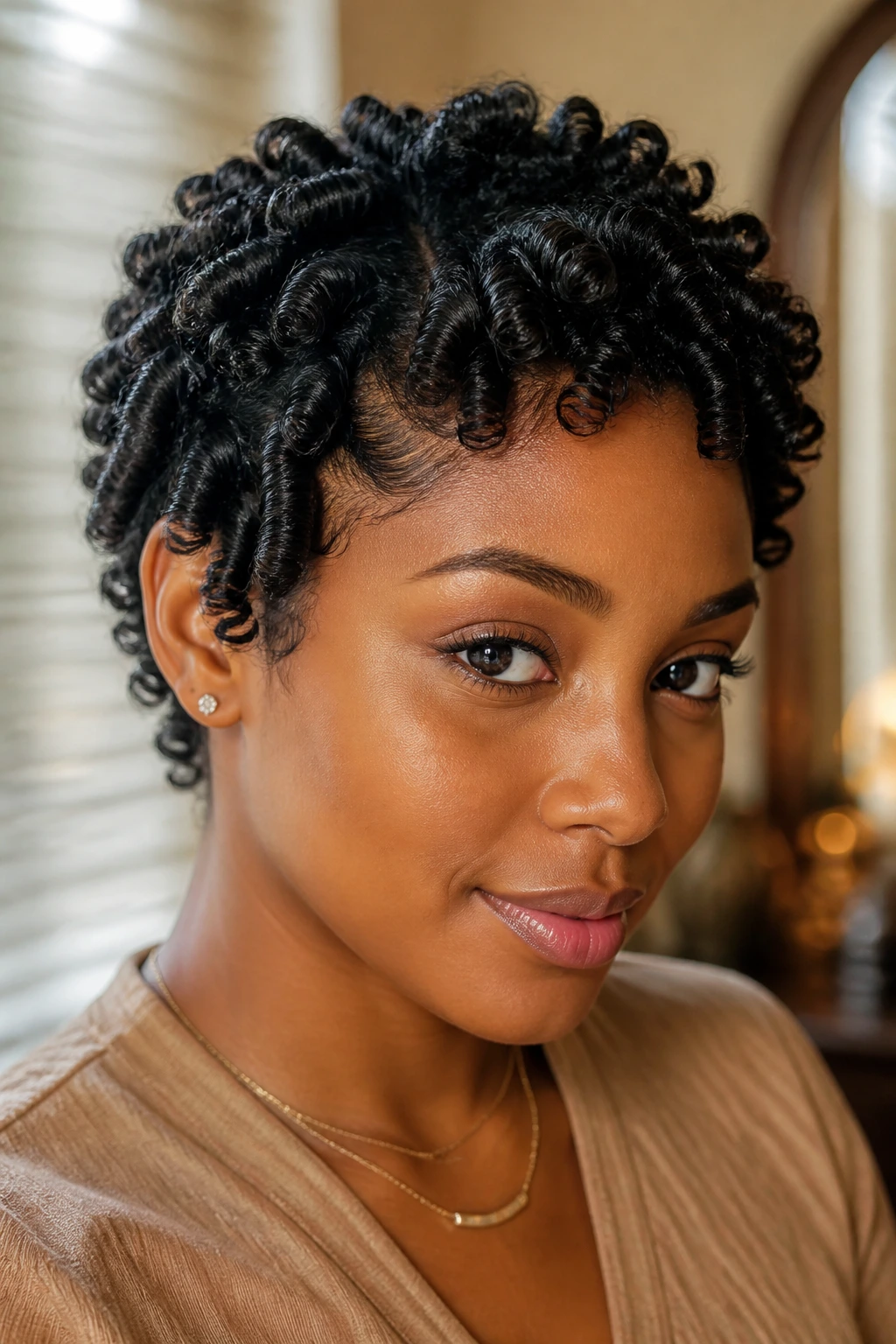
Finger coils are one of the neatest ways to define short or medium natural hair. They take time, yes, but they give a clean curl pattern that looks deliberate even before the hair fully dries. On some textures, they hold like little springy stamps all over the head.
The technique is simple: small sections, a bit of product, then twirl each piece around your finger until it forms a coil and wants to stay there. The magic is in the section size. Too large, and the coils fall apart. Too small, and you spend the whole afternoon at the mirror. Somewhere in the middle is the sweet spot.
This style is especially good when you want definition without a lot of extra volume. It frames the face neatly and can be worn with a side part, a deep middle part, or a tiny fringe at the front. It is also a nice choice if your hair has uneven curl patterns; the coils make the whole head read as more uniform.
Finger coils are not the quickest style here, but they are one of the most precise. Some mornings call for that.
14. Half-Up, Half-Down Puff
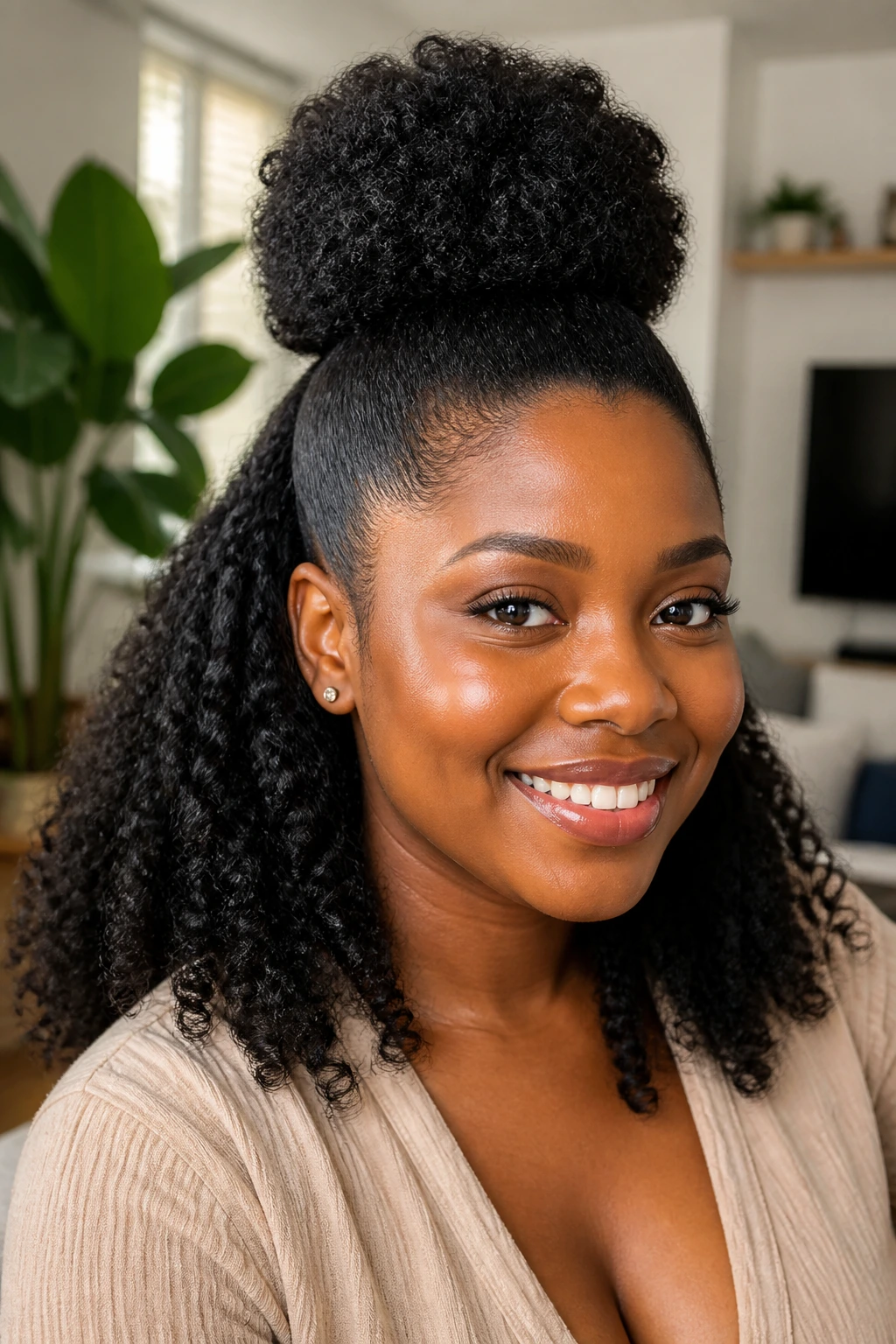
The half-up, half-down puff gives you the lift of a puff without giving up all your length or volume. It is a useful middle ground, especially if your hair is thick enough that a full ponytail starts to feel bulky or too tight by the end of the day.
A smooth top section and a loose lower section are the whole point. The upper half creates shape near the crown, while the lower half keeps the style soft. You can wear the lower section stretched, defined, fluffy, or even in a wash-and-go state if you like a mix of textures. I actually like the contrast. It feels less staged.
This style works well when you want a quick fix that still looks like you spent time on it. The front can be slicked with gel or left soft with a side swoop. The back can stay loose enough to move. It is also a useful style for second- or third-day hair when the roots need a little control but the rest of the hair still has life.
If a full puff feels too much and a bun feels too strict, this is the in-between.
15. Space Buns
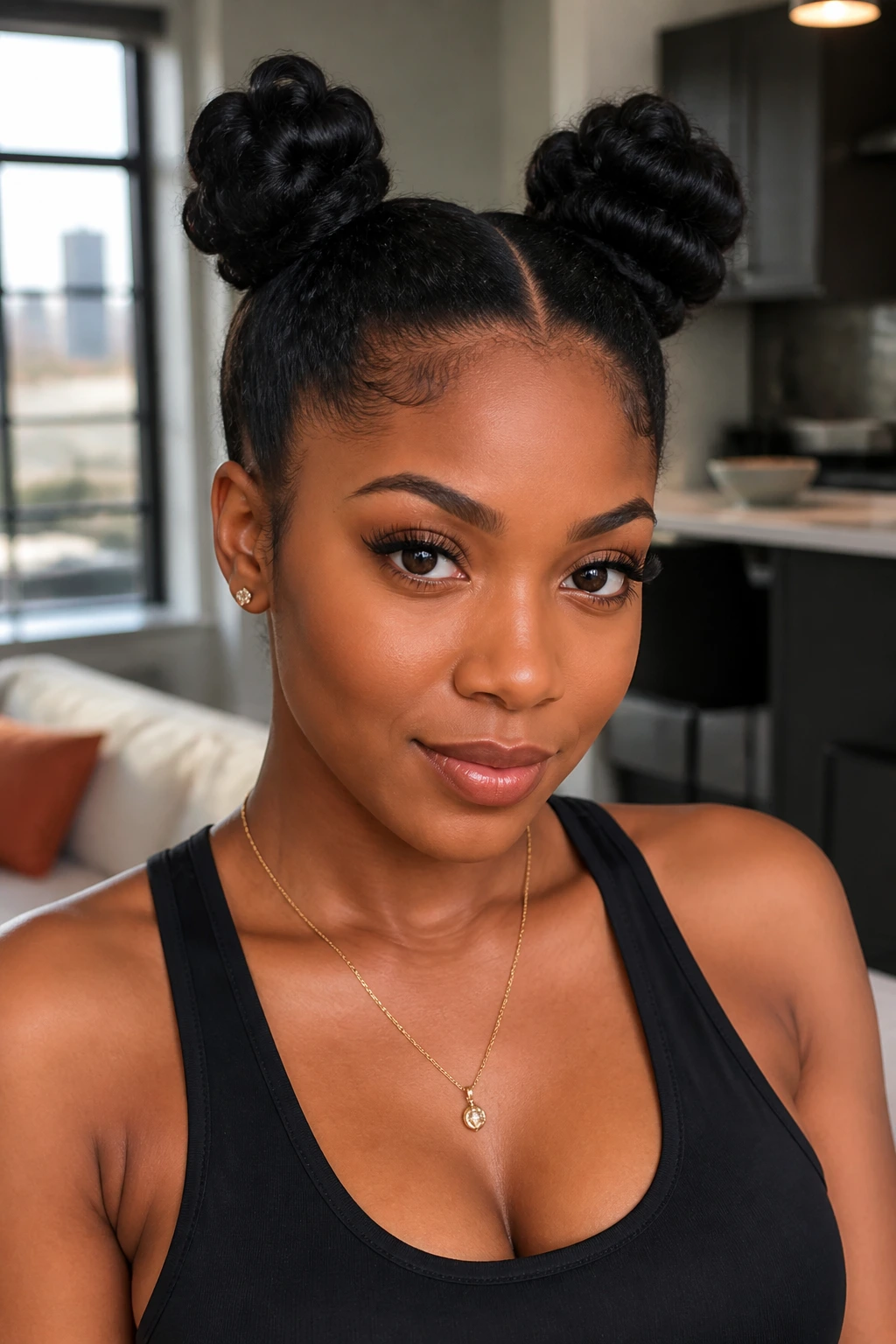
Space buns are playful, yes, but the better word is structured. Two buns split the volume evenly, which makes the style feel balanced on the head instead of top-heavy. On natural hair, that matters. Density can work for you or against you, and this style usually works for you.
The buns can sit high, low, tight, or loose. Two clean parts make a big difference. If the center part is crooked, the whole style starts to look accidental. If it is neat, the buns have a nice symmetry that does a lot of the visual work.
This look is best when the hair is stretched a bit first. That can mean a twist-out, braid-out, banded hair, or even blown-out hair if you use heat sparingly. Stretched hair makes the buns easier to shape and helps the ends tuck in without fighting every strand.
I like space buns for days when you want the style to have some personality but not a lot of fuss. They are lighter than a full updo and less formal than a crown braid. That narrow lane is often where the best styles live.
16. Faux Hawk With Flat Twists
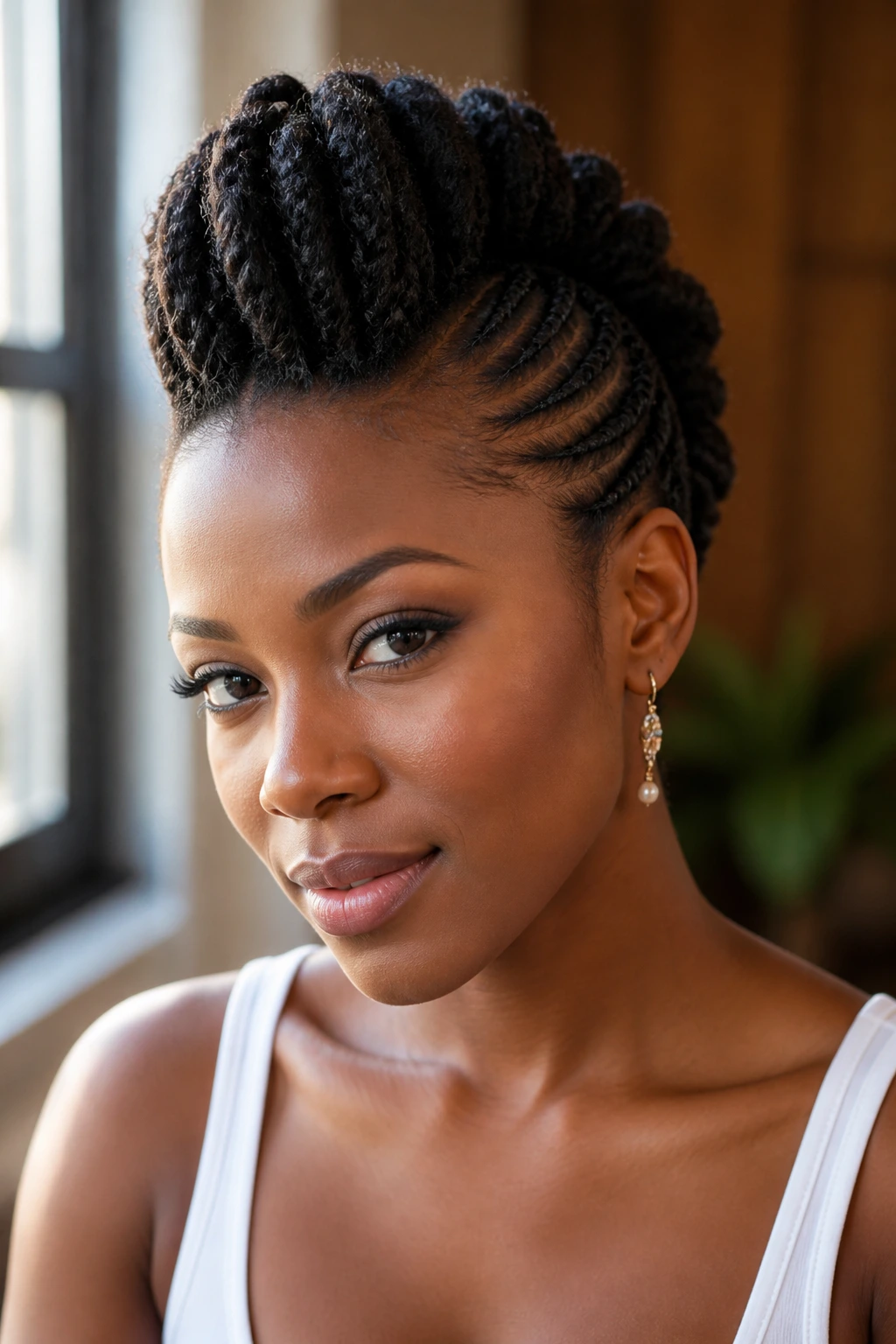
A faux hawk is one of the sharpest styles on this list because it creates a strong center line without shaving anything off. The sides get flattened or pinned back, and the middle section carries the height. That contrast gives the shape its edge.
This style can be done with flat twists, cornrows, or pinned sections, depending on your hair length and how much time you have. A tighter center ridge looks more dramatic. A softer one reads a little more casual. Either way, the face stays open and the profile gets a nice lift.
It is a good answer when you want something with a little more attitude than a bun. The style can carry a bold earring, a structured collar, or a red lip without competing with them. That is one reason it shows up so often at events.
The only real warning is tension. A faux hawk should look crisp, not painful. If the sides are pulled too tightly, the style starts losing points fast. Clean and comfortable beats tight and brittle every time.
17. Halo Braid
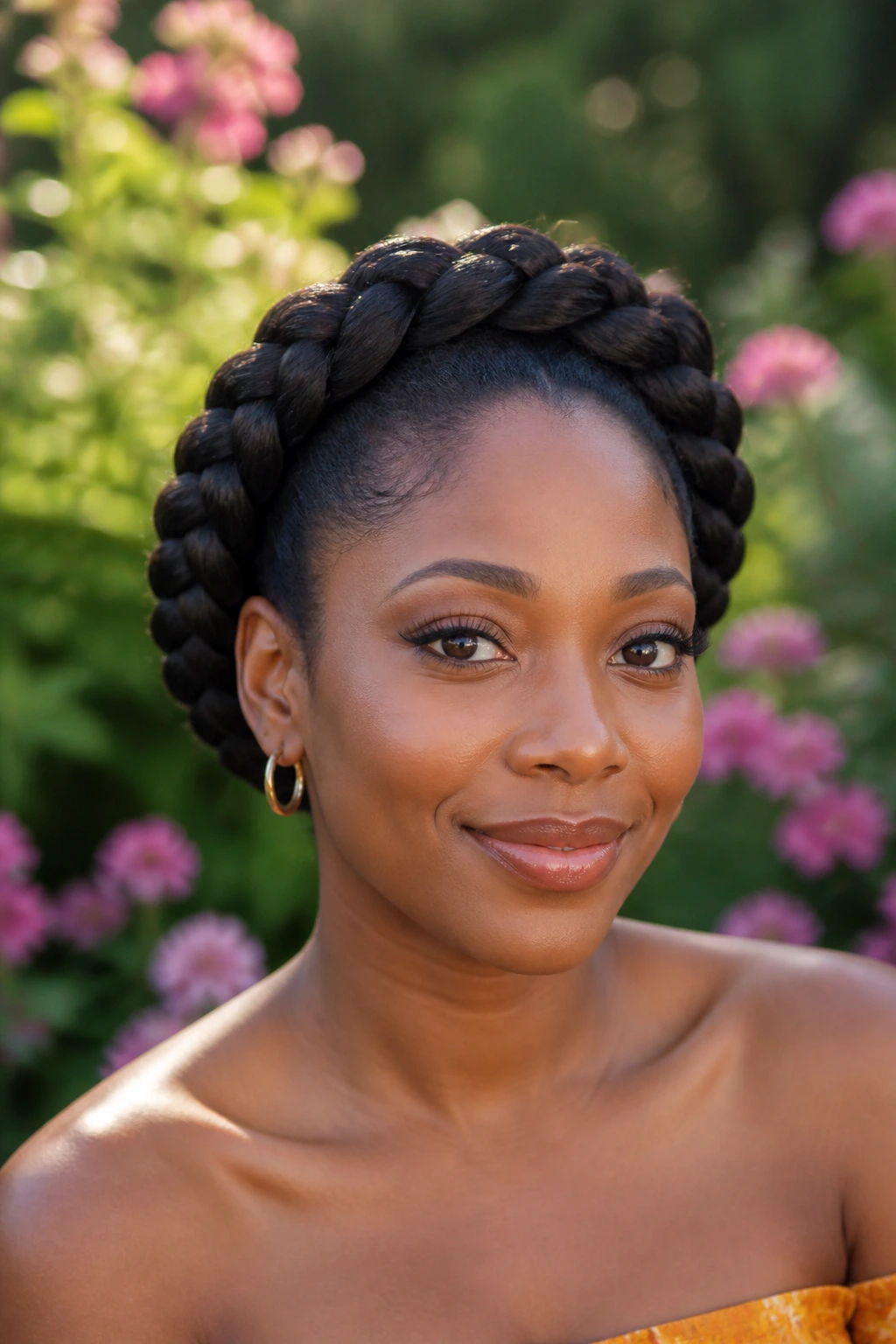
The halo braid wraps around the head like a frame, which is probably why it keeps getting chosen for weddings, dinners, and other moments when people want their hair to look finished from every angle. It draws the eye around the face and keeps the profile clean.
Best on stretched hair
You can do a halo braid on natural hair that has been stretched with banding, a braid-out, or a twist-out. If the hair is too shrunken, the braid can get bulky and hard to guide around the head. Stretched hair gives you enough length to work with and helps the braid lie flatter.
A halo braid does not need heavy accessories. A few pins hidden under the braid are usually enough. If the front pieces are short, leave a little softness around the temples rather than forcing every strand into the braid. That tiny softness keeps the look from turning severe.
This is one of those styles that feels calm. Not boring. Calm. There is a difference. It has a steady shape, it keeps the hair protected, and it can go from formal to relaxed depending on what you wear with it.
18. Flexi Rod Set
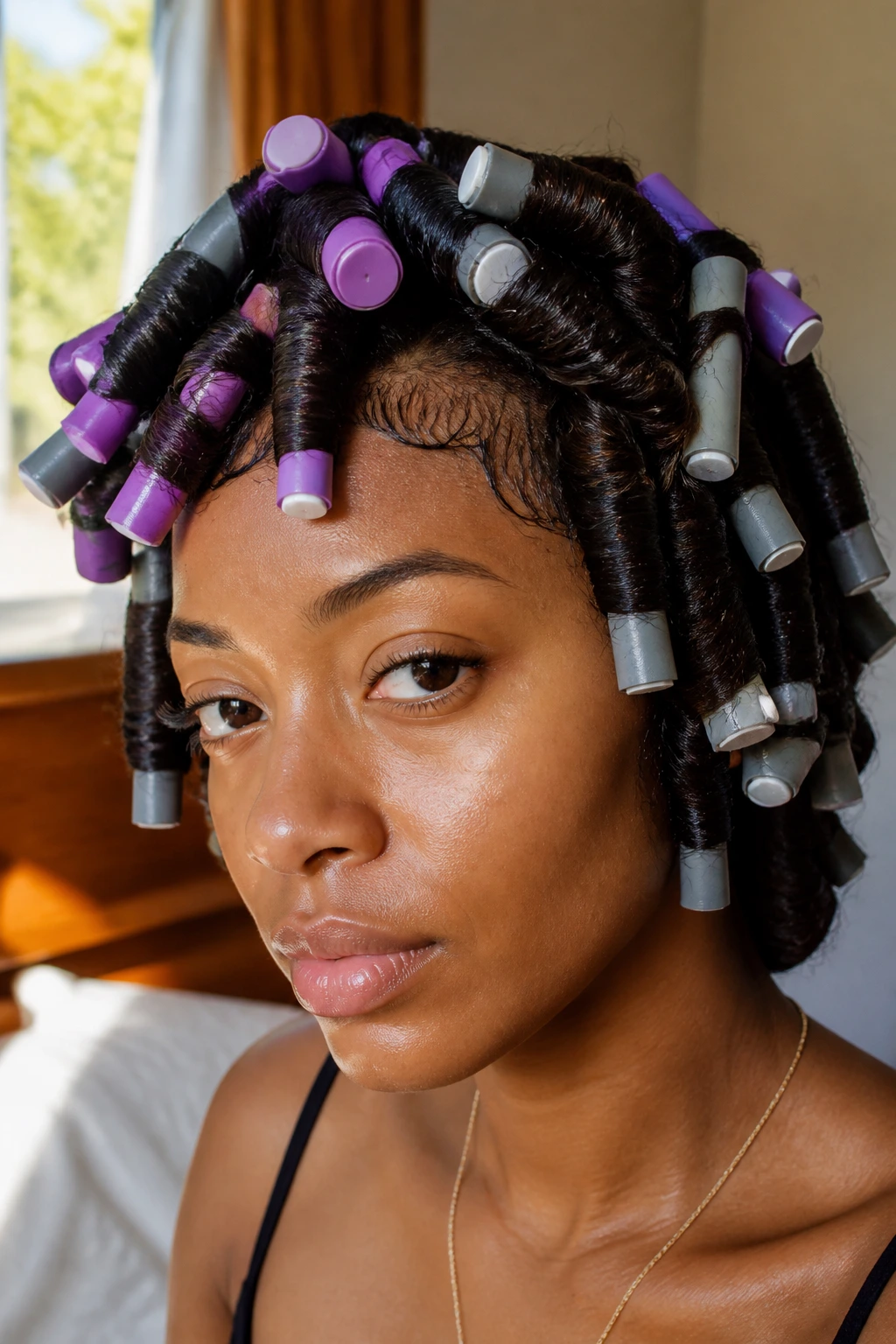
A flexi rod set gives you polished curls with a lot of spring, and the result depends heavily on the size of the rods you choose. Smaller rods give tighter curls. Larger rods give a looser bend and more movement. That choice matters more than people think.
Set the hair on damp, not soaking, sections with mousse or setting lotion. The hair needs enough product to hold the curl, but not so much that it dries sticky. Roll the rod from ends to roots, keep the tension even, and let the hair dry completely. If it is still cool near the roots, it is not done.
This style has a shiny, rounded finish that looks different from a twist-out or braid-out. The curl pattern is smoother, more uniform, and a little more controlled. If you want an event style that still feels like natural hair and not a blowout in disguise, flexi rods are a smart route.
The downside is drying time. No way around it. Under-dried rods can collapse or frizz before you even leave the house, and that is annoying enough to remember for a long time.
19. Loc Bun With Side Part
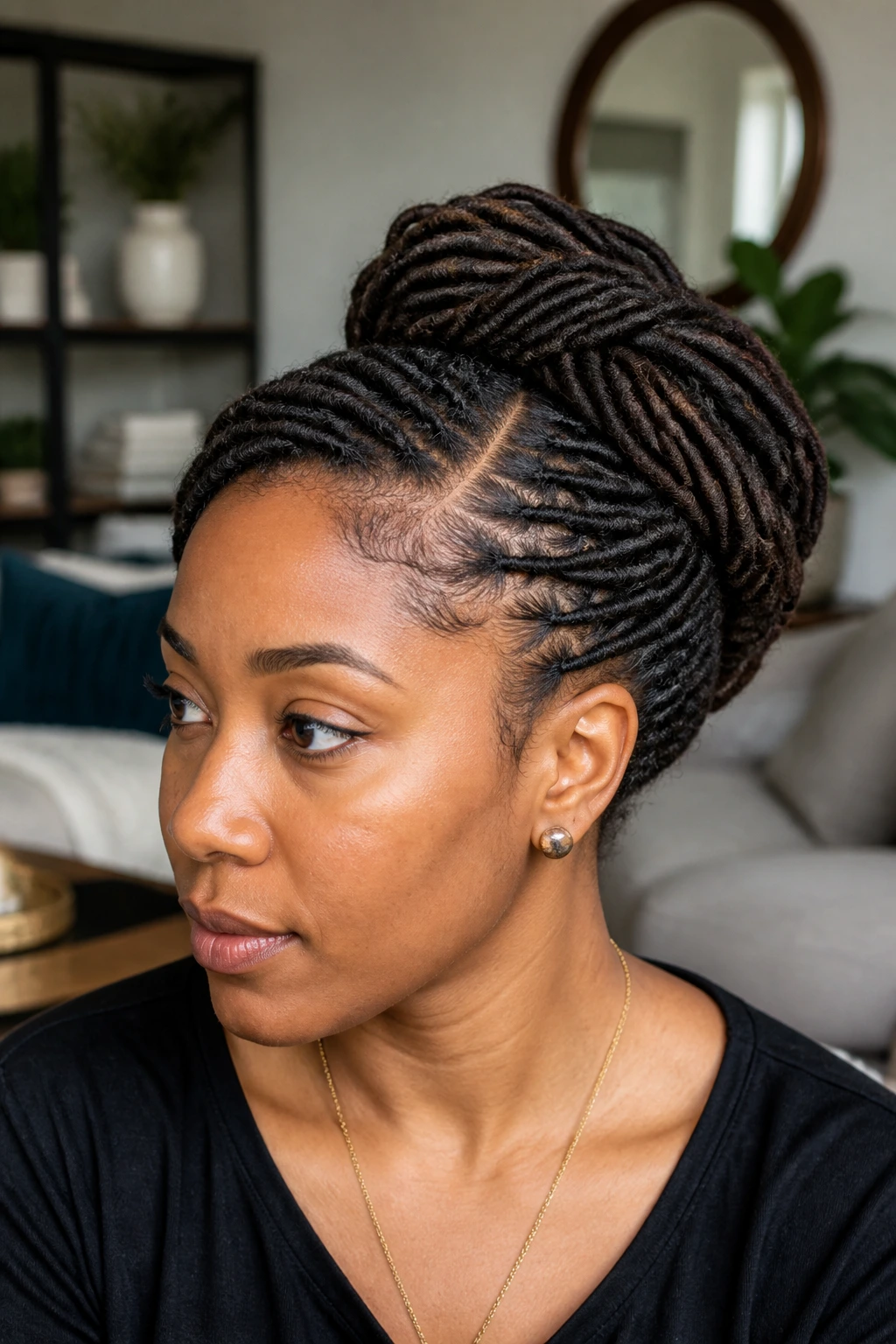
If you wear locs, a bun with a side part is one of the cleanest ways to get them off your neck without making the style feel stiff. The side part changes the whole balance. It gives the face a line to follow and keeps the bun from sitting dead center like a placeholder.
The beauty of loc styling is that the hair already has texture and structure. You do not need to force shine onto it. A smooth base, a few pins, and a secure wrap are usually enough. If your locs are long, you can create a fuller bun with loops and tucked ends. If they are shorter, the bun can sit lower and flatter.
This style is also kind to busy weeks because it is repeatable. Once you find the angle that works for your head shape, you can keep coming back to it. I like styles like that. They save decision-making for the days when you have more important things to think about.
A little scalp oil at the part line helps, but keep it light. Too much product near the roots can make the bun feel heavy and look dull.
20. Rolled Tuck-and-Pin Updo
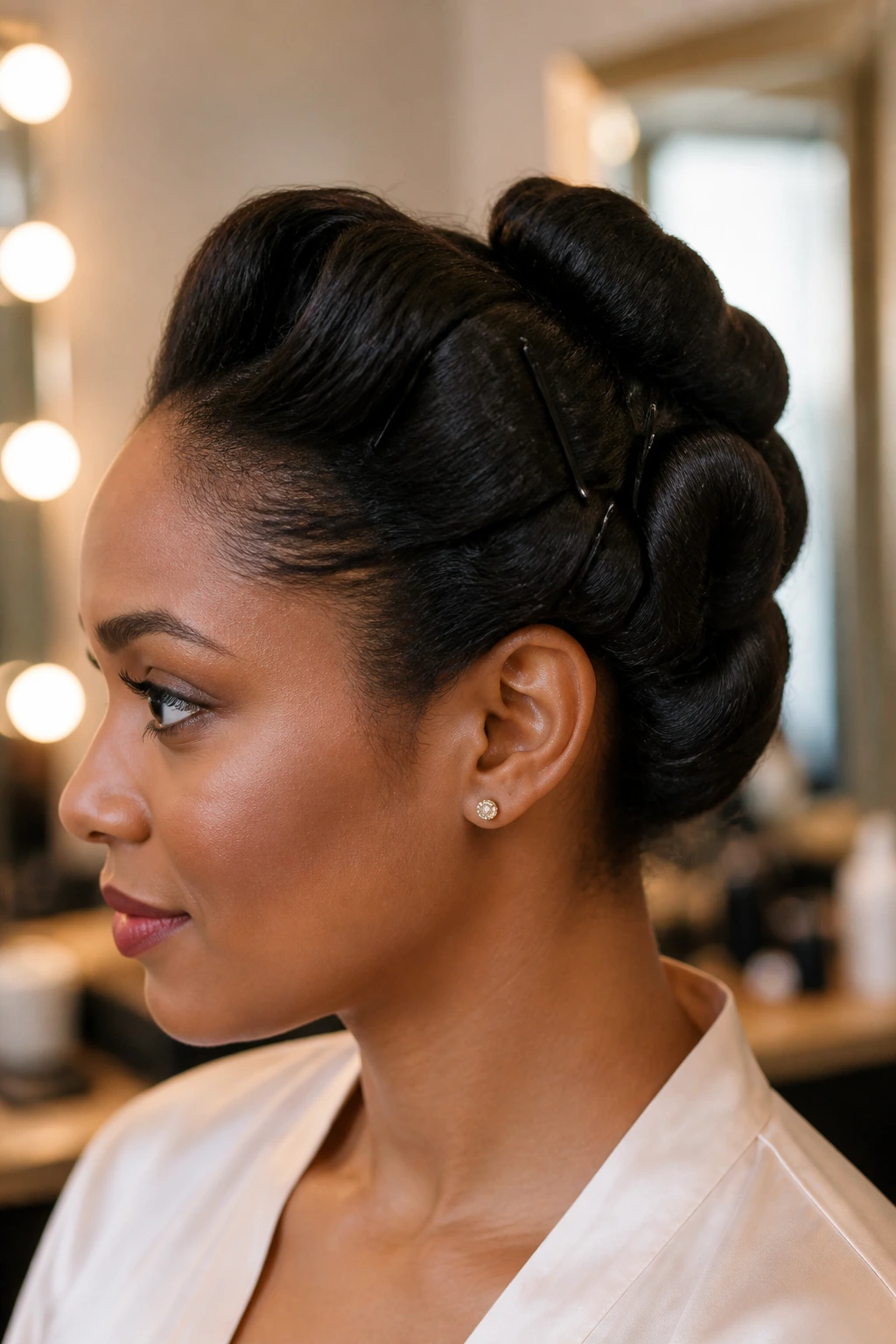
The rolled tuck-and-pin updo is what I reach for when I want hair pinned up in a way that looks more deliberate than a rushed bun. The hair gets rolled inward or tucked under itself, then pinned so the shape stays compact and neat.
It works best on stretched hair, because the length gives you enough room to roll and secure the sections without fighting shrinkage every step of the way. Medium to long hair handles this style especially well. If your hair is shorter, smaller rolls and more pins can still get you there, but the shape will be tighter and closer to the head.
What makes this one useful is the finish. It can look formal, neat, and soft at once. There is no hard shell of product on top, and no need for a slicked-back surface unless you want one. A few face-framing pieces can keep the style from feeling too severe.
It is the sort of look that quietly says you paid attention. Not flashy. Just clean.
21. Headwrap Accent Style
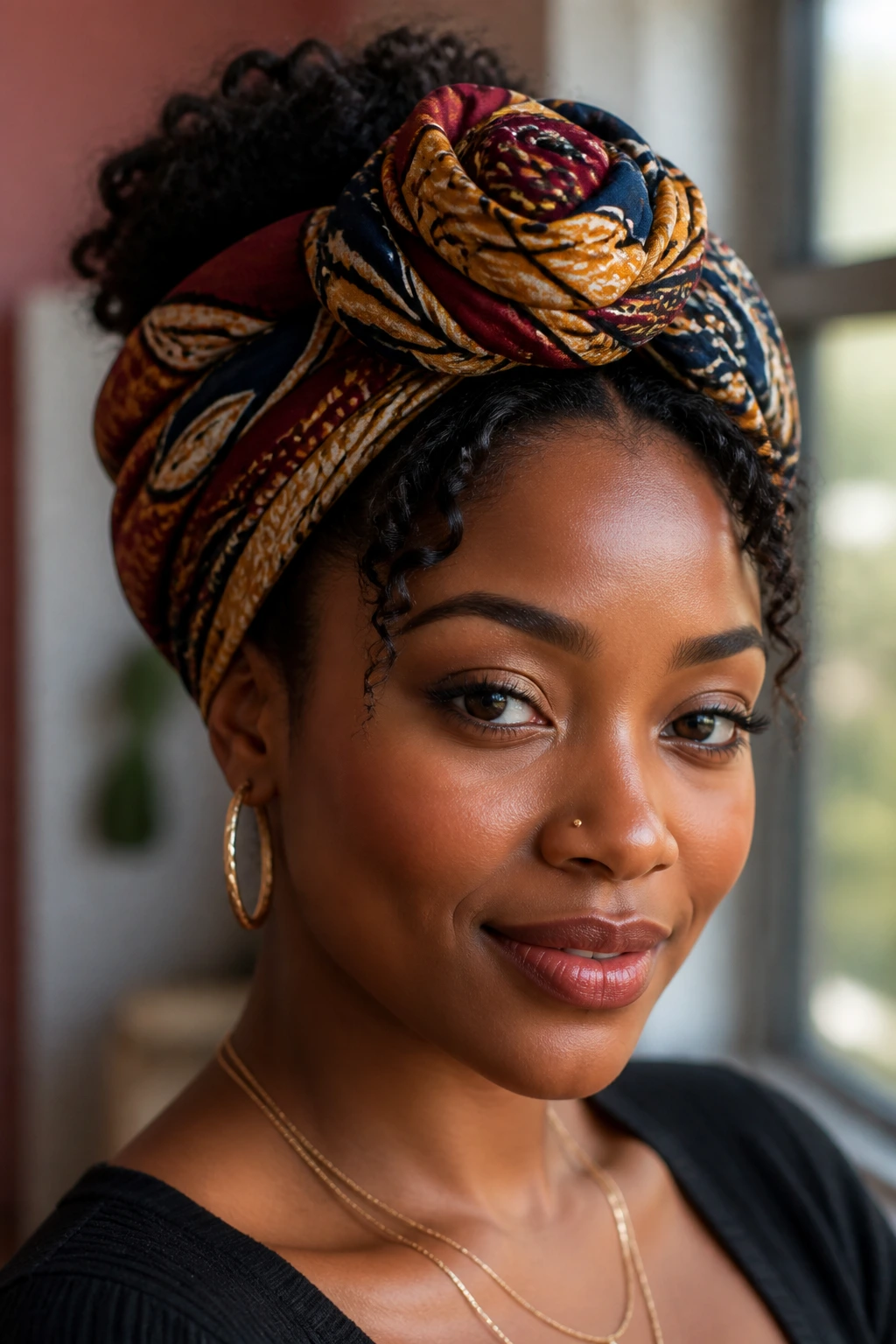
A headwrap is not a fallback. Sometimes it is the whole style, and that is fine. A good wrap can sharpen a puff, calm a braid-out, cover roots that are not behaving, or add color when the rest of the outfit needs a little help.
The useful part is flexibility. You can tie it over loose curls, tuck it around a low bun, or pair it with a side puff and leave the hairline visible. That one detail changes the whole mood. A full wrap feels more dramatic; a wrap that leaves a little hair showing feels lighter and more casual.
I like this option for days when the hair itself needs less handling. Maybe the scalp is tired. Maybe the style underneath is on day four and you do not want to restart the whole process. Maybe you just want something clean without touching every strand. A headwrap lets you do that.
Pick fabric with enough grip so it stays tied, but not so stiff that it digs into the forehead. Cotton blends and soft satin-backed wraps are easier on the scalp than scratchy material that keeps sliding loose.
22. Two-Strand Twist Bob
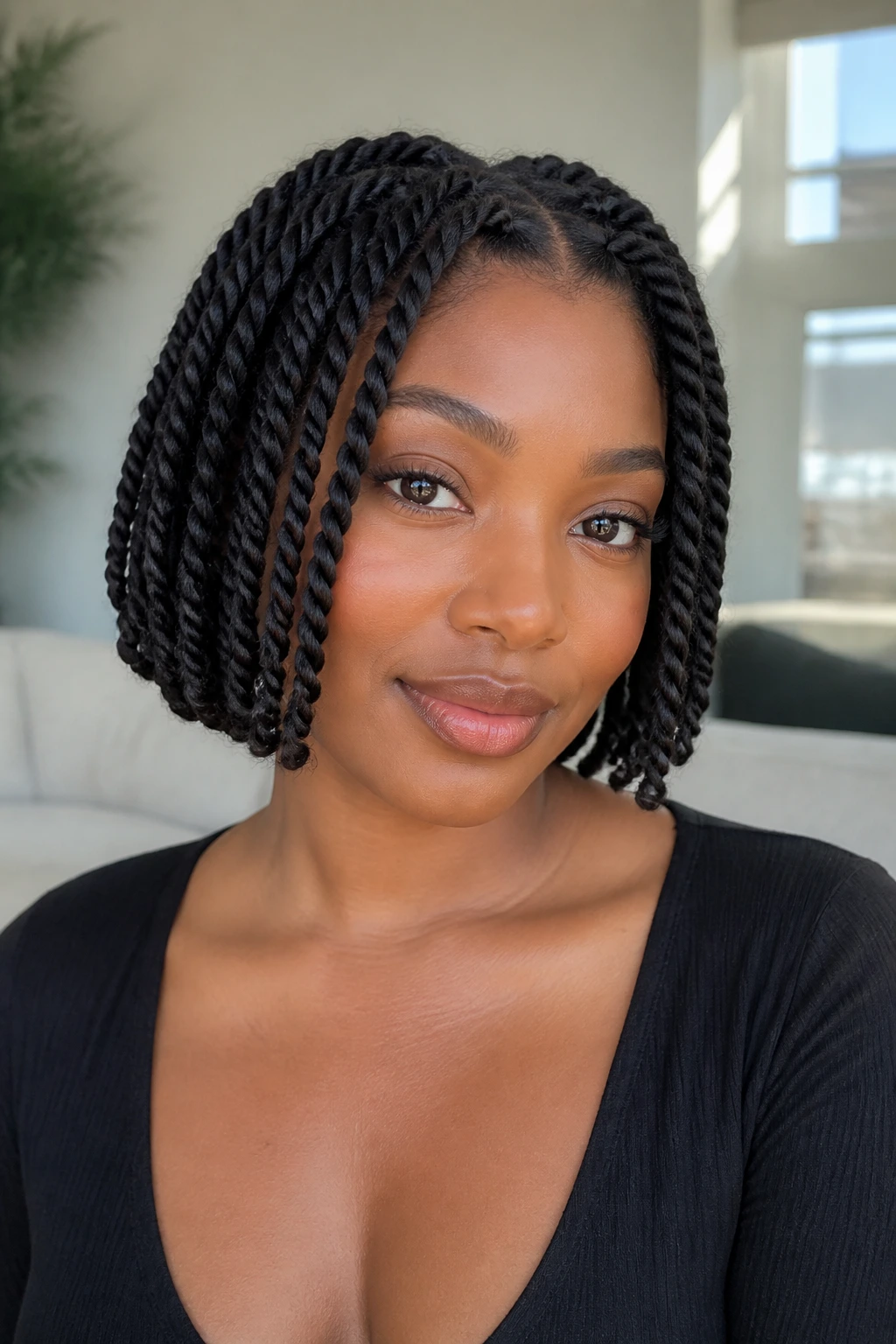
A two-strand twist bob gives you the movement of twists with the shape of a cut bob, even when your actual hair length is longer or shorter than that silhouette. The twists sit around the jawline or shoulders and swing a bit when you move, which gives the style a softer edge than mini twists.
This works well when the goal is a neater outline without sacrificing texture. The twists can be medium-sized for faster installation, or a little smaller if you want more swing and more wear time. A center part gives the bob a cleaner line. A deep side part makes it feel more relaxed.
What makes it different from mini twists
Mini twists are about longevity and low manipulation. The twist bob is about shape. It is a style you can wear down without feeling swallowed by the hair, and that matters if you like to see your neckline and earrings. The cut illusion is part of the appeal.
If you want the bob to hold its line, keep the ends consistent and avoid twisting sections that are wildly different in size. Uneven sections make the bottom edge look ragged faster than you expect. A neat finish up front saves a lot of fuss later.
What Makes Natural Styles Hold Their Shape on Coily Hair
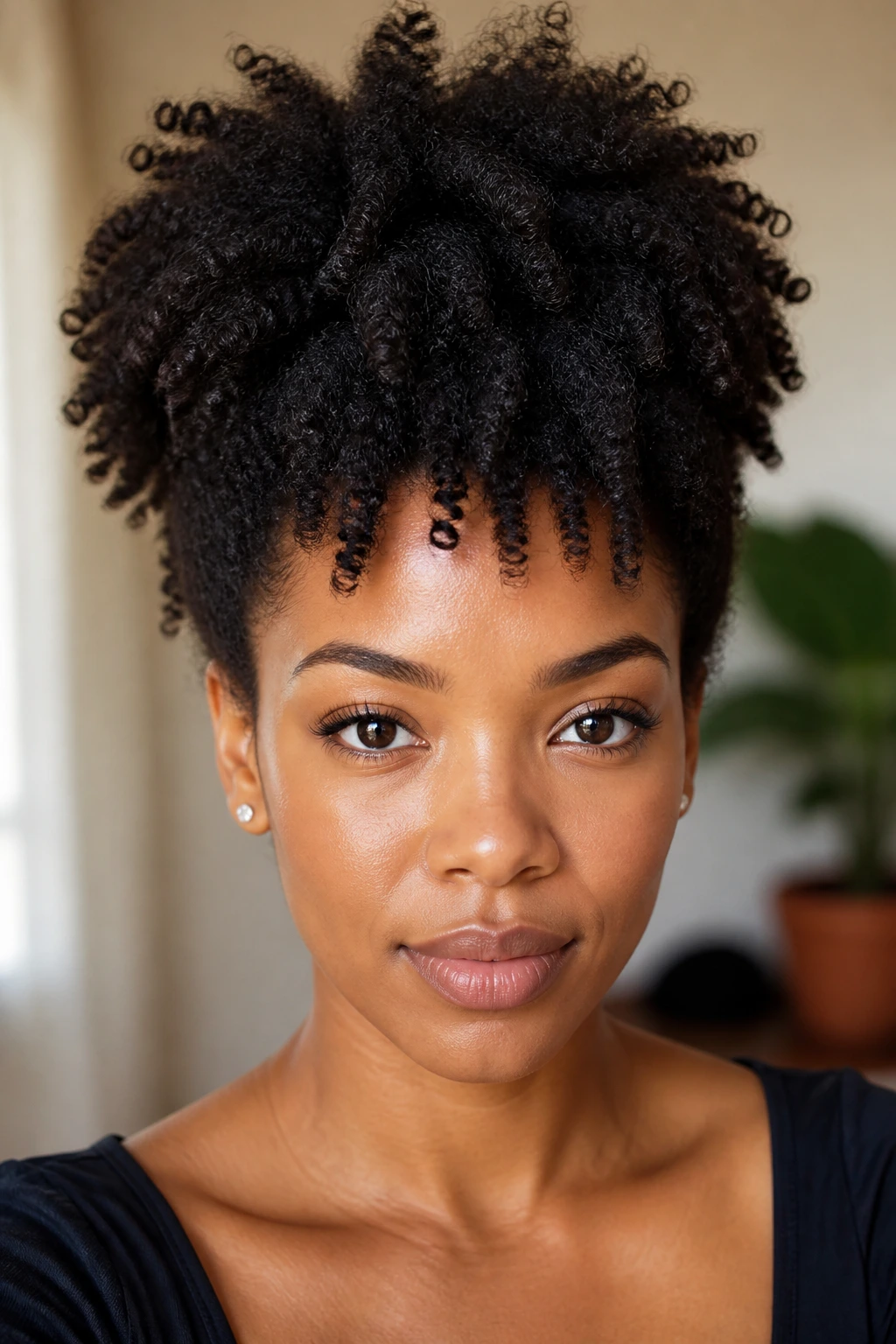
Coily hair holds a style best when the set is planned around three things: moisture, stretch, and drying time. Skip any one of those, and the style usually tells on you by the afternoon. That is true whether you are doing a wash-and-go, a twist-out, or a bun that depends on the smoothness of the base.
The moisture balance matters more than people think. Hair that is too dry grabs frizz. Hair that is too wet can take forever to dry and lose shape before the set locks in. Damp hair with enough leave-in or cream to give slip, followed by a product with hold, tends to behave better. Not every head needs the same amount, but every head needs enough to seal the style.
Shrinkage is not the enemy either. It is the reason some styles look fuller and more defined after drying. The trick is deciding when to stretch the hair and when to let it shrink. A braid-out or banded stretch gives you length and polish. A wash-and-go or afro lets the texture stay round and soft. The same hair can do both; you just have to stop asking it to do the opposite at the same time.
Drying is the part people rush, and it shows. A style that is 80 percent dry is usually still in the danger zone. Set it fully, then leave it alone. That extra hour or two can mean the difference between crisp parts and a cloudy mess.
Essential Tools for These Looks
-
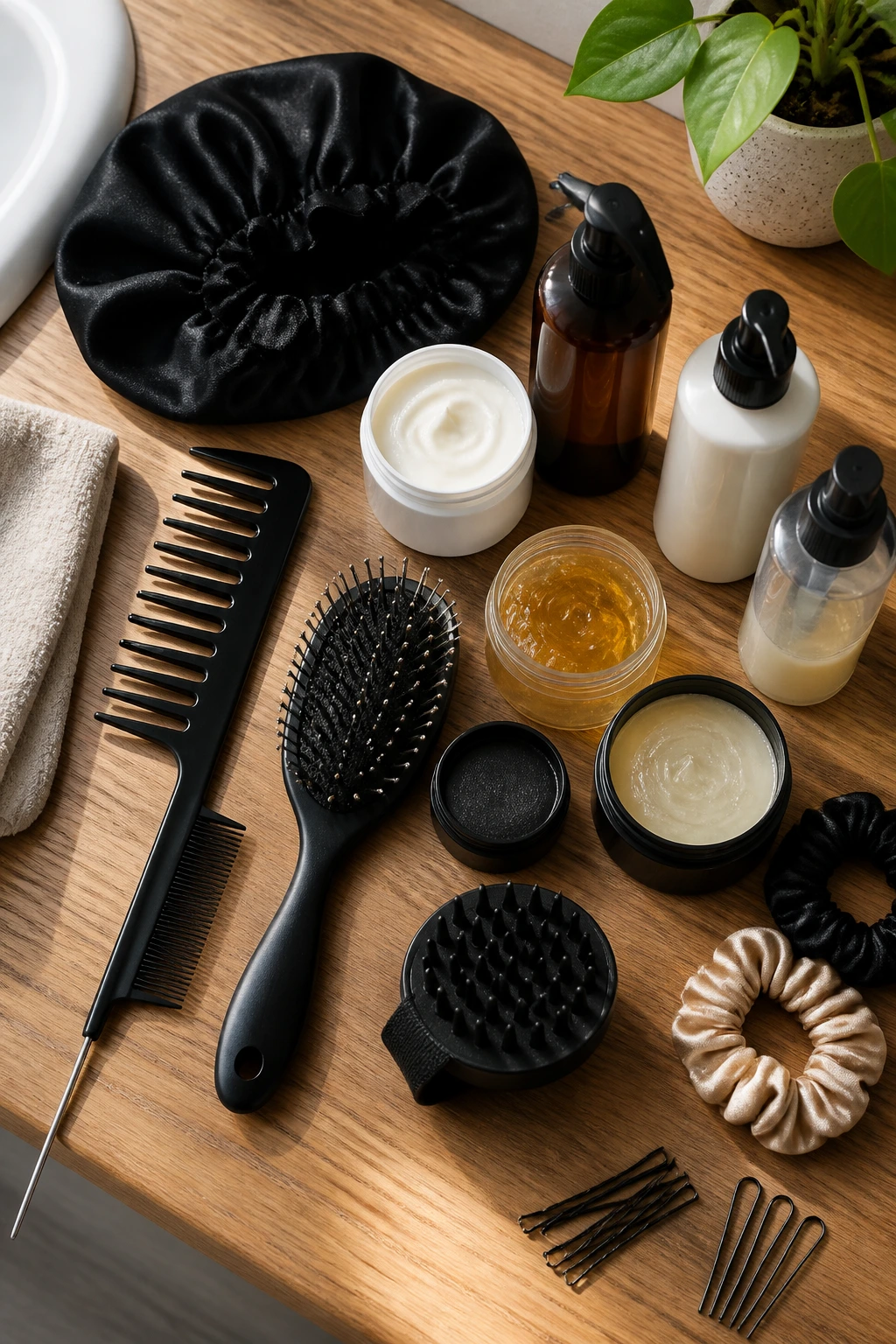
Rat-tail comb: Clean parting is half the battle for braids, twists, and sectioned puffs.
-
Wide-tooth comb: Use it on detangled, conditioned hair; it is gentler than a fine comb on coils.
-
Detangling brush or shower brush: Helpful for clumping curls and smoothing product through dense hair.
-
Spray bottle: A fine mist helps rehydrate sections without soaking the whole head.
-
Leave-in conditioner: Gives slip before styling and keeps the hair from feeling dry underneath.
-
Styling cream or butter: Useful for twist-outs, braid-outs, bantu knots, and stretched styles that need softness.
-
Mousse or setting foam: Good for rod sets, flexi rods, and styles that need lighter hold.
-
Gel or edge control: Best used sparingly at the hairline or at the roots where you need clean lay-down.
-
Satin scrunchies and snag-free bands: Better than tight elastics that slice into curls and leave dents.
-
Bobby pins and U-pins: Needed for buns, crowns, faux hawks, and tuck-and-pin styles.
-
Satin bonnet or scarf: Keeps the set intact overnight and cuts down on friction.
-
Hand mirror: Sounds basic, but it helps with the back of buns, twists, and halo styles where the rear view matters.
Smart Prep for Cleaner Parts and Longer Wear
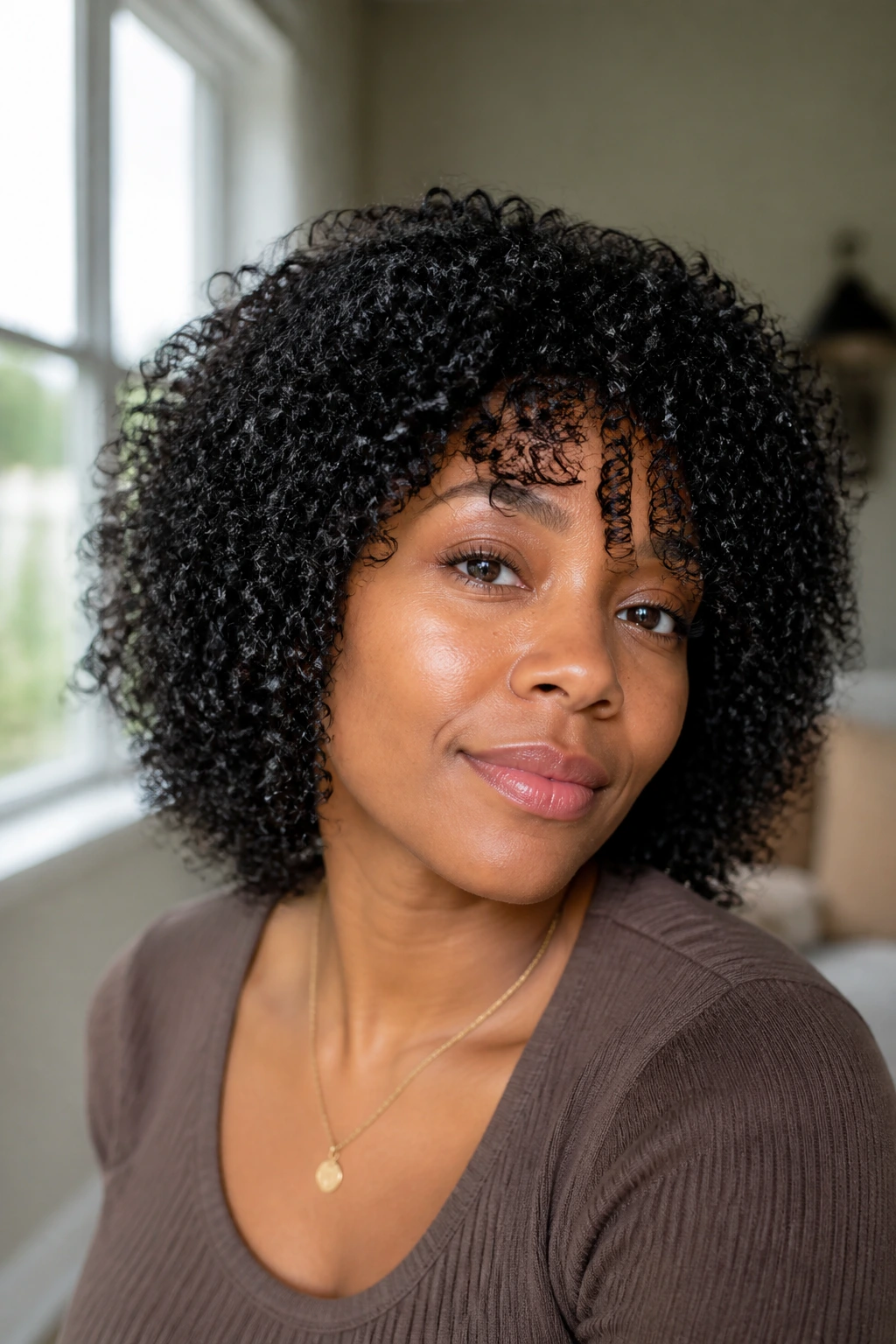
The prep work decides how long these styles stay neat. Clean hair matters, but so does how you handle it after washing. If your roots are full of old product or the hair is tangled at the nape, the finished style will show it faster than you want.
Detangle with conditioner in the shower or right after rinsing. Start at the ends and move upward in small passes. Big, rough comb-outs create little knots that turn into weak spots once you start twisting or braiding. That is one of those boring steps that pays you back later.
If you want a style with clean parting, stretch the hair first. Banding, chunky braids, twists, or a gentle blow-dry with a diffuser can all help. Stretched hair lays flatter for buns, crowns, and faux hawks, and it makes part lines easier to see. If your hair is very dense, section it into four or six working zones before you style. Random sectioning wastes time.
Scalp prep matters too. A light scalp serum or a few drops of oil on the part lines can keep the skin from feeling dry under braids or twists. Keep it light. Heavy grease near the roots tends to make the style look dull and attract lint.
How to Wear Them Without Overthinking the Outfit
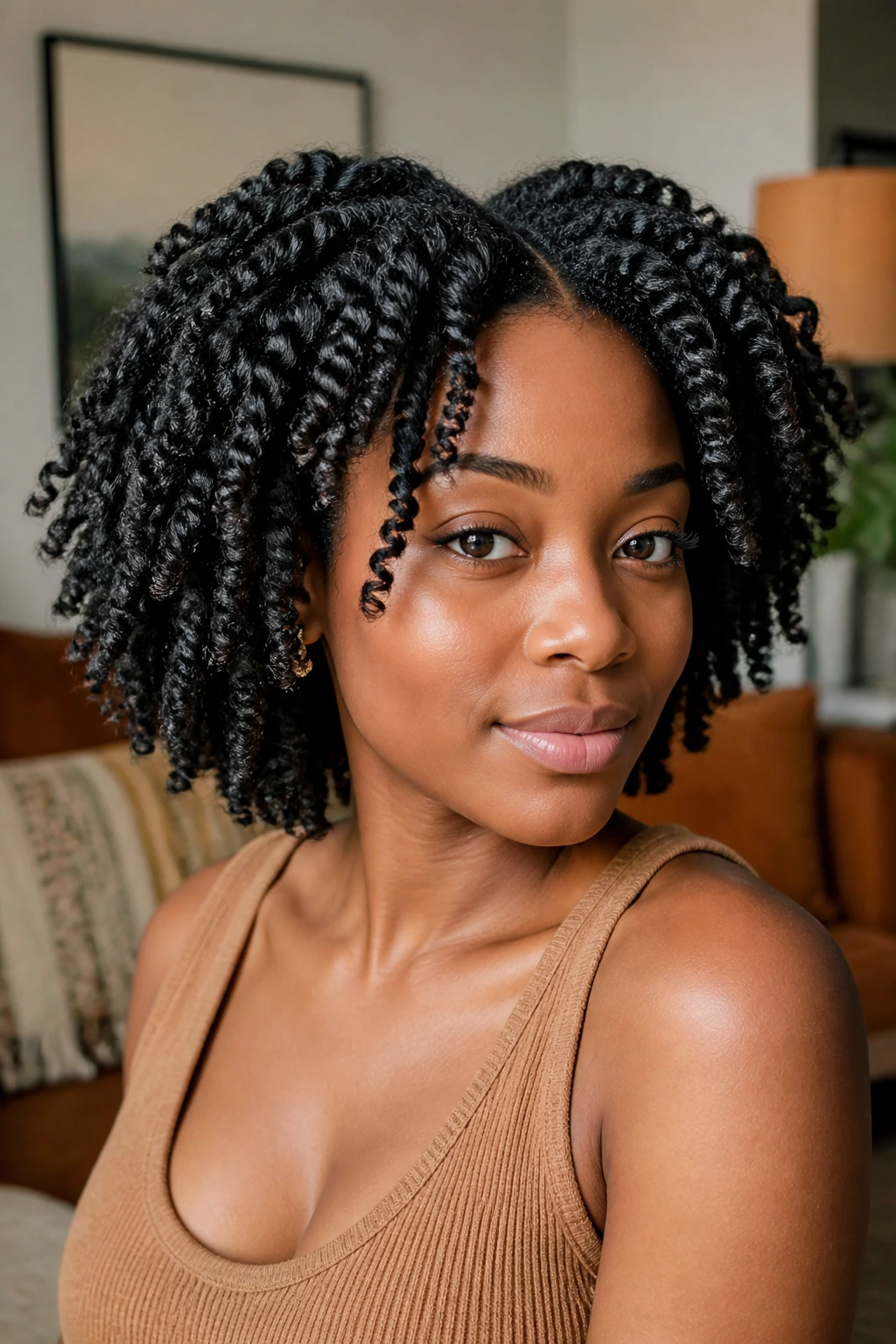
The quickest way to make a hairstyle look finished is to match it with the neckline, earrings, and parting. A high puff works well with hoops, crew necks, and open collars because it keeps the face and neck clear. A low puff sits better with turtlenecks, scarves, and jackets that already have a lot going on near the face.
Formal styles like the halo braid, cornrow bun, or faux hawk do not need a lot of competing detail from the outfit. Clean lines help. A simple neckline, a pair of studs, maybe one bracelet. That is enough. If the hair already has braid work, beads, or a strong silhouette, the clothes should give it room.
For casual days, afro shapes, twist-outs, and space buns can carry more texture in the outfit because they already have movement. Denim, knitwear, and simple gold jewelry all sit comfortably with that kind of hair. I like a style that can meet a plain white tee and still look deliberate. It saves effort.
When in doubt, think in terms of balance. Big hair loves simpler clothes. Sleeker hair can handle more structure. You do not need to dress like the hairstyle is a costume. Just let one thing lead and the other one follow.
Extra Tips for More Definition, More Volume, or Less Tension
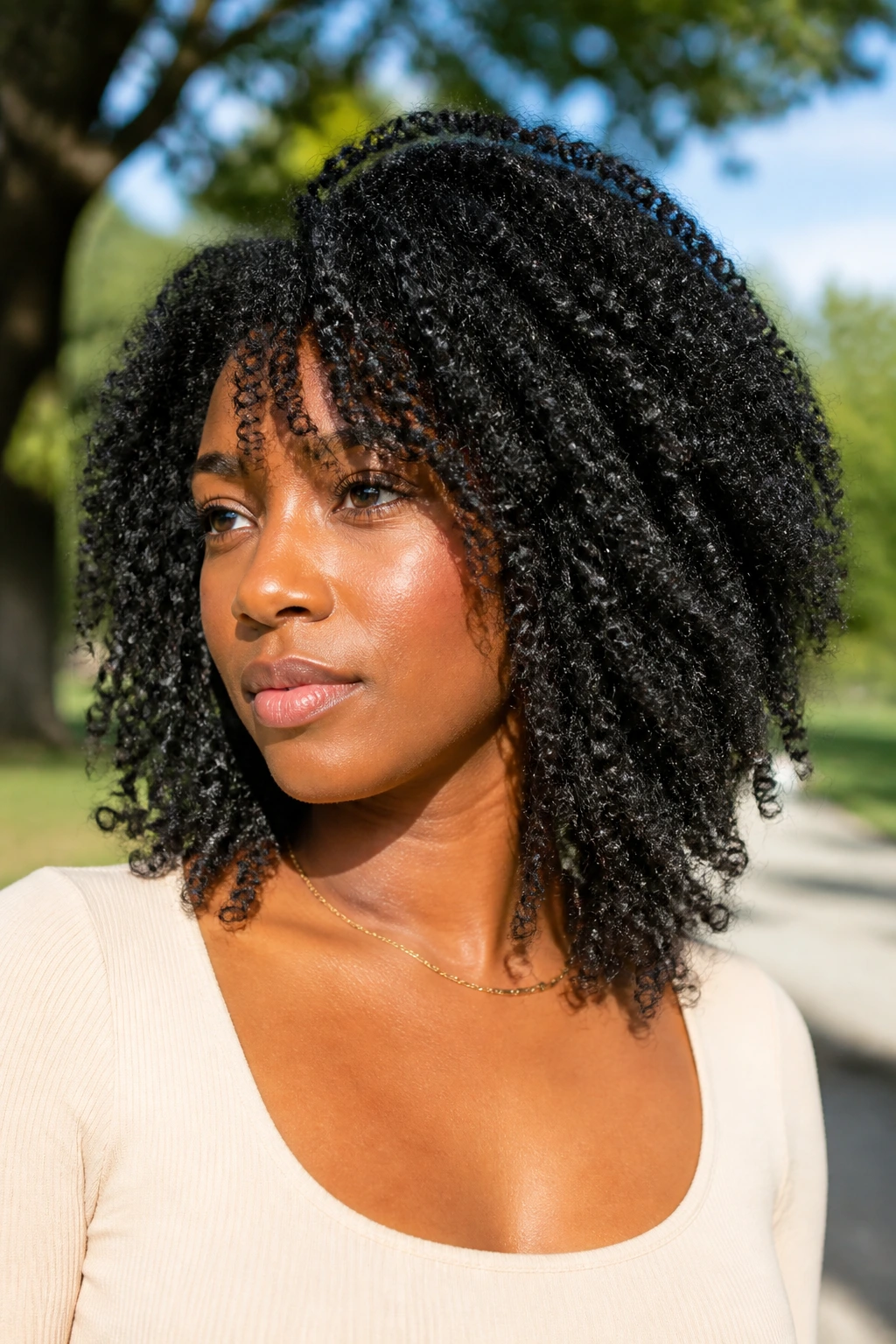
Definition: If your twist-out or braid-out keeps turning fuzzy too soon, apply product in smaller sections and do not separate the hair until it is fully cool and dry. Rushing the takedown is the fastest way to lose the curl pattern.
Volume: A shaped afro or puff gets bigger when you lift at the root and leave the ends alone. Pick upward, not outward. The difference is subtle in theory and obvious in the mirror.
Less tension: Use soft bands, not tight elastics, for puffs and half-up styles. If your temples are sore after styling, the style is too tight, even if it looks neat. Comfort counts.
Added polish: A tiny bit of oil on the fingertips can help twist-outs, coil sets, and braid-outs separate cleanly. Too much oil flattens the style. One or two drops is enough for most heads.
Make it yours: Earrings, beads, scarf ties, and part direction can change the mood of a style faster than redoing the whole thing. A center part feels different from a deep side part. That small choice matters.
Night Care, Refreshing, and How Long Each Style Usually Lasts
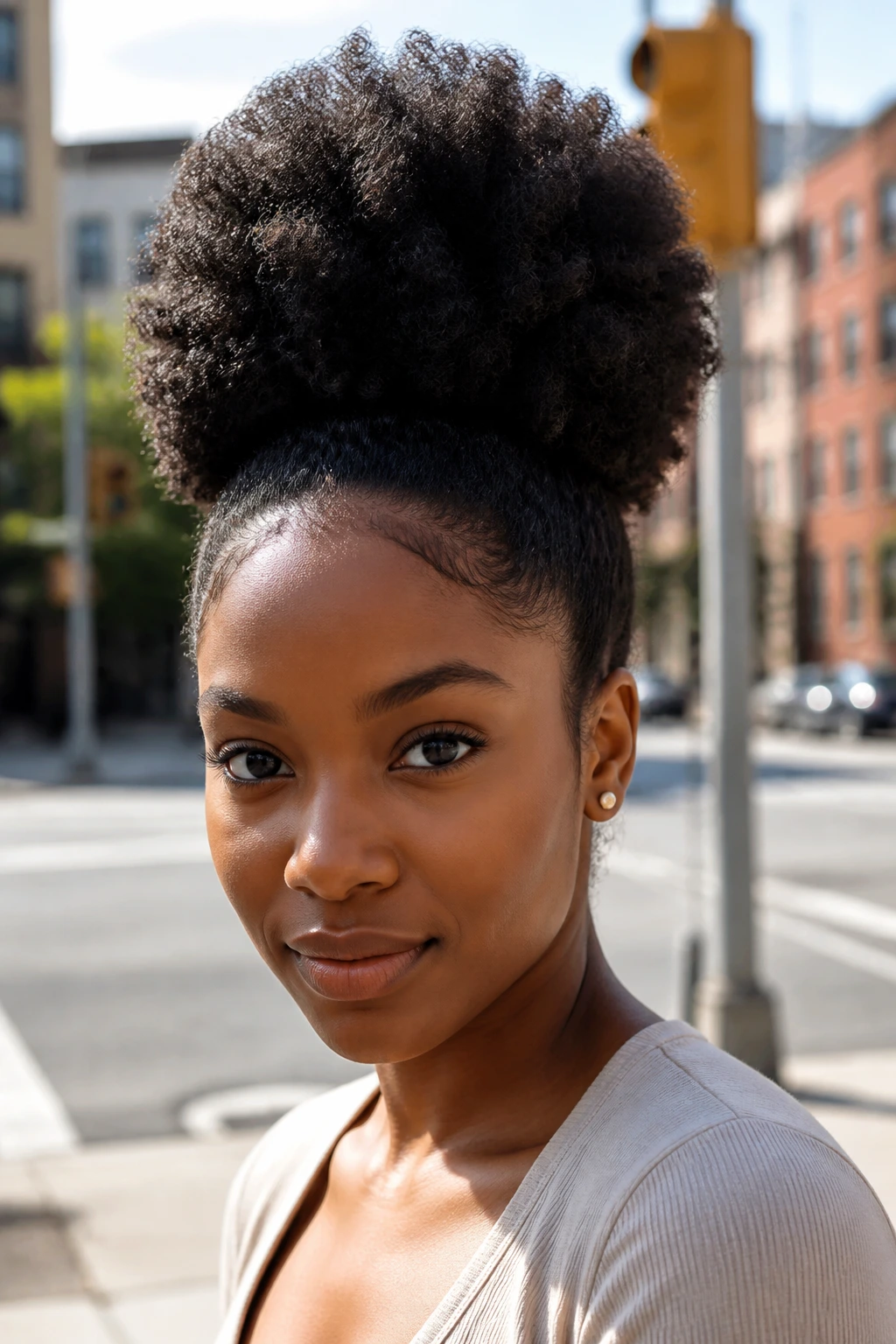
Natural styles usually fail at bedtime before they fail anywhere else. A satin bonnet or scarf cuts the friction that rough cotton pillowcases create, and that alone can keep twist-outs, braid-outs, and curls cleaner for a few extra days. For puffs, a loose pineapple or a wide satin band works better than flattening the whole style under pressure.
Wash-and-go curls often last 3 to 5 days if you keep the roots from getting crushed and refresh only the frizzy top layer. Twist-outs and braid-outs can last 4 to 7 days, sometimes longer if the parts stay neat and you do not separate them too much on day one. Mini twists can hold for 2 to 4 weeks if you keep the scalp clean and the ends moisturized lightly. Cornrows, Fulani braids, and loc buns can stay neat for several weeks, but only if you take care of the scalp and do not ignore buildup.
Refreshing should be light. A spray bottle with water and a little leave-in is enough for many styles. If you need more hold at the hairline or crown, a dab of gel on a toothbrush or edge brush works better than drenching the whole head again. Re-do the front before the back if the style starts looking tired; the face frame is what people notice first.
If a style starts smelling stale, feels itchy, or looks packed with product, it needs a proper wash, not another mist. That line is useful. A lot of people keep trying to save a dead set when the hair is already asking for a reset.
Common Mistakes That Flatten the Result
-
Starting with hair that is still tangled: The symptom is rough sections, snagging, and uneven parts. The fix is to detangle with conditioner and take your time before you start styling.
-
Using too much product at the roots: The style feels heavy, takes forever to dry, and can leave white residue. Use the least product near the scalp and save heavier cream for the mids and ends.
-
Pulling puffs and braids too tight: The style may look neat at first, then your scalp starts talking back. A comfortable hold lasts longer than a strained one.
-
Unraveling twist-outs or braid-outs before they are dry: The hair looks fuzzy within an hour. Wait until the set is fully dry, then separate gently with clean hands or a little oil on the fingertips.
-
Ignoring the size of your sections: Tiny sections on very dense hair can take forever; huge sections on fine hair can fall flat. Match section size to density if you want the style to sit right.
-
Sleeping on rough fabric: Morning frizz, flattened roots, and brittle ends usually trace back to cotton. Satin or silk is not a luxury here. It is maintenance.
Variations and Adjustments to Try
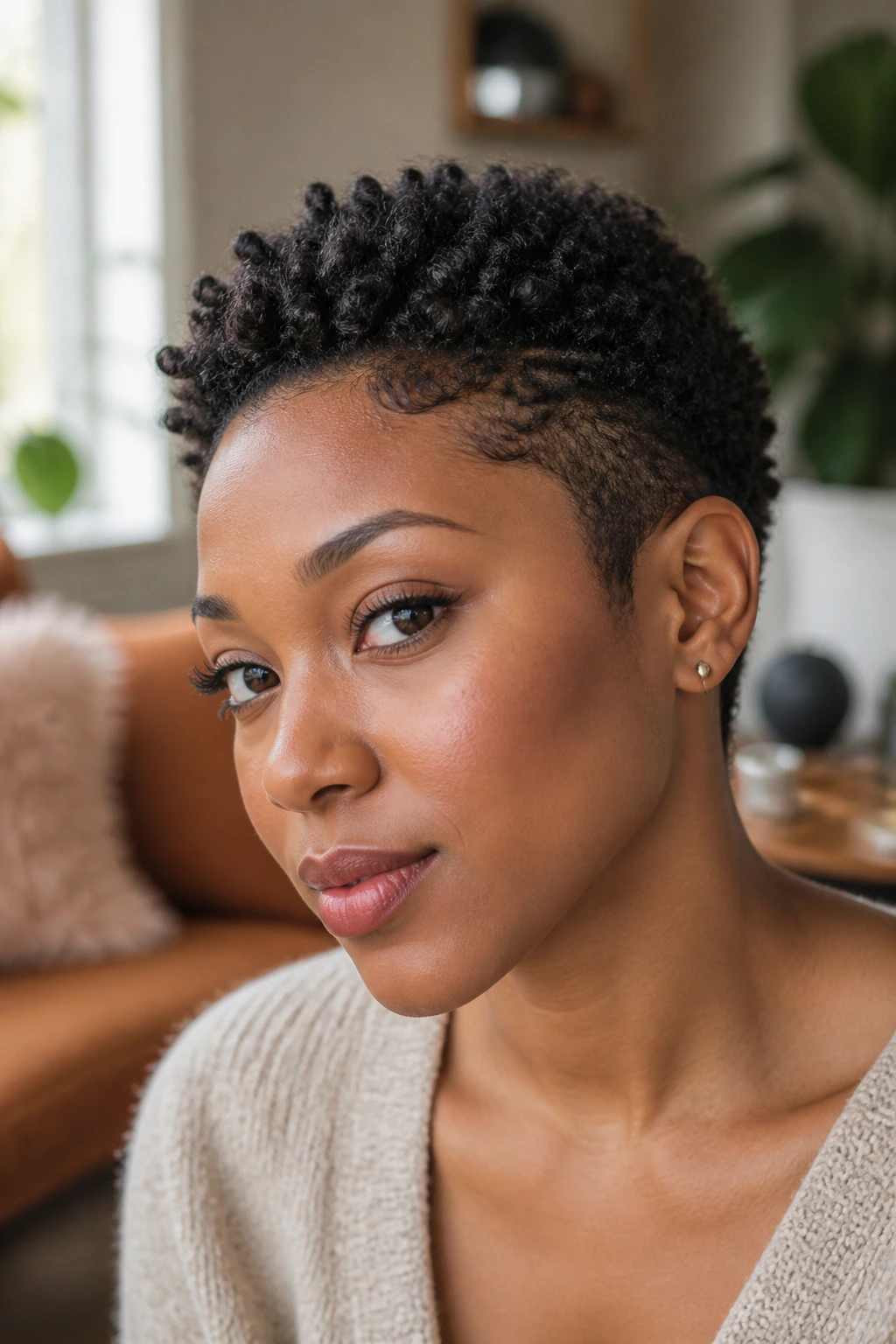
Short-Hair Friendly Swaps: If your hair sits in TWA territory, lean on finger coils, a tapered cut, mini twists, and defined curls instead of trying to force high buns or long halo braids. Short hair looks strongest when the shape is clean and the texture is visible.
Protective-Style Month: Mini twists, cornrow buns, Fulani braids, and loc buns keep the ends tucked away when you want a break from daily manipulation. Just do not confuse low manipulation with no maintenance; the scalp still needs cleansing and light moisture.
Heat-Free Stretching: Banded sections, chunky braids, and overnight twists stretch the hair enough for bun styles and big braid-outs without a flatiron. If your hair is sensitive to heat or you just want a break from it, this route keeps the curl pattern intact.
Humidity Shield: Use smaller sections, a mousse or gel combination, and a satin scarf to set the hair before you leave the house. Humidity finds weak spots first, so the tighter the set and the drier the finish, the better.
Event-Ready Finish: Halo braids, faux hawks, rolled updos, and polished cornrow buns carry a more formal line. Add one strong accessory — a metallic pin, a pair of hoops, or a clean part — and stop there.
Kid-Friendly Speed Run: High puffs, space buns, headwrap accents, and half-up styles keep the routine shorter and the hair out of the face. The best kid styles are the ones that do not require a wrestling match at 7 a.m.
Frequently Asked Questions
Which natural hairstyle lasts the longest?
Mini twists, cornrows, Fulani braids, and loc buns usually last the longest because the ends stay tucked away and the structure does not rely on daily fluffing. A good twist-out or braid-out can last nearly a week, but it takes more refresh work.
What is the easiest style for beginners?
High puffs, low puffs, headwrap accents, and simple wash-and-go curls are the most forgiving. They do not require perfect parting, and small imperfections are much easier to hide than they are in braided styles.
How do I keep my twist-out from turning frizzy right away?
Wait until the hair is fully dry before unraveling, then separate gently with a little oil on your fingers. If frizz keeps showing up at the roots, use smaller sections and set the twists a bit tighter at the base.
Can these styles work on short natural hair?
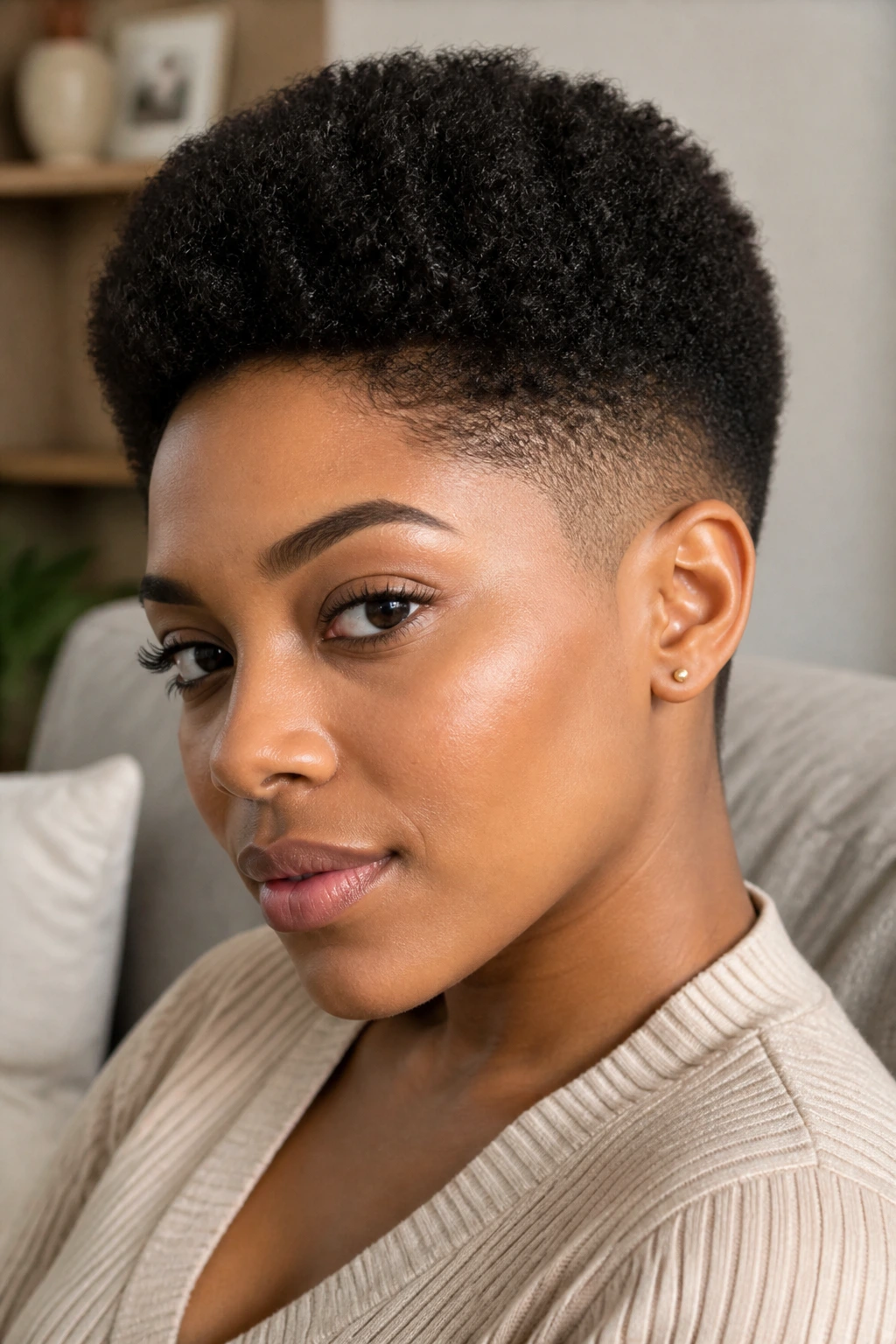
Absolutely. Tapered TWAs, finger coils, flat twists, mini puffs, and shaped afros all work well on shorter lengths. The trick is choosing styles that follow the haircut instead of fighting it.
What if my hair is very thick and my puff keeps sliding?
Use a stronger but still comfortable band, split the front into smaller sections before gathering the puff, and smooth the roots with a small brush. If the band keeps slipping, the hair may need a little more stretch before styling.
Are braid-outs better than twist-outs for 4C hair?
Braid-outs often give more stretch and a bit more control over shrinkage, while twist-outs usually give a softer, rounder curl. If your hair shrinks hard, braid-outs may give the shape you want with less collapsing.
How often should I redo a style?
Redo puffs and wash-and-gos when the roots stop looking fresh or the hair starts feeling dry and rough, often after a few days. Mini twists, braids, and loc buns can last much longer, but the scalp still needs regular care.
Can I wear a polished style like a halo braid to work or a wedding?
Yes. Halo braids, cornrow buns, faux hawks, and rolled updos are some of the cleanest event styles on natural hair. Just keep the parting neat, secure the pins well, and avoid overloading the hair with heavy shine products.
The Styles Worth Reaching For Again and Again
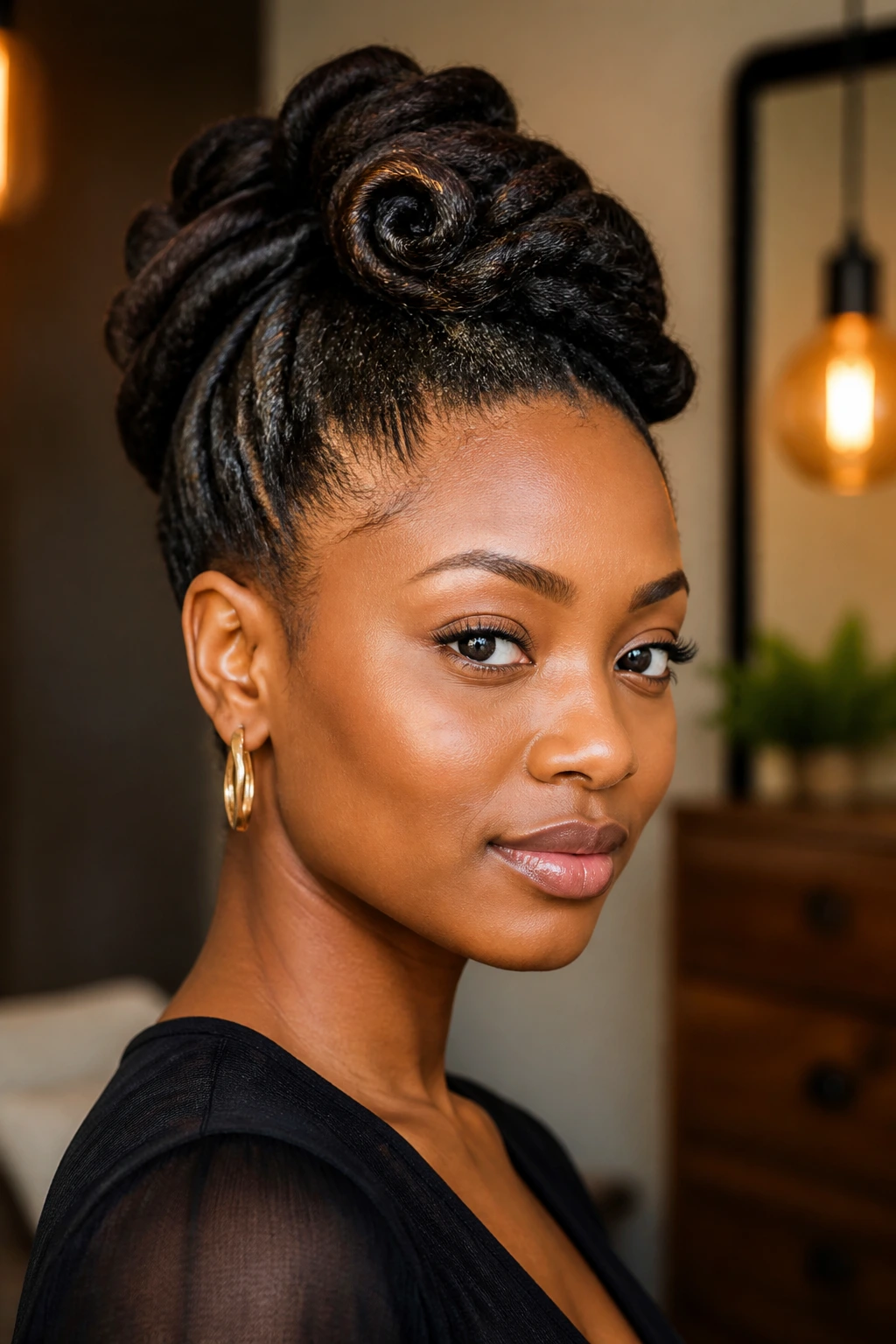
The best natural hairstyles for Black women are the ones that fit real life: quick when the morning is rushed, protective when the hair needs a break, and polished when you want the whole look to feel finished. That is the common thread running through every style here. They do not ask your texture to behave like someone else’s. They give it shape instead.
Pick one style that suits your length and your patience level, then keep a second one for the weeks when your hair wants less handling. That mix is what makes a natural hair routine feel workable instead of exhausting. And once you learn which shapes sit best on your head, the rest gets easier in a way that no product aisle can promise.
