



Warmth has a way of sneaking into hair. The first wash lifts a little copper, the second exposes yellow at the ends, and suddenly the cool brunette or icy blonde you wanted looks louder than it should. Ashy hair color ideas for cool toned hair are the answer, but only when the undertone is chosen with a little discipline. Too much green and the color goes muddy. Too little blue-violet and brass wins by day three.
The best ash shades do not look flat. They look controlled. That’s the part most people miss. A smoky brown can read expensive because the depth shifts in daylight, while a silver-beige blonde can stay soft instead of tipping into chalky white. The trick is matching the formula to the starting level: level 4 brunettes need different ash than level 9 blondes, and porous ends need a different strategy than virgin roots.
I’ve always liked ash when it still shows movement. The best versions have shape — mushroom ribbons, graphite lowlights, pearl ends, or a root shadow that lets the lighter pieces breathe. If the color looks good in harsh bathroom light, not only on a ring light, that’s usually a good sign.
The shades below cover the full range, from subtle brunette glosses to silver, slate, and a few fashion-forward cool tones that still live in the same family.
Why These Ash Shades Stand Apart
Blue-Violet Control: These shades use blue, violet, or both to push back orange and yellow instead of covering warmth with more warmth.
Soft Grow-Out: Root shadows, mushroom blends, and balayage ribbons blur the line between salon work and regrowth, so the color stays wearable longer.
Range of Commitment: Some looks need nothing more than a gloss; others need prelightening to level 9, and that difference matters more than the name on the swatch.
Wearable Dimension: Even the bolder cool tones keep movement at the mids and ends, which keeps them from looking like one solid block of color.
Easy Maintenance Signals: Purple shampoo for blondes, blue shampoo for brunettes, and a gloss every 4 to 8 weeks show up here for a reason.
From Quiet to Statement: This set covers smoky brunette, mushroom brown, silver blonde, slate gray, and a few editorial shades that still sit inside the cool family.
1. Smoky Ash Brown
Smoky ash brown is the color I reach for when I want brunette depth without the red cast that shows up after a few washes. On a level 5 base, it sits between espresso and graphite, with enough cool pigment to quiet copper but enough brown left behind to keep the hair looking rich instead of hollow.
Why It Stays Cool
A smoky ash brown works because it respects the base you already have. You are not fighting for pale blonde here. You’re softening the warmth that shows up naturally in medium brunettes, which means a demi-permanent gloss or ash brown glaze can do more work than a full lightening session.
Quick Shade Notes
- Best on level 4 to 6 brunettes.
- Ask for a blue-violet brunette gloss or demi color.
- Fine babylights around the face keep it from looking one-dimensional.
- A 5- to 8-minute glaze on porous ends is enough.
Best Styling Move: A loose blowout or soft bend with a 1-inch iron shows the smoke without making the ends look dry.
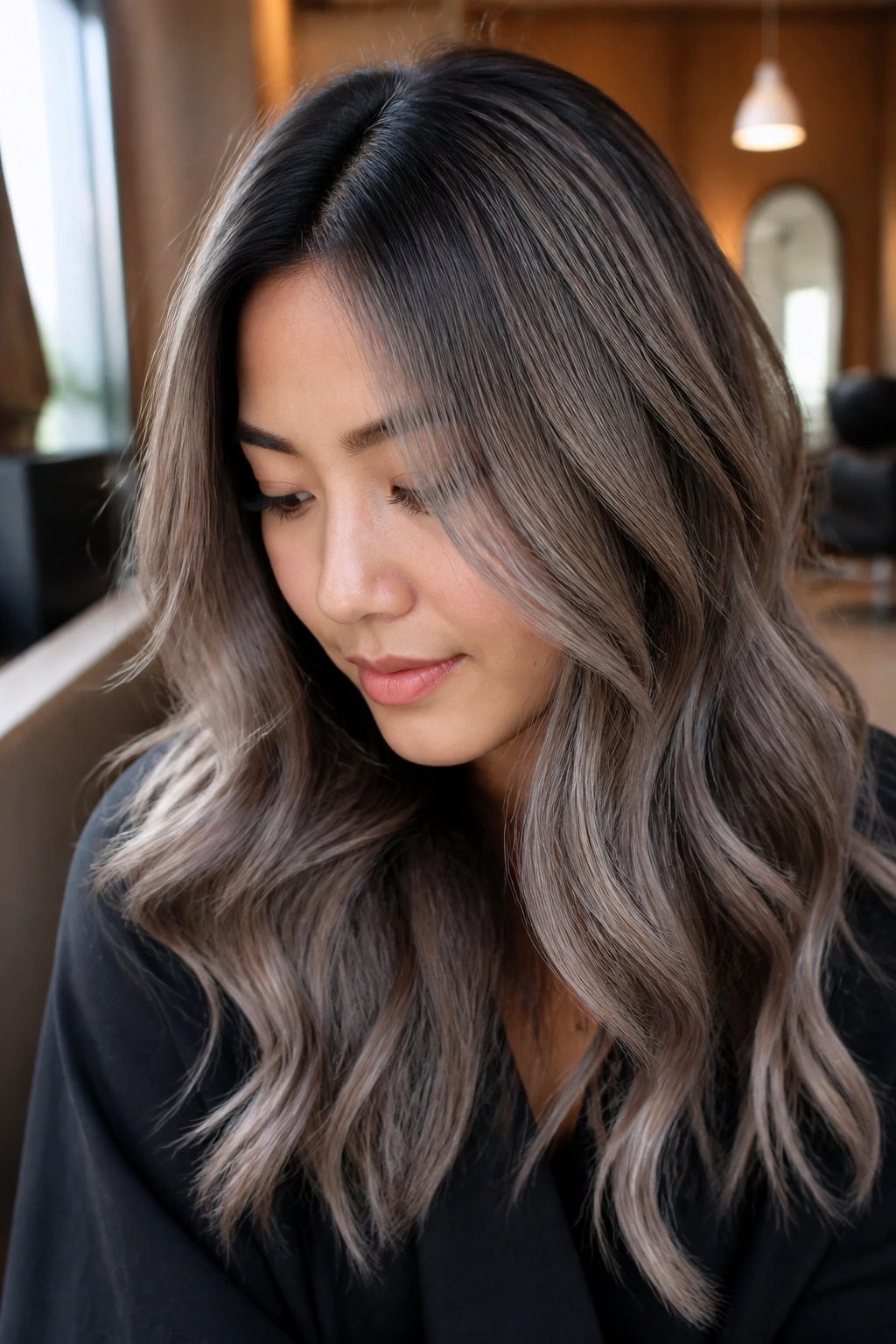
2. Mushroom Brown Balayage
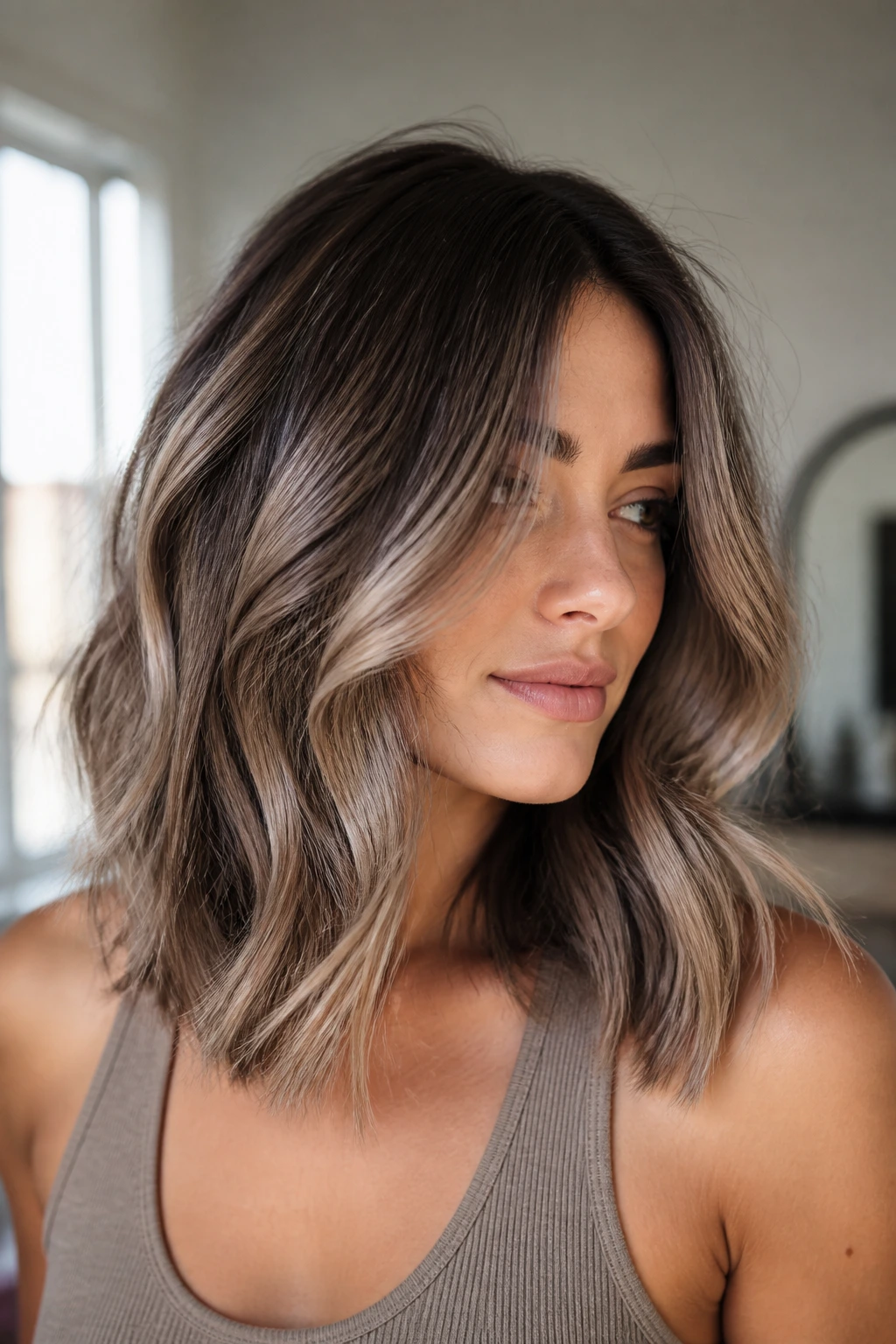
If you want ash without the hard edge of silver, mushroom brown balayage is the sweet spot. It sits in that taupe-brown zone that looks expensive in daylight and forgiving under warm indoor bulbs. The color feels grounded, not icy.
The reason it works is simple: the painterly ribbons keep the depth of the brunette base, then the ash-beige pieces lift around the surface so the whole head doesn’t collapse into one flat note. On a level 6 brunette, that mix can be more flattering than going one notch lighter everywhere.
Ask for a root shadow about 1 inch deep, then hand-painted ribbons through the mids and ends. I like this on shoulder-length cuts and long layers because the bend in the hair lets the mushroom tones show their gray-beige shift. Straight, heavy hair can hide the movement.
This is the kind of color that looks better on day eight than day one. The root shadow softens, the ribbons settle, and the whole thing stops looking freshly done in the best possible way.
3. Beige-Icy Ash Blonde
Can ash blonde still look soft? Yes — if the beige and icy parts are balanced instead of shoved together. Beige-Icy ash blonde is for people who want brightness, but not that hard white-blonde finish that can make skin look washed out and hair look overprocessed.
How to Use It
You need lift here. Real lift. Most heads need to reach a pale yellow level 9 before the toner has room to work, because ash pigment can’t erase orange that’s still too loud. That’s why this shade looks expensive when it’s done right and dull when it isn’t.
For the cleanest result, ask for a pale blonde canvas with a violet-blue toner, not a yellow-beige blonde disguised as ash. The tone should feel cool, but not gray enough to flatten the light. A root tap of 1/2 inch keeps the grow-out from shouting at you.
A side part and a soft wave make this one sing. Straight, glassy hair can work too, but it needs shine serum on the last 2 inches so the ends don’t look chalky.
4. Platinum Pearl Melt
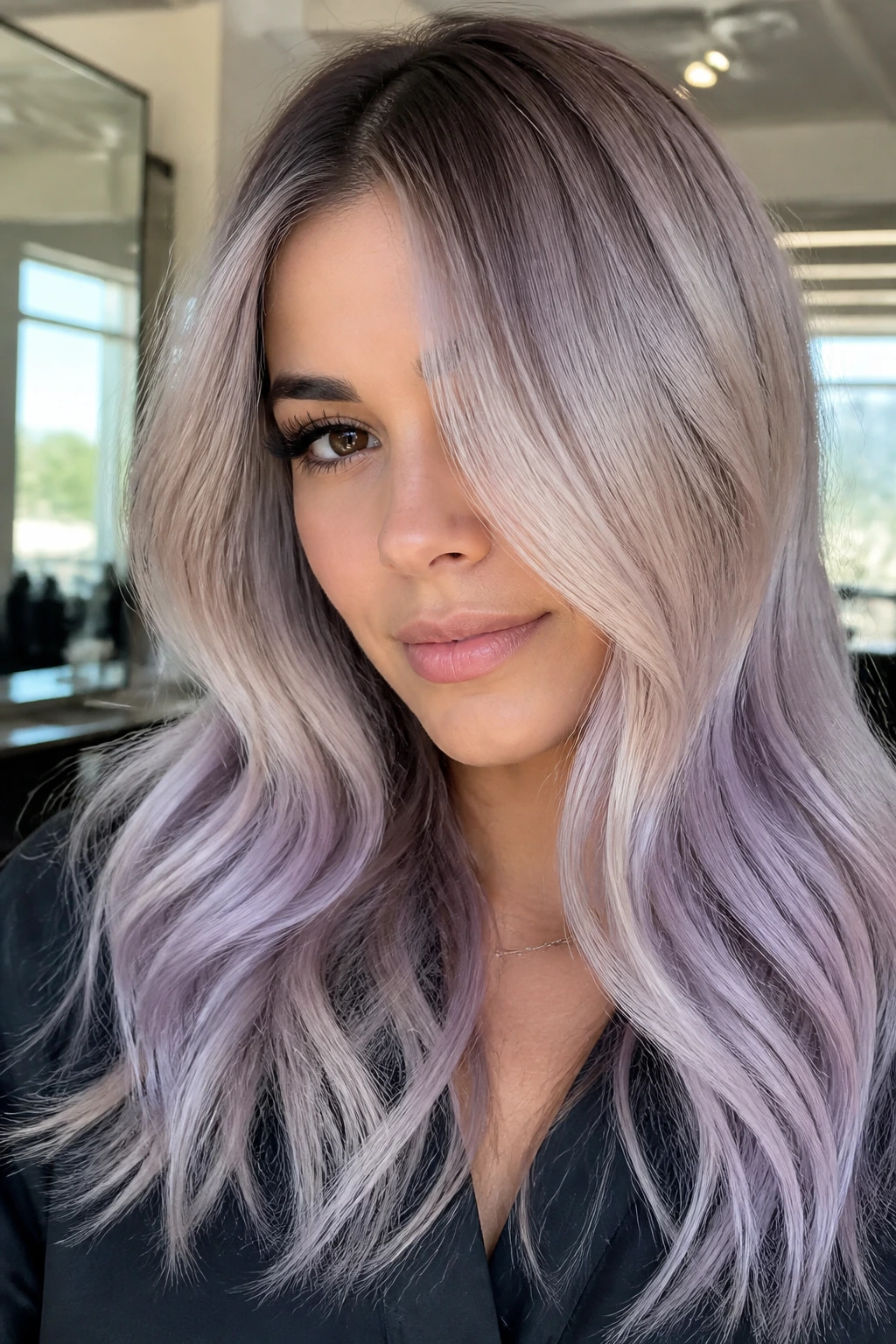
Picture hair that looks like frosted glass in daylight. That’s platinum pearl melt when it’s done properly. It has the brightness of platinum, but the toner softens the edge so the blonde reads pearly rather than stark.
The key move is a shadowed root, usually 1/2 to 1 inch, blended into a pale blonde midlength. Without that transition, platinum can look a little severe and the regrowth line shows fast. The pearl part comes from a toner that leans violet and a touch smoky, not flat silver.
What Makes It Work
- Lift hair to a very pale yellow before toning.
- Keep the root melt soft, not stripey.
- Use a neutral or cool gloss on the ends every 4 to 6 weeks.
- Choose waves or a tucked-behind-the-ear finish to show the dimension.
One thing to watch: porous ends can go a little too silver if the toner sits too long. Apply them last, and keep an eye on the clock.
5. Slate Gray Bob
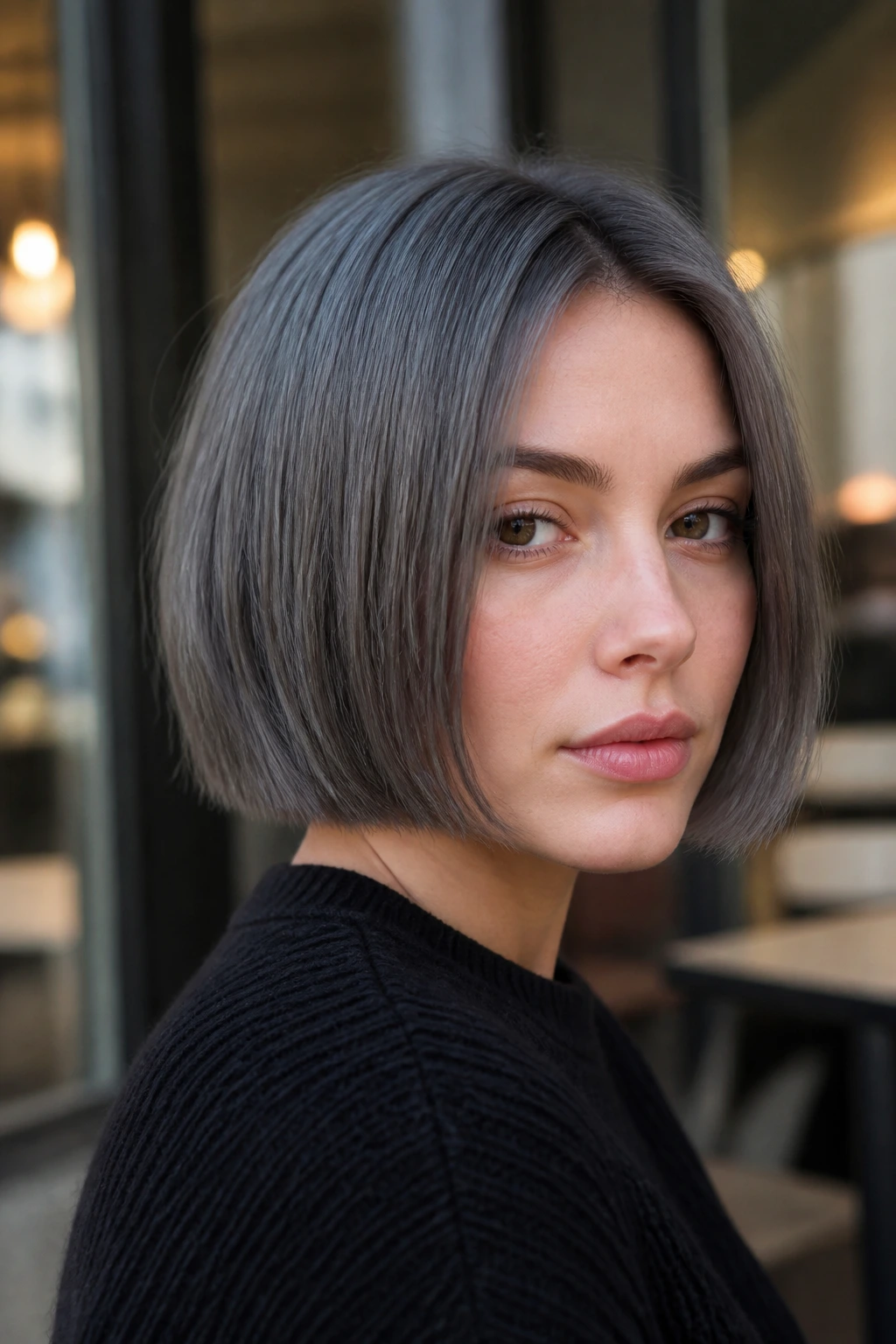
Short hair makes ash do the talking. A slate gray bob is blunt, crisp, and a little architectural, which is why it looks so sharp on a jaw-length cut. You get the cool tone first, then the shape of the haircut carries the rest.
This shade works best when the base has been lifted to a pale blonde, then toned with a steel-gray or graphite gloss. The bob itself matters here. A jagged, grown-out cut can make the gray look accidental. A clean line at the ends makes the whole thing feel deliberate.
I like this on straight or slightly beveled bobs because the ends catch light differently when they’re tucked under with a round brush. If your hair is naturally wavy, a light smoothing cream and a blow-dry nozzle do more than a heavy iron pass ever will.
Short color can be a blessing. Less length means less fading drama, and the tone stays visible even when you’re in a rush.
6. Ash Bronde Ribbon Highlights
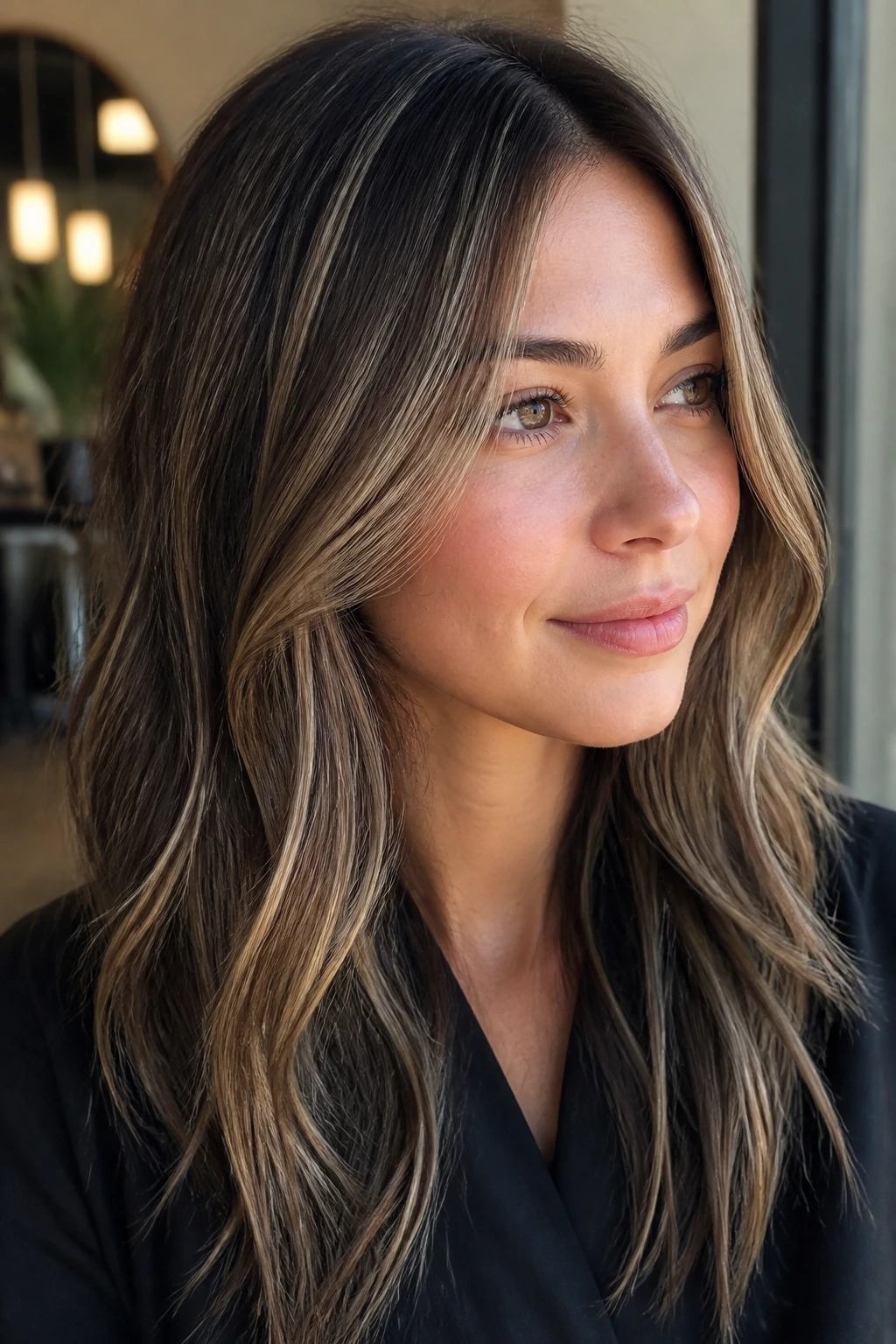
Ash bronde ribbon highlights are for the person who wants dimension without committing to full blonde. Bronde can drift warm fast, so the ash version keeps the ribbons cool and the base a little deeper, which gives the hair a more believable finish.
Unlike all-over blonde, this approach leaves the brunette where it belongs. The highlights sit in narrow ribbons, often 1/8 to 1/4 inch wide, and they’re placed where sunlight would hit naturally — around the face, at the crown, and through the top layer. That’s what keeps the result from feeling striped.
Who It Fits Best
It works well on medium brunettes who want movement but not a heavy bleach schedule. A blue-based gloss on the highlights and a neutral shadow at the root keep the warmth from fighting back.
Best for: layered cuts, loose waves, and anyone who wants a cool tone that still looks like hair, not a toner demo.
7. Cool Chestnut Gloss
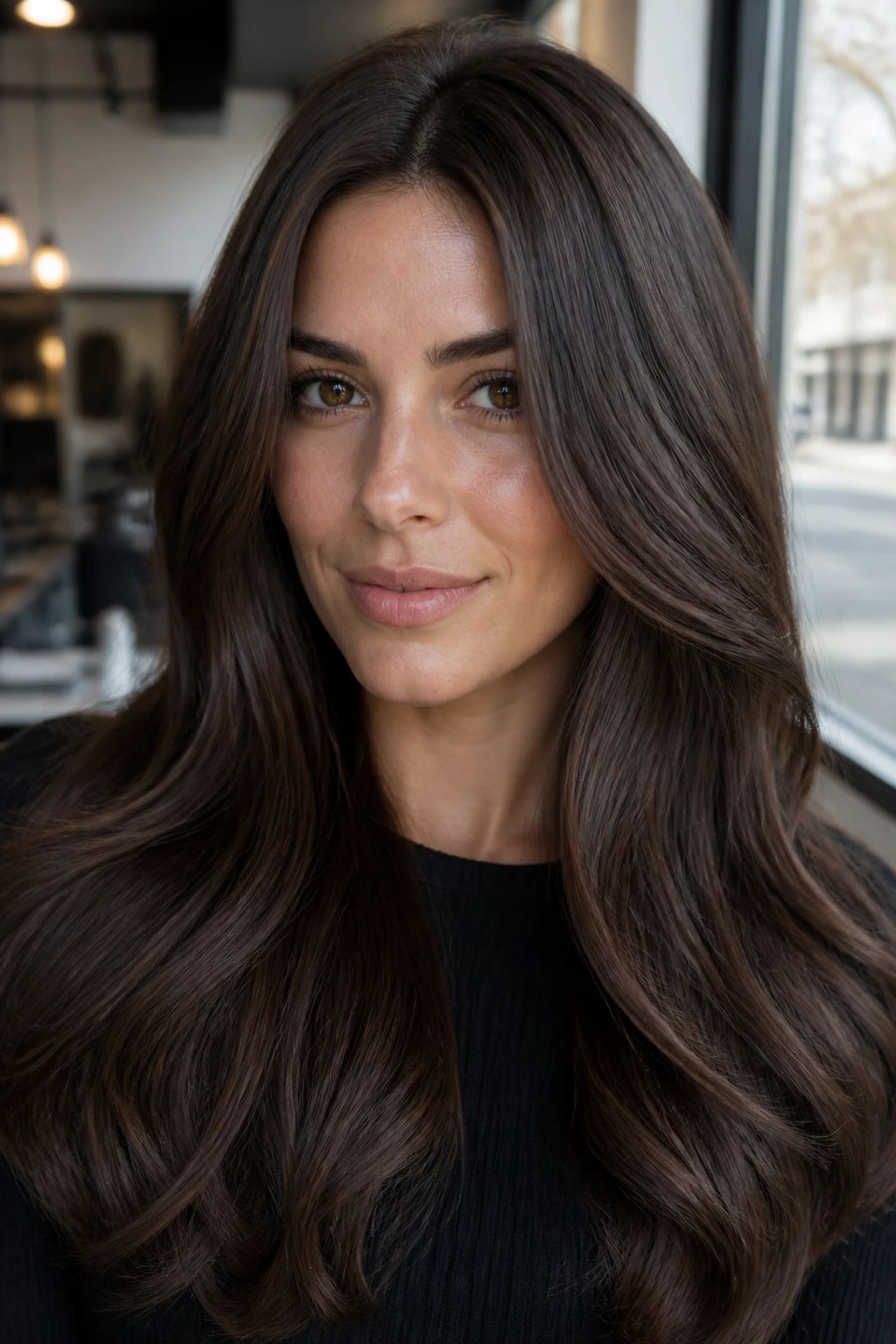
Cool chestnut gloss is the no-drama version of ash brunette, and I mean that in the best way. If your hair sits around a level 4 to 6 and you do not want bleach anywhere near it, this shade can cool down the red-brown cast that shows up in sunlight.
The gloss usually reads as mocha, cocoa, and a little smoke. It doesn’t need to shout. The shine is the point. On healthy hair, chestnut with a cool base looks polished in a way warm chestnut never quite does, because the undertone stays steady after a few shampoos.
This is one of the best choices for virgin brunettes who want a tone change, not a color overhaul. It also behaves well on thick hair, where ash blonde can get hungry and dry at the ends.
Keep the styling simple: one pass with a flat iron, or a soft curved blowout with the ends left loose. If you go too piecey or too textured, the gloss effect gets lost.
8. Silver Smoke Lob
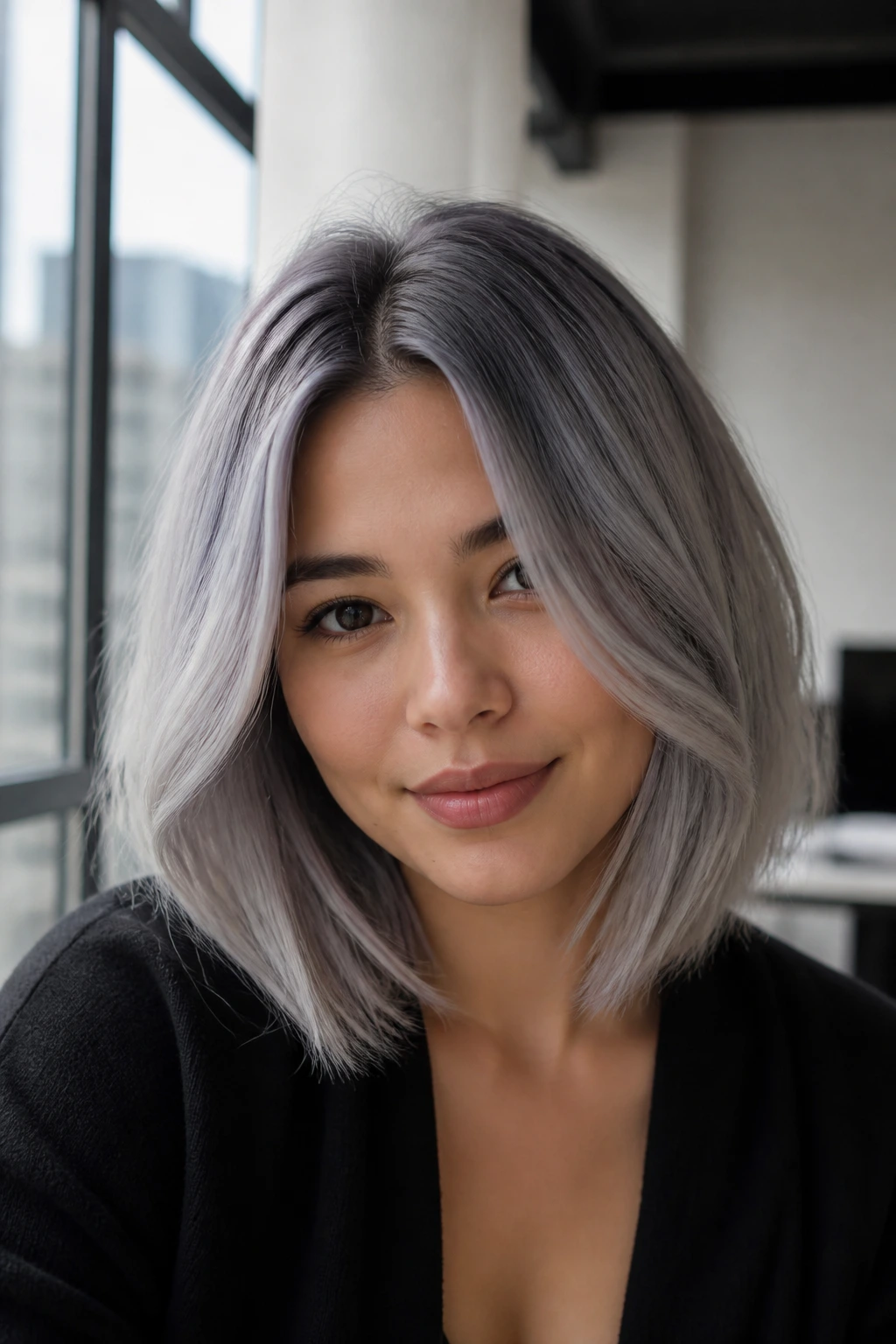
A silver smoke lob gives you the ease of a long bob and the punch of silver without the helmet effect people worry about. The trick is not making it one-note. You want soft smoke at the roots, silver through the mids, and enough translucent brightness on the ends to keep the cut moving.
This shade works best when the hair is lifted to a pale yellow canvas first, then toned with a gray-violet formula. If the toner is too blue, the color can look flat. If it’s too silver, it can read harsh on the wrong base. The middle ground is where this lives.
How to Wear It
- Wear it with a center part if you want the color to look clean and modern.
- Wear it with loose bends if you want the smoke and silver to shift as you move.
- Keep the ends moisturized; silver color shows dryness fast.
- Use purple shampoo sparingly, about once a week.
A lob gives silver enough length to feel soft but not so much that the fade drags on forever.
9. Dark Ash Brunette
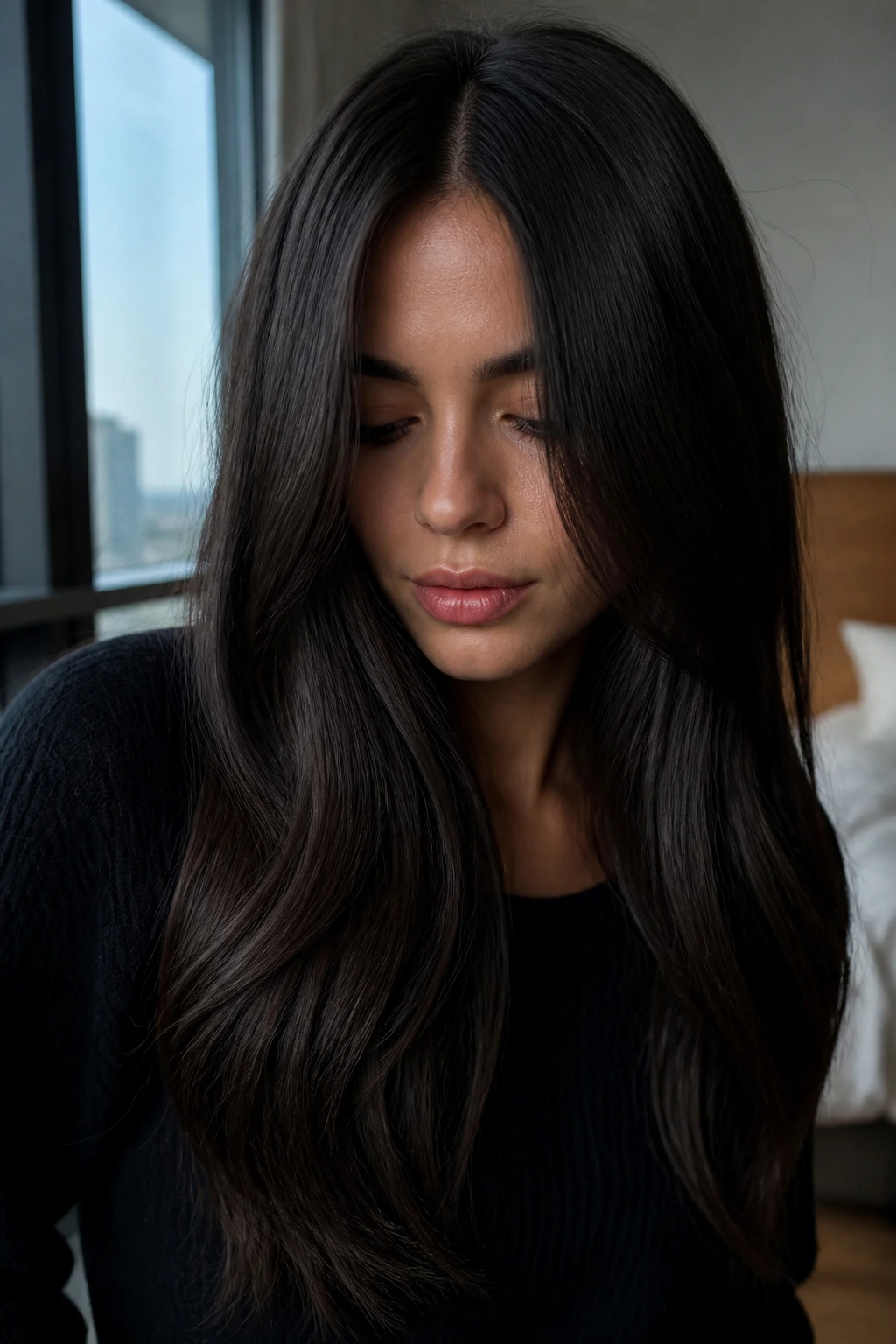
Dark ash brunette is the stealth shade in the group. It looks almost black indoors, then shows a cooler brown edge when you step into daylight. That little shift is the whole point. It keeps dark hair from reading flat.
For this shade, the goal is not brightness. It’s tone. A blue-based brunette glaze on a level 3 to 4 base can neutralize red undertones and give the hair a cooler, glassier look. Add lowlights if the hair has been lightened before, because those deeper pieces give the finish more structure.
This one is easy to live with. Roots grow in softly, and because the shade stays dark, you don’t need a heavy touch-up schedule. I’d still use a color-safe shampoo and a light serum on the ends, because dark ash can look dry if the cuticle gets rough.
If you like a sleek side part and a tucked-behind-the-ear finish, this color delivers. If you like big curls, it can work there too, though the cool tone shows best when the shape is smooth.
10. Mushroom Beige Blonde
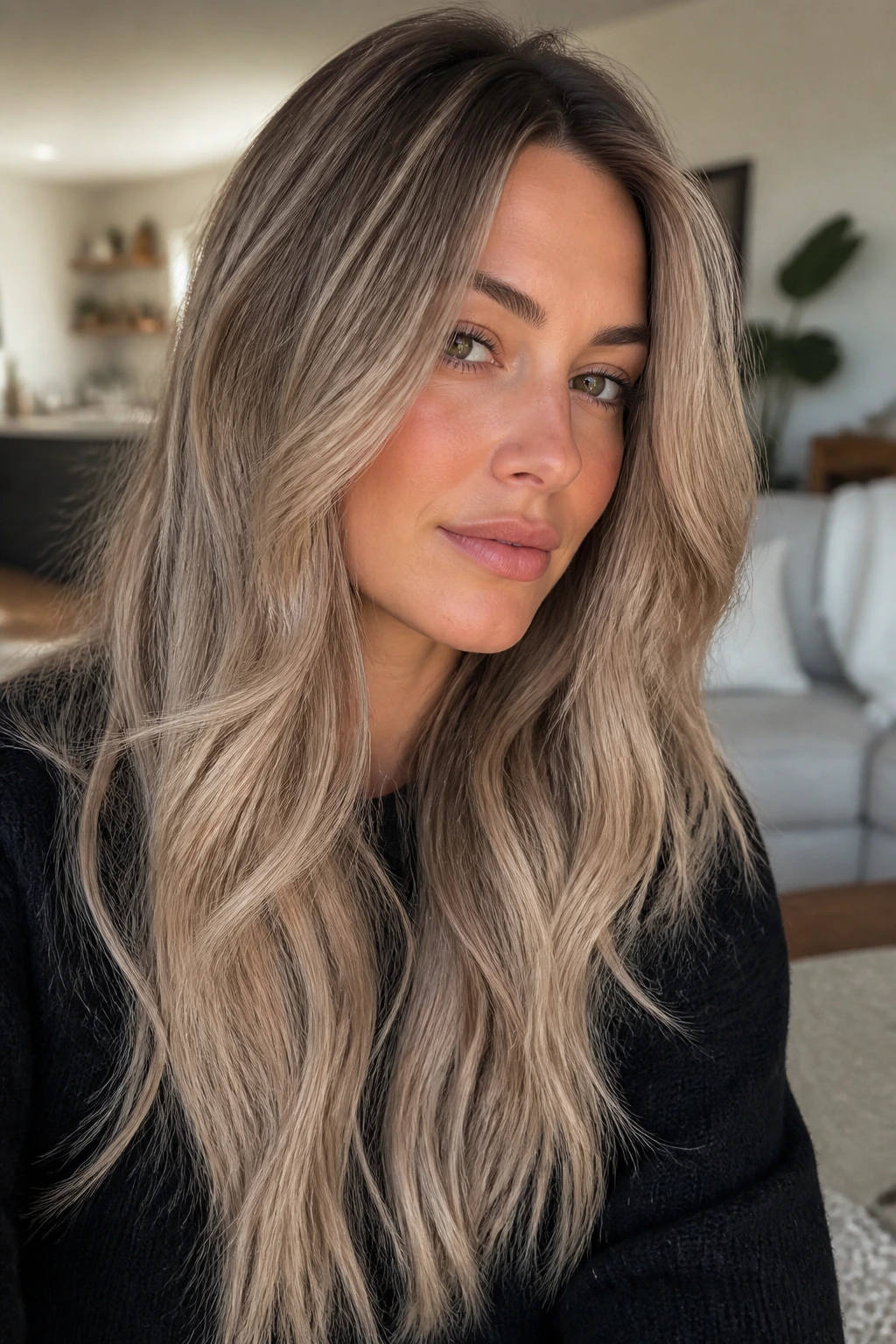
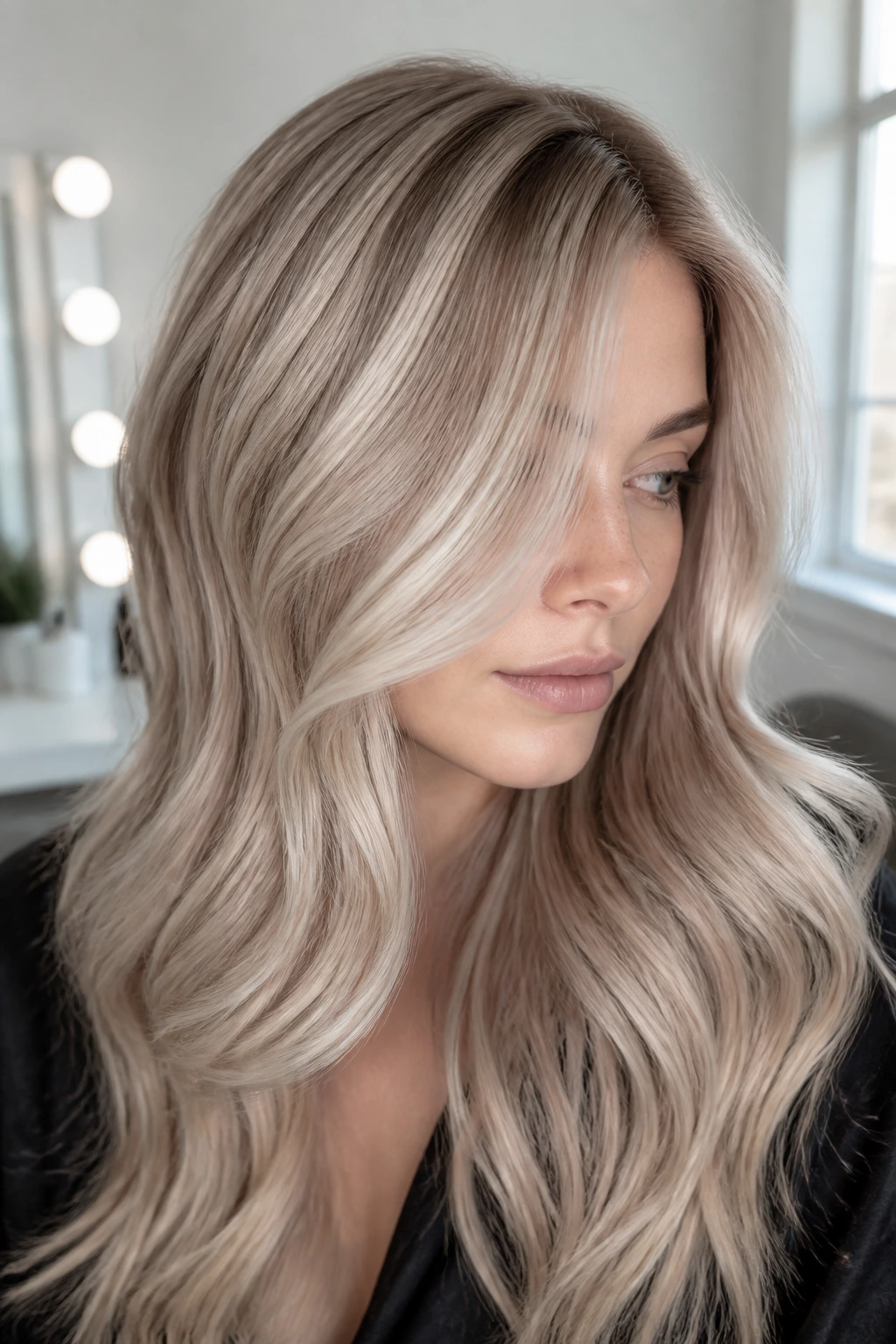
Mushroom beige blonde is what happens when blonde takes a breath. It keeps the lightness, but the tone leans taupe and soft beige instead of pure icy white. That makes it easier to wear on longer hair and less punishing if your base isn’t a clean level 9.
Unlike platinum, mushroom beige leaves a little shadow in the root and a little warmth under the ash. That sounds contradictory, and it is — in the useful way. The shade feels dimensional because the cool pigments sit on top of a warmer foundation instead of replacing it.
A Few Things That Matter
- Ask for babylights around the face and finer weaves through the crown.
- Keep the root shadow to about 1 inch.
- Tone the mids and ends separately if the hair is porous.
- Beige ash looks best with soft waves or a brushed-out curl.
If platinum makes your hairline feel severe, this is the softer door in.
11. Charcoal Money Piece
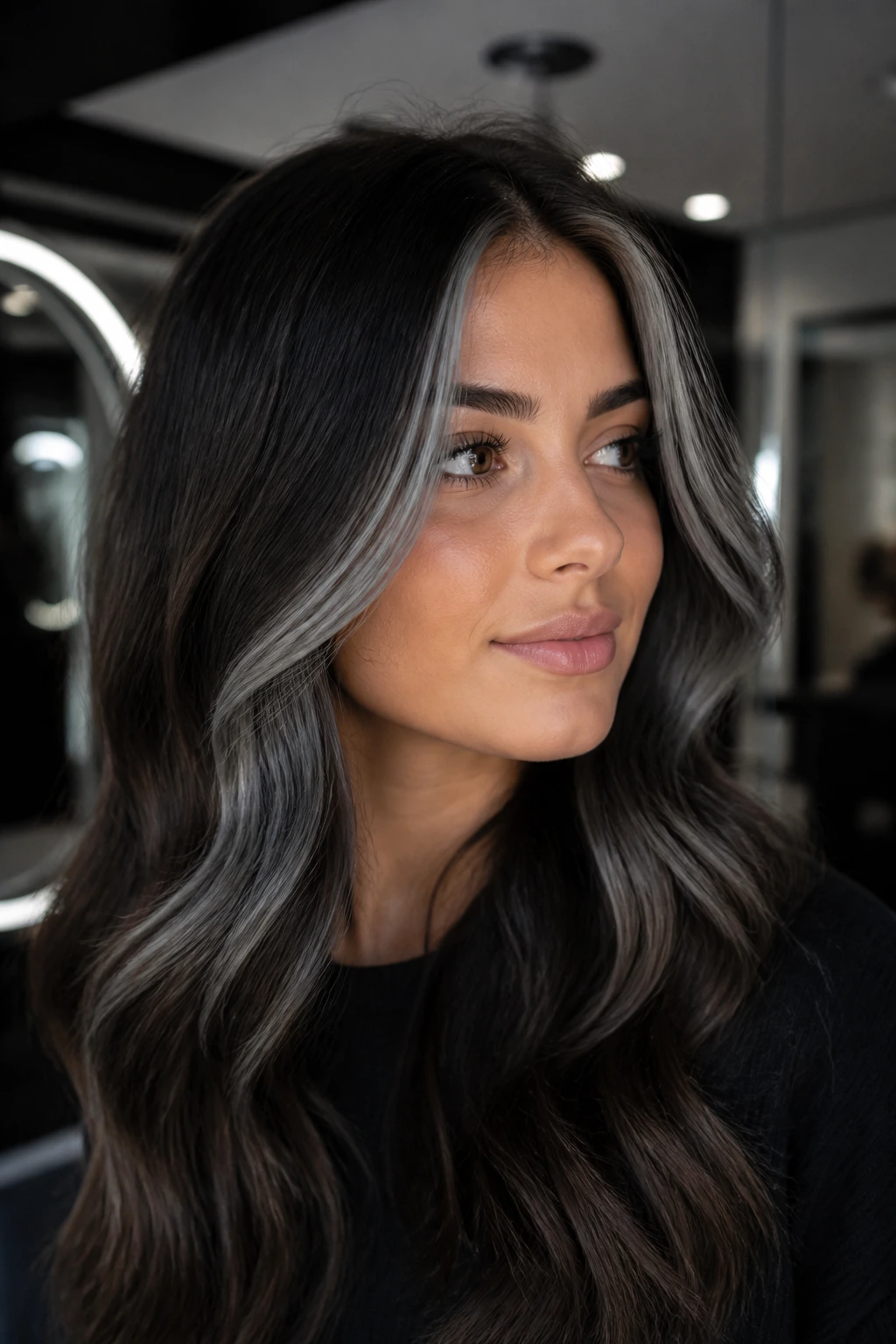
If you only want a small change, let the front pieces do the work. A charcoal money piece frames the face with cool contrast, usually 2 to 4 sections at the hairline, while the rest of the hair stays darker and calmer. It’s one of the fastest ways to make ash color look intentional without repainting the whole head.
The best version is not a flat gray stripe. It’s a charcoal ribbon that starts cooler near the root, then softens toward the ends. On a brunette base, that contrast can sharpen a haircut the way liner sharpens a face. On a blonde base, it adds edge.
What To Ask For
- Fine foils or painted pieces at the front hairline.
- A cool graphite or smoky ash toner.
- A depth level that matches the rest of the hair, so the contrast doesn’t look disconnected.
Best when you want impact with low commitment. It grows out faster than a full ash color, but it gives you a clear mood shift in one appointment.
12. Dusty Rose Ash
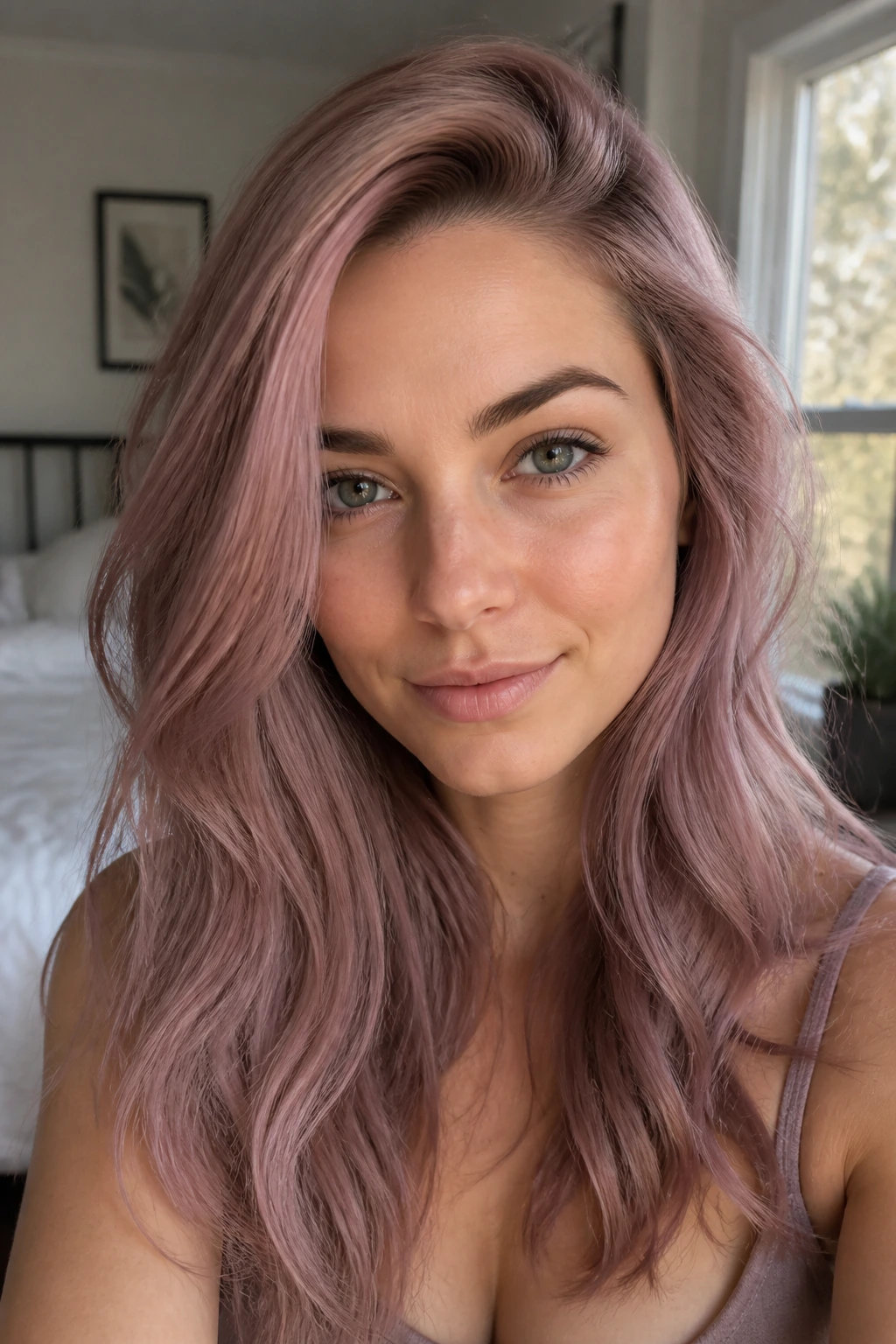
Can pink feel cool instead of sweet? Absolutely, if the rose is muted with gray. Dusty rose ash has enough blush to be noticeable, but the ash veil keeps it from turning candy pink or peach. That makes it one of the more wearable fashion shades in the cool family.
This shade needs a pale blonde canvas. If there’s still yellow in the hair, the rose can turn coral fast. I’d rather see a slightly softer rose on a clean base than a loud pink fighting brass. The cooler the starting level, the cleaner the result.
How to Ask for It
Use words like smoky rose, dusty mauve, or rose ash. Skip anything that sounds neon. On porous hair, the color can grab deeper than you expect, so the stylist may dilute the formula on the ends and leave the roots slightly stronger for balance.
This one looks especially good in loose waves or a brushed-out braid. The texture lets the rose and gray shift instead of sitting like a single flat wash.
13. Lavender Ash Tint
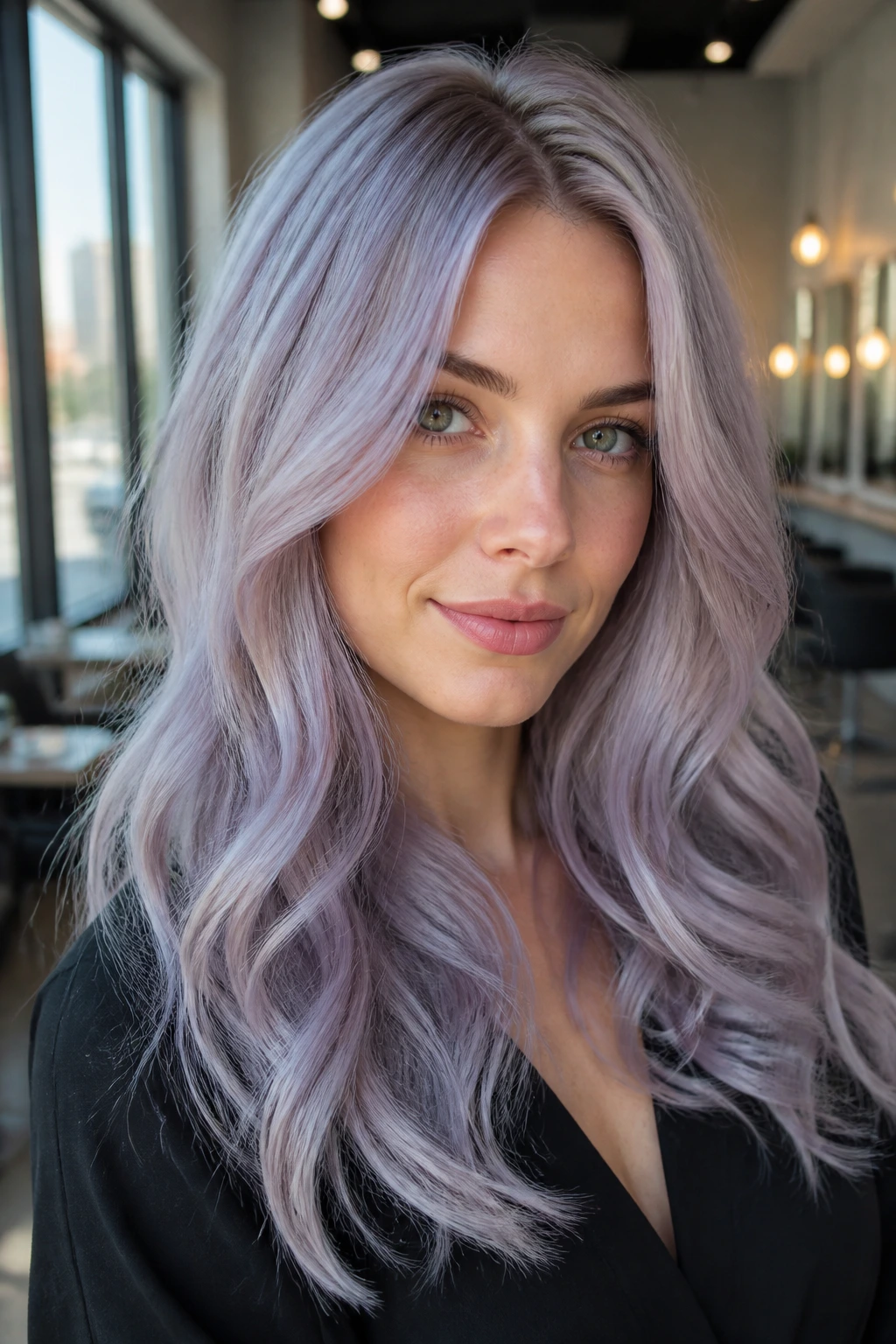
Lavender ash tint has the same problem and the same charm as most pale fashion shades: it only looks good if the base is clean. On a pale blonde or silver-silver canvas, the lavender shows up as a smoky lilac haze. On anything warmer, it can go beige-purple in a hurry.
The reason I like this shade is that it does not scream. It hovers. There’s a softness to it that feels almost powdered, and when the toner fades, it usually slides into a silver veil rather than dropping out all at once.
What Makes It Work
A very light base is nonnegotiable. A gloss or semi-permanent tint with violet and gray pigment gives the best result, and the processing time is usually short — often 10 to 20 minutes, depending on porosity and the strength of the formula. Porous ends need a thinner application, not more time.
A blunt bob or a tidy lob shows the tint best. Long layers can wear it too, but the tone gets a little lost if the hair has too much texture.
14. Denim Gray Balayage
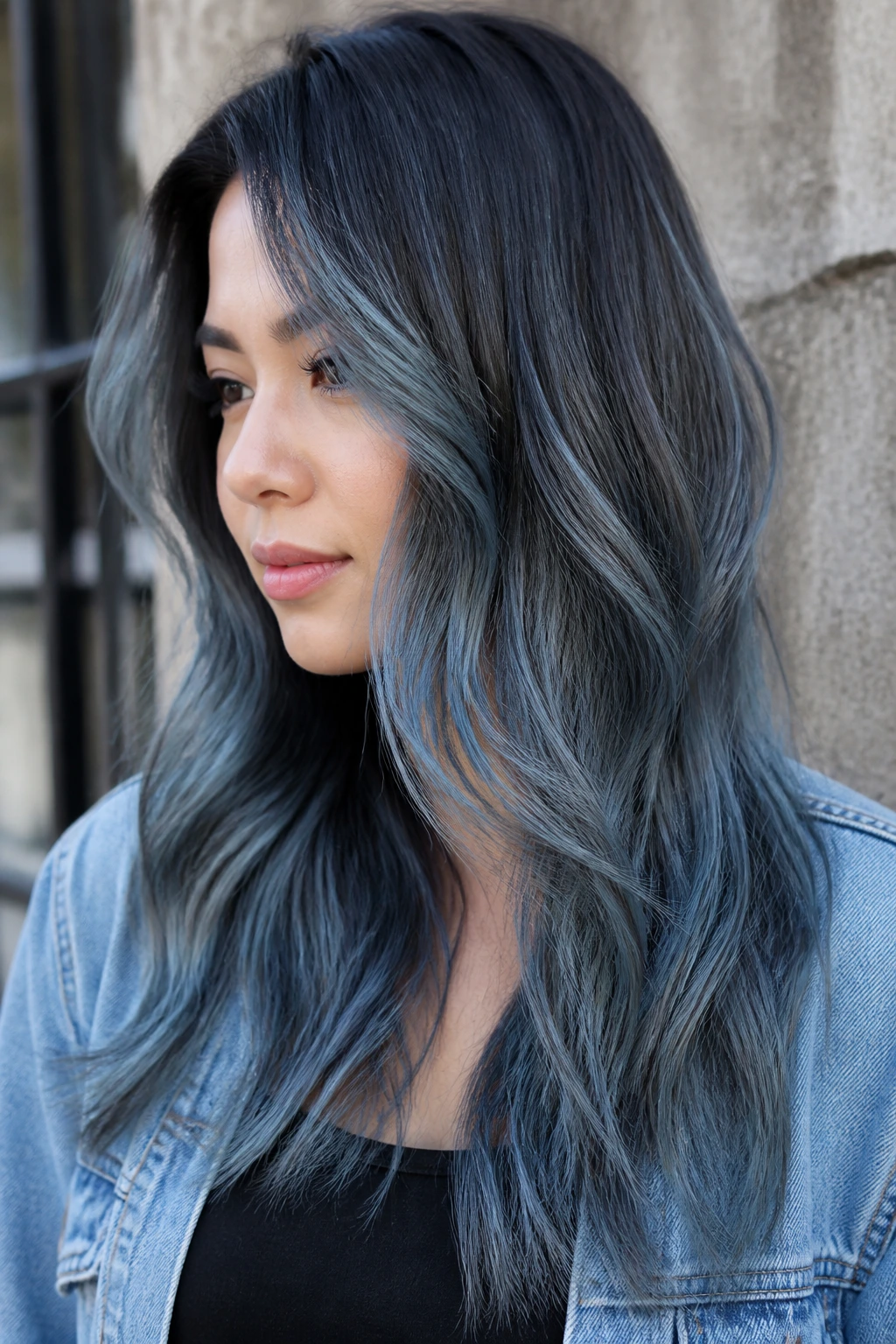
Denim gray balayage is blue-gray with a little grit in it. It’s cooler than mushroom, darker than silver, and less precious than platinum. Think of it as ash with a denim jacket on — lived-in, a little worn at the edges, and better because of it.
The hand-painted ribbons should sit through the mids and ends, with some darker depth left underneath. That keeps the blue-gray from turning cartoonish. On a dark blonde or light brunette base, the result can be striking without looking like costume color.
You want the blue to be subtle, not turquoise. If the pigment leans too bright, the whole thing stops being ash and starts being fashion blue. The sweet spot is a smoky blue-gray that appears colder under daylight and softer at night.
This looks especially good with textured waves and a little root lift. Flat-ironed hair can make it read sharper, which is fine if that’s the mood you want.
15. Steel Blue Black
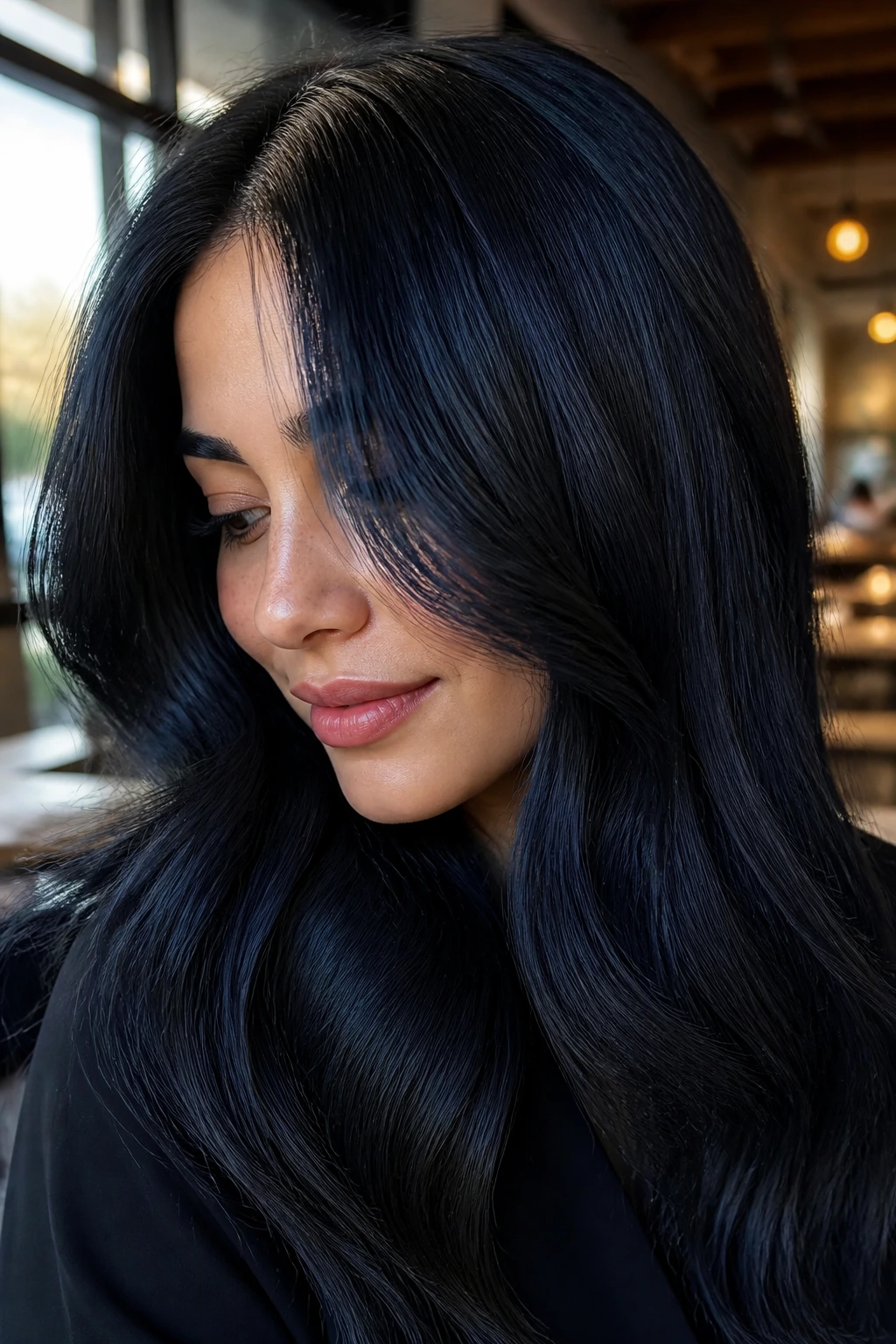
Steel blue black is not just black hair with a filter on it. The blue sheen is what gives it life. In low light it reads deep and dark, but under daylight it catches a cold metallic note that keeps the color from feeling one-dimensional.
The easiest way to get this effect is on naturally dark hair or on a base that has been darkened with a blue-black gloss. If you start from a lighter level, the undertone matters a lot; too much blue and it can look inky, too little and you lose the steel finish.
Who Should Try It
This shade suits anyone who wants maximum depth with a cool edge and very little day-to-day upkeep. The roots can grow for a while before they look obvious, and the color itself doesn’t need constant toning the way blonde does.
A shine serum and a clean center part make the most of it. If the cut is blunt or softly layered, the blue-black tone looks sharper still.
16. Frosted Pearl Highlights
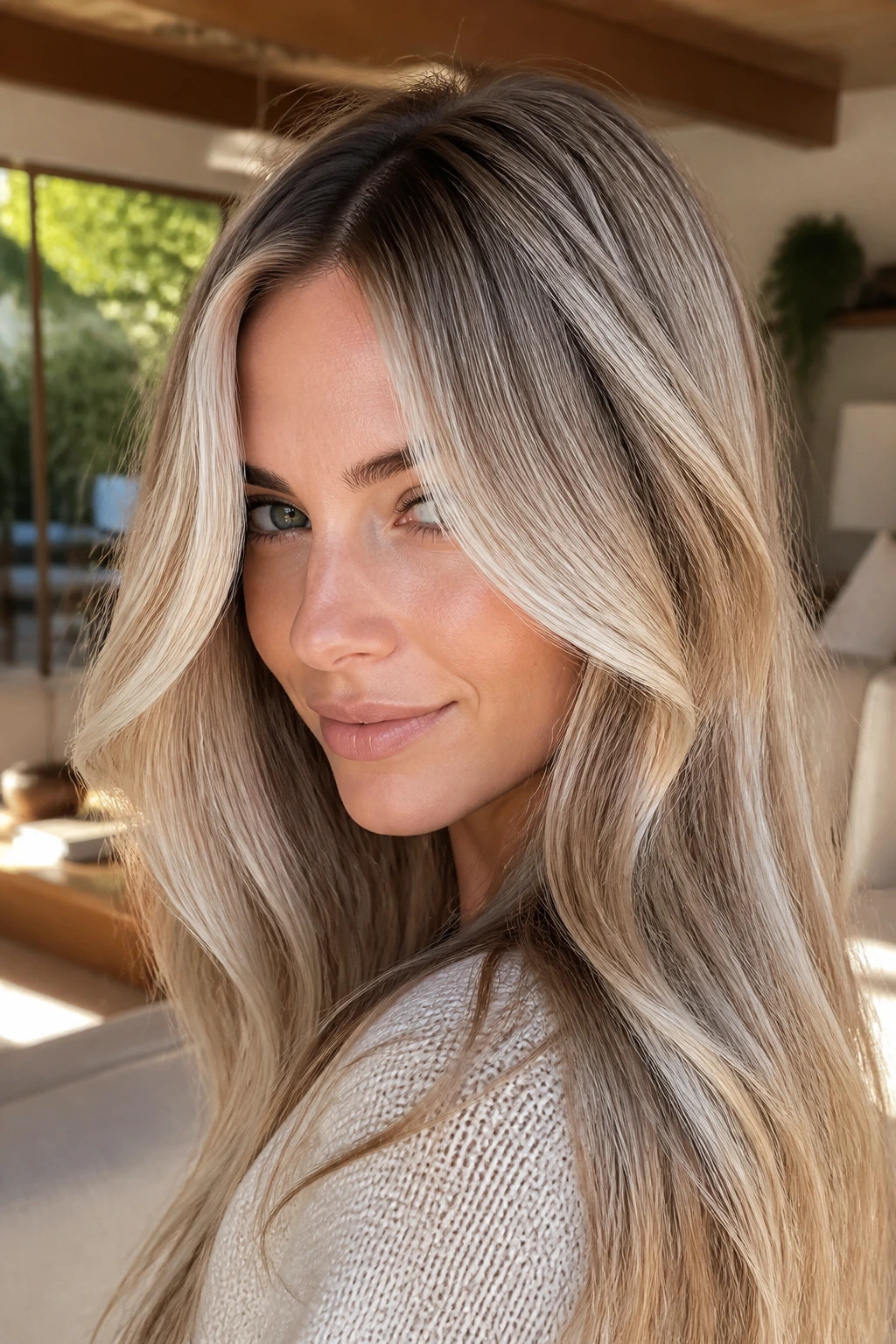
Frosted pearl highlights are tiny cool pieces that brighten the surface without turning the whole head white. They’re finer than ribbon highlights and softer than platinum, which makes them a good choice when you want brightness with restraint.
The placement matters more than the color name. Thin babylights around the face, a few through the crown, and a handful at the ends can change the whole look. The pearl tone itself should sit in that clean beige-violet zone, not stark silver and not warm champagne.
Key Details
- Best on blondes and light brunettes that can lift cleanly.
- Highlights should be fine enough to blur into the base.
- A pearl glaze keeps them soft.
- Great on layered cuts where light can move through the hair.
This is one of those looks that looks expensive when it is slightly imperfect. If every highlight is identical, the color goes rigid. If the placement has a little variation, the pearl tone comes alive.
17. Mushroom Ombré
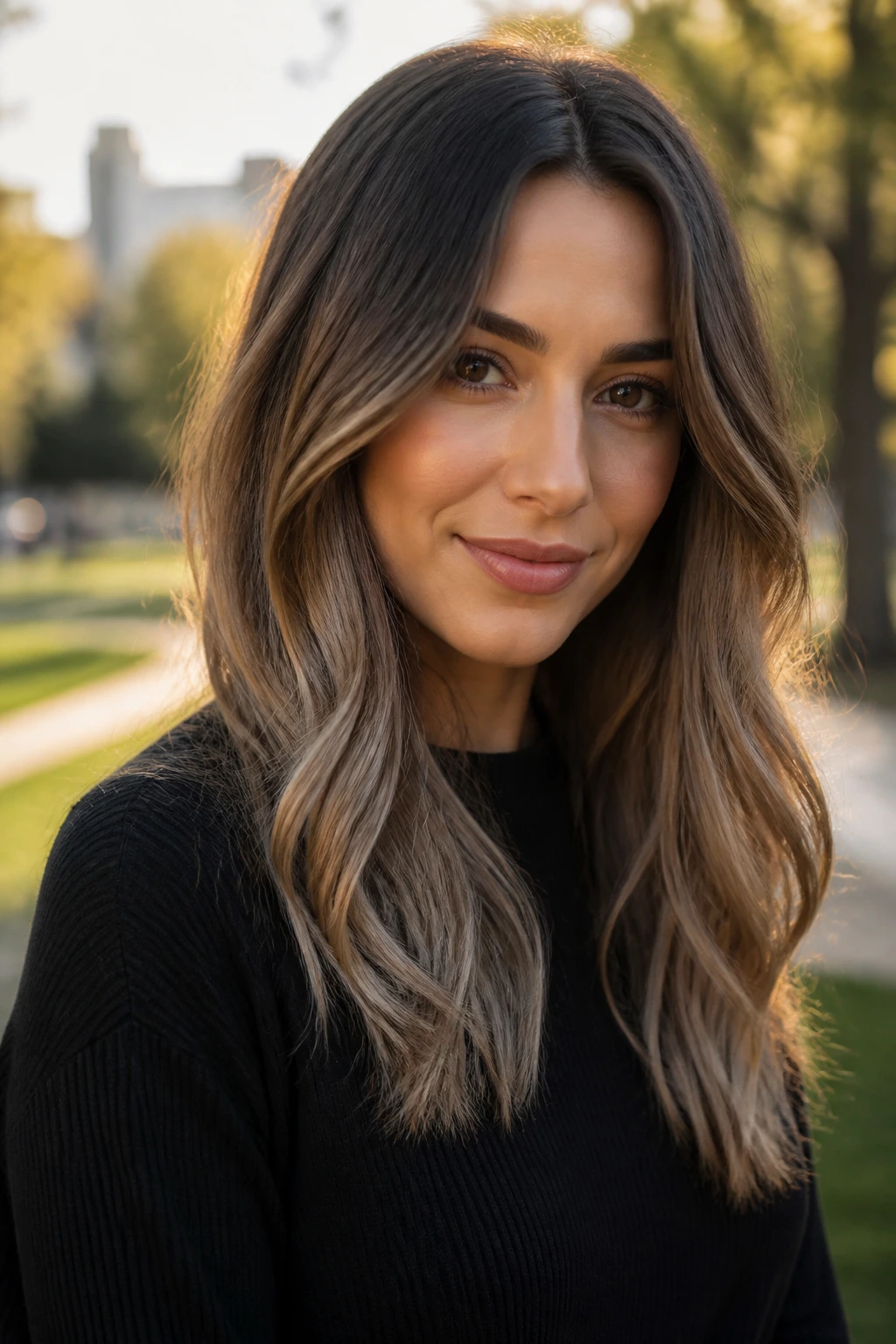
Mushroom ombré takes the root shadow idea and stretches it farther down the hair. Instead of a harsh line between dark and light, the color melts from cool brunette into taupe, then into smoky beige at the ends. It’s a slow fade, and that’s why it grows out so well.
Compared with traditional ombré, this version stays inside the ash family the whole way down. No caramel. No orange. Just a controlled slide from deeper brown into cooler lightness. On wavy hair, the transition can look almost natural, which is the nicest trick a color can pull.
How to Ask for It
Ask for a mushroom root at the crown, hand-painted mids, and beige-ash ends. If your hair is porous, the ends may need a diluted formula so they don’t turn too gray. The fade should feel soft from top to bottom, not like a dip-dye.
This works well if you want fewer salon visits but still want the lighter pieces to feel deliberate.
18. Smoky Beige Lob
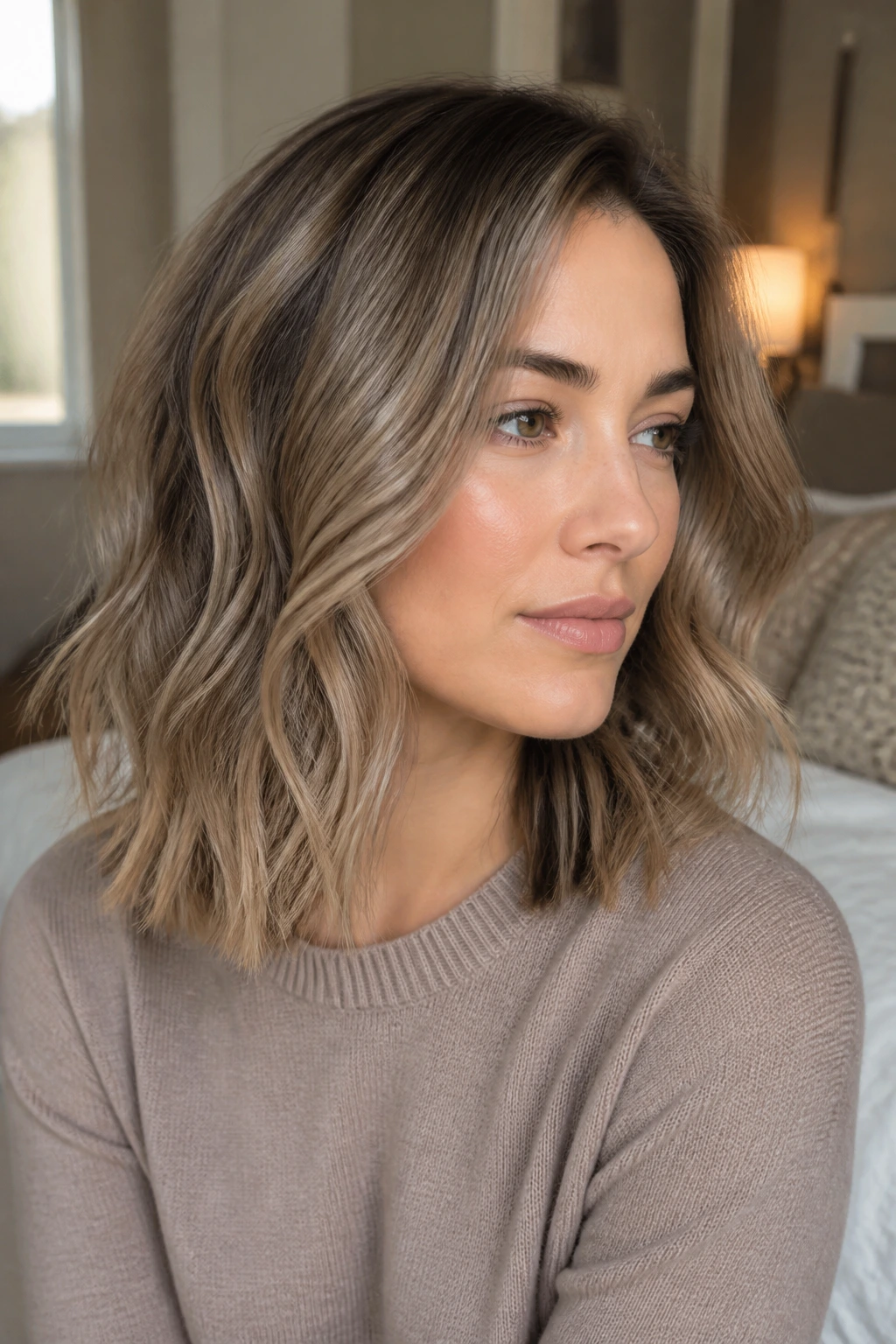
Smoky beige lob sits right in the middle of easy and polished. The lob gives you enough length for movement, and the smoky beige tone keeps the blonde from tipping too warm or too icy. It’s one of the most wearable ash looks on the list.
What makes it different from straight beige blonde is the cooler shadow under the light pieces. The tone isn’t flat. It has enough smoke to hold up when the hair is air-dried, which is where a lot of beige shades fall apart.
I’d pair this with soft bends, not tight curls. The color wants space. If you’re straightening it, use a heat protectant and keep the iron around 300°F to 325°F so the ends don’t look toastier than the rest of the head.
This is the shade for people who want their hair to look clean, not loud.
19. Silver Pixie Crop
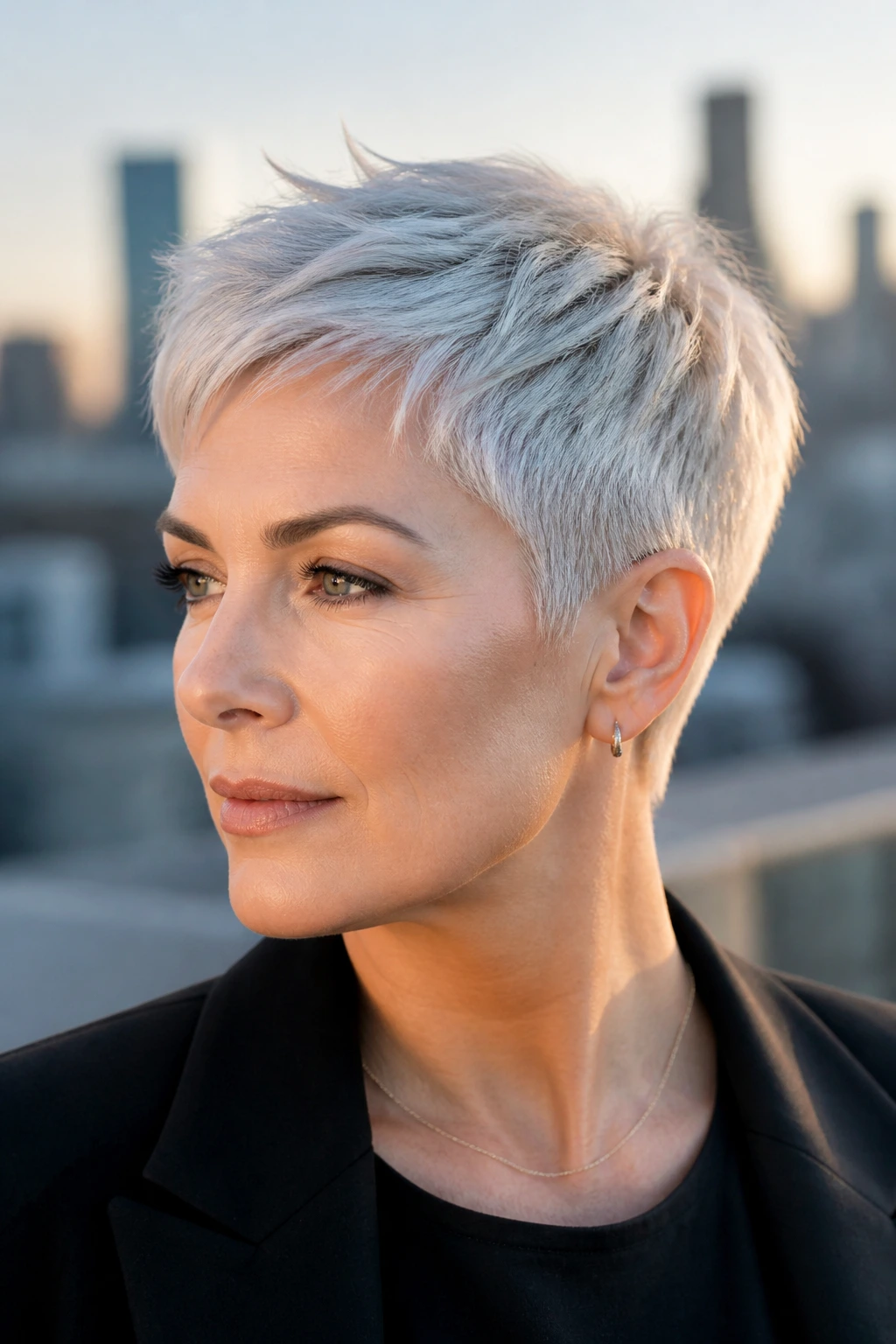
Short hair is where silver makes the most sense, because there’s less length for fade to hide in. A silver pixie crop looks crisp, sharp, and a little editorial, especially when the cut has texture through the top and clean edges around the ears.
The color itself should be lifted to a very pale blonde and then toned to a clear silver, not a dull gray. On a pixie, too much darkness in the formula can swallow the shape. You want the cut to show off the tone, and the tone to show off the cut.
Why It Works So Well
- Less hair means less product and faster toning.
- The short length makes regrowth look intentional for longer.
- A matte paste at the roots and a small amount of serum on the top layer give it shape.
This one is a commitment only in the salon chair. Day to day, it can be easier than long ash blonde because the finish doesn’t need much styling.
20. Ink Black with Ashy Ends
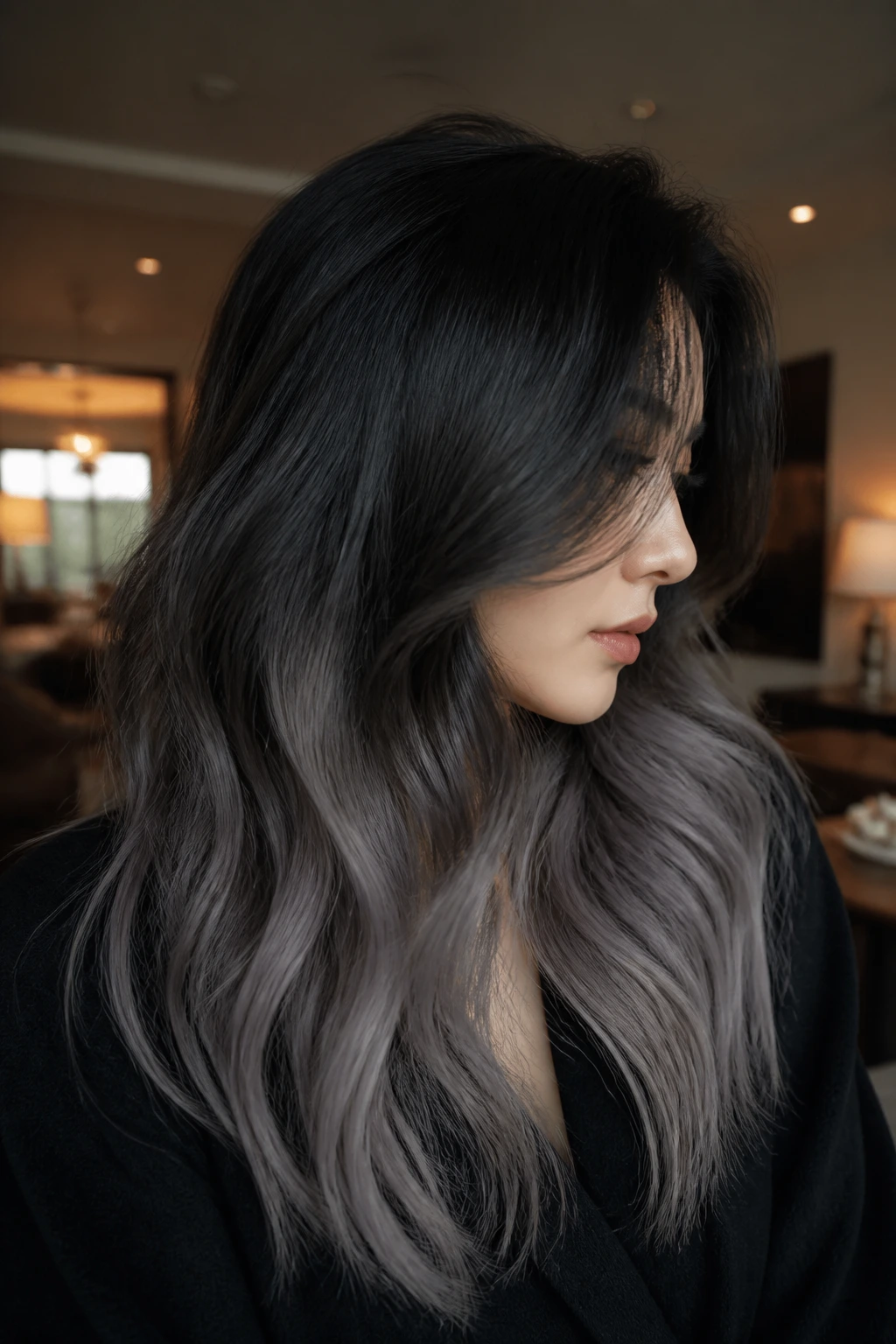
Ink black with ashy ends is for people who like contrast and don’t mind a little drama. The roots stay deep, almost liquid black, while the midlengths and ends drift into graphite or smoky charcoal. It’s not ombré in the old sense. It’s more controlled than that.
The cut matters here. Long layers or a slightly tapered shape help the ashy ends show. If the hair is one blunt length, the fade can look heavier than intended. The black root gives you density, while the ash ends keep the shape from feeling too severe.
A Few Ground Rules
- Keep the transition soft over 3 to 5 inches.
- Use a cool black gloss at the roots.
- Let the ends sit in graphite, not washed-out gray.
- Finish with a light oil on the last inch only.
If you want strong contrast without stepping into bright color, this is one of the cleanest ways to do it.
Why Ash Tones Need a Different Formula
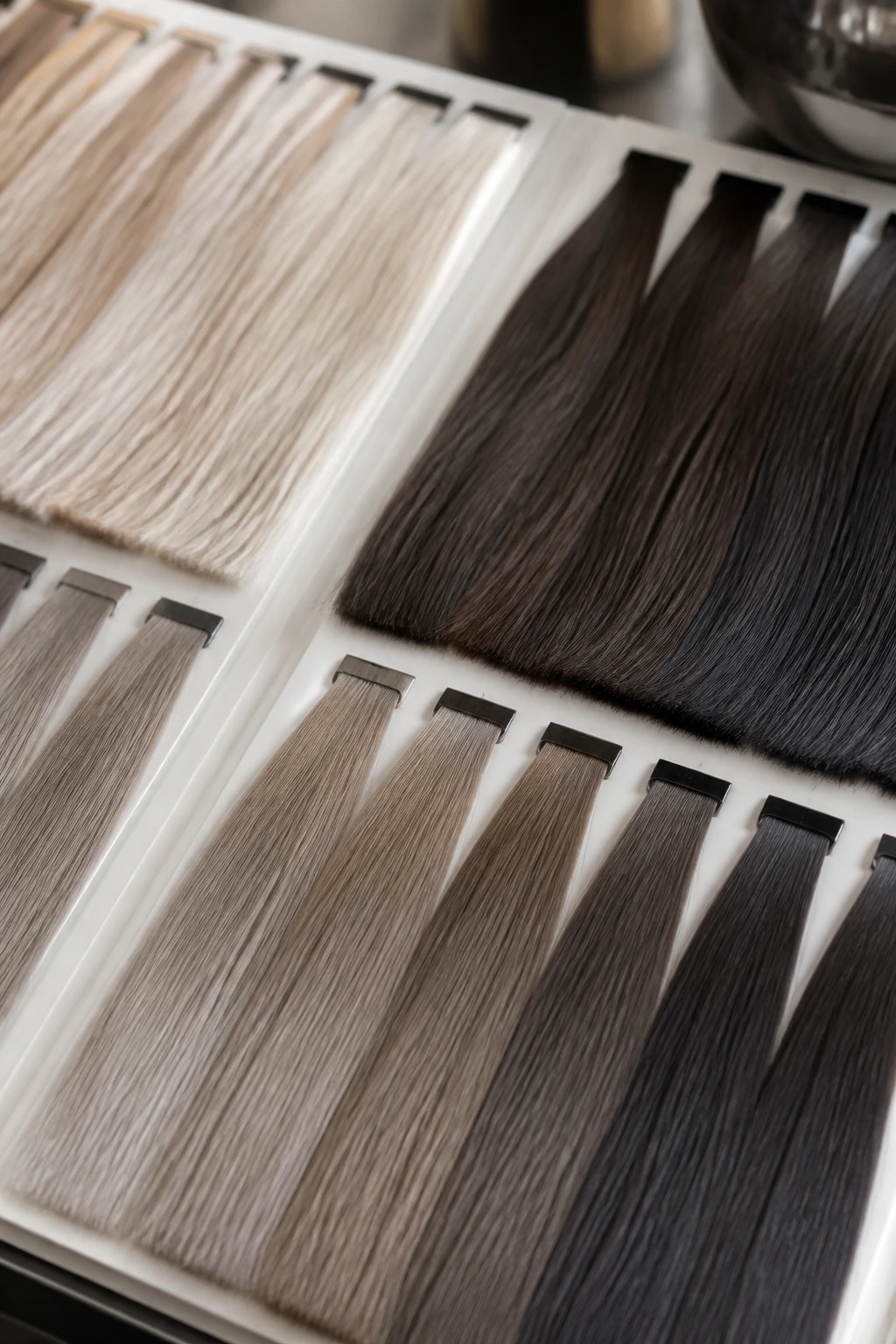
Ash hair looks simple from a distance. It isn’t. The color wheel is doing most of the heavy lifting, and if you ignore that part, the result can slip into muddy brown, green-gray, or flat beige in a single shampoo cycle.
Blue-based pigments fight orange. Violet handles yellow. Green can cancel red, which is useful on some brunette bases, but too much green on porous hair can turn the whole thing swampy. That’s why ash blonde and ash brunette need different formulas. One is not the other with less shampoo.
Lift Level Changes Everything
A level 7 brunette still holds a lot of orange warmth. A level 9 blonde carries more yellow than orange. The toner you choose has to match that underlying warmth, or the ash has nothing clean to sit on. This is why a pale ash blonde needs prelightening while a smoky brunette often needs nothing more than a gloss.
Porosity Can Hijack the Result
Porous ends suck in pigment fast. That’s useful for fast toning and dangerous for the same reason. If the mids and ends are more open than the roots, apply toner there last or dilute the formula a bit. Otherwise the ends can go too smoky, too green, or too dark, and then the root-to-end balance falls apart.
Essential Tools for Salon and At-Home Color
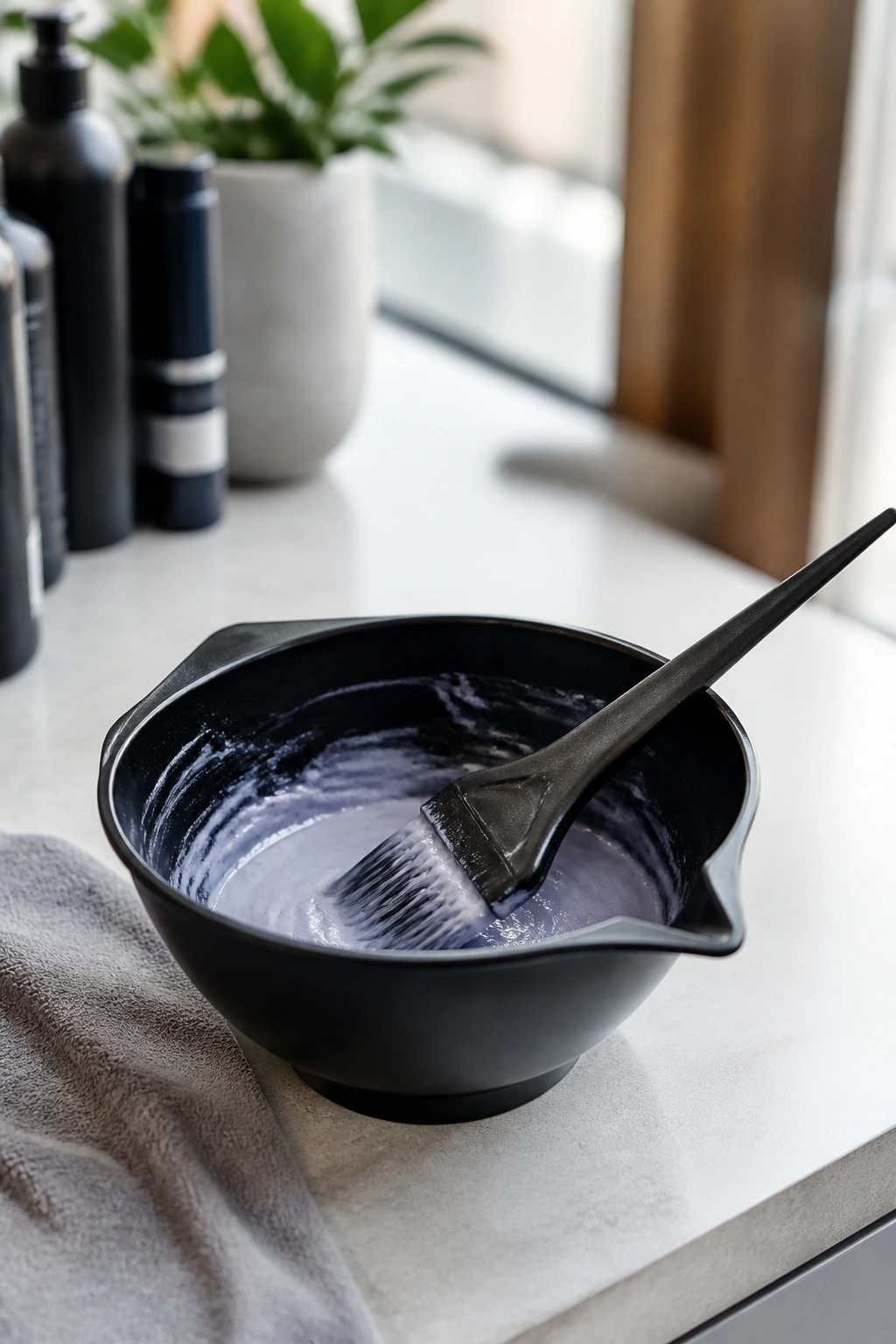
- Tint bowl and brush: Gives you control when mixing toner, gloss, or root shadow.
- Nitrile gloves: Ash pigments stain hands fast, and gloves keep cleanup sane.
- Sectioning clips: Four to six sturdy clips make balayage, foiling, and toning cleaner.
- Tail comb: Useful for precise partings and fine weaving at the front hairline.
- Foils or balayage board: Handy when you want cooler highlights or isolated lightening.
- Measuring cup or scale: Helps keep color-to-developer ratios exact.
- Color-safe shampoo: A gentle cleanser matters more when ash tones are fragile.
- Purple shampoo: Best for blonde ash shades that drift yellow.
- Blue shampoo: Better for brunettes that want to shut down orange.
- Deep-conditioning mask: Bleached ash hair needs moisture or it goes dull fast.
- Heat protectant: Ash color shows heat damage quickly because rough cuticle kills shine.
- Shower filter: Optional, but useful if hard water leaves minerals on pale hair.
Smart Shopping for Ash Dyes, Toners, and Glosses
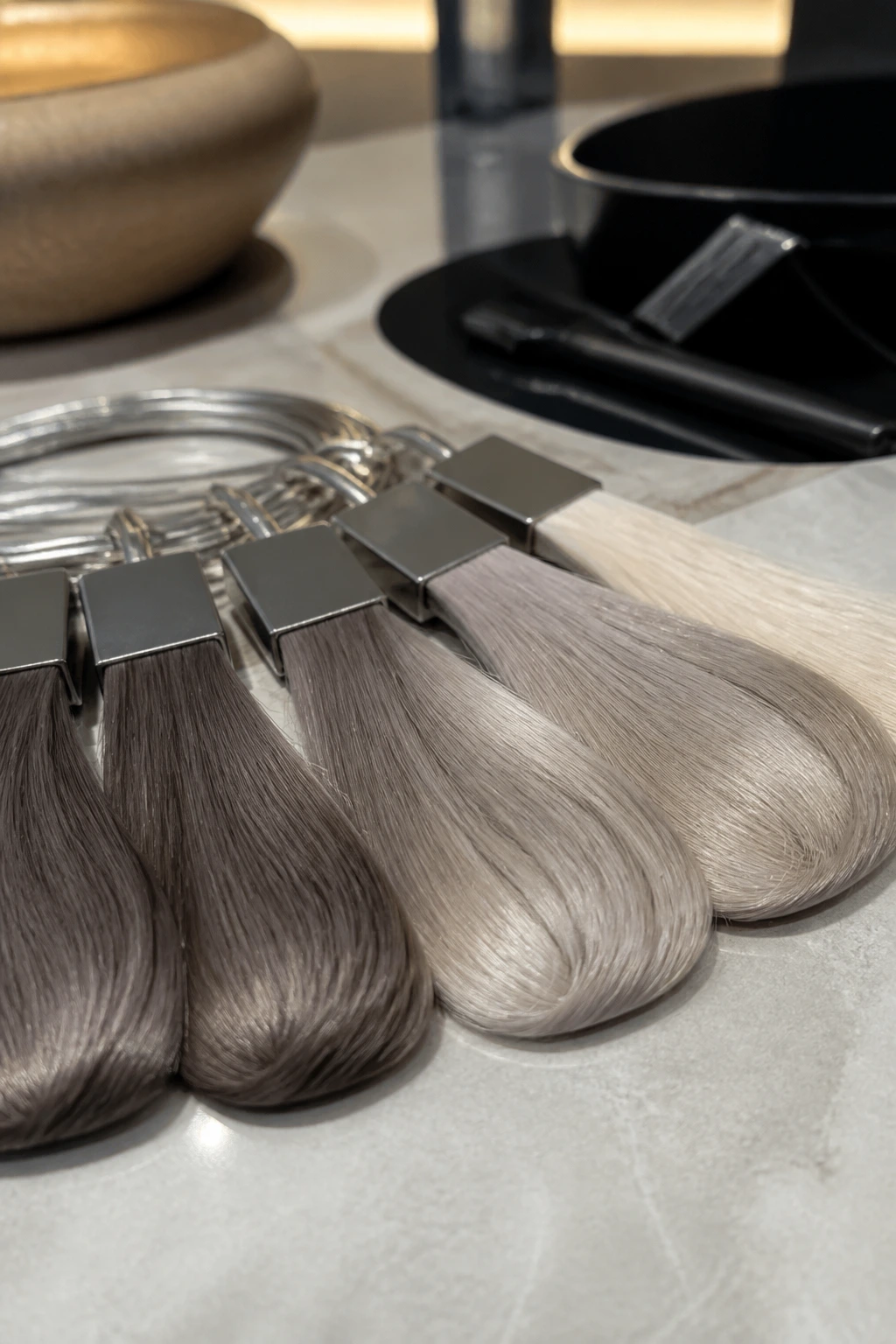
Look at the level first, not the marketing language. A box that says “cool blonde” can still read gold once you open it. If the swatch card shows beige or champagne, it is not the same thing as ash, and the difference matters most on blondes that pick up warmth fast.
For brunettes, search for words like ash brown, cool mocha, smoky brunette, mushroom, graphite, or blue-black. For blondes, look for pearl, silver, violet, icy beige, and smoke. If the label sounds warm — honey, caramel, golden, chestnut-red — skip it unless you want warmth on purpose.
Porosity should guide the formula. Stronger developer is not a better answer. On hair that’s already lightened, a demi-permanent gloss with a gentler processing window often gives a cleaner ash finish than a permanent dye that overopens the cuticle. That’s one of those boring salon truths that saves a lot of repair work later.
And strand test. Always. A 15-minute test on a hidden section can tell you if the hair grabs too gray, too green, or too dark before the whole head is at risk.
How to Wear These Shades So the Tone Reads Intentional
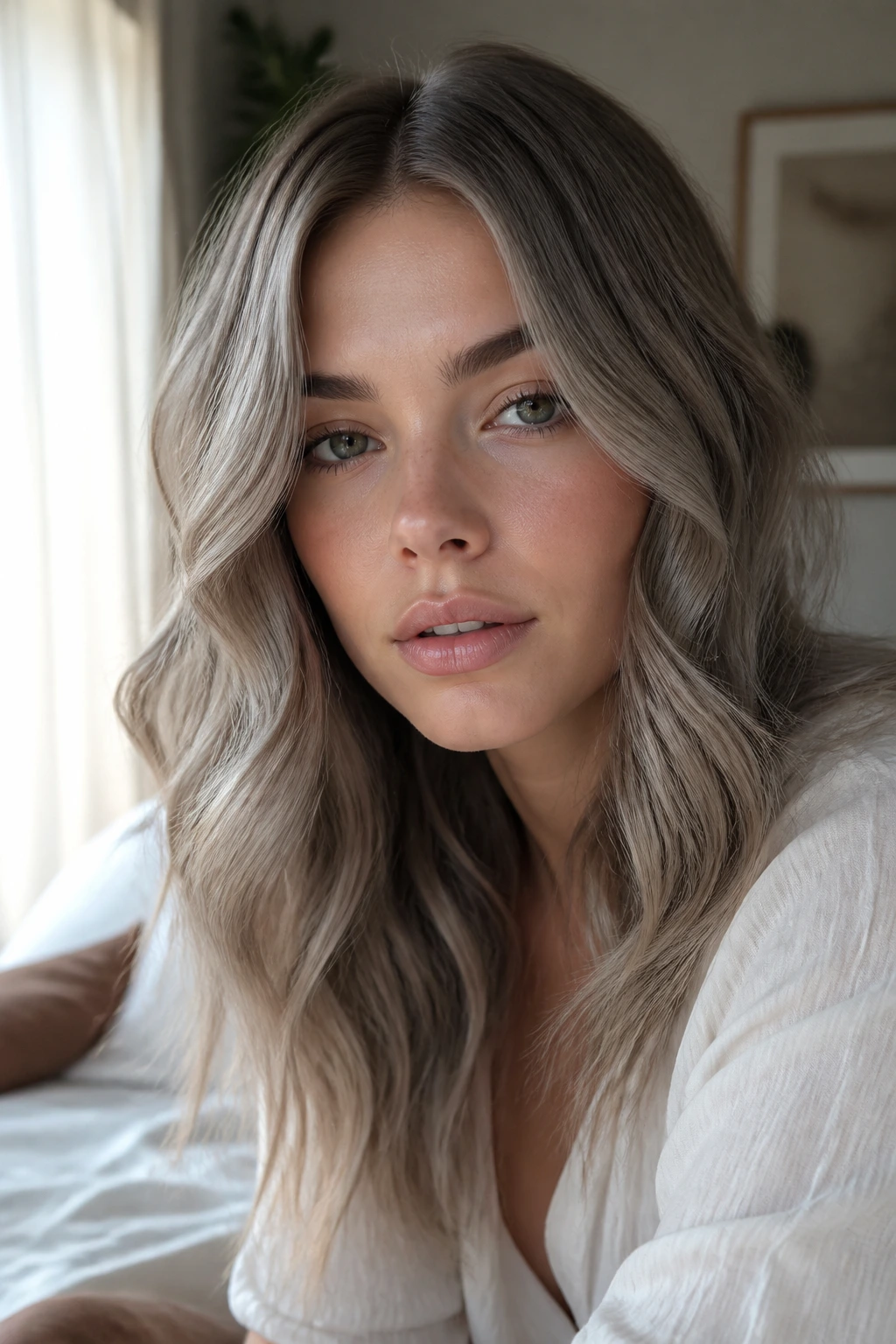
Parting: Center parts show symmetry and make silver, slate, and pearl tones look crisp. Deep side parts add movement, which helps mushroom brown and smoky beige balayage feel softer.
Texture: Loose waves do the most work for ashy balayage because the ribbons catch light at different angles. Sleek blowouts are better for charcoal, steel blue black, and short slate cuts, where the surface shine is part of the point.
Makeup and Clothes: Cool blush, berry lips, charcoal knits, navy, denim, and silver jewelry play nicely with ash hair. Warm orange lipstick can fight a smoky brunette in a way people often notice before they know why.
Lighting: Neutral daylight shows ash honestly. Warm bulbs can make the tone look flatter and browner, so if you’re judging a fresh color, check it near a window before you panic in a yellow bathroom.
Extra Shine, Depth, and Tone Refresh Ideas
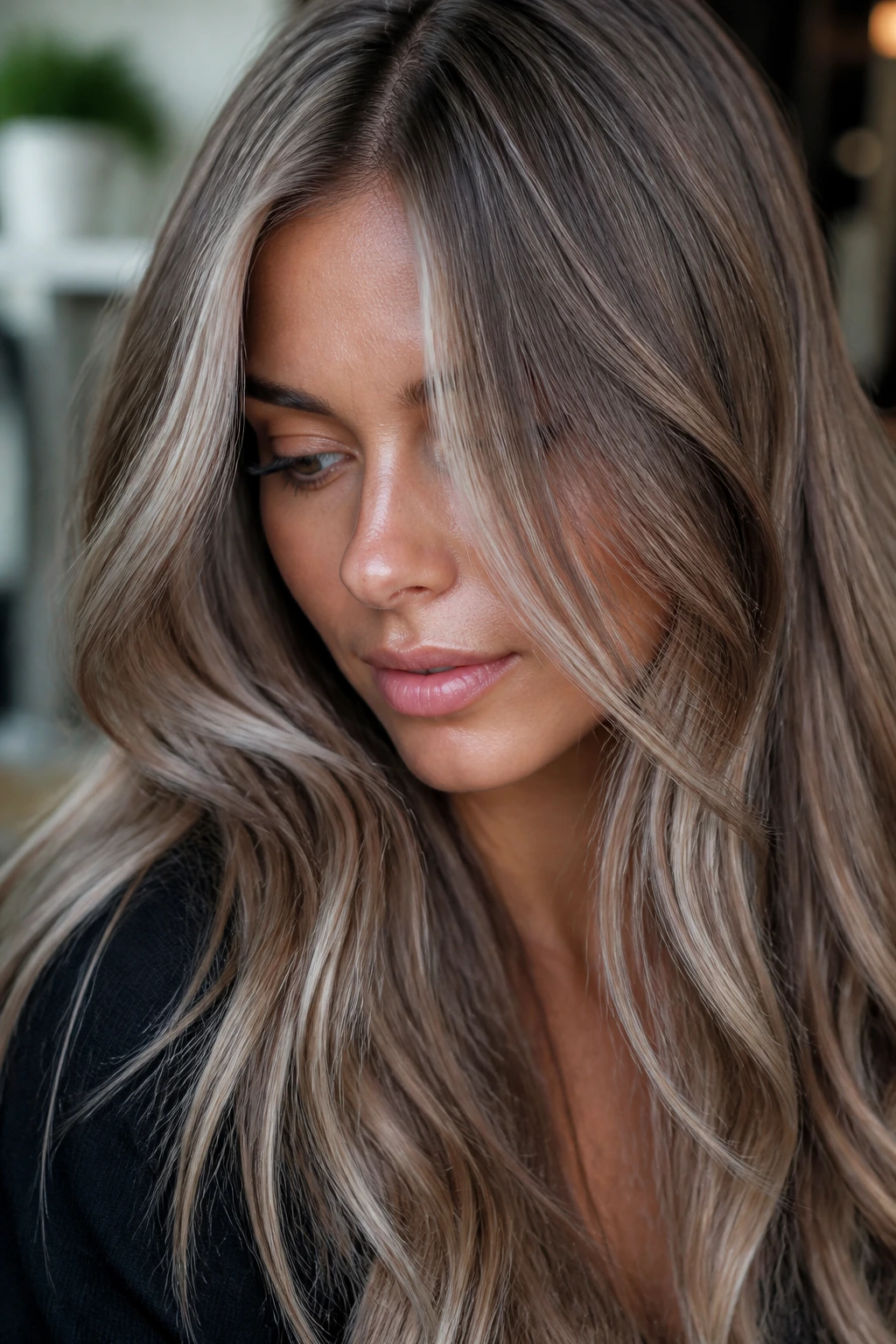
Gloss Refresh: A clear or smoky gloss every 4 to 8 weeks keeps the surface reflective and helps ash tones stay clean. On blondes, the gloss can be violet-based; on brunettes, a blue or blue-violet glaze usually makes more sense.
Color Placement: If all-over ash feels too heavy, add face-framing money pieces, a root shadow, or lowlights in one level deeper brown. That gives the color dimension without making the whole head look dark.
Styling Finish: Use a lightweight serum on the last 2 inches only. Ash hair shows product buildup fast, so piling oil on the roots turns silver into limp gray and brunette smoke into dull brown.
Make-It-Yours: Fine hair usually looks better with a lighter mushroom or beige ash because heavy pigment can flatten the cut. Coarse or curly hair can hold deeper slate, steel, or smoky brunette tones and still show movement.
Keeping the Cool Between Appointments
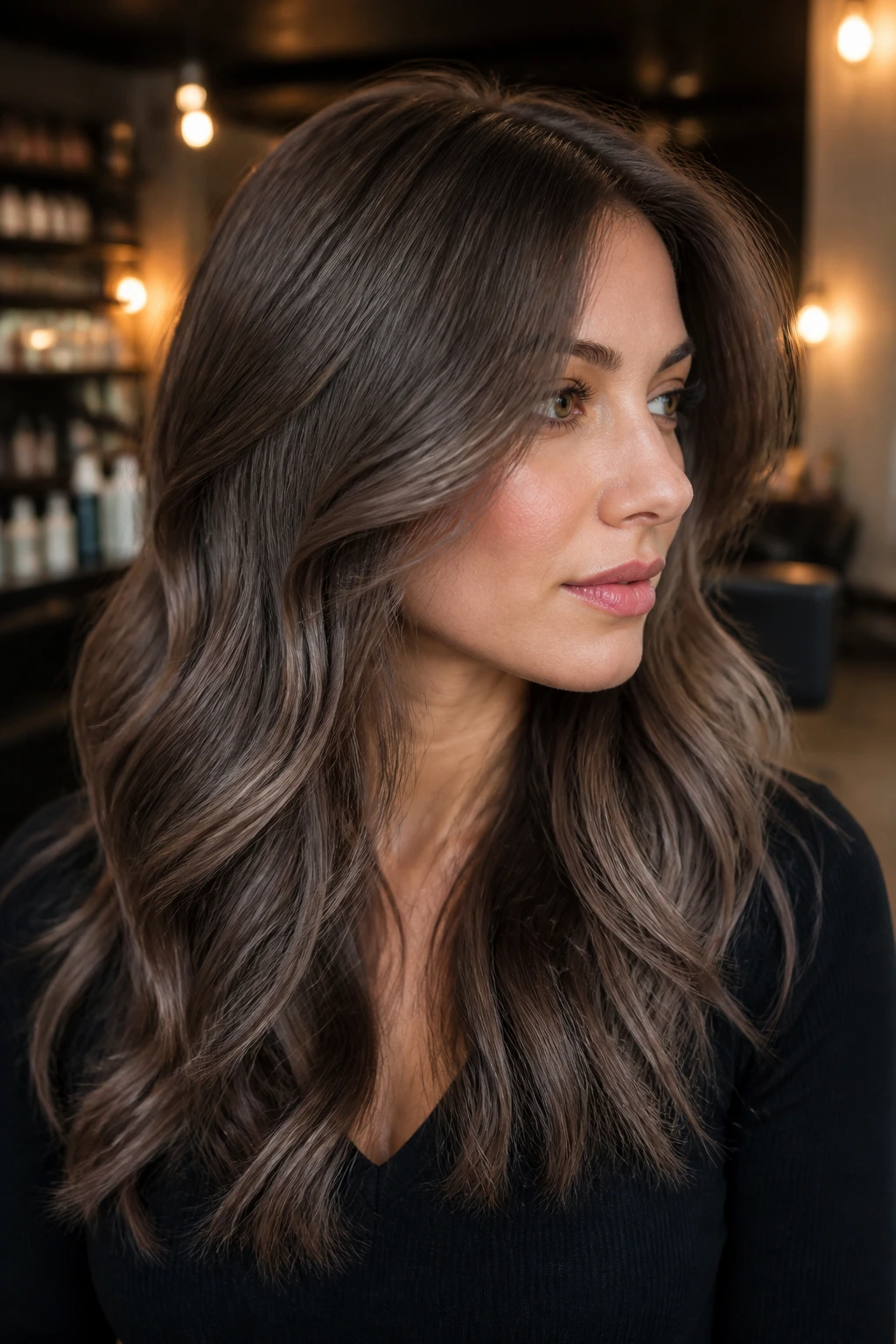
Ash hair fades faster than people expect because the cool pigments are smaller and the cuticle is always trying to let them go. That doesn’t mean the color is high-maintenance in a dramatic way. It means you need a rhythm.
Wait 48 to 72 hours before the first shampoo after permanent color if your stylist gives you the all-clear. After that, keep washing to 2 or 3 times a week if you can. Hot water and daily shampoo pull cool pigment out faster, and blondes show the loss before brunettes do.
Purple shampoo belongs with blonde ash shades, but not every wash. Once a week is usually enough unless brass is fighting hard. Blue shampoo makes more sense on brunette ash shades because it targets orange. Leave either one on for 1 to 3 minutes, not 10. Longer is not better. Longer is how pale ash hair gets powdery and weird.
Glosses and toners are the real reset button. Blondes often benefit from a refresh every 4 to 6 weeks. Brunettes can usually stretch to 6 to 8 weeks if the base is healthy. Root touch-ups depend on the look: a smoky brunette may hold for 8 to 10 weeks, while a silver pixie can need attention sooner because the new growth is obvious on short hair.
Heat is another thief. Keep flat irons and curling wands below 350°F when you can, use a heat protectant every time, and give the hair one slow pass instead of three fast ones. Ash looks best when the cuticle stays smooth.
Variations and Adaptations to Try
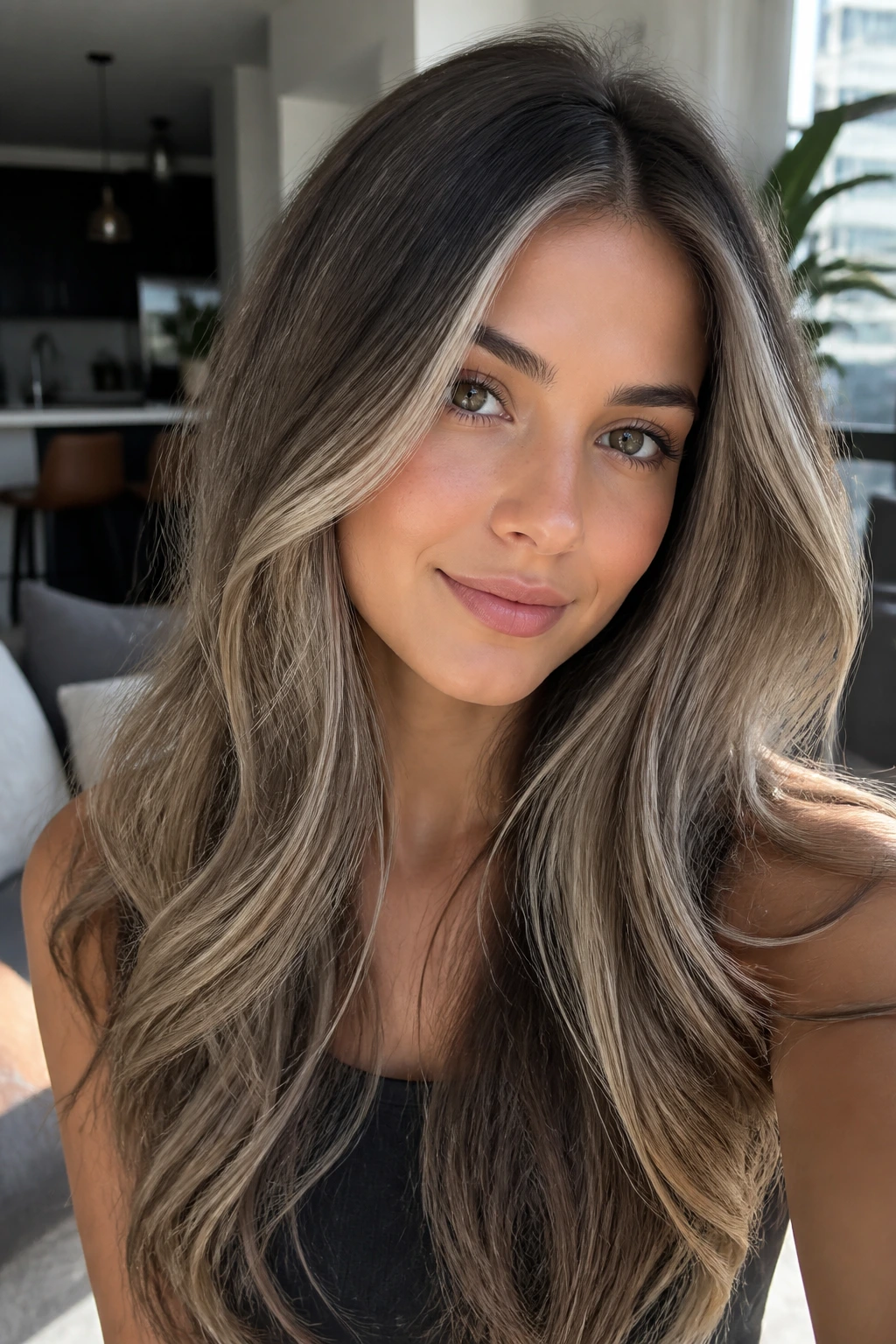
Soft Root Shadow: Leave 1 to 2 inches of natural depth at the roots, then melt the ash shade through the mids. It stretches the time between appointments and keeps blondes from looking overworked at the scalp.
High-Contrast Money Piece: Add a bright ash or charcoal frame around the face and leave the rest deeper. This gives a strong cool-tone hit without committing the whole head to lightening.
Gloss-Only Ash: If your hair already sits in the brunette or dark blonde range, skip bleach and use a cool demi gloss instead. It tones warmth down and adds shine without the damage that comes with lifting.
Smoky Fashion Tint: Pale blonde hair can wear dusty rose, lavender, or denim gray with a smoky ash base. The cooler the undertone, the cleaner the fashion color will look as it fades.
Low-Maintenance Mushroom Blend: Use balayage ribbons, not full saturation, then keep a taupe root shadow. This is the version for people who want ash color but don’t want a strict schedule.
Common Mistakes That Turn Ash Hair Flat or Muddy
- Lifting too little before toning: If orange or yellow is still loud under the color, the ash can turn muddy instead of cool. Fix it by lifting one more level or choosing a deeper smoky brunette instead of forcing silver.
- Overusing purple shampoo on blonde ash: The hair starts to look chalky, not cool. Switch to color-safe shampoo and use purple only once a week or when brass starts showing.
- Applying strong toner to porous ends first: The ends grab too much pigment and can go gray-green or too dark. Apply toner to the mids first, then the ends for the last few minutes, or dilute the formula there.
- Choosing a silver shade on a base that is still yellow: Silver sits on top of pale blonde, not gold. If the hair isn’t lifted cleanly, the result can look dull or khaki.
- Skipping moisture after lightening: Ash tones show dryness fast because rough hair scatters light. A weekly mask and a light leave-in keep the surface smooth enough for the color to stay crisp.
Frequently Asked Questions
Can ash hair color work on dark brown hair without bleach?
Yes, but only within a darker range. Cool chestnut, smoky brunette, and blue-black can all work on level 3 to 5 hair without bleaching, while silver, lavender, or pale ash blonde need lift first.
What’s the difference between ash, neutral, and beige hair color?
Ash leans cool and cancels warmth. Neutral sits closer to the middle and can look either cool or warm depending on the base. Beige has a softer, slightly warmer feel, which is why it often looks less sharp than ash.
Why does my ash blonde turn yellow so fast?
Usually because the hair wasn’t lifted enough, the shampoo is too harsh, or hard water is leaving behind mineral buildup. A purple shampoo once a week, cooler water, and a color-safe shower filter can help, but the base level has to be right first.
Can ash brunette turn green?
It can if too much green pigment lands on porous hair or if the formula is too strong for the base. Blue-violet brunette glosses are safer for most people because they cool orange without pushing the color into swamp territory.
How often should I refresh ash balayage?
Most ash balayage looks hold best with a gloss every 4 to 8 weeks, depending on how light the pieces are. If the tone is very pale, you may notice fading sooner, especially on porous ends.
Is purple shampoo enough to keep ash tones cool?
Not on its own. Purple shampoo helps blondes fight yellow, but brunette ash tones usually need blue shampoo, a toner, or a salon gloss to stay balanced. Think of shampoo as maintenance, not the entire job.
Can I get ash color if my hair is already damaged?
You can, but the finish may be uneven because damaged ends grab pigment fast. A strand test is worth doing, and sometimes a darker smoky brunette or gloss-only ash gives a better result than forcing a light blonde shade onto fragile hair.
What if my ash color looks too dark after toning?
Give it a few washes before you panic, because cool pigments soften a bit as they settle. If it stays too dark, a clarifying wash or a salon gloss can lift the edge without stripping the color completely.
The Cool Finish That Sticks
Ash hair looks best when the tone has a job to do. It’s there to cancel brass, soften glare, and give the color some discipline. That’s why the strongest ash shades in this list are not the palest ones. They’re the ones that match the base, the cut, and the amount of upkeep you’ll actually do.
Pick the depth you can live with, not the one that looks coolest on a screenshot. A smoky brunette that stays clean for six weeks will usually beat a silver blonde that needs rescue every other shampoo. And if you keep the glosses on schedule, the cool tones stay sharp enough to make the whole head feel finished, not fussy.
