



Beige hair color ideas for cool soft tones work best when the shade looks like it belongs in real life, not just under salon lights. That means muted gold, a little smoke, a little sand, and enough depth at the root to keep the whole thing from tipping into chalky territory. Beige is a tricky color because the word sounds simple, but the results depend on balance. Get the balance wrong and the hair reads yellow, muddy, or flat. Get it right and the finish has that soft, expensive-looking sheen that doesn’t shout for attention.
The best beige shades sit in the narrow space between ash blonde and warm blonde, and that’s exactly why they suit cool soft tones so well. They soften strong facial contrast, calm down brass, and keep dimension visible when the light moves. I’ve always liked beige more than icy platinum for everyday wear. Platinum can be striking, sure, but beige has better manners.
One thing I keep coming back to: beige is not one color. It’s a family of muted shades, and the difference between a pretty beige and a disappointing one usually comes down to base level, toner choice, and how much shadow you leave at the root. The shades below lean cool, soft, and wearable, but they each behave differently on straight hair, waves, curls, darker bases, and lighter blonde hair. Some will read creamy and light. Others will stay smoky and grounded. That range is the fun part.
Why These Beige Hair Color Ideas Work So Well
-
They mute brass instead of fighting it head-on: Beige shades usually carry a blue-violet or ash base, which helps knock back yellow and orange tones before they get loud.
-
They keep dimension visible: Soft beige reflects light in a gentler way than flat ash blonde, so highlights, root shadows, and ribbons still show up.
-
They flatter cool undertones: If your skin leans pink, rosy, or neutral-cool, beige usually looks calmer against the face than gold-heavy blonde.
-
They grow out more cleanly: A beige melt with a shadow root gives you softer regrowth lines, especially on level 7–9 hair.
-
They work on more than blondes: Beige can live on brunette bases too, as long as the lift is controlled and the toner doesn’t go muddy.
-
They photograph as soft, not harsh: The finish is light enough to brighten the face, but not so pale that every strand starts competing with each other.
1. Mushroom Beige Bob
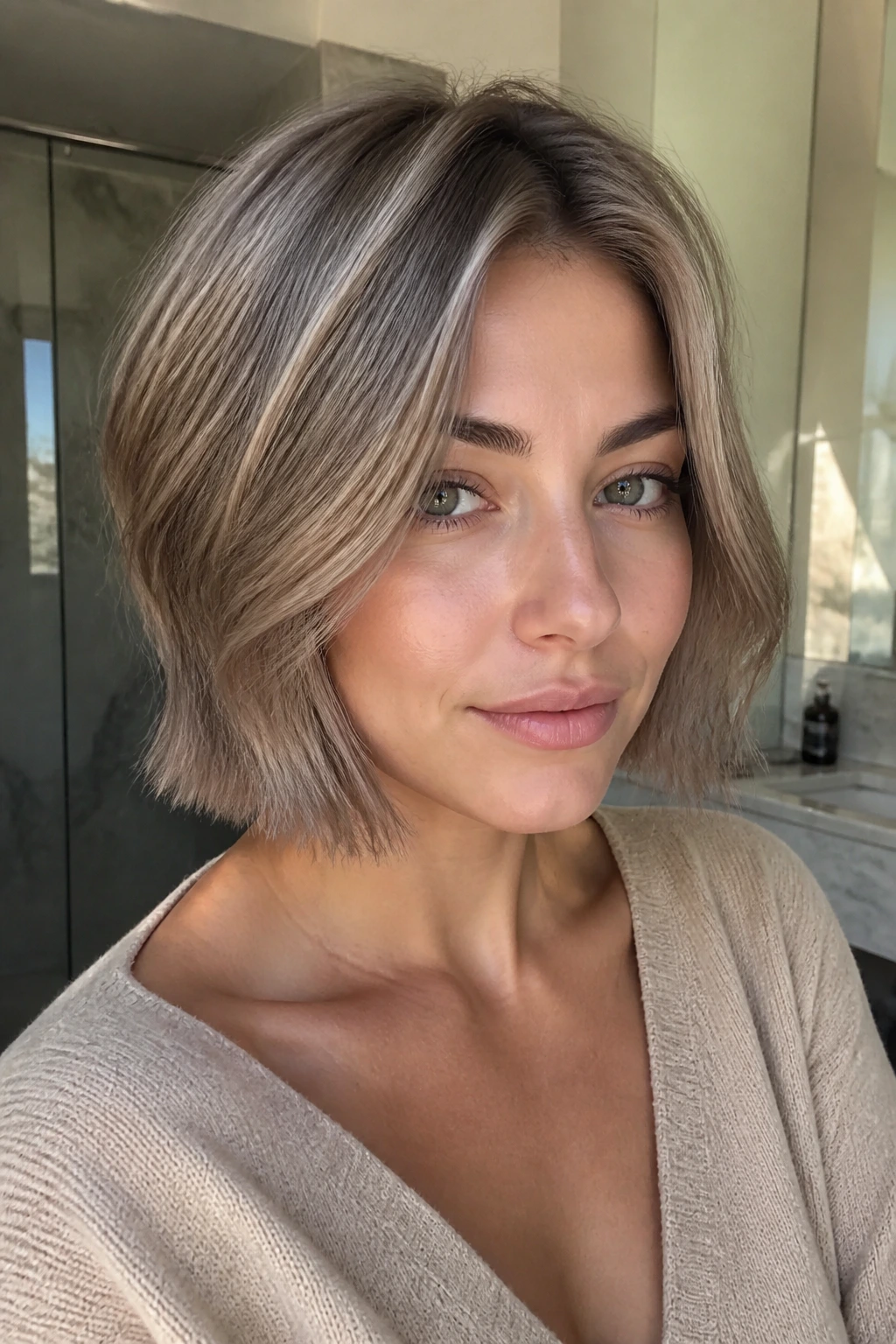
Mushroom beige is where beige gets a little cooler, a little smokier, and a lot more interesting. On a bob, it reads like taupe mixed with soft sand, which gives the cut a clean edge and keeps the ends from looking too bright or stripy. I like this shade most on level 7 to 8 hair, especially when the root is left a half-step deeper than the mids.
The cool part is what happens in motion. A blunt bob can look heavy if the color is too solid, but mushroom beige breaks that up. The shade catches light at the top and then sinks back into the interior, which makes the cut feel more expensive in person than in a flat photo.
If you want to ask for it at the salon, use words like smoky beige, taupe-beige, and soft root shadow. That combination usually gets you closer than saying “neutral blonde,” which can mean almost anything. On fine hair, this is one of the easiest ways to get dimension back fast.
2. Pearl Beige Blonde
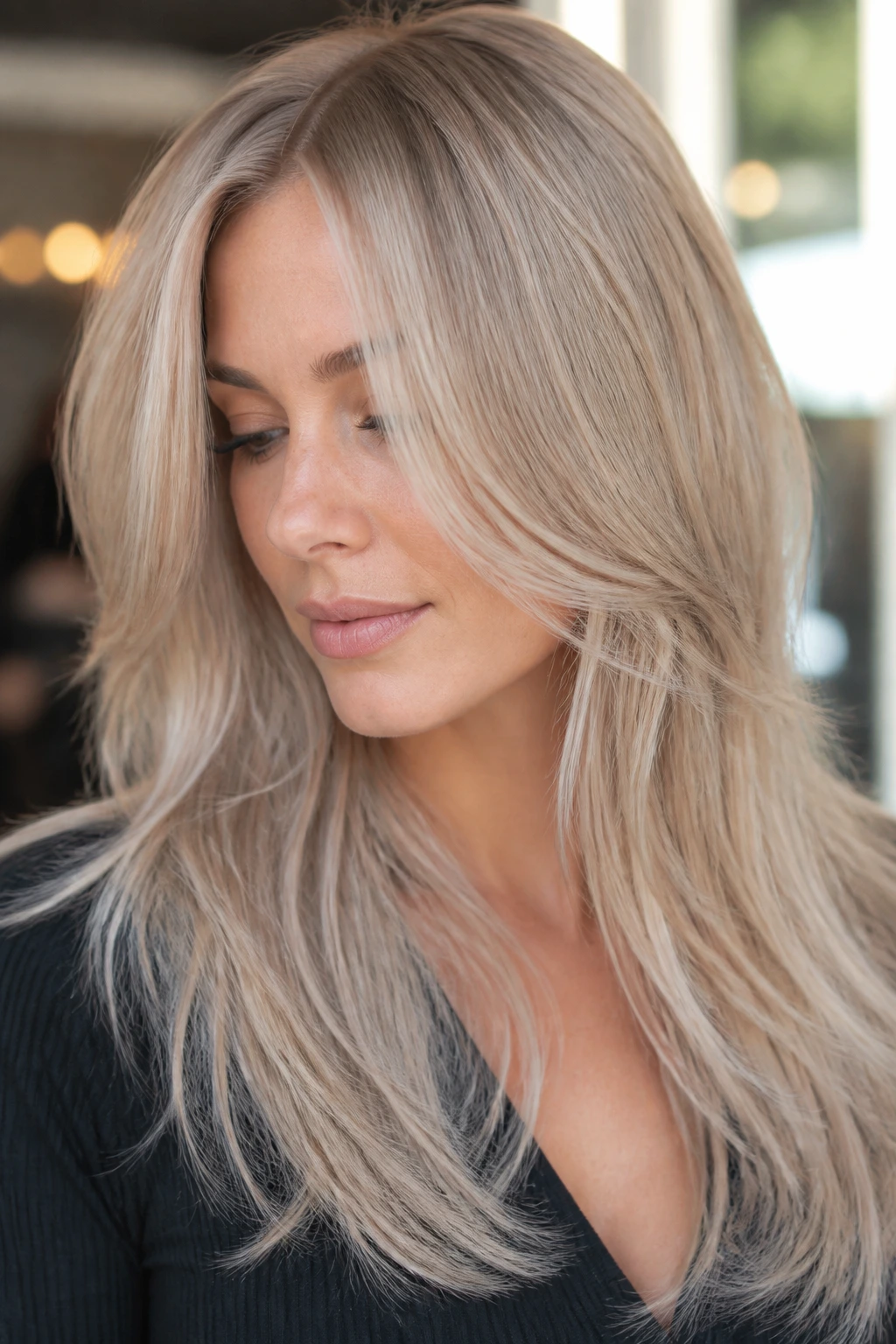
Want something softer than icy blonde but cleaner than honey? Pearl beige is the one. It sits high on the blonde scale, usually around level 9, with a pale beige veil that keeps the color from going stark or white.
This shade works because it has lightness first and coolness second. That order matters. If the hair is lifted enough, pearl beige gives you brightness around the face and just enough softness through the lengths to keep it from feeling severe. It’s especially flattering on layered cuts where the ends need a little translucence.
Best for
- Fine hair that needs lightness without harsh contrast
- Cool or neutral skin tones
- Clients who want a blonde that still looks lived-in
Ask for
A beige gloss over pale blonde, not an ash toner that pushes the hair gray. Gray and pearl are cousins, not twins, and too much ash can make the finish look flat under indoor lighting.
3. Smoky Beige Balayage
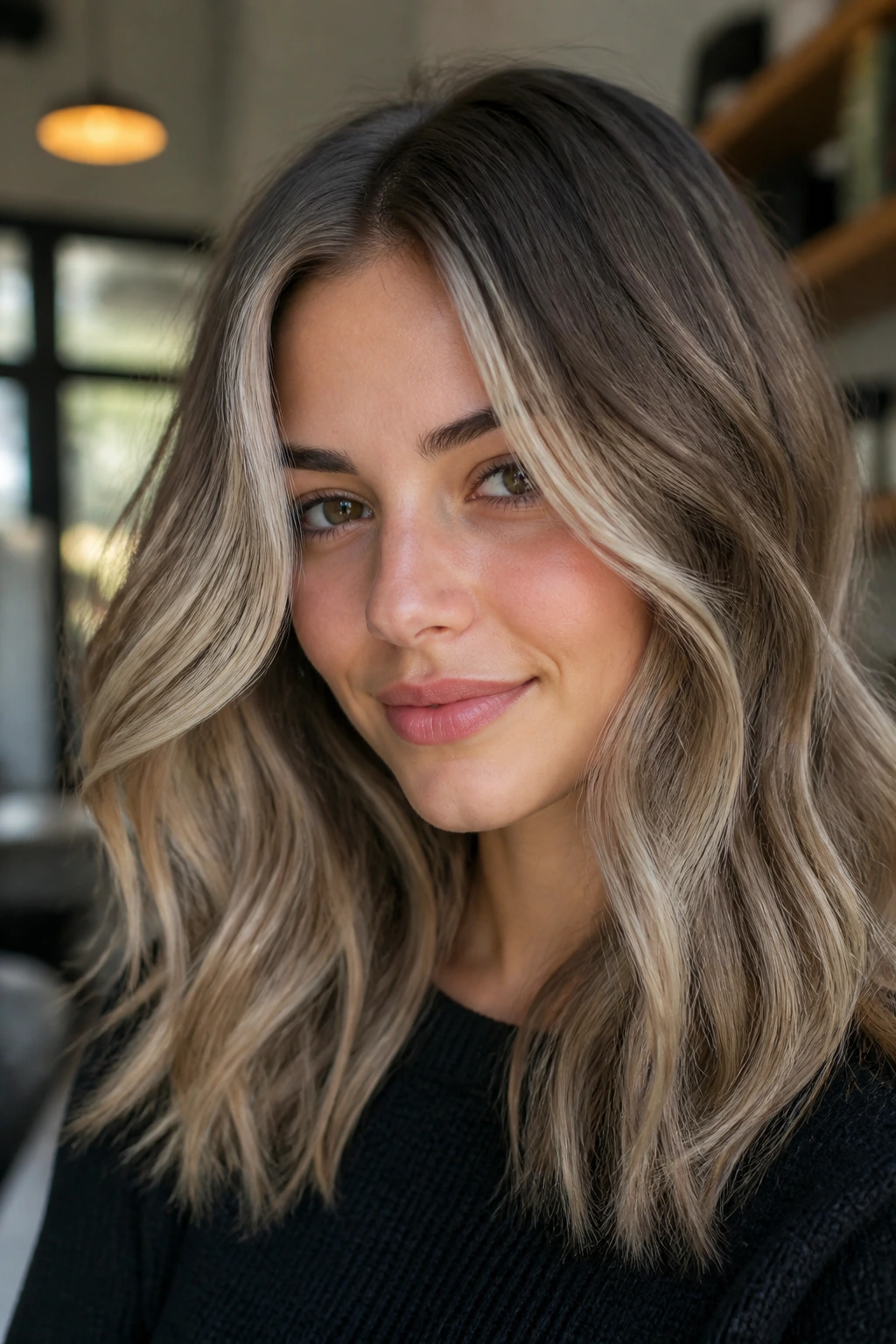
Smoky beige balayage is the shade I recommend when someone wants movement first and brightness second. The painted pieces are usually lifted to level 8 or 9, then softened with a beige toner that keeps the ribbons from turning yellow or brassy. The smoky part comes from the lowlights and the root depth, not from making everything dark.
Balayage is useful here because the hand-painted placement lets you control where the cool tones land. Around the face, I like a slightly brighter beige. Underneath, I’d leave some smoke. That mix keeps the hair from looking like one uniform sheet.
This is one of those looks that gets better as it grows out. The root melt stops the harsh line, and the beige pieces still read intentional two or three months later. If your hair tends to expose every regrowth line, this is a friendlier route than all-over blonde.
4. Taupe Beige Brunette
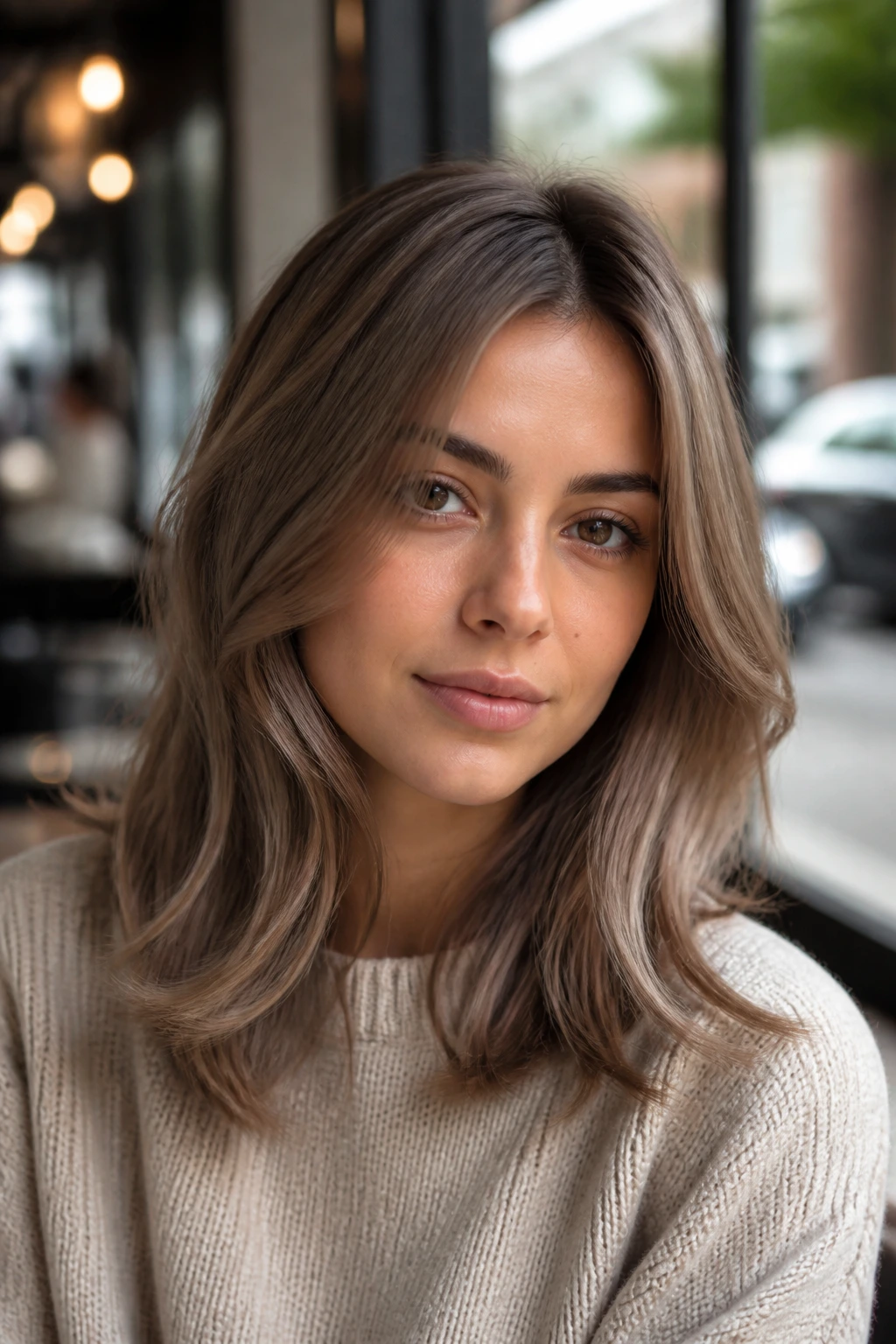
Taupe beige is the brunette version of beige that still knows how to be soft. Instead of lifting the whole head into blonde territory, the color stays in the dark blonde to light brown range and cools down the warmth with taupe and ash-beige tones. On a brunette base, that matters. Too much lift and you lose depth; too little and the beige never shows.
I like taupe beige most on layered medium-length cuts, where the darker interior can peek through. The shade has a suede-like finish in person, not shiny in a flat way but polished enough to keep the hair looking cared for. If you’ve got brown hair and don’t want the maintenance of full blonde, this is the lane I’d stay in.
A good formula usually involves a level 7 or 8 lift in the brighter pieces, then a beige demi on top. The result is soft, smoky, and low-key. No drama. Just good hair.
5. Sand Beige with Root Shadow
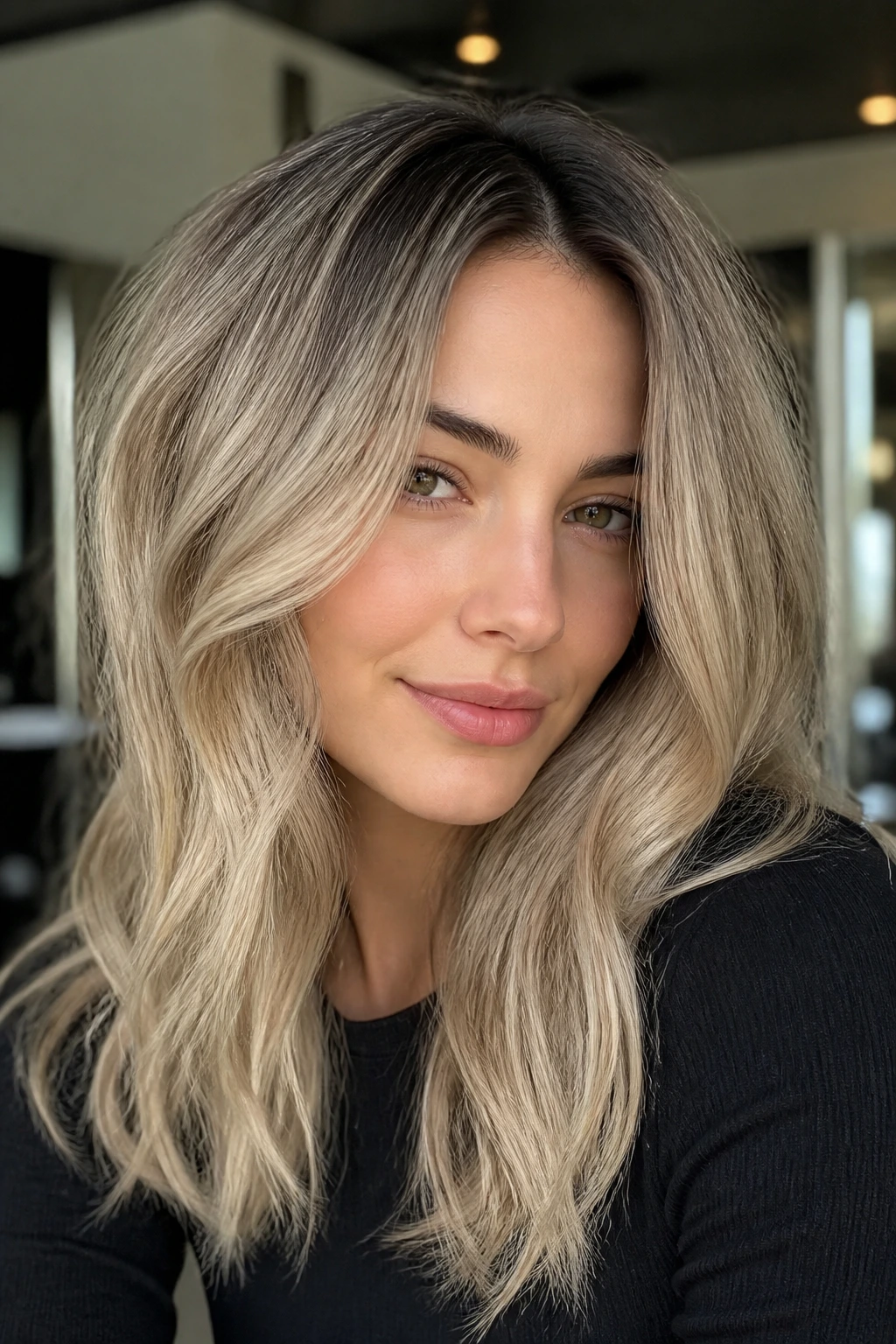
This is the shade for people who want the blonde look but hate harsh upkeep. Sand beige keeps the mids and ends softly light, then uses a deeper root shadow to anchor everything at the top. The shadow root is not a filler trick. It’s the thing that makes the color wearable.
The beige itself leans cool-sand rather than yellow sand, which is an important distinction. Warm sand can go brassy fast. Cool sand stays creamy and looks more natural against cooler skin. If your base is already a medium blonde, this one can be done with a gloss and a careful shadow blend rather than a big lift.
The best part? The grow-out looks deliberate. You can wear this for weeks before it starts feeling tired, and even then it usually fades into a softer version of itself instead of something ugly. That’s the kind of low-maintenance beige I can stand behind.
6. Vanilla Beige Money Piece
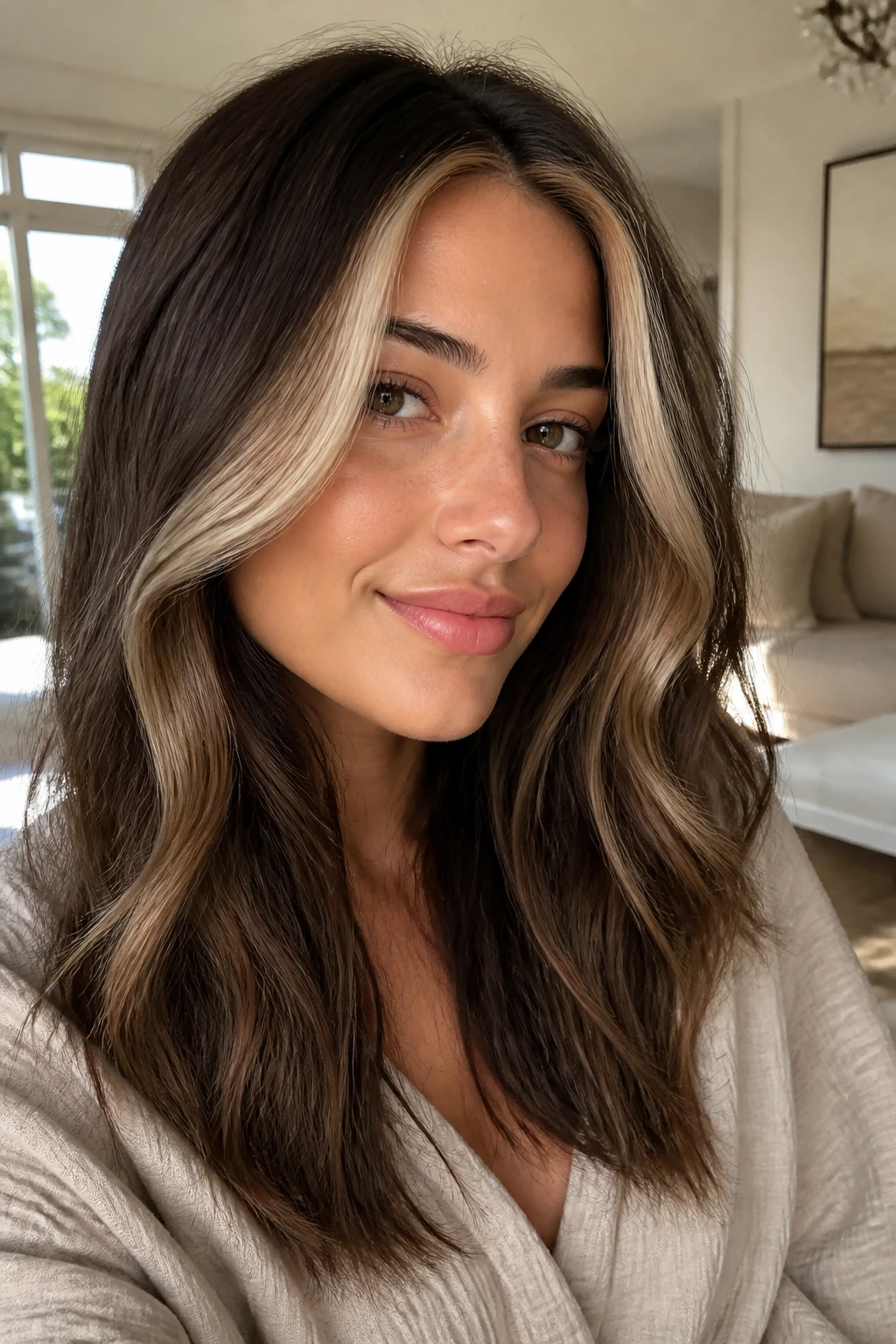
A vanilla beige money piece gives you brightness right where it matters most: around the forehead, cheekbones, and eyes. The rest of the hair can stay slightly deeper, which makes the front panels look lighter than the overall head. That contrast is useful on cool soft tones because it wakes up the face without forcing the whole color to go extra pale.
I’d use this on lobs, collarbone cuts, and long layered hair where the front pieces frame the face in a clean line. The money piece should be creamy beige, not banana blonde. If it starts looking yellow, the whole effect gets cheaper fast.
This is also one of the easiest beige ideas to adjust. Want more softness? Broaden the front highlight and blur it into the temple area. Want more edge? Keep the placement narrow and let the darker base show through underneath.
7. Oat Milk Beige Lob
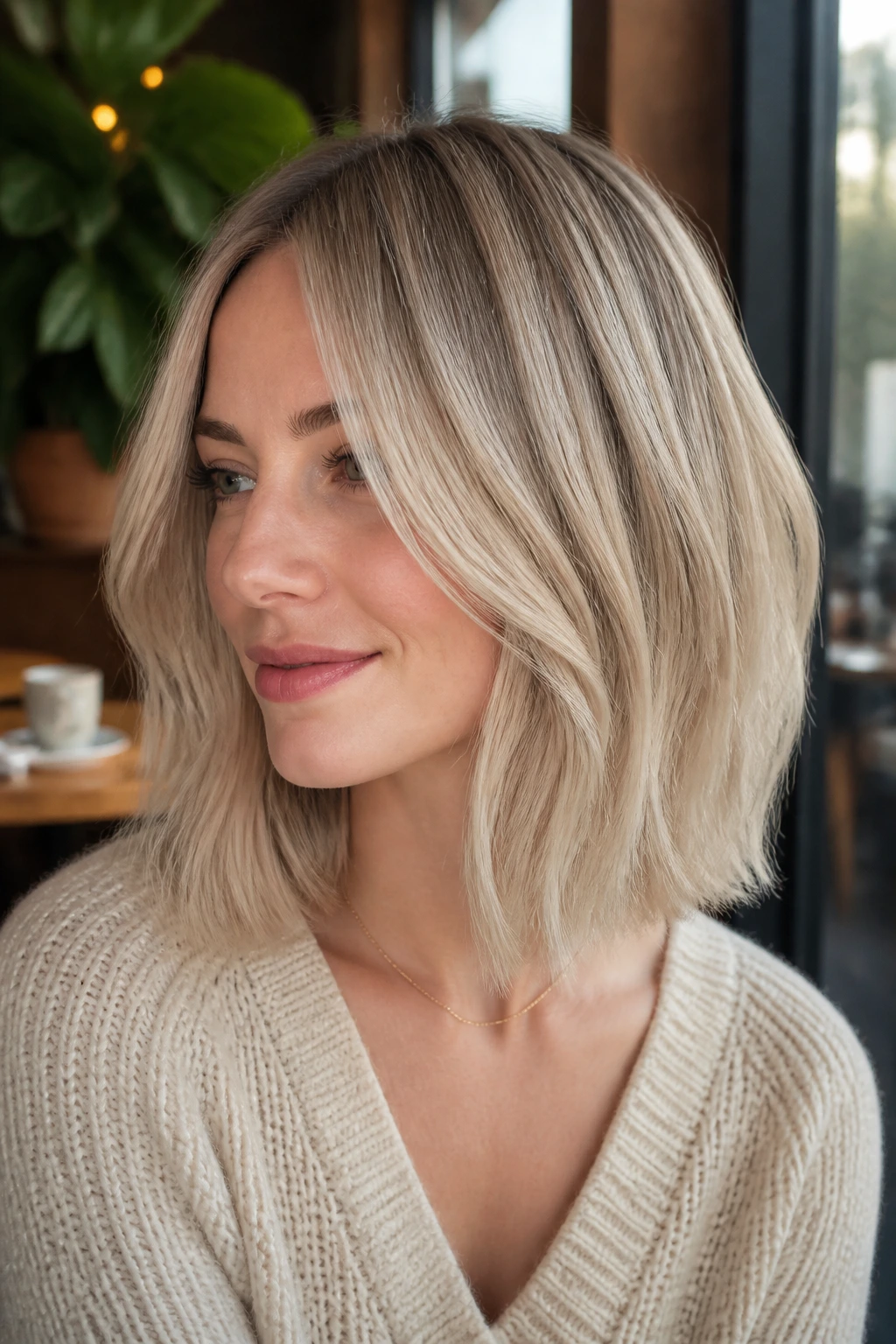
Oat milk beige is my favorite kind of soft blonde because it feels calm. The shade has that pale, milky quality, but the beige base keeps it from going chalky. On a lob, the result is smooth, expensive-looking, and a little understated in the best way.
The cut matters here. A lob gives the color a clean border, so the tone itself has to carry the interest. I like this shade on hair that’s been lifted to level 8 or 9 and then glazed with a beige toner that still leaves some warmth in the background. Strip out too much warmth and you get a dull, flat finish. Leave too much and it starts leaning gold.
If your hair is fine, oat milk beige can make it look fuller because the color reflects light in a soft, even way. If your hair is thick, the shade calms down bulk and keeps the cut from feeling heavy.
8. Silver-Beige Gloss
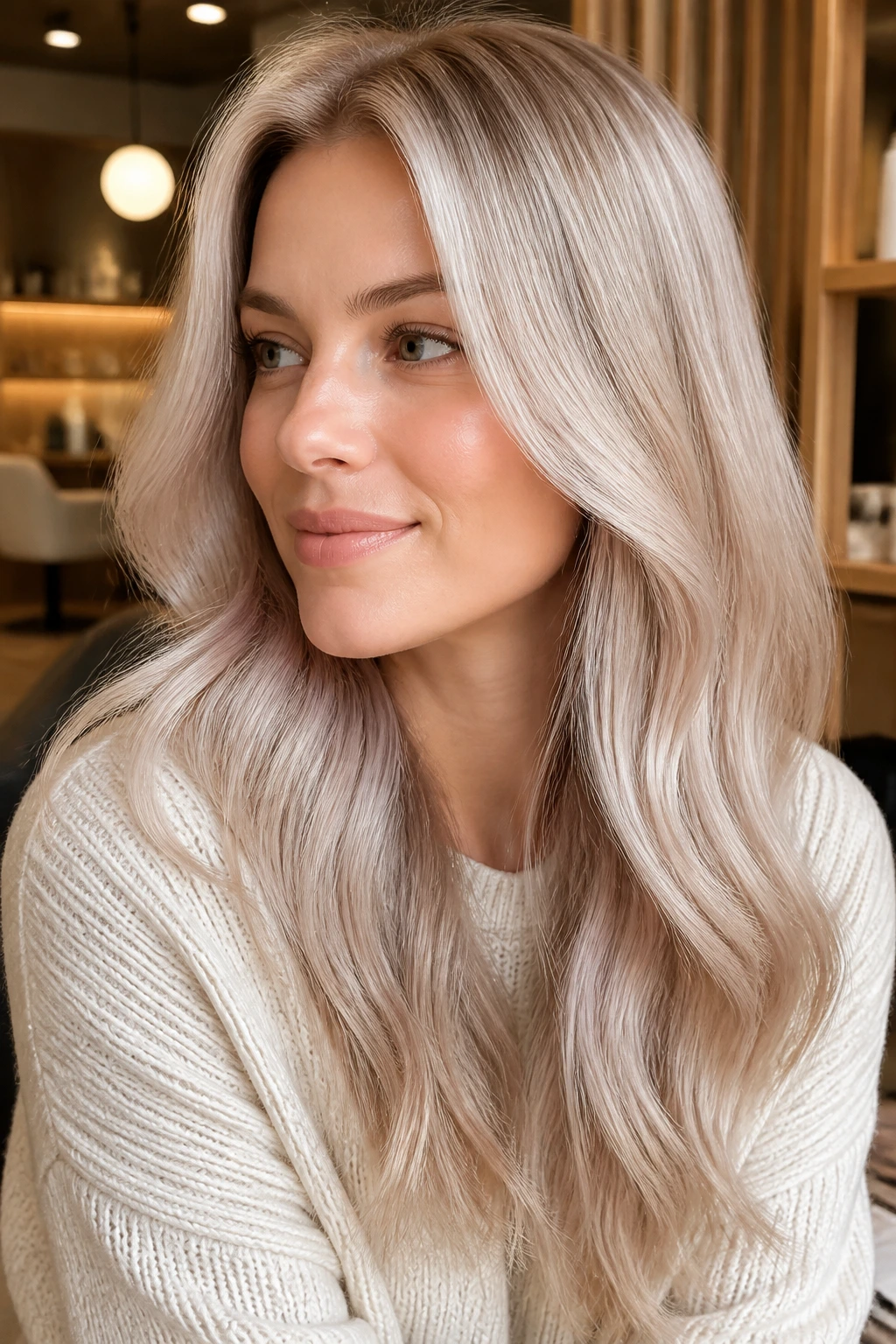
Silver-beige gloss is what happens when you want coolness but not frost. The silver note keeps brass away, while the beige note prevents the hair from turning metallic or gray. That balance is narrow, and that’s why a gloss is usually the better move than a permanent all-over color.
I like this on pre-lightened hair that’s already bright but needs refinement. A level 9 blonde with yellow in the mids can look cleaner after one good silver-beige gloss than after weeks of purple shampoo. The gloss also helps the hair look more polished because it smooths the tone from root to end.
What to watch for
- Porous ends can grab silver too hard
- Over-toning can make the color read flat
- A demi-permanent gloss usually gives a softer result than a heavy toner
This is a cool tone with a soft landing. If you’ve ever wanted silver hair but felt it looked too cold on you, silver-beige is the compromise that actually makes sense.
9. Beige Bronde
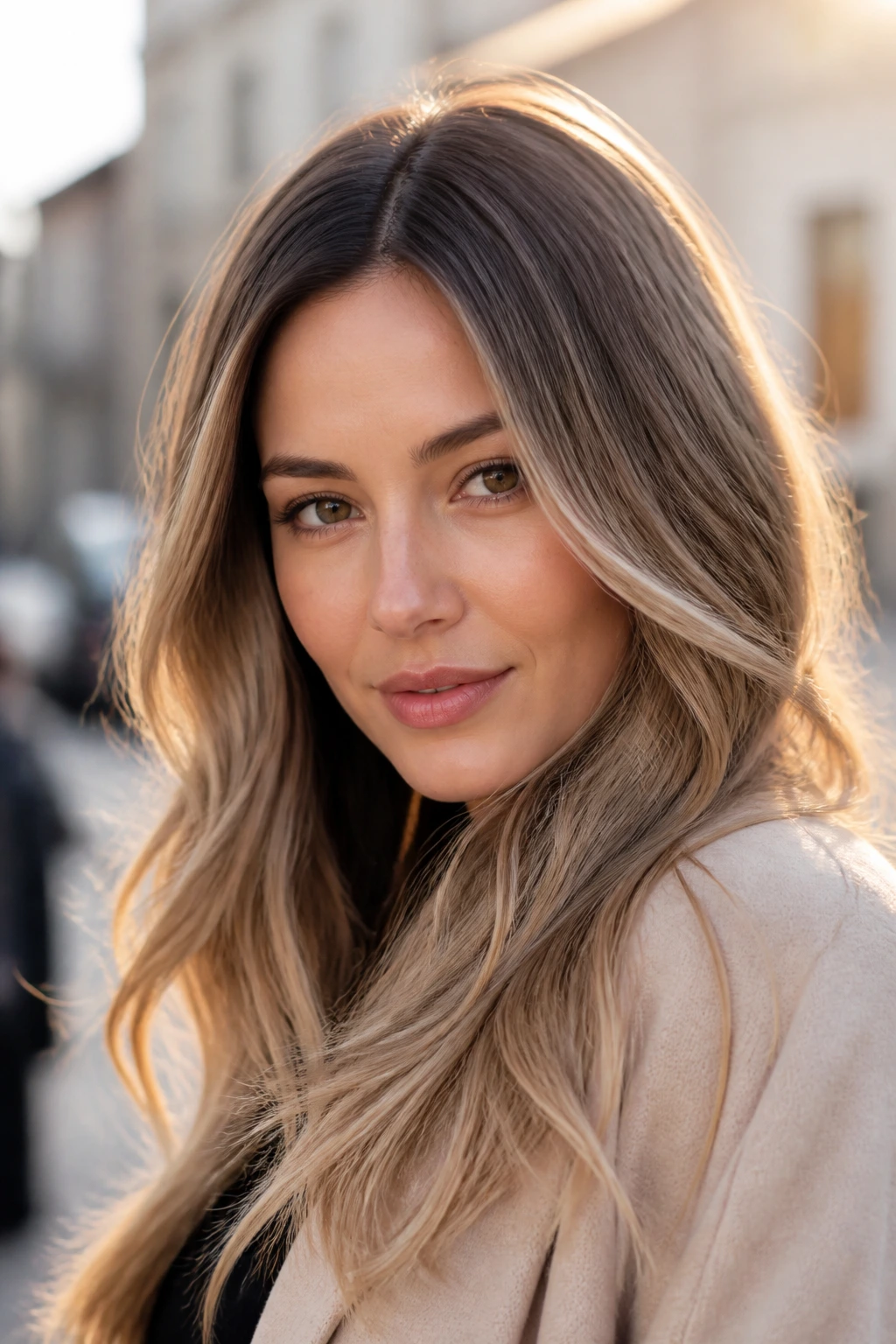
Beige bronde lives in the middle, and that middle is where a lot of people should stay. Brown at the root, blonde through the mids, beige over everything. That combination gives you softness, brightness, and enough contrast to keep the hair from collapsing into one tone.
I like this look on long layers because the color can move from dark to light in a way that feels natural. The brown pieces keep the crown grounded, the beige tones soften the blonde, and the whole thing gets a hazy, diffused look that works especially well on cool soft features.
This is a smart choice if you’re nervous about going too light. Bronde lets you test the waters. You can always add more brightness later, but once hair is lifted too far, you’re stuck babysitting it. Beige bronde gives you room to breathe.
10. Cool Champagne Beige
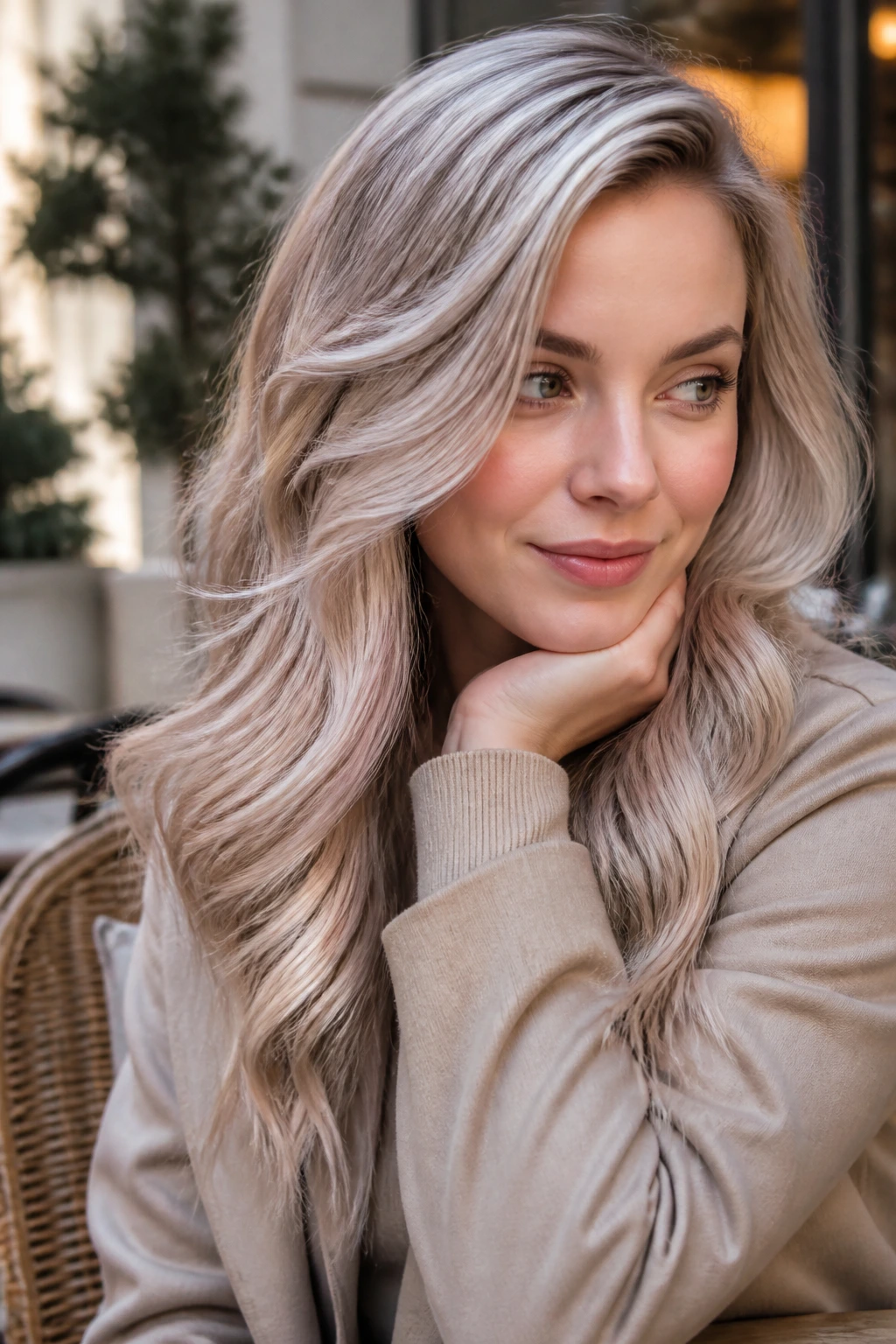
Cool champagne beige is a little livelier than mushroom beige and a touch more polished than plain blonde. It has that pale, bubbly quality, but the cool base keeps the tone from sliding into warm peach. On the hair, it reads bright and soft at the same time.
This shade is especially nice when you want beige hair color ideas that look dressed up but not severe. It works on straight styles, loose waves, and shoulder-length cuts where the light can move through the color. A champagne beige gloss with a soft violet base usually does the job better than a strong ash toner.
If I had to place this shade on a spectrum, I’d put it between pearl and oat milk. It has more warmth than pearl and more sparkle than oat milk. The result is a little less quiet, a little more alive.
11. Beige Foilyage
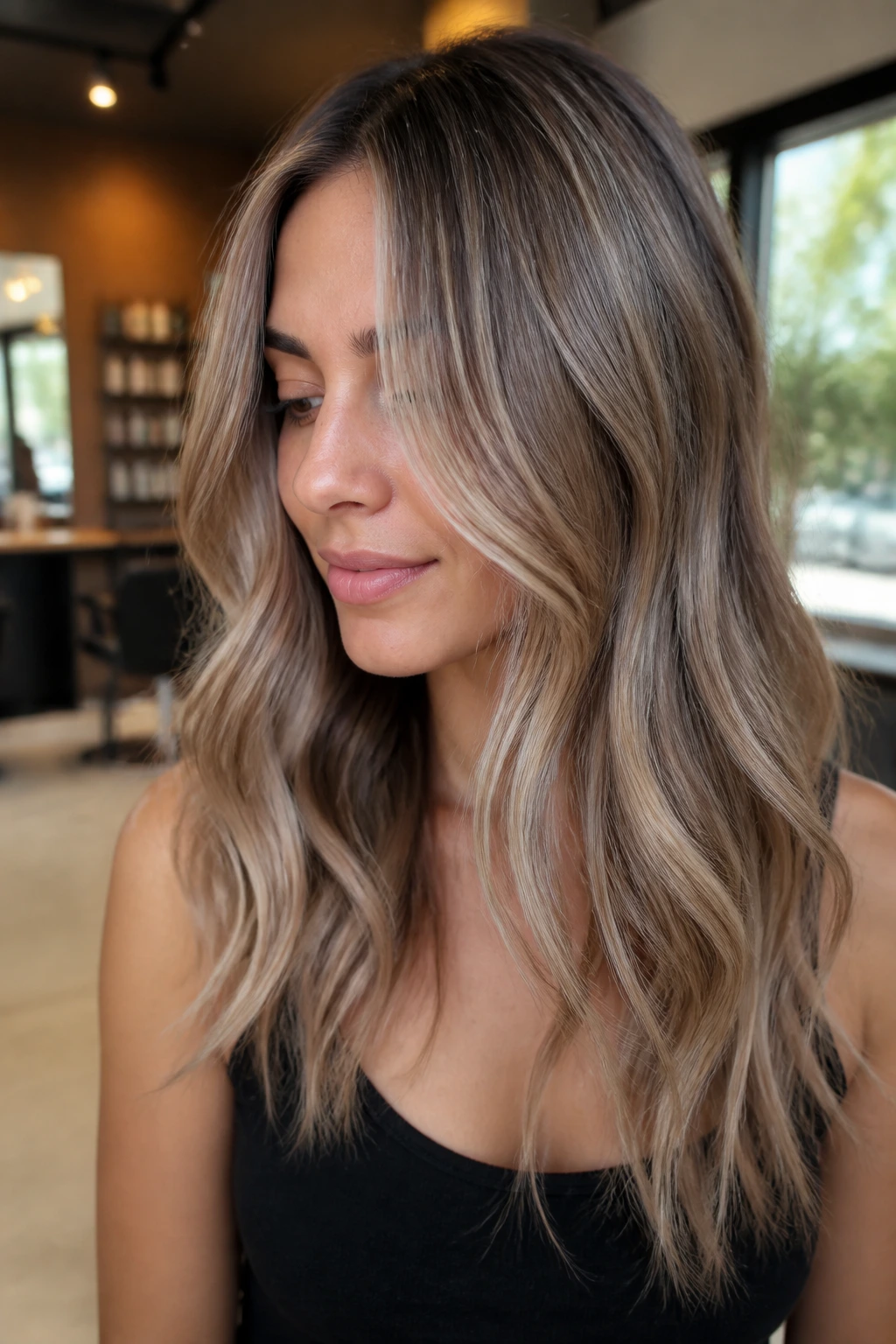
Foilyage gives beige a brighter backbone. Instead of painting the light pieces freehand only, the foils push lift a little higher and cleaner, which is useful if you want a beige finish that still has definition. The key is toning those lifted pieces with a cool beige formula so they don’t land as yellow streaks.
This technique works well for darker blondes and light brunettes who need a bit more pop than balayage alone can give. The foils let the light pieces stand out, but the beige toner keeps them soft enough to blend with the rest of the hair. It’s a tidy trick when the goal is brightness with control.
Foilyage also helps if your hair resists lift. You get more predictable lightening inside the foil, which means less guesswork when you tone. That makes the beige read cleaner across the whole head.
12. Soft Beige Melt
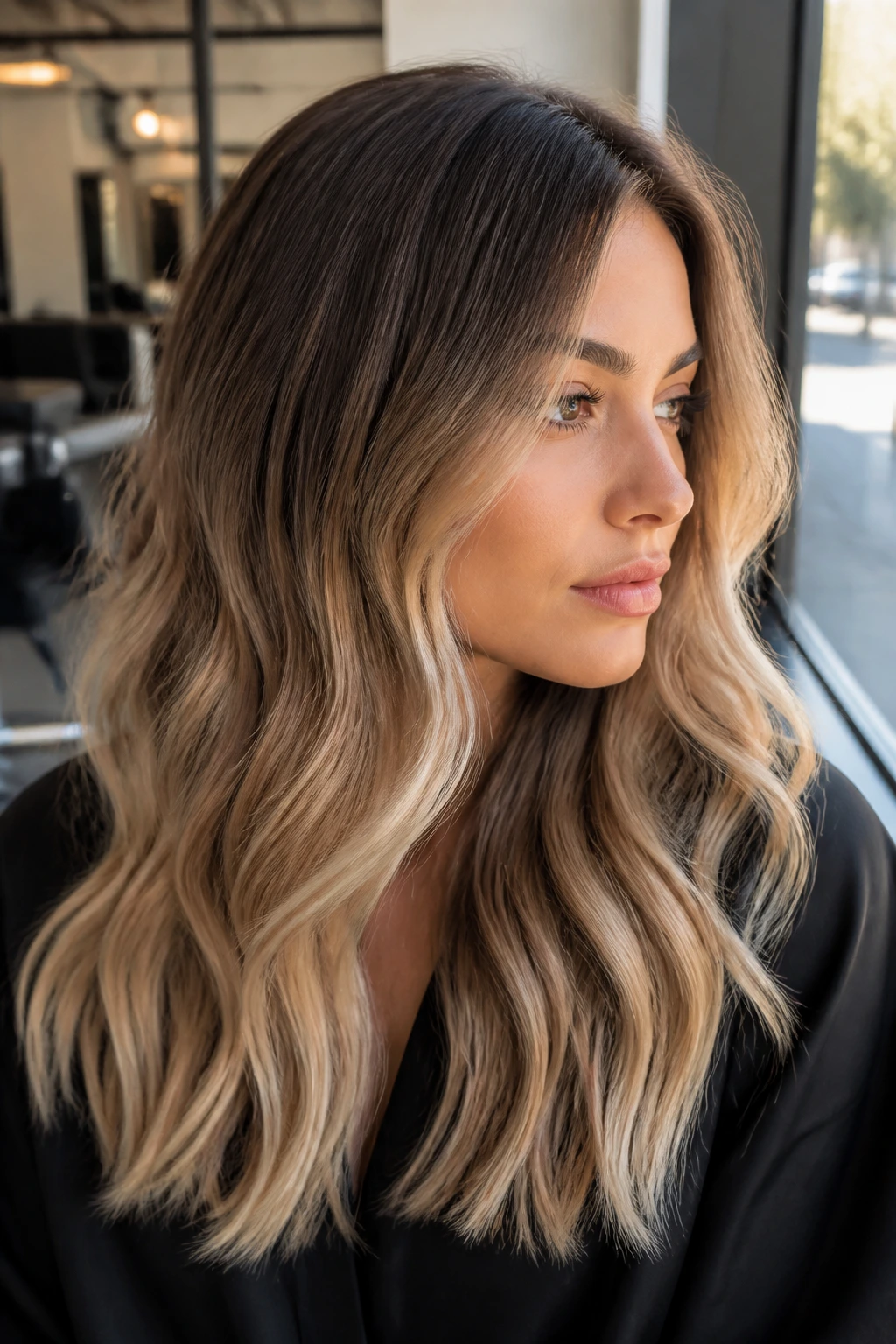
A beige melt is all about the fade. Darker at the root, softer through the mids, lighter at the ends, and no hard line where the colors meet. If done well, it looks like the hair grew that way. If done badly, it looks striped. There isn’t much middle ground.
The best beige melts use a root shadow that’s one or two levels deeper than the mids. The mids then carry the real beige tone, while the ends stay slightly lighter and cooler. This creates a soft stretch from top to bottom, which is handy if you want dimension but do not want to keep re-coloring every few weeks.
I like this on long hair that needs movement. It lets the color move with the layers instead of sitting on top of them. And if your natural root is medium brown or dark blonde, the grow-out can be surprisingly forgiving.
13. Linen Beige on Dark Blonde
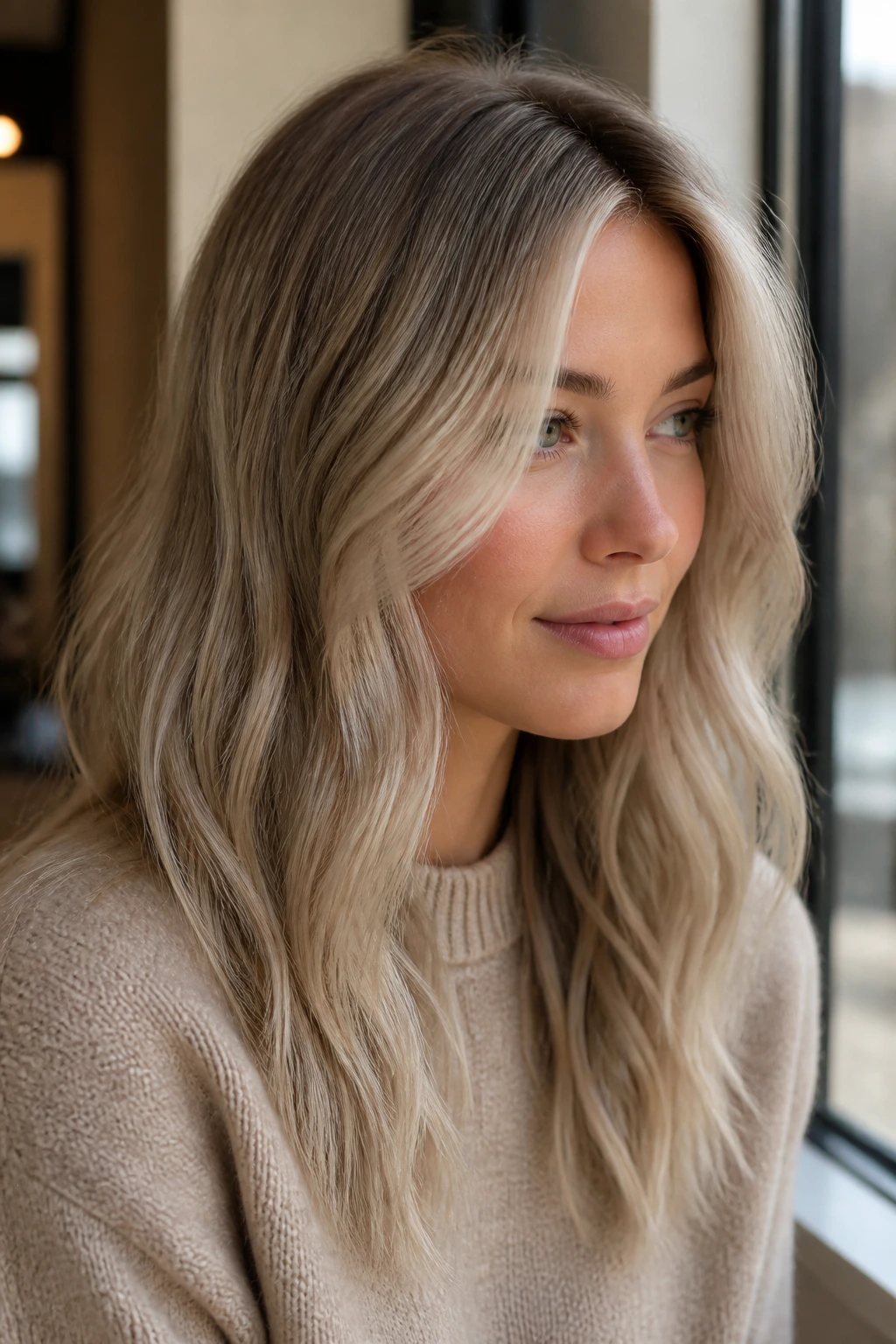
Linen beige is one of those shades that looks plain on a swatch and lovely on a head of hair. It has a dry, soft finish, like woven fabric, with just enough coolness to keep the color from looking gold. On dark blonde hair, it’s especially useful because it brightens the overall effect without demanding a huge lift.
This shade works best when the lift stays controlled. You want the hair to reach a pale beige blonde, not a pale yellow stage. If the yellow isn’t fully neutralized, linen beige can go dingy fast. The fix is a clean toner and, on porous ends, a slightly softer formula than the roots.
It’s a quiet color. That’s the appeal. If you like beige hair color ideas that don’t read loud in a room, linen beige lands in the right place.
14. Dimensional Beige Curls
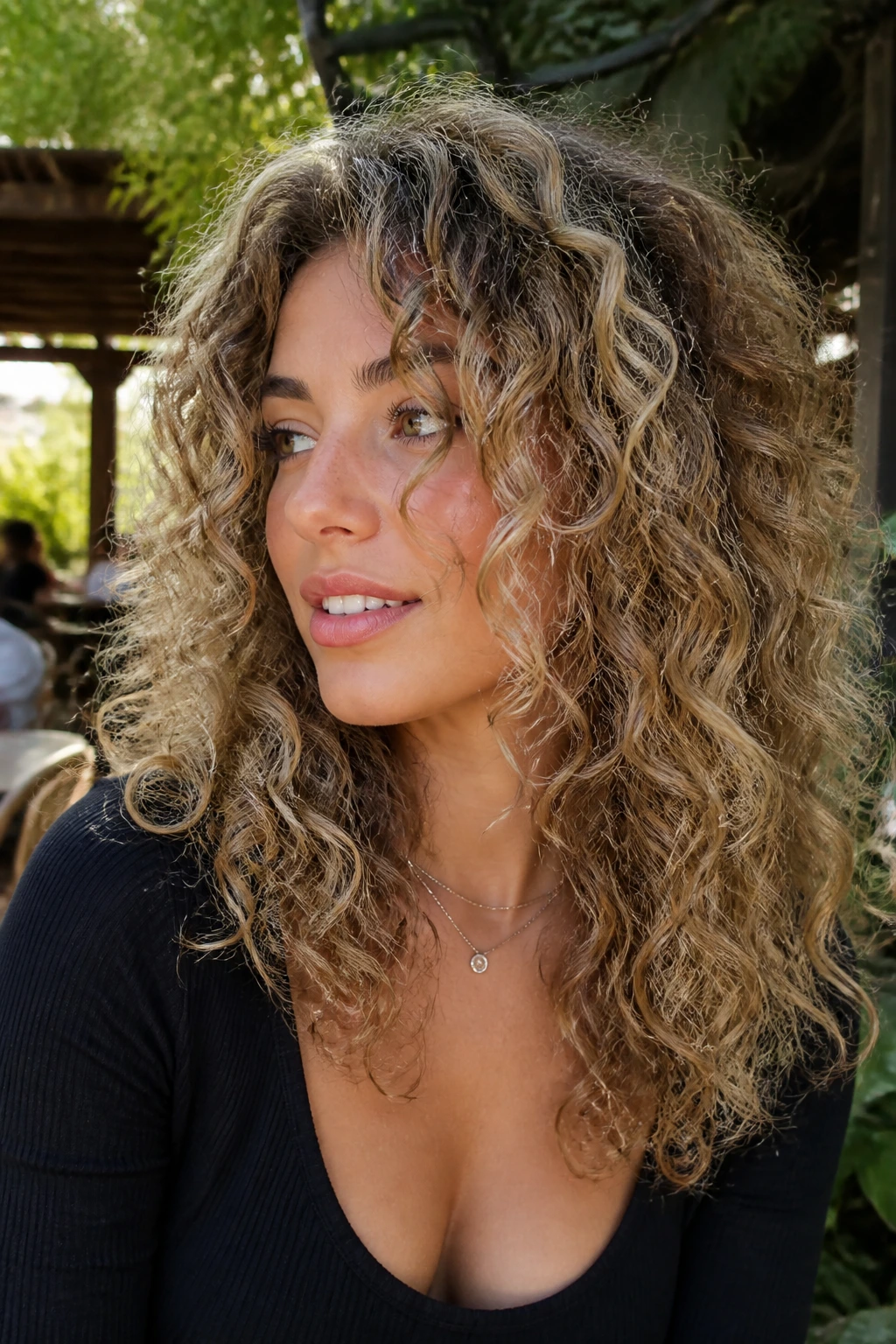
Curls need dimension or they swallow the color whole. Beige is one of the better shades for curl patterns because it keeps the light pieces soft while the darker interior still shows through. That contrast makes spirals and waves look more defined, especially when the haircut has layers.
I’d avoid one-tone beige on curls unless the hair is very healthy and very evenly lifted. Curls usually look better when the beige is ribboned or painted in panels. Think soft beige through the crown, brighter beige on the outer curve, and a slightly deeper base underneath to hold shape.
The practical part matters here. Curly hair can grab toner unevenly, so a gentle beige gloss often behaves better than a heavy ash formula. Too much ash and the curl pattern can look dusty. A balanced beige keeps the hair looking soft, not dry.
15. Beige Pixie Crop
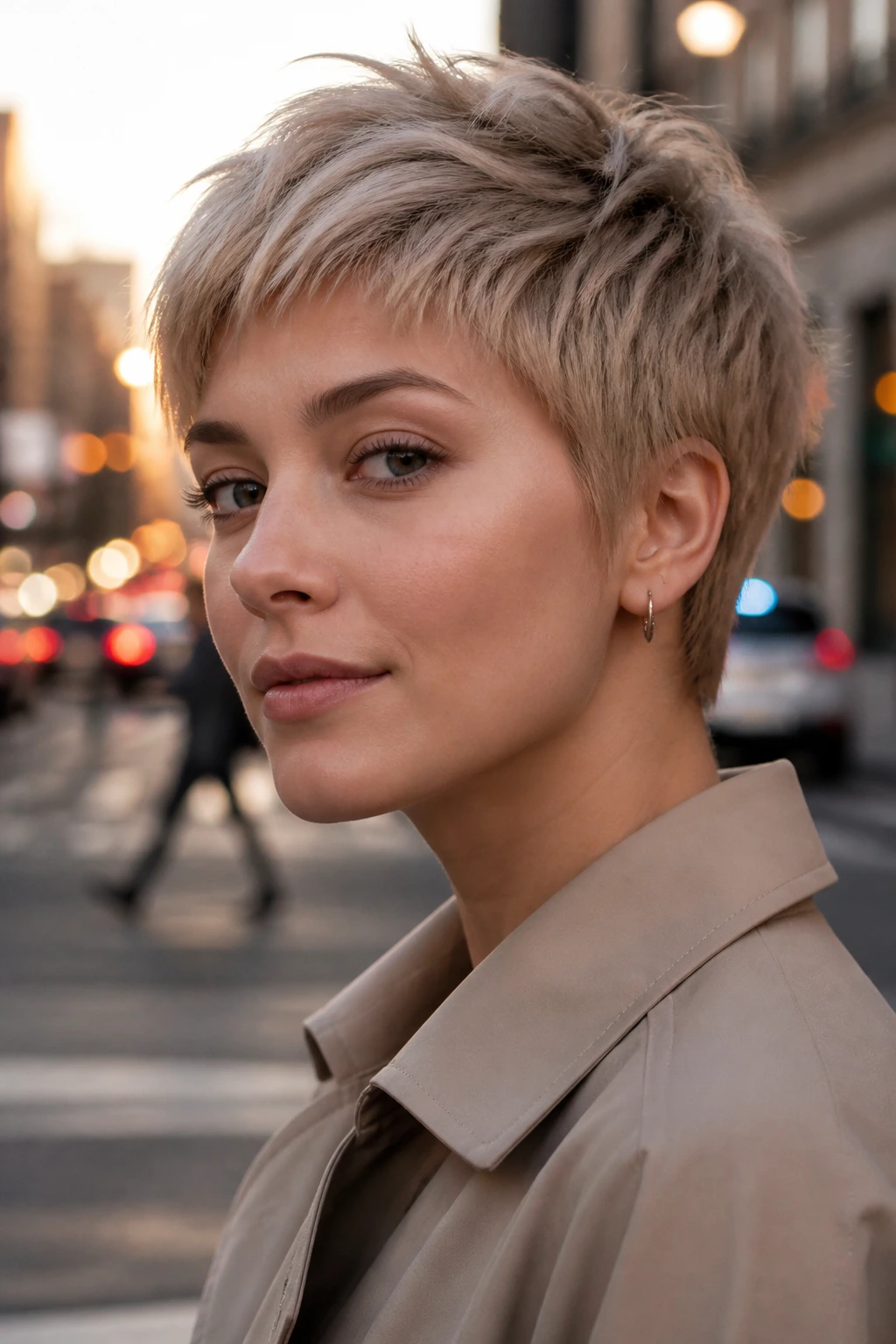
A beige pixie crop has more attitude than people expect. Short hair shows toner mistakes fast, which is why beige works so well here: it smooths the transition between strands and keeps the cut from looking harsh around the ears and fringe. The color should be clean, cool, and close to the natural depth of the hair.
I like this on textured pixies where the top has a little movement. Beige catches the separation in the layers and makes the cut look deliberate instead of fuzzy. If the hair is too dark, the shade won’t show much. If it’s too light, the crop can lose shape. The middle ground is where it works.
This is a strong choice for someone who wants a low-weight, low-fuss color story. The cut does the talking, and the beige just keeps it polished.
16. Face-Framing Beige Highlights
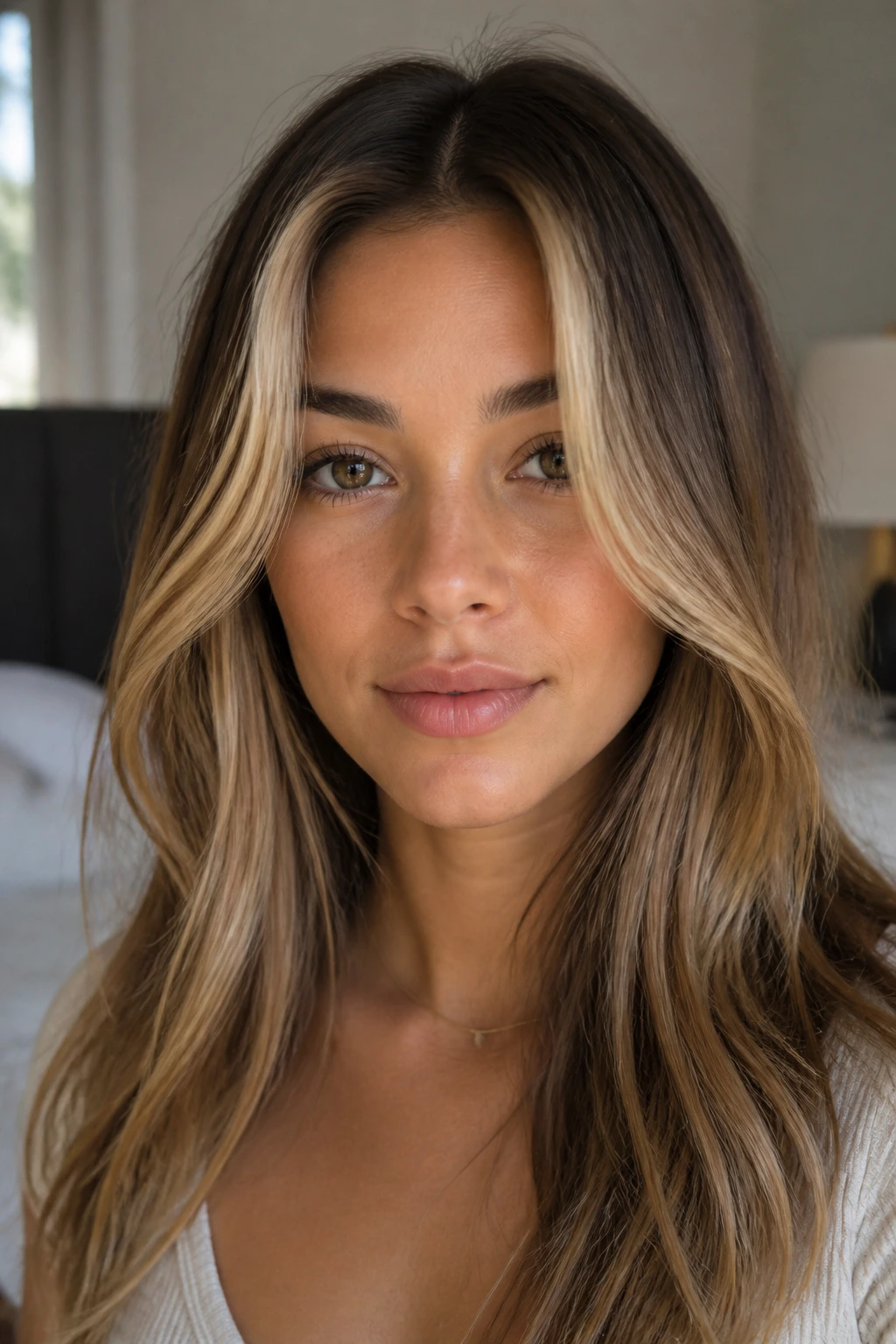
Face-framing beige highlights are the fastest way to get into the beige family without committing to a full head change. You brighten the front panels, maybe a few pieces near the part and temples, then glaze them into a cooler beige. The rest of the hair can stay more natural.
The nice thing about this approach is that it gives instant softness around the face. On cool undertones, that matters. Bright beige near the cheeks can make the skin look calmer and less flat than a solid block of dark hair. It’s also easy to refresh, which is a plus if you don’t want a high-maintenance color appointment every month.
If you wear your hair up a lot, this shade still works. The front pieces do the lifting, and the rest of the hair can fade quietly in the background. That’s a practical color choice, not just a pretty one.
17. Velvet Beige
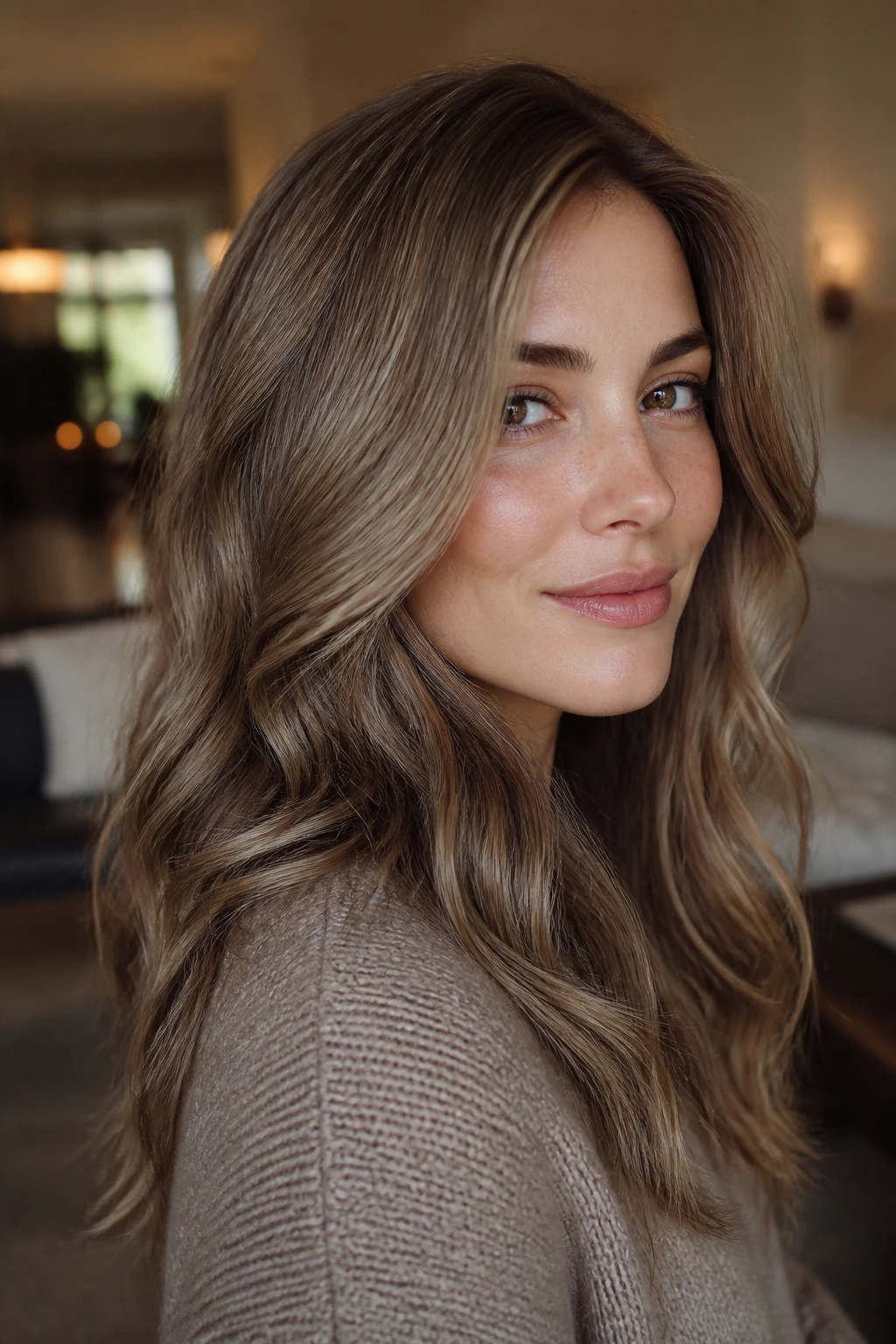
Velvet beige is deeper and richer than a standard blonde-beige, and that depth is what gives it polish. It sits in the darker beige family, usually around level 7 or 8, with a cool brown-beige base that feels soft rather than dusty. On medium-length cuts, the shade has a smooth, almost satin finish.
I like this when someone wants something close to brunette but lighter and cooler than brown. It’s also useful if hair has been over-processed and needs a quieter landing spot. Velvet beige doesn’t ask the hair to be ultra light. It asks the tone to be controlled.
The word velvet fits because the color seems to absorb and reflect light at the same time. That makes it look rich on straight hair and quietly dimensional on waves. Not flashy. Better than that.
18. Milk Tea Beige
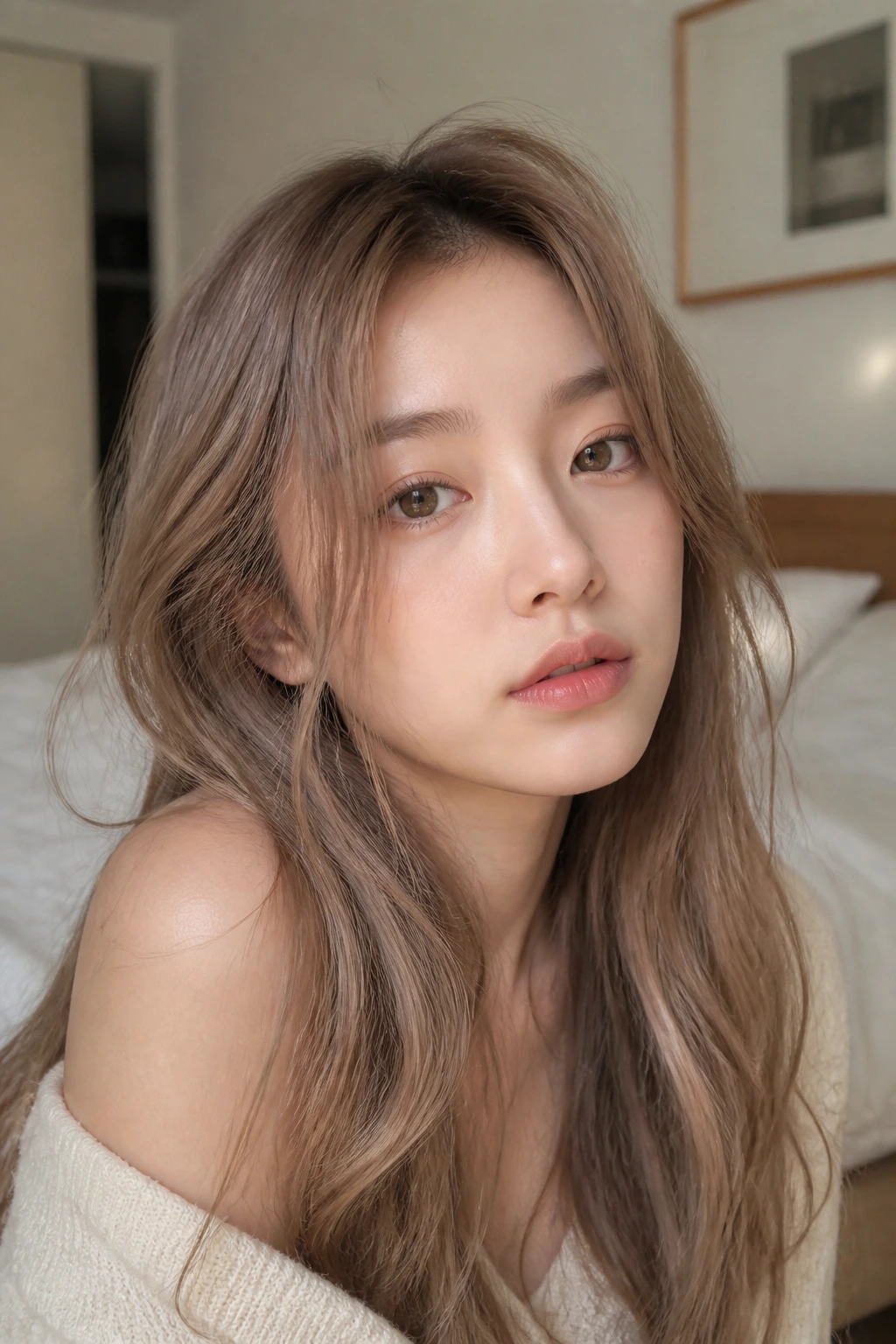
Milk tea beige pulls in that soft, cloudy beige-brown mix that sits close to the natural spectrum. It’s creamier than taupe and softer than mushroom, with enough smoke to keep the finish cool. On the hair, it reads as a beige brunette that has been lifted just enough to glow.
This is a smart option for someone who wants a softer version of brunette highlights. The tone is gentle on the eyes and easy to wear with minimal makeup. If you’ve got cool soft features, milk tea beige can look like your natural shade after a very good vacation and a very good toner appointment.
It’s also one of the more forgiving options on porous hair. Because the shade is not trying to be pale blonde, it can hide a bit of uneven lift better than brighter beige shades. That makes it practical, not just pretty.
19. Icy Beige with Smudged Roots
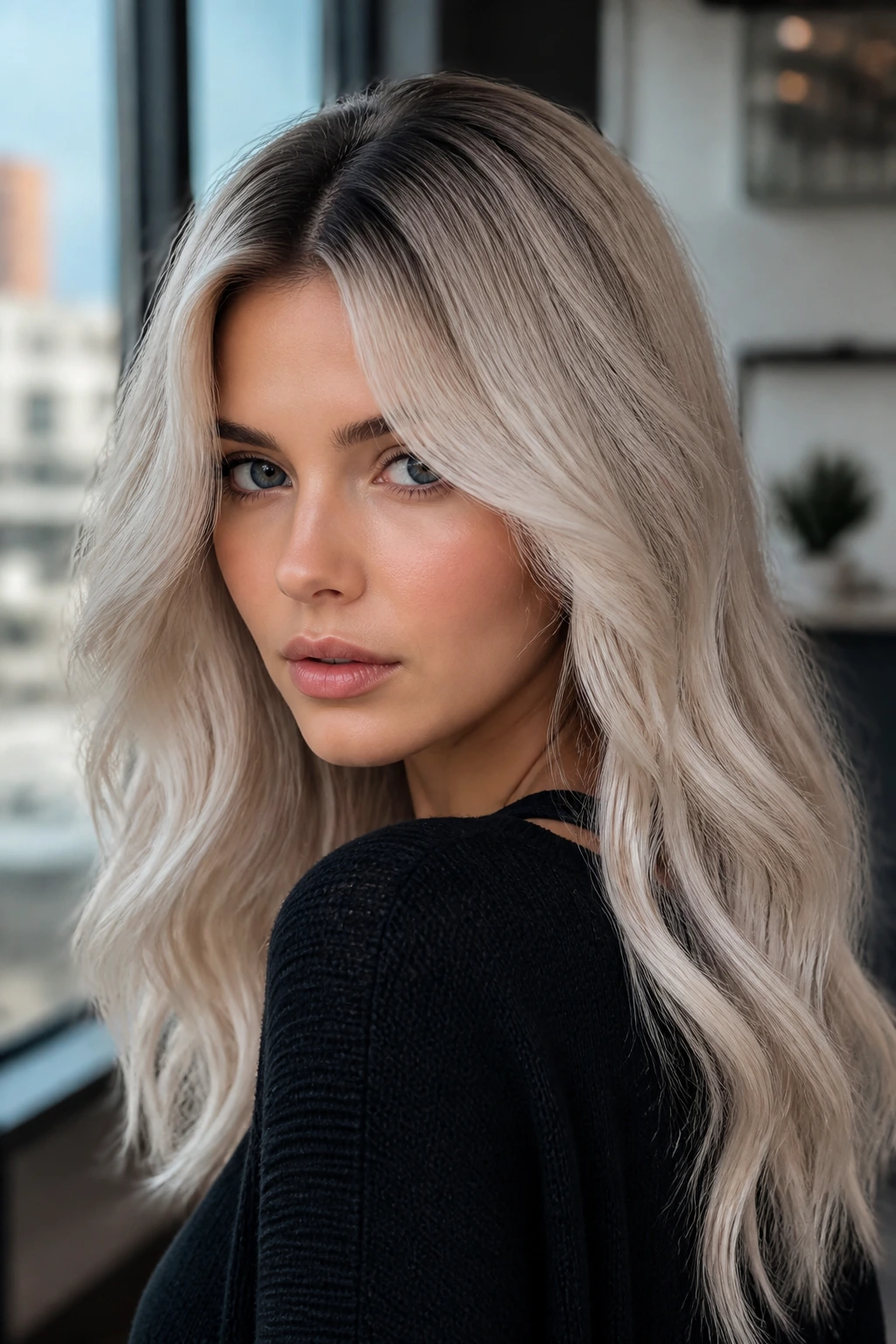
Icy beige sounds like it should be severe, but the smudged root changes everything. The root keeps the color grounded, while the mids and ends stay bright and cool. That gives you the lift of icy blonde with a beige softness running through the lengths.
The best version of this look uses a root smudge one to two levels deeper than the blonde body. If the root is too dark, the contrast gets chunky. If it’s too light, the color loses edge and turns mushy. The sweet spot gives the blonde a frame and lets the beige tone sit in the middle of the spectrum.
This is a good pick for people who like a sharper finish. It has more contrast than milk tea beige or velvet beige, but it still avoids the harshness of a pure platinum look. Clean. Soft. A little cool.
20. Stone Beige
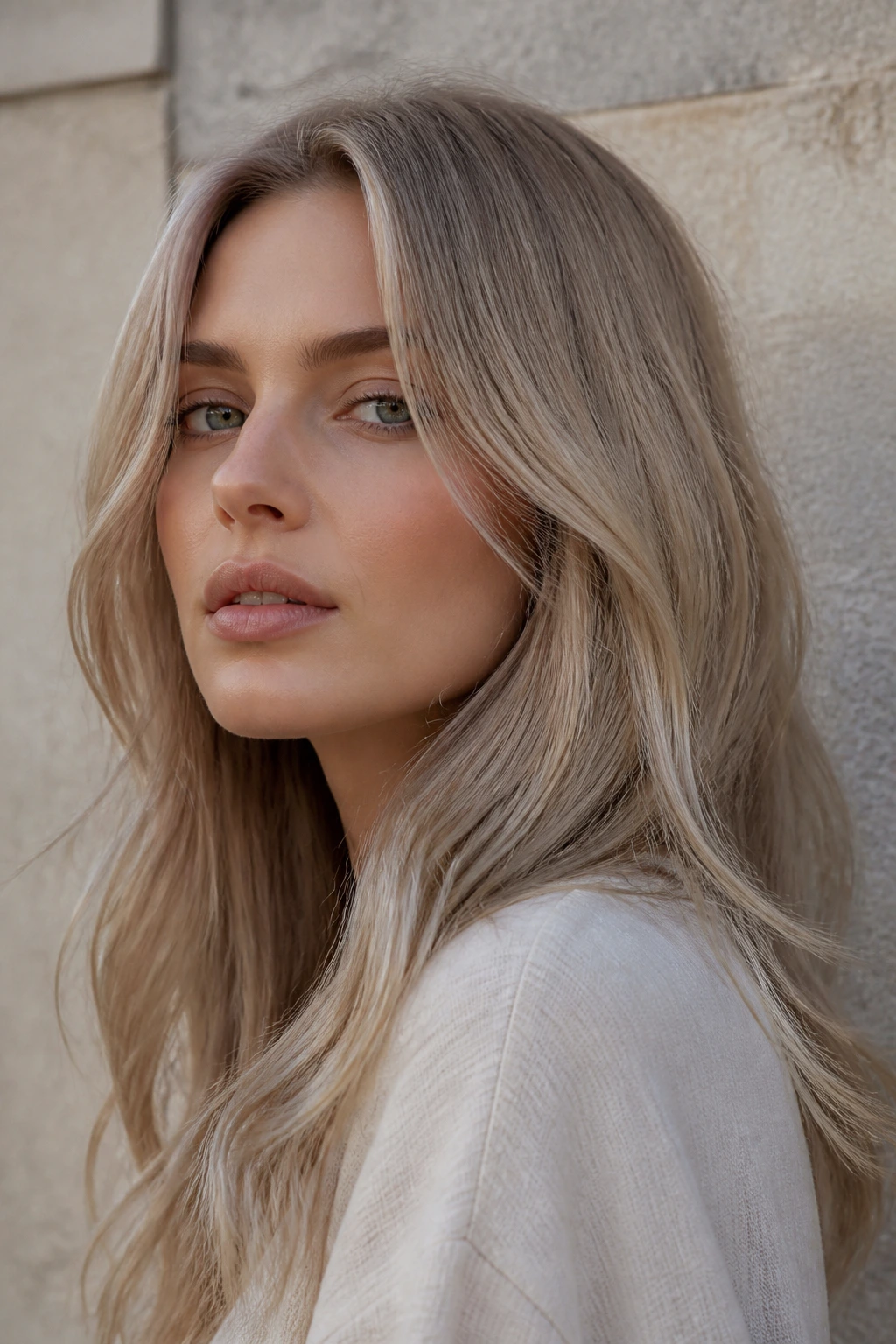
Stone beige is the shade I’d choose when I want beige to feel grounded. It has a pale mineral look, with gray-beige and sand-beige woven together so the hair reads cool but not icy. On the right base, it looks like a soft, natural blonde that has had the warmth filtered out just enough.
I think this shade works best on straight or lightly waved hair because the smooth surface lets the mineral tone show. It’s also a good bridge color for people moving from brunette to blonde. You get lightness, but the overall effect stays calm.
Stone beige is not loud, and that’s the appeal. It sits there looking expensive in a quiet way. Some shades try too hard. This one doesn’t.
Why Beige Reads Cool Instead of Flat
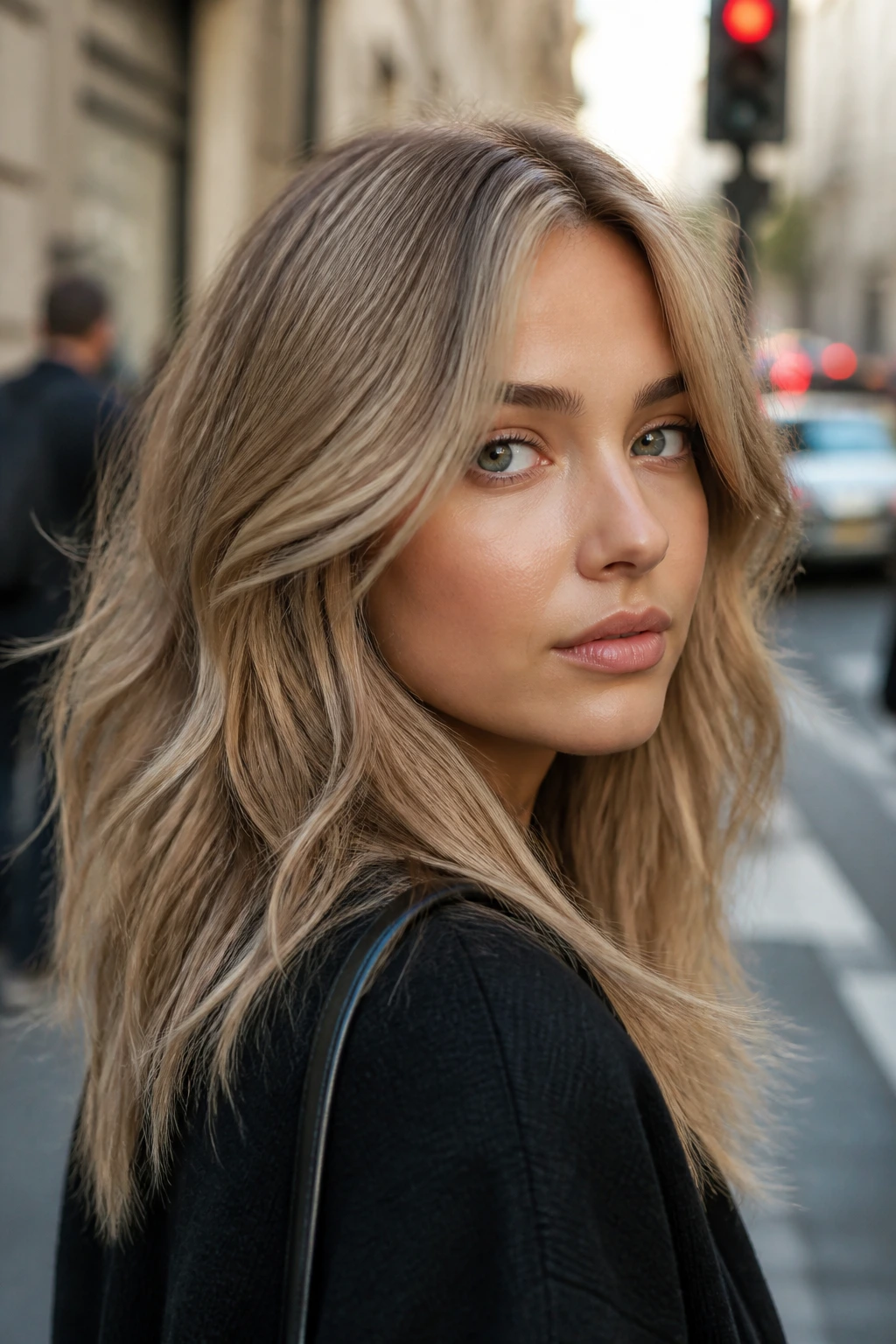
The difference between a pretty beige and a flat one usually comes down to undertone control. Beige should carry enough cool pigment to cancel brass, but not so much ash that the hair looks dusty in natural light. That middle ground is where the shade starts looking expensive instead of over-toned.
A lot of stylists use a blue-violet base when the hair lifts too yellow, then soften it back with a beige gloss so the result doesn’t look gray. That step matters more than people think. If you skip the softening pass, the hair can look cool on day one and tired by day ten. If you skip the cooling pass, you get yellow. Not a fun choice.
Porosity changes everything too. Lightened ends grab pigment faster, so the same beige formula can look creamy at the root and muddy at the bottom if the hair is thirsty. That’s why good beige usually starts with even prep, not just a pretty toner swatch. The color wheel is only half the job. The hair’s condition is the other half.
How to Choose the Right Beige for Your Base Level
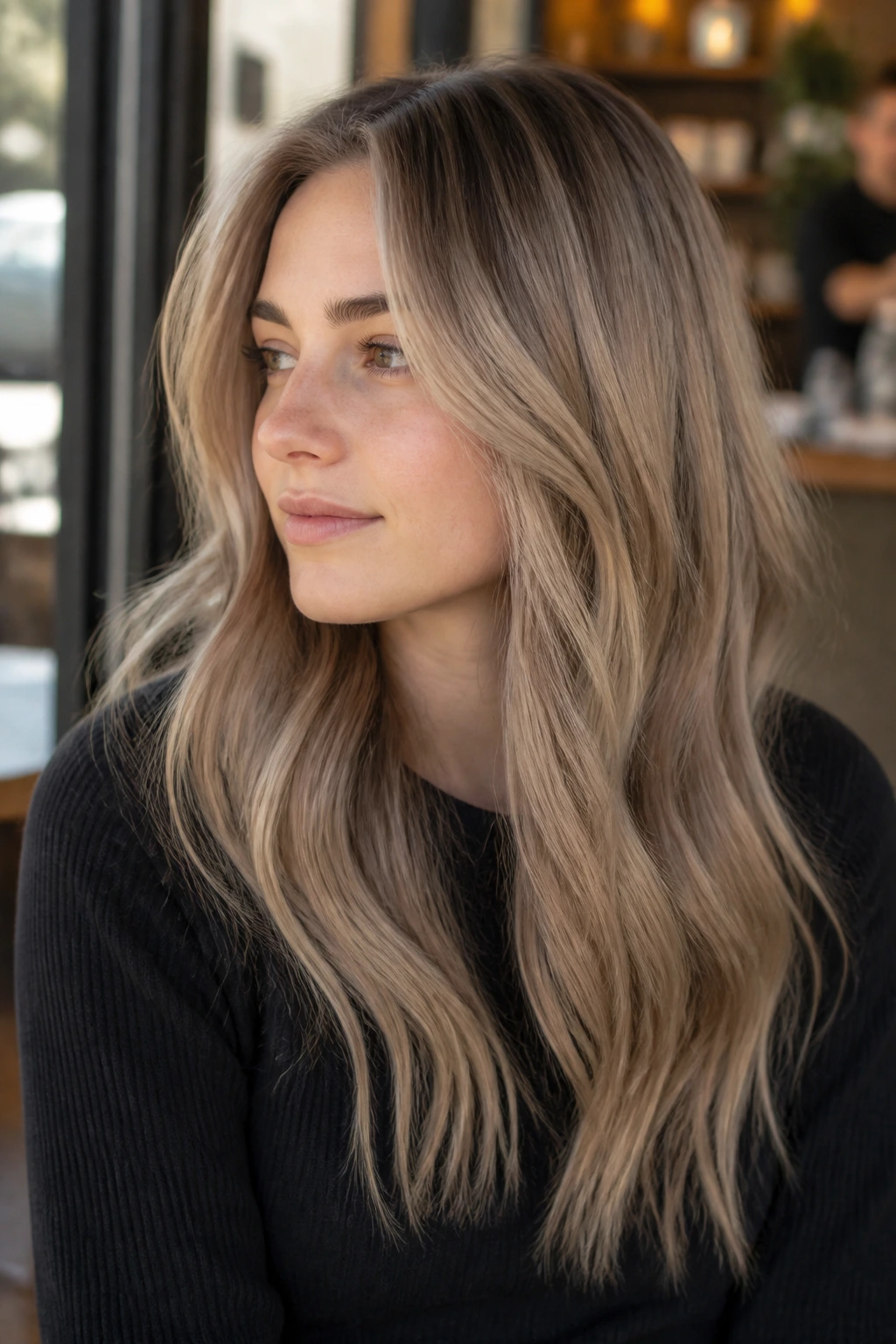
Your natural level tells you what beige can do without a fight. Level 6 and 7 brunettes usually do better with taupe beige, velvet beige, or milk tea beige because those shades keep some depth. Level 8 and 9 blondes can wear oat milk, pearl beige, or silver-beige with less effort because the hair is already bright enough to carry the tone.
If your hair pulls orange, you need more than beige alone. Beige softens the finish, but orange needs lift and neutralization first. If your hair pulls yellow, beige can work beautifully after a violet-based gloss. That distinction saves a lot of disappointment.
Ask for tone, not a fantasy color name. Say the level you want, the amount of root shadow you want, and whether you want the finish to lean smoky, creamy, or pearly. That conversation is faster than waving a photo around and hoping the result will magically match the screen.
Essential Tools for Beige Hair Color Ideas
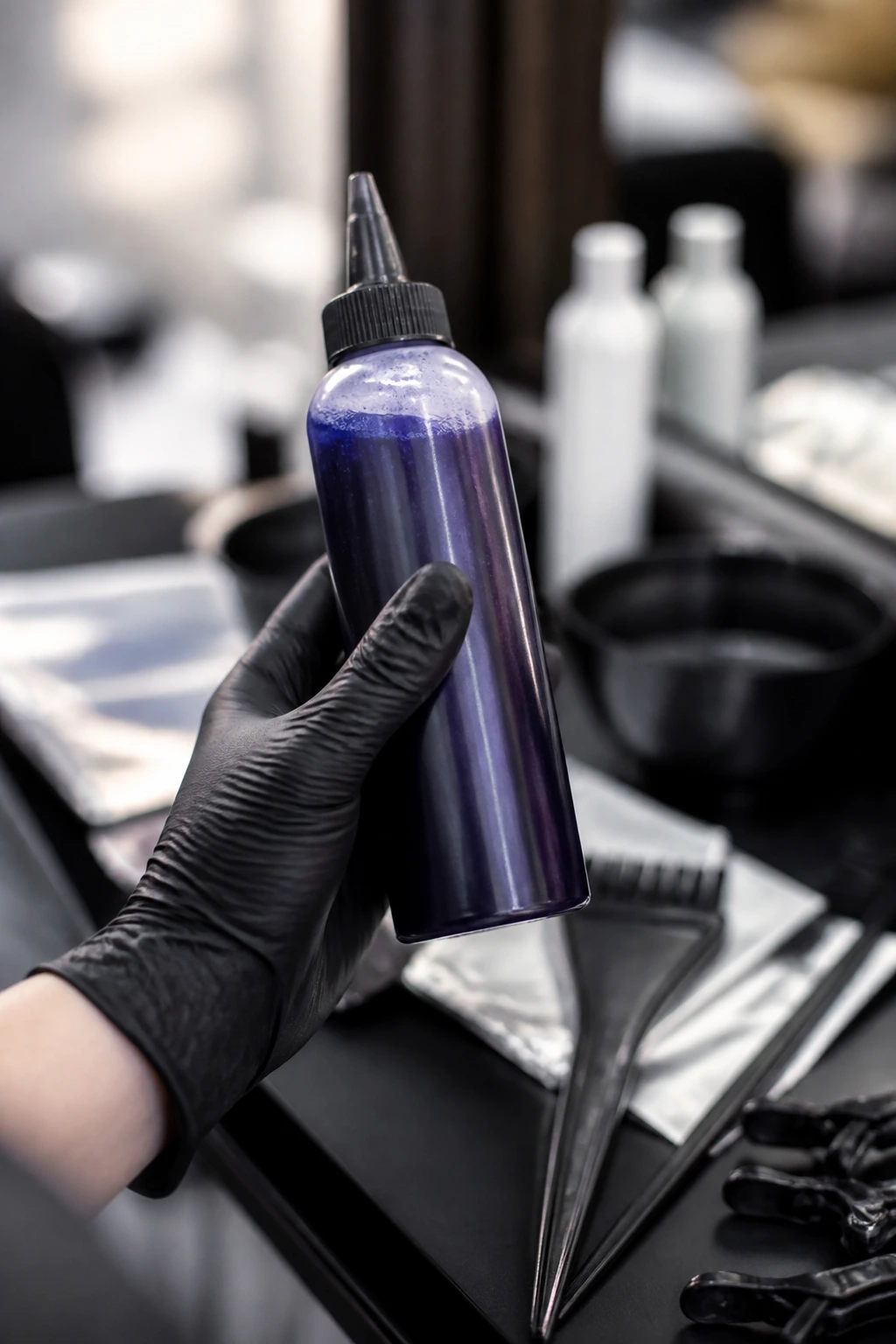
- Demi-permanent gloss: Useful for softening toner lines and nudging the tone cooler after lifting.
- Blue-violet toner: Helps cancel yellow and brass on pre-lightened blonde hair.
- Color brush and bowl: Gives you better control than trying to apply toner with a bottle on small sections.
- Sectioning clips: Keep balayage, highlights, or root smudges neat while you work.
- Tail comb: Helps place clean partings and fine face-framing pieces.
- Gloves: Protect your hands from stain and keep the formula cleaner while you work.
- Foils: Useful for foilyage, brighter beige ribbons, or any piece that needs a stronger lift.
- Purple shampoo: Good for maintenance, but not a substitute for proper toning.
- Color-safe conditioner: Helps keep the beige finish from fading too fast.
- Heat protectant spray: Beige tones dull fast when hair is overcooked with hot tools.
- Microfiber towel: Less rough on lightened hair than a standard bath towel.
- Leave-in with UV protection: Helpful if your hair sees a lot of sun, which can push beige toward yellow.
How to Style Beige Hair So the Tone Shows Up
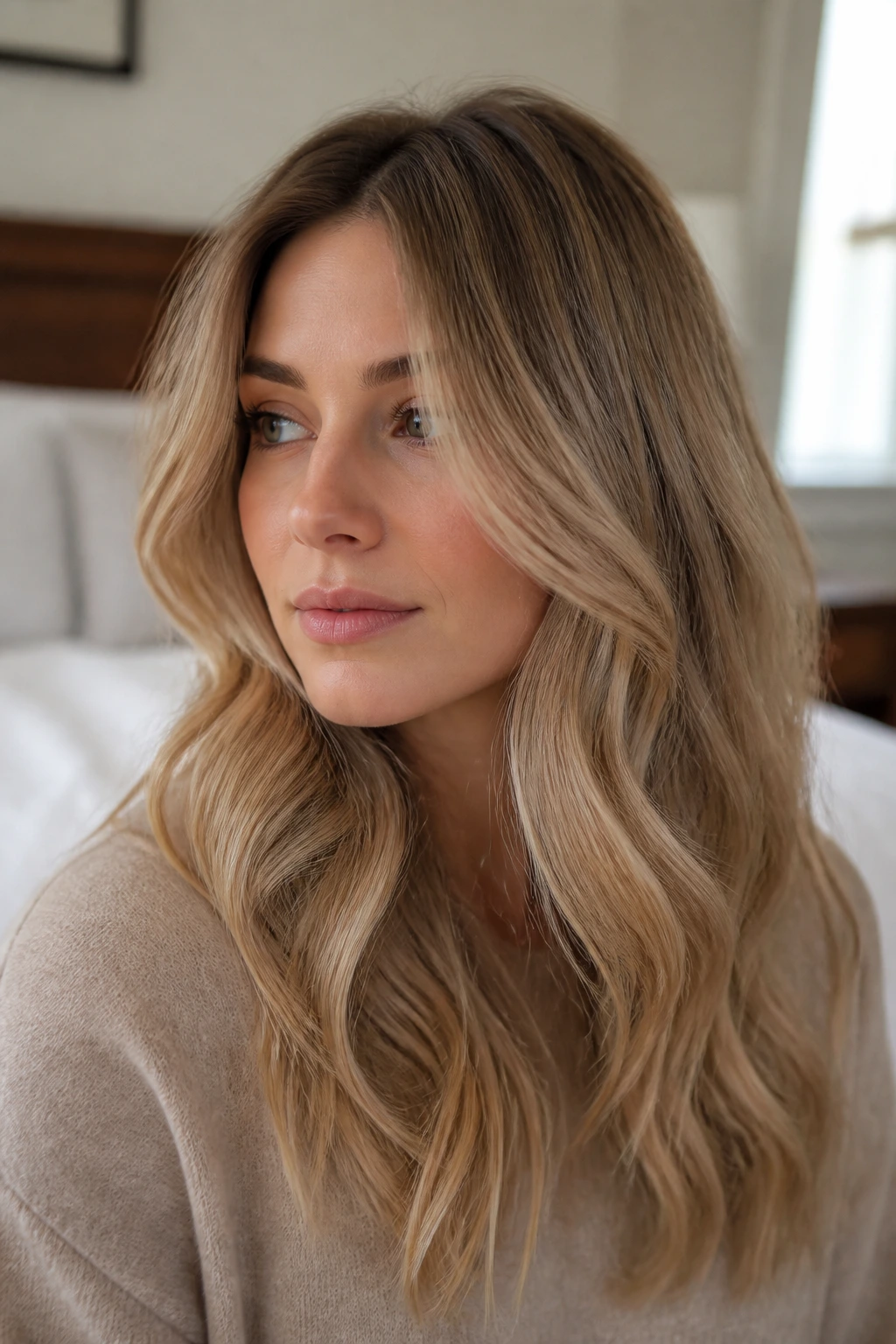
Soft waves are the easiest way to show off beige because they give the color a place to move. A flat iron can work too, but it tends to compress the dimension. If the hair is curled or bent in a loose pattern, the cool and warm pieces separate just enough to let the beige read properly.
I also like beige hair with a clean gloss finish rather than heavy texture spray. Too much dry product can make the color look dusty, especially on paler shades like pearl beige or oat milk beige. A light serum on the ends is usually enough.
Parting matters more than people think. A side part can show more of a beige money piece or face-framing highlight, while a center part often makes the root shadow look more deliberate. Tiny change. Big effect.
How to Keep Beige Hair from Turning Yellow
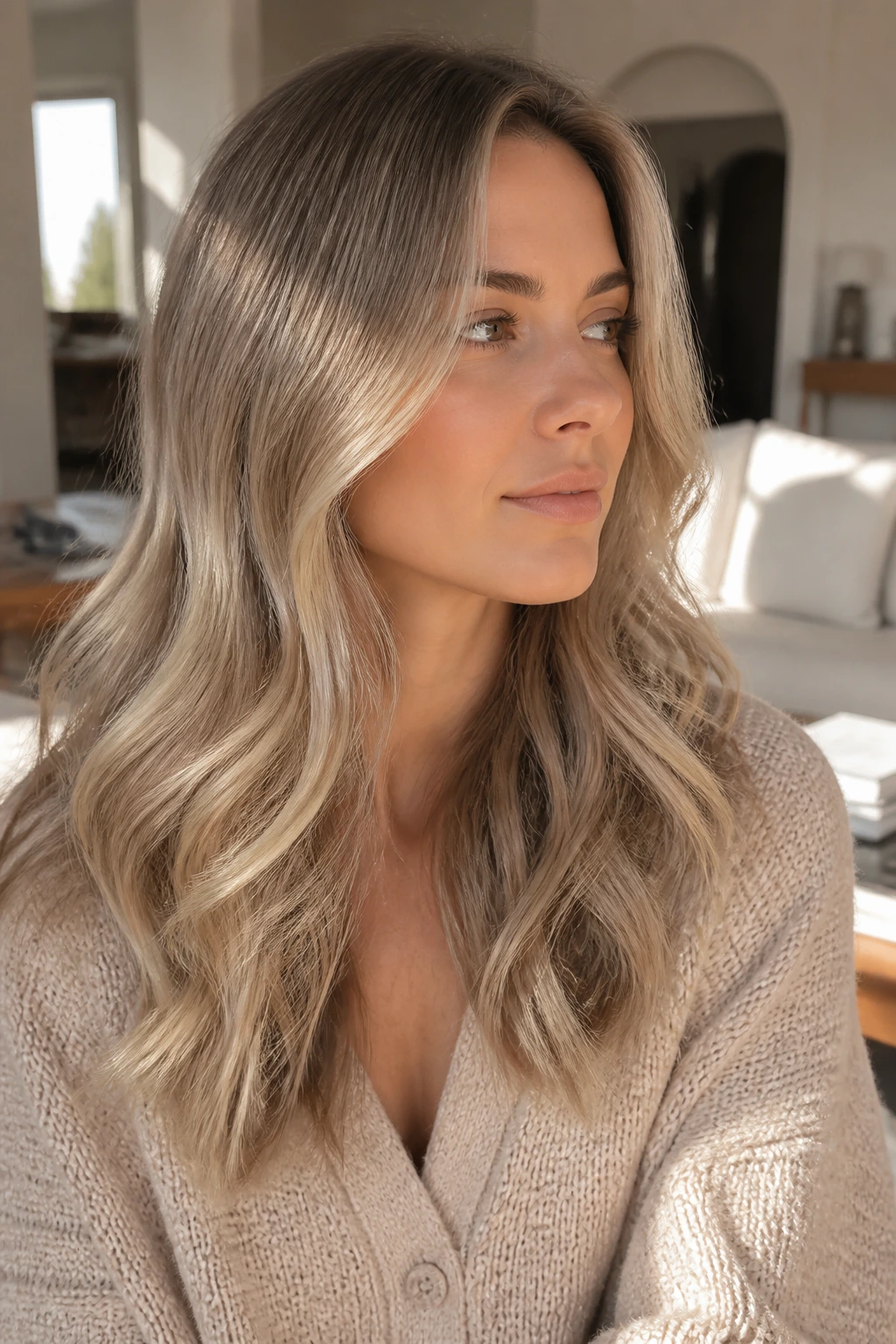
Beige hair needs a simple but steady maintenance rhythm. Wash it too often and the toner fades. Use too much purple shampoo and the hair can start looking dull or gray. The sweet spot is usually one or two washes a week with purple shampoo as needed, not every wash.
A gloss refresh every 4 to 6 weeks keeps the tone soft. If the hair is porous or heavily highlighted, some people need it closer to the 3-week mark. The point isn’t to chase perfect color forever. It’s to keep the beige from drifting into brass or ash fatigue.
Heat and sun are the two things that wear beige down fastest. A heat protectant before styling and a UV filter when you’re outside make a real difference. It’s boring advice. It also works.
Common Mistakes to Avoid With Beige Hair Color
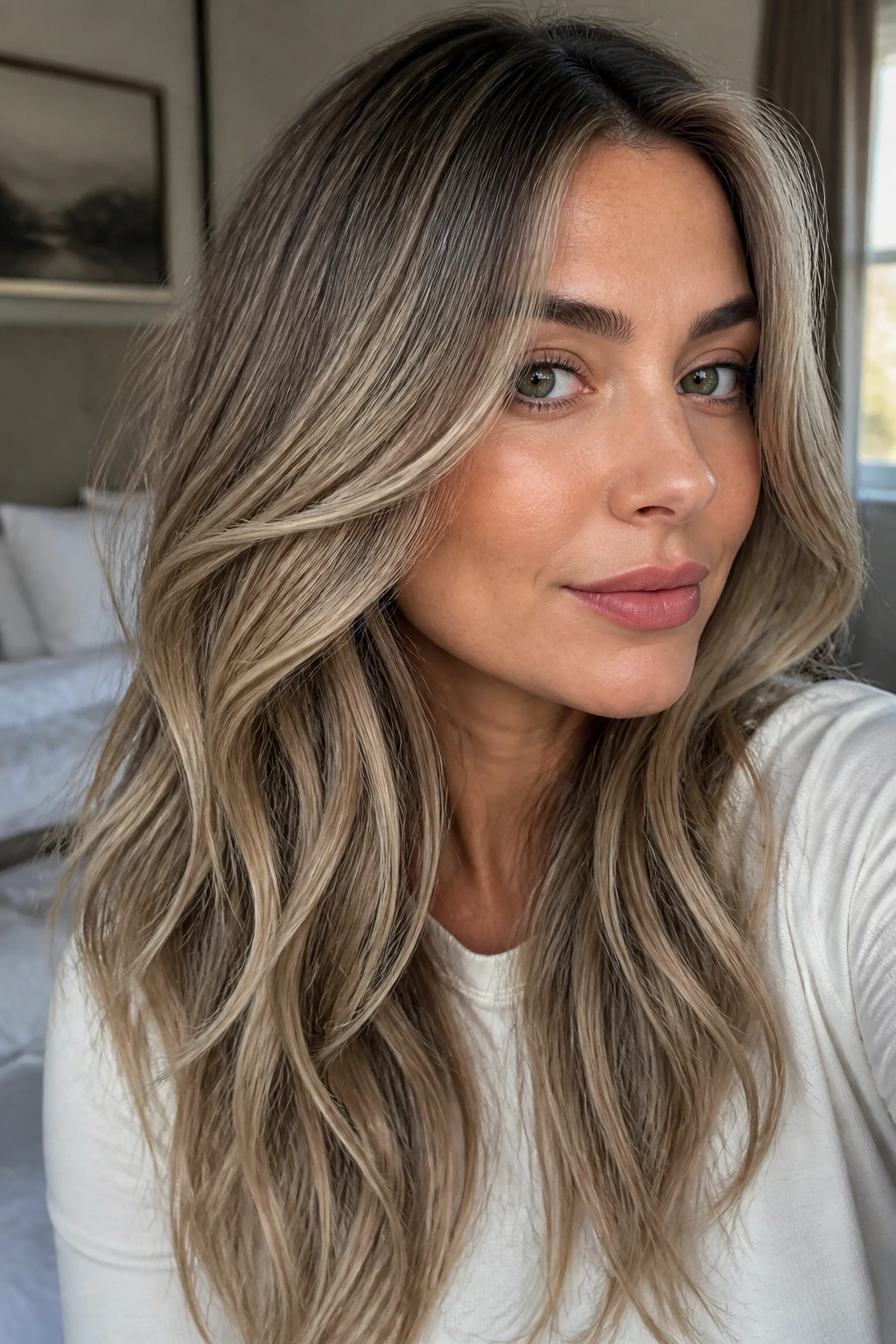
-
Choosing beige without naming the undertone: If you say only “beige blonde,” you may get something too warm, too gray, or too yellow. Fix it by asking for cool beige, smoky beige, or pearl beige and naming the level.
-
Over-toning porous ends: Hair that’s been lightened a lot can soak up ash pigment and look muddy. The fix is a softer formula on the ends and a shorter processing time.
-
Skipping root depth: One flat beige color across the whole head can look wiggy or hollow. A soft shadow root gives the shade shape.
-
Relying on purple shampoo alone: It can keep brass in check, but it will not correct the whole tone. If the color has shifted yellow or orange, you need a gloss or toner.
-
Lifting too far for the look: Beige does not need to be platinum to be pretty. If the hair is pushed too light, the result can lose softness and start looking brittle.
Ways to Bend Beige to Fit Your Hair
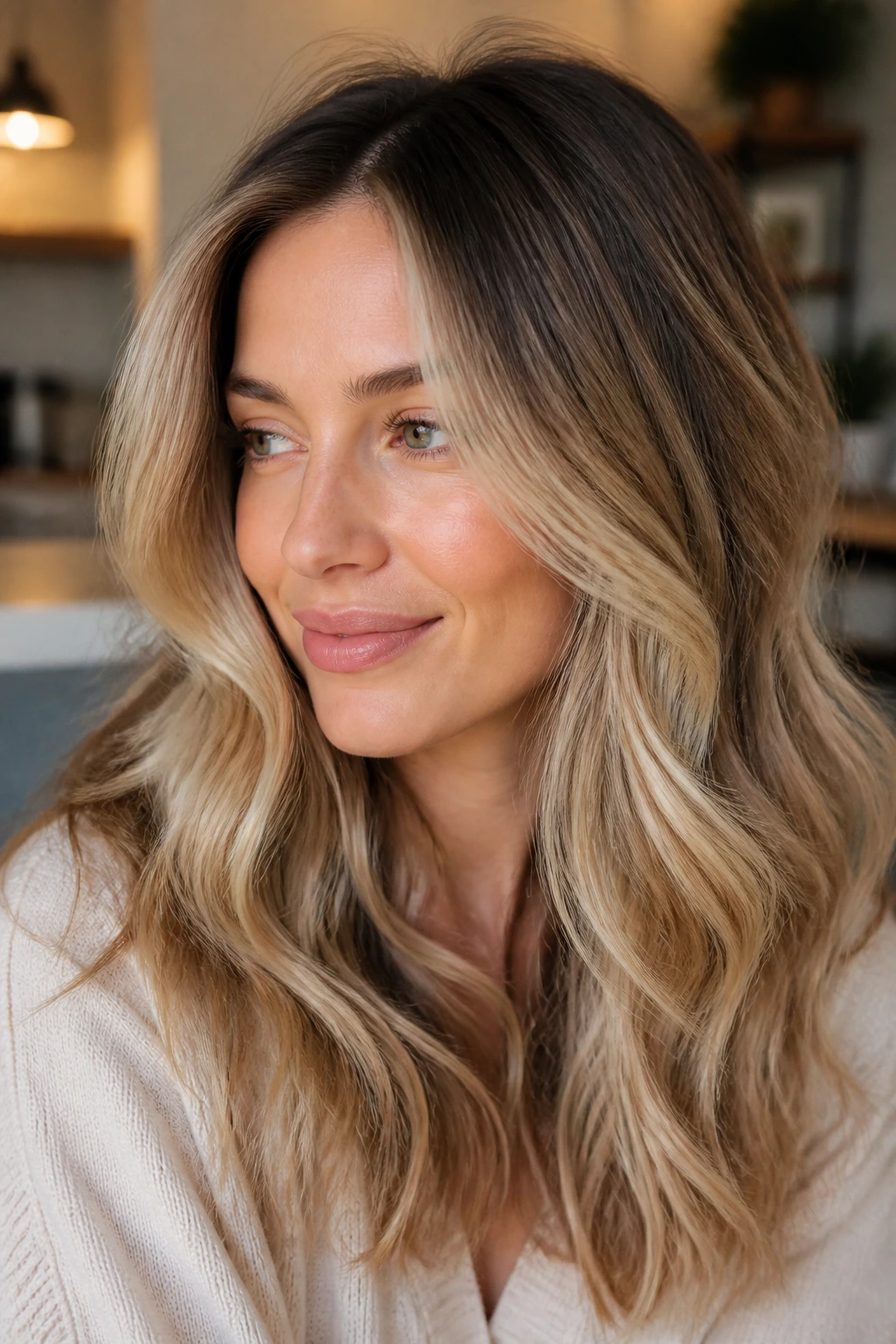
Brunette-First Beige: Keep more depth at the root and through the interior, then add beige ribbons just where the light hits. This works well if you want softness but do not want to abandon brunette energy.
Curly Beige Ribboning: Paint a few cooler beige pieces around the face and outer curl pattern instead of coating every strand. Curls keep their shape better when the dimension is placed, not smeared.
Rooted Beige Blonde: Leave a deeper root shadow and let the mids float into a soft beige blonde. The grow-out is easier, and the color looks more natural on medium to dark blondes.
Pearl-Heavy Beige: Push the tone lighter and cleaner for a softer, more polished blonde result. It suits finer hair and shorter cuts that need a bit of brightness around the face.
Smokier Beige Brunette: Add more taupe and ash to the gloss for a darker, cooler finish. This is a smart path for anyone who wants beige in the brown family rather than the blonde one.
Make Beige Hair Last Longer Between Appointments
A beige tone survives when you treat it gently. Lukewarm water is kinder than hot water, especially on highlighted ends. A sulfate-free shampoo helps, but the bigger win is reducing how often you wash the hair in the first place.
If the hair is lightened, a bond-building treatment every week or two can keep the ends from getting rough and porous. That matters because rough ends grab toner unevenly. Smooth hair holds beige better. Plain and simple.
I’d also keep one clarifying wash in the rotation, but not often. Once every few weeks is enough for most people. Too much clarifying strips the soft beige glaze right off the hair and leaves you chasing the toner bowl again.
Frequently Asked Questions
Will beige hair color work on dark brown hair?
Yes, but usually not as a single-step color. Dark brown hair needs lift first, then a beige gloss or toner to keep the final shade cool and soft. If the hair is only slightly lightened, taupe beige and milk tea beige usually look more believable than a pale pearl blonde.
What’s the difference between beige blonde and ash blonde?
Ash blonde leans cooler and dustier, while beige blonde has a softer balance between cool and muted warmth. Ash can look gray or smoky very fast; beige keeps a little cream in the formula so the hair still looks dimensional. Beige is usually easier to wear on a daily basis.
How often should beige hair be toned?
Most people need a gloss refresh every 4 to 6 weeks. If your hair is porous, very light, or washed often, the tone may fade sooner. Purple shampoo can stretch the time between glosses, but it should not replace them.
Can I get beige hair at home?
For a small tonal shift on already-light hair, yes. For darker bases or major lift, I’d be cautious. Beige depends on the hair being lifted evenly first, and that part gets tricky fast if your hair resists lightening or has old color on it.
Why does my beige hair look yellow after a week?
Usually the toner was too soft for the amount of warmth in the hair, or the hair was washed too often. Hard water, heat styling, and sun can all speed up fading too. A violet-based gloss or a slightly cooler maintenance shampoo usually helps.
Is beige hair good for cool skin tones?
Yes, usually very good. The muted finish complements pink, rosy, and neutral-cool undertones better than strong gold does. If your skin looks washed out by very warm blonde, beige is often the safer move.
What if my beige hair turns muddy or gray?
That usually means the ash level was too strong, especially on porous ends. A clarifying wash can help remove some surface buildup, but the real fix is a softer beige gloss next time. Ask for more cream and less smoke in the formula.
Does beige hair need a lot of upkeep?
Less than platinum, more than a natural brunette. The color fades more gracefully if you keep up with glossing, gentle shampoo, and heat protection. Rooted beige styles are the easiest to live with if you want fewer salon visits.
A Shade That Stays in the Soft Zone
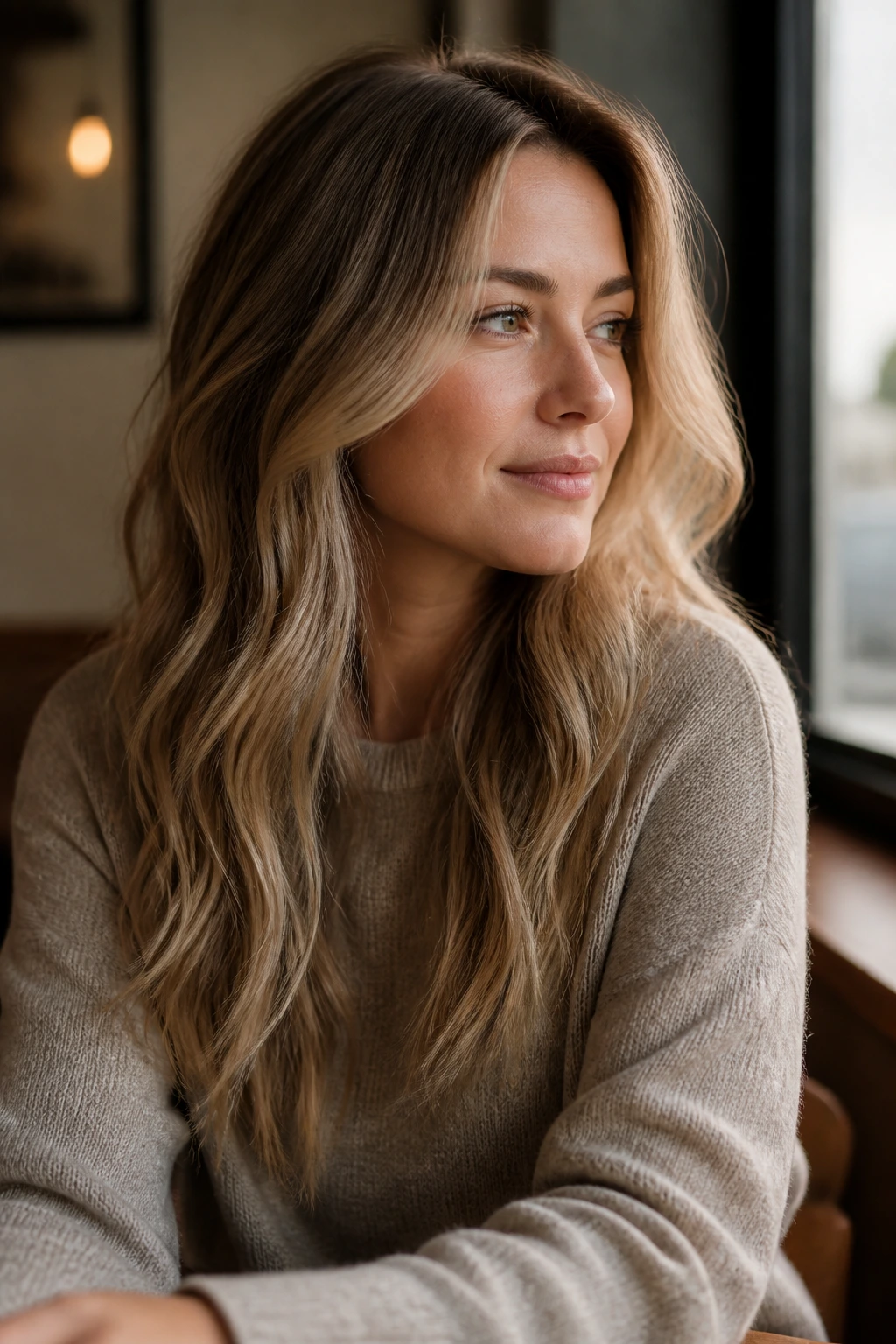
Beige hair has staying power because it solves a real problem: it gives you lightness, but it keeps the tone calm. That balance is why so many cool soft tones look better in beige than in sharper blonde shades. The color lets the face breathe.
I’ll always take a good beige over a brassy blonde that needs constant apology. The best versions are the ones with a root that makes sense, a midtone that stays soft, and ends that still move in the light. That’s the whole trick, and it’s not small. It’s the difference between hair that looks dyed and hair that looks like it belongs to you.
