



Thin hair can look twice as flat after one heavy foil job. The wrong highlight placement turns the part into a bright, obvious line and leaves the rest of the head looking sparse by comparison. The right one does the opposite. It makes the hair read fuller, softer, and more alive before anyone has a chance to study the strands up close.
The best highlight ideas for thin hair are not the loudest ones. They’re the ones that respect how light lands on the crown, along the part, and around the face. A few fine slices in the wrong place can expose the scalp; a lot of tiny, well-placed pieces can blur it. That’s the whole game.
And there’s a difference worth saying out loud: thin hair is not always the same as fine hair. Thin usually means lower density, while fine means the individual strand is small. The color strategy changes a bit depending on which one you’re dealing with, and the smartest looks work with that instead of pretending it doesn’t matter.
Why These Highlight Ideas Work Better on Thin Hair
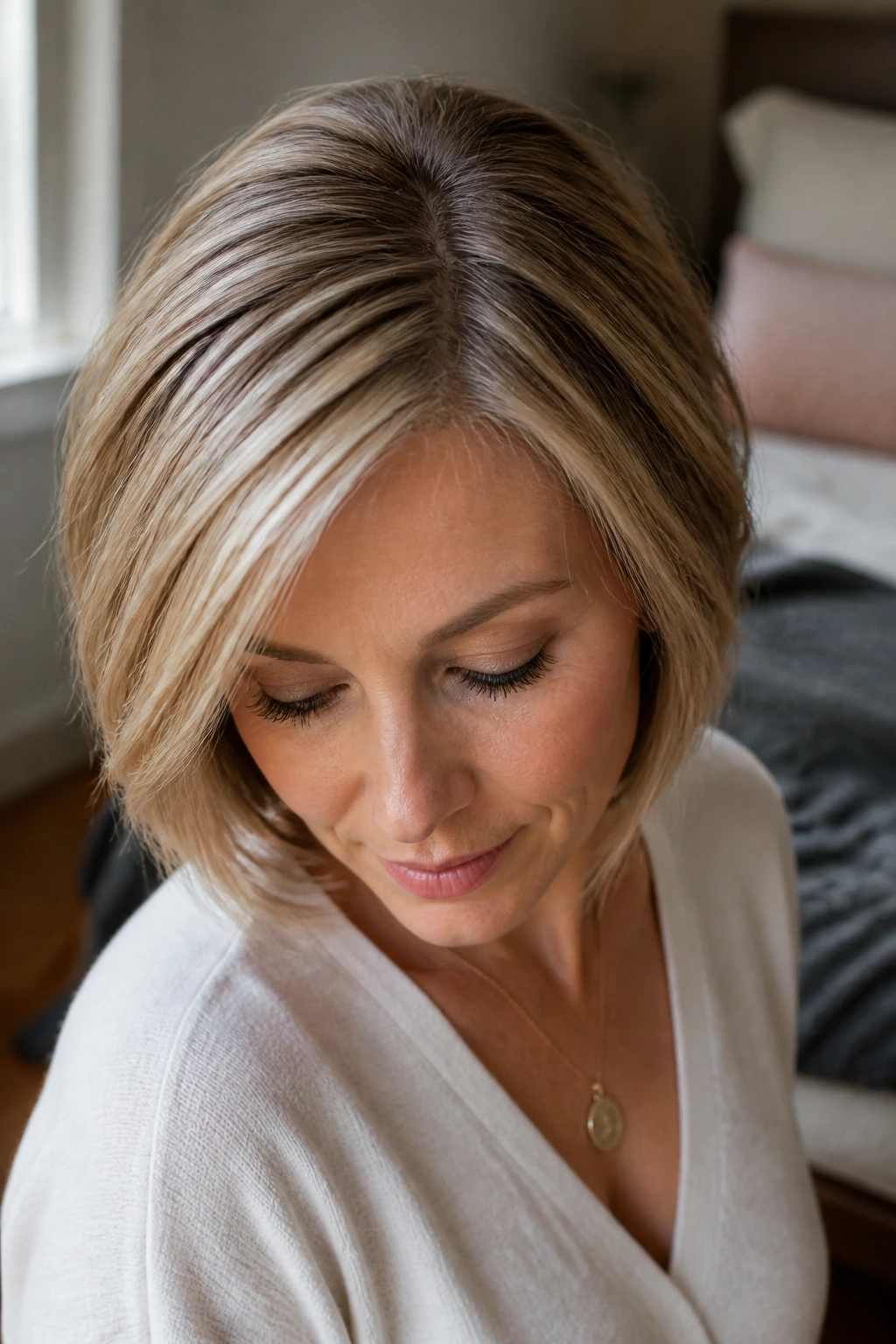
-
Fine Weaving Beats Big Foils: Tiny woven pieces scatter light across the head, which helps the hair read as denser instead of striped and separated.
-
Root Depth Helps More Than People Think: Leaving a little darkness at the scalp keeps the crown from looking see-through and gives the hair somewhere to “start.”
-
Soft Contrast Looks Fuller Than Loud Contrast: A beige blonde ribbon or caramel veil often looks richer on thin hair than an icy stripe that calls attention to every gap.
-
Face-Framing Brightness Pulls the Eye Forward: Brightness near the cheeks and temples gives the illusion of width where hair is usually most visible.
-
Lowlights Are Not the Enemy: A few deeper strands can make the lighter pieces look more intentional and stop the whole head from reading flat.
-
Placement Matters More Than Lift: One carefully lifted panel in the right place can do more than a full head of pale foils packed too tightly at the scalp.
1. Baby-Lights Along the Part
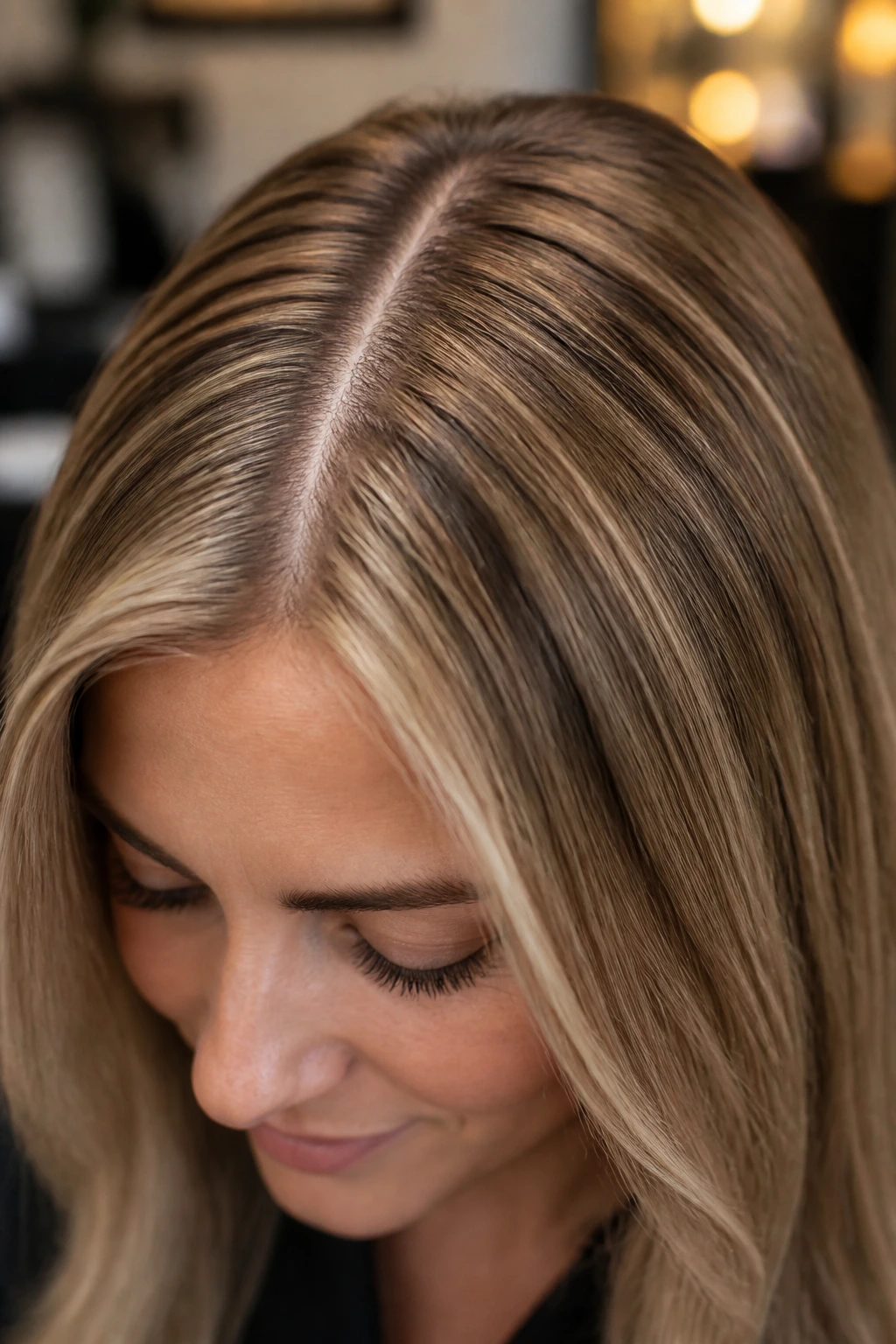
Baby-lights are the quiet overachiever of thin-hair color. They use ultra-fine slices—think 1/16 to 1/8 inch—to soften the part instead of drawing a hard line through it. On a sparse crown, that tiny weave makes the top look threaded rather than exposed.
Ask for the lightest pieces to stay close to your base shade, usually one to two levels lighter, with a beige or neutral toner. That keeps the effect soft. If the foil is too wide or too pale, the scalp can start to show through the lightest stripe and defeat the point.
2. Rooty Beige Blonde
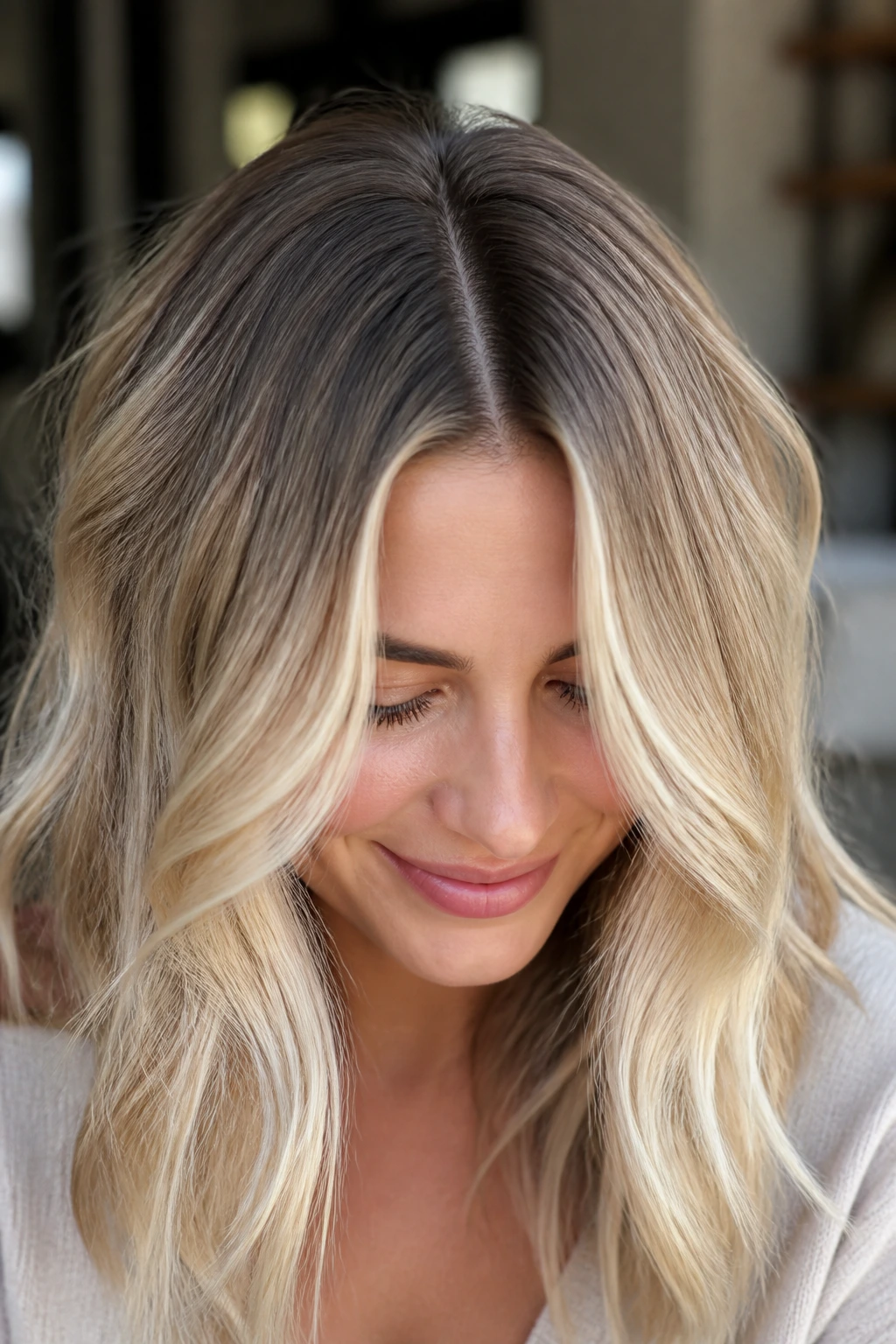
A rooty beige blonde keeps the crown a shade or two deeper while the mids and ends go lighter and softer. That darker root is not a cover-up. It’s a visual anchor. Thin hair tends to look fuller when the top area has a little shadow and the brightness lives lower down.
This is one of those looks that works especially well if you wear your hair in a middle part and don’t want to fuss with touch-ups every few weeks. The beige tone matters too. Beige blonde reads less brittle than icy platinum, which is a gift when the strands are already delicate.
3. Face-Framing Money Piece
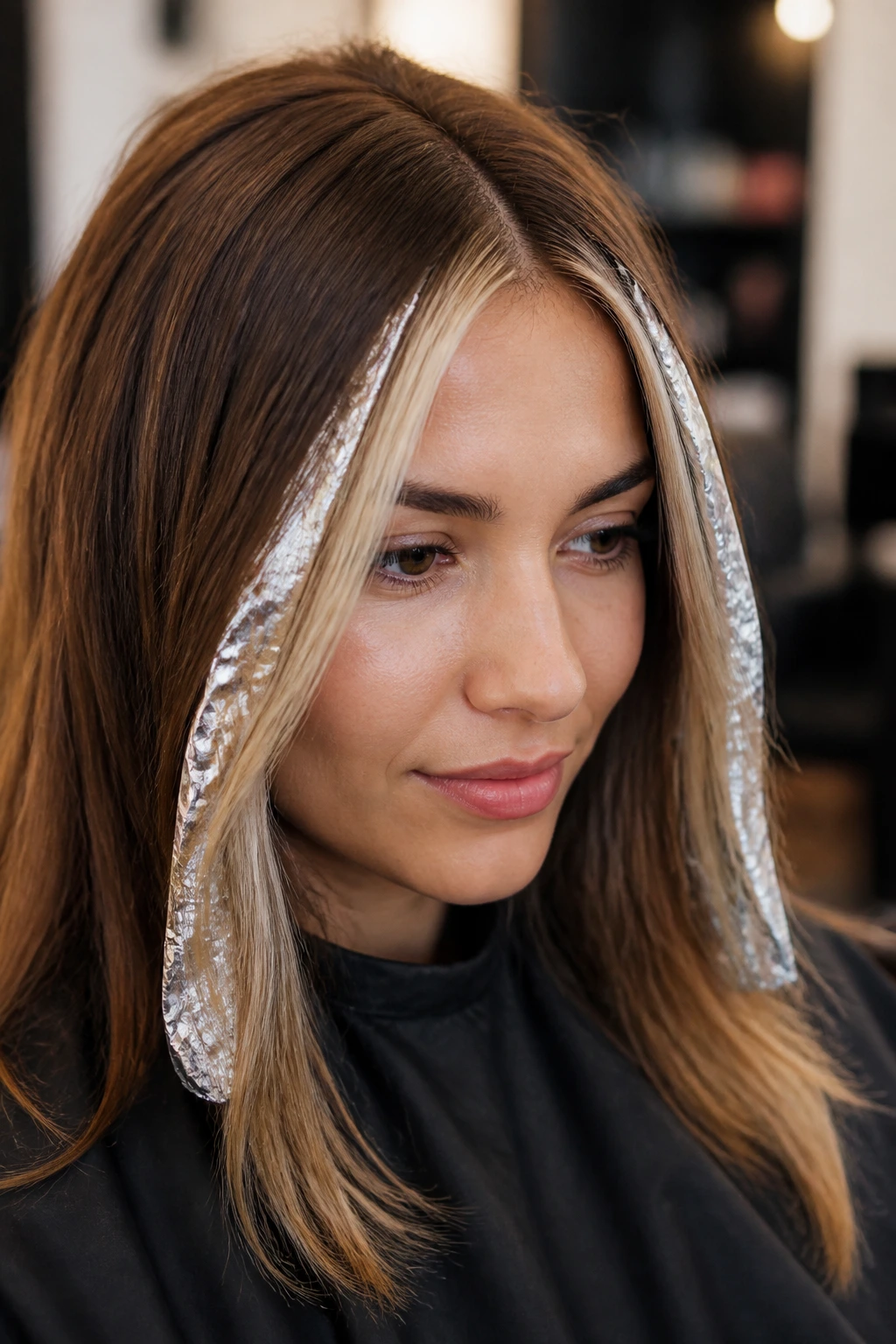
A bright money piece can do a lot for thin hair, but only if it’s kept narrow. Two slim foils on each side of the face, lifted just enough to frame the cheekbones, can make the whole cut look fuller in front. That matters because the front is where thin hair often looks the most wispy.
I prefer this look when the rest of the head stays soft and grounded. One strong front piece plus quiet color everywhere else gives you contrast without turning the whole head into a high-maintenance block of blonde. If the hairline is sparse, stay a touch deeper than you think you need. A slightly softer highlight looks denser than a blinding stripe.
4. Mushroom Brown Ribbons
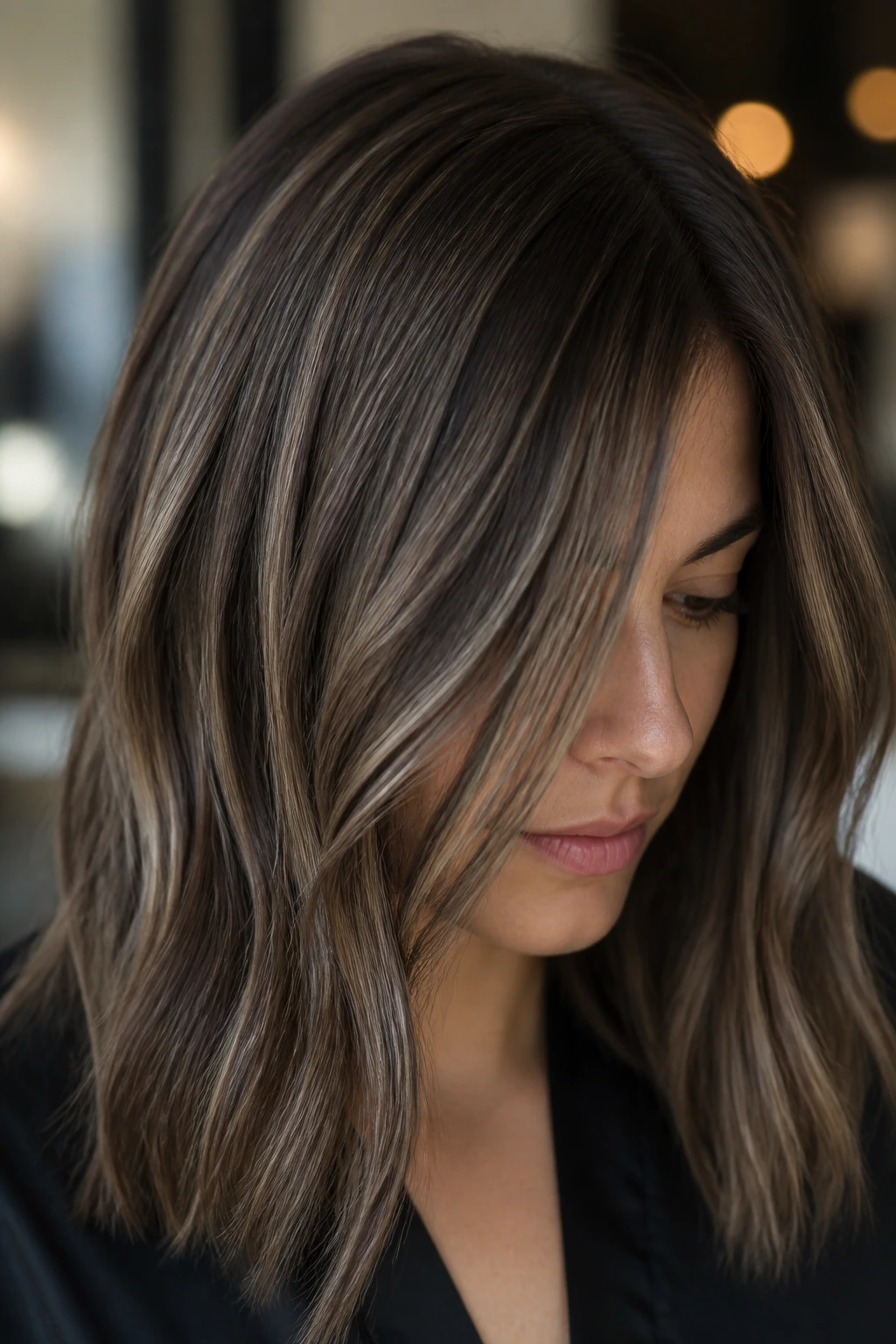
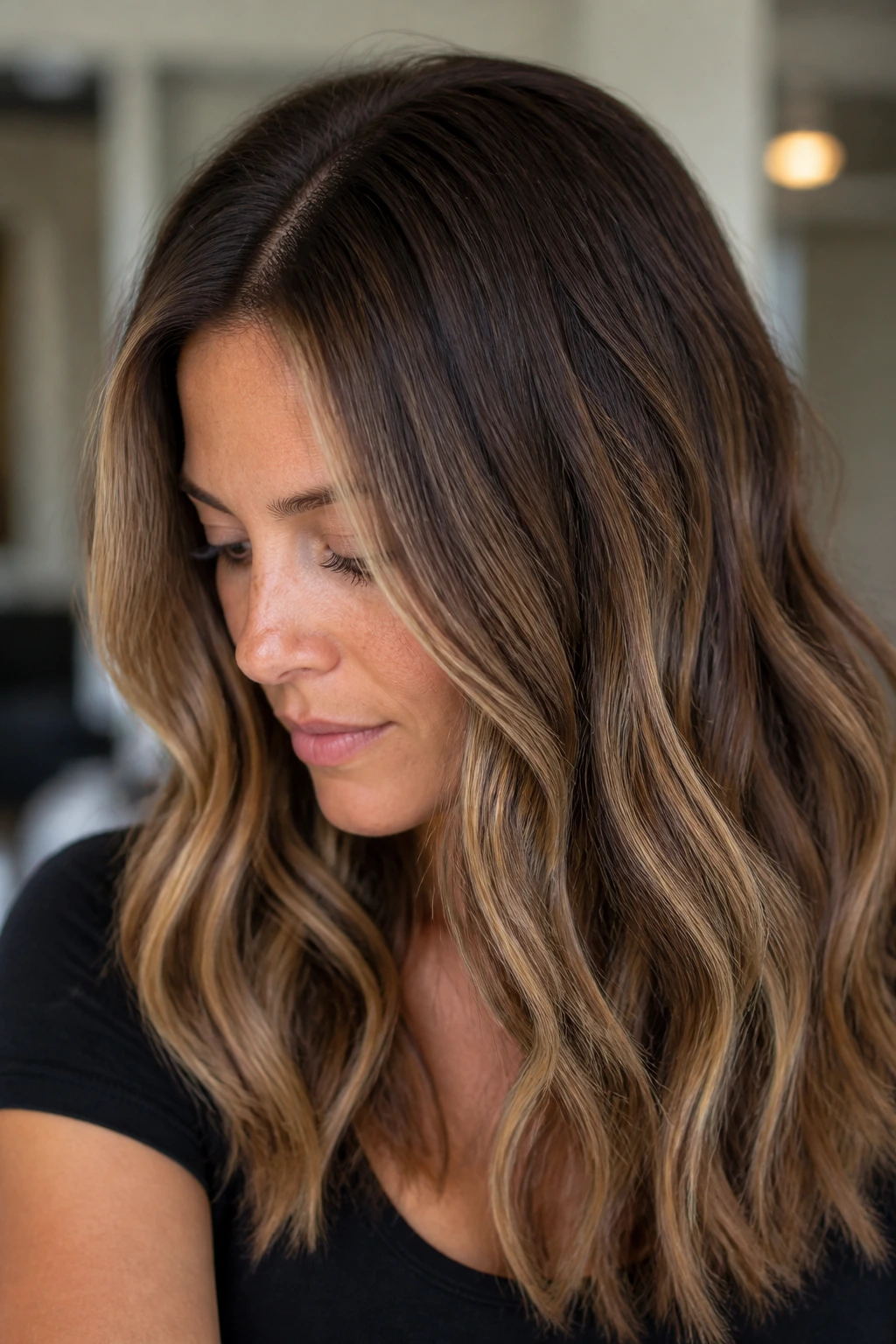
Mushroom brown is what happens when brunette gets a cool, earthy glow instead of a red or golden one. On thin hair, that cooler ribboning can be a relief. It breaks up flatness without shouting, and it keeps the surface looking smooth rather than fluffy.
The trick is to paint the lighter strands in very fine ribbons through the mid-lengths, not in chunky panels. Ask for a beige-brown gloss after the lightener rinses. That keeps brass from sneaking in and turning the whole look orange, which is usually the first thing that makes thin brunette hair feel loud instead of lush.
5. Caramel Veils
Caramel veils are warm, soft, and much easier on sparse hair than big golden streaks. The color sits somewhere between honey and toffee, which gives brunette hair a plush look without making the contrast too sharp. Thin hair often benefits from warmth because warmth reflects light in a way that feels cushioned, not harsh.
This is especially useful if your hair is naturally dark and you do not want to bleach it into a fragile mess. A few caramel pieces around the outer layer and through the sides are enough. Keep them fine. If they’re thick, the color can start to look painted on instead of blended in.
6. Honey Micro-Highlights
Honey micro-highlights are the polished cousin of old-school streaking. They’re tiny, repeated, and woven across the top layer so the hair catches light in small flashes instead of one obvious band. That flash matters. It makes the hair move visually, which helps it read fuller.
I like this on medium brown hair that’s starting to look a little tired at the crown. Honey keeps the look warm and soft, not brassy. If you’re asking a colorist for this, mention that you want the lightest pieces visible only when the hair moves. That one sentence saves you from chunky foils.
7. Ash Brown Smoke Lights
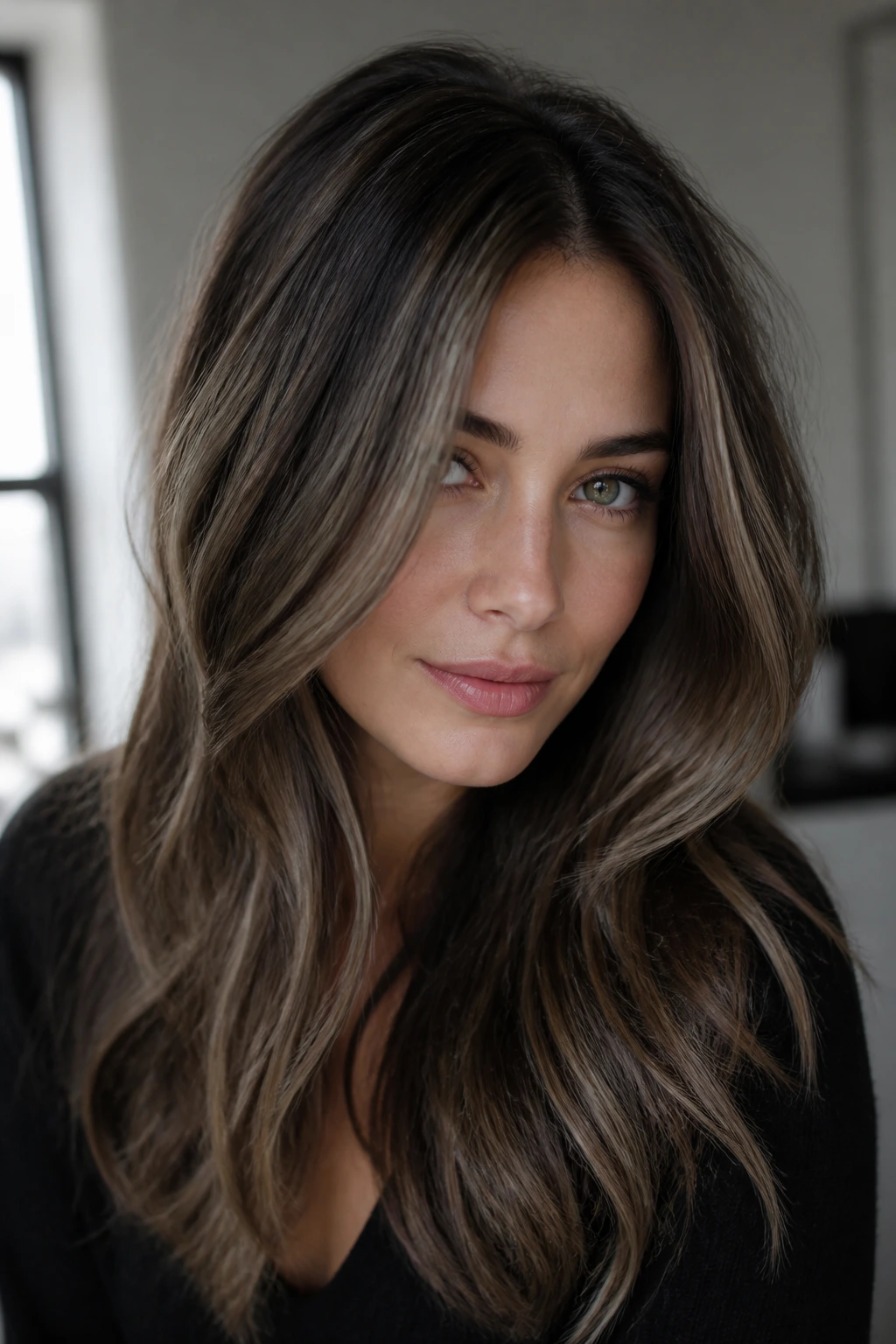
Ash brown smoke lights are for the person who hates warmth and wants the color to feel cool, expensive, and a little muted. Thin hair can take ash beautifully because the cooler tones stop the hair from looking too bright or translucent. The result is subtle, but it’s not dull.
The key is to keep the weave fine and the lift modest. You want smoke, not gray dust. On a natural brunette base, a cool brown highlight can make the hair look denser because the eye reads the whole surface as one rich tone with soft variation instead of a patchwork of lighter streaks.
8. Copper Peekaboo Pieces
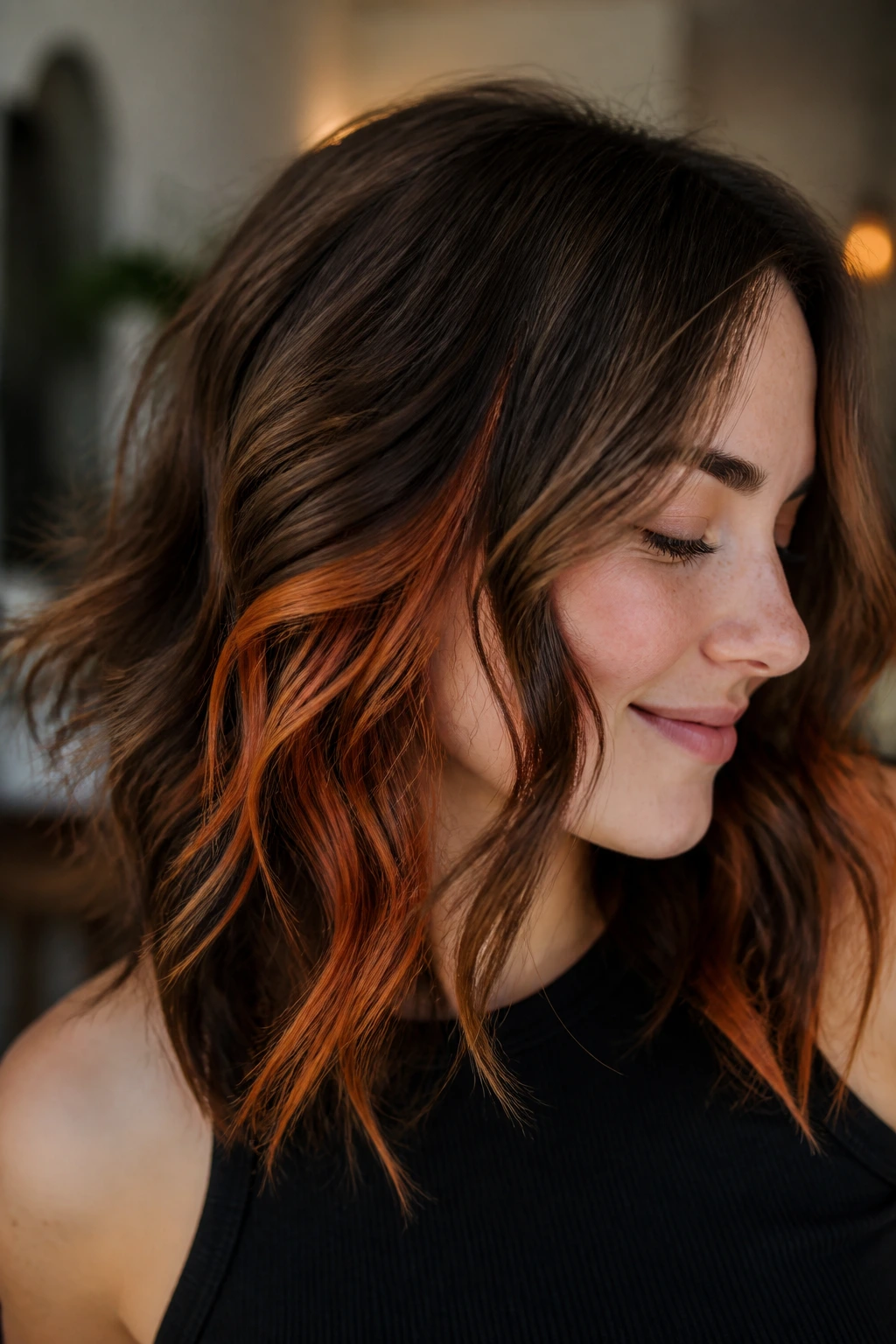
Copper peekaboo pieces are a good answer when you want color that shows up in movement, not at first glance. The brighter copper sits under the top layer or deeper in the sides, so it flashes when hair swings or gets tucked behind the ear. That makes thin hair feel alive without putting all the emphasis on the scalp line.
This works well on dark blondes and brunettes who want warmth but not a full red commitment. Keep the copper thin and under-layered. Too much and it starts to look loud; too little and it disappears. The sweet spot is a few hidden ribbons that catch light when the hair bends.
9. Champagne Blonde Ends
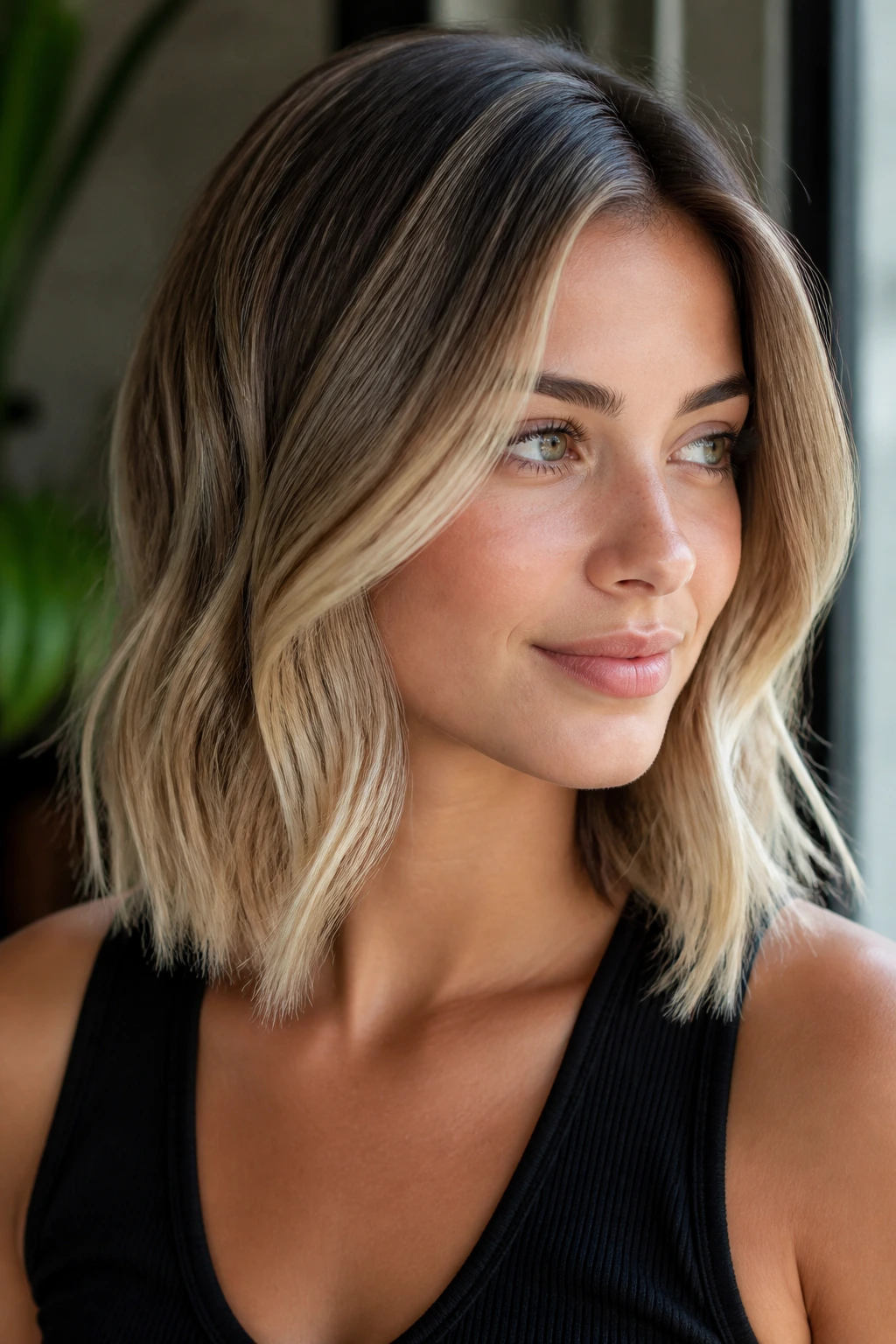
Champagne blonde ends can make thin hair look airier in a good way, especially on a blunt bob or a long lob. The shade is pale, but not white. It has enough beige in it to keep the ends from looking brittle, which is the risk when you push fine hair too far into icy territory.
This works best when the roots stay deeper and the ends get the brighter tone. That contrast gives the cut a little lift. I’d avoid this on very wispy, broken ends; it will only show damage. On healthy hair, though, the lighter tips make the perimeter of the haircut feel cleaner and more deliberate.
10. Ribbon Balayage from Mid-Lengths
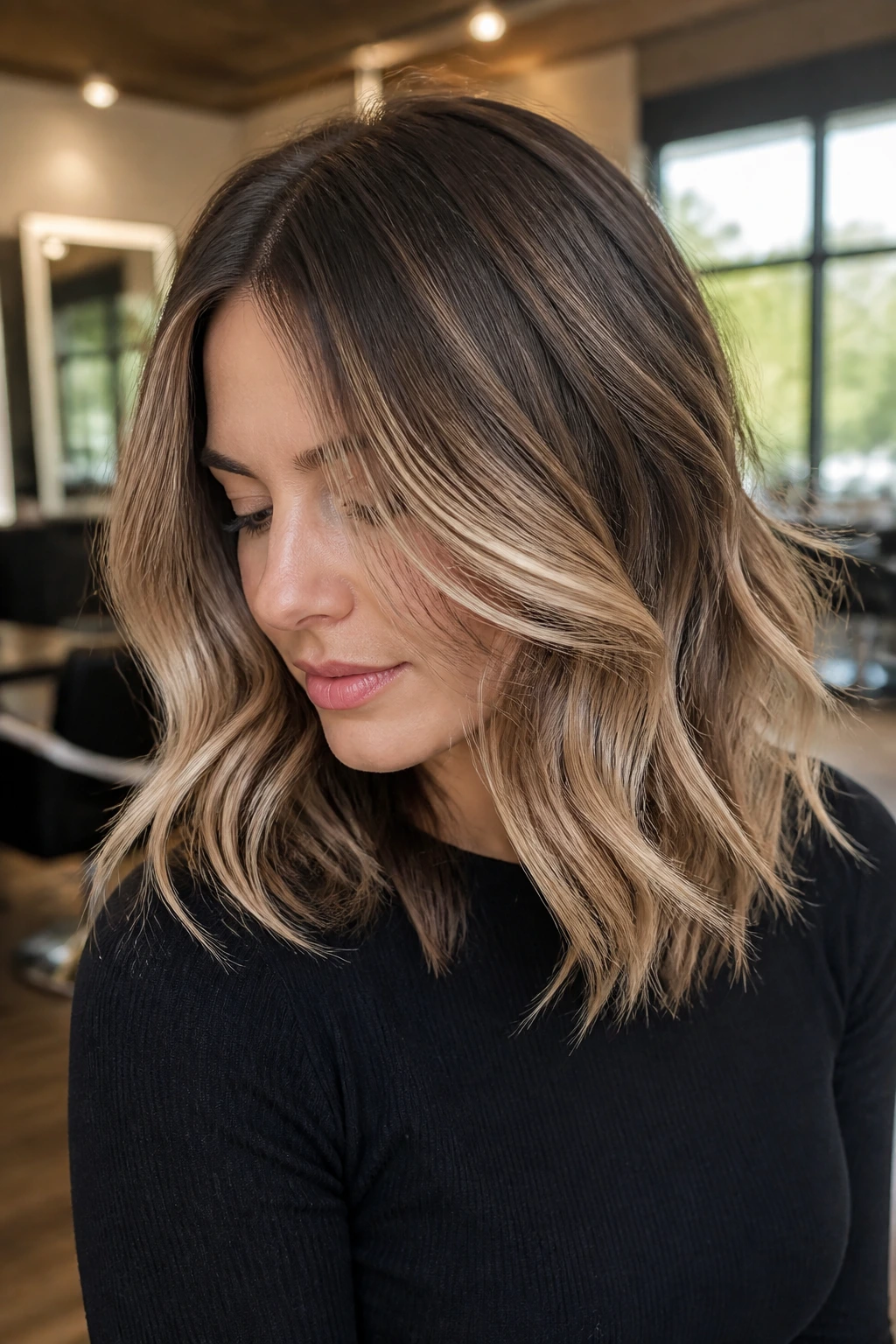
Ribbon balayage starting below the cheekbone is one of the smartest placements for thin hair. It keeps the crown darker, which helps the part look fuller, and it lets the bright pieces fall where the hair actually moves. That movement is what sells the whole look.
If you want something soft but not shy, this is a strong lane. The ribbons should be narrow enough to blend into the cut, not wide enough to read as a stripe. On layered hair, this technique keeps the ends from disappearing into the background and gives the whole shape a more finished edge.
11. Contour Highlights Around the Hairline
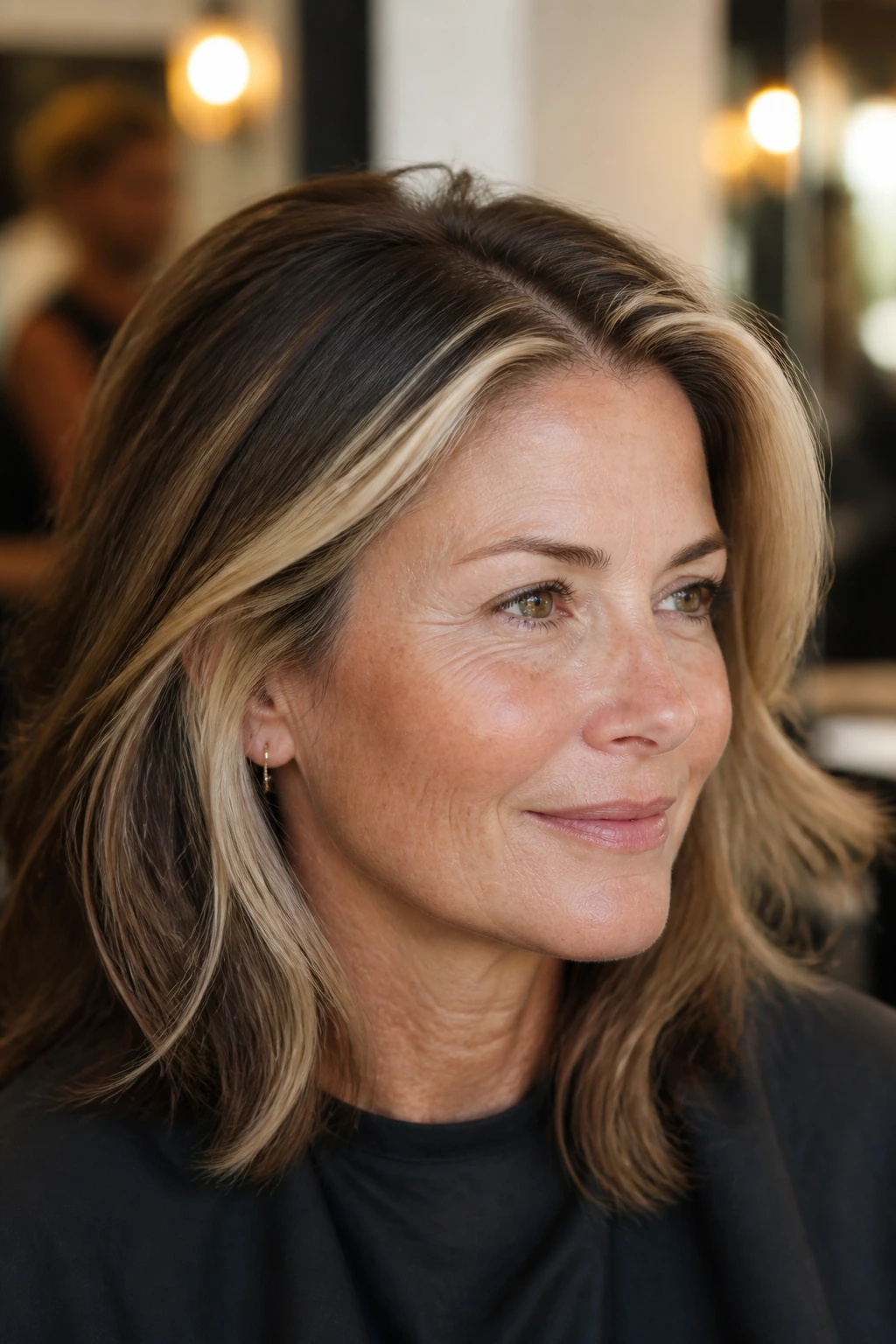
Hairline contour highlights work like makeup contouring, only quieter. The brighter pieces are placed around the temples, just in front of the ears, and sometimes a touch above the sideburn area. That pulls brightness toward the face and keeps the rest of the head from getting overloaded.
On thin hair, this is a nice compromise if you want a visible change but don’t want a full-head transformation. The hairline gets the attention, the crown stays soft, and the result feels deliberate. A few thin pieces near the part can help too, but don’t crowd them. The whole look falls apart if the front turns into a wide blond band.
12. Bronde Blend
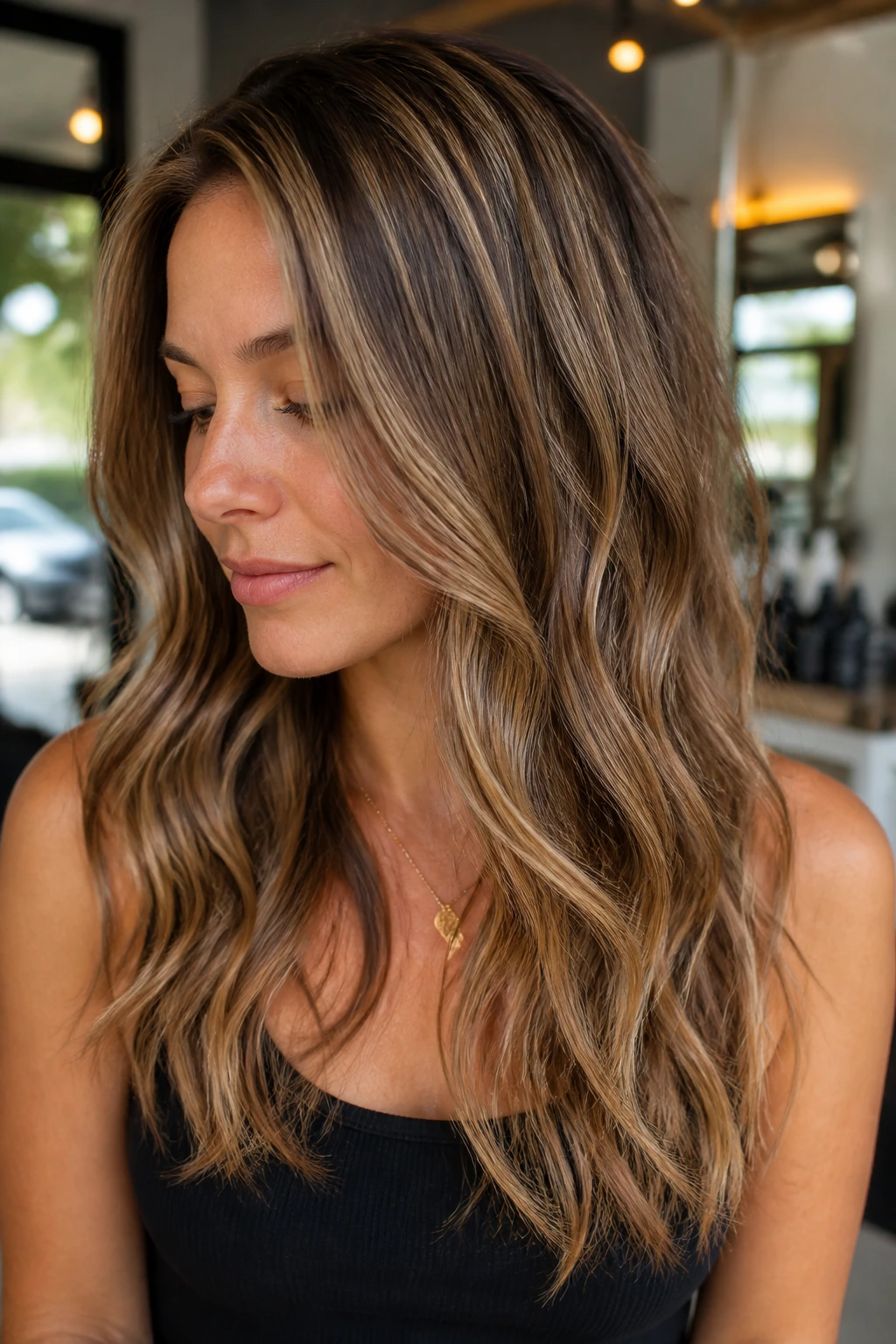
Bronde is the color version of making peace with the middle ground. It sits between brown and blonde instead of chasing one or the other, and thin hair often looks better in that space. The reason is simple: too much blonde can expose too much scalp, while too much brown can flatten the head. Bronde splits the difference.
The best bronde blend uses several shades at once—one deeper base, one soft beige ribbon, maybe a warm lowlight tucked underneath. Nothing should feel pasted on. If the hair catches light in more than one tone, the density reads higher because the eye can’t lock onto a single flat surface.
13. Vanilla Cream Ends
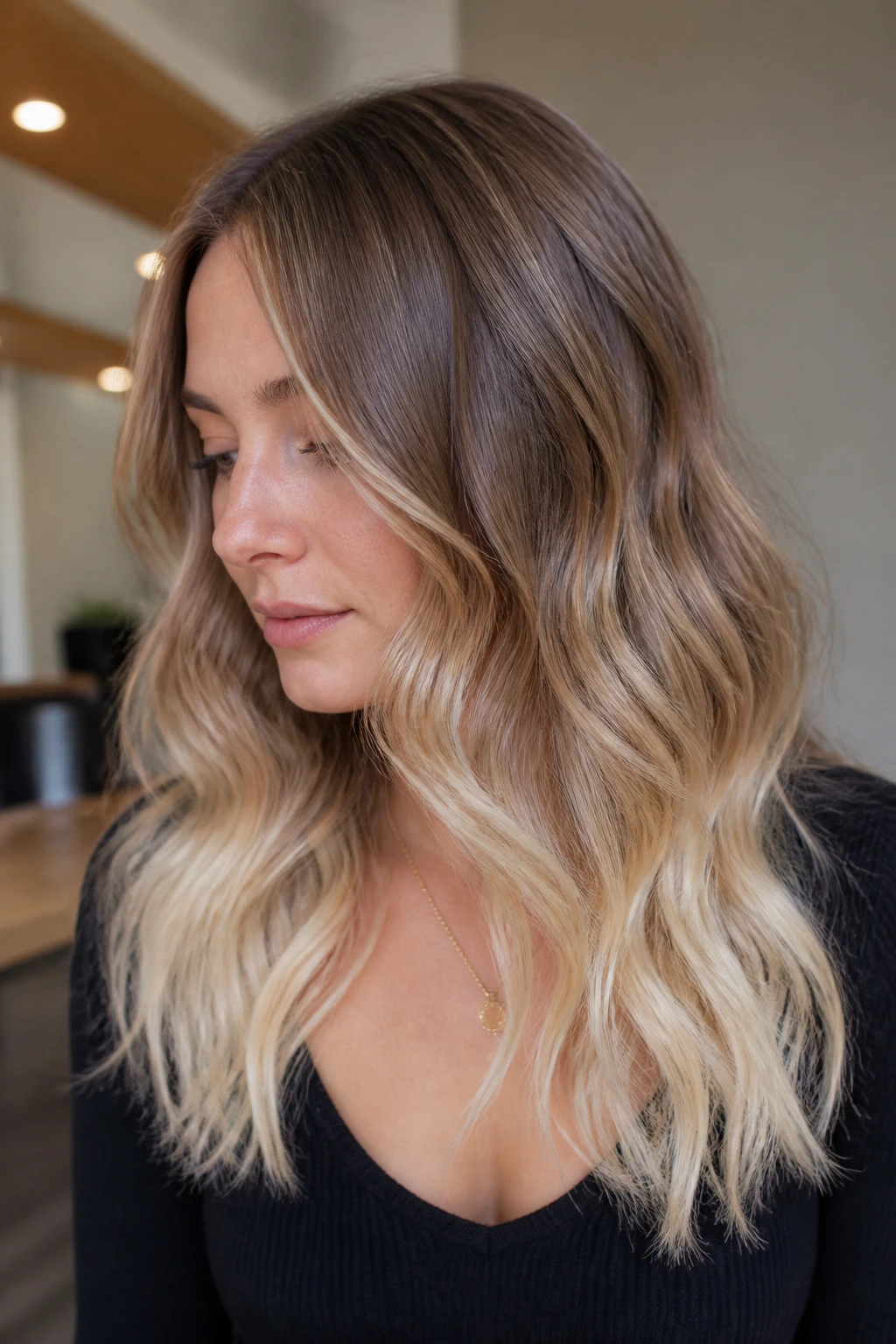
Vanilla cream ends are for people who want lightness without the brittle, chalky effect that very pale blonde can create on thin hair. The tone is soft, milky, and slightly warm. It looks clean rather than icy.
This idea works especially well if your hair is already light brown or dark blonde and you want the ends to feel softer. Keep the lift concentrated on the last few inches, then gloss it to a creamy finish. If the ends are porous, this tone usually behaves better than a stark platinum. It’s gentler on the eye, and that matters more than people admit.
14. Scandi Hairline Highlight
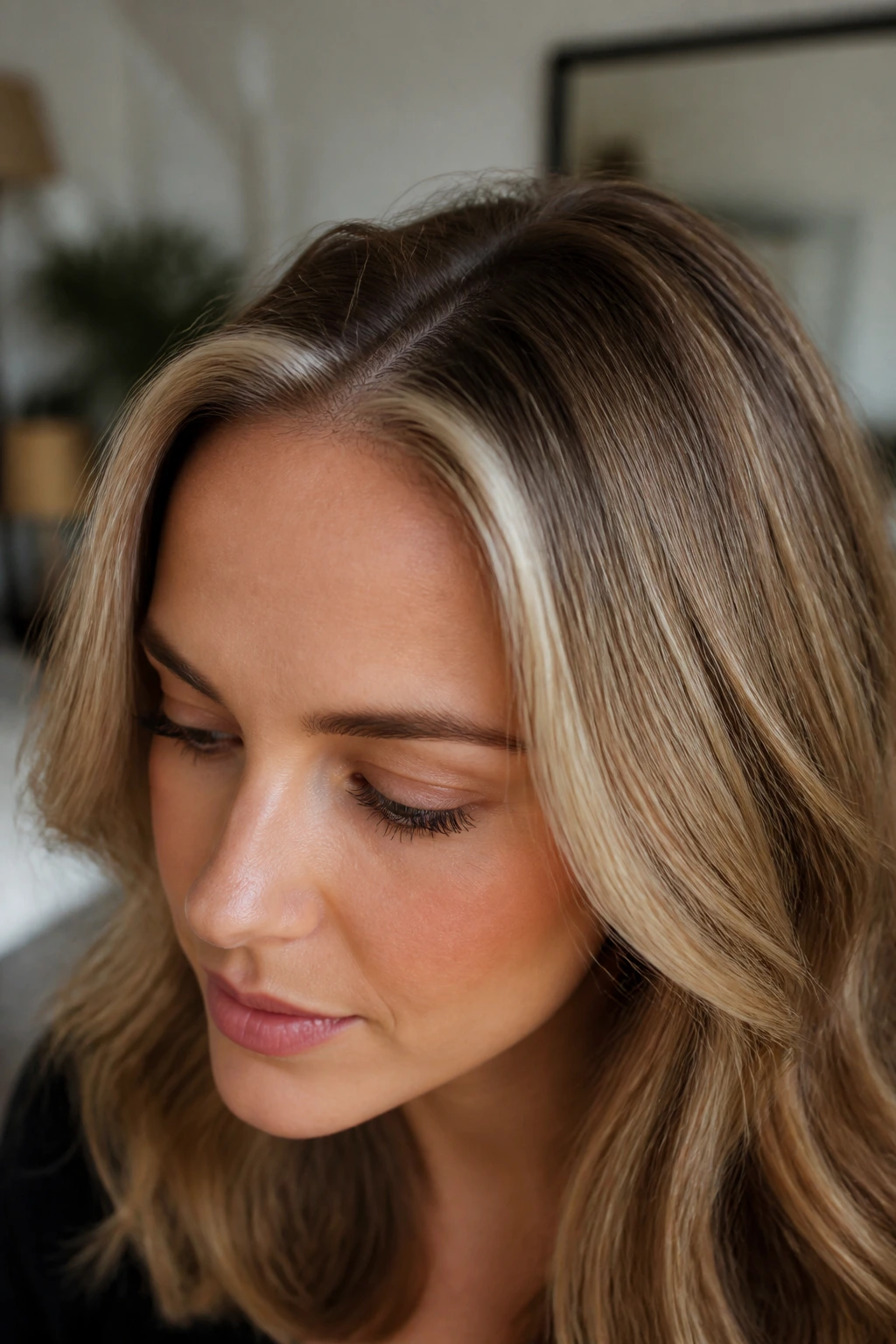
A Scandi hairline highlight is tiny, bright, and placed right at the front hairline in very fine strands. On thin hair, that front lift can be useful because it brightens the area people see first. The trick is keeping it fine enough that the scalp doesn’t show through as a sharp contrast.
I’d only use this if the rest of the hair stays softer and deeper. The whole point is to create a clean halo effect, not a front panel that announces itself from across the room. Done well, it gives the hairline a fresh edge and makes the face frame feel a little fuller.
15. Chestnut Lowlights with Sparse Highlights
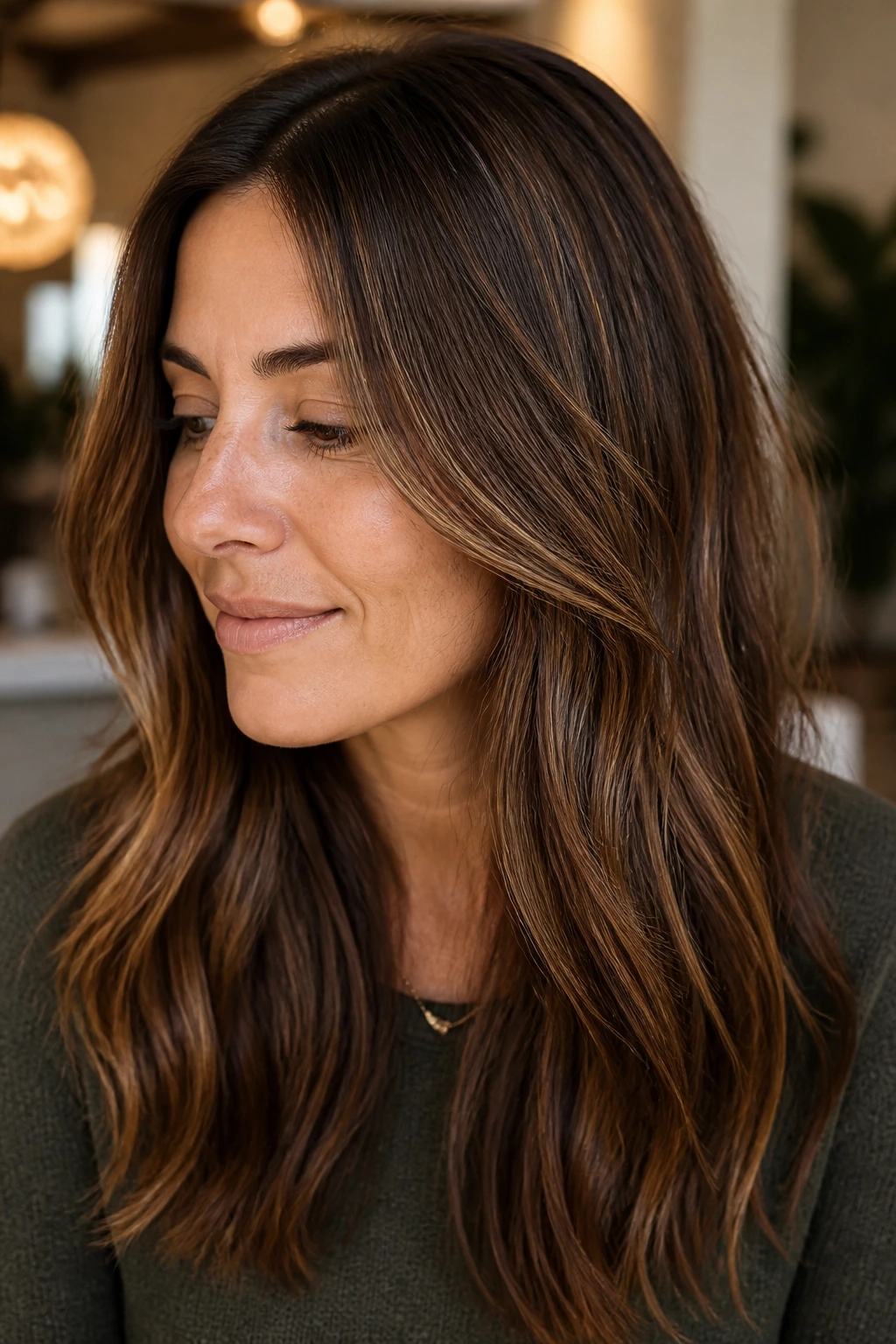
Sometimes the answer for thin hair is less light, not more. Chestnut lowlights can thicken the visual body of the hair by adding deeper strands between a few lighter pieces. The lighter color has something to sit against, and the darker pieces stop the overall color from washing out.
This is one of my favorite moves on overlightened blonde hair that has started to look stringy. A few chestnut pieces underneath, plus a handful of soft highlights on top, can turn the color from flat to textured fast. It’s not about going darker everywhere. It’s about creating places for the eye to land.
16. Toffee Babylights
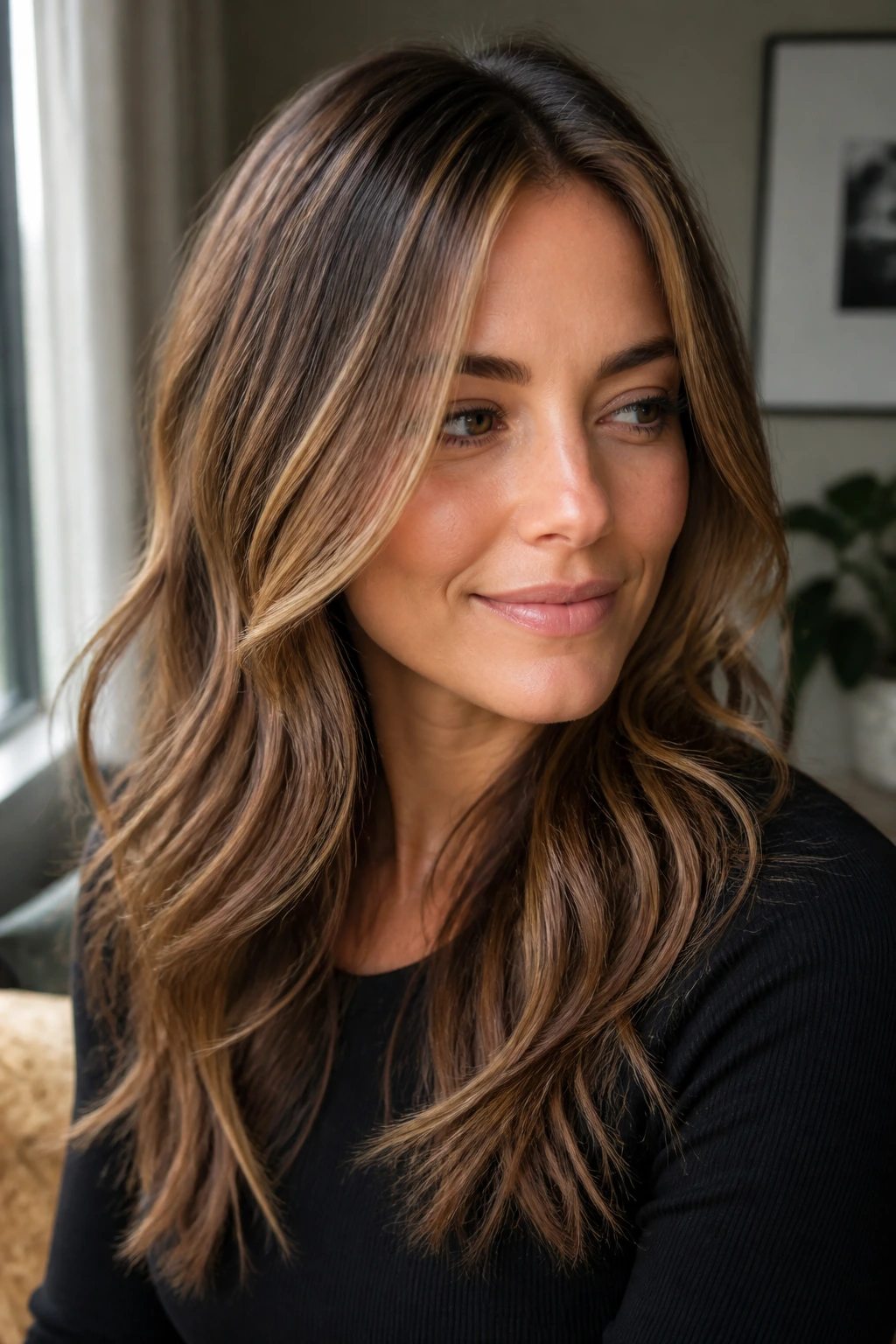
Toffee babylights live in that sweet spot between blonde and brown. They’re warm enough to feel bright, but not so pale that they expose every weak spot in the hair density. On thin hair, that matters. A color that sits too far from the base can separate instead of blend.
These are best woven tiny and repeated often. Think of a fine net rather than visible stripes. They look especially good on medium brunettes with a layered cut, because the movement of the layers lets the toffee pieces flicker instead of sitting flat.
17. Dimensional Auburn Slices
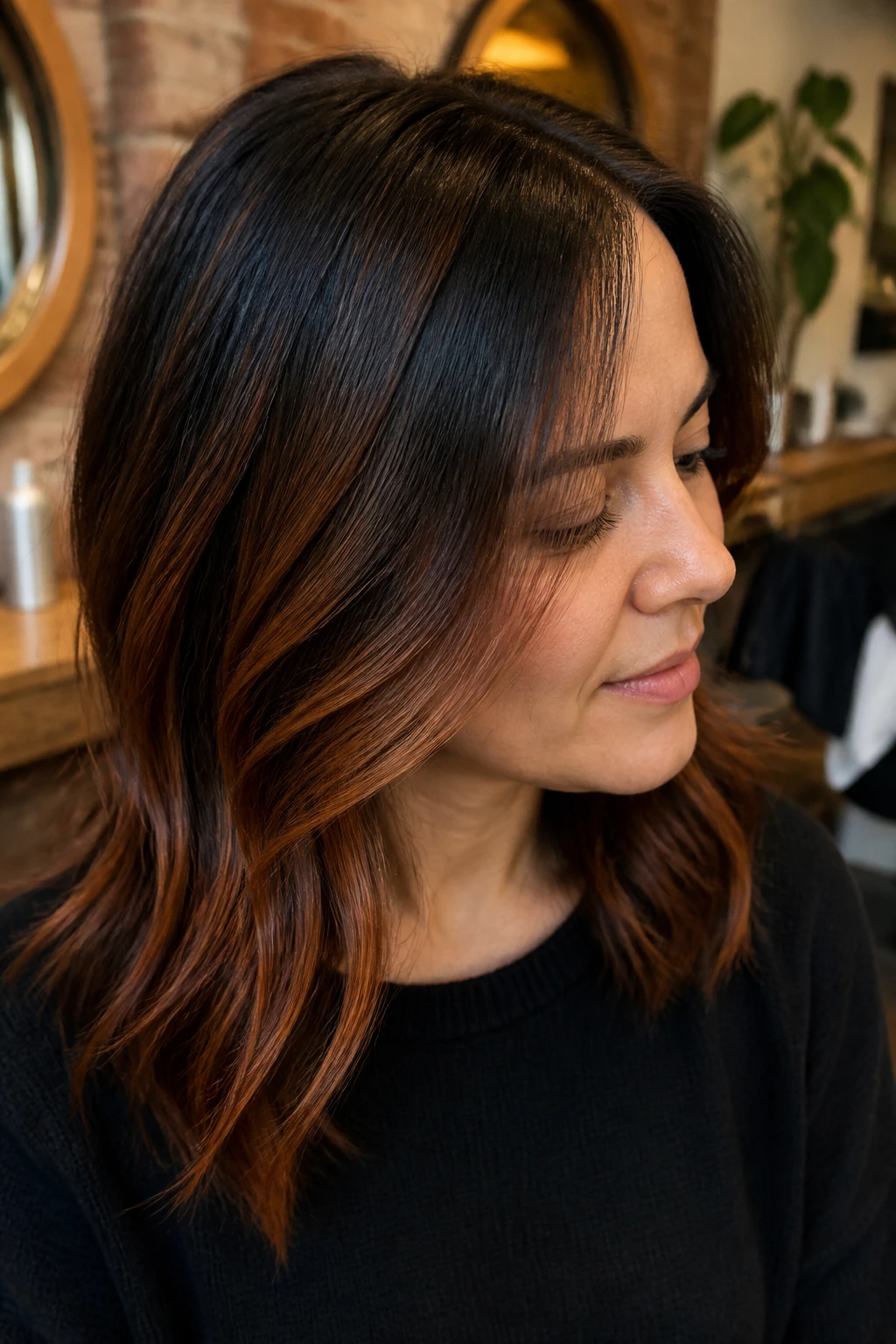
Auburn slices can be gorgeous on thin brunette hair because they bring warmth without turning the whole head copper. The red-brown tones catch light in a different way from ash or gold, so the surface looks richer and less repetitive. Thin hair often benefits from that variation.
The slices should stay slim. Wider auburn panels can feel costume-like fast. A few concentrated pieces through the sides and around the lower back of the head usually do more than a full red overhaul. If your skin runs warm or your natural color already leans chestnut, this idea can make the hair look thicker than it is because the warmth gives it body.
18. Beige Foilayage
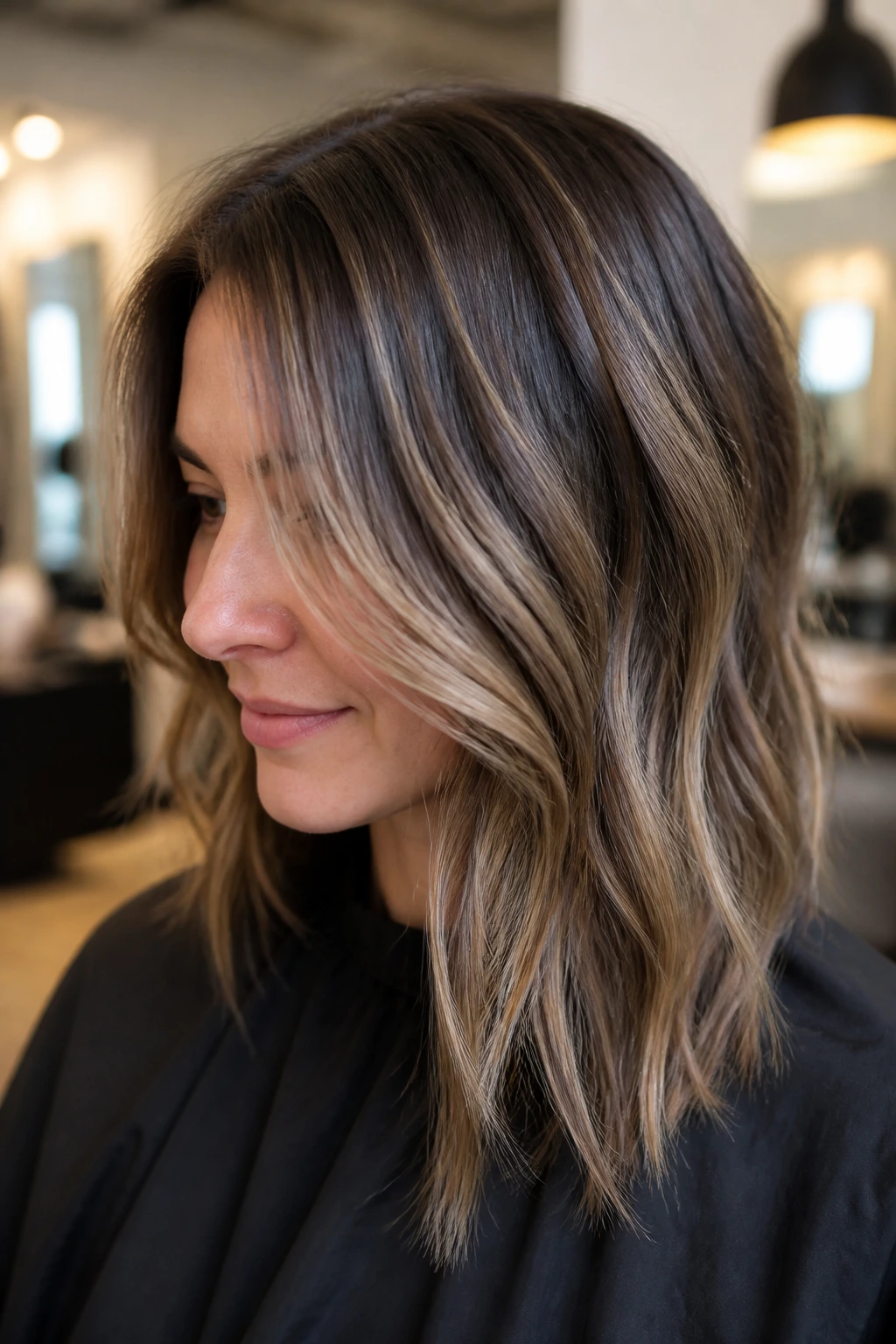
Foilayage is one of those techniques that makes sense the second you see it on thin hair. You get the controlled lift of foils with the soft blur of balayage, which means the brightness isn’t sitting in one obvious line. Beige keeps the result mellow and wearable.
This is a good move if you want a noticeable color change without the hard edges that make sparse hair look thin. Ask for the brightest pieces to start a little below the root and feather out toward the ends. The beige tone keeps the whole thing from going too yellow or too icy.
19. Icy Ribbon Panels
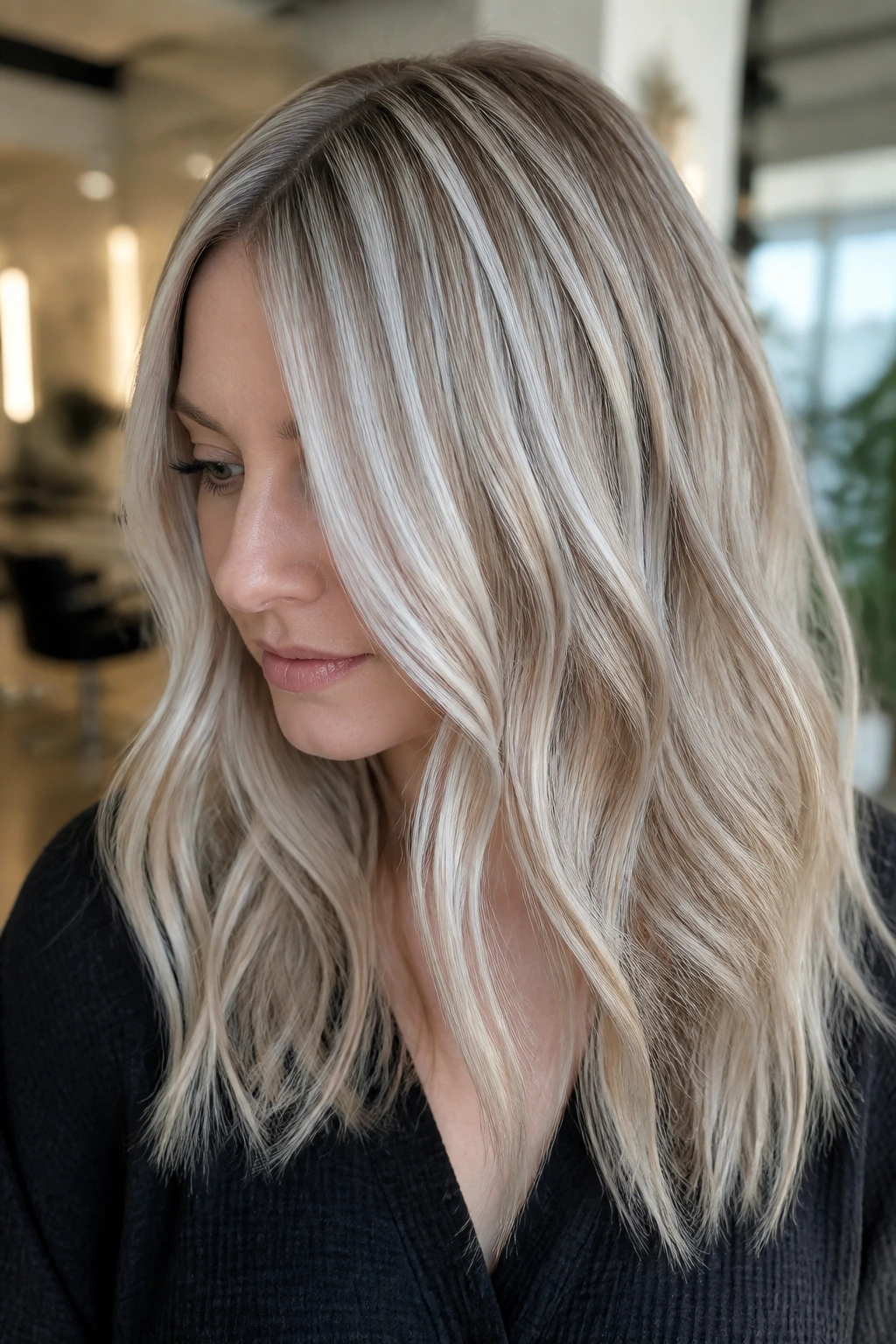
Icy ribbon panels are not for every head of hair, and I’m glad of that. On healthy light blonde hair, a few cool ribbon panels can make the hair look crisp and reflective. On hair that’s already dry or very porous, the same look can tip into fragile fast.
Use this one sparingly. Narrow panels, not wide stripes. A cool pearl toner afterward helps, and so does keeping the root slightly deeper. Thin hair can handle a touch of frost if the overall shape stays soft. It cannot handle a hard, overprocessed block of white unless you enjoy staring at breakage.
20. Soft Shadow Root with Bright Ends
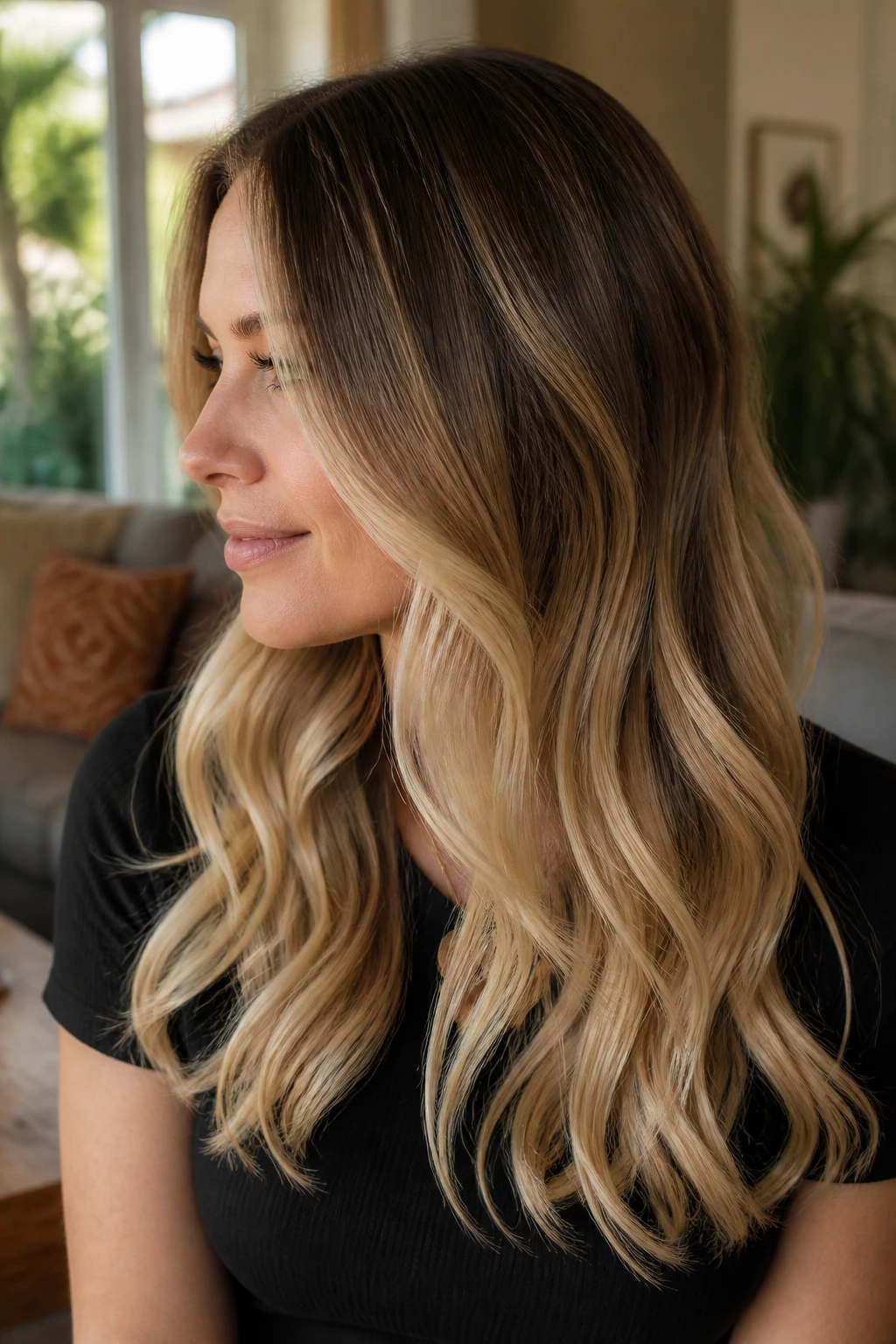
A soft shadow root does more than save salon time. On thin hair, it gives the scalp a darker frame, and that makes the top area look fuller. Bright ends below the shadow root bring the movement and keep the haircut from sinking into one color block.
This is a strong option if your hair is long enough to show a gradual melt. The root should not look stripey or muddy; it should simply sit one shade deeper and fade out cleanly. The contrast does the work, quietly. That’s the kind of color thin hair tends to wear well.
21. Golden Glaze Highlights
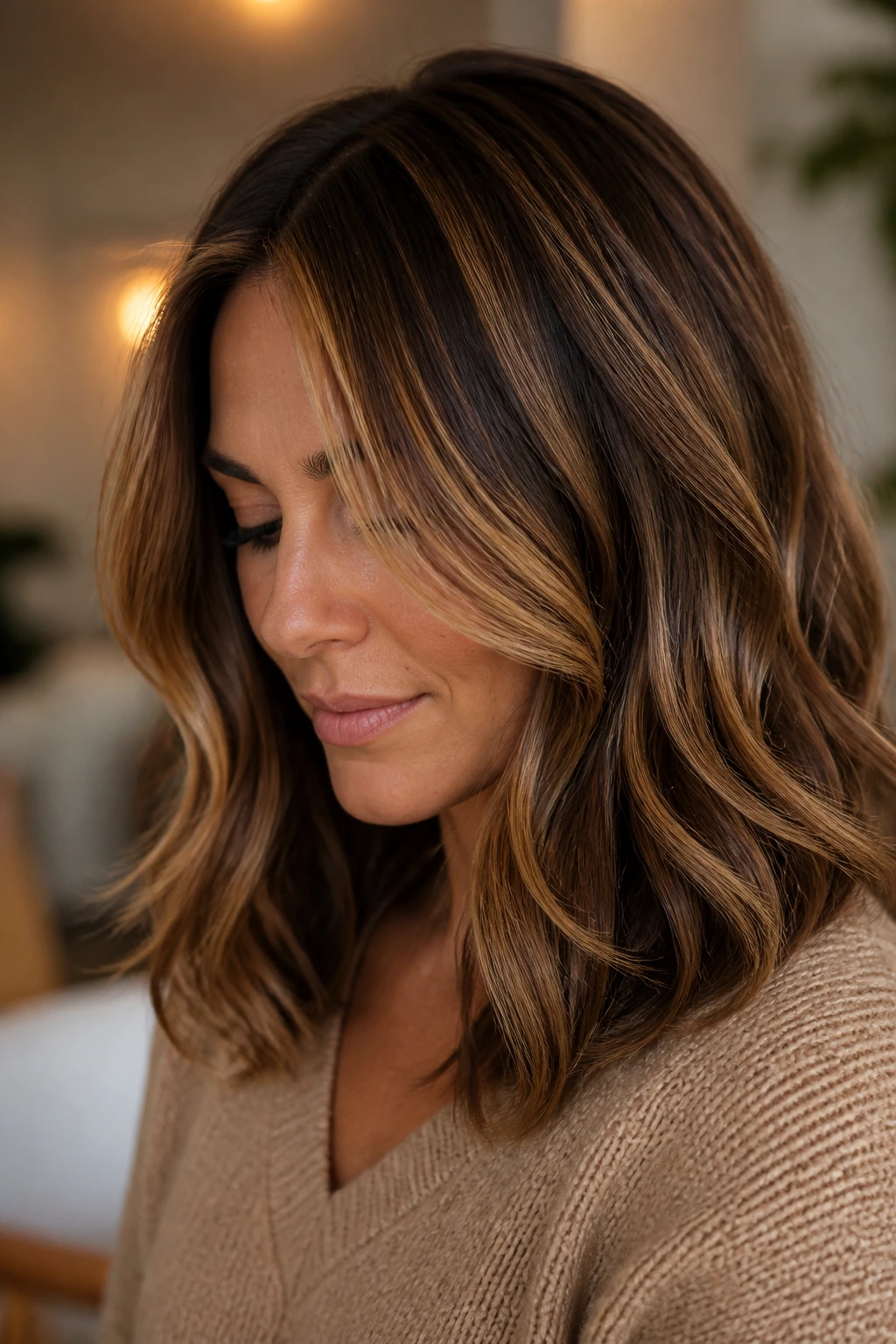
Golden glaze highlights are less about a big lift and more about changing how light moves across the hair. If the base is already highlighted or naturally lighter, a warm golden glaze can make the strands look shinier and less separated. That shine helps hair read as fuller from across the room.
I like this when the hair is looking a little tired after too many cool toners. Gold brings the softness back. It also helps the hair catch indoor light in a friendlier way, which matters more than people think. You don’t need a huge color change to make thin hair look better. Sometimes it just needs warmth with a little gloss.
22. Espresso Lowlights with a Few Lifted Pieces
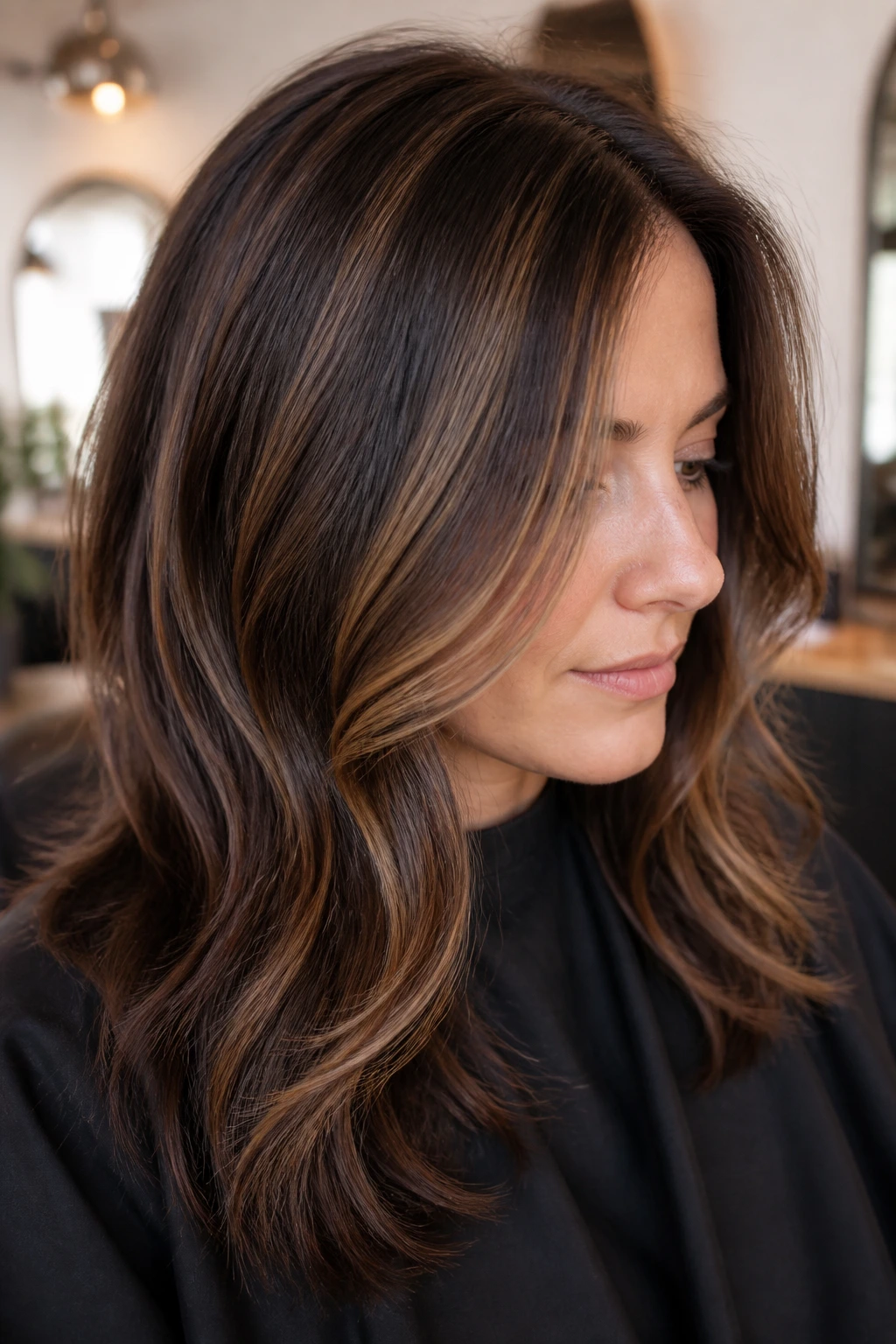
Espresso lowlights are the unsung hero of thin-hair color. Dark strands can make the rest of the hair look denser because they create contrast and shadow. Then a few lifted pieces sit on top and keep the color from going flat or muddy.
This works especially well on light brown or blonde hair that feels washed out. Too many highlights can expose the gaps between strands; a few darker pieces can close them back up visually. Keep the lowlights slim and blended. If they’re too chunky, the hair starts to look like it was painted in blocks, and that’s not the effect you want.
23. Strawberry Blonde Threads
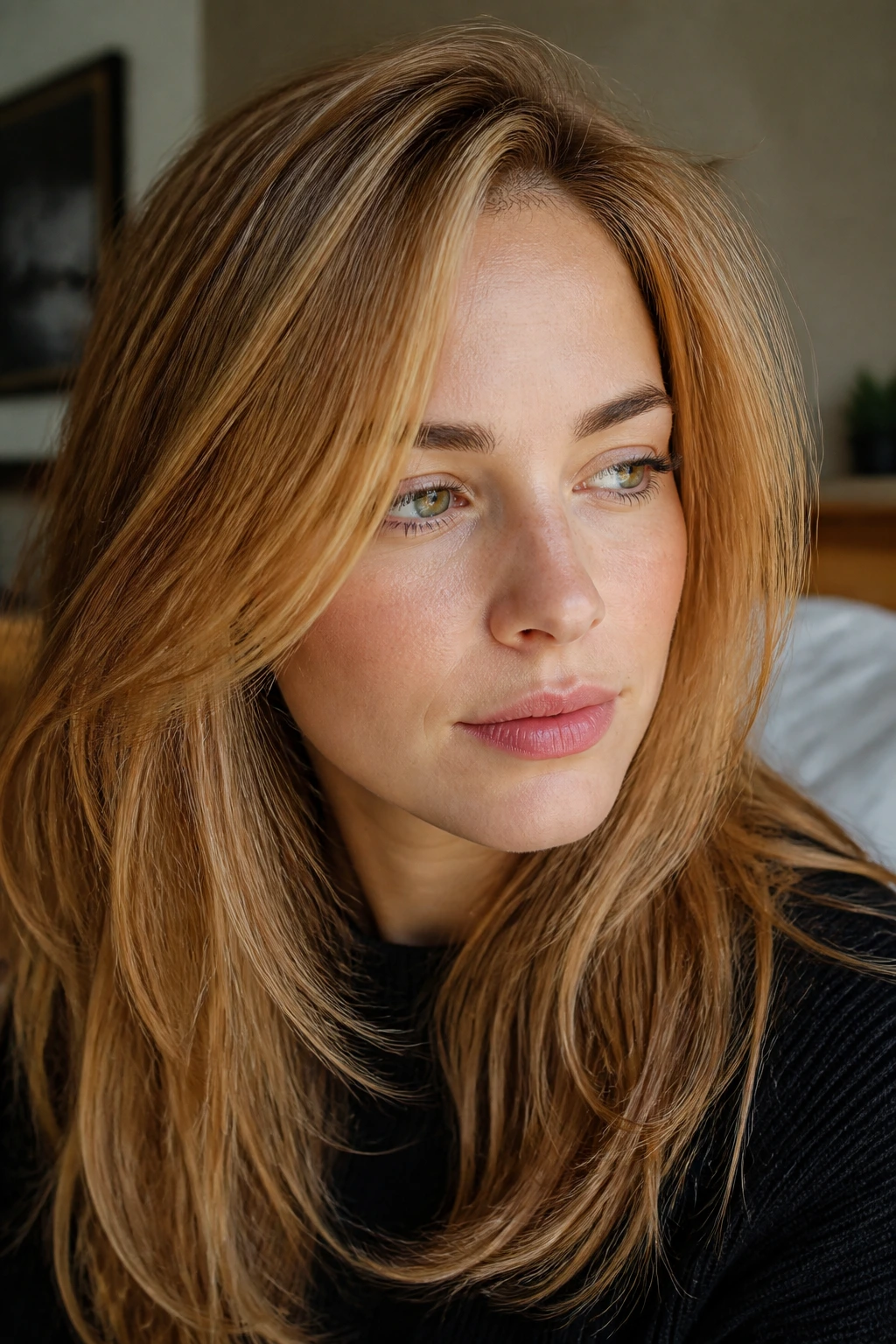
Strawberry blonde threads bring a soft rose-gold warmth that can be lovely on thin hair. The color is delicate enough to feel airy, but warm enough to keep the hair from looking papery. That balance is the whole reason this shade works.
Use it in tiny threads through the front and the upper layers rather than all over. On thin hair, strawberry tones can look either charmingly soft or oddly washed out depending on placement. The safest route is to keep the pieces fine and the base close to your natural color so the warmth reads as a glow, not a costume.
24. Champagne Peekaboo
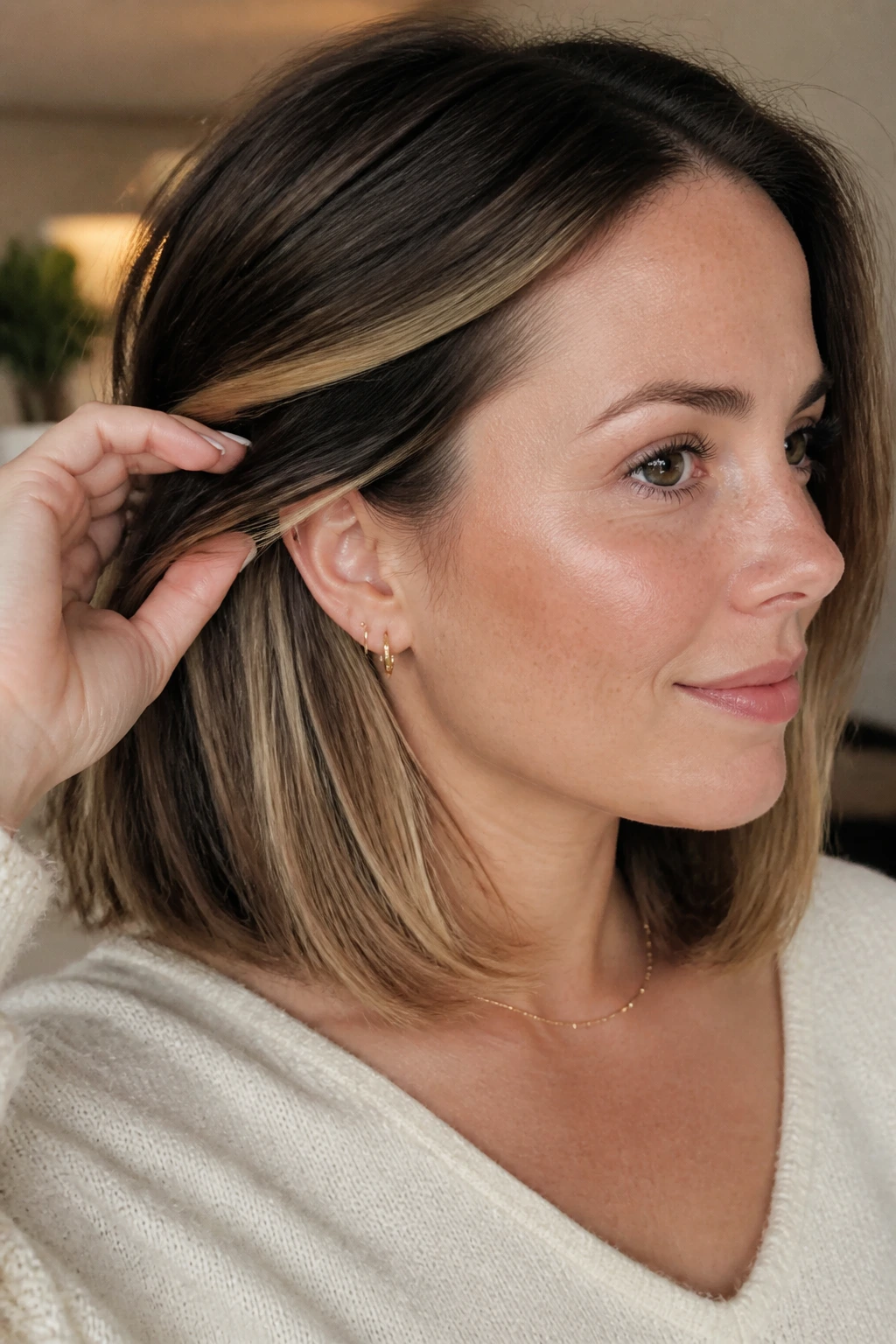
Champagne peekaboo highlights sit under the top layer, where they flash only when the hair moves. That hidden placement is useful on thin hair because it gives you brightness without opening up the top too much. The top layer keeps some density, and the hidden pieces do the decorating.
I especially like this on shoulder-length cuts that get tucked behind the ear a lot. Every turn of the head shows a little light, then hides it again. It’s subtle in the best way. The color itself should stay soft and beige-leaning, not white. Thin hair doesn’t need a glare.
25. Frosted Crown Highlights
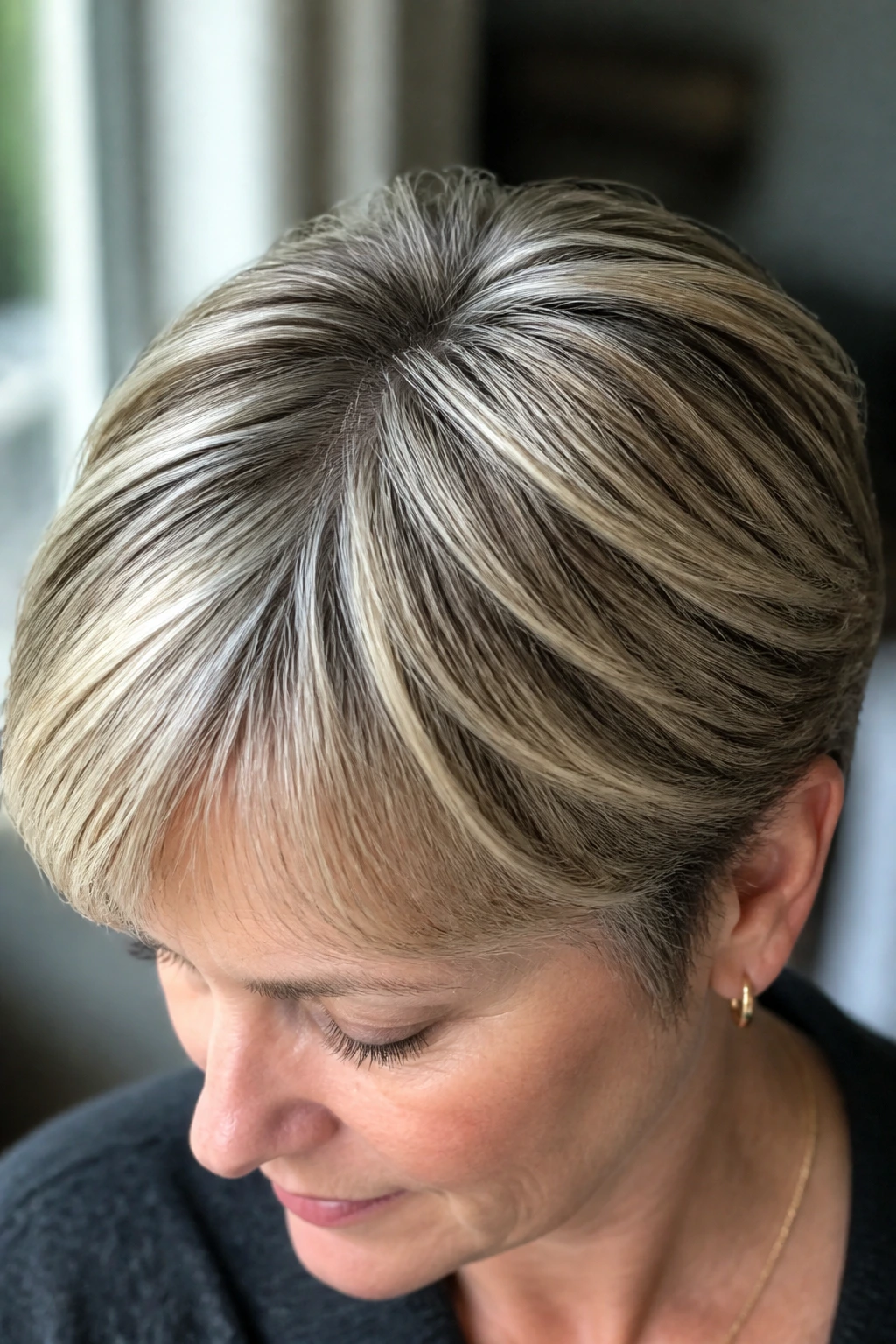
A frosted crown is a smart trick when the top of the head is where the hair feels thinnest. By placing the lightest pieces on the crown and upper layers, you get a little lift right where the scalp tends to show first. The effect is strongest on short to medium-length cuts.
The important part is restraint. Keep the weave extremely fine so the crown looks dappled, not streaked. If you go too wide, the scalp can show through in a way that looks less full, not more. Done properly, though, this is one of the fastest ways to soften a sparse top without changing the whole head.
26. Mocha-to-Milk Chocolate Blend
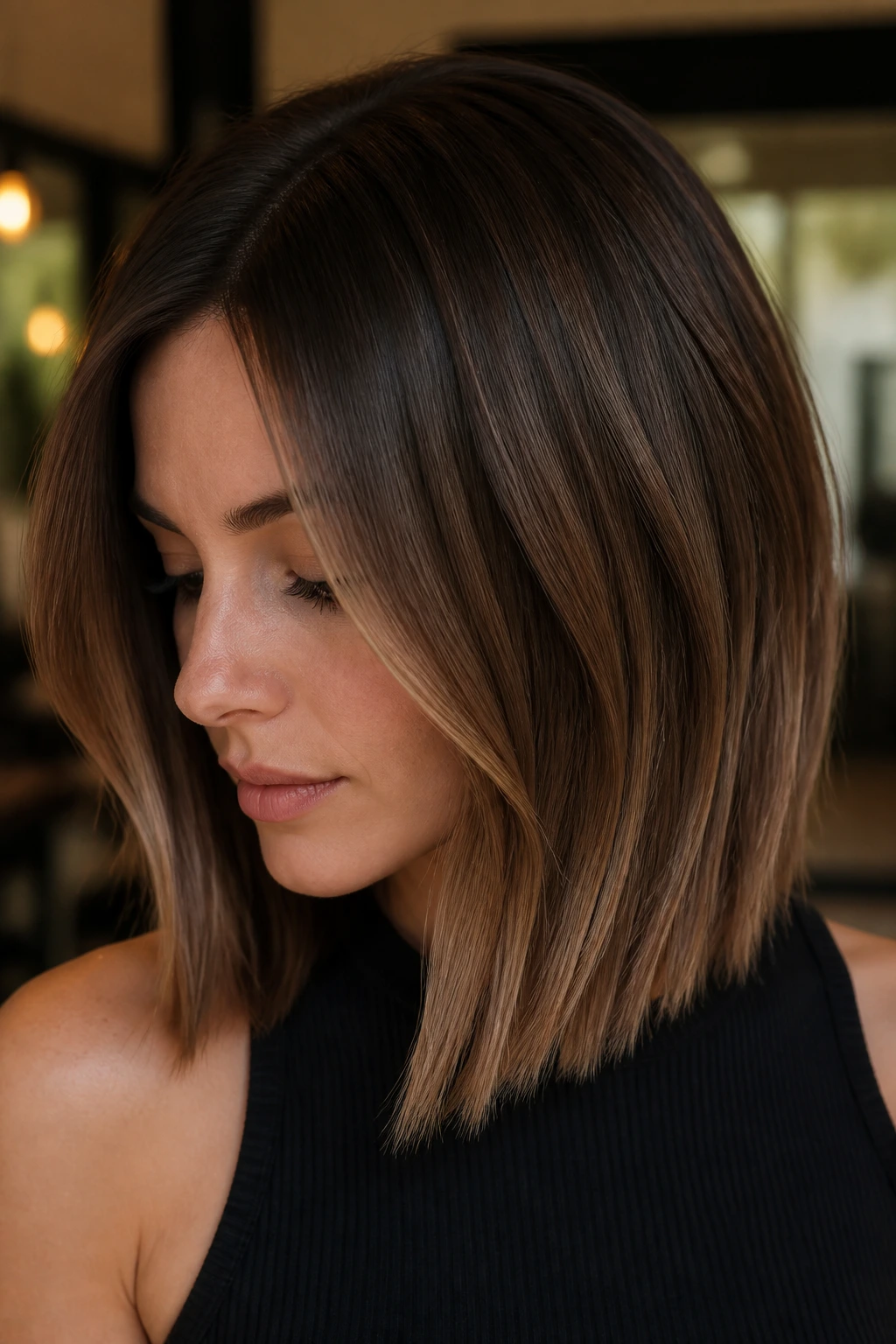
This one is for brunettes who want richness more than brightness. A mocha root melting into milk chocolate mids and ends gives the hair a layered, textured look without a lot of pale contrast. Thin hair often looks better in this softer range because the eye reads depth first and highlights second.
A blend like this works beautifully with a blunt cut or a long bob. The color doesn’t fight the shape; it supports it. If you want the pieces to show more, ask for a few lighter ribbons around the front. Keep the back and crown richer. That small bit of structure keeps the whole head from reading flat.
27. Cinnamon Swirl Highlights
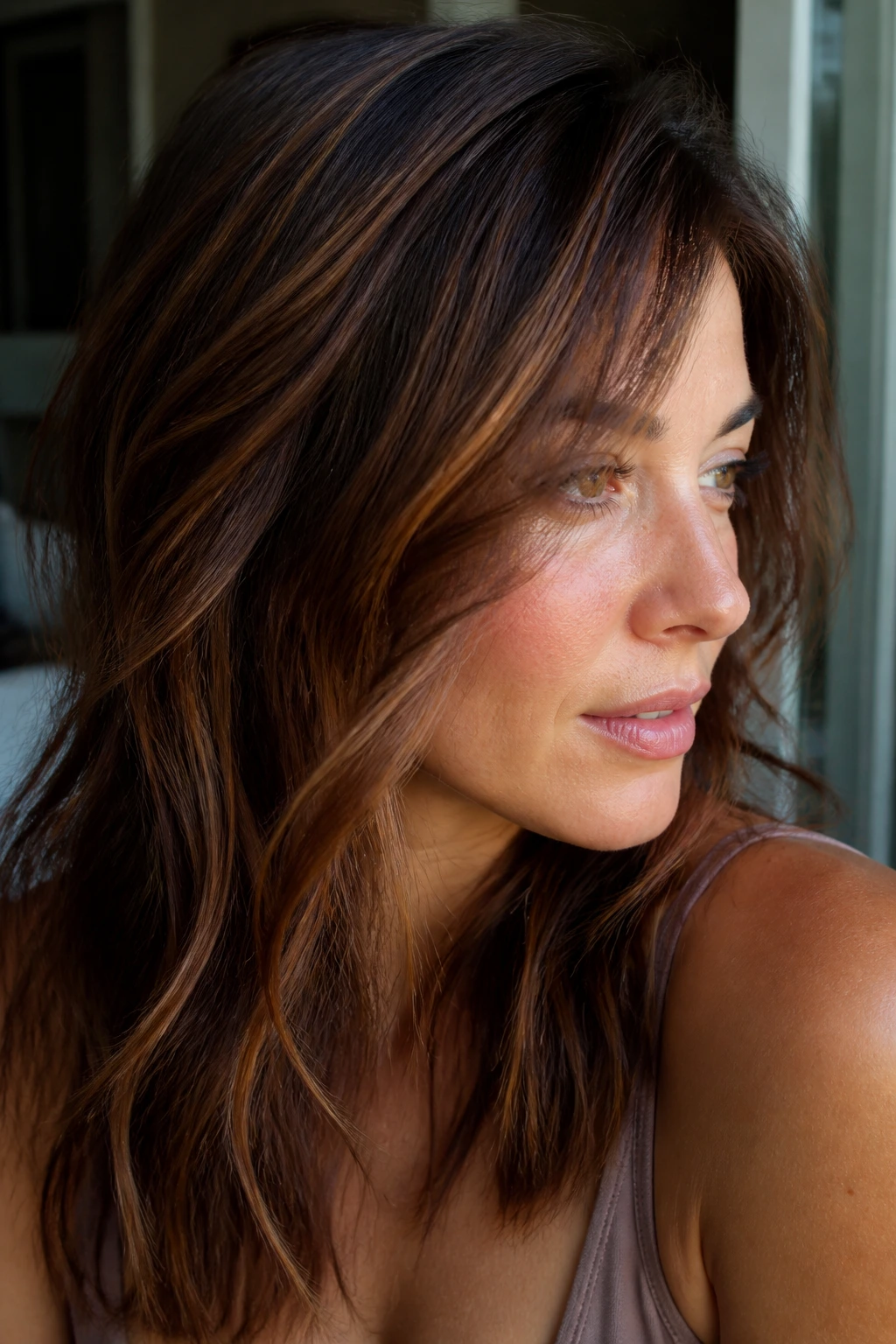
Cinnamon swirl highlights bring warm, spicy movement to a brunette base. The color is richer than copper and softer than red, so it tends to flatter thin hair that needs more visual warmth. Warm tones reflect light in a way that feels fuller and less see-through.
The key is keeping the swirls narrow and lightly woven. If you place them in wide bands, the effect turns loud and obvious. A few cinnamon ribbons through the sides and mid-lengths can make a simple blowout look much more textured. It’s one of those looks that seems small on paper and reads far richer in motion.
28. Sandy Beige All-Over Fine Weave
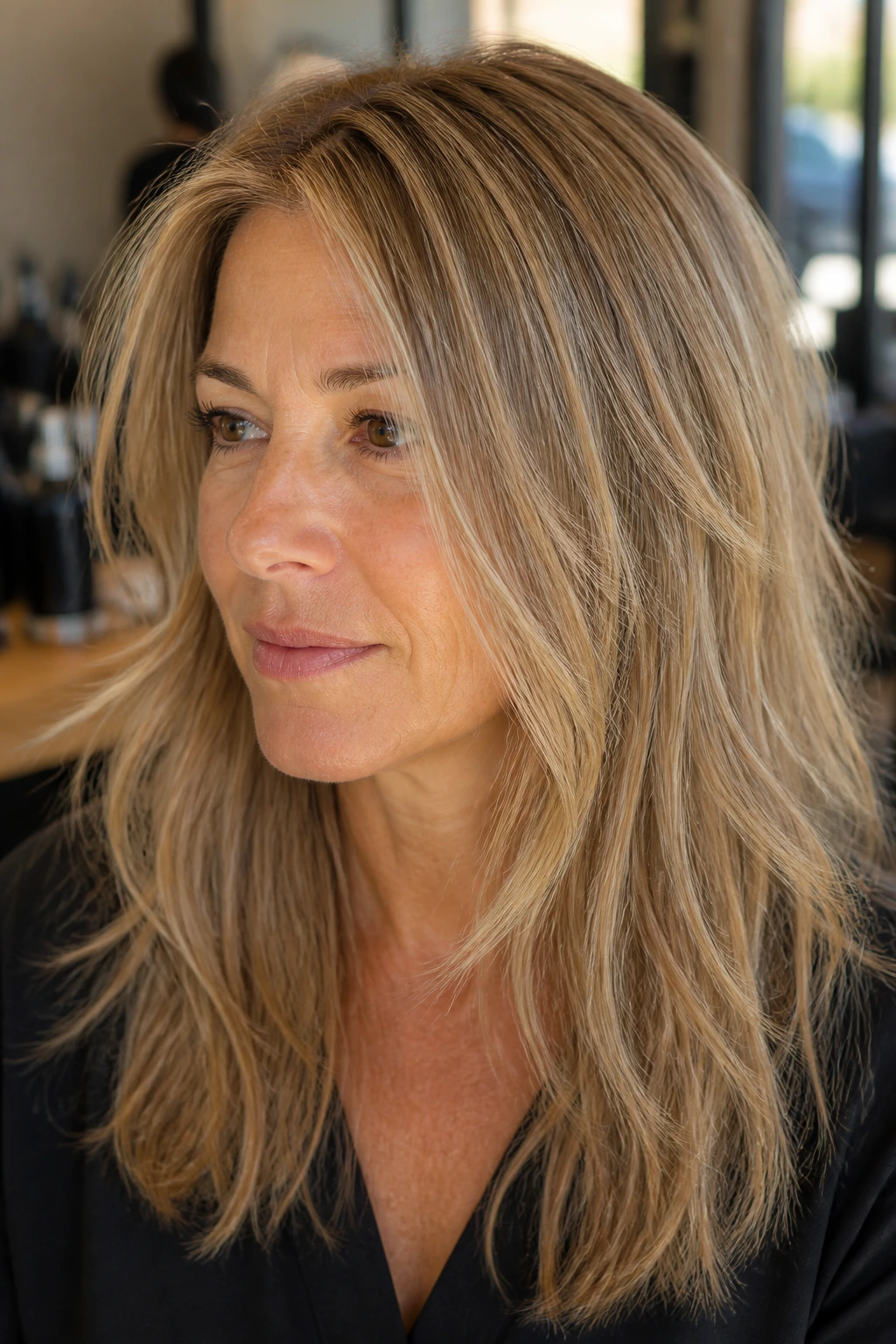
Sandy beige all-over fine weave is one of the safest full-head options for thin hair. The idea is to spread tiny beige strands throughout the head so no single zone feels overworked. Because the pieces are so fine, the result is soft and airy rather than striped.
This is a strong choice if your hair is naturally blonde or light brown and you want the whole surface to look a touch brighter. The beige tone keeps it from going too harsh. I like it because it doesn’t rely on one dramatic panel. It lets the whole head shimmer a little, which is exactly what fine density needs.
29. Two-Tone Money Piece and Crown Lift
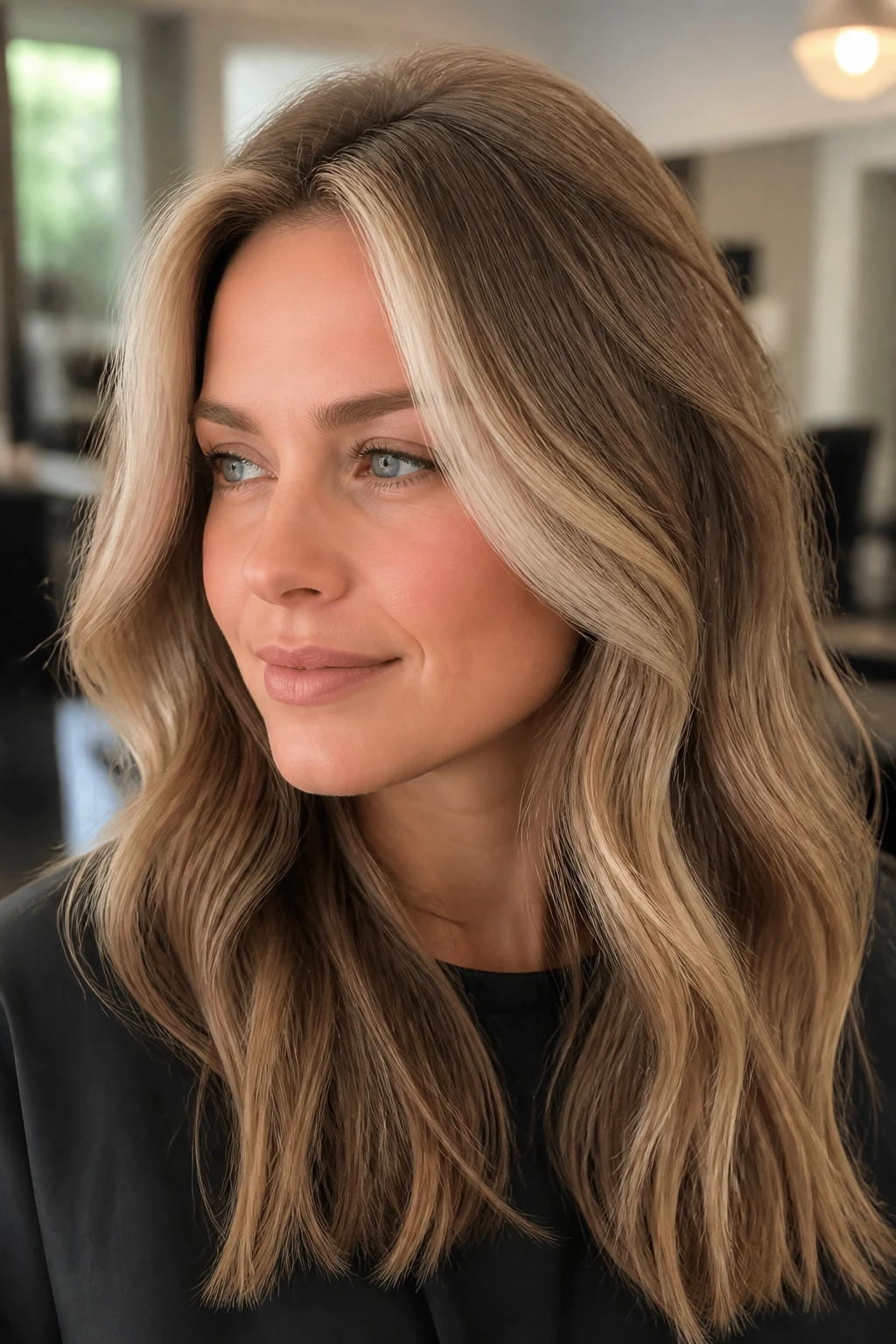
This look splits the job in two. The money piece handles the face, while a softer lift at the crown gives height where the part usually looks sparse. That division matters on thin hair because it keeps the brightest pieces from sitting in one flat band.
The face frame should be the lightest area, but not by a mile. The crown lift can stay just a shade lighter than the base so it supports the style instead of stealing the show. If you wear your hair in a bun or clipped back a lot, this look pays off because the front stays bright and the top doesn’t collapse visually.
30. Smoked Beige Ombré
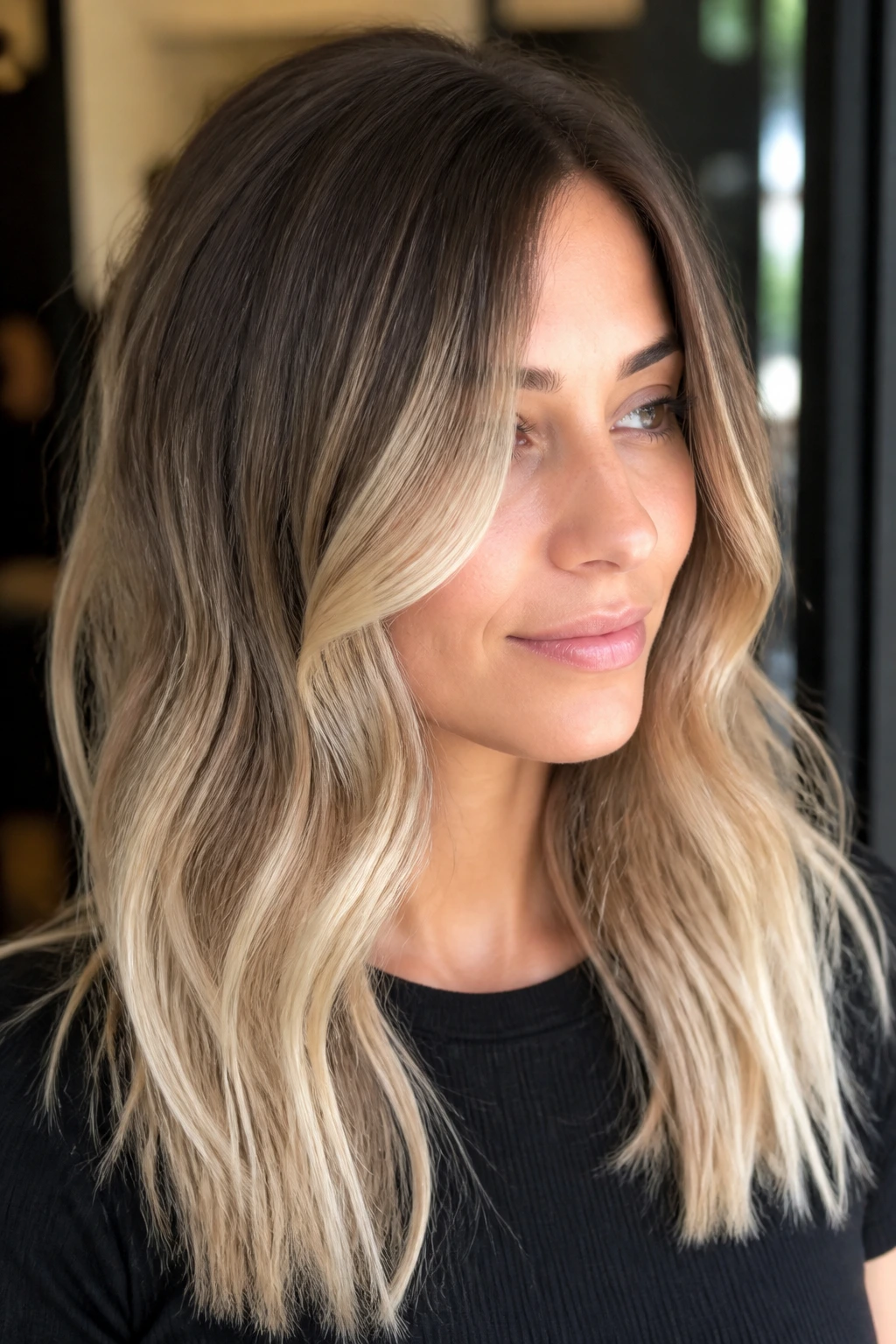
Smoked beige ombré is what I’d suggest to someone who wants lightness at the ends but refuses to sacrifice the root. The darker top gives the hair a fuller anchor, and the beige fade below keeps the overall look soft. It’s less dramatic than classic ombré and more flattering on sparse hair.
The fade should be slow. No hard line. Thin hair often looks better when the change is gradual enough that you can’t point to where one color stops and the next starts. That gentle shift keeps the eye moving instead of stopping at a stripe.
31. Pearl Blonde Dusting
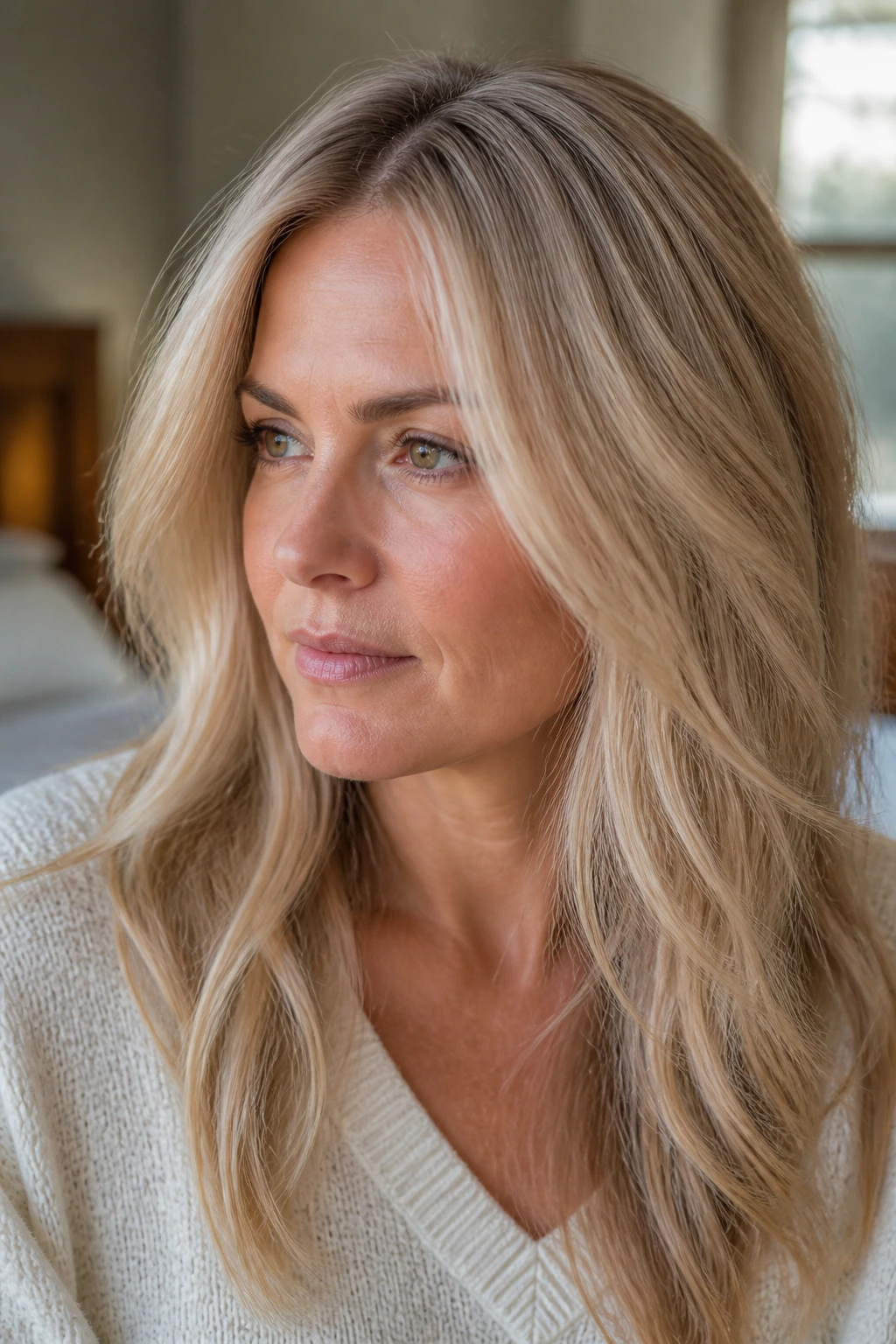
Pearl blonde dusting is a whisper of a highlight. It works best on already light hair that needs sheen rather than more lift. Thin blonde hair can turn dry-looking fast if you keep pushing it lighter, and pearl helps by giving the surface a soft, reflective finish.
This is a good choice when the ends are healthy but the overall color feels a little dull. A pearl toner over tiny lifted pieces can make the hair look smoother and cleaner. It’s quiet. Very quiet. But on hair that already has enough brightness, quiet is often the smarter move.
32. Soft Face-Bracketing Foils with Airy Ends
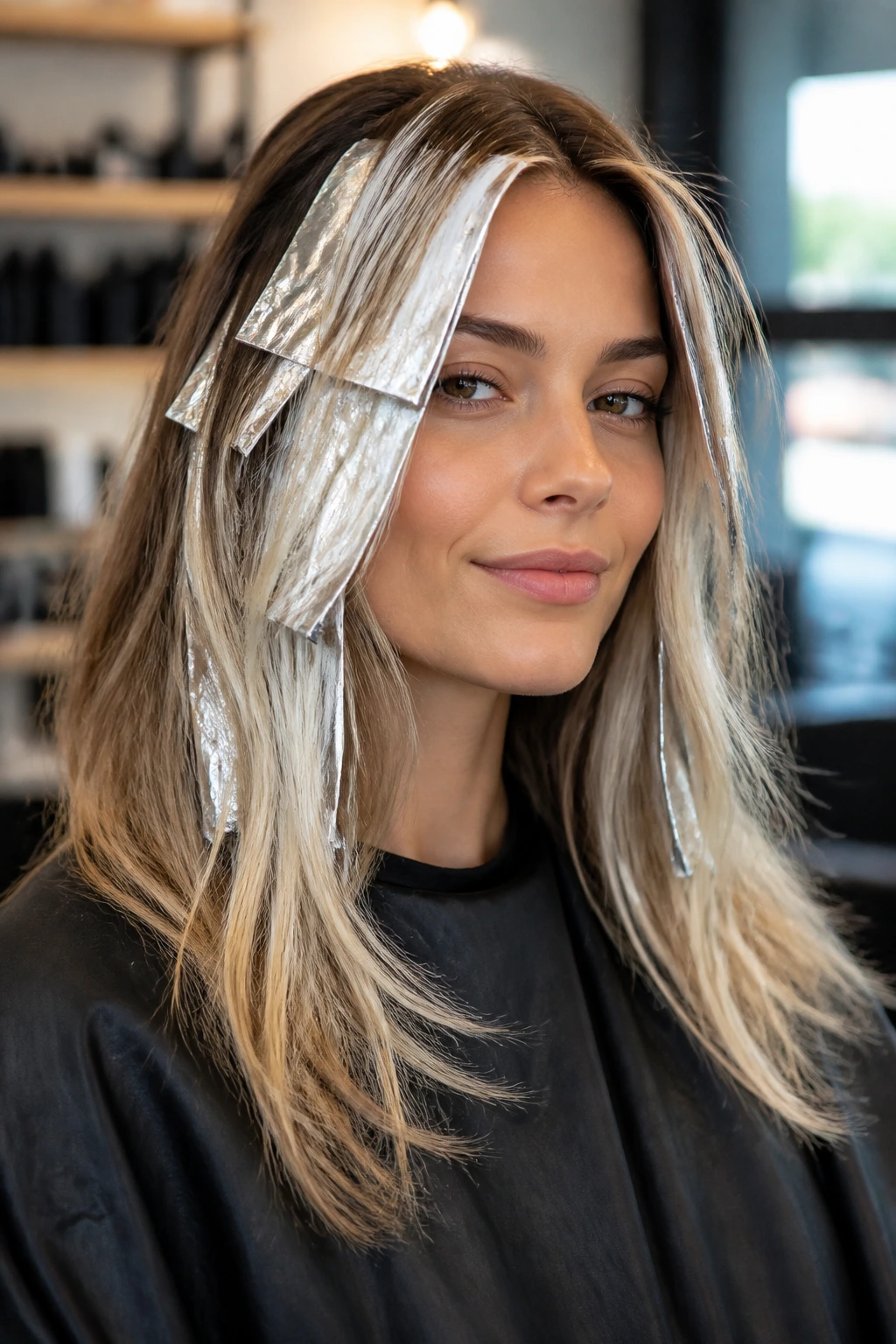
Soft face-bracketing foils give thin hair brightness where it counts and leave the rest of the head alone. The foils should angle back from the face and feather out toward the lengths, so there’s no hard wall of color at the cheekbones. That keeps the line of the haircut loose and natural.
I like this on longer hair with some movement in the ends. The front gets the lift, the ends get a little airy lightness, and the crown keeps enough depth to avoid showing every part line. If your hair tends to separate when it’s dry, this is a better bet than a full brightening service.
Why Fine Weaves Beat Chunky Foils on Thin Hair
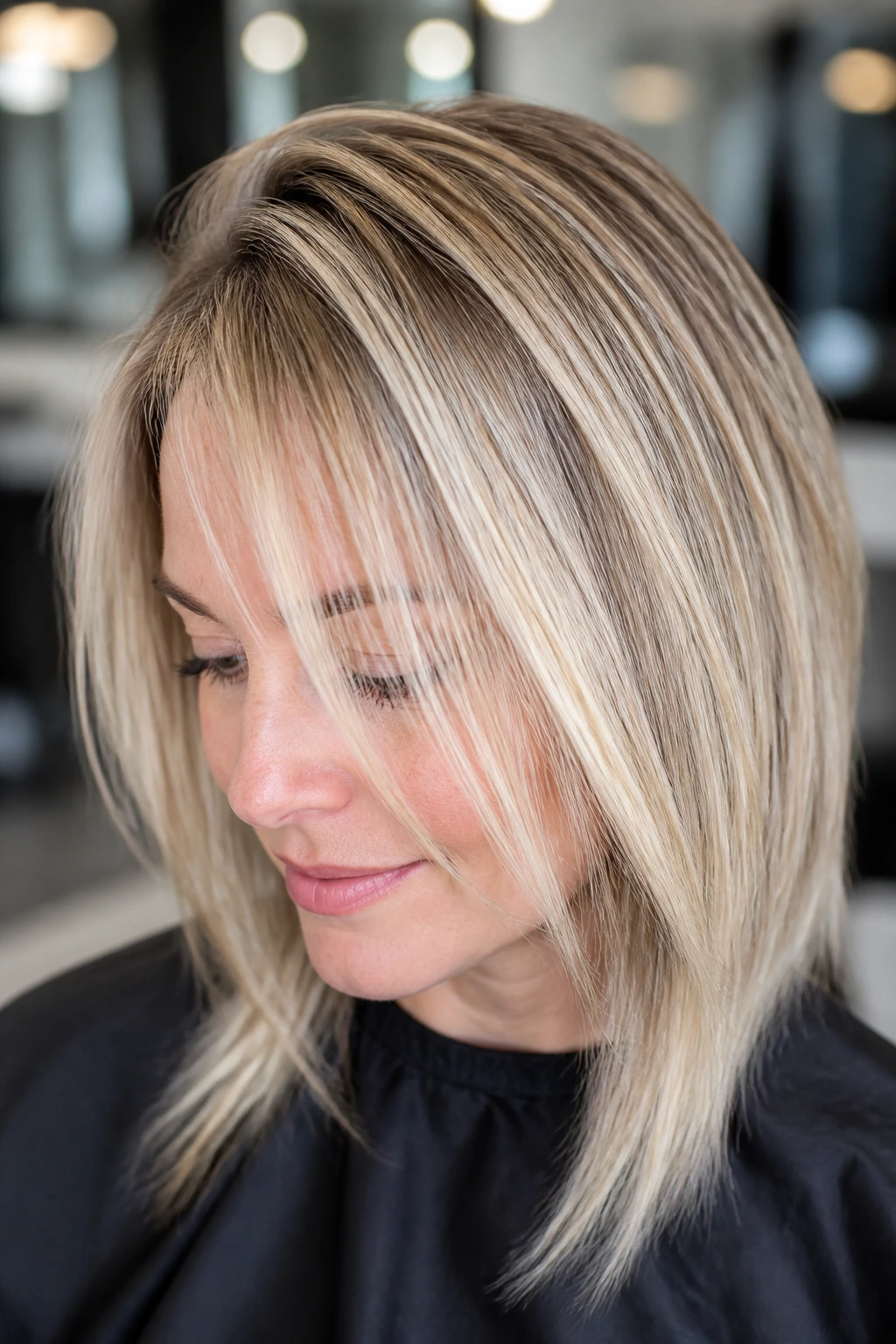
Chunky foils can look exciting in a salon chair and unforgiving a week later. Thin hair doesn’t have enough density to hide wide color blocks, so the spaces between the pieces read louder than the color itself. Fine weaving softens that problem. It creates a mist of brightness instead of a series of obvious stripes.
That mist matters. Tiny woven pieces let light bounce in more places, which is the closest thing hair color has to a visual cheat code. The scalp becomes less noticeable because the eye is busy following small changes in tone. Not every head needs super-subtle color, but thin hair usually does better when the color seems scattered rather than stamped on.
The other reason fine weaves win is grow-out. Thick highlights tend to leave a hard regrowth line, and that line can make sparse hair look even thinner near the root. Fine placement blurs the shift between base and lightened pieces, so you can wait longer between appointments without the color looking abandoned.
Essential Tools for These Highlight Ideas
-
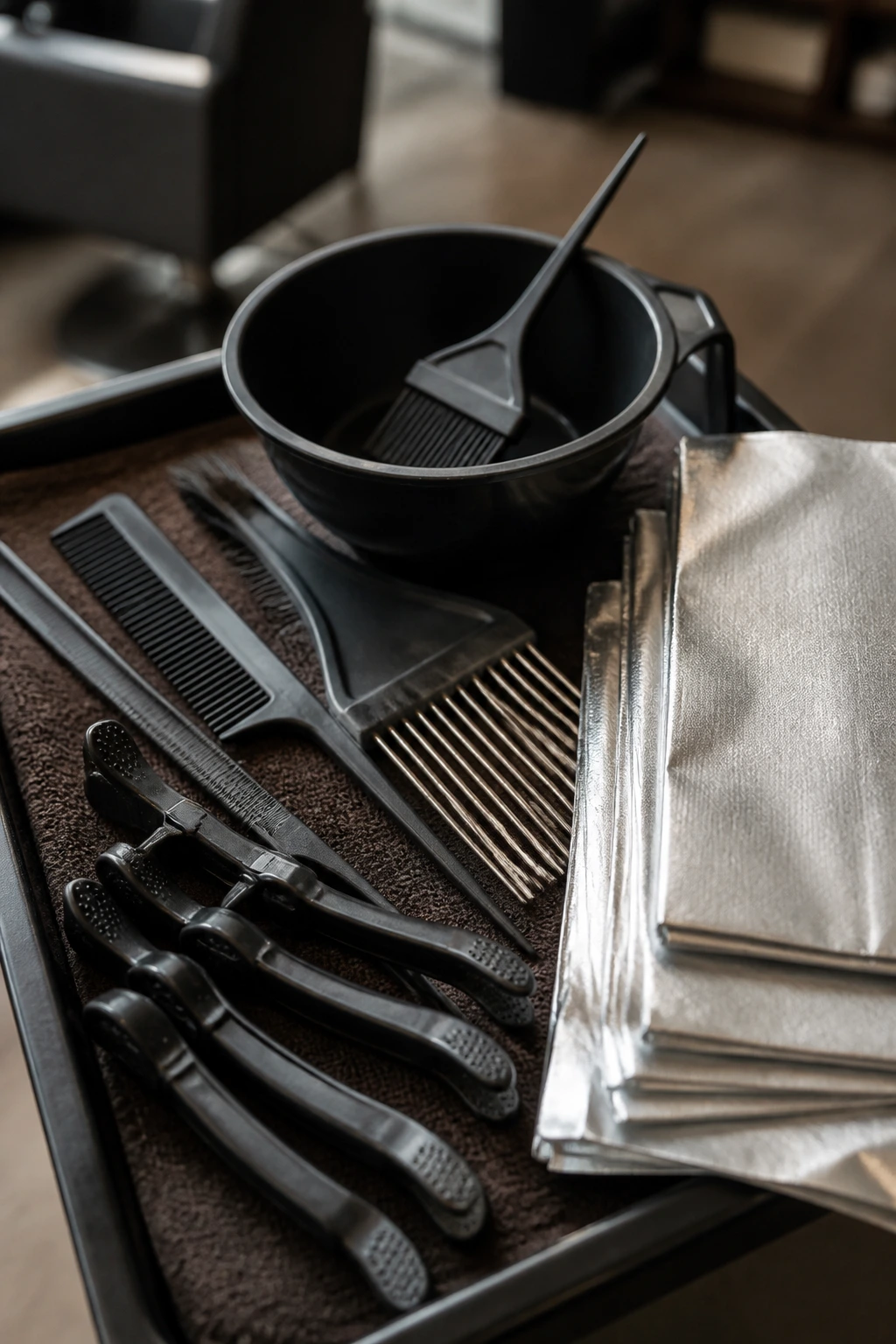
Tail Comb: Useful for clean sectioning and narrow weaves, especially around the part and hairline.
-
Sectioning Clips: Keep top, side, and back sections out of the way so the lightener lands exactly where you want it.
-
Tint Bowl and Color Brush: Needed for balayage, ribbons, and glosses where you want control rather than a blunt application.
-
Foil Sheets or Pre-Cut Foils: Handy for baby-lights, money pieces, and any look that needs lift near the scalp.
-
Weaving Comb or Fine Rat-Tail Comb: Helps pick out very fine strands so the highlight stays soft on thin hair.
-
Gloves: Lightener can sting and stain, and thin hair services often involve a lot of small sections.
-
Clarifying Shampoo: Useful before a gloss or toning service if there’s heavy product buildup.
-
Bond Builder: Optional, but smart if the hair is fragile or already lightened.
-
Tint Brush with Pointed Tip: Better for precise face-framing work than a wide salon brush.
-
Hand Mirror: Lets you check the back and crown so you don’t miss patchy spots.
How to Choose the Right Shade for Thin Hair Highlights
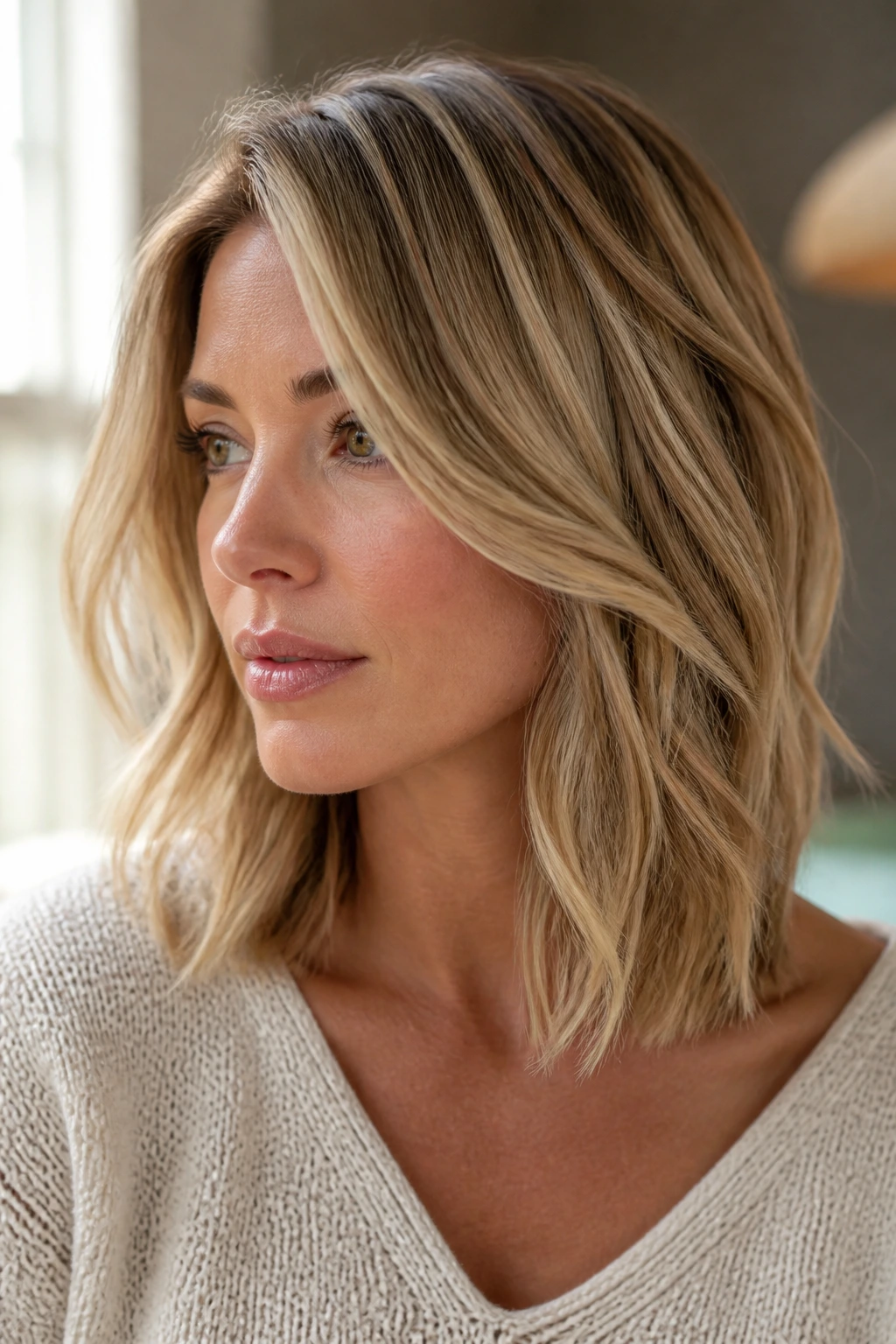
The shade matters, but it matters differently on thin hair than it does on thick hair. Very pale blonde can look expensive on a dense mane and washed out on sparse strands. A beige, honey, caramel, or soft mushroom tone often gives thin hair more body because the color sits closer to the base and doesn’t scream for attention.
If your hair is dark, don’t jump straight to the lightest blonde in one sitting. One or two levels lighter with a warm or neutral gloss often looks fuller than a dramatic lift. That smaller gap between base and highlight keeps the scalp line from turning into a high-contrast road map.
Brass is another thing to think about. Thin hair can show orange or yellow faster because there’s less hair mass to hide it. If warmth isn’t the goal, ask for a cooler gloss after the lightener processes. If warmth is the goal, lean into honey, toffee, copper, or beige-gold instead of trying to fight the undertone.
How to Wear These Highlights So They Read Fuller
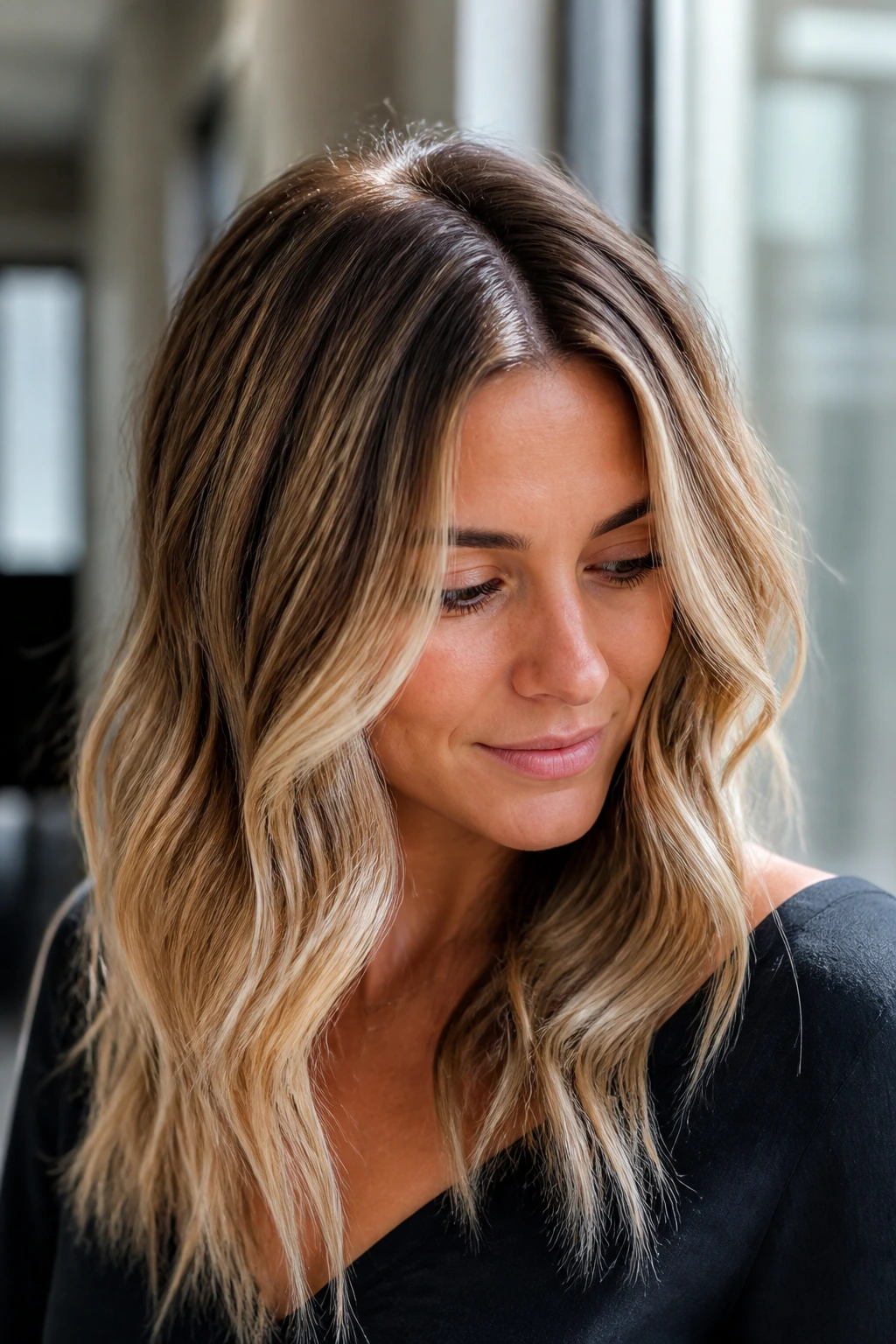
Parting: A soft off-center part often looks kinder on thin hair than a dead-straight middle part, especially if the top is highlighted. If you wear a middle part, keep the brightest pieces a little off the line so the scalp doesn’t become the focus.
Texture: A loose bend, not a tight curl, usually shows highlights better on sparse hair. A flat iron wave, a round-brush blowout, or a large-barrel iron wrapped once around the mid-lengths gives the color a chance to move. Tight curls can expose too much scalp if the hair is low-density.
Styling: Root lift at the crown helps, but don’t pile product on. Too much mousse or dry shampoo can make thin hair feel chalky and split. A light volumizing spray at the roots, then a blow-dry with the head turned to one side, usually does more than a canful of grit.
Finish: Glossy ends look denser than dry ones. A pea-sized amount of serum on the last two inches can keep the highlight pieces from looking frayed, especially around the face.
Extra Tips That Keep Thin Hair Looking Dense
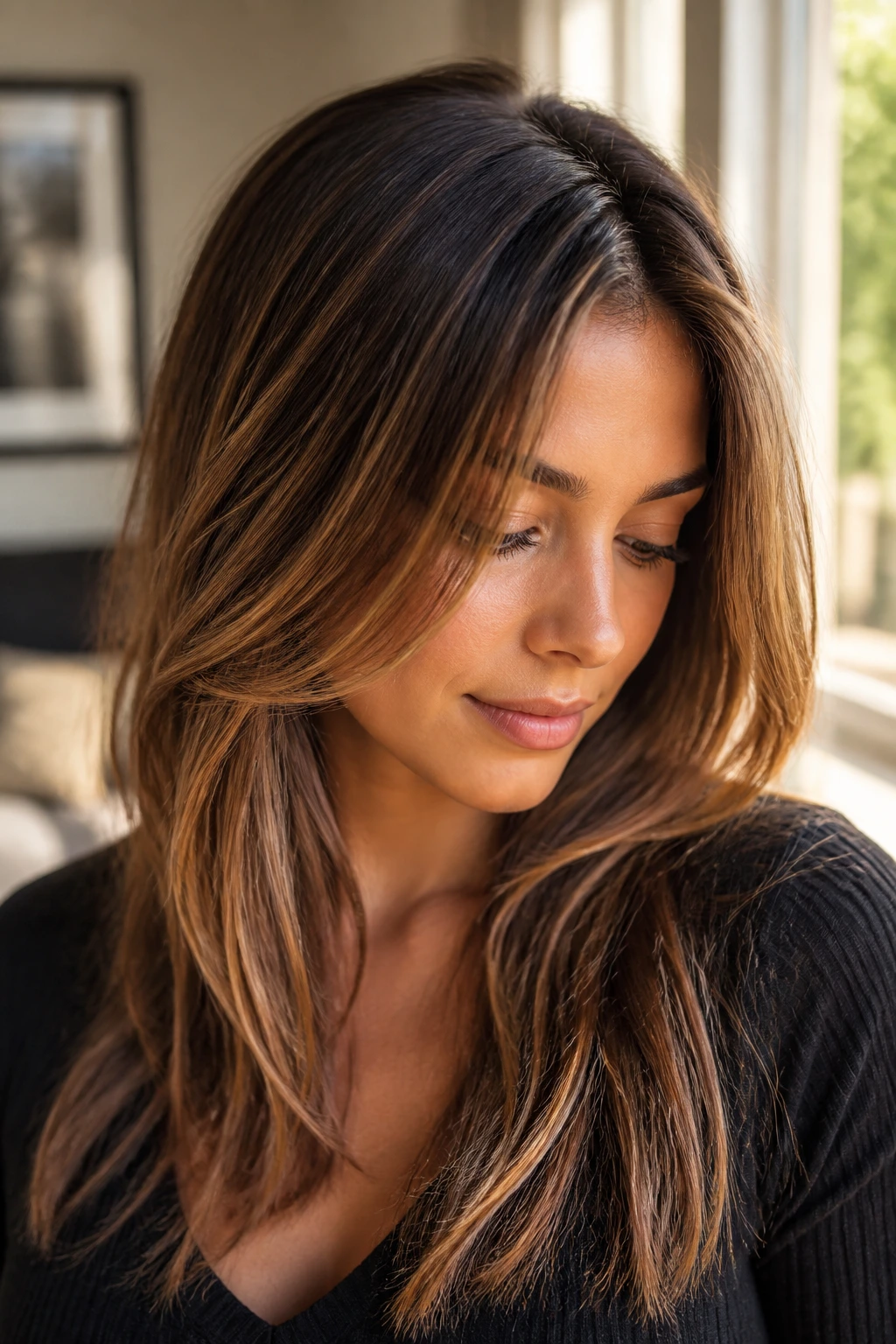
Color Placement: Ask for brightness to sit slightly below the root and around the face, not all over the crown. That keeps the top from going see-through while still letting the hair catch light where it moves.
Root Shadow: A half-inch to 1.5-inch shadow root can make a huge difference on thin hair. It gives the crown a darker anchor and makes the highlighted pieces look intentional instead of scattered.
Cut Matters: A blunt or softly layered cut usually supports highlights better than long, stringy ends. If the ends are wispy, the color will only emphasize that. A clean perimeter gives the lighter pieces something solid to sit on.
Glossing: A clear or tinted gloss every few weeks keeps the highlighted hair reflective. Thin strands often lose shine first, and shine is part of the fullness illusion.
Common Mistakes That Make Thin Hair Look Thinner
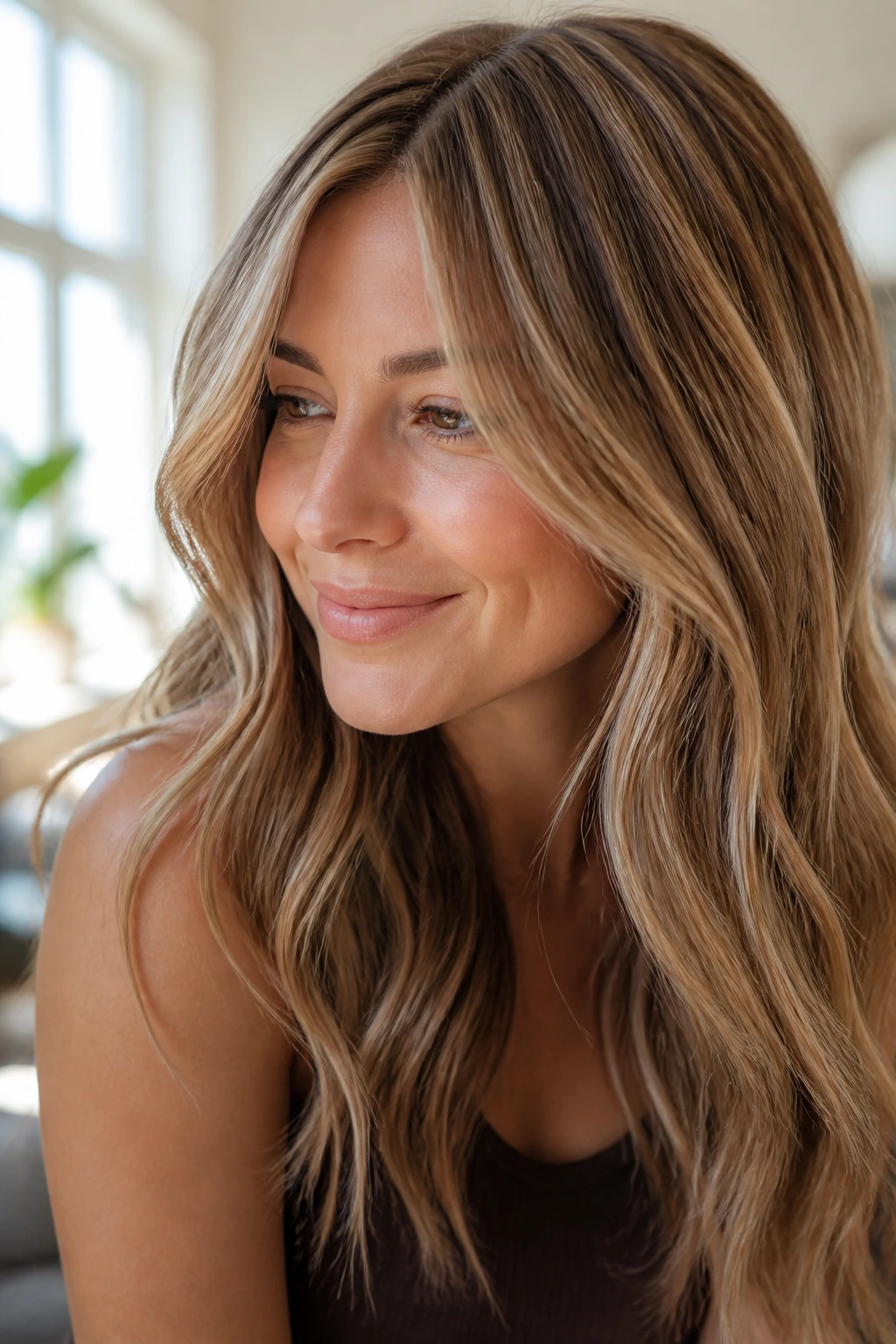
The biggest mistake is going too chunky. Thick foils create hard bands, and hard bands make the gaps between strands easier to see. If the pieces are wide enough to draw a line with your eye, they’re too wide.
The second mistake is lifting everything to the same pale level. When every section is bright, there’s no depth left to support the hair. Thin hair needs contrast, but it needs it in small doses—root shadow, lowlights, and a little light around the face.
Skipping the toner is another one. Raw lightener on thin hair often looks yellow, flat, or overprocessed. A beige, pearl, honey, or mushroom gloss changes the finish enough to matter. It’s not an optional polish. It’s part of the look.
And then there’s the habit of highlighting damaged ends because they’re the easiest place to paint. Those ends usually look weaker after lightening, not better. If the hair is fragile, keep the brightest pieces higher up and let the ends stay a shade deeper.
Ways to Adapt These Ideas to Different Hair Goals
-
Soft Brunette Brightening: Choose caramel veils, toffee babylights, or mushroom ribbons if you want a little lift without giving up the richness of brunette hair. These shades keep the hair looking plush and don’t expose the scalp the way pale blonde can.
-
Blonde Refresh: Baby-lights, pearl dusting, or champagne ends work well when you already live in the blonde lane and want cleaner brightness. Keep the weave fine and the toner soft so the hair doesn’t go chalky.
-
Gray Blending: Sandy beige, honey micro-highlights, and rooty beige blonde can blur scattered grays without creating a harsh line. The goal is to soften contrast, not cover every silver hair.
-
Low-Maintenance Grow-Out: Rooty beige blonde, smoked beige ombré, and shadow-root styles hold up longer between appointments. Thin hair usually looks better when the regrowth is blended instead of sharply contrasted.
-
More Drama, Still Thin-Hair Friendly: Face-framing money pieces, Scandi hairline highlights, and auburn slices give the hair a stronger edge while keeping most of the head softer. That balance matters if you want the color to stand out but not swallow the cut.
Make-Ahead, Maintenance, and Regrowth Timing
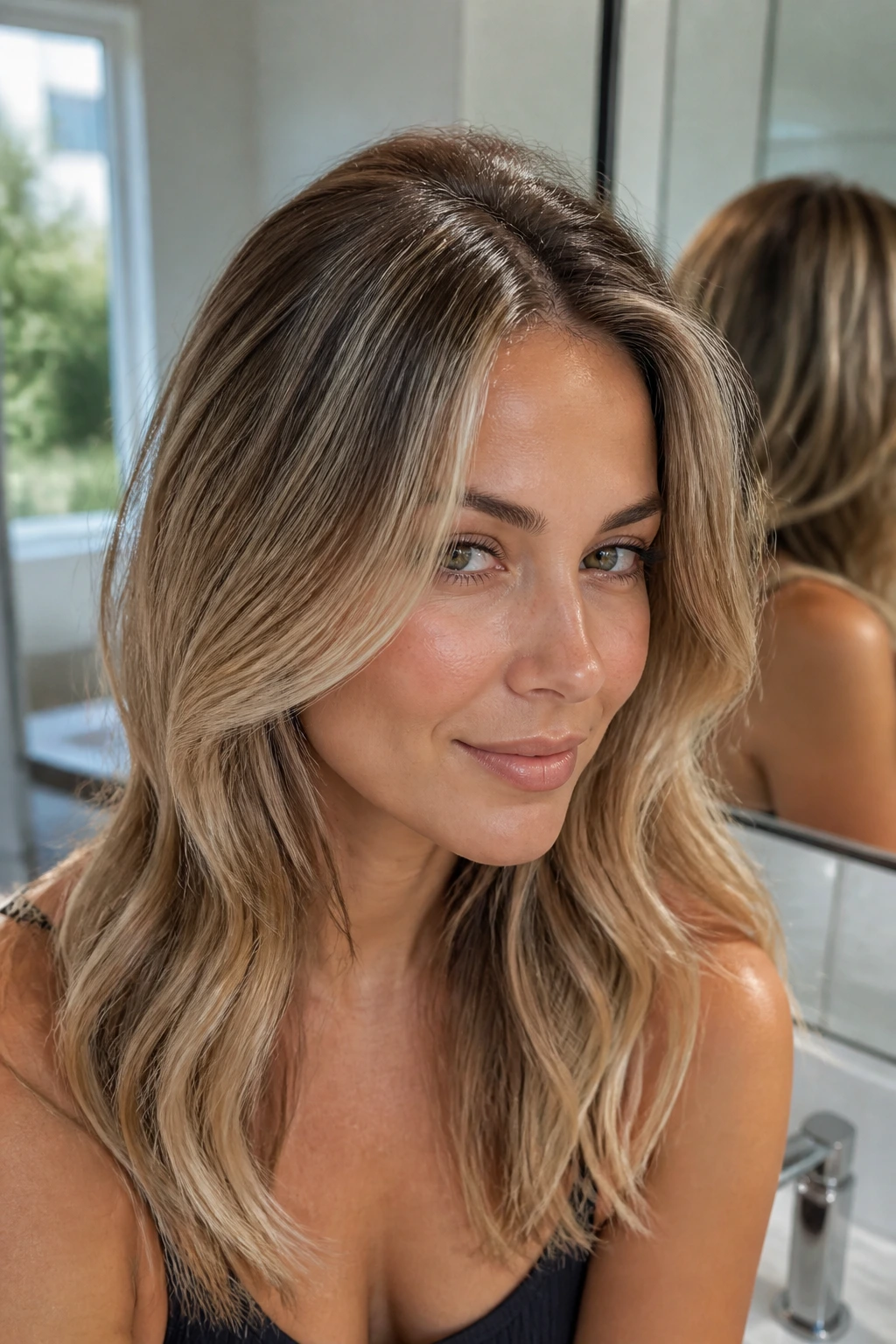
Highlights on thin hair tend to look their cleanest in the first few weeks, when the toner is fresh and the ends still feel smooth. After that, the finish starts to warm up or fade, depending on the base and the products you use. A gloss refresh every 4 to 6 weeks is common for blonde or red-toned looks, while root touch-ups can often stretch to 6 to 10 weeks if the placement is soft.
A purple shampoo can help blondes once or twice a week, but don’t use it like laundry detergent. Too much can make thin hair look dull and chalky. If your highlights are beige, honey, or champagne, a gentle color-safe shampoo and a moisturizing conditioner are usually enough between glosses.
Heat protection matters more on fine strands than people like to admit. Blow-drying and hot tools strip shine fast, and shine is half the illusion. Use a light heat protectant before drying, then keep your curling iron or straightener around the lower end of the safe range for your hair type. If the ends feel rough, give them a trim before the next color service. There is no clever highlight placement that can hide fried ends.
Frequently Asked Questions
Will highlights make thin hair look thinner?
They can, if the foils are too wide or the contrast is too harsh. Fine weaving, a little root depth, and soft toner choices usually do the opposite and make the hair read fuller.
Are babylights or balayage better for thin hair?
Babylights are usually safer if you want softness right at the part and crown. Balayage works well too, but it’s better when the painted pieces start lower and don’t open up the top too much.
Should thin hair get lowlights too?
Yes, often. A few deeper pieces can give the lighter strands something to sit against, which helps the hair look denser and less washed out.
Can I do highlights on thin hair at home?
You can, but the margin for error is small. If you miss the weave or place the lightener too close to the scalp, the result can look patchy fast. A partial service is usually a safer first step.
How light is too light for sparse hair?
If the lightest pieces are several shades brighter than the base, the scalp tends to show more. One to two levels lighter is often enough unless the hair is already naturally blonde and healthy.
What if my ends are already fragile?
Keep the brightest pieces away from the tips and ask for a gloss instead of pushing for more lift. Thin, fragile ends usually look better with sheen and tone than with extra bleaching.
Do highlights work on short thin hair?
Absolutely. Short cuts can look fuller with a soft crown lift, a narrow money piece, or tiny woven highlights through the top. The key is avoiding wide stripes that fight the shape of the cut.
How often should I refresh the color?
That depends on the placement. Soft balayage and shadow roots can stretch longer, while face-framing pieces and cool blondes usually need a toner refresh sooner. Watch the brass and the regrowth line; those two things tell you more than the calendar does.
Quiet Light Wins
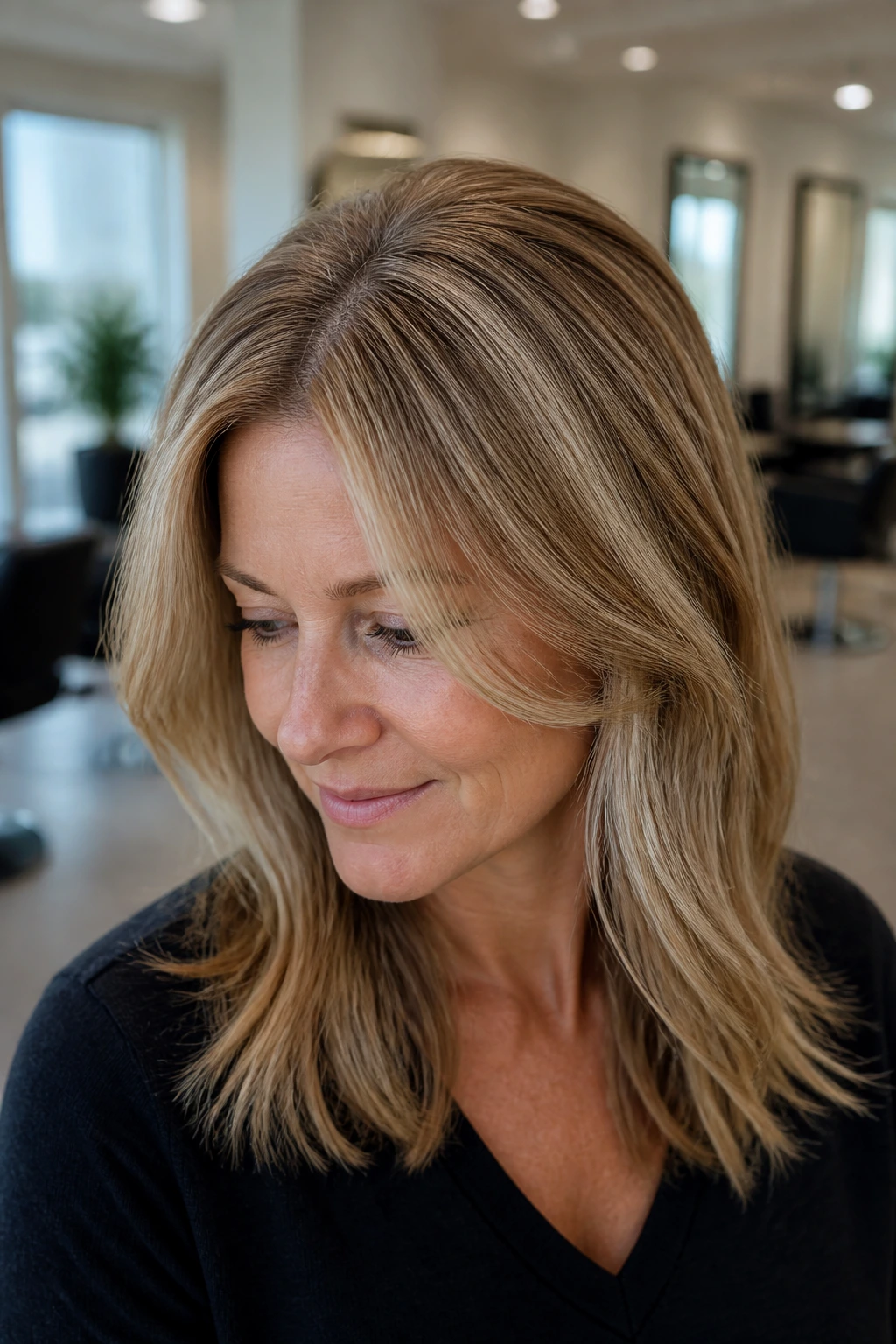
Thin hair doesn’t need louder color. It needs smarter color. The best placements make the scalp look softer, the crown look fuller, and the ends look intentional instead of wispy.
If you’re booking a color appointment, bring a few photos and ask for fine weaving, soft contrast, and at least a little depth at the root. That combination does more for thin hair than a big dramatic foil session ever will. Start subtle, keep the pieces narrow, and let the next appointment refine the shape.
