



Round faces don’t need to be hidden under hair. They need bangs for round faces that cut a small diagonal across the forehead, touch the cheeks in the right place, and keep the eye moving. The wrong fringe turns the front of the haircut into one wide bar. The right one makes the whole face feel more lifted.
That difference comes down to shape, not drama. A blunt, heavy line can make full cheeks look fuller. A softer curtain, a side sweep, or a broken, piecey fringe can do the opposite because it creates gaps, corners, and a little vertical movement around the eyes.
Hair texture changes the story. Fine hair needs a lighter hand, thick hair needs internal removal, curls need length for shrinkage, and cowlicks need room to behave. None of that makes bangs off-limits. It just means the good ones are cut with your face, not against it.
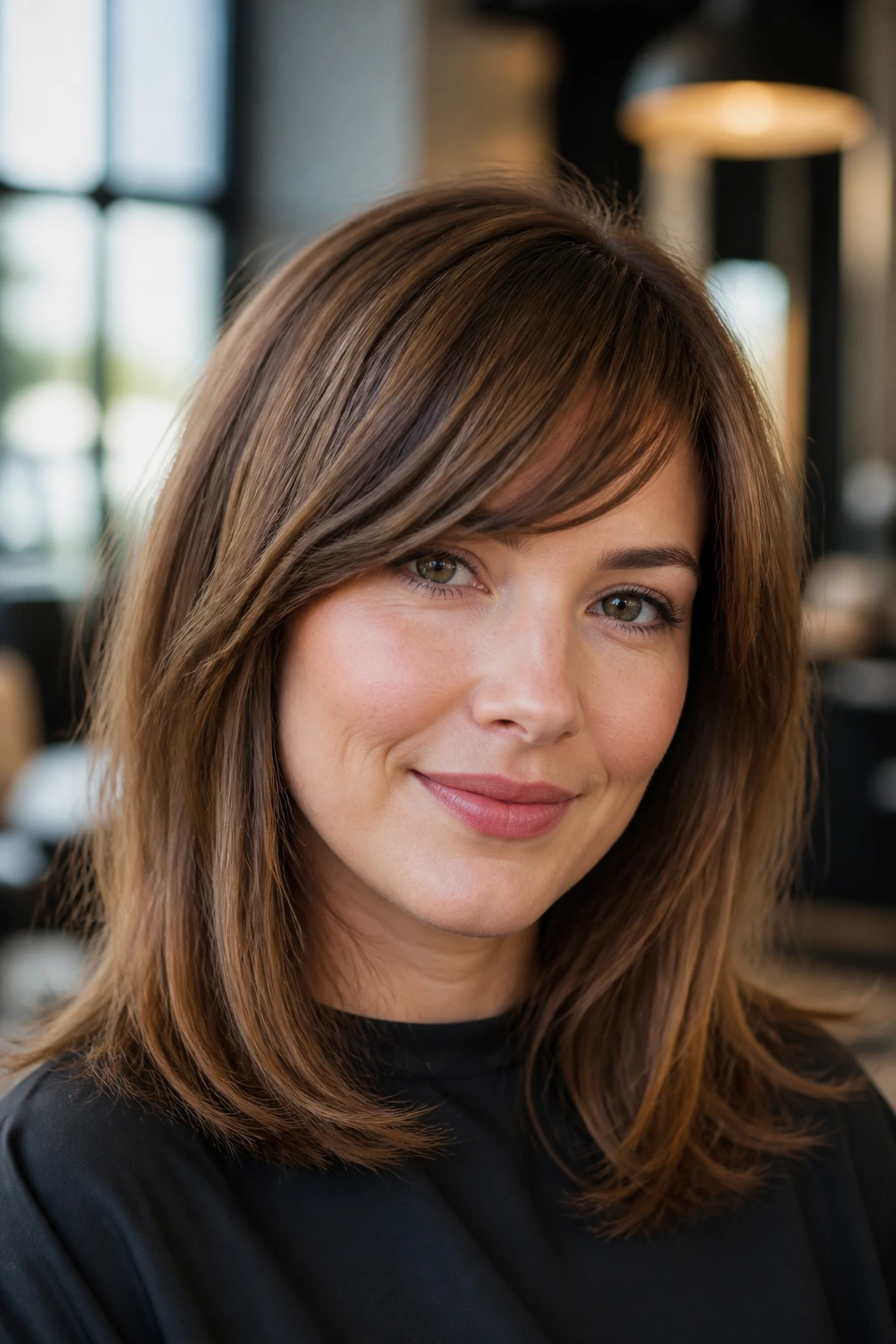
Why These Fringe Shapes Work on Round Faces
-
They break the circle: A round face has more width than length, so any fringe that adds a diagonal line helps redirect the eye instead of letting it travel straight across the cheeks.
-
They keep the forehead from looking boxed in: Bangs that are too thick or too short can shrink the upper face; styles that taper at the temples leave breathing room and stop the front from feeling heavy.
-
They let the cheekbones do some work: The best fringe shapes for round faces often skim the cheekbone or land just below it, which gives the face a built-in angle.
-
They can be soft without going limp: Piecey bangs, feathering, and broken ends still move, which matters if you want shape without a helmet effect.
-
They buy you options: A lot of these styles grow out cleanly. That matters more than people admit, because bangs that look good for two weeks and then turn fussy are a headache.
The Geometry Behind a Flattering Fringe
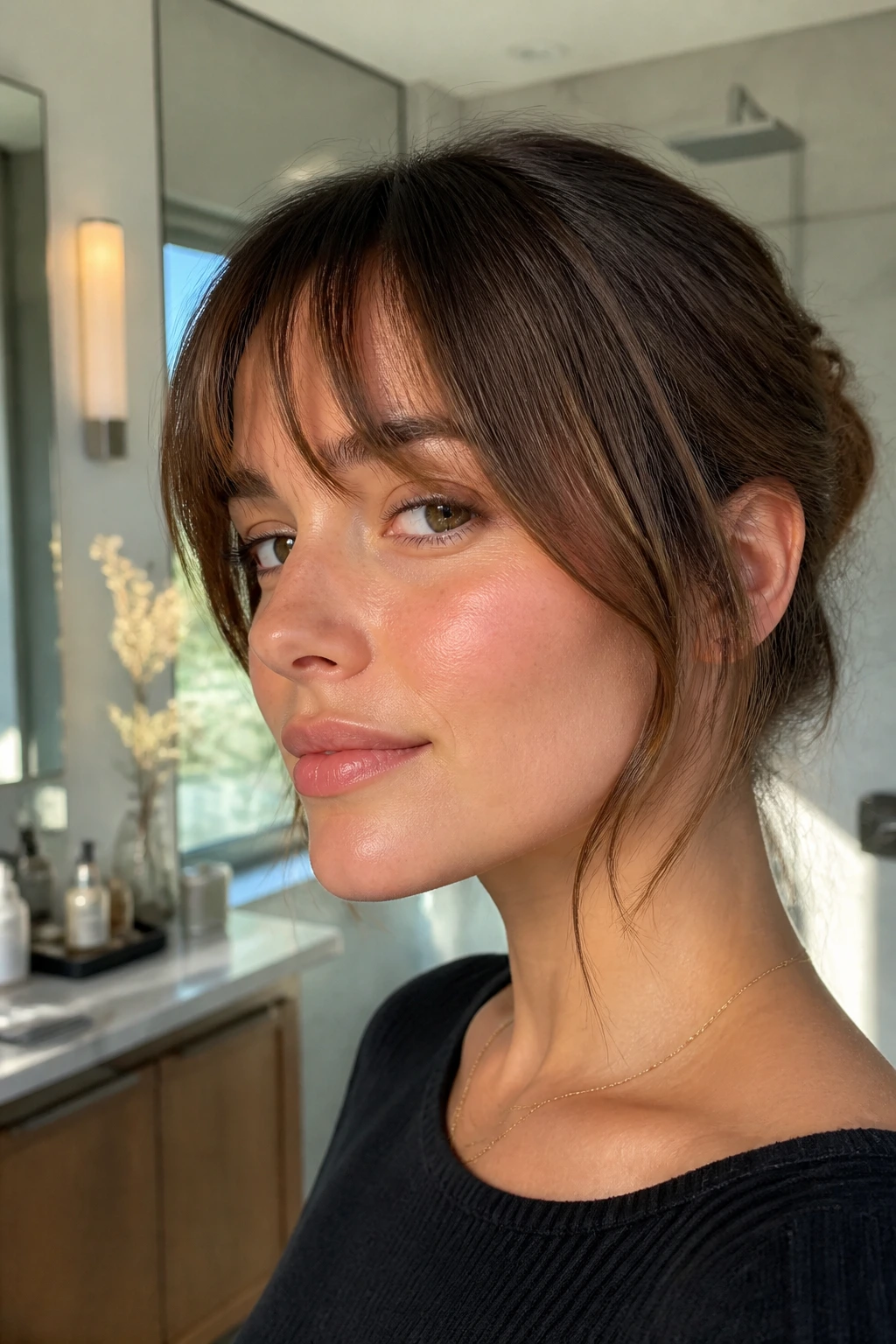
A round face usually reads widest around the cheeks, with similar width and length. That does not mean the face is large or needs shrinking. It means the front edge of the haircut has to do some visual editing. Horizontal lines widen. Diagonal lines narrow. Curved lines soften.
That’s why the most useful bangs for round faces rarely sit as a hard shelf. They bend, split, taper, or fall a little unevenly. Even a blunt bang can work if it is softened at the edges and placed at the right length, but a full-width, one-length fringe is usually the fastest way to flatten the face into a single shape.
Crown height matters, too. A little lift at the roots gives the face more length. Flat bangs that cling to the forehead do the opposite. You can fix a surprising amount with a round brush, a blow dryer nozzle, and 30 seconds of root direction. Tiny details. Big payoff.
How to Read Your Forehead, Cheekbones, and Hairline
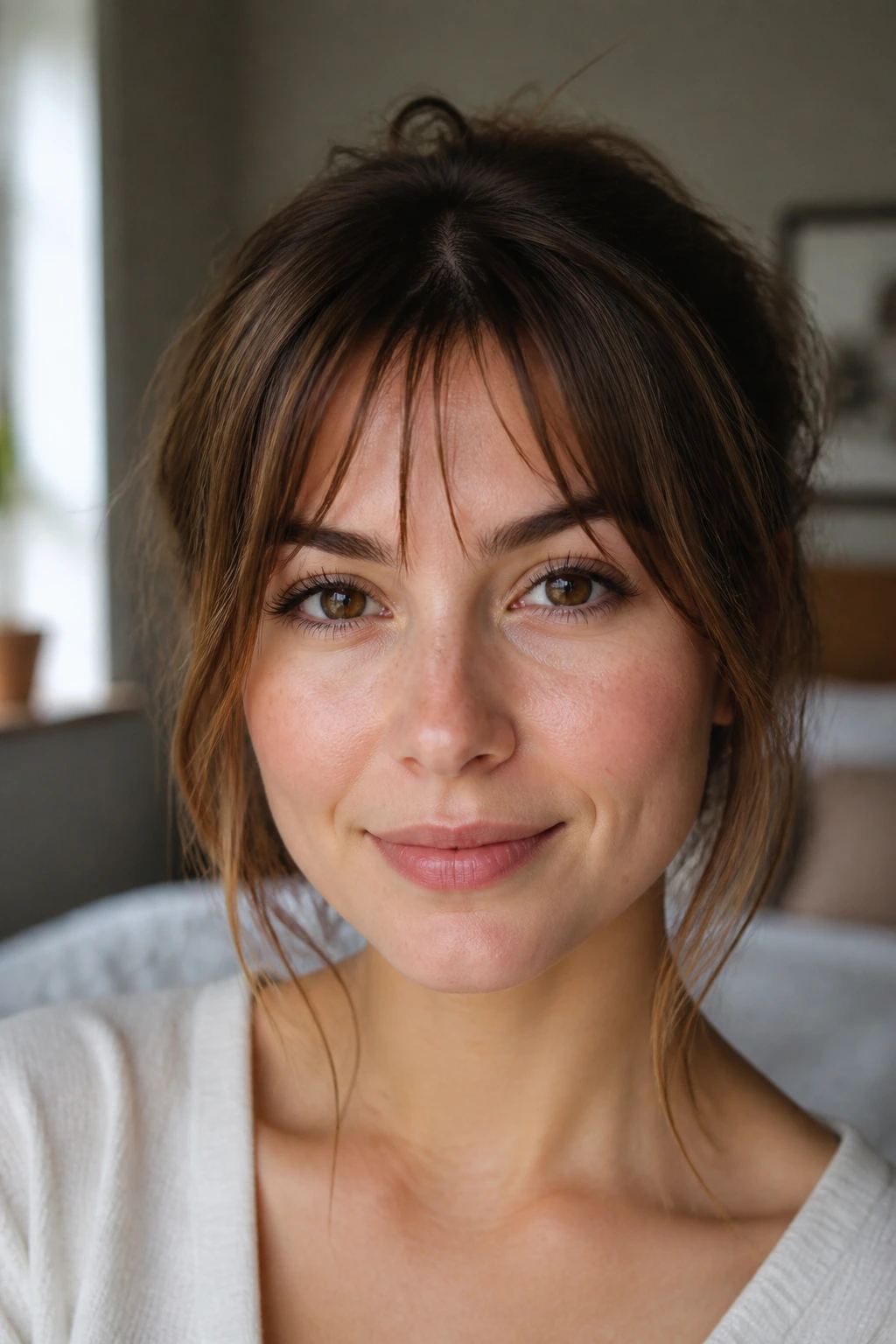
Not every round face wants the same fringe. Some foreheads are short. Some are tall. Some hairlines dip in the center, and some have a strong cowlick that pushes bangs apart whether you ask nicely or not.
Stand in front of a mirror and look at three things: where your face is widest, where your hair naturally splits, and how much forehead you want to show. If your cheeks are the widest point, you usually want bangs that get narrower at the center and softer as they move outward. If your forehead is on the shorter side, keep the fringe lighter and a little longer so it does not crowd the eyes.
A cowlick is not a deal-breaker. It just changes the cut. If the hair at the front springs up and right, ask for more length in that spot so the bang can sit where you want it after styling. That one adjustment prevents a lot of frustration.
1. Curtain Bangs
Curtain bangs are the style I’d hand to a lot of round-faced clients first, because they do one thing especially well: they open the center of the face without abandoning the cheeks. The middle sits shorter, the sides slide longer, and the eye gets a clean path down the face instead of across it.
Why They Work on Round Faces
If the shortest point lands around the brow and the longest point brushes the cheekbone or upper lip, the fringe creates a soft V shape. That shape helps lengthen the face visually. It also avoids that boxed-in feeling you get from a straight bar of hair across the forehead.
- Ask for the center pieces to be a little shorter than the outer pieces.
- Keep the longest part at or just below the cheekbone.
- Blow them forward first, then split them away from the center.
Quick tip: Curtain bangs usually look better a touch longer than you think on day one. They settle fast, and that extra length keeps them from sitting too high on a round face.
2. Side-Swept Bangs
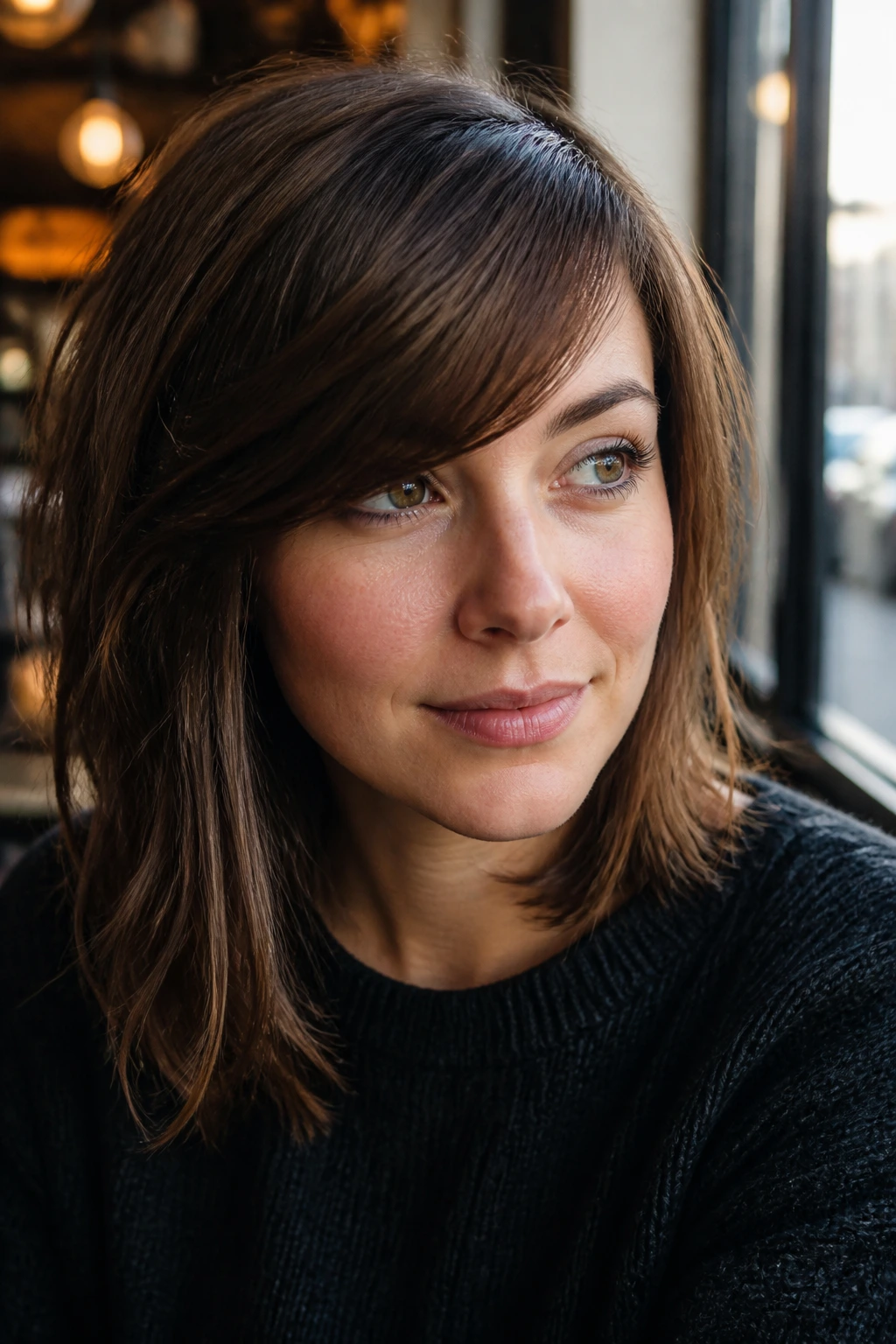
Side-swept bangs are the safest shape when you want movement but do not want a lot of maintenance. They throw the front section diagonally across the forehead, which is useful on a round face because diagonals work like little arrows. They guide the eye away from width.
The nice thing about this style is that it does not need to be dramatic. A deep side part and a bang that starts around the arch of the brow can do plenty on its own. If your hair is fine, this shape can also make the front feel fuller without becoming bulky. If your hair is thick, the sweep keeps the volume from sitting like a block.
I like side-swept bangs for people who wear their hair in a ponytail or clip a lot. They keep looking intentional even when the rest of the style is simple. That is worth a lot on rushed mornings.
3. Bottleneck Bangs
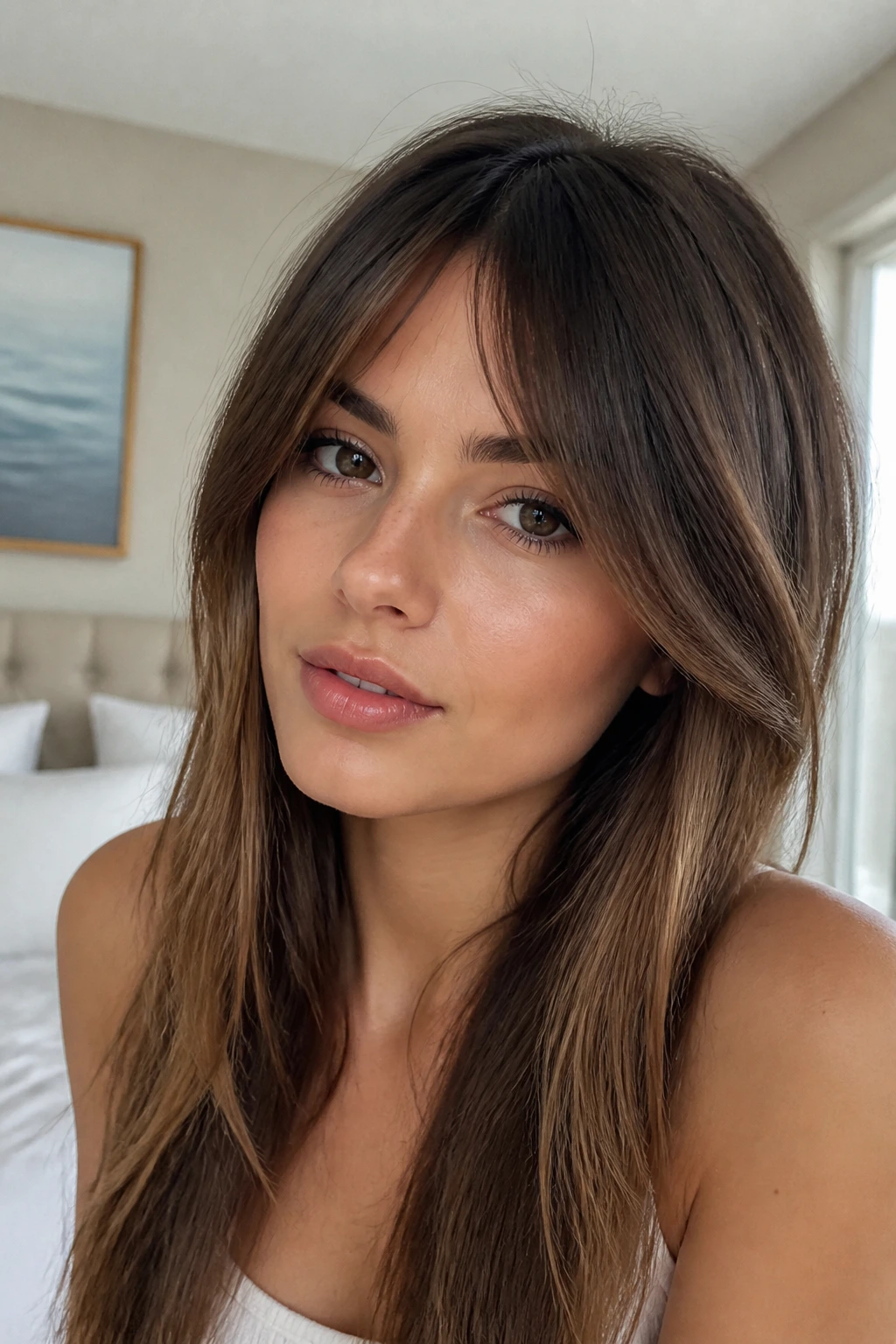
Why do bottleneck bangs show up in so many flattering cuts for round faces? Because they pull in at the center and ease out at the sides. That narrow-to-wide shape mirrors the sort of visual line a round face needs most.
The center pieces are usually shorter and softer, then the length opens up toward the temples and cheekbones. The effect is less obvious than curtain bangs and a little more tailored than a side sweep. On a round face, that middle narrowing helps the forehead stay open while the longer sides carve a little length down the face.
How to Wear Them Well
Ask for the center to sit just below the brow area and the outer pieces to graze the cheekbone. Dry them with a round brush, but keep the bend soft. If you over-roll them, they can turn puffy at the sides, and that is not the look you want.
Bottleneck bangs do best when the edges are slightly broken. Too much symmetry makes them feel formal. A bit of irregularity keeps them modern and lighter.
4. Wispy Bangs
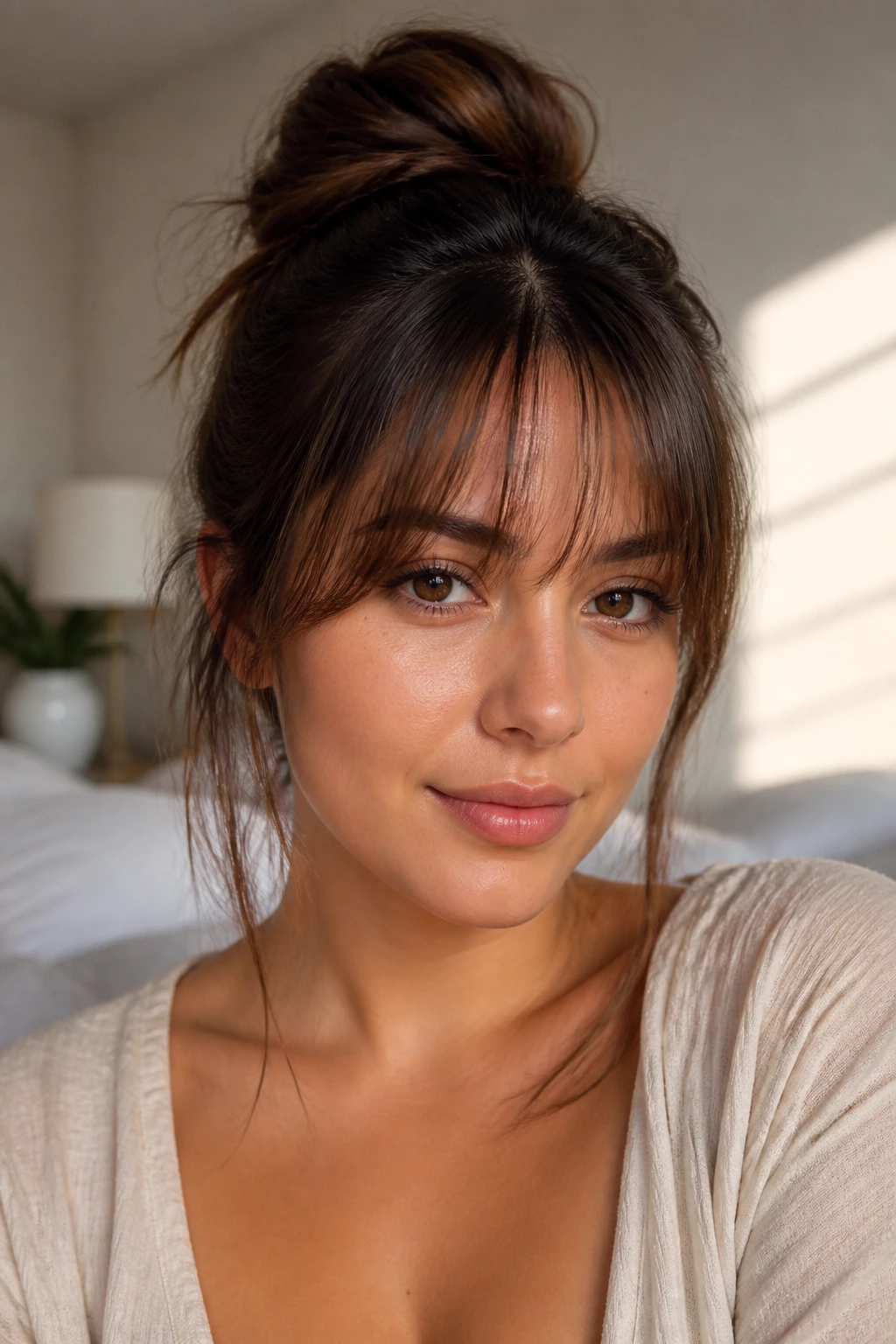
Wispy bangs are the opposite of a hard wall. They let skin show through, which is exactly why they work on round faces. When the forehead is visible in small gaps, the front of the haircut stops looking heavy and starts looking airy.
The key is density. Wispy does not mean stringy. It means the fringe is intentionally light, with enough hair to frame the eyes but not enough to cover the whole forehead. That lighter density is useful if your hair is fine or if you want bangs without the full commitment of a dense cut.
They also age well. A wispy fringe grows out with less drama than a thick blunt one, which is nice if you want to stretch salon visits. The downside? Too much product will clump them. A light mist of flexible spray is usually enough.
5. Long Face-Framing Fringe

Long face-framing fringe is the style I recommend to people who say they want bangs, then quietly worry they will hate bangs. Fair. This version starts higher than layers but longer than a classic fringe, often skimming the cheekbone, jaw, or even the top of the lip.
For a round face, that extra length does the important work lower on the face. Instead of stopping at the brow and widening the upper half, the fringe drapes down where it can cut the face into more vertical sections. That shift makes the whole haircut feel longer and less round.
The best part is how easy it is to tuck these pieces back. You can wear them loose, split them, pin them, or blend them into a ponytail. If you like changing your part from week to week, this one gives you room to experiment without a full grow-out phase.
6. Feathered Bangs
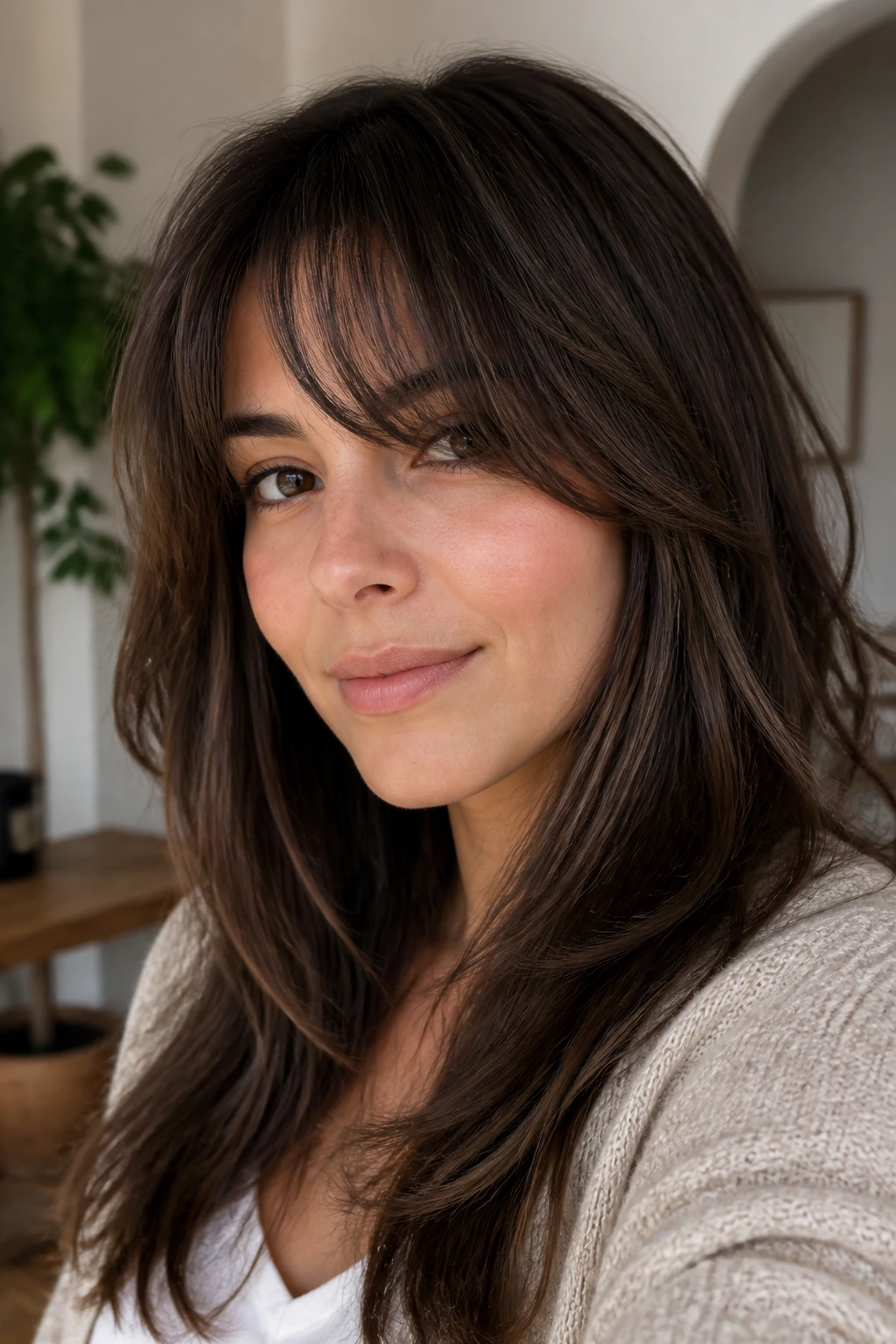
Feathered bangs are what happen when a fringe stops acting like a single sheet and starts moving like part of the haircut. The ends are softened, the weight is removed, and the front falls in lighter pieces instead of a blunt block.
That matters on a round face because thickness at the forehead can make the face feel shorter and wider. Feathering breaks that up. It gives the front line some texture and creates small negative spaces, which keep the style from reading heavy. If you have medium to thick hair, this is one of the smartest ways to keep bangs from swallowing the face.
What Makes Them Different
Feathered bangs are not as obviously split as curtain bangs, and they are not as sparse as wispy bangs. They sit in the middle. Think of them as a soft border rather than a clear border.
They pair especially well with layered cuts. If the rest of the haircut has movement, the bangs should not be the only solid shape up front. That mismatch is where a lot of bad fringe happens.
7. Arched Bangs

Arched bangs follow the curve of the brow instead of flattening across it. That curve is the whole reason they work on round faces. A soft arch opens the center of the face and narrows the visual line at the edges.
The shape is polished, but not stiff. If the arch is too high, the fringe starts looking like a semicircle drawn with a ruler. Too low, and the effect disappears. The sweet spot usually sits just above the brow at the center and eases longer at the sides.
I like these on people who want the eyes to be the focus. The curve acts like a frame for the brows and lashes. Pair them with a little root lift, and the face gets more vertical energy without needing a dramatic cut.
8. Shag Bangs

Do shag bangs flatter round faces? Yes, when the shag is cut with enough broken texture to keep the front from turning into a block. The point of a shag fringe is movement. Lots of it. That movement helps the face feel less circular because the front edge no longer sits in one smooth line.
These bangs usually connect to choppy layers around the cheek and jaw. That connection matters. If the bang is textured but the rest of the haircut is blunt, the shape can feel disconnected and messy in a bad way. Keep the front pieces soft and let them blend into the rest of the cut.
A shag fringe is a good choice if your style already leans relaxed or lived-in. It does not need perfection. In fact, it often looks better a little uneven, especially when the pieces separate naturally as they dry.
How to Style Them
Use a diffuser if your hair is wavy or curly. If it’s straight, rough-dry the roots and twist a few front pieces with your fingers while they’re still damp. A tiny bit of texturizing spray at the ends is enough.
9. Choppy Bangs

Choppy bangs work because they never look like a single curtain. The ends are broken up, the line is irregular, and the front has enough texture to keep the eye moving. On a round face, that broken edge helps interrupt the broadest part of the face.
These are especially good if your hair is thick or dense. A thick blunt fringe can feel like a visor. Chopping it up lightens the visual weight. The result is still bold, but it does not sit like a heavy shelf.
- Ask for point-cutting instead of a hard straight line.
- Keep the temple pieces a little longer than the center.
- Style with fingers, not a brush, once they’re dry.
The only catch is that choppy bangs need a little maintenance. If they grow out unevenly, the texture can go from cool to ragged fast. A quick trim every 4 to 6 weeks keeps them sharp.
10. Micro Bangs
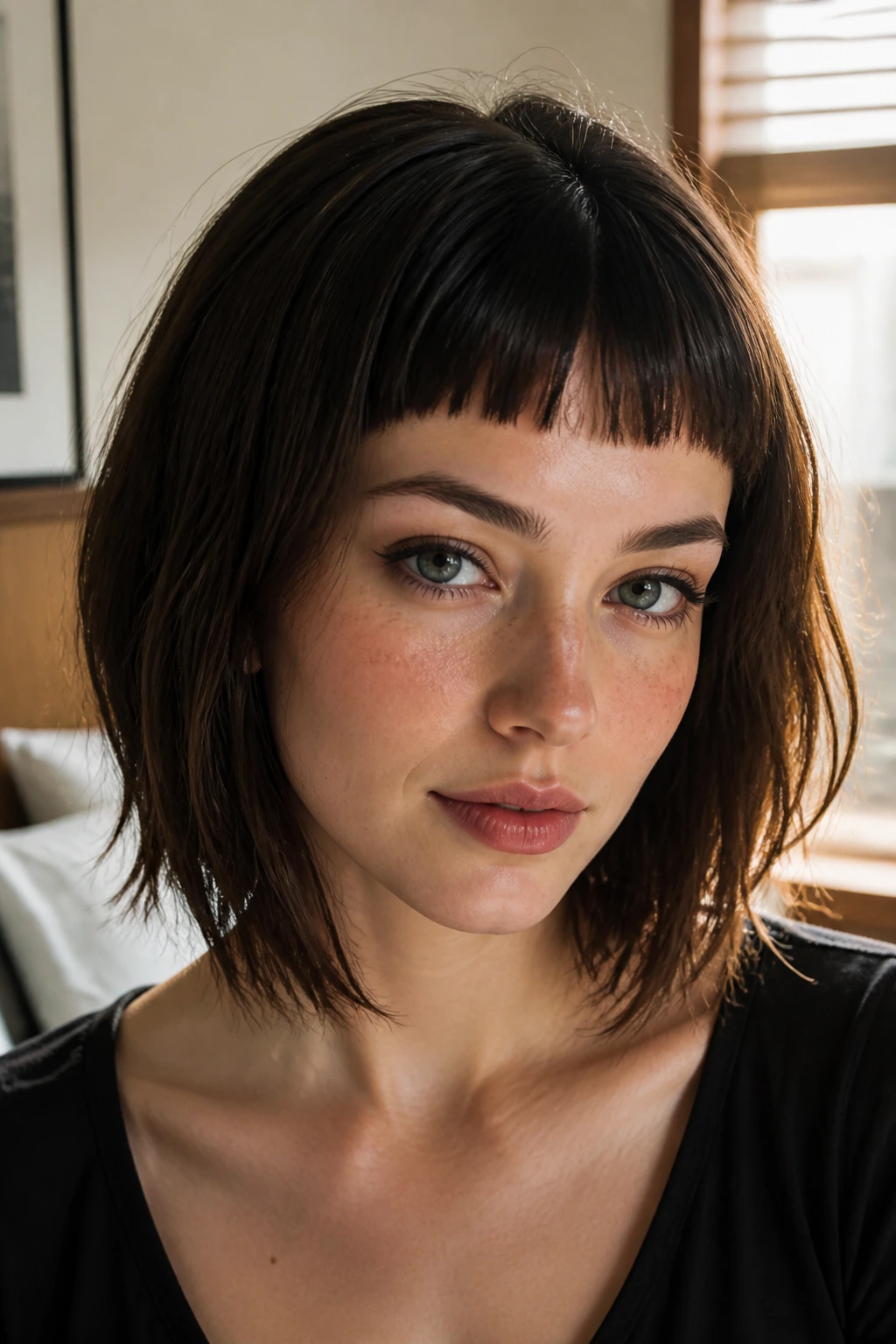
Micro bangs are the boldest option in this list, and I would not hand them to everyone with a round face. But when they’re done right, they can be surprisingly good. The short length puts focus on the eyes and brows, which draws attention upward instead of outward.
Here’s the catch: they need structure. A round face with flat roots and a blunt micro fringe can look wider, not narrower. Add a little lift at the crown, keep the edges broken, and make sure the rest of the cut has some length below the chin. That contrast matters.
Micro bangs are best for people who like a strong look and do not mind styling. They are not a casual, air-dry-and-go choice for most hair types. If your hairline has a strong cowlick, this is one of the harder styles to manage. Still, if you want a graphic front with real personality, they can work.
11. See-Through Bangs
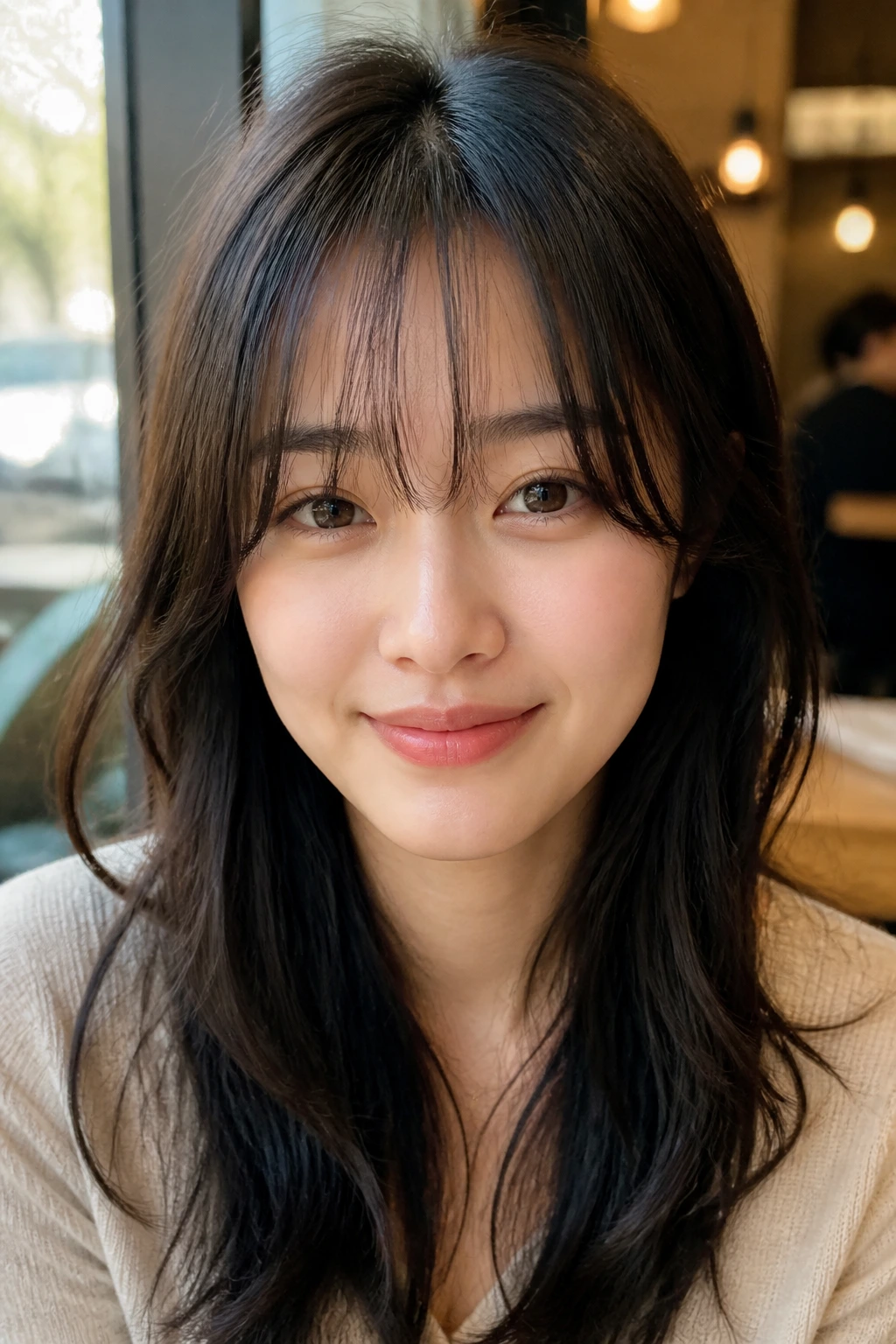
See-through bangs are built on the opposite idea from heavy fringe: let some forehead show. That partial transparency keeps the front soft, which is useful on a round face because it reduces width without erasing the face entirely.
The cut usually has a lighter density through the center, with pieces spaced enough that the skin peeks through. The effect is delicate, but not flimsy when the shape is right. It’s a very good option for fine hair, because it does not ask the front to carry too much weight.
They also behave well under real-life conditions. If you’re someone who sweats at the hairline or hates a full fringe feeling sticky by midday, see-through bangs are easier to live with. A touch of dry shampoo at the roots and a small round brush are usually enough to keep them from collapsing.
12. Curly Bangs
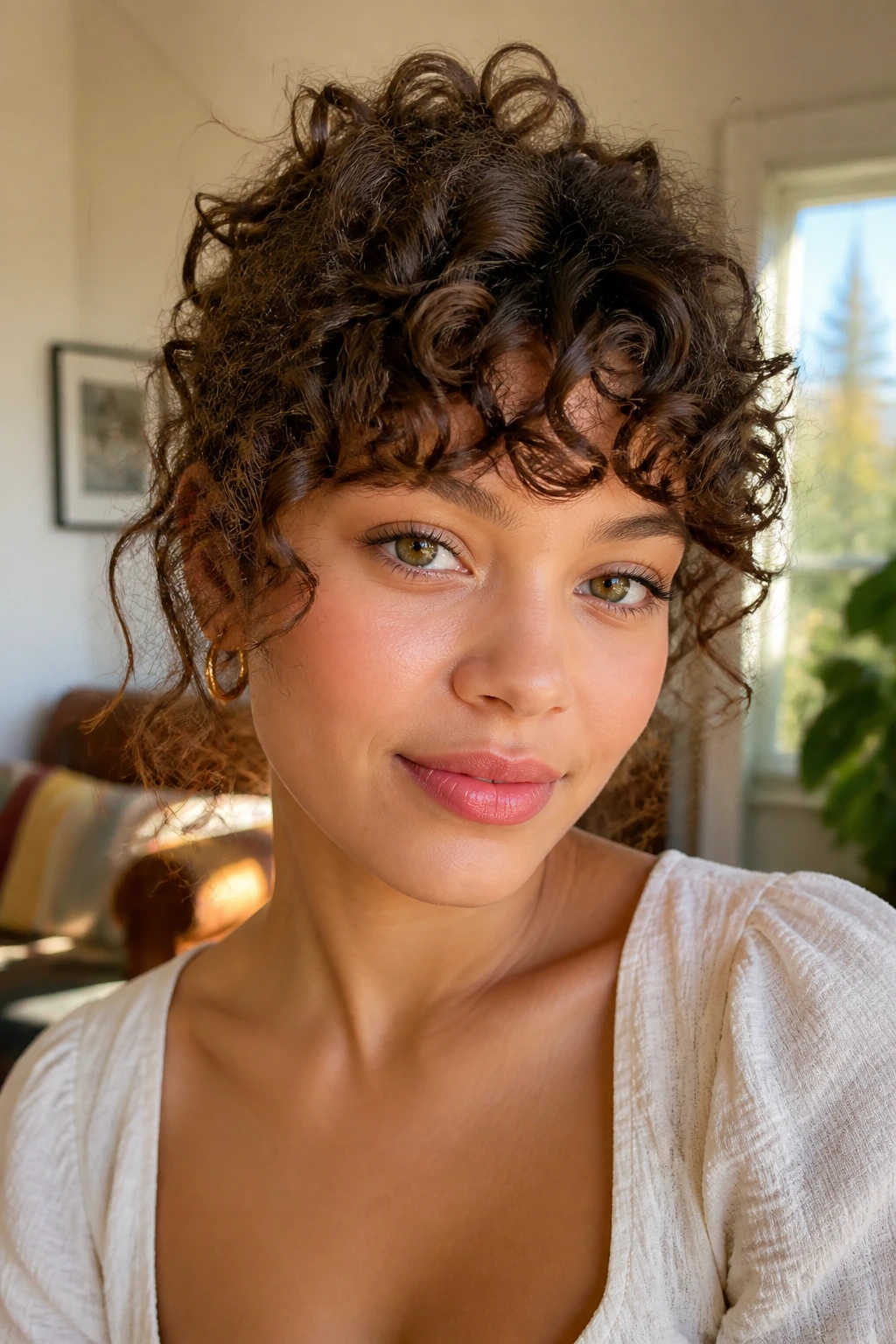
Can curly bangs work on a round face? Absolutely, if the cut respects the curl pattern. In fact, curls can be excellent here because they add height and softness at the same time. The front gets movement, and the face gets a frame that does not sit flat against the forehead.
The important part is shrinkage. A curl that lands just above the brow when wet can bounce up an inch or more as it dries. If your stylist cuts curly bangs too short, they can end up sitting way higher than intended, and that can make the face feel broader. Dry cutting, or at least shaping the fringe in its natural pattern, is usually smarter.
What to Ask For
Ask for a curl-by-curl approach if your texture is tight or springy. If your curls are loose, ask for a longer fringe that can sit near the brow when dry. Either way, keep the sides a little longer so the curls taper into the haircut instead of ending in one hard point.
13. Birkin Bangs

Birkin bangs have a soft, lived-in feel that suits round faces when they’re not too dense. The classic version is full enough to matter but broken enough to move. That balance helps the face look framed rather than boxed.
The trick is length. Too short and the fringe starts to widen the forehead. Too thick and it sits like a solid bar. The sweet spot is usually lash grazing or just above, with a bit of separation through the center. That creates a long, soft line that still leaves air at the brow.
I like Birkin bangs on people who want something romantic but not fussy. They work especially well with wavy hair, because the slight bend gives the fringe some life. On straight hair, you’ll want a tiny bit of bevel at the ends so they don’t hang flat against the face.
14. Split Bangs
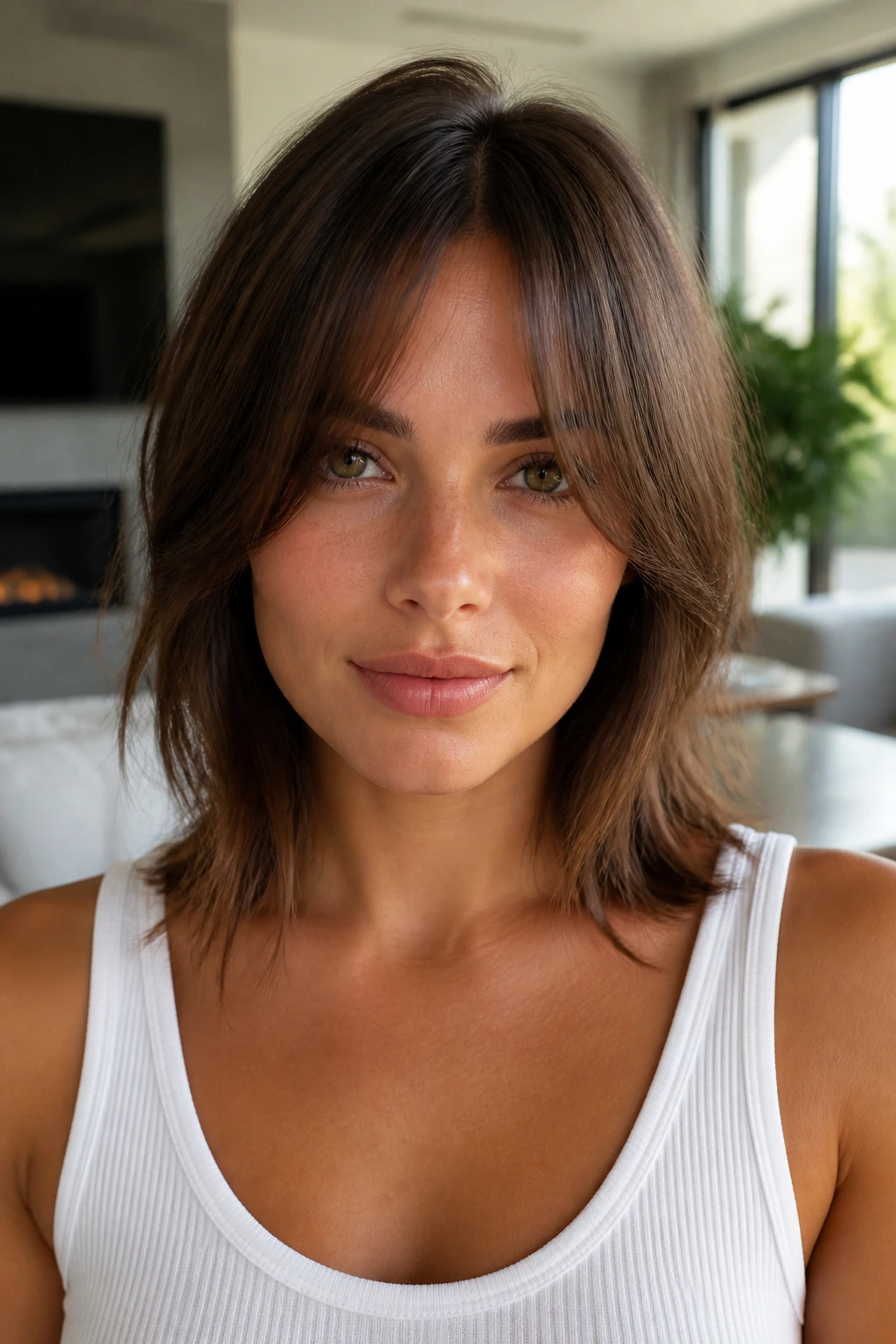
Split bangs are a cleaner, tighter cousin to curtain bangs. They part in the middle or just off center and fall away from the forehead, which gives a round face one of its most useful tools: a visible center line.
That center opening matters. It breaks the width at the front and lets the face feel a little longer. If curtain bangs feel too obvious for you, split bangs give you the same general geometry with a sharper, more minimal look.
They work best when the pieces are long enough to bend, not stick. The shortest point should not sit too high on the forehead. Otherwise the split can look accidental, like the hair simply decided to move on its own.
These are also easy to grow out. That makes them a smart choice if you want the face-framing effect without signing up for a heavy maintenance cut.
15. Swoopy Bangs
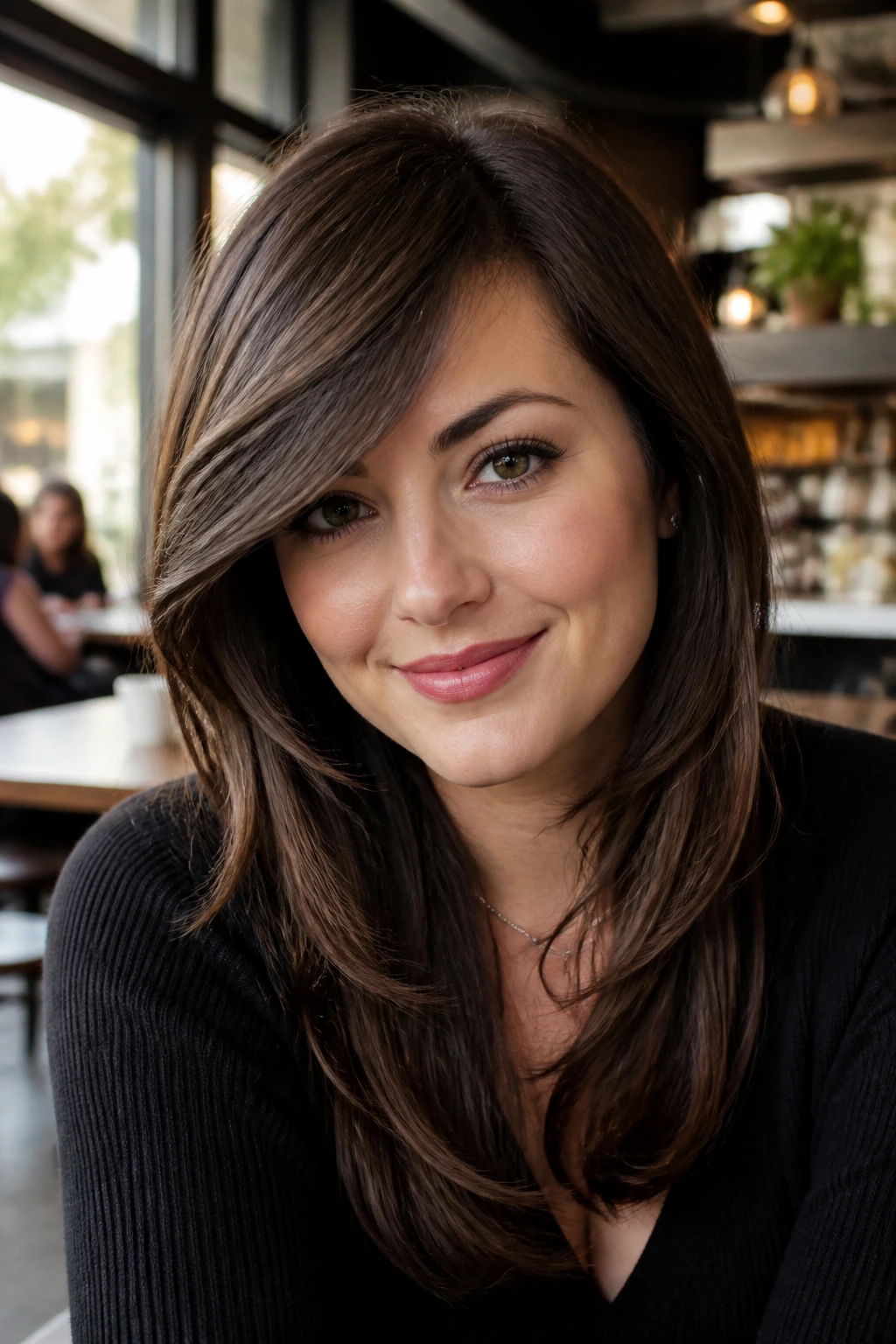
Swoopy bangs are side-swept bangs with a bit more intention. They arc across the forehead in one smooth motion, often with more root lift than a casual side fringe. On a round face, that swoop does two useful things: it creates a diagonal and it adds height near the part.
The style is a good answer if your face needs softening but you do not want a lot of visible separation in the front. The sweep stays cohesive, which can be flattering if your hair is medium to thick and holds shape well.
They are also easy to dress up. A quick round-brush blowout gives them enough bend to stay off the cheeks. If you want the face to feel a little longer, keep the longest point below the brow and aim it toward the cheekbone.
16. Crescent Bangs

Crescent bangs curve gently, shorter in the center and longer at the sides, but with a smoother arc than a standard curtain fringe. That arc is useful on round faces because it keeps the forehead open while still giving the face a defined front edge.
The shape feels softer than a blunt bang and less separated than a curtain bang. That middle ground makes it a good fit for people who want a clear fringe shape without the obvious split. The curve also works well with eyebrow shape, which gives the face a more finished frame.
If the cut is too rounded, it can feel dated. If it’s too straight, it loses the point. The best crescent bangs keep the center light and the corners long enough to skim the cheek area.
Who They Suit
They’re especially good for straight and softly wavy hair, where the curve can show up without fighting the texture. If your hair is very curly, the arc can get lost unless the shape is cut with shrinkage in mind.
17. Tapered Fringe
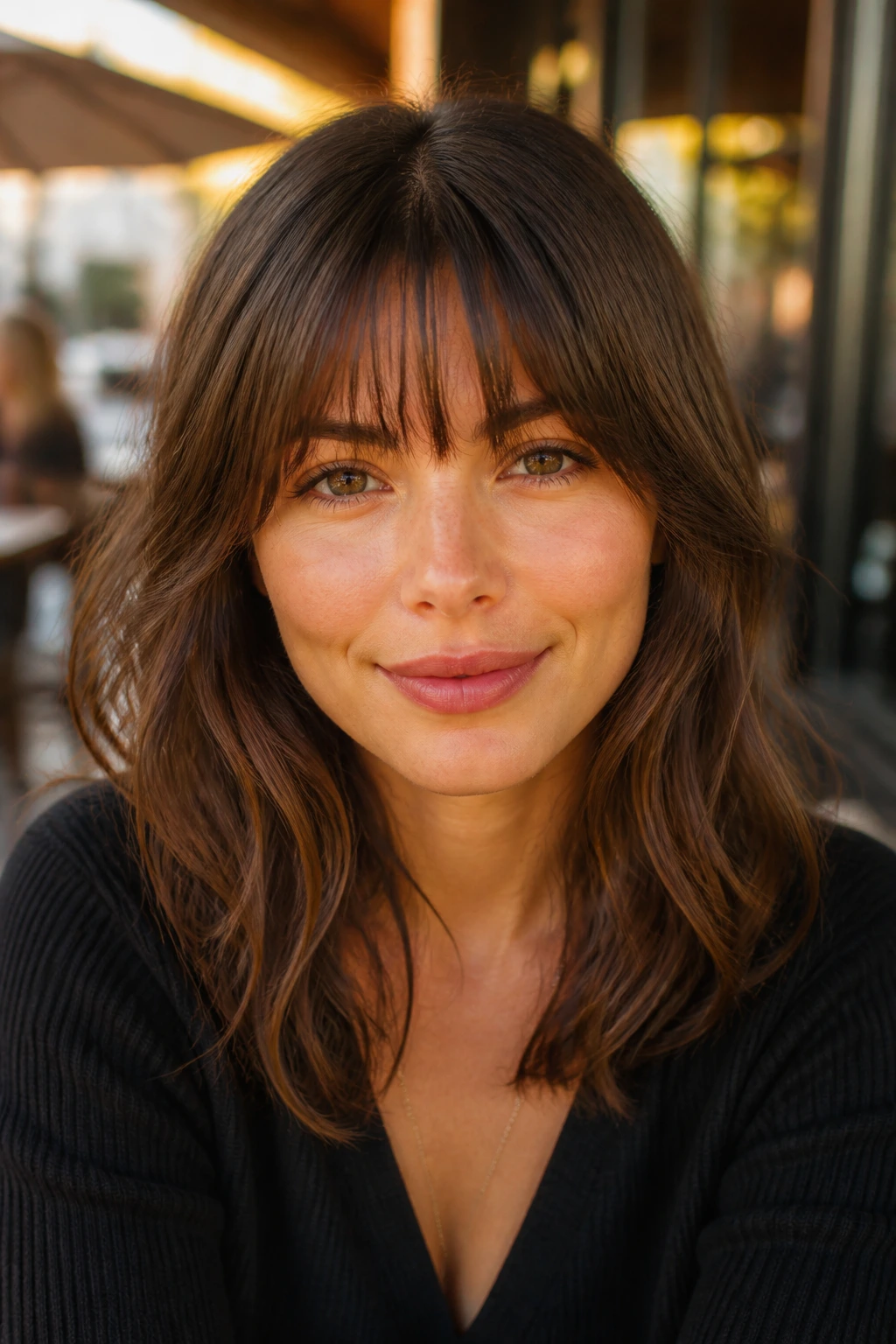
Tapered fringe is one of the smartest cuts for a round face because it narrows at the temples instead of staying equally wide all the way across. That taper keeps the cheeks from feeling visually boxed in.
The difference between tapered fringe and a regular bang is subtle until you see it in a mirror. A regular fringe can stop at one line. A tapered one eases outward, so the eye slides along the face rather than landing on a block. It’s a small change with a real effect.
This style works well when you want a bit of structure but not a lot of drama. Ask for the center to be the most visible part, then let the sides thin out gradually. A small amount of point-cutting at the edges usually keeps it from looking too sharp.
18. Soft Blunt Bangs

Blunt bangs are not off-limits for round faces. They just need softening. A soft blunt bang keeps the strong line across the forehead, but the edges are slightly broken and the length is chosen with care so the style does not cut the face in half.
The best version usually sits near the brow, not far above it. If the bangs are too short, they can make the face feel broader. If they’re too thick, they become the only thing anyone sees. Softening the perimeter and keeping a little separation at the temples helps a lot.
This is the style for someone who likes a cleaner, more graphic look. It can work beautifully with a round face if the rest of the haircut has movement and the fringe is not overly dense. The hair should feel controlled, not trapped.
19. Piecey French Fringe
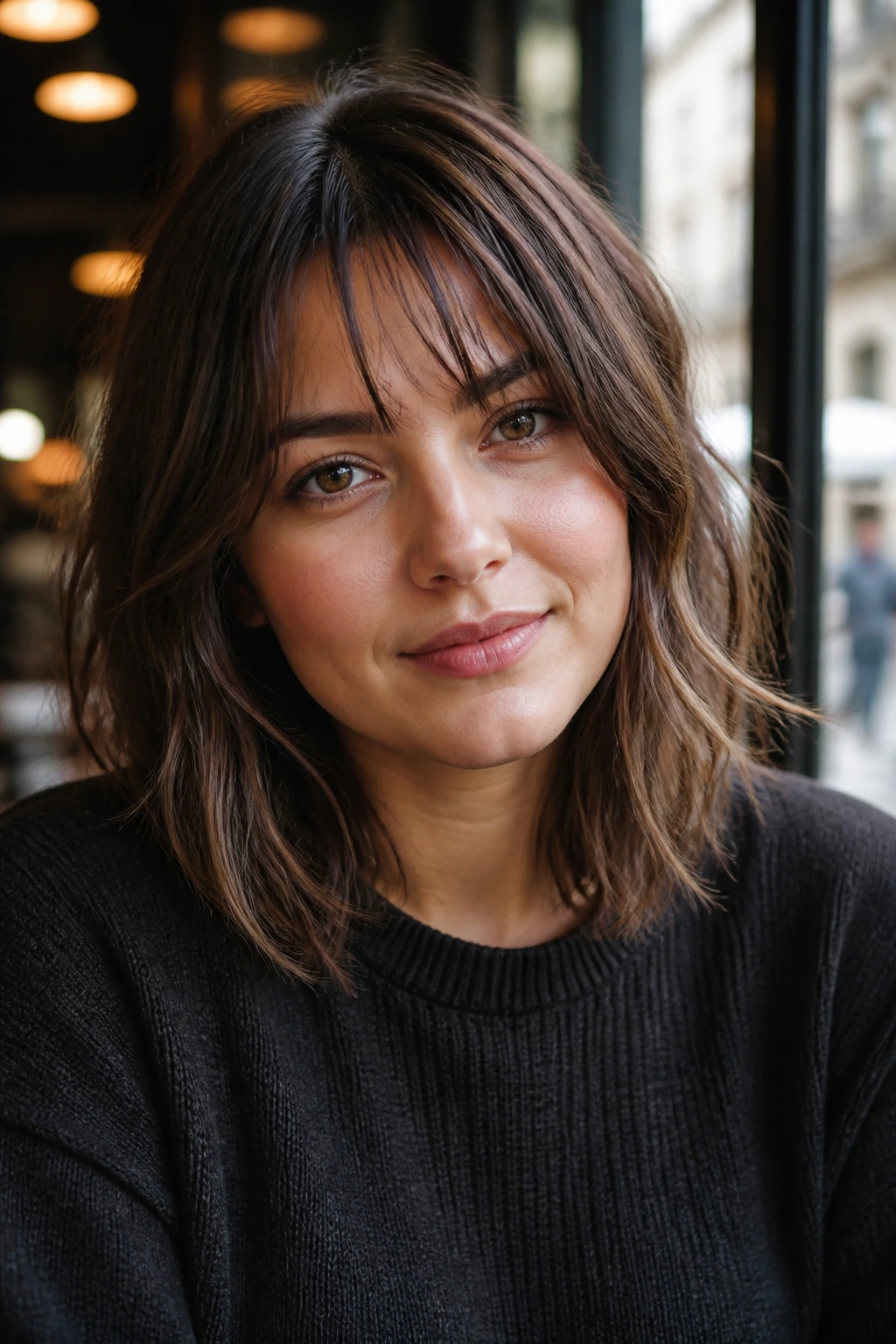
Piecey French fringe is a little messy in the best way. The front is broken into separate strands, often with a slightly off-center part and enough texture to keep the bangs from sitting as one uniform line. That softness is the reason it works so well on round faces.
Instead of making the forehead look shorter, piecey fringe lets bits of it show through. The result feels lighter around the cheeks and less boxy around the brows. If you like hair that looks lived in rather than polished to the millimeter, this style gives you that room.
The styling is low pressure. Blow-dry the roots first, then separate the pieces with fingers and a touch of matte paste if needed. Don’t brush it flat. That defeats the whole point.
20. Asymmetric Fringe
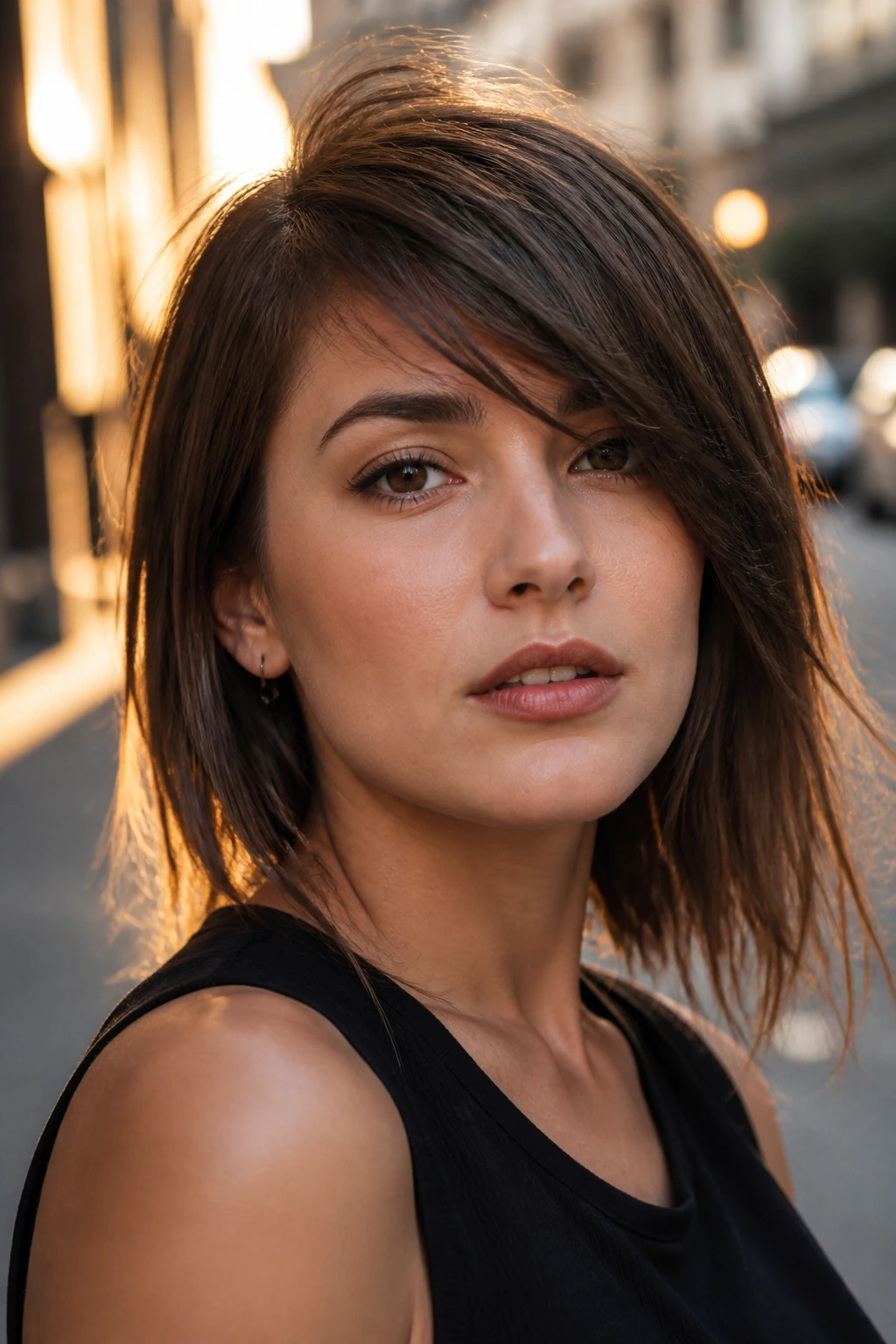
Asymmetric fringe is a good option when you want shape without symmetry. One side is longer, the other sits a little higher or tighter, and the line across the forehead slants instead of staying level. On a round face, that slant is useful because it adds movement and takes attention off facial width.
This style can be subtle or bold. A small difference in length may be enough if you want something wearable. A bigger difference gives the haircut more edge. Either way, the asymmetry creates a visual break that helps the face read less circular.
It’s also a nice answer for a strong cowlick or a forehead that doesn’t behave well with center-parted styles. If your hair naturally wants to move to one side anyway, you may as well build the cut around that fact instead of fighting it.
How to Choose the Right Fringe for Your Hair Texture
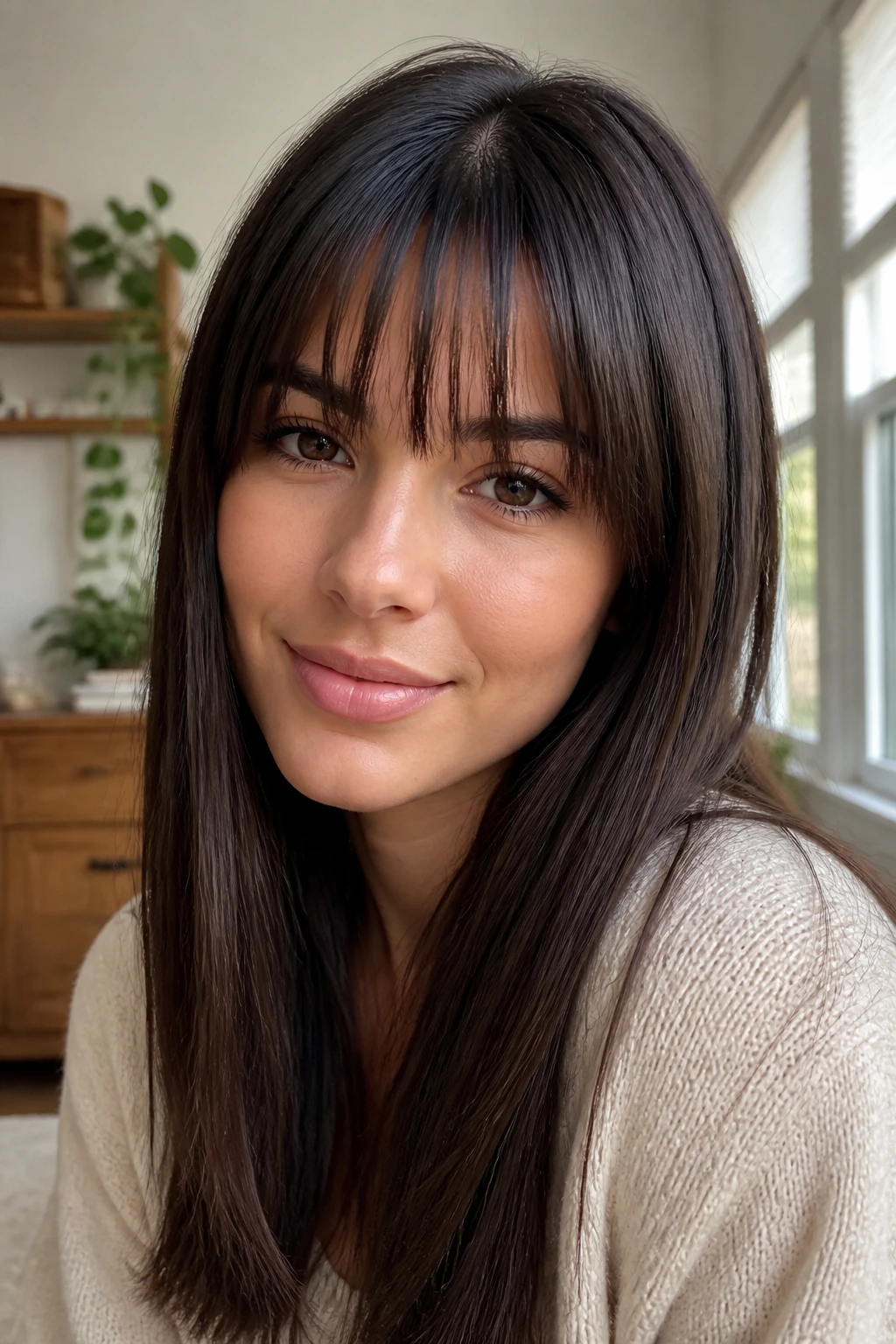
Straight, wavy, curly, and coily hair all change the shape of bangs once they dry. That part gets ignored too often, and then people blame the face shape when the real issue is the texture. A round face can wear dense fringe or airy fringe. The cut just has to respect the way the hair falls.
Fine hair usually does better with lighter shapes like wispy, see-through, or split bangs. Those styles create front interest without asking the hair to hold a lot of bulk. Thick hair can handle curtain bangs, bottleneck bangs, and soft blunt bangs better because there’s enough density to create a shape without gaps.
Curly and coily textures need room for shrinkage. Cutting them dry, or at least in their natural state, usually saves you from surprise forehead exposure later. If your curls bounce up a lot, ask for the longest point to fall well below where you want it dry.
One more thing. If your hair is oily at the front, avoid the heaviest, densest styles unless you are ready to wash the fringe more often. Bangs live close to the skin. They pick up oil, sweat, and product faster than the rest of the cut.
What to Tell Your Stylist at the Chair
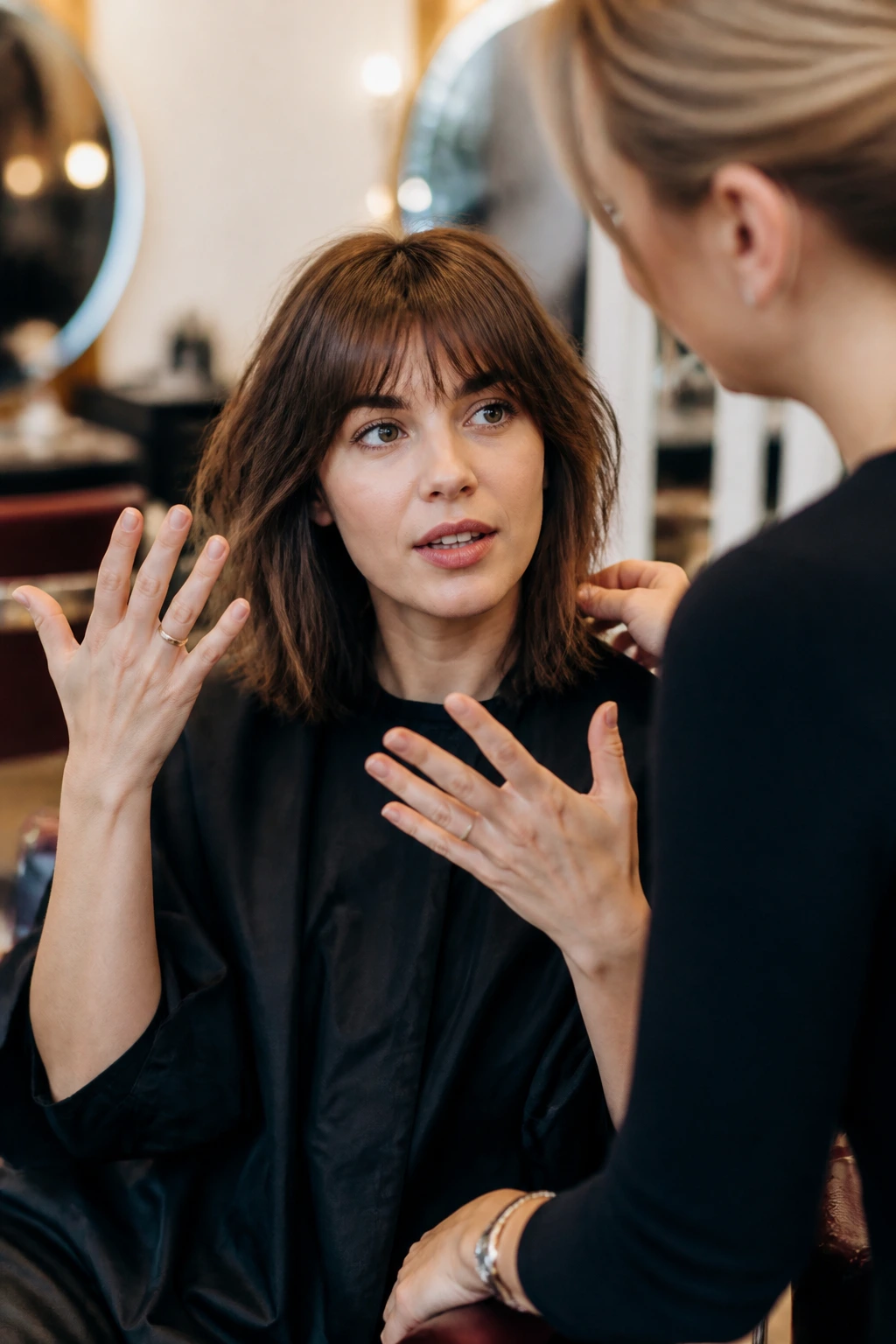
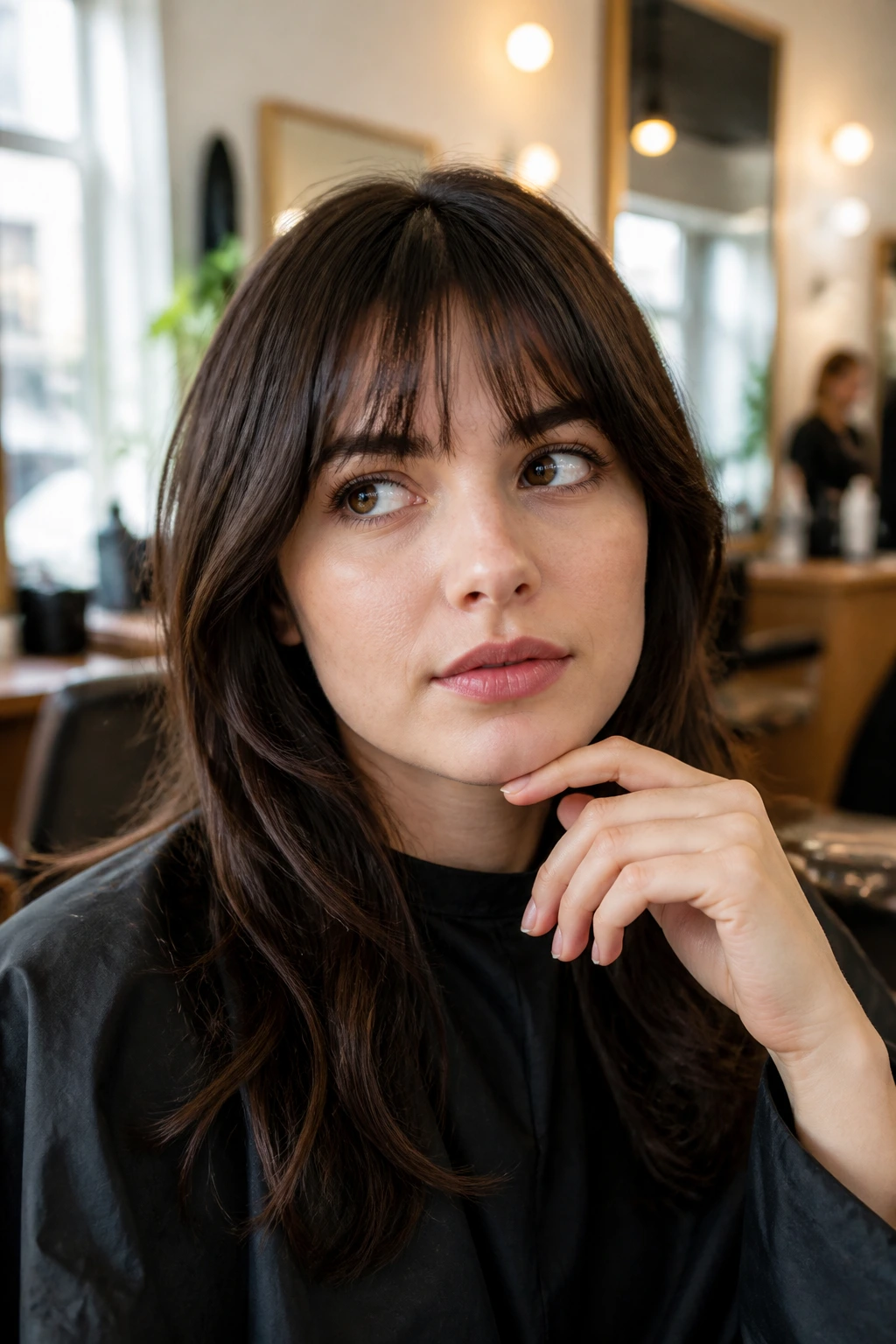
A good bang cut starts with a clean conversation. Bring photos, yes, but also tell your stylist where your hair parts naturally, whether you air-dry or blow-dry, and how much forehead you want left visible. Those details matter more than the name of the style.
If you want a round face to look a little longer, ask for the shortest point to stop around the brow or slightly below, and let the sides travel down toward the cheekbone or jaw. That gives the fringe a lengthening line. If you want something lighter, ask for point-cutting or piecey ends rather than a straight, heavy edge.
Mention cowlicks. Mention density. Mention how often you’re willing to trim. A stylist can work around all of that, but only if they know what they’re dealing with. Half the battle is being specific about the problem before the scissors ever come out.
Styling Bangs So They Sit Where You Want Them
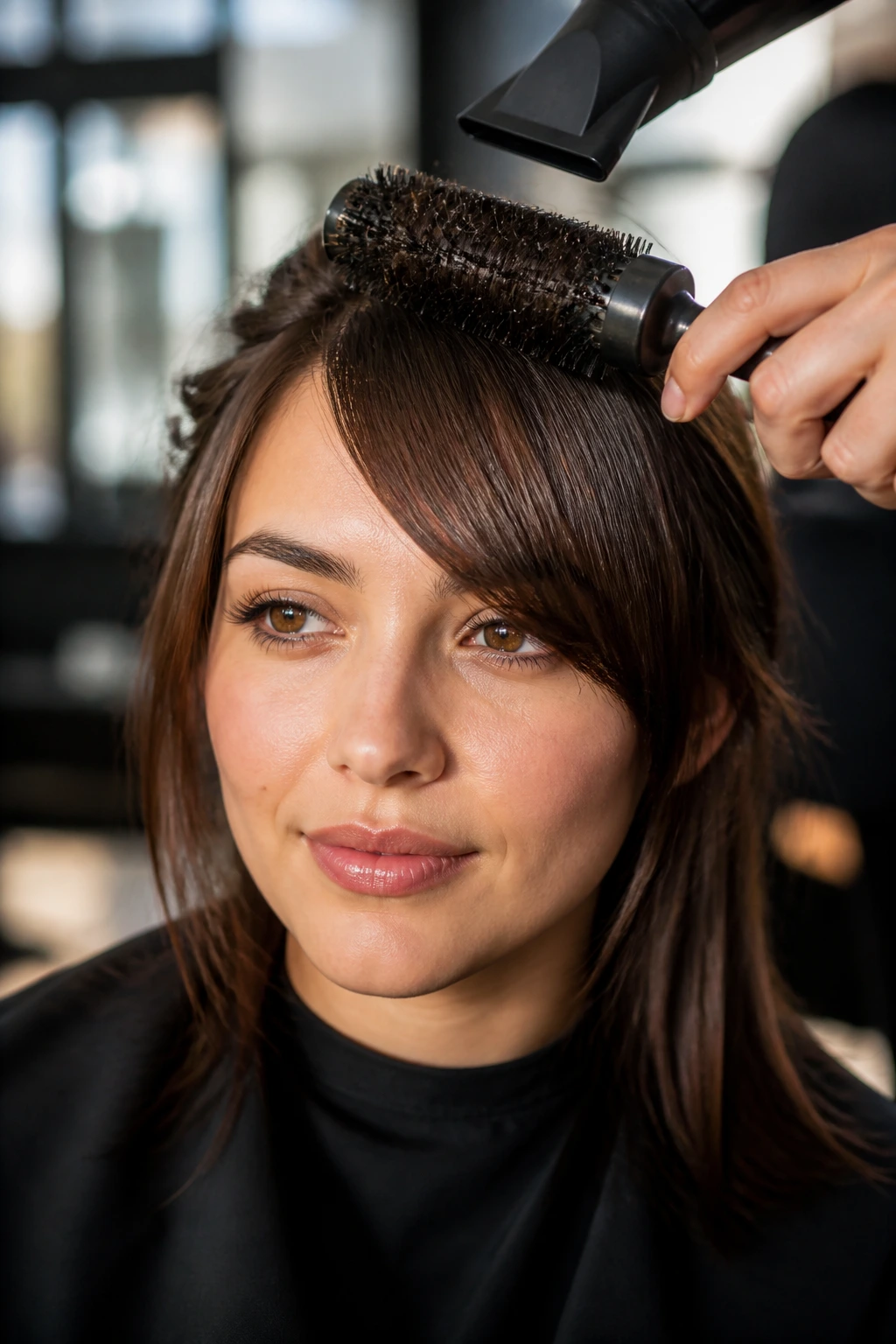
Bangs do not need a 20-minute routine. They need the right 2-minute routine. Start with damp, not dripping, hair at the front. Direct the roots the way you want them to fall, then use a small round brush or a vent brush to dry the base first. The roots set faster than the ends, and that’s where shape starts.
A cool shot at the end helps. So does a tiny clip while the bangs cool down if they keep splitting in the middle. If the front wants to puff up, dry it from side to side for a few passes, then settle it into place. That side-to-side motion is a good way to remove stubborn bends from a cowlick.
Keep product light. A pea-sized amount of styling cream can be enough for a whole fringe. Too much and the bangs clump, which is bad for fine hair and even worse for humidity. If the goal is movement, heavy product is the wrong tool.
Bang Mistakes That Add Width Instead of Shape
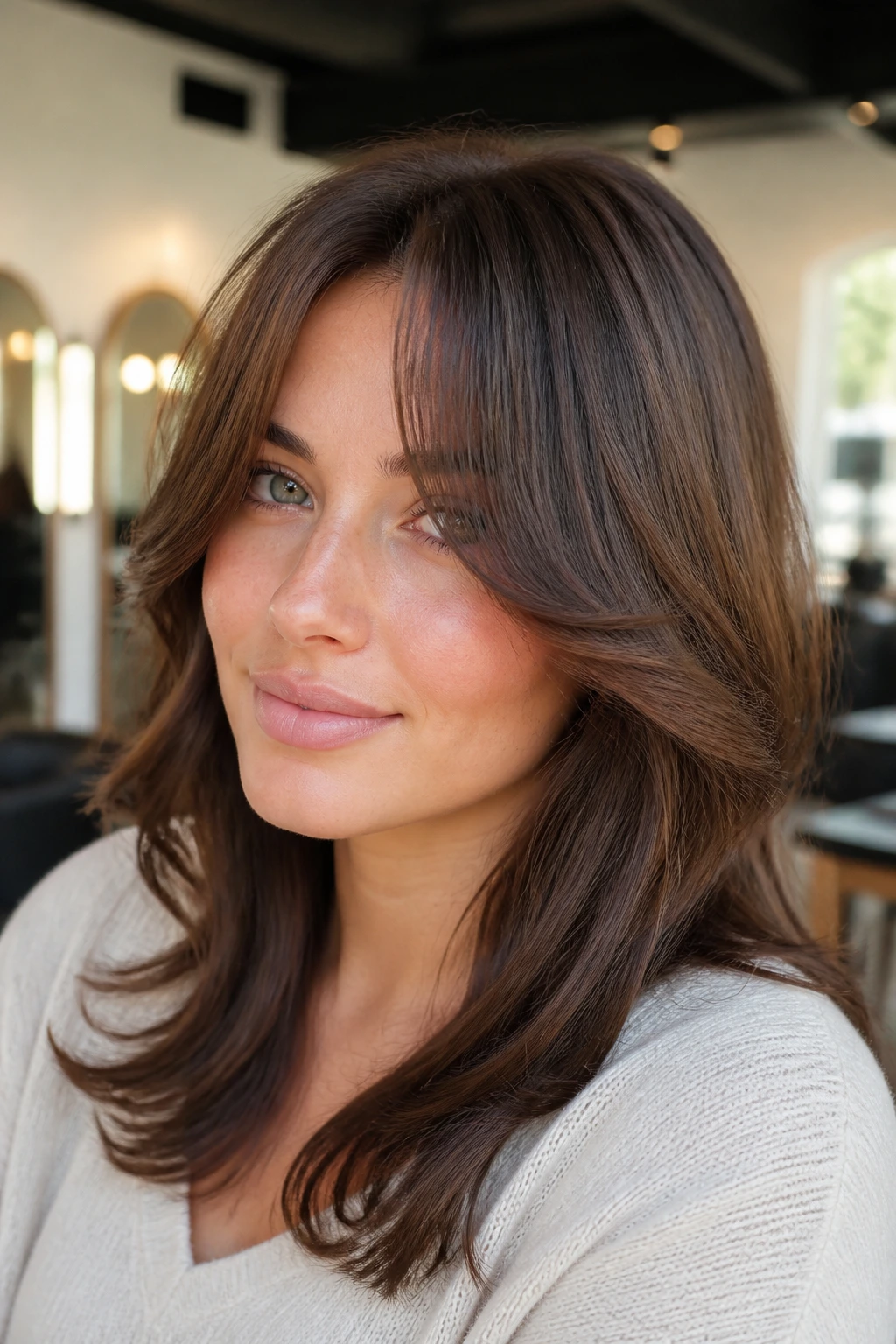
The most common mistake is starting too short. On a round face, bangs that sit high on the forehead can make the front of the face feel wider because the line ends before it has time to create length. Starting a little longer gives you room to adjust.
Another problem is too much density. A thick wall of hair across the forehead can make the face feel boxed in, especially if the ends are blunt. A little internal removal or point-cutting breaks that effect up fast.
- Cutting the bang too short on day one: Leave extra length at the first appointment so you can test the shape before committing.
- Ignoring the cowlick: If the front pushes left or right, work with it, or the bang will split and sit oddly.
- Styling flat at the roots: Flat roots widen the upper face. A bit of lift helps the whole cut.
- Using heavy product: Cream, oil, or pomade can make the fringe sit in clumps and show every line on the forehead.
- Choosing a line that is too horizontal: Straight, level bangs can widen the face; diagonals and curves usually do more for round shapes.
Fringe Variations and Alternatives to Try
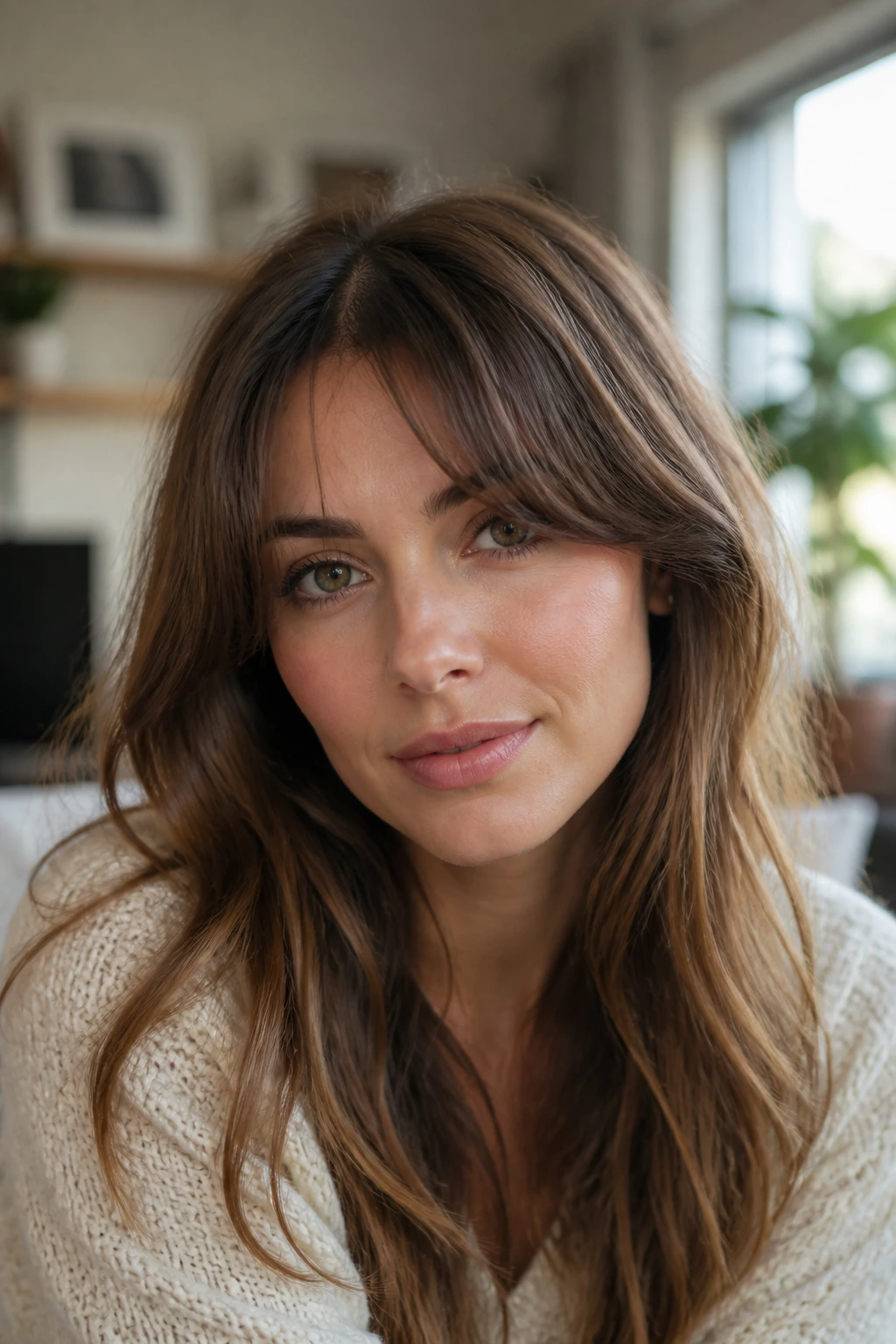
The Grow-Out Curtain: Start with longer curtain bangs and keep the center just shy of the brow. This is the least risky route if you’re nervous about bangs, and it grows into face-framing layers with very little drama.
The Soft Side Cut: If you like side-swept fringe but want less hair on the forehead, ask for a lighter side section that blends into the front layers. It keeps the diagonal line without a lot of maintenance.
The Curly Frame: For curly hair, skip a full bang and cut short face-framing curls at the front instead. You still get the eye movement and forehead break, but the curl pattern does the work for you.
The Broken Blunt: If you love a straight fringe, keep the line but soften the edges with point-cutting. This gives you the polish of blunt bangs without the hard shelf effect that can widen a round face.
The Off-Center Sweep: A slightly off-center part can be enough to change the whole front of the haircut. It’s the right move when you want a subtle shape shift and don’t want bangs to feel like a big style decision.
Tools That Make Bangs Easier to Wear
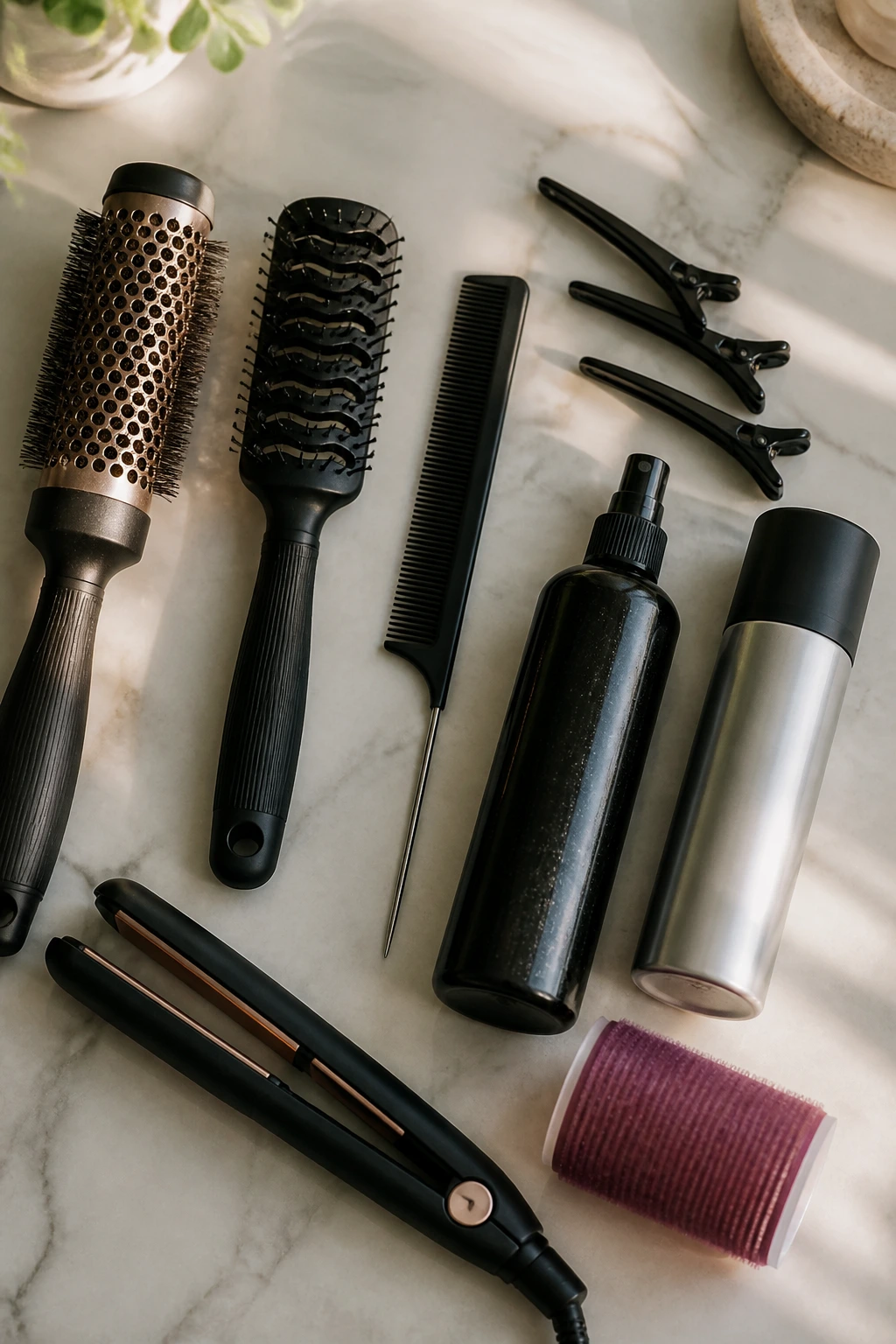
- 1-inch round brush: Small enough to control the front sections without dragging the whole head into the brush.
- Blow dryer with a nozzle: The nozzle focuses air at the roots, which helps set the direction faster.
- Fine-tooth comb: Useful for parting, separating a cowlick, and cleaning up the front line before drying.
- Sectioning clips: Keep the rest of the hair out of the way so you can focus on the bang triangle.
- Heat protectant spray: A light mist prevents frying the front pieces, which get touched by heat more often than the rest.
- Dry shampoo: Best on day two or three, when the front starts to look slick.
- Small flat iron: Handy for fixing a stubborn bend or softening a bang that flips the wrong way.
- Velcro roller or duckbill clip: Good for setting root lift while the bangs cool.
Keeping Bangs Fresh Between Washes and Trims
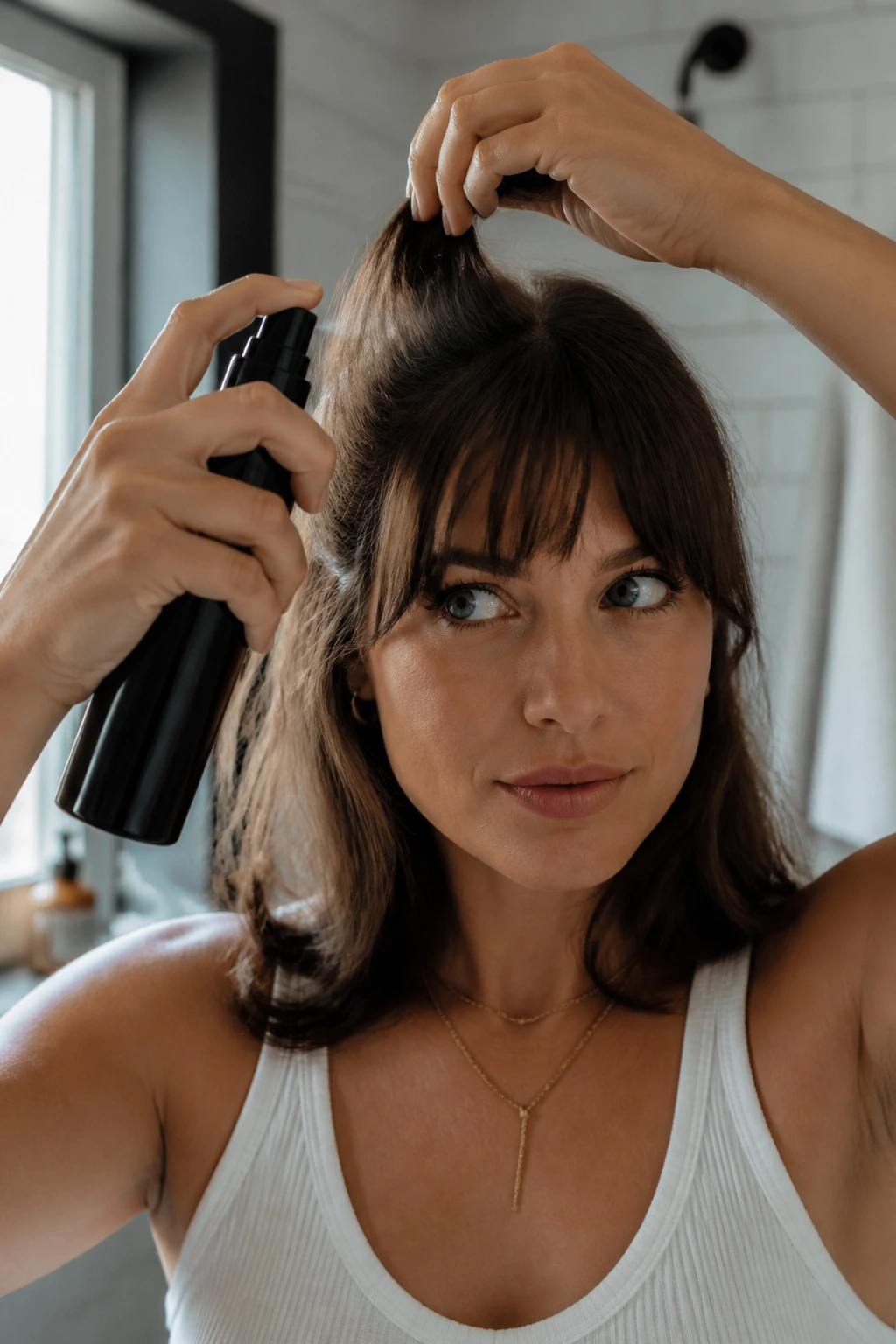
Bangs usually need more attention than the rest of the haircut because they live close to the forehead. If your skin gets oily fast, plan on refreshing the front every 1 to 2 days. That might mean a quick wash of just the bang section, not the full head. A little shampoo at the roots and a fast blow-dry often fixes more than a full restyle.
Trims usually land every 3 to 5 weeks for short fringe and every 5 to 7 weeks for longer curtain or side-swept shapes. Curly bangs can stretch a little longer between trims, but only if the shape still sits where it should when dry. If the ends start poking into the eyes or collapsing into the cheeks, it’s time.
At night, keep the bangs from getting crushed. A loose clip, a soft pin, or a tiny roller can help the front keep its direction. If humidity is part of your life, a morning reset with a blow dryer and a cool shot is usually better than piling on more product.
Questions People Ask Before They Cut Fringe
Which bangs are most flattering for round faces?
Curtain bangs, bottleneck bangs, side-swept bangs, and long face-framing fringe are usually the easiest starting points. They create diagonal lines and keep the face from feeling boxed in.
Are blunt bangs a bad idea for round faces?
Not automatically. A soft blunt bang can work if it is softened at the edges and kept at a length that doesn’t shorten the face too much. A heavy, thick, straight line is the version that usually causes trouble.
Can curly hair wear bangs on a round face?
Yes, and the result can be excellent. The key is cutting for shrinkage and keeping the sides longer so the curl pattern tapers into the haircut instead of stopping in one lump.
How short can bangs be on a round face?
Short enough to show shape, not so short that the forehead disappears. For most people, starting around the brow or slightly below is easier to live with than a high crop, especially if the face is already full through the cheeks.
What if my bangs split in the middle?
That usually means a cowlick or a natural parting pattern is pushing them apart. Dry them side to side, use a clip while they cool, and ask your stylist to leave more length in the stubborn spot.
Do side-swept bangs make a face look longer?
They often do, because the diagonal line pulls the eye across and down. The effect is strongest when the sweep starts high enough at the part and ends around the cheekbone or jaw.
How do I grow bangs out without looking awkward?
Keep the edges soft, split them into curtain shapes, and trim only the longest pieces every few weeks. That way the fringe turns into face-framing layers instead of hanging in your eyes for months.
A Better Frame
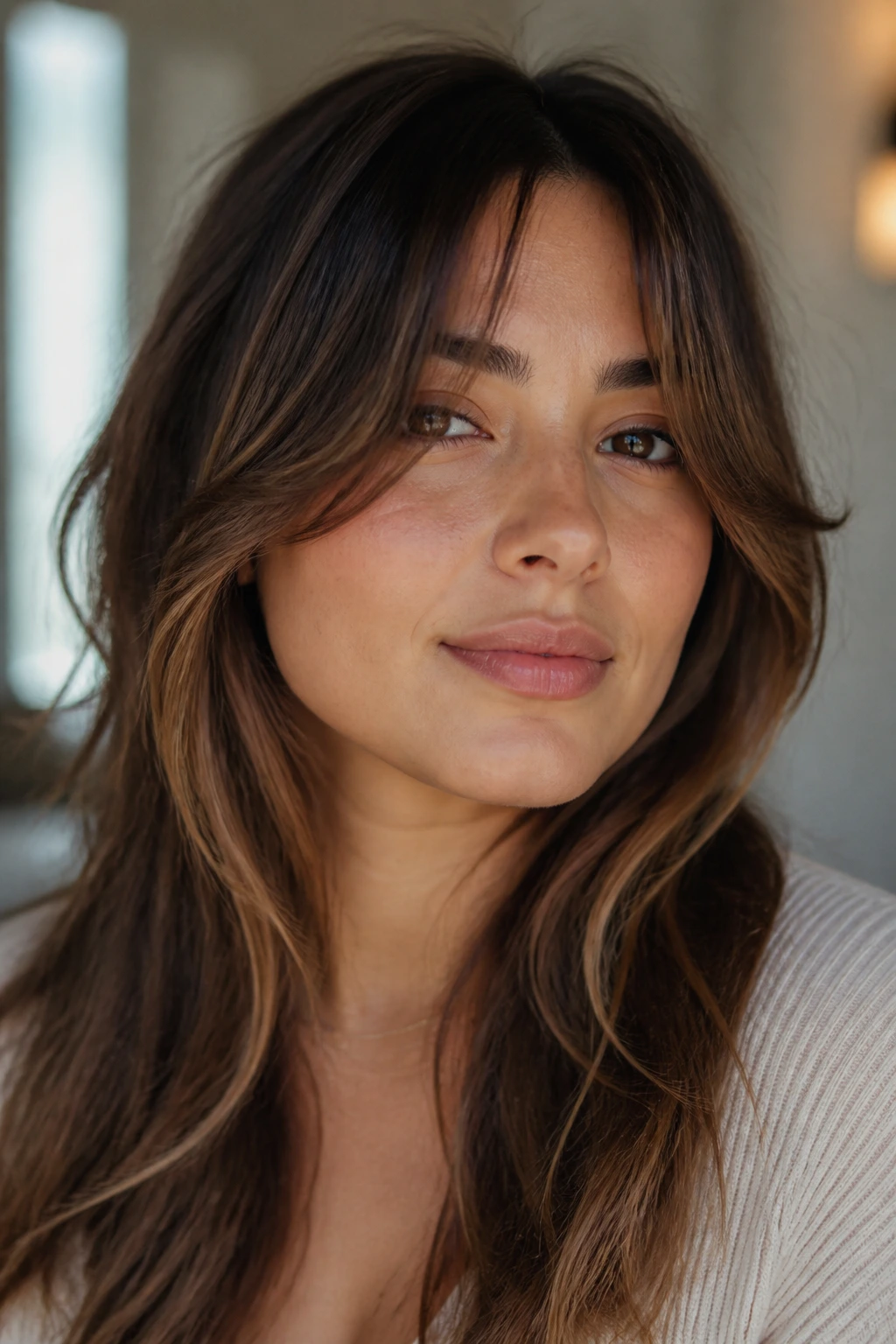
The best bangs for a round face are not the shortest ones or the trendiest ones. They’re the ones that place a line exactly where your face needs it: a little higher at the roots, a little softer at the temples, and a little longer where the cheeks need help breaking up width.
That’s why the list above spans everything from wispy fringe to asymmetric cuts. Some of these are quiet. Some have edge. A few need more styling than others. All of them can work when the cut respects your hairline, your texture, and the shape you’re starting with.
If you’re sitting on the fence, start longer than you think you need. Long curtain bangs, split fringe, or a soft side sweep give you room to learn how your hair behaves. That first cut does not have to be the final word. It just has to give the face a better frame.
