



A good fringe can change a haircut faster than taking off two inches at the ends. With bangs for women over 50, the point is not to hide the forehead or chase some youthful illusion. It is to put a clean frame around the eyes, soften a strong hairline, and make the whole cut feel intentional instead of grown-out.
The wrong bangs age a haircut in a hurry. They sit too heavy, get sticky by noon, and fight every cowlick in the room. The right ones do the opposite: they move, they lift, they let glasses sit comfortably, and they keep the front of the face from looking hard or boxy.
Hair also changes in ways that make fringe choices matter more, not less. Some people lose density at the hairline. Some notice a new wave pattern. Some get a wirier front section that refuses to lie the same way twice. That is why the best fringe is rarely the same for every face or every texture. Shape matters. So does maintenance. So does honesty about how much time you want to spend with a round brush.
Why These Fringes Earn Their Keep
-
They change the silhouette fast: A well-cut fringe can shorten a long forehead, soften a strong jaw, or bring a little balance back to a face that feels too open in front.
-
They work with real texture: Curtain, feathered, and piecey shapes are kinder to waves, cowlicks, and a touch of frizz than a hard, full wall of hair.
-
They play better with glasses: Side-swept and split styles leave space at the frame line, so your bangs and your eyewear stop fighting each other.
-
They grow out with less drama: The smartest fringe shapes still look deliberate at four or five weeks, which matters when a salon visit is not always convenient.
-
They can make thin hair look fuller or thick hair look lighter: The trick is the cut line. Wispy bangs are not the same thing as sparse bangs, and a blunt fringe is not the same thing as a heavy one.
1. Soft Curtain Bangs That Split at the Cheekbones
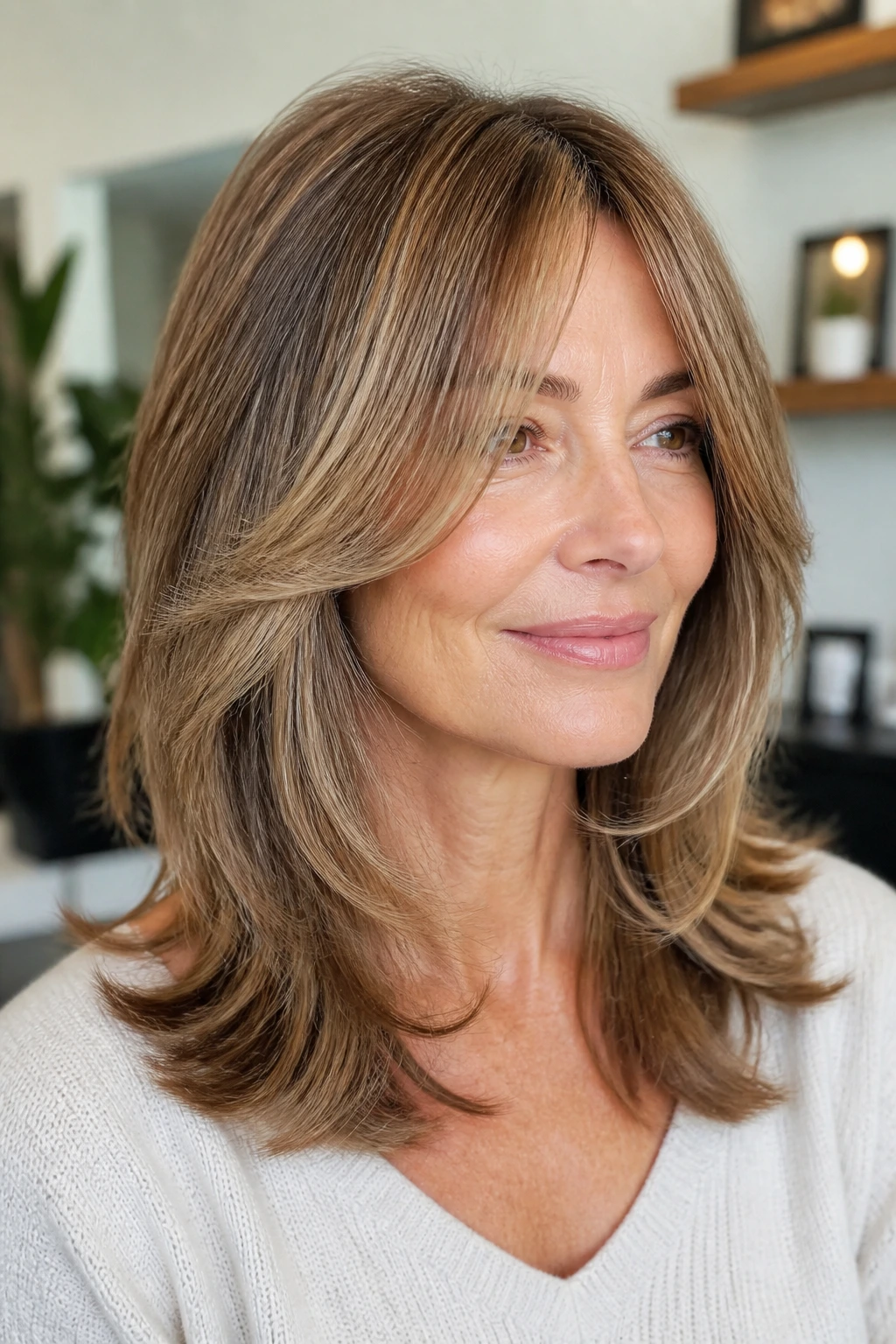
Curtain bangs are the easiest place to start if you want movement without a hard line. The center falls shorter, then the sides open out toward the cheekbones, which gives the face a soft V-shaped frame instead of a straight curtain across the forehead.
Why They Work
They are forgiving. That is the big reason people keep coming back to them. If your hair leans wavy, if one brow sits a little higher than the other, if you wear glasses, if you want your fringe to grow out in a way that still looks intentional, curtain bangs do a lot of the heavy lifting.
Ask for the shortest piece to land around the bridge of the nose or just below, then have the sides angle toward the cheekbone. A good stylist will cut them so they can be worn parted in the middle or swept just off-center. The center should not feel like a blunt chunk. It should dissolve.
Best for: Medium to thick hair, slightly wavy textures, and anyone who wants a lower-drama fringe.
Avoid if: You want a crisp, straight-across shape that sits in one place all day.
One-line tip: Blow the center forward first, then brush each side away from the face and let it cool there.
2. Side-Swept Feathered Bangs With a Light, Airy Edge
A side-swept fringe does one useful thing very well: it moves the eye diagonally. That diagonal line softens the forehead and pulls attention toward the cheekbone, which is why this style has stayed useful long after trend cycles moved on.
Feathered ends matter here. I like this look best when the bangs are cut with a little slide or point cutting, so the edge breaks into smaller pieces instead of forming one solid slab. The result feels softer around the temple and less severe near the brow.
If you wear your hair in a bob, a lob, or a collarbone-length cut, this fringe slips right in. It can be brushed across the forehead for a dressier finish or tucked to one side when you want your face more open.
Best for: Straight to softly wavy hair, especially if you want a cut that works on day one and day three.
Ask for: A side part, a long diagonal line, and feathered tips near the brow.
Watch out for: Too much thinning at the ends. That is how side bangs start looking wispy in a tired way.
3. Brow-Grazing Wispy Bangs That Skim the Eyes
Are wispy bangs too delicate for women over 50? Not if they’re cut with intention. Brow-grazing fringe works when the ends are light, the center isn’t overpacked, and the whole shape touches the brow line without swallowing it.
What Makes Them Different
These are not baby bangs. They are not a blunt sheet either. The best version lands right at the eyebrows, then breaks into soft pieces so the line feels airy rather than heavy. That matters if your hair is fine, because a dense fringe can sit flat and look helmet-ish. A wispy cut keeps the front open.
I usually think of this style as a precision trim with a soft finish. A little dry shampoo at the roots helps on the second day, and a small round brush can give the front enough bend to keep it from sticking to the forehead.
- Best for: Fine to medium hair that needs a light frame.
- Stylist cue: Ask for soft point cutting, not a blunt shelf.
- Skip it if: Your hair grows in a strong cowlick right at the center front and you hate blow-drying.
- Tiny detail that helps: Keep the shortest point just at the brow, not well above it.
4. Bottleneck Bangs That Start Narrow and Open Out
Think of bottleneck bangs as curtain bangs with a narrower doorway in the middle. The center is shorter and more focused, then the sides widen out as they move toward the cheekbones. That shape gives you softness without losing structure.
The reason they flatter so many faces is simple: they create lift where the eye needs it, then taper away where the forehead needs breathing room. Round faces often like the longer outer edges. Heart-shaped faces get balance at the temples. Even square jawlines soften up a little because the fringe doesn’t end in a blunt block.
How to Ask for Them
Tell your stylist you want the front to start narrow at the center, then open out gradually. The cut should feel like it was meant to frame the face, not sit on top of it. If the sides are too short, the whole look turns choppy. If they’re too long, the shape collapses into plain layers.
Best with: Shoulder-length cuts, lobs, and soft waves.
Styling note: Blow-dry the center first, then guide the outer sections outward with a brush so the opening stays visible.
5. Full Blunt Bangs for a Sharper Frame
Full blunt bangs are not subtle. That is the whole point. A clean, straight line across the forehead can make a haircut feel polished and sharp, especially when the rest of the cut is simple and unfussy.
This style works best when the hair has enough density to support the line. Fine hair can wear blunt bangs, but they need a careful cut and a good blow-dry so they do not separate at the ends. Medium to thick straight hair usually handles them more easily. The result is a strong frame that makes the eyes stand out without needing much else.
I like blunt bangs paired with a bob that sits at the chin or just below. The two shapes talk to each other. If the bob is soft and the fringe is crisp, the haircut has tension. Too much softness everywhere and it starts to disappear.
Best for: Strong brow lines, straight hair, and people who don’t mind regular trims.
Avoid if: Your hairline swirls forward hard in the center or your mornings already feel rushed.
Maintenance reality: This is one of the more committed looks. The line grows out fast.
6. Piecey Textured Bangs That Look Choppy on Purpose
Piecey bangs are what you reach for when you want a fringe that feels modern without looking overly styled. The strands separate on purpose, so the forehead peeks through in narrow spaces instead of being covered by one solid layer.
The cut matters more than the product here. A stylist will usually point cut or lightly slice into the ends to break the line, then you finish with a pea-sized amount of texture paste or a light spray wax. Too much product ruins the effect. It turns piecey into greasy, which is not the same thing at all.
These bangs can take the edge off a fuller face and make thick hair look less boxy at the front. They also work well if you like hair that has a little movement and does not need to sit perfectly still.
- Best with: Thick or medium hair that naturally has some bend.
- Ask for: A broken, uneven edge rather than a clean horizontal line.
- Styling trick: Pinch small sections while the hair is still warm to keep the separation.
- Not ideal if: You want a sleek, polished fringe every single day.
7. Long Face-Framing Fringe That Blends Into Layers
This is the fringe for someone who wants bangs, but not the whole bangs conversation. The front pieces begin long enough to tuck behind the cheekbones, then slide into the layers around the jaw and collarbone. It gives shape without feeling like a commitment.
The best part is the grow-out. Long face-framing fringe does not suddenly become “bad bangs” after three weeks. It just becomes longer layers, which is exactly the sort of graceful evolution people wish all cuts had.
I think this looks especially good on hair that already has some movement through the mid-lengths. The front pieces draw a diagonal line that slims the face a bit, but not in a dramatic way. It is more of a quiet adjustment than a big statement.
Best for: Lob cuts, layered mid-length hair, and anyone easing into fringe for the first time.
Stylist note: Start the shortest front piece around the lip or cheekbone, not the brow.
One caution: If the front pieces are cut too short, they stop being face-framing layers and start acting like awkward bangs.
8. Curly Bangs Cut to Follow Your Natural Pattern
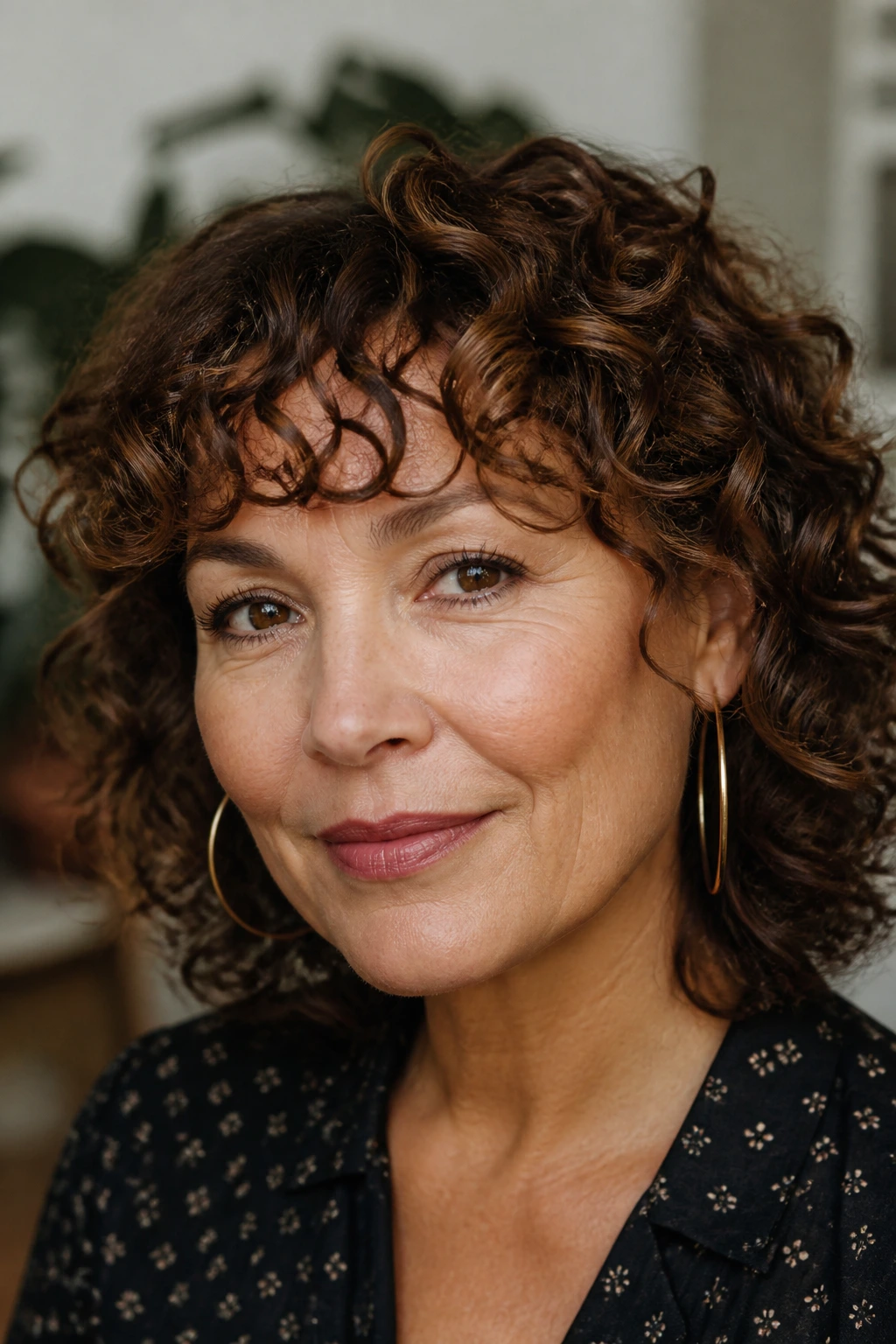
Curly bangs need a different mindset. Cut them to live with the curl, not against it. That means working with the spring factor, the shrinkage, and the fact that a curl pattern may tighten at the front more than anywhere else.
The Dry-Cut Rule
With curls, I’m a believer in dry cutting or at least cutting the fringe nearly dry. Wet curls lie. They stretch. They shrink. They do all sorts of flattering things that disappear later. A dry cut lets the stylist see where the curls actually sit, which is the only way to avoid a bang line that bounces two inches too short.
The best curly fringe has length. It should float around the brows or just below them when dry, not sit high and rigid. Diffuse on low heat, then let the curls cool before touching them too much.
- Best for: Wavy, curly, and coily textures that want a lived-in frame.
- Ask for: Length left on purpose so the curl can spring.
- Style with: Light cream or mousse, not a heavy butter.
- Skip if: You want a polished flat fringe without daily heat styling.
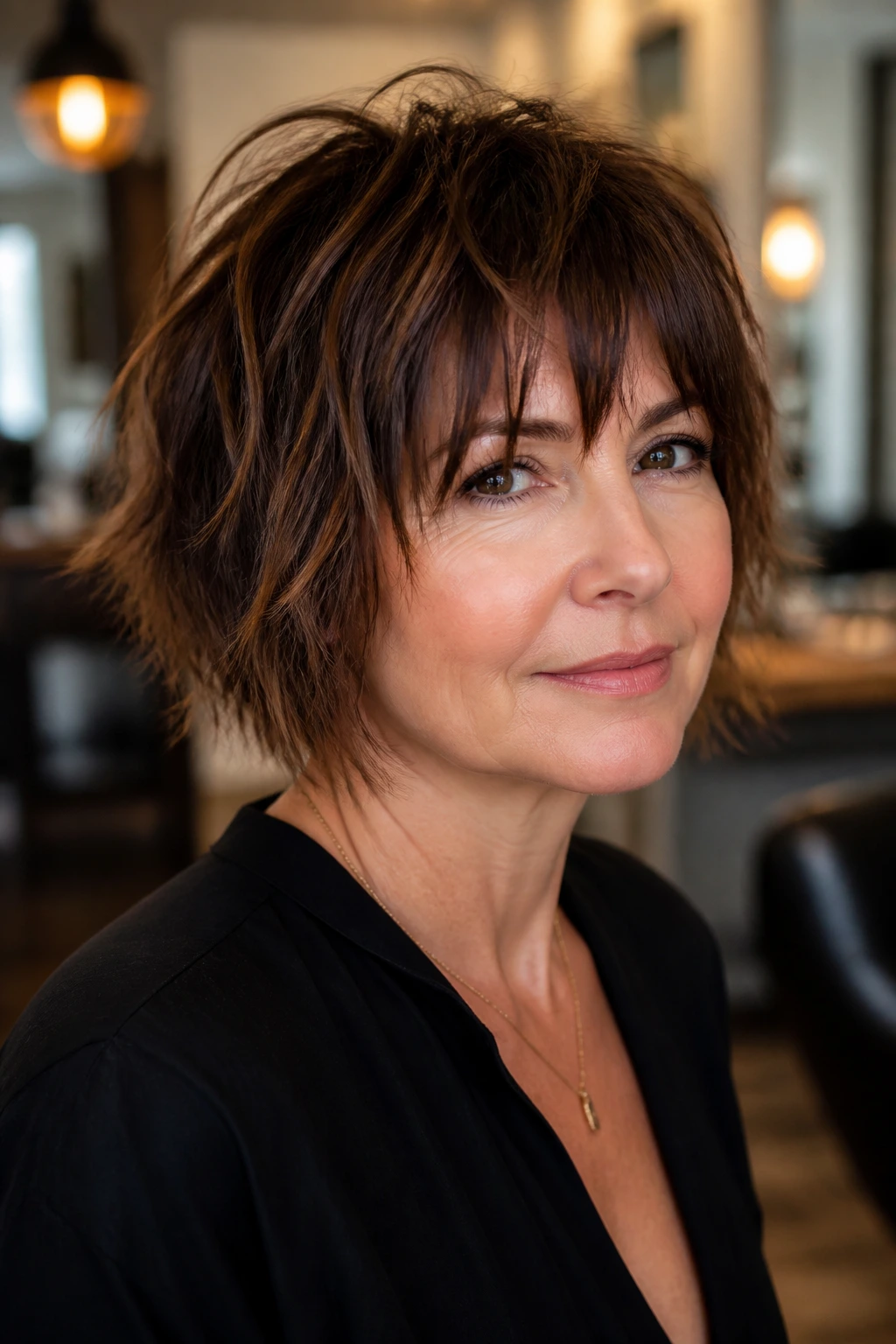
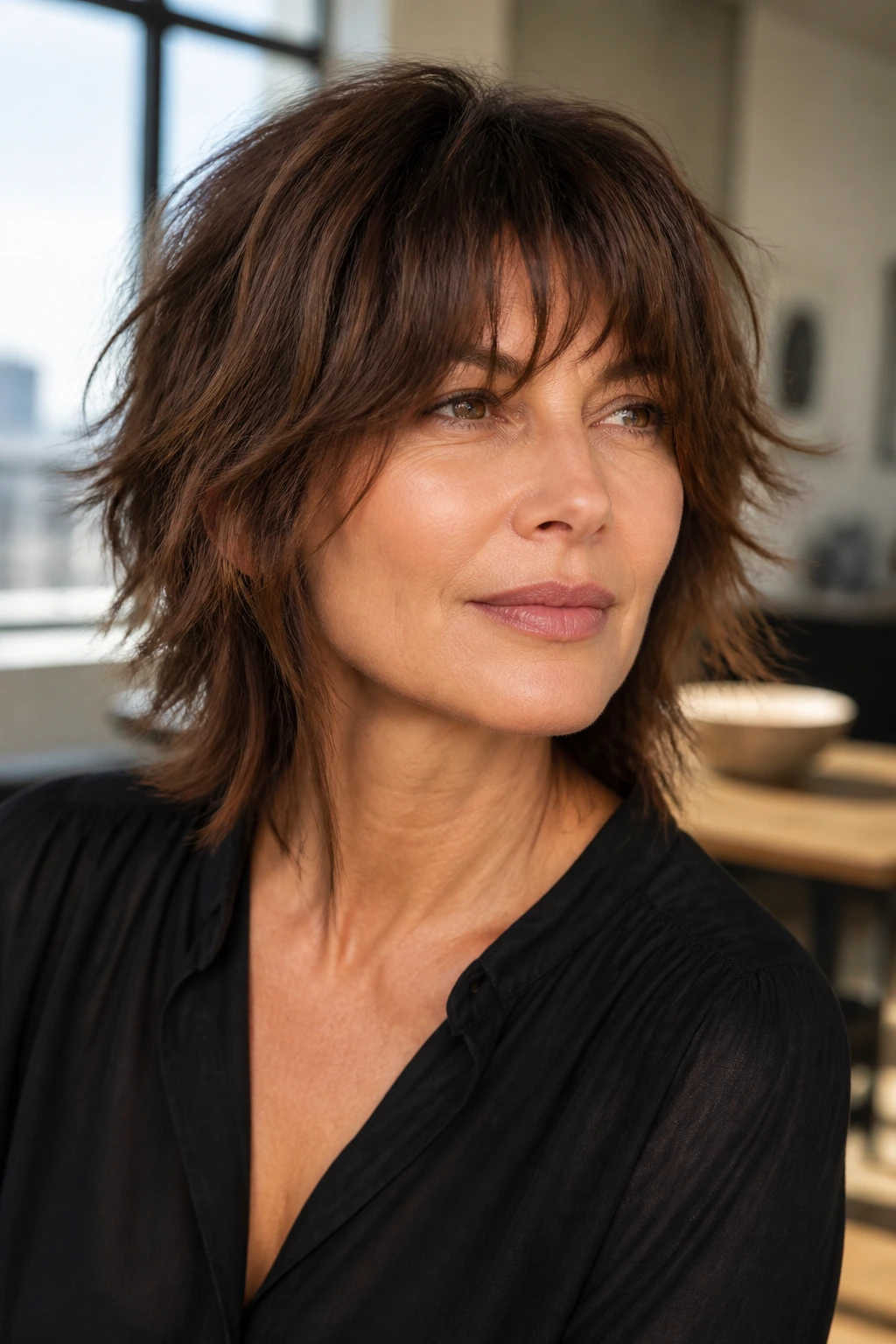
9. Shaggy Fringe With Choppy Layers and Movement
Shag fringe has a little attitude. Good attitude. It looks like it belongs in a haircut that was built for movement, not one that was ironed into place and then prayed over.
The layers around the front are choppy, the ends are broken up, and the whole shape tends to sit somewhere between a bang and a face frame. That makes it useful for hair with body, because the fringe can borrow some of the shag’s texture and avoid looking like an isolated strip pasted to the forehead.
It also gives the cut a younger energy without trying too hard. Not “young” in the silly sense. More like less overworked. Hair that moves is easier to live with, and this fringe makes movement the point.
Best for: Wavy, thick, or naturally textured hair.
Pair it with: Feathered layers through the crown and around the jaw.
What to ask for: Broken ends, not a smooth blunt edge.
One caution: If your hair is very fine and pin-straight, a shag fringe can disappear unless the cut has enough support behind it.
10. Arched Bangs That Follow the Brow Line

A soft arch around the brow line is one of the smartest shapes if you want polish without severity. The fringe curves gently, usually a touch shorter in the middle and slightly longer at the edges, so it echoes the eyebrow shape instead of fighting it.
That shape feels refined because it respects the face’s own geometry. Straight bangs can look harsh on some faces. Arched bangs soften that problem by keeping the line moving. They work especially well when the rest of the haircut is neat — a bob, a longer pixie, or a shoulder-length cut with clean edges.
Best styling move
Brush the fringe downward first, then slightly inward at the center and outward at the sides. Use the cool shot from your dryer for a few seconds while the bangs are on the brush. That small step keeps the curve from collapsing by lunch.
Best for: Long faces, oval faces, and anyone who wants a soft, polished finish.
Ask your stylist for: A gentle arch, not a hard crescent.
Watch for: Too much round-brushing. If you overbend the fringe, it can look dated fast.
11. Side Fringe That Softly Covers the Temple

This is the fringe I like for people who want a little softness around the temple area without covering the whole forehead. The front section sweeps over from a side part, but the line is narrow enough that it still feels light.
A temple-skimming fringe is useful when hair has started to thin at the outer hairline, or when you simply want to blur that corner of the face. It can also make a bob feel less severe. The trick is restraint. You are not hiding everything. You are softening one zone.
I’ve seen this style look especially good when the rest of the cut stays clean and simple. Too many layers and the effect gets muddy. One elegant sweep. That’s enough.
Best for: Side parts, bobs, and fine to medium hair.
Good to know: This fringe sits well with glasses because it does not crowd the temples.
Stylist cue: Keep the width narrow and let the length taper into the side layers.
12. Micro Bangs for a Short, Bold Finish
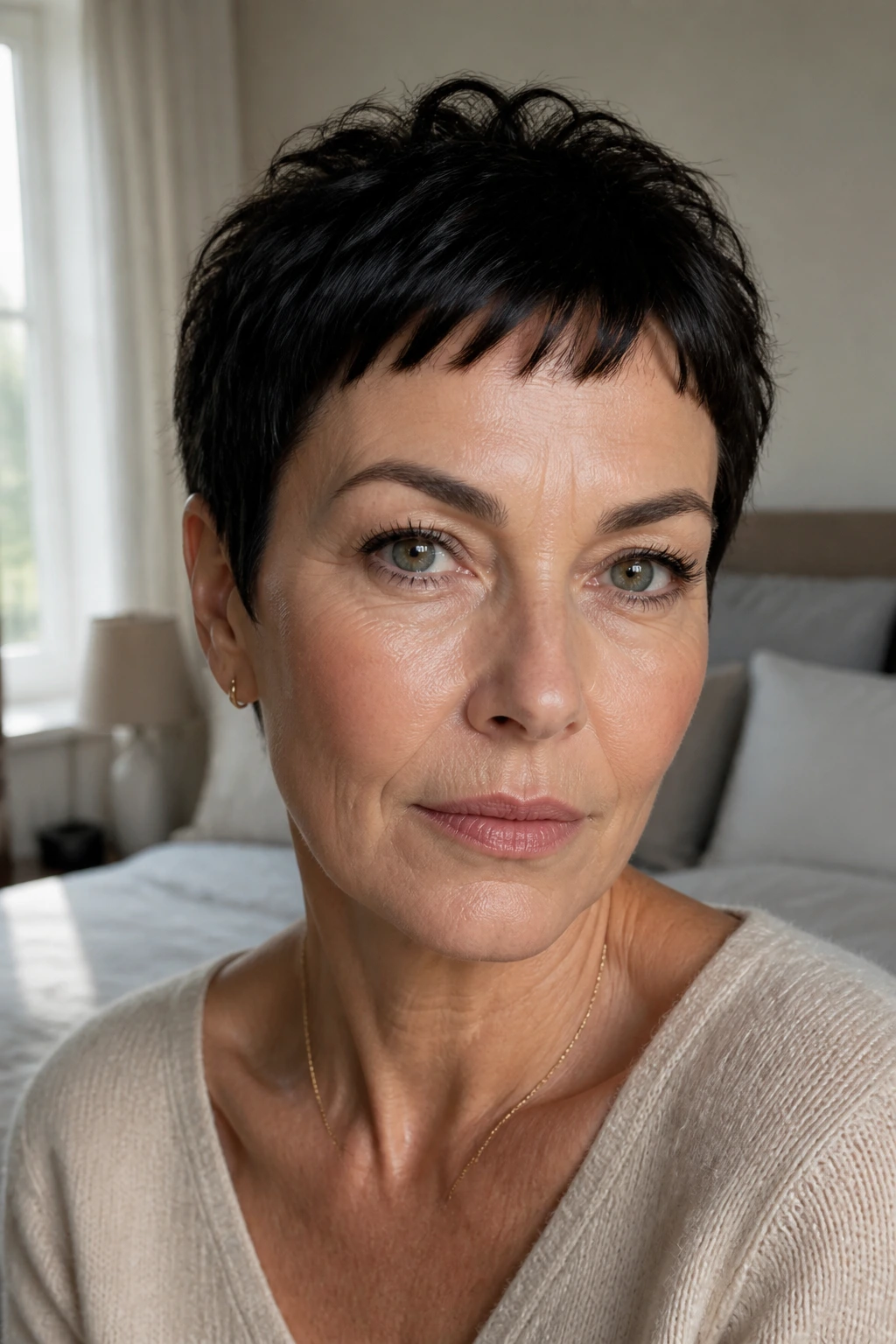
Micro bangs are a statement, and they will always be a statement. The cut sits well above the brows, usually somewhere around the mid-forehead, and that opens the face in a way nothing else does.
Not for the timid
This style works best when the hair is dense enough to keep the fringe from looking see-through. Straight or lightly wavy hair handles the line better than hair that bends unpredictably. And yes, they demand confidence — not because they are “edgy,” but because they show your brows, your forehead, and the shape of your face all at once.
If you want softness, keep the ends slightly broken instead of razor-sharp. That tiny bit of irregularity makes them feel more wearable. The cut pairs well with a pixie, a strong bob, or a textured short crop.
Best for: Short hair, dense hair, and strong facial features.
Maintenance reality: Trim them often. Not someday. Often.
Use with caution if: You want a low-commitment style or you dislike extra attention on the upper half of the face.
13. Tapered Bangs That Thin Out at the Edges
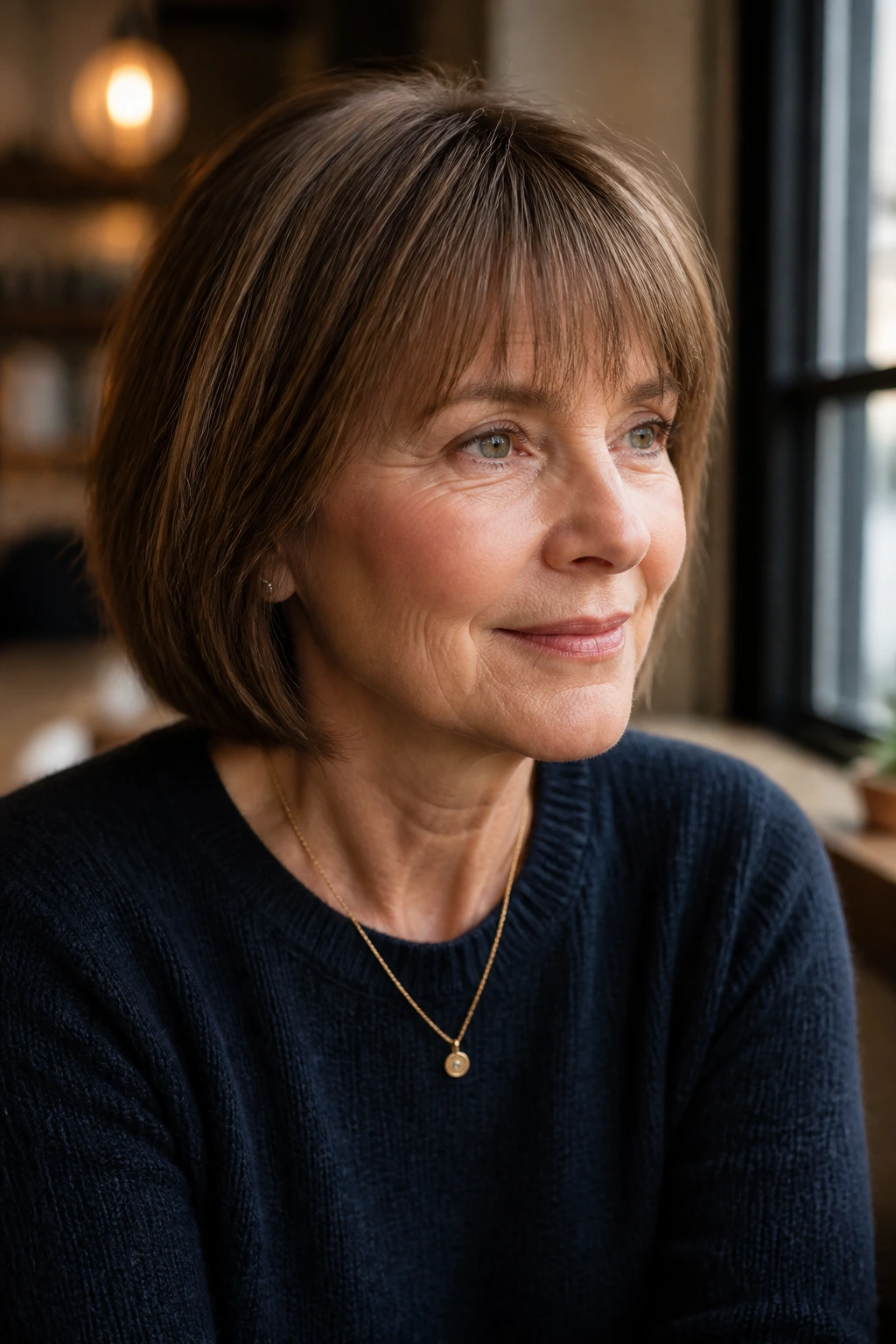
Tapered bangs are a smart move when fine hair needs a little shape but not too much weight. The center holds the most density, then the sides thin out as they move toward the temples. The edge feels softer, and the whole forehead frame reads as lighter.
This cut is less about drama and more about balance. Fine hair can look flat when a bang section is too thick. Tapering keeps the front from collapsing while still making the hairline feel covered. I like this especially for people who hate the feeling of a heavy fringe touching their lashes all day.
A bit of mousse at the roots helps. So does drying the fringe from side to side for the first minute before smoothing it into place.
Best for: Fine hair, narrow foreheads, and anyone who wants softness without see-through ends.
Stylist note: Ask for density in the middle, then a gradual taper at the temples.
Avoid: Over-thinning with texturizing shears. That’s how the fringe gets ragged.
14. Sliced Bangs for Thick Hair That Needs Weight Removed
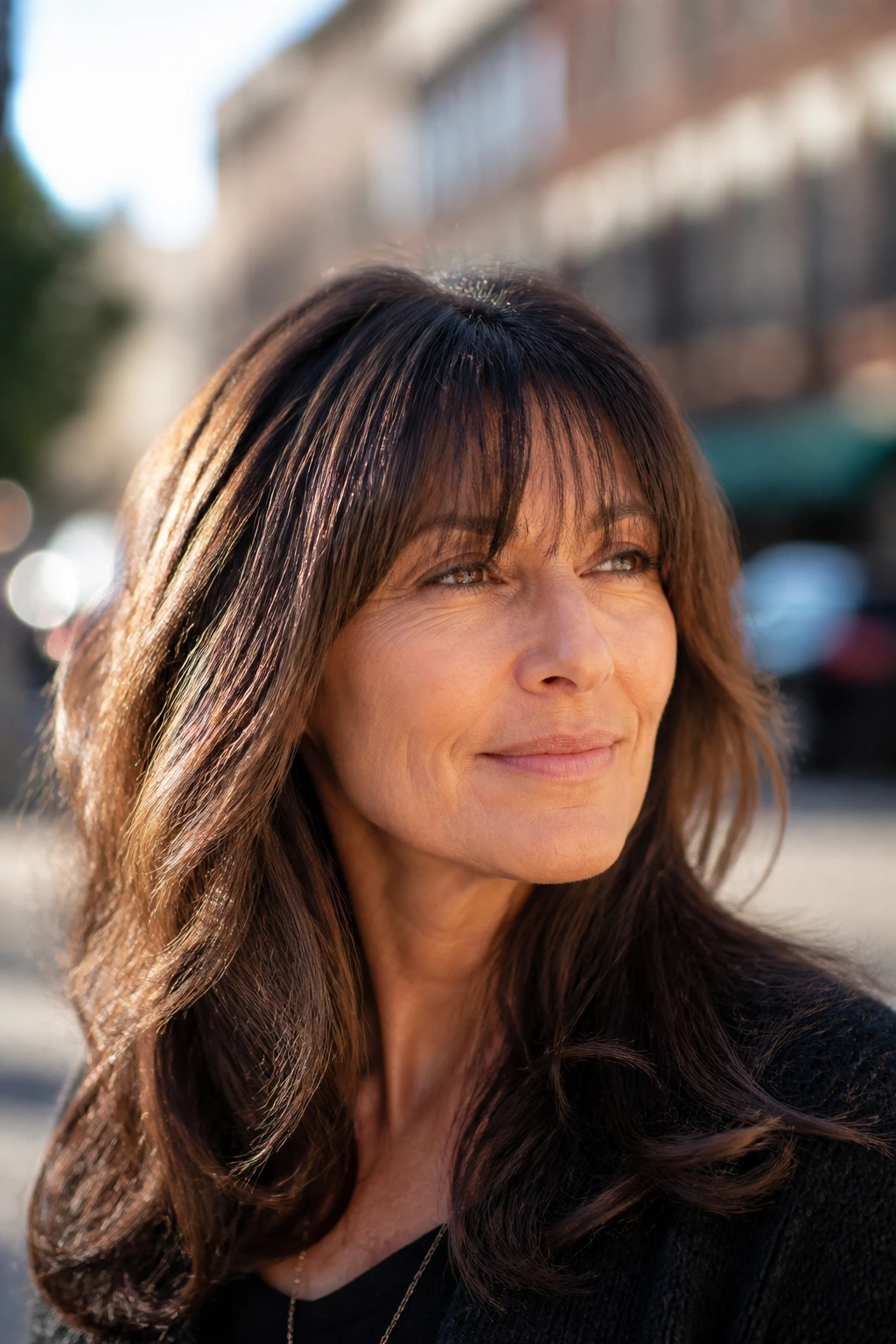
Thick hair can wear bangs beautifully, but only if the bulk gets handled with some care. Sliced bangs take out weight inside the section, so the fringe lies flatter and moves more naturally instead of puffing like a little shelf.
The mistake with thick hair is to cut the front too blunt and then fight it every morning. You see the ends swell, especially in humidity, and the fringe sits heavy against the brow. Slicing the interior changes that. It gives the hair room to bend.
How it should feel
The fringe should not feel like a block when you run your fingers through it. It should separate in a smooth way, with the heaviest support near the root and less weight at the perimeter. That lets thick hair behave without losing body.
Best for: Dense, coarse, or heavy hair.
Ask for: Internal weight removal, not a razor-happy chop.
Watch out for: Over-thinning the front. Thick hair needs less bulk, not flimsy ends.
15. Silver-Friendly Bangs That Let Gray Hair Shine

Silver hair changes the whole conversation. It reflects light differently, often shows texture more clearly, and can pick up a wirier feel at the front. A good fringe works with that instead of trying to flatten it into submission.
I like softer fringe lines on gray or silver hair because they let the color do the talking. A blunt block can look heavy against shimmering strands. A wispy or split fringe feels lighter and lets the silver read bright rather than dense.
There’s another practical point here. Gray hair often has a little more resistance when you blow-dry it, so the shape should be easy to reset with heat. A cool shot, a light serum, and a brush that doesn’t snag matter more than fancy styling jargon.
Best for: Natural gray, silver, white-blond, and salt-and-pepper tones.
Good salon cue: Ask for softness at the edges and avoid overloading the front with too much density.
Small opinion: Silver hair looks better when it moves. A stiff fringe makes it look older, not younger.
16. Rounded Bangs That Echo a Soft Bob
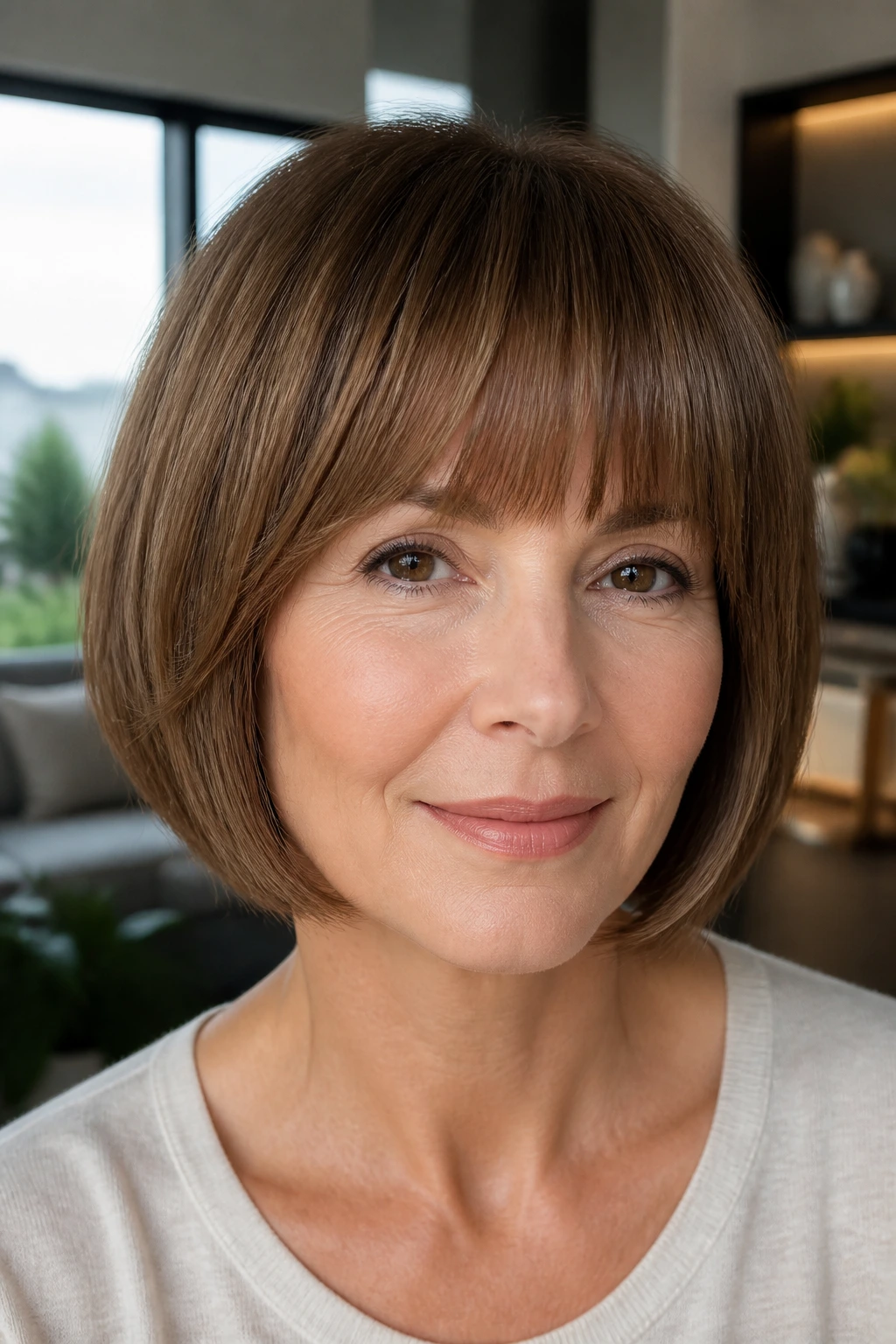
Rounded bangs are quietly elegant. The shape curves gently across the forehead and then falls a touch longer at the corners, which helps the fringe echo a rounded bob or a softly shaped medium-length cut.
This is a good choice when you want the front to feel polished but not severe. The curve breaks up the straight line that can make a blunt fringe look sharp against the rest of the haircut. It’s a softer, more controlled kind of frame.
The key is to keep the curve subtle. Too much roundness and the bangs start to look like they belong to another era. Just enough bend, just enough weight at the center, and then a soft release at the sides. That’s the sweet spot.
Best for: Bob cuts, oval faces, and people who like tidy hair with a little shape.
Style note: Use a small round brush, not a giant one, or the curve gets too big.
Works especially well with: Sides that tuck behind the ears.
17. Feathered Pixie Bangs for Short Hair
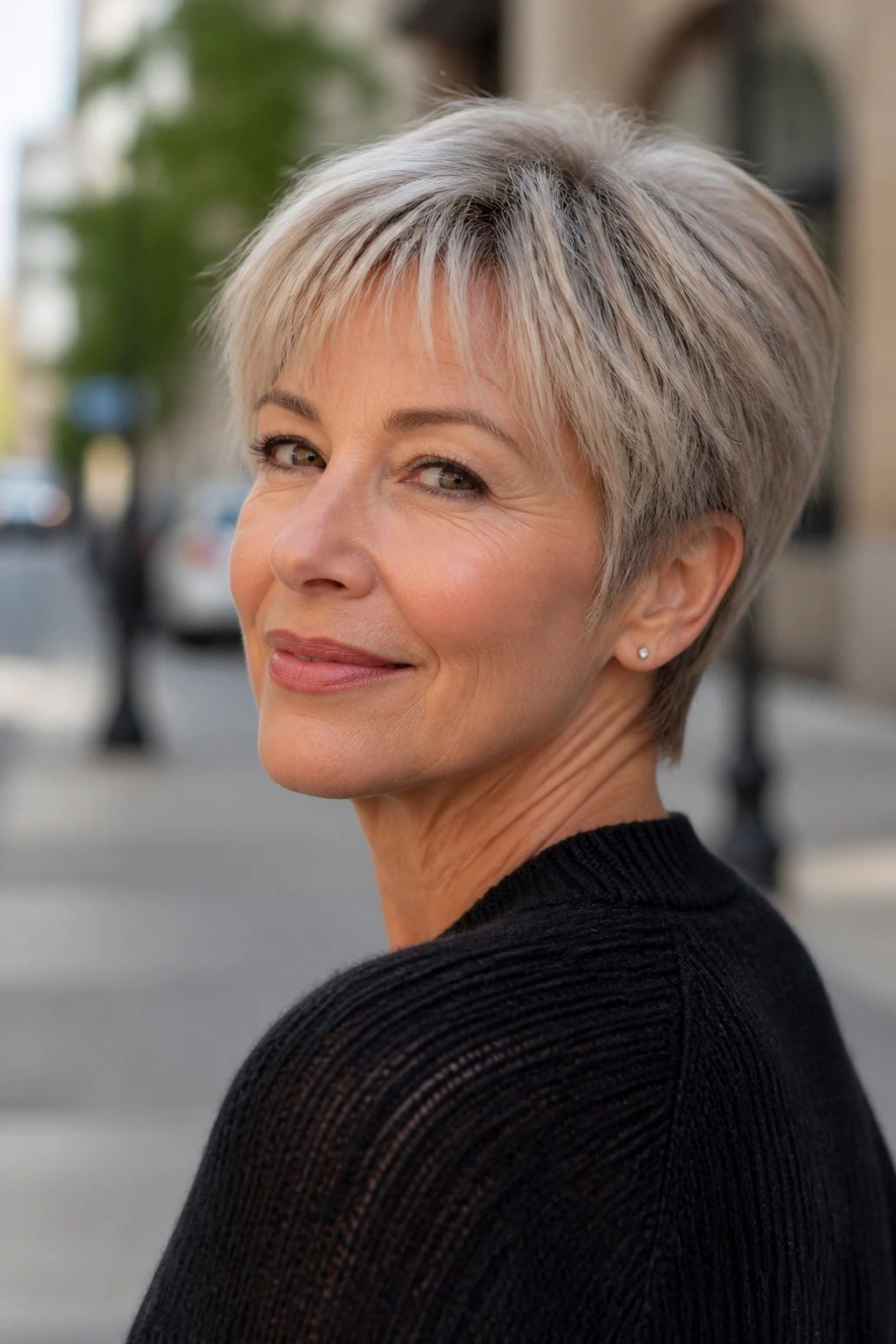
Short hair with bangs can go flat fast if the front is too heavy. Feathered pixie bangs avoid that problem by keeping the fringe short, light, and slightly broken at the ends so the cut stays airy.
This style lives on lift. A bit of volume at the crown, a little separation through the front, and enough softness around the eyes to keep the crop from feeling severe. It is one of the best choices if you want a low-length cut that still has face-framing movement.
I like this fringe with a side-swept finish, especially when the hairline is close to the face. It gives shape without needing the whole forehead covered. And because the haircut is short, the fringe becomes part of the architecture instead of acting like a separate layer.
Best for: Pixie cuts, short crops, and fine hair that benefits from lift.
Ask for: Feathered tips and a soft landing around the brow.
Maintenance reality: Short bangs show growth fast, so trims matter.
18. Long Curtain Bangs for Lob-Length Hair

Long curtain bangs and a lob go together because they both live in that useful middle ground: enough length to style several ways, enough shape to keep the cut from feeling plain. The fringe can split in the center, tuck behind the ears, or fall forward in a soft sweep.
That flexibility is the appeal. If you work in an office, the bangs can be brushed away. If you want softness around the face, they can be blown forward. If the weather turns humid and the front gets a little messy, the style still reads as deliberate.
What to ask for
Tell your stylist you want the longest point to blend into the lob rather than sit as a separate chunk. The front should connect to the haircut, not hover above it. A little angle at the sides gives the whole style movement.
Best for: Lob haircuts, medium density, and anyone who likes options.
One good habit: Blow the fringe forward first, then part and cool it in place.
19. Soft Bottleneck Bangs With Shoulder-Length Layers
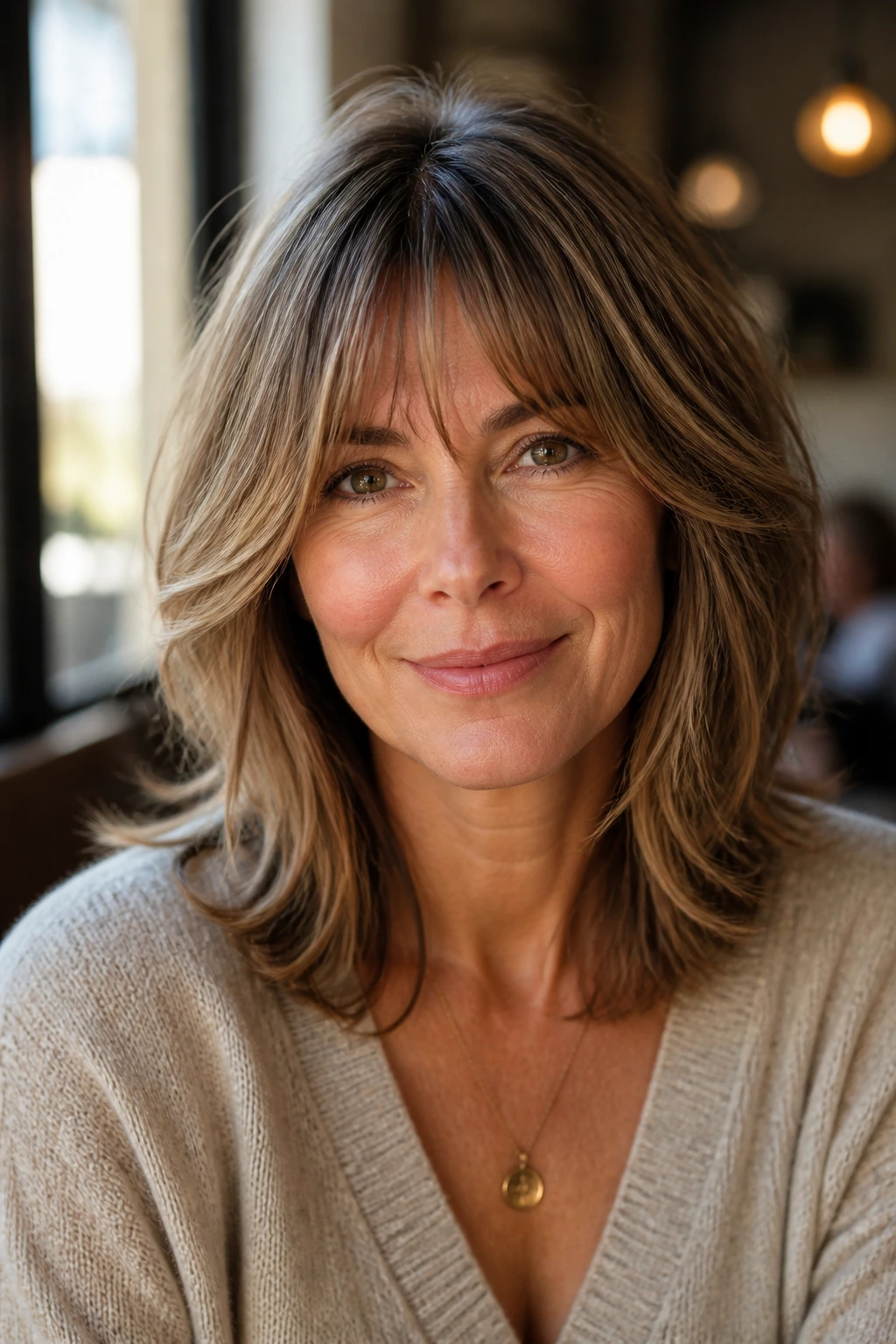
Here’s the version that sits between a full fringe and a curtain fringe. The center opens a little more than a blunt bang, but not as much as a traditional curtain shape. Shoulder-length layers catch the sides and keep the front from looking heavy.
This is a strong choice if you want structure in front and movement everywhere else. It does a nice job of balancing the face without making the hairstyle feel overly styled. The shortest point usually sits around the brow or just below, then the ends sweep toward the cheekbones and jaw.
The shape is smart for people whose hair has some body but not a ton of density at the front. It avoids the flat strip effect and keeps the fringe from disappearing into the rest of the haircut.
Best for: Shoulder-length cuts, moderate density, and mixed textures.
Styling note: The center should be dry before you move to the outer sections. Otherwise the whole shape falls forward.
Avoid if: You want a fringe that sits very wide and open.
20. Sweeping Fringe With Crown Lift
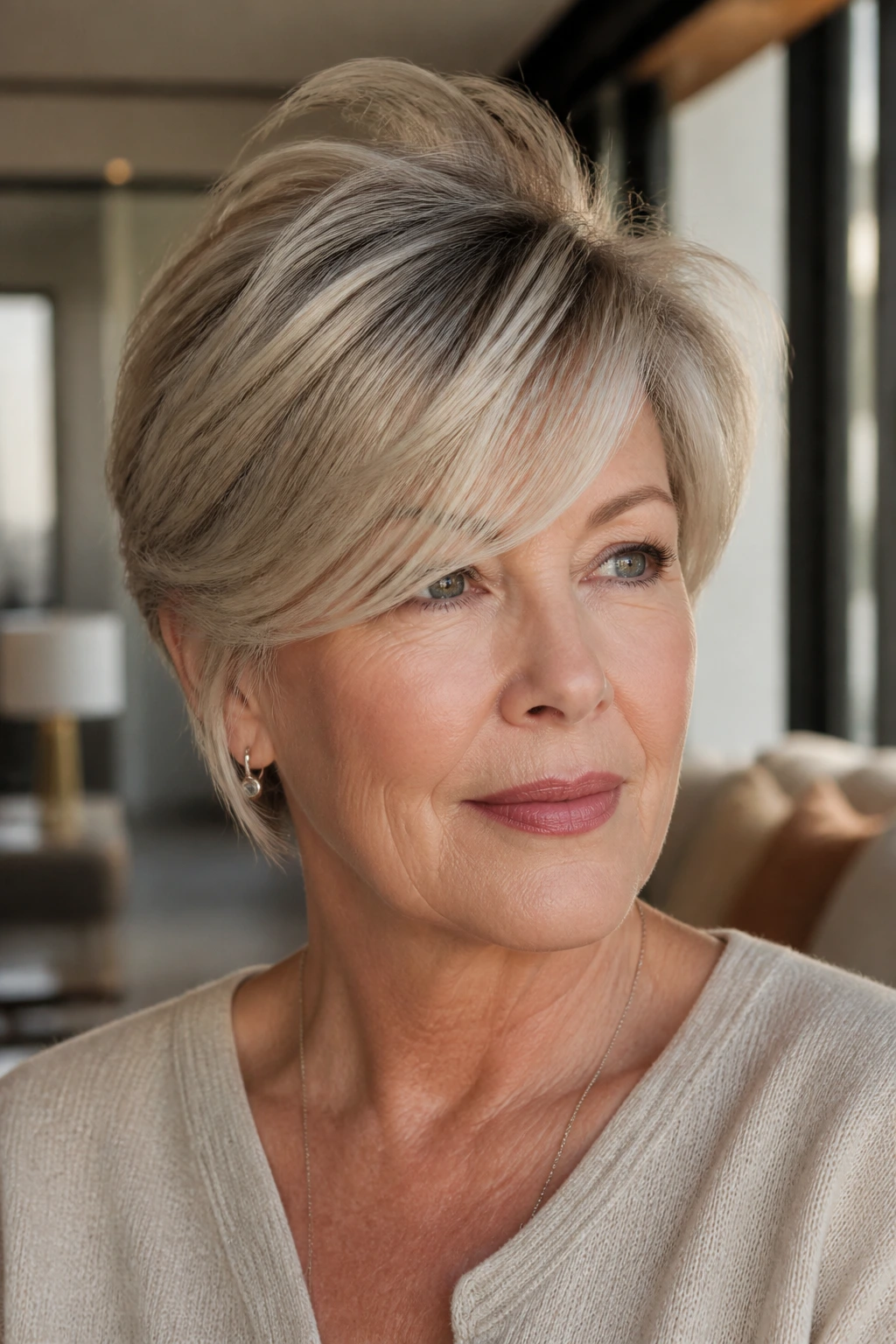
A sweeping fringe with lift at the crown gives the face height before it gives it softness. That matters more than people think. A little volume at the roots keeps the front from looking heavy, and the diagonal sweep stops the style from falling flat across the forehead.
This is one of my favorite options for hair that tends to collapse at the front by mid-morning. A root-lifting mousse or spray at the crown, a round brush aimed up and back, and a cool blast at the end can keep the shape up instead of down. The fringe should still feel soft. You are building height, not a helmet.
Best use case
If your hair likes to lie close to the scalp, this style gives you some architecture without requiring a full blowout every day. It also works with side parts and layered cuts, which makes it easy to fold into an existing haircut.
Best for: Flat roots, straight to softly wavy hair, and people who want lift more than coverage.
Stylist cue: Leave enough length so the sweep can move, then support the crown with layering.
Why a Fringe Changes the Whole Cut
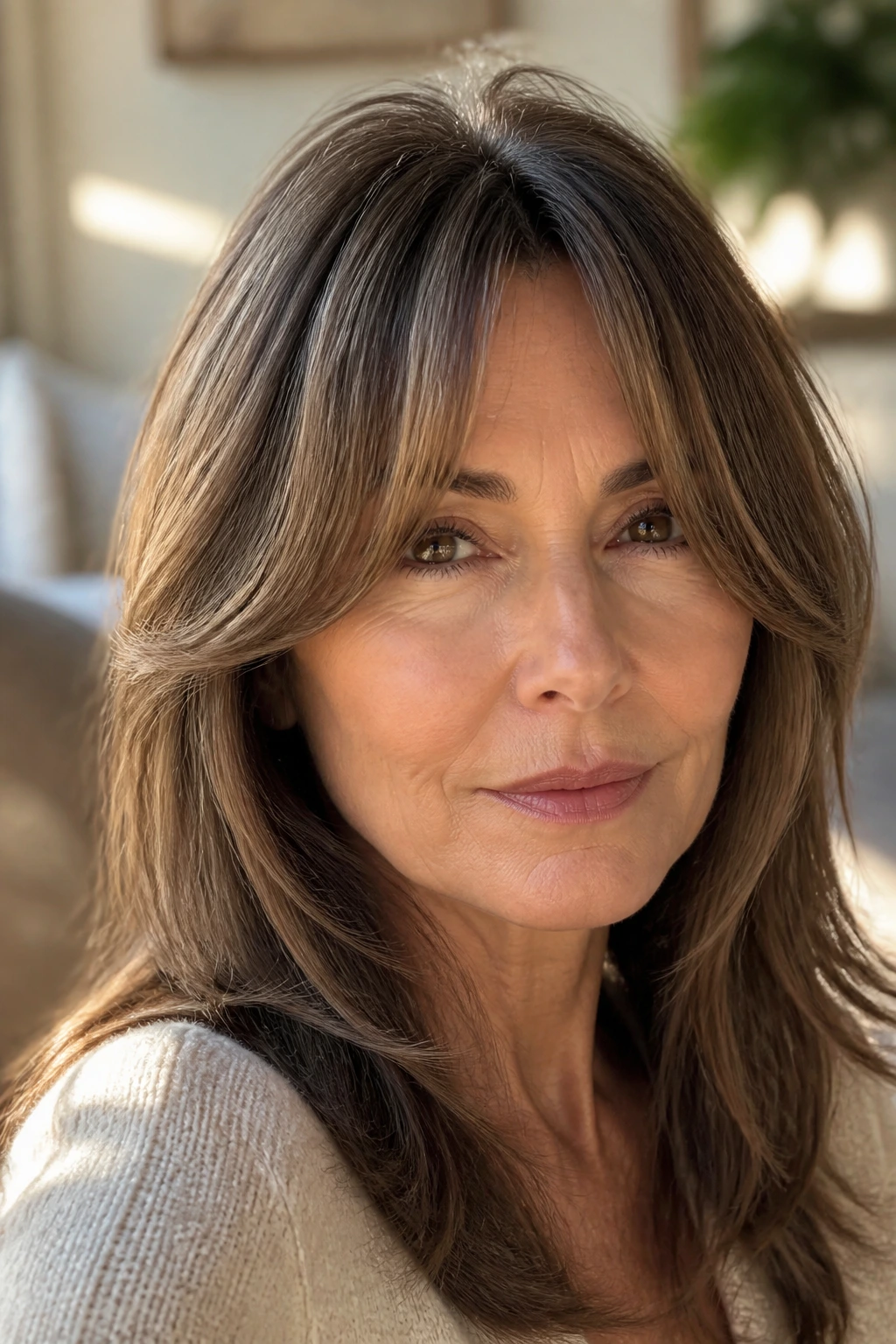
A fringe changes proportion before it changes style. That is the part most people miss. The front of the haircut controls where the eye lands first, and once that front section shifts, the whole face reads differently. A good bang line can soften a forehead, sharpen a cheekbone, or calm down a haircut that feels too open.
That matters a lot with bangs for women over 50, because texture and density usually stop behaving like they did at 25. The front might be finer. The crown might sit flatter. The temples might need a little more softness. A fringe can work with those changes instead of pretending they are not there.
I also think bangs are underrated as a practical fix. They help when you want a haircut to look finished even on days you do not fully blow it out. They can save a bob that feels too plain. They can take a little visual weight off a long face. And they can do all of that without taking away length from the rest of the head.
The biggest lesson: the best fringe is not the one that looks dramatic in a photo. It is the one that still behaves when you wake up, brush your teeth, and need to leave the house.
Smart Salon Notes and Products to Ask For
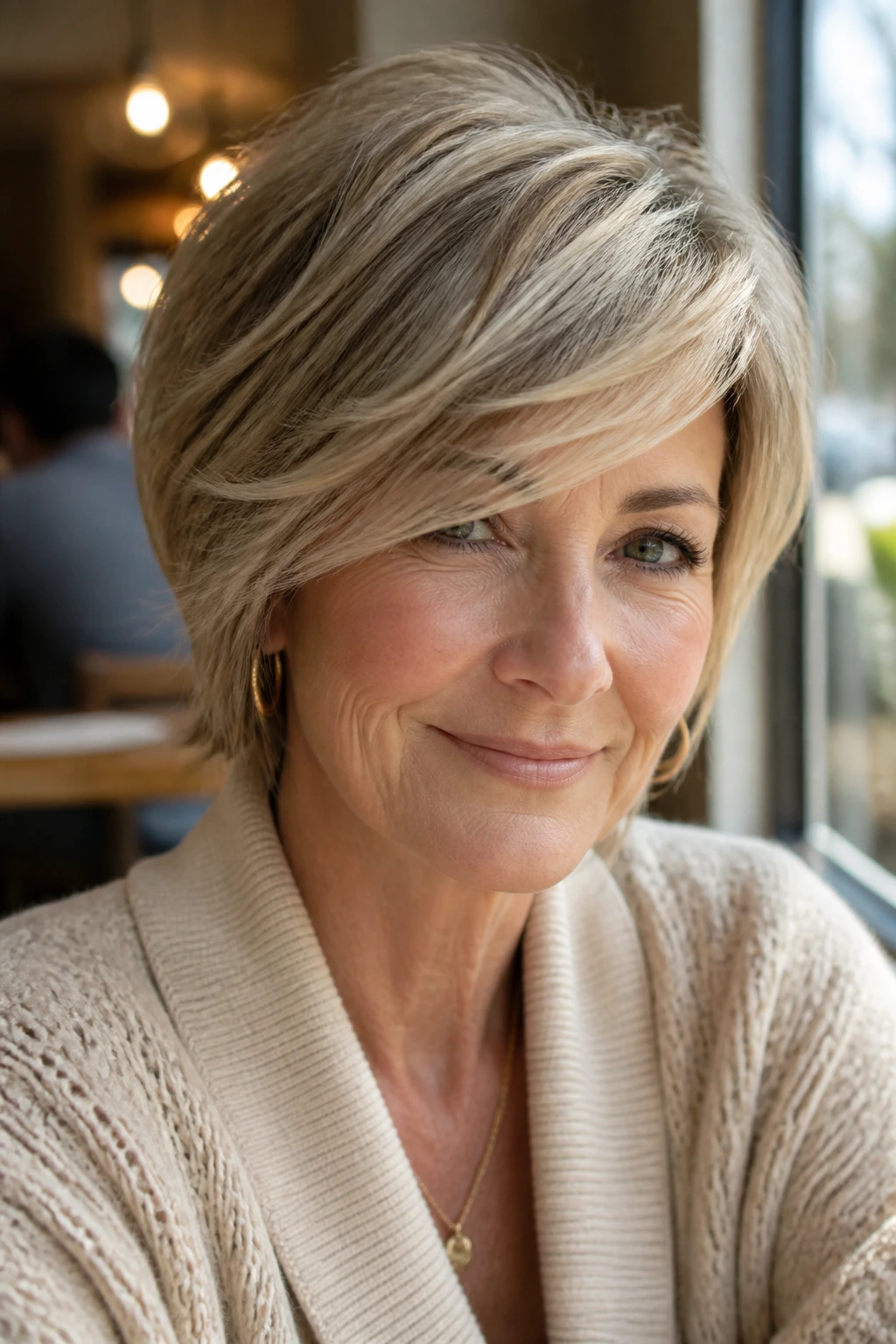
The salon conversation goes better when you describe the way your hair actually lives. Mention your part, your cowlicks, whether you wear glasses, and how long you are willing to blow-dry in the morning. That one sentence can save you from a fringe that looked lovely in the chair and annoying at home.
Ask for the cut in the way you’ll wear it: If you part your hair off-center, say so. If you wear your bangs brushed to one side, don’t let them be cut only for the middle part. The stylist needs to see the habit, not the idealized version of your routine.
Bring the frame into the conversation: Glasses change where a fringe should land. So do brows. If your frames sit high on the bridge, a bang that crashes into them will need more daily fixing than you probably want.
Choose products that stay light: A small bottle of heat protectant, a light mousse, dry shampoo, and a texturizing spray usually cover most fringe types. Heavy creams and oils make the front look greasy faster than the rest of the haircut.
Be honest about maintenance: Some bangs need a trim every three to four weeks. Some can go longer. If you know you won’t make that appointment, say it. A softer shape may be smarter than a precise blunt line.
How to Wear These Bangs With Glasses, Layers, and Texture
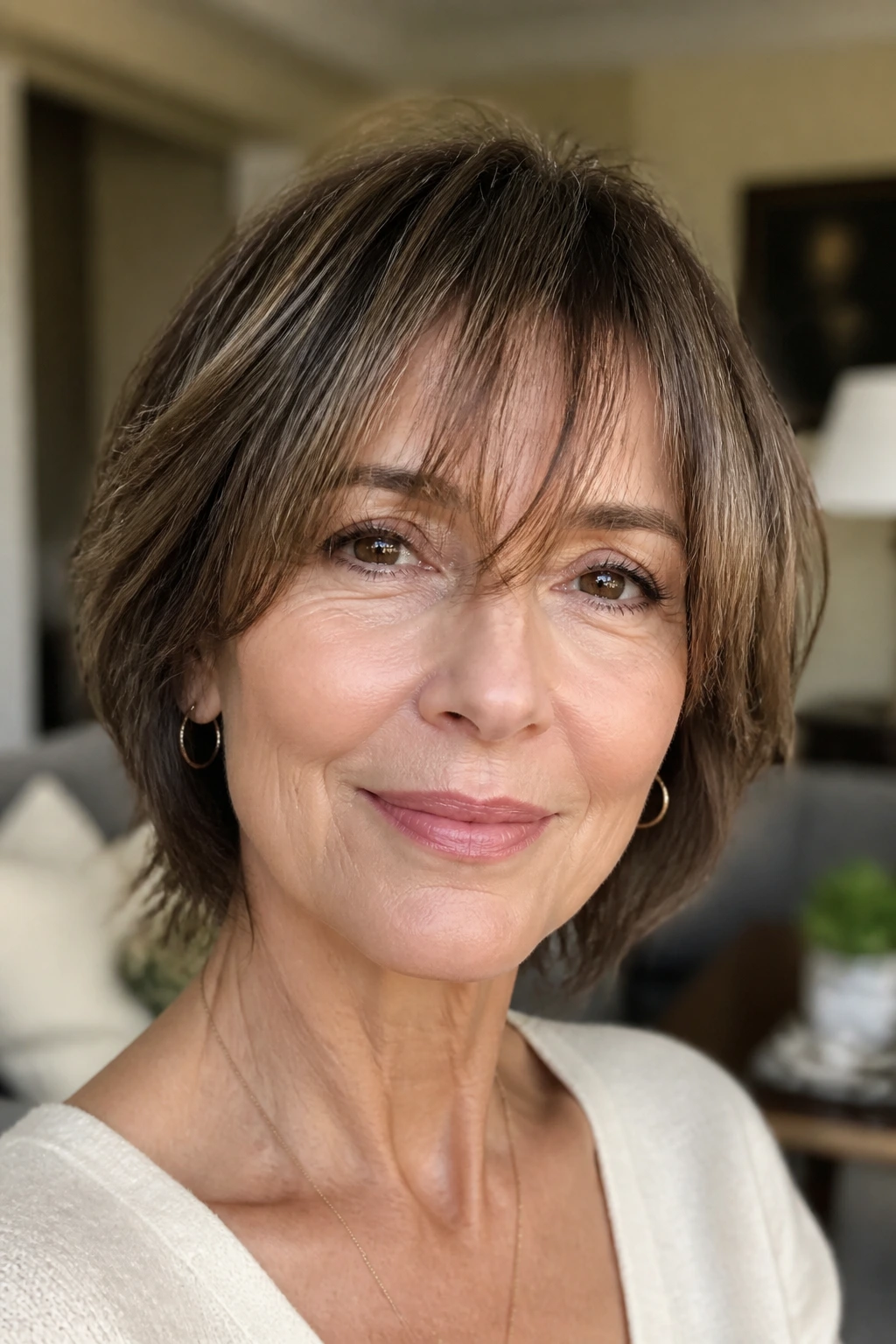
Glasses: Keep the shortest point of the fringe above or just at the frame line, not buried under it. If the bangs sit too low, they rub, separate, and steal attention from your eyes.
Layers: Soft layers in the rest of the haircut let a fringe look intentional instead of tacked on. If your cut is blunt everywhere else, a softer curtain or side-swept bang usually feels more balanced.
Texture: Straight hair can carry cleaner lines, while wavy or curly hair usually looks better with a little extra length and softness. The curl pattern will shorten the fringe as it dries, so plan for that.
Forehead shape: A longer forehead can handle a fuller bang or a deeper curtain split. A shorter forehead usually looks better with a lighter, more open fringe that does not crowd the face.
Daily routine: If you want to spend under five minutes on the front section, choose a style that falls into place with minimal brush work. That sounds obvious. It saves a lot of regret.
Styling Tricks That Make the Fringe Behave
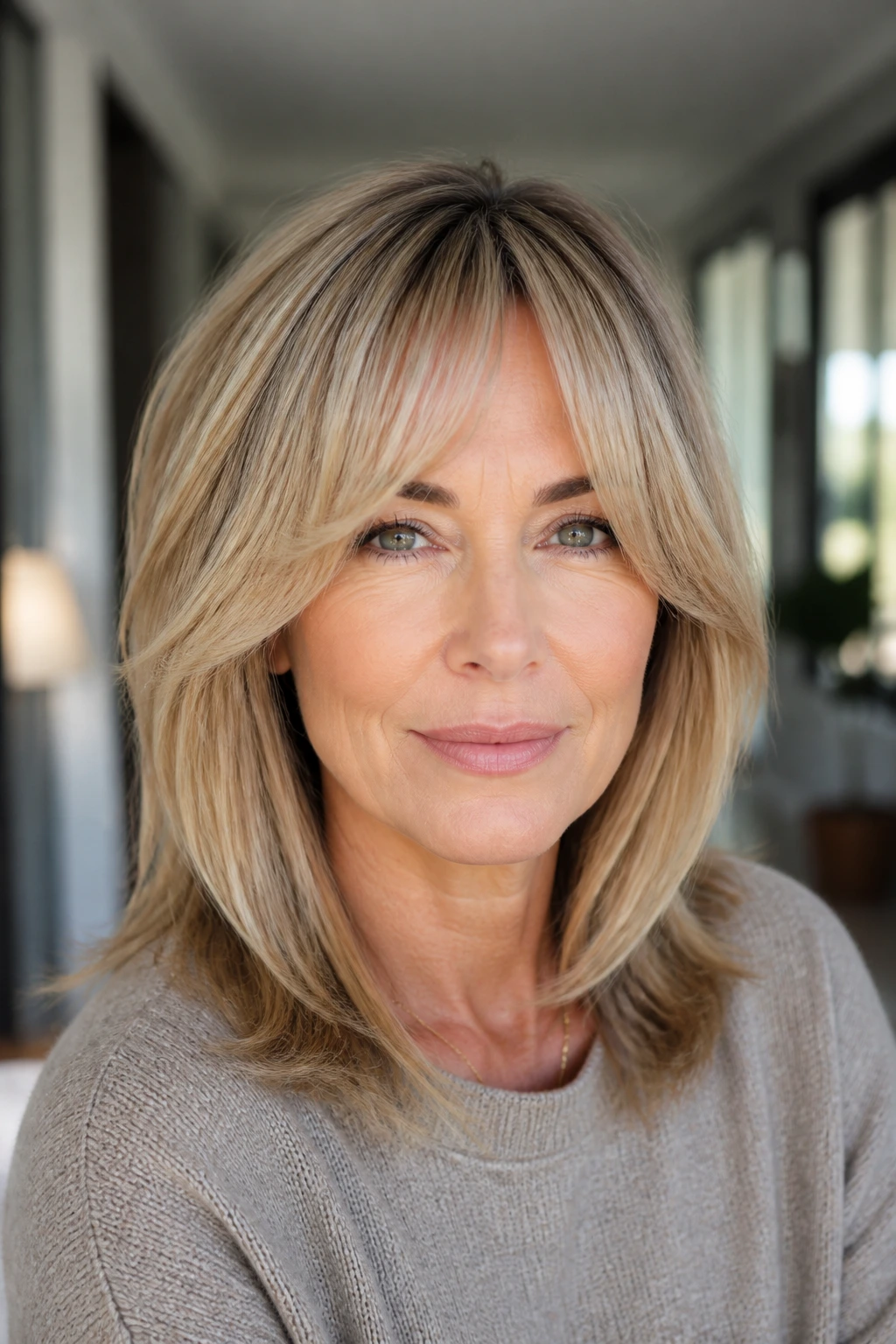
Blow-dry the roots first: The root direction sets the whole fringe. Aim the dryer at the scalp, not just the ends, or the bang will collapse by noon.
Use less product than you think: A fringe needs a whisper of mousse, spray, or serum. A pea-sized amount often does the job. More than that and the front starts to separate in sticky, stringy ways.
Let it cool before you touch it: Hair remembers shape as it cools. If you brush it again and again while it’s hot, you erase the bend you just built.
Keep dry shampoo nearby: A little oil at the forehead can flatten a fringe fast. A quick lift at the roots is better than piling on more styling cream.
Short on time? Clip the rest of the hair back, mist the fringe with water, and restyle only the front. That tiny reset often looks better than starting over.
Common Mistakes That Age a Fringe Fast
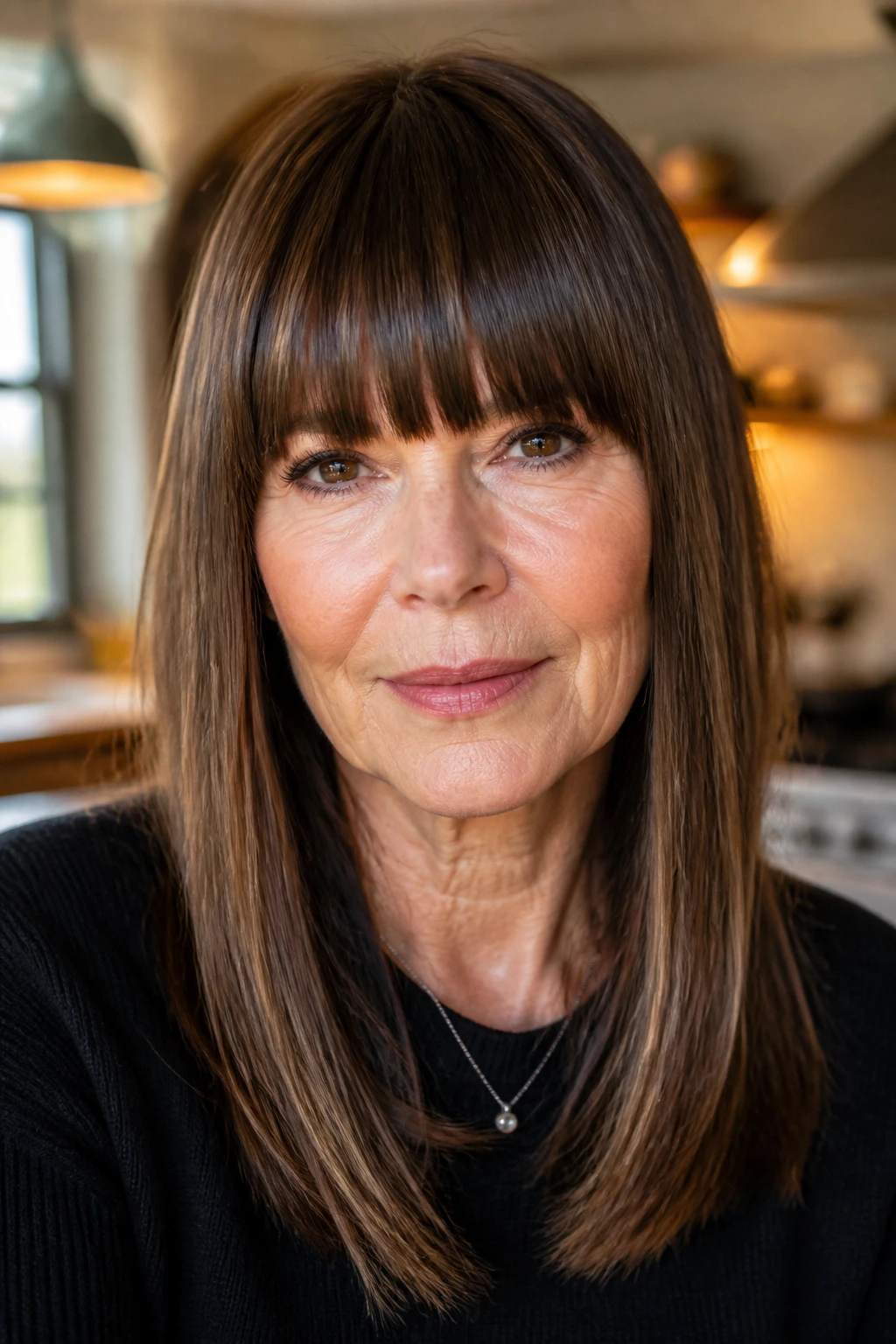
The first mistake is cutting the fringe too heavy. A thick block across the forehead can look strict, and strict is not the goal here. If the front feels dense enough to cast a shadow, it probably needs more softening or a narrower shape.
Another problem is ignoring the hairline. Cowlicks, growth patterns, and temple density decide where the bangs want to sit. Fight those too hard and the fringe splits, flips, or puffs in the wrong place. A better cut works with the grain of the hair, not against it.
People also overload the front with product. Bangs show grease fast. A heavy cream or oil near the roots makes them stringy, especially on fine hair. If you need hold, start with a lightweight mousse or a tiny touch of wax at the ends, not the scalp.
Last one: letting them grow out too far before trimming. A fringe can go from soft to sloppy in a matter of weeks. Once it starts dropping into the eyes or hanging in separate pieces, the whole haircut feels older than it is.
Variations and Adaptations to Try

The Glasses-Friendly Arc: Ask for a fringe that sits slightly higher in the center and longer at the sides, so it clears the top of your frames. It keeps the front open and avoids that constant brush-away motion. This works especially well with side parts and shoulder-length cuts.
The Low-Commitment Grow-Out: Start with long curtain bangs or a long face-framing fringe. They are easier to push aside, pin back, or blend into layers when you want a break from fringe life. If you are unsure, this is the least fussy place to begin.
The Curly-First Shape: Leave extra length and let the fringe spring into place after a diffuser dry. This version is built for natural texture and looks best when the curls are allowed to form their own little curve. Cutting curls straight across while wet is how people end up with a bang line that shrinks into the middle of the forehead.
The Fine-Hair Lift Cut: Use a lighter, tapered fringe with density kept in the center and softness at the edges. It makes thin hair look more deliberate without asking the front to do too much. A bit of root spray keeps it from lying flat.
The Silver Glow Frame: Pair soft fringe shapes with gray or silver hair, and avoid making the front too blunt. The softer line lets the color catch the light naturally, which looks better than forcing a hard edge against sparkling strands.
Tools and Products Worth Having on Hand
- Small round brush, 1 to 1.5 inches: Best for shaping fringe without creating a huge bend.
- Blow dryer with a concentrator nozzle: Directs airflow so the front doesn’t frizz while you dry it.
- Fine-tooth comb: Useful for separating a curtain or bottleneck fringe cleanly at the part.
- Duckbill clips: Handy for pinning back the rest of the hair while you style only the front.
- Heat protectant spray: Keeps the fringe from getting fried if you use a brush and dryer often.
- Lightweight mousse: Gives lift at the root without making the bangs sticky.
- Dry shampoo: Helps on oily roots and gives soft fringe a little grit.
- Texturizing spray or light wax: Good for piecey bangs or shaggy styles.
- Mini flat iron: Useful for a quick curve or for taming a stubborn side sweep.
- Salon shears for pros only: If you trim at home, use proper hair scissors. Kitchen scissors chew up the ends.
Keeping Bangs Fresh Between Cuts
Fringe maintenance is all about small, regular fixes. Don’t wait until the bangs are hanging in your eyes and splitting into two sad pieces. That’s too late, and the whole front of the haircut starts to look tired.
Blunt bangs and brow-grazing fringe usually need a trim every three to four weeks. Curtain bangs, bottleneck bangs, and long face-framing pieces can often go five to seven weeks before they lose shape. Curly bangs sometimes stretch longer between trims because the curl hides growth, but shape them as soon as the curl pattern starts getting bulky at the sides.
At home, a quick reset is often enough. Mist the fringe lightly with water, blow-dry the roots for 20 to 30 seconds, and use the cool shot to lock the shape. If the front gets oily by midday, dry shampoo at the roots works better than adding another layer of styling cream.
Nighttime matters too. If your fringe tends to bend badly while you sleep, clip it up loosely with a soft roller clip or pin it to one side before bed. It sounds fussy. It saves time in the morning. And if you are growing it out, redirecting the bangs into side pieces or face-framing layers is usually kinder than pretending they will simply vanish.
Frequently Asked Questions
Are bangs a bad idea if I wear glasses?
Not at all. The trick is choosing a shape that leaves space at the frame line, like side-swept, curtain, or bottleneck bangs. A blunt fringe can work with glasses too, but it needs careful length placement so the hair and frames do not crowd each other.
Which bangs are best for thinning hair?
Soft curtain bangs, wispy brow-grazing fringe, and lightly tapered styles tend to work best because they give shape without demanding too much density. A heavy blunt bang can expose thinness if the hairline is sparse or if the ends separate.
Should bangs be cut dry or wet?
Curly and wavy hair usually behaves better when the fringe is cut dry or almost dry, because shrinkage changes the length. Straight hair can be cut wet, but the final shape still needs a dry check before the stylist calls it finished.
What bangs work best with a round face?
Bottleneck bangs, long curtain bangs, and soft side-swept fringe usually help because they create diagonal movement and a little vertical lift. A short, blunt line can make the face look wider unless the rest of the haircut has enough length and balance.
Can I style bangs if I only have five minutes?
Yes, if the fringe shape is realistic. Long curtain bangs, soft side bangs, and face-framing pieces are the quickest because they do not need perfect symmetry. A quick blast with the dryer and a round brush is usually enough to reset them.
How often should bangs be trimmed?
Most fringe styles need a touch-up every three to six weeks, depending on the length and the rate of growth. Micro bangs and blunt fringes need the most frequent trimming. Longer curtain shapes can go a bit longer before they lose the line.
What if my bangs keep splitting because of a cowlick?
Don’t fight the cowlick with a hard, dense line unless you enjoy daily frustration. A side part, longer curtain style, or temple-skimming fringe usually works better because it follows the direction the hair wants to go. Blow-drying the root in the opposite direction first can also help.
Can I grow out bangs without looking awkward?
Yes, but the grow-out has to be shaped on purpose. Ask for longer pieces at the temples and through the front so the fringe can turn into face-framing layers instead of hanging as one blunt patch. Pins, clips, and side parts make the in-between stage easier.
The Fringe That Fits
The best fringe is not the one with the loudest before-and-after photo. It’s the one that sits naturally with your texture, your brow line, your glasses, and the way you actually dry your hair on a normal morning. That is the quiet test most haircuts fail.
If you take anything from these bangs for women over 50, make it this: the front of the haircut should feel like part of your face, not a costume draped over it. Bring your real routine to the salon. Mention the cowlick. Mention the frames. Mention the amount of time you are willing to spend with a brush.
Start with the shape that asks the least from your mornings, then go bolder if you want more edge. The right fringe gives you options, and that’s the part worth keeping.
