



Straight hair makes a curtain bang tell the truth fast. Every line shows. Every snip shows. If the fringe sits too heavy, it drops like a flat curtain rod. If it’s cut too short, it can spring up and look blunt in the wrong way. That’s why curtain bangs for straight hair need a little more thought than the airy photos suggest.
The good news is that straight hair is also the best canvas for this shape when the cut is right. You get clean separation, a crisp center part, and that flattering sweep away from the face without fighting a stubborn wave pattern. The trick is deciding how much weight to leave in the middle, how far to feather the sides, and how much movement you want to fake with a round brush, a flat iron bend, or a quick blow-dry.
I’ve always liked curtain bangs on straight hair when they look deliberate rather than “accidentally grown out.” The best versions don’t just sit there. They frame the eyes, soften a strong jaw, and take the edge off a long face without swallowing the forehead whole. Some are barely there. Some are full and glamorous. A few are a little bratty in the best way. The styles below cover all of that, and they’re chosen for the way straight hair actually behaves in real life, not in a perfectly filtered salon mirror.
Why Curtain Bangs Work So Well on Straight Hair
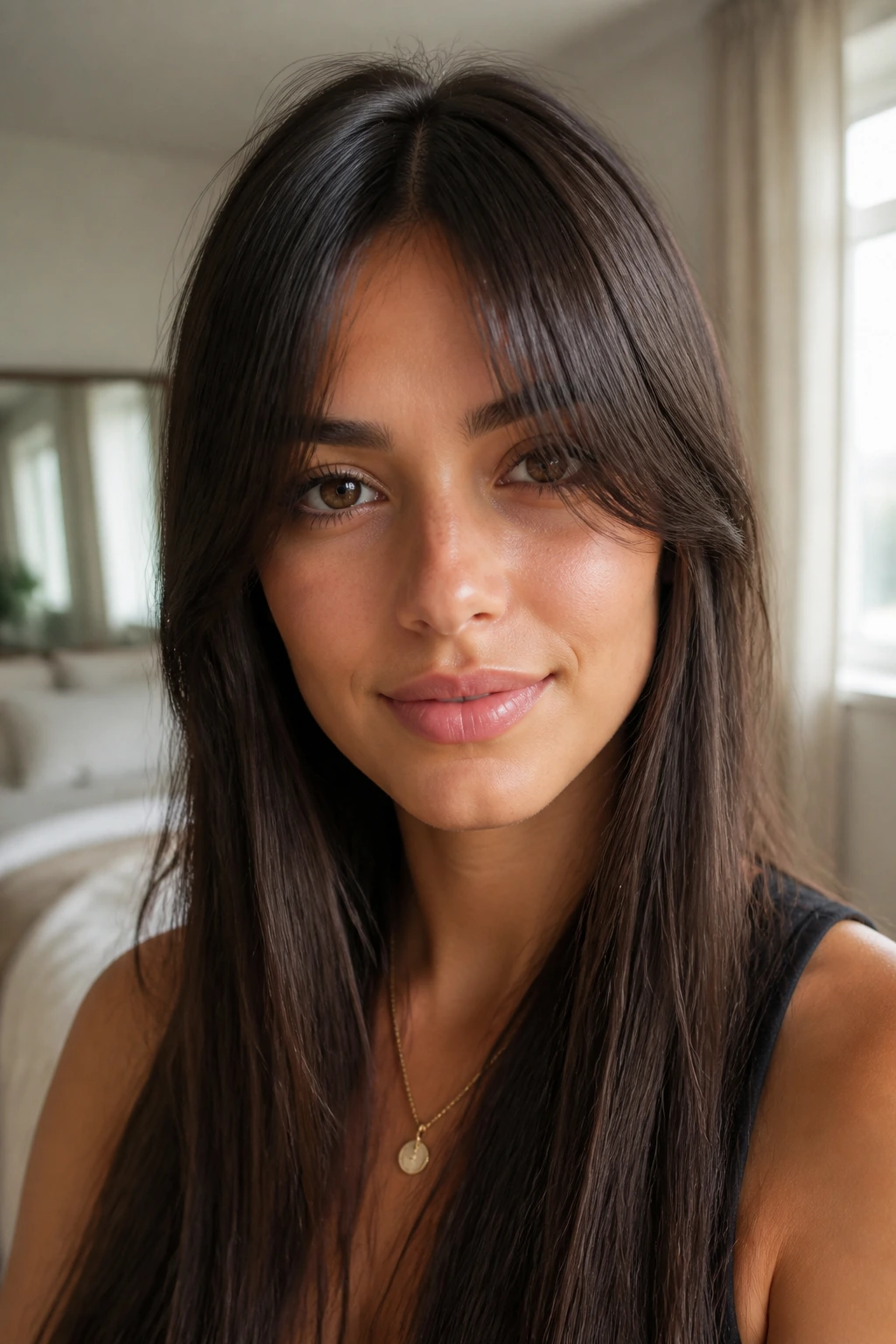
- The shape stays visible: Straight strands hold a defined split, so the curtain part reads cleanly instead of disappearing into texture or frizz.
- The cut looks sharper: A soft center part with face-framing angles has more impact on straight hair because the edges don’t blur as they do on wavy hair.
- Styling takes less effort: A two-minute bend with a round brush or flat iron is often enough; you’re not trying to create curl, just a controlled curve.
- The grow-out is kinder: A well-cut curtain fringe can slide into layers without that awkward shelf that blunt bangs leave behind.
- It suits different densities: Fine straight hair can use a wispy version, while thick straight hair can carry a heavier curtain without collapsing.
1. Cheekbone-Skimming Classic Curtain
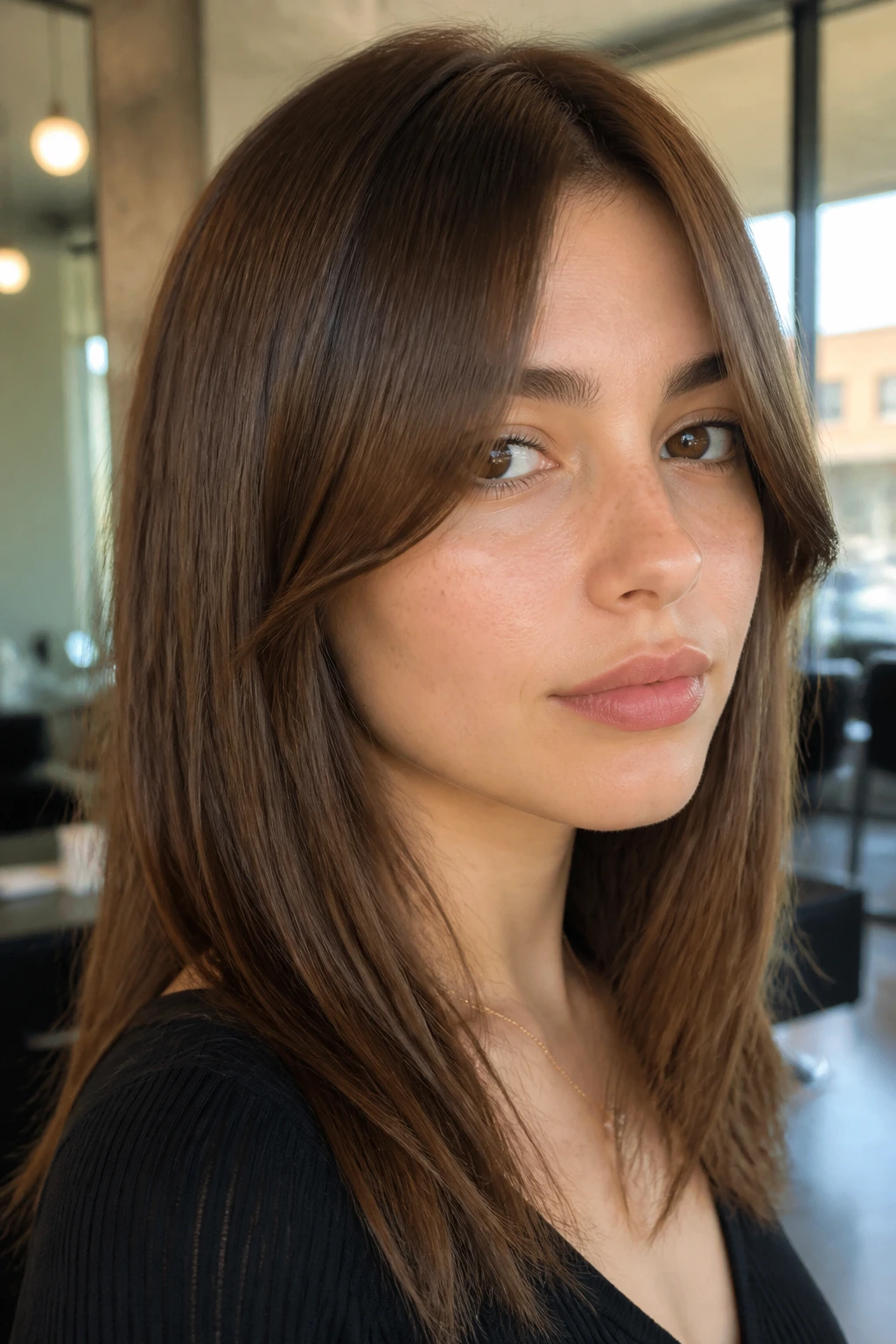
This is the version most people picture first: a center-parted fringe that starts near the brow and sweeps right into the cheekbones. On straight hair, it has a polished, easy line that feels clean rather than fussy. The outer corners should land where your cheekbones begin to flare, because that’s where the face gets its best softening effect.
Why it works
Straight hair loves this shape because the middle stays light enough to separate and the sides have enough length to tuck into the rest of the cut. Ask for a little shorter in the center if your hair grows fast around the face. If your stylist leaves the side pieces too long, the whole thing can drag.
Good for
- Oval and heart-shaped faces
- Fine to medium straight hair
- People who want a bang that still reads as a bang
Styling note: Blow-dry the center forward for 10 seconds, then sweep both sides away from the face with a round brush. That tiny bend matters.
2. Brow-Grazing Soft Curtain
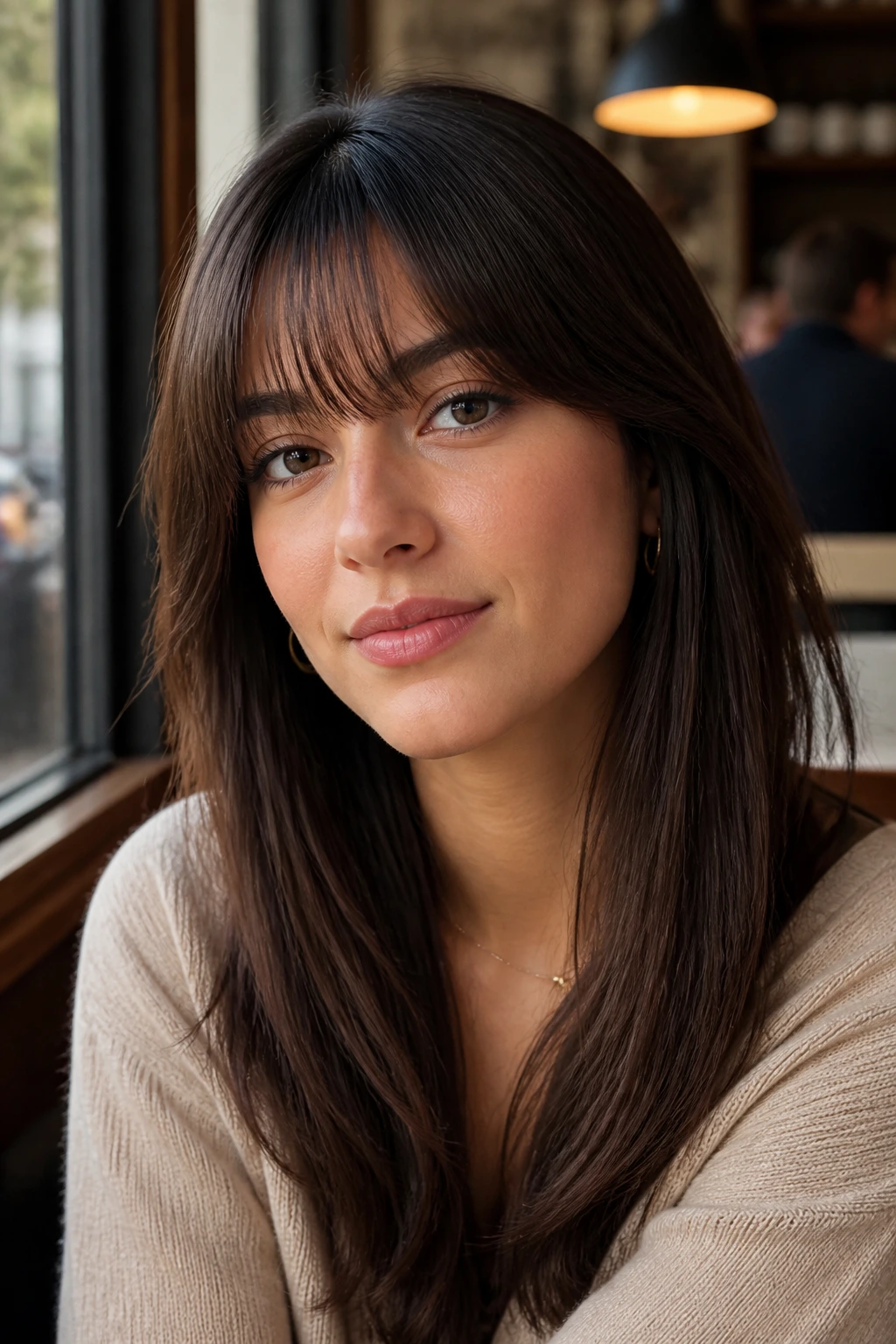
If the classic version feels too long, this one sits just at the brow line and opens quickly into the sides. It has a fresher, more youthful snap, and straight hair shows off that crisp edge well. The fringe can skim the lashes without getting into your eyes all day, which is the sweet spot for a lot of people.
The key is restraint. Too much weight in the center and this turns into a blunt fringe with awkward corners. Too little and it loses the curtain effect. I like this on straight hair that’s a little fine, because the shorter center gives the illusion of fullness without needing a ton of product.
3. Bottleneck Curtain Bang
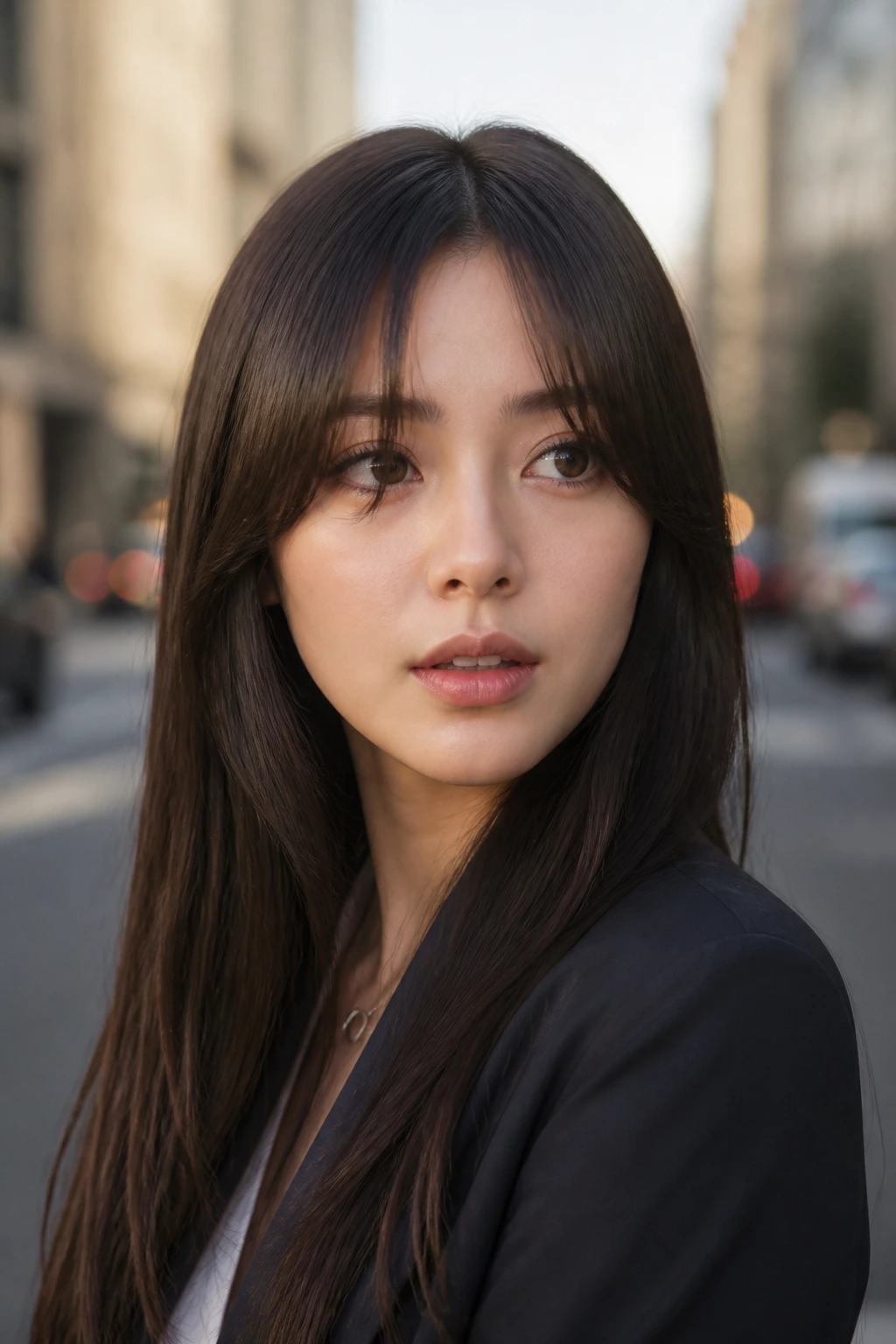
Bottleneck bangs are tighter in the middle and widen gradually toward the sides, like the narrow neck of a bottle opening into the shoulders. On straight hair, that controlled taper keeps the style from looking too wide or floppy. It’s one of the smartest choices if you want something fashionable but not high-maintenance-looking.
What makes it different
The center is shorter and more open than a classic curtain bang, so the forehead doesn’t feel crowded. The outer pieces feather out near the cheekbones, which gives the face a gentle frame. If your straight hair tends to lie too flat, this cut adds shape without requiring you to build much curl.
Best for
- Round faces that need a little length through the front
- Medium to thick straight hair
- Anyone who hates a heavy bang line
A quick pass with a blow-dryer brush is usually enough. Don’t overdo the roundness. The charm here is the controlled taper, not a perfect 1990s blowout curl.
4. Long Grown-Out Curtain
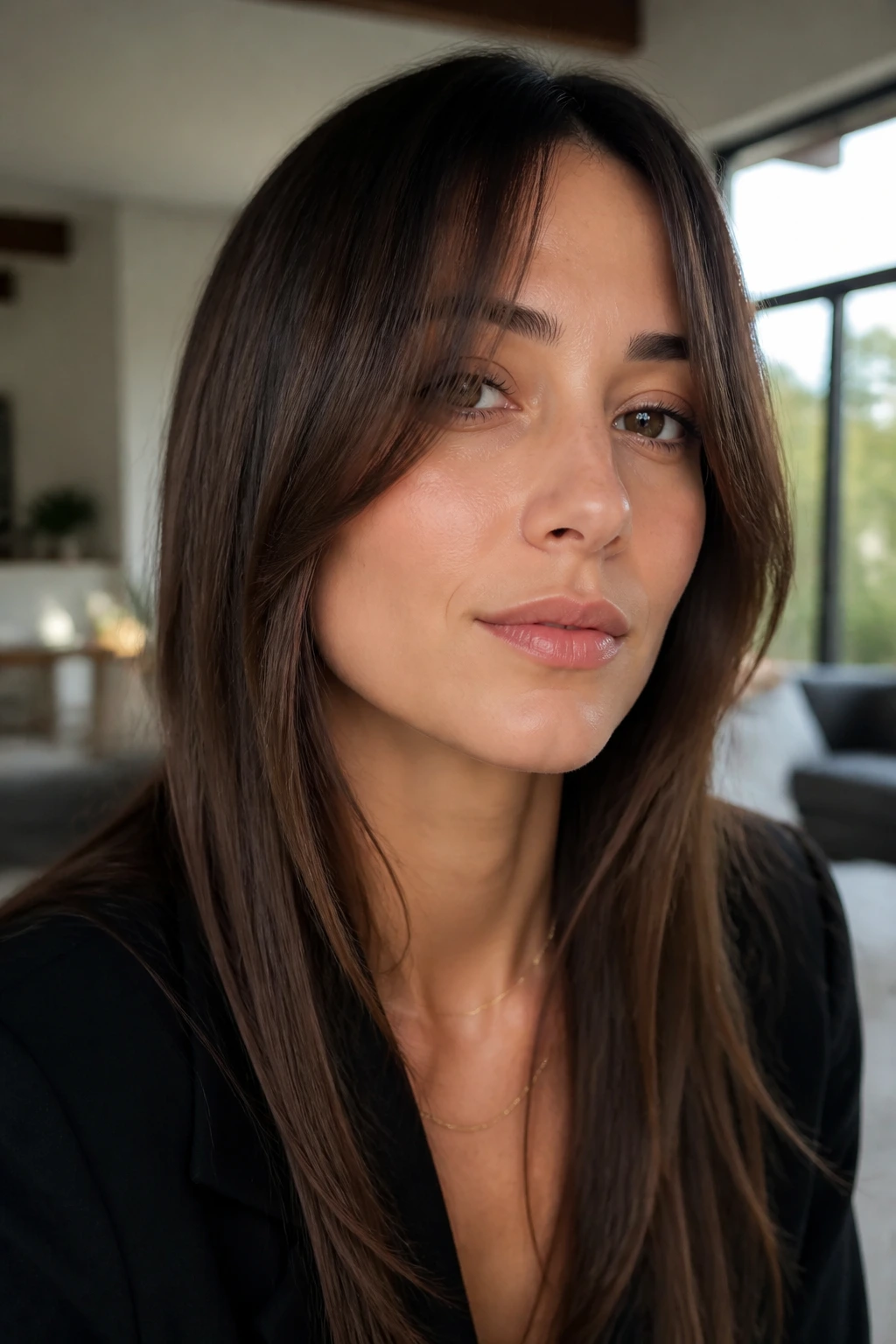
This is the style people often arrive at accidentally, then decide they love it. The pieces begin around the cheekbones and slide down toward the jaw, almost blending into the front layers. On straight hair, the effect is sleek and low-drama, which is useful if you don’t want a bang that screams for attention every morning.
It’s also forgiving. If you miss a trim by a few weeks, this shape still behaves. That makes it a nice choice for anyone who trims bangs irregularly or likes the idea of curtain bangs more than the discipline of frequent maintenance.
My take: this is the easiest “I want bangs, but not that much commitment” option.
5. Airy Wispy Curtain
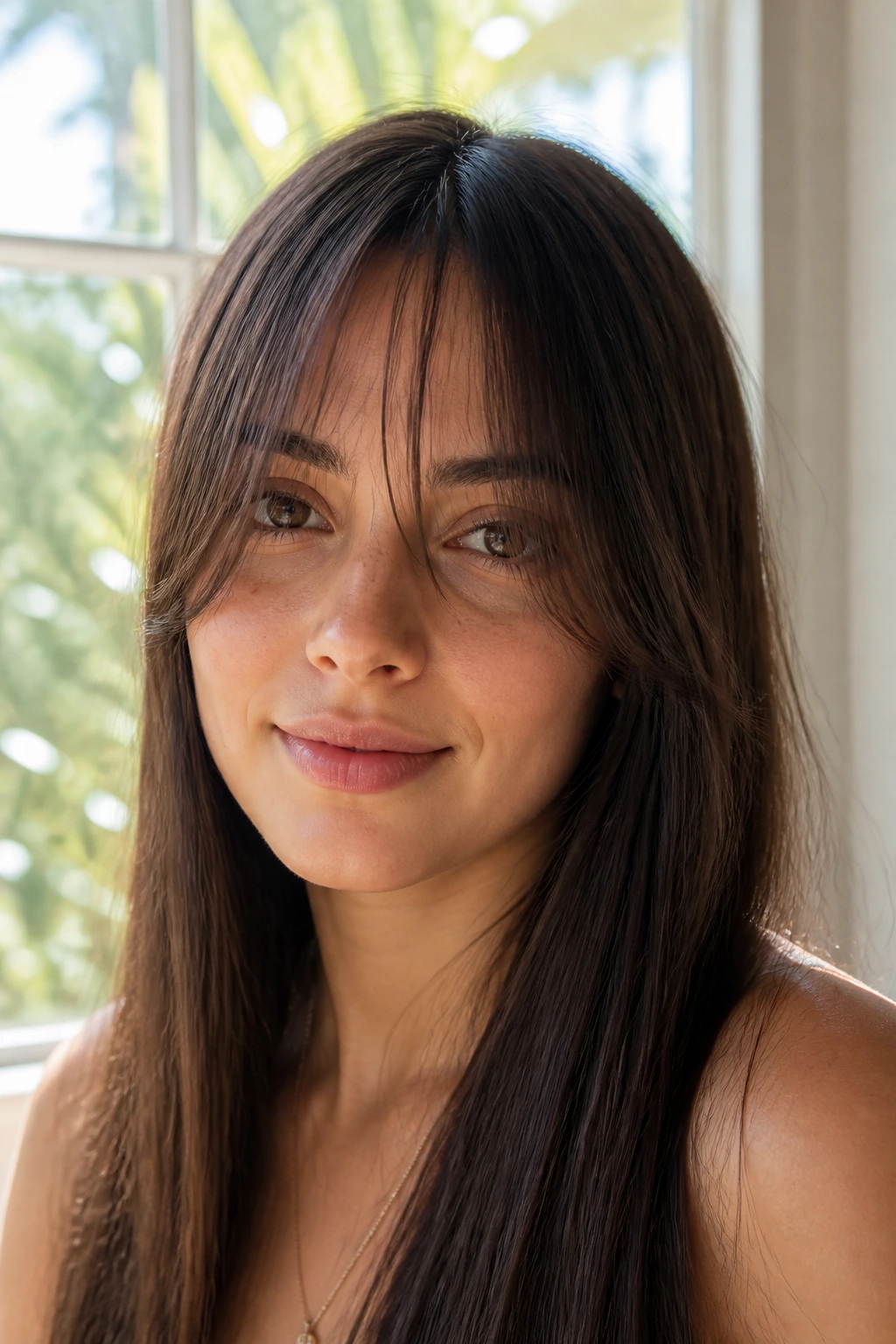
Think of this as the featherlight version. The center is sparse enough to see forehead through it, and the sides are broken up into soft, separated strands. Straight hair can make wispy bangs look chic instead of stringy, as long as the cut has enough internal texture to keep the pieces from clumping together.
The mistake here is making it too thin. Wispy does not mean stingy. You still need enough hair in the fringe to frame the face. If you’re starting with very fine straight hair, ask for softness, not transparency.
How to style it
Use a small round brush or even your fingers plus a nozzle dryer. A pea-sized amount of lightweight mousse near the roots is plenty. Heavy cream product kills the floaty finish.
6. Thick Face-Frame Curtain
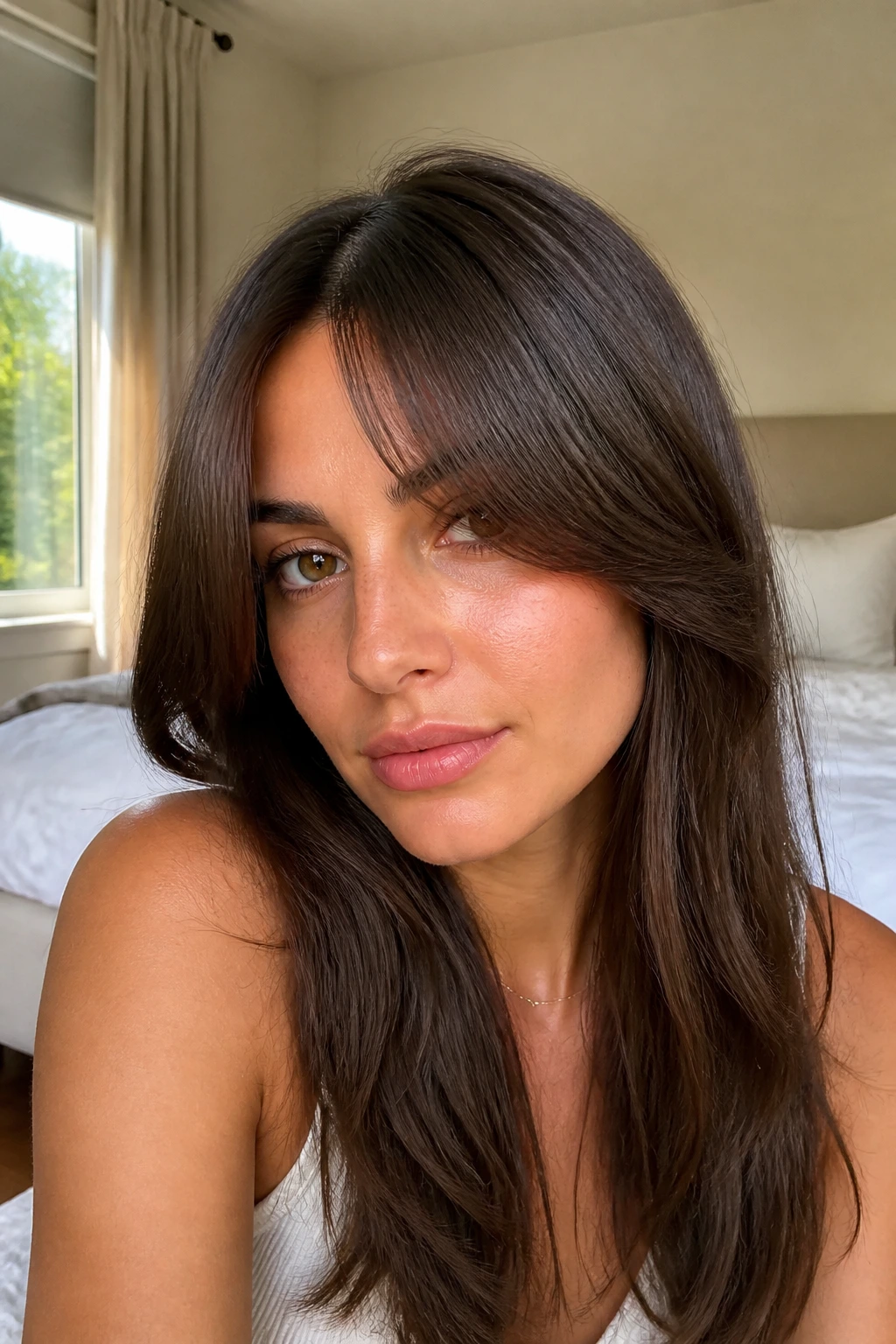
This version leaves more density in the bang area, so the fringe feels plush and full instead of airy. On straight hair, that extra thickness gives you a beautiful, deliberate frame around the face. It works especially well if your hair is naturally dense and the bang section tends to split too fast.
The payoff is visual weight. A thicker curtain can balance a strong forehead, a long face, or a haircut that otherwise has a lot of length without much shape at the front. But it does need a good blow-dry. If you let it air-dry untouched, it can just hang there like a sheet.
7. Choppy French-Girl Fringe
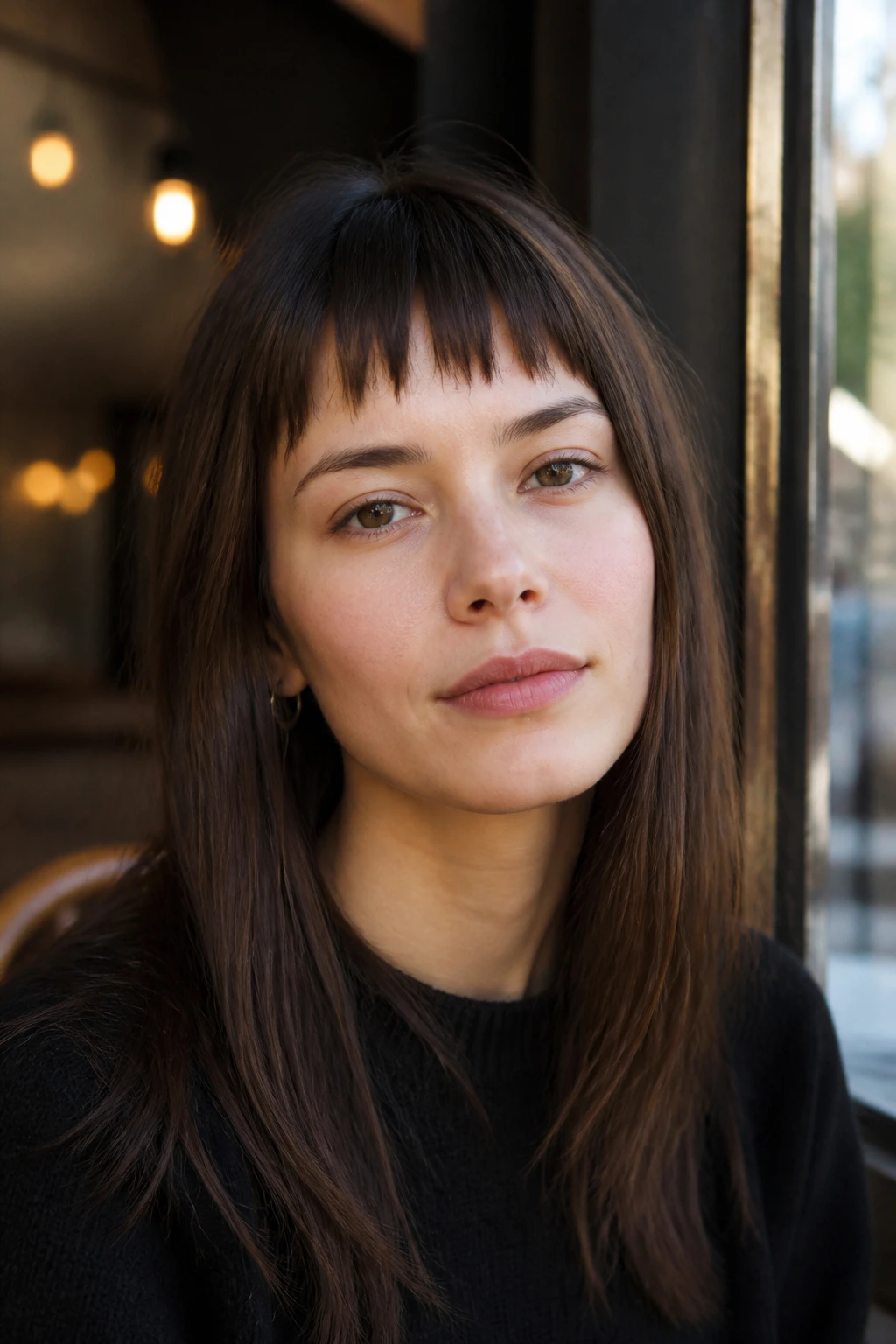
This is the slightly undone one, cut with small internal breaks so the edge doesn’t look too precise. On straight hair, the choppy detail adds movement that the texture itself doesn’t provide. It feels more lived-in than polished, and that’s the point.
A lot of people ask for this and then discover they actually want the opposite. If you love symmetry and neatness, skip it. If you like hair that looks better after a bit of hand-tousling, this style is a good fit.
Where it shines
- Straight hair with natural density
- Shorter face shapes
- Cuts that already have layering around the crown
8. Center-Opened Shag Curtain
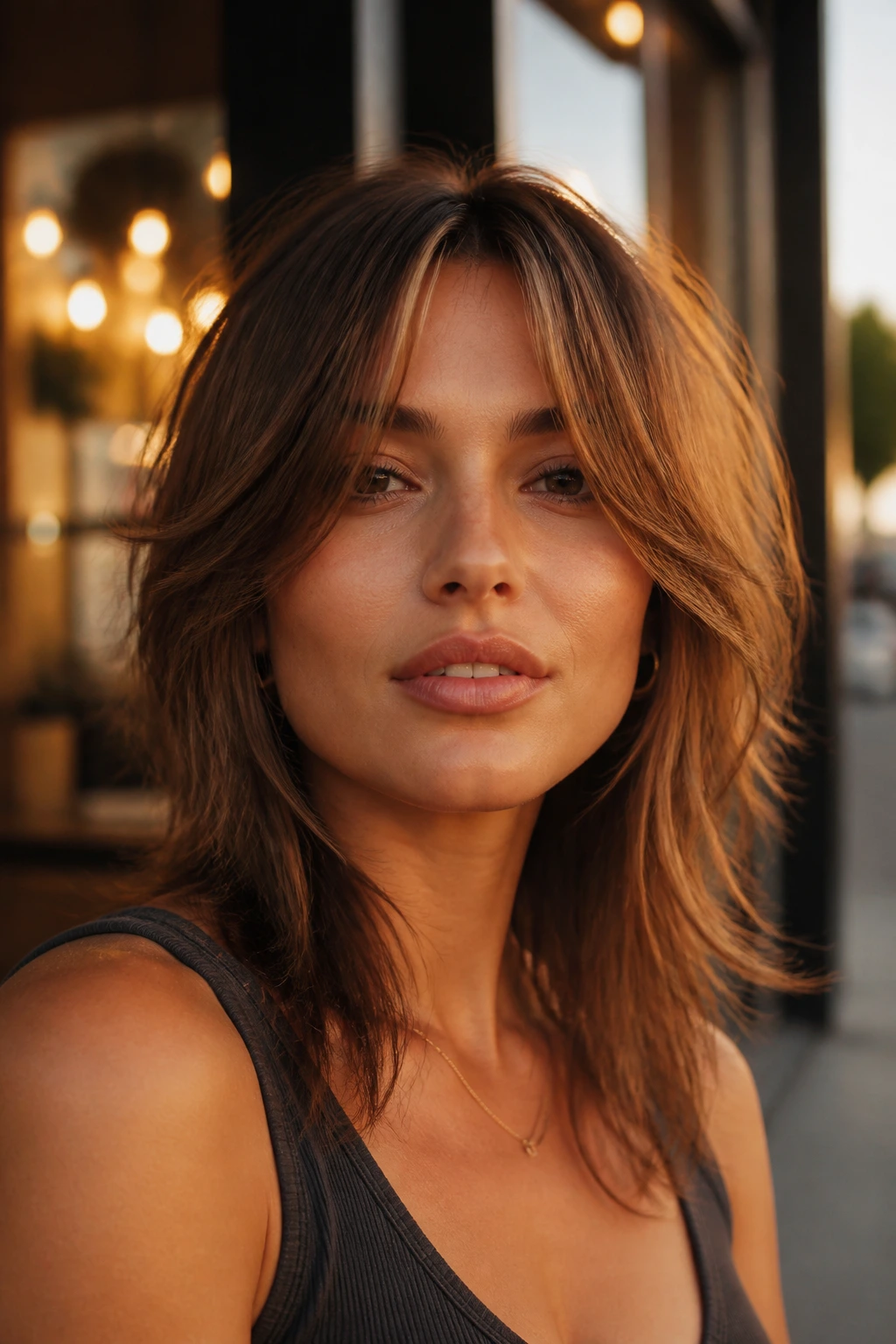
A shaggy curtain bang sits inside a larger layered cut, so the fringe doesn’t feel like a separate piece. On straight hair, that blend matters. Without some texture and surrounding layers, the bang can feel too neat and disconnected from the rest of the cut.
This style is built for motion. The center opens in a soft V, the sides travel into face-framing layers, and the whole thing looks like it was meant to be loose. If you wear your straight hair pin-straight every day, the shag curtain gives you a little movement without asking for curls.
9. Side-Part Curtain Hybrid
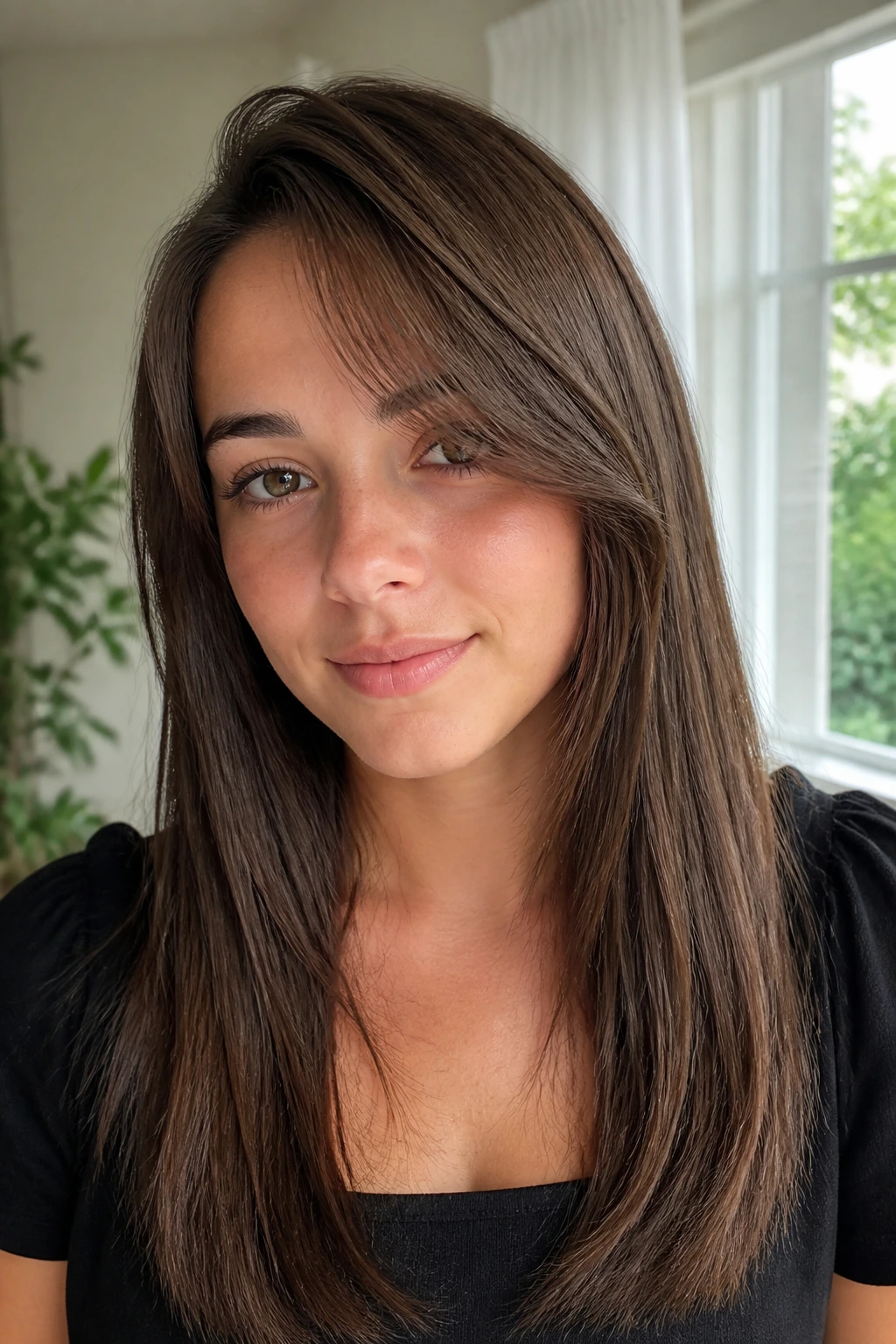
Not every curtain bang has to sit dead center. A side-part hybrid keeps the same face-framing sweep but shifts the part slightly off-center, which can make straight hair feel less severe. I like this when a full middle part looks too flat or too symmetrical.
It’s especially useful if your cowlick fights a center part at the hairline. Work with the growth pattern instead of punishing it. The bang can still open into a curtain shape, just with a softer start and a more natural fall.
10. Under-Brow Eye-Glance Bang
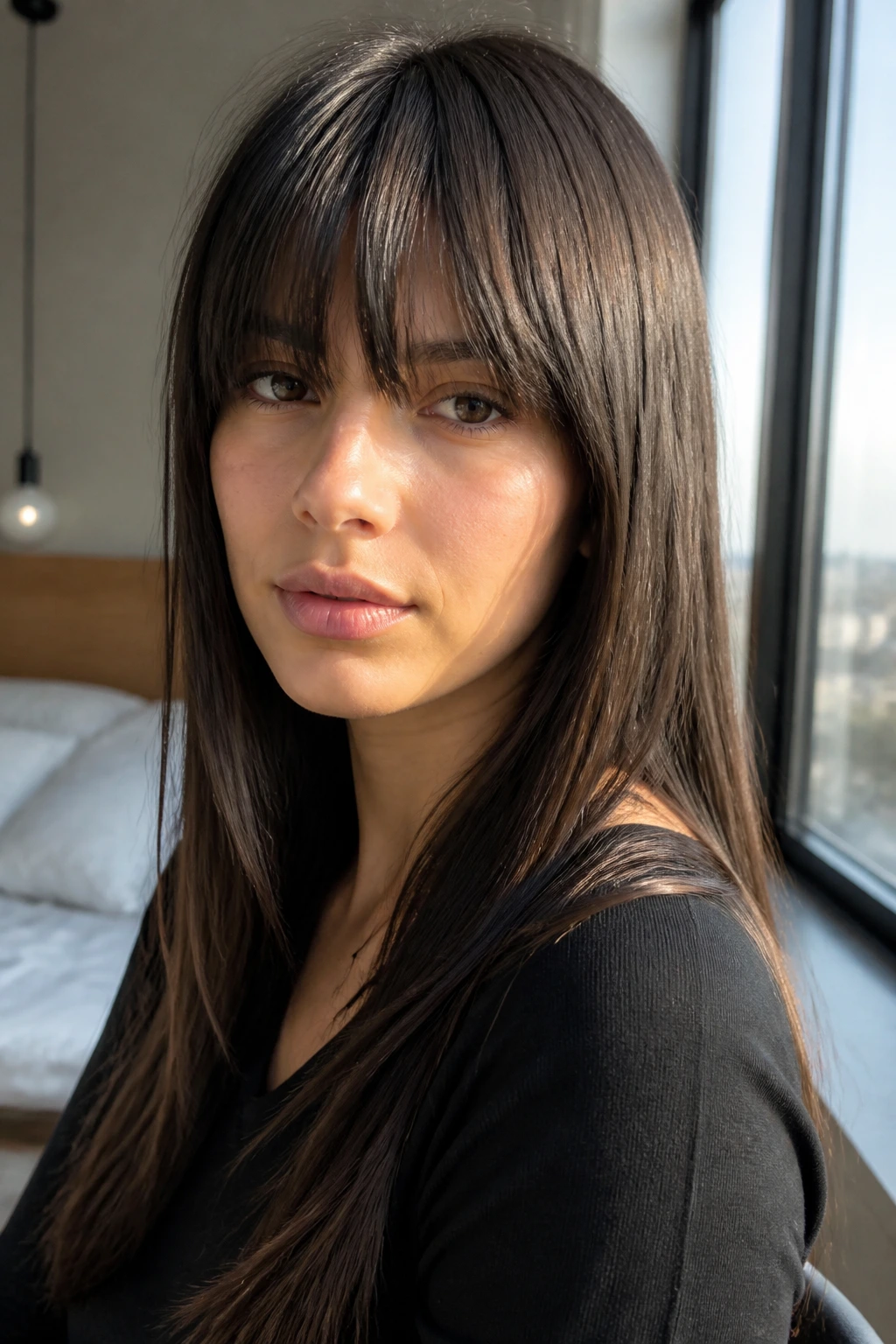
This one lands just below the brow line, so it creates a small veil across the eyes before it drops away toward the temples. On straight hair, the line is crisp enough to look intentional, but not so short that it becomes a blunt fringe. It has a little bit of attitude.
The style works best when the bang is cut with a subtle curve, not a straight shelf. If your hair is extra sleek, this version can look almost editorial. If it’s heavy, ask for internal texture so it doesn’t puff up on the sides.
11. Jaw-Length Curtain
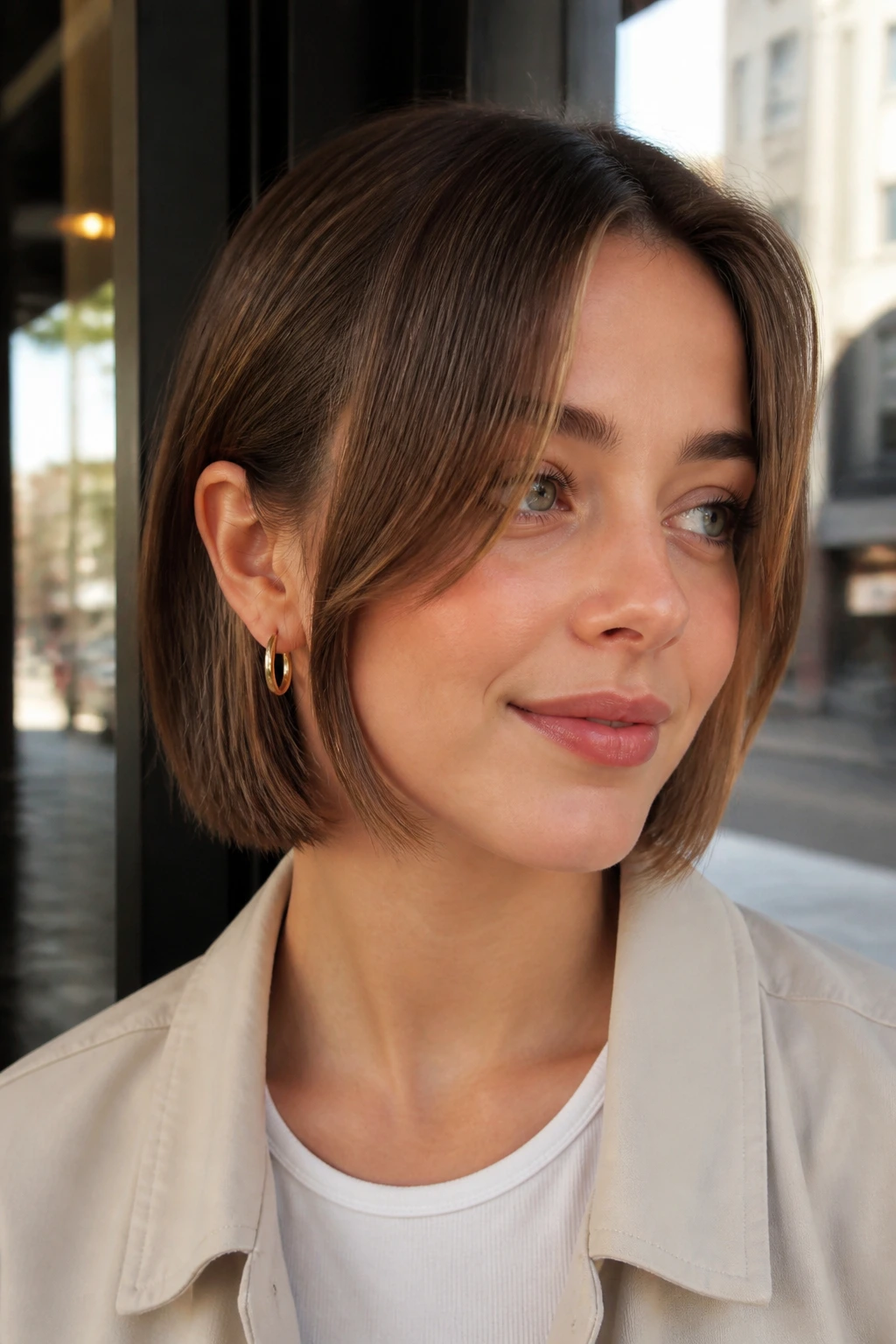
When the bang stretches all the way to the jaw, it stops feeling like a fringe and starts behaving like part of the haircut. That’s useful on straight hair, because it creates a long vertical line that narrows a broad cheek area and softens sharper edges without a hard break.
This one is good for people who want to grow out bangs gradually. The front pieces are long enough to tuck behind the ears on lazy days, but they still drop forward when you want that framed effect. It’s one of the most flexible options in the whole lineup.
12. Piecey S-Curve Fringe
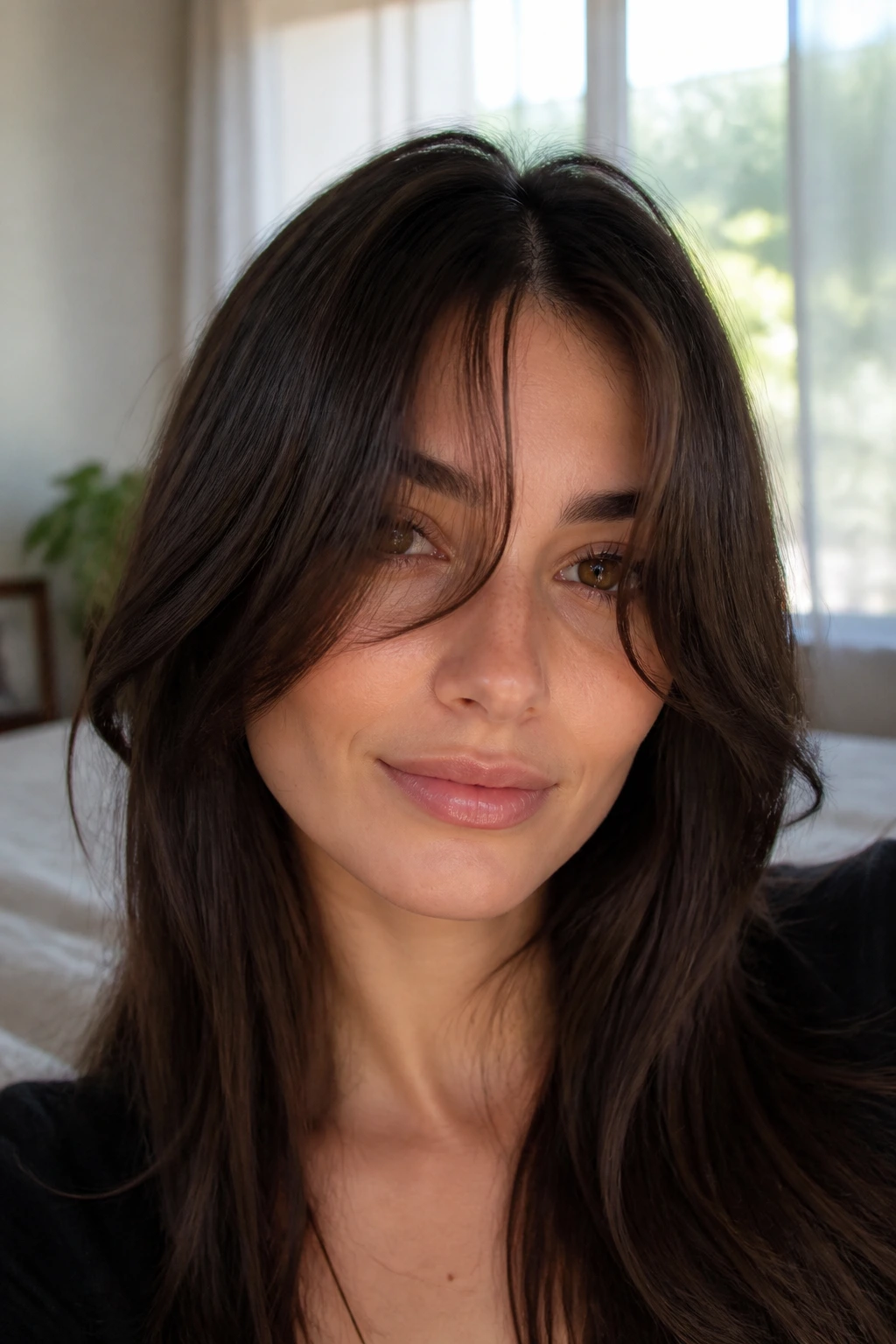
This is the style that looks best when a few strands bend in different directions. The center opens, the side pieces curve out, and then one or two pieces sit slightly apart from the rest. On straight hair, that broken-up motion keeps the fringe from looking pasted on.
What to ask for
- Light internal layering
- A soft center split
- Pieces that are long enough to bend with a round brush, not short enough to puff out
The S-curve is subtle. You don’t want a parade of loops across your forehead. You want just enough bend to catch the eye and keep the fringe from lying flat like a ruler.
13. Heavy Velvet Curtain
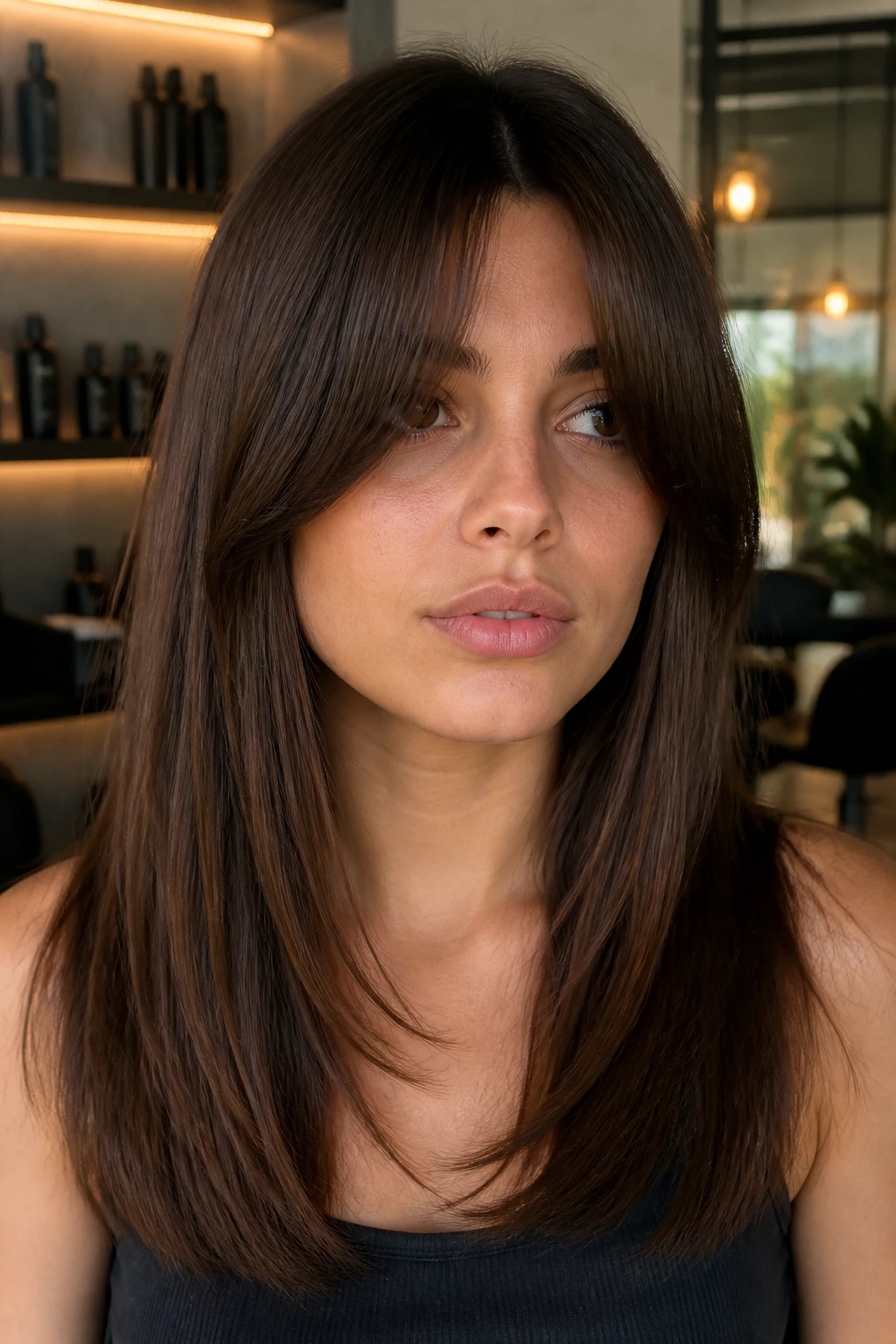
Heavy curtains get overlooked because they sound old-fashioned, but on straight hair they can look expensive in the old-school sense: smooth, dense, and very purposeful. The center part is still there, yet the bang has enough weight to feel full from root to tip.
This is a strong choice for thick straight hair. Thin hair can do it too, but only if the stylist builds shape carefully and avoids over-thinning the ends. Too much razor work here and the fringe can fray at the bottom. Too little and it loses movement. That line is thin.
14. Micro Curtain Bang
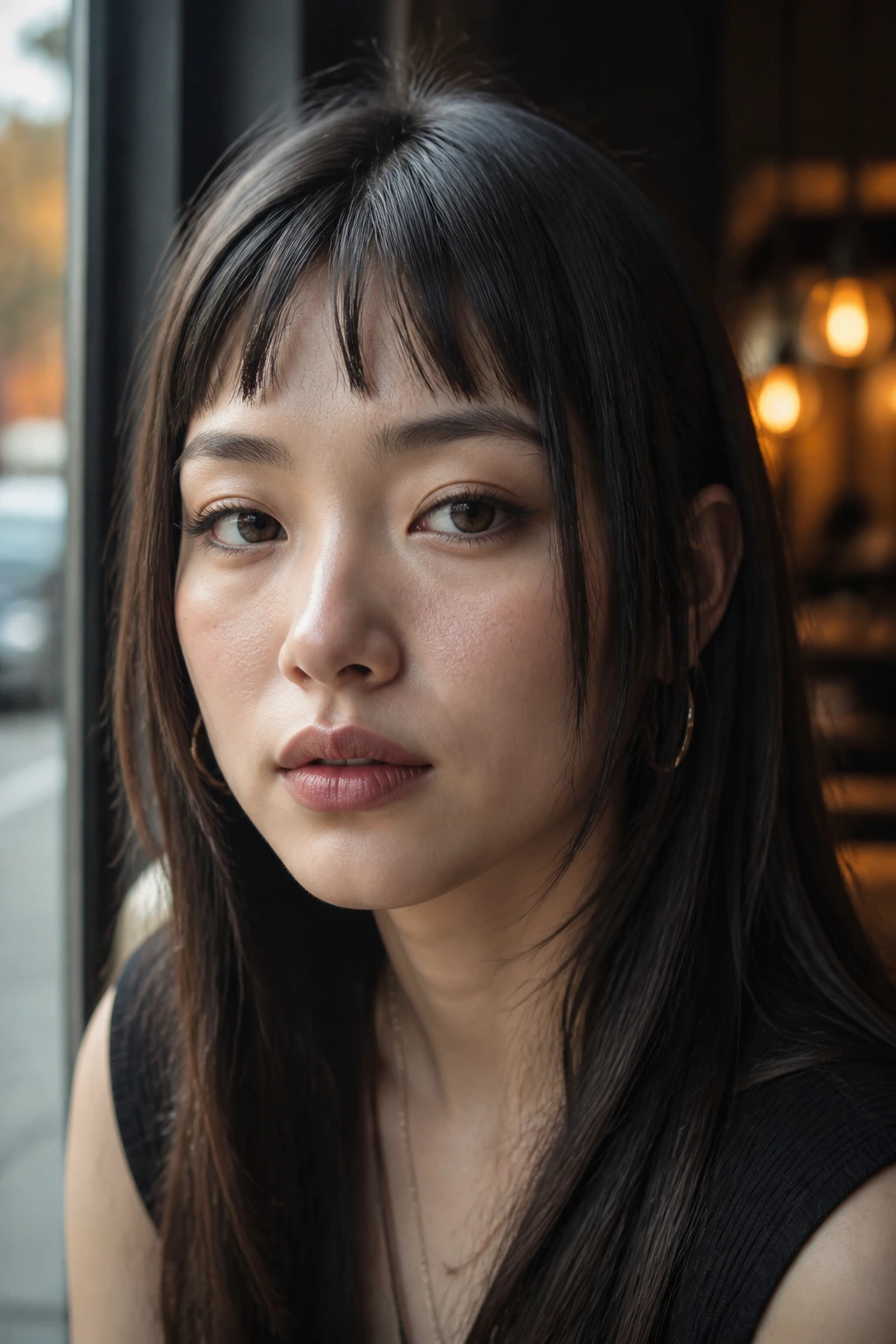
Micro curtain bangs sit shorter than most people expect, often opening above the brow and splitting sharply at the center. On straight hair, they look sharp and a little artsy. They’re not for everyone, and that’s part of the fun.
I’d only recommend this if you’re comfortable with regular trims and you like a fringe that makes a statement from the moment you walk in. Straight hair can keep the geometry clean, which is exactly what this style needs. If you want softness more than edge, choose something longer.
15. Layered Lob Curtain

If your hair is cut into a lob, the curtain fringe should echo the shape of the shoulders and collarbone, not fight them. That’s why this style works so well: the bangs and the perimeter move together. On straight hair, the result looks tidy, chic, and very easy to wear.
The front pieces usually start around the cheekbones, then drop into face-framing layers that meet the lob edge. It’s a smart cut if you want your hair to look styled even when it’s just been brushed and dried. No dramatic bending needed.
16. Straight-Across With a Bend
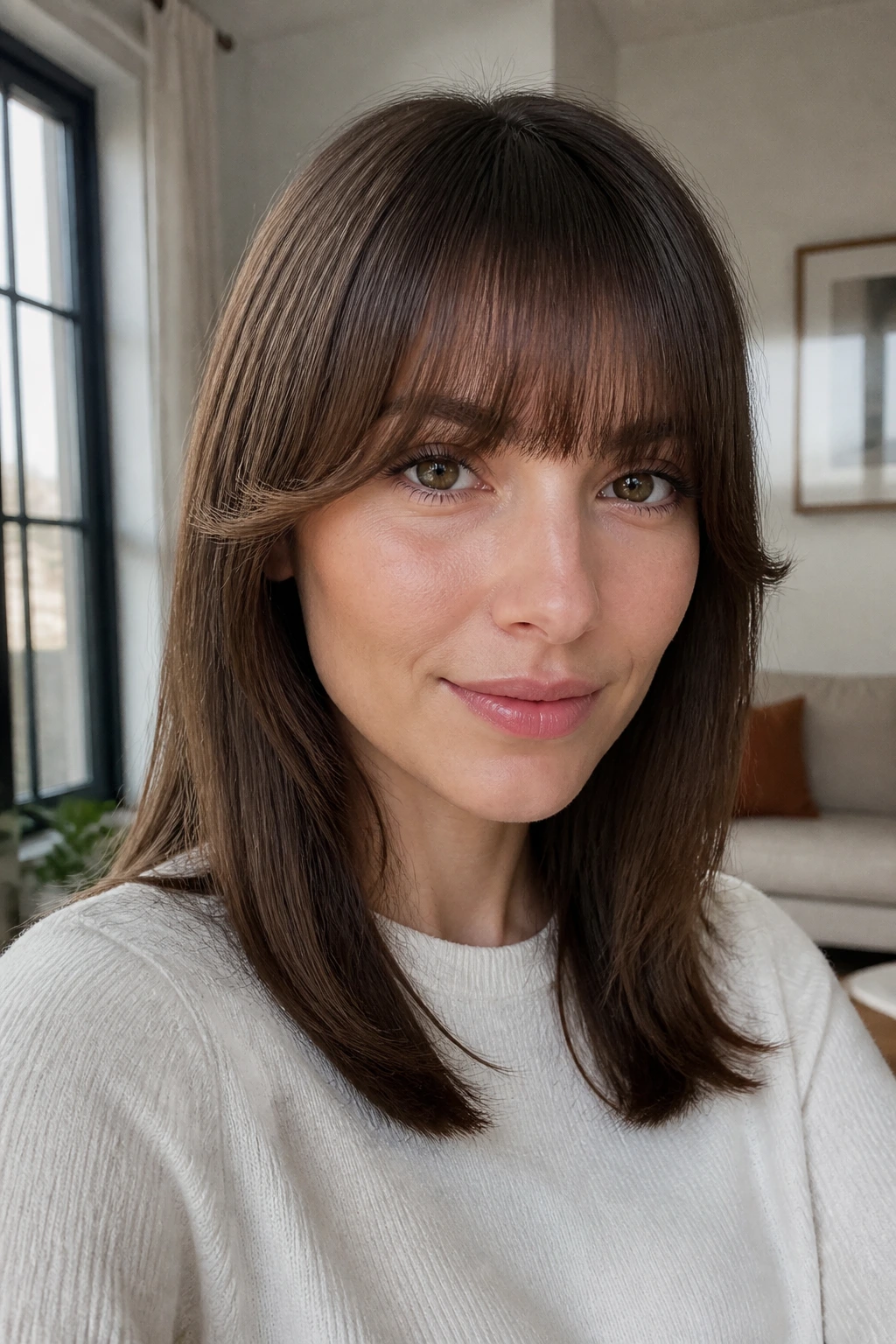
This is a hybrid for people who want more bang than curtain, but not a harsh full fringe. The center is cut straighter across, then the ends turn softly away from the face. Straight hair makes the contrast obvious in a good way. You get a clear line in the middle and a curtain shape at the sides.
It can be a lifesaver if your forehead is shorter and a long, open curtain makes the front look too empty. The bend at the side softens the line before it gets severe. A flat iron bend works well here, because the shape is subtle and controlled.
17. Rounded Arch Curtain
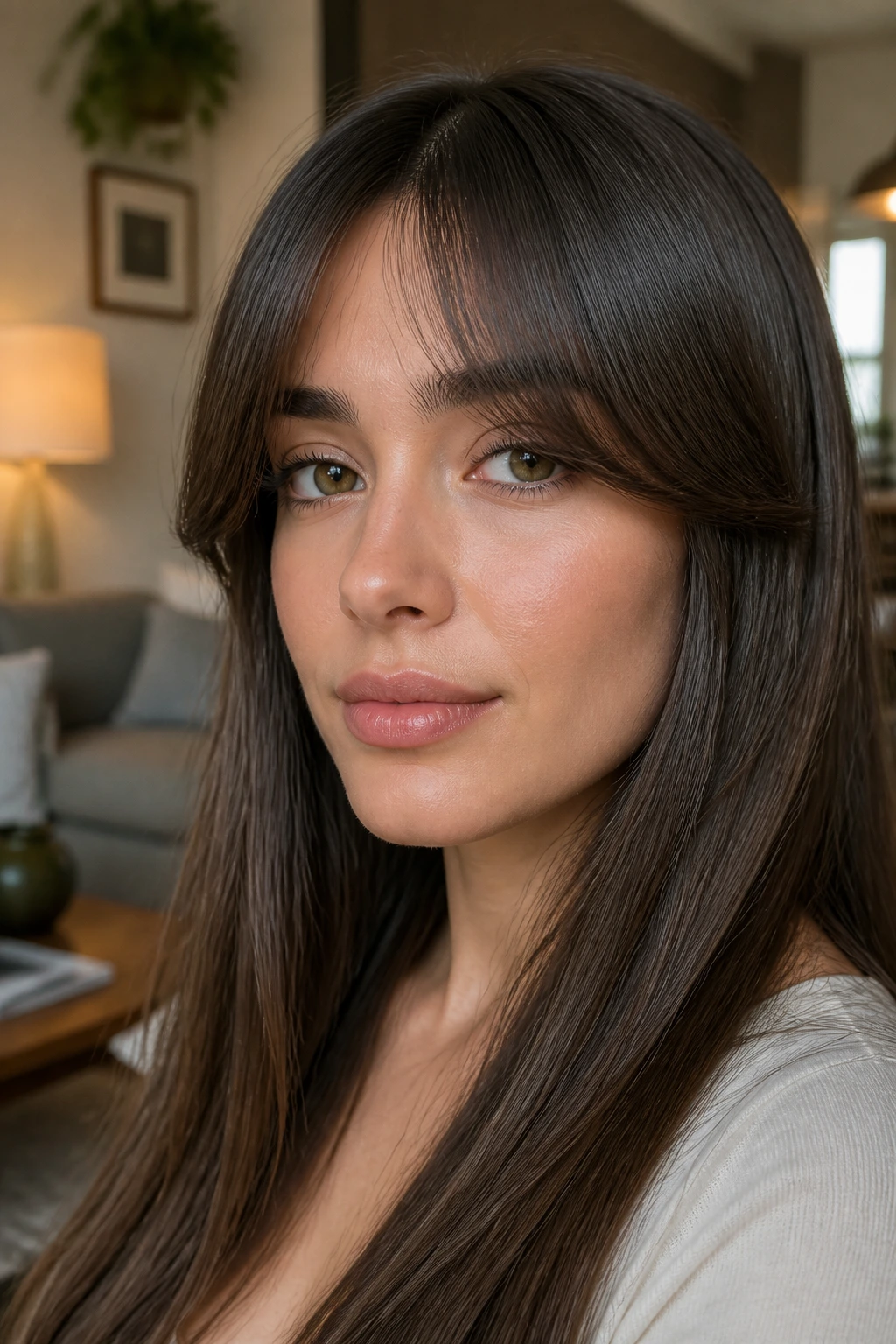
A rounded arch curtain leans into a gentle curve across the forehead instead of a sharp center split. It still opens at the sides, but the middle is softer and slightly fuller. On straight hair, that arch can prevent the fringe from looking too thin near the part.
This is a quieter option, and I like it for anyone who wants bangs that blur into the haircut rather than announce themselves. It’s also useful for balancing a long face because the slight curve reduces the strong vertical pull that very open curtain bangs can create.
18. Razor-Textured Curtain
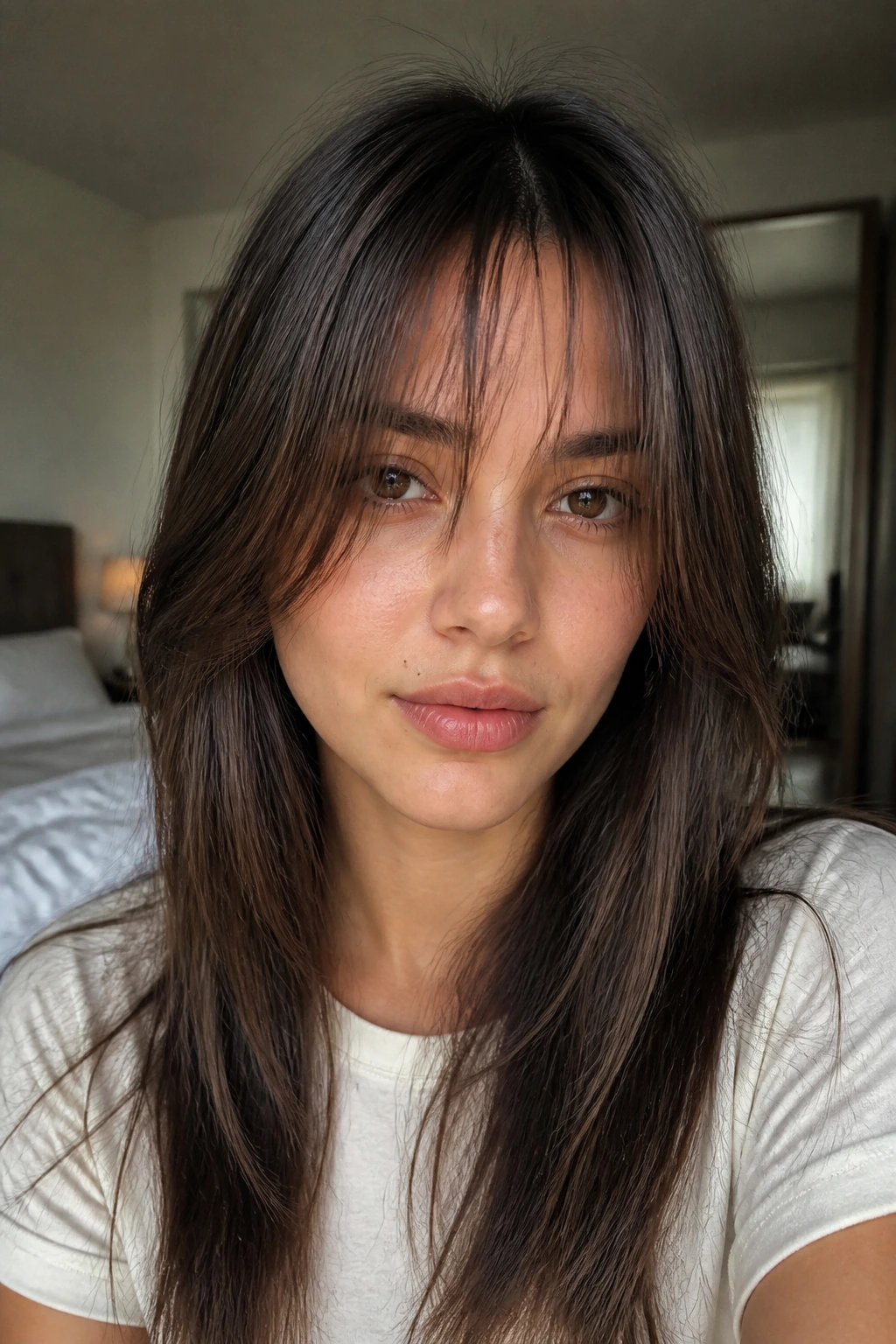
Razor cutting gives the fringe a more broken edge, which can be a blessing on straight hair if you want movement. The strands don’t fall in one heavy sheet. They split into little layers that catch and separate more easily.
Not everyone should go near a razor, though. If your hair is fragile or already prone to split ends, a scissors-only version will hold up better. For thicker straight hair, though, this can remove some of the bulk that makes bangs collapse across the forehead.
19. Feathered 90s Blowout Bang
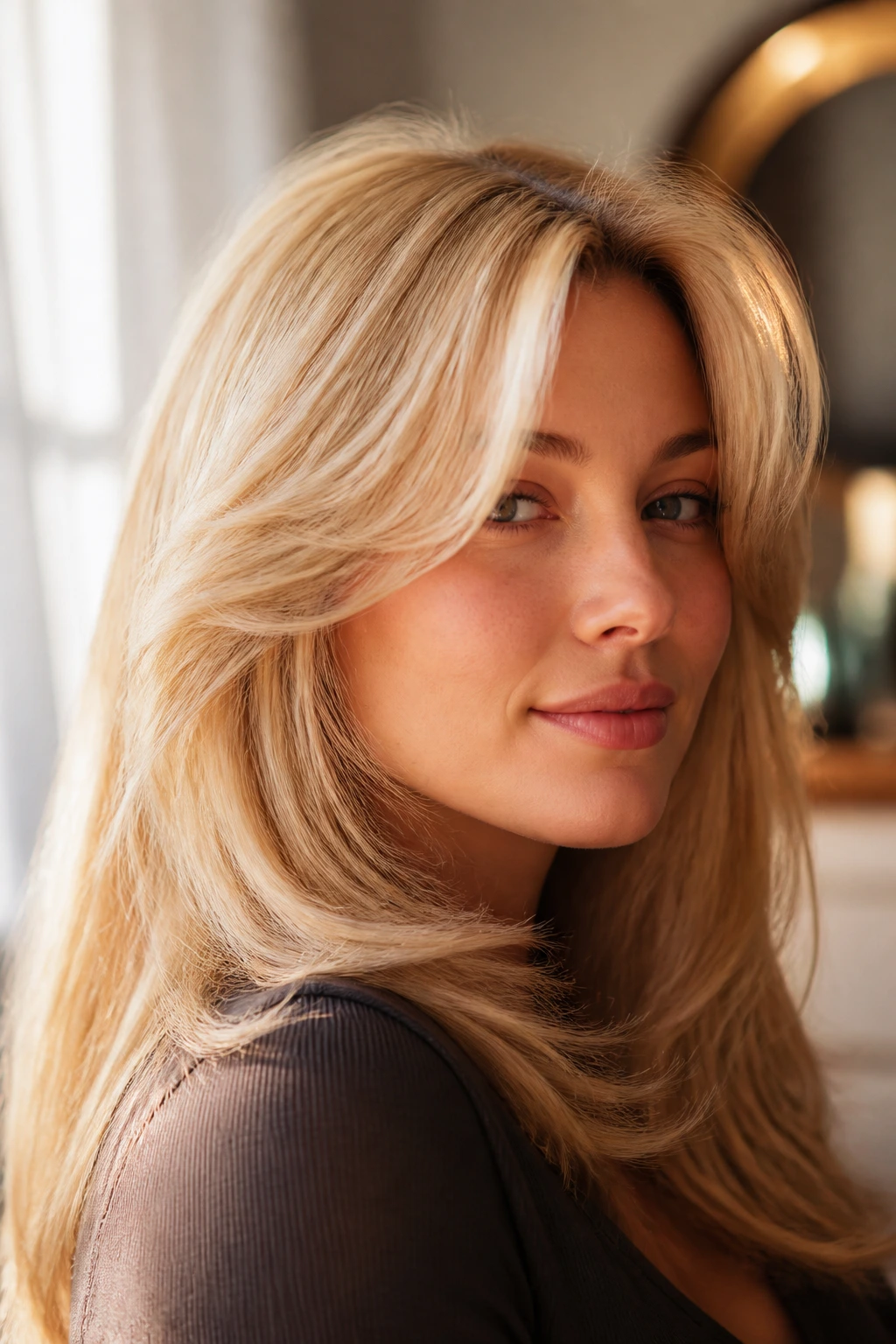
This is the big, glamorous one. The center opens and the side pieces get blown backward with a round brush so they float away from the face. On straight hair, the style has that clean, magazine-shot shape that looks polished without being stiff.
The trick is not to confuse feathered with fluffy. You want bend, not ballooning. A medium round brush and a heat protectant with a little grip are the difference between sleek lift and bangs that collapse by lunchtime.
20. Minimal Maintenance Split Fringe
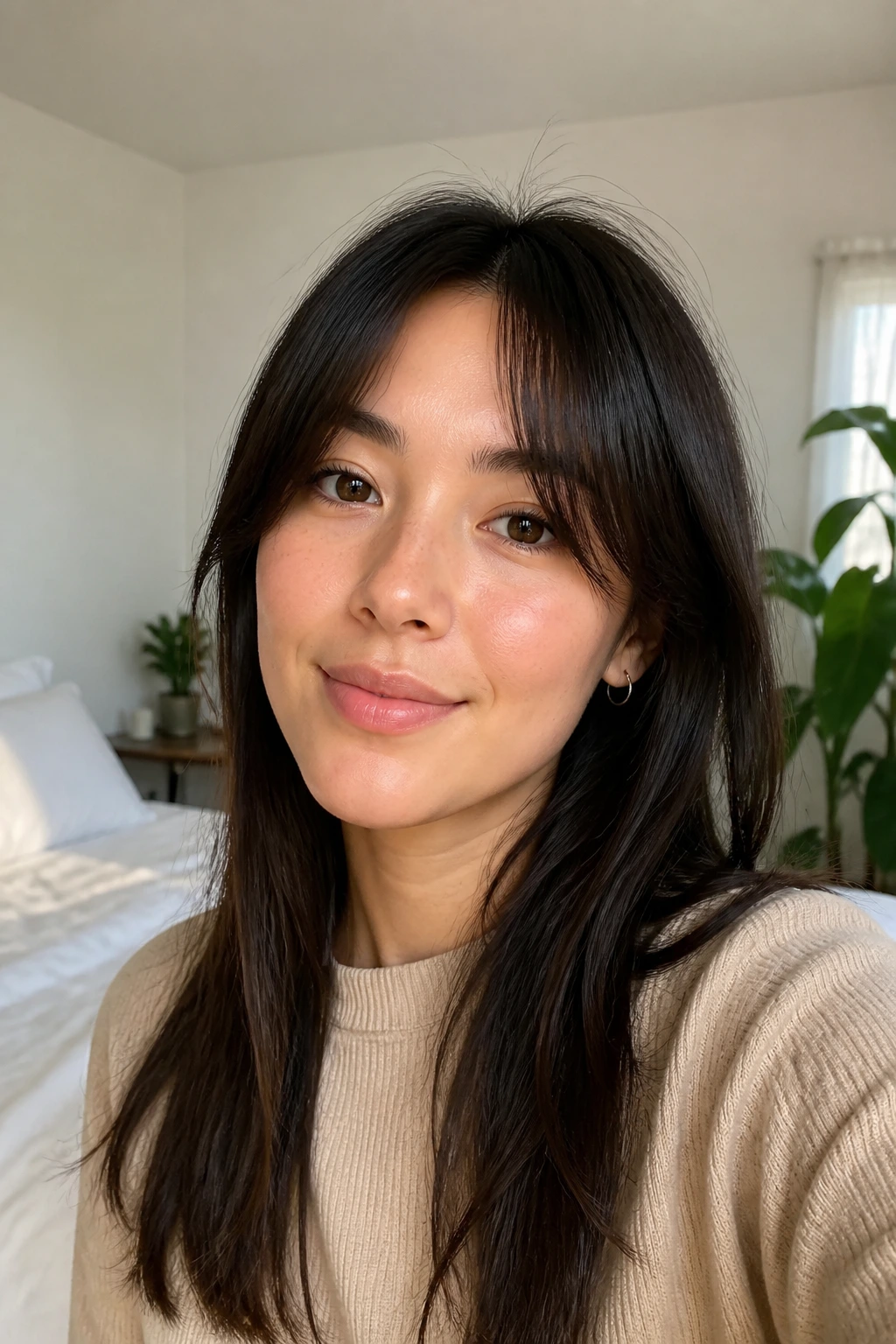
This is the sensible cousin in the family. The pieces are long enough to part naturally, and the shape survives a few imperfect hair days without asking for much. Straight hair makes that easier because the split tends to hold without constant reworking.
If you wear your hair pinned back a lot, this is a useful choice. The fringe can swing forward on its own, then tuck aside when you need it out of the face. It’s the curtain bang for people who like the idea of bangs more than the styling routine.
21. Soft-Edged Baby Curtain
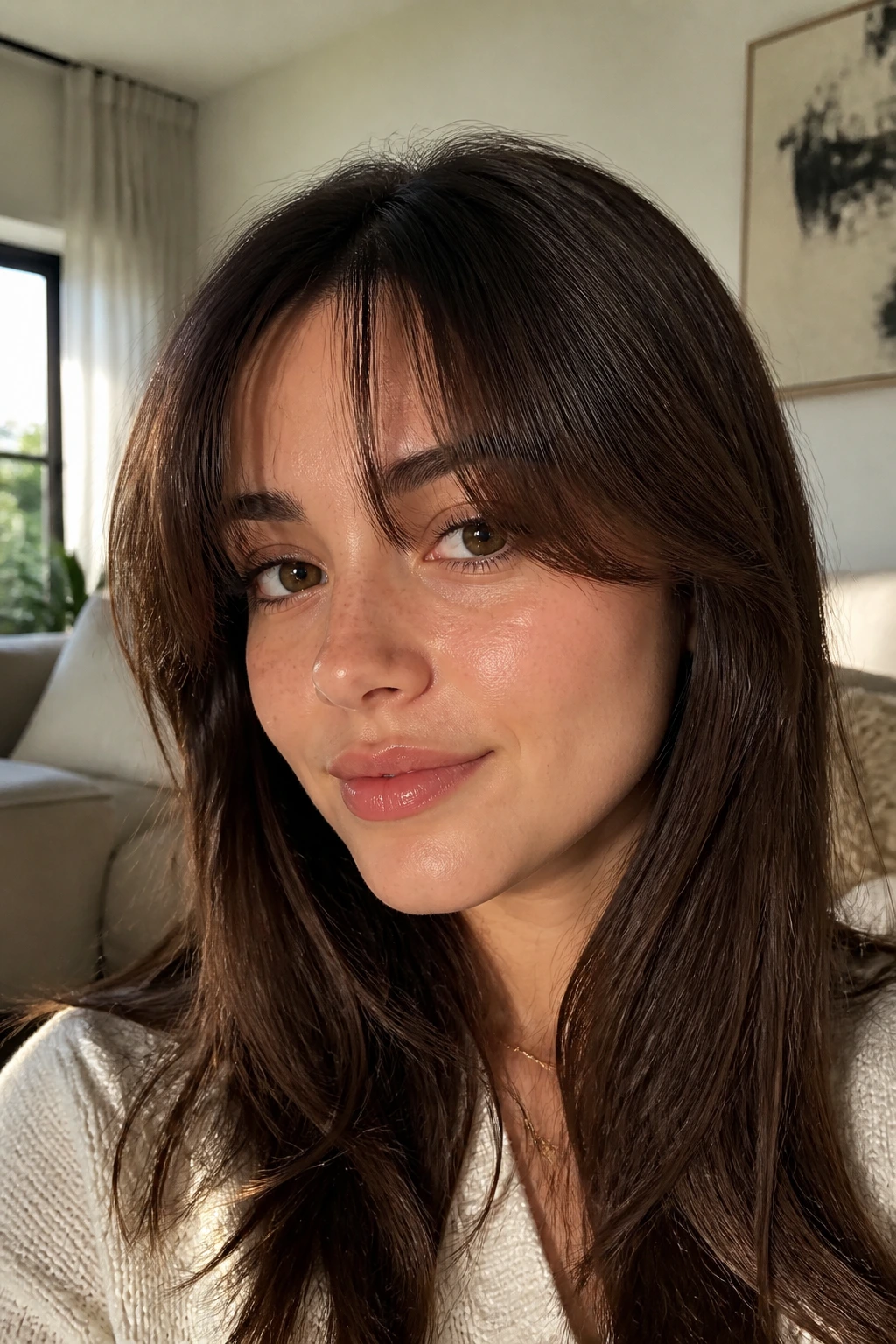
A baby curtain is shorter than a classic version, but it doesn’t have the bluntness of baby bangs. The ends are soft, the split is visible, and the overall effect is gentle rather than sharp. Straight hair gives it a clean finish that keeps it from looking too fluffy.
This works best when the rest of the haircut has some layering. If the perimeter is also very straight and heavy, the fringe can feel disconnected. Keep the ends airy and let the side pieces fall into the cheek line.
22. Dramatic Long Curtain Sweep
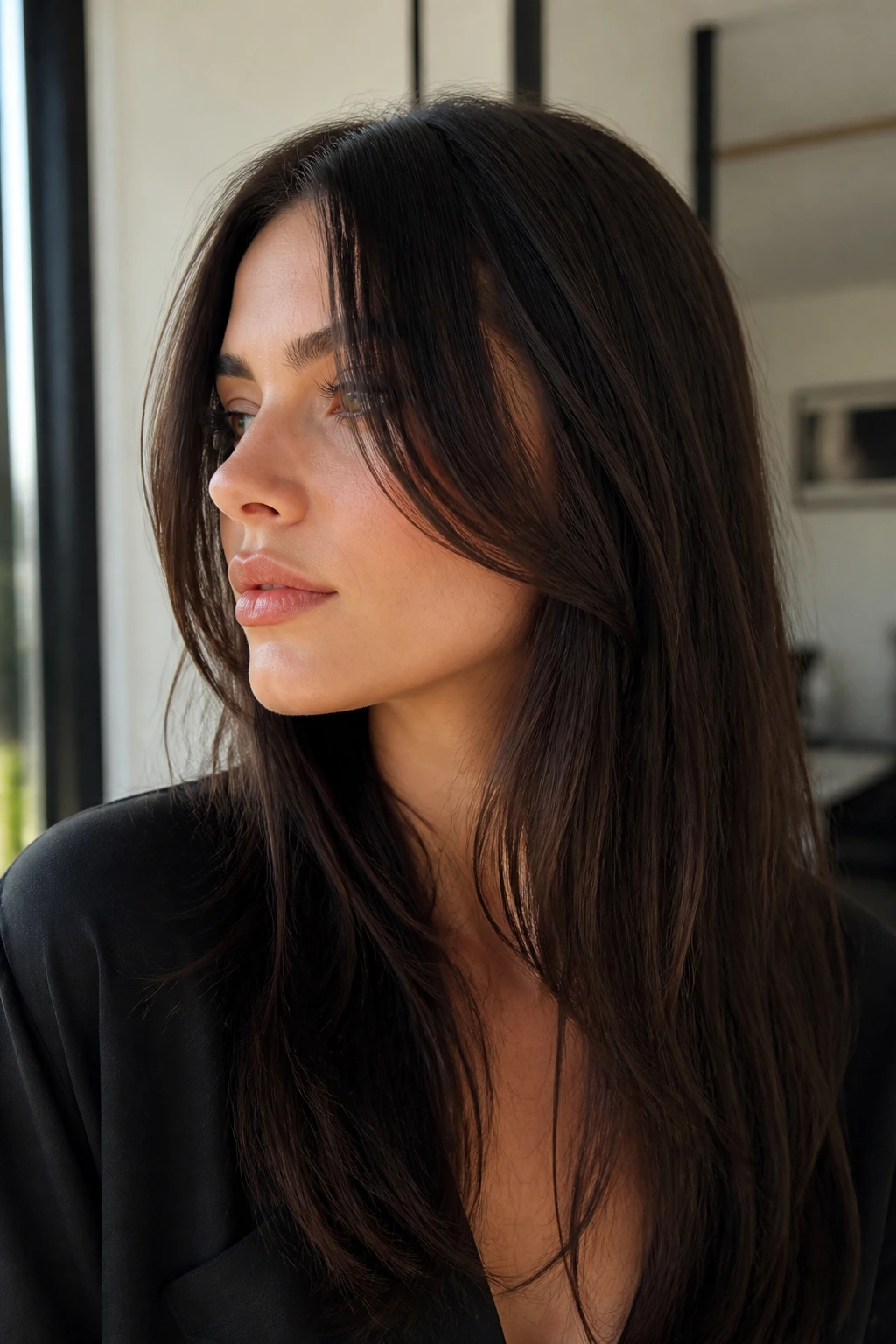
This style goes big on length. The fringe parts in the center and sweeps all the way down toward the jaw or even the collarbone. On straight hair, the dramatic lines are the whole point. There’s no texture to hide them, so the shape reads loud and clear.
It’s gorgeous if you like hair that frames the face without ever looking chopped up. The downside is that it needs intentional styling or it can simply become long face layers. That can still look nice, but it’s not the same thing.
23. Collarbone Blend Bang
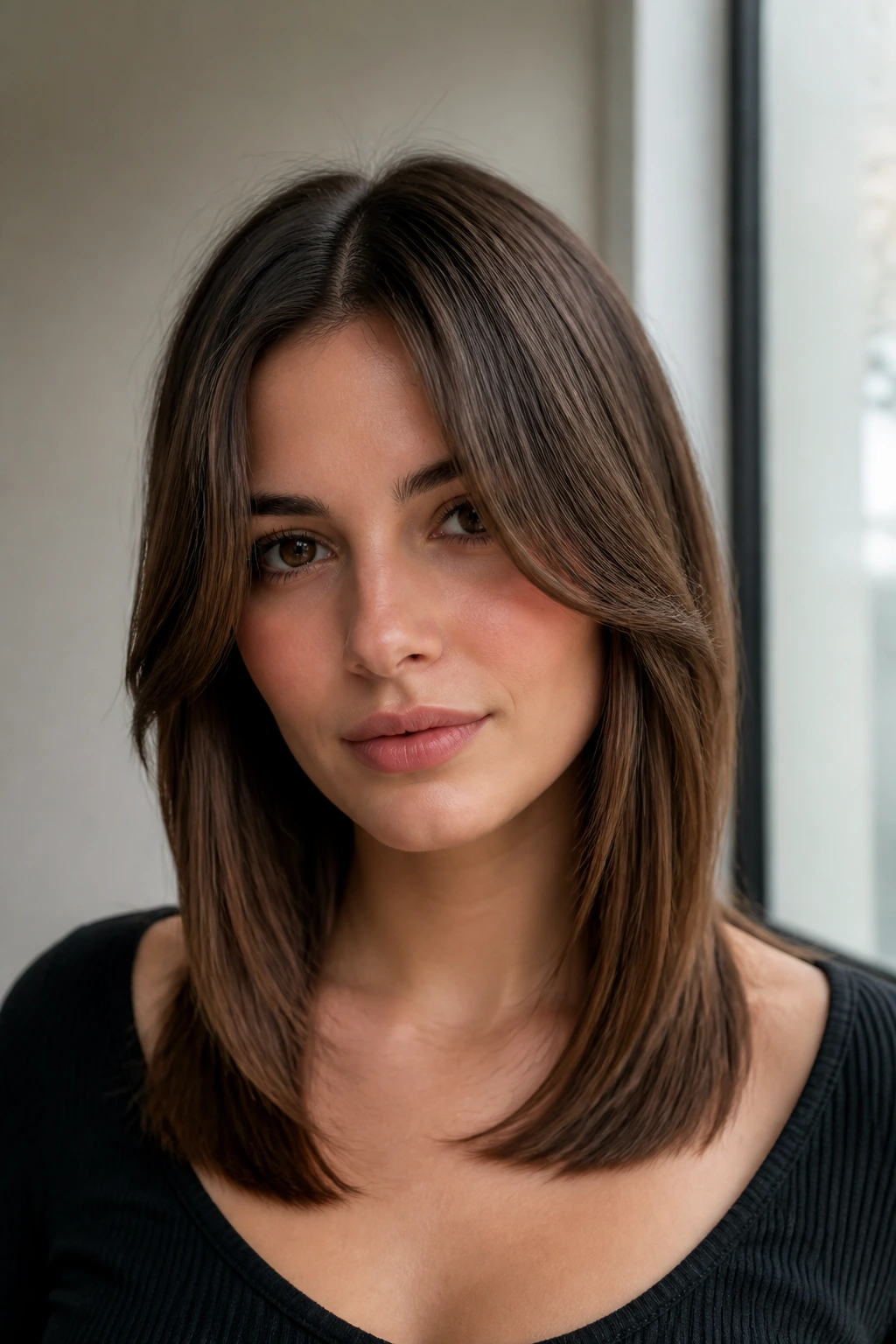
This is for people who want bangs that dissolve into the rest of the hair almost seamlessly. The front pieces are long enough to hit the collarbone, which makes the whole shape feel grown-up and elegant rather than obviously “bang-like.” On straight hair, that long line is especially flattering.
It’s also a practical cut for anyone who gets bored easily. Wear it center-parted and swept forward one day, tucked behind the ears the next, or pulled into a half-up style when you’re tired of looking at your own forehead. Easy. Nice. Useful.
24. Face-Frame First Curtain
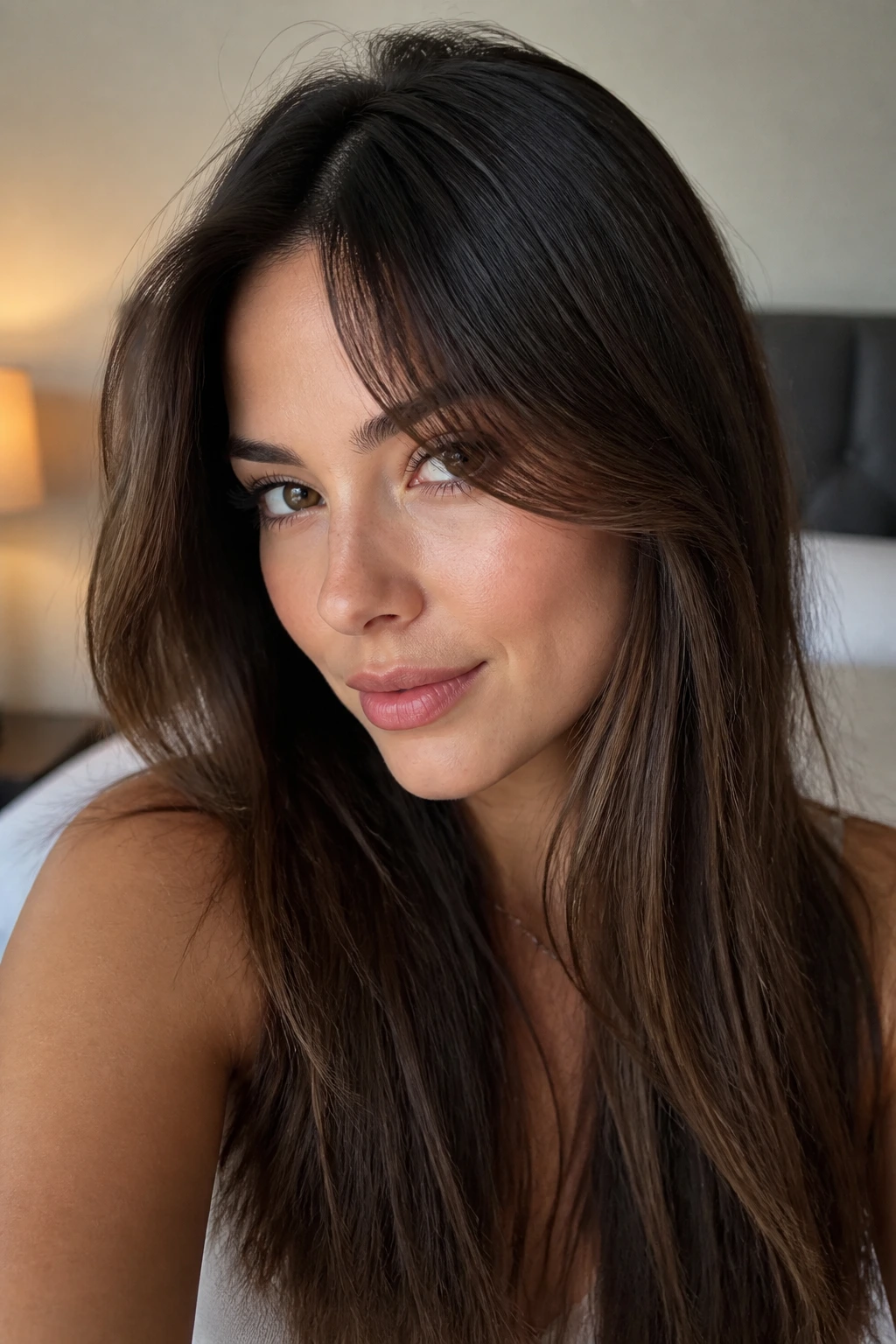
This version starts as a face-framing layer and gradually becomes a curtain bang. That matters on straight hair because it creates a softer transition from fringe to length. Instead of a hard bang area and then the rest of the haircut, you get one continuous shape.
I like this for long hair that needs something at the front. A face-frame-first cut keeps the center open while still giving you movement near the eyes and cheekbones. The look is subtle from a distance, but it changes the whole balance of the haircut up close.
25. Full Glam Center-Part Fringe
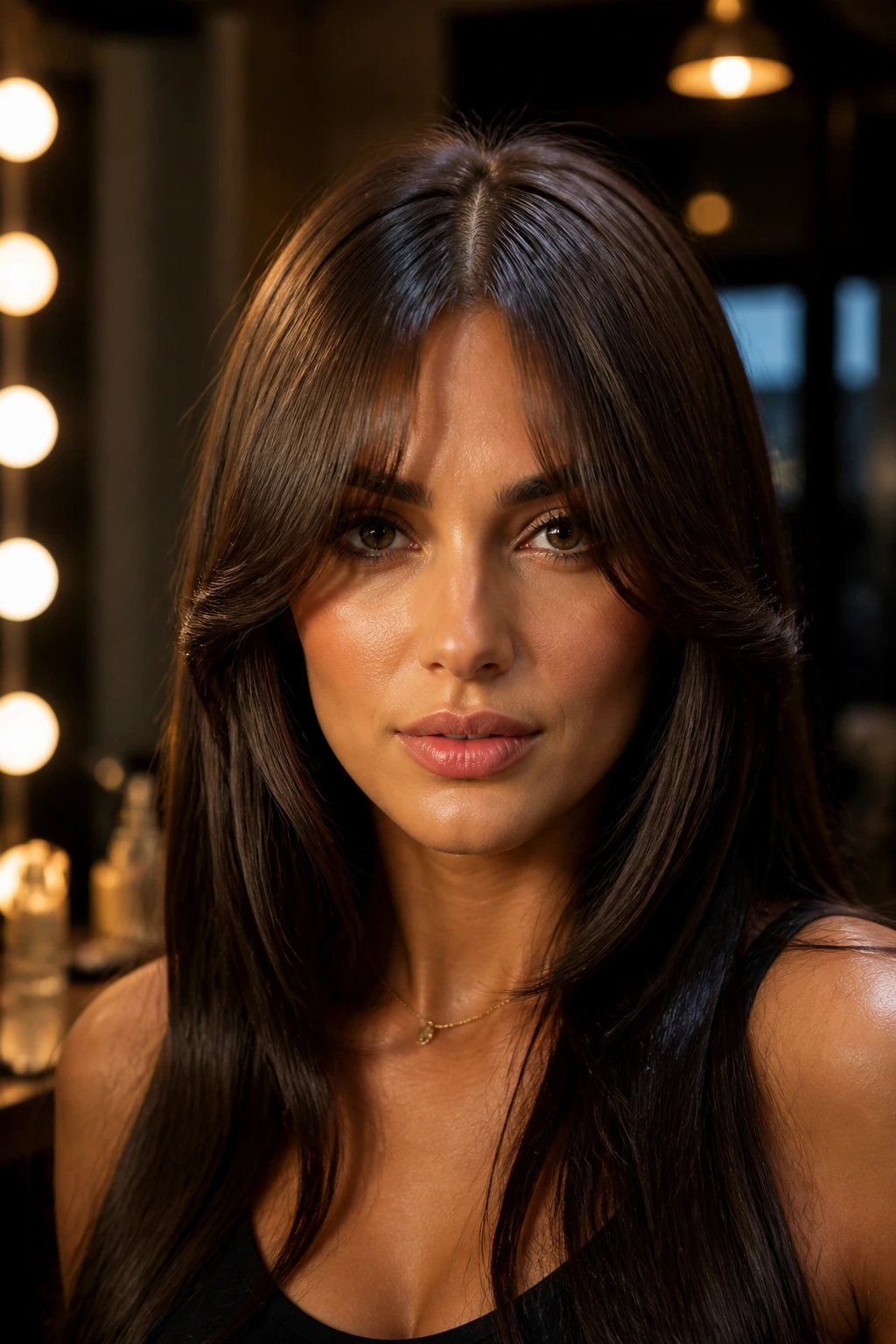
This is the dramatic, glossy, big-brush version of curtain bangs on straight hair. The part is centered, the sides are rounded just enough to curve away from the face, and the finish is smooth enough to look intentional even when the rest of your hair is left simple. It’s the one I reach for when I want the fringe to do the talking.
Why it stands out
The volume sits at the root and bends through the ends, which gives straight hair some life without forcing curls into it. A large round brush or hot brush can build the shape fast, and a few seconds of cool air at the end helps lock it in.
Best for: anyone who wants their bangs to feel like a style choice, not a compromise.
Why This Collection Is Different
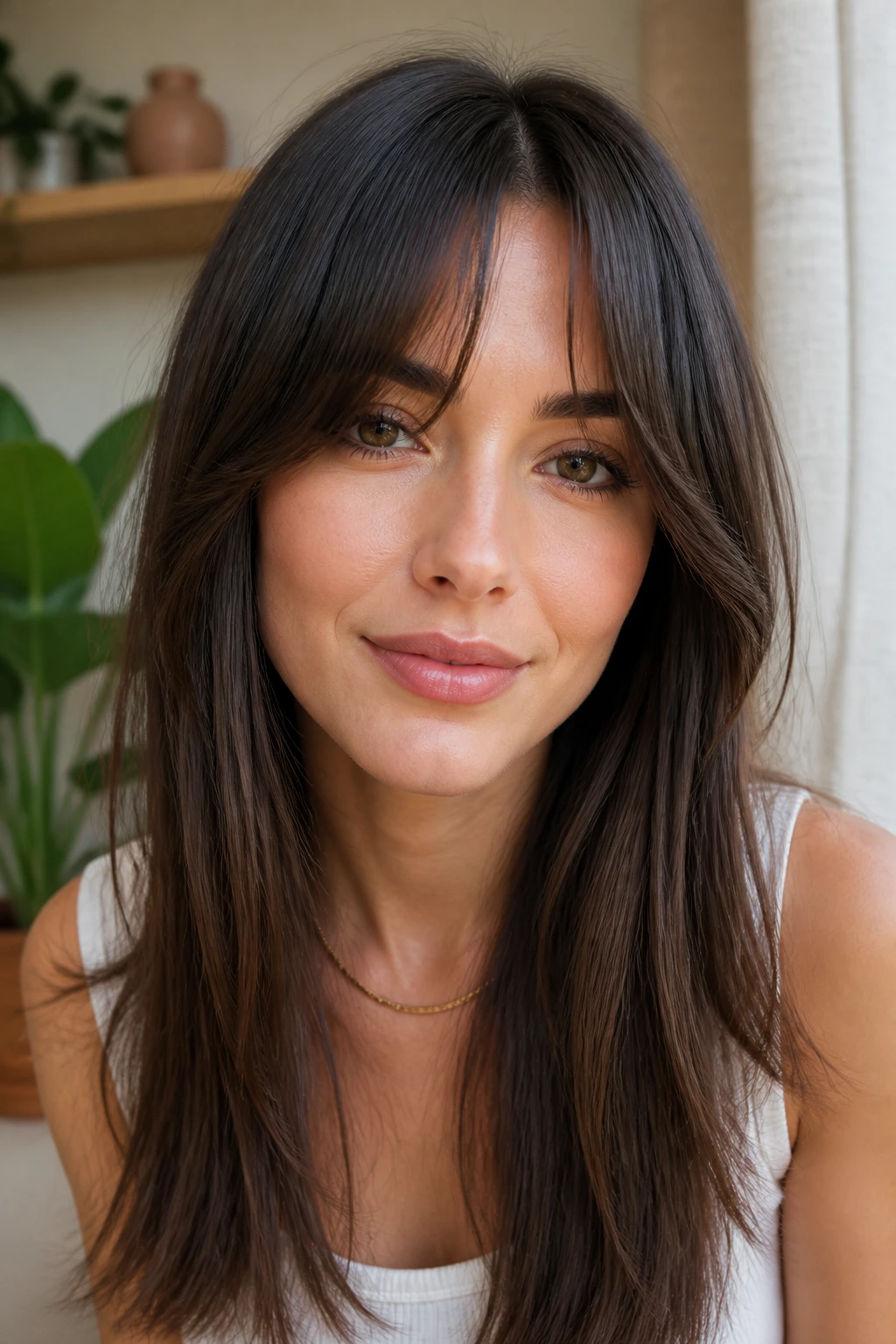
- Built for straight hair, not generic hair: Straight strands show off the exact line of the cut, so the styles here focus on shape, weight, and fall rather than vague “movement.”
- Range matters: Some of these are barely-there and some are dramatic, because not every forehead, face shape, or morning routine wants the same thing.
- Grow-out is part of the plan: The best curtain bangs don’t die when they get longer; they slide into face-framing layers and keep looking intentional.
- Styling time is realistic: A lot of these work with a round brush, a blow-dryer nozzle, or even a flat iron bend, not a full salon blowout.
- Maintenance is honest: Straight hair can separate, flatten, and get oily at the root faster than people expect, so the cuts here assume that reality.
How to Pick the Right Curtain Bang Length
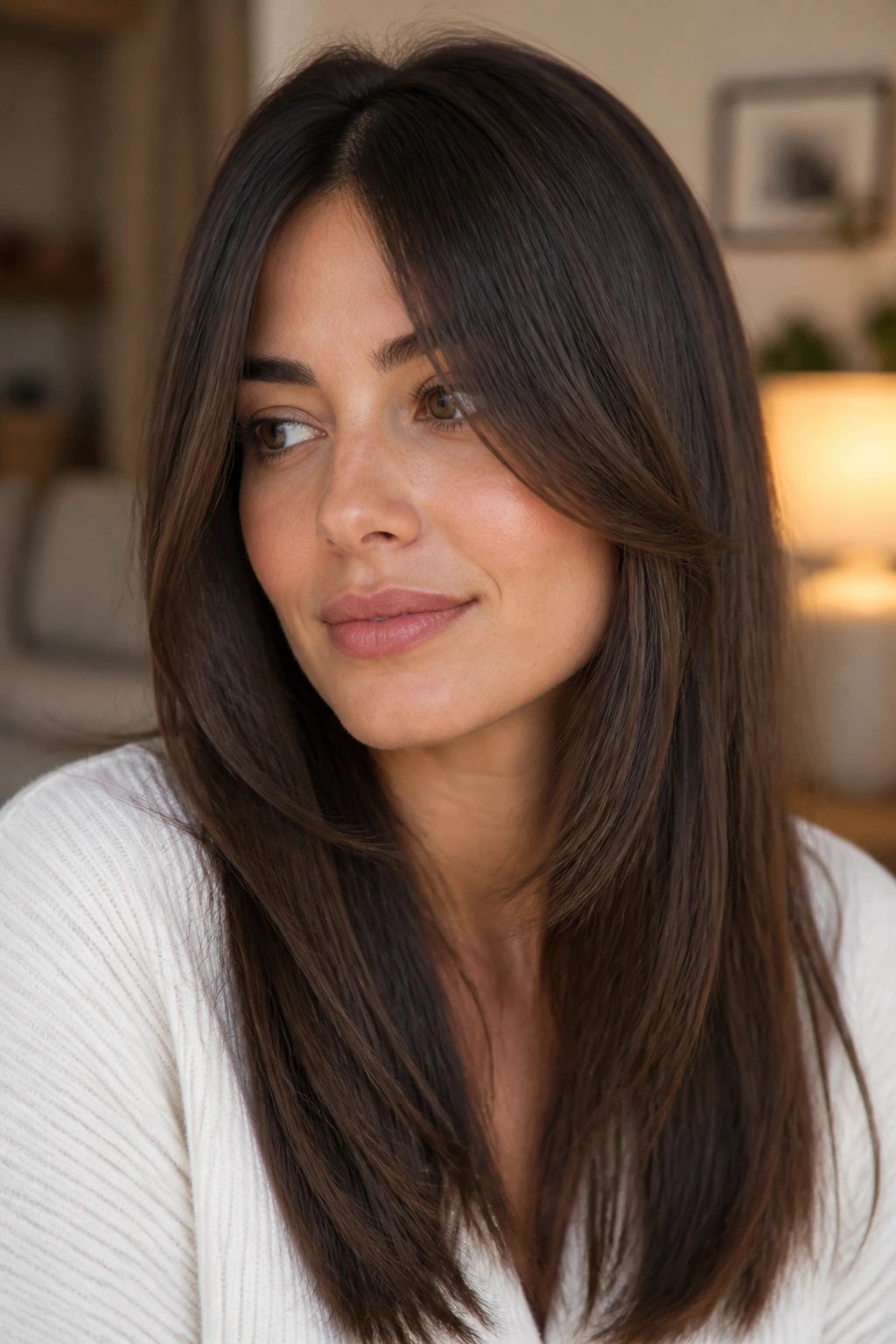
The simplest rule is this: shorter center pieces make a stronger statement, longer center pieces buy you flexibility. If your forehead is short, keep the middle longer and let the side pieces carry the shape. If your forehead is taller, you can go a little shorter in the middle without the bang feeling crowded.
Face shape matters, but not in the cartoonish way people talk about it online. A round face usually benefits from a longer, slightly tapered curtain that creates vertical lines. A square jaw often looks softer with a fringe that opens at the cheekbones. A long face can handle a fuller center or a rounded arch because it helps break up length at the top.
Hair density matters too. Fine straight hair often looks best with a wispy or softly layered curtain. Thick straight hair can carry a heavier bang and still have enough movement. If you’re in between, ask for internal texture near the center, not a dramatic thinning at the ends. That’s the difference between lift and stringiness.
Styling Curtain Bangs Without Fighting Straight Hair
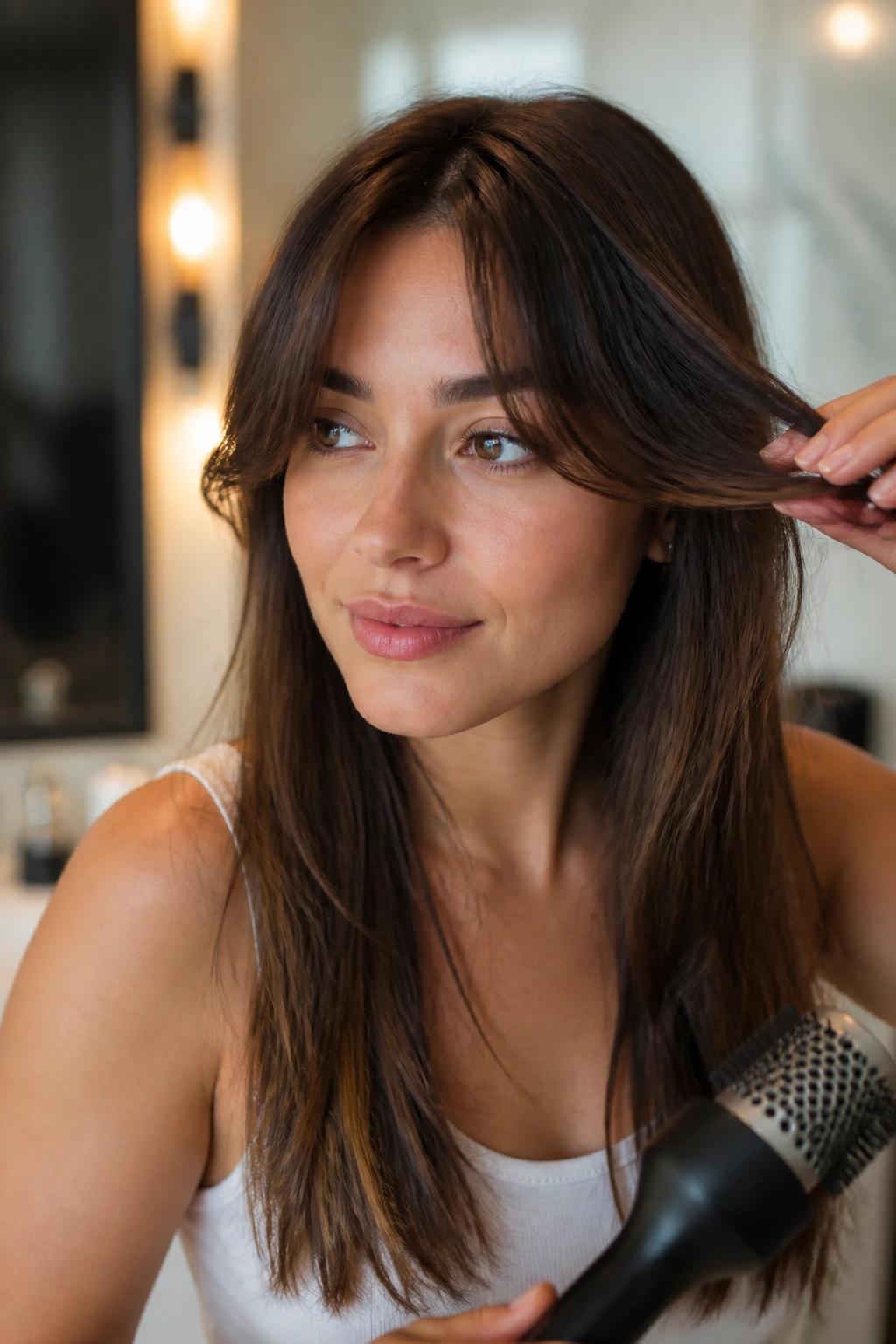
Straight hair usually needs shape, not more product. Start with damp hair and a heat protectant, then use a round brush or hot brush to create a bend away from the face. If you want a softer fall, lift the roots slightly and turn the brush under for just the last inch or two.
A flat iron works too, but it should be used like a bend tool, not a straightener in the old sense. One small curve near the ends is enough. Overbending is how bangs start to look dated fast.
Dry shampoo is not just for oil. It gives straight bangs a little grit, which helps them sit instead of sliding apart. A puff at the root and a quick finger rake can rescue a fringe that’s lost shape by midday. That’s not cheating. That’s maintenance.
Essential Tools for Curtain Bangs on Straight Hair
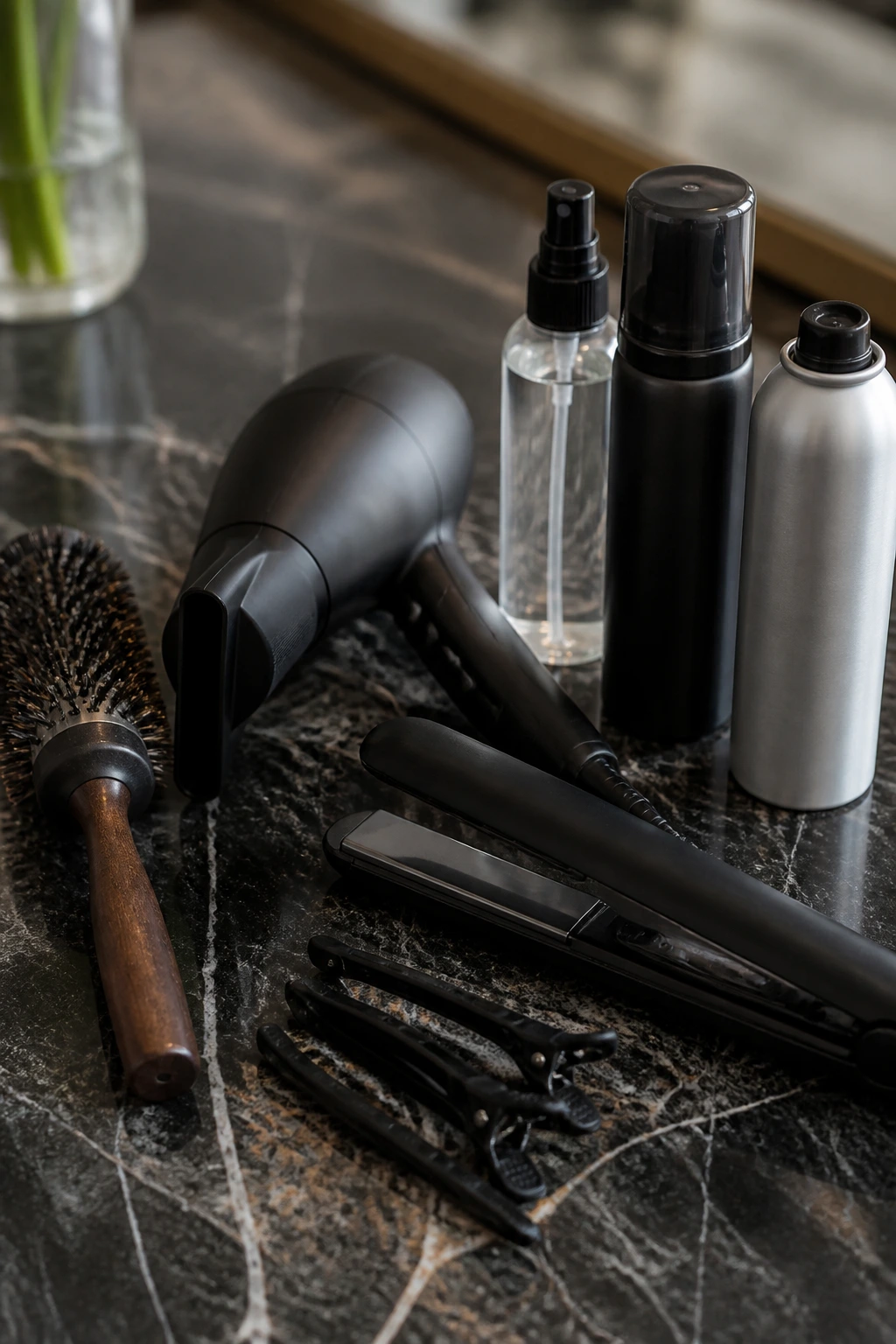
- Small to medium round brush: A 1 to 1.5-inch brush gives control at the root and a clean turn at the ends.
- Blow-dryer with nozzle attachment: The nozzle matters; it directs airflow and keeps the fringe from fanning everywhere.
- Flat iron: Handy for a light bend or a quick touch-up when the bangs flatten.
- Heat protectant spray: Use it every time you add heat. Straight bangs show damage fast because the ends are front and center.
- Lightweight mousse or root spray: Helpful if your hair is fine and the fringe goes limp too easily.
- Dry shampoo: Best for refreshing the root and adding a little grip on day two or three.
- Small clips: Good for sectioning the fringe while you dry the rest of the hair.
Common Mistakes People Make With Curtain Bangs
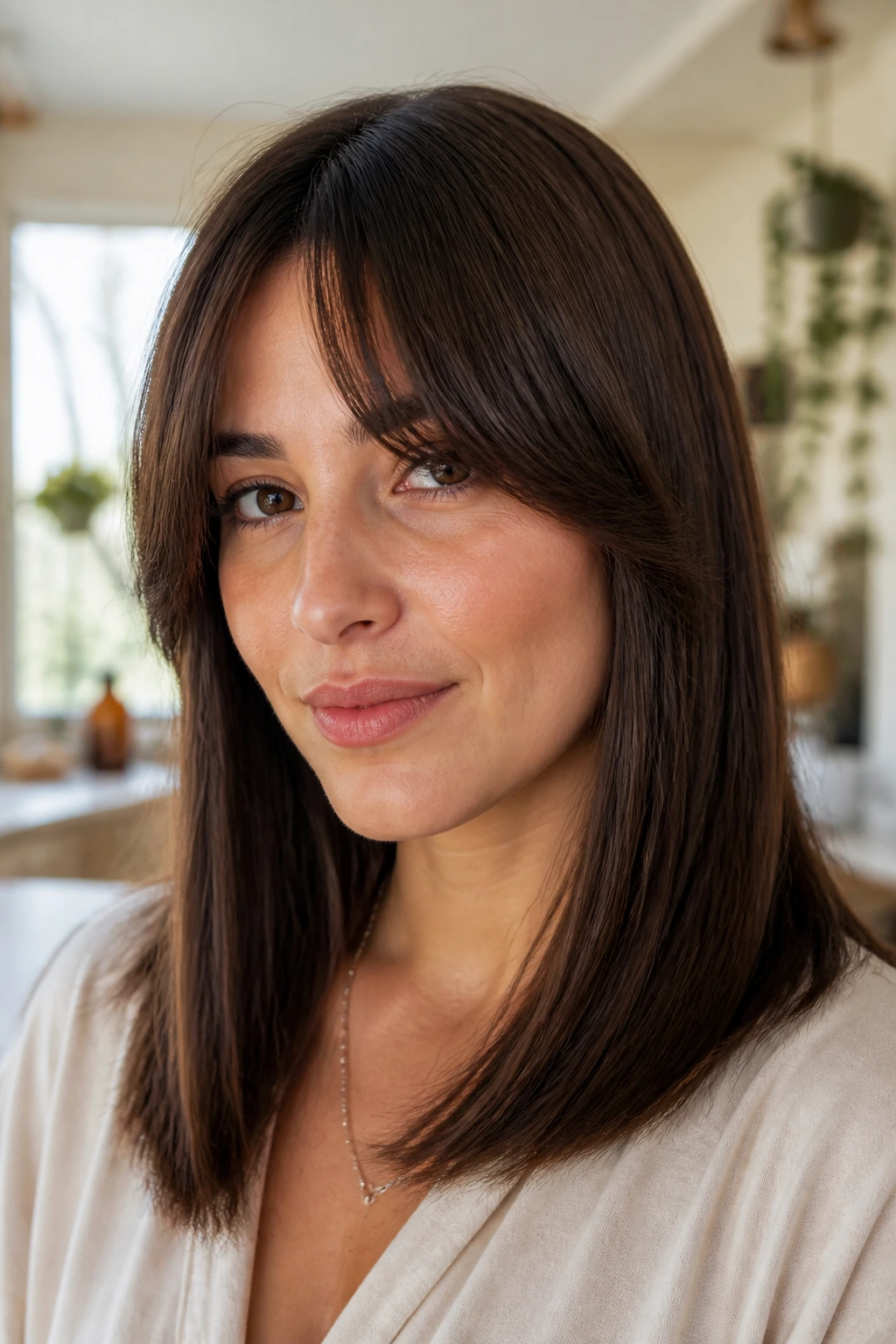
The first mistake is cutting them too blunt. Curtain bangs need a little taper, especially on straight hair, or they read like a center-parted shelf. The fix is simple: leave softness at the side pieces and keep the center slightly shorter than the outer edges.
The second problem is over-thinning. If the fringe gets razored too much, straight hair can look shredded instead of airy. You’ll see little see-through gaps where there should be a clean sweep. Ask for texture only where the density needs to come down, not all the way through the ends.
Another one: styling them too flat. Straight hair already wants to lie down. If you skip the root lift, the bangs may split awkwardly or sit too close to the forehead. A few seconds of heat at the root changes the whole read of the cut.
And yes, oil shows fast here. Bangs touch the skin, absorb skincare, and collect sweat. If you work out, wear sunscreen, or use heavier face creams, plan on a morning refresh. That’s not a flaw in the style. It’s just anatomy being annoying.
Ways to Adapt Curtain Bangs to Your Hair and Routine
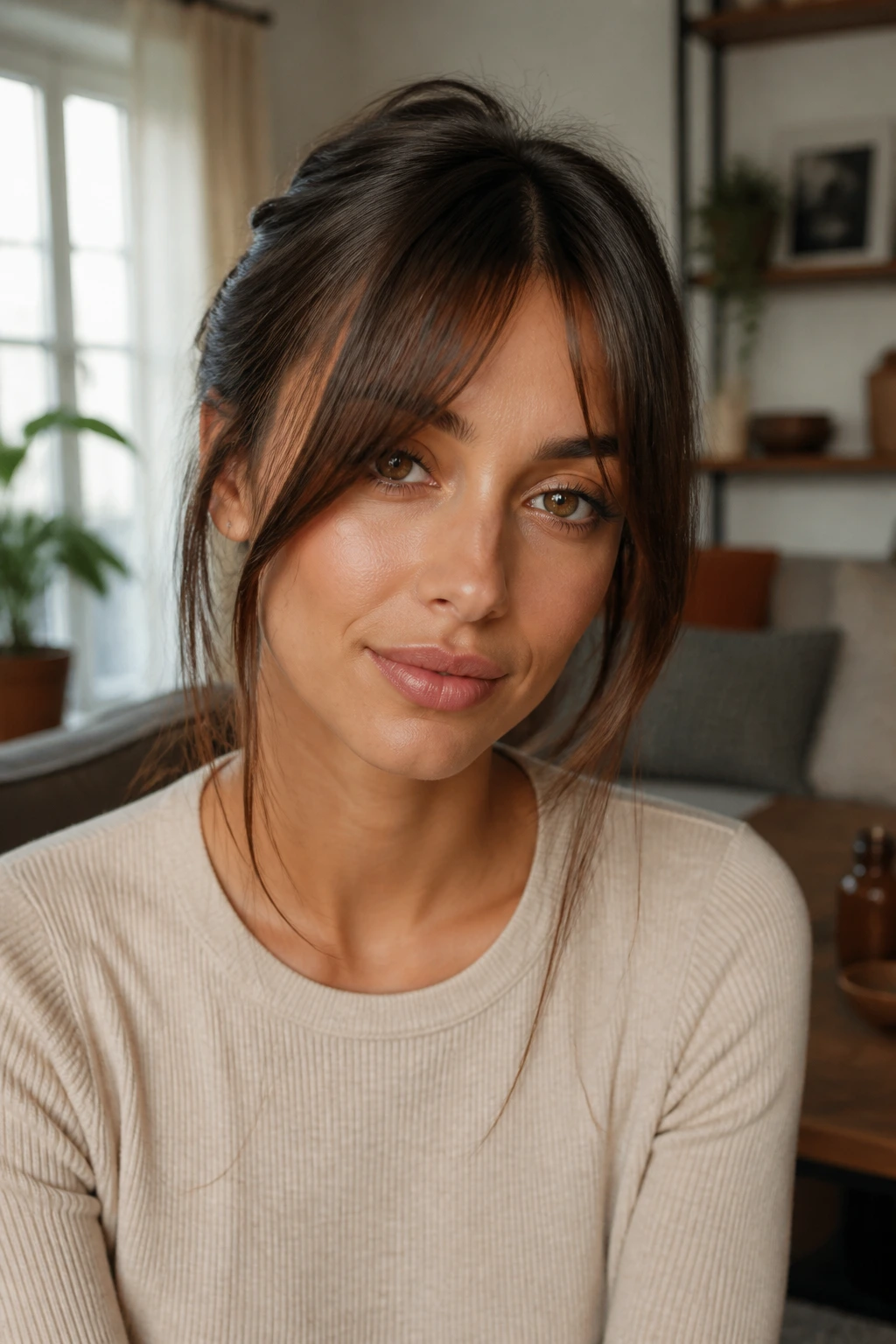
The Low-Maintenance Trim: Keep the center long enough to tuck behind the cheekbone. It buys you extra weeks between salon visits and grows out with less drama.
The Softening Version: Ask for longer side pieces and a more open center if you want your hairline to look less severe. This is a good move for strong jawlines or broad foreheads.
The Fuller Front: If your straight hair is dense, keep more weight in the middle and avoid over-layering. You’ll get a plush curtain instead of two wispy strings that disappear by noon.
The Minimal-Styling Version: Choose a longer curtain that can air-dry into shape with a little bend from the cut itself. It won’t look as polished, but it can be surprisingly good for daily wear.
The Glam Finish: Go for a heavier curtain and style it with a round brush and cool-shot finish. That one’s for people who like their hair to look intentionally done, even if the rest of the cut is simple.
How to Keep Curtain Bangs Looking Intentional
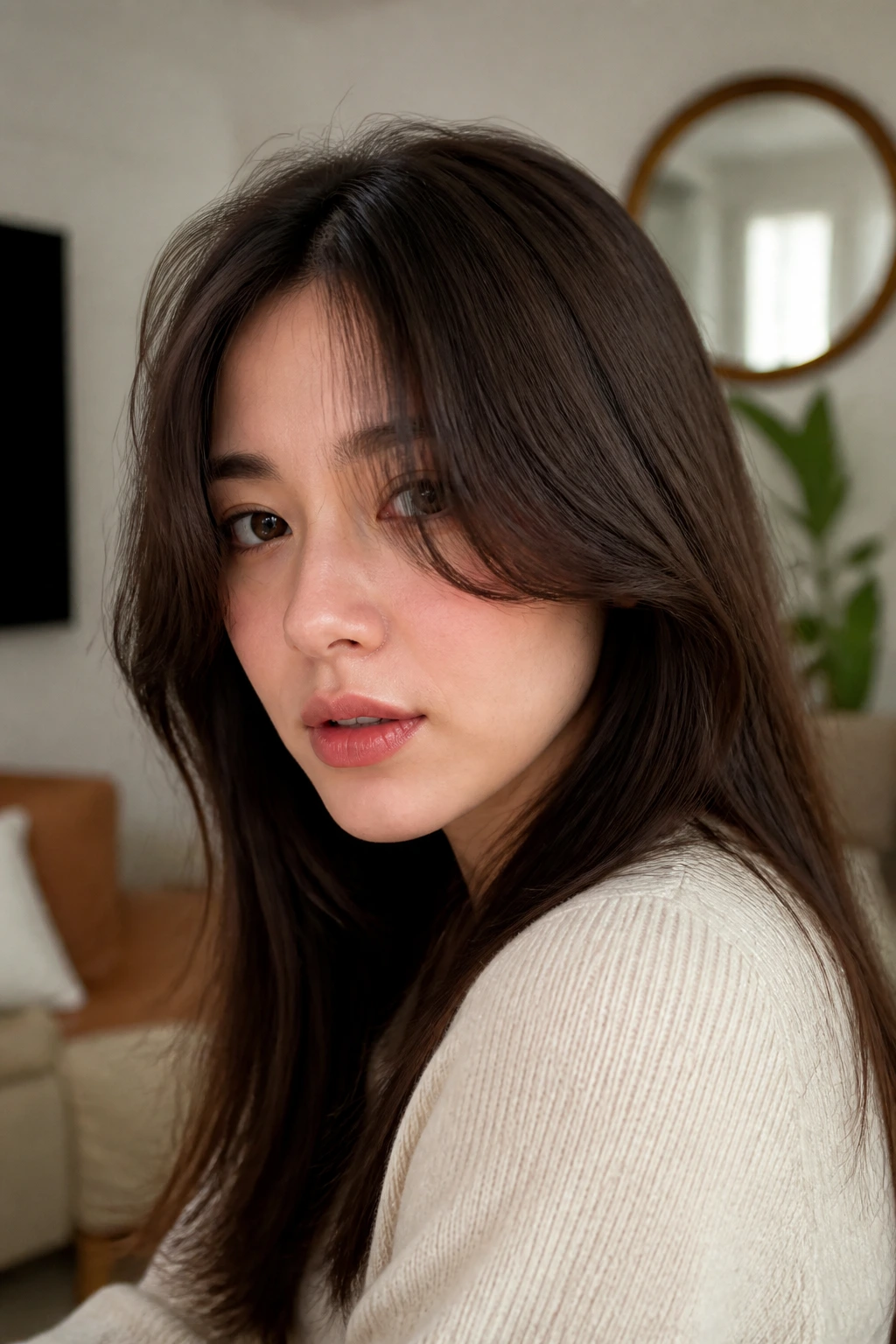
- Trim before they collapse: Once the center starts hitting your lashes and the side pieces lose their angle, the style stops reading as a curtain.
- Style the root, not just the ends: Root lift gives the bangs their opening; the bend at the ends just finishes the shape.
- Use less oil near the forehead: Heavy creams and thick sunscreens can make straight bangs split and separate faster.
- Dry the fringe first: If you let the bangs air-dry while the rest of the hair takes shape, they often dry crooked or flat.
- Pin them back on sweaty days: A tiny clip or velcro roller can save the shape when the weather or a workout gets involved.
Frequently Asked Questions
How often do curtain bangs need trimming on straight hair?
Usually every 4 to 6 weeks if you want the shape to stay clean. If you’re going for a longer, grown-out style, you can stretch that a bit, but the center will start to lose its opening once it drops too far past the eyes.
Will curtain bangs make straight hair look thinner?
They can, if the fringe is cut too wispy or over-thinned. A better approach is to keep enough weight in the center and use tapering at the sides, so the bang frames the face without disappearing.
Can I style curtain bangs without a round brush?
Yes. A flat iron bend, a hot brush, or even a blow-dryer with your fingers can work. You still need some lift at the root, though, or the fringe will sit flat and separate in weird places.
Do curtain bangs work with very fine straight hair?
They do, but the shape should be lighter and less heavily layered. Fine hair usually looks best with a soft, brow-grazing curtain or a longer version that doesn’t need much bulk to hold its line.
What if my bangs keep splitting in the middle?
That usually means the center is too heavy, too oily, or cut in a way that fights your growth pattern. Try a little root spray, a quick re-dry at the part, and a chat with your stylist about softening the center weight next trim.
Can I tuck curtain bangs behind my ears?
With longer versions, absolutely. That’s one reason they’re popular: they can look like bangs in the morning and just become face-framing layers later in the day.
Are curtain bangs hard to grow out?
Not compared with blunt bangs. The shape is already designed to blend into layers, so the grow-out tends to look intentional longer. The awkward stage still exists, though; it just shows up more gently.
A Fringe That Works With Straight Hair
Straight hair does not need to be forced into a bang shape that belongs to waves or curls. It needs a curtain cut that respects its clean fall, its flatness, and its habit of showing every small mistake. That’s why the best versions here are so specific about length, weight, and taper.
The right fringe can change the balance of the whole haircut. It can soften a forehead, lift the eyes, and make simple straight hair look finished with very little daily effort. Pick the shape that matches how much maintenance you can actually live with, not the one that looks prettiest in a still photo. That’s the version you’ll keep liking after the first wash, the first trim, and the first morning when you’re running late.
