



Polished blonde can look too polite. Grungy blonde hair color does the opposite: ash at the root, creamy beige through the mids, and just enough shadow to keep the tone from drifting into bridal territory. It has teeth. It also forgives a skipped wash better than a gleaming, all-over platinum ever will.
The trick is restraint. Too much yellow and it reads brassy; too much violet and it turns chalky or flat. The sweet spot lives between beige, mushroom, smoke, and lowlights, with placement that breaks up the brightness instead of painting it on like a helmet.
That mix works on shags, bobs, curtain bangs, long waves, and blunt cuts that need a little grit. A blonde can be soft and still feel a little hostile. That’s the fun part.
Why These Grungy Blonde Shades Feel Edgy Instead of Fussy
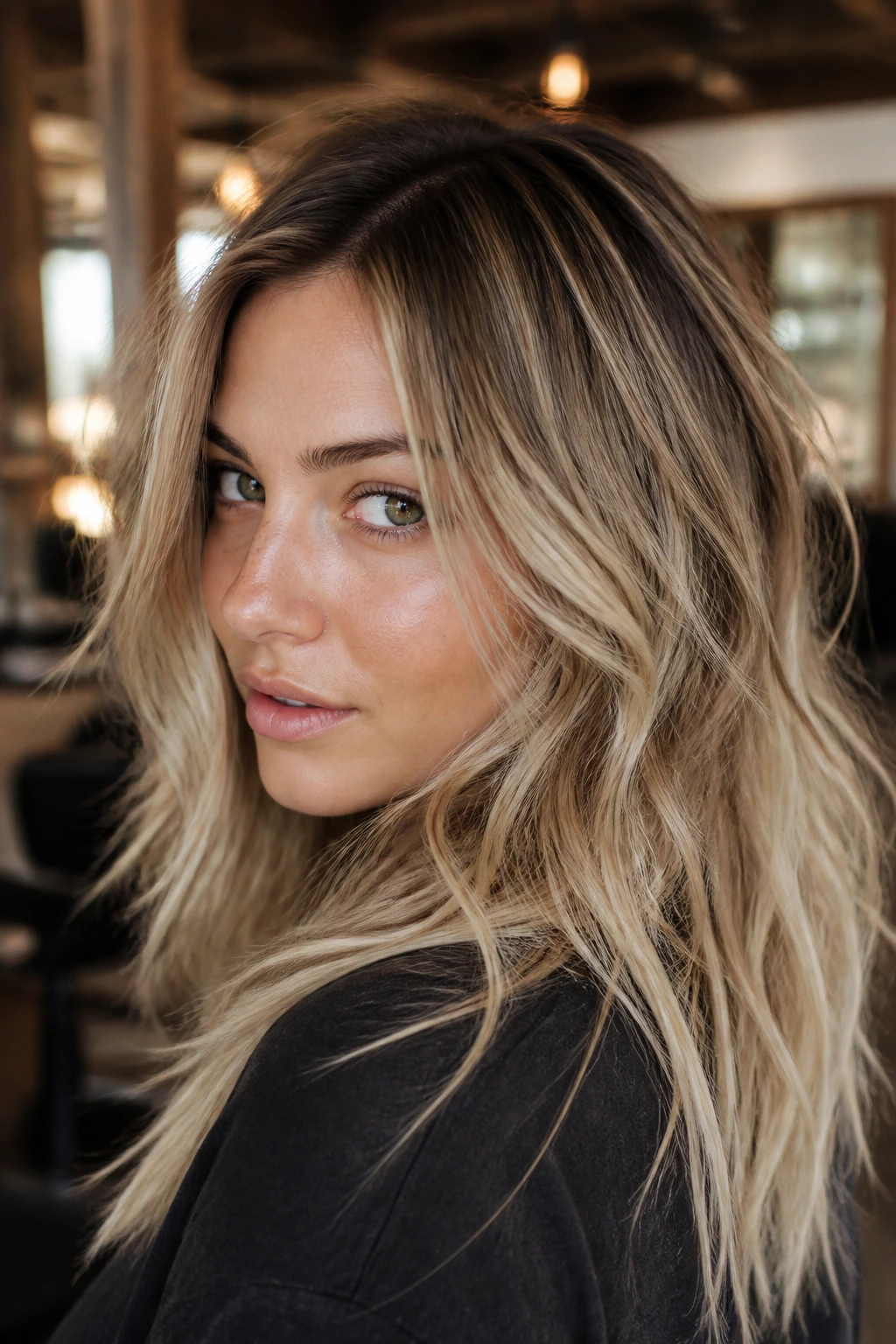
- Root shadow does the heavy lifting: A darker root buys you grow-out time and keeps the blonde from looking like one flat sheet of color.
- Texture matters as much as tone: These shades look sharper with piecey waves, a rough blow-dry, or a blunt cut than they do with ultra-sleek styling.
- Ash and beige are the real stars: The edge comes from muted undertones, not from blasting the hair to the palest possible blonde.
- They play well with darker brows: A smoky blonde sits better next to natural brow color than a bright, buttery blonde that fights it.
- You can go dramatic or quiet: The same grungy blonde idea can mean a single face frame, a root melt, or a full head of low-contrast ribbons.
- Maintenance is part of the look: A little lived-in softness is the point; over-toning removes the grit and makes the color look too clean.
1. Smoked Champagne Blonde
Smoked champagne blonde is what happens when you take a glossy party shade and drag it through ash. The sparkle is still there, but it comes from a beige-violet gloss, not from a bright yellow base. That keeps the color from drifting into sweet or syrupy territory.
I like this one on hair that already lifts well to a level 8 or 9. Ask for a soft root shadow and a champagne toner that stays on the neutral side. If the blonde gets too cool, it can turn icy in a way that feels stiff. The smoked version keeps movement.
This is one of those shades that looks especially good on layered cuts. The different tones catch on the bends in the hair, and the color reads richer because it is not trying so hard.
2. Mushroom Root Melt
Mushroom root melt is the quiet rebel of the bunch. It starts with a soft, earthy root and fades into beige-blonde mids that never quite go gold. There’s a gray-brown softness to it that makes the whole look feel grounded instead of flashy.
This works best when you want the grungy blonde idea without a stark contrast line. The melt should be gradual, not striped. A good colorist will blur the root for about an inch or so and keep the mids muted with lowlights. That breaks up the blonde in a way that looks intentional, not grown out by accident.
If your natural color sits in the dark blonde to light brown zone, this is one of the easiest entries into edgy blonde. It looks especially good on textured lobs and shags, where the color can move instead of sitting like a solid block.
3. Ashy Money-Piece Blonde
A chunky money piece can go wrong fast. Too bright, and it looks like two different people got mixed into the same head of hair. The ashy version fixes that by keeping the front panels pale but smoky, with the rest of the hair staying deeper and softer.
This is the one I’d pick if you want a visible change without bleaching the entire head. Keep the money piece one or two levels lighter than the rest of the blonde, then cool it down with an ash-beige toner. It makes the face pop, but not in a pop-star way. More like a smirk.
Best on bobs, wolf cuts, and shoulder-length layers. The front pieces should hit around the cheekbone and jaw, not disappear into the rest of the length. Otherwise the whole point gets lost.
4. Dirty Bronde Balayage
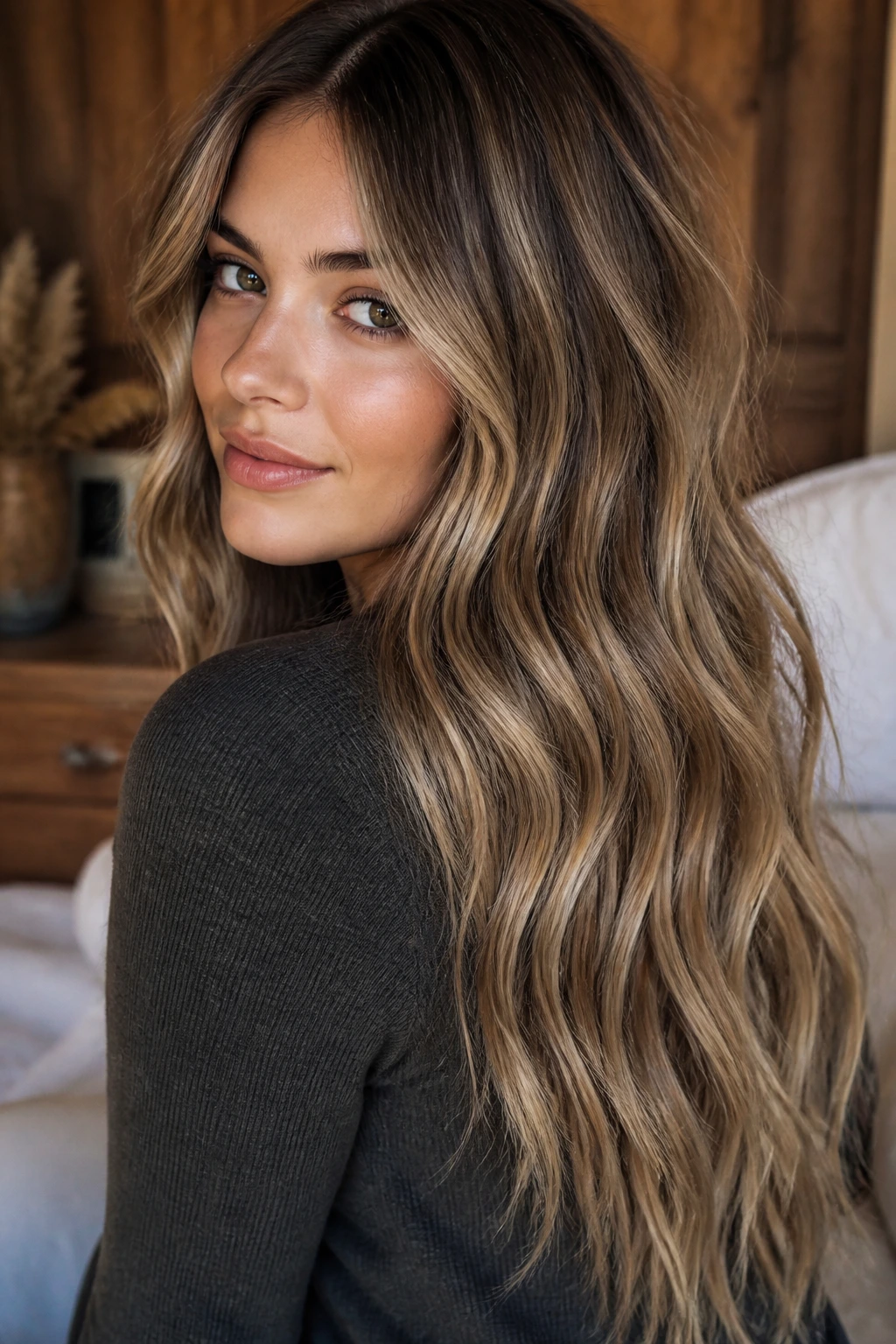
Dirty bronde balayage sits in that sweet zone between brunette and blonde, and it earns the word “dirty” in the best way. The base stays dark enough to hold some grit, while hand-painted ribbons rise through the mids and ends like sun that got a little weathered.
This is a strong choice if you want blonde energy without giving up depth. It also suits people who hate obvious regrowth lines. Because the balayage is scattered and the base stays visible, the grow-out looks softer than full highlights. No hard line. No cap effect.
I prefer this version on longer layers, because the ribbons have room to spread out. On hair that’s too one-length, the contrast can look busier than it should. Add a few lowlights if the hair is thick; it keeps the blonde from floating on top like frosting.
5. Platinum Shadow Root
Platinum shadow root is the sharpest thing on this list, and it knows it. The ends go pale—almost white—but the root stays dark enough to give the whole head a little friction. That contrast is what keeps platinum from looking too bridal or too delicate.
If you want this, be honest about the upkeep. You’ll need toner refreshes, probably more often than the softer shades here, and the blonde has to be lifted cleanly before it can sit that pale. Any leftover yellow underneath will show. Fast.
I love this on short bobs and blunt cuts because the line of the haircut can handle the drama. Long hair can wear it too, but the contrast becomes louder. If your hair is fragile or already over-processed, this is the one to admire on someone else’s head and maybe save for later.
6. Beige Blonde with Chunky Lowlights
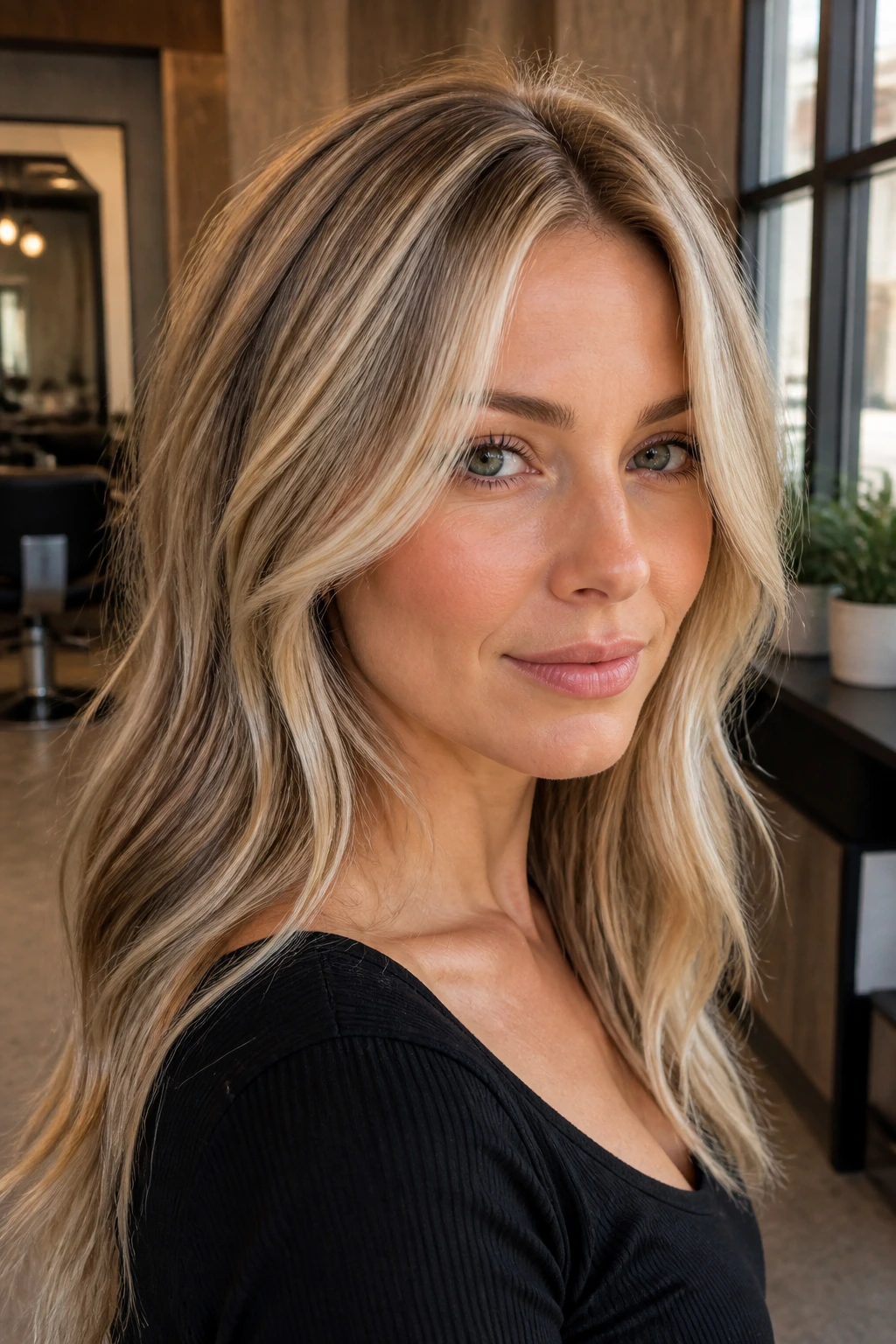
Chunky lowlights get a bad reputation because people remember the stripey blondes from years ago. The trick is to keep the lowlights soft enough to read as depth, not as a checkerboard. Beige blonde with broken-up darker ribbons has a rougher, more worn-in feel than a spotless highlight job.
This is a smart move if your hair is thick or naturally fluffy, because the lowlights cut the brightness and give the cut some shape. It also helps if your ends tend to look hollow once they’re lifted too far. A few deeper pieces stop the blonde from floating away.
Ask for lowlights that stay cool-neutral, not chocolatey. Too much warmth turns the whole thing muddy. The good version looks like the hair has picked up shadow in the places where real hair does—underneath, behind the ears, and in the back.
7. Bleachy Face-Frame Panels
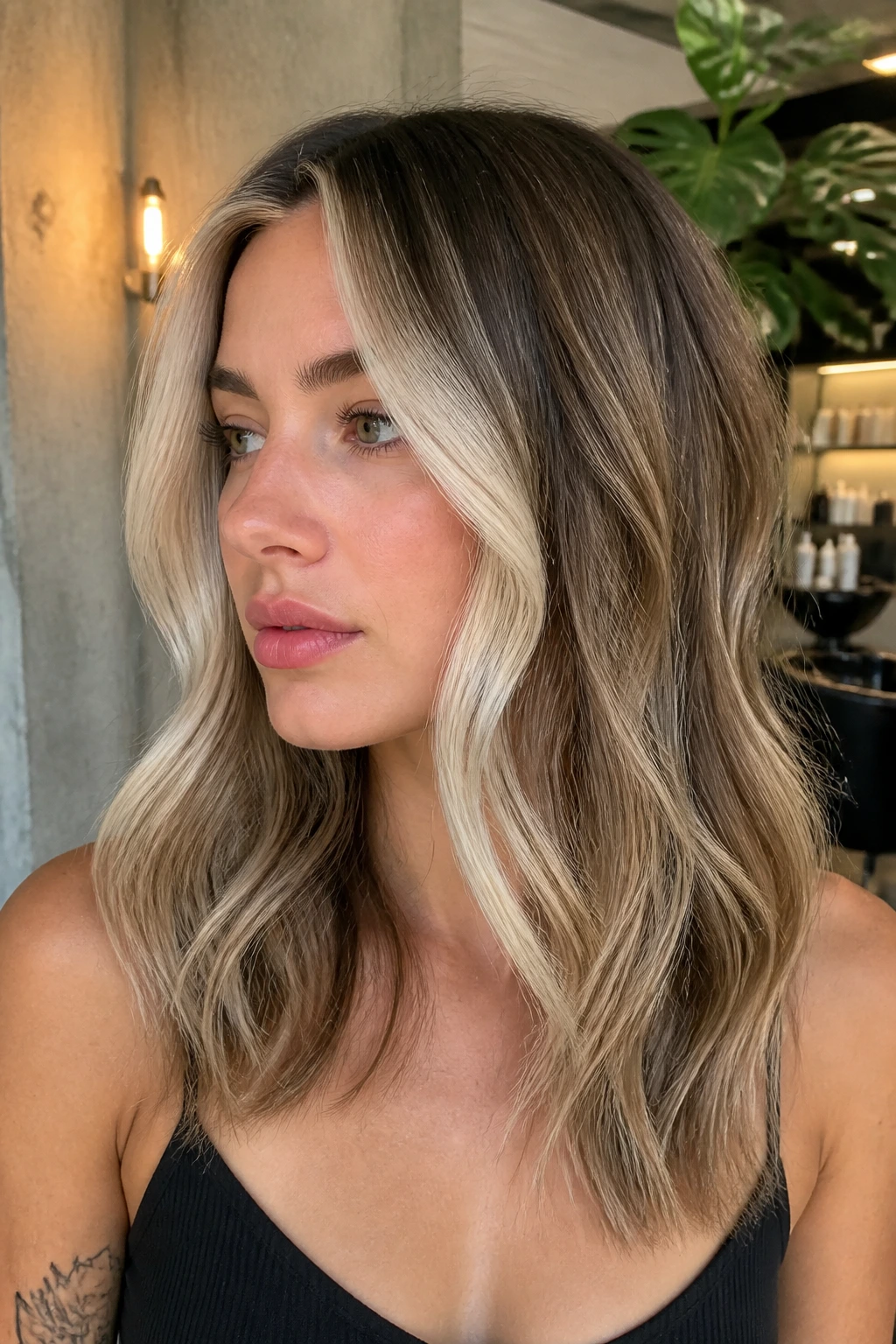
Some people want a dramatic blonde without committing to the whole head. Bleachy face-frame panels are the answer. The front sections go bright and pale, while the rest of the hair stays darker, softer, or simply more muted. It’s a direct, high-contrast look, and it wears well with a sharp cut.
This style has real attitude because it breaks the color into zones. The panels should be chunky enough to register from a distance, not tiny little streaks that vanish once you move. I prefer them slightly wider at the front and feathered toward the temples so the effect doesn’t look stiff.
It’s a good choice if your base color is dark and you don’t want an all-over bleach job. You get the visual hit without the same level of maintenance. The downside is obvious: if the front pieces lift too warm, they announce themselves immediately.
8. Dusty Honey Blonde
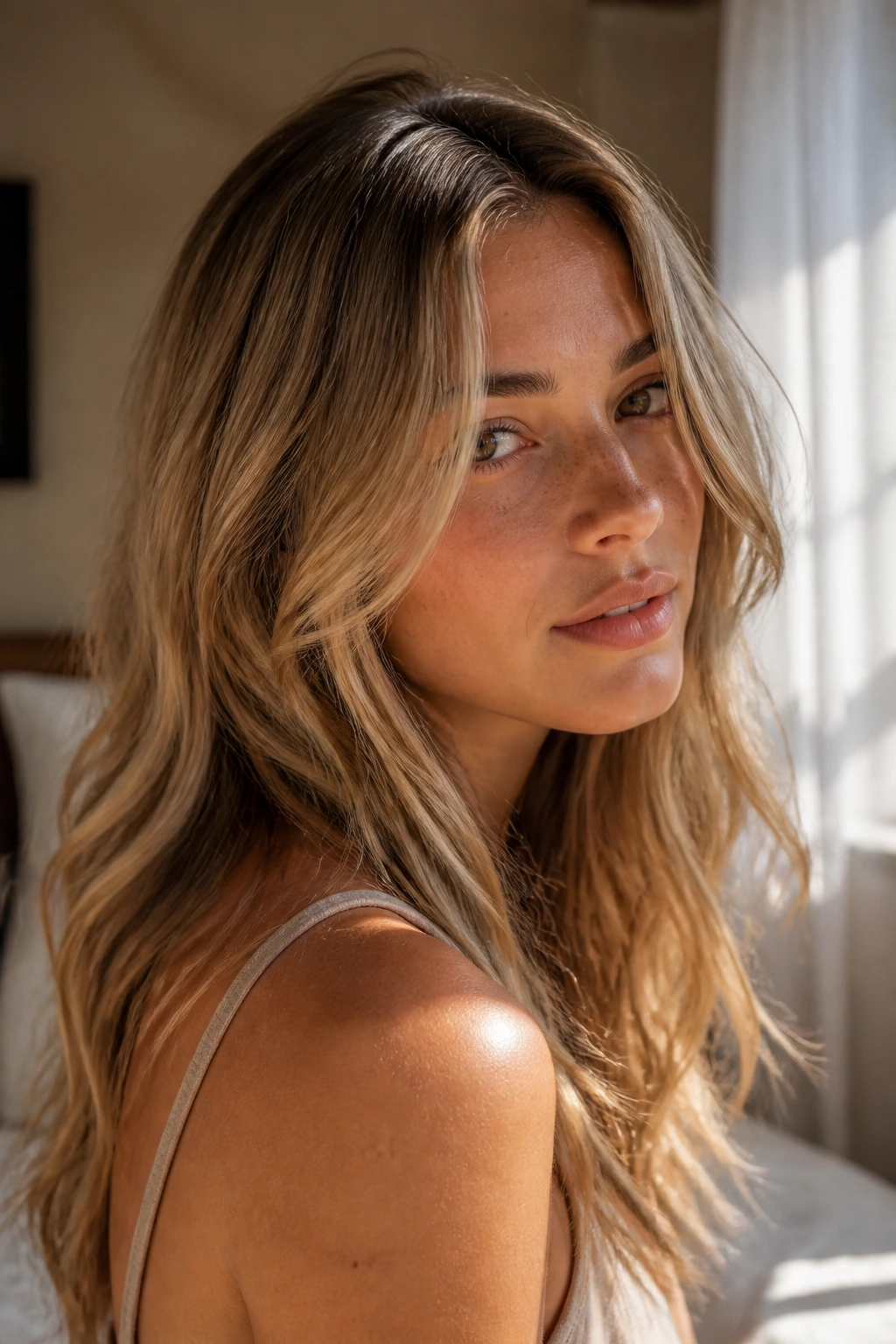
Dusty honey blonde is warm, but not sugary. That distinction matters. The warmth should feel muted, like golden light through a dirty window, not like caramel poured on top of the hair. The “dusty” part is what keeps it in the grungy lane.
This one flatters warmer and neutral skin tones especially well, but it can work on cool skin if the honey stays restrained. The trick is to keep the base slightly deeper and use a beige gloss over the bright areas. That stops the blonde from going orange when it starts to fade.
It’s one of my favorite choices for long hair that needs dimension without turning icy. The warmth gives the ends life, while the dustier root keeps the overall look from getting precious. Add some texture spray, and it instantly feels less polished.
9. Cream Blonde with Smudged Ends
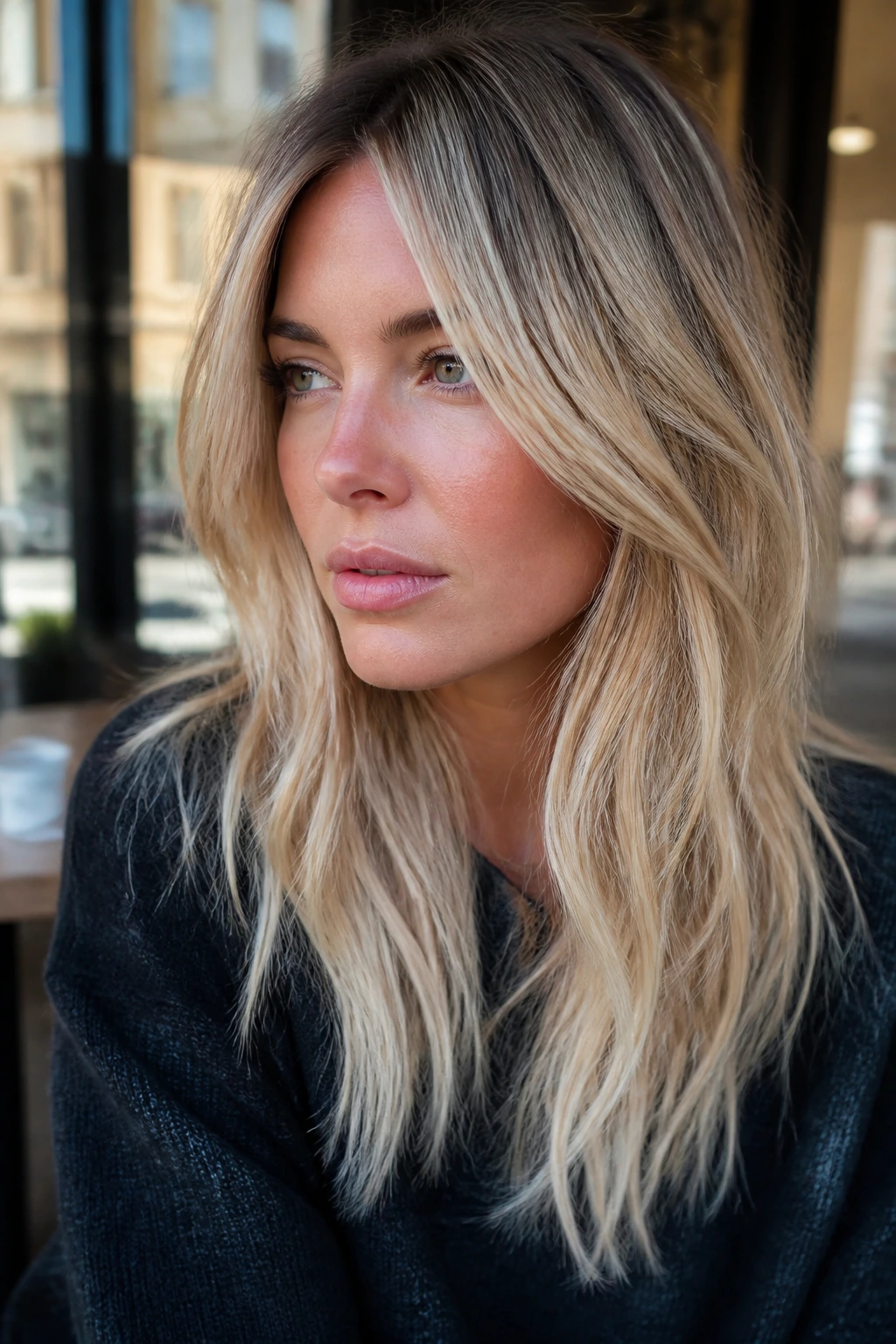
Cream blonde with smudged ends has a softer beginning and a messier finish, which is exactly why it feels cool. The top stays muted and blended, then the ends lighten into a creamy blonde that looks a little washed by time. Not damaged. Just worn in.
This is a good option if you like the idea of blonde but hate the harsh grow-out line that comes with very bright roots. The smudged finish at the ends gives you a blurred edge, especially on wavy hair. Ask for the lightest lift only where the hair can support it, then let the rest stay creamy and low-key.
It’s less about shock and more about texture. A blunt cut with this color can look almost graphic, while long layers make it feel looser. Either way, the smear at the ends keeps the blonde from looking too neat.
10. Khaki Blonde
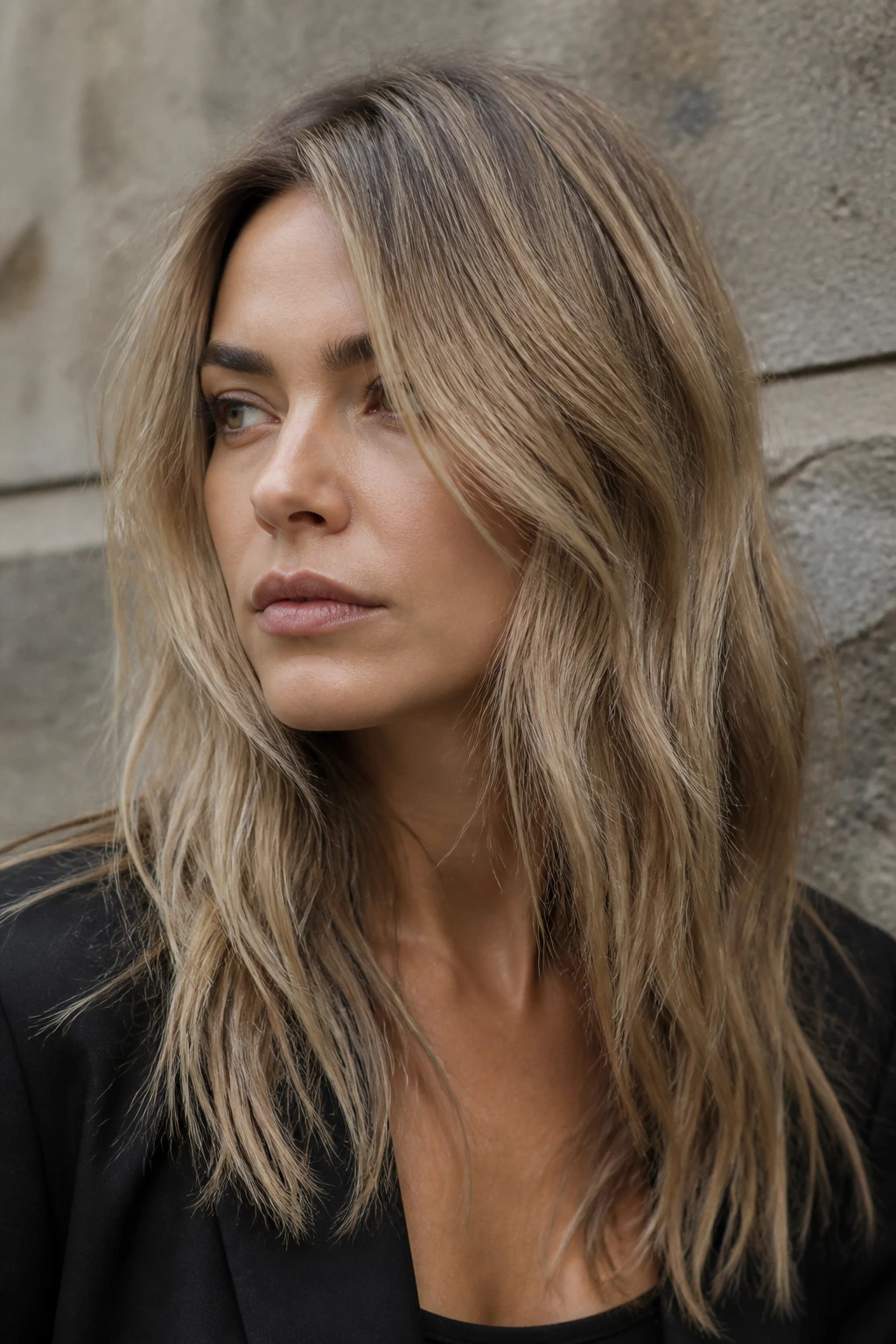
Khaki blonde sounds odd until you see it on hair. Then it makes sense. There’s an olive-beige cast to it, the kind of tone that feels a little dry, a little smoky, and much tougher than standard ash blonde. It has an editorial, almost fashion-week mood without screaming for attention.
This shade is not for someone who wants shiny, golden brightness. It needs careful toning, because too much green in the formula can turn the hair dull in a bad way. The right version stays beige with a whisper of khaki—not swampy, not muddy, just muted enough to feel deliberate.
I’d wear this on a choppy bob, a shag, or any cut with broken ends. The color loves shape. On long, one-length hair, it can flatten out unless you add movement with a bend or wave.
11. Ivory Blonde with Lived-In Roots
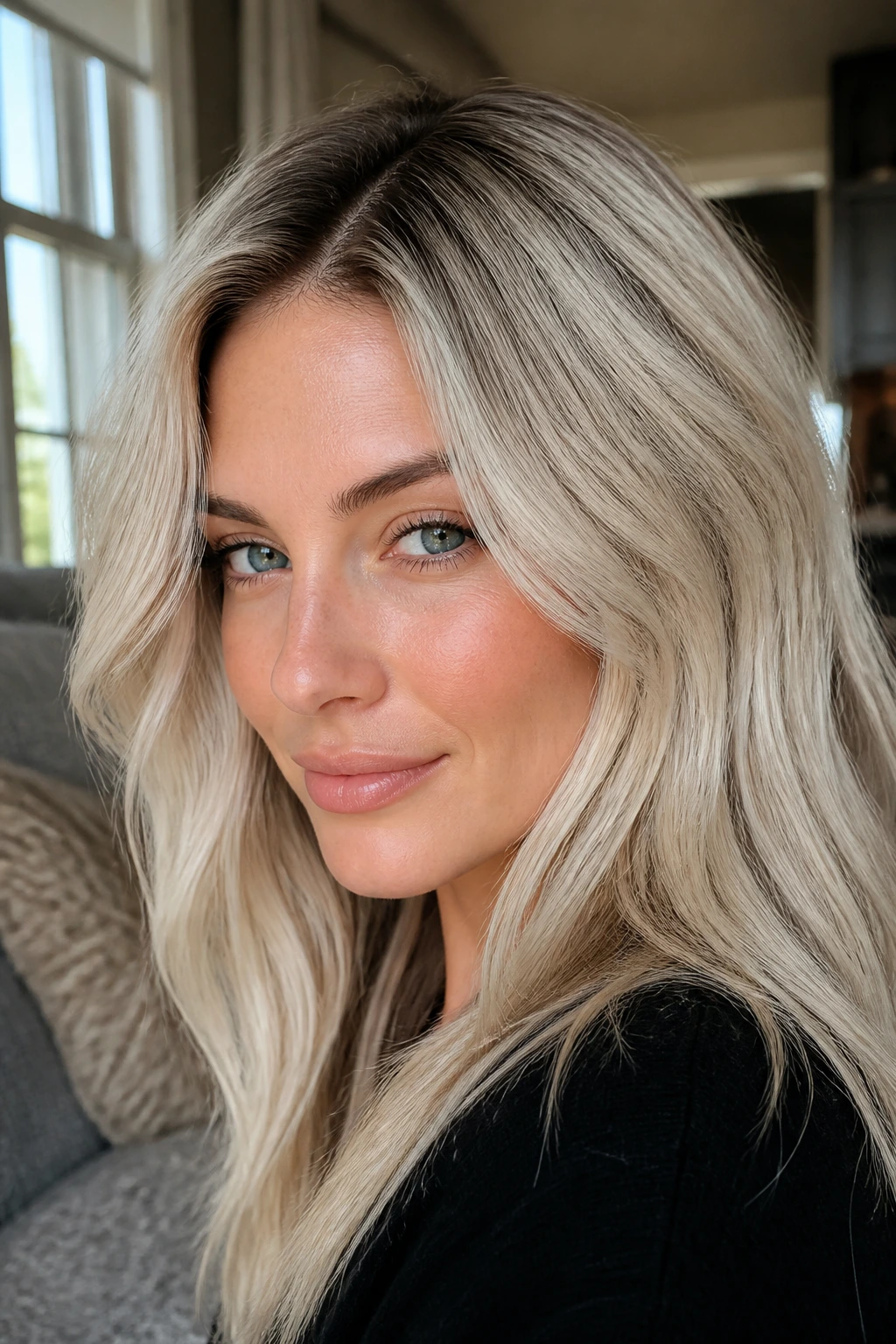
Ivory blonde can go twee if it’s too clean. Leave the roots lived-in, and the whole thing sharpens up. The ivory tone itself should be pale and soft, not paper-white, with just enough depth at the scalp to keep the color from looking freshly pasted on.
This one works best when the root is intentionally darker, maybe by an inch or so, and the transition is blurred with a shadow root. That lets the brightness around the mids and ends feel earned. You get the lightness, but the hair still has a face.
On a blunt bob, it looks crisp. On longer hair, it reads more relaxed. If you wear dark brows or heavy eyeliner, this is a nice middle ground between goth and glam.
12. Sun-Faded Vanilla Blonde
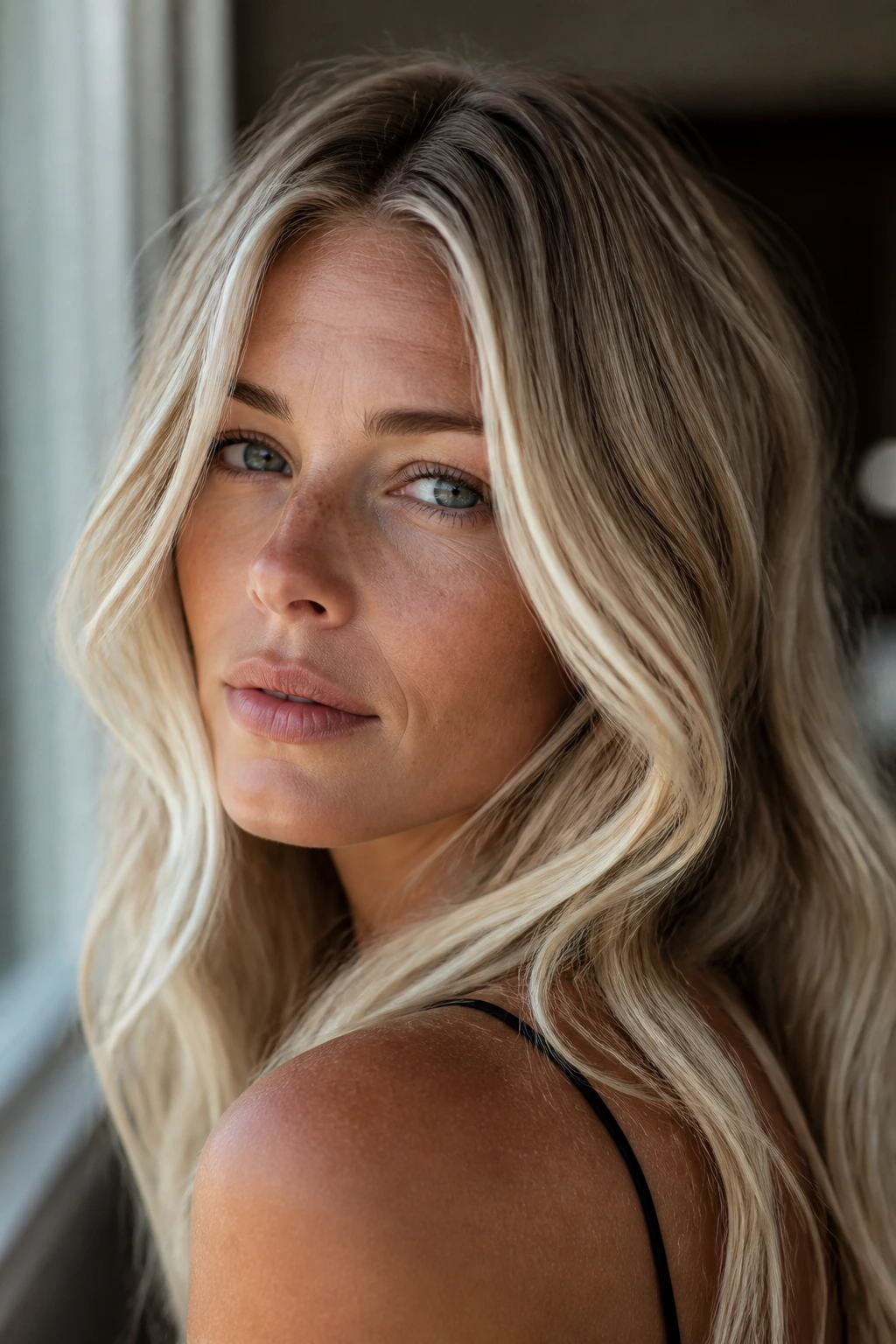
Sun-faded vanilla blonde is not the same thing as sunny blonde. It’s softer, drier, and less yellow. The tone should feel like vanilla ice cream that sat out long enough to soften at the edges. Still creamy. Just not eager.
This version is great if you want the grungy blonde effect without pushing into gray or khaki territory. It usually uses broken-up highlights and a sheer gloss rather than a heavy toning job. The hair looks brighter in some sections, quieter in others, which keeps it from feeling flat.
I think this is one of the easiest shades to wear with casual styling. Air-dried waves, a center part, a few uneven bends—those all make sense here. If you want more edge, add a darker root. If you want less, keep the shadow soft and let the texture do the work.
13. Bronze Ash Blonde
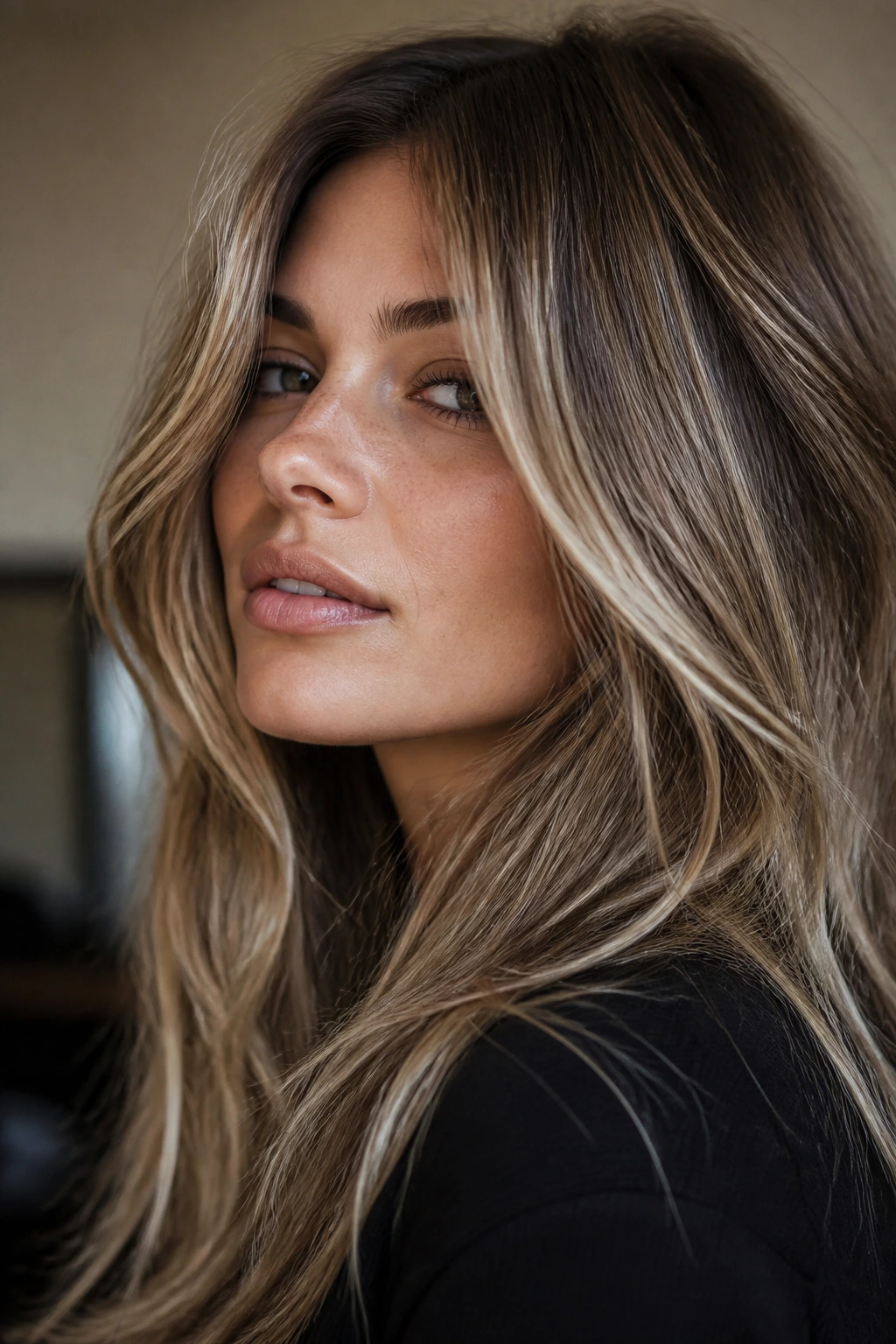
Bronze ash blonde sounds contradictory, and that’s exactly why it works. The bronze brings a little warmth and body back into the hair, while the ash keeps the blonde from tipping gold. The result is dimensional, smoky, and much more wearable than either tone alone.
This is a strong choice for medium brown to dark blonde bases because it doesn’t ask the hair to become something it isn’t. Instead of stripping everything pale, you build a blonde with darker ribbons and a muted bronze gloss. That means less fragility at the ends and more movement through the length.
It looks especially good on thick hair, where plain blonde can sometimes look too puffy or too bright. The bronze pieces give shape; the ash keeps things from going sweet. It’s a grown-up version of grunge, and I mean that as a compliment.
14. Slushy Ice Blonde
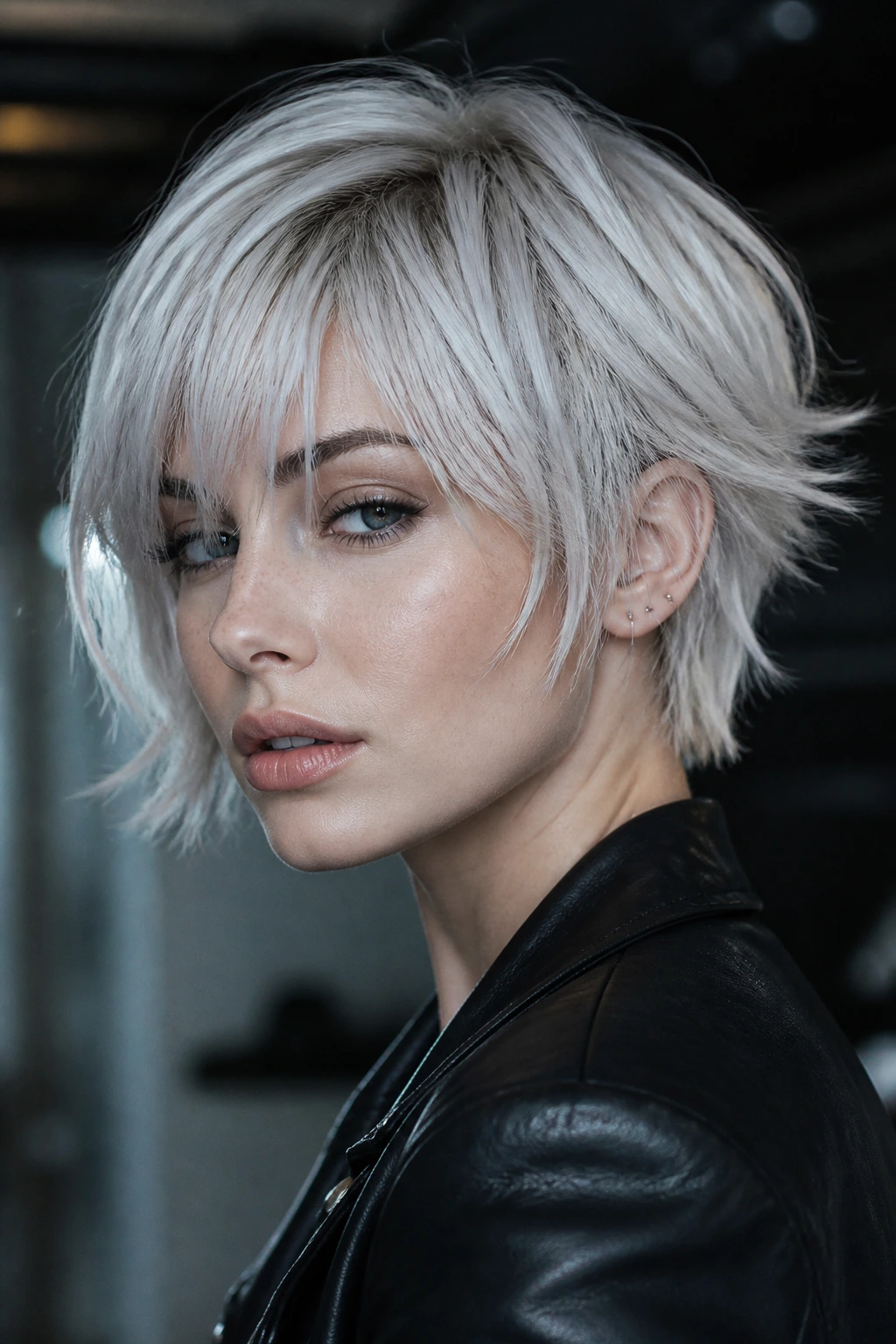
Slushy ice blonde is colder than champagne, but less sterile than white platinum. The color should feel frosty and soft, like crushed ice with a little smoke mixed in. If it gets too flat, the whole look loses its edge. If it gets too warm, it stops being slushy and becomes ordinary blonde.
This one needs a careful lift and a strong toner hand. You want pale blonde with a clean, cool finish, but not the kind that makes hair look dry and chalky under indoor light. That means keeping the texture healthy and not overdoing purple shampoo afterward.
I like this on short cuts, sharp layers, or hair that’s naturally dense and can carry contrast. It’s a little severe in the best way. If you wear soft makeup and simple clothes, the hair does the talking.
15. Grown-Out Babylight Blonde
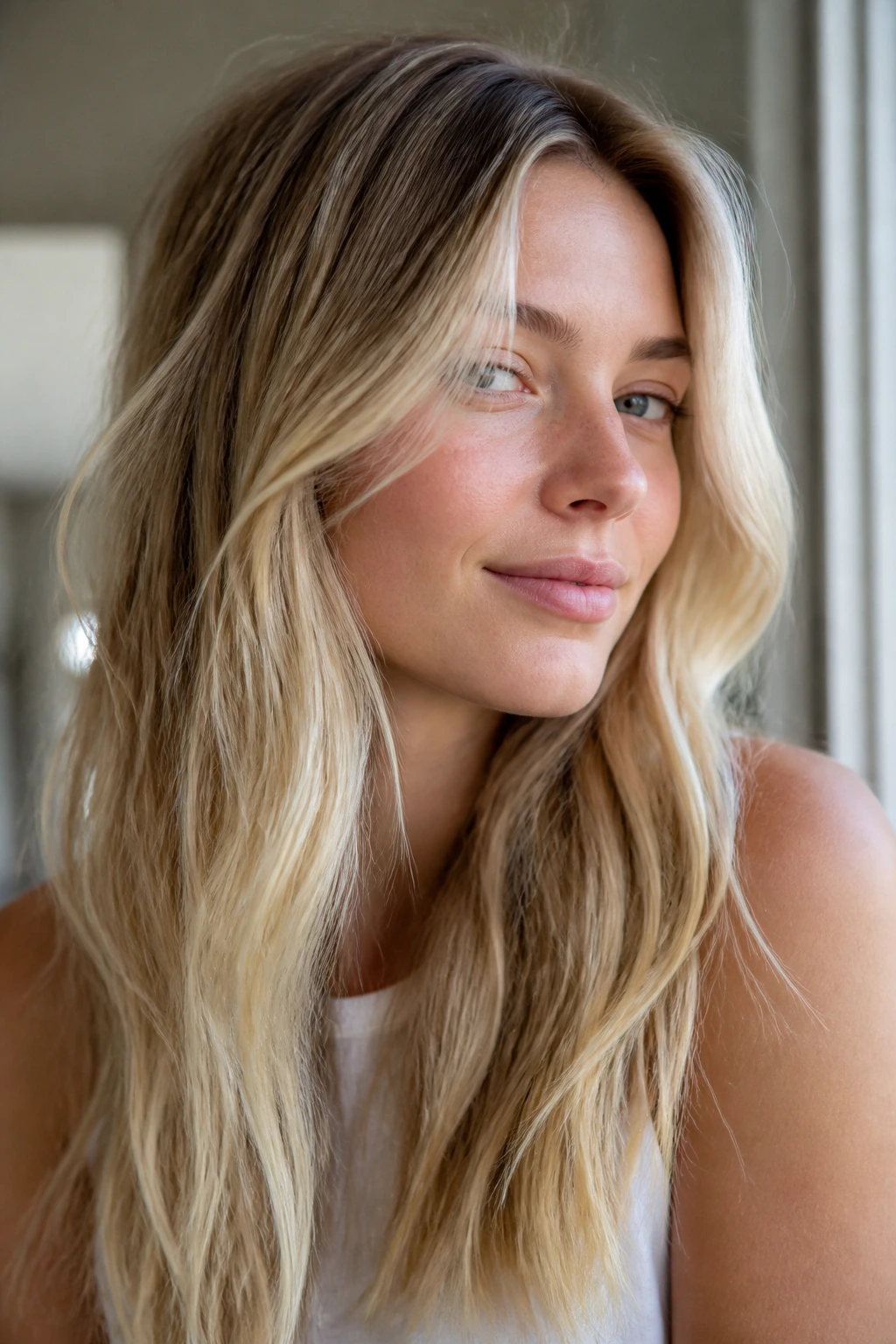
Babylights are tiny, fine highlights, and when you let them grow out a little, they take on that lived-in, slightly undone look that makes grungy blonde so appealing. The color is delicate up close, but from a distance it reads as soft brightness with shadow woven through it.
This is the best option if you want dimension without obvious striping. The highlights should be fine enough that you can’t immediately count them. Then you leave a deeper root and maybe a couple of lowlights in the underlayers, so the blonde has somewhere to rest.
It’s especially good on fine hair. Heavy highlights can make fine strands look thin; babylights keep the look airy while still giving the hair visible movement. The grow-out is kind, too. That matters more than people admit.
16. Ripped Denim Blonde
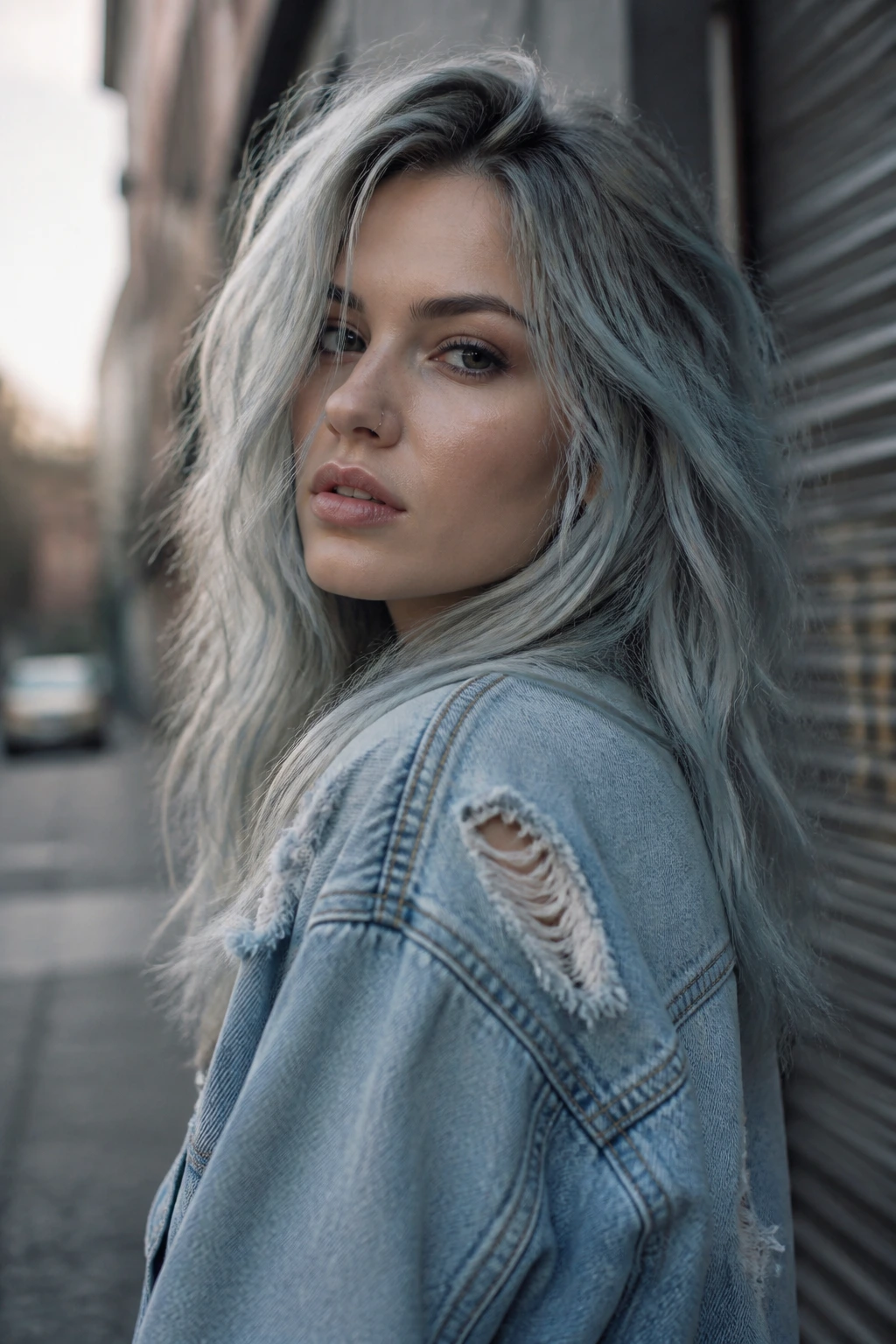
Ripped denim blonde has a blue-smoke cast that turns the blonde a little cooler and a little rougher around the edges. It’s not bright blue hair. It’s blonde with a denim wash over it, like something faded in sunlight and worn through at the knees.
This color works best when the blonde is already light enough to hold a cool glaze. If the base is too yellow, the blue undertone can go muddy. The key is to keep the tone controlled and the finish piecey. Too much gloss and it loses that distressed feel.
I’d choose this for a razor-cut bob, a shag, or anything with a lived-in silhouette. It’s one of the more fashion-forward options here, and it pairs well with silver jewelry, black liner, and clothes that aren’t trying too hard. The hair should feel slightly dangerous.
17. Buttery Blonde with Dark Ribbons
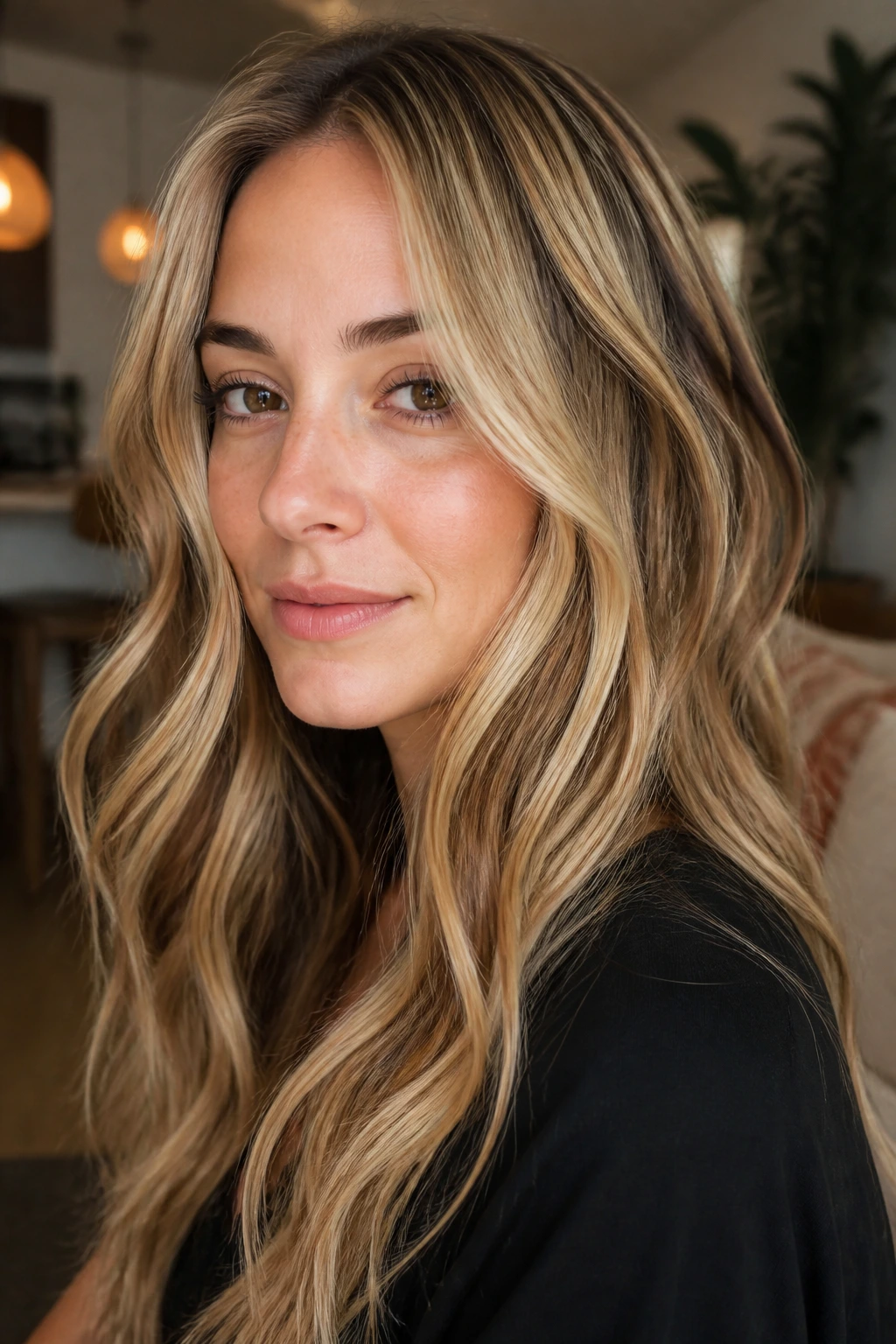
Buttery blonde usually sounds soft, almost sweet. Add dark ribbons through it, and the whole look changes. The darker pieces break up the warmth and give the butter a little grit. Without them, the shade can read too polished. With them, it feels richer and less obvious.
This version is a smart move if you like warm blonde but don’t want the color to look sunny or flat. The ribbons should be placed where the hair naturally folds—underneath layers, around the back, and through the interior. That way the contrast shows when the hair moves, not as a loud stripe sitting on top.
It’s particularly nice on thick hair because the ribbons create dimension without needing aggressive lightening everywhere. If your hair is fine, keep the dark pieces narrow and soft. Too much contrast can make the hair look sparse.
18. Soft Greige Blonde
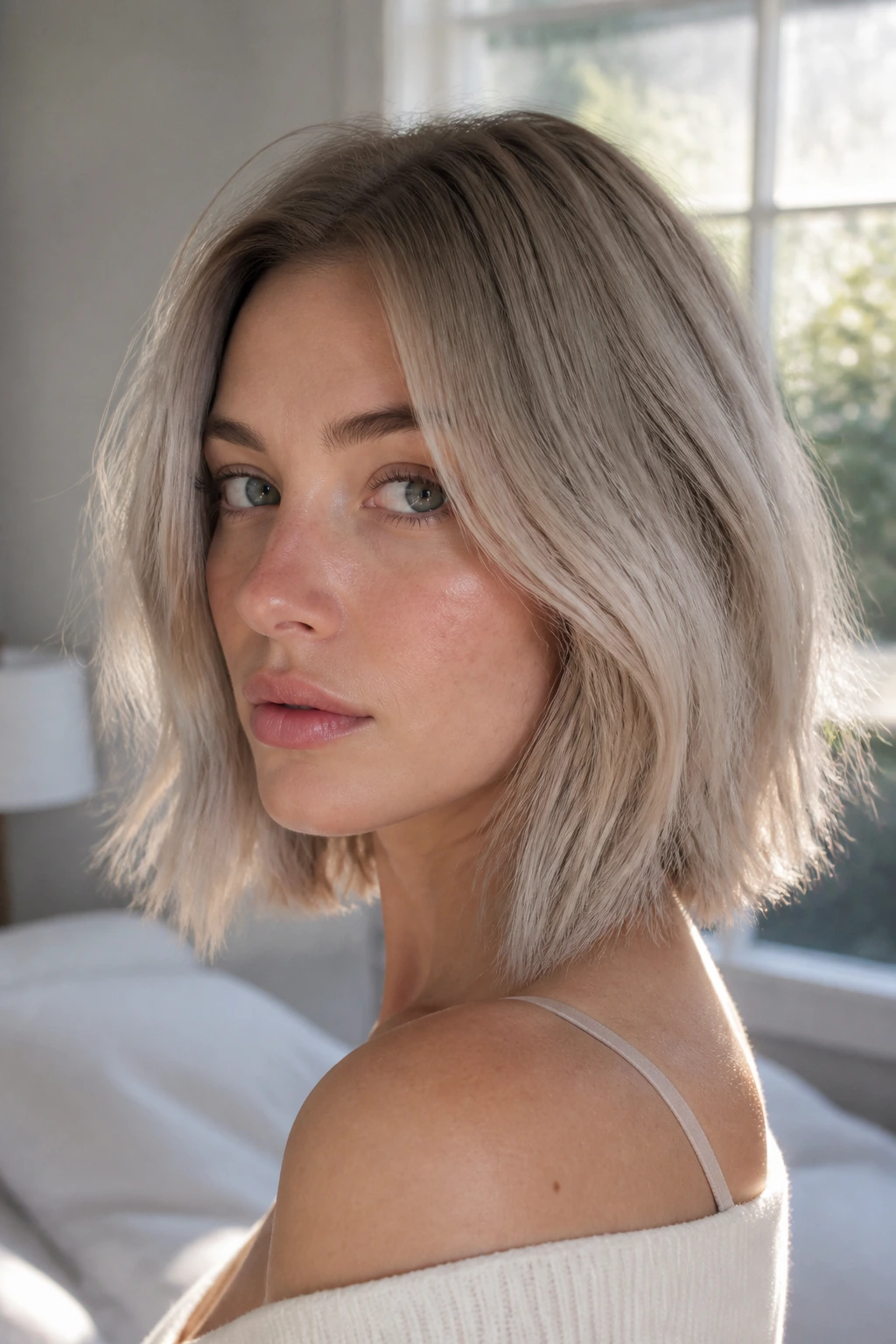
Greige is one of those tones that sounds boring until you see it done well. Then it looks expensive in the practical sense: believable, wearable, and hard to mess up. Soft greige blonde sits between gray and beige, which means it can cool down warmth without turning the hair dull.
This is a clean fit for people who want their blonde to feel modern but not icy. It’s also kind to natural brows and muted makeup. The tone stays quiet, which makes the haircut matter more. A good bob or layered cut will look sharper with greige than it does with a shouty, overbright blonde.
The shade can go flat if it’s over-toned. I’d keep a little beige in the mix so the color doesn’t become dusty in a bad way. The best version looks soft from across the room and interesting when you catch it in a mirror.
19. Rooty Scandi Blonde
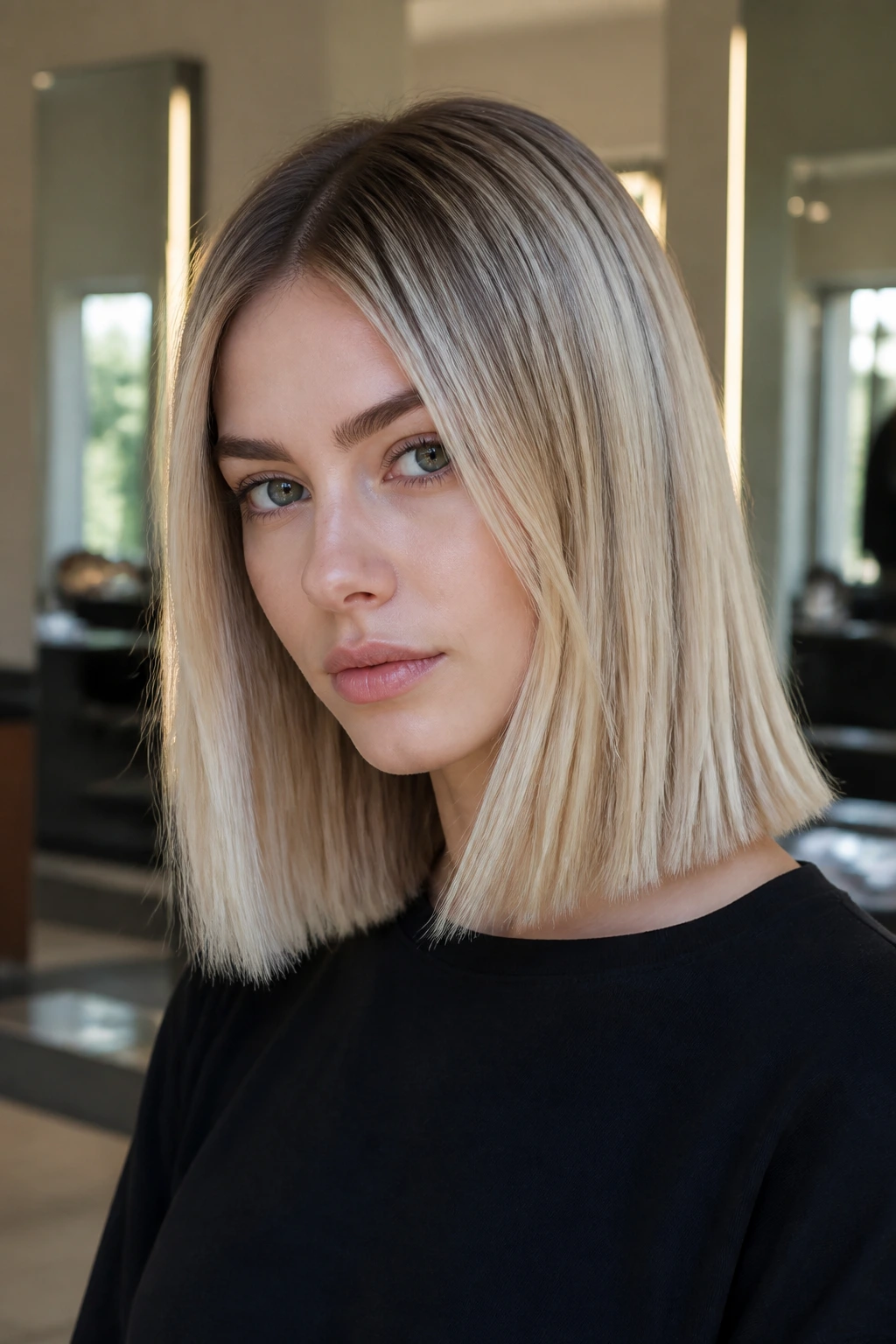
Scandi blonde usually brings to mind a bright, airy blonde with a dark root left on purpose. The grungy version keeps that idea but makes it feel more worn-in. The root is visible, the lengths are light, and the transition is part of the look instead of a compromise.
This shade has a very specific mood: clean lines, minimal fuss, and just enough shadow to stop it from feeling precious. It works well on straight, blunt styles and on hair that’s been cut in a tidy shape. You want the color to look deliberate, almost architectural.
If your hair is already very pale, this can be mostly about root shadow and gloss rather than major lightening. That makes it one of the easier ways to get an edgy blonde feel without chasing extra lift. The grow-out is part of the style, which is a rare gift in blonde hair.
20. Shadowed Vanilla Balayage
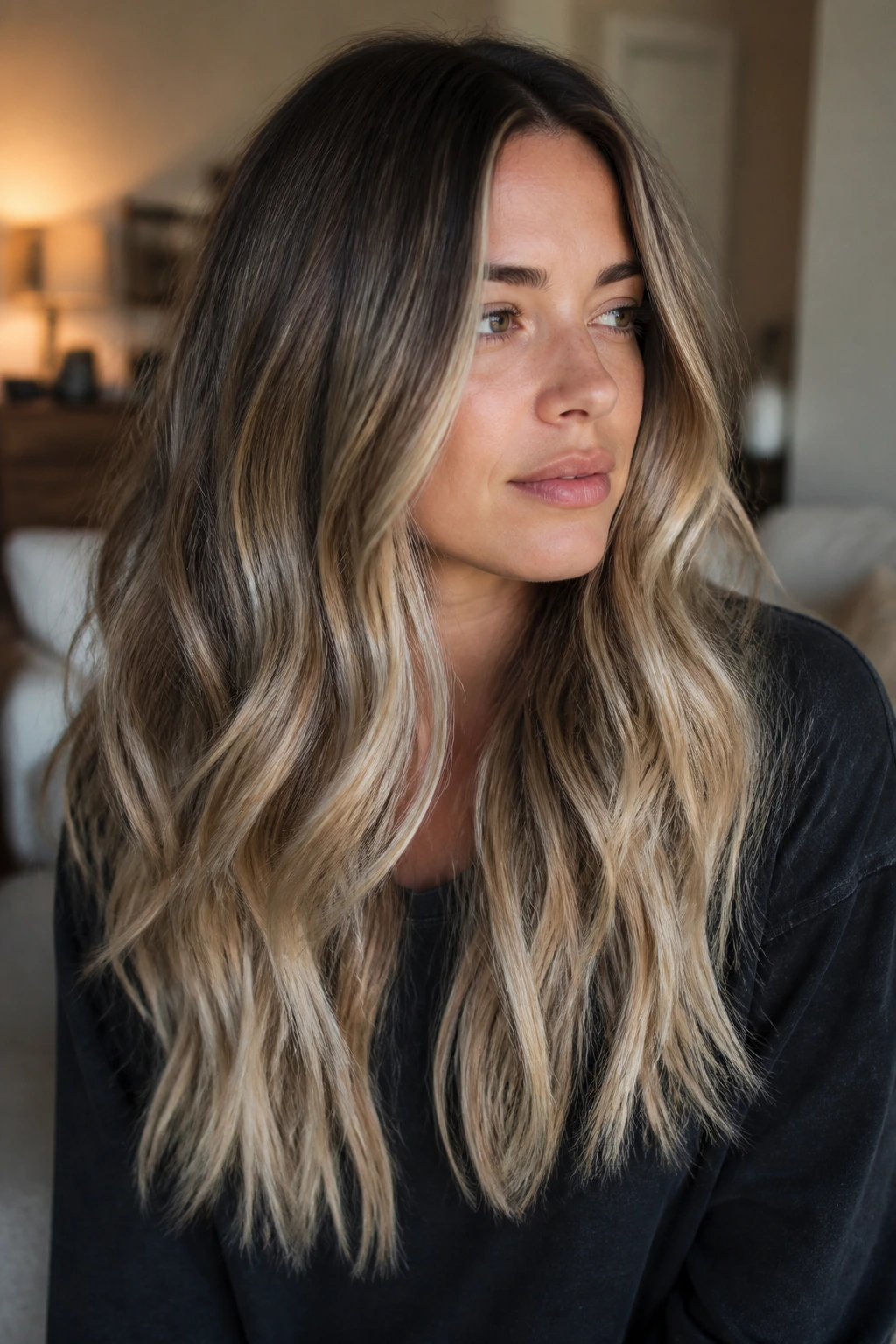
Shadowed vanilla balayage is softer than platinum and less warm than honey. It starts with a deeper root and hand-painted vanilla ribbons that rise through the mids with a smoky edge. The color keeps its shape because the shadow underneath holds everything together.
This is a good compromise if you want the blonde to stay bright but not blunt. Balayage gives you movement, and the shadow gives you attitude. The two together are what make it grungy instead of simply pretty. Pretty can be nice. It can also be forgettable.
This version is especially useful on long hair where the highlight placement has room to breathe. The ribbons should never all sit at the same height. Once they line up too neatly, the whole thing starts looking salon-chic instead of lived-in.
21. Smoky Wheat Blonde
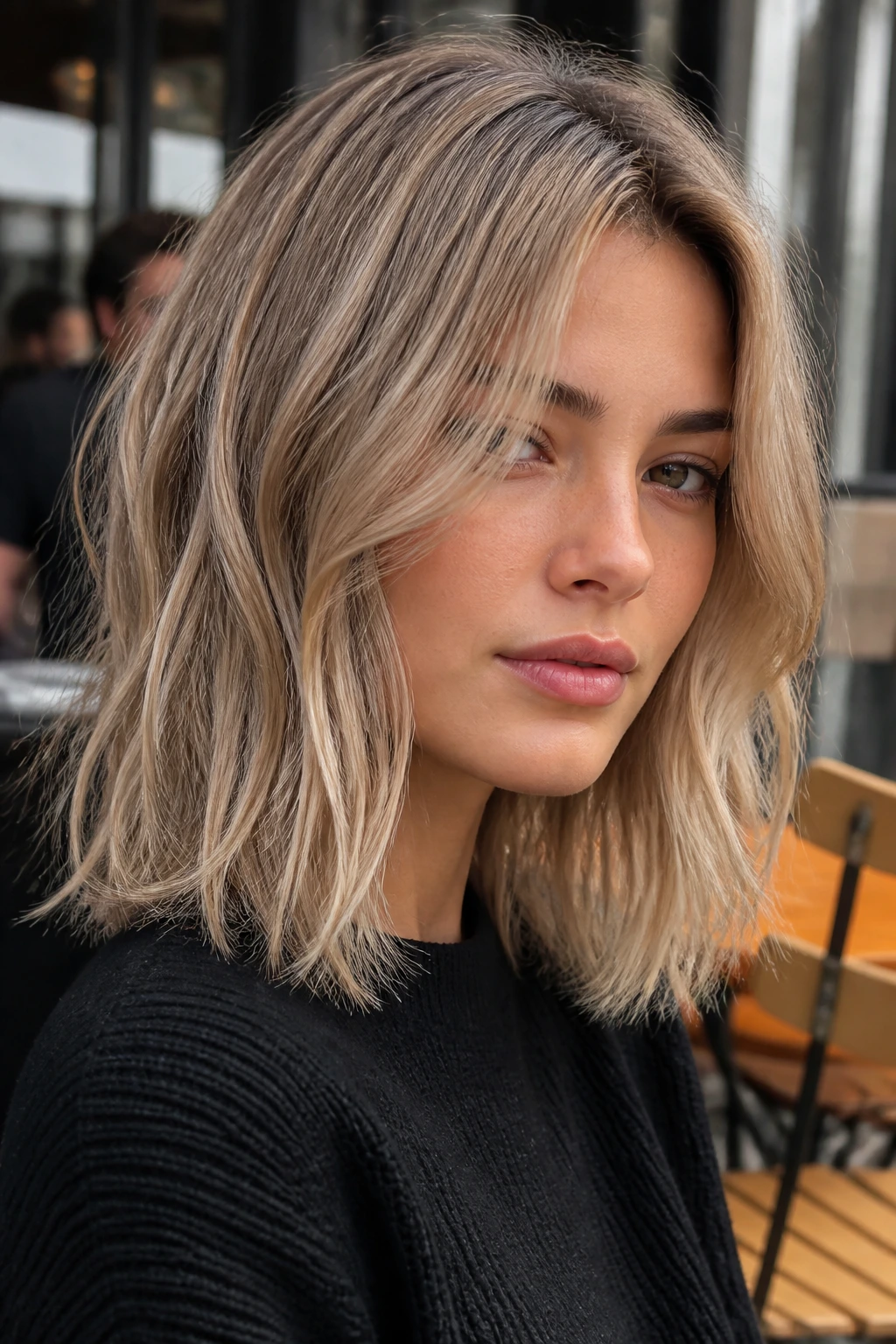
Smoky wheat blonde is one of the quieter shades here, and I mean that in a good way. It keeps the pale warmth of wheat but cuts it back with ash so the overall tone feels drier, less golden, and more wearable. There’s a little naturalness to it, but not the bland kind.
It suits fine hair beautifully because it doesn’t ask for heavy contrast to create dimension. A few soft highlights, a smoky gloss, and a deeper root can do a lot. The hair ends up looking fuller because the tone changes where the light hits.
If you want something edgy but not dramatic, this is a strong candidate. It works on shoulder-length cuts, loose waves, and straight styles that need a bit of edge without hard lines. Quiet shades can still look tough.
22. Two-Tone Punk Blonde
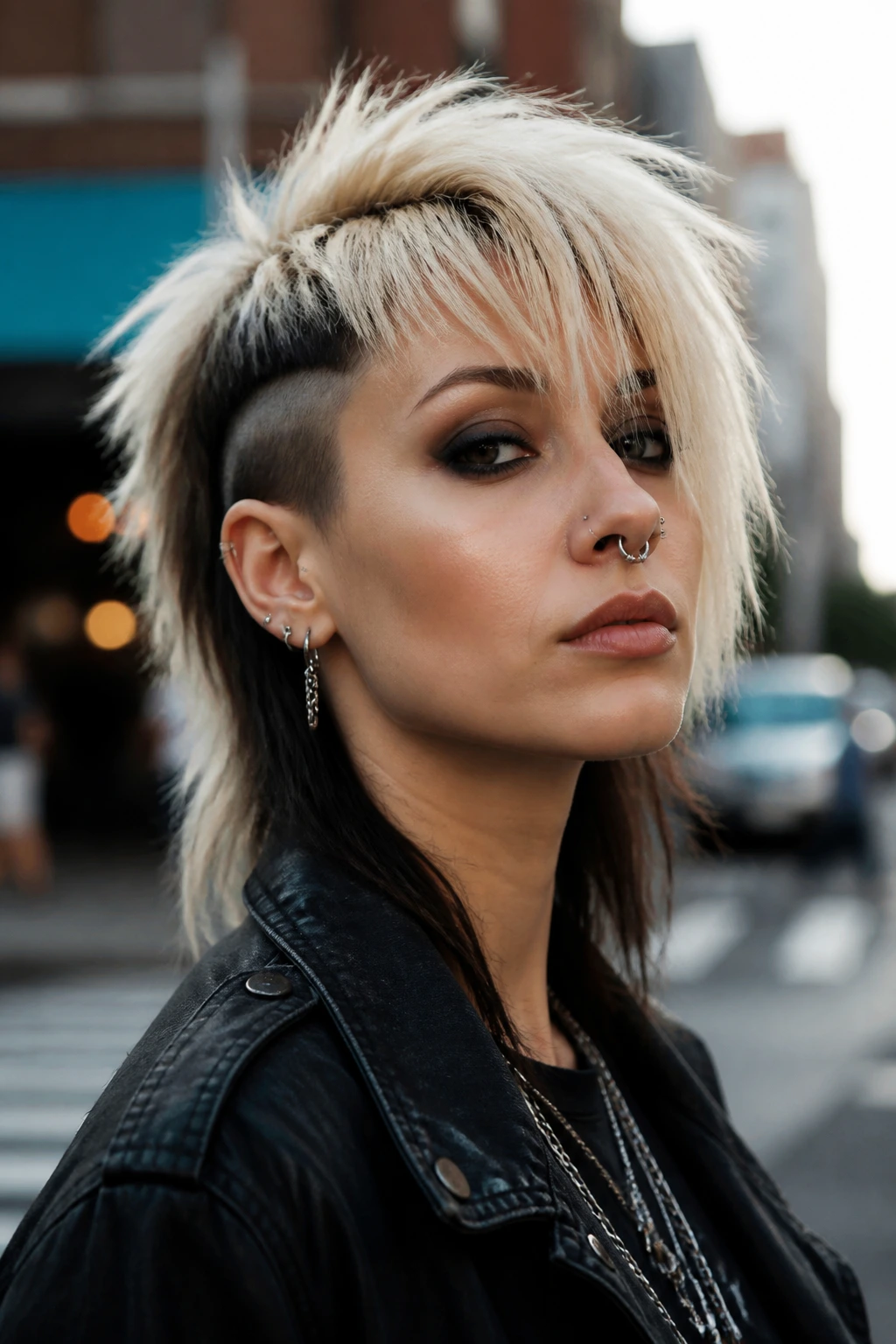
Two-tone punk blonde does exactly what the name suggests. The look splits the hair into different zones—light against dark, or blonde over a darker underlayer—so the contrast becomes the feature. It’s not subtle. That’s the point.
This one works best when the cut supports the color. Think razor edges, chunky layers, cropped lengths, or a bob with an undercut. If the hair is long and all one shape, the contrast can feel disconnected. When the shape is sharp, though, the color lands with real force.
You can make it less theatrical by keeping the separation softer near the crown and more obvious underneath. Or you can go hard on the split and let the panels read as a statement. Either way, it’s one of the most obviously edgy choices on the list.
23. Charcoal Blonde Melt
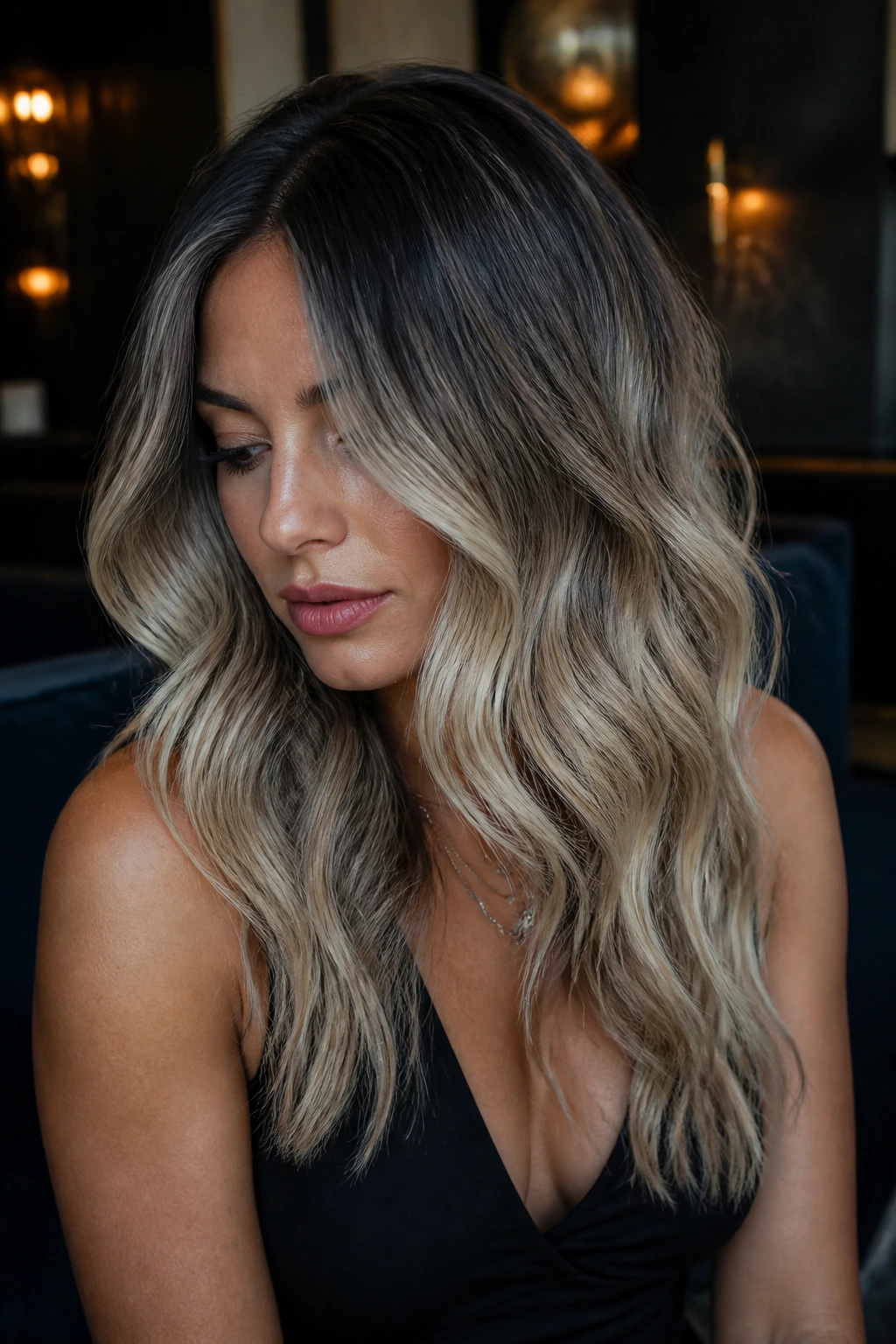
Charcoal blonde melt is the darkest, smokiest path into blonde, and it looks far more expensive than its name sounds. The root goes charcoal or deep ash brown, then melts into smoky blonde through the mids and ends. The transition should be smooth enough to avoid a line, but dark enough to keep the hair from reading sweet.
This is a strong choice for people who want contrast without losing cohesion. The darker root anchors the look, while the blonde keeps it from disappearing into brown. It’s also a good answer for anyone who wants a cooler palette with some depth around the face and crown.
On longer hair, the melt can look almost velvet-like. On shorter cuts, it reads sharper and more graphic. Either way, it has the right kind of edge: not loud, not polished to death, and not trying to please everybody.
How to Pick the Right Grungy Blonde for Your Base Level
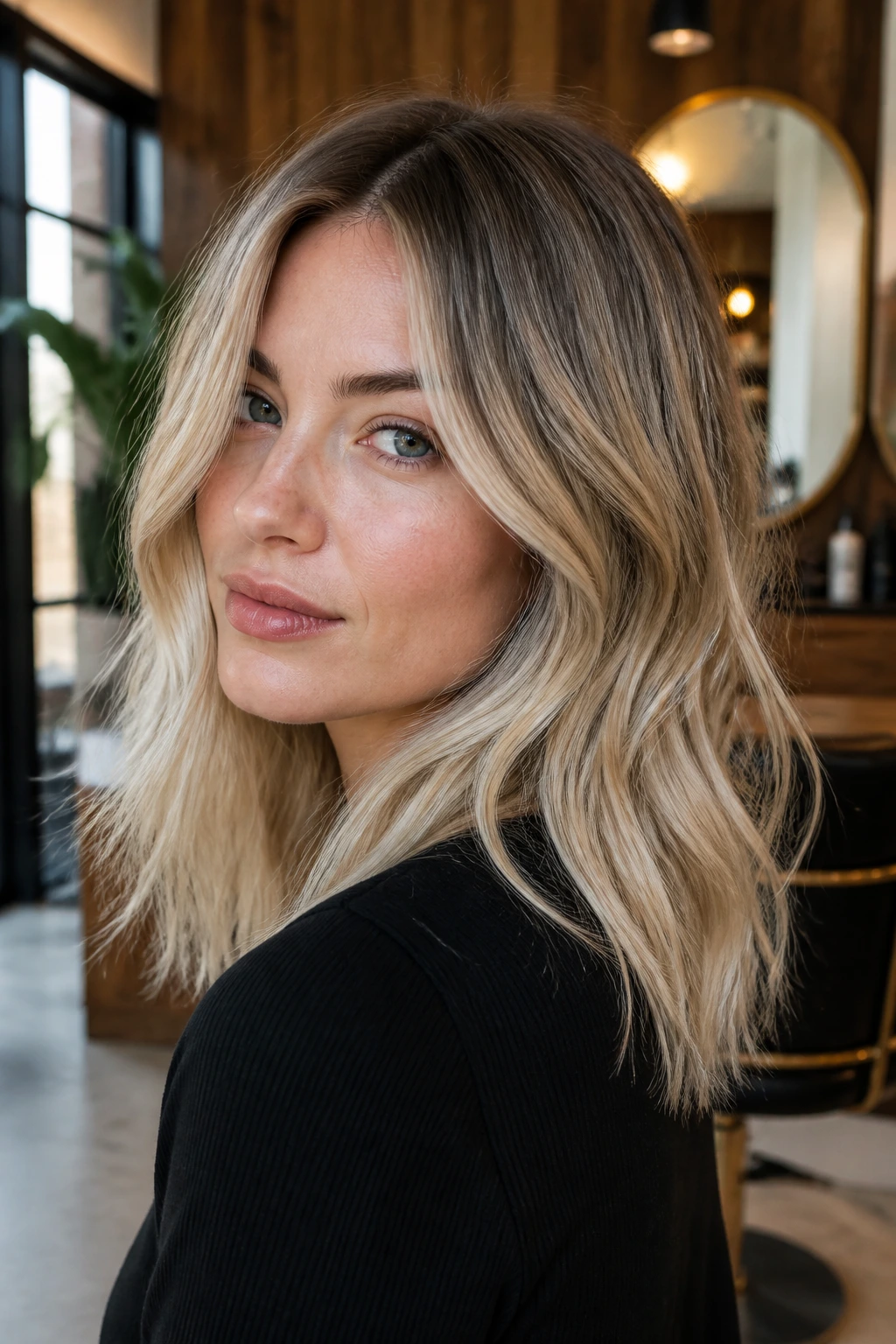
The biggest mistake people make with grungy blonde hair color is treating every photo as if it starts from the same canvas. It doesn’t. A level 5 brunette, a level 7 dark blonde, and a level 9 blonde need different jobs from the color bowl. The look may be the same at a glance, but the path to get there is not.
If your hair starts dark
Dirty bronde balayage, mushroom root melt, bronze ash blonde, and charcoal blonde melt are the easiest places to begin. They keep some of your base intact, which means less breakage and a better grow-out pattern. If you want platinum or icy shades, be ready for multiple sessions and much stricter upkeep.
If your hair is already light
Ivory blonde with lived-in roots, soft greige blonde, smoked champagne blonde, and shadowed vanilla balayage are all good options. You do not need to keep bleaching just because your hair is blond already. Sometimes the move is a gloss, a lowlight, and a smarter root.
If your hair is curly, fine, or heavily layered
Placement matters more than the shade name. Curly hair likes ribbons and shadow that move with the curl pattern. Fine hair often looks fuller with babylights, root smudging, and a few deeper pieces underneath. Heavy layers can handle stronger contrast, which is why money pieces and face-frame panels show so well there.
Tools and Products That Actually Matter
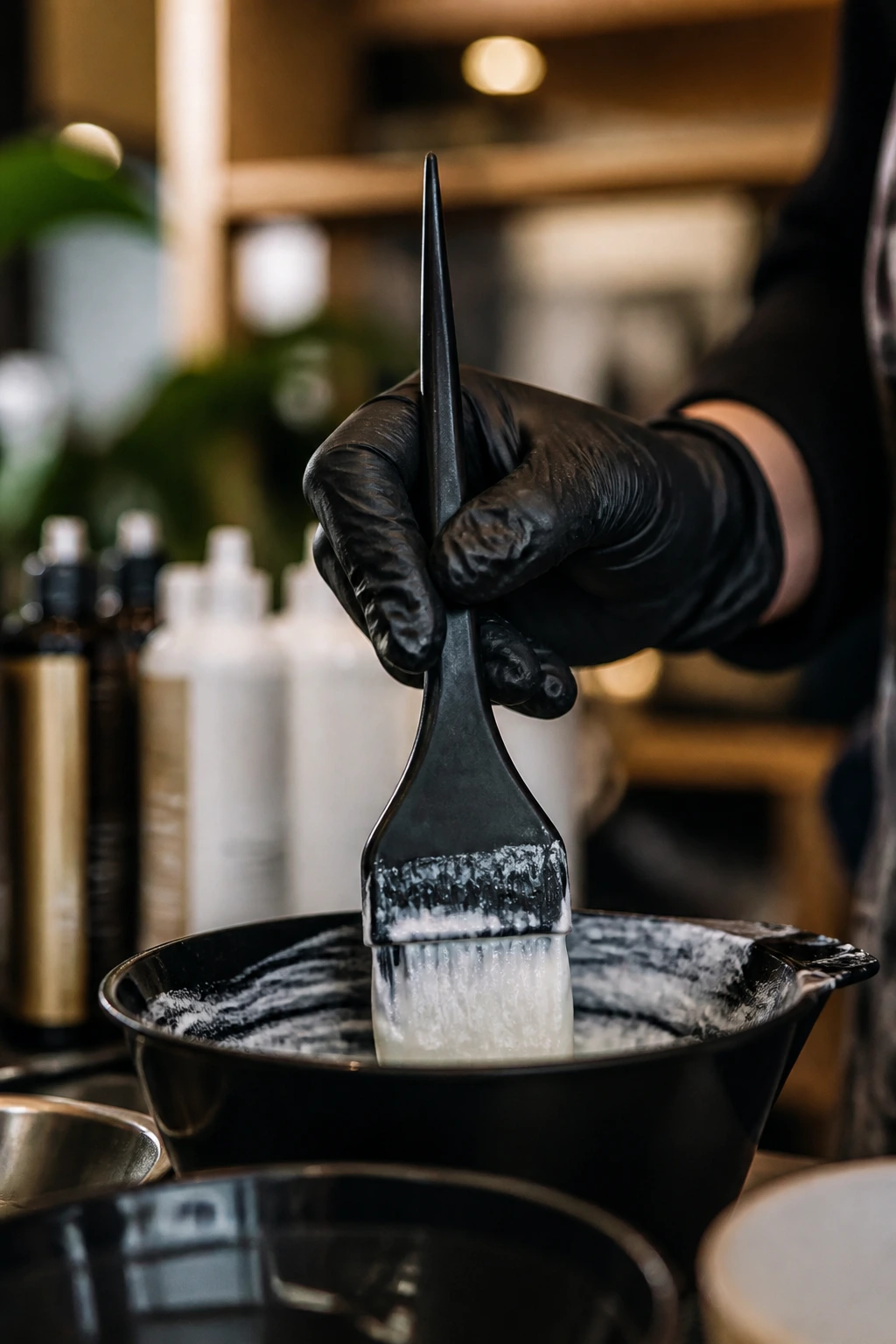
- Level chart or swatch book: Hair color names get fuzzy fast; a level chart keeps everyone honest about how light or dark the plan really is.
- Tint brush and color bowl: Useful for root shadows, glosses, and toner work, especially when you need more control than a squeeze bottle gives you.
- Sectioning clips: Essential if you want clean money pieces, face-frame panels, or any kind of balayage placement that isn’t guesswork.
- Foils or balayage board: Foils give you brightness and heat; a board helps when you want soft painted ribbons.
- Gloves and cape: Bleach and toner do not care about your shirt.
- Bond builder: Worth it if the hair has already been lightened once or twice; it helps keep blondes from feeling brittle.
- Purple shampoo: Best used as a tune-up, not as a daily cleanser. Too much and the hair can go dull or violet-gray.
- Color-safe conditioner or mask: Helps porous blonde hold moisture so the tone doesn’t look dry and dusty.
- Clarifying or chelating shampoo: Handy if hard water leaves a film that makes ash tones look muddy.
- Heat protectant: If you style the hair with a wand or blow dryer, this is not optional. Blonde ends punish laziness.
What to Tell Your Colorist Before the Foils Go In
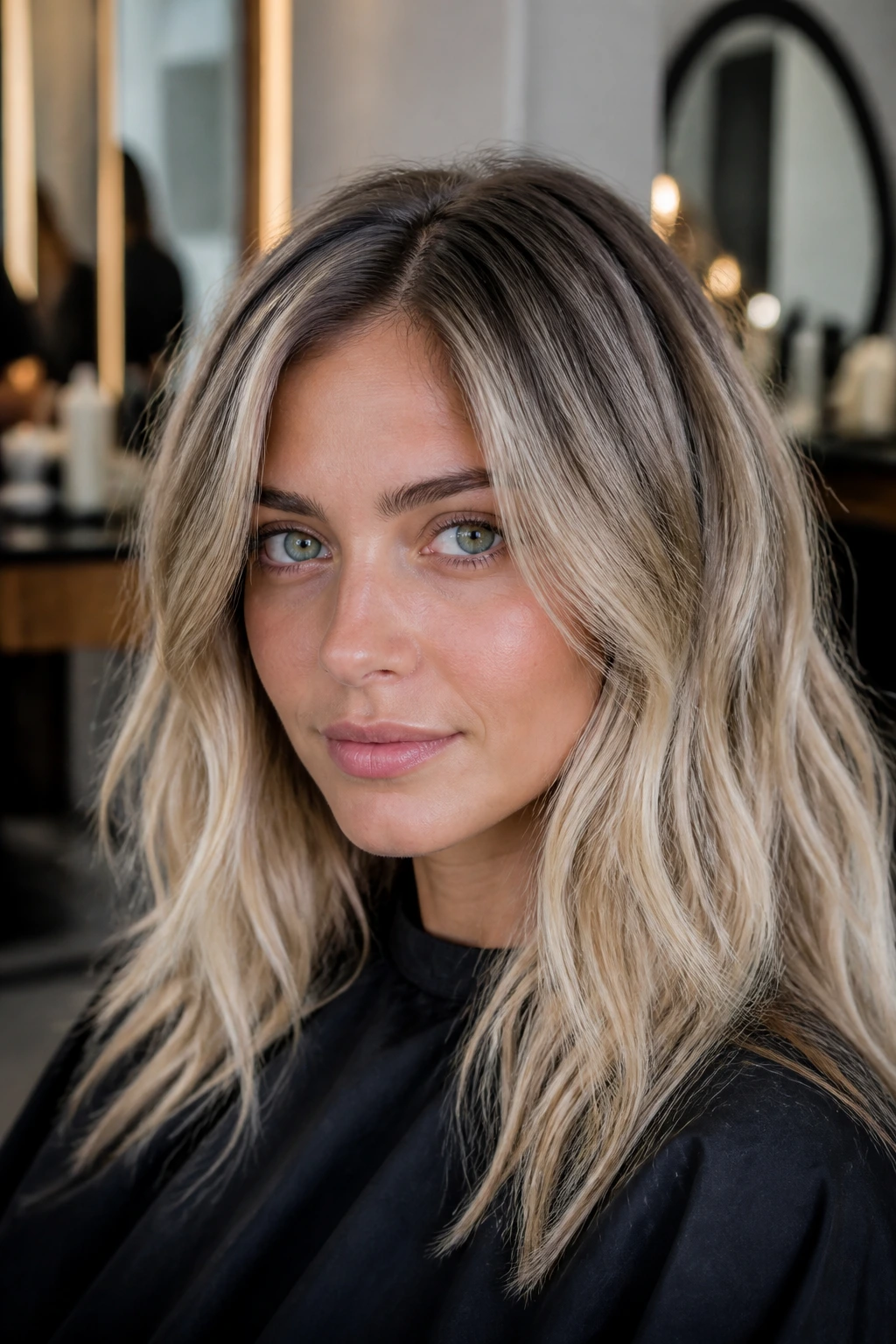
Bring more than one photo. One picture can show tone, another can show placement, and those are not the same thing. A smoky champagne blonde and a dirty bronde balayage can both read “edgy blonde” on your phone, then behave like different animals on your head.
Say how much maintenance you’ll tolerate. If you want to come back every six weeks, say so. If you need something that can stretch longer, that changes the root shadow, the highlight spacing, and how bright the front pieces should be. A good colorist can work with that. They can’t read your calendar.
Also mention your hair history. Box dye, previous bleach, henna, hard water, and heat damage all matter. If your ends are porous, toner grabs faster there and can go dull or smoky in spots before the roots catch up. That detail saves a lot of grief.
How to Style Grungy Blonde So It Looks Intentional
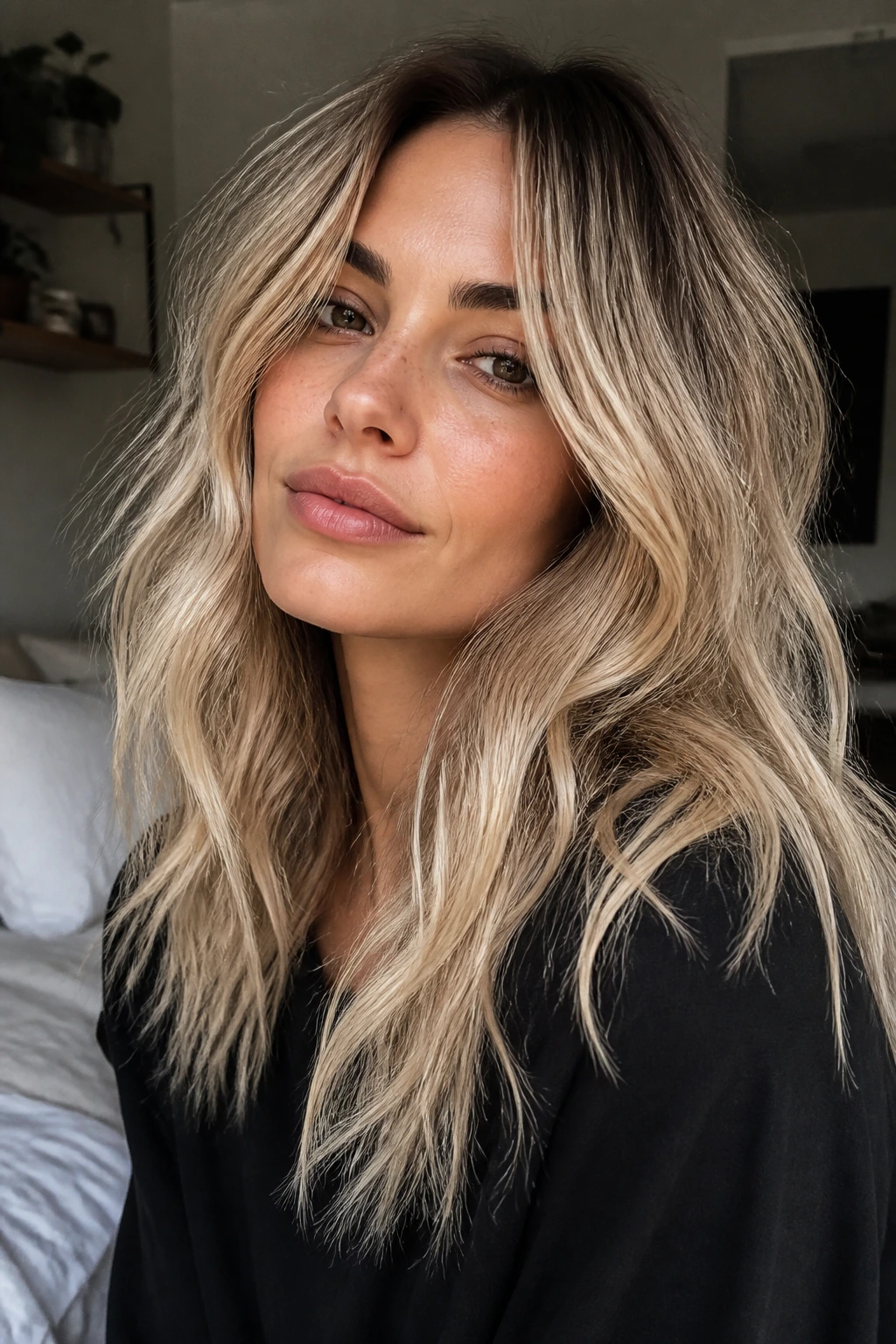
Texture: Rough drying, a round brush with a loose hand, or a 1-inch iron bend makes smoky blonde look better than pin-straight hair in most cases. The color needs movement so the lowlights and root shadow can show.
Cut: Shags, wolf cuts, bobs, bixies, and blunt lobs all give grungy blonde a better frame. On very long hair, the color can still work, but it usually needs stronger internal layering to keep from looking like one large beige sheet.
Finish: Keep the shine controlled. A little serum on the ends is fine. Heavy oil from crown to tip erases the grit and can make ash tones look greasy instead of dimensional.
Parting: A center part gives some of the cleaner blondes, like Scandi or ivory, a sharp line. A slightly off-center part softens the look and makes mushroom, khaki, or denim tones feel less severe.
Face-framing: If you want more bite, lighten the front section a touch more than the rest. If you want the style to feel quieter, keep the front only one shade lighter than the surrounding blonde. That small shift changes the whole mood.
Keeping the Smoke in the Blonde: Maintenance and Refreshes
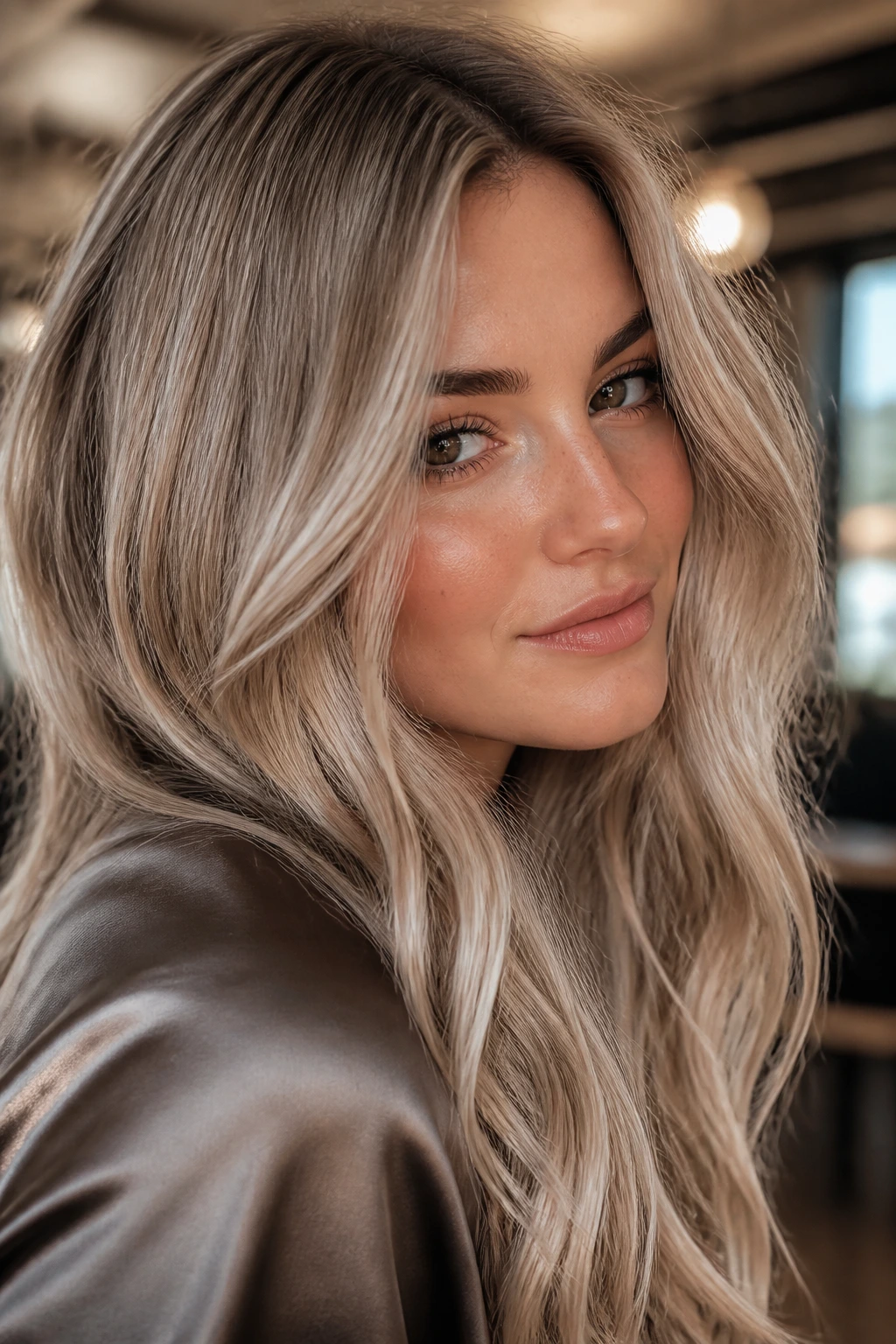
Grungy blonde looks best when it stays a little lived-in, but lived-in is not the same as neglected. The sweet spot is clean tone, soft regrowth, and healthy ends. That takes a rhythm.
Root touch-ups usually land somewhere around 6 to 10 weeks, depending on how dark your natural hair is and how much shadow root you left in the first place. Platinum shadow root and icy shades tend to need faster returns. Mushroom melts, bronde balayage, and rooty Scandi styles can usually stretch longer.
Glosses and toners work on a shorter cycle. A salon gloss every 4 to 6 weeks keeps smoked champagne, greige, khaki, and vanilla shades from drifting yellow or flat. At home, purple shampoo is enough for some blondes, but not all of them. Use it once a week or every other week, and keep it on for a short window—usually 1 to 3 minutes. If the hair is porous, go even lighter on the timing.
Heat styling is where a lot of tone gets wrecked. Use a protectant every time and keep the tool temp lower than you think you need. 300°F to 350°F is plenty for most waves and bends. If your hair is fine or fragile, go lower. Burned ends read dry no matter how nice the color is.
If your water runs hard, a chelating shampoo about once a month helps strip mineral buildup that can make blonde look dull, green, or muddy. That one detail matters more than people admit.
Variations and Adaptations to Try
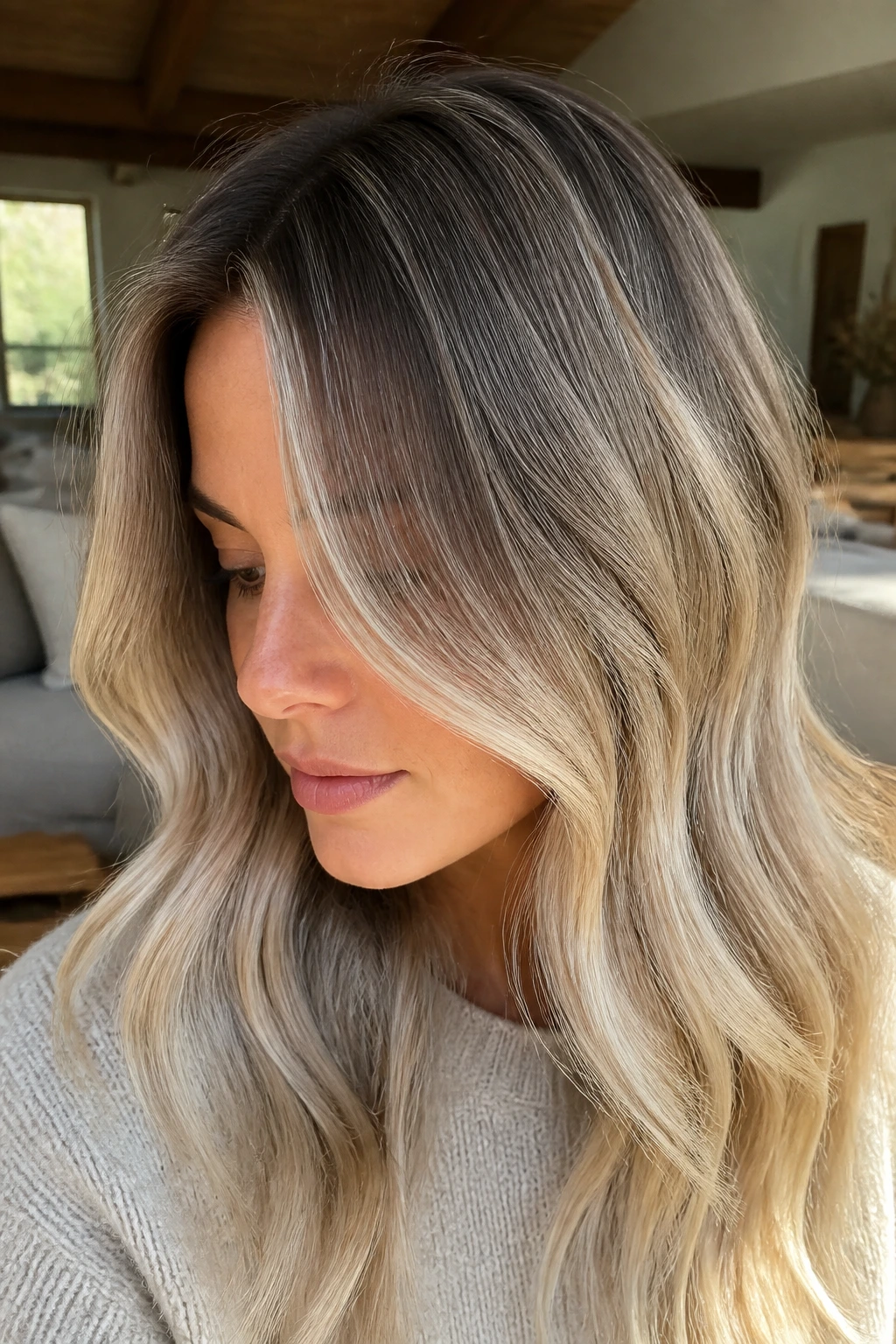
Soft Grunge for Workdays: Keep the root shadow gentle, choose mushroom or soft greige tones, and leave the brightest pieces close to the face only. It still feels current, but it won’t shout from across a conference room.
High-Contrast Night-Out Blonde: Push toward platinum shadow root, bleachy face-frame panels, or two-tone punk blonde. This version leans hard into contrast, so it suits sharper cuts and bolder makeup.
Curly-Hair Version: Use fine ribbons, babylights, or shadowed vanilla balayage instead of chunky stripes. Curly texture breaks up the color on its own, and softer placement avoids that spotted look some highlights get on curls.
Short-Cut Version: Bobs, bixies, and shags need more definition in the front and around the crown. Ashy money-piece blonde or ivory with lived-in roots can make a cropped cut look deliberate instead of plain.
Low-Maintenance Version: Dirty bronde balayage, smoked champagne, and dusty honey blonde all stretch well. They keep some depth at the root and don’t demand constant toner rescue.
Common Mistakes That Flatten Grungy Blonde
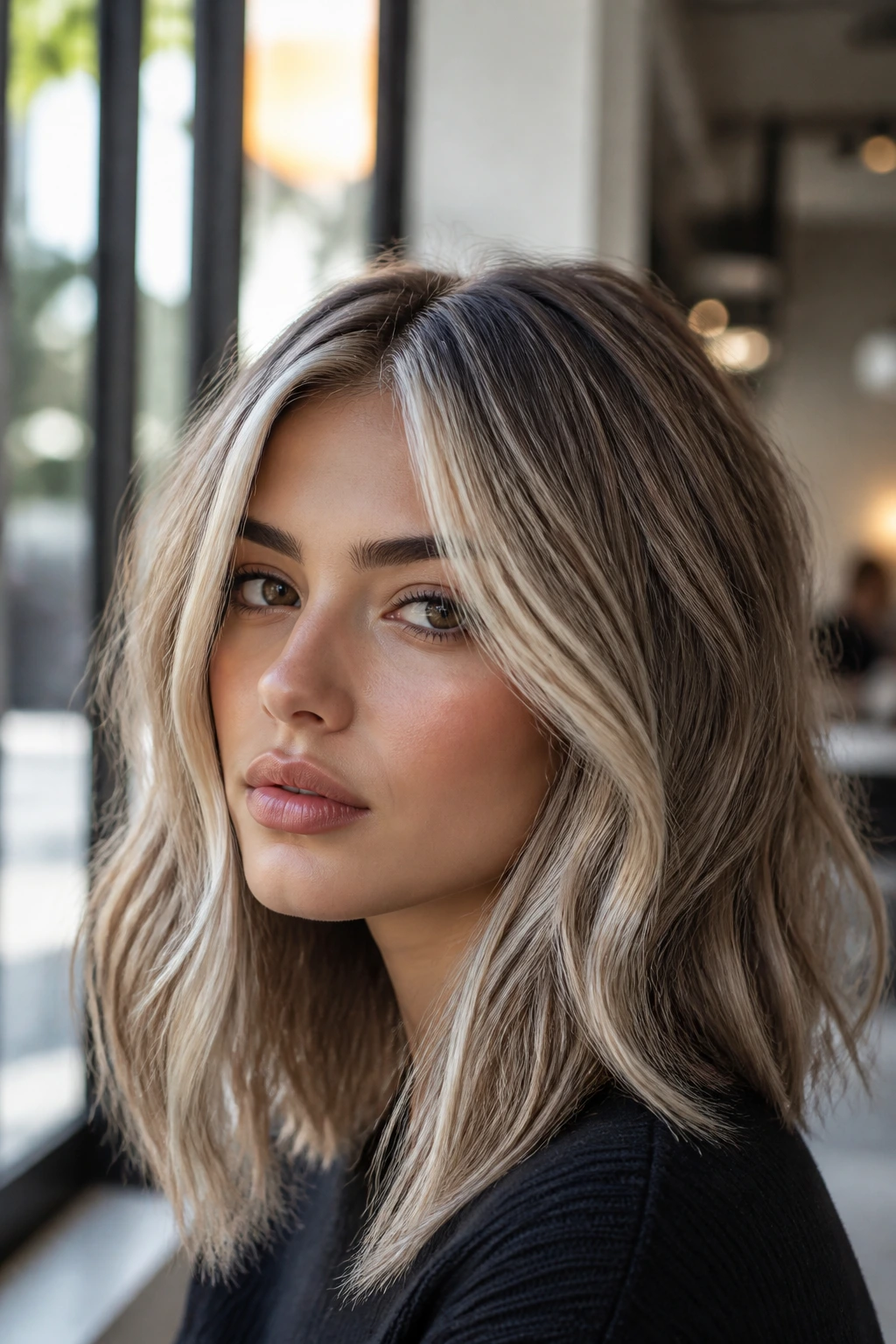
The first mistake is over-toning. People see “grungy” and reach for every cool drop in the bowl. The result is chalky, gray, or flat. You want smoke, not drywall. If the blonde starts looking dull, add a little beige back in instead of stripping it cooler.
The second mistake is making the whole head the same tone. Grungy blonde needs contrast, even if it’s subtle. A root shadow, a few lowlights, or a brighter money piece keeps the color from looking like one muted block.
The third mistake is ignoring porosity. Porous ends soak up toner faster than the roots, which means the bottom can go dark while the top stays warm. That mismatch is why some blondes look muddy in daylight. A good colorist checks the ends first and adjusts the formula there.
The fourth mistake is picking a shade that fights the haircut. A soft vanilla blonde on a severe, no-layer cut can look too plain. A two-tone punk blonde on long hair without enough shape can look disconnected. The color and cut need to argue a little, but not so much that they stop speaking.
Frequently Asked Questions
Can grungy blonde work on dark brown hair?
Yes, but the path is usually a balayage or bronde route rather than a full platinum lift on day one. Dirty bronde, mushroom root melt, and bronze ash blonde tend to be more realistic starting points because they keep depth in the hair and don’t demand a full bleach-out.
Is this look high maintenance?
Some versions are, some aren’t. Platinum shadow root and slushy ice blonde need more toner attention, while smoked champagne, soft greige, and rooty Scandi styles can stretch longer between appointments.
What’s the difference between ash blonde and grungy blonde?
Ash blonde is mostly about cool tone. Grungy blonde adds placement and contrast—root shadow, lowlights, face-framing pieces, or broken-up ribbons—so the hair feels lived-in instead of just cool.
Can I get this look without bleaching my whole head?
Absolutely. That’s where money pieces, face-frame panels, partial balayage, and lowlight-heavy versions shine. You can get a lot of edge from placement alone.
Will purple shampoo keep the blonde from going yellow?
It helps, but it’s not a cure-all. Purple shampoo can mute yellow, yet it won’t fix uneven lift or a toner that has faded out. Use it as maintenance, not as the main strategy.
Which version is easiest to grow out?
Dirty bronde balayage, mushroom root melt, and smoked champagne blonde all grow out cleanly because the root stays part of the design. The darker your natural base and the softer the blend, the easier the regrowth.
Can curly hair wear grungy blonde well?
Yes, and sometimes it wears it better than straight hair. Curls break up the highlights naturally, which means fine ribbons, soft shadows, and glossed dimension often look richer than chunky striping.
What if my blonde starts looking muddy or green?
Usually that means the tone went too cool or mineral buildup from water is messing with the finish. A clarifying or chelating wash can help if buildup is the problem. If the tone itself is off, the fix is usually a warmer or more beige gloss, not more purple shampoo.
How do I know if I should go for a dark root or a bright money piece?
If you want low maintenance, choose the darker root and softer face-framing pieces. If you want the blonde to hit first and ask questions later, the brighter money piece is the louder move.
The Last Word
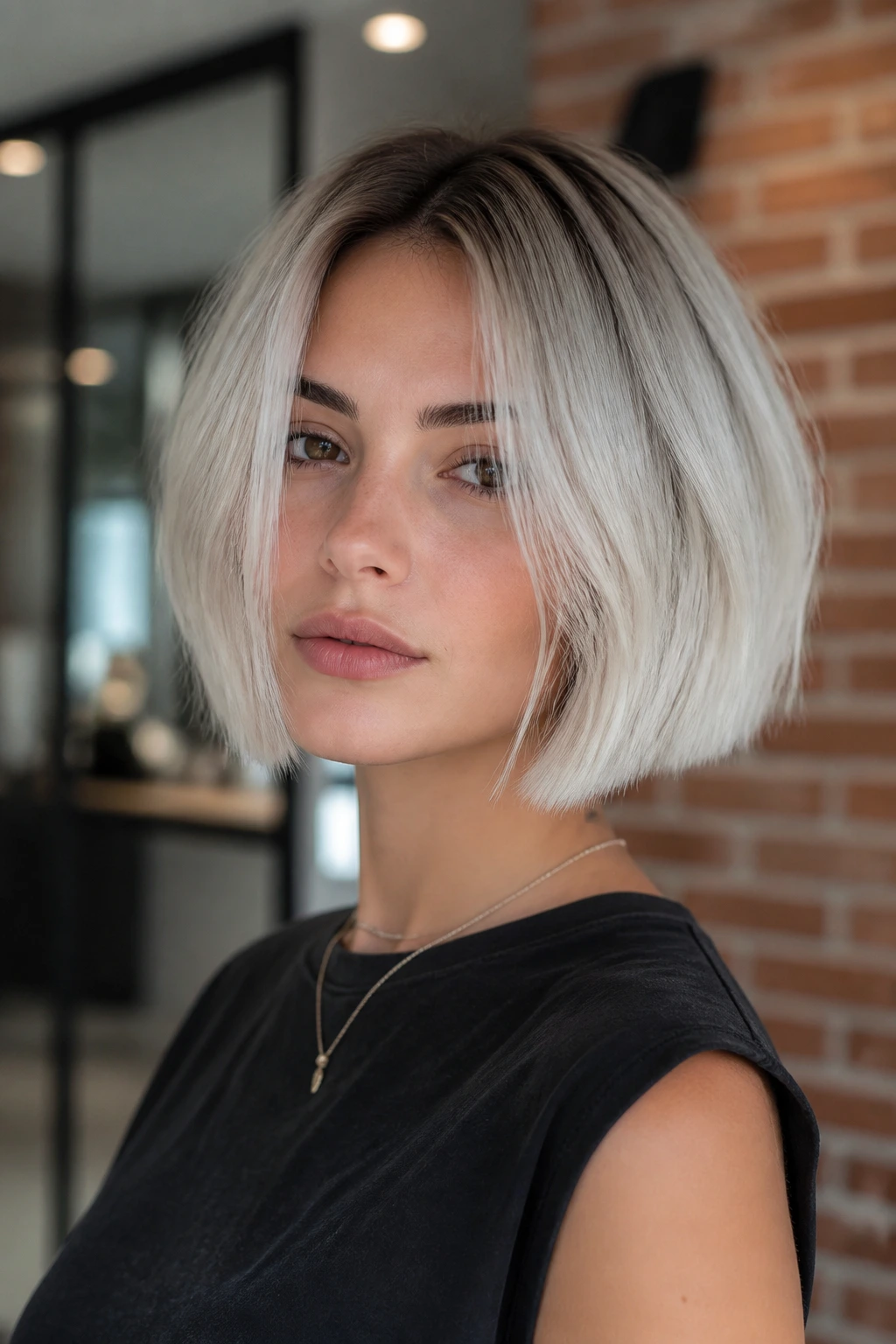
Grungy blonde hair color works because it leaves room for shadow. Brightness without shadow gets loud fast. Shadow without brightness turns dull. The good versions sit in the middle, with beige, ash, and placement doing the heavy lifting.
Pick the shade that matches your base, your haircut, and your patience for upkeep. That part matters more than chasing a photo that looked good under salon lights. Once the tone and the cut are speaking the same language, the color does the thing it’s supposed to do: look a little tough, a little lived-in, and a lot more interesting than plain blonde.
